EP1384783A1 - Novel maxizyme - Google Patents
Novel maxizyme Download PDFInfo
- Publication number
- EP1384783A1 EP1384783A1 EP02722902A EP02722902A EP1384783A1 EP 1384783 A1 EP1384783 A1 EP 1384783A1 EP 02722902 A EP02722902 A EP 02722902A EP 02722902 A EP02722902 A EP 02722902A EP 1384783 A1 EP1384783 A1 EP 1384783A1
- Authority
- EP
- European Patent Office
- Prior art keywords
- maxizyme
- sequence
- molecule
- rna
- nucleotide sequence
- Prior art date
- Legal status (The legal status is an assumption and is not a legal conclusion. Google has not performed a legal analysis and makes no representation as to the accuracy of the status listed.)
- Withdrawn
Links
Images




Classifications
-
- C—CHEMISTRY; METALLURGY
- C12—BIOCHEMISTRY; BEER; SPIRITS; WINE; VINEGAR; MICROBIOLOGY; ENZYMOLOGY; MUTATION OR GENETIC ENGINEERING
- C12N—MICROORGANISMS OR ENZYMES; COMPOSITIONS THEREOF; PROPAGATING, PRESERVING, OR MAINTAINING MICROORGANISMS; MUTATION OR GENETIC ENGINEERING; CULTURE MEDIA
- C12N15/00—Mutation or genetic engineering; DNA or RNA concerning genetic engineering, vectors, e.g. plasmids, or their isolation, preparation or purification; Use of hosts therefor
- C12N15/09—Recombinant DNA-technology
- C12N15/11—DNA or RNA fragments; Modified forms thereof; Non-coding nucleic acids having a biological activity
- C12N15/113—Non-coding nucleic acids modulating the expression of genes, e.g. antisense oligonucleotides; Antisense DNA or RNA; Triplex- forming oligonucleotides; Catalytic nucleic acids, e.g. ribozymes; Nucleic acids used in co-suppression or gene silencing
- C12N15/1137—Non-coding nucleic acids modulating the expression of genes, e.g. antisense oligonucleotides; Antisense DNA or RNA; Triplex- forming oligonucleotides; Catalytic nucleic acids, e.g. ribozymes; Nucleic acids used in co-suppression or gene silencing against enzymes
-
- C—CHEMISTRY; METALLURGY
- C12—BIOCHEMISTRY; BEER; SPIRITS; WINE; VINEGAR; MICROBIOLOGY; ENZYMOLOGY; MUTATION OR GENETIC ENGINEERING
- C12N—MICROORGANISMS OR ENZYMES; COMPOSITIONS THEREOF; PROPAGATING, PRESERVING, OR MAINTAINING MICROORGANISMS; MUTATION OR GENETIC ENGINEERING; CULTURE MEDIA
- C12N9/00—Enzymes; Proenzymes; Compositions thereof; Processes for preparing, activating, inhibiting, separating or purifying enzymes
- C12N9/14—Hydrolases (3)
- C12N9/16—Hydrolases (3) acting on ester bonds (3.1)
- C12N9/22—Ribonucleases [RNase]; Deoxyribonucleases [DNase]
-
- A—HUMAN NECESSITIES
- A61—MEDICAL OR VETERINARY SCIENCE; HYGIENE
- A61P—SPECIFIC THERAPEUTIC ACTIVITY OF CHEMICAL COMPOUNDS OR MEDICINAL PREPARATIONS
- A61P25/00—Drugs for disorders of the nervous system
- A61P25/14—Drugs for disorders of the nervous system for treating abnormal movements, e.g. chorea, dyskinesia
- A61P25/16—Anti-Parkinson drugs
-
- A—HUMAN NECESSITIES
- A61—MEDICAL OR VETERINARY SCIENCE; HYGIENE
- A61P—SPECIFIC THERAPEUTIC ACTIVITY OF CHEMICAL COMPOUNDS OR MEDICINAL PREPARATIONS
- A61P25/00—Drugs for disorders of the nervous system
- A61P25/28—Drugs for disorders of the nervous system for treating neurodegenerative disorders of the central nervous system, e.g. nootropic agents, cognition enhancers, drugs for treating Alzheimer's disease or other forms of dementia
-
- A—HUMAN NECESSITIES
- A61—MEDICAL OR VETERINARY SCIENCE; HYGIENE
- A61P—SPECIFIC THERAPEUTIC ACTIVITY OF CHEMICAL COMPOUNDS OR MEDICINAL PREPARATIONS
- A61P29/00—Non-central analgesic, antipyretic or antiinflammatory agents, e.g. antirheumatic agents; Non-steroidal antiinflammatory drugs [NSAID]
-
- A—HUMAN NECESSITIES
- A61—MEDICAL OR VETERINARY SCIENCE; HYGIENE
- A61P—SPECIFIC THERAPEUTIC ACTIVITY OF CHEMICAL COMPOUNDS OR MEDICINAL PREPARATIONS
- A61P31/00—Antiinfectives, i.e. antibiotics, antiseptics, chemotherapeutics
- A61P31/12—Antivirals
-
- A—HUMAN NECESSITIES
- A61—MEDICAL OR VETERINARY SCIENCE; HYGIENE
- A61P—SPECIFIC THERAPEUTIC ACTIVITY OF CHEMICAL COMPOUNDS OR MEDICINAL PREPARATIONS
- A61P31/00—Antiinfectives, i.e. antibiotics, antiseptics, chemotherapeutics
- A61P31/12—Antivirals
- A61P31/14—Antivirals for RNA viruses
- A61P31/18—Antivirals for RNA viruses for HIV
-
- A—HUMAN NECESSITIES
- A61—MEDICAL OR VETERINARY SCIENCE; HYGIENE
- A61P—SPECIFIC THERAPEUTIC ACTIVITY OF CHEMICAL COMPOUNDS OR MEDICINAL PREPARATIONS
- A61P35/00—Antineoplastic agents
-
- A—HUMAN NECESSITIES
- A61—MEDICAL OR VETERINARY SCIENCE; HYGIENE
- A61P—SPECIFIC THERAPEUTIC ACTIVITY OF CHEMICAL COMPOUNDS OR MEDICINAL PREPARATIONS
- A61P37/00—Drugs for immunological or allergic disorders
- A61P37/02—Immunomodulators
-
- A—HUMAN NECESSITIES
- A61—MEDICAL OR VETERINARY SCIENCE; HYGIENE
- A61P—SPECIFIC THERAPEUTIC ACTIVITY OF CHEMICAL COMPOUNDS OR MEDICINAL PREPARATIONS
- A61P43/00—Drugs for specific purposes, not provided for in groups A61P1/00-A61P41/00
-
- A—HUMAN NECESSITIES
- A61—MEDICAL OR VETERINARY SCIENCE; HYGIENE
- A61K—PREPARATIONS FOR MEDICAL, DENTAL OR TOILETRY PURPOSES
- A61K38/00—Medicinal preparations containing peptides
-
- A—HUMAN NECESSITIES
- A61—MEDICAL OR VETERINARY SCIENCE; HYGIENE
- A61K—PREPARATIONS FOR MEDICAL, DENTAL OR TOILETRY PURPOSES
- A61K48/00—Medicinal preparations containing genetic material which is inserted into cells of the living body to treat genetic diseases; Gene therapy
-
- C—CHEMISTRY; METALLURGY
- C07—ORGANIC CHEMISTRY
- C07K—PEPTIDES
- C07K2319/00—Fusion polypeptide
-
- C—CHEMISTRY; METALLURGY
- C12—BIOCHEMISTRY; BEER; SPIRITS; WINE; VINEGAR; MICROBIOLOGY; ENZYMOLOGY; MUTATION OR GENETIC ENGINEERING
- C12N—MICROORGANISMS OR ENZYMES; COMPOSITIONS THEREOF; PROPAGATING, PRESERVING, OR MAINTAINING MICROORGANISMS; MUTATION OR GENETIC ENGINEERING; CULTURE MEDIA
- C12N2310/00—Structure or type of the nucleic acid
- C12N2310/10—Type of nucleic acid
- C12N2310/11—Antisense
- C12N2310/111—Antisense spanning the whole gene, or a large part of it
-
- C—CHEMISTRY; METALLURGY
- C12—BIOCHEMISTRY; BEER; SPIRITS; WINE; VINEGAR; MICROBIOLOGY; ENZYMOLOGY; MUTATION OR GENETIC ENGINEERING
- C12N—MICROORGANISMS OR ENZYMES; COMPOSITIONS THEREOF; PROPAGATING, PRESERVING, OR MAINTAINING MICROORGANISMS; MUTATION OR GENETIC ENGINEERING; CULTURE MEDIA
- C12N2310/00—Structure or type of the nucleic acid
- C12N2310/10—Type of nucleic acid
- C12N2310/12—Type of nucleic acid catalytic nucleic acids, e.g. ribozymes
-
- C—CHEMISTRY; METALLURGY
- C12—BIOCHEMISTRY; BEER; SPIRITS; WINE; VINEGAR; MICROBIOLOGY; ENZYMOLOGY; MUTATION OR GENETIC ENGINEERING
- C12N—MICROORGANISMS OR ENZYMES; COMPOSITIONS THEREOF; PROPAGATING, PRESERVING, OR MAINTAINING MICROORGANISMS; MUTATION OR GENETIC ENGINEERING; CULTURE MEDIA
- C12N2310/00—Structure or type of the nucleic acid
- C12N2310/10—Type of nucleic acid
- C12N2310/12—Type of nucleic acid catalytic nucleic acids, e.g. ribozymes
- C12N2310/121—Hammerhead
Definitions
- the present invention relates to a maxizyme and a use thereof, in particular to a maxizyme showing a good RNA-cleaving activity on a target RNA, and a use thereof.
- hammerhead ribozymes are one of the most well researched ribozymes.
- the hammerhead ribozyme which functions to provide a self-cleavage reaction (cis-type) in nature was divided (converted to trans-type) into two RNA strands (a substrate region and an enzymatic activity retaining region) by the groups of Uhlenbeck et al. and Haseloff et al. (O.C. Uhlenbeck, Nature, 328, 596 (1987); J. Hasehoff, W.L. Gerlach, Nature, 334, 585 (1988)), whereby an application of a ribozyme for genetic therapy was suggested.
- a target mRNA has a secondary structure or a tertiary structure.
- the substrate-binding region of the maxizyme hidden in the stem structure or the like may block the maxizyme from approaching its target site, so that no sufficient effect can be obtained.
- An object of the present invention is to provide a maxizyme that can bind to a target mRNA regardless of its conformation, and can effectively cleave the mRNA.
- RNA cleaving activity can be obtained by allowing the maxizyme to act with a molecule having helicase activity, thereby completing the present invention.
- the present invention relates to the following (1) to (19).
- the maxizyme of the present invention is characterized by binding to a molecule having helicase activity.
- the present inventors have assumed at first that when a molecule having helicase activity binds to the maxizyme, dimer formation is impossible due to the steric hindrance resulting from the binding. Particularly, when pol III system is used as an expression system, tRNA val is added to the 5' end, and therefore steric hindrance of the maxizyme will be even greater. However surprisingly, it has been confirmed that the maxizyme forms a dimer and has RNA-cleaving activity superior to that of conventional maxizymes.
- Maxizyme in the present invention means a minimized hammerhead ribozyme that functions as a dimer. This minimization is generally constructed by substituting the stem-loop II region of a hammerhead ribozyme which is composed of the antisense regions (stem I and stem II), the activity center region and the stem-loop II region, with a short chain linker.
- the maxizyme requires Mg 2+ (magnesium ion) for the expression of its activity, and the GC base pairs in the stem II moiety are important to form a dimer. Design of the sequences of hammerhead ribozymes and maxizymes is also described in Biophysics, pp. 99-104, Vol. 40 No. 2 (2000), and all the contents of this publication are incorporated herein by reference as a part of the disclosure of the present specification.
- the number of sites capable of forming a cavity for capturing magnesium ions may be one or two per maxizyme.
- a maxizyme having two activity center regions shows higher substrate-cleaving efficiency, if it binds simultaneously at the two positions of one substrate and can cleave the substrate after the NUX triplets of these two positions (wherein N represents A, G, C or U, and X represents A, C or U).
- the maxizyme binds to a target mRNA at two positions.
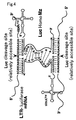
- a homodimer type maxizyme (Figs. 4 and 5) wherein 2 monomers of 1 type are bound, or a heterodimeric maxizyme (Fig. 6) wherein 2 different types of monomers are bound, can be designed.
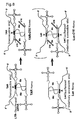
- the homodimer type maxizyme binds at its two positions to mRNAs having pre-determined binding sites. In this case, the two mRNAs bind to one maxizyme within the molecule (trans-type maxizyme, Fig. 7).
- the heterodimer type maxizyme can bind to two different sequence portions.
- the maxizyme binds simultaneously at the different positions within one mRNA (cis-type maxizyme, Fig. 8), or binds to two mRNAs wherein each of the different sequence portions individually binds at a position between the maxizyme (trans-type maxizyme) and a molecule (two mRNAs).
- the molecule having helicase activity in the present invention means a molecule which acts on mRNA and makes the helical structure of the RNA unstable, so as to open the conformation containing double-stranded RNA.
- Specific examples of the molecule include an RNA helicase, ribosome, restriction enzyme (e.g., EcoRI and EcoRV) and the like.
- Such a molecule having helicase activity may directly bind to the maxizyme or bind via an adaptor molecule.
- the site for the molecule having helicase activity to bind to the maxizyme is not specifically limited, as long as it does not deteriorate the cleavage activity of the maxizyme. Preferably, the site is near the 3' end of the maxizyme.
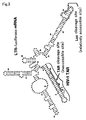
- the binding region of the molecule or the like having helicase activity differs depending on a target molecule having helicase activity or an adaptor. It is possible to design such a binding region from the RNA double-stranded binding region of the molecule having helicase activity. For example, it is preferred to add a constitutive transport element (CTE, SEQ ID NO: 1, Fig. 1), HIV TAR RNA, POLY A RNA or the like as the binding region of the molecule having helicase activity.
- CTE constitutive transport element
- CTE indicates a cis-acting virus RNA for transporting an unspliced genomic RNA to the cytoplasm in order to perform expression and packaging of a virus structural protein.
- CTE is an RNA that a monkey type D retrovirus such as Mason-Pfizer monkey virus (MPLV) originally possesses. It is considered that these viruses possess the CTE, an RNA motif, for the extranuclear transport of an unspliced RNA (H. Tang et al., (1997) Science 276: 1412-1415; J. Li et al., (1999) Proc. Natl. Acad. Sci. USA 96:709-714; H. Tang et al., (1999) Mol. Cell Biol. 19: 3540-3550).
- MPLV Mason-Pfizer monkey virus
- RNA having functions substantially equivalent to those of CTE means a molecule other than CTE having binding affinity for RNA helicase.
- it means a molecule such as an aptamer, which binds to helicase and is artificially produced by the SELEX method.
- mutant means a mutant wherein one or multiple nucleotides are altered (substituted, deleted, added or inserted). Such alteration can be performed by methods described in general publications such as J. Sambrook et al, Molecular Cloning A Laboratory Manual, Cold Spring Harbor Laboratory Press (1989).
- PolyA RNA interacts with RNA helicase via the interaction between poly A-binding protein (PABP) and protein-1 that interacts with PABP.
- PABP poly A-binding protein
- the binding region of a molecule having helicase activity may be present in only one or both monomers of the maxizyme (homodimer or heterodimer) (Fig. 7).
- the binding region is present in both monomers of the maxizyme, an extremely large steric hindrance is predicted. Even in this case, excellent mRNA-cleaving activity has been confirmed.
- maxizyme of the present invention characterized by binding to a molecule having helicase activity or containing the region binding to a molecule having helicase activity
- a maxizyme having binding affinity for helicase or a molecule that forms a complex with helicase preferably, a maxizyme having binding affinity for RNA helicase or a molecule (adaptor) that forms a complex with RNA helicase, such as a maxizyme having an RNA sequence referred to as CTE (constitutive transport element), HIV TAR RNA sequence or POLY A RNA sequence, which binds with RNA helicase A.
- the maxizyme of the present invention which binds to a molecule having helicase activity normally comprises a nucleic acid sequence which has binding affinity for helicase or a molecule that forms a complex with helicase, and a nucleic acid sequence of the maxizyme, which is bound directly or indirectly to the former nucleic acid sequence.
- the maxizyme can be chemically synthesized by using a DNA/RNA synthesizer (e.g., model 394, Applied Biosystems).
- the nucleic acid sequence having binding affinity for helicase or the molecule that forms a complex with helicase may be located upstream or downstream of the nucleic acid sequence of maxizyme.
- the nucleic acid sequence having binding affinity for helicase or the molecule that forms a complex with helicase is bound downstream of the nucleic acid sequence of the maxizyme.
- the activity efficiency of the maxizyme is further improved.
- the maxizyme of the present invention which binds to a molecule having helicase activity within cells, it is required that a promoter sequence is located upstream of the maxizyme sequence.
- tRNA val sequence is added as an excessive sequence (promoter sequence other than the maxizyme portion) in this expression system.
- An expression vector of this maxizyme was actually constructed. In the construct which was expressed from this vector, the maxizyme sequence is bound downstream of tRNA val sequence via a short chain linker.
- the expression vector encoding the maxizyme of the present invention which binds to a molecule having helicase activity can be constructed, for example, by incorporating a DNA obtained by ligating a promoter sequence, terminator sequence and the DNA sequence encoding the above maxizyme, into an appropriate vector.
- Examples of the expression vector that can be used herein include plasmid vectors such as pUC19 (TAKARA SHUZO, Kyoto), pGREEN LANTERN (Life Tech Oriental, Tokyo), pHaMDR (HUMAN GENE THERAPY 6: 905-915 (July 1995)), and vectors for gene therapy such as adenovirus vectors and retrovirus vectors.
- plasmid vectors such as pUC19 (TAKARA SHUZO, Kyoto), pGREEN LANTERN (Life Tech Oriental, Tokyo), pHaMDR (HUMAN GENE THERAPY 6: 905-915 (July 1995)
- vectors for gene therapy such as adenovirus vectors and retrovirus vectors.
- the above vector may contain a promoter sequence upstream of the DNA encoding the maxizyme.
- a promoter sequence is an element for controlling the expression of the DNA, and examples of the promoter include virus promoters (e.g., an SV40 promoter), phage promoters (e.g., a ⁇ PL promoter) and pol III promoters (e.g., a human tRNA promoter (e.g., a tRNA val promoter) or adenovirus VA1 promoters).
- virus promoters e.g., an SV40 promoter
- phage promoters e.g., a ⁇ PL promoter
- pol III promoters e.g., a human tRNA promoter (e.g., a tRNA val promoter) or adenovirus VA1 promoters.
- pol III promoter and in particular tRNA promoter, can be preferably used.
- the vector of the present invention may further contain a terminator sequence downstream of the DNA encoding the maxizyme that binds to a molecule having helicase activity. Any sequence can be used as the terminator, as long as it is a sequence that can terminate transcription.
- the vector can contain a selection marker gene such as an antibiotic resistance gene (e.g., Amp r and Neo r ) and a gene for complementing a nutritional requirement, or a reporter gene.
- the nucleic acid encoding the maxizyme of the present invention may be chemically synthesized by using a DNA/RNA synthesizer, or can be obtained by synthesizing RNA in the presence of DNA-dependent RNA polymerase enzyme using the above expression vector DNA as a template, and then collecting the synthesized RNA.
- the expression vector of the present invention is integrated on a chromosome by homologous recombination, and then the maxizyme of the present invention which binds to a molecule having helicase activity can be expressed.
- DNA encoding the maxizyme of the present invention which can bind to a molecule having helicase activity is inserted into a sequence homologous to a part of a host cell genome, and the thus obtained product can be incorporated into a vector DNA.
- Integration onto a chromosome can be performed using not only an adenovirus vector, retrovirus vector or the like that is used in a gene therapy, but also a plasmid vector.
- the present invention further encompasses a complex of the maxizyme characterized by binding to a molecule having helicase activity and a molecule having helicase activity.
- a molecule having helicase activity include an RNA helicase, ribosome, and restriction enzyme (e.g., EcoRI and EcoRV).
- the RNA helicase is preferred. Binding of the maxizyme to the molecule having helicase activity may be achieved via either covalent binding or non-covalent binding, as long as it does not deteriorate the function of each component.
- the molecule can bind to the CTE or polyA sequence via an adaptor that binds specifically to helicase.
- covalent binding the molecule can bind to the maxizyme via a linker, if necessary.
- the present invention further encompasses a pharmaceutical composition comprising the aforementioned maxizyme, expression vector or complex as an active ingredient.
- the pharmaceutical composition of the present invention can contain a pharmaceutically acceptable carrier (for example, a diluent such as physiological saline or buffer), if necessary.
- a pharmaceutically acceptable carrier for example, a diluent such as physiological saline or buffer
- Application of the pharmaceutical composition of the present invention depends on the types of the function of the maxizyme. Namely, the pharmaceutical composition of the present invention can be used to prevent or treat diseases caused by a target RNA of the maxizyme.
- the pharmaceutical composition of the present invention is useful for preventing or treating diseases caused by viruses such as the AIDS virus (HIV), hepatitis type C virus or hepatitis type B virus, apoptosis-related diseases (e.g., Alzheimer's disease and Parkinson's disease), cancer, autoimmune disease, inflammation, genetic diseases, or the like.
- viruses such as the AIDS virus (HIV), hepatitis type C virus or hepatitis type B virus, apoptosis-related diseases (e.g., Alzheimer's disease and Parkinson's disease), cancer, autoimmune disease, inflammation, genetic diseases, or the like.
- viruses such as the AIDS virus (HIV), hepatitis type C virus or hepatitis type B virus, apoptosis-related diseases (e.g., Alzheimer's disease and Parkinson's disease), cancer, autoimmune disease, inflammation, genetic diseases, or the like.
- HIV AIDS virus
- hepatitis type C virus or hepatitis type B virus
- the maxizyme used in the present invention cleaves the nucleic acids which is a causative substance of a disease, binds complementarily to such a nucleic acid so as to inhibit the functions, or specifically binds to a pathogenic protein so as to inhibit the functions.
- the maxizyme can deteriorate the normal functions of the causative substance.
- Examples of a method for introducing the maxizyme of the present invention or the vector containing the DNA encoding such maxizyme into a cell include the calcium phosphate method, the electroporation method, the lipofection method, the microinjection method, the method using a gene gun, and the method using liposomes (e.g., Mamoru NAKANISHI et al., Protein Nucleic Acid Enzyme Vol. 44, No. 11, 1590-1596 (1999)).
- the vector can be introduced into a cell by the above method. For example, a part of the cells of a disease locus is taken out, gene introduction is performed in vitro, and then the cells can be returned into the tissue. Alternatively, the vector can be directly introduced into the tissue of an affected portion.
- the virus titer is normally at approximately 10 7 pfu/ml or more.
- the present invention further provides a method for specifically cleaving a target nucleic acid, or inhibiting or suppressing the biological functions of a target nucleic acid by using the maxizyme, expression vector or complex of the present invention.
- this method can also be used for elucidating the biological functions of a target nucleic acid. Randomization of the sequences of the target binding sites (stem I and stem III) of the maxizyme enables elucidation of a gene necessary for a certain biological function.
- the maxizyme having the randomized target binding sites as mentioned above is introduced into a cell.
- introduction of the maxizyme into normal cells can induce canceration, or introduction of the same into abnormal cancer cells can result in the recovery to normal cells.
- These procedures can lead to the elucidation of a gene involved in canceration.
- the sequence of the gene is examined using GenBank or the like, so that the entire sequence and the functions of the gene can be elucidated.
- the gene is an unknown gene, the entire sequence can be determined by cloning the target gene based on the sequence of the target binding site.
- RNA helicase A was selected as a molecule having helicase activity, and a maxizyme (CTE-Mz) wherein CTE RNA as a motif to which this molecule can bind had been ligated downstream of the maxizyme, was used.
- Example 1 Construction of maxizyme expression vector (CTE-Mz expression vector) having a nucleotide sequence that binds to a protein having helicase activity
- the sequence of the maxizyme was determined so that the target sites of the maxizyme would be a TAR RNA region (which is proven to have a strong secondary structure) within an HIV-1-derived Long Terminal Repeat (LTR) gene and luciferase mRNA (which allows quantitative evaluation).
- LTR Long Terminal Repeat
- a CTE-Mz expression vector was constructed according to the method described in a publication (J. Virol. 73, 1868-1877 (1999); Proc. Natl. Acad. Sci. USA 96, 1886-1891 (1999)).
- a single-stranded oligonucleotide was chemically synthesized which has restriction sites Csp45I and SalI at the 5' and 3' ends, respectively, the DNA sequence encoding the maxizyme (SEQ ID NOS. 4, 5, 6 and 7) from upstream in the middle region, restriction sites KpnI and EcoRV, and a terminator sequence (TTTTT) at the 3' end.
- Polymerase chain reaction was carried out using the chemically synthesized oligonucleotide as a template to synthesize a double-stranded oliogonucleotide.
- This double-stranded oligonucleotide was treated with restriction enzymes Csp45I and SalI, and then the digest was inserted downstream of tRNA val of a plasmid pUC-dt that had been similarly treated with restriction enzymes Csp45I and SalI.
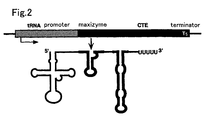
- the product was treated with restriction enzymes KpnI and EcoRV, and then a DNA sequence encoding a constitutive transport element (CTE, Fig. 1) derived from a Simian type D retrovirus (SRV) gene was inserted, thereby obtaining a CTE-Mz expression vector (Fig. 2).
- CTE constitutive transport element
- SRV Simian type D retrovirus
- LTR-Luc HeLa which stably expresses a chimeric gene (SEQ ID NO: 8) comprising a Long terminal repeat (LTR) gene ligated to a luciferase (Luc) gene, were used for the evaluation.
- 1x10 5 cells of LTR-Luc HeLa were inoculated on a 12-well plate, and then cultured overnight at 37°C in a 5% carbon dioxide (gas) incubator.
- the cells were collected, and then the luciferase activity was measured using a PicaGene kit (TOKYO PRINTNG INK MFG. Co., LTD., Tokyo, Japan).
- the cells were lysed in 150 ⁇ l of a cell lysis solution (100 mM K 2 HPO 4 , 100 mM KH 2 PO 4 , 0.2% Triton X-100 and 1 mM DTT; pH7.8), and then centrifuged at 10,000 x g at 4°C for 1 minute.
- luciferase activity measurement reagent 20 mM Tricine, 1.07 mM (MgCO 3 ) 4 Mg(OH) 2 , 2.67 mM MgSO 4 , 0.1 mM EDTA, 33.3 mM DTT, 270 ⁇ M coenzyme A, 470 ⁇ M luciferin and 530 ⁇ M ATP. 3 seconds after the addition, the fluorescent intensity was measured for 10 seconds using a fluorometer (Lumant LB 9501, Berthold, Bad Wildbad, Germany). The effect of the transfection efficiency on luciferase activity was corrected with ⁇ -galactosidase activity derived from the pSV ⁇ -galactosidase which had been simultaneously transfected.
- Luciferase activity when a control (pCD-SR ⁇ /tat) was allowed to act is determined as 100%, and the relative activities against it were shown.
- CTE-Mz When CTE-Mz was allowed to act on LTR-luciferase mRNA, significantly low luciferase activity was shown as compared with a case when a normal Mz was allowed to act. Thus, it was revealed that CTE-Mz showed excellent cleavage activity also for TAR and Luc that are cleaved with difficulty with the normal Mz.
- the present invention makes it possible to provide a maxizyme which binds to a target mRNA regardless of its conformation, and can effectively cleave it.
- the maxizyme of the present invention is useful as a medicament.
- the maxizyme is also useful in a method for specifically cleaving a target nucleic acid and a method for inhibiting or suppressing the biological functions of a target nucleic acid. By using such methods, the biological functions of a target nucleic acid can also be elucidated.
Landscapes
- Health & Medical Sciences (AREA)
- Life Sciences & Earth Sciences (AREA)
- Engineering & Computer Science (AREA)
- Chemical & Material Sciences (AREA)
- Organic Chemistry (AREA)
- Bioinformatics & Cheminformatics (AREA)
- General Health & Medical Sciences (AREA)
- Biomedical Technology (AREA)
- Genetics & Genomics (AREA)
- Medicinal Chemistry (AREA)
- Veterinary Medicine (AREA)
- Nuclear Medicine, Radiotherapy & Molecular Imaging (AREA)
- Chemical Kinetics & Catalysis (AREA)
- General Chemical & Material Sciences (AREA)
- Animal Behavior & Ethology (AREA)
- Pharmacology & Pharmacy (AREA)
- Public Health (AREA)
- Molecular Biology (AREA)
- Wood Science & Technology (AREA)
- Zoology (AREA)
- Virology (AREA)
- Biotechnology (AREA)
- General Engineering & Computer Science (AREA)
- Neurology (AREA)
- Neurosurgery (AREA)
- Biochemistry (AREA)
- Microbiology (AREA)
- Communicable Diseases (AREA)
- Oncology (AREA)
- Physics & Mathematics (AREA)
- Plant Pathology (AREA)
- Biophysics (AREA)
- Immunology (AREA)
- Rheumatology (AREA)
- Tropical Medicine & Parasitology (AREA)
- Hospice & Palliative Care (AREA)
- AIDS & HIV (AREA)
- Pain & Pain Management (AREA)
- Psychiatry (AREA)
- Psychology (AREA)
Abstract
An object of the present invention is to provide a maxizyme that can
bind to a target mRNA regardless of its conformation, and can effectively cleave
the mRNA. The present invention provides a maxizyme which binds to a
molecule having helicase activity.
Description
The present invention relates to a maxizyme and a use thereof, in
particular to a maxizyme showing a good RNA-cleaving activity on a target RNA,
and a use thereof.
In early 1980's, the discovery of self-splicing of rRNA of Tetrahymena
pyriformis by Cech et al., Colorado University, United States (K. Kruger, Cell, 31,
147-157 (1982)) and the analysis of ribonuclease P, a complex enzyme composed
of RNA and protein, by Altman, Yale University, United States (C.
Guerrier-Takada, Cell, 35, 849-857 (1983)) led to the discovery of the ribozyme
(ribozyme: nucleotide acid + enzyme), which is a RNA having a catalytic
function.
Since then, various ribozymes have been found. Among all,
hammerhead ribozymes are one of the most well researched ribozymes. The
hammerhead ribozyme, which functions to provide a self-cleavage reaction
(cis-type) in nature was divided (converted to trans-type) into two RNA strands (a
substrate region and an enzymatic activity retaining region) by the groups of
Uhlenbeck et al. and Haseloff et al. (O.C. Uhlenbeck, Nature, 328, 596 (1987); J.
Hasehoff, W.L. Gerlach, Nature, 334, 585 (1988)), whereby an application of a
ribozyme for genetic therapy was suggested.
Since then, numerous forms of applied research targeting cancers, AIDS
and the like have been reported (M. Cotten, M.L. Bimstlel, EMBO J 8, 861
(1989)). The present inventors have developed a maxizyme having an extremely
high substrate-specificity and cleaving only mRNA having an abnormal junction
sequence without affecting normal mRNA at all (International Publication:
WO99/46388).
However, a target mRNA has a secondary structure or a tertiary
structure. Thus, there has been a problem in that the substrate-binding region of
the maxizyme hidden in the stem structure or the like may block the maxizyme
from approaching its target site, so that no sufficient effect can be obtained.
An object of the present invention is to provide a maxizyme that can
bind to a target mRNA regardless of its conformation, and can effectively cleave
the mRNA.
As a result of intensive studies to achieve the above object, the present
inventors have found that excellent RNA cleaving activity can be obtained by
allowing the maxizyme to act with a molecule having helicase activity, thereby
completing the present invention.
The present invention relates to the following (1) to (19).
i and m are integers of 1 or more (for example, integers between 1 and 100);
j and n are integers of 1 or more (for example, integers between 1 and 100);
p and q are integers of 1 or more (for example, integers between 1 and 100);
X1 l...X1 h and X2 l...X2 k are nucleotide sequences complementary to a specific sequence in a target RNA, or nucleotide sequences containing a region complementary to a sequence near a cleavage site of the target RNA and a region capable of forming a cavity for capturing Mg2+ (magnesium ion) only in the presence of the target RNA;
Y1 l...Y1 i and Y2 l...Y2 m are nucleotide sequences forming stems; and
Z1 l...Z1 j and Z2 l...Z2 n are nucleotide sequences containing a region complementary to a sequence near a cleavage site of the target RNA and a region capable of forming a cavity for capturing Mg2+ only in the presence of the target RNA, and one of or both B1 l...B1 p and B2 l...B2 q are nucleotide sequences containing a region that binds to a molecule having helicase activity.
The maxizyme of the present invention is characterized by binding to a
molecule having helicase activity.
The present inventors have assumed at first that when a molecule having
helicase activity binds to the maxizyme, dimer formation is impossible due to the
steric hindrance resulting from the binding. Particularly, when pol III system is
used as an expression system, tRNAval is added to the 5' end, and therefore steric
hindrance of the maxizyme will be even greater. However surprisingly, it has
been confirmed that the maxizyme forms a dimer and has RNA-cleaving activity
superior to that of conventional maxizymes.
The present invention will be hereafter described in detail.
Maxizyme in the present invention means a minimized hammerhead
ribozyme that functions as a dimer. This minimization is generally constructed
by substituting the stem-loop II region of a hammerhead ribozyme which is
composed of the antisense regions (stem I and stem II), the activity center region
and the stem-loop II region, with a short chain linker. The maxizyme requires
Mg2+ (magnesium ion) for the expression of its activity, and the GC base pairs in
the stem II moiety are important to form a dimer. Design of the sequences of
hammerhead ribozymes and maxizymes is also described in Biophysics, pp.
99-104, Vol. 40 No. 2 (2000), and all the contents of this publication are
incorporated herein by reference as a part of the disclosure of the present
specification.
The number of sites capable of forming a cavity for capturing
magnesium ions, that is, the activity center regions, may be one or two per
maxizyme. A maxizyme having two activity center regions shows higher
substrate-cleaving efficiency, if it binds simultaneously at the two positions of
one substrate and can cleave the substrate after the NUX triplets of these two
positions (wherein N represents A, G, C or U, and X represents A, C or U).
Because of its dimeric structure (dimer), the maxizyme binds to a target
mRNA at two positions. Upon dimer formation, a homodimer type maxizyme
(Figs. 4 and 5) wherein 2 monomers of 1 type are bound, or a heterodimeric
maxizyme (Fig. 6) wherein 2 different types of monomers are bound, can be
designed. The homodimer type maxizyme binds at its two positions to mRNAs
having pre-determined binding sites. In this case, the two mRNAs bind to one
maxizyme within the molecule (trans-type maxizyme, Fig. 7). In contrast, the
heterodimer type maxizyme can bind to two different sequence portions.
Specifically, the maxizyme binds simultaneously at the different positions within
one mRNA (cis-type maxizyme, Fig. 8), or binds to two mRNAs wherein each of
the different sequence portions individually binds at a position between the
maxizyme (trans-type maxizyme) and a molecule (two mRNAs).
The molecule having helicase activity in the present invention means a
molecule which acts on mRNA and makes the helical structure of the RNA
unstable, so as to open the conformation containing double-stranded RNA.
Specific examples of the molecule include an RNA helicase, ribosome, restriction
enzyme (e.g., EcoRI and EcoRV) and the like. Such a molecule having helicase
activity may directly bind to the maxizyme or bind via an adaptor molecule. The
site for the molecule having helicase activity to bind to the maxizyme is not
specifically limited, as long as it does not deteriorate the cleavage activity of the
maxizyme. Preferably, the site is near the 3' end of the maxizyme.
For allowing the molecule having helicase activity to bind to the
maxizyme, there is a need to add a new binding region such that the molecule
having helicase activity or the above adaptor molecule can stably bind to
maxizyme. The binding region of the molecule or the like having helicase
activity differs depending on a target molecule having helicase activity or an
adaptor. It is possible to design such a binding region from the RNA
double-stranded binding region of the molecule having helicase activity. For
example, it is preferred to add a constitutive transport element (CTE, SEQ ID NO:
1, Fig. 1), HIV TAR RNA, POLY A RNA or the like as the binding region of the
molecule having helicase activity.
CTE indicates a cis-acting virus RNA for transporting an unspliced
genomic RNA to the cytoplasm in order to perform expression and packaging of a
virus structural protein. CTE is an RNA that a monkey type D retrovirus such as
Mason-Pfizer monkey virus (MPLV) originally possesses. It is considered that
these viruses possess the CTE, an RNA motif, for the extranuclear transport of an
unspliced RNA (H. Tang et al., (1997) Science 276: 1412-1415; J. Li et al., (1999)
Proc. Natl. Acad. Sci. USA 96:709-714; H. Tang et al., (1999) Mol. Cell Biol. 19:
3540-3550).
In a preferred embodiment of the present invention, the above CTE, or
an RNA having functions substantially equivalent to those of the CTE, or a
mutant of the CTE sequence having functions substantially equivalent to those of
the CTE can be used. Here, the expression "RNA having functions substantially
equivalent to those of CTE" means a molecule other than CTE having binding
affinity for RNA helicase. For example, it means a molecule such as an aptamer,
which binds to helicase and is artificially produced by the SELEX method. In
addition, the term "mutant" means a mutant wherein one or multiple nucleotides
are altered (substituted, deleted, added or inserted). Such alteration can be
performed by methods described in general publications such as J. Sambrook et al,
Molecular Cloning A Laboratory Manual, Cold Spring Harbor Laboratory Press
(1989).
PolyA RNA interacts with RNA helicase via the interaction between
poly A-binding protein (PABP) and protein-1 that interacts with PABP.
The binding region of a molecule having helicase activity may be
present in only one or both monomers of the maxizyme (homodimer or
heterodimer) (Fig. 7). When the binding region is present in both monomers of
the maxizyme, an extremely large steric hindrance is predicted. Even in this
case, excellent mRNA-cleaving activity has been confirmed.
Specific examples of the maxizyme of the present invention
characterized by binding to a molecule having helicase activity or containing the
region binding to a molecule having helicase activity include, but are not limited
to, a maxizyme having binding affinity for helicase or a molecule that forms a
complex with helicase, preferably, a maxizyme having binding affinity for RNA
helicase or a molecule (adaptor) that forms a complex with RNA helicase, such as
a maxizyme having an RNA sequence referred to as CTE (constitutive transport
element), HIV TAR RNA sequence or POLY A RNA sequence, which binds with
RNA helicase A.
The maxizyme of the present invention which binds to a molecule
having helicase activity, normally comprises a nucleic acid sequence which has
binding affinity for helicase or a molecule that forms a complex with helicase,
and a nucleic acid sequence of the maxizyme, which is bound directly or
indirectly to the former nucleic acid sequence. For example, the maxizyme can
be chemically synthesized by using a DNA/RNA synthesizer (e.g., model 394,
Applied Biosystems). As a method of binding both nucleic acid sequences, the
nucleic acid sequence having binding affinity for helicase or the molecule that
forms a complex with helicase may be located upstream or downstream of the
nucleic acid sequence of maxizyme. Preferably, the nucleic acid sequence
having binding affinity for helicase or the molecule that forms a complex with
helicase is bound downstream of the nucleic acid sequence of the maxizyme. In
such a case, the activity efficiency of the maxizyme is further improved.
In order to highly express the maxizyme of the present invention which
binds to a molecule having helicase activity within cells, it is required that a
promoter sequence is located upstream of the maxizyme sequence. When the
expression system of pol III is used, tRNAval sequence is added as an excessive
sequence (promoter sequence other than the maxizyme portion) in this expression
system. An expression vector of this maxizyme was actually constructed. In
the construct which was expressed from this vector, the maxizyme sequence is
bound downstream of tRNAval sequence via a short chain linker.
As shown in Figs. 7 and 8, it was predicted that helicase bound to the 3'
end and tRNAval at the 5' end are extremely great steric hindrances for the
maxizyme. However, a type of the maxizyme wherein the tRNAval sequence had
been added could be confirmed to have clear cleavage activity. Thus, it was
confirmed that the maxizyme of the present invention could efficiently form a
dimer.
The expression vector encoding the maxizyme of the present invention
which binds to a molecule having helicase activity can be constructed, for
example, by incorporating a DNA obtained by ligating a promoter sequence,
terminator sequence and the DNA sequence encoding the above maxizyme, into
an appropriate vector.
Examples of the expression vector that can be used herein include
plasmid vectors such as pUC19 (TAKARA SHUZO, Kyoto), pGREEN LANTERN
(Life Tech Oriental, Tokyo), pHaMDR (HUMAN GENE THERAPY 6: 905-915
(July 1995)), and vectors for gene therapy such as adenovirus vectors and
retrovirus vectors.
The above vector may contain a promoter sequence upstream of the
DNA encoding the maxizyme. A promoter sequence is an element for
controlling the expression of the DNA, and examples of the promoter include
virus promoters (e.g., an SV40 promoter), phage promoters (e.g., a λPL promoter)
and pol III promoters (e.g., a human tRNA promoter (e.g., a tRNAval promoter) or
adenovirus VA1 promoters). In the present invention, pol III promoter, and in
particular tRNA promoter, can be preferably used.
The vector of the present invention may further contain a terminator
sequence downstream of the DNA encoding the maxizyme that binds to a
molecule having helicase activity. Any sequence can be used as the terminator,
as long as it is a sequence that can terminate transcription. When necessary, the
vector can contain a selection marker gene such as an antibiotic resistance gene
(e.g., Ampr and Neor) and a gene for complementing a nutritional requirement, or
a reporter gene.
The nucleic acid encoding the maxizyme of the present invention may
be chemically synthesized by using a DNA/RNA synthesizer, or can be obtained
by synthesizing RNA in the presence of DNA-dependent RNA polymerase enzyme
using the above expression vector DNA as a template, and then collecting the
synthesized RNA. When introduced into a cell, the expression vector of the
present invention is integrated on a chromosome by homologous recombination,
and then the maxizyme of the present invention which binds to a molecule having
helicase activity can be expressed. For allowing homologous recombination to
occur, DNA encoding the maxizyme of the present invention which can bind to a
molecule having helicase activity is inserted into a sequence homologous to a part
of a host cell genome, and the thus obtained product can be incorporated into a
vector DNA. Integration onto a chromosome can be performed using not only an
adenovirus vector, retrovirus vector or the like that is used in a gene therapy, but
also a plasmid vector.
The present invention further encompasses a complex of the maxizyme
characterized by binding to a molecule having helicase activity and a molecule
having helicase activity. Specific examples of a molecule having helicase
activity include an RNA helicase, ribosome, and restriction enzyme (e.g., EcoRI
and EcoRV). The RNA helicase is preferred. Binding of the maxizyme to the
molecule having helicase activity may be achieved via either covalent binding or
non-covalent binding, as long as it does not deteriorate the function of each
component. In the case of non-covalent binding, the molecule can bind to the
CTE or polyA sequence via an adaptor that binds specifically to helicase. In the
case of covalent binding, the molecule can bind to the maxizyme via a linker, if
necessary.
The present invention further encompasses a pharmaceutical
composition comprising the aforementioned maxizyme, expression vector or
complex as an active ingredient. The pharmaceutical composition of the present
invention can contain a pharmaceutically acceptable carrier (for example, a
diluent such as physiological saline or buffer), if necessary. Application of the
pharmaceutical composition of the present invention depends on the types of the
function of the maxizyme. Namely, the pharmaceutical composition of the
present invention can be used to prevent or treat diseases caused by a target RNA
of the maxizyme.
For example, the pharmaceutical composition of the present invention is
useful for preventing or treating diseases caused by viruses such as the AIDS
virus (HIV), hepatitis type C virus or hepatitis type B virus, apoptosis-related
diseases (e.g., Alzheimer's disease and Parkinson's disease), cancer, autoimmune
disease, inflammation, genetic diseases, or the like.
The maxizyme used in the present invention cleaves the nucleic acids
which is a causative substance of a disease, binds complementarily to such a
nucleic acid so as to inhibit the functions, or specifically binds to a pathogenic
protein so as to inhibit the functions. Thus, the maxizyme can deteriorate the
normal functions of the causative substance.
Examples of a method for introducing the maxizyme of the present
invention or the vector containing the DNA encoding such maxizyme into a cell
include the calcium phosphate method, the electroporation method, the lipofection
method, the microinjection method, the method using a gene gun, and the method
using liposomes (e.g., Mamoru NAKANISHI et al., Protein Nucleic Acid Enzyme
Vol. 44, No. 11, 1590-1596 (1999)). When the vector is used, the vector can be
introduced into a cell by the above method. For example, a part of the cells of a
disease locus is taken out, gene introduction is performed in vitro, and then the
cells can be returned into the tissue. Alternatively, the vector can be directly
introduced into the tissue of an affected portion. In the case of infection by
virus vectors, the virus titer is normally at approximately 107 pfu/ml or more.
The present invention further provides a method for specifically
cleaving a target nucleic acid, or inhibiting or suppressing the biological
functions of a target nucleic acid by using the maxizyme, expression vector or
complex of the present invention. For example, this method can also be used for
elucidating the biological functions of a target nucleic acid. Randomization of
the sequences of the target binding sites (stem I and stem III) of the maxizyme
enables elucidation of a gene necessary for a certain biological function.
Specifically, the maxizyme having the randomized target binding sites
as mentioned above is introduced into a cell. For example, introduction of the
maxizyme into normal cells can induce canceration, or introduction of the same
into abnormal cancer cells can result in the recovery to normal cells. These
procedures can lead to the elucidation of a gene involved in canceration. When
necessary, the sequence of the gene is examined using GenBank or the like, so
that the entire sequence and the functions of the gene can be elucidated. When
the gene is an unknown gene, the entire sequence can be determined by cloning
the target gene based on the sequence of the target binding site. Even when the
above random sequence is complementary to that of an important gene, most of
the random sequences fail to cleave the target because they are unable to interact
with the target due to the higher-order structures of the targets. In the present
invention, by using the maxizyme which can bind to a molecule having helicase
activity, the above problems can be avoided and thus the efficiency can be greatly
improved.
All of the contents disclosed in the specification of Japanese Patent
Application No. 2001-134469, which is a priority document of the present
application, is incorporated herein by reference as a part of the disclosure of the
present application.
The present invention will be described more specifically by the
following examples, but the present invention is not limited by these examples.
In these examples, intracellular activity of the maxizyme having a
nucleotide sequence that binds to a molecule having helicase activity on the target
mRNA was evaluated. In these examples, RNA helicase A was selected as a
molecule having helicase activity, and a maxizyme (CTE-Mz) wherein CTE RNA
as a motif to which this molecule can bind had been ligated downstream of the
maxizyme, was used.
In order to prepare the maxizyme of the present invention, the sequence
of the maxizyme was determined so that the target sites of the maxizyme would
be a TAR RNA region (which is proven to have a strong secondary structure)
within an HIV-1-derived Long Terminal Repeat (LTR) gene and luciferase mRNA
(which allows quantitative evaluation).
A CTE-Mz expression vector was constructed according to the method
described in a publication (J. Virol. 73, 1868-1877 (1999); Proc. Natl. Acad. Sci.
USA 96, 1886-1891 (1999)). A single-stranded oligonucleotide was chemically
synthesized which has restriction sites Csp45I and SalI at the 5' and 3' ends,
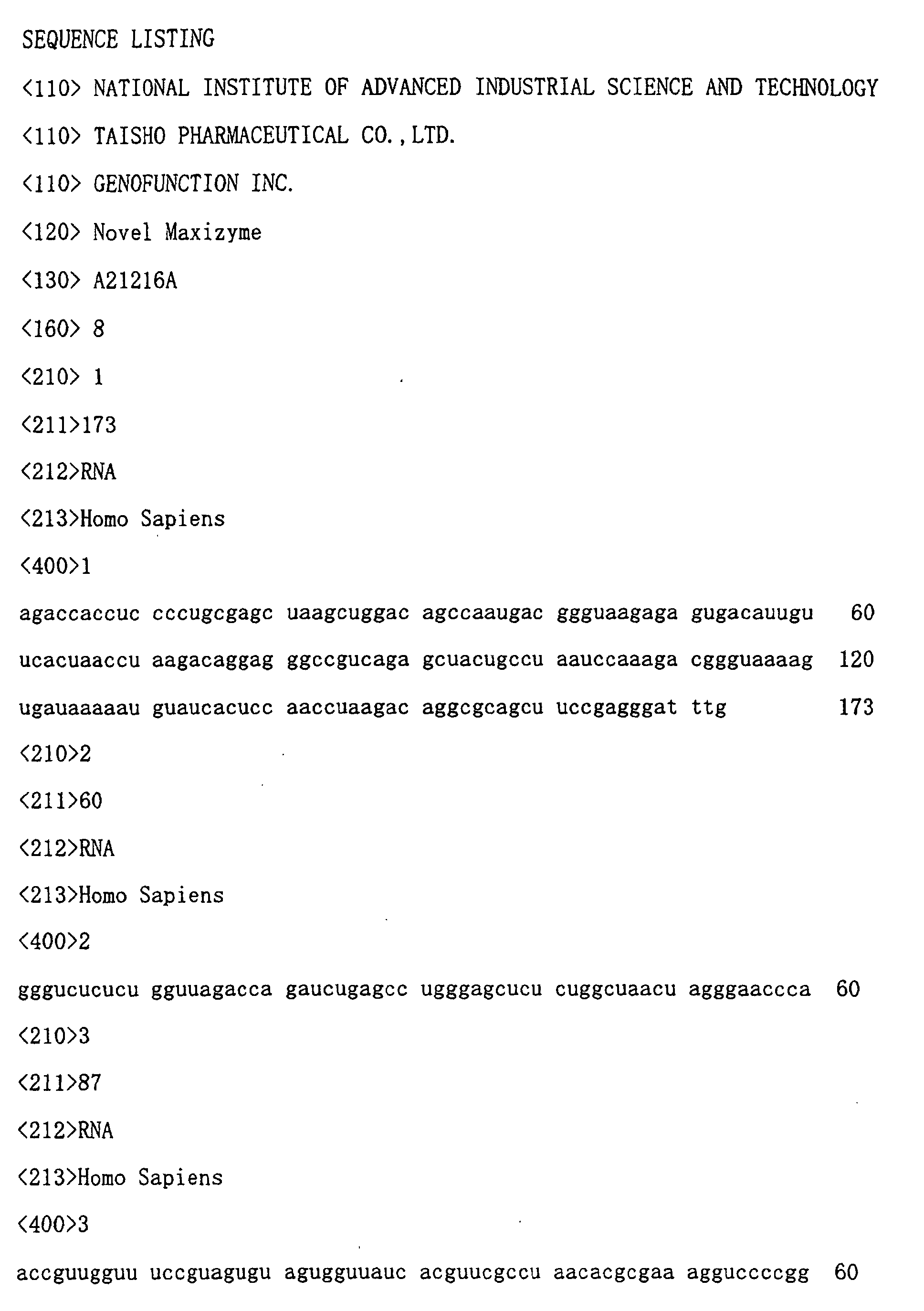
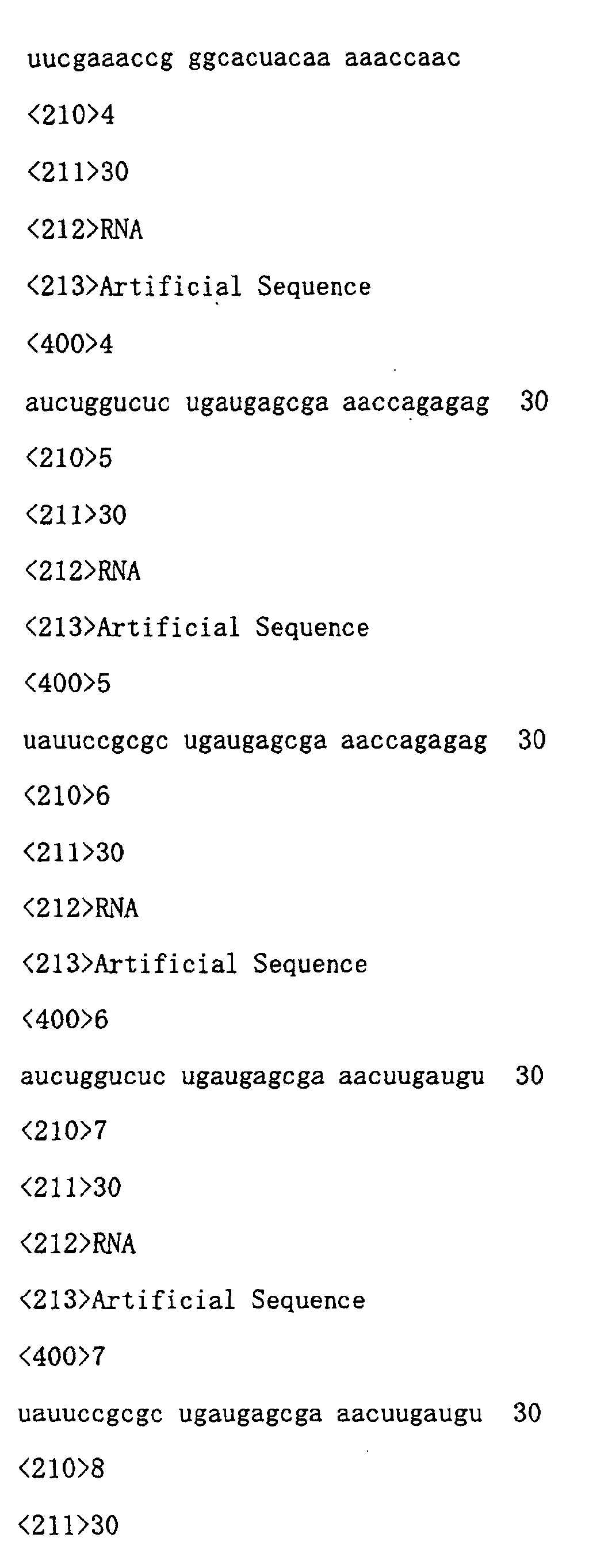
respectively, the DNA sequence encoding the maxizyme (SEQ ID NOS. 4, 5, 6
and 7) from upstream in the middle region, restriction sites KpnI and EcoRV, and
a terminator sequence (TTTTT) at the 3' end. Polymerase chain reaction was
carried out using the chemically synthesized oligonucleotide as a template to
synthesize a double-stranded oliogonucleotide. This double-stranded
oligonucleotide was treated with restriction enzymes Csp45I and SalI, and then
the digest was inserted downstream of tRNAval of a plasmid pUC-dt that had been
similarly treated with restriction enzymes Csp45I and SalI. The product was
treated with restriction enzymes KpnI and EcoRV, and then a DNA sequence
encoding a constitutive transport element (CTE, Fig. 1) derived from a Simian
type D retrovirus (SRV) gene was inserted, thereby obtaining a CTE-Mz
expression vector (Fig. 2).
HeLa cells (LTR-Luc HeLa) which stably expresses a chimeric gene
(SEQ ID NO: 8) comprising a Long terminal repeat (LTR) gene ligated to a
luciferase (Luc) gene, were used for the evaluation. 1x10⁵ cells of LTR-Luc
HeLa were inoculated on a 12-well plate, and then cultured overnight at 37°C in a
5% carbon dioxide (gas) incubator. 2 µg each of CTE-Mz expression vectors Mz
L and Mz R (in the case of homomaxizyme, 4 µg of monomer maxizyme) obtained
in Example 1, 100 ng of HIV-1-derived Tat gene expression plasmid (Tat protein
is essential for LTR-Luc expression), and 50 ng of pSV β-galactosidase
(Promega) were added to an Opti mem I medium (GIBCO/BRL) containing 4 µl of
a Lipofectin agent (GIBCO/BRL, Rockville, MD, U.S.A.), followed by incubation
at room temperature for 30 minutes or more. Then, the mixture was dropped
onto the cells in the 12-well plate, thereby performing transfection. After 24
hours of culturing at 37°C in a carbon dioxide (gas) incubator, the cells were
collected, and then the luciferase activity was measured using a PicaGene kit
(TOKYO PRINTNG INK MFG. Co., LTD., Tokyo, Japan). The cells were lysed
in 150 µl of a cell lysis solution (100 mM K2HPO4, 100 mM KH2PO4, 0.2% Triton
X-100 and 1 mM DTT; pH7.8), and then centrifuged at 10,000 x g at 4°C for 1
minute. 10 µl of the supernatant was added to 100 µl of a luciferase activity
measurement reagent (20 mM Tricine, 1.07 mM (MgCO3)4Mg(OH)2, 2.67 mM
MgSO4, 0.1 mM EDTA, 33.3 mM DTT, 270 µM coenzyme A, 470 µM luciferin
and 530 µM ATP). 3 seconds after the addition, the fluorescent intensity was
measured for 10 seconds using a fluorometer (Lumant LB 9501, Berthold, Bad
Wildbad, Germany). The effect of the transfection efficiency on luciferase
activity was corrected with β-galactosidase activity derived from the pSV
β-galactosidase which had been simultaneously transfected.
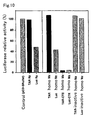
These results are shown in Figs. 9 and 10. Luciferase activity when a
control (pCD-SRα/tat) was allowed to act is determined as 100%, and the relative
activities against it were shown.
When CTE-Mz was allowed to act on LTR-luciferase mRNA,
significantly low luciferase activity was shown as compared with a case when a
normal Mz was allowed to act. Thus, it was revealed that CTE-Mz showed
excellent cleavage activity also for TAR and Luc that are cleaved with difficulty
with the normal Mz.
The present invention makes it possible to provide a maxizyme which
binds to a target mRNA regardless of its conformation, and can effectively cleave
it. The maxizyme of the present invention is useful as a medicament.
Furthermore, the maxizyme is also useful in a method for specifically cleaving a
target nucleic acid and a method for inhibiting or suppressing the biological
functions of a target nucleic acid. By using such methods, the biological
functions of a target nucleic acid can also be elucidated.

Claims (19)
- A maxizyme which binds to a molecule having helicase activity.
- A maxizyme which comprises a region which binds to the molecule having helicase activity.
- A maxizyme which is composed of a dimeric structure formed by an RNA molecule containing the following nucleotide sequence (a) and an RNA molecule containing the following nucleotide sequence (b),
i and m are integers of 1 or more (for example, integers between 1 and 100);
j and n are integers of 1 or more (for example, integers between 1 and 100);
p and q are integers of 1 or more (for example, integers between 1 and 100);
X1 l...X1 h and X2 l...X2 k are nucleotide sequences complementary to a specific sequence in a target RNA, or nucleotide sequences containing a region complementary to a sequence near a cleavage site of the target RNA and a region capable of forming a cavity for capturing Mg2+ (magnesium ion) only in the presence of the target RNA;
Y1 l...Y1 i and Y2 l...Y2 m are nucleotide sequences forming stems; and
Z1 l...Z1 j and Z2 l...Z2 n are nucleotide sequences containing a region complementary to a sequence near a cleavage site of the target RNA and a region capable of forming a cavity for capturing Mg2+ only in the presence of the target RNA, and one of or both B1 l...B1 p and B2 l...B2 q are nucleotide sequences containing a region that binds to a molecule having helicase activity. - The maxizyme according to claim 3, wherein, as a nucleotide sequence capable of forming a cavity for capturing Mg2+ (magnesium ion) only in the presence of a target RNA, Z1 l...Z1 j contains a sequence GAA, and Z2 l...Z2 n contains a sequence CUGAYZGA wherein YZ represents any one mononucleotide of A, G, U or C.
- The maxizyme according to claim 3 or 4, which contains, as a nucleotide sequence capable of forming a cavity for capturing Mg2+ only in the presence of a target RNA, a sequence GAA of X2 l...X2 k and a sequence CUGAYXGA of X1 l...X1 h wherein YX represents any one mononucleotide of A, G, U or C.
- The maxizyme according to any one of claims 1 to 5, wherein the molecule having helicase activity is an RNA helicase.
- The maxizyme according to claim 6, wherein the region that binds to a molecule having helicase activity is nucleotides represented by SEQ ID NO: 1 (CTE).
- The maxizyme according to claim 6, wherein the region that binds to a molecule having helicase activity is nucleotides represented by SEQ ID NO: 2 (TAR).
- The maxizyme according to any one of claims 3 to 8, wherein a linker sequence and a tRNAval promoter sequence are added upstream of each of the nucleotide sequences (a) and (b).
- The maxizyme according to claim 9, wherein the linker sequence added upstream of the nucleotide sequence (a) contains the following nucleotide sequence (e), and the linker sequence added upstream of the nucleotide sequence (b) contains the following nucleotide sequence (f):
- The maxizyme according to claim 9, wherein the tRNAval promoter sequence added upstream of each of the nucleotide sequences (a) and (b) is SEQ ID NO: 3.
- The maxizyme according to claim 9, wherein an additional sequence and a terminator sequence are added downstream of each of the nucleotide sequences (a) and (b).
- The maxizyme according to claim 12, wherein the additional sequence added downstream of the nucleotide sequence (a) contains the following nucleotide sequence (g), the additional sequence added downstream of the nucleotide sequence (b) contains the following nucleotide sequence (h), and the terminator sequence added downstream of each of the nucleotide sequences (a) and (b) contains the following nucleotide sequence (i):
- An expression vector which contains a DNA encoding the maxizyme according to any one of claims 1 to 13.
- A complex which is composed of the maxizyme according to any one of claims 1 to 13 and a molecule having helicase activity.
- A pharmaceutical composition, which comprise the maxizyme according to any one of claims 1 to 13, the expression vector according to claim 14, or the complex according to claim 15 as an active ingredient.
- A method for cleaving a target nucleic acid by using the maxizyme according to any one of claims 1 to 13, the expression vector according to claim 14, or the complex according to claim 15.
- A method for specifically inhibiting or suppressing the biological functions of a target nucleic acid by using the maxizyme according to any one of claims 1 to 13, the expression vector according to claim 14, or the complex according to claim 15.
- A method for analyzing the biological functions of a target nucleic acid, which comprises specifically cleaving the target nucleic acid or specifically inhibiting the biological functions of the target nucleic acid by using the maxizyme according to any one of claims 1 to 13, the expression vector according to claim 14, or the complex according to claim 15; and examining the effect of the cleavage or the inhibition on the biological activities.
Applications Claiming Priority (3)
| Application Number | Priority Date | Filing Date | Title |
|---|---|---|---|
| JP2001134469 | 2001-05-01 | ||
| JP2001134469 | 2001-05-01 | ||
| PCT/JP2002/004322 WO2002092821A1 (en) | 2001-05-01 | 2002-04-30 | Novel maxizyme |
Publications (2)
| Publication Number | Publication Date |
|---|---|
| EP1384783A1 true EP1384783A1 (en) | 2004-01-28 |
| EP1384783A4 EP1384783A4 (en) | 2005-04-20 |
Family
ID=18982145
Family Applications (1)
| Application Number | Title | Priority Date | Filing Date |
|---|---|---|---|
| EP02722902A Withdrawn EP1384783A4 (en) | 2001-05-01 | 2002-04-30 | NEW MAXIZYME |
Country Status (7)
| Country | Link |
|---|---|
| US (1) | US20040248114A1 (en) |
| EP (1) | EP1384783A4 (en) |
| JP (1) | JPWO2002092821A1 (en) |
| KR (1) | KR20040023596A (en) |
| CN (1) | CN1522300A (en) |
| CA (1) | CA2446075A1 (en) |
| WO (1) | WO2002092821A1 (en) |
Cited By (1)
| Publication number | Priority date | Publication date | Assignee | Title |
|---|---|---|---|---|
| EP2514826A3 (en) * | 2003-11-21 | 2013-04-03 | Revivicor Inc. | Use of interfering RNA molecules to down regulate the expression of specific genes or family of genes |
Families Citing this family (9)
| Publication number | Priority date | Publication date | Assignee | Title |
|---|---|---|---|---|
| EP2987870B1 (en) | 2011-10-21 | 2020-02-19 | Oxford Nanopore Technologies Limited | Method of characterizing a target polynucleotide using a transmembrane pore and molecular motor |
| WO2013098562A2 (en) | 2011-12-29 | 2013-07-04 | Oxford Nanopore Technologies Limited | Enzyme method |
| US10808231B2 (en) | 2012-07-19 | 2020-10-20 | Oxford Nanopore Technologies Limited | Modified helicases |
| JP6429773B2 (en) * | 2012-07-19 | 2018-11-28 | オックスフォード ナノポール テクノロジーズ リミテッド | Enzyme construct |
| CN117947149A (en) | 2013-10-18 | 2024-04-30 | 牛津纳米孔科技公开有限公司 | Modified enzymes |
| GB201406151D0 (en) | 2014-04-04 | 2014-05-21 | Oxford Nanopore Tech Ltd | Method |
| GB201417712D0 (en) | 2014-10-07 | 2014-11-19 | Oxford Nanopore Tech Ltd | Method |
| CN104611419B (en) * | 2014-12-29 | 2016-08-24 | 江苏大学 | A kind of detection method based on graphene oxide chip DNA unwindase |
| CN109196116B (en) | 2016-05-25 | 2022-09-27 | 牛津纳米孔科技公开有限公司 | Method for characterizing target polynucleotide |
Family Cites Families (4)
| Publication number | Priority date | Publication date | Assignee | Title |
|---|---|---|---|---|
| US199471A (en) * | 1878-01-22 | Improvement in marking-pens | ||
| US5663064A (en) * | 1995-01-13 | 1997-09-02 | University Of Vermont | Ribozymes with RNA protein binding site |
| AU3276599A (en) * | 1998-03-12 | 1999-09-27 | Japan As Represented By Director General Of Agency Of Industrial Science And Technology | Nucleic acid enzyme showing allosteric rna-cleaving activity on target rna |
| EP1097993A3 (en) * | 1999-11-05 | 2004-01-07 | National Institute of Advanced Industrial Science and Technology | Functional ribozyme chimeric molecules capable of sliding |
-
2002
- 2002-04-30 US US10/475,851 patent/US20040248114A1/en not_active Abandoned
- 2002-04-30 CA CA002446075A patent/CA2446075A1/en not_active Abandoned
- 2002-04-30 EP EP02722902A patent/EP1384783A4/en not_active Withdrawn
- 2002-04-30 WO PCT/JP2002/004322 patent/WO2002092821A1/en not_active Ceased
- 2002-04-30 KR KR10-2003-7014258A patent/KR20040023596A/en not_active Withdrawn
- 2002-04-30 CN CNA028131983A patent/CN1522300A/en active Pending
- 2002-04-30 JP JP2002589687A patent/JPWO2002092821A1/en active Pending
Cited By (1)
| Publication number | Priority date | Publication date | Assignee | Title |
|---|---|---|---|---|
| EP2514826A3 (en) * | 2003-11-21 | 2013-04-03 | Revivicor Inc. | Use of interfering RNA molecules to down regulate the expression of specific genes or family of genes |
Also Published As
| Publication number | Publication date |
|---|---|
| KR20040023596A (en) | 2004-03-18 |
| CN1522300A (en) | 2004-08-18 |
| CA2446075A1 (en) | 2002-11-21 |
| JPWO2002092821A1 (en) | 2004-09-02 |
| WO2002092821A1 (en) | 2002-11-21 |
| EP1384783A4 (en) | 2005-04-20 |
| US20040248114A1 (en) | 2004-12-09 |
Similar Documents
| Publication | Publication Date | Title |
|---|---|---|
| CN115335526B (en) | Ribozyme-mediated RNA assembly and expression | |
| US5217889A (en) | Methods and applications for efficient genetic suppressor elements | |
| US5872241A (en) | Multiple component RNA catalysts and uses thereof | |
| EP4324920A1 (en) | Gene expression regulatory system using crispr system | |
| JPH10508181A (en) | Targeted cleavage of RNA using ribonuclease P targeting and cleavage sequences | |
| AU6298899A (en) | Production of ssdna (in vivo) | |
| JP2002505876A (en) | Ribozymes capable of inhibiting CCR5 receptor expression | |
| US20120077270A1 (en) | Control of Gene Expression Using a Complex of an Oligonucleotide and a Regulatory Peptide | |
| WO1997033988A1 (en) | Double mutants of dihydrofolate reductase and methods of using same | |
| JPH1052264A (en) | N-ras expression inhibitor | |
| EP1470226B1 (en) | Control of gene expression using a complex of an oligonucleotide and a regulatory peptide | |
| US20040248114A1 (en) | Novel maxizyme | |
| AU2002363997A1 (en) | Intracellular generation of single-stranded dna | |
| US20110003883A1 (en) | Allosteric trans-splicing group i ribozyme whose activity of target-specific rna replacement is controlled by theophylline | |
| JP2003511025A (en) | Modification of gene expression by ssDNA produced in vivo | |
| CA2516425A1 (en) | Rna interference compositions and methods | |
| AU2002246959B2 (en) | Spliceosome mediated RNA trans-splicing | |
| US20030199471A1 (en) | Functional chimeric molecules capable of sliding | |
| JP2002509733A (en) | Directional antisense library | |
| US20030082800A1 (en) | In vivo ssDNA expression vectors for altering gene expression | |
| JP3613576B2 (en) | Method for selecting highly functional nucleic acid molecules in cells | |
| JP3704037B2 (en) | Sliding functional chimeric molecule | |
| Economos | Peptide Nucleic Acids and CRISPR-Cas9: Mechanisms and Rational Applications for Gene Editing Systems | |
| JP2008514204A (en) | Single-stranded antibacterial oligonucleotide and use thereof | |
| AU2004205192B2 (en) | Production of ssDNA in vivo |
Legal Events
| Date | Code | Title | Description |
|---|---|---|---|
| PUAI | Public reference made under article 153(3) epc to a published international application that has entered the european phase |
Free format text: ORIGINAL CODE: 0009012 |
|
| 17P | Request for examination filed |
Effective date: 20031107 |
|
| AK | Designated contracting states |
Kind code of ref document: A1 Designated state(s): AT BE CH CY DE DK ES FI FR GB GR IE IT LI LU MC NL PT SE TR |
|
| AX | Request for extension of the european patent |
Extension state: AL LT LV MK RO SI |
|
| A4 | Supplementary search report drawn up and despatched |
Effective date: 20050303 |
|
| 17Q | First examination report despatched |
Effective date: 20050512 |
|
| STAA | Information on the status of an ep patent application or granted ep patent |
Free format text: STATUS: THE APPLICATION IS DEEMED TO BE WITHDRAWN |
|
| 18D | Application deemed to be withdrawn |
Effective date: 20050923 |