EP1382706A1 - Isothermal forging of nickel-base superalloys in air - Google Patents
Isothermal forging of nickel-base superalloys in air Download PDFInfo
- Publication number
- EP1382706A1 EP1382706A1 EP03254493A EP03254493A EP1382706A1 EP 1382706 A1 EP1382706 A1 EP 1382706A1 EP 03254493 A EP03254493 A EP 03254493A EP 03254493 A EP03254493 A EP 03254493A EP 1382706 A1 EP1382706 A1 EP 1382706A1
- Authority
- EP
- European Patent Office
- Prior art keywords
- percent
- forging
- nickel
- providing
- dies
- Prior art date
- Legal status (The legal status is an assumption and is not a legal conclusion. Google has not performed a legal analysis and makes no representation as to the accuracy of the status listed.)
- Granted
Links
- 229910000601 superalloy Inorganic materials 0.000 title claims abstract description 66
- 238000010275 isothermal forging Methods 0.000 title description 13
- 238000005242 forging Methods 0.000 claims abstract description 188
- 238000010438 heat treatment Methods 0.000 claims abstract description 9
- PXHVJJICTQNCMI-UHFFFAOYSA-N Nickel Chemical compound [Ni] PXHVJJICTQNCMI-UHFFFAOYSA-N 0.000 claims description 32
- 238000000034 method Methods 0.000 claims description 22
- XEEYBQQBJWHFJM-UHFFFAOYSA-N Iron Chemical compound [Fe] XEEYBQQBJWHFJM-UHFFFAOYSA-N 0.000 claims description 20
- ZOKXTWBITQBERF-UHFFFAOYSA-N Molybdenum Chemical compound [Mo] ZOKXTWBITQBERF-UHFFFAOYSA-N 0.000 claims description 18
- 229910052750 molybdenum Inorganic materials 0.000 claims description 18
- 239000011733 molybdenum Substances 0.000 claims description 18
- 229910052759 nickel Inorganic materials 0.000 claims description 16
- 229910052782 aluminium Inorganic materials 0.000 claims description 15
- XAGFODPZIPBFFR-UHFFFAOYSA-N aluminium Chemical compound [Al] XAGFODPZIPBFFR-UHFFFAOYSA-N 0.000 claims description 15
- 239000012535 impurity Substances 0.000 claims description 15
- 239000000203 mixture Substances 0.000 claims description 15
- WFKWXMTUELFFGS-UHFFFAOYSA-N tungsten Chemical compound [W] WFKWXMTUELFFGS-UHFFFAOYSA-N 0.000 claims description 15
- 229910052721 tungsten Inorganic materials 0.000 claims description 15
- 239000010937 tungsten Substances 0.000 claims description 15
- ZOXJGFHDIHLPTG-UHFFFAOYSA-N Boron Chemical compound [B] ZOXJGFHDIHLPTG-UHFFFAOYSA-N 0.000 claims description 10
- OKTJSMMVPCPJKN-UHFFFAOYSA-N Carbon Chemical compound [C] OKTJSMMVPCPJKN-UHFFFAOYSA-N 0.000 claims description 10
- VYZAMTAEIAYCRO-UHFFFAOYSA-N Chromium Chemical compound [Cr] VYZAMTAEIAYCRO-UHFFFAOYSA-N 0.000 claims description 10
- RTAQQCXQSZGOHL-UHFFFAOYSA-N Titanium Chemical compound [Ti] RTAQQCXQSZGOHL-UHFFFAOYSA-N 0.000 claims description 10
- QCWXUUIWCKQGHC-UHFFFAOYSA-N Zirconium Chemical compound [Zr] QCWXUUIWCKQGHC-UHFFFAOYSA-N 0.000 claims description 10
- 229910052796 boron Inorganic materials 0.000 claims description 10
- 229910052799 carbon Inorganic materials 0.000 claims description 10
- 229910052804 chromium Inorganic materials 0.000 claims description 10
- 239000011651 chromium Substances 0.000 claims description 10
- 239000010941 cobalt Substances 0.000 claims description 10
- 229910017052 cobalt Inorganic materials 0.000 claims description 10
- GUTLYIVDDKVIGB-UHFFFAOYSA-N cobalt atom Chemical compound [Co] GUTLYIVDDKVIGB-UHFFFAOYSA-N 0.000 claims description 10
- 229910052742 iron Inorganic materials 0.000 claims description 10
- 229910052758 niobium Inorganic materials 0.000 claims description 10
- 239000010955 niobium Substances 0.000 claims description 10
- GUCVJGMIXFAOAE-UHFFFAOYSA-N niobium atom Chemical compound [Nb] GUCVJGMIXFAOAE-UHFFFAOYSA-N 0.000 claims description 10
- 239000010936 titanium Substances 0.000 claims description 10
- 229910052719 titanium Inorganic materials 0.000 claims description 10
- 229910052726 zirconium Inorganic materials 0.000 claims description 10
- 239000000843 powder Substances 0.000 claims description 8
- FYYHWMGAXLPEAU-UHFFFAOYSA-N Magnesium Chemical compound [Mg] FYYHWMGAXLPEAU-UHFFFAOYSA-N 0.000 claims description 7
- 229910052749 magnesium Inorganic materials 0.000 claims description 7
- 239000011777 magnesium Substances 0.000 claims description 7
- 229910052715 tantalum Inorganic materials 0.000 claims description 5
- GUVRBAGPIYLISA-UHFFFAOYSA-N tantalum atom Chemical compound [Ta] GUVRBAGPIYLISA-UHFFFAOYSA-N 0.000 claims description 5
- 229910045601 alloy Inorganic materials 0.000 description 12
- 239000000956 alloy Substances 0.000 description 12
- 239000000463 material Substances 0.000 description 7
- 238000000137 annealing Methods 0.000 description 5
- 238000012545 processing Methods 0.000 description 5
- 239000011261 inert gas Substances 0.000 description 3
- 238000005555 metalworking Methods 0.000 description 3
- 238000004140 cleaning Methods 0.000 description 2
- 238000001125 extrusion Methods 0.000 description 2
- 238000003754 machining Methods 0.000 description 2
- 230000003647 oxidation Effects 0.000 description 2
- 238000007254 oxidation reaction Methods 0.000 description 2
- 230000002411 adverse Effects 0.000 description 1
- 230000007423 decrease Effects 0.000 description 1
- 238000010586 diagram Methods 0.000 description 1
- 230000007613 environmental effect Effects 0.000 description 1
- 239000007789 gas Substances 0.000 description 1
- 230000006698 induction Effects 0.000 description 1
- 230000000977 initiatory effect Effects 0.000 description 1
- 238000009533 lab test Methods 0.000 description 1
- 239000000155 melt Substances 0.000 description 1
- 230000000704 physical effect Effects 0.000 description 1
- 238000012805 post-processing Methods 0.000 description 1
- 238000001556 precipitation Methods 0.000 description 1
- 239000007858 starting material Substances 0.000 description 1
- 239000000126 substance Substances 0.000 description 1
- 238000012360 testing method Methods 0.000 description 1
Images

Classifications
-
- C—CHEMISTRY; METALLURGY
- C22—METALLURGY; FERROUS OR NON-FERROUS ALLOYS; TREATMENT OF ALLOYS OR NON-FERROUS METALS
- C22F—CHANGING THE PHYSICAL STRUCTURE OF NON-FERROUS METALS AND NON-FERROUS ALLOYS
- C22F1/00—Changing the physical structure of non-ferrous metals or alloys by heat treatment or by hot or cold working
- C22F1/10—Changing the physical structure of non-ferrous metals or alloys by heat treatment or by hot or cold working of nickel or cobalt or alloys based thereon
-
- C—CHEMISTRY; METALLURGY
- C22—METALLURGY; FERROUS OR NON-FERROUS ALLOYS; TREATMENT OF ALLOYS OR NON-FERROUS METALS
- C22C—ALLOYS
- C22C19/00—Alloys based on nickel or cobalt
- C22C19/03—Alloys based on nickel or cobalt based on nickel
- C22C19/05—Alloys based on nickel or cobalt based on nickel with chromium
- C22C19/051—Alloys based on nickel or cobalt based on nickel with chromium and Mo or W
- C22C19/056—Alloys based on nickel or cobalt based on nickel with chromium and Mo or W with the maximum Cr content being at least 10% but less than 20%
Definitions
- This invention relates to the forging of nickel-base superalloys and, more particularly, to such forging performed in air.
- Nickel-base superalloys are used in the portions of aircraft gas turbine engines which have the most demanding performance requirements and are subjected to the most adverse environmental conditions.
- Cast nickel-base superalloys are employed, for example, as turbine blades and turbine vanes.
- Wrought nickel-base superalloys are employed, for example, as rotor disks and shafts.
- the present invention is concerned with the wrought nickel-base superalloys.
- the wrought nickel-base superalloys are initially supplied as cast ingots, which are cast from the melt, or as consolidated-powder billets, which are consolidated from powders.
- the consolidated-powder billets are preferred as the starting material for many applications because they have a uniform, well-controlled initial microstructure and a fine grain size.
- the billet is reduced in size in a series of steps by metal working procedures such as forging or extrusion, and is thereafter machined.
- the billet is placed between two forging dies in a forging press. The forging dies are forced together by the forging press to reduce the thickness of the billet.
- the selection of the forging conditions depends upon several factors, including the properties and metallurgical characteristics of the nickel-base superalloy and the properties of the materials of the forging dies.
- the forging dies must be sufficiently strong to deform the material being forged, and the forged superalloy must exhibit the required properties at the completion of the forging operation.
- nickel-base superalloys such as ReneTM 88DT and ME3 alloys
- TZM molybdenum dies This combination of the superalloy being forged and the die material allows the forging to be performed, and the superalloy has the required properties at the completion of the forging.
- this combination of temperature, the superalloy being forged, and the die material requires that the forging be performed in vacuum or in an inert-gas atmosphere. The requirement of a vacuum or an inert-gas atmosphere greatly increases the complexity and cost of the forging process.
- the present invention fulfills this need, and further provides related advantages.
- the present invention provides a method for forging nickel-base superalloys such as ReneTM 88DT and ME3.
- the method allows the forging to be performed isothermally in air, resulting in a substantial cost saving.
- the final microstructure has the desired grain structure, and is consistent with and permits additional processing such as supersolvus final annealing.
- the present invention provides a method for forging a superalloy comprising the steps of providing a forging blank of a forging nickel-base superalloy, and providing a forging press having forging dies made of a die nickel-base superalloy.
- the die nickel-base superalloy desirably has a creep strength of not less than the flow stress of the forging nickel-base superalloy at a forging temperature of from about 1700°F to about 1850°F and a forging nominal strain rate.
- the method further includes heating the forging blank and the forging dies to the forging temperature of from about 1700°F to about 1850°F, and forging the forging blank using the forging dies at the forging temperature of from about 1750°F to about 1850°F and at the forging nominal strain rate.
- the forging blank is made of the forging nickel-base superalloy, preferably ReneTM 88DT, having a nominal composition, in weight percent, of 13 percent cobalt, 16 percent chromium, 4 percent molybdenum, 3.7 percent titanium, 2.1 percent aluminum, 4 percent tungsten, 0.75 percent niobium, 0.015 percent boron, 0.03 percent zirconium, 0.03 percent carbon, up to about 0.5 percent iron, balance nickel and minor impurity elements; or alloy ME3, having a nominal composition, in weight percent, of about 20.6 percent cobalt, about 13.0 percent chromium, about 3.4 percent aluminum, about 3.70 percent titanium, about 2.4 percent tantalum, about 0.90 percent niobium, about 2.10 percent tungsten, about 3.80 percent molybdenum, about 0.05 percent carbon, about 0.025 percent boron, about 0.05 percent zirconium, up to about 0.5 percent iron, balance nickel and minor impurity elements.
- ReneTM 88DT having a
- the nickel-base superalloys exhibit superplasticity over a respective superplastic temperature range at elevated temperature.
- the forging deformation is desirably accomplished in the superplastic temperature range to avoid critical grain growth in the subsequent supersolvus anneal.
- the nickel-base superalloys may be furnished in any operable form, such as cast-wrought or consolidated-powder billets.
- the nickel-base superalloys are furnished as extruded billet with a grain size of not less than ASTM 12 (i.e., grain sizes of ASTM 12 or smaller).
- the forging dies may be made of any operable die nickel-base superalloy, but preferably have a nominal composition, in weight percent, of from about 5 to about 7 percent aluminum, from about 8 to about 15 percent molybdenum, from about 5 to about 15 percent tungsten, up to about 140 parts per million magnesium (preferably about 140 parts per million magnesium), no rare earths, balance nickel and impurities.
- the selections of the isothermal forging temperature and forging nominal strain rate are based upon consideration of the physical properties of the forging nickel-base superalloy and of the die nickel-base superalloy, and also of the temperature requirement to achieve the required structure in the forging nickel-base superalloy at the completion of the processing.
- the die nickel-base superalloy has sufficient creep strength to deform the forging nickel-base superalloy. With increasing temperature, the compressive strength and the creep strength of both the forging nickel-base superalloy and the die nickel-base superalloy fall, but at different rates.
- the selected forging temperature must be within the superplastic range of the alloy to ensure the proper final microstructure. Further, to accomplish the preferred forging in air, the forging temperature must not be so high that the forging nickel-base superalloy and the die nickel-base superalloy excessively oxidize.
- the isothermal forging temperature range of from about 1700°F to about 1850°F was selected. More preferably, the isothermal forging temperature is from about 1750°F to about 1800°F.
- the forging nominal strain rate was selected to be not greater than about 0.010 per second. Testing showed that higher strain rates within the forging temperature range result in critical grain growth in the final processed article.
- the heating and isothermal forging steps are preferably performed in air, at the indicated temperatures. Forging in air, rather than in inert gas or vacuum as required when TZM molybdenum dies are used, saves on the costs of special heating and forging equipment.
- the forging may be used in the as-forged state, or post processed by any operable approach, such as cleaning, heat treating, additional metalworking, machining, and the like.
- the forging is heat treated by annealing at an annealing temperature above the gamma prime solvus temperature, or typically about 2100°F for ReneTM 88DT alloy and 2160°F for ME3 alloy.
- the present approach provides a technique for forging nickel-base superalloys that results in fully acceptable metallurgical structures and properties in the final forging, while significantly reducing the cost of the forging operation by permitting the isothermal forging to be accomplished in air.
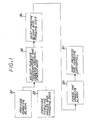
- Figure 1 depicts a preferred approach for practicing the invention.
- a forging blank is provided, step 20.
- the forging blank is made of a forging nickel-base superalloy.
- an alloy is nickel-base when it has more nickel than any other element, and is further a nickel-base superalloy when it is strengthened by the precipitation of gamma prime or related phases.
- ReneTM 88DT Two nickel-base superalloys of particular interest are ReneTM 88DT, having a nominal composition, in weight percent, of 13 percent cobalt, 16 percent chromium, 4 percent molybdenum, 3.7 percent titanium, 2.1 percent aluminum, 4 percent tungsten, 0.75 percent niobium, 0.015 percent boron, 0.03 percent zirconium, 0.03 percent carbon, up to about 0.5 percent iron, balance nickel and minor impurity elements; and alloy ME3, having a nominal composition, in weight percent, of about 20.6 percent cobalt, about 13.0 percent chromium, about 3.4 percent aluminum, about 3.70 percent titanium, about 2.4 percent tantalum, about 0.90 percent niobium, about 2.10 percent tungsten, about 3.80 percent molybdenum, about 0.05 percent carbon, about 0.025 percent boron, about 0.05 percent zirconium, up to about 0.5 percent iron, balance nickel and minor impurity elements.
- the nickel-base superalloys are furnished in any operable form, but preferably are furnished as consolidated-powder billets. These billets are made by consolidating powders of the selected superalloy by extrusion, producing a billet having a uniform grain size of ASTM 12 or higher (that is, ASTM 12 or finer grains, inasmuch as the grain size decreases with increasing ASTM grain size number). Consolidated-powder billets have the advantage over cast billets in having a more-uniform fine-grain microstructure and are therefore preferred for achieving good chemical uniformity, good deformation homogeneity, and minimal sites for crack initiation.
- the forging blank has a size and shape selected so that, after forging, the forged article is of the desired size and shape. Procedures are known in the art for selecting the size and shape of the starting forging blank so as to yield the required finished size and shape.
- a forging press and forging dies are provided, step 22. Any operable forging press may be used, and Figure 2 schematically depicts a basic forging press 40.
- the forging press 40 has a stationary lower platen 42, a stationary upper plate 44, and stationary columns 46 that support the upper plate 44 from the lower platen 42.
- a movable upper platen 48 slides on the columns 46, and is driven upwardly and downwardly by a drive motor 50 on the upper plate 44.
- a lower forging die 52 is stationary and sits on the lower platen 42.
- An upper forging die 54 is movable and is affixed to the upper platen 48 so that it rides upwardly and downwardly with the upper platen 48.
- a workpiece 56 is positioned between the upper forging die 54 and the lower forging die 52.
- a heater 57 here illustrated as an induction heating coil, is positioned around the forging dies 52 and 54, and the workpiece 56, to maintain the forging dies and the workpiece at a selected approximately constant isothermal forging temperature during the forging stroke, thereby achieving isothermal forging. Some minor variation in temperature is permitted during the forging stroke, but in general the forging dies 52 and 54 and the workpiece 56 remain at approximately the constant isothermal forging temperature.
- the workpiece 56 is initially the forging blank of the forging nickel-base superalloy.
- the workpiece 56 is positioned between the upper forging die 54 and the lower forging die 52 and is compressively deformed at a nominal strain rate by the movement of the upper forging die 54 in the downward direction.
- the upper forging die 54 and the lower forging die 52 may be flat plates, or they may be patterned so that the final forging has that pattern impressed thereon.
- Figure 3 is an exemplary forging 58 with a patterned face 60 produced using patterned forging dies.
- the forging dies 52 and 54 are made of a die nickel-base superalloy, wherein the die nickel-base superalloy has a creep strength of not less than the flow stress of the forging nickel-base superalloy at an isothermal forging temperature of from about 1700°F to about 1850°F and a forging nominal strain rate.
- the forging dies 52 and 54 are preferably made with a nominal composition, in weight percent, of from about 5 to about 7 percent aluminum, from about 8 to about 15 percent molybdenum, from about 5 to about 15 percent tungsten, up to about 140 parts per million magnesium (preferably 140 parts per million magnesium), balance nickel and impurities.
- a forging temperature and forging nominal strain rate are selected, step 24.
- the forging nickel-base superalloys exhibit superplasticity over a respective superplastic temperature range and strain-rate range at elevated temperature.
- the forging deformation is desirably accomplished in the superplastic temperature range to avoid critical grain growth in the subsequent supersolvus anneal.
- the acceptable range of temperatures and strain rates may be determined from the plastic deformation properties of the forging nickel-base superalloy.
- Tables I and II respectively present the results of laboratory tests on ReneTM 88DT and ME3 alloys to determine the operable isothermal forging temperatures and strain rates: (ReneTM 88DT alloy) Temperature °F Strain Rate (/sec) Stress (ksi) "m" 1800 0.0001 3.03 0.512 1800 0.0003 5.15 0.459 1800 0.001 8.44 0.406 1800 0.003 13.62 0.352 1800 0.01 19.69 0.299 1800 0.03 25.79 0.249 1750 0.0001 4.43 0.497 1750 0.0003 7.48 0.440 1750 0.001 12.03 0.385 1750 0.003 18.65 0.329 1750 0.01 25.91 0.274 1750 0.03 33.83 0.220 1700 0.0001 6.85 0.453 1700 0.0003 10.95 0.400 1700 0.001 17.14 0.348 1700 0.003 24.97 0.295 1700
- processing parameters were selected to achieve the required value of "m" of about 0.3 or greater, where "m” is an index of the extent of superplastic deformation of the material.
- the forging temperature is preferably from about 1700°F to about 1850°F, and more preferably from about 1750°F to about 1800°F to reduce the risks of excessive oxidation of the workpiece at higher temperatures.
- the forging nominal strain rate is not greater than about 0.01 per second.
- the "nominal" strain rate is that determined from the gross rate of movement of the upper platen 48, normalized to the height of the workpiece 56 measured parallel to the direction of movement of the upper platen 48. Locally within the forging dies 52 and 54, the actual strain rate may be higher or lower.
- the forging blank and the forging dies are heated to the isothermal forging temperature of from about 1700°F to about 1850°F, step 26.
- the forging blank is forged using the forging dies at the isothermal forging temperature of from about 1700°F to about 1850°F and at the forging nominal strain rate, step 28, using a forging apparatus such as the forging press 40 of Figure 2.
- the heating step 26 and the forging step 28 are preferably performed in air.
- the forging in air greatly reduces the cost of the forging operation as compared with forging in vacuum or an inert atmosphere, as required in prior processes for forging the nickel-base superalloys.
- the determination to forge in air is not an arbitrary one, and air forging may be performed only where the die material does not excessively oxidize in air at the forging temperature and also retains sufficient strength at the forging temperature.
- the conventional die material, TZM molybdenum cannot be used at these temperatures in air because of its excessive oxidation.
- the forging 58 is removed from the forging press 40.
- the forging 58 may be used in the as-forged state, or it may be post processed, step 30.
- the forgings of ReneTM 88DT or ME3 nickel-base superalloys are annealed at an annealing temperature above the gamma-prime solvus temperature.
- the supersolvus annealing is preferably at a temperature of from about 2080°F to about 2100°F for the ReneTM 88DT alloy and from about 2120°F to about 2160°F for the ME3 alloy, for a time of from about 1 to about 2 hours.
- Other types of post-processing 30 may include, for example, cleaning, other types of heat treating, additional metalworking, machining, and the like.
Landscapes
- Chemical & Material Sciences (AREA)
- Engineering & Computer Science (AREA)
- Materials Engineering (AREA)
- Mechanical Engineering (AREA)
- Metallurgy (AREA)
- Organic Chemistry (AREA)
- Physics & Mathematics (AREA)
- Thermal Sciences (AREA)
- Crystallography & Structural Chemistry (AREA)
- Forging (AREA)
Abstract
Description
- This invention relates to the forging of nickel-base superalloys and, more particularly, to such forging performed in air.
- Nickel-base superalloys are used in the portions of aircraft gas turbine engines which have the most demanding performance requirements and are subjected to the most adverse environmental conditions. Cast nickel-base superalloys are employed, for example, as turbine blades and turbine vanes. Wrought nickel-base superalloys are employed, for example, as rotor disks and shafts. The present invention is concerned with the wrought nickel-base superalloys.
- The wrought nickel-base superalloys are initially supplied as cast ingots, which are cast from the melt, or as consolidated-powder billets, which are consolidated from powders. The consolidated-powder billets are preferred as the starting material for many applications because they have a uniform, well-controlled initial microstructure and a fine grain size. In either case, the billet is reduced in size in a series of steps by metal working procedures such as forging or extrusion, and is thereafter machined. In one form of forging, the billet is placed between two forging dies in a forging press. The forging dies are forced together by the forging press to reduce the thickness of the billet.
- The selection of the forging conditions depends upon several factors, including the properties and metallurgical characteristics of the nickel-base superalloy and the properties of the materials of the forging dies. The forging dies must be sufficiently strong to deform the material being forged, and the forged superalloy must exhibit the required properties at the completion of the forging operation.
- At the present time, nickel-base superalloys, such as Rene™ 88DT and ME3 alloys, are isothermally forged at or above a temperature of about 1900°F using TZM molybdenum dies. This combination of the superalloy being forged and the die material allows the forging to be performed, and the superalloy has the required properties at the completion of the forging. However, this combination of temperature, the superalloy being forged, and the die material requires that the forging be performed in vacuum or in an inert-gas atmosphere. The requirement of a vacuum or an inert-gas atmosphere greatly increases the complexity and cost of the forging process.
- There is a need for an improved approach to the forging of nickel-base superalloys that achieves the required properties and also reduces the forging cost. The present invention fulfills this need, and further provides related advantages.
- The present invention provides a method for forging nickel-base superalloys such as Rene™ 88DT and ME3. The method allows the forging to be performed isothermally in air, resulting in a substantial cost saving. The final microstructure has the desired grain structure, and is consistent with and permits additional processing such as supersolvus final annealing.
- The present invention provides a method for forging a superalloy comprising the steps of providing a forging blank of a forging nickel-base superalloy, and providing a forging press having forging dies made of a die nickel-base superalloy. The die nickel-base superalloy desirably has a creep strength of not less than the flow stress of the forging nickel-base superalloy at a forging temperature of from about 1700°F to about 1850°F and a forging nominal strain rate. The method further includes heating the forging blank and the forging dies to the forging temperature of from about 1700°F to about 1850°F, and forging the forging blank using the forging dies at the forging temperature of from about 1750°F to about 1850°F and at the forging nominal strain rate.
- The forging blank is made of the forging nickel-base superalloy, preferably Rene™ 88DT, having a nominal composition, in weight percent, of 13 percent cobalt, 16 percent chromium, 4 percent molybdenum, 3.7 percent titanium, 2.1 percent aluminum, 4 percent tungsten, 0.75 percent niobium, 0.015 percent boron, 0.03 percent zirconium, 0.03 percent carbon, up to about 0.5 percent iron, balance nickel and minor impurity elements; or alloy ME3, having a nominal composition, in weight percent, of about 20.6 percent cobalt, about 13.0 percent chromium, about 3.4 percent aluminum, about 3.70 percent titanium, about 2.4 percent tantalum, about 0.90 percent niobium, about 2.10 percent tungsten, about 3.80 percent molybdenum, about 0.05 percent carbon, about 0.025 percent boron, about 0.05 percent zirconium, up to about 0.5 percent iron, balance nickel and minor impurity elements. These forging nickel-base superalloys exhibit superplasticity over a respective superplastic temperature range at elevated temperature. The forging deformation is desirably accomplished in the superplastic temperature range to avoid critical grain growth in the subsequent supersolvus anneal. The nickel-base superalloys may be furnished in any operable form, such as cast-wrought or consolidated-powder billets. Preferably, however, the nickel-base superalloys are furnished as extruded billet with a grain size of not less than ASTM 12 (i.e., grain sizes of ASTM 12 or smaller).
- The forging dies may be made of any operable die nickel-base superalloy, but preferably have a nominal composition, in weight percent, of from about 5 to about 7 percent aluminum, from about 8 to about 15 percent molybdenum, from about 5 to about 15 percent tungsten, up to about 140 parts per million magnesium (preferably about 140 parts per million magnesium), no rare earths, balance nickel and impurities.
- The selections of the isothermal forging temperature and forging nominal strain rate are based upon consideration of the physical properties of the forging nickel-base superalloy and of the die nickel-base superalloy, and also of the temperature requirement to achieve the required structure in the forging nickel-base superalloy at the completion of the processing. The die nickel-base superalloy has sufficient creep strength to deform the forging nickel-base superalloy. With increasing temperature, the compressive strength and the creep strength of both the forging nickel-base superalloy and the die nickel-base superalloy fall, but at different rates. Additionally, for the preferred forging nickel-base superalloy, the selected forging temperature must be within the superplastic range of the alloy to ensure the proper final microstructure. Further, to accomplish the preferred forging in air, the forging temperature must not be so high that the forging nickel-base superalloy and the die nickel-base superalloy excessively oxidize.
- With these considerations in mind, the isothermal forging temperature range of from about 1700°F to about 1850°F was selected. More preferably, the isothermal forging temperature is from about 1750°F to about 1800°F. The forging nominal strain rate was selected to be not greater than about 0.010 per second. Testing showed that higher strain rates within the forging temperature range result in critical grain growth in the final processed article.
- The heating and isothermal forging steps are preferably performed in air, at the indicated temperatures. Forging in air, rather than in inert gas or vacuum as required when TZM molybdenum dies are used, saves on the costs of special heating and forging equipment.
- After the forging processing according to the present approach, the forging may be used in the as-forged state, or post processed by any operable approach, such as cleaning, heat treating, additional metalworking, machining, and the like. In one further processing of interest, the forging is heat treated by annealing at an annealing temperature above the gamma prime solvus temperature, or typically about 2100°F for Rene™ 88DT alloy and 2160°F for ME3 alloy.
- The present approach provides a technique for forging nickel-base superalloys that results in fully acceptable metallurgical structures and properties in the final forging, while significantly reducing the cost of the forging operation by permitting the isothermal forging to be accomplished in air.
- Other features and advantages of the present invention will be apparent from the following more detailed description of the preferred embodiment, taken in conjunction with the accompanying drawings, in which:
- Figure 1 is a block flow diagram of an approach for practicing the invention;
- Figure 2 is a schematic elevational view of a forging press and an article being forged; and
- Figure 3 is a schematic perspective view of a forging.
-
- Figure 1 depicts a preferred approach for practicing the invention. A forging blank is provided,
step 20. The forging blank is made of a forging nickel-base superalloy. As used herein, an alloy is nickel-base when it has more nickel than any other element, and is further a nickel-base superalloy when it is strengthened by the precipitation of gamma prime or related phases. Two nickel-base superalloys of particular interest are Rene™ 88DT, having a nominal composition, in weight percent, of 13 percent cobalt, 16 percent chromium, 4 percent molybdenum, 3.7 percent titanium, 2.1 percent aluminum, 4 percent tungsten, 0.75 percent niobium, 0.015 percent boron, 0.03 percent zirconium, 0.03 percent carbon, up to about 0.5 percent iron, balance nickel and minor impurity elements; and alloy ME3, having a nominal composition, in weight percent, of about 20.6 percent cobalt, about 13.0 percent chromium, about 3.4 percent aluminum, about 3.70 percent titanium, about 2.4 percent tantalum, about 0.90 percent niobium, about 2.10 percent tungsten, about 3.80 percent molybdenum, about 0.05 percent carbon, about 0.025 percent boron, about 0.05 percent zirconium, up to about 0.5 percent iron, balance nickel and minor impurity elements. - The nickel-base superalloys are furnished in any operable form, but preferably are furnished as consolidated-powder billets. These billets are made by consolidating powders of the selected superalloy by extrusion, producing a billet having a uniform grain size of ASTM 12 or higher (that is, ASTM 12 or finer grains, inasmuch as the grain size decreases with increasing ASTM grain size number). Consolidated-powder billets have the advantage over cast billets in having a more-uniform fine-grain microstructure and are therefore preferred for achieving good chemical uniformity, good deformation homogeneity, and minimal sites for crack initiation.
- The forging blank has a size and shape selected so that, after forging, the forged article is of the desired size and shape. Procedures are known in the art for selecting the size and shape of the starting forging blank so as to yield the required finished size and shape.
- A forging press and forging dies are provided,
step 22. Any operable forging press may be used, and Figure 2 schematically depicts abasic forging press 40. The forgingpress 40 has a stationarylower platen 42, a stationaryupper plate 44, andstationary columns 46 that support theupper plate 44 from thelower platen 42. A movable upper platen 48 slides on thecolumns 46, and is driven upwardly and downwardly by a drive motor 50 on theupper plate 44. A lower forging die 52 is stationary and sits on thelower platen 42. Anupper forging die 54 is movable and is affixed to the upper platen 48 so that it rides upwardly and downwardly with the upper platen 48. Aworkpiece 56 is positioned between the upper forging die 54 and the lower forging die 52. Aheater 57, here illustrated as an induction heating coil, is positioned around the forging dies 52 and 54, and theworkpiece 56, to maintain the forging dies and the workpiece at a selected approximately constant isothermal forging temperature during the forging stroke, thereby achieving isothermal forging. Some minor variation in temperature is permitted during the forging stroke, but in general the forging dies 52 and 54 and theworkpiece 56 remain at approximately the constant isothermal forging temperature. - The
workpiece 56 is initially the forging blank of the forging nickel-base superalloy. Theworkpiece 56 is positioned between the upper forgingdie 54 and the lower forgingdie 52 and is compressively deformed at a nominal strain rate by the movement of the upper forgingdie 54 in the downward direction. The upper forgingdie 54 and the lower forgingdie 52 may be flat plates, or they may be patterned so that the final forging has that pattern impressed thereon. Figure 3 is an exemplary forging 58 with a patternedface 60 produced using patterned forging dies. - The forging dies 52 and 54 are made of a die nickel-base superalloy, wherein the die nickel-base superalloy has a creep strength of not less than the flow stress of the forging nickel-base superalloy at an isothermal forging temperature of from about 1700°F to about 1850°F and a forging nominal strain rate. The forging dies 52 and 54 are preferably made with a nominal composition, in weight percent, of from about 5 to about 7 percent aluminum, from about 8 to about 15 percent molybdenum, from about 5 to about 15 percent tungsten, up to about 140 parts per million magnesium (preferably 140 parts per million magnesium), balance nickel and impurities.
- A forging temperature and forging nominal strain rate are selected,
step 24. The forging nickel-base superalloys exhibit superplasticity over a respective superplastic temperature range and strain-rate range at elevated temperature. The forging deformation is desirably accomplished in the superplastic temperature range to avoid critical grain growth in the subsequent supersolvus anneal. - The acceptable range of temperatures and strain rates may be determined from the plastic deformation properties of the forging nickel-base superalloy. The following Tables I and II respectively present the results of laboratory tests on Rene™ 88DT and ME3 alloys to determine the operable isothermal forging temperatures and strain rates:
(Rene™ 88DT alloy) Temperature °F Strain Rate (/sec) Stress (ksi) "m" 1800 0.0001 3.03 0.512 1800 0.0003 5.15 0.459 1800 0.001 8.44 0.406 1800 0.003 13.62 0.352 1800 0.01 19.69 0.299 1800 0.03 25.79 0.249 1750 0.0001 4.43 0.497 1750 0.0003 7.48 0.440 1750 0.001 12.03 0.385 1750 0.003 18.65 0.329 1750 0.01 25.91 0.274 1750 0.03 33.83 0.220 1700 0.0001 6.85 0.453 1700 0.0003 10.95 0.400 1700 0.001 17.14 0.348 1700 0.003 24.97 0.295 1700 0.01 33.94 0.243 1700 0.03 42.56 0.192 (ME3 alloy) Temperature °F Strain Rate (/sec) Stress (ksi) "m" 1800 0.0001 3.07 0.738 1800 0.0003 5.49 0.677 1800 0.001 9.59 0.612 1800 0.003 15.94 0.538 1800 0.01 23.62 0.458 1800 0.03 29.76 0.371 1750 0.0001 4.87 0.747 1750 0.0003 9.02 0.669 1750 0.001 15.14 0.582 1750 0.003 24.00 0.481 1750 0.01 31.98 0.367 1750 0.03 38.67 0.240 1700 0.0001 8.92 0.672 1700 0.0003 14.54 0.594 1700 0.001 23.02 0.508 1700 0.003 33.2 0.408 1700 0.01 42.89 0.297 1700 0.03 47.77 0.174 - From this information, processing parameters were selected to achieve the required value of "m" of about 0.3 or greater, where "m" is an index of the extent of superplastic deformation of the material. The forging temperature is preferably from about 1700°F to about 1850°F, and more preferably from about 1750°F to about 1800°F to reduce the risks of excessive oxidation of the workpiece at higher temperatures. The forging nominal strain rate is not greater than about 0.01 per second. The "nominal" strain rate is that determined from the gross rate of movement of the upper platen 48, normalized to the height of the
workpiece 56 measured parallel to the direction of movement of the upper platen 48. Locally within the forging dies 52 and 54, the actual strain rate may be higher or lower. - The forging blank and the forging dies are heated to the isothermal forging temperature of from about 1700°F to about 1850°F,
step 26. - The forging blank is forged using the forging dies at the isothermal forging temperature of from about 1700°F to about 1850°F and at the forging nominal strain rate,
step 28, using a forging apparatus such as the forgingpress 40 of Figure 2. - The
heating step 26 and the forgingstep 28 are preferably performed in air. The forging in air greatly reduces the cost of the forging operation as compared with forging in vacuum or an inert atmosphere, as required in prior processes for forging the nickel-base superalloys. The determination to forge in air is not an arbitrary one, and air forging may be performed only where the die material does not excessively oxidize in air at the forging temperature and also retains sufficient strength at the forging temperature. The conventional die material, TZM molybdenum, cannot be used at these temperatures in air because of its excessive oxidation. - After the forging operation of
step 28 is complete, the forging 58 is removed from the forgingpress 40. The forging 58 may be used in the as-forged state, or it may be post processed,step 30. In the preferred case, the forgings of Rene™ 88DT or ME3 nickel-base superalloys are annealed at an annealing temperature above the gamma-prime solvus temperature. The supersolvus annealing is preferably at a temperature of from about 2080°F to about 2100°F for the Rene™ 88DT alloy and from about 2120°F to about 2160°F for the ME3 alloy, for a time of from about 1 to about 2 hours. Other types ofpost-processing 30 may include, for example, cleaning, other types of heat treating, additional metalworking, machining, and the like.
Claims (10)
- A method for forging a superalloy, comprising the steps of
providing a forging blank of a forging nickel-base superalloy;
providing a forging press (40) having forging dies (52, 54) made of a die nickel-base superalloy, wherein the die nickel-base superalloy has a creep strength of not less than a flow stress of the forging nickel-base superalloy at a forging temperature of from about 1700°F to about 1850°F and a forging nominal strain rate;
heating the forging blank and the forging dies (52, 54) to the forging temperature of from about 1700°F to about 1850°F; and
forging the forging blank using the forging dies (52, 54) at the forging temperature of from about 1700°F to about 1850°F and at the forging nominal strain rate. - The method of claim 1, wherein the step of providing the forging blank includes the step of
providing the forging blank made of Rene™ 88DT, having a nominal composition, in weight percent, of 13 percent cobalt, 16 percent chromium, 4 percent molybdenum, 3.7 percent titanium, 2.1 percent aluminum, 4 percent tungsten, 0.75 percent niobium, 0.015 percent boron, 0.03 percent zirconium, and 0.03 percent carbon, up to about 0.5 percent iron, balance nickel and minor impurity elements. - The method of claim 1, wherein the step of providing the forging blank includes the step of providing the forging blank made of ME3, having a nominal composition, in weight percent, of about 20.6 percent cobalt, about 13.0 percent chromium, about 3.4 percent aluminum, about 3.70 percent titanium, about 2.4 percent tantalum, about 0.90 percent niobium, about 2.10 percent tungsten, about 3.80 percent molybdenum, about 0.05 percent carbon, about 0.025 percent boron, about 0.05 percent zirconium, up to about 0.5 percent iron, balance nickel and minor impurity elements.
- The method of claim 1, wherein the step of providing the forging press (40) includes the step of
providing the forging dies (52, 54) having a nominal composition, in weight percent, of from about 5 to about 7 percent aluminum, from about 8 to about 15 percent molybdenum, from about 5 to about 15 percent tungsten, up to about 140 parts per million magnesium, balance nickel and impurities. - The method of claim 1, wherein the method includes an additional step of
selecting the forging temperature to be from about 1750°F to about 1800°F. - The method of claim 1, wherein the method includes an additional step of
selecting the forging nominal strain rate to be not greater than about 0.01 per second. - A method for forging a superalloy, comprising the steps of
providing a forging blank of a forging nickel-base superalloy selected from the group consisting of
Rene™ 88DT, having a nominal composition, in weight percent, of 13 percent cobalt, 16 percent chromium, 4 percent molybdenum, 3.7 percent titanium, 2.1 percent aluminum, 4 percent tungsten, 0.75 percent niobium, 0.015 percent boron, 0.03 percent zirconium, and 0.03 percent carbon, up to about 0.5 percent iron, balance nickel and minor impurity elements, and
ME3, having a nominal composition, in weight percent, of about 20.6 percent cobalt, about 13.0 percent chromium, about 3.4 percent aluminum, about 3.70 percent titanium, about 2.4 percent tantalum, about 0.90 percent niobium, about 2.10 percent tungsten, about 3.80 percent molybdenum, about 0.05 percent carbon, about 0.025 percent boron, about 0.05 percent zirconium, up to about 0.5 percent iron, balance nickel and minor impurity elements;
providing a forging press (40) having forging dies (52, 54) made of a die nickel-base superalloy;
heating the forging blank and the forging dies (52, 54) to the forging temperature of from about 1700°F to about 1850°F, in air; and
forging the forging blank using the forging dies (52, 54) at the forging temperature of from about 1700°F to about 1850°F in air. - The method of claim 7, wherein the step of providing the forging press (40) includes the step of
providing the forging dies (52, 54) having nominal composition, in weight percent, of from about 5 to about 7 percent aluminum, from about 8 to about 15 percent molybdenum, from about 5 to about 15 percent tungsten, up to about 140 parts per million magnesium, balance nickel and impurities. - The method of claim 10, wherein the method includes an additional step of
selecting a forging nominal strain rate to be not greater than about 0.01 per second, and
wherein the step of forging includes the step of
forging the forging blank at the nominal strain rate. - A method for forging a superalloy, comprising the steps of
providing a consolidated powder forging blank of a forging nickel-base superalloy selected from the group consisting of
Rene™ 88DT, having a nominal composition, in weight percent, of 13 percent cobalt, 16 percent chromium, 4 percent molybdenum, 3.7 percent titanium, 2.1 percent aluminum, 4 percent tungsten, 0.75 percent niobium, 0.015 percent boron, 0.03 percent zirconium, and 0.03 percent carbon, up to about 0.5 percent iron, balance nickel and minor impurity elements, and
ME3, having a nominal composition, in weight percent, of about 20.6 percent cobalt, about 13.0 percent chromium, about 3.4 percent aluminum, about 3.70 percent titanium, about 2.4 percent tantalum, about 0.90 percent niobium, about 2.10 percent tungsten, about 3.80 percent molybdenum, about 0.05 percent carbon, about 0.025 percent boron, about 0.05 percent zirconium, up to about 0.5 percent iron, balance nickel and minor impurity elements;
providing a forging press (40) having forging dies (52, 54) made of a die nickel-base superalloy having a nominal composition, in weight percent, of from about 5 to about 7 percent aluminum, from about 8 to about 15 percent molybdenum, from about 5 to about 15 percent tungsten, up to about 140 parts per million magnesium, balance nickel and impurities;
heating the forging blank and the forging dies (52, 54) to the forging temperature of from about 1700°F to about 1850°F, in air; and
forging the forging blank using the forging dies (52, 54) at the forging temperature of from about 1700°F to about 1800°F at a nominal strain rate no greater than about 0.01 per second, in air.
Applications Claiming Priority (2)
| Application Number | Priority Date | Filing Date | Title |
|---|---|---|---|
| US199186 | 2002-07-19 | ||
| US10/199,186 US6908519B2 (en) | 2002-07-19 | 2002-07-19 | Isothermal forging of nickel-base superalloys in air |
Publications (2)
| Publication Number | Publication Date |
|---|---|
| EP1382706A1 true EP1382706A1 (en) | 2004-01-21 |
| EP1382706B1 EP1382706B1 (en) | 2008-09-17 |
Family
ID=29780226
Family Applications (1)
| Application Number | Title | Priority Date | Filing Date |
|---|---|---|---|
| EP03254493A Expired - Lifetime EP1382706B1 (en) | 2002-07-19 | 2003-07-18 | Isothermal forging of nickel-base superalloys in air |
Country Status (6)
| Country | Link |
|---|---|
| US (1) | US6908519B2 (en) |
| EP (1) | EP1382706B1 (en) |
| CN (1) | CN1329139C (en) |
| DE (1) | DE60323569D1 (en) |
| IL (1) | IL156983A0 (en) |
| RU (1) | RU2317174C2 (en) |
Cited By (1)
| Publication number | Priority date | Publication date | Assignee | Title |
|---|---|---|---|---|
| CN102312118A (en) * | 2011-09-21 | 2012-01-11 | 北京科技大学 | Hot-working method for GH864 Waspaloy with accurately controlled structure |
Families Citing this family (36)
| Publication number | Priority date | Publication date | Assignee | Title |
|---|---|---|---|---|
| US6933012B2 (en) * | 2002-12-13 | 2005-08-23 | General Electric Company | Method for protecting a surface with a silicon-containing diffusion coating |
| FR2882282B1 (en) * | 2005-02-21 | 2008-10-17 | Snecma Moteurs Sa | METHOD FOR CORROCING A METAL LOPIN, SHAPED FOR IMPLEMENTING THE METHOD AND ASSEMBLY OF A SHIRT AND A COVER FOR IMPLEMENTING THE METHOD |
| US20100008790A1 (en) * | 2005-03-30 | 2010-01-14 | United Technologies Corporation | Superalloy compositions, articles, and methods of manufacture |
| US7708846B2 (en) * | 2005-11-28 | 2010-05-04 | United Technologies Corporation | Superalloy stabilization |
| CN100467156C (en) * | 2007-03-05 | 2009-03-11 | 贵州安大航空锻造有限责任公司 | Near-isothermal forging method of GH4169 alloy disc-shaped forging in air |
| US8596106B2 (en) * | 2008-05-21 | 2013-12-03 | The Hong Kong Polytechnic University | Isothermal forming system for production of sheet metal parts |
| CN102303083B (en) * | 2011-06-30 | 2013-05-29 | 钢铁研究总院 | Rapid isothermal forging method and device for preparing hard-to-deform alloy cake |
| CN102251146B (en) * | 2011-07-14 | 2013-04-24 | 北京航空航天大学 | Nickel-titanium-aluminum-based high-temperature alloy material and isothermal forging preparation method thereof |
| US9752215B2 (en) | 2012-02-14 | 2017-09-05 | United Technologies Corporation | Superalloy compositions, articles, and methods of manufacture |
| US9783873B2 (en) | 2012-02-14 | 2017-10-10 | United Technologies Corporation | Superalloy compositions, articles, and methods of manufacture |
| CA2878711A1 (en) * | 2012-07-12 | 2014-04-17 | General Electric Company | Nickel-based superalloy, process therefor, and components formed therefrom |
| US10245639B2 (en) | 2012-07-31 | 2019-04-02 | United Technologies Corporation | Powder metallurgy method for making components |
| CN103128256B (en) * | 2013-03-14 | 2015-05-20 | 哈尔滨工业大学 | Preparation method for GH 4133 nickel-base superalloy semisolid blank |
| JP6292761B2 (en) * | 2013-03-28 | 2018-03-14 | 日立金属Mmcスーパーアロイ株式会社 | Method for producing annular molded body |
| CN103192013A (en) * | 2013-04-15 | 2013-07-10 | 太原科技大学 | Method for controlling forging state 316LN steel forging crack initiation |
| CN103302214B (en) * | 2013-06-14 | 2015-05-13 | 北京科技大学 | Difficultly-deformed nickel-based superalloy superplastic forming method |
| US20170291265A1 (en) | 2016-04-11 | 2017-10-12 | United Technologies Corporation | Braze material for hybrid structures |
| CN106048484B (en) * | 2016-07-06 | 2018-02-23 | 中南大学 | A kind of method that GH4169 alloy forged piece grain structures are refined using two sections of ladder strain rate techniques |
| JP6660042B2 (en) * | 2016-09-30 | 2020-03-04 | 日立金属株式会社 | Method for manufacturing extruded Ni-base superalloy and extruded Ni-base superalloy |
| WO2018092204A1 (en) * | 2016-11-16 | 2018-05-24 | 三菱日立パワーシステムズ株式会社 | Method for producing nickel-based alloy high temperature material |
| JP6931112B2 (en) * | 2016-11-16 | 2021-09-01 | 三菱パワー株式会社 | Nickel-based alloy mold and repair method for the mold |
| US10718041B2 (en) | 2017-06-26 | 2020-07-21 | Raytheon Technologies Corporation | Solid-state welding of coarse grain powder metallurgy nickel-based superalloys |
| RU2661524C1 (en) * | 2017-07-13 | 2018-07-17 | Федеральное государственное унитарное предприятие "Всероссийский научно-исследовательский институт авиационных материалов" (ФГУП "ВИАМ") | Method for production of heat-resistant nickel alloys |
| GB2565063B (en) | 2017-07-28 | 2020-05-27 | Oxmet Tech Limited | A nickel-based alloy |
| CN111148583B (en) * | 2017-09-29 | 2022-04-01 | 日立金属株式会社 | Method for producing hot forged material |
| EP3689492B1 (en) * | 2017-09-29 | 2022-11-16 | Hitachi Metals, Ltd. | Method for manufacturing hot forging material |
| CN113106299B (en) * | 2017-11-17 | 2022-07-05 | 三菱重工业株式会社 | Method for producing Ni-based wrought alloy material |
| CN108672627A (en) * | 2018-05-07 | 2018-10-19 | 芜湖撼江智能科技有限公司 | A kind of aluminium forging and forming device |
| GB2584654B (en) | 2019-06-07 | 2022-10-12 | Alloyed Ltd | A nickel-based alloy |
| GB2587635B (en) | 2019-10-02 | 2022-11-02 | Alloyed Ltd | A Nickel-based alloy |
| CN110760718B (en) * | 2019-11-25 | 2021-01-15 | 北京科技大学 | Preparation method of high-tungsten high-cobalt nickel alloy high-purity fine-grain bar |
| CN112122524A (en) * | 2020-09-18 | 2020-12-25 | 中国航发沈阳黎明航空发动机有限责任公司 | Hot die forging process for rotor blade of nickel-based high-temperature alloy aircraft engine |
| CN115058613A (en) * | 2022-07-28 | 2022-09-16 | 北京钢研高纳科技股份有限公司 | GH4096 alloy forging and preparation method and application thereof |
| CN116274789B (en) * | 2023-02-06 | 2025-06-17 | 华中科技大学 | A method and system for real-time intelligent control of metal flow during forging |
| CN116408407B (en) * | 2023-03-24 | 2023-10-24 | 天津市天锻压力机有限公司 | Totally-enclosed intelligent manufacturing production line and production method of isothermal forging press |
| CN116833356B (en) * | 2023-07-03 | 2024-01-16 | 浙江雅博汽配有限公司 | Novel forging die for transmission shaft sliding fork forge piece |
Citations (4)
| Publication number | Priority date | Publication date | Assignee | Title |
|---|---|---|---|---|
| GB1253861A (en) * | 1967-12-22 | 1971-11-17 | United Aircraft Corp | Improvements in and relating to fabricating methods for high strength alloys |
| US4740354A (en) * | 1985-04-17 | 1988-04-26 | Hitachi, Metals Ltd. | Nickel-base alloys for high-temperature forging dies usable in atmosphere |
| US5556484A (en) * | 1995-04-26 | 1996-09-17 | General Electric Company | Method for reducing abnormal grain growth in Ni-base superalloys |
| US5649280A (en) * | 1996-01-02 | 1997-07-15 | General Electric Company | Method for controlling grain size in Ni-base superalloys |
Family Cites Families (11)
| Publication number | Priority date | Publication date | Assignee | Title |
|---|---|---|---|---|
| US3660177A (en) * | 1970-05-18 | 1972-05-02 | United Aircraft Corp | Processing of nickel-base alloys for improved fatigue properties |
| US3802938A (en) * | 1973-03-12 | 1974-04-09 | Trw Inc | Method of fabricating nickel base superalloys having improved stress rupture properties |
| SU1620194A1 (en) * | 1986-09-22 | 1991-01-15 | Всесоюзный Проектно-Технологический Институт Энергетического Машиностроения | Method of radial forging of turbine blade blanks from high-temperature steels and alloys |
| US5693159A (en) * | 1991-04-15 | 1997-12-02 | United Technologies Corporation | Superalloy forging process |
| US5120373A (en) * | 1991-04-15 | 1992-06-09 | United Technologies Corporation | Superalloy forging process |
| US5547523A (en) * | 1995-01-03 | 1996-08-20 | General Electric Company | Retained strain forging of ni-base superalloys |
| US6059904A (en) * | 1995-04-27 | 2000-05-09 | General Electric Company | Isothermal and high retained strain forging of Ni-base superalloys |
| US6068714A (en) * | 1996-01-18 | 2000-05-30 | Turbomeca | Process for making a heat resistant nickel-base polycrystalline superalloy forged part |
| US5759305A (en) * | 1996-02-07 | 1998-06-02 | General Electric Company | Grain size control in nickel base superalloys |
| FR2745588B1 (en) * | 1996-02-29 | 1998-04-30 | Snecma | METHOD FOR THE HEAT TREATMENT OF A NICKEL-BASED SUPERALLOY |
| US6932877B2 (en) * | 2002-10-31 | 2005-08-23 | General Electric Company | Quasi-isothermal forging of a nickel-base superalloy |
-
2002
- 2002-07-19 US US10/199,186 patent/US6908519B2/en not_active Expired - Lifetime
-
2003
- 2003-07-17 IL IL15698303A patent/IL156983A0/en not_active IP Right Cessation
- 2003-07-18 EP EP03254493A patent/EP1382706B1/en not_active Expired - Lifetime
- 2003-07-18 CN CNB031550320A patent/CN1329139C/en not_active Expired - Lifetime
- 2003-07-18 DE DE60323569T patent/DE60323569D1/en not_active Expired - Lifetime
- 2003-07-18 RU RU2003122512/02A patent/RU2317174C2/en not_active IP Right Cessation
Patent Citations (4)
| Publication number | Priority date | Publication date | Assignee | Title |
|---|---|---|---|---|
| GB1253861A (en) * | 1967-12-22 | 1971-11-17 | United Aircraft Corp | Improvements in and relating to fabricating methods for high strength alloys |
| US4740354A (en) * | 1985-04-17 | 1988-04-26 | Hitachi, Metals Ltd. | Nickel-base alloys for high-temperature forging dies usable in atmosphere |
| US5556484A (en) * | 1995-04-26 | 1996-09-17 | General Electric Company | Method for reducing abnormal grain growth in Ni-base superalloys |
| US5649280A (en) * | 1996-01-02 | 1997-07-15 | General Electric Company | Method for controlling grain size in Ni-base superalloys |
Non-Patent Citations (3)
| Title |
|---|
| BABB, O'CONNOR: "High temperature, slow strain rate forging of advanced disk alloy ME3", NASA/TM-2001-210901, ISSN: 0499-9320, August 2001 (2001-08-01), pages 1 - 90 * |
| DATABASE CAPLUS CHEMICAL ABSTRACTS SERVICE, COLUMBUS, OHIO, US; August 2001 (2001-08-01), TIMOTHY P. BABB, KENNETH O'CONNOR: "High temperature, slow strain rate forging of advanced disk alloy ME3", XP001155723 * |
| HURON E ET AL: "CONTROL OF GRAIN SIZE VIA FORGING STRAIN RATE LIMITS FOR R'88DT", SUPERALLOYS PROCEEDINGS INTERNATIONAL SYMPOSIUM SUPERALLOYS, XX, XX, VOL. 9, PAGE(S) 49-58, XP009019521 * |
Cited By (2)
| Publication number | Priority date | Publication date | Assignee | Title |
|---|---|---|---|---|
| CN102312118A (en) * | 2011-09-21 | 2012-01-11 | 北京科技大学 | Hot-working method for GH864 Waspaloy with accurately controlled structure |
| CN102312118B (en) * | 2011-09-21 | 2013-04-03 | 北京科技大学 | Hot-working method for GH864 Waspaloy with accurately controlled structure |
Also Published As
| Publication number | Publication date |
|---|---|
| CN1488457A (en) | 2004-04-14 |
| US6908519B2 (en) | 2005-06-21 |
| CN1329139C (en) | 2007-08-01 |
| IL156983A0 (en) | 2004-02-08 |
| RU2317174C2 (en) | 2008-02-20 |
| US20040221927A1 (en) | 2004-11-11 |
| EP1382706B1 (en) | 2008-09-17 |
| RU2003122512A (en) | 2005-01-10 |
| DE60323569D1 (en) | 2008-10-30 |
Similar Documents
| Publication | Publication Date | Title |
|---|---|---|
| US6908519B2 (en) | Isothermal forging of nickel-base superalloys in air | |
| US6932877B2 (en) | Quasi-isothermal forging of a nickel-base superalloy | |
| US8679269B2 (en) | Method of controlling grain size in forged precipitation-strengthened alloys and components formed thereby | |
| EP0533918B1 (en) | Superalloy forging process and related composition | |
| EP0787815B1 (en) | Grain size control in nickel base superalloys | |
| US5547523A (en) | Retained strain forging of ni-base superalloys | |
| EP0248757B1 (en) | Nickel base superalloy articles and method for making | |
| EP2019150A1 (en) | Method of controlling and refining final grain size in supersolvus heat treated nickel-base superalloys | |
| US5413752A (en) | Method for making fatigue crack growth-resistant nickel-base article | |
| EP3257963A1 (en) | METHOD FOR MANUFACTURING Ni-BASED SUPER-HEAT-RESISTANT ALLOY | |
| EP1422307A1 (en) | Method for fabricating an article of an alpha-beta titanium alloy by forging | |
| US5746846A (en) | Method to produce gamma titanium aluminide articles having improved properties | |
| US5529643A (en) | Method for minimizing nonuniform nucleation and supersolvus grain growth in a nickel-base superalloy | |
| EP2407565A1 (en) | A method of improving the mechanical properties of a component | |
| US5571345A (en) | Thermomechanical processing method for achieving coarse grains in a superalloy article | |
| US7708845B2 (en) | Method for manufacturing thin sheets of high strength titanium alloys description | |
| EP0533914B1 (en) | Superalloy forging process and related composition | |
| US7138020B2 (en) | Method for reducing heat treatment residual stresses in super-solvus solutioned nickel-base superalloy articles | |
| CN85102029A (en) | Improvement of Forgeability of Nickel-based Superalloy | |
| RU2371512C1 (en) | Method of product receiving from heatproof nickel alloy | |
| Valitov et al. | Production of large-scale microcrystalline forgings for roll forming of axially symmetric Alloy 718 components | |
| IL32017A (en) | Fabrication of articles from the high strength precipitation hardened alloys |
Legal Events
| Date | Code | Title | Description |
|---|---|---|---|
| PUAI | Public reference made under article 153(3) epc to a published international application that has entered the european phase |
Free format text: ORIGINAL CODE: 0009012 |
|
| AK | Designated contracting states |
Kind code of ref document: A1 Designated state(s): AT BE BG CH CY CZ DE DK EE ES FI FR GB GR HU IE IT LI LU MC NL PT RO SE SI SK TR |
|
| AX | Request for extension of the european patent |
Extension state: AL LT LV MK |
|
| 17P | Request for examination filed |
Effective date: 20040721 |
|
| AKX | Designation fees paid |
Designated state(s): DE FR GB |
|
| 17Q | First examination report despatched |
Effective date: 20070730 |
|
| GRAP | Despatch of communication of intention to grant a patent |
Free format text: ORIGINAL CODE: EPIDOSNIGR1 |
|
| GRAS | Grant fee paid |
Free format text: ORIGINAL CODE: EPIDOSNIGR3 |
|
| GRAA | (expected) grant |
Free format text: ORIGINAL CODE: 0009210 |
|
| AK | Designated contracting states |
Kind code of ref document: B1 Designated state(s): DE FR GB |
|
| REG | Reference to a national code |
Ref country code: GB Ref legal event code: FG4D |
|
| REF | Corresponds to: |
Ref document number: 60323569 Country of ref document: DE Date of ref document: 20081030 Kind code of ref document: P |
|
| PLBE | No opposition filed within time limit |
Free format text: ORIGINAL CODE: 0009261 |
|
| STAA | Information on the status of an ep patent application or granted ep patent |
Free format text: STATUS: NO OPPOSITION FILED WITHIN TIME LIMIT |
|
| 26N | No opposition filed |
Effective date: 20090618 |
|
| REG | Reference to a national code |
Ref country code: FR Ref legal event code: PLFP Year of fee payment: 14 |
|
| REG | Reference to a national code |
Ref country code: FR Ref legal event code: PLFP Year of fee payment: 15 |
|
| REG | Reference to a national code |
Ref country code: FR Ref legal event code: PLFP Year of fee payment: 16 |
|
| PGFP | Annual fee paid to national office [announced via postgrant information from national office to epo] |
Ref country code: GB Payment date: 20220621 Year of fee payment: 20 |
|
| PGFP | Annual fee paid to national office [announced via postgrant information from national office to epo] |
Ref country code: FR Payment date: 20220622 Year of fee payment: 20 |
|
| PGFP | Annual fee paid to national office [announced via postgrant information from national office to epo] |
Ref country code: DE Payment date: 20220621 Year of fee payment: 20 |
|
| P01 | Opt-out of the competence of the unified patent court (upc) registered |
Effective date: 20230414 |
|
| REG | Reference to a national code |
Ref country code: DE Ref legal event code: R071 Ref document number: 60323569 Country of ref document: DE |
|
| REG | Reference to a national code |
Ref country code: GB Ref legal event code: PE20 Expiry date: 20230717 |
|
| PG25 | Lapsed in a contracting state [announced via postgrant information from national office to epo] |
Ref country code: GB Free format text: LAPSE BECAUSE OF EXPIRATION OF PROTECTION Effective date: 20230717 |