BACKGROUND OF THE INVENTION
The present invention relates to a data
preservation technology on a vehicle-mounted magnetic
disk device. More particularly, it relates to a
vehicle-mounted information processing apparatus that
includes a magnetic disk device having a high
environment-temperature resistant capability suitable
for a car-navigation system.
In recent years, in accompaniment with the
implementation of downsizing and high performance of
computers, an even smaller-sized and even larger-capacity
magnetic disk device has been developed.
Also, in a vehicle-mounted information processing
apparatus such as a navigation system, it is requested
to have not only information such as map information
and various types of landmark information, but also an
easy-to-use AV function. The existence of this request
is now promoting the employment of a magnetic disk
device as the information storage that is capable of
performing large-capacity and high-speed information
accumulation/reproduction, to say nothing of exhibiting
high-speed access performance.
By the way, as a record/reproduction surface
of the recent magnetic disk, a magnetic thin metal-film
that is ten and several nm thick and on-average about
10 nm in particle-diameter has been employed in order
to implement several-tens-of-Gbit record density per
square inch. As a result, it is becoming increasingly
difficult to ensure stability against the heat. For
example, the so-called "thermal decay" becomes likely
to occur. Here, the thermal decay is a phenomenon that
simply causing the high-temperature state to persist
results in a decline in the magnetization on the disk
surface.
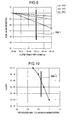
FIG. 9 illustrates the relationship of a
residual magnetization with respect to an elapsed time
after recording the magnetization, where the
environment (conservation) temperature is selected as
the parameter. As indicated by a bold line 300-1,
there are some cases where, in the data recorded in an
environment at about 80°C, an about 15% residual-magnetization
decline (i.e., reproduced-amplitude
decline) occurs 1000 hours after.
FIG. 10 illustrates the Raw BER (i.e., bit
error rate before error correction) with respect to the
reproduced amplitude (i.e., residual magnetization).
As indicated by a bold line 300-3, there are some cases
where, if the residual magnetization declines by about
15%, the Raw BER declines by as much as about 3 orders.
Accordingly, a case is likely to occur where even an
error correction circuit cannot make the correction.
In, e.g., a HDD built in a personal computer
(: PC) or a server system, the upper limit of its
operation environment is limited to substantially 50°C.
This condition makes the problem of the "thermal decay"
comparatively allowable. In the vehicle-mounted
information processing apparatus such as the navigation
system, however, the temperature within a car left
under the blazing sun in summer rises up to the above-described
temperature of about 80°C. Consequently,
applying the PC-used HDD directly into the navigation
system results in even a possibility of causing a fatal
problem such as data loss after use for a constant
time-period.
Incidentally, there exists JP-A-2001-307450
as a literature that describes a magnetic disk device
to be mounted in the car-navigation system. In this
literature, in the magnetic disk device that employs a
load/unload mechanism as the head saving mechanism, an
occurrence of emergency unload operation is prevented
which is attributed to a variation in the power-source
voltage at the time of starting the engine. This
prevention is performed in order to enhance reliability
of the vehicle-mounted magnetic disk device.
SUMMARY OF THE INVENTION
As described earlier, when the magnetic disk
device according to the background art is used in the
vehicle-mounted information processing apparatus such
as the car-navigation system or a vehicle-mounted AV
appliance, the following problem has been not yet
solved: Namely, if there has existed none of an
opportunity of being re-recorded while having been
exposed to the blazing sun in summer for a long time,
it becomes impossible to fetch information from the
magnetic disk device.
It is an object of the present invention to
provide a data preservation technology on a magnetic
disk device and a vehicle-mounted information
processing apparatus when the magnetic disk device is
mounted on a vehicle. Here, the magnetic disk device
is capable of preventing data loss even if the device
has been located under a high-temperature environment
for a long time.
It is another object of the present invention
to suppress a data loss caused by the "thermal decay"
or the like when a magnetic disk device is mounted on a
vehicle, and thereby to enhance a reliability of the
vehicle-mounted magnetic disk device.
It is still another object of the present
invention to enhance reliability of a magnetic disk
device used in a vehicle-mounted information processing
apparatus expected to be located in a harsh temperature
environment.
It is further object of the present invention
to enhance a reliability of a vehicle-mounted
information processing apparatus using a magnetic disk
device.
It is even further object of the present
invention to enhance reliability of a vehicle that
mounts a magnetic disk device.
The present invention provides a vehicle-mounted
information processing apparatus including a
magnetic disk device and a file updating unit. Here,
the file updating unit selects and reproduces (i.e.,
reads out) a file from among a file group stored in the
magnetic disk device, and re-records (i.e., rewrites)
the read-out file with-no change added thereto, an in-advance
determined updating time-period having elapsed
since the previous updating of the file.
Also, the present invention provides a
magnetic disk device that includes a storage unit for
storing time-limit information within which it is
required to re-record a file recorded in the magnetic
disk device.
More specifically, the vehicle-mounted
information processing apparatus of the present
invention operates by being configured as follows as
one example:
Judging from the condition that a human
exists inside the vehicle, it is assumed that the
environment temperature in the case where the human
operates the vehicle-mounted information processing
apparatus will not exceed substantially 40°C. At a
point-in-time when the key switch is switched from the
accessory (: ACC) position to the Lock position so as
to extract the key, this environment temperature is
maintained as well.
Consequently, it is preferable that the
vehicle-mounted information processing apparatus
perform the data updating (i.e., data re-recording
while performing the data reproduction: hereinafter
referred to as "data preservation operation") of the
following data in an order from the oldest: Data that
are stored within the magnetic disk device built in the
vehicle-mounted information processing apparatus, and
that may produce a failure after the Lock position of
the key switch (i.e., data that have been not updated
for a constant time-period). In this case, in the
state where the key switch has been positioned at the
ACC position (i.e., the vehicle-mounted information
processing apparatus is operated with the engine
stopped), no data preservation operation is carried
out. This, in operating the vehicle-mounted
information processing apparatus, results in none of
degradations in the I/O performance of the magnetic
disk device.
Also, the time-limit within which performing
the re-recording is required because of the "thermal
decay" is attached beforehand on the magnetic disk
device as visible data, or the time-limit is clearly
written beforehand in a product catalogue of the
magnetic disk device. This, at a stage of designing
the vehicle-mounted information processing apparatus,
allows the designer to judge whether or not the
magnetic disk device can be integrated into the
vehicle-mounted information processing apparatus used
under a high environment temperature. This time-limit
may also be given with the environment temperature
selected as the parameter. It is preferable that the
system make reference to this time-limit so as to
determine the data that become the target of the above
described data preservation operation.
Moreover, times during which the in-vehicle
temperature exceeds a constant or more temperature are
managed on each constant time-period basis. From these
times and the time-limit within which the re-recording
is needed, a file to be updated may also be determined.
This makes it possible to avoid a useless data
preservation operation.
Also, if a time during which the data
preservation operation is carried out after the Lock of
the key switch is too long, there exists a possibility
of causing battery full-discharge of the vehicle to
occur. In addition, there exists a possibility that
the in-vehicle temperature continues rising and
eventually it becomes impossible to guarantee normal
operations of the vehicle-mounted information
processing apparatus itself and the magnetic disk
device mounted thereon. Based on these conditions, the
longest time for the data preservation operation may be
determined.
Also, immediately after the key switch has
been switched to the Lock position, it is allowable to
cause the data preservation operation to stand by for a
constant time-period. This makes it possible to
prevent a degradation in the data preservation
operation, which is caused by a vehicle's swaying due
to movement of a vehicle's passenger, and by an
atmospheric-pressure change at the time of open/close
of the door.
Also, even in the state where the key switch
has been positioned at the ACC position, the data
preservation operation may also be carried out. This
increases an opportunity for the data preservation
operation and thereby enhances reliability of the data,
although the performance of original functions by the
vehicle-mounted information processing apparatus may be
lowered.
Furthermore, when carrying out the data
preservation operation even if the key switch has been
positioned at the ACC position, the data preservation
operation may be carried out if no access has occurred
from the CPU of the information processing apparatus to
the magnetic disk device for a constant time-period.
This, when the information processing apparatus
executes, e.g., an AV function during a stopping of the
vehicle, makes it possible to avoid an influence of the
data preservation operation on the operation of the AV
function.
Other objects, features and advantages of the
invention will become apparent from the following
description of the embodiments of the invention taken
in conjunction with the accompanying drawings.
BRIEF DESCRIPTION OF THE DRAWINGS
FIG. 1 is a block diagram for illustrating an
example of the configuration of a car-navigation
system, which is an embodiment of a vehicle-mounted
information processing apparatus according to the
present invention;
FIG. 2 is a timing diagram for illustrating
the operation sequence of a first embodiment according
to the present invention;
FIG. 3 is a flowchart for illustrating an
example of the effect of the first embodiment according
to the present invention;
FIG. 4 is a flowchart for illustrating an
example of the effect of a second embodiment according
to the present invention;
FIG. 5 is a timing diagram for illustrating
the operation sequence of a third embodiment according
to the present invention;
FIG. 6 is a timing diagram for illustrating
the operation sequence of a fourth embodiment according
to the present invention;
FIG. 7 is a schematic diagram for
illustrating an example of the configuration of a
magnetic disk device implemented in the car-navigation
system, which is the embodiment of the vehicle-mounted
information processing apparatus according to the
present invention;
FIG. 8 is a schematic diagram for
illustrating a configuration example of a vehicle that
mounts thereon the car-navigation system which is the
embodiment of the vehicle-mounted information
processing apparatus according to the present
invention;
FIG. 9 is a graph for illustrating the
relationship between the after-recording elapsed time
and the residual magnetization in the magnetic disk
device; and
FIG. 10 is a graph for illustrating the
relationship between the reproduced amplitude and the
Raw BER in the magnetic disk device.
DESCRIPTION OF THE EMBODIMENTS
Hereinafter, referring to the drawings, the
detailed explanation will be given below concerning
embodiments of the present invention.
Using FIG. 1 to FIG. 3, the explanation will
be given below concerning a first embodiment of the
present invention.
FIG. 1 is a block diagram for illustrating
the system configuration of a car-navigation system
400, which is an embodiment of a vehicle-mounted
information processing apparatus according to the
present invention. Here, map information and
audiovisual (: AV) information on the car-navigation
system is recorded into a magnetic disk device (i.e.,
HDD) 300 instead of being recorded into a removable-medium
storage device 51a such as a DVD and a CD
provided in an audiovisual output device (i.e., AV
device) 51. Incidentally, the present invention is
also applicable to all of products that, of products
accompanying no car-navigation function and equipped
with only an AV function, mount the magnetic disk
device (i.e., HDD) thereon. Also, the application
range of the present invention does not depend on a
driving-power mechanism (e.g., gasoline-driven engine
and electric motor) of the vehicle. Namely, the
present invention is applicable to both a self-driven
vehicle that runs by its own driving power and a
vehicle that moves by being pulled.
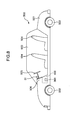
FIG. 8 is a schematic diagram for
illustrating an example of the configuration of a
vehicle 500 that mounts thereon the car-navigation
system 400 in the present embodiment. A main body 501
runs by being self-driven by an engine (not shown) for
driving a plurality of wheels 502. Inside a vehicle
chamber 503 that a passenger gets on and off through a
door (not shown), there are provided each seat 504 for
the passenger to sit on, an operating device 505, and a
key switch 31.
In the case of the present embodiment, the
car-navigation system 400 where the HDD 300 is
implemented is mounted within a dash board 506 situated
on the front side inside the vehicle chamber 503.
The positions of the key switch 31 include a
key-extractable Lock position, an ACC (: accessory)
position, an IG (: ignition) position, and a ST
(: starter) position. Moreover, rotation of the key
switch 31 allows a control over the ON/OFF of power-source
supply to attachment appliances such as the car-navigation
system 400, and a control over the ON/OFF of
power-source supply for the operation of the above-described
engine and the starting by a starter.
Now, getting back to FIG. 1, the car-navigation
system 400 in the present embodiment
includes the following configuration components: A CPU
41 set up as a control center, a ROM 42, a RAM 43, an
EEPROM 44, an image display 45, a wireless information
transmission/reception device 46, e.g., a portable
telephone, an interface (I/F) circuit 47, an input
device 48 such as a key board and a remote controller,
a voice output device 49 such as an amplifier and a
speaker, a GPS reception device 50 for measuring the
position of the vehicle on which the system is mounted,
the AV device 51 including the removable-medium storage
device such as a DVD and a CD, a timer circuit 52, a
power-source sequencer 53, and the magnetic disk device
(i.e., HDD) 300. Reference numeral 92 denotes a system
bus for establishing the connection between the CPU 41
and the devices controlled thereby.
In FIG. 1, numerals 66 to 68 denote power-source
lines from a battery 34 to the respective
components. Also, numerals 69, 71, 72, 81, 83, 84, 85,
86, 87, 88, 89, 90, 93, and 94 denote signal lines.
In the present embodiment, in addition to
these configuration components, the following
components are indicated: The key switch 31 of the
vehicle on which the car-navigation system 400 is
mounted, an engine-starter control/detection circuit
32, respective types of sensors 33 for detecting
information such as an in-chamber temperature 70 of the
vehicle, the battery 34, and a vehicle-mounted power-source
control circuit 35.
The execution of a key-switch operation 91
permits the key switch 31 to select the 4 positions,
i.e., the Lock / the ACC (: accessory) / the IG
(: ignition) / the ST (: starter). The extraction/insertion of the key is carried out at the Lock
position. The key positions 61 to 64 of the key switch
31 allow a control over the engine-starter control/detection circuit 32. Also, the key positions 61 to 62
allow the vehicle-mounted power-source control circuit
35 to control a power-source 65 to be supplied to the
car-navigation system 400 or the like from a power 66
supplied from the battery 34. The power-source
sequencer 53 inside the car-navigation system 400
controls not only the ON/OFF timing of a HDD supply
power-source 21 to be supplied to the HDD 300, but also
the ON/OFF timings of a power-source 96 and a power-source
97 to be supplied to the other circuit blocks.
Using the RAM 43 as the work area and based
on programs stored in the ROM 42 and the EEPROM 44, the
CPU 41 performs the control over the entire navigation.
In addition to this control, the CPU 41 performs
controls over the following respective units connected
to the system bus 92: The image display 45, the
wireless information transmission/reception device 46,
the I/F circuit 47, the input device 48, the voice
output device 49, the GPS reception device 50, the AV
device 51 including the removable-medium storage device
such as the DVD/CD, the timer circuit 52, and the
power-source sequencer 53.
Furthermore, in the case of the present
embodiment, using the RAM 43 as the work area and based
on a control program (i.e., file updating unit) stored
in the ROM 42 and the EEPROM 44, the CPU 41 executes a
data preservation operation in the HDD 300 as will be
described later.
Here, FIG. 7 illustrates an example of the
configuration of the HDD 300 mounted on the car-navigation
system 400 in the present embodiment.
Roughly divided, the HDD 300 in the present embodiment
includes a head disk assembly (: HDA) 100, which is
basically a mechanism system, and a package circuit
board (: PCB) 200, which is basically a circuit system.
The HDA 100 is substantially sealed, which is a
configuration that makes it unlikely that dust will
enter the HDA. The head disk assembly (: HDA) 100
basically includes a magnetic disk 2 integrated via a
spindle 5, a magnetic head 1 fixed onto a front edge of
a suspension 3 connected to an actuator 4 driven by a
voice coil motor (: VCM) 7, and a read/write IC (: R/W
IC) 11 for electrically driving the magnetic head 1.
The magnetic head 1 is displaced (i.e., seek operation
13) via the VCM 7 while rotating the magnetic disk 2 at
a constant rotational speed or rpm. This makes it
possible to record/reproduce data at an arbitrary
position on concentrically-circular tracks 12. An
analogue output that corresponds to a residual
magnetization of the R/W IC 11 is demodulated/error-corrected
by a signal processing circuit 202 and an
error correction circuit 204 mounted on the PCB 200,
then being sent out as data 20 to higher-order
appliances via an interface connector 9 and the system
bus 92. Also, the HDD supply power-source 21 is
supplied to the HDD from the power-source sequencer 53
via a power-source connector 10.
In the case of the present embodiment, at the
time of the plant shipment and based on the specification
of the HDD 300, time-limit information 206a
within which performing a re-recording (i.e., data
preservation operation) is necessary can be stored into
an EEPROM 206 mounted on the package circuit board (:
PCB) 200, or into a part of the magnetic disk 2.
FIG. 2 illustrates the sequence of the data
preservation operation. At a point-in-time when the
key switch 31 is switched from the ACC position 62 to
the Lock position 61, the CPU 41 causes the HDD 300 to
terminate an ordinary record/reproduction operation 22.
Simultaneously, the CPU starts up a data preservation
operation 23 (i.e., reproducing data files that become
the targets, and re-recording the data files just as
they are). Incidentally, the data preservation
operation 23 may include an operation of verifying
whether or not the read-out files have been able to be
rewritten correctly. Moreover, at a point-in-time when
re-recording all the data files to be re-recorded has
been completed, the CPU terminates a data preservation
operation time-period 24. Simultaneously, the CPU 41
ceases the data preservation operation 23, stopping the
HDD supply power-source 21 supplied to the HDD 300.
Additionally, the data files within the HDD 300 that
become the targets of the data preservation operation
23 are data files from whose last updating time-and-date
a constant time-period T (i.e., updating time-period
register value 300-5: set up in advance in the
magnetic disk 2 or the EEPROM 44) or more time has
elapsed. The value of this constant time-period T is
set up based on the time-limit information 206a within
which performing the re-recording is necessary, or on a
catalogue value of the HDD 300. Here, the time-limit
information has been stored in the EEPROM 206 inside
the package circuit board (: PCB) 200 in the HDD 300.
FIG. 3 illustrates the detailed sequence of
the data preservation operation 23 at this time. The
CPU 41 confirms the Lock position 61 of the key switch
31 via the I/F circuit 47 (step 24-1). Then, the CPU
41 reads in the directory of the HDD 300, thereby
storing file names 300-6 that were not updated for more
than a time-period of the updating time-period register
value 300-5 from the present time-and-date, i.e., the
file names that should be updated (step 24-2). Next,
the CPU checks whether or not there exist files to be
updated (step 24-3). If there exist no files to be
updated, the CPU terminates the data preservation
operation 23 (step 24-9). Meanwhile, if there exist
the files to be updated, the CPU starts the data
preservation operation 23 (step 24-4). Moreover, the
CPU reproduces/re-records a file whose updating time-and-date
is the oldest of the files to be updated, then
eliminating the file from the list of the file names to
be updated (step 24-6). Furthermore, the CPU checks
whether or not all of the files to be updated have been
updated (step 24-7). If all of the updatings have been
not finished, the CPU repeats the step 24-6. Meanwhile,
if all of the updatings have been finished
(i.e., all of the files have been updated already), the
CPU terminates the data preservation operation 23 (step
24-9) .
Here, it is desirable that the updating time-period
register value 300-5 be equal to several
hundreds to several thousands hours.
Incidentally, the time-limit (i.e., the time-limit
information 206a) within which performing the re-recording
is necessary because of the "thermal decay"
may also be stored as data into the magnetic disk 2 in
the HDD 300. This time-limit may also be given with
the environment temperature selected as the parameter.
In this case, it is preferable that the CPU 41 make
reference to this time-limit so as to set up this time-limit
into the updating time-period register value 300-5.
In addition, times during which the in-chamber
temperature exceeds a constant or more
temperature are managed by the timer circuit 52 on each
constant time-period (e.g., 1 week, 1 month) basis.
From these times and the updating time-period register
value 300-5, the data preservation operation time-period
(: Trw) 24 may also be determined. This makes
it possible to avoid a useless data preservation
operation.
In the present embodiment, from a condition
that a human exists inside the vehicle, the environment
temperature in the case where the human operates the
car-navigation system 400 does not exceed substantially
40°C. At the point-in-time when the key switch 31 is
switched further to the Lock position 61 via the ACC
position 62 so as to extract the key, the in-chamber
environment temperature usually does not exceed
substantially 40°C, since the human exists inside the
vehicle in the meantime as well. Accordingly, carrying
out the data preservation operation in the HDD 300
immediately after this point-in-time allows the data
preservation operation to be executed without
undergoing influences of vibrations due to the
environment temperature and the running, vibration of
the engine, vibrations due to the audio appliances, and
the like. This makes it possible to implement a
higher-reliability data preservation. Namely, in the
present invention, the operation itself of switching
the key switch 31 from the ACC position to the Lock
position is utilized as a sensor for indicating that
there exists a human inside the vehicle at the time of
or immediately after this operation. Consequently, if
there exists a sensor for detecting whether or not the
driver has performed the operation of extracting the
key, or for detecting whether or not there exists a
human inside the vehicle, the carrying-out of the data
preservation operation is possible in a manner
responding to an output from this sensor.
Also, let's consider the following case: In
the state where the key switch 31 has been positioned
at the ACC position 62 (i.e., the engine is stopped,
but the vehicle-mounted information processing
apparatus such as the car-navigation system 400 can be
operated), no data preservation operation is carried
out. In this case, there occurs none of degradations
in the I/O performance in operating the car-navigation
system 400.
Whether or not the above-described data
preservation operation in the present embodiment is
being carried out can be confirmed by checking, in the
state where the key switch 31 has been positioned at
the Lock position 61, the presence or absence of an
electric current in the HDD supply power-source 21 to
be supplied to the HDD 300. Accordingly, based on this
method, it is possible to perform a light-up control
over a lamp for indicating whether or not the data
preservation operation is under execution.
Namely, at the above-described step 24-2, in
order to make judgement as to whether or not it is
necessary to execute the data preservation operation,
the access to the HDD 300 occurs and thus the HDD 300
comes into its operation state. Consequently, if the
supply of the above-described electric current to the
HDD 300 is detected in the state where the key switch
31 has been positioned at the Lock position 61, it can
be assumed that the present invention is being carried
out.
Otherwise, before switching the key switch 31
to the Lock position 61, a file list A of the files in
the directory of the HDD 300 is outputted with time
stamps attached thereon which indicate the final
updating point-in-times. After that, the key switch 31
is switched into the state of the Lock position 61,
then being left alone. Still after that, a file list B
of the files in the directory of the HDD 300 is
outputted with time stamps attached thereon again.
Then, if, between the file list A and the file list B,
file names whose time stamps are the oldest differ from
each other, it can be assumed that the data
preservation operation of the present invention has
been carried out.
Next. using FIG. 4, explanation will be given
below concerning a second embodiment of the present
invention.
A block diagram for illustrating the system
configuration of a car-navigation system in the present
embodiment is the same as the one in FIG. 1. What
differs from the first embodiment lies in a point that
the maximum value of the data preservation operation
time-period is specified.
FIG. 4 illustrates the detailed sequence of
the data preservation operation 23. The CPU 41
confirms the Lock position 61 of the key switch 31 via
the I/F circuit 47 (step 24-1). Then, the CPU 41 reads
in the directory of the HDD 300, thereby storing the
file names 300-6 that were not updated for more than
the time-period of the updating time-period register
value 300-5 from the present time-and-date, i.e., the
file names that should be updated (step 24-2). Next,
the CPU checks whether or not there exist the files to
be updated (step 24-3). If there exist no files to be
updated, the CPU terminates the data preservation
operation 23 (step 24-9). Meanwhile, if there exist
the files to be updated, the CPU starts the data
preservation operation 23 (step 24-4), thus starting up
the data preservation operation timer (i.e., the timer
circuit 52) (step 24-5). Moreover, the CPU reproduces/re-records the file whose updating time-and-date is the
oldest of the files to be updated, then eliminating the
file from the list of the file names to be updated
(step 24-6). Furthermore, the CPU checks whether or
not all of the files to be updated have been updated
(step 24-7). If all of the updatings have been
finished (i.e., all of the files have been already
updated), the CPU terminates the data preservation
operation 23 (step 24-9). Meanwhile, if all of the
updatings have been not finished, the CPU checks
whether or not the timer circuit 52 is less than an
upper-limit set-up value 52a of the data preservation
operation time-period (step 24-8). If the timer
circuit is less than the set-up value, the CPU repeats
the step 24-6. Meanwhile, if the timer circuit is more
than the set-up value, the CPU terminates the data
preservation operation 23 (step 24-9).
Here, it is desirable that the updating time-period
register value 300-5 be equal to several
hundreds to several thousands hours.
It is desirable that the upper-limit set-up
value 52a of the data preservation operation time-period
at this time be equal to several tens of seconds
to several tens of minutes.
According to the present embodiment, in
addition to the effects by the 1st embodiment, the
upper-limit of the one-time data preservation operation
time-period is specified. This makes it possible to
prevent battery full-discharge caused by a long-time
data preservation operation, and further to exclude the
factor that results in a phenomenon that the normal
operation of the HDD 300 is hindered by a rise in the
in-vehicle temperature due to the environment
temperature.
Next, using FIG. 5, explanation will be given
below concerning a third embodiment of the present
invention.
A block diagram for illustrating the system
configuration of a car-navigation system in the present
embodiment is the same as the one in FIG. 1. What
differs from the first embodiment lies in a point that
a stand-by time for the data preservation operation is
specified after the key switch 31 has been switched to
the Lock position 61.
At the point-in-time when the key switch 31
is switched from the ACC position 62 to the Lock
position 61, the CPU 41 causes the HDD 300 to terminate
the ordinary record/reproduction operation 22.
Simultaneously, the CPU causes the data preservation
operation 23 to stand by for the time-period of a
stand-by time (: Twait) 25 for the data preservation.
After this stand-by time has elapsed, the CPU starts up
the data preservation operation 23 (i.e., reproducing
and re-recording the data files that become the
targets). Moreover, at a point-in-time when re-recording
all the data files to be re-recorded has been
completed, the CPU terminates the data preservation
operation time-period 24. Simultaneously, the CPU 41
ceases the data preservation operation 23, stopping the
HDD supply power-source 21 supplied to the HDD 300.
Here, it is desirable that the updating time-period
register value 300-5 be equal to several
hundreds to several thousands hours.
It is desirable that the stand-by time (:
Twait) 25 for the data preservation be equal to several
seconds to several tens of seconds. This is equivalent
to a time that elapses until all the passengers have
gotten off the vehicle from the point-in-time when the
key switch 31 had been switched to the Lock position.
According to the present embodiment, the
stand-by time is set up within a time that elapses
until the data preservation operation was started up
from the point-in-time when the key switch 31 had been
switched to the Lock position. This makes it possible
to prevent a degradation in the data preservation
operation. Here, the degradation is likely to occur,
since the record/reproduction operation by the HDD 300
is disturbed by a vehicle's swaying due to movement of
the vehicle's passengers, and by an atmospheric-pressure
change at the time of open/close of the door.
Next, using FIG. 6, explanation will be given
below concerning a fourth embodiment of the present
invention.
A block diagram for illustrating the system
configuration of a car-navigation system in the present
embodiment is the same as the one in FIG. 1. What
differs from the embodiment described earlier lies in a
point that the data preservation operation is carried
out in a state where the key switch 31 is positioned at
the accessory (: ACC) position 62.
At a point-in-time when the key switch 31 is
switched from the ignition (: IG) position 63 to the
ACC position 62, the CPU 41 causes the HDD 300 to
terminate the ordinary record/reproduction operation
22. Simultaneously, the CPU starts up the data
preservation operation 23 (i.e., reproducing and re-recording
the data files that become the targets).
Then, even if the key switch 31 is switched to the Lock
position 61 during the data preservation operation, the
CPU continues the data preservation operation.
Moreover, at a point-in-time when re-recording all the
data files to be re-recorded has been completed, the
CPU terminates the data preservation operation time-period
24. Simultaneously, the CPU 41 ceases the data
preservation operation 23, stopping the HDD supply
power-source 21 supplied to the HDD 300.
Here, it is desirable that the updating time-period
register value 300-5 be equal to several
hundreds to several thousands hours.
This increases an opportunity for the data
preservation operation, thereby enhancing reliability
of the data.
Also, when the key switch 31 is switched to
the ACC position 62, the CPU 41 checks the operation
state of the HDD 300, thereby confirming a state where
no access has occurred for a constant time-period (: an
order of several seconds). After that, the CPU may
start up the data preservation operation 23. If the
key switch 31 is switched to the Lock position 61
during this confirmation of the HDD 300's operation,
the CPU can start the data preservation operation.
This, when performing an AV processing using the HDD
300 during a stopping of the vehicle, makes it possible
to avoid influences on the image and voice exerted by
the carrying-out of the data preservation operation.
As having been explained so far, according to
the above-described respective embodiments of the
present invention, when the magnetic disk device is
mounted on a vehicle, it becomes possible to provide
the data preservation technology on the magnetic disk
device and the vehicle-mounted information processing
apparatus. Here, even if the magnetic disk device has
been located under a high-temperature environment for a
long time-period, the magnetic disk device is capable
of preventing data loss caused by the "thermal decay"
of the magnetization state in the magnetic disk 2 which
is a magnetic storage medium.
So far, based on the embodiments, specific
explanation has been given concerning the invention
devised by the present inventor. It is needless to
say, however, that the present invention is not limited
to the above-described embodiments, but can be modified
in a variety of ways without departing from its essence
and spirit.
The vehicle-mounted information processing
apparatus is not limited to an attachment appliance
such as the car-navigation system, and thus the present
invention may also be applied to a vehicle-mounted
information processing apparatus of a vehicle control
system for performing the operation/management of the
vehicle itself.