EP1377053A1 - Video recording apparatus and recording method - Google Patents
Video recording apparatus and recording method Download PDFInfo
- Publication number
- EP1377053A1 EP1377053A1 EP02743706A EP02743706A EP1377053A1 EP 1377053 A1 EP1377053 A1 EP 1377053A1 EP 02743706 A EP02743706 A EP 02743706A EP 02743706 A EP02743706 A EP 02743706A EP 1377053 A1 EP1377053 A1 EP 1377053A1
- Authority
- EP
- European Patent Office
- Prior art keywords
- recording
- data
- recording medium
- data format
- video
- Prior art date
- Legal status (The legal status is an assumption and is not a legal conclusion. Google has not performed a legal analysis and makes no representation as to the accuracy of the status listed.)
- Withdrawn
Links
Images




Classifications
-
- H—ELECTRICITY
- H04—ELECTRIC COMMUNICATION TECHNIQUE
- H04N—PICTORIAL COMMUNICATION, e.g. TELEVISION
- H04N5/00—Details of television systems
- H04N5/76—Television signal recording
- H04N5/91—Television signal processing therefor
- H04N5/92—Transformation of the television signal for recording, e.g. modulation, frequency changing; Inverse transformation for playback
-
- G—PHYSICS
- G11—INFORMATION STORAGE
- G11B—INFORMATION STORAGE BASED ON RELATIVE MOVEMENT BETWEEN RECORD CARRIER AND TRANSDUCER
- G11B20/00—Signal processing not specific to the method of recording or reproducing; Circuits therefor
- G11B20/10—Digital recording or reproducing
- G11B20/12—Formatting, e.g. arrangement of data block or words on the record carriers
- G11B20/1217—Formatting, e.g. arrangement of data block or words on the record carriers on discs
-
- G—PHYSICS
- G11—INFORMATION STORAGE
- G11B—INFORMATION STORAGE BASED ON RELATIVE MOVEMENT BETWEEN RECORD CARRIER AND TRANSDUCER
- G11B20/00—Signal processing not specific to the method of recording or reproducing; Circuits therefor
- G11B20/10—Digital recording or reproducing
-
- H—ELECTRICITY
- H04—ELECTRIC COMMUNICATION TECHNIQUE
- H04N—PICTORIAL COMMUNICATION, e.g. TELEVISION
- H04N9/00—Details of colour television systems
- H04N9/79—Processing of colour television signals in connection with recording
- H04N9/7921—Processing of colour television signals in connection with recording for more than one processing mode
-
- H—ELECTRICITY
- H04—ELECTRIC COMMUNICATION TECHNIQUE
- H04N—PICTORIAL COMMUNICATION, e.g. TELEVISION
- H04N5/00—Details of television systems
- H04N5/76—Television signal recording
- H04N5/84—Television signal recording using optical recording
- H04N5/85—Television signal recording using optical recording on discs or drums
-
- H—ELECTRICITY
- H04—ELECTRIC COMMUNICATION TECHNIQUE
- H04N—PICTORIAL COMMUNICATION, e.g. TELEVISION
- H04N9/00—Details of colour television systems
- H04N9/79—Processing of colour television signals in connection with recording
- H04N9/80—Transformation of the television signal for recording, e.g. modulation, frequency changing; Inverse transformation for playback
- H04N9/804—Transformation of the television signal for recording, e.g. modulation, frequency changing; Inverse transformation for playback involving pulse code modulation of the colour picture signal components
- H04N9/8042—Transformation of the television signal for recording, e.g. modulation, frequency changing; Inverse transformation for playback involving pulse code modulation of the colour picture signal components involving data reduction
Definitions
- the present invention relates to an apparatus and a method for performing recording or reproduction by using a random-accessible disk recording medium, amid mixing of analog broadcasting and digital broadcasting and, more particularly, to an apparatus and a method for recording data of different data formats on the recording medium.
- MPEG streams there are two types, i.e., a program stream (PS) which is employed in a storage system such as a DVD, and a transport stream (TS) which is employed in a digital broadcasting system. Accordingly, by taking advantage of such characteristics, the program stream is widely employed in storage-system devices while the transport stream is widely employed in broadcasting-system devices.
- PS program stream
- TS transport stream
- the recording/reproduction system as disclosed in Japanese Published Patent Application No. Hei.11-45512, when data are recorded on a recording medium in the form of a transport stream, the recording is consistently performed in the transport stream, and when data are recorded on a recording medium in the form of a program stream, the recording is consistently performed in the program stream.
- FIG 12 shows a case where only a transport stream is employed in a system amid mixing of analog broadcasting and digital broadcasting.
- An analog broadcasting reception unit 101 receives analog broadcasting
- an A/D conversion unit 102 converts the analog signal into a digital signal
- an MPEG encoder 103 converts the digital signal into a transport stream.
- a digital broadcasting reception unit 104 receives digital broadcasting.
- a switching unit 107 selects either the analog broadcasting or the digital broadcasting to be recorded on the recording medium 109, and the selected broadcasting is recorded on the recording medium 109.
- An MPEG decoder 110 performs MPEG decoding on the data from the recording medium 109, and a D/A conversion unit 111 converts the decoded data into an analog signal and reproduces the analog signal.
- FIG. 13 shows a case where only a program stream is employed in a system.
- An analog broadcasting reception unit 101 receives analog broadcasting
- an A/D conversion unit 102 converts the analog signal into a digital signal
- an MPEG encoder 103 converts the digital signal into a program stream.
- a digital broadcasting reception unit 104 receives digital broadcasting
- a TS/PS conversion unit 105 converts a transport stream into a program stream.
- a switching unit 107 selects either the analog broadcasting or the digital broadcasting to be recorded on the recording medium 109, and the selected broadcasting is recorded on the recording medium 109.
- An MPEG decoder 110 performs MPEG decoding on the data from the recording medium 109, and a D/A conversion unit 111 converts the decoded data into an analog signal and reproduces the analog signal.
- the transport stream is employed as multi-channel-multiplexed data and, thus, has a considerably large amount of data as compared with a program stream. Therefore, when data are recorded on a recording medium in only a transport stream, data on an unintended channel is also recorded, resulting in a waste of the capacity of the recording medium. On the other hand, when data are recorded on a recording medium in only a program stream, only one program can be recorded despite the fact that the transport stream is multiplexed and multi-channel-transmitted.
- the present invention is made to solve the above-described problems and has for its object to provide an apparatus and a method for recording video, which effectively utilize the recording capacity, and maintain the characteristics of multiple channels in a transport stream that is transmitted by digital broadcasting.
- a video recording apparatus for recording digital broadcasting and analog broadcasting mixedly on a single or plural recording media, which apparatus comprises: a data format selection means for selecting either a data format for a transport stream (TS) or a data format for a program stream (PS) in an MPEG system, on the basis of the state of a system; and a system management control means for managing and controlling the state of the system; and recording is performed in the selected data format. Since the data format is switched between the program stream and the transport stream on the basis of the state of the system, the capacity of the recording medium can be efficiently utilized, and the characteristics of multiple channels in digital broadcasting can be maintained.
- TS transport stream
- PS program stream
- a temporary recording mode and a storage recording mode as states of the system; and the data format selection means selects the transport stream when the state of the system is the temporary recording mode, while selecting the program stream when the state of the system is the storage recording mode, thereby to perform recording. Since the data format for recording is selected on the basis of the recording mode, information of multiple channels can be temporarily viewed, and only desired information can be stored, whereby the capacity of the recording medium is efficiently utilized.
- the above-described video recording apparatus includes a means which enables a user to select data formats with which data are recorded on the recording medium, in the temporary recording mode and the storage recording mode, respectively. Since the user selects the data format for recording on the basis of the recording mode, the user can temporarily view information of multiple channels, and store only information he/she desires, whereby the capacity of the recording medium is efficiently utilized.
- the system management control means manages a free space on the recording medium as a state of the system, and the data format selection means selects the transport stream when the free space is large, while selecting the program stream when the free space is small, thereby to perform recording. Since the data format for recording is selected on the basis of the free space on the recording medium, the capacity of the recording medium can be efficiently utilized, and the characteristics of multiple channels in digital broadcasting can be maintained.
- the above-described video recording apparatus includes a means which enables a user to set a free space on the recording medium, with which the transport stream should be switched to the program stream. Since the data format for recording is selected on the basis of the free space set by the user, the capacity of the recording medium can be efficiently utilized, and the characteristics of multiple channels in digital broadcasting can be maintained.
- the above-described video recording apparatus includes a data amount reduction means for thinning information of multiple channels which are included in the transport stream; and a system management means for managing the capacity of the recording medium and controlling the data amount reduction means; and, when the free space left on the recording medium becomes small, the multi-channel information is thinned, thereby to perform recording. Since information of multiple channels is thinned on the basis of the free space of the recording medium before it is recorded, the capacity of the recording medium can be efficiently utilized, and the characteristics of multiple channels in digital broadcasting can be maintained.
- the above-described video recording apparatus includes a means which enables a user to set a free space on the recording medium, with which the multi-channel information should be thinned. Since information of multiple channels is thinned on the basis of the free space set by the user before it is recorded, the capacity of the recording medium can be efficiently utilized, and the characteristics of multiple channels in digital broadcasting can be maintained.
- the above-described video recording apparatus includes a user data management means for recording and creating viewing frequency genre information of a user; a data amount reduction means for thinning information of multiple channels which are included in the transport stream; and a system management means for managing the capacity of the recording medium and controlling the data amount reduction means; and, when the recordable space left becomes small, data which is obtained by removing a channel of a genre having a low frequency of viewing from the multi-channel information is recorded. Since data which is obtained by removing information of a channel having a low frequency of viewing from information of multiple channels is recorded, the capacity of the recording medium can be efficiently utilized, and the characteristics of multiple channels in digital broadcasting can be maintained.
- the above-described video recording apparatus includes a recording means for recording information indicating whether the data format is the transport stream or the program stream in a recording area different from an area in which video data are recorded, when recording the both streams mixedly. Since information indicating the data format is recorded on the recording medium, the data reproduction process is simplified, whereby the load on CPU during reproduction can be reduced, and the system can be efficiently operated.
- the above-described video recording apparatus includes a recording means for recording data in a recording area on the recording medium which is divided into areas for the respective data formats, when recording the transport stream and the program stream mixedly. Since data are recorded in the recording area of the recording medium which is divided into plural areas corresponding to the respective data formats, the data reproduction process is simplified, whereby the load on CPU during reproduction can be reduced, and the system can be efficiently operated.
- the above-described video recording apparatus includes a means which enables a user to set the size of the recording area for each data format. Since the user can set the capacity of the recording area for each data format, the system can be efficiently operated, and the recording area can be efficiently utilized.
- the above-described video recording apparatus includes a recording means for recording data in an area for storage recording and an area for temporary recording, which are obtained by further dividing each recording area corresponding to each data format. Therefore, the process of reproducing the temporarily recorded data and the stored data can be simplified, whereby the load on CPU during reproduction can be reduced, and the system can be efficiently operated.
- the above-described video recording apparatus includes a recording means for dividing a recording area on the recording medium into areas for the respective data formats so that the size of the recording area corresponding to each data format can be varied on the basis of the state of the system, when recording the transport stream and the program stream mixedly. Since the size of the recording area corresponding to each data format is variable, the system can be efficiently operated, and the capacity of the recording medium can be efficiently utilized.
- the above-described video recording apparatus includes a means which enables a user to set the size of the recording area corresponding to each data format. Since the user can vary the recording area corresponding to each data format, the system can be efficiently operated, and the capacity of the recording medium can be efficiently utilized.
- the above-described video recording apparatus includes a means for automatically changing the size of the recording area for each data format on the basis of the data amount. Therefore, the system can be efficiently operated, and the capacity of the recording medium can be efficiently utilized.
- a video recording method for recording digital broadcasting and analog broadcasting mixedly on a single or plural recording media wherein a data format with which data are recorded on the recording medium is selected on the basis of the state of a system. Since the data format is changed on the basis of the state of the system, the capacity of the recording medium can be efficiently utilized, and the characteristics of multiple channels in digital broadcasting can be maintained.
- the data format for recording is either a transport stream (TS) or a program stream (PS) in an MPEG system. Since the data format is switched between the program stream and the transport stream on the basis of the state of the system, the capacity of the recording medium can be efficiently utilized, and the characteristics of multiple channels in digital broadcasting can be maintained.
- TS transport stream
- PS program stream
- a data format with which data are recorded on the recording medium is selected on the basis of the recording mode. Since the data format for recording is selected on the basis of the recording mode, information of multiple channels can be temporarily viewed, and only desired information can be stored, whereby the recording capacity is efficiently utilized.
- the data format for recording is either a transport stream (TS) or a program stream (PS) in an MPEG system; and the transport stream is recorded in the temporary recording mode, while the program stream is recorded in the storage recording mode. Since the data format for recording is selected on the basis of the recording mode, information of multiple channels can be temporarily viewed, and only desired information can be stored, whereby the recording capacity is efficiently utilized.
- TS transport stream
- PS program stream
- a user in the above-described video recording method, can select data formats with which data are recorded on the recording medium in the temporary recording mode and the storage recording mode, respectively. Since the user selects the data format for recording on the basis of the recording mode, the user can temporarily view information of multiple channels, and store only information he/she desires, whereby the capacity of the recording medium is efficiently utilized.
- a data format for recording is selected on the basis of a free space on the recording medium as a state of the system. Since the data format for recording is selected on the basis of the free space on the recording medium, the capacity of the recording medium can be efficiently utilized, and the characteristics of multiple channels in digital broadcasting can be maintained.
- the data format for recording is either a transport stream (TS) or a program stream (PS) in an MPEG system; and the transport stream is recorded when the recordable free space on the recording medium is large, while the program stream is recorded when the recordable free space on the recording medium is small. Since the data format for recording is selected on the basis of the free space on the recording medium, the capacity of the recording medium can be efficiently utilized, and the characteristics of multiple channels in digital broadcasting can be maintained.
- TS transport stream
- PS program stream
- a user sets a free space on the recording medium, at which the data format for recording should be switched. Since the data format for recording is selected on the basis of the free space set by the user, the capacity of the recording medium can be efficiently utilized, and the characteristics of multiple channels in digital broadcasting can be maintained.
- the data format for recording includes a transport stream (TS) in an MPEG system; and information of multiple channels included in the transport stream is thinned on the basis of the state of the system, thereby to perform recording. Since information of multiple channels is thinned on the basis of the state of the system before it is recorded, the capacity of the recording medium can be efficiently utilized, and the characteristics of multiple channels in digital broadcasting can be maintained.
- TS transport stream
- a free space on the recording medium is managed as a state of the system, and the multi-channel information is thinned when the recordable free space becomes small, thereby to perform recording. Since information of multiple channels is thinned on the basis of the free space of the recording medium before it is recorded, the capacity of the recording medium can be efficiently utilized, and the characteristics of multiple channels in digital broadcasting can be maintained.
- a user sets a free space on the recording medium, at which the multi-channel information should be thinned. Since information of multiple channels is thinned on the basis of the free space set by the user before it is recorded, the capacity of the recording medium can be efficiently utilized, and the characteristics of multiple channels in digital broadcasting can be maintained.
- the data format for recording includes a transport stream (TS) in an MPEG system; viewing frequency genre information of a user is created; and data which is obtained by removing a channel of a genre having a low frequency of viewing from information of multiple channels of the transport stream on the basis of the viewing frequency genre information, is recorded. Since data which is obtained by removing information of a channel having a low frequency of viewing from information of multiple channels is recorded, the capacity of the recording medium can be efficiently utilized, and the characteristics of multiple channels in digital broadcasting can be maintained.
- TS transport stream
- the present invention in the above-described video recording method, information of a genre which is frequently accessed by a user is recorded, and the viewing frequency genre information of the user is obtained from the recorded information. Therefore, information of a channel having a low frequency of viewing is removed from information of multiple channels on the basis of the obtained genre information, whereby the capacity of the recording medium can be efficiently utilized, and the characteristics of multiple channels in digital broadcasting can be maintained.
- the present invention in the above-described video recording method, when recording the transport stream and the program stream mixedly, information indicating whether the data format is the transport stream or the program stream is recorded. Since information indicating the data format is recorded on the recording medium, the data reproduction process is simplified, whereby the load on CPU during reproduction can be reduced, and the system can be efficiently operated.
- the information indicating the data format is recorded in a recording area on the recording medium that is different from a recording area in which video data are recorded. Since information indicating the data format is recorded in an area different from the video data area, the data reproduction process is simplified, whereby the load on CPU during reproduction can be reduced, and the system can be efficiently operated.
- a data format is selected on the basis of the information indicating the data format, and the video data is reproduced in the data format. Therefore, the data reproduction process is simplified, whereby the load on CPU during reproduction can be reduced, and the system can be efficiently operated.
- a recording area on the recording medium is divided into areas for the respective data formats. Since data are recorded in the recording area of the recording medium which is divided into plural areas corresponding to the respective data formats, the data reproduction process is simplified, whereby the load on CPU during reproduction can be reduced, and the system can be efficiently operated.
- a user sets the size of the recording area for each data format on the recording medium. Since the user can set the capacity of the recording area corresponding to each data format, the system can be efficiently operated, and the recording area can be efficiently utilized.
- each of the divided recording areas is further divided into a storage recording area and a temporary recording area. Therefore, the process of reproducing the temporarily recorded data and the stored data can be simplified, whereby the load on CPU during reproduction can be reduced, and the system can be efficiently operated.
- a recording area on the recording medium is divided into areas for the respective data formats, and the size of the recording area for each data format is variable on the basis of the state of the system. Since the size of the recording area corresponding to each data format is variable, the system can be efficiently operated, and the capacity of the recording medium can be efficiently utilized.
- a user in the above-described video recording method, can set the size of the recording area for each data format on the recording medium. Therefore, the system can be efficiently operated, and the capacity of the recording medium can be efficiently utilized by changing the recording area according to the user setting.
- the size of the recording area for each data format is automatically changed according to the data amount. Therefore, the system can be efficiently operated, and the capacity of the recording medium can be efficiently utilized.
- Figure 1 is a block diagram illustrating the construction of a video recording apparatus according to a first embodiment of the present invention.
- Figure 2 is a flowchart illustrating a video recording method according to a second embodiment of the present invention.
- Figure 3 is a diagram illustrating a video recording method according to a third embodiment of the present invention.
- Figure 4 is a flowchart illustrating the video recording method according to the third embodiment of the invention.
- Figure 5 is a block diagram illustrating the construction of a video recording apparatus according to a fourth embodiment of the present invention.
- Figure 6 is a flowchart illustrating a video recording method according to the fourth embodiment of the invention.
- Figure 7 is a block diagram illustrating the construction of a video recording apparatus according to a fifth embodiment of the present invention.
- Figure 8 is a flowchart illustrating a video recording method according to the fifth embodiment of the invention.
- Figure 9 is a diagram illustrating an apparatus and a method for recording a video according to a sixth embodiment of the present invention.
- Figure 10 is a diagram illustrating an apparatus and a method for recording a video according to a seventh embodiment of the present invention.
- Figure 11 is a diagram illustrating an apparatus and a method for recording a video according to an eighth embodiment of the present invention.
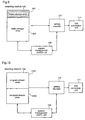
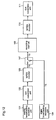
- figure 12 is a block diagram illustrating a conventional video recording apparatus which deals only with a transport stream.
- Figure 13 is a block diagram illustrating a conventional video recording apparatus which deals only with a program stream.
- Figure 1 is a block diagram of a video recording apparatus according to a first embodiment of the present invention.
- the video recording apparatus comprises an analog broadcasting reception unit 101 for receiving analog broadcasting; an A/D conversion unit 102 for converting the analog signal received by the analog broadcasting reception unit 101 into a digital signal; an MPEG encoder 103 for converting the digital signal obtained by the A/D conversion unit 102 into a program stream as an MPEG stream; a digital broadcasting reception unit 104 for receiving digital broadcasting; a TS/PS conversion unit 105 for converting a transport stream (TS) which is a data format to be transmitted by digital broadcasting, into a program stream; a switching unit 106 for selecting either the signal of the transport stream received by the digital broadcasting reception unit 104 or the signal obtained by converting the transport stream into the program stream (PS) by the TS/PS conversion unit; a switching unit 107 for selecting either the data obtained by MPEG-encoding the analog broadcasting or the output from the switching unit 106; a recording medium 109 on which the data selected by the switching unit 107 are recorded; a system management control unit 108 for managing the capacity or
- the user selects either digital broadcasting or analog broadcasting as broadcasting to be recorded on the recording medium 109.
- the analog broadcasting reception unit 101 performs reception
- the A/D conversion unit 102 converts the received signal into a digital signal
- the MPEG encoder 103 converts the digital signal into a program stream. Since the user decides to record analog broadcasting on the recording medium 9, the switching unit 107 selects the analog broadcasting side, thereby recording the analog broadcasting on the recording medium 109.
- the digital broadcasting reception unit 104 receives digital broadcasting.
- a data format of the received digital broadcasting is a transport stream, and the transport stream is inputted to the TS/PS conversion unit 105 and, further, it is directly inputted to the switching unit 106.
- the switching unit 106 selects the digital broadcasting reception side, and outputs the transport stream to the switching unit 107.
- the switching unit 106 selects the TS/PS conversion unit output side, and outputs the program stream to the switching unit 107.
- the switching unit 107 selects the digital broadcasting side, thereby recording the digital broadcasting on the recording medium 109.
- the MPEG decoder 110 performs MPEG decoding on the data recorded on the recording medium 109, and the D/A conversion unit 111 converts the output of the MPEG decoder 110 into an analog signal and reproduces the analog signal.
- the video recording apparatus is provided with the switching units 106 and 107 for selecting the data formats on the basis of the state of the system, and the system management control unit 108 for managing the state of the system and controlling the system. Therefore, the capacity of the recording medium can be efficiently utilized, and the characteristics of multiple channels in digital broadcasting can be maintained.
- FIG. 2 is a flowchart of a video recording method according to a second embodiment of the present invention.
- the same constituents as those shown in the first embodiment are assigned the same reference numerals, and descriptions thereof will be omitted.
- step S1 when the user decides to record analog broadcasting on a recording medium 109 (step S1), the analog broadcasting is recorded on the recording medium 109 in the form of a program stream (step S3).
- step S2 when the user decides to record digital broadcasting on the recording medium 109 (step S1) and selects a storage recording mode (step S2), the digital broadcasting is recorded on the recording medium 109 in the form of a program stream (step S3).
- step S2 when the user decides to record digital broadcasting on the recording medium 109 (step S1) and selects a temporary recording mode (step S2), the digital broadcasting is recorded on the recording medium 109 in the form of a transport stream (step S4).
- the analog broadcasting reception unit 101 receives analog broadcasting, and the A/D conversion unit 102 converts the analog broadcasting into a digital signal.
- the MPEG encoder 103 converts the digital signal obtained by the A/D conversion unit 102 into a program stream, and the program stream obtained by the MPEG encoder 103 is recorded on the recording medium 109.
- the digital broadcasting reception unit 104 receives digital broadcasting, and the TS/PS conversion unit 105 converts a transport stream into a program stream.
- the system management control unit 108 sets the switching unit 106 on the output side of the TS/PS conversion unit 105, and sets the switching unit 107 on the digital broadcasting reception side, thereby recording the program stream on the recording medium 109.
- the digital broadcasting reception unit 104 receives digital broadcasting
- the system management control unit 108 sets the switching unit 106 on the output side of the digital broadcasting reception unit, and sets the switching unit 107 on the digital broadcasting reception side, thereby recording the transport stream on the recording medium 109.
- the system management control unit 108 controls the switching units 106 and 107 so that data are recorded in the form of a transport stream having a relatively large amount of data in the case of temporary recording, and data are recorded in the form of a program stream having a relatively small amount of data in the case of storage recording. Therefore, the user can temporarily view information of multiple channels, and store only information of channels he/she desires, whereby the capacity of the recording medium is efficiently utilized.
- FIG. 3 is a diagram illustrating a video recording method according to a third embodiment of the present invention.
- the same constituents as those shown in the first embodiment are assigned the same reference numerals, and descriptions thereof will be omitted.
- numeral 301 denotes a free space as a recordable area on a recording medium 109.
- the analog broadcasting reception unit 101 receives analog broadcasting, and the A/D conversion unit 102 converts the analog broadcasting into a digital signal.
- the MPEG encoder 103 converts the digital signal obtained by the A/D conversion unit 102 into a program stream, and the program stream obtained by the MPEG encoder 103 is recorded on the recording medium 109.
- the digital broadcasting reception unit 104 receives digital broadcasting, the system management control unit 108 sets the switching unit 106 on the output side of the digital broadcasting reception unit, and sets the switching unit 107 on the digital broadcasting reception side, whereby the transport stream is recorded on the recording medium 109.
- the system management control unit 108 confirms that the free space 301 on the recording medium 109 reaches the capacity set by the user, the digital broadcasting reception unit 104 receives digital broadcasting, and the TS/PS conversion unit 105 converts the transport stream into a program stream.
- the system management control unit 108 sets the switching unit 106 on the output side of the TS/PS conversion unit 105, and sets the switching unit 107 on the digital broadcasting reception side, whereby the program stream is recorded on the recording medium 109.
- FIG. 4 is a flowchart of the video recording method according to the third embodiment of the present invention.
- step S1 when the user decides to record analog broadcasting on a recording medium 109 (step S1), analog broadcasting is recorded on the recording medium 109 in the form of a program stream (step S5).
- step S2 when the user decides to record digital broadcasting on the recording medium 109 (step S1) and selects a storage recording mode (step S2), digital broadcasting is recorded on the recording medium 109 in the form of a program stream (step S5).
- step S1 when the user decides to record digital broadcasting on the recording medium 109 (step S1) and selects a temporary recording mode (step S2) and, further, there is a large free space left on the recording medium (step S3), the digital broadcasting is recorded on the recording medium 109 in the form of a transport stream (step S4).
- step S1 When the user decides to record digital broadcasting on the recording medium 109 (step S1) and selects a temporary recording mode (step S2) and, further, the free space left on the recording medium becomes small (step S3), the digital broadcasting is recorded on the recording medium 109 in the form of a program stream (step S5).
- the system management control unit 108 manages the free space on the recording medium 109, and selects the data format for recording on the basis of the free space on the recording medium. Therefore, the recording capacity of the recording medium can be efficiently utilized, and the characteristics of multiple channels in digital broadcasting can be maintained.
- FIG. 5 is a block diagram illustrating the construction of a video recording apparatus according to a fourth embodiment of the present invention.
- the same constituents as those shown in the above-described embodiments are assigned the same reference numerals, and descriptions thereof will be omitted.
- a system LSI 501 thins data of a transport stream including multiple channels into several channels of data, and outputs the thinned data.
- a system state management unit 502 manages the capacity of the recording medium 109 and controls the system LSI 501.
- the number of channels by which the transport stream is thinned is managed by the system state management unit 502 on the basis of the capacity of the recording medium 109.
- Figure 6 is a flowchart of a video recording method according to the fourth embodiment of the present invention.
- step S1 when the user decides to record analog broadcasting on the recording medium 109 (step S1), analog broadcasting is recorded on the recording medium 109 in the form of a program stream (step S3).
- step S3 when the user decides to record digital broadcasting on the recording medium 109 (step S1), the entire transport stream in which multiple channels are multiplexed, that is transmitted from the broadcast station side, is to be recorded on the recording medium 109.
- step S2 a free space on the recording medium 109 is checked.
- step S4 When there is left a large free space, the entire multi-channel-multiplexed transport stream transmitted from the broadcast station side is recorded on the recording medium 109 as it is (step S4). On the other hand, when the left free space is small, the transport stream which is obtained by thinning the multi-channel-multiplexed transport stream is recorded on the recording medium 109 (step S5).
- the system state management unit 502 manages the free space on the recording medium 109, and the system LSI 501 thins the multi-channel information on the basis of the free space, whereby the recording capacity of the recording medium can be efficiently utilized, and the characteristics of multiple channels in digital broadcasting can be maintained.
- FIG. 7 is a block diagram illustrating the construction of a video recording apparatus according to a fifth embodiment of the present invention.
- the same constituents as those shown in the first embodiment are assigned the same reference numerals, and descriptions thereof will be omitted.
- a viewing frequency genre information recording unit 701 records a channel and a genre selected by the user through an EPG (Electronic Programming Guide), and records the number of times the user selects the channel and the genre.
- EPG Electronic Programming Guide
- the channel to be removed by the system LSI 501 is decided by the system state management unit 502 on the basis of the information of the channel and the genre selected by the user as well as the number of times the user selects the channel and the genre, which are recorded in the viewing frequency genre information recording unit 701.
- the system LSI 501 thins the multi-channel information of the transport stream on the basis of the information of the channels to be removed, and records the thinned data on the recording medium 109.
- Figure 8 is a flowchart of a video recording method according to the fifth embodiment of the present invention.
- step S1 when the user decides to record analog broadcasting on the recording medium 109 (step S1), analog broadcasting is recorded on the recording medium 109 in the form of a program stream (step S4).
- step S4 when the user decides to record digital broadcasting on the recording medium 109 (step S1), the entire transport stream in which multiple channels are multiplexed, that is transmitted from the broadcast station side, is to be recorded on the recording medium 109.
- step S2 a free space on the recording medium 109 is checked.
- step S5 When there is left a large free space, the entire multi-channel-multiplexed transport stream transmitted from the broadcast station side is recorded on the recording medium 109 as it is (step S5).
- step S3 a channel and a genre which are frequently received by the user are checked (step S3). Then, data of the multi-channel-multiplexed transport stream is thinned so that the channel and the genre which are frequently received by the user are preferentially recorded on the recording medium 109, and the data is recorded on the recording medium 109 (step S6).
- the system LSI 501 when recording data in the form of a transport stream, the system LSI 501 removes information of channels having relatively low frequencies of viewing from multi-channel information on the basis of the free space on the recording medium 109 which is managed by the system state management unit 502, on the basis of the viewing frequency genre information obtained by the viewing frequency genre information recording unit 701. Therefore, the recording capacity of the recording medium can be efficiently utilized, and the characteristics of multiple channels in digital broadcasting can be maintained.
- Figure 9 is a diagram illustrating an apparatus and a method for recording video according to a sixth embodiment of the present invention.
- the same constituents as those shown in the first embodiment are assigned the same reference numerals, and descriptions thereof will be omitted.
- the MPEG decoder 110 decodes MPEG data recorded on the recording medium 109.
- the D/A conversion unit 111 converts the video data outputted from the MPEG decoder 110 into an analog signal, and outputs the analog signal.
- the MPEG decoder 110 has to recognize whether the inputted MPEG data is a program stream or a transport stream. Then, the system management control unit 108 recognizes the data format of the data that is currently outputted from the recording medium 109, on the basis of the information recorded in the index storage area 901 of the recording medium 109, and notifies the MPEG decoder 110 of the obtained data format.
- the sixth embodiment when recording data, information indicating the data format is recorded in the index storage area 901 to simplify the data reproduction process, whereby the load on the CPU during reproduction can be reduced, and the system can be efficiently operated.
- Figure 10 is a diagram illustrating an apparatus and a method for recording a video according to a seventh embodiment of the present invention.
- the same constituents as those shown in the first embodiment are assigned the same reference numerals, and descriptions thereof will be omitted.
- the MPEG decoder 110 decodes MPEG data recorded on the recording medium 109.
- the D/A conversion unit 111 converts the video data outputted from the MPEG decoder 110 into an analog signal, and outputs the analog signal.
- the MPEG decoder 110 has to recognize whether the inputted MPEG data is a program stream or a transport stream. So, an area on the recording medium 109 is divided into a program stream area 1001 in which a program stream is to be recorded and a transport stream area 1002 in which a transport stream is to be recorded.
- the MPEG stream When recording an MPEG stream on the recording medium 109, the MPEG stream is recorded in the program stream area 1001 when it is a program stream, and the MPEG stream is recorded in the transport stream area 1002 when it is a transport area.
- the system management control unit When reproducing the MPEG stream, the system management control unit easily recognizes whether the stream being currently outputted from the MPEG decoder is a program stream or a transport stream, and notifies the MPEG decoder of the obtained stream.
- the capacities of the program stream area 1001 and the transport stream area 1002 are decided by the user.
- the recording area on the recording medium 109 is divided into the program stream area 1001 and the transport stream area 1002, the data reproduction process is simplified, whereby the load on the CPU during reproduction can be reduced, and the system can be efficiently operated.
- FIG 11 is a diagram illustrating an apparatus and a method for recording video according to an eighth embodiment of the present invention.
- the same constituents as those shown in the first embodiment are assigned the same reference numerals, and descriptions thereof will be omitted.
- the capacities of a transport stream area 1101 and a program stream area 1102 can be automatically changed. For example, when the user frequently records data in the form of a transport stream, the capacity of the transport stream area 1102 can be automatically increased. On the other hand, when the user frequently records data in the form of a program stream, the capacity of the program stream area 1101 can be increased. Further, the user can determine the capacities.
- the program stream area 1101 and the transport stream area 1102 on the recording medium 109 are variable, and the respective areas are changed according to the state of recording data, whereby the system can be efficiently operated, and the recording capacity of the recording medium can be efficiently utilized.
- a video recording apparatus is valuable with respect to a DVD, a hard disk recorder, a set top box and the like, in which digital broadcasting and analog broadcasting can be mixedly recorded.
Landscapes
- Engineering & Computer Science (AREA)
- Signal Processing (AREA)
- Multimedia (AREA)
- Signal Processing For Digital Recording And Reproducing (AREA)
- Television Signal Processing For Recording (AREA)
- Management Or Editing Of Information On Record Carriers (AREA)
- Testing, Inspecting, Measuring Of Stereoscopic Televisions And Televisions (AREA)
Abstract
Description
- The present invention relates to an apparatus and a method for performing recording or reproduction by using a random-accessible disk recording medium, amid mixing of analog broadcasting and digital broadcasting and, more particularly, to an apparatus and a method for recording data of different data formats on the recording medium.
- Conventionally, there are two types of MPEG streams, i.e., a program stream (PS) which is employed in a storage system such as a DVD, and a transport stream (TS) which is employed in a digital broadcasting system. Accordingly, by taking advantage of such characteristics, the program stream is widely employed in storage-system devices while the transport stream is widely employed in broadcasting-system devices. In a recording/reproduction system as disclosed in Japanese Published Patent Application No. Hei.11-45512, when data are recorded on a recording medium in the form of a transport stream, the recording is consistently performed in the transport stream, and when data are recorded on a recording medium in the form of a program stream, the recording is consistently performed in the program stream.
- Hereinafter, the construction and operation of the prior art will be described with reference to figures 12 and 13.
- Figure 12 shows a case where only a transport stream is employed in a system amid mixing of analog broadcasting and digital broadcasting. An analog
broadcasting reception unit 101 receives analog broadcasting, an A/D conversion unit 102 converts the analog signal into a digital signal, and anMPEG encoder 103 converts the digital signal into a transport stream. A digitalbroadcasting reception unit 104 receives digital broadcasting. Aswitching unit 107 selects either the analog broadcasting or the digital broadcasting to be recorded on therecording medium 109, and the selected broadcasting is recorded on therecording medium 109. AnMPEG decoder 110 performs MPEG decoding on the data from therecording medium 109, and a D/A conversion unit 111 converts the decoded data into an analog signal and reproduces the analog signal. - Figure 13 shows a case where only a program stream is employed in a system. An analog
broadcasting reception unit 101 receives analog broadcasting, an A/D conversion unit 102 converts the analog signal into a digital signal, and anMPEG encoder 103 converts the digital signal into a program stream. A digitalbroadcasting reception unit 104 receives digital broadcasting, and a TS/PS conversion unit 105 converts a transport stream into a program stream. Aswitching unit 107 selects either the analog broadcasting or the digital broadcasting to be recorded on therecording medium 109, and the selected broadcasting is recorded on therecording medium 109. AnMPEG decoder 110 performs MPEG decoding on the data from therecording medium 109, and a D/A conversion unit 111 converts the decoded data into an analog signal and reproduces the analog signal. - While the digital broadcasting is transmitted in a transport stream amid mixing of the digital broadcasting and the analog broadcasting, the transport stream is employed as multi-channel-multiplexed data and, thus, has a considerably large amount of data as compared with a program stream. Therefore, when data are recorded on a recording medium in only a transport stream, data on an unintended channel is also recorded, resulting in a waste of the capacity of the recording medium. On the other hand, when data are recorded on a recording medium in only a program stream, only one program can be recorded despite the fact that the transport stream is multiplexed and multi-channel-transmitted.
- The present invention is made to solve the above-described problems and has for its object to provide an apparatus and a method for recording video, which effectively utilize the recording capacity, and maintain the characteristics of multiple channels in a transport stream that is transmitted by digital broadcasting.
- According to the present invention, there is provided a video recording apparatus for recording digital broadcasting and analog broadcasting mixedly on a single or plural recording media, which apparatus comprises: a data format selection means for selecting either a data format for a transport stream (TS) or a data format for a program stream (PS) in an MPEG system, on the basis of the state of a system; and a system management control means for managing and controlling the state of the system; and recording is performed in the selected data format. Since the data format is switched between the program stream and the transport stream on the basis of the state of the system, the capacity of the recording medium can be efficiently utilized, and the characteristics of multiple channels in digital broadcasting can be maintained.
- According to the present invention, in the above-described video recording apparatus, there are provided a temporary recording mode and a storage recording mode as states of the system; and the data format selection means selects the transport stream when the state of the system is the temporary recording mode, while selecting the program stream when the state of the system is the storage recording mode, thereby to perform recording. Since the data format for recording is selected on the basis of the recording mode, information of multiple channels can be temporarily viewed, and only desired information can be stored, whereby the capacity of the recording medium is efficiently utilized.
- According to the present invention, the above-described video recording apparatus includes a means which enables a user to select data formats with which data are recorded on the recording medium, in the temporary recording mode and the storage recording mode, respectively. Since the user selects the data format for recording on the basis of the recording mode, the user can temporarily view information of multiple channels, and store only information he/she desires, whereby the capacity of the recording medium is efficiently utilized.
- According to the present invention, in the above-described video recording apparatus, the system management control means manages a free space on the recording medium as a state of the system, and the data format selection means selects the transport stream when the free space is large, while selecting the program stream when the free space is small, thereby to perform recording. Since the data format for recording is selected on the basis of the free space on the recording medium, the capacity of the recording medium can be efficiently utilized, and the characteristics of multiple channels in digital broadcasting can be maintained.
- According to the present invention, the above-described video recording apparatus includes a means which enables a user to set a free space on the recording medium, with which the transport stream should be switched to the program stream. Since the data format for recording is selected on the basis of the free space set by the user, the capacity of the recording medium can be efficiently utilized, and the characteristics of multiple channels in digital broadcasting can be maintained.
- According to the present invention, the above-described video recording apparatus includes a data amount reduction means for thinning information of multiple channels which are included in the transport stream; and a system management means for managing the capacity of the recording medium and controlling the data amount reduction means; and, when the free space left on the recording medium becomes small, the multi-channel information is thinned, thereby to perform recording. Since information of multiple channels is thinned on the basis of the free space of the recording medium before it is recorded, the capacity of the recording medium can be efficiently utilized, and the characteristics of multiple channels in digital broadcasting can be maintained.
- According to the present invention, the above-described video recording apparatus includes a means which enables a user to set a free space on the recording medium, with which the multi-channel information should be thinned. Since information of multiple channels is thinned on the basis of the free space set by the user before it is recorded, the capacity of the recording medium can be efficiently utilized, and the characteristics of multiple channels in digital broadcasting can be maintained.
- According to the present invention, the above-described video recording apparatus includes a user data management means for recording and creating viewing frequency genre information of a user; a data amount reduction means for thinning information of multiple channels which are included in the transport stream; and a system management means for managing the capacity of the recording medium and controlling the data amount reduction means; and, when the recordable space left becomes small, data which is obtained by removing a channel of a genre having a low frequency of viewing from the multi-channel information is recorded. Since data which is obtained by removing information of a channel having a low frequency of viewing from information of multiple channels is recorded, the capacity of the recording medium can be efficiently utilized, and the characteristics of multiple channels in digital broadcasting can be maintained.
- According to the present invention, the above-described video recording apparatus includes a recording means for recording information indicating whether the data format is the transport stream or the program stream in a recording area different from an area in which video data are recorded, when recording the both streams mixedly. Since information indicating the data format is recorded on the recording medium, the data reproduction process is simplified, whereby the load on CPU during reproduction can be reduced, and the system can be efficiently operated.
- According to the present invention, the above-described video recording apparatus includes a recording means for recording data in a recording area on the recording medium which is divided into areas for the respective data formats, when recording the transport stream and the program stream mixedly. Since data are recorded in the recording area of the recording medium which is divided into plural areas corresponding to the respective data formats, the data reproduction process is simplified, whereby the load on CPU during reproduction can be reduced, and the system can be efficiently operated.
- According to the present invention, the above-described video recording apparatus includes a means which enables a user to set the size of the recording area for each data format. Since the user can set the capacity of the recording area for each data format, the system can be efficiently operated, and the recording area can be efficiently utilized.
- According to the present invention, the above-described video recording apparatus includes a recording means for recording data in an area for storage recording and an area for temporary recording, which are obtained by further dividing each recording area corresponding to each data format. Therefore, the process of reproducing the temporarily recorded data and the stored data can be simplified, whereby the load on CPU during reproduction can be reduced, and the system can be efficiently operated.
- According to the present invention, the above-described video recording apparatus includes a recording means for dividing a recording area on the recording medium into areas for the respective data formats so that the size of the recording area corresponding to each data format can be varied on the basis of the state of the system, when recording the transport stream and the program stream mixedly. Since the size of the recording area corresponding to each data format is variable, the system can be efficiently operated, and the capacity of the recording medium can be efficiently utilized.
- According to the present invention, the above-described video recording apparatus includes a means which enables a user to set the size of the recording area corresponding to each data format. Since the user can vary the recording area corresponding to each data format, the system can be efficiently operated, and the capacity of the recording medium can be efficiently utilized.
- According to the present invention, the above-described video recording apparatus includes a means for automatically changing the size of the recording area for each data format on the basis of the data amount. Therefore, the system can be efficiently operated, and the capacity of the recording medium can be efficiently utilized.
- According to the present invention, there is provided a video recording method for recording digital broadcasting and analog broadcasting mixedly on a single or plural recording media, wherein a data format with which data are recorded on the recording medium is selected on the basis of the state of a system. Since the data format is changed on the basis of the state of the system, the capacity of the recording medium can be efficiently utilized, and the characteristics of multiple channels in digital broadcasting can be maintained.
- According to the present invention, in the above-described video recording method, the data format for recording is either a transport stream (TS) or a program stream (PS) in an MPEG system. Since the data format is switched between the program stream and the transport stream on the basis of the state of the system, the capacity of the recording medium can be efficiently utilized, and the characteristics of multiple channels in digital broadcasting can be maintained.
- According to the present invention, in the above-described video recording method, when recording is performed in either a temporary recording mode or a storage recording mode as a state of the system, a data format with which data are recorded on the recording medium is selected on the basis of the recording mode. Since the data format for recording is selected on the basis of the recording mode, information of multiple channels can be temporarily viewed, and only desired information can be stored, whereby the recording capacity is efficiently utilized.
- According to the present invention, in the above-described video recording method, the data format for recording is either a transport stream (TS) or a program stream (PS) in an MPEG system; and the transport stream is recorded in the temporary recording mode, while the program stream is recorded in the storage recording mode. Since the data format for recording is selected on the basis of the recording mode, information of multiple channels can be temporarily viewed, and only desired information can be stored, whereby the recording capacity is efficiently utilized.
- According to the present invention, in the above-described video recording method, a user can select data formats with which data are recorded on the recording medium in the temporary recording mode and the storage recording mode, respectively. Since the user selects the data format for recording on the basis of the recording mode, the user can temporarily view information of multiple channels, and store only information he/she desires, whereby the capacity of the recording medium is efficiently utilized.
- According to the present invention, in the above-described video recording method, a data format for recording is selected on the basis of a free space on the recording medium as a state of the system. Since the data format for recording is selected on the basis of the free space on the recording medium, the capacity of the recording medium can be efficiently utilized, and the characteristics of multiple channels in digital broadcasting can be maintained.
- According to the present invention, in the above-described video recording method, the data format for recording is either a transport stream (TS) or a program stream (PS) in an MPEG system; and the transport stream is recorded when the recordable free space on the recording medium is large, while the program stream is recorded when the recordable free space on the recording medium is small. Since the data format for recording is selected on the basis of the free space on the recording medium, the capacity of the recording medium can be efficiently utilized, and the characteristics of multiple channels in digital broadcasting can be maintained.
- According to the present invention, in the above-described video recording method, a user sets a free space on the recording medium, at which the data format for recording should be switched. Since the data format for recording is selected on the basis of the free space set by the user, the capacity of the recording medium can be efficiently utilized, and the characteristics of multiple channels in digital broadcasting can be maintained.
- According to the present invention, in the above-described video recording method, the data format for recording includes a transport stream (TS) in an MPEG system; and information of multiple channels included in the transport stream is thinned on the basis of the state of the system, thereby to perform recording. Since information of multiple channels is thinned on the basis of the state of the system before it is recorded, the capacity of the recording medium can be efficiently utilized, and the characteristics of multiple channels in digital broadcasting can be maintained.
- According to the present invention, in the above-described video recording method, a free space on the recording medium is managed as a state of the system, and the multi-channel information is thinned when the recordable free space becomes small, thereby to perform recording. Since information of multiple channels is thinned on the basis of the free space of the recording medium before it is recorded, the capacity of the recording medium can be efficiently utilized, and the characteristics of multiple channels in digital broadcasting can be maintained.
- According to the present invention, in the above-described video recording method, a user sets a free space on the recording medium, at which the multi-channel information should be thinned. Since information of multiple channels is thinned on the basis of the free space set by the user before it is recorded, the capacity of the recording medium can be efficiently utilized, and the characteristics of multiple channels in digital broadcasting can be maintained.
- According to the present invention, in the above-described video recording method, the data format for recording includes a transport stream (TS) in an MPEG system; viewing frequency genre information of a user is created; and data which is obtained by removing a channel of a genre having a low frequency of viewing from information of multiple channels of the transport stream on the basis of the viewing frequency genre information, is recorded. Since data which is obtained by removing information of a channel having a low frequency of viewing from information of multiple channels is recorded, the capacity of the recording medium can be efficiently utilized, and the characteristics of multiple channels in digital broadcasting can be maintained.
- According to the present invention, in the above-described video recording method, information of a genre which is frequently accessed by a user is recorded, and the viewing frequency genre information of the user is obtained from the recorded information. Therefore, information of a channel having a low frequency of viewing is removed from information of multiple channels on the basis of the obtained genre information, whereby the capacity of the recording medium can be efficiently utilized, and the characteristics of multiple channels in digital broadcasting can be maintained.
- According to the present invention, in the above-described video recording method, when recording the transport stream and the program stream mixedly, information indicating whether the data format is the transport stream or the program stream is recorded. Since information indicating the data format is recorded on the recording medium, the data reproduction process is simplified, whereby the load on CPU during reproduction can be reduced, and the system can be efficiently operated.
- According to the present invention, in the above-described video recording method, the information indicating the data format is recorded in a recording area on the recording medium that is different from a recording area in which video data are recorded. Since information indicating the data format is recorded in an area different from the video data area, the data reproduction process is simplified, whereby the load on CPU during reproduction can be reduced, and the system can be efficiently operated.
- According to the present invention, in the above-described video recording method, when reproducing the recorded video data, a data format is selected on the basis of the information indicating the data format, and the video data is reproduced in the data format. Therefore, the data reproduction process is simplified, whereby the load on CPU during reproduction can be reduced, and the system can be efficiently operated.
- According to the present invention, in the above-described video recording method, when recording the transport stream and the program stream mixedly, a recording area on the recording medium is divided into areas for the respective data formats. Since data are recorded in the recording area of the recording medium which is divided into plural areas corresponding to the respective data formats, the data reproduction process is simplified, whereby the load on CPU during reproduction can be reduced, and the system can be efficiently operated.
- According to the present invention, in the above-described video recording method, a user sets the size of the recording area for each data format on the recording medium. Since the user can set the capacity of the recording area corresponding to each data format, the system can be efficiently operated, and the recording area can be efficiently utilized.
- According to the present invention, in the above-described video recording method, each of the divided recording areas is further divided into a storage recording area and a temporary recording area. Therefore, the process of reproducing the temporarily recorded data and the stored data can be simplified, whereby the load on CPU during reproduction can be reduced, and the system can be efficiently operated.
- According to the present invention, in the above-described video recording method, when recording the transport stream and the program stream mixedly, a recording area on the recording medium is divided into areas for the respective data formats, and the size of the recording area for each data format is variable on the basis of the state of the system. Since the size of the recording area corresponding to each data format is variable, the system can be efficiently operated, and the capacity of the recording medium can be efficiently utilized.
- According to the present invention, in the above-described video recording method, a user can set the size of the recording area for each data format on the recording medium. Therefore, the system can be efficiently operated, and the capacity of the recording medium can be efficiently utilized by changing the recording area according to the user setting.
- According to the present invention, in the above-described video recording method, the size of the recording area for each data format is automatically changed according to the data amount. Therefore, the system can be efficiently operated, and the capacity of the recording medium can be efficiently utilized.
- Figure 1 is a block diagram illustrating the construction of a video recording apparatus according to a first embodiment of the present invention. Figure 2 is a flowchart illustrating a video recording method according to a second embodiment of the present invention. Figure 3 is a diagram illustrating a video recording method according to a third embodiment of the present invention. Figure 4 is a flowchart illustrating the video recording method according to the third embodiment of the invention. Figure 5 is a block diagram illustrating the construction of a video recording apparatus according to a fourth embodiment of the present invention. Figure 6 is a flowchart illustrating a video recording method according to the fourth embodiment of the invention. Figure 7 is a block diagram illustrating the construction of a video recording apparatus according to a fifth embodiment of the present invention. Figure 8 is a flowchart illustrating a video recording method according to the fifth embodiment of the invention. Figure 9 is a diagram illustrating an apparatus and a method for recording a video according to a sixth embodiment of the present invention. Figure 10 is a diagram illustrating an apparatus and a method for recording a video according to a seventh embodiment of the present invention. Figure 11 is a diagram illustrating an apparatus and a method for recording a video according to an eighth embodiment of the present invention.
- Further, figure 12 is a block diagram illustrating a conventional video recording apparatus which deals only with a transport stream. Figure 13 is a block diagram illustrating a conventional video recording apparatus which deals only with a program stream.
- The present invention will be described in more detail with reference to the attached drawings.
- Figure 1 is a block diagram of a video recording apparatus according to a first embodiment of the present invention.
- In figure 1, the video recording apparatus comprises an analog broadcasting reception unit 101 for receiving analog broadcasting; an A/D conversion unit 102 for converting the analog signal received by the analog broadcasting reception unit 101 into a digital signal; an MPEG encoder 103 for converting the digital signal obtained by the A/D conversion unit 102 into a program stream as an MPEG stream; a digital broadcasting reception unit 104 for receiving digital broadcasting; a TS/PS conversion unit 105 for converting a transport stream (TS) which is a data format to be transmitted by digital broadcasting, into a program stream; a switching unit 106 for selecting either the signal of the transport stream received by the digital broadcasting reception unit 104 or the signal obtained by converting the transport stream into the program stream (PS) by the TS/PS conversion unit; a switching unit 107 for selecting either the data obtained by MPEG-encoding the analog broadcasting or the output from the switching unit 106; a recording medium 109 on which the data selected by the switching unit 107 are recorded; a system management control unit 108 for managing the capacity or the like of the recording medium 109, and controlling the switching unit 106 and the switching unit 107; an MPEG decoder 110 for performing MPEG decoding on the data recorded on the recording medium 109; and a D/A conversion unit 111 for converting the MPEG-decoded digital signal into an analog signal, and reproducing the analog signal.
- Initially, the user selects either digital broadcasting or analog broadcasting as broadcasting to be recorded on the
recording medium 109. When the user selects analog broadcasting, the analogbroadcasting reception unit 101 performs reception, the A/D conversion unit 102 converts the received signal into a digital signal, and theMPEG encoder 103 converts the digital signal into a program stream. Since the user decides to record analog broadcasting on the recording medium 9, theswitching unit 107 selects the analog broadcasting side, thereby recording the analog broadcasting on therecording medium 109. On the other hand, when the user selects digital broadcasting, the digitalbroadcasting reception unit 104 receives digital broadcasting. A data format of the received digital broadcasting is a transport stream, and the transport stream is inputted to the TS/PS conversion unit 105 and, further, it is directly inputted to theswitching unit 106. When the systemmanagement control unit 108 judges that the data format with which data are recorded on therecording medium 109 is a transport stream, theswitching unit 106 selects the digital broadcasting reception side, and outputs the transport stream to theswitching unit 107. When the systemmanagement control unit 108 judges that the data format with which data are recorded on therecording medium 109 is a program stream, theswitching unit 106 selects the TS/PS conversion unit output side, and outputs the program stream to theswitching unit 107. Since the user decides to record digital broadcasting on therecording medium 109, theswitching unit 107 selects the digital broadcasting side, thereby recording the digital broadcasting on therecording medium 109. In reproduction, theMPEG decoder 110 performs MPEG decoding on the data recorded on therecording medium 109, and the D/A conversion unit 111 converts the output of theMPEG decoder 110 into an analog signal and reproduces the analog signal. - As described above, according to the first embodiment, in order to take advantages of the characteristics of the respective data formats, i.e., the program stream which is employed in a storage system such as a DVD, and the transport stream which is subjected to multi-channel transmission and is employed for processing in a digital broadcasting system, the video recording apparatus is provided with the switching
units management control unit 108 for managing the state of the system and controlling the system. Therefore, the capacity of the recording medium can be efficiently utilized, and the characteristics of multiple channels in digital broadcasting can be maintained. - Figure 2 is a flowchart of a video recording method according to a second embodiment of the present invention. The same constituents as those shown in the first embodiment are assigned the same reference numerals, and descriptions thereof will be omitted.
- Initially, in a system which receives both of digital broadcasting and analog broadcasting and records data on a recording medium, when the user decides to record analog broadcasting on a recording medium 109 (step S1), the analog broadcasting is recorded on the
recording medium 109 in the form of a program stream (step S3). On the other hand, when the user decides to record digital broadcasting on the recording medium 109 (step S1) and selects a storage recording mode (step S2), the digital broadcasting is recorded on therecording medium 109 in the form of a program stream (step S3). Further, when the user decides to record digital broadcasting on the recording medium 109 (step S1) and selects a temporary recording mode (step S2), the digital broadcasting is recorded on therecording medium 109 in the form of a transport stream (step S4). - This signal flow will be described with reference to figure 1.
- When the user decides to record analog broadcasting on the
recording medium 109, initially the analogbroadcasting reception unit 101 receives analog broadcasting, and the A/D conversion unit 102 converts the analog broadcasting into a digital signal. TheMPEG encoder 103 converts the digital signal obtained by the A/D conversion unit 102 into a program stream, and the program stream obtained by theMPEG encoder 103 is recorded on therecording medium 109. On the other hand, when the user decides to record digital broadcasting on therecording medium 109 and selects the storage recording mode, the digitalbroadcasting reception unit 104 receives digital broadcasting, and the TS/PS conversion unit 105 converts a transport stream into a program stream. The systemmanagement control unit 108 sets theswitching unit 106 on the output side of the TS/PS conversion unit 105, and sets theswitching unit 107 on the digital broadcasting reception side, thereby recording the program stream on therecording medium 109. When the user decides to record digital broadcasting on therecording medium 109 and selects the temporary recording mode, the digitalbroadcasting reception unit 104 receives digital broadcasting, and the systemmanagement control unit 108 sets theswitching unit 106 on the output side of the digital broadcasting reception unit, and sets theswitching unit 107 on the digital broadcasting reception side, thereby recording the transport stream on therecording medium 109. - As described above, according to the second embodiment, in order to perform efficient data recording amid mixing of analog broadcasting and digital broadcasting, the system
management control unit 108 controls the switchingunits - Figure 3 is a diagram illustrating a video recording method according to a third embodiment of the present invention. The same constituents as those shown in the first embodiment are assigned the same reference numerals, and descriptions thereof will be omitted.
- In figure 3, numeral 301 denotes a free space as a recordable area on a
recording medium 109. - In a system which receives both of digital broadcasting and analog broadcasting and records data on the
recording medium 109, when the user decides to record analog broadcasting on therecording medium 109, analog broadcasting is recorded on therecording medium 109 in the form of a program stream. On the other hand, when the user decides to record digital broadcasting on therecording medium 109, digital broadcasting is recorded on therecording medium 109 in the form of a transport stream. When the systemmanagement control unit 108 confirms that the capacity of thefree space 301 becomes small, the digital broadcasting is recorded on therecording medium 109 in the form of a program stream. The capacity of therecording medium 109 at which the data format for recording data on therecording medium 109 is changed from the transport stream to the program stream is set by the user. - This signal flow will be described with reference to figure 1.
- When the user decides to record analog broadcasting on the
recording medium 109, initially the analogbroadcasting reception unit 101 receives analog broadcasting, and the A/D conversion unit 102 converts the analog broadcasting into a digital signal. TheMPEG encoder 103 converts the digital signal obtained by the A/D conversion unit 102 into a program stream, and the program stream obtained by theMPEG encoder 103 is recorded on therecording medium 109. On the other hand, when the user decides to record digital broadcasting on therecording medium 109, the digitalbroadcasting reception unit 104 receives digital broadcasting, the systemmanagement control unit 108 sets theswitching unit 106 on the output side of the digital broadcasting reception unit, and sets theswitching unit 107 on the digital broadcasting reception side, whereby the transport stream is recorded on therecording medium 109. Here, when the systemmanagement control unit 108 confirms that thefree space 301 on therecording medium 109 reaches the capacity set by the user, the digitalbroadcasting reception unit 104 receives digital broadcasting, and the TS/PS conversion unit 105 converts the transport stream into a program stream. The systemmanagement control unit 108 sets theswitching unit 106 on the output side of the TS/PS conversion unit 105, and sets theswitching unit 107 on the digital broadcasting reception side, whereby the program stream is recorded on therecording medium 109. - Figure 4 is a flowchart of the video recording method according to the third embodiment of the present invention.
- Initially, in a system which receives both of digital broadcasting and analog broadcasting and records data on a recording medium, when the user decides to record analog broadcasting on a recording medium 109 (step S1), analog broadcasting is recorded on the
recording medium 109 in the form of a program stream (step S5). On the other hand, when the user decides to record digital broadcasting on the recording medium 109 (step S1) and selects a storage recording mode (step S2), digital broadcasting is recorded on therecording medium 109 in the form of a program stream (step S5). Further, when the user decides to record digital broadcasting on the recording medium 109 (step S1) and selects a temporary recording mode (step S2) and, further, there is a large free space left on the recording medium (step S3), the digital broadcasting is recorded on therecording medium 109 in the form of a transport stream (step S4). When the user decides to record digital broadcasting on the recording medium 109 (step S1) and selects a temporary recording mode (step S2) and, further, the free space left on the recording medium becomes small (step S3), the digital broadcasting is recorded on therecording medium 109 in the form of a program stream (step S5). - As described above, according to the third embodiment, in order to take advantage of the characteristics of the respective data formats, i.e., the transport stream and the program stream, and to efficiently utilize the recording capacity, the system
management control unit 108 manages the free space on therecording medium 109, and selects the data format for recording on the basis of the free space on the recording medium. Therefore, the recording capacity of the recording medium can be efficiently utilized, and the characteristics of multiple channels in digital broadcasting can be maintained. - Figure 5 is a block diagram illustrating the construction of a video recording apparatus according to a fourth embodiment of the present invention. The same constituents as those shown in the above-described embodiments are assigned the same reference numerals, and descriptions thereof will be omitted.
- In figure 5, a
system LSI 501 thins data of a transport stream including multiple channels into several channels of data, and outputs the thinned data. A systemstate management unit 502 manages the capacity of therecording medium 109 and controls thesystem LSI 501. Here, the number of channels by which the transport stream is thinned is managed by the systemstate management unit 502 on the basis of the capacity of therecording medium 109. - In a system which receives both of digital broadcasting and analog broadcasting and records data on the
recording medium 109, when the user decodes to record analog broadcasting on therecording medium 109, analog broadcasting is recorded on therecording medium 109 in the form of a program stream. On the other hand, when the user decides to record digital broadcasting on therecording medium 109, digital broadcasting is recorded on therecording medium 109 in the form of a transport stream including multiple channels. When the systemstate management unit 502 confirms that the capacity of thefree space 301 becomes small, thesystem LSI 501 thins the transport stream including multiple channels into several channels of data, and the thinned data are recorded on therecording medium 109. The capacity of therecording medium 109 at which the transport stream is thinned is set by a user. - Figure 6 is a flowchart of a video recording method according to the fourth embodiment of the present invention.
- Initially, in a system which receives both of digital broadcasting and analog broadcasting and records data on the recording medium, when the user decides to record analog broadcasting on the recording medium 109 (step S1), analog broadcasting is recorded on the
recording medium 109 in the form of a program stream (step S3). On the other hand, when the user decides to record digital broadcasting on the recording medium 109 (step S1), the entire transport stream in which multiple channels are multiplexed, that is transmitted from the broadcast station side, is to be recorded on therecording medium 109. Here, a free space on therecording medium 109 is checked (step S2). When there is left a large free space, the entire multi-channel-multiplexed transport stream transmitted from the broadcast station side is recorded on therecording medium 109 as it is (step S4). On the other hand, when the left free space is small, the transport stream which is obtained by thinning the multi-channel-multiplexed transport stream is recorded on the recording medium 109 (step S5). - As described above, according to the fourth embodiment, when recording data in a transport stream, the system
state management unit 502 manages the free space on therecording medium 109, and thesystem LSI 501 thins the multi-channel information on the basis of the free space, whereby the recording capacity of the recording medium can be efficiently utilized, and the characteristics of multiple channels in digital broadcasting can be maintained. - Figure 7 is a block diagram illustrating the construction of a video recording apparatus according to a fifth embodiment of the present invention. The same constituents as those shown in the first embodiment are assigned the same reference numerals, and descriptions thereof will be omitted.
- In figure 7, a viewing frequency genre
information recording unit 701 records a channel and a genre selected by the user through an EPG (Electronic Programming Guide), and records the number of times the user selects the channel and the genre. - In a system which receives both of digital broadcasting and analog broadcasting and records data on a
recording medium 109, when the user decides to record analog broadcasting on therecording medium 109, analog broadcasting is recorded on therecording medium 109 in the form of a program stream. On the other hand, when the user decides to record digital broadcasting on therecording medium 109, digital broadcasting is recorded on therecording medium 109 in the form of a transport stream including multiple channels. When the systemstate management unit 502 confirms that the capacity of thefree space 301 becomes small, thesystem LSI 501 thins the transport stream including multiple channels into several channels, and the thinned data are recorded on therecording medium 109. Here, the channel to be removed by thesystem LSI 501 is decided by the systemstate management unit 502 on the basis of the information of the channel and the genre selected by the user as well as the number of times the user selects the channel and the genre, which are recorded in the viewing frequency genreinformation recording unit 701. Thesystem LSI 501 thins the multi-channel information of the transport stream on the basis of the information of the channels to be removed, and records the thinned data on therecording medium 109. - Figure 8 is a flowchart of a video recording method according to the fifth embodiment of the present invention.
- Initially, in a system which receives both of digital broadcasting and analog broadcasting and records data on a recording medium, when the user decides to record analog broadcasting on the recording medium 109 (step S1), analog broadcasting is recorded on the
recording medium 109 in the form of a program stream (step S4). On the other hand, when the user decides to record digital broadcasting on the recording medium 109 (step S1), the entire transport stream in which multiple channels are multiplexed, that is transmitted from the broadcast station side, is to be recorded on therecording medium 109. Here, a free space on therecording medium 109 is checked (step S2). When there is left a large free space, the entire multi-channel-multiplexed transport stream transmitted from the broadcast station side is recorded on therecording medium 109 as it is (step S5). On the other hand, when the free space is small, a channel and a genre which are frequently received by the user are checked (step S3). Then, data of the multi-channel-multiplexed transport stream is thinned so that the channel and the genre which are frequently received by the user are preferentially recorded on therecording medium 109, and the data is recorded on the recording medium 109 (step S6). - As described above, according to the fifth embodiment, when recording data in the form of a transport stream, the
system LSI 501 removes information of channels having relatively low frequencies of viewing from multi-channel information on the basis of the free space on therecording medium 109 which is managed by the systemstate management unit 502, on the basis of the viewing frequency genre information obtained by the viewing frequency genreinformation recording unit 701. Therefore, the recording capacity of the recording medium can be efficiently utilized, and the characteristics of multiple channels in digital broadcasting can be maintained. - Figure 9 is a diagram illustrating an apparatus and a method for recording video according to a sixth embodiment of the present invention. The same constituents as those shown in the first embodiment are assigned the same reference numerals, and descriptions thereof will be omitted.
- In figure 9, information for judging a data format of each data recorded in a
video storage area 902 on arecording medium 109 is recorded in anindex storage area 901. - When video data which are recorded on the
recording medium 109 with a transport stream and a program stream being mixed are reproduced, theMPEG decoder 110 decodes MPEG data recorded on therecording medium 109. The D/A conversion unit 111 converts the video data outputted from theMPEG decoder 110 into an analog signal, and outputs the analog signal. When decoding the MPEG data, theMPEG decoder 110 has to recognize whether the inputted MPEG data is a program stream or a transport stream. Then, the systemmanagement control unit 108 recognizes the data format of the data that is currently outputted from therecording medium 109, on the basis of the information recorded in theindex storage area 901 of therecording medium 109, and notifies theMPEG decoder 110 of the obtained data format. - As described above, according to the sixth embodiment, when recording data, information indicating the data format is recorded in the
index storage area 901 to simplify the data reproduction process, whereby the load on the CPU during reproduction can be reduced, and the system can be efficiently operated. - Figure 10 is a diagram illustrating an apparatus and a method for recording a video according to a seventh embodiment of the present invention. The same constituents as those shown in the first embodiment are assigned the same reference numerals, and descriptions thereof will be omitted.
- When video data which are recorded on the
recording medium 109 with a transport stream and a program stream being mixed are reproduced, theMPEG decoder 110 decodes MPEG data recorded on therecording medium 109. The D/A conversion unit 111 converts the video data outputted from theMPEG decoder 110 into an analog signal, and outputs the analog signal. When decoding the MPEG data, theMPEG decoder 110 has to recognize whether the inputted MPEG data is a program stream or a transport stream. So, an area on therecording medium 109 is divided into aprogram stream area 1001 in which a program stream is to be recorded and atransport stream area 1002 in which a transport stream is to be recorded. When recording an MPEG stream on therecording medium 109, the MPEG stream is recorded in theprogram stream area 1001 when it is a program stream, and the MPEG stream is recorded in thetransport stream area 1002 when it is a transport area. When reproducing the MPEG stream, the system management control unit easily recognizes whether the stream being currently outputted from the MPEG decoder is a program stream or a transport stream, and notifies the MPEG decoder of the obtained stream. Here, the capacities of theprogram stream area 1001 and thetransport stream area 1002 are decided by the user. - As described above, according to the seventh embodiment, since the recording area on the
recording medium 109 is divided into theprogram stream area 1001 and thetransport stream area 1002, the data reproduction process is simplified, whereby the load on the CPU during reproduction can be reduced, and the system can be efficiently operated. - Figure 11 is a diagram illustrating an apparatus and a method for recording video according to an eighth embodiment of the present invention. The same constituents as those shown in the first embodiment are assigned the same reference numerals, and descriptions thereof will be omitted.
- When a transport stream and a program stream are mixedly recorded and an area on a recording medium is divided into areas for the respective data formats, the capacities of a
transport stream area 1101 and aprogram stream area 1102 can be automatically changed. For example, when the user frequently records data in the form of a transport stream, the capacity of thetransport stream area 1102 can be automatically increased. On the other hand, when the user frequently records data in the form of a program stream, the capacity of theprogram stream area 1101 can be increased. Further, the user can determine the capacities. - As described above, according to the eighth embodiment, the
program stream area 1101 and thetransport stream area 1102 on therecording medium 109 are variable, and the respective areas are changed according to the state of recording data, whereby the system can be efficiently operated, and the recording capacity of the recording medium can be efficiently utilized. - As described above, a video recording apparatus according to the present invention is valuable with respect to a DVD, a hard disk recorder, a set top box and the like, in which digital broadcasting and analog broadcasting can be mixedly recorded.
Claims (37)
- A video recording apparatus for recording digital broadcasting and analog broadcasting mixedly on a single or plural recording media, comprising:a data format selection means for selecting either a data format for a transport stream (TS) or a data format for a program stream (PS) in an MPEG system, on the basis of the state of a system; anda system management control means for managing and controlling the state of the system;wherein recording is performed in the selected data format.
- The video recording apparatus as defined in Claim 1, wherein
there are provided a temporary recording mode and a storage recording mode as the states of the system; and
the data format selection means selects the transport stream when the state of the system is the temporary recording mode, while selecting the program stream when the state of the system is the storage recording mode, thereby to perform recording. - The video recording apparatus as defined in Claim 2, including:a means which enables a user to select data formats with which data are recorded on the recording medium, in the temporary recording mode and the storage recording mode, respectively.
- The video recording apparatus as defined in Claim 1, wherein
the system management control means manages a free space on the recording medium as a state of the system, and the data format selection means selects the transport stream when the free space is large, while selecting the program stream when the free space is small, thereby to perform recording. - The video recording apparatus as defined in Claim 4, including:a means which enables a user to set a free space on the recording medium, with which the transport stream should be switched to the program stream.
- The video recording apparatus as defined in Claim 1, including:a data amount reduction means for thinning information of multiple channels which are included in the transport stream; anda system management means for managing the capacity of the recording medium and controlling the data amount reduction means;wherein, when the free space left on the recording medium becomes small, the multi-channel information is thinned, thereby to perform recording.
- The video recording apparatus as defined in Claim 6, including:a means which enables a user to set a free space on the recording medium, with which the multi-channel information should be thinned.
- The video recording apparatus as defined in Claim 1, including:a user data management means for recording and creating viewing frequency genre information of a user;a data amount reduction means for thinning information of multiple channels which are included in the transport stream; anda system management means for managing the capacity of the recording medium and controlling the data amount reduction means;wherein, when the recordable space left becomes small, data which is obtained by removing a channel of a genre having a low frequency of viewing from the multi-channel information is recorded.
- The video recording apparatus as defined in any of Claims 1 to 8, including:a recording means for recording information indicating whether the data format is the transport stream or the program stream in a recording area different from an area in which video data are recorded, when recording the both streams mixedly.
- The video recording apparatus as defined in any of Claims 1 to 8, including:a recording means for recording data in a recording area on the recording medium which is divided into areas for the respective data formats, when recording the transport stream and the program stream mixedly.
- The video recording apparatus as defined in Claim 10, including:a means which enables a user to set the size of the recording area for each data format.
- The video recording apparatus as defined in Claim 10, including:a recording means for recording data in an area for storage recording and an area for temporary recording, which are obtained by further dividing each recording area corresponding to each data format.
- The video recording apparatus as defined in any of Claims 1 to 8, including:a recording means for dividing a recording area on the recording medium into areas for the respective data formats so that the size of the recording area corresponding to each data format can be varied on the basis of the state of the system, when recording the transport stream and the program stream mixedly.
- The video recording apparatus as defined in Claim 13, including:a means which enables a user to set the size of the recording area for each data format.
- The video recording apparatus as defined in Claim 13, including:a means for automatically changing the size of the recording area for each data format according to the data amount.
- A video recording method for recording digital broadcasting and analog broadcasting mixedly on a single or plural recording media, wherein
a data format with which data are recorded on the recording medium is selected on the basis of the state of a system. - The video recording method as defined in Claim 16, wherein
the data format for recording is either a transport stream (TS) or a program stream (PS) in an MPEG system. - The video recording method as defined in Claim 16, wherein
when recording is performed in either a temporary recording mode or a storage recording mode as a state of the system, a data format with which data are recorded on the recording medium is selected on the basis of the recording mode. - The video recording method as defined in Claim 18, wherein
the data format for recording is either a transport stream (TS) or a program stream (PS) in an MPEG system; and
the transport stream is recorded in the temporary recording mode, while the program stream is recorded in the storage recording mode. - The video recording method as defined in Claim 18, wherein
a user can select data formats with which data are recorded on the recording medium in the temporary recording mode and the storage recording mode, respectively. - The video recording method as defined in Claim 16, wherein
a data format for recording is selected on the basis of a free space on the recording medium as a state of the system. - The video recording method as defined in Claim 21, wherein
the data format for recording is either a transport stream (TS) or a program stream (PS) in an MPEG system; and
the transport stream is recorded when the recordable free space on the recording medium is large, while the program stream is recorded when the recordable free space on the recording medium is small. - The video recording method as defined in Claim 21, wherein
a user sets a free space on the recording medium, with which the data format for recording should be switched. - The video recording method as defined in Claim 16, wherein
the data format for recording includes a transport stream (TS) in an MPEG system; and
information of multiple channels included in the transport stream is thinned on the basis of the state of the system, thereby to perform recording. - The video recording method as defined in Claim 24, wherein
a free space on the recording medium is managed as a state of the system, and the multi-channel information is thinned when the recordable free space becomes small, thereby to perform recording. - The video recording method as defined in Claim 24, wherein
a user sets a free space on the recording medium, with which the multi-channel information should be thinned. - The video recording method as defined in Claim 16, wherein
the data format for recording includes a transport stream (TS) in an MPEG system;
viewing frequency genre information of a user is created; and
data which is obtained by removing a channel of a genre having a low frequency of viewing from information of multiple channels of the transport stream on the basis of the viewing frequency genre information, is recorded. - The video recording method as defined in Claim 27, wherein
information of a genre which is frequently accessed by a user is recorded, and the viewing frequency genre information of the user is obtained from the recorded information. - The video recording method as defined in Claim 17, wherein
when recording the transport stream and the program stream mixedly, information indicating whether the data format is the transport stream or the program stream is recorded. - The video recording method as defined in Claim 29, wherein
the information indicating the data format is recorded in a recording area on the recording medium that is different from a recording area in which video data are recorded. - The video recording method as defined in Claim 29, wherein
when reproducing the recorded video data, a data format is selected on the basis of the information indicating the data format, and the video data is reproduced in the data format. - The video recording method as defined in Claim 17, wherein
when recording the transport stream and the program stream mixedly, a recording area on the recording medium is divided into areas for the respective data formats. - The video recording method as defined in Claim 32, wherein
a user sets the size of the recording area for each data format on the recording medium. - The video recording method as defined in Claim 32, wherein
each of the divided recording areas is further divided into a storage recording area and a temporary recording area. - The video recording method as defined in Claim 17, wherein
when recording the transport stream and the program stream mixedly, a recording area on the recording medium is divided into areas for the respective data formats, and the size of the recording area for each data format is variable according to the state of the system. - The video recording method as defined in Claim 35, wherein
a user can set the size of the recording area for each data format on the recording medium. - The video recording method as defined in Claim 35, wherein
the size of the recording area for each data format is automatically changed according to the data amount.
Applications Claiming Priority (3)
| Application Number | Priority Date | Filing Date | Title |
|---|---|---|---|
| JP2001190100A JP2003009086A (en) | 2001-06-22 | 2001-06-22 | Video recording apparatus and recording method |
| JP2001190100 | 2001-06-22 | ||
| PCT/JP2002/006302 WO2003001802A1 (en) | 2001-06-22 | 2002-06-24 | Video recording apparatus and recording method |
Publications (2)
| Publication Number | Publication Date |
|---|---|
| EP1377053A1 true EP1377053A1 (en) | 2004-01-02 |
| EP1377053A4 EP1377053A4 (en) | 2010-09-08 |
Family
ID=19028920
Family Applications (1)
| Application Number | Title | Priority Date | Filing Date |
|---|---|---|---|
| EP02743706A Withdrawn EP1377053A4 (en) | 2001-06-22 | 2002-06-24 | VIDEO RECORDING APPARATUS AND RECORDING METHOD |
Country Status (6)
| Country | Link |
|---|---|
| US (1) | US20030170008A1 (en) |
| EP (1) | EP1377053A4 (en) |
| JP (1) | JP2003009086A (en) |
| KR (1) | KR100546914B1 (en) |
| CN (1) | CN1275463C (en) |
| WO (1) | WO2003001802A1 (en) |
Cited By (1)
| Publication number | Priority date | Publication date | Assignee | Title |
|---|---|---|---|---|
| US7274861B2 (en) | 2003-04-10 | 2007-09-25 | Matsushita Electric Industrial Co., Ltd. | Information recording medium, and apparatus and method for recording information to information recording medium |
Families Citing this family (13)
| Publication number | Priority date | Publication date | Assignee | Title |
|---|---|---|---|---|
| JP4346966B2 (en) * | 2003-06-13 | 2009-10-21 | キヤノン株式会社 | Imaging device |
| JP2005033622A (en) * | 2003-07-08 | 2005-02-03 | Matsushita Electric Ind Co Ltd | Video signal recording apparatus and video signal recording method |
| KR101029807B1 (en) * | 2004-01-09 | 2011-04-22 | 엘지전자 주식회사 | DM Receiver with PVR and PPR Function |
| CN100571361C (en) * | 2004-04-07 | 2009-12-16 | 松下电器产业株式会社 | Information recording apparatus and recording method for recording stream convertible at high speed |
| JP2005322977A (en) * | 2004-05-06 | 2005-11-17 | Canon Inc | Camera integrated recording and playback device |
| KR20060053425A (en) * | 2004-11-15 | 2006-05-22 | 엘지전자 주식회사 | Method and apparatus for designating and using recording interval of picture data in data stream |
| ES2498793T3 (en) * | 2004-12-01 | 2014-09-25 | Panasonic Corporation | Recording medium, playback device, program, playback method and integrated circuit |
| JP4604806B2 (en) * | 2005-04-12 | 2011-01-05 | ソニー株式会社 | Recording device |
| US20080172697A1 (en) * | 2007-01-16 | 2008-07-17 | Hanashima Masato | Program recording apparatus |
| JP4289404B2 (en) | 2007-02-13 | 2009-07-01 | 船井電機株式会社 | Digital broadcast recording device |
| JP5057820B2 (en) * | 2007-03-29 | 2012-10-24 | 株式会社東芝 | Digital stream recording method, reproducing method, recording apparatus, and reproducing apparatus |
| JP4854039B2 (en) * | 2008-05-11 | 2012-01-11 | 株式会社ニコンシステム | Digital broadcast data analysis method, program, and digital broadcast data analysis apparatus |
| JP6981454B2 (en) * | 2019-09-17 | 2021-12-15 | カシオ計算機株式会社 | Information recording device, information recording method and program |
Family Cites Families (13)
| Publication number | Priority date | Publication date | Assignee | Title |
|---|---|---|---|---|
| JP3580982B2 (en) * | 1997-04-30 | 2004-10-27 | パイオニア株式会社 | Information recording method and apparatus |
| JPH1145512A (en) * | 1997-07-25 | 1999-02-16 | Hitachi Ltd | Digital disk recorder |
| JPH1173737A (en) * | 1997-08-29 | 1999-03-16 | Sony Corp | Recording apparatus and method, reproducing apparatus and method, and recording medium |
| KR100511250B1 (en) * | 1998-04-09 | 2005-11-03 | 엘지전자 주식회사 | Digital Audio / Video (A / V) Systems |
| US6525775B1 (en) * | 1998-10-09 | 2003-02-25 | Matsushita Electric Industrial Co., Ltd. | Method for updating software in a digital television receiver using recorded data |
| CA2289958C (en) * | 1998-11-19 | 2003-01-21 | Tomoyuki Okada | Information recording medium, apparatus and method for recording or reproducing data thereof |
| EP1021048A3 (en) * | 1999-01-14 | 2002-10-02 | Kabushiki Kaisha Toshiba | Digital video recording system and its recording medium |
| MY130203A (en) * | 1999-05-06 | 2007-06-29 | Sony Corp | Methods and apparatus for data processing, methods and apparatus for data reproducing and recording media |
| JP2001054068A (en) * | 1999-08-17 | 2001-02-23 | Sharp Corp | Recording device |
| CN1174625C (en) * | 1999-09-02 | 2004-11-03 | 松下电器产业株式会社 | Recording device and encoding device |
| US7106946B1 (en) * | 1999-09-28 | 2006-09-12 | Sony Corporation | Transport stream processing device, and associated methodology of generating and aligning source data packets in a physical data structure |
| DE60032304T2 (en) * | 1999-10-05 | 2007-03-29 | Matsushita Electric Industrial Co., Ltd., Kadoma | A recording device that records a television program and television station ID information on a recording medium, and a recorded program playback device |
| US7046805B2 (en) * | 2001-03-20 | 2006-05-16 | Digeo, Inc. | System and method for efficiently storing and processing multimedia content |
-
2001
- 2001-06-22 JP JP2001190100A patent/JP2003009086A/en active Pending
-
2002
- 2002-06-24 US US10/362,195 patent/US20030170008A1/en not_active Abandoned
- 2002-06-24 EP EP02743706A patent/EP1377053A4/en not_active Withdrawn
- 2002-06-24 CN CNB02802172XA patent/CN1275463C/en not_active Expired - Fee Related
- 2002-06-24 KR KR1020037002505A patent/KR100546914B1/en not_active Expired - Fee Related
- 2002-06-24 WO PCT/JP2002/006302 patent/WO2003001802A1/en not_active Ceased
Cited By (7)
| Publication number | Priority date | Publication date | Assignee | Title |
|---|---|---|---|---|
| US7274861B2 (en) | 2003-04-10 | 2007-09-25 | Matsushita Electric Industrial Co., Ltd. | Information recording medium, and apparatus and method for recording information to information recording medium |
| US7526179B2 (en) | 2003-04-10 | 2009-04-28 | Panasonic Corporation | Information recording medium, and apparatus and method for recording information to information recording medium |
| US8094994B2 (en) | 2003-04-10 | 2012-01-10 | Panasonic Corporation | Information recording medium, and apparatus and method for recording information to information recording medium |
| US8103152B2 (en) | 2003-04-10 | 2012-01-24 | Panasonic Corporation | Information recording medium, and apparatus and method for recording information to information recording medium |
| US8160432B2 (en) | 2003-04-10 | 2012-04-17 | Panasonic Corporation | Information recording medium, and apparatus and method for recording information to information recording medium |
| US8224162B2 (en) | 2003-04-10 | 2012-07-17 | Panasonic Corporation | Information recording medium, and apparatus and method for recording information to information recording medium |
| US8290347B2 (en) | 2003-04-10 | 2012-10-16 | Panasonic Corporation | Information recording medium, and apparatus and method for recording information to information recording medium |
Also Published As
| Publication number | Publication date |
|---|---|
| CN1463546A (en) | 2003-12-24 |
| JP2003009086A (en) | 2003-01-10 |
| WO2003001802A1 (en) | 2003-01-03 |
| KR100546914B1 (en) | 2006-01-26 |
| US20030170008A1 (en) | 2003-09-11 |
| KR20030029834A (en) | 2003-04-16 |
| CN1275463C (en) | 2006-09-13 |
| EP1377053A4 (en) | 2010-09-08 |
Similar Documents
| Publication | Publication Date | Title |
|---|---|---|
| JP4394028B2 (en) | Digital data stream management information generation recording method and apparatus | |
| US7254316B2 (en) | Data recording method and data recording device using same | |
| US8401372B2 (en) | Image recording apparatus, image recording method and storage medium for recording television programs | |
| EP1377053A1 (en) | Video recording apparatus and recording method | |
| KR100424480B1 (en) | A high-density recording medium having data format acceptable to a digital television and a data reproducing apparatus thereof | |
| US20080008454A1 (en) | Data Processor | |
| EP1775947A1 (en) | Recording device and recording method | |
| US20050097605A1 (en) | Broadcast receiver, broadcast receiving method, program recording apparatus, and program recording method | |
| JP4076428B2 (en) | Video / audio signal recording and playback device | |
| CN101588508B (en) | Digital recorder | |
| KR20010039288A (en) | Method for recording and transmitting steam specific information recorded on high density disc medium | |
| US20080152310A1 (en) | Audio/video stream compressor and audio/video recorder | |
| JP2005174522A (en) | Format conversion recording apparatus and method, and control program therefor | |
| US7221849B2 (en) | Recording/reproducing apparatus and method with record programming function | |
| KR100605187B1 (en) | Selective recording method of digital data stream | |
| JP4041006B2 (en) | Data recording / reproducing apparatus and control method of data recording / reproducing apparatus | |
| KR100578246B1 (en) | Audio data transmission method through digital interface | |
| KR100578244B1 (en) | Audio data transmission method through digital interface | |
| JP4787723B2 (en) | Video / audio signal recording and playback device | |
| JP2006014050A (en) | Recording / reproducing apparatus and information processing method | |
| JP2004158127A (en) | Recording / reproducing apparatus and recording / reproducing method | |
| JP2006108740A (en) | Recording / playback device | |
| KR20050108322A (en) | Method for transmitting audio data through digital interface | |
| JP2006244596A (en) | Disk unit | |
| KR20010089027A (en) | Method for transmitting audio data through digital interface |
Legal Events
| Date | Code | Title | Description |
|---|---|---|---|
| PUAI | Public reference made under article 153(3) epc to a published international application that has entered the european phase |
Free format text: ORIGINAL CODE: 0009012 |
|
| 17P | Request for examination filed |
Effective date: 20030228 |
|
| AK | Designated contracting states |
Kind code of ref document: A1 Designated state(s): AT BE CH CY DE DK ES FI FR GB GR IE IT LI LU MC NL PT SE TR |
|
| RAP1 | Party data changed (applicant data changed or rights of an application transferred) |
Owner name: PANASONIC CORPORATION |
|
| REG | Reference to a national code |
Ref country code: DE Ref legal event code: 8566 |
|
| A4 | Supplementary search report drawn up and despatched |
Effective date: 20100806 |
|
| RIC1 | Information provided on ipc code assigned before grant |
Ipc: H04N 5/92 20060101ALI20100802BHEP Ipc: G11B 20/10 20060101ALI20100802BHEP Ipc: G11B 20/12 20060101AFI20100802BHEP |
|
| STAA | Information on the status of an ep patent application or granted ep patent |
Free format text: STATUS: THE APPLICATION IS DEEMED TO BE WITHDRAWN |
|
| 18D | Application deemed to be withdrawn |
Effective date: 20110227 |