EP1376729A2 - Biocatalytic direct alcohol fuel cell - Google Patents
Biocatalytic direct alcohol fuel cell Download PDFInfo
- Publication number
- EP1376729A2 EP1376729A2 EP03101734A EP03101734A EP1376729A2 EP 1376729 A2 EP1376729 A2 EP 1376729A2 EP 03101734 A EP03101734 A EP 03101734A EP 03101734 A EP03101734 A EP 03101734A EP 1376729 A2 EP1376729 A2 EP 1376729A2
- Authority
- EP
- European Patent Office
- Prior art keywords
- fuel cell
- biocatalyst
- cathode
- fuel
- mediator
- Prior art date
- Legal status (The legal status is an assumption and is not a legal conclusion. Google has not performed a legal analysis and makes no representation as to the accuracy of the status listed.)
- Withdrawn
Links
Images
Classifications
-
- H—ELECTRICITY
- H01—ELECTRIC ELEMENTS
- H01M—PROCESSES OR MEANS, e.g. BATTERIES, FOR THE DIRECT CONVERSION OF CHEMICAL ENERGY INTO ELECTRICAL ENERGY
- H01M8/00—Fuel cells; Manufacture thereof
- H01M8/10—Fuel cells with solid electrolytes
- H01M8/1009—Fuel cells with solid electrolytes with one of the reactants being liquid, solid or liquid-charged
-
- H—ELECTRICITY
- H01—ELECTRIC ELEMENTS
- H01M—PROCESSES OR MEANS, e.g. BATTERIES, FOR THE DIRECT CONVERSION OF CHEMICAL ENERGY INTO ELECTRICAL ENERGY
- H01M8/00—Fuel cells; Manufacture thereof
- H01M8/16—Biochemical fuel cells, i.e. cells in which microorganisms function as catalysts
-
- H—ELECTRICITY
- H01—ELECTRIC ELEMENTS
- H01M—PROCESSES OR MEANS, e.g. BATTERIES, FOR THE DIRECT CONVERSION OF CHEMICAL ENERGY INTO ELECTRICAL ENERGY
- H01M8/00—Fuel cells; Manufacture thereof
- H01M8/10—Fuel cells with solid electrolytes
- H01M8/1004—Fuel cells with solid electrolytes characterised by membrane-electrode assemblies [MEA]
-
- Y—GENERAL TAGGING OF NEW TECHNOLOGICAL DEVELOPMENTS; GENERAL TAGGING OF CROSS-SECTIONAL TECHNOLOGIES SPANNING OVER SEVERAL SECTIONS OF THE IPC; TECHNICAL SUBJECTS COVERED BY FORMER USPC CROSS-REFERENCE ART COLLECTIONS [XRACs] AND DIGESTS
- Y02—TECHNOLOGIES OR APPLICATIONS FOR MITIGATION OR ADAPTATION AGAINST CLIMATE CHANGE
- Y02E—REDUCTION OF GREENHOUSE GAS [GHG] EMISSIONS, RELATED TO ENERGY GENERATION, TRANSMISSION OR DISTRIBUTION
- Y02E60/00—Enabling technologies; Technologies with a potential or indirect contribution to GHG emissions mitigation
- Y02E60/30—Hydrogen technology
- Y02E60/50—Fuel cells
Definitions
- the invention relates to small-size fuel cells and particularly to biocatalytic direct alcohol fuel cells, referring to both hybrid and completely biocatalytic fuel cells.
- a biocatalytic hybrid fuel cell one of the anode or cathode chambers is substantially biocatalytic and the other chemical. Both parts of a completely biocatalytic fuel cell are substantially biocatalytic.
- the invention relates to biocatalytic direct alcohol fuel cells, their use and a method of producing electric power using such a cell.
- the invention also relates to monitoring the state of such a fuel cell.
- a biocatalytic fuel cell is a device that converts chemical energy directly to electricity.
- Suitable fuels, i.e. substrates, for cells of this type include different organic compounds, such as sugars and alcohols.
- the driving force of the cell is based on the redox reaction of the substrate when a live microorganism, cell-bound enzyme or isolated enzyme is used as catalyst.
- the operating principle of a biocatalytic cell is similar to that of a chemical fuel cell. The main difference is that the catalyst in a biological fuel cell is an enzyme (enzymes), and not a noble metal, such as platinum, and that the working conditions are mild.
- the temperature and pH of the solution are within the biological range, which refers to the operating conditions of the organism and enzyme(s).
- Biological fuel cells with an enzyme as the catalyst are previously known in the field.
- published US patent 6,294,281 describes a biological fuel cell that uses human fluids or plant sap as the energy source and is therefore suitable for pacemakers implanted in a human, for example.
- an enzyme of a different type is disposed both on the anode and on the cathode.
- US patent application publication 2002/0001739 discloses an electrically re-chargeable enzymatic battery.
- the fuel cell disclosed in the publication is not directly an alcohol fuel cell, but NADH (reduced nicotinamide adenine dinucleotide) is used as the fuel for providing the electrons.
- NADH reduced nicotinamide adenine dinucleotide
- the enzyme for instance dehydrogenases are mentioned as suitable, catalyzes the transfer of the electrons from the electron carrier, i.e. the NADH, to the mediator.
- the main reaction in the anode chamber is the oxidation of NADH.
- the publication employs a biologic proton pump, wherein the membrane is composed of a proton-transferring protein and the membrane is activated with a light diode.
- Methanol can be used as the fuel in the cells, and either alcohol dehydrogenase or methanol dehydrogenase as the enzyme.
- the electrons released in the enzymatic reaction are transferred to the anode by means of the mediator.
- Phenazine methosulphate and phenazine ethosulphate are mentioned as suitable mediators.
- the object of the invention was to provide an environmentally friendly and efficient energy source suitable for portable electronics devices, as an alternative to known cell structures, whereby the above problems can be avoided.
- the invention thus relates to a biocatalytic direct alcohol fuel cell comprising an anode chamber, one or more cathode chambers, and an ion exchange membrane between the chambers.
- the fuel cell of the invention is characterized in that the anode chamber contains a biocatalyst for oxidation of the fuel, and the cathode chamber contains a chemical catalyst, a biocatalyst or a combination thereof for reduction of oxygen or a corresponding oxidant.
- the invention also relates to a method of producing electric power using the device of the invention.
- the method is characterized by oxidizing fuel in an anode chamber by using a biocatalyst, conveying the generated electrons to a current collector electrode by means of a mediator, and reducing oxygen or a corresponding oxidant in a cathode chamber by means of electrons originating from a current donor electrode and a chemical catalyst, a biocatalyst or a combination thereof.
- the invention further relates to a method of monitoring the state of the fuel cell of the invention.
- the method is characterized by monitoring the colour change of a liquid comprised by an anode chamber visually through one or more transparent walls of the anode chamber.
- the colour change results from a change in the redox state of the mediator, based on which the performance of the anode reaction can be concluded.
- the invention also relates to the use of the fuel cell of the invention for producing electrical power.
- the structure of the fuel cell of the invention enables an optimally efficient oxidation reaction of the fuel and an anode current related thereto, and an optimally efficient reduction reaction of the oxidant and a cathode current related thereto. No separate fuel reforming is required.
- a biocatalytic direct alcohol fuel cell is based on enzymatic degradation of the fuel in an anode compartment directly into electrons, protons, and other reaction products by means of a suitable enzyme or suitable enzymes.
- the basis of the efficient chemical operation of the cell is in a so-called triplet, which is composed of an enzyme, a mediator, and a stabilizer, and owing to which the electron transfer chain of the anode reactions operates reliably a long time in the generation of the output current.
- the mediator is a substance that oxidizes the enzyme, after which it itself oxidizes on the anode transferring the electrons released in the fuel decomposition reaction to a current collector.
- the stabilizer prevents the mediator from being inactivated, thus enhancing the electron transfer.
- biocatalytic fuel cell platinum or platinum alloys, generally used as catalyst in chemical fuel cells, are not required.
- portable electronic devices indisputably continue to become more common, problems caused by the recycling of conventional batteries are also avoided, since fuel cells are more durable and the materials contained therein are less burdening to the environment. They do not have to be classified as hazardous waste, as do batteries.
- materials are not used in a biocatalytic fuel cell that would have to be recovered after use and recycled for their value, such as platinum in chemical fuel cells.
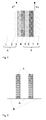
- the biocatalytic fuel cell of the i n-vention conventionally comprises an anode chamber A and a cathode chamber B and an ion exchange membrane 4 between them.
- the anode chamber comprises a fuel reservoir 1, a current collector electrode 2 and an electron conductor 3.
- the fuel reservoir contains not only fuel, but also a buffering agent and, in accordance with an embodiment of the invention, a biocatalyst, free in a liquid compartment.
- the cathode chamber comprises a compartment 5 containing an electrolyte, an electron conductor 6 containing a catalyst, a current donor electron 7 and an oxygen-selective membrane 8.
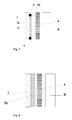
- Figure 2 shows a preferred embodiment of the invention, the fuel cell comprising two cathode chambers B and one anode chamber A between them.
- the biocatalyst is entrapped into a compartment 11 by means of a dialysis membrane 10, which, in turn, is mechanically fixed onto the surface of the current collector electrode 2.
- Reference 9 denotes a seal.
- Reference 3a denotes a form of an electron conductor, wherein both a mediator and a stabilizer are blended into the electron conductor, i.e. the graphite coating.
- the triplet i.e. the enzyme, the mediator and the stabilizer
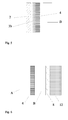
- Reference 3b denotes this embodiment, wherein the electron conductor, i.e. the graphite coating, contains both the enzyme, the mediator and the stabilizer.
- said triplet is fixed onto the surface of the ion exchange membrane 4.
- an atmospherically isolated oxygen supply 12 which is in communication with the cathode chamber through an oxygen-selective membrane 8, is attached to the cathode chamber B.
- alcohol or an aqueous solution thereof is used as the fuel.
- these include particularly lower alcohols, such as methanol, ethanol and isopropyl alcohol or an aqueous solution thereof.
- Methanol is particularly useful owing to its large electron density.
- the current collector electrode may be a graphite membrane, a carbon fabric or a metal net of nickel or stainless steel.
- the possible biocatalysts include mainly enzymes.
- a special characteristic of biocatalysts is that they are enzymes functioning without a NADH co-factor (reduced nicotinamide adenine dinucleotide).
- NADH co-factor reduced nicotinamide adenine dinucleotide
- PQQ pyrroloquinoline quinone
- the most useful enzymes are characterized by maintaining a high activity for a long time and remaining active at high alcohol concentrations (40 to 45%).
- the enzyme used is methanol dehydrogenase, whose producer strain is Methylobacterium extorquens (NCIMB 9133), previously Pseudomonas AM1, Methylobacterium AM1 and Protomonas extorquens, or Acidomonas methanolica (DSM 5432), i.e. Acetobacter methanolicus.
- NCIMB 9133 Methylobacterium extorquens
- DSM 5432 Acidomonas methanolica
- laccase polyphenol oxidase
- Electro-enzymatic reduction of dioxygen to water in the cathode compartment of a biofuel cell Palmore, G.T.R. and Kim, H.-H., J. Electroanal. Chem. 464 (1999) 110-117.
- the enzyme preparation is either a purified enzyme or a purified enzyme stabilized with known stabilizers (polyalcohols, polyelectrolytes, salts, etc.; published US patent 6,133,229) or a cell-bound enzyme.
- the enzymatic catalyst may be present free in the fuel solution or it can be blended into the graphite coating or bound to the carrier by known methods, whereby the carrier may be any fixed structural part of the fuel cell or an added carrier substance.
- the ion exchange membrane is any conventional proton exchange membrane having a low alcohol and mediator permeability and whose proton conductivity is good, such as cation exchange membrane No. 55165, manufactured by BDH Laboratory Supplies, UK.
- TMPD N,N,N',N'-tetramethyl phenylene diamine
- the mediator is not consumed in the reaction, but changes from one oxidation state to another.
- mediators such as TMPD, are instable in aqueous solutions and oligomerize easily, causing the mediator to be inactivated.
- the inactivation is prevented by using a stabilizer that is a metal oxide or metal salt.
- TiO 2 has proved to be the most efficient.
- the mediator and the stabilizer are blended into the graphite coating, which is then fixed onto the surface of either the current collector electrode or the ion exchange membrane.
- Oxygen is diffused in the immediate vicinity of the current donor electrode contained by the cathode chamber at normal atmospheric pressure through an oxygen-permeable membrane.
- the cathode chamber contains either a solid or a liquid electrolyte.
- Oxygen reduction is catalyzed with a suitable catalyst, such as silver, or a biocatalyst fixed onto the surface of the current donor electrode by means of a conductive material, such as a graphite coating.
- a suitable catalyst such as silver
- a biocatalyst fixed onto the surface of the current donor electrode by means of a conductive material, such as a graphite coating.
- the coating also contains a mediator and a stabilizer.
- oxygen originating from the air another oxidant can be used, such as hydrogen peroxide, which is stored in a separate closed container that is attached to the cathode chamber and is in communication with the cathode chamber through an oxygen-permeable membrane, as is shown in Figure 6.
- a dry cathode may also be used, such as in generally known PEM fuel cells, in which case the chemical catalyst, the dry cathode and the current donor electrode are fixed together onto the surface of the ion exchange membrane such that the entity is in direct contact with air.
- the fuel cell of the invention is methanol and the reduced substance is oxygen in the air.
- MDH refers to methanol dehydrogenase.
- the fuel, pure alcohol or an alcohol-water mixture is oxidized using an enzyme or enzymes in the anode compartment of the fuel cell.
- the end product produced is an aldehyde corresponding to the alcohol, which decomposes into an acid corresponding to the alcohol, and electrons and hydrogen ions.
- the reaction can be continued up to carbon dioxide with suitable enzymes, such as formiate-hydrogenlyase.
- suitable enzymes such as formiate-hydrogenlyase.
- the excessive lowering of the pH, caused by the acid formed in the reaction is prevented by buffering.
- the electrons are conveyed to the current collector by means of the mediator, from where they are further transferred via an electric load to the cathode (when the cell is loaded).
- the reduced form of the mediator is thus oxidized on the current collector.
- the hydrogen ions are transferred through the proton exchange membrane to the cathode compartment, where they react with the oxidant and the electrons originating from the current donor.
- the oxidant is oxygen
- the state of the biocatalytic fuel cell of the invention can be visually monitored on the basis of a colour change in the reaction solution contained by the anode chamber.
- the invention also relates to this aspect. Monitoring is based on strong colour changes of the mediator TMPD at different oxidation stages. When the activity of the enzyme starts to drop or the anode compartment no longer has fuel, blue, oxidized TMPD starts to accumulate in the anode compartment, since the enzyme is no longer capable of reducing it back to its colourless form. In this way, the state of the fuel cells can be easily observed visually through one or more transparent walls of the anode chamber. When the colour of the cell is observed to turn into blue, the unit cell can be changed into a new cell containing fresh enzyme or add fuel to the cell.
- the electrode in the cathode chamber was an oxygen diffusion electrode, manufactured by Gaskatel GmbH (Germany), with an area of 6 cm 2 .
- the electrolyte in the cathode chamber was 0.18 M of a KH 2 PO 4 -Na 2 HPO 4 buffer solution with a pH of 6.0.
- the volume of the cathode chamber was 1.5 ml and the volume of the anode chamber 7.2 ml.
- the ion exchange membrane used was a cation exchange membrane from the manufacturer BDH Laboratory Supplies, UK, No. 55165. Its area was 6 cm 2 .
- the enzymatic catalyst used was methanol dehydrogenase.
- its producer strain was Methylobacterium extorquens (NCIMB 9133) and in example 4 Acidomonas methanolica (DSM 5432).
- the current collector electrode of the anode chamber was of carbon fabric, graphite membrane or nickel net.
- the area of the electrode was 6 cm 2 .
- the anode chamber contained 0.18 M of a K 2 HPO 4 -NaOH buffer solution with a pH of 10, 2 IU of enzyme, 5 mM of TMPD, 0.2 mM of TiO 2 , 45 mM of NH 4 Cl and 1% methanol.
- the current collector electrode was of carbon fabric or graphite membrane.
- the area of the electrode was 6 cm 2 .
- a buffer solution containing 10 ml of agarose was prepared, containing 0.6 M of a Tris-HCI buffer solution (pH 9.4), 2 g (20% weight/volume) graphite powder, 5 mM TMPD, 0.2 - 0.3% agarose and 4 IU enzyme. 5 ml of the prepared solution was applied onto the carbon fabric and the remaining 5 ml onto the graphite membrane.
- the anode chamber contained 0.18 M of a K 2 HPO 4 -NaOH buffer solution with a pH of 10, 2 IU enzyme, 5 mM TMPD, 45 mM NH 4 Cl and 1% methanol, but no TiO 2 .
- the current collector electrode was of nickel net and its area was 6 cm 2 .
- the graphite coating, containing the enzyme was prepared by mixing 0.5 g graphite powder with paraffin oil. 2 IU enzyme, 15 mg TMPD and 0.15 mg of TiO 2 were added to the mixture. The coating was applied onto the nickel net and separated from the fuel buffer solution of the anode chamber with a dialysis membrane (12000 - 14000 dalton).
- the anode chamber contained 0.18 M of a K 2 HPO 4 -NaOH buffer solution with a pH of 10,45 mM NH 4 Cl and 1% of methanol.
- the current collector electrode was of nickel net and its area was 6 cm 2 .
- the enzyme used was not isolated from the producer cells.
- the reaction solution of the anode chamber was prepared by mixing 4 ml of a cell-bound enzyme (2 IU) in a KH 2 PO 4 -Na 2 HPO 4 buffer solution (pH 6.0), which contained TMPD, TiO 2 , NH 4 Cl and methanol.
- the final composition of the solution was 2 IU cell-bound enzyme, 1% methanol, 5 mM TMPD, 0.2 mM TiO 2 and 0.45 mM of NH 4 Cl in 0.18 M of a KH 2 PO 4 -Na 2 HPO 4 buffer solution with a pH of 6.0.
- Example 5 Enzyme catalyst blended into a gelatine-based graphite coating
- the current collector electrode was of nickel net and its area was 6 cm 2 .
- the enzyme-containing graphite coating was prepared by mixing 0.5 g of graphite powder into a 1-percent (weight/weight) gelatine solution containing 2 IU enzyme, 15 mg TMPD and 0.15 mg TiO 2 .
- the coating was applied onto the nickel net and separated from the fuel-buffer solution in the anode chamber with a dialysis membrane (12000 - 14000 dalton).
- the anode chamber contained 0.18 M of a K 2 HPO 4 -NaOH buffer solution with a pH of 10,45 mM of NH 4 Cl and 1% of methanol.
Landscapes
- Life Sciences & Earth Sciences (AREA)
- Chemical & Material Sciences (AREA)
- Electrochemistry (AREA)
- Engineering & Computer Science (AREA)
- Manufacturing & Machinery (AREA)
- Sustainable Development (AREA)
- Sustainable Energy (AREA)
- Chemical Kinetics & Catalysis (AREA)
- General Chemical & Material Sciences (AREA)
- Microbiology (AREA)
- Biochemistry (AREA)
- Inert Electrodes (AREA)
- Fuel Cell (AREA)
Abstract
Description


| Example 1 | Ref. example 2 | Example 3 | Example 4 | Example 5 | |
| Max. open (mV) | 320 - 360 | 250 - 270 | 420 - 500 | 380 - 420 | 350 - 400 |
| P(uW) | 60 - 140 | 30 - 80 | 260 - 480 | 140 - 230 | 100 - 200 |
| l(mA) | 0.8-1.2 | 0.5-0.9 | 1.6-2.2 | 1.2-1.5 | 1.0-1.4 |
| Rin(ohm) | 190 - 290 | 200 - 370 | 120 - 200 | 160 - 210 | 180 - 240 |
Claims (18)
- A biocatalytic direct alcohol fuel cell comprising an anode chamber, one or more cathode chambers, and an ion exchange membrane between the chambers, characterized in that the anode chamber contains a biocatalyst for oxidation of the fuel, and the cathode chamber contains a chemical catalyst, a biocatalyst or a combination thereof for reduction of oxygen or a corresponding oxidant.
- A fuel cell as claimed in claim 1, characterized in that the fuel cell comprises two cathode chambers.
- A fuel cell as claimed in claim 1 or 2, characterized in that the biocatalyst contained by the anode chamber is an enzyme operating without a NADH co-factor.
- A fuel cell as claimed in claim 3, characterized in that the enzyme is an alcohol dehydrogenase of a PQQ type.
- A fuel cell as claimed in any one of the preceding claims, characterized in that the anode chamber contains fuel, a buffering agent and a current collector electrode, enzyme, mediator, stabilizer and electron conductor.
- A fuel cell as claimed in claim 5, characterized in that the alcohol fuel is a lower alcohol or an aqueous solution thereof, preferably methanol.
- A fuel cell as claimed in any one of the preceding claims, characterized in that the mediator is N,N,N',N' tetramethyl phenylene diamine or a compound having corresponding characteristics.
- A fuel cell as claimed in any one of the preceding claims, characterized in that the stabilizer is a metal oxide or a metal salt, preferably TiO2.
- A fuel cell as claimed in any one of the preceding claims, characterized in that the current collector electrode is a nickel or steel net or a graphite membrane.
- A fuel cell as claimed in any one of the preceding claims, characterized in that the electron conductor is a graphite coating containing fine-grained graphite powder and a binder, such as paraffin oil or gelatine.
- A fuel cell as claimed in any one of the preceding claims, characterized in that the biocatalyst is free in the fuel solution or the biocatalyst is mechanically entrapped onto the surface of the current collector electrode with a dialysis membrane, and the mediator and the stabilizer are attached to the surface of the current collector electrode by means of a graphite coating, or the biocatalyst, the mediator and the stabilizer are fixed onto the surface of the current collector electrode by means of a graphite coating, or the biocatalyst, the mediator and the stabilizer and fixed onto the surface of an ion exchange membrane by means of a graphite coating.
- A fuel cell as claimed in claim 11, characterized in that the biocatalyst is mechanically entrapped onto the surface with a dialysis membrane, and the mediator and the stabilizer are fixed onto the surface of the current collector electrode by means of a graphite coating, or the biocatalyst, the mediator and the stabilizer are fixed onto the surface of the current collector electrode by means of a graphite coating.
- A fuel cell as claimed in any one of the preceding claims, characterized in that the cathode chamber contains a chemical wet cathode, wherein the chemical catalyst, such as silver, is fixed onto the surface of the current donor electrode by means of a conductive material, such as a graphite coating, and a liquid electrolyte, and the oxygen flows into the cathode chamber from atmospheric air through an oxygen-permeable membrane.
- A fuel cell as claimed in any one of claims 1 to 12, characterized in that the cathode chamber contains a solid electrolyte and a chemical dry cathode, whereby the chemical catalyst, the dry cathode and the current donor electrode are fixed together onto the surface of the ion exchange membrane such that the entity is in direct contact with air.
- A fuel cell as claimed in any one of the preceding claims, characterized in that the oxygen required in the cathode reaction is a chemical, such as hydrogen peroxide, instead of atmospheric oxygen, the chemical being stored in a separate closed reservoir attached to the cathode chamber, the reservoir being in communication with the cathode chamber through an oxygen-permeable membrane.
- A method of producing electrical power with a device as claimed in any one of the preceding claims, characterized by
oxidizing fuel in an anode chamber by using a biocatalyst,
conveying the generated electrons to a current collector electrode by means of a mediator,
reducing oxygen or a corresponding oxidant in a cathode chamber by means of electrons originating from a current donor electrode and a chemical catalyst, a biocatalyst or a combination thereof. - A method of monitoring the state of a fuel cell as claimed in any one of claims 1 to 15, characterized by monitoring the colour change of a liquid comprised by an anode chamber visually through one or more transparent walls of the anode chamber.
- Use of a fuel cell as claimed in any one of claims 1 to 15 for producing electrical power.
Applications Claiming Priority (2)
| Application Number | Priority Date | Filing Date | Title |
|---|---|---|---|
| FI20021285A FI119267B (en) | 2002-06-28 | 2002-06-28 | Biocatalytic direct alcohol combustion cell |
| FI20021285 | 2002-06-28 |
Publications (2)
| Publication Number | Publication Date |
|---|---|
| EP1376729A2 true EP1376729A2 (en) | 2004-01-02 |
| EP1376729A3 EP1376729A3 (en) | 2009-08-05 |
Family
ID=8564269
Family Applications (1)
| Application Number | Title | Priority Date | Filing Date |
|---|---|---|---|
| EP03101734A Withdrawn EP1376729A3 (en) | 2002-06-28 | 2003-06-13 | Biocatalytic direct alcohol fuel cell |
Country Status (4)
| Country | Link |
|---|---|
| US (1) | US7384701B2 (en) |
| EP (1) | EP1376729A3 (en) |
| JP (1) | JP2004165142A (en) |
| FI (1) | FI119267B (en) |
Cited By (2)
| Publication number | Priority date | Publication date | Assignee | Title |
|---|---|---|---|---|
| WO2010040897A1 (en) | 2008-10-08 | 2010-04-15 | Teknillinen Korkeakoulu | Method and system for producing hydrogen, and electricity generation system |
| US8758936B2 (en) | 2006-06-19 | 2014-06-24 | Valtion Teknillinen Tutkimuskeskus | Thin film structures |
Families Citing this family (20)
| Publication number | Priority date | Publication date | Assignee | Title |
|---|---|---|---|---|
| CN100521347C (en) * | 2004-08-23 | 2009-07-29 | 索尼株式会社 | Fuel cells, methods of using fuel cells, cathodes for fuel cells, electronic devices, devices using electrode reactions, and electrodes for devices using electrode reactions |
| WO2006132595A1 (en) * | 2005-06-04 | 2006-12-14 | Agency For Science, Technology And Research | Laminated battery |
| JP2007035437A (en) * | 2005-07-27 | 2007-02-08 | Sony Corp | Porous conductive material, method for producing the same, electrode, method for producing the same, fuel cell, method for producing the same, electronic device, moving object, power generation system, cogeneration system, and electrode reaction utilization device |
| JP2007073347A (en) * | 2005-09-07 | 2007-03-22 | Univ Waseda | Fuel cell |
| JP5011691B2 (en) * | 2005-09-20 | 2012-08-29 | ソニー株式会社 | Fuel cells, electronic devices, mobile objects, power generation systems, and cogeneration systems |
| KR100792138B1 (en) | 2005-10-27 | 2008-01-04 | 주식회사 엘지화학 | Manufacturing method of membrane-electrode-assembly |
| JP5044932B2 (en) * | 2006-01-16 | 2012-10-10 | ソニー株式会社 | Fuel cells and electronics |
| US7584664B2 (en) * | 2006-02-07 | 2009-09-08 | Sonoscan Inc. | Acoustic micro imaging device having at least one balanced linear motor assembly |
| WO2007126975A2 (en) * | 2006-03-31 | 2007-11-08 | The Govt. Of The Usa, As Represented By The Secretary, Dept. Of Health & Human Services, | A newly discovered bacterium in the family acetobacteraceae |
| CN100449845C (en) * | 2006-11-28 | 2009-01-07 | 北京航空航天大学 | Stackable single-chamber microbial fuel cells |
| EP2168196B1 (en) * | 2007-06-29 | 2018-12-26 | Universite Joseph Fourier - Grenoble 1 | Biomimetic artificial membrane device |
| US20110123835A1 (en) * | 2008-05-28 | 2011-05-26 | President And Fellows Of Harvard College | Methane-powered microbial fuel cells |
| JP2010102953A (en) * | 2008-10-23 | 2010-05-06 | Kurita Water Ind Ltd | Microbiological power generation device and positive electrode for the microbiological power generation device |
| EP2481114A1 (en) * | 2009-09-24 | 2012-08-01 | Georgia Tech Research Corporation | Electrochemical devices based on multiple junction ionic conductive membranes |
| JP2011243398A (en) * | 2010-05-18 | 2011-12-01 | Sony Corp | Flexible fuel cel |
| JP2012009313A (en) * | 2010-06-25 | 2012-01-12 | Sony Corp | Bio fuel cell |
| JP2013098077A (en) * | 2011-11-02 | 2013-05-20 | Sony Corp | Manufacturing method of fuel cell, fuel cell, and electronic device |
| JP6484742B1 (en) * | 2018-04-13 | 2019-03-13 | キッコーマン株式会社 | New mediator |
| JP6484741B1 (en) * | 2018-04-13 | 2019-03-13 | キッコーマン株式会社 | New mediator |
| FR3103325B1 (en) * | 2019-11-15 | 2022-04-08 | Centre Nat Rech Scient | Device for producing energy comprising a reservoir |
Family Cites Families (6)
| Publication number | Priority date | Publication date | Assignee | Title |
|---|---|---|---|---|
| US3284239A (en) * | 1963-06-03 | 1966-11-08 | Herbert F Hunger | Biochemical fuel cell |
| US6294281B1 (en) * | 1998-06-17 | 2001-09-25 | Therasense, Inc. | Biological fuel cell and method |
| US6270649B1 (en) * | 1998-07-09 | 2001-08-07 | Michigan State University | Electrochemical methods for generation of a biological proton motive force and pyridine nucleotide cofactor regeneration |
| US6500571B2 (en) | 1998-08-19 | 2002-12-31 | Powerzyme, Inc. | Enzymatic fuel cell |
| JP3688212B2 (en) * | 2001-03-06 | 2005-08-24 | シャープ株式会社 | Solid polymer fuel cell set |
| US7638228B2 (en) * | 2002-11-27 | 2009-12-29 | Saint Louis University | Enzyme immobilization for use in biofuel cells and sensors |
-
2002
- 2002-06-28 FI FI20021285A patent/FI119267B/en not_active IP Right Cessation
-
2003
- 2003-06-13 EP EP03101734A patent/EP1376729A3/en not_active Withdrawn
- 2003-06-18 US US10/463,344 patent/US7384701B2/en not_active Expired - Lifetime
- 2003-06-26 JP JP2003183240A patent/JP2004165142A/en active Pending
Cited By (2)
| Publication number | Priority date | Publication date | Assignee | Title |
|---|---|---|---|---|
| US8758936B2 (en) | 2006-06-19 | 2014-06-24 | Valtion Teknillinen Tutkimuskeskus | Thin film structures |
| WO2010040897A1 (en) | 2008-10-08 | 2010-04-15 | Teknillinen Korkeakoulu | Method and system for producing hydrogen, and electricity generation system |
Also Published As
| Publication number | Publication date |
|---|---|
| JP2004165142A (en) | 2004-06-10 |
| FI20021285A0 (en) | 2002-06-28 |
| EP1376729A3 (en) | 2009-08-05 |
| FI20021285A7 (en) | 2003-12-29 |
| US20040048111A1 (en) | 2004-03-11 |
| FI119267B (en) | 2008-09-15 |
| US7384701B2 (en) | 2008-06-10 |
Similar Documents
| Publication | Publication Date | Title |
|---|---|---|
| US7384701B2 (en) | Biocatalytic direct alcohol fuel cell | |
| US9620804B2 (en) | Fuel cell and method for manufacturing the same, electronic apparatus, enzyme-immobilized electrode and method for manufacturing the same, water-repellent agent, and enzyme-immobilizing material | |
| JP5181526B2 (en) | FUEL CELL, FUEL CELL MANUFACTURING METHOD, AND ELECTRONIC DEVICE | |
| JP5520930B2 (en) | Bio batteries with improved yield | |
| JP5233176B2 (en) | Fuel cells and electronics | |
| EP2028712A2 (en) | Biofuel cell, method for producing the same, electronic apparatus, enzyme-immobilized electrode, and method for producing the same | |
| JP5298479B2 (en) | Fuel cells and electronics | |
| US8440333B2 (en) | Fuel cell and electronic apparatus | |
| US20110039165A1 (en) | Fuel cell and method for manufacturing the same, enzyme-immobilized electrode and method for manufacturing the same, and electronic apparatus | |
| US20110200889A1 (en) | Fuel cell, electronic device, and buffer solution for fuel cell | |
| KR20110081170A (en) | Fuel cell and enzyme electrode | |
| EP2337134A1 (en) | Fuel cell, electronic device and buffer solution for fuel cell | |
| Scott et al. | Harnessing electric power from monosaccharides—a carbohydrate–air alkaline fuel cell mediated by redox dyes | |
| US8956772B2 (en) | Fuel cell, and power supply device and electronic apparatus using the same | |
| US7410709B2 (en) | Bio-battery | |
| EP2302722A1 (en) | Fuel cell, method for production of the fuel cell, electronic device, enzyme-immobilized electrode, method for production of the electrode, water-repellent agent, and enzyme-immobilized material | |
| JP2013016439A (en) | Enzyme fuel cell | |
| Topcagic et al. | Alcohol-based biofuel cells | |
| Ahmad et al. | A Hybrid enzymatic zinc-air fuel cell | |
| CN101494296A (en) | Biofuel cell, method for producing the same, electronic apparatus, enzyme-immobilized electrode, and method for producing the same |
Legal Events
| Date | Code | Title | Description |
|---|---|---|---|
| PUAI | Public reference made under article 153(3) epc to a published international application that has entered the european phase |
Free format text: ORIGINAL CODE: 0009012 |
|
| AK | Designated contracting states |
Kind code of ref document: A2 Designated state(s): AT BE BG CH CY CZ DE DK EE ES FI FR GB GR HU IE IT LI LU MC NL PT RO SE SI SK TR |
|
| AX | Request for extension of the european patent |
Extension state: AL LT LV MK |
|
| RAP1 | Party data changed (applicant data changed or rights of an application transferred) |
Owner name: ENFUCELL OY |
|
| RIN1 | Information on inventor provided before grant (corrected) |
Inventor name: XIA-CHANG ZHANG Inventor name: JUSSI SUOMELA Inventor name: ANJA APPELQVIST Inventor name: MATTI KORHOLA Inventor name: AAME HALME |
|
| RIN1 | Information on inventor provided before grant (corrected) |
Inventor name: XIA-CHANG ZHANG Inventor name: JUSSI SUOMELA Inventor name: ANJA APPELQVIST Inventor name: MATTI KORHOLA Inventor name: AAME HALME |
|
| PUAL | Search report despatched |
Free format text: ORIGINAL CODE: 0009013 |
|
| AK | Designated contracting states |
Kind code of ref document: A3 Designated state(s): AT BE BG CH CY CZ DE DK EE ES FI FR GB GR HU IE IT LI LU MC NL PT RO SE SI SK TR |
|
| AX | Request for extension of the european patent |
Extension state: AL LT LV MK |
|
| AKX | Designation fees paid | ||
| REG | Reference to a national code |
Ref country code: DE Ref legal event code: 8566 |
|
| STAA | Information on the status of an ep patent application or granted ep patent |
Free format text: STATUS: THE APPLICATION IS DEEMED TO BE WITHDRAWN |
|
| 18D | Application deemed to be withdrawn |
Effective date: 20100206 |