EP1376364A1 - Procédé de réglage d'au moins un paramètre de configuration d'une application - Google Patents
Procédé de réglage d'au moins un paramètre de configuration d'une application Download PDFInfo
- Publication number
- EP1376364A1 EP1376364A1 EP03291536A EP03291536A EP1376364A1 EP 1376364 A1 EP1376364 A1 EP 1376364A1 EP 03291536 A EP03291536 A EP 03291536A EP 03291536 A EP03291536 A EP 03291536A EP 1376364 A1 EP1376364 A1 EP 1376364A1
- Authority
- EP
- European Patent Office
- Prior art keywords
- application
- parameter
- value
- configuration
- performance
- Prior art date
- Legal status (The legal status is an assumption and is not a legal conclusion. Google has not performed a legal analysis and makes no representation as to the accuracy of the status listed.)
- Withdrawn
Links
Images



Classifications
-
- G—PHYSICS
- G06—COMPUTING OR CALCULATING; COUNTING
- G06F—ELECTRIC DIGITAL DATA PROCESSING
- G06F11/00—Error detection; Error correction; Monitoring
- G06F11/30—Monitoring
- G06F11/34—Recording or statistical evaluation of computer activity, e.g. of down time, of input/output operation ; Recording or statistical evaluation of user activity, e.g. usability assessment
- G06F11/3457—Performance evaluation by simulation
Definitions
- the present invention relates to a method for adjusting at least one parameter configuration of an application.
- An application can consist of an operating system, a server Internet-type network, or even a database.
- These applications present generally one or more configuration files configurable by means of a or several variables called configuration parameters, a selection of a particular value for each parameter having a decisive influence on performance of the application in question. It is thus desirable to identify the values of the configuration parameter (s) which give the application the best possible performance when said application is running, so as to ensure optimal quality of service to users of said application.
- One of the aims of the invention is to propose a method for adjusting the configuration settings through which application performance can be optimized without the need for recourse to actual functioning of said application, that is to say without users of the application does not have to undergo negative effects of successive adjustments of said parameters which may result in a temporary deterioration in the quality of service to which said users are entitled to claim.
- the operation of the application can be simulated at each time a new value of the configuration parameter is selected, without requiring an actual implementation of the application. If the steps in performance measurement and comparison reveals that the selected value does not not possible to obtain optimal performance, the selected value could be modified, without, however, analyzing the effects of choosing this value caused dissatisfaction among users of the application, who do not intervene in the adjustment method according to the invention.
- This first variant allows, by quantifying the effects of selections of two different values of a configuration parameter with reference to predetermined performances which constitute in this variant in a way an objective to be reached, to identify whether the variation in the value of said parameter has enabled to get closer to said objective, and to deduce in which direction the next variation must be performed.
- This makes it possible to organize and therefore simplify the process of selection of the value of said parameter within the framework of an implementation by cycles iteratives of the method according to the invention.
- the performances measured are not not compared to fixed values of optimal performance constituting an objective to achieve, which requires determining this objective beforehand and may prove difficult for certain applications where it is difficult to plan before the application is put into actual operation what should be the optimal performance potentially guaranteeing the best quality of service.
- This variant of the invention therefore makes it possible to simply determine whether the selection of the second value of the configuration parameter gives performance better or worse than those obtained with the first value of said parameter, and does not require a predetermination of optimal performance of the application.
- the variation of said parameter will then be carried out in a direction dependent on a direction of variation of successive comparison results.
- This second variant of the invention when used in the context of an implementation by iterative cycles of the method according to the invention, therefore allows identify a value of the configuration parameter for which a maximum will be obtained for the measured performances.
- an absolute value of a variation at apply to the value of said parameter during an adjustment step subsequent to minus two successive adjustment steps is equal to half of a difference between the values obtained for said parameter at the end of said two adjustment steps successive.
- This particular embodiment of the invention makes it possible to use a method known to those skilled in the art as a dichotomy, and thus allows to implement the adjustment step using simple and well-mastered algorithms.
- This device allows automatic adjustment of the value of a parameter of configuration of an application in order to optimize its performance, without human intervention during adjustment operations and prior to any placing in actual operation of said application.
- Fig. 1 schematically represents a device for adjusting at least one configuration parameter of an APPL application, which may consist of a operating system, such as Solaris, Unix, Linux, etc., via a web server such as an Apache, Netscape, Resin, Tomcat, etc. server, by an application server, such a Websphere, Weblogic, iPlanet, etc. server, or even by a database, such as an Oracle, Sybase, Versant, etc. database (the aforementioned signs can be protected).
- a web server such as an Apache, Netscape, Resin, Tomcat, etc. server
- an application server such a Websphere, Weblogic, iPlanet, etc. server
- a database such as an Oracle, Sybase, Versant, etc. database (the aforementioned signs can be protected).
- the APPL application contains a configurable CFF configuration file at by means of at least one variable P called configuration parameter, the value of which has a decisive influence on the performance of the APPL application.
- the P parameter can be constituted by quantities "MaxClients”, “StartServer”, “MinSpareServer”, “MaxSpareServer”, “KeepAlive”, “KeepAliveTimeOut”, “TimeOut”, or even “Max_Keep_Alive_Requests", which are anglrios specific to this application and well known to those skilled in the art who is familiar with this type of server.
- the adjustment device makes it possible to adjust so the value of each configuration parameter P in order to optimize the performance of the APPL application.
- such adjustment can be performed without insofar as it is necessary to resort to actual operation of said APPL application, that is to say without users of the APPL application do not have to undergo negative effects of successive adjustments of said parameter which may be result in a temporary deterioration in the quality of service at which said users are entitled to claim.
- the AUT machine is intended to communicate with an operator of the adjustment via a DISP display unit and an INTMD interface module.
- the operator will thus be able to provide the AUT machine with information to be taken into account when setting, which will for example be stored in a PARF file, and receive from from the AUT automaton a report of the adjustment operations at the end of these or during their progress.
- the LDMT load and measure tool is controlled by the AUT PLC via a LTDRMD load and test control module.
- the information intended to be stored in the PARF file makes it possible to define a general framework in which the setting of the configuration parameter (s) is done.
- This information will define for example the charging conditions which must be applied to the APPL application during a simulation step. Indeed, the result of a performance optimization will not be the same for a lightly or heavily loaded application.
- the load to which will be subjected the APPL application will for example be defined by a simultaneous number or a debit predetermined REQU requests generated by the LDMT load and measure tool, which requests will preferably be established in accordance with protocols commonly used, such as HTTP, HTTPS, FTP, etc.
- the charging conditions can also advantageously take into account specifics of the APPL application, such as managing static pages or dynamics, which produce different results in terms of optimization.
- the predetermined charging conditions may change over time and form load scenarios which have advantageously been previously stored in an LDSC scenario storage module, the information stored in the PARF file allowing the LTDRMD load control and test module to select, by means of a scenario selection signal SCSEL, the scenario which must be used during the simulation.
- SCSEL scenario selection signal
- Each simulation step will be triggered by the LTDRMD load control and test module by means of a first CNTL control signal.
- the scenario previously selected will then be applied to the APPL application by means of a so-called charge injection module LDINJ, which will generate REQU requests according to terms in terms of number, nature, flow, ... defined by the selected scenario.
- the performance of the APPL application will be defined by the ability of the said APLL application to respond adequately to the REQU requests provided for in the selected scenario.
- the RESP responses produced by the APLL application following these REQU requests are thus captured by the RESMES measurement means, which, after having analyzed them, will produce performance measurements MP i offered by the APPL application, under these load conditions predetermined, when configured using the parameter P to which a value P i has been assigned.
- the information stored in the PARF file will also advantageously make it possible to define measurement criteria intended to be applied during the analysis of these RESP responses. These criteria could for example be the search for a maximum value of online debit, a large number of transactions per second, or even the lowest possible response times or the highest possible transaction success rate.
- the CNFF selection means consist of a file containing at least one field writable by the optimization module OPTMD, which field is intended to contain the value P i which must be assigned to the configuration parameter P of the application APPL.
- Such an allocation is carried out by means of an ADRMD control module of the APPL application, which module communicates with the CFF configuration file of the APPL application.
- Some applications may include multiple configuration files, each containing one or more parameters. The information stored in the PARF file will then make it possible to identify the CFF configuration file intended to contain the parameter P for which a setting is sought.
- a first value P 1 is extracted from an initialization file INIF and assigned to the configuration parameter P whose adjustment is sought, via the selection means CNFF and the control module ADRMD of the APPL application.
- the scenario defining the predetermined charging conditions of the APPL application has been selected via the PARF file, the load and test control module LTDRMD and the selection signal SCSEL, a simulation step is triggered by the AUT controller. by activating the CNTL control signal, for example by assigning said signal a logic level "1".
- the APPL application is then also put into operation by the AUT automaton by means of an activation of a second CNTA control signal supplied by the control module ADRMD of the APPL application. It should be emphasized that this is not an actual operation of the APPL application, that is to say that the load to which the application is subjected is not produced by actual users of the device, but by the LDMT load and test tool.
- each measured performance value MP i will be compared by the comparison means CMPU to the only predetermined performance values, an adjustment by variation of the value Pi of the parameter configuration being executed at each iteration, that is to say at the end of each comparison step, until the value of the measured performances MP i exceeds that of the predetermined performances, which simply constitute an objective to be achieved .
- the comparison means CMPU can either, in a first variant, successively compare the performances MP 1 and MP 2 measured at the end of two simulation steps with the predetermined performances imposed by the operator of the device and then contained in the PARF file, or, in a second variant, compare the performance MP 1 and MP 2 measured between them after two simulation steps, the performance MP 1 having in both variants previously stored in a MEMA memory of the AUT automaton at the end of the previous simulation step.
- the optimization module OPTMD therefore has the function of identifying whether the variation dP i of the value P i of the configuration parameter P has made it possible to approach the objective constituted by the predetermined performance values, and to deduce therefrom in which direction the next variation dP i + 1 should be made.
- This makes it possible to organize and therefore to simplify the process of selecting the value P i of said parameter within the framework of an implementation by iterative cycles of the method according to the invention.
- the iterative process will stop when the predetermined performances, which in this first variant constitute an objective to be achieved, have actually been produced by the application APPL during a simulation step, the corresponding value P i then being retained for the configuration parameter P.
- the OPTMD optimization module simply has the function of determining whether the selection of the new value P i of the configuration parameter P makes it possible to obtain better or worse performance than that obtained with the previous value P i -1 of said parameter P, this variant having the advantage of not requiring a predetermination of optimal performance of the application.
- the iterative process implemented according to this variant will stop when a predetermined number M of iterations has been reached, or even when a difference between two successive performance measurements becomes less than a predetermined threshold value, or again when a variation dP i to be applied to a value P i of the configuration parameter P will be less than a predetermined threshold value, which will in principle mean in the last two cases that maximum performance will have been reached for the value P i considered, which will then be used for the configuration parameter P.
- Fig.2 illustrates an adjustment method according to a very simple embodiment of the invention.
- This method includes an initialization step 10, during which the operator defines the configuration parameter P of which he wishes to make an adjustment, the operating conditions LD under which this adjustment must be made, and of the performance PREF which he will have been deemed optimal under these load conditions and which will constitute a performance objective to be achieved.
- the operator will also define an initial value P 1 of said configuration parameter, as well as a deviation dP i defining an amplitude of variation to be applied to different successive values P i .
- a counter enabling the value of a loop index i to be followed is also initialized to 1.
- a next step 12 called simulation
- the operation of the application is simulated in a configuration resulting from the selection of the value P i of the configuration parameter P, under the predetermined operating conditions LD.
- the performances MP i produced by the application in said configuration resulting from the selection of the value P i are measured, and, optionally, stored.
- the measured performance MP i are compared to the predetermined performance PREF.
- this method can therefore be implemented to carry out an adjustment of the configuration parameter P.
- this method can also be used as simply a means of measuring and comparing performance in different configurations, in order to search for a particular zone of variation of the configuration parameter P within which a maximum performance value can be obtained, without precisely identifying the coordinates of such a maximum.
- This mode of implementation is useful when the variation curve has several local maxima, because it makes it possible to identify approximately and without requiring too large a computation volume a variation interval of width reduced compared to the set of the range of variation of the configuration parameter, the interval within which a more precise maximum search method, and therefore more demanding in terms of computing resources, can then be used.
- steps 15 and 16 can be omitted, steps 11, 12, 13, 14, 17 and 18 being linked in a cyclic manner until i reaches a predetermined value during the initialization step 10, each measurement result MP i being stored at the end of the corresponding measurement step 13.
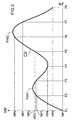
- Fig. 3 represents a CV variation curve which shows the evolution actual performance measured MP of the application as a function of the value of configuration parameter P.
- An analysis stored MPi values identify first and second maxima MAX1 and MAX2 performance rooms, obtained for values of the parameter of configuration P respectively located in a first and a second interval [P2; P3] and [P6; P7].
- the mode of implementation of the method described above therefore allows to limit the search for an absolute maximum of performance to the single interval [P6; P7], and thus reduce the computation volume necessary for the identification of the value of the configuration parameter which will effectively obtain MAX2 maximum performance of the application under the conditions of predetermined operation.
- Fig.4 illustrates an adjustment method according to the second variant of the invention mentioned above.
- This process can be implemented either in isolation, that is to say without conducting a prior search for an interval of variation of the configuration parameter within which appears the maximum value of performance of the application under its conditions of predetermined operation, either following the implementation of the method described above, which allows an identification of such an interval, and therefore a reduction in the computation volume necessary for the identification of the value of the configuration parameter P which achieves these maximum performances.
- it will be assumed that such an interval has already been identified using the method described above.
- the adjustment method includes an initialization step 20, during which lower and upper limits of the interval in which maximum performance is sought are assigned to new successive initial values P 1 and P 2 of the configuration parameter, i.e. in the case described here, the values bearing the labels P6 and P7 in Fig. 3.
- a counter enabling the value of a loop index i to be followed is also initialized to 1.
- simulation the operation of the application is simulated in a configuration resulting from the selection of the value P i of the configuration parameter P, under the predetermined operating conditions LD.
- a next step 23 called measurement
- the performances MP i produced by the application in said configuration resulting from the selection of the value P i are measured, and, during a next step 24, these performances MP i are stored.
- a variation dP i will then be calculated, the absolute value of which in this example will be equal to half of a difference between the values P i and P i-1 .
- This definition of the absolute value of the variation dP i corresponds to the application of a conventional dichotomous method well known to those skilled in the art.
- the absolute value of the difference dP i thus calculated is compared with a minimum difference d0 previously defined by the operator.
- the difference dP i calculated during step 27 is less than the minimum difference d0, this difference will be considered insignificant in the sense that it will not allow a significant increase in the performance of the application, in which case the progress of the method can be concluded during a final step 29 during which the current value P i is retained for the purpose of attributing to the configuration parameter P for the actual operation of the application considered, as value enabling performance to be obtained which is extremely close to the maximum performance of said application.
- the difference dP i calculated during step 27 is greater than or equal to the minimum difference d0, a corresponding variation will be applied to the current value P i to obtain the following value P i + 1 , during an adjustment step 30 of the value of the configuration parameter, the direction of the variation being determined by the sign S i previously calculated.
- the invention allows a optimizing the performance of an application, which optimization can be executed automatically and without involving users of said application, by implementing a feedback loop authorizing a simulation of the operation of said application, a measure of the performance produced by said application during said simulation, and an adjustment of at least one parameter of configuration of said application as a function of the performances thus measured.
- Such a three-pass process makes it possible to obtain a quasi-optimum adjustment of all the configuration parameters of an application that has them several, at the price of an acceptable calculation volume.
Landscapes
- Engineering & Computer Science (AREA)
- General Engineering & Computer Science (AREA)
- Theoretical Computer Science (AREA)
- Computer Hardware Design (AREA)
- Quality & Reliability (AREA)
- Physics & Mathematics (AREA)
- General Physics & Mathematics (AREA)
- Management, Administration, Business Operations System, And Electronic Commerce (AREA)
- Feedback Control In General (AREA)
Abstract
Description
- une étape de sélection d'une première valeur dudit paramètre,
- une étape de simulation d'un fonctionnement de l'application dans une première configuration résultant de la sélection de la première valeur dudit paramètre, dans des conditions de charge prédéterminées de l'application,
- une étape de mesure de performances de l'application dans ladite première configuration,
- une étape de comparaison des performances mesurées avec des valeurs de performance prédéterminées, et
- une étape de réglage par variation de la valeur dudit paramètre en fonction d'un résultat de ladite comparaison.
- une étape de simulation d'un fonctionnement de l'application dans une deuxième configuration résultant de la variation de la valeur dudit paramètre, dans les conditions de charge prédéterminées de l'application,
- une étape de mesure de performances de l'application dans ladite deuxième configuration,
- une étape de comparaison des performances mesurées dans ladite deuxième configuration avec les valeurs de performance prédéterminées, et
- une étape de réglage par variation de la valeur dudit paramètre en fonction d'un résultat de ladite comparaison, la variation dudit paramètre étant réalisée dans un sens dépendant d'un sens de variation de résultats de comparaisons successives.
- une étape de sélection d'une deuxième valeur dudit paramètre, et
- une étape de simulation d'un fonctionnement de l'application dans une deuxième configuration résultant de la sélection de la deuxième valeur dudit paramètre, dans les conditions de charge prédéterminées de l'application,
- des moyens de sélection d'une première valeur dudit paramètre,
- des moyens de simulation d'un fonctionnement de l'application dans une première configuration résultant de la détermination de la première valeur dudit paramètre, dans des conditions de charge prédéterminées de l'application,
- des moyens de mesure de performances de l'application dans ladite première configuration,
- des moyens de comparaison des performances mesurées avec des valeurs de performance prédéterminées, et
- des moyens de réglage par variation de la valeur dudit paramètre en fonction d'un résultat de ladite comparaison.
- des moyens de sélection CNFF d'une valeur Pi dudit paramètre P,
- des moyens de simulation (LDSC, LDINJ) d'un fonctionnement de l'application APPL dans une configuration résultant de la sélection de la valeur Pi dudit paramètre P, dans des conditions de charge prédéterminées de l'application APPL,
- des moyens de mesure RESMES de performances MPi de l'application APPL dans ladite configuration,
- des moyens de comparaison CMPU des performances mesurées MPi avec des valeurs de performance prédéterminées, et
- des moyens de réglage par variation VARU de la valeur Pi dudit paramètre P en fonction d'un résultat de ladite comparaison.
- un outil de charge et de mesure LDMT, qui inclut les moyens de simulation (LDSC, LDINJ) et de mesure RESMES, et
- un automate AUT, qui inclut les moyens de sélection CNFF et un module d'optimisation OPTMD contenant les moyens de comparaison CMPU et de réglage par variation VARU.
Claims (6)
- Procédé de réglage d'au moins un paramètre de configuration d'une application, lequel procédé inclut au moins :une étape de sélection d'une première valeur dudit paramètre,une étape de simulation d'un fonctionnement de l'application dans une première configuration résultant de la sélection de la première valeur dudit paramètre, dans des conditions de charge prédéterminées de l'application,une étape de mesure de performances de l'application dans ladite première configuration,une étape de comparaison des performances mesurées avec des valeurs de performance prédéterminées, etune étape de réglage par variation de la valeur dudit paramètre en fonction d'un résultat de ladite comparaison.
- Procédé de réglage selon la revendication 1, caractérisé en ce qu'il inclut en outre, insérées à la suite d'une première étape de réglage :une étape de simulation d'un fonctionnement de l'application dans une deuxième configuration résultant de la variation de la valeur dudit paramètre, dans les conditions de charge prédéterminées de l'application,une étape de mesure de performances de l'application dans ladite deuxième configuration,une étape de comparaison des performances mesurées dans ladite deuxième configuration avec les valeurs de performance prédéterminées, etune étape de réglage par variation de la valeur dudit paramètre en fonction d'un résultat de ladite comparaison, la variation dudit paramètre étant réalisée dans un sens dépendant d'un sens de variation de résultats de comparaisons successives.
- Procédé de réglage selon la revendication 1, caractérisé en ce qu'il inclut en outre, insérées à la suite de l'étape de mesure de performances de l'application dans ladite première configuration :une étape de sélection d'une deuxième valeur dudit paramètre, etune étape de simulation d'un fonctionnement de l'application dans une deuxième configuration résultant de la sélection de la deuxième valeur dudit paramètre, dans les conditions de charge prédéterminées de l'application,les valeurs de performances prédéterminées auxquels les performances mesurées dans la deuxième configuration doivent être comparées au cours de l'étape de comparaison étant matérialisées par les performances mesurées dans la première configuration.
- Procédé de réglage selon la revendication 3, caractérisé en ce que la variation dudit paramètre est réalisée dans un sens dépendant d'un sens de variation de résultats de comparaison successives.
- Procédé de réglage selon l'une des revendications 1 à 4, caractérisé en ce qu'une valeur absolue de la variation à appliquer à la valeur dudit paramètre lors d'une étape de réglage consécutive à au moins deux étapes de réglage successives est égale à la moitié d'une différence entre les valeurs obtenues pour ledit paramètre à l'issue desdites deux étapes de réglage successives.
- Dispositif de réglage d'au moins un paramètre de configuration d'une application, lequel dispositif inclut :des moyens de sélection d'une première valeur dudit paramètre,des moyens de simulation d'un fonctionnement de l'application dans une première configuration résultant de la détermination de la première valeur dudit paramètre, dans des conditions de charge prédéterminées de l'application,des moyens de mesure de performances de l'application dans ladite première configuration,des moyens de comparaison des performances mesurées avec des valeurs de performance prédéterminées, etdes moyens de réglage par variation de la valeur dudit paramètre en fonction d'un résultat de ladite comparaison.
Applications Claiming Priority (2)
| Application Number | Priority Date | Filing Date | Title |
|---|---|---|---|
| FR0208275A FR2841666A1 (fr) | 2002-06-27 | 2002-06-27 | Procede de reglage d'au moins un parametre de configuration d'une application |
| FR0208275 | 2002-06-27 |
Publications (1)
| Publication Number | Publication Date |
|---|---|
| EP1376364A1 true EP1376364A1 (fr) | 2004-01-02 |
Family
ID=29717146
Family Applications (1)
| Application Number | Title | Priority Date | Filing Date |
|---|---|---|---|
| EP03291536A Withdrawn EP1376364A1 (fr) | 2002-06-27 | 2003-06-23 | Procédé de réglage d'au moins un paramètre de configuration d'une application |
Country Status (2)
| Country | Link |
|---|---|
| EP (1) | EP1376364A1 (fr) |
| FR (1) | FR2841666A1 (fr) |
Citations (1)
| Publication number | Priority date | Publication date | Assignee | Title |
|---|---|---|---|---|
| US6223171B1 (en) * | 1998-08-25 | 2001-04-24 | Microsoft Corporation | What-if index analysis utility for database systems |
-
2002
- 2002-06-27 FR FR0208275A patent/FR2841666A1/fr active Pending
-
2003
- 2003-06-23 EP EP03291536A patent/EP1376364A1/fr not_active Withdrawn
Patent Citations (1)
| Publication number | Priority date | Publication date | Assignee | Title |
|---|---|---|---|---|
| US6223171B1 (en) * | 1998-08-25 | 2001-04-24 | Microsoft Corporation | What-if index analysis utility for database systems |
Non-Patent Citations (2)
| Title |
|---|
| BANAWAN S A ET AL: "ON COMPARING LOAD INDICES USING ORACLE SIMULATION", PROCEEDINGS OF THE WINTER SIMULATION CONFERENCE. NEW ORLEANS, DEC. 9 - 12, 1990, NEW YORK, IEEE, US, vol. CONF. 22, 9 December 1990 (1990-12-09), pages 851 - 856, XP000279926 * |
| PRETE C A ET AL: "THE CHARM TOOL FOR TUNING EMBEDDED SYSTEMS", IEEE MICRO, IEEE INC. NEW YORK, US, vol. 17, no. 4, 1 July 1997 (1997-07-01), pages 67 - 76, XP000658535, ISSN: 0272-1732 * |
Also Published As
| Publication number | Publication date |
|---|---|
| FR2841666A1 (fr) | 2004-01-02 |
Similar Documents
| Publication | Publication Date | Title |
|---|---|---|
| EP4443348A1 (fr) | Procédé de recherche d'une combinaison optimale d hyperparamètres pour un modèle d apprentissage automatique | |
| FR3095042A1 (fr) | Procede de definition d’un chemin | |
| FR3108176A1 (fr) | Dispositif de détection de défauts de surface sur au moins une face terminale d’au moins une fibre optique. | |
| EP3214601B1 (fr) | Procédé d'amélioration d'images applicable aux images d'empreintes digitales | |
| FR2815151A1 (fr) | Procede de recherche d'images dans un film et dispositif faisant application dudit procede | |
| FR3088755A1 (fr) | Procede de defloutage d’une image | |
| EP3966739B1 (fr) | Procédé d'analyse automatique d'images pour reconnaître automatiquement au moins une caractéristique rare | |
| EP1195064B1 (fr) | Procede d'evaluation de la qualite de sequences audiovisuelles | |
| FR2841666A1 (fr) | Procede de reglage d'au moins un parametre de configuration d'une application | |
| EP3933626B1 (fr) | Evaluation du biais d'une fonction d'identification biométrique | |
| EP3625766B1 (fr) | Méthode de détection et de quantification du flou dans une image numérique | |
| FR3058810A1 (fr) | Procede et dispositif d'actualisation d'un modele predictif d'une variable relative a un terminal mobile | |
| EP3388818B1 (fr) | Procédé d'acquisition d'un spectre | |
| WO2024184324A1 (fr) | Système de réseaux neuronaux par distillation, procédés d'entrainement améliorés | |
| WO2019211367A1 (fr) | Procede de generation automatique de reseaux de neurones artificiels et procede d'evaluation d'un risque associe | |
| EP0897153A1 (fr) | Procédé de détermination du temps de démarrage d'un système informatique | |
| WO2024003016A1 (fr) | Procédé et dispositif d'estimation de l'authenticité d'un contenu audio ou vidéo et programme d'ordinateur associé | |
| EP3698274B1 (fr) | Procede de calcul d'un descripteur global d'une image | |
| WO2022171959A1 (fr) | Mise en forme temporelle ou spatiale d'un faisceau laser | |
| FR2923637A1 (fr) | Procede, dispositif d'identification d'un ensemble de pixels dont les valeurs sont destinees a etre utilisees pour determiner la valeur d'un pixel | |
| WO2021234252A1 (fr) | Procédés d'utilisation sécurisée d'un premier réseau de neurones sur une donnée d'entrée, et d'apprentissage de paramètres d'un deuxième réseau de neurones | |
| FR3061571A1 (fr) | Procede et systeme de surveillance de traitements par lots d'applications executees dans une infrastructure informatique | |
| EP3545426A1 (fr) | Procede de simulation rapide d'un systeme optique | |
| WO2021094694A1 (fr) | Procédé de détermination d'une fonction de prédiction mettant en œuvre un réseau de neurones, et procédé de traitement associé | |
| WO2020002573A1 (fr) | Procede de modelisation pour le controle des resultats fournis par un reseau de neurones artificiels et autres procedes associes |
Legal Events
| Date | Code | Title | Description |
|---|---|---|---|
| PUAI | Public reference made under article 153(3) epc to a published international application that has entered the european phase |
Free format text: ORIGINAL CODE: 0009012 |
|
| AK | Designated contracting states |
Kind code of ref document: A1 Designated state(s): AT BE BG CH CY CZ DE DK EE ES FI FR GB GR HU IE IT LI LU MC NL PT RO SE SI SK TR |
|
| AX | Request for extension of the european patent |
Extension state: AL LT LV MK |
|
| 17P | Request for examination filed |
Effective date: 20040226 |
|
| 17Q | First examination report despatched |
Effective date: 20040716 |
|
| AKX | Designation fees paid |
Designated state(s): AT BE BG CH CY CZ DE DK EE ES FI FR GB GR HU IE IT LI LU MC NL PT RO SE SI SK TR |
|
| 17Q | First examination report despatched |
Effective date: 20040716 |
|
| GRAP | Despatch of communication of intention to grant a patent |
Free format text: ORIGINAL CODE: EPIDOSNIGR1 |
|
| INTG | Intention to grant announced |
Effective date: 20130809 |
|
| RAP1 | Party data changed (applicant data changed or rights of an application transferred) |
Owner name: ORANGE |
|
| STAA | Information on the status of an ep patent application or granted ep patent |
Free format text: STATUS: THE APPLICATION IS DEEMED TO BE WITHDRAWN |
|
| 18D | Application deemed to be withdrawn |
Effective date: 20131220 |