EP1370704B1 - Process of production of a sintered ferrous material containing copper - Google Patents
Process of production of a sintered ferrous material containing copper Download PDFInfo
- Publication number
- EP1370704B1 EP1370704B1 EP02715503A EP02715503A EP1370704B1 EP 1370704 B1 EP1370704 B1 EP 1370704B1 EP 02715503 A EP02715503 A EP 02715503A EP 02715503 A EP02715503 A EP 02715503A EP 1370704 B1 EP1370704 B1 EP 1370704B1
- Authority
- EP
- European Patent Office
- Prior art keywords
- powder
- copper
- iron
- process according
- steel
- Prior art date
- Legal status (The legal status is an assumption and is not a legal conclusion. Google has not performed a legal analysis and makes no representation as to the accuracy of the status listed.)
- Expired - Lifetime
Links
Images
Classifications
-
- B—PERFORMING OPERATIONS; TRANSPORTING
- B22—CASTING; POWDER METALLURGY
- B22F—WORKING METALLIC POWDER; MANUFACTURE OF ARTICLES FROM METALLIC POWDER; MAKING METALLIC POWDER; APPARATUS OR DEVICES SPECIALLY ADAPTED FOR METALLIC POWDER
- B22F3/00—Manufacture of workpieces or articles from metallic powder characterised by the manner of compacting or sintering; Apparatus specially adapted therefor ; Presses and furnaces
- B22F3/10—Sintering only
-
- C—CHEMISTRY; METALLURGY
- C22—METALLURGY; FERROUS OR NON-FERROUS ALLOYS; TREATMENT OF ALLOYS OR NON-FERROUS METALS
- C22C—ALLOYS
- C22C33/00—Making ferrous alloys
- C22C33/02—Making ferrous alloys by powder metallurgy
- C22C33/0207—Using a mixture of pre-alloyed powders or a master alloy
-
- C—CHEMISTRY; METALLURGY
- C22—METALLURGY; FERROUS OR NON-FERROUS ALLOYS; TREATMENT OF ALLOYS OR NON-FERROUS METALS
- C22C—ALLOYS
- C22C33/00—Making ferrous alloys
- C22C33/02—Making ferrous alloys by powder metallurgy
- C22C33/0257—Making ferrous alloys by powder metallurgy characterised by the range of the alloying elements
- C22C33/0278—Making ferrous alloys by powder metallurgy characterised by the range of the alloying elements with at least one alloying element having a minimum content above 5%
Definitions
- the present invention relates to the production of sintered ferrous materials, articles made therefrom particularly, ferrous materials containing copper.
- the powder metallurgy route enables the design of metallic materials which it is not possible to make by conventional casting and ingot working processes. It is known to infiltrate sintered ferrous powder metallurgical products with metals having lower melting points such as lead and copper, for example. Lead is used to improve machinability of sintered ferrous materials whilst copper also has this effect but also has other desirable properties which it confers on the sintered material. Lead is nowadays avoided due to its harmful environmental properties. Copper improves machinability and also improves the thermal conductivity of the sintered article.
- Copper infiltrated products are used extensively in the automotive industry for applications such as valve seat inserts in the cylinder heads of internal combustion engines, for example. Such products have to perform under very arduous conditions including repeated impact loading, marginal lubrication, elevated service temperatures and hot corrosive gases. Properties to withstand these conditions are achieved by the suitable design of the ferrous matrix system. Such ferrous matrices are often highly alloyed which adversely affects machinability. Machinability is important to an engine builder in a production context as it affects productivity. Copper infiltration provides improved machinability whilst the copper itself provides improved thermal conductivity which has the effect of lowering operating service temperatures which helps to retain mechanical properties.
- the infiltration process is effected by stacking a copper alloy compact in contact with the ferrous component and passing the stacked assembly of the two items through a sintering furnace at a sintering temperature in the region of about 1100°C under an inert or reducing gaseous atmosphere thus effecting sintering and infiltration simultaneously.
- the copper alloy compact melts and the molten alloy infiltrates and fills the pores of the ferrous component by capillary action. Only interconnected pores can be filled in this manner, isolated or otherwise unconnected porosity cannot be so filled.
- the composition of the copper alloy compact is so chosen that it is compatible with the ferrous material and undesirable reactions or erosion thereof is avoided as far as possible.
- the weight of the copper alloy compact is chosen so as to be able to fill the majority of the pores, however, as noted above there is inevitably some residual porosity.
- the copper alloy compact is stacked with a pre-sintered ferrous component and the two passed through a sintering furnace to effect infiltration.
- the infiltration process is an expensive process owing to the extra process steps involved.
- the process requires the additional steps of: making a separate copper alloy powder mixture; pressing suitable compacts of the correct weight from the powder mixture; stacking the compacts with the ferrous articles themselves prior to passing through the sintering furnace; and, barrelling the sintered and infiltrated articles after cooling to remove the powdery deposit which inevitably forms on the articles during the sintering process.
- the level of copper content generally lies in the range from. 15 to 25 weight%.
- Such relatively small additions of copper to non-infiltrated ferrous materials assist the sintering process due to the liquid copper phase being present.
- components such as valve seat inserts for engines having the most arduous service environment were made entirely from highly alloyed steels such as M3/2 class steels for example.
- Such steels contain relatively high quantities of chromium, tungsten, molybdenum, vanadium and the like. Whilst components made from such materials have excellent performance and long service lives, they are inherently expensive to make and process. They are expensive to make firstly because of the high intrinsic material cost and secondly expensive to process because of the difficulty in machining components having high contents of hard carbide in the microstructure thereof.
- a disadvantage in terms of performance and longevity of life of these newer materials such as may be exemplified in GB-A-2 188 062 for example is the retention in the cores of the iron grains, formed by the sintering together of the original compacted iron powder particles in the powder mixture, of soft ferrite phase which can deleteriously affect the wear and strength. properties thereof.
- Such materials may initially comprise mixtures of about 50% of the highly alloyed M3/2 material, for example, and about 50% of pure iron powder and minor additions of carbon, die lubricating waxes and the like.
- the iron grains have ferrite cores with only some diffusion of chromium, from the M3/2 regions, into the surface regions of the iron grains, where martensite may be formed, after sintering. This structure still applies even when the material is infiltrated or when up to about 5 weight% of elemental copper has been added to the powder mixture.
- a process for the production of copper-containing martensitic steel is known from CH-275201.
- the copper content is primarily intended to enhance the thermal conductivity of articles produced, however, other important benefits are also provided to articles made by the method of the present invention. Below 12 weight% copper the required enhancement in thermal conductivity is not achieved whilst above 26 weight% "bleeding" of molten copper from the material during sintering is a problem.
- the copper content may lie in the range from 15 to 20 weight%.
- the iron powder indivisibly associated with copper is effectively a pre-alloyed powder in that the individual powder particles comprise both iron and copper and consequently significant segregation between the iron and copper is not possible.
- the iron and copper powder particles may be selected from two basic types of powder stock: a pre-alloyed iron-copper powder; or, a diffusion bonded iron-copper powder.
- the pre-alloyed iron-copper powder may be produced by known techniques of melting the constituent materials together and then atomising the molten melt by water or gas, for example, to produce the required pre-alloyed powder.
- the diffusion bonded iron-copper material is produced by making a mixture of elemental iron and copper powders, for example, and passing the mixture, uncompacted, through a furnace such that diffusion between the particles occurs so as to bond them together.
- the "cake” so formed is given a light crushing operation to break it up into particles comprising both iron and copper adhered to each other. Such a process causes diffusion of some copper into the outer regions of each iron particle.
- the method of the present invention obviates several of the process steps of prior art processes in that a separate copper alloy powder mixture and consequent compacts do not need to be made, they do not need to be stacked with the ferrous material compacts and the final sintered articles do not need to be treated to remove the adherent deposit thereon as with prior art infiltration processes.
- a particular advantage conferred by the method of the present invention relates to the processing of those ferrous materials which comprise mixtures of an alloyed steel powder and a low-alloy iron or substantially pure iron powder. It is known to use such mixtures with additions of carbon powder, for example, and to process them by compaction, sintering and post-sintering thermal treatment into articles such as valve seat inserts for internal combustion engines, for example.
- Such prior art materials may or may not be infiltrated with a copper alloy by one of the conventional processes described above.
- Such materials are exemplified by those materials and production processes described in GB-A-2 188 062 and EP-A-0 312 161, for example. These materials may comprise a proportion, e.g.
- the alloyed steel powder usually contains chromium which under the prevailing sintering conditions of about 1100°C is one of the most mobile element atoms after carbon, in terms of rate of diffusion, of those alloying elements which promote the formation of martensite on cooling of the article following sintering. Carbon atoms are the most mobile, moving into the interstices of the iron atoms in the crystal structure. However, since chromium is of a similar atomic size and weight to iron it substitutes for iron and consequently has a similar mobility to iron under the prevailing sintering conditions.
- chromium promotes the formation of martensite in those regions of the sintered material into which it diffuses, the martensite being formed on cooling of the material at the end of the sintering cycle.
- Sintering is frequently effected for such articles in furnaces which have continuous moving means, such as a belt or a walking-beam type mechanism, for transporting the articles, generally supported on trays for example, through the furnace.
- continuous moving means such as a belt or a walking-beam type mechanism
- a first portion of the furnace raises the temperature of the articles to the sintering temperature; a second portion maintains the articles at the sintering temperature; and, a third portion allows the articles to cool from the sintering temperature to a temperature which will preclude significant oxidation of the articles on exit from the sintering furnace.
- the articles are generally sintered under a continuous protective gas atmosphere flowing through the furnace which serves to provide either a neutral or reducing atmosphere and preclude air (oxygen) from entering the furnace.
- the atmosphere is at substantially atmospheric pressure with only a slight positive pressure within the furnace to prevent air from entering therein.
- the outer region of the iron grains generally comprises martensite resulting from chromium which has diffused in during the sintering operation but the core remains essentially as ferrite or pearlite or a mixture of ferrite and pearlite depending upon the added carbon level.
- the iron-rich non-tool steel phase or grain structure consists of mainly pearlite, though there may be some ferrite, at the centre and the outer regions of the grains are a mixture of martensite/bainite. If there is any retained austenite in the sintered article it is generally transformed by cryogenic treatment after sintering.
- valve seat insert in the combustion chamber of an internal combustion engine is ensured.
- such treatments do not affect the presence (other than to be responsible for generating at least a proportion of the ferrite) of the ferrite phase or its inherently poor wear and mechanical properties.
- Sintered ferrous materials made according to the process of the present invention using either pre-alloyed iron-copper or diffusion bonded iron-copper powders reveal the presence of martensite in the cores of the iron-rich grains due to the diffusion of chromium or other martensite promoting elements into the iron grains.
- the martensite is formed during the cooling of austenite and any retained austenite is transformed by cryogenic treatment following sintering. During the cooling process from the sintering temperature some of the austenite can also transform to bainite.
- the martensite may then be tempered to form a structure of tempered martensite which is readily machinable.
- the previously soft ferritic/pearlitic cores of the iron grains now comprise material which is harder, stronger and more wear resistant due to the process of the present invention. It is believed that the processing used to form the pre-alloyed and diffusion bonded iron-copper material causes at least some diffusion of the copper phase into the iron constituent and the presence of the copper assists in the diffusion of chromium and other martensite promoting elements into the cores of the iron grains formed on sintering thus, enabling martensite to be formed.
- Materials of largely identical composition except for the copper content were made by 1) the method of the present invention; 2) by the route of simultaneous sintering and infiltration; and, 3) by adding 13 weight% elemental copper powder to the initial powder mixture and sintering (i.e. without infiltration and without the addition of pre-alloyed iron-copper powder).
- Materials made according to the method of the present invention may also receive post-sintering thermal treatments such as cryogenic treatment at -120°C or below to convert any residual austenite phase to martensite, followed by tempering to make the martensite softer, more dimensionally stable and make it amenable to machining.
- post-sintering thermal treatments such as cryogenic treatment at -120°C or below to convert any residual austenite phase to martensite, followed by tempering to make the martensite softer, more dimensionally stable and make it amenable to machining.
- the powder mixture contains a powder component comprising a relatively un-alloyed iron powder and a powder component comprising a steel powder containing at least some chromium or other martensite promoting element as an alloying element in addition to the pre-alloyed or diffusion bonded iron-copper powder.
- the powder mixture may contain addition(s) of elemental martensite promoting material such as molybdenum and/or nickel for example.
- M3/2 high speed steel powders examples are described herein, however, any other suitable tool steel or high speed steel, for example, chromium-containing steel powder may be employed depending upon the application in which the article produced therefrom is to be used.
- An example of an alternative steel material is so-called 316 steel which is a stainless steel comprising in weight%: 17 Cr/ 2 Mo/ 13 Ni/ Bal Fe and which is substantially carbon free.
- the composition of the iron-copper pre-alloyed or diffusion-bonded material may be any desired, e.g. iron-20 copper.
- Powder mixtures may be made up having powder components comprising: iron; iron-copper; pre-alloyed steel powder; and, carbon powder, for example.
- the amount of iron-copper pre-alloy powder will depend upon the final required copper content in the article and on the initial composition of the iron-copper pre-alloy powder.
- iron-copper pre-alloyed and/or diffusion bonded material in a powder mixture together with an addition on elemental copper powder is not precluded and in some circumstances may be beneficial.
- the use of both pre-alloyed and diffusion bonded iron-copper powder may also be employed in a powder mixture.
- the pre-alloyed iron-copper material appears to be somewhat more effective in promoting the formation of martensite in iron grains than does diffusion bonded iron-copper material. Therefore, the use of the pre-alloyed material is preferred, however, it is pointed out that the diffusion bonded material produces martensite after sintering and subsequent processing whereas prior art infiltrated materials do not produce any martensite in the iron grain cores, the cores comprising only mixtures of pearlite and ferrite.
- Ferrous powder mixtures of a typical composition used in the production of valve seat inserts for internal combustion engines were prepared by various routes.
- the compositions of the powder mixtures in terms of the actual constituent component powders used to make them were as set out below in Table 1: Constituent wt % M 3/2 Graphite MoS 2 Elemental Cu Fe-Cu powder Lub Wax Fe Powder Example 1 45 0.55 1 6 47.47 0.75 - Example 1a 42.9 0.42 0.87 13 - 0.75 42.9 Example 1b 49.75 0.5 - Infiltrated - 0.75 49.75
- Example 1 was a material prepared by the method of the present invention where all of the iron and a proportion of the copper were added as pre-alloyed iron-20 copper powder.
- the pre-alloy powder contributes about 9.5 weight% of copper to the final material.
- a further 6 weight% of elemental copper powder was added to the initial powder mixture to bring the total copper up to 15 weight%.
- the steel pre-alloy powder was a water atomised M3/2 powder having a nominal composition of: 1 C; 4 Cr; 5 Mo; 3 V; 5 W. Since only 6 weight% of elemental copper powder was added, segregation was minimised.
- Example 1a is powder mixture wherein all of the iron powder content is provided as pure iron powder and the copper content as 13 weight% of elemental copper powder. Whilst such material would not normally be made with such a high content of elemental copper powder for the reasons discussed hereinbefore, the material was made to determine the effect of the copper content on the diffusion characteristics of the chromium into the iron constituent.
- Example 1b was made by the prior art process according to GB-A-2 188 062 wherein the copper is supplied via a simultaneous sintering and infiltration step.
- Table 2 gives the actual compositions in terms of the constituent elements, the density of the sintered material and its final hardness following cryogenic and tempering post-sintering treatment.
- Example 1 1.8 15.5 2.9 0.4 1.4 2.3 Bal 7.2 64-67
- Example 1a 0.9 1.7 13 2.7 0.3 1.3
- Example 1b 0.9 2.0 15 2.5 1.5 2.5 Bal 7.95 67-71
- the microstructure of samples made according to Example 1 showed a tempered martensite structure even in the cores of the iron grains.
- the martensite was formed on cooling from the sintering temperature. Cryogenic treatment was used to transform any retained austenite in the M3/2 phase of the material to martensite. The change from austenite to martensite is not easily seen under the microscope, the change being evidenced by increased hardness on the change from austenite to martensite.
- Samples from Example 1a showed a microstructure comprising some martensite formed on cooling from the sintering temperature and retained austenite.
- the retained austenite transformed to martensite in the M3/2 regions and the iron grains comprised mainly pearlite (a phase comprising a lamellar structure of ferrite and cementite) and some ferrite.
- the pearlite was formed by virtue of the carbon powder added as graphite, however, owing to the absence of chromium in the iron grain cores, no martensite was formed.
- extensive decomposition of pearlite took place and the volume fraction of ferrite increased compared with that of the as-sintered state.
- the wear resistance of Example 1a material is inferior and the mechanical properties, as evidenced by the hardness figures, are also inferior.
- Example 1b Samples from Example 1b demonstrated almost identical structure and properties as did Example 1a.
- This material was made according to the known process of GB-A-2 188 062.
- the hardness of Example 1b was slightly higher'than Example 1, this being attributed to the higher density of the material following infiltration.
- the material of Example 1b showed extensive quantities of inherently weaker ferrite areas after tempering and not the desirable tempered martensite structure shown by Example 1 made according to the process of the present invention.
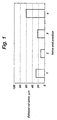
- Figure 1 shows a histogram of valve seat insert wear of valve seat inserts, made from the material of Example 1, in the exhaust positions of a 1.81, 4-cylinder, 16-valve engine which was run for 180 hours at 6000 rev/min on unleaded gasoline, the engine having Stellite (trade name) faced valves.
- the success criteria for this test is that valve seat insert wear must not exceed 100 ⁇ m. As may be seen from Fig.1 the maximum wear was at valve seat position 4 at 60 ⁇ m, all other inserts having wear of about 30 ⁇ m or less.
- a powder mixture comprising 45 wt% M3/2 tool steel powder/ 0.55C/ 1 MoS 2 / 6 Cu/ 47.45 FeCu20 (diffusion bonded powder)/ 0.75 lubricating wax was made. This mixture was compacted into green compacts at 770MPa to a green density 7.1 Mgm -3 and sintered at about 1100°C under a continuous flowing nitrogen-hydrogen gas atmosphere in a conveyor furnace. The sintered articles were cryogenically treated at -120°C or below to convert retained austenite to martensite and finally tempered at 600°C. Density of the sintered material was 7.0 Mgm -3 . The hardness of the as sintered material was 61HRA; that of the cryogenically treated material 65HRA; and that of the cryogenically treated and tempered material 62-65 HRA.
- Example 2 made with diffusion-bonded iron-copper powder) after tempering, (following sintering and cryogenic treatment) showed some small occasional areas of ferrite in the iron-rich non-tool steel phase.
- this iron-rich phase comprised essentially pearlite rather than the extensive regions of ferrite typified by the prior art material made using the infiltration technique.
- a mixture comprising in weight%: 75% pre-alloyed Fe-Cu20 powder/ 23% 316 stainless steel powder/ 0.75% MoS 2 powder/ 1% carbon powder was prepared; this material being coded N1.
- the composition of the 316 stainless steel was 17 Cr/ 2 Mo/ 13 Ni/ bal Fe.
- a comparative example coded N was made from the following mixture in weight%: 70.9% unalloyed iron powder/ 27% 316 stainless steel powder/ 0.9% MoS 2 powder/ 1.2% carbon powder. Both materials were compacted at 770MPa. However, material N1 was sintered only (as there was about 15 wt% Cu provided by the Fe-Cu pre-alloy) and material N was simultaneously sintered and infiltrated according to the known prior art process.
- the final theoretical overall composition of both materials N1 and N in weight% was: 1 C/3.9 Cr/15 Cu/0.9 Mo/3 Ni/S 0.3/bal Fe.
- the sintering/infiltration steps were carried out at about 1100°C under a flowing nitrogen/hydrogen atmosphere. Both materials following sintering were cryogenically treated and tempered.
- the N1 material showed a microstructure having no ferrite, even in the cores of the grains which were predominantly iron.
- the structure of this material showed essentially a tempered martensite structure.
- the N material on the other hand showed extensive ferrite in the iron grains with a pearlitic structure in the transition zones between prior iron particles and 316 stainless steel particles even though this material had slightly higher carbon at 1.2%.
- FMCA and FMCD Further mixtures denoted as material FMCA and FMCD were made according to the present invention.
- the blend compositions of these materials in terms of the constituents in the powder mixtures are given below in Table 3.
- FMCA FMCD Fe-20 Cu (pre-alloyed) 75 75 C 1.35 1.35 Mo 0.5 MoS 2 1 Unalloyed Fe 23.15 22.65 Lubricating wax 0.75 0.75
- the FMCA material made according to the present invention pre-alloyed Fe-Cu powder and 0.5% elemental Mo powder were used in the initial powder mixture.
- the FMCA material showed extensive Mo-rich zones and martensitic and bainitic areas associated with these zones.
- the FMCA material also showed grain boundary carbides.
- the microstructure of the FMCA material was somewhat similar to a comparative material, coded FMC (unalloyed iron powder, 1.35% C, 0.5% Mo), wherein the copper content was provided by a simultaneous sintering and infiltration process according to the prior art. Apart from the infiltration step, the sintering conditions were the same as those for the FMCA and FMCD materials.
- the FMC material grain boundary carbide was present, the matrix was pearlite and the Mo-rich zones associated with the Mo particles were present but very small compared with the FMCA material.
- the MoS 2 in the FMCD material undergoes partial decomposition and donates free Mo to the structure which potentially is able to generate a localised martensitic/bainitic structure associated with the Mo-rich zones. Some of the sulphur from decomposed MoS 2 reacts with iron and copper to form metallic sulphides which are beneficial for improving machinability. In the FMCD material no carbide networks could be seen and the matrix was pearlitic.
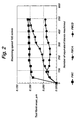
- Figure 2 shows a graph of tool wear vs number of parts machined for FMC, FMCA and FMCD materials.
- the Figure confirms that the materials using pre-alloyed Fe-Cu powders which give rise to extensive martensitic/bainitic areas do not have their machinability impaired in spite of the stronger, more wear resistant material structures so formed. Indeed, the machinability of the both the FMCA and FMCD materials is superior to the FMC material made by a prior art process.
Landscapes
- Chemical & Material Sciences (AREA)
- Engineering & Computer Science (AREA)
- Mechanical Engineering (AREA)
- Materials Engineering (AREA)
- Metallurgy (AREA)
- Organic Chemistry (AREA)
- Manufacturing & Machinery (AREA)
- Powder Metallurgy (AREA)
- Ceramic Products (AREA)
- Compositions Of Oxide Ceramics (AREA)
- Inorganic Compounds Of Heavy Metals (AREA)
- Organic Low-Molecular-Weight Compounds And Preparation Thereof (AREA)
- Manufacture And Refinement Of Metals (AREA)
Abstract
Description
| Constituent | M | 3/2 | Graphite | MoS2 | Elemental Cu | Fe-Cu powder | Lub Wax | Fe Powder |
| Example 1 | 45 | 0.55 | 1 | 6 | 47.47 | 0.75 | - | |
| Example 1a | 42.9 | 0.42 | 0.87 | 13 | - | 0.75 | 42.9 | |
| Example 1b | 49.75 | 0.5 | - | Infiltrated | - | 0.75 | 49.75 |
| Constituent wt % | C | Cr | Cu | Mo | S | V | W | Fe | Density Mgm-3 | Hardness HRA |
| Example 1 | 1 | 1.8 | 15.5 | 2.9 | 0.4 | 1.4 | 2.3 | Bal | 7.2 | 64-67 |
| Example 1a | 0.9 | 1.7 | 13 | 2.7 | 0.3 | 1.3 | 2.1 | Bal | 7.0 | 59-64 |
| Example 1b | 0.9 | 2.0 | 15 | 2.5 | 1.5 | 2.5 | Bal | 7.95 | 67-71 |
| FMCA | FMCD | |
| Fe-20 Cu (pre-alloyed) | 75 | 75 |
| C | 1.35 | 1.35 |
| Mo | 0.5 | |
| | 1 | |
| Unalloyed Fe | 23.15 | 22.65 |
| Lubricating wax | 0.75 | 0.75 |
| FMCA | FMCD | |
| Green density, Mgm-3 | 7.05 | 7.05 |
| Sintered density, Mgm-3 | 7.35 - 7.40 | 7.15 - 7.20 |
| Hardness, HRB | 99 - 101 | 95 - 98 |
Claims (18)
- A process for the manufacture of a ferrous-based sintered article containing copper in the range from 12 to 26 weight%, the sintered article having a ferrous matrix comprising a martensitic structure, the process including the steps of: making a powder mixture having a desired composition, said powder mixture composition including a prealloyed steel powder containing material for promoting the formation of martensite, at least a proportion of a total content of iron and copper being provided by a powder material consisting of iron and copper selected from the group consisting of a diffusion bonded iron-copper powder and pre-alloyed iron-copper powder wherein the iron and copper are indivisibly associated with each other; compacting said powder mixture to form a green compact of an article to be produced and sintering said green compact to produce an article wherein the ferrous matrix has a martensitic structure.
- A process according to claim 1 wherein the copper content lies in the range from 15 to 20 weight%.
- A process according to either claim 1 or claim 2 wherein the steel powder contains chromium.
- A process according to either claim 1 or claim 2 wherein the steel powder contains molybdenum.
- A process according to either claim 1 or claim 2 wherein the steel powder contains nickel.
- A process according to any one preceding claim wherein the steel powder is a high-speed steel powder.
- A process according to claim 6 wherein the steel powder is an M3/2 steel powder.
- A process according to any one of preceding claims 1 to 5 wherein the steel powder is a stainless steel powder.
- A process according to claim 8 wherein the stainless steel powder is 316 steel.
- A process according to any one preceding claim wherein the powder mixture contains carbon powder.
- A process according to any one preceding claim wherein the iron-copper material has a composition in weight% of Fe-20 Cu.
- A process according to any one preceding claim wherein the powder mixture also includes elemental copper powder.
- A process according to any one preceding claim wherein the powder mixture includes an elemental powder which promotes the formation of martensite.
- A process according to claim 13 wherein the element is selected from the group comprising: chromium, molybdenum and nickel.
- A process according to any one preceding claim further including the step of cryogenically treating the sintered material.
- A process according to any one preceding claim further including the step of tempering the sintered material.
- A process according to any one preceding claim further including the step of providing molybdenum disulphide or tungsten disulphide in the powder mixture.
- A process according to any one preceding claim wherein the powder mixture contains an iron powder.
Applications Claiming Priority (5)
| Application Number | Priority Date | Filing Date | Title |
|---|---|---|---|
| GB0101770A GB0101770D0 (en) | 2001-01-24 | 2001-01-24 | Sintered ferrous material |
| GB0101770 | 2001-01-24 | ||
| GB0120401 | 2001-08-22 | ||
| GB0120401A GB0120401D0 (en) | 2001-08-22 | 2001-08-22 | Sintered Ferrous Material |
| PCT/GB2002/000176 WO2002059388A1 (en) | 2001-01-24 | 2002-01-17 | Sintered ferrous material containing copper |
Publications (2)
| Publication Number | Publication Date |
|---|---|
| EP1370704A1 EP1370704A1 (en) | 2003-12-17 |
| EP1370704B1 true EP1370704B1 (en) | 2005-04-27 |
Family
ID=26245610
Family Applications (1)
| Application Number | Title | Priority Date | Filing Date |
|---|---|---|---|
| EP02715503A Expired - Lifetime EP1370704B1 (en) | 2001-01-24 | 2002-01-17 | Process of production of a sintered ferrous material containing copper |
Country Status (13)
| Country | Link |
|---|---|
| US (1) | US20040112173A1 (en) |
| EP (1) | EP1370704B1 (en) |
| JP (1) | JP2004520486A (en) |
| KR (1) | KR20030070116A (en) |
| CN (1) | CN1314824C (en) |
| AT (1) | ATE294255T1 (en) |
| BR (1) | BR0206677A (en) |
| DE (1) | DE60203893T2 (en) |
| ES (1) | ES2237669T3 (en) |
| GB (1) | GB2386908B (en) |
| PL (1) | PL200915B1 (en) |
| RU (1) | RU2280706C2 (en) |
| WO (1) | WO2002059388A1 (en) |
Cited By (1)
| Publication number | Priority date | Publication date | Assignee | Title |
|---|---|---|---|---|
| KR20200007080A (en) * | 2017-10-30 | 2020-01-21 | 티피알 가부시키가이샤 | Iron guide sintered alloy valve guide and its manufacturing method |
Families Citing this family (28)
| Publication number | Priority date | Publication date | Assignee | Title |
|---|---|---|---|---|
| SE0203135D0 (en) * | 2002-10-23 | 2002-10-23 | Hoeganaes Ab | Dimensional control |
| GB2429464B (en) * | 2005-08-23 | 2009-04-15 | Federal Mogul Sintered Prod | Manufacture of a ferrous article |
| JP2009544841A (en) * | 2006-07-21 | 2009-12-17 | ホガナス アクチボラグ (パブル) | Iron-based powder |
| RU2353694C1 (en) * | 2007-10-02 | 2009-04-27 | Юлия Алексеевна Щепочкина | Sintered alloy on basis of iron |
| JP5384079B2 (en) * | 2008-10-29 | 2014-01-08 | Ntn株式会社 | Sintered bearing |
| CN103038025B (en) * | 2010-03-01 | 2014-10-15 | 俄罗斯联邦政府预算机构《联邦军事、特殊及双用途智力活动成果权利保护机构》 | Copper-Based Bonds for Diamond Tool Manufacturing |
| ES2601005T3 (en) | 2010-05-19 | 2017-02-13 | Hoeganaes Corporation | Compositions for better dimensional control in ferrous powder metallurgy applications |
| AT509868B1 (en) * | 2010-06-10 | 2011-12-15 | Miba Sinter Austria Gmbh | CONSTRUCTION ELEMENT WITH REDUCED METAL HINGING |
| JP2012126972A (en) * | 2010-12-16 | 2012-07-05 | Jfe Steel Corp | Alloy steel powder for powder metallurgy, iron-based sintered material, and method for manufacturing the same |
| WO2013108735A1 (en) * | 2012-01-18 | 2013-07-25 | 日立金属株式会社 | Dust core, coil component, and method for producing dust core |
| DE102012013226A1 (en) | 2012-07-04 | 2014-01-09 | Bleistahl-Produktions Gmbh & Co Kg | High heat conducting valve seat ring |
| JP5859395B2 (en) * | 2012-07-27 | 2016-02-10 | 日立オートモティブシステムズ株式会社 | Piston for internal combustion engine and method for manufacturing the piston |
| CN103131930A (en) * | 2013-03-07 | 2013-06-05 | 江苏大学 | Method for preparing powdery high-speed steel piece |
| JP6213809B2 (en) * | 2013-03-12 | 2017-10-18 | 日立金属株式会社 | Powder magnetic core, coil component using the same, and method for manufacturing powder magnetic core |
| JP6194613B2 (en) * | 2013-03-29 | 2017-09-13 | 日立化成株式会社 | Iron-based sintered alloy for sliding member and manufacturing method thereof |
| KR101838825B1 (en) * | 2013-07-17 | 2018-03-14 | 히타치 긴조쿠 가부시키가이샤 | Dust core, coil component using same and process for producing dust core |
| CN103758746B (en) * | 2014-01-17 | 2015-10-28 | 钢铁研究总院 | A kind of steel-bimetal copper-steel rotor and manufacture method thereof |
| JP6146548B1 (en) * | 2015-09-11 | 2017-06-14 | Jfeスチール株式会社 | Method for producing mixed powder for powder metallurgy, method for producing sintered body, and sintered body |
| KR102097956B1 (en) | 2015-09-18 | 2020-04-07 | 제이에프이 스틸 가부시키가이샤 | Mixed powder for powder metallurgy, sintered body, and method of manufacturing sintered body |
| ITUA20165254A1 (en) * | 2016-06-28 | 2017-12-28 | Antonino Rinella | CRIOTEMPRATI METALLIC MATERIALS, EQUIPPED WITH A HIGH ABILITY TO ABSORB ENERGY OF ELASTIC DEFORMATION, INTENDED FOR THE CONSTRUCTION OF PROTECTIVE REINFORCEMENT FOR PERFORATING RESISTANT TIRES AND LACERATIONS. |
| CN106222566B (en) * | 2016-08-23 | 2018-10-09 | 秦皇岛市雅豪新材料科技有限公司 | A kind of superhard material products rare earth special adjusts water atomization Fe-Cu pre-alloyed powders and preparation method thereof |
| CN106636856A (en) * | 2016-12-15 | 2017-05-10 | 江门市佳久新材料科技有限公司 | High density stainless steel alloy material for powder metallurgy |
| CN106694885B (en) * | 2016-12-15 | 2018-12-28 | 江门市佳久新材料科技有限公司 | A kind of screw compressor powder metallurgical stainless steel alloy balance weight |
| CN107052350B (en) * | 2017-06-16 | 2019-10-11 | 大连理工大学 | A method of connecting tungsten material and copper material |
| WO2019108430A1 (en) * | 2017-11-30 | 2019-06-06 | Gkn Sinter Metals, Llc | Powder metal alloy composition for sintered powder metal insert for aluminum casting |
| US10780491B2 (en) | 2018-01-11 | 2020-09-22 | Ford Global Technologies, Llc | Aluminum casting design with alloy set cores for improved intermetallic bond strength |
| DE102020213651A1 (en) * | 2020-10-29 | 2022-05-05 | Mahle International Gmbh | Wear-resistant, highly thermally conductive sintered alloy, especially for bearing applications and valve seat inserts |
| CN112756608A (en) * | 2020-12-14 | 2021-05-07 | 北京有研粉末新材料研究院有限公司 | Preparation method for in-situ generation of liquid absorbent core material of copper-clad iron heat pipe |
Family Cites Families (16)
| Publication number | Priority date | Publication date | Assignee | Title |
|---|---|---|---|---|
| CH275201A (en) * | 1948-07-08 | 1951-05-15 | Plansee Metallwerk | Alloy sintered steel. |
| US3583864A (en) * | 1969-05-05 | 1971-06-08 | Pfizer & Co C | Chemical process of producing an iron-copper alloy powder |
| GB1339132A (en) * | 1970-05-28 | 1973-11-28 | Brico Eng | Ferrous alloys |
| US3752712A (en) * | 1971-06-07 | 1973-08-14 | Domtar Ltd | Iron copper prealloys |
| BE793539A (en) * | 1971-12-30 | 1973-06-29 | Int Nickel Ltd | IMPROVEMENTS RELATED TO POWDER COMPRESSION |
| US3860457A (en) * | 1972-07-12 | 1975-01-14 | Kymin Oy Kymmene Ab | A ductile iron and method of making it |
| US4064914A (en) * | 1974-05-08 | 1977-12-27 | Union Carbide Corporation | Porous metallic layer and formation |
| SU955726A1 (en) * | 1980-12-30 | 1990-08-30 | Предприятие П/Я Р-6543 | Charge for making iron-base sintered articles |
| US4678510A (en) * | 1985-12-24 | 1987-07-07 | General Motors Corporation | Wear resistant iron powder article |
| CA1337468C (en) * | 1987-08-01 | 1995-10-31 | Kuniaki Ogura | Alloyed steel powder for powder metallurgy |
| GB8723818D0 (en) * | 1987-10-10 | 1987-11-11 | Brico Eng | Sintered materials |
| SU1637141A1 (en) * | 1989-08-18 | 1995-11-10 | Белорусское республиканское научно-производственное объединение порошковой металлургии | Method for manufacture of products from iron-base alloy |
| GB8921260D0 (en) * | 1989-09-20 | 1989-11-08 | Brico Engineering Company | Sintered materials |
| RU2023737C1 (en) * | 1992-04-28 | 1994-11-30 | Тамара Федоровна Волынова | Iron-based antifriction alloy having martensite structure and antifriction product |
| RU2043868C1 (en) * | 1993-07-06 | 1995-09-20 | Тамара Ароновна Пумпянская | Method to produce sintered pieces from diffusion alloyed iron powders |
| US5529604A (en) * | 1995-03-28 | 1996-06-25 | Ametek, Specialty Metal Products Division | Modified stainless steel powder composition |
-
2002
- 2002-01-17 ES ES02715503T patent/ES2237669T3/en not_active Expired - Lifetime
- 2002-01-17 BR BR0206677-7A patent/BR0206677A/en not_active Application Discontinuation
- 2002-01-17 GB GB0315414A patent/GB2386908B/en not_active Expired - Fee Related
- 2002-01-17 DE DE60203893T patent/DE60203893T2/en not_active Expired - Fee Related
- 2002-01-17 WO PCT/GB2002/000176 patent/WO2002059388A1/en not_active Ceased
- 2002-01-17 CN CNB028039203A patent/CN1314824C/en not_active Expired - Fee Related
- 2002-01-17 RU RU2003125845/02A patent/RU2280706C2/en not_active IP Right Cessation
- 2002-01-17 KR KR10-2003-7009507A patent/KR20030070116A/en not_active Ceased
- 2002-01-17 JP JP2002559869A patent/JP2004520486A/en active Pending
- 2002-01-17 PL PL362787A patent/PL200915B1/en not_active IP Right Cessation
- 2002-01-17 AT AT02715503T patent/ATE294255T1/en not_active IP Right Cessation
- 2002-01-17 EP EP02715503A patent/EP1370704B1/en not_active Expired - Lifetime
- 2002-01-17 US US10/470,144 patent/US20040112173A1/en not_active Abandoned
Cited By (1)
| Publication number | Priority date | Publication date | Assignee | Title |
|---|---|---|---|---|
| KR20200007080A (en) * | 2017-10-30 | 2020-01-21 | 티피알 가부시키가이샤 | Iron guide sintered alloy valve guide and its manufacturing method |
Also Published As
| Publication number | Publication date |
|---|---|
| WO2002059388A1 (en) | 2002-08-01 |
| EP1370704A1 (en) | 2003-12-17 |
| BR0206677A (en) | 2004-01-13 |
| ATE294255T1 (en) | 2005-05-15 |
| ES2237669T3 (en) | 2005-08-01 |
| DE60203893T2 (en) | 2006-01-19 |
| KR20030070116A (en) | 2003-08-27 |
| CN1314824C (en) | 2007-05-09 |
| GB2386908A (en) | 2003-10-01 |
| GB2386908B (en) | 2004-09-29 |
| JP2004520486A (en) | 2004-07-08 |
| PL362787A1 (en) | 2004-11-02 |
| RU2280706C2 (en) | 2006-07-27 |
| PL200915B1 (en) | 2009-02-27 |
| RU2003125845A (en) | 2005-01-27 |
| CN1488006A (en) | 2004-04-07 |
| GB0315414D0 (en) | 2003-08-06 |
| US20040112173A1 (en) | 2004-06-17 |
| DE60203893D1 (en) | 2005-06-02 |
Similar Documents
| Publication | Publication Date | Title |
|---|---|---|
| US20040112173A1 (en) | Sintered ferrous material contaning copper | |
| CA1337748C (en) | Sintered materials | |
| EP0752015B1 (en) | A method of making a sintered article | |
| CA2725652C (en) | Iron-based pre-alloyed powder | |
| KR101245069B1 (en) | A powder metal engine composition | |
| US5188659A (en) | Sintered materials and method thereof | |
| EP1198601B1 (en) | Sintered steel material | |
| WO1998050593A1 (en) | Method of forming a component by sintering an iron-based powder mixture | |
| WO2002072904A1 (en) | Sintered ferrous materials | |
| EP1066128B1 (en) | Metal powders obtained from residue of material removal processes on iron parts produced by chill casting | |
| CA2549175C (en) | Methods of preparing high density powder metallurgy parts by iron based infiltration | |
| CN101517110A (en) | Metallurgical powder composition and method of production |
Legal Events
| Date | Code | Title | Description |
|---|---|---|---|
| PUAI | Public reference made under article 153(3) epc to a published international application that has entered the european phase |
Free format text: ORIGINAL CODE: 0009012 |
|
| 17P | Request for examination filed |
Effective date: 20030718 |
|
| AK | Designated contracting states |
Kind code of ref document: A1 Designated state(s): AT BE CH CY DE DK ES FI FR GB GR IE IT LI LU MC NL PT SE TR |
|
| AX | Request for extension of the european patent |
Extension state: AL LT LV MK RO SI |
|
| 17Q | First examination report despatched |
Effective date: 20040120 |
|
| GRAP | Despatch of communication of intention to grant a patent |
Free format text: ORIGINAL CODE: EPIDOSNIGR1 |
|
| RTI1 | Title (correction) |
Free format text: PROCESS OF PRODUCTION OF A SINTERED FERROUS MATERIAL CONTAINING COPPER |
|
| GRAS | Grant fee paid |
Free format text: ORIGINAL CODE: EPIDOSNIGR3 |
|
| GRAA | (expected) grant |
Free format text: ORIGINAL CODE: 0009210 |
|
| AK | Designated contracting states |
Kind code of ref document: B1 Designated state(s): AT BE CH CY DE DK ES FI FR GB GR IE IT LI LU MC NL PT SE TR |
|
| PG25 | Lapsed in a contracting state [announced via postgrant information from national office to epo] |
Ref country code: BE Free format text: LAPSE BECAUSE OF FAILURE TO SUBMIT A TRANSLATION OF THE DESCRIPTION OR TO PAY THE FEE WITHIN THE PRESCRIBED TIME-LIMIT Effective date: 20050427 Ref country code: FI Free format text: LAPSE BECAUSE OF FAILURE TO SUBMIT A TRANSLATION OF THE DESCRIPTION OR TO PAY THE FEE WITHIN THE PRESCRIBED TIME-LIMIT Effective date: 20050427 Ref country code: NL Free format text: LAPSE BECAUSE OF FAILURE TO SUBMIT A TRANSLATION OF THE DESCRIPTION OR TO PAY THE FEE WITHIN THE PRESCRIBED TIME-LIMIT Effective date: 20050427 |
|
| REG | Reference to a national code |
Ref country code: GB Ref legal event code: FG4D |
|
| REG | Reference to a national code |
Ref country code: CH Ref legal event code: EP |
|
| REG | Reference to a national code |
Ref country code: IE Ref legal event code: FG4D |
|
| REF | Corresponds to: |
Ref document number: 60203893 Country of ref document: DE Date of ref document: 20050602 Kind code of ref document: P |
|
| REG | Reference to a national code |
Ref country code: CH Ref legal event code: NV Representative=s name: KIRKER & CIE SA |
|
| PG25 | Lapsed in a contracting state [announced via postgrant information from national office to epo] |
Ref country code: GR Free format text: LAPSE BECAUSE OF FAILURE TO SUBMIT A TRANSLATION OF THE DESCRIPTION OR TO PAY THE FEE WITHIN THE PRESCRIBED TIME-LIMIT Effective date: 20050727 Ref country code: DK Free format text: LAPSE BECAUSE OF FAILURE TO SUBMIT A TRANSLATION OF THE DESCRIPTION OR TO PAY THE FEE WITHIN THE PRESCRIBED TIME-LIMIT Effective date: 20050727 |
|
| REG | Reference to a national code |
Ref country code: ES Ref legal event code: FG2A Ref document number: 2237669 Country of ref document: ES Kind code of ref document: T3 |
|
| REG | Reference to a national code |
Ref country code: SE Ref legal event code: TRGR |
|
| PG25 | Lapsed in a contracting state [announced via postgrant information from national office to epo] |
Ref country code: PT Free format text: LAPSE BECAUSE OF FAILURE TO SUBMIT A TRANSLATION OF THE DESCRIPTION OR TO PAY THE FEE WITHIN THE PRESCRIBED TIME-LIMIT Effective date: 20051010 |
|
| NLV1 | Nl: lapsed or annulled due to failure to fulfill the requirements of art. 29p and 29m of the patents act | ||
| PG25 | Lapsed in a contracting state [announced via postgrant information from national office to epo] |
Ref country code: IE Free format text: LAPSE BECAUSE OF NON-PAYMENT OF DUE FEES Effective date: 20060117 |
|
| PG25 | Lapsed in a contracting state [announced via postgrant information from national office to epo] |
Ref country code: LU Free format text: LAPSE BECAUSE OF NON-PAYMENT OF DUE FEES Effective date: 20060131 Ref country code: MC Free format text: LAPSE BECAUSE OF NON-PAYMENT OF DUE FEES Effective date: 20060131 |
|
| PLBE | No opposition filed within time limit |
Free format text: ORIGINAL CODE: 0009261 |
|
| STAA | Information on the status of an ep patent application or granted ep patent |
Free format text: STATUS: NO OPPOSITION FILED WITHIN TIME LIMIT |
|
| ET | Fr: translation filed | ||
| 26N | No opposition filed |
Effective date: 20060130 |
|
| REG | Reference to a national code |
Ref country code: IE Ref legal event code: MM4A |
|
| PGFP | Annual fee paid to national office [announced via postgrant information from national office to epo] |
Ref country code: CH Payment date: 20080108 Year of fee payment: 7 Ref country code: ES Payment date: 20080121 Year of fee payment: 7 |
|
| PGFP | Annual fee paid to national office [announced via postgrant information from national office to epo] |
Ref country code: IT Payment date: 20080119 Year of fee payment: 7 Ref country code: SE Payment date: 20080107 Year of fee payment: 7 |
|
| PGFP | Annual fee paid to national office [announced via postgrant information from national office to epo] |
Ref country code: AT Payment date: 20071212 Year of fee payment: 7 |
|
| PG25 | Lapsed in a contracting state [announced via postgrant information from national office to epo] |
Ref country code: TR Free format text: LAPSE BECAUSE OF FAILURE TO SUBMIT A TRANSLATION OF THE DESCRIPTION OR TO PAY THE FEE WITHIN THE PRESCRIBED TIME-LIMIT Effective date: 20050427 |
|
| PGFP | Annual fee paid to national office [announced via postgrant information from national office to epo] |
Ref country code: FR Payment date: 20080107 Year of fee payment: 7 |
|
| PG25 | Lapsed in a contracting state [announced via postgrant information from national office to epo] |
Ref country code: CY Free format text: LAPSE BECAUSE OF FAILURE TO SUBMIT A TRANSLATION OF THE DESCRIPTION OR TO PAY THE FEE WITHIN THE PRESCRIBED TIME-LIMIT Effective date: 20050427 |
|
| PGFP | Annual fee paid to national office [announced via postgrant information from national office to epo] |
Ref country code: DE Payment date: 20090130 Year of fee payment: 8 |
|
| PGFP | Annual fee paid to national office [announced via postgrant information from national office to epo] |
Ref country code: GB Payment date: 20081211 Year of fee payment: 8 |
|
| REG | Reference to a national code |
Ref country code: CH Ref legal event code: PL |
|
| EUG | Se: european patent has lapsed | ||
| PG25 | Lapsed in a contracting state [announced via postgrant information from national office to epo] |
Ref country code: AT Free format text: LAPSE BECAUSE OF NON-PAYMENT OF DUE FEES Effective date: 20090117 Ref country code: LI Free format text: LAPSE BECAUSE OF NON-PAYMENT OF DUE FEES Effective date: 20090131 Ref country code: CH Free format text: LAPSE BECAUSE OF NON-PAYMENT OF DUE FEES Effective date: 20090131 |
|
| REG | Reference to a national code |
Ref country code: FR Ref legal event code: ST Effective date: 20091030 |
|
| REG | Reference to a national code |
Ref country code: ES Ref legal event code: FD2A Effective date: 20090119 |
|
| PG25 | Lapsed in a contracting state [announced via postgrant information from national office to epo] |
Ref country code: FR Free format text: LAPSE BECAUSE OF NON-PAYMENT OF DUE FEES Effective date: 20090202 Ref country code: ES Free format text: LAPSE BECAUSE OF NON-PAYMENT OF DUE FEES Effective date: 20090119 |
|
| GBPC | Gb: european patent ceased through non-payment of renewal fee |
Effective date: 20100117 |
|
| PG25 | Lapsed in a contracting state [announced via postgrant information from national office to epo] |
Ref country code: DE Free format text: LAPSE BECAUSE OF NON-PAYMENT OF DUE FEES Effective date: 20100803 |
|
| PG25 | Lapsed in a contracting state [announced via postgrant information from national office to epo] |
Ref country code: GB Free format text: LAPSE BECAUSE OF NON-PAYMENT OF DUE FEES Effective date: 20100117 |
|
| PG25 | Lapsed in a contracting state [announced via postgrant information from national office to epo] |
Ref country code: IT Free format text: LAPSE BECAUSE OF NON-PAYMENT OF DUE FEES Effective date: 20090117 |
|
| PG25 | Lapsed in a contracting state [announced via postgrant information from national office to epo] |
Ref country code: SE Free format text: LAPSE BECAUSE OF NON-PAYMENT OF DUE FEES Effective date: 20090118 |