EP1370108A2 - Optical switch controller for fair and effective lightpath reservation in an optical network - Google Patents
Optical switch controller for fair and effective lightpath reservation in an optical network Download PDFInfo
- Publication number
- EP1370108A2 EP1370108A2 EP03012382A EP03012382A EP1370108A2 EP 1370108 A2 EP1370108 A2 EP 1370108A2 EP 03012382 A EP03012382 A EP 03012382A EP 03012382 A EP03012382 A EP 03012382A EP 1370108 A2 EP1370108 A2 EP 1370108A2
- Authority
- EP
- European Patent Office
- Prior art keywords
- wavelength
- node
- label
- flagged
- request message
- Prior art date
- Legal status (The legal status is an assumption and is not a legal conclusion. Google has not performed a legal analysis and makes no representation as to the accuracy of the status listed.)
- Granted
Links
- 230000003287 optical effect Effects 0.000 title claims abstract description 32
- 238000000034 method Methods 0.000 claims abstract description 15
- 101150055297 SET1 gene Proteins 0.000 description 8
- 230000009471 action Effects 0.000 description 4
- 238000010586 diagram Methods 0.000 description 4
- 230000003247 decreasing effect Effects 0.000 description 3
- 230000008569 process Effects 0.000 description 3
- 238000011144 upstream manufacturing Methods 0.000 description 3
- 230000007423 decrease Effects 0.000 description 2
- 230000000717 retained effect Effects 0.000 description 2
- 230000011664 signaling Effects 0.000 description 2
- 230000003044 adaptive effect Effects 0.000 description 1
- 230000008901 benefit Effects 0.000 description 1
- 230000008859 change Effects 0.000 description 1
- 238000006243 chemical reaction Methods 0.000 description 1
- 238000010276 construction Methods 0.000 description 1
- 230000004048 modification Effects 0.000 description 1
- 238000012986 modification Methods 0.000 description 1
- 238000012913 prioritisation Methods 0.000 description 1
- 238000009877 rendering Methods 0.000 description 1
Images



Classifications
-
- H—ELECTRICITY
- H04—ELECTRIC COMMUNICATION TECHNIQUE
- H04Q—SELECTING
- H04Q11/00—Selecting arrangements for multiplex systems
- H04Q11/0001—Selecting arrangements for multiplex systems using optical switching
- H04Q11/0062—Network aspects
-
- H—ELECTRICITY
- H04—ELECTRIC COMMUNICATION TECHNIQUE
- H04L—TRANSMISSION OF DIGITAL INFORMATION, e.g. TELEGRAPHIC COMMUNICATION
- H04L45/00—Routing or path finding of packets in data switching networks
- H04L45/50—Routing or path finding of packets in data switching networks using label swapping, e.g. multi-protocol label switch [MPLS]
-
- H—ELECTRICITY
- H04—ELECTRIC COMMUNICATION TECHNIQUE
- H04L—TRANSMISSION OF DIGITAL INFORMATION, e.g. TELEGRAPHIC COMMUNICATION
- H04L45/00—Routing or path finding of packets in data switching networks
- H04L45/50—Routing or path finding of packets in data switching networks using label swapping, e.g. multi-protocol label switch [MPLS]
- H04L45/502—Frame based
-
- H—ELECTRICITY
- H04—ELECTRIC COMMUNICATION TECHNIQUE
- H04L—TRANSMISSION OF DIGITAL INFORMATION, e.g. TELEGRAPHIC COMMUNICATION
- H04L47/00—Traffic control in data switching networks
- H04L47/70—Admission control; Resource allocation
-
- H—ELECTRICITY
- H04—ELECTRIC COMMUNICATION TECHNIQUE
- H04L—TRANSMISSION OF DIGITAL INFORMATION, e.g. TELEGRAPHIC COMMUNICATION
- H04L47/00—Traffic control in data switching networks
- H04L47/70—Admission control; Resource allocation
- H04L47/72—Admission control; Resource allocation using reservation actions during connection setup
- H04L47/724—Admission control; Resource allocation using reservation actions during connection setup at intermediate nodes, e.g. resource reservation protocol [RSVP]
-
- H—ELECTRICITY
- H04—ELECTRIC COMMUNICATION TECHNIQUE
- H04L—TRANSMISSION OF DIGITAL INFORMATION, e.g. TELEGRAPHIC COMMUNICATION
- H04L47/00—Traffic control in data switching networks
- H04L47/70—Admission control; Resource allocation
- H04L47/80—Actions related to the user profile or the type of traffic
- H04L47/805—QOS or priority aware
-
- H—ELECTRICITY
- H04—ELECTRIC COMMUNICATION TECHNIQUE
- H04L—TRANSMISSION OF DIGITAL INFORMATION, e.g. TELEGRAPHIC COMMUNICATION
- H04L47/00—Traffic control in data switching networks
- H04L47/70—Admission control; Resource allocation
- H04L47/82—Miscellaneous aspects
- H04L47/825—Involving tunnels, e.g. MPLS
-
- H—ELECTRICITY
- H04—ELECTRIC COMMUNICATION TECHNIQUE
- H04L—TRANSMISSION OF DIGITAL INFORMATION, e.g. TELEGRAPHIC COMMUNICATION
- H04L47/00—Traffic control in data switching networks
- H04L47/70—Admission control; Resource allocation
- H04L47/82—Miscellaneous aspects
- H04L47/826—Involving periods of time
-
- H—ELECTRICITY
- H04—ELECTRIC COMMUNICATION TECHNIQUE
- H04Q—SELECTING
- H04Q11/00—Selecting arrangements for multiplex systems
- H04Q11/0001—Selecting arrangements for multiplex systems using optical switching
- H04Q11/0062—Network aspects
- H04Q11/0066—Provisions for optical burst or packet networks
-
- H—ELECTRICITY
- H04—ELECTRIC COMMUNICATION TECHNIQUE
- H04Q—SELECTING
- H04Q11/00—Selecting arrangements for multiplex systems
- H04Q11/0001—Selecting arrangements for multiplex systems using optical switching
- H04Q11/0005—Switch and router aspects
- H04Q2011/0037—Operation
- H04Q2011/0039—Electrical control
-
- H—ELECTRICITY
- H04—ELECTRIC COMMUNICATION TECHNIQUE
- H04Q—SELECTING
- H04Q11/00—Selecting arrangements for multiplex systems
- H04Q11/0001—Selecting arrangements for multiplex systems using optical switching
- H04Q11/0062—Network aspects
- H04Q2011/0073—Provisions for forwarding or routing, e.g. lookup tables
-
- H—ELECTRICITY
- H04—ELECTRIC COMMUNICATION TECHNIQUE
- H04Q—SELECTING
- H04Q11/00—Selecting arrangements for multiplex systems
- H04Q11/0001—Selecting arrangements for multiplex systems using optical switching
- H04Q11/0062—Network aspects
- H04Q2011/0077—Labelling aspects, e.g. multiprotocol label switching [MPLS], G-MPLS, MPAS
-
- H—ELECTRICITY
- H04—ELECTRIC COMMUNICATION TECHNIQUE
- H04Q—SELECTING
- H04Q11/00—Selecting arrangements for multiplex systems
- H04Q11/0001—Selecting arrangements for multiplex systems using optical switching
- H04Q11/0062—Network aspects
- H04Q2011/0086—Network resource allocation, dimensioning or optimisation
-
- H—ELECTRICITY
- H04—ELECTRIC COMMUNICATION TECHNIQUE
- H04Q—SELECTING
- H04Q11/00—Selecting arrangements for multiplex systems
- H04Q11/0001—Selecting arrangements for multiplex systems using optical switching
- H04Q11/0062—Network aspects
- H04Q2011/0088—Signalling aspects
Definitions
- the present invention generally relates to optical networks. More particularly, and not by way of any limitation, the present invention is directed to an optical switch controller for application in a Generalized Multi-Protocol Label Switching ("GMPLS”) network for facilitating fair and effective reservation of lightpaths therein.
- GPLS Generalized Multi-Protocol Label Switching
- FIG. 1 which depicts a block diagram of an optical network 100, illustrates why this is the case.
- an LSP Request 1 requesting establishment of a first lightpath 102 between a source node 103a and a destination node 103b, and an LSP Request 2 requesting establishment of a second lightpath 104 between a source node 105a and a destination node 105b, are from their respective source nodes along their respective paths at the same time. Because the lightpath 104 is shorter, LSP Request 2 will be received at the destination node 105b before LSP Request 1 is received at the destination node 103b. Consequently, the lightpath 104 will be established first.
- an optical switch controller at each node in an optical network maintains two “pools” of wavelengths, including an “Available Pool” (“AP”) and a “Used Pool” (“UP”).
- the AP includes wavelengths that available to be reserved by a lightpath.
- the UP comprises wavelengths that are currently being used by existing lightpaths.
- upstream nodes insert a "Label Set" object into each LSP Request (e.g., Path) message.
- the Label Set object suggests the labels (which correspond directly to wavelengths in the optical domain) that can be selected by the downstream nodes.
- the Label Set represents the wavelengths available for selection as indicated in the AP.
- Downstream nodes select one of the labels, or wavelengths, in the Label Set as specified in the Label Set object.
- the OSC at the node compares the wavelengths of the Label Set object with those in its UP and removes from the Label Set object any common wavelengths. Similarly, once a wavelength has been reserved by a lightpath, the reserved wavelength is removed from the AP and included in the UP maintained by each node along the path.
- Wavelength conversion may eliminate the wavelength collision problem; however, wavelength converters are expensive, rendering it impractical to include such equipment at every node in a network.
- the present invention comprises an optical switch controller ("OSC”) for application in a Generalized Multi-Protocol Label Switching (“GMPLS”) network for facilitating fair and effective reservation of lightpaths therein.
- OSC optical switch controller
- GPLS Generalized Multi-Protocol Label Switching
- FP additional pool
- the FP includes wavelengths that have been suggested but not yet reserved by a lightpath.
- the UP includes wavelengths that are currently being used by LSPs.
- the AP includes wavelengths not included in the UP or the FP.
- Each wavelength included in the FP includes a time stamp indicating the local time at which the wavelength was suggested.
- the wavelength is extracted from the Label Set; otherwise, a Flagged Set is created (if not already existent) and the wavelength is extracted from the Label Set and placed in the Flagged Set. For each wavelength of the FP, upon expiration of a predetermined time period without the wavelength being reserved, the wavelength is returned to the AP.
- the invention comprises a method of implementing an optical switch controller ("OSC") at a node of an optical network comprising the steps of, responsive to receipt at the node of a Label Request message identifying a Label Set comprising a plurality of wavelengths, for each wavelength of the Label Set: (1) determining whether the wavelength is an element of an Available Pool ("AP") of the OSC; (2) responsive to a determination that the wavelength is not an element of the AP, determining whether the wavelength is an element of a Flagged Pool (“FP”) of the OSC; (3) responsive to a determination that the wavelength is not an element of the FP, updating the Label Request message by removing the wavelength from the Label Set; (4) responsive to a determination that the wavelength is an element of the FP, determining whether a local clock time at the node minus a time stamp associated with the wavelength in the FP is less than a short threshold; (5) responsive to a determination that the local clock time at the node minus the time stamp associated with the wavelength is shorter than a short threshold, updating the Label
- the invention comprises an optical switch controller ("OSC") in a node of an optical network comprising a Used Pool (“UP”) comprising a list of wavelengths currently in use for existing optical paths through the node, a Flagged Pool (“FP") identifying wavelengths proposed for new optical paths to be established through the node and including for each identified wavelength a time stamp indicating when the wavelength was proposed, and an Available Pool (“AP”) identifying wavelengths that are not elements of the UP or the FP.
- OSC optical switch controller
- UP Used Pool
- FP Flagged Pool
- AP Available Pool
- the invention comprises an optical switch controller ("OSC") at a node of an optical network comprising means responsive to receipt at the node of a Label Request message identifying a Label Set for determining whether a wavelength of the Label Set is an element of an Available Pool (“AP") of the OSC, means responsive to a determination that the wavelength is not an element of the AP for determining whether the wavelength is an element of a Flagged Pool (“FP") of the OSC, means responsive to a determination that the wavelength is not an element of the FP for updating the Label Request message by removing the wavelength from the Label Set, means responsive to a determination that the wavelength is an element of the FP for determining whether a local clock time at the node minus a time stamp associated with the wavelength in the FP is less than a short threshold, means responsive to a determination that the local clock time at the node minus the time stamp associated with the wavelength is shorter than a short threshold for updating the Label Request message by removing the wavelength from the Label Set, and means responsive to a determination that the local clock time
- FIG. 2 is a block diagram of an OSC 200 in accordance with one embodiment of the present invention.
- the OSC 200 which is located at an optical switch/router, or node, 201, of an optical network, includes three pools; specifically, a Used Pool ("UP") 202, a Flagged Pool (“FP”) 204, and an Available Pool (“AP”) 206. It will be recognized that the UP, FP, and AP are stored as tables in a database of the OSC 200.
- UP Used Pool
- FP Flagged Pool
- AP Available Pool
- a Label Request message such as an RSVP Path message, that includes a Label Set object suggesting wavelengths that may be reserved for use by the LSP, from a source node (not shown) is forwarded to the node 201 from an upstream node (not shown) and subsequently forwarded to a downstream node (not shown). This process continues until the Label Request message reaches a destination node (not shown), which selects a wavelength from the Label Set.
- a Label Selection message such as an RSVP Resv message, that identifies the selected wavelength that has been reserved for the LSP, from the destination node is forwarded from the downstream node to the node 201 and from the node 201 to the upstream node and back to the source node (not shown) to complete the LSP establishment process.
- the UP 202 includes the wavelengths that are currently being used by existing LSPs that include the node 201.
- the FP 204 includes wavelengths that have been suggested but not yet reserved.
- the AP 206 includes all of the remaining wavelengths. In the example illustrated in FIG. 2, the UP 202 includes one wavelength ⁇ 1, the FP 204 includes one wavelength ⁇ 2, and the AP 206 includes two wavelengths ⁇ 3 and ⁇ 4.
- the FP 204 includes a time stamp for each wavelength indicating when the wavelength was last suggested; i.e., included in a Label Set object. For each wavelength of the FP 204, upon expiration of a predetermined Expiration Threshold ("ET") without the wavelength being selected, as determined by taking the local clock time less the time stamp for the wavelength, the wavelength is moved from the FP 204 to the AP 206.
- the ET can be adaptive or dynamic and selected to be the maximum or average LSP set up time.
- the ET may be established and maintained on a node-by-node basis; therefore, the ET at the node 201 may be different than the ET at other nodes. Because the local clock time at the node is used in preparing the time stamp and subsequently determining whether the ET has expired, no synchronization among nodes is necessary.
- FIG. 3 is a flowchart of the operation of one embodiment of the present invention.
- step 300 when a Label Request signaling message arrives at a node, the OSC at the node investigates the Label Set object thereof.
- step 301 the first wavelength of the Label Set object is accessed.
- step 302 a determination is made whether the wavelength is an element of the AP of the OSC. If so, execution proceeds to step 304, in which the wavelength is retained within the Label Set of the Label Set object and execution proceeds to step 305, in which the a determination is made whether there are any more wavelengths in the Label Set object. If so, execution proceeds to step 306, in which the next wavelength is accessed, and then returns to step 302.
- step 302 If in step 302 it is determined that the wavelength is not an element of the AP, execution proceeds to step 307, in which a determination is made whether the wavelength is an element of the FP. If not, execution proceeds to step 308, in which the wavelength is deemed to be an element of the UP and hence is extracted from the Label Set. If it is determined that the wavelength is an element of the FP, execution proceeds to step 310, in which a determination is made whether the clock time at the node minus the time stamp for the wavelength ("CT - TS ⁇ ") is less than a short threshold ("ST"). If so, indicating that the wavelength was fairly recently suggested, execution proceeds to step 312, in which the wavelength is extracted from the Label Set; otherwise, execution proceeds to step 314. In step 314, a Flagged Set object, if not already existent, is created within the Label Request message. In step 316, the wavelength is extracted from the Label Set and included in the Flagged Set of the Flagged Set object. Execution then returns to step 305.
- step 307 in
- step 305 If in step 305 it is determined that there are no more wavelengths in the Label Set object, execution proceeds to step 320, in which the reservation procedure is finished for the node.
- each Flagged Set may include each wavelength for which the current clock time (“CT") minus the time stamp of the wavelength (“TS ⁇ ”) falls within the time interval assigned to the Flagged Set.
- CT current clock time
- TS ⁇ time stamp of the wavelength
- N is the number of Flagged Sets
- ET is the Expiration Threshold at the node
- ST is the Short Threshold at the node
- CT is the current clock time at the node
- TS ⁇ is the time stamp of the wavelength at the node.
- the Flagged Sets are prioritized with reference to the time interval assigned thereto, with the Flagged Set whose time interval is closest to ET being the highest priority and the Flagged Set whose time interval is closest to ST being the lowest priority.
- the Flagged Sets are prioritized in order of decreasing n; as n increases, priority decreases.
- each wavelength will be analyzed as described above with reference to wavelengths of the Label Set, with the wavelength being removed from the Flagged Set if the wavelength is an element of the UP and being moved to a lower priority Flagged Set (e.g., Flagged Set-2) if the wavelength is an element of the FP and the (CT - TS ⁇ ) for the wavelengths falls into the time interval assigned to the lower priority Flagged Set.
- the highest priority Flagged Set e.g., Flagged Set-1
- each wavelength will be analyzed as described above with reference to wavelengths of the Label Set, with the wavelength being removed from the Flagged Set if the wavelength is an element of the UP and being moved to a lower priority Flagged Set (e.g., Flagged Set-2) if the wavelength is an element of the FP and the (CT - TS ⁇ ) for the wavelengths falls into the time interval assigned to the lower priority Flagged Set.
- FIG. 4 illustrates the format of an exemplary Flagged Set object 400 in accordance with one embodiment. It will be recognized by those of ordinary skill in the art that the format of the Flagged Set object 400 is similar to that of the Label Set object (not shown).
- An Action field 402 is one bit in length.
- a Reserved field 404 is currently not used and is 15 bits in length.
- a Label Type field 406 is two bytes in length. Specific wavelengths can be added to the Flagged Set by placing a 0 in the Action field 402. A range of wavelengths can be added to the Flagged Set by placing a 1 in the Action field 402. The absence of any wavelengths in wavelength fields 408 implies that there is no critically-suggested wavelengths.
- the Label Type field 406 indicates the priority of the Flagged Set object.
- one or more currently unused fields of the Label Set object could be used to designate the object as either a Label Set or a Flagged Set object, as well as to indicate the relative priorities of multiple Flagged Set objects.
- Each downstream node may change, or update, the set (i.e., Label Set or Flagged Set) to which any wavelength is assigned unidirectionally in decreasing order of priority; for example, a wavelength can be moved from the Label Set (higher priority) to a Flagged Set (lower priority), but not from a Flagged Set (lower priority) to the Label Set (higher priority).
- a wavelength can be moved from a higher priority Flagged Set (e.g., Flagged Set-1) to a lower priority Flagged Set (e.g., Flagged Set-2), but not vice versa.
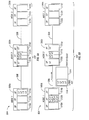
- FIGs. 5A-5C collectively illustrate an example of the teachings described hereinabove.
- the example will be described with reference to three nodes 500a, 500b, and 500c, along a path 502 in an optical network 504.
- Node 500a is the ingress, or source, node and node 500c is the egress, or destination, node.
- Nodes 500a and 500b are connected by a first link 506; nodes 500b and 500c are connected by a second link 508.
- Each link 506, 508, has four wavelengths ⁇ 1, ⁇ 2, ⁇ 3, and ⁇ 4.
- Each node 500a, 500b, 500c includes a UP 510a, 510b, 510c, respectively, an FP 512a, 512b, 512c, respectively, and an AP 514a, 514b, 514c, respectively.
- a first Flagged Set (“FS0” includes the wavelengths for which CT-TS ⁇ is between 2.0 seconds and 1.0 seconds
- FS1 includes the wavelengths for which CT-TS ⁇ is between 1.0 seconds and 0.0 seconds.
- wavelengths at the node 500a are in the AP 514a.
- the wavelength ⁇ 1 is already in use and hence is in the UP 510b.
- Wavelengths ⁇ 2 and ⁇ 4 have been suggested to different LSPs at local time stamps t2 and t4, respectively, and hence are in the FP 512b.
- Wavelength ⁇ 3 is available and hence is in the AP 514b.
- the node 500a places all four wavelengths ⁇ 1- ⁇ 4 into a Label Set 516 of a Label Request, in this case, a Path message 518, in order to set up the light path, and moves all of the wavelengths ⁇ 1- ⁇ 4 from the AP 514a to the FP 512a with a time stamp of t1, which indicates the local clock time at the time the wavelengths are placed in the Label Set.
- the Path message 518 is sent along the link 506 to the node 500b.
- the local clock time at the node 500b upon the arrival of the Path message 518 is c2.
- An OSC (not shown) at the node 500b takes the following actions. First, since ⁇ 1 is in the UP 510b, it is extracted from the Label Set 516. For the wavelength ⁇ 2, if 1.0 ⁇ (c2-t2) ⁇ 2.0, a Flagged Set-1 object 522 is created and the wavelength ⁇ 2 is moved from the Label Set object 516 to the Flagged Set-1 object 522.
- the wavelength ⁇ 3 Since the wavelength ⁇ 3 is in the AP 514b, it is retained in the Label Set 516. With respect to the wavelength ⁇ 4, if 1.0 ⁇ (c2-t4) ⁇ 2.0, then the wavelength ⁇ 4 is moved from the Label Set object 516 to the Flagged Set-1 object 522; however, if 0.0 ⁇ (c2-t4) ⁇ 1.0, then the wavelength ⁇ 4 is moved from the Label Set object 516 to the Flagged Set-2 object 524. It will be assumed that 0.0 ⁇ (c2-t4) ⁇ 1.0, so the wavelength ⁇ 4 is moved to the Flagged Set-2 object 524.
- the updated Path message 518 is then forwarded to the egress node 500c, which selects the wavelength ⁇ 3 from the Label Set object 516 for the LSP. If the Label Set 516 had been empty, the node 500c would have selected a wavelength from the Flagged Set-1 object 522. Similarly, if the both the Label Set object 516 and Flagged Set-1 object 522 had been empty, the node 500c would have selected a wavelength from the Flagged Set-2 object 524. It will be noted that if all of the objects 516, 522, and 524 were empty, an error message would be generated in the usual fashion.
- the embodiments described herein take into account the fact that the wavelength ⁇ 3, having not been recently suggested for use in another LSP along the path, is a preferable choice to the wavelengths ⁇ 2 and ⁇ 4, both of which have been more recently suggested than the wavelength ⁇ 3. Similarly, the wavelength ⁇ 2 is a preferable choice to ⁇ 4 due to the fact that the wavelength ⁇ 4 has been more recently suggested than the wavelength ⁇ 2.
- the present invention advantageously provides an innovative and efficient solution for facilitating fair and effective lightpath reservation in a GMPLS network.
- the invention provides a global label prioritization method that decreases the occurrence of wavelength collision in a GMPLS network.
Landscapes
- Engineering & Computer Science (AREA)
- Computer Networks & Wireless Communication (AREA)
- Signal Processing (AREA)
- Optical Communication System (AREA)
- Data Exchanges In Wide-Area Networks (AREA)
Abstract
Description
For each wavelength of the FP, upon expiration of a predetermined time period without the wavelength being reserved, the wavelength is returned to the AP.
Under current GMPLS standards, all three of the wavelengths λ2, λ3, and λ4 would be included in the Label Set object 516 and the
Claims (10)
- A method of implementing an optical switch controller ("OSC") at a node of an optical network, the method comprising the steps of:responsive to receipt at the node of a Label Request message identifying a Label Set comprising a plurality of wavelengths, for each wavelength of the Label Set:determining whether the wavelength is an element of an Available Pool ("AP") of the OSC;responsive to a determination that the wavelength is not an element of the AP, determining whether the wavelength is an element of a Flagged Pool ("FP") of the OSC;responsive to a determination that the wavelength is not an element of the FP, updating the Label Request message by removing the wavelength from the Label Set; responsive to a determination that the wavelength is an element of the FP, determining whether a local clock time at the node minus a time stamp associated with the wavelength in the FP is less than a short threshold;responsive to a determination that the local clock time at the node minus the time stamp associated with the wavelength is shorter than a short threshold, updating the Label Request message by removing the wavelength from the Label Set; andresponsive to a determination that the local clock time at the node minus the time stamp associated with the wavelength is not shorter than a short threshold, updating the Label Request message by removing the wavelength from the Label Set and including the wavelength in a Flagged Set identified in the Label Request message.
- The method of claim 1 further comprising the step of forwarding the updated Label Request message to a downstream node.
- The method of claim 1 wherein the optical network is a Generalized Multi-Protocol Label Switching ("GMPLS") network.
- The method of claim 1 further comprising the steps of:identifying in the Label Request message more than one Flagged Sets;assigning a different time interval to each of the Flagged Sets.
- An optical switch controller ("OSC") in a node of an optical network comprising:a Used Pool ("UP") comprising a list of wavelengths currently in use for existing optical paths through the node;a Flagged Pool ("FP") identifying wavelengths proposed for new optical paths to be established through the node and including for each identified wavelength a time stamp indicating when the wavelength was proposed; andan Available Pool ("AP") identifying wavelengths that are not elements of the UP or the FP.
- The OSC of claim 11 wherein responsive to receipt at the node of a Label Request message identifying a Label Set comprising a plurality of wavelengths, for each wavelength of the Label Set, the OSC:updates the Label Request message by removing the wavelength from the Label Set if the wavelength is an element of the UP of the node;updates the Label Request message by removing the wavelength from the Label Set and including the wavelength in a Flagged Set identified in the Label Request message if the wavelength is an element of the FP of the node and the local clock time at the node minus the time stamp associated with the wavelength is not shorter than a short threshold; andupdates the Label Request message by removing the wavelength from the Label Set if the wavelength is an element of the FP of the node and the local clock time at the node minus the time stamp associated with the wavelength is shorter than a short threshold.
- An optical switch controller ("OSC") at a node of an optical network comprising:means responsive to receipt at the node of a Label Request message identifying a Label Set for determining whether a wavelength of the Label Set is an element of an Available Pool ("AP") of the OSC;means responsive to a determination that the wavelength is not an element of the AP for determining whether the wavelength is an element of a Flagged Pool ("FP") of the OSC;means responsive to a determination that the wavelength is not an element of the FP for updating the Label Request message by removing the wavelength from the Label Set;means responsive to a determination that the wavelength is an element of the FP for determining whether a local clock time at the node minus a time stamp associated with the wavelength in the FP is less than a short threshold;means responsive to a determination that the local clock time at the node minus the time stamp associated with the wavelength is shorter than a short threshold for updating the Label Request message by removing the wavelength from the Label Set; andmeans responsive to a determination that the local clock time at the node minus the time stamp associated with the wavelength is not shorter than a short threshold for updating the Label Request message by removing the wavelength from the Label Set and including the wavelength in a Flagged Set identified in the Label Request message.
- The OSC of claim 13 further comprising:means for identifying in the Label Request message more than one Flagged Sets; andmeans for assigning a different time interval to each of the Flagged Sets.
- The OSC of claim 16 further comprising:means for determining whether the current clock time at the node minus the time stamp associated with the wavelength falls within the time interval assigned to one of the Flagged Sets; andmeans responsive to a determination that the current clock time at the node minus the time stamp associated with the wavelength falls within the time interval assigned to one of the Flagged Sets for updating the Label Request message by removing the wavelength from the Label Set and including the wavelength in the one of the Flagged Sets.
- The OSC of claim 17 wherein the Flagged Sets are prioritized such that a highest priority Flagged Set includes wavelengths for which a current clock time at the node minus the time stamp associated with the wavelength is closer to an expiration threshold than to zero and a lowest priority Flagged Set includes wavelengths for which a current clock time at the node minus the time stamp associated with the wavelength is closer to zero than to an expiration threshold.
Applications Claiming Priority (2)
| Application Number | Priority Date | Filing Date | Title |
|---|---|---|---|
| US10/163,962 US7171120B2 (en) | 2002-06-05 | 2002-06-05 | Optical switch controller for fair and effective lightpath reservation in an optical network |
| US163962 | 2002-06-05 |
Publications (3)
| Publication Number | Publication Date |
|---|---|
| EP1370108A2 true EP1370108A2 (en) | 2003-12-10 |
| EP1370108A3 EP1370108A3 (en) | 2008-11-05 |
| EP1370108B1 EP1370108B1 (en) | 2012-03-21 |
Family
ID=29549334
Family Applications (1)
| Application Number | Title | Priority Date | Filing Date |
|---|---|---|---|
| EP03012382A Expired - Lifetime EP1370108B1 (en) | 2002-06-05 | 2003-05-30 | Optical switch controller for fair and effective lightpath reservation in an optical network |
Country Status (3)
| Country | Link |
|---|---|
| US (1) | US7171120B2 (en) |
| EP (1) | EP1370108B1 (en) |
| AT (1) | ATE550882T1 (en) |
Cited By (3)
| Publication number | Priority date | Publication date | Assignee | Title |
|---|---|---|---|---|
| WO2005125264A1 (en) * | 2004-06-18 | 2005-12-29 | Intune Technologies Limited | Method and system for a distributed wavelength (lambda) routed (dlr) network |
| FR2933255A1 (en) * | 2008-06-30 | 2010-01-01 | Alcatel Lucent | GENERATING A WAVELENGTH ALLOCATION OFFER FOR A CONNECTION |
| CN1816217B (en) * | 2005-02-06 | 2010-06-02 | 华为技术有限公司 | Path Establishment Method Based on Node Address Replacement |
Families Citing this family (6)
| Publication number | Priority date | Publication date | Assignee | Title |
|---|---|---|---|---|
| US20040076151A1 (en) * | 2002-10-21 | 2004-04-22 | Walter Fant | Connection identifiers and restoration in optical networks |
| JP4062071B2 (en) * | 2002-11-26 | 2008-03-19 | 日本電気株式会社 | GMPLS label management device |
| CN100477628C (en) * | 2003-05-16 | 2009-04-08 | 富士通株式会社 | Method for setting up path in communication network communicating through layers, and communication device thereof |
| US20050030951A1 (en) * | 2003-08-06 | 2005-02-10 | Christian Maciocco | Reservation protocol signaling extensions for optical switched networks |
| US20050068968A1 (en) * | 2003-09-30 | 2005-03-31 | Shlomo Ovadia | Optical-switched (OS) network to OS network routing using extended border gateway protocol |
| CN101605283B (en) * | 2009-06-29 | 2012-06-06 | 中兴通讯股份有限公司 | Method and device for recovering node resource state in WSON |
Family Cites Families (2)
| Publication number | Priority date | Publication date | Assignee | Title |
|---|---|---|---|---|
| US6600581B1 (en) * | 1999-08-31 | 2003-07-29 | Lucent Technologies Inc. | Connection verification in optical cross-connect arrangements |
| JP4316822B2 (en) * | 2001-05-18 | 2009-08-19 | 富士通株式会社 | Method for changing path path and switch device using the same |
-
2002
- 2002-06-05 US US10/163,962 patent/US7171120B2/en not_active Expired - Lifetime
-
2003
- 2003-05-30 AT AT03012382T patent/ATE550882T1/en active
- 2003-05-30 EP EP03012382A patent/EP1370108B1/en not_active Expired - Lifetime
Non-Patent Citations (1)
| Title |
|---|
| None |
Cited By (4)
| Publication number | Priority date | Publication date | Assignee | Title |
|---|---|---|---|---|
| WO2005125264A1 (en) * | 2004-06-18 | 2005-12-29 | Intune Technologies Limited | Method and system for a distributed wavelength (lambda) routed (dlr) network |
| CN1816217B (en) * | 2005-02-06 | 2010-06-02 | 华为技术有限公司 | Path Establishment Method Based on Node Address Replacement |
| FR2933255A1 (en) * | 2008-06-30 | 2010-01-01 | Alcatel Lucent | GENERATING A WAVELENGTH ALLOCATION OFFER FOR A CONNECTION |
| EP2141843A1 (en) * | 2008-06-30 | 2010-01-06 | Alcatel Lucent | Generation of a wavelength allocation offer for a connection |
Also Published As
| Publication number | Publication date |
|---|---|
| EP1370108B1 (en) | 2012-03-21 |
| US20040247315A1 (en) | 2004-12-09 |
| EP1370108A3 (en) | 2008-11-05 |
| ATE550882T1 (en) | 2012-04-15 |
| US7171120B2 (en) | 2007-01-30 |
Similar Documents
| Publication | Publication Date | Title |
|---|---|---|
| KR100798018B1 (en) | Precise reservation establishment method, switching device and machine-readable medium of optical path | |
| US7340169B2 (en) | Dynamic route discovery for optical switched networks using peer routing | |
| Zang et al. | Dynamic lightpath establishment in wavelength routed WDM networks | |
| US7289437B2 (en) | System and method for routing stability-based integrated traffic engineering for GMPLS optical networks | |
| JP4374307B2 (en) | Label switch path routing control method | |
| US7787364B2 (en) | Control scheme for standby channel route | |
| KR100765599B1 (en) | Method and apparatus for data and control packet scheduling in wdm photonic burst-switched networks | |
| EP1665868B1 (en) | Method and system to recover optical burst switched network resources upon data burst loss | |
| US20040120705A1 (en) | Differentiated resilience in optical networks | |
| EP1303110A2 (en) | Dynamic path protection for optical networks | |
| US20100034205A1 (en) | Communication network system, path calculation device, and communication path establishment control method | |
| JP5163479B2 (en) | Path switching method | |
| US8233487B2 (en) | Communication network system that establishes communication path by transferring control signal | |
| US20050180431A1 (en) | Transfer system | |
| EP1370108B1 (en) | Optical switch controller for fair and effective lightpath reservation in an optical network | |
| Giorgetti et al. | Label preference schemes for lightpath provisioning and restoration in distributed GMPLS networks | |
| Zheng et al. | Toward automated provisioning of advance reservation service in next-generation optical Internet | |
| US7233743B2 (en) | Lightpath segmentation system and method in a generalized multi-protocol label switching network | |
| Sambo et al. | A contention detection scheme for lightpath restoration in GMPLS networks | |
| Dong et al. | Differentiated-resilience provisioning for the wavelength-routed optical network | |
| US20080320153A1 (en) | Resource Management Device For a Communications Network With Inter-Node Connections Associated With Shared Resource Preemption Rights and Resource Access Priority Rights | |
| US20050135272A1 (en) | Method for setting up a logical connection between non-adjacent initial and final nodes in a telecommunications network | |
| US20060274658A1 (en) | Prereservation of resources for connecting paths in a packet-address-switched or label-switched communication network | |
| JP2002261803A (en) | Label switching path setting method | |
| Mu? oz et al. | Experimental GMPLS-based provisioning for future all-optical DPRing-based MAN |
Legal Events
| Date | Code | Title | Description |
|---|---|---|---|
| PUAI | Public reference made under article 153(3) epc to a published international application that has entered the european phase |
Free format text: ORIGINAL CODE: 0009012 |
|
| AK | Designated contracting states |
Kind code of ref document: A2 Designated state(s): AT BE BG CH CY CZ DE DK EE ES FI FR GB GR HU IE IT LI LU MC NL PT RO SE SI SK TR |
|
| AX | Request for extension of the european patent |
Extension state: AL LT LV MK |
|
| RIN1 | Information on inventor provided before grant (corrected) |
Inventor name: VERCHERE, DOMINIQUE Inventor name: OZUGUR, TIMUCIN |
|
| RIN1 | Information on inventor provided before grant (corrected) |
Inventor name: OZUGUR, TIMUCIN Inventor name: VERCHERE, DOMINIQUE |
|
| RAP1 | Party data changed (applicant data changed or rights of an application transferred) |
Owner name: ALCATEL LUCENT |
|
| PUAL | Search report despatched |
Free format text: ORIGINAL CODE: 0009013 |
|
| AK | Designated contracting states |
Kind code of ref document: A3 Designated state(s): AT BE BG CH CY CZ DE DK EE ES FI FR GB GR HU IE IT LI LU MC NL PT RO SE SI SK TR |
|
| AX | Request for extension of the european patent |
Extension state: AL LT LV MK |
|
| 17P | Request for examination filed |
Effective date: 20090504 |
|
| AKX | Designation fees paid |
Designated state(s): AT BE BG CH CY CZ DE DK EE ES FI FR GB GR HU IE IT LI LU MC NL PT RO SE SI SK TR |
|
| 17Q | First examination report despatched |
Effective date: 20100624 |
|
| GRAP | Despatch of communication of intention to grant a patent |
Free format text: ORIGINAL CODE: EPIDOSNIGR1 |
|
| GRAS | Grant fee paid |
Free format text: ORIGINAL CODE: EPIDOSNIGR3 |
|
| GRAA | (expected) grant |
Free format text: ORIGINAL CODE: 0009210 |
|
| RAP1 | Party data changed (applicant data changed or rights of an application transferred) |
Owner name: ALCATEL LUCENT |
|
| AK | Designated contracting states |
Kind code of ref document: B1 Designated state(s): AT BE BG CH CY CZ DE DK EE ES FI FR GB GR HU IE IT LI LU MC NL PT RO SE SI SK TR |
|
| REG | Reference to a national code |
Ref country code: GB Ref legal event code: FG4D |
|
| REG | Reference to a national code |
Ref country code: CH Ref legal event code: EP |
|
| REG | Reference to a national code |
Ref country code: IE Ref legal event code: FG4D |
|
| REG | Reference to a national code |
Ref country code: AT Ref legal event code: REF Ref document number: 550882 Country of ref document: AT Kind code of ref document: T Effective date: 20120415 |
|
| REG | Reference to a national code |
Ref country code: DE Ref legal event code: R096 Ref document number: 60340311 Country of ref document: DE Effective date: 20120516 |
|
| REG | Reference to a national code |
Ref country code: NL Ref legal event code: VDEP Effective date: 20120321 |
|
| PG25 | Lapsed in a contracting state [announced via postgrant information from national office to epo] |
Ref country code: GR Free format text: LAPSE BECAUSE OF FAILURE TO SUBMIT A TRANSLATION OF THE DESCRIPTION OR TO PAY THE FEE WITHIN THE PRESCRIBED TIME-LIMIT Effective date: 20120622 Ref country code: FI Free format text: LAPSE BECAUSE OF FAILURE TO SUBMIT A TRANSLATION OF THE DESCRIPTION OR TO PAY THE FEE WITHIN THE PRESCRIBED TIME-LIMIT Effective date: 20120321 |
|
| REG | Reference to a national code |
Ref country code: AT Ref legal event code: MK05 Ref document number: 550882 Country of ref document: AT Kind code of ref document: T Effective date: 20120321 |
|
| PG25 | Lapsed in a contracting state [announced via postgrant information from national office to epo] |
Ref country code: CY Free format text: LAPSE BECAUSE OF FAILURE TO SUBMIT A TRANSLATION OF THE DESCRIPTION OR TO PAY THE FEE WITHIN THE PRESCRIBED TIME-LIMIT Effective date: 20120321 |
|
| PG25 | Lapsed in a contracting state [announced via postgrant information from national office to epo] |
Ref country code: SE Free format text: LAPSE BECAUSE OF FAILURE TO SUBMIT A TRANSLATION OF THE DESCRIPTION OR TO PAY THE FEE WITHIN THE PRESCRIBED TIME-LIMIT Effective date: 20120321 Ref country code: EE Free format text: LAPSE BECAUSE OF FAILURE TO SUBMIT A TRANSLATION OF THE DESCRIPTION OR TO PAY THE FEE WITHIN THE PRESCRIBED TIME-LIMIT Effective date: 20120321 Ref country code: CZ Free format text: LAPSE BECAUSE OF FAILURE TO SUBMIT A TRANSLATION OF THE DESCRIPTION OR TO PAY THE FEE WITHIN THE PRESCRIBED TIME-LIMIT Effective date: 20120321 Ref country code: BE Free format text: LAPSE BECAUSE OF FAILURE TO SUBMIT A TRANSLATION OF THE DESCRIPTION OR TO PAY THE FEE WITHIN THE PRESCRIBED TIME-LIMIT Effective date: 20120321 Ref country code: RO Free format text: LAPSE BECAUSE OF FAILURE TO SUBMIT A TRANSLATION OF THE DESCRIPTION OR TO PAY THE FEE WITHIN THE PRESCRIBED TIME-LIMIT Effective date: 20120321 Ref country code: SI Free format text: LAPSE BECAUSE OF FAILURE TO SUBMIT A TRANSLATION OF THE DESCRIPTION OR TO PAY THE FEE WITHIN THE PRESCRIBED TIME-LIMIT Effective date: 20120321 |
|
| PG25 | Lapsed in a contracting state [announced via postgrant information from national office to epo] |
Ref country code: SK Free format text: LAPSE BECAUSE OF FAILURE TO SUBMIT A TRANSLATION OF THE DESCRIPTION OR TO PAY THE FEE WITHIN THE PRESCRIBED TIME-LIMIT Effective date: 20120321 Ref country code: PT Free format text: LAPSE BECAUSE OF FAILURE TO SUBMIT A TRANSLATION OF THE DESCRIPTION OR TO PAY THE FEE WITHIN THE PRESCRIBED TIME-LIMIT Effective date: 20120723 |
|
| PG25 | Lapsed in a contracting state [announced via postgrant information from national office to epo] |
Ref country code: MC Free format text: LAPSE BECAUSE OF NON-PAYMENT OF DUE FEES Effective date: 20120531 |
|
| REG | Reference to a national code |
Ref country code: CH Ref legal event code: PL |
|
| PLBE | No opposition filed within time limit |
Free format text: ORIGINAL CODE: 0009261 |
|
| STAA | Information on the status of an ep patent application or granted ep patent |
Free format text: STATUS: NO OPPOSITION FILED WITHIN TIME LIMIT |
|
| PG25 | Lapsed in a contracting state [announced via postgrant information from national office to epo] |
Ref country code: CH Free format text: LAPSE BECAUSE OF NON-PAYMENT OF DUE FEES Effective date: 20120531 Ref country code: DK Free format text: LAPSE BECAUSE OF FAILURE TO SUBMIT A TRANSLATION OF THE DESCRIPTION OR TO PAY THE FEE WITHIN THE PRESCRIBED TIME-LIMIT Effective date: 20120321 Ref country code: AT Free format text: LAPSE BECAUSE OF FAILURE TO SUBMIT A TRANSLATION OF THE DESCRIPTION OR TO PAY THE FEE WITHIN THE PRESCRIBED TIME-LIMIT Effective date: 20120321 Ref country code: NL Free format text: LAPSE BECAUSE OF FAILURE TO SUBMIT A TRANSLATION OF THE DESCRIPTION OR TO PAY THE FEE WITHIN THE PRESCRIBED TIME-LIMIT Effective date: 20120321 Ref country code: LI Free format text: LAPSE BECAUSE OF NON-PAYMENT OF DUE FEES Effective date: 20120531 |
|
| 26N | No opposition filed |
Effective date: 20130102 |
|
| REG | Reference to a national code |
Ref country code: IE Ref legal event code: MM4A |
|
| PG25 | Lapsed in a contracting state [announced via postgrant information from national office to epo] |
Ref country code: IT Free format text: LAPSE BECAUSE OF FAILURE TO SUBMIT A TRANSLATION OF THE DESCRIPTION OR TO PAY THE FEE WITHIN THE PRESCRIBED TIME-LIMIT Effective date: 20120321 |
|
| REG | Reference to a national code |
Ref country code: DE Ref legal event code: R097 Ref document number: 60340311 Country of ref document: DE Effective date: 20130102 |
|
| PG25 | Lapsed in a contracting state [announced via postgrant information from national office to epo] |
Ref country code: IE Free format text: LAPSE BECAUSE OF NON-PAYMENT OF DUE FEES Effective date: 20120530 Ref country code: ES Free format text: LAPSE BECAUSE OF FAILURE TO SUBMIT A TRANSLATION OF THE DESCRIPTION OR TO PAY THE FEE WITHIN THE PRESCRIBED TIME-LIMIT Effective date: 20120702 |
|
| PG25 | Lapsed in a contracting state [announced via postgrant information from national office to epo] |
Ref country code: BG Free format text: LAPSE BECAUSE OF FAILURE TO SUBMIT A TRANSLATION OF THE DESCRIPTION OR TO PAY THE FEE WITHIN THE PRESCRIBED TIME-LIMIT Effective date: 20120621 |
|
| REG | Reference to a national code |
Ref country code: FR Ref legal event code: GC Effective date: 20131018 |
|
| PG25 | Lapsed in a contracting state [announced via postgrant information from national office to epo] |
Ref country code: TR Free format text: LAPSE BECAUSE OF FAILURE TO SUBMIT A TRANSLATION OF THE DESCRIPTION OR TO PAY THE FEE WITHIN THE PRESCRIBED TIME-LIMIT Effective date: 20120321 |
|
| PG25 | Lapsed in a contracting state [announced via postgrant information from national office to epo] |
Ref country code: LU Free format text: LAPSE BECAUSE OF NON-PAYMENT OF DUE FEES Effective date: 20120530 |
|
| PG25 | Lapsed in a contracting state [announced via postgrant information from national office to epo] |
Ref country code: HU Free format text: LAPSE BECAUSE OF FAILURE TO SUBMIT A TRANSLATION OF THE DESCRIPTION OR TO PAY THE FEE WITHIN THE PRESCRIBED TIME-LIMIT Effective date: 20030530 |
|
| REG | Reference to a national code |
Ref country code: FR Ref legal event code: RG Effective date: 20141016 |
|
| REG | Reference to a national code |
Ref country code: FR Ref legal event code: PLFP Year of fee payment: 13 |
|
| REG | Reference to a national code |
Ref country code: FR Ref legal event code: PLFP Year of fee payment: 14 |
|
| REG | Reference to a national code |
Ref country code: FR Ref legal event code: PLFP Year of fee payment: 15 |
|
| REG | Reference to a national code |
Ref country code: FR Ref legal event code: PLFP Year of fee payment: 16 |
|
| REG | Reference to a national code |
Ref country code: GB Ref legal event code: 732E Free format text: REGISTERED BETWEEN 20190429 AND 20190502 |
|
| REG | Reference to a national code |
Ref country code: DE Ref legal event code: R082 Ref document number: 60340311 Country of ref document: DE Representative=s name: MENZIETTI WETZEL, DE Ref country code: DE Ref legal event code: R081 Ref document number: 60340311 Country of ref document: DE Owner name: PROVENANCE ASSET GROUP LLC, PITTSFORD, US Free format text: FORMER OWNER: ALCATEL LUCENT, PARIS, FR |
|
| REG | Reference to a national code |
Ref country code: GB Ref legal event code: 732E Free format text: REGISTERED BETWEEN 20220210 AND 20220216 |
|
| PGFP | Annual fee paid to national office [announced via postgrant information from national office to epo] |
Ref country code: GB Payment date: 20220526 Year of fee payment: 20 Ref country code: FR Payment date: 20220520 Year of fee payment: 20 Ref country code: DE Payment date: 20220525 Year of fee payment: 20 |
|
| REG | Reference to a national code |
Ref country code: DE Ref legal event code: R071 Ref document number: 60340311 Country of ref document: DE |
|
| REG | Reference to a national code |
Ref country code: GB Ref legal event code: PE20 Expiry date: 20230529 |
|
| P01 | Opt-out of the competence of the unified patent court (upc) registered |
Effective date: 20230524 |
|
| PG25 | Lapsed in a contracting state [announced via postgrant information from national office to epo] |
Ref country code: GB Free format text: LAPSE BECAUSE OF EXPIRATION OF PROTECTION Effective date: 20230529 |