EP1369408A1 - Process for producing bicyclocarboxylic acid derivative - Google Patents
Process for producing bicyclocarboxylic acid derivative Download PDFInfo
- Publication number
- EP1369408A1 EP1369408A1 EP02702875A EP02702875A EP1369408A1 EP 1369408 A1 EP1369408 A1 EP 1369408A1 EP 02702875 A EP02702875 A EP 02702875A EP 02702875 A EP02702875 A EP 02702875A EP 1369408 A1 EP1369408 A1 EP 1369408A1
- Authority
- EP
- European Patent Office
- Prior art keywords
- group
- alkyl group
- producing
- substituted
- acid derivative
- Prior art date
- Legal status (The legal status is an assumption and is not a legal conclusion. Google has not performed a legal analysis and makes no representation as to the accuracy of the status listed.)
- Withdrawn
Links
Classifications
-
- C—CHEMISTRY; METALLURGY
- C07—ORGANIC CHEMISTRY
- C07C—ACYCLIC OR CARBOCYCLIC COMPOUNDS
- C07C51/00—Preparation of carboxylic acids or their salts, halides or anhydrides
- C07C51/347—Preparation of carboxylic acids or their salts, halides or anhydrides by reactions not involving formation of carboxyl groups
- C07C51/377—Preparation of carboxylic acids or their salts, halides or anhydrides by reactions not involving formation of carboxyl groups by splitting-off hydrogen or functional groups; by hydrogenolysis of functional groups
-
- C—CHEMISTRY; METALLURGY
- C07—ORGANIC CHEMISTRY
- C07C—ACYCLIC OR CARBOCYCLIC COMPOUNDS
- C07C67/00—Preparation of carboxylic acid esters
- C07C67/30—Preparation of carboxylic acid esters by modifying the acid moiety of the ester, such modification not being an introduction of an ester group
- C07C67/317—Preparation of carboxylic acid esters by modifying the acid moiety of the ester, such modification not being an introduction of an ester group by splitting-off hydrogen or functional groups; by hydrogenolysis of functional groups
- C07C67/327—Preparation of carboxylic acid esters by modifying the acid moiety of the ester, such modification not being an introduction of an ester group by splitting-off hydrogen or functional groups; by hydrogenolysis of functional groups by elimination of functional groups containing oxygen only in singly bound form
-
- C—CHEMISTRY; METALLURGY
- C07—ORGANIC CHEMISTRY
- C07C—ACYCLIC OR CARBOCYCLIC COMPOUNDS
- C07C2602/00—Systems containing two condensed rings
- C07C2602/02—Systems containing two condensed rings the rings having only two atoms in common
- C07C2602/14—All rings being cycloaliphatic
- C07C2602/18—All rings being cycloaliphatic the ring system containing six carbon atoms
-
- Y—GENERAL TAGGING OF NEW TECHNOLOGICAL DEVELOPMENTS; GENERAL TAGGING OF CROSS-SECTIONAL TECHNOLOGIES SPANNING OVER SEVERAL SECTIONS OF THE IPC; TECHNICAL SUBJECTS COVERED BY FORMER USPC CROSS-REFERENCE ART COLLECTIONS [XRACs] AND DIGESTS
- Y02—TECHNOLOGIES OR APPLICATIONS FOR MITIGATION OR ADAPTATION AGAINST CLIMATE CHANGE
- Y02P—CLIMATE CHANGE MITIGATION TECHNOLOGIES IN THE PRODUCTION OR PROCESSING OF GOODS
- Y02P20/00—Technologies relating to chemical industry
- Y02P20/50—Improvements relating to the production of bulk chemicals
- Y02P20/55—Design of synthesis routes, e.g. reducing the use of auxiliary or protecting groups
Definitions
- the present invention relates to a process for producing a 2-oxobicyclo[3.1.0]hex-3-ene-6-carboxylic acid derivative.
- the metabotropic glutamate receptors which are one type of glutamate receptor, are classified pharmacologically into three groups. Of these, group 2 (mGluR2/mGluR3) bind with adenylcyclase, and inhibit the accumulation of the Forskolin stimulation of cyclic adenosine monophosphate (cAMP) (Trends Pharmacol.
- group 2 mGluR2/mGluR3
- cAMP cyclic adenosine monophosphate
- the compounds acting on group 2 metabotropic glutamate receptors have treatment effects and prevention effects on psychiatric disorders such as schizophrenia, anxiety and its associated diseases, depression, bipolar disorder, and epilepsy; and on neurological diseases such as drug dependence, cognitive disorders, Alzheimer's disease, Huntington's chorea, Parkinson's disease, dyskinesia associated with muscular stiffness, cerebral ischemia, cerebral failure, myelopathy, and head trauma.
- psychiatric disorders such as schizophrenia, anxiety and its associated diseases, depression, bipolar disorder, and epilepsy
- neurological diseases such as drug dependence, cognitive disorders, Alzheimer's disease, Huntington's chorea, Parkinson's disease, dyskinesia associated with muscular stiffness, cerebral ischemia, cerebral failure, myelopathy, and head trauma.
- An objective of the present invention is to provide a process for producing a 2-oxobicyclo[3.1.0]hex-3-ene-6-carboxylic acid derivative (2) which is a synthesis intermediate useful for an efficient synthesis of 2-amino-3-fluorobicyclo[3.1.0]hexane-2,6-dicarboxylic acid acting on group 2 metabotropic glutamate receptors, which have treatment effects and prevention effects on psychiatric disorders such as schizophrenia, anxiety and its associated diseases, depression, bipolar disorder, and epilepsy; and on neurological diseases such as drug dependence, cognitive disorders, Alzheimer's disease, Huntington's chorea, Parkinson's disease, dyskinesia associated with muscular stiffness, cerebral ischemia, cerebral failure, myelopathy, and head trauma.
- psychiatric disorders such as schizophrenia, anxiety and its associated diseases, depression, bipolar disorder, and epilepsy
- neurological diseases such as drug dependence, cognitive disorders, Alzheimer's disease, Huntington's chorea, Parkinson's disease, dyskinesia associated with muscular
- the present invention relates to a process for producing a 2-oxobicyclo[3.1.0]hex-3-ene-6-carboxylic acid derivative represented by Formula (2): (wherein R 1 represents a hydrogen atom, a C 1-6 alkyl group, a C 3-6 cycloalkyl group, a C 3-6 cycloalkyl C 1-6 alkyl group, a C 1-6 alkyl group substituted with a substituted or unsubstituted phenyl group, a C 1-6 alkoxy C 1-6 alkyl group, a C 1-6 hydroxyalkyl group, a C 1-6 alkylthio C 1-6 alkyl group, a C 1-6 mercaptoalkyl group, or a substituted or unsubstituted phenyl group) characterized by reacting a 4-hydroxy-2-oxobicyclo[3.1.0]hexane-6-carboxylic acid derivative represented by Formula (1): (wherein R 1 has the same meaning as described above
- C n-m means that the group following the "C n-m” has from n to m carbon atoms.
- the C 1-6 alkyl group means a straight-chain or branched-chain alkyl group, examples of which include a methyl group, an ethyl group, a propyl group, an isopropyl group, a butyl group, an isobutyl group, a t-butyl group, a pentyl group, an isopentyl group, a 1-ethylpropyl group, a hexyl group, an isohexyl group, a 2-ethylbutyl group, a heptyl group, an isopentyl group, a hexyl group, an isohexyl group, and the like.
- the C 3-6 cycloalkyl group means, for example, a cyclopropyl group, a cyclobutyl group, a cyclopentyl group, a cyclohexyl group, or the like.
- the C 3-6 cycloalkyl C 1-6 alkyl group means, for example, a cyclopropylmethyl group, a cyclobutylmethyl group, a cyclopentylmethyl group, a cyclohexylmethyl group, or the like.
- the substituted or unsubstituted phenyl group means a phenyl group having 1 to 3 substituents on the benzene ring, the substituents being any substituents selected from a hydrogen atom, a halogen atom such as a fluorine atom, a chlorine atom, a bromine atom, or the like, a C 1-6 alkyl group, a C 1-6 alkanoyl group, a cyano group, a nitro group, a hydroxy group, and a C 1-6 alkoxy group such as a methoxy group or the like.
- the C 1-6 alkyl group substituted with a substituted or unsubstituted phenyl group means a straight-chain or branched-chain alkyl group substituted with one or two phenyl groups, examples of which include a benzyl group, a diphenylmethyl group, a 1-phenylethyl group, 2-phenylethyl group, a 4-methoxybenzyl group, and the like.
- the C 1-6 alkoxy C 1-6 alkyl group means a straight-chain or branched-chain alkoxyalkyl group, examples of which include a methoxymethyl group, an ethoxymethyl group, a methoxyethyl group, an ethoxyethyl group, a propoxyethyl group, an isopropoxyethyl group, a butoxyethyl group, an isobutoxyethyl group, a pentyloxyethyl group, an isopentyloxyethyl group, and the like.
- the C 1-6 hydroxyalkyl group means, for example, a 2-hydroxyethyl group, a 3-hydroxypropyl group, a 2,3-dihydroxypropyl group, or the like.
- the C 1-6 alkanoyl group means a straight-chain or branched-chain alkanoyl group, examples of which include a formyl group, an acetyl group, a pivaloyl group, and the like.
- the C 1-6 alkylthio C 1-6 alkyl group means a straight-chain or branched-chain alkylthioalkyl group, examples of which include a methylthiomethyl group, a 2-methylthioethyl group, and the like.
- the C 1-6 mercaptoalkyl means, for example, a 2-mercaptoethyl group, a 3-mercaptopropyl group, a 2,3-dimercaptopropyl group, or the like.
- At least one hydrogen atom on the group may be substituted with, for example, a non-hydrogen atom or with another group, such as a halogen atom such as a fluorine atom, a chlorine atom, a bromine atom, an iodine atom, or the like; a nitro group; an amino group; a hydroxyl group; a thiol group; a formyl group; a carboxyl group; a cyano group; a carbamoyl group; an alkyl group such as a methyl group, an ethyl group, a propyl group, an isopropyl group, a butyl group, an isobutyl group, a sec-butyl group, a t-butyl group, a pentyl group, an isopentyl group, a neopentyl group, a t-pentyl group, or the like; an ary
- a 2,2,2-trichloroethyl group a 2,6-dimethylcyclohexan-1-yl group, a 2,4-dimethylpentan-3-yl group, and the like are also included in the scope of R 1 .
- the number of the carbon atoms in these substituents is excluded from the numbers n or m-described above.
- the protective derivative of a hydroxyl group means a form in which a protection is carried out by a general protective group of a hydroxyl group, examples of which include a silyloxy derivative such as a trimethylsilyloxy group, a t-butyldimethylsilyloxy group, or the like, or an acylated derivative such as an acetoxy group, a trifluoroacetoxy group, or the like.
- a silyloxy derivative such as a trimethylsilyloxy group, a t-butyldimethylsilyloxy group, or the like
- an acylated derivative such as an acetoxy group, a trifluoroacetoxy group, or the like.
- the compounds of the present . invention can be present as optically active substances, enantiomers thereof, an enantiomer mixture such as a racemic modification, and a diastereomer mixture. That is, the compounds of the present invention include all the optically active substances of the compounds represented by Formula (1) and Formula (2), enantiomers thereof, an enantiomer mixture such as a racemic modification, and a diastereomer mixture.
- the compounds of Formula (2) in the present invention can be produced by the reaction described below.
- R 1 and R 2 have the same meanings as described above;
- X 1 represents a chlorine atom, a bromine atom, an iodine atom, or a sulfonyloxy group such as a trifluoromethanesulfonyloxy group, a methanesulfonyloxy group, a p-toluenesulfonyloxy group, or the like;
- X 2 represents a group represented by a formula: R 3 S(O) n - or R 3 Se(O) n - (wherein R 3 represents a methyl group, an ethyl group, or a phenyl group; and n represents an integer of from 0 to 2).
- Compound (1) wherein R 2 does not represent a hydrogen atom can be converted into Compound (2) by reacting the Compound (1), after the protective group of the hydroxyl group of which is deprotected under common deprotective conditions or remains as it is, in the presence of an acid or a base, in an inert solvent, examples of which include a hydrocarbon type solvent such as benzene, toluene, or hexane; a halogen type solvent such as dichloromethane or chloroform; an alcohol such as methanol, ethanol, or isopropyl alcohol; an ether such as tetrahydrofuran, diethyl ether, or 1,2-dimethoxyethane; an amide such as N,N-dimethylformamide or N-methylpyrrolidone; acetonitrile; dimethylsulfoxide; hexamethylphosphoramide; or a mixture of these solvents.
- a hydrocarbon type solvent such as benzene, toluene,
- the base indicates, for example, an amine such as triethylamine, diisopropylethylamine, pyridine, or 1,8-diazabicyclo[5.4.0]-7-undecene; an inorganic base such as potassium carbonate, sodium carbonate, or sodium hydrogencarbonate; a metal alcholate such as sodium methoxide, sodium ethoxide, or potassium t-butoxide; or the like.
- the acid indicates, for example, an inorganic acid such as hydrogen chloride, hydrogen bromide, or sulfuric acid; or an organic acid such as p-toluenesulfonic acid, methanesulfonic acid, trifluoroacetic acid, or acetic acid.
- Compound (1) wherein R 2 represents a hydrogen atom can be converted into Compound (2) by dehydrating the Compound (1) in the presence of, for example, phosphoryl chloride-pyridine, thionyl chloride-pyridine, or the like.
- Compound (1) wherein R 2 represents a hydrogen atom can be converted into Compound (2) by reacting the Compound (1) with a sulfonylation reagent such as anhydrous trifluoromethanesulfonic acid, N-phenylbis(trifluoromethanesulfonimide), methanesulfonyl chloride, or p-toluenesulfonyl chloride, in the presence or absence of a base, examples of which include an amine such as triethylamine, diisopropylethylamine, pyridine, or 4-dimethylaminopyridine; an inorganic base such as potassium carbonate or sodium hydrogencarbonate; or the like, in an inert solvent, examples of which include a hydrocarbon type solvent such as benzene, toluene, or hexane; a halogen type solvent such as dichloromethane or chloroform; an ether such as tetrahydrofuran, diethy
- Compound (1) wherein R 2 represents a hydrogen atom can be converted into Compound (2) by reacting the Compound (1) with a halogenation reagent such as thionyl chloride, oxalyl chloride, triphenylphosphine-carbon tetrabromide, N-bromosuccinic imide-triphenylphosphine, or iodine-triphenylphosphine to produce Compound (10), followed by a reaction with an amine such as triethylamine, diisopropylethylamine, pyridine, or 1,8-diazabicyclo[5.4.0]-7-undecene; an inorganic base such as potassium carbonate, sodium hydrogencarbonate, or sodium hydride; or a metal alcholate such as sodium methoxide or potassium t-butoxide, in an inert solvent, examples of which include a hydrocarbon type solvent such as benzene, toluene, or hexane;
- the Compound (2) can be produced by converting the Compound (10) into Compound (11) by a reaction with a thiol such as benzene thiol or methane thiol, or a selenol such as benzene selenol, in the presence of a base such as sodium hydride, potassium carbonate, or triethylamine, and subsequently reacting in the presence of a base, or alternatively oxidizing with an oxidant such as m-chloroperbenzoic acid or hydrogen peroxide, followed by a reaction in the presence or absence of a base in an inert solvent.
- a thiol such as benzene thiol or methane thiol
- a selenol such as benzene selenol
- the inert solvent indicates, for example, a hydrocarbon type solvent such as benzene, toluene, or hexane; a halogen type solvent such as dichloromethane or chloroform; an alcohol such as methanol, ethanol, or isopropyl alcohol; an ether such as tetrahydrofuran, diethyl ether, or 1,2-dimethoxyethane; an amide such as N,N-dimethylformamide or N-methylpyrrolidone; acetonitrile; diemthylsulfoxide; hexamethylphosphoramide, or a mixture of these solvents.
- a hydrocarbon type solvent such as benzene, toluene, or hexane
- a halogen type solvent such as dichloromethane or chloroform
- an alcohol such as methanol, ethanol, or isopropyl alcohol
- an ether such as tetrahydrofuran, diethyl ether
- the base indicates, for example, an amine such as triethylamine, diisopropylethylamine, pyridine, or 1,8-diazabicyclo[5.4.0]-7-undecene; an inorganic base such as potassium carbonate, sodium carbonate, or sodium hydrogencarbonate; a metal alcholate such as sodium methoxide, sodium ethoxide, or potassium t-butoxide; or the like.
- an amine such as triethylamine, diisopropylethylamine, pyridine, or 1,8-diazabicyclo[5.4.0]-7-undecene
- an inorganic base such as potassium carbonate, sodium carbonate, or sodium hydrogencarbonate
- a metal alcholate such as sodium methoxide, sodium ethoxide, or potassium t-butoxide
- the diastereomers may be separated by a common column chromatography using silica gel or recrystallization.
- the enantiomers can be optically resolved into (+) and (-) optically active substances by the HPLC method employing chiral carriers such as cellulose carbamate derivatives or amylose carbamate derivatives.
- WUTS WUTS
- salts with optically active amines such as (+)- or (-)-1-phenylethylamine, (+)-or (-)-phenylglycinol, (+)- or (-)-2-amino-1-butanol, (+)-or (-)-alaninol, brucine, cinchonidine, cinchonine, quinine, quinidine, or dehydroabiethylamine, or by deriving to the amide derivatives with optically active primary or secondary amines.
- optically active amines such as (+)- or (-)-1-phenylethylamine, (+)-or (-)-phenylglycinol, (+)- or (-)-2-amino-1-butanol, (+)-or (-)-alaninol, brucine, cinchonidine, cinchonine, quinine, quinidine, or dehydroabiethylamine, or
- the reaction mixture was poured into a saturated aqueous solution of sodium hydrogencarbonate-ice, followed by extracting with chloroform three times and extracting with ethyl acetate twice.
- the organic phases were combined, and were dried over anhydrous sodium sulfate. After the desiccant was filtered off, the filtrate was concentrated under reduced pressure.
- the obtained residue in an amount of 0.72 g, and p-toluenesulfonic acid monohydrate, in an amount of 66 mg, were diluted with 6 mL of benzene, followed by refluxing by heating for 1.5 hours.
- an efficient process for producing 2-oxobicyclo[3.1.0]hex-3-ene-6-carboxylic acid derivatives (2) (the present compounds are useful as synthesis intermediates of 2-amino-3-fluorobicyclo [3.1.0]hexane-2,6-dicarboxylic acid derivatives (3) which act on group 2 metabotropic glutamate receptors having treatment effects and prevention effects of psychiatric disorders such as schizophrenia, anxiety and its associated diseases, depression, bipolar disorder, and epilepsy; and on neurological diseases such as drug dependence, cognitive disorders, Alzheimer's disease, Huntington's chorea, Parkinson's disease, dyskinesia associated with muscular stiffness, cerebral ischemia, cerebral failure, myelopathy, and head trauma, described in WO 99/38839), and for this reason, 2-amino-3-fluorobicyclo[3.1.0]hexane-2,6-dicarboxylic acid derivatives (3) described in WO 99/38839 can be efficiently produced.
Landscapes
- Chemical & Material Sciences (AREA)
- Organic Chemistry (AREA)
- Chemical Kinetics & Catalysis (AREA)
- Engineering & Computer Science (AREA)
- Oil, Petroleum & Natural Gas (AREA)
- Organic Low-Molecular-Weight Compounds And Preparation Thereof (AREA)
- Low-Molecular Organic Synthesis Reactions Using Catalysts (AREA)
- Acyclic And Carbocyclic Compounds In Medicinal Compositions (AREA)
Abstract
A process for producing a 2-oxobicyclo[3.1.0]hex-3-ene-6-carboxylic
acid derivative represented by a formula:
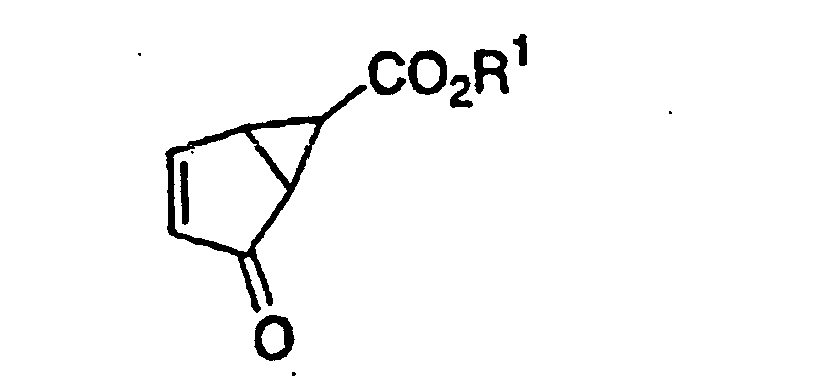 (wherein R1 represents a hydrogen atom, a C1-6 alkyl group, a
C3-6 cycloalkyl group, a C3-6 cycloalkyl C1-6 alkyl group, a
C1-6 alkyl group substituted with a substituted or
unsubstituted phenyl group, a C1-6 alkoxy C1-6 alkyl group, a
C1-6 hydroxyalkyl group, a C1-6 alkylthio C1-6 alkyl group, a
C1-6 mercaptoalkyl group, or a substituted or unsubstituted
phenyl group)
(wherein R1 represents a hydrogen atom, a C1-6 alkyl group, a
C3-6 cycloalkyl group, a C3-6 cycloalkyl C1-6 alkyl group, a
C1-6 alkyl group substituted with a substituted or
unsubstituted phenyl group, a C1-6 alkoxy C1-6 alkyl group, a
C1-6 hydroxyalkyl group, a C1-6 alkylthio C1-6 alkyl group, a
C1-6 mercaptoalkyl group, or a substituted or unsubstituted
phenyl group)
characterized by reacting a 4-hydroxy-2-oxobicyclo[3.1.0]hexane-6-carboxylic acid derivative represented by a formula: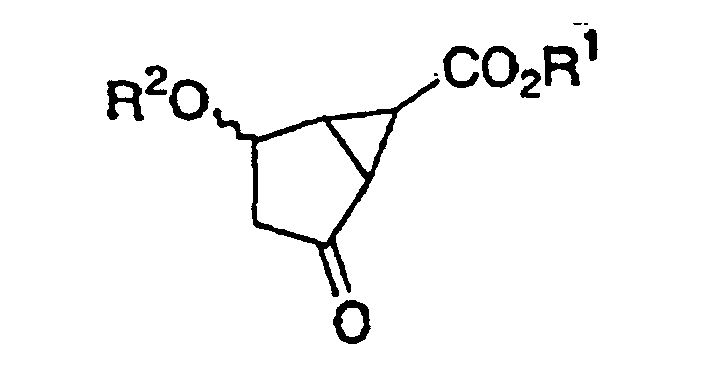 (wherein R1 has the same meaning as described above, and R2
represents a hydrogen atom or a protective group of a
hydroxyl group)
(wherein R1 has the same meaning as described above, and R2
represents a hydrogen atom or a protective group of a
hydroxyl group)
in the presence of an acid or a base.
characterized by reacting a 4-hydroxy-2-oxobicyclo[3.1.0]hexane-6-carboxylic acid derivative represented by a formula:
in the presence of an acid or a base.
A process for producing the compounds which are useful
for efficient syntheses of 2-amino-3-fluorobicyclo[3.1.0]hexane-2,6-dicarboxylic
acids is
provided.
Description
The present invention relates to a process for
producing a 2-oxobicyclo[3.1.0]hex-3-ene-6-carboxylic acid
derivative.
The metabotropic glutamate receptors, which are one
type of glutamate receptor, are classified pharmacologically
into three groups. Of these, group 2 (mGluR2/mGluR3) bind
with adenylcyclase, and inhibit the accumulation of the
Forskolin stimulation of cyclic adenosine monophosphate
(cAMP) (Trends Pharmacol. Sci., 14, 13 (1993)), and for this
reason, it is suggested that the compounds acting on group 2
metabotropic glutamate receptors have treatment effects and
prevention effects on psychiatric disorders such as
schizophrenia, anxiety and its associated diseases,
depression, bipolar disorder, and epilepsy; and on
neurological diseases such as drug dependence, cognitive
disorders, Alzheimer's disease, Huntington's chorea,
Parkinson's disease, dyskinesia associated with muscular
stiffness, cerebral ischemia, cerebral failure, myelopathy,
and head trauma.
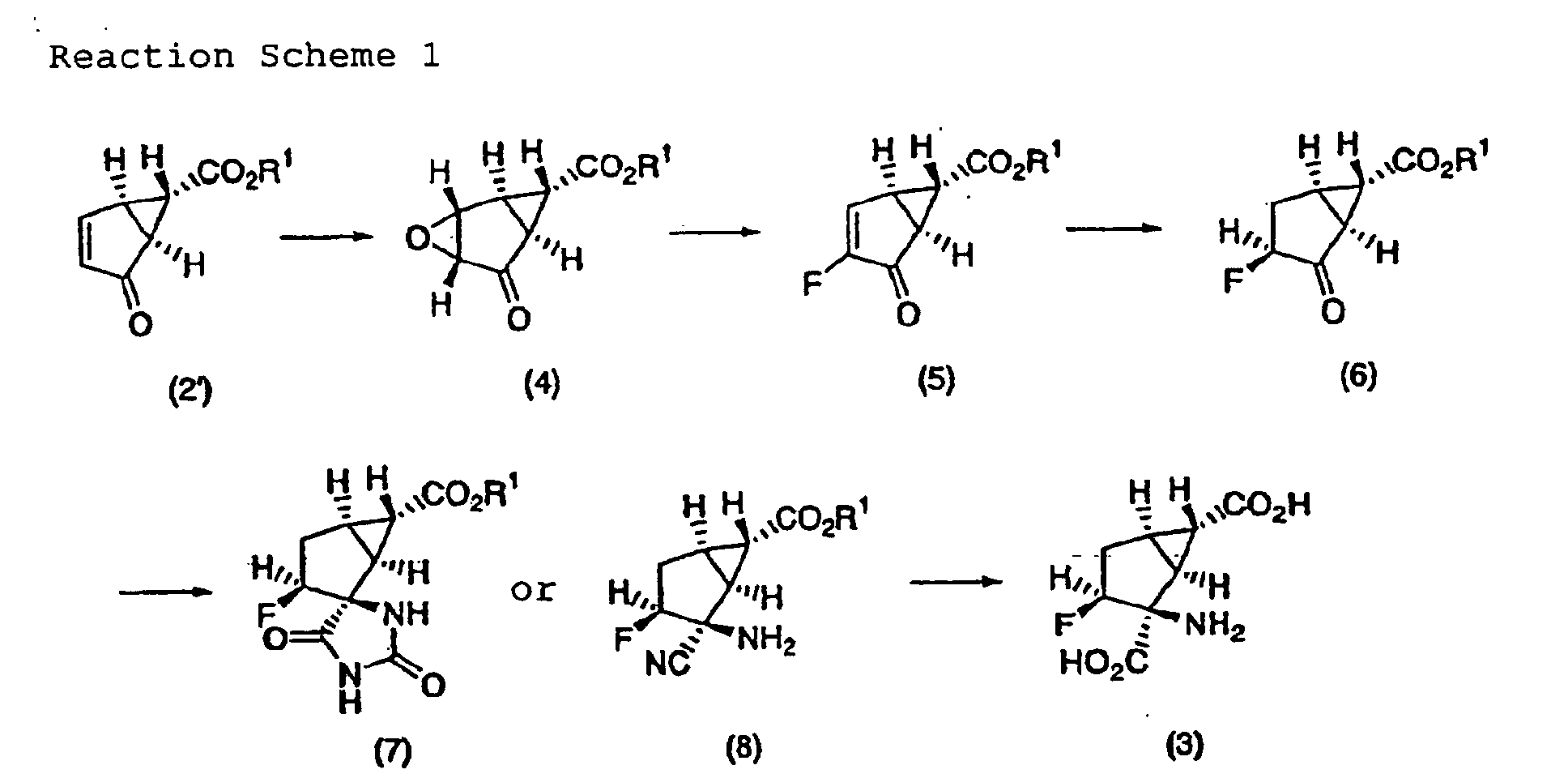
In addition, International Publication No. WO 99/38839
describes a 2-amino-3-fluorobicyclo[3.1.0]hexane-2,6-dicarboxylic
acid (3) as a compound acting on group 2
metabotropic glutamate receptors. Furthermore, as a process
for producing the same, International Publication No. WO
00/37410 proposes a process for producing a 2-amino-3-fluorobicyclo[3.1.0]hexane-2,6-dicarboxylic
acid (3) as
shown in Reaction Scheme 1 described below (wherein R1 has
the same meaning as described in the definition of the
present Specification).
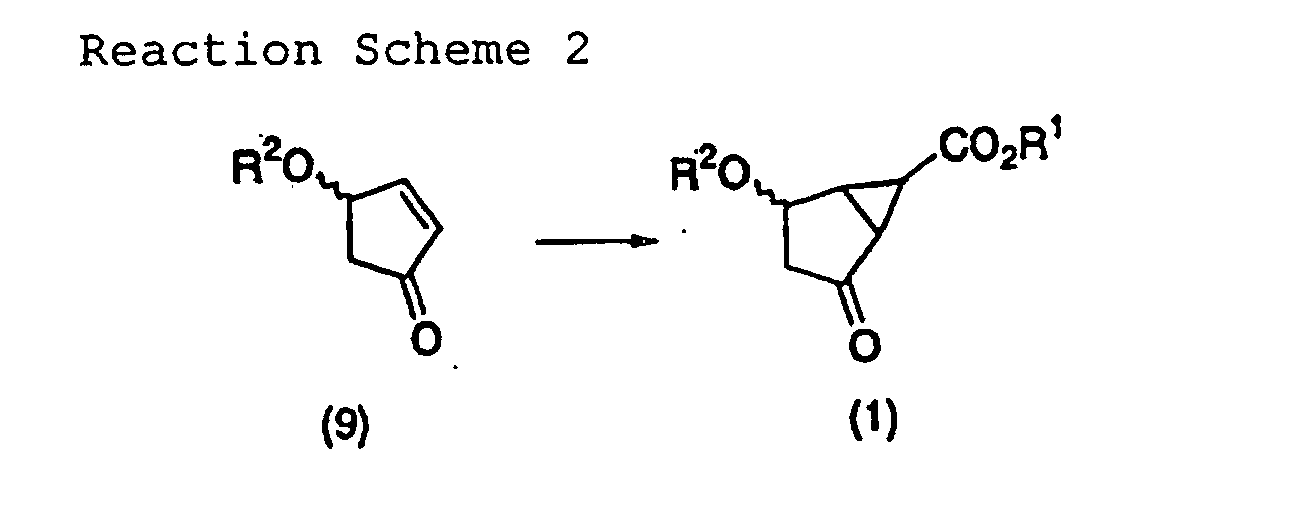
In addition, Compound (1) and a process for producing
the same are described in International Publication No. WO
00/58258, as shown in Reaction Scheme 2 described below
(wherein R1 and R2 have the same meanings as described in the
definition of the present Specification). However, there
are no descriptions regarding a process for producing
Compound (2) (including Compound (2')) from Compound (1).
An objective of the present invention is to provide a
process for producing a 2-oxobicyclo[3.1.0]hex-3-ene-6-carboxylic
acid derivative (2) which is a synthesis
intermediate useful for an efficient synthesis of 2-amino-3-fluorobicyclo[3.1.0]hexane-2,6-dicarboxylic
acid acting on
group 2 metabotropic glutamate receptors, which have
treatment effects and prevention effects on psychiatric
disorders such as schizophrenia, anxiety and its associated
diseases, depression, bipolar disorder, and epilepsy; and on
neurological diseases such as drug dependence, cognitive
disorders, Alzheimer's disease, Huntington's chorea,
Parkinson's disease, dyskinesia associated with muscular
stiffness, cerebral ischemia, cerebral failure, myelopathy,
and head trauma.
As a result of diligent research in order to achieve
the objective described above, the present inventors
discovered an efficient process for producing a 2-oxobicyclo[3.1.0]hex-3-ene-6-carboxylic
acid derivative (2)
which is a synthesis intermediate useful for a synthesis of
2-amino-3-fluorobicyclo[3.1.0]hexane-2,6-dicarboxylic acid,
and consequently, have completed the present invention.
That is, the present invention relates to a process
for producing a 2-oxobicyclo[3.1.0]hex-3-ene-6-carboxylic
acid derivative represented by Formula (2):
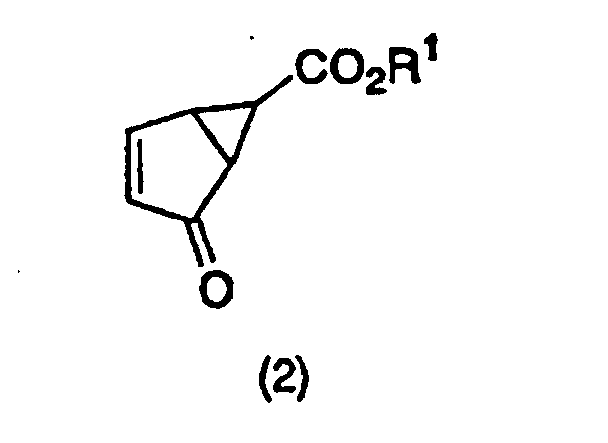 (wherein R1 represents a hydrogen atom, a C1-6 alkyl group, a
C3-6 cycloalkyl group, a C3-6 cycloalkyl C1-6 alkyl group, a
C1-6 alkyl group substituted with a substituted or
unsubstituted phenyl group, a C1-6 alkoxy C1-6 alkyl group, a
C1-6 hydroxyalkyl group, a C1-6 alkylthio C1-6 alkyl group, a
C1-6 mercaptoalkyl group, or a substituted or unsubstituted
phenyl group)
(wherein R1 represents a hydrogen atom, a C1-6 alkyl group, a
C3-6 cycloalkyl group, a C3-6 cycloalkyl C1-6 alkyl group, a
C1-6 alkyl group substituted with a substituted or
unsubstituted phenyl group, a C1-6 alkoxy C1-6 alkyl group, a
C1-6 hydroxyalkyl group, a C1-6 alkylthio C1-6 alkyl group, a
C1-6 mercaptoalkyl group, or a substituted or unsubstituted
phenyl group)
characterized by reacting a 4-hydroxy-2-oxobicyclo[3.1.0]hexane-6-carboxylic acid derivative represented by Formula (1): (wherein R1 has the same meaning as described above, and R2
represents a hydrogen atom or a protective group of a
hydroxyl group)
(wherein R1 has the same meaning as described above, and R2
represents a hydrogen atom or a protective group of a
hydroxyl group)
in the presence of an acid or a base.
characterized by reacting a 4-hydroxy-2-oxobicyclo[3.1.0]hexane-6-carboxylic acid derivative represented by Formula (1):
in the presence of an acid or a base.
The terms used in the present invention are defined in
the following. In the present invention, "Cn-m" means that
the group following the "Cn-m" has from n to m carbon atoms.
The C1-6 alkyl group means a straight-chain or
branched-chain alkyl group, examples of which include a
methyl group, an ethyl group, a propyl group, an isopropyl
group, a butyl group, an isobutyl group, a t-butyl group, a
pentyl group, an isopentyl group, a 1-ethylpropyl group, a
hexyl group, an isohexyl group, a 2-ethylbutyl group, a
heptyl group, an isopentyl group, a hexyl group, an isohexyl
group, and the like. The C3-6 cycloalkyl group means, for
example, a cyclopropyl group, a cyclobutyl group, a
cyclopentyl group, a cyclohexyl group, or the like. The C3-6
cycloalkyl C1-6 alkyl group means, for example, a
cyclopropylmethyl group, a cyclobutylmethyl group, a
cyclopentylmethyl group, a cyclohexylmethyl group, or the
like. The substituted or unsubstituted phenyl group means a
phenyl group having 1 to 3 substituents on the benzene ring,
the substituents being any substituents selected from a
hydrogen atom, a halogen atom such as a fluorine atom, a
chlorine atom, a bromine atom, or the like, a C1-6 alkyl
group, a C1-6 alkanoyl group, a cyano group, a nitro group, a
hydroxy group, and a C1-6 alkoxy group such as a methoxy
group or the like. The C1-6 alkyl group substituted with a
substituted or unsubstituted phenyl group means a straight-chain
or branched-chain alkyl group substituted with one or
two phenyl groups, examples of which include a benzyl group,
a diphenylmethyl group, a 1-phenylethyl group, 2-phenylethyl
group, a 4-methoxybenzyl group, and the like. The C1-6
alkoxy C1-6 alkyl group means a straight-chain or branched-chain
alkoxyalkyl group, examples of which include a
methoxymethyl group, an ethoxymethyl group, a methoxyethyl
group, an ethoxyethyl group, a propoxyethyl group, an
isopropoxyethyl group, a butoxyethyl group, an
isobutoxyethyl group, a pentyloxyethyl group, an
isopentyloxyethyl group, and the like. The C1-6 hydroxyalkyl
group means, for example, a 2-hydroxyethyl group, a 3-hydroxypropyl
group, a 2,3-dihydroxypropyl group, or the
like. The C1-6 alkanoyl group means a straight-chain or
branched-chain alkanoyl group, examples of which include a
formyl group, an acetyl group, a pivaloyl group, and the
like. The C1-6 alkylthio C1-6 alkyl group means a straight-chain
or branched-chain alkylthioalkyl group, examples of
which include a methylthiomethyl group, a 2-methylthioethyl
group, and the like. The C1-6 mercaptoalkyl means, for
example, a 2-mercaptoethyl group, a 3-mercaptopropyl group,
a 2,3-dimercaptopropyl group, or the like.
In each of the groups descried above, at least one
hydrogen atom on the group may be substituted with, for
example, a non-hydrogen atom or with another group, such as
a halogen atom such as a fluorine atom, a chlorine atom, a
bromine atom, an iodine atom, or the like; a nitro group; an
amino group; a hydroxyl group; a thiol group; a formyl
group; a carboxyl group; a cyano group; a carbamoyl group;
an alkyl group such as a methyl group, an ethyl group, a
propyl group, an isopropyl group, a butyl group, an isobutyl
group, a sec-butyl group, a t-butyl group, a pentyl group,
an isopentyl group, a neopentyl group, a t-pentyl group, or
the like; an aryl group and a heterocyclic group such as a
phenyl group, a naphthyl group, a biphenyl group, an
anthranyl group, a pyrrolyl group, a pyridyl group, a
thienyl group, or the like; an alkoxycarbonyl group such as
a methoxycarbonyl group, an ethoxycarbonyl group, or the
like; an acyl group such as an acetyl group, a benzoyl group,
or the like; an alkoxy group such as a methoxy group, an
ethoxy group, a propoxy group, or the like; or an alkylthio
group such as a methylthio group, an ethylthio group, a
propylthio group, or the like. Therefore, for example, a
2,2,2-trichloroethyl group, a 2,6-dimethylcyclohexan-1-yl
group, a 2,4-dimethylpentan-3-yl group, and the like are
also included in the scope of R1. The number of the carbon
atoms in these substituents is excluded from the numbers n
or m-described above. The protective derivative of a
hydroxyl group means a form in which a protection is carried
out by a general protective group of a hydroxyl group,
examples of which include a silyloxy derivative such as a
trimethylsilyloxy group, a t-butyldimethylsilyloxy group, or
the like, or an acylated derivative such as an acetoxy group,
a trifluoroacetoxy group, or the like.
In the compounds represented by Formula (1), there are
four asymmetric carbon atoms; and in the compounds
represented by Formula (2), there are three asymmetric
carbon atoms. Therefore, the compounds of the present .
invention can be present as optically active substances,
enantiomers thereof, an enantiomer mixture such as a racemic
modification, and a diastereomer mixture. That is, the
compounds of the present invention include all the optically
active substances of the compounds represented by Formula
(1) and Formula (2), enantiomers thereof, an enantiomer
mixture such as a racemic modification, and a diastereomer
mixture.
The compounds of Formula (2) in the present invention
can be produced by the reaction described below.
In the following reaction schemes, R1 and R2 have the
same meanings as described above; X1 represents a chlorine
atom, a bromine atom, an iodine atom, or a sulfonyloxy group
such as a trifluoromethanesulfonyloxy group, a
methanesulfonyloxy group, a p-toluenesulfonyloxy group, or
the like; and X2 represents a group represented by a
formula: R3S(O)n- or R3Se(O)n- (wherein R3 represents a methyl
group, an ethyl group, or a phenyl group; and n represents
an integer of from 0 to 2). In addition, common protection
and deprotection of a hydroxy group employed in the
reactions are described in detail in PROTECTIVE GROUPS IN
ORGANIC SYNTHESIS, written by THEODORA W. GREENE and PETER
G.M. WUTS, the description of which is incorporated by
reference in the specification of the present specification.

Compound (1) wherein R2 does not represent a hydrogen
atom can be converted into Compound (2) by reacting the
Compound (1), after the protective group of the hydroxyl
group of which is deprotected under common deprotective
conditions or remains as it is, in the presence of an acid
or a base, in an inert solvent, examples of which include a
hydrocarbon type solvent such as benzene, toluene, or
hexane; a halogen type solvent such as dichloromethane or
chloroform; an alcohol such as methanol, ethanol, or
isopropyl alcohol; an ether such as tetrahydrofuran, diethyl
ether, or 1,2-dimethoxyethane; an amide such as N,N-dimethylformamide
or N-methylpyrrolidone; acetonitrile;
dimethylsulfoxide; hexamethylphosphoramide; or a mixture of
these solvents. Here, the base indicates, for example, an
amine such as triethylamine, diisopropylethylamine, pyridine,
or 1,8-diazabicyclo[5.4.0]-7-undecene; an inorganic base
such as potassium carbonate, sodium carbonate, or sodium
hydrogencarbonate; a metal alcholate such as sodium
methoxide, sodium ethoxide, or potassium t-butoxide; or the
like. The acid indicates, for example, an inorganic acid
such as hydrogen chloride, hydrogen bromide, or sulfuric
acid; or an organic acid such as p-toluenesulfonic acid,
methanesulfonic acid, trifluoroacetic acid, or acetic acid.
In addition, Compound (1) wherein R2 represents a hydrogen
atom can be converted into Compound (2) by dehydrating the
Compound (1) in the presence of, for example, phosphoryl
chloride-pyridine, thionyl chloride-pyridine, or the like.
In addition, Compound (1) wherein R2 represents a
hydrogen atom can be converted into Compound (2) by reacting
the Compound (1) with a sulfonylation reagent such as
anhydrous trifluoromethanesulfonic acid, N-phenylbis(trifluoromethanesulfonimide),
methanesulfonyl
chloride, or p-toluenesulfonyl chloride, in the presence or
absence of a base, examples of which include an amine such
as triethylamine, diisopropylethylamine, pyridine, or 4-dimethylaminopyridine;
an inorganic base such as potassium
carbonate or sodium hydrogencarbonate; or the like, in an
inert solvent, examples of which include a hydrocarbon type
solvent such as benzene, toluene, or hexane; a halogen type
solvent such as dichloromethane or chloroform; an ether such
as tetrahydrofuran, diethyl ether, or 1,2-dimethoxyethane;
an amide such as N,N-dimethylformamide or N-methylpyrrolidone;
acetonitrile; or a mixture of these
solvents. Alternatively, Compound (1) wherein R2 represents
a hydrogen atom can be converted into Compound (2) by
reacting the Compound (1) with a halogenation reagent such
as thionyl chloride, oxalyl chloride, triphenylphosphine-carbon
tetrabromide, N-bromosuccinic imide-triphenylphosphine,
or iodine-triphenylphosphine to produce
Compound (10), followed by a reaction with an amine such as
triethylamine, diisopropylethylamine, pyridine, or 1,8-diazabicyclo[5.4.0]-7-undecene;
an inorganic base such as
potassium carbonate, sodium hydrogencarbonate, or sodium
hydride; or a metal alcholate such as sodium methoxide or
potassium t-butoxide, in an inert solvent, examples of which
include a hydrocarbon type solvent such as benzene, toluene,
or hexane; a halogen type solvent such as dichloromethane or
chloroform; an ether such as tetrahydrofuran, diethyl ether,
or 1,2-dimethoxyethane; an amide such as N,N-dimethylformamide
or N-methylpyrrolidone; acetonitrile; or a
mixture of these solvents.
Furthermore, from the Compound (10), the Compound (2)
can be produced by converting the Compound (10) into
Compound (11) by a reaction with a thiol such as benzene
thiol or methane thiol, or a selenol such as benzene selenol,
in the presence of a base such as sodium hydride, potassium
carbonate, or triethylamine, and subsequently reacting in
the presence of a base, or alternatively oxidizing with an
oxidant such as m-chloroperbenzoic acid or hydrogen peroxide,
followed by a reaction in the presence or absence of a base
in an inert solvent. Here, the inert solvent indicates, for
example, a hydrocarbon type solvent such as benzene, toluene,
or hexane; a halogen type solvent such as dichloromethane or
chloroform; an alcohol such as methanol, ethanol, or
isopropyl alcohol; an ether such as tetrahydrofuran, diethyl
ether, or 1,2-dimethoxyethane; an amide such as N,N-dimethylformamide
or N-methylpyrrolidone; acetonitrile;
diemthylsulfoxide; hexamethylphosphoramide, or a mixture of
these solvents. In addition, the base indicates, for
example, an amine such as triethylamine,
diisopropylethylamine, pyridine, or 1,8-diazabicyclo[5.4.0]-7-undecene;
an inorganic base such as potassium carbonate,
sodium carbonate, or sodium hydrogencarbonate; a metal
alcholate such as sodium methoxide, sodium ethoxide, or
potassium t-butoxide; or the like.
Here, in the case where Compound (2) is a diastereomer
mixture, the diastereomers may be separated by a common
column chromatography using silica gel or recrystallization.
In addition, in the case where Compound (2) is an enantiomer
mixture such as a racemic modification, the enantiomers can
be optically resolved into (+) and (-) optically active
substances by the HPLC method employing chiral carriers such
as cellulose carbamate derivatives or amylose carbamate
derivatives. Alternatively, they can be optically resolved
into (+) and (-) optically active substances by converting
the R1 into a hydrogen atom by means of a common hydrolysis
of an ester moiety (a method described in PROTECTIVE GROUPS
IN ORGANIC SYNTHESIS, written by THEODORA W. GREENE and
PETER G.M. WUTS), followed by forming salts with optically
active amines such as (+)- or (-)-1-phenylethylamine, (+)-or
(-)-phenylglycinol, (+)- or (-)-2-amino-1-butanol, (+)-or
(-)-alaninol, brucine, cinchonidine, cinchonine, quinine,
quinidine, or dehydroabiethylamine, or by deriving to the
amide derivatives with optically active primary or secondary
amines.
In the following, representative examples of the
present invention are described. It should be understood
that the present invention is not limited to these examples.
To a chloroform (10 mL) solution of 1.03 g of a
mixture of ethyl (1SR,4RS,5RS,6SR)-4-t-butyldimethylsilyloxy-2-oxobicyclo[3.1.0]hexane-6-carboxylate
and ethyl (1SR,4SR,5RS,6SR)-4-t-butyldimethylsilyloxy-2-oxobicyclo[3.1.0]
hexane-6-carboxylate,
0.13 mL of boron trifluoride-diethyl ether
complex was added at room temperature. The reaction was
carried out for 15 hours at room temperature. The reaction
mixture was poured into a saturated aqueous solution of
sodium hydrogencarbonate-ice, followed by extracting with
chloroform three times and extracting with ethyl acetate
twice. The organic phases were combined, and were dried
over anhydrous sodium sulfate. After the desiccant was
filtered off, the filtrate was concentrated under reduced
pressure. The obtained residue, in an amount of 0.72 g, and
p-toluenesulfonic acid monohydrate, in an amount of 66 mg,
were diluted with 6 mL of benzene, followed by refluxing by
heating for 1.5 hours. p-toluenesulfonic acid monohydrate,
in an amount of 66 mg, was added thereto, followed by
further refluxing by heating for one and a half hour. The
reaction mixture was cooled to room temperature, and was
separated into a saturated aqueous solution of sodium
hydrogencarbonate and ethyl acetate. The aqueous phase was
extracted with ethyl acetate twice. Subsequently, the
organic phases were combined and were dried over anhydrous
sodium sulfate. After the desiccant was filtered off, the
filtrate was concentrated under reduced pressure. The
obtained residue was purified by silica gel column
chromatography (Wakogel C-200; hexane/ethyl acetate = 7:1)
to yield 0.44 g of ethyl (1SR,5RS,6SR)-2-oxobicyclo[3.1.0]hex-3-ene-6-carboxylate.
m.p. 77 to 78°C.
m.p. 77 to 78°C.
According to the present invention, there is provided
an efficient process for producing 2-oxobicyclo[3.1.0]hex-3-ene-6-carboxylic
acid derivatives (2) (the present compounds
are useful as synthesis intermediates of 2-amino-3-fluorobicyclo
[3.1.0]hexane-2,6-dicarboxylic acid derivatives
(3) which act on group 2 metabotropic glutamate receptors
having treatment effects and prevention effects of
psychiatric disorders such as schizophrenia, anxiety and its
associated diseases, depression, bipolar disorder, and
epilepsy; and on neurological diseases such as drug
dependence, cognitive disorders, Alzheimer's disease,
Huntington's chorea, Parkinson's disease, dyskinesia
associated with muscular stiffness, cerebral ischemia,
cerebral failure, myelopathy, and head trauma, described in
WO 99/38839), and for this reason, 2-amino-3-fluorobicyclo[3.1.0]hexane-2,6-dicarboxylic
acid derivatives
(3) described in WO 99/38839 can be efficiently produced.
Claims (2)
- A process for producing a 2-oxobicyclo[3.1.0]hex-3-ene-6-carboxylic acid derivative represented by a formula:(wherein R1 represents a hydrogen atom, a C1-6 alkyl group, a C3-6 cycloalkyl group, a C3-6 cycloalkyl C1-6 alkyl group, a C1-6 alkyl group substituted with a substituted or unsubstituted phenyl group, a C1-6 alkoxy C1-6 alkyl group, a C1-6 hydroxyalkyl group, a C1-6 alkylthio C1-6 alkyl group, a C1-6 mercaptoalkyl group, or a substituted or unsubstituted phenyl group)

characterized by reacting a 4-hydroxy-2-oxobicyclo[3.1.0]hexane-6-carboxylic acid derivative represented by a formula:(wherein R1 has the same meaning as described above, and R2 represents a hydrogen atom or a protective group of a hydroxyl group)
in the presence of an acid or a base. - The process for producing a 2-oxobicyclo[3.1.0]hex-3-ene-6-carboxylic acid derivative according to Claim 1, wherein R1 is a hydrogen atom or a C1-6 alkyl group.
Applications Claiming Priority (3)
| Application Number | Priority Date | Filing Date | Title |
|---|---|---|---|
| JP2001071743 | 2001-03-14 | ||
| JP2001071743 | 2001-03-14 | ||
| PCT/JP2002/002254 WO2002072525A1 (en) | 2001-03-14 | 2002-03-11 | Process for producing bicyclocarboxylic acid derivative |
Publications (2)
| Publication Number | Publication Date |
|---|---|
| EP1369408A1 true EP1369408A1 (en) | 2003-12-10 |
| EP1369408A4 EP1369408A4 (en) | 2005-12-28 |
Family
ID=18929428
Family Applications (1)
| Application Number | Title | Priority Date | Filing Date |
|---|---|---|---|
| EP02702875A Withdrawn EP1369408A4 (en) | 2001-03-14 | 2002-03-11 | PROCESS FOR PRODUCING A BICYCLOCARBOXYLIC ACID DERIVATIVE |
Country Status (7)
| Country | Link |
|---|---|
| US (1) | US20040082806A1 (en) |
| EP (1) | EP1369408A4 (en) |
| JP (1) | JP4124656B2 (en) |
| KR (1) | KR20030083732A (en) |
| CN (1) | CN1498201A (en) |
| CA (1) | CA2441127A1 (en) |
| WO (1) | WO2002072525A1 (en) |
Cited By (1)
| Publication number | Priority date | Publication date | Assignee | Title |
|---|---|---|---|---|
| AU2004289652B2 (en) * | 2003-11-07 | 2010-09-16 | Taisho Pharmaceutical Co., Ltd. | Processes for preparing bicyclo [3.1.0] hexane derivatives, and intermediates thereto |
Families Citing this family (3)
| Publication number | Priority date | Publication date | Assignee | Title |
|---|---|---|---|---|
| JP2008100951A (en) * | 2006-10-19 | 2008-05-01 | Kawaguchi Yakuhin Kk | Method for producing 2-cyclopentadecenone |
| CN108675925B (en) * | 2018-05-05 | 2020-09-15 | 湖北荆洪生物科技股份有限公司 | Production process of cyclopentanecarboxylic acid |
| CN108383719B (en) * | 2018-05-05 | 2020-09-15 | 湖北荆洪生物科技股份有限公司 | Production process of cyclohexanecarboxylic acid |
Family Cites Families (3)
| Publication number | Priority date | Publication date | Assignee | Title |
|---|---|---|---|---|
| ES2191412T3 (en) * | 1998-01-28 | 2003-09-01 | Taisho Pharmaceutical Co Ltd | DERIVATIVES OF AMINO ACIDS CONTAINING FLUOR. |
| PE20001236A1 (en) * | 1998-11-13 | 2000-11-10 | Lilly Co Eli | EXCITING AMINO ACID RECEIVER MODULATORS |
| WO2000058258A1 (en) * | 1999-03-25 | 2000-10-05 | Taisho Pharmaceutical Co., Ltd. | Novel carboxylic acid derivatives and process for producing the same |
-
2002
- 2002-03-11 EP EP02702875A patent/EP1369408A4/en not_active Withdrawn
- 2002-03-11 US US10/471,537 patent/US20040082806A1/en not_active Abandoned
- 2002-03-11 CN CNA028063260A patent/CN1498201A/en active Pending
- 2002-03-11 JP JP2002571442A patent/JP4124656B2/en not_active Expired - Fee Related
- 2002-03-11 CA CA002441127A patent/CA2441127A1/en not_active Abandoned
- 2002-03-11 WO PCT/JP2002/002254 patent/WO2002072525A1/en not_active Ceased
- 2002-03-11 KR KR10-2003-7011887A patent/KR20030083732A/en not_active Withdrawn
Non-Patent Citations (2)
| Title |
|---|
| No further relevant documents disclosed * |
| See also references of WO02072525A1 * |
Cited By (2)
| Publication number | Priority date | Publication date | Assignee | Title |
|---|---|---|---|---|
| AU2004289652B2 (en) * | 2003-11-07 | 2010-09-16 | Taisho Pharmaceutical Co., Ltd. | Processes for preparing bicyclo [3.1.0] hexane derivatives, and intermediates thereto |
| AU2004289652B8 (en) * | 2003-11-07 | 2011-01-20 | Taisho Pharmaceutical Co., Ltd. | Processes for preparing bicyclo [3.1.0] hexane derivatives, and intermediates thereto |
Also Published As
| Publication number | Publication date |
|---|---|
| CA2441127A1 (en) | 2002-09-19 |
| WO2002072525A1 (en) | 2002-09-19 |
| KR20030083732A (en) | 2003-10-30 |
| CN1498201A (en) | 2004-05-19 |
| US20040082806A1 (en) | 2004-04-29 |
| EP1369408A4 (en) | 2005-12-28 |
| JP4124656B2 (en) | 2008-07-23 |
| JPWO2002072525A1 (en) | 2004-07-02 |
Similar Documents
| Publication | Publication Date | Title |
|---|---|---|
| KR101978530B1 (en) | Method of producing beraprost | |
| EP1295865A1 (en) | Novel dicarboxylic acid derivatives | |
| US20040082806A1 (en) | Process for producing bicyclocarboxylic acid derivative | |
| US6825375B2 (en) | Intermediate and process for producing fluorinated carboxylic acid derivative from the same | |
| US6479674B1 (en) | Carboxylic acid derivatives and process for producing same | |
| EP1142860B1 (en) | Intermediates and process for producing fluorine-containing amino acid compound by using the same | |
| RU2388747C2 (en) | Method for synthesis of bicyclo[3,1,0]hexane derivatives and intermediate compound to this end | |
| HK1064082A (en) | Process for producing bicyclocarboxylic acid derivative | |
| JP4505926B2 (en) | NOVEL CARBOXYLIC ACID DERIVATIVE AND METHOD FOR PRODUCING THE SAME | |
| SK5602000A3 (en) | CONVERSION METHOD OF TREO-(2R,3R)-2-HYDROXY-3-(2-ì (54) -AMINOPHENYLTHION)-3-(4-METHOXYPHENYL)PROPIONIC ACID DERIVATIVES,ì DILTIAZEM MADE FROM THESE INTERMEDIATES | |
| Nishiguchi et al. | Convenient synthesis of antisepsis agent TAK-242 by novel optical resolution through diastereomeric N-acylated sulfonamide derivative | |
| JPWO2002000595A1 (en) | Intermediate and method for producing fluorine-containing carboxylic acid derivative using the same | |
| HK1056870B (en) | Intermediate and process for producing fluorinated carboxylic acid derivative from the same | |
| HU210920B (en) | Process for the preparation of multi-ring pyrimidine derivatives |
Legal Events
| Date | Code | Title | Description |
|---|---|---|---|
| PUAI | Public reference made under article 153(3) epc to a published international application that has entered the european phase |
Free format text: ORIGINAL CODE: 0009012 |
|
| 17P | Request for examination filed |
Effective date: 20030911 |
|
| AK | Designated contracting states |
Kind code of ref document: A1 Designated state(s): AT BE CH CY DE DK ES FI FR GB GR IE IT LI LU MC NL PT SE TR |
|
| AX | Request for extension of the european patent |
Extension state: AL LT LV MK RO SI |
|
| A4 | Supplementary search report drawn up and despatched |
Effective date: 20051115 |
|
| STAA | Information on the status of an ep patent application or granted ep patent |
Free format text: STATUS: THE APPLICATION HAS BEEN WITHDRAWN |
|
| 18W | Application withdrawn |
Effective date: 20060119 |