EP1369040A2 - System and method of using non-volatile microbiocidal application agents - Google Patents
System and method of using non-volatile microbiocidal application agents Download PDFInfo
- Publication number
- EP1369040A2 EP1369040A2 EP03253277A EP03253277A EP1369040A2 EP 1369040 A2 EP1369040 A2 EP 1369040A2 EP 03253277 A EP03253277 A EP 03253277A EP 03253277 A EP03253277 A EP 03253277A EP 1369040 A2 EP1369040 A2 EP 1369040A2
- Authority
- EP
- European Patent Office
- Prior art keywords
- microbiocidal
- volatile
- agent
- carrier gas
- volatile microbiocidal
- Prior art date
- Legal status (The legal status is an assumption and is not a legal conclusion. Google has not performed a legal analysis and makes no representation as to the accuracy of the status listed.)
- Granted
Links
Images


Classifications
-
- A—HUMAN NECESSITIES
- A21—BAKING; EDIBLE DOUGHS
- A21D—TREATMENT OF FLOUR OR DOUGH FOR BAKING, e.g. BY ADDITION OF MATERIALS; BAKING; BAKERY PRODUCTS
- A21D15/00—Improving finished, partly finished or par-baked bakery products
-
- A—HUMAN NECESSITIES
- A21—BAKING; EDIBLE DOUGHS
- A21D—TREATMENT OF FLOUR OR DOUGH FOR BAKING, e.g. BY ADDITION OF MATERIALS; BAKING; BAKERY PRODUCTS
- A21D15/00—Improving finished, partly finished or par-baked bakery products
- A21D15/08—Improving finished, partly finished or par-baked bakery products by coating
-
- A—HUMAN NECESSITIES
- A23—FOODS OR FOODSTUFFS; TREATMENT THEREOF, NOT COVERED BY OTHER CLASSES
- A23B—PRESERVATION OF FOODS, FOODSTUFFS OR NON-ALCOHOLIC BEVERAGES; CHEMICAL RIPENING OF FRUIT OR VEGETABLES
- A23B2/00—Preservation of foods or foodstuffs, in general
- A23B2/70—Preservation of foods or foodstuffs, in general by treatment with chemicals
- A23B2/704—Preservation of foods or foodstuffs, in general by treatment with chemicals in the form of gases, e.g. fumigation; Compositions or apparatus therefor
- A23B2/721—Preservation of foods or foodstuffs, in general by treatment with chemicals in the form of gases, e.g. fumigation; Compositions or apparatus therefor in a controlled atmosphere comprising other gases in addition to CO2, N2, O2 or H2O
-
- A—HUMAN NECESSITIES
- A23—FOODS OR FOODSTUFFS; TREATMENT THEREOF, NOT COVERED BY OTHER CLASSES
- A23B—PRESERVATION OF FOODS, FOODSTUFFS OR NON-ALCOHOLIC BEVERAGES; CHEMICAL RIPENING OF FRUIT OR VEGETABLES
- A23B2/00—Preservation of foods or foodstuffs, in general
- A23B2/70—Preservation of foods or foodstuffs, in general by treatment with chemicals
- A23B2/725—Preservation of foods or foodstuffs, in general by treatment with chemicals in the form of liquids or solids
- A23B2/729—Organic compounds; Microorganisms; Enzymes
- A23B2/742—Organic compounds containing oxygen
- A23B2/754—Organic compounds containing oxygen containing carboxyl groups
Definitions
- the invention relates generally to the application of microbiocidal substances to food products. More particularly, the invention relates to the preparation and the use of non-volatile microbiocidal substances as agents for the treatment of food products.
- baked goods e.g., muffins, crumpets, scones, bagels, cookies, breads, etc.
- baked goods can be placed in frozen or refrigerated storage, covered with anaerobic packaging, and/or supplemented by the addition of preservatives.
- preservatives can be added to either a batter or a mix from which the baked goods are prepared.
- the preservative can be applied to finished baked goods.
- preservatives can include a wide variety of substances (i.e., microbiocidal substances, antimicrobial substances, etc.) such as acetic acid, carbonic acid, mixtures thereof, and the like.
- microbiocidal agent food treatment system that uses a non-volatile substance as the microbiocidal agent.
- a system and method for providing treatment to a food product with a nonvolatile gas would be highly desirable since such an apparatus and method would eliminate the need for a volatile gas in the treatment process.
- the present invention provides for the use of non-volatile microbiocidal substances as agents for the treatment of food products that overcomes the aforementioned problems.
- a method of applying a microbiocidal agent includes providing a non-volatile microbiocidal agent, combining the non-volatile microbiocidal agent with a carrier gas to form a non-volatile microbiocidal agent carrier gas formation, delivering the non-volatile microbiocidal agent carrier gas formation to application equipment, and applying the non-volatile microbiocidal agent carrier gas formation with the application equipment.
- a treatment fluid containing a preservative e.g., a mixture of carbon dioxide and a non-volatile microbiocidal substance
- a preservative e.g., a mixture of carbon dioxide and a non-volatile microbiocidal substance
- an outline 2 is illustrated for preparation of commercial quantities of a food product, namely a baked good (e.g., muffin, crumpet, scone, bagel, cookie, bread, and the like).
- Batter is prepared and then poured into molds that are either carried on, or form a part of, a conveyor mechanism.
- the conveyor mechanism moves the batter through a baking zone in which the batter is fully baked.
- the baked good Upon leaving the baking zone, the baked good is de-molded, typically onto a second conveyor mechanism.
- the de-molding procedure typically deposits the baked goods upon the second conveyor mechanism such that the baked goods are arranged in an indexed array.
- the indexed array of baked goods are then conveyed through a cooling tunnel to bring the baked goods to a temperature appropriate for packaging (e.g., room temperature or slightly above).
- the baked goods will pass through a treatment apparatus.
- the baked goods Prior to encountering the treatment apparatus, the baked goods are assembled into batches. In batches, the baked goods are transported through the treatment apparatus where a treatment fluid containing a preservative is applied to an external surface of the baked goods.
- Typical preservatives can include a wide variety of substances (i.e., microbiocidal substances, antimicrobial substances, etc.). Preservatives have the ability to radically reduce the pH of food products and, as such, can eradicate and/or eliminate bacteria present within the food product.
- the treatment fluid can include a preservative or a mixture containing the preservative. For example, a vaporized mixture of carbon dioxide and an application agent can be employed as the treatment fluid.
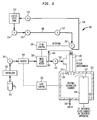
- FIG 3 shows an example of an application agent preparation system 100 that can be adapted for use with the present invention.
- System 100 is capable of mixing a carrier gas and vaporized liquid with little, if any, entrained droplets.
- tank 101 holds liquid carbon dioxide, typically at about three hundred (300) psig.
- Liquid carbon dioxide is transferred to vaporizer 102 and converted to a gas substantially free of any droplets.
- the gas is then passed through pressure reduction valve 103 and the pressure of the gas is reduced from three hundred (300) psig to one hundred (100) psig.
- the gaseous CO 2 is then transferred to heater 104 and heated to substantially the same temperature as the contents of mixing/separation chamber 123 (e.g., 140° F).
- Temperature control unit 126 coordinates the temperature of heater 104 and of chamber 123. From heater 104, the gaseous carbon dioxide at one hundred (100) psig is transferred to mass flow meter 105, which is controlled by flow control 106. As long as pump 107 is in proper operation, flow control 106 allows carbon dioxide to move from mass flow meter 105 into pipe 108.
- Pipe 108 divides into pipes 109 and 110. While the amount of carbon dioxide each of pipes 109 and 110 will carry can vary to convenience, typically pipe 109 will carry about ten (10) percent and pipe 110 will carry the remaining about ninety (90) percent by weight of the carbon dioxide.
- the stream of carbon dioxide passing through in pipe 110 can also pass through control valve 111 before entering mixing antechamber 112.
- Liquid acid such as lactic acid
- lactic acid is removed from tank 113 through check valve 114 by the action of pump 115.
- the liquid lactic acid moves through line 116 and valve 117 into metering pump 107.
- atomization nozzle 120 is operational, then the liquid lactic acid is fed into the atomization nozzle where the liquid lactic acid is atomized with carbon dioxide delivered to the nozzle through line 109.
- atomization nozzle 120 is not operative, then the liquid lactic acid is returned to tank 113 by way of line 118 and check valve 119.
- Atomized lactic acid is transferred from atomization nozzle 120 into the upper section of mixing/separation chamber 123 in which it is vaporized by contact with carbon dioxide delivered from mixing antechamber 112 through orifice plate 121.
- the carbon dioxide delivered from line 110 into antechamber 112 passes through pressure reduction valve 111 in which the pressure of the carbon dioxide is reduced from one hundred (100) psig to about five (5) psig.
- the pressure of the atomized lactic acid as delivered to mixing/separation chamber 123 is also about five (5) psig.
- the temperature, pressure and volume of carbon dioxide introduced into the upper section of mixing/separation chamber 123 is sufficient such that the atomized lactic acid is essentially completely vaporized upon contact with it.
- Atomization nozzle 120 passes through antechamber 112 and orifice plate 121, and opens into the upper section of mixing/separation chamber 123.
- Atomization nozzle 120 can extend into the upper section of mixing/separation chamber 123 to any convenient length, but typically the end of the nozzle is flush with or extends only a short distance beyond orifice plate 121.
- FIG. 4 illustrates one embodiment of a non-volatile microbiocidal agent preparation system in accordance with one aspect of the invention.
- the microbiocidal agent generation system is shown generally by reference numeral 10.
- System 10 includes storage tank 12, which provides storage for a non-volatile liquid microbiocidal agent 14.
- non-volatile substances such as lactic acid may be used, although any suitable non-volatile substance, such as compounds including a non-volatile substance, may be used and are contemplated to be within the scope of the invention.
- the use of a nonvolatile gas as a microbiocidal agent simplifies the generation process.
- nonvolatile microbiocidal agent also simplifies the application equipment that will ultimately apply the nonvolatile microbiocidal agent.
- the controls for the application equipment may be greatly simplified and the explosion proof components may not be required where only nonvolatile gases will be used with the application equipment.
- Storage tank 12 includes an outlet 16 for dispensing the liquid form of the non-volatile microbiocidal agent 14.
- a carrier gas line 18 supplies a carrier gas to be mixed with, or combined with, the liquid non-volatile microbiocidal agent.
- the non-volatile agent in the embodiment shown, is combined with a carrier gas, such as carbon dioxide or nitrogen, in mixing chamber 20.
- a pipe or line 17 connects the outlet 18 with the mixing chamber 20.
- the resulting mixture or stream 22 is an atomized non-volatile agent suspended within the carrier gas, or non-volatile microbiocidal agent carrier gas formation or combination, that is provided to application equipment 23 for application as a microbiocidal agent.
- FIG. 5 illustrates another embodiment of a non-volatile microbiocidal agent preparation system in accordance with another aspect of the invention.
- a carrier gas is not used.
- the storage tank 24 also provides a non-volatile microbiocidal agent 26 through outlet 28. It is necessary to heat non-volatile microbiocidal agent 26 in order to convert it from a liquid to a gas.
- a heat exchange device 30, such as a heat exchanger, is in thermal communication with non-volatile liquid acid line 29. The line 29 is connected to the outlet 28 and is used to transfer non-volatile microbiocidal liquid from storage tank 24 to the device 30.
- the heat exchanger 30 is used to transfer heat to the non-volatile liquid acid while in chamber 32. Heat is transferred to the liquid non-volatile microbiocidal agent until it vaporizes into a gaseous phase and proceeds as a gas through line 34 until reaching the application equipment 35 where it may be applied to, for example, food products (not shown).
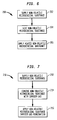
- Figure 6 illustrates a schematic flow chart of one methodology, generally referred to by numeral 200, associated with the application of the non-volatile microbiocidal agent in accordance with one embodiment of the present invention.
- the method of applying a microbiocidal gas includes providing or supplying 202 a liquid non-volatile microbiocidal substance, such as an acid; heating 204 the liquid non-volatile microbiocidal acid to form a non-volatile microbiocidal acid vapor; and applying 206 the non-volatile microbiocidal acid vapor.
- Figure 7 illustrates a schematic flow chart of a methodology, generally referred to by numeral 210, associated with the application of the non-volatile microbiocidal agent in accordance with another embodiment of the present invention.
- the method of applying a microbiocidal gas comprises: providing or supplying 212 a liquid non-volatile microbiocidal substance, such as an acid; combining 214 the liquid non-volatile microbiocidal acid or substance with a carrier gas to form a liquid non-volatile microbiocidal acid carrier gas combination; and applying 216 the liquid non-volatile microbiocidal acid carrier gas combination.
Landscapes
- Life Sciences & Earth Sciences (AREA)
- Engineering & Computer Science (AREA)
- Food Science & Technology (AREA)
- Wood Science & Technology (AREA)
- Zoology (AREA)
- Chemical & Material Sciences (AREA)
- Polymers & Plastics (AREA)
- Food Preservation Except Freezing, Refrigeration, And Drying (AREA)
- Agricultural Chemicals And Associated Chemicals (AREA)
Abstract
Description
Claims (20)
- A method of applying a microbiocidal agent, comprising the steps ofproviding a non-volatile microbiocidal agent;combining the non-volatile microbiocidal agent with a carrier gas to form a non-volatile microbiocidal agent-carrier gas formation;delivering the non-volatile microbiocidal agent-carrier gas formation to application equipment; andapplying the non-volatile microbiocidal agent-carrier gas formation with the application equipment.
- A method according to claim 1, wherein the non-volatile microbiocidal agent is provided as a liquid.
- A method according to claim 2, wherein the liquid non-volatile microbiocidal agent is atomised and the atomised microbiocidal agent is carried in the carrier gas.
- A method according to claim 2, wherein the said step of combining comprises atomizing the liquid non-volatile microbiocidal agent when the agent is combined with the carrier gas.
- A method according to any one of the preceding claims, wherein the non-volatile microbiocidal agent comprises lactic acid.
- A method of treating a food product, comprising the step of applying a non-volatile microbiocidal substance to the food product.
- A method of treating a food product according to claim 6, wherein the microbiocidal substance is atomised upstream of its application to the food product.
- A method according to claim 6 or claim 7, further comprising the step of combining the non-volatile microbiocidal substance with a carrier gas upstream of application of the non-volatile microbiocidal substance to the food product.
- A method according to claim 6, further comprising the step of heating the non-volatile microbiocidal substance to vaporize the non-volatile substance prior to applying the non-volatile microbiocidal substance to the food product.
- A method according to claim 9, wherein the step of heating is with a heat exchanger.
- A method according to any one of claims 6 to 10, wherein the non-volatile microbiocidal substance comprises lactic acid.
- A method according to any one of claims 6 to 11, wherein the carrier gas includes a gas selected from the group consisting of carbon dioxide and nitrogen.
- A method of applying a microbiocidal agent, comprising the steps of:providing a liquid non-volatile microbiocidal acid agent;heating the liquid non-volatile microbiocidal acid agent to form a non-volatile microbiocidal acid vapor; andapplying the non-volatile microbiocidal acid vapor.
- A method according to claim 13, wherein the step of applying the non-volatile microbiocidal acid vapor accomplishes microbial decontamination.
- A method of applying a microbiocidal gas, comprising the steps of:providing a liquid non-volatile microbiocidal acid;combining the liquid non-volatile microbiocidal acid with a carrier gas to form a carrier gas combination; andapplying the carrier gas combination.
- A method according to claim 15, wherein the step of applying the non-volatile microbiocidal acid carrier gas combination accomplishes microbial decontamination.
- A method according to claim 15, wherein the step of combining comprises atomizing the non-volatile microbiocidal acid within the carrier gas.
- A system for applying a microbiocidal agent, comprising:a storage container for holding a non-volatile microbiocidal liquid;a line for transferring the non-volatile microbiocidal liquid from the storage container;a heat exchanger in communication with the line for heating the non-volatile microbiocidal liquid to produce a non-volatile microbiocidal gas; andapplication equipment in communication with the heat exchanger for applying the non-volatile microbiocidal gas.
- A system for applying a microbiocidal agent, comprising:a storage container for holding a non-volatile microbiocidal liquid;a gas line for transferring a carrier gas;a mixing chamber in fluid communication with the storage container and the gas line for mixing the non-volatile microbiocidal liquid and the carrier gas to provide a non-volatile microbiocidal carrier gas agent combinations; andapplication equipment in fluid communication with the mixing chamber for applying the carrier gas agent combination.
- A system according to claim 19, wherein the mixing chamber is adapted to atomize the non-volatile microbiocidal liquid for being suspended in the carrier gas.
Applications Claiming Priority (2)
| Application Number | Priority Date | Filing Date | Title |
|---|---|---|---|
| US164159 | 1998-09-30 | ||
| US10/164,159 US20030228401A1 (en) | 2002-06-06 | 2002-06-06 | System and method of using non-volatile microbiocidal application agents |
Publications (3)
| Publication Number | Publication Date |
|---|---|
| EP1369040A2 true EP1369040A2 (en) | 2003-12-10 |
| EP1369040A3 EP1369040A3 (en) | 2004-03-03 |
| EP1369040B1 EP1369040B1 (en) | 2007-11-21 |
Family
ID=29549336
Family Applications (1)
| Application Number | Title | Priority Date | Filing Date |
|---|---|---|---|
| EP03253277A Expired - Lifetime EP1369040B1 (en) | 2002-06-06 | 2003-05-23 | Method of using non-volatile microbiocidal application agents |
Country Status (6)
| Country | Link |
|---|---|
| US (1) | US20030228401A1 (en) |
| EP (1) | EP1369040B1 (en) |
| AU (1) | AU2003204448A1 (en) |
| DE (1) | DE60317607T2 (en) |
| NZ (1) | NZ526224A (en) |
| PL (1) | PL208736B1 (en) |
Cited By (1)
| Publication number | Priority date | Publication date | Assignee | Title |
|---|---|---|---|---|
| EP1421860A2 (en) | 2002-07-22 | 2004-05-26 | The Boc Group, Inc. | System and method of microbiocidal gas generation |
Families Citing this family (6)
| Publication number | Priority date | Publication date | Assignee | Title |
|---|---|---|---|---|
| US7008658B2 (en) * | 2002-05-29 | 2006-03-07 | The Boc Group, Inc. | Apparatus and method for providing treatment to a continuous supply of food product by impingement |
| BRPI0613934A2 (en) | 2005-07-25 | 2011-02-22 | Hormel Foods Llc | antimicrobial compositions and methods for treating packaged food products |
| CN101232823B (en) * | 2005-07-25 | 2012-12-12 | 埃科莱布有限公司 | Antimicrobial composition for food |
| US20080274242A1 (en) * | 2006-07-21 | 2008-11-06 | Ecolab Inc. | Antimicrobial compositions and methods for treating packaged food products |
| US8445419B2 (en) | 2005-07-25 | 2013-05-21 | Ecolab Usa Inc. | Antimicrobial compositions for use on food products |
| US20100233331A1 (en) * | 2009-03-11 | 2010-09-16 | Bello Anthony B | Potato with Enhanced Resistance to Greening and Decay and Infusion Process to Obtain Such Resistance |
Family Cites Families (27)
| Publication number | Priority date | Publication date | Assignee | Title |
|---|---|---|---|---|
| US2665217A (en) * | 1952-09-05 | 1954-01-05 | Dow Chemical Co | Method for controlling mold and decay on fresh fruits and vegetables |
| US4145451A (en) * | 1977-04-27 | 1979-03-20 | Kraft, Inc. | Preservation of low acid food products in the absence of chemical preservatives |
| US4756919A (en) * | 1982-06-18 | 1988-07-12 | Thomas J. Lipton | Acid preservation systems for food products |
| US4550026A (en) * | 1983-02-15 | 1985-10-29 | Yosuke Akiba | Method for preserving food using a preservative gas atmosphere |
| DE3618297A1 (en) * | 1986-05-30 | 1987-12-03 | Deutsche Ges Schaedlingsbek | METHOD AND DEVICE FOR PRODUCING A DISEASING FLUID |
| US4746524A (en) * | 1986-09-25 | 1988-05-24 | Curtice-Burns, Inc. | Microbiologically-resistant sauces and dressings and method for their preparation |
| US5173259A (en) * | 1988-04-27 | 1992-12-22 | Tetra Dev-Co | Sterilization method for a packing machine that uses liquid disinfectant |
| DE3921255A1 (en) * | 1989-06-29 | 1991-01-03 | Krebsoege Gmbh Sintermetall | METHOD FOR GENERATING A LIQUID MIST PROBABLE IN A CARRIER GAS FLOW AND DEVICE FOR CARRYING OUT THE METHOD |
| US5440887A (en) * | 1991-02-05 | 1995-08-15 | Applied Materials, Inc. | Liquid vaporizer-feeder |
| JPH06291040A (en) * | 1992-03-03 | 1994-10-18 | Rintetsuku:Kk | Method and apparatus for vaporizing and supplying liquid |
| NL9200415A (en) * | 1992-03-06 | 1993-10-01 | Bronkhorst High Tech Bv | METHOD FOR CONVERTING A LIQUID FLOW INTO A GAS FLOW, AND APPARATUS FOR PERFORMING THE METHOD |
| CA2062629C (en) * | 1992-03-10 | 1999-06-15 | John Barry French | Apparatus and method for liquid sample introduction |
| DE4225928A1 (en) * | 1992-08-05 | 1994-02-10 | Ritzau Pari Werk Gmbh Paul | Atomizer device with heating device |
| WO1994008724A1 (en) * | 1992-10-13 | 1994-04-28 | Alan Patrick Casey | Gas/liquid mixing apparatus |
| US5337962A (en) * | 1993-03-24 | 1994-08-16 | Erb Elisha | Pneumatic atomizer having improved flow paths for accomplishing the atomization of liquids |
| FR2717106B1 (en) * | 1994-03-11 | 1996-05-31 | Total Raffinage Distribution | Method and device for spraying a liquid, especially a high viscosity liquid, using at least one auxiliary gas. |
| US5495893A (en) * | 1994-05-10 | 1996-03-05 | Ada Technologies, Inc. | Apparatus and method to control deflagration of gases |
| US5509405A (en) * | 1994-11-21 | 1996-04-23 | Ohmeda Inc. | Pump flow vaporizer |
| FR2727036B1 (en) * | 1994-11-23 | 1996-12-13 | Taema | PROCESS FOR THE PREPARATION OF A GAS MIXTURE FORMED OF A SUPPORT GAS AND AN ADDITIVE |
| US5653813A (en) * | 1995-04-03 | 1997-08-05 | Novellus Systems, Inc. | Cyclone evaporator |
| US5906794A (en) * | 1995-06-15 | 1999-05-25 | American Sterilizer Company | Continuous-operation, closed loop decontamination system and method |
| AUPN724095A0 (en) * | 1995-12-20 | 1996-01-18 | Inglis, Andrew | Method and apparatus for the application of volatile substances conveyed in carrier gas |
| US5900266A (en) * | 1997-05-29 | 1999-05-04 | The Curators Of The University Of Missouri | Heat-treated lactic and/or glycolic acid compositions and methods of use |
| US5992247A (en) * | 1998-04-23 | 1999-11-30 | Aries Industries Incorporated | Apparatus for inspecting lateral sewer pipes |
| WO2000048469A2 (en) * | 1999-02-19 | 2000-08-24 | Morningstar Diagnostics | Adduct having an acidic solution of sparingly-soluble group iia complexes |
| CA2297002A1 (en) * | 2000-01-26 | 2001-07-26 | Triosyn Corp. | Antimicrobial flash-dry disinfectant aerosol |
| US20040265459A1 (en) * | 2001-08-15 | 2004-12-30 | Lark David James | Potentiation of microbial lethality of gaseous biocidal substances |
-
2002
- 2002-06-06 US US10/164,159 patent/US20030228401A1/en not_active Abandoned
-
2003
- 2003-05-23 EP EP03253277A patent/EP1369040B1/en not_active Expired - Lifetime
- 2003-05-23 DE DE60317607T patent/DE60317607T2/en not_active Expired - Lifetime
- 2003-05-27 AU AU2003204448A patent/AU2003204448A1/en not_active Abandoned
- 2003-05-30 NZ NZ526224A patent/NZ526224A/en not_active IP Right Cessation
- 2003-06-05 PL PL360523A patent/PL208736B1/en not_active IP Right Cessation
Cited By (2)
| Publication number | Priority date | Publication date | Assignee | Title |
|---|---|---|---|---|
| EP1421860A2 (en) | 2002-07-22 | 2004-05-26 | The Boc Group, Inc. | System and method of microbiocidal gas generation |
| EP1421860A3 (en) * | 2002-07-22 | 2004-12-15 | The Boc Group, Inc. | System and method of microbiocidal gas generation |
Also Published As
| Publication number | Publication date |
|---|---|
| DE60317607T2 (en) | 2008-06-05 |
| NZ526224A (en) | 2004-11-26 |
| PL208736B1 (en) | 2011-06-30 |
| EP1369040A3 (en) | 2004-03-03 |
| EP1369040B1 (en) | 2007-11-21 |
| US20030228401A1 (en) | 2003-12-11 |
| DE60317607D1 (en) | 2008-01-03 |
| PL360523A1 (en) | 2003-12-15 |
| AU2003204448A1 (en) | 2004-01-08 |
Similar Documents
| Publication | Publication Date | Title |
|---|---|---|
| US8162930B2 (en) | Method and the device for cryogenic therapy applied on the whole body of a patient | |
| US5678352A (en) | Commodity fumigation process and apparatus | |
| EP3122472B1 (en) | Spraying system and method | |
| EP3641538B1 (en) | A vaporising apparatus | |
| US8794012B2 (en) | Method and system for controlled rate freezing of biological material | |
| US7008658B2 (en) | Apparatus and method for providing treatment to a continuous supply of food product by impingement | |
| US20030228401A1 (en) | System and method of using non-volatile microbiocidal application agents | |
| JPH09504953A (en) | Transportable chemical storage and agitation tank device with multiple compartments | |
| EP1247561B1 (en) | Apparatus and method for mixing a gas and a liquid | |
| CA2085435C (en) | Fumigation apparatus | |
| US20050226817A1 (en) | System and method of microbiocidal gas generation | |
| US20120009085A1 (en) | Vacuum system and methods for sterilization thereof | |
| EP3491934A1 (en) | Pasteurizing device and method for operating a pasteurizing device | |
| US20080199576A1 (en) | Apparatus and method for providing treatment to a continuous supply of food product using a vacuum | |
| JP2021503926A (en) | How to operate a pasteurizer and pasteurizer | |
| US20190159485A1 (en) | Pasteurizing device and method for operating a pasteurizing device | |
| WO2026058719A1 (en) | Spray device and spray method |
Legal Events
| Date | Code | Title | Description |
|---|---|---|---|
| PUAI | Public reference made under article 153(3) epc to a published international application that has entered the european phase |
Free format text: ORIGINAL CODE: 0009012 |
|
| AK | Designated contracting states |
Kind code of ref document: A2 Designated state(s): AT BE BG CH CY CZ DE DK EE ES FI FR GB GR HU IE IT LI LU MC NL PT RO SE SI SK TR |
|
| AX | Request for extension of the european patent |
Extension state: AL LT LV MK |
|
| PUAL | Search report despatched |
Free format text: ORIGINAL CODE: 0009013 |
|
| AK | Designated contracting states |
Kind code of ref document: A3 Designated state(s): AT BE BG CH CY CZ DE DK EE ES FI FR GB GR HU IE IT LI LU MC NL PT RO SE SI SK TR |
|
| AX | Request for extension of the european patent |
Extension state: AL LT LV MK |
|
| 17P | Request for examination filed |
Effective date: 20040521 |
|
| 17Q | First examination report despatched |
Effective date: 20040908 |
|
| AKX | Designation fees paid |
Designated state(s): AT BE BG CH CY CZ DE DK EE ES FI FR GB GR HU IE IT LI LU MC NL PT RO SE SI SK TR |
|
| RTI1 | Title (correction) |
Free format text: METHOD OF USING NON-VOLATILE MICROBIOCIDAL APPLICATION AGENTS |
|
| GRAP | Despatch of communication of intention to grant a patent |
Free format text: ORIGINAL CODE: EPIDOSNIGR1 |
|
| GRAS | Grant fee paid |
Free format text: ORIGINAL CODE: EPIDOSNIGR3 |
|
| GRAA | (expected) grant |
Free format text: ORIGINAL CODE: 0009210 |
|
| AK | Designated contracting states |
Kind code of ref document: B1 Designated state(s): AT BE BG CH CY CZ DE DK EE ES FI FR GB GR HU IE IT LI LU MC NL PT RO SE SI SK TR |
|
| REG | Reference to a national code |
Ref country code: GB Ref legal event code: FG4D |
|
| REG | Reference to a national code |
Ref country code: IE Ref legal event code: FG4D |
|
| REG | Reference to a national code |
Ref country code: CH Ref legal event code: EP |
|
| REF | Corresponds to: |
Ref document number: 60317607 Country of ref document: DE Date of ref document: 20080103 Kind code of ref document: P |
|
| REG | Reference to a national code |
Ref country code: CH Ref legal event code: NV Representative=s name: RIEDERER HASLER & PARTNER PATENTANWAELTE AG |
|
| PG25 | Lapsed in a contracting state [announced via postgrant information from national office to epo] |
Ref country code: ES Free format text: LAPSE BECAUSE OF FAILURE TO SUBMIT A TRANSLATION OF THE DESCRIPTION OR TO PAY THE FEE WITHIN THE PRESCRIBED TIME-LIMIT Effective date: 20080304 Ref country code: SE Free format text: LAPSE BECAUSE OF FAILURE TO SUBMIT A TRANSLATION OF THE DESCRIPTION OR TO PAY THE FEE WITHIN THE PRESCRIBED TIME-LIMIT Effective date: 20080221 |
|
| PG25 | Lapsed in a contracting state [announced via postgrant information from national office to epo] |
Ref country code: SI Free format text: LAPSE BECAUSE OF FAILURE TO SUBMIT A TRANSLATION OF THE DESCRIPTION OR TO PAY THE FEE WITHIN THE PRESCRIBED TIME-LIMIT Effective date: 20071121 Ref country code: BG Free format text: LAPSE BECAUSE OF FAILURE TO SUBMIT A TRANSLATION OF THE DESCRIPTION OR TO PAY THE FEE WITHIN THE PRESCRIBED TIME-LIMIT Effective date: 20080221 Ref country code: FI Free format text: LAPSE BECAUSE OF FAILURE TO SUBMIT A TRANSLATION OF THE DESCRIPTION OR TO PAY THE FEE WITHIN THE PRESCRIBED TIME-LIMIT Effective date: 20071121 |
|
| PG25 | Lapsed in a contracting state [announced via postgrant information from national office to epo] |
Ref country code: CZ Free format text: LAPSE BECAUSE OF FAILURE TO SUBMIT A TRANSLATION OF THE DESCRIPTION OR TO PAY THE FEE WITHIN THE PRESCRIBED TIME-LIMIT Effective date: 20071121 Ref country code: DK Free format text: LAPSE BECAUSE OF FAILURE TO SUBMIT A TRANSLATION OF THE DESCRIPTION OR TO PAY THE FEE WITHIN THE PRESCRIBED TIME-LIMIT Effective date: 20071121 |
|
| ET | Fr: translation filed | ||
| PG25 | Lapsed in a contracting state [announced via postgrant information from national office to epo] |
Ref country code: RO Free format text: LAPSE BECAUSE OF FAILURE TO SUBMIT A TRANSLATION OF THE DESCRIPTION OR TO PAY THE FEE WITHIN THE PRESCRIBED TIME-LIMIT Effective date: 20071121 Ref country code: SK Free format text: LAPSE BECAUSE OF FAILURE TO SUBMIT A TRANSLATION OF THE DESCRIPTION OR TO PAY THE FEE WITHIN THE PRESCRIBED TIME-LIMIT Effective date: 20071121 Ref country code: BE Free format text: LAPSE BECAUSE OF FAILURE TO SUBMIT A TRANSLATION OF THE DESCRIPTION OR TO PAY THE FEE WITHIN THE PRESCRIBED TIME-LIMIT Effective date: 20071121 |
|
| PLBE | No opposition filed within time limit |
Free format text: ORIGINAL CODE: 0009261 |
|
| STAA | Information on the status of an ep patent application or granted ep patent |
Free format text: STATUS: NO OPPOSITION FILED WITHIN TIME LIMIT |
|
| PG25 | Lapsed in a contracting state [announced via postgrant information from national office to epo] |
Ref country code: PT Free format text: LAPSE BECAUSE OF FAILURE TO SUBMIT A TRANSLATION OF THE DESCRIPTION OR TO PAY THE FEE WITHIN THE PRESCRIBED TIME-LIMIT Effective date: 20080421 |
|
| 26N | No opposition filed |
Effective date: 20080822 |
|
| PG25 | Lapsed in a contracting state [announced via postgrant information from national office to epo] |
Ref country code: MC Free format text: LAPSE BECAUSE OF NON-PAYMENT OF DUE FEES Effective date: 20080531 |
|
| PG25 | Lapsed in a contracting state [announced via postgrant information from national office to epo] |
Ref country code: GR Free format text: LAPSE BECAUSE OF FAILURE TO SUBMIT A TRANSLATION OF THE DESCRIPTION OR TO PAY THE FEE WITHIN THE PRESCRIBED TIME-LIMIT Effective date: 20080222 |
|
| PG25 | Lapsed in a contracting state [announced via postgrant information from national office to epo] |
Ref country code: EE Free format text: LAPSE BECAUSE OF FAILURE TO SUBMIT A TRANSLATION OF THE DESCRIPTION OR TO PAY THE FEE WITHIN THE PRESCRIBED TIME-LIMIT Effective date: 20071121 Ref country code: IE Free format text: LAPSE BECAUSE OF NON-PAYMENT OF DUE FEES Effective date: 20080523 |
|
| PG25 | Lapsed in a contracting state [announced via postgrant information from national office to epo] |
Ref country code: CY Free format text: LAPSE BECAUSE OF FAILURE TO SUBMIT A TRANSLATION OF THE DESCRIPTION OR TO PAY THE FEE WITHIN THE PRESCRIBED TIME-LIMIT Effective date: 20071121 |
|
| PG25 | Lapsed in a contracting state [announced via postgrant information from national office to epo] |
Ref country code: LU Free format text: LAPSE BECAUSE OF NON-PAYMENT OF DUE FEES Effective date: 20080523 Ref country code: HU Free format text: LAPSE BECAUSE OF FAILURE TO SUBMIT A TRANSLATION OF THE DESCRIPTION OR TO PAY THE FEE WITHIN THE PRESCRIBED TIME-LIMIT Effective date: 20080522 |
|
| PG25 | Lapsed in a contracting state [announced via postgrant information from national office to epo] |
Ref country code: TR Free format text: LAPSE BECAUSE OF FAILURE TO SUBMIT A TRANSLATION OF THE DESCRIPTION OR TO PAY THE FEE WITHIN THE PRESCRIBED TIME-LIMIT Effective date: 20071121 |
|
| PG25 | Lapsed in a contracting state [announced via postgrant information from national office to epo] |
Ref country code: IT Free format text: LAPSE BECAUSE OF NON-PAYMENT OF DUE FEES Effective date: 20080531 |
|
| PGFP | Annual fee paid to national office [announced via postgrant information from national office to epo] |
Ref country code: FR Payment date: 20110523 Year of fee payment: 9 Ref country code: CH Payment date: 20110512 Year of fee payment: 9 |
|
| PGFP | Annual fee paid to national office [announced via postgrant information from national office to epo] |
Ref country code: GB Payment date: 20110518 Year of fee payment: 9 Ref country code: AT Payment date: 20110427 Year of fee payment: 9 Ref country code: NL Payment date: 20110526 Year of fee payment: 9 |
|
| PGFP | Annual fee paid to national office [announced via postgrant information from national office to epo] |
Ref country code: DE Payment date: 20110518 Year of fee payment: 9 |
|
| REG | Reference to a national code |
Ref country code: NL Ref legal event code: V1 Effective date: 20121201 |
|
| REG | Reference to a national code |
Ref country code: CH Ref legal event code: PL |
|
| REG | Reference to a national code |
Ref country code: AT Ref legal event code: MM01 Ref document number: 378813 Country of ref document: AT Kind code of ref document: T Effective date: 20120523 |
|
| GBPC | Gb: european patent ceased through non-payment of renewal fee |
Effective date: 20120523 |
|
| PG25 | Lapsed in a contracting state [announced via postgrant information from national office to epo] |
Ref country code: LI Free format text: LAPSE BECAUSE OF NON-PAYMENT OF DUE FEES Effective date: 20120531 Ref country code: AT Free format text: LAPSE BECAUSE OF NON-PAYMENT OF DUE FEES Effective date: 20120523 Ref country code: CH Free format text: LAPSE BECAUSE OF NON-PAYMENT OF DUE FEES Effective date: 20120531 |
|
| REG | Reference to a national code |
Ref country code: FR Ref legal event code: ST Effective date: 20130131 |
|
| REG | Reference to a national code |
Ref country code: DE Ref legal event code: R119 Ref document number: 60317607 Country of ref document: DE Effective date: 20121201 |
|
| PG25 | Lapsed in a contracting state [announced via postgrant information from national office to epo] |
Ref country code: NL Free format text: LAPSE BECAUSE OF NON-PAYMENT OF DUE FEES Effective date: 20121201 |
|
| PG25 | Lapsed in a contracting state [announced via postgrant information from national office to epo] |
Ref country code: FR Free format text: LAPSE BECAUSE OF NON-PAYMENT OF DUE FEES Effective date: 20120531 Ref country code: GB Free format text: LAPSE BECAUSE OF NON-PAYMENT OF DUE FEES Effective date: 20120523 |
|
| PG25 | Lapsed in a contracting state [announced via postgrant information from national office to epo] |
Ref country code: DE Free format text: LAPSE BECAUSE OF NON-PAYMENT OF DUE FEES Effective date: 20121201 |