EP1366022B1 - Rgd-analog non-peptidic molecules having anti-adhesive, anti-migration and anti-proliferative effects - Google Patents
Rgd-analog non-peptidic molecules having anti-adhesive, anti-migration and anti-proliferative effects Download PDFInfo
- Publication number
- EP1366022B1 EP1366022B1 EP02708622A EP02708622A EP1366022B1 EP 1366022 B1 EP1366022 B1 EP 1366022B1 EP 02708622 A EP02708622 A EP 02708622A EP 02708622 A EP02708622 A EP 02708622A EP 1366022 B1 EP1366022 B1 EP 1366022B1
- Authority
- EP
- European Patent Office
- Prior art keywords
- rgd
- molecules
- migration
- peptidic
- cells
- Prior art date
- Legal status (The legal status is an assumption and is not a legal conclusion. Google has not performed a legal analysis and makes no representation as to the accuracy of the status listed.)
- Expired - Lifetime
Links
- 238000013508 migration Methods 0.000 title claims abstract description 14
- 230000001028 anti-proliverative effect Effects 0.000 title description 2
- 230000000181 anti-adherent effect Effects 0.000 title 1
- 230000005012 migration Effects 0.000 claims abstract description 13
- 230000005764 inhibitory process Effects 0.000 claims description 7
- 239000003814 drug Substances 0.000 claims description 6
- 208000019553 vascular disease Diseases 0.000 claims description 5
- 108010053576 1-carbamoyl-2-carboxyethylamino-malonyl-arginyl-phenylalanyl-argininamide Proteins 0.000 claims description 4
- 206010027476 Metastases Diseases 0.000 claims description 3
- 230000006907 apoptotic process Effects 0.000 claims description 3
- 230000009401 metastasis Effects 0.000 claims description 3
- 230000001394 metastastic effect Effects 0.000 claims description 3
- 206010061289 metastatic neoplasm Diseases 0.000 claims description 3
- 208000007536 Thrombosis Diseases 0.000 claims description 2
- 230000004663 cell proliferation Effects 0.000 claims description 2
- 210000005170 neoplastic cell Anatomy 0.000 claims description 2
- 230000004614 tumor growth Effects 0.000 claims description 2
- 230000001939 inductive effect Effects 0.000 claims 1
- IYMAXBFPHPZYIK-BQBZGAKWSA-N Arg-Gly-Asp Chemical compound NC(N)=NCCC[C@H](N)C(=O)NCC(=O)N[C@@H](CC(O)=O)C(O)=O IYMAXBFPHPZYIK-BQBZGAKWSA-N 0.000 abstract description 17
- 238000001727 in vivo Methods 0.000 abstract description 16
- 238000000338 in vitro Methods 0.000 abstract description 10
- 239000003112 inhibitor Substances 0.000 abstract description 9
- 230000035755 proliferation Effects 0.000 abstract description 8
- 230000003278 mimic effect Effects 0.000 abstract description 7
- 230000001413 cellular effect Effects 0.000 abstract description 5
- 108010072041 arginyl-glycyl-aspartic acid Proteins 0.000 abstract description 3
- 230000003389 potentiating effect Effects 0.000 abstract description 3
- 210000004027 cell Anatomy 0.000 description 19
- 108090000765 processed proteins & peptides Proteins 0.000 description 15
- 230000000694 effects Effects 0.000 description 13
- NNRFRJQMBSBXGO-CIUDSAMLSA-N (3s)-3-[[2-[[(2s)-2-amino-5-(diaminomethylideneamino)pentanoyl]amino]acetyl]amino]-4-[[(1s)-1-carboxy-2-hydroxyethyl]amino]-4-oxobutanoic acid Chemical compound NC(N)=NCCC[C@H](N)C(=O)NCC(=O)N[C@@H](CC(O)=O)C(=O)N[C@@H](CO)C(O)=O NNRFRJQMBSBXGO-CIUDSAMLSA-N 0.000 description 9
- 239000000816 peptidomimetic Substances 0.000 description 9
- 229920001184 polypeptide Polymers 0.000 description 9
- 102000004196 processed proteins & peptides Human genes 0.000 description 9
- 108091003079 Bovine Serum Albumin Proteins 0.000 description 8
- 101000829980 Homo sapiens Ral guanine nucleotide dissociation stimulator Proteins 0.000 description 8
- 102100023320 Ral guanine nucleotide dissociation stimulator Human genes 0.000 description 8
- 108010081589 Becaplermin Proteins 0.000 description 6
- WSFSSNUMVMOOMR-UHFFFAOYSA-N Formaldehyde Chemical compound O=C WSFSSNUMVMOOMR-UHFFFAOYSA-N 0.000 description 6
- 230000004071 biological effect Effects 0.000 description 6
- 229940098773 bovine serum albumin Drugs 0.000 description 6
- 238000003556 assay Methods 0.000 description 5
- 239000006144 Dulbecco’s modified Eagle's medium Substances 0.000 description 4
- 108010037362 Extracellular Matrix Proteins Proteins 0.000 description 4
- 102000010834 Extracellular Matrix Proteins Human genes 0.000 description 4
- 101000781681 Protobothrops flavoviridis Disintegrin triflavin Proteins 0.000 description 4
- 108010031318 Vitronectin Proteins 0.000 description 4
- 102100035140 Vitronectin Human genes 0.000 description 4
- 230000015556 catabolic process Effects 0.000 description 4
- 238000013461 design Methods 0.000 description 4
- 231100000673 dose–response relationship Toxicity 0.000 description 4
- 210000002744 extracellular matrix Anatomy 0.000 description 4
- 235000018102 proteins Nutrition 0.000 description 4
- 102000004169 proteins and genes Human genes 0.000 description 4
- 108090000623 proteins and genes Proteins 0.000 description 4
- 210000005167 vascular cell Anatomy 0.000 description 4
- 210000004509 vascular smooth muscle cell Anatomy 0.000 description 4
- 201000001320 Atherosclerosis Diseases 0.000 description 3
- 206010028980 Neoplasm Diseases 0.000 description 3
- 241000700159 Rattus Species 0.000 description 3
- 235000001014 amino acid Nutrition 0.000 description 3
- 150000001413 amino acids Chemical class 0.000 description 3
- 150000001875 compounds Chemical class 0.000 description 3
- 238000006731 degradation reaction Methods 0.000 description 3
- 238000002474 experimental method Methods 0.000 description 3
- 238000011835 investigation Methods 0.000 description 3
- 239000002609 medium Substances 0.000 description 3
- 238000000034 method Methods 0.000 description 3
- 239000013641 positive control Substances 0.000 description 3
- 208000037803 restenosis Diseases 0.000 description 3
- 102000035195 Peptidases Human genes 0.000 description 2
- 108091005804 Peptidases Proteins 0.000 description 2
- 239000004365 Protease Substances 0.000 description 2
- 230000001925 catabolic effect Effects 0.000 description 2
- 230000012292 cell migration Effects 0.000 description 2
- 238000001516 cell proliferation assay Methods 0.000 description 2
- 239000002975 chemoattractant Substances 0.000 description 2
- 201000010099 disease Diseases 0.000 description 2
- 208000037265 diseases, disorders, signs and symptoms Diseases 0.000 description 2
- 239000012894 fetal calf serum Substances 0.000 description 2
- 230000012010 growth Effects 0.000 description 2
- 235000003642 hunger Nutrition 0.000 description 2
- 102000006495 integrins Human genes 0.000 description 2
- 108010044426 integrins Proteins 0.000 description 2
- 238000010232 migration assay Methods 0.000 description 2
- 230000008569 process Effects 0.000 description 2
- 230000017854 proteolysis Effects 0.000 description 2
- 238000010561 standard procedure Methods 0.000 description 2
- 230000037351 starvation Effects 0.000 description 2
- 239000000126 substance Substances 0.000 description 2
- 238000012360 testing method Methods 0.000 description 2
- 210000004881 tumor cell Anatomy 0.000 description 2
- 238000002965 ELISA Methods 0.000 description 1
- 108010067306 Fibronectins Proteins 0.000 description 1
- 102000016359 Fibronectins Human genes 0.000 description 1
- 238000012404 In vitro experiment Methods 0.000 description 1
- 206010029113 Neovascularisation Diseases 0.000 description 1
- 206010050661 Platelet aggregation inhibition Diseases 0.000 description 1
- 108010038512 Platelet-Derived Growth Factor Proteins 0.000 description 1
- 102000010780 Platelet-Derived Growth Factor Human genes 0.000 description 1
- 241000700157 Rattus norvegicus Species 0.000 description 1
- 230000002159 abnormal effect Effects 0.000 description 1
- 150000001371 alpha-amino acids Chemical class 0.000 description 1
- 235000008206 alpha-amino acids Nutrition 0.000 description 1
- 150000001408 amides Chemical class 0.000 description 1
- 230000033115 angiogenesis Effects 0.000 description 1
- 238000002399 angioplasty Methods 0.000 description 1
- 230000002001 anti-metastasis Effects 0.000 description 1
- 230000000118 anti-neoplastic effect Effects 0.000 description 1
- 230000010100 anticoagulation Effects 0.000 description 1
- 230000000890 antigenic effect Effects 0.000 description 1
- 238000013459 approach Methods 0.000 description 1
- 108010089975 arginyl-glycyl-aspartyl-serine Proteins 0.000 description 1
- 150000004982 aromatic amines Chemical class 0.000 description 1
- -1 aryl alcohol Chemical compound 0.000 description 1
- 150000007860 aryl ester derivatives Chemical class 0.000 description 1
- 230000008827 biological function Effects 0.000 description 1
- 230000015572 biosynthetic process Effects 0.000 description 1
- 210000004369 blood Anatomy 0.000 description 1
- 239000008280 blood Substances 0.000 description 1
- 230000023555 blood coagulation Effects 0.000 description 1
- 210000004899 c-terminal region Anatomy 0.000 description 1
- 201000011510 cancer Diseases 0.000 description 1
- 125000003178 carboxy group Chemical group [H]OC(*)=O 0.000 description 1
- 230000021164 cell adhesion Effects 0.000 description 1
- 230000010261 cell growth Effects 0.000 description 1
- 230000017455 cell-cell adhesion Effects 0.000 description 1
- 238000010276 construction Methods 0.000 description 1
- 230000001472 cytotoxic effect Effects 0.000 description 1
- 238000009826 distribution Methods 0.000 description 1
- 229940079593 drug Drugs 0.000 description 1
- 239000012737 fresh medium Substances 0.000 description 1
- 125000000524 functional group Chemical group 0.000 description 1
- 125000002795 guanidino group Chemical group C(N)(=N)N* 0.000 description 1
- 210000000987 immune system Anatomy 0.000 description 1
- 238000011534 incubation Methods 0.000 description 1
- 208000023589 ischemic disease Diseases 0.000 description 1
- 239000011159 matrix material Substances 0.000 description 1
- 230000007246 mechanism Effects 0.000 description 1
- 230000001404 mediated effect Effects 0.000 description 1
- 238000012986 modification Methods 0.000 description 1
- 230000004048 modification Effects 0.000 description 1
- 230000023578 negative regulation of cell adhesion Effects 0.000 description 1
- 230000002062 proliferating effect Effects 0.000 description 1
- 230000002797 proteolythic effect Effects 0.000 description 1
- 108700038606 rat Smooth muscle Proteins 0.000 description 1
- 238000011160 research Methods 0.000 description 1
- 238000004088 simulation Methods 0.000 description 1
- 210000002460 smooth muscle Anatomy 0.000 description 1
- 210000000329 smooth muscle myocyte Anatomy 0.000 description 1
- 208000010110 spontaneous platelet aggregation Diseases 0.000 description 1
- 230000007480 spreading Effects 0.000 description 1
- 238000006467 substitution reaction Methods 0.000 description 1
- 238000003786 synthesis reaction Methods 0.000 description 1
- 229950003937 tolonium Drugs 0.000 description 1
- HNONEKILPDHFOL-UHFFFAOYSA-M tolonium chloride Chemical compound [Cl-].C1=C(C)C(N)=CC2=[S+]C3=CC(N(C)C)=CC=C3N=C21 HNONEKILPDHFOL-UHFFFAOYSA-M 0.000 description 1
- 231100000331 toxic Toxicity 0.000 description 1
- 230000002588 toxic effect Effects 0.000 description 1
- 230000002792 vascular Effects 0.000 description 1
- 238000005406 washing Methods 0.000 description 1
Images
Classifications
-
- C—CHEMISTRY; METALLURGY
- C07—ORGANIC CHEMISTRY
- C07K—PEPTIDES
- C07K5/00—Peptides containing up to four amino acids in a fully defined sequence; Derivatives thereof
- C07K5/02—Peptides containing up to four amino acids in a fully defined sequence; Derivatives thereof containing at least one abnormal peptide link
- C07K5/0202—Peptides containing up to four amino acids in a fully defined sequence; Derivatives thereof containing at least one abnormal peptide link containing the structure -NH-X-X-C(=0)-, X being an optionally substituted carbon atom or a heteroatom, e.g. beta-amino acids
-
- A—HUMAN NECESSITIES
- A61—MEDICAL OR VETERINARY SCIENCE; HYGIENE
- A61P—SPECIFIC THERAPEUTIC ACTIVITY OF CHEMICAL COMPOUNDS OR MEDICINAL PREPARATIONS
- A61P35/00—Antineoplastic agents
-
- A—HUMAN NECESSITIES
- A61—MEDICAL OR VETERINARY SCIENCE; HYGIENE
- A61P—SPECIFIC THERAPEUTIC ACTIVITY OF CHEMICAL COMPOUNDS OR MEDICINAL PREPARATIONS
- A61P35/00—Antineoplastic agents
- A61P35/04—Antineoplastic agents specific for metastasis
-
- A—HUMAN NECESSITIES
- A61—MEDICAL OR VETERINARY SCIENCE; HYGIENE
- A61P—SPECIFIC THERAPEUTIC ACTIVITY OF CHEMICAL COMPOUNDS OR MEDICINAL PREPARATIONS
- A61P37/00—Drugs for immunological or allergic disorders
- A61P37/02—Immunomodulators
-
- A—HUMAN NECESSITIES
- A61—MEDICAL OR VETERINARY SCIENCE; HYGIENE
- A61P—SPECIFIC THERAPEUTIC ACTIVITY OF CHEMICAL COMPOUNDS OR MEDICINAL PREPARATIONS
- A61P43/00—Drugs for specific purposes, not provided for in groups A61P1/00-A61P41/00
-
- A—HUMAN NECESSITIES
- A61—MEDICAL OR VETERINARY SCIENCE; HYGIENE
- A61P—SPECIFIC THERAPEUTIC ACTIVITY OF CHEMICAL COMPOUNDS OR MEDICINAL PREPARATIONS
- A61P7/00—Drugs for disorders of the blood or the extracellular fluid
- A61P7/02—Antithrombotic agents; Anticoagulants; Platelet aggregation inhibitors
-
- A—HUMAN NECESSITIES
- A61—MEDICAL OR VETERINARY SCIENCE; HYGIENE
- A61P—SPECIFIC THERAPEUTIC ACTIVITY OF CHEMICAL COMPOUNDS OR MEDICINAL PREPARATIONS
- A61P9/00—Drugs for disorders of the cardiovascular system
-
- C—CHEMISTRY; METALLURGY
- C07—ORGANIC CHEMISTRY
- C07C—ACYCLIC OR CARBOCYCLIC COMPOUNDS
- C07C279/00—Derivatives of guanidine, i.e. compounds containing the group, the singly-bound nitrogen atoms not being part of nitro or nitroso groups
- C07C279/04—Derivatives of guanidine, i.e. compounds containing the group, the singly-bound nitrogen atoms not being part of nitro or nitroso groups having nitrogen atoms of guanidine groups bound to acyclic carbon atoms of a carbon skeleton
- C07C279/14—Derivatives of guanidine, i.e. compounds containing the group, the singly-bound nitrogen atoms not being part of nitro or nitroso groups having nitrogen atoms of guanidine groups bound to acyclic carbon atoms of a carbon skeleton being further substituted by carboxyl groups
-
- C—CHEMISTRY; METALLURGY
- C07—ORGANIC CHEMISTRY
- C07D—HETEROCYCLIC COMPOUNDS
- C07D207/00—Heterocyclic compounds containing five-membered rings not condensed with other rings, with one nitrogen atom as the only ring hetero atom
- C07D207/02—Heterocyclic compounds containing five-membered rings not condensed with other rings, with one nitrogen atom as the only ring hetero atom with only hydrogen or carbon atoms directly attached to the ring nitrogen atom
- C07D207/04—Heterocyclic compounds containing five-membered rings not condensed with other rings, with one nitrogen atom as the only ring hetero atom with only hydrogen or carbon atoms directly attached to the ring nitrogen atom having no double bonds between ring members or between ring members and non-ring members
- C07D207/10—Heterocyclic compounds containing five-membered rings not condensed with other rings, with one nitrogen atom as the only ring hetero atom with only hydrogen or carbon atoms directly attached to the ring nitrogen atom having no double bonds between ring members or between ring members and non-ring members with hetero atoms or with carbon atoms having three bonds to hetero atoms with at the most one bond to halogen, e.g. ester or nitrile radicals, directly attached to ring carbon atoms
- C07D207/16—Carbon atoms having three bonds to hetero atoms with at the most one bond to halogen, e.g. ester or nitrile radicals
-
- A—HUMAN NECESSITIES
- A61—MEDICAL OR VETERINARY SCIENCE; HYGIENE
- A61K—PREPARATIONS FOR MEDICAL, DENTAL OR TOILETRY PURPOSES
- A61K38/00—Medicinal preparations containing peptides
-
- C—CHEMISTRY; METALLURGY
- C07—ORGANIC CHEMISTRY
- C07B—GENERAL METHODS OF ORGANIC CHEMISTRY; APPARATUS THEREFOR
- C07B2200/00—Indexing scheme relating to specific properties of organic compounds
- C07B2200/07—Optical isomers
Definitions
- the present invention concerns the identification of synthetic molecules able to mimic peptides with biological activity, i.e. peptide-like molecules or peptidomimetic molecules. More particularly, the present invention relates to the identification of molecules with no intramolecular peptidic bonds and able to mimic the RGD motif. In fact, it is known that the RGD motif is a potent inhibitor, in vivo and in vitro, of cellular adhesion.
- RASMC rat smooth muscle cells
- proteolytic degradation is a catabolic mechanism which usually reduce or block in vivo biological effects of peptidic molecules having in vitro activity.
- the peptidomimetic molecules, object of the invention are potentially more stable and consequently show higher in vivo activity than the corresponding template peptide used for their design.
- Vascular diseases represent one of the major cause of morbidity and mortality in western countries. Ischemic diseases are mainly due to atherosclerosis, thrombotic events, and other phenomena such as restenosis after angioplasty. In addition, vascular changes lead to neovascularization during solid tumours growth. For this reason, molecules active in controlling the growth of vascular cells and vessel walls are largely investigated for the potential benefits in a variety of socially relevant diseases.
- angiogenesis depends on the adhesion of vascular cells to the extracellular matrix and that the protein so called ⁇ v ⁇ 3 integrin is required for this process ( Brooks et al. Science, 1994,264,569-571 ).
- peptides containing the ARG-GLY-ASP motif "arginine-glycine-aspartic acid" (RGD motif), which are integrin-inhibitors, may exert anti-angiogegenic properties ( Friedlander.et al., Science 1995, 270, 1500-1502 ; Woodard et al., J.Cell Sci. 1998,1930-1935 ) and anti-neoplastic activity ( Hammes. et al., Nat.Medicine, 1996, 2, 529-533 : Carron.et al. Cancer Res. 1998,1930-1935 ) and anti-metastatic activity ( Fujii.et al., Oncology Res.1996,8,333-342 ).
- EP0644181 discloses that also amino acids derivates referring to the cell adhesion core of fibronectin, the Arg-Gly-Asp sequence exhibit tumor metastasis inhibition activity, but higher as compared to the conventional RGDS. Additionally the described amino acids derivates show lower platelet aggregation inhibition activity and anticoagulation activity.
- document WO92/1355 describes the substitution of the carboxy terminus of the peptide with an aryl alcohol or aryl amine to form an aryl ester or amide which improves inhibition of platelet aggregation activity of the peptide.
- RGD-containing proteins and RGD-containing short peptides modulate blood coagulation, cell growth, cell migration and cell adhesion to extracellular matrix ( Rouslhti et al., Annu Rev Cell Dev Biol. 1996,12,697-715 ; Ojimaet al., Bioorganic & Medecin Chemistry 1997,3,337-360 ; Wang et al., Curr.Med.Chem., 2000,7,74-80 ).
- RGD-analogs have been shown to induce apoptosis under different experimental conditions ( Modlich et al., Lab.Invest. 1996, 74, 771-780 ; Yeh et al., Blood 1998, 92, 3268-3276 ; Buckley et al., Nature 1999, 397, 534-539 ).
- RGD-analogs peptides can efficiently induce apoptosis of tumour cells and of actively proliferating vascular cells.
- small biologically active peptides are currently under strong investigation, due to the relative cost of synthesis and to the restricted in vivo side effects of these small peptides in comparison with the parent whole proteins.
- small peptides are usually unstable molecules; they are degradable by proteases and they can be recognised as non-self by the immune system and thus eliminated rapidly loosing their biological effects. Therefore, according to the present invention, once the active site of specific proteins was identified, the following step consisted in the identification of molecules mimicking said active site, but having different chemical characteristics (i.e. peptides bounds or antigenic activity) in order to reduce their catabolism and consequently increase their activity in vitro as well as in vivo.
- Non-peptidic analogs of RGD-peptides are designed to obtain molecules which are more stable in vivo, lacking of proteolitic-sites and undergoing a slower catabolic degradation in vivo ( Wang et al., Curr.Med.Chem., 2000, 7,74-80 ; Horton et al., Exp.Nephrol., 1999, 7, 178-184 ).
- Said peptides-like molecules are named peptidomimetics since they mimic the original compound, but the absence of peptidic bonds, avoid their degradation by proteases and consequently they are more stable in vivo.
- Object of the present invention is a family of synthetic non-peptidic molecules, able to mimic the RGD motif and to inhibit cellular adhesion, migration and proliferation: said family of molecules is at least equally or more active in vitro in comparison to the corresponding template, and potentially more stable in vivo.
- a peptidic molecule in the first step a peptidic molecule has been chosen as template to design peptidomimetic ore peptide-like molecules in the following steps.
- RGD-containing peptides ("arginine-glycine-aspartic acid"), involved in several biological functions, as modulation of adhesion between cells and between cells and extracellular matrix, have been chosen. Therefore, the three-dimensional structure of said polypeptides was obtained.
- the more interesting molecule of the family i.e. the easiest to be produced and the one showing highest similarity to the template, was synthesised and tested in vitro.
- RGD-analog molecule with no intramolecular peptidic bonds was tested in smooth muscle rat cells, and showed the capability to strongly inhibit cellular adhesion to extra-cellular matrix and to inhibit PDGF-induced (platelet derived grow factor) cellular migration and proliferation.
- this new molecule might be used as inhibitor of abnormal migration and proliferation of vascular cells that occur in several vascular diseases such as atherosclerosis and restenosis, as well as of migration of neoplastic cells toward the potential metastatic sites.
- RGD-containing peptides were chosen as templates to design peptidomimetic molecules.
- molecule nr. 6 was synthesised and hereafter named as non-peptidic RGD-analog molecule.
- rat vascular smooth muscle cells (RASMC) primary cultures, obtained from adult male Wistar Rats, were used according to well known procedures ( Facchiano et al., 2000, J. Cell Sci., 113(16), 2855-63 ).
- Adhesion assay was carried out on 96 well plates, activated with 50 microliters of a solution containing Vitronectin (20 microliters/milliliter). Saturation of aspecific sites was obtained incubating with bovine serum albumin (BSA) (5mg/ml in Dulbecco-modified eagle's medium, DMEM) for 1 hour at 37°C. Then, wells were washed once with DMEM and 30.000 cells/well were dispensed in the presence or absence of the molecule to be tested.
- BSA bovine serum albumin
- Proliferation assay was performed, following standard procedures ( Facchiano, et al., 2000, Cell Sci., 113(16), 2855-63 ), on 6-well plates (1x10 5 cells/plate) allowed to grow for 24 hours in DMEM supplemented with 10% Fetal Calf Serum (FCS) at 37°C in 5% CO 2 . Medium was replaced with starvation medium containing either DMEM-0.1% BSA for 24 hours. Subsequently the starvation medium was replaced with fresh medium containing either 0.1% BSA alone or 0.1% BSA with PDGF-BB in the presence or absence of the RGD-analog. Every assay was carried out at different time intervals and cells were harvested and counted with hemacytometer.
- FCS Fetal Calf Serum
- Proliferation experiments show a marked antiproliferative effect of the non-peptidic RGD-analog, at 100 nanogramms/ml concentration, as well as of the positive control RGDS. Both molecules do not show toxic effects if added to cells in the absence of PDGF-BB ( Fig.3 ).
- RGDS is known to have a strong biological activity in vivo: it is evident that non-peptidic RGD-analogs might be used for the treatment of vascular diseases, as inhibitors of primary tumour growth and metastasis.
Landscapes
- Chemical & Material Sciences (AREA)
- Organic Chemistry (AREA)
- Health & Medical Sciences (AREA)
- General Health & Medical Sciences (AREA)
- Life Sciences & Earth Sciences (AREA)
- Medicinal Chemistry (AREA)
- General Chemical & Material Sciences (AREA)
- Public Health (AREA)
- Chemical Kinetics & Catalysis (AREA)
- Nuclear Medicine, Radiotherapy & Molecular Imaging (AREA)
- Veterinary Medicine (AREA)
- Pharmacology & Pharmacy (AREA)
- Animal Behavior & Ethology (AREA)
- Bioinformatics & Cheminformatics (AREA)
- Engineering & Computer Science (AREA)
- Biochemistry (AREA)
- Molecular Biology (AREA)
- Proteomics, Peptides & Aminoacids (AREA)
- Genetics & Genomics (AREA)
- Immunology (AREA)
- Biophysics (AREA)
- Crystallography & Structural Chemistry (AREA)
- Hematology (AREA)
- Oncology (AREA)
- Heart & Thoracic Surgery (AREA)
- Diabetes (AREA)
- Cardiology (AREA)
- Medicines That Contain Protein Lipid Enzymes And Other Medicines (AREA)
- Peptides Or Proteins (AREA)
- Organic Low-Molecular-Weight Compounds And Preparation Thereof (AREA)
Abstract
Description
- The present invention concerns the identification of synthetic molecules able to mimic peptides with biological activity, i.e. peptide-like molecules or peptidomimetic molecules. More particularly, the present invention relates to the identification of molecules with no intramolecular peptidic bonds and able to mimic the RGD motif. In fact, it is known that the RGD motif is a potent inhibitor, in vivo and in vitro, of cellular adhesion.
- In vitro experimentation on rat smooth muscle cells (RASMC) demonstrated that these peptidomimetic molecules are efficient inhibitors of RASMC proliferation and migration (modification of cell migration and proliferation occurs in many vascular diseases such as atherosclerosis and restenosis which have a high social impact) and could be used as inhibitors of tumor cells migration towards potential metastatic sites.
- The lack of proper peptide bounds makes said molecules less sensible to in vivo proteolytic degradation. It is well known that proteolytic degradation is a catabolic mechanism which usually reduce or block in vivo biological effects of peptidic molecules having in vitro activity.
- Therefore, the peptidomimetic molecules, object of the invention, are potentially more stable and consequently show higher in vivo activity than the corresponding template peptide used for their design.
- Vascular diseases represent one of the major cause of morbidity and mortality in western countries. Ischemic diseases are mainly due to atherosclerosis, thrombotic events, and other phenomena such as restenosis after angioplasty. In addition, vascular changes lead to neovascularization during solid tumours growth. For this reason, molecules active in controlling the growth of vascular cells and vessel walls are largely investigated for the potential benefits in a variety of socially relevant diseases.
- It has been demonstrated that angiogenesis depends on the adhesion of vascular cells to the extracellular matrix and that the protein so called αvβ3 integrin is required for this process (Brooks et al. Science, 1994,264,569-571).
- Consequently, peptides containing the ARG-GLY-ASP motif "arginine-glycine-aspartic acid" (RGD motif), which are integrin-inhibitors, may exert anti-angiogegenic properties (Friedlander.et al., Science 1995, 270, 1500-1502; Woodard et al., J.Cell Sci. 1998,1930-1935) and anti-neoplastic activity (Hammes. et al., Nat.Medicine, 1996, 2, 529-533: Carron.et al. Cancer Res. 1998,1930-1935) and anti-metastatic activity (Fujii.et al., Oncology Res.1996,8,333-342).
EP0644181 discloses that also amino acids derivates referring to the cell adhesion core of fibronectin, the Arg-Gly-Asp sequence exhibit tumor metastasis inhibition activity, but higher as compared to the conventional RGDS. Additionally the described amino acids derivates show lower platelet aggregation inhibition activity and anticoagulation activity. In the field of peptide derivates presenting improved activities, documentWO92/1355 - As diclosed by
US5,519,005 , inhibition of cell adhesion is performed also by other non peptidic compounds having no sequence of natural α-amino acids and comprising a guanidino and a carboxyl terminal functional groups. - Moreover, it has been shown that RGD-containing proteins and RGD-containing short peptides modulate blood coagulation, cell growth, cell migration and cell adhesion to extracellular matrix (Rouslhti et al., Annu Rev Cell Dev Biol. 1996,12,697-715; Ojimaet al., Bioorganic & Medecin Chemistry 1997,3,337-360; Wang et al., Curr.Med.Chem., 2000,7,74-80).
- Besides that, RGD-analogs have been shown to induce apoptosis under different experimental conditions (Modlich et al., Lab.Invest. 1996, 74, 771-780; Yeh et al., Blood 1998, 92, 3268-3276; Buckley et al., Nature 1999, 397, 534-539).
- Considering these data, RGD-analogs peptides can efficiently induce apoptosis of tumour cells and of actively proliferating vascular cells.
- The use of small biologically active peptides is currently under strong investigation, due to the relative cost of synthesis and to the restricted in vivo side effects of these small peptides in comparison with the parent whole proteins. Unfortunately, small peptides are usually unstable molecules; they are degradable by proteases and they can be recognised as non-self by the immune system and thus eliminated rapidly loosing their biological effects. Therefore, according to the present invention, once the active site of specific proteins was identified, the following step consisted in the identification of molecules mimicking said active site, but having different chemical characteristics (i.e. peptides bounds or antigenic activity) in order to reduce their catabolism and consequently increase their activity in vitro as well as in vivo.
- Nowadays large investigation is on RGD-containing peptides, because, as already mentioned, they show strong activity in vitro as well in vivo as inhibitors of integrin-mediated diseases.
- Non-peptidic analogs of RGD-peptides are designed to obtain molecules which are more stable in vivo, lacking of proteolitic-sites and undergoing a slower catabolic degradation in vivo (Wang et al., Curr.Med.Chem., 2000, 7,74-80; Horton et al., Exp.Nephrol., 1999, 7, 178-184). Said peptides-like molecules are named peptidomimetics since they mimic the original compound, but the absence of peptidic bonds, avoid their degradation by proteases and consequently they are more stable in vivo.
- The use of this approach (peptidomimetics) represents a new and spreading field of research, supported by new chemical compounds available on the market. The use of specific software able to detect similar shapes or three-dimensional structures and similar electronic distributions in different molecules allows to identify the building blocks most suitable to be used as alternative to the amino acids for the construction of peptidomimetic molecules.
- Object of the present invention is a family of synthetic non-peptidic molecules, able to mimic the RGD motif and to inhibit cellular adhesion, migration and proliferation: said family of molecules is at least equally or more active in vitro in comparison to the corresponding template, and potentially more stable in vivo.
- According to the present invention, in the first step a peptidic molecule has been chosen as template to design peptidomimetic ore peptide-like molecules in the following steps. For this purpose, RGD-containing peptides ("arginine-glycine-aspartic acid"), involved in several biological functions, as modulation of adhesion between cells and between cells and extracellular matrix, have been chosen. Therefore, the three-dimensional structure of said polypeptides was obtained.
- Consequently, synthetic molecules belonging to the same family were designed, containing a motif similar to the RGD of the template, having potential biological activity but lacking of peptide bonds in order to be less sensible to proteolitic degradation in vivo.
- After said design step, the more interesting molecule of the family, i.e. the easiest to be produced and the one showing highest similarity to the template, was synthesised and tested in vitro.

- Said RGD-analog molecule with no intramolecular peptidic bonds, was tested in smooth muscle rat cells, and showed the capability to strongly inhibit cellular adhesion to extra-cellular matrix and to inhibit PDGF-induced (platelet derived grow factor) cellular migration and proliferation.
- These data indicate that this new molecule might be used as inhibitor of abnormal migration and proliferation of vascular cells that occur in several vascular diseases such as atherosclerosis and restenosis, as well as of migration of neoplastic cells toward the potential metastatic sites.
- According to the previous observations, RGD-containing peptides were chosen as templates to design peptidomimetic molecules.
- This choice was made considering carefully the reports on the biological activity of RGD-containing peptides available in literature and using useful and specific databases for the identification of known structural conformations (PDB databases).
- Once the three-dimensional conformation of the RGD motif in the template peptide to be used in the simulation was identified, the designing process of similar molecules was performed and molecules belonging to the same family and showing the same features were obtained.
- The molecules belonging to the same family are showed as follows:
- Mimic-polypeptide 1: (H2N-RmRmD-NH2)

- Mimic-polypeptide 2: (H2N-RphacRmD-NH2)

- Mimic-polypeptide 3 (H2N-RvRmD-NH2)
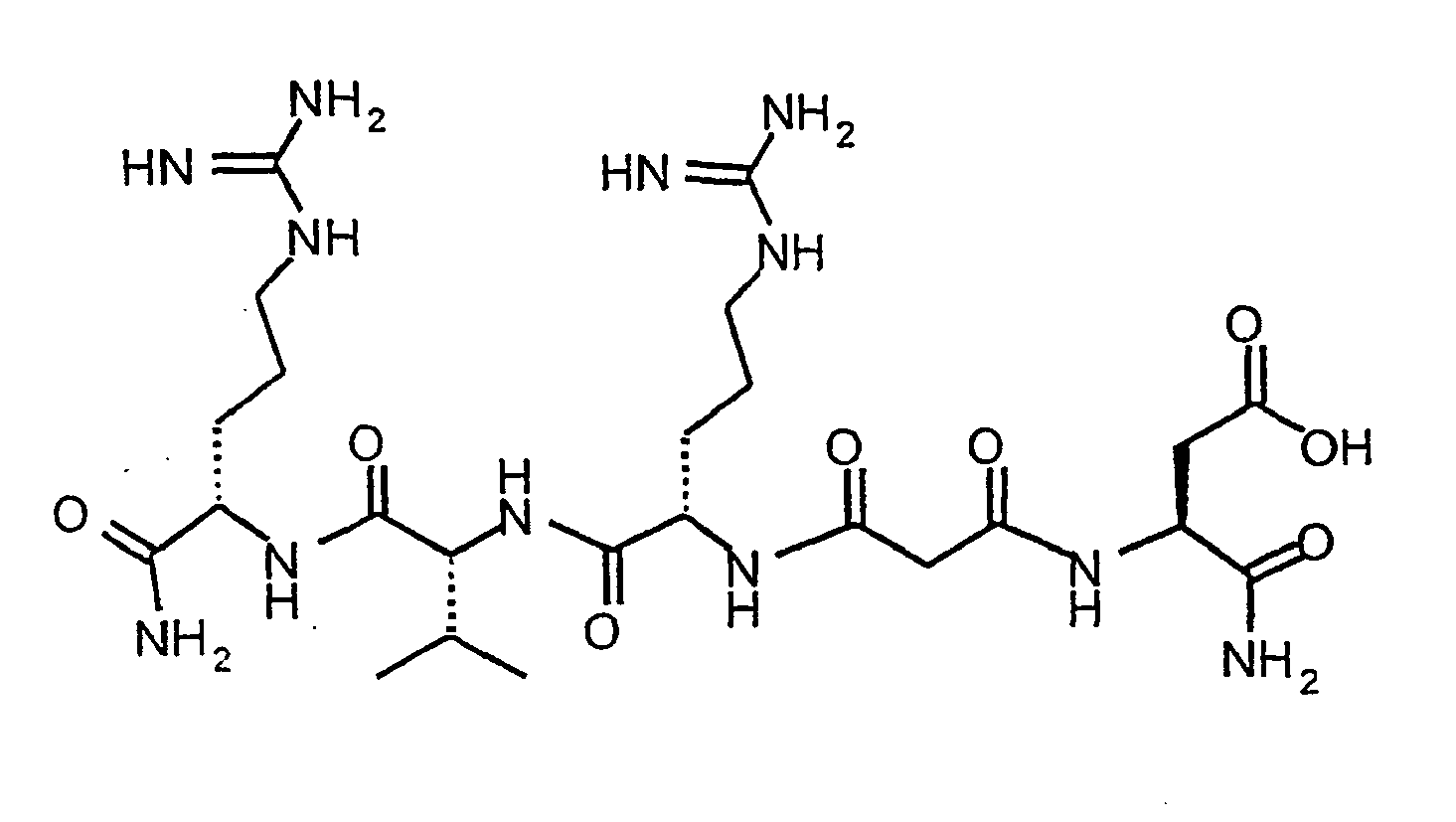
- Mimic-polypeptide 4 (H2N-RpRmD-NH2) :

- Mimic-polypeptide 5 (H2N-RIRmD-NH2)

- Mimic-polypeptide 6 (H2N-RfRmD-NH2):

- Mimic-polypeptide 7 (H2N-RnleuRmD-NH2)

- Mimic-polypeptide 8 (H2N-R1RmD-NH2)

- Between all the molecules belonging to the same family, molecule nr. 6 was synthesised and hereafter named as non-peptidic RGD-analog molecule.

- In vitro experiments were performed on said molecule confirming the functional characteristics of the molecule family.
- For this test rat vascular smooth muscle cells (RASMC) primary cultures, obtained from adult male Wistar Rats, were used according to well known procedures (Facchiano et al., 2000, J. Cell Sci., 113(16), 2855-63).
- Adhesion assay was carried out on 96 well plates, activated with 50 microliters of a solution containing Vitronectin (20 microliters/milliliter). Saturation of aspecific sites was obtained incubating with bovine serum albumin (BSA) (5mg/ml in Dulbecco-modified eagle's medium, DMEM) for 1 hour at 37°C. Then, wells were washed once with DMEM and 30.000 cells/well were dispensed in the presence or absence of the molecule to be tested. After an incubation of 1 hour at 37°C, to allow cells adhesion to the vitronectin matrix, wells were washed twice with PBS and cells were fixed with formaldehyde 4% in PBS, for 10 minutes at room temperature. After a further washing with PBS, cells were stained with Toluidine Blue (0.5% in formaldehyde 4%) for 10 minutes at room temperature. The stain absorbed within the cells was extracted with
SDS 1% for 30 minutes, and quantified with an ELISA rider at a wavelength of 595 nanometers. - Migration assay was carried out in modified Boyden chambers (Costar Scientific Corporation) following a well known standard procedure (Facchiano, et al., 2000, J. Cell Sci.,113(16),2855-63). Rat vascular smooth muscle cells (RASMC) were placed in the upper chamber of the Boyden apparatus. The used chemoattractant was human recombinant platelet derived growth factor (PDGF-BB) (R&D Systems), which is the most potent chemoattractant described for vascular smooth muscle cells (VSMC); it was dissolved at 10 ng/ml in DMEM-0,1% BSA and placed in the lower chamber of the Boyden apparatus. Cell migrated on the bottom face of the filters were counted at 400X magnification. Fifteen fields were counted for each filter and the average number of cells/field was calculated. Experiments were performed at least 4 times in duplicate. The experimental' results show the different migration capacity of tested molecules in comparison with no-treated cells.
- Proliferation assay was performed, following standard procedures (Facchiano, et al., 2000, Cell Sci., 113(16), 2855-63), on 6-well plates (1x10⁵ cells/plate) allowed to grow for 24 hours in DMEM supplemented with 10% Fetal Calf Serum (FCS) at 37°C in 5% CO2. Medium was replaced with starvation medium containing either DMEM-0.1% BSA for 24 hours. Subsequently the starvation medium was replaced with fresh medium containing either 0.1% BSA alone or 0.1% BSA with PDGF-BB in the presence or absence of the RGD-analog. Every assay was carried out at different time intervals and cells were harvested and counted with hemacytometer.
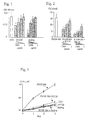
- The results of the three assays are shown in
figure 1, 2 and 3 as follows: -
Figure 1 compares dose-dependent inhibition of RASMC adhesion to vitronectin, induced by RGDS (used as positive control with known activity) and non-peptidic RGD-analog; -
Figure 2 compares dose-dependent inhibition of RASMC migration toward PDGF-BB gradient, induced by RGDS and non-peptidic RGD-analog; -
Figure 3 compares dose-dependent inhibition of RASMC proliferation stimulated for 48 hours with PDGF-BB (10 ng/ml) induced by RGDS and non-peptidic RGD-analog (100 ng/ml). - The results indicate that RGD-analog inhibits RASMC adhesion to vitronectin (
Fig.1 ) and RASMC migration toward PDGF-BB (Fig.2 ) in a dose-dependent manner and in a fashion quite similar to the template molecule (RGDS peptide, used as positive control in these experiments). - Proliferation experiments show a marked antiproliferative effect of the non-peptidic RGD-analog, at 100 nanogramms/ml concentration, as well as of the positive control RGDS. Both molecules do not show toxic effects if added to cells in the absence of PDGF-BB (
Fig.3 ). - The results collected indicate:
- 1. the synthesised molecule and all the other non-peptidic RGD-analogs as described, mimic perfectly the activity of the template RGDS, indicating that the aim of constructing a family of molecules able to mimic RGD-peptide was achieved.
- 2. The synthesised molecule and all the other non-peptidic RGD-analogs as described, did not show, in the assay performed, any aspecific citotoxic effect.
- 3. The synthesised molecule and all the other non-peptidic RGD-analogs as described, strongly inhibit adhesion, migration and proliferation of RASMC, indicating that these molecules are good candidates for further in vivo investigation. In fact, said molecules, thanks to their chemical characteristics, are expected to act in vivo better than the template RGDS.
- RGDS is known to have a strong biological activity in vivo: it is evident that non-peptidic RGD-analogs might be used for the treatment of vascular diseases, as inhibitors of primary tumour growth and metastasis.
Claims (7)
- Non-peptidic RGD-analog molecule having the following structure:


- Non-peptidic RGD-analog molecule according to claim 1 having the following structure:

- Use of at least one of the non-peptidic molecules of claims 1 and 2 for the preparation of a medicament to be used for the treatment of vascular diseases.
- Use of at least one of the non-peptidic molecules of claims 1 and 2 for the preparation of a medicament to be used for the inhibition of primary tumour growth and metastasis.
- Use of at least one of the non-peptidic molecules of claims 1 and 2 for the preparation of a medicament to be used for inhibition of cellular proliferation and migration as well as migration of neoplastic cells toward metastatic sites.
- Use of at least one of the non-peptidic molecules of claims 1 and 2 for the preparation of a medicament to be used for the treatment of thrombotic events.
- Use of at least one of the non-peptidic molecules of claims 1 and 2 for the preparation of a medicament to be used for inducing apoptosis.
Applications Claiming Priority (3)
| Application Number | Priority Date | Filing Date | Title |
|---|---|---|---|
| ITRM20010089 | 2001-02-21 | ||
| IT2001RM000089A ITRM20010089A1 (en) | 2001-02-21 | 2001-02-21 | NON-PEPTIDAL MOLECULES SIMILAR TO PEPTIDE RGD WITH INHIBITORY EFFECT ON ADHESION, MIGRATION AND CELL PROLIFERATION. |
| PCT/IT2002/000099 WO2002066421A1 (en) | 2001-02-21 | 2002-02-19 | Rgd-analog non-peptidic molecules having anti-adhesive, anti-migration and anti-proliferative effects |
Publications (2)
| Publication Number | Publication Date |
|---|---|
| EP1366022A1 EP1366022A1 (en) | 2003-12-03 |
| EP1366022B1 true EP1366022B1 (en) | 2011-10-12 |
Family
ID=11455245
Family Applications (1)
| Application Number | Title | Priority Date | Filing Date |
|---|---|---|---|
| EP02708622A Expired - Lifetime EP1366022B1 (en) | 2001-02-21 | 2002-02-19 | Rgd-analog non-peptidic molecules having anti-adhesive, anti-migration and anti-proliferative effects |
Country Status (7)
| Country | Link |
|---|---|
| US (1) | US6627769B2 (en) |
| EP (1) | EP1366022B1 (en) |
| JP (1) | JP2004527488A (en) |
| AT (1) | ATE528287T1 (en) |
| AU (1) | AU2002242948B2 (en) |
| IT (1) | ITRM20010089A1 (en) |
| WO (1) | WO2002066421A1 (en) |
Families Citing this family (4)
| Publication number | Priority date | Publication date | Assignee | Title |
|---|---|---|---|---|
| WO2004094457A2 (en) * | 2003-04-16 | 2004-11-04 | Arizona Board Of Regents, Acting For And On Behalf Of, Arizona State University | Stable rgd peptidomimetic composition |
| WO2006017619A2 (en) * | 2004-08-06 | 2006-02-16 | The Regents Of The University Of California | Receptor-binding cyclic peptides and methods of use |
| JP2018526499A (en) | 2015-08-31 | 2018-09-13 | ダウ グローバル テクノロジーズ エルエルシー | Method for preparing a vinylidene chloride polymer composition |
| US20200048448A1 (en) * | 2015-08-31 | 2020-02-13 | Dow Global Technologies Llc | Vinylidene chloride polymer compositions and articles comprising the same |
Family Cites Families (4)
| Publication number | Priority date | Publication date | Assignee | Title |
|---|---|---|---|---|
| EP0570507A4 (en) | 1991-02-05 | 1994-09-21 | Smithkline Beecham Corp | Anti-aggregatory peptides containing an aromatic ester or amide |
| US5352667A (en) | 1991-11-22 | 1994-10-04 | Ofer Lider | Non-peptidic surrogates of the Arg-Gly-Asp sequence and pharmaceutical compositions comprising them |
| JP3274225B2 (en) | 1992-06-03 | 2002-04-15 | 富士写真フイルム株式会社 | Amino acid derivatives and their uses |
| US5599984A (en) * | 1994-01-21 | 1997-02-04 | The Picower Institute For Medical Research | Guanylhydrazones and their use to treat inflammatory conditions |
-
2001
- 2001-02-21 IT IT2001RM000089A patent/ITRM20010089A1/en unknown
-
2002
- 2002-02-19 EP EP02708622A patent/EP1366022B1/en not_active Expired - Lifetime
- 2002-02-19 AU AU2002242948A patent/AU2002242948B2/en not_active Ceased
- 2002-02-19 JP JP2002565939A patent/JP2004527488A/en active Pending
- 2002-02-19 WO PCT/IT2002/000099 patent/WO2002066421A1/en not_active Ceased
- 2002-02-19 AT AT02708622T patent/ATE528287T1/en not_active IP Right Cessation
- 2002-02-20 US US10/077,948 patent/US6627769B2/en not_active Expired - Fee Related
Non-Patent Citations (3)
| Title |
|---|
| ADDERLEY S R ET AL: "Glycoprotein IIb/IIIa antagonists induce apoptosis in rat cardiomyocytes by caspase-3 activation", JOURNAL OF BIOLOGICAL CHEMISTRY, AMERICAN SOCIETY FOR BIOCHEMISTRY AND MOLECULAR BIOLOGY, INC, US, vol. 275, no. 8, 25 February 2000 (2000-02-25), pages 5760 - 5766, XP002245779, ISSN: 0021-9258, DOI: DOI:10.1074/JBC.275.8.5760 * |
| AGUZZI M S ET AL: "A novel RGDS-analog inhibits angiogenesis in vitro and in vivo", BIOCHEMICAL AND BIOPHYSICAL RESEARCH COMMUNICATIONS, ACADEMIC PRESS INC. ORLANDO, FL, US, vol. 321, no. 4, 3 September 2004 (2004-09-03), pages 809 - 814, XP027554050, ISSN: 0006-291X, [retrieved on 20040801] * |
| BUCKLEY C D ET AL: "RGD peptides induce apoptosis by direct caspase-3 activation", NATURE, NATURE PUBLISHING GROUP, LONDON, GB, vol. 397, 11 February 1999 (1999-02-11), pages 534 - 539, XP003000981, ISSN: 0028-0836, DOI: DOI:10.1038/17409 * |
Also Published As
| Publication number | Publication date |
|---|---|
| ITRM20010089A0 (en) | 2001-02-21 |
| ATE528287T1 (en) | 2011-10-15 |
| US20020119932A1 (en) | 2002-08-29 |
| WO2002066421A1 (en) | 2002-08-29 |
| EP1366022A1 (en) | 2003-12-03 |
| ITRM20010089A1 (en) | 2002-08-21 |
| AU2002242948B2 (en) | 2007-12-20 |
| JP2004527488A (en) | 2004-09-09 |
| US6627769B2 (en) | 2003-09-30 |
Similar Documents
| Publication | Publication Date | Title |
|---|---|---|
| Feichtinger et al. | Triurethane-protected guanidines and triflyldiurethane-protected guanidines: new reagents for guanidinylation reactions | |
| Sang et al. | α-Helix-mimicking sulfono-γ-AApeptide inhibitors for p53–MDM2/MDMX protein–protein interactions | |
| Pierschbacher et al. | Variants of the cell recognition site of fibronectin that retain attachment-promoting activity. | |
| Appelt | Crystal structures of HIV-1 protease-inhibitor complexes | |
| Backes et al. | An alkanesulfonamide “safety-catch” linker for solid-phase synthesis | |
| CA2655116C (en) | Peptide fragments for inducing synthesis of extracellular matrix proteins | |
| Koivunen et al. | Phage libraries displaying cyclic peptides with different ring sizes: ligand specificities of the RGD-directed integrins | |
| Gademann et al. | Peptide folding induces high and selective affinity of a linear and small β-peptide to the human somatostatin receptor 4 | |
| Senior et al. | Val-Gly-Val-Ala-Pro-Gly, a repeating peptide in elastin, is chemotactic for fibroblasts and monocytes. | |
| Garsky et al. | Chemical synthesis of echistatin, a potent inhibitor of platelet aggregation from Echis carinatus: synthesis and biological activity of selected analogs. | |
| EP0635008B1 (en) | Piperazides of substituted phenylalanine derivates as thrombin inhibitors | |
| Ueda et al. | Structure− activity relationships of cyclic peptide-based chemokine receptor CXCR4 antagonists: disclosing the importance of side-chain and backbone functionalities | |
| JP6265583B2 (en) | Method for producing bioactive alpha beta peptide | |
| Harker et al. | β-Peptides with improved affinity for hDM2 and hDMX | |
| JPH06504758A (en) | Library of modified peptides with protease resistance | |
| Andreu et al. | IBTM-Containing Gramicidin S Analogues: Evidence for IBTM as a Suitable Type II ‘β-Turn Mimetic1, 2 | |
| AU2005254736B2 (en) | Oligomeric peptides and their use for the treatment of HIV infections | |
| Gopi et al. | Proteolytic stability of β-peptide bonds probed using quenched fluorescent substrates incorporating a hemoglobin cleavage site | |
| CN110563802A (en) | group of antibacterial peptide analogues containing N-methylated amino acid and N-terminal fatty acid modification, and synthetic method and application thereof | |
| US6627769B2 (en) | RGD-analog non-peptidic molecules having anti-adhesive, anti-migration and anti-proliferative effects | |
| Eckes et al. | Design and evaluation of short self-assembling depsipeptides as bioactive and biodegradable hydrogels | |
| JPH05178757A (en) | Peptides having thrombospondin-like activity and their therapeutic use | |
| AU2002242948A1 (en) | RGD-analog non-peptidic molecules having anti-adhesive, anti-migration and anti-proliferative effects | |
| DE4402756A1 (en) | Specific binding substances for antibodies and their use for immunoassays or vaccines | |
| CA2438260C (en) | Rgd-analog non-peptidic molecules having anti-adhesive, anti-migration and anti-proliferative effects |
Legal Events
| Date | Code | Title | Description |
|---|---|---|---|
| PUAI | Public reference made under article 153(3) epc to a published international application that has entered the european phase |
Free format text: ORIGINAL CODE: 0009012 |
|
| 17P | Request for examination filed |
Effective date: 20030918 |
|
| AK | Designated contracting states |
Kind code of ref document: A1 Designated state(s): AT BE CH CY DE DK ES FI FR GB GR IE IT LI LU MC NL PT SE TR |
|
| AX | Request for extension of the european patent |
Extension state: AL LT LV MK RO SI |
|
| GRAP | Despatch of communication of intention to grant a patent |
Free format text: ORIGINAL CODE: EPIDOSNIGR1 |
|
| GRAS | Grant fee paid |
Free format text: ORIGINAL CODE: EPIDOSNIGR3 |
|
| GRAA | (expected) grant |
Free format text: ORIGINAL CODE: 0009210 |
|
| AK | Designated contracting states |
Kind code of ref document: B1 Designated state(s): AT BE CH CY DE DK ES FI FR GB GR IE IT LI LU MC NL PT SE TR |
|
| AX | Request for extension of the european patent |
Extension state: LT LV RO SI |
|
| REG | Reference to a national code |
Ref country code: GB Ref legal event code: FG4D |
|
| REG | Reference to a national code |
Ref country code: CH Ref legal event code: EP |
|
| REG | Reference to a national code |
Ref country code: IE Ref legal event code: FG4D |
|
| REG | Reference to a national code |
Ref country code: DE Ref legal event code: R096 Ref document number: 60241299 Country of ref document: DE Effective date: 20111215 |
|
| REG | Reference to a national code |
Ref country code: NL Ref legal event code: VDEP Effective date: 20111012 |
|
| LTIE | Lt: invalidation of european patent or patent extension |
Effective date: 20111012 |
|
| REG | Reference to a national code |
Ref country code: AT Ref legal event code: MK05 Ref document number: 528287 Country of ref document: AT Kind code of ref document: T Effective date: 20111012 |
|
| PG25 | Lapsed in a contracting state [announced via postgrant information from national office to epo] |
Ref country code: BE Free format text: LAPSE BECAUSE OF FAILURE TO SUBMIT A TRANSLATION OF THE DESCRIPTION OR TO PAY THE FEE WITHIN THE PRESCRIBED TIME-LIMIT Effective date: 20111012 |
|
| PG25 | Lapsed in a contracting state [announced via postgrant information from national office to epo] |
Ref country code: PT Free format text: LAPSE BECAUSE OF FAILURE TO SUBMIT A TRANSLATION OF THE DESCRIPTION OR TO PAY THE FEE WITHIN THE PRESCRIBED TIME-LIMIT Effective date: 20120213 Ref country code: SE Free format text: LAPSE BECAUSE OF FAILURE TO SUBMIT A TRANSLATION OF THE DESCRIPTION OR TO PAY THE FEE WITHIN THE PRESCRIBED TIME-LIMIT Effective date: 20111012 Ref country code: NL Free format text: LAPSE BECAUSE OF FAILURE TO SUBMIT A TRANSLATION OF THE DESCRIPTION OR TO PAY THE FEE WITHIN THE PRESCRIBED TIME-LIMIT Effective date: 20111012 Ref country code: GR Free format text: LAPSE BECAUSE OF FAILURE TO SUBMIT A TRANSLATION OF THE DESCRIPTION OR TO PAY THE FEE WITHIN THE PRESCRIBED TIME-LIMIT Effective date: 20120113 |
|
| PG25 | Lapsed in a contracting state [announced via postgrant information from national office to epo] |
Ref country code: CY Free format text: LAPSE BECAUSE OF FAILURE TO SUBMIT A TRANSLATION OF THE DESCRIPTION OR TO PAY THE FEE WITHIN THE PRESCRIBED TIME-LIMIT Effective date: 20111012 |
|
| PG25 | Lapsed in a contracting state [announced via postgrant information from national office to epo] |
Ref country code: DK Free format text: LAPSE BECAUSE OF FAILURE TO SUBMIT A TRANSLATION OF THE DESCRIPTION OR TO PAY THE FEE WITHIN THE PRESCRIBED TIME-LIMIT Effective date: 20111012 |
|
| PLBE | No opposition filed within time limit |
Free format text: ORIGINAL CODE: 0009261 |
|
| STAA | Information on the status of an ep patent application or granted ep patent |
Free format text: STATUS: NO OPPOSITION FILED WITHIN TIME LIMIT |
|
| PG25 | Lapsed in a contracting state [announced via postgrant information from national office to epo] |
Ref country code: IT Free format text: LAPSE BECAUSE OF FAILURE TO SUBMIT A TRANSLATION OF THE DESCRIPTION OR TO PAY THE FEE WITHIN THE PRESCRIBED TIME-LIMIT Effective date: 20111012 |
|
| REG | Reference to a national code |
Ref country code: DE Ref legal event code: R119 Ref document number: 60241299 Country of ref document: DE |
|
| 26N | No opposition filed |
Effective date: 20120713 |
|
| PG25 | Lapsed in a contracting state [announced via postgrant information from national office to epo] |
Ref country code: MC Free format text: LAPSE BECAUSE OF NON-PAYMENT OF DUE FEES Effective date: 20120229 |
|
| REG | Reference to a national code |
Ref country code: CH Ref legal event code: PL |
|
| GBPC | Gb: european patent ceased through non-payment of renewal fee |
Effective date: 20120219 |
|
| PG25 | Lapsed in a contracting state [announced via postgrant information from national office to epo] |
Ref country code: CH Free format text: LAPSE BECAUSE OF NON-PAYMENT OF DUE FEES Effective date: 20120229 Ref country code: LI Free format text: LAPSE BECAUSE OF NON-PAYMENT OF DUE FEES Effective date: 20120229 |
|
| REG | Reference to a national code |
Ref country code: DE Ref legal event code: R097 Ref document number: 60241299 Country of ref document: DE Effective date: 20120713 |
|
| REG | Reference to a national code |
Ref country code: IE Ref legal event code: MM4A |
|
| REG | Reference to a national code |
Ref country code: FR Ref legal event code: ST Effective date: 20121031 |
|
| REG | Reference to a national code |
Ref country code: DE Ref legal event code: R119 Ref document number: 60241299 Country of ref document: DE Effective date: 20120901 |
|
| PG25 | Lapsed in a contracting state [announced via postgrant information from national office to epo] |
Ref country code: FR Free format text: LAPSE BECAUSE OF NON-PAYMENT OF DUE FEES Effective date: 20120229 Ref country code: AT Free format text: LAPSE BECAUSE OF FAILURE TO SUBMIT A TRANSLATION OF THE DESCRIPTION OR TO PAY THE FEE WITHIN THE PRESCRIBED TIME-LIMIT Effective date: 20111012 Ref country code: GB Free format text: LAPSE BECAUSE OF NON-PAYMENT OF DUE FEES Effective date: 20120219 Ref country code: IE Free format text: LAPSE BECAUSE OF NON-PAYMENT OF DUE FEES Effective date: 20120219 |
|
| PG25 | Lapsed in a contracting state [announced via postgrant information from national office to epo] |
Ref country code: ES Free format text: LAPSE BECAUSE OF FAILURE TO SUBMIT A TRANSLATION OF THE DESCRIPTION OR TO PAY THE FEE WITHIN THE PRESCRIBED TIME-LIMIT Effective date: 20120123 |
|
| PG25 | Lapsed in a contracting state [announced via postgrant information from national office to epo] |
Ref country code: DE Free format text: LAPSE BECAUSE OF NON-PAYMENT OF DUE FEES Effective date: 20120901 Ref country code: FI Free format text: LAPSE BECAUSE OF FAILURE TO SUBMIT A TRANSLATION OF THE DESCRIPTION OR TO PAY THE FEE WITHIN THE PRESCRIBED TIME-LIMIT Effective date: 20111012 |
|
| PG25 | Lapsed in a contracting state [announced via postgrant information from national office to epo] |
Ref country code: TR Free format text: LAPSE BECAUSE OF FAILURE TO SUBMIT A TRANSLATION OF THE DESCRIPTION OR TO PAY THE FEE WITHIN THE PRESCRIBED TIME-LIMIT Effective date: 20111012 |
|
| PG25 | Lapsed in a contracting state [announced via postgrant information from national office to epo] |
Ref country code: LU Free format text: LAPSE BECAUSE OF NON-PAYMENT OF DUE FEES Effective date: 20120219 |