EP1364050B1 - Verfahren ZUR DIAGNOSE VON SCHIZOPHRENIE - Google Patents
Verfahren ZUR DIAGNOSE VON SCHIZOPHRENIE Download PDFInfo
- Publication number
- EP1364050B1 EP1364050B1 EP01961078A EP01961078A EP1364050B1 EP 1364050 B1 EP1364050 B1 EP 1364050B1 EP 01961078 A EP01961078 A EP 01961078A EP 01961078 A EP01961078 A EP 01961078A EP 1364050 B1 EP1364050 B1 EP 1364050B1
- Authority
- EP
- European Patent Office
- Prior art keywords
- individual
- mrna
- healthy
- achr
- ratio
- Prior art date
- Legal status (The legal status is an assumption and is not a legal conclusion. Google has not performed a legal analysis and makes no representation as to the accuracy of the status listed.)
- Expired - Lifetime
Links
Images

Classifications
-
- C—CHEMISTRY; METALLURGY
- C12—BIOCHEMISTRY; BEER; SPIRITS; WINE; VINEGAR; MICROBIOLOGY; ENZYMOLOGY; MUTATION OR GENETIC ENGINEERING
- C12Q—MEASURING OR TESTING PROCESSES INVOLVING ENZYMES, NUCLEIC ACIDS OR MICROORGANISMS; COMPOSITIONS OR TEST PAPERS THEREFOR; PROCESSES OF PREPARING SUCH COMPOSITIONS; CONDITION-RESPONSIVE CONTROL IN MICROBIOLOGICAL OR ENZYMOLOGICAL PROCESSES
- C12Q1/00—Measuring or testing processes involving enzymes, nucleic acids or microorganisms; Compositions therefor; Processes of preparing such compositions
- C12Q1/68—Measuring or testing processes involving enzymes, nucleic acids or microorganisms; Compositions therefor; Processes of preparing such compositions involving nucleic acids
- C12Q1/6876—Nucleic acid products used in the analysis of nucleic acids, e.g. primers or probes
- C12Q1/6883—Nucleic acid products used in the analysis of nucleic acids, e.g. primers or probes for diseases caused by alterations of genetic material
-
- C—CHEMISTRY; METALLURGY
- C12—BIOCHEMISTRY; BEER; SPIRITS; WINE; VINEGAR; MICROBIOLOGY; ENZYMOLOGY; MUTATION OR GENETIC ENGINEERING
- C12Q—MEASURING OR TESTING PROCESSES INVOLVING ENZYMES, NUCLEIC ACIDS OR MICROORGANISMS; COMPOSITIONS OR TEST PAPERS THEREFOR; PROCESSES OF PREPARING SUCH COMPOSITIONS; CONDITION-RESPONSIVE CONTROL IN MICROBIOLOGICAL OR ENZYMOLOGICAL PROCESSES
- C12Q2600/00—Oligonucleotides characterized by their use
- C12Q2600/156—Polymorphic or mutational markers
-
- Y—GENERAL TAGGING OF NEW TECHNOLOGICAL DEVELOPMENTS; GENERAL TAGGING OF CROSS-SECTIONAL TECHNOLOGIES SPANNING OVER SEVERAL SECTIONS OF THE IPC; TECHNICAL SUBJECTS COVERED BY FORMER USPC CROSS-REFERENCE ART COLLECTIONS [XRACs] AND DIGESTS
- Y02—TECHNOLOGIES OR APPLICATIONS FOR MITIGATION OR ADAPTATION AGAINST CLIMATE CHANGE
- Y02A—TECHNOLOGIES FOR ADAPTATION TO CLIMATE CHANGE
- Y02A90/00—Technologies having an indirect contribution to adaptation to climate change
- Y02A90/10—Information and communication technologies [ICT] supporting adaptation to climate change, e.g. for weather forecasting or climate simulation
Definitions
- the present invention relates to methods for the diagnosis and follow-up of schizophrenia and other mental and neurodegenerative disorders, and kits for use in said methods.
- Schizophrenia is a neuropsychiatric disorder afflicting about one percent of the population. It is characterized by delusions, hallucinations, disorders in organizing thoughts logically, and emotional withdrawal. There is a well-known tendency for schizophrenia to run in families.
- Dopamine receptors are divided into two subclasses D1 and D2.
- the D1 subclass contains the D 1 and D 5 receptor subtypes
- the D2 subclass contains the D 2 , D 3 and D 4 subtypes (Levant, 1997).
- the dopamine hypothesis of schizophrenia relates specifically to the D2 subclass.
- most drugs effective in treating schizophrenia exhibit D2 receptor antagonistic activity, and administration of a selective DI-like antagonist has been reported to result in the worsening of symptoms (Karlsson et al., 1995).
- the D 3 receptor is located principally in an area of the brain that could be very relevant to schizophrenia, the nucleus accumbens (Willner, 1997).
- the level of dopamine receptor could be employed as a marker for schizophrenia if it could be analyzed on an available tissue, preferably a peripheral one.
- Acetylcholine mediates synaptic transmission in the vertebrate central nervous system through the activation of two major receptor subtypes, the muscarinic and nicotinic acetylcholine receptors (AChRs).
- the muscarinic receptors are G-coupled receptors, and the nicotinic receptors are ligand-gated ionic channels.
- Nicotinic AChRs are composed of five subunits organized around a central ion channel.
- Neuronal nicotinic AChRs are usually built as heteropentamers, composed of ⁇ ( ⁇ 2- ⁇ 9), and ⁇ ( ⁇ 2- ⁇ 4) subunits.
- ⁇ 7, ⁇ 8, and ⁇ 9 can function as homomeric AChRs and are of special interest because they bind the curarinetric neurotoxin, a-bungarotoxin. ( ⁇ -BTX ⁇ ). These receptors are characterized by a rapid rate of desensitization, and a high level of selectivity to calcium.
- nicotinic ⁇ 7 AChR may be associated with some aspects of schizophrenia (Guan et al., 1999). Nicotine administration normalizes two psychophysiological deficits, typical for schizophrenia: disordered eye movements, and the P50 auditory evoked potential gating deficit (Olincy et al., 1998). The genes responsible for these two deficits are linked genetically to the chromosomal locus (15q14) of the ⁇ 7-nicotinic receptor gene (Leonard et al., 2000). ⁇ 7 AChR has been found to be expressed in the mammalian brain, especially throughout the hippocampus (Hellstrom-Lindahl et al., 1999), a brain region associated with schizophrenia.
- Freedman et al. (2000) reported that interneurons in the hippocampus and in other forebrain structures are decreased in number and function in subjects with schizophrenia. Decreased ⁇ 7-nicotinic receptor immunoreactivity was found in the frontal cortex and in the nucleus reticularis thalami of schizophrenic patients (Freedman et al., 2000). Court et. al. (1999) described a reduction in the ⁇ -BTX binding, and no significant alterations in the nicotine binding in post mortem brains of schizophrenic patients. A significant decrease in the level of ⁇ 7 AChR was also observed by Guan et. al. (1999) in the frontal cortex of schizophrenics when compared with controls, suggesting that ⁇ 7 AChR may be involved in inhibitory neuronal pathways engaged in this disorder.
- the present invention we measured the mRNA levels of dopamine receptors and of ⁇ 7 nicotinic acetylcholine receptor (AChR) in peripheral blood lymphocytes (PBLs) of schizophrenics and healthy individuals in order to find out if they can serve as peripheral markers for this disorder. Since the inhibitory D2 subclass of dopamine receptors is considered to be associated with neuropsychiatric disorders rather than the D1 subclass, we have focused only on the D 3 and D 4 subtypes, both belonging to the D2 subclass.
- the present invention thus relates to the evaluation of the mRNA levels of D 3 dopamine receptor and/or of ⁇ 7 AChR in PBLs of an individual as reliable peripheral markers for the identification and follow-up of schizophrenia, of other mental disorders, and of neurodegenerative disorders.
- the invention relates to a method for the diagnosis of schizophrenia in an individual, comprising:
- the invention relates to a method for the diagnosis of schizophrenia in an individual, comprising:
- RNA is isolated from the lymphocytes by standard methods as well known in the art.
- the mRNA of the total RNA is then reverse-transcribed into cDNA that is used for PCR amplification using primers for the D 3 dopamine receptor, for the ⁇ 7 AChR, and for a control house keeping gene such as ⁇ -actin, ⁇ -actin, NADH or tubulin. Measuring the D 4 dopamine receptor-mRNA can also serve as a control.
- Quantification of the PCR products by densitometry, PCR-ELISA, fluorescence techniques, or Southern blot correlates to the mRNA levels of the D 3 dopamine receptor, ⁇ 7 AChR, and of the control gene in the PBLs.
- the program in a defined area, gives a number corresponding to the brightness intensity.
- the mRNA level of the D 3 dopamine receptor, and/or of the ⁇ 7 AChR, and of a control gene of a tested individual is compared with the mRNA level of the D 3 dopamine receptor, and/or of the ⁇ 7 AChR, and of a control gene of a sole healthy individual, preferably of the same age and sex.
- the comparison is made with a pool of PBLs of two or more healthy individuals.
- the disclosure relates to a kit for use in the method of the invention.
- the kit comprises, for example, (i) means for isolating mRNA from PBLs; (ii) means for reverse transcription and for PCR; and (iii) means for detection of PCR products.
- the kit may also contain means for separating PBL from whole blood.
- the assay may be carried out by the use of DNA arrays or differential display.
- Schizophrenic patients were recruited from Tyrat Hacarmel and Beer Yaacov Mental Health Centers, Israel, after providing written informed consent for participation in the study. The study has been approved by the Institutional Review Board for human studies in these two mental health centers. All patients were formally diagnosed according to the Diagnostic and Statistical Manual of Mental disorder-IV criteria and evaluated by using standard rating scales by a senior psychiatrist. Healthy individuals' age and sex matched the patient group as much as possible. Lymphocyte isolation . Blood (40-50 ml for D 3 dopamine receptor, or 20-30 ml for the ⁇ 7 AChR) was drawn from the cubital vein into a heparinized plastic syringe, and then transferred into a sterile 50-ml plastic tube.
- D 3 dopamine receptor or 20-30 ml for the ⁇ 7 AChR
- RNA samples were diluted with an equal volume of phosphate-buffered saline (PBS), were placed onto Ficoll-Paque gradients, and then were centrifuged for 30 minutes at 400xg. The lymphocyte layer was collected, and washed twice in PBS. The resulting pellet was immediately frozen at -80° C until RNA preparation.
- Reverse Transcription - PCR analysis Total RNA was isolated from lymphocytes by the guanidinum-thiocyanate method, and the amount and quality of RNA were determined by spectrophotometry and gel electrophoresis (2% agarose for the D 3 dopamine receptor, or 1.5% for the ⁇ 7 AChR; GibcoBRL).
- RNA thermocycler Minicycler MJ research, MA
- Annealing temperatures for ⁇ -actin, for D 3 and for D 4 dopamine receptors was 60° C, while that for ⁇ 7 AchRwas 57° C.
- the amplification was found to be linear between 30 and 40 cycles for D 3 and D 4 dopamine receptors, as well as for the ⁇ 7 AChR, and between 19 and 25 cycles for ⁇ -actin.
- the PCR primers for D 3 -, D 4 -dopamine receptors, for ⁇ 7 AchR, and for ⁇ -actin were designed to include at least one intron, to eliminate amplification of genomic DNA. Their sequences were as follows:
- PCR-ELISA Quantification of PCR products was performed by using a densitometer and a SCION IMAGE (Frederick, MD) analysis, and/or PCR-ELISA.
- PCR-ELISA PCR was performed as described above except for the use of digoxigenin-labeled dNTPs. PCR products were incubated with biotinylated specific internal primers of the tested fragments that were immobilized in streptavidin-coated microtiter plates. The biotinylated internal primers served as capture probes. The bound digoxigenin-labeled PCR-products were then incubated with anti-digoxigenin-peroxidase conjugate that bound to the digoxigenin residues in the labeled PCR products. Peroxidase substrate solution was added, and the color developed was measured in a microtiter-plate reader.
- Table 1 summarizes the details (ages, sexes, and diagnoses) of schizophrenic patients and healthy controls from whom blood samples were obtained.
- RT-PCR was performed on total RNA preparations from these blood samples with primers specific for D 3 or D 4 dopamine receptor, and ⁇ -actin as a control. The specific PCR products were resolved on 2% agarose gels, and their sequences were verified.
- a sex- and optimal age-matched healthy control was used, and the level of specific dopamine receptor mRNA was compared between sick and healthy patients.
- the signals for D 3 receptor mRNA were significantly higher in schizophrenic patients than in healthy controls. This increase was found to be specific for the D 3 dopamine receptor, because no significant differences in the intensities of D 4 receptor bands were detected between schizophrenic patients and healthy controls (Figs. 1b, 1c).
- D 3 receptor mRNA in schizophrenic patients is significantly higher than the reported increases in binding levels and other recently suggested peripheral markers for schizophrenia (Avissar et al., 1997). Furthermore, the increase in D 3 receptor mRNA was not affected by different drug treatments. Although some of the patients received typical treatment and some atypical treatment (see Table 1), it can be noted that all patients exhibited a similar range of increase indicating that this was not a result of specific dopamine-receptor subtype blockade and up-regulation. Moreover, the present inventors found that this increase was not the consequence of a dopamine receptor antagonist treatment, because non-medicated patients (S12, S13) showed a similar increase in D 3 level (see Tables 1 and 2).
- D 3 -receptor mRNA levels in PBLs may serve as a convenient and reliable peripheral marker for schizophrenia, thus assist in early diagnosis (which is frequently unclear), and possible follow-up of the illness.
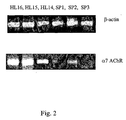
- RNA was prepared from blood samples and RT-PCR was performed on total RNA, using specific primers for the ⁇ 7 AChR, and for ⁇ -actin as a control.
- the specific PCR products were resolved on 1.5% agarose gels.
- the signals for ⁇ 7 AChR were significantly lower in 3 schizophrenic patients than in 3 healthy controls.
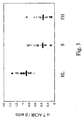
- Quantification of the intensities of the specific ⁇ 7 AChR and ⁇ -actin bands was performed by densitometry. The results obtained in 28 experiments are summarized in Table 6a. For each individual, a ratio of the measured density value for the ⁇ 7 AChR to the value for ⁇ -actin was determined. Each patient was tested 1-4 times.
- the reduction in the level of ⁇ 7 AChR mRNA observed in schizophrenic patients was calculated by the following equation: 100 - 100[( ⁇ 7 AChR/ ⁇ -actin S) / ( ⁇ 7 AChR/ ⁇ -actin Hav)].
- Hav the average ⁇ 7 AChR/ ⁇ -actin ratios of all healthy controls in a given experiment was calculated (Hav).
- the decrease (%) of the ⁇ 7 AChR mRNA for each patient was obtained after subtracting the % of ( ⁇ 7 AChR/ ⁇ -actin S) / ( ⁇ 7 AChR/ ⁇ -actin Hav) ratio from 100%.
- the % of decrease for all experiments were calculated, and are depicted in the last column of Table 6a.
- the dopaminergic hypothesis of schizophrenia proposes that hyperactivity of dopamine transmission is responsible for the symptoms of this disorder.
- the first example of the present invention we have demonstrated increased levels of D 3 dopamine receptor mRNA in PBLs of schizophrenic patients, when compared with the levels in healthy controls.
- the present inventors analyzed the mRNA levels of both D 3 dopamine receptor and of the ⁇ 7 AChR in PBLs of a small group of patients. As expected, the levels of D 3 dopamine receptor mRNA were increased, whereas the levels of ⁇ 7 AChR mRNA were decreased.
- Schizophrenic patients Controls: Number ⁇ -actin Arb. units D 3 Arb. units D 3 / ⁇ -actin Number ⁇ -actin Arb. units D 3 Arb. units D 3 / ⁇ -actin D 3 fold increase (S/C) S1 74 70 0.945 C3 67 70 1.044 0.905 S2 71 72 1.010 C3 67 70 1.044 0.967 S3 72 74 1.027 C3 67 70 1.044 0.983 S4 67 71 1.059 C2 82 73 0.890 1.189 Table 3. Evaluation by PCR-ELISA of D 3 mRNA levels in patients as compared with their levels in healthy individuals.
- Schizophrenic patients Controls: Number ⁇ -actin (O.D.) D 3 (O.D.) D 3 / ⁇ -actin Number ⁇ -actin (O.D.) D 3 (O.D.) D 3 / ⁇ -actin D 3 fold increase (S/C) S1 0.556 0.868 1.56 C8 0.918 0.552 0.601 2.595 S2 0.808 2.225 2.75 C9 0.405 0.33 0.814 3.378 S3 0.224 0.253 1.13 C8 0.533 0.272 0.510 2.215 S4 0.638 0.394 0.626 C8 0.876 0.316 0.360 1.738 S5 0.340 0.823 2.420 C2 0.365 0.533 1.46 1.657 S6 0.339 0.899 2.652 C3 0.368 0.444 1.206 2.199 Table 4.
Landscapes
- Chemical & Material Sciences (AREA)
- Life Sciences & Earth Sciences (AREA)
- Organic Chemistry (AREA)
- Proteomics, Peptides & Aminoacids (AREA)
- Health & Medical Sciences (AREA)
- Genetics & Genomics (AREA)
- Zoology (AREA)
- Analytical Chemistry (AREA)
- Wood Science & Technology (AREA)
- Engineering & Computer Science (AREA)
- Physics & Mathematics (AREA)
- General Engineering & Computer Science (AREA)
- Microbiology (AREA)
- Molecular Biology (AREA)
- Biotechnology (AREA)
- Biophysics (AREA)
- Pathology (AREA)
- Biochemistry (AREA)
- Bioinformatics & Cheminformatics (AREA)
- Immunology (AREA)
- General Health & Medical Sciences (AREA)
- Measuring Or Testing Involving Enzymes Or Micro-Organisms (AREA)
- Pharmaceuticals Containing Other Organic And Inorganic Compounds (AREA)
- Investigating Or Analysing Biological Materials (AREA)
- Sorption Type Refrigeration Machines (AREA)
- Measurement And Recording Of Electrical Phenomena And Electrical Characteristics Of The Living Body (AREA)
- Fuel Cell (AREA)
- Heat-Pump Type And Storage Water Heaters (AREA)
- Crystals, And After-Treatments Of Crystals (AREA)
Claims (8)
- In vitro-Verfahren für die Diagnose von Schizophrenie in einem untersuchten Individuum, umfassend:(i) das Messen von mRNA des D3-Dopaminrezeptors und/oder des α7-Nicotin-Acetylcholinrezeptors (α7-AChR) und eines Kontrollgens in peripheren Blut-Lymphocyten (PBLs) des untersuchten Individuums und von mindestens einem gesunden Kontrollindividuum oder einer Gruppe von zwei oder mehreren gesunden Individuen;(ii) das Berechnen des Verhältnisses zwischen der D3-Dopaminrezeptor-mRNA und der Kontrollgen-mRNA und/oder des Verhältnisses zwischen α7-AChR-mRNA und der Kontrollgen-mRNA für das untersuchte Individuum und das mindestens eine gesunde Kontrollindividuum oder die Gruppe von zwei oder mehreren gesunden Individuen; und(iii) das Bewerten des Verhältnisses zwischen den Verhältnissen, die aus (ii) für das untersuchte Individuum und für das mindestens eine gesunde Kontrollindividuum oder die Gruppe von zwei oder mehreren gesunden Individuen erhalten wurden, wobei eine Erhöhung im Verhältnis der D3-Dopaminrezeptor- und Kontrollgen-mRNA und/oder eine Erniedrigung im Verhältnis von α7-AChR- und Kontrollgen-mRNA in dem untersuchten Individuum im Vergleich zu dem mindestens einen gesunden Kontrollindividuum oder der Gruppe von zwei oder mehreren gesunden Individuen anzeigen, dass das untersuchte Individuum eine hohe Wahrscheinlichkeit aufweist, Schizophrenie zu haben.
- Verfahren gemäß Anspruch 1, umfassend:(i) das Messen von mRNA des D3-Dopaminrezeptors und/oder von α7-AChR und eines Kontrollgens in PBLs des untersuchten Individuums und von mindestens einem gesunden Kontrollindividuum oder einer Gruppe von zwei oder mehreren gesunden Individuen;(ii) das Berechnen des Verhältnisses zwischen der D3-Dopaminrezeptor-mRNA und der Kontrollgen-mRNA und/oder des Verhältnisses zwischen α7-AChR-mRNA und der Kontrollgen-mRNA für das untersuchte Individuum und das mindestens eine gesunde Kontrollindividuum oder die Gruppe von zwei oder mehreren gesunden Individuen; und(iii) das Bewerten des Verhältnisses zwischen den Verhältnissen, die aus (ii) für das auf Schizophrenie untersuchte Individuum und für das mindestens eine gesunde Kontrollindividuum oder die Gruppe von zwei oder mehreren gesunden Individuen erhalten wurden, wobei eine Erhöhung von über 1,6-fach im Verhältnis der D3-Dopaminrezeptor- und Kontrollgen-mRNA und/oder eine Erniedrigung von mehr als 20 % im Verhältnis von α7-AChR- und Kontrollgen-mRNA in dem untersuchten Individuum im Vergleich zu dem mindestens einen gesunden Kontrollindividuum oder der Gruppe von zwei oder mehreren gesunden Individuen anzeigt, dass das untersuchte Individuum eine hohe Wahrscheinlichkeit aufweist, Schizophrenie zu haben.
- Verfahren gemäß Anspruch 2, umfassend:(i) das Messen von mRNA des D3-Dopaminrezeptors und eines Kontrollgens in PBLs des untersuchten Individuums und von mindestens einem gesunden Kontrollindividuum oder einer Gruppe von zwei oder mehreren gesunden Individuen;(ii) das Berechnen des Verhältnisses zwischen der D3-Dopaminrezeptor-mRNA und der Kontrollgen-mRNA für das untersuchte Individuum und das mindestens eine gesunde Kontrollindividuum oder die Gruppe von zwei oder mehreren gesunden Individuen; und(iii) das Bewerten des Verhältnisses zwischen den Verhältnissen, die aus (ii) für das auf Schizophrenie untersuchte Individuum und für das mindestens eine gesunde Kontrollindividuum oder die Gruppe von zwei oder mehreren gesunden Individuen erhalten wurden, wobei eine Erhöhung von über 1,6-fach im Verhältnis der D3-Dopaminrezeptor- und Kontrollgen-mRNA in dem untersuchten Individuum im Vergleich zu dem mindestens einen gesunden Kontrollindividuum oder der Gruppe von zwei oder mehreren gesunden Individuen anzeigt, dass das untersuchte Individuum eine hohe Wahrscheinlichkeit aufweist, Schizophrenie zu haben.
- Verfahren gemäß Anspruch 2, umfassend:(i) das Messen von mRNA von α7-AChR und eines Kontrollgens in PBLs des untersuchten Individuums und von mindestens einem gesunden Kontrollindividuum oder einer Gruppe von zwei oder mehreren gesunden Individuen;(ii) das Berechnen des Verhältnisses zwischen der α7-AChR-mRNA und der Kontrollgen-mRNA für das untersuchte Individuum und das mindestens eine gesunde Kontrollindividuum oder die Gruppe von zwei oder mehreren gesunden Individuen; und(iii) das Bewerten des Verhältnisses zwischen den Verhältnissen, die aus (ii) für das auf Schizophrenie untersuchte Individuum und für das mindestens eine gesunde Kontrollindividuum oder die Gruppe erhalten wurden, wobei eine Erniedrigung von mehr als 20 % im Verhältnis der α7-AChR- und Kontrollgen-mRNA in dem untersuchten Individuum im Vergleich zu dem mindestens einen gesunden Kontrollindividuum oder der Gruppe anzeigt, dass das untersuchte Individuum eine hohe Wahrscheinlichkeit aufweist, Schizophrenie zu haben.
- Verfahren gemäß Anspruch 1, wobei die mRNA des D3-Dopaminrezeptors, von α7-AChR und des Kontrollgens in Schritt (i) mittels reverse-Transkription-Polymerase-Kettenreaktion (RT-PCR) gemessen wird.
- Verfahren gemäß Anspruch 1, wobei das Kontrollgen β-Actin ist.
- Verfahren gemäß Anspruch 1, das in Schritt (ii) das Berechnen des Verhältnisses zwischen der D3-Dopaminrezeptor-mRNA und/oder des Verhältnisses zwischen der α7-AChR- und Kontrollgen-mRNA des auf Schizophrenie hin untersuchten Individuums und des Verhältnisses zwischen der D3-Dopaminrezeptor-mRNA und/oder des Verhältnisses zwischen der α7-AChR- und Kontrollgen-mRNA eines einzelnen gesunden Individuums umfasst.
- Verfahren nach Anspruch 1, wobei in dem schizophrenen Individuum die Erhöhung im Verhältnis der D3-Dopaminrezeptor- und der Kontrollgen-mRNA, die in Schritt (iii) bewertet wurde, 2 - 4-fach ist und/oder die Erniedrigung des Verhältnisses der α7-AChR- und Kontrollgen-mRNA, die in Schritt (iii) bewertet wurde, 20-98 % ist, im Vergleich zu dem mindestens einen gesunden Kontrollindividuum oder der Gruppe von zwei oder mehreren gesunden Individuen.
Applications Claiming Priority (3)
| Application Number | Priority Date | Filing Date | Title |
|---|---|---|---|
| IL13786500 | 2000-08-15 | ||
| IL13786500A IL137865A0 (en) | 2000-08-15 | 2000-08-15 | Method for the diagnosis and follow-up of schizophrenia |
| PCT/IL2001/000761 WO2002014547A2 (en) | 2000-08-15 | 2001-08-15 | Method for the diagnosis and follow up of schizophrenia and other mental and neurodegenerative disorders |
Publications (2)
| Publication Number | Publication Date |
|---|---|
| EP1364050A2 EP1364050A2 (de) | 2003-11-26 |
| EP1364050B1 true EP1364050B1 (de) | 2007-02-28 |
Family
ID=11074527
Family Applications (1)
| Application Number | Title | Priority Date | Filing Date |
|---|---|---|---|
| EP01961078A Expired - Lifetime EP1364050B1 (de) | 2000-08-15 | 2001-08-15 | Verfahren ZUR DIAGNOSE VON SCHIZOPHRENIE |
Country Status (7)
| Country | Link |
|---|---|
| US (2) | US20050158715A1 (de) |
| EP (1) | EP1364050B1 (de) |
| AT (1) | ATE355389T1 (de) |
| AU (1) | AU2001282456A1 (de) |
| DE (1) | DE60126991T2 (de) |
| IL (2) | IL137865A0 (de) |
| WO (1) | WO2002014547A2 (de) |
Families Citing this family (9)
| Publication number | Priority date | Publication date | Assignee | Title |
|---|---|---|---|---|
| US7473528B2 (en) | 1999-01-06 | 2009-01-06 | Genenews Inc. | Method for the detection of Chagas disease related gene transcripts in blood |
| CN100516211C (zh) * | 2002-02-20 | 2009-07-22 | 希森美康株式会社 | 用于持家基因mRNA检测的核酸扩增用引物和使用该引物的检查方法 |
| HU227246B1 (en) * | 2004-04-30 | 2010-12-28 | Szegedi Biolog Koezpont | Use of genes as molecular markers in diagnosis of schizophrenia and diagnostic kit |
| GB2449819A (en) * | 2006-02-28 | 2008-12-03 | Univ California | Genes differentially expressed in bipolar disorder and/or schizophrenia |
| WO2009074331A2 (en) * | 2007-12-11 | 2009-06-18 | Julius-Maximilians-Universität Würzburg | Early and differential diagnosis test for alzheimer's disease |
| AT515576B1 (de) * | 2014-03-14 | 2017-09-15 | Red Bull Gmbh | Methode zur in vitro Diagnose des Grades an Geistesschwäche im Down-Syndrom |
| US20200168317A1 (en) | 2018-08-22 | 2020-05-28 | Centre For Addiction And Mental Health | Tool for assisting individuals experiencing auditory hallucinations to differentiate between hallucinations and ambient sounds |
| US11862337B2 (en) | 2019-03-19 | 2024-01-02 | Cambridge Cognition Limited | Method and uses of diagnosing and recommending treatment for a psychotic disorder |
| AU2021328259A1 (en) * | 2020-08-17 | 2023-02-23 | The Research Foundation For Mental Hygiene, Inc. | Use of neuromelanin-sensitive MRI as a biomarker of dopamine function |
Family Cites Families (1)
| Publication number | Priority date | Publication date | Assignee | Title |
|---|---|---|---|---|
| US7625697B2 (en) * | 1994-06-17 | 2009-12-01 | The Board Of Trustees Of The Leland Stanford Junior University | Methods for constructing subarrays and subarrays made thereby |
-
2000
- 2000-08-15 IL IL13786500A patent/IL137865A0/xx unknown
-
2001
- 2001-08-15 AU AU2001282456A patent/AU2001282456A1/en not_active Abandoned
- 2001-08-15 DE DE60126991T patent/DE60126991T2/de not_active Expired - Lifetime
- 2001-08-15 WO PCT/IL2001/000761 patent/WO2002014547A2/en not_active Ceased
- 2001-08-15 AT AT01961078T patent/ATE355389T1/de not_active IP Right Cessation
- 2001-08-15 US US10/344,862 patent/US20050158715A1/en not_active Abandoned
- 2001-08-15 EP EP01961078A patent/EP1364050B1/de not_active Expired - Lifetime
-
2003
- 2003-02-13 IL IL154429A patent/IL154429A/en not_active IP Right Cessation
-
2009
- 2009-06-23 US US12/490,195 patent/US7939262B2/en not_active Expired - Fee Related
Also Published As
| Publication number | Publication date |
|---|---|
| EP1364050A2 (de) | 2003-11-26 |
| ATE355389T1 (de) | 2006-03-15 |
| DE60126991T2 (de) | 2008-01-03 |
| WO2002014547A2 (en) | 2002-02-21 |
| US20050158715A1 (en) | 2005-07-21 |
| IL137865A0 (en) | 2001-10-31 |
| AU2001282456A1 (en) | 2002-02-25 |
| US7939262B2 (en) | 2011-05-10 |
| DE60126991D1 (de) | 2007-04-12 |
| IL154429A (en) | 2009-09-22 |
| US20100041043A1 (en) | 2010-02-18 |
| WO2002014547A3 (en) | 2003-10-02 |
Similar Documents
| Publication | Publication Date | Title |
|---|---|---|
| US7939262B2 (en) | Method for the diagnosis of schizophrenia | |
| Lardenoije et al. | Alzheimer’s disease-associated (hydroxy) methylomic changes in the brain and blood | |
| Perl et al. | The α7 nicotinic acetylcholine receptor in schizophrenia: Decreased mRNA levels in peripheral blood lymphocytes | |
| Toda et al. | Dopamine hypothesis of schizophrenia: making sense of it all | |
| Lee et al. | Decreased serum brain-derived neurotrophic factor levels in elderly Korean with dementia | |
| Montag et al. | Oxytocin and oxytocin receptor gene polymorphisms and risk for schizophrenia: a case–control study | |
| Iga et al. | The Val66Met polymorphism of the brain‐derived neurotrophic factor gene is associated with psychotic feature and suicidal behavior in Japanese major depressive patients | |
| De Luca et al. | Regulation of α7‐nicotinic receptor subunit and α7‐like gene expression in the prefrontal cortex of patients with bipolar disorder and schizophrenia | |
| Ismail et al. | Neurobiology of delusions in Alzheimer’s disease | |
| Liu et al. | Altered expression of the CSMD1 gene in the peripheral blood of schizophrenia patients | |
| Zhang et al. | Explorative study on the expression of neuregulin-1 gene in peripheral blood of schizophrenia | |
| Pełka-Wysiecka et al. | BDNF rs 6265 polymorphism and COMT rs 4680 polymorphism in deficit schizophrenia in Polish sample | |
| Busch et al. | Blood-based biomarkers predicting response to antidepressants | |
| Sener et al. | Altered global mRNA expressions of pain and aggression related genes in the blood of children with autism spectrum disorders | |
| Kuo et al. | Inflammatory chemokine eotaxin-1 is correlated with age in heroin dependent patients under methadone maintenance therapy | |
| Vousooghi et al. | mRNA expression of dopamine receptors in peripheral blood lymphocytes of computer game addicts | |
| De Luca et al. | Genetic interaction between α4 and β2 subunits of high affinity nicotinic receptor: analysis in schizophrenia | |
| Wu et al. | Transcriptional profile of pyramidal neurons in chronic schizophrenia reveals lamina-specific dysfunction of neuronal immunity | |
| Minoretti et al. | The T393C polymorphism of the GNAS1 gene is associated with deficit schizophrenia in an Italian population sample | |
| Monteleone et al. | Search of brain-enriched proteins in salivary extracellular vesicles for their use as mental disease biomarkers: A pilot study of the neuronal glycoprotein M6a | |
| Costantini et al. | Different peripheral expression patterns of the nicotinic acetylcholine receptor in dementia with Lewy bodies and Alzheimer’s disease | |
| Schwarz et al. | A preliminary study on methylphenidate-regulated gene expression in lymphoblastoid cells of ADHD patients | |
| Di Bartolomeo et al. | DNA methylation at cannabinoid type 1 and dopamine D2 receptor genes in saliva samples of psychotic subjects: Is there an effect of Cannabis use? | |
| Perl et al. | Low levels of α7-nicotinic acetylcholine receptor mRNA on peripheral blood lymphocytes in schizophrenia and its association with illness severity | |
| Kajimoto et al. | Synapse-associated protein 90/postsynaptic density-95-associated protein (SAPAP) is expressed differentially in phencyclidine-treated rats and is increased in the nucleus accumbens of patients with schizophrenia |
Legal Events
| Date | Code | Title | Description |
|---|---|---|---|
| PUAI | Public reference made under article 153(3) epc to a published international application that has entered the european phase |
Free format text: ORIGINAL CODE: 0009012 |
|
| 17P | Request for examination filed |
Effective date: 20030129 |
|
| AK | Designated contracting states |
Kind code of ref document: A2 Designated state(s): AT BE CH CY DE DK ES FI FR GB GR IE IT LI LU MC NL PT SE TR |
|
| AX | Request for extension of the european patent |
Extension state: AL LT LV MK RO SI |
|
| RTI1 | Title (correction) |
Free format text: METHOD FOR THE DIAGNOSIS OF SCHIZOPHRENIA |
|
| GRAP | Despatch of communication of intention to grant a patent |
Free format text: ORIGINAL CODE: EPIDOSNIGR1 |
|
| GRAS | Grant fee paid |
Free format text: ORIGINAL CODE: EPIDOSNIGR3 |
|
| GRAA | (expected) grant |
Free format text: ORIGINAL CODE: 0009210 |
|
| AK | Designated contracting states |
Kind code of ref document: B1 Designated state(s): AT BE CH CY DE DK ES FI FR GB GR IE IT LI LU MC NL PT SE TR |
|
| PG25 | Lapsed in a contracting state [announced via postgrant information from national office to epo] |
Ref country code: FI Free format text: LAPSE BECAUSE OF FAILURE TO SUBMIT A TRANSLATION OF THE DESCRIPTION OR TO PAY THE FEE WITHIN THE PRESCRIBED TIME-LIMIT Effective date: 20070228 Ref country code: AT Free format text: LAPSE BECAUSE OF FAILURE TO SUBMIT A TRANSLATION OF THE DESCRIPTION OR TO PAY THE FEE WITHIN THE PRESCRIBED TIME-LIMIT Effective date: 20070228 Ref country code: BE Free format text: LAPSE BECAUSE OF FAILURE TO SUBMIT A TRANSLATION OF THE DESCRIPTION OR TO PAY THE FEE WITHIN THE PRESCRIBED TIME-LIMIT Effective date: 20070228 Ref country code: NL Free format text: LAPSE BECAUSE OF FAILURE TO SUBMIT A TRANSLATION OF THE DESCRIPTION OR TO PAY THE FEE WITHIN THE PRESCRIBED TIME-LIMIT Effective date: 20070228 Ref country code: DK Free format text: LAPSE BECAUSE OF FAILURE TO SUBMIT A TRANSLATION OF THE DESCRIPTION OR TO PAY THE FEE WITHIN THE PRESCRIBED TIME-LIMIT Effective date: 20070228 |
|
| REG | Reference to a national code |
Ref country code: GB Ref legal event code: FG4D |
|
| REG | Reference to a national code |
Ref country code: CH Ref legal event code: EP |
|
| REF | Corresponds to: |
Ref document number: 60126991 Country of ref document: DE Date of ref document: 20070412 Kind code of ref document: P |
|
| REG | Reference to a national code |
Ref country code: IE Ref legal event code: FG4D |
|
| PG25 | Lapsed in a contracting state [announced via postgrant information from national office to epo] |
Ref country code: SE Free format text: LAPSE BECAUSE OF FAILURE TO SUBMIT A TRANSLATION OF THE DESCRIPTION OR TO PAY THE FEE WITHIN THE PRESCRIBED TIME-LIMIT Effective date: 20070531 |
|
| PG25 | Lapsed in a contracting state [announced via postgrant information from national office to epo] |
Ref country code: ES Free format text: LAPSE BECAUSE OF FAILURE TO SUBMIT A TRANSLATION OF THE DESCRIPTION OR TO PAY THE FEE WITHIN THE PRESCRIBED TIME-LIMIT Effective date: 20070608 |
|
| REG | Reference to a national code |
Ref country code: CH Ref legal event code: NV Representative=s name: VOSSIUS & PARTNER |
|
| PG25 | Lapsed in a contracting state [announced via postgrant information from national office to epo] |
Ref country code: PT Free format text: LAPSE BECAUSE OF FAILURE TO SUBMIT A TRANSLATION OF THE DESCRIPTION OR TO PAY THE FEE WITHIN THE PRESCRIBED TIME-LIMIT Effective date: 20070730 |
|
| NLV1 | Nl: lapsed or annulled due to failure to fulfill the requirements of art. 29p and 29m of the patents act | ||
| ET | Fr: translation filed | ||
| RAP2 | Party data changed (patent owner data changed or rights of a patent transferred) |
Owner name: YEDA RESEARCH AND DEVELOPMEMT CO., LTD. |
|
| RAP2 | Party data changed (patent owner data changed or rights of a patent transferred) |
Owner name: YEDA RESEARCH AND DEVELOPMENT CO., LTD. |
|
| PLBE | No opposition filed within time limit |
Free format text: ORIGINAL CODE: 0009261 |
|
| STAA | Information on the status of an ep patent application or granted ep patent |
Free format text: STATUS: NO OPPOSITION FILED WITHIN TIME LIMIT |
|
| REG | Reference to a national code |
Ref country code: CH Ref legal event code: PCAR Free format text: VOSSIUS & PARTNER;NADELBERG 3;4051 BASEL (CH) |
|
| 26N | No opposition filed |
Effective date: 20071129 |
|
| PG25 | Lapsed in a contracting state [announced via postgrant information from national office to epo] |
Ref country code: GR Free format text: LAPSE BECAUSE OF FAILURE TO SUBMIT A TRANSLATION OF THE DESCRIPTION OR TO PAY THE FEE WITHIN THE PRESCRIBED TIME-LIMIT Effective date: 20070529 Ref country code: IT Free format text: LAPSE BECAUSE OF FAILURE TO SUBMIT A TRANSLATION OF THE DESCRIPTION OR TO PAY THE FEE WITHIN THE PRESCRIBED TIME-LIMIT Effective date: 20070228 Ref country code: MC Free format text: LAPSE BECAUSE OF NON-PAYMENT OF DUE FEES Effective date: 20070831 |
|
| PG25 | Lapsed in a contracting state [announced via postgrant information from national office to epo] |
Ref country code: IE Free format text: LAPSE BECAUSE OF NON-PAYMENT OF DUE FEES Effective date: 20070815 |
|
| PG25 | Lapsed in a contracting state [announced via postgrant information from national office to epo] |
Ref country code: CY Free format text: LAPSE BECAUSE OF FAILURE TO SUBMIT A TRANSLATION OF THE DESCRIPTION OR TO PAY THE FEE WITHIN THE PRESCRIBED TIME-LIMIT Effective date: 20070228 |
|
| PG25 | Lapsed in a contracting state [announced via postgrant information from national office to epo] |
Ref country code: LU Free format text: LAPSE BECAUSE OF NON-PAYMENT OF DUE FEES Effective date: 20070815 |
|
| PG25 | Lapsed in a contracting state [announced via postgrant information from national office to epo] |
Ref country code: TR Free format text: LAPSE BECAUSE OF FAILURE TO SUBMIT A TRANSLATION OF THE DESCRIPTION OR TO PAY THE FEE WITHIN THE PRESCRIBED TIME-LIMIT Effective date: 20070228 |
|
| PGFP | Annual fee paid to national office [announced via postgrant information from national office to epo] |
Ref country code: CH Payment date: 20100812 Year of fee payment: 10 |
|
| PGFP | Annual fee paid to national office [announced via postgrant information from national office to epo] |
Ref country code: DE Payment date: 20100812 Year of fee payment: 10 Ref country code: FR Payment date: 20100824 Year of fee payment: 10 |
|
| PGFP | Annual fee paid to national office [announced via postgrant information from national office to epo] |
Ref country code: GB Payment date: 20100811 Year of fee payment: 10 |
|
| REG | Reference to a national code |
Ref country code: CH Ref legal event code: PL |
|
| GBPC | Gb: european patent ceased through non-payment of renewal fee |
Effective date: 20110815 |
|
| PG25 | Lapsed in a contracting state [announced via postgrant information from national office to epo] |
Ref country code: CH Free format text: LAPSE BECAUSE OF NON-PAYMENT OF DUE FEES Effective date: 20110831 Ref country code: LI Free format text: LAPSE BECAUSE OF NON-PAYMENT OF DUE FEES Effective date: 20110831 |
|
| REG | Reference to a national code |
Ref country code: FR Ref legal event code: ST Effective date: 20120430 |
|
| REG | Reference to a national code |
Ref country code: DE Ref legal event code: R119 Ref document number: 60126991 Country of ref document: DE Effective date: 20120301 |
|
| PG25 | Lapsed in a contracting state [announced via postgrant information from national office to epo] |
Ref country code: FR Free format text: LAPSE BECAUSE OF NON-PAYMENT OF DUE FEES Effective date: 20110831 Ref country code: GB Free format text: LAPSE BECAUSE OF NON-PAYMENT OF DUE FEES Effective date: 20110815 |
|
| PG25 | Lapsed in a contracting state [announced via postgrant information from national office to epo] |
Ref country code: DE Free format text: LAPSE BECAUSE OF NON-PAYMENT OF DUE FEES Effective date: 20120301 |