EP1364050B1 - Method for the diagnosis of schizophrenia - Google Patents
Method for the diagnosis of schizophrenia Download PDFInfo
- Publication number
- EP1364050B1 EP1364050B1 EP01961078A EP01961078A EP1364050B1 EP 1364050 B1 EP1364050 B1 EP 1364050B1 EP 01961078 A EP01961078 A EP 01961078A EP 01961078 A EP01961078 A EP 01961078A EP 1364050 B1 EP1364050 B1 EP 1364050B1
- Authority
- EP
- European Patent Office
- Prior art keywords
- individual
- mrna
- healthy
- achr
- ratio
- Prior art date
- Legal status (The legal status is an assumption and is not a legal conclusion. Google has not performed a legal analysis and makes no representation as to the accuracy of the status listed.)
- Expired - Lifetime
Links
Images

Classifications
-
- C—CHEMISTRY; METALLURGY
- C12—BIOCHEMISTRY; BEER; SPIRITS; WINE; VINEGAR; MICROBIOLOGY; ENZYMOLOGY; MUTATION OR GENETIC ENGINEERING
- C12Q—MEASURING OR TESTING PROCESSES INVOLVING ENZYMES, NUCLEIC ACIDS OR MICROORGANISMS; COMPOSITIONS OR TEST PAPERS THEREFOR; PROCESSES OF PREPARING SUCH COMPOSITIONS; CONDITION-RESPONSIVE CONTROL IN MICROBIOLOGICAL OR ENZYMOLOGICAL PROCESSES
- C12Q1/00—Measuring or testing processes involving enzymes, nucleic acids or microorganisms; Compositions therefor; Processes of preparing such compositions
- C12Q1/68—Measuring or testing processes involving enzymes, nucleic acids or microorganisms; Compositions therefor; Processes of preparing such compositions involving nucleic acids
- C12Q1/6876—Nucleic acid products used in the analysis of nucleic acids, e.g. primers or probes
- C12Q1/6883—Nucleic acid products used in the analysis of nucleic acids, e.g. primers or probes for diseases caused by alterations of genetic material
-
- C—CHEMISTRY; METALLURGY
- C12—BIOCHEMISTRY; BEER; SPIRITS; WINE; VINEGAR; MICROBIOLOGY; ENZYMOLOGY; MUTATION OR GENETIC ENGINEERING
- C12Q—MEASURING OR TESTING PROCESSES INVOLVING ENZYMES, NUCLEIC ACIDS OR MICROORGANISMS; COMPOSITIONS OR TEST PAPERS THEREFOR; PROCESSES OF PREPARING SUCH COMPOSITIONS; CONDITION-RESPONSIVE CONTROL IN MICROBIOLOGICAL OR ENZYMOLOGICAL PROCESSES
- C12Q2600/00—Oligonucleotides characterized by their use
- C12Q2600/156—Polymorphic or mutational markers
-
- Y—GENERAL TAGGING OF NEW TECHNOLOGICAL DEVELOPMENTS; GENERAL TAGGING OF CROSS-SECTIONAL TECHNOLOGIES SPANNING OVER SEVERAL SECTIONS OF THE IPC; TECHNICAL SUBJECTS COVERED BY FORMER USPC CROSS-REFERENCE ART COLLECTIONS [XRACs] AND DIGESTS
- Y02—TECHNOLOGIES OR APPLICATIONS FOR MITIGATION OR ADAPTATION AGAINST CLIMATE CHANGE
- Y02A—TECHNOLOGIES FOR ADAPTATION TO CLIMATE CHANGE
- Y02A90/00—Technologies having an indirect contribution to adaptation to climate change
- Y02A90/10—Information and communication technologies [ICT] supporting adaptation to climate change, e.g. for weather forecasting or climate simulation
Definitions
- the present invention relates to methods for the diagnosis and follow-up of schizophrenia and other mental and neurodegenerative disorders, and kits for use in said methods.
- Schizophrenia is a neuropsychiatric disorder afflicting about one percent of the population. It is characterized by delusions, hallucinations, disorders in organizing thoughts logically, and emotional withdrawal. There is a well-known tendency for schizophrenia to run in families.
- Dopamine receptors are divided into two subclasses D1 and D2.
- the D1 subclass contains the D 1 and D 5 receptor subtypes
- the D2 subclass contains the D 2 , D 3 and D 4 subtypes (Levant, 1997).
- the dopamine hypothesis of schizophrenia relates specifically to the D2 subclass.
- most drugs effective in treating schizophrenia exhibit D2 receptor antagonistic activity, and administration of a selective DI-like antagonist has been reported to result in the worsening of symptoms (Karlsson et al., 1995).
- the D 3 receptor is located principally in an area of the brain that could be very relevant to schizophrenia, the nucleus accumbens (Willner, 1997).
- the level of dopamine receptor could be employed as a marker for schizophrenia if it could be analyzed on an available tissue, preferably a peripheral one.
- Acetylcholine mediates synaptic transmission in the vertebrate central nervous system through the activation of two major receptor subtypes, the muscarinic and nicotinic acetylcholine receptors (AChRs).
- the muscarinic receptors are G-coupled receptors, and the nicotinic receptors are ligand-gated ionic channels.
- Nicotinic AChRs are composed of five subunits organized around a central ion channel.
- Neuronal nicotinic AChRs are usually built as heteropentamers, composed of ⁇ ( ⁇ 2- ⁇ 9), and ⁇ ( ⁇ 2- ⁇ 4) subunits.
- ⁇ 7, ⁇ 8, and ⁇ 9 can function as homomeric AChRs and are of special interest because they bind the curarinetric neurotoxin, a-bungarotoxin. ( ⁇ -BTX ⁇ ). These receptors are characterized by a rapid rate of desensitization, and a high level of selectivity to calcium.
- nicotinic ⁇ 7 AChR may be associated with some aspects of schizophrenia (Guan et al., 1999). Nicotine administration normalizes two psychophysiological deficits, typical for schizophrenia: disordered eye movements, and the P50 auditory evoked potential gating deficit (Olincy et al., 1998). The genes responsible for these two deficits are linked genetically to the chromosomal locus (15q14) of the ⁇ 7-nicotinic receptor gene (Leonard et al., 2000). ⁇ 7 AChR has been found to be expressed in the mammalian brain, especially throughout the hippocampus (Hellstrom-Lindahl et al., 1999), a brain region associated with schizophrenia.
- Freedman et al. (2000) reported that interneurons in the hippocampus and in other forebrain structures are decreased in number and function in subjects with schizophrenia. Decreased ⁇ 7-nicotinic receptor immunoreactivity was found in the frontal cortex and in the nucleus reticularis thalami of schizophrenic patients (Freedman et al., 2000). Court et. al. (1999) described a reduction in the ⁇ -BTX binding, and no significant alterations in the nicotine binding in post mortem brains of schizophrenic patients. A significant decrease in the level of ⁇ 7 AChR was also observed by Guan et. al. (1999) in the frontal cortex of schizophrenics when compared with controls, suggesting that ⁇ 7 AChR may be involved in inhibitory neuronal pathways engaged in this disorder.
- the present invention we measured the mRNA levels of dopamine receptors and of ⁇ 7 nicotinic acetylcholine receptor (AChR) in peripheral blood lymphocytes (PBLs) of schizophrenics and healthy individuals in order to find out if they can serve as peripheral markers for this disorder. Since the inhibitory D2 subclass of dopamine receptors is considered to be associated with neuropsychiatric disorders rather than the D1 subclass, we have focused only on the D 3 and D 4 subtypes, both belonging to the D2 subclass.
- the present invention thus relates to the evaluation of the mRNA levels of D 3 dopamine receptor and/or of ⁇ 7 AChR in PBLs of an individual as reliable peripheral markers for the identification and follow-up of schizophrenia, of other mental disorders, and of neurodegenerative disorders.
- the invention relates to a method for the diagnosis of schizophrenia in an individual, comprising:
- the invention relates to a method for the diagnosis of schizophrenia in an individual, comprising:
- RNA is isolated from the lymphocytes by standard methods as well known in the art.
- the mRNA of the total RNA is then reverse-transcribed into cDNA that is used for PCR amplification using primers for the D 3 dopamine receptor, for the ⁇ 7 AChR, and for a control house keeping gene such as ⁇ -actin, ⁇ -actin, NADH or tubulin. Measuring the D 4 dopamine receptor-mRNA can also serve as a control.
- Quantification of the PCR products by densitometry, PCR-ELISA, fluorescence techniques, or Southern blot correlates to the mRNA levels of the D 3 dopamine receptor, ⁇ 7 AChR, and of the control gene in the PBLs.
- the program in a defined area, gives a number corresponding to the brightness intensity.
- the mRNA level of the D 3 dopamine receptor, and/or of the ⁇ 7 AChR, and of a control gene of a tested individual is compared with the mRNA level of the D 3 dopamine receptor, and/or of the ⁇ 7 AChR, and of a control gene of a sole healthy individual, preferably of the same age and sex.
- the comparison is made with a pool of PBLs of two or more healthy individuals.
- the disclosure relates to a kit for use in the method of the invention.
- the kit comprises, for example, (i) means for isolating mRNA from PBLs; (ii) means for reverse transcription and for PCR; and (iii) means for detection of PCR products.
- the kit may also contain means for separating PBL from whole blood.
- the assay may be carried out by the use of DNA arrays or differential display.
- Schizophrenic patients were recruited from Tyrat Hacarmel and Beer Yaacov Mental Health Centers, Israel, after providing written informed consent for participation in the study. The study has been approved by the Institutional Review Board for human studies in these two mental health centers. All patients were formally diagnosed according to the Diagnostic and Statistical Manual of Mental disorder-IV criteria and evaluated by using standard rating scales by a senior psychiatrist. Healthy individuals' age and sex matched the patient group as much as possible. Lymphocyte isolation . Blood (40-50 ml for D 3 dopamine receptor, or 20-30 ml for the ⁇ 7 AChR) was drawn from the cubital vein into a heparinized plastic syringe, and then transferred into a sterile 50-ml plastic tube.
- D 3 dopamine receptor or 20-30 ml for the ⁇ 7 AChR
- RNA samples were diluted with an equal volume of phosphate-buffered saline (PBS), were placed onto Ficoll-Paque gradients, and then were centrifuged for 30 minutes at 400xg. The lymphocyte layer was collected, and washed twice in PBS. The resulting pellet was immediately frozen at -80° C until RNA preparation.
- Reverse Transcription - PCR analysis Total RNA was isolated from lymphocytes by the guanidinum-thiocyanate method, and the amount and quality of RNA were determined by spectrophotometry and gel electrophoresis (2% agarose for the D 3 dopamine receptor, or 1.5% for the ⁇ 7 AChR; GibcoBRL).
- RNA thermocycler Minicycler MJ research, MA
- Annealing temperatures for ⁇ -actin, for D 3 and for D 4 dopamine receptors was 60° C, while that for ⁇ 7 AchRwas 57° C.
- the amplification was found to be linear between 30 and 40 cycles for D 3 and D 4 dopamine receptors, as well as for the ⁇ 7 AChR, and between 19 and 25 cycles for ⁇ -actin.
- the PCR primers for D 3 -, D 4 -dopamine receptors, for ⁇ 7 AchR, and for ⁇ -actin were designed to include at least one intron, to eliminate amplification of genomic DNA. Their sequences were as follows:
- PCR-ELISA Quantification of PCR products was performed by using a densitometer and a SCION IMAGE (Frederick, MD) analysis, and/or PCR-ELISA.
- PCR-ELISA PCR was performed as described above except for the use of digoxigenin-labeled dNTPs. PCR products were incubated with biotinylated specific internal primers of the tested fragments that were immobilized in streptavidin-coated microtiter plates. The biotinylated internal primers served as capture probes. The bound digoxigenin-labeled PCR-products were then incubated with anti-digoxigenin-peroxidase conjugate that bound to the digoxigenin residues in the labeled PCR products. Peroxidase substrate solution was added, and the color developed was measured in a microtiter-plate reader.
- Table 1 summarizes the details (ages, sexes, and diagnoses) of schizophrenic patients and healthy controls from whom blood samples were obtained.
- RT-PCR was performed on total RNA preparations from these blood samples with primers specific for D 3 or D 4 dopamine receptor, and ⁇ -actin as a control. The specific PCR products were resolved on 2% agarose gels, and their sequences were verified.
- a sex- and optimal age-matched healthy control was used, and the level of specific dopamine receptor mRNA was compared between sick and healthy patients.
- the signals for D 3 receptor mRNA were significantly higher in schizophrenic patients than in healthy controls. This increase was found to be specific for the D 3 dopamine receptor, because no significant differences in the intensities of D 4 receptor bands were detected between schizophrenic patients and healthy controls (Figs. 1b, 1c).
- D 3 receptor mRNA in schizophrenic patients is significantly higher than the reported increases in binding levels and other recently suggested peripheral markers for schizophrenia (Avissar et al., 1997). Furthermore, the increase in D 3 receptor mRNA was not affected by different drug treatments. Although some of the patients received typical treatment and some atypical treatment (see Table 1), it can be noted that all patients exhibited a similar range of increase indicating that this was not a result of specific dopamine-receptor subtype blockade and up-regulation. Moreover, the present inventors found that this increase was not the consequence of a dopamine receptor antagonist treatment, because non-medicated patients (S12, S13) showed a similar increase in D 3 level (see Tables 1 and 2).
- D 3 -receptor mRNA levels in PBLs may serve as a convenient and reliable peripheral marker for schizophrenia, thus assist in early diagnosis (which is frequently unclear), and possible follow-up of the illness.
- RNA was prepared from blood samples and RT-PCR was performed on total RNA, using specific primers for the ⁇ 7 AChR, and for ⁇ -actin as a control.
- the specific PCR products were resolved on 1.5% agarose gels.
- the signals for ⁇ 7 AChR were significantly lower in 3 schizophrenic patients than in 3 healthy controls.
- Quantification of the intensities of the specific ⁇ 7 AChR and ⁇ -actin bands was performed by densitometry. The results obtained in 28 experiments are summarized in Table 6a. For each individual, a ratio of the measured density value for the ⁇ 7 AChR to the value for ⁇ -actin was determined. Each patient was tested 1-4 times.
- the reduction in the level of ⁇ 7 AChR mRNA observed in schizophrenic patients was calculated by the following equation: 100 - 100[( ⁇ 7 AChR/ ⁇ -actin S) / ( ⁇ 7 AChR/ ⁇ -actin Hav)].
- Hav the average ⁇ 7 AChR/ ⁇ -actin ratios of all healthy controls in a given experiment was calculated (Hav).
- the decrease (%) of the ⁇ 7 AChR mRNA for each patient was obtained after subtracting the % of ( ⁇ 7 AChR/ ⁇ -actin S) / ( ⁇ 7 AChR/ ⁇ -actin Hav) ratio from 100%.
- the % of decrease for all experiments were calculated, and are depicted in the last column of Table 6a.
- the dopaminergic hypothesis of schizophrenia proposes that hyperactivity of dopamine transmission is responsible for the symptoms of this disorder.
- the first example of the present invention we have demonstrated increased levels of D 3 dopamine receptor mRNA in PBLs of schizophrenic patients, when compared with the levels in healthy controls.
- the present inventors analyzed the mRNA levels of both D 3 dopamine receptor and of the ⁇ 7 AChR in PBLs of a small group of patients. As expected, the levels of D 3 dopamine receptor mRNA were increased, whereas the levels of ⁇ 7 AChR mRNA were decreased.
- Schizophrenic patients Controls: Number ⁇ -actin Arb. units D 3 Arb. units D 3 / ⁇ -actin Number ⁇ -actin Arb. units D 3 Arb. units D 3 / ⁇ -actin D 3 fold increase (S/C) S1 74 70 0.945 C3 67 70 1.044 0.905 S2 71 72 1.010 C3 67 70 1.044 0.967 S3 72 74 1.027 C3 67 70 1.044 0.983 S4 67 71 1.059 C2 82 73 0.890 1.189 Table 3. Evaluation by PCR-ELISA of D 3 mRNA levels in patients as compared with their levels in healthy individuals.
- Schizophrenic patients Controls: Number ⁇ -actin (O.D.) D 3 (O.D.) D 3 / ⁇ -actin Number ⁇ -actin (O.D.) D 3 (O.D.) D 3 / ⁇ -actin D 3 fold increase (S/C) S1 0.556 0.868 1.56 C8 0.918 0.552 0.601 2.595 S2 0.808 2.225 2.75 C9 0.405 0.33 0.814 3.378 S3 0.224 0.253 1.13 C8 0.533 0.272 0.510 2.215 S4 0.638 0.394 0.626 C8 0.876 0.316 0.360 1.738 S5 0.340 0.823 2.420 C2 0.365 0.533 1.46 1.657 S6 0.339 0.899 2.652 C3 0.368 0.444 1.206 2.199 Table 4.
Landscapes
- Chemical & Material Sciences (AREA)
- Life Sciences & Earth Sciences (AREA)
- Organic Chemistry (AREA)
- Proteomics, Peptides & Aminoacids (AREA)
- Health & Medical Sciences (AREA)
- Genetics & Genomics (AREA)
- Zoology (AREA)
- Analytical Chemistry (AREA)
- Wood Science & Technology (AREA)
- Engineering & Computer Science (AREA)
- Physics & Mathematics (AREA)
- General Engineering & Computer Science (AREA)
- Microbiology (AREA)
- Molecular Biology (AREA)
- Biotechnology (AREA)
- Biophysics (AREA)
- Pathology (AREA)
- Biochemistry (AREA)
- Bioinformatics & Cheminformatics (AREA)
- Immunology (AREA)
- General Health & Medical Sciences (AREA)
- Measuring Or Testing Involving Enzymes Or Micro-Organisms (AREA)
- Pharmaceuticals Containing Other Organic And Inorganic Compounds (AREA)
- Investigating Or Analysing Biological Materials (AREA)
- Fuel Cell (AREA)
- Heat-Pump Type And Storage Water Heaters (AREA)
- Crystals, And After-Treatments Of Crystals (AREA)
- Sorption Type Refrigeration Machines (AREA)
- Measurement And Recording Of Electrical Phenomena And Electrical Characteristics Of The Living Body (AREA)
Abstract
Description
- The present invention relates to methods for the diagnosis and follow-up of schizophrenia and other mental and neurodegenerative disorders, and kits for use in said methods.
- Schizophrenia is a neuropsychiatric disorder afflicting about one percent of the population. It is characterized by delusions, hallucinations, disorders in organizing thoughts logically, and emotional withdrawal. There is a well-known tendency for schizophrenia to run in families.
- Although the exact pathogenesis of schizophrenia is still not known precisely, a common belief is that excessive activity at dopaminergic synapses in the brain plays a prominent role. To date, a definitive diagnosis of schizophrenia requires a 6-month duration of symptomatology, and relies on heterogeneous symptoms. Because there is neither an effective biological marker for identifying schizophrenia (Willner, 1997; Hietala and Syvalahti, 1996), nor an accurate and rapid diagnosis to ensure more optimal management at an early stage in the illness, there remains a vital need for a convenient assay for diagnosis and follow-up of schizophrenia.
- Most of the drugs used to treat schizophrenia act to control the symptoms by neuroreceptor antagonism. Moreover, the dopaminergic basis of schizophrenia is strongly supported by the close correlation between clinical efficacy of antipsychotic medications and their potency to antagonize the binding of dopamine to its receptors (Creese et al., 1976).
- Dopamine receptors are divided into two subclasses D1 and D2. The D1 subclass contains the D1 and D5 receptor subtypes, and the D2 subclass contains the D2, D3 and D4 subtypes (Levant, 1997). The dopamine hypothesis of schizophrenia relates specifically to the D2 subclass. Notably, most drugs effective in treating schizophrenia exhibit D2 receptor antagonistic activity, and administration of a selective DI-like antagonist has been reported to result in the worsening of symptoms (Karlsson et al., 1995). Among the receptors in the D2 subclass (D2, D3 and D4), the D3 receptor is located principally in an area of the brain that could be very relevant to schizophrenia, the nucleus accumbens (Willner, 1997). Studies with positron-emission tomography and postmortem brain tissue have indicated increased levels of D2-like dopamine receptors in schizophrenics when compared with nonschizophrenic patients (Seeman and Niznik, 1990). Thus, the level of dopamine receptor could be employed as a marker for schizophrenia if it could be analyzed on an available tissue, preferably a peripheral one.
- High affinity binding of dopaminergic ligands, as well as the presence of mRNA of several dopamine receptor subtypes (D3, D4 and D5) in human peripheral blood lymphocytes (PBLs) have been reported in recent years (Ricci et al., 1997, Takahashi et al., 1992). It should be noted, however, that neither D2 nor D1 dopamine receptor subtypes, which are the most abundant receptors in the brain and belong to the D2 and the D1 subclasses, respectively, have been detected in lymphocytes. Although the significance of dopamine receptors, as well as of other neurotransmitter receptors, in lymphocytes is still not clear, it has been suggested that they may reflect corresponding brain receptors. Several studies have demonstrated the increased binding of dopamine antagonists in lymphocytes of schizophrenic patients as compared with healthy individuals (Bondy et al., 1984; Bondy et al., 1985). In addition, a previous study carried out in the laboratory of the present inventors has demonstrated that spiperone (a D2 antagonist) binding in peripheral blood lymphocytes is higher in neuroleptic responders as compared with treatment-resistant schizophrenic patients (Grodzicki et al., 1990). However, the observed differences in binding studies were rather low and often not significant. The discrepancies obtained could have resulted from the crossreactivity of radioligands with different subtypes of the receptor and with other receptors (e.g. serotonergic), and from scattered levels of binding sites. Therefore, such binding assays in lymphocytes may not be suitable for a reliable assay for schizophrenia.
- Such a correlation between the status of receptors in the brain and in PBLs has also been demonstrated in Alzheimer's disease, where muscarinic receptors are reduced in both brains and lymphocytes (Ferrero et al., 1991). A previous study by Nagai et al. (1996) demonstrated that patients with Parkinson's disease exhibit reduced levels of D3 receptor mRNA in PBLs, as compared with healthy individuals. These latter findings provide another example of a disease that is associated with an insult in the central nervous system that is reflected in PBLs. This reduction has also been detected in medicated and non-medicated patients.
- Central cholinergic systems were also shown to control basic functions of the brain. Acetylcholine mediates synaptic transmission in the vertebrate central nervous system through the activation of two major receptor subtypes, the muscarinic and nicotinic acetylcholine receptors (AChRs). The muscarinic receptors are G-coupled receptors, and the nicotinic receptors are ligand-gated ionic channels. Nicotinic AChRs are composed of five subunits organized around a central ion channel. Neuronal nicotinic AChRs are usually built as heteropentamers, composed of α(α2-α9), and β(β2-β4) subunits. α7, α8, and α9 can function as homomeric AChRs and are of special interest because they bind the curarinetric neurotoxin, a-bungarotoxin. (α-BTXβ). These receptors are characterized by a rapid rate of desensitization, and a high level of selectivity to calcium.
- Several recent studies have suggested that nicotinic α7 AChR may be associated with some aspects of schizophrenia (Guan et al., 1999). Nicotine administration normalizes two psychophysiological deficits, typical for schizophrenia: disordered eye movements, and the P50 auditory evoked potential gating deficit (Olincy et al., 1998). The genes responsible for these two deficits are linked genetically to the chromosomal locus (15q14) of the α7-nicotinic receptor gene (Leonard et al., 2000). α7 AChR has been found to be expressed in the mammalian brain, especially throughout the hippocampus (Hellstrom-Lindahl et al., 1999), a brain region associated with schizophrenia.
- Interestingly, the vast majority of schizophrenic patients are smoking. They appear to extract more nicotine than normal smokers, possibly due to different inhalation patterns (Olincy et al., 1997). This fact raised the possibility that nicotine might influence the levels of α7 receptor. However, searching for receptor differences between smokers and nonsmokers in the general population did not reveal any significant differences (Stassen et al., 2000).
- Association between the α7 nicotinic receptor levels and Alzheimer's disease has also been investigated. Decrease in the expression of α7 AChR was observed in post mortem tissue from Alzheimer's disease patients, exhibiting a reduction of 36% in the hippocampus (Guan et al., 2000). Burghaus et. al. (2000) reported a decrease in protein amount of α7 AChR in Alzheimer's disease cortices. Wang et. al. (2000) described an interaction of α7 AChR and β-amyloid (1-42) as a mechanism involved in the pathophysiology of Alzheimer's disease. There have been some other conflicting reports demonstrating higher levels of the α7 AchR mRNA in the hippocampus (Hellstrom-Lindhal et al., 1999) as well as in lymphocytes (Hellsirom-Lindahl et al., 1997) of Alzheimer's disease patients, compared to healthy controls.
- Freedman et al. (2000) reported that interneurons in the hippocampus and in other forebrain structures are decreased in number and function in subjects with schizophrenia. Decreased α7-nicotinic receptor immunoreactivity was found in the frontal cortex and in the nucleus reticularis thalami of schizophrenic patients (Freedman et al., 2000). Court et. al. (1999) described a reduction in the α-BTX binding, and no significant alterations in the nicotine binding in post mortem brains of schizophrenic patients. A significant decrease in the level of α7 AChR was also observed by Guan et. al. (1999) in the frontal cortex of schizophrenics when compared with controls, suggesting that α7 AChR may be involved in inhibitory neuronal pathways engaged in this disorder.
- According to the present invention, we measured the mRNA levels of dopamine receptors and of α7 nicotinic acetylcholine receptor (AChR) in peripheral blood lymphocytes (PBLs) of schizophrenics and healthy individuals in order to find out if they can serve as peripheral markers for this disorder. Since the inhibitory D2 subclass of dopamine receptors is considered to be associated with neuropsychiatric disorders rather than the D1 subclass, we have focused only on the D3 and D4 subtypes, both belonging to the D2 subclass. We have then found a correlation between D3 dopamine receptor on lymphocytes and schizophrenia, showing a significant elevation of above about 1.6, particularly 2-4, folds in mRNA level of D3 but not of D4, in the schizophrenic patients. In addition, a significant decrease (> 20%, particularly 20-98%) of the α7 AChR mRNA levels in PBLs of schizophrenic patients was observed. The changes in the mRNA level of the D3 dopamine receptor and of the α7 AChR in schizophrenic patients are not affected by different drug treatments. Moreover, non-medicated patients exhibit the same pattern, indicating that these changes are not a result of the medical treatment.
- The present invention thus relates to the evaluation of the mRNA levels of D3 dopamine receptor and/or of α7 AChR in PBLs of an individual as reliable peripheral markers for the identification and follow-up of schizophrenia, of other mental disorders, and of neurodegenerative disorders.
- The invention relates to a method for the diagnosis of schizophrenia in an individual, comprising:
- (i) measuring mRNA of D3 dopamine receptor and/or of α7 AChR, and of a control gene in peripheral blood lymphocytes (PBLs) of said tested individual and of at least one healthy control individual or of a pool of two or more healthy individuals;
- (ii) calculating the ratio between the D3 dopamine receptor mRNA and the control gene mRNA, and/or the ratio between α7 AChR mRNA and the control gene mRNA for the tested individual and the at least one healthy control individual or pool of two or more healthy individuals; and
- (iii) evaluating the ratio between the ratios obtained in (ii) for the tested individual and for the at least one healthy control individual or pool of two or more healthy individuals, wherein an increase in the ratio of the D3 dopamine receptor and control mRNA and/or a decrease in the ratio of the α7 AChR and control mRNA in the tested individual in comparison to the at least one healthy individual, or pool of two or more healthy individuals, indicate that said tested individual has a high likelihood of having schizophrenia
- In one embodiment, the invention relates to a method for the diagnosis of schizophrenia in an individual, comprising:
- (i) measuring mRNA of D3 dopamine receptor and/or of α7 AChR and of a control gene in PBLs of said tested individual and of at least one healthy control individual; or of a pool of two or more healthy individuals
- (ii) calculating the ratio between the D3 dopamine recepto RNA and the control gene mRNA and/or the ratio between α7 AChR mRNA and the control gene mRNA for the tested individual and the at least one healthy control individual or pool of two or more healthy individuals; and
- (iii) evaluating the ratio between the ratios obtained in (ii) for the individual tested for schizophrenia and for the at least one healthy control individual, or pool of two or more healthy individuals wherein an increase of above 1.6 fold, preferably 2-4, in the D3 dopamine receptor and control mRNA and/or a decrease of more than 20%, preferably 20-98%, in the α7 AChR and control mRNA in the tested individual in comparison to the at least one healthy individual, or pool of two or more healthy individuals, indicate that said tested individual has a high likelihood of having schizophrenia.
- In order to carry out this assay, blood is obtained from individuals, PBLs are isolated therefrom, and total RNA is isolated from the lymphocytes by standard methods as well known in the art. The mRNA of the total RNA is then reverse-transcribed into cDNA that is used for PCR amplification using primers for the D3 dopamine receptor, for the α7 AChR, and for a control house keeping gene such as β-actin, α-actin, NADH or tubulin. Measuring the D4 dopamine receptor-mRNA can also serve as a control. Quantification of the PCR products by densitometry, PCR-ELISA, fluorescence techniques, or Southern blot, correlates to the mRNA levels of the D3 dopamine receptor, α7 AChR, and of the control gene in the PBLs. For example, when the quantification of the PCR products is carried out by densitometry, the program, in a defined area, gives a number corresponding to the brightness intensity.
- In one embodiment, the mRNA level of the D3 dopamine receptor, and/or of the α7 AChR, and of a control gene of a tested individual, e.g. a schizophrenic individual, is compared with the mRNA level of the D3 dopamine receptor, and/or of the α7 AChR, and of a control gene of a sole healthy individual, preferably of the same age and sex. In another embodiment, the comparison is made with a pool of PBLs of two or more healthy individuals.
- In another aspect, the disclosure relates to a kit for use in the method of the invention. The kit comprises, for example, (i) means for isolating mRNA from PBLs; (ii) means for reverse transcription and for PCR; and (iii) means for detection of PCR products. The kit may also contain means for separating PBL from whole blood.
- In one embodiment, the assay may be carried out by the use of DNA arrays or differential display.
-
- Figs. 1a-1c shows ethidium bromide staining of D3, D4, and β-actin PCR products obtained from mRNA of peripheral blood lymphocytes (PBLs) of schizophrenic (S) and control healthy (C) individuals.
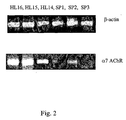
- Fig. 2 shows ethidium bromide staining of β-actin and α7 AChR PCR products obtained from mRNA of PBLs of schizophrenic (Sp) and control healthy (Hl) individuals.
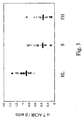
- Fig. 3 shows a comparison of α7 AChR/β-actin mRNA ratios in PBLs of healthy controls (HL), schizophrenic patients (S) and unmedicated patients (tested in their first hospitalization, FH).
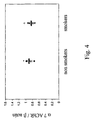
- Fig. 4 shows a comparison of α7 AChR/β-actin mRNA ratios in PBL of healthy smokers and non-smokers.
- The invention will now be illustrated by the following non-limiting examples.
- Patients. Schizophrenic patients were recruited from Tyrat Hacarmel and Beer Yaacov Mental Health Centers, Israel, after providing written informed consent for participation in the study. The study has been approved by the Institutional Review Board for human studies in these two mental health centers. All patients were formally diagnosed according to the Diagnostic and Statistical Manual of Mental disorder-IV criteria and evaluated by using standard rating scales by a senior psychiatrist. Healthy individuals' age and sex matched the patient group as much as possible.
Lymphocyte isolation. Blood (40-50 ml for D3 dopamine receptor, or 20-30 ml for the α7 AChR) was drawn from the cubital vein into a heparinized plastic syringe, and then transferred into a sterile 50-ml plastic tube. Blood samples were diluted with an equal volume of phosphate-buffered saline (PBS), were placed onto Ficoll-Paque gradients, and then were centrifuged for 30 minutes at 400xg. The lymphocyte layer was collected, and washed twice in PBS. The resulting pellet was immediately frozen at -80° C until RNA preparation.
Reverse Transcription - PCR analysis: Total RNA was isolated from lymphocytes by the guanidinum-thiocyanate method, and the amount and quality of RNA were determined by spectrophotometry and gel electrophoresis (2% agarose for the D3 dopamine receptor, or 1.5% for the α7 AChR; GibcoBRL). Two µg of total RNA were reverse transcribed into first-strand cDNA using poly-dT-priming and 20 units of Molony murine leukemia virus reverse transcriptase. Two µl cDNA product (80 ng RNA) was used for the PCR amplification at a final concentration of 1X PCR buffer (Perkin-Elmer), and 1 U of Taq DNA polymerase (Perkin-Elmer) in a 25 µl final volume. PCR was carried out in a DNA thermocycler (Minicycler MJ research, MA) for 23 cycles (β-actin), 38 cycles (D3 and D4 dopamine receptors), and 39 cycles (α7 AchR). Annealing temperatures for β-actin, for D3 and for D4 dopamine receptors was 60° C, while that for α7 AchRwas 57° C. The amplification was found to be linear between 30 and 40 cycles for D3 and D4 dopamine receptors, as well as for the α7 AChR, and between 19 and 25 cycles for β-actin. - The PCR primers for D3-, D4-dopamine receptors, for α7 AchR, and for β-actin were designed to include at least one intron, to eliminate amplification of genomic DNA. Their sequences were as follows:
- D3 dopamine receptor - GGAGACGGAAAAGGATCCTCACTCG (nt 655-680); TCAGCAAGACAGGATC TTGAGGAAGG (nt 1203-1177).
- D4 dopamine receptor - CGGGATCCCACCCCAGACTCCACC (nt 964-988); CGGAATTCCGTTGCGGAACTCGGC (nt 1240-1216).
- α7 AChR receptor-AAGTTTGGGTCCTGGTCTTACG (nt 571-592); GATCATGGTGCTGGCGAAGTA (nt 978-958).
- β-actin- TGAAGTGTGACGTGGACATCCG (nt 96-117); GCTGTCACCTTCACCGTT CCAG (nt 543-522).
- Quantification of PCR products was performed by using a densitometer and a SCION IMAGE (Frederick, MD) analysis, and/or PCR-ELISA.
PCR-ELISA: PCR was performed as described above except for the use of digoxigenin-labeled dNTPs. PCR products were incubated with biotinylated specific internal primers of the tested fragments that were immobilized in streptavidin-coated microtiter plates. The biotinylated internal primers served as capture probes. The bound digoxigenin-labeled PCR-products were then incubated with anti-digoxigenin-peroxidase conjugate that bound to the digoxigenin residues in the labeled PCR products. Peroxidase substrate solution was added, and the color developed was measured in a microtiter-plate reader. - Table 1 summarizes the details (ages, sexes, and diagnoses) of schizophrenic patients and healthy controls from whom blood samples were obtained. RT-PCR was performed on total RNA preparations from these blood samples with primers specific for D3 or D4 dopamine receptor, and β-actin as a control. The specific PCR products were resolved on 2% agarose gels, and their sequences were verified. For each patient, a sex- and optimal age-matched healthy control was used, and the level of specific dopamine receptor mRNA was compared between sick and healthy patients. As depicted in Fig. 1 (a and b) for several representative patients, the signals for D3 receptor mRNA were significantly higher in schizophrenic patients than in healthy controls. This increase was found to be specific for the D3 dopamine receptor, because no significant differences in the intensities of D4 receptor bands were detected between schizophrenic patients and healthy controls (Figs. 1b, 1c).
- Quantification of the intensities of the specific D3 dopamine receptor bands was performed by densitomety. The results obtained for 13 patients are summarized in Table 2. Each schizophrenic patient was compared with a sex- and optimal age-matched healthy individual. For each of them, a ratio of the measured density value for D3 receptor to the value for β-actin was determined. The ratio of these two values for a patient and a matched healthy control, respectively, represents the increased level (in folds) in D3 specific mRNA in a given patient. As shown in Table 2, the increased levels obtained for the 13 patients range between 1.59 and 7.45 (mostly between 2-3). This increase in D3 receptor mRNA in schizophrenic patients is significantly higher than the reported increases in binding levels and other recently suggested peripheral markers for schizophrenia (Avissar et al., 1997). Furthermore, the increase in D3 receptor mRNA was not affected by different drug treatments. Although some of the patients received typical treatment and some atypical treatment (see Table 1), it can be noted that all patients exhibited a similar range of increase indicating that this was not a result of specific dopamine-receptor subtype blockade and up-regulation. Moreover, the present inventors found that this increase was not the consequence of a dopamine receptor antagonist treatment, because non-medicated patients (S12, S13) showed a similar increase in D3 level (see Tables 1 and 2).
- Another way to quantify the differences in a specific mRNA level was obtained from PCR-ELISA experiments (see Experimental part). Table 3 summarizes the results obtained from 6 patients. The increased mRNA levels observed are between 1.6 and 3.38 (average increase 2.30 ± 0.63). It should be noted that there is a relatively good agreement between the quantitative values obtained by densitometry and by PCR-ELISA (see patients S1, S4 and S6 in Tables 2 and 3).
- It should be added that the use of sex- and/or age-matched controls does not appear to be critical. The present inventors demonstrated that the differences in D3 specific mRNA levels between schizophrenics and healthy individuals, determined by either densitometry or PCR-ELISA, were similar when compared with additional, not necessarily matched, controls (Table 4). This observation may be valuable in designing a practical assay wherein PBL from two or more healthy individuals may be pooled for use as a control.
- In conclusion, these findings strongly suggest that D3-receptor mRNA levels in PBLs may serve as a convenient and reliable peripheral marker for schizophrenia, thus assist in early diagnosis (which is frequently unclear), and possible follow-up of the illness.
- Thirty four patients were included in this study, 14 men and 20 women, ranging from 18 to 67 year of age. Of these, 20 were hospitalized schizophrenic patients, and 14 unmedicated patients that were examined during their first hospitalization. 21 healthy controls were studied, 11 nonsmokers and 10 smokers, 8 male and 13 female ranging from 31 to 62 years of age. Table 5 summarizes the details (age, sex and diagnosis) of schizophrenic patients and healthy controls participating in this study.
- RNA was prepared from blood samples and RT-PCR was performed on total RNA, using specific primers for the α7 AChR, and for β-actin as a control. The specific PCR products were resolved on 1.5% agarose gels. As depicted in Fig. 2, the signals for α7 AChR were significantly lower in 3 schizophrenic patients than in 3 healthy controls. Quantification of the intensities of the specific α7 AChR and β-actin bands was performed by densitometry. The results obtained in 28 experiments are summarized in Table 6a. For each individual, a ratio of the measured density value for the α7 AChR to the value for β-actin was determined. Each patient was tested 1-4 times. As seen in Table 6a, 10 of the 34 tested patients had no detectable band for α7 AChR. The α7 AChR/β-actin ratios for these patients was arbitrarily determined as <0.1 (lower than the smallest calculated ratio in Table 6a). The α7 AChR/β-actin ratios for healthy controls (HL), schizophrenic patients (S) and unmedicated patients (first hospitalization,FH) obtained in all experiments are depicted in Figure 3. The average values were 0.88±0.18, 0.36±0.30 and 0.34±0.26 for healthy controls, schizophrenic patients and unmedicated patients, respectively.
- To determine the significance of the difference between healthy and schizophrenic patients, the α7 AChR/β-actin ratios obtained for 11 different healthy controls and for 14 different schizophrenic patients were compared by Sign test. In each experiment, the values obtained for the schizophrenic patients are significantly lower than for the corresponding healthy individuals (P<0.004).
- The reduction in the level of α7 AChR mRNA observed in schizophrenic patients was calculated by the following equation: 100 - 100[(α7 AChR/β-actin S) / (α7 AChR/β-actin Hav)]. First, the average α7 AChR/β-actin ratios of all healthy controls in a given experiment was calculated (Hav). The decrease (%) of the α7 AChR mRNA for each patient was obtained after subtracting the % of (α7 AChR/β-actin S) / (α7 AChR/β-actin Hav) ratio from 100%. The % of decrease for all experiments were calculated, and are depicted in the last column of Table 6a. As seen in this Table, there were only 8 determinations (representing 6 different patients), in which the percent decrease was lower than 20%. All the other determinations in patients resulted in significant decreases in the α7 AChR mRNA levels, ranging from 20% to 98% decrease. So far, the present inventors have not observed a correalation between the percent decrease of α7 AChR mRNA and the disease state. However, it is interesting to point out that one unmedicated patient (FH2) that was tested in his first hospitalization, and exhibited a very low % decrease in its α7 AChR mRNA (5.1 %, representing an average of three independent determinations), turned to be non schizophrenic following detailed psychiatric evaluation.
- The incidence of smoking in a mental illness, particularly in schizophrenia, is much higher than in the general population, 74-92% compared to 30-55%, respectively (Olincy et al., 1999). We have, therefore, tested whether smoking by itself has an effect on α7 AChR mRNA levels. Blood samples from healthy smokers that smoke a pack of cigarettes a day, and from healthy nonsmokers were analyzd for their α7 AChR mRNA levels. As depicted in Table 6b, there were no significant differences in the α7 AChR/β-actin ratios of smokers and nonsmokers. This suggests that the decrease in α7 AChR mRNA levels in schizophrenic patients is not a result of smoking. The α7 AChR/β-actin ratios for healthy smokers and nonsmokers are depicted in Figure 4, demonstrating average ratios of 0.83±0.097 and 0.89±0.097, for smokers and nonsmokers, respectively.
- The dopaminergic hypothesis of schizophrenia proposes that hyperactivity of dopamine transmission is responsible for the symptoms of this disorder. In the first example of the present invention we have demonstrated increased levels of D3 dopamine receptor mRNA in PBLs of schizophrenic patients, when compared with the levels in healthy controls. In this example, the present inventors analyzed the mRNA levels of both D3 dopamine receptor and of the α7 AChR in PBLs of a small group of patients. As expected, the levels of D3 dopamine receptor mRNA were increased, whereas the levels of α7 AChR mRNA were decreased. As shown in Table 7, an increase of 55.52% in the levels of D3 receptor mRNA and a decrease of 63.66% in the levels of α7 AChR mRNA were observed for patient SC8. The availability of two different biological markers (the mRNA level of D3 dopamine receptor and α7 AChR) that can be both tested in PBLs makes the evaluation of schizoprenic patients by a peripheral and objective test, rather promising. Moreover, the fact that the mRNA level of these two receptor mRNAs changes in an opposite direction in schizophrenia, i.e., the gene expression of D3 receptor increases, whereas the gene expression of α7 AChR decreases in PBLs of schizophrenic patients, that correlates with the changes in these receptors in the brain (as observed in post mortem schizophrenic patients), makes these assays experimentally convenient and reliable.
- In conclusion, the decreased levels of mRNA of the α7 AChR in PBLs of schizophrenic patients, as presented herein, is consistent with earlier reports demonstrating a decrease in α7 AChR in post mortem brains of schizophrenic patients. Such correlation between decreased levels of α7 AChR mRNA in PBLs and the expression of schizophrenia justifies its application as a biological marker for this disease.

Table 2. Densitometric evaluation of D3 and D4 mRNA levels in patients as compared with their levels in healthy individuals. (Example 1) A. Schizophrenic patients: Controls: Number β-actin Arb. units D3 Arb. units D3/β-actin Number β-actin Arb. units D3 Arb. units D3/β-actin D3 fold increase (S/C) S1 67 51 0.671 C3 86 23 0.267 2.513 S2 87 56 0.643 C3 86 23 0.267 2.408 S3 82 60 0.731 C3 86 23 0.267 2.0737 S4 98 100 1.02 C2 95 61 0.642 1.588 S5 55 143 2.600 C2 58 59 1.017 2.556 S6 75 153 2.040 C4 79 70 0.886 2.302 S7 19 171 9.000 C10 85 163 1.917 4.694 S8 138 426 3.087 C8 425 176 0.414 7.456 S9 89 60 0.674 C7 121 28 0.231 2.917 S10 107 71 0.663 C7 121 28 0.231 2.870 S11 303 277 0.914 C3 271 29 0.107 6.644 S12 319 227 0.711 C7 273 86 0.315 2.257 S13 237 354 1.493 C9 199 130 0.653 2.870 B. Schizophrenic patients: Controls: Number β-actin Arb. units D3 Arb. units D3/β-actin Number β-actin Arb. units D3 Arb. units D3/β-actin D3 fold increase (S/C) S1 74 70 0.945 C3 67 70 1.044 0.905 S2 71 72 1.010 C3 67 70 1.044 0.967 S3 72 74 1.027 C3 67 70 1.044 0.983 S4 67 71 1.059 C2 82 73 0.890 1.189 Table 3. Evaluation by PCR-ELISA of D3 mRNA levels in patients as compared with their levels in healthy individuals. (Example 1) Schizophrenic patients: Controls: Number β-actin (O.D.) D3 (O.D.) D3/β-actin Number β-actin (O.D.) D3 (O.D.) D3/β-actin D3 fold increase (S/C) S1 0.556 0.868 1.56 C8 0.918 0.552 0.601 2.595 S2 0.808 2.225 2.75 C9 0.405 0.33 0.814 3.378 S3 0.224 0.253 1.13 C8 0.533 0.272 0.510 2.215 S4 0.638 0.394 0.626 C8 0.876 0.316 0.360 1.738 S5 0.340 0.823 2.420 C2 0.365 0.533 1.46 1.657 S6 0.339 0.899 2.652 C3 0.368 0.444 1.206 2.199 Table 4. Evaluation of D3 mRNA levels in patients as compared with their levels in several healthy individuals (Example 1) Schizophrenic patients: Controls: Number Number D3/β-actin Ratio S8 3.087 C8 0.414 7.456 C9 0.498 6.198 S5 2.600 C2 1.017 2.6 C3 1.145 2.27 C4 0.886 2.934 S6 2.040 C2 1.017 2.005 C3 1.145 1.78 C4 0.886 2.302 S4 1.02 C2 0.642 1.588 C8 0.656 1.554 Table 5: Characteristics of patients and healthy donors (Example 2) Sample Age Gender Diagnosis Healthy controls (nonsmokers) HL16 49 F HL15 32 M HL14 31 M HL10 37 M HL5 40 M HL9 39 F HL18 36 F HL11 62 F HL6 35 M HL 19 32 M HL 20 35 F Healthy smokers SM1 52 F SM2 35 M SM3 35 F SM4 41 M SM6 44 F SM7 37 F SM8 45 F SM9 54 F SM10 55 F SM11 50 F Schizophrenic patients SP1 1 21 M Schizophrenia-residual type SP2 27 M Schizophrenia-paranoid type SP3 25 M Schizophrenia-undifferentiated type SP7 49 F Schizophrenia-paranoid type SP8 57 F Schizophrenia-residual type SP9 31 F Schizophrenia-paranoid type SP12 56 F Schizophrenia-undifferentiated type SP13 54 M Schizophrenia-paranoid type SP15 31 F Schizophrenia-paranoid type SP19 54 F Schizophrenia-paranoid type SP20 45 F Schizophrenia BY8 39 M Schizophrenia-residual type BY9 62 F Disorganized Schizophrenia BY10 67 F Disorganized Schizophrenia BY11 50 M Schizophrenia SC6 51 M Schizophrenia SC7 24 F Schizophrenia SC8 64 F Schizophrenia SC10 63 F Schizophrenia SP5 65 F Schizophrenia-undifferentiated type Schizophrenic patients (First hospitalization) BY14 40 F Schizophrenia-paranoid type FH2 30 F FH3 27 M Personality disorder FH4 40 M Psychotic episode FH5 18 M Schizophrenia FH6 21 M Personality disorder FH7 26 M Acute psychotic disorder FH9 26 F Schizophrenia-moderately ill FH10 23 F Schizophrenia-markedly ill FH11 20 F Schizophrenia-moderately ill FH12 35 M Acute psychotic disorder FH13 38 M Schizophrenia-moderately ill FH14 20 F Acute psychotic disorder FH15 48 F Acute psychotic disorder Table 6a: Evaluation of α7/β -actin mRNA levels of schizophrenic patients compared to healthy controls (Example 2) Schizophrenic patients Healthy controls Exp. No. Sample No. β-actin (arb. Units) α7 (arb. Units) α7/β -actin Sample No. β-actin (arb. Units) α7 (arb. Units α7/β-actin Decrease % 1 SP1 206.49 75.77 .37 HL16 228.25 223.65 .98 59.99 SP2 220.25 109.33 .496 HL15 235.74 230.62 .99 45.87 SP3 215.3 91.46 .42 HL14 206.45 163.76 .79 53.68 2 SP7 155.53 134.14 .86 HL16 166.3 152.18 .92 17.35 SP8 168.35 140.64 .84 HL5 131.47 154.08 1.17 19.95 SP9 135.95 112.06 .82 21.01 3 SP3 133.48 118.31 .89 HL16 104.04 138.75 1.33 23.08 SP12 143.23 123.66 .86 HL15 130.7 118.01 .90 25.07 HL14 106.07 129.44 1.22 4 SP19 173.83 93.35 .54 HL14 175.14 138.94 .79 41.15 SP15 159.95 undetectable <0.1 HL19 175.91 164.57 .94 >89.05 HL16 164.39 165.8 1.01 5 BY8 108.54 80.63 .74 HL16 114.12 131.7 1.15 35.63 BY10 97.75 undetectable <0.1 >91.31 BY11 101.5 undetectable <0.1 >91.31 6 BY14 182.8 114 .62 HL18 181.07 128.85 .69 10.27 7 FH2 221.62 188.4 .85 HL18 241.88 210.59 .87 3.97 SP19 228.01 138.64 .61 HL15 236.86 194.03 .82 31.3I SP20 171.5 undetectable <0.1 HL11 235.08 227.08 .97 >88.72 SP3 202.13 undetectable <0.1 >88.72 BY10 240.7 179.56 .75 15.73 8 SC7 170.88 144.4 .85 HL6 148.91 144.1 .97 12.68 SC10 124.7 95.67 .77 20.72 FH6 162.22 undetectable <0.1 >90.30 SC6 158.41 undetectable <0.1 >90.30 9 SC7 201.25 127.85 .64 HL6 187.14 157.69 .84 24.61 SC10 215.77 86.5 .40 52.42 FH6 201.53 81.66 41 51.91 FH7 165.53 68.99 .42 50.54 SC6 180.86 undetectable <0.1 >88.10 SC8 209.27 undetectable <0.1 >88.10 10 FH2 227.06 199.01 .88 HL11 229.63 170.67 0.74 -9.80 HL14 239.21 204.11 0.85 11 SP3 190.77 51.58 .27 HL9 190.34 123.79 .65 58.43 12 SP1 166.62 90.67 .54 HL5 155.5 100.14 .64 41.36 SP2 167.84 90 .54 HL9 164.2 103.37 .63 42.22 SP3 157.41 undetectable <0.1 HL9 167.36 102.55 .61 >85.62 SP20 145.1 undetectable <0.1 HL14 167.28 150.2 .90 >85.62 13 SP15 126.61 undetectable <0.1 HL10 154.99 85.57 0.55 >81.31 HL9 145.48 74.96 0.52 14 SP3 186.89 undetectable <0.1 HL9 177.55 137.62 0.78 >86.85 SP15 166.82 undetectable <0.1 HL10 170.43 139.54 0.82 >86.85 SP19 181.28 undetectable <0.1 HL15 170.05 100.22 0.59 >86.85 15 SP9 166.45 undetectable <0.1 HL15 168.02 90.39 0.54 >80.59 SP19 139.61 undetectable <0.1 HL16 168.81 91.01 0.54 >80.59 HL10 166.02 81.96 0.49 HL18 168.06 82.67 0.49 16 SP19 220.14 undetectable <0.1 HL14 217.55 131.95 0.61 >85.30 SP20 197.13 undetectable <0.1 HL5 203.7 153.4 0.75 >85.30 17 SP15 179.26 undetectable <0.1 HL9 209.93 146.15 0.70 >85.72 18 FH2 61.84 26.08 0.52 HL18 76.29 46.87 0.61 21.94 FH3 54.38 4.93 0.11 HL11 72.83 52.98 0.73 83.00 19 FH3 63.37 6.54 0.10 HL5 29.82 14.75 0.49 74.90 SP9 52.77 undetectable <0.1 >79.60 SP5 32.03 undetectable <0.1 >79.60 SP12 45.16 undetectable <0.1 >79.60 SP13 20.1 undetectable <0.1 >79.60 FH4 60.35 undetectable <0.1 >79.60 20 FH7 43.61 10 0.23 . SM7 95.28 55.89 0.59 65.26 FH9 99.78 14.48 0.15 SM8 105.05 72.68 0.69 78.01 FH5 81.75 undetectable <0.1 SM9 84.78 49.92 0.59 >84.85 SM10 89 68.77 0.77 21 FH9 92.99 50.54 0.54 SM9 81.75 69.1 0.85 35.70 FH7 94.76 undetectable <0.1 >88.24 SC6 79.03 undetectable <0.1 >88.24 22 FH9 63.85 32.77 0.51 SM9 63.48 50.93 0.80 36.03 FH7 53.35 undetectable <0.1 >87.5 23 SC8 66.84 6.25 0.09 C3 84.21 17.32 0.21 54.54 SC6 39.87 undetectable <0.1 >52.39 24 FH9 92.3 47.22 0.51 H2 127.12 111.29 0.88 46.85 FH10 66.85 undetectable <0.1 HL6 127.53 133.84 1.05 >89.64 25 FH11 95.22 76.43 0.80 C3 99.08 103.75 1.05 23.35 FH12 101.4 92.47 0.91 12.91 FH13 93.01 82.36 0.89 15.44 FH14 72.02 34.75 0.48 53.92 FH15 101.95 26.55 0.26 75.13 26 FH15 108.85 38.52 0.35 C3 120.6 119.12 0.99 64.17 FH14 95.75 undetectable <0.1 >89.9 27 SC8 67.04 0.75 0.01 C3 71.26 64.85 0.91 98.78 FH14 47.29 3.21 0.07 92.54 FH15 74.17 29.25 0.39 56.67 28 BY9 212.5 94.95 0.45 HL18 187.8 114.39 0.61 35.71 Table 6b: Evaluation of α7/β -actin mRNA levels of smokers compared to non smokers (Example 2) Smokers (healthy controls) Non smokers (healthy controls) Exp No. Sample No. β-actin (arb. Units) α7 (arb. Units) α 7/β-actin Sample No. β-actin (arb. Units) α 7 (arb. Units α 7/β-actin Decrease % 1 SM1 245.51 228.35 .93 HL11 229.63 170.67 0.74 -16.52 SM3 235.09 187.18 .80 HL14 239.21 204.11 0.85 .26 SM4 228.96 192.34 .84 -5.24 2 SM6 148.88 125.74 .84 HL6 148.91 144.1 .97 12.72 SM7 170.86 125.14 .73 24.31 SM8 170.29 149.14 .88 9.50 3 SM7 216.7 223.81 1.03 HL6 187.14 157.69 .84 -22.57 SM8 165.87 117.62 .71 15.85 4 SM1 240.84 202.56 0.84 HL18 241.88 210.59 .87 4.99 HL15 236.86 194.03 .82 HL11 235.08 227.08 .97 Table 7: Comparison of α7 and D 3 mRNA levels Sample β -actin (arb. Units) α7 (arb. Units) α7/p-actin Decrease β-actin (arb. Units) D3 (arb. Units) D3/β -actin Increase % Fold % Fold C3 83.36 67.28 0.81 83.36 0.65 0.007 SC8 67.31 19.86 0.30 63.66 2.7 67.31 1.18 0.02 55.52 2.86 -
- Avissar, S., Nechamkin, Y., Barki-Harrington, L., Roitman, G, and Schreiber, G. 1997. Differential G protein measures in mononuclear leukocytes of patients with bipolar mood disorder are state dependent. Affect Disord 43:85.
- Bondy, B., Ackenheil, M., Birzle, W., Elbers, R, and Frohler, M. 1984. Catecholamines and their receptors in blood: evidence for alterations in schizophrenia. Biol Psychiatry 19:1377.
- Bondy, B., Ackenheil, M., Elbers, R, and Frohler, M. 1985. Binding of 3H-spiperone to human lymphocytes: a biological marker in schizophrenia? Psychiatry Res 15:41.
- Burghaus, L., Aschutz, U., Krempel, U., Rob A.I. de Vos, Ernst N.H. Steur, J., Wevers, A., Lindstrom, J., and Hannsjorg. 2000. Quantitative assessment of nicotinic acetylcholine receptor proteins in the cerebral cortex of Alzheimer patients. Mol. Brain Research 76: 385-388.
- Court J., Spurden D., Lloyd S., McKeith I., Ballard C., Cairns N., Kerwin R., Perry R., and Perry E. 1999. Neuronal nicotinic receptors in dementia with Lewy bodies and schizophrenia: alpha-bungarotoxin and nicotine binding in the thalamus. J. Neurochem. Oct;73(4):1590-7.
- Creese, I., Burt, D.R, and Snyder, S.H. 1976. dopamine receptor binding predicts clinical and pharmacological potencies of antischizophrenic drugs. Science 192:481.
- Ferrero, P., Rocca, P., Eva, C., Benna, P., Rebaudengo, N., Ravizza, L., Genazzani, E, and Bergamasco, B. 1991. An analysis of lymphocyte 3H-N-methyl-scopolamine binding in neurological patients. Brain 114:1759.
- Freedman, R., Adams, C.E., and Leonard, S. 2000. The α7-nicotinic acetylcholine receptor and the pathology of hippocampal interneurons in schizophrenia. J. of Chem. Neuroanatomy 20: 299-306.
- Grodzicki, J., Pardo, M., Schved, G., Schlosberg, A., Fuchs, S, and Kanety, H. 1990. Differences in [3H]-spiperone binding to peripheral blood lymphocytes from neuroleptic responsive and nonresponsive schizophrenic patients. Biol Psychiatry 27:1327.
- Guan, Z., Zhang, X., Blennow, K., and Nordberg, A. 1999. Decreased protein level of nicotinic receptor α7 subunit in the frontal cortex from schizophrenic brain. Neuro. Report 10: 1779-1782.
- Guan, Z., Zhang, X., Ravid, R., and Nordberg, A. 2000. Decreased protein levels of nicotinic receptor subunits in the hippocampus and temporal cortex of patients with Alzheimer's disease. J. ofNeurochem. 74:237-243.
- Hellstrom-Lindahl, E., Zhang, X., and Nordberg, A. 1997. Expression of nicotinic receptor subunit mRNAs in lymphocytes from normal and patients with Alzheimer's disease. Alz. Research 3:29-36.
- Hellstrom-Lindahl, E., Mousavi, M., Zhang, X., Ravid, R., and Nordberg, A. 1999. Regional distribution of nicotinic receptor subunit mRNAs in human brain: comparison between Alzheimer and normal brain. Mol. Brain Research 66:94-103.
- Hietala, J, and Syvalahti, E. 1996. Dopamine in schizophrenia. Ann Med 28:557.
- Karlsson, P., Farde, S.L., Harnryd, G.S, and Wiesel, F.A. 1995. Lack of apparent antipsychotic effect of D1-dopamine receptor antagonist SCH39166 in acutely ill schizophrenic patients. Psychopharmacology 121:309.
- Leonard, S., Breese, C., Adams, C., Benhammou, K., Gault, J., Stevens, K., Lee, M., Adler, L., Olincy, A., Ross, R., and Freedman, R. 2000. Smoking and schizophrenia: abnormal nicotinic receptor expression. European Journal of Pharmacology 393: 237-242.
- Levant, B. 1997. The D3 dopamine receptor: neurobiology and potential clinical relevance. Pharmacol Rev 49:231.
- Nagai, Y., Ueno, S., Saeki, Y., Soga, F., Hirano, M, and Yanagihara, T. 1996. Decrease of the D3 dopamine receptor mRNA expression in lymphocytes from patients with Parkinson's disease. Neurology 46:791. responsive and nonresponsive schizophrenic patients. Biol Psychiatry 27:1327.
- Olincy, A., Leonard, S., Young, D.A., Sullivan, B., and Freedman, R. 1999. Decreased bombesin peptide response to cigarette smoking in schizophrenia. Neuropsychopharmacology Vol 20(1): 52-59.
- Olincy, A., Ross, R.G., Young, D.A., Roath, M., and Freedman R. 1998. Improvement in smooth pursuit eye movements after cigarette smoking in schizophrenic patients. Neuropsychopharmacology Vol 18:175-185.
- Olincy, A., Young, DA., Freedman, R. 1997. Increased levels of the nicotine metabolite cotinine in schizophrenia compared to other smokers. Biol. Psychiatry Jul 1;42(1):1-5.
- Ricci, A., Bronzetti, E., Felici, L., Tayebati, S.K, and Amenta, F. 1997 Dopamine D4 receptor in human peripheral blood lymphocytes: a radioligand binding assay study. Neurosci Lett 229:130.
- Seeman, P, and Niznik, H.B. 1990. Dopamine receptors and transporters in Parkinson's disease and schizophrenia. FASEB J 4:2737.
- Stassen, H.H., Bridler, R., Hagele, S., Hergersberg, S., Mehmann, B., Schinzel, A., Weisbrod, M., and Scharfetter., C. 2000. Schizophrenia and smoking: Evidence for a common neurobiological basis? American J. of Med. Gen. 96:173-177.
- Takahashi, N., Nagai, Y., Ueno, S., Saeki Y, and Yanagihara, T. 1992. Human peripheral blood lymphocytes express D5 dopamine receptor gene and transcribe the two pseudogenes. FEBS Lett 314:23.
- Wang, HY., Lee, DH., D'Andrea, MR., Peterson, PA., Shank, RP., Reitz, AB. 2000. Beta-amyloid (1-42) binds to alpha-7 nicotinic acetylcholine receptor with high affinity. Implications for Alzheimer's disease pathology. J. Biol. Chem. 275 (8):5626-32.
- Willner, P. 1997. The dopamine hypothesis of schizophrenia: current status, future prospects. Int Clin Psychopharmacol 12:297.
-
- <110> YEDA RESEARCH AND DEVELOPMENT CO. LTD. et al
- <120> METHODS FOR THE DIAGNOSIS AND FOLLOW UP OF SCHIZOPHRENIA AND OTHER MENTAL AND NEURODEGENERATIVE DISORDERS.
- <130> YEDA-017 PCT
- <140> PCT/IL01/00761
<141> 2001-08-15 - <150> IL 137865
<151> 2000-08-15 - <160> 8
- <170> PatentIn version 3.1
- <210> 1
<211> 25
<212> DNA
<213> HUMAN - <400> 1

- <210> 2
<211> 26
<212> DNA
<213> HUMAN - <400> 2

- <210> 3
<211> 24
<212> DNA
<213> HUMAN - <400> 3

- <210> 4
<211> 24
<212> DNA
<213> HUMAN - <400> 4

- <210> 5
<211> 22
<212> DNA
<213> HUMAN - <400> 5

- <210> 6
<211> 21
<212> DNA
<213> HUMAN - <400> 6

- <210> 7
<211> 22
<212> DNA
<213> HUMAN - <400> 7

- <210> 8
<211> 22
<212> DNA
<213> HUMAN - <400> 8

Claims (8)
- An in vitro method for the diagnosis of schizophrenia in a tested individual, comprising:(i) measuring mRNA of D3 dopamine receptor and/or of α7 nicotinic acetylcholine receptor (α7 AChR) and of a control gene in peripheral blood lymphocytes (PBLs) of said tested individual and of at least one healthy control individual or of a pool of two or more healthy individuals;(ii) calculating the ratio between the D3 dopamine receptor mRNA and the control gene mRNA and/or the ratio between α7 AChR mRNA and the control gene mRNA for the tested individual and the at least one healthy control individual or pool of two or more healthy individuals; and(iii) evaluating the ratio between the ratios obtained in (ii) for the tested individual and for the at least one healthy control individual or pool of two or more healthy individuals, wherein an increase in the ratio of D3 dopamine receptor and control gene mRNA and/or a decrease in the ratio of α7 AChR and control gene mRNA in the tested individual in comparison to the at least one healthy control individual or pool of two or more healthy individuals, indicate that said tested individual has a high likelihood of having schizophrenia.
- A method according to claim 1 comprising:(i) measuring mRNA of D3 dopamine receptor and/or of α7 AChR and of a control gene in PBLs of said tested individual and of at least one healthy control individual or of a pool of two or more healthy individuals;(ii) calculating the ratio between the D3 dopamine receptor mRNA and the control gene mRNA and/or the ratio between the α7 AChR and the control gene mRNA for the tested individual and the at least one healthy control individual or pool of two or more healthy individuals; and(iii) evaluating the ratio between the ratios obtained in (ii) for the individual tested for schizophrenia and for the at least one healthy control individual or pool of two or more healthy individual, wherein an increase of above 1.6 fold in the ratio of D3 dopamine receptor and control gene mRNA and/or a decrease of more than 20% in the ratio of α7 AChR and control gene mRNA in the tested individual in comparison to the at least one healthy control individual or pool of two or more healthy individuals, indicate that said tested individual has a high likelihood of having schizophrenia.
- A method according to claim 2 comprising:(i) measuring mRNA of D3 dopamine receptor and of a control gene in PBLs of said tested individual and of at least one healthy control individual or of a pool of two or more healthy individuals;(ii) calculating the ratio between the D3 dopamine receptor mRNA and the control gene mRNA for the tested individual and the at least one healthy control individual or pool of two or more healthy individuals; and(iii) evaluating the ratio between the ratios obtained in (ii) for the individual tested for schizophrenia and for the at least one healthy control individual or pool of two or more healthy individuals, wherein an increase of above 1.6 fold in the ratio of D3 dopamine receptor and control gene mRNA in the tested individual in comparison to the at least one healthy control individual or pool of two or more healthy individuals, indicates that said tested individual has a high likelihood of having schizophrenia.
- A method according to claim 2 comprising:(i) measuring mRNA of the α7 AChR and of a control gene in PBLs of said tested individual and of at least one healthy control individual or of a pool of two or more healthy individuals;(ii) calculating the ratio between the α7 AChR mRNA and the control gene mRNA for the tested individual and the at least one healthy control individual or pool of two or more healthy individuals; and(iii) evaluating the ratio between the ratios obtained in (ii) for the individual tested for schizophrenia and for the at least one healthy control individual or pool, wherein a decrease of more than 20% in the ratio of α7 AChR and control gene mRNA in the tested individual in comparison to the at least one healthy control individuals or pool, indicates that said tested individual has a high likelihood of having schizophrenia.
- A method according to claim 1, wherein the mRNA of D3 dopamine receptor, of α7 AChR and of the control gene in step (i) is measured by reverse transcription-polymerase chain reaction (RT-PCR).
- A method according to claim 1, wherein the control gene is β-actin.
- A method according to claim 1, which comprises calculating in step (ii) the ratio between the D3 dopamine receptor mRNA and/or the ratio between the α7 AChR and the control gene mRNA of the individual tested for schizophrenia and the ratio between the D3 dopamine receptor mRNA and/or the ratio between the α7 AChR and the control gene mRNA of a sole healthy individual.
- A method according to claim 1, wherein in the schizophrenic individual the increase in the ratio of D3 dopamine receptor and control gene mRNA evaluated in step (iii) is of 2-4 folds and/or the decrease of the ratio α7 AChR and control gene mRNA evaluated in step (iii) is 20 - 98%, in comparison to the at least one healthy control individual or pool of two or more healthy individuals.
Applications Claiming Priority (3)
| Application Number | Priority Date | Filing Date | Title |
|---|---|---|---|
| IL13786500 | 2000-08-15 | ||
| IL13786500A IL137865A0 (en) | 2000-08-15 | 2000-08-15 | Method for the diagnosis and follow-up of schizophrenia |
| PCT/IL2001/000761 WO2002014547A2 (en) | 2000-08-15 | 2001-08-15 | Method for the diagnosis and follow up of schizophrenia and other mental and neurodegenerative disorders |
Publications (2)
| Publication Number | Publication Date |
|---|---|
| EP1364050A2 EP1364050A2 (en) | 2003-11-26 |
| EP1364050B1 true EP1364050B1 (en) | 2007-02-28 |
Family
ID=11074527
Family Applications (1)
| Application Number | Title | Priority Date | Filing Date |
|---|---|---|---|
| EP01961078A Expired - Lifetime EP1364050B1 (en) | 2000-08-15 | 2001-08-15 | Method for the diagnosis of schizophrenia |
Country Status (7)
| Country | Link |
|---|---|
| US (2) | US20050158715A1 (en) |
| EP (1) | EP1364050B1 (en) |
| AT (1) | ATE355389T1 (en) |
| AU (1) | AU2001282456A1 (en) |
| DE (1) | DE60126991T2 (en) |
| IL (2) | IL137865A0 (en) |
| WO (1) | WO2002014547A2 (en) |
Families Citing this family (9)
| Publication number | Priority date | Publication date | Assignee | Title |
|---|---|---|---|---|
| US7473528B2 (en) | 1999-01-06 | 2009-01-06 | Genenews Inc. | Method for the detection of Chagas disease related gene transcripts in blood |
| AU2003211947A1 (en) * | 2002-02-20 | 2003-09-09 | Sysmex Corporation | PRIMERS FOR NUCLEIC ACID AMPLIFICATION IN DETECTING HOUSEKEEPING GENE mRNA AND TEST METHOD USING THESE PRIMERS |
| HU227246B1 (en) * | 2004-04-30 | 2010-12-28 | Szegedi Biolog Koezpont | Use of genes as molecular markers in diagnosis of schizophrenia and diagnostic kit |
| US20080075789A1 (en) * | 2006-02-28 | 2008-03-27 | The Regents Of The University Of California | Genes differentially expressed in bipolar disorder and/or schizophrenia |
| WO2009074331A2 (en) * | 2007-12-11 | 2009-06-18 | Julius-Maximilians-Universität Würzburg | Early and differential diagnosis test for alzheimer's disease |
| AT515576B1 (en) * | 2014-03-14 | 2017-09-15 | Red Bull Gmbh | Method for the in vitro diagnosis of the degree of mental deficiency in Down's syndrome |
| US20200168317A1 (en) | 2018-08-22 | 2020-05-28 | Centre For Addiction And Mental Health | Tool for assisting individuals experiencing auditory hallucinations to differentiate between hallucinations and ambient sounds |
| US11862337B2 (en) | 2019-03-19 | 2024-01-02 | Cambridge Cognition Limited | Method and uses of diagnosing and recommending treatment for a psychotic disorder |
| CN116528747A (en) * | 2020-08-17 | 2023-08-01 | 纽约市哥伦比亚大学理事会 | Use of neuromelanin-sensitive MRI as a biomarker for dopamine function |
Family Cites Families (1)
| Publication number | Priority date | Publication date | Assignee | Title |
|---|---|---|---|---|
| US7625697B2 (en) * | 1994-06-17 | 2009-12-01 | The Board Of Trustees Of The Leland Stanford Junior University | Methods for constructing subarrays and subarrays made thereby |
-
2000
- 2000-08-15 IL IL13786500A patent/IL137865A0/en unknown
-
2001
- 2001-08-15 AT AT01961078T patent/ATE355389T1/en not_active IP Right Cessation
- 2001-08-15 AU AU2001282456A patent/AU2001282456A1/en not_active Abandoned
- 2001-08-15 WO PCT/IL2001/000761 patent/WO2002014547A2/en not_active Ceased
- 2001-08-15 EP EP01961078A patent/EP1364050B1/en not_active Expired - Lifetime
- 2001-08-15 DE DE60126991T patent/DE60126991T2/en not_active Expired - Lifetime
- 2001-08-15 US US10/344,862 patent/US20050158715A1/en not_active Abandoned
-
2003
- 2003-02-13 IL IL154429A patent/IL154429A/en not_active IP Right Cessation
-
2009
- 2009-06-23 US US12/490,195 patent/US7939262B2/en not_active Expired - Fee Related
Also Published As
| Publication number | Publication date |
|---|---|
| ATE355389T1 (en) | 2006-03-15 |
| WO2002014547A3 (en) | 2003-10-02 |
| IL137865A0 (en) | 2001-10-31 |
| US20100041043A1 (en) | 2010-02-18 |
| US7939262B2 (en) | 2011-05-10 |
| IL154429A (en) | 2009-09-22 |
| AU2001282456A1 (en) | 2002-02-25 |
| US20050158715A1 (en) | 2005-07-21 |
| DE60126991D1 (en) | 2007-04-12 |
| EP1364050A2 (en) | 2003-11-26 |
| WO2002014547A2 (en) | 2002-02-21 |
| DE60126991T2 (en) | 2008-01-03 |
Similar Documents
| Publication | Publication Date | Title |
|---|---|---|
| US7939262B2 (en) | Method for the diagnosis of schizophrenia | |
| Lardenoije et al. | Alzheimer’s disease-associated (hydroxy) methylomic changes in the brain and blood | |
| Mariani et al. | Gene expression studies in Depression development and treatment: an overview of the underlying molecular mechanisms and biological processes to identify biomarkers | |
| Perl et al. | The α7 nicotinic acetylcholine receptor in schizophrenia: decreased mRNA levels in peripheral blood lymphocytes | |
| Toda et al. | Dopamine hypothesis of schizophrenia: making sense of it all | |
| Lee et al. | Decreased serum brain-derived neurotrophic factor levels in elderly Korean with dementia | |
| Iga et al. | The Val66Met polymorphism of the brain‐derived neurotrophic factor gene is associated with psychotic feature and suicidal behavior in Japanese major depressive patients | |
| Karry et al. | Mitochondrial complex I subunits expression is altered in schizophrenia: a postmortem study | |
| De Luca et al. | Regulation of α7‐nicotinic receptor subunit and α7‐like gene expression in the prefrontal cortex of patients with bipolar disorder and schizophrenia | |
| Ismail et al. | Neurobiology of delusions in Alzheimer’s disease | |
| Pełka-Wysiecka et al. | BDNF rs 6265 polymorphism and COMT rs 4680 polymorphism in deficit schizophrenia in Polish sample | |
| Zhang et al. | Explorative study on the expression of neuregulin-1 gene in peripheral blood of schizophrenia | |
| Busch et al. | Blood-based biomarkers predicting response to antidepressants | |
| Vousooghi et al. | mRNA expression of dopamine receptors in peripheral blood lymphocytes of computer game addicts | |
| Wu et al. | Transcriptional profile of pyramidal neurons in chronic schizophrenia reveals lamina-specific dysfunction of neuronal immunity | |
| Kuo et al. | Inflammatory chemokine eotaxin-1 is correlated with age in heroin dependent patients under methadone maintenance therapy | |
| Monteleone et al. | Search of brain-enriched proteins in salivary extracellular vesicles for their use as mental disease biomarkers: A pilot study of the neuronal glycoprotein M6a | |
| Minoretti et al. | The T393C polymorphism of the GNAS1 gene is associated with deficit schizophrenia in an Italian population sample | |
| De Luca et al. | Genetic interaction between α4 and β2 subunits of high affinity nicotinic receptor: analysis in schizophrenia | |
| Costantini et al. | Different peripheral expression patterns of the nicotinic acetylcholine receptor in dementia with Lewy bodies and Alzheimer’s disease | |
| Di Bartolomeo et al. | DNA methylation at cannabinoid type 1 and dopamine D2 receptor genes in saliva samples of psychotic subjects: Is there an effect of Cannabis use? | |
| Shen et al. | Biochemical diagnosis in substance and non-substance addiction | |
| Schwarz et al. | A preliminary study on methylphenidate-regulated gene expression in lymphoblastoid cells of ADHD patients | |
| Jahangir et al. | A review of biomarkers in delirium superimposed on dementia (DSD) and their clinical application to personalized treatment and management | |
| Patkar et al. | Relationship between platelet serotonin uptake sites and measures of impulsivity, aggression, and craving among African-American cocaine abusers |
Legal Events
| Date | Code | Title | Description |
|---|---|---|---|
| PUAI | Public reference made under article 153(3) epc to a published international application that has entered the european phase |
Free format text: ORIGINAL CODE: 0009012 |
|
| 17P | Request for examination filed |
Effective date: 20030129 |
|
| AK | Designated contracting states |
Kind code of ref document: A2 Designated state(s): AT BE CH CY DE DK ES FI FR GB GR IE IT LI LU MC NL PT SE TR |
|
| AX | Request for extension of the european patent |
Extension state: AL LT LV MK RO SI |
|
| RTI1 | Title (correction) |
Free format text: METHOD FOR THE DIAGNOSIS OF SCHIZOPHRENIA |
|
| GRAP | Despatch of communication of intention to grant a patent |
Free format text: ORIGINAL CODE: EPIDOSNIGR1 |
|
| GRAS | Grant fee paid |
Free format text: ORIGINAL CODE: EPIDOSNIGR3 |
|
| GRAA | (expected) grant |
Free format text: ORIGINAL CODE: 0009210 |
|
| AK | Designated contracting states |
Kind code of ref document: B1 Designated state(s): AT BE CH CY DE DK ES FI FR GB GR IE IT LI LU MC NL PT SE TR |
|
| PG25 | Lapsed in a contracting state [announced via postgrant information from national office to epo] |
Ref country code: FI Free format text: LAPSE BECAUSE OF FAILURE TO SUBMIT A TRANSLATION OF THE DESCRIPTION OR TO PAY THE FEE WITHIN THE PRESCRIBED TIME-LIMIT Effective date: 20070228 Ref country code: AT Free format text: LAPSE BECAUSE OF FAILURE TO SUBMIT A TRANSLATION OF THE DESCRIPTION OR TO PAY THE FEE WITHIN THE PRESCRIBED TIME-LIMIT Effective date: 20070228 Ref country code: BE Free format text: LAPSE BECAUSE OF FAILURE TO SUBMIT A TRANSLATION OF THE DESCRIPTION OR TO PAY THE FEE WITHIN THE PRESCRIBED TIME-LIMIT Effective date: 20070228 Ref country code: NL Free format text: LAPSE BECAUSE OF FAILURE TO SUBMIT A TRANSLATION OF THE DESCRIPTION OR TO PAY THE FEE WITHIN THE PRESCRIBED TIME-LIMIT Effective date: 20070228 Ref country code: DK Free format text: LAPSE BECAUSE OF FAILURE TO SUBMIT A TRANSLATION OF THE DESCRIPTION OR TO PAY THE FEE WITHIN THE PRESCRIBED TIME-LIMIT Effective date: 20070228 |
|
| REG | Reference to a national code |
Ref country code: GB Ref legal event code: FG4D |
|
| REG | Reference to a national code |
Ref country code: CH Ref legal event code: EP |
|
| REF | Corresponds to: |
Ref document number: 60126991 Country of ref document: DE Date of ref document: 20070412 Kind code of ref document: P |
|
| REG | Reference to a national code |
Ref country code: IE Ref legal event code: FG4D |
|
| PG25 | Lapsed in a contracting state [announced via postgrant information from national office to epo] |
Ref country code: SE Free format text: LAPSE BECAUSE OF FAILURE TO SUBMIT A TRANSLATION OF THE DESCRIPTION OR TO PAY THE FEE WITHIN THE PRESCRIBED TIME-LIMIT Effective date: 20070531 |
|
| PG25 | Lapsed in a contracting state [announced via postgrant information from national office to epo] |
Ref country code: ES Free format text: LAPSE BECAUSE OF FAILURE TO SUBMIT A TRANSLATION OF THE DESCRIPTION OR TO PAY THE FEE WITHIN THE PRESCRIBED TIME-LIMIT Effective date: 20070608 |
|
| REG | Reference to a national code |
Ref country code: CH Ref legal event code: NV Representative=s name: VOSSIUS & PARTNER |
|
| PG25 | Lapsed in a contracting state [announced via postgrant information from national office to epo] |
Ref country code: PT Free format text: LAPSE BECAUSE OF FAILURE TO SUBMIT A TRANSLATION OF THE DESCRIPTION OR TO PAY THE FEE WITHIN THE PRESCRIBED TIME-LIMIT Effective date: 20070730 |
|
| NLV1 | Nl: lapsed or annulled due to failure to fulfill the requirements of art. 29p and 29m of the patents act | ||
| ET | Fr: translation filed | ||
| RAP2 | Party data changed (patent owner data changed or rights of a patent transferred) |
Owner name: YEDA RESEARCH AND DEVELOPMEMT CO., LTD. |
|
| RAP2 | Party data changed (patent owner data changed or rights of a patent transferred) |
Owner name: YEDA RESEARCH AND DEVELOPMENT CO., LTD. |
|
| PLBE | No opposition filed within time limit |
Free format text: ORIGINAL CODE: 0009261 |
|
| STAA | Information on the status of an ep patent application or granted ep patent |
Free format text: STATUS: NO OPPOSITION FILED WITHIN TIME LIMIT |
|
| REG | Reference to a national code |
Ref country code: CH Ref legal event code: PCAR Free format text: VOSSIUS & PARTNER;NADELBERG 3;4051 BASEL (CH) |
|
| 26N | No opposition filed |
Effective date: 20071129 |
|
| PG25 | Lapsed in a contracting state [announced via postgrant information from national office to epo] |
Ref country code: GR Free format text: LAPSE BECAUSE OF FAILURE TO SUBMIT A TRANSLATION OF THE DESCRIPTION OR TO PAY THE FEE WITHIN THE PRESCRIBED TIME-LIMIT Effective date: 20070529 Ref country code: IT Free format text: LAPSE BECAUSE OF FAILURE TO SUBMIT A TRANSLATION OF THE DESCRIPTION OR TO PAY THE FEE WITHIN THE PRESCRIBED TIME-LIMIT Effective date: 20070228 Ref country code: MC Free format text: LAPSE BECAUSE OF NON-PAYMENT OF DUE FEES Effective date: 20070831 |
|
| PG25 | Lapsed in a contracting state [announced via postgrant information from national office to epo] |
Ref country code: IE Free format text: LAPSE BECAUSE OF NON-PAYMENT OF DUE FEES Effective date: 20070815 |
|
| PG25 | Lapsed in a contracting state [announced via postgrant information from national office to epo] |
Ref country code: CY Free format text: LAPSE BECAUSE OF FAILURE TO SUBMIT A TRANSLATION OF THE DESCRIPTION OR TO PAY THE FEE WITHIN THE PRESCRIBED TIME-LIMIT Effective date: 20070228 |
|
| PG25 | Lapsed in a contracting state [announced via postgrant information from national office to epo] |
Ref country code: LU Free format text: LAPSE BECAUSE OF NON-PAYMENT OF DUE FEES Effective date: 20070815 |
|
| PG25 | Lapsed in a contracting state [announced via postgrant information from national office to epo] |
Ref country code: TR Free format text: LAPSE BECAUSE OF FAILURE TO SUBMIT A TRANSLATION OF THE DESCRIPTION OR TO PAY THE FEE WITHIN THE PRESCRIBED TIME-LIMIT Effective date: 20070228 |
|
| PGFP | Annual fee paid to national office [announced via postgrant information from national office to epo] |
Ref country code: CH Payment date: 20100812 Year of fee payment: 10 |
|
| PGFP | Annual fee paid to national office [announced via postgrant information from national office to epo] |
Ref country code: DE Payment date: 20100812 Year of fee payment: 10 Ref country code: FR Payment date: 20100824 Year of fee payment: 10 |
|
| PGFP | Annual fee paid to national office [announced via postgrant information from national office to epo] |
Ref country code: GB Payment date: 20100811 Year of fee payment: 10 |
|
| REG | Reference to a national code |
Ref country code: CH Ref legal event code: PL |
|
| GBPC | Gb: european patent ceased through non-payment of renewal fee |
Effective date: 20110815 |
|
| PG25 | Lapsed in a contracting state [announced via postgrant information from national office to epo] |
Ref country code: CH Free format text: LAPSE BECAUSE OF NON-PAYMENT OF DUE FEES Effective date: 20110831 Ref country code: LI Free format text: LAPSE BECAUSE OF NON-PAYMENT OF DUE FEES Effective date: 20110831 |
|
| REG | Reference to a national code |
Ref country code: FR Ref legal event code: ST Effective date: 20120430 |
|
| REG | Reference to a national code |
Ref country code: DE Ref legal event code: R119 Ref document number: 60126991 Country of ref document: DE Effective date: 20120301 |
|
| PG25 | Lapsed in a contracting state [announced via postgrant information from national office to epo] |
Ref country code: FR Free format text: LAPSE BECAUSE OF NON-PAYMENT OF DUE FEES Effective date: 20110831 Ref country code: GB Free format text: LAPSE BECAUSE OF NON-PAYMENT OF DUE FEES Effective date: 20110815 |
|
| PG25 | Lapsed in a contracting state [announced via postgrant information from national office to epo] |
Ref country code: DE Free format text: LAPSE BECAUSE OF NON-PAYMENT OF DUE FEES Effective date: 20120301 |