EP1362911A1 - Transgenic animal having drug metabolism enzyme gene and utilization thereof - Google Patents
Transgenic animal having drug metabolism enzyme gene and utilization thereof Download PDFInfo
- Publication number
- EP1362911A1 EP1362911A1 EP02700673A EP02700673A EP1362911A1 EP 1362911 A1 EP1362911 A1 EP 1362911A1 EP 02700673 A EP02700673 A EP 02700673A EP 02700673 A EP02700673 A EP 02700673A EP 1362911 A1 EP1362911 A1 EP 1362911A1
- Authority
- EP
- European Patent Office
- Prior art keywords
- gene
- human
- human animal
- transgenic non
- cox
- Prior art date
- Legal status (The legal status is an assumption and is not a legal conclusion. Google has not performed a legal analysis and makes no representation as to the accuracy of the status listed.)
- Withdrawn
Links
Images



Classifications
-
- C—CHEMISTRY; METALLURGY
- C12—BIOCHEMISTRY; BEER; SPIRITS; WINE; VINEGAR; MICROBIOLOGY; ENZYMOLOGY; MUTATION OR GENETIC ENGINEERING
- C12N—MICROORGANISMS OR ENZYMES; COMPOSITIONS THEREOF; PROPAGATING, PRESERVING, OR MAINTAINING MICROORGANISMS; MUTATION OR GENETIC ENGINEERING; CULTURE MEDIA
- C12N15/00—Mutation or genetic engineering; DNA or RNA concerning genetic engineering, vectors, e.g. plasmids, or their isolation, preparation or purification; Use of hosts therefor
- C12N15/09—Recombinant DNA-technology
- C12N15/63—Introduction of foreign genetic material using vectors; Vectors; Use of hosts therefor; Regulation of expression
- C12N15/79—Vectors or expression systems specially adapted for eukaryotic hosts
- C12N15/85—Vectors or expression systems specially adapted for eukaryotic hosts for animal cells
- C12N15/8509—Vectors or expression systems specially adapted for eukaryotic hosts for animal cells for producing genetically modified animals, e.g. transgenic
-
- A—HUMAN NECESSITIES
- A01—AGRICULTURE; FORESTRY; ANIMAL HUSBANDRY; HUNTING; TRAPPING; FISHING
- A01K—ANIMAL HUSBANDRY; AVICULTURE; APICULTURE; PISCICULTURE; FISHING; REARING OR BREEDING ANIMALS, NOT OTHERWISE PROVIDED FOR; NEW BREEDS OF ANIMALS
- A01K67/00—Rearing or breeding animals, not otherwise provided for; New or modified breeds of animals
- A01K67/027—New or modified breeds of vertebrates
- A01K67/0275—Genetically modified vertebrates, e.g. transgenic
-
- A—HUMAN NECESSITIES
- A01—AGRICULTURE; FORESTRY; ANIMAL HUSBANDRY; HUNTING; TRAPPING; FISHING
- A01K—ANIMAL HUSBANDRY; AVICULTURE; APICULTURE; PISCICULTURE; FISHING; REARING OR BREEDING ANIMALS, NOT OTHERWISE PROVIDED FOR; NEW BREEDS OF ANIMALS
- A01K67/00—Rearing or breeding animals, not otherwise provided for; New or modified breeds of animals
- A01K67/027—New or modified breeds of vertebrates
- A01K67/0275—Genetically modified vertebrates, e.g. transgenic
- A01K67/0278—Knock-in vertebrates, e.g. humanised vertebrates
-
- A—HUMAN NECESSITIES
- A61—MEDICAL OR VETERINARY SCIENCE; HYGIENE
- A61P—SPECIFIC THERAPEUTIC ACTIVITY OF CHEMICAL COMPOUNDS OR MEDICINAL PREPARATIONS
- A61P1/00—Drugs for disorders of the alimentary tract or the digestive system
-
- A—HUMAN NECESSITIES
- A61—MEDICAL OR VETERINARY SCIENCE; HYGIENE
- A61P—SPECIFIC THERAPEUTIC ACTIVITY OF CHEMICAL COMPOUNDS OR MEDICINAL PREPARATIONS
- A61P11/00—Drugs for disorders of the respiratory system
-
- A—HUMAN NECESSITIES
- A61—MEDICAL OR VETERINARY SCIENCE; HYGIENE
- A61P—SPECIFIC THERAPEUTIC ACTIVITY OF CHEMICAL COMPOUNDS OR MEDICINAL PREPARATIONS
- A61P13/00—Drugs for disorders of the urinary system
- A61P13/12—Drugs for disorders of the urinary system of the kidneys
-
- A—HUMAN NECESSITIES
- A61—MEDICAL OR VETERINARY SCIENCE; HYGIENE
- A61P—SPECIFIC THERAPEUTIC ACTIVITY OF CHEMICAL COMPOUNDS OR MEDICINAL PREPARATIONS
- A61P15/00—Drugs for genital or sexual disorders; Contraceptives
-
- A—HUMAN NECESSITIES
- A61—MEDICAL OR VETERINARY SCIENCE; HYGIENE
- A61P—SPECIFIC THERAPEUTIC ACTIVITY OF CHEMICAL COMPOUNDS OR MEDICINAL PREPARATIONS
- A61P19/00—Drugs for skeletal disorders
-
- A—HUMAN NECESSITIES
- A61—MEDICAL OR VETERINARY SCIENCE; HYGIENE
- A61P—SPECIFIC THERAPEUTIC ACTIVITY OF CHEMICAL COMPOUNDS OR MEDICINAL PREPARATIONS
- A61P19/00—Drugs for skeletal disorders
- A61P19/02—Drugs for skeletal disorders for joint disorders, e.g. arthritis, arthrosis
-
- A—HUMAN NECESSITIES
- A61—MEDICAL OR VETERINARY SCIENCE; HYGIENE
- A61P—SPECIFIC THERAPEUTIC ACTIVITY OF CHEMICAL COMPOUNDS OR MEDICINAL PREPARATIONS
- A61P25/00—Drugs for disorders of the nervous system
-
- A—HUMAN NECESSITIES
- A61—MEDICAL OR VETERINARY SCIENCE; HYGIENE
- A61P—SPECIFIC THERAPEUTIC ACTIVITY OF CHEMICAL COMPOUNDS OR MEDICINAL PREPARATIONS
- A61P25/00—Drugs for disorders of the nervous system
- A61P25/28—Drugs for disorders of the nervous system for treating neurodegenerative disorders of the central nervous system, e.g. nootropic agents, cognition enhancers, drugs for treating Alzheimer's disease or other forms of dementia
-
- A—HUMAN NECESSITIES
- A61—MEDICAL OR VETERINARY SCIENCE; HYGIENE
- A61P—SPECIFIC THERAPEUTIC ACTIVITY OF CHEMICAL COMPOUNDS OR MEDICINAL PREPARATIONS
- A61P3/00—Drugs for disorders of the metabolism
- A61P3/08—Drugs for disorders of the metabolism for glucose homeostasis
- A61P3/10—Drugs for disorders of the metabolism for glucose homeostasis for hyperglycaemia, e.g. antidiabetics
-
- A—HUMAN NECESSITIES
- A61—MEDICAL OR VETERINARY SCIENCE; HYGIENE
- A61P—SPECIFIC THERAPEUTIC ACTIVITY OF CHEMICAL COMPOUNDS OR MEDICINAL PREPARATIONS
- A61P31/00—Antiinfectives, i.e. antibiotics, antiseptics, chemotherapeutics
-
- A—HUMAN NECESSITIES
- A61—MEDICAL OR VETERINARY SCIENCE; HYGIENE
- A61P—SPECIFIC THERAPEUTIC ACTIVITY OF CHEMICAL COMPOUNDS OR MEDICINAL PREPARATIONS
- A61P35/00—Antineoplastic agents
-
- A—HUMAN NECESSITIES
- A61—MEDICAL OR VETERINARY SCIENCE; HYGIENE
- A61P—SPECIFIC THERAPEUTIC ACTIVITY OF CHEMICAL COMPOUNDS OR MEDICINAL PREPARATIONS
- A61P37/00—Drugs for immunological or allergic disorders
- A61P37/08—Antiallergic agents
-
- A—HUMAN NECESSITIES
- A61—MEDICAL OR VETERINARY SCIENCE; HYGIENE
- A61P—SPECIFIC THERAPEUTIC ACTIVITY OF CHEMICAL COMPOUNDS OR MEDICINAL PREPARATIONS
- A61P43/00—Drugs for specific purposes, not provided for in groups A61P1/00-A61P41/00
-
- A—HUMAN NECESSITIES
- A61—MEDICAL OR VETERINARY SCIENCE; HYGIENE
- A61P—SPECIFIC THERAPEUTIC ACTIVITY OF CHEMICAL COMPOUNDS OR MEDICINAL PREPARATIONS
- A61P5/00—Drugs for disorders of the endocrine system
-
- A—HUMAN NECESSITIES
- A61—MEDICAL OR VETERINARY SCIENCE; HYGIENE
- A61P—SPECIFIC THERAPEUTIC ACTIVITY OF CHEMICAL COMPOUNDS OR MEDICINAL PREPARATIONS
- A61P9/00—Drugs for disorders of the cardiovascular system
-
- A—HUMAN NECESSITIES
- A61—MEDICAL OR VETERINARY SCIENCE; HYGIENE
- A61P—SPECIFIC THERAPEUTIC ACTIVITY OF CHEMICAL COMPOUNDS OR MEDICINAL PREPARATIONS
- A61P9/00—Drugs for disorders of the cardiovascular system
- A61P9/10—Drugs for disorders of the cardiovascular system for treating ischaemic or atherosclerotic diseases, e.g. antianginal drugs, coronary vasodilators, drugs for myocardial infarction, retinopathy, cerebrovascula insufficiency, renal arteriosclerosis
-
- C—CHEMISTRY; METALLURGY
- C12—BIOCHEMISTRY; BEER; SPIRITS; WINE; VINEGAR; MICROBIOLOGY; ENZYMOLOGY; MUTATION OR GENETIC ENGINEERING
- C12N—MICROORGANISMS OR ENZYMES; COMPOSITIONS THEREOF; PROPAGATING, PRESERVING, OR MAINTAINING MICROORGANISMS; MUTATION OR GENETIC ENGINEERING; CULTURE MEDIA
- C12N9/00—Enzymes; Proenzymes; Compositions thereof; Processes for preparing, activating, inhibiting, separating or purifying enzymes
- C12N9/0004—Oxidoreductases (1.)
- C12N9/0071—Oxidoreductases (1.) acting on paired donors with incorporation of molecular oxygen (1.14)
- C12N9/0077—Oxidoreductases (1.) acting on paired donors with incorporation of molecular oxygen (1.14) with a reduced iron-sulfur protein as one donor (1.14.15)
-
- A—HUMAN NECESSITIES
- A01—AGRICULTURE; FORESTRY; ANIMAL HUSBANDRY; HUNTING; TRAPPING; FISHING
- A01K—ANIMAL HUSBANDRY; AVICULTURE; APICULTURE; PISCICULTURE; FISHING; REARING OR BREEDING ANIMALS, NOT OTHERWISE PROVIDED FOR; NEW BREEDS OF ANIMALS
- A01K2207/00—Modified animals
- A01K2207/15—Humanized animals
-
- A—HUMAN NECESSITIES
- A01—AGRICULTURE; FORESTRY; ANIMAL HUSBANDRY; HUNTING; TRAPPING; FISHING
- A01K—ANIMAL HUSBANDRY; AVICULTURE; APICULTURE; PISCICULTURE; FISHING; REARING OR BREEDING ANIMALS, NOT OTHERWISE PROVIDED FOR; NEW BREEDS OF ANIMALS
- A01K2217/00—Genetically modified animals
-
- A—HUMAN NECESSITIES
- A01—AGRICULTURE; FORESTRY; ANIMAL HUSBANDRY; HUNTING; TRAPPING; FISHING
- A01K—ANIMAL HUSBANDRY; AVICULTURE; APICULTURE; PISCICULTURE; FISHING; REARING OR BREEDING ANIMALS, NOT OTHERWISE PROVIDED FOR; NEW BREEDS OF ANIMALS
- A01K2217/00—Genetically modified animals
- A01K2217/05—Animals comprising random inserted nucleic acids (transgenic)
-
- A—HUMAN NECESSITIES
- A01—AGRICULTURE; FORESTRY; ANIMAL HUSBANDRY; HUNTING; TRAPPING; FISHING
- A01K—ANIMAL HUSBANDRY; AVICULTURE; APICULTURE; PISCICULTURE; FISHING; REARING OR BREEDING ANIMALS, NOT OTHERWISE PROVIDED FOR; NEW BREEDS OF ANIMALS
- A01K2227/00—Animals characterised by species
- A01K2227/10—Mammal
- A01K2227/105—Murine
-
- A—HUMAN NECESSITIES
- A01—AGRICULTURE; FORESTRY; ANIMAL HUSBANDRY; HUNTING; TRAPPING; FISHING
- A01K—ANIMAL HUSBANDRY; AVICULTURE; APICULTURE; PISCICULTURE; FISHING; REARING OR BREEDING ANIMALS, NOT OTHERWISE PROVIDED FOR; NEW BREEDS OF ANIMALS
- A01K2267/00—Animals characterised by purpose
- A01K2267/03—Animal model, e.g. for test or diseases
- A01K2267/0393—Animal model comprising a reporter system for screening tests
Definitions
- the present invention relates to a recombinant gene containing a human drug metabolizing enzyme gene, a transgenic non-human animal into which several recombinant genes each containing human drug metabolizing enzyme have been introduced, and the use thereof.
- Segment 2 is referred to as the teratogenicity test, which is carried out by administering a test drug to at least two types of animals including nonrodents at the stage of organ formation, and inspecting the teratogenesis of the fetus.
- the teratogenicity test is carried out by administering a test drug to at least two types of animals including nonrodents at the stage of organ formation, and inspecting the teratogenesis of the fetus.
- this forecast system did not function satisfactorily, the results could always be disastrous.
- a classical example of failure in this forecast method is the Thalidomide Case, and in this incidence, the fetus did not develop any malformation in the early test using a rat (Somers, G. F. et al., Pharmacological properties of thalidomide, a new sedative hypnotic drug, Br. J. PharmacoL, 15, 111-116, 1960).
- P450 is widely distributed in the organism world, and its various functions have been revealed.
- the primary structures of 500 types or more molecular species of P450 have been revealed, and they are classified into families and subfamilies based on sequence homologies.
- the classification is well matched with physiological roles.
- 65 families 14 families are classified into the mammalian species.
- 4 families are associated with drug metabolism; 8 families are on the synthesis path for cholesterol, steroid hormone and bile acid, and 2 families correspond to a certain type of prostaglandin synthetase.
- P450 enzyme group which constitutes a large gene superfamily. Since P450 metabolizes xenobiotic substances such as drugs and toxic agents, extensive research on P450 has been conducted in association with efficacy of drugs and toxicity of medicinal toxicants. P450 which is involved in the metabolism of xenobiotic substances such as drugs, is substantially limited to the molecular species belonging to the CYP1-CYP3 families, and some molecular species of CYP4 are unusually involved in the metabolism of xenobiotic substances.
- the CYP2 group comprises many subfamilies, and their properties are somewhat different depending on the type of the subfamily. Moreover, molecular species corresponding to animal species are not always available. CYP2E1 is induced by alcohol and the like.
- CYP1A and CYP1 B are involved in the metabolic activation of heterocyclic amine contained in cancerogenic polycyclic aromatic hydrocarbon or singe, and is induced by polycyclic aromatic hydrocarbon. These enzymes are involved not only in oxidation of alcohol but also in metabolic activation of dimethylnitrosoamine and the like.
- P450 belonging to CYP3A metabolizes various drugs including 6- ⁇ -hydroxylation of testosterone.
- P450 belonging to CYP3A is present in human hepatic microsome in the largest amount and also expresses drug interaction when used together with other drugs that are also metabolized by CYP3A. Thus, P450 is also clinically attended.
- CYP3A7 exist specifically in human fetuses and CYP3A4 exist specifically in adults.
- the enzyme corresponding to CYP3A7 in human fetuses has not been identified in mouse or rat fetuses.
- the teratogenicity of thalidomide which is detected in humans but is not detected in mice and rats, may be associated with the metabolic activation by CYP3A7 that is expressed in human fetuses, but this has not yet been revealed.
- transgenic animals play important roles in the analysis of the gene function as well as in the analysis of the mechanism of diseases resulting from the interaction between the gene and other genes.
- a transgenic animal has a gene which was introduced into it or an embryonic line of its ancestor at the initial stage of development (usually, the single cell stage).
- Wagner et aL Proceedings of National Academy of Science, U.SA.," Vol.78, pp. 5016, 1981
- Stewart et al. Science
- Vol.217, pp.1046, 1982 describe transgenic mice comprising a human globin gene. Constantini et al.
- the present inventors have heretofore produced a human P450 transgenic mouse (Yong Li et al, Archives of Biochemistry and Biophysics, Vol. 329, No. 2, 235-240, 1996).
- the CYP3A7 protein metabolically activates Aflatoxin B1. Because the resultant active metabolic product damages DNA, the ability of activation can be understood by application of this enzyme to the mutagenicity test using bacteria.
- human P450 CYP3A transgenic mouse hepatic microsome was applied to the mutagenicity test using Salmonella TA100, this enzyme efficiently activated Aflatoxin B1 than the hepatic microsome of a wild-type mouse.
- the ability for detecting teratogenicity in the human P450 CYP3A transgenic mouse is also interesting, but this detection of teratogenicity has not yet been successful. This could be caused by a low expression of the CYP3A7 protein in the human P450 CYP3A transgenic mouse fetus.
- An object to be solved by the present invention is to provide a transgenic animal which is useful in a test for forecasting fetal toxicity and teratogenicity of drugs, and a recombinant gene for introduction which can be used in the production of said transgenic animal.
- transgene having SV40 poly(A) addition signal and a part (42 bp) of chicken beta globin gene insulator sequence was constructed by using CYP1A1, CYP1B1, CYP2E1, CYP3A7, COX-1, and COX-2 as human drug metabolizing enzyme genes and ligating them to the downstream of the CMV enhancer and the human EF1 ⁇ promoter.
- transgenic mouse was produced in accordance with a conventional technique in which equimolar mole of these transgenes was mixed with each other, the resultant mixture was introduced into a fertilized mouse egg, and the gene-introduced fertilized egg was then transplanted into a mouse oviduct.
- the genotype of the thus produced transgenic mouse was confirmed.
- the present inventors have succeeded in obtaining a transgenic mouse into which 2 to 5 types of human drug metabolizing enzyme genes have been introduced.
- the present invention has been completed based on these findings.
- the present invention provides a recombinant gene comprising: (1) a gene encoding human P450 or a mutant gene thereof; (2) a human EF1 ⁇ promoter, (3) a chicken ⁇ -globin insulator sequence or a part thereof; and (4) an SV40 poly(A) addition signal.
- the recombinant gene of the present invention is capable of expressing human P450 or a mutant protein thereof in a non-human animal cell.
- the present invention provides a recombinant gene comprising: (1) a gene encoding human cyclooxygenase (PGH synthase) or a mutant gene thereof; (2) a human EF1 ⁇ promoter; (3) a chicken ⁇ -globin insulator sequence or a part thereof; and (4) an SV40 poly(A) addition signal.
- PSH synthase human cyclooxygenase
- a mutant gene thereof comprising: (1) a gene encoding human cyclooxygenase (PGH synthase) or a mutant gene thereof; (2) a human EF1 ⁇ promoter; (3) a chicken ⁇ -globin insulator sequence or a part thereof; and (4) an SV40 poly(A) addition signal.
- the recombinant gene of the present invention is capable of expressing human cyclooxygenase or a mutant protein thereof in a non-human animal cell.
- the present invention provides a recombinant vector which comprises the recombinant gene of the present invention.
- the present invention provides a transformant which comprises the recombinant vector of the present invention.
- the present invention provides a transgenic non-human animal, a progeny thereof, or a part thereof, into which several genes which are selected from the human P450 gene or a mutant gene thereof and/or the human cyclooxygenase gene or a mutant gene thereof, have been introduced.
- the present invention provides:
- Preferred embodiments of the present invention provide the transgenic non-human animal, a progeny thereof, or a part thereof, which is selected from the group consisting of:
- a non-human animal is preferably selected from the group consisting of mouse, rat, hamster, guinea pig, rabbit, dog, cat, horse, cattle, sheep, pig, goat, monkey, chicken, quail, vinegar fly, and nematode, with mouse being particularly preferred.
- the present invention provides a screening method for forecasting fetal toxicity and teratogenicity wherein the transgenic non-human animal, a progeny thereof, or a part thexeof according to the present invention is used.
- the screening method is provided wherein a test compound is administered to the transgenic non-human animal of the present invention, a progeny thereof, or a part thereof according to the present invention, and the expression of fetal toxicity and teratogenicity is observed
- the present invention provides:
- the pharmaceutical according to the present invention is preferably a preventive and therapeutic agent for the central nervous system disorders, psychiatric disorders, renal diseases, bone diseases, articular diseases, lung diseases, arteriosclerosis, heart diseases, diabetes, digestive system diseases, infectious diseases, allergic diseases, endocrine diseases, mental deterioration, or cancer.
- the present invention relates to a recombinant gene comprising: (1) a gene encoding human P450 or a mutant gene thereof; (2) a human EF1 ⁇ promoter, (3) a chicken ⁇ -globin insulator sequence or a part thereof; and (4) an SV40 poly(A) addition signal; and a recombinant gene comprising (1) a gene encoding human cyclooxygenase (PGH synthase) or a mutant gene thereof; (2) a human EF1 ⁇ promoter; (3) a chicks ⁇ -globin insulator sequence or a part thereof; and (4) an SV40 poly(A) addition signal.
- PSH synthase human cyclooxygenase
- the recombinant gene of the present invention comprises a gene encoding human P450 (or a mutant gene thereof) or a gene encoding human cyclooxygenase (PGH synthase) (or a mutant gene thereof) downstream of a human EF1 ⁇ promoter sequence.
- P450 or a mutant gene thereof
- PSH synthase human cyclooxygenase
- P450 genes which are involved in drug metabolism are preferable in the present invention. More specifically, a molecular species belonging to the CYP1-CYP3 families is preferred, and examples thereof include: CYP1A and CYP1B, which are involved in metabolic activation of heterocyclic amine contained in cancerogenic polycyclic aromatic hydrocarbon or singes, and induced by polycyclic aromatic hydrocarbon; CYP3A, which performs metabolization on various drugs including 6- ⁇ -hydroxylation of testosterone; and CYP2E, which is involved in oxidation of alcohol and metabolic activation of dimethylnitrosoamine.
- CYP1A and CYP1B which are involved in metabolic activation of heterocyclic amine contained in cancerogenic polycyclic aromatic hydrocarbon or singes, and induced by polycyclic aromatic hydrocarbon
- CYP3A which performs metabolization on various drugs including 6- ⁇ -hydroxylation of testosterone
- CYP2E which is involved in oxidation of alcohol and metabolic activation of dimethylnitroso
- human 450 genes include, but are not limited to, the CYP1A1 gene, CYP1B1 gene, CYP2E1 gene, and CYP3A7 gene.
- genes encoding the human cyclooxygenase include, but are not limited to, the cyclooxygenase-1 (COX-1) gene or cyclooxygenase-2 (COX-2) gene.
- the gene encoding human P450 or the gene encoding human cyclooxygenase (PGH synthase) used in the present invention may be a mutant gene.
- a mutant protein which is encoded by such a mutant gene, maintains a function equivalent to or higher than that of the wild-type protein.
- mutant gene examples include a gene obtained by deleting a portion of the nucleotide sequence in the wild-type gene, a gene obtained by substituting a nucleotide sequence of the reporter gene with another nucleotide sequence, and a gene obtained by inserting another nucleotide sequence into the reporter gene.
- the number of nucleotides subjected to deletion, substitution or addition is not particularly limited, and it is generally about 1 to 60, preferably about 1 to 30, and more preferably about 1 to 15. This provides a protein wherein one to several (for example, 1 to 20, preferably 1 to 10, and more preferably 1 to 5) amino acids are substituted, deleted, added, and/or inserted into the amino acid sequence of the wild-type protein.
- the mutant gene can be produced by any conventional method in the art, such as chemical synthesis, genetic engineering or mutagenesis. Specifically, a wild-type gene is brought into contact with a mutagenic agent, irradiated with ultraviolet, or subjected to genetic engineering techniques such as PCR Thus, a mutant gene can be obtained Site-directed mutagenesis, which is one of genetic engineering techniques, is particularly useful since it allows specific mutations to be introduced into specific sites, and it can be carried out in accordance with the method described in Molecular Cloning: A laboratory Manual (2 nd ED., Cold Spring Harbor Laboratory, Cold Spring Harbor, NY., 1989), Current Protocols in Molecular Biology (Supplement 1 to 38, John Wiley & Sons (1987-1997)), and the like.
- the recombinant gene of the present invention comprises a human EF1 ⁇ promoter.
- the human EF1 ⁇ promoter is known and described in, for example, Kim D. W., Uetsuki T., Kaziro Y., Yamaguchi N., Sugano S., Use of the human elongation factor 1 alpha promoter as a versatile and efficient expression system, Gene, 1990, 16.
- the human EF1 ⁇ promoter is incorporated upstream of the gene encoding human P450 (or a mutant gene thereof) or the gene encoding human cyclooxygenase (PGH synthase)(or a mutant gene thereof), and these genes are positioned under the control of the human EF1 ⁇ promoter.
- the recombinant gene of the present invention may comprise an enhancer sequence upstream of the promoter sequence. Examples of enhancer sequences which can be used include, but are not limited to, the CMV enhancer.
- the recombinant gene of the present invention comprises a chicken ⁇ -globin insulator sequence or a portion thereof.
- "Insulator sequence” refers to a gene sequence, in a transgenic animal, which prevents the inhibition of gene expression resulting from a "position effect"
- the insulator sequence is expected to be a barrier against the influence of cis-elements existing in the neighborhood.
- the position of the insulator sequence or a part thereof in the recombinant gene of the present invention is not particularly limited. It may be positioned on the 5' side (upstream) or the 3' side (downstream) of the transgene (i.e., the gene encoding human P450 (or a mutant gene thereof) or the gene encoding human cyclooxygenase (PGH synthase) (or a mutant gene thereof)).
- the insulator sequence may be present in both thereof.
- the recombinant gene of the present invention further comprises the SV40 poly(A) addition signal. Insertion of such a poly(A) addition signal sequence enables the termination of messenger RNA transcript of interest
- Preferred embodiments of the recombinant gene of the present invention include a recombinant gene which comprises: from the 5' toward the 3', the chicken ⁇ -globin insulator sequence or a part thereof; the CMV enhancer, the human EF1 ⁇ promoter, the gene encoding human P450 (or a mutant gene thereof) or the gene encoding human cyclooxygenase (PGH synthase) (or a mutant gene thereof); the SV40 poly(A) addition signal sequence; and the chicken ⁇ -globin insulator sequence or a part thereof.
- the recombinant gene of the present invention can be produced by any known gene recombinant techniques or any method in accordance therewith.
- the present invention relates to a recombinant vector containing the recombinant gene of the present invention and a transformant having the recombinant vector.
- vectors when a bacterium is used as a host include, but are not limited to, pBTrP2, pBTac1 and pBTac2 (commercially available from Boehringer Mannheim), pKK233-2 (manufactured by Pharmacia), pSE280 (manufactured by Invitrogen), pGEMEX-1 (manufactured by Promega), pQE-8 (manufactured by QIAGEN), pQE-30 (manufactured by QIAGEN), pKYP10 (Japanese Patent Application Laying-Open No. 58-110600), pKYP200 [Agrc. Biol.
- vectors when yeast is used as a host include, but are not limited to, YEp13 (ATCC37115), YEp24 (ATCC37051), Ycp5O (ATCC37419), pHS19, and pHS15.
- vectors when an animal cell is used as a host include, but are not limited to, pcDNAI and pcDM8 (commercially available from Funakoshi), pAGE107 [Japanese Patent Application Laying-Open No. 3-22979; Cytotechnology, 3, 133 (1990)], pAS3-3 (Japanese Patent Application Laying-Open No. 2-227075), pCDM8 [Nature, 329, 840 (1987)], pcDNAI/AmP (manufactured by Invitrogen), pREP4 (manufactured by Invitrogen), pAGE103 [J-Blochem., 101, 1307 (1987)], and pAGE210.
- pcDNAI and pcDM8 commercially available from Funakoshi
- pAGE107 Japanese Patent Application Laying-Open No. 3-22979; Cytotechnology, 3, 133 (1990)]
- pAS3-3 Japanese Patent Application Laying-Open No. 2-227075
- any cell can be used as a host as long as the gene of interest can be expressed.
- Usable examples thereof include: bacteria such as Escherichia, Serratia, Coryncbacterium, Brevibacterium, Pseudomonas, Bacillus, and Mycobacterium; yeast such as Kluyveromyces, Saccharomyces, schizosaccharomyces, Trichosporon, and Schwanniomyces', animal cells such as Namalwa cell, COS1 cell, COS7 cell, and CHO cell; plant cells; and insect cells such as Sf9 cell, Sf21 cell, and High5 cell.
- a method for introducing a recombinant vector into a host can be suitably selected according to type of host and the like.
- methods for introducing recombinant vectors into bacterial cells include a method employing calcium ion, and the protoplast method.
- methods for introducing recombinant vectors into yeast include electroporation, spheroplast, and the Lithium Acetate method.
- methods for introducing recombinant vectors into animal cells include electroporation, the Calcium Phosphate method, and lipofection.
- the present invention further relates to a transgenic non-human animal, a progeny thereof, or a part thereof into which several genes selected from the human P450 gene or a mutant gene thereof and/or the human cyclooxygenase gene or a mutant gene thereof have been introduced.
- the introduced human P450 gene or a mutant gene thereof and/or the human cyclooxygenase gene or a mutant gene thereof is expressed in the body of the animal, and more preferably expressed in the body of the fetus.
- transgenic animal of the present invention a recombinant gene (hereinafter this may be referred to as a "transgene”) having the human P450 gene or a mutant gene thereof and/or the human cyclooxygenase gene or a mutant gene thereof (hereinafter, this may be referred to as a "target gene”) incorporated therein so as to be expressible in the body of the animal, has been introduced.
- a transgene having the human P450 gene or a mutant gene thereof and/or the human cyclooxygenase gene or a mutant gene thereof (hereinafter, this may be referred to as a "target gene”) incorporated therein so as to be expressible in the body of the animal, has been introduced.
- transgene used in the production of the transgenic animal of the present invention is described.
- a target gene is present downstream of a promoter sequence which can work in non-human animals. Such a construction enables the expression of the target gene in non-human animal cells.
- the target gene is located so as to be under the control of the promoter described above.
- the promoter sequence used in the transgene is not particularly limited as long as it can work in non-human animals.
- promoters that are expressible in non-human animals usable herein include: gene promoters derived from viruses (e.g., cytomegalovirus, Moloney leukemia virus, JC virus, and breast cancer virus), and promoters derived from various mammalian species (e.g., human, rabbit, dog, cat, guinea pig, hamster, rat, and mouse). Promoters derived from various mammalian species usable herein include, for example, promoters of albumin, endothelin, osteocalcin, muscle creatine kinase, collagen type I and II, cyclic AMP-dependent protein kinase ⁇ subunit (The Journal of Biological Chemistry (vol. 271, No.
- promoters which are described in the literature such as Molecular Medicine (occasional extra number), "Disease Model Mouse Manual,” Ken-ichi Yamamura, Motoya Katsuki, and Shin-ichi Aizawa (ed.), NAKAYAMA SHOTEN CO., LTD. can be used.
- Preferable promoters used in the present invention include human EF1 ⁇ promoter which is described in the Examples in the present specification, and further include the following.
- CMV enhancer and the ⁇ -actin promoter.
- examples include pCAGGS, chicken beta-actin promoter, cytomegalo virus enhancer, beta-actin intron, and bovine globin poly-adenylation signal. See H. Niwa, K. Yamanami, J. Miyazaki, Gene, 108, (1991) 193-199.
- a promoter which is intended for the expression in fetal liver See Simonet et aL, 1993, J. Biol. Chem., 268, 8221-8229.
- the transgene of the present invention may contain an enhancer sequence upstream of the promoter sequence.
- Enhancer sequences usable herein include the above-mentioned CMV enhancer.
- the transgene of the present invention may contain an insulator sequence or a part thereof.
- Insulator sequence refers to a gene sequence, in a transgenic animal, which prevents the inhibition of gene expression resulting from a "position effect.”
- the insulator sequence is expected to be a barrier against the influence of cis-elements existing in the neighborhood.
- the position of the insulator sequence or a part thereof is not particularly limited, and it can be located on the 5' side (upstream) and/or the 3' side (downstream) of the transgene (ie., a target gene).
- the insulator sequence or a part thereof is located upstream of the promoter sequence on its 5' side (when the enhance sequence is present, it is located upstream thereof) and downstream of the poly(A) addition signal sequence on its 3' side which is described below.
- the transgene used in the present invention may contain a poly(A) addition signal sequence downstream of the target gene. Insertion of the poly(A) addition signal sequence enables the termination of messenger RNA transcript of interest.
- poly(A) addition signal sequence includes, but is not limited to, the SV40 poly(A) addition signal.
- the transgene used in the present invention can be produced by any method known in the art or methods in accordance therewith.
- transgene examples include:
- Preferred examples of the gene encoding human P450 or the gene encoding human cyclooxygenase (PGH synthase) are as described above in the present specification.
- the transgenic animal of the present invention includes an embryo generated from a fertilized egg of a non-human animal, into which the transgene has been introduced, and a fetus generated by transplanting the embryo into a womb or oviduct of a corresponding non-human animal. These animals are transgenic non-human animals which express a target gene.
- the present invention also relates to a part of the transgenic non-human animal
- the part of non-human animal include intracellular organelles, cells, tissues, organs, heads, fingers, hands, legs and feet, abdomens, and tails.
- non-human animals used herein include, but are not limited to: non-human mammalian species such as rabbit, dog, cat, guinea pig, hamster, mouse, rat, sheep, goat, pig, horse, cattle, and monkey; birds such as chicken and quail; insects such as vinegar fly; and nematode.
- non-human animals are non-human mammalian species, and rodent mammalian species (Rodentia) such as mouse, rat, and guinea pig are more preferred, with mouse and rat being particularly preferred.
- mouse examples include the lineages of the pure-line C57BL/6, DBA/2, and BALB/c, the lineages of the hybrid-line B6C3F1 and B6D2F1, and the lineage of the closed colony ICR
- rat examples include Wister and SD rats.
- the transgenic non-human animals of the present invention may have DNA incorporated therein so as to allow the target gene to be expressed in a specific site.
- to be expressed in a specific site refers to the fact that the target gene can be expressed in a specific location in intracellular sites, intracellular organelles, cells, tissues, or organs.
- Intracellular specific sites include the axis cylinder of neurocytes and the like.
- Intracellular organelles include, for example, nuclei, mitochondria, Golgi apparatuses, endocytoplasmic reticulums, ribosomes, and cell membranes.
- Examples of cells include: hepatocytes, splenocytes, neurocytes, gliocytes, pancreatic ⁇ -cells, myeloma cells, mesangium cells, Langerhans's cells, epidermal cells, epithelial cells, endothelial cells, fibroblasts, fibrocytes, myocytes, adipocytes, immunocytes, megakaryocytes, synoviocytes, chondrocytes, osteocytes, osteoblasts, osteoclasts, alveolar epithelial cells, hepatocytes, or interstitial cells of mammalian species; and their precursor cells, stem cells, or cancer cells.
- Tissues include any tissue in which the above-mentioned cells are present, for example, brain (e.g., amygdaloid nucleus, basal ganglia, hippocampus, hypothalamus, cerebral cortex, medulla, cerebellum, and epiphysis), spinal cord, hypophysis, stomach, sexual gland, thyroid gland, gallbladder, bone marrow, adrenal gland, skin, muscle, lung, large intestine, small intestine, duodenum, rectum, blood vessel, thymus gland, submandibular gland, peripheral blood, prostate gland, spermary, ovary, placenta, uterus, bone, articulation, and skeletal muscle.
- brain e.g., amygdaloid nucleus, basal ganglia, hippocampus, hypothalamus, cerebral cortex, medulla, cerebellum, and epiphysis
- spinal cord e.g., spinal cord, hypophysis, stomach, sexual
- the transgenic non-human animals of the present invention may have DNA incorporated therein so as to allow the target gene to be expressed at specific stages.
- specific stages refers to specific stages of embryo generation, birth, or specific phases from the embryo generation until death, and the like. Accordingly, a specific stage may be any stage during embryo generation including a stage of the introduction of the heterogenous gene, on the basis of hours, days, weeks, months, and years being passed after birth.
- an expression vector which contains a promoter region capable of expressing a protein at specific stages, and a signal sequence capable of expressing a protein at specific stages, or the like is used to produce a transgenic non-human animal having a target gene.
- the target gene can be expressed at specific stages by constructing a system for the induction of protein expression or by administering a protein expression inducer to a non-human animal at specific stages.
- the protein expression-inducing system usable herein include an expression induction system which utilizes tetracyclin or ecdysone.
- the agent which is administered in that case is tetracycline or an analogue thereof or ecdysone or an analogue thereof.
- the cre-loxP system utilizing a recombinase may be employed
- the target gene can be expressed at specific stages by incorporating genes or the like which are resistant to antibiotics such as tetracyclin, kanamycin, hygromycin and puromycin into an expression vector.
- the location of these resistant genes in the expression vector according to the present invention is not particularly limited. In general, it is preferably located downstream of the target gene or upstream of the promoter region or signal sequence.
- the transgenic non-human animal according to the present invention can be produced by introducing the transgene into a subject animal. More specifically, by introducing the transgene into a fertilized egg, embryonic stem cell, somatic cell, sperm, or unfertilized egg of a subject non-human animal, a transgenic non-human animal having the gene incorporated into all the cell chromosomes including germinal cells can be obtained Introduction of transgenes into a fertilized egg, embryonic stem cell, somatic cell, sperm, or unfertilized egg must be carried out in such a way that the gene is present in all cell chromosomes including germinal and somatic cells of the subject non-human animal.
- Offsprings of the transgenic non-human mammals wherein the transgene is integrated in the chromosomes of all the cells including germinal similarly possess the gene of interest Homozygote animals having the transgene in both of the homologous chromosomes are obtained, and female and male rhereof were mated in such a manner that all offspring stably sustain the gene, thus confirming the possession of the genes. Thereby, the offspring can be reproduced and subcultured in a general breeding environment.
- the transgenic non-human mammals of the present invention can be produced by introducing the transgene into, for example, a fertilized egg, and sperm and a germ cell containing a progenitor cell thereof, preferably at the early stage of embryo formation (more preferably at the single cell stage or amphicytula and before the 8-cell stage in general) in the generation of non-human mammals.
- the fertilized egg to be used when introducing the transgene into the fertilized egg of the non-human mammals of interest or its progenitor is obtained by mating a male non-human mammals with a conspecific female.
- the fertilized egg can be obtained by natural mating, however, it is preferably obtained by artificially controlling the estrous cycle of the female non-human mammals and then mating it with a counterpart male.
- a preferred method for artificially controlling the estrous cycle of the female non-human mammals is carried out, for example, by first administering follicle stimulating hormone (pregnant mare serum gonadotropin) and then administering luteinizing hormone (human chorionic gonadotropin) by abdominal injection or the like.
- the dose and the administration interval of hormone can be suitably determined based on the type of non-human mammals.
- Examples of methods for introducing a transgene include conventional methods such as calcium phosphate method, electropulse method, lipofection method, coagulation method, microinjection method, particle gun method, and DEAE-dextran method.
- the transgene of interest is introduced into a somatic cell in accordance with the above mentioned introduction method, and this cell (or a nucleus thereof) is fused with the above germ cell in accordance with any known cell fusion technique.
- the transgenic non-human mammals of the present invention can be produced.
- the introduction of a transgene at the stage of amphicytula is carried out in such a way that the transgene is present in all germ and somatic cells of the subject animal.
- the egg After the transgene is introduced into the fertilized egg, the egg is artificially transplanted and implanted into a female non-human mammals.
- the transgenic non-human mammals having the transgene can be obtained.
- LHRH luteinizing hormone releasing hormone
- the female non-human mammals is mated with a male mammals, and thereby the transgene-introduced fertilized egg is artificially transplanted and implanted into a pseudopregnant female non-human mammalian species.
- the dose of LHRH or an analogue thereof and the stage of mating with a conspecific male after the administration can be suitably selected depending on the type of non-human mammals and the like.
- transgene is successfully incorporated into the genomic DNA can be confirmed by extracting DNA from the tail of the offspring and examining by the Southern hybridization, PCR or the like.
- transgene is present in the germ cell of the produced animal after the introduction of transgene, it indicates that the progeny of the produced animal maintains the transgene in all the germ cells and somatic cells.
- the offspring animal of this species, which inherited the transgene, has the transgene in all the germ cells and somatic cells.
- a homozygote animal having the transgene in both homologous chromosomes is obtained, and the female is mated with the male, thereby reproducing and subculturing in such a manner that all the offspring have the transgene.
- the thus obtained offspring is also included in the animal according to the present invention.
- the present invention further relates to a screening method for forecasting fetal toxicity and teratogenicity wherein the transgenic non-human animal, a progeny thereof, or a part thereof as mentioned above is used.
- An embodiment of the screening method of the present invention includes a step of administering a test compound to the transgenic non-human animal of the present invention, a progeny thereof, or a part thereof, and observing the expression of fetal toxicity and teratogenicity.
- the transgenic non-human animal of the present invention possesses several types of human drug metabolizing enzyme genes and is thus a useful model animal for evaluating fetal toxicity and teratogenicity of a test compound. Therefore, the transgenic non-human animal of the present invention or a part thereof can be used for administering a test compound to forecast fetal toxicity and teratogenicity of the test compound.
- test compound to be used in the present invention is not particularly limited, and screening can be carried out on compounds having preventive and therapeutic effects on any diseases or disorders such as central nervous system disorders, psychiatric disorders, renal diseases, bone diseases, articular diseases, lung diseases, arteriosclerosis, heart diseases, diabetes, digestive system diseases, infectious diseases, allergic diseases, endocrine diseases, mental deterioration, or cancers.
- diseases or disorders such as central nervous system disorders, psychiatric disorders, renal diseases, bone diseases, articular diseases, lung diseases, arteriosclerosis, heart diseases, diabetes, digestive system diseases, infectious diseases, allergic diseases, endocrine diseases, mental deterioration, or cancers.
- test compounds include peptides, proteins, non-peptidic compounds, synthetic compounds, fermentative products, cell extracts, plant extracts, animal tissue extracts, and blood plasmas. These compounds may be novel or known compounds.
- the present invention provides a method for screening a target substance, wherein a test compound is administered to the transgenic animal of the present invention, a progeny thereof, or a part thereof; the transgenic animal of the present invention is compared with a control transgenic animal or a part thereof which is given no drug; and changes in the expression of fetal toxicity and teratogenicity in the transgenic animal or a part thereof is employed as an index.
- the expression of fetal toxicity and teratogenicity can be observed by any known method or any method in accordance therewith.
- Methods for administering a test compound to the transgenic non-human animal of the present invention usable herein include, for example, oral administration and intravenous injection.
- the dose of the test compound can be suitably selected depending on the administration method, the properties of the test compound, and the like.
- the present invention further relates to a substance which possesses no fetal toxicity and no teratogenicity in the above-mentioned screening method.
- the substance obtained by the screening method of the present invention is a compound which is selected from the test compounds described above and is forecasted to show no fetal toxicity and no teratogenicity. Accordingly, it can be put to pharmaceutical use as a safe and low toxic therapeutic and preventive agent Specifically, the present invention also relates to a pharmaceutical comprising a substance which possesses no fetal toxicity and no teratogenicity in the above-mentioned screening method.
- the application of the pharmaceutical of the present invention is not particularly limited, and examples thereof include preventive and therapeutic agents for central nervous system disorders, psychiatric disorders, renal diseases, bone diseases, articular diseases, lung diseases, arteriosclerosis, heart diseases, diabetes, digestive system diseases, infectious diseases, allergic diseases, endocrine diseases, mental deterioration, or cancers.
- the substance which was obtained by the screening method of the present invention may form a salt.
- Salts of the substance include salts with physiologically acceptable acid (e.g., inorganic or organic acid) or base (e.g., alkali metal).
- a physiologically acceptable acid added salt is particularly preferred.
- examples of such salts include: a salt with inorganic acid such as hydrochloric acid, phosphoric acid, hydrobromic acid, or sulfuric acid; and a salt with organic acid such as acetic acid, formic acid, propionic acid, fumaric acid, maleic acid, succinic acid, tartaric acid, citric acid, malic acid, oxalic acid, benzoic acid, methane sulfonic acid, and benzene sulfonic acid.
- the substance obtained by the screening method can be orally administered in the form of, for example, an optionally sugar-coated tablet, capsule, elixir, or microcapsule. Alternatively, it can be parenterally administered in the form of an aseptic solution of the substance and water or other pharmaceutically acceptable liquid or an injection such as suspension.
- the substance can be mixed, for example, with a physiologically acceptable carrier, flavoring agent, excipient, vehicle, preservative, stabilizer, binder or the like in the unit dose form required in commonly accepted pharmaceutical preparations.
- the amount of active ingredients is determined to bring a preparation to suitable volume in the specified range.
- usable additives which can be mixed in the tablet, capsule, and the like include: binders such as gelatin, corn starch, Tragacanth, and gum Arabic; excipients such as crystalline cellulose; swelling agents such as corn starch, gelatin, and alginic acid; lubricants such as magnesium stearate; sweetening agents such as sucrose, lactose, or saccharin; and flavoring agents such as peppermint, oil of Gaultheria adenothrix, or cherry.
- a liquid carrier such as fat and oil can be further added to the material described above.
- An aseptic composition for injection can be formulated in accordance with commonly used pharmaceutical preparation by, for example, dissolving or suspending an active substance in a vehicle such as water, or naturally-occurring vegetable oils such as sesame oil- and palm oil
- aqueous solutions for injection usable herein include, for example, isotonic solutions containing physiological saline, glucose, and other adjuvant (e.g., D-sorbitol, D-mannitol, and sodium chloride), and it may be used in combination with suitable solubilizers such as alcohol (e.g., ethanol), polyalcohol (e.g., propylene glycol and polyethylene glycol), or nonionic surfactant (e.g., Polysorbate 80TM, HCO-50).
- Oily fluids usable herein include, for example, sesame oil and soybean oil, and may be used in combination with a solubilizer, such as benzyl benzoate or benzyl alcohol.
- the therapeutic and preventive agents may contain, for example, a buffer (e.g., phosphate buffer and sodium acetate buffer), a soothing agent (e.g., benzalkonium chloride and procaine hydrochloride), a stabilizer (e.g., human serum albumin and polyethylene glycol), a preservative (e.g., benzyl alcohol and phenol), and an antioxidant.
- a buffer e.g., phosphate buffer and sodium acetate buffer
- a soothing agent e.g., benzalkonium chloride and procaine hydrochloride
- a stabilizer e.g., human serum albumin and polyethylene glycol
- a preservative e.g., benzyl alcohol and phenol
- antioxidant e.g., benzyl alcohol and phenol
- the preparation thus obtained is safe and low in toxicity and, thus, can be administered to, for example, humans and other mammalian species (e.g., rat, rabbit, sheep, pig, cattle, cat, dog, and monkey).
- the dosage of the substance varies depending on the disease, the subject for administration, the route of administration, or the like.
- the compound is administered in amounts of generally about 0.001 to 100 mg, preferably about 0.01 to 50 mg, more preferably about 0.1 to 20 mg to an adult per day.
- Example 1 Construction of expression vector for drug metabolizing enzyme gene fragments
- the xba I site of pBlueScript II sk (+) was cleaved and then blunt-ended using T4 DNA Polymerase.
- the Xba I- Xho I fragment of pIRESneo2 (Clontech) comprising the poly(A) addition signal was blunt-ended and then inserted.
- the resultant plasmid was cleaved with Eco RI and Hind III, and the CMV enhancer and the EF1 ⁇ promoter were similarly cleaved out with Eco RI and Hind III from pCE-EGFP-1 (Takada, T. et al., Selective production of transgenic mice using green fluorescent protein as a marker. Nature Biotech. 15: 458-461, 1997, distributed by Dr.
- insulator sequence refers to a gene sequence, in a transgenic animal, which prevents the inhibition of gene expression resulting from a "position effect".
- the insulator sequence is expected to be a barrier against the influence of cis-elements existing in the neighborhood.
- a vector comprising the same 42 bp insulator sequences on each of the 5' side and the 3' side of the gene fragment for expressing a drug metabolizing enzyme was constructed.
- a multicloning site linker having a restriction site capable of incorporating each cDNA was synthesized and incorporated between the EF1 ⁇ promoter and the poly(A) addition signal.
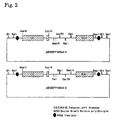
- Fig. 2 shows a construction of expression vectors, pBSEFPINS42-3 and pBSEFPINS42-5, into which genes for expressing the drug metabolizing enzyme are inserted In both vectors, the multicloning site linker is inserted in the opposite direction. Insertion of the cDNAs of 6 different types of drug metabolizing enzymes individually into each vector enables the production of drug metabolizing enzyme gene fragment which can be driven by the EF1 ⁇ promoter.
- Example 2 Preparation of expression vector comprising drug metabolizing enzyme gene fragments
- a plasmid containing CYP1A1 cDNA was cleaved with Xba I and Xho I , and subjected to agarose gel electrophoresis for separation. Thereafter, the cDNA portion was cleaved out and recovered.
- a pBS EFP INS42-3 was cleaved with Xba I and Sal I, and a CIAP-treated vector were prepared separately, and ligated to each other using the Ligation Kit Ver. 2 to obtain pBS EFP 1A1.
- a plasmid containing CYP1B1 cDNA was cleaved with Bam HI and Sal I, and subjected to agarose gel electrophoresis for separation. Thereafter, the cDNA portion was cleaved out and recovered.
- a pBS EFP INS42-3 was cleaved with Bam HI and SalI , and a CIAP-treated vector was prepared separately, and ligated to each other using the Ligation Kit Ver. 2 to obtain pBS EFP 1B1.
- a plasmid containing COX-1 cDNA was cleaved with Hind III and then blunt-ended using T4 DNA Polymerase. Then, the plasmid was cleaved with Sal I, and subjected to agarose gel electrophoresis for separation. Thereafter, the cDNA portion was cleaved out and recovered A pBS EFP INS42-3 fragment was cleaved with Eco RV and Sal I, and a CIAP-treated vector was prepared separately, and ligated to each other using the Ligation Kit Ver. 2 to obtain pBS EFP COX-1.
- a plasmid containing CYP2E1 cDNA was cleaved with Xho I, and subjected to agarose gel electrophoresis for separation. Thereafter, the cDNA portion was cleaved out and recovered A pBS EFP INS42-5 fragment was cleaved with Sal I, and a CIAP-treated vector was prepared separately, and ligated to each other using the Ligation Kit Ver. 2 to obtain pBS EFP 2E1.
- a plasmid containing CYP3A7 cDNA was cleaved with Xho I and Bam HI, and subjected to agarose gel electrophoresis for separation. Thereafter, the cDNA portion was cleaved out and recovered.
- a pBS EFP INS42-5 was cleaved with Sal I and Bam HI, and a CIAP-treated vector was prepared separately, and ligated to each other using the Ligation Kit Ver. 2 to obtain pBS EFP 3A7.
- a plasmid containing COX-2 cDNA was cleaved with Eco RI and Xho l, and subjected to agarose gel electrophoresis for separation. Thereafter, the cDNA portion was cleaved out and recovered.
- a pBS EFP INS42-5 fragment was cleaved with Eco RI and Sal I, and a CIAP-treated vector was prepared separately, and ligated to each other using the Ligation Kit Ver. 2 to obtain pBS EFP COX-2.
- pBS EFP 1A1 plasmid DNA was prepared in a large scale by the Alkali lysis method. This plasmid was cleaved with Not I, and about 4.5 kbp DNA fragment was separated by agarose gel electrophoresis and recovered by electroelution. Further, the product was purified by phenol/chloroform extraction, chloroform extraction, and ethanol precipitation. The purified product was centrifugated and then diluted with PBS(-) to obtain CYP1A1 gene fragment
- pBS EFP 1B1 plasmid DNA was prepared in a large scale by the Alkali lysis method. This plasmid was cleaved with Sfi I, and about 6.8 kbp DNA fragment was separated by agarose gel electrophoresis and recovered by electroelution. Further, the product was purified by phenol/chloroform extraction, chloroform extraction, and ethanol precipitation. The purified product was centrifugated and then diluted with PBS(-) to obtain CYP1B1 gene fragment
- pBS EFP COX-1 plasmid DNA was prepared in a large scale by the Alkali lysis method. This plasmid was cleaved with Not I, and about 4.6 kbp DNA fragment was separated by agarose gel electrophoresis and recovered by electroelution. Further, the product was purified by phenol/chloroform extraction, chloroform extraction, and ethanol precipitation. The purified product was centrifugated and then diluted with PBS(-) to obtain COX-1 gene fragment
- pBS EFP CYP2E1 plasmid DNA was prepared in a large scale by the Alkali lysis method. This plasmid was cleaved with Not I, and about 3.7 kbp DNA fragment was separated by agarose gel electrophoresis and recovered by electroelution. Further, the product was purified by phenol/chloroform extraction, chloroform extraction, and ethanol precipitation. The purified product was centrifugated and then diluted with PBS(-) to obtain CYP2E1 gene fragment
- pBS EFP CYP3A7 plasmid DNA was prepared in a large scale by the Alkali lysis method. This plasmid was cleaved with Not I, and about 4.0 kbp DNA fragment was separated by agarose gel electrophoresis and recovered by electroelution. Further, the product was purified by phenol/chloroform extraction, chloroform extraction, and ethanol precipitation. The purified product was centrifugated and then diluted with PBS(-) to obtain CYP3A7 gene fragment
- pBS EFP COX-2 plasmid DNA was prepared in a large scale by the Alkali lysis method. This plasmid was cleaved with Not I, and about 6.4 kbp DNA fragment was separated by agarose gel electrophoresis and recovered by electroelution. Further, the product was purified by phenol/chloroform extraction, chloroform extraction, and ethanol precipitation. The purified product was centrifugated and then diluted with PBS(-) to obtain COX-2 gene fragment
- the preparation method for the above 6 types of gene fragments are shown in Table 2.
- Six types of gene fragments were mixed at an equal mole to prepare a 3.9 ng/ ⁇ l DNA PBS(-) solution (final concentration).
- cDNA Cleaved-out fragment Vector to be inserted Site to be inserted
- Size Cleaving method Injection fragment size CYP1A1 2.5 kb Xba I/ Xho I pBS EFP INS42-3 Xba I/ Sal I 7.5 kb Sfi I or Not I 4.5 kb CYP1B1 4.8 kb Bam HI/ Sal I.
- the fertilized egg was produced by in-vitro fertilization in accordance with the technique by Toyoda et al. (Research on in vitro fertilization of mouse eggs, The Japanese Journal of Animal Reproduction, 16: 147-151, 1971). Specifically, PMSG and hCG (5 units) were administered to a female C57BL/6 mouse through intraperitoneal injection at 48 hour intervals. Thereafter, eggs were collected 16 to 18 hours later, and was inseminated (about 100 to 150 sperms/ ⁇ l) with the C57BL/6 sperm (sperm was collected about 1.5 hour before egg collection).
- Microinjection of DNA into the pronucleus of the fertilized egg was carried out in accordance with the technique by Katsuki et al. (Experimental Manual for Development Engineering, A Method for Producing Transgenic Mouse (Kodansha Scientific, 1987)).
- the fertilized eggs were transferred to drops of modified Whitten's medium (mWM medium).
- mWM medium modified Whitten's medium
- injection into the nucleus after the male pronucleus was confirmed under the phase-contrast microscope (Invert Scope D: Ziess), about 2 p1 of the purified DNA solution (prepared in Example 3) was injected.
- injection into cytoplasm about 2 p1 of the DNA solution was injected into the cytoplasm.
- the surviving embryos were transferred into the mWM medium, and further subjected to culturing under 5% CO 2 , 95% Air, and 37°C. Thereafter, the culture products were transplanted into the oviducts of pseudopregnant female mice of the ICR lineage, and implanted
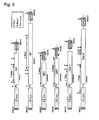
- DNA was obtained from the solubilized solution using a DNA extracting apparatus (manufactured by Toyobo Co., Ltd.). The obtained DNA was analyzed by Southern hybridization using a DNA probe containing gene sequences for the 6 types of drug metabolizing enzymes (labeled by a known radioisotope labeling technique)(Fig.3). A commercially available labeling kit (manufactured by Stratagene) was used for labeling.
- transgenic mice were mated with a mouse of C57BL/6 lineage to obtain their offsprings.
- the resultant offsprings were subjected to the same method as described above to confirm the presence of the transgenes.
- offsprings having the introduced transgene were obtained
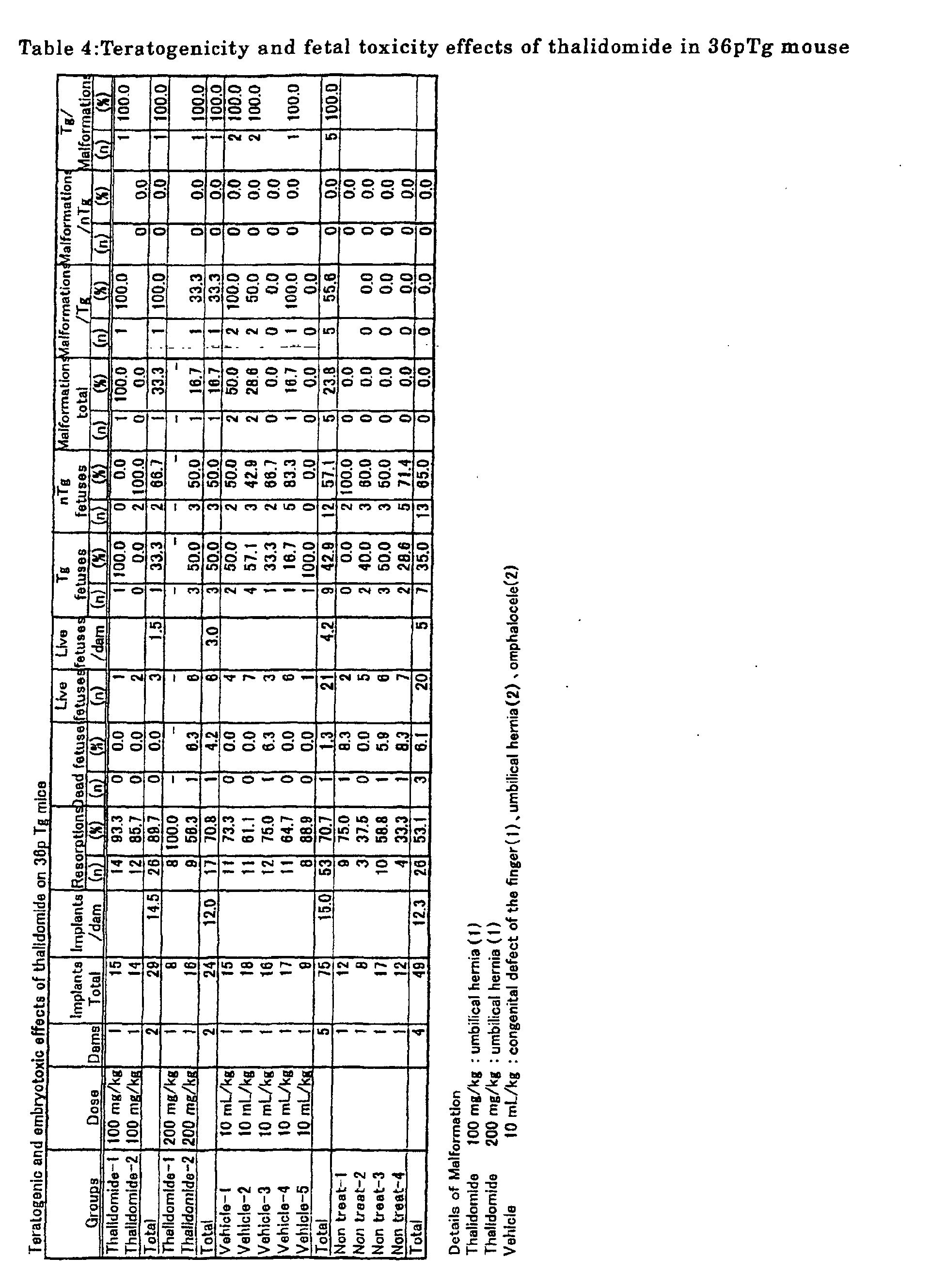
- Frozen eggs of the transgenic mouse were prepared in accordance with "Example 4: Production of fertilized egg," and fertilized eggs of the transgenic mouse were cryopreserved. The frozen fertilized eggs were melted, and 20 eggs were respectively transplanted into the oviducts of pseudopregnant female mice of the ICR lineage, and implanted. On the 9th day of gestation, thalidomide was administered into the maternal peritoneal cavity. The effect of thalidomide was tested at the dosage of: 100 mg/kg, and 200 mg/kg. A mixed solution of Tween 20 and physiological saline (1:3) was used as a vehicle.
- Example 8 Typing by PCR of mouse (P450-6 mix mouse) F1 into which 6 types of drug metabolizing enzymes were introduced
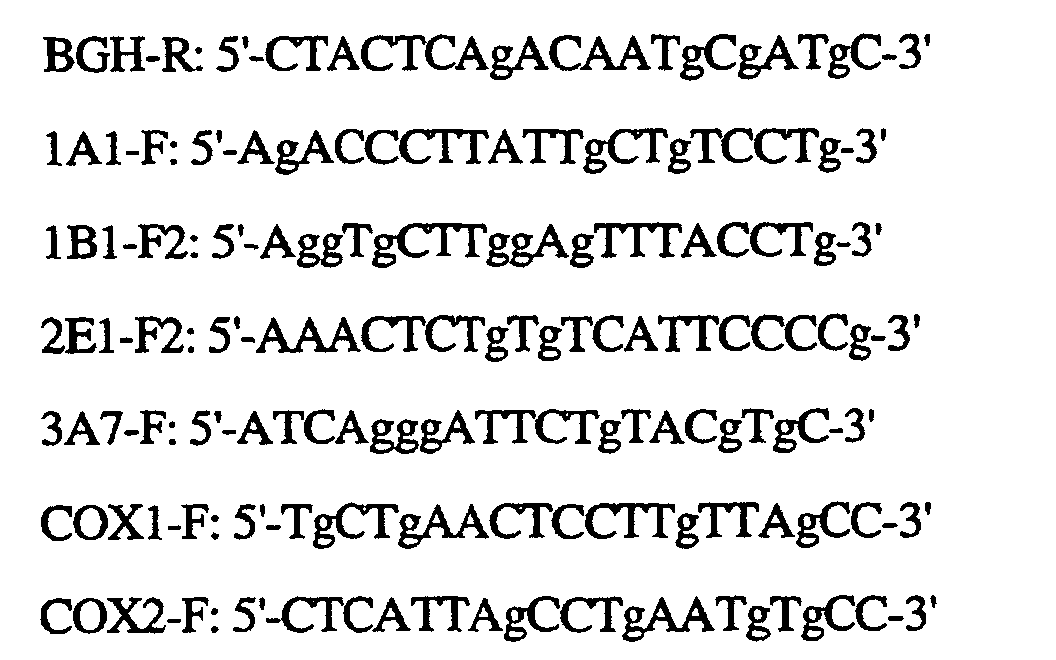
- Genotyping of the offspring such as the obtained P450-6 mix mice F1 and F2 and genotyping of the fetus in the teratogenicity and fetal toxicity test, were carried out by PCR Fig. 5 shows the position of the primer in each gene and the chain length of the gene fragment generated by PCR Since the poly(A) addition signals in each gene are common, a reverse primer BGH-R is used in common, and a sequence specific to each gene is used as a forward primer. Based on the chain lengths of the gene fragments generated by the reaction, 1A1, 1B1, and COX-1 and, further 2E1, 3A7, and COX-2 can be simultaneously detected PCR was carried out in the following manner.
- 1A1-F, 1B1-F2, and COX1-F and 2E1-F2, 3A7-F, and COX2-F are respectively adjusted at 10 pmol/ ⁇ l.
- PCR was then carried-out by repeating 30 times a cycle of 94°C for 30 seconds, 60°C for 30 seconds, and 72°C for 30 seconds.
- the solution was then treated at 72°C for 7 minutes, and was cooled to 4°C. After the completion of the reaction, 5 ⁇ l of the solution was run in 2% agarose gel.
- Fig. 6 shows the result of PCR for assaying the presence of the transgene in the transgenic mouse F1 produced in the Example.
- N represents a negative control
- P represents a positive control
- 16m represents 1A1, 1B1, 3A7
- 34p represents 1B1, COX-1, and COX-2 positive in individual 1
- 36p represents 1A1, 1B1, 3A7, COX-1, and COX-2 positive in individual 1 and individual 4.
- transgenic animal enables testing for forecasting fetal toxicity and teratogenicity of drugs.
Landscapes
- Health & Medical Sciences (AREA)
- Life Sciences & Earth Sciences (AREA)
- Engineering & Computer Science (AREA)
- Chemical & Material Sciences (AREA)
- Organic Chemistry (AREA)
- Bioinformatics & Cheminformatics (AREA)
- General Health & Medical Sciences (AREA)
- Veterinary Medicine (AREA)
- Animal Behavior & Ethology (AREA)
- Medicinal Chemistry (AREA)
- Chemical Kinetics & Catalysis (AREA)
- Pharmacology & Pharmacy (AREA)
- General Chemical & Material Sciences (AREA)
- Nuclear Medicine, Radiotherapy & Molecular Imaging (AREA)
- Public Health (AREA)
- Zoology (AREA)
- Genetics & Genomics (AREA)
- Biotechnology (AREA)
- Biomedical Technology (AREA)
- Wood Science & Technology (AREA)
- Environmental Sciences (AREA)
- General Engineering & Computer Science (AREA)
- Biodiversity & Conservation Biology (AREA)
- Animal Husbandry (AREA)
- Microbiology (AREA)
- Molecular Biology (AREA)
- Diabetes (AREA)
- Biochemistry (AREA)
- Neurology (AREA)
- Neurosurgery (AREA)
- Endocrinology (AREA)
- Physical Education & Sports Medicine (AREA)
- Immunology (AREA)
- Pulmonology (AREA)
- Physics & Mathematics (AREA)
- Biophysics (AREA)
- Cardiology (AREA)
- Heart & Thoracic Surgery (AREA)
- Plant Pathology (AREA)
- Urology & Nephrology (AREA)
Abstract
Description
a recombinant gene comprising (1) a gene encoding human cyclooxygenase (PGH synthase) or a mutant gene thereof; (2) a human EF1 α promoter; (3) a chicks β -globin insulator sequence or a part thereof; and (4) an SV40 poly(A) addition signal.

| cDNA | Cleaved-out fragment | Vector to be inserted | Site to be inserted | Size | Cleaving method | Injection fragment size | |
| CYP1A1 | 2.5 kb | XbaI/XhoI | pBS EFP INS42-3 | XbaI/SalI | 7.5 kb | SfiI or NotI | 4.5 kb |
| CYP1B1 | 4.8 kb | BamHI/SalI. | BamHI/SalI | 9.8kb | SfiI | 6.8kb | |
| COX-1 | 2.6kb | (HindIII)/XhoI | EcoRV/SalI | 7.6kb | SfiI or NotI | 4.6kb | |
| CYP2E1 | 1.7kb | XhoI/XhoI | pBS EFP INS42-5 | SalI/SalI | 6.7kb | SfiI or NotI | 3.7kb |
| CYP3A7 | 2.0kb | XhoI/BamHI | SalI/BamHI | 7.0kb | NotI | 4.0kb | |
| COX-2 | 4.4kb | EcoRI/XhoI | EcoRI/SalI | 9.4kb | SfiI or NotI | 6.4 kb | |
| Preparation method for 6 types of drug metabolizing enzyme gene fragments |
| Individual No. (sex) | Type of |
| 3m (female) | COX-1, COX-2 |
| 16m (female) | 1A1, 1B1, 3A7, COX-2 |
| 34p (male) | 1B1, COX-1, COX-2 |
| 36p (male) | 1A1, 1B1, 3A7, COX-1, COX-2 |
1B1; about 900 bp
2E1; about 380 bp
3A7; about 570 bp
COX1; about 730 bp
COX2; about 680 bp
1A1, 1B1, and COX1 and 2E1, 3A7, and COX2 can be simultaneously detected. Accordingly, typing is carried out by two PCR for each sample.



Claims (23)
- A recombinant gene comprising: (1) a gene encoding human P450 or a mutant gene thereof; (2) a human EF1 α promoter, (3) a chicken β-globin insulator sequence or a part thereof; and (4) an SV40 poly(A) addition signal.
- A recombinant gene comprising: (1) a gene encoding human cyclooxygenase (PGH synthase) or a mutant gene thereof; (2) a human EF1 α promoter, (3) a chicken β -globin insulator sequence or a part thereof; and (4) an SV40 poly(A) addition signal.
- The recombinant gene according to claim 1 which is capable of expressing human P450 or a mutant protein thereof in a non-human animal cell.
- The recombinant gene according to claim 2 which is capable of expressing human cyclooxygenase or a mutant protein thereof in a non-human animal cell.
- A recombinant vector which comprises the recombinant gene of claim 1 or 3.
- A recombinant vector which comprises the recombinant gene of claim 2 or 4.
- A transformant which comprises the recombinant vector of claim 5.
- A transformant which comprises the recombinant vector of claim 6.
- A transgenic non-human animal, a progeny thereof, or a part thereof, into which several genes which are selected from the human P450 gene or a mutant gene thereof and/or the human cyclooxygenase gene or a mutant gene thereof, have been introduced.
- The transgenic non-human animal according to claim 9, a progeny thereof, or a part thereof, wherein the introduced human P450 gene or a mutant gene thereof and/or the human cyclooxygenase gene or a mutant gene thereof is expressed in the body of the animal.
- The transgenic non-human animal according to claim 9 or 10, a progeny thereof, or a part thereof, wherein the introduced human P450 gene or a mutant gene thereof and/or the human cyclooxygenase gene or a mutant gene thereof is expressed in the body of a fetus.
- The transgenic non-human animal according to any of claims 9 to 11, a progeny thereof, or a part thereof, wherein the human P450 gene or a mutant gene thereof is introduced as a recombinant gene comprising: (1) a gene encoding human P450 or a mutant gene thereof; (2) a human EF1 α promoter, (3) a chicken β-globin insulator sequence or a part thereof; and (4) an SV40 poly(A) addition signal.
- The transgenic non-human animal according to any of claims 9 to 12, a progeny thereof, or a part thereof, wherein the human cyclooxygenase gene or a mutant gene thereof has been introduced as a recombinant gene comprising: (1) a gene encoding human cyclooxygenase (PGH synthase) or a mutant gene thereof; (2) a human EF1 α promoter, (3) a chicken β -globin insulator sequence or a part thereof; and (4) an SV40 poly(A) addition signal.
- The transgenic non-human animal according to any of claims 9 to 13, a progeny thereof, or a part thereof, wherein the human P450 gene is the CYP1A1 gene, CYP1B1 gene, CYP2E1 gene, or CYP3A7 gene.
- The transgenic non-human animal according to any of claims 9 to 14, a progeny thereof, or a part thereof, wherein the human cyclooxygenase gene is the cyclooxygenase-1 (COX-1) gene or cyclooxygenase-2 (COX-2) gene.
- The transgenic non-human animal according to any of claims 9 to 15, a progeny thereof, or a part thereof, which is selected from the group consisting of:a transgenic non-human animal into which the COX-1 gene and the COX-2 gene have been introduced;a transgenic non-human animal into which the CYP1 gene, CYP1B1 gene, CYP3A7 gene, and COX-2 genes have been introduced;a transgenic non-human animal into which the CYP1B1 gene, COX-1 gene, and the COX-2 gene have been introduced; anda transgenic non-human animal into which the CYP1 gene, CYP1B1 gene, CYP3A7 gene, COX-1 gene, and COX-2 gene have been introduced
- The transgenic non-human animal according to any of claims 9 to 16, a progeny thereof, or a part thereof, wherein the non-human animal is selected from the group consisting of mouse, rat, hamster, guinea pig, rabbit, dog, cat, horse, cattle, sheep, pig, goat, monkey, chicken, quail, vinegar fly, and nematode.
- The transgenic non-human animal according to claim 17, a progeny thereof, or a part thereof, wherein the non-human animal is mouse.
- A screening method for forecasting fetal toxicity and teratogenicity wherein the transgenic non-human animal of any of claims 9 to 18, a progeny thereof, or a past thereof is used.
- The screening method according to claim 19 wherein a test compound is administered to the transgenic non-human animal of any of claims 9 to 18, a progeny thereof, or a part thereof, and the expression of fetal toxicity and teratogenicity is observed.
- A substance which is judged to possess no fetal toxicity and no teratogenicity in the screening method of claim 19 or 20.
- A pharmaceutical comprising the substance which is judged to possess no fetal toxicity and no teratogenicity in the screening method of claims 19 or 20.
- The pharmaceutical according to claim 22 which is a preventive and therapeutic agent for the central nervous system disorders, psychiatric disorders, renal diseases, bone diseases, articular diseases, lung diseases, arteriosclerosis, heart diseases, diabetes, digestive system diseases, infectious diseases, allergic diseases, endocrine diseases, mental deterioration, or cancer.
Applications Claiming Priority (3)
| Application Number | Priority Date | Filing Date | Title |
|---|---|---|---|
| JP2001047735 | 2001-02-23 | ||
| JP2001047735 | 2001-02-23 | ||
| PCT/JP2002/001555 WO2002066635A1 (en) | 2001-02-23 | 2002-02-21 | Transgenic animal having drug metabolism enzyme gene and utilization thereof |
Publications (2)
| Publication Number | Publication Date |
|---|---|
| EP1362911A1 true EP1362911A1 (en) | 2003-11-19 |
| EP1362911A4 EP1362911A4 (en) | 2005-01-05 |
Family
ID=18909103
Family Applications (1)
| Application Number | Title | Priority Date | Filing Date |
|---|---|---|---|
| EP02700673A Withdrawn EP1362911A4 (en) | 2001-02-23 | 2002-02-21 | TRANSGENIC ANIMAL HAVING A MEDICINAL METABOLISM GENE AND USE THEREOF |
Country Status (4)
| Country | Link |
|---|---|
| US (1) | US20040073958A1 (en) |
| EP (1) | EP1362911A4 (en) |
| JP (1) | JP4027803B2 (en) |
| WO (1) | WO2002066635A1 (en) |
Cited By (1)
| Publication number | Priority date | Publication date | Assignee | Title |
|---|---|---|---|---|
| WO2009050484A1 (en) * | 2007-10-19 | 2009-04-23 | Iti Scotland Limited | Knockout mice for a p450 gene cluster |
Families Citing this family (8)
| Publication number | Priority date | Publication date | Assignee | Title |
|---|---|---|---|---|
| JP4300271B2 (en) * | 2002-10-16 | 2009-07-22 | 独立行政法人農業生物資源研究所 | Gene expression vector using sea urchin-derived insulator |
| JP4811765B2 (en) * | 2004-06-22 | 2011-11-09 | 学校法人東海大学 | An expression vector that can control the inducible expression of foreign genes |
| KR100676508B1 (en) | 2004-11-24 | 2007-01-31 | 주식회사 인투젠 | Recombinant vector comprising chicken β-globin 5 ′ HS4 insulator 250-bp “core” component and transgenic animal using same |
| JP4972413B2 (en) * | 2005-01-18 | 2012-07-11 | 株式会社新日本科学 | Novel drug metabolizing enzyme of monkey and nucleic acid encoding it |
| WO2006077874A1 (en) * | 2005-01-18 | 2006-07-27 | Shin Nippon Biomedical Laboratories, Ltd. | Polymorphism of gene encoding drug metabolizing enzyme in monkey and the use thereof |
| JP5421767B2 (en) * | 2006-04-10 | 2014-02-19 | ウィスコンシン・アルムニ・リサーチ・ファウンデーション | Reagents and methods for assessing the toxicity of pharmaceutical compounds and other chemicals using human embryonic stem cells |
| US8703424B2 (en) | 2010-03-22 | 2014-04-22 | Stemina Biomarker Discovery, Inc. | Predicting human developmental toxicity of pharmaceuticals using human stem-like cells and metabolomics |
| US9999206B2 (en) * | 2013-07-25 | 2018-06-19 | Utah State University | Model and method for a transgenic bovidae expressing cardiac fibrosis and associated pathology |
Family Cites Families (5)
| Publication number | Priority date | Publication date | Assignee | Title |
|---|---|---|---|---|
| US5525482A (en) * | 1991-06-27 | 1996-06-11 | Wayne State University | Method and cell line for testing cytotoxicity and mutagenicity of a chemical |
| US6048850A (en) * | 1992-09-22 | 2000-04-11 | Young; Donald A. | Method of inhibiting prostaglandin synthesis in a human host |
| AU688282B2 (en) * | 1992-09-22 | 1998-03-12 | University Of Rochester | Stably-transformed mammalian cells expressing a regulated, inflammatory cyclooxygenase |
| US5837479A (en) * | 1992-09-22 | 1998-11-17 | Young; Donald A. | Screening assays for inhibitors of mammalian prostaglandin H synthase-2 |
| GB9900009D0 (en) * | 1999-01-04 | 1999-02-24 | Ml Lab Plc | Gene therapy |
-
2002
- 2002-02-21 EP EP02700673A patent/EP1362911A4/en not_active Withdrawn
- 2002-02-21 JP JP2002566341A patent/JP4027803B2/en not_active Expired - Fee Related
- 2002-02-21 US US10/296,242 patent/US20040073958A1/en not_active Abandoned
- 2002-02-21 WO PCT/JP2002/001555 patent/WO2002066635A1/en not_active Ceased
Cited By (2)
| Publication number | Priority date | Publication date | Assignee | Title |
|---|---|---|---|---|
| WO2009050484A1 (en) * | 2007-10-19 | 2009-04-23 | Iti Scotland Limited | Knockout mice for a p450 gene cluster |
| US8809619B2 (en) | 2007-10-19 | 2014-08-19 | Iti Scotland Limited | Knockout mice for a P450 gene cluster |
Also Published As
| Publication number | Publication date |
|---|---|
| WO2002066635A1 (en) | 2002-08-29 |
| US20040073958A1 (en) | 2004-04-15 |
| EP1362911A4 (en) | 2005-01-05 |
| JPWO2002066635A1 (en) | 2004-12-02 |
| JP4027803B2 (en) | 2007-12-26 |
Similar Documents
| Publication | Publication Date | Title |
|---|---|---|
| US8173861B2 (en) | Transgenic pig model for a hereditary neurodegenerative autosomal dominant disease | |
| Schmid et al. | Animal models of spinal muscular atrophy | |
| JP3765574B2 (en) | Recombinant gene containing inverted repeat sequence and use thereof | |
| US20040073958A1 (en) | Transgenic animal having drug metabolism enzyme gene and utilization thereof | |
| JP5075641B2 (en) | Genetically modified animals and uses thereof | |
| WO2005041649A1 (en) | Transgenic nonhuman mammal | |
| CA2519071A1 (en) | Targeted and regional cellular ablation in zebrafish | |
| WO2022188817A1 (en) | Genetically modified non-human animal with human or chimeric gcgr genes | |
| EP1226752A1 (en) | Transgenic non-human mammals for monitoring change in calcium ion concentration in cells | |
| US20050229266A1 (en) | Method for producing non-human mammal RNAi phenotype using papilloma virus vector | |
| JPWO2001033957A1 (en) | Transgenic non-human mammals that monitor changes in intracellular calcium ion concentration | |
| US7238797B2 (en) | Nucleic acid encoding a pig heat shock protein 70 | |
| US20030208785A1 (en) | Transgenic pig containing heat shock protein 70 transgene | |
| WO2004006662A1 (en) | DISEASE MODEL ANIMAL CARRYING FOREIGN PPARα GENE TRANSFERRED THEREINTO AND USE THEREOF | |
| JP2008271913A (en) | Transgenic non-human animals | |
| JP2004135657A (en) | Transgenic non-human mammal expressing human A3 adenosine receptor | |
| US20030027777A1 (en) | Methods for enhancing animal growth and cell proliferation by elimination of the cyclin-dependent kinase inhibitor function of p27Kip1 | |
| Aigner et al. | Animal Models for the Study of Human Disease: Chapter 32. Genetically Tailored Pig Models for Translational Biomedical Research | |
| JP2004135656A (en) | Transgenic non-human mammal expressing chimeric seven transmembrane receptor | |
| JPH09500025A (en) | Sepsis model | |
| JP2004041211A (en) | XENOGENIC PPARalpha GENE-TRANSGENIC DISEASE MODEL ANIMAL AND APPLICATION OF THE SAME | |
| JP2001299141A (en) | Knock-in non-human mammal | |
| WO2004023870A1 (en) | Human slt transgenic animal | |
| KR20050022811A (en) | A transgenic mouse having a lean phenotype |
Legal Events
| Date | Code | Title | Description |
|---|---|---|---|
| PUAI | Public reference made under article 153(3) epc to a published international application that has entered the european phase |
Free format text: ORIGINAL CODE: 0009012 |
|
| 17P | Request for examination filed |
Effective date: 20030110 |
|
| AK | Designated contracting states |
Kind code of ref document: A1 Designated state(s): AT BE CH CY DE DK ES FI FR GB GR IE IT LI LU MC NL PT SE TR |
|
| RAP1 | Party data changed (applicant data changed or rights of an application transferred) |
Owner name: MITSUBISHI CHEMICAL CORPORATION |
|
| A4 | Supplementary search report drawn up and despatched |
Effective date: 20041123 |
|
| RIC1 | Information provided on ipc code assigned before grant |
Ipc: 7C 12N 1/21 B Ipc: 7C 12N 15/09 A Ipc: 7C 12N 9/02 B Ipc: 7C 12N 1/19 B Ipc: 7C 12N 1/15 B Ipc: 7A 01K 67/027 B |
|
| 17Q | First examination report despatched |
Effective date: 20051007 |
|
| RAP1 | Party data changed (applicant data changed or rights of an application transferred) |
Owner name: MITSUBISHI CHEMICAL CORPORATION |
|
| STAA | Information on the status of an ep patent application or granted ep patent |
Free format text: STATUS: THE APPLICATION IS DEEMED TO BE WITHDRAWN |
|
| 18D | Application deemed to be withdrawn |
Effective date: 20070220 |