EP1361697A2 - Architektur eines Netzwerkverwaltungssystems - Google Patents
Architektur eines Netzwerkverwaltungssystems Download PDFInfo
- Publication number
- EP1361697A2 EP1361697A2 EP02293096A EP02293096A EP1361697A2 EP 1361697 A2 EP1361697 A2 EP 1361697A2 EP 02293096 A EP02293096 A EP 02293096A EP 02293096 A EP02293096 A EP 02293096A EP 1361697 A2 EP1361697 A2 EP 1361697A2
- Authority
- EP
- European Patent Office
- Prior art keywords
- managed
- framework
- network management
- service provisioning
- data network
- Prior art date
- Legal status (The legal status is an assumption and is not a legal conclusion. Google has not performed a legal analysis and makes no representation as to the accuracy of the status listed.)
- Withdrawn
Links
Images

Classifications
-
- H—ELECTRICITY
- H04—ELECTRIC COMMUNICATION TECHNIQUE
- H04L—TRANSMISSION OF DIGITAL INFORMATION, e.g. TELEGRAPHIC COMMUNICATION
- H04L41/00—Arrangements for maintenance, administration or management of data switching networks, e.g. of packet switching networks
Definitions
- the invention relates to management and provisioning of data networks, and in particular to methods of providing data network management and provisioning solutions.
- data transport networks are made up of a collection of managed data transport equipment. Data services are provisioned over the managed data transport equipment.
- the network management and service provisioning task is complicated by many factors including: multiple data network equipment vendors having multiple approaches in implementing the data network equipment; a multitude of data transport technologies, with each vendor specializing in a sub-group of the multitude of data transport technologies; a multitude of network management and service provisioning protocols, with each vendor implementing only a sub-group of the multitude of network management and service provisioning protocols; a multitude of auxiliary network management and service provisioning equipment employing yet another multitude of network management and service provisioning technologies; etc.
- Data transport equipment includes, but is not limited to: data switching equipment, routers, bridges, access nodes providing a multiplexing function, Remote Access Servers (RAS), distribution nodes providing a demultiplexing function, Customer Premise Equipment (CPE), etc. with rext generation data transport equipment in development.
- RAS Remote Access Servers
- CPE Customer Premise Equipment
- a vendor may chose to implement an integral device 110 having a data switching processor and a group of ports 112, while another vendor may chose a customizable implementation of a data switching node 120 including: a switching fabric, an equipment rack divided into shelves, each shelf 122 having slot connectors for connection to interface cards, each interface card 124 having at least one port 112.
- the two the data switching nodes 110 and 120 provide the same data switching function, each implementation is adapted for a different environment: the former data switching node 110 is more adapted to enterprise solutions as a private data network node, perhaps further adapted to enable access to public data services; while the latter data switching node 120 is better adapted for high data throughput in the core of public data transport networks.
- the former (110) implements a small number of data transport protocols while for the latter (120), data transport protocols are implemented on interface cards 124 and/or ports 112 - providing for a flexible deployment thereof.
- Data transport technologies include: electrical transmission of data via copper pairs, coaxial cable, etc: optical transmission of data via optical cables; free space optical interconnects, etc.; wireless transmission of data via radio modems, microwave links, wireless Local Area Networking (LAN), etc.; with next generation data transport technologies under development.
- Data transport protocols used to convey data between data transport equipment includes: Internet Protocol (IP), Ethernet technologies, Token-Ring technologies, Fiber Distributed Data Interface (FDDI), Asynchronous Transmission Mode (ATM), Synchronous Optical NETwork (SONET) transmission protocol, Frame Relay (FR), X-25, Time Division Multiplexing (TDM) transmission protocol, Packet-Over-SONET (POS), Multi-Protocol Label Switching (MPLS), etc. with next generation data transport protocols in development.
- IP Internet Protocol
- Ethernet technologies Fiber Distributed Data Interface
- FDDI Fiber Distributed Data Interface
- ATM Asynchronous Transmission Mode
- SONET Synchronous Optical NETwork
- FR Frame Relay
- X-25 Time Division Multiplexing
- TDM Time Division Multiplexing
- POS Packet-Over-SONET
- MPLS Multi-Protocol Label Switching
- the physical data network equipment alluded to above is part of larger body of managed data network entities enabling the provision of data services.
- the data network entities also include, but are not limited to: logical ports, logical interfaces, end-to-end data links, paths, virtual circuits, virtual paths, etc.
- Network management and service provisioning enabling technologies include, but are not limited to protocols: Simple Network Management Protocol (SNMP), Common Management Information Protocol (CMIP) etc.; as well as devices: special function servers, centralized databases, distributed databases, relational databases, directories, network management systems (NMS), etc. with next generation devices and technologies under development.
- SNMP Simple Network Management Protocol
- CMIP Common Management Information Protocol
- devices special function servers, centralized databases, distributed databases, relational databases, directories, network management systems (NMS), etc. with next generation devices and technologies under development.
- Network management and service provisioning solutions include Network Management Systems (NMS) enabled via special purpose software applications coded to configure and control the above mentioned data network entities.
- NMS Network Management Systems
- software applications include, but are not limited to: inventory reporting, configuration management, statistics gathering, performance reporting, fault management, network surveillance, service provisioning, billing & accounting, security enforcement, etc.
- Coding deploying, maintaining, and extending such software applications for network management and service provisioning has been and continues to be an enormous undertaking as well as an extremely complex procedure.
- Such software applications require a large number of man-hours to create, frequently are delivered with numerous problems, and are difficult to modify and/or support.
- the difficulty in creating and supporting large applications is primarily due to the inability of existing software development paradigms to provide a simplification of the software development process.
- the complexity of the software applications has been shown to increase as an exponential function of the number of different operations that are expected to be performed. Large programming efforts suffer in terms of reasonable performance, reliability, cost of development, and reasonable development cycles.
- Object Oriented Programming attempts to improve productivity whenever a problem can be simplified by decomposing it into a set of black-box objects.
- Object oriented programming depends heavily upon the benefits of data hiding, inheritance, and polymorphism to simplify software design. If a network management and service provisioning solution cannot be subdivided into objects, object oriented programming does not offer significant productivity improvements.
- heavy reliance on object oriented programming to achieve compact code intending to reduce the size of software applications and perhaps development time, suffers from deeply nested function calls which creates a processing overhead leading to inefficient code. Deep nesting of function calls obscures the implementation paradigms used; thereby negatively impacting code debugging, code maintenance, and further development thereof.
- a prior art United States Patent 5,491,796 entitled “APPARATUS FOR REMOTELY MANAGING DIVERSE INFORMATION NETWORK RESOURCES" which issued on February 13, 1996 to Wanderer et al. describes a method of coding and organizing software application code into compilable device specification files to map an object oriented software application architecture to a relational database which only provides a very specific implementation for a specific remote management system.
- the coded routines in the device specification files just as the prior art methods described above, capture the properties, associations, relationships, functionality and management of data network entities in class definitions, as well as methods of interaction with network management and service provisioning devices using specific network management and service provisioning technologies. The resulting solution is still provided via large monolithic software applications without support for persistent storage.
- One object of the present invention is to provide improved methods of software application code development and maintenance taking into account the above mentioned complexities.
- the invention provides a network management and service provisioning environment comprising a framework.
- the framework includes: an implementation of a single managed entity object class, a plug-in registry, a parser, a generic lexical analyzer, and an interpreter.
- the single managed entity object class is run-time derivable via type derivation into a hierarchy of managed entity object types minimizing the need to re-code and re-compile framework software application code in support of new managed entity object types.
- the registry registers at run-time at least one plug-in brokering access to network management and service provisioning enabling technologies.
- the parser processes at least one self-contained managed data network entity specification.
- the generic lexical analyzer interprets at least one directive.
- the interpreter processes messages received from at least one network management and service provisioning software application.
- a separation is provided between managed entities, enabling technologies and software applications. The separation enables independent development, maintenance and troubleshooting in providing network management and service provisioning solutions.
- a network management and service provisioning apparatus using the framework is also provided.
- a method of providing a network management and service provisioning solution comprises a sequence of steps. At least one plug-in brokering access to at least one network management and service provisioning enabling technology is registering with a framework providing the network management and service provisioning solution. At least one managed data network entity specification loaded by the framework is parsed. A single managed entity object class is derived into a managed object type hierarchy via type derivation. And, at least one message received by the framework from at least one network management and service provisioning software application is processed.
- the framework acts as an enabler separating managed data network entities, enabling technologies and software applications, as well as a facilitator therebetween in providing the network management and service provisioning solution.
- the advantages are derived from an improved ability to add new functionality in support of improved network management and service provisioning solutions to support new data network entities. This improved ability comes from a reduction in the development effort required to achieve these objectives.
- the development effort is reduced because the work required in developing and/or updating part of the network management and service provisioning solution is isolated. This provides improved ability for developers to work independently simplifying verification efforts and reducing regression testing efforts.
- the independent maintenance and development of code provides an improved ability to develop and troubleshoot new functionality in parallel.
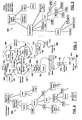
- FIG. 1 is a schematic diagram showing data network elements implementing connected data transport networks.
- Data network nodes 102, 110, 120 are physically interconnected in the data transport network 100 via physical links 108.
- Data transport networks 100 may be bridged via bridge data network nodes 104 to enable data exchange therebetween.
- Connected data transport networks 100 can be grouped defining areas of focus and influence for the purposes of network management and service provisioning, known as network partitions 106.
- Physical links 108 provide Open Systems Interconnection (OSI) Layer-1 connectivity between data network nodes 102/104/110/120 physically conveying data for OSI Layer-2 data links between nodes 102/110/120 end-to-end.
- OSI Open Systems Interconnection
- a Layer-2 data link may be provisioned over at least one physical data link 108 - the sequence of physical data links 108 used representing an OSI Layer-3 path 128.
- Network management and service provisioning is typically performed with the aid of at least one Network Management System (NMS) 130 connected to at least one node 102 associated with a data transport network 100.
- NMS Network Management System
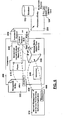
- FIG. 2 is a schematic diagram showing elements implementing a network management and service provisioning solution.
- a framework 200 is provided.
- the framework 200 is a combination of hardware and software object code.
- the framework 200 facilitates the implementation of a software development methodology for coding complex software applications 210 relating to network management and service provisioning.
- the framework 200 implements a new architecture for providing network management and service provisioning solutions.
- the new architecture categorizes the above presented elements into:
- the interaction may be command driven as specified by the software application 210, as well as event driven as a current state of the managed data transport network(s) in the realm of management changes.
- the enabling technologies 230 include support for a concept termed "persistence". Each data network entity including data network equipment has an associated group of parameters. These parameters either have an effect on the operation of the data network entity or label the data network entity.
- the persistence concept encompasses the storage of, access to, reading, writing, modifying, synchronization/reconciliation, etc. of persistence parameters to control the operation of data network entities.
- the persistence parameters can be stored in a network management and service provisioning database 132, as well as in registers associated with the managed physical data network equipment installed in the field.
- the persistence access to, reading of, writing of, modification of these parameters is provided via the data network management and service provisioning protocols mentioned above.
- Persistence reconciliation and synchronization is performed between a persistence database and a persistence value held in a volatile register ensuring a correct record keeping thereof, fast access to the persisted information and backup thereof.
- Distributed storage of persistence information is also used in reconfiguring data network equipment subsequent to network failures.
- the persistence concept also encompasses special persistence types such as: constant persistence which can only be initialized but not modified or written to subsequently; as well as derived persistence which is not stored but rather calculated from other persistence values when needed.
- coding techniques used in support of the preferred software development methodology enable on-demand loading of persistence entity specific object code.
- These coding techniques implement what are known in the art as software application plug-ins such as, but not limited to: SNMP plug-ins, CMIP plug-ins, CLI plug-ins, database plug-ins, etc.
- the persistence entity plug-ins are provided as shared object code library (.so) files 232 which register 234 with the framework 200 for on-demand loading thereof.
- the persistence plug-ins 232 capture data and methods necessary to interact with actual persistence entities (databases, registers, etc.)
- Each persistence plug-in shared library (.so) file 232 contains a coded description of the functionality it is capable to provide.
- the persistence plug-ins 232 are coded in a general fashion without making special reference to the manageable data network entities 220 or the software applications 210.
- the persistence plug-ins are not to be linked-in with the software application 210 object code but rather registered 234 with the framework 200 exclusively.
- the software applications 210 are also coded in a general fashion implementing the functionality provided while only making reference to manageable data network entities 220 via directives in a high level abstract implementation of the functionality provided.
- manageable data network entities 220 is held by the framework 200 which instantiates 202, at run-time, and provides interaction 204 with, instances of managed object entities 206.
- the software applications 210 register 218 with the framework 200 which augments the functionality thereof in providing access to instances 206 of specific manageable entities 220 and methods associated therewith.
- FIG. 3 is a schematic diagram showing a managed entity object hierarchy used in providing a network management and service provisioning solution.
- a single abstract managed entity class is implemented in the framework 200 to model all manageable data network entities 220.
- the single managed entity class is used via type derivation to define a single-class type derivation hierarchy 300 of concrete manageable object types.
- the single-class modeling of the manageable entities 220 provides for a flexible implementation of network management and service provisioning solutions without the need to re-code and re-compile the framework 200 application code and the software application 210 to support newly added manageable data network entities 220 as these are developed.
- the derivation of the abstract single managed entity class into the single-class type derivation hierarchy 300 is preferably enabled by coding the abstract single managed entity class to be defined by a group of associated attributes.
- a human readable attribute file 222 is provided for each manageable data network entity type 220.
- each human readable attribute file 222 gathers the particulars of a corresponding managed entity object type including the managed entity object type inheritance and persistency needs specifications thereof in a self contained manner.
- each attribute file 222 makes use of an "entity" directive specifying the inheritance.
- entity specifying the inheritance.
- human readable directive For example the human readable directive:
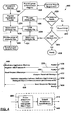
- Fig. 4 is a flow diagram showing, in accordance with an exemplary implementation of the invention, steps of an interworking process 400 facilitated by the framework 200.
- the framework 200 loads-up the shared library (.so) files 232 registering 234 the persistence plug-ins 230.
- the attribute files 222 are also loaded-up 404 and processed 406 by the framework 200.
- the attribute files 222 and the .so files 232 may be stored in pre-specified locations known to the framework 200. Facilities may be provided for run-time loading 404 and processing 406 of a group (426) of the attribute files 222 as well as the loading and registration 234 of a group (428) of shared library (.so) files 232.
- a corresponding managed object type (300) is derived 408
- the persistency needs of the derived managed entity object type are extracted 410 from the attribute file 222.
- the framework 200 thereupon interrogates 420 the registered persistence plug-ins 230 to find at least one registered shared library 232 that fulfills the persistence needs of the derived managed entity object type (300) specified in the attribute file 222.
- step 422 If a persistence plug-in 230 cannot be found in step 420 to fulfill the specification in the attribute file 222, an error is reported in step 422 and the process resumes from step 426.
- the process continues with selecting 424 and loading 404 another attribute file 222 if not all attribute files 222 have been loaded (426).
- the framework 200 is in a state ready 430 to provide the interworking function for the software applications 210.
- Each software application 210 upon start-up 440 thereof, registers 218 with the framework 200 to participate in a distributed computing environment.
- Each software application 210 preferably sends request messages 444 to the framework 200.
- the framework 200 processes 432 the received messages 444, facilitates 434 the interaction between the software applications 210, and managed object type instances 206.
- the interaction typically also generates response messages 436 sent to the software applications 210.
- the interaction between the software applications 210 and the managed object type instances 206 changes the data network state and/or provides an update of the data network state by making use of the enabling technologies 230.
- the instantiation of the managed object types (300) is performed subsequent to the discovery of physical managed entities in the realm of influence of the network management and service provisioning solution.
- the discovery of physical managed entities is provided via software applications 210 such as the inventory reporting software application 214.
- the instantiation of managed entity object types may also be a result of the interaction of an analyst with the NMS 130 via the software applications 210.
- the instantiated manageable entity object types define a managed object type containment hierarchy 500 presented in Fig 5.
- the manageable entities 220 and persistence plug-ins 230 are therefore separated.
- the framework 200 serves as an enabler to keep these elements independent, as well as a facilitator to make them interact at run-time whenever the software applications 210 require it.
- Fig 6 is a schematic diagram showing, in accordance with the preferred embodiment of the invention, the framework 200 facilitating the interaction between interworking software applications 210, persistence plug-ins 230 and managed object type instances 206.
- the attribute files 222 are parsed to lexically analyze directives specified therein.
- the framework 200 is provided with a generic lexicon analyzer 620 for interpreting directives.
- the directives are also used for specifying sequences of combinations of methods in performing operations on persistence parameters.
- a parser 610 is used for processing 406 attribute files 222.
- a new grammar is introduced.
- the grammar enables the description of the persistency needs of a managed entity object type in a corresponding attribute file 222.
- the grammar is interpreted by the generic lexical analyzer 620 associated with the framework 200.
- each special purpose lexical analyzer 630 may be coded in the corresponding persistence plug-in share library (.so) file 232 or coded separately and registered with the framework 200 via a separated shared library (.so) file 232.
- the initial registration of corresponding persistence plug-ins 230 may include only the loading-up of the lexical analyzer stub 630; the remainder of the persistence plug-in 230 being only loaded-up on a need to use basis.
- each managed entity object type (300) may require particular functionality provided via the use of a persistence plug-in 230 such as is the case, for example, in using the SNMP protocol to convey information.
- the corresponding attribute file 222 for the managed entity object type would include a directive such as:
- the request messages 444 exchanged between the software applications 210 and the framework 200 are interpreted by an interpreter 640 associated with the framework 200 rather than making specific reference to manageable data network entities 220 or persistence plug-ins 230. Further details are provided in co-pending U.S. Patent Application bearing Attorney Docket Number 12560-US filed on even date entitled "METHODS OF INVOKING POLYMORPHIC OPERATIONS IN A STATISTICALLY TYPED LANGUAGE" which is incorporated herein by reference.
- the network management and service provisioning solution component ized to enable independent development, maintenance and troubleshooting of the software application 210 code, code associated with enabling technologies, as well as independent development, management, troubleshooting and deployment of new manageable data network entities 220.
- the framework 200 therefore performs a facilitation function: each managed entity object type and persistence plug-in loaded-up by the framework 200 parsed and/or registered independently.
- the independence between manageable data network entities 220 and persistence plug-ins 230 eliminates code interdependency therebetween and provides a run-time adaptable and extensible network management and service provisioning solution.
- the software development methodology described herein provide for a dynamic addition of manageable data network entities 220 via human-readable attribute files 222.
- the attribute files 222 may be modified or augmented, in parallel, to modify and/or augment the operation of the software applications 210.
- the software development methodology results in software application code that is easy to: understand, debug, extend, test, and deploy while still being efficient when used in real time.
Landscapes
- Engineering & Computer Science (AREA)
- Computer Networks & Wireless Communication (AREA)
- Signal Processing (AREA)
- Computer And Data Communications (AREA)
- Stored Programmes (AREA)
- Data Exchanges In Wide-Area Networks (AREA)
Applications Claiming Priority (2)
| Application Number | Priority Date | Filing Date | Title |
|---|---|---|---|
| US10/021,080 US20030115308A1 (en) | 2001-12-19 | 2001-12-19 | Network management system architecture |
| US21080 | 2001-12-19 |
Publications (2)
| Publication Number | Publication Date |
|---|---|
| EP1361697A2 true EP1361697A2 (de) | 2003-11-12 |
| EP1361697A3 EP1361697A3 (de) | 2006-10-04 |
Family
ID=21802227
Family Applications (1)
| Application Number | Title | Priority Date | Filing Date |
|---|---|---|---|
| EP02293096A Withdrawn EP1361697A3 (de) | 2001-12-19 | 2002-12-13 | Architektur eines Netzwerkverwaltungssystems |
Country Status (3)
| Country | Link |
|---|---|
| US (1) | US20030115308A1 (de) |
| EP (1) | EP1361697A3 (de) |
| CN (1) | CN1427580A (de) |
Cited By (1)
| Publication number | Priority date | Publication date | Assignee | Title |
|---|---|---|---|---|
| CN101321357B (zh) * | 2007-06-05 | 2012-01-11 | 中兴通讯股份有限公司 | 一种长期演进网络管理系统和方法 |
Families Citing this family (28)
| Publication number | Priority date | Publication date | Assignee | Title |
|---|---|---|---|---|
| US7444398B1 (en) | 2000-09-13 | 2008-10-28 | Fortinet, Inc. | System and method for delivering security services |
| US8250357B2 (en) | 2000-09-13 | 2012-08-21 | Fortinet, Inc. | Tunnel interface for securing traffic over a network |
| US7389358B1 (en) * | 2000-09-13 | 2008-06-17 | Fortinet, Inc. | Distributed virtual system to support managed, network-based services |
| US7272643B1 (en) * | 2000-09-13 | 2007-09-18 | Fortinet, Inc. | System and method for managing and provisioning virtual routers |
| US7111072B1 (en) | 2000-09-13 | 2006-09-19 | Cosine Communications, Inc. | Packet routing system and method |
| US7574495B1 (en) | 2000-09-13 | 2009-08-11 | Fortinet, Inc. | System and method for managing interworking communications protocols |
| US7487232B1 (en) | 2000-09-13 | 2009-02-03 | Fortinet, Inc. | Switch management system and method |
| US7181547B1 (en) * | 2001-06-28 | 2007-02-20 | Fortinet, Inc. | Identifying nodes in a ring network |
| US7606882B2 (en) * | 2002-05-13 | 2009-10-20 | Ricoh Co., Ltd. | Method for obtaining an identifier of a monitored device |
| US7203192B2 (en) * | 2002-06-04 | 2007-04-10 | Fortinet, Inc. | Network packet steering |
| US7340535B1 (en) | 2002-06-04 | 2008-03-04 | Fortinet, Inc. | System and method for controlling routing in a virtual router system |
| US7376125B1 (en) | 2002-06-04 | 2008-05-20 | Fortinet, Inc. | Service processing switch |
| US7177311B1 (en) * | 2002-06-04 | 2007-02-13 | Fortinet, Inc. | System and method for routing traffic through a virtual router-based network switch |
| US7161904B2 (en) * | 2002-06-04 | 2007-01-09 | Fortinet, Inc. | System and method for hierarchical metering in a virtual router based network switch |
| US7096383B2 (en) | 2002-08-29 | 2006-08-22 | Cosine Communications, Inc. | System and method for virtual router failover in a network routing system |
| US7266120B2 (en) | 2002-11-18 | 2007-09-04 | Fortinet, Inc. | System and method for hardware accelerated packet multicast in a virtual routing system |
| US7720095B2 (en) | 2003-08-27 | 2010-05-18 | Fortinet, Inc. | Heterogeneous media packet bridging |
| CN100463535C (zh) * | 2003-11-28 | 2009-02-18 | 中兴通讯股份有限公司 | 一种电信网管机架板位图的数据绑定方法 |
| GB0329246D0 (en) * | 2003-12-18 | 2004-01-21 | Agilent Technologies Inc | Method of translating computer program code, communications system and network management entity therefor |
| US7499419B2 (en) | 2004-09-24 | 2009-03-03 | Fortinet, Inc. | Scalable IP-services enabled multicast forwarding with efficient resource utilization |
| US7808904B2 (en) | 2004-11-18 | 2010-10-05 | Fortinet, Inc. | Method and apparatus for managing subscriber profiles |
| US20060250970A1 (en) * | 2005-05-09 | 2006-11-09 | International Business Machines Corporation | Method and apparatus for managing capacity utilization estimation of a data center |
| US20070136683A1 (en) * | 2005-12-14 | 2007-06-14 | Alcatel | Graphical user interface for generic listing of managed objects |
| US7668920B2 (en) * | 2006-03-01 | 2010-02-23 | Fortinet, Inc. | Electronic message and data tracking system |
| CN1968276B (zh) * | 2006-11-24 | 2010-04-07 | 清华大学 | 面向服务的体系结构环境下服务之间数据传输的动态优化方法 |
| US20090100174A1 (en) * | 2007-09-07 | 2009-04-16 | Sushma Annareddy | Method and system for automatic polling of multiple device types |
| US20110078132A1 (en) * | 2009-09-30 | 2011-03-31 | Microsoft Corporation | Flexible indexing and ranking for search |
| CN112783477B (zh) * | 2021-01-28 | 2022-11-25 | 江南大学 | 实验器材驱动软件架构的构建方法 |
Family Cites Families (12)
| Publication number | Priority date | Publication date | Assignee | Title |
|---|---|---|---|---|
| US5491796A (en) * | 1992-10-23 | 1996-02-13 | Net Labs, Inc. | Apparatus for remotely managing diverse information network resources |
| US5911076A (en) * | 1993-06-14 | 1999-06-08 | International Business Machines Corporation | Object oriented framework for creating new emitters for a compiler |
| US5764955A (en) * | 1995-10-19 | 1998-06-09 | Oasys Group, Inc. | Gateway for using legacy telecommunications network element equipment with a common management information protocol |
| US5726979A (en) * | 1996-02-22 | 1998-03-10 | Mci Corporation | Network management system |
| CA2221654A1 (en) * | 1997-11-20 | 1999-05-20 | Michael J. Mccloskey | Knowledge module |
| US6898792B1 (en) * | 1998-02-18 | 2005-05-24 | Iona Technologies, Plc | Foreign object definition information repository |
| US6199195B1 (en) * | 1999-07-08 | 2001-03-06 | Science Application International Corporation | Automatically generated objects within extensible object frameworks and links to enterprise resources |
| US6813770B1 (en) * | 2000-04-21 | 2004-11-02 | Sun Microsystems, Inc. | Abstract syntax notation to interface definition language converter framework for network management |
| US7127704B2 (en) * | 2000-06-02 | 2006-10-24 | Sun Microsystems, Inc. | Interactive software engineering tool with support for embedded lexical contexts |
| US8359377B2 (en) * | 2001-04-30 | 2013-01-22 | Hewlett-Packard Development Company, L.P. | Interface for automated deployment and management of network devices |
| US20020161883A1 (en) * | 2001-04-30 | 2002-10-31 | David Matheny | System and method for collecting, aggregating, and coalescing network discovery data |
| EP1454270A4 (de) * | 2001-11-21 | 2007-07-04 | Enterasys Networks Inc | Übersetzen von konfigurationsdateien zwischen netzwerkeinrichtungen |
-
2001
- 2001-12-19 US US10/021,080 patent/US20030115308A1/en not_active Abandoned
-
2002
- 2002-12-13 EP EP02293096A patent/EP1361697A3/de not_active Withdrawn
- 2002-12-18 CN CN02157011A patent/CN1427580A/zh active Pending
Cited By (1)
| Publication number | Priority date | Publication date | Assignee | Title |
|---|---|---|---|---|
| CN101321357B (zh) * | 2007-06-05 | 2012-01-11 | 中兴通讯股份有限公司 | 一种长期演进网络管理系统和方法 |
Also Published As
| Publication number | Publication date |
|---|---|
| US20030115308A1 (en) | 2003-06-19 |
| EP1361697A3 (de) | 2006-10-04 |
| CN1427580A (zh) | 2003-07-02 |
Similar Documents
| Publication | Publication Date | Title |
|---|---|---|
| EP1361697A2 (de) | Architektur eines Netzwerkverwaltungssystems | |
| US7113989B2 (en) | Command line interface processor | |
| US20030112275A1 (en) | Dynamically configurable human-machine interface | |
| US6047279A (en) | System and method for automatic network management support using artificial intelligence | |
| EP2070258B1 (de) | Verfahren und vorrichtung zum speichern von konfigurationsinformationen für einen netzwerkknoten in einem netzwerkverwaltungssystem | |
| CA2280500C (en) | Automatic generation of reconfiguration scripts for telecommunication devices | |
| EP0899911A2 (de) | Verwaltungssystemarchitektur und Projektierungsverfahren zur Unterstützung der Wiederverwendung des Netzes | |
| EP0899910A2 (de) | Kommunikationsnetz mit Verwaltungssystemarchitektur zur Wiederverwendung des Netzes | |
| US6332142B1 (en) | Management information base attribute discriminator | |
| EP1322066B1 (de) | Prozessor für die Befehlszeilenschnittstelle | |
| US20050149881A1 (en) | Dynamically configurable human-machine interface | |
| Glitho et al. | Telecommunications management network: Vision vs. reality | |
| EP1326373A2 (de) | Verfahren um polymorphe Operationen in statischer typenorientierter Sprache zu aufzurufen | |
| Poizat et al. | Adaptation of open component-based systems | |
| GB2344963A (en) | Object-oriented network management system | |
| Abeck | Network Management know it all | |
| EP0899913A2 (de) | Kommunikationsnetz mit Verwaltungssystemarchitektur und Projektierungsverfahren zur Unterstützung der Wiederverwendung des Netzes | |
| EP1392019A1 (de) | Kommandozeilenschnittstellen Prozessor mit dynamischer Aktualisierung von Attributabhängigkeiten | |
| EP0899912A2 (de) | Verwaltungssystemsarchitektur und -herstellungsverfahren zur Wiederverwendung | |
| Inamori et al. | Applying TMN to a distributed communications node system with common platform software | |
| WO2023229992A1 (en) | Cloud automation agents and method of use | |
| Park et al. | Java-based network management environment | |
| Manley et al. | Evolution of TMN network object models for broadband management | |
| Serre et al. | Implementing OSI-based interfaces for network management | |
| Boyer et al. | Methodologies for PVC configuration in heterogeneous ATM environments using intelligent mobile agents |
Legal Events
| Date | Code | Title | Description |
|---|---|---|---|
| PUAI | Public reference made under article 153(3) epc to a published international application that has entered the european phase |
Free format text: ORIGINAL CODE: 0009012 |
|
| AK | Designated contracting states |
Kind code of ref document: A2 Designated state(s): AT BE BG CH CY CZ DE DK EE ES FI FR GB GR IE IT LI LU MC NL PT SE SI SK TR |
|
| AX | Request for extension of the european patent |
Extension state: AL LT LV MK RO |
|
| PUAL | Search report despatched |
Free format text: ORIGINAL CODE: 0009013 |
|
| AK | Designated contracting states |
Kind code of ref document: A3 Designated state(s): AT BE BG CH CY CZ DE DK EE ES FI FR GB GR IE IT LI LU MC NL PT SE SI SK TR |
|
| AX | Request for extension of the european patent |
Extension state: AL LT LV MK RO |
|
| RIC1 | Information provided on ipc code assigned before grant |
Ipc: H04L 12/24 20060101AFI20030717BHEP Ipc: G06F 9/44 20060101ALI20060831BHEP Ipc: G06F 9/46 20060101ALI20060831BHEP |
|
| 17P | Request for examination filed |
Effective date: 20070404 |
|
| AKX | Designation fees paid |
Designated state(s): DE ES FR GB IT |
|
| RAP1 | Party data changed (applicant data changed or rights of an application transferred) |
Owner name: ALCATEL-LUCENT CANADA INC. |
|
| 111Z | Information provided on other rights and legal means of execution |
Free format text: DE ES FR GB IT Effective date: 20130410 |
|
| 17Q | First examination report despatched |
Effective date: 20150603 |
|
| GRAP | Despatch of communication of intention to grant a patent |
Free format text: ORIGINAL CODE: EPIDOSNIGR1 |
|
| INTG | Intention to grant announced |
Effective date: 20160307 |
|
| GRAS | Grant fee paid |
Free format text: ORIGINAL CODE: EPIDOSNIGR3 |
|
| STAA | Information on the status of an ep patent application or granted ep patent |
Free format text: STATUS: THE APPLICATION IS DEEMED TO BE WITHDRAWN |
|
| 18D | Application deemed to be withdrawn |
Effective date: 20160719 |