EP1361696A1 - Dynamic adjustment of multicast drop thresholds to guarantee fairness between multicast and unicast frames - Google Patents
Dynamic adjustment of multicast drop thresholds to guarantee fairness between multicast and unicast frames Download PDFInfo
- Publication number
- EP1361696A1 EP1361696A1 EP03010377A EP03010377A EP1361696A1 EP 1361696 A1 EP1361696 A1 EP 1361696A1 EP 03010377 A EP03010377 A EP 03010377A EP 03010377 A EP03010377 A EP 03010377A EP 1361696 A1 EP1361696 A1 EP 1361696A1
- Authority
- EP
- European Patent Office
- Prior art keywords
- threshold
- dynamic
- static
- adjusting
- pause
- Prior art date
- Legal status (The legal status is an assumption and is not a legal conclusion. Google has not performed a legal analysis and makes no representation as to the accuracy of the status listed.)
- Granted
Links
Images

Classifications
-
- H—ELECTRICITY
- H04—ELECTRIC COMMUNICATION TECHNIQUE
- H04L—TRANSMISSION OF DIGITAL INFORMATION, e.g. TELEGRAPHIC COMMUNICATION
- H04L47/00—Traffic control in data switching networks
- H04L47/10—Flow control; Congestion control
- H04L47/30—Flow control; Congestion control in combination with information about buffer occupancy at either end or at transit nodes
-
- H—ELECTRICITY
- H04—ELECTRIC COMMUNICATION TECHNIQUE
- H04L—TRANSMISSION OF DIGITAL INFORMATION, e.g. TELEGRAPHIC COMMUNICATION
- H04L47/00—Traffic control in data switching networks
- H04L47/10—Flow control; Congestion control
-
- H—ELECTRICITY
- H04—ELECTRIC COMMUNICATION TECHNIQUE
- H04L—TRANSMISSION OF DIGITAL INFORMATION, e.g. TELEGRAPHIC COMMUNICATION
- H04L47/00—Traffic control in data switching networks
- H04L47/10—Flow control; Congestion control
- H04L47/15—Flow control; Congestion control in relation to multipoint traffic
-
- H—ELECTRICITY
- H04—ELECTRIC COMMUNICATION TECHNIQUE
- H04L—TRANSMISSION OF DIGITAL INFORMATION, e.g. TELEGRAPHIC COMMUNICATION
- H04L47/00—Traffic control in data switching networks
- H04L47/10—Flow control; Congestion control
- H04L47/26—Flow control; Congestion control using explicit feedback to the source, e.g. choke packets
- H04L47/266—Stopping or restarting the source, e.g. X-on or X-off
-
- H—ELECTRICITY
- H04—ELECTRIC COMMUNICATION TECHNIQUE
- H04L—TRANSMISSION OF DIGITAL INFORMATION, e.g. TELEGRAPHIC COMMUNICATION
- H04L47/00—Traffic control in data switching networks
- H04L47/10—Flow control; Congestion control
- H04L47/29—Flow control; Congestion control using a combination of thresholds
-
- H—ELECTRICITY
- H04—ELECTRIC COMMUNICATION TECHNIQUE
- H04L—TRANSMISSION OF DIGITAL INFORMATION, e.g. TELEGRAPHIC COMMUNICATION
- H04L49/00—Packet switching elements
- H04L49/90—Buffering arrangements
-
- H—ELECTRICITY
- H04—ELECTRIC COMMUNICATION TECHNIQUE
- H04L—TRANSMISSION OF DIGITAL INFORMATION, e.g. TELEGRAPHIC COMMUNICATION
- H04L49/00—Packet switching elements
- H04L49/90—Buffering arrangements
- H04L49/901—Buffering arrangements using storage descriptor, e.g. read or write pointers
Definitions
- the implementing means implements the action by sending a pause frame.
- the adjusting means adjusts the at least one dynamic threshold such that the first static threshold comprises a pause threshold.
- the adjusting means adjusts the at least one dynamic threshold such that the second static threshold comprises an un-pause threshold.
- the adjusting means adjusts the at least one dynamic threshold such that the dynamic threshold comprise a multicast drop threshold.
- system further comprises:
- the adjusting means adjusts the at least one dynamic threshold when the predetermined threshold is less than a first static threshold, and when the data flow condition is a pause condition.
- the adjusting means adjusts the at least one dynamic threshold from the first static threshold to a second static threshold.
- the implementing means implements the action by sending an un-pause frame.
- the adjusting means adjusts the at least one dynamic threshold such that the first static threshold comprises an un-pause threshold.
- the adjusting means adjusts the at least one dynamic threshold such that the second static threshold comprises a pause threshold.
- the adjusting means adjusts the at least one dynamic threshold such that the dynamic threshold comprises a multicast drop threshold.
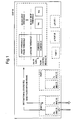
- Figure 1 illustrates one example of a configuration for managing data flow according to the present invention
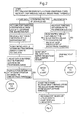
- Figure 2 illustrates a flow chart illustrating one example of a method of managing data flow according to the present invention.
- Figure 3 illustrates a flow chart illustrating one example of a method of managing data flow according to the present invention.
- Figure 1 illustrates one example of a hardware configuration that can manage data flow based on a transmission-side flow control scheme in a network device, such as a switch or a switching chip, in accordance with the present invention.
- the example shown in Figure 1 can manage data flow by dynamically adjusting a multicast drop threshold (also referred to in Figure 1 as mcast drop threshold), and thereby provide fair handling of multicast and unicast data flow.
- the hardware configuration of Figure 1 can be in an integrated, modular and single chip solution, and therefore can be embodied on a semiconductor substrate, such as silicon.
- the hardware configuration of Figure 1 can be a plurality of discrete components on a circuit board.
- the configuration as shown in Figure 1 illustrates a chip 10 which can have a plurality of ports, such as port 0 - port 7, and gports 0 & 1.
- the chip 10 can have 8 fast Ethernet ports port 0-port 1, 2 Gigabit ports gports 0 & 1 with one expansion port that can chain other chips together (expansion port not shown).
- the chip 10 can include an embedded frame buffer memory (also not shown) with a plurality of pointers 41 that represent or point to a particular location or section in the frame buffer memory.
- Each port can be a receiving port as well as a transmitting port since each port can contain a receiving Media Access Controller Rx MAC 20 and a transmitting Media Access Controller Tx MAC 30 for receiving and transmitting data, respectively.
- the data received and transmitted, based on the present invention can be in any data format configured for a network environment.
- the data can be in the format of a data packet, a data frame, or a data cell.
- the data discussed herein can be, at least, a unicast data or a unicast frame and/or a multicast data or a multicast frame.
- a unicast frame can be a data frame that is relayed to only one destination port.
- a multicast frame can be a data frame that is relayed to a plurality of destination port.
- the chip 10 of Figure 1 can also contain a plurality of transmitting queues txq 40, wherein each txq 40 can be configured to correspond to a particular destination port. In the example shown in Figure 1, only one of the plurality of txq 40 is shown. The txq 40 as shown corresponds to destination port 2, pt 2. Each txq 40 can have a plurality of static thresholds for controlling or managing the data flow of unicast frames. Each static threshold can be preprogrammed with a predetermined value or at a predetermined setting.
- each txq 40 can have a plurality of unicast static thresholds for controlling or managing the managing the data flow of unicast frames, together with one multicast static threshold for controlling and managing the data flow of multicast frames when fair handling between unicast and multicast frames are not required or needed.
- Each unicast and multicast static threshold can be preprogrammed with a predetermined value or at a predetermined setting.
- the txq 40 can have at least one dynamic threshold for controlling or managing the data flow of multicast frames. Similar to the static thresholds, the at least one dynamic threshold can be preprogrammed with a predetermined value or at a predetermined setting.
- the txq 40 can have a dynamic threshold, that being the multicast drop threshold or mcast drop threshold.
- the mcast drop threshold according to this example can be preprogrammed to be dynamic rather than static. Therefore the mcast drop threshold can have or be associated with two different threshold values or settings within the txq 40.
- the mcast drop threshold can be a dynamic threshold because it can be preprogrammed to have a value or setting being equal to that of the pause threshold, and can also be preprogrammed to have another value or setting being equal to that of the un-pause threshold.
- the txq 40 of the invention can be configured to have a dynamic mcast drop threshold that can take on or be associated with either one of the dynamic threshold value or setting at all times, depending on the circumstance. It is noted that the mcast drop threshold of this example can take on or have a different threshold value or setting depending on the circumstances of the unicast thresholds and the conditions of the data flow in the chip 10.
- Each txq 40 can be coupled to a flow control module 50, wherein the flow control module 50 can perform a plurality of actions, tasks and/or functions.
- the flow control module 50 can adjusts the dynamic mcast drop threshold from one dynamic threshold value to another when predetermined circumstances surrounding the unicast thresholds are met and/or when a particular data flow condition is met.
- the flow control module 50 can monitor the queuing logic of the pointers in the txq 40.
- the flow control module 50 can also be configured to implement tasks or actions with respect to the ports. For instance, the flow control module 50 can receive requests from the ports, and/or can transmit instructions to the ports, such as instructions to send out a pause or un-pause frame.
- Figures 2 and 3 illustrate one example of a method of managing data flow based on a transmission-side flow control scheme, in accordance with the present invention.
- the method of the invention can be implemented in hardware, or software, or a combination of both hardware and software.
- a dynamic mcast drop threshold can be adjusted within a txq 40 of a network device based on various circumstances such as the type of data received, the queue position, and the data flow condition in the network device.
- At least one receiving port can receive data, such as frames or packets, provided that a pause condition is not in force with respect to the receiving port.
- the present invention can determine the type of frames received, whether the frame is a unicast frame or a multicast frame, since either one or both unicast frames and multicast frames can be received at each and every one of the plurality of receiving ports. If a unicast frame is received, the receiving port can perform a destination address lookup to determine the destination port destined for the unicast frame. Upon such determination, the receiving port can check the status of the destination port by sending a destination txq request to, for example, a flow control module 50 (shown in Figure 1).
- the flow control module 50 can keep track of or monitor the status of at least one txq. In other words, the flow control module 50 can monitor a queue position or a number of pointers queued inside the txq for the destination port, the pointers representing a location or section of buffered data in a buffer memory.
- a txq can include a plurality of preprogrammed static unicast thresholds such as a drop threshold, a pause threshold, and an un-pause threshold.
- the unicast drop threshold can be preprogrammed to be a highest threshold.
- the unicast pause threshold can be preprogrammed to be a second highest threshold, and the unicast un-pause threshold can be preprogrammed to be a lowest threshold.
- a txq can also include a dynamic multicast threshold that can, at the initial setting, have a threshold value or setting equal to the unicast pause threshold.
- a txq can have a plurality of unicast static thresholds for controlling or managing the managing the data flow of unicast frames, together with one multicast static threshold for controlling and managing the data flow of multicast frames when fair handling between unicast and multicast frames are not required or needed.
- Each unicast and multicast static threshold can be preprogrammed with a predetermined value or at a predetermined setting.
- the txq 40 can have three unicast static thresholds, them being an unicast drop threshold or drop threshold, an unicast pause threshold or pause threshold and an unicast un-pause threshold or un-pause threshold, together with a multicast static theshold, that being a multicast drop threshold, preprogrammed therein wherein each threshold has a preprogrammed predetermined value.
- the flow control module 50 determines that the queue position or the number of pointers queued inside the transmission queue has not exceeded or is not greater than the unicast pause threshold predetermined in the transmission queue, the flow control module 50 can indicate to the receiving port that the unicast drop threshold has not been reached or the unicast pause threshold has not been exceeded, and therefore the receiving port can buffer the received unicast frame in the buffer memory.
- the unicast frame can thereafter be buffered in a location or section of the buffer memory, and at least one pointer representing the section of the buffered data can be queued in the txq corresponding to the destination port.
- the receiving port can continue to receiving unicast frames as well as multicast frames in that port.
- the queuing of the at least one pointer in the transmission queue causes the number of pointers queued inside the txq exceeds or is greater than the unicast pause threshold, then the flow control module 50 can adjust the mcast drop threshold from the unicast pause threshold position to the unicast un-pause threshold position.
- the dynamic mcast drop threshold can be adjusted from the unicast pause threshold, which can be at a higher initial setting, to a different threshold value or setting, that being the unicast un-pause threshold, which can be at a lower setting, for this example.
- the flow control module 50 can direct the tx MAC 30 of the receiving port to send out a pause data frame which can pause the receipt of unicast frames therein. Consequently, no unicast frames can be received until the flow control module 50 instructs the receiving port to send an un-pause frame.
- the present invention can transmit data frames to the destination ports at line speed, and can therefore decrease the pointers or entries in the transmission queue as the buffered frames are transmitted out.
- the flow control module 50 can instruct a receiving port to send a pause frame to pause the sending of unicast frames if the number of pointers queued in the txq exceeds the unicast pause threshold.
- the receiving port Upon implementing the instruction from the flow control module 50, the receiving port no longer can receive any unicast frames until the flow control module 50 instructs the same receiving port to send out an un-pause frame to resume receiving unicast frames.
- the flow control module 50 can adjust the mcast drop threshold from the unicast un-pause threshold position back to the unicast pause threshold position.
- the dynamic multicast drop threshold can be adjusted from the unicast un-pause threshold, which can be at a lower setting, to a different threshold value or setting, that being the unicast pause threshold, which can have a higher setting, for this example.
- the flow control module 50 can direct the tx MAC 30 of the receiving port to send out an un-pause frame which can un-pause the receipt of or resume receiving unicast frames therein. Consequently, the receiving port can resume receiving unicast frames until the flow control module 50 instructs the receiving port to send a pause frame. Additionally, any multicast frames received in the receiving port will be subjected to a higher mcast drop threshold. Given these circumstances, the present invention can receive and buffer additional unicast frames and multicast frames. As such, the txq can resume queuing additional pointers therein.
- the flow control module 50 can instruct a receiving port to send an un-pause frame to resume receiving of unicast frames if the queue position in the txq falls below the unicast un-pause threshold.
- the receiving port Upon implementing the instruction from the flow control module 50, the receiving port resumes receiving unicast frames until the flow control module 50 instructs the same receiving port to send out a pause frame to pause the sending of unicast frames.
- a receiving port can receive multicast data whether a pause or un-pause condition is in force in the receiving port.
- Figures 2 and 3 show that if a receiving port receives a multicast frame, the multicast frame can be dropped if the queue position or the number of the pointers queued in the txq(s) either equals to, exceeds or is greater than the dynamic mcast drop threshold if the mcast drop threshold is adjusted to the level of the unicast pause threshold.
- the multicast data can be dropped if the queue position equals to or exceeds the dynamic mcast drop threshold if the mcast drop threshold if adjusted to the level of the unicast un-pause threshold.
- the multicast frame can be buffered and the pointer(s) representing the buffered multicast data can be queued in the transmission queue(s).
- the above-disclosed configuration of the present invention can be embodied in a hardware configuration such as a semiconductor substrate.
- the methods of the invention can be implemented in hardware, or software, or a combination of both hardware and software.
- a person of skill in the art with respect to semiconductor design and manufacturing would be able to implement the various elements and methods of the present invention onto a single semiconductor substrate, based upon the architectural description discussed above.
Landscapes
- Engineering & Computer Science (AREA)
- Computer Networks & Wireless Communication (AREA)
- Signal Processing (AREA)
- Small-Scale Networks (AREA)
- Data Exchanges In Wide-Area Networks (AREA)
Abstract
Description
Claims (33)
- A method of managing data flow, the method comprising the steps of:monitoring a queue position with respect to the data flow in a network device;adjusting at least one dynamic threshold when the queue position is at a predetermined threshold; andimplementing an action with respect to the data flow when the at least one dynamic threshold is adjusted.
- The method of claim 1, wherein the step of adjusting the at least one dynamic threshold further comprises:adjusting the dynamic threshold when the predetermined threshold is greater than a first static threshold.
- The method of claim 2, wherein the step of adjusting the at least one dynamic threshold further comprises:adjusting the dynamic threshold from the first static threshold to a second static threshold.
- The method of claim 3, wherein the step of implementing the action further comprises:sending a pause frame from a receiving port.
- The method of claim 3, wherein the step of adjusting the at least one dynamic threshold further comprises:adjusting the dynamic threshold wherein the first static threshold comprises a pause threshold.
- The method of claim 3, wherein the step of adjusting the at least one dynamic threshold further comprises:adjusting the dynamic threshold wherein the second static threshold comprises an un-pause threshold.
- The method of claim 3, wherein the step of adjusting the at least one dynamic threshold further comprises:adjusting the dynamic threshold wherein the dynamic threshold comprises a multicast drop threshold.
- The method of claim 1, further comprising the step of:monitoring a data flow condition in the network device.
- The method of claim 8, wherein the step of adjusting the at least one dynamic threshold further comprises:adjusting the dynamic threshold when the predetermined threshold is lesser than a first static threshold, and when the data flow condition is a pause condition.
- The method of claim 9, wherein the step of adjusting the at least one dynamic threshold further comprises:adjusting the dynamic threshold from the first static threshold to a second static threshold.
- The method of claim 10, wherein the step of implementing the action further comprises:send an un-pause frame from a receiving port.
- The method of claim 10, wherein the step of adjusting the at least one dynamic threshold further comprises:adjusting the dynamic threshold wherein the first static threshold comprises an un-pause threshold.
- The method of claim 10, wherein the step of adjusting the at least one dynamic threshold further comprises:adjusting the dynamic threshold wherein the second static threshold comprises a pause threshold.
- The method of claim 10, wherein the step of adjusting the at least one dynamic threshold further comprises:adjusting the dynamic threshold wherein the dynamic threshold comprises a multicast drop threshold.
- A network device for managing data flow, said network device comprising:a data port configured to receive data;a buffer memory configured to buffer the data received;a plurality of pointers for pointing to a section of the buffer memory;a queue for queuing the plurality of pointers, said queue configured to have at least one dynamic threshold therein; anda control module configured to adjust the at least one dynamic threshold with respect to the data flow.
- The network device of claim 15, wherein the queue is further configured to include a first static threshold and a second static threshold.
- The network device of claim 16, wherein the control module is configured to adjust the at least one dynamic threshold when a number of plurality of pointers in the queue is greater than the first static threshold.
- The network device of claim 17, wherein the control module is configured to adjust the at least one dynamic threshold from the first static threshold to the second static threshold.
- The network device of claim 18, wherein the data port is further configured to send a pause frame.
- The network device of claim 18, wherein the queue is configured to include the first static threshold, said first static threshold comprising a pause threshold.
- The network device of claim 18, wherein the queue is configured to include the second static threshold, said second static threshold comprising an un-pause threshold.
- The network device of claim 18, wherein the control module is configured to adjust the at least one dynamic threshold, the dynamic threshold comprising a multicast drop threshold.
- The network device of claim 16, wherein the control module is further configured to monitor a data flow condition.
- The network device of claim 24, wherein the control module is configured to adjust the at least one dynamic threshold when a number of the plurality of pointers in the queue is less than the first static threshold, and when the data flow condition is a pause condition.
- The network device of claim 24, wherein the control module is configured to adjust the at least one dynamic threshold from the first static threshold to the second static threshold.
- The network device of claim 25, wherein the data port is further configured to send an un-pause frame.
- The network device of claim 25, wherein the queue is configured to include the first static threshold, said first static threshold comprising an un-pause threshold.
- The network device of claim 25, wherein the queue is configured to include the second static threshold, said second static threshold comprising a pause threshold.
- The network device of claim 25, wherein the control module is configured to adjust the at least one dynamic threshold, the dynamic threshold comprising a multicast drop threshold.
- A system for managing data flow, said system comprising:a monitoring means for monitoring a queue position with respect to the data flow in a network device;an adjusting means for adjusting at least one dynamic threshold when the queue position is at a predetermined threshold; andan implementing means for implementing an action with respect to the data flow when the at least one dynamic threshold is adjusted.
- The system of claim 30, wherein the adjusting means adjusts the at least one dynamic threshold when the predetermined threshold is greater than a first static threshold.
- The system of claim 31, wherein the adjusting means adjusts the at least one dynamic threshold from the first static threshold to a second static threshold.
- The system of claim 32, wherein the implementing means implements the action by sending a pause frame.
Applications Claiming Priority (4)
| Application Number | Priority Date | Filing Date | Title |
|---|---|---|---|
| US37864902P | 2002-05-09 | 2002-05-09 | |
| US378649P | 2002-05-09 | ||
| US10/163,991 US7286547B2 (en) | 2002-05-09 | 2002-06-07 | Dynamic adjust multicast drop threshold to provide fair handling between multicast and unicast frames |
| US163991 | 2002-06-07 |
Publications (2)
| Publication Number | Publication Date |
|---|---|
| EP1361696A1 true EP1361696A1 (en) | 2003-11-12 |
| EP1361696B1 EP1361696B1 (en) | 2009-12-16 |
Family
ID=29254083
Family Applications (1)
| Application Number | Title | Priority Date | Filing Date |
|---|---|---|---|
| EP03010377A Expired - Lifetime EP1361696B1 (en) | 2002-05-09 | 2003-05-08 | Dynamic adjustment of multicast drop thresholds to guarantee fairness between multicast and unicast frames |
Country Status (3)
| Country | Link |
|---|---|
| US (2) | US7286547B2 (en) |
| EP (1) | EP1361696B1 (en) |
| DE (1) | DE60330525D1 (en) |
Cited By (1)
| Publication number | Priority date | Publication date | Assignee | Title |
|---|---|---|---|---|
| CN105847172A (en) * | 2016-03-30 | 2016-08-10 | 华为技术有限公司 | Service flow control method and device |
Families Citing this family (23)
| Publication number | Priority date | Publication date | Assignee | Title |
|---|---|---|---|---|
| US7423967B2 (en) * | 2002-05-09 | 2008-09-09 | Broadcom Corporation | Fairness scheme method and apparatus for pause capable and pause incapable ports |
| TWI301713B (en) * | 2002-06-28 | 2008-10-01 | Via Tech Inc | Ethernet packet flow control method and associated application apparatus |
| JP4025593B2 (en) * | 2002-07-11 | 2007-12-19 | 富士通株式会社 | Broadcast communication data delivery apparatus and broadcast communication system |
| US7561590B1 (en) * | 2003-05-05 | 2009-07-14 | Marvell International Ltd. | Network switch having virtual input queues for flow control |
| US7743382B2 (en) * | 2003-11-03 | 2010-06-22 | Ramal Acquisition Corp. | System for deadlock condition detection and correction by allowing a queue limit of a number of data tokens on the queue to increase |
| US7590058B1 (en) * | 2003-12-09 | 2009-09-15 | At&T Intellectual Property Ii, L.P. | Method and apparatus for controlling the quality of service of voice and data services over variable bandwidth access networks |
| US20050182848A1 (en) * | 2003-12-29 | 2005-08-18 | Mcneil Roy Jr. | Rate limiting using pause frame capability |
| US20050141551A1 (en) * | 2003-12-29 | 2005-06-30 | Mcneil Roy Jr. | Common LAN architecture and flow control relay |
| US7436773B2 (en) * | 2004-12-07 | 2008-10-14 | International Business Machines Corporation | Packet flow control in switched full duplex ethernet networks |
| US20060187828A1 (en) * | 2005-02-18 | 2006-08-24 | Broadcom Corporation | Packet identifier for use in a network device |
| US20090077229A1 (en) * | 2007-03-09 | 2009-03-19 | Kenneth Ebbs | Procedures and models for data collection and event reporting on remote devices and the configuration thereof |
| US7920494B2 (en) * | 2008-01-04 | 2011-04-05 | Motorola Mobility, Inc. | Method and apparatus for performing mobility measurements in a communication network |
| KR101013764B1 (en) | 2008-10-22 | 2011-02-14 | 한국과학기술원 | Network congestion control device and method |
| KR101078981B1 (en) | 2009-04-27 | 2011-11-01 | 인천대학교 산학협력단 | Method and Apparatus for preventing bandwidth monopoly from special station |
| US8335172B2 (en) * | 2010-06-10 | 2012-12-18 | Cisco Technology, Inc. | Switchable conference multicast streaming with dynamic asymmetry |
| US8717893B2 (en) * | 2010-11-29 | 2014-05-06 | Verizon Patent And Licensing Inc. | Network stabilizer |
| EP2530880B1 (en) | 2011-06-03 | 2014-08-13 | SMSC Europe GmbH | Synchronous network switch |
| US9106430B1 (en) * | 2012-02-24 | 2015-08-11 | Sprint Spectrum L.P. | Arranging content for broadcast in a wireless communication system |
| US9338020B2 (en) * | 2013-07-03 | 2016-05-10 | Alcatel Lucent | Systems and methods for integrated unicast and multicast traffic management |
| US10191828B2 (en) * | 2015-05-07 | 2019-01-29 | Vmware, Inc. | Methods and apparatus to control a monitoring agent in a computing environment |
| CN107222426B (en) * | 2016-03-21 | 2021-07-20 | 阿里巴巴集团控股有限公司 | Flow control method, device and system |
| US10587486B2 (en) | 2018-04-30 | 2020-03-10 | Hewlett Packard Enterprise Development Lp | Detecting microbursts |
| US11349769B1 (en) * | 2018-09-07 | 2022-05-31 | Marvell Israel (M.I.S.L) Ltd. | Method and network device for controlling the flow of data traffic |
Citations (4)
| Publication number | Priority date | Publication date | Assignee | Title |
|---|---|---|---|---|
| WO1991009366A1 (en) * | 1989-12-19 | 1991-06-27 | E-Systems, Incorporated | Method and apparatus for dispersed end-entity flow control in computer networks |
| WO2000000899A2 (en) * | 1998-06-30 | 2000-01-06 | Sun Microsystems, Inc. | Flow control using output port buffer allocation |
| GB2343344A (en) * | 1998-10-28 | 2000-05-03 | 3Com Technologies Ltd | Communication switch including input throttling to reduce output congestion |
| US6118761A (en) * | 1997-12-18 | 2000-09-12 | Advanced Micro Devices, Inc. | Apparatus and method for generating rate control frames in a workgroup switch based on traffic contribution from a network switch port |
Family Cites Families (9)
| Publication number | Priority date | Publication date | Assignee | Title |
|---|---|---|---|---|
| US5541912A (en) * | 1994-10-04 | 1996-07-30 | At&T Corp. | Dynamic queue length thresholds in a shared memory ATM switch |
| US6034945A (en) * | 1996-05-15 | 2000-03-07 | Cisco Technology, Inc. | Method and apparatus for per traffic flow buffer management |
| US5898687A (en) * | 1996-07-24 | 1999-04-27 | Cisco Systems, Inc. | Arbitration mechanism for a multicast logic engine of a switching fabric circuit |
| US6061351A (en) * | 1997-02-14 | 2000-05-09 | Advanced Micro Devices, Inc. | Multicopy queue structure with searchable cache area |
| US6185185B1 (en) * | 1997-11-21 | 2001-02-06 | International Business Machines Corporation | Methods, systems and computer program products for suppressing multiple destination traffic in a computer network |
| US6456590B1 (en) * | 1998-02-13 | 2002-09-24 | Texas Instruments Incorporated | Static and dynamic flow control using virtual input queueing for shared memory ethernet switches |
| US7092395B2 (en) * | 1998-03-09 | 2006-08-15 | Lucent Technologies Inc. | Connection admission control and routing by allocating resources in network nodes |
| US6167029A (en) * | 1998-10-13 | 2000-12-26 | Xaqti Corporation | System and method for integrated data flow control |
| US6788697B1 (en) * | 1999-12-06 | 2004-09-07 | Nortel Networks Limited | Buffer management scheme employing dynamic thresholds |
-
2002
- 2002-06-07 US US10/163,991 patent/US7286547B2/en not_active Expired - Lifetime
-
2003
- 2003-05-08 EP EP03010377A patent/EP1361696B1/en not_active Expired - Lifetime
- 2003-05-08 DE DE60330525T patent/DE60330525D1/en not_active Expired - Lifetime
-
2007
- 2007-09-11 US US11/898,265 patent/US7764704B2/en not_active Expired - Fee Related
Patent Citations (4)
| Publication number | Priority date | Publication date | Assignee | Title |
|---|---|---|---|---|
| WO1991009366A1 (en) * | 1989-12-19 | 1991-06-27 | E-Systems, Incorporated | Method and apparatus for dispersed end-entity flow control in computer networks |
| US6118761A (en) * | 1997-12-18 | 2000-09-12 | Advanced Micro Devices, Inc. | Apparatus and method for generating rate control frames in a workgroup switch based on traffic contribution from a network switch port |
| WO2000000899A2 (en) * | 1998-06-30 | 2000-01-06 | Sun Microsystems, Inc. | Flow control using output port buffer allocation |
| GB2343344A (en) * | 1998-10-28 | 2000-05-03 | 3Com Technologies Ltd | Communication switch including input throttling to reduce output congestion |
Non-Patent Citations (1)
| Title |
|---|
| GERLA M ET AL: "Multicasting in Myrinet-high-speed, wormhole-routing network", GLOBAL TELECOMMUNICATIONS CONFERENCE, 1996. GLOBECOM '96. 'COMMUNICATIONS: THE KEY TO GLOBAL PROSPERITY LONDON, UK 18-22 NOV. 1996, NEW YORK, NY, USA,IEEE, US, 18 November 1996 (1996-11-18), pages 1064 - 1068, XP010220083, ISBN: 0-7803-3336-5 * |
Cited By (2)
| Publication number | Priority date | Publication date | Assignee | Title |
|---|---|---|---|---|
| CN105847172A (en) * | 2016-03-30 | 2016-08-10 | 华为技术有限公司 | Service flow control method and device |
| CN105847172B (en) * | 2016-03-30 | 2019-03-19 | 华为技术有限公司 | Service flow control method and device |
Also Published As
| Publication number | Publication date |
|---|---|
| US7764704B2 (en) | 2010-07-27 |
| EP1361696B1 (en) | 2009-12-16 |
| US7286547B2 (en) | 2007-10-23 |
| DE60330525D1 (en) | 2010-01-28 |
| US20080002732A1 (en) | 2008-01-03 |
| US20030212814A1 (en) | 2003-11-13 |
Similar Documents
| Publication | Publication Date | Title |
|---|---|---|
| US7764704B2 (en) | Dynamic adjust multicast drop threshold to provide fair handling between multicast and unicast frames | |
| AU2002359740B2 (en) | Methods and apparatus for network congestion control | |
| US7903552B2 (en) | Directional and priority based flow control mechanism between nodes | |
| US6118761A (en) | Apparatus and method for generating rate control frames in a workgroup switch based on traffic contribution from a network switch port | |
| US7733770B2 (en) | Congestion control in a network | |
| EP1393512B1 (en) | A method and apparatus for priority based flow control in an ethernet architecture | |
| US20040179476A1 (en) | Apparatus and method for controlling a traffic switching operation based on a service class in an ethernet-based network | |
| JP5706297B2 (en) | Packet transfer apparatus and power supply control method for QoS control circuit | |
| US6456590B1 (en) | Static and dynamic flow control using virtual input queueing for shared memory ethernet switches | |
| US7286511B2 (en) | System and method for an IEEE 802.11 access point to prevent traffic suffering bad link quality from affecting other traffic | |
| EP1684476A1 (en) | Traffic management in communication networks | |
| CN109714267B (en) | Transmission control method and system for managing reverse queue | |
| US6574232B1 (en) | Crossbar switch utilizing broadcast buffer and associated broadcast buffer management unit | |
| US7573821B2 (en) | Data packet rate control | |
| US7782770B1 (en) | System and method of cross-chip flow control | |
| US7203171B1 (en) | Ingress discard in output buffered switching devices | |
| CN120301830B (en) | A method and system for handling traffic congestion in high-speed data center networks | |
| JP3917042B2 (en) | Frame transmission rate control method in frame transfer network and user terminal connected to frame transfer apparatus | |
| EP1106003A1 (en) | Method and system for prioritised congestion control in a switching hub | |
| EP1361709B1 (en) | Using shadow Mcast/Bcast/Dlf counter and free pointer counter to balance unicast and Mcast/Bcast/Dlf frame ratio | |
| US20040022187A1 (en) | Preemptive network traffic control for regional and wide area networks | |
| US20040264378A1 (en) | Flow control and congestion control in a data distribution network | |
| JP5617625B2 (en) | Data relay apparatus and communication priority control method | |
| HK1060673B (en) | A method and apparatus for priority based flow control in an ethernet architecture |
Legal Events
| Date | Code | Title | Description |
|---|---|---|---|
| PUAI | Public reference made under article 153(3) epc to a published international application that has entered the european phase |
Free format text: ORIGINAL CODE: 0009012 |
|
| AK | Designated contracting states |
Kind code of ref document: A1 Designated state(s): AT BE BG CH CY CZ DE DK EE ES FI FR GB GR HU IE IT LI LU MC NL PT RO SE SI SK TR |
|
| AX | Request for extension of the european patent |
Extension state: AL LT LV MK |
|
| 17P | Request for examination filed |
Effective date: 20040512 |
|
| AKX | Designation fees paid |
Designated state(s): DE FR GB |
|
| 17Q | First examination report despatched |
Effective date: 20050912 |
|
| RAP1 | Party data changed (applicant data changed or rights of an application transferred) |
Owner name: BROADCOM CORPORATION |
|
| RAP1 | Party data changed (applicant data changed or rights of an application transferred) |
Owner name: BROADCOM CORPORATION |
|
| GRAP | Despatch of communication of intention to grant a patent |
Free format text: ORIGINAL CODE: EPIDOSNIGR1 |
|
| GRAS | Grant fee paid |
Free format text: ORIGINAL CODE: EPIDOSNIGR3 |
|
| GRAA | (expected) grant |
Free format text: ORIGINAL CODE: 0009210 |
|
| AK | Designated contracting states |
Kind code of ref document: B1 Designated state(s): DE FR GB |
|
| REG | Reference to a national code |
Ref country code: GB Ref legal event code: FG4D |
|
| REF | Corresponds to: |
Ref document number: 60330525 Country of ref document: DE Date of ref document: 20100128 Kind code of ref document: P |
|
| PLBE | No opposition filed within time limit |
Free format text: ORIGINAL CODE: 0009261 |
|
| STAA | Information on the status of an ep patent application or granted ep patent |
Free format text: STATUS: NO OPPOSITION FILED WITHIN TIME LIMIT |
|
| 26N | No opposition filed |
Effective date: 20100917 |
|
| REG | Reference to a national code |
Ref country code: FR Ref legal event code: ST Effective date: 20110131 |
|
| PG25 | Lapsed in a contracting state [announced via postgrant information from national office to epo] |
Ref country code: FR Free format text: LAPSE BECAUSE OF NON-PAYMENT OF DUE FEES Effective date: 20100531 |
|
| PGFP | Annual fee paid to national office [announced via postgrant information from national office to epo] |
Ref country code: GB Payment date: 20130522 Year of fee payment: 11 |
|
| PGFP | Annual fee paid to national office [announced via postgrant information from national office to epo] |
Ref country code: DE Payment date: 20140531 Year of fee payment: 12 |
|
| REG | Reference to a national code |
Ref country code: DE Ref legal event code: R119 Ref document number: 60330525 Country of ref document: DE |
|
| GBPC | Gb: european patent ceased through non-payment of renewal fee |
Effective date: 20140508 |
|
| PG25 | Lapsed in a contracting state [announced via postgrant information from national office to epo] |
Ref country code: GB Free format text: LAPSE BECAUSE OF NON-PAYMENT OF DUE FEES Effective date: 20140508 |
|
| PG25 | Lapsed in a contracting state [announced via postgrant information from national office to epo] |
Ref country code: DE Free format text: LAPSE BECAUSE OF NON-PAYMENT OF DUE FEES Effective date: 20141202 |