EP1359753A1 - Contents providing device, contents providing method and program for contents providing method - Google Patents
Contents providing device, contents providing method and program for contents providing method Download PDFInfo
- Publication number
- EP1359753A1 EP1359753A1 EP02716403A EP02716403A EP1359753A1 EP 1359753 A1 EP1359753 A1 EP 1359753A1 EP 02716403 A EP02716403 A EP 02716403A EP 02716403 A EP02716403 A EP 02716403A EP 1359753 A1 EP1359753 A1 EP 1359753A1
- Authority
- EP
- European Patent Office
- Prior art keywords
- content
- user
- preference
- broadcast
- obtaining
- Prior art date
- Legal status (The legal status is an assumption and is not a legal conclusion. Google has not performed a legal analysis and makes no representation as to the accuracy of the status listed.)
- Withdrawn
Links
Images



Classifications
-
- H—ELECTRICITY
- H04—ELECTRIC COMMUNICATION TECHNIQUE
- H04N—PICTORIAL COMMUNICATION, e.g. TELEVISION
- H04N21/00—Selective content distribution, e.g. interactive television or video on demand [VOD]
- H04N21/40—Client devices specifically adapted for the reception of or interaction with content, e.g. set-top-box [STB]; Operations thereof
- H04N21/45—Management operations performed by the client for facilitating the reception of or the interaction with the content or administrating data related to the end-user or to the client device itself, e.g. learning user preferences for recommending movies, resolving scheduling conflicts
- H04N21/4508—Management of client data or end-user data
- H04N21/4532—Management of client data or end-user data involving end-user characteristics, e.g. viewer profile, preferences
-
- H—ELECTRICITY
- H04—ELECTRIC COMMUNICATION TECHNIQUE
- H04N—PICTORIAL COMMUNICATION, e.g. TELEVISION
- H04N21/00—Selective content distribution, e.g. interactive television or video on demand [VOD]
- H04N21/40—Client devices specifically adapted for the reception of or interaction with content, e.g. set-top-box [STB]; Operations thereof
- H04N21/43—Processing of content or additional data, e.g. demultiplexing additional data from a digital video stream; Elementary client operations, e.g. monitoring of home network or synchronising decoder's clock; Client middleware
- H04N21/442—Monitoring of processes or resources, e.g. detecting the failure of a recording device, monitoring the downstream bandwidth, the number of times a movie has been viewed, the storage space available from the internal hard disk
- H04N21/44213—Monitoring of end-user related data
- H04N21/44222—Analytics of user selections, e.g. selection of programmes or purchase activity
-
- G—PHYSICS
- G11—INFORMATION STORAGE
- G11B—INFORMATION STORAGE BASED ON RELATIVE MOVEMENT BETWEEN RECORD CARRIER AND TRANSDUCER
- G11B27/00—Editing; Indexing; Addressing; Timing or synchronising; Monitoring; Measuring tape travel
- G11B27/002—Programmed access in sequence to a plurality of record carriers or indexed parts, e.g. tracks, thereof, e.g. for editing
-
- G—PHYSICS
- G11—INFORMATION STORAGE
- G11B—INFORMATION STORAGE BASED ON RELATIVE MOVEMENT BETWEEN RECORD CARRIER AND TRANSDUCER
- G11B27/00—Editing; Indexing; Addressing; Timing or synchronising; Monitoring; Measuring tape travel
- G11B27/10—Indexing; Addressing; Timing or synchronising; Measuring tape travel
- G11B27/102—Programmed access in sequence to addressed parts of tracks of operating record carriers
- G11B27/105—Programmed access in sequence to addressed parts of tracks of operating record carriers of operating discs
-
- G—PHYSICS
- G11—INFORMATION STORAGE
- G11B—INFORMATION STORAGE BASED ON RELATIVE MOVEMENT BETWEEN RECORD CARRIER AND TRANSDUCER
- G11B27/00—Editing; Indexing; Addressing; Timing or synchronising; Monitoring; Measuring tape travel
- G11B27/10—Indexing; Addressing; Timing or synchronising; Measuring tape travel
- G11B27/102—Programmed access in sequence to addressed parts of tracks of operating record carriers
- G11B27/107—Programmed access in sequence to addressed parts of tracks of operating record carriers of operating tapes
-
- G—PHYSICS
- G11—INFORMATION STORAGE
- G11B—INFORMATION STORAGE BASED ON RELATIVE MOVEMENT BETWEEN RECORD CARRIER AND TRANSDUCER
- G11B27/00—Editing; Indexing; Addressing; Timing or synchronising; Monitoring; Measuring tape travel
- G11B27/10—Indexing; Addressing; Timing or synchronising; Measuring tape travel
- G11B27/11—Indexing; Addressing; Timing or synchronising; Measuring tape travel by using information not detectable on the record carrier
-
- H—ELECTRICITY
- H04—ELECTRIC COMMUNICATION TECHNIQUE
- H04H—BROADCAST COMMUNICATION
- H04H60/00—Arrangements for broadcast applications with a direct linking to broadcast information or broadcast space-time; Broadcast-related systems
- H04H60/27—Arrangements for recording or accumulating broadcast information or broadcast-related information
-
- H—ELECTRICITY
- H04—ELECTRIC COMMUNICATION TECHNIQUE
- H04H—BROADCAST COMMUNICATION
- H04H60/00—Arrangements for broadcast applications with a direct linking to broadcast information or broadcast space-time; Broadcast-related systems
- H04H60/35—Arrangements for identifying or recognising characteristics with a direct linkage to broadcast information or to broadcast space-time, e.g. for identifying broadcast stations or for identifying users
- H04H60/46—Arrangements for identifying or recognising characteristics with a direct linkage to broadcast information or to broadcast space-time, e.g. for identifying broadcast stations or for identifying users for recognising users' preferences
-
- H—ELECTRICITY
- H04—ELECTRIC COMMUNICATION TECHNIQUE
- H04H—BROADCAST COMMUNICATION
- H04H60/00—Arrangements for broadcast applications with a direct linking to broadcast information or broadcast space-time; Broadcast-related systems
- H04H60/61—Arrangements for services using the result of monitoring, identification or recognition covered by groups H04H60/29-H04H60/54
- H04H60/65—Arrangements for services using the result of monitoring, identification or recognition covered by groups H04H60/29-H04H60/54 for using the result on users' side
-
- H—ELECTRICITY
- H04—ELECTRIC COMMUNICATION TECHNIQUE
- H04N—PICTORIAL COMMUNICATION, e.g. TELEVISION
- H04N5/00—Details of television systems
- H04N5/76—Television signal recording
-
- G—PHYSICS
- G11—INFORMATION STORAGE
- G11B—INFORMATION STORAGE BASED ON RELATIVE MOVEMENT BETWEEN RECORD CARRIER AND TRANSDUCER
- G11B2220/00—Record carriers by type
- G11B2220/20—Disc-shaped record carriers
- G11B2220/25—Disc-shaped record carriers characterised in that the disc is based on a specific recording technology
- G11B2220/2537—Optical discs
- G11B2220/2545—CDs
-
- H—ELECTRICITY
- H04—ELECTRIC COMMUNICATION TECHNIQUE
- H04N—PICTORIAL COMMUNICATION, e.g. TELEVISION
- H04N21/00—Selective content distribution, e.g. interactive television or video on demand [VOD]
- H04N21/20—Servers specifically adapted for the distribution of content, e.g. VOD servers; Operations thereof
- H04N21/23—Processing of content or additional data; Elementary server operations; Server middleware
-
- H—ELECTRICITY
- H04—ELECTRIC COMMUNICATION TECHNIQUE
- H04N—PICTORIAL COMMUNICATION, e.g. TELEVISION
- H04N5/00—Details of television systems
- H04N5/76—Television signal recording
- H04N5/765—Interface circuits between an apparatus for recording and another apparatus
- H04N5/775—Interface circuits between an apparatus for recording and another apparatus between a recording apparatus and a television receiver
-
- H—ELECTRICITY
- H04—ELECTRIC COMMUNICATION TECHNIQUE
- H04N—PICTORIAL COMMUNICATION, e.g. TELEVISION
- H04N5/00—Details of television systems
- H04N5/76—Television signal recording
- H04N5/78—Television signal recording using magnetic recording
- H04N5/781—Television signal recording using magnetic recording on disks or drums
-
- H—ELECTRICITY
- H04—ELECTRIC COMMUNICATION TECHNIQUE
- H04N—PICTORIAL COMMUNICATION, e.g. TELEVISION
- H04N5/00—Details of television systems
- H04N5/76—Television signal recording
- H04N5/78—Television signal recording using magnetic recording
- H04N5/782—Television signal recording using magnetic recording on tape
-
- H—ELECTRICITY
- H04—ELECTRIC COMMUNICATION TECHNIQUE
- H04N—PICTORIAL COMMUNICATION, e.g. TELEVISION
- H04N5/00—Details of television systems
- H04N5/76—Television signal recording
- H04N5/84—Television signal recording using optical recording
- H04N5/85—Television signal recording using optical recording on discs or drums
Definitions
- the present invention is applied to various AV apparatuses of, for example, on-vehicle apparatuses and home networks, so that content desired by a user is provided from content of broadcast and content of a recording medium.
- AV apparatuses of the type that provides content distributed by broadcast to a user and of the type that plays back content from various recording media are in use.
- Content distributed by broadcast includes television programs, FM broadcast programs, etc.
- a desired program can be selected using a bill of fare on, for example; a newspaper, a weekly magazine, etc., and timer recording of the selected program is allowed.
- a bill of fare is provided by broadcast.
- timer recording When a user is not allowed to view or listen to content thus provided at the time of broadcast, the user views or listens to the content by timer recording, i.e., by what is called time shifting.
- timer recording sometimes fails due to, for example, an incorrect operation.
- setting of timer recording itself is sometimes forgotten.
- broadcast of a desired program itself passes unnoticed.
- the present invention has been made in view of the above, and it proposes a content providing apparatus, a content providing method, and a program of a content providing method that serve to properly provide content of broadcast desired by a user.
- the present invention is applied to a content providing apparatus, which comprises first content obtaining means for obtaining content of broadcast; second content obtaining means for obtaining content supplied via a predetermined recording medium; preference determination means for determining preference of a user based on a history of obtaining content by the first and second content obtaining means; content recording means for selectively obtaining content of broadcast by the first content obtaining means and recording the content obtained in a predetermined content recording medium, based on a result of determination by the preference determination means; and content playback means for selectively playing back and outputting the content recorded in the content recording medium.
- first content obtaining means for obtaining content of broadcast By including first content obtaining means for obtaining content of broadcast; second content obtaining means for obtaining content supplied via a predetermined recording medium; preference determination means for determining preference of a user based on a history of obtaining content by the first and second content obtaining means; content recording means for selectively obtaining content of broadcast by the first content obtaining means and recording the content obtained in a predetermined content recording medium, based on a result of determination by the preference determination means; and content playback means for selectively playing back and outputting the content recorded in the content recording medium; content can be recorded in accordance with preference of the user as determined based not only on content provided by a broadcast but also on content provided via a recording medium such as a compact disc. Accordingly, content of broadcast desired by the user is properly provided.
- the present invention is applied to a content providing method or a program of a content providing method, which comprises a preference determining step of determining preference of a user based on a history of obtaining content including content of broadcast and content of a recording medium; a content recording step of selectively recording the content of broadcast in a predetermined content recording medium based on a result of determination in the preference determining step; and a content playback step of selectively playing back and outputting the content recorded in the content recording medium.
- content can be recorded in accordance with preference of the user as determined based not only on content provided by a broadcast but also on content provided via a recording medium such as a compact disc. Accordingly, content of broadcast desired by the user is properly provided.
- Fig. 1 is a block diagram showing an AV system according to an embodiment of the present invention.
- a receiver apparatus 2 receive conventional terrestrial television broadcast, digital television broadcast, broadcasting satellite (BS) television broadcast, and communication satellite (CS) television broadcast, and it outputs video signals and audio signals obtained by receiving these television broadcasts according to user operations or control by a server 3. Furthermore, when such content is received, the receiver apparatus 2 outputs information regarding a channel being received, time, etc. to the server 3 so that the server 3 is allowed to identify the content being received.
- BS broadcasting satellite
- CS communication satellite
- a video playback apparatus 4 plays back and outputs, according to a user operation, a video signal and an audio signal from an optical disk (DVD: Digital Video Disc) or a video tape serving as a recording medium.
- the video playback apparatus 4 plays back information regarding content recorded in TOC in the case of an optical disk and outputs the information to the server 3.
- the video playback apparatus 4 plays back information regarding content recorded in a vertical blanking period, etc. and outputs the information to the server 3.
- the information regarding content serves to identify the content. Accordingly, the video playback apparatus 4 allows the server 3 to identify content being viewed by a user even if the content is provided via a recording medium.
- a radio broadcast receiver apparatus 5 receives and outputs a program of an FM (Frequency Modulation) broadcast or a program of an AM (Amplitude Modulation) broadcast according to a user operation. At this time, the radio broadcast receiver apparatus 5 also obtains information regarding content from a broadcast wave and outputs the information to the server 3. Accordingly, also in this case, the radio broadcast receiver apparatus 5 allows the server 3 to identify content being listened to by a user.
- FM Frequency Modulation
- AM Amplitude Modulation
- An audio playback apparatus 6 plays back and outputs, according to a user operation, an audio signal recorded on an optical disk (CD: Compact Disc), a mini disc (MD: Mini Disc), or a magnetic tape serving as a recording medium. At this time, the audio playback apparatus 6 plays back data such as TOC (Table Of Contents) to output information regarding content. Accordingly, the audio playback apparatus 6 allows the server 3 to identify content being listened to by a user.
- CD Compact Disc
- MD Mini Disc
- TOC Table Of Contents
- the receiver apparatus 2 and the radio broadcast receiver apparatus 5 together with a television tuner 3A and a radio tuner 3B to be described later, constitute first content obtaining means for respectively obtaining content of broadcast, whereas the video playback apparatus 4 and the audio playback apparatus 6 constitute second content obtaining means for obtaining content supplied via a predetermined recording medium.
- a display apparatus 7 displays a video signal output from the receiver apparatus 2 or the video playback apparatus 4, or a video signal output from the server 3.
- An amplifier 8 amplifies an audio signal output from the receiver apparatus 2, the video playback apparatus 4, the radio broadcast receiver apparatus 5, or the audio playback apparatus 6, or an audio signal output from the server 3, outputting the result via a speaker 9. Accordingly, the AV system 1 allows viewing and listening to video and audio content of broadcast and of a recording medium.
- An information management center 10 allows access by the server 3 via a network such as the Internet, and stores, at least, program data of each broadcast that can be received by the receiver apparatus 2 or the radio broadcast receiver apparatus 5 in the form of a bill of fare in a program database 12. Furthermore, the information management center 10 stores, at least, content data of a recording medium that can be played back by the video playback apparatus 4 or the audio playback apparatus 6 in a media database 13.
- the program data and content data each represent a profile of content, and can be identified on the basis of data regarding content, obtained by the video playback apparatus 4, etc, and with regard to content received by the receiver apparatus 2, can be identified by a receiving channel, a receiving time, etc.
- the program data relates to programs currently being broadcast, programs to be subsequently broadcast, and programs that have been broadcast in the past, and is stored in the program database 12.
- the program data includes a time of broadcast, a day of week of broadcast, a channel, a program genre, main cast, etc., which correspond to history data to be described later.
- the program data includes a music title, a song title, a lyricist, a composer, an artist, and manufacturer data in relation to music broadcast in the program, in addition to a time of broadcast, a day of week of broadcast, a channel, a program genre, and main cast of the program.
- the content data includes similar items corresponding to history data, a title set for a recording medium having content recorded thereon, and with regard to video content, main cast, a director, etc., and with regard to music content, a music title, a song title, a lyricist, a composer, an artist, and manufacturer data. Accordingly, in the AV system 1, information needed for determining preference of a user with regard to content received by the receiver apparatus 2, etc. or content played back by the video playback apparatus 4 can be obtained by accessing the information management center 10.
- the server 3 determines preference of a user by accumulating the program data and content data thus obtained, and automatically records programs in accordance with preference of the user based on the result of the determination, providing the programs to the user. More specifically, the server 3 includes a television tuner (TV tuner) 3A corresponding to the receiver apparatus 2 and a radio tuner 3B corresponding to the radio broadcast receiver apparatus 5, so that desired content can be received.
- TV tuner television tuner
- the server 3 includes a hard disc apparatus 3C having a large capacity, and creates a preference database 3D in the hard disc apparatus 3C.
- the preference database 3D is created by recording history data of obtaining content viewed or listened to by a user based on selection by the user.
- the history data includes a month (or season), a day of week, a start time of broadcast, and an end time of broadcast that identify a time of broadcast, and in addition, a channel of broadcast and a program genre, as shown in Fig. 2(A). If content is not associated with broadcast (i.e., in the case of content supplied via a recording medium), data identifying the audio playback apparatus 6 or the video playback apparatus 4 is assigned to the channel of broadcast, and a time of playback is recorded in the items identifying a time of broadcast.
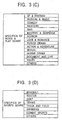
- the program genre is classified into specific types of content such as drama, movie, and sports, as shown in Fig. 2(B), and specific sub-items are set for each of the items. More specifically, in the case of drama content, distinction as to domestic/foreign drama, a title, a playwright, and main cast are recorded. In the case. of movie content, distinction as to domestic/foreign movie, a specific genre, a title, a director, a playwright, and main cast are recorded. Specific genres of movie include SF & fantasy, musical and music, comedy, Western, etc., as shown in Fig. 3(C).
- a specific genre and players are recorded.
- Specific genres of sports include baseball, soccer, golf, tennis, etc, as shown in Fig. 3(D).
- a specific genre, a title, a playwright, and main cast are recorded, similarly to movie.
- music content distinction as to domestic/foreign music, a specific genre, a song title, a lyricist, a composer, and a singer are recorded.
- Specific genres of music include idol and popular song, popular ballad, J-POP, etc., as shown in Fig. 4(E)
- a variety program main cast is recorded.
- a specific genre classified as culture, history, philosophy, or economy, as shown in Fig. 4(F)
- a dubbing artist is recorded.
- an anchorperson is recorded. If content relates to hobby and life, a specific genre, classified as cooking, gardening, etc., as shown in Fig. 4(G), is recorded.
- History data is created, by executing a predetermined processing procedure by the central processing unit 3F, for each content viewed or listened to based on selection of a user, with items set to values in accordance with program data and content data obtained by accessing the information management center 10, and is then recorded in the preference database 3D.
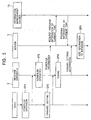
- Fig. 5 is a time chart showing a processing procedure for creating the preference database 3D.
- the processing procedure when the user operates a power supply of the receiver apparatus 2 in step SP1, the receiver apparatus 2 is powered on in subsequent step SP2, and the server 3 is notified of the power-on.
- the information management center 10 is accessed under the control of the central processing unit 3F, obtaining program data that can be received by the receiver apparatus 2 at the current time.
- the receiver apparatus 2 executes a tuning process in subsequent step SP4 in response to the channel selection operation, so that reception of the channel selected by the user is started.
- the receiver apparatus 2 notifies the server 3 of information of the channel whose reception has been started.
- program data of the corresponding channel is selected from the receivable program data that has been received from the information management center 10 under the control of the central processing unit 3F, and history data is set by the selected program data and is recorded in the preference database 3D.
- the central processing unit 3F accesses the information management center 10 again with reference to an end time obtained from the program data to obtain program data that can be viewed in a subsequent time range, and creates history data of the program being enjoyed by the user using the program data thus obtained, recording the history data in the preference database 3D.
- the central processing unit 3F when the user selects content by the television tuner 3A or the radio broadcast receiver apparatus 5, the central processing unit 3F also creates history data for each program, recording the history data in the preference database 3D.
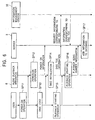
- Fig. 6 is a time chart showing a processing procedure in relation to the preference database 3D, which is executed when the audio playback apparatus 6 serving as a playback apparatus of a recording medium is operated by the user.
- the processing procedure when the user operates a power supply of the audio playback apparatus 6 in step SP11, the audio playback apparatus 6 is powered on in subsequent step SP12, and the server 3 is notified of the power-on.
- the audio playback apparatus 6 loads the optical disc in subsequent step SP14 and plays back a lead-in area to obtain TOC data.
- the audio playback apparatus 6 notifies the server 3 of the TOC data.
- the server 3 accesses the information management center 10 under the control of the central processing unit 3F, obtaining corresponding content data.
- step SP15 when the user instructs playback of the optical disc in step SP15, the audio playback apparatus 6 starts playback of a corresponding song in step SP16. Furthermore, history data of songs associated with the playback is sequentially created in step SP17 from content data obtained from the information management center 10, recording the history data in the preference database 3D.
- the central processing unit 3F creates history data for each song and registers the history data in the preference database 3D.
- the central processing unit 3F also accesses the information management center 10 to obtain content data, and creates history data from the content data, registering the history data in the preference database 3D.
- a profile etc. of content enjoyed by the user by his/her own selection is recorded in a database, which serves to determine preference of the user. Furthermore, content of broadcast and content of a recording medium are managed by the same preference database 3D, so that preference of the user regarding the content can be processed in an integrated manner.
- the hard disc apparatus 3C includes a user area 3G and an automatic recording area 3H as well as an area of the preference database 3D.
- the user area 3G is managed as a bank structure, which includes a music bank 3I, a movie bank 3J, and a temporary recording bank 3K.
- the music bank 3I is an area that stores content played back by the audio playback apparatus 6 and content received by the radio broadcast receiver apparatus 5 or the radio tuner 3B so that the content can be used as a jukebox.
- the movie bank 3J is an area that stores content played back by the video playback apparatus 4 and content received by the receiver apparatus 2 or the television tuner 3A so that the content can be reused.
- the temporary recording bank 3K is an area that stores content selected by the user from content of broadcast automatically recorded by the server 3 in accordance with preference of the user.
- the automatic recording area 3H is an area for storing content of broadcast automatically recorded by the server 3 in accordance with preference of the user as mentioned above.
- the server 3 allows management of content desired by the user among content recorded in the automatic recording area 3H to be transferred to the temporary recording bank 3K.
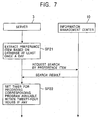
- Fig. 7 is a time chart showing a processing procedure of automatic recording executed by the central processing unit 3F using the automatic recording area 3H.
- the central processing unit 3F executes the processing procedure when the user operates a predetermined operation unit to set operation mode of the server 3 to an automatic recording mode.
- the central processing unit 3F accesses the preference database 3D in step SP21 at a predetermined time, and statistically processes history data, thereby determining preference of the user. More specifically, the central processing unit 3F selects a program, an artist, etc. that have been frequently viewed or listened to by the user from the history data recorded in the preference database 3D, thereby determining preference of the user.
- the central processing unit 3F requests a search over the program database 12 to the information management center 10 using as a key the favorite genre, artist, etc. of the user obtained by the determination, and receives notification of program data of programs presumably in accordance with preference of the user.
- timer recording is set to the television tuner 3A or the radio tuner 3B, and the processing procedure is then exited.
- the central processing unit 3F powers on the television tuner 3A or the radio tuner 3B, and records a program associated with the received program data of the notification in the automatic recording area 3H. If remaining capacity of the automatic recording area 3H is lacking at this time, the central processing unit 3F controls operation of the hard disc apparatus 3C so as to overwrite and delete content recorded earliest in the past, thereby recording content obtained by the television tuner 3A or the radio tuner 3B.
- the central processing unit 3F displays a list of content stored in the automatic recording area 3H. Furthermore, if the user specifies content in the displayed list and instructs deletion thereof, record of the content is deleted from the hard disc apparatus 3C. If the user instructs saving, management of the content is transferred from the automatic recording area 3H to the temporary recording bank 3K. If the user specifies content in the displayed list and instructs playback thereof, overall operation is controlled so that the content is played back and a corresponding video signal and/or audio signal are output to the display apparatus 7 and/or the amplifier 8. Accordingly, the central processing unit 3F records a title of content, etc. together with content recorded in the automatic recording area 3H so that the user is allowed to recognize the content.
- the central processing unit 3F creates history data for such content and records the history data in the preference database 3D, similarly to content obtained based on selection by the user.
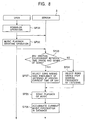
- the central processing unit 3F executes a processing procedure shown in Fig. 8, selecting content recorded in the music bank 3I based on a current condition and playing back the selected content. More specifically, in the AV system 1, when the user activates power in step SP31 and then instructs automatic playback of music in subsequent step SP32, the central processing unit 3F accesses the preference database 3D with reference to the current time in subsequent step SP33. By the access, the central processing unit 3F determines whether a habitual relationship exists in content of audio signals that have been listened to by the user in the past at the current time of day. For example, if the frequency of listening to classical music is high at the time range of the access although the frequency of listening to pops is high in other time ranges, it is determined that the user has a habit of listening to classical music in the time range of the access.
- the central processing unit 3F determines such habit of the user based on tendency of history data recorded in the preference database 3D. If the central processing unit 3F determines that no habitual relationship exists, the central processing unit 3F accesses the preference database 3D again in step SP3, detecting a favorite genre or title of the user and selecting content of an audio signal recorded in the music bank 3I based on the genre or title.
- step SP35 playback of the selected content is instructed, and playback of the content is recorded in the preference database 3D in step SP36, and the processing procedure is then exited.
- the recording in the preference database 3D in step SP36 is executed when the user does not execute an operation such as re-selecting a song with regard to the content provided.
- step SP37 the central processing unit 3F detects a genre or title having the highest frequency of listening in the current time range. Furthermore, the central processing unit 3F selects content of the detected genre or title from content of audio signals recorded in the music bank 3I, then proceeding to step SP35.
- the central processing unit 3F records video content output from the receiver apparatus 2, the video playback apparatus 4, or the television tuner 3A in the movie bank 3J, while recording music content output from the radio broadcast receiver apparatus 5, the audio playback apparatus 6, or the radio tuner 3B in the music bank 3I.
- the central processing unit 3F displays a list of various content thus recorded in the movie bank 3J and the music bank 3I according to user operations, accepting selection by the user, and selectively plays back content desired by the user from the various content recorded in the movie bank 3J and the music bank 3I.
- a desired channel is selected by the receiver apparatus 2 or the television tuner 3A according to a user operation, whereby a video signal and an audio signal broadcast by the channel are output from the display apparatus 7 and the speaker 9, respectively, so that desired video content of broadcast can be enjoyed.
- a video signal and an audio signal are played back from the recording medium according to an operation of the video playback apparatus 4, whereby the video signal and the audio signal are output from the display apparatus 7 and the speaker 9, respectively, so that desired video content from the recording medium can be enjoyed.
- video content received by the receiver apparatus 2 or the television tuner 3A or video content played back by the video playback apparatus 4 is recorded in the movie bank 3J of the server 3. Accordingly, in the AV system 1, video content is accumulated and stored in the server 3, so that the user is allowed to enjoy the content at anytime desired.
- a broadcast wave desired by the user is received by the radio broadcast receiver apparatus 5 or the radio tuner 3B according to a user operation, and an audio signal thus received is provided to the user via the speaker 9. Accordingly, in the AV system 1, content of broadcast, such as music, can be enjoyed.
- an audio signal recorded on the recording medium is played back by the audio playback apparatus 6 according to a user operation, whereby the audio signal is provided to the user via the speaker 9. Accordingly, in the AV system 1, content of a recording medium, such as music, can be enjoyed.
- the user instructs recording when content such as music is received or played back as described above, and furthermore, if the user instructs downloading of content of broadcast or a recording medium, such as music, content of an audio signal received by the radio broadcast receiver apparatus 5 or the radio tuner 3B or content of an audio signal played back by the audio playback apparatus 6 is recorded in the music bank 3I of the server 3. Accordingly, in the AV system 1, content such as music can be accumulated and stored in the server 3, so that the user is allowed enjoy the content at anytime desired.
- the server 3 accesses the program database 12 and the media database 13 at the information management center 10 to load, for each content, program data including a program genre, main cast, etc. and content data including a title of recording medium, a title of recorded content, etc., and thereby creates history data representing content that has been viewed or listened to by the user, recording the history data in the preference database 3D.
- preference of the user can be determined based on tendency of the history data accumulated in the preference database 3D.
- a favorite genre, title, artist, etc. of the user are detected from the records in the preference database 3D, and the program database 12 is accessed using these items as keys, thereby detecting programs to be broadcast within twenty-four hours and presumably in accordance with preference of the user. Furthermore, by the detection, corresponding program data is loaded, setting timer recording is set using a start time of broadcast, an end time of broadcast, and a channel that are set in the program data.
- the television tuner 3A or the radio tuner 3B is powered on, and the program detected as being presumably in accordance with preference of the user is recorded in the automatic recording area 3H.
- a list of programs that have been recorded in the automatic recording area 3H is displayed, and the programs are selectively provided via the display apparatus 7 and the speaker 9 according to an instruction by the user. Furthermore, management of the content thus provided to the user is transferred to the temporary recording bank 3K from the automatic recording area 3H.
- programs that have not been missed by the user such as a serial drama, programs featuring a favorite actor, etc. of the user are provided to the user without fail.
- preference of the user is determined with history of viewing or listening to content provided via a recording medium such as a compact disc taken into consideration. Accordingly, for example. when a favorite artist whose albums have not been missed for purchase is featured on a radio broadcast program or a television broadcast program, and furthermore, when a promotion video of a new song of the artist is broadcast, these programs are provided to the user without fail, serving to improve usability.
- content whose management has transferred to the temporary recording bank 3K as described above can also be recorded in the music bank 3I or the movie bank 3J, so that the user is allowed to enjoy the content at anytime desired.
- the AV system 1 determines whether a habitual relationship exists in the viewing/listening history of the user by accessing the preference database 3D. If it is determined that no habitual relationship exists, the AV system 1 plays back music content of a favorite genre or title of the user from the music bank 3I, which is provided via the speaker 9. Accordingly, in the AV system 1, music in accordance with preference of the user is provided even if playback of music content that has been recorded and stored depends on selection by the apparatus.
- the AV system 1 detects music of a genre or title having the highest frequency of listening at the current time of day. Furthermore, an audio signal of the genre or title thus detected is played back from the music bank 3I and is provided to the user. Accordingly, in the AV system 1, for example, if a person has a habit of listening to classical music in the morning, pops in the afternoon, and jazz in the evening, music of the genres the user habitually listens to in the morning, in the afternoon, and in the evening, respectively, is selected and provided. As another example, if a person has a habit of listening to a hit chart, a song that has recently been listened to frequently or a song that has been recorded most recently is provided. Without limitation to selection of a song on the basis of genre, for example, if a particular music is played in the evening, the music is provided to the user.
- content of broadcast is selectively recorded in accordance with preference of a user as determined based on content of broadcast selected by the user and content of a recording medium, so that content of broadcast desired by the user is properly provided.
- data of content obtained by the user is sequentially recorded to create history of obtaining content. Accordingly, preference of the user under various conditions, for example, preference of the user in relation to time ranges such as morning, afternoon, and evening, can be determined, so that content desired by the user is properly provided to the user.
- content recorded in a hard disc apparatus serving as predetermined content obtaining means is selectively played back and output based on a result of determination as to preference, and furthermore, content that is determined as being in accordance with preference of the user under a current condition is selectively output, so that content desired by the user is properly provided to the user.
- the present invention is not limited thereto, and for example, selective playback by the user of content accumulated, for example, in a hard disc apparatus may also be used as a basis for determining preference.
- the embodiment has been described in relation to a case where broadcast programs are selectively recorded in accordance with preference of the user and music content recorded in a music bank is provided to the user, the present invention is not limited thereto, and for example, instead of or in addition to providing music content recorded in the music bank, preference of the user may be utilized in providing broadcast programs. In that case, for example, if the user has a habit of switching channels in the morning and viewing stock market, general news, etc., programs in accordance with the habit are provided to the user.
- the present invention is not limited thereto, and may be applied to an on-vehicle audio apparatus so that music is provided in accordance with preference of the user as determined according to conditions such as traveling speed, and may be used in combination with a car navigation system so that music is provided in accordance with preference of the user as determined according to conditions of a current position of travel. Accordingly, for example, music suitable for beach is selected when traveling along a seacoast, "From the New World” by Dvorak is selected when traveling in the mountains at dusk, and a fast-paced song is selected when traveling on a highway.
- content of broadcast is selectively recorded in accordance with preference of a user as determined based on content of broadcast selected by the user and content of a recording medium, so that content of broadcast desired by the user is properly provided.
Landscapes
- Engineering & Computer Science (AREA)
- Signal Processing (AREA)
- Multimedia (AREA)
- Databases & Information Systems (AREA)
- Social Psychology (AREA)
- Health & Medical Sciences (AREA)
- General Health & Medical Sciences (AREA)
- Computer Networks & Wireless Communication (AREA)
- Television Signal Processing For Recording (AREA)
- Management Or Editing Of Information On Record Carriers (AREA)
- Two-Way Televisions, Distribution Of Moving Picture Or The Like (AREA)
- Signal Processing For Digital Recording And Reproducing (AREA)
- Management, Administration, Business Operations System, And Electronic Commerce (AREA)
- Information Retrieval, Db Structures And Fs Structures Therefor (AREA)
Abstract
To determine preference of a user based on content of
broadcast selected by the user and content of a recording
medium so that content of broadcast can be selectively
recorded and provided.
Description
The present invention is applied to various AV
apparatuses of, for example, on-vehicle apparatuses and home
networks, so that content desired by a user is provided from
content of broadcast and content of a recording medium.
Hitherto, AV apparatuses of the type that provides
content distributed by broadcast to a user and of the type
that plays back content from various recording media are in
use.
Content distributed by broadcast includes television
programs, FM broadcast programs, etc. With regard to such
content, a desired program can be selected using a bill of
fare on, for example; a newspaper, a weekly magazine, etc.,
and timer recording of the selected program is allowed. In
digital broadcast, a bill of fare is provided by broadcast.
When a user is not allowed to view or listen to content
thus provided at the time of broadcast, the user views or
listens to the content by timer recording, i.e., by what is
called time shifting. However, timer recording sometimes
fails due to, for example, an incorrect operation.
Furthermore, setting of timer recording itself is sometimes
forgotten. Furthermore, it is possible that broadcast of a
desired program itself passes unnoticed.
The present invention has been made in view of the
above, and it proposes a content providing apparatus, a
content providing method, and a program of a content
providing method that serve to properly provide content of
broadcast desired by a user.
To this end, the present invention is applied to a
content providing apparatus, which comprises first content
obtaining means for obtaining content of broadcast; second
content obtaining means for obtaining content supplied via a
predetermined recording medium; preference determination
means for determining preference of a user based on a
history of obtaining content by the first and second content
obtaining means; content recording means for selectively
obtaining content of broadcast by the first content
obtaining means and recording the content obtained in a
predetermined content recording medium, based on a result of
determination by the preference determination means; and
content playback means for selectively playing back and
outputting the content recorded in the content recording
medium.
By including first content obtaining means for
obtaining content of broadcast; second content obtaining
means for obtaining content supplied via a predetermined
recording medium; preference determination means for
determining preference of a user based on a history of
obtaining content by the first and second content obtaining
means; content recording means for selectively obtaining
content of broadcast by the first content obtaining means
and recording the content obtained in a predetermined
content recording medium, based on a result of determination
by the preference determination means; and content playback
means for selectively playing back and outputting the
content recorded in the content recording medium; content
can be recorded in accordance with preference of the user as
determined based not only on content provided by a broadcast
but also on content provided via a recording medium such as
a compact disc. Accordingly, content of broadcast desired
by the user is properly provided.
Furthermore, the present invention is applied to a
content providing method or a program of a content providing
method, which comprises a preference determining step of
determining preference of a user based on a history of
obtaining content including content of broadcast and content
of a recording medium; a content recording step of
selectively recording the content of broadcast in a
predetermined content recording medium based on a result of
determination in the preference determining step; and a
content playback step of selectively playing back and
outputting the content recorded in the content recording
medium.
According to this scheme, content can be recorded in
accordance with preference of the user as determined based
not only on content provided by a broadcast but also on
content provided via a recording medium such as a compact
disc. Accordingly, content of broadcast desired by the user
is properly provided.
A preferred embodiment of the present invention will
now be described with reference to the drawings as needed.
Fig. 1 is a block diagram showing an AV system
according to an embodiment of the present invention. In the
AV system 1, a receiver apparatus 2 receive conventional
terrestrial television broadcast, digital television
broadcast, broadcasting satellite (BS) television broadcast,
and communication satellite (CS) television broadcast, and
it outputs video signals and audio signals obtained by
receiving these television broadcasts according to user
operations or control by a server 3. Furthermore, when such
content is received, the receiver apparatus 2 outputs
information regarding a channel being received, time, etc.
to the server 3 so that the server 3 is allowed to identify
the content being received.
A video playback apparatus 4 plays back and outputs,
according to a user operation, a video signal and an audio
signal from an optical disk (DVD: Digital Video Disc) or a
video tape serving as a recording medium. At this time, in
relation to the video signal and the audio signal for
playback, the video playback apparatus 4 plays back
information regarding content recorded in TOC in the case of
an optical disk and outputs the information to the server 3.
In the case of a video tape, the video playback apparatus 4
plays back information regarding content recorded in a
vertical blanking period, etc. and outputs the information
to the server 3. The information regarding content serves
to identify the content. Accordingly, the video playback
apparatus 4 allows the server 3 to identify content being
viewed by a user even if the content is provided via a
recording medium.
A radio broadcast receiver apparatus 5 receives and
outputs a program of an FM (Frequency Modulation) broadcast
or a program of an AM (Amplitude Modulation) broadcast
according to a user operation. At this time, the radio
broadcast receiver apparatus 5 also obtains information
regarding content from a broadcast wave and outputs the
information to the server 3. Accordingly, also in this case,
the radio broadcast receiver apparatus 5 allows the server 3
to identify content being listened to by a user.
An audio playback apparatus 6 plays back and outputs,
according to a user operation, an audio signal recorded on
an optical disk (CD: Compact Disc), a mini disc (MD: Mini
Disc), or a magnetic tape serving as a recording medium. At
this time, the audio playback apparatus 6 plays back data
such as TOC (Table Of Contents) to output information
regarding content. Accordingly, the audio playback
apparatus 6 allows the server 3 to identify content being
listened to by a user.
Accordingly, the receiver apparatus 2 and the radio
broadcast receiver apparatus 5, together with a television
tuner 3A and a radio tuner 3B to be described later,
constitute first content obtaining means for respectively
obtaining content of broadcast, whereas the video playback
apparatus 4 and the audio playback apparatus 6 constitute
second content obtaining means for obtaining content
supplied via a predetermined recording medium.
A display apparatus 7 displays a video signal output
from the receiver apparatus 2 or the video playback
apparatus 4, or a video signal output from the server 3. An
amplifier 8 amplifies an audio signal output from the
receiver apparatus 2, the video playback apparatus 4, the
radio broadcast receiver apparatus 5, or the audio playback
apparatus 6, or an audio signal output from the server 3,
outputting the result via a speaker 9. Accordingly, the AV
system 1 allows viewing and listening to video and audio
content of broadcast and of a recording medium.
An information management center 10 allows access by
the server 3 via a network such as the Internet, and stores,
at least, program data of each broadcast that can be
received by the receiver apparatus 2 or the radio broadcast
receiver apparatus 5 in the form of a bill of fare in a
program database 12. Furthermore, the information
management center 10 stores, at least, content data of a
recording medium that can be played back by the video
playback apparatus 4 or the audio playback apparatus 6 in a
media database 13.
The program data and content data each represent a
profile of content, and can be identified on the basis of
data regarding content, obtained by the video playback
apparatus 4, etc, and with regard to content received by the
receiver apparatus 2, can be identified by a receiving
channel, a receiving time, etc. The program data relates to
programs currently being broadcast, programs to be
subsequently broadcast, and programs that have been
broadcast in the past, and is stored in the program database
12. The program data includes a time of broadcast, a day of
week of broadcast, a channel, a program genre, main cast,
etc., which correspond to history data to be described later.
If content is associated with music program of a radio
broadcast, the program data includes a music title, a song
title, a lyricist, a composer, an artist, and manufacturer
data in relation to music broadcast in the program, in
addition to a time of broadcast, a day of week of broadcast,
a channel, a program genre, and main cast of the program.
The content data includes similar items corresponding
to history data, a title set for a recording medium having
content recorded thereon, and with regard to video content,
main cast, a director, etc., and with regard to music
content, a music title, a song title, a lyricist, a composer,
an artist, and manufacturer data. Accordingly, in the AV
system 1, information needed for determining preference of a
user with regard to content received by the receiver
apparatus 2, etc. or content played back by the video
playback apparatus 4 can be obtained by accessing the
information management center 10.
The server 3 determines preference of a user by
accumulating the program data and content data thus obtained,
and automatically records programs in accordance with
preference of the user based on the result of the
determination, providing the programs to the user. More
specifically, the server 3 includes a television tuner (TV
tuner) 3A corresponding to the receiver apparatus 2 and a
radio tuner 3B corresponding to the radio broadcast receiver
apparatus 5, so that desired content can be received.
Furthermore, the server 3 includes a hard disc
apparatus 3C having a large capacity, and creates a
preference database 3D in the hard disc apparatus 3C. The
preference database 3D is created by recording history data
of obtaining content viewed or listened to by a user based
on selection by the user.
In the case of video content, the history data includes
a month (or season), a day of week, a start time of
broadcast, and an end time of broadcast that identify a time
of broadcast, and in addition, a channel of broadcast and a
program genre, as shown in Fig. 2(A). If content is not
associated with broadcast (i.e., in the case of content
supplied via a recording medium), data identifying the audio
playback apparatus 6 or the video playback apparatus 4 is
assigned to the channel of broadcast, and a time of playback
is recorded in the items identifying a time of broadcast.
The program genre is classified into specific types of
content such as drama, movie, and sports, as shown in Fig.
2(B), and specific sub-items are set for each of the items.
More specifically, in the case of drama content, distinction
as to domestic/foreign drama, a title, a playwright, and
main cast are recorded. In the case. of movie content,
distinction as to domestic/foreign movie, a specific genre,
a title, a director, a playwright, and main cast are
recorded. Specific genres of movie include SF & fantasy,
musical and music, comedy, Western, etc., as shown in Fig.
3(C).
In the case of sports content, a specific genre and
players are recorded. Specific genres of sports include
baseball, soccer, golf, tennis, etc, as shown in Fig. 3(D).
In the case of play content, a specific genre, a title, a
playwright, and main cast are recorded, similarly to movie.
In the case of music content, distinction as to
domestic/foreign music, a specific genre, a song title, a
lyricist, a composer, and a singer are recorded. Specific
genres of music include idol and popular song, popular
ballad, J-POP, etc., as shown in Fig. 4(E)
In the case of a variety program, main cast is recorded.
In the case of an education program, a specific genre,
classified as culture, history, philosophy, or economy, as
shown in Fig. 4(F), is recorded. In the case of animation,
a dubbing artist is recorded. In the case of news or
documentary content, an anchorperson is recorded. If
content relates to hobby and life, a specific genre,
classified as cooking, gardening, etc., as shown in Fig.
4(G), is recorded.
In the case of music content obtained by the radio
broadcast receiver apparatus 5, the audio playback apparatus
6, or the radio tuner 3B, the same primary genres as in the
case of music described above are set. History data is
created, by executing a predetermined processing procedure
by the central processing unit 3F, for each content viewed
or listened to based on selection of a user, with items set
to values in accordance with program data and content data
obtained by accessing the information management center 10,
and is then recorded in the preference database 3D.
Fig. 5 is a time chart showing a processing procedure
for creating the preference database 3D. In the processing
procedure, when the user operates a power supply of the
receiver apparatus 2 in step SP1, the receiver apparatus 2
is powered on in subsequent step SP2, and the server 3 is
notified of the power-on. In the server 3, upon the
notification of power-up, the information management center
10 is accessed under the control of the central processing
unit 3F, obtaining program data that can be received by the
receiver apparatus 2 at the current time.
Around the time of the process of obtaining program
data, when the user selects a channel in step SP3, the
receiver apparatus 2 executes a tuning process in subsequent
step SP4 in response to the channel selection operation, so
that reception of the channel selected by the user is
started. The receiver apparatus 2 notifies the server 3 of
information of the channel whose reception has been started.
In the server 3, program data of the corresponding channel
is selected from the receivable program data that has been
received from the information management center 10 under the
control of the central processing unit 3F, and history data
is set by the selected program data and is recorded in the
preference database 3D. If the user thus starts viewing the
content and then continues enjoying content by the receiver
apparatus 2 even after the program has ended, the central
processing unit 3F accesses the information management
center 10 again with reference to an end time obtained from
the program data to obtain program data that can be viewed
in a subsequent time range, and creates history data of the
program being enjoyed by the user using the program data
thus obtained, recording the history data in the preference
database 3D.
Similarly, when the user selects content by the
television tuner 3A or the radio broadcast receiver
apparatus 5, the central processing unit 3F also creates
history data for each program, recording the history data in
the preference database 3D.
Fig. 6 is a time chart showing a processing procedure
in relation to the preference database 3D, which is executed
when the audio playback apparatus 6 serving as a playback
apparatus of a recording medium is operated by the user. In
the processing procedure, when the user operates a power
supply of the audio playback apparatus 6 in step SP11, the
audio playback apparatus 6 is powered on in subsequent step
SP12, and the server 3 is notified of the power-on.
When the user sets an optical disc and operates a
predetermined operation unit in subsequent step SP13, the
audio playback apparatus 6 loads the optical disc in
subsequent step SP14 and plays back a lead-in area to obtain
TOC data. The audio playback apparatus 6 notifies the
server 3 of the TOC data. Upon the notification, the server
3 accesses the information management center 10 under the
control of the central processing unit 3F, obtaining
corresponding content data.
Around the time of the process of obtaining content
data, when the user instructs playback of the optical disc
in step SP15, the audio playback apparatus 6 starts playback
of a corresponding song in step SP16. Furthermore, history
data of songs associated with the playback is sequentially
created in step SP17 from content data obtained from the
information management center 10, recording the history data
in the preference database 3D.
In this case, the central processing unit 3F creates
history data for each song and registers the history data in
the preference database 3D. Similarly, for example, when
the video playback apparatus 4 is operated by the user to
play back a DVD, the central processing unit 3F also
accesses the information management center 10 to obtain
content data, and creates history data from the content data,
registering the history data in the preference database 3D.
Accordingly, in the server 3, a profile etc. of content
enjoyed by the user by his/her own selection is recorded in
a database, which serves to determine preference of the user.
Furthermore, content of broadcast and content of a recording
medium are managed by the same preference database 3D, so
that preference of the user regarding the content can be
processed in an integrated manner.
The hard disc apparatus 3C includes a user area 3G and
an automatic recording area 3H as well as an area of the
preference database 3D. The user area 3G is managed as a
bank structure, which includes a music bank 3I, a movie bank
3J, and a temporary recording bank 3K.
The music bank 3I is an area that stores content played
back by the audio playback apparatus 6 and content received
by the radio broadcast receiver apparatus 5 or the radio
tuner 3B so that the content can be used as a jukebox. The
movie bank 3J is an area that stores content played back by
the video playback apparatus 4 and content received by the
receiver apparatus 2 or the television tuner 3A so that the
content can be reused. The temporary recording bank 3K is
an area that stores content selected by the user from
content of broadcast automatically recorded by the server 3
in accordance with preference of the user. The automatic
recording area 3H is an area for storing content of
broadcast automatically recorded by the server 3 in
accordance with preference of the user as mentioned above.
The server 3 allows management of content desired by the
user among content recorded in the automatic recording area
3H to be transferred to the temporary recording bank 3K.
Fig. 7 is a time chart showing a processing procedure
of automatic recording executed by the central processing
unit 3F using the automatic recording area 3H. The central
processing unit 3F executes the processing procedure when
the user operates a predetermined operation unit to set
operation mode of the server 3 to an automatic recording
mode.
That is, in the server 3, the central processing unit
3F accesses the preference database 3D in step SP21 at a
predetermined time, and statistically processes history data,
thereby determining preference of the user. More
specifically, the central processing unit 3F selects a
program, an artist, etc. that have been frequently viewed or
listened to by the user from the history data recorded in
the preference database 3D, thereby determining preference
of the user.
The central processing unit 3F requests a search over
the program database 12 to the information management center
10 using as a key the favorite genre, artist, etc. of the
user obtained by the determination, and receives
notification of program data of programs presumably in
accordance with preference of the user.
If a program within twenty-four hours presumably
desired by the user is included in the notification, timer
recording is set to the television tuner 3A or the radio
tuner 3B, and the processing procedure is then exited.
Accordingly, when a start time of recording has come,
the central processing unit 3F powers on the television
tuner 3A or the radio tuner 3B, and records a program
associated with the received program data of the
notification in the automatic recording area 3H. If
remaining capacity of the automatic recording area 3H is
lacking at this time, the central processing unit 3F
controls operation of the hard disc apparatus 3C so as to
overwrite and delete content recorded earliest in the past,
thereby recording content obtained by the television tuner
3A or the radio tuner 3B.
If the user operates a predetermined operation unit to
instruct display of a list of content that has thus been
automatically recorded, the central processing unit 3F
displays a list of content stored in the automatic recording
area 3H. Furthermore, if the user specifies content in the
displayed list and instructs deletion thereof, record of the
content is deleted from the hard disc apparatus 3C. If the
user instructs saving, management of the content is
transferred from the automatic recording area 3H to the
temporary recording bank 3K. If the user specifies content
in the displayed list and instructs playback thereof,
overall operation is controlled so that the content is
played back and a corresponding video signal and/or audio
signal are output to the display apparatus 7 and/or the
amplifier 8. Accordingly, the central processing unit 3F
records a title of content, etc. together with content
recorded in the automatic recording area 3H so that the user
is allowed to recognize the content.
Since content whose management has been transferred by
the user to the temporary recording bank 3K and content that
has been viewed or listened to almost entirely in response
to a user instruction for playback can be assumed as content
in accordance with preference of the user, the central
processing unit 3F creates history data for such content and
records the history data in the preference database 3D,
similarly to content obtained based on selection by the user.
When the user instructs automatic playback of an audio
signal, the central processing unit 3F executes a processing
procedure shown in Fig. 8, selecting content recorded in the
music bank 3I based on a current condition and playing back
the selected content. More specifically, in the AV system 1,
when the user activates power in step SP31 and then
instructs automatic playback of music in subsequent step
SP32, the central processing unit 3F accesses the preference
database 3D with reference to the current time in subsequent
step SP33. By the access, the central processing unit 3F
determines whether a habitual relationship exists in content
of audio signals that have been listened to by the user in
the past at the current time of day. For example, if the
frequency of listening to classical music is high at the
time range of the access although the frequency of listening
to pops is high in other time ranges, it is determined that
the user has a habit of listening to classical music in the
time range of the access.
The central processing unit 3F determines such habit of
the user based on tendency of history data recorded in the
preference database 3D. If the central processing unit 3F
determines that no habitual relationship exists, the central
processing unit 3F accesses the preference database 3D again
in step SP3, detecting a favorite genre or title of the user
and selecting content of an audio signal recorded in the
music bank 3I based on the genre or title.
Furthermore, in subsequent step SP35, playback of the
selected content is instructed, and playback of the content
is recorded in the preference database 3D in step SP36, and
the processing procedure is then exited. The recording in
the preference database 3D in step SP36 is executed when the
user does not execute an operation such as re-selecting a
song with regard to the content provided.
If it is determined that a habitual relationship exits,
the central processing unit 3F proceeds from step SP33 to
step SP37, in which the central processing unit 3F detects a
genre or title having the highest frequency of listening in
the current time range. Furthermore, the central processing
unit 3F selects content of the detected genre or title from
content of audio signals recorded in the music bank 3I, then
proceeding to step SP35.
As a presupposition of these processes, when
downloading of content is instructed by a user operation,
the central processing unit 3F records video content output
from the receiver apparatus 2, the video playback apparatus
4, or the television tuner 3A in the movie bank 3J, while
recording music content output from the radio broadcast
receiver apparatus 5, the audio playback apparatus 6, or the
radio tuner 3B in the music bank 3I.
Furthermore, the central processing unit 3F displays a
list of various content thus recorded in the movie bank 3J
and the music bank 3I according to user operations,
accepting selection by the user, and selectively plays back
content desired by the user from the various content
recorded in the movie bank 3J and the music bank 3I.
According to the scheme described above, in the AV
system 1 (Fig. 1), when a user wishes to receive a
television broadcast, a desired channel is selected by the
receiver apparatus 2 or the television tuner 3A according to
a user operation, whereby a video signal and an audio signal
broadcast by the channel are output from the display
apparatus 7 and the speaker 9, respectively, so that desired
video content of broadcast can be enjoyed.
If the user wishes to view a movie or the like provided
via a recording medium such as a DVD or a video tape, a
video signal and an audio signal are played back from the
recording medium according to an operation of the video
playback apparatus 4, whereby the video signal and the audio
signal are output from the display apparatus 7 and the
speaker 9, respectively, so that desired video content from
the recording medium can be enjoyed.
Furthermore, if the user instructs recording when video
content is received or played back as described above, and
furthermore, if the user instructs downloading of video
content of broadcast or a recording medium, video content
received by the receiver apparatus 2 or the television tuner
3A or video content played back by the video playback
apparatus 4 is recorded in the movie bank 3J of the server 3.
Accordingly, in the AV system 1, video content is
accumulated and stored in the server 3, so that the user is
allowed to enjoy the content at anytime desired.
If the user wishes to receive a radio broadcast, a
broadcast wave desired by the user is received by the radio
broadcast receiver apparatus 5 or the radio tuner 3B
according to a user operation, and an audio signal thus
received is provided to the user via the speaker 9.
Accordingly, in the AV system 1, content of broadcast, such
as music, can be enjoyed.
If the user wishes content, such as music, provided via
a recording medium such as a compact disc, an audio signal
recorded on the recording medium is played back by the audio
playback apparatus 6 according to a user operation, whereby
the audio signal is provided to the user via the speaker 9.
Accordingly, in the AV system 1, content of a recording
medium, such as music, can be enjoyed.
Furthermore, if the user instructs recording when
content such as music is received or played back as
described above, and furthermore, if the user instructs
downloading of content of broadcast or a recording medium,
such as music, content of an audio signal received by the
radio broadcast receiver apparatus 5 or the radio tuner 3B
or content of an audio signal played back by the audio
playback apparatus 6 is recorded in the music bank 3I of the
server 3. Accordingly, in the AV system 1, content such as
music can be accumulated and stored in the server 3, so that
the user is allowed enjoy the content at anytime desired.
When content such as video and music, supplied by
broadcast or via a recording medium, is provided to the user
according to a user operation, the server 3 accesses the
program database 12 and the media database 13 at the
information management center 10 to load, for each content,
program data including a program genre, main cast, etc. and
content data including a title of recording medium, a title
of recorded content, etc., and thereby creates history data
representing content that has been viewed or listened to by
the user, recording the history data in the preference
database 3D.
If the user frequently views or listens to programs or
music of the same genre or title, a large number of records
of the same genre or title is included in the history data
accumulated in the preference database 3D as described above.
Thus, preference of the user can be determined based on
tendency of the history data accumulated in the preference
database 3D.
Accordingly, in the AV system 1, when the user
instructs automatic recording of program, a favorite genre,
title, artist, etc. of the user are detected from the
records in the preference database 3D, and the program
database 12 is accessed using these items as keys, thereby
detecting programs to be broadcast within twenty-four hours
and presumably in accordance with preference of the user.
Furthermore, by the detection, corresponding program data is
loaded, setting timer recording is set using a start time of
broadcast, an end time of broadcast, and a channel that are
set in the program data. When the setting has been made and
the start time of broadcast has come, the television tuner
3A or the radio tuner 3B is powered on, and the program
detected as being presumably in accordance with preference
of the user is recorded in the automatic recording area 3H.
Furthermore, if the user instructs display of a list of
programs that have been automatically recorded, a list of
programs that have been recorded in the automatic recording
area 3H is displayed, and the programs are selectively
provided via the display apparatus 7 and the speaker 9
according to an instruction by the user. Furthermore,
management of the content thus provided to the user is
transferred to the temporary recording bank 3K from the
automatic recording area 3H.
Accordingly, in the AV system 1, programs that have not
been missed by the user, such as a serial drama, programs
featuring a favorite actor, etc. of the user are provided to
the user without fail.
In particular, in the AV system 1, preference of the
user is determined with history of viewing or listening to
content provided via a recording medium such as a compact
disc taken into consideration. Accordingly, for example.
when a favorite artist whose albums have not been missed for
purchase is featured on a radio broadcast program or a
television broadcast program, and furthermore, when a
promotion video of a new song of the artist is broadcast,
these programs are provided to the user without fail,
serving to improve usability.
Accordingly, in the AV system 1, content whose
management has transferred to the temporary recording bank
3K as described above can also be recorded in the music bank
3I or the movie bank 3J, so that the user is allowed to
enjoy the content at anytime desired.
When the user instructs automatic playback of an audio
signal, the AV system 1 determines whether a habitual
relationship exists in the viewing/listening history of the
user by accessing the preference database 3D. If it is
determined that no habitual relationship exists, the AV
system 1 plays back music content of a favorite genre or
title of the user from the music bank 3I, which is provided
via the speaker 9. Accordingly, in the AV system 1, music
in accordance with preference of the user is provided even
if playback of music content that has been recorded and
stored depends on selection by the apparatus.
If it is determined that a habitual relationship exists,
the AV system 1 detects music of a genre or title having the
highest frequency of listening at the current time of day.
Furthermore, an audio signal of the genre or title thus
detected is played back from the music bank 3I and is
provided to the user. Accordingly, in the AV system 1, for
example, if a person has a habit of listening to classical
music in the morning, pops in the afternoon, and jazz in the
evening, music of the genres the user habitually listens to
in the morning, in the afternoon, and in the evening,
respectively, is selected and provided. As another example,
if a person has a habit of listening to a hit chart, a song
that has recently been listened to frequently or a song that
has been recorded most recently is provided. Without
limitation to selection of a song on the basis of genre, for
example, if a particular music is played in the evening, the
music is provided to the user.
According to the scheme described above, content of
broadcast is selectively recorded in accordance with
preference of a user as determined based on content of
broadcast selected by the user and content of a recording
medium, so that content of broadcast desired by the user is
properly provided.
Furthermore, data of content obtained by the user is
sequentially recorded to create history of obtaining content.
Accordingly, preference of the user under various conditions,
for example, preference of the user in relation to time
ranges such as morning, afternoon, and evening, can be
determined, so that content desired by the user is properly
provided to the user.
That is, content recorded in a hard disc apparatus
serving as predetermined content obtaining means is
selectively played back and output based on a result of
determination as to preference, and furthermore, content
that is determined as being in accordance with preference of
the user under a current condition is selectively output, so
that content desired by the user is properly provided to the
user.
Although the above embodiment has been described in
relation to a case where history is recorded as to content
of broadcast and of a recording medium and preference of a
user is determined accordingly, the present invention is not
limited thereto, and for example, selective playback by the
user of content accumulated, for example, in a hard disc
apparatus may also be used as a basis for determining
preference.
Furthermore, although the above embodiment has been
described in relation to a case where history of obtaining
content is recorded by accessing a management center and
time recording is set, the present invention is not limited
thereto, and for example, these processes may be executed
using an electronic bill of fare.
Furthermore, although the embodiment has been described
in relation to a case where broadcast programs are
selectively recorded in accordance with preference of the
user and music content recorded in a music bank is provided
to the user, the present invention is not limited thereto,
and for example, instead of or in addition to providing
music content recorded in the music bank, preference of the
user may be utilized in providing broadcast programs. In
that case, for example, if the user has a habit of switching
channels in the morning and viewing stock market, general
news, etc., programs in accordance with the habit are
provided to the user.
Furthermore, although the embodiment has been described
in relation to a case where preference of the user is
determined based on history of obtaining content with
reference to the current time of day and music is provided
accordingly, the present invention is not limited thereto,
and may be applied to an on-vehicle audio apparatus so that
music is provided in accordance with preference of the user
as determined according to conditions such as traveling
speed, and may be used in combination with a car navigation
system so that music is provided in accordance with
preference of the user as determined according to conditions
of a current position of travel. Accordingly, for example,
music suitable for beach is selected when traveling along a
seacoast, "From the New World" by Dvorak is selected when
traveling in the mountains at dusk, and a fast-paced song is
selected when traveling on a highway.
As described above, according to the present invention,
content of broadcast is selectively recorded in accordance
with preference of a user as determined based on content of
broadcast selected by the user and content of a recording
medium, so that content of broadcast desired by the user is
properly provided.
Relates to a content providing apparatus, a content
providing method, and a program of a content providing
method, and is applicable, for example, to AV apparatuses of,
for example, on-vehicle apparatuses and home networks.
Claims (7)
- A content providing apparatus comprising:first content obtaining means for obtaining content of broadcast;second content obtaining means for obtaining content supplied via a predetermined recording medium;preference determination means for determining preference of a user based on a history of obtaining content by said first and second content obtaining means;content recording means for selectively obtaining content of broadcast by said first content obtaining means and recording the content obtained in a predetermined content recording medium, based on a result of determination by said preference determination means; andcontent playback means for selectively playing back and outputting the content recorded in the content recording medium.
- A content providing apparatus according to Claim 1,
wherein said preference determination means generates the history of obtaining content by sequentially recording data of content obtained by the user by said first and second content obtaining means. - A content providing apparatus according to Claim 1,
wherein said content recording means selects the content by searching for data representing a profile of content that can be obtained by said first content obtaining means based on a result of determination by said preference determination means. - A content providing apparatus according to Claim 1, comprising content selection and output means for selectively obtaining and outputting content by predetermined content obtaining means based on a result of determination by said preference determination means.
- A content providing apparatus according to Claim 4,
wherein said content selection and output means selectively outputs content that is determined as desired by the user under a current condition. - A content providing method comprising:a preference determining step of determining preference of a user based on a history of obtaining content including content of broadcast and content of a recording medium;a content recording step of selectively recording the content of broadcast in a predetermined content recording medium based on a result of determination in said preference determining step; anda content playback step of selectively playing back and outputting the content recorded in the content recording medium.
- A program of a content providing method comprising:a preference determining step of determining preference of a user based on a history of obtaining content including content of broadcast and content of a recording medium;a content recording step of selectively recording the content of broadcast in a predetermined content recording medium based on a result of determination in said preference determining step; anda content playback step of selectively playing back and outputting the content recorded in the content recording medium.
Applications Claiming Priority (3)
| Application Number | Priority Date | Filing Date | Title |
|---|---|---|---|
| JP2001019323 | 2001-01-29 | ||
| JP2001019323A JP2002223418A (en) | 2001-01-29 | 2001-01-29 | Content providing apparatus, content providing method, and program for content providing method |
| PCT/JP2002/000583 WO2002062059A1 (en) | 2001-01-29 | 2002-01-28 | Contents providing device, contents providing method and program for contents providing method |
Publications (2)
| Publication Number | Publication Date |
|---|---|
| EP1359753A1 true EP1359753A1 (en) | 2003-11-05 |
| EP1359753A4 EP1359753A4 (en) | 2006-08-09 |
Family
ID=18885217
Family Applications (1)
| Application Number | Title | Priority Date | Filing Date |
|---|---|---|---|
| EP02716403A Withdrawn EP1359753A4 (en) | 2001-01-29 | 2002-01-28 | CONTENT PROVIDING DEVICE, CONTENT PROVIDING METHOD, AND SOFTWARE FOR CONTENT PROVIDING METHOD |
Country Status (4)
| Country | Link |
|---|---|
| US (1) | US8613022B2 (en) |
| EP (1) | EP1359753A4 (en) |
| JP (1) | JP2002223418A (en) |
| WO (1) | WO2002062059A1 (en) |
Families Citing this family (12)
| Publication number | Priority date | Publication date | Assignee | Title |
|---|---|---|---|---|
| JP4039158B2 (en) * | 2002-07-22 | 2008-01-30 | ソニー株式会社 | Information processing apparatus and method, information processing system, recording medium, and program |
| JP4533408B2 (en) * | 2002-10-08 | 2010-09-01 | キヤノン株式会社 | Receiving apparatus and receiving method |
| DE602004014244D1 (en) * | 2003-01-06 | 2008-07-17 | Koninkl Philips Electronics Nv | REAL-TIME RECORDING SYSTEM OF DATA RUNS FROM THE INTERNET |
| US7797343B2 (en) | 2003-03-17 | 2010-09-14 | Xerox Corporation | System and method for providing usage metrics of digital content |
| JP2005122839A (en) * | 2003-10-17 | 2005-05-12 | Pioneer Electronic Corp | Information reproducing device, information reproducing method and the like |
| JP2007047846A (en) * | 2005-08-05 | 2007-02-22 | Aisin Aw Co Ltd | Information providing device |
| WO2010148518A1 (en) * | 2009-06-27 | 2010-12-29 | Intelligent Mechatronic Systems | Vehicle internet radio interface |
| EP2509238A4 (en) * | 2009-11-18 | 2013-05-15 | Crambo Sa | Method for automatically locating radio stations |
| US20150095927A1 (en) * | 2013-10-01 | 2015-04-02 | Sling Media Pvt Ltd | Intelligent recording of favorite video content using a video services receiver |
| US11262972B2 (en) | 2015-06-05 | 2022-03-01 | Apple Inc. | Automated content medium selection |
| WO2018035576A1 (en) * | 2016-08-25 | 2018-03-01 | Nsv Group Fzco | System and method of automatically displaying digital content on a display device |
| US11651204B2 (en) | 2017-09-09 | 2023-05-16 | Apple Inc. | Steering for unstructured media stations |
Family Cites Families (16)
| Publication number | Priority date | Publication date | Assignee | Title |
|---|---|---|---|---|
| US5081707A (en) * | 1989-08-08 | 1992-01-14 | Motorola, Inc. | Knowledge based radio |
| JPH04351777A (en) | 1991-05-28 | 1992-12-07 | Fujitsu Ten Ltd | Automatic music selection method for optical disk reproducing device |
| JPH06311443A (en) * | 1993-04-22 | 1994-11-04 | Casio Comput Co Ltd | Broadcast reception control device |
| US5758257A (en) * | 1994-11-29 | 1998-05-26 | Herz; Frederick | System and method for scheduling broadcast of and access to video programs and other data using customer profiles |
| JP3360705B2 (en) * | 1994-12-21 | 2002-12-24 | ソニー株式会社 | Broadcast receiving device and broadcast receiving method |
| JPH0917165A (en) | 1995-06-27 | 1997-01-17 | Matsushita Electric Ind Co Ltd | Disc playback device |
| US5945988A (en) | 1996-06-06 | 1999-08-31 | Intel Corporation | Method and apparatus for automatically determining and dynamically updating user preferences in an entertainment system |
| US6064385A (en) * | 1997-09-30 | 2000-05-16 | Compaq Computer Corporation | Systems with user preference setting schemes |
| JPH11134345A (en) | 1997-10-27 | 1999-05-21 | Fuji Xerox Co Ltd | Favorite information selecting device |
| JPH11195256A (en) * | 1997-12-26 | 1999-07-21 | Victor Co Of Japan Ltd | Program reservation recording system |
| JP3418541B2 (en) | 1997-12-26 | 2003-06-23 | 松下電器産業株式会社 | Storage type information broadcasting system and receiving terminal device of this system |
| US6614987B1 (en) | 1998-06-12 | 2003-09-02 | Metabyte, Inc. | Television program recording with user preference determination |
| GB9822022D0 (en) | 1998-10-09 | 1998-12-02 | Roke Manor Research | Method and apparatus for receiving a media broadcast |
| US7079807B1 (en) * | 1998-12-11 | 2006-07-18 | Daum Daniel T | Substantially integrated digital network and broadcast radio method and apparatus |
| JP4219037B2 (en) | 1999-03-17 | 2009-02-04 | シャープ株式会社 | Content playback device |
| US6934964B1 (en) * | 2000-02-08 | 2005-08-23 | Koninklijke Philips Electronics N.V. | Electronic program guide viewing history generator method and system |
-
2001
- 2001-01-29 JP JP2001019323A patent/JP2002223418A/en active Pending
-
2002
- 2002-01-28 US US10/221,634 patent/US8613022B2/en not_active Expired - Fee Related
- 2002-01-28 EP EP02716403A patent/EP1359753A4/en not_active Withdrawn
- 2002-01-28 WO PCT/JP2002/000583 patent/WO2002062059A1/en not_active Ceased
Also Published As
| Publication number | Publication date |
|---|---|
| US20030152247A1 (en) | 2003-08-14 |
| EP1359753A4 (en) | 2006-08-09 |
| WO2002062059A1 (en) | 2002-08-08 |
| US8613022B2 (en) | 2013-12-17 |
| JP2002223418A (en) | 2002-08-09 |
Similar Documents
| Publication | Publication Date | Title |
|---|---|---|
| US7920931B2 (en) | Recording and playback of video clips based on audio selections | |
| JP3644455B2 (en) | Program information broadcasting system, program information display method and receiving apparatus | |
| US8060635B2 (en) | Personalized audio system and method | |
| US7580325B2 (en) | Utilizing metadata to improve the access of entertainment content | |
| US7856485B2 (en) | Systems and methods for providing customized media channels | |
| US7228054B2 (en) | Automated playlist generation | |
| WO2004040416A2 (en) | Personal audio recording system | |
| JP2002123801A (en) | Playback device | |
| US8613022B2 (en) | Content providing apparatus, content providing method, and program of content providing method | |
| KR100469263B1 (en) | Method and apparatus for managing data of PVR sytem | |
| US20060083483A1 (en) | Program recording device utilizing electronic program guide | |
| KR20010050624A (en) | Recording and/or reproduction apparatus and data communication system | |
| US6907232B2 (en) | Receiver and receiving system and method | |
| JP2000354213A (en) | Program video recording and reproducing system | |
| JPH0745050A (en) | Automatic sorting and recording device | |
| US7280296B2 (en) | Apparatus and method for recording digital broadcast on exchangeable storage medium, and exchangeable storage medium therefor | |
| JP2003304477A (en) | Video / audio playback device | |
| JP2003319304A (en) | Reservation method for broadcast program, broadcast program video recording apparatus, and program for reserving broadcast program | |
| JP4001313B2 (en) | Media player | |
| KR200194358Y1 (en) | Apparatus writing and playing audio signal file of radio wave | |
| JP4573380B2 (en) | Digital broadcast receiver | |
| JP2005123782A (en) | Transmitter, receiver | |
| JP3862731B1 (en) | Recording device | |
| KR20030014993A (en) | Method for selectively reproducing broadcast program and apparatus therefor | |
| JP4072692B2 (en) | Information processing method and information processing apparatus |
Legal Events
| Date | Code | Title | Description |
|---|---|---|---|
| PUAI | Public reference made under article 153(3) epc to a published international application that has entered the european phase |
Free format text: ORIGINAL CODE: 0009012 |
|
| 17P | Request for examination filed |
Effective date: 20020919 |
|
| AK | Designated contracting states |
Kind code of ref document: A1 Designated state(s): AT BE CH CY DE DK ES FI FR GB GR IE IT LI LU MC NL PT SE TR |
|
| AX | Request for extension of the european patent |
Extension state: AL LT LV MK RO SI |
|
| A4 | Supplementary search report drawn up and despatched |
Effective date: 20060706 |
|
| 17Q | First examination report despatched |
Effective date: 20061204 |
|
| STAA | Information on the status of an ep patent application or granted ep patent |
Free format text: STATUS: THE APPLICATION IS DEEMED TO BE WITHDRAWN |
|
| 18D | Application deemed to be withdrawn |
Effective date: 20150801 |