EP1357183A1 - Rice sucrose transporter gene promoter - Google Patents
Rice sucrose transporter gene promoter Download PDFInfo
- Publication number
- EP1357183A1 EP1357183A1 EP02729509A EP02729509A EP1357183A1 EP 1357183 A1 EP1357183 A1 EP 1357183A1 EP 02729509 A EP02729509 A EP 02729509A EP 02729509 A EP02729509 A EP 02729509A EP 1357183 A1 EP1357183 A1 EP 1357183A1
- Authority
- EP
- European Patent Office
- Prior art keywords
- nucleotide
- dna
- promoter
- plant
- vascular bundle
- Prior art date
- Legal status (The legal status is an assumption and is not a legal conclusion. Google has not performed a legal analysis and makes no representation as to the accuracy of the status listed.)
- Withdrawn
Links
Images





Classifications
-
- C—CHEMISTRY; METALLURGY
- C12—BIOCHEMISTRY; BEER; SPIRITS; WINE; VINEGAR; MICROBIOLOGY; ENZYMOLOGY; MUTATION OR GENETIC ENGINEERING
- C12N—MICROORGANISMS OR ENZYMES; COMPOSITIONS THEREOF; PROPAGATING, PRESERVING, OR MAINTAINING MICROORGANISMS; MUTATION OR GENETIC ENGINEERING; CULTURE MEDIA
- C12N15/00—Mutation or genetic engineering; DNA or RNA concerning genetic engineering, vectors, e.g. plasmids, or their isolation, preparation or purification; Use of hosts therefor
- C12N15/09—Recombinant DNA-technology
- C12N15/11—DNA or RNA fragments; Modified forms thereof; Non-coding nucleic acids having a biological activity
-
- C—CHEMISTRY; METALLURGY
- C12—BIOCHEMISTRY; BEER; SPIRITS; WINE; VINEGAR; MICROBIOLOGY; ENZYMOLOGY; MUTATION OR GENETIC ENGINEERING
- C12N—MICROORGANISMS OR ENZYMES; COMPOSITIONS THEREOF; PROPAGATING, PRESERVING, OR MAINTAINING MICROORGANISMS; MUTATION OR GENETIC ENGINEERING; CULTURE MEDIA
- C12N15/00—Mutation or genetic engineering; DNA or RNA concerning genetic engineering, vectors, e.g. plasmids, or their isolation, preparation or purification; Use of hosts therefor
- C12N15/09—Recombinant DNA-technology
- C12N15/63—Introduction of foreign genetic material using vectors; Vectors; Use of hosts therefor; Regulation of expression
- C12N15/79—Vectors or expression systems specially adapted for eukaryotic hosts
- C12N15/82—Vectors or expression systems specially adapted for eukaryotic hosts for plant cells, e.g. plant artificial chromosomes (PACs)
- C12N15/8216—Methods for controlling, regulating or enhancing expression of transgenes in plant cells
- C12N15/8222—Developmentally regulated expression systems, tissue, organ specific, temporal or spatial regulation
- C12N15/8223—Vegetative tissue-specific promoters
-
- C—CHEMISTRY; METALLURGY
- C07—ORGANIC CHEMISTRY
- C07K—PEPTIDES
- C07K14/00—Peptides having more than 20 amino acids; Gastrins; Somatostatins; Melanotropins; Derivatives thereof
- C07K14/415—Peptides having more than 20 amino acids; Gastrins; Somatostatins; Melanotropins; Derivatives thereof from plants
Definitions
- the present invention relates to a gene expression system targeting a plant, particularly targeting the vascular bundle system tissues of monocotyledons, and more particularly targeting the phloem in the vascular bundle.
- the present invention relates to a DNA having a nucleotide sequence with the promoter activity of the rice sucrose transporter gene, an expression cassette, a transgenic plant transformed using these constructs.
- Sucrose transporter (hereinafter referred to as "SUT") is known as a protein that is mainly located in vascular bundle system tissues. SUT is a membrane protein which transports saccharose (sucrose) in higher plants, and it is considered that this protein plays a role in the active transport of sucrose, by coupling with H + -ATPase localized in membranes, using the active transport of proton (H + ) as a driving force.
- SUT gene has already been isolated from multiple plant species including dicotyledons.
- the plant from which SUT has been isolated for the first time is spinach (Riesmeier JW, Willmitzer L, Frommer WB (1992), Isolation and characterization of a sucrose carrier cDNA from spinach by functional expression in yeast. EMBO J 11: 4705-4713).
- Plant J. 6: 697-706) and Arabidopsis thaliana (Sauer N, Stolz, J (1994) SUC1 and SUC2: two sucrose transporters from Arabidopsis thaliana; expression and characterization in baker's yeast and identification of the histidine-tagged protein. Plant J 6: 67-77).
- SUC1 and SUC2 two sucrose transporters from Arabidopsis thaliana; expression and characterization in baker's yeast and identification of the histidine-tagged protein. Plant J 6: 67-77).
- the expression of the SUC specific to the phloem in vascular bundle has also been confirmed in other plants such as Arabidopsis, tomato and garden pea.
- the promoter of the above dicotyledon, Arabidopsis has already been isolated, and the analysis of the expression system has been carried out using a "promoter: GUS system” and a “promoter: GFP transformant” system (Truernit E, Sauer N (1995),
- the promoter of the Arabidopsis thaliana SUC2 sucrose-H + symporter gene directs expression of ⁇ -glucuronidase to the phloem: Evidence for phloem loading and unloading by SUC2.
- SUT gene was first isolated from rice (Hirose T, Imaizumi N, Scofield GN, Furbank RT, Ohsugi R (1997), cDNA cloning and tissue specific expression of a gene for sucrose transporter from rice (Oryza sativa L.), Plant Cell Physiol 38: 1389 to 1396). Thereafter, SUT gene has also been isolated from maize and other plants (Aoki N., Hirose T., Takahashi S., Ono K., Ishimaru K., Ohsugi R. (1999), Molecular cloning and expression analysis of a gene for a sucrose transporter in maize (Zea mays L.). Plant Cell Physiol. 40: 1072-1078).
- Rice is the only monocotyledon in which SUT gene expression has been confirmed to be localized in the phloem (Matsukura C. et al., 2000, Plant Physiol. 124: 85-94). Moreover, although it is not a report regarding SUT, a RPP13-1 gene with the promoter thereof has been isolated as a gene which is expressed specifically in the phloem (Ishiwatari Y, Fujiwara T, McFarland KC, Nemoto K, Hayashi H, Chino M, Lucas WJ (1998), Rice phloem thioredoxin h has the capacity to mediate its own cell-to-cell transport through plasmodesmata. Planta 205: 12-22).
- the specific expression system, targeting vascular bundles, of a gene of interest such as an insecticidal protein, antiviral protein or disease resistance protein will be extremely useful in rice that is an important crop.
- vascular bundles of proteins participating in the sugar metabolism sucrose synthase, sucrose phosphate synthase, etc.
- sugar transport SUT, H + -ATPase, etc.
- a gene encoding a sugar signal transduction factor which is directed towards the improvement of sugar transport through vascular bundles
- the specific expression of a certain protein to promote transportation of substances through the phloem are also desired.
- the present invention further provides a method of producing the above transgenic plant, and an expression vector as well as an expression cassette, which can be used in the method.
- the present inventors have identified DNA having the promoter activity of OsSUT1 gene from the genomic library of a rice plant (Oryza sativa L.; variety: Aoinokaze) for the first time, and have determined its nucleotide sequence. They have found that this promoter is capable of expressing a structural gene ligated downstream thereof specifically in the phloem in the vascular bundle of a plant or in the vascular bundle during the flowering period. They produced an expression cassette comprising a foreign structural gene ligated in the downstream of the promoter, and also produced a vector comprising the expression cassette. They then succeeded in actually producing a transgenic plant, which was transformed using the vector, thereby accomplishing the present invention.
- the present inventors also have found that when a portion of the 5'-side of the above nucleotide sequence is deleted, the phloem specificity is lost and the gene is expressed in the entire vascular bundle system tissues, and that the expression specificity in respect of growth stage is also altered.
- the present invention provides a DNA which contains a promoter sequence existing in the nucleotide sequence of SEQ ID NO: 1.
- promoter is generally used in the present specification to mean a nucleotide sequence existing upstream of the transcription initiation point of a structural gene and controlling the expression of the gene.
- promoter also includes e.g., transcription controlling sequences such as an enhancer.
- the first promoter existing in the nucleotide sequence shown in SEQ ID NO: 1, named "OsSUT1-promoter-1", is a DNA, which comprises a nucleotide sequence ranging from a nucleotide in the region from nucleotide "285 (T) through nucleotide 296 (G)” to a nucleotide in the region from nucleotide "1088 (G) through nucleotide 1403 (C)" in the nucleotide sequence shown in SEQ ID NO: 1, or a nucleotide sequence where a portion of the region from the 5'-end through nucleotide 947 (G) is deleted in the above nucleotide sequence; and has a strong site-specific promoter activity directed to the phloem site in the vascular bundle of plants.
- this promoter In addition to the promoter activity specific to the phloem in the vascular bundle in green leaves and roots, this promoter also has an activity specific to the phloem in the vascular bundle and to growth stage, in nodes, internodes and flower organs during the ear emergence and flowering periods.
- the present invention further provides a DNA which hybridizes with the OsSUT1-promoter-1 under highly stringent conditions and has a substantially identical promoter activity, especially the promoter activity specific to the phloem in the vascular bundle tissues.
- the present invention further provides a DNA, which comprises a nucleotide sequence having insertion, addition, deletion or substitution of one or more nucleotides in the nucleotide sequence of the OsSUT1-promoter-1, and has a substantially identical promoter activity, especially the promoter activity specific to the phloem in the vascular bundle tissues.
- the present invention further provides a DNA, which is highly homologous with the nucleotide sequence of the OsSUT1-promoter-1, and has a promoter activity substantially identical to the OsSUT1-promoter-1, especially the promoter activity specific to the phloem in the vascular bundle tissues.
- the nucleotide sequence of the DNA shows at least 80%, preferably 85% or more, and more preferably 95% or more homology with that of the OsSUT1-promoter-1.
- the level of homology (%) can be determined using, for example, the BLAST program described in Altschul et al., Nucl. Acids. Res. 25., pp. 3389-3402 (1997). The BLAST program can easily be obtained through the internet.
- the second promoter existing in the nucleotide sequence shown in SEQ ID NO: 1, named "OsSUT1-promoter-2", is a DNA, which comprises a nucleotide sequence from "T at nucleotide 948 through C at nucleotide 1403" in the nucleotide sequence shown in SEQ ID NO: 1 and has a promoter activity specific to the vascular bundle tissues of plants.
- This promoter has a low phloem-specificity, but maintains the specificity to the vascular bundle tissues of plants. For example, this promoter has activity specific to the phloem, xylem and parenchymatous cells in the vascular bundles of green leaves and roots.
- the vascular bundle system tissue-specific activity of this promoter tends to less dependent on growing period and organ when compared with that of the above first promoter.
- the present invention further provides a DNA which hybridizes with the OsSUT1-promoter-2 under highly stringent conditions and has a substantially identical promoter activity, especially the promoter activity specific to the plant vascular bundle tissues.
- the present invention further provides a DNA, which comprises a nucleotide sequence comprising insertion, addition, deletion or substitution of one or more nucleotides in the nucleotide sequence of the OsSUT1-promoter-2, and has a substantially identical promoter activity, especially the promoter activity specific to the plant vascular bundle tissues.
- the present invention further provides a DNA, which is highly homologous with the nucleotide sequence of the OsSUT1-promoter-2, and has a promoter activity substantially identical to the OsSUT1-promoter-2. especially the promoter activity specific to the plant vascular bundle tissues.
- the nucleotide sequence of the DNA shows at least 80%, preferably 85% or more, and more preferably 95% or more homology with that of the OsSUT1-promoter-2.
- the level of homology (%) can be determined using, for example, the BLAST program described in Altschul et al., Nucl. Acids. Res. 25., pp. 3389 to 3402 (1997).
- the BLAST program can easily be obtained through the internet.
- TATTATA from nucleotides 1119 to 1125 of SEQ ID NO: 1 is assumed to be TATA box. Accordingly, in a preferred embodiment of the present invention, OsSUT1-promoter-1 and OsSUT1-promoter-2 extend such that the 3'-end reches A at nucleotide 1125 or a nearby nucleotide thereto in SEQ ID NO: 1.
- Isolation, purification and cloning of OsSUT1 promoter, the construction of the expression vector, the transformation and regeneration of the plant cells, and others of the present invention can be carried out by those skilled in the art by referring to the examples disclosed in the specification, or by techniques known in the field of genetic engineering. Those skilled in the art can easily understand detailed experimental methods, when they refer to documents cited in the present specification or other appropriate documents.
- the DNA having the OsSUT1 promoter activity of the present invention can be obtained as follows.
- a genomic DNA library of a monocotyledon preferably a rice plant (Oryza sativa L.)
- a method such as colony hybridization.
- a DNA of interest may be selected from among colonies comprising a DNA fragment, e.g. with a length of approximately 1,000 bp, and hybridizing with the probe.
- Conditions for the hybridization should be "highly stringent.” That is to say, hybridization conditions with a hybridization buffer (0.5 M Na 2 HPO 4 , 7% SDS, 1% polyvinylpyrrolidone) and a temperature of approximately 63°C or higher, preferably approximately 65°C or higher are prefered.
- a hybridization buffer 0.5 M Na 2 HPO 4 , 7% SDS, 1% polyvinylpyrrolidone
- a DNA comprising "a nucleotide sequence comprising an insertion, addition, deletion or substitution of one or several nucleotides" with respect to the nucleotide sequence of the above OsSUT1-promoter-1 or -2 can easily be obtained from the OsSUT1-promoter-1 or -2, or from a DNA homologous therewith, by e.g., site-directed mutagenesis.
- site-directed mutagenesis can be carried out not only by the above site-directed mutagenesis, but also by any method known to a person skilled in the art.
- the obtained DNA fragment is amplified by a known technique, PCR, and its nucleotide sequence is determined. Subsequently, by comparing the determined sequence with the nucleotide sequence of SEQ ID NO: 1, it can be confirmed that it is a promoter of interest.
- a reporter gene is ligated downstream of the 3'-side of the DNA so as to produce an expression vector, and the obtained expression vector is then introduced into a plant cell.
- reporter genes the expression of which in a transgenic plant is detected, include GUS, LacZ and Cat genes, as their expression can be easily assayed and quantitated; and reporter genes also include those which can be tested of the tissue specificity in the expression such as above GUS gene, GFP gene and other genes.
- An established known assay can be used for each reporter gene.
- the DNA having the promoter activity according to the present invention can be used as an expression cassette together with a foreign gene, which is to be expressed in a manner specific to phloem in a vascular bundle, the vascular bundle, or an organ, or a growth stage.
- Any gene other than OsSUT1 gene can be used as a "foreign gene", as long as it can be expressed in the above vascular bundle, especially in the phloem in the vascular bundle under the control of the DNA having the promoter activity of the present invention.
- a typical example includes a gene encoding a protein, which has a useful action when the gene is expressed specifically in the area of the vascular bundle. Focusing attention on the fact that a vascular bundle acts as an infection route, examples of a preferred foreign gene include proteins which impart disease resistance to plant bodies. Among them, an anti-pest protein, antibacterial protein or antiviral protein is especially useful.
- vascular bundle system plays an important role in the morphogenesis of an individual plant
- a gene controlling herbaceous height or herbaceous type targeting the entire vascular bundle.
- particularly preferred genes include GAI gene associated with the signal transduction of gibberellin, and the like.
- a method of constructing an expression cassette by ligating a foreign gene of interest to the 3'-side of a promoter region is known to a person skilled in the art.
- the constructed cassette is then amplified in an appropriate vector (e.g., pBSII, or other vectors belonging to the same type).
- the amplified expression cassette can be incorporated in the genome of a plant cell by homologous recombination, for example, by way of an intermediate vector for recombination.
- the constructed cassette is introduced into Escherichia coli or the like for amplification.
- the cassette can be introduced into Agrobacterium by triple cross, using Agrobacterium and two types of Escherichia coli (one of which is Escherichia coli containing the cassette).
- the above described expression cassette may comprise, as appropriate, an enhancer sequence, untranslated regions at the 5'- and 3'-sides of a foreign gene, and others.
- the expression cassette may further comprise a marker gene to select a transformant.
- marker genes include resistance genes for antibiotics such as tetracycline, ampicillin, kanamycin, neomycin, hygromycin or spectinomycin; luciferase gene; ⁇ -galactosidase gene; ⁇ -glucuronidase (GUS) gene; green fluorescence protein (GFP) gene; ⁇ -lactamase gene; chloramphenicol acetyltransferase (CAT) gene; and others.
- the present invention also provides a transgenic plant in which the above described expression cassette is incorporated into the genome of said plant transformed with the above described expression vector, whereby the promoter activity allows a foreign gene to be expressed specifically in the vascular bundle tissues, especially in the phloem thereof.
- a method of introducing a foreign gene into a plant cell genome using the above described expression cassette is not particularly limited, and examples of the method include Agrobacterium method, electroporation, PEG method, microinjection, particle gun method and others.
- a preferred method is the Agrobacterium method. The details of the Agrobacterium method are described in e.g., PCT International Publication WO92/13957. As will be described in examples later, this method involves the application of the native transformation ability of Agrobacterium.
- the method preferably comprises transferring an expression cassette into Agrobacterium by conjugation or the like from an intermediate vector containing the expression cassette, and then infecting a plant with this Agrobacterium.
- the method of infecting a plant with Agrobacterium is well known to a person skilled in the art, and examples of the method include a method of partly damaging plant tissue and infecting the plant with bacteria therefrom, a method of infecting the embryonic tissues (including immature germ cells) of a plant with bacteria, a method of infecting a plant callus with bacteria, a method of coculturing protoplasts and bacteria, and a method of culturing a segment of leaf tissues with bacteria (leaf disk method).
- the obtained transformed cell can be selected from among other cells by using an appropriate marker as an index, or by determining whether or not it expresses a desired character.
- a method of culturing the transformed plant cell in a regeneration medium to obtain a complete plant is described in e.g., Y. Hiei et al., Plant J. 6. 271-282: 1994.
- the analysis of the obtained transformed plant can be carried out by various methods well known to a person skilled in the art. For example, oligonucleotide primers are synthesized on the basis of the DNA sequence of the introduced gene, and then PCR is carried out using these primers to analyze the chromosomal DNA of the transgenic plant. Moreover, the analysis can also be carried out by checking the presence or absence of mRNA or protein expression corresponding to the introduced gene.
- the analysis can also be carried out from the appearance of the plant (for example, where a gene encoding a protein capable of generating local necrotic spots is introduced, the presence or absence of the local necrotic spots, or the size or number of the spots, etc., can be checked), disease resistance (for example, the presence or absence of resistance or the resistance level when the plant is contacted with pathogenic fungi), and others.
- a foreign gene can be introduced into the genome of a plant cell together with the promoter of the present invention by the following steps:
- transformant is used in the present specification to include not only transformants which are obtained by the method of the present invention comprising obtaining recombinant plant cells and then regenerating a plant from the plant cells, but also progeny plants obtained from the transformants, as long as their expression specificity is maintained.
- plant is used herein to include, unless otherwise specified, not only a plant (individual), but also seeds (including germinated seeds and immature seeds), organs or portions thereof (including leaf, root, stem, flower, stamen, pistil and segments thereof), plant culture cells, calluses, and protoplasts.
- the present invention provides a DNA having a promoter activity extremely useful for higher plants and an expression cassette containing the DNA, and a novel gene expression system, which has not been accomplished with the conventional vascular bundle expression system, are thereby provided.
- OsSUT1-promoter-1 as a promoter enables a gene of interest to be expressed specifically in the phloem in the vascular bundle of rice plants.
- OsSUT1-promoter-1 is useful also as a gene expression promoter targeting the phloem companion cells in the vascular bundle during the reproductive period (reproductive organs, nodes and internodes during the ear emergence and flowering periods).
- OsSUT1-promoter-2 as a promoter enables a gene of interest to be expressed specifically in the vascular bundle system regardless of the growth stage and the type of organs. This activity is useful for allowing an expression targeting the vascular bundle at an individual plant level, for example, for an expression system directed towards the improvement of the transport capacity of vascular bundles, the modification of herbaceous type, and others.
- promoters it is possible to promote expression of a gene of interest in such a manner that the specificity is selected to individual fine tissues (e.g., phloem, xylem or vascular parenchymatous cells) within the vascular bundle system or to the growth stage.
- fine tissues e.g., phloem, xylem or vascular parenchymatous cells
- vascular bundle is used herein to include: vascular bundle sheath (including vascular parenchymatous cells) which is consisted of phloem (including phloem companion cell or phloem liquid and acting as an organ for conducting assimilation products or water) and xylem; longitudinal and transverse vascular bundles running on green leaves of a rice plant such as a leaf sheath or leaf blade; and any other vascular bundles existing in organs such as glumous flower, pistil (stigma), filament, lodicule or ovary wall (pericarp) during the flowering and maturation periods (however, the gene is expressed in the entire ovary wall tissues in the initial stage of maturation and around 3 days after flowering).
- vascular bundle sheath including vascular parenchymatous cells
- phloem including phloem companion cell or phloem liquid and acting as an organ for conducting assimilation products or water
- the term “specific to the vascular bundle” is used to mean that gene expression is almost specific to the above described vascular bundle sheath, but a preferred promoter is specific especially for the phloem tissues in the vascular bundle.
- the term “specific to the growth stage”, is used to mean that the promoter of the invention is specific to the node and internode during the period of internode elongation, or specific to certain periods such as the periods of heading or flowering/ripening.
- the term “specific to the growth stage” is sometimes used to mean that the promoter is specific to the phloem in nodes or internodes, or specific to certain organ(s) during heading or flowering period. Therefore, in one embodiment of the invention, the specificity of promoters having both site and time-specificities is also included in the definition of the term "expression specificity" in the specification.
- the promoter of the present invention with the above-described features is useful, when an anti-pest protein, antiviral protein, disease resistance protein or the like is expressed so as to impart disease and insect damage resistance to plants.
- the promoter of the invention is also useful, when a sugar metabolism (sucrose synthase, sucrose phosphate synthase, etc.) or a sugar transport (SUT, H + -ATPase, etc.) system protein or a gene encoding a sugar signal transduction factor is expressed specifically in the vascular bundle so as to improve glucose transport environment through the vascular bundle.
- the present promoter is useful particularly when a protein is expressed for the purpose of transporting substances through the phloem.
- genomic DNA was isolated and purified from the green leaf of a rice variety (Oryza sativa L.), "Aoinokaze”.
- DNA 100 ⁇ g was partially digested with a restriction enzyme, Sau3AI (Pharmacia Corp.). The thus obtained DNA was concentrated by isopropanol precipitation, and then subjected to centrifugation on the continuous density gradient of 20 to 5% (w/v) NaCl to provide fractions each in a small volume. The DNA size of each fraction was determined by agarose gel electrophoresis.
- the DNA in fractions of a size of 23 to 15 kbp was ligated into the XhoI site of ⁇ BlueSTAR vector (trade name; manufactured by Novagen), and then a genomic library was produced by package mix using Gigapack Gold (trade name; manufactured by Stratagene).
- a BamHI-EcoRI fragment (814 bp) that is a portion of an OsSUT1 cDNA sequence
- the genomic library was screened by a conventional method (Sambrook, J., Fritsch, E.F. and Maniatis, T. (1989): Molecular cloning: A laboratory manual, second ed., Cold Spring Harbor Laboratory Press, Cold Spring Harbor, NY). Three positive clones were obtained.
- Each of these clones was digested with randomly selected 5 types of restriction enzymes, and thereafter, Southern hybridization analysis was carried out using the BamHI-EcoRI fragment (814 bp) from the OsSUT1 cDNA sequence as a probe. As a result, an EcoRI fragment (4 kbp) showing the strongest signal was isolated as a fragment containing the OsSUT1 structural region.
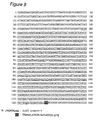
- the nucleotide sequence of the obtained fragment was determined using ABI PrismTM BigdyeTM Terminator Cycle Sequencing Kit and 373A DNA Sequencer (both products manufactured by Applied Biosystems (PERKIN ELMER)). As a result, it was found that the nucleotide sequence comprised the 5'-side structural region of OsSUT1 and the 1403 bp upstream region flanking to the translation initiation site (refer to Figure 9).
- Synthetic primers were designed so as to comprise restriction site sequences at both ends. Using the synthetic primers and Takara EX Taq polymerase (trade name; manufactured by TaKaRa Shuzo Co., Ltd.), the promoter region of OsSUT1 was amplified by PCR.
- the sequences of the synthetic primers employed are as follows:
- each of these three amplified fragments was inserted into the restriction enzyme site of pBSII vector, and a GUS-NOS gene fragment (derived from pBI121) cleaved with SmaI and EcoRI was further ligated downstream thereof.
- a GUS-NOS gene fragment derived from pBI121
- SmaI and EcoRI was further ligated downstream thereof.
- both ends of the three types of promoter sequences and the region ligated to the GUS structural region were sequenced using ABI PrismTM BigdyeTM Terminator Cycle Sequencing Kit and 373A DNA Sequencer (both products manufactured by Applied Biosystems; the present PERKIN ELMER).
- ABI PrismTM BigdyeTM Terminator Cycle Sequencing Kit and 373A DNA Sequencer both products manufactured by Applied Biosystems; the present PERKIN ELMER.
- transcriptional promoter controlling regions were defined as follows.
- the 1108 bp upstream region flanking to the translation initiation site was defined as OsSUT1-promoter-1 (refer to Figure 9) for the above DNA fragment 1 (1133 bp)
- the 456 bp upstream region flanking to the translation initiation site was defined as OsSUT1-promoter-2 (refer to Figure 10) for the above DNA fragment 2 (469 bp)
- the 306 bp upstream region flanking to the translation initiation site was defined as OsSUT1-promoter-3 (refer to Figure 11) for the above DNA fragment 3 (329 bp).
- a cassette comprising a promoter:GUS-NOS fragment was cleaved with NotI and HindIII from the respective vector comprising one of the DNA fragments 1 to 3, and thereafter it was inserted into the corresponding restriction enzyme site of an intermediate vector pSB100.
- the thus obtained vectors were introduced into Escherichia coli LE392, and then subjected to introduction into Agrobacterium and homologous recombination by triple cross using Agrobacterium LBA4404/pSB4 and Escherichia coli HB101/pRK2013 ( Komari, T. et al., Plant J. (1996) 10: 165-174).
- the obtained callus was cultured in an N6 medium containing hygromycin (50 g/ml) for redifferentiation for 4 or 5 weeks, and thereafter the selected plants were used as transformants in GUS staining.
- the redifferentiated young plants were grown until the 5-or 6-leaf stage, and the green leaves and roots were subjected to GUS staining according to the method of Kosugi, S. et al. (Plant Science (1990) 70: 133-140).
- the preparation of the section used to analyze tissue-specific expression was carried out according to the method of Murakami et al. (Syokubutsu Saibo Kogaku (1992) 4: 281-286), using Microslicer DTK-1000 (Dohan EM).
- symbol VB represents a longitudinal vascular bundle
- symbol L represents a large vascular bundle (longitudinal) in the longitudinal vascular bundles
- symbols TV and T represent transverse vascular bundles
- symbol M represents a small vascular bundle in the longitudinal vascular bundles.
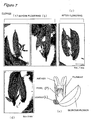
- OsSUT1-promoter-1 To analyze growth stage specificity, the plants into which OsSUT1-promoter-1 was introduced were successively grown in a pot, and the gene expression until flowering was analyzed by GUS staining. As a result, OsSUT1-promoter-1 showed strong gene expression in the phloem in the vascular bundle of the node and the internode during the internode elongation period ( Figure 6), and in the vascular bundle of the glumous flower, the pistil (stigma), the filament and the lodicule during the flowering period (since these are very small structures, it was impossible to distinguish the phloem from the xylem by this analysis) (Figures 7 and 8).
- a structural gene encoding a desired protein may be incorporated instead of the above GUS-NOS sequence.
- the amplification and screening of each DNA, the construction of an expression cassette and an expression vector, transformation, regeneration and others can be carried out by techniques well known to a person skilled in the art, as described above.
Landscapes
- Health & Medical Sciences (AREA)
- Life Sciences & Earth Sciences (AREA)
- Genetics & Genomics (AREA)
- Engineering & Computer Science (AREA)
- Chemical & Material Sciences (AREA)
- Organic Chemistry (AREA)
- Biomedical Technology (AREA)
- Biotechnology (AREA)
- General Engineering & Computer Science (AREA)
- Bioinformatics & Cheminformatics (AREA)
- Wood Science & Technology (AREA)
- Zoology (AREA)
- Molecular Biology (AREA)
- Biochemistry (AREA)
- Biophysics (AREA)
- General Health & Medical Sciences (AREA)
- Physics & Mathematics (AREA)
- Microbiology (AREA)
- Plant Pathology (AREA)
- Cell Biology (AREA)
- Botany (AREA)
- Gastroenterology & Hepatology (AREA)
- Medicinal Chemistry (AREA)
- Proteomics, Peptides & Aminoacids (AREA)
- Breeding Of Plants And Reproduction By Means Of Culturing (AREA)
- Micro-Organisms Or Cultivation Processes Thereof (AREA)
Abstract
Description





Claims (12)
- A DNA comprising a promoter sequence existing in the nucleotide sequence shown in SEQ ID NO: 1.
- A DNA, having specific promoter activity in the phloem in plant vascular bundle tissues comprising a nucleotide sequence of SEQ ID NO: 1 ranging from a nucleotide in the region from nucleotide 285 (T) through nucleotide 296 (G) to a nucleotide in the region from nucleotide 1088 (G) through nucleotide 1403 (C), or a part of said nucleotide sequence where a portion of the region from the 5'-end through nucleotide 953 (A) is deleted; or a DNA which hybridizes with said DNA under highly stringent conditions and has a specific promoter activity in the phloem in plant vascular bundle tissues.
- A DNA comprising a nucleotide sequence having insertion, addition, deletion or substitution of one to several nucleotides in the nucleotide sequence of SEQ ID NO: 1 ranging from a nucleotide in the region from nucleotide 285 (T) through nucleotide 296 (G) to a nucleotide in the region from nucleotide 1088 (G) through nucleotide 1403 (C), and having a specific promoter activity in the phloem in plant vascular bundle tissues.
- A DNA comprising a nucleotide sequence having insertion, addition, deletion or substitution of one to several nucleotides in the nucleotide sequence of SEQ ID NO: 1 ranging from a nucleotde in the region from nucleotide 285 (T) through nucleotide 296 (G) to a nucleotide in the region from nucleotide 1088 (G) through nucleotide 1403 (C), where a portion of the region from the 5'-end through nucleotide 953 (A) is deleted, and having a specific promoter activity in the phloem in plant vascular bundle tissues.
- A DNA comprising a nucleotide sequence of SEQ ID NO: 1 ranging from nucleotide 953 (A) through nucleotide 1403 (C), and having specific promoter activity in plant vascular bundle tissues; or a DNA hybridizing with said DNA under highly stringent conditions and having a specific promoter activity in plant vascular bundle tissues.
- A DNA comprising a nucleotide sequence having insertion, addition, deletion or substitution of one to several nucleotides in the nucleotide sequence of SEQ ID NO: 1 ranging from nucleotide 953 (A) through nucleotide 1403 (C), and having a specific promoter activity in plant vascular bundle tissues.
- An expression cassette which comprises the DNA according to any one of claims 1 to 6 and a foreign gene ligated downstream of the DNA.
- The expression cassette according to claim 7 which further comprises a marker gene for selecting a transformant.
- A vector for transformation which comprises the expression cassette according to claim 7 or 8.
- A transformed plant cell, wherein the genome of the cell has a promoter DNA according to any one of claims 1 to 6 and a foreign gene connected downstream of the promoter DNA incorporated therein, the foreign gene being expressed specifically in the phloem in vascular bundle tissues or in the vascular bundle system tissues; a callus derived from the cell; a transformed plant derived from the callus; or a progeny thereof.
- The transgenic plant cell, the callus derived from the cell, the transgenic plant derived from the callus, or the progeny thereof according to claim 10, which is a monocotyledon.
- A method of producing a transgenic plant expressing a foreign gene specifically in the phloem in vascular bundle tissues or in the vascular bundle system tissues, which comprises the steps of:(a) providing a promoter according to any one of claims 1 to 6;(b) ligating a desired structural gene downstream of said promoter, and further ligating a selective marker gene after said structural gene, if necessary, so as to produce an expression cassette;(c) introducing said expression cassette into the genome of a plant by Agrobacterium method, electroporation, PEG method, microinjection or particle gun method;(d) screening transformed plant cells by means of a selection marker and subjecting the obtained cells to callus culture; and(e) culturing the generated callus in a regeneration medium until it becomes a complete plant.
Applications Claiming Priority (3)
| Application Number | Priority Date | Filing Date | Title |
|---|---|---|---|
| JP2001000651 | 2001-01-05 | ||
| JP2001000651 | 2001-01-05 | ||
| PCT/JP2002/000001 WO2002055689A1 (en) | 2001-01-05 | 2002-01-04 | Rice sucrose transporter gene promoter |
Publications (2)
| Publication Number | Publication Date |
|---|---|
| EP1357183A1 true EP1357183A1 (en) | 2003-10-29 |
| EP1357183A4 EP1357183A4 (en) | 2005-05-11 |
Family
ID=18869401
Family Applications (1)
| Application Number | Title | Priority Date | Filing Date |
|---|---|---|---|
| EP02729509A Withdrawn EP1357183A4 (en) | 2001-01-05 | 2002-01-04 | PROMOTER OF THE GENE OF THE RICE SUCROSE TRANSPORTER |
Country Status (8)
| Country | Link |
|---|---|
| US (1) | US7186821B2 (en) |
| EP (1) | EP1357183A4 (en) |
| JP (1) | JPWO2002055689A1 (en) |
| KR (1) | KR20030081377A (en) |
| CN (1) | CN1271204C (en) |
| AU (1) | AU2002217568B2 (en) |
| CA (1) | CA2443800A1 (en) |
| WO (1) | WO2002055689A1 (en) |
Families Citing this family (8)
| Publication number | Priority date | Publication date | Assignee | Title |
|---|---|---|---|---|
| US8609936B2 (en) | 2007-04-27 | 2013-12-17 | Monsanto Technology Llc | Hemipteran-and coleopteran active toxin proteins from Bacillus thuringiensis |
| WO2009136293A2 (en) | 2008-05-08 | 2009-11-12 | Alellyx Applied Genomics | Genes and methods for increasing disease resistance in plants |
| CN102181398B (en) * | 2010-02-02 | 2012-10-31 | 北京未名凯拓作物设计中心有限公司 | Stress inducible gene promoter and application thereof |
| CN102465114A (en) * | 2010-11-16 | 2012-05-23 | 北京未名凯拓作物设计中心有限公司 | Identification and application of specific expression promoter of plant root |
| CN105543229B (en) * | 2016-02-26 | 2018-06-19 | 武汉大学 | Rice Chitin Elicitor Binding Gene Promoter and Its Application |
| CN109385489B (en) * | 2018-12-25 | 2019-12-20 | 云南农业大学 | PCR method for screening OsSUT3 gene high-expression rice germplasm |
| CN116478998B (en) * | 2023-06-07 | 2024-01-23 | 河北科技大学 | Rice phloem specific expression promoter POs04g0452500 and application thereof |
| CN116987716B (en) * | 2023-09-28 | 2023-12-15 | 广东省农业科学院农业质量标准与监测技术研究所 | Expression vector, application of OsSUT1 gene and transgenic rice |
Family Cites Families (3)
| Publication number | Priority date | Publication date | Assignee | Title |
|---|---|---|---|---|
| US5495007A (en) | 1994-04-29 | 1996-02-27 | Thompson; Gary A. | Phloem-specific promoter |
| WO1999009188A2 (en) * | 1997-08-13 | 1999-02-25 | Vlaams Interuniversitair Instituut Voor Biotechnologie | Tissue-specific poplar promoters |
| US6613960B1 (en) * | 2000-02-15 | 2003-09-02 | Cornell Research Foundation, Inc. | Phloem-loading-specific promoter |
-
2002
- 2002-01-04 JP JP2002556737A patent/JPWO2002055689A1/en active Pending
- 2002-01-04 EP EP02729509A patent/EP1357183A4/en not_active Withdrawn
- 2002-01-04 AU AU2002217568A patent/AU2002217568B2/en not_active Ceased
- 2002-01-04 WO PCT/JP2002/000001 patent/WO2002055689A1/en not_active Ceased
- 2002-01-04 US US10/250,763 patent/US7186821B2/en not_active Expired - Fee Related
- 2002-01-04 CN CNB028052196A patent/CN1271204C/en not_active Expired - Fee Related
- 2002-01-04 CA CA002443800A patent/CA2443800A1/en not_active Abandoned
- 2002-01-04 KR KR10-2003-7008971A patent/KR20030081377A/en not_active Ceased
Also Published As
| Publication number | Publication date |
|---|---|
| AU2002217568B2 (en) | 2007-08-16 |
| WO2002055689A1 (en) | 2002-07-18 |
| KR20030081377A (en) | 2003-10-17 |
| CN1271204C (en) | 2006-08-23 |
| CA2443800A1 (en) | 2002-07-18 |
| US20040253717A1 (en) | 2004-12-16 |
| JPWO2002055689A1 (en) | 2004-05-20 |
| CN1492925A (en) | 2004-04-28 |
| EP1357183A4 (en) | 2005-05-11 |
| US7186821B2 (en) | 2007-03-06 |
Similar Documents
| Publication | Publication Date | Title |
|---|---|---|
| CA2228046C (en) | Root cortex specific gene promoter | |
| US20050198702A1 (en) | Seed-preferred promoter from maize | |
| JPH10505233A (en) | Circovirus-derived plant transcriptional regulator | |
| EP1368467B1 (en) | Putrescine-n-methyltransferase promoter | |
| CN103725679B (en) | Constitutive promoter and uses thereof | |
| JP2000507108A (en) | Rapeseed cysteine protease promoter and method for containment of plant embryo traits | |
| HUP0204400A2 (en) | Transgenic plants with increased seed yield, biomass and harvest index | |
| US6127179A (en) | Gene promoter for tomato fruit | |
| US7119254B2 (en) | Endoglucanase gene promoter upregulated by the root-knot nematode | |
| US7186821B2 (en) | Rice sucrose transporter gene promoter | |
| TWI534265B (en) | Method, genetic construct and transgenic p;ant cell for manipulating fructan biosynthesis in photosynthetic cells of a plant | |
| JP5186076B2 (en) | Engineering plant senescence using the myb gene promoter and cytokinin biosynthesis genes | |
| CN103421801B (en) | A kind of regulate and control gene and the application thereof of rice class setting percentage | |
| JP2001512685A (en) | Methods for increasing yield in plants | |
| JP2006006248A (en) | Method for producing plant body with controlled leaf morphogenesis, plant body obtained using the same, and use thereof | |
| US7005559B1 (en) | Expression silencing system and different uses thereof | |
| CN107099531B (en) | Anther specific expression promoter PV4 and application thereof | |
| US8044263B2 (en) | Cytokinin oxidase promoter from maize | |
| AU1616297A (en) | Method for the induction of genetic parthenocarpy in plants | |
| EP1117812B1 (en) | Plant promoters and plant terminators | |
| JP4439844B2 (en) | Cis elements that confer plant iron deficiency responsiveness and / or root-specific expression | |
| CN107513532B (en) | A pear constitutive expression promoter PbTMT4P and its application | |
| JP4606140B2 (en) | Seed coat-specific inducible promoter | |
| CN120193000A (en) | A protein regulating cold tolerance in rice seedlings and its encoding gene and application | |
| EP1029924A1 (en) | Nucleic acids having promoter activity and transgenic plants containing the same |
Legal Events
| Date | Code | Title | Description |
|---|---|---|---|
| PUAI | Public reference made under article 153(3) epc to a published international application that has entered the european phase |
Free format text: ORIGINAL CODE: 0009012 |
|
| 17P | Request for examination filed |
Effective date: 20030805 |
|
| AK | Designated contracting states |
Kind code of ref document: A1 Designated state(s): AT BE CH CY DE DK ES FI FR GB GR IE IT LI LU MC NL PT SE TR |
|
| AX | Request for extension of the european patent |
Extension state: AL LT LV MK RO SI |
|
| RIC1 | Information provided on ipc code assigned before grant |
Ipc: 7C 12N 15/82 B Ipc: 7A 01H 5/00 B Ipc: 7C 12N 5/14 B Ipc: 7C 12N 15/09 A |
|
| A4 | Supplementary search report drawn up and despatched |
Effective date: 20050330 |
|
| 17Q | First examination report despatched |
Effective date: 20051024 |
|
| RAP1 | Party data changed (applicant data changed or rights of an application transferred) |
Owner name: SYNGENTA LIMITED |
|
| STAA | Information on the status of an ep patent application or granted ep patent |
Free format text: STATUS: THE APPLICATION IS DEEMED TO BE WITHDRAWN |
|
| 18D | Application deemed to be withdrawn |
Effective date: 20090710 |