EP1355216A2 - Secure computer system - Google Patents
Secure computer system Download PDFInfo
- Publication number
- EP1355216A2 EP1355216A2 EP02256972A EP02256972A EP1355216A2 EP 1355216 A2 EP1355216 A2 EP 1355216A2 EP 02256972 A EP02256972 A EP 02256972A EP 02256972 A EP02256972 A EP 02256972A EP 1355216 A2 EP1355216 A2 EP 1355216A2
- Authority
- EP
- European Patent Office
- Prior art keywords
- sim card
- computer system
- identification information
- user identification
- user
- Prior art date
- Legal status (The legal status is an assumption and is not a legal conclusion. Google has not performed a legal analysis and makes no representation as to the accuracy of the status listed.)
- Withdrawn
Links
Images




Classifications
-
- G—PHYSICS
- G06—COMPUTING OR CALCULATING; COUNTING
- G06F—ELECTRIC DIGITAL DATA PROCESSING
- G06F1/00—Details not covered by groups G06F3/00 - G06F13/00 and G06F21/00
-
- H—ELECTRICITY
- H04—ELECTRIC COMMUNICATION TECHNIQUE
- H04L—TRANSMISSION OF DIGITAL INFORMATION, e.g. TELEGRAPHIC COMMUNICATION
- H04L63/00—Network architectures or network communication protocols for network security
- H04L63/10—Network architectures or network communication protocols for network security for controlling access to devices or network resources
-
- G—PHYSICS
- G06—COMPUTING OR CALCULATING; COUNTING
- G06F—ELECTRIC DIGITAL DATA PROCESSING
- G06F21/00—Security arrangements for protecting computers, components thereof, programs or data against unauthorised activity
- G06F21/30—Authentication, i.e. establishing the identity or authorisation of security principals
- G06F21/31—User authentication
- G06F21/34—User authentication involving the use of external additional devices, e.g. dongles or smart cards
-
- G—PHYSICS
- G06—COMPUTING OR CALCULATING; COUNTING
- G06F—ELECTRIC DIGITAL DATA PROCESSING
- G06F21/00—Security arrangements for protecting computers, components thereof, programs or data against unauthorised activity
- G06F21/30—Authentication, i.e. establishing the identity or authorisation of security principals
- G06F21/31—User authentication
- G06F21/34—User authentication involving the use of external additional devices, e.g. dongles or smart cards
- G06F21/35—User authentication involving the use of external additional devices, e.g. dongles or smart cards communicating wirelessly
-
- G—PHYSICS
- G06—COMPUTING OR CALCULATING; COUNTING
- G06F—ELECTRIC DIGITAL DATA PROCESSING
- G06F21/00—Security arrangements for protecting computers, components thereof, programs or data against unauthorised activity
- G06F21/50—Monitoring users, programs or devices to maintain the integrity of platforms, e.g. of processors, firmware or operating systems
- G06F21/57—Certifying or maintaining trusted computer platforms, e.g. secure boots or power-downs, version controls, system software checks, secure updates or assessing vulnerabilities
- G06F21/575—Secure boot
-
- H—ELECTRICITY
- H04—ELECTRIC COMMUNICATION TECHNIQUE
- H04L—TRANSMISSION OF DIGITAL INFORMATION, e.g. TELEGRAPHIC COMMUNICATION
- H04L63/00—Network architectures or network communication protocols for network security
- H04L63/08—Network architectures or network communication protocols for network security for authentication of entities
- H04L63/083—Network architectures or network communication protocols for network security for authentication of entities using passwords
Definitions
- the present invention relates to a secure computer system comprising a user authentication information source and a computer configured such that, during booting, it obtains user authentication data from said source and compares said authentication data with data stored in the computer, enabling user access to the computer in dependence on the result thereof.
- CMOS complementary metal oxide semiconductor
- hard disk a computer system can be protected by a password which is set up by means of a BIOS (basic input/output system) setup menu and stored in a CMOS (complementary metal oxide semiconductor) RAM (random access memory) or a hard disk.
- BIOS basic input/output system
- CMOS RAM complementary metal oxide semiconductor
- hard disk a hard disk
- bio-information such as fingerprints, IC (integrated circuit) cards, magnetic cards, PC (personal computer) card, etc.
- the passwords stored in the cards are not based upon individual characteristics of a user, but voluntary information set up by a user or a card supplier, so that the password employed for verifying a user's identity has relatively low reliability.
- the PC card if the PC card remains attached to the computer system, anyone can access and change data stored in the PC card.
- GSM Global System for Mobile Communications
- a user In order to be able to use a GSM phone, a user has to be issued a SIM card storing user identification information, and the user inserts the SIM card in the GSM phone.
- the SIM card is detachably inserted in the mobile phone, and a user can access the wireless communication system with the user identification information stored in the SIM card.
- the user identification information stored in the SIM card is employed for authenticating a registered user and preventing an unregistered user from accessing the wireless communication system. Furthermore, the user identification information stored in the SIM card is typically thoroughly protected from disclosure to or recovery by a third party, thereby preventing, for example, wiretapping and access to the user's identification information.
- a computer system is characterised in that the user authentication information source comprises a subscriber identity module for a mobile phone.
- the subscriber identity module may be mounted in a wireless communication card, preferably one for a GSM network.
- a card reader may be provided for reading subscriber identity modules.
- the computer system comprises a CPU (central processing unit) 2, a main memory 7, including a DRAM (dynamic random access memory), a BIOS-ROM 9 (basic input/output system - read only memory) storing a BIOS, a north bridge 3, a south bridge 5, an EEPROM (electrically erasable programmable read only memory) 10 storing user identification information, a module interface 12, a communication module 14 connected to the module interface 12, such as a PCI (peripheral component interconnect) interface, and a SIM card 50 storing user identification information 55 and mounted on the communication module 14.
- a CPU central processing unit
- main memory 7 including a DRAM (dynamic random access memory), a BIOS-ROM 9 (basic input/output system - read only memory) storing a BIOS, a north bridge 3, a south bridge 5, an EEPROM (electrically erasable programmable read only memory) 10 storing user identification information, a module interface 12, a communication module 14 connected to the module interface 12, such as a PCI (
- the north bridge 3 is a chipset facilitating data transmission between the CPU 2, the main memory 7 and a graphic card (not shown).
- the south bridge 5 is a chipset for facilitating data transmission between the components of the system, such as internal and external peripheral devices, and the north bridge 3. That is, the south bridge 5 facilitates data transmission involving the module interfaces 12, a PCMCIA (personal computer memory card international association) interface, a USB (universal serial bus) interface, an ISA (industry standard architecture) interface, etc.
- the communication module 14 is a GSM modem suitable for accessing the Internet through a GSM network.
- the communication module 14 could be any communication module capable of wirelessly communicating with other devices and/or networks.
- a CDMA (code division multiple access) network communication module compatible with GSM networks, is being developed and could be used as the communication module 14.
- the communication module 14 holds the SIM card 50, storing user identification information 55 for authentication.
- the user identification information 55 stored in the SIM card 50 is employed not only to verify a user's identity when a user accesses a communication network but also as a password for accessing the computer system 1.
- the BIOS stored in the BIOS-ROM 9 as command codes determines whether devices of the computer system 1 are operating normally, and performs a POST (power on self test) procedure for loading an OS (operating system) from a hard disk into the main memory 7. Because typically the BIOS contains a security routine, the BIOS can determine whether the user identification information 55 stored in the SIM card 50 is identical to the user identification information stored in the EEPROM 10, perform the POST procedure, and allow a user to access the computer system 1 only when the user identification information 55 in the SIM card 50 is identical to the user identification information in the EEPROM 10.
- POST power on self test
- the user identification information compared with the user identification information 55 stored in the SIM card 50 may be stored in CMOS-RAM, a hard disk, etc., instead of the EEPROM 10.
- the south bridge 5 when the south bridge 5, the north bridge 3 and the CPU 2 are set up in sequence and the BIOS stored in the BIOS-ROM 9 performs the POST procedure when the computer system is turned on or rebooted, and it is determined (for example, by software as part of the BIOS) whether the user identification information 55 stored in the SIM card 50 is identical to the user identification information stored in the EEPROM 10, thereby allowing a user to access the computer system only when the user identification information 55 in the SIM card 50 is identical to the user identification information in the EEPROM 10.
- the security control processes of the invention can be embodied in software and/or hardware, for example, as part of the north bridge 3, the south bridge 5, the BIOS 9 and/or the EEPROM 10 and executed on computer systems 1 using known techniques.
- the module interface 12 and the communication module 14 of the computer system 1 can be applied to any computer system having a communication module carrying a SIM card.
- a secure computer system comprises a GSM/GPRS (global system for mobile communication / general packet radio services) module 24 mounted in the main body of a portable computer system 4, a SIM card reader 26 into which the SIM card 50 is inserted, and a remote interface 22 for transmitting data from the SIM card reader 26 to the south bridge 5 or the GSM/GPRS module 24.
- GSM/GPRS global system for mobile communication / general packet radio services
- the SIM card reader 26 is provided in the main body of the portable computer system 4, and the SIM card 50 is inserted in the SIM card reader 26.
- the SIM card reader 26 transmits a card connection signal to the remote interface 22, and the SIM card reader 26 reads data from the SIM card 50 according to a control signal transmitted from the remote interface 22.
- the GSM/GPRS module 24 is a modem for accessing a GSM network using the SIM card 50, and is mounted in the main body of the portable computer 4.
- user identification information 55 stored in the SIM card 50 is transmitted to the GSM network for user authentication for accessing the GSM network.
- a user identification card such as the SIM card 50
- the modem 24 mounted in the main body may be a CDMA module.
- the south bridge 5 controls the remote interface 22 so that it operates selectively as an interface between the SIM card 50 and the GSM/GPRS module 24 and an interface between the SIM card 50 and the south bridge 5. That is, if the portable computer system 4 requires a password while booting, the remote interface 22 reads the user identification information 55 stored in the SIM card 50 from the SIM card reader 26 and transmits the user identification information 55 to the south bridge 5, thereby allowing access to the computer system 4 as described above with reference to Figure 1 (i.e., determine whether the user identification information 55 stored in the SIM card 50 is identical to the user identification information stored in the EEPROM 10, allowing access responsive to a match).
- the remote interface 22 reads the user identification information 55 stored in the SIM card 50 from the SIM card reader 26 and transmits the user identification information 55 to the GSM/GPRS module 24, thereby allowing access to the GSM network.
- the SIM card 50 is inserted in the SIM card reader 26, and the user identification information 55 stored in the SIM card 50 is employed in accessing the computer system 4 and the GSM network.
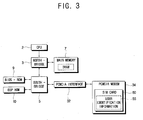
- a secure computer system comprises a PCMCIA interface 32 and a detachable (portable) PCMCIA wireless modem 34 which is in communication with the computer 6 via the PCMCIA interface 32.
- the detachable PCMCIA wireless modem 34 accesses the GSM network, and is provided with a card groove (not shown) having a card connector (not shown) to which the SIM card 50 can be connected.
- the PCMCIA interface 32 controls peripheral devices attached to a PCMCIA slot, such as the detachable (portable) PCMCIA wireless modem 34, according to PCMCIA standards based upon a control signal transmitted from the south-bridge 5.
- the PCMCIA interface 32 in Figure 3 is only an example peripheral device interface 12 used in computer systems.
- the south bridge 5 when a computer system of the present invention is turned on or rebooted, the south bridge 5, the north bridge 3 and the CPU 2 are set up in sequence and at operation 62 the BIOS stored in the BIOS-ROM 9 performs the POST procedure. While the POST procedure is being performed at operation 62, a user selects, at operation 64, a password setup function using a setup key such as F2. If, at operation 64, the user selects a SIM card access function in the password setup function, at operation 66, the computer system reads the user identification information 55 from the SIM card 50. At operation 68, the user identification information 55 read from the SIM card 50 is stored in the EEPROM 10.
- the south bridge 5 when a computer system of the present invention is turned on or rebooted, the south bridge 5, the north bridge 3 and the CPU 2 are set up in sequence and at operation 72 the BIOS stored in the BIOS-ROM 9 performs the POST procedure. Because, typically the BIOS contains a security routine, the BIOS can determine at operation 74 whether the SIM card 50 for authentication is connected to the computer system when performing the POST procedure. If, at operation 74, the SIM card 50 is not connected to the computer system, the BIOS displays a message at operation 76 so as to make a user connect the SIM card 50 to the computer system.
- the BIOS reads the user identification information 55 from the SIM card 50 at operation 78, and determines whether the user identification information 55 read from the SIM card 50 is identical to (matches/corresponds to) the user identification information previously stored in the EEPROM 10 at operation 80. If the user identification information 55, read from the SIM card 50, is identical to (matches/corresponds to) the user identification information previously stored in the EEPROM 10 at operation 80, an operating system is executed at operation 82, thereby allowing a user to access and use the computer system.
- the user identification information stored in a SIM card for mobile communications can be employed as the password of a computer system.
- a user can employ the user identification information of the SIM card, which has superior security, as the password for the computer system, thereby providing superior security for the computer system.
- the present invention provides a secure computer system using a SIM card and a security control method thereof, which provides inexpensive and superior security.
Landscapes
- Engineering & Computer Science (AREA)
- Computer Security & Cryptography (AREA)
- Theoretical Computer Science (AREA)
- General Engineering & Computer Science (AREA)
- Computer Hardware Design (AREA)
- Software Systems (AREA)
- General Physics & Mathematics (AREA)
- Physics & Mathematics (AREA)
- Computer Networks & Wireless Communication (AREA)
- Computing Systems (AREA)
- Signal Processing (AREA)
- Telephonic Communication Services (AREA)
- Storage Device Security (AREA)
- Telephone Function (AREA)
- Mobile Radio Communication Systems (AREA)
Abstract
Description
Claims (20)
- A secure computer system comprising:characterised in thata user authentication information source (50); anda computer configured such that, during booting, it obtains user authentication data from said source (50) and compares said authentication data with data stored in the computer, enabling user access to the computer in dependence on the result thereof,
the user authentication information source (50) comprises a subscriber identity module for a mobile phone. - A system according to claim 1, including a wireless communication card (14; 34), wherein the subscriber identity module (50) is mounted in the wireless communication card (14; 34).
- A system according to claim 2, wherein the wireless communication card (14; 34) includes a transceiver for communication via a GSM network.
- A system according to claim 1, including a card reader (26) for reading subscriber identity modules.
- A secure computer system comprising:a SIM card storing user identification information;a communication module accessing a network with the user identification information stored in the SIM card;a password storage storing the user identification information from the SIM card; anda controller allowing a user to access the computer system upon booting of the computer system when the user identification information stored in the SIM card is identical to the user identification information stored in the password storage.
- The computer system according to claim 5, further comprising:wherein the controller reads the user identification information from the SIM card inserted in the SIM card reader through the remote interface.a SIM card reader to which the SIM card is inserted; anda remote interface transmitting the user identification information from the SIM card reader to the communication module according to control of the controller,
- The computer system according to claim 5, wherein the communication module comprises a card connector to which the SIM card is detachably connected.
- A method of controlling security of a computer system, comprising :storing user identification information from a SIM card used to access a network;reading the user identification information from the SIM card when the computer system is booted;determining whether the user identification information stored in the SIM card is identical to the stored user identification information; andallowing a user to access the computer system when the user identification information stored in the SIM card is identical to the stored user identification information.
- The method according to claim 8, further comprising :determining whether the SIM card is connected to the computer system; andinforming a user of absence of the SIM card when the SIM card is not connected to the computer system.
- The computer system of claim 5, wherein an EPROM is the password storage.
- The computer system of claim 7, wherein the controller is a BIOS.
- The computer system of claim 5, further comprising a device interface interfacing with external devices and wherein the communication module is portable and in communication with the controller via the device interface.
- The computer system of claim 5 wherein the network is a GSM network.
- A computer system, comprising:a password storage storing user identification information of a SIM card; anda controller in communication with the SIM card and allowing access to the computer system upon booting of the computer system when the user identification information of the SIM card matches the user identification information stored in the password storage.
- The computer system of claim 14, further comprising an interface interfacing with the SIM card and wherein the controller is in communication with the SIM card via the interface.
- The computer system of claim 15, wherein the communication module accesses a GSM network.
- The computer system of claim 15, wherein the interface is one or more of a PCI, a USB, a PCMCIA, and an ISA interface.
- A secure computer system, comprising:a SIM card communication module accessing a GSM network using user identification information of a SIM card; anda controller in communication with the SIM card communication module and allowing access to the computer system based upon the user identification information of the SIM card.
- A secure computer system, comprising:storage means for storing user identification information of a SIM card; andcontrol means for communicating with the SIM card and for allowing access to the computer system upon booting of the computer system when the user identification information of the SIM card matches the user identification information stored in the storage means.
- The secure computer system of claim 19, further comprising interface means for interfacing with the SIM card, wherein the control means communicates with the SIM card via the interface means.
Applications Claiming Priority (2)
| Application Number | Priority Date | Filing Date | Title |
|---|---|---|---|
| KR10-2002-0021235A KR100465791B1 (en) | 2002-04-18 | 2002-04-18 | Computer security system using the simcard and control method thereof |
| KR2002021235 | 2002-04-18 |
Publications (2)
| Publication Number | Publication Date |
|---|---|
| EP1355216A2 true EP1355216A2 (en) | 2003-10-22 |
| EP1355216A3 EP1355216A3 (en) | 2005-11-30 |
Family
ID=28673104
Family Applications (1)
| Application Number | Title | Priority Date | Filing Date |
|---|---|---|---|
| EP02256972A Withdrawn EP1355216A3 (en) | 2002-04-18 | 2002-10-04 | Secure computer system |
Country Status (5)
| Country | Link |
|---|---|
| US (1) | US20030200445A1 (en) |
| EP (1) | EP1355216A3 (en) |
| JP (1) | JP2003316467A (en) |
| KR (1) | KR100465791B1 (en) |
| CN (1) | CN1452039A (en) |
Cited By (1)
| Publication number | Priority date | Publication date | Assignee | Title |
|---|---|---|---|---|
| US7636844B2 (en) | 2003-11-17 | 2009-12-22 | Intel Corporation | Method and system to provide a trusted channel within a computer system for a SIM device |
Families Citing this family (29)
| Publication number | Priority date | Publication date | Assignee | Title |
|---|---|---|---|---|
| US10552583B2 (en) * | 2000-03-21 | 2020-02-04 | Gregory A. Piccionelli | Secure portable computer and security method |
| US7042852B2 (en) * | 2002-05-20 | 2006-05-09 | Airdefense, Inc. | System and method for wireless LAN dynamic channel change with honeypot trap |
| KR100477670B1 (en) * | 2002-09-26 | 2005-03-18 | 삼성전자주식회사 | Monitor for security using smart card and method thereof |
| US20050182923A1 (en) * | 2004-02-17 | 2005-08-18 | Samsung Electronics Co., Ltd. | Method of controlling portable terminal using external memory |
| KR100642320B1 (en) * | 2004-11-15 | 2006-11-08 | 사이버넷 주식회사 | External wireless modem |
| KR100576523B1 (en) * | 2004-11-16 | 2006-05-08 | 삼성전자주식회사 | Apparatus and method for switching modes in a dual mode terminal |
| US20070030123A1 (en) * | 2005-08-05 | 2007-02-08 | Hoblit Robert S | Apparatus, system, and method for securely associating identification information with an electronic device |
| US20070050303A1 (en) * | 2005-08-24 | 2007-03-01 | Schroeder Dale W | Biometric identification device |
| FR2891931B1 (en) * | 2005-10-10 | 2008-02-22 | Wavecom Sa | RADIO COMMUNICATION DEVICE COMPRISING AT LEAST ONE RADIOCOMMUNICATION MODULE AND A SIM CARD, RADIO COMMUNICATION MODULE AND SIM CARD THEREOF |
| KR100722238B1 (en) * | 2005-12-29 | 2007-05-29 | 케이비 테크놀러지 (주) | IC card-based hardware security module |
| US11762972B1 (en) * | 2006-08-13 | 2023-09-19 | Tara Chand Singhal | System and methods for a multi-factor remote user authentication |
| US20080161049A1 (en) * | 2006-12-28 | 2008-07-03 | Isaac Lagnado | Methods and systems for sim-based radio technology modules and non-sim-based radio technology modules |
| US20080182622A1 (en) * | 2007-01-25 | 2008-07-31 | Sierra Wireless, Inc. | Method and Apparatus for Implementing a SIM Card Onboard a PC Card |
| KR20090032678A (en) * | 2007-09-28 | 2009-04-01 | 삼성전자주식회사 | Dual SIM card terminal and its function performing method |
| KR101481514B1 (en) * | 2007-11-30 | 2015-01-13 | 엘지전자 주식회사 | Terminal and its broadcasting control method |
| US8924306B2 (en) * | 2008-02-20 | 2014-12-30 | International Business Machines Corporation | Remote computer rebooting tool |
| US8792940B2 (en) * | 2008-02-27 | 2014-07-29 | Mediatek Inc. | Methods for handling hands-free device by audio gateway device with subscriber identity cards and systems utilizing the same |
| GB0805780D0 (en) * | 2008-03-31 | 2008-04-30 | Royal Bank Of Scotland Plc The | Processor card arrangement |
| TW200943895A (en) * | 2008-04-11 | 2009-10-16 | Asustek Comp Inc | Method and system for sensing identity-distinguishable |
| KR20100074596A (en) * | 2008-12-24 | 2010-07-02 | 삼성전자주식회사 | Mutistandby terminal and method for offering tool kit menu thereof |
| KR101439799B1 (en) * | 2010-09-15 | 2014-09-11 | 후지쯔 가부시끼가이샤 | Information processing device, method of controlling information processing device and computer readable recording medium with information processing device control program recorded thereon |
| FR2969788B1 (en) * | 2010-12-27 | 2013-02-08 | Electricite De France | METHOD AND DEVICE FOR CONTROLLING ACCESS TO A COMPUTER SYSTEM |
| TWI447583B (en) * | 2012-02-10 | 2014-08-01 | Phison Electronics Corp | Data protecting method, memory controller and memory storage device |
| CN102708331A (en) * | 2012-05-17 | 2012-10-03 | 江苏中科梦兰电子科技有限公司 | Security authentication device and security certification method at BIOS (Basic Input/Output System) grade |
| TWI587166B (en) * | 2013-02-06 | 2017-06-11 | 廣達電腦股份有限公司 | Computer system |
| CN104376251A (en) * | 2013-08-13 | 2015-02-25 | 鸿富锦精密工业(武汉)有限公司 | Computer, computer start-up control system and computer start-up control method |
| US9363264B2 (en) * | 2013-11-25 | 2016-06-07 | At&T Intellectual Property I, L.P. | Networked device access control |
| US20150365216A1 (en) * | 2014-06-13 | 2015-12-17 | Media Tek Inc. | Wireless communication devices and methods for performing a packet-switched (ps) service applied to a mobile communications device with multiple subscriber identity modules (sims) |
| JP6190436B2 (en) * | 2015-11-02 | 2017-08-30 | Kddi株式会社 | Control device, electronic device, boot method, and computer program |
Family Cites Families (16)
| Publication number | Priority date | Publication date | Assignee | Title |
|---|---|---|---|---|
| US6075860A (en) * | 1997-02-19 | 2000-06-13 | 3Com Corporation | Apparatus and method for authentication and encryption of a remote terminal over a wireless link |
| JP4637974B2 (en) * | 1997-03-27 | 2011-02-23 | ブリティッシュ・テレコミュニケーションズ・パブリック・リミテッド・カンパニー | Data copy protection |
| JPH10294756A (en) * | 1997-04-22 | 1998-11-04 | Nec Home Electron Ltd | Electronic mail terminal equipment |
| JP3658189B2 (en) * | 1998-04-20 | 2005-06-08 | システムニーズ株式会社 | Method of preventing impersonation in computer apparatus |
| US6687350B1 (en) * | 1998-10-26 | 2004-02-03 | Bell Canada | Smart card reader and transaction system |
| ES2277458T3 (en) * | 1998-11-24 | 2007-07-01 | Telefonaktiebolaget Lm Ericsson (Publ) | AUTOMATIC LOGIN ON A PC FROM A MOBILE PHONE. |
| JP3641382B2 (en) * | 1999-03-11 | 2005-04-20 | 株式会社日立インフォメーションテクノロジー | Security system and security method |
| US6275933B1 (en) * | 1999-04-30 | 2001-08-14 | 3Com Corporation | Security system for a computerized apparatus |
| US6738901B1 (en) * | 1999-12-15 | 2004-05-18 | 3M Innovative Properties Company | Smart card controlled internet access |
| KR200193777Y1 (en) * | 2000-03-14 | 2000-08-16 | 비경시스템주식회사 | Key board for reading/writing non contact type card |
| JP2001290552A (en) * | 2000-04-05 | 2001-10-19 | Ntt Fanet Systems Corp | Security system for information processing equipment |
| JP2001331234A (en) * | 2000-05-22 | 2001-11-30 | Matsushita Electric Ind Co Ltd | Information processing device with IC card |
| JP2001344215A (en) * | 2000-06-01 | 2001-12-14 | Denso Corp | Information communication system and information communication terminal using memory card |
| IL137181A0 (en) * | 2000-07-05 | 2001-07-24 | Dor Erez | System for secure electronic commercial transactions |
| US6466804B1 (en) * | 2000-08-25 | 2002-10-15 | Motorola, Inc. | Method and apparatus for remote multiple access to subscriber identity module |
| US7113299B2 (en) * | 2001-07-12 | 2006-09-26 | Canon Development Americas, Inc. | Printing with credit card as identification |
-
2002
- 2002-04-18 KR KR10-2002-0021235A patent/KR100465791B1/en not_active Expired - Fee Related
- 2002-08-28 JP JP2002248363A patent/JP2003316467A/en active Pending
- 2002-09-10 US US10/237,749 patent/US20030200445A1/en not_active Abandoned
- 2002-09-25 CN CN02143434A patent/CN1452039A/en active Pending
- 2002-10-04 EP EP02256972A patent/EP1355216A3/en not_active Withdrawn
Cited By (1)
| Publication number | Priority date | Publication date | Assignee | Title |
|---|---|---|---|---|
| US7636844B2 (en) | 2003-11-17 | 2009-12-22 | Intel Corporation | Method and system to provide a trusted channel within a computer system for a SIM device |
Also Published As
| Publication number | Publication date |
|---|---|
| KR100465791B1 (en) | 2005-01-13 |
| US20030200445A1 (en) | 2003-10-23 |
| JP2003316467A (en) | 2003-11-07 |
| KR20030082761A (en) | 2003-10-23 |
| EP1355216A3 (en) | 2005-11-30 |
| CN1452039A (en) | 2003-10-29 |
Similar Documents
| Publication | Publication Date | Title |
|---|---|---|
| EP1355216A2 (en) | Secure computer system | |
| US7447895B2 (en) | BIOS locking device, computer system with a BIOS locking device and control method thereof | |
| KR101654778B1 (en) | Hardware-enforced access protection | |
| US20030199267A1 (en) | Security system for information processing apparatus | |
| US20120093316A1 (en) | Access point, terminal, encryption key configuration system, encryption key configuration method, and program | |
| EP3815413B1 (en) | User authentication using a companion device | |
| US20090193151A1 (en) | Optimized Biometric Authentication Method and System | |
| CN100459786C (en) | Method and system for controlling resources via mobile terminal, related network and computer program product thereof | |
| US10880739B2 (en) | Protection of a communication channel between a security module and an NFC circuit | |
| US7532907B2 (en) | Method of providing multiple data paths using a mobile terminal and related devices | |
| US20090190802A1 (en) | Optimized biometric authentication method and system | |
| WO2008010899A2 (en) | Biometric embedded device | |
| CN101668288B (en) | Identity authenticating method, identity authenticating system and terminal | |
| EP1901238A2 (en) | Authentication and access control device | |
| EP2175454A1 (en) | Method and terminal for providing controlled access to a memory card | |
| KR100492548B1 (en) | Method for preventing illegal using of user identity module in mobile communication terminal | |
| CA2607816C (en) | Pairing to a wireless peripheral device at the lock-screen | |
| KR20080099117A (en) | Methods for Authentication of Mobility Elements in Embedded Systems | |
| WO2003003170A1 (en) | Personal user device and method for selecting a secured user input/ output mode in a personal user device | |
| EP1657617A2 (en) | A method and apparatus for detecting and protecting a credential card | |
| CN101646262A (en) | Wireless data card and identity certification method thereof | |
| JP2005301454A (en) | User identification system and charger/radio ic chip reader | |
| KR100862742B1 (en) | Method and apparatus for computer security using mobile terminal | |
| JP2004070849A (en) | Information processing apparatus and information processing system | |
| KR100609705B1 (en) | Method and device for authenticating USB card and portable terminal |
Legal Events
| Date | Code | Title | Description |
|---|---|---|---|
| PUAI | Public reference made under article 153(3) epc to a published international application that has entered the european phase |
Free format text: ORIGINAL CODE: 0009012 |
|
| AK | Designated contracting states |
Kind code of ref document: A2 Designated state(s): AT BE BG CH CY CZ DE DK EE ES FI FR GB GR IE IT LI LU MC NL PT SE SK TR |
|
| AX | Request for extension of the european patent |
Extension state: AL LT LV MK RO SI |
|
| RAP1 | Party data changed (applicant data changed or rights of an application transferred) |
Owner name: SAMSUNG ELECTRONICS CO., LTD. |
|
| PUAL | Search report despatched |
Free format text: ORIGINAL CODE: 0009013 |
|
| AK | Designated contracting states |
Kind code of ref document: A3 Designated state(s): AT BE BG CH CY CZ DE DK EE ES FI FR GB GR IE IT LI LU MC NL PT SE SK TR |
|
| AX | Request for extension of the european patent |
Extension state: AL LT LV MK RO SI |
|
| 17P | Request for examination filed |
Effective date: 20060530 |
|
| AKX | Designation fees paid |
Designated state(s): AT BE BG CH CY CZ DE DK EE ES FI FR GB GR IE IT LI LU MC NL PT SE SK TR |
|
| STAA | Information on the status of an ep patent application or granted ep patent |
Free format text: STATUS: THE APPLICATION HAS BEEN WITHDRAWN |
|
| 18W | Application withdrawn |
Effective date: 20080828 |