EP1350650A2 - Shift control device for hybrid vehicle - Google Patents
Shift control device for hybrid vehicle Download PDFInfo
- Publication number
- EP1350650A2 EP1350650A2 EP03005435A EP03005435A EP1350650A2 EP 1350650 A2 EP1350650 A2 EP 1350650A2 EP 03005435 A EP03005435 A EP 03005435A EP 03005435 A EP03005435 A EP 03005435A EP 1350650 A2 EP1350650 A2 EP 1350650A2
- Authority
- EP
- European Patent Office
- Prior art keywords
- motor
- engine
- generator
- torque
- driving source
- Prior art date
- Legal status (The legal status is an assumption and is not a legal conclusion. Google has not performed a legal analysis and makes no representation as to the accuracy of the status listed.)
- Granted
Links
Images



Classifications
-
- B—PERFORMING OPERATIONS; TRANSPORTING
- B60—VEHICLES IN GENERAL
- B60W—CONJOINT CONTROL OF VEHICLE SUB-UNITS OF DIFFERENT TYPE OR DIFFERENT FUNCTION; CONTROL SYSTEMS SPECIALLY ADAPTED FOR HYBRID VEHICLES; ROAD VEHICLE DRIVE CONTROL SYSTEMS FOR PURPOSES NOT RELATED TO THE CONTROL OF A PARTICULAR SUB-UNIT
- B60W20/00—Control systems specially adapted for hybrid vehicles
-
- B—PERFORMING OPERATIONS; TRANSPORTING
- B60—VEHICLES IN GENERAL
- B60K—ARRANGEMENT OR MOUNTING OF PROPULSION UNITS OR OF TRANSMISSIONS IN VEHICLES; ARRANGEMENT OR MOUNTING OF PLURAL DIVERSE PRIME-MOVERS IN VEHICLES; AUXILIARY DRIVES FOR VEHICLES; INSTRUMENTATION OR DASHBOARDS FOR VEHICLES; ARRANGEMENTS IN CONNECTION WITH COOLING, AIR INTAKE, GAS EXHAUST OR FUEL SUPPLY OF PROPULSION UNITS IN VEHICLES
- B60K6/00—Arrangement or mounting of plural diverse prime-movers for mutual or common propulsion, e.g. hybrid propulsion systems comprising electric motors and internal combustion engines
- B60K6/20—Arrangement or mounting of plural diverse prime-movers for mutual or common propulsion, e.g. hybrid propulsion systems comprising electric motors and internal combustion engines the prime-movers consisting of electric motors and internal combustion engines, e.g. HEVs
- B60K6/22—Arrangement or mounting of plural diverse prime-movers for mutual or common propulsion, e.g. hybrid propulsion systems comprising electric motors and internal combustion engines the prime-movers consisting of electric motors and internal combustion engines, e.g. HEVs characterised by apparatus, components or means specially adapted for HEVs
- B60K6/36—Arrangement or mounting of plural diverse prime-movers for mutual or common propulsion, e.g. hybrid propulsion systems comprising electric motors and internal combustion engines the prime-movers consisting of electric motors and internal combustion engines, e.g. HEVs characterised by apparatus, components or means specially adapted for HEVs characterised by the transmission gearings
- B60K6/365—Arrangement or mounting of plural diverse prime-movers for mutual or common propulsion, e.g. hybrid propulsion systems comprising electric motors and internal combustion engines the prime-movers consisting of electric motors and internal combustion engines, e.g. HEVs characterised by apparatus, components or means specially adapted for HEVs characterised by the transmission gearings with the gears having orbital motion
-
- B—PERFORMING OPERATIONS; TRANSPORTING
- B60—VEHICLES IN GENERAL
- B60K—ARRANGEMENT OR MOUNTING OF PROPULSION UNITS OR OF TRANSMISSIONS IN VEHICLES; ARRANGEMENT OR MOUNTING OF PLURAL DIVERSE PRIME-MOVERS IN VEHICLES; AUXILIARY DRIVES FOR VEHICLES; INSTRUMENTATION OR DASHBOARDS FOR VEHICLES; ARRANGEMENTS IN CONNECTION WITH COOLING, AIR INTAKE, GAS EXHAUST OR FUEL SUPPLY OF PROPULSION UNITS IN VEHICLES
- B60K6/00—Arrangement or mounting of plural diverse prime-movers for mutual or common propulsion, e.g. hybrid propulsion systems comprising electric motors and internal combustion engines
- B60K6/20—Arrangement or mounting of plural diverse prime-movers for mutual or common propulsion, e.g. hybrid propulsion systems comprising electric motors and internal combustion engines the prime-movers consisting of electric motors and internal combustion engines, e.g. HEVs
- B60K6/42—Arrangement or mounting of plural diverse prime-movers for mutual or common propulsion, e.g. hybrid propulsion systems comprising electric motors and internal combustion engines the prime-movers consisting of electric motors and internal combustion engines, e.g. HEVs characterised by the architecture of the hybrid electric vehicle
- B60K6/44—Series-parallel type
- B60K6/445—Differential gearing distribution type
-
- B—PERFORMING OPERATIONS; TRANSPORTING
- B60—VEHICLES IN GENERAL
- B60K—ARRANGEMENT OR MOUNTING OF PROPULSION UNITS OR OF TRANSMISSIONS IN VEHICLES; ARRANGEMENT OR MOUNTING OF PLURAL DIVERSE PRIME-MOVERS IN VEHICLES; AUXILIARY DRIVES FOR VEHICLES; INSTRUMENTATION OR DASHBOARDS FOR VEHICLES; ARRANGEMENTS IN CONNECTION WITH COOLING, AIR INTAKE, GAS EXHAUST OR FUEL SUPPLY OF PROPULSION UNITS IN VEHICLES
- B60K6/00—Arrangement or mounting of plural diverse prime-movers for mutual or common propulsion, e.g. hybrid propulsion systems comprising electric motors and internal combustion engines
- B60K6/20—Arrangement or mounting of plural diverse prime-movers for mutual or common propulsion, e.g. hybrid propulsion systems comprising electric motors and internal combustion engines the prime-movers consisting of electric motors and internal combustion engines, e.g. HEVs
- B60K6/42—Arrangement or mounting of plural diverse prime-movers for mutual or common propulsion, e.g. hybrid propulsion systems comprising electric motors and internal combustion engines the prime-movers consisting of electric motors and internal combustion engines, e.g. HEVs characterised by the architecture of the hybrid electric vehicle
- B60K6/44—Series-parallel type
- B60K6/448—Electrical distribution type
-
- B—PERFORMING OPERATIONS; TRANSPORTING
- B60—VEHICLES IN GENERAL
- B60L—PROPULSION OF ELECTRICALLY-PROPELLED VEHICLES; SUPPLYING ELECTRIC POWER FOR AUXILIARY EQUIPMENT OF ELECTRICALLY-PROPELLED VEHICLES; ELECTRODYNAMIC BRAKE SYSTEMS FOR VEHICLES IN GENERAL; MAGNETIC SUSPENSION OR LEVITATION FOR VEHICLES; MONITORING OPERATING VARIABLES OF ELECTRICALLY-PROPELLED VEHICLES; ELECTRIC SAFETY DEVICES FOR ELECTRICALLY-PROPELLED VEHICLES
- B60L15/00—Methods, circuits, or devices for controlling the traction-motor speed of electrically-propelled vehicles
- B60L15/20—Methods, circuits, or devices for controlling the traction-motor speed of electrically-propelled vehicles for control of the vehicle or its driving motor to achieve a desired performance, e.g. speed, torque, programmed variation of speed
- B60L15/2045—Methods, circuits, or devices for controlling the traction-motor speed of electrically-propelled vehicles for control of the vehicle or its driving motor to achieve a desired performance, e.g. speed, torque, programmed variation of speed for optimising the use of energy
-
- B—PERFORMING OPERATIONS; TRANSPORTING
- B60—VEHICLES IN GENERAL
- B60W—CONJOINT CONTROL OF VEHICLE SUB-UNITS OF DIFFERENT TYPE OR DIFFERENT FUNCTION; CONTROL SYSTEMS SPECIALLY ADAPTED FOR HYBRID VEHICLES; ROAD VEHICLE DRIVE CONTROL SYSTEMS FOR PURPOSES NOT RELATED TO THE CONTROL OF A PARTICULAR SUB-UNIT
- B60W10/00—Conjoint control of vehicle sub-units of different type or different function
- B60W10/04—Conjoint control of vehicle sub-units of different type or different function including control of propulsion units
- B60W10/06—Conjoint control of vehicle sub-units of different type or different function including control of propulsion units including control of combustion engines
-
- B—PERFORMING OPERATIONS; TRANSPORTING
- B60—VEHICLES IN GENERAL
- B60W—CONJOINT CONTROL OF VEHICLE SUB-UNITS OF DIFFERENT TYPE OR DIFFERENT FUNCTION; CONTROL SYSTEMS SPECIALLY ADAPTED FOR HYBRID VEHICLES; ROAD VEHICLE DRIVE CONTROL SYSTEMS FOR PURPOSES NOT RELATED TO THE CONTROL OF A PARTICULAR SUB-UNIT
- B60W10/00—Conjoint control of vehicle sub-units of different type or different function
- B60W10/04—Conjoint control of vehicle sub-units of different type or different function including control of propulsion units
- B60W10/08—Conjoint control of vehicle sub-units of different type or different function including control of propulsion units including control of electric propulsion units, e.g. motors or generators
-
- F—MECHANICAL ENGINEERING; LIGHTING; HEATING; WEAPONS; BLASTING
- F16—ENGINEERING ELEMENTS AND UNITS; GENERAL MEASURES FOR PRODUCING AND MAINTAINING EFFECTIVE FUNCTIONING OF MACHINES OR INSTALLATIONS; THERMAL INSULATION IN GENERAL
- F16H—GEARING
- F16H3/00—Toothed gearings for conveying rotary motion with variable gear ratio or for reversing rotary motion
- F16H3/44—Toothed gearings for conveying rotary motion with variable gear ratio or for reversing rotary motion using gears having orbital motion
- F16H3/72—Toothed gearings for conveying rotary motion with variable gear ratio or for reversing rotary motion using gears having orbital motion with a secondary drive, e.g. regulating motor, in order to vary speed continuously
- F16H3/727—Toothed gearings for conveying rotary motion with variable gear ratio or for reversing rotary motion using gears having orbital motion with a secondary drive, e.g. regulating motor, in order to vary speed continuously with at least two dynamo electric machines for creating an electric power path inside the gearing, e.g. using generator and motor for a variable power torque path
-
- B—PERFORMING OPERATIONS; TRANSPORTING
- B60—VEHICLES IN GENERAL
- B60K—ARRANGEMENT OR MOUNTING OF PROPULSION UNITS OR OF TRANSMISSIONS IN VEHICLES; ARRANGEMENT OR MOUNTING OF PLURAL DIVERSE PRIME-MOVERS IN VEHICLES; AUXILIARY DRIVES FOR VEHICLES; INSTRUMENTATION OR DASHBOARDS FOR VEHICLES; ARRANGEMENTS IN CONNECTION WITH COOLING, AIR INTAKE, GAS EXHAUST OR FUEL SUPPLY OF PROPULSION UNITS IN VEHICLES
- B60K6/00—Arrangement or mounting of plural diverse prime-movers for mutual or common propulsion, e.g. hybrid propulsion systems comprising electric motors and internal combustion engines
- B60K6/20—Arrangement or mounting of plural diverse prime-movers for mutual or common propulsion, e.g. hybrid propulsion systems comprising electric motors and internal combustion engines the prime-movers consisting of electric motors and internal combustion engines, e.g. HEVs
- B60K6/22—Arrangement or mounting of plural diverse prime-movers for mutual or common propulsion, e.g. hybrid propulsion systems comprising electric motors and internal combustion engines the prime-movers consisting of electric motors and internal combustion engines, e.g. HEVs characterised by apparatus, components or means specially adapted for HEVs
- B60K6/26—Arrangement or mounting of plural diverse prime-movers for mutual or common propulsion, e.g. hybrid propulsion systems comprising electric motors and internal combustion engines the prime-movers consisting of electric motors and internal combustion engines, e.g. HEVs characterised by apparatus, components or means specially adapted for HEVs characterised by the motors or the generators
- B60K2006/262—Arrangement or mounting of plural diverse prime-movers for mutual or common propulsion, e.g. hybrid propulsion systems comprising electric motors and internal combustion engines the prime-movers consisting of electric motors and internal combustion engines, e.g. HEVs characterised by apparatus, components or means specially adapted for HEVs characterised by the motors or the generators the motor or generator are used as clutch, e.g. between engine and driveshaft
-
- B—PERFORMING OPERATIONS; TRANSPORTING
- B60—VEHICLES IN GENERAL
- B60L—PROPULSION OF ELECTRICALLY-PROPELLED VEHICLES; SUPPLYING ELECTRIC POWER FOR AUXILIARY EQUIPMENT OF ELECTRICALLY-PROPELLED VEHICLES; ELECTRODYNAMIC BRAKE SYSTEMS FOR VEHICLES IN GENERAL; MAGNETIC SUSPENSION OR LEVITATION FOR VEHICLES; MONITORING OPERATING VARIABLES OF ELECTRICALLY-PROPELLED VEHICLES; ELECTRIC SAFETY DEVICES FOR ELECTRICALLY-PROPELLED VEHICLES
- B60L2240/00—Control parameters of input or output; Target parameters
- B60L2240/10—Vehicle control parameters
- B60L2240/12—Speed
-
- B—PERFORMING OPERATIONS; TRANSPORTING
- B60—VEHICLES IN GENERAL
- B60L—PROPULSION OF ELECTRICALLY-PROPELLED VEHICLES; SUPPLYING ELECTRIC POWER FOR AUXILIARY EQUIPMENT OF ELECTRICALLY-PROPELLED VEHICLES; ELECTRODYNAMIC BRAKE SYSTEMS FOR VEHICLES IN GENERAL; MAGNETIC SUSPENSION OR LEVITATION FOR VEHICLES; MONITORING OPERATING VARIABLES OF ELECTRICALLY-PROPELLED VEHICLES; ELECTRIC SAFETY DEVICES FOR ELECTRICALLY-PROPELLED VEHICLES
- B60L2240/00—Control parameters of input or output; Target parameters
- B60L2240/40—Drive Train control parameters
- B60L2240/42—Drive Train control parameters related to electric machines
- B60L2240/421—Speed
-
- B—PERFORMING OPERATIONS; TRANSPORTING
- B60—VEHICLES IN GENERAL
- B60L—PROPULSION OF ELECTRICALLY-PROPELLED VEHICLES; SUPPLYING ELECTRIC POWER FOR AUXILIARY EQUIPMENT OF ELECTRICALLY-PROPELLED VEHICLES; ELECTRODYNAMIC BRAKE SYSTEMS FOR VEHICLES IN GENERAL; MAGNETIC SUSPENSION OR LEVITATION FOR VEHICLES; MONITORING OPERATING VARIABLES OF ELECTRICALLY-PROPELLED VEHICLES; ELECTRIC SAFETY DEVICES FOR ELECTRICALLY-PROPELLED VEHICLES
- B60L2240/00—Control parameters of input or output; Target parameters
- B60L2240/40—Drive Train control parameters
- B60L2240/42—Drive Train control parameters related to electric machines
- B60L2240/423—Torque
-
- B—PERFORMING OPERATIONS; TRANSPORTING
- B60—VEHICLES IN GENERAL
- B60L—PROPULSION OF ELECTRICALLY-PROPELLED VEHICLES; SUPPLYING ELECTRIC POWER FOR AUXILIARY EQUIPMENT OF ELECTRICALLY-PROPELLED VEHICLES; ELECTRODYNAMIC BRAKE SYSTEMS FOR VEHICLES IN GENERAL; MAGNETIC SUSPENSION OR LEVITATION FOR VEHICLES; MONITORING OPERATING VARIABLES OF ELECTRICALLY-PROPELLED VEHICLES; ELECTRIC SAFETY DEVICES FOR ELECTRICALLY-PROPELLED VEHICLES
- B60L2240/00—Control parameters of input or output; Target parameters
- B60L2240/40—Drive Train control parameters
- B60L2240/48—Drive Train control parameters related to transmissions
- B60L2240/486—Operating parameters
-
- B—PERFORMING OPERATIONS; TRANSPORTING
- B60—VEHICLES IN GENERAL
- B60W—CONJOINT CONTROL OF VEHICLE SUB-UNITS OF DIFFERENT TYPE OR DIFFERENT FUNCTION; CONTROL SYSTEMS SPECIALLY ADAPTED FOR HYBRID VEHICLES; ROAD VEHICLE DRIVE CONTROL SYSTEMS FOR PURPOSES NOT RELATED TO THE CONTROL OF A PARTICULAR SUB-UNIT
- B60W2510/00—Input parameters relating to a particular sub-units
- B60W2510/08—Electric propulsion units
- B60W2510/081—Speed
-
- B—PERFORMING OPERATIONS; TRANSPORTING
- B60—VEHICLES IN GENERAL
- B60W—CONJOINT CONTROL OF VEHICLE SUB-UNITS OF DIFFERENT TYPE OR DIFFERENT FUNCTION; CONTROL SYSTEMS SPECIALLY ADAPTED FOR HYBRID VEHICLES; ROAD VEHICLE DRIVE CONTROL SYSTEMS FOR PURPOSES NOT RELATED TO THE CONTROL OF A PARTICULAR SUB-UNIT
- B60W2510/00—Input parameters relating to a particular sub-units
- B60W2510/08—Electric propulsion units
- B60W2510/083—Torque
-
- B—PERFORMING OPERATIONS; TRANSPORTING
- B60—VEHICLES IN GENERAL
- B60W—CONJOINT CONTROL OF VEHICLE SUB-UNITS OF DIFFERENT TYPE OR DIFFERENT FUNCTION; CONTROL SYSTEMS SPECIALLY ADAPTED FOR HYBRID VEHICLES; ROAD VEHICLE DRIVE CONTROL SYSTEMS FOR PURPOSES NOT RELATED TO THE CONTROL OF A PARTICULAR SUB-UNIT
- B60W2710/00—Output or target parameters relating to a particular sub-units
- B60W2710/08—Electric propulsion units
- B60W2710/081—Speed
-
- B—PERFORMING OPERATIONS; TRANSPORTING
- B60—VEHICLES IN GENERAL
- B60W—CONJOINT CONTROL OF VEHICLE SUB-UNITS OF DIFFERENT TYPE OR DIFFERENT FUNCTION; CONTROL SYSTEMS SPECIALLY ADAPTED FOR HYBRID VEHICLES; ROAD VEHICLE DRIVE CONTROL SYSTEMS FOR PURPOSES NOT RELATED TO THE CONTROL OF A PARTICULAR SUB-UNIT
- B60W2710/00—Output or target parameters relating to a particular sub-units
- B60W2710/08—Electric propulsion units
- B60W2710/083—Torque
-
- B—PERFORMING OPERATIONS; TRANSPORTING
- B60—VEHICLES IN GENERAL
- B60W—CONJOINT CONTROL OF VEHICLE SUB-UNITS OF DIFFERENT TYPE OR DIFFERENT FUNCTION; CONTROL SYSTEMS SPECIALLY ADAPTED FOR HYBRID VEHICLES; ROAD VEHICLE DRIVE CONTROL SYSTEMS FOR PURPOSES NOT RELATED TO THE CONTROL OF A PARTICULAR SUB-UNIT
- B60W2710/00—Output or target parameters relating to a particular sub-units
- B60W2710/08—Electric propulsion units
- B60W2710/086—Power
-
- B—PERFORMING OPERATIONS; TRANSPORTING
- B60—VEHICLES IN GENERAL
- B60W—CONJOINT CONTROL OF VEHICLE SUB-UNITS OF DIFFERENT TYPE OR DIFFERENT FUNCTION; CONTROL SYSTEMS SPECIALLY ADAPTED FOR HYBRID VEHICLES; ROAD VEHICLE DRIVE CONTROL SYSTEMS FOR PURPOSES NOT RELATED TO THE CONTROL OF A PARTICULAR SUB-UNIT
- B60W2710/00—Output or target parameters relating to a particular sub-units
- B60W2710/10—Change speed gearings
- B60W2710/1061—Output power
-
- F—MECHANICAL ENGINEERING; LIGHTING; HEATING; WEAPONS; BLASTING
- F16—ENGINEERING ELEMENTS AND UNITS; GENERAL MEASURES FOR PRODUCING AND MAINTAINING EFFECTIVE FUNCTIONING OF MACHINES OR INSTALLATIONS; THERMAL INSULATION IN GENERAL
- F16H—GEARING
- F16H37/00—Combinations of mechanical gearings, not provided for in groups F16H1/00 - F16H35/00
- F16H37/02—Combinations of mechanical gearings, not provided for in groups F16H1/00 - F16H35/00 comprising essentially only toothed or friction gearings
- F16H37/06—Combinations of mechanical gearings, not provided for in groups F16H1/00 - F16H35/00 comprising essentially only toothed or friction gearings with a plurality of driving or driven shafts; with arrangements for dividing torque between two or more intermediate shafts
- F16H37/08—Combinations of mechanical gearings, not provided for in groups F16H1/00 - F16H35/00 comprising essentially only toothed or friction gearings with a plurality of driving or driven shafts; with arrangements for dividing torque between two or more intermediate shafts with differential gearing
- F16H37/10—Combinations of mechanical gearings, not provided for in groups F16H1/00 - F16H35/00 comprising essentially only toothed or friction gearings with a plurality of driving or driven shafts; with arrangements for dividing torque between two or more intermediate shafts with differential gearing at both ends of intermediate shafts
- F16H2037/103—Power-split transmissions with each end of a CVT connected or connectable to a planetary gear set having four or more connections, e.g. a Ravigneaux set
-
- F—MECHANICAL ENGINEERING; LIGHTING; HEATING; WEAPONS; BLASTING
- F16—ENGINEERING ELEMENTS AND UNITS; GENERAL MEASURES FOR PRODUCING AND MAINTAINING EFFECTIVE FUNCTIONING OF MACHINES OR INSTALLATIONS; THERMAL INSULATION IN GENERAL
- F16H—GEARING
- F16H37/00—Combinations of mechanical gearings, not provided for in groups F16H1/00 - F16H35/00
- F16H37/02—Combinations of mechanical gearings, not provided for in groups F16H1/00 - F16H35/00 comprising essentially only toothed or friction gearings
- F16H37/06—Combinations of mechanical gearings, not provided for in groups F16H1/00 - F16H35/00 comprising essentially only toothed or friction gearings with a plurality of driving or driven shafts; with arrangements for dividing torque between two or more intermediate shafts
- F16H37/08—Combinations of mechanical gearings, not provided for in groups F16H1/00 - F16H35/00 comprising essentially only toothed or friction gearings with a plurality of driving or driven shafts; with arrangements for dividing torque between two or more intermediate shafts with differential gearing
- F16H37/10—Combinations of mechanical gearings, not provided for in groups F16H1/00 - F16H35/00 comprising essentially only toothed or friction gearings with a plurality of driving or driven shafts; with arrangements for dividing torque between two or more intermediate shafts with differential gearing at both ends of intermediate shafts
- F16H2037/105—Combinations of mechanical gearings, not provided for in groups F16H1/00 - F16H35/00 comprising essentially only toothed or friction gearings with a plurality of driving or driven shafts; with arrangements for dividing torque between two or more intermediate shafts with differential gearing at both ends of intermediate shafts characterised by number of modes or ranges, e.g. for compound gearing
- F16H2037/106—Combinations of mechanical gearings, not provided for in groups F16H1/00 - F16H35/00 comprising essentially only toothed or friction gearings with a plurality of driving or driven shafts; with arrangements for dividing torque between two or more intermediate shafts with differential gearing at both ends of intermediate shafts characterised by number of modes or ranges, e.g. for compound gearing with switching means to provide two variator modes or ranges
-
- Y—GENERAL TAGGING OF NEW TECHNOLOGICAL DEVELOPMENTS; GENERAL TAGGING OF CROSS-SECTIONAL TECHNOLOGIES SPANNING OVER SEVERAL SECTIONS OF THE IPC; TECHNICAL SUBJECTS COVERED BY FORMER USPC CROSS-REFERENCE ART COLLECTIONS [XRACs] AND DIGESTS
- Y02—TECHNOLOGIES OR APPLICATIONS FOR MITIGATION OR ADAPTATION AGAINST CLIMATE CHANGE
- Y02T—CLIMATE CHANGE MITIGATION TECHNOLOGIES RELATED TO TRANSPORTATION
- Y02T10/00—Road transport of goods or passengers
- Y02T10/10—Internal combustion engine [ICE] based vehicles
- Y02T10/40—Engine management systems
-
- Y—GENERAL TAGGING OF NEW TECHNOLOGICAL DEVELOPMENTS; GENERAL TAGGING OF CROSS-SECTIONAL TECHNOLOGIES SPANNING OVER SEVERAL SECTIONS OF THE IPC; TECHNICAL SUBJECTS COVERED BY FORMER USPC CROSS-REFERENCE ART COLLECTIONS [XRACs] AND DIGESTS
- Y02—TECHNOLOGIES OR APPLICATIONS FOR MITIGATION OR ADAPTATION AGAINST CLIMATE CHANGE
- Y02T—CLIMATE CHANGE MITIGATION TECHNOLOGIES RELATED TO TRANSPORTATION
- Y02T10/00—Road transport of goods or passengers
- Y02T10/60—Other road transportation technologies with climate change mitigation effect
- Y02T10/62—Hybrid vehicles
-
- Y—GENERAL TAGGING OF NEW TECHNOLOGICAL DEVELOPMENTS; GENERAL TAGGING OF CROSS-SECTIONAL TECHNOLOGIES SPANNING OVER SEVERAL SECTIONS OF THE IPC; TECHNICAL SUBJECTS COVERED BY FORMER USPC CROSS-REFERENCE ART COLLECTIONS [XRACs] AND DIGESTS
- Y02—TECHNOLOGIES OR APPLICATIONS FOR MITIGATION OR ADAPTATION AGAINST CLIMATE CHANGE
- Y02T—CLIMATE CHANGE MITIGATION TECHNOLOGIES RELATED TO TRANSPORTATION
- Y02T10/00—Road transport of goods or passengers
- Y02T10/60—Other road transportation technologies with climate change mitigation effect
- Y02T10/64—Electric machine technologies in electromobility
-
- Y—GENERAL TAGGING OF NEW TECHNOLOGICAL DEVELOPMENTS; GENERAL TAGGING OF CROSS-SECTIONAL TECHNOLOGIES SPANNING OVER SEVERAL SECTIONS OF THE IPC; TECHNICAL SUBJECTS COVERED BY FORMER USPC CROSS-REFERENCE ART COLLECTIONS [XRACs] AND DIGESTS
- Y02—TECHNOLOGIES OR APPLICATIONS FOR MITIGATION OR ADAPTATION AGAINST CLIMATE CHANGE
- Y02T—CLIMATE CHANGE MITIGATION TECHNOLOGIES RELATED TO TRANSPORTATION
- Y02T10/00—Road transport of goods or passengers
- Y02T10/60—Other road transportation technologies with climate change mitigation effect
- Y02T10/72—Electric energy management in electromobility
-
- Y—GENERAL TAGGING OF NEW TECHNOLOGICAL DEVELOPMENTS; GENERAL TAGGING OF CROSS-SECTIONAL TECHNOLOGIES SPANNING OVER SEVERAL SECTIONS OF THE IPC; TECHNICAL SUBJECTS COVERED BY FORMER USPC CROSS-REFERENCE ART COLLECTIONS [XRACs] AND DIGESTS
- Y10—TECHNICAL SUBJECTS COVERED BY FORMER USPC
- Y10S—TECHNICAL SUBJECTS COVERED BY FORMER USPC CROSS-REFERENCE ART COLLECTIONS [XRACs] AND DIGESTS
- Y10S903/00—Hybrid electric vehicles, HEVS
- Y10S903/902—Prime movers comprising electrical and internal combustion motors
- Y10S903/903—Prime movers comprising electrical and internal combustion motors having energy storing means, e.g. battery, capacitor
- Y10S903/904—Component specially adapted for hev
- Y10S903/909—Gearing
- Y10S903/91—Orbital, e.g. planetary gears
-
- Y—GENERAL TAGGING OF NEW TECHNOLOGICAL DEVELOPMENTS; GENERAL TAGGING OF CROSS-SECTIONAL TECHNOLOGIES SPANNING OVER SEVERAL SECTIONS OF THE IPC; TECHNICAL SUBJECTS COVERED BY FORMER USPC CROSS-REFERENCE ART COLLECTIONS [XRACs] AND DIGESTS
- Y10—TECHNICAL SUBJECTS COVERED BY FORMER USPC
- Y10S—TECHNICAL SUBJECTS COVERED BY FORMER USPC CROSS-REFERENCE ART COLLECTIONS [XRACs] AND DIGESTS
- Y10S903/00—Hybrid electric vehicles, HEVS
- Y10S903/902—Prime movers comprising electrical and internal combustion motors
- Y10S903/903—Prime movers comprising electrical and internal combustion motors having energy storing means, e.g. battery, capacitor
- Y10S903/904—Component specially adapted for hev
- Y10S903/912—Drive line clutch
- Y10S903/914—Actuated, e.g. engaged or disengaged by electrical, hydraulic or mechanical means
-
- Y—GENERAL TAGGING OF NEW TECHNOLOGICAL DEVELOPMENTS; GENERAL TAGGING OF CROSS-SECTIONAL TECHNOLOGIES SPANNING OVER SEVERAL SECTIONS OF THE IPC; TECHNICAL SUBJECTS COVERED BY FORMER USPC CROSS-REFERENCE ART COLLECTIONS [XRACs] AND DIGESTS
- Y10—TECHNICAL SUBJECTS COVERED BY FORMER USPC
- Y10S—TECHNICAL SUBJECTS COVERED BY FORMER USPC CROSS-REFERENCE ART COLLECTIONS [XRACs] AND DIGESTS
- Y10S903/00—Hybrid electric vehicles, HEVS
- Y10S903/902—Prime movers comprising electrical and internal combustion motors
- Y10S903/903—Prime movers comprising electrical and internal combustion motors having energy storing means, e.g. battery, capacitor
- Y10S903/904—Component specially adapted for hev
- Y10S903/915—Specific drive or transmission adapted for hev
- Y10S903/917—Specific drive or transmission adapted for hev with transmission for changing gear ratio
- Y10S903/919—Stepped shift
-
- Y—GENERAL TAGGING OF NEW TECHNOLOGICAL DEVELOPMENTS; GENERAL TAGGING OF CROSS-SECTIONAL TECHNOLOGIES SPANNING OVER SEVERAL SECTIONS OF THE IPC; TECHNICAL SUBJECTS COVERED BY FORMER USPC CROSS-REFERENCE ART COLLECTIONS [XRACs] AND DIGESTS
- Y10—TECHNICAL SUBJECTS COVERED BY FORMER USPC
- Y10S—TECHNICAL SUBJECTS COVERED BY FORMER USPC CROSS-REFERENCE ART COLLECTIONS [XRACs] AND DIGESTS
- Y10S903/00—Hybrid electric vehicles, HEVS
- Y10S903/902—Prime movers comprising electrical and internal combustion motors
- Y10S903/903—Prime movers comprising electrical and internal combustion motors having energy storing means, e.g. battery, capacitor
- Y10S903/945—Characterized by control of gearing, e.g. control of transmission ratio
-
- Y—GENERAL TAGGING OF NEW TECHNOLOGICAL DEVELOPMENTS; GENERAL TAGGING OF CROSS-SECTIONAL TECHNOLOGIES SPANNING OVER SEVERAL SECTIONS OF THE IPC; TECHNICAL SUBJECTS COVERED BY FORMER USPC CROSS-REFERENCE ART COLLECTIONS [XRACs] AND DIGESTS
- Y10—TECHNICAL SUBJECTS COVERED BY FORMER USPC
- Y10S—TECHNICAL SUBJECTS COVERED BY FORMER USPC CROSS-REFERENCE ART COLLECTIONS [XRACs] AND DIGESTS
- Y10S903/00—Hybrid electric vehicles, HEVS
- Y10S903/902—Prime movers comprising electrical and internal combustion motors
- Y10S903/903—Prime movers comprising electrical and internal combustion motors having energy storing means, e.g. battery, capacitor
- Y10S903/951—Assembly or relative location of components
Definitions
- the present invention relates to a shift control device for a hybrid vehicle having a plurality of power sources such as an engine or a motor mounted thereon, and more particularly, to a shift control device which is enabled to perform a continuously variable transmission by differential mechanisms such as planetary gear mechanisms.
- a hybrid vehicle using a differential mechanism is disclosed in JP-A-2000-142146.
- JP-A-2000-142146 discloses a planetary gear including three elements (sun gear, carrier and ring gear), and if for any two elements the rotating speeds are determined, the rotating speed of the remaining element is determined. This is called three elements and two degrees of freedom. These three elements are connected to an engine, an output to wheels and to two motor/generators.
- a part of engine power is supplied to one of the motor/generators to generate electric power, and the electric power is supplied to the other of the motor/generators to work as a motor.
- the motor carries out working as a continuously variable transmission and increases or decreases the output driving power by using the differential mechanism.
- JP-A-2000-142146 In the construction of JP-A-2000-142146, one of the motor/generators is connected to a drive axle directly, and there is only a final gear ratio between the motor/generator and wheels. So it is often necessary to use a battery power. Also an area wherein it is possible to drive the motor/generator by only a power that the engine generated is narrow.
- a shift control device for a hybrid vehicle having a differential mechanism including at least four rotating elements whose rotating states are determined by two element rotating states.
- the differential mechanism can amplify an output torque.
- an engine connected to one of the rotating elements may be controlled for optimum fuel efficiency, because of fuel efficiency.
- the present invention provides a solution to the above mentioned problems of a large capacity of the battery and lacking a driving power.
- a shift control device for a hybrid vehicle.
- the shift control device has a differential mechanism including at least four rotating elements whose rotating states are determined by two elements, and each of the elements is connected to a driving source, two motor/generators and an output.
- the shift control device has a controller programmed to calculate a target driving power based on a driving condition; make a first judgment as to whether the target driving power is less than or equal to a first driving power wherein the driving source is driven under optimum fuel efficiency calculated based on a current output rotating speed; when the first judgment shows that the target driving power is larger than the first driving power, calculate a first driving source speed and a first driving source torque wherein the target driving power is realized such that the driving source is driven for maximum load; and control the driving source under the first driving source speed and the first driving source torque.
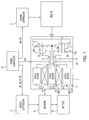
- Fig. 1 is a block schematic diagram of a shift control device of a hybrid vehicle.
- Fig. 2 is a diagram (sometimes called a lever analogy diagram) of a hybrid vehicle with a shift control device.
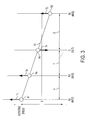
- Fig. 3 is a diagram (sometimes called a lever analogy diagram) of a hybrid vehicle with a shift control device without a forward brake.
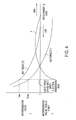
- Fig. 4 is a map showing a characteristic of motor torque and motor power against speed change ratio of the hybrid vehicle.
- Fig. 5 is a flowchart showing operation of a shift control device of the hybrid vehicle.
- Fig. 6 is a map showing a characteristic of a target driving torque against a vehicle speed at various depressing amounts of an accelerator.
- Fig. 7 is a map showing a characteristic of a driving torque against an axle rotating speed when carrying out a control under engine-optimum-fuel-efficiency or a control under the engine-maximum-load or stopping the rotation of a ring gear Rs by the forward brake.
- Fig. 8 is a map showing a characteristic of a relationship between engine power and engine speed when a control under engine-optimum-fuel-efficiency or a control under the engine-maximum-load is carried out.
- Fig. 9 is a flowchart showing a shift control device of the hybrid vehicle of an other embodiment.
- FIG. 1 of the drawing shows an embodiment of a hybrid vehicle in which the present invention is applied to a power transmission for a front-wheel drive car.
- Ravigneawx planetary gear set 2 (hereafter, Ravigneawx 2) is arranged in an axis direction of an engine (on the engine side) inside of a transmission case 1.
- a multiple current motor 3 (hereafter, multiple motor 3) is arranged in an axis direction of the engine (opposite to the engine) inside of the transmission case 1.
- the Ravigneawx 2 and the multiple motor 3 are arranged coaxial.
- the Ravigneawx 2 comprises a single pinion planetary gear set 4 (hereafter, single planetary 4) and a double pinion planetary gear set 5 (hereafter, double planetary 5), which share first plurality of pinions P1.
- the single planetary 4 is arranged in the multiple motor 3 side, and double planetary 5 is arranged in the engine side.
- second plurality of pinions P2 engage a sun gear Sd, a ring gear Rd and the first pinions P1, respectively.
- a common carrier C supports each of pinions P1 and P2, free to rotate.
- the Ravigneawx 2 having the above construction, comprises five rotation members in the form of the sun gear Ss, the sun gear Sd, the ring gear Rs, the ring gear Rd and the carrier C. If the rotating speeds of any two elements are determined, the rotating speeds of the remaining three elements are determined. This arrangement thus has five elements and two degrees of freedom.
- the ring gear Rd of the double planetary 5 is connected to a crankshaft of the engine so as to transmit the engine rotation to the ring gear Rd of the double planetary 5.
- the carrier C is connected to an output, for example a differential gear, so as to transmit an output of the Ravigneawx 2 to the carrier C and then to the vehicle drive train.
- the multiple motor 3 comprises an inner rotor 3ri, an outer rotor 3ro and an annular coil 3s.
- the outer rotor 3ro surrounds the inner rotor 3ri, and both are arranged coaxial and free to rotate.
- the annular coil 3s, supported by the transmission case 1, is arranged coaxial between the inner rotor 3ri and the outer rotor 3ro.
- a first motor/generator MG1 is composed of the annular coil 3s and the outer rotor 3ro.
- a second motor/generator MG2 is composed of the annular coil 3s and the inner rotor 3ri.
- the first motor/generator MG1 and the second motor/generator MG2 work as a motor/generator, respectively.
- they work as motors for individual direction according to the polarity of electric current and at individual speeds according to the amount of electric current.
- first and second motor/generators When multiple current is not provided to the first and second motor/generators, they work as generators according to a force from the output side.
- the sun gear Sd of the double planetary 5 is connected to the inner rotor 3ri of the second motor/generator MG2, and the sun gear Ss of the single planetary 4 is connected to the outer rotor 3ro of the first motor/generator MG1.
- a forward brake F/B provided in the transmission case 1, is able to stop a rotation of the ring gear Rs of the single planetary 4.
- a diameter of the sun gear Ss is larger than a diameter of the sun gear Sd (Ss>Sd).
- a diameter of the ring gear Rd is larger than a diameter of the ring gear Rs (Rd>Rs).
- the diameter of the ring gear Rs is much larger than the diameter of the sun gear Ss (Rs»Ss).
- a distance between the carrier C and the sun gear Sd in Fig. 2 is decided by the number of teeth of the ring gear Rd.
- ⁇ (the teeth number of Rd)/(the teeth number of Sd)) is largest compared with ⁇ , ⁇ , and 1.
- the forward brake F/B is not necessary for this invention. If the ring gear Rs is omitted, the transmission of the hybrid vehicle is constructed as four elements and two degrees of freedom.
- Fig. 3 shows how the speeds and other parameters of the elements relate to each other.
- a gear efficiency ⁇ m is set to 1 for convenience.
- the output power of the battery Pb is equal to 0 (this will be called the "direct-consumption mode").
- T1 -[N2/ ⁇ N1+( ⁇ +1) ⁇ N2 ⁇ ] ⁇ Te
- T2 [N1/ ⁇ N1+( ⁇ +1) ⁇ N2 ⁇ ] ⁇ Te
- Fig. 4 shows the necessary torque T1, T2, based on Figs. 2 and 3, and a change characteristic of power P passing through the motor/generators, in relation to the speed change ratio i, under a condition wherein the engine operating point (Ne, Te) is set as (1,1).
- the torque T1, T2 and the power P passing through the motor/generators MG1, MG2 have limitations. So the speed change ratio i (shown in Fig. 3 as an inclination of the lever A1), determined by the rotating state of the motor/generators MG1, MG2 (as will be called the "electrical transmission mode"), has the lowest speed change ratio determined by the torque T1, T2.
- a movement of the engine operating point (Ne, Te) changes the inclination of the lever A1, shown in Fig. 3. So the lowest speed change ratio under the electrical transmission mode can be changed to a lower ratio by a reduction of the engine torque.
- the direct-consumption mode can not be employed. Then an engine speed and an engine torque under a maximum load condition, gained by full throttle, are determined on the basis of a maximum torque curve.
- the engine speed under a maximum load condition is smaller than the engine speed under the optimum fuel efficiency, but the engine torque under a maximum load condition is larger than the engine torque under the optimum fuel efficiency.
- the determined engine speed and torque are set as the engine operating point (Ne, Te) so that it is possible to obtain a larger target driving power.
- the forward brake F/B works as a fulcrum and the engine (the ring gear Rd) works as an emphasis (or amplifier), so amplified engine torque is output from the carrier. So it is possible to obtain a demanded large torque from only the engine without using the motor/generators MG1, MG2.
- the lowest mechanical speed change ratio is lower than the lowest speed change ratio under the electrical transmission mode.
- a hybrid controller 10 controls the transmission of the hybrid vehicle, as shown in Fig. 1.
- the hybrid controller 10 sends commands regarding the engine operating point (Ne, Te) to an engine controller 11, and the engine controller 11 works as the engine is driven at the engine operating point (Ne, Te).
- the hybrid controller 10 sends commands regarding motor/generator operating points (N1, T1) and (N2, T2) to a motor controller 12, and the motor controller 12 controls the motor/generators MG1, MG2 via an inverter 13 as the motor/generators MG1, MG2 are driven at the motor/generator operating points (N1, T1) and (N2, T2), respectively.
- the motor/generators MG1, MG2 are supplied electric power from a battery 14 via the inverter 13.
- the hybrid controller 10 moreover, sends a command to apply the forward brake F/B as necessary.
- the hybrid controller 10 runs a program routine, as shown in Fig. 5, and determines the engine operating point (Ne, Te), the motor/generator operating points (N1, T1) and (N2, T2), respectively, as follows.
- the hybrid controller 10 sends commands regarding determined operating points (Ne, Te), (N1, T1) and (N2, T2) to the engine controller 11 and the motor controller 12, respectively.
- a target driving torque To* is calculated based on a depressing amount of an accelerator APS and a vehicle speed VSP on the basis of a map showing the target driving torque To* and the vehicle speed VSP at various depressing amounts of an accelerator APS, as shown in Fig. 6.
- an axle rotating speed No is calculated based on a multiplication between the vehicle speed VSP and a conversion factor K1.
- a target driving power Po* is calculated based on a multiplication of the target driving torque To*, the axle rotating speed No and a coefficient K2.
- a target engine power Pe* is calculated by dividing the target driving power Po* by system efficiency ⁇ m .
- a driving torque under optimum-fuel-efficiency-engine-control To ⁇ is calculated based on a map showing a relationship between an axle rotating speed No, driving torque To and the driving torque under optimum-fuel-efficiency-engine-control To ⁇ , as shown in Fig. 7.
- the driving torque under optimum-fuel-efficiency-engine-control To ⁇ is a torque to realize an optimum fuel efficiency under a current axle rotating speed.
- a driving power under optimum-fuel-efficiency-engine-control Po ⁇ is calculated based on a multiplication of the driving torque under optimum-fuel-efficiency-engine-control To ⁇ and the axle rotating speed No.
- step 6 a judgment is carried out as to whether the target driving power Po* is less than or equal to the driving power under optimum-fuel-efficiency-engine-control Po ⁇ . If the judgment result of step 6 is YES, processing flow progresses to step 7, and an engine speed under optimum-fuel-efficiency-engine-control Ne ⁇ is calculated based on a map showing a relationship between an engine power Pe, the engine speed Ne and the engine speed under optimum-fuel-efficiency-engine-control Ne ⁇ , as shown in Fig. 8.
- the engine speed under optimum-fuel-efficiency-engine-control Ne ⁇ is an engine speed to realize the target engine power Pe* under optimum fuel efficiency.
- An engine torque under optimum-fuel-efficiency-engine-control Te ⁇ is calculated by dividing the target engine power Pe* by the engine speed under optimum-fuel-efficiency-engine-control Ne ⁇ .
- the engine speed under optimum-fuel-efficiency-engine-control Ne ⁇ and the engine torque under optimum-fuel-efficiency-engine-control Te ⁇ are set as the engine operating point (Ne, Te).
- step 6 processing flow progresses to step 9, and a driving torque under maximum-load-engine-control To ⁇ is calculated based on a map showing a relationship between the axle rotating speed No, the driving torque To and the driving torque under maximum-load-engine-control To ⁇ , as shown in Fig. 7.
- the driving torque under maximum-load-engine-control To ⁇ is a torque to realize a maximum load with full throttle under a current axle rotating speed.
- a driving power under maximum-load-engine-control Po ⁇ is calculated based on a multiplication of the driving torque under maximum-load-engine-control To ⁇ and the axle rotating speed No.
- step 10 a judgment is carried out as to whether the target driving power Po* is less than or equal to the driving torque under maximum-load-engine-control Po ⁇ . If the judgment result of step 10 is YES, processing flow progresses to step 11.
- an engine speed under maximum-load-engine-control Ne ⁇ is calculated based on a map showing a relationship between the engine power Pe, the engine speed Ne and the engine speed under maximum-load-engine-control Ne ⁇ , as shown in Fig. 8.
- the engine speed under maximum-load-engine-control Ne ⁇ is an engine speed to realize the target engine power Pe* under a maximum load with full throttle.
- An engine torque under maximum-load-engine-control Te ⁇ is calculated by dividing the target engine power Pe* by the engine speed under maximum-load-engine-control Ne ⁇ .
- the engine speed under maximum-load-engine-control Ne ⁇ and the engine torque under maximum-load-engine-control Te ⁇ are set as the engine operating point (Ne, Te).
- step 8 After the engine operating point (Ne, Te) is determined at step 8 or 12, processing flow progresses to step 15, and the motor/generator operating points (N1, T1) and (N2, T2) are determined by calculation of equations (1)-(5) on the basis of the target engine speed Ne and the target engine torque Te under the direct-consumption mode.
- step 10 processing flow progresses to step 13, and the speed change ratio is set to the lowest mechanical speed change ratio i max .
- An engine speed under the forward brake mode (i max •No) is calculated by multiplication of the axle rotating speed No and the lowest mechanical speed change ratio i max .
- the engine speed under the forward brake mode (i max •No) is set as the target engine speed Ne.
- the engine torque under the forward brake mode (Pe*/Ne) is set as the target engine torque Te.
- the engine operating point (Ne, Te) is determined by the target engine speed Ne and the target engine torque Te set at step 13 and step 14, respectively.
- the engine speed under maximum-load-engine-control Ne ⁇ and the engine torque under maximum-load-engine-control Te ⁇ which are demanded when the target driving power Po* is realized are set as the engine operating point (Ne, Te), respectively, and the engine is controlled at the engine operating point (Ne, Te).
- the engine operating point (Ne, Te) is calculated as an engine speed and an engine torque when the target driving power is realized by the engine controlled under maximum load.
- the target driving power Po* is above what the engine alone can provide under optimum-fuel-efficiency, it is still possible to provide such power such that an electric power consumption of the battery is equal to 0 theoretically, and it is possible to downsize the battery.
- the forward brake F/B In the construction wherein the forward brake F/B is able to stop the rotation of the ring gear Rs, as shown in Fig. 1, when a lower speed change ratio beyond the lowest speed change ratio under the electrical transmission mode is demanded, the forward brake F/B stops the rotation of the ring gear Rs, so that it is possible to realize the lower speed change ratio, and it is possible to output a large torque and realize the target driving power without using motor/generators MG1, MG2, as shown by the To max curve in Fig. 7.
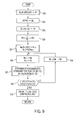
- Fig. 9 shows another embodiment of this invention.
- step 21 - step 24 are similar to step 1 - step 4 of Fig. 5, and the target driving torque To*, the axle rotating speed No, the target driving power Po* and the target engine power Pe* are calculated in these steps, respectively.
- Step 27 is a similar process to step 7 of Fig. 5, and the engine speed under optimum-fuel-efficiency-engine-control Ne ⁇ and the engine torque under optimum-fuel-efficiency-engine-control Te ⁇ are calculated.
- the engine speed under optimum-fuel-efficiency-engine-control Ne ⁇ and the engine torque under optimum-fuel-efficiency-engine-control Te ⁇ are set as the engine operating point (Ne, Te).
- the motor/generator operating points (N1, T1) and (N2, T2) are calculated by calculation of equations (1)-(5) on the basis of the target engine speed Ne and the target engine torque Te, as set at step 28, under the direct-consumption mode.
- step 32 a judgment is carried out as to whether both of the motor/generator torques T1, T2 of the motor/generator operating points are less than or equal to a maximum torque T1 max , T2 max . If the judgment result of step 32 is YES, processing flow progresses to step 33, and the motor/generator operating points (N1, T1) and (N2, T2) are used to control the motor/generators MG1, MG2.
- step 32 processing flow progresses to step 34, and the target engine speed is reduced by Ne from Ne, and at step 31, the motor/generator operating points (N1, T1) and (N2, T2) are calculated based on the reduced Ne. Then the engine torque Te becomes large, but the motor/generator torques T1, T2 and the motor/generator rotating speeds N1, N2 become small.
- the hybrid vehicle control is switched from the control under optimum-fuel-efficiency to the control under maximum-load, but in this embodiment, the hybrid vehicle control is changed from the control under optimum-fuel-efficiency to the control under maximum-load, gradually.
Landscapes
- Engineering & Computer Science (AREA)
- Chemical & Material Sciences (AREA)
- Combustion & Propulsion (AREA)
- Mechanical Engineering (AREA)
- Transportation (AREA)
- General Engineering & Computer Science (AREA)
- Automation & Control Theory (AREA)
- Power Engineering (AREA)
- Electric Propulsion And Braking For Vehicles (AREA)
- Control Of Vehicle Engines Or Engines For Specific Uses (AREA)
- Control Of Transmission Device (AREA)
- Hybrid Electric Vehicles (AREA)
Abstract
Description

Claims (10)
- A shift control device for a hybrid vehicle comprising:a differential mechanism (2) including at least four rotating elements (Ss, Rd, C, Rs, Sd) whose rotating states are determined by rotating states of two of the at least four rotating elements, wherein the elements connect a driving source (ENGINE), two motor/generators (MG1, MG2) and an output (OUT);
and
a controller (10) programmed to:
calculate a target driving power (Po*) based on a driving condition;
make a first judgment as to whether the target driving power is less than or equal to a first driving power (Po γ) corresponding to an operating region wherein the driving source is driven under optimum fuel efficiency;
when the first judgment shows that the target driving power is larger than the first driving power, calculate a first driving source speed (Ne γ) and a first driving source torque (Te γ) corresponding to an operating region wherein the target driving power is realized such that the driving source is driven under maximum load and control the driving source at the first driving source speed and the first driving source torque. - A shift control device for a hybrid vehicle as claimed in claim 1, wherein the controller (10) is further programmed to:calculate each of motor/generator torque (T1,T2) and rotating speed (N1,N2) based on the first driving source speed (Ne γ) and torque (Te γ), the current output speed (No) and the target driving power (Po*); andcontrol motor/generators (MG1, MG2) at calculated torque (T1,T2) and rotating speed (N1,N2), respectively.
- A shift control device for a hybrid vehicle as claimed in claim 1, wherein the first driving power (Po γ) under optimum fuel efficiency is a value when the driving source (ENIGNE) is driven on an operating point that should be obtained when the driving source is driven under optimum fuel efficiency based on the current output rotating speed.
- A shift control device for a hybrid vehicle as claimed in claim 1, wherein the driving source (ENIGNE) is an engine.
- A shift control device for a hybrid vehicle as claimed in claim 1, wherein the differential mechanism (2) is a Ravigneawx planetary gear set.
- A shift control device for a hybrid vehicle as claimed in claim 5, wherein the Ravigneawx planetary gear set (2) may be represented as a lever analogy diagram, and the driving source (ENGINE), the two motor/generators (MG1, MG2) and the output (OUT) are arranged on the lever analogy diagram in the following order:a first motor/generator (MG1), the driving source, the output, a second motor/generator (MG2).
- A shift control device for a hybrid vehicle as claimed in claim 6, wherein the Ravigneawx planetary gear set (2) includes five rotating elements, and the five elements are connected to the first motor/generator (MG1), the driving source (ENGINE), the output (OUT), a brake (F/B) and the second motor/generator (MG2), and arranged on the lever analogy diagram in the following order: the first motor/generator, the driving source, the output, the brake and the second motor/generator; and
the controller (10) is further programmed to:make a second judgment as to whether the target driving power (Po*) is smaller than or equal to a second driving power (Po δ) corresponding to an operating region wherein the driving source is driven under maximum load calculated based on a current output rotating speed (No);when the second judgment shows that the target driving power is larger than the second driving power, the brake stops rotation of a connected rotating element. - A shift control device for a hybrid vehicle comprising:a differential mechanism (2) including at least four rotating elements (Ss, Rd, C, Rs, Sd) whose rotating states are determined by rotating states of two of the at least four rotating elements, wherein elements connect a driving source (ENGINE), two motor/generators (MG1, MG2) and an output (OUT);
anda controller programmed to:calculate a target driving power (Po*) based on a driving condition;calculate a second driving source speed (Ne γ) and a second driving source torque (Te γ) under optimum fuel efficiency wherein the target driving power is realized;calculate a first motor/generator torque (T1) and a second motor/generator torque (T2) based on the second driving source speed (Ne γ) and torque (Te γ), the current output speed (No) and the target driving power;make a third judgment as to whether both the first motor/generator torque is larger than a first motor/generator maximum torque (T1max) and the second motor/generator torque is larger than a second motor/generator maximum torque (T2max);when the third judgment shows at least one of the first/second motor/generator torques is larger than the first/second motor/generator maximum torques, decrease the second driving source speed until both of the first/second motor/generator torques are equal to or smaller than the first/second motor/generator maximum torques. - A shift control device for a hybrid vehicle as claimed in claim 8,
wherein the driving source (ENGINE) is an engine. - A shift control device for a hybrid vehicle as claimed in claim 8,
wherein the differential mechanism (2) is a Ravigneawx planetary gear set.
Priority Applications (1)
| Application Number | Priority Date | Filing Date | Title |
|---|---|---|---|
| EP08012035A EP1974971B1 (en) | 2002-03-13 | 2003-03-13 | Shift control device and method for hybrid vehicle |
Applications Claiming Priority (2)
| Application Number | Priority Date | Filing Date | Title |
|---|---|---|---|
| JP2002068303 | 2002-03-13 | ||
| JP2002068303A JP3641244B2 (en) | 2002-03-13 | 2002-03-13 | Shift control device for hybrid transmission |
Related Child Applications (1)
| Application Number | Title | Priority Date | Filing Date |
|---|---|---|---|
| EP08012035A Division EP1974971B1 (en) | 2002-03-13 | 2003-03-13 | Shift control device and method for hybrid vehicle |
Publications (3)
| Publication Number | Publication Date |
|---|---|
| EP1350650A2 true EP1350650A2 (en) | 2003-10-08 |
| EP1350650A3 EP1350650A3 (en) | 2003-12-03 |
| EP1350650B1 EP1350650B1 (en) | 2008-09-10 |
Family
ID=28034972
Family Applications (2)
| Application Number | Title | Priority Date | Filing Date |
|---|---|---|---|
| EP08012035A Expired - Lifetime EP1974971B1 (en) | 2002-03-13 | 2003-03-13 | Shift control device and method for hybrid vehicle |
| EP03005435A Expired - Lifetime EP1350650B1 (en) | 2002-03-13 | 2003-03-13 | Shift control device for hybrid vehicle |
Family Applications Before (1)
| Application Number | Title | Priority Date | Filing Date |
|---|---|---|---|
| EP08012035A Expired - Lifetime EP1974971B1 (en) | 2002-03-13 | 2003-03-13 | Shift control device and method for hybrid vehicle |
Country Status (4)
| Country | Link |
|---|---|
| US (1) | US6819985B2 (en) |
| EP (2) | EP1974971B1 (en) |
| JP (1) | JP3641244B2 (en) |
| DE (2) | DE60323423D1 (en) |
Cited By (6)
| Publication number | Priority date | Publication date | Assignee | Title |
|---|---|---|---|---|
| WO2006010668A1 (en) * | 2004-07-28 | 2006-02-02 | Robert Bosch Gmbh | Method for operating a hybrid drive and device for carrying out said method |
| WO2006111434A1 (en) * | 2005-04-21 | 2006-10-26 | Robert Bosch Gmbh | Method for operating a hybrid vehicle drive and a device for carrying out said method |
| EP1577141A3 (en) * | 2004-03-17 | 2009-08-12 | Nissan Motor Co., Ltd. | Hybrid vehicle mode shift control device |
| EP1577140A3 (en) * | 2004-03-17 | 2009-08-12 | Nissan Motor Co., Ltd. | Hybrid vehicle mode shift control device |
| EP1782989A3 (en) * | 2005-08-23 | 2010-06-30 | Nissan Motor Company Limited | Vehicle transmission control |
| EP2492543A1 (en) * | 2011-02-24 | 2012-08-29 | Tai-Her Yang | Dual-drive electric machine having controllable epicycle gear set |
Families Citing this family (41)
| Publication number | Priority date | Publication date | Assignee | Title |
|---|---|---|---|---|
| JP3641243B2 (en) * | 2002-02-26 | 2005-04-20 | 日産自動車株式会社 | Hybrid transmission |
| JP3641245B2 (en) * | 2002-03-13 | 2005-04-20 | 日産自動車株式会社 | Shift control device for hybrid transmission |
| JP3614409B2 (en) * | 2002-03-25 | 2005-01-26 | 日産自動車株式会社 | Hybrid transmission |
| JP3700709B2 (en) * | 2003-04-03 | 2005-09-28 | 日産自動車株式会社 | Shift control device for hybrid transmission |
| WO2005000616A2 (en) * | 2003-06-28 | 2005-01-06 | Gi Hyok Han | Load-adapting planet gear with integrated motor |
| JP3797354B2 (en) * | 2003-09-30 | 2006-07-19 | アイシン・エィ・ダブリュ株式会社 | Electric vehicle drive control device and electric vehicle drive control method |
| JP3800218B2 (en) * | 2003-10-16 | 2006-07-26 | 日産自動車株式会社 | Shift control device for hybrid vehicle |
| JP4186786B2 (en) * | 2003-10-23 | 2008-11-26 | 日産自動車株式会社 | Mode change control device for hybrid transmission |
| JP2005333690A (en) * | 2004-05-18 | 2005-12-02 | Denso Corp | Control device for hybrid vehicle |
| JP4239923B2 (en) | 2004-08-02 | 2009-03-18 | 日産自動車株式会社 | Electric power transmission device |
| JP3918835B2 (en) * | 2004-08-03 | 2007-05-23 | 日産自動車株式会社 | Vehicle battery power compensation control device |
| WO2006052036A1 (en) | 2004-11-10 | 2006-05-18 | Guardian Enterprises Ltd. | Gyro precessional automatic transmission |
| US7520350B2 (en) * | 2004-11-22 | 2009-04-21 | Robert Hotto | System and method for extracting propulsion energy from motor vehicle exhaust |
| US7678015B2 (en) * | 2006-04-28 | 2010-03-16 | Caterpillar Inc. | Efficiency based integrated power train control system |
| US7722497B2 (en) | 2006-06-13 | 2010-05-25 | Toyota Jidosha Kabushiki Kaisha | Control device for vehicle drive apparatus |
| CN101204919B (en) * | 2006-12-19 | 2010-06-23 | 比亚迪股份有限公司 | Mixed motor vehicle drive system |
| JP4572979B2 (en) * | 2008-10-21 | 2010-11-04 | トヨタ自動車株式会社 | Power supply system, vehicle equipped with the same, and control method of power supply system |
| JP5141773B2 (en) * | 2008-10-31 | 2013-02-13 | トヨタ自動車株式会社 | Electric vehicle and control method of electric vehicle |
| US7818969B1 (en) | 2009-12-18 | 2010-10-26 | Energyield, Llc | Enhanced efficiency turbine |
| US8337352B2 (en) | 2010-06-22 | 2012-12-25 | Oshkosh Corporation | Electromechanical variable transmission |
| CN103339001B (en) * | 2011-02-04 | 2016-01-06 | 铃木株式会社 | The driving control device of motor vehicle driven by mixed power |
| US8813884B2 (en) * | 2011-02-15 | 2014-08-26 | GM Global Technology Operations LLC | Optimization to reduce fuel consumption in charge depleting mode |
| US9132736B1 (en) | 2013-03-14 | 2015-09-15 | Oshkosh Defense, Llc | Methods, systems, and vehicles with electromechanical variable transmission |
| FR3004231B1 (en) * | 2013-04-05 | 2015-04-03 | Renault Sa | METHOD FOR CONTROLLING THE STATE OF A CINEMATIC CHAIN OF A MOTORPOWER GROUP OF A HYBRID OR THERMAL ELECTRIC VEHICLE |
| JP6271270B2 (en) | 2014-01-31 | 2018-01-31 | 株式会社小松製作所 | Work vehicle and control method of work vehicle |
| US9637114B2 (en) | 2014-04-08 | 2017-05-02 | Ford Global Technologies, Llc | Step-ratio transmission control for a hybrid vehicle |
| US10982736B2 (en) | 2015-02-17 | 2021-04-20 | Oshkosh Corporation | Multi-mode electromechanical variable transmission |
| US10421350B2 (en) | 2015-10-20 | 2019-09-24 | Oshkosh Corporation | Inline electromechanical variable transmission system |
| US9650032B2 (en) | 2015-02-17 | 2017-05-16 | Oshkosh Corporation | Multi-mode electromechanical variable transmission |
| US9651120B2 (en) | 2015-02-17 | 2017-05-16 | Oshkosh Corporation | Multi-mode electromechanical variable transmission |
| US9656659B2 (en) | 2015-02-17 | 2017-05-23 | Oshkosh Corporation | Multi-mode electromechanical variable transmission |
| US12078231B2 (en) | 2015-02-17 | 2024-09-03 | Oshkosh Corporation | Inline electromechanical variable transmission system |
| US10578195B2 (en) | 2015-02-17 | 2020-03-03 | Oshkosh Corporation | Inline electromechanical variable transmission system |
| US10584775B2 (en) | 2015-02-17 | 2020-03-10 | Oshkosh Corporation | Inline electromechanical variable transmission system |
| US11701959B2 (en) | 2015-02-17 | 2023-07-18 | Oshkosh Corporation | Inline electromechanical variable transmission system |
| US9482330B1 (en) * | 2015-05-12 | 2016-11-01 | GM Global Technology Operations LLC | Hybrid transmission |
| US10059341B2 (en) | 2016-06-17 | 2018-08-28 | Caterpillar Inc. | Control strategy for reduced fuel consumption in machine and powertrain system with same |
| US11110908B2 (en) * | 2017-04-17 | 2021-09-07 | Hyundai Motor Company | Hybrid vehicle and method of controlling mode transition thereof |
| CN111824118A (en) * | 2020-06-05 | 2020-10-27 | 科力远混合动力技术有限公司 | Hybrid drive control method for clutch-free double-planet-row hybrid power vehicle |
| JP7350120B1 (en) * | 2022-03-22 | 2023-09-25 | 日立建機株式会社 | electric work machine |
| US12313153B1 (en) * | 2024-01-11 | 2025-05-27 | Dana Heavy Vehicle Systems Group, Llc | Planetary pinion input electric drive unit |
Family Cites Families (22)
| Publication number | Priority date | Publication date | Assignee | Title |
|---|---|---|---|---|
| JPS56145702A (en) * | 1980-03-12 | 1981-11-12 | Daihatsu Motor Co Ltd | Controller for hybrid vehicle |
| JPH01182649A (en) | 1988-01-11 | 1989-07-20 | Daikin Mfg Co Ltd | Damper disk |
| JPH09233607A (en) * | 1996-02-29 | 1997-09-05 | Toyota Motor Corp | Drive control device for hybrid vehicle |
| JPH09238403A (en) * | 1996-02-29 | 1997-09-09 | Hino Motors Ltd | Hybrid engine |
| JPH1084665A (en) | 1996-09-06 | 1998-03-31 | Toyota Motor Corp | Power output device |
| JP3097572B2 (en) | 1996-09-13 | 2000-10-10 | トヨタ自動車株式会社 | Power output device and control method thereof |
| JPH1182649A (en) * | 1997-09-16 | 1999-03-26 | Honda Motor Co Ltd | Continuously variable transmission |
| JP3096447B2 (en) * | 1997-09-17 | 2000-10-10 | 本田技研工業株式会社 | Control device for hybrid vehicle |
| US5931757A (en) | 1998-06-24 | 1999-08-03 | General Motors Corporation | Two-mode, compound-split electro-mechanical vehicular transmission |
| JP3968894B2 (en) * | 1998-09-11 | 2007-08-29 | トヨタ自動車株式会社 | Hybrid vehicle and control method thereof |
| JP3384341B2 (en) | 1998-11-04 | 2003-03-10 | 日産自動車株式会社 | Drive unit for hybrid vehicles |
| JP3536703B2 (en) * | 1999-02-09 | 2004-06-14 | 株式会社日立製作所 | Hybrid vehicle control method, hybrid vehicle control device, and hybrid vehicle |
| JP3931465B2 (en) | 1999-02-19 | 2007-06-13 | トヨタ自動車株式会社 | Engine start control device, control method, and hybrid vehicle |
| DE19909424A1 (en) * | 1999-02-23 | 2000-08-24 | Peter Tenberge | Hybrid gearing for vehicle |
| JP3978703B2 (en) * | 1999-03-26 | 2007-09-19 | マツダ株式会社 | Hybrid vehicle |
| JP3395708B2 (en) * | 1999-04-27 | 2003-04-14 | 株式会社日立製作所 | Hybrid vehicle |
| JP3566151B2 (en) * | 1999-10-04 | 2004-09-15 | 本田技研工業株式会社 | Motor control device for hybrid vehicle |
| JP3584809B2 (en) | 1999-10-08 | 2004-11-04 | トヨタ自動車株式会社 | Hybrid vehicle control device |
| JP3702749B2 (en) | 2000-05-24 | 2005-10-05 | トヨタ自動車株式会社 | Hybrid vehicle and control method thereof |
| JP4244499B2 (en) * | 2000-05-25 | 2009-03-25 | アイシン・エィ・ダブリュ株式会社 | Control device and control method for hybrid vehicle |
| US6336063B1 (en) * | 2000-10-31 | 2002-01-01 | Volvo Car Corporation | Method and arrangement in a hybrid vehicle for improving battery state-of-charge control and minimizing driver perceptible disturbances |
| JP3712684B2 (en) * | 2001-06-01 | 2005-11-02 | 本田技研工業株式会社 | Control device for hybrid vehicle |
-
2002
- 2002-03-13 JP JP2002068303A patent/JP3641244B2/en not_active Expired - Fee Related
-
2003
- 2003-02-28 US US10/375,347 patent/US6819985B2/en not_active Expired - Lifetime
- 2003-03-13 DE DE60323423T patent/DE60323423D1/en not_active Expired - Lifetime
- 2003-03-13 EP EP08012035A patent/EP1974971B1/en not_active Expired - Lifetime
- 2003-03-13 EP EP03005435A patent/EP1350650B1/en not_active Expired - Lifetime
- 2003-03-13 DE DE60332403T patent/DE60332403D1/en not_active Expired - Lifetime
Cited By (11)
| Publication number | Priority date | Publication date | Assignee | Title |
|---|---|---|---|---|
| EP1577141A3 (en) * | 2004-03-17 | 2009-08-12 | Nissan Motor Co., Ltd. | Hybrid vehicle mode shift control device |
| EP1577140A3 (en) * | 2004-03-17 | 2009-08-12 | Nissan Motor Co., Ltd. | Hybrid vehicle mode shift control device |
| WO2006010668A1 (en) * | 2004-07-28 | 2006-02-02 | Robert Bosch Gmbh | Method for operating a hybrid drive and device for carrying out said method |
| US7747375B2 (en) | 2004-07-28 | 2010-06-29 | Robert Bosch Gmbh | Method for operating a hybrid drive and device for carrying out said method |
| WO2006111434A1 (en) * | 2005-04-21 | 2006-10-26 | Robert Bosch Gmbh | Method for operating a hybrid vehicle drive and a device for carrying out said method |
| CN101163617B (en) * | 2005-04-21 | 2011-11-16 | 罗伯特·博世有限公司 | Method for operating a hybrid vehicle drive and a device for carrying out said method |
| US8374771B2 (en) | 2005-04-21 | 2013-02-12 | Robert Bosch Gmbh | Method for operating a hybrid vehicle drive and a device for carrying out said method |
| EP1782989A3 (en) * | 2005-08-23 | 2010-06-30 | Nissan Motor Company Limited | Vehicle transmission control |
| EP2492543A1 (en) * | 2011-02-24 | 2012-08-29 | Tai-Her Yang | Dual-drive electric machine having controllable epicycle gear set |
| CN102684372A (en) * | 2011-02-24 | 2012-09-19 | 杨泰和 | Double-acting motor combined with steerable epicyclic wheelset |
| CN102684372B (en) * | 2011-02-24 | 2018-04-24 | 杨泰和 | Double-acting motor combined with controllable epicyclic gear set |
Also Published As
| Publication number | Publication date |
|---|---|
| DE60332403D1 (en) | 2010-06-10 |
| DE60323423D1 (en) | 2008-10-23 |
| EP1974971B1 (en) | 2010-04-28 |
| EP1350650A3 (en) | 2003-12-03 |
| EP1350650B1 (en) | 2008-09-10 |
| US6819985B2 (en) | 2004-11-16 |
| JP3641244B2 (en) | 2005-04-20 |
| US20030176955A1 (en) | 2003-09-18 |
| EP1974971A3 (en) | 2008-10-15 |
| JP2003269596A (en) | 2003-09-25 |
| EP1974971A2 (en) | 2008-10-01 |
Similar Documents
| Publication | Publication Date | Title |
|---|---|---|
| US6819985B2 (en) | Shift control device for hybrid vehicle | |
| EP1520743B1 (en) | Method of operating a hybrid-vehicle drive system | |
| EP1350651B1 (en) | Hybrid electric vehicle | |
| CN100441439C (en) | Hybrid vehicle, hybrid vehicle control method, and power output device | |
| EP1768868B1 (en) | Power output apparatus, motor vehicle equipped with power output apparatus, and control method of power output apparatus | |
| US20040256165A1 (en) | Mode transfer control apparatus and method for hybrid vehicle | |
| JP5818231B2 (en) | Drive control apparatus for hybrid vehicle | |
| EP1426222A1 (en) | Hybrid transmission control system | |
| JP2008162490A (en) | Hybrid vehicle and its control method | |
| EP1795726A1 (en) | Power output unit, automobile having same, and method of controlling power output unit | |
| JP4209375B2 (en) | Power output apparatus, automobile equipped with the same, and control method of power output apparatus | |
| US11807104B2 (en) | Vehicle drive device | |
| JP4069849B2 (en) | Power output apparatus, automobile equipped with the same, and control method of power output apparatus | |
| JP3938001B2 (en) | Control method for hybrid transmission when abnormal | |
| JP4176080B2 (en) | POWER TRANSMISSION DEVICE, POWER OUTPUT DEVICE, AUTOMOBILE MOUNTING THE SAME, CONTROL METHOD FOR POWER OUTPUT DEVICE | |
| US20160368471A1 (en) | Method for controlling torque intervention of hybrid vehicle | |
| JP4217234B2 (en) | POWER OUTPUT DEVICE, AUTOMOBILE MOUNTING THE SAME, DRIVE DEVICE, AND CONTROL METHOD FOR POWER OUTPUT DEVICE | |
| JP2008179290A (en) | POWER OUTPUT DEVICE, ITS CONTROL METHOD, AND VEHICLE | |
| JP4111184B2 (en) | Shift control device for hybrid transmission | |
| JP4597043B2 (en) | Vehicle, drive device, and vehicle control method | |
| US20250381834A1 (en) | Drive apparatus for vehicle | |
| JP4088571B2 (en) | Power output device and automobile equipped with the same | |
| JP3885756B2 (en) | Shift control device for hybrid transmission | |
| JP3929435B2 (en) | Power output apparatus, automobile equipped with the same, and control method of power output apparatus | |
| JP2008143315A (en) | POWER OUTPUT DEVICE, ITS CONTROL METHOD, AND VEHICLE |
Legal Events
| Date | Code | Title | Description |
|---|---|---|---|
| PUAI | Public reference made under article 153(3) epc to a published international application that has entered the european phase |
Free format text: ORIGINAL CODE: 0009012 |
|
| 17P | Request for examination filed |
Effective date: 20030313 |
|
| AK | Designated contracting states |
Kind code of ref document: A2 Designated state(s): AT BE BG CH CY CZ DE DK EE ES FI FR GB GR HU IE IT LI LU MC NL PT RO SE SI SK TR |
|
| AX | Request for extension of the european patent |
Extension state: AL LT LV MK |
|
| PUAL | Search report despatched |
Free format text: ORIGINAL CODE: 0009013 |
|
| AK | Designated contracting states |
Kind code of ref document: A3 Designated state(s): AT BE BG CH CY CZ DE DK EE ES FI FR GB GR HU IE IT LI LU MC NL PT RO SE SI SK TR |
|
| AX | Request for extension of the european patent |
Extension state: AL LT LV MK |
|
| RAP1 | Party data changed (applicant data changed or rights of an application transferred) |
Owner name: RENAULT S.A.S. SOCIETE PAR ACTIONS SIMPLIFIEE Owner name: NISSAN MOTOR CO., LTD. |
|
| RIN1 | Information on inventor provided before grant (corrected) |
Inventor name: MINAGAWA, YUUSUKE Inventor name: PICHON, YVES Inventor name: KARGAR, KEYVAN Inventor name: OSHIDARI, TOSHIKAZU |
|
| AKX | Designation fees paid |
Designated state(s): DE FR GB |
|
| 17Q | First examination report despatched |
Effective date: 20050217 |
|
| 17Q | First examination report despatched |
Effective date: 20050217 |
|
| GRAP | Despatch of communication of intention to grant a patent |
Free format text: ORIGINAL CODE: EPIDOSNIGR1 |
|
| RIC1 | Information provided on ipc code assigned before grant |
Ipc: B60W 10/10 20060101AFI20080306BHEP |
|
| GRAS | Grant fee paid |
Free format text: ORIGINAL CODE: EPIDOSNIGR3 |
|
| GRAA | (expected) grant |
Free format text: ORIGINAL CODE: 0009210 |
|
| AK | Designated contracting states |
Kind code of ref document: B1 Designated state(s): DE FR GB |
|
| REG | Reference to a national code |
Ref country code: GB Ref legal event code: FG4D |
|
| REF | Corresponds to: |
Ref document number: 60323423 Country of ref document: DE Date of ref document: 20081023 Kind code of ref document: P |
|
| PLBE | No opposition filed within time limit |
Free format text: ORIGINAL CODE: 0009261 |
|
| STAA | Information on the status of an ep patent application or granted ep patent |
Free format text: STATUS: NO OPPOSITION FILED WITHIN TIME LIMIT |
|
| 26N | No opposition filed |
Effective date: 20090611 |
|
| REG | Reference to a national code |
Ref country code: FR Ref legal event code: PLFP Year of fee payment: 14 |
|
| PGFP | Annual fee paid to national office [announced via postgrant information from national office to epo] |
Ref country code: DE Payment date: 20160308 Year of fee payment: 14 |
|
| PGFP | Annual fee paid to national office [announced via postgrant information from national office to epo] |
Ref country code: FR Payment date: 20160208 Year of fee payment: 14 Ref country code: GB Payment date: 20160309 Year of fee payment: 14 |
|
| REG | Reference to a national code |
Ref country code: DE Ref legal event code: R119 Ref document number: 60323423 Country of ref document: DE |
|
| GBPC | Gb: european patent ceased through non-payment of renewal fee |
Effective date: 20170313 |
|
| REG | Reference to a national code |
Ref country code: FR Ref legal event code: ST Effective date: 20171130 |
|
| PG25 | Lapsed in a contracting state [announced via postgrant information from national office to epo] |
Ref country code: FR Free format text: LAPSE BECAUSE OF NON-PAYMENT OF DUE FEES Effective date: 20170331 Ref country code: DE Free format text: LAPSE BECAUSE OF NON-PAYMENT OF DUE FEES Effective date: 20171003 |
|
| PG25 | Lapsed in a contracting state [announced via postgrant information from national office to epo] |
Ref country code: GB Free format text: LAPSE BECAUSE OF NON-PAYMENT OF DUE FEES Effective date: 20170313 |