EP1347616A2 - Secure communication via a web server - Google Patents
Secure communication via a web server Download PDFInfo
- Publication number
- EP1347616A2 EP1347616A2 EP03251010A EP03251010A EP1347616A2 EP 1347616 A2 EP1347616 A2 EP 1347616A2 EP 03251010 A EP03251010 A EP 03251010A EP 03251010 A EP03251010 A EP 03251010A EP 1347616 A2 EP1347616 A2 EP 1347616A2
- Authority
- EP
- European Patent Office
- Prior art keywords
- computer system
- web server
- programming process
- network
- programming
- Prior art date
- Legal status (The legal status is an assumption and is not a legal conclusion. Google has not performed a legal analysis and makes no representation as to the accuracy of the status listed.)
- Withdrawn
Links
Images


Classifications
-
- H—ELECTRICITY
- H04—ELECTRIC COMMUNICATION TECHNIQUE
- H04L—TRANSMISSION OF DIGITAL INFORMATION, e.g. TELEGRAPHIC COMMUNICATION
- H04L63/00—Network architectures or network communication protocols for network security
- H04L63/04—Network architectures or network communication protocols for network security for providing a confidential data exchange among entities communicating through data packet networks
- H04L63/0428—Network architectures or network communication protocols for network security for providing a confidential data exchange among entities communicating through data packet networks wherein the data content is protected, e.g. by encrypting or encapsulating the payload
- H04L63/0442—Network architectures or network communication protocols for network security for providing a confidential data exchange among entities communicating through data packet networks wherein the data content is protected, e.g. by encrypting or encapsulating the payload wherein the sending and receiving network entities apply asymmetric encryption, i.e. different keys for encryption and decryption
-
- H—ELECTRICITY
- H04—ELECTRIC COMMUNICATION TECHNIQUE
- H04L—TRANSMISSION OF DIGITAL INFORMATION, e.g. TELEGRAPHIC COMMUNICATION
- H04L63/00—Network architectures or network communication protocols for network security
- H04L63/16—Implementing security features at a particular protocol layer
- H04L63/166—Implementing security features at a particular protocol layer at the transport layer
Definitions
- the present invention generally relates to computing devices. More specifically, the invention relates to methods and systems for securely communicating between devices.
- a typical local area network includes a network server interconnected to a number of devices.
- the network server is typically a computer having a relatively large amount of memory and that maintains a database of files that each of the devices connected thereto may access.
- the devices are connected to the network server through the LAN and may include network client devices such as computer workstations or networked microcomputers, printers, scanners, etc.
- Scanners are typically used to convert printed material into electronic digital form. Once a scanner converts printed material into electronic digital form, the digital representation of the printed material can be sent over the network.
- a transmission device that sends digital information over the network can be referred to as a "digital sender.”
- Digital senders are typically used in email and electronic fax applications to provide the communication protocol over which digital information is communicated.
- a digital sender can incorporate a scanner.
- a multi-function peripheral is a transmission device that includes a digital sender and a printer. MFPs can be used to perform faxing, printing, scanning, and sending email and documents in electronic digital form across a network.
- MFP is an "All-In-One" device. Typically, "All-In-One" devices are low-end MFPs and usually cannot connect directly with a network.
- MFP is a digital network copier which is typically a high-end MFP with, for example, greater pages scanned/copied per minute capability than lower-end MFPs.
- Digital senders and MFPs have the ability to scan an image (possibly in color), store the scanned information in a file, and send the file as an attachment to an email, or in the body of the email itself. Digital senders and MFPs can also send the file to a specific file location as decided by the user.
- a secure communication link from an MFP or digital sender to another device, either within the LAN or external via the Internet.
- MFP or digital sender it can be critical to allow only registered users to access corporate database information.
- providing a secure link includes providing some form of user identification and authentication as well as communication over a secure link.
- the operating system(s) or associated security protocol(s) required to enable the establishment of a secure link may not be included in the MFPs.
- many devices do not have the capability to securely communicate with Windows-based systems. These devices may not be able to authenticate a user and so cannot gain access to database information that resides on a Windows-based system.
- one possible solution is to incorporate an operating system within the particular device that can communicate with Windows-based systems.
- this can increase the complexity of the device and, thus, increase the cost of the device.
- Some transmission devices incorporate an operating system, but cannot communicate securely with Windows-based systems and, furthermore these devices typically require additional software or firmware to facilitate secure communication.
- a representative method for establishing secure communication includes: establishing a secure communication link with a web server by utilizing a security protocol; accessing a programming process located on the web server; sending security information to the programming process, wherein security information is provided to a computer system by programming calls made from the programming process; and receiving a response from the computer system via the programming process.
- Embodiments of the invention may also be construed as a secure communication system configured to access stored information in a computer system.
- the communication system includes a web server configured to store a file containing programming language for a programming process.
- the web server is configured to securely communicate with the computer system by means of programming calls made from the programming process and also to securely communicate with a transmission device via a secure communication link utilizing a security protocol, therefore, facilitating communication between the transmission device and the computer system in order to access the information.
- systems and methods of the invention can establish, and thus provide, a secure communication link between a device and a computer system via a web server. Sensitive information can then be securely passed between the computer system(s) and the device. In some embodiments, this can be accomplished even though the device may not, otherwise, be able to establish a secure communication link with the computer system(s).
- FIG. 1 is a schematic representation of a communication system 10 in which various transmission devices may be connected.
- the system 10 generally comprises several transmission devices (21,37, 27) that are capable of operating as peripheral devices and/or as stand-alone (walk-up) devices.
- a transmission device comprises a device that is capable of transmitting data to a destination device.
- the transmission device can comprise a digital sender 27, such as Hewlett-Packard Digital Sender 9100CTM, which is capable of transmitting data via email.
- a digital network copier 21 is another transmission device described in FIG. 1.
- a third transmission device is an "All-In-One" 37 directly coupled with a network client 24.
- the digital network copier 21 and the "All-In-One" 37 are also commonly known as multi-functional peripherals. Although these three examples have been explicitly identified, it is to be appreciated that a transmission device can comprise any other device that is capable of transmitting data to a destination device.
- the network 10 can include several other computing devices (12, 17, 18) that are capable of receiving data from the transmission devices.
- a computing device may incorporate several other computing devices, in which case, it may be referred to as a computer system.
- computing devices and computing systems may be used interchangeably.
- the computing devices can be a network client 18, a network server 17, and a Lightweight Directory Access Protocol (LDAP) server 12.
- LDAP Lightweight Directory Access Protocol
- the transmission devices and the computing devices are connected to a network 11 that typically comprises one or more sub-networks that are communicatively coupled to each other.
- these networks can include one or more local area networks (LANs) and/or wide area networks (WANs).
- the network 11 may comprise a set of networks that forms part of the Internet.
- the transmission devices may not be able to communicate securely with the computing devices in the system 10 described in FIG. 1.
- the entire network 11 may be inside a corporate network and may be protected from outside intruders by a firewall. In this case secure communication is accomplished passively by the firewall.
- This system 10 will not allow secure communication across the firewall because the proper security algorithms may not be installed in the transmission devices. This scenario will be discussed in FIG. 3.
- a network client 18 may be, for example, a personal computer (PC) or a workstation. Typically, the transmission devices would send the digital information it processed to a server. This information can then be accessed by the network client 18, through email software or from a file management program. In a typical network, several network clients 18 may be connected.
- PC personal computer
- workstation typically, the transmission devices would send the digital information it processed to a server. This information can then be accessed by the network client 18, through email software or from a file management program. In a typical network, several network clients 18 may be connected.
- a network server 17 can handle and monitor the network traffic running on the network 11.
- the network server may be the only server on the network.
- the network server 17 can facilitate the connection of the various servers and network clients 18.
- the network server 17, may also monitor and facilitate the traffic between the network 11 and other networks.
- the network server 17 may operate the software/firmware to manage the firewall protecting the network 11.
- the network server 17, may contain a file depository in which the transmission devices can deposit information. The depository could then be accessed by the various network clients 18.
- the network server 17 may also facilitate the email communication of the digital information received from the transmission devices.
- LDAP server 12 can access a global address database.
- a global address database typically, includes network-wide information such as email addresses and fax numbers of all clients and devices connected to the system 10.
- a global address database may include all information regarding employees of a corporation that use the system 10.
- the transmission devices oftentimes must access the global address database in order to obtain email information.
- a firewall protects the entire system 10
- the communication between the LDAP server 12 and the transmission devices may be secure.
- this communication may not be secure.
- sensitive information contained within the global address database may not be securely passed from the LDAP server 12 to the transmission devices.
- FIG. 2 is a schematic view illustrating an example architecture for a transmission device shown in FIG. 1.
- examples of a transmission device are a digital network copier 21, an "All-In-One" 37 directly coupled with a network client 24, and a digital sender 27.
- the transmission device 102 can comprise a processing device 200, memory 202, device operation hardware 204, one or more user interface devices 206, one or more input/output (I/O) devices 208, and one or more network interface devices 210. Each of these components is connected to a local interface 212 that, by way of example, comprises one or more internal buses.
- the processing device 200 is adapted to execute commands stored in memory 202 and can comprise a general-purpose processor, a microprocessor, one or more application-specific integrated circuits (ASICs), a plurality of suitably configured digital logic gates, and other electrical configurations that may be comprised of discrete elements both individually and/or in various combinations to coordinate the overall operation of the transmission device 102.
- ASICs application-specific integrated circuits
- the device operation hardware 204 comprises the various components with which the core functionalities of the transmission device 102 are facilitated.
- the transmission device 102 is designed to transmit email messages (i.e ., the digital sender 27)
- the transmission device comprises the various components that facilitate such transmission.
- the device operation hardware 204 may include other components such as a scanning mechanism and a print engine ( i.e ., the digital network copier 21).
- the one or more user interface devices 206 typically comprise interface tools with which the device settings can be changed and through which the user can directly communicate information to the transmission device 102.
- the user interface devices 206 comprise an alphanumeric keyboard with which textual information can be entered and various function keys and/or buttons with which the operation of the transmission device 102 can be controlled.
- the user interface devices 206 can comprise a display with which text and/or graphics can be presented to the user.
- a display can, for instance, comprise a liquid crystal display (LCD), a light emitting diode (LED) display, plasma screen, etc .
- the display can be touch-sensitive such that user commands and selections can be entered with the display.
- the one or more I/O devices 208 are adapted to facilitate connection of the transmission device 102 (i.e ., the "All-In-One" 37) to another device, such as a computing device 108, and may therefore include one or more serial, parallel, small computer system interface (SCSI), universal serial bus (USB), IEEE 1394 (e.g., FirewireTM), and/or personal area network (PAN) components.
- the network interface devices 210 comprise the various components that are used to transmit and/or receive data over the network 11.
- the network interface devices 210 include a device that can communicate both inputs and outputs, for instance, a modulator/demodulator (e.g ., modem), wireless (e.g ., radio frequency (RF)) transceiver, a telephonic interface, a bridge, a router, network card, etc .
- a modulator/demodulator e.g ., modem
- wireless e.g ., radio frequency (RF)
- a telephonic interface e.g., a telephonic interface
- bridge e.g ., a bridge
- router e.g a router
- the memory 202 includes various software and/or firmware programs including a transmission control module 216.
- the transmission control module 216 comprises the various software and/or firmware that controls transmissions from the device 102 whether they be secure or insecure transmissions.
- the transmission control module 216 may comprise software and/or firmware that sets up a Secure Sockets Layer (SSL) protocol.
- SSL protocol is a commonly-used protocol for managing the security of a message transmission on the Internet.
- SSL uses a program layer located between the Internet's Hypertext Transfer Protocol (HTTP) and Transport Control Protocol (TCP) layers. SSL is included as part of both the Microsoft and Netscape browsers and most Web server products.
- the "sockets" part of the term refers to the sockets method of passing data back and forth between a client and a server program in a network or between program layers in the same computer.
- SSL uses the public-and-private key encryption system.
- the public-and-private key encryption system involves multiplying two large prime numbers (a prime number is a number divisible only by that number and 1) and through additional operations deriving a set of two numbers that constitutes the public key and another set that is the private key. Once the keys have been developed, the original prime numbers are no longer important and can be discarded. Both the public and the private keys are needed for encryption /decryption but only the owner of a private key ever needs to know it. Using this system, the private key never needs to be sent across the Internet. The private key is used to decrypt text that has been encrypted with the public key.
- TLS transport layer security
- the memory 202 can, optionally, include a database 220 that can be used to store various information including, for instance, email addresses of desired email recipients and/or network addresses of other destinations.
- the various software and/or firmware programs such as the SSL protocol comprise an ordered listing of executable instructions for implementing logical functions and can be embodied in any computer-readable medium for use by or in connection with an instruction execution system, apparatus, or transmission device, such as a computer-based system, processor-containing system, or other system that can fetch the instructions from the instruction execution system, apparatus, or device and execute the instructions.
- a "computer-readable medium" can be any means that can contain, store, communicate, propagate, or transport the program for use by or in connection with the information system, apparatus, or device.
- the computer readable medium can be, for example but not limited to, an electronic, magnetic, optical, electromagnetic, infrared, or semiconductor system, apparatus, device, or propagation medium. More specific examples (a non-exhaustive list) of the computer-readable media would include the following: an electrical connection (electronic) having one or more wires, a portable computer diskette (magnetic), a random access memory (RAM) (electronic), a read-only memory (ROM) (electronic), an erasable programmable read-only memory (EPROM or Flash memory) (electronic), an optical fiber (optical), and a portable compact disc read-only memory (CDROM) (optical).
- an electrical connection having one or more wires
- a portable computer diskette magnetic
- RAM random access memory
- ROM read-only memory
- EPROM or Flash memory erasable programmable read-only memory
- CDROM portable compact disc read-only memory
- the computer-readable medium could even be paper or another suitable medium upon which the program is printed, as the program can be electronically captured, via for instance optical scanning of the paper or other medium, then compiled, interpreted or otherwise processed in a suitable manner if necessary, and then stored in a computer memory.
- FIG. 3 is a schematic representation of an embodiment of a secure communication system 100 of the present invention.
- the transmission devices (21,27,37) can securely communicate, indirectly, with the computing devices (70,80,90).
- the transmission devices can establish a secure communication link 50 with a web server 60. From there, the web server can securely communicate with the computing devices.
- the communication between the web server 60 and the computing devices may be secure by a particular protocol or may just be a trusted communication because the web server 60 and the computing devices are behind a security firewall 40.
- the digital network copier 21, the digital sender 27, and the "All-In-One" 37 via the network client 24, may not include the appropriate firmware/software to securely communicate with the computing devices.
- the computing devices may all be running on the Microsoft Windows NT operating systemTM.
- Windows NT requires certain security application program interfaces (APIs) in order for applications to be written and operated to allow secure communication with the computing devices.
- APIs application program interfaces
- specific firmware/software may have to be installed in the devices intended to communicate securely with the computing devices. Perhaps an entire operating system may have to be installed in the device. This, as well as the updates and maintenance of the firmware may be expensive and adds to the complexity of the devices.
- the different computing devices may be running on a variety of different operating systems, such as LinuxTM, UnixTM, MacOSTM, Windows 98TM, etc. Each of these operating systems may require a different security firmware in the communicating transmission devices.
- the transmission devices use the SSL protocol to establish the secure communication link 50 with the web server 60.
- the intended user of, for example, the digital sender 27, can key in his/her user name and password into the digital sender 27.
- Other possible ways of inputting the security information could be used such as card scanning, finger printing, etc .
- This information is encrypted and passed using a secure protocol, such as the SSL protocol, to the web server 60.
- the web server 60 can access a programming process stored on the web server 60.
- the programming process is a web page.
- a web page is a document that is written in the hypertext markup language (HTML) or some other Web language to display data.
- HTML hypertext markup language
- a web page may also have functionality provided to it by the Web language. It could be written in the extensible markup language (XML) as well, and it does not have to be displayed to the user.
- the web page is stored in a file located on the web server.
- the file that stores the web page may also contain other information that enables the web server 60 to communicate with the computing devices by programming calls made from the web page.
- other programming processes could be used.
- a servlet running on the web server 60 could be accessed and utilized to communicate the secure information.
- a servlet is a small program that runs on a server. An executing Java thread is commonly known as a servlet.
- CGI Common Gateway Interface
- ASP Active Server Page
- VB Visual Basic
- the web server establishes a security context for the just authenticated user and returns a web page or executes a programmed process evoking a web response.
- the established security context as well as the web response can then be used to access other information stored on the computing devices through a secure network 65.
- the network 65 is secured by the Windows NT operating systemTM. This could be accomplished by providing and enabling the appropriate Windows NT security policies and firmware/software to the web server 60 and the computing devices.
- Security firewall 40 maintained by an NT network could facilitate secure communication across the public Internet.
- the secure network 65 may facilitate communication between the web server 60 and computing devices running on various operating systems.
- the web page can access various databases stored throughout the computing devices.
- the LDAP server 70 may contain the global address database (FIG. 1). This database may be queried with the user name and password (or likewise a key generated by the user name and password) to retrieve the user's address book or identify the available file depositories.
- the address book would contain email addresses and other related information.
- Each user may have different address books and also different available file depositories. For example, different security clearance levels within an organization may have access to different file depositories. The different security levels are obviously verified by the user name and password.
- This information can be passed back to the web server 60, where in turn it can be encrypted using SSL and passed back to the digital sender 27.
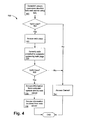
- FIG. 4 is flow chart illustrating a representative embodiment of a method 150 of the present invention.
- the method begins once a user has keyed in his/her user information, such as user name and password, into the transmission device. This could also be accomplished with, for example, a fingerprint scan or a key card or some other form of security credentials that contains the user information.
- a communication link between device and web server 60 (FIG. 3) is first established , step 151, using a security protocol.
- the SSL protocol is utilized, although other protocols could be used such as TLS (FIG. 2).
- TLS TLS
- a web server resource 60 can return an associated response, a page or programmatic response, (step 153). If the user is not valid, access is denied and the process terminates (step 157).
- a web resource whether a page of content or a programmatic response, is made accessible to any one of the transmission devices (21,27,37). In fact, multiple transmission devices can perform these steps simultaneously, assuming the web server can support the multiple communications.
- a web page may not be the only utility available at the web server to provide secure communication. Any response generating web resource could be utilized such as a servlet, a CGI script, an ASP script, or a VB script.
- the user name and password can be provided to a computer system (or computing device) by programming calls made from the web page (step 154).
- the web server may also contain the functionality of verifying the user name and password and creating an associated security context (step 155).
- a security context that is applicable to the computer system hosting the web server and all of the computer system's networked peers.
- the user name and password (or security context) can then be verified by the computer system (step 155). This step can be eliminated in other embodiments so as to eliminate the redundancy.
- the computer system can then retrieve information from its databases and securely send the information back to the web server (step 156). From there, this information can be encrypted and passed along the secure communication link to the transmission device (step 158).
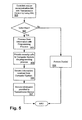
- FIG. 5 is flow chart illustrating the method of FIG. 4 seen from the perspective of the web server 60.
- the method begins when a request to establish a secure communication link 50 is received from a transmission device (21,27,37).
- the secure communication link 50 is established by using a security protocol (step 501).
- the SSL protocol is utilized, although other protocols could be used such as TLS (FIG. 2).
- the user is then authenticated (step 502).
- a programming process residing on the web server 60 can process the user information to set up communication with the computer system (step 503). This may require deriving a security context or perhaps translating the user name and password into language the programming process and the computer system understand.
- the preferred programming process is a web page. If the user is not valid, access is denied and the process terminates (step 504).
- the user name and password can be provided to a computer system (or computing device) by programming calls made from the web page (step 505). Retrieved information from the computer system can then be received by the web server 60 (step 506). From there, this information can be encrypted and passed along the secure communication link to the transmission device (step 507).
Landscapes
- Engineering & Computer Science (AREA)
- Computer Security & Cryptography (AREA)
- Computer Hardware Design (AREA)
- Computing Systems (AREA)
- General Engineering & Computer Science (AREA)
- Computer Networks & Wireless Communication (AREA)
- Signal Processing (AREA)
- Computer And Data Communications (AREA)
- Data Exchanges In Wide-Area Networks (AREA)
Abstract
Description
Claims (10)
- A method for establishing secure communication by a device (21, 37, 27), the method comprising:establishing a secure communication link (50) between the device and a web server (60) by utilizing a security protocol;accessing a programming process located on the web server (60);sending security information to the programming process, wherein the security information is provided to a first computer system (70, 80, 90) by programming calls made from the programming process, wherein the first computer system (70, 80, 90) operates by use of an operating system; andreceiving a response from the first computer system (70, 80, 90) via the programming process.
- The method of claim 1, wherein the device (21, 37, 27) lacks an ability to directly and securely communicate with the operating system of the first computer system (70, 80, 90).
- The method of claim 1, wherein the device (21, 37, 27) is a multi-functional peripheral (MFP) configured to scan a document and convert the document to digital information, the MFP being further configured to send the digital information over a network.
- The method of claim 1, wherein the communication link (50) is established and secured by the device (21, 37, 27) utilizing the Secure Sockets Layer (SSL) protocol.
- The method of claim 1, wherein the programming process is at least one of: a web page, a servlet, and a common gateway interface (CGI) script.
- A transmission device (21, 37, 27) configured to scan a document and convert the document to digital information, the device (21, 37, 27) being configured to send the digital information over a network, the transmission device (21, 37, 27) comprising:means for establishing a secure communication link (50) between the device and a web server (60) by utilizing a security protocol;means for accessing a programming process located on the web server (60);means for sending security information to the programming process, wherein the security information is provided to a first computer system (70, 80, 90) by programming calls made from the programming process, wherein the first computer system (70, 80, 90) operates by use of an operating system; andmeans for receiving a response from the computer system (70, 80, 90) via the programming process.
- The transmission device (21, 37, 27) of claim 6, wherein the device (21, 37, 27) lacks an ability to directly and securely communicate with the operating system that operates the first computer system (70, 80, 90).
- The transmission device (21, 37, 27) of claim 6, wherein the communication link (50) is established and secured by utilizing the Secure Sockets Layer (SSL) protocol.
- A secure communication system configured to gain access to information in at least a first computer system (70, 80, 90), wherein the communication system comprises:a web server (60), the web server (60) is configured to:store a file containing programming language for a programming process;securely communicate with at least the first computer system (70, 80, 90) by means of programming calls made from the programming process; andcommunicate with a transmission device (21, 37, 27) via a secure communication link (50) that utilizes a security protocol, wherein the transmission device (21, 37, 27) lacks an ability to directly and securely communicate with the operating system that operates the first computer system (70, 80, 90), therefore facilitating communication between the transmission device (21, 37, 27) and at least the first computer system (70, 80, 90) in order to gain access to the information.
- The system of claim 9, wherein the communication link (50) is secured by utilizing the Secure Sockets Layer (SSL) protocol.
Applications Claiming Priority (2)
| Application Number | Priority Date | Filing Date | Title |
|---|---|---|---|
| US95602 | 2002-03-11 | ||
| US10/095,602 US20030172304A1 (en) | 2002-03-11 | 2002-03-11 | Secure communication via a web server |
Publications (2)
| Publication Number | Publication Date |
|---|---|
| EP1347616A2 true EP1347616A2 (en) | 2003-09-24 |
| EP1347616A3 EP1347616A3 (en) | 2004-01-28 |
Family
ID=27788255
Family Applications (1)
| Application Number | Title | Priority Date | Filing Date |
|---|---|---|---|
| EP03251010A Withdrawn EP1347616A3 (en) | 2002-03-11 | 2003-02-19 | Secure communication via a web server |
Country Status (2)
| Country | Link |
|---|---|
| US (1) | US20030172304A1 (en) |
| EP (1) | EP1347616A3 (en) |
Families Citing this family (8)
| Publication number | Priority date | Publication date | Assignee | Title |
|---|---|---|---|---|
| US7571464B2 (en) * | 2004-08-27 | 2009-08-04 | International Business Machines Corporation | Secure bidirectional cross-system communications framework |
| US7567364B2 (en) * | 2004-11-23 | 2009-07-28 | Xerox Corporation | Pull model network image scanning system |
| US20060168344A1 (en) * | 2004-12-01 | 2006-07-27 | Kabushiki Kaisha Toshiba | Address book information sharing system and method thereof |
| US20070283446A1 (en) * | 2006-06-05 | 2007-12-06 | Kabushiki Kaisha Toshiba | System and method for secure handling of scanned documents |
| US20090228962A1 (en) * | 2008-03-06 | 2009-09-10 | Sharp Laboratories Of America, Inc. | Access control and access tracking for remote front panel |
| GB2459529A (en) * | 2008-04-28 | 2009-11-04 | Ice Organisation | Online transaction authentication using two servers |
| JP2010152815A (en) * | 2008-12-26 | 2010-07-08 | Seiko Epson Corp | Information processor, information processing system, and control method of information processor |
| US9026553B2 (en) * | 2012-11-29 | 2015-05-05 | Unisys Corporation | Data expanse viewer for database systems |
Family Cites Families (8)
| Publication number | Priority date | Publication date | Assignee | Title |
|---|---|---|---|---|
| AU7118898A (en) * | 1997-04-18 | 1998-11-13 | Centuple Communications, Incorporated | Facsimile interfacing device |
| US6301590B1 (en) * | 1997-08-11 | 2001-10-09 | Viador | Method and apparatus for formatting and displaying data from the internet |
| US5974566A (en) * | 1997-10-07 | 1999-10-26 | International Business Machines Corporation | Method and apparatus for providing persistent fault-tolerant proxy login to a web-based distributed file service |
| JP4383625B2 (en) * | 2000-03-16 | 2009-12-16 | キヤノン株式会社 | Distributed processing system and control method thereof |
| FR2810430B1 (en) * | 2000-06-14 | 2002-12-20 | Philippe Paget | SYSTEM AND METHOD FOR ELECTRONIC INFORMATION MANAGEMENT |
| US20020016718A1 (en) * | 2000-06-22 | 2002-02-07 | Rothschild Peter A. | Medical image management system and method |
| JP3640872B2 (en) * | 2000-08-04 | 2005-04-20 | パナソニック コミュニケーションズ株式会社 | Communication control device and communication control method |
| US7599992B2 (en) * | 2002-02-22 | 2009-10-06 | Uievolution, Inc. | Autonomous rendering of email attachments |
-
2002
- 2002-03-11 US US10/095,602 patent/US20030172304A1/en not_active Abandoned
-
2003
- 2003-02-19 EP EP03251010A patent/EP1347616A3/en not_active Withdrawn
Also Published As
| Publication number | Publication date |
|---|---|
| US20030172304A1 (en) | 2003-09-11 |
| EP1347616A3 (en) | 2004-01-28 |
Similar Documents
| Publication | Publication Date | Title |
|---|---|---|
| US6515988B1 (en) | Token-based document transactions | |
| AU747496B2 (en) | System and method for authentication of a user of a multi-function peripheral | |
| JP4208344B2 (en) | Printing system | |
| KR101614578B1 (en) | Information processing apparatus, control method thereof, storage medium, and image processing apparatus | |
| US7988050B2 (en) | System, method and apparatus for processing an embedded barcode | |
| US7375835B1 (en) | E-mail transmission of print-ready documents | |
| US20130027738A1 (en) | Network scanner for global document creation, transmission and management | |
| US20100091313A1 (en) | System, method and apparatus for processing an embedded barcode | |
| JP2004046811A (en) | Transmitter firewall | |
| US9516013B2 (en) | Communication apparatus, method of controlling the same and storage medium for transmitting image file to a network address | |
| US9710676B2 (en) | Data processing apparatus, information processing apparatus, and storage medium | |
| JP4814348B2 (en) | Image reading apparatus, server apparatus, and system | |
| US7761908B2 (en) | Network apparatus | |
| EP1347616A2 (en) | Secure communication via a web server | |
| EP1959373A2 (en) | Print management device and print management method | |
| JP4602947B2 (en) | Facsimile communication system and image processing apparatus | |
| AU764551B2 (en) | System and method for secure transmission of data clients | |
| US8179544B2 (en) | Image processing system, image processor and image processing program | |
| US20090070581A1 (en) | System and method for centralized user identification for networked document processing devices | |
| JP4983047B2 (en) | Electronic data storage device and program | |
| JP3873996B2 (en) | Network facsimile apparatus, information acquisition apparatus, and network system including them | |
| JP2004341986A (en) | Information storage system and information storage service method | |
| JP2009251636A (en) | Information distribution device | |
| JP2004046840A (en) | Electronic mail transmission method and system for printout document | |
| JP2000134250A (en) | Token-based document transaction system |
Legal Events
| Date | Code | Title | Description |
|---|---|---|---|
| PUAI | Public reference made under article 153(3) epc to a published international application that has entered the european phase |
Free format text: ORIGINAL CODE: 0009012 |
|
| AK | Designated contracting states |
Kind code of ref document: A2 Designated state(s): AT BE BG CH CY CZ DE DK EE ES FI FR GB GR HU IE IT LI LU MC NL PT SE SI SK TR |
|
| AX | Request for extension of the european patent |
Extension state: AL LT LV MK RO |
|
| PUAL | Search report despatched |
Free format text: ORIGINAL CODE: 0009013 |
|
| AK | Designated contracting states |
Kind code of ref document: A3 Designated state(s): AT BE BG CH CY CZ DE DK EE ES FI FR GB GR HU IE IT LI LU MC NL PT SE SI SK TR |
|
| AX | Request for extension of the european patent |
Extension state: AL LT LV MK RO |
|
| 17P | Request for examination filed |
Effective date: 20040705 |
|
| AKX | Designation fees paid |
Designated state(s): GB |
|
| 17Q | First examination report despatched |
Effective date: 20040913 |
|
| REG | Reference to a national code |
Ref country code: DE Ref legal event code: 8566 |
|
| STAA | Information on the status of an ep patent application or granted ep patent |
Free format text: STATUS: THE APPLICATION IS DEEMED TO BE WITHDRAWN |
|
| 18D | Application deemed to be withdrawn |
Effective date: 20050125 |