EP1347371A2 - Printer driver, printer and method of printing - Google Patents
Printer driver, printer and method of printing Download PDFInfo
- Publication number
- EP1347371A2 EP1347371A2 EP03251751A EP03251751A EP1347371A2 EP 1347371 A2 EP1347371 A2 EP 1347371A2 EP 03251751 A EP03251751 A EP 03251751A EP 03251751 A EP03251751 A EP 03251751A EP 1347371 A2 EP1347371 A2 EP 1347371A2
- Authority
- EP
- European Patent Office
- Prior art keywords
- prints
- printer
- printing
- sets
- Prior art date
- Legal status (The legal status is an assumption and is not a legal conclusion. Google has not performed a legal analysis and makes no representation as to the accuracy of the status listed.)
- Withdrawn
Links
Images



Classifications
-
- G—PHYSICS
- G06—COMPUTING OR CALCULATING; COUNTING
- G06F—ELECTRIC DIGITAL DATA PROCESSING
- G06F3/00—Input arrangements for transferring data to be processed into a form capable of being handled by the computer; Output arrangements for transferring data from processing unit to output unit, e.g. interface arrangements
- G06F3/12—Digital output to print unit, e.g. line printer, chain printer
- G06F3/1201—Dedicated interfaces to print systems
- G06F3/1202—Dedicated interfaces to print systems specifically adapted to achieve a particular effect
- G06F3/1222—Increasing security of the print job
-
- G—PHYSICS
- G06—COMPUTING OR CALCULATING; COUNTING
- G06F—ELECTRIC DIGITAL DATA PROCESSING
- G06F3/00—Input arrangements for transferring data to be processed into a form capable of being handled by the computer; Output arrangements for transferring data from processing unit to output unit, e.g. interface arrangements
- G06F3/12—Digital output to print unit, e.g. line printer, chain printer
- G06F3/1201—Dedicated interfaces to print systems
- G06F3/1202—Dedicated interfaces to print systems specifically adapted to achieve a particular effect
- G06F3/121—Facilitating exception or error detection and recovery, e.g. fault, media or consumables depleted
-
- G—PHYSICS
- G06—COMPUTING OR CALCULATING; COUNTING
- G06F—ELECTRIC DIGITAL DATA PROCESSING
- G06F3/00—Input arrangements for transferring data to be processed into a form capable of being handled by the computer; Output arrangements for transferring data from processing unit to output unit, e.g. interface arrangements
- G06F3/12—Digital output to print unit, e.g. line printer, chain printer
- G06F3/1201—Dedicated interfaces to print systems
- G06F3/1223—Dedicated interfaces to print systems specifically adapted to use a particular technique
- G06F3/1237—Print job management
- G06F3/126—Job scheduling, e.g. queuing, determine appropriate device
-
- G—PHYSICS
- G06—COMPUTING OR CALCULATING; COUNTING
- G06F—ELECTRIC DIGITAL DATA PROCESSING
- G06F3/00—Input arrangements for transferring data to be processed into a form capable of being handled by the computer; Output arrangements for transferring data from processing unit to output unit, e.g. interface arrangements
- G06F3/12—Digital output to print unit, e.g. line printer, chain printer
- G06F3/1201—Dedicated interfaces to print systems
- G06F3/1278—Dedicated interfaces to print systems specifically adapted to adopt a particular infrastructure
- G06F3/1285—Remote printer device, e.g. being remote from client or server
-
- G—PHYSICS
- G06—COMPUTING OR CALCULATING; COUNTING
- G06F—ELECTRIC DIGITAL DATA PROCESSING
- G06F3/00—Input arrangements for transferring data to be processed into a form capable of being handled by the computer; Output arrangements for transferring data from processing unit to output unit, e.g. interface arrangements
- G06F3/12—Digital output to print unit, e.g. line printer, chain printer
- G06F3/1201—Dedicated interfaces to print systems
- G06F3/1223—Dedicated interfaces to print systems specifically adapted to use a particular technique
- G06F3/1237—Print job management
- G06F3/126—Job scheduling, e.g. queuing, determine appropriate device
- G06F3/1264—Job scheduling, e.g. queuing, determine appropriate device by assigning post-processing resources
Definitions
- the present invention relates to a printer driver, a printer, and a method of printing in which a printer can print a plurality of sets of a document.
- This conventional technology has, however, has a disadvantage that the multi-sorter or the like needs to be attached to the printer. It is possible, however, to sort the prints without provision of the multy-sorter by providing a sort printing function to a printer driver. However when the sort-printing function is employed, the printer regards the entire prints sorted according to the sets as one set of prints. For this reason, if a finishing function is combined with the printing function, inappropriate results are obtained. For example, if a staple function is combined with the printing function, then by mistake all the sets may be stapled together.
- the printer driver contains instructions, which when executed on a computer, causes the computer to realize when a plurality of sets of prints of a document are to be made by a printer, transferring a start command that instructs start of printing to a printer; storing drawing data on an image to be printed by the printer in an external storage unit; creating page description language data based on the drawing data stored in the external storage unit; transferring the page description language data to the printer, and allowing the printer to print the page description language data; determining whether printing of one set of prints is over; and transferring an end command that instructs end of the printing to the printer when it is determined at the determining that printing of one set of prints is over.
- the printer driver contains instructions, which when executed on a computer, causes the computer to realize when a plurality of sets of prints of a document are to be made by a printer, transferring a start command that instructs start of printing to a printer; storing drawing data on an image to be printed by the printer in an external storage unit; creating page description language data based on the drawing data stored in the external storage unit; determining whether to add different pieces of information to each set of prints; setting the information to be added if it is determined at the determining to add the different pieces of information to each set of prints, and adding the information to the page description language data as a character string; transferring the page description language data to the printer, and allowing the printer to print the page description language data; determining whether printing of one set of prints is over; and transferring an end command that instructs end of the printing to the printer when it is determined at the determining that printing of one set of prints is over.
- the printer comprises a storage unit that temporarily stores page description language data; an image creation unit that creates drawing data based on the page description language data stored in the storage unit; a printer engine that prints image data on a printing medium based on the drawing data; and a print processor that transfers a start command that instructs start of printing for each set of prints to the printer engine to thereby allow the printer engine to print the drawing data if a plurality of sets of prints are to be made, and that transfers an end command that instructs end of the printing for each set of prints to the printer engine when printing of one set of prints is over.
- the printer comprises a storage unit that temporarily stores page description language data; an image creation unit that creates drawing data based on the page description language data stored in the storage unit; a printer engine that prints image data on a printing medium based on the drawing data; an image addition unit that sets different pieces of information to be added to a plurality of sets of prints and adds the information to the drawing data as a character string if the different pieces of information are to be added to the sets of prints, respectively in printing the sets of prints; a print processor that transfers a start command that instructs start of printing for each set of prints to the printer engine to thereby allow the printer engine to print the drawing data to which the different pieces of information have been added if a plurality of sets of prints are to be made, and that transfers an end command that instructs end of the printing for each set of prints to the printer engine when printing of one set of prints is over.
- the method of printing comprises creating drawing data to be transferred to a printer engine based on page description language data input from a host apparatus; when a plurality of sets of prints of a document are to be printing, transferring a start command that instructs start of printing of one set of print to the printer engine to thereby allow the printer engine to print the drawing data created; and when the printing of the one set of prints is over, transferring an end command that instructs end of the printing to the printer engine.
- the method of printing comprises creating drawing data to be transferred to a printer engine based on page description language data input from a host apparatus; when a plurality of sets of prints of a document are to be printing and when different pieces of information are to be added to each of the sets of prints, setting the information that is to be added, and adding the information to the drawing data; transferring a start command that instructs start of printing of one set of print to the printer engine to thereby allow the printer engine to print the drawing data created; and when the printing of the one set of prints is over, transferring an end command that instructs end of the printing to the printer engine.
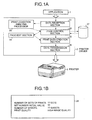
- Fig. 1A and 1B are explanatory views that show the configuration of a printer driver in the first embodiment according to the present invention.
- This printer driver is characterized in that, when a plurality of sets of prints are to be made, the print driver issues a print start command and a print end command at the start of printing each set of prints and at the end thereof, respectively. As a result, according to this print driver, it becomes possible to separate printing of each set.
- This printer driver is also characterized in that it creates pieces of page description language (PDL) data, to which different pieces of information are added according to sets of prints, from drawing data. This function makes it possible to add different pieces of information to each set. It is noted that this printer driver is realized as a software, which is a computer program.
- PDL page description language
- An application 1 shown in Fig. 1A outputs print-related data to a printer driver 2.
- the printer driver 2 is comprised of a data reception section 21 that receives the data from the application 1, a print condition analysis processor 22 that analyzes print conditions such as the number of sets of prints, whether to add set numbers, and a set number initial value, a page control section 23 that controls a disk apparatus 27 serving as an external storage unit arranged outside of the printer driver 2 to store the drawing data, a page edit section 24, a print data creation section 25 that creates the PDL data from the drawing data stored in the disk apparatus 27, and a data transmission section 26 that transmits the PDL data thus created to a printer 3.
- the disk apparatus 27 that serves as an external storage unit may be included in a host computer on which the printer driver 2 is mounted. Alternatively, the disk apparatus 27 may be provided in the other apparatus such as a database server, and the page control section 23 may access to the disk apparatus 27 by communication.
- the external storage unit not only the disk apparatus 27, such as a hard disk apparatus or a magneto-optical disk apparatus, but also a nonvolatile memory such as a flash memory, a read-only storage medium such as a compact disk read only memory (CD-ROM), a volatile memory such as a random access memory (RAM), or a combination thereof can be employed.
- Fig. 2 is a flowchart of the processes performed by the printer driver according to the first embodiment. If prints are to be made from the application 1, a user first sets the number of sets of prints, whether to add set numbers, a set number initial value, the number of sheets, print quality, and the other print information using a printer driver user interface 28 (see Fig. 1B) provided in this printer driver 2.
- a print start command is fed to the printer driver 2, whereby the printer driver 2 starts a print processing.
- the printer driver 2 acquires respective set values related to set printing, i.e., "the number of sets of prints", "whether to add set numbers", and "the set number initial value” from the print conditions through the data reception section 21 (at step S101).
- the printer driver 2 transfers a job start command that instructs the start of printing to the printer 3 through the data transmission section 26 (at step S108).
- the page control section 23 stores drawing data corresponding to one page in the disk apparatus 27 (at step S109), and the print data creation section 25 creates the PDL data from the stored drawing data (at step S110).
- the page edit section 24 adds this set number L to the PDL data as a character string (at step S113). It is noted that this character string is added not as numerical data but as character data (this also applies hereafter). Besides the set numbers, graphics, designs, symbols, or the other information such as distribution destination information may be added to the print pages of the respective sets of prints (this also applies hereafter). The addition method will be explained later.
- the data transmission section 26 transmits the PDL data to the printer 3 (at step S114).
- the data transmission section 26 transmits a job start command to instruct the start of the job to the printer 3 (at step S121).
- the print data creation section 25 creates PDL data based on the already stored drawing data (at step S122).
- the page edit section 24 adds the set number L to the PDL data as a character string (at step S125).
- the printer driver 2 determines whether the variable N that indicates the number of sets of prints reaches the designated number of sets of prints M set at the step S102. If it is determined that the variable N has not still reached M ("No" at step S118), the printer driver 2 repeats the processing procedures starting at the step S119. If the printer drive 2 determines that the variable N reaches M ("Yes" at step S118), the data transmission section 26 transmits an all-job end command instructing the end of all jobs to the printer 3. In response to this all-job end command, the printer driver 2 deletes the drawing data stored in the disk apparatus 27 from the disk apparatus 27, and finishes all processing procedures (at step S130).
- the print jobs are separated according to the sets of prints using the job start command at the step S108 or S121 and the job end command at the step S120. Since different pieces of information can be added to the pieces of PDL data on the sets of prints in the jobs for the respective sets of prints, it is possible to add different pieces of information (that is, the set numbers) to the respective sets of prints. In other words, since the set number, graphics, a character or character string can be printed on each set, it is possible to prevent theft of the printed material.
- the sets of prints can be sorted using the job start command and the job end command. Further, based on the job end command, each separated set of prints can be subjected to a finishing processing such as, for example, a staple processing in a normal manner. Also, since a number of sets to be printed can be set before starting the printing, it is possible to easily increase or decrease the number of sets to be printed.
- this printer driver 2 it is possible to perform sort-printing without the need of adding a storage unit such as a hard disk to the printer.
- this printer driver 2 it is possible to respectively add different pieces of information to a plurality of sets of prints, regardless of the type of the printer 3. Consequently, even if different printers are switched over in a network in which a plurality of computers, a plurality of printers and the like are connected to one another, it is possible to easily add different pieces of information to the sets of prints, respectively.
- the printer driver 2 may be intended to implement a part of the functions explained above, or may be intended to implement the functions in combination with a program already recorded on a computer system.
- This "computer system” used herein involves not only a personal computer, a workstation, a server and the like but also hardware such as an Operating System (OS) and peripherals.
- OS Operating System
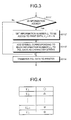
- Fig. 3 is a flowchart that shows a part of the processes performed by the printer driver that is a modification of the same in the first embodiment.
- the printer driver in the modification has almost the same processing functions as those of the printer driver 2 in the first embodiment except that information other than the set number is added to each set of prints. Since the other processing functions of this printer driver are the same as those of the printer driver 2, they will not be explained herein. In the following explanation, an example of adding different symbols to the respective sets of prints in place of the set numbers will be explained.
- Fig. 4 is an explanatory view that shows one example of the relationship between an information number L' n and a symbol added to each set of prints.
- different symbols added to sets of prints correspond to information numbers L' 1 to L' n (where n is a natural number), respectively.
- L' n is a natural number
- the relationship between each graphic and the information number L' n is stored in advance, as a table, in the disk apparatus 27 that serves as the external storage unit or in the other storage unit.
- the printer driver adds a symbol corresponding to each information number L' n to the PDL data as a character string (at step S113'). Through this process, it is possible to print different symbols, characters or graphics other than the set numbers according to the sets of prints. Since the steps after the step S113' and those before the step S111' are the same as those in the first embodiment (see Fig. 2), they will not be explained herein to avoid simple repetition of explanation.
- Fig. 5 is an explanatory view that shows the configuration of a printer in a second embodiment according to the present invention.
- This printer 5 is as follows. If a plurality of sets of prints are to be made, a print start command and a print end command are issued at the start of printing each set of prints and at the end thereof, respectively, thereby making it possible to separate printing according to sets.
- This printer 5 is also as follows. Pieces of PDL data to which different pieces of information are added according to sets of prints is created from drawing data, thereby making sets of prints while adding different pieces of information thereto, respectively.
- a host computer 6 outputs PDL data to a printer controller 30.
- the printer controller 30 consists of a PDL data reception section 31 that receives the PDL data from the host computer 6, a print processor 32 that analyzes print conditions such as the number of sets of prints, whether to add set numbers, and a set number initial value, and that controls a page control section 33 and the image addition section 34, the page control section 33 that controls a disk apparatus 37 serving as a storage unit to store the PDL data, an image addition section 34 that adds different pieces of information to the respective sets of prints in accordance with a command, an image creation section 35 that creates drawing data from the PDL data, an engine Interface (I/F) 36 that transmits the drawing data thus created to a printer engine 38, an input unit 39, such as a keyboard, through which a user inputs print information to the host computer 6, and the like.
- I/F engine Interface
- printer controller 30, the print processor 32 that constitutes the printer controller 30 and the like may be realized by dedicated hardware.
- this printer controller 30 and the like may consist of a memory and a CPU, and the functions of the printer controller 30 and the like may be implemented by loading a program for implementing the functions to the memory and executing them.
- the storage unit not only the disk apparatus 37, such as a hard disk apparatus or a magneto-optical disk apparatus, but also a nonvolatile memory such as a flash memory, a read-only storage medium such as a CD-ROM, a volatile memory such as a RAM, or a combination thereof can be used.
- a nonvolatile memory such as a flash memory
- a read-only storage medium such as a CD-ROM
- a volatile memory such as a RAM
- Fig. 6 is a flowchart that shows the processing procedures of the printer driver in the second embodiment. The processing procedures of the printer in this embodiment will be explained with reference to Fig. 6. If prints are to be made from the host computer 6, a user first sets the number of sets of prints, whether to add set numbers, a set number initial value, the number of sheets, print quality, and the other print information using the input unit 39 provided in this host computer 6.
- PDL data is fed from the host computer 6 to the PDL data reception section 31 of the printer controller 30, whereby the printer controller 30 starts a print processing.
- the printer controller 30 acquires respective set values related to set printing, i.e., "the number of sets of prints", "whether to add set numbers", and "the set number initial value” from the print conditions (at step S201).
- the print processor 32 transfers a print start command that instructs the start of printing to the printer engine 38 through the engine I/F 36 (at step S208).
- the page control section 33 stores drawing data corresponding to one page in the disk apparatus 27 (at step S209), and the image creation section 35 creates drawing data from the stored PDL data (at step S210).
- the print processor 32 determines whether the print data processing is finished up to the predetermined number of print pages P (at step S216). If it is determined that the processing is not finished up to the predetermined number of print pages P ("No" at step S216), the print processor 32 repeatedly executes the processing procedures starting at the step S209.
- the print processor 32 transfers a print start command to instruct the start of the job to the printer engine 38 (at step S221).
- the print processor 32 creates drawing data based on the already stored PDL data (at step S222).
- the print processor 32 determines whether the variable N that indicates the number of sets of prints reaches the designated number of sets of prints M set at the step S202. If it is determined that the variable N has not still reached M ("No" at step S218), the print processor 32 repeats the processing procedures starting at the step S219. If it is determined that the variable N has reached M ("Yes" at step S218), the print processor 32 transmits an all-job end command instructing the end of all jobs to the printer engine 38 and ends the printing (at step S229). In response to this all-job end command, the print processor 32 deletes the drawing data stored in the disk apparatus 37 from the disk apparatus 27, and finishes all processing procedures (at step S230).
- the print jobs are separated according to the sets of prints using the print start command at the step S208 or S221 and the print end command at the step S220. Since different pieces of information can be added to the pieces of drawing data on the sets of prints in the jobs for the respective sets of prints, it is possible to add different pieces of information (set numbers in this embodiment) to the respective sets of prints.
- the sets of prints can be sorted using the print start command and the print end command. Further, based on the print end command, each separated set of prints can be subjected to a finishing processing such as, for example, a staple processing in a normal manner.
- a start command to instruct the start of printing for each set of prints and an end command to instruct the end of printing for each set of prints are issued if a plurality of sets of prints are to be made by the printer. It is, therefore, possible to separate a print job according to each set of prints, and to thereby normally sort a plurality of sets of prints. In addition, even if a finishing function such as a staple function is used, it is possible to normally execute a post-processing such as a staple processing for each set of prints. Further, the functions of this printer driver can be exhibited by installing, as a software, the printer driver to a computer or the like. It is, therefore, possible to sort and finish the prints without the need of adding a storage device such as a hard disk to the printer side.
- the print job is separated according to each set of print. It is, therefore, possible to normally sort a plurality of sets of prints, and to normally execute a post-processing such as a staple processing for each set of prints.
- this printer driver adds, as character strings, different pieces of information to the sets of prints, respectively. It is, therefore, possible to make prints, without the provision of a separate mechanism to the printer, while adding thereto set numbers (third aspect), graphics, a character or a character string, and the other information, and to thereby prevent the illegal leakage of confidential documents.
- each of the set numbers that designates the number of each set of prints is set before the start of printing. It is, therefore, possible to add the set numbers and make added sets of prints without the provision of a separate mechanism to the printer.
- a start command to instruct the start of printing for each set of prints and an end command to instruct the end of printing for each set of prints are issued. It is, therefore, possible to separate a print job according to each set of prints, and to thereby normally sort a plurality of sets of prints. Even if a finishing function such as a staple function is used, it is possible to normally execute a post-processing such as a staple processing for each set of prints.
- the print job is separated according to each set of print. It is, therefore, possible to normally sort a plurality of sets of prints, and to normally execute a post-processing such as a staple processing for each set of prints.
- this printer adds, as character strings, pieces of information different according to the respective sets of prints to drawing data related to the printing, respectively. It is thereby possible to make prints, without the provision of a separate mechanism to the printer, while adding thereto set numbers different according to the sets of prints (seventh aspect), graphics, a character or a character string, and the other information, and to thereby prevent the illegal leakage of confidential documents.
- each of the set numbers that designates the number of each set of prints is set before the start of printing. It is, therefore, possible to add the number of sets and make added sets of prints without the provision of a separate mechanism to the printer.
- a start command to instruct the start of printing for each set of prints and an end command to instruct the end of printing for each set of prints are issued. It is thereby possible to normally sort a plurality of sets of prints for the printer. In addition, even if a finishing function such as a staple function is used, it is possible to normally execute a post-processing such as a staple processing for each set of prints.
- this printer controller adds, as character strings, pieces of information different according to the sets of prints, respectively to the drawing data related to the printing. It is, therefore, possible to make prints, without the provision of a separate mechanism to the printer, while adding thereto set numbers different according to the sets of prints (eleventh aspect), graphics, a character or a character string, and the other information, and to thereby prevent the illegal leakage of confidential documents.
- each of the set numbers that designates the number of each set of prints is set before the start of printing. It is, therefore, possible to add the number of sets and make added sets of prints without the provision of a separate mechanism to the printer.
Landscapes
- Engineering & Computer Science (AREA)
- Theoretical Computer Science (AREA)
- Human Computer Interaction (AREA)
- Physics & Mathematics (AREA)
- General Engineering & Computer Science (AREA)
- General Physics & Mathematics (AREA)
- Computer Security & Cryptography (AREA)
- Accessory Devices And Overall Control Thereof (AREA)
- Record Information Processing For Printing (AREA)
Abstract
Description
Claims (12)
- A printer driver comprising code means that, when executed on a computer system, instruct the computer system to perform the steps of:when a plurality of sets of prints of a document are to be made by a printer, transferring a start command that instructs start of printing to a printer;storing drawing data of an image to be printed by the printer in an external storage unit;creating page description language data based on the drawing data stored in the external storage unit;transferring the page description language data to the printer, and allowing the printer to print the page description language data;determining whether printing of one set of prints is over; andtransferring an end command that instructs end of the printing to the printer when it is determined at the determining that printing of one set of prints is over.
- A printer driver comprising code means that, when executed on a computer system, instruct the computer system to perform the steps of:when a plurality of sets of prints of a document are to be made by a printer, transferring a start command that instructs start of printing to a printer;storing drawing data of an image to be printed by the printer in an external storage unit;creating page description language data based on the drawing data stored in the external storage unit;determining whether to add different pieces of information to each set of prints;setting the information to be added if it is determined at the determining to add the different pieces of information to each set of prints, and adding the information to the page description language data as a character string;transferring the page description language data to the printer, and allowing the printer to print the page description language data;determining whether printing of one set of prints is over; andtransferring an end command that instructs end of the printing to the printer when it is determined at the determining that printing of one set of prints is over.
- The printer driver according to claim 2, wherein the different pieces of information are set numbers.
- The printer driver according to claim 3, further comprising setting the set numbers before transferring the start command to the printer.
- A printer comprising:a storage unit that temporarily stores page description language data;an image creation unit that creates drawing data based on the page description language data stored in the storage unit;a printer engine that prints image data on a printing medium based on the drawing data; anda print processor that transfers a start command that instructs start of printing for each set of prints to the printer engine to thereby allow the printer engine to print the drawing data if a plurality of sets of prints are to be made, and that transfers an end command that instructs end of the printing for each set of prints to the printer engine when printing of one set of prints is over.
- A printer comprising:a storage unit that temporarily stores page description language data;an image creation unit that creates drawing data based on the page description language data stored in the storage unit;a printer engine that prints image data on a printing medium based on the drawing data;an image addition unit that sets different pieces of information to be added to a plurality of sets of prints and adds the information to the drawing data as a character string if the different pieces of information are to be added to the sets of prints, respectively in printing the sets of prints;a print processor that transfers a start command that instructs start of printing for each set of prints to the printer engine to thereby allow the printer engine to print the drawing data to which the different pieces of information have been added if a plurality of sets of prints are to be made, and that transfers an end command that instructs end of the printing for each set of prints to the printer engine when printing of one set of prints is over.
- The printer according to claim 6, wherein the different pieces of information are set numbers.
- The printer according to claim 7, wherein the print processor sets the set number before transferring the start command to the printer engine.
- A method of printing comprising:creating drawing data to be transferred to a printer engine based on page description language data input from a host apparatus;when a plurality of sets of prints of a document are to be printing, transferring a start command that instructs start of printing of one set of print to the printer engine to thereby allow the printer engine to print the drawing data created; andwhen the printing of the one set of prints is over, transferring an end command that instructs end of the printing to the printer engine.
- A method of printing comprising:creating drawing data to be transferred to a printer engine based on page description language data input from a host apparatus;when a plurality of sets of prints of a document are to be printing and when different pieces of information are to be added to each of the sets of prints, setting the information that is to be added, and adding the information to the drawing data;transferring a start command that instructs start of printing of one set of print to the printer engine to thereby allow the printer engine to print the drawing data created; andwhen the printing of the one set of prints is over, transferring an end command that instructs end of the printing to the printer engine.
- The method according to claim 10, wherein the different pieces of information are set numbers.
- The method according to claim 11, further comprising setting the set numbers before transferring the start command to the printer engine.
Applications Claiming Priority (4)
| Application Number | Priority Date | Filing Date | Title |
|---|---|---|---|
| JP2002081786 | 2002-03-22 | ||
| JP2002081786 | 2002-03-22 | ||
| JP2003061968 | 2003-03-07 | ||
| JP2003061968A JP4080919B2 (en) | 2002-03-22 | 2003-03-07 | Printer driver, printer, and printing method |
Publications (2)
| Publication Number | Publication Date |
|---|---|
| EP1347371A2 true EP1347371A2 (en) | 2003-09-24 |
| EP1347371A3 EP1347371A3 (en) | 2007-12-05 |
Family
ID=27791051
Family Applications (1)
| Application Number | Title | Priority Date | Filing Date |
|---|---|---|---|
| EP03251751A Withdrawn EP1347371A3 (en) | 2002-03-22 | 2003-03-20 | Printer driver, printer and method of printing |
Country Status (3)
| Country | Link |
|---|---|
| US (1) | US20030214669A1 (en) |
| EP (1) | EP1347371A3 (en) |
| JP (1) | JP4080919B2 (en) |
Families Citing this family (20)
| Publication number | Priority date | Publication date | Assignee | Title |
|---|---|---|---|---|
| US7133563B2 (en) | 2002-10-31 | 2006-11-07 | Microsoft Corporation | Passive embedded interaction code |
| US7116840B2 (en) | 2002-10-31 | 2006-10-03 | Microsoft Corporation | Decoding and error correction in 2-D arrays |
| US7583842B2 (en) | 2004-01-06 | 2009-09-01 | Microsoft Corporation | Enhanced approach of m-array decoding and error correction |
| US7263224B2 (en) | 2004-01-16 | 2007-08-28 | Microsoft Corporation | Strokes localization by m-array decoding and fast image matching |
| JP4557593B2 (en) * | 2004-04-16 | 2010-10-06 | キヤノン株式会社 | Image forming apparatus, image forming method, and computer program |
| US7607076B2 (en) | 2005-02-18 | 2009-10-20 | Microsoft Corporation | Embedded interaction code document |
| US7826074B1 (en) * | 2005-02-25 | 2010-11-02 | Microsoft Corporation | Fast embedded interaction code printing with custom postscript commands |
| US7599560B2 (en) | 2005-04-22 | 2009-10-06 | Microsoft Corporation | Embedded interaction code recognition |
| US7421439B2 (en) | 2005-04-22 | 2008-09-02 | Microsoft Corporation | Global metadata embedding and decoding |
| US7400777B2 (en) | 2005-05-25 | 2008-07-15 | Microsoft Corporation | Preprocessing for information pattern analysis |
| US7729539B2 (en) | 2005-05-31 | 2010-06-01 | Microsoft Corporation | Fast error-correcting of embedded interaction codes |
| US7580576B2 (en) | 2005-06-02 | 2009-08-25 | Microsoft Corporation | Stroke localization and binding to electronic document |
| JP2007013580A (en) * | 2005-06-30 | 2007-01-18 | Sharp Corp | Image processing device |
| US7619607B2 (en) | 2005-06-30 | 2009-11-17 | Microsoft Corporation | Embedding a pattern design onto a liquid crystal display |
| US7622182B2 (en) | 2005-08-17 | 2009-11-24 | Microsoft Corporation | Embedded interaction code enabled display |
| US7817816B2 (en) | 2005-08-17 | 2010-10-19 | Microsoft Corporation | Embedded interaction code enabled surface type identification |
| JP2007050649A (en) * | 2005-08-19 | 2007-03-01 | Konica Minolta Business Technologies Inc | Directly printable imaging device and control program |
| JP5043976B2 (en) * | 2010-04-02 | 2012-10-10 | キヤノン株式会社 | Image forming apparatus and image forming method |
| JP6468102B2 (en) | 2015-07-14 | 2019-02-13 | 株式会社リコー | Information processing apparatus, printing system, information processing method, printing method, and program |
| JP2024048633A (en) * | 2022-09-28 | 2024-04-09 | 理想科学工業株式会社 | Print data generating device and program |
Family Cites Families (5)
| Publication number | Priority date | Publication date | Assignee | Title |
|---|---|---|---|---|
| US5615314A (en) * | 1994-08-30 | 1997-03-25 | Management Graphics, Inc. | Interface for providing rasterized data to an imaging device |
| US6392758B2 (en) * | 1997-10-09 | 2002-05-21 | Hewlett-Packard Company | Wait-band alleviation via host-PC buffering |
| JP3952558B2 (en) * | 1997-11-05 | 2007-08-01 | ブラザー工業株式会社 | Printing system, printer and printing method |
| US6724494B1 (en) * | 1999-11-03 | 2004-04-20 | Toshiba Tech Corp | Error management for a tandem printing system |
| JP4817563B2 (en) * | 2000-12-20 | 2011-11-16 | キヤノン株式会社 | Information processing apparatus, data processing method of the apparatus, data processing program, and storage medium storing the program |
-
2003
- 2003-03-07 JP JP2003061968A patent/JP4080919B2/en not_active Expired - Fee Related
- 2003-03-20 EP EP03251751A patent/EP1347371A3/en not_active Withdrawn
- 2003-03-21 US US10/393,861 patent/US20030214669A1/en not_active Abandoned
Also Published As
| Publication number | Publication date |
|---|---|
| EP1347371A3 (en) | 2007-12-05 |
| JP2004005464A (en) | 2004-01-08 |
| JP4080919B2 (en) | 2008-04-23 |
| US20030214669A1 (en) | 2003-11-20 |
Similar Documents
| Publication | Publication Date | Title |
|---|---|---|
| EP1347371A2 (en) | Printer driver, printer and method of printing | |
| JP5189814B2 (en) | Print shop management method and apparatus for printing using a plurality of apparatuses | |
| US7464335B2 (en) | Information processing apparatus, information processing method, and storage medium storing computer-readable program | |
| US7161711B2 (en) | Information processing apparatus and method for creating print data and storage medium | |
| EP1278117B1 (en) | Printing control apparatus and display method therefor | |
| JP4834256B2 (en) | Information processing apparatus, print data generation method, print control program, and storage medium | |
| JP5114147B2 (en) | How to print mixed color and black and white documents and recover from interruptions | |
| US7301656B1 (en) | Information processing apparatus, information processing method, and storage medium storing computer-readable program therein | |
| EP0889389A2 (en) | Printing control apparatus and method | |
| JP2007272903A (en) | Print shop management method and apparatus for printing mixed color and black and white documents | |
| JP2004164105A (en) | Print control program | |
| EP2085872B1 (en) | Image forming apparatus, print control method and control program | |
| US20120069395A1 (en) | Image forming apparatus and job log management method | |
| JP4438034B2 (en) | Printing control apparatus, printing control method, and computer-readable recording medium | |
| JP2010165018A (en) | Image forming apparatus, job processing method, program, and storage medium | |
| JP5606062B2 (en) | Printing apparatus, printing apparatus control method, and program | |
| JP5435017B2 (en) | Variable printing system, image forming apparatus, and variable printing control program | |
| JPH11203077A (en) | Printing system and printer selection method | |
| EP1000761B1 (en) | Image forming apparatus having sheet feeding unit for insert sheets | |
| US20020067507A1 (en) | Information processing apparatus and print processing method | |
| US7746494B2 (en) | Data processing apparatus, data processing method, printer driver, print control apparatus, print control method, and printing system | |
| CN100418346C (en) | Image forming apparatus and information processing method | |
| JPH1170717A (en) | Print control apparatus and method | |
| JP2007164480A (en) | Printing system and printing method | |
| JPH09305584A (en) | Printer |
Legal Events
| Date | Code | Title | Description |
|---|---|---|---|
| PUAI | Public reference made under article 153(3) epc to a published international application that has entered the european phase |
Free format text: ORIGINAL CODE: 0009012 |
|
| 17P | Request for examination filed |
Effective date: 20030403 |
|
| AK | Designated contracting states |
Kind code of ref document: A2 Designated state(s): AT BE BG CH CY CZ DE DK EE ES FI FR GB GR HU IE IT LI LU MC NL PT RO SE SI SK TR |
|
| AX | Request for extension of the european patent |
Extension state: AL LT LV MK |
|
| PUAL | Search report despatched |
Free format text: ORIGINAL CODE: 0009013 |
|
| AK | Designated contracting states |
Kind code of ref document: A3 Designated state(s): AT BE BG CH CY CZ DE DK EE ES FI FR GB GR HU IE IT LI LU MC NL PT RO SE SI SK TR |
|
| AX | Request for extension of the european patent |
Extension state: AL LT LV MK |
|
| 17Q | First examination report despatched |
Effective date: 20080124 |
|
| RTI1 | Title (correction) |
Free format text: PRINT DRIVER |
|
| AKX | Designation fees paid |
Designated state(s): DE FR GB IT NL |
|
| STAA | Information on the status of an ep patent application or granted ep patent |
Free format text: STATUS: THE APPLICATION HAS BEEN WITHDRAWN |
|
| 18W | Application withdrawn |
Effective date: 20090527 |