EP1343754B1 - Cyclophilin-binding ligands - Google Patents
Cyclophilin-binding ligands Download PDFInfo
- Publication number
- EP1343754B1 EP1343754B1 EP01270544A EP01270544A EP1343754B1 EP 1343754 B1 EP1343754 B1 EP 1343754B1 EP 01270544 A EP01270544 A EP 01270544A EP 01270544 A EP01270544 A EP 01270544A EP 1343754 B1 EP1343754 B1 EP 1343754B1
- Authority
- EP
- European Patent Office
- Prior art keywords
- compound
- cyclophilin
- compound according
- formula
- binding
- Prior art date
- Legal status (The legal status is an assumption and is not a legal conclusion. Google has not performed a legal analysis and makes no representation as to the accuracy of the status listed.)
- Expired - Lifetime
Links
- 0 CC(C)(C1)CC(OC(*NC(OCc2ccccc2)=O)=O)=CC1=O Chemical compound CC(C)(C1)CC(OC(*NC(OCc2ccccc2)=O)=O)=CC1=O 0.000 description 3
Images


Classifications
-
- C—CHEMISTRY; METALLURGY
- C07—ORGANIC CHEMISTRY
- C07C—ACYCLIC OR CARBOCYCLIC COMPOUNDS
- C07C271/00—Derivatives of carbamic acids, i.e. compounds containing any of the groups, the nitrogen atom not being part of nitro or nitroso groups
- C07C271/06—Esters of carbamic acids
- C07C271/08—Esters of carbamic acids having oxygen atoms of carbamate groups bound to acyclic carbon atoms
- C07C271/10—Esters of carbamic acids having oxygen atoms of carbamate groups bound to acyclic carbon atoms with the nitrogen atoms of the carbamate groups bound to hydrogen atoms or to acyclic carbon atoms
- C07C271/18—Esters of carbamic acids having oxygen atoms of carbamate groups bound to acyclic carbon atoms with the nitrogen atoms of the carbamate groups bound to hydrogen atoms or to acyclic carbon atoms to carbon atoms of hydrocarbon radicals substituted by doubly-bound oxygen atoms
-
- C—CHEMISTRY; METALLURGY
- C07—ORGANIC CHEMISTRY
- C07C—ACYCLIC OR CARBOCYCLIC COMPOUNDS
- C07C271/00—Derivatives of carbamic acids, i.e. compounds containing any of the groups, the nitrogen atom not being part of nitro or nitroso groups
- C07C271/06—Esters of carbamic acids
- C07C271/08—Esters of carbamic acids having oxygen atoms of carbamate groups bound to acyclic carbon atoms
- C07C271/10—Esters of carbamic acids having oxygen atoms of carbamate groups bound to acyclic carbon atoms with the nitrogen atoms of the carbamate groups bound to hydrogen atoms or to acyclic carbon atoms
- C07C271/20—Esters of carbamic acids having oxygen atoms of carbamate groups bound to acyclic carbon atoms with the nitrogen atoms of the carbamate groups bound to hydrogen atoms or to acyclic carbon atoms to carbon atoms of hydrocarbon radicals substituted by nitrogen atoms not being part of nitro or nitroso groups
-
- C—CHEMISTRY; METALLURGY
- C07—ORGANIC CHEMISTRY
- C07C—ACYCLIC OR CARBOCYCLIC COMPOUNDS
- C07C271/00—Derivatives of carbamic acids, i.e. compounds containing any of the groups, the nitrogen atom not being part of nitro or nitroso groups
- C07C271/06—Esters of carbamic acids
- C07C271/08—Esters of carbamic acids having oxygen atoms of carbamate groups bound to acyclic carbon atoms
- C07C271/10—Esters of carbamic acids having oxygen atoms of carbamate groups bound to acyclic carbon atoms with the nitrogen atoms of the carbamate groups bound to hydrogen atoms or to acyclic carbon atoms
- C07C271/22—Esters of carbamic acids having oxygen atoms of carbamate groups bound to acyclic carbon atoms with the nitrogen atoms of the carbamate groups bound to hydrogen atoms or to acyclic carbon atoms to carbon atoms of hydrocarbon radicals substituted by carboxyl groups
-
- C—CHEMISTRY; METALLURGY
- C07—ORGANIC CHEMISTRY
- C07B—GENERAL METHODS OF ORGANIC CHEMISTRY; APPARATUS THEREFOR
- C07B2200/00—Indexing scheme relating to specific properties of organic compounds
- C07B2200/07—Optical isomers
-
- C—CHEMISTRY; METALLURGY
- C07—ORGANIC CHEMISTRY
- C07C—ACYCLIC OR CARBOCYCLIC COMPOUNDS
- C07C2601/00—Systems containing only non-condensed rings
- C07C2601/12—Systems containing only non-condensed rings with a six-membered ring
- C07C2601/14—The ring being saturated
-
- C—CHEMISTRY; METALLURGY
- C07—ORGANIC CHEMISTRY
- C07C—ACYCLIC OR CARBOCYCLIC COMPOUNDS
- C07C2601/00—Systems containing only non-condensed rings
- C07C2601/12—Systems containing only non-condensed rings with a six-membered ring
- C07C2601/16—Systems containing only non-condensed rings with a six-membered ring the ring being unsaturated
Definitions
- the present invention relates to modified peptide derivatives.
- Cyclophilins are ubiquitous proteins highly conserved during evolution. They are found in bacteria, fungi, plants and vertebrates, and are widely expressed in many tissues. At least eight different forms of human cyclophilins have been identified, ranging from 18 kDa to 150 kDa in molecular mass [G thel et al , Cell Mol. Life Sci 1999, 55, 433-436].
- Cyclophilin is the major intracellular receptor for the immunosuppressive drug cyclosporin A [Handschumacher et al , Science 1984, 226,544-547].
- cyclosporin A acts as an inhibitor of T-cell activation and can prevent graft rejection in organ and bone marrow transplantation [Borel, Pharmac. Review, 1969, 41, 259-371]. Cyclophilin is believed to be responsible for mediating this immunosuppressive response.
- cyclophilin is also known to catalyse the interconversion of the cis and trans isomers of the peptidyl-prolyl amide bonds of peptide and protein substrates [Takahashi et al , Nature 1989, 337, 473-375; Fischer et al , Nature 1989, 227, 476-478]. Indeed, cyclophilin has been reported to accelerate the isomerisation of peptidyl-prolyl bonds in protein folding [Fisher et al , Biochemistry 1990, 29, 2205-2212].
- WO98/25950 (Guildford Pharmaceuticals Inc.) discloses that small proline-containing tetra- or pentapeptides have a high affinity for cyclophilin-type immunophilins. Similarly, X-rays studies by Kallen and Walkinshaw [FEBS Letters, 1992, vol. 300, no.
- cyclophilin binding ligands are likely to be medically useful as inhibitory drugs. Indeed, the recent discovery that inhibition of cyclophilin prevents its incorporation into the HIV protein coat suggests that families of inhibitors unrelated to the immunosuppressant cyclosporins may provide potential anti-HIV drugs. Moreover, the development of species-specific cyclophilin inhibitors may also provide a route to novel anti-parasitic drugs.
- Cyclophilin has also been implicated in certain types of cancer.
- cyclophilin 40 is known to be overexpressed in breast tumours, compared to normal breast tissue [Breast Cancer Research and Treatment, 58, 267-280].
- Estradiol treatment over a period of 24 hours has been shown to lead to a 5-fold increase in the expression of cyclophilin 40 mRNA in MCF-7 breast cancer cells [Biochemical and Biophysical Research Communications, 2001, 284, 219-225].
- Cyclophilin B has also been implicated in cancer.
- Gomi et al have reported that the cyclophilin B gene encodes antigenic epitopes recognised by HLA-A24-restricted and tumour specific CTLs [Gomi S, Nakao M, Niiya F, Imamura Y, Kawano K, Nishizaka S, Hayashi A, Sobao Y, Oizumi K, Itoh K., J Immunol 1999 Nov 1;163(9):4994-5004].
- Tamura et al have identified a number of cyclophilin B-derived peptides capable of inducing histocompatability leukocyte antigen-A2-restricted and tumour-specific cytotoxic T lymphocytes [Tamura M, Nishizaka S, Maeda Y, Ito M, Harashima N, Harada M, Shichijo S, Itoh K., Jpn J Cancer Res, 2001 Jul;92(7):762-7].
- the present invention seeks to provide novel compounds which are capable of either binding to or inhibiting cyclophilin.
- the invention provides a compound of formula I wherein
- the compound is of formula Ia wherein
- alkyl refers to a C 1-6 saturated carbon-containing chain which may be straight or branched, and substituted (mono- or poly-) or unsubstituted.
- alkenyl refers to a C 2-6 unsaturated carbon-containing chain which may be branched or unbranched, and substituted (mono- or poly-) or unsubstituted.
- cyclic hydrocarbyl group refers to a C 4-10 mono- or polycyclic group, which comprises hydrogen and carbon and which may optionally comprise one or more other suitable substituents. Said mono- or polycyclic group may be saturated or unsaturated, aromatic or non-aromatic.
- Ar aryl refers to a C 6-10 aromatic group, substituted (mono- or poly-) or unsubstituted.
- cycloalkyl refers to a cyclic alkyl group which may be substituted (mono- or poly-) or unsubstituted.
- suitable substituents include those which do not have any significant adverse effect on the binding of the compound to cyclophilin. Examples of such substituents may include halo-, alkoxy-, nitro-, an alkyl group, or a cyclic group.
- the X, X' or Z group may further comprise one or more heteroatoms. Suitable heteroatoms will be apparent to those skilled in the art and include, for instance, sulphur, nitrogen, oxygen and phosphorus.
- the term "natural or unnatural amino acid side chain" therefore refers to the substituent corresponding to Y in any known natural or unnatural amino acid.
- Y substituents may also be chosen in order to produce a range of different amino acid mimicking molecules.
- Y may be an unnatural amino acid side chain.
- unnatural amino acid refers to a derivative of an amino acid and may for example include alpha and alpha-disubstituted amino acids, N-alkyl amino acids, lactic acid, halide derivatives of natural amino acids such as trifluorotyrosine, p-Cl-phenylalanine, p-Br-phenylalanine, p-I-phenylalanine, L-allyl-glycine, ⁇ -alanine, L- ⁇ -amino butyric acid, L- ⁇ -amino butyric acid, L- ⁇ -amino isobutyric acid, L- ⁇ -amino caproic acid, 7-amino heptanoic acid, L-methionine sulfone, L-norleucine, L-norvaline, p-nitro-L-phenylalanine, L-hydroxyproline, L-thioproline, methyl derivatives of phenylalanine (Phe) such as 4-
- X and X' are each independently selected from from methyl, t-butyl, 2-methylpropyl, ethyl, benzyl and more preferably benzyl or t-butyl.
- X and X' are different.
- Y and Y' are each independently selected from methyl, benzyl, iso-propyl and 2-methylpropyl, and are more preferably selected from iso-propyl and benzyl.
- Y and Y' are different.
- the compound of the invention is a racemate.
- racemate refers to a mixture of equal quantities of the (+) or ( R )-and (-) or ( S )- enantiomers of an optically active compound. Such a mixture exhibits no optical activity, i.e. it does not rotate the plane of polarized light.
- compounds of the invention containing more than one chiral centre may exist as two different stereoisomers, each of which may exist in two enantiomeric forms.
- the stereochemistry of the Y substituent (and the Y' substituent, where present) of the compounds of the invention is such that the chiral centre to which it is attached is in the ( S )-form.
- the invention provides a compound of formula II wherein W, X, Y and Z are as defined hereinbefore.
- Z is H
- Y is isopropyl
- W is OH or NHR 3 , wherein R 3 is as defined above.
- W is OH or NHCH(CH 2 Ph)CO 2 Me.
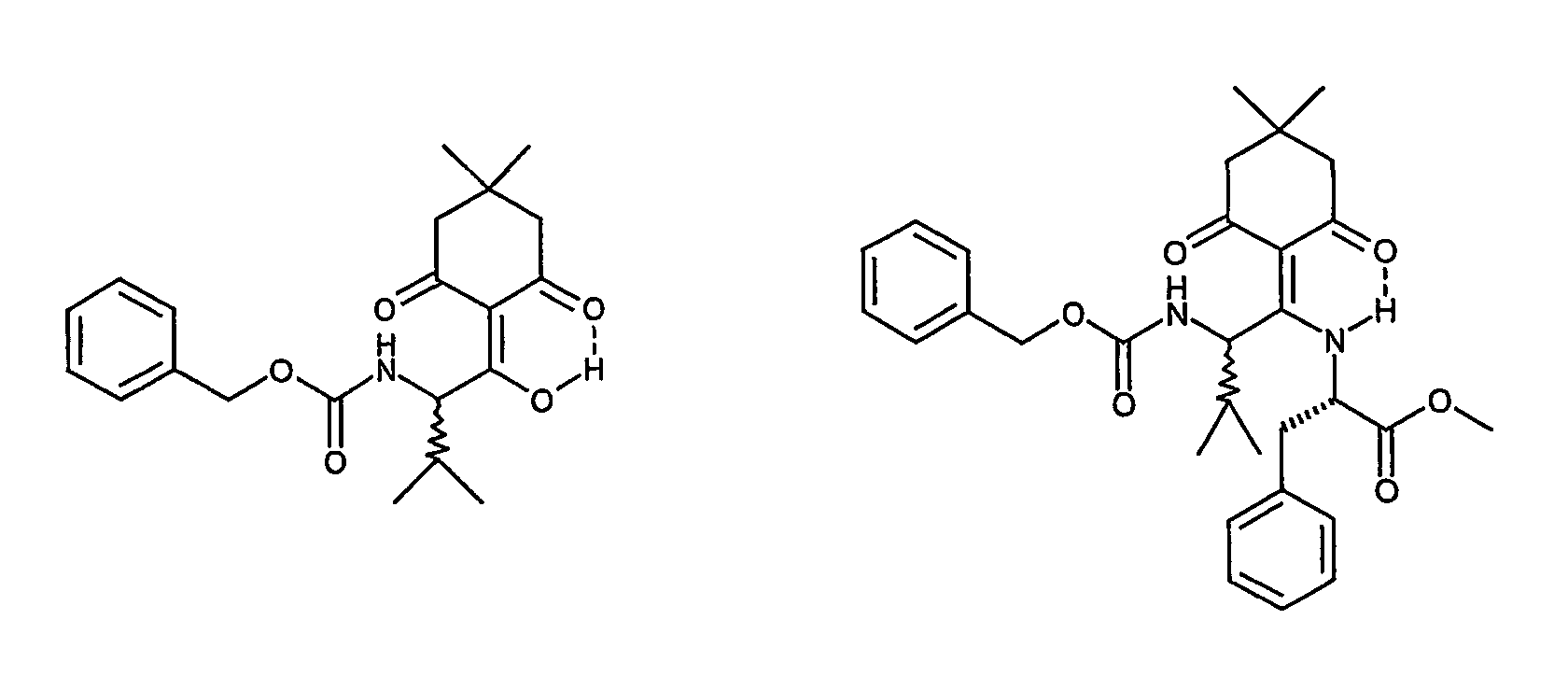
- the compound of formula II is selected from the following:
- the invention provides a compound of formula III wherein X, Y and Z 1 and Z 2 are as defined hereinbefore.
- X is t Bu or CH 2 Ph.
- the invention provides a compound of formula IIIa wherein X, Y and Z are as defined hereinbefore.
- X is t Bu or CH 2 Ph.
- the compound of formula III is selected from the following:
- a second aspect of the invention relates to a complex comprising cyclophilin and a compound as described hereinbefore.
- the cyclophilin of the complex is cyclophilin A, cyclophilin D or cyclophilin 40.
- a compound of formula III interacts with one or more of the following amino acid residues of cyclophilin: Phe 113, Arg 55, Gln 111 and Asn 102.
- Binding studies have revealed that the binding constant (K d ) of compound EM 2/34 to cyclophilin is in the region of 1 ⁇ M.
- K d for Cyclosporin A is 30 nM
- K d for dimedone is 22 mM.
- the compound of the invention is in the form of a mixture of isomers
- one isomer may bind to cyclophilin preferentially over the other.
- each isomer may exhibit a different binding affinity to cyclophilin.
- differences in binding affinity may effectively allow the protein to partially or fully resolve a mixture of isomers.
- High resolution crystallographic studies may enable the skilled person to determine which of the isomers is the preferred ligand.
- a third aspect of the invention relates to a pharmaceutical composition
- a pharmaceutical composition comprising a compound of the invention as described hereinbefore together with a pharmaceutically acceptable diluent, excipient or carrier.
- compositions may be for human or animal usage in human and veterinary medicine and will typically comprise any one or more of a pharmaceutically acceptable diluent, carrier, or excipient.
- Acceptable carriers or diluents for therapeutic use are well known in the pharmaceutical art, and are described, for example, in Remington's Pharmaceutical Sciences, Mack Publishing Co. (A. R. Gennaro edit. 1985).
- suitable carriers include lactose, starch, glucose, methyl cellulose, magnesium stearate, mannitol, sorbitol and the like.
- suitable diluents include ethanol, glycerol and water.
- compositions may comprise as, or in addition to, the carrier, excipient or diluent any suitable binder(s), lubricant(s), suspending agent(s), coating agent(s), solubilising agent(s).
- Suitable binders include starch, gelatin, natural sugars such as glucose, anhydrous lactose, free-flow lactose, beta-lactose, corn sweeteners, natural and synthetic gums, such as acacia, tragacanth or sodium alginate, carboxymethyl cellulose and polyethylene glycol.
- Suitable lubricants include sodium oleate, sodium stearate, magnesium stearate, sodium benzoate, sodium acetate, sodium chloride and the like.
- Preservatives, stabilizers, dyes and even flavoring agents may be provided in the pharmaceutical composition.
- preservatives include sodium benzoate, sorbic acid and esters of p-hydroxybenzoic acid.
- Antioxidants and suspending agents may be also used.
- a fourth aspect of the invention relates to a process for preparing a compound of formula III, said process comprising the steps of
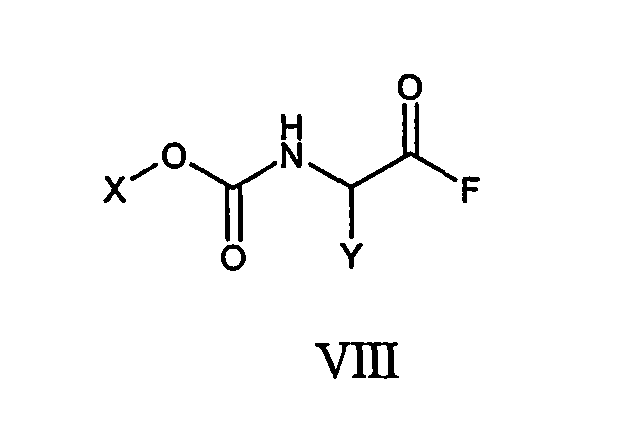
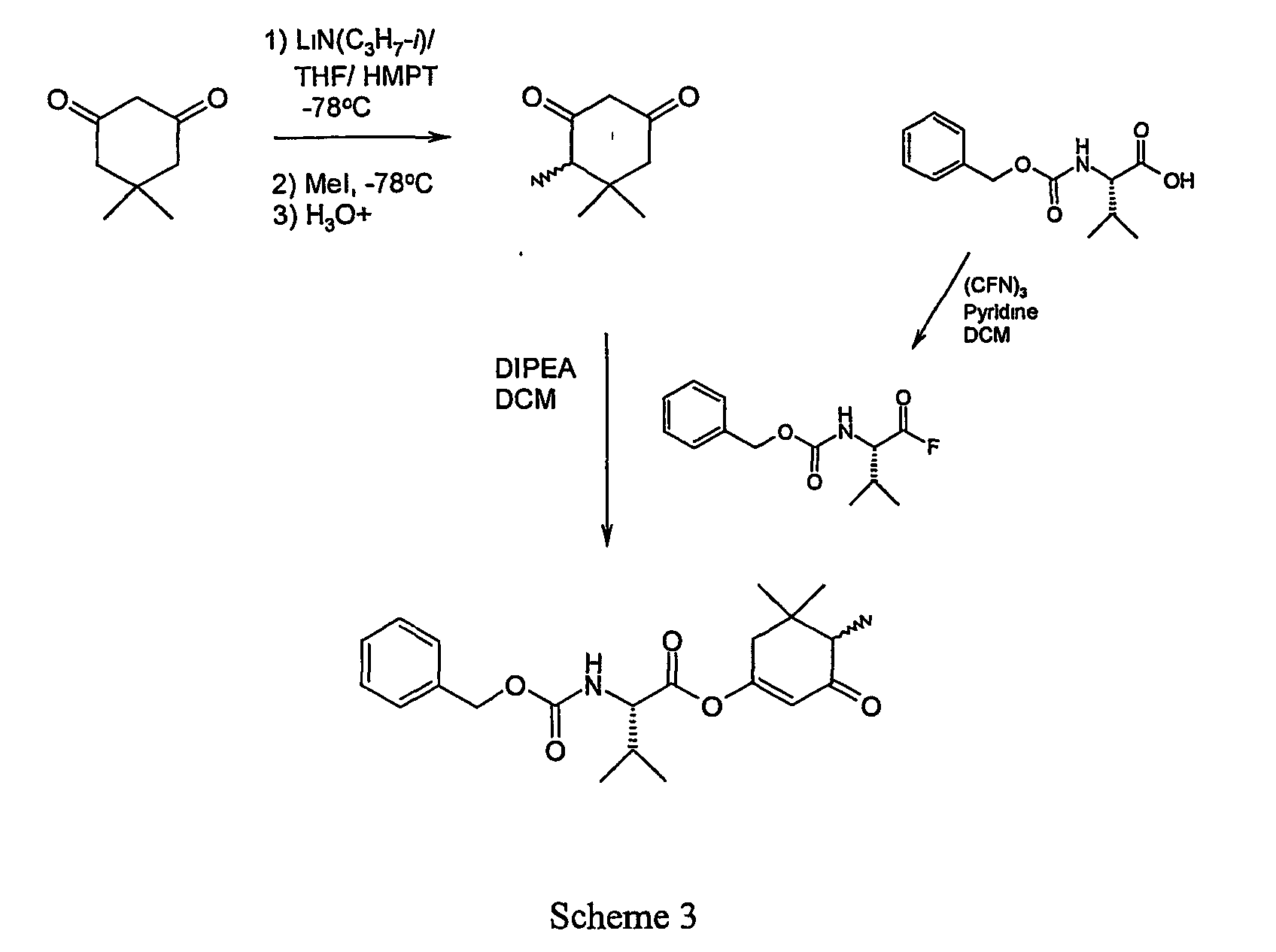
- the compound of formula VII is converted to a compound of formula VIII by treating with (CFN) 3 /pyridine.
- step (iii) comprises reacting a compound of formula VIII with a compound of formula IV in the presence of N,N'-diisopropylethylamine.
- the stereochemistry of the Y substituent (and the Y' substituent, where present) of the compounds of the invention is such that the chiral centre to which it is attached is in the ( S )-form.
- the compounds of the present invention may be prepared by a more general route that is suitable for parallel library synthesis in array format. This is illustrated further in scheme 1, shown below.
- Variation of the N-protecting group may be achieved by reacting the free amino acid with a chloroformate, XI, using conditions described in Hartwig, W., Schöllkopf, U., Liebigs Ann. Chem., 1982, 1952-1970.
- a fifth aspect of the invention relates to the use of a compound of the invention in the preparation of a medicament for use in the treatment of immunosuppressive disorders, parasite infections, rheumatoid arthritis, cancer or HIV-related disorders.
- preparation of a medicament includes the use of a compound of the invention directly as the medicament in addition to its use in a screening programme for the identification of further agents or in any stage of the manufacture of such a medicament.
- Such a screening programme may for example include an assay for determining the binding to the binding site of cyclophilin and determining whether a candidate substance is capable of mimicking the activity of a compound of formula I.
- the invention relates to the use of a compound of formula I or a pharmaceutically acceptable salt, crystal form, complex, or hydrate thereof, in an assay for determining binding to the PPIase binding site of cyclophilin, and optionally in the identification of candidate compounds that act in a similar manner.
- the invention relates to an assay that is capable of identifying candidate compounds that influence the PPIase activity of cyclophilin.
- the assay is a competitive binding assay.
- the competitive binding assay comprises contacting a compound of the invention with cyclophilin in the presence of a known substrate of cyclophilin and detecting any change in the activity of cyclophilin on said known substrate.
- a sixth aspect of the invention relates to a method of detecting the binding of a ligand to the PPIase binding site of cyclophilin, said method comprising the steps of:
- a seventh aspect of the invention provides a method of screening for a ligand capable of binding to a ligand binding domain of a cyclophilin, comprising:
- said candidate compound is generated by conventional SAR modification of a compound of the invention.
- conventional SAR modification refers to standard methods known in the art for varying a given compound by way of chemical derivatisation.
- the above methods may be used to screen for a ligand useful as an inhibitor of cyclophilin.
- cyclophilin is preferably cyclophilin A, cyclophilin D or cyclophilin 40.
- An eighth aspect of the invention relates to a process comprising the steps of:
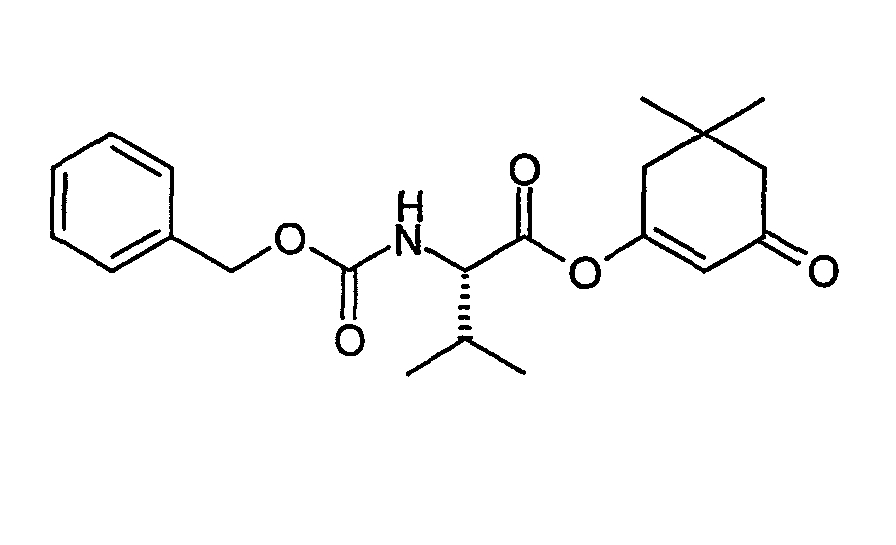
- N -Benzyloxycarbonyl-L-leucinylfluoride (3) (0.36 g, 1.36 mmol) in DCM (15 ml) was stirred at room temperature with dimedone (0.19 g, 1.36 mmol) and DIPEA (0.47 ml, 2.72 mmol).
- the solution changed colour from pale yellow to blue/purple.
- IR IR (crude mixture; polyethylene disc) indicated disappearance of the acyl fluoride.
- the solution was washed with 2N HCl (2 x 5 ml), saturated NaHCO 3 solution (2 x 5 ml), water (2 x 5 ml), dried (MgSO 4 ) and concentrated under reduced pressure to yield a blue/purple oil (0.42 g).
- EM 3/26/2/5 was prepared via the acid fluoride (Method A) and via the mixed anhydride (Method B). EM 3/26/1/2 was prepared using Method B.
- the enol ester (2) (0.56 g, 1.50 mmol) was dissolved in MeCN (8 ml) containing triethylamine (0.84 ml, 6.00 ml) and acetone cyanohydrin (14 ⁇ l, 0.15 mmol). After 2.5 hrs, TLC hexane/EtOAc (1:1) indicated remaining enol ester (2). The solution was stirred at room temperature overnight then partitioned between hexane (8 ml) and cold 1N HCl (8 ml).
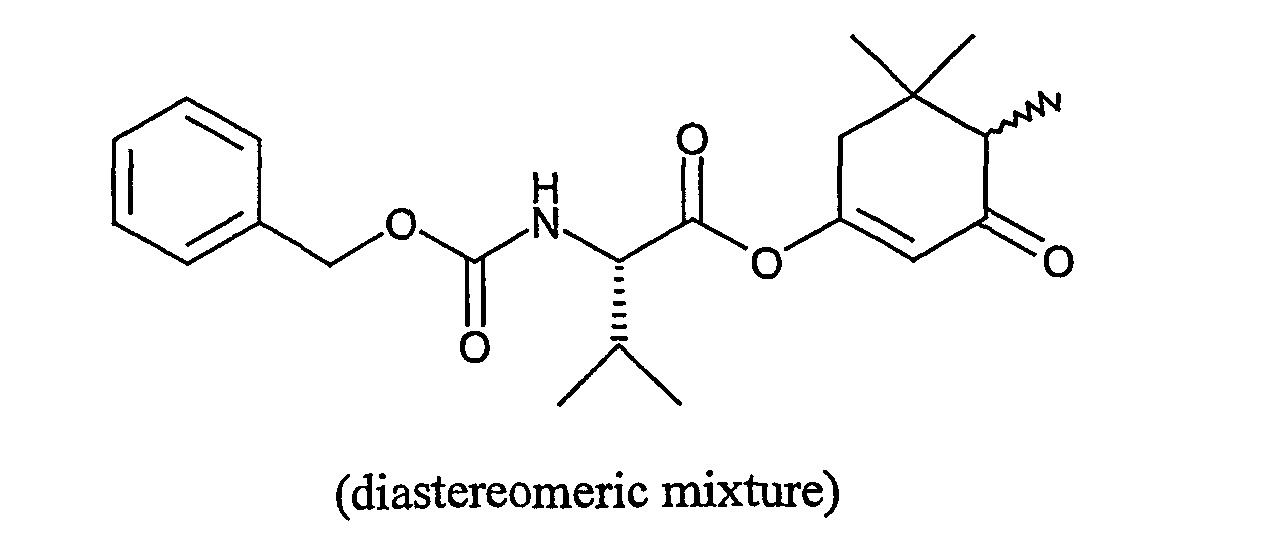
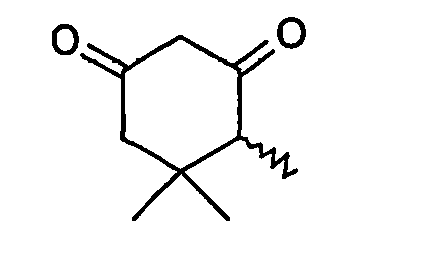
- 4-alkyl dimedone derivatives such as EM 4/33/1 may be prepared in accordance with the method described by Berry, N.M., Darey, M.C.P., Harwood, L.M., Synthesis Commun., 1986,476-480.
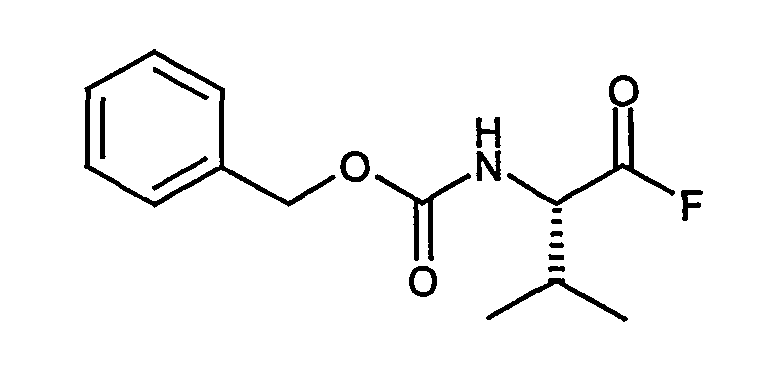
- N -benzyloxycarbonyl-L-valine (0.20 g, 0.8 mmol) was dissolved in anhydrous DCM (2 ml) and the solution cooled to -10 °C. Pyridine (0.06 ml, 0.8 mmol) and cyanuric fluoride (0.2 ml, 2.3 mmol) were added and the solution went orange/yellow. After stirring for 0.5h, TLC DCM/MeOH (9:1) indicated formation of product. Crushed ice was added along with DCM. The aqueous layer was extracted with 2 x DCM and the combined organic layers washed with ice-water and dried over MgSO 4 .
- the solution was concentrated under reduced pressure to a colourless liquid (0.14 g), which was used in the next step without further purification.
- the liquid was dissolved in DCM (2 ml) and EM 4/33/1 (0.09 g, 0.6 mmol) added, followed by DIPEA (0.10 ml, 0.6 mmol).
- the resulting orange/red solution was stirred overnight at room temperature, after which time a blue/pink colour was observed. TLC indicated complete reaction of EM 4/33/1.
- the solution was concentrated under reduced pressure to a blue/pink oil.
- Recombinant human cyclophilin A was concentrated to 14 mg/ml in Hepes 20mM, NaCl 100 mM and NaN3 0.02 % (w/v). Crystals of the CyP-A were grown by vapour diffusion at 17°C by the hanging drop method.
- the precipitating solution in the well consisted of 100mM Tris.HCl (pH 8.0), 22% (w/v) PEG 8000, 5% (v/v) DMSO, 0.02% NaN 3 .
- the initial 8 ml drop consisted of 50mM Tris.HCl (pH 8.0), 11% (w/v) PEG 8000, 2.5% (v/v) DMSO, 0.02% NaN3, 0.4mM CyP-A.
- the ligand was introduced into crystals of native human cyclophilin A that had grown to approximately 0.2 mm x 0.1 mm x 0.1mm.
- the native crystals were then transferred into solutions containing the ligand of interest at between 20mM and 100mM.
- the crystal was soaked for between 10 and 20 minutes before transferring it briefly (20 seconds) to a cryopectant solution consisting of 100mM Tris.HCL (pH8.0), 22% w/v PEG8000, 26% glycerol.
- the crystal was then flash frozen by plunging into liquid nitrogen.
- the X-ray structures of three ligand complexes have been solved and (partially) refined (formulae shown below, and data shown in Table 1).
- the X-ray structures unambiguously show each ligand binding to the active site of human cyclophilin A and provide useful information about which features are important for binding and also which new derivatives are likely to produce better binding.
- Cyclophilin A was obtained from Novartis AG. Cyclosporin was obtained from Sigma. Cyclosporin analogues were obtained from Mutter in Switzerland. Ammonium acetate was obtained from Sigma.
- ESI mass spectra were recorded on a Micromass Platform II mass spectrometer equiped with an electrospray interface and operated in postive-ion mode.
- the quadrupole had an extended range to 4000m/z. Data was acquired over 500 m/z to 3500 m/z range (unless otherwise indicated) with a scan time of 15 s.
- the capillary voltage was 3.5 kV, the counter electrode 0.5 kV, the cone voltage 50 V, the skimmer offset 5V.
- the source temperature was maintained at 65 °C.
- the nebuliser and bath gases were nitrogen delivered at flow rates of 30 and 300 1/h, respectively. All samples were introduced using a Harvard Apparatus infusion pump, at a rate of 8 ⁇ l/min.
- the cyclophilin protein was made in 50 mM Hepes, 5 mM ⁇ mercaptamethanol, 0.1mM NaCl. 1ml of 13 mg/ml (by Bradford assay). This was dialysed against 2-3 litres of 10 mM ammonium acetate, pH 6.8, adjusted by ammonia. The dialysed sample was then diluted to a stock of 100 ⁇ M cyclophilin concentration for use in experiments. The protein concentration for experiments was 20 ⁇ M unless otherwise specified.
- the inhibitors were made up to 1 mM in methanol and then diluted to 10 ⁇ M in ammonium acetate. The final concentration of the inhibitor in solution was 20 ⁇ M.
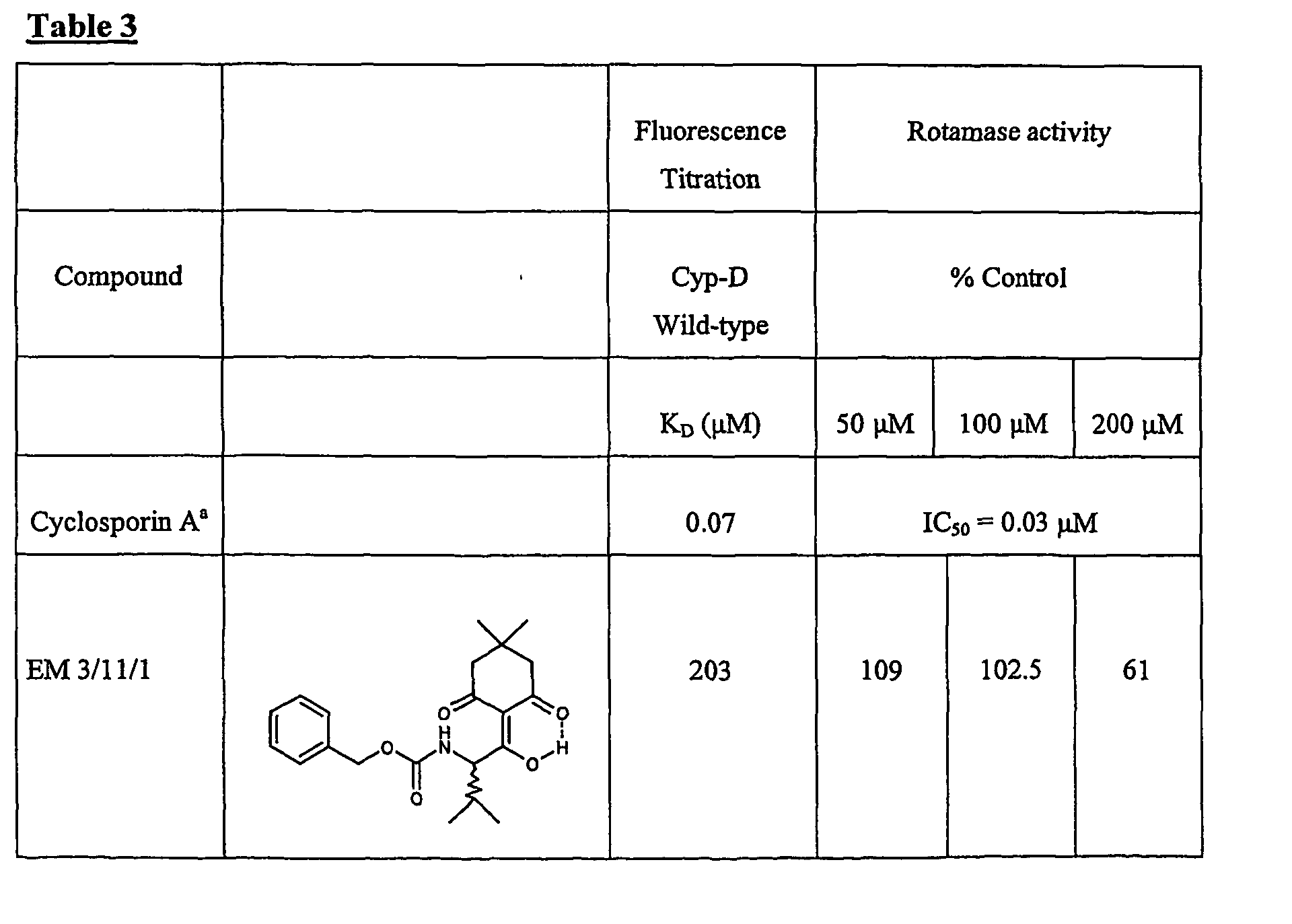
- Binding constants measuring the affinity of selected compounds of the invention are shown below in Table 2. In each case, the binding constant was measured by means of a fluorescence assay, for example as disclosed by Husi, H. and Zurini, M.G.M. [Comparative binding studies of cyclophilins to cyclosporin-A and derivatives by fluorescence measurements, Analytical Biochemistry, 1994, 222, 251-255].
- the Kd (dissociation constant) has been estimated by assuming a 50% occupancy of the protein at fractional fluorescence change of 50%. At this point the concentration of the bound ligand equals the free protein. For each ligand concentration one fluorescence value was measured, and at the same concentrations a reference emission value was taken. The difference between the two values was calculated and a new corrected value was used to determine the Kd graphically.
- PPIase activity is assessed with the ⁇ -chymotrypsin-coupled enzymatic assay [Determination of kinetic constants for peptidyl cis-trans isomerase by an improved spectrophotometric assay (1991); Kofron JL, Kuzmic P, Kishore V, Colon-Bonilla E and Rich D., Biochemistry 30, 6127-6134].
- ⁇ -Chymotrypsin selectively hydrolyses the C-terminal p-nitroanilide bond of the substrate in the trans X-Pro conformer only. This hydrolysis releases a chromophore 4-nitroaniline, the accumulation of which is recorded by measuring the absorbance at 400 nm as a function of time.
- the trans peptide is cleaved within the deadtime so this cleavage does not contribute to the total reaction time.
- Substrate stock solution of 100 mM
- LiCl/TFE LiCl/TFE
- the experiment took place at 4°C. Constant temperature was maintained within the cuvette by a Peltier (PTP-1) temperature control unit.
- a mini magnetic stirring system (telemoduel from Variomag)) was used for mixing the solution in the cuvette after the addition of the substrate.
- a Perkin Elmer UV/VIS Lambda 20 spectophotometer was used.
Landscapes
- Chemical & Material Sciences (AREA)
- Organic Chemistry (AREA)
- Peptides Or Proteins (AREA)
- Medicines That Contain Protein Lipid Enzymes And Other Medicines (AREA)
- Organic Low-Molecular-Weight Compounds And Preparation Thereof (AREA)
- Steroid Compounds (AREA)
- Acyclic And Carbocyclic Compounds In Medicinal Compositions (AREA)
- Polysaccharides And Polysaccharide Derivatives (AREA)
- Pharmaceuticals Containing Other Organic And Inorganic Compounds (AREA)
- Plural Heterocyclic Compounds (AREA)
Abstract
Description


R1 is

R2 is
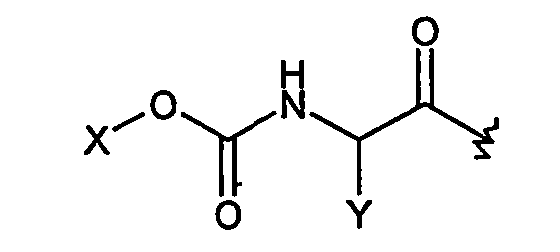
Y is a natural or unnatural amino acid side chain;
W is OH or NHR3, wherein R3 is -CH(Y')CO2X', where X' and Y' are defined as for X and Y respectively, and may be the same or different to X and Y respectively; and
Z1 and Z2 are each independently H, straight or branched chain C1-6 alkyl, straight or branched chain C1-6 alkenyl, -(CH2)nAr, -(CH2)n-CO2R', -(CH2)p-CH=CH-(CH2)qAr where p and q are each independently 0 to 5, R' is C1-6 alkyl;
and each n may be the same or different and is from 1 to 5.

R1 is
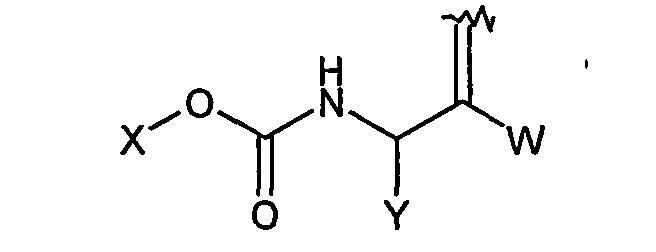
R2 is

Y is a natural or unnatural amino acid side chain;
W is OH or NHR3, wherein R3 is -CH(Y')CO2X', where X' and Y' are defined as for X and Y respectively, and may be the same or different to X and Y respectively; and
Z is H, straight or branched chain C1-6 alkyl, straight or branched chain C1-6 alkenyl, -(CH2)nAr, -(CH2)n-CO2R', -(CH2)p-CH=CH-(CH2)qAr where p and q are each independently 0 to 5, R' is C1-6 alkyl;
and each n may be the same or different and is from 1 to 5.
| Y | amino acid |
| H | glycine |
| Me | alanine |
| CH(Me)2 | valine |
| CH2CH(Me)2 | leucine |
| CH(Me)Et | isoleucine |
| CH2Ph | phenylalanine |
| CH2C6H4OH | tyrosine |
| CH2C8NH6 | tryptophan |
| CH2SH | cysteine |
| CH2CH2SMe | methionine |
| CH2OH | serine |
| CH(OH)Me | threonine |
| (CH2)4NH3 + | lysine |
| (CH2)3NH(C=NH2 +)NH2 | arginine |
| CH2C3N2H4 + | histidine |
| CH2CO2 - | aspartate |
| CH2CH2CO2 - | glutamate |
| CH2CONH2 | asparagine |
| CH2CH2CONH2 | glutamine |


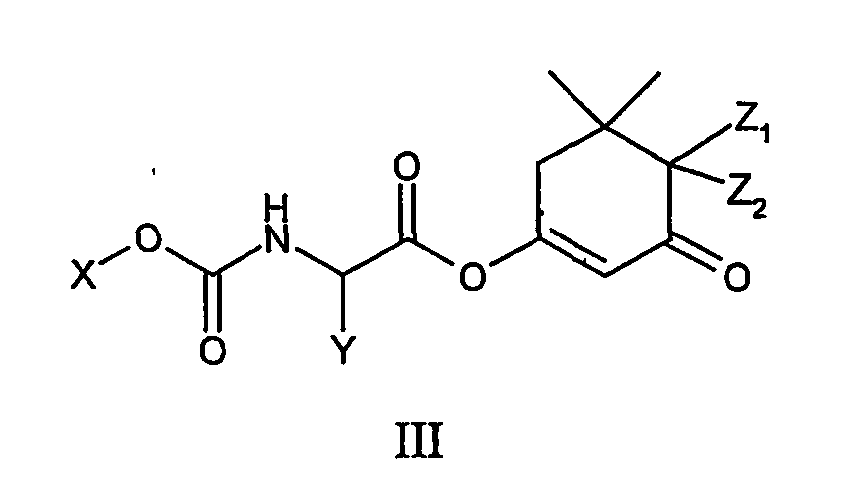
- Z1 and Z2 are each independently selected from H, a straight or branched C1-6 alkyl group, or CH2Ph;
- Y is isopropyl, 2-methylpropyl or CH2Ph;
- X is CH2Ph or a straight or branched C1-6 alkyl group.
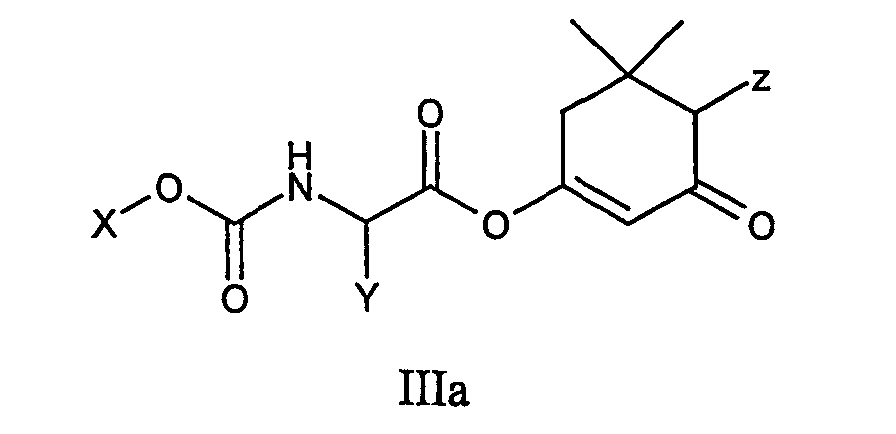
- Z is H, a straight or branched C1-6 alkyl group, or CH2Ph;
- Y is isopropyl, 2-methylpropyl or CH2Ph;
- X is CH2Ph or a straight or branched C1-6 alkyl group.






Analysis identical to (4).
EM 3/26/1/2 was prepared using Method B.


| Structure | unit cell (A) | Resolution (A) | Space group | unique reflections | Rmerge (%) | completeness | Rfactor |
| Cyp-EM2/34 | a 42.3 | 1.8 | P212121 | 17826 | 7.1 | 97.5% | 20.4% |
| b 52.8 | |||||||
| c 89.6 | |||||||
| Cyp-EM4/33/1 | a 42.9 | 1.8 | P212121 | 15569 | 10.1 | 85.5% | 22.8% |
| b 54.2 | |||||||
| c 88.9 | |||||||
| Cyp-EM4/10/1 | a 42.4 | 2.3 | P212121 | 6864 | 10.4 | 95.5% | 18.99% |
| b 52.4 | |||||||
| c 88.7 |




Claims (40)
- A compound of formula Iwherein
 (i) when a and c are double bonds, R2 is absent, b is a single bond,
R1 isor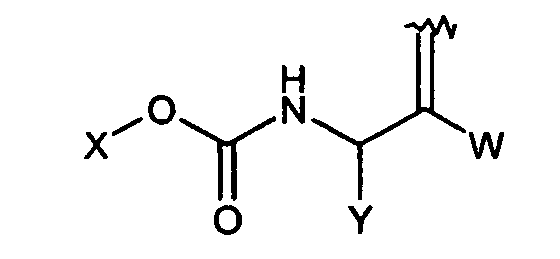 (ii) when a and c are single bonds, b is a double bond, and R1 is H,
R2 iswherein X is straight or branched chain C1-6 alkyl, -(CH2)nAr, C1-6 cycloalkyl, or -(CH2)nR", where R" is a cyclic hydrocarbyl group;
Y is a natural or unnatural amino acid side chain;
W is OH or NHR3, wherein R3 is -CH(Y')CO2X', where X' and Y' are defined as for X and Y respectively, and may be the same or different to X and Y respectively; and
Z1 and Z2 are each independently H, straight or branched chain C1-6 alkyl, straight or branched chain C1-6 alkenyl,
-(CH2)nAr, -(CH2)n-CO2R', -(CH2)p-CH=CH-(CH2)qAr where p and q are each independently 0 to 5, R' is C1-6 alkyl;
and each n may be the same or different and is from 1 to 5. - A compound according to claim 1 wherein X and X' are each independently selected from methyl, t-butyl, 2-methylpropyl, ethyl, benzyl and

- A compound according to claim 1 or claim 2 wherein X and X' are different.
- A compound according to any preceding claim wherein Y and Y' are each independently selected from methyl, benzyl, iso-propyl and 2-methylpropyl.
- A compound according to any preceding claim wherein Y and Y' are different.
- A compound according to any preceding claim wherein Z1 and Z2 are each independently selected from H, methyl, benzyl, allyl, -CH2CO2Me and -CH2-CH=CH-Ph.
- A compound according to any preceding claim wherein said compound is a racemate.
- A compound according to any preceding claim wherein the stereochemistry of the Y substituent is such that the chiral centre to which it is attached is m the (S)-form.
- A compound according to any preceding claim wherein the stereochemistry of the Y' substituent is such that the chiral centre to which it is attached is in the (S)-form.
- A compound according to any preceding claim, of formula II
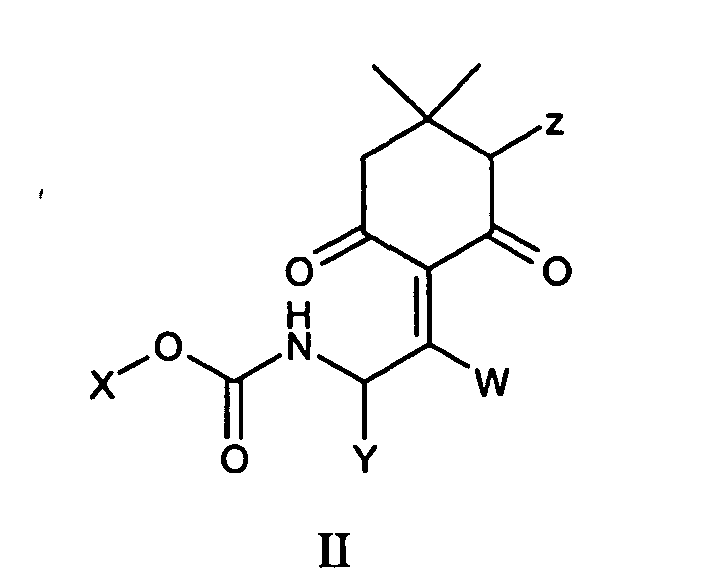
- A compound according to claim 10 wherein Z is H, Y is isopropyl, and W is OH or NHR3, wherein R3 is as defined in claim 1.
- A compound according to claim 10 or claim 11 wherein W is OH or NHCH(CH2Ph)CO2Me.
- A compound according to any one of claims 10 to 12 selected from the following:

- A compound according to any one of claims 1 to 9, of formula III
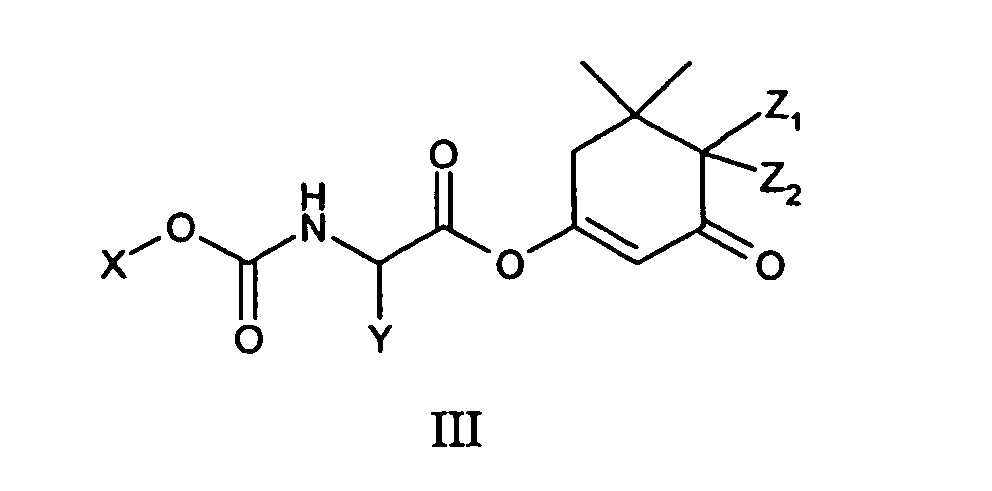
- A compound according to claim 14 whereinZ1 and Z2 are each independently selected from H or a straight or branched C1-6 alkyl group;Y is isopropyl, 2-methylpropyl or CH2Ph;X is CH2Ph or a straight or branched C1-6 alkyl group.
- A compound according to claim 14 or claim 15 wherein X is tBu or CH2Ph.
- A compound according to any one of claims 14 to 16 selected from the following:



- A complex comprising cyclophilin and a compound according to any preceding claim.
- A complex according to claim 18 wherein the cyclophilin is cyclophilin A, cyclophilin D or cyclophilin 40.
- A pharmaceutical composition comprising a compound according to any one of claims 1 to 17 together with a pharmaceutically acceptable diluent, excipient or carrier.
- A process for preparing a compound of formula III,said process comprising the steps of
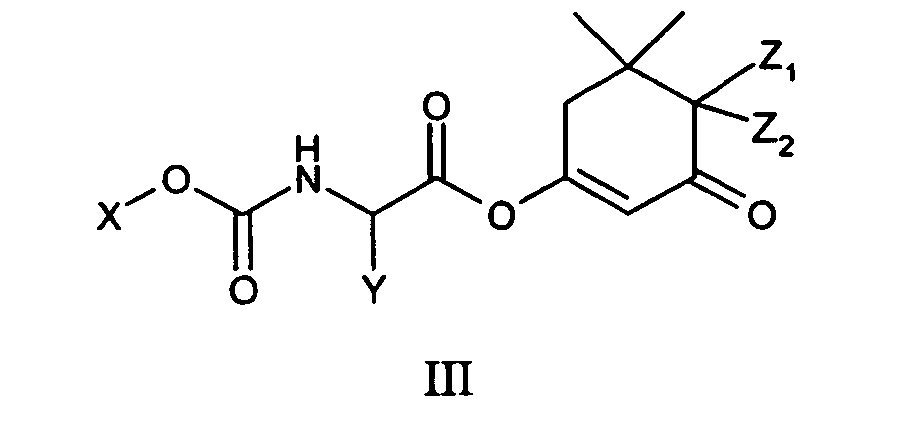 (i) reacting a compound of formula V with a compound of formula VI to form a compound of formula VII;
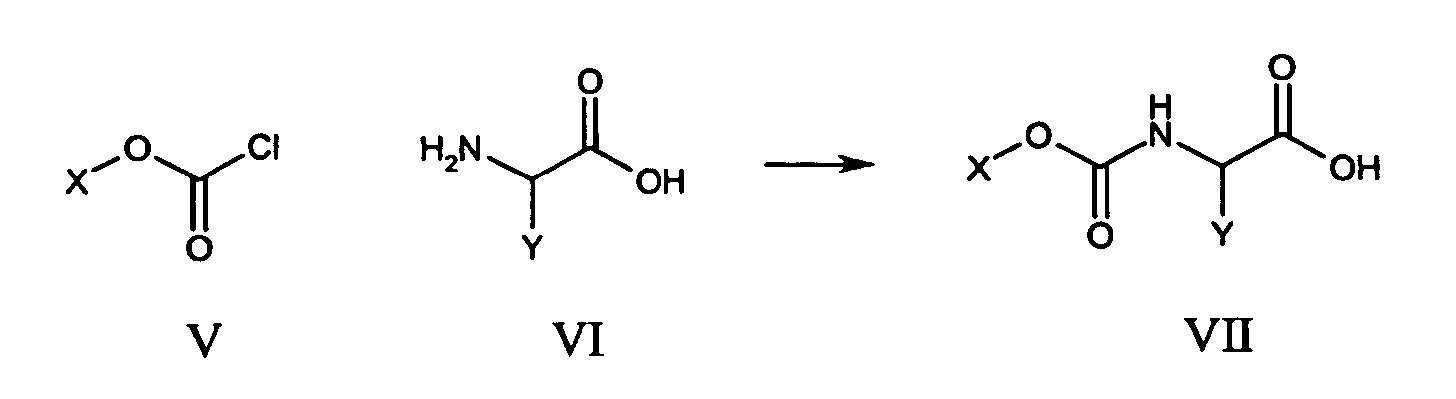 (ii) converting said compound of formula VII to a compound of formula VIII;
 (iii) reacting said compound of formula VIII with a compound of formula IV
- A process according to claim 21 wherein said compound of formula VII is converted to a compound of formula VIII by treating with (CFN)3/pyridine.
- A process according to claim 21 or claim 22 wherein step (iii) comprises reacting a compound of formula VIII with a compound of formula IV in the presence of N,N'-diisopropylethylamine.
- A process according to any one of claims 21 to 23 wherein the stereochemistry of the Y substituent is such that the chiral centre to which it is attached is in the (S)-form.
- Use of a compound according to any one of claims 1 to 17 in the preparation of a medicament for use in the treatment of immunosuppressive disorders.
- Use of a compound according to any one of claims 1 to 17 in the preparation of a medicament for use in the treatment of parasite infections.
- Use of a compound according to any one of claims 1 to 17 in the preparation of a medicament for use in the treatment of rheumatoid arthritis.
- Use of a compound according to any one of claims 1 to 17 in the preparation of a medicament for use in the treatment of HIV-related disorders.
- Use of a compound according to any one of claims 1 to 17 in the preparation of a medicament for use in the treatment of cancer.
- Use of a compound according to any one of claims 1 to 17 in an assay for determining binding to the PPIase binding site of cyclophilin.
- Use according to claim 30 wherein said assay is capable of identifying candidate compounds that influence the PPIase activity of cyclophilin.
- Use according to claim 30 or claim 31 wherein said assay is a competitive binding assay.
- Use according to claim 32 wherein said competitive binding assay comprises contacting a compound according to any one of claims 1 to 17 with cyclophilin in the presence of a known substrate of cyclophilin and detecting any change in the activity of cyclophilin on said known substrate.
- A method of detecting the binding of a ligand to the PPIase binding site of cyclophilin, said method comprising the steps of:and wherein said ligand is a compound according to any one of claims 1 to 17.(i) contacting a ligand with cyclophilin in the presence of a known substrate of cyclophilin; and(ii) detecting any change in the activity in the PPIase activity of cyclophilin on said known substrate;
- A method of screening for a ligand capable of binding to a ligand binding domain of a cyclophilin, comprising:(a) incubating a cyclophilin, a candidate compound and a compound defined in any of claims 1-17,(b) observing any change in the binding dissociation constant (Kd) as compared to the identical incubation lacking the candidate compound and, if the Kd has decreased,(c) optionally preparing the candidate compound by conventional means.
- A method according to claim 35 wherein said candidate compound is generated by conventional SAR modification of a compound defined in any one of claims 1-17.
- A method according to claim 35 or claim 36 wherein said method is used to screen for a ligand useful as an inhibitor of cyclophilin.
- A method according to any one of claims 35 to 37 wherein said cyclophilin is cyclophilin A, cyclophilin D or cyclophilin 40.
- A process comprising the steps of:(a) performing the method according to claims 35 to 38;(b) identifying one or more ligands capable of binding to a ligand binding domain; and(c) preparing a quantity of said one or more ligands.
- A process comprising the steps of:(a) performing the method according to claims 35 to 38;(b) identifying one or more ligands capable of binding to a ligand binding domain.
Applications Claiming Priority (3)
| Application Number | Priority Date | Filing Date | Title |
|---|---|---|---|
| GB0030378 | 2000-12-13 | ||
| GBGB0030378.4A GB0030378D0 (en) | 2000-12-13 | 2000-12-13 | Compound |
| PCT/GB2001/005540 WO2002048178A2 (en) | 2000-12-13 | 2001-12-13 | Cyclophilin-binding ligands |
Publications (2)
| Publication Number | Publication Date |
|---|---|
| EP1343754A2 EP1343754A2 (en) | 2003-09-17 |
| EP1343754B1 true EP1343754B1 (en) | 2005-07-13 |
Family
ID=9904993
Family Applications (1)
| Application Number | Title | Priority Date | Filing Date |
|---|---|---|---|
| EP01270544A Expired - Lifetime EP1343754B1 (en) | 2000-12-13 | 2001-12-13 | Cyclophilin-binding ligands |
Country Status (8)
| Country | Link |
|---|---|
| US (1) | US7223795B2 (en) |
| EP (1) | EP1343754B1 (en) |
| AT (1) | ATE299492T1 (en) |
| AU (1) | AU2002222218A1 (en) |
| DE (1) | DE60111956T2 (en) |
| ES (1) | ES2241744T3 (en) |
| GB (1) | GB0030378D0 (en) |
| WO (1) | WO2002048178A2 (en) |
Families Citing this family (1)
| Publication number | Priority date | Publication date | Assignee | Title |
|---|---|---|---|---|
| GB0012528D0 (en) * | 2000-05-23 | 2000-07-12 | Univ Palackeho | Triterpenoid derivatives |
Family Cites Families (8)
| Publication number | Priority date | Publication date | Assignee | Title |
|---|---|---|---|---|
| JPS5234630B2 (en) * | 1974-06-07 | 1977-09-05 | ||
| BE831558A (en) | 1975-07-18 | 1975-11-17 | IMPROVEMENT OF SMOKE AND HEAT EXHAUST OPENING DEVICES | |
| GB9422383D0 (en) | 1994-11-05 | 1995-01-04 | Wellcome Found | Antibodies |
| GB9509557D0 (en) | 1995-05-11 | 1995-07-05 | Univ Dundee | PCNA binding substance |
| GB9519275D0 (en) | 1995-09-21 | 1995-11-22 | Univ Dundee | Substances and their therapeutic use |
| DE69736351T4 (en) | 1996-05-08 | 2009-07-23 | Cyclacel Ltd. | METHODS AND MEANS FOR INHIBITING CDK4 ACTIVITY |
| PA8442401A1 (en) | 1996-12-09 | 2000-05-24 | Guilford Pharm Inc | CYCLOPHILINE POLYPROPYL INHIBITORS |
| GB9812675D0 (en) | 1998-06-11 | 1998-08-12 | Univ Edinburgh | Peptides |
-
2000
- 2000-12-13 GB GBGB0030378.4A patent/GB0030378D0/en not_active Ceased
-
2001
- 2001-12-13 AT AT01270544T patent/ATE299492T1/en not_active IP Right Cessation
- 2001-12-13 DE DE60111956T patent/DE60111956T2/en not_active Expired - Fee Related
- 2001-12-13 AU AU2002222218A patent/AU2002222218A1/en not_active Abandoned
- 2001-12-13 ES ES01270544T patent/ES2241744T3/en not_active Expired - Lifetime
- 2001-12-13 EP EP01270544A patent/EP1343754B1/en not_active Expired - Lifetime
- 2001-12-13 WO PCT/GB2001/005540 patent/WO2002048178A2/en not_active Ceased
-
2003
- 2003-06-12 US US10/461,208 patent/US7223795B2/en not_active Expired - Fee Related
Also Published As
| Publication number | Publication date |
|---|---|
| US7223795B2 (en) | 2007-05-29 |
| ATE299492T1 (en) | 2005-07-15 |
| ES2241744T3 (en) | 2005-11-01 |
| GB0030378D0 (en) | 2001-01-24 |
| US20040077829A1 (en) | 2004-04-22 |
| DE60111956T2 (en) | 2006-03-30 |
| WO2002048178A2 (en) | 2002-06-20 |
| DE60111956D1 (en) | 2005-08-18 |
| EP1343754A2 (en) | 2003-09-17 |
| WO2002048178A3 (en) | 2002-11-14 |
| AU2002222218A1 (en) | 2002-06-24 |
Similar Documents
| Publication | Publication Date | Title |
|---|---|---|
| Slee et al. | Selectivity in the inhibition of HIV and FIV Protease: inhibitory and mechanistic studies of pyrrolidine-containing. alpha.-Keto amide and hydroxyethylamine core structures | |
| US5770620A (en) | Aryl acrylic acid derivatives useful as protein tyrosine phosphatase inhibitors | |
| Valentekovich et al. | Enantiospecific total synthesis of the protein phosphatase inhibitor motuporin. | |
| Valls et al. | First total syntheses of aeruginosin 298‐A and aeruginosin 298‐B, based on a stereocontrolled route to the new amino acid 6‐hydroxyoctahydroindole‐2‐carboxylic acid | |
| EP2404921A1 (en) | Salts of tetrahydroimidazo ý1,5-a¨pyrazine derivatives, preparation methods and pharmaceutical use thereof | |
| US4898878A (en) | Antioxidant thiohistidine compounds | |
| Kundu et al. | Tryptophan-specific modification and diversification of peptides and proteins | |
| Cheng et al. | Synthesis and biological activity of ketomethylene pseudopeptide analogs as thrombin inhibitors | |
| WO1994025449A1 (en) | Oxidation products of cephalomannine | |
| Todorov et al. | Synthesis, characterization and anticonvulsant activity of new series of N-modified analogues of VV-hemorphin-5 with aminophosphonate moiety | |
| US7223795B2 (en) | Modified peptide derivatives and methods of use thereof | |
| Williams et al. | Asymmetric syntheses of (2S, 3S, 6S)-,(2S, 3S, 6R)-, and (2R, 3R, 6S)-2, 3-methano-2, 6-diaminopimelic acids. Studies directed to the design of novel substrate-based inhibitors of L, L-diaminopimelate epimerase | |
| Papanikos et al. | α-Keto Amide Peptides: A Synthetic Strategy to Resin-Bound Peptide Isosteres for Protease Inhibitor Screening on Solid Support | |
| Goričan et al. | Synthesis and kinetic characterization of hyperbolic inhibitors of human cathepsins K and S based on a succinimide scaffold | |
| Thorpe et al. | Backbone-Determined Antiarrhythmic Structure–Activity Relationships for a Mirror Image, Oligomeric Depsipeptide Natural Product | |
| CN105566447A (en) | Peptoid antagonist of anti-apoptosis protein and synthesis method and application of peptoid antagonist | |
| Lai et al. | The design, synthesis and activity of pentapeptide pp60c‐src inhibitors containing L‐phosphotyrosine mimics | |
| Martyn et al. | Ring-deactivated hydroxyalkylpyrrole-based inhibitors of α-chymotrypsin: synthesis and mechanism of action | |
| EP2084125B1 (en) | Aminobenzocycloheptene derivatives, methods for preparing the same and uses thereof in therapy | |
| O'Donnell et al. | Serine–threonine protein phosphatase inhibitors derived from nodularin: role of the 2-methyl and 3-diene groups in the Adda residue and the effect of macrocyclic conformational restraint | |
| Kotoku et al. | Structure‐activity relationships study of bastadin 6, an anti‐angiogenic brominated‐tyrosine derived metabolite from marine sponge | |
| EP3966203B1 (en) | A method for functionalization of an aromatic amino acid or a nucleobase | |
| Bellucci et al. | Synthesis of hexafluorovaline-containing di-and tripeptides | |
| Maskrey | Synthetic Studies of Heterocyclic and Bioactive Agents | |
| Peters | The Synthesis of Antibacterial Natural Products |
Legal Events
| Date | Code | Title | Description |
|---|---|---|---|
| PUAI | Public reference made under article 153(3) epc to a published international application that has entered the european phase |
Free format text: ORIGINAL CODE: 0009012 |
|
| 17P | Request for examination filed |
Effective date: 20030709 |
|
| AK | Designated contracting states |
Kind code of ref document: A2 Designated state(s): AT BE CH CY DE DK ES FI FR GB GR IE IT LI LU MC NL PT SE TR |
|
| AX | Request for extension of the european patent |
Extension state: AL LT LV MK RO SI |
|
| 17Q | First examination report despatched |
Effective date: 20031212 |
|
| GRAP | Despatch of communication of intention to grant a patent |
Free format text: ORIGINAL CODE: EPIDOSNIGR1 |
|
| GRAS | Grant fee paid |
Free format text: ORIGINAL CODE: EPIDOSNIGR3 |
|
| GRAA | (expected) grant |
Free format text: ORIGINAL CODE: 0009210 |
|
| RAP1 | Party data changed (applicant data changed or rights of an application transferred) |
Owner name: CYCLACEL LIMITED |
|
| AK | Designated contracting states |
Kind code of ref document: B1 Designated state(s): AT BE CH CY DE DK ES FI FR GB GR IE IT LI LU MC NL PT SE TR |
|
| PG25 | Lapsed in a contracting state [announced via postgrant information from national office to epo] |
Ref country code: TR Free format text: LAPSE BECAUSE OF FAILURE TO SUBMIT A TRANSLATION OF THE DESCRIPTION OR TO PAY THE FEE WITHIN THE PRESCRIBED TIME-LIMIT Effective date: 20050713 Ref country code: FI Free format text: LAPSE BECAUSE OF FAILURE TO SUBMIT A TRANSLATION OF THE DESCRIPTION OR TO PAY THE FEE WITHIN THE PRESCRIBED TIME-LIMIT Effective date: 20050713 |
|
| REG | Reference to a national code |
Ref country code: GB Ref legal event code: FG4D |
|
| REG | Reference to a national code |
Ref country code: CH Ref legal event code: EP |
|
| REG | Reference to a national code |
Ref country code: IE Ref legal event code: FG4D |
|
| REF | Corresponds to: |
Ref document number: 60111956 Country of ref document: DE Date of ref document: 20050818 Kind code of ref document: P |
|
| PG25 | Lapsed in a contracting state [announced via postgrant information from national office to epo] |
Ref country code: GR Free format text: LAPSE BECAUSE OF FAILURE TO SUBMIT A TRANSLATION OF THE DESCRIPTION OR TO PAY THE FEE WITHIN THE PRESCRIBED TIME-LIMIT Effective date: 20051013 Ref country code: SE Free format text: LAPSE BECAUSE OF FAILURE TO SUBMIT A TRANSLATION OF THE DESCRIPTION OR TO PAY THE FEE WITHIN THE PRESCRIBED TIME-LIMIT Effective date: 20051013 Ref country code: DK Free format text: LAPSE BECAUSE OF FAILURE TO SUBMIT A TRANSLATION OF THE DESCRIPTION OR TO PAY THE FEE WITHIN THE PRESCRIBED TIME-LIMIT Effective date: 20051013 |
|
| REG | Reference to a national code |
Ref country code: CH Ref legal event code: NV Representative=s name: MICHELI & CIE INGENIEURS-CONSEILS |
|
| REG | Reference to a national code |
Ref country code: ES Ref legal event code: FG2A Ref document number: 2241744 Country of ref document: ES Kind code of ref document: T3 |
|
| PG25 | Lapsed in a contracting state [announced via postgrant information from national office to epo] |
Ref country code: CY Free format text: LAPSE BECAUSE OF FAILURE TO SUBMIT A TRANSLATION OF THE DESCRIPTION OR TO PAY THE FEE WITHIN THE PRESCRIBED TIME-LIMIT Effective date: 20051213 |
|
| PG25 | Lapsed in a contracting state [announced via postgrant information from national office to epo] |
Ref country code: PT Free format text: LAPSE BECAUSE OF FAILURE TO SUBMIT A TRANSLATION OF THE DESCRIPTION OR TO PAY THE FEE WITHIN THE PRESCRIBED TIME-LIMIT Effective date: 20051219 |
|
| PG25 | Lapsed in a contracting state [announced via postgrant information from national office to epo] |
Ref country code: MC Free format text: LAPSE BECAUSE OF NON-PAYMENT OF DUE FEES Effective date: 20051231 Ref country code: LU Free format text: LAPSE BECAUSE OF NON-PAYMENT OF DUE FEES Effective date: 20051231 |
|
| ET | Fr: translation filed | ||
| PLBE | No opposition filed within time limit |
Free format text: ORIGINAL CODE: 0009261 |
|
| STAA | Information on the status of an ep patent application or granted ep patent |
Free format text: STATUS: NO OPPOSITION FILED WITHIN TIME LIMIT |
|
| 26N | No opposition filed |
Effective date: 20060418 |
|
| PGFP | Annual fee paid to national office [announced via postgrant information from national office to epo] |
Ref country code: IE Payment date: 20070910 Year of fee payment: 7 |
|
| PGFP | Annual fee paid to national office [announced via postgrant information from national office to epo] |
Ref country code: BE Payment date: 20070907 Year of fee payment: 7 Ref country code: ES Payment date: 20071009 Year of fee payment: 7 Ref country code: NL Payment date: 20070927 Year of fee payment: 7 |
|
| PGFP | Annual fee paid to national office [announced via postgrant information from national office to epo] |
Ref country code: CH Payment date: 20071116 Year of fee payment: 7 Ref country code: IT Payment date: 20071221 Year of fee payment: 7 Ref country code: AT Payment date: 20071214 Year of fee payment: 7 |
|
| PGFP | Annual fee paid to national office [announced via postgrant information from national office to epo] |
Ref country code: FR Payment date: 20070910 Year of fee payment: 7 Ref country code: GB Payment date: 20071212 Year of fee payment: 7 |
|
| PGFP | Annual fee paid to national office [announced via postgrant information from national office to epo] |
Ref country code: DE Payment date: 20080219 Year of fee payment: 7 |
|
| BERE | Be: lapsed |
Owner name: *CYCLACEL LTD Effective date: 20081231 |
|
| REG | Reference to a national code |
Ref country code: CH Ref legal event code: PL |
|
| GBPC | Gb: european patent ceased through non-payment of renewal fee |
Effective date: 20081213 |
|
| PG25 | Lapsed in a contracting state [announced via postgrant information from national office to epo] |
Ref country code: AT Free format text: LAPSE BECAUSE OF NON-PAYMENT OF DUE FEES Effective date: 20081213 |
|
| NLV4 | Nl: lapsed or anulled due to non-payment of the annual fee |
Effective date: 20090701 |
|
| REG | Reference to a national code |
Ref country code: IE Ref legal event code: MM4A |
|
| PG25 | Lapsed in a contracting state [announced via postgrant information from national office to epo] |
Ref country code: BE Free format text: LAPSE BECAUSE OF NON-PAYMENT OF DUE FEES Effective date: 20081231 |
|
| REG | Reference to a national code |
Ref country code: FR Ref legal event code: ST Effective date: 20090831 |
|
| PG25 | Lapsed in a contracting state [announced via postgrant information from national office to epo] |
Ref country code: IE Free format text: LAPSE BECAUSE OF NON-PAYMENT OF DUE FEES Effective date: 20081215 Ref country code: CH Free format text: LAPSE BECAUSE OF NON-PAYMENT OF DUE FEES Effective date: 20081231 Ref country code: LI Free format text: LAPSE BECAUSE OF NON-PAYMENT OF DUE FEES Effective date: 20081231 Ref country code: DE Free format text: LAPSE BECAUSE OF NON-PAYMENT OF DUE FEES Effective date: 20090701 |
|
| PG25 | Lapsed in a contracting state [announced via postgrant information from national office to epo] |
Ref country code: NL Free format text: LAPSE BECAUSE OF NON-PAYMENT OF DUE FEES Effective date: 20090701 Ref country code: GB Free format text: LAPSE BECAUSE OF NON-PAYMENT OF DUE FEES Effective date: 20081213 |
|
| REG | Reference to a national code |
Ref country code: ES Ref legal event code: FD2A Effective date: 20081215 |
|
| PG25 | Lapsed in a contracting state [announced via postgrant information from national office to epo] |
Ref country code: ES Free format text: LAPSE BECAUSE OF NON-PAYMENT OF DUE FEES Effective date: 20081215 Ref country code: FR Free format text: LAPSE BECAUSE OF NON-PAYMENT OF DUE FEES Effective date: 20081231 |
|
| PG25 | Lapsed in a contracting state [announced via postgrant information from national office to epo] |
Ref country code: IT Free format text: LAPSE BECAUSE OF NON-PAYMENT OF DUE FEES Effective date: 20081213 |