EP1341104A1 - User authentication method in network - Google Patents
User authentication method in network Download PDFInfo
- Publication number
- EP1341104A1 EP1341104A1 EP01978943A EP01978943A EP1341104A1 EP 1341104 A1 EP1341104 A1 EP 1341104A1 EP 01978943 A EP01978943 A EP 01978943A EP 01978943 A EP01978943 A EP 01978943A EP 1341104 A1 EP1341104 A1 EP 1341104A1
- Authority
- EP
- European Patent Office
- Prior art keywords
- user
- authentication
- communication device
- information
- telephone
- Prior art date
- Legal status (The legal status is an assumption and is not a legal conclusion. Google has not performed a legal analysis and makes no representation as to the accuracy of the status listed.)
- Withdrawn
Links
Images



Classifications
-
- H—ELECTRICITY
- H04—ELECTRIC COMMUNICATION TECHNIQUE
- H04L—TRANSMISSION OF DIGITAL INFORMATION, e.g. TELEGRAPHIC COMMUNICATION
- H04L63/00—Network architectures or network communication protocols for network security
- H04L63/08—Network architectures or network communication protocols for network security for authentication of entities
- H04L63/083—Network architectures or network communication protocols for network security for authentication of entities using passwords
-
- G—PHYSICS
- G06—COMPUTING OR CALCULATING; COUNTING
- G06F—ELECTRIC DIGITAL DATA PROCESSING
- G06F21/00—Security arrangements for protecting computers, components thereof, programs or data against unauthorised activity
- G06F21/30—Authentication, i.e. establishing the identity or authorisation of security principals
- G06F21/31—User authentication
- G06F21/42—User authentication using separate channels for security data
- G06F21/43—User authentication using separate channels for security data wireless channels
-
- G—PHYSICS
- G06—COMPUTING OR CALCULATING; COUNTING
- G06Q—INFORMATION AND COMMUNICATION TECHNOLOGY [ICT] SPECIALLY ADAPTED FOR ADMINISTRATIVE, COMMERCIAL, FINANCIAL, MANAGERIAL OR SUPERVISORY PURPOSES; SYSTEMS OR METHODS SPECIALLY ADAPTED FOR ADMINISTRATIVE, COMMERCIAL, FINANCIAL, MANAGERIAL OR SUPERVISORY PURPOSES, NOT OTHERWISE PROVIDED FOR
- G06Q20/00—Payment architectures, schemes or protocols
- G06Q20/30—Payment architectures, schemes or protocols characterised by the use of specific devices or networks
- G06Q20/36—Payment architectures, schemes or protocols characterised by the use of specific devices or networks using electronic wallets or electronic money safes
- G06Q20/367—Payment architectures, schemes or protocols characterised by the use of specific devices or networks using electronic wallets or electronic money safes involving electronic purses or money safes
- G06Q20/3674—Payment architectures, schemes or protocols characterised by the use of specific devices or networks using electronic wallets or electronic money safes involving electronic purses or money safes involving authentication
-
- G—PHYSICS
- G06—COMPUTING OR CALCULATING; COUNTING
- G06Q—INFORMATION AND COMMUNICATION TECHNOLOGY [ICT] SPECIALLY ADAPTED FOR ADMINISTRATIVE, COMMERCIAL, FINANCIAL, MANAGERIAL OR SUPERVISORY PURPOSES; SYSTEMS OR METHODS SPECIALLY ADAPTED FOR ADMINISTRATIVE, COMMERCIAL, FINANCIAL, MANAGERIAL OR SUPERVISORY PURPOSES, NOT OTHERWISE PROVIDED FOR
- G06Q20/00—Payment architectures, schemes or protocols
- G06Q20/38—Payment protocols; Details thereof
- G06Q20/40—Authorisation, e.g. identification of payer or payee, verification of customer or shop credentials; Review and approval of payers, e.g. check credit lines or negative lists
-
- H—ELECTRICITY
- H04—ELECTRIC COMMUNICATION TECHNIQUE
- H04L—TRANSMISSION OF DIGITAL INFORMATION, e.g. TELEGRAPHIC COMMUNICATION
- H04L63/00—Network architectures or network communication protocols for network security
- H04L63/08—Network architectures or network communication protocols for network security for authentication of entities
- H04L63/0853—Network architectures or network communication protocols for network security for authentication of entities using an additional device, e.g. smartcard, SIM or a different communication terminal
-
- H—ELECTRICITY
- H04—ELECTRIC COMMUNICATION TECHNIQUE
- H04L—TRANSMISSION OF DIGITAL INFORMATION, e.g. TELEGRAPHIC COMMUNICATION
- H04L63/00—Network architectures or network communication protocols for network security
- H04L63/18—Network architectures or network communication protocols for network security using different networks or channels, e.g. using out of band channels
Definitions
- the present invention relates to a method for identifying and authenticating a user of a terminal when the terminal is connected to a network such as the Internet or an intranet.
- a password method When making a connection to the Internet, there is employed the following method (referred to as “a password method") in which a user contracts with the Internet service provider (referred to as a “provider,” hereinafter) and determines a user number and a password in advance, and at the time of connecting, the user inputs the user number and the password. Thereby the provider identifies the user and authorizes connection to the Internet.
- a method of identifying a user by the use of a random numbers table (referred to as "a random numbers table method") is performed.
- a user number and a password are determined between a user and a service providing institution such as a bank, and a random numbers table is given to the user by the service providing institution.
- the user inputs the user number and password at the time of using the service, the user is requested to input a number in a box in the random numbers table by the service providing institution.
- the service providing institution When it is confirmed that the number input by the user agrees with the number in the random numbers table, the user can be provided with the service.
- an authentication method referred to as a one-time password method is employed.
- the user who was given a password generating device from the service provider, inputs a user number and a password displayed on the password generating device.
- the password input by the user agrees with the password in the server at the side of the service provider, the connection is authorized.
- the password determined between the service provider and the user is fixed and used many times. Therefore, if the user number and the password are known to the third person, there may be a problem of wrongdoing called "pretending" in which the third person pretends to be the user in person and makes a connection to the Internet illegally by using the user number and the password and receives various services.
- a method for authenticating a user by which a server device of a service provider authenticates a service user on a network includes a confirmation information issuing step including receiving an authentication request from a first communication device of the service user, and then generating a confirmation information to be replied to the first communication device; and an authentication step of judging whether or not the confirmation information replied to the first communication device agrees with the confirmation information sent from the service user by a second communication device using a communication path that is different from a communication path of the first communication device.
- the first communication device a computer, etc. connected to the server device via the Internet can be used, and as the second communication device, a telephone, etc. can be used.
- a network system with a high security level, which can authenticate a user easily and reliably.
- the method for authenticating a user further includes steps of: obtaining first authentication requester information about a service user who makes the authentication request based on the information contained in the authentication request received from the first communication device; and obtaining second authentication requester information about the service user when receiving confirmation information from the second communication device and judging whether or not the first authentication requester information agrees with the second authentication requester information.
- the security level can be improved further.
- the first communication device is a computer connected to the server device of the service provider via the Internet
- the second communication device is a telephone
- the first authentication requester information is a telephone number registered in advance in the server device by each service user
- the second authentication requester information is a telephone number of the second communication device
- the telephone number is obtained from a calling telephone number notification service provided by a telephone network.
- the first communication device is a computer connected to the server device of the service provider via the Internet
- the second communication device is a telephone
- the first authentication requester information is a user's name registered in advance in the server device by each service user
- the second authentication requester information is a user's name of the second communication device registered in a telephone company.
- the second authentication requester information is obtained by performing an inquiry to the user management device of the telephone company providing the second communication device based on the telephone number of the second communication device obtained by the calling telephone number notification service provided by the telephone network.
- a toll of the service used by the service user is collected from the service user's bank account from which telephone charges are drawn.
- the server device of the service provider sends the confirmation information replied in the confirmation information issuing step to the user management device of the telephone company and allows the user management device of the telephone company to execute the authentication step.
- the method further includes, in the authentication step after it is judged that the confirmation information replied to the first communication device agrees with the confirmation information sent from the service user by the second communication device, a step of receiving credit card information of the service user from the second communication device and charging the service user based on the received credit card information.
- the server device of the service provider sends the confirmation information replied in the confirmation information issuing step to the server device of a credit card company, and allowing the server device of the credit card company to execute the authentication step.
- the above-mentioned method for authenticating a user further includes steps of obtaining a telephone number of the second communication device from the calling telephone number notification service provided by the telephone network; obtaining a user's name of the second communication device from the user management device of the telephone company based on the obtained telephoned number, and judging whether or not the user's name of the credit card obtained from the user management device of the credit card company agrees with the user's name of the second communication device obtained by the user management device of the telephone company.
- the authentication method of the present invention includes an external connection unit for receiving an authentication request from a first communication device of a service user, a confirmation information generating unit for generating confirmation information to be replied to the first communication device, a confirmation information storage unit for storing the confirmation information replied to the first communication device, a confirmation information receiving unit for receiving the confirmation information sent by the service user from the second communication device using a communication path that is different from a communication path of the first communication device, and an authentication unit for judging whether or not the confirmation information received by the confirmation information receiving unit agrees with the confirmation information stored in the confirmation information storing unit.
- the authentication device further includes a first authentication requester information obtaining unit for obtaining a first authentication requester information about a service user who makes the authentication request based on the information contained in the authentication request received from the first communication device; and a second authentication requester information obtaining unit for obtaining the second authentication requester information about the service user when receiving the confirmation information from the second communication device, wherein the authentication unit also judges whether or not the first authentication requester information agrees with the second authentication requester information.
- the first communication device is a computer connected to the server device of the service provider via the Internet, and the second communication device is a telephone;
- the user authentication device further includes a first authentication requester information registering unit for storing a telephone number of the telephone used by each service user as the second communication device as the first authentication requester information;
- the second authentication requester information is a telephone number of the second communication device, and the second authentication requester information obtaining unit obtains the second authentication requester information from a calling telephone number notification service provided by a telephone network.
- the first communication device is a computer connected to the server device of the service provider via the Internet, and the second communication device is a telephone;
- the user authentication device further includes a first authentication requester information registering unit for storing a name of each service user as the first authentication requester information, the second authentication requester information is the name of the user of the second communication device registered in the telephone company, and the second authentication requester information obtaining unit obtains the user's name from the user management device of the telephone company.
- the second authentication requester information obtaining unit obtains a telephone number of the second communication device from the calling telephone number notification service provided by the telephone network and performs inquiry to the user management device of the telephone company based on the obtained telephone number, thereby obtaining the second authentication requester information.
- the first communication device is a computer connected to the server device of the service provider via the Internet and the second communication device is a telephone; and the user authentication device further includes a credit information receiving unit for receiving credit card information of the service user from the second communication device, and a billing unit for charging the service user based on the credit card information received by the credit information receiving unit after it is judged that in the authentication step, the confirmation information replied to the first communication device agrees with the confirmation information sent from the service user by the second communication.
- the above-mentioned authentication device further includes a telephone number obtaining unit for obtaining a telephone number of the second communication device from the calling telephone number notification service provided by the telephone network; and a user's name obtaining unit for obtaining the name of the user of the second communication device from the user management device of the telephone company based on the obtained telephone number, wherein the authentication unit judges whether or not the user's name of the credit card obtained from the user management device of the credit card company agrees with the user's name of the second communication device obtained from the user management device of the telephone company.
- SOHO small office home office
- the company is a service provider and the SOHO user is a service user.
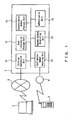
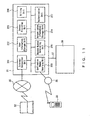
- FIG. 1 is a block diagram showing a schematic configuration of a network system according to this embodiment.
- reference numeral 1 denotes a server of a LAN in an office of the company
- 2 denotes a personal computer (first communication device) used by a user at home, etc.
- 3 denotes a portable telephone (second communication device) of a user
- 4 denotes a modem for the server 1.
- the user accesses the server 1 of the office from the personal computer 2 via the Internet 5.
- a telephone network between the portable telephone 3 and the modem 4 is omitted in this drawing.
- LAN, etc. to which the server 1 is connected also is omitted in the drawing.
- the user registers in advance a user number and password uniquely provided to each user, and a telephone number (herein, a telephone number of the portable telephone 3) for performing an authentication confirmation procedure in a user information storage unit 12 of the server 1 of the office.
- a telephone number herein, a telephone number of the portable telephone 3
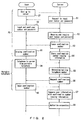
- a user starts up the home personal computer 2 and accesses the server 1 provided in the office via the Internet 5 (step U1).
- a connection between the user's personal computer 2 and the server 1 is established, a request to input "user number” and "password” is sent from the server 1 to the user's personal computer 2 (step S1).
- an input screen is displayed on a display of the personal computer 2, and the user inputs a user number ("ARK00750" in an example of Figure 3) and a password in accordance with the request to input (step U2).
- the input password is displayed by asterisks, but herein it is assumed that "ADLN01" is input as a password.
- the user clicks a sending button displayed on the input screen the user number and the password input by the user are sent from the personal computer 2 to the server 1.
- an external connection unit 11 receives the user number and the password sent from the personal computer 2. Then, an authentication unit 16 inquires whether or not the user number and the password received by the external connection unit 11 agree with the user number and the password registered in a user information storage unit 12 in advance (step S2).
- the authentication unit 16 allows a random number generating unit 13 (confirmation information generating unit) to generate random numbers and the random numbers are sent as a confirmation number (confirmation information) to the user's personal computer 2 (step S3).
- the random numbers generated by the random generating unit 13 is, for example, "4756,” and the confirmation number "4756" is sent to the user's personal computer 2.
- the authentication unit 16 stores the user number "ARK00750" and password "ADLN01" received in the step S2, the confirmation number "4756” issued in the step S3, and the telephone number "090xxxxyyyy” for confirming the user's authentication number in a confirmation number storage unit 14 (confirmation information storage unit) as confirmation number issuing information (step S4).
- the telephone number for confirming the authentication number was registered in advance in the user information storage unit 12 by the user, and it is obtained from the user information storage unti l2 by the authentication unit 16 and stored in the confirmation number storage unit 14.
- the telephone number of the portable telephone 3 is used as a first authentication requester information and the user information storage unit 12 plays a role of the first authentication requester information registering unit. Furthermore, as mentioned below, a telephone number obtained from a calling telephone number notification service is used as a second authentication requester information; and the authentication unit 16 functions as a first authentication requester information obtaining unit.
- step U3 When the user's personal computer 2 receives the confirmation number "4756" from the server 1, it displays the confirmation number "4756" on the screen as shown in Figure 4 (step U3).
- the user telephones a telephone number designated in advance in order to access the confirmation number receiving unit 15 of the server 1 by using the portable telephone 3 (telephone number: 090xxxxyyyy) (step U4).
- the confirmation number receiving unit 15 of the server 1 When the confirmation number receiving unit 15 of the server 1 responds to the telephone from the user, it obtains the telephone number of the caller's portable telephone 3 from the calling telephone number notification service provided by a telephone network (not shown) so as to be stored (step S5). That is, in this embodiment, the confirmation number receiving unit 15 functions as the second authentication requester information obtaining unit. Furthermore, the confirmation number receiving unit 15 sends a voice message such as "input the confirmation number replied from the server" to the portable telephone 3 (step S6).
- the user inputs the confirmation number sent from the server 1 to the personal computer 2 as mentioned above by pushing key buttons "4," “7,” “5,” and “6” by using the keys of the portable telephone 3 (step U5).
- the confirmation number receiving unit 15 When the confirmation number receiving unit 15 receives the confirmation number "4756" from the portable number 3, it sends the received confirmation number and the telephone number "090xxxxyyyy" of the portable telephone 3 obtained in the step S5 to the authentication unit 16 as the user information. Then, the authentication unit 16 compares the user information sent from the confirmation number receiving unit 15 with the confirmation number issuing information stored in the confirmation number storage unit 14 (step S7).
- the authentication unit 16 When the authentication unit 16 confirms that the user information (telephone number "090xxxxyyyy" and confirmation number "4756") obtained from the confirmation number receiving unit 15 agrees with the telephone number and the confirmation number stored in the confirmation number storage unit 14, respectively, it authenticates that the connection request via the user number (ARK00750) and the password (ADLN01) is sent from the user in person and authorizes the connection from the personal computer 2 to the server 1 (step S8). Thereafter, the user can use resources on the LAN in an office via the server 1.
- connection authentication in the case of accessing the server of the office from the personal computer was explained.
- present invention is not limited to this embodiment, and the same effect can be achieved in applying this embodiment to a banking operation on the Internet.
- the case where a personal computer is employed as the first communication device used by a user and a portable telephone is employed as the second communication device is shown as an example, but the combination of the first and the second communication devices is not limited to this, and any combinations of communication devices can be applied as long as the communication device connects a user to a server via a communication path.
- a connection request from a first communication device (for example, a personal computer) to a server via any one of channels and from a second communication device (for example, a telephone line) to a server via another channel.
- a first communication device for example, a personal computer
- a second communication device for example, a telephone line
- the confirmation number generated by the random number generating unit was used.
- a character string generated randomly or a combination of characters and numbers, and the like can be used.
- the user need not carry a password generating device, etc. Furthermore, since the user exchanges information necessary to the connection authentication such as a password via a communication method that is not connected to the Internet, it is possible to prevent wrongdoing such as "pretending," etc. easily.
- the user's telephone number is used and this telephone number is obtained from a calling telephone number notification service, making it difficult for the third person to pretend to be the user in person. Thus, it is possible to prevent the wrongdoing reliably.
- Figure 5 is a block diagram showing a schematic view showing an on-line shopping system according to this embodiment.
- a service user accesses a homepage of a service provider running a shopping site from a terminal device 22 via the Internet 5.
- This homepage is provided by a server 21 of the service provider.
- a service user registers in advance user information such as name, address and E-mail address, etc. in a user information storage unit 212 (first authentication requester information registering unit) of the server 21.
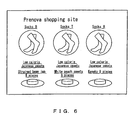
- Figure 6 is an example of a screen (screen of a merchandise list) of the shopping site displayed on the user's terminal device 22.
- This screen of a merchandise list and each of the below-mentioned screens are provided by a screen providing unit 213 of the server 21 to the terminal device 22 in, for example, HTML or XML, etc. in accordance with a click operation, etc. by a user.
- the screen is shifted to a screen for confirming the purchasing merchandise.
- the user confirms that the merchandise put in the shopping cart is certainly one box of "low calories Japanese sweets, strained bean jam (8 pieces)" and two pairs of "socks B," and in the case of ordering these items, the user clicks the letter "To ordering screen” in the lower part of the screen for confirming the purchasing merchandise.
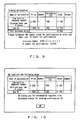
- the display screen of the terminal device 22 is shifted to the ordering screen shown in Figure 9. Note here that price, etc. shown in Figure 8 or 9 is calculated by a billing unit 218 of the server 21.
- the purchasing merchandise information is displayed, and in the lower part of the screen, the letter "Please telephone the number below for confirmation of order and input your ID number for confirmation" and the telephone number and the ID number for confirmation are displayed.
- This ID number for confirmation is determined by allowing a random number generating part 216 to generate random numbers and is sent to the user's terminal device 22 together with the telephone number for confirming the ID number.
- the ID number for confirmation is stored in an authentication information storage part 214 in the server 21 together with the name of the user who sends the ID number for confirmation (first authentication requester information), or together with information (for example, E-mail address, user's ID etc.
- the telephone number for confirming ID number is a telephone number of a modem 24 connected to the server 21.
- the user telephones the number displayed on the ordering screen by using the portable telephone 23.
- the server 21 receives a telephone call from the portable telephone 23 by the modem 24, it obtains and stores the telephone number of the portable telephone 23 from a calling telephone number notification service provided by a telephone network (not shown).
- the user inputs the ID number for confirmation displayed on the screen of the terminal device 22 from the keys of the portable telephone 23.
- the server 21 of the service provider is connected also to a server 26 (user management device) of a telephone company via a private line 27.
- the private line 27 is used only for the communication between the server 21 and the server 26 and no one can access the server 26 from, for example, the terminal device 22, etc. via the server 21.
- the authentication unit 217 of the server 21 accesses the server 26 via this private line 27 and obtains the "user's name (second authentication requester information obtaining unit)" and "address" of the portable telephone as the user information of the portable telephone 23.
- the server 21 identifies the user corresponding to the ID number for confirmation by referring to the authentication information storage part 214 (if necessary, the user information storage unit 212) based on the ID number for confirmation sent from the portable telephone 23, and if the "user's name" which the user has registered in the user information storage unit 212 agrees with the "user's name" of the portable telephone 23 that the authentication unit 217 obtains from the server 26 of the telephone company, the server 21 displays a final confirmation screen as shown in Figure 10 in the user's terminal device 22.
- the user information sent from the server 21 of the service provider to the terminal device 22 is only the user's family name.
- the user confirms a display "We charge you for merchandise together with telephone charge for sending confirmation ID.” on this final confirmation screen and clicks an "OK" button.
- the ordering of merchandise performed from the terminal device 22 to the server 21 is established.
- the server 21 of the service provider When the server 21 of the service provider receives the confirmed order of merchandise, it requests a distribution system (not shown in the drawing) to ship the ordered merchandise. Furthermore, the billing unit 218 of the server 21 sends information such as a purchase price of the merchandise to the server 26 of the telephone company via the private line 27 so that the telephone company can draw the purchase price of the merchandise from a bank account that the user has registered as an payment account for the telephone charge. The telephone company draws the price of merchandise purchased on the shopping site of the server 21 together with the toll of the portable telephone from the user's bank account for the portable telephone 23.
- the user sends the ID number for confirmation, which was sent from the server 21, to the server 21 by using the portable telephone 23.
- the server 21 uses the telephone number of the modem of the server 26 of the telephone company instead of the server 21 of the shopping site as the telephone number for confirming ID number sent to the user's terminal device 22 together with the ID number for confirmation.
- the server 21 sends the ID number for confirmation determined by the random number generating unit 216 to the user and also to the server 26 of the telephone company together with the user's name.
- the user sends the ID number for confirmation sent by the server 21 to the server 26 of the telephone company via the portable telephone 23.
- the server 26 of the telephone company checks the name that is registered as a user of the portable telephone 23 with the user's name sent from the server 21 together with the confirmation ID number based on the received telephone number of the portable telephone 23, thereby confirming whether or not the user is a real person. Note here that in the case where the authentication of the user is performed by this method, the configuration corresponding to the authentication storage unit 214 and the authentication unit 217 of the server 21 is necessary for the side of the server 26.
- the on-line shopping system of this embodiment since the user need not input a credit card number or personal identification code, the user can make a payment by a easy procedure. Furthermore, since the credit card number or identification code does not appear on the Internet, these secret data are not known to the third person, thus enabling high safety to be secured.
- this embodiment employs the configuration in which the server 21 is connected to the server 26 via the private line 27.
- data exchanged between the server 21 and the server 26 include the user's telephone number of the portable telephone and the name and address of the user of the telephone number, the secrecy degree may be thought to be lower as compared with data such as credit card number or its identification code which may cause a monetary damage if they are known to a malicious third person.
- the server 21 may be connected to the server 26 via a public line and the data are exchanged in a state in which they are encoded.
- FIG 11 is a block diagram showing a configuration of an on-line shopping system according to a third embodiment of the present invention.
- reference numeral 31 denotes a server of a service provider of a shopping site; 32 denotes a terminal device of a service user; 33 denotes a portable telephone; 34 denotes a modem of the server 31; and 35 denotes the Internet.
- the on-line shopping system according to this embodiment is different from the on-line shopping system according to the second embodiment in that the server 31 of the shopping site is connected to a server 36 of a credit card issuing company.
- the service user accesses the shopping site of the server 31 from the terminal device 32 via the Internet 35.
- the service user registers in advance the user information such as a name, address and E-mail address, etc. in the user information storage unit 312 of the server 31.
- the user browses the shopping site to look for merchandise. That is, as in the second embodiment, the user selects merchandise to purchase from the merchandise displayed on the screen of a merchandise list as shown in Figure 6 and puts it into a shopping cart.
- the display screen of the terminal device 32 is shifted to the ordering screen shown in Figure 9.
- the price, etc. shown in the display screen of Figure 8 or 9 is calculated by a billing unit 318 of the server 31.
- the purchasing merchandise information is displayed, and in the lower part of the screen, the letter "Please telephone the number below for confirmation of order and input your ID number for confirmation" and the telephone number and the ID number for confirmation are displayed.
- This ID number for confirmation is determined by allowing a random number generating part 316 to generate random numbers and is sent to the user's terminal device 32 together with the telephone number for confirming the ID number.
- the ID number for confirmation is stored also in an authentication information storage unit 314 in the server 31.
- the telephone number for confirming the ID number is a telephone number of the modem 34 connected to the server 31.
- the user telephones the number displayed on the ordering screen by using the portable telephone 33.
- the server 31 receives a telephone call from the portable telephone 33 by the modem 34, it obtains the telephone number of the portable telephone 33 from a calling telephone number notification service provided by a telephone network (not shown) and stores the obtained telephone number in the authentication information storage unit 314.
- the user inputs the ID number for confirmation displayed on the screen of the terminal device 32 by using keys of the portable telephone 33.
- the server 31 of the service provider confirms the content of the purchasing merchandise based on the input ID number for confirmation. Furthermore, the server 31 replays a voice message for requesting to input the credit card number and identification code like "Input your credit card number. After inputting the credit card number, push a # (sharp) key. Next, input your identification code. After inputting the identification code, push a # (sharp) key.” to the portable telephone 33 via the modem 34. The user inputs the credit card number and the identification code from the portable telephone 33 in accordance with the voice message. These input data are sent to a credit information receiving unit 315 of the server 31 via the modem 34.
- the authentication unit 317 of the server 31 inquires the credit card number and identification code received in the credit information receiving unit 315 for the server 36 of the credit card issuing company (user management device). When there is no problem, the authentication unit 317 requests the portable telephone 33 to input the purchase price with by a voice message: "Input the purchase price. After inputting the purchase price, push a # (sharp) key.”
- the user inputs the total purchase price shown in the ordering screen (see Figure 9) displayed on the terminal device 32 from keys of the portable telephone 33.
- the billing unit 318 checks the price input from the portable telephone 33 with the price of the purchasing merchandise information, and if the prices agree with each other, the server 31 sends a voice message like "Total price of the merchandise you have purchased is 5150 yen. We would charge it to your designated credit card" to the portable telephone 33 via the modem 34 and terminates the call.
- the server 31 of the service provider indicates a distribution system (not shown in the drawing) to ship the ordered merchandise. Furthermore, the billing unit 318 of the server 31 sends a bill for the purchased merchandise with respect to the credit card designated by the user to the server 36 of the credit card issuing company.
- the inquiry was carried out by using only the credit card number and identification code.
- the server of the telephone company is connected to the server 31 of the service provider as in the second embodiment, and the authentication unit 317 inquires the name of the member of the credit card and the name of the holder of the telephone that sent the ID number for confirmation to confirm whether or not the both agree with each other, thus enabling the authentication of the user to be performed with higher certainty.
- the confirmation information such as an ID number for confirmation and credit card number, etc. were sent from the portable telephone 33 to the server 31, however, as explained in the second embodiment, these confirmation information and purchase price may directly be sent by the user from the portable telephone 33 to the server 36.
- the user need not input the credit card number or identification code into the terminal device connected to the Internet, it is possible to carry out a shopping on the Internet safely while maintaining the high security. Furthermore, since the servers for exchanging the data such as credit card number of identification code are connected via the private line, these secret data are not known to the third person, thus enabling high safety to be secured.
- the exchanging of the secret data such as password between the user and the server is performed by using the communication means other than the Internet, it is possible to provide an on-line system capable of preventing the wrongdoing such as pretending in a simple way.
Landscapes
- Engineering & Computer Science (AREA)
- Computer Security & Cryptography (AREA)
- Business, Economics & Management (AREA)
- Accounting & Taxation (AREA)
- Computer Networks & Wireless Communication (AREA)
- Theoretical Computer Science (AREA)
- General Engineering & Computer Science (AREA)
- Computer Hardware Design (AREA)
- Finance (AREA)
- General Physics & Mathematics (AREA)
- Computing Systems (AREA)
- Physics & Mathematics (AREA)
- Signal Processing (AREA)
- General Business, Economics & Management (AREA)
- Strategic Management (AREA)
- Software Systems (AREA)
- Telephonic Communication Services (AREA)
Abstract
When a network connection request is sent from a user's personal
computer (2) to a server (1) on the Internet (5), the server (1) sends an
authentication confirmation number generated by a random number
generating unit (13) to the personal computer (2) of the connection requester.
The connection requester connects a portable telephone (3) to a modem (4)
and enters the authentication confirmation number displayed on the personal
computer (2) through operation of keys of the portable telephone (3). An
authentication unit (16) authenticates the connection request of the
connection requester to set up connection to the network if the telephone
number of the portable telephone (3) stored in a user information storage unit
(12) agrees with the telephone number sent to the modem (4) and if the
authentication confirmation number entered through the portable telephone
(3) is correct.
Description
The present invention relates to a method for identifying and
authenticating a user of a terminal when the terminal is connected to a
network such as the Internet or an intranet.
When making a connection to the Internet, there is employed the
following method (referred to as "a password method") in which a user
contracts with the Internet service provider (referred to as a "provider,"
hereinafter) and determines a user number and a password in advance, and
at the time of connecting, the user inputs the user number and the password.
Thereby the provider identifies the user and authorizes connection to the
Internet.
In a service of transferring money such as a bank transfer on the
Internet, a method of identifying a user by the use of a random numbers table
(referred to as "a random numbers table method") is performed. In this
method, a user number and a password are determined between a user and a
service providing institution such as a bank, and a random numbers table is
given to the user by the service providing institution. When the user inputs
the user number and password at the time of using the service, the user is
requested to input a number in a box in the random numbers table by the
service providing institution. When it is confirmed that the number input by
the user agrees with the number in the random numbers table, the user can
be provided with the service.
Furthermore, in connection to an intra-company LAN via the
Internet, or connection to an intra-company LAN by a dial-up remote access
such as ISDN etc. via a public line, an authentication method referred to as a
one-time password method is employed. The user, who was given a
password generating device from the service provider, inputs a user number
and a password displayed on the password generating device. When the
password input by the user agrees with the password in the server at the side
of the service provider, the connection is authorized.
In the password method, the password determined between the
service provider and the user is fixed and used many times. Therefore, if the
user number and the password are known to the third person, there may be a
problem of wrongdoing called "pretending" in which the third person pretends
to be the user in person and makes a connection to the Internet illegally by
using the user number and the password and receives various services.
In the random numbers table method or the one-time password
method, although the safety of security is higher than the password method,
a user always has to carry the random numbers table or password generating
method, and therefore such methods are troublesome methods for the user.
It is an object of the present invention to provide a network system
capable of authenticating a user easily and securely without requesting the
user to use a special device or to do a complicated operation.
In order to achieve the above-mentioned object, a method for
authenticating a user, by which a server device of a service provider
authenticates a service user on a network includes a confirmation
information issuing step including receiving an authentication request from a
first communication device of the service user, and then generating a
confirmation information to be replied to the first communication device; and
an authentication step of judging whether or not the confirmation
information replied to the first communication device agrees with the
confirmation information sent from the service user by a second
communication device using a communication path that is different from a
communication path of the first communication device.
As the first communication device, a computer, etc. connected to the
server device via the Internet can be used, and as the second communication
device, a telephone, etc. can be used. Thus, without requiring the user to use
a special device or to do a complicated operation, it is possible to provide a
network system with a high security level, which can authenticate a user
easily and reliably.
It is preferable that the method for authenticating a user further
includes steps of: obtaining first authentication requester information about a
service user who makes the authentication request based on the information
contained in the authentication request received from the first
communication device; and obtaining second authentication requester
information about the service user when receiving confirmation information
from the second communication device and judging whether or not the first
authentication requester information agrees with the second authentication
requester information. According to this method, in addition to the check of
the confirmation information, since the check of the first and the second
authentication requester information is carried out, the security level can be
improved further.
In the above-mentioned method for authenticating a user, it is
preferable that the first communication device is a computer connected to the
server device of the service provider via the Internet, the second
communication device is a telephone, the first authentication requester
information is a telephone number registered in advance in the server device
by each service user, and the second authentication requester information is a
telephone number of the second communication device, and the telephone
number is obtained from a calling telephone number notification service
provided by a telephone network.
In the above-mentioned method for authenticating a user, it is
preferable that the first communication device is a computer connected to the
server device of the service provider via the Internet, the second
communication device is a telephone, the first authentication requester
information is a user's name registered in advance in the server device by
each service user, and the second authentication requester information is a
user's name of the second communication device registered in a telephone
company.
In the above-mentioned method for authenticating a user, it is
preferable that the second authentication requester information is obtained
by performing an inquiry to the user management device of the telephone
company providing the second communication device based on the telephone
number of the second communication device obtained by the calling telephone
number notification service provided by the telephone network.
In the above-mentioned method for authenticating a user, it is
preferable that when it is judged that the first authentication requester
information agrees with the second authentication requester information, a
toll of the service used by the service user is collected from the service user's
bank account from which telephone charges are drawn.
In the above-mentioned method for authenticating a user, it is
preferable that the server device of the service provider sends the
confirmation information replied in the confirmation information issuing step
to the user management device of the telephone company and allows the user
management device of the telephone company to execute the authentication
step.
In the above-mentioned method for authenticating a user, it is
preferable that the first communication device is a computer connected to the
server device of the service provider via the Internet, and the second
communication device is a telephone, the method further includes, in the
authentication step after it is judged that the confirmation information
replied to the first communication device agrees with the confirmation
information sent from the service user by the second communication device, a
step of receiving credit card information of the service user from the second
communication device and charging the service user based on the received
credit card information.
In the above-mentioned method for authenticating a user, it is
preferable that the server device of the service provider sends the
confirmation information replied in the confirmation information issuing step
to the server device of a credit card company, and allowing the server device of
the credit card company to execute the authentication step.
It is preferable that the above-mentioned method for authenticating
a user further includes steps of obtaining a telephone number of the second
communication device from the calling telephone number notification service
provided by the telephone network; obtaining a user's name of the second
communication device from the user management device of the telephone
company based on the obtained telephoned number, and judging whether or
not the user's name of the credit card obtained from the user management
device of the credit card company agrees with the user's name of the second
communication device obtained by the user management device of the
telephone company.
In the above-mentioned method for authenticating a user, it is
preferable that characters or numbers generated randomly or the
combination thereof are used as the confirmation information.
Furthermore, in order to achieve the above-mentioned object, the
authentication method of the present invention includes an external
connection unit for receiving an authentication request from a first
communication device of a service user, a confirmation information
generating unit for generating confirmation information to be replied to the
first communication device, a confirmation information storage unit for
storing the confirmation information replied to the first communication
device, a confirmation information receiving unit for receiving the
confirmation information sent by the service user from the second
communication device using a communication path that is different from a
communication path of the first communication device, and an authentication
unit for judging whether or not the confirmation information received by the
confirmation information receiving unit agrees with the confirmation
information stored in the confirmation information storing unit.
It is preferable that the authentication device further includes a first
authentication requester information obtaining unit for obtaining a first
authentication requester information about a service user who makes the
authentication request based on the information contained in the
authentication request received from the first communication device; and a
second authentication requester information obtaining unit for obtaining the
second authentication requester information about the service user when
receiving the confirmation information from the second communication
device, wherein the authentication unit also judges whether or not the first
authentication requester information agrees with the second authentication
requester information.
In the above-mentioned authentication device, it is preferable that
the first communication device is a computer connected to the server device of
the service provider via the Internet, and the second communication device is
a telephone; the user authentication device further includes a first
authentication requester information registering unit for storing a telephone
number of the telephone used by each service user as the second
communication device as the first authentication requester information; and
the second authentication requester information is a telephone number of the
second communication device, and the second authentication requester
information obtaining unit obtains the second authentication requester
information from a calling telephone number notification service provided by
a telephone network.
In the above-mentioned authentication device, it is preferable that
the first communication device is a computer connected to the server device of
the service provider via the Internet, and the second communication device is
a telephone; the user authentication device further includes a first
authentication requester information registering unit for storing a name of
each service user as the first authentication requester information, the second
authentication requester information is the name of the user of the second
communication device registered in the telephone company, and the second
authentication requester information obtaining unit obtains the user's name
from the user management device of the telephone company.
In the above-mentioned authentication device, it is preferable that
the second authentication requester information obtaining unit obtains a
telephone number of the second communication device from the calling
telephone number notification service provided by the telephone network and
performs inquiry to the user management device of the telephone company
based on the obtained telephone number, thereby obtaining the second
authentication requester information.
In the above-mentioned authentication device, it is preferable that
the first communication device is a computer connected to the server device of
the service provider via the Internet and the second communication device is
a telephone; and the user authentication device further includes a credit
information receiving unit for receiving credit card information of the service
user from the second communication device, and a billing unit for charging
the service user based on the credit card information received by the credit
information receiving unit after it is judged that in the authentication step,
the confirmation information replied to the first communication device agrees
with the confirmation information sent from the service user by the second
communication.
It is preferable that the above-mentioned authentication device
further includes a telephone number obtaining unit for obtaining a telephone
number of the second communication device from the calling telephone
number notification service provided by the telephone network; and a user's
name obtaining unit for obtaining the name of the user of the second
communication device from the user management device of the telephone
company based on the obtained telephone number, wherein the
authentication unit judges whether or not the user's name of the credit card
obtained from the user management device of the credit card company agrees
with the user's name of the second communication device obtained from the
user management device of the telephone company.
In the above-mentioned authentication device, it is preferable that
characters or numbers generated randomly or the combination thereof are
used as the confirmation information.
Hereinafter, one embodiment of the present invention will be
explained with reference to the drawings.
Herein, a SOHO (small office home office) user who works at home by
connecting a home personal computer to a server of a company via a public
line such as ISDN, etc. will be explained as an example. That is, in this
example, the company is a service provider and the SOHO user is a service
user.
Figure 1 is a block diagram showing a schematic configuration of a
network system according to this embodiment. In Figure 1, reference
numeral 1 denotes a server of a LAN in an office of the company; 2 denotes a
personal computer (first communication device) used by a user at home, etc.;
3 denotes a portable telephone (second communication device) of a user; and 4
denotes a modem for the server 1. The user accesses the server 1 of the
office from the personal computer 2 via the Internet 5. Note here that a
telephone network between the portable telephone 3 and the modem 4 is
omitted in this drawing. Furthermore, LAN, etc. to which the server 1 is
connected also is omitted in the drawing.
In order to make a connection to the system of the office, the user
registers in advance a user number and password uniquely provided to each
user, and a telephone number (herein, a telephone number of the portable
telephone 3) for performing an authentication confirmation procedure in a
user information storage unit 12 of the server 1 of the office.
Hereinafter, the procedure in which the user receives an
authentication of access to the server 1 of the office from the home personal
computer 2 will be explained with reference to a flowchart shown in Figure 2.
A user starts up the home personal computer 2 and accesses the
server 1 provided in the office via the Internet 5 (step U1). When a
connection between the user's personal computer 2 and the server 1 is
established, a request to input "user number" and "password" is sent from the
server 1 to the user's personal computer 2 (step S1).
At this time, as shown in Figure 3, an input screen is displayed on a
display of the personal computer 2, and the user inputs a user number
("ARK00750" in an example of Figure 3) and a password in accordance with
the request to input (step U2). Note here that the input password is
displayed by asterisks, but herein it is assumed that "ADLN01" is input as a
password. Then, when the user clicks a sending button displayed on the
input screen, the user number and the password input by the user are sent
from the personal computer 2 to the server 1.
In the server 1, an external connection unit 11 receives the user
number and the password sent from the personal computer 2. Then, an
authentication unit 16 inquires whether or not the user number and the
password received by the external connection unit 11 agree with the user
number and the password registered in a user information storage unit 12 in
advance (step S2).
If it can be confirmed that the sent user number and password agree
with the user number and password registered in advance, the authentication
unit 16 allows a random number generating unit 13 (confirmation
information generating unit) to generate random numbers and the random
numbers are sent as a confirmation number (confirmation information) to the
user's personal computer 2 (step S3). For example, the random numbers
generated by the random generating unit 13 is, for example, "4756," and the
confirmation number "4756" is sent to the user's personal computer 2.
Herein, the authentication unit 16 stores the user number
"ARK00750" and password "ADLN01" received in the step S2, the
confirmation number "4756" issued in the step S3, and the telephone number
"090xxxxyyyy" for confirming the user's authentication number in a
confirmation number storage unit 14 (confirmation information storage unit)
as confirmation number issuing information (step S4). Note here that the
telephone number for confirming the authentication number was registered
in advance in the user information storage unit 12 by the user, and it is
obtained from the user information storage unti l2 by the authentication unit
16 and stored in the confirmation number storage unit 14.
That is, in this embodiment, the telephone number of the portable
telephone 3 is used as a first authentication requester information and the
user information storage unit 12 plays a role of the first authentication
requester information registering unit. Furthermore, as mentioned below, a
telephone number obtained from a calling telephone number notification
service is used as a second authentication requester information; and the
authentication unit 16 functions as a first authentication requester
information obtaining unit.
When the user's personal computer 2 receives the confirmation
number "4756" from the server 1, it displays the confirmation number "4756"
on the screen as shown in Figure 4 (step U3). The user telephones a
telephone number designated in advance in order to access the confirmation
number receiving unit 15 of the server 1 by using the portable telephone 3
(telephone number: 090xxxxyyyy) (step U4).
When the confirmation number receiving unit 15 of the server 1
responds to the telephone from the user, it obtains the telephone number of
the caller's portable telephone 3 from the calling telephone number
notification service provided by a telephone network (not shown) so as to be
stored (step S5). That is, in this embodiment, the confirmation number
receiving unit 15 functions as the second authentication requester
information obtaining unit. Furthermore, the confirmation number
receiving unit 15 sends a voice message such as "input the confirmation
number replied from the server" to the portable telephone 3 (step S6).
Herein, the user inputs the confirmation number sent from the server
1 to the personal computer 2 as mentioned above by pushing key buttons "4,"
"7," "5," and "6" by using the keys of the portable telephone 3 (step U5).
When the confirmation number receiving unit 15 receives the
confirmation number "4756" from the portable number 3, it sends the
received confirmation number and the telephone number "090xxxxyyyy" of
the portable telephone 3 obtained in the step S5 to the authentication unit 16
as the user information. Then, the authentication unit 16 compares the user
information sent from the confirmation number receiving unit 15 with the
confirmation number issuing information stored in the confirmation number
storage unit 14 (step S7).
When the authentication unit 16 confirms that the user information
(telephone number "090xxxxyyyy" and confirmation number "4756") obtained
from the confirmation number receiving unit 15 agrees with the telephone
number and the confirmation number stored in the confirmation number
storage unit 14, respectively, it authenticates that the connection request via
the user number (ARK00750) and the password (ADLN01) is sent from the
user in person and authorizes the connection from the personal computer 2 to
the server 1 (step S8). Thereafter, the user can use resources on the LAN in
an office via the server 1.
In the above explanation, the example in which the connection
authentication in the case of accessing the server of the office from the
personal computer was explained. However, the present invention is not
limited to this embodiment, and the same effect can be achieved in applying
this embodiment to a banking operation on the Internet.
Furthermore, in the above mention, the case where a personal
computer is employed as the first communication device used by a user and a
portable telephone is employed as the second communication device is shown
as an example, but the combination of the first and the second
communication devices is not limited to this, and any combinations of
communication devices can be applied as long as the communication device
connects a user to a server via a communication path.
Furthermore, in the case where a user can use a plurality of channels
that are physically in one line, like, for example, ISDN or xDSL, it is possible
to make a connection request from a first communication device (for example,
a personal computer) to a server via any one of channels and from a second
communication device (for example, a telephone line) to a server via another
channel.
Furthermore, in this embodiment, the confirmation number
generated by the random number generating unit was used. However,
besides this, a character string generated randomly or a combination of
characters and numbers, and the like, can be used.
As mentioned above, according to this embodiment, the user need
not carry a password generating device, etc. Furthermore, since the user
exchanges information necessary to the connection authentication such as a
password via a communication method that is not connected to the Internet,
it is possible to prevent wrongdoing such as "pretending," etc. easily.
Furthermore, according to this embodiment, as the second
authentication requester information, the user's telephone number is used
and this telephone number is obtained from a calling telephone number
notification service, making it difficult for the third person to pretend to be
the user in person. Thus, it is possible to prevent the wrongdoing reliably.
Hereinafter, the second embodiment of the present invention will be
explained.
Figure 5 is a block diagram showing a schematic view showing an
on-line shopping system according to this embodiment.
A service user accesses a homepage of a service provider running a
shopping site from a terminal device 22 via the Internet 5. This homepage is
provided by a server 21 of the service provider. Note here that a service user
registers in advance user information such as name, address and E-mail
address, etc. in a user information storage unit 212 (first authentication
requester information registering unit) of the server 21.
The user browses the shopping site to look for merchandise. Figure
6 is an example of a screen (screen of a merchandise list) of the shopping site
displayed on the user's terminal device 22. This screen of a merchandise list
and each of the below-mentioned screens are provided by a screen providing
unit 213 of the server 21 to the terminal device 22 in, for example, HTML or
XML, etc. in accordance with a click operation, etc. by a user.
In the case where the user intends to purchase, for example, "low
calorie Japanese sweets, strained bean jam (8 pieces)," the user clicks a letter
part of "low calorie Japanese sweets, strained bean jam (8 pieces)" on the
display screen. Thus, the screen is changed into a screen for purchasing
merchandise of "low calorie Japanese sweets, strained bean jam (8 pieces)" in
Figure 7. In this screen, the user inputs the purchasing number of "low
calorie Japanese sweets, strained bean jam (8 pieces)." In an example
shown in Figure 7, "1" is input by the user in a number inputting box. After
inputting the purchasing number of merchandise, the user clicks a letter part
of "put in a shopping cart."
Furthermore, in the case where the other merchandise is purchased,
by clicking the letter part of "merchandise list" on the screen in Figure 7, the
screen returns to the screen of the merchandise list shown in Figure 6.
Herein, the user clicks, for example, a letter part of "socks B" and then screen
is shifted into the screen for purchasing merchandise of "socks B" similar to
mentioned above. Then, the user sets the purchasing number and clicks the
letter part "put in a shopping cart."
When the user clicks "shopping cart" on the lower part of the screen
for purchasing merchandise in Figure 7, the screen is shifted to a screen for
confirming the purchasing merchandise. In this screen, the user confirms
that the merchandise put in the shopping cart is certainly one box of "low
calories Japanese sweets, strained bean jam (8 pieces)" and two pairs of
"socks B," and in the case of ordering these items, the user clicks the letter
"To ordering screen" in the lower part of the screen for confirming the
purchasing merchandise. Thus, the display screen of the terminal device 22
is shifted to the ordering screen shown in Figure 9. Note here that price, etc.
shown in Figure 8 or 9 is calculated by a billing unit 218 of the server 21.
As shown in Figure 9, in the upper part of the ordering screen, the
purchasing merchandise information is displayed, and in the lower part of the
screen, the letter "Please telephone the number below for confirmation of
order and input your ID number for confirmation" and the telephone number
and the ID number for confirmation are displayed. This ID number for
confirmation is determined by allowing a random number generating part
216 to generate random numbers and is sent to the user's terminal device 22
together with the telephone number for confirming the ID number.
Furthermore, the ID number for confirmation is stored in an authentication
information storage part 214 in the server 21 together with the name of the
user who sends the ID number for confirmation (first authentication
requester information), or together with information (for example, E-mail
address, user's ID etc. used for accessing the shopping site) that can be used
as a retrieving key for identifying a user's name from the data stored in the
user information storage unit 212. Note here that the telephone number for
confirming ID number is a telephone number of a modem 24 connected to the
server 21.
The user telephones the number displayed on the ordering screen by
using the portable telephone 23. When the server 21 receives a telephone
call from the portable telephone 23 by the modem 24, it obtains and stores the
telephone number of the portable telephone 23 from a calling telephone
number notification service provided by a telephone network (not shown).
When the telephone is connected to the server 21, the user inputs the ID
number for confirmation displayed on the screen of the terminal device 22
from the keys of the portable telephone 23.
Note here that as shown in Figure 5, the server 21 of the service
provider is connected also to a server 26 (user management device) of a
telephone company via a private line 27. Note here that the private line 27
is used only for the communication between the server 21 and the server 26
and no one can access the server 26 from, for example, the terminal device 22,
etc. via the server 21. The authentication unit 217 of the server 21 accesses
the server 26 via this private line 27 and obtains the "user's name (second
authentication requester information obtaining unit)" and "address" of the
portable telephone as the user information of the portable telephone 23.
Furthermore, the server 21 identifies the user corresponding to the
ID number for confirmation by referring to the authentication information
storage part 214 (if necessary, the user information storage unit 212) based on
the ID number for confirmation sent from the portable telephone 23, and if
the "user's name" which the user has registered in the user information
storage unit 212 agrees with the "user's name" of the portable telephone 23
that the authentication unit 217 obtains from the server 26 of the telephone
company, the server 21 displays a final confirmation screen as shown in
Figure 10 in the user's terminal device 22. Herein, the user information sent
from the server 21 of the service provider to the terminal device 22 is only the
user's family name. Thus, as shown in Figure 10, since the user's name is
displayed as an addressee's name on the left upper part of the final
confirmation screen, the user can confirm that the user in person is
recognized as a purchaser correctly. Furthermore, by sending only the
family name from the server 21 to the terminal device 22, it is possible to
minimize the individual information appearing on the Internet, thus enabling
the security to be improved.
The user confirms a display "We charge you for merchandise
together with telephone charge for sending confirmation ID." on this final
confirmation screen and clicks an "OK" button. Thus, the ordering of
merchandise performed from the terminal device 22 to the server 21 is
established.
When the server 21 of the service provider receives the confirmed
order of merchandise, it requests a distribution system (not shown in the
drawing) to ship the ordered merchandise. Furthermore, the billing unit 218
of the server 21 sends information such as a purchase price of the
merchandise to the server 26 of the telephone company via the private line 27
so that the telephone company can draw the purchase price of the
merchandise from a bank account that the user has registered as an payment
account for the telephone charge. The telephone company draws the price of
merchandise purchased on the shopping site of the server 21 together with
the toll of the portable telephone from the user's bank account for the portable
telephone 23.
In this embodiment, the case where the merchandise is purchased at
one shopping site was explained. However, when merchandise is purchased
at a plurality of shopping sites, by issuing ID for confirmation at each
shopping site, the intention to purchase may be confirmed at each shopping
site.
Furthermore, in the above-mentioned example, the user sends the ID
number for confirmation, which was sent from the server 21, to the server 21
by using the portable telephone 23. However, besides this example, it may
be possible to authenticate a user by the following methods. That is, the
server 21 uses the telephone number of the modem of the server 26 of the
telephone company instead of the server 21 of the shopping site as the
telephone number for confirming ID number sent to the user's terminal
device 22 together with the ID number for confirmation. Furthermore, the
server 21 sends the ID number for confirmation determined by the random
number generating unit 216 to the user and also to the server 26 of the
telephone company together with the user's name. Then, the user sends the
ID number for confirmation sent by the server 21 to the server 26 of the
telephone company via the portable telephone 23. Then, the server 26 of the
telephone company checks the name that is registered as a user of the
portable telephone 23 with the user's name sent from the server 21 together
with the confirmation ID number based on the received telephone number of
the portable telephone 23, thereby confirming whether or not the user is a
real person. Note here that in the case where the authentication of the user
is performed by this method, the configuration corresponding to the
authentication storage unit 214 and the authentication unit 217 of the server
21 is necessary for the side of the server 26.
As mentioned above, according to the on-line shopping system of this
embodiment, since the user need not input a credit card number or personal
identification code, the user can make a payment by a easy procedure.
Furthermore, since the credit card number or identification code does not
appear on the Internet, these secret data are not known to the third person,
thus enabling high safety to be secured.
Note here that this embodiment employs the configuration in which
the server 21 is connected to the server 26 via the private line 27. However,
since data exchanged between the server 21 and the server 26 include the
user's telephone number of the portable telephone and the name and address
of the user of the telephone number, the secrecy degree may be thought to be
lower as compared with data such as credit card number or its identification
code which may cause a monetary damage if they are known to a malicious
third person. In such a case, it is not necessary to use a private line, for
example, the server 21 may be connected to the server 26 via a public line and
the data are exchanged in a state in which they are encoded.
Figure 11 is a block diagram showing a configuration of an on-line
shopping system according to a third embodiment of the present invention.
In Figure 11, reference numeral 31 denotes a server of a service provider of a
shopping site; 32 denotes a terminal device of a service user; 33 denotes a
portable telephone; 34 denotes a modem of the server 31; and 35 denotes the
Internet. The on-line shopping system according to this embodiment is
different from the on-line shopping system according to the second
embodiment in that the server 31 of the shopping site is connected to a server
36 of a credit card issuing company.
The service user accesses the shopping site of the server 31 from the
terminal device 32 via the Internet 35. Note here that the service user
registers in advance the user information such as a name, address and
E-mail address, etc. in the user information storage unit 312 of the server 31.
The user browses the shopping site to look for merchandise. That is,
as in the second embodiment, the user selects merchandise to purchase from
the merchandise displayed on the screen of a merchandise list as shown in
Figure 6 and puts it into a shopping cart.
After selection of the merchandise, the user clicks "shopping cart" in
the lower part of the screen for purchasing merchandise as shown in Figure 7
and the screen is shifted into a screen for confirming the purchase
merchandise as shown in Figure 8. Herein, the user confirms the
merchandise put in the shopping cart and in the case of ordering these
merchandise, the user clicks "To ordering screen" in the lower part of the
screen for confirming the purchasing merchandise. Thus, the display screen
of the terminal device 32 is shifted to the ordering screen shown in Figure 9.
Note here that the price, etc. shown in the display screen of Figure 8 or 9 is
calculated by a billing unit 318 of the server 31.
As shown in Figure 9, in the upper part of the ordering screen, the
purchasing merchandise information is displayed, and in the lower part of the
screen, the letter "Please telephone the number below for confirmation of
order and input your ID number for confirmation" and the telephone number
and the ID number for confirmation are displayed. This ID number for
confirmation is determined by allowing a random number generating part
316 to generate random numbers and is sent to the user's terminal device 32
together with the telephone number for confirming the ID number.
Furthermore, the ID number for confirmation is stored also in an
authentication information storage unit 314 in the server 31. Note here that
the telephone number for confirming the ID number is a telephone number of
the modem 34 connected to the server 31.
The user telephones the number displayed on the ordering screen by
using the portable telephone 33. When the server 31 receives a telephone
call from the portable telephone 33 by the modem 34, it obtains the telephone
number of the portable telephone 33 from a calling telephone number
notification service provided by a telephone network (not shown) and stores
the obtained telephone number in the authentication information storage
unit 314. When the telephone is connected to the server 31, the user inputs
the ID number for confirmation displayed on the screen of the terminal device
32 by using keys of the portable telephone 33.
The server 31 of the service provider confirms the content of the
purchasing merchandise based on the input ID number for confirmation.
Furthermore, the server 31 replays a voice message for requesting to input
the credit card number and identification code like "Input your credit card
number. After inputting the credit card number, push a # (sharp) key.
Next, input your identification code. After inputting the identification code,
push a # (sharp) key." to the portable telephone 33 via the modem 34. The
user inputs the credit card number and the identification code from the
portable telephone 33 in accordance with the voice message. These input
data are sent to a credit information receiving unit 315 of the server 31 via
the modem 34.
The authentication unit 317 of the server 31 inquires the credit card
number and identification code received in the credit information receiving
unit 315 for the server 36 of the credit card issuing company (user
management device). When there is no problem, the authentication unit 317
requests the portable telephone 33 to input the purchase price with by a voice
message: "Input the purchase price. After inputting the purchase price,
push a # (sharp) key."
Herein, the user inputs the total purchase price shown in the
ordering screen (see Figure 9) displayed on the terminal device 32 from keys
of the portable telephone 33. In the server 31 of the service provider, the
billing unit 318 checks the price input from the portable telephone 33 with
the price of the purchasing merchandise information, and if the prices agree
with each other, the server 31 sends a voice message like "Total price of the
merchandise you have purchased is 5150 yen. We would charge it to your
designated credit card" to the portable telephone 33 via the modem 34 and
terminates the call.
The server 31 of the service provider indicates a distribution system
(not shown in the drawing) to ship the ordered merchandise. Furthermore,
the billing unit 318 of the server 31 sends a bill for the purchased
merchandise with respect to the credit card designated by the user to the
server 36 of the credit card issuing company.
In this embodiment, the inquiry was carried out by using only the
credit card number and identification code. However, the server of the
telephone company is connected to the server 31 of the service provider as in
the second embodiment, and the authentication unit 317 inquires the name of
the member of the credit card and the name of the holder of the telephone
that sent the ID number for confirmation to confirm whether or not the both
agree with each other, thus enabling the authentication of the user to be
performed with higher certainty.
Furthermore, in this embodiment, the confirmation information such
as an ID number for confirmation and credit card number, etc. were sent from
the portable telephone 33 to the server 31, however, as explained in the
second embodiment, these confirmation information and purchase price may
directly be sent by the user from the portable telephone 33 to the server 36.
Thus, according to this embodiment, the user need not input the
credit card number or identification code into the terminal device connected
to the Internet, it is possible to carry out a shopping on the Internet safely
while maintaining the high security. Furthermore, since the servers for
exchanging the data such as credit card number of identification code are
connected via the private line, these secret data are not known to the third
person, thus enabling high safety to be secured.
According to the present invention, since the exchanging of the secret
data such as password between the user and the server is performed by using
the communication means other than the Internet, it is possible to provide an
on-line system capable of preventing the wrongdoing such as pretending in a
simple way.
Claims (19)
- A method for authenticating a user by which a server device of a service provider authenticates a service user on a network, the method comprising:a confirmation information issuing step including receiving an authentication request from a first communication device of the service user, and then generating a confirmation information to be replied to the first communication device; andan authentication step of judging whether or not the confirmation information replied to the first communication device agrees with the confirmation information sent from the service user by a second communication device using a communication path that is different from a communication path of the first communication device.
- The method for authenticating a user according to claim 1, further comprising steps of:obtaining first authentication requester information about a service user who makes the authentication request based on the information contained in the authentication request received from the first communication device; andobtaining second authentication requester information about the service user when receiving confirmation information from the second communication device and judging whether or not the first authentication requester information agrees with the second authentication requester information.
- The method for authenticating a user according to claim 2, wherein
the first communication device is a computer connected to the server device of the service provider via the Internet,
the second communication device is a telephone,
the first authentication requester information is a telephone number registered in advance in the server device by each service user, and
the second authentication requester information is a telephone number of the second communication device, and the telephone number is obtained from a calling telephone number notification service provided by a telephone network. - The method for authenticating a user according to claim 2, wherein
the first communication device is a computer connected to the server device of the service provider via the Internet,
the second communication device is a telephone,
the first authentication requester information is a user's name registered in advance in the server device by each service user, and
the second authentication requester information is a user's name of the second communication device registered in a telephone company. - The method for authenticating a user according to claim 4, wherein the second authentication requester information is obtained by performing an inquiry to the user management device of the telephone company providing the second communication device based on the telephone number of the second communication device obtained by the calling telephone number notification service provided by the telephone network.
- The method for authenticating a user according to claim 4 or 5, wherein when it is judged that the first authentication requester information agrees with the second authentication requester information, a toll of the service used by the service user is collected from the service user's bank account from which telephone charges are drawn.
- The method for authenticating a user according to claim 6, wherein the server device of the service provider sends the confirmation information replied in the confirmation information issuing step to the user management device of the telephone company and allows the user management device of the telephone company to execute the authentication step.
- The method for authenticating a user according to claim 1, wherein
the first communication device is a computer connected to the server device of the service provider via the Internet, and the second communication device is a telephone,
the method further comprises, in the authentication step after it is judged that the confirmation information replied to the first communication device agrees with the confirmation information sent from the service user by the second communication device, a step of receiving credit card information of the service user from the second communication device and charging the service user based on the received credit card information. - The method for authenticating a user according to claim 8, wherein the server device of the service provider sends the confirmation information replied in the confirmation information issuing step to the server device of a credit card company, and allowing the server device of the credit card company to execute the authentication step.
- The method for authenticating a user according to claim 8, further comprising steps of:obtaining a telephone number of the second communication device from the calling telephone number notification service provided by the telephone network;obtaining a user's name of the second communication device from the user management device of the telephone company based on the obtained telephoned number, andjudging whether or not the user's name of the credit card obtained from the user management device of the credit card company agrees with the user's name of the second communication device obtained by the user management device of the telephone company.
- The method for authenticating a user according to any one of claims 1 to 10, wherein characters or numbers generated randomly or the combination thereof are used as the confirmation information.
- An authentication device comprising:an external connection unit for receiving an authentication request from a first communication device of a service user,a confirmation information generating unit for generating confirmation information to be replied to the first communication device,a confirmation information storage unit for storing the confirmation information replied to the first communication device,a confirmation information receiving unit for receiving the confirmation information sent by the service user from the second communication device using a communication path that is different from a communication path of the first communication device, andan authentication unit for judging whether or not the confirmation information received by the confirmation information receiving unit agrees with the confirmation information stored in the confirmation information storing unit.
- The authentication device according to claim 12, further comprisingwherein the authentication unit also judges whether or not the first authentication requester information agrees with the second authentication requester information.a first authentication requester information obtaining unit for obtaining a first authentication requester information about a service user who makes the authentication request based on the information contained in the authentication request received from the first communication device; anda second authentication requester information obtaining unit for obtaining the second authentication requester information about the service user when receiving the confirmation information from the second communication device,
- The user authentication device according to claim 13, wherein
the first communication device is a computer connected to the server device of the service provider via the Internet, and the second communication device is a telephone;
the user authentication device further comprises a first authentication requester information registering unit for storing a telephone number of the telephone used by each service user as the second communication device as the first authentication requester information; and
the second authentication requester information is a telephone number of the second communication device, and the second authentication requester information obtaining unit obtains the second authentication requester information from a calling telephone number notification service provided by a telephone network. - The user authentication device according to claim 13, wherein
the first communication device is a computer connected to the server device of the service provider via the Internet, and the second communication device is a telephone;
the user authentication device further comprisesa first authentication requester information registering unit for storing a name of each service user as the first authentication requester information,the second authentication requester information is the name of the user of the second communication device registered in the telephone company, and the second authentication requester information obtaining unit obtains the user's name from the user management device of the telephone company. - The user authentication device according to claim 15, wherein the second authentication requester information obtaining unit obtains a telephone number of the second communication device from the calling telephone number notification service provided by the telephone network and performs inquiry to the user management device of the telephone company based on the obtained telephone number, thereby obtaining the second authentication requester information.
- The user authentication device according to claim 12, wherein
the first communication device is a computer connected to the server device of the service provider via the Internet and the second communication device is a telephone; and
the user authentication device further comprisesa credit information receiving unit for receiving credit card information of the service user from the second communication device, anda billing unit for charging the service user based on the credit card information received by the credit information receiving unit after it is judged that, in the authentication step, the confirmation information replied to the first communication device agrees with the confirmation information sent from the service user by the second communication. - The authentication device according to claim 17, further comprisingthe authentication unit judges whether or not the user's name of the credit card obtained from the user management device of the credit card company agrees with the user's name of the second communication device obtained from the user management device of the telephone company.a telephone number obtaining unit for obtaining a telephone number of the second communication device from the calling telephone number notification service provided by the telephone network; anda user's name obtaining unit for obtaining the name of the user of the second communication device from the user management device of the telephone company based on the obtained telephone number, wherein
- The authentication device according to any one of claims 12 to 18, wherein characters or numbers generated randomly or the combination thereof are used as the confirmation information.
Applications Claiming Priority (7)
| Application Number | Priority Date | Filing Date | Title |
|---|---|---|---|
| JP2000372129 | 2000-10-31 | ||
| JP2000372129 | 2000-10-31 | ||
| JP2000372130 | 2000-10-31 | ||
| JP2000372131 | 2000-10-31 | ||
| JP2000372130 | 2000-10-31 | ||
| JP2000372131 | 2000-10-31 | ||
| PCT/JP2001/009500 WO2002037358A1 (en) | 2000-10-31 | 2001-10-30 | User authentication method in network |
Publications (2)
| Publication Number | Publication Date |
|---|---|
| EP1341104A1 true EP1341104A1 (en) | 2003-09-03 |
| EP1341104A4 EP1341104A4 (en) | 2008-01-16 |
Family
ID=27345382
Family Applications (1)
| Application Number | Title | Priority Date | Filing Date |
|---|---|---|---|
| EP01978943A Withdrawn EP1341104A4 (en) | 2000-10-31 | 2001-10-30 | User authentication method in network |
Country Status (6)
| Country | Link |
|---|---|
| US (1) | US7287270B2 (en) |
| EP (1) | EP1341104A4 (en) |
| JP (1) | JPWO2002037358A1 (en) |
| CN (1) | CN1473303A (en) |
| AU (1) | AU2002210969A1 (en) |
| WO (1) | WO2002037358A1 (en) |
Cited By (6)
| Publication number | Priority date | Publication date | Assignee | Title |
|---|---|---|---|---|
| WO2005106617A1 (en) * | 2004-04-30 | 2005-11-10 | Detlef Fesser | Authentication process |
| WO2006103428A3 (en) * | 2005-03-29 | 2006-12-21 | Ess Holding Bvi Ltd | A system and method for communicating messages between users of a system |
| EP1505777A4 (en) * | 2002-05-15 | 2010-04-14 | Softbank Corp | CONNECTION SERVICE PROVIDING SYSTEM AND CONNECTING SERVICE METHOD |
| FR2974471A1 (en) * | 2011-04-19 | 2012-10-26 | Sephira | Method for processing confidential data for permitting physician to access patient-related medicoadministrative service using e.g. smartphone, involves establishing connection between access and service servers |
| WO2012168714A1 (en) * | 2011-06-07 | 2012-12-13 | Validsoft Uk Limited | Transaction authorisation |
| EP2826004A1 (en) | 2012-03-15 | 2015-01-21 | Moqom Limited | Mobile phone takeover protection system and method |
Families Citing this family (60)
| Publication number | Priority date | Publication date | Assignee | Title |
|---|---|---|---|---|
| US7441263B1 (en) * | 2000-03-23 | 2008-10-21 | Citibank, N.A. | System, method and computer program product for providing unified authentication services for online applications |
| US20060095344A1 (en) * | 2000-06-09 | 2006-05-04 | Nakfoor Brett A | System and method for fan lifecycle management |
| US9697650B2 (en) * | 2000-06-09 | 2017-07-04 | Flash Seats, Llc | Method and system for access verification within a venue |
| US7870599B2 (en) * | 2000-09-05 | 2011-01-11 | Netlabs.Com, Inc. | Multichannel device utilizing a centralized out-of-band authentication system (COBAS) |
| JP2003108520A (en) * | 2001-09-28 | 2003-04-11 | Canon Inc | Information providing server, terminal device, control method therefor, and information providing system |
| US20030152231A1 (en) * | 2002-02-07 | 2003-08-14 | Minolta Co., Ltd. | Verification system, server, and electronic instrument |
| US7383572B2 (en) * | 2002-05-24 | 2008-06-03 | Authentify, Inc. | Use of public switched telephone network for authentication and authorization in on-line transactions |
| EP1408391A1 (en) * | 2002-10-11 | 2004-04-14 | Telefonaktiebolaget LM Ericsson (publ) | Method of associating authentication information of a trusted device to an identifier of a non-trusted device |
| US6968177B2 (en) * | 2002-11-19 | 2005-11-22 | Microsoft Corporation | Transport agnostic authentication of wireless devices |
| US7460653B2 (en) * | 2003-03-07 | 2008-12-02 | Callwave, Inc. | Apparatus and methods for telecommunication authentication |
| JP2005050160A (en) * | 2003-07-29 | 2005-02-24 | Yazaki Corp | Hardware protection key and information processing system |
| JP2005078371A (en) * | 2003-08-29 | 2005-03-24 | Kitagawa Yoshiko | Information processing server and information processing method |
| WO2005024645A1 (en) * | 2003-08-29 | 2005-03-17 | Yoshiko Kitagawa | Information processing server and information processing method |
| US7610616B2 (en) * | 2003-10-17 | 2009-10-27 | Fujitsu Limited | Pervasive security mechanism by combinations of network and physical interfaces |
| KR100544478B1 (en) | 2003-12-01 | 2006-01-24 | 삼성전자주식회사 | Printing apparatus that can restrict printing authority according to security level of information, printing system using same and printing method thereof |
| KR100582389B1 (en) * | 2004-11-08 | 2006-05-23 | 주식회사 팬택앤큐리텔 | Mobile Commerce Wireless Communication Terminal Blocking Intermediate Event During RF Payment |
| US20060153346A1 (en) * | 2005-01-11 | 2006-07-13 | Metro Enterprises, Inc. | On-line authentication registration system |
| JP2006211527A (en) * | 2005-01-31 | 2006-08-10 | Nec Corp | Mobile phone |
| JP4498199B2 (en) * | 2005-04-13 | 2010-07-07 | キヤノン株式会社 | Authentication apparatus, authentication system, and authentication method |
| TW200701732A (en) * | 2005-06-21 | 2007-01-01 | Ite2 Technology Inc | Method and system for verifying personal identity in internet trades |
| JP2007102777A (en) * | 2005-10-04 | 2007-04-19 | Forval Technology Inc | User authentication system and method therefor |
| US20070095899A1 (en) * | 2005-10-28 | 2007-05-03 | Meade Donald M | Global identification authentication system |
| US7941835B2 (en) * | 2006-01-13 | 2011-05-10 | Authenticor Identity Protection Services, Inc. | Multi-mode credential authorization |
| AU2011204915B2 (en) * | 2006-01-13 | 2013-01-17 | Authenticor Identity Protection Services Inc. Et Al. | Multi-mode credential authentication |
| US7962742B2 (en) * | 2006-02-22 | 2011-06-14 | Henry Samuel Schwarz | Internet secure terminal for personal computers |
| FR2900301B1 (en) * | 2006-04-21 | 2008-12-26 | Bruno Graff | METHOD AND SYSTEM FOR DETERMINING THE PRESENCE OF A RADIO COMMUNICATOR MODULE BY A RADIO COMMUNICATOR TERMINAL, ADAPTED MODULE, APPLICATION TO MONITORING |
| KR20070110779A (en) * | 2006-05-15 | 2007-11-20 | 김성주 | Integrated Authentication Method and Integrated Authentication Server |
| JP4819589B2 (en) * | 2006-06-21 | 2011-11-24 | シャープ株式会社 | Authentication system and authentication method |
| US7949301B2 (en) | 2006-07-21 | 2011-05-24 | Research In Motion Limited | Mobile communications device access from personal computer |
| JP4889418B2 (en) * | 2006-09-14 | 2012-03-07 | 株式会社日立ソリューションズ | Confidential information delivery method |
| JP5069959B2 (en) * | 2007-07-04 | 2012-11-07 | ソネットエンタテインメント株式会社 | Authentication device |
| US8135383B2 (en) * | 2007-07-30 | 2012-03-13 | Lsi Corporation | Information security and delivery method and apparatus |
| US7447302B1 (en) * | 2007-08-17 | 2008-11-04 | Michael Moneymaker | System for validating phone numbers to prevent affiliate fraud |
| US7447303B1 (en) * | 2007-08-17 | 2008-11-04 | Michael Moneymaker | System for validating phone numbers to prevent affiliate fraud |
| US8839386B2 (en) * | 2007-12-03 | 2014-09-16 | At&T Intellectual Property I, L.P. | Method and apparatus for providing authentication |
| US8838803B2 (en) * | 2007-12-20 | 2014-09-16 | At&T Intellectual Property I, L.P. | Methods and apparatus for management of user presence in communication activities |
| US20090249457A1 (en) * | 2008-03-25 | 2009-10-01 | Graff Bruno Y | Accessing secure network resources |
| US20090247197A1 (en) * | 2008-03-27 | 2009-10-01 | Logincube S.A. | Creating online resources using information exchanged between paired wireless devices |
| JP4746643B2 (en) * | 2008-03-31 | 2011-08-10 | 株式会社三井住友銀行 | Identity verification system and method |
| WO2010094331A1 (en) * | 2009-02-19 | 2010-08-26 | Nokia Siemens Networks Oy | Authentication to an identity provider |
| US8584251B2 (en) * | 2009-04-07 | 2013-11-12 | Princeton Payment Solutions | Token-based payment processing system |
| US8639922B2 (en) * | 2009-06-01 | 2014-01-28 | Dhananjay S. Phatak | System, method, and apparata for secure communications using an electrical grid network |
| WO2012027385A1 (en) | 2010-08-23 | 2012-03-01 | Princeton Payment Solutions | Tokenized payment processing schemes |
| JP5589685B2 (en) * | 2010-09-06 | 2014-09-17 | ソニー株式会社 | Information processing apparatus and method, and program |
| JP5108082B2 (en) * | 2010-11-04 | 2012-12-26 | 日本電信電話株式会社 | Authentication processing system, authentication processing method, and authentication processing program |
| KR101781640B1 (en) * | 2011-02-14 | 2017-09-25 | 엘지전자 주식회사 | Method for providing remote control service and display apparatus thereof |
| FR2973618B1 (en) * | 2011-03-30 | 2013-04-26 | Banque Accord | STRONG AUTHENTICATION BY PRESENTATION OF THE NUMBER |
| US8973109B2 (en) | 2011-11-29 | 2015-03-03 | Telesign Corporation | Dual code authentication system |
| JP6065475B2 (en) * | 2012-09-12 | 2017-01-25 | 凸版印刷株式会社 | Settlement device and settlement method |
| US9275211B2 (en) | 2013-03-15 | 2016-03-01 | Telesign Corporation | System and method for utilizing behavioral characteristics in authentication and fraud prevention |
| CN110995689A (en) * | 2013-06-24 | 2020-04-10 | 阿里巴巴集团控股有限公司 | Method and device for user identity authentication |
| RU2016105315A (en) | 2013-09-04 | 2017-10-09 | Антон Николаевич Чурюмов | METHOD FOR USER AUTHENTICATION THROUGH MULTIPLE USER DEVICES |
| JP2015207252A (en) * | 2014-04-23 | 2015-11-19 | 凸版印刷株式会社 | Authentication method and system using portable terminal |
| US11206266B2 (en) * | 2014-06-03 | 2021-12-21 | Passlogy Co., Ltd. | Transaction system, transaction method, and information recording medium |
| CN104468524B (en) * | 2014-11-14 | 2018-12-25 | 小米科技有限责任公司 | The method and device of Authority Verification |
| JP2017027207A (en) * | 2015-07-17 | 2017-02-02 | ソフトバンク株式会社 | Authentication system |
| US10219154B1 (en) | 2015-08-18 | 2019-02-26 | Richard J. Hallock | Frictionless or near-frictionless 3 factor user authentication method and system by use of triad network |
| WO2017074090A1 (en) * | 2015-10-30 | 2017-05-04 | 주식회사 바로서비스 | Two-channel based authentication method and system |
| JP6699445B2 (en) * | 2016-08-17 | 2020-05-27 | 富士通株式会社 | Information processing apparatus, information processing program, information processing method, and information processing system |
| US12021861B2 (en) * | 2021-01-04 | 2024-06-25 | Bank Of America Corporation | Identity verification through multisystem cooperation |
Family Cites Families (21)
| Publication number | Priority date | Publication date | Assignee | Title |
|---|---|---|---|---|
| AU1756992A (en) * | 1991-03-26 | 1992-11-02 | Litle & Co | Confirming identity of telephone caller |
| US5249230A (en) * | 1991-11-21 | 1993-09-28 | Motorola, Inc. | Authentication system |
| DE4317380C1 (en) * | 1993-05-25 | 1994-08-18 | Siemens Ag | Method for authentication between two electronic devices |
| DE69433509T2 (en) * | 1994-10-27 | 2004-12-23 | International Business Machines Corp. | METHOD AND DEVICE FOR SAFE IDENTIFICATION OF A MOBILE PARTICIPANT IN A COMMUNICATION NETWORK |
| JP3389733B2 (en) | 1995-04-24 | 2003-03-24 | 松下電器産業株式会社 | Telephone |
| JPH0927863A (en) | 1995-07-10 | 1997-01-28 | Takemaru Kichinosuke | Telephone number notice system |
| FI112895B (en) * | 1996-02-23 | 2004-01-30 | Nokia Corp | A method for obtaining at least one user-specific identifier |
| JPH10222618A (en) * | 1997-01-31 | 1998-08-21 | Toshiba Corp | IC card and IC card processing system |
| US5922074A (en) * | 1997-02-28 | 1999-07-13 | Xcert Software, Inc. | Method of and apparatus for providing secure distributed directory services and public key infrastructure |
| DE19722424C5 (en) * | 1997-05-28 | 2006-09-14 | Telefonaktiebolaget Lm Ericsson (Publ) | Method of securing access to a remote system |
| JP3671611B2 (en) * | 1997-08-05 | 2005-07-13 | 富士ゼロックス株式会社 | Access credential authentication apparatus and method |
| US6151676A (en) * | 1997-12-24 | 2000-11-21 | Philips Electronics North America Corporation | Administration and utilization of secret fresh random numbers in a networked environment |
| US6192405B1 (en) * | 1998-01-23 | 2001-02-20 | Novell, Inc. | Method and apparatus for acquiring authorized access to resources in a distributed system |
| FI980427A7 (en) * | 1998-02-25 | 1999-08-26 | Ericsson Telefon Ab L M | Method, arrangement and device for authentication |
| DE19820422A1 (en) * | 1998-05-07 | 1999-11-11 | Giesecke & Devrient Gmbh | Method for authenticating a chip card within a message transmission network |
| JPH11338933A (en) * | 1998-05-21 | 1999-12-10 | Micro Cabin:Kk | Authentication system for transaction applicant in communication transaction |
| JP2000059516A (en) * | 1998-08-03 | 2000-02-25 | Woody:Kk | Merged system of mobile telephone and computer telephony and credit settlement system using the same |
| JP2000123100A (en) * | 1998-10-16 | 2000-04-28 | Ntt Data Corp | Data approval device, processing request system, data approval method, and recording medium |
| JP2001117981A (en) | 1999-10-18 | 2001-04-27 | Tatsuro Kawaomo | Safe selling/account settling method for internet |
| US6577733B1 (en) * | 1999-12-03 | 2003-06-10 | Smart Card Integrators, Inc. | Method and system for secure cashless gaming |
| US7076797B2 (en) * | 2001-10-05 | 2006-07-11 | Microsoft Corporation | Granular authorization for network user sessions |
-
2001
- 2001-10-30 WO PCT/JP2001/009500 patent/WO2002037358A1/en not_active Ceased
- 2001-10-30 AU AU2002210969A patent/AU2002210969A1/en not_active Abandoned
- 2001-10-30 US US10/415,388 patent/US7287270B2/en not_active Expired - Fee Related
- 2001-10-30 EP EP01978943A patent/EP1341104A4/en not_active Withdrawn
- 2001-10-30 JP JP2002540032A patent/JPWO2002037358A1/en active Pending
- 2001-10-30 CN CNA018183425A patent/CN1473303A/en active Pending
Cited By (6)
| Publication number | Priority date | Publication date | Assignee | Title |
|---|---|---|---|---|
| EP1505777A4 (en) * | 2002-05-15 | 2010-04-14 | Softbank Corp | CONNECTION SERVICE PROVIDING SYSTEM AND CONNECTING SERVICE METHOD |
| WO2005106617A1 (en) * | 2004-04-30 | 2005-11-10 | Detlef Fesser | Authentication process |
| WO2006103428A3 (en) * | 2005-03-29 | 2006-12-21 | Ess Holding Bvi Ltd | A system and method for communicating messages between users of a system |
| FR2974471A1 (en) * | 2011-04-19 | 2012-10-26 | Sephira | Method for processing confidential data for permitting physician to access patient-related medicoadministrative service using e.g. smartphone, involves establishing connection between access and service servers |
| WO2012168714A1 (en) * | 2011-06-07 | 2012-12-13 | Validsoft Uk Limited | Transaction authorisation |
| EP2826004A1 (en) | 2012-03-15 | 2015-01-21 | Moqom Limited | Mobile phone takeover protection system and method |
Also Published As
| Publication number | Publication date |
|---|---|
| JPWO2002037358A1 (en) | 2004-03-11 |
| US20040030935A1 (en) | 2004-02-12 |
| CN1473303A (en) | 2004-02-04 |
| WO2002037358A1 (en) | 2002-05-10 |
| EP1341104A4 (en) | 2008-01-16 |
| AU2002210969A1 (en) | 2002-05-15 |
| US7287270B2 (en) | 2007-10-23 |
Similar Documents
| Publication | Publication Date | Title |
|---|---|---|
| US7287270B2 (en) | User authentication method in network | |
| US8024567B2 (en) | Instant log-in method for authentificating a user and settling bills by using two different communication channels and a system thereof | |
| US6782080B2 (en) | Arrangement for authenticating user and authorizing use of secured system | |
| CA2893917C (en) | Methods and apparatus for conducting electronic transactions | |
| EP1400906A1 (en) | Electronic commercial transaction support method | |
| US20030055792A1 (en) | Electronic payment method, system, and devices | |
| KR20030034061A (en) | External device and authentication system | |
| KR20000037471A (en) | bill-payment service method, and system for the same | |
| US20040068465A1 (en) | Electric commerce credit processing method and electric commerce system | |
| WO2001041093A1 (en) | A system and method for conducting a financial transaction | |
| WO2002071177A2 (en) | Method and system for substantially secure electronic transactions | |
| US20020143708A1 (en) | System and method for conducting secure on-line transactions using a credit card | |
| JP4071445B2 (en) | Transaction mediation system, transaction mediation apparatus and program | |
| US20020032874A1 (en) | System and method for identity verification | |
| JP2001337925A (en) | User authentication device and business transaction system using it | |
| JP2005115597A (en) | Card management system and card information management method | |
| AU4384000A (en) | Secure communication | |
| AU2004312730B2 (en) | Transaction processing system and method | |
| EP1189186A2 (en) | System and method for identity verification | |
| KR20050106209A (en) | Billing system according to ordering by telephone and method thereof | |
| CN1350239A (en) | System and method for enhancing network transaction security | |
| WO2001006747A1 (en) | Method and system for identifying a juridical person | |
| WO2006100655A2 (en) | Securing access authorisation | |
| JP3096874U6 (en) | Device for member registration | |
| JP3096874U (en) | Device for member registration |
Legal Events
| Date | Code | Title | Description |
|---|---|---|---|
| PUAI | Public reference made under article 153(3) epc to a published international application that has entered the european phase |
Free format text: ORIGINAL CODE: 0009012 |
|
| 17P | Request for examination filed |
Effective date: 20030509 |
|
| AK | Designated contracting states |
Kind code of ref document: A1 Designated state(s): AT BE CH CY DE DK ES FI FR GB GR IE IT LI LU MC NL PT SE TR |
|
| AX | Request for extension of the european patent |
Extension state: AL LT LV MK RO SI |
|
| A4 | Supplementary search report drawn up and despatched |
Effective date: 20071217 |
|
| 17Q | First examination report despatched |
Effective date: 20080414 |
|
| STAA | Information on the status of an ep patent application or granted ep patent |
Free format text: STATUS: THE APPLICATION IS DEEMED TO BE WITHDRAWN |
|
| 18D | Application deemed to be withdrawn |
Effective date: 20081025 |