EP1338597A1 - 1,4,5,6-tetrahydroimidazo 4,5-d]diazepine derivatives or salts thereof - Google Patents
1,4,5,6-tetrahydroimidazo 4,5-d]diazepine derivatives or salts thereof Download PDFInfo
- Publication number
- EP1338597A1 EP1338597A1 EP01998171A EP01998171A EP1338597A1 EP 1338597 A1 EP1338597 A1 EP 1338597A1 EP 01998171 A EP01998171 A EP 01998171A EP 01998171 A EP01998171 A EP 01998171A EP 1338597 A1 EP1338597 A1 EP 1338597A1
- Authority
- EP
- European Patent Office
- Prior art keywords
- compound
- tetrahydroimidazo
- benzazepine
- pyridyl
- acid
- Prior art date
- Legal status (The legal status is an assumption and is not a legal conclusion. Google has not performed a legal analysis and makes no representation as to the accuracy of the status listed.)
- Withdrawn
Links
Classifications
-
- C—CHEMISTRY; METALLURGY
- C07—ORGANIC CHEMISTRY
- C07D—HETEROCYCLIC COMPOUNDS
- C07D487/00—Heterocyclic compounds containing nitrogen atoms as the only ring hetero atoms in the condensed system, not provided for by groups C07D451/00 - C07D477/00
- C07D487/02—Heterocyclic compounds containing nitrogen atoms as the only ring hetero atoms in the condensed system, not provided for by groups C07D451/00 - C07D477/00 in which the condensed system contains two hetero rings
- C07D487/04—Ortho-condensed systems
-
- A—HUMAN NECESSITIES
- A61—MEDICAL OR VETERINARY SCIENCE; HYGIENE
- A61P—SPECIFIC THERAPEUTIC ACTIVITY OF CHEMICAL COMPOUNDS OR MEDICINAL PREPARATIONS
- A61P1/00—Drugs for disorders of the alimentary tract or the digestive system
- A61P1/16—Drugs for disorders of the alimentary tract or the digestive system for liver or gallbladder disorders, e.g. hepatoprotective agents, cholagogues, litholytics
-
- A—HUMAN NECESSITIES
- A61—MEDICAL OR VETERINARY SCIENCE; HYGIENE
- A61P—SPECIFIC THERAPEUTIC ACTIVITY OF CHEMICAL COMPOUNDS OR MEDICINAL PREPARATIONS
- A61P13/00—Drugs for disorders of the urinary system
- A61P13/12—Drugs for disorders of the urinary system of the kidneys
-
- A—HUMAN NECESSITIES
- A61—MEDICAL OR VETERINARY SCIENCE; HYGIENE
- A61P—SPECIFIC THERAPEUTIC ACTIVITY OF CHEMICAL COMPOUNDS OR MEDICINAL PREPARATIONS
- A61P43/00—Drugs for specific purposes, not provided for in groups A61P1/00-A61P41/00
-
- A—HUMAN NECESSITIES
- A61—MEDICAL OR VETERINARY SCIENCE; HYGIENE
- A61P—SPECIFIC THERAPEUTIC ACTIVITY OF CHEMICAL COMPOUNDS OR MEDICINAL PREPARATIONS
- A61P7/00—Drugs for disorders of the blood or the extracellular fluid
- A61P7/02—Antithrombotic agents; Anticoagulants; Platelet aggregation inhibitors
-
- A—HUMAN NECESSITIES
- A61—MEDICAL OR VETERINARY SCIENCE; HYGIENE
- A61P—SPECIFIC THERAPEUTIC ACTIVITY OF CHEMICAL COMPOUNDS OR MEDICINAL PREPARATIONS
- A61P7/00—Drugs for disorders of the blood or the extracellular fluid
- A61P7/10—Antioedematous agents; Diuretics
-
- A—HUMAN NECESSITIES
- A61—MEDICAL OR VETERINARY SCIENCE; HYGIENE
- A61P—SPECIFIC THERAPEUTIC ACTIVITY OF CHEMICAL COMPOUNDS OR MEDICINAL PREPARATIONS
- A61P9/00—Drugs for disorders of the cardiovascular system
-
- A—HUMAN NECESSITIES
- A61—MEDICAL OR VETERINARY SCIENCE; HYGIENE
- A61P—SPECIFIC THERAPEUTIC ACTIVITY OF CHEMICAL COMPOUNDS OR MEDICINAL PREPARATIONS
- A61P9/00—Drugs for disorders of the cardiovascular system
- A61P9/04—Inotropic agents, i.e. stimulants of cardiac contraction; Drugs for heart failure
-
- A—HUMAN NECESSITIES
- A61—MEDICAL OR VETERINARY SCIENCE; HYGIENE
- A61P—SPECIFIC THERAPEUTIC ACTIVITY OF CHEMICAL COMPOUNDS OR MEDICINAL PREPARATIONS
- A61P9/00—Drugs for disorders of the cardiovascular system
- A61P9/08—Vasodilators for multiple indications
-
- A—HUMAN NECESSITIES
- A61—MEDICAL OR VETERINARY SCIENCE; HYGIENE
- A61P—SPECIFIC THERAPEUTIC ACTIVITY OF CHEMICAL COMPOUNDS OR MEDICINAL PREPARATIONS
- A61P9/00—Drugs for disorders of the cardiovascular system
- A61P9/12—Antihypertensives
Definitions
- the present invention relates to a novel 1,4,5,6-tetrahydroimidzo[4,5-d]benzazepine derivative or a salt thereof useful as a drug, especially an arginine vasopressin receptor antagonist and to a drug comprising the compound as an active ingredient.
- Arginine vasopressin is an antidiuretic hormone of a peptide comprising 9 amino acids as biosynthesized and secreted in a hypothalamohypophysial system and is known to have an action to promote water reabsorption in a kidney distal uriniferous tubule, contract a blood vessel and elevate a blood pressure and to act as a neurotransmitter, etc. in a brain.
- An AVP receptor antagonist to competitively inhibit the binding to the V 1A and/or V 2 receptor of AVP is expected as a drug for suppressing contraction of a vascular smooth muscle and suppressing pressure rise or as a drug for suppressing water reabsorption in a kidney collecting tubule, or as a drug having a combination of these actions (see NIPPONRINSHO , Vol. 58, Special Issue, "Hypertension (the Last Volume)", pp. 292-296 (2000)).
- cytochrome P450 cytochrome P450
- Such drug interactions are not preferred except the case where the drug is used with the intention of revealing an additive action or potentiation, and there may be the case where an unexpected side effect is revealed. Accordingly, it is demanded to create a drug having a low affinity with CYP and a little possibility of the drug interaction.
- WO 95/03305 discloses that a condensed benzazepine derivative represented by the following general formula or its salt is useful as an AVP receptor antagonist. (In the formula, the symbols are as defined in the patent document.)
- this patent document describes some condensed benzazepine derivatives and salts thereof but does not disclose at all the compounds of the invention, wherein the ring B represents an optionally substituted nitrogen-containing aromatic 5-membered ring having at least one nitrogen atom and further optionally having one oxygen or sulfur atom; R 1 represents a hydrogen atom; A represents -NHCO-(CR 3 R 4 ) n -; n is 0; and the ring C represents an optionally substituted benzene ring. Further, this patent document describes the V 1 and/or V 2 receptor antagonism of AVP but does not mention the inhibition activity against the drug metabolizing enzyme CYP.
- the compounds as described in the above-cited patent documents are known. But, it is an important problem from the standpoint of medical treatment to create a more superior AVP receptor antagonist and to create an AVP receptor antagonist free from side effects based on the inhibition of the drug metabolizing enzyme CYP.
- the present inventors further made extensive and intensive investigations with respect to compounds having an antagonism against the AVP receptor.
- a novel 1,4,5,6-tetrahydroimidazo[4,5-d]benzazepine derivative of the invention has a superior antagonism against the AVP receptor and has a lower inhibition activity against the drug metabolizing enzyme CYP3A4, leading to accomplishment of the invention.
- a novel 1,4,5,6-tetrahydroimidazo[4,5-d]benzazepine derivative represented by the following general formula (I) or a pharmaceutically acceptable salt thereof, which is useful as an AVP receptor antagonist.
- the ring D represents phenylene or pyridinediyl; X and Y may be the same or different and each represents CH or N; and R 1 , R 2 and R 3 may be the same or different and each represents a hydrogen atom, a hydroxyl group, a halogen, or a lower alkyl, hereinafter the same.
- Particularly preferred examples of the compounds include:
- the 1,4,5,6-tetrahydroimidazo[4,5-d]benzazepine derivative having an antagonism against the AVP receptor according to the invention is structurally characterized in that a 6-membered aromatic ring having nitrogen at the 2-position thereof is substituted at the 2-position of the imidazobenzazepine ring.
- Such a structural characteristic achieves a reduction of the affinity with the drug metabolizing enzyme CYP3A4.
- a pharmaceutical composition comprising, as an active ingredient, a 1,4,5,6-tetrahydroimidazo[4,5-d]benzazepine derivative represented by the foregoing general formula (I) or a pharmaceutically acceptable salt thereof.
- the invention provides a pharmaceutical composition as an arginine vasopressin receptor antagonist, which comprises, as an active ingredient, a 1,4,5,6-tetrahydroimidazo[4,5-d]benzazepine derivative represented by the foregoing general formula (I) or a pharmaceutically acceptable salt thereof.
- a therapeutic drug for heart failure or a therapeutic drug for hyponatremia which comprises, as an active ingredient, a 1,4,5,6-tetrahydroimidazo[4,5-d]benzazepine derivative represented by the foregoing general formula (I); a compound represented by the foregoing general formula (I), wherein the ring D represents 1,4-phenylene, pyridine-2,5-diyl, or pyridine-3,6-diyl; a compound represented by the foregoing general formula (I), wherein the ring D represents 1,4-phenylene, pyridine-2,5-diyl, or pyridine-3,6-diyl, X and Y each represents CH, and R 1 represents a hydrogen atom; a compound represented by the foregoing general formula (I), wherein the ring D represents 1,4-phenylene, X and Y each represents CH, R 1 represents a hydrogen atom, and R 2 and R 3 each represents each represents
- lower alkyl means a linear or branched carbon chain having from 1 to 6 carbon atoms (C 1-6 ), and specific examples include methyl, ethyl, propyl, isopropyl, butyl, tert-butyl, pentyl, neopentyl, and hexyl. Of these are preferable C 1-3 alkyls including methyl, ethyl and isopropyl, with methyl and ethyl being particularly preferred.
- halogen examples include a fluorine atom, a chlorine atom, a bromine atom, and an iodine atom.
- R 1 , R 2 and R 3 may be bound to any position of each ring, but it is desired that R 3 is bound to the ortho- or para-position.
- the compounds represented by the general formula (I) may possibly have an asymmetric carbon atom depending on the kind of the substituent(s), and optical isomers may be present based on this.
- the invention includes all of mixtures or isolated compounds of these optical isomers.
- position isomers based on the imidazole fused on the benzazepine ring may be considered.
- the invention includes all of mixtures or isolated compounds of these position isomers.
- the compounds of the invention may possibly form an acid-addition salt.
- the invention includes such a salt so far as they are a pharmaceutically acceptable salt.
- examples include acid addition salts of an inorganic acid such as hydrochloric acid, hydrobromic acid, hydroiodic acid, sulfuric acid, nitric acid, and phosphoric acid; and acid addition salts of an organic acid such as formic acid, acetic acid, propionic acid, oxalic acid, malonic acid, succinic acid, fumaric acid, maleic acid, lactic acid, malic acid, tartaric acid, citric acid, methanesulfonic acid, ethanesulfonic acid, p-toluenesulfonic acid, aspartic acid, and glutamic acid.
- an inorganic acid such as hydrochloric acid, hydrobromic acid, hydroiodic acid, sulfuric acid, nitric acid, and phosphoric acid
- an organic acid such as formic acid, acetic acid,
- the invention includes various hydrates, solvates and crystal polymorphisms of the compound of the invention and its pharmaceutically acceptable salt.
- the compound of the invention includes all of so-called prodrugs, i.e., compounds that will be metabolized and converted into the compound of the foregoing general formula (I) or its salt within a living body.
- prodrugs i.e., compounds that will be metabolized and converted into the compound of the foregoing general formula (I) or its salt within a living body.
- prodrug i.e., compounds that will be metabolized and converted into the compound of the foregoing general formula (I) or its salt within a living body.
- the group to form the prodrug according to the invention are enumerated those groups described in Prog. Med ., 5, 2157-2161 (1985) and Iyakuhin No Kaihatsu (Development of Drugs), Vol. 7, "Molecular Design", 163-198 (1990), by Hirokawa Publishing Co.
- the compound of the invention and its pharmaceutically acceptable salt can be produced through application of various known synthesis processes by utilizing the characteristic features based on the basic skeleton thereof or kinds of the substituents. Representative production processes will be enumerated below. Incidentally, in some case, it is effective on the production technology that depending on the kind of a functional group, the functional group is replaced by a protective group, i.e., a group that can be readily converted into the functional group in the state of the starting materials or intermediates. Thereafter, if desired, the protective group is removed, thereby enabling to obtain the desired compound. Examples of such a functional group include a hydroxyl group and a carboxyl group. Examples of the protective group thereof include the protective groups as described in Greene and Wuts, Protective Groups in Organic Synthesis (third edition), and these may be properly used depending on the reaction condition.
- This production process is a process in which an optionally protected substituted aromatic carboxylic acid represented by the formula (II) or its reactive derivative and an optionally protected benzazepine derivative represented by the formula (III) or its salt are subjected to amidation in an ordinary manner, and the protective group(s) is removed, if desired, to produce the compound (I) of the invention.
- Examples of the reactive derivative of the compound (II) include usual esters such as methyl esters, ethyl esters, and tert-butyl esters; acid halides such as acid chlorides and acid bromides; acid azides; active esters with N-hydroxybenzotriazole, p-nitrophenol, N-hydroxysuccimide, etc.; symmetric acid anhydrides; and mixed acid anhydrides with an alkyl carbonate, p-toluenesufonic acid, etc.
- the compound (II) when the compound (II) is reacted in a liberated acid or reacted without isolating the active ester, it is suitable to use a condensing agent such as dicyclohexylcarbodiimide, carbonyldiimidazole, diphenylphosphoryl azide, diethylphosphoryl cyanide, and 1-ethyl-3-(3-dimethylaminopropyl)carbodiimide hydrochloride.
- a condensing agent such as dicyclohexylcarbodiimide, carbonyldiimidazole, diphenylphosphoryl azide, diethylphosphoryl cyanide, and 1-ethyl-3-(3-dimethylaminopropyl)carbodiimide hydrochloride.
- the reaction varies depending on the reactive derivative and the condensing agent to be used but is usually carried out in an organic solvent that is inert to the reaction, such as halogenated hydrocarbons such as dichloromethane, dichloroethane, and chloroform, aromatic hydrocarbons such as benzene, toluene, xylene, ethers such as ether and tetrahydrofuran, esters such as ethyl acetate, acetonitrile, N,N-dimethylformamide, and dimethyl sulfoxide, under cooling, or at a temperature of from cooling temperature to room temperature, or at a temperature of from room temperature to an elevated temperature.
- an organic solvent that is inert to the reaction, such as halogenated hydrocarbons such as dichloromethane, dichloroethane, and chloroform, aromatic hydrocarbons such as benzene, toluene, xylene, ethers such as ether and tetrahydrofur
- the reaction is carried out by using an excessive amount of the compound (II) or in the presence of a base such as N-methylmorpholine, trimethylamine, triethylamine, N,N-dimethylaniline, pyridine, 4-(N,N-dimethylamino)pyridine, picoline, and lutidine.
- a salt comprising a weak base and a strong acid, such as pyridine hydrochloride, pyridine p-toluenesulfonate, and N,N-dimethylaniline hydrochloride, may be used.
- the imidazole ring fused with the benzazepine forms a slat together with the strong acid, and the liberated weak base functions as a catalyst.
- Pyridine may be used as the solvent.
- a solvent such as acetonitrile and N,N-dimethylformamide in the presence of a base such as pyridine and N,N-dimethylaniline or a salt such as pyridine hydrochloride.
- the production process is a process in which an optionally protected haloketone represented by the formula (IV) and an optionally protected amidine represented by the formula (V) or its salt are cyclized in an ordinary manner, and the protective group(s) is removed, if desired, to produce the compound (I) of the invention.
- the corresponding amidine forms a salt together with an acid.
- the reaction may be carried out in the presence of an inorganic base such as sodium hydroxide, potassium hydroxide, sodium carbonate, potassium carbonate, sodium hydrogencarbonate, and potassium hydrogencarbonate, a salt of a weak base and a strong acid, or an organic base such as pyridine, diisopropylethylamine, and 1,5-diazabicyclo[4.3.0]non-5-ene.
- solvents that are inert to the reaction, such as alcohols such as methanol, ethanol, and 2-propanol, ethers such as ether, tetrahydrofuran, and dioxane, halogenated hydrocarbons such as dichloromethane, chloroform, and carbon tetrachloride, acetonitrile, dimethylformamide, and dimethyl sulfoxide.
- the reaction temperature is preferably from room temperature to a refluxing temperature of the solvent. If desired, the reaction is carried out under an elevated pressure.
- an oxazole may possibly be formed.
- the reaction is carried out under the condition of adding ammonium carbonate, ammonium acetate, a formamide, etc. in an ammonia gas stream, the imidazole can be given as a main product.
- the starting compound (IV) that is used for this reaction can be produced by amidating an optionally protected aromatic carboxylic acid (VI) or its reactive derivative and an optionally protected benzazepine derivative (VII) or its salt in the same manner as in the first production process and then exerting a halogenating agent, as shown in the following reaction scheme (if desired, the protective group(s) is removed at an arbitrary stage).
- the aromatic carboxylic acid (VI) can be produced by amidating a corresponding, optionally protected 2-phenylbenzoic acid (IX) or its reactive derivative and a corresponding, optionally protected amino aromatic carboxylic acid (X) or its salt in the same manner as in the first production process.
- the kind of the reactive derivative and the reaction condition are identical with those of the first production process.
- any halogenating agents that are usually used for halogenation of saturated cyclic ketones can be used. Suitable examples include metal reagents such as copper(II) halides such as copper(II) bromide and copper(II) chloride; and perbromides of pyridine, ⁇ -pyrrolidone, quaternary ammonium, dioxane, etc., such as dioxane dibromide, phenyltrimethylammonium tribromide, pyridium hydrobromide perbromide, and pyrrolidone hydrotribromide. Further, single halogen such as chlorine and bromine, or hydrogen halides such as hydrogen chloride and hydrogen bromide can also be used.
- metal reagents such as copper(II) halides such as copper(II) bromide and copper(II) chloride
- the compound (VIII) is usually advantageous to react the compound (VIII) with the halogenating agent in an organic solvent that is inert to the reaction, such as halogenated hydrocarbons such as dichloromethane, chloroform, and carbon tetrachloride, ethers such as ether, tetrahydrofuran, and dioxane, alcohols such as methanol, ethanol, and 2-propanol, aromatic hydrocarbons such as benzene, toluene, and xylene, acetic acid, and ethyl acetate, or in water, or in a mixed solvent thereof and in the optional presence of a small amount of a catalyst such as hydrogen halides at a temperature of from room temperature to an elevated temperature.
- halogenated hydrocarbons such as dichloromethane, chloroform, and carbon tetrachloride
- ethers such as ether, tetrahydrofuran, and dioxane
- alcohols such as
- the desired compound can be obtained by reacting the compound (VIII) with a single halogen as the halogenating agent in a solvent that is inert to the reaction, such as halogenated hydrocarbons such as dichloromethane, chloroform, and carbon tetrachloride, ethylene glycol, and acetic acid, or by reacting the compound (VIII) with a hydrogen halide as the halogenating agent in an acidic solution or a basic solution (such as a sodium hydroxide solution).
- the reaction temperature is preferably from -30 °C to the refluxing temperature of the solvent to be used.
- the thus produced compound of the invention is isolated and purified as a free form or as a salt after subjecting to salt formation in an ordinary manner.
- the isolation and purification are carried out by applying a usual chemical operation such as extraction, concentration, distillation, crystallization, filtration, recrystallization, and various kinds of chromatography.
- Various isomers can be isolated in an ordinary manner by utilizing a difference in physicochemical properties among the isomers.
- the racemic compound in the case of racemic mixtures, can be introduced into an optically pure isomer by a general racemic resolution method such as a method in which the racemic compound is introduced into a diastereomer salt with a general optically active acid such as tartaric acid, which is then subjected to optical resolution.
- the mixture of diastereomers can be separated by fractional crystallization or various kinds of chromatography.
- it is possible to produce optically active compounds by using a proper optically active starting material.
- the compound of the invention and its salt have a superior antagonism against arginine vasopressin V 1A and V 2 receptors.
- the compound of the invention has actions of profile based on such actions, such as water diuresis action, urine eliminating action, factor VIII secretion inhibiting action, vasodilation action, cardiac function acceleration action, mesangial cell contraction inhibiting action, mesangial cell proliferation inhibiting action, hepatic gluconeogenesis inhibiting action, platelet aggregation inhibiting action, aldosterone secretion inhibiting action, endoserin production inhibiting action, central buffer action, renin secretion regulating action, memory regulating action, body temperature regulating action, and prostaglandin production regulating action; is useful as a characteristic water diuretic, urine eliminant, vasodilator, depressor, drug for heart failure, drug for renal failure, or anticoagulant; and is effective for prevention and/or therapy of heart failure, hyponatremia, syndrome of inappropriate antidiuretic hormone (SIADH), renal diseases (such as nephrosis, nephritis, diabetic nephropathy,
- the compound of the invention and its salt have an extremely low inhibition action against the drug metabolizing enzyme CYP3A4, they have a low possibility to cause drug interaction with other drugs to be metabolized through CYP3A4 as compared with known 1,4,5,6-tetrahydroimidazo[4,5-d]benzazepine derivatives. Accordingly, the compound of the invention and its salt are superior from the standpoint that they can be safely used for combined therapy with other drug.
- Examples of the drugs to be metabolized through CYP3A4 include simvastatin, lovastatin, fluvastatin, atorvastatin, midazolam, nifedipine, amlodipine, and nicardipine (see SOGORINSHO (Overall Clinics), 48(6), 1427-1431, 1999).
- V 1A receptor binding assay (1) V 1A receptor binding assay:
- a rat hepatic membrane specimen was prepared according to the method of Nakamura, et al. (Journal of Biological Chemistry , Vol. 258, No. 15, pp. 9283-9289, 1983).
- the hepatic membrane specimen (30 ⁇ g) was incubated at 25 °C for 60 minutes in a total amount of 250 ⁇ L of a 50 mM TRIS-HCl buffer solution (pH: 7.4) containing 10 mM magnesium chloride and 0.1 % bovine serum albumin (BSA), together with [ 3 H]-Arg-vasopressin (hereinafter simply referred to as "[ 3 H]-vasopressin”) (0.5 nM, specific activity: 75 Ci/mmol) and a test compound (from 10 -10 to 10 -6 M).
- TRIS-HCl buffer solution pH: 7.4
- BSA bovine serum albumin
- a rat renal medullary membrane specimen was prepared according to the method of Cambell, et al. (Journal of Biological Chemistry , Vol. 247, No. 19, pp. 6167-6175, 1972).
- the rat renal medullary membrane specimen (200 ⁇ g) was treated together with [ 3 H]-vasopressin (0.5 nM, specific activity: 75 Ci/mmol) and a test compound (from 10 -10 to 10 -6 M) in the same manner as in the foregoing V 1A receptor binding assay, and the same measurement was carried out to determine a pKi value.
- Inhibition rate (%) [100 - (C 1 - B 1 )]/(C 0 - B 1 ) ⁇ 100
- the compounds of the invention have a superior receptor-binding activity against the V 1A receptor and V 2 receptor and a low inhibition activity against the drug metabolizing enzyme CYP3A4.
- the drug of the invention can be prepared by a usually employed method using one or two or more of the compound of the invention represented by the general formula (I) and a pharmaceutical carrier, excipient and other additives as used for formulation.
- the administration may be in any form of oral administration by tablets, pills, capsules, granules, powders, liquids, etc., or parenteral administration by injections such as intravenous or intramuscular injection, suppositories, transnasal administration, transmucous administration, dermal administration, etc.
- a solid composition for the oral administration tablets, powders, or granules are used.
- one or more active substances are mixed with at least one inert diluent such as lactose, mannitol, glucose, hydroxypropyl cellulose, microcrystalline cellulose, starch, polyvinylpyrrolidone, and magnesium metasilicate aluminate.
- the composition may contain additives other than the inert diluent, such as a lubricant such as magnesium stearate, a disintegrating agent such as cellulose calcium glycolate, a stabilizer such as lactose, and a dissolution aid such as glutamic acid and aspartic acid, according to the customary method.
- the tablets or pills may be coated by a sugar coating such as sugar, gelatin, hydroxypropyl cellulose, and hydroxypropylmethyl cellulose phthalate, or a film made of a gastric-soluble or intestinal soluble substance.
- the liquid composition for oral administration contains a pharmaceutically acceptable emulsion agent, solution agent, suspending agent, syrup, or elixir and contains a generally employed inert diluent such as purified water and ethanol.
- this composition may contain an auxiliary agent such as a wetting agent and a suspending agent, a sweetener, a flavor, an aromatic, or an antiseptic.
- the injection for parenteral administration contains a sterile aqueous or non-aqueous solution agent, suspending agent or emulsion agent.
- aqueous solution agent or suspending agent include distilled water or physiological saline for injection.
- non-aqueous solution agent or suspending agent include propylene glycol, polyethylene glycol, vegetable oils such as olive oil, alcohols such as ethanol, and Polysolvate 80.
- Such a composition may also contain an auxiliary agent such as an antiseptic, a wetting agent, an emulsifier, a dispersing agent, a stabilizer such as lactose, and a dissolution aid such as glutamic acid and aspartic acid.
- compositions are sterilized by, for example, filtration through a bacteria-holding filter, compounding with an anti-bacterial agent, or irradiation. Further, these can be used by producing a sterile solid composition and dissolving it in sterile water or a sterile solvent for injection before the use.
- the dose of the drug per day is from about 0.0001 to 50 mg per kg, preferably from about 0.001 to 10 mg per kg, and more preferably from 0.01 to 1 mg per kg of the body weight and that the drug is administered once or dividedly two to four times.
- the dose of the drug per day is from about 0.0001 to 1 mg per kg, and preferably from about 0.0001 to 0.1 mg per kg of the body weight and that the drug is administered once or dividedly several times. The dose is properly determined depending on the individuals while taking into consideration the symptom, age and sex.
- the resulting residue was dissolved in 30 mL of chloroform, to which were then added 1.70 g of 2-amidinopyridinium hydrochloride hydrate and 2.1 g of potassium carbonate, and the mixture was refluxed upon heating for 9 hours.
- the reaction mixture was cooled and rinsed with water, and the chloroform layer was dried over anhydrous magnesium sulfate.
- the solvent was distilled off, and the resulting residue was subjected to silica gel chromatography and eluted with chloroform-methanol (70:1).
- To the eluate was added 0.9 mL of a 4M hydrochloric acid-ethyl acetate solution in chloroform, and the solvent was then distilled off.
- the resulting residue was recrystallized from acetonitrile to obtain 0.830 g of the titled compound.
- Example No., Ref Referential Example No., salt: salt (no description: free form, HCl: hydrochloride, H 2 O: hydrate), Data: Physicochemical data, MS: FAB-MS(M+H) + , MS-: FAB-MS(M-H) - , NMR: 1 H-NMR ⁇ (ppm), m.p.: Melting point (°C)
- the reaction mixture was cooled, and the solvent was then distilled off.
- To the resulting residue was added 30 mL of a 1M hydrochloric acid aqueous solution, and a deposited solid was collected by filtration.
- the resulting solid was suspended in chloroform and rinsed with a 1M sodium hydroxide aqueous solution, and the chloroform layer was dried over anhydrous magnesium sulfate.
- the solvent was distilled off, and the resulting residue was recrystallized from ethanol to obtain 1.70 g of the titled compound.
- the mixture was stirred at room temperature for 4 hours.
- the reaction mixture was diluted with ethyl acetate, and the organic layer was rinsed with a 1M hydrochloric acid aqueous solution and a 1M sodium hydroxide aqueous solution.
- the organic layer was dried over anhydrous sodium sulfate, and the solvent was then distilled off in vacuo.
- the resulting residue was subjected to silica gel chromatography and eluted with hexane-ethyl acetate (3:1) to obtain 1.00 g of the titled compound.
- the reaction mixture was cooled to room temperature, and a deposited precipitate was collected by filtration and rinsed with acetonitrile.
- the resulting solid was suspended in a 1M sodium hydroxide aqueous solution and then extracted with chloroform.
- the chloroform layer was dried over anhydrous sodium sulfate, and the solvent was distilled off in vacuo.
- the resulting residue was crystallized from ethyl acetate to obtain 4.921 g of the titled compound.
- Example 5 To 1.0 g of the compound of Example 5 was added 20 mL of acetonitrile, and the mixture was stirred upon heating on an oil bath at 95 °C for 35 minutes. The suspension was cooled to room temperature, and a precipitate was collected by filtration and rinsed with 6 mL of acetonitrile to obtain 0.85 g of the titled compound.
- the reaction mixture was cooled to room temperature, and a deposited precipitate was collected by filtration and rinsed with acetonitrile.
- the resulting solid was suspended in a 1M sodium hydroxide aqueous solution and extracted with chloroform.
- the chloroform layer was dried over anhydrous sodium sulfate, and the solvent was distilled off in vacuo.
- the resulting residue was subjected to silica gel column chromatography and eluted with chloroform-methanol (49:1).
- the resulting residue was suspended in 20 mL of ethanol, and the suspension was stirred upon heating on a water bath at 80 °C for 10 minutes. The suspension was cooled to room temperature, and a precipitate was collected by filtration and rinsed with ethanol to obtain 0.350 g of the titled compound.
- Example 7 The physicochemical data of Example 7 were identical with those of Example 1.
Landscapes
- Health & Medical Sciences (AREA)
- Chemical & Material Sciences (AREA)
- Organic Chemistry (AREA)
- Engineering & Computer Science (AREA)
- Bioinformatics & Cheminformatics (AREA)
- Pharmacology & Pharmacy (AREA)
- Animal Behavior & Ethology (AREA)
- Chemical Kinetics & Catalysis (AREA)
- General Chemical & Material Sciences (AREA)
- Medicinal Chemistry (AREA)
- Nuclear Medicine, Radiotherapy & Molecular Imaging (AREA)
- Veterinary Medicine (AREA)
- Public Health (AREA)
- Life Sciences & Earth Sciences (AREA)
- General Health & Medical Sciences (AREA)
- Cardiology (AREA)
- Heart & Thoracic Surgery (AREA)
- Diabetes (AREA)
- Hematology (AREA)
- Hospice & Palliative Care (AREA)
- Gastroenterology & Hepatology (AREA)
- Urology & Nephrology (AREA)
- Pharmaceuticals Containing Other Organic And Inorganic Compounds (AREA)
- Plural Heterocyclic Compounds (AREA)
- Nitrogen Condensed Heterocyclic Rings (AREA)
Abstract
Description

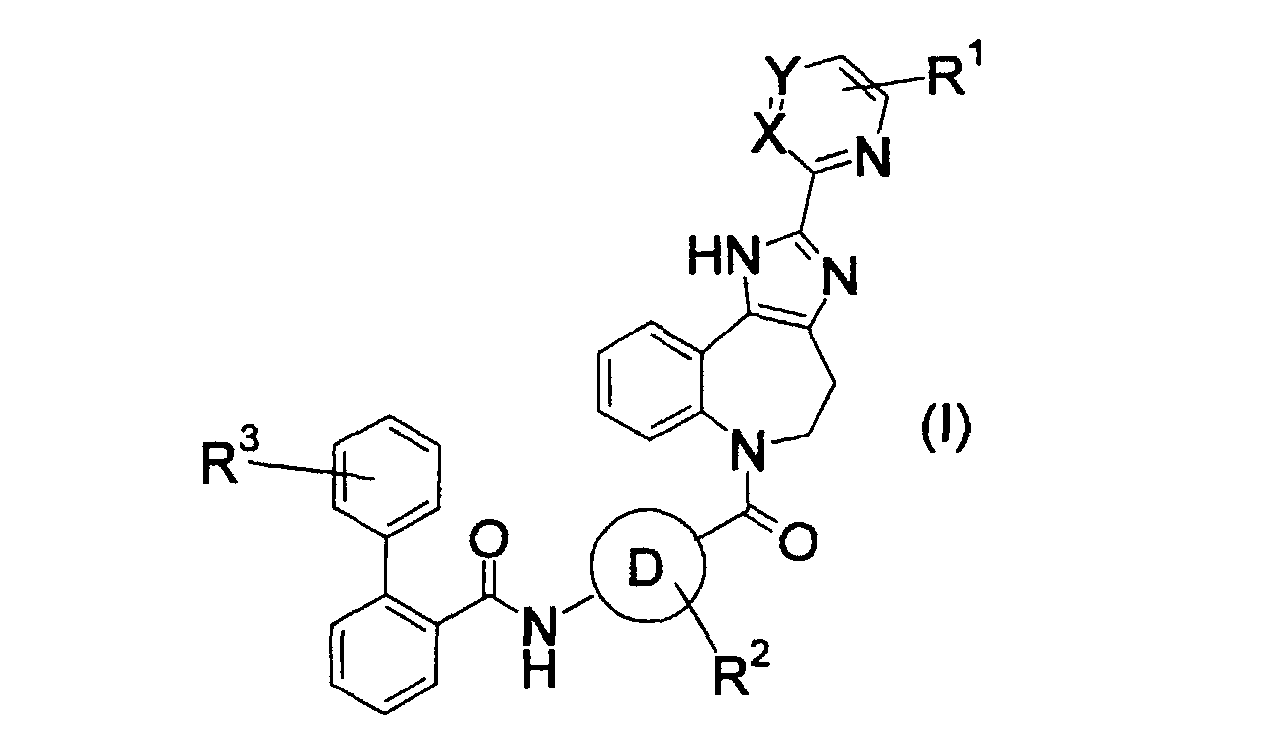
1,4,5,6-tetrahydroimidazo[4,5-d]benzazepine derivative represented by the foregoing general formula (I); a compound represented by the foregoing general formula (I), wherein the ring D represents 1,4-phenylene, pyridine-2,5-diyl, or pyridine-3,6-diyl; a compound represented by the foregoing general formula (I), wherein the ring D represents 1,4-phenylene, pyridine-2,5-diyl, or pyridine-3,6-diyl, X and Y each represents CH, and R1 represents a hydrogen atom; a compound represented by the foregoing general formula (I), wherein the ring D represents 1,4-phenylene, X and Y each represents CH, R1 represents a hydrogen atom, and R2 and R3 each represents a hydrogen atom;


| Antagonism against arginine vasopressin V1A and V2 receptors and inhibition action against drug metabolizing enzyme CYP3A4 | |||
| Example No. | Binding activity against arginine vasopressin V1A receptor (pKi) | Binding activity against arginine vasopressin V2 receptor (pKi) | Inhibition activity against drug metabolizing enzyme CYP3A4 (IC50/µM) |
| 1 | 8.55 | 8.22 | 7.82 |
| 9 | 8.42 | 7.98 | 2.4 |
| 11 | 8.71 | 7.91 | 2.0 |
| 12 | 8.12 | 7.54 | 5.9 |
| Control compound 1 | 8.11 | 8.07 | 0.21 |
| Control compound 2 | 8.91 | 8.98 | 0.43 |

1H-NMR (DMSO-d 6): δ2.12 (3H, s), 3.00 to 3.33 (4H, br), 7.13 (2H, d, J=8.1 Hz), 7.21 (1H, dt, J=1.4 Hz, 8.1 Hz), 7.29 to 7.43 (5H, m), 7.89 (1H, dt, J=1.4 Hz, 8.1 Hz), 8.07 (1H, d, J=8.1 Hz), 8.17 (1H, d, J=7.3 Hz), 8.60 (1H, d, J=4.4 Hz)
1H-NMR (DMSO-d 6): δ2.97 (2H, t, J=5.1 Hz), 3.20 to 3.26 (2H, m), 5.95 (1H, t, J=3.7 Hz), 6.73 to 6.82 (2H, m), 6.93 (1H, dt, J=1.5 Hz, 7.3 Hz), 7.34 (1H, dd, J=4.4 Hz, 8.1 Hz), 7.86 (1H, dt, J=1.5 Hz, 8.1 Hz), 8.11 (1H, d, J=8.1 Hz), 8.24 (1H, dd, J=1.5 Hz, 8.1 Hz), 8.59 (1H, d, J=4.4 Hz), 12,67 (1H, s)
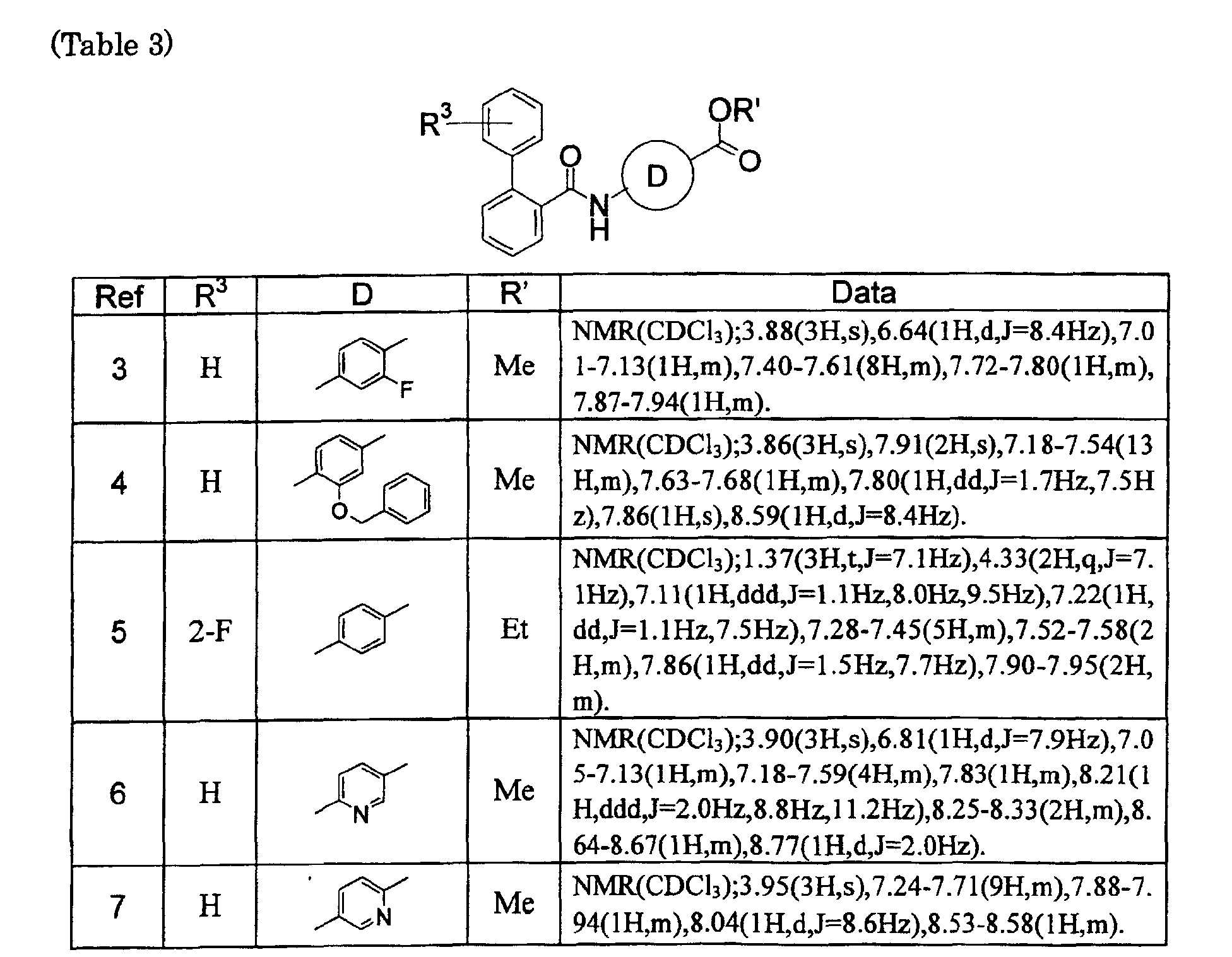
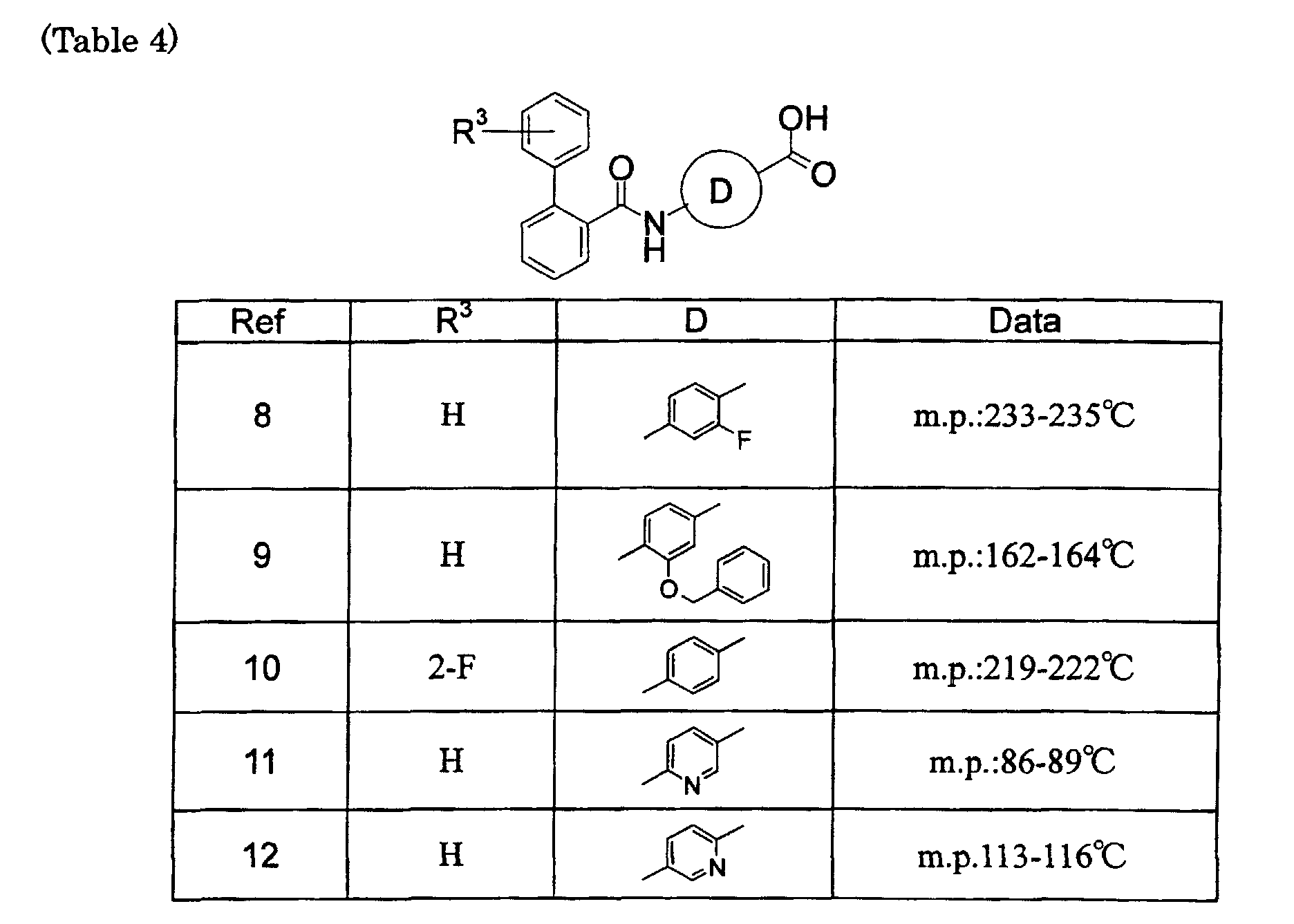
1H-NMR (DMSO-d 6): δ2.61 to 3.30 (3H, m), 4.93 to 5.40 (1H, m), 6.72 (1H, d, J=7.3 Hz), 6.88 (2H, d, J=7.8 Hz), 6.96 (1H, t, J=7.8 Hz), 7.24 to 7.56 (13H, m), 7.94 (1H, dt, J=2.0 Hz, 7.8 Hz), 8.19 (1H, d, J=7.8 Hz), 8.29 (1H, d, J=7.3 Hz), 8.65 (1H, d, J=4.4 Hz), 10.28 (1H, s), 13.05 (1H, s)
FAB-MS(M+H)+: 562
Elemental analysis as C36H27N5O2·H2O:
(Calculated): C: 74.59 %, H: 5.04 %, N: 12.08 %, O: 8.28 %
(Found): C: 74.89 %, H: 5.01 %, N: 12.15 %
1H-NMR (DMSO-d 6): δ2.97 to 3.26 (3H, m), 4.97 to 5.00 (1H, m), 6.71 (1H, d, J=7.6 Hz), 6.88 (2H, d, J=8.4 Hz), 6.95 (1H, t, J=7.6 Hz), 7.24 to 7.57 (13H, m), 7.94 (1H, dt, J=1.6 Hz, 7.6 Hz), 8.18 (1H, d, J=7.6 Hz), 8.30 (1H, d, J=8.0 Hz), 8.63 (1H, d, J=4.8 Hz), 10.27 (1H, s), 13.03 (1H, s)
FAB-MS(M+H)+: 562
Melting point: 240 to 242 °C
Elemental analysis as C36H27N5O2
(Calculated): C: 76.99 %, H: 4.85 %, N: 12.47 %, O: 5.70 %
(Found): C: 77.08 %, H: 4.93 %, N: 12.39 %



Claims (8)
- A 1,4,5,6-tetrahydroimidazo[4,5-d]benzazepine derivative represented by the following general formula (I) or a pharmaceutically acceptable salt thereofwherein the ring D represents phenylene or pyridinediyl; X and Y may be the same or different and each represents CH or N; and R1, R2 and R3 may be the same or different and each represents a hydrogen atom, a hydroxyl group, a halogen, or a lower alkyl.

- The compound or its pharmaceutically acceptable salt according to claim 1, wherein the ring D represents 1,4-phenylene, pyridine-2,5-diyl, or pyridine-3,6-diyl.
- The compound or its pharmaceutically acceptable salt according to claim 2, wherein X and Y each represents CH, and R1 represents a hydrogen atom.
- The compound or its pharmaceutically acceptable salt according to claim 3, wherein the ring D represents 1,4-phenylene, and R2 and R3 each represents a hydrogen atom.
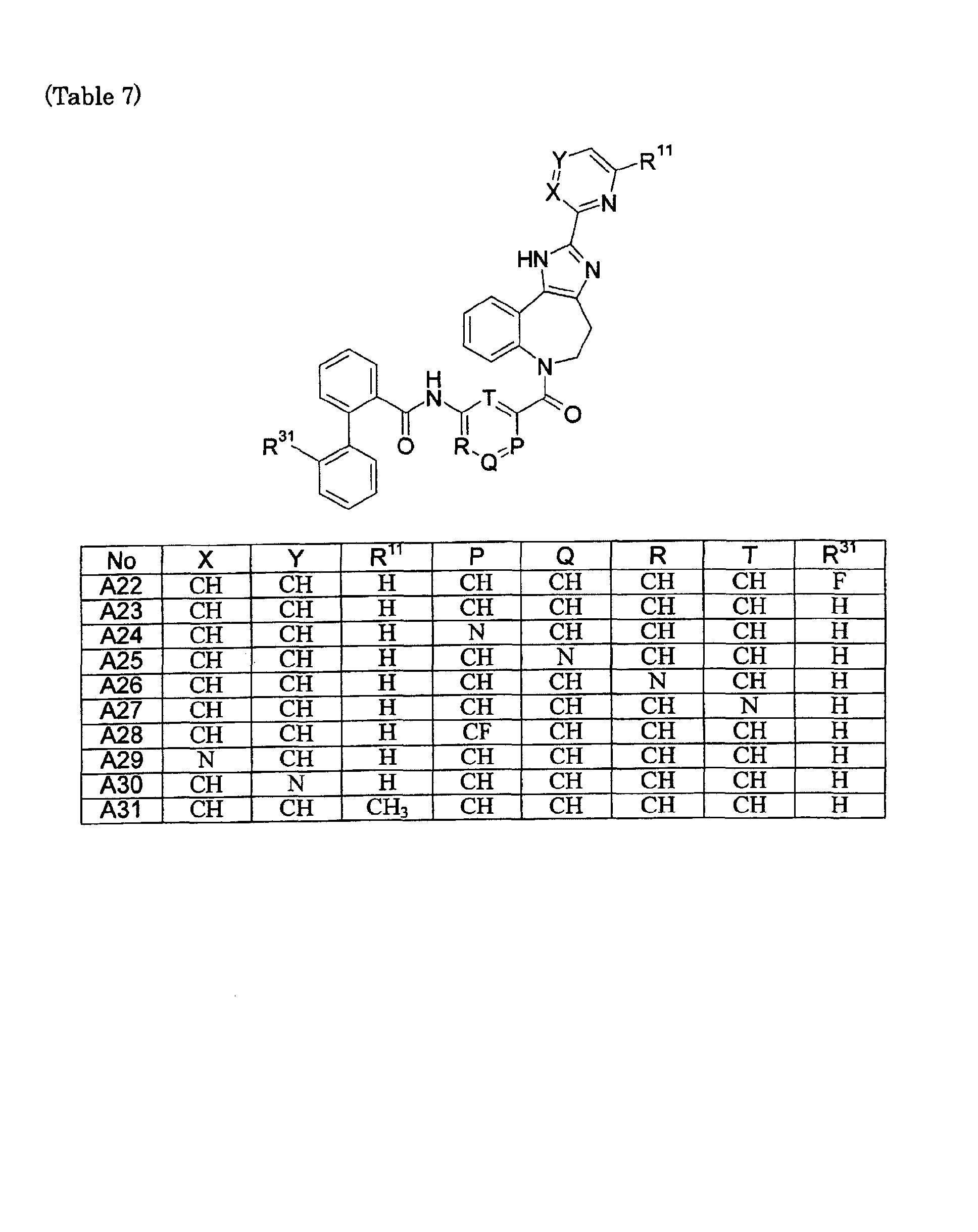
- The compound or its pharmaceutically acceptable salt according to claim 1, wherein the compound isN-{4-[2-(2-pyridyl)-1,4,5,6-tetrahydroimidazo[4,5-d][1]benzazepine-6-carbonyl]phenyl}biphenyl-2-carboxamide,N-{3-fluoro-4-[2-(2-pyridyl)-1,4,5,6-tetrahydroimidazo[4,5-d][1]benzazepine-6-carbonyl]phenyl}biphenyl-2-carboxamide,2'-fluoro-N-{4-[2-(2-pyridyl)-1,4,5,6-tetrahydroimidazo[4,5-d][1]benzazepine-6-carbonyl]phenyl}biphenyl-2-carboxamide,N-{5-[2-(2-pyridyl)-1,4,5,6-tetrahydroimidazo[4,5-d][1]benzazepine-6-carbonyl]-2-pyridyl}biphenyl-2-carboxamide,N-{6-[2-(2-pyridyl)-1,4,5,6-tetrahydroimidazo[4,5-d][1]benzazepine-6-carbonyl]-3-pyridyl}biphenyl-2-carboxamide, orN-{2-hydroxy-4-[2-(2-pyridyl)-1,4,5,6-tetrahydroimidazo[4,5-d][1]benzazepine-6-carbonyl]phenyl}biphenyl-2-carboxamide.
- A pharmaceutical composition comprising, as an active ingredient, a 1,4,5,6-tetrahydroimidazo[4,5-d]benzazepine derivative represented by the general formula (I) or a pharmaceutically acceptable salt thereof.
- The pharmaceutical composition as claimed in claim 6, which is an arginine vasopressin receptor antagonist.
- A pharmaceutical composition for therapy for heart failure or therapy for hyponatremia, which comprises, as an active ingredient, the compound or its pharmaceutically acceptable salt according to any one of claims 1 to 5.
Applications Claiming Priority (3)
| Application Number | Priority Date | Filing Date | Title |
|---|---|---|---|
| JP2000360809 | 2000-11-28 | ||
| JP2000360809 | 2000-11-28 | ||
| PCT/JP2001/010328 WO2002044179A1 (en) | 2000-11-28 | 2001-11-27 | 1,4,5,6-tetrahydroimidazo[4,5-d]diazepine derivatives or salts thereof |
Publications (2)
| Publication Number | Publication Date |
|---|---|
| EP1338597A1 true EP1338597A1 (en) | 2003-08-27 |
| EP1338597A4 EP1338597A4 (en) | 2008-06-18 |
Family
ID=18832344
Family Applications (1)
| Application Number | Title | Priority Date | Filing Date |
|---|---|---|---|
| EP01998171A Withdrawn EP1338597A4 (en) | 2000-11-28 | 2001-11-27 | DERIVATIVES OF 1,4,5,6-TETRAHYDROIMIDAZO 4,5-D DIAZEPINE OR SALTS THEREOF |
Country Status (5)
| Country | Link |
|---|---|
| US (2) | US7056910B2 (en) |
| EP (1) | EP1338597A4 (en) |
| AU (1) | AU2002224115A1 (en) |
| CA (1) | CA2425892A1 (en) |
| WO (1) | WO2002044179A1 (en) |
Families Citing this family (5)
| Publication number | Priority date | Publication date | Assignee | Title |
|---|---|---|---|---|
| AU2018300150A1 (en) | 2017-07-11 | 2020-01-30 | Vertex Pharmaceuticals Incorporated | Carboxamides as modulators of sodium channels |
| HU231206B1 (en) | 2017-12-15 | 2021-10-28 | Richter Gedeon Nyrt. | Triazolobenzazepines |
| TW201938171A (en) | 2017-12-15 | 2019-10-01 | 匈牙利商羅特格登公司 | Tricyclic compounds as vasopressin V1a receptor antagonists |
| WO2020146682A1 (en) | 2019-01-10 | 2020-07-16 | Vertex Pharmaceuticals Incorporated | Carboxamides as modulators of sodium channels |
| WO2020146612A1 (en) | 2019-01-10 | 2020-07-16 | Vertex Pharmaceuticals Incorporated | Esters and carbamates as modulators of sodium channels |
Family Cites Families (15)
| Publication number | Priority date | Publication date | Assignee | Title |
|---|---|---|---|---|
| DK268889A (en) | 1988-06-07 | 1989-12-08 | Smithkline Beckman Corp | CYCLIC D-CYS6 PEPTID RELATIONS, PROCEDURES FOR PREPARING THEM AND PHARMACEUTICAL AGENTS CONTAINING THESE |
| DK0382185T3 (en) | 1989-02-10 | 1994-07-04 | Otsuka Pharma Co Ltd | Carbostyril derivatives |
| US5225402A (en) * | 1989-02-10 | 1993-07-06 | Otsuka Pharmaceutical Co., Ltd. | Carbostyril derivatives |
| US5258510A (en) * | 1989-10-20 | 1993-11-02 | Otsuka Pharma Co Ltd | Benzoheterocyclic compounds |
| KR0167349B1 (en) | 1989-10-20 | 1999-02-18 | 오스카 아끼히꼬 | Benzoheterocyclic composition |
| US5985869A (en) * | 1989-10-20 | 1999-11-16 | Otsuka Pharmaceutical Company, Limited | Benzoheterocyclic compounds |
| FR2679903B1 (en) | 1991-08-02 | 1993-12-03 | Elf Sanofi | DERIVATIVES OF N-SULFONYL INDOLINE CARRYING AN AMIDIC FUNCTION, THEIR PREPARATION, THE PHARMACEUTICAL COMPOSITIONS CONTAINING SAME. |
| US5338755A (en) * | 1990-07-31 | 1994-08-16 | Elf Sanofi | N-sulfonylindoline derivatives, their preparation and the pharmaceutical compositions in which they are present |
| US5481005A (en) * | 1990-07-31 | 1996-01-02 | Sanofi | N-sulfonylindoline derivatives, their preparation and the pharmaceutical compositions in which they are present |
| UA64690C2 (en) * | 1993-07-21 | 2004-03-15 | Yamanouty Farmaceutical Co Ltd | A condensed benzadepine derivative, an intermediate compound for preparing thereof and a pharmaceutical composition |
| PL182011B1 (en) * | 1993-08-26 | 2001-10-31 | Yamanouchi Pharma Co Ltd | Benzazepine derivative, pharmaceutic composition and intermediate compounds |
| US6022868A (en) | 1995-06-29 | 2000-02-08 | Novo Nordisk Als | Substituted azacyclic or azabicyclic compounds |
| FR2740136B1 (en) * | 1995-10-24 | 1998-01-09 | Sanofi Sa | INDOLIN-2-ONE DERIVATIVES, PROCESS FOR THEIR PREPARATION AND PHARMACEUTICAL COMPOSITIONS CONTAINING THEM |
| IT240975Y1 (en) * | 1996-10-25 | 2001-04-20 | Whirpool Europ S R L | TEMPERATURE AND SAFETY CONTROL DEVICE ASSOCIATED WITH A HEATING ELEMENT OF A GLASS-CERAMIC HOB |
| EP1050308A4 (en) * | 1998-01-28 | 2002-09-04 | Senju Pharma Co | PROPHYLACTIC MEASURES OR REMEDIES AGAINST VISION DISORDERS |
-
2001
- 2001-11-27 US US10/432,732 patent/US7056910B2/en not_active Expired - Fee Related
- 2001-11-27 WO PCT/JP2001/010328 patent/WO2002044179A1/en not_active Ceased
- 2001-11-27 EP EP01998171A patent/EP1338597A4/en not_active Withdrawn
- 2001-11-27 CA CA002425892A patent/CA2425892A1/en not_active Abandoned
- 2001-11-27 AU AU2002224115A patent/AU2002224115A1/en not_active Abandoned
-
2006
- 2006-02-15 US US11/353,995 patent/US20060142268A1/en not_active Abandoned
Also Published As
| Publication number | Publication date |
|---|---|
| AU2002224115A1 (en) | 2002-06-11 |
| EP1338597A4 (en) | 2008-06-18 |
| WO2002044179A1 (en) | 2002-06-06 |
| US7056910B2 (en) | 2006-06-06 |
| US20040034012A1 (en) | 2004-02-19 |
| CA2425892A1 (en) | 2003-04-11 |
| US20060142268A1 (en) | 2006-06-29 |
Similar Documents
| Publication | Publication Date | Title |
|---|---|---|
| EP3989972B1 (en) | Glucagon-like peptide 1 receptor agonists | |
| AU2020341681B2 (en) | RIP1 inhibitory compounds and methods for making and using the same | |
| RU2743074C2 (en) | Active compounds with respect to bromo-domains | |
| JP4775767B2 (en) | Non-aromatic ring fused pyrimidine derivatives | |
| KR100304331B1 (en) | Condensed benzazine derivatives and pharmaceutical compositions containing them | |
| JP2005531584A (en) | Pyrazolopyrimidine aniline compounds | |
| EP1357116A1 (en) | 2-acylaminothiazole derivative or its salt | |
| EA031971B1 (en) | Heterocyclic amines as kinase inhibitors | |
| CA2902132C (en) | Quinazolines as kinase inhibitors | |
| HUE025209T2 (en) | A pyridin quinolin substituted pyrrolo [1,2-b] pyrazole monohydrate as tgf-beta inhibitor | |
| HUP0101333A2 (en) | Diazepan derivatives and their salts, pharmaceutical compositions containing the same | |
| WO2014059265A1 (en) | Urea and amide derivatives of aminoalkylpiperazines and use thereof | |
| KR20190028544A (en) | Triazolepolazinone derivatives useful as human PDE1 inhibitors | |
| JP2004043456A (en) | Pharmaceutical containing a benzazepine derivative or a salt thereof as an active ingredient | |
| WO2021160716A1 (en) | Heteroaromatic carboxamide derivatives as plasma kallikrein inhibitors | |
| US7056910B2 (en) | 1,4,5.6-tetrahydroimidazo[4,5-d]diazepine derivatives or salts thereof | |
| JP6850396B2 (en) | [1,2,4] Triazolo [4,3-A] Pyrazine-6 (5H) -one derivative | |
| JP4061891B2 (en) | 1,4,5,6-tetrahydroimidazo [4,5-d] benzazepine derivative or salt thereof | |
| WO2018139471A1 (en) | Dibenzodiazepine derivative | |
| JP2002201172A (en) | Benzamide derivative and its application | |
| JP2003342175A (en) | A therapeutic agent for Meniere's disease comprising a novel benzazepine derivative or a salt thereof as an active ingredient | |
| WO2025059641A1 (en) | Pde1 inhibitors | |
| US6458821B1 (en) | N-substituted azabicycloheptane derivatives, production and use thereof | |
| WO2024137743A1 (en) | Substituted imidazo-based compounds as ligand directed degraders of irak3 | |
| WO2026078671A1 (en) | Heterocyclic compounds as glucose-dependent insulinotropic polypeptide receptor antagonists |
Legal Events
| Date | Code | Title | Description |
|---|---|---|---|
| PUAI | Public reference made under article 153(3) epc to a published international application that has entered the european phase |
Free format text: ORIGINAL CODE: 0009012 |
|
| 17P | Request for examination filed |
Effective date: 20030514 |
|
| AK | Designated contracting states |
Designated state(s): AT BE CH CY DE DK ES FI FR GB GR IE IT LI LU MC NL PT SE TR |
|
| AX | Request for extension of the european patent |
Extension state: AL LT LV MK RO SI |
|
| RTI1 | Title (correction) |
Free format text: 1,4,5,6-TETRAHYDROIMIDAZO 4,5-D DIAZEPINE DERIVATIVES OR SALTS THEREOF |
|
| RAP1 | Party data changed (applicant data changed or rights of an application transferred) |
Owner name: ASTELLAS PHARMA INC. |
|
| RAP1 | Party data changed (applicant data changed or rights of an application transferred) |
Owner name: ASTELLAS PHARMA INC. |
|
| A4 | Supplementary search report drawn up and despatched |
Effective date: 20080519 |
|
| 17Q | First examination report despatched |
Effective date: 20080908 |
|
| STAA | Information on the status of an ep patent application or granted ep patent |
Free format text: STATUS: THE APPLICATION IS DEEMED TO BE WITHDRAWN |
|
| 18D | Application deemed to be withdrawn |
Effective date: 20090120 |