EP1334659A1 - Pd-1-lacking mouse and use thereof - Google Patents
Pd-1-lacking mouse and use thereof Download PDFInfo
- Publication number
- EP1334659A1 EP1334659A1 EP01996311A EP01996311A EP1334659A1 EP 1334659 A1 EP1334659 A1 EP 1334659A1 EP 01996311 A EP01996311 A EP 01996311A EP 01996311 A EP01996311 A EP 01996311A EP 1334659 A1 EP1334659 A1 EP 1334659A1
- Authority
- EP
- European Patent Office
- Prior art keywords
- mice
- balb
- heart
- deficient
- dilated cardiomyopathy
- Prior art date
- Legal status (The legal status is an assumption and is not a legal conclusion. Google has not performed a legal analysis and makes no representation as to the accuracy of the status listed.)
- Granted
Links
Images


Classifications
-
- A—HUMAN NECESSITIES
- A01—AGRICULTURE; FORESTRY; ANIMAL HUSBANDRY; HUNTING; TRAPPING; FISHING
- A01K—ANIMAL HUSBANDRY; AVICULTURE; APICULTURE; PISCICULTURE; FISHING; REARING OR BREEDING ANIMALS, NOT OTHERWISE PROVIDED FOR; NEW BREEDS OF ANIMALS
- A01K67/00—Rearing or breeding animals, not otherwise provided for; New or modified breeds of animals
- A01K67/027—New or modified breeds of vertebrates
-
- C—CHEMISTRY; METALLURGY
- C12—BIOCHEMISTRY; BEER; SPIRITS; WINE; VINEGAR; MICROBIOLOGY; ENZYMOLOGY; MUTATION OR GENETIC ENGINEERING
- C12N—MICROORGANISMS OR ENZYMES; COMPOSITIONS THEREOF; PROPAGATING, PRESERVING, OR MAINTAINING MICROORGANISMS; MUTATION OR GENETIC ENGINEERING; CULTURE MEDIA
- C12N15/00—Mutation or genetic engineering; DNA or RNA concerning genetic engineering, vectors, e.g. plasmids, or their isolation, preparation or purification; Use of hosts therefor
- C12N15/09—Recombinant DNA-technology
- C12N15/63—Introduction of foreign genetic material using vectors; Vectors; Use of hosts therefor; Regulation of expression
- C12N15/79—Vectors or expression systems specially adapted for eukaryotic hosts
- C12N15/85—Vectors or expression systems specially adapted for eukaryotic hosts for animal cells
- C12N15/8509—Vectors or expression systems specially adapted for eukaryotic hosts for animal cells for producing genetically modified animals, e.g. transgenic
-
- A—HUMAN NECESSITIES
- A01—AGRICULTURE; FORESTRY; ANIMAL HUSBANDRY; HUNTING; TRAPPING; FISHING
- A01K—ANIMAL HUSBANDRY; AVICULTURE; APICULTURE; PISCICULTURE; FISHING; REARING OR BREEDING ANIMALS, NOT OTHERWISE PROVIDED FOR; NEW BREEDS OF ANIMALS
- A01K67/00—Rearing or breeding animals, not otherwise provided for; New or modified breeds of animals
- A01K67/027—New or modified breeds of vertebrates
- A01K67/0275—Genetically modified vertebrates, e.g. transgenic
- A01K67/0276—Knock-out vertebrates
-
- C—CHEMISTRY; METALLURGY
- C07—ORGANIC CHEMISTRY
- C07K—PEPTIDES
- C07K14/00—Peptides having more than 20 amino acids; Gastrins; Somatostatins; Melanotropins; Derivatives thereof
- C07K14/435—Peptides having more than 20 amino acids; Gastrins; Somatostatins; Melanotropins; Derivatives thereof from animals; from humans
- C07K14/46—Peptides having more than 20 amino acids; Gastrins; Somatostatins; Melanotropins; Derivatives thereof from animals; from humans from vertebrates
- C07K14/47—Peptides having more than 20 amino acids; Gastrins; Somatostatins; Melanotropins; Derivatives thereof from animals; from humans from vertebrates from mammals
-
- C—CHEMISTRY; METALLURGY
- C07—ORGANIC CHEMISTRY
- C07K—PEPTIDES
- C07K14/00—Peptides having more than 20 amino acids; Gastrins; Somatostatins; Melanotropins; Derivatives thereof
- C07K14/435—Peptides having more than 20 amino acids; Gastrins; Somatostatins; Melanotropins; Derivatives thereof from animals; from humans
- C07K14/705—Receptors; Cell surface antigens; Cell surface determinants
- C07K14/70503—Immunoglobulin superfamily
-
- C—CHEMISTRY; METALLURGY
- C07—ORGANIC CHEMISTRY
- C07K—PEPTIDES
- C07K16/00—Immunoglobulins [IG], e.g. monoclonal or polyclonal antibodies
- C07K16/18—Immunoglobulins [IG], e.g. monoclonal or polyclonal antibodies against material from animals or humans
-
- A—HUMAN NECESSITIES
- A01—AGRICULTURE; FORESTRY; ANIMAL HUSBANDRY; HUNTING; TRAPPING; FISHING
- A01K—ANIMAL HUSBANDRY; AVICULTURE; APICULTURE; PISCICULTURE; FISHING; REARING OR BREEDING ANIMALS, NOT OTHERWISE PROVIDED FOR; NEW BREEDS OF ANIMALS
- A01K2217/00—Genetically modified animals
- A01K2217/07—Animals genetically altered by homologous recombination
- A01K2217/075—Animals genetically altered by homologous recombination inducing loss of function, i.e. knock out
-
- A—HUMAN NECESSITIES
- A01—AGRICULTURE; FORESTRY; ANIMAL HUSBANDRY; HUNTING; TRAPPING; FISHING
- A01K—ANIMAL HUSBANDRY; AVICULTURE; APICULTURE; PISCICULTURE; FISHING; REARING OR BREEDING ANIMALS, NOT OTHERWISE PROVIDED FOR; NEW BREEDS OF ANIMALS
- A01K2227/00—Animals characterised by species
- A01K2227/10—Mammal
- A01K2227/105—Murine
-
- A—HUMAN NECESSITIES
- A01—AGRICULTURE; FORESTRY; ANIMAL HUSBANDRY; HUNTING; TRAPPING; FISHING
- A01K—ANIMAL HUSBANDRY; AVICULTURE; APICULTURE; PISCICULTURE; FISHING; REARING OR BREEDING ANIMALS, NOT OTHERWISE PROVIDED FOR; NEW BREEDS OF ANIMALS
- A01K2267/00—Animals characterised by purpose
- A01K2267/03—Animal model, e.g. for test or diseases
- A01K2267/0306—Animal model for genetic diseases
- A01K2267/0325—Animal model for autoimmune diseases
-
- A—HUMAN NECESSITIES
- A01—AGRICULTURE; FORESTRY; ANIMAL HUSBANDRY; HUNTING; TRAPPING; FISHING
- A01K—ANIMAL HUSBANDRY; AVICULTURE; APICULTURE; PISCICULTURE; FISHING; REARING OR BREEDING ANIMALS, NOT OTHERWISE PROVIDED FOR; NEW BREEDS OF ANIMALS
- A01K2267/00—Animals characterised by purpose
- A01K2267/03—Animal model, e.g. for test or diseases
- A01K2267/035—Animal model for multifactorial diseases
- A01K2267/0375—Animal model for cardiovascular diseases
Definitions
- the present invention relates to programmed cell death-1 receptor (hereafter, it is abbreviated as PD-1)-deficient BALB/c mice and the use. More particularly, it relates to PD-1 receptor-deficient BALB/c mice, a screening method of medicines against autoimmune disease by use of the mice, IgG self-reactivity antibody of which these mice produce specifically, a protein specifically reacted to the antibody and produced in heart and an diagnostic method in dilated cardiomyopathy by use of the protein.
- PD-1 receptor-deficient BALB/c mice a screening method of medicines against autoimmune disease by use of the mice, IgG self-reactivity antibody of which these mice produce specifically, a protein specifically reacted to the antibody and produced in heart and an diagnostic method in dilated cardiomyopathy by use of the protein.
- Programmed cell death controlled embryologically or physiologically can be observed in all most tissues of various animals. Such programmed cell death is generally called, “Programmed cell death” or “Premeditated programmed cell death”, and distinguished from “unexpected cell death” which could be caused by a pathologic mechanism.
- PD-1 has been found in mice as a receptor that cells are related to process to premeditated programmed cell death through the activation(The EMBO J., vol.11(11), 3887-3895(1992); JP05-336973; EMBL/GenBank/DDJB Acc. No.X67914). Then, it has been found in human by using the gene of mouse PD-1 as a probe(Genomics 23:704 (1994); JP07-291996). Because PD-1 has expressed in lymphocytes with activation and has deeply related to autoimmune disease by researches of PD-1 deficient mice ( International Immunology, Vol.10(10), 1563-1572(1998); Immunity.
- mice and human PD-1 are composed by 288 amino acids, and are type I membrane-bound 55kDa proteins with the hydrophobic region in the penetrative area of the cell-membrane in the middle and the signal peptide (20 amino-acids) in the N-terminus.
- Deficient mice (called the knockout mice.) are indicated those which cannot produce the gene product in born by modifying a specific gene artificially, and are made to examine roles of factors and receptors that are the gene products.
- dilated cardiomyopathy indicates the contractile dysfunction of left ventricle with the dilatation of left ventricular.
- 30% of patients considered to be dilated cardiomyopathy are assumed to be caused by inherent mutations in the structural gene to code the key component of heart muscle, which connects intracellular cytoskeleton with intercellular matrix, the remaining cases remain uncertain. In both cases, the disease is progress, and threatens the life, and there is no available treatment method excluding cardiac transplant now.
- PD-1 deficient mice were made with C57BL/6 (Hereafter, omit it with B6) mice. It has been confirmed that PD-1 deficient C57BL/6 mice naturally developed so-called autoimmune disease such as lupus nephritis and arthritis, etc. (International Immunology, Vol. 10(10), 1563-1572(1998); Immunity. Vol.11, 141-151(1999)).
- the present invention relates to
- PD-1 deficient BALB/c mice (written as PD-1(-/-)) started to die as early as 5 weeks of age, and by 30 weeks, two thirds of the mice had died. In normal BALB/c mice (written as PD-1(+/+)), such a symptom were not seen. Though the appearance of lupus nephritis and arthritis were seen in PD-1 deficient C57BL/6 (written as B6-PD-1(-/-)), these deaths of an initial stage were not seen.
- PD-1(-/-) mice of the present invention was judged to develop dilated cardiomyopathy spontaneously and dead, because of the evaluation of the cardiac performance by the ultrasonography and the observations by the electron microscope and the fact of the immune response, etc..
- dilated cardiomyopathy of the autoimmune disease type was caused so that IgG1 subclass of autoimmunity antibody is produced and accumulates with combination with about 33kDa of proteins produced in heart, specifically.
- Figure 1 shows survival curves; of BALB/c-PD-1(-/-) mice (black circle), PD-1(+/-) mice (void triangle), and PD-1(+/+) (void square)(% shows these survival rates at 45 weeks of age, and values in parentheses shows the number of observed mice.).
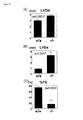
- Figure 2 shows results of transthoracic ultrasonic cardiography of PD-1(-/-) mice and normal (PD-1(+/+)).
- Figure 2(A) shows LVDd(left ventricular end-diastolic size),
- B) shows LVDS(left ventricular end-systolic dimension),
- C) shows ventricular percent fraction shortening, and
- p indicates the value of t.
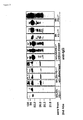
- Figure 4 shows immunoreactivities like figure 3 of serums from BALB/c and BALB/c-PD-1(-/-) mice of which weeks of age are corresponding, to the tissue extract of heart, liver, kidney, and skeletal muscle.
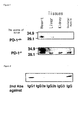
- Figure 5 shows the isotype of the serum autoantibody that recognizes 33kDa antigen of heart in PD-1(-/-) mice.
- Figure 6 shows the immunoreactivity to heart extract eluate of normal BALB/c and affected PD-1(-/-) mice and serum of PD-1(-/-) mice.
- PD-1 receptor deficient BALB/c mice in the present invention are made by
- a targeting vector which chromosome fragment (that which a part of exon was deleted, for example, fragment including exon 2-5 only.) including PD-1 gene, is inserted, is introduced into ES cell line from BALB/c mice, and the ES cell clone that the targeting vector caused the homology rearrangement at the position of PD-1 gene on the chromosome could be selected.
- BALB/c chimeric mice are made with PD-1 gene deficient ES cells, and PD-1 deficient BALB/c mice are made as the parents the chimeric mice that transmitted this deficiency to the germ line.
- Medicines against autoimmune diseases, especially dilated cardiomyopathy could be screened by using PD-1 deficient BALB/c mice of the present invention. Moreover, they could be used on screening of medicines against autoimmune diseases that develop by production of autoantibody.
- PD-1 deficient BALB/c mice of the present invention develop dilated cardiomyopathy and die. If the survival and the life prolongation are evaluated to the index after medicine is administered to PD-1 deficient mice, it is possible to be easy to screen it. Alternatively, by making the amount of autoantibody produced by the PD-1 deficient mice an index, medicines could be screened more efficiently. 3. IgG antibody produced by PD-1 deficient BLAB/c mice of the present invention, and about 33kDa(33kDa ⁇ 5kDa) of protein, which are recognized by the antibody and express in heart specifically.
- IgG antibody specifically recognizes molecular weight about 33kDa of the protein that expresses in heart. Though the production of this IgG antibody can be confirmed in mice that still does not develop dilated cardiomyopathy in PD-1 deficient mice, it was quantitatively low level ten fold or more.
- this IgG antibody is confirmed by neither wild type BALB/c mice nor PD-1 deficient B6 mice. Therefore, it is clear that this IgG antibody deeply relates to the development of dilated cardiomyopathy in PD-1 deficient BALB/c mice, it is thought to be produce under a specifically genetic background of BALB/c strain. Moreover, because PD-1 deficient B6 mice develop arthritis and nephritis that is so-called autoimmune disease, it indicates that the dysfunction of PD-1 becomes potential diathesis of autoimmune diseases, and can cause the disease of various types by combining the diathesis and the genetic background.
- Example 1 Making of PD-1 deficient BALB/c mice
- PD-1 receptor deficient BALB/c mice written were made by backcrossing PD-1 receptor deficient C57BL/6(B6) mice with BALB/c mice tenth generation, according to method described in International Immunology. Vol.10(10), 1563-1572(1998), with embryo stroma (ES) cell lines from BALB/c mice. Obtained mice were bred in facilities of the sterility.
- Example 2 Cause of death of PD-1 deficient BALB/c mice
- PD-1 deficient BALB/c mice (PD-1(-/-)) obtained in example 1, they started to die as early as 5 weeks of age, as black circles in figure 1 show. Then, by 30 weeks, two thirds of mice died. On the other hand, in normal BALB/c (PD-1(+/+)) mice (void squares in figure 1), which are not deficient of PD-1, those deaths were not observed.
- Figure 1 shows with the result of breeding of PD-1 deficient (PD-1(+/-)) B6 mice.
- PD-1(-/-) mice show the projection of the eyeball several days before death, and as a result of the autopsy, hearts in all mice were enlarged to anomalous. Moreover, tumefaction of livers were shown, and suggested that the cause of death was congestive heart failure.
- IgG depositions were diffusely observed throughout the entire cardiac wall.
- the linear dye patterns of IgG meant the binding of tissue specific autoantibody. On other organs, the depositions of IgG were hardly detected.
- the isotype of the deposited IgG was predominantly IgG1.
- An autoantibody was detected in 30 fold dilute serum of normal PD-1(-/-) mice and almost PD-1(+/-) mice, but not in more than 300 fold dilution.
- Figure 4 shows immunoreactivities like figure 3 of serums from BALB/c and BALB/c-PD-1(-/-) mice that weeks of age are corresponding, to the tissue extract of heart, liver, kidney, and skeletal muscle. No autoantibody was detected even in 30 fold dilute serum of PD-1(+/+) mice at the same weeks of age(zero of four).
- tissue extracts were immunoprecipitated from normal heart extracts by protein G-beads, IgG deposited in heart of normal BALB/c and affected PD-1(-/-) were collected by acid elution, the reactivity examinated directly.
- IgG deposited in heart of normal BALB/c
- affected PD-1(-/-) were collected by acid elution, the reactivity examinated directly.
- Figure 6 far more a large amount of IgG was included in lysate from the PD-1(-/-) mice compared with wild type BALB/c mice.
- Eluted IgG reacted with obviously specific 33kDa of protein identified with that detected in serum of affect PD-1(-/-) mice. This result suggested that the circulating autoantibody could combine with the heart tissue in affected mice, specifically.
- Splenic cells (20,000,000 pieces/mouse) from apparently normal PD-1(-/-) mice at 5 weeks of age were transfused to three BALB/c-Rag-2(-/-) mice through the vein.
- One mouse showed protrusion of eyeball 30 weeks after single injection. It was a typical dilated cardiomyopathy in the autopsy.
- immunoblot with serum of this mice the existence of IgG autoantibody to 33kDa protein of the heart was shown by 1000 fold dilution.
- Example 9 Screening of medicine against autoimmune myocardiopathy.
- Medicines against autoimmune disease, especially dilated cardiomyopathy could be screened by using PD-1(-/-) mice obtained in example 1. Moreover, they could be used to screen medicines against autoimmune disease developed by production of autoantibody.
- PD-1 deficient BALB/c mice of the present invention develop dilated cardiomyopathy and die. If candidate compounds are administered to this PD-1 deficient mice, and evaluat the survival and the life prolongation as the index of the effect, they could be screened easily.
- autoantibody produced by this PD-1(-/-) mice can be measured by ELISA that uses the protein in claim 6. Therefore, medicines could be screened more efficiently by making the yield of the autoantibody an index.
- BALIB/c-PD-1(-/-) mice were returned to BALB/c-Rag-2(-/-) mice, and thirty BALB/c-PD-1(-/-)-Rag-2(-/-) mice were created. These mice survive for forty-five days of the observation period, and symptoms of heart disease were not seen by the autopsy.
Landscapes
- Health & Medical Sciences (AREA)
- Life Sciences & Earth Sciences (AREA)
- Chemical & Material Sciences (AREA)
- Organic Chemistry (AREA)
- Genetics & Genomics (AREA)
- Zoology (AREA)
- General Health & Medical Sciences (AREA)
- Molecular Biology (AREA)
- Biochemistry (AREA)
- Biophysics (AREA)
- Engineering & Computer Science (AREA)
- Medicinal Chemistry (AREA)
- Proteomics, Peptides & Aminoacids (AREA)
- Environmental Sciences (AREA)
- Immunology (AREA)
- Biotechnology (AREA)
- Bioinformatics & Cheminformatics (AREA)
- General Engineering & Computer Science (AREA)
- Wood Science & Technology (AREA)
- Veterinary Medicine (AREA)
- Toxicology (AREA)
- Gastroenterology & Hepatology (AREA)
- Biomedical Technology (AREA)
- Animal Behavior & Ethology (AREA)
- Animal Husbandry (AREA)
- Biodiversity & Conservation Biology (AREA)
- Plant Pathology (AREA)
- Physics & Mathematics (AREA)
- Microbiology (AREA)
- Cell Biology (AREA)
- Investigating Or Analysing Biological Materials (AREA)
- Peptides Or Proteins (AREA)
- Medicines That Contain Protein Lipid Enzymes And Other Medicines (AREA)
- Medicines Containing Antibodies Or Antigens For Use As Internal Diagnostic Agents (AREA)
- Micro-Organisms Or Cultivation Processes Thereof (AREA)
- Electronic Switches (AREA)
Abstract
Description
PD-1(-/-) mice show the projection of the eyeball several days before death, and as a result of the autopsy, hearts in all mice were enlarged to anomalous. Moreover, tumefaction of livers were shown, and suggested that the cause of death was congestive heart failure.
This fact indicated that the pump function of PD-1(-/-)mice heart was affected by dilation, and proved the diagnosis of dilated cardiomyopathy.
Immunofluorescent analysis revealed that linear depositions of IgG together with C3 complement surrounding the cardiomyocytes were detected in PD-1(-/-) mice hearts, whereas no significant IgG depositions were detected in PD-1(+/+) mice hearts.
Claims (8)
- A PD-1 receptor deficient BALB/c mouse.
- A screening method of a medicine against autoimmune diseases, which comprises using the mouse of claim 1.
- A screening method of claim 2 for autoimmune diseases caused by the production of an autoantibody.
- A screening method of claim 2 in which the autoimmune disease is dilated cardiomyopathy.
- An IgG self-reactivity antibody that the mouse in claim 1 specifically produces.
- An protein of 33kDa ± 5kDa that is specifically reacted to the IgG self-reactivity antibody of claim 5 and is produced in heart, specifically.
- A diagnostic method in dilated cardiomyopathy, which comprises using the protein of claim 6.
- A (gene) diagnostic method in dilated cardiomyopathy, which comprises detecting a gene that encodes the protein of claim 7.
Applications Claiming Priority (3)
| Application Number | Priority Date | Filing Date | Title |
|---|---|---|---|
| JP2000347392 | 2000-11-15 | ||
| JP2000347392 | 2000-11-15 | ||
| PCT/JP2001/009951 WO2002039813A1 (en) | 2000-11-15 | 2001-11-14 | Pd-1-lacking mouse and use thereof |
Publications (3)
| Publication Number | Publication Date |
|---|---|
| EP1334659A1 true EP1334659A1 (en) | 2003-08-13 |
| EP1334659A4 EP1334659A4 (en) | 2007-07-11 |
| EP1334659B1 EP1334659B1 (en) | 2012-01-11 |
Family
ID=18821130
Family Applications (1)
| Application Number | Title | Priority Date | Filing Date |
|---|---|---|---|
| EP01996311A Expired - Lifetime EP1334659B1 (en) | 2000-11-15 | 2001-11-14 | Pd-1-lacking mouse and use thereof |
Country Status (8)
| Country | Link |
|---|---|
| US (1) | US7414171B2 (en) |
| EP (1) | EP1334659B1 (en) |
| JP (2) | JP3871326B2 (en) |
| KR (1) | KR20030066657A (en) |
| AT (1) | ATE540579T1 (en) |
| AU (1) | AU2002224037A1 (en) |
| CA (1) | CA2429042C (en) |
| WO (1) | WO2002039813A1 (en) |
Cited By (11)
| Publication number | Priority date | Publication date | Assignee | Title |
|---|---|---|---|---|
| EP1591527A4 (en) * | 2003-01-23 | 2006-05-24 | Ono Pharmaceutical Co | Substance specific to human pd-1 |
| CN101050473B (en) * | 2007-02-09 | 2010-08-18 | 北京大学 | Screening kit, screening method and application of anti-cell proliferation or anti-tumor drug |
| US9683048B2 (en) | 2014-01-24 | 2017-06-20 | Novartis Ag | Antibody molecules to PD-1 and uses thereof |
| US10390522B2 (en) | 2014-06-19 | 2019-08-27 | Regeneron Pharmaceuticals, Inc. | Non-human animals having a humanized programmed cell death 1 gene |
| US10472419B2 (en) | 2014-01-31 | 2019-11-12 | Novartis Ag | Antibody molecules to TIM-3 and uses thereof |
| US10570204B2 (en) | 2013-09-26 | 2020-02-25 | The Medical College Of Wisconsin, Inc. | Methods for treating hematologic cancers |
| US11091550B2 (en) | 2018-02-09 | 2021-08-17 | Ono Pharmaceutical Co., Ltd. | Bispecific antibody |
| US11344620B2 (en) | 2014-09-13 | 2022-05-31 | Novartis Ag | Combination therapies |
| US12252535B2 (en) | 2014-03-14 | 2025-03-18 | Novartis Ag | Antibody molecules to LAG-3 and uses thereof |
| US12600777B2 (en) | 2015-07-29 | 2026-04-14 | Novartis Ag | Combination therapies comprising antibody molecules to LAG-3 |
| US12630633B2 (en) | 2016-12-16 | 2026-05-19 | Novartis Ag | Antibody molecules to PD-1 and uses thereof |
Families Citing this family (14)
| Publication number | Priority date | Publication date | Assignee | Title |
|---|---|---|---|---|
| US7407767B2 (en) | 2003-04-16 | 2008-08-05 | Ono Pharmaceutical Co., Ltd. | Method of screening remedy for heart disease and medicinal composition for treating heart disease |
| EP4209510B1 (en) | 2008-12-09 | 2024-01-31 | F. Hoffmann-La Roche AG | Anti-pd-l1 antibodies and their use to enhance t-cell function |
| JP6742903B2 (en) | 2013-05-02 | 2020-08-19 | アナプティスバイオ インコーポレイティッド | Antibodies to programmed death-1 (PD-1) |
| LT3702373T (en) | 2013-09-13 | 2022-11-10 | Beigene Switzerland Gmbh | Anti-pd1 antibodies and their use as therapeutics and diagnostics |
| TWI726608B (en) | 2014-07-03 | 2021-05-01 | 英屬開曼群島商百濟神州有限公司 | Anti-pd-l1 antibodies and their use as therapeutics and diagnostics |
| MX388181B (en) | 2014-07-22 | 2025-03-19 | Cb Therapeutics Inc | ANTI-PD-1 ANTIBODIES. |
| JP6909153B2 (en) | 2014-08-05 | 2021-07-28 | アポロミクス インコーポレイテッド | Anti-PD-L1 antibody |
| WO2018007885A1 (en) | 2016-07-05 | 2018-01-11 | Beigene, Ltd. | COMBINATION OF A PD-l ANTAGONIST AND A RAF INHIBITOR FOR TREATING CANCER |
| AU2017313085B2 (en) | 2016-08-19 | 2024-06-20 | Beone Medicines I Gmbh | Use of a combination comprising a Btk inhibitor for treating cancers |
| EP3666794A1 (en) | 2016-11-01 | 2020-06-17 | AnaptysBio, Inc. | Antibodies directed against programmed death- 1 (pd-1) |
| EP3565844B8 (en) | 2017-01-09 | 2023-04-12 | Tesaro, Inc. | Methods of treating cancer with anti-pd-1 antibodies |
| WO2018137681A1 (en) | 2017-01-25 | 2018-08-02 | Beigene, Ltd. | Crystalline forms of (s) -7- (1- (but-2-ynoyl) piperidin-4-yl) -2- (4-phenoxyphenyl) -4, 5, 6, 7-tetrahy dropyrazolo [1, 5-a] pyrimidine-3-carboxamide, preparation, and uses thereof |
| KR102757960B1 (en) | 2017-06-26 | 2025-01-22 | 베이진 엘티디 | Immunotherapy for hepatocellular carcinoma (HCC) |
| CN111801334B (en) | 2017-11-29 | 2023-06-09 | 百济神州瑞士有限责任公司 | Treatment of Indolent or Aggressive B-Cell Lymphoma Using Combinations Containing BTK Inhibitors |
Family Cites Families (1)
| Publication number | Priority date | Publication date | Assignee | Title |
|---|---|---|---|---|
| JPH07291996A (en) * | 1994-03-01 | 1995-11-07 | Yuu Honshiyo | Containing a polypeptide associated with programmed cell death in humans, a DNA encoding the same, a vector comprising the DNA, a host cell transformed with the vector, an antibody of the polypeptide, and the polypeptide or the antibody Pharmaceutical composition |
-
2001
- 2001-11-14 US US10/416,798 patent/US7414171B2/en not_active Expired - Lifetime
- 2001-11-14 JP JP2002542201A patent/JP3871326B2/en not_active Expired - Lifetime
- 2001-11-14 AT AT01996311T patent/ATE540579T1/en active
- 2001-11-14 EP EP01996311A patent/EP1334659B1/en not_active Expired - Lifetime
- 2001-11-14 KR KR10-2003-7006410A patent/KR20030066657A/en not_active Ceased
- 2001-11-14 AU AU2002224037A patent/AU2002224037A1/en not_active Abandoned
- 2001-11-14 CA CA2429042A patent/CA2429042C/en not_active Expired - Lifetime
- 2001-11-14 WO PCT/JP2001/009951 patent/WO2002039813A1/en not_active Ceased
-
2006
- 2006-09-08 JP JP2006243846A patent/JP4018122B2/en not_active Expired - Lifetime
Non-Patent Citations (6)
| Title |
|---|
| BHAVSAR P K ET AL: "Isolation and characterization of the human cardiac troponin I gene (TNN13)" GENOMICS, ACADEMIC PRESS, SAN DIEGO, US, vol. 35, no. 1, 1996, pages 11-23, XP002350371 ISSN: 0888-7543 * |
| CRIMANDO J ET AL: "Characterization of murine brain-reactive monoclonal IgG autoantibodies" BRAIN BEHAVIOR AND IMMUNITY, vol. 9, no. 3, 1995, pages 165-181, XP002433928 ISSN: 0889-1591 * |
| FAZEKAS G ET AL: "ISOLATION AND CHARACTERIZATION OF IGG-2A-REACTIVE AUTOANTIBODIES FROM INFLUENZA VIRUS-INFECTED BALB-C MICE" EUROPEAN JOURNAL OF IMMUNOLOGY, vol. 20, no. 12, 1990, pages 2719-2730, XP009083786 ISSN: 0014-2980 * |
| OKAZAKI TAKU ET AL: "Autoantibodies against cardiac troponin I are responsible for dilated cardiomyopathy in PD-1-deficient mice" NATURE MEDICINE, NATURE PUBLISHING GROUP, NEW YORK, NY, US, vol. 9, no. 12, December 2003 (2003-12), pages 1477-1483, XP002376772 ISSN: 1078-8956 * |
| SATOH M ET AL: "Pristane induces high titers of anti-Su and anti-nRNP/Sm autoantibodies in BALB/c mice Quantitation by antigen capture ELISAs based on monospecific human autoimmune sera" JOURNAL OF IMMUNOLOGICAL METHODS, ELSEVIER SCIENCE PUBLISHERS B.V.,AMSTERDAM, NL, vol. 182, no. 1, 11 May 1995 (1995-05-11), pages 51-62, XP004021179 ISSN: 0022-1759 * |
| See also references of WO0239813A1 * |
Cited By (25)
| Publication number | Priority date | Publication date | Assignee | Title |
|---|---|---|---|---|
| US9783609B2 (en) | 2003-01-23 | 2017-10-10 | Ono Pharmaceutical Co., Ltd. | Substance specific to human PD-1 |
| US7563869B2 (en) | 2003-01-23 | 2009-07-21 | Ono Pharmaceutical Co., Ltd. | Substance specific to human PD-1 |
| US7998479B2 (en) | 2003-01-23 | 2011-08-16 | Ono Pharmaceutical Co., Ltd. | Substance specific to human PD-1 |
| EP2270051A3 (en) * | 2003-01-23 | 2011-10-19 | Ono Pharmaceutical Co., Ltd. | Antibody specific for human PD-1 and CD3 |
| US8246955B2 (en) | 2003-01-23 | 2012-08-21 | Ono Pharmaceutical Co., Ltd. | Substance specific to human PD-1 |
| US8951518B2 (en) | 2003-01-23 | 2015-02-10 | Ono Pharmaceutical Co., Ltd. | Substance specific to human PD-1 |
| EP1591527A4 (en) * | 2003-01-23 | 2006-05-24 | Ono Pharmaceutical Co | Substance specific to human pd-1 |
| CN101050473B (en) * | 2007-02-09 | 2010-08-18 | 北京大学 | Screening kit, screening method and application of anti-cell proliferation or anti-tumor drug |
| US10570204B2 (en) | 2013-09-26 | 2020-02-25 | The Medical College Of Wisconsin, Inc. | Methods for treating hematologic cancers |
| US11708412B2 (en) | 2013-09-26 | 2023-07-25 | Novartis Ag | Methods for treating hematologic cancers |
| US11827704B2 (en) | 2014-01-24 | 2023-11-28 | Novartis Ag | Antibody molecules to PD-1 and uses thereof |
| US9683048B2 (en) | 2014-01-24 | 2017-06-20 | Novartis Ag | Antibody molecules to PD-1 and uses thereof |
| US10752687B2 (en) | 2014-01-24 | 2020-08-25 | Novartis Ag | Antibody molecules to PD-1 and uses thereof |
| US9815898B2 (en) | 2014-01-24 | 2017-11-14 | Novartis Ag | Antibody molecules to PD-1 and uses thereof |
| US10472419B2 (en) | 2014-01-31 | 2019-11-12 | Novartis Ag | Antibody molecules to TIM-3 and uses thereof |
| US10981990B2 (en) | 2014-01-31 | 2021-04-20 | Novartis Ag | Antibody molecules to TIM-3 and uses thereof |
| US11155620B2 (en) | 2014-01-31 | 2021-10-26 | Novartis Ag | Method of detecting TIM-3 using antibody molecules to TIM-3 |
| US12252535B2 (en) | 2014-03-14 | 2025-03-18 | Novartis Ag | Antibody molecules to LAG-3 and uses thereof |
| US10390522B2 (en) | 2014-06-19 | 2019-08-27 | Regeneron Pharmaceuticals, Inc. | Non-human animals having a humanized programmed cell death 1 gene |
| US11684050B2 (en) | 2014-06-19 | 2023-06-27 | Regeneran Pharmaceuticals, Inc. | Non-human animals having a humanized programmed cell death 1 gene |
| US11344620B2 (en) | 2014-09-13 | 2022-05-31 | Novartis Ag | Combination therapies |
| US12600777B2 (en) | 2015-07-29 | 2026-04-14 | Novartis Ag | Combination therapies comprising antibody molecules to LAG-3 |
| US12630633B2 (en) | 2016-12-16 | 2026-05-19 | Novartis Ag | Antibody molecules to PD-1 and uses thereof |
| US12091461B2 (en) | 2018-02-09 | 2024-09-17 | Ono Pharmaceutical Co., Ltd. | Bispecific antibody |
| US11091550B2 (en) | 2018-02-09 | 2021-08-17 | Ono Pharmaceutical Co., Ltd. | Bispecific antibody |
Also Published As
| Publication number | Publication date |
|---|---|
| JP4018122B2 (en) | 2007-12-05 |
| EP1334659A4 (en) | 2007-07-11 |
| KR20030066657A (en) | 2003-08-09 |
| AU2002224037A1 (en) | 2002-05-27 |
| WO2002039813A1 (en) | 2002-05-23 |
| ATE540579T1 (en) | 2012-01-15 |
| CA2429042C (en) | 2012-09-25 |
| EP1334659B1 (en) | 2012-01-11 |
| US7414171B2 (en) | 2008-08-19 |
| JP3871326B2 (en) | 2007-01-24 |
| CA2429042A1 (en) | 2002-05-23 |
| JP2007023047A (en) | 2007-02-01 |
| US20040034881A1 (en) | 2004-02-19 |
| JPWO2002039813A1 (en) | 2004-03-18 |
Similar Documents
| Publication | Publication Date | Title |
|---|---|---|
| EP1334659B1 (en) | Pd-1-lacking mouse and use thereof | |
| Tardiff et al. | A truncated cardiac troponin T molecule in transgenic mice suggests multiple cellular mechanisms for familial hypertrophic cardiomyopathy. | |
| US6331658B1 (en) | Genetically engineered mammals for use as organ donors | |
| UA118749C2 (en) | Antibody constructs for cdh19 and cd3 | |
| US8193153B2 (en) | Trophic factor for the treatment of retinal degenerative diseases | |
| KR102296075B1 (en) | epcam Variant Zebrafish and Uses Thereof | |
| KR20230004472A (en) | Non-human animals with a humanized CXCL13 gene | |
| Elnakish et al. | Cardiac remodeling caused by transgenic overexpression of a corn Rac gene | |
| JP4683821B2 (en) | Knock-in non-human animals producing human tissue factor | |
| US7906701B2 (en) | p300 transgenic animal | |
| JP5099856B2 (en) | Metabolic syndrome treatment or prevention agent, test method, test drug, and screening method for candidate compound of metabolic syndrome treatment drug | |
| WO2020079246A1 (en) | Non human mammal models for non-alcoholic fatty liver disease | |
| US7402730B1 (en) | Knockout animals manifesting hyperlipidemia | |
| EP1699289B1 (en) | Non-human mammal comprising a modified serca2 gene and methods, cells, genes, and vectors thereof | |
| JP2991640B2 (en) | Protein with human TPO activity | |
| CN120536501A (en) | A method for constructing a mouse model of spontaneous atrial fibrillation and its application | |
| CN109414504A (en) | Pharmaceutical or food composition and method for evaluating in vivo effect of active ingredient | |
| JPWO2004055184A1 (en) | Glucose and / or fructose transporter NaGLT1 and its gene | |
| JP2006094701A (en) | 7F4 gene transgenic animal | |
| JPH11239430A (en) | Transgenic mammal | |
| JP2006042777A (en) | Dilated cardiomyopathy model animal and use thereof | |
| JPWO2014084055A1 (en) | Animal for analysis of type I diabetes, or animal model for polymyositis and/or autoimmune myocarditis | |
| Asher | Characterization of the coxsackievirus and adenovirus receptor (CAR) | |
| JP2001309783A (en) | Mcp-modified gene for gene transfer | |
| JP2001050951A (en) | Screening method using cd100 |
Legal Events
| Date | Code | Title | Description |
|---|---|---|---|
| PUAI | Public reference made under article 153(3) epc to a published international application that has entered the european phase |
Free format text: ORIGINAL CODE: 0009012 |
|
| 17P | Request for examination filed |
Effective date: 20030514 |
|
| AK | Designated contracting states |
Designated state(s): AT BE CH CY DE DK ES FI FR GB GR IE IT LI LU MC NL PT SE TR |
|
| AX | Request for extension of the european patent |
Extension state: AL LT LV MK RO SI |
|
| A4 | Supplementary search report drawn up and despatched |
Effective date: 20070612 |
|
| 17Q | First examination report despatched |
Effective date: 20080207 |
|
| GRAP | Despatch of communication of intention to grant a patent |
Free format text: ORIGINAL CODE: EPIDOSNIGR1 |
|
| GRAS | Grant fee paid |
Free format text: ORIGINAL CODE: EPIDOSNIGR3 |
|
| RAP1 | Party data changed (applicant data changed or rights of an application transferred) |
Owner name: HONJO, TASUKU Owner name: ONO PHARMACEUTICAL CO., LTD. |
|
| GRAA | (expected) grant |
Free format text: ORIGINAL CODE: 0009210 |
|
| AK | Designated contracting states |
Kind code of ref document: B1 Designated state(s): AT BE CH CY DE DK ES FI FR GB GR IE IT LI LU MC NL PT SE TR |
|
| REG | Reference to a national code |
Ref country code: GB Ref legal event code: FG4D |
|
| REG | Reference to a national code |
Ref country code: CH Ref legal event code: NV Representative=s name: BOVARD AG Ref country code: CH Ref legal event code: EP |
|
| REG | Reference to a national code |
Ref country code: AT Ref legal event code: REF Ref document number: 540579 Country of ref document: AT Kind code of ref document: T Effective date: 20120115 |
|
| REG | Reference to a national code |
Ref country code: IE Ref legal event code: FG4D |
|
| REG | Reference to a national code |
Ref country code: DE Ref legal event code: R096 Ref document number: 60145955 Country of ref document: DE Effective date: 20120308 |
|
| REG | Reference to a national code |
Ref country code: SE Ref legal event code: TRGR |
|
| REG | Reference to a national code |
Ref country code: NL Ref legal event code: VDEP Effective date: 20120111 |
|
| RAP2 | Party data changed (patent owner data changed or rights of a patent transferred) |
Owner name: HONJO, TASUKU Owner name: ONO PHARMACEUTICAL CO., LTD. |
|
| REG | Reference to a national code |
Ref country code: CH Ref legal event code: PK |
|
| PG25 | Lapsed in a contracting state [announced via postgrant information from national office to epo] |
Ref country code: NL Free format text: LAPSE BECAUSE OF FAILURE TO SUBMIT A TRANSLATION OF THE DESCRIPTION OR TO PAY THE FEE WITHIN THE PRESCRIBED TIME-LIMIT Effective date: 20120111 |
|
| PG25 | Lapsed in a contracting state [announced via postgrant information from national office to epo] |
Ref country code: FI Free format text: LAPSE BECAUSE OF FAILURE TO SUBMIT A TRANSLATION OF THE DESCRIPTION OR TO PAY THE FEE WITHIN THE PRESCRIBED TIME-LIMIT Effective date: 20120111 Ref country code: GR Free format text: LAPSE BECAUSE OF FAILURE TO SUBMIT A TRANSLATION OF THE DESCRIPTION OR TO PAY THE FEE WITHIN THE PRESCRIBED TIME-LIMIT Effective date: 20120412 Ref country code: PT Free format text: LAPSE BECAUSE OF FAILURE TO SUBMIT A TRANSLATION OF THE DESCRIPTION OR TO PAY THE FEE WITHIN THE PRESCRIBED TIME-LIMIT Effective date: 20120511 |
|
| REG | Reference to a national code |
Ref country code: AT Ref legal event code: MK05 Ref document number: 540579 Country of ref document: AT Kind code of ref document: T Effective date: 20120111 |
|
| PG25 | Lapsed in a contracting state [announced via postgrant information from national office to epo] |
Ref country code: CY Free format text: LAPSE BECAUSE OF FAILURE TO SUBMIT A TRANSLATION OF THE DESCRIPTION OR TO PAY THE FEE WITHIN THE PRESCRIBED TIME-LIMIT Effective date: 20120111 |
|
| PG25 | Lapsed in a contracting state [announced via postgrant information from national office to epo] |
Ref country code: DK Free format text: LAPSE BECAUSE OF FAILURE TO SUBMIT A TRANSLATION OF THE DESCRIPTION OR TO PAY THE FEE WITHIN THE PRESCRIBED TIME-LIMIT Effective date: 20120111 |
|
| PLBE | No opposition filed within time limit |
Free format text: ORIGINAL CODE: 0009261 |
|
| STAA | Information on the status of an ep patent application or granted ep patent |
Free format text: STATUS: NO OPPOSITION FILED WITHIN TIME LIMIT |
|
| PG25 | Lapsed in a contracting state [announced via postgrant information from national office to epo] |
Ref country code: IT Free format text: LAPSE BECAUSE OF FAILURE TO SUBMIT A TRANSLATION OF THE DESCRIPTION OR TO PAY THE FEE WITHIN THE PRESCRIBED TIME-LIMIT Effective date: 20120111 |
|
| 26N | No opposition filed |
Effective date: 20121012 |
|
| PG25 | Lapsed in a contracting state [announced via postgrant information from national office to epo] |
Ref country code: AT Free format text: LAPSE BECAUSE OF FAILURE TO SUBMIT A TRANSLATION OF THE DESCRIPTION OR TO PAY THE FEE WITHIN THE PRESCRIBED TIME-LIMIT Effective date: 20120111 |
|
| REG | Reference to a national code |
Ref country code: DE Ref legal event code: R097 Ref document number: 60145955 Country of ref document: DE Effective date: 20121012 |
|
| PG25 | Lapsed in a contracting state [announced via postgrant information from national office to epo] |
Ref country code: ES Free format text: LAPSE BECAUSE OF FAILURE TO SUBMIT A TRANSLATION OF THE DESCRIPTION OR TO PAY THE FEE WITHIN THE PRESCRIBED TIME-LIMIT Effective date: 20120422 |
|
| REG | Reference to a national code |
Ref country code: IE Ref legal event code: MM4A |
|
| REG | Reference to a national code |
Ref country code: DE Ref legal event code: R082 Ref document number: 60145955 Country of ref document: DE Representative=s name: GRUENECKER, KINKELDEY, STOCKMAIR & SCHWANHAEUS, DE |
|
| PG25 | Lapsed in a contracting state [announced via postgrant information from national office to epo] |
Ref country code: IE Free format text: LAPSE BECAUSE OF NON-PAYMENT OF DUE FEES Effective date: 20121114 |
|
| REG | Reference to a national code |
Ref country code: DE Ref legal event code: R082 Ref document number: 60145955 Country of ref document: DE Representative=s name: GRUENECKER, KINKELDEY, STOCKMAIR & SCHWANHAEUS, DE Effective date: 20130909 Ref country code: DE Ref legal event code: R081 Ref document number: 60145955 Country of ref document: DE Owner name: ONO PHARMACEUTICAL CO., LTD., JP Free format text: FORMER OWNER: TASUKU HONJO, ONO PHARMACEUTICAL CO.,, , JP Effective date: 20130909 Ref country code: DE Ref legal event code: R081 Ref document number: 60145955 Country of ref document: DE Owner name: HONJO, TASUKU, JP Free format text: FORMER OWNER: TASUKU HONJO, ONO PHARMACEUTICAL CO.,, , JP Effective date: 20130909 Ref country code: DE Ref legal event code: R081 Ref document number: 60145955 Country of ref document: DE Owner name: HONJO, TASUKU, JP Free format text: FORMER OWNER: TASUKU HONJO, ONO PHARMACEUTICAL CO. LTD., , JP Effective date: 20120116 Ref country code: DE Ref legal event code: R081 Ref document number: 60145955 Country of ref document: DE Owner name: ONO PHARMACEUTICAL CO., LTD., JP Free format text: FORMER OWNER: TASUKU HONJO, ONO PHARMACEUTICAL CO. LTD., , JP Effective date: 20120116 Ref country code: DE Ref legal event code: R081 Ref document number: 60145955 Country of ref document: DE Owner name: HONJO, TASUKU, KYOTO-SHI, JP Free format text: FORMER OWNER: TASUKU HONJO, ONO PHARMACEUTICAL CO. LTD., , JP Effective date: 20120116 Ref country code: DE Ref legal event code: R081 Ref document number: 60145955 Country of ref document: DE Owner name: ONO PHARMACEUTICAL CO., LTD., OSAKA-SHI, JP Free format text: FORMER OWNER: TASUKU HONJO, ONO PHARMACEUTICAL CO. LTD., , JP Effective date: 20120116 Ref country code: DE Ref legal event code: R081 Ref document number: 60145955 Country of ref document: DE Owner name: HONJO, TASUKU, KYOTO-SHI, JP Free format text: FORMER OWNER: TASUKU HONJO, ONO PHARMACEUTICAL CO.,, , JP Effective date: 20130909 Ref country code: DE Ref legal event code: R081 Ref document number: 60145955 Country of ref document: DE Owner name: ONO PHARMACEUTICAL CO., LTD., OSAKA-SHI, JP Free format text: FORMER OWNER: TASUKU HONJO, ONO PHARMACEUTICAL CO.,, , JP Effective date: 20130909 Ref country code: DE Ref legal event code: R081 Ref document number: 60145955 Country of ref document: DE Owner name: HONJO, TASUKU, KYOTO-SHI, JP Free format text: FORMER OWNERS: HONJO, TASUKU, KYOTO, JP; ONO PHARMACEUTICAL CO. LTD., OSAKA, JP Effective date: 20120116 Ref country code: DE Ref legal event code: R081 Ref document number: 60145955 Country of ref document: DE Owner name: ONO PHARMACEUTICAL CO., LTD., OSAKA-SHI, JP Free format text: FORMER OWNERS: HONJO, TASUKU, KYOTO, JP; ONO PHARMACEUTICAL CO.,, KYOTO-SHI, KYOTO, JP Effective date: 20130909 Ref country code: DE Ref legal event code: R081 Ref document number: 60145955 Country of ref document: DE Owner name: HONJO, TASUKU, KYOTO-SHI, JP Free format text: FORMER OWNERS: HONJO, TASUKU, KYOTO, JP; ONO PHARMACEUTICAL CO.,, KYOTO-SHI, KYOTO, JP Effective date: 20130909 Ref country code: DE Ref legal event code: R082 Ref document number: 60145955 Country of ref document: DE Representative=s name: GRUENECKER PATENT- UND RECHTSANWAELTE PARTG MB, DE Effective date: 20130909 Ref country code: DE Ref legal event code: R081 Ref document number: 60145955 Country of ref document: DE Owner name: ONO PHARMACEUTICAL CO., LTD., OSAKA-SHI, JP Free format text: FORMER OWNERS: HONJO, TASUKU, KYOTO, JP; ONO PHARMACEUTICAL CO. LTD., OSAKA, JP Effective date: 20120116 |
|
| PG25 | Lapsed in a contracting state [announced via postgrant information from national office to epo] |
Ref country code: TR Free format text: LAPSE BECAUSE OF FAILURE TO SUBMIT A TRANSLATION OF THE DESCRIPTION OR TO PAY THE FEE WITHIN THE PRESCRIBED TIME-LIMIT Effective date: 20120111 Ref country code: MC Free format text: LAPSE BECAUSE OF NON-PAYMENT OF DUE FEES Effective date: 20121130 |
|
| PG25 | Lapsed in a contracting state [announced via postgrant information from national office to epo] |
Ref country code: LU Free format text: LAPSE BECAUSE OF NON-PAYMENT OF DUE FEES Effective date: 20121114 |
|
| REG | Reference to a national code |
Ref country code: FR Ref legal event code: PLFP Year of fee payment: 15 |
|
| REG | Reference to a national code |
Ref country code: FR Ref legal event code: PLFP Year of fee payment: 16 |
|
| REG | Reference to a national code |
Ref country code: FR Ref legal event code: PLFP Year of fee payment: 17 |
|
| REG | Reference to a national code |
Ref country code: FR Ref legal event code: PLFP Year of fee payment: 18 |
|
| PGFP | Annual fee paid to national office [announced via postgrant information from national office to epo] |
Ref country code: GB Payment date: 20201104 Year of fee payment: 20 Ref country code: SE Payment date: 20201110 Year of fee payment: 20 Ref country code: CH Payment date: 20201117 Year of fee payment: 20 Ref country code: FR Payment date: 20201013 Year of fee payment: 20 Ref country code: DE Payment date: 20201103 Year of fee payment: 20 |
|
| PGFP | Annual fee paid to national office [announced via postgrant information from national office to epo] |
Ref country code: BE Payment date: 20201015 Year of fee payment: 20 |
|
| REG | Reference to a national code |
Ref country code: DE Ref legal event code: R071 Ref document number: 60145955 Country of ref document: DE |
|
| REG | Reference to a national code |
Ref country code: CH Ref legal event code: PL |
|
| REG | Reference to a national code |
Ref country code: GB Ref legal event code: PE20 Expiry date: 20211113 |
|
| REG | Reference to a national code |
Ref country code: SE Ref legal event code: EUG |
|
| REG | Reference to a national code |
Ref country code: BE Ref legal event code: MK Effective date: 20211114 |
|
| PG25 | Lapsed in a contracting state [announced via postgrant information from national office to epo] |
Ref country code: GB Free format text: LAPSE BECAUSE OF EXPIRATION OF PROTECTION Effective date: 20211113 |