EP1333848B1 - Phyllanthus-derived compounds for the prevention and/or treatment of diseases associated with a retrovirus - Google Patents
Phyllanthus-derived compounds for the prevention and/or treatment of diseases associated with a retrovirus Download PDFInfo
- Publication number
- EP1333848B1 EP1333848B1 EP01986262A EP01986262A EP1333848B1 EP 1333848 B1 EP1333848 B1 EP 1333848B1 EP 01986262 A EP01986262 A EP 01986262A EP 01986262 A EP01986262 A EP 01986262A EP 1333848 B1 EP1333848 B1 EP 1333848B1
- Authority
- EP
- European Patent Office
- Prior art keywords
- hiv
- gallotannin
- extract
- retrovirus
- geraniin
- Prior art date
- Legal status (The legal status is an assumption and is not a legal conclusion. Google has not performed a legal analysis and makes no representation as to the accuracy of the status listed.)
- Expired - Lifetime
Links
- 241001430294 unidentified retrovirus Species 0.000 title claims abstract description 55
- 241001130943 Phyllanthus <Aves> Species 0.000 title claims abstract description 22
- 201000010099 disease Diseases 0.000 title claims abstract description 17
- 208000037265 diseases, disorders, signs and symptoms Diseases 0.000 title claims abstract description 17
- 230000002265 prevention Effects 0.000 title claims abstract description 7
- 150000001875 compounds Chemical class 0.000 title description 7
- 229920002824 gallotannin Polymers 0.000 claims abstract description 67
- TUSDEZXZIZRFGC-XIGLUPEJSA-N corilagin Chemical compound O([C@H]1[C@H](O)[C@H]2OC(=O)C3=CC(O)=C(O)C(O)=C3C3=C(O)C(O)=C(O)C=C3C(=O)OC[C@@H](O1)[C@H]2O)C(=O)C1=CC(O)=C(O)C(O)=C1 TUSDEZXZIZRFGC-XIGLUPEJSA-N 0.000 claims abstract description 62
- 239000000284 extract Substances 0.000 claims abstract description 57
- JQQBXPCJFAKSPG-SVYIMCMUSA-N Geraniin Chemical compound OC1=C(O)C(O)=CC(C(=O)O[C@H]2[C@@H]3OC(=O)C=4C=C(O)C(O)=C5O[C@@]6(O)C(=O)C=C([C@@H](C5=4)C6(O)O)C(=O)O[C@H]4[C@@H]3OC(=O)C3=CC(O)=C(O)C(O)=C3C3=C(O)C(O)=C(O)C=C3C(=O)OC[C@H]4O2)=C1 JQQBXPCJFAKSPG-SVYIMCMUSA-N 0.000 claims abstract description 55
- 229920000061 Geraniin Polymers 0.000 claims abstract description 47
- GJMUCSXZXBCQRZ-UHFFFAOYSA-N geraniin Natural products Oc1cc(cc(O)c1O)C(=O)OC2OC3COC(=O)c4cc(O)c(O)c(O)c4c5cc(C(=O)C67OC3C(O6)C2OC(=O)c8cc(O)c(O)c9OC%10(O)C(C(=CC(=O)C%10(O)O)C7=O)c89)c(O)c(O)c5O GJMUCSXZXBCQRZ-UHFFFAOYSA-N 0.000 claims abstract description 47
- 239000003112 inhibitor Substances 0.000 claims abstract description 43
- LRBQNJMCXXYXIU-PPKXGCFTSA-N Penta-digallate-beta-D-glucose Natural products OC1=C(O)C(O)=CC(C(=O)OC=2C(=C(O)C=C(C=2)C(=O)OC[C@@H]2[C@H]([C@H](OC(=O)C=3C=C(OC(=O)C=4C=C(O)C(O)=C(O)C=4)C(O)=C(O)C=3)[C@@H](OC(=O)C=3C=C(OC(=O)C=4C=C(O)C(O)=C(O)C=4)C(O)=C(O)C=3)[C@H](OC(=O)C=3C=C(OC(=O)C=4C=C(O)C(O)=C(O)C=4)C(O)=C(O)C=3)O2)OC(=O)C=2C=C(OC(=O)C=3C=C(O)C(O)=C(O)C=3)C(O)=C(O)C=2)O)=C1 LRBQNJMCXXYXIU-PPKXGCFTSA-N 0.000 claims abstract description 42
- 244000173207 Phyllanthus amarus Species 0.000 claims abstract description 30
- 241000725303 Human immunodeficiency virus Species 0.000 claims abstract description 21
- TUSDEZXZIZRFGC-UHFFFAOYSA-N 1-O-galloyl-3,6-(R)-HHDP-beta-D-glucose Natural products OC1C(O2)COC(=O)C3=CC(O)=C(O)C(O)=C3C3=C(O)C(O)=C(O)C=C3C(=O)OC1C(O)C2OC(=O)C1=CC(O)=C(O)C(O)=C1 TUSDEZXZIZRFGC-UHFFFAOYSA-N 0.000 claims abstract description 19
- 229920002786 Corilagin Polymers 0.000 claims abstract description 19
- CPWYQGWOJMNXGJ-UHFFFAOYSA-N corilagin Natural products OC1C2COC(=O)c3c(O)c(O)c(O)c(O)c3c4c(O)c(O)c(O)c(O)c4C(=O)OC1C(O)C(OC(=O)c5cc(O)c(O)c(O)c5)O2 CPWYQGWOJMNXGJ-UHFFFAOYSA-N 0.000 claims abstract description 19
- 239000008194 pharmaceutical composition Substances 0.000 claims abstract description 15
- 229920001968 ellagitannin Polymers 0.000 claims abstract description 11
- JMGCAHRKIVCLFW-UHFFFAOYSA-N 1-O-Galloylcastalagin Natural products Oc1cc(cc(O)c1O)C(=O)OC2C3OC(=O)c4c2c(O)c(O)c(O)c4c5c(O)c(O)c(O)c6c5C(=O)OC3C7OC(=O)c8cc(O)c(O)c(O)c8c9c(O)c(O)c(O)cc9C(=O)OCC7OC(=O)c%10cc(O)c(O)c(O)c6%10 JMGCAHRKIVCLFW-UHFFFAOYSA-N 0.000 claims abstract description 8
- NLDMNSXOCDLTTB-UHFFFAOYSA-N Heterophylliin A Natural products O1C2COC(=O)C3=CC(O)=C(O)C(O)=C3C3=C(O)C(O)=C(O)C=C3C(=O)OC2C(OC(=O)C=2C=C(O)C(O)=C(O)C=2)C(O)C1OC(=O)C1=CC(O)=C(O)C(O)=C1 NLDMNSXOCDLTTB-UHFFFAOYSA-N 0.000 claims abstract description 8
- JMGCAHRKIVCLFW-CNWXVVPTSA-N ellagitannin Chemical compound OC1=C(O)C(O)=CC(C(=O)O[C@H]2C3=C4C(=O)O[C@@H]2[C@@H]2[C@@H]5OC(=O)C6=CC(O)=C(O)C(O)=C6C6=C(O)C(O)=C(O)C=C6C(=O)OC[C@H]5OC(=O)C5=CC(O)=C(O)C(O)=C5C=5C(O)=C(O)C(O)=C(C=5C(=O)O2)C4=C(O)C(O)=C3O)=C1 JMGCAHRKIVCLFW-CNWXVVPTSA-N 0.000 claims abstract description 8
- 238000002360 preparation method Methods 0.000 claims abstract description 8
- 241000713772 Human immunodeficiency virus 1 Species 0.000 claims description 51
- OKKJLVBELUTLKV-UHFFFAOYSA-N Methanol Chemical compound OC OKKJLVBELUTLKV-UHFFFAOYSA-N 0.000 claims description 18
- LFQSCWFLJHTTHZ-UHFFFAOYSA-N Ethanol Chemical compound CCO LFQSCWFLJHTTHZ-UHFFFAOYSA-N 0.000 claims description 15
- JFJWMFPFMLRLMI-UHFFFAOYSA-N 7,8,9-trihydroxy-3,5-dioxo-1,2-dihydrocyclopenta[c]isochromene-1-carboxylic acid Chemical compound O1C(=O)C2=CC(O)=C(O)C(O)=C2C2=C1C(=O)CC2C(=O)O JFJWMFPFMLRLMI-UHFFFAOYSA-N 0.000 claims description 13
- 230000002401 inhibitory effect Effects 0.000 claims description 13
- APOYITXPNFORST-UHFFFAOYSA-N brevifolin carboxylic acid Natural products OC1=C(O)C(O)=C2C(CC(C3=O)C(=O)O)=C3OC(=O)C2=C1 APOYITXPNFORST-UHFFFAOYSA-N 0.000 claims description 12
- XLYOFNOQVPJJNP-UHFFFAOYSA-N water Substances O XLYOFNOQVPJJNP-UHFFFAOYSA-N 0.000 claims description 12
- 230000010076 replication Effects 0.000 claims description 9
- AFSDNFLWKVMVRB-UHFFFAOYSA-N Ellagic acid Chemical compound OC1=C(O)C(OC2=O)=C3C4=C2C=C(O)C(O)=C4OC(=O)C3=C1 AFSDNFLWKVMVRB-UHFFFAOYSA-N 0.000 claims description 7
- 229920002079 Ellagic acid Polymers 0.000 claims description 7
- ATJXMQHAMYVHRX-CPCISQLKSA-N Ellagic acid Natural products OC1=C(O)[C@H]2OC(=O)c3cc(O)c(O)c4OC(=O)C(=C1)[C@H]2c34 ATJXMQHAMYVHRX-CPCISQLKSA-N 0.000 claims description 7
- 229960002852 ellagic acid Drugs 0.000 claims description 7
- 235000004132 ellagic acid Nutrition 0.000 claims description 7
- FAARLWTXUUQFSN-UHFFFAOYSA-N methylellagic acid Natural products O1C(=O)C2=CC(O)=C(O)C3=C2C2=C1C(OC)=C(O)C=C2C(=O)O3 FAARLWTXUUQFSN-UHFFFAOYSA-N 0.000 claims description 7
- 102000004169 proteins and genes Human genes 0.000 claims description 5
- 108090000623 proteins and genes Proteins 0.000 claims description 5
- 239000002035 hexane extract Substances 0.000 claims description 2
- 230000005764 inhibitory process Effects 0.000 description 47
- 210000004027 cell Anatomy 0.000 description 44
- 102100034349 Integrase Human genes 0.000 description 28
- 108010092799 RNA-directed DNA polymerase Proteins 0.000 description 28
- 241000700605 Viruses Species 0.000 description 19
- 208000031886 HIV Infections Diseases 0.000 description 17
- 208000015181 infectious disease Diseases 0.000 description 17
- 239000003419 rna directed dna polymerase inhibitor Substances 0.000 description 17
- 241000713340 Human immunodeficiency virus 2 Species 0.000 description 16
- 230000000694 effects Effects 0.000 description 14
- 238000000338 in vitro Methods 0.000 description 12
- 239000002953 phosphate buffered saline Substances 0.000 description 12
- 238000002474 experimental method Methods 0.000 description 9
- 238000003556 assay Methods 0.000 description 8
- 238000000034 method Methods 0.000 description 7
- 230000009467 reduction Effects 0.000 description 7
- YMWUJEATGCHHMB-UHFFFAOYSA-N Dichloromethane Chemical compound ClCCl YMWUJEATGCHHMB-UHFFFAOYSA-N 0.000 description 6
- 229920002971 Heparan sulfate Polymers 0.000 description 6
- HTTJABKRGRZYRN-UHFFFAOYSA-N Heparin Chemical compound OC1C(NC(=O)C)C(O)OC(COS(O)(=O)=O)C1OC1C(OS(O)(=O)=O)C(O)C(OC2C(C(OS(O)(=O)=O)C(OC3C(C(O)C(O)C(O3)C(O)=O)OS(O)(=O)=O)C(CO)O2)NS(O)(=O)=O)C(C(O)=O)O1 HTTJABKRGRZYRN-UHFFFAOYSA-N 0.000 description 6
- 101900297506 Human immunodeficiency virus type 1 group M subtype B Reverse transcriptase/ribonuclease H Proteins 0.000 description 6
- 231100000673 dose–response relationship Toxicity 0.000 description 6
- FAPWRFPIFSIZLT-UHFFFAOYSA-M Sodium chloride Chemical compound [Na+].[Cl-] FAPWRFPIFSIZLT-UHFFFAOYSA-M 0.000 description 5
- 239000000203 mixture Substances 0.000 description 5
- 238000010790 dilution Methods 0.000 description 4
- 239000012895 dilution Substances 0.000 description 4
- 239000003814 drug Substances 0.000 description 4
- 229940079593 drug Drugs 0.000 description 4
- 238000001035 drying Methods 0.000 description 4
- 239000000839 emulsion Substances 0.000 description 4
- 239000012530 fluid Substances 0.000 description 4
- 238000004128 high performance liquid chromatography Methods 0.000 description 4
- 239000007788 liquid Substances 0.000 description 4
- 239000000243 solution Substances 0.000 description 4
- 230000003612 virological effect Effects 0.000 description 4
- 238000002965 ELISA Methods 0.000 description 3
- WSFSSNUMVMOOMR-UHFFFAOYSA-N Formaldehyde Chemical compound O=C WSFSSNUMVMOOMR-UHFFFAOYSA-N 0.000 description 3
- WQZGKKKJIJFFOK-GASJEMHNSA-N Glucose Natural products OC[C@H]1OC(O)[C@H](O)[C@@H](O)[C@@H]1O WQZGKKKJIJFFOK-GASJEMHNSA-N 0.000 description 3
- DNIAPMSPPWPWGF-UHFFFAOYSA-N Propylene glycol Chemical compound CC(O)CO DNIAPMSPPWPWGF-UHFFFAOYSA-N 0.000 description 3
- WQZGKKKJIJFFOK-VFUOTHLCSA-N beta-D-glucose Chemical compound OC[C@H]1O[C@@H](O)[C@H](O)[C@@H](O)[C@@H]1O WQZGKKKJIJFFOK-VFUOTHLCSA-N 0.000 description 3
- 239000000872 buffer Substances 0.000 description 3
- 230000000875 corresponding effect Effects 0.000 description 3
- 239000008121 dextrose Substances 0.000 description 3
- 229960001031 glucose Drugs 0.000 description 3
- 239000000047 product Substances 0.000 description 3
- 238000002976 reverse transcriptase assay Methods 0.000 description 3
- 239000011780 sodium chloride Substances 0.000 description 3
- 239000000725 suspension Substances 0.000 description 3
- 238000012360 testing method Methods 0.000 description 3
- 238000002560 therapeutic procedure Methods 0.000 description 3
- OPIFSICVWOWJMJ-AEOCFKNESA-N 5-bromo-4-chloro-3-indolyl beta-D-galactoside Chemical compound O[C@@H]1[C@@H](O)[C@@H](O)[C@@H](CO)O[C@H]1OC1=CNC2=CC=C(Br)C(Cl)=C12 OPIFSICVWOWJMJ-AEOCFKNESA-N 0.000 description 2
- 108091003079 Bovine Serum Albumin Proteins 0.000 description 2
- 241000282412 Homo Species 0.000 description 2
- TWRXJAOTZQYOKJ-UHFFFAOYSA-L Magnesium chloride Chemical compound [Mg+2].[Cl-].[Cl-] TWRXJAOTZQYOKJ-UHFFFAOYSA-L 0.000 description 2
- 241000714474 Rous sarcoma virus Species 0.000 description 2
- VYPSYNLAJGMNEJ-UHFFFAOYSA-N Silicium dioxide Chemical compound O=[Si]=O VYPSYNLAJGMNEJ-UHFFFAOYSA-N 0.000 description 2
- 108010003533 Viral Envelope Proteins Proteins 0.000 description 2
- 102000018265 Virus Receptors Human genes 0.000 description 2
- 108010066342 Virus Receptors Proteins 0.000 description 2
- 238000013459 approach Methods 0.000 description 2
- 239000007864 aqueous solution Substances 0.000 description 2
- 230000000903 blocking effect Effects 0.000 description 2
- 230000008859 change Effects 0.000 description 2
- 239000003153 chemical reaction reagent Substances 0.000 description 2
- 238000007796 conventional method Methods 0.000 description 2
- 238000001816 cooling Methods 0.000 description 2
- 239000012531 culture fluid Substances 0.000 description 2
- LOKCTEFSRHRXRJ-UHFFFAOYSA-I dipotassium trisodium dihydrogen phosphate hydrogen phosphate dichloride Chemical compound P(=O)(O)(O)[O-].[K+].P(=O)(O)([O-])[O-].[Na+].[Na+].[Cl-].[K+].[Cl-].[Na+] LOKCTEFSRHRXRJ-UHFFFAOYSA-I 0.000 description 2
- 239000012153 distilled water Substances 0.000 description 2
- 239000003937 drug carrier Substances 0.000 description 2
- 238000000605 extraction Methods 0.000 description 2
- 239000012894 fetal calf serum Substances 0.000 description 2
- 230000036541 health Effects 0.000 description 2
- 230000003834 intracellular effect Effects 0.000 description 2
- 238000001990 intravenous administration Methods 0.000 description 2
- 238000002955 isolation Methods 0.000 description 2
- -1 olive oil Chemical compound 0.000 description 2
- 230000001717 pathogenic effect Effects 0.000 description 2
- 230000008569 process Effects 0.000 description 2
- 238000011002 quantification Methods 0.000 description 2
- 239000013049 sediment Substances 0.000 description 2
- 239000003981 vehicle Substances 0.000 description 2
- 238000001644 13C nuclear magnetic resonance spectroscopy Methods 0.000 description 1
- 208000030507 AIDS Diseases 0.000 description 1
- BVKZGUZCCUSVTD-UHFFFAOYSA-L Carbonate Chemical compound [O-]C([O-])=O BVKZGUZCCUSVTD-UHFFFAOYSA-L 0.000 description 1
- HGJXAVROWQLCTP-YABCKIEDSA-N Chebulagic acid Chemical compound O([C@H]1[C@H]2[C@H]3OC(=O)C4=CC(O)=C(O)C(O)=C4C4=C(O)C(O)=C(O)C=C4C(=O)OC[C@@H](O1)[C@H]3OC(=O)[C@@H](CC(O)=O)[C@@H]1[C@@H](C(OC=3C(O)=C(O)C=C(C1=3)C(=O)O2)=O)O)C(=O)C1=CC(O)=C(O)C(O)=C1 HGJXAVROWQLCTP-YABCKIEDSA-N 0.000 description 1
- 229920002052 Chebulagic acid Polymers 0.000 description 1
- 229920000742 Cotton Polymers 0.000 description 1
- LVGKNOAMLMIIKO-UHFFFAOYSA-N Elaidinsaeure-aethylester Natural products CCCCCCCCC=CCCCCCCCC(=O)OCC LVGKNOAMLMIIKO-UHFFFAOYSA-N 0.000 description 1
- 241000196324 Embryophyta Species 0.000 description 1
- 102000002464 Galactosidases Human genes 0.000 description 1
- 108010093031 Galactosidases Proteins 0.000 description 1
- SXRSQZLOMIGNAQ-UHFFFAOYSA-N Glutaraldehyde Chemical compound O=CCCCC=O SXRSQZLOMIGNAQ-UHFFFAOYSA-N 0.000 description 1
- 108010078851 HIV Reverse Transcriptase Proteins 0.000 description 1
- 208000037357 HIV infectious disease Diseases 0.000 description 1
- 241000598436 Human T-cell lymphotropic virus Species 0.000 description 1
- SHIKPQXKXYEXCO-UHFFFAOYSA-N Mallotusinin Natural products OC1=C(O)C(O)=CC(C(=O)OC2C3OC(=O)C=4C=C(O)C(O)=C5OC=6C(O)=C(O)C=C(C=6C5=4)C(=O)OC4C3OC(=O)C3=CC(O)=C(O)C(O)=C3C3=C(O)C(O)=C(O)C=C3C(=O)OCC4O2)=C1 SHIKPQXKXYEXCO-UHFFFAOYSA-N 0.000 description 1
- 229920002774 Maltodextrin Polymers 0.000 description 1
- 239000005913 Maltodextrin Substances 0.000 description 1
- 238000005481 NMR spectroscopy Methods 0.000 description 1
- 206010028980 Neoplasm Diseases 0.000 description 1
- 244000038594 Phyllanthus urinaria Species 0.000 description 1
- 239000002202 Polyethylene glycol Substances 0.000 description 1
- 229920001213 Polysorbate 20 Polymers 0.000 description 1
- 229910000831 Steel Inorganic materials 0.000 description 1
- 241000934878 Sterculia Species 0.000 description 1
- 235000021282 Sterculia Nutrition 0.000 description 1
- QAOWNCQODCNURD-UHFFFAOYSA-N Sulfuric acid Chemical compound OS(O)(=O)=O QAOWNCQODCNURD-UHFFFAOYSA-N 0.000 description 1
- 208000000389 T-cell leukemia Diseases 0.000 description 1
- 208000028530 T-cell lymphoblastic leukemia/lymphoma Diseases 0.000 description 1
- 210000001744 T-lymphocyte Anatomy 0.000 description 1
- 101800001690 Transmembrane protein gp41 Proteins 0.000 description 1
- 230000004913 activation Effects 0.000 description 1
- 239000004480 active ingredient Substances 0.000 description 1
- 239000000654 additive Substances 0.000 description 1
- 230000001476 alcoholic effect Effects 0.000 description 1
- 230000000840 anti-viral effect Effects 0.000 description 1
- 239000004599 antimicrobial Substances 0.000 description 1
- 239000003963 antioxidant agent Substances 0.000 description 1
- 235000006708 antioxidants Nutrition 0.000 description 1
- 239000003443 antiviral agent Substances 0.000 description 1
- 239000008365 aqueous carrier Substances 0.000 description 1
- 239000008346 aqueous phase Substances 0.000 description 1
- 239000003125 aqueous solvent Substances 0.000 description 1
- 238000002820 assay format Methods 0.000 description 1
- 239000012298 atmosphere Substances 0.000 description 1
- 229960002246 beta-d-glucopyranose Drugs 0.000 description 1
- BPKIGYQJPYCAOW-FFJTTWKXSA-I calcium;potassium;disodium;(2s)-2-hydroxypropanoate;dichloride;dihydroxide;hydrate Chemical compound O.[OH-].[OH-].[Na+].[Na+].[Cl-].[Cl-].[K+].[Ca+2].C[C@H](O)C([O-])=O BPKIGYQJPYCAOW-FFJTTWKXSA-I 0.000 description 1
- 201000011510 cancer Diseases 0.000 description 1
- 125000004432 carbon atom Chemical group C* 0.000 description 1
- 239000000969 carrier Substances 0.000 description 1
- 239000013592 cell lysate Substances 0.000 description 1
- 230000001413 cellular effect Effects 0.000 description 1
- UGIVASYMZSZAMP-UHFFFAOYSA-N chebulagic acid Natural products OC1C2c3c(OC1=O)c(O)c(O)cc3C(=O)OC4C(OC(=O)c5cc(O)c(O)c(O)c5)OC6COC(=O)c7cc(O)c(O)c(O)c7c8c(O)c(O)c(O)cc8C(=O)OC4C6OC(=O)C2(O)C(=O)O UGIVASYMZSZAMP-UHFFFAOYSA-N 0.000 description 1
- 239000002738 chelating agent Substances 0.000 description 1
- 238000006243 chemical reaction Methods 0.000 description 1
- 238000004440 column chromatography Methods 0.000 description 1
- 238000002648 combination therapy Methods 0.000 description 1
- 230000001143 conditioned effect Effects 0.000 description 1
- 238000011109 contamination Methods 0.000 description 1
- 230000002596 correlated effect Effects 0.000 description 1
- 210000000805 cytoplasm Anatomy 0.000 description 1
- 230000003247 decreasing effect Effects 0.000 description 1
- 239000007857 degradation product Substances 0.000 description 1
- 239000003085 diluting agent Substances 0.000 description 1
- 235000019262 disodium citrate Nutrition 0.000 description 1
- 239000002526 disodium citrate Substances 0.000 description 1
- 229940079896 disodium hydrogen citrate Drugs 0.000 description 1
- CEYULKASIQJZGP-UHFFFAOYSA-L disodium;2-(carboxymethyl)-2-hydroxybutanedioate Chemical compound [Na+].[Na+].[O-]C(=O)CC(O)(C(=O)O)CC([O-])=O CEYULKASIQJZGP-UHFFFAOYSA-L 0.000 description 1
- 239000003640 drug residue Substances 0.000 description 1
- 239000003684 drug solvent Substances 0.000 description 1
- XCXWMHRRISFUFF-XNGPZLSTSA-N elaeocarpusin Chemical compound O([C@H]1[C@@H]2OC(=O)C3=CC(O)=C(O)C4=C3[C@@H]3[C@]5(C(O[C@H]6[C@@H]2OC(=O)C2=CC(O)=C(O)C(O)=C2C2=C(O)C(O)=C(O)C=C2C(=O)OC[C@H]6O1)=O)CC(=O)[C@@]([C@@]3(O4)O)(O)O[C@@]15C(=O)O[C@H]2[C@]1(O)OC[C@@H]2O)C(=O)C1=CC(O)=C(O)C(O)=C1 XCXWMHRRISFUFF-XNGPZLSTSA-N 0.000 description 1
- XCXWMHRRISFUFF-ASFWPEOPSA-N elaeocarpusin Natural products O[C@@H]1CO[C@]2(O)[C@H]1OC(=O)[C@@]23O[C@]4(O)C(=O)C[C@@]35[C@@H]6c7c(O[C@]46O)c(O)c(O)cc7C(=O)O[C@H]8[C@H](OC(=O)c9cc(O)c(O)c(O)c9)O[C@@H]%10COC(=O)c%11cc(O)c(O)c(O)c%11c%12c(O)c(O)c(O)cc%12C(=O)O[C@H]8[C@@H]%10OC5=O XCXWMHRRISFUFF-ASFWPEOPSA-N 0.000 description 1
- 239000003792 electrolyte Substances 0.000 description 1
- 230000012202 endocytosis Effects 0.000 description 1
- LVGKNOAMLMIIKO-QXMHVHEDSA-N ethyl oleate Chemical compound CCCCCCCC\C=C/CCCCCCCC(=O)OCC LVGKNOAMLMIIKO-QXMHVHEDSA-N 0.000 description 1
- 229940093471 ethyl oleate Drugs 0.000 description 1
- 238000001704 evaporation Methods 0.000 description 1
- 230000008020 evaporation Effects 0.000 description 1
- 239000012737 fresh medium Substances 0.000 description 1
- 238000010438 heat treatment Methods 0.000 description 1
- 239000013029 homogenous suspension Substances 0.000 description 1
- 208000033519 human immunodeficiency virus infectious disease Diseases 0.000 description 1
- 238000010348 incorporation Methods 0.000 description 1
- 238000011534 incubation Methods 0.000 description 1
- 239000011261 inert gas Substances 0.000 description 1
- 230000002458 infectious effect Effects 0.000 description 1
- 239000002198 insoluble material Substances 0.000 description 1
- 238000007918 intramuscular administration Methods 0.000 description 1
- 238000007912 intraperitoneal administration Methods 0.000 description 1
- 238000000464 low-speed centrifugation Methods 0.000 description 1
- 229910001629 magnesium chloride Inorganic materials 0.000 description 1
- SHIKPQXKXYEXCO-RWKQGRNFSA-N mallotusinin Chemical compound OC1=C(O)C(O)=CC(C(=O)O[C@H]2[C@@H]3OC(=O)C=4C=C(O)C(O)=C5OC=6C(O)=C(O)C=C(C=6C5=4)C(=O)O[C@H]4[C@@H]3OC(=O)C3=CC(O)=C(O)C(O)=C3C3=C(O)C(O)=C(O)C=C3C(=O)OC[C@H]4O2)=C1 SHIKPQXKXYEXCO-RWKQGRNFSA-N 0.000 description 1
- 229940035034 maltodextrin Drugs 0.000 description 1
- 239000000463 material Substances 0.000 description 1
- 230000007246 mechanism Effects 0.000 description 1
- 239000002609 medium Substances 0.000 description 1
- 239000012528 membrane Substances 0.000 description 1
- 239000000401 methanolic extract Substances 0.000 description 1
- XELZGAJCZANUQH-UHFFFAOYSA-N methyl 1-acetylthieno[3,2-c]pyrazole-5-carboxylate Chemical compound CC(=O)N1N=CC2=C1C=C(C(=O)OC)S2 XELZGAJCZANUQH-UHFFFAOYSA-N 0.000 description 1
- 230000000813 microbial effect Effects 0.000 description 1
- 238000012986 modification Methods 0.000 description 1
- 230000004048 modification Effects 0.000 description 1
- 239000013642 negative control Substances 0.000 description 1
- 239000012457 nonaqueous media Substances 0.000 description 1
- 231100000252 nontoxic Toxicity 0.000 description 1
- 230000003000 nontoxic effect Effects 0.000 description 1
- 239000000346 nonvolatile oil Substances 0.000 description 1
- 239000002773 nucleotide Substances 0.000 description 1
- 125000003729 nucleotide group Chemical group 0.000 description 1
- 235000015097 nutrients Nutrition 0.000 description 1
- 239000003921 oil Substances 0.000 description 1
- 235000019198 oils Nutrition 0.000 description 1
- 239000004006 olive oil Substances 0.000 description 1
- 235000008390 olive oil Nutrition 0.000 description 1
- 150000002895 organic esters Chemical class 0.000 description 1
- 238000007911 parenteral administration Methods 0.000 description 1
- 230000036961 partial effect Effects 0.000 description 1
- 239000002245 particle Substances 0.000 description 1
- 231100000255 pathogenic effect Toxicity 0.000 description 1
- 230000000737 periodic effect Effects 0.000 description 1
- 239000012071 phase Substances 0.000 description 1
- 229920001223 polyethylene glycol Polymers 0.000 description 1
- 239000000256 polyoxyethylene sorbitan monolaurate Substances 0.000 description 1
- 235000010486 polyoxyethylene sorbitan monolaurate Nutrition 0.000 description 1
- 239000003755 preservative agent Substances 0.000 description 1
- 230000002035 prolonged effect Effects 0.000 description 1
- 230000001681 protective effect Effects 0.000 description 1
- 238000000746 purification Methods 0.000 description 1
- 230000002285 radioactive effect Effects 0.000 description 1
- 102000005962 receptors Human genes 0.000 description 1
- 108020003175 receptors Proteins 0.000 description 1
- 230000002829 reductive effect Effects 0.000 description 1
- 238000011160 research Methods 0.000 description 1
- 238000010839 reverse transcription Methods 0.000 description 1
- 238000003118 sandwich ELISA Methods 0.000 description 1
- 238000013207 serial dilution Methods 0.000 description 1
- 239000000377 silicon dioxide Substances 0.000 description 1
- 229960002668 sodium chloride Drugs 0.000 description 1
- 239000007787 solid Substances 0.000 description 1
- 239000002904 solvent Substances 0.000 description 1
- 238000012421 spiking Methods 0.000 description 1
- 238000010186 staining Methods 0.000 description 1
- 239000012192 staining solution Substances 0.000 description 1
- 239000007858 starting material Substances 0.000 description 1
- 239000010959 steel Substances 0.000 description 1
- 229940059107 sterculia Drugs 0.000 description 1
- 239000008174 sterile solution Substances 0.000 description 1
- 238000007920 subcutaneous administration Methods 0.000 description 1
- 239000000758 substrate Substances 0.000 description 1
- 235000011149 sulphuric acid Nutrition 0.000 description 1
- 239000006228 supernatant Substances 0.000 description 1
- 230000001629 suppression Effects 0.000 description 1
- 229920002258 tannic acid Polymers 0.000 description 1
- 235000015523 tannic acid Nutrition 0.000 description 1
- 229920001864 tannin Polymers 0.000 description 1
- 239000001648 tannin Substances 0.000 description 1
- 235000018553 tannin Nutrition 0.000 description 1
- 238000009210 therapy by ultrasound Methods 0.000 description 1
- 210000001519 tissue Anatomy 0.000 description 1
- 230000000699 topical effect Effects 0.000 description 1
- 238000000870 ultraviolet spectroscopy Methods 0.000 description 1
- 235000015112 vegetable and seed oil Nutrition 0.000 description 1
- 239000008158 vegetable oil Substances 0.000 description 1
- 230000029812 viral genome replication Effects 0.000 description 1
- 230000009385 viral infection Effects 0.000 description 1
- 239000011534 wash buffer Substances 0.000 description 1
- 239000000080 wetting agent Substances 0.000 description 1
Images







Classifications
-
- A—HUMAN NECESSITIES
- A61—MEDICAL OR VETERINARY SCIENCE; HYGIENE
- A61K—PREPARATIONS FOR MEDICAL, DENTAL OR TOILETRY PURPOSES
- A61K36/00—Medicinal preparations of undetermined constitution containing material from algae, lichens, fungi or plants, or derivatives thereof, e.g. traditional herbal medicines
- A61K36/18—Magnoliophyta (angiosperms)
- A61K36/185—Magnoliopsida (dicotyledons)
- A61K36/47—Euphorbiaceae (Spurge family), e.g. Ricinus (castorbean)
-
- A—HUMAN NECESSITIES
- A61—MEDICAL OR VETERINARY SCIENCE; HYGIENE
- A61P—SPECIFIC THERAPEUTIC ACTIVITY OF CHEMICAL COMPOUNDS OR MEDICINAL PREPARATIONS
- A61P31/00—Antiinfectives, i.e. antibiotics, antiseptics, chemotherapeutics
-
- A—HUMAN NECESSITIES
- A61—MEDICAL OR VETERINARY SCIENCE; HYGIENE
- A61P—SPECIFIC THERAPEUTIC ACTIVITY OF CHEMICAL COMPOUNDS OR MEDICINAL PREPARATIONS
- A61P31/00—Antiinfectives, i.e. antibiotics, antiseptics, chemotherapeutics
- A61P31/12—Antivirals
- A61P31/14—Antivirals for RNA viruses
-
- A—HUMAN NECESSITIES
- A61—MEDICAL OR VETERINARY SCIENCE; HYGIENE
- A61P—SPECIFIC THERAPEUTIC ACTIVITY OF CHEMICAL COMPOUNDS OR MEDICINAL PREPARATIONS
- A61P31/00—Antiinfectives, i.e. antibiotics, antiseptics, chemotherapeutics
- A61P31/12—Antivirals
- A61P31/14—Antivirals for RNA viruses
- A61P31/18—Antivirals for RNA viruses for HIV
Definitions
- the present invention relates to the use a Phyllanthus extract or a fraction thereof or a gallotannin or a combination of gallotannins for the preparation of a pharmaceutical composition for the prevention or treatment of retrovirus related diseases associated with a nucleosidic inhibitor-resistant retrovirus and/or a non-nucleosidic inhibitor-resistant retrovirus.
- the retrovirus is a human immunodeficiency virus (HIV).
- HIV human immunodeficiency virus
- said gallotannin or combination of gallotannins is or comprises corilagin and/or geraniin and/or another ellagitannin.
- said Phyllanthus is Phyllanthus amarus.
- Retroviruses pathogenic for humans include Rous sarcoma virus, human T-cell leukemia virus (HTLVI and HTLVII) as well as human immunodeficiency virus (HIV).
- HIV is of major concern for health authorities due to its spread, its mode of infection and since a satisfactory cure has not been identified so far.
- treatment of HIV infected patients relies on a combination therapy that is expensive and may give rise to resistant HIV strains after prolonged progression of the therapy.
- Phyllanthus extracts or components derived from Phyllanthus have been described as antiviral agents in the art.
- US-A 4,937,074 reports that Phyllanthus niruri extracts may inhibit reverse transcriptase (RT) activity of retroviruses such as HIV.
- the extract may be obtained by extracting whole plants with methanol or other conventional solvents.
- Uchiumi et al., Biochem. Biophys. Res. Commun. 220 (1996), 411-417 describe the use of tannic acids for the suppression of HIV promoter activity. Liu et al., Planta Med.
- the technical problem underlying the present invention was to provide novel approaches for treating or preventing infections by retroviruses that are resistant to nucleosidic or non-nucleosidic inhibitors.
- the solution to said technical problem is provided by the embodiments characterized in the claims.
- the present invention relates to the use of a Phyllanthus extract or a fraction thereof or a gallotannin or a combination of gallotannins for the preparation of a pharmaceutical composition for the prevention or treatment of retrovirus-related diseases associated with a nucleosidic inhibitor-resistant retrovirus and/or a non-nucleosidic inhibitor-resistant retrovirus.
- the present invention also relates to the use of a Phyllanthus extract or a fraction thereof or a gallotannin or a combination of gallotannins for the preparation of a pharmaceutical composition for the inhibition of the replication of a nucleosidic inhibitor-resistant retrovirus and/or a non-nucleosidic inhibitor-resistant retrovirus.
- the present invention furthermore relates to the use of a Phyllanthus extract or a fraction thereof or a gallotannin or a combination of gallotannins for the preparation of a pharmaceutical composition for the inhibition of the virus-uptake of a nucleosidic inhibitor-resistant retrovirus and/or a non-nucleosidic inhibitor-resistant retrovirus.
- the pharmaceutical composition prepared in accordance with the present invention may further comprise a pharmaceutically acceptable carrier and/or diluent.
- suitable pharmaceutical carriers are well known in the art and include phosphate buffered saline solutions, water, emulsions, such as oil/water emulsions, various types of wetting agents, sterile solutions etc.
- Compositions comprising such carriers can be formulated by well known conventional methods. These pharmaceutical compositions can be administered to the subject at a suitable dose. Administration of the suitable compositions may be effected by different ways, e.g., by oral, intravenous, intraperitoneal, subcutaneous, intramuscular, topical, intradermal, intranasal or intrabronchial administration. The dosage regimen will be determined by the attending physician and clinical factors.
- dosages for any one patient depends upon many factors, including the patient's size, body surface area, age, the particular compound to be administered, sex, time and route of administration, general health, and other drugs being administered concurrently.
- a typical dose can be, for example, in the range of 150 to 1200 mg; however, doses below or above this exemplary range are envisioned, especially considering the aforementioned factors.
- the regimen as a regular administration of the pharmaceutical composition should be in the range of 3 to 6 units per day. Progress can be monitored by periodic assessment.
- the compositions may be administered locally or systemically. Administration will generally be orally, in the above indicated dose range.
- Preparations for parenteral administration include sterile aqueous or non-aqueous solutions, suspensions, and emulsions.
- non-aqueous solvents are propylene glycol, polyethylene glycol, vegetable oils such as olive oil, and injectable organic esters such as ethyl oleate.
- Aqueous carriers include water, alcoholic/aqueous solutions, emulsions or suspensions, including saline and buffered media.
- Parenteral vehicles include sodium chloride solution, Ringer's dextrose, dextrose and sodium chloride, lactated Ringer's, or fixed oils.
- Intravenous vehicles include fluid and nutrient replenishers, electrolyte replenishers (such as those based on Ringer's dextrose), and the like. Preservatives and other additives may also be present such as, for example, antimicrobials, anti-oxidants, chelating agents, and inert gases and the like.
- the term "retrovirus-related diseases associated with a nucleosidic inhibitor-resistant retrovirus and/or a non-nucleosidic inhibitor-resistant retrovirus” refers to diseases or disease states that are induced by or co-associated with such inhibitor-resistant retroviruses. For example, said diseases or disease states may have been induced by non-resistant retrovirus strains and controlled with a suitable treatment, but resistant strains may have been induced.
- resistant retroviruses Due to the pathogenic effects of said resistant retroviruses which may have previously been induced, the disease or disease state may deteriorate. Further, said diseases or disease states may have been induced by resistant retroviruses, following primary infection with resistant retroviruses. It is important to note that the term "resistant” also includes partial resistance, typically at least 10 % resistance.
- virus-uptake of a nucleosidic inhibitor-resistant retrovirus and/or a non-nucleosidic inhibitor-resistant retrovirus refers to entry of a retrovirus into its target cell. It has been shown that a retrovirus enters its target cell by a process comprising at least three consecutive steps. The first step involves binding of the retrovirus to molecules on the surface of its target cell. The HIV, for example, binds to its target cells via the viral glycoprotein gp41 and gp120. In a further step, the virus is taken up into the target cell by a mechanism involving endocytosis of the viral particle into said target cell.
- the virus is uncoated and its RNA genetic material and the virally encoded reverse transcriptase enzyme are released into the cytoplasm.
- the reverse transcriptase starts the replication cycle of the retrovirus by transcribing the RNA genetic material into the DNA provirus which is subsequently integrated into the genome of the target cell.
- Target cells for the retroviruses are cells which are capable of binding the retrovirus via cell surface molecules.
- said target cells are CD4 positive cells in the case of the HIV-1.
- Phyllanthus extracts effectively inhibit the replication of retroviruses that are resistant to nucleosidic inhibitors and/or non-nucleosidic inhibitors by the inhibition of the infection of CD4 T-cells. Moreover, it has been found that in addition to virus replication, the virus-uptake by the target cells was also significantly inhibited.
- the aforesaid extracts, fractions and gallotannins were found to be as effective or were more effective against several NRTI (nucleosidic reverse transcriptase inhibitors) strains, several NNRTI (non-nucleosidic reverse transcriptase inhibitors) strains and one HIV-2 strain as compared to the wild-type HIV-1 strain demonstrating an unusual broad protective potential.
- the Phyllanthus extracts or fractions thereof or gallotannins or a combination of gallotannins are capable of inhibiting simultaneously at least two key steps of the life cycle of a retrovirus, namely uptake and reverse transcription in vitro.
- said retrovirus is an HIV, a Rous sarcoma virus or a HTLV I or II.
- the HIV may be an HIV-1 or HIV-2. Particularly preferred is that said HIV is an HIV-1.
- the Phyllanthus extract may be prepared according to conventional methods well-known in the art; see, for example, Liu et al.,loc. cit. Hirayama et al., loc. cit., Venkateswaran et al., loc. cit.
- said extract is a water extract, an alcohol extract, a water-alcohol extract, an hexane extract or a CO 2 extract.
- said alcohol is methanol or ethanol.
- said fraction is a protein fraction or a gallotannin fraction.
- Protein fractions may also be obtained according to conventional protocols. Appropriate protocols for obtaining gallotannin fractions are also well-known in the art; see, for example, Liu et al., loc. cit.
- 100 g of freshly powdered drug maybe heated with 1000 ml distilled methanol for two hours in a round flask. After cooling, the solution is filtered through cotton wool. The solid sediment is subsequently heated twice with 500 ml methanol followed by decanting after cooling. The combined methanolic extracts are subsequently dried in a rotary evaporator.
- the dry sediment may be resuspended in 200 ml distilled water and subjected to ultrasonic treatment for three minutes.
- the suspension thus obtained may be three times extracted with 100 ml dichloromethane.
- the combined dichloromethane phases are subsequently extracted with 100 ml distilled water.
- the aqueous phases are combined, about half of the liquid removed in a rotary evaporator and the product of this process is subsequently freeze-dried.
- a typical amount of gallotannin fraction obtained is 10.5 g.
- said gallotannin is or said gallotannin fraction comprises corilagin.
- said gallotannin is or said gallotannin fraction comprises geraniin.
- said gallotannin is or said gallotannin fraction comprises ellagic acid.
- said gallotannin is or said gallotannin fraction comprises brevifolin carboxylic acid.
- said gallotannin is or said gallotannin fraction comprises another ellagitannin.
- further ellagitannins are chebulagic acid, elaeocarpusin, mallotusinin, phyllantusiin and 1-galloyl-3, 6-hexahydrodiphenoyl-4-0-brevifolincarboxyl- ⁇ -D-glucopyranose.
- said combination of gallotannins or said gallotannin fraction comprises at least two such as three, four or five of corilagin, geraniin, ellagic acid and brevifolin carboxylic acid and optionally another ellagitannin.
- the relative amounts of coraligin, geraniin, ellagic acid and brevifolin carboxylic acid and optionally said other ellagitannin may vary in the pharmaceutical composition. It is preferred that at least three different ellagitannins including corilagin and geraniin are present in said pharmaceutical composition.
- said gallotannins are formulated into said pharmaceutical composition in a final concentration of 0.1 to 99.9 %, preferably 1 to 95 %. This holds in particular true for oral administration.
- said extract or said fraction is present in a final concentration of 0.1 to 99.9 %, preferably 1 to 95 % in said pharmaceutical composition. This holds in particular true for oral administration.
- said Phyllanthus may belong to a variety of different Phyllanthus species (all which are comprised by the present invention), it is preferred that said Phyllanthus is Phyllanthus amarus.
- the present invention also relates to the use in the treatment of patients affected by a disease caused by or associated with a retrovirus that is resistant to nucleosidic or non-nucleosidic reverse transcriptase inhibitors comprising administration of a suitable amount of a Phyllanthus extract or a fraction thereof or a gallotannin or a combination of gallotannins to said patient.
- said retrovirus is an HIV, more preferably an HIV-1.
- said gallotannin is corilagin or geraniin or another ellagitannin or a combination thereof.
- the present invention relates to methods of inhibiting the replication of retroviruses wherein said retrovirus is resistant to nucleosidic or non-nucleosidic reverse transcriptase inhibitors comprising administering a suitable amount of a Phyllanthus extract or a fraction thereof or a gallotannin or a combination of gallotannins to said patient infected by said retrovirus.
- a suitable amount of a Phyllanthus extract or a fraction thereof or a gallotannin or a combination of gallotannins to said patient infected by said retrovirus.
- HIV-1 HX10, Ratner L., et al. (1987; AIDS research and retroviruses 3, 57-69 or HBIO, Accession No. 15654, Wong-Staal F et al. (1985), Nature 313, 277-284) was prepared from a conditioned culture fluid of a MT4 cell line (Miyoshi I et al. (1982), Gann Monograph on Cancer Res 28:219; Pauwels R et al. (1987), J. Virol. Methods 16: 171). The culture fluid was clarified of cells by low speed centrifugation (900xg) and an equal volume of fetal calf serum (FCS) was added before storage at -80°C.
- FCS fetal calf serum
- next day cells were incubated with 70 ⁇ l of HIV-1 stock in 100 ⁇ l in the presence of gallotannin extract or corilagin or geraniin at concentrations of 10 ⁇ g/ml, 5 ⁇ g/ml, 2.5 ⁇ g/ml or 1.25 ⁇ g/ml, or PBS for 2 hours in a humidified atmosphere. Then 200 ⁇ l medium with or without drugs was added and cells were incubated for 2 days. Infected cells were detected by 5-bromo-4-chloro-3-inolyl-galactopyranoside (X-Gal) staining of cells expressing an endogenous ⁇ -galoctidase as a consequence of HIV infection.
- X-Gal 5-bromo-4-chloro-3-inolyl-galactopyranoside
- gallotannins inhibit HIV-1 replication in a dose dependent manner.
- Table 1 Effects of P. amarus gallotannins in an HIV-1 infection reporter assay % Inhibition Concentration Inhibitor 10 ⁇ g/ml 5 ⁇ g/ml 2.5 ⁇ g/ml 1.25 ⁇ g/ml Gallotannin extract 94 ⁇ 1 81 ⁇ 1 1 63 ⁇ 6 23 ⁇ 1 Corilagin 85 ⁇ 7 73 ⁇ 9 38 ⁇ 13 9 ⁇ 16 Geraniin 98 ⁇ 3 93 ⁇ 5 80 ⁇ 4 66 ⁇ 8
- RT recombinant HIV-1 reverse transcriptase
- the recombinant RT-reagent (5 mU) was incubated with corilagin or geraniin at concentrations of 10 ⁇ g/ml, 5 ⁇ g/ml, 2.5 ⁇ g/ml or 1.25 ⁇ g/ml, or PBS for 2 h and RT activity was measured according to the manufacturer's protocol.
- the inhibition of recombinant HIV-1 RT by P. amarus gallotannins is graphically represented in Figure 1. From Figure 1 it can be seen that the increase in inhibition is linear with increasing concentration of the gallotannins up to 10 ⁇ g/ml at which point the inhibition is >80% for geraniin and >35% for corilagin.
- the HIV-1 virus stock described in Example 1, was used to asses the inhibitory effect of by P. amarus geraniin on the infection of CD4 + lymphoide cells (MT4).
- the 50% tissue culture infectious dose (TCID 50 ) was determined by infection of MT4 cells with serial dilutions of the virus stock and subsequent quantification of viral p24 content in the cell fluid (HIV-1 p24 core profile ELISA, NEN, Zaventem, Belgium).
- MT4 cells were infected with ca. 100 TCID 50 in the presence of P.
- amarus purified geraniin at concentrations of 5 ⁇ g/ml, 2.5 ⁇ g/ml, 1.25 ⁇ g/ml, 0.63 ⁇ g/ml and 0.31 ⁇ g/ml. It was previously determined that geraniin was non-toxic at these concentrations.
- the MT4 target cells were incubated for 7 days in the presence of virus and inhibitor, and fresh medium (containing drugs) was added every other day. Infections were monitored by quantification of p24 content in the cell fluid. Samples without detectable p24 contents (compared to the reference inhibitors and uninfected negative controls) were regarded completely protected from infection. Otherwise the content of p24 in the fluid was negatively correlated to protection. Each experiment was performed in triplicates.
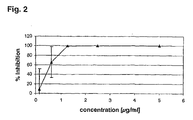
- Figure 2 graphically depicts the results of two independent tests (means, error bars reflect standard deviation). From Figure 2 it can be seen that increasing geraniin concentration results in increased inhibition with complete inhibition at a concentration of 1.25 ⁇ g/ml.
- Example 3 Essentially the same experiment as described in Example 3 was used to determine the inhibitory effect of geraniin on a nucleosidic RT inhibitor (NRTI) resistant HIV-1 strain.
- the strain termed ARP145 (Tisdale et al. (1993), Proc Nat Acad Sci (USA) 90(12): 5653-5656) was obtained from the NIBSC (MRC) and is phenotypically characterized by a 3TC/FTC resistance.
- MT4 cells were infected with ca. 100 TCID 50 of either HX10 or ARP145 in the presence of P.
- amarus purified geraniin at concentrations of 5 ⁇ g/ml, 2.5 ⁇ g/ml, 1.25 ⁇ g/ml and 0.63 ⁇ g/ml.
- the inhibition of the resistant strain and of the wild type parental strain (HX10) is graphically represented in Figure 3. No significant difference was observed in the inhibition of wild type or NRTI resistant strain by geraniin.
- Example 2 Essentially the same experiment as described in Example 1 was used to determine the inhibitory effect of a Phyllanthus extract prepared as described in Example 7 on a HIV-2 strain (ROD, Clavel F et al. (1986), Science 233: 343; Guyader M et al. (1987), Nature 326: 662) and a nucleosidic RT inhibitor (NRTI) resistant HIV-1 strain (ARP145).
- MAGI cells were infected with 70 ⁇ l of the corresponding virus stock in the presence of the extract at concentrations of 5 ⁇ g/ml, 2.5 ⁇ g/ml, 1.25 ⁇ g/ml and 0.63 ⁇ g/ml (in phosphate buffered saline).
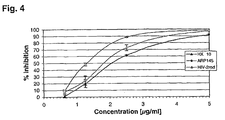
- the inhibition of the HIV-2 strain, of the NRTI resistant strain and of the wild type parental strain (HX10) is graphically represented in Figure 4. No decrease of inhibition was observed in the inhibition of the HIV-2 or NRTI resistant HIV-1 strain compared to the HIV-1 wild type strain by the extract. To the contrary, inhibition of HIV-2 was enhanced. Even more enhanced was the inhibition of the NRTI resistant strain.
- RT HIV-1 reverse transcriptase
- the inhibitory effect of P. amarus extract (Example 7) on recombinant HIV-1 reverse transcriptase (RT) was determined essentially in the same way as described in Example 2. However, in this experiment a different RT assay was used (Reverse Transcriptase Assay, non-radioactive, Roche Diagnostics GmbH, Mannheim, Germany).
- the recombinant RT-reagent (2.5 mU) was incubated with the extract at concentrations of 10 ⁇ g/ml, 5 ⁇ g/ml, 2.5 ⁇ g/ml or 1.25 ⁇ g/ml, or PBS for 1 h and RT activity was measured according to the manufacturer's protocol.
- Example 8 Purification of compounds from Phyllanthus amarus
- the purified compound X was identified by UV-spectroscopy and 13 C-NMR.
- the main peaks in UV were at 278, 350 and 362 nm in complete accordance to the literature data (M. A. M. Nawwar et al. Phytochemistry 36(3), 793-798, 1994).
- Our NMR data confirm the existence of 13 C-atoms and the structure of brevifolin carboxylic acid as described in Phytochemistry (see above).
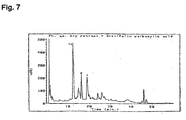
- the extract was subjected to HPLC analysis (Fig. 6). Additional evidence was given by spiking the original HPLC fingerprint with an authentic sample of brevifolin carboxylic acid from Prof. T. Yoshida, Okayama University, Japan (see Fig. 7).
- Example 2 Essentially the same experiment as described in Example 1 was used to determine the inhibitory effect of geraniin on a HIV-2 (rod) strain and a selection of nucleosidic RT inhibitor (NRTI) resistant HIV-1 strains (ARP141, ARP145 and ARP146) as well as non-nucleosidic RT inhibitor (NNRTI) resistant HIV-1 strains (ARP1010, ARP1011 and ARP1014).
- NRTI nucleosidic RT inhibitor
- NRTI non-nucleosidic RT inhibitor
- MAGI cells were infected with 70 ⁇ l of the corresponding virus stocks in the presence of geraniin at concentrations of 2.5 ⁇ g/ml, 1.25 ⁇ g/ml and 0.63 ⁇ g/ml.
- the EC 50 values of the HIV-2 strain, the RT resistant strains and the wild type parental strain (HX10) were calculated and are listed in table 2. No significant change of EC 50 values was observed in the inhibition of the HIV-2 or RT resistant HIV-1 strain compared to the HIV-1 wild type strains by geraniin. Table 2. Effect of geraniin on wild type and RTI-resistant HIV strains wild type NRTI NNRTI Strain HX10 HIV-2rod ARP141 ARP145 ARP146 ARP1010 ARP1011 ARP1014 EC 50 [ ⁇ g/ml] 0.74 0.83 0.83 0.95 0.71 0.83 0.89 1.10
- the HIV-1 p24 content of cell lysates was determined using a p24 sandwich ELISA (NEN). Heparin sulfate (Hep-S) at a concentration of 100 ⁇ g/ml and an ⁇ -HIV-1 gp120 monoclonal antibody (final dilution 1:40) served as controls. Geraniin was tested for prevention of wild type HIV-1 uptake at final concentrations of 10 ⁇ g/ml, 2.5 ⁇ g/ml and 0.625 ⁇ g/ml, the results are depicted in Figure 8. As can be seen, the internalization of virus was blocked by geraniin in a dose dependent manner.
- Anti HIV-1 activity of P. amarus extract also referred to as CMI-111 on a selection of RT inhibitor resistant HIV-1 strains in infection assays
- Example 2 Essentially the same experiment as described in Example 1 was used to determine the inhibitory effect of P. amarus extract on additional nucleosidic RT inhibitor (NRTI) resistant HIV-1 strains (ARP141 and ARP146) as well as non-nucleosidic RT inhibitor (NNRTI) resistant HIV-1 strains (ARP1010, ARP1011 and ARP1014).
- NRTI nucleosidic RT inhibitor
- NRTI non-nucleosidic RT inhibitor
- MAGI cells were infected with 70 ⁇ l of the corresponding virus stocks in the presence of P. amarus extract at concentrations of 10 ⁇ g/ml, 5 ⁇ g/ml, 2.5 ⁇ g/ml, 1.25 ⁇ g/ml and 0.63 ⁇ g/ml.
- the EC 50 values of the HIV-2 strain, the RT resistant strains and the wild type parental strain (HX10) were calculated and are listed in table 3. No. significant change of EC 50 values was observed in the inhibition of the HIV-2 or RT resistant HIV-1 strains compared to the HIV-1 wild type strain by CMI-111. To the contrary, inhibition of HIV-2 was enhanced. Even more enhanced was the inhibition of the RTI resistant strains. Table 3. Effect of CMI-111 on wild type and RTI-resistant HIV strains wild type NRTI NNRTI Strain HX10 HIV-2rod ARP141 ARP146 ARP1010 ARP1011 ARP1014 EC 50 [ ⁇ g/ml] 1.92 1.38 1.02 1.25 1.19 0.98 1.25
- Example 7 Inhibition of virus entry by P. amarus extract CMI-111 (Example 7) was determined essentially as described in Example 10. CMI-111 was tested for prevention of wild type HIV-1 uptake at final concentrations of 10 ⁇ g/ml, 2.5 ⁇ g/m) and 0.625 ⁇ g/ml, the results are depicted in Figure 9. As can be seen, the internalization of virus was blocked by CMI-111 in a dose dependent manner.
- Wells were incubated with 100 ng recombinant gp120 and dilutions of test samples (10% final concentration, in blocking buffer) for 1 h and washed 5 times. Wells were further incubated with 100 ⁇ l mouse anti-gp120-V3 monoclonal antibody for 1 h at 37°C, washed 5 times and incubated with 100 ⁇ l anti- mouse HRP-conjugated monoclonal antibody for 1 h at 37°C and washed 10 times. Finally, wells were incubated with 100 ⁇ l substrate (OPD) for 15 min, the reaction was stopped with 100 ⁇ l 1 N H2SO4 and the plate was read in an ELISA reader (492 nm).
- OPD ⁇ l substrate
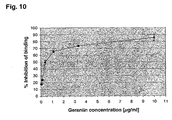
- Geraniin was tested at final concentrations of 10 ⁇ g/ml, 3.33 ⁇ g/ml, 1.11 ⁇ g/ml, 0.37 ⁇ g/ml, 1.123 ⁇ g/ml and 0.041 ⁇ g/ml, in duplicates. The results of this representative experiment are depicted in figure 10. As can be seen, the binding of gp120 to CD4 was blocked by geraniin in a dose dependent manner. An average IC50 value of 0.48 ⁇ 0.05 ⁇ g/ml was calculated from three independent experiments.
- Inhibition of viral envelope glycoprotein gp120 binding to CD4 by P. amarus extract CMI-111 was determined essentially as described in example 13. CMI-111 was tested at final concentrations of 30 ⁇ g/ml, 10 ⁇ g/ml, 3.33 ⁇ g/ml, 1.11 ⁇ g/ml, 0.37 ⁇ g/ml and 1.123 ⁇ g/ml, in duplicates. The results are depicted in figure 11. As can be seen, the binding of gp120 to CD4 was blocked by CMI-111 in a dose dependent manner. An average IC50 value of 2.65 ⁇ 0.44 ⁇ g/ml was calculated from three independent experiments.
Landscapes
- Health & Medical Sciences (AREA)
- Life Sciences & Earth Sciences (AREA)
- Natural Medicines & Medicinal Plants (AREA)
- Pharmacology & Pharmacy (AREA)
- Veterinary Medicine (AREA)
- Public Health (AREA)
- Chemical & Material Sciences (AREA)
- General Health & Medical Sciences (AREA)
- Medicinal Chemistry (AREA)
- Animal Behavior & Ethology (AREA)
- Virology (AREA)
- Chemical Kinetics & Catalysis (AREA)
- Organic Chemistry (AREA)
- Nuclear Medicine, Radiotherapy & Molecular Imaging (AREA)
- General Chemical & Material Sciences (AREA)
- Oncology (AREA)
- Communicable Diseases (AREA)
- Engineering & Computer Science (AREA)
- Medical Informatics (AREA)
- Molecular Biology (AREA)
- Epidemiology (AREA)
- Alternative & Traditional Medicine (AREA)
- Biotechnology (AREA)
- Botany (AREA)
- Mycology (AREA)
- Microbiology (AREA)
- Tropical Medicine & Parasitology (AREA)
- AIDS & HIV (AREA)
- Pharmaceuticals Containing Other Organic And Inorganic Compounds (AREA)
- Medicines Containing Plant Substances (AREA)
- Acyclic And Carbocyclic Compounds In Medicinal Compositions (AREA)
Abstract
Description
- The present invention relates to the use a Phyllanthus extract or a fraction thereof or a gallotannin or a combination of gallotannins for the preparation of a pharmaceutical composition for the prevention or treatment of retrovirus related diseases associated with a nucleosidic inhibitor-resistant retrovirus and/or a non-nucleosidic inhibitor-resistant retrovirus. Preferably, the retrovirus is a human immunodeficiency virus (HIV). In accordance with the present invention, it is further preferred that said gallotannin or combination of gallotannins is or comprises corilagin and/or geraniin and/or another ellagitannin. Further preferred is that said Phyllanthus is Phyllanthus amarus.
- Infection of retroviruses can cause severe illness and often results in death of humans. Retroviruses pathogenic for humans include Rous sarcoma virus, human T-cell leukemia virus (HTLVI and HTLVII) as well as human immunodeficiency virus (HIV). In particular, HIV is of major concern for health authorities due to its spread, its mode of infection and since a satisfactory cure has not been identified so far. Presently, treatment of HIV infected patients relies on a combination therapy that is expensive and may give rise to resistant HIV strains after prolonged progression of the therapy.
- Phyllanthus extracts or components derived from Phyllanthus have been described as antiviral agents in the art. Thus, US-A 4,937,074 (Venkateswaran et al.) reports that Phyllanthus niruri extracts may inhibit reverse transcriptase (RT) activity of retroviruses such as HIV. The extract may be obtained by extracting whole plants with methanol or other conventional solvents. Uchiumi et al., Biochem. Biophys. Res. Commun. 220 (1996), 411-417 describe the use of tannic acids for the suppression of HIV promoter activity. Liu et al., Planta Med. 65 (1999), 43-46 describe that the variety of ellagitannins such as corilagin and geraniin have a strong inhibitory effect on HIV reverse transcriptase. Hirayama, US-A 5,159,060 describe the use of sulfated tannins for inhibiting reverse transcriptase of retroviruses.
- The above reports all rely on the inhibition of viral spread or RT-activity from wild-type retroviruses. Such viruses are normally susceptible to nucleosidic inhibitors or non-nucleosidic inhibitors. After treatment with such inhibitors or combinations of such inhibitors, it has been observed that HIV may develop a resistance to therapy. Once the viruses show resistance against said inhibitors, present therapy approaches usually fail.
- Accordingly, the technical problem underlying the present invention was to provide novel approaches for treating or preventing infections by retroviruses that are resistant to nucleosidic or non-nucleosidic inhibitors. The solution to said technical problem is provided by the embodiments characterized in the claims.
- Accordingly, the present invention relates to the use of a Phyllanthus extract or a fraction thereof or a gallotannin or a combination of gallotannins for the preparation of a pharmaceutical composition for the prevention or treatment of retrovirus-related diseases associated with a nucleosidic inhibitor-resistant retrovirus and/or a non-nucleosidic inhibitor-resistant retrovirus.
- The present invention also relates to the use of a Phyllanthus extract or a fraction thereof or a gallotannin or a combination of gallotannins for the preparation of a pharmaceutical composition for the inhibition of the replication of a nucleosidic inhibitor-resistant retrovirus and/or a non-nucleosidic inhibitor-resistant retrovirus.
- The present invention furthermore relates to the use of a Phyllanthus extract or a fraction thereof or a gallotannin or a combination of gallotannins for the preparation of a pharmaceutical composition for the inhibition of the virus-uptake of a nucleosidic inhibitor-resistant retrovirus and/or a non-nucleosidic inhibitor-resistant retrovirus.
- The pharmaceutical composition prepared in accordance with the present invention may further comprise a pharmaceutically acceptable carrier and/or diluent. Examples of suitable pharmaceutical carriers are well known in the art and include phosphate buffered saline solutions, water, emulsions, such as oil/water emulsions, various types of wetting agents, sterile solutions etc. Compositions comprising such carriers can be formulated by well known conventional methods. These pharmaceutical compositions can be administered to the subject at a suitable dose. Administration of the suitable compositions may be effected by different ways, e.g., by oral, intravenous, intraperitoneal, subcutaneous, intramuscular, topical, intradermal, intranasal or intrabronchial administration. The dosage regimen will be determined by the attending physician and clinical factors. As is well known in the medical arts, dosages for any one patient depends upon many factors, including the patient's size, body surface area, age, the particular compound to be administered, sex, time and route of administration, general health, and other drugs being administered concurrently. A typical dose can be, for example, in the range of 150 to 1200 mg; however, doses below or above this exemplary range are envisioned, especially considering the aforementioned factors. Generally, the regimen as a regular administration of the pharmaceutical composition should be in the range of 3 to 6 units per day. Progress can be monitored by periodic assessment. The compositions may be administered locally or systemically. Administration will generally be orally, in the above indicated dose range. Preparations for parenteral administration include sterile aqueous or non-aqueous solutions, suspensions, and emulsions. Examples of non-aqueous solvents are propylene glycol, polyethylene glycol, vegetable oils such as olive oil, and injectable organic esters such as ethyl oleate. Aqueous carriers include water, alcoholic/aqueous solutions, emulsions or suspensions, including saline and buffered media. Parenteral vehicles include sodium chloride solution, Ringer's dextrose, dextrose and sodium chloride, lactated Ringer's, or fixed oils. Intravenous vehicles include fluid and nutrient replenishers, electrolyte replenishers (such as those based on Ringer's dextrose), and the like. Preservatives and other additives may also be present such as, for example, antimicrobials, anti-oxidants, chelating agents, and inert gases and the like.
The term "retrovirus-related diseases associated with a nucleosidic inhibitor-resistant retrovirus and/or a non-nucleosidic inhibitor-resistant retrovirus" refers to diseases or disease states that are induced by or co-associated with such inhibitor-resistant retroviruses. For example, said diseases or disease states may have been induced by non-resistant retrovirus strains and controlled with a suitable treatment, but resistant strains may have been induced. Due to the pathogenic effects of said resistant retroviruses which may have previously been induced, the disease or disease state may deteriorate. Further, said diseases or disease states may have been induced by resistant retroviruses, following primary infection with resistant retroviruses. It is important to note that the term "resistant" also includes partial resistance, typically at least 10 % resistance. - The term "virus-uptake of a nucleosidic inhibitor-resistant retrovirus and/or a non-nucleosidic inhibitor-resistant retrovirus" refers to entry of a retrovirus into its target cell. It has been shown that a retrovirus enters its target cell by a process comprising at least three consecutive steps. The first step involves binding of the retrovirus to molecules on the surface of its target cell. The HIV, for example, binds to its target cells via the viral glycoprotein gp41 and gp120. In a further step, the virus is taken up into the target cell by a mechanism involving endocytosis of the viral particle into said target cell. In the following step, the virus is uncoated and its RNA genetic material and the virally encoded reverse transcriptase enzyme are released into the cytoplasm. The reverse transcriptase starts the replication cycle of the retrovirus by transcribing the RNA genetic material into the DNA provirus which is subsequently integrated into the genome of the target cell. Target cells for the retroviruses are cells which are capable of binding the retrovirus via cell surface molecules. For example, said target cells are CD4 positive cells in the case of the HIV-1.
- In accordance with the present invention, it has been found that Phyllanthus extracts effectively inhibit the replication of retroviruses that are resistant to nucleosidic inhibitors and/or non-nucleosidic inhibitors by the inhibition of the infection of CD4 T-cells. Moreover, it has been found that in addition to virus replication, the virus-uptake by the target cells was also significantly inhibited. Surprisingly, the aforesaid extracts, fractions and gallotannins were found to be as effective or were more effective against several NRTI (nucleosidic reverse transcriptase inhibitors) strains, several NNRTI (non-nucleosidic reverse transcriptase inhibitors) strains and one HIV-2 strain as compared to the wild-type HIV-1 strain demonstrating an unusual broad protective potential. Advantageously, the Phyllanthus extracts or fractions thereof or gallotannins or a combination of gallotannins are capable of inhibiting simultaneously at least two key steps of the life cycle of a retrovirus, namely uptake and reverse transcription in vitro.
- In a preferred embodiment of the use of the invention, said retrovirus is an HIV, a Rous sarcoma virus or a HTLV I or II.
- The HIV may be an HIV-1 or HIV-2. Particularly preferred is that said HIV is an HIV-1.
- The Phyllanthus extract may be prepared according to conventional methods well-known in the art; see, for example, Liu et al.,loc. cit. Hirayama et al., loc. cit., Venkateswaran et al., loc. cit. Preferably, said extract is a water extract, an alcohol extract, a water-alcohol extract, an hexane extract or a CO2 extract.
- It is further preferred that the compounds of Phyllanthus used as active ingredients are not destroyed during the extraction process. Such extraction processes are known in the art and have been referred to herein above by reference.
- It is most preferred that said alcohol is methanol or ethanol.
- It is further preferred in accordance with the invention that said fraction is a protein fraction or a gallotannin fraction. Protein fractions may also be obtained according to conventional protocols. Appropriate protocols for obtaining gallotannin fractions are also well-known in the art; see, for example, Liu et al., loc. cit. For example, 100 g of freshly powdered drug maybe heated with 1000 ml distilled methanol for two hours in a round flask. After cooling, the solution is filtered through cotton wool. The solid sediment is subsequently heated twice with 500 ml methanol followed by decanting after cooling. The combined methanolic extracts are subsequently dried in a rotary evaporator. The dry sediment may be resuspended in 200 ml distilled water and subjected to ultrasonic treatment for three minutes. The suspension thus obtained may be three times extracted with 100 ml dichloromethane. The combined dichloromethane phases are subsequently extracted with 100 ml distilled water. The aqueous phases are combined, about half of the liquid removed in a rotary evaporator and the product of this process is subsequently freeze-dried. A typical amount of gallotannin fraction obtained is 10.5 g.
- It is further preferred in accordance with the present invention that said gallotannin is or said gallotannin fraction comprises corilagin.
- Also preferred is that said gallotannin is or said gallotannin fraction comprises geraniin.
- Further preferred is that said gallotannin is or said gallotannin fraction comprises ellagic acid.
- Additionally preferred is that said gallotannin is or said gallotannin fraction comprises brevifolin carboxylic acid.
- In accordance with the present invention, it is further preferred that said gallotannin is or said gallotannin fraction comprises another ellagitannin. Examples of further ellagitannins are chebulagic acid, elaeocarpusin, mallotusinin, phyllantusiin and 1-galloyl-3, 6-hexahydrodiphenoyl-4-0-brevifolincarboxyl-β-D-glucopyranose.
- In another preferred embodiment of the use of the invention, said combination of gallotannins or said gallotannin fraction comprises at least two such as three, four or five of corilagin, geraniin, ellagic acid and brevifolin carboxylic acid and optionally another ellagitannin. The relative amounts of coraligin, geraniin, ellagic acid and brevifolin carboxylic acid and optionally said other ellagitannin may vary in the pharmaceutical composition. It is preferred that at least three different ellagitannins including corilagin and geraniin are present in said pharmaceutical composition.
- In another preferred embodiment of the use of the present invention, said gallotannins are formulated into said pharmaceutical composition in a final concentration of 0.1 to 99.9 %, preferably 1 to 95 %. This holds in particular true for oral administration.
- Also preferred is that said extract or said fraction is present in a final concentration of 0.1 to 99.9 %, preferably 1 to 95 % in said pharmaceutical composition. This holds in particular true for oral administration.
Wherein said Phyllanthus may belong to a variety of different Phyllanthus species (all which are comprised by the present invention), it is preferred that said Phyllanthus is Phyllanthus amarus. - The present invention also relates to the use in the treatment of patients affected by a disease caused by or associated with a retrovirus that is resistant to nucleosidic or non-nucleosidic reverse transcriptase inhibitors comprising administration of a suitable amount of a Phyllanthus extract or a fraction thereof or a gallotannin or a combination of gallotannins to said patient. Preferably, said retrovirus is an HIV, more preferably an HIV-1. Also preferred is that said gallotannin is corilagin or geraniin or another ellagitannin or a combination thereof. Further preferred embodiments of the method of treatment of the present invention have been discussed in connection with the use of the invention and are equally applicable.
- Finally, the present invention relates to methods of inhibiting the replication of retroviruses wherein said retrovirus is resistant to nucleosidic or non-nucleosidic reverse transcriptase inhibitors comprising administering a suitable amount of a Phyllanthus extract or a fraction thereof or a gallotannin or a combination of gallotannins to said patient infected by said retrovirus. Further preferred embodiments of the method of inhibition of the present invention have been discussed in connection with the use of the invention and are equally applicable.
- The Figures show:
- Figure 1: graphically represents percent inhibition (ordinate) of human
immunodeficiency virus type 1 reverse transcriptase determined in vitro as a function of concentration of corilagin and geraniin purified from P. amarus (µg/ml) (abscissa). - Figure 2: graphically represents percent inhibition (ordinate) of human
immunodeficiency virus type 1 replication in MT4 cells determined in vitro as a function of concentration of geraniin purified from P. amarus (µg/ml) (abscissa). - Figure 3: graphically represents percent inhibition (ordinate) of replication of a wild type HX10 and a nucleosidic reverse transcriptase inhibitor resistant variant ARP145 of human
immunodeficiency virus type 1 in MT4 cells determined in vitro at different concentrations of geraniin purified from P. amarus (µg/ml) (abscissa). - Figure 4: graphically represents percent inhibition (ordinate) of replication of a wild type HX10 and a nucleosidic reverse transcriptase inhibitor resistant variant ARP145 of human
immunodeficiency virus type 1, and a wild type human immunodeficiency virus type 2 (HIV-2 rod) in a HeLa CD4+ reporter cell line determined in vitro as a function of concentration of P. amarus CMI-111 extract (Example 7) (µg/ml) (abscissa). - Figure 5: graphically represents percent inhibition (ordinate) of
human immunodeficiency virus 1 reverse transcriptase determined in vitro as a function of concentration of P. amarus CMI 111 extract (Example 7) (µg/ml) (abscissa). - Figure 6: HPLC fingerprint of the Ph. amarus dry extract.
- Figure 7: HPLC fingerprint of the Ph. amarus dry extract + brevifolin carboxylic acid (4a).
- Figure 8: graphically represents percent reduction of intracellular HIV-1 p24 concentration (=inhibition of virus internalization) (ordinate) in a HeLa CD4+ reporter cell line infected with HIV-1 determined in vitro in the presence of geraniin at different concentrations (µg/ml) (abscissa). Percent reduction for heparin sulfate (Hep-S) at a concentration of 100 µg/ml and for an α-HIV-1 gp120 monoclonal antibody (final dilution 1:40) are also depicted.
- Figure 9: graphically represents percent reduction of intracellular HIV-1 p24 concentration (=inhibition of virus internalization) (ordinate) in a HeLa CD4+ reporter cell line infected with HIV-1 determined in vitro in the presence of CMI-111 at different concentrations (µg/ml) (abscissa). Percent reduction for heparin sulfate (Hep-S) at a concentration of 100 µg/ml and for an α-HIV-1 gp120 monoclonal antibody (final dilution 1:40) are also depicted.
- Figure 10: graphically represents percent reduction of HIV-1 gp120 binding to immobilized CD4 (=inhibition of virus receptor binding) (ordinate) determined in vitro in the presence of geraniin at different concentrations (µg/ml) (abscissa).
- Figure 11 graphically represents percent reduction of HIV-1 gp120 binding to immobilized CD4 (=inhibition of virus receptor binding) (ordinate) determined in vitro in the presence of CMI-111 at different concentrations (µg/ml) (abscissa).
- The Examples illustrate the invention.
- HIV-1 (HX10, Ratner L., et al. (1987; AIDS research and
retroviruses 3, 57-69 or HBIO, Accession No. 15654, Wong-Staal F et al. (1985), Nature 313, 277-284) was prepared from a conditioned culture fluid of a MT4 cell line (Miyoshi I et al. (1982), Gann Monograph on Cancer Res 28:219; Pauwels R et al. (1987), J. Virol. Methods 16: 171). The culture fluid was clarified of cells by low speed centrifugation (900xg) and an equal volume of fetal calf serum (FCS) was added before storage at -80°C. Inhibition of virus infection by P. amarus gallotannin extract and purified gallotannins corilagin and geraniin was evaluated using a HeLa-CD4-LTR-β-gal reporter cell line (Multinuclear activation of galactosidase indicator (MAGI) cells, Kimpton J, Emerman M. (1992), J Virol 66(4):2232-2239). In brief, 1,5 x 10⁴ MAGI cells/well were plated in 48 well culture plates and grown overnight. The next day cells were incubated with 70 µl of HIV-1 stock in 100 µl in the presence of gallotannin extract or corilagin or geraniin at concentrations of 10 µg/ml, 5 µg/ml, 2.5 µg/ml or 1.25 µg/ml, or PBS for 2 hours in a humidified atmosphere. Then 200 µl medium with or without drugs was added and cells were incubated for 2 days. Infected cells were detected by 5-bromo-4-chloro-3-inolyl-galactopyranoside (X-Gal) staining of cells expressing an endogenous β-galoctidase as a consequence of HIV infection. Cells were fixed by incubation with 0.2% glutaraldehyde and 1% formaldehyde in PBS for 5 min. Fixed cells were washed with PBS twice and overlaid with the staining solution (4 mM K-Ferricyanide, 4 mM K-Ferrocyanide, 2 mM MgCl2 and 0.4 mg/ml X-Gal) for 30 min at 37°C. The number of blue cells was determined by microscopically observation (for details see Kimpton J, Emerman M. (1992). J Virol 66(4): 2232-9). Antiviral activity was calculated from the ratio of blue stained cells with and without extract and is given as percent inhibition. Tests were performed in triplicates. The inhibition of infection is reported in table 1. As can be seen from table 1 gallotannins inhibit HIV-1 replication in a dose dependent manner.Table 1. Effects of P. amarus gallotannins in an HIV-1 infection reporter assay % Inhibition Concentration Inhibitor 10 µg/ ml 5 µg/ml 2.5 µg/ml 1.25 µg/ml Gallotannin extract 94±1 81 ±1 1 63 ± 6 23 ±1 Corilagin 85 ± 7 73 ± 9 38 ±13 9 ±16 Geraniin 98 ± 3 93 ± 5 80 ± 4 66 ± 8 - The inhibitory effect of P. amarus gallotannins corilagin and geraniin on recombinant HIV-1 reverse transcriptase (RT) was determined by a commercially available RT assay (Screen RTA, Retro-Tech GmbH, Unterschleißheim, Germany), that utilizes the incorporation of biotinylated nucleotides in DNA as a measure of reverse transcriptase. The recombinant RT-reagent (5 mU) was incubated with corilagin or geraniin at concentrations of 10 µg/ml, 5 µg/ml, 2.5 µg/ml or 1.25 µg/ml, or PBS for 2 h and RT activity was measured according to the manufacturer's protocol. The inhibition of recombinant HIV-1 RT by P. amarus gallotannins is graphically represented in Figure 1. From Figure 1 it can be seen that the increase in inhibition is linear with increasing concentration of the gallotannins up to 10 µg/ml at which point the inhibition is >80% for geraniin and >35% for corilagin.
- The HIV-1 virus stock, described in Example 1, was used to asses the inhibitory effect of by P. amarus geraniin on the infection of CD4+ lymphoide cells (MT4). The 50% tissue culture infectious dose (TCID50) was determined by infection of MT4 cells with serial dilutions of the virus stock and subsequent quantification of viral p24 content in the cell fluid (HIV-1 p24 core profile ELISA, NEN, Zaventem, Belgium). MT4 cells were infected with ca. 100 TCID50 in the presence of P. amarus purified geraniin at concentrations of 5 µg/ml, 2.5 µg/ml, 1.25 µg/ml, 0.63 µg/ml and 0.31 µg/ml. It was previously determined that geraniin was non-toxic at these concentrations. The MT4 target cells were incubated for 7 days in the presence of virus and inhibitor, and fresh medium (containing drugs) was added every other day. Infections were monitored by quantification of p24 content in the cell fluid. Samples without detectable p24 contents (compared to the reference inhibitors and uninfected negative controls) were regarded completely protected from infection. Otherwise the content of p24 in the fluid was negatively correlated to protection. Each experiment was performed in triplicates. Figure 2 graphically depicts the results of two independent tests (means, error bars reflect standard deviation). From Figure 2 it can be seen that increasing geraniin concentration results in increased inhibition with complete inhibition at a concentration of 1.25 µg/ml.
- Essentially the same experiment as described in Example 3 was used to determine the inhibitory effect of geraniin on a nucleosidic RT inhibitor (NRTI) resistant HIV-1 strain. The strain termed ARP145 (Tisdale et al. (1993), Proc Nat Acad Sci (USA) 90(12): 5653-5656) was obtained from the NIBSC (MRC) and is phenotypically characterized by a 3TC/FTC resistance. MT4 cells were infected with ca. 100 TCID50 of either HX10 or ARP145 in the presence of P. amarus purified geraniin at concentrations of 5 µg/ml, 2.5 µg/ml, 1.25 µg/ml and 0.63 µg/ml. The inhibition of the resistant strain and of the wild type parental strain (HX10) is graphically represented in Figure 3. No significant difference was observed in the inhibition of wild type or NRTI resistant strain by geraniin.
- Essentially the same experiment as described in Example 1 was used to determine the inhibitory effect of a Phyllanthus extract prepared as described in Example 7 on a HIV-2 strain (ROD, Clavel F et al. (1986), Science 233: 343; Guyader M et al. (1987), Nature 326: 662) and a nucleosidic RT inhibitor (NRTI) resistant HIV-1 strain (ARP145). MAGI cells were infected with 70 µl of the corresponding virus stock in the presence of the extract at concentrations of 5 µg/ml, 2.5 µg/ml, 1.25 µg/ml and 0.63 µg/ml (in phosphate buffered saline). The inhibition of the HIV-2 strain, of the NRTI resistant strain and of the wild type parental strain (HX10) is graphically represented in Figure 4. No decrease of inhibition was observed in the inhibition of the HIV-2 or NRTI resistant HIV-1 strain compared to the HIV-1 wild type strain by the extract. To the contrary, inhibition of HIV-2 was enhanced. Even more enhanced was the inhibition of the NRTI resistant strain.
- The inhibitory effect of P. amarus extract (Example 7) on recombinant HIV-1 reverse transcriptase (RT) was determined essentially in the same way as described in Example 2. However, in this experiment a different RT assay was used (Reverse Transcriptase Assay, non-radioactive, Roche Diagnostics GmbH, Mannheim, Germany). The recombinant RT-reagent (2.5 mU) was incubated with the extract at concentrations of 10 µg/ml, 5 µg/ml, 2.5 µg/ml or 1.25 µg/ml, or PBS for 1 h and RT activity was measured according to the manufacturer's protocol. The inhibition of recombinant HIV-1 RT by the extract is graphically represented in Figure 5. From Figure 5 it can be seen that inhibition on the recombinant HIV-1 RT is dose dependent. At an extract concentration of 10 µg/ml inhibition is nearly complete (>98%).
- Whole uncut dry leaves were extracted in steel vessels with a drug solvent ratio 1:10 (+/-3) of
ethanol 50 % (v/v) for 1 to 3 hours at 30-40 °C. The drug residues were separated and then washed with 1 to 3 parts water. The ethanolic eluat and the water were combined. Then disodiumhydrogencitrate (1-3 % m/m) was added and the liquid subsequently filtrated through a membrane. Powdered Sterculia (presolved in ethanol/water) was added to the extract liquid (0.5-5 % m/m final concentration). Following the liquid was evaporated under reduced pressure (approx. 300 mbar decreasing to 20 mbar),evaporation temperature 30 to 60 °C (+/-5 °C) until the dry material content of 20-40 % dry mass (m/m) was reached. Subsequently the soft extract was mixed with maltodextrin (28-39 % m/m) until a homogenous suspension occurred. The mixture was processed through a short-heating unit for reduction of microbial contamination at a temperature of 80-120 °C and a duration of 20-40 sec. The mixture was thoroughly dried until the water content is less then 5 %. During the drying process the outlet temperature of the drying unit did not exceed 90 °C (+/- 5 %) (= "product temp."). Silica (0.5-3 % m/m) was added during the drying process and after the drying process. The dried product was mixed and subsequently sieved. - Starting material for the isolation of the brevifolin carboxylic acid was the extract as prepared in Example 7.
The dry extract was dissolved in 50 % aqueous ethanol and centrifuged to remove insoluble material and fines. The clear supernatant was applied to a Sephadex LH20 column run in 20 % aqueous methanol. The purified fraction X from the column chromatography was concentrated in a rotary evaporator and freeze dried. - The purified compound X was identified by UV-spectroscopy and 13C-NMR. The main peaks in UV were at 278, 350 and 362 nm in complete accordance to the literature data (M. A. M. Nawwar et al. Phytochemistry 36(3), 793-798, 1994). Our NMR data confirm the existence of 13 C-atoms and the structure of brevifolin carboxylic acid as described in Phytochemistry (see above). The extract was subjected to HPLC analysis (Fig. 6). Additional evidence was given by spiking the original HPLC fingerprint with an authentic sample of brevifolin carboxylic acid from Prof. T. Yoshida, Okayama University, Japan (see Fig. 7).
- From the gallotannin fraction of Ph. amarus another major gallotannin compound has been isolated and identified as brevifolin carboxylic acid. This compound can be obtained as a degradation product of geraniin.
Herewith four major compounds of Ph. amarus were identified: - geraniin (7)
- corilagin (5)
- ellagic acid
- brevifolin carboxylic acid (4a)
- Essentially the same experiment as described in Example 1 was used to determine the inhibitory effect of geraniin on a HIV-2 (rod) strain and a selection of nucleosidic RT inhibitor (NRTI) resistant HIV-1 strains (ARP141, ARP145 and ARP146) as well as non-nucleosidic RT inhibitor (NNRTI) resistant HIV-1 strains (ARP1010, ARP1011 and ARP1014). MAGI cells were infected with 70 µl of the corresponding virus stocks in the presence of geraniin at concentrations of 2.5 µg/ml, 1.25 µg/ml and 0.63 µg/ml. The EC50 values of the HIV-2 strain, the RT resistant strains and the wild type parental strain (HX10) were calculated and are listed in table 2. No significant change of EC50 values was observed in the inhibition of the HIV-2 or RT resistant HIV-1 strain compared to the HIV-1 wild type strains by geraniin.
Table 2. Effect of geraniin on wild type and RTI-resistant HIV strains wild type NRTI NNRTI Strain HX10 HIV-2rod ARP141 ARP145 ARP146 ARP1010 ARP1011 ARP1014 EC50 [µg/ml] 0.74 0.83 0.83 0.95 0.71 0.83 0.89 1.10 - Inhibition of virus entry by geraniin was monitored using an assay described recently (Saphire et al. (1999) EMBO Journal 18: 6771-6785) with slight modifications. In brief, MAGI cells were preincubated at 4°C for 60 min (in 200 µl), virus and inhibitor (in a volume of 100 µl) were added, the cells were incubated for 30 min at 4°C and finally shifted to 37°C for two hours. The cells were then washed with 500 µl PBS five times to remove unbound virus, trypsinized for 5 min to remove all attached but not internalized virus washed again with 500 µl PBS and finally lysed with 100 µl PBS containing 0.5% NP-40. The HIV-1 p24 content of cell lysates was determined using a p24 sandwich ELISA (NEN). Heparin sulfate (Hep-S) at a concentration of 100 µg/ml and an α-HIV-1 gp120 monoclonal antibody (final dilution 1:40) served as controls. Geraniin was tested for prevention of wild type HIV-1 uptake at final concentrations of 10 µg/ml, 2.5 µg/ml and 0.625 µg/ml, the results are depicted in Figure 8. As can be seen, the internalization of virus was blocked by geraniin in a dose dependent manner.
- Essentially the same experiment as described in Example 1 was used to determine the inhibitory effect of P. amarus extract on additional nucleosidic RT inhibitor (NRTI) resistant HIV-1 strains (ARP141 and ARP146) as well as non-nucleosidic RT inhibitor (NNRTI) resistant HIV-1 strains (ARP1010, ARP1011 and ARP1014). MAGI cells were infected with 70 µl of the corresponding virus stocks in the presence of P. amarus extract at concentrations of 10 µg/ml, 5 µg/ml, 2.5 µg/ml, 1.25 µg/ml and 0.63 µg/ml. The EC50 values of the HIV-2 strain, the RT resistant strains and the wild type parental strain (HX10) were calculated and are listed in table 3. No. significant change of EC50 values was observed in the inhibition of the HIV-2 or RT resistant HIV-1 strains compared to the HIV-1 wild type strain by CMI-111. To the contrary, inhibition of HIV-2 was enhanced. Even more enhanced was the inhibition of the RTI resistant strains.
Table 3. Effect of CMI-111 on wild type and RTI-resistant HIV strains wild type NRTI NNRTI Strain HX10 HIV-2rod ARP141 ARP146 ARP1010 ARP1011 ARP1014 EC50 [µg/ml] 1.92 1.38 1.02 1.25 1.19 0.98 1.25 - Inhibition of virus entry by P. amarus extract CMI-111 (Example 7)was determined essentially as described in Example 10. CMI-111 was tested for prevention of wild type HIV-1 uptake at final concentrations of 10 µg/ml, 2.5 µg/m) and 0.625 µg/ml, the results are depicted in Figure 9. As can be seen, the internalization of virus was blocked by CMI-111 in a dose dependent manner.
- Inhibition of viral envelope glycoprotein gp120 binding to its cellular receptor CD4 by geraniin was monitored using immobilized recombinant CD4 and recombinant HIV-1 gp120 in an ELISA-like assay format. In brief, ELISA plates were coated with 100 ng/well CD4 (in 0.1 M carbonate buffer, pH 9.5) for 12 h at 4°C. Plates were washed 5 times with 200 µl washing buffer (PBS, 0.05% Tween 20) and blocked with 200 µl blocking buffer (PBS, 0.1% gelantine) for 1 h. Wells were incubated with 100 ng recombinant gp120 and dilutions of test samples (10% final concentration, in blocking buffer) for 1 h and washed 5 times. Wells were further incubated with 100 µl mouse anti-gp120-V3 monoclonal antibody for 1 h at 37°C, washed 5 times and incubated with 100 µl anti- mouse HRP-conjugated monoclonal antibody for 1 h at 37°C and washed 10 times. Finally, wells were incubated with 100 µl substrate (OPD) for 15 min, the reaction was stopped with 100 µl 1 N H2SO4 and the plate was read in an ELISA reader (492 nm). Geraniin was tested at final concentrations of 10 µg/ml, 3.33 µg/ml, 1.11 µg/ml, 0.37 µg/ml, 1.123 µg/ml and 0.041 µg/ml, in duplicates. The results of this representative experiment are depicted in figure 10. As can be seen, the binding of gp120 to CD4 was blocked by geraniin in a dose dependent manner. An average IC50 value of 0.48 ± 0.05 µg/ml was calculated from three independent experiments.
- Inhibition of viral envelope glycoprotein gp120 binding to CD4 by P. amarus extract CMI-111 was determined essentially as described in example 13. CMI-111 was tested at final concentrations of 30 µg/ml, 10 µg/ml, 3.33 µg/ml, 1.11 µg/ml, 0.37 µg/ml and 1.123 µg/ml, in duplicates. The results are depicted in figure 11. As can be seen, the binding of gp120 to CD4 was blocked by CMI-111 in a dose dependent manner. An average IC50 value of 2.65 ± 0.44 µg/ml was calculated from three independent experiments.
Claims (17)
- Use of a Phyllanthus extract or a fraction thereof or a gallotannin or a combination of gallotannins for the preparation of a pharmaceutical composition for the prevention or treatment of retrovirus-related diseases associated with a nucleosidic inhibitor-resistant retrovirus and/or a non-nucleosidic inhibitor-resistant retrovirus.
- The use of claim 1, wherein the diseases are treated by inhibiting the replication of a nucleosidic inhibitor-resistant retrovirus and/or a non-nucleosidic inhibitor-resistant retrovirus.
- The use of claim 1, wherein the diseases are treated by inhibiting the virus-uptake of a nucleosidic inhibitor-resistant retrovirus and/or a non-nucleosidic inhibitor-resistant retrovirus.
- The use of any one of claims 1 to 3, wherein said retrovirus is an HIV.
- The use of claim 4, wherein said HIV is an HIV-1.
- The use of any one of claims 1 to 3, wherein said extract is a water extract, an alcohol extract, a water/alcohol extract, a hexane extract or a CO2 extract.
- The use of claim 6, wherein said alcohol is methanol or ethanol.
- The use of any one of claims 1 to 5, wherein said fraction is a protein fraction or a gallotannin fraction.
- The use of any one of claims 1 to 5 or 8, wherein said gallotannin is or said gallotannin fraction comprises corilagin.
- The use of any one of claims 1 to or 8, wherein said gallotannin is or said gallotannin fraction comprises geraniin.
- The use of any one of claims 1 to 5 or 8, wherein said gallotannin is or said gallotannin fraction comprises ellagic acid.
- The use of any one of claims 1 to 5 or 8, wherein said gallotannin is or said gallotannin fraction comprises brevifolin carboxylic acid.
- The use of any one of claims 1 to 5 or 8, wherein said gallotannin is or said gallotannin fraction comprises an ellagitannin different from corilagin, geraniin, ellagic acid and brevifolin carboxylic acid.
- The use of claim 1 to 5 or 8, wherein said combination of gallotannins or said gallotannin fraction comprises at least two of corilagin, geraniin, ellagic acid and brevifolin carboxylic acid and optionally said ellagitannin different from corilagin and geraniin.
- The use of any one of claims 1 to 14, wherein said gallotannins are formulated into said pharmaceutical composition in a concentration of 0.1 to 99.9 %.
- The use of any one of claims 1 to 15, wherein said extract or said fraction is present in a concentration of 0.1 to 99.9 % in said pharmaceutical composition.
- The use of any one of claims 1 to 16, wherein said Phyllanthus is Phyllanthus amarus.
Priority Applications (1)
| Application Number | Priority Date | Filing Date | Title |
|---|---|---|---|
| EP01986262A EP1333848B1 (en) | 2000-10-06 | 2001-10-05 | Phyllanthus-derived compounds for the prevention and/or treatment of diseases associated with a retrovirus |
Applications Claiming Priority (6)
| Application Number | Priority Date | Filing Date | Title |
|---|---|---|---|
| EP00121852 | 2000-10-06 | ||
| EP00121852 | 2000-10-06 | ||
| EP01114008 | 2001-06-08 | ||
| EP01114008 | 2001-06-08 | ||
| EP01986262A EP1333848B1 (en) | 2000-10-06 | 2001-10-05 | Phyllanthus-derived compounds for the prevention and/or treatment of diseases associated with a retrovirus |
| PCT/EP2001/011524 WO2002028403A1 (en) | 2000-10-06 | 2001-10-05 | Phyllanthus-derived compounds for the prevention and/or treatment of diseases associated with a retrovirus |
Publications (2)
| Publication Number | Publication Date |
|---|---|
| EP1333848A1 EP1333848A1 (en) | 2003-08-13 |
| EP1333848B1 true EP1333848B1 (en) | 2006-04-05 |
Family
ID=26071484
Family Applications (1)
| Application Number | Title | Priority Date | Filing Date |
|---|---|---|---|
| EP01986262A Expired - Lifetime EP1333848B1 (en) | 2000-10-06 | 2001-10-05 | Phyllanthus-derived compounds for the prevention and/or treatment of diseases associated with a retrovirus |
Country Status (10)
| Country | Link |
|---|---|
| US (1) | US20040161477A1 (en) |
| EP (1) | EP1333848B1 (en) |
| JP (1) | JP2004513092A (en) |
| AT (1) | ATE322278T1 (en) |
| AU (1) | AU2002220594A1 (en) |
| CA (1) | CA2424869A1 (en) |
| DE (1) | DE60118592T2 (en) |
| ES (1) | ES2261507T3 (en) |
| PT (1) | PT1333848E (en) |
| WO (1) | WO2002028403A1 (en) |
Cited By (1)
| Publication number | Priority date | Publication date | Assignee | Title |
|---|---|---|---|---|
| EP2116253A1 (en) | 2008-05-07 | 2009-11-11 | Phytrix JV, LLC | Novel phyllanthus extract |
Families Citing this family (9)
| Publication number | Priority date | Publication date | Assignee | Title |
|---|---|---|---|---|
| JP2004510822A (en) | 2000-10-06 | 2004-04-08 | シーエムアイ−センターズ・フォー・メディカル・イノヴェーション・アクチェンゲゼルシャフト | Method for producing Phyllanthus extract |
| WO2011085454A1 (en) * | 2010-01-18 | 2011-07-21 | Katholieke Universiteit Leuven K.U.Leuven R&D | Gp120 -binding benzene compounds and saccharide compounds |
| KR101604347B1 (en) | 2013-07-01 | 2016-03-17 | 한국생명공학연구원 | Pharmaceutical composition comprising an extract or a fraction of Pistacia weinmannifolia J. Poiss. Ex Franch for preventing or treating inflammatory-related diseases |
| CN103480178B (en) * | 2013-09-30 | 2016-09-28 | 新疆大学 | The method of active component in a kind of Subcritical water chromotagraphy snow chrysanthemum |
| CN103976356B (en) * | 2014-05-07 | 2015-08-26 | 王浩 | A kind of diet food and preparation method thereof |
| CN110665002B (en) * | 2019-10-29 | 2023-01-24 | 信阳市动物疫病预防控制中心 | Antibody preparation for preventing and treating bovine viral diarrhea and preparation method thereof |
| CN111658631A (en) * | 2020-06-11 | 2020-09-15 | 广东盛普生命科技有限公司 | Application of gallic acid and its derivatives and structural analogs in preparing anti-coronavirus medicine |
| CN112022867B (en) * | 2020-06-18 | 2022-05-13 | 浙江省疾病预防控制中心 | Application of geraniin in preparing anti-novel coronary virus medicine |
| EP3954379A1 (en) * | 2020-08-12 | 2022-02-16 | HFM - Hybrid Fusion Medicals, GmbH | Compositions comprising phyllanthus extract for use in the treatment or prevention of a sars-cov-2 infection and/or at least one symptom of covid-19 |
Family Cites Families (12)
| Publication number | Priority date | Publication date | Assignee | Title |
|---|---|---|---|---|
| US28754A (en) * | 1860-06-19 | Congress boot | ||
| US33275A (en) * | 1861-09-10 | Improved pipe-joi-nt | ||
| US4388457A (en) * | 1982-02-11 | 1983-06-14 | University Patents, Inc. | Phyllanthostatin compounds |
| US4673575A (en) * | 1985-04-26 | 1987-06-16 | Fox Chase Cancer Center | Composition, pharmaceutical preparation and method for treating viral hepatitus |
| US4937074A (en) * | 1988-03-29 | 1990-06-26 | Fox Chase Cancer Center | Method of treating retrovirus infection |
| WO1990004968A1 (en) * | 1988-10-31 | 1990-05-17 | University Of North Carolina At Chapel Hill | Inhibition of human retroviruses |
| US5854233A (en) * | 1993-09-08 | 1998-12-29 | Pharmacy And Therapeutic Advisory Consultancy Ltd. | Method of treating liver disease and like indications with vasodilating agents |
| US5529778A (en) * | 1994-09-13 | 1996-06-25 | Rohatgi; Surendra | Ayurvedic composition for the prophylaxis and treatment of AIDS, flu, TB and other immuno-deficiencies and the process for preparing the same |
| US5571441A (en) * | 1994-11-01 | 1996-11-05 | The Procter & Gamble Company | Nutrient supplement compositions providing physiologic feedback |
| US5648089A (en) * | 1995-07-03 | 1997-07-15 | Shawkat; Tarek | Extract solution and herbal mixture for treatment of hepatitis |
| US6136316A (en) * | 1996-04-17 | 2000-10-24 | Dabur Research Foundation | Hepatoprotective compositions and composition for treatment of conditions related to hepatitis B and E infection |
| DE19919585A1 (en) * | 1999-04-29 | 2000-12-07 | Cmi Ag | Use of phyllanthus to treat oxidative stress and other symptoms |
-
2001
- 2001-10-05 PT PT01986262T patent/PT1333848E/en unknown
- 2001-10-05 JP JP2002532227A patent/JP2004513092A/en active Pending
- 2001-10-05 ES ES01986262T patent/ES2261507T3/en not_active Expired - Lifetime
- 2001-10-05 AU AU2002220594A patent/AU2002220594A1/en not_active Abandoned
- 2001-10-05 CA CA002424869A patent/CA2424869A1/en not_active Abandoned
- 2001-10-05 US US10/398,379 patent/US20040161477A1/en not_active Abandoned
- 2001-10-05 DE DE60118592T patent/DE60118592T2/en not_active Expired - Lifetime
- 2001-10-05 AT AT01986262T patent/ATE322278T1/en not_active IP Right Cessation
- 2001-10-05 WO PCT/EP2001/011524 patent/WO2002028403A1/en not_active Ceased
- 2001-10-05 EP EP01986262A patent/EP1333848B1/en not_active Expired - Lifetime
Non-Patent Citations (1)
| Title |
|---|
| HOUGHTON P.J. ET AL, JOURNAL OF PHARMACY AND PHARMACOLOGY, vol. 51, no. SUPPL., 1999, pages 100 - 100, XP009031172 * |
Cited By (1)
| Publication number | Priority date | Publication date | Assignee | Title |
|---|---|---|---|---|
| EP2116253A1 (en) | 2008-05-07 | 2009-11-11 | Phytrix JV, LLC | Novel phyllanthus extract |
Also Published As
| Publication number | Publication date |
|---|---|
| DE60118592D1 (en) | 2006-05-18 |
| JP2004513092A (en) | 2004-04-30 |
| DE60118592T2 (en) | 2007-05-16 |
| US20040161477A1 (en) | 2004-08-19 |
| EP1333848A1 (en) | 2003-08-13 |
| ATE322278T1 (en) | 2006-04-15 |
| ES2261507T3 (en) | 2006-11-16 |
| CA2424869A1 (en) | 2002-04-11 |
| AU2002220594A1 (en) | 2002-04-15 |
| WO2002028403A1 (en) | 2002-04-11 |
| PT1333848E (en) | 2006-08-31 |
Similar Documents
| Publication | Publication Date | Title |
|---|---|---|
| Chang et al. | Dehydroandrographolide succinic acid monoester as an inhibitor against the human immunodeficiency virus | |
| Tang et al. | Virucidal activity of hypericin against enveloped and non-enveloped DNA and RNA viruses | |
| Sarin et al. | Inhibition of replication of the etiologic agent of acquired immune deficiency syndrome (human T-lymphotropic retrovirus/lymphadenopathy-associated virus) by avarol and avarone | |
| Ghoneum | Anti-HIV activityin vitroof MGN-3, an activated arabinoxylane from rice bran | |
| Hamamoto et al. | Inhibitory effect of 2', 3'-didehydro-2', 3'-dideoxynucleosides on infectivity, cytopathic effects, and replication of human immunodeficiency virus | |
| Nakashima et al. | Inhibition of replication and cytopathic effect of human T cell lymphotropic virus type III/lymphadenopathy-associated virus by 3'-azido-3'-deoxythymidine in vitro | |
| Yamaguchi et al. | Inhibitory effects of (−)-epigallocatechin gallate on the life cycle of human immunodeficiency virus type 1 (HIV-1) | |
| De Clercq et al. | Potent and selective inhibition of human immunodeficiency virus (HIV)-1 and HIV-2 replication by a class of bicyclams interacting with a viral uncoating event. | |
| Li et al. | Flavonoid baicalin inhibits HIV-1 infection at the level of viral entry | |
| EP2301565A1 (en) | Use of proteasome inhibitors for the treatment of viral infections | |
| JPH05500824A (en) | Chinese herbal extracts in the treatment of HIV-related diseases | |
| US20020091086A1 (en) | Peptides that block viral infectivity and methods of use thereof | |
| US20040161477A1 (en) | Phyllanthus-derived compounds for the prevention and/or treatment of disease associated with a retrovirus | |
| Turano et al. | Inhibitory effect of papaverine on HIV replication in vitro | |
| KR20010071580A (en) | Compounds obtained from salvia species having antiviral activity | |
| EP1206255A1 (en) | COMPOUNDS OBTAINED FROM i SALVIA SPECIES /i HAVING ANTIVIRAL ACTIVITY | |
| US20220323471A1 (en) | Glycosylated diphyllin as a broad-spectrum antiviral agent against zika virus and covid-19 | |
| Nakashima et al. | Sulfated pentagalloyl glucose (Y-ART-3) inhibits HIV replication and cytopathic effects in vitro, and reduces HIV infection in hu-PBL-SCID mice | |
| US6323183B1 (en) | Composition for and method of treatment using triterpenoids | |
| AU639273B2 (en) | Use of a benzodiazepine and a phenylpyrrylketone derivative | |
| EP1143981B1 (en) | Use of n-glycolneuraminic acid and its derivatives for the manufacture of a medicament for the treatment of hiv infections | |
| EP0870509B1 (en) | Sugar chain-recognizing antibody and remedy for infection with hiv | |
| CN115025218B (en) | Active combination for combined treatment of human immunodeficiency virus and its application | |
| US20050148541A1 (en) | Treatment and prevention of HIV and other viral infections | |
| CN103565970B (en) | A kind of Radix Sangusorbae extract for the treatment of acquired immune deficiency syndrome (AIDS) and preparation method thereof |
Legal Events
| Date | Code | Title | Description |
|---|---|---|---|
| PUAI | Public reference made under article 153(3) epc to a published international application that has entered the european phase |
Free format text: ORIGINAL CODE: 0009012 |
|
| 17P | Request for examination filed |
Effective date: 20030506 |
|
| AK | Designated contracting states |
Designated state(s): AT BE CH CY DE DK ES FI FR GB GR IE IT LI LU MC NL PT SE TR |
|
| AX | Request for extension of the european patent |
Extension state: AL LT LV MK RO SI |
|
| 17Q | First examination report despatched |
Effective date: 20040527 |
|
| RAP1 | Party data changed (applicant data changed or rights of an application transferred) |
Owner name: PHYTRIX AG |
|
| GRAP | Despatch of communication of intention to grant a patent |
Free format text: ORIGINAL CODE: EPIDOSNIGR1 |
|
| GRAS | Grant fee paid |
Free format text: ORIGINAL CODE: EPIDOSNIGR3 |
|
| GRAA | (expected) grant |
Free format text: ORIGINAL CODE: 0009210 |
|
| AK | Designated contracting states |
Kind code of ref document: B1 Designated state(s): AT BE CH CY DE DK ES FI FR GB GR IE IT LI LU MC NL PT SE TR |
|
| PG25 | Lapsed in a contracting state [announced via postgrant information from national office to epo] |
Ref country code: IT Free format text: LAPSE BECAUSE OF FAILURE TO SUBMIT A TRANSLATION OF THE DESCRIPTION OR TO PAY THE FEE WITHIN THE PRESCRIBED TIME-LIMIT;WARNING: LAPSES OF ITALIAN PATENTS WITH EFFECTIVE DATE BEFORE 2007 MAY HAVE OCCURRED AT ANY TIME BEFORE 2007. THE CORRECT EFFECTIVE DATE MAY BE DIFFERENT FROM THE ONE RECORDED. Effective date: 20060405 Ref country code: FI Free format text: LAPSE BECAUSE OF FAILURE TO SUBMIT A TRANSLATION OF THE DESCRIPTION OR TO PAY THE FEE WITHIN THE PRESCRIBED TIME-LIMIT Effective date: 20060405 Ref country code: NL Free format text: LAPSE BECAUSE OF FAILURE TO SUBMIT A TRANSLATION OF THE DESCRIPTION OR TO PAY THE FEE WITHIN THE PRESCRIBED TIME-LIMIT Effective date: 20060405 |
|
| REG | Reference to a national code |
Ref country code: GB Ref legal event code: FG4D |
|
| RIC1 | Information provided on ipc code assigned before grant |
Ipc: A61K 31/70 20060101ALI20060214BHEP Ipc: A61P 31/14 20060101ALI20060214BHEP Ipc: A61K 127/00 20060101ALI20060214BHEP Ipc: A61K 36/47 20060101AFI20060214BHEP |
|
| REG | Reference to a national code |
Ref country code: CH Ref legal event code: EP |
|
| RAP2 | Party data changed (patent owner data changed or rights of a patent transferred) |
Owner name: PHYTRIX INC. |
|
| REG | Reference to a national code |
Ref country code: IE Ref legal event code: FG4D |
|
| REF | Corresponds to: |
Ref document number: 60118592 Country of ref document: DE Date of ref document: 20060518 Kind code of ref document: P |
|
| NLT2 | Nl: modifications (of names), taken from the european patent patent bulletin |
Owner name: PHYTRIX INC. Effective date: 20060426 |
|
| PG25 | Lapsed in a contracting state [announced via postgrant information from national office to epo] |
Ref country code: SE Free format text: LAPSE BECAUSE OF FAILURE TO SUBMIT A TRANSLATION OF THE DESCRIPTION OR TO PAY THE FEE WITHIN THE PRESCRIBED TIME-LIMIT Effective date: 20060705 Ref country code: DK Free format text: LAPSE BECAUSE OF FAILURE TO SUBMIT A TRANSLATION OF THE DESCRIPTION OR TO PAY THE FEE WITHIN THE PRESCRIBED TIME-LIMIT Effective date: 20060705 |
|
| REG | Reference to a national code |
Ref country code: PT Ref legal event code: SC4A Effective date: 20060704 Ref country code: CH Ref legal event code: NV Representative=s name: VOSSIUS & PARTNER |
|
| NLV1 | Nl: lapsed or annulled due to failure to fulfill the requirements of art. 29p and 29m of the patents act | ||
| PG25 | Lapsed in a contracting state [announced via postgrant information from national office to epo] |
Ref country code: MC Free format text: LAPSE BECAUSE OF NON-PAYMENT OF DUE FEES Effective date: 20061031 |
|
| REG | Reference to a national code |
Ref country code: ES Ref legal event code: FG2A Ref document number: 2261507 Country of ref document: ES Kind code of ref document: T3 |
|
| ET | Fr: translation filed | ||
| PLBE | No opposition filed within time limit |
Free format text: ORIGINAL CODE: 0009261 |
|
| STAA | Information on the status of an ep patent application or granted ep patent |
Free format text: STATUS: NO OPPOSITION FILED WITHIN TIME LIMIT |
|
| 26N | No opposition filed |
Effective date: 20070108 |
|
| REG | Reference to a national code |
Ref country code: CH Ref legal event code: PCAR Free format text: VOSSIUS & PARTNER;NADELBERG 3;4051 BASEL (CH) |
|
| PG25 | Lapsed in a contracting state [announced via postgrant information from national office to epo] |
Ref country code: GR Free format text: LAPSE BECAUSE OF FAILURE TO SUBMIT A TRANSLATION OF THE DESCRIPTION OR TO PAY THE FEE WITHIN THE PRESCRIBED TIME-LIMIT Effective date: 20060706 |
|
| PGFP | Annual fee paid to national office [announced via postgrant information from national office to epo] |
Ref country code: PT Payment date: 20080930 Year of fee payment: 8 |
|
| PG25 | Lapsed in a contracting state [announced via postgrant information from national office to epo] |
Ref country code: CY Free format text: LAPSE BECAUSE OF FAILURE TO SUBMIT A TRANSLATION OF THE DESCRIPTION OR TO PAY THE FEE WITHIN THE PRESCRIBED TIME-LIMIT Effective date: 20060405 |
|
| PGFP | Annual fee paid to national office [announced via postgrant information from national office to epo] |
Ref country code: IE Payment date: 20081024 Year of fee payment: 8 Ref country code: LU Payment date: 20081027 Year of fee payment: 8 Ref country code: TR Payment date: 20081006 Year of fee payment: 8 |
|
| PGFP | Annual fee paid to national office [announced via postgrant information from national office to epo] |
Ref country code: AT Payment date: 20081028 Year of fee payment: 8 |
|
| PGFP | Annual fee paid to national office [announced via postgrant information from national office to epo] |
Ref country code: BE Payment date: 20081027 Year of fee payment: 8 |
|
| PG25 | Lapsed in a contracting state [announced via postgrant information from national office to epo] |
Ref country code: TR Free format text: LAPSE BECAUSE OF FAILURE TO SUBMIT A TRANSLATION OF THE DESCRIPTION OR TO PAY THE FEE WITHIN THE PRESCRIBED TIME-LIMIT Effective date: 20060405 |
|
| PGFP | Annual fee paid to national office [announced via postgrant information from national office to epo] |
Ref country code: CH Payment date: 20091027 Year of fee payment: 9 Ref country code: DE Payment date: 20091127 Year of fee payment: 9 Ref country code: ES Payment date: 20091028 Year of fee payment: 9 |
|
| REG | Reference to a national code |
Ref country code: PT Ref legal event code: MM4A Free format text: LAPSE DUE TO NON-PAYMENT OF FEES Effective date: 20100405 |
|
| BERE | Be: lapsed |
Owner name: *PHYTRIX A.G. Effective date: 20091031 |
|
| PGFP | Annual fee paid to national office [announced via postgrant information from national office to epo] |
Ref country code: FR Payment date: 20091117 Year of fee payment: 9 Ref country code: GB Payment date: 20091026 Year of fee payment: 9 Ref country code: IT Payment date: 20091023 Year of fee payment: 9 |
|
| PG25 | Lapsed in a contracting state [announced via postgrant information from national office to epo] |
Ref country code: PT Free format text: LAPSE BECAUSE OF NON-PAYMENT OF DUE FEES Effective date: 20100405 |
|
| PG25 | Lapsed in a contracting state [announced via postgrant information from national office to epo] |
Ref country code: AT Free format text: LAPSE BECAUSE OF NON-PAYMENT OF DUE FEES Effective date: 20091005 |
|
| PG25 | Lapsed in a contracting state [announced via postgrant information from national office to epo] |
Ref country code: IE Free format text: LAPSE BECAUSE OF NON-PAYMENT OF DUE FEES Effective date: 20091005 Ref country code: BE Free format text: LAPSE BECAUSE OF NON-PAYMENT OF DUE FEES Effective date: 20091031 |
|
| PG25 | Lapsed in a contracting state [announced via postgrant information from national office to epo] |
Ref country code: LU Free format text: LAPSE BECAUSE OF NON-PAYMENT OF DUE FEES Effective date: 20091005 |
|
| REG | Reference to a national code |
Ref country code: CH Ref legal event code: PL |
|
| GBPC | Gb: european patent ceased through non-payment of renewal fee |
Effective date: 20101005 |
|
| PG25 | Lapsed in a contracting state [announced via postgrant information from national office to epo] |
Ref country code: FR Free format text: LAPSE BECAUSE OF NON-PAYMENT OF DUE FEES Effective date: 20101102 Ref country code: LI Free format text: LAPSE BECAUSE OF NON-PAYMENT OF DUE FEES Effective date: 20101031 Ref country code: CH Free format text: LAPSE BECAUSE OF NON-PAYMENT OF DUE FEES Effective date: 20101031 |
|
| REG | Reference to a national code |
Ref country code: FR Ref legal event code: ST Effective date: 20110630 |
|
| PG25 | Lapsed in a contracting state [announced via postgrant information from national office to epo] |
Ref country code: GB Free format text: LAPSE BECAUSE OF NON-PAYMENT OF DUE FEES Effective date: 20101005 |
|
| REG | Reference to a national code |
Ref country code: DE Ref legal event code: R119 Ref document number: 60118592 Country of ref document: DE Effective date: 20110502 |
|
| REG | Reference to a national code |
Ref country code: ES Ref legal event code: FD2A Effective date: 20111118 |
|
| PG25 | Lapsed in a contracting state [announced via postgrant information from national office to epo] |
Ref country code: IT Free format text: LAPSE BECAUSE OF NON-PAYMENT OF DUE FEES Effective date: 20101005 |
|
| PG25 | Lapsed in a contracting state [announced via postgrant information from national office to epo] |
Ref country code: ES Free format text: LAPSE BECAUSE OF NON-PAYMENT OF DUE FEES Effective date: 20101006 |
|
| PG25 | Lapsed in a contracting state [announced via postgrant information from national office to epo] |
Ref country code: TR Free format text: LAPSE BECAUSE OF FAILURE TO SUBMIT A TRANSLATION OF THE DESCRIPTION OR TO PAY THE FEE WITHIN THE PRESCRIBED TIME-LIMIT Effective date: 20091005 |
|
| PG25 | Lapsed in a contracting state [announced via postgrant information from national office to epo] |
Ref country code: DE Free format text: LAPSE BECAUSE OF NON-PAYMENT OF DUE FEES Effective date: 20110502 |