-
The present invention relates to a method for
distributing advertisements to a vehicle having a display
device on which the advertisements are displayed by utilizing
a road-to-vehicle communication system, an advertisement
distribution apparatus, and a vehicle on which advertisements
are displayed.
-
There are systems in the related art in which
advertisements are presented to consumers by using vehicles.
In such a system, an advertiser lends out a vehicle having
an advertisement for a company or a product printed on the
surface of the vehicle body or having an advertisement mounted
on the vehicle to a party agreeing to drive the vehicle in
a specified area or along a specified route for a specific
length of time or longer. The party who borrows the vehicle
is paid an advertising (publicity) fee or the like in exchange
for the advertising service.
-
However, it is not possible to accurately ascertain
exactly how long an advertisement displaying vehicle has
driven within a specified area where the advertisement is
expected to achieve positive results in the advertising
system achieved by using a vehicle as described above in the
related art. In addition, since the advertisement is either
printed on the surface of the vehicle body or mounted on the
vehicle, the contents of the advertisement cannot be changed
easily
-
It would be desirable to provide an advertisement
distribution method, an advertisement distribution apparatus,
and an advertisement displaying vehicle, which allow the
contents of the advertisement to be changed with ease.
-
An advertisement distribution method according to the
present invention comprises transmitting via roadside
antennas advertisement data information from a plurality of
roadside servers having stored therein advertisement data
information to advertisement displaying vehicles present
within communication ranges of the roadside antennas.
-
An advertisement distribution apparatus according to
the present invention comprises a plurality of storage means,
each provided in a predetermined area, for storing therein
advertisement data information and advertisement
transmission means, each provided in conjunction with one of
the plurality of storage means, for transmitting the
advertisement data information stored in the storage means
to advertisement displaying vehicles.
-
An advertisement displaying vehicle according to the
present invention comprises a transmission means for
transmitting information related to the vehicle to a roadside
server via a roadside antenna, a reception means for receiving
advertisement data information transmitted from the roadside
server via the roadside antenna and a display means for
displaying the advertisement data information received at the
reception means.
BRIEF DESCRIPTION OF THE DRAWINGS
-
- FIG. 1 shows the system configuration for road-to-vehicle
communication adopted in an embodiment of an
advertisement distribution method according to the present
invention;
- FIG. 2 shows the overall structure of the advertisement
displaying vehicle achieved in an embodiment of the present
invention;
- FIG. 3 shows the structure of the on-vehicle system
achieved in an embodiment;
- FIG. 4 shows the structure of the registered data with
regard to advertisers, stored in the center server;
- FIG. 5 presents an example of contract information which
is transmitted from the on-vehicle device to a roadside
antenna;
- FIG. 6 presents a flowchart of the procedure of the
processing executed at the on-vehicle device and the local
server in a first embodiment;
- FIG. 7 presents an example of contract information which
is transmitted from the on-vehicle device to a roadside
antenna in a second embodiment;
- FIG. 8 presents an example of the advertisement data
information stored in the local server in the second
embodiment;
- FIG. 9 presents a flowchart of the procedure of the
processing executed at the on-vehicle device and the local
server in the second embodiment; and
- FIG. 10 presents a flowchart of the procedure of the
processing executed at the on-vehicle device and the local
server in a third embodiment.
-
DETAILED DESCRIPTION OF THE PREFERRED EMBODIMENTS
First Embodiment
-
The research into potential industrial applications of
road-to-vehicle communication systems is conducted with
increasing fervor today as the ITS (Intelligent Transport
Systems) technology continues to make further progress. FIG.
1 shows the system configuration for road-to-vehicle
communication adopted in an embodiment of an advertisement
distribution method according to the present invention.
Through this road-to-vehicle communication system, various
types of information are exchanged between a plurality of
roadside antennas (antennas 1a ∼ 1x) installed in advance at
specific positions and a center server 100. The center
server 100 and the plurality of antennas are connected through
a high-speed network.
-
Wireless control devices 2a ∼ 2x and local servers
(servers 3a ∼ 3x) are respectively provided at locations where
the antennas 1a ∼ 1x are installed, and they are collectively
referred to as a roadside system. As detailed later, data
that are regularly transmitted from the center server 100 are
stored in the local servers 3a ∼ 3x. The data, such as
advertisement information, stored at the local servers 3a ∼
3x are distributed to vehicles equipped with on-vehicle
devices via the roadside antennas, in response to commands
issued by the wireless control devices 2a ∼ 2x.
-
FIG. 2 shows the overall structure adopted in an
embodiment of the advertisement displaying vehicle according
to the present invention. An advertisement displaying
vehicle 10 includes an on-vehicle device 20 which is utilized
for road-to-vehicle communication, a communication antenna
25, an external display device 30 used to display
advertisement information received through road to vehicle
communication, and the like. While the external display
device 30 is installed on the roof of the vehicle 10 as shown
in FIG. 2, it may instead be achieved by installing an
electronic display board at the rear window of the vehicle
10 or by installing an electronic display board at a side of
the vehicle 10. Namely, it should be installed at a position
where the contents of the advertisement can be viewed by
people outside the vehicle.
-
FIG. 3 shows the structure of an on-vehicle system,
which includes the on-vehicle device 20 and the external
display device 30 described above, achieved in an embodiment.
The on-vehicle device 20 is provided with a memory 21, a
processing unit 22, and a wireless unit 23. In the memory
21, information related to advertisement contracts, which is
transmitted (uplinked) during a road-to-vehicle
communication between the vehicle 10 and the roadside
antennas 1a ∼ 1x, is stored. In addition to the external
display device 30 and the antenna 25 mentioned above, an
external speaker 40, a cabin display device 50, a cabin
speaker 60, and an information input device 70 are connected
to the on-vehicle device 20.
-
Through the information input device 70, which may be,
for instance, a key-pad or a keyboard, the contract
information to be detailed later is input. Alternatively,
an IC card reader (writer) that reads the contract information
written in an IC card into the memory 21 may be provided as
the information input device 70. At the cabin display device
50, information input through the information input device
70 or the advertisement displayed at the external display
device 30 can be displayed. If the vehicle is a passenger
transportation service vehicle such as a taxi, advertisements
can be presented to the passengers inside the vehicle by
utilizing the cabin display device 50 and the cabin speaker
60 as well.
-
The processing unit 22 in the on-vehicle device 20
controls the display units 30 and 50 and the speakers 40 and
60, and also generates information to be transmitted to the
roadside antennas 1a ∼ 1x based upon the data stored in the
memory 21. The information thus generated is transmitted
to the roadside antennas 1a ∼ 1x near the vehicle 10 via the
wireless unit 23 and the antenna 25.
-
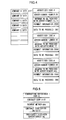
FIG. 4 shows the structure of the registered data
related to advertisers, which are stored in the center server
100. The registered data contain data on a plurality of
advertisers, e.g., data on a company A, data on a company B,
etc. An advertiser is able to register a plurality of sets
of advertisement data each in correspondence to a specific
area where the advertisement is to be circulated. For
instance, different advertisement contents may be offered in
a residential area and in a business district. In FIG. 4,
the registration of company A among the plurality of
advertisers having their advertisement data registered in the
center server 100 are shown in further detail.
-
The registered data stored in the center server 100
include an advertiser code identifying a registered
advertiser ("A" in FIG. 4), advertisement numbers used to
ascertain the types and contents of registered advertisements
and the dates of registration ("A1", "A2", and "A0" in FIG.
4), information indicating the roadside antenna points at
which the advertisements are to be provided ("1a, 1c", and the
like in FIG. 4), information regarding the payments to be made
for the service rendered by displaying the advertisements on
the external display device 30 of the vehicle 10 ("2000" and
the like in FIG. 4), and advertisement data information to be
downloaded to the on-vehicle device 20 ("DA1" and the like
in FIG. 4).
-
Among the various types of information included in the
registered data described above, information on the fee
(hereafter referred to as payment information) is set based
upon a contract reached between the advertiser and the
advertisement distributor who actually distributes the
advertisements by driving the advertisement displaying
vehicle. If monetary fees are to be paid to the
advertisement distributor for advertising services under the
contract, the advertising fees are registered as the payment
information. If, on the other hand, the advertisement
distributor is to be rewarded with product discount points
or points other than discount points, such points are
registered as the payment information.
-
When a point system is adopted, the points awarded to
the advertisement distributor may be recorded into an IC card
issued by the advertiser or an affiliated company. Namely,
when an advertisement has been displayed at the external
display device 30 of the vehicle 10, the points due to be
awarded to the advertisement distributor are written into the
IC card by using an IC card writer (the information input
device 70) connected to the on-vehicle device 20. If the
vehicle is not equipped with an IC card writer, information
indicating that the advertisement has been displayed may be
recorded into the center server 100 so that the points can
be written into the IC card at a store or a service station
specified by an the advertiser where an IC card writer is
installed. By adopting such a system, it becomes possible
to reward/collect points with ease by using an IC card without
having to exchange cash. It is to be noted that an IC card
in which points are recorded has stored therein a contract
code to be detailed later to enable advertiser
identification.
-
The center server 100 regularly transmits
advertisement data information to the roadside antennas 1a
∼ 1x based upon the roadside antenna information included in
the registered data. For instance, the advertisement data
information DA1 assigned with the advertisement number A1 in
FIG. 4 is transmitted to the roadside antennas 1a and 1c. The
advertisement data information thus transmitted to the
roadside antennas 1a ∼ 1x is stored into the local servers
3a ∼ 3x installed in conjunction with the roadside antennas
1a ∼ 1x respectively. The latest advertisement data
information transmitted from the center server 100 is written
over the advertisement data information stored at the local
servers 3a ∼ 3x and, thus, the local servers 3a ∼ 3x hold the
most recent information at all times.
-
The registered data assigned with the advertisement
number "A0" among the data registered by the company A shown
in FIG. 4 are data to be transmitted to all the roadside
antennas. If the advertiser does not transmit any
advertisement data information by indicating specific
roadside antennas, registered data set in advance to be
transmitted to all the roadside antennas are transmitted.
Accordingly advertisement data information assigned with
Number 0 ("DA0" in FIG. 4) is transmitted from the center
server 100 to all the roadside antennas.
-
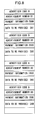
FIG. 5 presents an example of the contract information
transmitted from the on-vehicle device 20 to the roadside
antennas 1a ∼ 1x during a road-to-vehicle communication
carried out between the on-vehicle device 20 and the roadside
antennas 1a ∼ 1x via the antenna 25. This contract
information contains the contracting advertiser code (A) for
identifying the advertiser with the contract, the contractor
code (A-01) which allows the advertiser to identify the
contractor, payment information (abc) that indicates how the
payment for advertisement display is to be made, contract term
information (06/12/31) indicating the expiry data on which
the advertisement display contract expires,and the
advertisement number (A2) corresponding to the advertisement
most recently displayed at the external display device 30.
-
The contract information transmitted from the on-vehicle
device 20 to request advertisement data information
is received at the roadside antennas 1a ∼ 1x and then
transferred to the local servers 3a ∼ 3x. Based upon the
contract information having been transmitted thereto, the
local servers 3a ∼ 3x make a verification to ascertain whether
or not there is any advertisement data information from the
advertiser indicated in the request from the on-vehicle
device 20 and as to whether or not the contract term has expired.
If there is advertisement data information to be transmitted
to the on-vehicle device 20, the advertisement data
information is transmitted to the on-vehicle device 20. The
on-vehicle device 20, in turn, displays the advertisement
data information at the external display device 30.
-
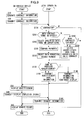
FIG. 6 presents a flowchart of the procedure of the
processing executed at the on-vehicle device 20 and the
individual local servers 3a ∼ 3x in an embodiment. It is
to be noted that the following explanation is given by
assuming that information is exchanged between the on-vehicle
device 20 and the local server 3a as the vehicle 10 equipped
with the on-vehicle device 20 is currently present in the
communication area of the roadside antenna 1a. In addition,
the processing at the on-vehicle device 20 is executed by the
processing unit 22.
-
In step S10, the contract information (see FIG. 5)
explained earlier is generated as the on-vehicle device 20
is turn on or as the vehicle 10 enters the communication area
of the roadside antenna 1a, or the vehicle 10 is judged to
enter the communication area with certainty. More
specifically, new contract information is generated by
updating the advertisement number corresponding to the
advertisement most recently displayed at the external display
device 30 in the contract information prepared in advance.
Once the contract information is generated, the operation
proceeds to step S20. In step S20, a signal indicating that
the vehicle has entered the communication area of the roadside
antenna 1a is first received from the wireless unit 23 and
then the contract information generated in step S10 is
transmitted to the roadside antenna 1a.
-
The contract information transmitted from the on-vehicle
device 20 is received at the roadside antenna 1a and
is then transferred to the local server 3a. In step S100,
it is judged as to whether or not the vehicle is driven by
a contracted advertisement distributor based upon the
contractor code contained in the contract information that
has been received. Once it is judged that the vehicle is
driven by a contractor, the operation proceeds to step S110,
whereas if it is judged that the vehicle is not driven by a
contractor, the control in this flowchart ends. In step S110,
it is judged as to whether or not the contract term is still
in effect based upon the contract term information included
in the contract information. The operation proceeds to step
S120 if the contract term is determined to be still in effect,
whereas if it is judged that the contract term has expired,
the control ends.
-
In step S120, it is judged as to whether or not any
advertisement data information from the advertiser
contracting the advertisement distributor is stored. The
advertiser identification is made based upon the contracting
advertiser code included in the contract information. For
instance, if the advertiser contracting the advertisement
distributor is the company A and the data shown in FIG. 4 are
registered by company A at the center server 100, the
advertisement data information assigned with number "DA1" is
stored in the local server 3a. Accordingly, it is judged
that there is advertisement data information from the
advertiser contracting the advertisement distributor in this
case and the operation proceeds to step S130. If, on the
other hand, it is judged that there is no specified
advertisement data information, the operation proceeds to
step S160.
-
In step S130, it is judged as to whether or not the
advertisement data information stored in the local server 3a
to be transmitted to the on-vehicle device 20 is the same as
the advertisement data information most recently displayed
at the external display device 30. This judgement is made
based upon "the advertisement number assigned to the
advertisement most recently displayed at the external display
device 30", which is included in the contract information.
The operation proceeds to step S140 if it is judged that the
same advertisement has been displayed previously, whereas the
operation proceeds to step S150 if the advertisement data
information to be transmitted to the on-vehicle device 20 is
not the same. In step S140, a signal indicating that the
advertisement most recently displayed at the external display
device 30 is to be continuously displayed is transmitted to
the on-vehicle device 20 since the advertisement data
information stored at the local server 3a is already available
in the memory 21 in the on-vehicle device 20. Thus, it is
not necessary to perform a redundant operation of
retransmitting the advertisement data information already
stored in the memory 21 in the on-vehicle device 20.
-
It is to be noted that while the same advertisement data
information may be retransmitted in step S140, it takes a
considerable length of communication time to download the
advertisement data information into the on-vehicle device 20.
While the on-vehicle device 20 is downloading the same
advertisement data information, another vehicle may enter the
communication area and request advertisement data
information. In such a case, the advertisement data
information may not be downloaded to the other vehicle
promptly. For this reason, the instruction signal
indicating that the advertisement most recently displayed is
to be continuously displayed alone is transmitted in step S140
in the embodiment.
-
In step S150, the advertisement data information (DA1)
from the contracting advertiser which is stored in the local
server 3a is selected before the operation proceeds to step
S170. In step S160, to which the operation proceeds after
judging in step S120 that no advertisement data information
from the advertiser contracting the advertisement
distributor is stored, on the other hand, advertisement data
information assigned with number 0 is selected and then the
operation proceeds to step S170. In step S170, the
advertisement data information selected in step S150 or step
S160 is transmitted to the on-vehicle device 20. Once the
advertisement data information is transmitted, the operation
proceeds to step S180.
-
In step S30, the on-vehicle device 20 displays the
advertisement data information transmitted from the local
server 3a (step S170) at the external display device 30. If
the information indicating that the most recently displayed
advertisement is to be continuously displayed has been
received (step S140), the most recently displayed
advertisement which is stored in the memory 21 is displayed
at the external display device 30. At this time, the
advertisement may be displayed at the cabin display device
50 as well, and also, an audio output of the advertisement
may be provided through the external speaker 40 or the cabin
speaker 60 as well. Once the advertisement is displayed,
the operation proceeds to step S40. In step S40, an
instruction is issued to the wireless unit 23 to transmit a
signal indicating that the advertisement display has been
completed to the roadside antenna 1a. In response to the
instruction from the processing unit 22, the wireless unit
23 transmits the signal indicating the completion of the
advertisement display to the roadside antenna 1a.
-
The advertisement display completion signal
transmitted from the on-vehicle device 20 is transferred to
the local server 3a via the roadside antenna 1a. In step
S180, the local server 3a having received the signal transmits
information identifying the advertisement distributor to
whom the payment for the advertisement display is due and
information indicating when the advertisement was displayed
and the like to the advertiser via the center server 100, and
also transmits data indicating the exact payment which is due
to the on-vehicle device 20. Once the processing in step
S180 is executed, the control implemented at the local server
3a ends.
-
The on-vehicle device 20 having received the payment
information transmitted from the local server 3a via the
antenna 25 displays the payment due for the advertisement
display at the cabin display device 50. This payment may
be a monetary fee or any of various types of points as explained
earlier. After the payment for the advertisement display
is displayed at the cabin display device 50, the control
executed at the on-vehicle device 20, too, ends.
-
In the advertisement distribution method in the first
embodiment, in which the advertiser is allowed to determine
the specific advertisement data information to be distributed
in a given area and the advertisement data information is
transmitted to a vehicle driving in the area through a
roadside antenna, the advertisement targeted for the area can
be distributed in an effective manner. In addition, since
the advertiser can update the advertisement to be distributed
to the vehicle by writing new data over the data registered
in the center server 100, an advertisement for a new product,
for instance, can be distributed quickly and easily.
Furthermore, if no advertisement intended for the area is
stored in the local server, a common advertisement intended
for all the areas is distributed so that advertisements are
circulated by efficiently utilizing the time available in the
contract term.
-
Since each roadside server provides an advertisement
displaying vehicle with advertisement data information from
the advertiser specified by the advertisement displaying
vehicle, it is possible to distribute an advertisement in an
effective manner by utilizing the advertisement displaying
vehicle under an exclusive contract. Namely, unlike an
advertisement displaying vehicle in the related art having
an advertisement printed on the surface of the vehicle body,
the advertisement displaying vehicle in the embodiment
displays advertisement data information transmitted from the
roadside server through wireless communication via the
roadside antenna and is, therefore, capable of quickly and
easily providing an advertisement in a more effective manner.
-
In addition, since the processing with regard to the
payment for the advertisement display service is executed
after confirming that the advertisement has been displayed
at the vehicle, it is ensured that the advertisement is
distributed for a payment calculated by confirming that the
advertisement has, in fact, been displayed. Furthermore,
since the center server 100 and the roadside system including
the roadside antennas are co-owned by a plurality of
advertisers, the running cost and the system maintenance cost
to be incurred by each company can be reduced.
-
Moreover, since the information indicating that the
advertisement display at the advertisement displaying
vehicle has been completed is transmitted to the center server
100 via the roadside servers 3a ∼ 3x, the center server 100
is enabled to ascertain the time and location at which the
advertisement has been displayed and the identify of the
vehicle that has displayed the advertisement and,thus, the
center server 100 can keep a more accurate account of the
advertisement distribution status of each vehicle.
Second Embodiment
-
An advertisement distribution method which may be
adopted when there are a plurality of advertisers contracting
an advertisement distributor is explained in reference to the
second embodiment. It is to be noted that the configuration
of the road-to-vehicle communication system used in
advertisement distribution and the structure of the
advertisement displaying vehicle are identical to those in
the first embodiment. FIG. 7 presents an example of the
contract information transmitted from the on-vehicle device
20 to the roadside antennas 1a ∼ 1x during a road-to-vehicle
communication conducted by the on-vehicle device 20 with the
roadside antennas 1a ∼ 1x via the antenna 25. As shown in
FIG. 7, the advertisement distributor is under contract to
a company A and a company B.
-
FIG. 8 presents an example of advertisement data stored
in a roadside local server having received the contract
information shown in FIG. 7. As explained above, the
contract information transmitted from the on-vehicle device
20 includes information with regard to company A and company
B contracting the advertisement distributor. As shown in
FIG. 8, while no advertisement data information provided by
company A by specifying a selected area is stored in the local
server, advertisement data information DB1 from company B for
a specific area is held at the local server.
-
FIG. 9 presents a flowchart of the procedure of the
processing executed by adopting the advertisement
distribution method when there are two advertisers
contracting the advertisement distributor. The same step
numbers are assigned to steps in which processing identical
to that in the flowchart in FIG. 6 is executed,to preclude
the necessity for a detailed explanation thereof. It is to
be noted that the following explanation is given by assuming
that information is exchanged between the on-vehicle device
20 and the local server 3b as the vehicle 10 equipped with
the on-vehicle device 20 is currently present in the
communication area corresponding to the roadside antenna 1b.
In addition, it is assumed that the contract information shown
in FIG. 7 is transmitted from the on-vehicle device 20 and
that the advertisement data information shown in FIG. 8 is
stored at the local server 3b.
-
Since the processing executed in steps S10 and S20 by
the on-vehicle device 20 and the processing executed in step
S100 by the local server 3b are identical to those in the
flowchart presented in FIG. 6, their explanation is omitted.
Once it is judged in step S100 that the vehicle is driven by
a contractor, the operation proceeds to step S200. In step
S200, it is judged as to whether or not the contract terms
during which the advertisement distributor is contracted to
company A and company B are still in effect, i.e., whether
or not the advertisement distributor is still under contract
to company A and company B. If it is judged that
advertisement distributor is still under contract to both
company A and company B, the operation proceeds to step S210,
but the operation proceeds to step S240, otherwise.
-
In step S210, advertisement data information specified
by company A and company B, the transmission of which has been
requested by the on-vehicle device 20, is selected. While
there is the advertisement data information DB1 for a specific
area from company B, there is no information for a specific
area from company A, as shown in FIG. 8. Accordingly, the
common advertisement data information DA0 intended for all
areas is selected as the advertisement data information from
company A. Once the specified advertisement data
information is selected, the operation proceeds to step S220.
In step S220, the payments (the advertisement display
conditions) for distributing the advertisement data
information DB1 and the advertisement data information DA0
are compared. The payments are compared based upon the
payment information included in the advertisement data
information. Once the payments are compared, the operation
proceeds to step S230.
-
In step S230, the advertisement data information judged
to reward a higher payment in step S220 is selected. When
the payment for displaying the advertisement data information
DB1 (the payment information:2000) and the payment for
displaying the advertisement data information DA0 (the
payment information:1800) are compared, the payment for
displaying the advertisement data information DB1 is higher
and, accordingly, the advertisement data information DB1 is
selected in step S230 before the operation proceeds to step
S130.
-
If, on the other hand, it is judged in step S200 that
the contract terms with company A and company B are not both
in effect, the operation proceeded to step S240. In step
S240, it is judged as to whether or not the contract terms
with company A and company B have both expired. If it is
judged that both contract terms have expired, the control in
this flowchart ends. If, on the other hand, it is judged
that the contract term with either company A or company B is
still in effect, the operation proceeds to step S250. In
step S250, the advertisement data information from the
advertiser whose contract is still in effect is selected
before the operation proceeds to step S130.
-
In step S130, it is judged as to whether or not the
advertisement data information selected in step S230 or step
S250 is the same as the advertisement most recently displayed
at the external display device 30. The operation proceeds
to step S140 if the advertisement data information is judged
to be the same, whereas the operation proceeds to step S160
if it is judged that the advertisement data information is
not the same. Since the processing executed in step S140
and step S160 is identical to that in the flowchart presented
in FIG. 6, its explanation is omitted.
-
Since the processing executed in steps S30 ∼ S50 at the
on-vehicle device 20 and the processing executed in steps S180
at the local server 3b are identical to those in the flowchart
presented in FIG. 6, their explanation is omitted.
-
By adopting the advertisement distribution method
achieved in the second embodiment, in which the advertisement
distributor can select or request the advertisement data
information which will reward the highest payment by becoming
contracted to a plurality of advertisers, the advertisement
distributor does not need to be forced to accept a low payment
unilaterally set by the advertiser.
Third Embodiment
-
In the second embodiment, the advertisement data
information that rewards the higher payment is selected by
the local server to be transmitted to the on-vehicle device
20 when there are a plurality of advertisers contracting the
advertisement distributor. In the third embodiment, on the
other hand, payments are compared at the on-vehicle device
20 if there are a plurality of advertisers contracting the
advertisement distributor and the on-vehicle device 20 issues
a request to the local server to transmit the advertisement
data information rewarding the higher payment. It is to be
noted that the configuration of the road-to-vehicle
communication system used in the advertisement distribution
and the structure of the advertisement displaying vehicle are
identical to those in the first and second embodiments.
-
FIG. 10 presents a flowchart of the procedure of the
processing executed by adopting the advertisement
distribution method when there are two advertisers
contracting the advertisement distributor. The same step
numbers are assigned to steps in which processing identical
to that in the flowcharts presented in FIGS. 6 and 9 is executed
to preclude the necessity for a detailed explanation thereof.
In addition, as in the flowchart presented in FIG. 9, the
information is exchanged between the on-vehicle device 20 and
the local server 3b, the contract information shown in FIG.
7 is transmitted from the on-vehicle device 20, and the
advertisement data information shown in FIG. 8 is stored at
the local server 3b.
-
Since the processing executed in steps S10 and S20 at
the on-vehicle device 20 and the processing executed in steps
S100 and S200 executed at the local server 3b are identical
to those in the flowchart presented in FIG. 9, their
explanation is omitted. Once it is judged that the contract
terms with company A and company B contracting the
advertisement distributor are both still in effect in step
S200, the operation proceeds to step S300. In step S300,
the data numbers and the payment information corresponding
to the advertisement data information specified by company
A and company B are transmitted to the on-vehicle device 20.
If there are no area-specific data, the data number indicating
common advertisement data information intended for all areas
(assigned with the number 0) is transmitted as explained
earlier. Accordingly, the data number DA0 and the payment
information 1800 corresponding to company A and the data
number DB1 and the payment information 2000 corresponding to
company B are transmitted to the on-vehicle device 20 in this
example.
-
Upon receiving the data numbers and the payment
information transmitted from the local server 3b, the on-vehicle
device 20 compares the payments (the advertisement
display conditions) in step S21 and, then, the operation
proceeds to step S22. In step S22, a transmission request
signal requesting the transmission of the advertisement data
information rewarding a higher payment is transmitted to the
roadside antenna 1b based upon the results of the payment
comparison executed in step S21. Since the payment for
displaying the advertisement data information DB1 is higher
in this example, a transmission request signal requesting the
transmission of the advertisement data information DB1 is
transmitted to the roadside antenna 1b before the operation
proceeds to step S30.
-
Upon receiving the advertisement data information
transmission requested signal, the roadside antenna 1b
transfers the corresponding advertisement data information
to the local server 3b. In step S130, the local server 3b
judges as to whether or not the advertisement data information,
the transmission of which has been requested, is the same as
the advertisement most recently displayed at the external
display device 30. Since the processing executed at the
local server 3b and the processing executed at the on-vehicle
device 20 subsequently are both identical to those in the
flowchart presented in FIG. 9, their explanation is omitted.
-
By adopting the advertisement distribution method
achieved in the third embodiment, in which the advertisement
that rewards a higher payment is selected at the on-vehicle
device 20 in the advertisement displaying vehicle and the
advertisement thus selected is displayed, healthy
competition is created among advertisers wishing to secure
vehicles that display their advertisements and, as a result,
it is ensured that advertising fees are set at an appropriate
level. Since the advertisement distributor can earn a
stable level of payments in this manner, the number of
distributors who use this system is bound to increase, which,
in turn, makes it possible to establish an advertisement
distribution system achieving an optimal balance between the
demand by advertisers and the supply by advertisement
distributors.
-
The above described embodiments are examples, and
various modifications can be made without departing from the
scope of the invention. For instance, while an
explanation is given above in reference to the second and
third embodiments on an example in which the advertisement
distributor is contracted to two advertisers, the
advertisement distributor may have contracts with three or
more advertisers. In addition, the vehicle equipped with
the external display device may be a large vehicle such as
a bus or a truck or it may be a two-wheeler such as a motorcycle,
instead of a standard-size vehicle. The present invention
is not limited to application achieved in conjunction with
a specific communication method adopted in road-to-vehicle
communication.