EP1331224A1 - Thiazole or oxazole derivatives - Google Patents
Thiazole or oxazole derivatives Download PDFInfo
- Publication number
- EP1331224A1 EP1331224A1 EP01972561A EP01972561A EP1331224A1 EP 1331224 A1 EP1331224 A1 EP 1331224A1 EP 01972561 A EP01972561 A EP 01972561A EP 01972561 A EP01972561 A EP 01972561A EP 1331224 A1 EP1331224 A1 EP 1331224A1
- Authority
- EP
- European Patent Office
- Prior art keywords
- optionally substituted
- compound
- hydroxy
- prodrug
- solvate
- Prior art date
- Legal status (The legal status is an assumption and is not a legal conclusion. Google has not performed a legal analysis and makes no representation as to the accuracy of the status listed.)
- Withdrawn
Links
- 0 I*Cc1cccc2c1OCO2 Chemical compound I*Cc1cccc2c1OCO2 0.000 description 2
- RTQLZUROPSAJOJ-UHFFFAOYSA-N C1C2C=C3C=CNC3CC12 Chemical compound C1C2C=C3C=CNC3CC12 RTQLZUROPSAJOJ-UHFFFAOYSA-N 0.000 description 1
Classifications
-
- C—CHEMISTRY; METALLURGY
- C07—ORGANIC CHEMISTRY
- C07D—HETEROCYCLIC COMPOUNDS
- C07D413/00—Heterocyclic compounds containing two or more hetero rings, at least one ring having nitrogen and oxygen atoms as the only ring hetero atoms
- C07D413/02—Heterocyclic compounds containing two or more hetero rings, at least one ring having nitrogen and oxygen atoms as the only ring hetero atoms containing two hetero rings
- C07D413/06—Heterocyclic compounds containing two or more hetero rings, at least one ring having nitrogen and oxygen atoms as the only ring hetero atoms containing two hetero rings linked by a carbon chain containing only aliphatic carbon atoms
-
- A—HUMAN NECESSITIES
- A61—MEDICAL OR VETERINARY SCIENCE; HYGIENE
- A61P—SPECIFIC THERAPEUTIC ACTIVITY OF CHEMICAL COMPOUNDS OR MEDICINAL PREPARATIONS
- A61P1/00—Drugs for disorders of the alimentary tract or the digestive system
- A61P1/02—Stomatological preparations, e.g. drugs for caries, aphtae, periodontitis
-
- A—HUMAN NECESSITIES
- A61—MEDICAL OR VETERINARY SCIENCE; HYGIENE
- A61P—SPECIFIC THERAPEUTIC ACTIVITY OF CHEMICAL COMPOUNDS OR MEDICINAL PREPARATIONS
- A61P1/00—Drugs for disorders of the alimentary tract or the digestive system
- A61P1/16—Drugs for disorders of the alimentary tract or the digestive system for liver or gallbladder disorders, e.g. hepatoprotective agents, cholagogues, litholytics
-
- A—HUMAN NECESSITIES
- A61—MEDICAL OR VETERINARY SCIENCE; HYGIENE
- A61P—SPECIFIC THERAPEUTIC ACTIVITY OF CHEMICAL COMPOUNDS OR MEDICINAL PREPARATIONS
- A61P11/00—Drugs for disorders of the respiratory system
-
- A—HUMAN NECESSITIES
- A61—MEDICAL OR VETERINARY SCIENCE; HYGIENE
- A61P—SPECIFIC THERAPEUTIC ACTIVITY OF CHEMICAL COMPOUNDS OR MEDICINAL PREPARATIONS
- A61P11/00—Drugs for disorders of the respiratory system
- A61P11/06—Antiasthmatics
-
- A—HUMAN NECESSITIES
- A61—MEDICAL OR VETERINARY SCIENCE; HYGIENE
- A61P—SPECIFIC THERAPEUTIC ACTIVITY OF CHEMICAL COMPOUNDS OR MEDICINAL PREPARATIONS
- A61P13/00—Drugs for disorders of the urinary system
- A61P13/12—Drugs for disorders of the urinary system of the kidneys
-
- A—HUMAN NECESSITIES
- A61—MEDICAL OR VETERINARY SCIENCE; HYGIENE
- A61P—SPECIFIC THERAPEUTIC ACTIVITY OF CHEMICAL COMPOUNDS OR MEDICINAL PREPARATIONS
- A61P17/00—Drugs for dermatological disorders
-
- A—HUMAN NECESSITIES
- A61—MEDICAL OR VETERINARY SCIENCE; HYGIENE
- A61P—SPECIFIC THERAPEUTIC ACTIVITY OF CHEMICAL COMPOUNDS OR MEDICINAL PREPARATIONS
- A61P17/00—Drugs for dermatological disorders
- A61P17/06—Antipsoriatics
-
- A—HUMAN NECESSITIES
- A61—MEDICAL OR VETERINARY SCIENCE; HYGIENE
- A61P—SPECIFIC THERAPEUTIC ACTIVITY OF CHEMICAL COMPOUNDS OR MEDICINAL PREPARATIONS
- A61P19/00—Drugs for skeletal disorders
- A61P19/02—Drugs for skeletal disorders for joint disorders, e.g. arthritis, arthrosis
-
- A—HUMAN NECESSITIES
- A61—MEDICAL OR VETERINARY SCIENCE; HYGIENE
- A61P—SPECIFIC THERAPEUTIC ACTIVITY OF CHEMICAL COMPOUNDS OR MEDICINAL PREPARATIONS
- A61P19/00—Drugs for skeletal disorders
- A61P19/08—Drugs for skeletal disorders for bone diseases, e.g. rachitism, Paget's disease
-
- A—HUMAN NECESSITIES
- A61—MEDICAL OR VETERINARY SCIENCE; HYGIENE
- A61P—SPECIFIC THERAPEUTIC ACTIVITY OF CHEMICAL COMPOUNDS OR MEDICINAL PREPARATIONS
- A61P19/00—Drugs for skeletal disorders
- A61P19/08—Drugs for skeletal disorders for bone diseases, e.g. rachitism, Paget's disease
- A61P19/10—Drugs for skeletal disorders for bone diseases, e.g. rachitism, Paget's disease for osteoporosis
-
- A—HUMAN NECESSITIES
- A61—MEDICAL OR VETERINARY SCIENCE; HYGIENE
- A61P—SPECIFIC THERAPEUTIC ACTIVITY OF CHEMICAL COMPOUNDS OR MEDICINAL PREPARATIONS
- A61P25/00—Drugs for disorders of the nervous system
-
- A—HUMAN NECESSITIES
- A61—MEDICAL OR VETERINARY SCIENCE; HYGIENE
- A61P—SPECIFIC THERAPEUTIC ACTIVITY OF CHEMICAL COMPOUNDS OR MEDICINAL PREPARATIONS
- A61P27/00—Drugs for disorders of the senses
- A61P27/02—Ophthalmic agents
-
- A—HUMAN NECESSITIES
- A61—MEDICAL OR VETERINARY SCIENCE; HYGIENE
- A61P—SPECIFIC THERAPEUTIC ACTIVITY OF CHEMICAL COMPOUNDS OR MEDICINAL PREPARATIONS
- A61P29/00—Non-central analgesic, antipyretic or antiinflammatory agents, e.g. antirheumatic agents; Non-steroidal antiinflammatory drugs [NSAID]
-
- A—HUMAN NECESSITIES
- A61—MEDICAL OR VETERINARY SCIENCE; HYGIENE
- A61P—SPECIFIC THERAPEUTIC ACTIVITY OF CHEMICAL COMPOUNDS OR MEDICINAL PREPARATIONS
- A61P3/00—Drugs for disorders of the metabolism
- A61P3/08—Drugs for disorders of the metabolism for glucose homeostasis
- A61P3/10—Drugs for disorders of the metabolism for glucose homeostasis for hyperglycaemia, e.g. antidiabetics
-
- A—HUMAN NECESSITIES
- A61—MEDICAL OR VETERINARY SCIENCE; HYGIENE
- A61P—SPECIFIC THERAPEUTIC ACTIVITY OF CHEMICAL COMPOUNDS OR MEDICINAL PREPARATIONS
- A61P31/00—Antiinfectives, i.e. antibiotics, antiseptics, chemotherapeutics
-
- A—HUMAN NECESSITIES
- A61—MEDICAL OR VETERINARY SCIENCE; HYGIENE
- A61P—SPECIFIC THERAPEUTIC ACTIVITY OF CHEMICAL COMPOUNDS OR MEDICINAL PREPARATIONS
- A61P31/00—Antiinfectives, i.e. antibiotics, antiseptics, chemotherapeutics
- A61P31/12—Antivirals
-
- A—HUMAN NECESSITIES
- A61—MEDICAL OR VETERINARY SCIENCE; HYGIENE
- A61P—SPECIFIC THERAPEUTIC ACTIVITY OF CHEMICAL COMPOUNDS OR MEDICINAL PREPARATIONS
- A61P35/00—Antineoplastic agents
-
- A—HUMAN NECESSITIES
- A61—MEDICAL OR VETERINARY SCIENCE; HYGIENE
- A61P—SPECIFIC THERAPEUTIC ACTIVITY OF CHEMICAL COMPOUNDS OR MEDICINAL PREPARATIONS
- A61P37/00—Drugs for immunological or allergic disorders
- A61P37/02—Immunomodulators
-
- A—HUMAN NECESSITIES
- A61—MEDICAL OR VETERINARY SCIENCE; HYGIENE
- A61P—SPECIFIC THERAPEUTIC ACTIVITY OF CHEMICAL COMPOUNDS OR MEDICINAL PREPARATIONS
- A61P43/00—Drugs for specific purposes, not provided for in groups A61P1/00-A61P41/00
-
- A—HUMAN NECESSITIES
- A61—MEDICAL OR VETERINARY SCIENCE; HYGIENE
- A61P—SPECIFIC THERAPEUTIC ACTIVITY OF CHEMICAL COMPOUNDS OR MEDICINAL PREPARATIONS
- A61P7/00—Drugs for disorders of the blood or the extracellular fluid
-
- A—HUMAN NECESSITIES
- A61—MEDICAL OR VETERINARY SCIENCE; HYGIENE
- A61P—SPECIFIC THERAPEUTIC ACTIVITY OF CHEMICAL COMPOUNDS OR MEDICINAL PREPARATIONS
- A61P7/00—Drugs for disorders of the blood or the extracellular fluid
- A61P7/02—Antithrombotic agents; Anticoagulants; Platelet aggregation inhibitors
-
- A—HUMAN NECESSITIES
- A61—MEDICAL OR VETERINARY SCIENCE; HYGIENE
- A61P—SPECIFIC THERAPEUTIC ACTIVITY OF CHEMICAL COMPOUNDS OR MEDICINAL PREPARATIONS
- A61P9/00—Drugs for disorders of the cardiovascular system
- A61P9/04—Inotropic agents, i.e. stimulants of cardiac contraction; Drugs for heart failure
-
- A—HUMAN NECESSITIES
- A61—MEDICAL OR VETERINARY SCIENCE; HYGIENE
- A61P—SPECIFIC THERAPEUTIC ACTIVITY OF CHEMICAL COMPOUNDS OR MEDICINAL PREPARATIONS
- A61P9/00—Drugs for disorders of the cardiovascular system
- A61P9/08—Vasodilators for multiple indications
-
- A—HUMAN NECESSITIES
- A61—MEDICAL OR VETERINARY SCIENCE; HYGIENE
- A61P—SPECIFIC THERAPEUTIC ACTIVITY OF CHEMICAL COMPOUNDS OR MEDICINAL PREPARATIONS
- A61P9/00—Drugs for disorders of the cardiovascular system
- A61P9/10—Drugs for disorders of the cardiovascular system for treating ischaemic or atherosclerotic diseases, e.g. antianginal drugs, coronary vasodilators, drugs for myocardial infarction, retinopathy, cerebrovascula insufficiency, renal arteriosclerosis
-
- C—CHEMISTRY; METALLURGY
- C07—ORGANIC CHEMISTRY
- C07D—HETEROCYCLIC COMPOUNDS
- C07D263/00—Heterocyclic compounds containing 1,3-oxazole or hydrogenated 1,3-oxazole rings
- C07D263/02—Heterocyclic compounds containing 1,3-oxazole or hydrogenated 1,3-oxazole rings not condensed with other rings
- C07D263/30—Heterocyclic compounds containing 1,3-oxazole or hydrogenated 1,3-oxazole rings not condensed with other rings having two or three double bonds between ring members or between ring members and non-ring members
- C07D263/32—Heterocyclic compounds containing 1,3-oxazole or hydrogenated 1,3-oxazole rings not condensed with other rings having two or three double bonds between ring members or between ring members and non-ring members with only hydrogen atoms, hydrocarbon or substituted hydrocarbon radicals, directly attached to ring carbon atoms
-
- C—CHEMISTRY; METALLURGY
- C07—ORGANIC CHEMISTRY
- C07D—HETEROCYCLIC COMPOUNDS
- C07D277/00—Heterocyclic compounds containing 1,3-thiazole or hydrogenated 1,3-thiazole rings
- C07D277/02—Heterocyclic compounds containing 1,3-thiazole or hydrogenated 1,3-thiazole rings not condensed with other rings
- C07D277/20—Heterocyclic compounds containing 1,3-thiazole or hydrogenated 1,3-thiazole rings not condensed with other rings having two or three double bonds between ring members or between ring members and non-ring members
- C07D277/22—Heterocyclic compounds containing 1,3-thiazole or hydrogenated 1,3-thiazole rings not condensed with other rings having two or three double bonds between ring members or between ring members and non-ring members with only hydrogen atoms, hydrocarbon or substituted hydrocarbon radicals, directly attached to ring carbon atoms
- C07D277/26—Radicals substituted by sulfur atoms
-
- C—CHEMISTRY; METALLURGY
- C07—ORGANIC CHEMISTRY
- C07D—HETEROCYCLIC COMPOUNDS
- C07D417/00—Heterocyclic compounds containing two or more hetero rings, at least one ring having nitrogen and sulfur atoms as the only ring hetero atoms, not provided for by group C07D415/00
- C07D417/02—Heterocyclic compounds containing two or more hetero rings, at least one ring having nitrogen and sulfur atoms as the only ring hetero atoms, not provided for by group C07D415/00 containing two hetero rings
- C07D417/04—Heterocyclic compounds containing two or more hetero rings, at least one ring having nitrogen and sulfur atoms as the only ring hetero atoms, not provided for by group C07D415/00 containing two hetero rings directly linked by a ring-member-to-ring-member bond
-
- C—CHEMISTRY; METALLURGY
- C07—ORGANIC CHEMISTRY
- C07D—HETEROCYCLIC COMPOUNDS
- C07D417/00—Heterocyclic compounds containing two or more hetero rings, at least one ring having nitrogen and sulfur atoms as the only ring hetero atoms, not provided for by group C07D415/00
- C07D417/02—Heterocyclic compounds containing two or more hetero rings, at least one ring having nitrogen and sulfur atoms as the only ring hetero atoms, not provided for by group C07D415/00 containing two hetero rings
- C07D417/06—Heterocyclic compounds containing two or more hetero rings, at least one ring having nitrogen and sulfur atoms as the only ring hetero atoms, not provided for by group C07D415/00 containing two hetero rings linked by a carbon chain containing only aliphatic carbon atoms
-
- C—CHEMISTRY; METALLURGY
- C07—ORGANIC CHEMISTRY
- C07D—HETEROCYCLIC COMPOUNDS
- C07D417/00—Heterocyclic compounds containing two or more hetero rings, at least one ring having nitrogen and sulfur atoms as the only ring hetero atoms, not provided for by group C07D415/00
- C07D417/14—Heterocyclic compounds containing two or more hetero rings, at least one ring having nitrogen and sulfur atoms as the only ring hetero atoms, not provided for by group C07D415/00 containing three or more hetero rings
Definitions
- This invention relates to thiazole and oxazole derivatives and metalloproteinase inhibitors containing them.
- An extracellular matrix consisting of collagen, fibronectin, laminin, proteoglycan, etc., has a function to support tissues, and plays a role in propagation, differentiation, adhesion, or the like in cells.
- Metalloproteinases which are protease having a metal ion in the active center, especially matrix metalloproteinases (MMP), are concerned with the degradation of the extracellular matrix.
- MMP matrix metalloproteinases
- Sulfonamide derivatives containing a oxazole group are disclosed in WO 99/04780 and the like.
- Sulfonamide derivatives having an inhibitory activity against MMP are disclosed in WO 97/27174 and WO 99/4780 and the like.
- MMP inhibition of such MMP activities is considered to contribute to the improvement and prevention of the above-mentioned diseases caused by or related to the activity. Therefore, the development of MMP inhibitors has been desired.
- the present invention relates to: I) A compound of the formula (I): wherein R 1 is NHOH, hydroxy, or lower alkyloxy; R 2 is hydrogen atom, optionally substituted lower alkyl, optionally substituted aryl, optionally substituted aralkyl, optionally substituted heteroaryl, or optionally substituted heteroarylalkyl; R 3 is hydrogen atom, optionally substituted lower alkyl, optionally substituted aryl, optionally substituted aralkyl, optionally substituted heteroaryl, or optionally substituted heteroarylalkyl; R 4 is optionally substituted arylene, or optionally substituted heteroarylene; R 5 is a group represented by the formula: R 6 is optionally substituted aryl, optionally substituted heteroaryl or optionally substituted non-aromatic heterocyclic group; provided that R 5 is thiazole-2,5-diyl when R 4 is thiophene-2,5-diyl and R 6 is optionally substituted pheny
- lower alkyl employed alone or in combination with other terms means a straight- or branched chain monovalent hydrocarbon group having 1 to 8 carbon atom(s).
- alkyl include methyl, ethyl, n-propyl, isopropyl, n-butyl, isobutyl, sec-butyl, tert-butyl, n-pentyl, isopentyl, neo-pentyl, n-hexyl, isohexyl, n-heptyl, n-octyl and the like.
- C 1 to C 6 alkyl is preferred.
- C 1 to C 3 alkyl is more preferred.
- lower alkenyl employed alone or in combination with other terms means a straight- or branched chain monovalent hydrocarbon group having 2 to 8 carbon atoms and at least one double bond.
- alkenyl examples include vinyl, allyl, propenyl, crotonyl, isopentenyl, a variety of butenyl isomers and the like.
- C 2 to C 6 alkenyl is preferred.
- C 2 to C 4 alkenyl is more preferred.
- lower alkynyl used in the present specification means a straight- or branched chain monovalent hydrocarbon group having 2 to 8 carbon atoms and at least one triple bond.
- the alkynyl may contain (a) double bond(s).
- Examples of the alkynyl include ethynyl, 2-propynyl, 3-butynyl, 4-pentynyl, 5-hexynyl, 6-heptynyl, 7-octynyl and the like.
- C 2 to C 6 alkynyl is preferred.
- C 2 to C 4 alkynyl is more preferred.
- cycloalkyl used in the present specification includes cycloalkyl group having 3 to 8 carbon atoms.
- Examples of cycloalkyl group include cyclopropyl, cyclobutyl, cyclopentyl, cyclohexyl, cycloheptyl, cyclooctyl and the like.
- C 3 to C 6 cycloalkyl is preferred.
- aryl employed alone or in combination with other terms includes monocyclic or condensed ring aromatic hydrocarbons. Examples of the aryl include phenyl, 1-naphtyl, 2-naphtyl, anthryl, and the like.
- phenyl as "aryl" for R 2 .
- phenyl as "aryl” for R 3 .
- aryl Preferable is phenyl, 1-naphtyl and 2-naphtyl as "aryl" for R 6 .
- aralkyl herein used means the above-mentioned “lower alkyl” substituted with one or more above-mentioned “aryl” at any possible position.
- examples of the aralkyl are benzyl, phenylethyl (e.g., 2-phenethyl and the like), phenylpropyl (e.g., 3-phenylpropyl and the like), naphthylmethyl (e.g., 1-naphthylmethyl and 2-naphthylmethyl and the like), anthrylmethyl (e.g., 9-anthrylmethyl and the like), and the like. Benzyl and phenylethyl are preferred.
- heteroaryl employed alone or in combination with other terms includes a 5 to 6 membered aromatic heterocyclic group which contains one or more hetero atoms selected from the group consisting of oxygen, sulfur, and nitrogen atoms in the ring and may be fused with cycloalkyl, aryl, non-aromatic heterocyclic group, and other heteroaryl at any possible position.
- heteroaryl examples include pyrrolyl (e.g., 1-pyrrolyl, 2-pyrrolyl, 3-pyrrolyl), furyl (e.g., 2-furyl, 3-furyl), thienyl (e.g., 2-thienyl 3-thienyl), imidazolyl (e.g., 2-imidazolyl, 4-imidazolyl), pyrazolyl (e.g., 1-pyrazolyl, 3-pyrazolyl), isothiazolyl (e.g., 3-isothiazolyl), isoxazolyl (e.g., 3-isoxazolyl), oxazolyl (e.g., 2-oxazolyl), thiazolyl (e.g., 2-thiazolyl), pyridyl (e.g., 2-pyridyl, 3-pyridyl, 4-pyridyl), pyrazinyl (e.g., 2-pyrazinyl), pyrimid
- indolyl Preferable are indolyl, imidazolyl and the like as "heteroaryl” for R 2 .
- heteroaryl Preferable are pyridyl, thienyl, furyl, imidazolyl and the like as "heteroaryl” for R 3 .
- quinolyl e:g., 2-quinolyl
- pyridyl e.g., 3-pyridyl
- benzofuranyl e.g., 2-benzofuranyl
- benzothienyl e.g., 2-benzothienyl
- dibenzofuranyl isoquinolyl (e.g., 3-isoquinolyl)
- thienyl e.g., 2-thienyl
- furyl e.g., 2-furyl
- benzodioxolanyl e:g., 2-quinolyl
- pyridyl e.g., 3-pyridyl
- benzofuranyl e.g., 2-benzofuranyl
- benzothienyl e.g., 2-benzothienyl
- dibenzofuranyl isoquinolyl (e.g., 3-isoquinolyl)
- thienyl e.g., 2-
- heteroarylalkyl herein used includes the above mentioned “lower alkyl” substituted with at least one above-mentioned “heteroaryl” at any possible position.
- heteroarylalkyl examples include thiazolylmethyl (e.g., 4-thiazolylmethyl), thiazolylethyl (e.g., 5-thiazolyl-2-ethyl), benzothiazolylmethyl (e.g., benzothiazol-2-ylmethyl), indolylmethyl (e.g., indol-3-ylmethyl), imidazolylmethyl (e.g., 4-imidazolylmethyl), benzothiazolylmethyl (e.g., 2-benzothiazolylmethyl), indazolylmethyl (e.g., 1-indazolylmethyl), benzotriazolylmethyl (e.g., 1-benzotriazolylmethyl), benzoquinolylmethyl (e.g., 2-benzoquinolylmethyl),
- heteroarylalkyl examples are indolylmethyl (e.g., indol-3-ylmethyl) and imidazolylmethyl (imidazol-5-ylmethyl) and the like.
- non-aromatic heterocyclic group employed alone or in combination with other terms includes a 5 to 7 membered non-aromatic ring which contains one or more hetero atoms selected from the group consisting of oxygen, sulfur, and nitrogen atoms in the ring and a condensed ring which are formed with two or more of the non-aromatic ring.
- non-aromatic heterocyclic group examples include pyrrolidinyl (e.g., 1-pyrrolidinyl, 2-pyrrolidinyl), pyrrolinyl (e.g., 3-pyrrolinyl), imidazolidinyl (e.g., 2-imidazolidinyl), imidazolinyl (e.g., imidazolinyl), pyrazolidinyl (e.g., 1-pyrazolidinyl, 2-pyrazolidinyl), pyrazolinyl (e.g., pyrazolinyl), piperidinyl (piperidino, 2-piperidinyl), piperazinyl (e.g., 1-piperazinyl), indolynyl (e.g., 1-indolynyl), isoindolinyl (e.g., isoindolinyl), morpholinyl (e.g., morpholino, 3-morpholinyl),
- pyrazolidinyl pyrazolidinyl, piperidyl, pyrrolinyl, morpholinyl, 1,3-benzodioxolyl and the like as "non-aromatic heterocyclic group" for R 6 .
- arylene herein used means a divalent group of the above-mentioned "aryl".
- arylene examples of the arylene are phenylene, naphthylene, and the like. Mentioned in more detail, it is exemplified by 1,2-phenylene, 1,3-phenylen, 1,4-phenylene, and the like. Preferable is 1,4-phenylene.
- heteroarylene herein used means a divalent group of the above-mentioned “heteroaryl”.
- heteroarylene examples include thiophenediyl, furan-diyl, pyridine-diyl, and the like.
- Preferable is 2,5-thionphene-diyl, 2,5-furan-diyl, and the like.
- acyl employed alone or in combination with other terms includes alkylcarbonyl in which alkyl group is the above-mentioned “lower alkyl” and arylcarbonyl in which aryl group is the above-mentioned “aryl”.
- examples of the acyl are acetyl, propionyl, benzoyl, and the like.
- “Lower alkyl” and “aryl” may be substituted respectively with substituents mentioned below.
- halogen herein used means fluoro, chloro, bromo, and iodo. Fluoro, chloro, and bromo are preferred.
- lower alkyloxy herein used are methyloxy, ethyloxy, n-propyloxy, isopropyloxy, n-butyloxy, isobutyloxy, sec-butyloxy, tert-butyloxy, and the like. Methyloxy, ethyloxy, n-propyloxy, isopropyloxy and n-butyloxy are preferred.
- lower alkylthio herein used are methylthio, ethylthio, and the like.
- lower alkenyloxy herein used are vinyloxy, aryloxy, propenyloxy, crotonyloxy, isopentenyloxy and the like.
- lower alkyloxycarbonyl herein used are methyloxycarbonyl, ethyloxycarbonyl, n-propyloxycarbonyl, isopropyloxycarbonyl, and the like.
- halo(lower)alkyl employed alone or in combination with other terms includes the above-mentioned “lower alkyl” which is substituted with the above mentioned “halogen” at 1 to 8 positions, preferably, at 1 to 5.
- Examples of the halo(lower)alkyl are trifluoromethyl, trichloromethyl, difluoroethyl, trifluoroethyl, dichloroethyl, trichloroethyl, and the like. Preferable is trifluoromethyl.
- halo(lower)alkyloxy examples are trifluoromethyloxy and the like.
- lower alkylsulfonyl examples are methylsulfonyl, ethylsulfonyl and the like. Preferable is methylsulfonyl.
- acyloxy herein used are acetyloxy, propionyloxy, benzoyloxy and the like.
- optionally substituted amino includes amino or amino substituted with one or two of the above mentioned “lower alkyl”, “aralkyl”, “heteroarylalkyl” or “acyl”.
- the optionally substituted amino are amino, methylamino, dimethylamino, ethylmethylamino, diethylamino, benzylamino, acetylamino, benzoylamino and the like.
- Preferable are amino, methylamino, dimethylamino, ethylmethylamino, diethylamino and acetylamino.
- aminocarbonyl examples include aminocarbonyl, methylaminocarbonyl, dimethylaminocarbonyl, ethylmethylaminocarbonyl, diethylaminocarbonyl and the like. Preferable is aminocarbonyl, diethylaminocarbonyl.
- substituents of "optionally substituted lower alkyl” are cycloalkyl, hydroxy, lower alkyloxy, mercapto, lower alkylthio, halogen, nitro, cyano, carboxy, lower alkyloxycarbonyl, halo(lower)alkyl, halo(lower)alkyloxy, optionally substituted amino, optionally substituted aminocarbonyl, acyl, acyloxy, optionally substituted non-aromatic heterocyclic group, aryloxy (e.g., phenyloxy), aralkyloxy (e.g., benzyloxy), lower alkylsulfonyl, guanidino, azo group, optionally substituted ureide and the like. These substituents are able to locate at one or more of any possible positions.
- hydroxy, lower alkyloxy, optionally substituted non-aromatic heterocyclic group as substituents of "optionally substituted lower alkyl" for R 3 .
- Substituents of "optionally substituted arylene” and “optionally substituted heteroarylene” for R 4 herein used are halogen, nitro, cyano, lower alkyloxy, and the like. Preferable are unsubstituted “arylene” and unsubstituted “heteroarylene”.
- Substituents of "optionally substituted aryl" for R 2 herein used are optionally substituted lower alkyl, lower alkenyl, lower alkynyl, hydroxy, lower alkyloxy, mercapto, lower alkylthio, halogen, nitro, cyano, carboxy, lower alkyloxycarbonyl, halo(lower)alkyl, halo(lower)alkyloxy, optionally substituted amino, optionally substituted aminocarbonyl, acyl, acyloxy and the like.
- Preferable are aryl optionally substituted with hydroxy.
- Substituents of "optionally substituted aryl" for R 3 herein used are optionally substituted lower alkyl, lower alkenyl, lower alkynyl, hydroxy, lower alkyloxy, mercapto, lower alkylthio, halogen, nitro, cyano, carboxy, lower alkyloxycarbonyl, halo(lower)alkyl, halo(lower)alkyloxy, optionally substituted amino, optionally substituted aminocarbonyl, acyl, acyloxy and the like.
- Preferable is aryl optionally substituted with hydroxy, lower alkyloxy, halogen, or halo(lower)alkyl.
- Substituents of "optionally substituted aryl" for R 6 herein used are optionally substituted lower alkyl, cycloalkyl, lower alkenyl, lower alkynyl, hydroxy, lower alkyloxy, lower alkenyloxy, mercapto, lower alkylthio, halogen, nitro, cyano, carboxy, carbamoyl, lower alkyloxycarbonyl, halo(lower)alkyl, halo(lower)alkyloxy, optionally substituted amino, optionally substituted aminocarbonyl, acyl, acyloxy and the like.
- halogen lower alkyl, cycloalkyl, lower alkenyl, lower alkynyl, lower alkyloxy, lower alkenyloxy, lower alkylthio, halo(lower)alkyl, hydroxy, carboxy, lower alkyloxycarbonyl, carbamoyl, acyl, nitro, cyano, optionally substituted amino and the like as a substituent.
- aryl optionally substituted with lower alkyl, lower alkyloxy, halogen, lower alkylthio, or optionally substituted amino.
- Substituents of "optionally substituted heteroaryl" for R 2 herein used are optionally substituted lower alkyl, lower alkenyl, lower alkynyl, hydroxy, lower alkyloxy, mercapto, lower alkylthio, halogen, nitro, cyano, carboxy, lower alkyloxycarbonyl, halo(lower)alkyl, halo(lower)alkyloxy, optionally substituted amino, optionally substituted aminocarbonyl, acyl, acyloxy and the like.
- Preferable are heteroaryl optionally substituted with hydroxy or halogen.
- Substituents of "optionally substituted heteroaryl" for R 3 herein used are optionally substituted lower alkyl, lower alkenyl, lower alkynyl, hydroxy, lower alkyloxy, mercapto, lower alkylthio, halogen, nitro, cyano, carboxy, lower alkyloxycarbonyl, halo(lower)alkyl, halo(lower)alkyloxy, optionally substituted amino, optionally substituted aminocarbonyl, acyl, acyloxy and the like.
- Preferable are heteroaryl optionally substituted with hydroxy, lower alkyloxy, halogen or halo(lower)alkyl.
- Substituents of "optionally substituted heteroaryl" for R 6 herein used are optionally substituted lower alkyl, cycloalkyl, lower alkenyl, lower alkynyl, hydroxy, lower alkyloxy, lower alkenyloxy, mercapto, lower alkylthio, halogen, nitro, cyano, carboxy, carbamoyl, lower alkyloxycarbonyl, halo(lower)alkyl, halo(lower)alkyloxy, optionally substituted amino, optionally substituted aminocarbonyl, acyl, acyloxy and the like.
- halogen lower alkyl, cycloalkyl, lower alkenyl, lower alkynyl, lower alkyloxy, lower alkenyloxy, lower alkylthio, halo(lower)alkyl, hydroxy, carboxy, lower alkyloxycarbonyl, carbamoyl, acyl, nitro, cyano, optionally substituted amino as a substituent.
- heteroaryl optionally substituted with lower alkyl, lower alkyloxy, halogen, lower alkylthio, or optionally substituted amino.
- Substituents of "optionally substituted aralkyl" for R 2 herein used are optionally substituted lower alkyl, lower alkenyl, lower alkynyl, hydroxy, lower alkyloxy, mercapto, lower alkylthio, halogen, nitro, cyano, carboxy, lower alkyloxycarbonyl, halo(lower)alkyl, halo(lower)alkyloxy, optionally substituted amino, optionally substituted aminocarbonyl, acyl, acyloxy and the like.
- Preferable are aryl optionally substituted with hydroxy.
- Substituents of "optionally substituted aralkyl" for R 3 herein used are optionally substituted lower alkyl, lower alkenyl, lower alkynyl, hydroxy, lower alkyloxy, mercapto, lower alkylthio, halogen, nitro, cyano, carboxy, lower alkyloxycarbonyl, halo(lower)alkyl, halo(lower)alkyloxy, optionally substituted amino, optionally substituted aminocarbonyl, acyl, acyloxy and the like.
- Preferable are aralkyl optionally substituted with hydroxy, lower alkyloxy, halogen, or halo(lower)alkyl.
- Substituents of "optionally substituted heteroarylalkyl" for R 2 herein used are optionally substituted lower alkyl, lower alkenyl, lower alkynyl, hydroxy, lower alkyloxy, mercapto, lower alkylthio, halogen, nitro, cyano, carboxy, lower alkyloxycarbonyl, halo(lower)alkyl, halo(lower)alkyloxy, optionally substituted amino, optionally substituted aminocarbonyl, acyl, acyloxy and the like.
- Preferable are heteroarylalkyl optionally substituted with halogen or hydroxy.
- Substituents of "optionally substituted heteroarylalkyl" for R 3 herein used are optionally substituted lower alkyl, lower alkenyl, lower alkynyl, hydroxy, lower alkyloxy, mercapto, lower alkylthio, halogen, nitro, cyano, carboxy, lower alkyloxycarbonyl, halo(lower)alkyl, halo(lower)alkyloxy, optionally substituted amino, optionally substituted aminocarbonyl, acyl, acyloxy and the like.
- Preferable are heteroaryl alkyl optionally substituted with hydroxy, lower alkyloxy, halogen, or halo(lower)alkyl.
- Substituents of "optionally substituted non-aromatic heterocyclic group" for R 6 herein used are optionally substituted lower alkyl, cycloalkyl, lower alkenyl, lower alkynyl, hydroxy, lower alkyloxy, lower alkenyloxy, mercapto, lower alkylthio, halogen, nitro, cyano, carboxy, carbamoyl, lower alkyloxycarbonyl, halo(lower)alkyl, halo(lower)alkyloxy, optionally substituted amino, optionally substituted aminocarbonyl, acyl, acyloxy and the like.
- Preferable are halogen, lower alkyl, cycloalkyl, lower alkenyl, lower alkynyl, lower alkyloxy, lower alkenyloxy, lower alkylthio, halo(lower)alkyl, hydroxy, carboxy, lower alkyloxycarbonyl, carbamoyl, acyl, nitro, cyano, or optionally substituted amino and the like.
- Preferable is optionally substituted non-aromatic heterocyclic group optionally substituted with lower alkyl, lower alkyloxy, halogen, lower alkylthio, or optionally substituted amino.
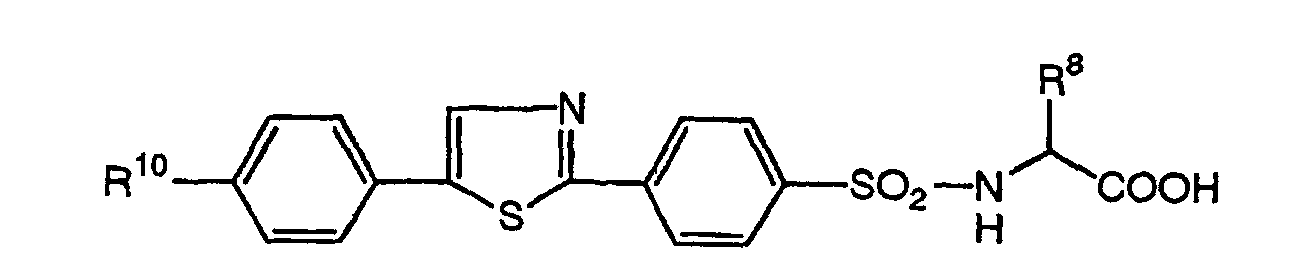
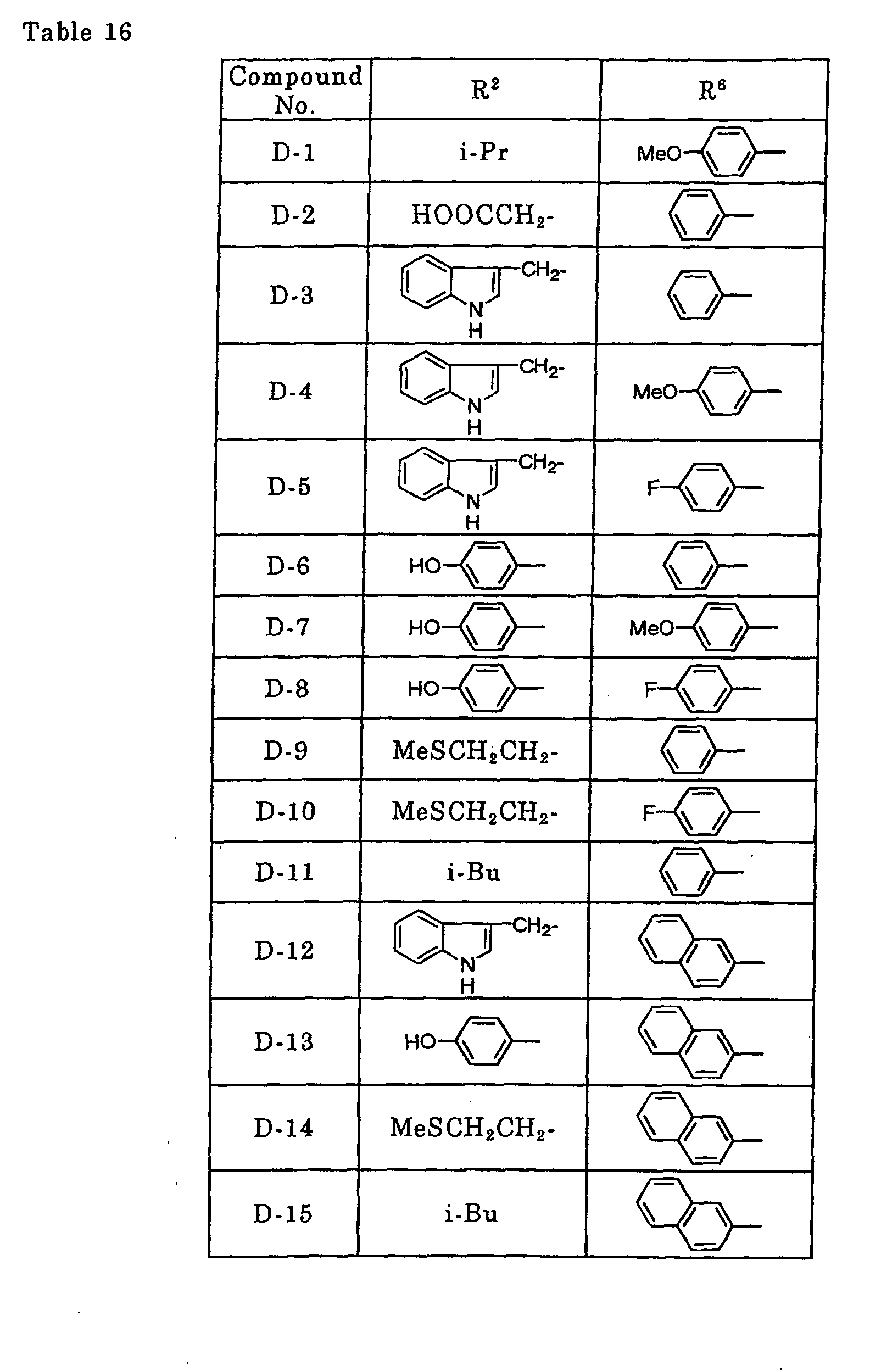
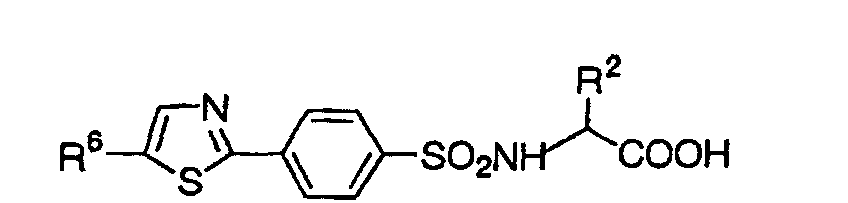
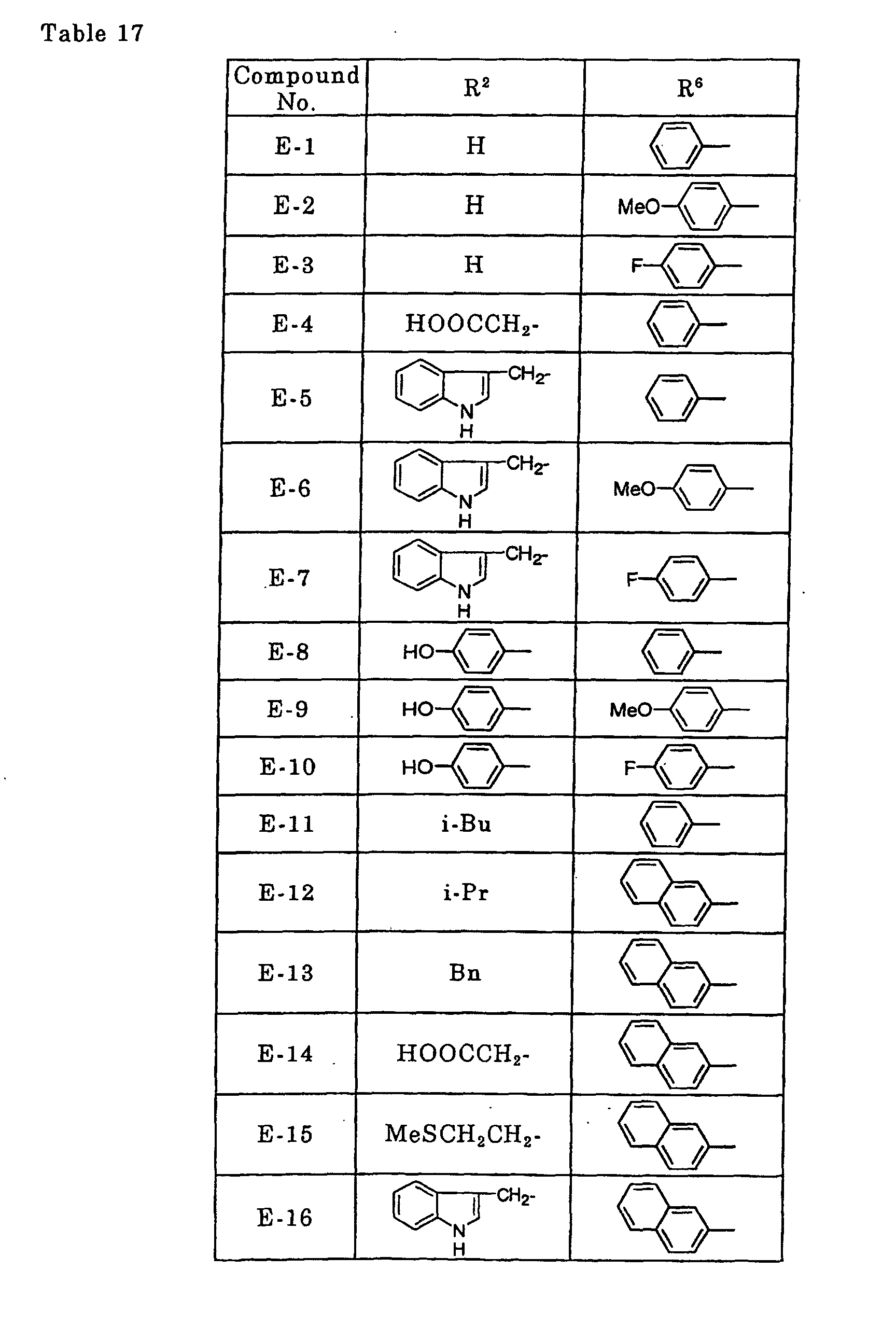
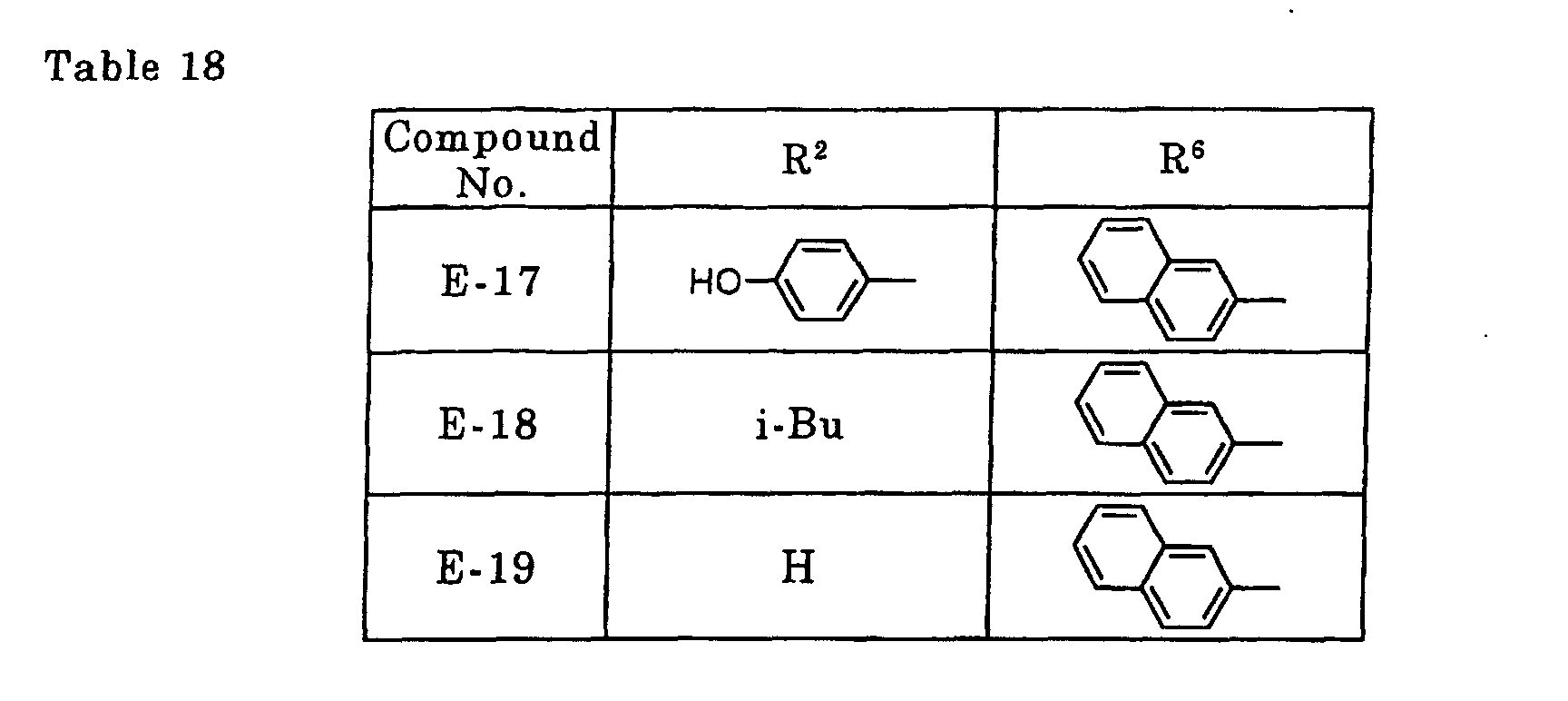
- a compound of the present invention has excellent inhibitory activities against plural MMPs (e.g., MMP-2, MMP-8, MMP-9, MMP-12, MMP-13) and preferable is a compound represented by the formula: wherein R 8 is hydrogen atom, methyl, isopropyl, isobutyl, carboxymethyl, carboxyethyl, 2-methylthioethyl, benzyl, 4-hydroxybenzyl, or indol-3-ylmethyl: R 10 is hydrogen atom, halogen, lower alkyl, lower alkyloxy, halo(lower)alkyl, acyl, nitro, cyano, optionally substituted amino, or hydroxy.
- a compound represented by the formula (I) is able to be prepared by the following method.
- R 2 , R 4 , and R 6 are as defined above, R 11 is a protecting group of a carboxyl group; Hal is each independently halogen; W is oxygen or sulfur atom.
- This process can be accomplished in accordance with the process 1 in the method A described in WO97/27174.
- Compound (VII) is dissolved in a solvent such as chloroform, dichloromethane.
- An amine such as hexamethylenetetramine is added.
- the mixture is stirred at 0 °C to 60 °C, preferably 10 °C to 40 °C for 1 to 48 h, preferably 10 to 30 h.
- the obtained quaternary ammonium salt is suspended in a solvent such as methanol, ethanol.
- Concentrated hydrochloric acid is added thereto.
- the mixture is stirred at 0 °C to 60 °C, preferably 10 °C to 40 °C for 1 to 48 h, preferably 10 to 30 h to give a primary ammonium hydrochloride (VIII).
- Compound (VI) and dimethylformamide are suspended in a solvent such as dichloromethane.
- a halogenating agent such as oxalyl chloride is added thereto at -30 °C to 20 °C, preferably at -10 °C to 5 °C.
- the suspension is stirred for 10 min to 3 h, preferably for 30 min to 2 h to give the acid halide of compound (VI).
- Compound (VIII) and pyridine or N-methylmorpholine are suspended in a solvent such as dichloromethane.
- the above obtained solution containing the acid halide is added to the suspension at -30 °C to 30 °C, preferably at -10 °C to 10 °C.
- the mixture is stirred at 0 °C to 50 °C, preferably at 10 °C to 40 °C for 1 h to 24 h, preferably for 2 h to 5 h to give compound (IX).
- compound (IX) is suspended in phosphorus oxychloride.
- the mixture is stirred at 70 °C to 150 °C, preferably at 90 °C to 120 °C for 1 h to 5 h, preferably for 1 h to 2 h to give compound (X).
- compound (IX) is dissolved in a solvent such as tetrahydrofuran and the like. Lawesson's reagent is added. The mixture is stirred at 40 °C to 100 °C, preferably at 60 °C to 90 °C for 1 h to 5 h, preferably for 1 h to 3 h to give compound (X).
- This process can be accomplished in accordance with the process 1 in the method A described in WO97/27174.
- the obtained compound (X) can be converted to a compound, which has a hydroxamic acid group or is substituted with R 3 at the nitrogen atom.
- solvate in the present invention herein used includes a solvate with an organic solvent(s), a hydrate and the like. These hydrates can coordinate with any water molecules.
- the term "compound of the present invention” herein used includes a pharmaceutically acceptable salt or its solvate.
- the salt is exemplified by a salt with alkali metals (e.g., lithium, sodium, potassium, and the like), alkaline earth metals (e.g., magnesium, calcium, and the like), ammonium, organic bases, amino acids, mineral acids (e.g., hydrochloric acid, hydrobromic acid, phosphoric acid, sulfuric acid, and the like), or organic acids (e.g., acetic acid, citric acid, maleic acid, fumaric acid, benzenesulfonic acid, p-toluenesulfonic acid, and the like).
- alkali metals e.g., lithium, sodium, potassium, and the like
- alkaline earth metals e.g., magnesium, calcium, and the like
- ammonium organic bases
- amino acids e.g., mineral acids (e.g., hydrochloric acid, hydro
- Prodrug is a derivative of the compound having a group which can be decomposed chemically or metabolically, and such prodrug is a compound according to the present invention which becomes pharmaceutically active by means of solvolysis or by placing the compound in vivo under a physiological condition.
- the method of both selection and manufacture of appropriate prodrug derivatives is described in, for example. Design of Prodrugs, Elsevier, Amsterdam, 1985.
- prodrugs such as an ester derivative, optionally substituted alkyloxycarbonyl, which is prepared by reacting a basal acid compound with a suitable alcohol, or an amide derivative, optionally substituted alkylaminocarbonyl, which is prepared by reacting a basal acid compound with a suitable amine are exemplified when the compounds according to present invention have a carboxylic group.
- esters as prodrugs are methyl ester, ethyl ester, n-propyl ester, isopropyl ester, n-butyl ester, isobutyl ester, tert-butyl ester, morpholinoethyl ester, and N,N-diethylglycolamido ester, and the like.
- prodrugs such as an acyloxy derivative which is prepared by reacting a basal hydroxy compound with a suitable acyl halide or a suitable acid anhydride are exemplified when the compounds according to present invention have a hydroxy group.
- acyloxy derivatives as prodrugs -OCOC 2 H 5 , -OCO(t-Bu), -OCOC 15 H 31 , -OCO(m-COONa-Ph), -OCOCH 2 CH 2 COONa, -OCOCH(NH 2 )CH 3 ,-OCOCH 2 N(CH 3 ) 2 , and the like.
- prodrugs such as an amide derivative which is prepared by reacting a basal amino compound with a suitable acid halide or a suitable acid anhydride are exemplified when the compounds according to present invention have an amino group.
- Particularly preferred amide as prodrugs are -NHCO(CH 2 ) 20 CH 3 , -NHCOCH(NH 2 )CH 3 , and the like.
- the compound of the present invention is not restricted to any particular isomers but includes all possible isomers and racemic modifications.
- the compound of the present invention has excellent inhibitory activities against MMPs, as described in the following test example.
- the compounds of the present invention are useful in the treatment of diseases such as chronic obstructive pulmonary disease, osteoarthritis, rheumatoid arthritis, corneal ulceration, periodontal disease, advanced virus infection (e.g., HIV infection), arteriosclerosis obliterans, arteriosclerotic aneurysm, aortic aneurysm, atherosclerosis, restenosis, sepsis, septic shock, coronary thrombosis, aberrant angiogenesis, scleritis, multiple sclerosis, hepatocirrhosis, open angle glaucoma, retinopathies (e.g., diabetic retinopathy), proliferative retinopathy, neovascular glaucoma, pterygium, keratitis, epidermolysis bullosa, psoriasis, diabetes, nephritis, neurodegengerative disease, inflammation, osteoporosis, deos
- the compound of the present invention When the compound of the present invention is administered to a person for the treatment of the above diseases, it can be administered orally as powder, granules, tablets, capsules, pilulae, and liquid medicines, or parenterally as injections, suppositories, percutaneous formulations, insufflation, or the like.
- An effective dose of the compound is formulated by being mixed with appropriate medicinal admixtures such as excipient, binder, penetrant, disintegrators, lubricant, and the like if necessary.
- Parenteral injections are prepared by sterilizing the compound together with an appropriate carrier.
- the dosage varies with the conditions of the patients, administration route, their age, and body weight.
- the dosage can generally be between 0.1 to 100 mg/kg/day, and preferably 0.1 to 20 mg/kg/day for adult.
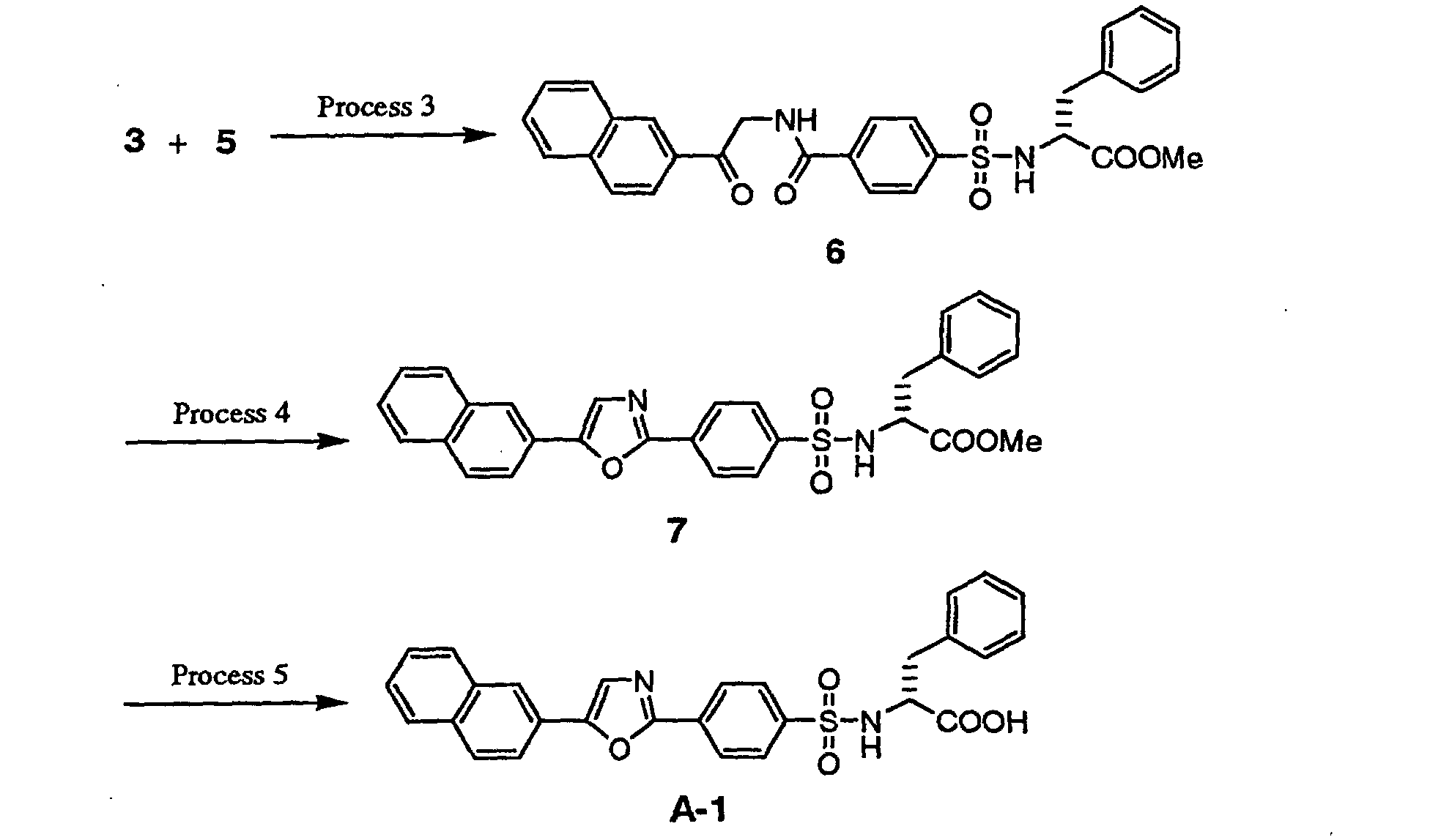
- Oxalyl chloride (105 ⁇ l, 1.2 mmol) was added to a suspension of compound (3) (363 mg, 1 mmol) and dimethylformamide (0.05 ml) in dichloromethane (3 ml) with cooling in ice. The mixture was stirred at a room temperature for 1 h. The acid chloride solution obtained above was added to a suspension of compound (5) (244 mg, 1.1 mmol) and pyridine (0.28 ml, 3.5 mmol) in dichloromethane (3 ml) with cooling in ice. The mixture was stirred at a room temperature for 3 h and poured to ice-2N hydrochloric acid and extracted with ethyl acetate.
- Oxalyl chloride (0.31 ml, 3.6 mmol) was added to a suspension of compound (3) (1.09 g, 3 mmol) and dimethylformamide (0.05 ml) in dichloromethane (10 ml) with cooling in ice. The mixture was stirred at a room temperature for 1 h and concentrated under a reduced pressure. Pyridine (0.85 ml, 10.5 mmol) was added to a suspension of the crude acid chloride obtained above and 2-amino-4'-methoxyacetophenone hydrochloric acid salt (8) in dichloromethane (10 ml) with cooling in ice.
- Oxalyl chloride (0.25 ml, 2.87 mmol) was added to a solution of compound (11) (1.00 g, 2.43 mmol) and dimethylformamide (0.05 ml) in tetrahydrofuran (20 ml). The mixture was stirred at a room temperature for 6 h. Compound (12) (0.501 g, 2.92 mmol) and then N -methylmorpholine (0.80 ml, 7.28 mmol) were added to the reaction mixture. The mixture was stirred at a room temperature for 20 h. Water was added and then 2mol/L hydrochloric acid was added to acidify. The mixture was extracted with ethyl acetate.
- Trifluoroacetic acid (0.823 ml, 10.7 mmol) was added to a solution of compound (14) (281 mg, 0.534 mmol) in dichloromethane (7 ml). The mixture was stirred for 20 h and concentrated under a reduced pressure. Toluene was added to the residue and the mixture was concentrated under a reduced pressure again. The residue was crystallized from acetone / hexane to give a desired product (C-1, 204 mg, yield 81.1%) with a melting point of 233-234 °C.
- MMP-1 was purchased from Yagai.
- MMP-2 was purchased from Calbiochem-Novabiochem International, Inc.
- catalytic domain 99 Phe ⁇ 262 Gly
- PCR Human Bone Marrow cDNA
- IPTG Isopropyl- ⁇ -D-thiogalactopyranoside
- Ciccarelli Gene expression, purification and characterization of recombinant human neutrophil collagenase. Gene 146, (1994) 297-301, Prepared by the a improved method of this material). Isolation of MMP-8 from an insoluble fraction was carried out by dissolving in modifier (6M urea) by a usual method and purification with metal chelate chromatography. And then removing modifier (6M urea) with dialysis and refolding of the enzyme spontaneously gave activated MMP-8.
- MMP-9 was isolated and purified by procedures described in as follows: Yasunori Okada, Yukio Gonoji, Katsumi Naka, Katsuro Tomita, Isao Nakanishi, Kazushi Iwata, Kyoko Yamashita, and Taro Hayakawa: Matrix metalloproteinase 9 (92-kDa gelatinase/type IV collagenase) from HT1080 human fibrosarcoma cells. Purification and activation of the precursor and enzymic properties J. Biol.
- human fibrosarcoma ATCC HT1080 cell line was cultured to confluent in Dulbecco's Modified Medium (DMEM) containing 10 % fetal-calf serum at 37°C for 48 hours. Subsequently, the medium of confluent culture was changed to serum-free DMEM medium.
- DMEM Dulbecco's Modified Medium
- Phorbol-12-myristate-13-acetate must be added to this serum-free DMEM medium at a concentration of 50 ng/ml.
- the TPA treated medium was centrifuged at 3000 rpm for 15 min and the supernatant was concentrated to 450 ml by a Toyo-Roshi UP-20 apparatus with an ultrafiltration membrane.
- proMMP-9 in this concentrated solution was purified by using columns of Gelatin-Sepharose and Concanavalin A-Sepharose.
- the pool containing proMMP-9 was dialyzed, concentrated (Toyo-Roshi UP-20) and applied to columns of Sephacryl S-200 and Green A matrix for the separation from TIMPs.
- the obtained proMMP-9 fraction was activated by TPCK-Trypsin (Final conc. 3 ⁇ g/50 ⁇ l React Mix.).
- MMP-12 catalytic domain( 100 Phe ⁇ 263 Gly) was amplified with RT-PCR from Human Placenta Total RNA. This was cloned in Escherichia. coli expression vector pTrc99AHE inserted with His-tag sequence and enterokinase digestion-site, induced and expressed by IPTG (Isopropyl- ⁇ -D-thiogalactopyranoside) and expressed in a insoluble fraction. Isolation of MMP-12 from an insoluble fraction was carried out by dissolving in modifier (6M urea) by a usual method and purification with metal chelate chromatography (Ni Chelateing Sepharose). And then removing modifier (6M urea) with dialysis and refolding of the enzyme spontaneously gave activated MMP-12.
- modifier 6M urea
- MMP-13 mRNA was prepared from carcinoma cell SW1353 derived from human cartilage stimulate by IL-1, TNF and catalytic domain ( 104 Tyr ⁇ 267 Gly) was amplified with RT-PCR. This was cloned in Escherichia. coli expression vector pTrc99AHE inserted with His-tag sequence and enterokinase digestion-site, induced and expressed by IPTG (Isopropyl- ⁇ -D-thiogalactopyranoside) and expressed in a insoluble fraction. Isolation of MMP-13 from an insoluble fraction was carried out by dissolving in modifier (6M urea) by a usual method and purification with metal chelate chromatography (Ni Chelateing Sepharose). And then removing modifier (6M urea) with dialyze and refolding of the enzyme spontaneously gave activated MMP-13.
- modifier 6M urea
- Test example 2 Assay for inhibitory activities on various type of MMPs
- the enzymatic activity on MMPs was analyzed by the method described in "C. Graham Knight, Frances Willenbrock and Gillian Murphy: A novel coumarin-labelled peptide for sensitive continuous assays of the matrix metalloproteinases: FEBS LETT., 296, (1992), 263-266".
- the substrate MOCAc-Pro-Leu-Gly-Leu-A 2 Pr(DNP)-Ala-Arg-NH 2 was purchased from Peptide Institute, Inc., Osaka, Japan.
- the measurement of the inhibitory activities (IC 50 ) was carried out by the following four methods;
- Compounds including the present invention have broad inhibitory activities against various kinds of MMPs
- Granules are prepared using the following ingredients. Ingredients The compound represented by the formula (I) 10 mg Lactose 700 mg Corn starch 274 mg HPC-L 16 mg 1000 mg
- the compound represented by the formula (I) and lactose are made pass through a 60 mesh sieve.
- Corn starch is made pass through a 120 mesh sieve. They are mixed by a twin shell blender.
- An aqueous solution of HPC-L (low mucosity hydroxypropylcellulose) is added to the mixture and the resulting mixture is kneaded, granulated (by the extrusion with pore size 0.5 to 1 mm mesh), and dried.
- the dried granules thus obtained are sieved by a swing sieve (12/60 mesh) to yield the granules.
- Powders for filling capsules are prepared using the following ingredients. Ingredients The compound represented by the formula (I) 10 mg Lactose 79 mg Corn starch 10 mg Magnesium stearate 1 mg 100 mg
- the compound represented by the formula (I) and lactose are made pass through a 60 mesh sieve.
- Corn starch is made pass through a 120 mesh sieve.
- These ingredients and magnesium stearate are mixed by a twin shell blender. 100 mg of the 10-fold trituration is filled into a No. 5 hard gelatin capsule.
- Granules for filling capsules are prepared using the following ingredients. Ingredients The compound represented by the formula (I) 15 mg Lactose 90 mg Corn starch 42 mg HPC-L 3 mg 150 mg
- the compound represented by the formula (I) and lactose are made pass through a 60 mesh sieve.
- Corn starch is made pass through a 120 mesh sieve.
- an aqueous solution of HPC-L is added to the mixture and the resulting mixture is kneaded, granulated, and dried. After the dried granules are lubricated, 150 mg of that are filled into a No. 4 hard gelatin capsule.
- Tablets are prepared using the following ingredients. Ingredients The compound represented by the formula (I) 10 mg Lactose 90 mg Microcrystal cellulose 30 mg CMC-Na 15 mg Magnesium stearate 5 mg 150 mg
- the compound represented by the formula (I), lactose, microcrystal cellulose, and CMC-Na (carboxymethylcellulose sodium salt) are made pass through a 60 mesh sieve and then mixed.
- the resulting mixture is mixed with magnesium stearate to obtain the mixed powder for the tablet formulation.
- the mixed powder is compressed to yield tablets of 150 mg.
- the sulfonamide derivatives of the present invention have inhibiting activities against the matrix metalloproteinase, especially excellent inhibiting activities against plural MMPs and are useful as the treating or preventing agent of diseases caused by MMP.
Landscapes
- Health & Medical Sciences (AREA)
- Chemical & Material Sciences (AREA)
- Organic Chemistry (AREA)
- Life Sciences & Earth Sciences (AREA)
- Public Health (AREA)
- Veterinary Medicine (AREA)
- General Chemical & Material Sciences (AREA)
- Medicinal Chemistry (AREA)
- Nuclear Medicine, Radiotherapy & Molecular Imaging (AREA)
- Chemical Kinetics & Catalysis (AREA)
- Pharmacology & Pharmacy (AREA)
- General Health & Medical Sciences (AREA)
- Animal Behavior & Ethology (AREA)
- Bioinformatics & Cheminformatics (AREA)
- Engineering & Computer Science (AREA)
- Physical Education & Sports Medicine (AREA)
- Rheumatology (AREA)
- Diabetes (AREA)
- Orthopedic Medicine & Surgery (AREA)
- Cardiology (AREA)
- Heart & Thoracic Surgery (AREA)
- Pulmonology (AREA)
- Immunology (AREA)
- Hematology (AREA)
- Urology & Nephrology (AREA)
- Communicable Diseases (AREA)
- Oncology (AREA)
- Dermatology (AREA)
- Hospice & Palliative Care (AREA)
- Neurosurgery (AREA)
- Virology (AREA)
- Emergency Medicine (AREA)
- Endocrinology (AREA)
- Obesity (AREA)
- Ophthalmology & Optometry (AREA)
- Pain & Pain Management (AREA)
- Neurology (AREA)
- Biomedical Technology (AREA)
- Vascular Medicine (AREA)
- Gastroenterology & Hepatology (AREA)
Abstract

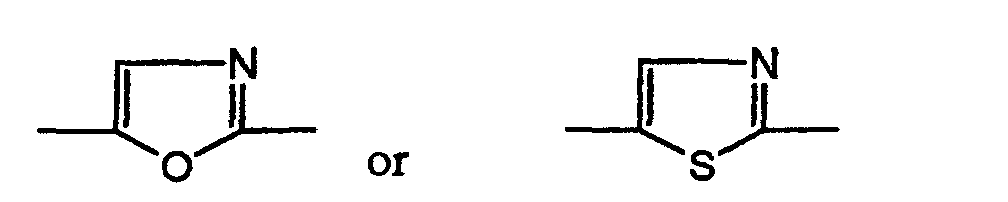
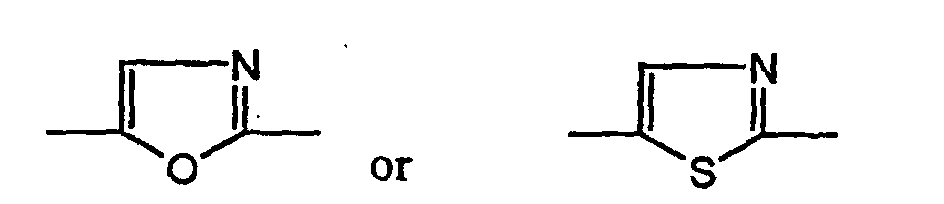
R5 is a group represented by the formula:
Description

R2 is hydrogen atom, optionally substituted lower alkyl, optionally substituted aryl, optionally substituted aralkyl, optionally substituted heteroaryl, or optionally substituted heteroarylalkyl;
R3 is hydrogen atom, optionally substituted lower alkyl, optionally substituted aryl, optionally substituted aralkyl, optionally substituted heteroaryl, or optionally substituted heteroarylalkyl;
R4 is optionally substituted arylene, or optionally substituted heteroarylene; R5 is a group represented by the formula:
its optically active substance, its prodrug, their pharmaceutically acceptable salt, or solvate thereof.
In more detail, the invention relates to the following II)-XVI).




its optically active substance, its prodrug, their pharmaceutically acceptable salt, or solvate thereof.

its prodrug, their pharmaceutically acceptable salt, or solvate thereof.

its optically active substance, its prodrug, their pharmaceutically acceptable salt, or solvate thereof.


its optically active substance, its prodrug, their pharmaceutically acceptable salt, or solvate thereof.

R10 is hydrogen atom, halogen, lower alkyl, lower alkyloxy, halo(lower)alkyl, acyl, nitro, cyano, optionally substituted amino, or hydroxy, its optically active substance, its prodrug, their pharmaceutically acceptable salt, or solvate thereof.


- Me :
- methyl
- Et :
- ethyl
- n-Pr :
- n-propyl
- i-Pr :
- isopropyl
- n-Bu :
- n-butyl
- i-Bu :
- isobutyl
- t-Bu :
- tert-butyl
- Ph :
- phenyl
- Bn :
- benzyl
- DMSO :
- dimethyl sulfoxide


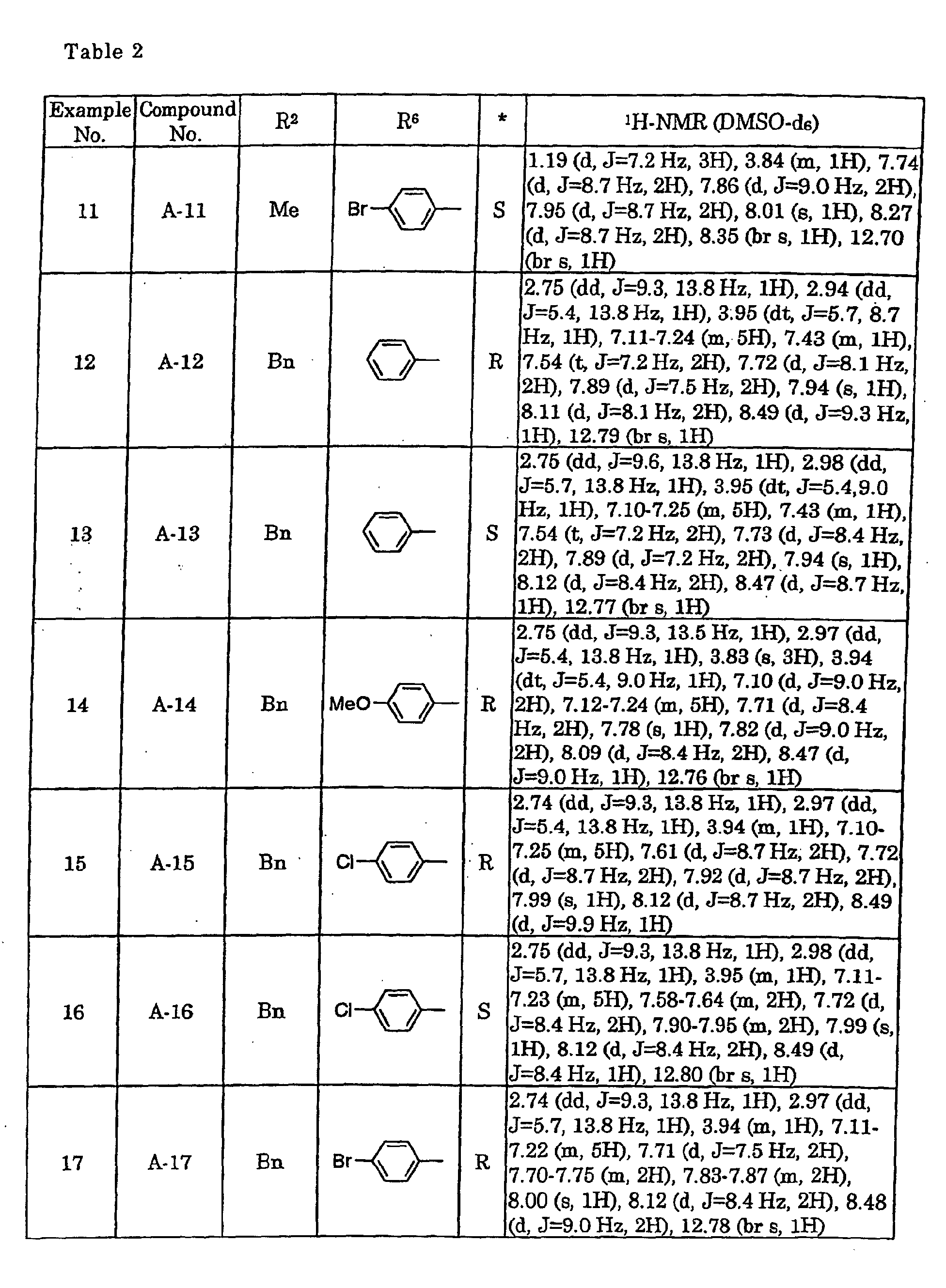
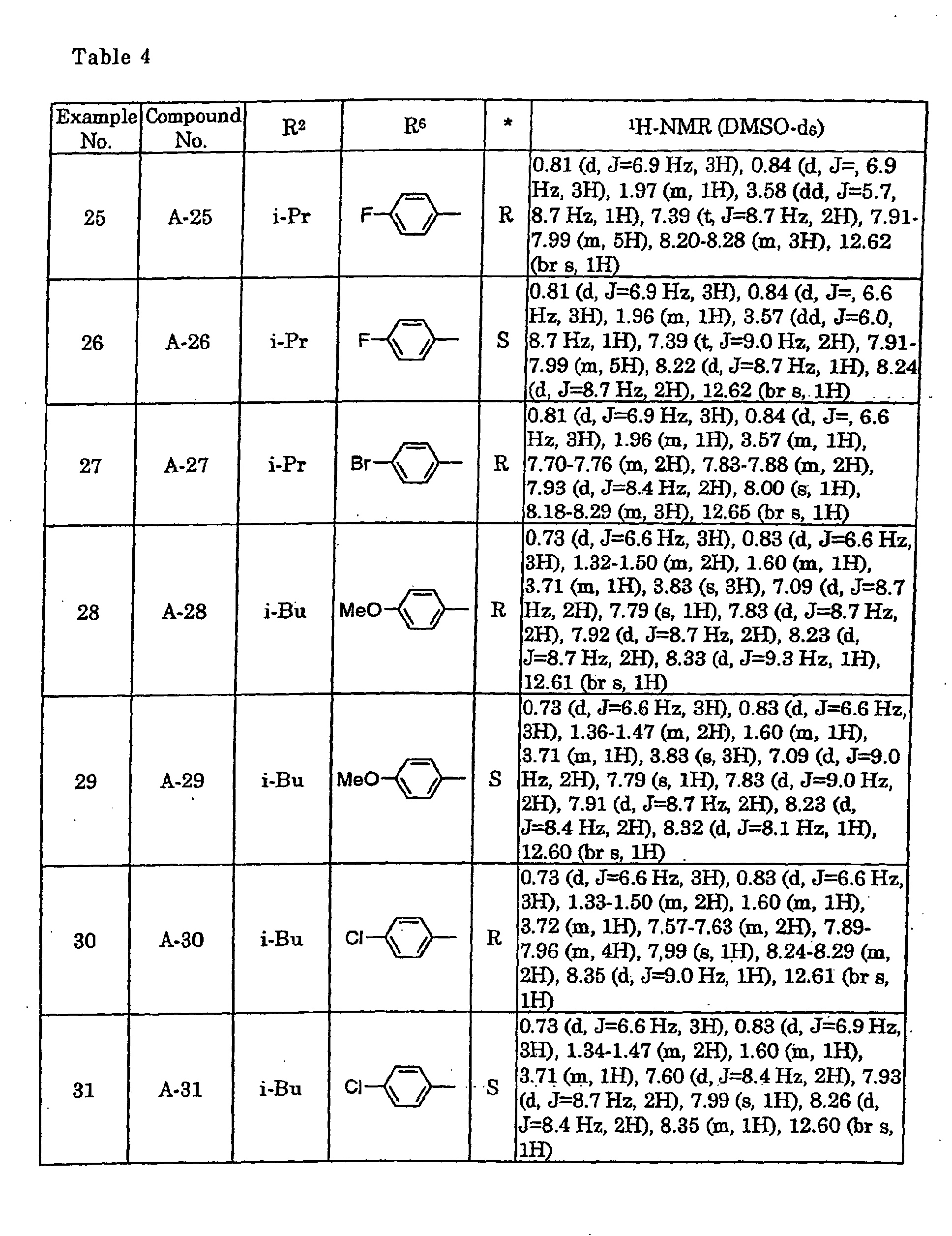
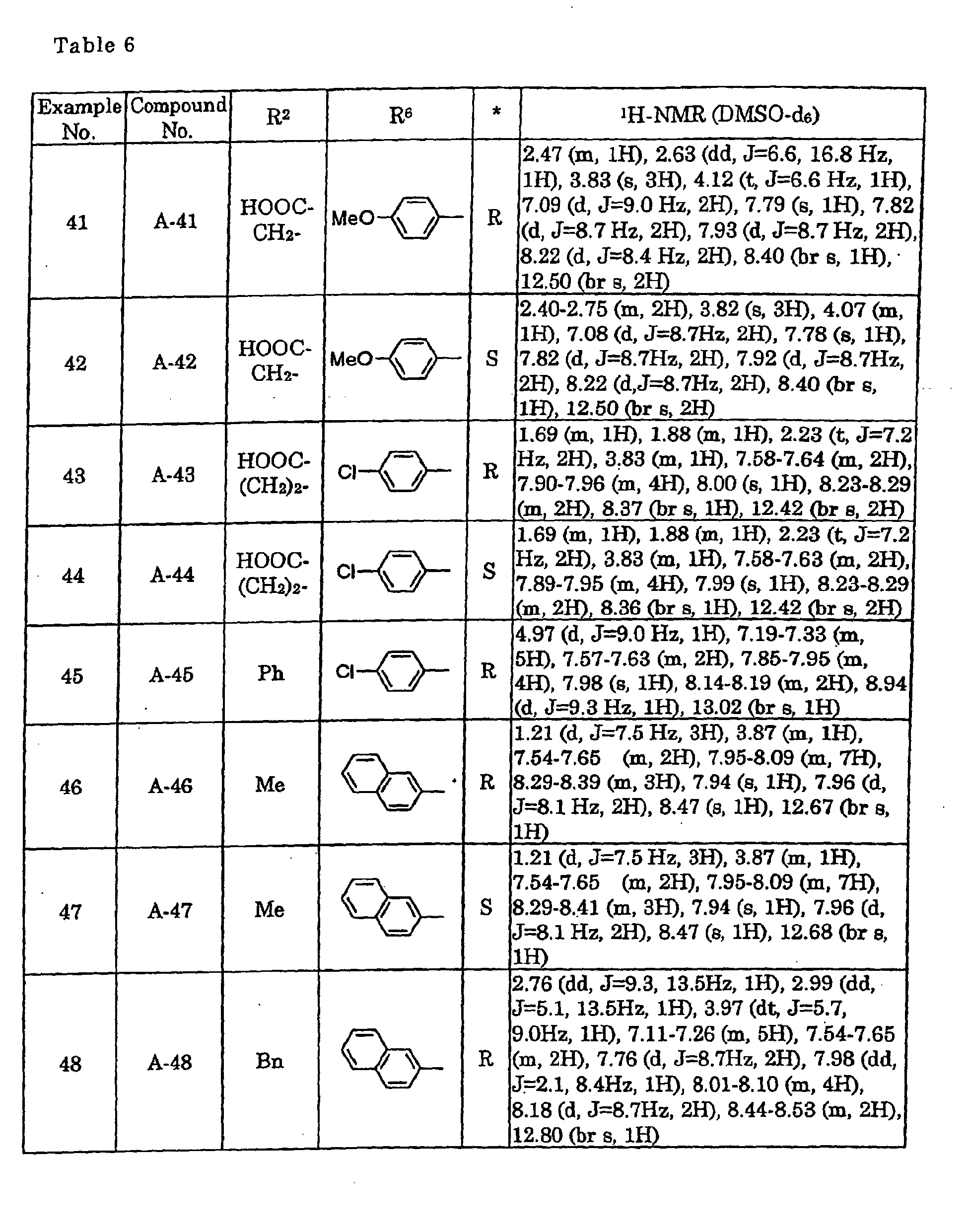
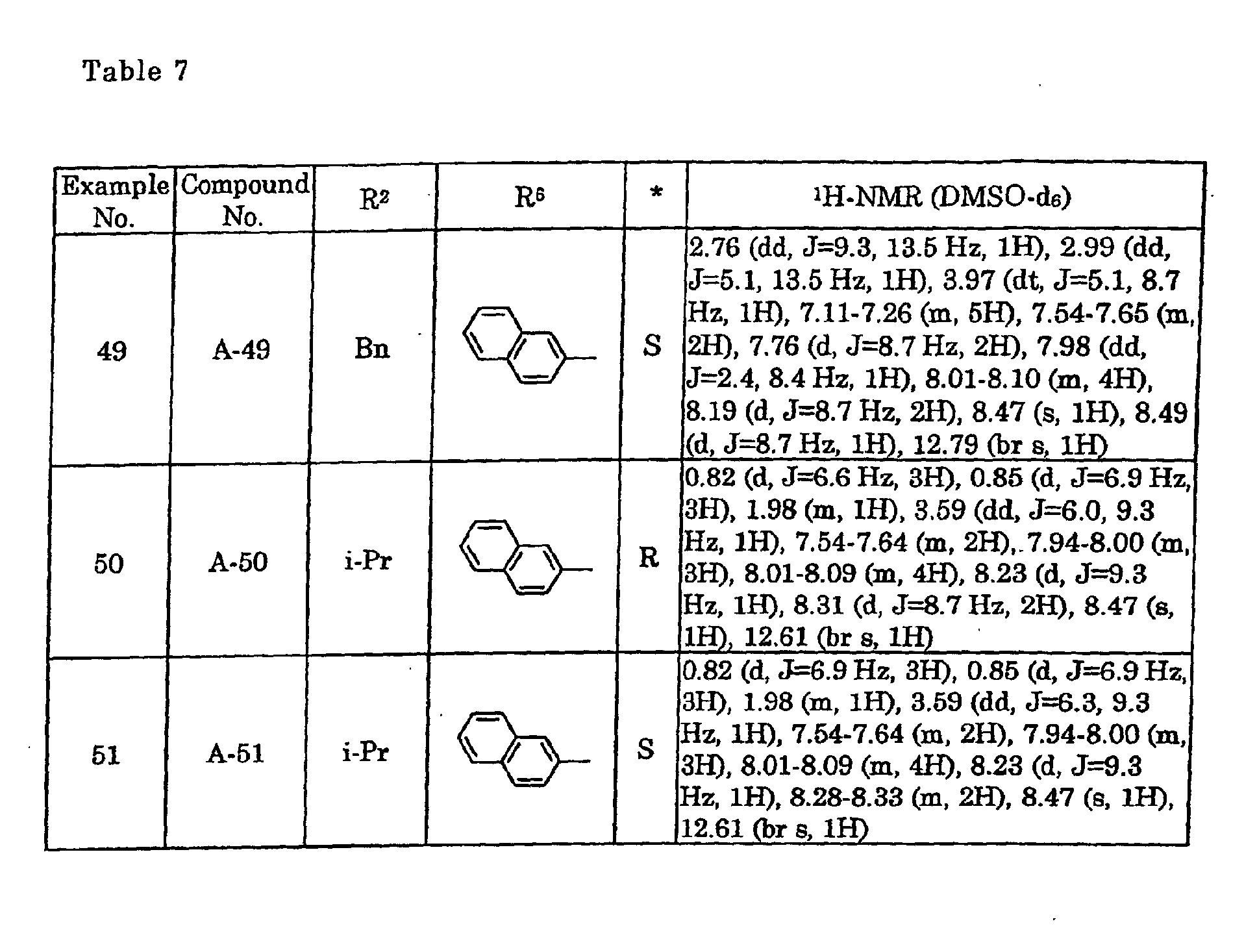
IR (KBr, νmax cm-1) 3280, 2956, 1737, 1691, 1428, 1346, 1284, 1166, 723 1H NMR (CDCl3, δ ppm): 2.77(dd, J = 9.3, 13.5 Hz, 1H), 2.94 (dd, J = 5.7, 13.5 Hz, 1H), 3.37 (s, 3H), 4.01 (dt, J = 6.0, 9.0 Hz, 1H), 7.08-7.23 (m, 5H), 7.66 (d, J = 8.4 Hz, 2H), 7.97 (d, J = 8.4 Hz, 2H), 8.69 (d, J = 9.0 Hz, 1H), 13.38 (br s, 1H)
[α]D + 3.2±0.9 (c = 0.505, DMSO, 24 °C)
Elemental analysis (C17H17NO6S)
Calcd.:C;56.19, H;4.72, N;3.85, S;8.82
Found:C;56.06, H;4.57, N;3.93, S;8.75
HR-FABMS m/z Salt free amine C12H12NO [M + H]+
Calcd:186.0919
Found:186.0920
IR (KBr, ν max cm-1) 3345, 1743, 1342, 1176, 1164, 1095, 817, 752 1H NMR (DMSO-d6, δ ppm): 3.04 and 3.10 (dABq, J = 6.0, 13.8 Hz, 2H), 3.54 (s, 3H), 4.29 (dt, J = 9.3, 6.0 Hz, 1H), 5.15 (d, J = 9.3 Hz, 1H), 7.05-7.12 (m, 2H), 7.21-7.30 (m, 3H), 7.49-7.60 (m, 2H), 7.61 (s, 1H), 7.79 (dd, J = 0.9, 8.4 Hz, 1H), 7.87 (d, J = 8.1 Hz, 4H), 7.93 (d, J = 8.4 Hz, 1H), 8.21-8.25 (m, 3H)
[α]D - 12.9±1.0 (c = 0.506, DMSO, 24 °C)
Elemental analysis (C29H24N2O5S·0.4 acetone)
Calcd.:C;67.70, H;4.97, N;5.23, S;5.98
Found:C;67.43, H;4.75, N;5.38, S;6.26
IR (KBr, ν max cm-1) 3430, 3284, 1718, 1344, 1261, 1166, 1095, 846 1H NMR (DMSO-d6, δ ppm): 2.76(dd, J = 9.3, 13.5 Hz, 1H), 2.99 (dd, J = 5.1, 13.5 Hz, 1H), 3.97 (dt, J = 5.7, 9.0 Hz, 1H), 7.11-7.26 (m, 5H), 7.54-7.65 (m, 2H), 7.76 (d, J = 8.7 Hz, 2H), 7.98 (dd, J = 2.1, 8.4 Hz, 1H), 8.01-8.10 (m, 4H), 8.18 (d, J = 8.7 Hz, 2H), 8.44-8.53 (m, 2H), 12.80 (br s, 1H)
[α]D - 5.9±0.9 (c = 0.508, DMSO, 24.5 °C)
Elemental analysis (C28H22N2O5S·0.2H2O)
Calcd:C;66.97, H;4.50, N;5.58, S;6.39
Found:C;66.99, H;4.34, N;5.63, S;6.24





[α]436 - 11.2±1.0 (c = 0.502, DMSO, 24 °C)
Elemental analysis (C26H26N2O7S·0.3H2O)
Calcd.:C;60.52, H;5.20, N;5.43, S;6.21
Found:C;60.52, H;5.04, N;5.80, S;6.13
[α]D - 9.8±1.0 (c = 0.511, DMSO, 24 °C)
Elemental analysis (C26H24N2O5S2.)
Calcd.:C;61.40, H;4.76, N;5.51, S;12.61
Found:C;61.30, H;4.53, N;5.53, S;12.41
[α]436 - 24.4±1.3 (c = 0.501, DMSO, 25°C)
Elemental analysis (C25H22N2O5S2)
Calcd.:C;60.71, H;4.48, N;5.66, S;12.97
Found:C;60.73, H;4.41, N;5.83, S;12.67

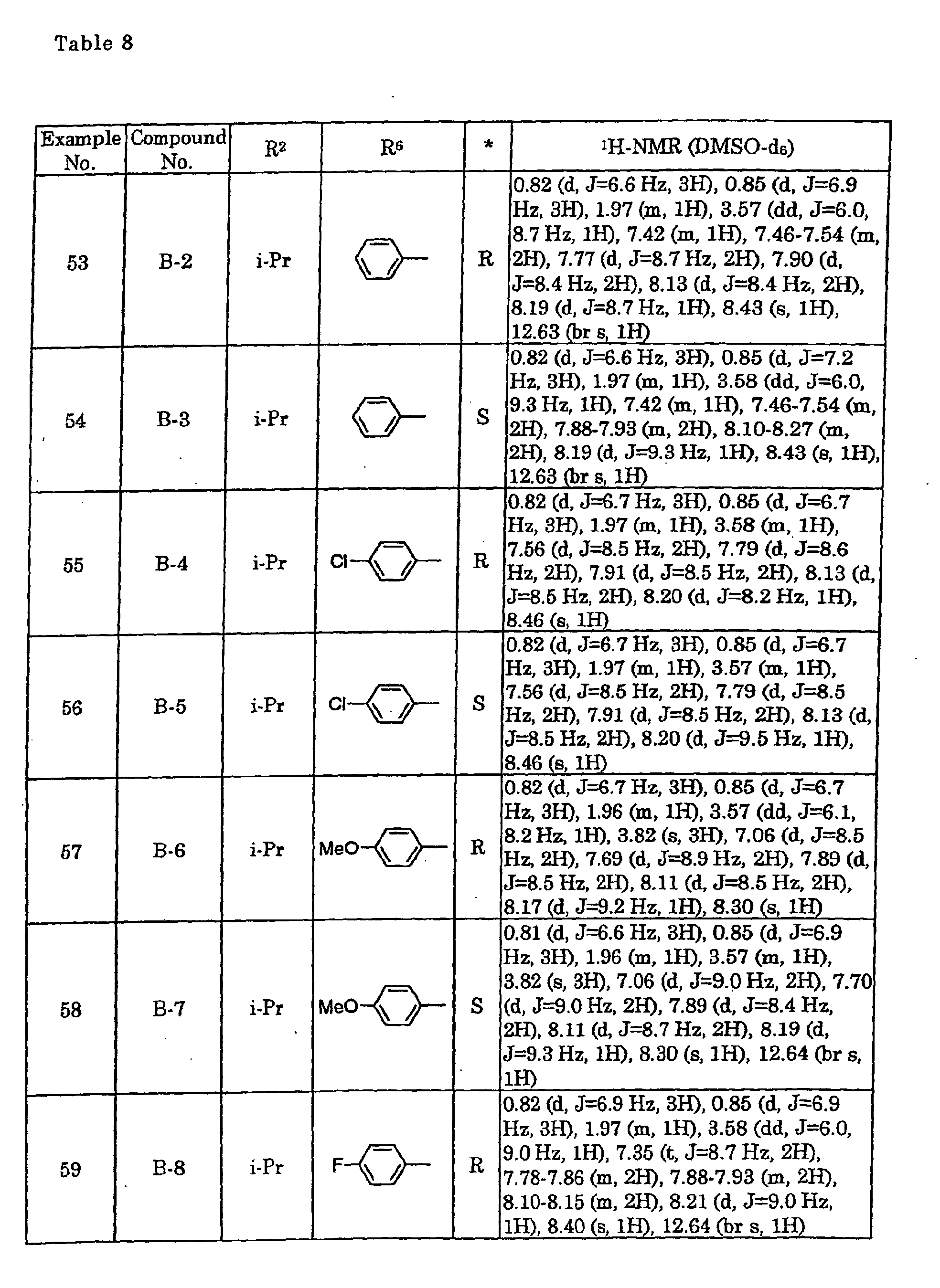


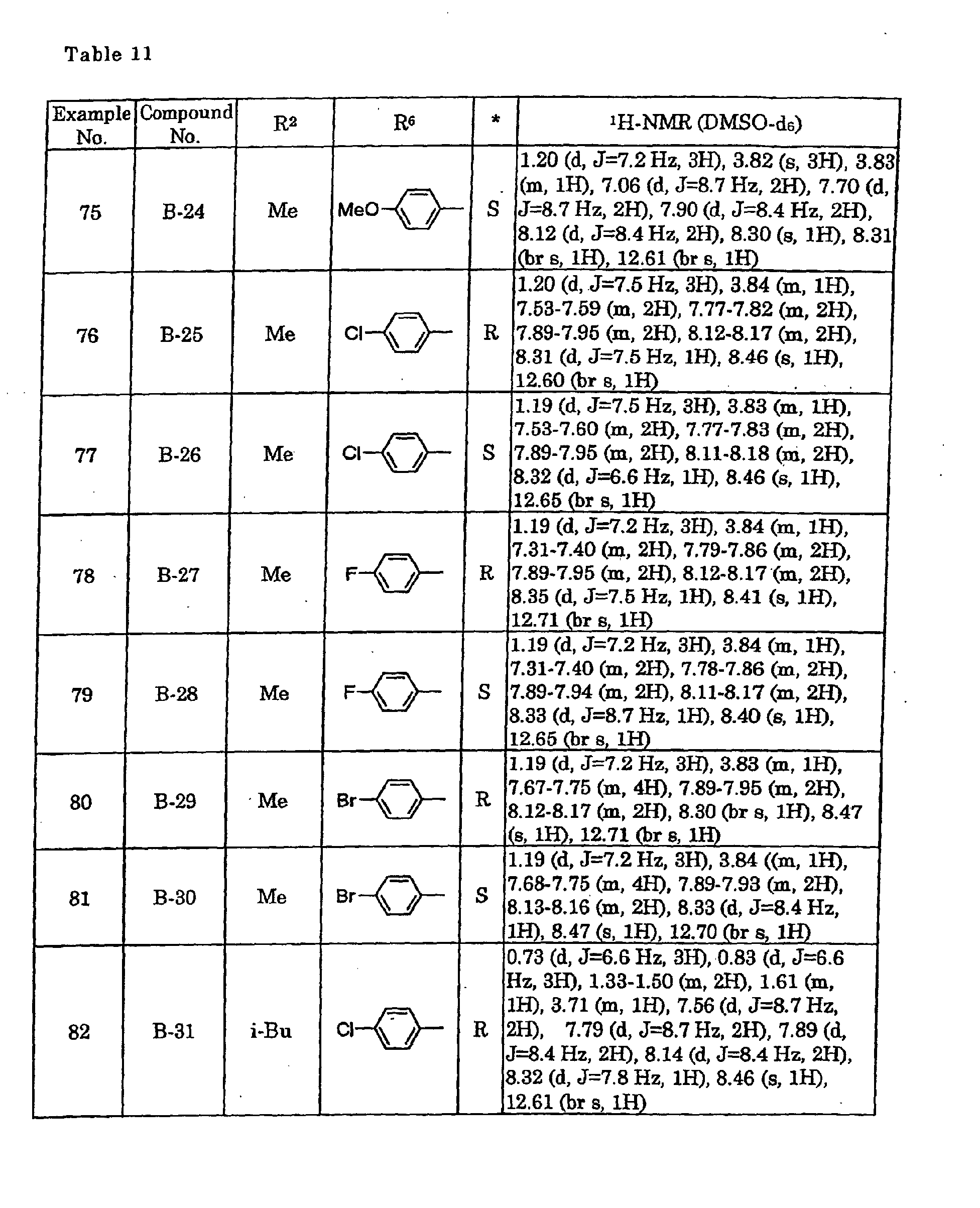

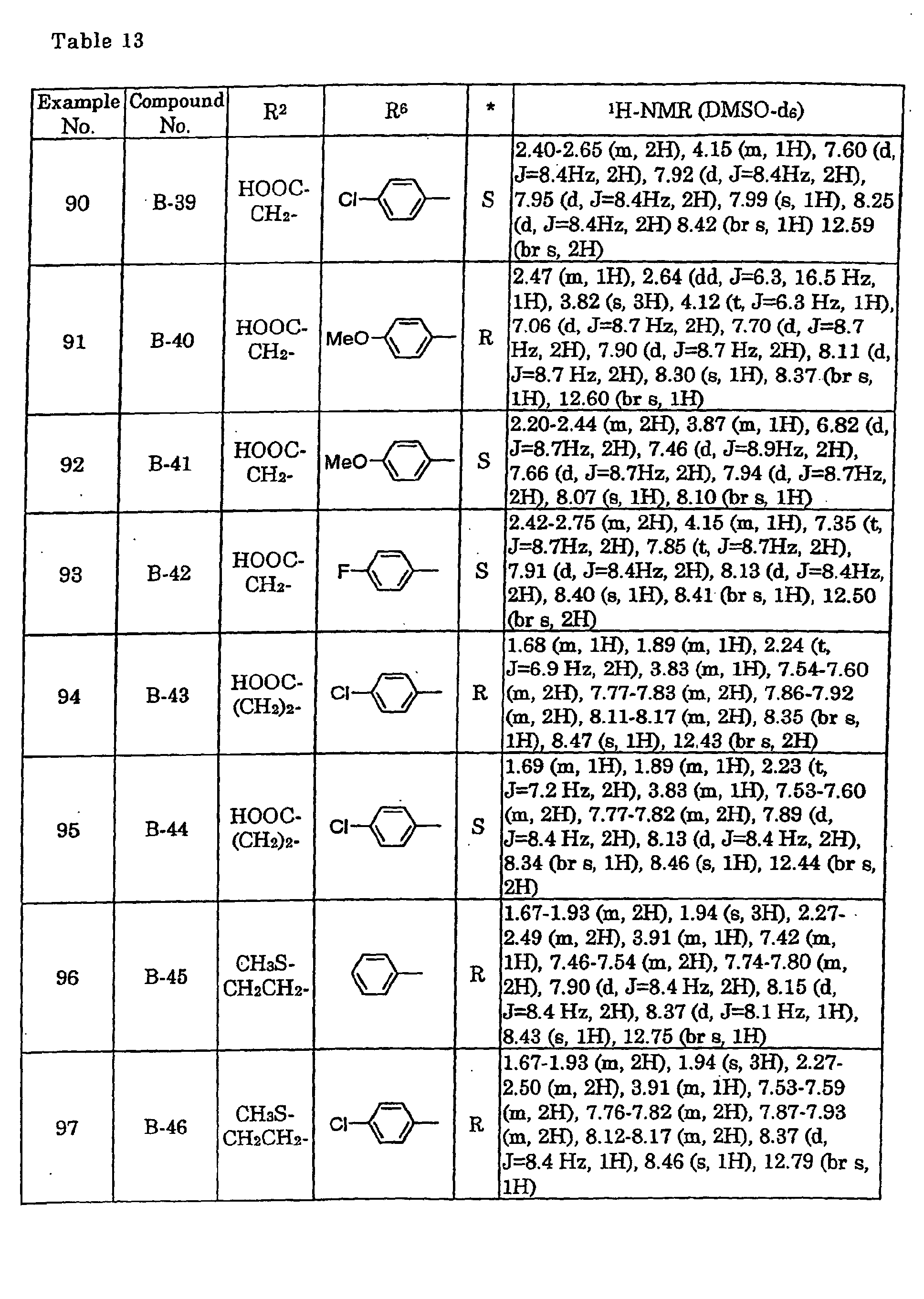


[α]D - 16.0±1.1 (c = 0.506, DMSO, 27 °C)

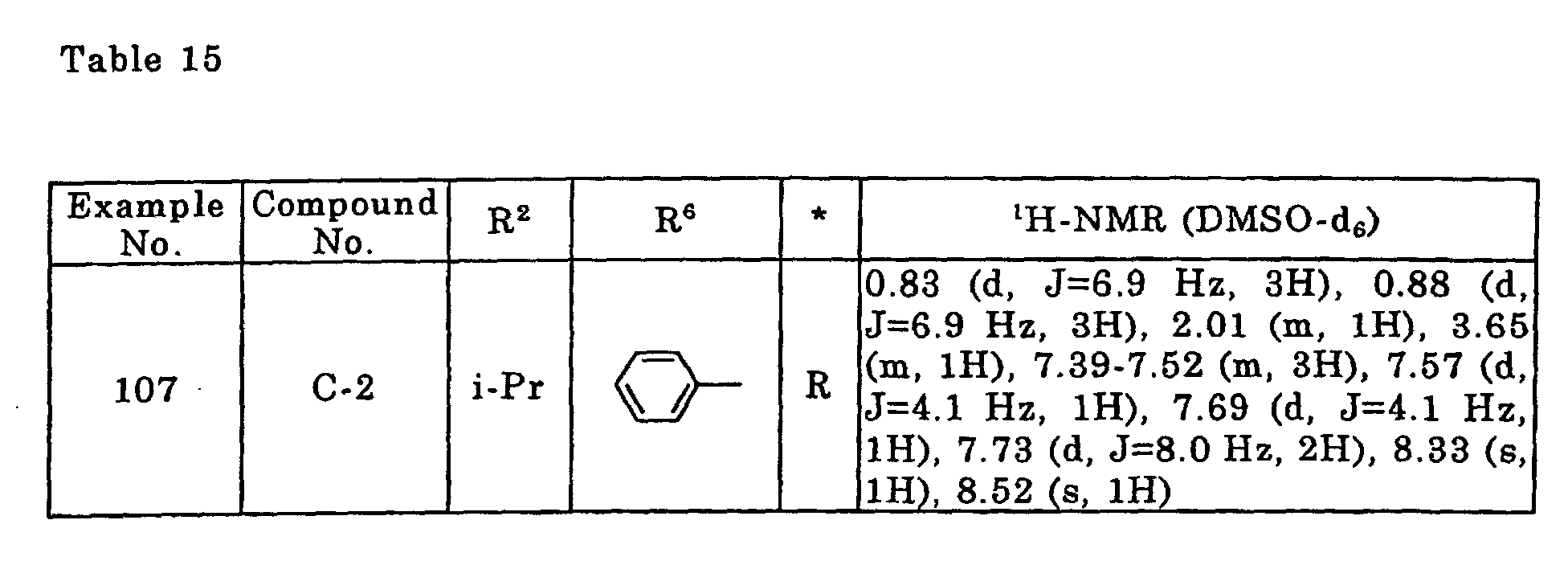



| Compound | MMP Inhibitory Activities IC50 (nM) | ||||
| No. | MMP-2 | MMP-8 | MMP-9 | MMP-12 | MMP-13 |
| A-1 | 9.31 | 230 | 212 | 1.88 | 15.0 |
| A-5 | ND | ND | ND | 28.4 | ND |
| A-6 | 9.71 | 233 | 368 | 12.5 | 234 |
| A-8 | 3.37 | 25.2 | 218 | 2.78 | 22.6 |
| A-9 | 287 | 266 | 9320 | 27.3 | 433 |
| A-10 | 5.46 | 97.4 | 135 | 2.42 | 59.2 |
| A-14 | 2.66 | 7.07 | 174 | 1.88 | 5.51 |
| A-16 | 265 | ND | 758 | 26.2 | 774 |
| A-19 | 14.4 | 113 | 247 | 7.71 | 113 |
| A-22 | 7.84 | 53.3 | 144 | 2.69 | 5.31 |
| A-24 | 670 | 337 | 2370 | 10.0 | 678 |
| A-25 | 12.2 | 75.9 | 179 | 7.48 | 140 |
| A-26 | 514 | 569 | 1807 | 40.2 | ND |
| A-27 | 6.08 | 57.3 | 67.9 | 1.55 | 54.5 |
| A-28 | 10.9 | 26.1 | 483 | 5.05 | 44.8 |
| A-30 | 44.4 | 320 | 502 | 11.4 | 226 |
| A-36 | 16.3 | 127 | 226 | 2.98 | 140 |
| A-46 | 7.16 | 279 | 157 | 2.25 | 19.0 |
| A-50 | 4.86 | 146 | 88.6 | 0.699 | 11.9 |
| B-1 | 1.29 | 28.2 | 43.8 | 3.55 | 2.96 |
| B-2 | 1.83 | 15.1 | 13.8 | 2.92 | 14.5 |
| B-3 | 7.45 | 18.9 | 70.5 | 3.16 | 15.0 |
| B-4 | 1.27 | 56.9 | 5.71 | 3.06 | 5.51 |
| B-5 | 5.24 | 25.7 | 14.8 | 1.33 | 6.18 |
| B-6 | 0.347 | 6.47 | 10.0 | 0.370 | 1.16 |
| B-8 | 1.38 | 10.5 | 11.1 | 1.96 | 9.53 |
| B-9 | 8.05 | 12.5 | 55.0 | 1.33 | 13.1 |
| B-10 | 0.373 | 31.7 | 3.96 | 0.643 | 3.38 |
| B-11 | 1.08 | 26.1 | 16.2 | 2.40 | 6.34 |
| B-12 | 1.44 | 25.9 | 66.9 | 3.69 | 9.30 |
| Compound No. | MMP Inhibitory Activities IC50 (nM) | ||||
| MMP-2 | MMP-8 | MMP-9 | MMP-12 | MMP-13 | |
| B-13 | 1.20 | 92.3 | 11.8 | 1.41 | 5.08 |
| B-14 | 2.56 | 72.8 | 19.5 | 2.49 | 11.0 |
| B-17 | 2.09 | 22.4 | 22.6 | 3.21 | 12.1 |
| B-21 | 1.47 | 58.2 | 19.9 | 5.86 | 22.0 |
| B-23 | 0.479 | 15.4 | 16.2 | 1.37 | 2.04 |
| B-24 | 6.30 | 18.5 | 109 | 1.50 | 8.40 |
| B-25 | 0.484 | 51.7 | 5.69 | 0.949 | 4.82 |
| B-26 | 8.30 | 42.5 | 54.4 | 1.24 | 14.1 |
| B-27 | 0.901 | 25.2 | 13.3 | 3.29 | 15.3 |
| B-29 | 0.313 | 45.2 | 5.82 | 0.470 | 2.60 |
| B-31 | 3.57 | 144 | 35.7 | 4.55 | 32.6 |
| B-34 | 1.63 | 24.9 | 53.6 | 3.35 | 6.82 |
| B-38 | 2.14 | 104 | 11.6 | 2.54 | 7.43 |
| B-45 | 2.15 | 29.0 | 26.3 | 2.66 | 17.5 |
| B-46 | 1.17 | 57.0 | 24.0 | 1.08 | 11.0 |
| B-51 | 0.276 | 66.0 | 4.24 | 0.761 | 2.66 |
| B-52 | 2.50 | 453 | 34.7 | 5.55 | 29.5 |
| B-53 | 2.41 | 373 | 173 | 2.54 | 12.4 |
| ND : Not Determined |
| Ingredients | The compound represented by the formula (I) | 10 mg |
| Lactose | 700 mg | |
| Corn starch | 274 mg | |
| HPC-L | 16 mg | |
| 1000 mg |
| Ingredients | The compound represented by the formula (I) | 10 mg |
| Lactose | 79 mg | |
| Corn starch | 10 mg | |
| Magnesium stearate | 1 mg | |
| 100 mg |
| Ingredients | The compound represented by the formula (I) | 15 mg |
| Lactose | 90 mg | |
| Corn starch | 42 mg | |
| HPC-L | 3 mg | |
| 150 mg |
| Ingredients | The compound represented by the formula (I) | 10 mg |
| Lactose | 90 mg | |
| Microcrystal cellulose | 30 mg | |
| CMC-Na | 15 mg | |
| Magnesium stearate | 5 mg | |
| 150 mg |
Claims (16)
- A compound of the formula (I):wherein R1 is NHOH, hydroxy, or lower alkyloxy;

R2 is hydrogen atom, optionally substituted lower alkyl, optionally substituted aryl, optionally substituted aralkyl, optionally substituted heteroaryl, or optionally substituted heteroarylalkyl;
R3 is hydrogen atom, optionally substituted lower alkyl, optionally substituted aryl, optionally substituted aralkyl, optionally substituted heteroaryl, or optionally substituted heteroarylalkyl;
R4 is optionally substituted arylene, or optionally substituted heteroarylene;
R5 is a group represented by the formula:R6 is optionally substituted aryl, optionally substituted heteroaryl or optionally substituted non-aromatic heterocyclic group; provided that R5 is thiazole-2,5-diyl when R4 is thiophene-2,5-diyl and R6 is optionally substituted phenyl,
its optically active substance, its prodrug, their pharmaceutically acceptable salt, or solvate thereof. - A compound as claimed in claim 1, wherein R6 is a group represented by the formula:


 R7 is each independently hydrogen atom, halogen, lower alkyl, cycloalkyl, lower alkenyl, lower alkynyl, lower alkyloxy, lower alkenyloxy, lower alkylthio, halo(lower)alkyl, hydroxy, carboxy, lower alkyloxycarbonyl, carbamoyl, acyl, nitro, cyano, or optionally substituted amino;
m is 0, 1, 2, or 3,
its optically active substance, its prodrug, their pharmaceutically acceptable salt, or solvate thereof. - A compound, its optically active substance, its prodrug, their pharmaceutically acceptable salt, or solvate thereof as claimed in claim 1 or 2, wherein R1 is hydroxy.
- A compound, its optically active substance, its prodrug, their pharmaceutically acceptable salt, or solvate thereof as claimed in claim 1 or 2, wherein R2 is lower alkyl optionally substituted with carboxy, carbamoyl or lower alkylthio, aryl optionally substituted with hydroxy, aralkyl optionally substituted with hydroxy, or heteroarylalkyl optionally substituted with hydroxy, or hydrogen atom.
- A compound, its optically active substance, its prodrug, their pharmaceutically acceptable salt, or solvate thereof as claimed in claim 4, wherein R2 is hydrogen atom, methyl, isopropyl, isobutyl, benzyl, indol-3-ylmethyl, carboxymethyl, carboxyethyl, 2-methylthioethyl, 4-hydroxybenzyl, or (5-hydroxy-indol-3-yl)methyl.
- A compound, its optically active substance, its prodrug, their pharmaceutically acceptable salt, or solvate thereof as claimed in claim 1 or 2, wherein R3 is hydrogen atom.
- A compound, its optically active substance, its prodrug, their pharmaceutically acceptable salt, or solvate thereof as claimed in claim 1 or 2, wherein R4 is 1,4-phenylene or 2,5-thiophene-diyl.
- A compound as claimed in claim 2, wherein R6 is a group represented by the formula:wherein R7 and m are as defined above,

its optically active substance, its prodrug, their pharmaceutically acceptable salt, or solvate thereof. - A compound as claimed in claim 8, wherein R6 is a group represented by the formula:wherein R7 is as defined above,
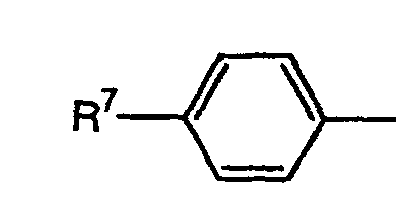
its optically active substance, its prodrug, their pharmaceutically acceptable salt, or solvate thereof. - A compound of the formula (II):wherein R8 is hydrogen atom, methyl, isopropyl, isobutyl, carboxymethyl, carboxyethyl, 2-methylthioethyl, benzyl, 4-hydroxybenzyl, or indol-3-ylmethyl; R9 is a group represented by the formula:
 R10 is hydrogen atom, halogen, lower alkyl, lower alkyloxy, halo(lower)alkyl, acyl, nitro, cyano, optionally substituted amino, or hydroxy,
its optically active substance, its prodrug, their pharmaceutically acceptable salt, or solvate thereof. - A compound of the formula (III):wherein R8 is hydrogen atom, methyl, isopropyl, isobutyl, carboxymethyl, carboxyethyl, 2-methylthioethyl, benzyl, 4-hydroxybenzyl, or indol-3-ylmethyl; R10 is hydrogen atom, halogen, lower alkyl, lower alkyloxy, halo(lower)alkyl, acyl, nitro, cyano, optionally substituted amino, or hydroxy,

its optically active substance, its prodrug, their pharmaceutically acceptable salt, or solvate thereof. - A pharmaceutical composition containing a compound of any one of claims 1 to 11 as an active ingredient.
- A composition for inhibiting metalloproteinase containing a compound of any one of claims 1 to 11 as an active ingredient.
- A composition for inhibiting matrix metalloproteinase containing a compound of any one of claims 1 to 11 as an active ingredient.
- Use of a compound of any one of claims 1 to 11 for preparation of a pharmaceutical composition for treating diseases caused by or related to metalloproteinase.
- A method for treating a mammal, including a human, to alleviate the pathological effects of diseases caused by or related to metalloproteinase, which comprises administration to said mammal of a compound as claimed in any one of claims 1 to 11 in a therapeutically effective amount.
Applications Claiming Priority (3)
| Application Number | Priority Date | Filing Date | Title |
|---|---|---|---|
| JP2000298199 | 2000-09-29 | ||
| JP2000298199 | 2000-09-29 | ||
| PCT/JP2001/008507 WO2002028844A1 (en) | 2000-09-29 | 2001-09-28 | Thiazole or oxazole derivatives |
Publications (2)
| Publication Number | Publication Date |
|---|---|
| EP1331224A1 true EP1331224A1 (en) | 2003-07-30 |
| EP1331224A4 EP1331224A4 (en) | 2004-03-17 |
Family
ID=18780188
Family Applications (1)
| Application Number | Title | Priority Date | Filing Date |
|---|---|---|---|
| EP01972561A Withdrawn EP1331224A4 (en) | 2000-09-29 | 2001-09-28 | Thiazole or oxazole derivatives |
Country Status (8)
| Country | Link |
|---|---|
| US (1) | US6949566B2 (en) |
| EP (1) | EP1331224A4 (en) |
| JP (1) | JPWO2002028844A1 (en) |
| KR (1) | KR20030030036A (en) |
| CN (1) | CN1273456C (en) |
| AU (1) | AU2001292285A1 (en) |
| CA (1) | CA2423885A1 (en) |
| WO (1) | WO2002028844A1 (en) |
Cited By (5)
| Publication number | Priority date | Publication date | Assignee | Title |
|---|---|---|---|---|
| WO2006013209A3 (en) * | 2004-08-02 | 2006-06-15 | Genmedica Therapeutics Sl | Compounds for inhibiting copper-containing amine oxidases and uses thereof |
| WO2012068204A1 (en) * | 2010-11-18 | 2012-05-24 | Janssen Pharmaceutica Nv | Fused heteroaryl inhibitors of pro-matrix metalloproteinase activation |
| WO2012068210A1 (en) * | 2010-11-18 | 2012-05-24 | Janssen Pharmaceutica Nv | Pyridyl-thiazolyl inhibitors of pro-matrix metalloproteinase activation |
| WO2012162463A1 (en) * | 2011-05-25 | 2012-11-29 | Janssen Pharmaceutica Nv | Benzothiazolyl inhibitors of pro-matrix metalloproteinase activation |
| WO2012162461A1 (en) * | 2011-05-25 | 2012-11-29 | Janssen Pharmaceutica Nv | Phenyl-thiazolyl inhibitors of pro-matrix metalloproteinase activation |
Families Citing this family (12)
| Publication number | Priority date | Publication date | Assignee | Title |
|---|---|---|---|---|
| WO2003035610A1 (en) * | 2001-10-26 | 2003-05-01 | Shionogi & Co., Ltd. | Sulfonamide derivative having mmp inhibitory activity |
| TW200305396A (en) * | 2002-03-27 | 2003-11-01 | Shionogi & Co | Cartilage extracellular matrix degradation |
| JPWO2003080041A1 (en) * | 2002-03-27 | 2005-07-21 | 塩野義製薬株式会社 | Osteoarthritis treatment |
| MXPA05005445A (en) * | 2002-11-25 | 2005-08-26 | Hoffmann La Roche | Indolyl derivatives. |
| WO2004080452A1 (en) * | 2003-03-10 | 2004-09-23 | Shionogi & Co., Ltd. | Remedies for retinal diseases |
| WO2004092146A2 (en) * | 2003-04-14 | 2004-10-28 | The Institutes For Pharmaceutical Discovery, Llc | N- (((((1,3-thiazol-2-yl) amino) carbonyl) phenyl) sulfonyl) phenylalanine derivatives and related compounds for the treatment of diabetes |
| WO2004099168A2 (en) | 2003-04-30 | 2004-11-18 | The Institutes For Pharmaceutical Discovery, Llc | Substituted carboxylic acids |
| JPWO2005012268A1 (en) * | 2003-07-30 | 2006-09-14 | 塩野義製薬株式会社 | Sulfonamide derivatives having isoxazole rings |
| US20080119513A1 (en) * | 2004-09-06 | 2008-05-22 | Fumihiko Watanabe | Sulfonamide Derivative Selectively Inhibiting Mmp-13 |
| JPWO2007102392A1 (en) | 2006-03-03 | 2009-07-23 | 塩野義製薬株式会社 | MMP-13 selective inhibitor |
| JPWO2008053913A1 (en) | 2006-11-02 | 2010-02-25 | 塩野義製薬株式会社 | Sulfonylurea derivatives that selectively inhibit MMP-13 |
| EP2414366A1 (en) | 2009-04-01 | 2012-02-08 | Novartis AG | Spiro derivatives for the modulation of stearoyl-coa desaturase |
Family Cites Families (5)
| Publication number | Priority date | Publication date | Assignee | Title |
|---|---|---|---|---|
| KR980009238A (en) * | 1995-07-28 | 1998-04-30 | 우에노 도시오 | Sulfonyl amino acid derivative |
| EP0950656B1 (en) | 1996-01-23 | 2007-04-11 | Shionogi & Co., Ltd. | Sulfonated amino acid derivatives and metalloproteinase inhibitors containing the same |
| ATE207891T1 (en) * | 1996-05-17 | 2001-11-15 | Warner Lambert Co | BIPHENYLSULFONAMIDE MATRIX METALLOPROTEINASE INHIBITORS |
| SK262000A3 (en) * | 1997-07-22 | 2001-01-18 | Shionogi & Co | Therapeutic or prophylactic agent for glomerulopathy |
| CN1349498A (en) * | 1999-03-03 | 2002-05-15 | 宝洁公司 | Alkenyl-and alkynyl-containing metalloprotease inhibitors |
-
2001
- 2001-09-28 CA CA002423885A patent/CA2423885A1/en not_active Abandoned
- 2001-09-28 US US10/381,280 patent/US6949566B2/en not_active Expired - Fee Related
- 2001-09-28 KR KR10-2003-7004302A patent/KR20030030036A/en not_active Ceased
- 2001-09-28 EP EP01972561A patent/EP1331224A4/en not_active Withdrawn
- 2001-09-28 WO PCT/JP2001/008507 patent/WO2002028844A1/en not_active Ceased
- 2001-09-28 AU AU2001292285A patent/AU2001292285A1/en not_active Abandoned
- 2001-09-28 CN CNB018164943A patent/CN1273456C/en not_active Expired - Fee Related
- 2001-09-28 JP JP2002532429A patent/JPWO2002028844A1/en not_active Withdrawn
Cited By (6)
| Publication number | Priority date | Publication date | Assignee | Title |
|---|---|---|---|---|
| WO2006013209A3 (en) * | 2004-08-02 | 2006-06-15 | Genmedica Therapeutics Sl | Compounds for inhibiting copper-containing amine oxidases and uses thereof |
| JP2008508348A (en) * | 2004-08-02 | 2008-03-21 | ジェンメディカ・セラピューティックス・ソシエダッド・リミターダ | Compounds for inhibiting copper-containing amine oxidase and uses thereof |
| WO2012068204A1 (en) * | 2010-11-18 | 2012-05-24 | Janssen Pharmaceutica Nv | Fused heteroaryl inhibitors of pro-matrix metalloproteinase activation |
| WO2012068210A1 (en) * | 2010-11-18 | 2012-05-24 | Janssen Pharmaceutica Nv | Pyridyl-thiazolyl inhibitors of pro-matrix metalloproteinase activation |
| WO2012162463A1 (en) * | 2011-05-25 | 2012-11-29 | Janssen Pharmaceutica Nv | Benzothiazolyl inhibitors of pro-matrix metalloproteinase activation |
| WO2012162461A1 (en) * | 2011-05-25 | 2012-11-29 | Janssen Pharmaceutica Nv | Phenyl-thiazolyl inhibitors of pro-matrix metalloproteinase activation |
Also Published As
| Publication number | Publication date |
|---|---|
| CA2423885A1 (en) | 2003-03-27 |
| CN1273456C (en) | 2006-09-06 |
| US20040024029A1 (en) | 2004-02-05 |
| JPWO2002028844A1 (en) | 2004-02-12 |
| KR20030030036A (en) | 2003-04-16 |
| WO2002028844A1 (en) | 2002-04-11 |
| EP1331224A4 (en) | 2004-03-17 |
| CN1466580A (en) | 2004-01-07 |
| US6949566B2 (en) | 2005-09-27 |
| AU2001292285A1 (en) | 2002-04-15 |
Similar Documents
| Publication | Publication Date | Title |
|---|---|---|
| US6897237B2 (en) | MMP-12 inhibitors | |
| KR20010113820A (en) | Sulfonamide derivatives having oxadiazole rings | |
| US6949566B2 (en) | Thiazole and oxazole derivatives | |
| JPH11246527A (en) | MMP-8 inhibitor | |
| SK282995B6 (en) | Sulfonated amino acid derivatives and metalloproteinase inhibitors containing same | |
| JPWO1997027174A1 (en) | Sulfonated amino acid derivatives and metalloproteinase inhibitors containing the same | |
| KR100542780B1 (en) | Oxadiazole derivatives having anticancer effect | |
| EP1491190A1 (en) | Decomposition inhibitor for extracellular matrix of cartilage | |
| JP4219810B2 (en) | Sulfonamide derivatives having MMP inhibitory action | |
| JPWO2001083463A1 (en) | Oxadiazole derivatives with anticancer activity | |
| WO2001083461A1 (en) | Thiazole and oxazole derivatives | |
| EP1491520A1 (en) | Process for production of bisphenol a | |
| WO2000058278A1 (en) | β-AMINO ACID DERIVATIVES | |
| JP2002105073A (en) | New matrix metalloprotease inhibitors | |
| JPWO2006028038A1 (en) | Sulfonamide derivatives that selectively inhibit MMP-13 | |
| JPWO2000063194A1 (en) | Sulfonamide derivatives containing an oxadiazole ring | |
| JPWO2001083461A1 (en) | Thiazole and oxazole derivatives | |
| JPWO2000058280A1 (en) | Carbocyclic sulfonamide derivatives | |
| JPWO2000058278A1 (en) | Beta Amino Acid Derivatives | |
| JPWO2000058304A1 (en) | Heterocyclic sulfonamide derivatives | |
| JPWO2000046189A1 (en) | Sulfonamide derivatives with a cyclic structure | |
| JPWO2001083431A1 (en) | MMP-12 inhibitors |
Legal Events
| Date | Code | Title | Description |
|---|---|---|---|
| PUAI | Public reference made under article 153(3) epc to a published international application that has entered the european phase |
Free format text: ORIGINAL CODE: 0009012 |
|
| 17P | Request for examination filed |
Effective date: 20030429 |
|
| AK | Designated contracting states |
Designated state(s): AT BE CH CY DE DK ES FI FR GB GR IE IT LI LU MC NL PT SE TR |
|
| AX | Request for extension of the european patent |
Extension state: AL LT LV MK RO SI |
|
| A4 | Supplementary search report drawn up and despatched |
Effective date: 20040203 |
|
| RIC1 | Information provided on ipc code assigned before grant |
Ipc: 7A 61P 43/00 B Ipc: 7A 61P 9/04 B Ipc: 7A 61K 31/421 B Ipc: 7C 07D 417/12 B Ipc: 7C 07D 277/26 B Ipc: 7C 07D 263/32 A |
|
| 17Q | First examination report despatched |
Effective date: 20070116 |
|
| 17Q | First examination report despatched |
Effective date: 20070116 |
|
| GRAP | Despatch of communication of intention to grant a patent |
Free format text: ORIGINAL CODE: EPIDOSNIGR1 |
|
| STAA | Information on the status of an ep patent application or granted ep patent |
Free format text: STATUS: THE APPLICATION IS DEEMED TO BE WITHDRAWN |
|
| 18D | Application deemed to be withdrawn |
Effective date: 20080206 |