EP1329504A1 - Nucleic acid of novel human kinesin-associated gene, protein encoded by the nucleic acid, peptide fragment thereof and anticancer agents comprising the nucleic acid and the like - Google Patents

Nucleic acid of novel human kinesin-associated gene, protein encoded by the nucleic acid, peptide fragment thereof and anticancer agents comprising the nucleic acid and the like Download PDF

Info

Publication number
EP1329504A1
EP1329504A1 EP01972634A EP01972634A EP1329504A1 EP 1329504 A1 EP1329504 A1 EP 1329504A1 EP 01972634 A EP01972634 A EP 01972634A EP 01972634 A EP01972634 A EP 01972634A EP 1329504 A1 EP1329504 A1 EP 1329504A1
Authority
EP
European Patent Office
Prior art keywords
nucleic acid
seq
set forth
sequence set
amino acid
Prior art date
Legal status (The legal status is an assumption and is not a legal conclusion. Google has not performed a legal analysis and makes no representation as to the accuracy of the status listed.)
Granted
Application number
EP01972634A
Other languages
German (de)
French (fr)
Other versions
EP1329504A4 (en
EP1329504B1 (en
Inventor
Akira Chiba Cancer Center Res. Inst. NAKAGAWARA
Current Assignee (The listed assignees may be inaccurate. Google has not performed a legal analysis and makes no representation or warranty as to the accuracy of the list.)
Chiba Prefectural Government
Hisamitsu Pharmaceutical Co Inc
Original Assignee
Chiba Prefectural Government
Hisamitsu Pharmaceutical Co Inc
Priority date (The priority date is an assumption and is not a legal conclusion. Google has not performed a legal analysis and makes no representation as to the accuracy of the date listed.)
Filing date
Publication date
Application filed by Chiba Prefectural Government, Hisamitsu Pharmaceutical Co Inc filed Critical Chiba Prefectural Government
Publication of EP1329504A1 publication Critical patent/EP1329504A1/en
Publication of EP1329504A4 publication Critical patent/EP1329504A4/en
Application granted granted Critical
Publication of EP1329504B1 publication Critical patent/EP1329504B1/en
Anticipated expiration legal-status Critical
Expired - Lifetime legal-status Critical Current

Links

Images

Classifications

    • CCHEMISTRY; METALLURGY
    • C07ORGANIC CHEMISTRY
    • C07KPEPTIDES
    • C07K14/00Peptides having more than 20 amino acids; Gastrins; Somatostatins; Melanotropins; Derivatives thereof
    • C07K14/435Peptides having more than 20 amino acids; Gastrins; Somatostatins; Melanotropins; Derivatives thereof from animals; from humans
    • C07K14/46Peptides having more than 20 amino acids; Gastrins; Somatostatins; Melanotropins; Derivatives thereof from animals; from humans from vertebrates
    • C07K14/47Peptides having more than 20 amino acids; Gastrins; Somatostatins; Melanotropins; Derivatives thereof from animals; from humans from vertebrates from mammals
    • AHUMAN NECESSITIES
    • A61MEDICAL OR VETERINARY SCIENCE; HYGIENE
    • A61PSPECIFIC THERAPEUTIC ACTIVITY OF CHEMICAL COMPOUNDS OR MEDICINAL PREPARATIONS
    • A61P35/00Antineoplastic agents
    • AHUMAN NECESSITIES
    • A61MEDICAL OR VETERINARY SCIENCE; HYGIENE
    • A61KPREPARATIONS FOR MEDICAL, DENTAL OR TOILETRY PURPOSES
    • A61K38/00Medicinal preparations containing peptides
    • AHUMAN NECESSITIES
    • A61MEDICAL OR VETERINARY SCIENCE; HYGIENE
    • A61KPREPARATIONS FOR MEDICAL, DENTAL OR TOILETRY PURPOSES
    • A61K48/00Medicinal preparations containing genetic material which is inserted into cells of the living body to treat genetic diseases; Gene therapy

Definitions

  • This invention relates to novel human kinesin-related genes, to information on proteins encoded by the genes, and to their application for the treatment of or for diagnosing prognosis of cancer.
  • Fast transport includes both anterograde transport in the direction from the cell body to the axon terminal, and retrograde transport in the opposite direction.
  • Fast transport is oriented movement, generally inside the cell, and it is produced by the motion of intracellular organelle-attached molecular motors (motor proteins) on microtubules.
  • Kinesin carries intracellular organelles in the plus end direction of microtubules, accomplishing fast anterograde transport in the neuronal axon.
  • the kinesin molecule is a heterotetramer comprised of two 120 kDa heavy chains and two 64 kDa light chains.
  • the N-terminal end of the heavy chain forms a globular head constituting a motor domain which binds with ATP and microtubules, and extends to form a rod-shaped stalk and fan-shaped tail, with a total length of approximately 80 nm (Hirokawa N. et al., Cell 56:867-878, (1989)).
  • the light chain may be any of 3 molecular species, produced by splicing (Cyr JL.
  • kinesin-related genes have recently been discovered, and their protein structures elucidated. These kinesin-related genes have highly conserved motor domain structures (Eyer J. et al., Nature 391:584-587 (1998)). Over 30 different kinesin-related proteins have been discovered in mice to date, all having motor structures (Gibbons IR. et al., Cell Motil. Cytoskel. 32:136-144 (1995)), and they are collectively known as the kinesin superfamily. A phylogenetic tree of the kinesin superfamily has recently been published (Hirokawa N. et al., Science 279:519-526 (1998)), and several of the members have been found to be involved in axonal transport.
  • mice where it is designated as KIF (Aizawa H. et al., J. Cell Biol. 199:1287-1296 (1992)), and the members are largely divided into three groups based on the position of the motor domain (at the N-terminal end, at the central part or at the C-terminal end).
  • the KHC family includes three members identified in mice (KIF5B, KIF5A, KIF5C) and two in humans (HsuKHC, HsnKHC), while only one has been identified in invertebrates.
  • This family can be divided into the ubiquitous members (KIF5B, HsuKHC) and nerve system-specific members (KIF5A, KIF5C, HsnKHC).
  • HsnKHC is distributed throughout the nerve cell body and HsuKHC is found in the axon as well (Niclas J. et al., Neuron 12:1059-1072 (1994)).
  • KIF1A and KIF1B are known in mice.
  • KIF1A is a large 1695 amino acid, 200 kDa protein which works with a single head and carries synaptic vesicle precursors toward the plus microtubule end at a speed of 1.2-1.5 ⁇ m/s (Okada Y. et al., Cell 81:769-780 (1995)).
  • Gene targeting results in serious kinesthetic impairment, and leads to death shortly after birth.
  • KIF1B is comprised of 1150 amino acids and also works with a single head, carrying mitochondria toward the plus microtubule end at a speed of 0.5 ⁇ m/s (Nangaku M. et al., Cell 79:1209-1220 (1994)).
  • Human MKLP1 carries out functions for spindle elongation in anaphase B, formation of contractile rings and completion of cytoplasmic division.
  • Murine KIF4 of the chromokinesin family is comprised of 1231 amino acids, and has a length of 116 nm with two heads. It moves at a speed of 0.2 ⁇ m/s, transporting membrane vesicles to growth cones. In the adult body it is most abundant in the immune system organs (Shingyoji C. et al., Nature 393:711-714 (1998)).
  • Murine KIF2 is a two-headed 81 kDA protein which moves toward the microtubule plus end at a speed of 0.4 ⁇ m/s. This kinesin-related protein is non-neuron-specific, but is expressed in the juvenile nerve system where it carries out transport of membrane vesicles to growth cones (Noda Y. et al., J. Cell Biol. 129:157-167 (1995)).
  • cDNA for KIAA0591 (GenBank accession number: AB011163) has been cloned from a molecular weight fractionated human brain cDNA library (Nagase T. et al., DNA Res. 5:31-39 (1998)).
  • Normal adherent cells require adhesion to a firm anchor in order to proliferate. When cultured on a non-adherable substance surface, the cells will survive for an extended period but will not proliferate. For example, when normal cells are suspended in a non-anchoring semi-solid medium such as agarose gel, life-supporting metabolism is carried out but growth is suppressed.
  • malignantly transformed cells such as cancer cells (or oncocytes) generally lack the requirement for adhesion, and thus form colonies and grow even when suspended in non-anchoring semi-solid medium. This characteristic is very strongly implicated in the tumor-forming ability of malignantly transformed cells. Specifically, cells that proliferate in an anchorage-independent manner are efficient at forming tumors when injected into animals (See Darnell et al., Molecular Cell Biology, Second Edition 24:963-967 (1993)).
  • Cancer is malignant because of its ability to infiltrate and metastasize. While research toward elucidating the mechanism has been actively pursued to date, infiltration and metastasis are complex phenomena that occur as a result of conflict between cancer cells and host cells, and the complete picture is not yet fully understood. Hematogenous metastasis is established by infiltration of cancer cells from primary lesions, intravasation, transport, colonization, extravasation and initial stage growth. Lymphogenous metastasis, disseminated metastasis and intracanalicular metastasis are also thought to involve similar processes. Adhesion and dissociation between cancer cell/cancer cell, cancer cell/normal cell and cancer cell/extracellular matrix occur throughout all of these processes.
  • cancer cells contact many and various normal cells during the course of their metastasis.
  • the cancer cells adhering to endothelial cells include those encapsulated by endothelial cells, those that adhere to the endothelial cell apical surface and those that are covered by the epithelial cell basal surface, and these are closely connected with intravasation and extravasation of the cancer cells. Adhesion between cancer cells and the extracellular matrix is also ubiquitously observed. Other observations have suggested cell fusion and death of normal cells occurring after adhesion of cancer cells to normal cells (Turuo, T. et al.: "Ganten'i no Bunshikiko” [Molecular Mechanisms of Cancer Metastasis], Medical View Publishing (1993)).
  • An object of the invention is to provide base sequence data for a novel human kinesin-related gene having a motor domain.
  • the invention further provides information relating to the function of the proteins encoded by the novel human kinesin-related gene with a motor domain and by the kinesin-related gene without a motor domain.
  • RACE Rapid Amplification of cDNA Ends
  • the present inventors also discovered that expression of the KIF1b- ⁇ gene is enhanced only in neuroblastoma clinical tissue with favorable prognosis.
  • the present inventors still further discovered that normal cells undergo tumorigenesis when expression of the KIF1b- ⁇ gene and the novel kinesin-related gene without a motor domain are suppressed using antisense RNA. Thus, loss of these genes facilitates tumorigenesis of normal cells.
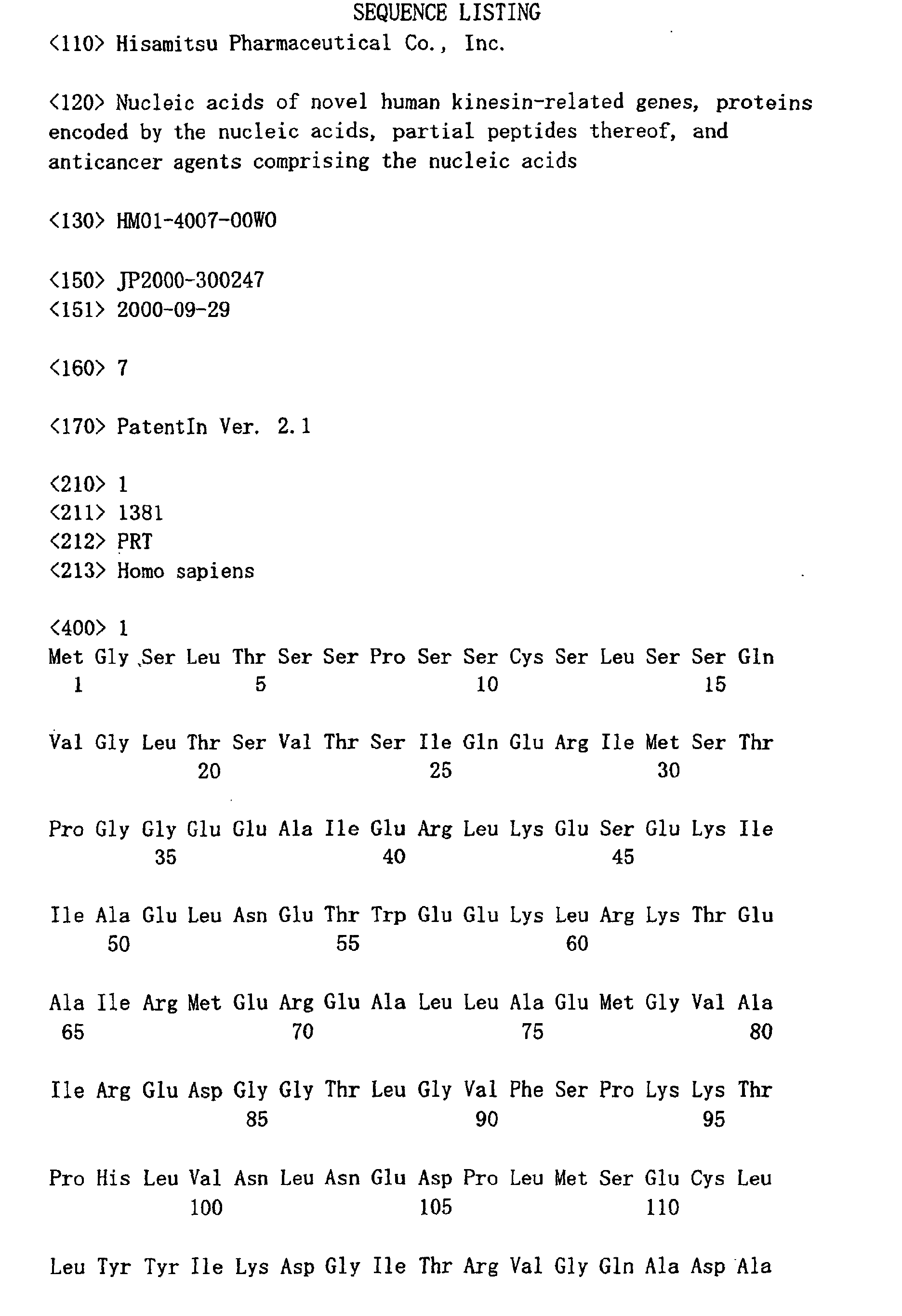
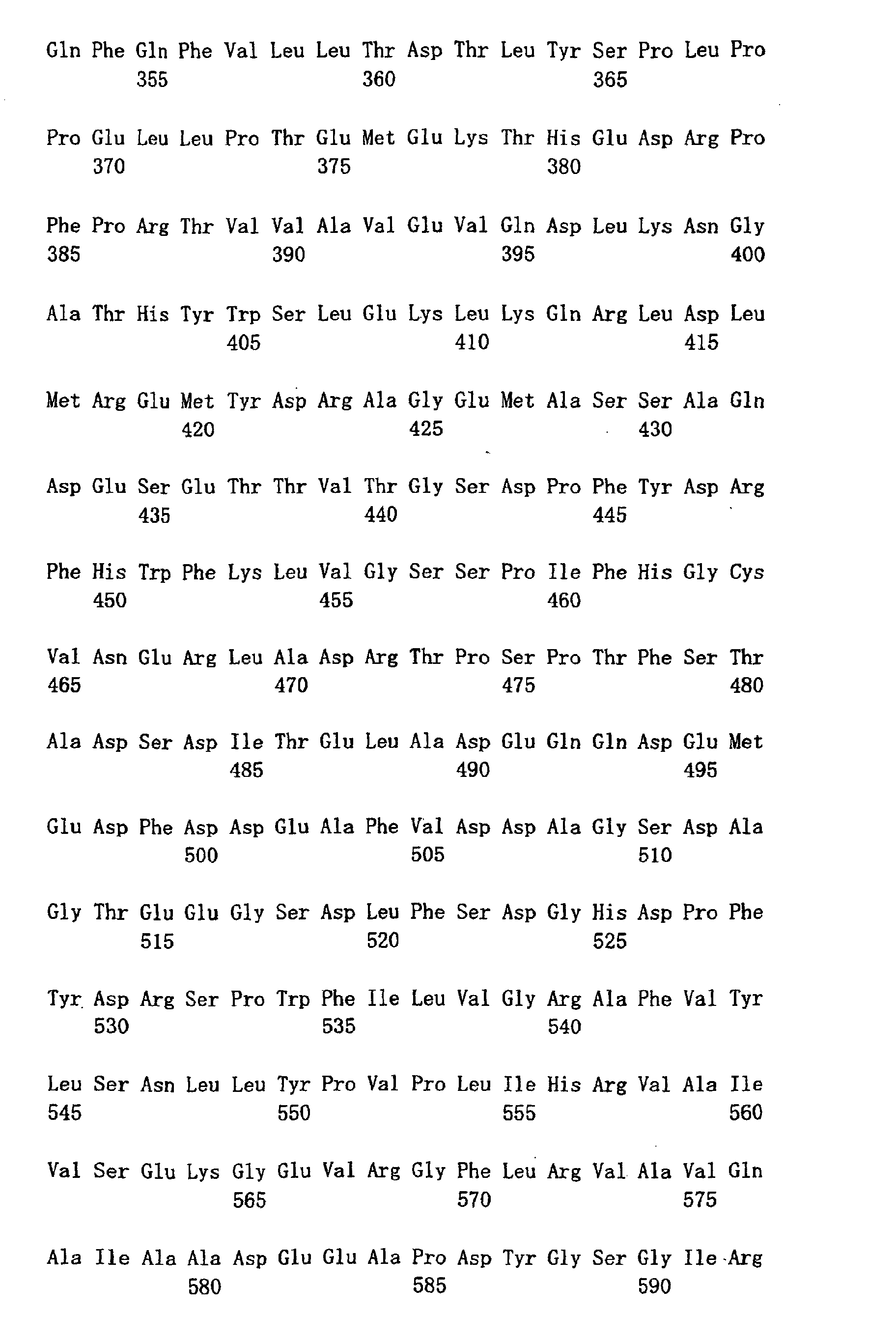
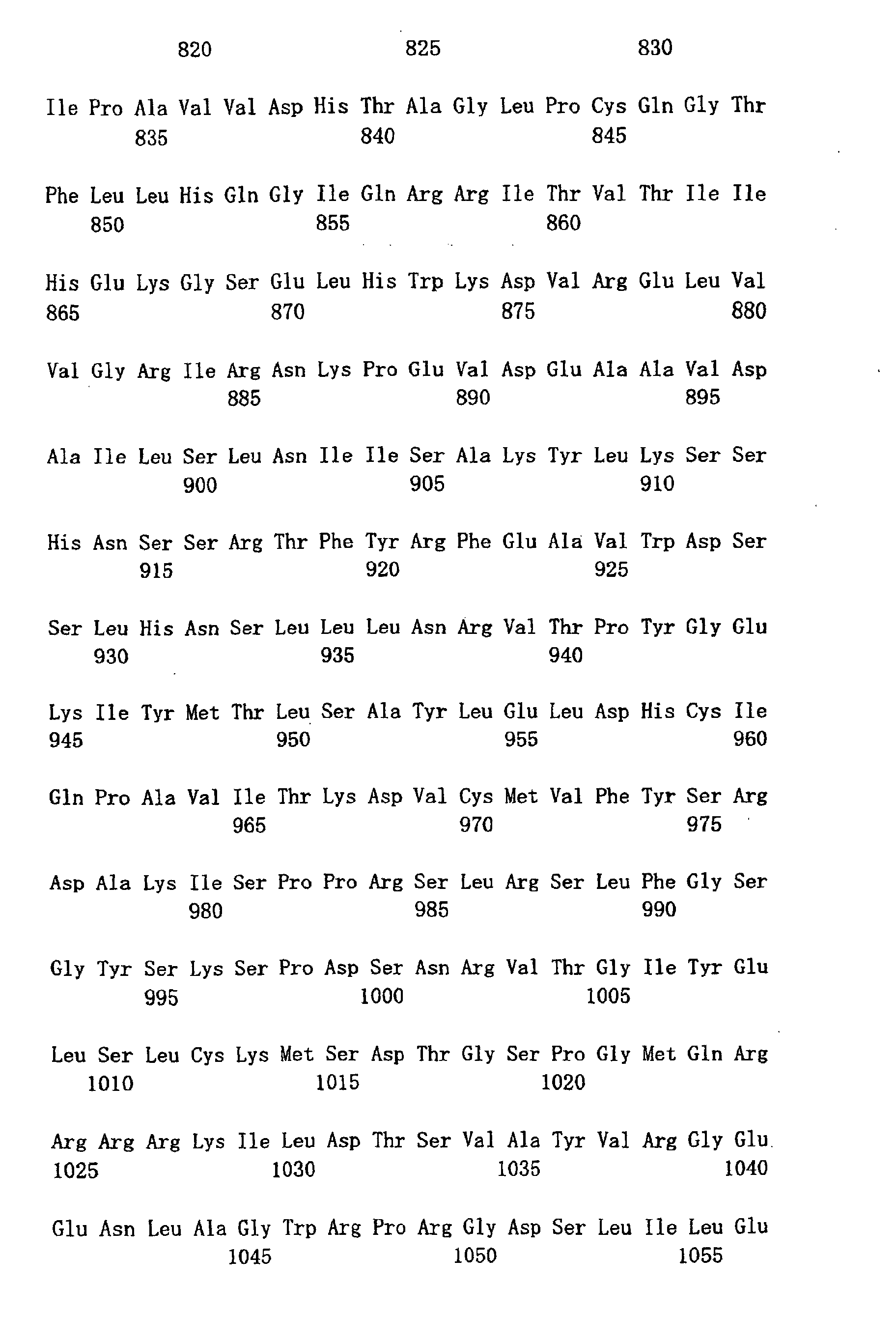
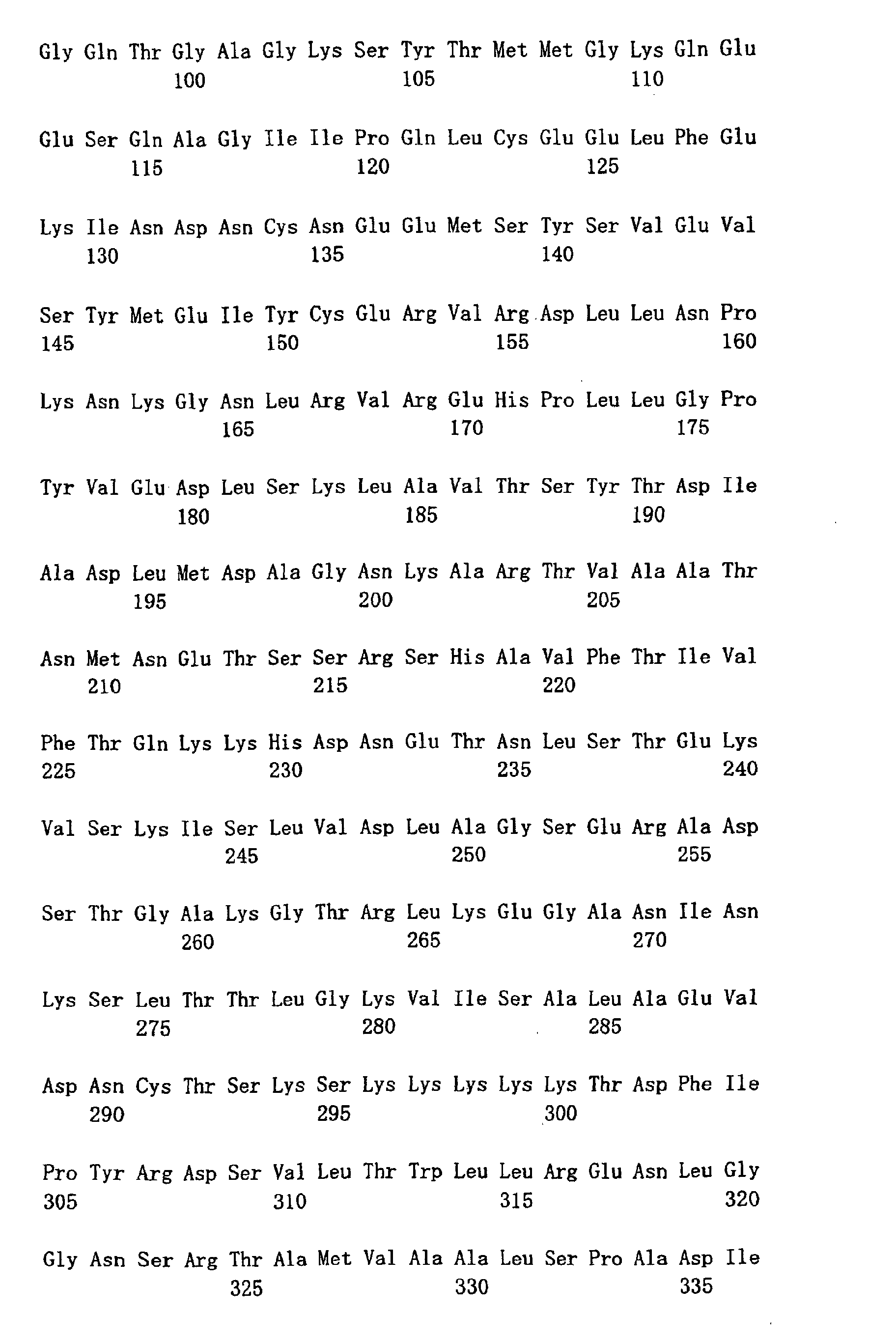
  • protein having the amino acid sequence set forth in SEQ ID NO:1 may refer not only to a protein encoded by the nucleic acid set forth in SEQ ID NO:3, but also to any protein with substantially equivalent activity.
  • a protein with substantially equivalent activity is one having an amino acid sequence substantially identical to the amino acid sequence set forth in SEQ ID NO:1.
  • the latter amino acid sequence may be, for example, an amino acid sequence derivable by the substitution or the deletion of one or more amino acids in the amino acid sequence set forth in SEQ ID NO:1, or by the addition of one or more amino acids to the amino acid sequence set forth in SEQ ID NO:1.
  • protein having the amino acid sequence set forth in SEQ ID NO:2 has an exactly corresponding meaning, and may refer not only to a protein encoded by the nucleic acid set forth in SEQ ID NO:4, but also to any protein with substantially equivalent activity.
  • nucleic acid having the base sequence set forth in SEQ ID NO:3 may also refer to nucleic acid having a base sequence encoding a protein with substantially equivalent activity to the protein encoded by the nucleic acid set forth in SEQ ID NO:3.
  • nucleic acid having the base sequence set forth in SEQ ID NO:4 has an exactly corresponding meaning, and may also refer to nucleic acid having a base sequence encoding a protein with substantially equivalent activity to the protein encoded by the nucleic acid set forth in SEQ ID NO:4.
  • Such nucleic acids and protein variants may be prepared according to techniques known to one skilled in the art such as site-specific mutation, based on the base sequence information of the aforementioned nucleic acids.
  • nucleic acid refers to DNA or RNA which encodes a protein as defined above or a partial peptide as a functionally effective fragment of the protein, which is complementary to a nucleic acid encoding such a protein or partial peptide, or which hybridizes to such nucleic acid under "stringent” conditions.
  • nucleic acid of this invention When the amount of expression of a nucleic acid of this invention is compared in neuroblastomas with favorable prognosis and with unfavorable prognosis, it is found to be expressed in greater amounts in neuroblastomas with favorable prognosis.
  • Introducing antisense (nucleic acid) (described below) to the nucleic acid into normal cells promotes anchorage-independent growth of the normal cells and increases tumorigenesis. For these reasons, the nucleic acids of the invention are thought to have at least the function of maintaining biological normality (for example, suppressing cell canceration).
  • nucleic acids of this invention including their fragments
  • proteins or partial peptides encoded by the nucleic acids hereunder also referred to collectively as “proteins of the invention”
  • antisense for the nucleic acids may be used for diagnosis, treatment and prevention of the different diseases mentioned below (particularly malignant tumors).
  • these molecules may be used for detecting diseases (such as neuroblastoma) or disorders wherein increase or decrease in expression of the proteins of the invention or their partial peptides plays a role, by any of various assay methods, for the purpose of prognosis prediction, diagnosis and monitoring.
  • diseases such as neuroblastoma
  • a nucleic acid of the invention When using a nucleic acid of the invention for diagnosis, it may be used as a hybridization probe or as a PCR primer for detection of enhanced gene expression in cell specimens to identify prognosis.
  • the enhanced gene expression can be examined by any method using as the probe a base sequence which hybridizes to any desired sequence among the base sequences disclosed by the invention.
  • a radioactive isotope-labeled probe is used for assay by Southern or Northern blotting. If the amount of nucleic acid hybridizing to the probe in the cell specimen is enhanced, diagnosis of favorable prognosis may be rendered.
  • RNA may be extracted from the specimen (cells) to be examined and the gene expression may be semi-quantitatively measured by RT-PCR.
  • nucleic acids, proteins and partial peptides of the invention are useful agents for treatment of diseases and disorders with which any of these are associated.
  • a pharmaceutical composition comprising a protein or partial peptide of the invention may be administered against a disease (particularly a malignant tumor) or disorder involving decreased expression of the protein or partial peptide.
  • a pharmaceutical composition comprising the entirety or part of a nucleic acid of the invention may also be administered.
  • a pharmaceutical composition comprising antisense, neutralizing antibodies or a competitive inhibitor for a protein or partial peptide of the invention may be administered against a disease or disorder involving increased expression of the protein or peptide, to either suppress expression or inhibit the function of the protein or peptide.
  • nucleic acid of the invention when used for gene therapy for the purpose described above, the nucleic acid may be inserted into a vector used for gene transfer and the inserted gene may be expressed in the body of the patient under any desired expression promoter for treatment of cancer, for example.
  • a pseudotyped virus vector wherein one or more of the constitutive proteins of the virus vector is replaced with a constitutive protein of a different type of virus, or wherein a portion of the nucleic acid sequence of the genetic information is replaced with a nucleic acid sequence of another type of virus.
  • a pseudotyped virus vector wherein Env protein, the coat protein of HIV, is replaced with VSV-G protein, the coat protein of Vesicular Stomatitis Virus (VSV) (Naldini L. et al., Science 272:263-267 (1996)).
  • Non-virus-derived vectors may also be used, such as calcium phosphate/nucleic acid complexes, liposomes, cationic lipid complexes, Sendai virus liposomes, polymer carriers with polycationic backbone, and the like.
  • the gene transfer system used may be electroporation, a gene gun, or the like.
  • the expression cassette may include, in addition to the nucleic acid of the invention, various sequences such as a promoter or enhancer for the gene transcription, a polyA signal, a marker gene for labeling and/or selecting the gene-inserted cells, a viral gene sequence for efficient insertion of the gene into the genomic DNA sequence of the cell, and a signal sequence for extracellular secretion and/or local intracellular accumulation of the drug-acting substance produced by the gene expression.
  • various sequences such as a promoter or enhancer for the gene transcription, a polyA signal, a marker gene for labeling and/or selecting the gene-inserted cells, a viral gene sequence for efficient insertion of the gene into the genomic DNA sequence of the cell, and a signal sequence for extracellular secretion and/or local intracellular accumulation of the drug-acting substance produced by the gene expression.
  • promoters sequences to be used in the expression cassette there may be mentioned promoters derived from such viruses as adenovirus, cytomegalovirus, human immunodeficiency virus, simian virus 40, Rous sarcoma virus, herpes simplex virus, mouse leukemia virus, Sindbis virus, hepatitis A virus, hepatitis B virus, hepatitis C virus, papillomavirus, human T cell leukemia virus, influenza virus, Japanese encephalitis virus, JC virus, parvovirus B19 and poliovirus, mammalian promoters such as albumin, SR ⁇ , heat shock protein and elongation factor promoters, chimeric promoters such as CAG promoter, and promoters whose activity is induced by tetracycline, steroids and the like.
  • viruses as adenovirus, cytomegalovirus, human immunodeficiency virus, simian virus 40, Rous sarcoma virus, herpes simple
  • nucleic acids, proteins and partial peptides of this invention are used for treatment in the form of appropriate pharmaceutical compositions.
  • the nucleic acids or the like are therefore prepared according to the formulation method described below, a preferred route of administration is established, and the dosage is determined so as to achieve the desired therapeutic effect.
  • a recombinant virus vector comprising a nucleic acid of the invention may be dissolved in an appropriate solvent such as water, physiological saline or an isotonized buffer solution to prepare a composition containing the nucleic acid of the invention.
  • a protein or partial peptide of the invention may be dissolved in an appropriate solvent such as water, physiological saline or an isotonized buffer solution to prepare a composition containing the protein or partial peptide of the invention.
  • Polyethylene glycol, glucose, various amino acids, collagen, albumin or the like may be added as protective materials for the preparation.
  • a pharmaceutical composition of this invention When a pharmaceutical composition of this invention is administered to the body, there are no particular limitations on the method of administration. It may be preferably carried out by injection intradermally, intramuscularly, intraperitoneally, intravenously, hypodermically or intranasally, for example.
  • the dosage of the pharmaceutical composition of the invention will depend on the route of administration and the condition, age, body weight, sex, etc. of the administered patient, and the optimum dosage for a given patient may be determined by the practicing physician. In the case of injection, for example, the dosage is preferably about 0.1 ⁇ g/kg to 1000 mg/kg per day, and more preferably about 1 ⁇ g/kg to 100 mg/kg per day.
  • nucleic acid, protein or partial peptide of the invention there are no particular limitations on the target disease or disorder to be treated with a nucleic acid, protein or partial peptide of the invention as a drug, so long as the function of the nucleic acid, etc. is directly or indirectly associated with the condition.
  • introduction of antisense to the nucleic acid of the invention into normal cells promotes anchorage-independent growth of the normal cells and increases tumorigenesis. Accordingly, the nucleic acids, proteins and partial peptides of the invention clearly suppress normal cell canceration, and are particularly useful against malignant tumors.
  • malignant tumors as targets of treatment by the nucleic acids, etc. of the invention, and there may be mentioned acute leukemia, chronic leukemia, lymphoma, fibrosarcoma, myxosarcoma, liposarcoma, hepatic cell carcinoma, choriocarcinoma, seminoma, embryonal carcinoma, Wilms tumor, bile duct carcinoma, testicular carcinoma, cervical carcinoma, lung carcinoma, small lung cell carcinoma, bladder carcinoma, epithelial carcinoma, glial cell carcinoma, medulloblastoma, epithelial cell carcinoma, angioblastoma, melanoma, neuroblastoma, retinoblastoma, chondrosarcoma, angiosarcoma, endothelial sarcoma, lymphangiosarcoma, colon carcinoma, breast carcinoma, ovarian carcinoma, prostate carcinoma, squamous cell carcinoma, adenocarcinoma, papillary carcinoma, papillar a
  • antisense nucleic acid is used which suppresses expression of a gene disclosed by the invention (including nucleic acids of the invention), to achieve a therapeutic or prophylactic effect.
  • antisense nucleic acid refers to a nucleic acid that can hybridize to a portion of RNA (preferably mRNA) of a gene of the invention due to a certain degree of sequence complementarity.
  • the antisense nucleic acid used may be in the form of a double-stranded or single-stranded, and either RNA or DNA (encoding the RNA) oligonucleotide, or a chimeric mixture thereof.
  • the antisense nucleic acid is not particularly limited, and may consist of an oligonucleotide of preferably 5-500 and more preferably 200-500 bases.
  • the oligonucleotide may also be modified in its base portion, ribose portion or phosphate backbone.
  • the antisense nucleic acid may be used in the form of a catalytic RNA, ribozyme, or chimeric RNA-DNA analog.
  • the antibodies may be prepared using the protein or partial peptide of the invention, or its fragment, analog or derivative, as an immunogen according to methods known to one skilled in the art.
  • antibodies there may be mentioned polyclonal antibodies, monoclonal antibodies, chimeric antibodies, single-stranded antibodies, Fab fragments, or antibodies derived from an FAB expression library.
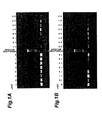
  • Fig. 1 confirmed enhanced expression of the KIF1b- ⁇ gene only in human neuroblastoma with favorable prognosis.
  • GSE refers to a short biologically active gene fragment encoding a dominantly acting peptide or inhibitory antisense RNA.
  • the method employing GSE as a tool in molecular oncology is known as the GSE method, and its concept and strategy is summarized in Roninson IB et al., Cancer Res. 55:4023-4028 (1995).
  • the GSE method may be applied for functional analysis of any gene in connection with tumor growth.
  • the technique involves gene transfer into a receiving cell using a retrovirus vector and packaging cell, and determining the presence or absence of tumorigenesis.
  • Fig. 2 shows an overview of this technique in sequence. More specifically, antisense to the gene of interest is inserted into the receiving cells, resulting in suppression of the gene function in the cells. Consequently, if the antisense-inserted cells acquire tumorigenic qualities, such as anchorage-independent growth, it may be concluded that the original function of the gene exerts negative control on tumorigenesis.
  • a retrovirus vector was constructed to express antisense to the KIF1b- ⁇ gene (KIF1b- ⁇ ) and the motor domain-lacking kinesin-related gene (also referred to as "KIFAS"), and was used for transfection of murine mammary gland cells.
  • KIF1b- ⁇ KIF1b- ⁇
  • KIFAS motor domain-lacking kinesin-related gene
  • the antisense sequence used is set forth in SEQ ID NO:7.
  • the antisense was ligated to a synthetic adapter, and the sense strand of the adapter was used as a PCR primer for PCR amplification.
  • the PCR-amplified DNA was cloned in a retrovirus vector pLXSN, and the obtained plasmid library was transfected into BOSC23 virus packaging cells.
  • Murine mammary gland cells non-tumorized, immortalized murine mammary gland cells: NMuMG
  • the infected murine mammary gland cells were cultured on soft agar medium (soft agarose gel) and the presence of anchorage-independent growth was observed.
  • As a (negative) control there were used murine mammary gland cells with a neomycin resistance gene inserted in the same manner.
  • the soft agar medium used was comprised of a lower layer (DMEM, 10% FCS, 0.6% agar) and an upper layer (DMEM, 10% FCS, 0.3% agar), and 5 x 10 4 of the cells were transferred to the soft agar medium (10 cm plate) and allowed to stand at 37°C for 6-7 weeks.
  • DMEM lower layer
  • DMEM 10% FCS, 0.3% agar
  • 5 x 10 4 of the cells were transferred to the soft agar medium (10 cm plate) and allowed to stand at 37°C for 6-7 weeks.
  • the observation results are shown in Fig. 3A (KIFAS-inserted cells) and Fig. 3B (negative control).
  • the full-length cDNA for the KIF1b- ⁇ gene (SEQ ID NO:4) was inserted into an adenovirus vector and used to infect NMuMG breast carcinoma cells.
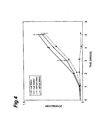
  • the cells were grown in medium and the growth curve was determined, as shown in Fig. 4.
  • As a control there were used NMuMG breast carcinoma cells infected with a vector containing only the LacZ promoter.
  • "MOI" represents the number of viruses for infection per cell.
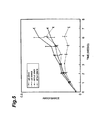
  • the full-length cDNA for the KIF1b- ⁇ gene was also inserted into an adenovirus vector and used to infect NB-C201 cells (a homozygous-deficient, or KIF1b- ⁇ gene-lacking neuroblastoma cell line). The cells were grown in medium and the growth curve was determined, as shown in Fig. 5.
  • Fig. 4 and Fig. 5 show that introduction of the KIF1b- ⁇ gene suppresses cancer cell growth.
  • a KIFAS expressing retrovirus vector Using the same method as described in Example 3, murine mammary gland cells infected with a KIFAS expressing retrovirus vector were transplanted under the femoral skin of a nude mouse, and the presence or absence of tumorigenesis was confirmed.
  • a (negative) control there were used murine mammary gland cells having a neomycin resistance gene inserted in the same manner as Example 3, and these were also transplanted under the skin of a nude mouse. The results are shown in Fig. 6A (KIFAS-inserted) and Fig. 6B (negative control).
  • the nucleic acids of this invention are DNA or RNA for novel kinesin-related genes with a motor domain, which elucidate the base sequence data of the kinesin-related genes.

Landscapes

  • Health & Medical Sciences (AREA)
  • Chemical & Material Sciences (AREA)
  • Organic Chemistry (AREA)
  • Life Sciences & Earth Sciences (AREA)
  • General Health & Medical Sciences (AREA)
  • Medicinal Chemistry (AREA)
  • Genetics & Genomics (AREA)
  • Molecular Biology (AREA)
  • Proteomics, Peptides & Aminoacids (AREA)
  • Biophysics (AREA)
  • Biochemistry (AREA)
  • Gastroenterology & Hepatology (AREA)
  • Zoology (AREA)
  • Toxicology (AREA)
  • Veterinary Medicine (AREA)
  • Public Health (AREA)
  • General Chemical & Material Sciences (AREA)
  • Animal Behavior & Ethology (AREA)
  • Chemical Kinetics & Catalysis (AREA)
  • Pharmacology & Pharmacy (AREA)
  • Nuclear Medicine, Radiotherapy & Molecular Imaging (AREA)
  • Medicines That Contain Protein Lipid Enzymes And Other Medicines (AREA)
  • Peptides Or Proteins (AREA)
  • Measuring Or Testing Involving Enzymes Or Micro-Organisms (AREA)
  • Pharmaceuticals Containing Other Organic And Inorganic Compounds (AREA)

Abstract

There are provided base sequence data for human kinesin-related genes with a motor domain, as well as information relating to the functions of the proteins encoded by the human kinesin-related gene and the motor domain-lacking human kinesin-related gene, which data may be utilized for diagnosis (for example, judging prognosis of neuroblastoma) and treatment (particularly as antisense nucleic acids for malignant tumors).

Description

Technical Field
This invention relates to novel human kinesin-related genes, to information on proteins encoded by the genes, and to their application for the treatment of or for diagnosing prognosis of cancer.
Background Art Substance transport in neurons
Different substances are transported in neuronal axons by specific systems, and such transport is classified as two types, either "fast transport" or "slow transport", depending on the speed. "Fast transport" includes both anterograde transport in the direction from the cell body to the axon terminal, and retrograde transport in the opposite direction. "Fast transport" is oriented movement, generally inside the cell, and it is produced by the motion of intracellular organelle-attached molecular motors (motor proteins) on microtubules.
Role of kinesin in axonal transport
Kinesin carries intracellular organelles in the plus end direction of microtubules, accomplishing fast anterograde transport in the neuronal axon. The kinesin molecule is a heterotetramer comprised of two 120 kDa heavy chains and two 64 kDa light chains. The N-terminal end of the heavy chain forms a globular head constituting a motor domain which binds with ATP and microtubules, and extends to form a rod-shaped stalk and fan-shaped tail, with a total length of approximately 80 nm (Hirokawa N. et al., Cell 56:867-878, (1989)). The light chain may be any of 3 molecular species, produced by splicing (Cyr JL. et al., Proc. Natl. Acad. Sci. USA 88:10114-10118, (1991)), and differ depending on the particular organ. The light chain attaches to the tail of the heavy chain, and binding to membrane organelles occurs at the heavy chain tail/light chain portions.
Kinesin-related genes
Several kinesin-related genes have recently been discovered, and their protein structures elucidated. These kinesin-related genes have highly conserved motor domain structures (Eyer J. et al., Nature 391:584-587 (1998)). Over 30 different kinesin-related proteins have been discovered in mice to date, all having motor structures (Gibbons IR. et al., Cell Motil. Cytoskel. 32:136-144 (1995)), and they are collectively known as the kinesin superfamily. A phylogenetic tree of the kinesin superfamily has recently been published (Hirokawa N. et al., Science 279:519-526 (1998)), and several of the members have been found to be involved in axonal transport.
The kinesin superfamily is being actively researched in mice, where it is designated as KIF (Aizawa H. et al., J. Cell Biol. 199:1287-1296 (1992)), and the members are largely divided into three groups based on the position of the motor domain (at the N-terminal end, at the central part or at the C-terminal end).
N-terminal motor kinesin superfamily
The N-terminal motor kinesin superfamily is further divided into the KHC, Unc104, RP85/95, BimC, MKLP1 and chromokinesin subfamilies. Among these, the BimC family has not been identified in mammals.
The KHC family includes three members identified in mice (KIF5B, KIF5A, KIF5C) and two in humans (HsuKHC, HsnKHC), while only one has been identified in invertebrates. This family can be divided into the ubiquitous members (KIF5B, HsuKHC) and nerve system-specific members (KIF5A, KIF5C, HsnKHC). HsnKHC is distributed throughout the nerve cell body and HsuKHC is found in the axon as well (Niclas J. et al., Neuron 12:1059-1072 (1994)).
The Unc104 family has not been identified in humans, but KIF1A and KIF1B are known in mice. KIF1A is a large 1695 amino acid, 200 kDa protein which works with a single head and carries synaptic vesicle precursors toward the plus microtubule end at a speed of 1.2-1.5 µm/s (Okada Y. et al., Cell 81:769-780 (1995)). Gene targeting results in serious kinesthetic impairment, and leads to death shortly after birth.
KIF1B is comprised of 1150 amino acids and also works with a single head, carrying mitochondria toward the plus microtubule end at a speed of 0.5 µm/s (Nangaku M. et al., Cell 79:1209-1220 (1994)).
Murine KIF3A and KIF3B of the RP85/95 family exist as a two-headed heterodimer, and form a heterotrimer in association with KAP3. These kinesin-related proteins are non-neuron-specific and carry membrane vesicles, which are larger than synapse vesicles, toward the microtubule plus end at a speed of 0.3 µm/s (Yamazaki H. et al., Proc. Natl. Acad. Sci. USA 93:8443-8448 (1996)).
One member of the MKLP family is known in humans (human MKLP). Human MKLP1 carries out functions for spindle elongation in anaphase B, formation of contractile rings and completion of cytoplasmic division.
Murine KIF4 of the chromokinesin family is comprised of 1231 amino acids, and has a length of 116 nm with two heads. It moves at a speed of 0.2 µm/s, transporting membrane vesicles to growth cones. In the adult body it is most abundant in the immune system organs (Shingyoji C. et al., Nature 393:711-714 (1998)).
Central motor kinesin superfamily
The central motor kinesin superfamily has not been identified in humans. Murine KIF2 is a two-headed 81 kDA protein which moves toward the microtubule plus end at a speed of 0.4 µm/s. This kinesin-related protein is non-neuron-specific, but is expressed in the juvenile nerve system where it carries out transport of membrane vesicles to growth cones (Noda Y. et al., J. Cell Biol. 129:157-167 (1995)).
C-terminal motor kinesin superfamily
The C-terminal motor kinesin superfamily has also not been identified in humans. Three different murine kinesins are known in this superfamily (KIFC1, KIFC2, KIFC3). KIFC2 is absent in the peripheral nerves, abundant in dendrites, and mainly carries multivesicular bodies toward the ends of dendrites (Saito N. et al., Neuron 18:425-438 (1997)).
Cloning of novel human kinesin-related gene fragments
cDNA for KIAA0591 (GenBank accession number: AB011163) has been cloned from a molecular weight fractionated human brain cDNA library (Nagase T. et al., DNA Res. 5:31-39 (1998)).
The cDNA consisted of 5368 bases and is a partial fragment of a novel gene which is highly homologous to the synapse vesicle transporter gene in human neuronal axons. Since the 5' end of the KIAA0591 cDNA lacked the transcription initiation codon and was shorter than the corresponding approximately 9.5 kb transcription product, this suggested the existence of longer full-length cDNA.
The present inventors, therefore, screened a human substantia nigra cDNA library in order to obtain the full-length cDNA including KIAA0591, but without succeeding in elucidating the full-length cDNA; and its function hence remains unknown.
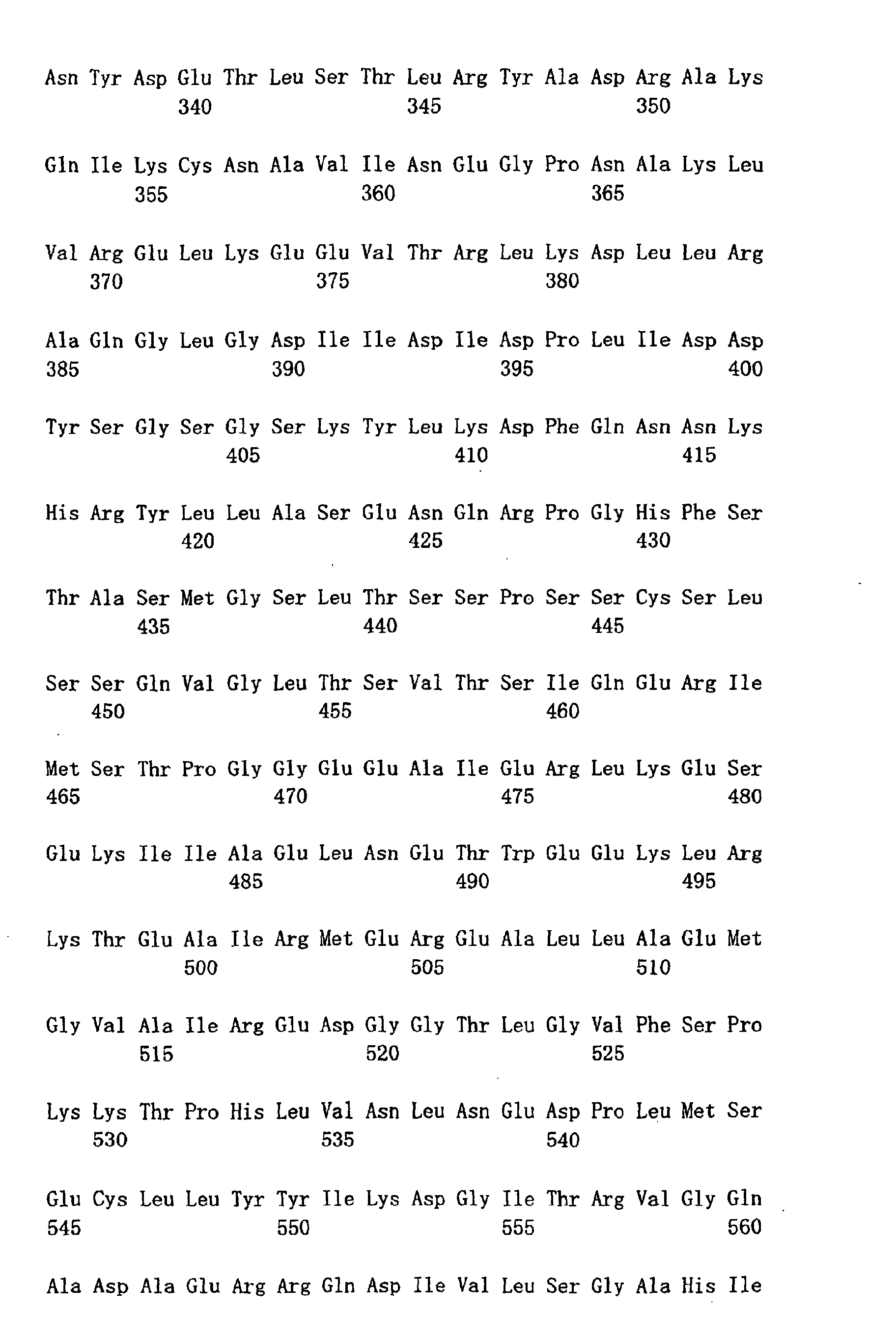
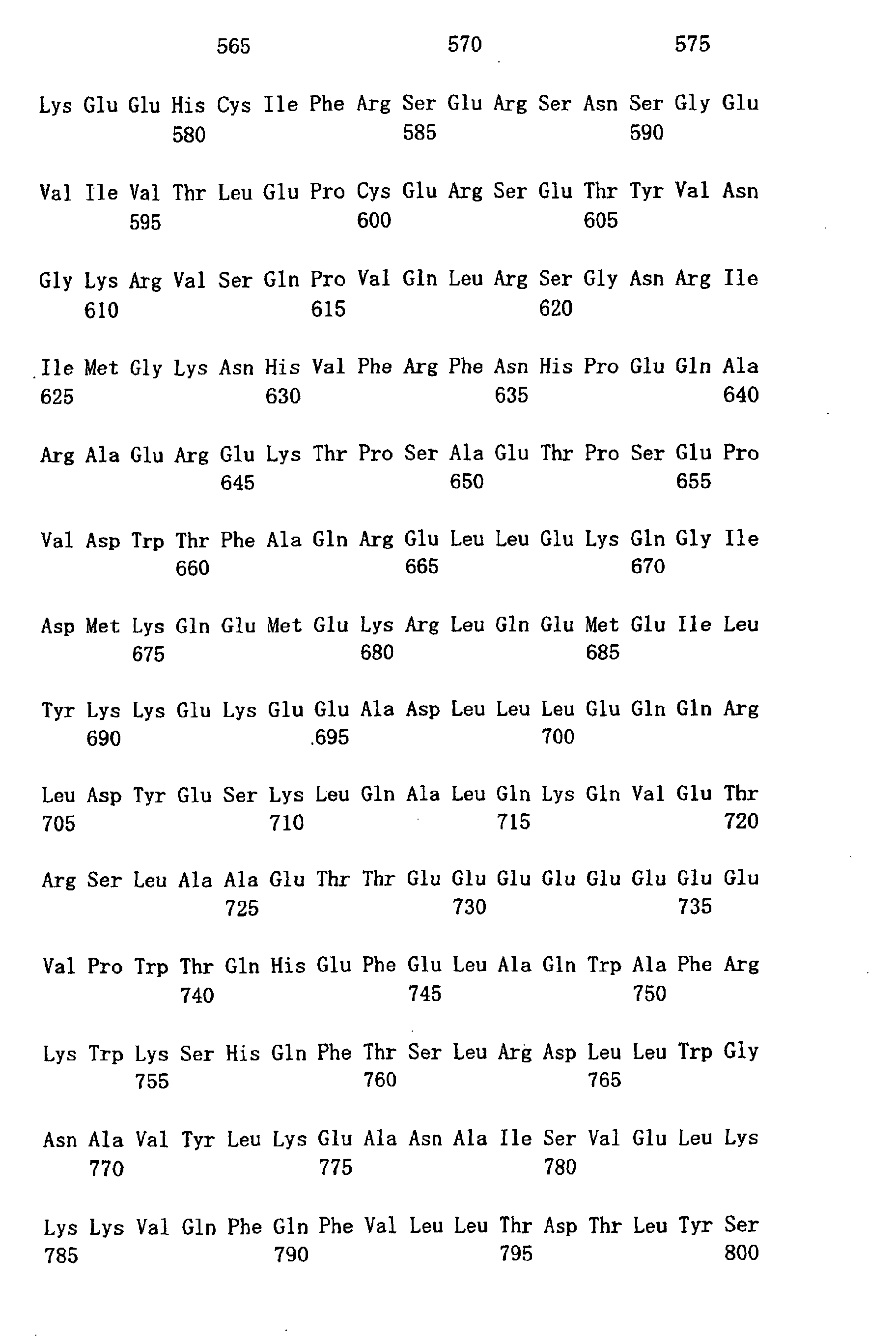
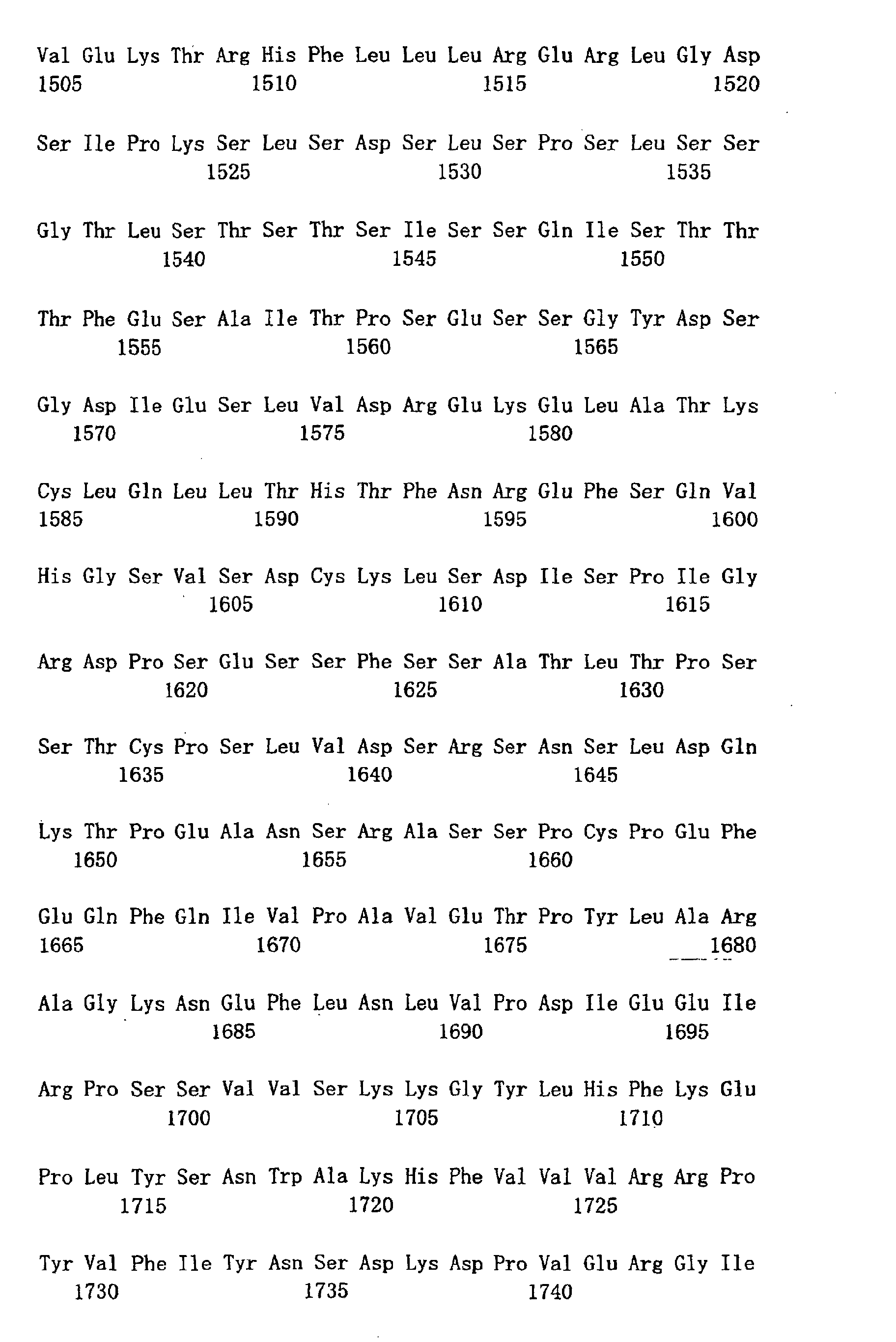
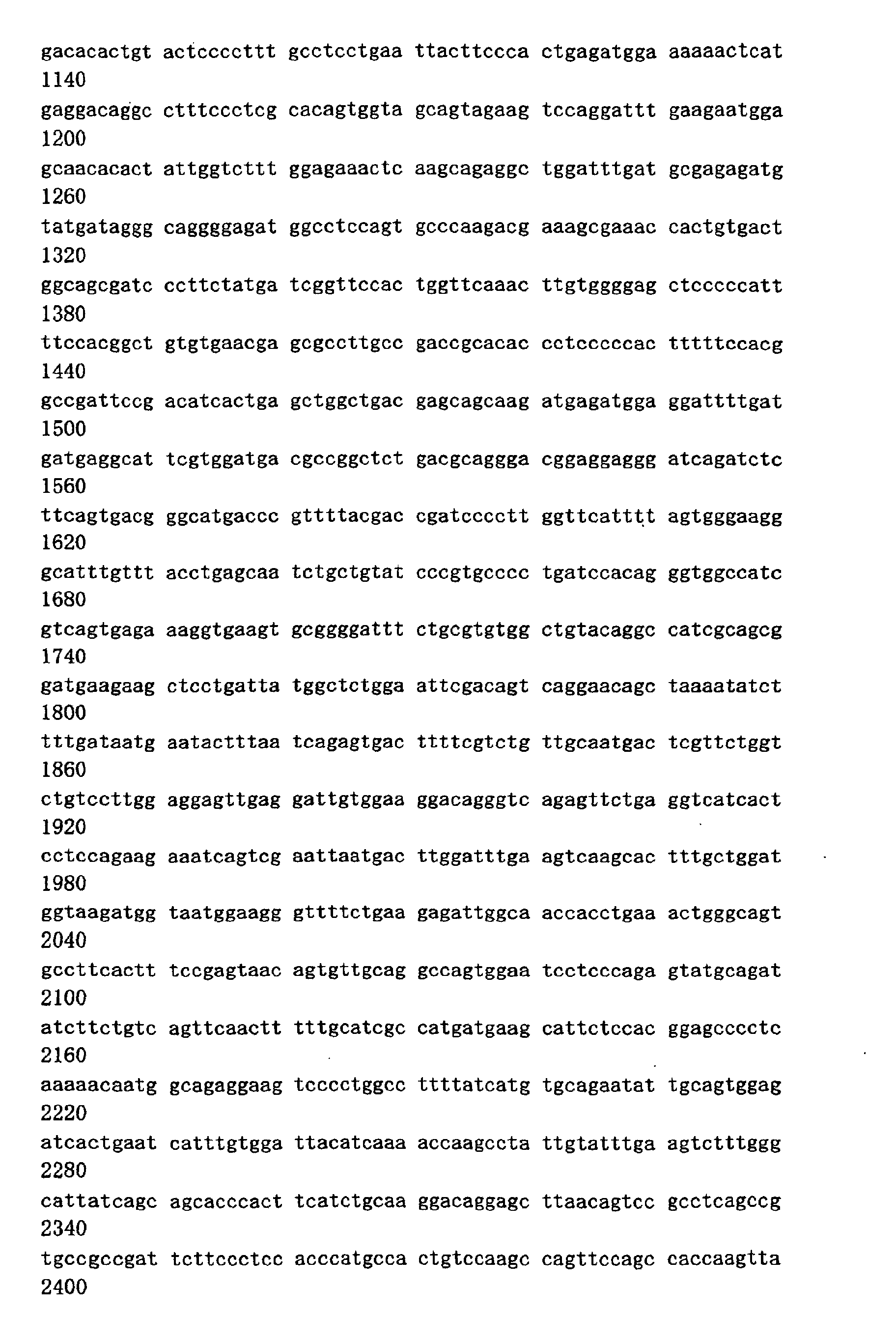
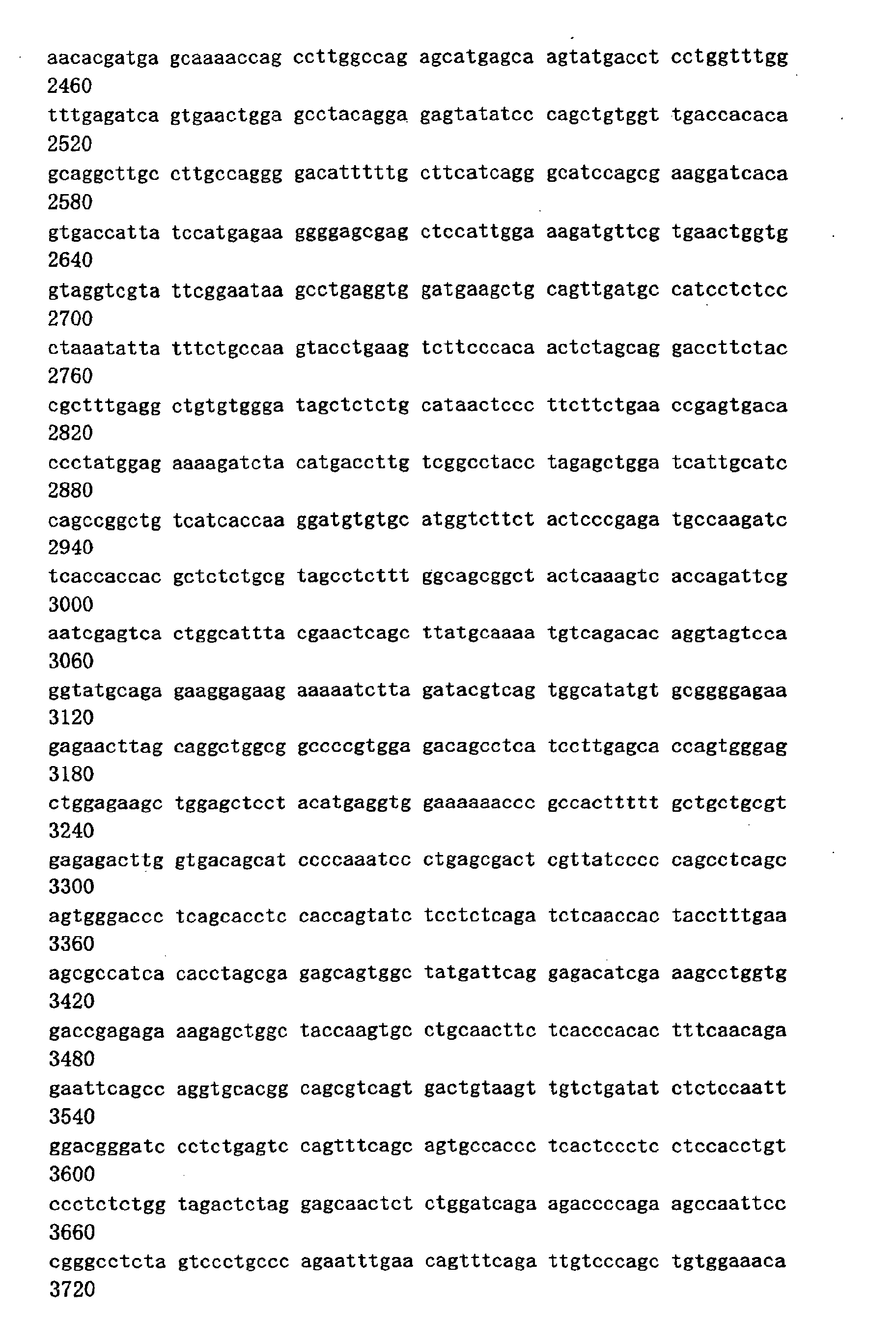
However, in the course of attempting to elucidate the full-length cDNA for KIAA0591, the present inventors also discovered a kinesin-related gene with no portion corresponding to the motor domain seen ubiquitously in the kinesin superfamily. The base sequence for the translation region of this gene is set forth in SEQ ID NO:3 in the Sequence Listing, and the protein translated from this region is set forth in SEQ ID NO:1, respectively.
It was also discovered that the gene is located at 36.2-36.3 on the small arm of human chromosome 1, which has been found to be often deficient in neuroblastomas and the like, that no mutations are found in the region encoding this gene in 8 types of neuroblastoma and 15 types of neuroblastoma-derived cell lines, and that it is expressed in a wide range of adult tissues and strongly expressed in the brain, kidney, skeletal muscle and pancrea, particularly in the brain of a human fetus (Nakagawara A. et al., International Journal of Oncology 16:907-916 (2000)).
Nevertheless, the function of the motor domain-lacking kinesin related gene and its protein had remained unclear.
Anchorage-independent growth and cancer
Normal adherent cells require adhesion to a firm anchor in order to proliferate. When cultured on a non-adherable substance surface, the cells will survive for an extended period but will not proliferate. For example, when normal cells are suspended in a non-anchoring semi-solid medium such as agarose gel, life-supporting metabolism is carried out but growth is suppressed. On the other hand, malignantly transformed cells such as cancer cells (or oncocytes) generally lack the requirement for adhesion, and thus form colonies and grow even when suspended in non-anchoring semi-solid medium. This characteristic is very strongly implicated in the tumor-forming ability of malignantly transformed cells. Specifically, cells that proliferate in an anchorage-independent manner are efficient at forming tumors when injected into animals (See Darnell et al., Molecular Cell Biology, Second Edition 24:963-967 (1993)).
Cell adhesion and cancer infiltration/metastasis
Cancer is malignant because of its ability to infiltrate and metastasize. While research toward elucidating the mechanism has been actively pursued to date, infiltration and metastasis are complex phenomena that occur as a result of conflict between cancer cells and host cells, and the complete picture is not yet fully understood. Hematogenous metastasis is established by infiltration of cancer cells from primary lesions, intravasation, transport, colonization, extravasation and initial stage growth. Lymphogenous metastasis, disseminated metastasis and intracanalicular metastasis are also thought to involve similar processes. Adhesion and dissociation between cancer cell/cancer cell, cancer cell/normal cell and cancer cell/extracellular matrix occur throughout all of these processes.
Because reduced adhesion between cancer cells is seen in many types of cancer, there has been a focus on its connection with the cells' capability of infiltration and metastasis. Cancer cells contact many and various normal cells during the course of their metastasis. The cancer cells adhering to endothelial cells include those encapsulated by endothelial cells, those that adhere to the endothelial cell apical surface and those that are covered by the epithelial cell basal surface, and these are closely connected with intravasation and extravasation of the cancer cells. Adhesion between cancer cells and the extracellular matrix is also ubiquitously observed. Other observations have suggested cell fusion and death of normal cells occurring after adhesion of cancer cells to normal cells (Turuo, T. et al.: "Ganten'i no Bunshikiko" [Molecular Mechanisms of Cancer Metastasis], Medical View Publishing (1993)).
As stated above, the function of the novel motor domain-lacking kinesin-related gene and its encoded protein previously discovered by the present inventors had remained unknown. In addition, despite prediction of the existence of the full-length cDNA including KIAA0591, it had not yet been confirmed or identified.
Disclosure of the Invention
This invention has been accomplished in light of the circumstances described above. An object of the invention is to provide base sequence data for a novel human kinesin-related gene having a motor domain. The invention further provides information relating to the function of the proteins encoded by the novel human kinesin-related gene with a motor domain and by the kinesin-related gene without a motor domain.
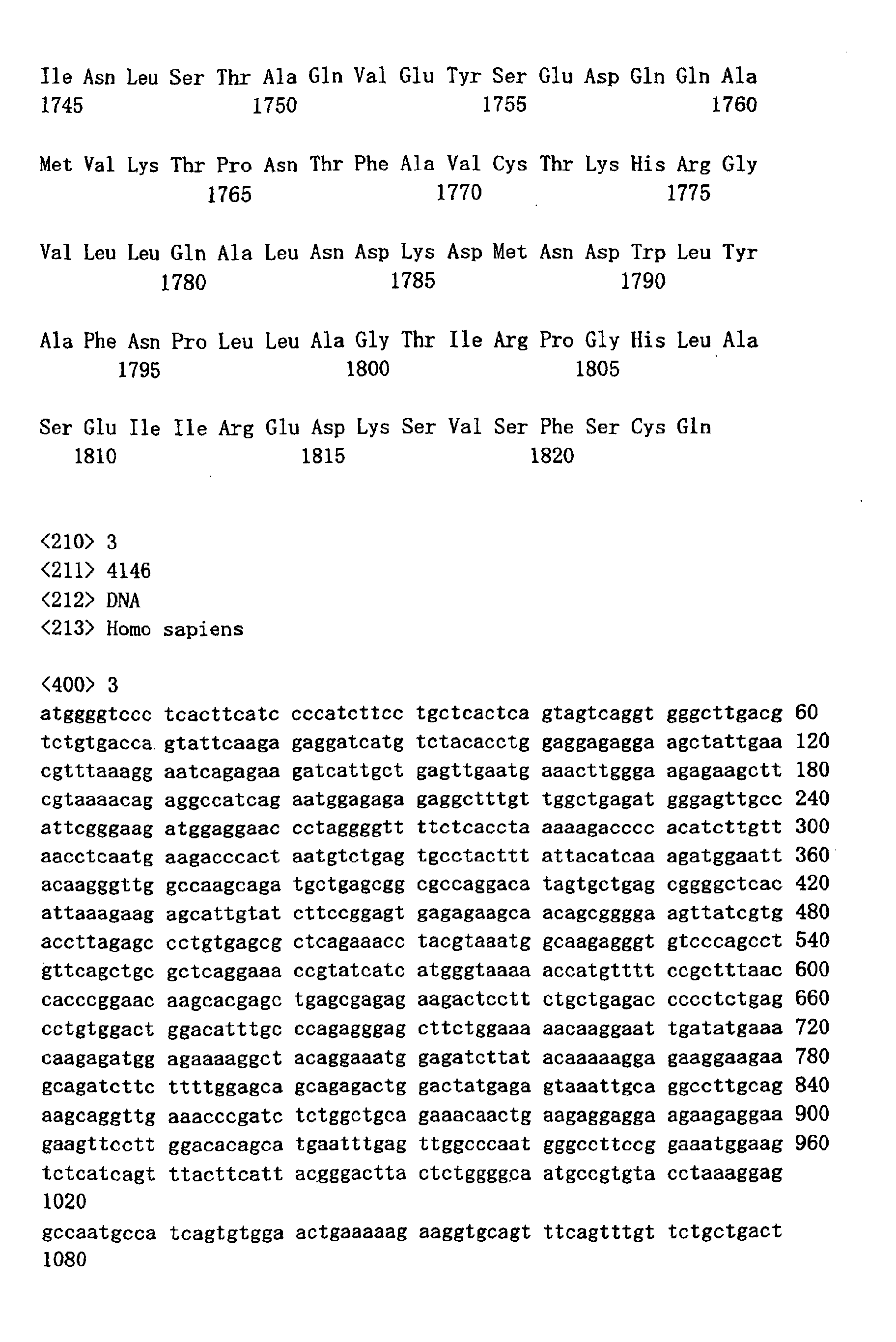
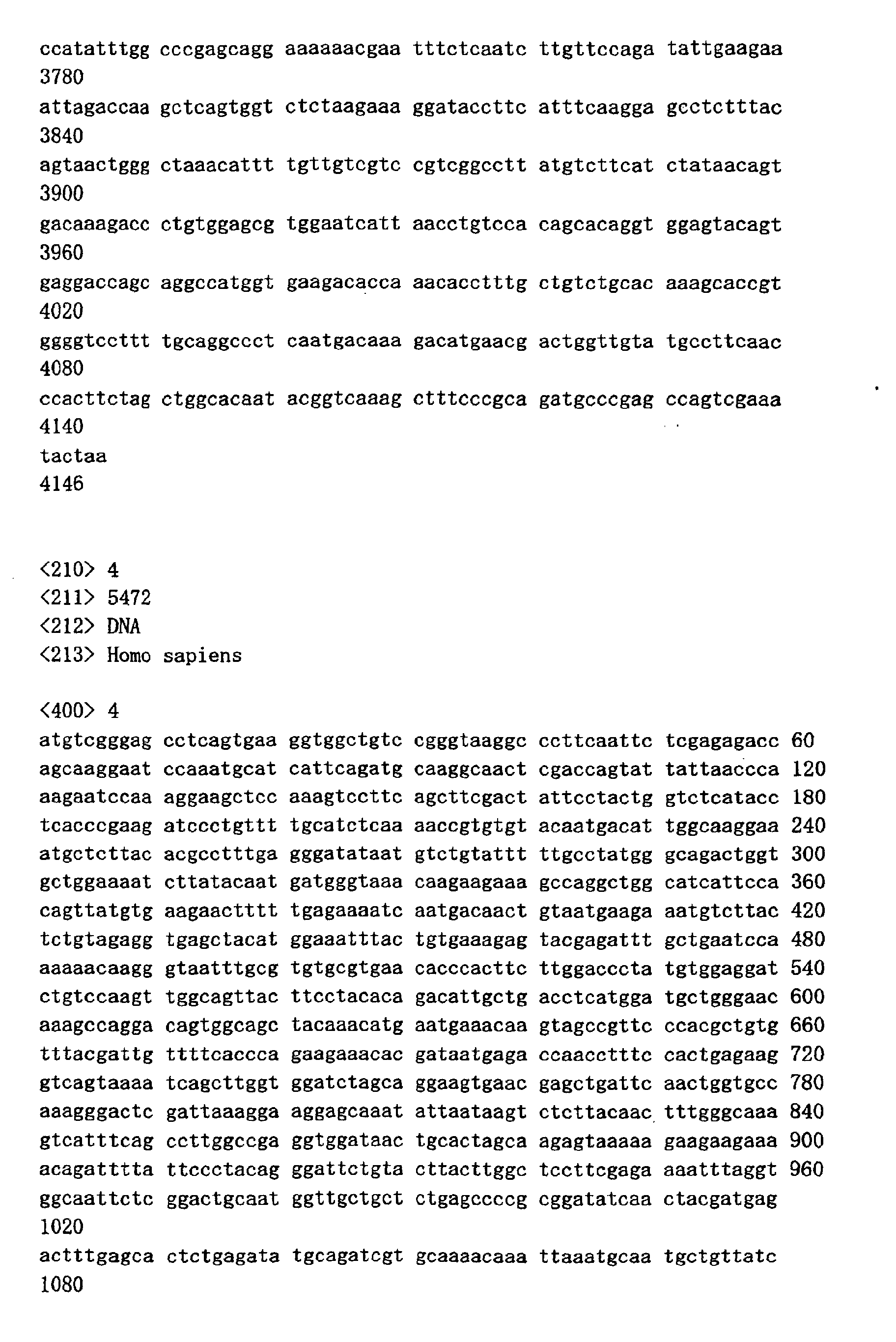
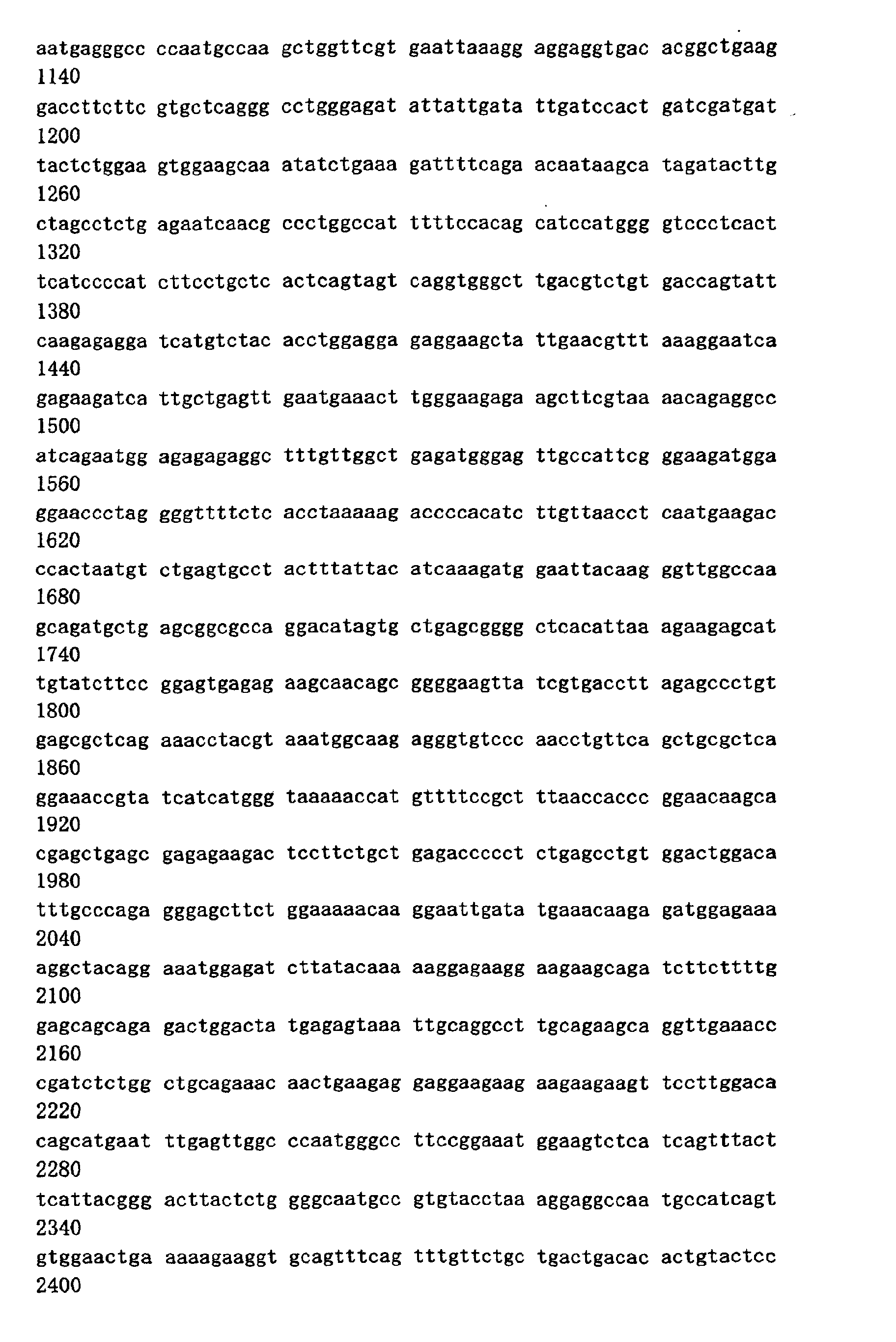
As a result of much diligent research, the present inventors have succeeded in cloning by Rapid Amplification of cDNA Ends (RACE) a novel gene having a longer 5' end than the kinesin-related gene without a motor domain (SEQ ID NO:3), and in sequencing the full-length cDNA of this kinesin-related gene with a motor domain. For convenience, the novel kinesin-related gene with a motor domain has been designated as KIF1b-β, and its cDNA sequence (base sequence) is set forth in SEQ ID NO:4 in the Sequence Listing.
The present inventors also discovered that expression of the KIF1b-β gene is enhanced only in neuroblastoma clinical tissue with favorable prognosis.
It was further discovered that suppressing expression of the KIF1b-β gene and the kinesin-related gene without a motor domain using antisense RNA allows anchorage-independent growth of normal cells which inherently grow only in an anchorage-dependent manner, or in other words, that these genes function to control canceration of normal cells.
The present inventors still further discovered that normal cells undergo tumorigenesis when expression of the KIF1b-β gene and the novel kinesin-related gene without a motor domain are suppressed using antisense RNA. Thus, loss of these genes facilitates tumorigenesis of normal cells.
In summary, this invention provides the nucleic acids and proteins or their pharmaceutically acceptable salts described in 1-12 below. The invention also provides the use of the nucleic acids and proteins or their pharmaceutically acceptable salts for treatment or diagnosis as described in 13-17 below.
  • 1. A nucleic acid having the base sequence set forth in SEQ ID NO:4 in the Sequence Listing.
  • 2. A nucleic acid having a base sequence encoding a protein comprising the amino acid sequence set forth in SEQ ID NO:2 in the Sequence Listing.
  • 3. A nucleic acid which is a fragment of the nucleic acid according to 1. or 2. above.
  • 4. A nucleic acid capable of hybridizing to the nucleic acid according to any one of 1. to 3. above.
  • 5. A nucleic acid having the base sequence set forth in SEQ ID NO:7 in the Sequence Listing.
  • 6. An antisense nucleic acid to a nucleic acid according to 1. or 2. above.
  • 7. An antisense nucleic acid having the base sequence set forth in SEQ ID NO:7 in the Sequence Listing, characterized by promoting anchorage-independent growth of normal cells upon introduction into normal cells.
  • 8. A protein having the amino acid sequence set forth in SEQ ID NO:2 in the Sequence Listing, or a pharmaceutically acceptable salt thereof.
  • 9. A protein having an amino acid sequence substantially identical to the amino acid sequence set forth in SEQ ID NO:2 in the Sequence Listing and whose absence induces tumorigenesis of normal cells, or a pharmaceutically acceptable salt thereof.
  • 10. The protein according to 9. above, characterized in that the amino acid sequence substantially identical to the amino acid sequence set forth in SEQ ID NO:2 in the Sequence Listing is an amino acid sequence derivable by the substitution or the deletion of one or more amino acids in the amino acid sequence set forth in SEQ ID NO:2 in the Sequence Listing, or by the addition of one or more amino acids to the amino acid sequence set forth in SEQ ID NO:2 in the Sequence Listing, or a pharmaceutically acceptable salt thereof.
  • 11. A protein having an the amino acid sequence derivable by the substitution or the deletion of one or more amino acids in the amino acid sequence set forth in SEQ ID NO:1, or by the addition of one or more amino acids to the amino acid sequence set forth in SEQ ID NO:1 and whose absence induces tumorigenesis of normal cells, or a pharmaceutically acceptable salt.
  • 12. A partial peptide which is a functionally effective fragment of a protein having the amino acid sequence set forth in SEQ ID NO:2 in the Sequence Listing, or a pharmaceutically acceptable salt thereof.
  • 13. An anticancer agent comprising a protein having the amino acid sequence set forth in SEQ ID NO:1 in the Sequence Listing, or a pharmaceutically acceptable salt thereof.
  • 14. An anticancer agent comprising a protein having the amino acid sequence set forth in SEQ ID NO:2 in the Sequence Listing, or a pharmaceutically acceptable salt thereof.
  • 15. An anticancer agent comprising a nucleic acid having the base sequence set forth in SEQ ID NO:3 in the Sequence Listing.
  • 16. An anticancer agent comprising a nucleic acid having the base sequence set forth in SEQ ID NO:4 in the Sequence Listing.
  • 17. A method for diagnosing prognosis of human neuroblastoma, characterized by detecting the nucleic acid according to 1. above or a fragment thereof in a neuroblastoma clinical tissue sample.
  • 18. A nucleic acid probe comprising the following nucleic acid (a) or (b):
  • (a) Nucleic acid having a portion of the base sequence set forth in SEQ ID NO:4 in the Sequence Listing, or a base sequence complementary thereto;
  • (b) Nucleic acid which hybridizes to nucleic acid having the base sequence set forth in SEQ ID NO:4 in the Sequence Listing under stringent conditions.
  • 19. A primer comprising the following DNA (a) or (b):
  • (a) DNA having a portion of the base sequence set forth in SEQ ID NO:4 in the Sequence Listing, or a base sequence complementary thereto;
  • (b) DNA which hybridizes to DNA having the base sequence set forth in SEQ ID NO:4 in the Sequence Listing under stringent conditions.
  • 20. A prognosis diagnosing kit for neuroblastoma comprising as an effective component thereof, the probe according to 18. above or the primer according to 19. above.
  • Brief Description of the Drawings
  • Fig. 1A and Fig. 1B are both representations corresponding to electrophoresis photographs showing the results of examining KIF1b-β gene expression in human neuroblastomas with favorable prognosis and with unfavorable prognosis, respectively, by semi-quantitative RT-PCR. In the figures, Lanes 1-16 represent clinical tissue samples of human neuroblastomas with favorable prognosis, and lanes 17-32 represent clinical tissue samples of human neuroblastomas with unfavorable prognosis.
  • Fig. 2 is a schematic drawing of the GSE method used in the Examples.
  • Fig. 3A is a representation corresponding to the photograph of soft agarose gel showing growth as a result of anchorage-independent growth of murine mammary gland cells having the KIF1b-β gene and a motor domain-lacking kinesin-related gene antisense (KIFAS) inserted therein using a retrovirus vector.
  • Fig. 3B is a representation corresponding to the photograph of soft agarose gel showing the results of anchorage-independent growth of murine mammary gland cells having a neomycin resistance gene inserted therein as a negative control using a retrovirus vector.
  • Fig. 4 is a graph showing growth curves for NMuMG cancer cells having the KIF1b-β gene inserted therein using an adenovirus vector.
  • Fig. 5 is a graph showing growth curves for NB-C201 cells having the KIF1b-β gene inserted therein using an adenovirus vector.
  • Fig. 6 is a representation corresponding to the photograph showing tumorigenesis as a result of nude mouse femoral subcutaneous transplantation of murine mammary gland cells having KIFAS inserted therein using a retrovirus vector.
  • Fig. 6B is a representation corresponding to the photograph showing the results of nude mouse femoral subcutaneous transplantation of murine mammary gland cells having a neomycin resistance gene inserted therein as a negative control.
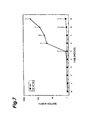
  • Fig. 7 is a graph of the mouse tumorigenesis shown in Fig. 6A, with tumor size (tumor volume) plotted against time.
  • Best Mode for Carrying Out the Invention
    The construction and preferred embodiments of the invention will now be described in detail.
    The phrase, "protein having the amino acid sequence set forth in SEQ ID NO:1" as used throughout the present specification may refer not only to a protein encoded by the nucleic acid set forth in SEQ ID NO:3, but also to any protein with substantially equivalent activity. A protein with substantially equivalent activity is one having an amino acid sequence substantially identical to the amino acid sequence set forth in SEQ ID NO:1. The latter amino acid sequence may be, for example, an amino acid sequence derivable by the substitution or the deletion of one or more amino acids in the amino acid sequence set forth in SEQ ID NO:1, or by the addition of one or more amino acids to the amino acid sequence set forth in SEQ ID NO:1. Also, the phrase "protein having the amino acid sequence set forth in SEQ ID NO:2" has an exactly corresponding meaning, and may refer not only to a protein encoded by the nucleic acid set forth in SEQ ID NO:4, but also to any protein with substantially equivalent activity.
    The phrase, "nucleic acid having the base sequence set forth in SEQ ID NO:3" as used throughout the present specification may also refer to nucleic acid having a base sequence encoding a protein with substantially equivalent activity to the protein encoded by the nucleic acid set forth in SEQ ID NO:3. The phrase "nucleic acid having the base sequence set forth in SEQ ID NO:4" has an exactly corresponding meaning, and may also refer to nucleic acid having a base sequence encoding a protein with substantially equivalent activity to the protein encoded by the nucleic acid set forth in SEQ ID NO:4. Such nucleic acids and protein variants may be prepared according to techniques known to one skilled in the art such as site-specific mutation, based on the base sequence information of the aforementioned nucleic acids.
    The term "nucleic acid" as used throughout the present specification refers to DNA or RNA which encodes a protein as defined above or a partial peptide as a functionally effective fragment of the protein, which is complementary to a nucleic acid encoding such a protein or partial peptide, or which hybridizes to such nucleic acid under "stringent" conditions.
    When the amount of expression of a nucleic acid of this invention is compared in neuroblastomas with favorable prognosis and with unfavorable prognosis, it is found to be expressed in greater amounts in neuroblastomas with favorable prognosis. Introducing antisense (nucleic acid) (described below) to the nucleic acid into normal cells promotes anchorage-independent growth of the normal cells and increases tumorigenesis. For these reasons, the nucleic acids of the invention are thought to have at least the function of maintaining biological normality (for example, suppressing cell canceration).
    Thus, the nucleic acids of this invention (including their fragments), the proteins or partial peptides encoded by the nucleic acids (hereunder also referred to collectively as "proteins of the invention") and antisense for the nucleic acids may be used for diagnosis, treatment and prevention of the different diseases mentioned below (particularly malignant tumors).
    (1) Usefulness for diagnosis
    The nucleic acids, proteins and partial peptides of this invention, as well as antibodies for the proteins and partial peptides, are useful for diagnosis.
    Specifically, these molecules may be used for detecting diseases (such as neuroblastoma) or disorders wherein increase or decrease in expression of the proteins of the invention or their partial peptides plays a role, by any of various assay methods, for the purpose of prognosis prediction, diagnosis and monitoring.
    There are no particular limitations on methods of immunoassay using antibodies for the proteins of the invention or their partial peptides, and there may be mentioned various competitive and non-competitive assay methods using such techniques as Western blotting, radioimmunoassay, ELISA, "sandwich" immunoassay, immunoprecipitation, precipitin reaction, gel differentiation precipitation reaction, immunodiffusion assay, agglutination assay, complement-binding assay, immunoradiometric assay, fluorescent immunoassay and protein A immunoassay.
    When using a nucleic acid of the invention for diagnosis, it may be used as a hybridization probe or as a PCR primer for detection of enhanced gene expression in cell specimens to identify prognosis. The enhanced gene expression can be examined by any method using as the probe a base sequence which hybridizes to any desired sequence among the base sequences disclosed by the invention. Preferably, a radioactive isotope-labeled probe is used for assay by Southern or Northern blotting. If the amount of nucleic acid hybridizing to the probe in the cell specimen is enhanced, diagnosis of favorable prognosis may be rendered. When the nucleic acid is used as a primer for PCR, RNA may be extracted from the specimen (cells) to be examined and the gene expression may be semi-quantitatively measured by RT-PCR.
    (2) Usefulness for treatment
    The nucleic acids, proteins and partial peptides of the invention are useful agents for treatment of diseases and disorders with which any of these are associated.
    According to one embodiment of the invention, a pharmaceutical composition comprising a protein or partial peptide of the invention may be administered against a disease (particularly a malignant tumor) or disorder involving decreased expression of the protein or partial peptide. A pharmaceutical composition comprising the entirety or part of a nucleic acid of the invention may also be administered.
    According to another embodiment, a pharmaceutical composition comprising antisense, neutralizing antibodies or a competitive inhibitor for a protein or partial peptide of the invention may be administered against a disease or disorder involving increased expression of the protein or peptide, to either suppress expression or inhibit the function of the protein or peptide.
    Particularly when a nucleic acid of the invention is used for gene therapy for the purpose described above, the nucleic acid may be inserted into a vector used for gene transfer and the inserted gene may be expressed in the body of the patient under any desired expression promoter for treatment of cancer, for example.
    The vector for insertion of the nucleic acid is preferably constructed based on a DNA or RNA virus. There are no particular limitations on the type of virus vector, and there may be used MoMLV vector, herpes virus vector, adenovirus vector, AAV vector, HIV vector, SIV vector, Sendai virus vector and the like.
    There may be used, alternatively, a pseudotyped virus vector wherein one or more of the constitutive proteins of the virus vector is replaced with a constitutive protein of a different type of virus, or wherein a portion of the nucleic acid sequence of the genetic information is replaced with a nucleic acid sequence of another type of virus. As an example there may be mentioned a pseudotyped virus vector wherein Env protein, the coat protein of HIV, is replaced with VSV-G protein, the coat protein of Vesicular Stomatitis Virus (VSV) (Naldini L. et al., Science 272:263-267 (1996)).
    So long as the virus has a therapeutic effect, it may be used as a virus vector even if its host range is other than human. Non-virus-derived vectors may also be used, such as calcium phosphate/nucleic acid complexes, liposomes, cationic lipid complexes, Sendai virus liposomes, polymer carriers with polycationic backbone, and the like. The gene transfer system used may be electroporation, a gene gun, or the like.
    An expression cassette including an expression promoter is preferred for gene expression of the nucleic acid of the invention inserted into the aforementioned vector.
    The expression cassette used may be of any type which allows expression of the gene in target cells, with no particular limitations. One skilled in the art can easily select such an expression cassette, which is preferably an expression cassette allowing gene expression in animal-derived cells, more preferably an expression cassette allowing gene expression in mammalian cells and even more preferably an expression cassette allowing gene expression in human cells.
    The expression cassette may include, in addition to the nucleic acid of the invention, various sequences such as a promoter or enhancer for the gene transcription, a polyA signal, a marker gene for labeling and/or selecting the gene-inserted cells, a viral gene sequence for efficient insertion of the gene into the genomic DNA sequence of the cell, and a signal sequence for extracellular secretion and/or local intracellular accumulation of the drug-acting substance produced by the gene expression.
    For promoters sequences to be used in the expression cassette, there may be mentioned promoters derived from such viruses as adenovirus, cytomegalovirus, human immunodeficiency virus, simian virus 40, Rous sarcoma virus, herpes simplex virus, mouse leukemia virus, sindbis virus, hepatitis A virus, hepatitis B virus, hepatitis C virus, papillomavirus, human T cell leukemia virus, influenza virus, Japanese encephalitis virus, JC virus, parvovirus B19 and poliovirus, mammalian promoters such as albumin, SRα, heat shock protein and elongation factor promoters, chimeric promoters such as CAG promoter, and promoters whose activity is induced by tetracycline, steroids and the like.
    (3) Pharmaceutical composition
    The nucleic acids, proteins and partial peptides of this invention are used for treatment in the form of appropriate pharmaceutical compositions. The nucleic acids or the like are therefore prepared according to the formulation method described below, a preferred route of administration is established, and the dosage is determined so as to achieve the desired therapeutic effect.
    (Formulation method)
    The pharmaceutical composition comprising a nucleic acid, protein or peptide according to the invention is not particularly limited, and a drug may be constructed by encapsulation in liposomes, fine particles or microcapsules, expression in recombinant cells, receptor-mediated ingestion, or as a retrovirus or a portion of another type of vector.
    More specifically, a recombinant virus vector comprising a nucleic acid of the invention may be dissolved in an appropriate solvent such as water, physiological saline or an isotonized buffer solution to prepare a composition containing the nucleic acid of the invention. Alternatively, a protein or partial peptide of the invention may be dissolved in an appropriate solvent such as water, physiological saline or an isotonized buffer solution to prepare a composition containing the protein or partial peptide of the invention. Polyethylene glycol, glucose, various amino acids, collagen, albumin or the like may be added as protective materials for the preparation.
    The pharmaceutical composition of the invention may be formulated in neutralized form or in the form of a pharmaceutically acceptable salt. Pharmaceutically acceptable salts include those formed with the free amino group of a protein or peptide, such as those derived from hydrochloric acid, phosphoric acid, acetic acid, oxalic acid, tartaric acid or the like, and those formed with the free carboxyl group of a protein or peptide, such as those derived from sodium, potassium, ammonium, calcium, iron (II) hydroxide, isopropylamine, triethylamine, 2-ethylaminoethanol, histidine, procaine or the like.
    (Administration method and dosage)
    When a pharmaceutical composition of this invention is administered to the body, there are no particular limitations on the method of administration. It may be preferably carried out by injection intradermally, intramuscularly, intraperitoneally, intravenously, hypodermically or intranasally, for example. The dosage of the pharmaceutical composition of the invention will depend on the route of administration and the condition, age, body weight, sex, etc. of the administered patient, and the optimum dosage for a given patient may be determined by the practicing physician. In the case of injection, for example, the dosage is preferably about 0.1 µg/kg to 1000 mg/kg per day, and more preferably about 1 µg/kg to 100 mg/kg per day.
    (4) Target diseases and disorders
    There are no particular limitations on the target disease or disorder to be treated with a nucleic acid, protein or partial peptide of the invention as a drug, so long as the function of the nucleic acid, etc. is directly or indirectly associated with the condition. As mentioned above, introduction of antisense to the nucleic acid of the invention into normal cells promotes anchorage-independent growth of the normal cells and increases tumorigenesis. Accordingly, the nucleic acids, proteins and partial peptides of the invention clearly suppress normal cell canceration, and are particularly useful against malignant tumors.
    There are no particular limitations on malignant tumors as targets of treatment by the nucleic acids, etc. of the invention, and there may be mentioned acute leukemia, chronic leukemia, lymphoma, fibrosarcoma, myxosarcoma, liposarcoma, hepatic cell carcinoma, choriocarcinoma, seminoma, embryonal carcinoma, Wilms tumor, bile duct carcinoma, testicular carcinoma, cervical carcinoma, lung carcinoma, small lung cell carcinoma, bladder carcinoma, epithelial carcinoma, glial cell carcinoma, medulloblastoma, epithelial cell carcinoma, angioblastoma, melanoma, neuroblastoma, retinoblastoma, chondrosarcoma, angiosarcoma, endothelial sarcoma, lymphangiosarcoma, colon carcinoma, breast carcinoma, ovarian carcinoma, prostate carcinoma, squamous cell carcinoma, adenocarcinoma, papillary carcinoma, papillar adenoma, cystadenocarcinoma and renal cell carcinoma. When the nucleic acids, etc. of the invention are used for treatment of malignant tumors, their function allows them to also be used as drugs to suppress metastasis of malignant tumors.
    (5) Antisense (nucleic acid)
    According to another embodiment of this invention, antisense nucleic acid is used which suppresses expression of a gene disclosed by the invention (including nucleic acids of the invention), to achieve a therapeutic or prophylactic effect. Here, "antisense nucleic acid" refers to a nucleic acid that can hybridize to a portion of RNA (preferably mRNA) of a gene of the invention due to a certain degree of sequence complementarity.
    The antisense nucleic acid used may be in the form of a double-stranded or single-stranded, and either RNA or DNA (encoding the RNA) oligonucleotide, or a chimeric mixture thereof. The antisense nucleic acid is not particularly limited, and may consist of an oligonucleotide of preferably 5-500 and more preferably 200-500 bases. The oligonucleotide may also be modified in its base portion, ribose portion or phosphate backbone.
    As a specific embodiment, the antisense nucleic acid may be used in the form of a catalytic RNA, ribozyme, or chimeric RNA-DNA analog.
    The antisense nucleic acid may be synthesized by a method known to one skilled in the art using, for example, an automated DNA synthesizer.
    When the antisense nucleic acid is used for the purpose of treatment or prevention, it may be administered to a patient as a pharmaceutical composition in the same manner described above for other nucleic acids, but most preferably, it is directly administered to specific cells (for example, cancer cells). Cells may also be transformed with a vector comprising DNA encoding RNA antisense nucleic acid, or transfected, to produce the antisense nucleic acid in the cells by transcription.
    (6) Antibodies
    According to yet another embodiment of the invention, antibodies against a protein or partial peptide of the invention, or fragments thereof including the binding domains, may be used as therapeutic or diagnostic agents. Specifically, for use as a therapeutic agent, an antibody may be bound to a specific region of a protein of the invention to act as an antagonist or agonist. For use as a diagnostic agent, antibodies may be used in various types of immunoassays for detection and measurement of a protein of the invention, as mentioned above.
    The antibodies may be prepared using the protein or partial peptide of the invention, or its fragment, analog or derivative, as an immunogen according to methods known to one skilled in the art. For such antibodies, there may be mentioned polyclonal antibodies, monoclonal antibodies, chimeric antibodies, single-stranded antibodies, Fab fragments, or antibodies derived from an FAB expression library.
    (7) Knockout animals
    According to still another embodiment of the invention, there may be provided a nucleic acid sequence which knocks out expression of a gene of the invention, and knockout animals having that sequence inserted therein as a transgene. Cancer model animals may be constructed based on this information.
    The invention will now be described in greater detail by way of examples; however, these examples are in no way limitative on the invention.
    Examples (Example 1) Cloning of full-length cDNA
    Working from the amino acid sequence for the motor domain-lacking kinesin-related protein (SEQ ID NO:1), the 5' end was cloned from a human embryonic brain library (Clontech) using a SMART RACE cDNA Amplification Kit (Clontech). The base sequence of the cloned DNA fragment was determined according to an established protocol (Sanger F. et al., Proc. Natl. Acad. Sci. USA 74:5463-5467 (1977)). The entire base sequences of both strands were analyzed.
    The analysis results identified a DNA fragment for the known motor domain-lacking kinesin-related protein plus an additional 1390 base pairs at the 5' end. A search for the translation region of the fragment revealed an 85 base pair 5' end non-translation region, a 5472 base pair translation region and a 1353 base pair 3' non-translation region. The translated protein consisted of 1824 amino acids and had a molecular weight of 205,065 daltons. The amino acid sequence of the translated protein is set forth in SEQ ID NO:2, and the base sequence of the translation region is set forth in SEQ ID NO:4. This novel kinesin-related protein was designated as KIF1b-β. The base sequence set forth in SEQ ID NO:4 has been registered at DDBJ, GenBank and EMBL (Accession No.: AB017133).
    (Example 2) Measurement of gene expression in human neuroblastomas with good and unfavorable prognosis by semi-quantitative PCR
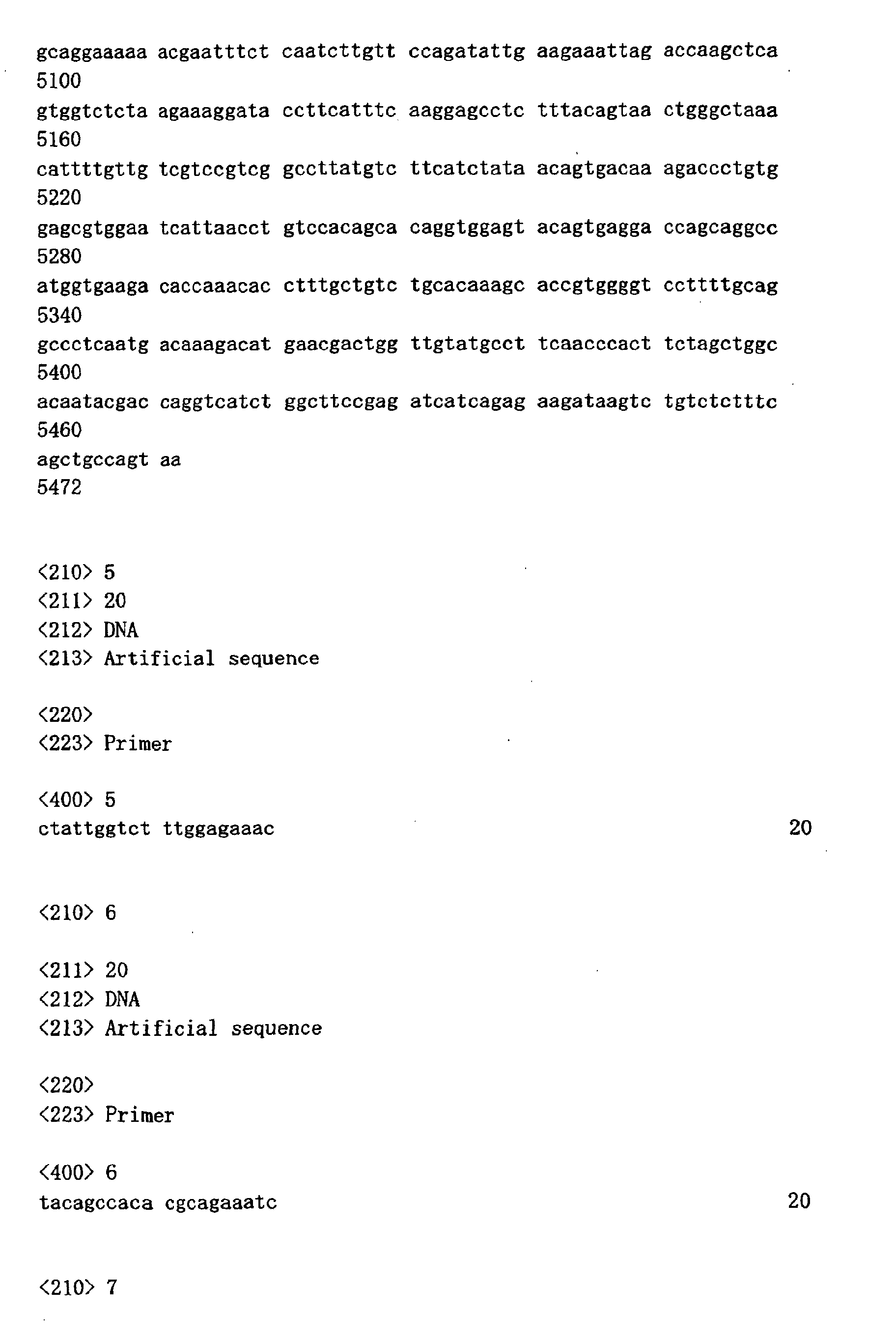
    PCR primers were synthesized from portions of the KIF1b-β gene and used for comparative measurement of expression in neuroblastoma clinical tissue samples with favorable prognosis and unfavorable prognosis. The sequences of the synthesized PCR primers are set forth in SEQ ID NO:5 (forward primer) and SEQ ID NO:6 (reverse primer) . mRNA was extracted from human neuroblastoma clinical tissue samples and subjected to PCR reaction using rTaq (Takara Shuzo). Specifically, 5 µl of sterile distilled water, 2 µl of the mRNA, 1 µl of 10 x rTaq buffer, 1 µl of 2 mM dNTPs, 0.5 µl each of the synthesized primer set and 0.5 µl of rTaq were combined. The mixture was denatured at 95°C for 2 minutes and then a cycle of 95°C for 15 seconds, 63°C for 15 seconds and 72°C for 20 seconds was repeated for 35 cycles, followed by 6 minutes of standing at 72°C to complete the PCR reaction. The reaction solution was electrophoresed on 2.5% agarose gel. The results are shown in Fig. 1A and Fig. 1B.
    The results in Fig. 1 confirmed enhanced expression of the KIF1b-β gene only in human neuroblastoma with favorable prognosis.
    (Example 3) Studies on effects of KIF1b-β gene and motor domain-lacking kinesin-related gene on tumor growth by Genetic Suppressor Element (GSE) method (1)
    "GSE" refers to a short biologically active gene fragment encoding a dominantly acting peptide or inhibitory antisense RNA. The method employing GSE as a tool in molecular oncology is known as the GSE method, and its concept and strategy is summarized in Roninson IB et al., Cancer Res. 55:4023-4028 (1995). Specifically, the GSE method may be applied for functional analysis of any gene in connection with tumor growth. The technique involves gene transfer into a receiving cell using a retrovirus vector and packaging cell, and determining the presence or absence of tumorigenesis. Fig. 2 shows an overview of this technique in sequence. More specifically, antisense to the gene of interest is inserted into the receiving cells, resulting in suppression of the gene function in the cells. Consequently, if the antisense-inserted cells acquire tumorigenic qualities, such as anchorage-independent growth, it may be concluded that the original function of the gene exerts negative control on tumorigenesis.
    Following the protocol of Garkavtsev et al. (Garkavtsev I. et al., Nature Genet. 4, 415-420 (1996)), a retrovirus vector was constructed to express antisense to the KIF1b-β gene (KIF1b-β) and the motor domain-lacking kinesin-related gene (also referred to as "KIFAS"), and was used for transfection of murine mammary gland cells. The antisense sequence used is set forth in SEQ ID NO:7. The antisense was ligated to a synthetic adapter, and the sense strand of the adapter was used as a PCR primer for PCR amplification. The PCR-amplified DNA was cloned in a retrovirus vector pLXSN, and the obtained plasmid library was transfected into BOSC23 virus packaging cells. Murine mammary gland cells (non-tumorized, immortalized murine mammary gland cells: NMuMG) were infected with the retrovirus-containing culture supernatant liquid. The infected murine mammary gland cells were cultured on soft agar medium (soft agarose gel) and the presence of anchorage-independent growth was observed. As a (negative) control there were used murine mammary gland cells with a neomycin resistance gene inserted in the same manner. The soft agar medium used was comprised of a lower layer (DMEM, 10% FCS, 0.6% agar) and an upper layer (DMEM, 10% FCS, 0.3% agar), and 5 x 10⁴ of the cells were transferred to the soft agar medium (10 cm plate) and allowed to stand at 37°C for 6-7 weeks. The observation results are shown in Fig. 3A (KIFAS-inserted cells) and Fig. 3B (negative control).
    As shown by the results in Fig. 3A and Fig. 3B, marked anchorage-independent growth was observed in the KIFAS-transformed murine mammary gland cells as compared to the negative control.
    In the same manner as above, the full-length cDNA for the KIF1b-β gene (SEQ ID NO:4) was inserted into an adenovirus vector and used to infect NMuMG breast carcinoma cells. The cells were grown in medium and the growth curve was determined, as shown in Fig. 4. As a control, there were used NMuMG breast carcinoma cells infected with a vector containing only the LacZ promoter. In the drawing, "MOI" represents the number of viruses for infection per cell.
    The full-length cDNA for the KIF1b-β gene was also inserted into an adenovirus vector and used to infect NB-C201 cells (a homozygous-deficient, or KIF1b-β gene-lacking neuroblastoma cell line). The cells were grown in medium and the growth curve was determined, as shown in Fig. 5.
    Both Fig. 4 and Fig. 5 show that introduction of the KIF1b-β gene suppresses cancer cell growth.
    (Example 4) Studies on effects of KIF1b-β gene and motor domain-lacking kinesin-related gene on tumor growth by GSE method (2)
    Using the same method as described in Example 3, murine mammary gland cells infected with a KIFAS expressing retrovirus vector were transplanted under the femoral skin of a nude mouse, and the presence or absence of tumorigenesis was confirmed. As a (negative) control, there were used murine mammary gland cells having a neomycin resistance gene inserted in the same manner as Example 3, and these were also transplanted under the skin of a nude mouse. The results are shown in Fig. 6A (KIFAS-inserted) and Fig. 6B (negative control).
    As shown by the results in Fig. 6A and Fig. 6B, marked tumorigenesis was observed when the KIFAS-transformed murine mammary gland cells were transplanted under the femoral skin of the nude mouse, as compared to the negative control.
    KIFAS-transformed murine mammary gland cells and neomycin resistance gene-inserted murine mammary gland cells were also transplanted into 5 nude mice each of a treated group and a control group, and the changes in the sizes of the formed tumors were measured. The results are shown in Fig. 7, which clearly shows an increase in tumor size during the 5 weeks after transplantation in the treated group.
    Industrial Applicability
    The nucleic acids of this invention are DNA or RNA for novel kinesin-related genes with a motor domain, which elucidate the base sequence data of the kinesin-related genes.
    The nucleic acids of this invention or their fragments may be used as probes or primers for various types of hybridization or PCR toward detection of expression of the kinesin-related genes in tissues or cells and analysis of their structures and functions. The kinesin proteins encoded by the genes may be produced by genetic engineering.
    Moreover, since expression of the nucleic acids of the invention is enhanced only in neuroblastoma clinical tissue with favorable prognosis, the prognosis of neuroblastoma may be diagnosed based on their level of expression.
    It was confirmed that suppressing expression of the KIF1b-β gene and the motor domain-lacking kinesin-related gene with antisense nucleic acids according to the invention promotes anchorage-independent growth of normal cells which inherently only grow in an anchorage-dependent manner. That is, it was demonstrated that the genes function to suppress canceration of normal cells. It was also further discovered that introducing the KIF1b-β gene into cancer cells suppress growth of the cells. Based on these findings, the nucleic acids, proteins, etc. of this invention may be used as anticancer agents for treatment of malignant tumors, for the purpose of suppressing canceration of cells.
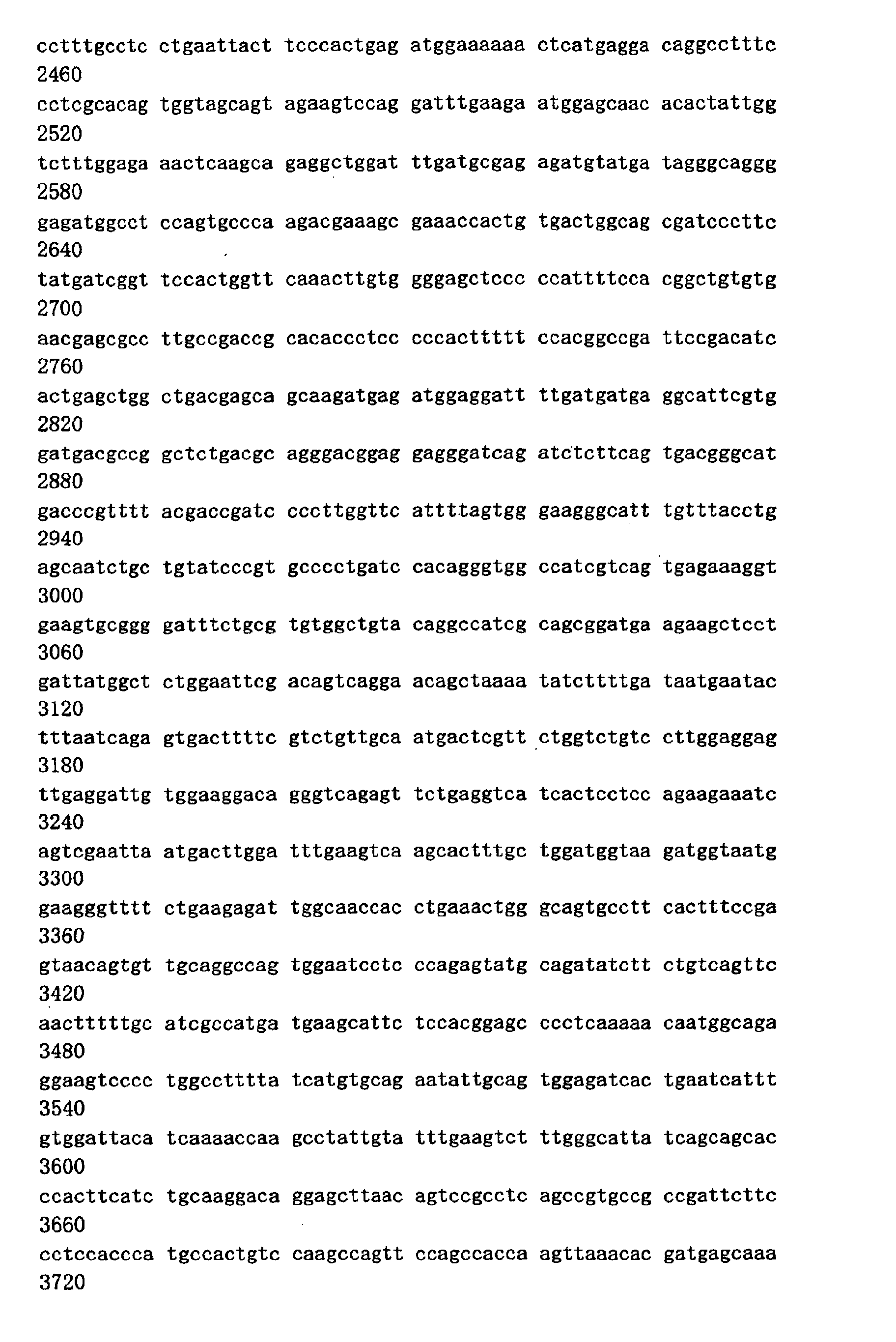
    Figure 00370001
    Figure 00380001
    Figure 00390001
    Figure 00400001
    Figure 00410001
    Figure 00420001
    Figure 00430001
    Figure 00440001
    Figure 00450001
    Figure 00460001
    Figure 00470001
    Figure 00480001
    Figure 00490001
    Figure 00500001
    Figure 00510001
    Figure 00520001
    Figure 00530001
    Figure 00540001
    Figure 00550001
    Figure 00560001
    Figure 00570001
    Figure 00580001
    Figure 00590001

    Claims (20)

    1. A nucleic acid having the base sequence set forth in SEQ ID NO:4 in the Sequence Listing.
    2. A nucleic acid having a base sequence encoding a protein comprising the amino acid sequence set forth in SEQ ID NO:2 in the Sequence Listing.
    3. A nucleic acid which is a fragment of the nucleic acid according to claim 1 or 2.
    4. A nucleic acid capable of hybridizing to the nucleic acid according to claim 1 or 2.
    5. A nucleic acid having the base sequence set forth in SEQ ID NO:7 in the Sequence Listing.
    6. An antisense nucleic acid to the nucleic acid according to claim 1 or 2.
    7. An antisense nucleic acid having the base sequence set forth in SEQ ID NO:7 in the Sequence Listing, characterized by promoting anchorage-independent growth of normal cells upon introduction into normal cells.
    8. A protein having the amino acid sequence set forth in SEQ ID NO:2 in the Sequence Listing, or a pharmaceutically acceptable salt thereof.
    9. A protein having an amino acid sequence substantially identical to the amino acid sequence set forth in SEQ ID NO:2 in the Sequence Listing and whose absence induces tumorigenesis of normal cells, or a pharmaceutically acceptable salt thereof.
    10. The protein according to claim 9, wherein the amino acid sequence substantially identical to the amino acid sequence set forth in SEQ ID NO:2 in the Sequence Listing is an amino acid sequence derivable by the substitution or the deletion of one or more amino acids in the amino acid sequence set forth in SEQ ID NO:2 in the Sequence Listing, or by the addition of one or more amino acids to the amino acid sequence set forth in SEQ ID NO:2 in the Sequence Listing, or a pharmaceutically acceptable salt thereof.
    11. A protein having an the amino acid sequence derivable by the substitution or the deletion of one or more amino acids in the amino acid sequence set forth in SEQ ID NO:1, or by the addition of one or more amino acids to the amino acid sequence set forth in SEQ ID NO:1 and whose absence induces tumorigenesis of normal cells, or a pharmaceutically acceptable salt thereof.
    12. A partial peptide which is a functionally effective fragment of a protein having the amino acid sequence set forth in SEQ ID NO:2 in the Sequence Listing, or a pharmaceutically acceptable salt thereof.
    13. An anticancer agent comprising a protein having the amino acid sequence set forth in SEQ ID NO:1 in the Sequence Listing, or a pharmaceutically acceptable salt thereof.
    14. An anticancer agent comprising a protein having the amino acid sequence set forth in SEQ ID NO:2 in the Sequence Listing, or a pharmaceutically acceptable salt thereof.
    15. An anticancer agent comprising a nucleic acid having the base sequence set forth in SEQ ID NO:3 in the Sequence Listing.
    16. An anticancer agent comprising a nucleic acid having the base sequence set forth in SEQ ID NO:4 in the Sequence Listing.
    17. A method for diagnosing prognosis of human neuroblastoma, the method comprising detecting the nucleic acid according to claim 1 or a fragment thereof in a neuroblastoma clinical tissue sample.
    18. A nucleic acid probe comprising the following nucleic acid (a) or (b):
      (a) Nucleic acid having a portion of the base sequence set forth in SEQ ID NO:4 in the Sequence Listing, or a base sequence complementary thereto;
      (b) Nucleic acid which hybridizes to nucleic acid having the base sequence set forth in SEQ ID NO:4 in the Sequence Listing under stringent conditions.
    19. A primer comprising the following DNA (a) or (b):
      (a) DNA having a portion of the base sequence set forth in SEQ ID NO:4 in the Sequence Listing, or a base sequence complementary thereto;
      (b) DNA which hybridizes to DNA having the base sequence set forth in SEQ ID NO:4 in the Sequence Listing under stringent conditions.
    20. A prognosis diagnosing kit for neuroblastoma comprising as an effective component thereof, the probe according to claim 18 or the primer according to claim 19.
    EP01972634A 2000-09-29 2001-10-01 Nucleic acid of novel human kinesin-associated gene, protein encoded by the nucleic acid, peptide fragment thereof and anticancer agents comprising the nucleic acid and the like Expired - Lifetime EP1329504B1 (en)

    Applications Claiming Priority (3)

    Application Number Priority Date Filing Date Title
    JP2000300247 2000-09-29
    JP2000300247 2000-09-29
    PCT/JP2001/008635 WO2002026965A1 (en) 2000-09-29 2001-10-01 Nucleic acid of novel human kinesin-associated gene, protein encoded by the nucleic acid, peptide fragment thereof and anticancer agents comprising the nucleic acid and the like

    Publications (3)

    Publication Number Publication Date
    EP1329504A1 true EP1329504A1 (en) 2003-07-23
    EP1329504A4 EP1329504A4 (en) 2004-08-11
    EP1329504B1 EP1329504B1 (en) 2008-02-27

    Family

    ID=18781952

    Family Applications (1)

    Application Number Title Priority Date Filing Date
    EP01972634A Expired - Lifetime EP1329504B1 (en) 2000-09-29 2001-10-01 Nucleic acid of novel human kinesin-associated gene, protein encoded by the nucleic acid, peptide fragment thereof and anticancer agents comprising the nucleic acid and the like

    Country Status (6)

    Country Link
    US (1) US7214782B2 (en)
    EP (1) EP1329504B1 (en)
    JP (1) JP3913171B2 (en)
    AU (1) AU2001292326A1 (en)
    DE (1) DE60133023T2 (en)
    WO (1) WO2002026965A1 (en)

    Cited By (1)

    * Cited by examiner, † Cited by third party
    Publication number Priority date Publication date Assignee Title
    WO2010014000A1 (en) * 2008-08-01 2010-02-04 Erasmus University Medical Center Rotterdam Susceptibility markers for multiple sclerosis

    Families Citing this family (3)

    * Cited by examiner, † Cited by third party
    Publication number Priority date Publication date Assignee Title
    US20040115201A1 (en) * 2002-09-25 2004-06-17 Paz Einat Mitotic kinesin-like protein-1, MKLP1, and uses thereof
    EP1683862B1 (en) * 2003-09-25 2012-08-01 Chiba-Prefecture Microarray for assessing neuroblastoma prognosis and method of assessing neuroblastoma prognosis
    WO2006060737A2 (en) * 2004-12-03 2006-06-08 Takeda San Diego, Inc. Mitotic kinesin inhibitors

    Family Cites Families (2)

    * Cited by examiner, † Cited by third party
    Publication number Priority date Publication date Assignee Title
    US6582908B2 (en) * 1990-12-06 2003-06-24 Affymetrix, Inc. Oligonucleotides
    AU3984800A (en) 1999-04-20 2000-11-02 Genset Dna encoding a kinesin-like protein (hklp) comprising biallelic markers

    Non-Patent Citations (5)

    * Cited by examiner, † Cited by third party
    Title
    NAGASE T ET AL: "PREDICTION OF THE CODING SEQUENCES OF UNIDENTIFIED HUMAN GENES. IX. THE COMPLETE SEQUENCES OF 100 NEW CDNA CLONES FROM BRAIN WHICH CAN CODE FOR LARGE PROTEINS IN VITRO" DNA RESEARCH, UNIVERSAL ACADEMY PRESS, JP, vol. 5, no. 5, 1998, pages 31-39, XP000878819 ISSN: 1340-2838 *
    NAKAGAWA T. ET AL.,: "identification and classification of 16 new kinesin superfamily (KIF) proteins in mouse genome" PROC.NATL.ACAD.SCI. USA, vol. 94, - September 1997 (1997-09) pages 9654-9659, XP002283621 *
    NANGAKU M ET AL: "KIF1B, A NOVEL MICROTUBULE PLUS END-DIRECTED MONOMERIC MOTOR PROTEIN FOR TRANSPORT OF MITOCHONDRIA" CELL, CELL PRESS, CAMBRIDGE, NA, US, vol. 79, 1994, pages 1209-1220, XP000915469 ISSN: 0092-8674 *
    See also references of WO0226965A1 *
    YANG Z ET AL: "Identification, Partial Characterization, and Genetic Mapping of Kinesin-like Protein Genes in Mouse" GENOMICS, ACADEMIC PRESS, SAN DIEGO, US, vol. 45, no. 1, 1 October 1997 (1997-10-01), pages 123-131, XP004459145 ISSN: 0888-7543 *

    Cited By (1)

    * Cited by examiner, † Cited by third party
    Publication number Priority date Publication date Assignee Title
    WO2010014000A1 (en) * 2008-08-01 2010-02-04 Erasmus University Medical Center Rotterdam Susceptibility markers for multiple sclerosis

    Also Published As

    Publication number Publication date
    US7214782B2 (en) 2007-05-08
    US20040072778A1 (en) 2004-04-15
    JP3913171B2 (en) 2007-05-09
    JPWO2002026965A1 (en) 2004-02-05
    EP1329504A4 (en) 2004-08-11
    DE60133023T2 (en) 2009-03-19
    AU2001292326A1 (en) 2002-04-08
    EP1329504B1 (en) 2008-02-27
    DE60133023D1 (en) 2008-04-10
    WO2002026965A1 (en) 2002-04-04

    Similar Documents

    Publication Publication Date Title
    US20030176341A1 (en) Interferon-alpha induced gene
    US20040146986A1 (en) Runx3 gene showing anti-tumor activity and use thereof
    JPH08503128A (en) Transcription factor DP-1
    EP0892047A2 (en) Human and murine semaphorin L
    JPH1128095A (en) Sialoadhesin family member-2
    EP1329504B1 (en) Nucleic acid of novel human kinesin-associated gene, protein encoded by the nucleic acid, peptide fragment thereof and anticancer agents comprising the nucleic acid and the like
    JP4108755B2 (en) New semaphorin gene: Semaphorin Y
    EP1881004B1 (en) Novel collectin
    JP3810731B2 (en) Novel adapter protein that binds to mammalian Toll-like receptor 3 and gene thereof
    JP4011629B2 (en) Novel semaphorin gene (I)
    JP2009183291A (en) Transcriptional regulator
    US6670450B1 (en) Protein and gene involved in myocyte differentiation
    US6552177B2 (en) EH domain containing genes and proteins
    JPWO1998022504A1 (en) Novel semaphorin gene (▲I▼)
    US6682917B1 (en) Protein having a ribonucleotide Reductase activity and a DNA thereof
    JP2000125888A (en) Sialoadhesin family member-3
    EP1428891A1 (en) Novel gene nedl-1
    JPH0881500A (en) p53as protein and its antibody
    US20020090706A1 (en) Human RRN3 and compositions and methods relating thereto
    JP2001523458A (en) How to regulate nerve cell function
    JP2003116558A (en) Adult T cell leukemia (ATL) related genes and their expressed proteins
    DE19729211A1 (en) New semaphorin L proteins
    JP2003219889A (en) New map kinase activity suppressing factor
    JPWO1999053057A1 (en) Proteins and genes involved in muscle cell differentiation
    JPWO1999057143A1 (en) transcriptional regulators

    Legal Events

    Date Code Title Description
    PUAI Public reference made under article 153(3) epc to a published international application that has entered the european phase

    Free format text: ORIGINAL CODE: 0009012

    17P Request for examination filed

    Effective date: 20030429

    AK Designated contracting states

    Designated state(s): AT BE CH CY DE DK ES FI FR GB GR IE IT LI LU MC NL PT SE TR

    RBV Designated contracting states (corrected)

    Designated state(s): DE FR GB IT

    A4 Supplementary search report drawn up and despatched

    Effective date: 20040630

    17Q First examination report despatched

    Effective date: 20050414

    17Q First examination report despatched

    Effective date: 20050414

    GRAP Despatch of communication of intention to grant a patent

    Free format text: ORIGINAL CODE: EPIDOSNIGR1

    GRAS Grant fee paid

    Free format text: ORIGINAL CODE: EPIDOSNIGR3

    GRAA (expected) grant

    Free format text: ORIGINAL CODE: 0009210

    AK Designated contracting states

    Kind code of ref document: B1

    Designated state(s): DE FR GB IT

    REG Reference to a national code

    Ref country code: GB

    Ref legal event code: FG4D

    REF Corresponds to:

    Ref document number: 60133023

    Country of ref document: DE

    Date of ref document: 20080410

    Kind code of ref document: P

    ET Fr: translation filed
    PLBE No opposition filed within time limit

    Free format text: ORIGINAL CODE: 0009261

    STAA Information on the status of an ep patent application or granted ep patent

    Free format text: STATUS: NO OPPOSITION FILED WITHIN TIME LIMIT

    26N No opposition filed

    Effective date: 20081128

    REG Reference to a national code

    Ref country code: FR

    Ref legal event code: PLFP

    Year of fee payment: 16

    REG Reference to a national code

    Ref country code: FR

    Ref legal event code: PLFP

    Year of fee payment: 17

    PGFP Annual fee paid to national office [announced via postgrant information from national office to epo]

    Ref country code: FR

    Payment date: 20170918

    Year of fee payment: 17

    Ref country code: GB

    Payment date: 20170927

    Year of fee payment: 17

    PGFP Annual fee paid to national office [announced via postgrant information from national office to epo]

    Ref country code: DE

    Payment date: 20170927

    Year of fee payment: 17

    PGFP Annual fee paid to national office [announced via postgrant information from national office to epo]

    Ref country code: IT

    Payment date: 20171024

    Year of fee payment: 17

    REG Reference to a national code

    Ref country code: DE

    Ref legal event code: R119

    Ref document number: 60133023

    Country of ref document: DE

    GBPC Gb: european patent ceased through non-payment of renewal fee

    Effective date: 20181001

    PG25 Lapsed in a contracting state [announced via postgrant information from national office to epo]

    Ref country code: DE

    Free format text: LAPSE BECAUSE OF NON-PAYMENT OF DUE FEES

    Effective date: 20190501

    PG25 Lapsed in a contracting state [announced via postgrant information from national office to epo]

    Ref country code: FR

    Free format text: LAPSE BECAUSE OF NON-PAYMENT OF DUE FEES

    Effective date: 20181031

    PG25 Lapsed in a contracting state [announced via postgrant information from national office to epo]

    Ref country code: IT

    Free format text: LAPSE BECAUSE OF NON-PAYMENT OF DUE FEES

    Effective date: 20181001

    Ref country code: GB

    Free format text: LAPSE BECAUSE OF NON-PAYMENT OF DUE FEES

    Effective date: 20181001