EP1326440A2 - Recording apparatus and recording method - Google Patents
Recording apparatus and recording method Download PDFInfo
- Publication number
- EP1326440A2 EP1326440A2 EP02028837A EP02028837A EP1326440A2 EP 1326440 A2 EP1326440 A2 EP 1326440A2 EP 02028837 A EP02028837 A EP 02028837A EP 02028837 A EP02028837 A EP 02028837A EP 1326440 A2 EP1326440 A2 EP 1326440A2
- Authority
- EP
- European Patent Office
- Prior art keywords
- recording
- program
- time period
- extension
- information
- Prior art date
- Legal status (The legal status is an assumption and is not a legal conclusion. Google has not performed a legal analysis and makes no representation as to the accuracy of the status listed.)
- Granted
Links
Images


Classifications
-
- H—ELECTRICITY
- H04—ELECTRIC COMMUNICATION TECHNIQUE
- H04N—PICTORIAL COMMUNICATION, e.g. TELEVISION
- H04N21/00—Selective content distribution, e.g. interactive television or video on demand [VOD]
- H04N21/40—Client devices specifically adapted for the reception of or interaction with content, e.g. set-top-box [STB]; Operations thereof
- H04N21/43—Processing of content or additional data, e.g. demultiplexing additional data from a digital video stream; Elementary client operations, e.g. monitoring of home network or synchronising decoder's clock; Client middleware
- H04N21/44—Processing of video elementary streams, e.g. splicing a video clip retrieved from local storage with an incoming video stream or rendering scenes according to encoded video stream scene graphs
- H04N21/4402—Processing of video elementary streams, e.g. splicing a video clip retrieved from local storage with an incoming video stream or rendering scenes according to encoded video stream scene graphs involving reformatting operations of video signals for household redistribution, storage or real-time display
- H04N21/440254—Processing of video elementary streams, e.g. splicing a video clip retrieved from local storage with an incoming video stream or rendering scenes according to encoded video stream scene graphs involving reformatting operations of video signals for household redistribution, storage or real-time display by altering signal-to-noise parameters, e.g. requantization
-
- G—PHYSICS
- G11—INFORMATION STORAGE
- G11B—INFORMATION STORAGE BASED ON RELATIVE MOVEMENT BETWEEN RECORD CARRIER AND TRANSDUCER
- G11B27/00—Editing; Indexing; Addressing; Timing or synchronising; Monitoring; Measuring tape travel
- G11B27/02—Editing, e.g. varying the order of information signals recorded on, or reproduced from, record carriers
- G11B27/031—Electronic editing of digitised analogue information signals, e.g. audio or video signals
- G11B27/036—Insert-editing
-
- G—PHYSICS
- G11—INFORMATION STORAGE
- G11B—INFORMATION STORAGE BASED ON RELATIVE MOVEMENT BETWEEN RECORD CARRIER AND TRANSDUCER
- G11B27/00—Editing; Indexing; Addressing; Timing or synchronising; Monitoring; Measuring tape travel
- G11B27/36—Monitoring, i.e. supervising the progress of recording or reproducing
-
- H—ELECTRICITY
- H04—ELECTRIC COMMUNICATION TECHNIQUE
- H04N—PICTORIAL COMMUNICATION, e.g. TELEVISION
- H04N21/00—Selective content distribution, e.g. interactive television or video on demand [VOD]
- H04N21/40—Client devices specifically adapted for the reception of or interaction with content, e.g. set-top-box [STB]; Operations thereof
- H04N21/43—Processing of content or additional data, e.g. demultiplexing additional data from a digital video stream; Elementary client operations, e.g. monitoring of home network or synchronising decoder's clock; Client middleware
- H04N21/433—Content storage operation, e.g. storage operation in response to a pause request, caching operations
- H04N21/4335—Housekeeping operations, e.g. prioritizing content for deletion because of storage space restrictions
-
- H—ELECTRICITY
- H04—ELECTRIC COMMUNICATION TECHNIQUE
- H04N—PICTORIAL COMMUNICATION, e.g. TELEVISION
- H04N21/00—Selective content distribution, e.g. interactive television or video on demand [VOD]
- H04N21/80—Generation or processing of content or additional data by content creator independently of the distribution process; Content per se
- H04N21/83—Generation or processing of protective or descriptive data associated with content; Content structuring
- H04N21/84—Generation or processing of descriptive data, e.g. content descriptors
-
- H—ELECTRICITY
- H04—ELECTRIC COMMUNICATION TECHNIQUE
- H04N—PICTORIAL COMMUNICATION, e.g. TELEVISION
- H04N5/00—Details of television systems
- H04N5/76—Television signal recording
- H04N5/78—Television signal recording using magnetic recording
- H04N5/782—Television signal recording using magnetic recording on tape
-
- H—ELECTRICITY
- H04—ELECTRIC COMMUNICATION TECHNIQUE
- H04N—PICTORIAL COMMUNICATION, e.g. TELEVISION
- H04N9/00—Details of colour television systems
- H04N9/79—Processing of colour television signals in connection with recording
- H04N9/80—Transformation of the television signal for recording, e.g. modulation, frequency changing; Inverse transformation for playback
- H04N9/804—Transformation of the television signal for recording, e.g. modulation, frequency changing; Inverse transformation for playback involving pulse code modulation of the colour picture signal components
- H04N9/8042—Transformation of the television signal for recording, e.g. modulation, frequency changing; Inverse transformation for playback involving pulse code modulation of the colour picture signal components involving data reduction
-
- G—PHYSICS
- G11—INFORMATION STORAGE
- G11B—INFORMATION STORAGE BASED ON RELATIVE MOVEMENT BETWEEN RECORD CARRIER AND TRANSDUCER
- G11B2220/00—Record carriers by type
- G11B2220/20—Disc-shaped record carriers
- G11B2220/25—Disc-shaped record carriers characterised in that the disc is based on a specific recording technology
- G11B2220/2537—Optical discs
- G11B2220/2562—DVDs [digital versatile discs]; Digital video discs; MMCDs; HDCDs
-
- G—PHYSICS
- G11—INFORMATION STORAGE
- G11B—INFORMATION STORAGE BASED ON RELATIVE MOVEMENT BETWEEN RECORD CARRIER AND TRANSDUCER
- G11B27/00—Editing; Indexing; Addressing; Timing or synchronising; Monitoring; Measuring tape travel
- G11B27/02—Editing, e.g. varying the order of information signals recorded on, or reproduced from, record carriers
- G11B27/031—Electronic editing of digitised analogue information signals, e.g. audio or video signals
- G11B27/034—Electronic editing of digitised analogue information signals, e.g. audio or video signals on discs
Definitions
- the present invention relates to a recording apparatus and method for recording a broadcast program content on a recording medium such as an optical disk.
- the prior art apparatus is capable of recording and playing at N-times speed (N ⁇ 2) and changing a record compressing rate.
- the apparatus can expand a recordable area by playing and compressing/rerecording the already recorded program contents, simultaneously with recording more program contents in the expanded area. With this apparatus, even if the available area of a recording medium is used up and further recording becomes impossible, an available area can be automatically created and more program contents can be recorded in the expanded available area.
- the above prior art apparatus creates available area not by recompressing program contents during recording, but recompressing other recorded program contents.
- the recording time period cannot be extended.
- the broadcasting time period of a program is extended during recording, it is impossible to extend the recording time period by an even recording rate in the same program. Since the apparatus is not linked to the program extension information, it is impossible to recompress/rerecord the already recorded program contents and record new program contents at an optimum recording rate.
- An object of the present invention is to provide a recording apparatus and method capable of automatically recording a part of the recorded program content and a succeeding part of the program content at the same recording rate in a predetermined recording area when broadcast time of the program content is extended during recording the program content, even if the available area of a recording medium becomes insufficient, and capable of the recording program content at an appropriate recording rate by linking with program information.
- a recording apparatus which records a program content provided together with program information by broadcast, the apparatus comprising:
- the apparatus and method comprised as above permits extension of a recording time period at an even recording rate in the same program when a broadcast time of a program content is extended during recording, even if the available area of a recording medium becomes insufficient. Since recompressing creates available area and the recording program content during recording, the other recorded program content is not affected. Further, as the program information is linked, it is possible to recompress and rerecord a part of the recorded program contents and a succeeding part of the program content at an appropriate recording rate.
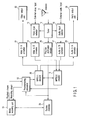
- FIG. 1 is a block diagram showing the construction of a program contents recording/playback apparatus according to a first embodiment of the present invention.
- an antenna 11 receives a broadcast signal.
- a tuner 12 tune a broadcast signal received by an antenna 11, and program contents comprising a video signal, an audio signal and a data signal are received and detected.
- the video signal is supplied to a video A/D (Analog/Digital) converter 14 through a video input selector 13, where it is converted into a digital signal of specified format and becomes a video stream.
- the audio signal is supplied to an audio A/D converter 17 through an audio input selector 16, where it is converted into a digital signal of specified format and becomes an audio stream.
- the above video stream and audio stream are supplied to MPEG2 (Moving Picture Experts Group Phase 2) encoder 15.
- MPEG2 Motion Picture Experts Group Phase 2
- the above video input selector 13 and audio input selector 16 are used for selecting and outputting external video input and external audio input, instead of a broadcast receiving system.
- the above MPEG2 encoder 15 compresses and encodes the video stream and audio stream based on the MPEG2 standard.
- the compressed and encoded MPEG signal is appropriately compressed by a recompressing processor 18, and sent as a recording stream to a media-recording unit 19.
- the media-recording unit 19 has an ordinal recording mode for recording at an actual time period and a high-speed recording mode for recording at a speed faster than the actual time period.
- the media-recording unit 19 is a hard disk drive unit, for example, and makes the recording stream record-able and playable at N-times speed (N ⁇ 2).
- the record stream played by the above media recording unit 19 is extended by the recompressing processor 18, and sent back to the video stream and audio stream by a MPEG2 decoder 20.
- the video stream is converted into an analog video signal by a video D/A converter 21, and sent to a display (not shown) through a video output unit 22.
- the audio stream is converted into an analog audio signal by an audio D/A converter 23, and sent to an audio playback unit (not shown) through an audio output unit 24.
- the above data signal is multiplexed during a blanking interval of a television signal, and contains the information of a teletext broadcast and other programs provided by a broadcasting station (hereinafter referred to as program information).
- This program information includes program start/end information, program ID information and so on.
- the tuner 12 separates the above data signal from a television signal and demodulates it. This data signal is supplied to a program information decoder 25.
- the program information decoder 25 extracts the information about programs from the demodulated data signal.
- the extracted information is supplied to a system controller 26.
- the system controller 26 generally controls each processing operation of the apparatus, and has the function of controlling the operations of the MPEG2 encoder 15, MPEG2 decoder 20 and recompressing processor 18, based on the program information supplied from the program information decoder 25.
- the system controller 26 make record the program content on the recording medium by setting the media-recording unit 19 to the ordinal recording mode following users recording instruction.
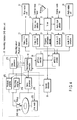
- FIG. 2 illustrates the concrete structure of the program information decoder 25 and system controller 26.
- the hardware construction is shown in the drawing, but it is possible to realize it by software.
- a data separator 251 in the program information decoder 25 separates video data, audio data and program information data from the received data signal.
- the program information data is supplied to a program information extractor 252.
- the program information extractor 252 extracts the program start/end information and program ID information from the program information data.
- the extraction result is sent to a program extension-deciding unit 261 in the system controller 26.
- the program extension-deciding unit 261 decides extension of a program based on the input information.
- the unit 261 sets a program extension mode when the extension of a program is decided, calculates the total program time period including the extension time period, and sends it to a recording rate-setting unit 262.
- a recording space detector 263 detects a recording space of the media via the media-recording unit 19. The detected recording space value is send to the recording rate-setting unit 262.
- the recording rate-setting unit 262 determines the recording rate based on the total program time period and the recording space allocated to that program.
- the system controller 26 sends the MPEG2 encoder 15 a command to set the recording rate of a new recording part, and sends the recompressing processor 18 a command to set the recording rate of a rerecording part.
- the recompressing processor 18 receives the playback stream from the recorded part, recompresses it and creates a rerecording stream at a lowered recording rate. It also receives the data of the new record part from the MPEG2 encoder 15. The recompressing processor 18 sends these two record streams alternately to the media-recording unit 19.
- the media-recording unit 19 is setting to the high-speed mode in the program extension mode, and records the rerecording stream and new recording stream alternately at the same recording rate.
- step S11 just REC (Recording) mode is set for the recording rate in timer recording mode, where all available area on a recording medium is used. This is the setting for recording with the highest picture quality by fully using the recording time period. In this case, if a program is extended during recording, it is impossible to record the program to the end with the recording rate set at the start of recording. Therefore, it is necessary to always check whether a program is extended during execution of timer recording. This check is performed in steps S12, S13 and S14.
- the third check is neither the program extension information nor the next program start time delay information. Checking whether a program ID for the program under recording continues even after expiration of the preset recording end time. This check is performed in steps S14 and S17. In this case, if step 17 checks that the program ID is not continuing after expiration of the preset recording end time, it is considered that the program is finished, and terminates the just REC mode in step S18. If step S17 checks that the program ID is continuing, it is considered that the program being recorded is extended.
- the program extension time period is not obtained from the program information, and the preset extension time period is taken as a recording extension time period.
- a broadcast program is often constructed in units of at least 15 minutes, and the extension setting time period is set to 15 minutes.
- the program recording time period recording setting time period + certain time period (e.g., 15 minutes) is determined in step S19.
- the program ID continues even after expiration of the certain time period, it is considered to be another program extension, and the recording time period is extended again. This process is realized by returning to step S12 in the algorithm of FIG. 3.
- the optimum recording rate is calculated in step S20.
- the optimum recording rate residual recordable space at the start of recording/recording time period.
- step S21 a recording rate is changed and a new rate is adopted for new recording.
- step S22 the already recorded program contents are recompressed and rerecorded at the new recording rate.
- the recording time period can be extended with an even recording rate in the same program.
- the program contents are recompressed and rerecorded to ensure the available area during recording, the user's demand to hold the already recorded program contents without affecting other recorded program contents, can be satisfied.
- the program extension information is linked, it is possible to recompress/rerecord the already recorded program contents and record new program contents at the optimum recording rate.
- FIG. 4 is a block diagram showing the construction of a program contents recording/playback apparatus utilizing a recording/playback DVD drive unit 27 as a second embodiment.
- the same reference numerals are given to the same components as those in FIG. 1, and only the different components will be explained hereinafter.
- the recording/playback DVD drive unit 27 shown in FIG. 4 reads a pit string from a DVD recording medium 28 and converts it into an electrical signal by a pickup 271, and amplifies it into a digital signal by a playback amplifier 273. This signal is taken out as a playback stream by a data processor 275, and sent to the recompressing processor 18.
- the recording stream created by the recompressing processor 18 is converted into the DVD record logic format by a data processor 275, and sent to a recording amplifier 274. This signal is picked up and recorded as a pit string on a DVD recording medium 28.
- the system controller 26 detects playback and recording sector information of the DVD recording medium 28. Based on this sector information, a servo processor 276 controls a disk motor 272 and a pickup 271, and moves the pickup 271 to the object sector on the DVD recording medium 28.
- the processing capability of the recording/playback DVD drive unit 27 has been rapidly increased, and is now capable of recording and playing at double speed. Therefore, recompressing and rerecording become possible between the unit 27 and the recompressing processor 18, by recording and playing alternately at a speed twice as fast as than a normal speed.
- the actual signal processing is the same as that in the first embodiment.
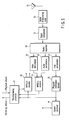
- FIG. 5 is a block diagram showing the construction of a program contents recording/playback apparatus applied to digital broadcasting as a third embodiment.
- the same reference numerals are given to the same components as those in FIG. 1, and the construction is partially omitted.
- the digital broadcast signal is received by an antenna 31, and tuned by a digital broadcast tuner 32.
- the tuned digital broadcast signal is demodulated by a digital demodulator 33, thereby a TS (Transport Stream) packet is extracted.
- the TS packet is applied to a packet separator 34, where it is separated into a video packet, an audio packet and a data packet, and these packets are applied to a video demodulator 35, an audio demodulator 36 and a data demodulator 37, respectively, where they are demodulated and output.
- these video and audio outputs are digital signals, they can be applied to the MPEG2 encoder 15 and converted into MPEG signals without passing through an A/D converter.
- program ID and program start/end time information are sent together with video and audio data as service information (SI), as a part of the control data constituting a program.
- SI service information
- the data demodulator 37 extracts the SI information from the demodulation data, discriminates the program related information, and supplies it to a program information decoder 25.
- the other processing is the same as those in the first and second embodiments, and the program contents can be recompressed and rerecorded at the optimum recording rate in a specified recording area.
- the present invention is not to be limited to the above-mentioned embodiments.
- the invention may be embodied in other specific forms, for example, apparatus that use a semiconductor memory as a recording medium, as well as a hard disk and DVD.
Landscapes
- Engineering & Computer Science (AREA)
- Multimedia (AREA)
- Signal Processing (AREA)
- Signal Processing For Digital Recording And Reproducing (AREA)
- Television Signal Processing For Recording (AREA)
- Television Systems (AREA)
- Optical Recording Or Reproduction (AREA)
Abstract
Description
Claims (14)
- A recording apparatus which records a program content provided together with program information by broadcast, said apparatus characterized by comprising:means for receiving the program content and the program information (12, 25, 32 - 34, 37);means for recording a program content on a recording medium at an arbitrary recording rate, the recording means having an ordinal recording mode for recording at an actual time period and a high speed recording mode for recording at a speed faster than the actual time period (18, 19);first detecting means for detecting a recording capacity of the recording medium (19, 263);second detecting means for detecting extension of a broadcast time of the program content based on the program information to set a program extension mode (261, S12 - S14, S17);recording rate deciding means (262) including means for determining an extension time period in the program extension mode (262, S15, S16, S19), means for calculating a recording time period based on the extension time period and a preset recording time period (262, S15, S16, S19) and means for deciding a recording rate based on the program recording time period and the recording capacity (262, S20);first control means for making the recording means record the program content on the recording medium by setting the recording means to the ordinal recording mode;second control means for setting the recording means to the high speed recording mode in the program extension mode (261);third control means for, in the set high speed recording mode, making the recording means re-compress and re-record the program content previously recorded on the recording medium at the recording rate to form an available area, and for making the recording means compress and record a successive part of the program content on the available area at the recording rate (26, S21, S22).
- The apparatus according to claim 1, characterized in that
when the program information contains extension time period information,
the determining means (262, S15, S16, S19) extracts the extension time period information from the program information to detect the extension time period. - The apparatus according to claim 1, characterized in that
when the program information contains start time information of a program content next to the program content,
the determining means (262, S15, S16, S19) extracts the start time information from the program information to detect the extension time period. - The apparatus according to claim 1, characterized in that
when the program information contains program identification information of the program content,
the second detecting means (261, S12 - S14, S17) extracts the program identification information from the program information, and determines the extension by presence of the program identification information before and after a preset program end time of the preset recording time period. - The apparatus according to claim 4, characterized in that
the calculating means (262, S15, S16, S19) has a defined value as a preset recording time period, sets the program recording time period to the defined value when the extension is detected, and re-sets the defined value when the extension is detected after the recording time period set to the defined value expires - The apparatus according to claim 1, characterized in that
when the program contents is included in analog television broadcast signals,
the receiving means (12, 25) receives the program information from a data signal superimposed on a blanking interval of a video signal in the analog television broadcast signals. - The apparatus according to claim 1, characterized in that
when the program contents is included in digital television broadcast signals,
the receiving means (25, 32 - 34, 37) receives the program information from service information included in control data in the digital television broadcast signals. - A recording method of recording a program content on a recording medium using a recording apparatus, the program content being broadcasted together program information, said method characterized by comprising:receiving the program content and the program information;detecting a recording capacity of the recording medium;detecting extension of a broadcast time of the program content based on the program information to set a program extension mode to the recording apparatus;deciding a recording rate by determining an extension time period in the program extension mode, calculating a recording time period based on the extension time period and a preset recording time period and deciding a recording rate based on the program recording time period and the recording capacity;recording a program content on a recording medium an arbitrary recording rare in an ordinal recording mode for recording at an actual time period;setting a high speed recording mode for recording at a speed faster than the actual time period in the program extension mode;re-compressing and re-recording the program content previously recorded on the recording medium at the recording rate to form an available area, in the set high speed recording mode, and compressing and recording a successive part of the program content on the available area at the recording rate.
- The method according to claim 8, characterized in that
when the program information contains extension time period information,
determining the extension time period extracts the extension time period information from the program information to detect the extension time period. - The method according to claim 8, characterized in that
when the program information contains start time information of a program content next to the program content,
determining the extension time period extracts the start time information from the program information to detect the extension time period. - The method according to claim 8, characterized in that
when the program information contains program identification information of the program content,
detecting the extension includes extracting the program identification information from the program information, and determining the extension by presence of the program identification information before and after a the preset program end time of the preset recording time period. - The method according to claim 11,
characterized in that
calculating the recording time period includes determining a defined value as a preset recording time period, setting the program recording time period to the defined value when the extension is detected, and re-setting the defined value when the extension is detected after the recording time period set to the' defined value expires. - The method according to claim 8, characterized in that
when the program content is included in analog television broadcast signals,
receiving the program information includes receiving the program information from a data signal superimposed on a blanking interval of a video signal in the analog television broadcast signals. - The method according to claim 8, characterized in that
when the program content is included in digital television broadcast signals,
receiving the program information includes receiving the program information from service information included in control data in the digital television broadcast signals.
Applications Claiming Priority (2)
| Application Number | Priority Date | Filing Date | Title |
|---|---|---|---|
| JP2001401677A JP3643557B2 (en) | 2001-12-28 | 2001-12-28 | Recording / playback device |
| JP2001401677 | 2001-12-28 |
Publications (3)
| Publication Number | Publication Date |
|---|---|
| EP1326440A2 true EP1326440A2 (en) | 2003-07-09 |
| EP1326440A3 EP1326440A3 (en) | 2006-06-07 |
| EP1326440B1 EP1326440B1 (en) | 2009-03-18 |
Family
ID=19189805
Family Applications (1)
| Application Number | Title | Priority Date | Filing Date |
|---|---|---|---|
| EP02028837A Expired - Lifetime EP1326440B1 (en) | 2001-12-28 | 2002-12-23 | Recording apparatus and recording method |
Country Status (4)
| Country | Link |
|---|---|
| US (1) | US7209639B2 (en) |
| EP (1) | EP1326440B1 (en) |
| JP (1) | JP3643557B2 (en) |
| DE (1) | DE60231591D1 (en) |
Cited By (2)
| Publication number | Priority date | Publication date | Assignee | Title |
|---|---|---|---|---|
| CN102113334A (en) * | 2009-05-19 | 2011-06-29 | 松下电器产业株式会社 | Recording medium, playback device, encoding device, integrated circuit, and playback output device |
| EP2405433A1 (en) * | 2010-07-07 | 2012-01-11 | Sony Corporation | Recording apparatus, recording method, reproducing apparatus, reproducing method, program, and recording/producing apparatus |
Families Citing this family (7)
| Publication number | Priority date | Publication date | Assignee | Title |
|---|---|---|---|---|
| JP3854900B2 (en) * | 2002-06-19 | 2006-12-06 | キヤノン株式会社 | Recording apparatus and recording method |
| JP2005033622A (en) * | 2003-07-08 | 2005-02-03 | Matsushita Electric Ind Co Ltd | Video signal recording apparatus and video signal recording method |
| JP3773516B2 (en) | 2004-03-09 | 2006-05-10 | 三菱電機株式会社 | Recording reservation apparatus and recording reservation method |
| US20070217523A1 (en) * | 2004-03-23 | 2007-09-20 | Koninklijke Philips Electronics, N.V. | Small Loop Antenna for Induction Reader/Writer |
| CN100384160C (en) * | 2005-07-14 | 2008-04-23 | 华为技术有限公司 | Method and device for monitoring video calls |
| JP4551370B2 (en) | 2006-07-18 | 2010-09-29 | 株式会社日立製作所 | Recording / reproducing apparatus and recording / reproducing method |
| JP6042647B2 (en) * | 2012-07-04 | 2016-12-14 | Necエンジニアリング株式会社 | Recording / reproducing apparatus, recording / reproducing method, and recording / reproducing program |
Family Cites Families (14)
| Publication number | Priority date | Publication date | Assignee | Title |
|---|---|---|---|---|
| NL9200642A (en) | 1992-04-06 | 1993-11-01 | Elephant Holding Bv | METHOD FOR MANUFACTURING A DENTAL PROSTHESIS |
| JPH0817137A (en) | 1994-04-28 | 1996-01-19 | Sanyo Electric Co Ltd | Method and apparatus for recording, method and apparatus for reproduction, recording medium and its manufacture as well as master disc of recording medium ad its manufacture |
| JPH1021601A (en) | 1996-07-05 | 1998-01-23 | Sony Corp | Recording reservation method |
| EP1036466B1 (en) * | 1997-07-21 | 2003-03-26 | E Guide, Inc. | Method for navigating within a television program guide having advertisements |
| JPH11167770A (en) * | 1997-12-04 | 1999-06-22 | Toshiba Corp | Recording / reproducing apparatus and method |
| JP3750771B2 (en) * | 1997-12-25 | 2006-03-01 | 富士写真フイルム株式会社 | Image recording method and apparatus |
| KR100653561B1 (en) * | 1998-07-15 | 2006-12-05 | 소니 가부시끼 가이샤 | Information receiving apparatus, download method , method for displaying a download proceeding situation, and method for selecting an apparatus |
| JP2000050186A (en) | 1998-07-24 | 2000-02-18 | Toshiba Video Products Japan Kk | Recording device |
| JP3748332B2 (en) * | 1998-09-02 | 2006-02-22 | パイオニア株式会社 | Information recording / reproducing device |
| JP2000123365A (en) * | 1998-10-16 | 2000-04-28 | Toshiba Video Products Japan Kk | Recording time extension system device |
| JP3520010B2 (en) | 1999-12-28 | 2004-04-19 | 三洋電機株式会社 | Recording device |
| US6874130B1 (en) * | 2000-02-17 | 2005-03-29 | International Business Machines Corporation | Copy/move graphical user interface apparatus and method |
| JP4472885B2 (en) | 2000-03-07 | 2010-06-02 | 富士通株式会社 | Broadcast program reservation device, broadcast program reservation processing program, and recording medium for the program |
| JP2001325139A (en) * | 2000-05-16 | 2001-11-22 | Canon Inc | Information processing system, information processing apparatus, imaging system, information processing method, storage medium |
-
2001
- 2001-12-28 JP JP2001401677A patent/JP3643557B2/en not_active Expired - Fee Related
-
2002
- 2002-12-23 DE DE60231591T patent/DE60231591D1/en not_active Expired - Fee Related
- 2002-12-23 EP EP02028837A patent/EP1326440B1/en not_active Expired - Lifetime
- 2002-12-27 US US10/330,009 patent/US7209639B2/en not_active Expired - Fee Related
Cited By (4)
| Publication number | Priority date | Publication date | Assignee | Title |
|---|---|---|---|---|
| CN102113334A (en) * | 2009-05-19 | 2011-06-29 | 松下电器产业株式会社 | Recording medium, playback device, encoding device, integrated circuit, and playback output device |
| CN102113334B (en) * | 2009-05-19 | 2013-09-11 | 松下电器产业株式会社 | Reproducing device, recording method, and recording medium reproducing system |
| EP2405433A1 (en) * | 2010-07-07 | 2012-01-11 | Sony Corporation | Recording apparatus, recording method, reproducing apparatus, reproducing method, program, and recording/producing apparatus |
| US8712212B2 (en) | 2010-07-07 | 2014-04-29 | Sony Corporation | Recording apparatus, recording method, reproducing apparatus, reproducing method, program, and recording/producing apparatus |
Also Published As
| Publication number | Publication date |
|---|---|
| EP1326440B1 (en) | 2009-03-18 |
| US20030185544A1 (en) | 2003-10-02 |
| DE60231591D1 (en) | 2009-04-30 |
| JP3643557B2 (en) | 2005-04-27 |
| EP1326440A3 (en) | 2006-06-07 |
| JP2003199050A (en) | 2003-07-11 |
| US7209639B2 (en) | 2007-04-24 |
Similar Documents
| Publication | Publication Date | Title |
|---|---|---|
| JP3526414B2 (en) | Information recording / reproducing method and information recording / reproducing device | |
| US5949953A (en) | Disk media, and method of and device for recording and playing back information on or from a disk media | |
| US20070209055A1 (en) | Commercial detection apparatus and video playback apparatus | |
| JP2000251457A (en) | Reproducing method for digital data stream and device | |
| US7209639B2 (en) | Recording apparatus and recording method | |
| US7499631B2 (en) | Data stream format conversion method and recording method for the same | |
| JPH09284704A (en) | Video signal selection device and digest recording device | |
| KR100978995B1 (en) | An information recording processing apparatus, an information reproducing processing apparatus and method, and a recording medium | |
| US7801420B2 (en) | Video image recording and reproducing apparatus and video image recording and reproducing method | |
| JP3590275B2 (en) | Recording / reproducing apparatus, recording / reproducing method, and recording medium recording recording / reproducing program | |
| KR100254612B1 (en) | Variable transfer rate buffer management device and control method for optical disc player | |
| JP2000069414A (en) | Recording apparatus and recording method, reproduction apparatus and reproduction method, and CM detection method | |
| US20080031597A1 (en) | Stream Recording/Reproducing Apparatus | |
| JP4932493B2 (en) | Data processing device | |
| JP4000623B2 (en) | Video signal recording apparatus and video signal recording method | |
| JP4541139B2 (en) | Content identification in digital video recorder | |
| JP4675885B2 (en) | Information recording apparatus, information recording method, and information recording program | |
| US20070030766A1 (en) | Multiple-drive recording and reproduction apparatus | |
| JP2002033712A (en) | Packet processing apparatus and packet output method thereof | |
| US20040240849A1 (en) | Video recording and reproducing apparatus and video recording and reproducing method | |
| JP4858214B2 (en) | Video signal recording / reproducing apparatus and video signal recording / reproducing method | |
| US20060078276A1 (en) | Optical disk recording and reproducing apparatus | |
| JP5191294B2 (en) | Information processing apparatus and program | |
| US7756390B2 (en) | Video signal separation information setting method and apparatus using audio modes | |
| JPH09282797A (en) | Recording method and recording / reproducing apparatus |
Legal Events
| Date | Code | Title | Description |
|---|---|---|---|
| PUAI | Public reference made under article 153(3) epc to a published international application that has entered the european phase |
Free format text: ORIGINAL CODE: 0009012 |
|
| 17P | Request for examination filed |
Effective date: 20021223 |
|
| AK | Designated contracting states |
Designated state(s): AT BE BG CH CY CZ DE DK EE ES FI FR GB GR IE IT LI LU MC NL PT SE SI SK TR |
|
| AX | Request for extension of the european patent |
Extension state: AL LT LV MK RO |
|
| PUAL | Search report despatched |
Free format text: ORIGINAL CODE: 0009013 |
|
| AK | Designated contracting states |
Kind code of ref document: A3 Designated state(s): AT BE BG CH CY CZ DE DK EE ES FI FR GB GR IE IT LI LU MC NL PT SE SI SK TR |
|
| AX | Request for extension of the european patent |
Extension state: AL LT LV MK RO |
|
| 17Q | First examination report despatched |
Effective date: 20061013 |
|
| AKX | Designation fees paid |
Designated state(s): DE FR GB |
|
| GRAP | Despatch of communication of intention to grant a patent |
Free format text: ORIGINAL CODE: EPIDOSNIGR1 |
|
| GRAS | Grant fee paid |
Free format text: ORIGINAL CODE: EPIDOSNIGR3 |
|
| GRAA | (expected) grant |
Free format text: ORIGINAL CODE: 0009210 |
|
| AK | Designated contracting states |
Kind code of ref document: B1 Designated state(s): DE FR GB |
|
| REG | Reference to a national code |
Ref country code: GB Ref legal event code: FG4D |
|
| REF | Corresponds to: |
Ref document number: 60231591 Country of ref document: DE Date of ref document: 20090430 Kind code of ref document: P |
|
| PLBE | No opposition filed within time limit |
Free format text: ORIGINAL CODE: 0009261 |
|
| STAA | Information on the status of an ep patent application or granted ep patent |
Free format text: STATUS: NO OPPOSITION FILED WITHIN TIME LIMIT |
|
| 26N | No opposition filed |
Effective date: 20091221 |
|
| GBPC | Gb: european patent ceased through non-payment of renewal fee |
Effective date: 20091223 |
|
| REG | Reference to a national code |
Ref country code: FR Ref legal event code: ST Effective date: 20100831 |
|
| PG25 | Lapsed in a contracting state [announced via postgrant information from national office to epo] |
Ref country code: FR Free format text: LAPSE BECAUSE OF NON-PAYMENT OF DUE FEES Effective date: 20091231 |
|
| PG25 | Lapsed in a contracting state [announced via postgrant information from national office to epo] |
Ref country code: DE Free format text: LAPSE BECAUSE OF NON-PAYMENT OF DUE FEES Effective date: 20100701 |
|
| PG25 | Lapsed in a contracting state [announced via postgrant information from national office to epo] |
Ref country code: GB Free format text: LAPSE BECAUSE OF NON-PAYMENT OF DUE FEES Effective date: 20091223 |