EP1324575A1 - Generic call-numbers for calling line identification - Google Patents
Generic call-numbers for calling line identification Download PDFInfo
- Publication number
- EP1324575A1 EP1324575A1 EP01131000A EP01131000A EP1324575A1 EP 1324575 A1 EP1324575 A1 EP 1324575A1 EP 01131000 A EP01131000 A EP 01131000A EP 01131000 A EP01131000 A EP 01131000A EP 1324575 A1 EP1324575 A1 EP 1324575A1
- Authority
- EP
- European Patent Office
- Prior art keywords
- call
- calling party
- generic
- representation
- directory
- Prior art date
- Legal status (The legal status is an assumption and is not a legal conclusion. Google has not performed a legal analysis and makes no representation as to the accuracy of the status listed.)
- Withdrawn
Links
- 238000000034 method Methods 0.000 claims abstract description 16
- 230000006870 function Effects 0.000 description 4
- 238000013459 approach Methods 0.000 description 2
- 230000000875 corresponding effect Effects 0.000 description 2
- 230000001413 cellular effect Effects 0.000 description 1
- 230000002596 correlated effect Effects 0.000 description 1
- 230000001419 dependent effect Effects 0.000 description 1
- 238000000926 separation method Methods 0.000 description 1
Images


Classifications
-
- H—ELECTRICITY
- H04—ELECTRIC COMMUNICATION TECHNIQUE
- H04M—TELEPHONIC COMMUNICATION
- H04M1/00—Substation equipment, e.g. for use by subscribers
- H04M1/57—Arrangements for indicating or recording the number of the calling subscriber at the called subscriber's set
- H04M1/575—Means for retrieving and displaying personal data about calling party
-
- H—ELECTRICITY
- H04—ELECTRIC COMMUNICATION TECHNIQUE
- H04M—TELEPHONIC COMMUNICATION
- H04M1/00—Substation equipment, e.g. for use by subscribers
- H04M1/26—Devices for calling a subscriber
- H04M1/27—Devices whereby a plurality of signals may be stored simultaneously
- H04M1/274—Devices whereby a plurality of signals may be stored simultaneously with provision for storing more than one subscriber number at a time, e.g. using toothed disc
- H04M1/2745—Devices whereby a plurality of signals may be stored simultaneously with provision for storing more than one subscriber number at a time, e.g. using toothed disc using static electronic memories, e.g. chips
- H04M1/27485—Appending a prefix to or inserting a pause into a dialling sequence
-
- H—ELECTRICITY
- H04—ELECTRIC COMMUNICATION TECHNIQUE
- H04M—TELEPHONIC COMMUNICATION
- H04M1/00—Substation equipment, e.g. for use by subscribers
- H04M1/26—Devices for calling a subscriber
- H04M1/27—Devices whereby a plurality of signals may be stored simultaneously
- H04M1/274—Devices whereby a plurality of signals may be stored simultaneously with provision for storing more than one subscriber number at a time, e.g. using toothed disc
- H04M1/2745—Devices whereby a plurality of signals may be stored simultaneously with provision for storing more than one subscriber number at a time, e.g. using toothed disc using static electronic memories, e.g. chips
- H04M1/27467—Methods of retrieving data
- H04M1/2748—Methods of retrieving data by matching character strings
-
- H—ELECTRICITY
- H04—ELECTRIC COMMUNICATION TECHNIQUE
- H04Q—SELECTING
- H04Q3/00—Selecting arrangements
- H04Q3/72—Finding out and indicating number of calling subscriber
Definitions
- the present invention relates to call initiated functions of telecommunication devices, in particular to functions using a calling line identification presentation.
- Calling line identification presentation denotes a service of telephone networks where the telephone number of the calling party is displayed on the phone receiving the call.
- the name assigned to that call-number in addition or instead of the call-number of the calling party is displayed.
- phone book or "call-number directory” denotes a directory provided on mobile as well as fixed network telecommunication devices, whereby each record filed in the directory relates the representation of a call-number to a calling party identification.
- a call-number representation is the telephone number of a calling party.
- the calling party identification related to the call-number representation in every record is usually used as a specification for the call-number and can usually be any combination of text numbers and special characters.
- An identification of a calling party by a name or any sort of describing text is normally recognised much faster than a very hard to memorise call-number so that the name identification described above is a very popular tool for identifying a calling party.
- the above method is achieved by a method for identifying a calling party comprising the steps of providing a telecommunication device with a call-number directory assigning calling party identifications to define the call-number representations, matching a call-number of a calling party with the call-number representations in the call-number directory, and in case, a generic call-number representation in the call-number directory matches a number sequence of the call-number of a calling party, outputting the calling party identification assigned to that generic call-number representation.
- a telecommunication device with a call-number directory assigning calling party identifications to defined call-number representations and a retrieval means for outputting a calling party identification corresponding to a call-number of a calling party matching a respective call-number representation, whereby in case, that a number sequence of the call-number of a calling party matches a generic call-number representation in the call-number directory the calling party identification assigned to the generic call-number representation is outputted.
- a generic call-number representation advantageously comprises at least one identifying character for identifying it as a generic call-number representation.
- generic call-numbers can easily be distinguished from a representation of an individual call-number.
- the generic call-number representation in the call-number directory matches a number sequence of the call-number of a calling party, preferably a function of the telecommunication device assigned to this generic call-number representation is executed.
- a user will easily be enabled to classify a calling party without having to read the calling party identification from the call-number or the user will be provided with means available with the telecommunication device preparing him for the call in advance.
- a ringer melody assigned to a generic call-number representation is replayed by the telecommunication device in case the generic call-number representation in a call-number directory matches a number sequence of the call-number of a calling party.
- the user can already classify the calling party without having to look at the display of the telecommunication device.
- other actions instead of a ringer melody can be assigned to a call-number representation like a vibration indicator, a silent indicator or even a divert to the internal voice mail.
- the calling party identification assigned to that further call-number representation is outputted along with the calling party identification assigned to the generic call-number.
- the calling party identification assigned to the generic call-number representation and the calling party identification assigned to a specific call-number representation are outputted along, but have different ringer melodies assigned, preferably the ringer melody assigned to the call-number representation of the specific person has higher priority and is e. g. replayed.
- the present invention may advantageously be implemented on mobile phones for cellular telecommunication networks, on terminal phones of a fixed telecommunication network or any extension of a telecommunication system or the like.
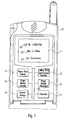
- a telecommunication device 10 comprises a display for displaying information to a user, particularly for displaying a call-number of a calling party and/or a calling party identification information 25 and/or 27 which is related to the displayed call-number.
- the calling party identification information 25 or 27 is only displayed when a respective entry was found in the call-number directory usually denoted as a phone book within a phone book storage 12 of a telecommunication device 10.
- a calling party identification like an individual specifying information 25 assigned to a an individual call-number representation 24 of the call-number of a calling party represents a sort of a meaningful description for specifying the respective calling party.
- a calling party identification like a generic specifying information 27 represents a generic name for a certain type of calling party.
- the type specification can be anything that groups calling parties according to a common characteristic which can be deduced from a part of their call-numbers which form a common base. This common base is denoted in the context of this specification as a generic call-number 26 the representation of which can be stored in the phone book storage 12 and can be assigned to a calling party identification as a generic specifying information 27.
- the specifying information forming the respective calling party identification has to be retrieved from the call-number directory 20.
- the term "calling party identification" 23 denotes both an individual specifying information 25 for specifying an individual calling party and a generic specifying information 27 specifying a certain group of calling parties.
- the retrieval of the calling party identification is handled by the calling party identification retrieval means 13.
- a collection of ringer melodies is stored in a ringer melody storage 14.
- a ringer melody associator 15 controls the selection of a ringer melody according to preferences set by a user or according to settings in the call-number directory 20 specifically assigning a selected ringer melody to a selected call-number representation 22 or to a calling party identification 23.
- the calling party identification retrieval means 13 Upon a call coming in, the calling party identification retrieval means 13 will retrieve a calling party identification 23 for the respective call-number of the calling party and the ringer melody associator will select a ringer melody specific for the respective individual or generically identified calling party for replay.
- a general storage 16 comprising permanent and volatile memory units is used for storing programs and/or data. The general storage may thereby in a special embodiment of the present invention contain the before mentioned means like the phone book storage 12 and the ringer melody storage means 14.
- a processor 17 executes programs stored in the general storage 16 and may thereby in a special embodiment of the present invention implement the before-mentioned means, likethe calling party identification retrieval means 13 and the ringer melody associator 15 within a memory unit of the general storage 16.
- a data bus 18 provides the means for exchanging data between the different components of the telecommunication device 10.
- Fig. 2 shows a basic representation of a call-number directory 20 relating call-number representations 22 to calling party identifications 23.
- a call-number representation like 24 and 26 is assigned a respective specifying information 25 and 27 containing a description for the calling party of the respective call-number representation, meaningful to the user of the telecommunication device 10.
- the call-number directory 20 may contain more types of information related to a call-number representation like e.g. a ringer melody to be played when a calling party with a matching call-number calls in, but in the representation of Fig. 2 only the substantial relation between the call-number representation 22 and the calling party identification 23 is shown.
- a call-number representation like e.g. a ringer melody to be played when a calling party with a matching call-number calls in, but in the representation of Fig. 2 only the substantial relation between the call-number representation 22 and the calling party identification 23 is shown.
- the first type is a representation of a complete call-number of an individual calling party or contact person, respectively
- the second type is a representation of a generic call-number which constitutes the common ground of the individual call-numbers of a certain group of calling parties, whereby the common ground is characteristic for the context of the respective group, e.g. a company, family, residence or the like.
- generic call-numbers are stored apart from the individual call-numbers in an extra call-number directory. Thus, whenever a call-number cannot be matched in the directory for individual call-number representations, the search is continued in the other directory for generic call-number representations.
- the call-number of a calling party which is received by the telecomunication device, may have different formats.
- the telecommunication system can support a format indicator.
- This format indicator fixes the properties of a format of the call-number of a calling party being received.
- the call-number of a calling party can be divided, as shown in figure 4, into the International access code 41, country code 42, area code 43 and personal phone number 44.
- Figure 4 shows different formats 45,46,47 of the calling party's call-number received by the telecommunication device.
- the + sign in the format 45 is a space holder indicating the international access code. This generic + sign is used in the GSM-system for mobile phone users, since the international access code may be different from country to country.
- the call-number representation may comprise also other special characters. Common functions are pause singals, used to add an accesscode after a phone number, which may be indicated by character like "p". Since the telecomonunciation manufacturer knows all special features and characters, which may be in addition integrated in the call-number representation, due to his own implementation or the requirements of the telecommunication standard, the matching means will take these into consideration. For the reason of simplicity, of the explanation of this invention, these special characters and their handling will be ignored in the further explanation.
- the individual specifying information 25 assigned to an individual call-number representation 24 can be entered by a user in the call-number directory 20 so that it bears a meaningful description for identifying the respective calling party.
- a generic call-number representation 26 contains only a classifying part common to a certain group of individual call-numbers.
- the generic call-number representation contains the number of the main terminal of a company's telephone system.
- the number of the main terminal is followed by an identifying character like the "*" shown in Fig. 2.
- the identifying character must not necessarily be placed at the end of the number representation but can also be set at the beginning or any other suitable place of the generic call-number representation.
- the special wildcard characters used as identifying characters can have different properties. For example a character like "*" as shown in figure 2 can specify an undefined number of unknown digits. This is advantageous for systems where for example the reception has a shorter number (e.g. 089-94578-0) than the normal employees (e.g. 089-94578-221). Another example could be a character like "%" specifying exactly one unknown digit. This kind of identifying character would be advantageous for a system where just the last digits are used to perform the matching.
- generic call-numbers may not be represented explicitly or may not be marked as such. Instead a character like e.g. a "-" in the representation of an individual call-number may mark the separation of the generic from the individual part of a respective call-number, like for example a dash separating the main terminal number from the extension.
- any number in the call-number directory 20 is checked for being a subset of the current call-number.
- an entry representing a main terminal will suffice for a generic match.
- the central main terminal extension number of a company is a "0" or a number having the same length as all other extensions used in its inhouse telephone system like e.g. a number like "000” or "100". Therefore, according to another further embodiment of the present invention, tailing zeros of an individual call-number representation and/or the tailing zeros together with the neighbouring figure are truncated for generating a generic number in the course of a match.
- the method 30 of displaying a calling party identification related to the call-number of a calling party according to the present invention is illustrated in Fig. 3.
- the telecommunication device 10 receives a call, it also receives the call-number of the respective calling party in step S31.
- the calling party identification retrieval means 13 checks if the call-number of the calling party matches an individual call-number representation in the call-number directory 20. Matching hereby means, that the representation of a call-number in the call-number directory equals the call-number of the calling party. Based on the formats supported from the standard, the complexity of the generic call-number 26 supported by the mobile manufacturer and the acceptable matching accuracy, different matching methods can be used.
- a complex system separates the calling party's call-number representation as well as the call-number representation in the call-number directory into the international access code 41, country code 42 and area code 43 and personal phone number 44. In normal cases it would be sufficient simply to match area code 43 and personal phone number 44 of the calling party's call-number representation and the call-number Representation in the call-number directory. In this case it is imaginable that two people calling from two different countries have the same area code and personal phone number. A seperation of area and personal phone number is not needed for the implementation of this invention.
- country code could be included in the matching process.
- a less complex system just takes a fixed number of last digits (e.g. last 8 digits) of the calling party's call-number representation and match it with the corresponding fixed number of last digits (e.g. last 8 digits) of the call-number Representation in the call-number directory.
- last digits e.g. last 8 digits
- the individual calling party identification 25 assigned to it is displayed on the display 11 of the telecommunication device 10 in step S33.
- step S34 it is checked if the call-number of the calling party matches a generic call-number representation 26 of the call-number directory 20.
- Matching a generic call-number representation means, based on the area and personal number code, that, it is checked if the block of numbers of the area and presonal phone number code present in the generic call-number representation equals a leading sub-set of the same length in the calling party's number area and personal phone number code.
- step S34 If in step S34 a matching generic call-number representation has been found for the call-number of the calling party, the generic specifying information 27 assigned to that generic call-number representation 26 will be displayed on the display 11.
- a call-number of a calling party may match an individual call-number representation and a generic call-number representation.
- both calling party identifications may be displayed on the display 11 of the telecommunication device 10 as shown in Fig. 1.
- steps S34 and S35 are therefore passed through in a loop until all generic numbers associated to the call-number of a calling party are found and displayed in an order according to the hierarchical levels.
- the call-number of the calling party may be displayed on the display 11 in step S36. If no individual call-number representation matching the call-number of the calling party could be found in step S32 nor a matching generic call-number representation in step S34, the call-number of the calling party will be displayed alone on display 11 in step S36.
- the main advantage of the present invention is that the context of a calling party can be identified even when the specific call-number of the calling party is not known to the phone book or call-number directory 20, respectively, of the telecommunication device 10. Further, the present invention allows to display the information identifying a calling party along with context information which is extremely useful for discerning persons of the same name or for to see e.g. if the respective person calls from a private or from a business phone.
Landscapes
- Engineering & Computer Science (AREA)
- Signal Processing (AREA)
- Computer Networks & Wireless Communication (AREA)
- Telephone Function (AREA)
Abstract
A method (30), a telecommunication device (10) and a software product for
implementing a method (30) on a telecommunication device (10) are presented,
whereby the method (30) comprises steps for providing a telecommunication device
(10) with a call-number directory (20) assigning calling party identifications (23) to
defined call-number representations (22), matching (S32, S34) a call-number of a
calling party with the call-number representations (24, 26) in the call-number directory
(20) and, in case a generic call-number representation (26) in the call-number directory
(20) matches a number sequence of the call-number of a calling party, outputting the
calling party identification (27) assigned to the generic call-number representation (26).
Description
The present invention relates to call initiated functions of telecommunication devices, in
particular to functions using a calling line identification presentation.
Most mobile phones and many phones in fixed networks use calling line identification
presentations in conjunction with a name identification of the calling party from a phone
book or a call-number directory facility on the phone, respectively. Calling line
identification presentation denotes a service of telephone networks where the telephone
number of the calling party is displayed on the phone receiving the call. When the
respective telephone number is found in an entry of the phone book facility of the
phone receiving the call, the name assigned to that call-number in addition or instead of
the call-number of the calling party is displayed.
The term "phone book" or "call-number directory" denotes a directory provided on
mobile as well as fixed network telecommunication devices, whereby each record filed
in the directory relates the representation of a call-number to a calling party
identification. A call-number representation is the telephone number of a calling party
The calling party identification related to the call-number representation in every record
is usually used as a specification for the call-number and can usually be any
combination of text numbers and special characters. When the records of the call-number
directory are browsed to find an equivalent for a call-number, in other words,
when the call-number is matched with the call-number representations in the directory,
the representations of the call-numbers are suitably evaluated to confirm a match.
An identification of a calling party by a name or any sort of describing text is normally
recognised much faster than a very hard to memorise call-number so that the name
identification described above is a very popular tool for identifying a calling party.
However, when a call-number of a calling party cannot be found in the call-number
directory, no meaningful identification will be presented, and a user has to see by
himself if the displayed call-number bears any meaning to him. Especially in the
business world people note call-numbers with related information identifying their
business partners in the call-number directories of their phones. When a business
partner calls, he will immediately be identified from the identifying information filed
with the respective record in the call-number directory.
But when the same business partner calls from a different extension in the same
company which is not known to any record in the call-number directory, or if
somebody else from the same company calls in, it is left to the user to guess from
whom the call might come.
It is therefore an object of the present invention to provide a method, a
telecommunication device and a software product for use in a telecommunication
device, which provide meaningful identification information of calling parties in a
telecommunication device.
This object is achieved according to a method, a telecommunication device and a
software product as claimed in the respective independent claims.
In particular, the above method is achieved by a method for identifying a calling party
comprising the steps of providing a telecommunication device with a call-number
directory assigning calling party identifications to define the call-number
representations, matching a call-number of a calling party with the call-number
representations in the call-number directory, and in case, a generic call-number
representation in the call-number directory matches a number sequence of the call-number
of a calling party, outputting the calling party identification assigned to that
generic call-number representation.
The above object is further achieved by a telecommunication device with a call-number
directory assigning calling party identifications to defined call-number representations
and a retrieval means for outputting a calling party identification corresponding to a
call-number of a calling party matching a respective call-number representation,
whereby in case, that a number sequence of the call-number of a calling party matches a
generic call-number representation in the call-number directory the calling party
identification assigned to the generic call-number representation is outputted.
Further, the above object is achieved by a software product for implementing a method
according to the present invention in a telecommunication device when stored in a
storage means and executed in a processing means of the telecommunication device.
This advantageously allows a user to identify a calling party at least generically even if
there is no individual match.
Additional advantageous features of the present invention are claimed in the respective
sub-claims.
A generic call-number representation advantageously comprises at least one identifying
character for identifying it as a generic call-number representation. Thus, generic call-numbers
can easily be distinguished from a representation of an individual call-number.
If the generic call-number representation in the call-number directory matches a number
sequence of the call-number of a calling party, preferably a function of the
telecommunication device assigned to this generic call-number representation is
executed. Thus, a user will easily be enabled to classify a calling party without having
to read the calling party identification from the call-number or the user will be provided
with means available with the telecommunication device preparing him for the call in
advance.
In a preferred embodiment of the present invention a ringer melody assigned to a
generic call-number representation is replayed by the telecommunication device in case
the generic call-number representation in a call-number directory matches a number
sequence of the call-number of a calling party. Hereby, the user can already classify the
calling party without having to look at the display of the telecommunication device.
Alternatively, other actions instead of a ringer melody can be assigned to a call-number
representation like a vibration indicator, a silent indicator or even a divert to the
internal voice mail.
Advantageously, in case a generic call-number representation in the call-number
directory matches a number sequence of the call-number of a calling party, and the call-number
of the calling party matches a further call-number representation, the calling
party identification assigned to that further call-number representation is outputted along
with the calling party identification assigned to the generic call-number. In the case that
the calling party identification assigned to the generic call-number representation and
the calling party identification assigned to a specific call-number representation are
outputted along, but have different ringer melodies assigned, preferably the ringer
melody assigned to the call-number representation of the specific person has higher
priority and is e. g. replayed.
The present invention may advantageously be implemented on mobile phones for
cellular telecommunication networks, on terminal phones of a fixed telecommunication
network or any extension of a telecommunication system or the like.
In the following description, the present invention is explained in more detail with
respect to special embodiments and in relation to the enclosed drawings, in which
The main components of a telecommunication device 10 according to the present
invention are shown in Fig. 1. It comprises a display for displaying information to a
user, particularly for displaying a call-number of a calling party and/or a calling party
identification information 25 and/or 27 which is related to the displayed call-number.
The calling party identification information 25 or 27 is only displayed when a respective
entry was found in the call-number directory usually denoted as a phone book within a
phone book storage 12 of a telecommunication device 10.
A calling party identification like an individual specifying information 25 assigned to a
an individual call-number representation 24 of the call-number of a calling party
represents a sort of a meaningful description for specifying the respective calling party.
A calling party identification like a generic specifying information 27 represents a
generic name for a certain type of calling party. The type specification can be anything
that groups calling parties according to a common characteristic which can be deduced
from a part of their call-numbers which form a common base. This common base is
denoted in the context of this specification as a generic call-number 26 the
representation of which can be stored in the phone book storage 12 and can be assigned
to a calling party identification as a generic specifying information 27.
To display specifying information 25 and/or 27 correlated to a call-number 22 of a
calling party, the specifying information forming the respective calling party
identification has to be retrieved from the call-number directory 20. The term "calling
party identification" 23 denotes both an individual specifying information 25 for
specifying an individual calling party and a generic specifying information 27
specifying a certain group of calling parties. The retrieval of the calling party
identification is handled by the calling party identification retrieval means 13. A
collection of ringer melodies is stored in a ringer melody storage 14. A ringer melody
associator 15 controls the selection of a ringer melody according to preferences set by a
user or according to settings in the call-number directory 20 specifically assigning a
selected ringer melody to a selected call-number representation 22 or to a calling party
identification 23. Upon a call coming in, the calling party identification retrieval means
13 will retrieve a calling party identification 23 for the respective call-number of the
calling party and the ringer melody associator will select a ringer melody specific for
the respective individual or generically identified calling party for replay. A general
storage 16 comprising permanent and volatile memory units is used for storing
programs and/or data. The general storage may thereby in a special embodiment of the
present invention contain the before mentioned means like the phone book storage 12
and the ringer melody storage means 14. A processor 17 executes programs stored in
the general storage 16 and may thereby in a special embodiment of the present
invention implement the before-mentioned means, likethe calling party identification
retrieval means 13 and the ringer melody associator 15 within a memory unit of the
general storage 16. A data bus 18 provides the means for exchanging data between the
different components of the telecommunication device 10.
Fig. 2 shows a basic representation of a call-number directory 20 relating call-number
representations 22 to calling party identifications 23. A call-number representation like
24 and 26 is assigned a respective specifying information 25 and 27 containing a
description for the calling party of the respective call-number representation,
meaningful to the user of the telecommunication device 10.
The call-number directory 20 may contain more types of information related to a call-number
representation like e.g. a ringer melody to be played when a calling party with
a matching call-number calls in, but in the representation of Fig. 2 only the substantial
relation between the call-number representation 22 and the calling party identification
23 is shown.
According to the present invention two types of call-number representations 22 are
stored in the call-number directory 20. The first type is a representation of a complete
call-number of an individual calling party or contact person, respectively, the second
type is a representation of a generic call-number which constitutes the common ground
of the individual call-numbers of a certain group of calling parties, whereby the
common ground is characteristic for the context of the respective group, e.g. a
company, family, residence or the like.
In an alternative embodiment of the present invention, generic call-numbers are stored
apart from the individual call-numbers in an extra call-number directory. Thus,
whenever a call-number cannot be matched in the directory for individual call-number
representations, the search is continued in the other directory for generic call-number
representations.
Dependent on pecularities of certain calling line identification systems or
telecommunication standards the call-number of a calling party, which is received by
the telecomunication device, may have different formats. Whereas the
telecommunication system can support a format indicator. This format indicator fixes
the properties of a format of the call-number of a calling party being received. The call-number
of a calling party can be divided, as shown in figure 4, into the International
access code 41, country code 42, area code 43 and personal phone number 44. Figure 4
shows different formats 45,46,47 of the calling party's call-number received by the
telecommunication device. The + sign in the format 45 is a space holder indicating the
international access code. This generic + sign is used in the GSM-system for mobile
phone users, since the international access code may be different from country to
country.
The call-number representation may comprise also other special characters. Common
functions are pause singals, used to add an accesscode after a phone number, which
may be indicated by character like "p". Since the telecomonunciation manufacturer
knows all special features and characters, which may be in addition integrated in the
call-number representation, due to his own implementation or the requirements of the
telecommunication standard, the matching means will take these into consideration. For
the reason of simplicity, of the explanation of this invention, these special characters
and their handling will be ignored in the further explanation.
The individual specifying information 25 assigned to an individual call-number
representation 24 can be entered by a user in the call-number directory 20 so that it
bears a meaningful description for identifying the respective calling party.
A generic call-number representation 26 contains only a classifying part common to a
certain group of individual call-numbers.
In the example of Fig. 2, the generic call-number representation contains the number of
the main terminal of a company's telephone system. To distinguish a generic call-number
representation from an individual call-number representation, the number of the
main terminal is followed by an identifying character like the "*" shown in Fig. 2. The
identifying character must not necessarily be placed at the end of the number
representation but can also be set at the beginning or any other suitable place of the
generic call-number representation. The special wildcard characters used as identifying
characters can have different properties. For example a character like "*" as shown in
figure 2 can specify an undefined number of unknown digits. This is advantageous for
systems where for example the reception has a shorter number (e.g. 089-94578-0) than
the normal employees (e.g. 089-94578-221). Another example could be a character like
"%" specifying exactly one unknown digit. This kind of identifying character would be
advantageous for a system where just the last digits are used to perform the matching.
In alternative embodiments of the present invention, generic call-numbers may not be
represented explicitly or may not be marked as such. Instead a character like e.g. a "-"
in the representation of an individual call-number may mark the separation of the
generic from the individual part of a respective call-number, like for example a dash
separating the main terminal number from the extension.
In a further alternative embodiment any number in the call-number directory 20 is
checked for being a subset of the current call-number. In this embodiment an entry
representing a main terminal will suffice for a generic match.
Usually, the central main terminal extension number of a company is a "0" or a number
having the same length as all other extensions used in its inhouse telephone system like
e.g. a number like "000" or "100". Therefore, according to another further
embodiment of the present invention, tailing zeros of an individual call-number
representation and/or the tailing zeros together with the neighbouring figure are
truncated for generating a generic number in the course of a match.
The method 30 of displaying a calling party identification related to the call-number of
a calling party according to the present invention is illustrated in Fig. 3. When the
telecommunication device 10 receives a call, it also receives the call-number of the
respective calling party in step S31. In step S32 the calling party identification retrieval
means 13 checks if the call-number of the calling party matches an individual call-number
representation in the call-number directory 20. Matching hereby means, that the
representation of a call-number in the call-number directory equals the call-number of
the calling party. Based on the formats supported from the standard, the complexity of
the generic call-number 26 supported by the mobile manufacturer and the acceptable
matching accuracy, different matching methods can be used.
A complex system separates the calling party's call-number representation as well as the
call-number representation in the call-number directory into the international access
code 41, country code 42 and area code 43 and personal phone number 44. In normal
cases it would be sufficient simply to match area code 43 and personal phone number
44 of the calling party's call-number representation and the call-number Representation
in the call-number directory. In this case it is imaginable that two people calling from
two different countries have the same area code and personal phone number. A
seperation of area and personal phone number is not needed for the implementation of
this invention.
To avoid this also the country code could be included in the matching process.
A less complex system just takes a fixed number of last digits (e.g. last 8 digits) of the
calling party's call-number representation and match it with the corresponding fixed
number of last digits (e.g. last 8 digits) of the call-number Representation in the call-number
directory.
If a call-number representation 24 matching the call-number of the calling party is
found in the call-number directory 20, the individual calling party identification 25
assigned to it is displayed on the display 11 of the telecommunication device 10 in step
S33.
Next, the system will either proceed to step S36 for displaying the call-number of the
calling party or proceed to step S34 which also would have been the next step after S32
if no respective individual call-number representation would have been found in the
call-number directory 20. Now, in step S34, it is checked if the call-number of the
calling party matches a generic call-number representation 26 of the call-number
directory 20. Matching a generic call-number representation means, based on the area
and personal number code, that, it is checked if the block of numbers of the area and
presonal phone number code present in the generic call-number representation equals a
leading sub-set of the same length in the calling party's number area and personal phone
number code. To give an example for a better understandingthe complete generic
number would be read as "0049 89 123987". This means, that the generic number has
following combined area and personal phone number code "89 123987". Assumed a
calling party named Alice, having that telephone number "0049 89 123987456" calls,
then it is checked if the evaluated generic area and personal phone number code " 89
123987" forms the leading part of Alice's area and personal phone number code when
she calls from her office. According to the example given in Fig. 2 this is true so that
Alice would be identified as being a member of a group of calling parties called "Tax
Consultants" as identified by the generic specifying information 27 associated to this
generic call-number representation 26. In this case, the context of Alice when she calls
from her office is simply the company or a department thereof which is concerned with
tax consulting.
In the case the matching method relies on the last digits it is advantageous to use the
previous described identifying character which represent just 1 unknown digit. To give
an example for a better understanding it is assumed that following generic call-number
representation is entered in the call-number directory "04989123987% % %". Assuming
that the e.g. last 8 digits are compared and a calling party named Alice, having that
telephone number "004989123987456" calls. Based on the last 8 digit approach the
generic number code "23987" is extracted and compared with the leading subset of the
last 8 digits of the calling-party representation, which would in this example be
"23987456". Based on this example, a match would be detected and the relevant calling
party identification associated to this generic call-number representation would be
noted.
The two previous examples presented the most common approaches for using the
properties of the identifying characters. Nevertheless it is also possible to construct
variants of the matching algorithm by combing both kinds of identifying characters and
different placing positions in a generic call number representation. Example of such
combinations could be "*23987%%%" or "*23987*".
If in step S34 a matching generic call-number representation has been found for the
call-number of the calling party, the generic specifying information 27 assigned to that
generic call-number representation 26 will be displayed on the display 11. As can be
seen from the representation of Fig. 2, a call-number of a calling party may match an
individual call-number representation and a generic call-number representation. In this
case, both calling party identifications may be displayed on the display 11 of the
telecommunication device 10 as shown in Fig. 1.
Because call-numbers are built in a hierarchical order also a hierarchical organisation of
generic terms can be organised within the call-number directory. One context given by
a generic number could e.g. be the company's name, and still further down even the
department within that company. In a special embodiment of the present invention,
steps S34 and S35 are therefore passed through in a loop until all generic numbers
associated to the call-number of a calling party are found and displayed in an order
according to the hierarchical levels.
Finally, the call-number of the calling party may be displayed on the display 11 in step
S36. If no individual call-number representation matching the call-number of the calling
party could be found in step S32 nor a matching generic call-number representation in
step S34, the call-number of the calling party will be displayed alone on display 11 in
step S36.
The main advantage of the present invention is that the context of a calling party can be
identified even when the specific call-number of the calling party is not known to the
phone book or call-number directory 20, respectively, of the telecommunication device
10. Further, the present invention allows to display the information identifying a calling
party along with context information which is extremely useful for discerning persons
of the same name or for to see e.g. if the respective person calls from a private or from
a business phone.
Claims (8)
- Method (30) for identifying a calling party comprising the following steps:providing a telecommunication device (10) with a call-number directory (20) assigning calling party identifications (23) to defined call-number representations (22),matching (S32, S34) a call-number of a calling party with the call-number representations (24, 26) in the call-number directory (20) and,in case a generic call-number representation (26) in the call-number directory (20) matches a number sequence of the call-number of a calling party, outputting the calling party identification (27) assigned to said generic call-number representation (26).
- Method for identifying a calling party according to claim 1,
characterised in that a generic call-number representation (26) comprises at least one identifying character for identifying it as a generic call-number representation. - Method for identifying a calling party according to claim 1 or 2,
characterised in that in case a generic call-number representation (26) in the call-number directory matches a number sequence of the call-number of a calling party, a function of the telecommunication device assigned to said generic call-number representation is executed. - Telecommunication device (10) with a call-number directory assigning calling party identifications (23) to defined call-number representations (22) and a retrieval means (13) for outputting a calling party identification (25, 27) corresponding to a call-number of a calling party matching a respective call-number representation (24, 26),
characterised in that in case a number sequence of the call-number of a calling party matches a generic call-number representation (26) in the call-number directory (20), the calling party identification (27) assigned to said generic call-number representation is outputted. - Telecommunication device according to claim 4,
characterised in that a generic call-number representation (26) comprises at least one identifying character for identifying it as a generic call-number representation. - Telecommunication device according to claim 4 or 5,
characterised in that in case a generic call-number representation (26) in the call-number directory matches a number sequence of the call-number of a calling party, a ringer melody assigned to said generic call-number representation is replayed by the telecommunication device (10). - Telecommunication device according to claim 4, 5or 6,
characterised in that in case a generic call-number representation (26) in the call-number directory matches a number sequence of the call-number of a calling party, and the call-number of the calling party further matches a further call-number representation (24, 26), the calling party identification assigned to said further call-number representation (24, 26) is outputted along with the calling party identification (26) assigned to said generic call-number. - Software product for implementing a method according to one of the claims 1 to 3 in a telecommunication device (10) when stored in a storage means (16) and executed in a processing means (17) of the telecommunication device (10).
Priority Applications (2)
| Application Number | Priority Date | Filing Date | Title |
|---|---|---|---|
| EP01131000A EP1324575A1 (en) | 2001-12-28 | 2001-12-28 | Generic call-numbers for calling line identification |
| US10/330,956 US20030152205A1 (en) | 2001-12-28 | 2002-12-27 | Generic call-numbers for calling line identification |
Applications Claiming Priority (1)
| Application Number | Priority Date | Filing Date | Title |
|---|---|---|---|
| EP01131000A EP1324575A1 (en) | 2001-12-28 | 2001-12-28 | Generic call-numbers for calling line identification |
Publications (1)
| Publication Number | Publication Date |
|---|---|
| EP1324575A1 true EP1324575A1 (en) | 2003-07-02 |
Family
ID=8179715
Family Applications (1)
| Application Number | Title | Priority Date | Filing Date |
|---|---|---|---|
| EP01131000A Withdrawn EP1324575A1 (en) | 2001-12-28 | 2001-12-28 | Generic call-numbers for calling line identification |
Country Status (2)
| Country | Link |
|---|---|
| US (1) | US20030152205A1 (en) |
| EP (1) | EP1324575A1 (en) |
Cited By (1)
| Publication number | Priority date | Publication date | Assignee | Title |
|---|---|---|---|---|
| EP1521433A3 (en) * | 2003-10-02 | 2006-05-24 | Vodafone Group PLC | Mobile telephone card, method of contact register management in the card, and program product for carrying out the method |
Families Citing this family (11)
| Publication number | Priority date | Publication date | Assignee | Title |
|---|---|---|---|---|
| US7308253B2 (en) * | 2004-06-30 | 2007-12-11 | Avaya Technology Corp. | Log-based ringtone service |
| US7343150B2 (en) * | 2004-06-30 | 2008-03-11 | Avaya Technology Corp. | Log-based ringtones |
| US7062034B2 (en) * | 2004-08-13 | 2006-06-13 | Sharp Laboratories Of America, Inc. | International call prefix identification and formatting |
| CN101312548A (en) * | 2007-05-25 | 2008-11-26 | 深圳富泰宏精密工业有限公司 | Telephone number inquiry apparatus and inquiry method therefor |
| TWI397304B (en) * | 2007-07-06 | 2013-05-21 | Chi Mei Comm Systems Inc | Telephone number inquiry device and inquiry method |
| CA2648184C (en) * | 2007-12-28 | 2014-07-08 | Bce Inc. | Method and apparatus for conveying a calling party identifier |
| CN101494686B (en) * | 2008-01-25 | 2012-05-30 | 鹏智科技(深圳)有限公司 | Communication device with incoming call prompting function and incoming call prompting method thereof |
| CN101527747A (en) * | 2008-03-07 | 2009-09-09 | 鹏智科技(深圳)有限公司 | Communication device having incoming call prompt function and incoming call prompt method thereof |
| CN101527892A (en) * | 2008-03-07 | 2009-09-09 | 鹏智科技(深圳)有限公司 | Communication device having incoming call prompt function and incoming call prompt method thereof |
| KR101090777B1 (en) * | 2008-06-03 | 2011-12-08 | 삼성전자주식회사 | A method for message transmission of mobile terminal and an apparatus thereof |
| US10097685B2 (en) * | 2015-07-05 | 2018-10-09 | Roger Sauln | Telecommunications privacy method |
Citations (5)
| Publication number | Priority date | Publication date | Assignee | Title |
|---|---|---|---|---|
| EP0464610A2 (en) * | 1990-07-06 | 1992-01-08 | Siemens Aktiengesellschaft | Method for generating an information for the called subscriber in a communication system, especially a private telecommunication system |
| US5581599A (en) * | 1993-12-30 | 1996-12-03 | Northern Telecom Limited | Cordless telephone terminal |
| US5604795A (en) * | 1992-12-11 | 1997-02-18 | Canon Kabushiki Kaisha | Communication method and apparatus for providing terminal information to a line connected to plural networks |
| GB2308038A (en) * | 1995-12-07 | 1997-06-11 | Nokia Mobile Phones Ltd | Calling line identification |
| EP0901263A2 (en) * | 1997-09-04 | 1999-03-10 | Nokia Mobile Phones Ltd. | Method for handling phone numbers in mobile station and mobile station |
Family Cites Families (2)
| Publication number | Priority date | Publication date | Assignee | Title |
|---|---|---|---|---|
| US6738462B1 (en) * | 2000-07-19 | 2004-05-18 | Avaya Technology Corp. | Unified communications automated personal name addressing |
| US20020064263A1 (en) * | 2000-11-30 | 2002-05-30 | International Business Machines Corporation | System and method for automatically and dynamically configuring dialing properties of a telephone |
-
2001
- 2001-12-28 EP EP01131000A patent/EP1324575A1/en not_active Withdrawn
-
2002
- 2002-12-27 US US10/330,956 patent/US20030152205A1/en not_active Abandoned
Patent Citations (5)
| Publication number | Priority date | Publication date | Assignee | Title |
|---|---|---|---|---|
| EP0464610A2 (en) * | 1990-07-06 | 1992-01-08 | Siemens Aktiengesellschaft | Method for generating an information for the called subscriber in a communication system, especially a private telecommunication system |
| US5604795A (en) * | 1992-12-11 | 1997-02-18 | Canon Kabushiki Kaisha | Communication method and apparatus for providing terminal information to a line connected to plural networks |
| US5581599A (en) * | 1993-12-30 | 1996-12-03 | Northern Telecom Limited | Cordless telephone terminal |
| GB2308038A (en) * | 1995-12-07 | 1997-06-11 | Nokia Mobile Phones Ltd | Calling line identification |
| EP0901263A2 (en) * | 1997-09-04 | 1999-03-10 | Nokia Mobile Phones Ltd. | Method for handling phone numbers in mobile station and mobile station |
Cited By (1)
| Publication number | Priority date | Publication date | Assignee | Title |
|---|---|---|---|---|
| EP1521433A3 (en) * | 2003-10-02 | 2006-05-24 | Vodafone Group PLC | Mobile telephone card, method of contact register management in the card, and program product for carrying out the method |
Also Published As
| Publication number | Publication date |
|---|---|
| US20030152205A1 (en) | 2003-08-14 |
Similar Documents
| Publication | Publication Date | Title |
|---|---|---|
| KR100729336B1 (en) | Method and apparatus for automatically providing message communication method and destination address | |
| US10025848B2 (en) | System and method for processing speech files | |
| CA2208824C (en) | Method and apparatus providing personalized mailbox filters | |
| EP1175075A2 (en) | Unified communications, automated personal name addressing | |
| JP2000092186A (en) | Communication terminal | |
| US20030152205A1 (en) | Generic call-numbers for calling line identification | |
| JPH066428A (en) | Telephone set with incoming call identifying function | |
| US20050033780A1 (en) | Method and apparatus for data transmission | |
| EP1076979A1 (en) | Personalized information system | |
| US20050129190A1 (en) | Method, receiving terminal and transmitting terminal for identifying a caller | |
| JP2005020204A (en) | How to register and display secret information in memory dial | |
| US7751541B2 (en) | Communication setup methods for GSM, UMTS and ISDN protocols to enable personalized telephony and communication device incorporating the same | |
| KR100828323B1 (en) | Call list display method of mobile communication terminal | |
| JP5184413B2 (en) | Voice communication storage / retrieval device, voice communication accumulation / retrieval method, voice communication accumulator / retrieval program, and recording medium recording the program | |
| KR101034112B1 (en) | Mobile terminal and its data retrieval and sorting method | |
| KR100810331B1 (en) | How to search phone number on mobile terminal | |
| CN100403752C (en) | Portable telephone set and control method thereof | |
| EP1742493A1 (en) | International dial system | |
| KR100669614B1 (en) | Method for classficating kinds of telephone number in a mobile communication system | |
| KR100635186B1 (en) | A method and related communications apparatus for assisting a callee in identifying a possible caller | |
| KR19990032929A (en) | Find people by phone | |
| JPS63276352A (en) | Voice automatic dialing telephone terminal equipment | |
| KR100621727B1 (en) | How to save phone number of communication device that supports calling number display | |
| US20030103622A1 (en) | Method of calling up target call receiver and communications terminal equipment used for implementing same | |
| JP2001127873A (en) | Telephone device and telephone number related information registration method in telephone device |
Legal Events
| Date | Code | Title | Description |
|---|---|---|---|
| PUAI | Public reference made under article 153(3) epc to a published international application that has entered the european phase |
Free format text: ORIGINAL CODE: 0009012 |
|
| AK | Designated contracting states |
Designated state(s): AT BE CH CY DE DK ES FI FR GB GR IE IT LI LU MC NL PT SE TR |
|
| AX | Request for extension of the european patent |
Extension state: AL LT LV MK RO SI |
|
| 17P | Request for examination filed |
Effective date: 20030806 |
|
| STAA | Information on the status of an ep patent application or granted ep patent |
Free format text: STATUS: THE APPLICATION HAS BEEN WITHDRAWN |
|
| AKX | Designation fees paid |
Designated state(s): DE |
|
| 18W | Application withdrawn |
Effective date: 20040206 |