EP1322350B1 - E-ptfe foil impregnated with an encapsulated bioactive substance - Google Patents
E-ptfe foil impregnated with an encapsulated bioactive substance Download PDFInfo
- Publication number
- EP1322350B1 EP1322350B1 EP01974313A EP01974313A EP1322350B1 EP 1322350 B1 EP1322350 B1 EP 1322350B1 EP 01974313 A EP01974313 A EP 01974313A EP 01974313 A EP01974313 A EP 01974313A EP 1322350 B1 EP1322350 B1 EP 1322350B1
- Authority
- EP
- European Patent Office
- Prior art keywords
- foil
- nanoparticles
- ptfe
- biologically
- substance
- Prior art date
- Legal status (The legal status is an assumption and is not a legal conclusion. Google has not performed a legal analysis and makes no representation as to the accuracy of the status listed.)
- Expired - Lifetime
Links
- 239000011888 foil Substances 0.000 title claims abstract description 58
- 229920001343 polytetrafluoroethylene Polymers 0.000 title claims abstract description 45
- 239000000126 substance Substances 0.000 title claims description 15
- 230000000975 bioactive effect Effects 0.000 title 1
- 239000004810 polytetrafluoroethylene Substances 0.000 claims abstract description 43
- 238000000034 method Methods 0.000 claims abstract description 30
- 229940088623 biologically active substance Drugs 0.000 claims abstract description 21
- 239000002105 nanoparticle Substances 0.000 claims description 44
- 239000003795 chemical substances by application Substances 0.000 claims description 11
- 239000000463 material Substances 0.000 claims description 11
- 229920000642 polymer Polymers 0.000 claims description 8
- 239000010410 layer Substances 0.000 claims description 7
- 239000012530 fluid Substances 0.000 claims description 5
- JJTUDXZGHPGLLC-UHFFFAOYSA-N lactide Chemical compound CC1OC(=O)C(C)OC1=O JJTUDXZGHPGLLC-UHFFFAOYSA-N 0.000 claims description 5
- 239000002344 surface layer Substances 0.000 claims description 4
- 238000010438 heat treatment Methods 0.000 claims description 2
- 239000007788 liquid Substances 0.000 claims 4
- 229920000295 expanded polytetrafluoroethylene Polymers 0.000 abstract description 3
- UREBDLICKHMUKA-CXSFZGCWSA-N dexamethasone Chemical compound C1CC2=CC(=O)C=C[C@]2(C)[C@]2(F)[C@@H]1[C@@H]1C[C@@H](C)[C@@](C(=O)CO)(O)[C@@]1(C)C[C@@H]2O UREBDLICKHMUKA-CXSFZGCWSA-N 0.000 description 32
- 229960003957 dexamethasone Drugs 0.000 description 32
- 239000002077 nanosphere Substances 0.000 description 19
- 239000000725 suspension Substances 0.000 description 14
- 239000003814 drug Substances 0.000 description 12
- 229940079593 drug Drugs 0.000 description 10
- 239000002904 solvent Substances 0.000 description 9
- XLYOFNOQVPJJNP-UHFFFAOYSA-N water Substances O XLYOFNOQVPJJNP-UHFFFAOYSA-N 0.000 description 9
- 238000004519 manufacturing process Methods 0.000 description 8
- -1 polyesther Polymers 0.000 description 8
- 239000013543 active substance Substances 0.000 description 6
- 239000002245 particle Substances 0.000 description 6
- 230000008569 process Effects 0.000 description 6
- 238000000935 solvent evaporation Methods 0.000 description 6
- YMWUJEATGCHHMB-UHFFFAOYSA-N Dichloromethane Chemical compound ClCCl YMWUJEATGCHHMB-UHFFFAOYSA-N 0.000 description 5
- 238000004873 anchoring Methods 0.000 description 5
- 239000008346 aqueous phase Substances 0.000 description 5
- 229930012538 Paclitaxel Natural products 0.000 description 4
- 230000008033 biological extinction Effects 0.000 description 4
- 210000004027 cell Anatomy 0.000 description 4
- 239000000706 filtrate Substances 0.000 description 4
- 238000012417 linear regression Methods 0.000 description 4
- 229960001592 paclitaxel Drugs 0.000 description 4
- RCINICONZNJXQF-MZXODVADSA-N taxol Chemical compound O([C@@H]1[C@@]2(C[C@@H](C(C)=C(C2(C)C)[C@H](C([C@]2(C)[C@@H](O)C[C@H]3OC[C@]3([C@H]21)OC(C)=O)=O)OC(=O)C)OC(=O)[C@H](O)[C@@H](NC(=O)C=1C=CC=CC=1)C=1C=CC=CC=1)O)C(=O)C1=CC=CC=C1 RCINICONZNJXQF-MZXODVADSA-N 0.000 description 4
- 238000002211 ultraviolet spectrum Methods 0.000 description 4
- 230000002792 vascular Effects 0.000 description 4
- 230000001419 dependent effect Effects 0.000 description 3
- 239000011159 matrix material Substances 0.000 description 3
- 238000003756 stirring Methods 0.000 description 3
- CSCPPACGZOOCGX-UHFFFAOYSA-N Acetone Chemical compound CC(C)=O CSCPPACGZOOCGX-UHFFFAOYSA-N 0.000 description 2
- IJGRMHOSHXDMSA-UHFFFAOYSA-N Atomic nitrogen Chemical compound N#N IJGRMHOSHXDMSA-UHFFFAOYSA-N 0.000 description 2
- NWIBSHFKIJFRCO-WUDYKRTCSA-N Mytomycin Chemical compound C1N2C(C(C(C)=C(N)C3=O)=O)=C3[C@@H](COC(N)=O)[C@@]2(OC)[C@@H]2[C@H]1N2 NWIBSHFKIJFRCO-WUDYKRTCSA-N 0.000 description 2
- 229920001244 Poly(D,L-lactide) Polymers 0.000 description 2
- 239000004698 Polyethylene Substances 0.000 description 2
- 239000004372 Polyvinyl alcohol Substances 0.000 description 2
- 238000004458 analytical method Methods 0.000 description 2
- 239000002246 antineoplastic agent Substances 0.000 description 2
- 230000004888 barrier function Effects 0.000 description 2
- 239000012620 biological material Substances 0.000 description 2
- 239000012153 distilled water Substances 0.000 description 2
- 238000009826 distribution Methods 0.000 description 2
- 238000005538 encapsulation Methods 0.000 description 2
- 238000002474 experimental method Methods 0.000 description 2
- 239000003102 growth factor Substances 0.000 description 2
- 230000002209 hydrophobic effect Effects 0.000 description 2
- 239000012528 membrane Substances 0.000 description 2
- 229920000573 polyethylene Polymers 0.000 description 2
- 229920002451 polyvinyl alcohol Polymers 0.000 description 2
- 235000019422 polyvinyl alcohol Nutrition 0.000 description 2
- 239000000843 powder Substances 0.000 description 2
- 239000002464 receptor antagonist Substances 0.000 description 2
- 229940044551 receptor antagonist Drugs 0.000 description 2
- 239000004953 Aliphatic polyamide Substances 0.000 description 1
- 102000008186 Collagen Human genes 0.000 description 1
- 108010035532 Collagen Proteins 0.000 description 1
- 108010037362 Extracellular Matrix Proteins Proteins 0.000 description 1
- 102000010834 Extracellular Matrix Proteins Human genes 0.000 description 1
- GHASVSINZRGABV-UHFFFAOYSA-N Fluorouracil Chemical compound FC1=CNC(=O)NC1=O GHASVSINZRGABV-UHFFFAOYSA-N 0.000 description 1
- 108010010803 Gelatin Proteins 0.000 description 1
- HTTJABKRGRZYRN-UHFFFAOYSA-N Heparin Chemical compound OC1C(NC(=O)C)C(O)OC(COS(O)(=O)=O)C1OC1C(OS(O)(=O)=O)C(O)C(OC2C(C(OS(O)(=O)=O)C(OC3C(C(O)C(O)C(O3)C(O)=O)OS(O)(=O)=O)C(CO)O2)NS(O)(=O)=O)C(C(O)=O)O1 HTTJABKRGRZYRN-UHFFFAOYSA-N 0.000 description 1
- 102000007625 Hirudins Human genes 0.000 description 1
- 108010007267 Hirudins Proteins 0.000 description 1
- 102100025306 Integrin alpha-IIb Human genes 0.000 description 1
- 101710149643 Integrin alpha-IIb Proteins 0.000 description 1
- 229920000271 Kevlar® Polymers 0.000 description 1
- 229920000784 Nomex Polymers 0.000 description 1
- 239000004952 Polyamide Substances 0.000 description 1
- 229920002732 Polyanhydride Polymers 0.000 description 1
- 239000004721 Polyphenylene oxide Substances 0.000 description 1
- 239000004743 Polypropylene Substances 0.000 description 1
- 208000007536 Thrombosis Diseases 0.000 description 1
- 102000005789 Vascular Endothelial Growth Factors Human genes 0.000 description 1
- 108010019530 Vascular Endothelial Growth Factors Proteins 0.000 description 1
- 239000002253 acid Substances 0.000 description 1
- 238000005054 agglomeration Methods 0.000 description 1
- 230000002776 aggregation Effects 0.000 description 1
- 125000001931 aliphatic group Chemical group 0.000 description 1
- 229920003231 aliphatic polyamide Polymers 0.000 description 1
- 239000002870 angiogenesis inducing agent Substances 0.000 description 1
- 239000004037 angiogenesis inhibitor Substances 0.000 description 1
- 229940121369 angiogenesis inhibitor Drugs 0.000 description 1
- 230000001772 anti-angiogenic effect Effects 0.000 description 1
- 229940121363 anti-inflammatory agent Drugs 0.000 description 1
- 239000002260 anti-inflammatory agent Substances 0.000 description 1
- 230000002095 anti-migrative effect Effects 0.000 description 1
- 230000001028 anti-proliverative effect Effects 0.000 description 1
- 230000000692 anti-sense effect Effects 0.000 description 1
- 239000003146 anticoagulant agent Substances 0.000 description 1
- 229940041181 antineoplastic drug Drugs 0.000 description 1
- 239000003963 antioxidant agent Substances 0.000 description 1
- 229960004676 antithrombotic agent Drugs 0.000 description 1
- 230000006907 apoptotic process Effects 0.000 description 1
- 239000004760 aramid Substances 0.000 description 1
- 229920003235 aromatic polyamide Polymers 0.000 description 1
- 229920005601 base polymer Polymers 0.000 description 1
- 239000000560 biocompatible material Substances 0.000 description 1
- 230000015572 biosynthetic process Effects 0.000 description 1
- 230000000903 blocking effect Effects 0.000 description 1
- 230000001413 cellular effect Effects 0.000 description 1
- 230000008859 change Effects 0.000 description 1
- DQLATGHUWYMOKM-UHFFFAOYSA-L cisplatin Chemical compound N[Pt](N)(Cl)Cl DQLATGHUWYMOKM-UHFFFAOYSA-L 0.000 description 1
- 229960004316 cisplatin Drugs 0.000 description 1
- 229920001436 collagen Polymers 0.000 description 1
- 150000001875 compounds Chemical class 0.000 description 1
- 229920001577 copolymer Polymers 0.000 description 1
- 229940127089 cytotoxic agent Drugs 0.000 description 1
- 230000007423 decrease Effects 0.000 description 1
- 238000010586 diagram Methods 0.000 description 1
- 238000011549 displacement method Methods 0.000 description 1
- 238000006073 displacement reaction Methods 0.000 description 1
- 238000009509 drug development Methods 0.000 description 1
- 230000000694 effects Effects 0.000 description 1
- 238000001493 electron microscopy Methods 0.000 description 1
- 239000000839 emulsion Substances 0.000 description 1
- 229960002949 fluorouracil Drugs 0.000 description 1
- ZZUFCTLCJUWOSV-UHFFFAOYSA-N furosemide Chemical compound C1=C(Cl)C(S(=O)(=O)N)=CC(C(O)=O)=C1NCC1=CC=CO1 ZZUFCTLCJUWOSV-UHFFFAOYSA-N 0.000 description 1
- 229920000159 gelatin Polymers 0.000 description 1
- 239000008273 gelatin Substances 0.000 description 1
- 235000019322 gelatine Nutrition 0.000 description 1
- 235000011852 gelatine desserts Nutrition 0.000 description 1
- 229960005277 gemcitabine Drugs 0.000 description 1
- SDUQYLNIPVEERB-QPPQHZFASA-N gemcitabine Chemical compound O=C1N=C(N)C=CN1[C@H]1C(F)(F)[C@H](O)[C@@H](CO)O1 SDUQYLNIPVEERB-QPPQHZFASA-N 0.000 description 1
- 239000003966 growth inhibitor Substances 0.000 description 1
- 229960002897 heparin Drugs 0.000 description 1
- 229920000669 heparin Polymers 0.000 description 1
- 230000002440 hepatic effect Effects 0.000 description 1
- 229940006607 hirudin Drugs 0.000 description 1
- WQPDUTSPKFMPDP-OUMQNGNKSA-N hirudin Chemical compound C([C@@H](C(=O)N[C@@H](CCC(O)=O)C(=O)N[C@@H](CCC(O)=O)C(=O)N[C@@H]([C@@H](C)CC)C(=O)N1[C@@H](CCC1)C(=O)N[C@@H](CCC(O)=O)C(=O)N[C@@H](CCC(O)=O)C(=O)N[C@@H](CC=1C=CC(OS(O)(=O)=O)=CC=1)C(=O)N[C@@H](CC(C)C)C(=O)N[C@@H](CCC(N)=O)C(O)=O)NC(=O)[C@H](CC(O)=O)NC(=O)CNC(=O)[C@H](CC(O)=O)NC(=O)[C@H](CC(N)=O)NC(=O)[C@H](CC=1NC=NC=1)NC(=O)[C@H](CO)NC(=O)[C@H](CCC(N)=O)NC(=O)[C@H]1N(CCC1)C(=O)[C@H](CCCCN)NC(=O)[C@H]1N(CCC1)C(=O)[C@@H](NC(=O)CNC(=O)[C@H](CCC(O)=O)NC(=O)CNC(=O)[C@@H](NC(=O)[C@@H](NC(=O)[C@H]1NC(=O)[C@H](CCC(N)=O)NC(=O)[C@H](CC(N)=O)NC(=O)[C@H](CCCCN)NC(=O)[C@H](CCC(O)=O)NC(=O)CNC(=O)[C@H](CC(O)=O)NC(=O)[C@H](CO)NC(=O)CNC(=O)[C@H](CC(C)C)NC(=O)[C@H]([C@@H](C)CC)NC(=O)[C@@H]2CSSC[C@@H](C(=O)N[C@@H](CCC(O)=O)C(=O)NCC(=O)N[C@@H](CO)C(=O)N[C@@H](CC(N)=O)C(=O)N[C@H](C(=O)N[C@H](C(NCC(=O)N[C@@H](CCC(N)=O)C(=O)NCC(=O)N[C@@H](CC(N)=O)C(=O)N[C@@H](CCCCN)C(=O)N2)=O)CSSC1)C(C)C)NC(=O)[C@H](CC(C)C)NC(=O)[C@H]1NC(=O)[C@H](CC(C)C)NC(=O)[C@H](CC(N)=O)NC(=O)[C@H](CCC(N)=O)NC(=O)CNC(=O)[C@H](CO)NC(=O)[C@H](CCC(O)=O)NC(=O)[C@H]([C@@H](C)O)NC(=O)[C@@H](NC(=O)[C@H](CC(O)=O)NC(=O)[C@@H](NC(=O)[C@H](CC=2C=CC(O)=CC=2)NC(=O)[C@@H](NC(=O)[C@@H](N)C(C)C)C(C)C)[C@@H](C)O)CSSC1)C(C)C)[C@@H](C)O)[C@@H](C)O)C1=CC=CC=C1 WQPDUTSPKFMPDP-OUMQNGNKSA-N 0.000 description 1
- 229940088597 hormone Drugs 0.000 description 1
- 239000005556 hormone Substances 0.000 description 1
- 239000007943 implant Substances 0.000 description 1
- 238000005470 impregnation Methods 0.000 description 1
- 238000010348 incorporation Methods 0.000 description 1
- 230000002401 inhibitory effect Effects 0.000 description 1
- 239000004761 kevlar Substances 0.000 description 1
- 239000003771 matrix metalloproteinase inhibitor Substances 0.000 description 1
- 229940121386 matrix metalloproteinase inhibitor Drugs 0.000 description 1
- 238000005259 measurement Methods 0.000 description 1
- 230000007246 mechanism Effects 0.000 description 1
- 238000002844 melting Methods 0.000 description 1
- 230000008018 melting Effects 0.000 description 1
- 239000002184 metal Substances 0.000 description 1
- 229940073584 methylene chloride Drugs 0.000 description 1
- 239000011859 microparticle Substances 0.000 description 1
- 238000013508 migration Methods 0.000 description 1
- 230000005012 migration Effects 0.000 description 1
- 229960004857 mitomycin Drugs 0.000 description 1
- 229960001156 mitoxantrone Drugs 0.000 description 1
- KKZJGLLVHKMTCM-UHFFFAOYSA-N mitoxantrone Chemical compound O=C1C2=C(O)C=CC(O)=C2C(=O)C2=C1C(NCCNCCO)=CC=C2NCCNCCO KKZJGLLVHKMTCM-UHFFFAOYSA-N 0.000 description 1
- 239000000203 mixture Substances 0.000 description 1
- 229910052757 nitrogen Inorganic materials 0.000 description 1
- 239000004763 nomex Substances 0.000 description 1
- 239000007764 o/w emulsion Substances 0.000 description 1
- 239000012074 organic phase Substances 0.000 description 1
- 230000003239 periodontal effect Effects 0.000 description 1
- 229920001308 poly(aminoacid) Polymers 0.000 description 1
- 239000005014 poly(hydroxyalkanoate) Substances 0.000 description 1
- 229920002647 polyamide Polymers 0.000 description 1
- 229920002721 polycyanoacrylate Polymers 0.000 description 1
- 229920000728 polyester Polymers 0.000 description 1
- 229920000570 polyether Polymers 0.000 description 1
- 229920000139 polyethylene terephthalate Polymers 0.000 description 1
- 239000005020 polyethylene terephthalate Substances 0.000 description 1
- 229920000903 polyhydroxyalkanoate Polymers 0.000 description 1
- 229920001155 polypropylene Polymers 0.000 description 1
- 229920001296 polysiloxane Polymers 0.000 description 1
- 229920002635 polyurethane Polymers 0.000 description 1
- 239000004814 polyurethane Substances 0.000 description 1
- 239000011148 porous material Substances 0.000 description 1
- 238000002360 preparation method Methods 0.000 description 1
- 238000003825 pressing Methods 0.000 description 1
- 230000001737 promoting effect Effects 0.000 description 1
- 108090000623 proteins and genes Proteins 0.000 description 1
- 230000002285 radioactive effect Effects 0.000 description 1
- 230000009467 reduction Effects 0.000 description 1
- QFJCIRLUMZQUOT-HPLJOQBZSA-N sirolimus Chemical compound C1C[C@@H](O)[C@H](OC)C[C@@H]1C[C@@H](C)[C@H]1OC(=O)[C@@H]2CCCCN2C(=O)C(=O)[C@](O)(O2)[C@H](C)CC[C@H]2C[C@H](OC)/C(C)=C/C=C/C=C/[C@@H](C)C[C@@H](C)C(=O)[C@H](OC)[C@H](O)/C(C)=C/[C@@H](C)C(=O)C1 QFJCIRLUMZQUOT-HPLJOQBZSA-N 0.000 description 1
- 239000007787 solid Substances 0.000 description 1
- NHXLMOGPVYXJNR-ATOGVRKGSA-N somatostatin Chemical class C([C@H]1C(=O)N[C@H](C(N[C@@H](CO)C(=O)N[C@@H](CSSC[C@@H](C(=O)N[C@@H](CCCCN)C(=O)N[C@@H](CC(N)=O)C(=O)N[C@@H](CC=2C=CC=CC=2)C(=O)N[C@@H](CC=2C=CC=CC=2)C(=O)N[C@@H](CC=2C3=CC=CC=C3NC=2)C(=O)N[C@@H](CCCCN)C(=O)N[C@H](C(=O)N1)[C@@H](C)O)NC(=O)CNC(=O)[C@H](C)N)C(O)=O)=O)[C@H](O)C)C1=CC=CC=C1 NHXLMOGPVYXJNR-ATOGVRKGSA-N 0.000 description 1
- 239000003381 stabilizer Substances 0.000 description 1
- 239000004094 surface-active agent Substances 0.000 description 1
- 238000013518 transcription Methods 0.000 description 1
- 230000035897 transcription Effects 0.000 description 1
- 238000013519 translation Methods 0.000 description 1
- 238000002604 ultrasonography Methods 0.000 description 1
- 238000000870 ultraviolet spectroscopy Methods 0.000 description 1
- 238000011144 upstream manufacturing Methods 0.000 description 1
- 239000013598 vector Substances 0.000 description 1
- 238000005406 washing Methods 0.000 description 1
Images




Classifications
-
- A—HUMAN NECESSITIES
- A61—MEDICAL OR VETERINARY SCIENCE; HYGIENE
- A61L—METHODS OR APPARATUS FOR STERILISING MATERIALS OR OBJECTS IN GENERAL; DISINFECTION, STERILISATION OR DEODORISATION OF AIR; CHEMICAL ASPECTS OF BANDAGES, DRESSINGS, ABSORBENT PADS OR SURGICAL ARTICLES; MATERIALS FOR BANDAGES, DRESSINGS, ABSORBENT PADS OR SURGICAL ARTICLES
- A61L31/00—Materials for other surgical articles, e.g. stents, stent-grafts, shunts, surgical drapes, guide wires, materials for adhesion prevention, occluding devices, surgical gloves, tissue fixation devices
- A61L31/14—Materials characterised by their function or physical properties, e.g. injectable or lubricating compositions, shape-memory materials, surface modified materials
- A61L31/16—Biologically active materials, e.g. therapeutic substances
-
- A—HUMAN NECESSITIES
- A61—MEDICAL OR VETERINARY SCIENCE; HYGIENE
- A61L—METHODS OR APPARATUS FOR STERILISING MATERIALS OR OBJECTS IN GENERAL; DISINFECTION, STERILISATION OR DEODORISATION OF AIR; CHEMICAL ASPECTS OF BANDAGES, DRESSINGS, ABSORBENT PADS OR SURGICAL ARTICLES; MATERIALS FOR BANDAGES, DRESSINGS, ABSORBENT PADS OR SURGICAL ARTICLES
- A61L31/00—Materials for other surgical articles, e.g. stents, stent-grafts, shunts, surgical drapes, guide wires, materials for adhesion prevention, occluding devices, surgical gloves, tissue fixation devices
- A61L31/04—Macromolecular materials
-
- A—HUMAN NECESSITIES
- A61—MEDICAL OR VETERINARY SCIENCE; HYGIENE
- A61P—SPECIFIC THERAPEUTIC ACTIVITY OF CHEMICAL COMPOUNDS OR MEDICINAL PREPARATIONS
- A61P29/00—Non-central analgesic, antipyretic or antiinflammatory agents, e.g. antirheumatic agents; Non-steroidal antiinflammatory drugs [NSAID]
-
- A—HUMAN NECESSITIES
- A61—MEDICAL OR VETERINARY SCIENCE; HYGIENE
- A61P—SPECIFIC THERAPEUTIC ACTIVITY OF CHEMICAL COMPOUNDS OR MEDICINAL PREPARATIONS
- A61P35/00—Antineoplastic agents
-
- A—HUMAN NECESSITIES
- A61—MEDICAL OR VETERINARY SCIENCE; HYGIENE
- A61P—SPECIFIC THERAPEUTIC ACTIVITY OF CHEMICAL COMPOUNDS OR MEDICINAL PREPARATIONS
- A61P43/00—Drugs for specific purposes, not provided for in groups A61P1/00-A61P41/00
-
- A—HUMAN NECESSITIES
- A61—MEDICAL OR VETERINARY SCIENCE; HYGIENE
- A61P—SPECIFIC THERAPEUTIC ACTIVITY OF CHEMICAL COMPOUNDS OR MEDICINAL PREPARATIONS
- A61P5/00—Drugs for disorders of the endocrine system
- A61P5/06—Drugs for disorders of the endocrine system of the anterior pituitary hormones, e.g. TSH, ACTH, FSH, LH, PRL, GH
-
- A—HUMAN NECESSITIES
- A61—MEDICAL OR VETERINARY SCIENCE; HYGIENE
- A61P—SPECIFIC THERAPEUTIC ACTIVITY OF CHEMICAL COMPOUNDS OR MEDICINAL PREPARATIONS
- A61P7/00—Drugs for disorders of the blood or the extracellular fluid
- A61P7/02—Antithrombotic agents; Anticoagulants; Platelet aggregation inhibitors
-
- C—CHEMISTRY; METALLURGY
- C08—ORGANIC MACROMOLECULAR COMPOUNDS; THEIR PREPARATION OR CHEMICAL WORKING-UP; COMPOSITIONS BASED THEREON
- C08L—COMPOSITIONS OF MACROMOLECULAR COMPOUNDS
- C08L27/00—Compositions of homopolymers or copolymers of compounds having one or more unsaturated aliphatic radicals, each having only one carbon-to-carbon double bond, and at least one being terminated by a halogen; Compositions of derivatives of such polymers
- C08L27/02—Compositions of homopolymers or copolymers of compounds having one or more unsaturated aliphatic radicals, each having only one carbon-to-carbon double bond, and at least one being terminated by a halogen; Compositions of derivatives of such polymers not modified by chemical after-treatment
- C08L27/12—Compositions of homopolymers or copolymers of compounds having one or more unsaturated aliphatic radicals, each having only one carbon-to-carbon double bond, and at least one being terminated by a halogen; Compositions of derivatives of such polymers not modified by chemical after-treatment containing fluorine atoms
- C08L27/18—Homopolymers or copolymers or tetrafluoroethene
-
- A—HUMAN NECESSITIES
- A61—MEDICAL OR VETERINARY SCIENCE; HYGIENE
- A61L—METHODS OR APPARATUS FOR STERILISING MATERIALS OR OBJECTS IN GENERAL; DISINFECTION, STERILISATION OR DEODORISATION OF AIR; CHEMICAL ASPECTS OF BANDAGES, DRESSINGS, ABSORBENT PADS OR SURGICAL ARTICLES; MATERIALS FOR BANDAGES, DRESSINGS, ABSORBENT PADS OR SURGICAL ARTICLES
- A61L2300/00—Biologically active materials used in bandages, wound dressings, absorbent pads or medical devices
- A61L2300/60—Biologically active materials used in bandages, wound dressings, absorbent pads or medical devices characterised by a special physical form
- A61L2300/62—Encapsulated active agents, e.g. emulsified droplets
- A61L2300/624—Nanocapsules
Definitions
- This invention relates to an e-PTFE (expanded polytetrafluoroethylene) foil impregnated with a biologically-active substance, to a method of so impregnating a foil and to a prosthesis comprising an e-PTFE impregnated foil, thereby carrying a releasable biologically-active substance.
- e-PTFE expanded polytetrafluoroethylene
- Prostheses such as stent grafts, can usefully include an e-PTFE membrane, this being inert in the body and capable of providing a useful barrier function.
- e-PTFE membrane an e-PTFE membrane
- Growth factors are one such biologically-active substance which would be advantageous to incorporate.
- Others may include cellular proliferation-controlling or migration-controlling agents, and agents to inhibit thrombosis.
- the present invention aims to provide one route to achieve such loading.
- US-A-5480711 discloses nano-porous PTFE and its use as a biomaterial.
- UA-A-5716660 discloses e-PTFE prostheses impregnated with a solid insoluble biocompatible material, specifically an extracellular matrix protein, such as collagen or gelatin.
- US-A-5972027 proposes to load a porous stent with a biomaterial, such as a drug.
- the drug may be carried in solution and loaded into the pores by imposing a pressure gradient on the solution.
- the stent is to be made from a metal powder, but the possibility of a stent made from PTFE powder is also mentioned.
- EP-A-0706376 discloses use of taxol in the manufacture of a stent. Taxol is disclosed as an anti-angiogenic factor.
- US 5 197 882 discloses a periodontal barrier of expanded PTFE containing chemotherapeutic agents encapsulated in microparticles.
- a method of impregnating an e-PTFE foil with a biologically-active substance which involves imposing across the foil a pressure differential sufficient to urge into the interstices of the foil a suspension of nanoparticles in a fluid medium, the nanoparticles containing a desired biologically-active substance.
- the present invention provides an e-PTFE foil so impregnated.
- the present invention provides a prosthesis comprising an e-PTFE foil so impregnated.
- the range of sizes of nanoparticles which lend themselves to such impregnation will generally lie in a range of from 10 - 1000 nm for average diameters of typically spherical nanoparticles (nanospheres).
- a preferred range of diameters is from 100 to 800 nm.
- the nanoparticles have a surface layer which encapsulates the active substance of interest, and the surface layer is conveniently bioabsorbable and can be of a lactide-containing polymer, such as poly(D,L-lactic-acid), poly(D,L-lactic-acid-co-glycolide) and poly(D,L-lactic-acid-co-trimethylenecarbonate), the latter hereinafter abbreviated to poly(D,L-lactide-co-TMC).
- a lactide-containing polymer such as poly(D,L-lactic-acid), poly(D,L-lactic-acid-co-glycolide) and poly(D,L-lactic-acid-co-trimethylenecarbonate), the latter hereinafter abbreviated to poly(D,L-lactide-co-TMC).
- the biologically-active substance delivered by the nanoparticles should be anchored there.
- One way which the present inventors have found to anchor the nanoparticle load is to perform a heat treatment of the impregnated foil to agglomerate the nanoparticles.
- the method preferred herein involves a nanoparticle production step followed by a loading step to impregnate an e-PTFE foil in a pressure cell with a suspension of nanoparticles, followed by an anchoring step to fix in the foil the biologically-active substance carried into the foil by the nanoparticles.
- polymeric nanoparticles are manufactured by a solvent evaporation or solvent displacement technique. Loading of the nanoparticles with a medicament or other biologically-active substance is carried out during the nanoparticle manufacturing step.
- a base polymer which can be a poly(D,L-lactide), poly(D,L-lactide-co-glycolide) or a poly(D,L-lactide-co-trimethylenecarbonate) is dissolved in a solvent.
- the solvent can be a water-miscible solvent, such as acetone, when the method is a solvent displacement method.
- the solvent can be a water-non-miscible solvent, such as CH 2 Cl 2 , when the technique is a solvent evaporation technique.
- the biologically-active substance such as a drug or medicament
- the solution is poured into an aqueous phase with continuous stirring.
- the aqueous phase will likely contain a surfactant or a stabiliser.
- the solvent is vacuum-evaporated from the aqueous phase.
- the resulting suspension of nanoparticles is transferred into a pressure chamber with continuous stirring.
- a pressure differential conveniently in the range up to 10 bar is imposed within the pressure cell across a foil workpiece in order that the pressure differential shall drive the suspension into the interstices of the e-PTFE which forms the foil.
- the procedure is repeated, as many times as is necessary, in order to load the foil workpiece with the specified quantity of nanoparticle material.
- the impregnated foil can be treated at an elevated temperature to bring about agglomeration or melting of the nanoparticles within the interstices.
- a treatment with supercritical CO 2 can be utilised.
- the supercritical CO 2 dissolves the nanoparticles, thereby causing it to flow so that the nanoparticles lose their discrete shape to form a molten structure within the e-PTFE foil.
- RWTH-Aachen in its CESP process mentioned above.
- the loading of the e-PTFE foil with nanoparticles can be accomplished with foil material to be later incorporated into a medical device, or can be incorporated into foil which has already been incorporated in a medical device.
- the medical device can be a prosthesis, such as a vascular prosthesis.
- a vascular prosthesis of special interest for the inventors is a vascular stent.
- the invention will likely find applications for stents which are not vascular stents, such as biliary, ureteral, uretheral, oesophageal, tracheo-bronchial, colorectal, prostatic, hepatic stents.
- the pressure differential imposed on the foil in the pressure cell can be achieved by positive pressurisation of the nanoparticle suspension on the upstream side of the foil, or by imposing a sufficiently low enough vacuum on the downstream side of the foil workpiece.
- the fluid medium within which the nanoparticles are suspended for the loading step in the pressure cell need not be the same fluid medium in which the nanoparticles are created.
- the encapsulation of the biologically-active substance, such as a drug or medication, within the nanoparticles need not be with biodegradable synthetic polymeric materials, such as poly-lactide and its co-polymers, polyesther, polyether, polycyanoacrylate, polyhydroxycarboxylic acid, polyanhydride, polyaminoacids, polyhydroxyalkanoate, but could instead be with bio-compatible, non-biodegradable materials through which, for example, the drug diffuses into the body of the patient, To be considered for this task are, for example, biologically-compatible synthetic polymeric substances.
- silicone polyalcane
- polytetrafluorethylene PTFE
- e-PTFE polytetrafluorethylene
- polyethylene such as ultra-pure polyethylene (HOSTALONTM (GUR), LUPULENTM (UHM)
- HOSTALONTM GUR
- LUPULENTM UHM
- polypropylene polyester
- polyester such as polyethylene terephthalate or DACRONTM, TERYLENETM
- polyurethane such as NYLONTM, aliphatic and aromatic polyamides (NOMEX, KEVLAR).
- polyamides such as NYLONTM, aliphatic and aromatic polyamides (NOMEX, KEVLAR).
- Spherical nanoparticles made of poly(D,L-lactic-acid-co-trimethylenecarbonate) (90:10) were prepared by an (o/w)-emulsion-solvent evaporation technique.
- 200 mg of the polymer, 40 mg of the model substance dexamethasone in 5 ml of methylenechloride were mixed and cooled down to 0°C.
- This mixture was dispersed for 30 s by vortex (Ika Ultra Turrax 25 T basic, Staufen im Breisgau, Germany) at 150.000 rpm at 0°C and then sonicated using an ultrasound generator (Branson Sonifier 450, Danbury, CT, USA) for 120 s to produce the oil in water emulsion.
- the solution was poured into an 500 ml flask and the organic phase was removed for 30 min under stepwise reduction of the pressure (room pressure down to >60 mbar).
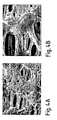
- FIG. 1A and 1B show REM pictures of the untreated and unloaded e-PTFE foil in 2500 fold ( Figure 1A) and 5000 fold magnification ( Figure 1B).
- Figure 2A and 2B show the e-PTFE layer loaded with nanospheres at magnification levels of 2500 fold ( Figure 2A) and 5000 fold ( Figure 2B), respectively.
- the remaining suspension shows a higher d(n,0.5) value compared with the freshly produced initial suspension.
- the amount of small spheres decreases in the suspension during the loading process.
- the filtrate shows a lower median d(n,0.5) value of 256 nm due to the filter effect of the e-PTFE layer which restrains spheres over approximately 300 nm in diameter.
- the nanosphere-loaded e-PTFE foil was subsequently treated with supercritical CO 2 for 30 minutes under a pressure of 305 bar.
- REM pictures were taken, and are presented herein at two different magnification levels of 2500 fold ( Figures 3A and 4A) and 5000 fold ( Figures 3B and 4B), respectively, in Figures 3A, 3B without nanosphere-loaded e-PTFE and 4A, 4B with nanosphere-loaded e-PTFE.
- the nanospheres lose their spherical shape due to their solubility in supercritical CO 2 .
- the remaining e-PTFE matrix is insoluble in supercritical CO 2 and is surrounded by the dissolved poly(D,L-lactide-co-TMC).
- a release experiment of the hydrophobic model substance dexamethasone from poly(D,L-lactide-co-TMC) (90:10) was performed.
- the ratio (90:10) refers to the weight ratio of lactide to TMC.
- the nanospheres were made by the o/w solvent evaporation technique with a content of 20 % (w/v) dexamethasone with respect to the initial amount of polymer.
- Figure 5 shows the release pattern.
- the straight solid line indicates a line of best fit, the result of a least square analysis of the experimental data points.
- the variance being very close to 1.0 and the very good agreement of the experimental data points with the straight line suggest that the rate at which dexamethasone is released from the nanospheres does not change with time. Therefore, a constant amount of dexamethasone migrates through the encapsulation of the nanospheres.
- the loading was determined to be 11.39 %.
- Figure 8 shows the UV-spectra of dexamethasone in the wash-water solution.
- the samples were measured with respect to water as a standard.
- the content of dexamethasone in the solution again yielded pronounced extinctions.
- the sample was diluted in a ratio of 2 to 8 (2 parts of wash water to 8 parts of distilled water).
- Figure 9 shows the calibration line for dexamethasone in distilled water.
- the straight line indicates a least square fit of the experimental data points.
- the equation of the linear regression is also shown. Again, good agreement of the experimental values with the linear regression fit was obtained.
- hydrophilic substances such as acryflavine-hydrochloride; rapamycin (sirolimus); taxol (paclitaxel); NO donors or other agents directly or indirectly causing an increase of local NO concentration; growth factors to enhance endothelialisation (e.g. VEGF); growth inhibitors; growth receptor antagonists; antithrombotic agents (e.g.
- heparin, GPIIb/IIIa receptor antagonists, hirudin matrix metalloproteinase inhibitors
- anti-inflammatory agents e.g. anti-tumor drugs, e.g. mitomycin C, 5-FU, cisplatin, gemcitabine, radioactive nuclides, adriamycine, mitoxantrone
- antisense agents ogligonucleotides or related compounds blocking transcription/translation process
- antimigratory drugs e.g. anti-tumor drugs, e.g. mitomycin C, 5-FU, cisplatin, gemcitabine, radioactive nuclides, adriamycine, mitoxantrone
- antisense agents ogligonucleotides or related compounds blocking transcription/translation process
- antimigratory drugs e.g. antimigratory drugs, antioxidants; agents promoting or inhibiting apoptosis; genes for genetransfer (naked or packaged in vectors); hormones,
- a supercritical CO 2 has been used for anchoring the biological active substance in the ePTFE foil.
- other supercritical agents such as supercritical nitrogen, which do not harm the biologically active substance.
Landscapes
- Health & Medical Sciences (AREA)
- Life Sciences & Earth Sciences (AREA)
- Chemical & Material Sciences (AREA)
- Veterinary Medicine (AREA)
- Public Health (AREA)
- Medicinal Chemistry (AREA)
- General Health & Medical Sciences (AREA)
- Animal Behavior & Ethology (AREA)
- Chemical Kinetics & Catalysis (AREA)
- Organic Chemistry (AREA)
- Engineering & Computer Science (AREA)
- General Chemical & Material Sciences (AREA)
- Pharmacology & Pharmacy (AREA)
- Nuclear Medicine, Radiotherapy & Molecular Imaging (AREA)
- Surgery (AREA)
- Epidemiology (AREA)
- Vascular Medicine (AREA)
- Heart & Thoracic Surgery (AREA)
- Bioinformatics & Cheminformatics (AREA)
- Polymers & Plastics (AREA)
- Molecular Biology (AREA)
- Biomedical Technology (AREA)
- Diabetes (AREA)
- Rheumatology (AREA)
- Pain & Pain Management (AREA)
- Endocrinology (AREA)
- Hematology (AREA)
- Pharmaceuticals Containing Other Organic And Inorganic Compounds (AREA)
- Medicinal Preparation (AREA)
- Materials For Medical Uses (AREA)
- Manufacture Of Porous Articles, And Recovery And Treatment Of Waste Products (AREA)
- Prostheses (AREA)
Abstract
Description
- This invention relates to an e-PTFE (expanded polytetrafluoroethylene) foil impregnated with a biologically-active substance, to a method of so impregnating a foil and to a prosthesis comprising an e-PTFE impregnated foil, thereby carrying a releasable biologically-active substance.
- Prostheses, such as stent grafts, can usefully include an e-PTFE membrane, this being inert in the body and capable of providing a useful barrier function. In recent years it has been a challenge to manufacturers of prostheses to invent ways of incorporating biologically active substances in stents, grafts and other prostheses. Growth factors are one such biologically-active substance which would be advantageous to incorporate. Others may include cellular proliferation-controlling or migration-controlling agents, and agents to inhibit thrombosis. The innumerable interstices in an e-PTFE foil (otherwise called herein "membrane" or "film") provide an attractive location for the placement of biologically active substances, but a method has to be found how to load the interstices with the active substance.
- The present invention aims to provide one route to achieve such loading.
- US-A-5480711 discloses nano-porous PTFE and its use as a biomaterial.
- UA-A-5716660 discloses e-PTFE prostheses impregnated with a solid insoluble biocompatible material, specifically an extracellular matrix protein, such as collagen or gelatin.
- US-A-5972027 proposes to load a porous stent with a biomaterial, such as a drug. The drug may be carried in solution and loaded into the pores by imposing a pressure gradient on the solution. The stent is to be made from a metal powder, but the possibility of a stent made from PTFE powder is also mentioned.
- EP-A-0706376 discloses use of taxol in the manufacture of a stent. Taxol is disclosed as an anti-angiogenic factor.
- US 5 197 882 discloses a periodontal barrier of expanded PTFE containing chemotherapeutic agents encapsulated in microparticles.
- It is an object of the present invention to provide e-PTFE foil impregnated with a biologically-active substance.
- This object is solved by the subject matter of
independent claim 1. Further embodiments are described independent claims 2 to 10. - It is another object of the present invention to provide a method of impregnating an e-PTFE foil with a biologically-active substance.
- This object is solved by independent claim 11. Further embodiments are described in dependent claims 13 to 18.
- It is yet another object of the present invention to provide a prosthesis, such as a stent, comprising an impregnated e-PTFE foil carrying a releasable biologically-active substance.
- This object is solved by independent claim 17. A further embodiment is described in dependent claim 18.
- In accordance with one aspect of the present invention, there is provided a method of impregnating an e-PTFE foil with a biologically-active substance which involves imposing across the foil a pressure differential sufficient to urge into the interstices of the foil a suspension of nanoparticles in a fluid medium, the nanoparticles containing a desired biologically-active substance. In another aspect, the present invention provides an e-PTFE foil so impregnated. In yet another aspect, the present invention provides a prosthesis comprising an e-PTFE foil so impregnated.
- Taking account of typical dimensions of interstices in e-PTFE foils, the range of sizes of nanoparticles which lend themselves to such impregnation will generally lie in a range of from 10 - 1000 nm for average diameters of typically spherical nanoparticles (nanospheres). A preferred range of diameters is from 100 to 800 nm.
- Conveniently, the nanoparticles have a surface layer which encapsulates the active substance of interest, and the surface layer is conveniently bioabsorbable and can be of a lactide-containing polymer, such as poly(D,L-lactic-acid), poly(D,L-lactic-acid-co-glycolide) and poly(D,L-lactic-acid-co-trimethylenecarbonate), the latter hereinafter abbreviated to poly(D,L-lactide-co-TMC).
- Once the nanoparticles have been urged into the foil interstices, the biologically-active substance delivered by the nanoparticles should be anchored there. One way which the present inventors have found to anchor the nanoparticle load is to perform a heat treatment of the impregnated foil to agglomerate the nanoparticles. Another is to perform a CO2 procedure in accordance with the CESP process described in Advanced Engineering Materials 1999,
Vol 1, No. 3-4, pages 206 to 208 in the paper entitled "Microporous, resorbable implants produced by the CESP process" by Walter Michaeli and Oliver Pfannschmidt of the "Institut für Kunststoffverarbeitung, Rheinisch-Westfälische Technische Hochschule, D-52062 Aachen, Germany". - For a discussion of preparation techniques and mechanisms of formation of biodegradable nanoparticles from preformed polymers, the reader may refer to a paper by Quintanar-Guerrero, Alleman, Fessi and Doelker which appears in "Drug Development and Industrial Pharmacy, 24(12), 1113-1128 (1998)".
- In a nutshell, the method preferred herein involves a nanoparticle production step followed by a loading step to impregnate an e-PTFE foil in a pressure cell with a suspension of nanoparticles, followed by an anchoring step to fix in the foil the biologically-active substance carried into the foil by the nanoparticles.
- Conveniently, polymeric nanoparticles are manufactured by a solvent evaporation or solvent displacement technique. Loading of the nanoparticles with a medicament or other biologically-active substance is carried out during the nanoparticle manufacturing step.
- With more specificity, a base polymer which can be a poly(D,L-lactide), poly(D,L-lactide-co-glycolide) or a poly(D,L-lactide-co-trimethylenecarbonate) is dissolved in a solvent. The solvent can be a water-miscible solvent, such as acetone, when the method is a solvent displacement method.
- Alternatively, the solvent can be a water-non-miscible solvent, such as CH2Cl2, when the technique is a solvent evaporation technique.
- In a second step, the biologically-active substance, such as a drug or medicament, is dissolved in or disbursed in the polymer solution and then the solution is poured into an aqueous phase with continuous stirring. The aqueous phase will likely contain a surfactant or a stabiliser.
Afterwards, the solvent is vacuum-evaporated from the aqueous phase. - The resulting suspension of nanoparticles is transferred into a pressure chamber with continuous stirring. Continuing the stirring, a pressure differential conveniently in the range up to 10 bar is imposed within the pressure cell across a foil workpiece in order that the pressure differential shall drive the suspension into the interstices of the e-PTFE which forms the foil. The procedure is repeated, as many times as is necessary, in order to load the foil workpiece with the specified quantity of nanoparticle material.
- For anchoring the nanoparticle material within the interstices of the foil, the impregnated foil can be treated at an elevated temperature to bring about agglomeration or melting of the nanoparticles within the interstices. Alternatively, a treatment with supercritical CO2 can be utilised. The supercritical CO2 dissolves the nanoparticles, thereby causing it to flow so that the nanoparticles lose their discrete shape to form a molten structure within the e-PTFE foil. One way of obtaining this molten structure is to follow the procedures advocated by RWTH-Aachen in its CESP process, mentioned above.
- It will be appreciated that the loading of the e-PTFE foil with nanoparticles can be accomplished with foil material to be later incorporated into a medical device, or can be incorporated into foil which has already been incorporated in a medical device. The medical device can be a prosthesis, such as a vascular prosthesis. A vascular prosthesis of special interest for the inventors is a vascular stent. The invention will likely find applications for stents which are not vascular stents, such as biliary, ureteral, uretheral, oesophageal, tracheo-bronchial, colorectal, prostatic, hepatic stents.
- The pressure differential imposed on the foil in the pressure cell can be achieved by positive pressurisation of the nanoparticle suspension on the upstream side of the foil, or by imposing a sufficiently low enough vacuum on the downstream side of the foil workpiece.
- The fluid medium within which the nanoparticles are suspended for the loading step in the pressure cell need not be the same fluid medium in which the nanoparticles are created.
- The encapsulation of the biologically-active substance, such as a drug or medication, within the nanoparticles need not be with biodegradable synthetic polymeric materials, such as poly-lactide and its co-polymers, polyesther, polyether, polycyanoacrylate, polyhydroxycarboxylic acid, polyanhydride, polyaminoacids, polyhydroxyalkanoate, but could instead be with bio-compatible, non-biodegradable materials through which, for example, the drug diffuses into the body of the patient, To be considered for this task are, for example, biologically-compatible synthetic polymeric substances. These include silicone, polyalcane, polytetrafluorethylene (PTFE, e-PTFE), polyethylene, such as ultra-pure polyethylene (HOSTALON™ (GUR), LUPULEN™ (UHM)), polypropylene, polyester (such as polyethylene terephthalate or DACRON™, TERYLENE™), polyurethane, as well as polyamides, such as NYLON™, aliphatic and aromatic polyamides (NOMEX, KEVLAR).
- The present invention will be described, by way of example, with reference to the accompanying figures, of which
- Fig. 1A and 1B
- show REM pictures of an untreated and unloaded e-PTFE sample at two magnifications (1A: 2500 fold; 1B: 5000 fold);
- Fig. 2A and 2B
- show REM pictures of an e-PTFE layer loaded with nanospheres at two magnifications (2A: 2500 fold; 2B: 5000 fold);
- Fig. 3A and 3B
- show REM pictures of an e-PTFE layer after CO2 treatment (3A: 2500 fold; 3B: 5000 fold);
- Fig. 4A and 4B
- show REM pictures of an e-PTFE layer loaded with nanospheres after CO2 treatment (4A: 2500 fold; 4B: 5000 fold);
- Fig. 5
- shows a diagram depicting a release pattern of dexamethasone-loaded nanospheres out of poly-(D,L-lactide-co-TMC) (90:10);
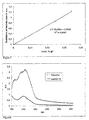
- Fig. 6
- shows UV-spectra of dexamethasone-containing PVA-solution;
- Fig. 7
- shows a calibration line for dexamethasone in a 4% PVA-solution (M=61000);
- Fig. 8
- shows UV-spectra of wash solution contaminated with dexamethasone;
- Fig. 9
- shows a calibration line for dexamethasone in water.
- The production of biodegradable spherical nanoparticles by an (o/w)-emulsion-solvent evaporation technique is described below.
- Spherical nanoparticles made of poly(D,L-lactic-acid-co-trimethylenecarbonate) (90:10) were prepared by an (o/w)-emulsion-solvent evaporation technique. 200 mg of the polymer, 40 mg of the model substance dexamethasone in 5 ml of methylenechloride were mixed and cooled down to 0°C. 50 ml of an aqueous 4% (w/v) polyvinylalcohol solution (M=61.000) were added. This mixture was dispersed for 30 s by vortex (Ika Ultra Turrax 25 T basic, Staufen im Breisgau, Germany) at 150.000 rpm at 0°C and then sonicated using an ultrasound generator (Branson Sonifier 450, Danbury, CT, USA) for 120 s to produce the oil in water emulsion. The solution was poured into an 500 ml flask and the organic phase was removed for 30 min under stepwise reduction of the pressure (room pressure down to >60 mbar).
- Next, the nanosphere suspension was directly used to incorporate the spheres into the e-PTFE layer by pressing the nanosphere suspension under pressure through an e-PTFE covered stent to obtain a loading of the foil with nanoparticles. The stent was freeze-dried and analysed with REM. Figure 1A and 1B show REM pictures of the untreated and unloaded e-PTFE foil in 2500 fold (Figure 1A) and 5000 fold magnification (Figure 1B). Figure 2A and 2B show the e-PTFE layer loaded with nanospheres at magnification levels of 2500 fold (Figure 2A) and 5000 fold (Figure 2B), respectively.
- The particle size distribution of the remaining suspension and the filtrate were measured (refer to Table 1 below) using a particle sizer (Malvern instruments, Mastersizer 2000 with dispersing unit Hydro 2000, Worcestershire, Great Britain). Table 1 shows the computed diameter d of the median particle (n=0.5) of the particle distribution.
d(n=0.5) values of the remaining suspension and filtrate compared with the initial d(n=0.5) value. Initial Suspension d(n=0.5) in nm Remaining Suspension d(n=0.5) in nm Filtrate d(n=0.5) in nm 542 991 256 - The remaining suspension shows a higher d(n,0.5) value compared with the freshly produced initial suspension. The amount of small spheres decreases in the suspension during the loading process. The filtrate shows a lower median d(n,0.5) value of 256 nm due to the filter effect of the e-PTFE layer which restrains spheres over approximately 300 nm in diameter.
- For anchoring the dexamethasone carried by the poly(D,L-lactide-co-TMC) (90:10)-nanospheres in an e-PTFE-matrix, the nanosphere-loaded e-PTFE foil was subsequently treated with supercritical CO2 for 30 minutes under a pressure of 305 bar. REM pictures were taken, and are presented herein at two different magnification levels of 2500 fold (Figures 3A and 4A) and 5000 fold (Figures 3B and 4B), respectively, in Figures 3A, 3B without nanosphere-loaded e-PTFE and 4A, 4B with nanosphere-loaded e-PTFE. The nanospheres lose their spherical shape due to their solubility in supercritical CO2.
- The remaining e-PTFE matrix is insoluble in supercritical CO2 and is surrounded by the dissolved poly(D,L-lactide-co-TMC).
- Additionally, a release experiment of the hydrophobic model substance dexamethasone from poly(D,L-lactide-co-TMC) (90:10) was performed. Here, the ratio (90:10) refers to the weight ratio of lactide to TMC. Dexamethasone-loaded nanospheres were used for the release experiments. The median d(n=0.5) of the nanospheres was 216 nm.
- The nanospheres were made by the o/w solvent evaporation technique with a content of 20 % (w/v) dexamethasone with respect to the initial amount of polymer. Figure 5 shows the release pattern. The straight solid line indicates a line of best fit, the result of a least square analysis of the experimental data points. The variance of R2=0.9927 is also shown. The variance being very close to 1.0 and the very good agreement of the experimental data points with the straight line suggest that the rate at which dexamethasone is released from the nanospheres does not change with time. Therefore, a constant amount of dexamethasone migrates through the encapsulation of the nanospheres.
- Next, the amount of dexamethasone incorporated into the nanospheres was determined, so that the effective drug loading could be calculated. The loading was determined to be 11.39 %.
- During the incorporation of drugs into nanoparticles according to the emulsion solvent evaporation process, a large quantity of the drug migrates into the aqueous PVA-solution. Also during the subsequent solvent washing, migration into the aqueous phase occurs. The content of dexamethasone in the PVA-solution and in the wash-water was determined using UV-spectroscopy. Figure 6 depicts the UV-spectrum of the PVA-solution (solid line) used for the production of the nanospheres containing dexamethasone.
- A 4% (w/v) PVA-solution (M=61.000) as a standard was measured. The measurement of the pure PVA-solution yielded pronounced extinctions. For this reason, the solution was diluted in a ratio of 2 to 8 (2 parts of dexamethasone containing PVA-solution to 8 parts of a 4% PVA-solution). Reference is made to Figure 6 (curve PVA-2-10) . The λmax-value of dexamethasone was determined to be 242.3 nm.
- Figure 7 shows the calibration line for dexamethasone in a 4% PVA-solution (M=61.000). The respective extinctions at λmax were measured for different dexamethasone concentrations. The straight line indicates a least square analysis line of best fit of the experimental data points. The equation of the linear regression is also shown. Good agreement of the experimental values was obtained with the linear regression fit.
- Subsequently, the content of dexamethasone in the wash water solution was measured.
- Figure 8 shows the UV-spectra of dexamethasone in the wash-water solution. The samples were measured with respect to water as a standard. The content of dexamethasone in the solution again yielded pronounced extinctions. The sample was diluted in a ratio of 2 to 8 (2 parts of wash water to 8 parts of distilled water).
- Figure 9 shows the calibration line for dexamethasone in distilled water. The respective extinctions at λmax = 242 nm were measured for different dexamethasone concentrations. The straight line indicates a least square fit of the experimental data points. The equation of the linear regression is also shown. Again, good agreement of the experimental values with the linear regression fit was obtained.
- The concentration of dexamethasone in the PVA-2-10 sample was determined (c=29.53*10-3 g/l). Hence, the amount of dexamethasone in the diluted PVA-2-10 sample (=10 ml) amounts to 2.953*10-4 g. Consequently, the same amount exists in the 2 ml undiluted PVA-solution. 50 ml of the PVA solution were used during the production process and the amount of dexamethasone can be calculated (refer to Table 2). The amount of dexamethasone in the wash solution was calculated in the same manner.
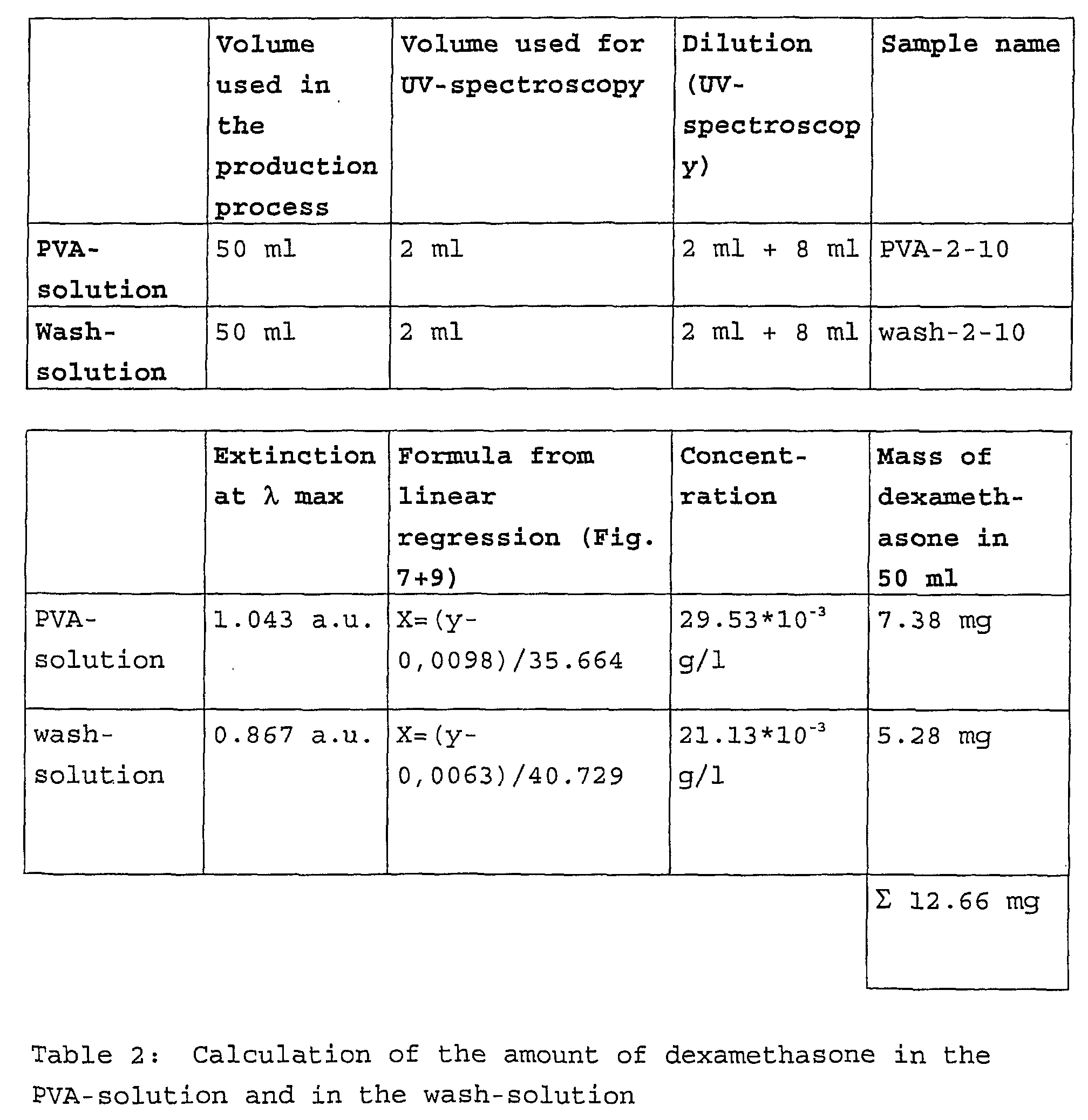
- During production, 200 mg of the polymer and 40 mg of dexamethasone were used. 12.66 mg migrated into the aqueous phases, so it can be assumed that 27.34 mg of dexamethasone was incorporated into the spheres corresponding to 11.39 %.
- In the foregoing, the following abbreviations have been used:
- o/w:
- oil in water
- w/v:
- weight per volume
- REM:
- Raster Electron Microscopy
- The best mode of the invention has been described above only for the model substance dexamethasone. Examples of biologically-active substances to be anchored in an e-PTFE matrix instead of hydrophobic dexamethasone are: hydrophilic substances, such as acryflavine-hydrochloride; rapamycin (sirolimus); taxol (paclitaxel); NO donors or other agents directly or indirectly causing an increase of local NO concentration; growth factors to enhance endothelialisation (e.g. VEGF); growth inhibitors; growth receptor antagonists; antithrombotic agents (e.g. heparin, GPIIb/IIIa receptor antagonists, hirudin); matrix metalloproteinase inhibitors; anti-inflammatory agents; antiproliferative agents (e.g. anti-tumor drugs, e.g. mitomycin C, 5-FU, cisplatin, gemcitabine, radioactive nuclides, adriamycine, mitoxantrone); antisense agents (ogligonucleotides or related compounds blocking transcription/translation process); antimigratory drugs; antioxidants; agents promoting or inhibiting apoptosis; genes for genetransfer (naked or packaged in vectors); hormones, somatostatin analogs; antibodies; angiogenesis inhibitors/promoters.
- A supercritical CO2 has been used for anchoring the biological active substance in the ePTFE foil. However, it is conceivable to use other supercritical agents, such as supercritical nitrogen, which do not harm the biologically active substance.
Claims (18)
- e-PTFE foil impregnated with an encapsulated biologically-active substance, characterised in that the biologically-active substance is encapsulated in nanoparticles, and that the nanoparticles are agglomerated in the interstices of the e-PTFE foil.
- Foil as claimed in claim 1, wherein the nanoparticles are generally spherical.
- Foil as claimed in claim 2, wherein the generally spherical nanoparticles have a diameter which, on average, is in a range of from 10 nm to 1000 nm.
- Foil as claimed in claim 3, wherein the range of average diameters extends from 100 to 800 nm.
- Foil as claimed in any one of the preceding claims, wherein the biologically-active substance is encapsulated in a biodegradable substance.
- Foil as claimed in claim 5, wherein the biodegradable substance is composed of a lactide-containing polymer.
- Foil as claimed in claim 6, wherein the lactide-containing polymer is poly(D,L-lactic-acid-co-trimethylenecarbonate).
- Foil as claimed in any one of claims 1 to 4, wherein the biologically-active substance is encapsulated in a material of biologically-compatible, non-biodegradable substance.
- Foil as claimed in claim 8, wherein the bio-compatible, non-biodegradable substance is a synthetic polymeric substance.
- Method of impregnating an e-PTFE foil with a biologically-active substance, comprising the steps of:1. providing the substance encapsulated in nanoparticles by a surface layer of biologically-compatible substance of the nanoparticles;2. suspending the nanoparticles in a fluid medium;3. imposing a pressure differential across the foil to urge into the interstices of the foil a flow of said fluid medium which carries the nanoparticles into the interstices; and4. agglomerating the nanoparticles to anchor in the foil the material of the nanoparticles which have been urged by the pressure differential into the foil interstices.
- Method according to claim 10, wherein the pressure differential is in a range up to 10 bar.
- Method as claimed in claim 10 or 11, wherein the agglomerating step is achieved by heating the foil.
- Method as claimed in claim 10 or 11, wherein the agglomerating step is achieved by dissolving the surface layer of bio-compatible substance to anchor in the foil the material of the nanoparticles which have been urged by the pressure differential into the foil interstices by selecting as the biologically-compatible material a substance which is soluble in a liquid agent, contacting the nanoparticles with the liquid agent, and creating a molten structure so that the material urged into the interstices of the e-PTFE foil is anchored.
- Method as claimed in claim 13, wherein the liquid agent is supercritical CO2.
- Method as claimed in claim 14, and further including the step of treating the e-PTFE foil with supercritical CO2.
- Method as claimed in any one of claims 13 to 15, wherein the step of contacting the nanoparticles with the liquid agent runs for 30 minutes at a pressure of 305 bar.
- Prosthesis comprising an e-PTFE impregnated foil as claimed in any one of claims 1 to 9 and carrying a releasable biologically-active substance.
- Prosthesis as claimed in claim 17, wherein the prosthesis is a stent comprising a layer of e-PTFE impregnated foil.
Applications Claiming Priority (3)
| Application Number | Priority Date | Filing Date | Title |
|---|---|---|---|
| GBGB0023807.1A GB0023807D0 (en) | 2000-09-28 | 2000-09-28 | Prosthesis carrying releasable substance |
| GB0023807 | 2000-09-28 | ||
| PCT/EP2001/011267 WO2002026279A1 (en) | 2000-09-28 | 2001-09-28 | E-ptfe foil impregnated with an encapsulated bioactive substance |
Publications (2)
| Publication Number | Publication Date |
|---|---|
| EP1322350A1 EP1322350A1 (en) | 2003-07-02 |
| EP1322350B1 true EP1322350B1 (en) | 2005-03-30 |
Family
ID=9900316
Family Applications (1)
| Application Number | Title | Priority Date | Filing Date |
|---|---|---|---|
| EP01974313A Expired - Lifetime EP1322350B1 (en) | 2000-09-28 | 2001-09-28 | E-ptfe foil impregnated with an encapsulated bioactive substance |
Country Status (8)
| Country | Link |
|---|---|
| US (2) | US20040029993A1 (en) |
| EP (1) | EP1322350B1 (en) |
| JP (1) | JP2004509704A (en) |
| AT (1) | ATE291937T1 (en) |
| DE (1) | DE60109793T2 (en) |
| ES (1) | ES2240524T3 (en) |
| GB (1) | GB0023807D0 (en) |
| WO (1) | WO2002026279A1 (en) |
Families Citing this family (20)
| Publication number | Priority date | Publication date | Assignee | Title |
|---|---|---|---|---|
| US8382821B2 (en) | 1998-12-03 | 2013-02-26 | Medinol Ltd. | Helical hybrid stent |
| US20040267349A1 (en) | 2003-06-27 | 2004-12-30 | Kobi Richter | Amorphous metal alloy medical devices |
| US6955661B1 (en) | 1999-01-25 | 2005-10-18 | Atrium Medical Corporation | Expandable fluoropolymer device for delivery of therapeutic agents and method of making |
| US6923927B2 (en) | 2000-10-03 | 2005-08-02 | Atrium Medical Corporation | Method for forming expandable polymers having drugs or agents included therewith |
| US6616876B1 (en) | 2000-10-03 | 2003-09-09 | Atrium Medical Corporation | Method for treating expandable polymer materials |
| US20050228479A1 (en) * | 2001-11-29 | 2005-10-13 | Cook Incorporated | Medical device delivery system |
| EP1465546B1 (en) * | 2001-11-29 | 2007-07-18 | Cook Incorporated | Medical device delivery system |
| US7275216B2 (en) * | 2003-03-24 | 2007-09-25 | Microsoft Corporation | System and method for designing electronic forms and hierarchical schemas |
| US9039755B2 (en) | 2003-06-27 | 2015-05-26 | Medinol Ltd. | Helical hybrid stent |
| US9155639B2 (en) | 2009-04-22 | 2015-10-13 | Medinol Ltd. | Helical hybrid stent |
| FR2875412A1 (en) * | 2004-09-17 | 2006-03-24 | Gibaud Soc Par Actions Simplif | Material, useful to obtain a medicated device and for local/topical treatment, comprises: a textile support; a multiplicity of microcapsules; and an envelope comprising a second material of polymer type |
| GB0517085D0 (en) | 2005-08-19 | 2005-09-28 | Angiomed Ag | Polymer prosthesis |
| DE102006029572A1 (en) | 2006-06-22 | 2007-12-27 | Siemens Ag | Method for producing a component with a nanostructured coating and method for producing a granulate or a polymer film, suitable for the method for coating |
| US8240317B2 (en) | 2006-08-01 | 2012-08-14 | Tenacta Group S.P.A. | Device adapted to release a hair substance |
| DE102008002395A1 (en) * | 2008-06-12 | 2009-12-17 | Biotronik Vi Patent Ag | Drug-loaded implant |
| US10940167B2 (en) | 2012-02-10 | 2021-03-09 | Cvdevices, Llc | Methods and uses of biological tissues for various stent and other medical applications |
| US20140228937A1 (en) | 2013-02-11 | 2014-08-14 | Joshua Krieger | Expandable Support Frame and Medical Device |
| US11752099B2 (en) * | 2017-03-27 | 2023-09-12 | W. L. Gore & Associates, Inc. | Injectable and biodegradable polymer formulations for controlled release of bioactive agents |
| US12478488B2 (en) | 2020-02-19 | 2025-11-25 | Medinol Ltd. | Helical stent with enhanced crimping |
| EP4163006B8 (en) * | 2021-10-11 | 2024-03-20 | leon-nanodrugs GmbH | Methods for validating an apparatus for producing nanoparticles |
Family Cites Families (9)
| Publication number | Priority date | Publication date | Assignee | Title |
|---|---|---|---|---|
| US6410056B1 (en) * | 1984-03-16 | 2002-06-25 | The United States Of America As Represented By The Secretary Of The Army | Chemotherapeutic treatment of bacterial infections with an antibiotic encapsulated within a biodegradable polymeric matrix |
| US5201778A (en) * | 1989-07-04 | 1993-04-13 | Giovanni Brotzu | Vascular prosthesis containing in the wall microcapsules, including hormone-producing cells |
| US5197882A (en) * | 1990-05-14 | 1993-03-30 | Gary R. Jernberg | Periodontal barrier and method for aiding periodontal tissue regeneration agents |
| US5366756A (en) * | 1992-06-15 | 1994-11-22 | United States Surgical Corporation | Method for treating bioabsorbable implant material |
| US5464650A (en) * | 1993-04-26 | 1995-11-07 | Medtronic, Inc. | Intravascular stent and method |
| US5480711A (en) * | 1994-07-12 | 1996-01-02 | Ruefer; Bruce G. | Nano-porous PTFE biomaterial |
| US5665114A (en) * | 1994-08-12 | 1997-09-09 | Meadox Medicals, Inc. | Tubular expanded polytetrafluoroethylene implantable prostheses |
| US5716600A (en) * | 1995-11-14 | 1998-02-10 | Professional Dental Technologies, Inc. | Stable stannous fluoride toothpaste compositions |
| US5972027A (en) * | 1997-09-30 | 1999-10-26 | Scimed Life Systems, Inc | Porous stent drug delivery system |
-
2000
- 2000-09-28 GB GBGB0023807.1A patent/GB0023807D0/en not_active Ceased
-
2001
- 2001-09-28 WO PCT/EP2001/011267 patent/WO2002026279A1/en not_active Ceased
- 2001-09-28 EP EP01974313A patent/EP1322350B1/en not_active Expired - Lifetime
- 2001-09-28 AT AT01974313T patent/ATE291937T1/en not_active IP Right Cessation
- 2001-09-28 DE DE60109793T patent/DE60109793T2/en not_active Expired - Lifetime
- 2001-09-28 ES ES01974313T patent/ES2240524T3/en not_active Expired - Lifetime
- 2001-09-28 JP JP2002530108A patent/JP2004509704A/en active Pending
- 2001-09-28 US US10/381,381 patent/US20040029993A1/en not_active Abandoned
-
2006
- 2006-12-12 US US11/637,431 patent/US20070098757A1/en not_active Abandoned
Also Published As
| Publication number | Publication date |
|---|---|
| DE60109793D1 (en) | 2005-05-04 |
| DE60109793T2 (en) | 2006-02-23 |
| US20070098757A1 (en) | 2007-05-03 |
| ES2240524T3 (en) | 2005-10-16 |
| EP1322350A1 (en) | 2003-07-02 |
| GB0023807D0 (en) | 2000-11-08 |
| JP2004509704A (en) | 2004-04-02 |
| ATE291937T1 (en) | 2005-04-15 |
| US20040029993A1 (en) | 2004-02-12 |
| WO2002026279A1 (en) | 2002-04-04 |
Similar Documents
| Publication | Publication Date | Title |
|---|---|---|
| US20070098757A1 (en) | E-PTFE foil impregnated with an encapsulated bioactive substance | |
| Wang et al. | Preparation and characterization of agarose hydrogel nanoparticles for protein and peptide drug delivery | |
| Iooss et al. | A new injectable bone substitute combining poly (ε-caprolactone) microparticles with biphasic calcium phosphate granules | |
| Freiberg et al. | Polymer microspheres for controlled drug release | |
| Liu et al. | A novel trans-lymphatic drug delivery system: implantable gelatin sponge impregnated with PLGA–paclitaxel microspheres | |
| Deschamps et al. | Biodegradable Pickering emulsions of Lipiodol for liver trans-arterial chemo-embolization | |
| EP2616018B1 (en) | Apparatus and methods for loading a drug eluting medical device | |
| Tomeh et al. | Stiffness-tuneable nanocarriers for controlled delivery of ASC-J9 into colorectal cancer cells | |
| US20060188543A1 (en) | Nanoparticle coating for drug delivery | |
| Xiao et al. | Hollow and porous hydroxyapatite microspheres prepared with an O/W emulsion by spray freezing method | |
| EP1301221A1 (en) | Process for coating medical devices using super-critical carbon dioxide | |
| US8623397B2 (en) | Delivery device and method for forming the same | |
| Chandy et al. | Changes in cisplatin delivery due to surface-coated poly (lactic acid)–poly (∊-caprolactone) microspheres | |
| CN102740837A (en) | Degradable removable implant for the sustained release of an active compound | |
| WO2016089309A1 (en) | Method of preparing hollow microparticles and hollow microparticles prepared thereof | |
| Lim et al. | A novel technique for loading of paclitaxel‐PLGA nanoparticles onto ePTFE vascular grafts | |
| Soomherun et al. | Encapsulation of Nicardipine Hydrochloride and Release from Biodegradable Poly (D, L‐lactic‐co‐glycolic acid) Microparticles by Double Emulsion Process: Effect of Emulsion Stability and Different Parameters on Drug Entrapment | |
| US7348031B2 (en) | Method for preparing colloidal particles in the form of nanocapsules | |
| EP1753478B1 (en) | Medical device comprising a biologically active agent | |
| WO2018236604A1 (en) | CO-CONTINUOUS SELF-ASSEMBLY DERIVATIVES FOR BIOMEDICAL DEVICES | |
| Ma et al. | PCL/poloxamer 188 blend microsphere for paclitaxel delivery: Influence of poloxamer 188 on morphology and drug release | |
| Nguyen et al. | Hyperbaric polymer microcapsules for tunable oxygen delivery | |
| KR20090107795A (en) | Method for preparing sustained-release microcapsules and microcapsules made therefrom | |
| Suh et al. | Spatiotemporal programing for the on-demand release of bupivacaine based on an injectable composite hydrogel | |
| Khoee et al. | Effect of O/S/W process parameters on 17β-EV loaded nanoparticles properties |
Legal Events
| Date | Code | Title | Description |
|---|---|---|---|
| PUAI | Public reference made under article 153(3) epc to a published international application that has entered the european phase |
Free format text: ORIGINAL CODE: 0009012 |
|
| 17P | Request for examination filed |
Effective date: 20030122 |
|
| AK | Designated contracting states |
Designated state(s): AT BE CH CY DE DK ES FI FR GB GR IE IT LI LU MC NL PT SE TR |
|
| 17Q | First examination report despatched |
Effective date: 20040706 |
|
| GRAP | Despatch of communication of intention to grant a patent |
Free format text: ORIGINAL CODE: EPIDOSNIGR1 |
|
| GRAS | Grant fee paid |
Free format text: ORIGINAL CODE: EPIDOSNIGR3 |
|
| GRAA | (expected) grant |
Free format text: ORIGINAL CODE: 0009210 |
|
| AK | Designated contracting states |
Kind code of ref document: B1 Designated state(s): AT BE CH CY DE DK ES FI FR GB GR IE IT LI LU MC NL PT SE TR |
|
| PG25 | Lapsed in a contracting state [announced via postgrant information from national office to epo] |
Ref country code: CH Free format text: LAPSE BECAUSE OF FAILURE TO SUBMIT A TRANSLATION OF THE DESCRIPTION OR TO PAY THE FEE WITHIN THE PRESCRIBED TIME-LIMIT Effective date: 20050330 Ref country code: AT Free format text: LAPSE BECAUSE OF FAILURE TO SUBMIT A TRANSLATION OF THE DESCRIPTION OR TO PAY THE FEE WITHIN THE PRESCRIBED TIME-LIMIT Effective date: 20050330 Ref country code: TR Free format text: LAPSE BECAUSE OF FAILURE TO SUBMIT A TRANSLATION OF THE DESCRIPTION OR TO PAY THE FEE WITHIN THE PRESCRIBED TIME-LIMIT Effective date: 20050330 Ref country code: FI Free format text: LAPSE BECAUSE OF FAILURE TO SUBMIT A TRANSLATION OF THE DESCRIPTION OR TO PAY THE FEE WITHIN THE PRESCRIBED TIME-LIMIT Effective date: 20050330 Ref country code: LI Free format text: LAPSE BECAUSE OF FAILURE TO SUBMIT A TRANSLATION OF THE DESCRIPTION OR TO PAY THE FEE WITHIN THE PRESCRIBED TIME-LIMIT Effective date: 20050330 |
|
| REG | Reference to a national code |
Ref country code: GB Ref legal event code: FG4D |
|
| REG | Reference to a national code |
Ref country code: CH Ref legal event code: EP |
|
| REF | Corresponds to: |
Ref document number: 60109793 Country of ref document: DE Date of ref document: 20050504 Kind code of ref document: P |
|
| REG | Reference to a national code |
Ref country code: IE Ref legal event code: FG4D |
|
| PG25 | Lapsed in a contracting state [announced via postgrant information from national office to epo] |
Ref country code: GR Free format text: LAPSE BECAUSE OF FAILURE TO SUBMIT A TRANSLATION OF THE DESCRIPTION OR TO PAY THE FEE WITHIN THE PRESCRIBED TIME-LIMIT Effective date: 20050630 Ref country code: DK Free format text: LAPSE BECAUSE OF FAILURE TO SUBMIT A TRANSLATION OF THE DESCRIPTION OR TO PAY THE FEE WITHIN THE PRESCRIBED TIME-LIMIT Effective date: 20050630 |
|
| PGFP | Annual fee paid to national office [announced via postgrant information from national office to epo] |
Ref country code: MC Payment date: 20050826 Year of fee payment: 5 |
|
| PG25 | Lapsed in a contracting state [announced via postgrant information from national office to epo] |
Ref country code: PT Free format text: LAPSE BECAUSE OF FAILURE TO SUBMIT A TRANSLATION OF THE DESCRIPTION OR TO PAY THE FEE WITHIN THE PRESCRIBED TIME-LIMIT Effective date: 20050908 |
|
| PGFP | Annual fee paid to national office [announced via postgrant information from national office to epo] |
Ref country code: IE Payment date: 20050913 Year of fee payment: 5 |
|
| PG25 | Lapsed in a contracting state [announced via postgrant information from national office to epo] |
Ref country code: CY Free format text: LAPSE BECAUSE OF FAILURE TO SUBMIT A TRANSLATION OF THE DESCRIPTION OR TO PAY THE FEE WITHIN THE PRESCRIBED TIME-LIMIT Effective date: 20050928 |
|
| REG | Reference to a national code |
Ref country code: CH Ref legal event code: PL |
|
| REG | Reference to a national code |
Ref country code: ES Ref legal event code: FG2A Ref document number: 2240524 Country of ref document: ES Kind code of ref document: T3 |
|
| PLBE | No opposition filed within time limit |
Free format text: ORIGINAL CODE: 0009261 |
|
| STAA | Information on the status of an ep patent application or granted ep patent |
Free format text: STATUS: NO OPPOSITION FILED WITHIN TIME LIMIT |
|
| 26N | No opposition filed |
Effective date: 20060102 |
|
| ET | Fr: translation filed | ||
| PG25 | Lapsed in a contracting state [announced via postgrant information from national office to epo] |
Ref country code: IE Free format text: LAPSE BECAUSE OF NON-PAYMENT OF DUE FEES Effective date: 20060928 |
|
| PGFP | Annual fee paid to national office [announced via postgrant information from national office to epo] |
Ref country code: LU Payment date: 20060928 Year of fee payment: 6 |
|
| PG25 | Lapsed in a contracting state [announced via postgrant information from national office to epo] |
Ref country code: MC Free format text: LAPSE BECAUSE OF NON-PAYMENT OF DUE FEES Effective date: 20060930 |
|
| REG | Reference to a national code |
Ref country code: IE Ref legal event code: MM4A |
|
| PG25 | Lapsed in a contracting state [announced via postgrant information from national office to epo] |
Ref country code: SE Free format text: LAPSE BECAUSE OF FAILURE TO SUBMIT A TRANSLATION OF THE DESCRIPTION OR TO PAY THE FEE WITHIN THE PRESCRIBED TIME-LIMIT Effective date: 20050630 |
|
| PGFP | Annual fee paid to national office [announced via postgrant information from national office to epo] |
Ref country code: NL Payment date: 20070903 Year of fee payment: 7 |
|
| PGFP | Annual fee paid to national office [announced via postgrant information from national office to epo] |
Ref country code: BE Payment date: 20071121 Year of fee payment: 7 |
|
| BERE | Be: lapsed |
Owner name: *ANGIOMED G.M.B.H. & CO. MEDIZINTECHNIK K.G. Effective date: 20080930 |
|
| PG25 | Lapsed in a contracting state [announced via postgrant information from national office to epo] |
Ref country code: NL Free format text: LAPSE BECAUSE OF NON-PAYMENT OF DUE FEES Effective date: 20090401 |
|
| NLV4 | Nl: lapsed or anulled due to non-payment of the annual fee |
Effective date: 20090401 |
|
| PG25 | Lapsed in a contracting state [announced via postgrant information from national office to epo] |
Ref country code: BE Free format text: LAPSE BECAUSE OF NON-PAYMENT OF DUE FEES Effective date: 20080930 |
|
| PG25 | Lapsed in a contracting state [announced via postgrant information from national office to epo] |
Ref country code: LU Free format text: LAPSE BECAUSE OF NON-PAYMENT OF DUE FEES Effective date: 20070928 |
|
| PGFP | Annual fee paid to national office [announced via postgrant information from national office to epo] |
Ref country code: ES Payment date: 20091006 Year of fee payment: 9 |
|
| REG | Reference to a national code |
Ref country code: ES Ref legal event code: FD2A Effective date: 20111020 |
|
| PG25 | Lapsed in a contracting state [announced via postgrant information from national office to epo] |
Ref country code: ES Free format text: LAPSE BECAUSE OF NON-PAYMENT OF DUE FEES Effective date: 20100929 |
|
| REG | Reference to a national code |
Ref country code: FR Ref legal event code: PLFP Year of fee payment: 16 |
|
| REG | Reference to a national code |
Ref country code: FR Ref legal event code: PLFP Year of fee payment: 17 |
|
| REG | Reference to a national code |
Ref country code: FR Ref legal event code: PLFP Year of fee payment: 18 |
|
| PGFP | Annual fee paid to national office [announced via postgrant information from national office to epo] |
Ref country code: FR Payment date: 20190821 Year of fee payment: 19 Ref country code: DE Payment date: 20190820 Year of fee payment: 19 Ref country code: IT Payment date: 20190829 Year of fee payment: 19 |
|
| PGFP | Annual fee paid to national office [announced via postgrant information from national office to epo] |
Ref country code: GB Payment date: 20190820 Year of fee payment: 19 |
|
| REG | Reference to a national code |
Ref country code: DE Ref legal event code: R119 Ref document number: 60109793 Country of ref document: DE |
|
| GBPC | Gb: european patent ceased through non-payment of renewal fee |
Effective date: 20200928 |
|
| PG25 | Lapsed in a contracting state [announced via postgrant information from national office to epo] |
Ref country code: DE Free format text: LAPSE BECAUSE OF NON-PAYMENT OF DUE FEES Effective date: 20210401 Ref country code: FR Free format text: LAPSE BECAUSE OF NON-PAYMENT OF DUE FEES Effective date: 20200930 |
|
| PG25 | Lapsed in a contracting state [announced via postgrant information from national office to epo] |
Ref country code: GB Free format text: LAPSE BECAUSE OF NON-PAYMENT OF DUE FEES Effective date: 20200928 |
|
| PG25 | Lapsed in a contracting state [announced via postgrant information from national office to epo] |
Ref country code: IT Free format text: LAPSE BECAUSE OF NON-PAYMENT OF DUE FEES Effective date: 20200928 |