EP1319657A1 - N-(4-pyrazolyl)amide derivatives, chemicals for agricultural and horticultural use, and usage of the same - Google Patents
N-(4-pyrazolyl)amide derivatives, chemicals for agricultural and horticultural use, and usage of the same Download PDFInfo
- Publication number
- EP1319657A1 EP1319657A1 EP01970187A EP01970187A EP1319657A1 EP 1319657 A1 EP1319657 A1 EP 1319657A1 EP 01970187 A EP01970187 A EP 01970187A EP 01970187 A EP01970187 A EP 01970187A EP 1319657 A1 EP1319657 A1 EP 1319657A1
- Authority
- EP
- European Patent Office
- Prior art keywords
- group
- halo
- alkyl
- same
- alkylsulfonyl
- Prior art date
- Legal status (The legal status is an assumption and is not a legal conclusion. Google has not performed a legal analysis and makes no representation as to the accuracy of the status listed.)
- Withdrawn
Links
Classifications
-
- C—CHEMISTRY; METALLURGY
- C07—ORGANIC CHEMISTRY
- C07D—HETEROCYCLIC COMPOUNDS
- C07D231/00—Heterocyclic compounds containing 1,2-diazole or hydrogenated 1,2-diazole rings
- C07D231/02—Heterocyclic compounds containing 1,2-diazole or hydrogenated 1,2-diazole rings not condensed with other rings
- C07D231/10—Heterocyclic compounds containing 1,2-diazole or hydrogenated 1,2-diazole rings not condensed with other rings having two or three double bonds between ring members or between ring members and non-ring members
- C07D231/14—Heterocyclic compounds containing 1,2-diazole or hydrogenated 1,2-diazole rings not condensed with other rings having two or three double bonds between ring members or between ring members and non-ring members with hetero atoms or with carbon atoms having three bonds to hetero atoms with at the most one bond to halogen, e.g. ester or nitrile radicals, directly attached to ring carbon atoms
- C07D231/38—Nitrogen atoms
- C07D231/40—Acylated on said nitrogen atom
-
- A—HUMAN NECESSITIES
- A01—AGRICULTURE; FORESTRY; ANIMAL HUSBANDRY; HUNTING; TRAPPING; FISHING
- A01N—PRESERVATION OF BODIES OF HUMANS OR ANIMALS OR PLANTS OR PARTS THEREOF; BIOCIDES, e.g. AS DISINFECTANTS, AS PESTICIDES OR AS HERBICIDES; PEST REPELLANTS OR ATTRACTANTS; PLANT GROWTH REGULATORS
- A01N43/00—Biocides, pest repellants or attractants, or plant growth regulators containing heterocyclic compounds
- A01N43/48—Biocides, pest repellants or attractants, or plant growth regulators containing heterocyclic compounds having rings with two nitrogen atoms as the only ring hetero atoms
- A01N43/56—1,2-Diazoles; Hydrogenated 1,2-diazoles
Definitions
- the present invention relates to an N-(4-pyrazolyl)amide derivative represented by the general formula (I), an agricultural and horticultural chemical, especially a germicide, a fungicide, an insecticide, or a nematocide, for an agricultural or horticultural use, and a usage thereof.
- a 5-isothiazoyl amide derivative, a 4-pyridylamide derivative, and a 5-pyrazolylamide derivative are known as a controlling agent for a harmful organism, and are described, for instance, in European Patent Publication Unexamined No. 0623282, WO 95/31444, DE-A-19736545, 19727162, 19630814, 19628569, 19601139 and 19542327, WO 2000/11951 and 2000/06266, DE-A-19750401, 19750402 and 19750403, JP-A-5-221990, J. Agric. Food. Chem., 1977, 45, 1920 and 1999, 47, 3381, WO 2000/20415, etc.
- an N-(4-pyrazolyl) amide derivative according to the present invention has not been described.
- an N-(4-pyrazolyl)amide derivative according to the present invention is a novel compound which has not yet been described in any literature, and is useful as an agricultural and horticultural chemical, especially a germicide, a fungicide, an insecticide, or a nematocide.
- the present invention has been accomplished.
- the present invention relates to an N-(4-pyrazolyl)amide derivative represented by the general formula (I) as shown below, an agricultural and horticultural chemical, especially a germicide, a fungicide, an insecticide, or a nematocide ,containing said compound as an active ingredient, and a usage thereof: wherein R 1 represents a hydrogen atom; a (C 1 -C 6 )alkyl group; a halo(C 1 -C 6 )alkyl group; a hydroxy(C 1 -C 6 )alkyl group; a cyano(C 1 -C 6 )alkyl group; a formyl(C 1 -C 6 )alkyl group; a (C 2 -C 6 )alkenyl group; a halo(C 2 -C 6 )alkenyl group; a (C 2 -C 6 )alkynyl group; a halo(C 2 -C 6 )
- R 2 and R 3 may be same or different, and represent a hydrogen atom, a halogen atom; a cyano group; a nitro group; a hydroxyl group; a mercapto group; an amino group; a (C 1 -C 6 )alkyl group; a halo-(C 1 -C 6 )alkyl group; a (C 2 -C 6 )alkenyl group; a halo(C 2 -C 6 )-alkenyl group; a (C 2 -C 6 )alkynyl group; a halo(C 2 -C 6 )-alkynyl group; a (C 1 -C 6 )alkoxyl group; a halo(C 1 -C 6 )-alkoxyl group; a (C 1 -C 6 )alkylthio group; a halo(C 1 -C 6 )-alkylthio group; a
- R 4 represents a hydrogen atom; a (C 1 -C 6 )alkyl group; a halo(C 1 -C 6 )alkyl group; a cyano(C 1 -C 6 )alkyl group; a (C 2 -C 6 )alkenyl group; a halo(C 2 -C 6 )alkenyl group; a (C 2 -C 6 )alkynyl group; a halo(C 2 -C 6 )alkynyl group; a (C 1 -C 6 )alkoxy(C 1 -C 6 )alkyl group; a halo(C 1 -C 6 )-alkoxy(C 1 -C 6 )alkyl group; a (C 1 -C 6 )alkoxy(C 1 -C 6 )alkyl group; a halo(C 1 -C 6 )-alkoxy(C 1 -C 6 )
- R 5 represents at least one group selected from the group consisting of (i), (ii), (iii), (iv), (v), and (vi) as described below; (i) a group represented by the formula (a): wherein X may be the same or different, and represents a halogen atom; a cyano group; a nitro group; a hydroxyl group; a mercapto group; an amino group; a (C 1 -C 6 )alkyl group; a halo(C 1 -C 6 )alkyl group; a cyano-(C 1 -C 6 )alkyl group; a (C 2 -C 6 )alkenyl group; a halo-(C 2 -C 6 )alkenyl group; a (C 2 -C 6 )alkynyl group; a halo-(C 2 -C 6 )alkynyl group; a (C 1 -C 6 )alk
- Ar represents a phenyl group; a substituted phenyl group having at least one substituent which may be the same or different and is selected from the group consisting of a halogen atom, a cyano group, a nitro group, a hydroxyl group, an amino group, a mercapto group, a (C 1 -C 6 )alkyl group, a halo(C 1 -C 6 )alkyl group, a (C 2 -C 6 )alkenyl group, a halo(C 2 -C 6 )alkenyl group, a (C 2 -C 6 )alkynyl group, a halo(C 2 -C 6 )alkynyl group, a (C 1 -C 6 )alkoxyl group, a halo(C 1 -C 6 )alkoxyl group, a (C 1 -C 6 )alkylthio group, a halo(C
- Y represents a (C 1 -C 6 )alkylene group; a (C 1 -C 6 )alkyl(C 1 -C 6 )alkylene group; a halo(C 1 -C 6 )alkyl-(C 1 -C 6 )alkylene group; a hydroxy(C 1 -C 6 )alkyl(C 1 -C 6 )-alkylene group; a (C 1 -C 6 )alkoxy(C 1 -C 6 )alkyl (C 1 -C 6 )-alkylene group; a (C 2 -C 6 )alkenyl(C 1 -C 6 )alkylene group; a halo(C 2 -C 6 )alkenyl(C 1 -C 6 )alkylene group; a (C 2 -C 6 )alkynyl (C 1 -C 6 )alkylene group; a halo (C 2 -C 6
- a halogen atom represents a chlorine atom, a bromine atom, an iodine atom, or a fluorine atom
- a (C 1 -C 6 )alkyl represents a linear or branched alkyl having carbon atoms of 1 to 6 such as methyl, ethyl, n-propyl, i-propyl, n-butyl, i-butyl, s-butyl, t-butyl, n-pentyl, n-hexyl; "n", "i”, “s” and “t” represent normal, iso, secondary and tertiary, respectively; "a halo(C 1 -C 6 )alkyl” represents a linear or branched alkyl group having carbon atoms of
- a heterocyclic group represents, for example, a pyridyl group, a pyridine-N-oxide group, a pyridazinyl group, a pyrimidinyl group, a pyrazyl group, a piperidyl group, a piperazino group, a morpholinyl group, a morpholino group, a furyl group, a tetrahydrofuryl group, a thienyl group, a tetrahydrothienyl group, a pyrrolyl group, a pyrrolidyl group, an imidazolidinyl group, an oxazolyl group, an isoxazolyl group, an oxadiazolyl group, a thiazolyl group, an isothiazolyl group, a thiadiazolyl group, an imidazolyl group, a triazolyl group, a pyrazolyl group, an indoly
- a (C 3 -C 6 )cycloalkylene group represents, for example, an alkylene group substituted with a cycloalkyl group
- a (C 3 -C 6 )cycloalkyl(C 2 -C 6 )alkylene group” represents, for example, an alkylene group substituted with a cycloalkyl group
- a hydroxyimino group represents a group shown below
- a (C 1 -C 6 )alkylenedioxy(C 1 -C 6 )alkylene group represents, for example, a group such as a group shown below.
- a preferable compound of an N-(4-pyrazolyl)amide derivative represented by the general formula (I) according to the present invention is, for example, an N-(4-pyrazolyl)amide derivative represented by the general formula as shown below.
- R 1 is a (C 1 -C 6 )alkyl group, a halo(C 1 -C 6 )alkyl group, a cyano(C 1 -C 6 )alkyl group or the like;
- R 2 is a hydrogen atom, a halogen atom, a (C 1 -C 6 )alkyl group, a halo(C 1 -C 6 )alkyl group or the like;
- R 3 is a halogen atom, a (C 1 -C 6 )alkoxyl group, a (C 1 -C 6 )alkoxycarbonyl group or the like;
- R 4 is a hydrogen atom, a (C 1 -C 6 )alkyl group, a (C 1 -C 6 )alkoxy(C 1 -C 6 )alkyl group, a (C 1 -C 6 )alkylcarbonyl group, a (C 1 -C 6 )
- Q is preferably an oxygen atom or a (C 1 -C 6 )alkylenoxy group
- Ar is a phenyl group substituted with a halogen atom, a phenyl group substituted with a cyano group, or a pyridyl group substituted with a halo(C 1 -C 6 )alkyl group.
- R 1 is a methyl group, an ethyl group, a fluoroethyl group, a cyanomethyl group or the like
- R 2 is a hydrogen atom, a chlorine atom, a methyl group, an ethyl group, a trifluoromethyl group or the like
- R 3 is a chlorine atom, a bromine atom, a methoxy group, an ethoxycarbonyl group or the like
- R 4 is a hydrogen atom, an ethyl group, an ethoxymethyl group, an acetyl group, an ethoxycarbonyl group or the like
- (X) n is a hydrogen atom, a chlorine atom, a hydroxyl group, a methoxy group, a methylamino group or the like, and a substituting position of (X) n is a 3-position.
- Q is an oxygen atom or a methylene-oxy group
- Ar is a 4-fluorophenyl group, a 4-cyanophenyl group, a 5-trifluoromethylpyridine-2-yl group, or a 2-trifluoromethylpyridine-5-yl group.
- N-(4-pyrazolyl) amide derivative represented by the general formula (I) according to the present invention can be produced, for instance, by the production processes as shown below. wherein R 1 , R 2 , R 3 , R 4 , R 5 and Y are the same as described above, and Hal represents a halogen atom.
- N-(4-pyrazolyl) amide derivative represented by the general formula (I) can be produced by reacting a compound represented by the general formula (III) with a compound represented by the general formula (II) in the presences of an inert solvent and a base.
- the inert solvent which can be used in the present reaction may be any solvent so long as it is not markedly detrimental to proceeding of the present reaction, and is exemplified by inert solvents including aromatic hydrocarbons such as benzene, toluene and xylene; halogenated hydrocarbons such as methylene chloride, chloroform and carbon tetrachloride; halogenated aromatic hydrocarbons such as chlorobenzene and dichlorobenzene; linear or cyclic ethers such as diethyl ether, dioxane and tetrahydrofuran; and esters such as ethyl acetate.
- aromatic hydrocarbons such as benzene, toluene and xylene
- halogenated hydrocarbons such as methylene chloride, chloroform and carbon tetrachloride
- halogenated aromatic hydrocarbons such as chlorobenzene and dichlorobenzene
- linear or cyclic ethers such as
- an inorganic base or an organic base can be used as the base.
- An inorganic base includes a hydroxide of an alkali metal atom such as sodium hydroxide and potassium hydroxide
- an organic base includes an organic base such as triethylamine and pyridine.
- An amount to be used thereof can be appropriately selected in the range of 0.5 to 3 equivalents based on that of the compound represented by the general formula (II).
- each of reactants may be used in an equimolar amount, and an amount of the compound represented by the general formula (III) can be used by appropriately selecting in the range of 0.5 to 2 equivalents based on that of the compound represented by the general formula (II).
- reaction temperature the reaction can be conducted at a temperature from 0°C to the reflux temperature of an inert solvent used.
- a reaction time can be appropriately selected in the range from several minutes to 48 hours, though it is varied depending on a reaction scale, a reaction temperature and the like.
- the desired compound may be isolated from the reaction system containing it by a conventional method, and if necessary, purified by recrystallization, column chromatography or the like to obtain the desired compound.
- R 1 , R 2 , R 3 , R 4 , R 5 and Y are the same as described above.
- N-(4-pyrazolyl) amide derivative represented by the general formula (I) can be produced by reacting a compound represented by the general formula (III) with a compound represented by the general formula (IV) in the presences of an inert solvent and a base.
- the inert solvent which can be used in the present reaction includes tetrahydrofuran, diethyl ether, dioxane, chloroform, methylene chloride and the like.
- a condensation agent which can be used in the present reaction may be any condensation agent as long as it is used in a conventional amide synthesis, and includes, for example, Mukaiyama reagent (2-chloro-N-methylpyridinium iodide), DCC (1,3-dicyclohexylcarbodiimide), CDI (carbonyl diimidazole) and DEPC (cyanodiethyl phosphate).
- An amount to be used thereof can be appropriately selected in the range from an equimolar amount to an excessive molar amount based on that of the compound represented by the general formula (IV).
- the base which can be used in the present reaction includes, for example, an organic base such as triethylamine and pyridine, and an inorganic base such as potassium carbonate.
- An amount to be used thereof can be appropriately selected in the range from an equimolar amount to an excessive molar amount based on that of the compound represented by the general formula (IV).
- reaction temperature the reaction can be conducted at a temperature in the range from 0°C to a boiling point of the inert solvent used.
- a reaction time can be appropriately selected in the range from several minutes to 48 hours, though it is varied depending on a reaction scale, a reaction temperature and the like.
- R 10 represents a (C 1 -C 6 )alkyl group, a phenyl group, or a substituted phenyl group having at least one substituent selected from the group consisting of same or different, a halogen atom, a cyano group, a nitro group, a halo(C 1 -C 6 )alkyl group, a (C 1 -C 6 )alkylsulfinyl group, and a (C 1 -C 6 )alkylsulfonyl group, and R 1 , R 2 , R 3 , R 4 , R 5 and Y are the same as described above.
- N-(4-pyrazolyl)amide derivative represented by the general formula (I) can be produced by reacting a compound represented by the general formula (III) with a compound represented by the general formula (V) in the presences of an inert solvent and a base.
- the inert solvent which can be used in the present reaction may be any solvent so long as it is not markedly detrimental to proceeding of the present reaction, and is exemplified by inert solvents including aromatic hydrocarbons such as benzene, toluene and xylene; halogenated hydrocarbons such as methylene chloride, chloroform and carbon tetrachloride; chlorinated aromatic hydrocarbons such as chlorobenzene and dichlorobenzene; linear or cyclic ethers such as diethyl ether, dioxane and tetrahydrofuran; esters such as ethyl acetate.
- aromatic hydrocarbons such as benzene, toluene and xylene
- halogenated hydrocarbons such as methylene chloride, chloroform and carbon tetrachloride
- chlorinated aromatic hydrocarbons such as chlorobenzene and dichlorobenzene
- linear or cyclic ethers such as diethy
- an inorganic base and an organic base can be used.
- An inorganic base includes a hydroxide of an alkali metal atom such as sodium hydroxide and potassium hydroxide
- an organic base includes an organic base such as triethylamine and pyridine.
- the amount to be used thereof can be appropriately selected in the range of 0.5 to 3 equivalent based on that of the compound represented by the general formula (III).
- each of reactants may be used in an equimolar amount, and the amount of the compound represented by the general formula (V) can be used by appropriately selecting in the range of 0.5 to 2 equivalents based on that of the compound represented by the general formula (III).
- reaction temperature the reaction can be conducted at a temperature from 0°C to the reflux temperature of the inert solvent used.
- a reaction time can be appropriately selected in the range from several minutes to 48 hours, though it is varied depending on a reaction scale, a reaction temperature and the like.
- the desired compound may be isolated from the reaction system containing it by a conventional method, and if necessary, purified by recrystallization, column chromatography, or the like to obtain the desired compound can be produced.
- R 1 , R 2 , R 3 , R 4 (with a proviso of excluding a hydrogen atom), R 5 , Hal and Y are the same as described above.
- N-(4-pyrazolyl) amide derivative represented by the general formula (I) can be produced by reacting a compound represented by the general formula (I') with a compound represented by the general formula (VI) in the presences of an inert solvent and a base.
- the inert solvent which can be used in the present reaction may be any solvent so long as it is not markedly detrimental to proceeding of the present reaction, and is exemplified by inert solvents including aromatic hydrocarbons such as benzene, toluene and xylene; halogenated hydrocarbons such as methylene chloride, chloroform and carbon tetrachloride; linear or cyclic ethers such as diethyl ether, dioxane and tetrahydrofuran; esters such as ethyl acetate; linear or cyclic amides such as dimethylformamide, dimethylacetamide and N-methylpyrrolidone.
- aromatic hydrocarbons such as benzene, toluene and xylene
- halogenated hydrocarbons such as methylene chloride, chloroform and carbon tetrachloride
- linear or cyclic ethers such as diethyl ether, dioxane and tetrahydr
- an inorganic base and an organic base can be used as the base.
- An inorganic base includes a hydroxide of an alkali metal atom such as potassium hydroxide and sodium hydroxide; a carbonate such as potassium carbonate and sodium carbonate; and a hydrogenated product such as sodium hydride; and an organic base includes, for instantce, an organic base such as triethylamine and pyridine.
- An amount to be used thereof can be appropriately selected in the range of 0.5 to 3 equivalent based on that of the compound represented by the general formula (I').
- each of reactants may be used in an equimolar amount, and an amount of the compound represented by the general formula (VI) can be used by appropriately selecting in the range of 0.5 to 2 equivalents based on that of the compound represented by the general formula (I').
- reaction temperature the reaction can be conducted at a temperature from 0°C to the reflux temperature of an inert solvent used.
- a reaction time can be appropriately selected in the range from several minutes to 48 hours, though it is varied depending on a reaction scale, a reaction temperature, and the like.
- the desired compound may be isolated from the reaction system containing it by a conventional method, and if necessary, purified by recrystallization, column chromatography, or the like to obtain the desired compound.
- a compound represented by the general formula (IV) as a starting material can be produced by the methods as described in Journal of Medicinal Chemistry (J.M.C.1979, Vol.22, No.9, p.1068), Bulletin of Chemical Society of Japan [Bull. Chem. Soc. Japan, 52(7), p.2013-2022(1979)], or based thereon, and said carboxylic acid can be employed as it is in a reaction, or employed in a reaction after being derived to a corresponding ester [a compound represented by the general formula (V)] or a corresponding acid halide [a compound represented by the general formula (II)] according to a conventional method.
- an aminopyrazole compound represented by the general formula (III) can be produced by preparing a nitropyrazole by a method as described in Chemical Abstract Vol. 60 (1964) 12020d and the like, and then by reducing based on the method as described in U.S.Patent No.4,171,367 and the like.
- Me represents a methyl group
- Et does an ethyl group
- Pr does a propyl group
- Bu does a butyl group
- Pen does a pentyl group
- Hex does a hexyl group
- Hep does a heptyl group
- Oct does an octyl group
- Dec does a decyl group
- Ac does an acetyl group
- Ph does a phenyl group
- Bz does a benzyl group
- c- does an alicyclic hydrocarbon group.
- Table 1-2 represents 186 compounds wherein, in the general formula (I-1), R 1 represents Me, R 2 does Et, R 3 does Cl, and R 4 does H, and (X)n corresponds to each of all the substituents shown in Table 1-1.
- Table 1-3 represents 186 compounds wherein, in the general formula (I-1), R 1 represents Me, R 2 does i-Pr, R 3 does Cl, and R 4 does H, and (X)n corresponds to each of all the substituents shown in Table 1-1.
- Table 1-4 represents 186 compounds wherein, in the general formula (I-1), R 1 represents Me, R 2 does n-Pr, R 3 does Cl, and R 4 does H, and (X)n corresponds to each of all the substituents shown in Table 1-1.
- Table 1-5 represents 186 compounds wherein, in the general formula (I-1), R 1 represents Me, R 2 does t-Bu, R 3 does Cl, and R 4 does H, and (X)n corresponds to each of all the substituents shown in Table 1-1.
- Table 1-6 represents 186 compounds wherein, in the general formula (I-1), R 1 represents Me, R 2 does n-Bu, R 3 does Cl, and R 4 does H, and (X)n corresponds to each of all the substituents shown in Table 1-1.
- Table 1-7 represents 186 compounds wherein, in the general formula (I-1), R 1 represents Me, R 2 does CF 3 , R 3 does Cl, and R 4 does H, and (X)n corresponds to each of all the substituents shown in Table 1-1.
- Table 1-8 represents 186 compounds wherein, in the general formula (I-1), R 1 represents Me, R 2 does OMe, R 3 does Cl, and R 4 does H, and (X)n corresponds to each of all the substituents shown in Table 1-1.
- Table 1-9 represents 186 compounds wherein, in the general formula (I-1), R 1 represents Me, R 2 does OCHF 2 , R 3 does Cl, and R 4 does H, and (X)n corresponds to each of all the substituents shown in Table 1-1.
- Table 1-10 represents 186 compounds wherein, in the general formula (I-1), R 1 represents Me, R 2 does O-i-Pr, R 3 does Cl, and R 4 does H, and (X)n corresponds to each of all the substituents shown in Table 1-1.
- Table 1-11 represents 186 compounds wherein, in the general formula (I-1), R 1 represents Me, R 2 does Cl, R 3 does Cl, and R 4 does H, and (X)n corresponds to each of all the substituents shown in Table 1-1.
- Table 1-12 represents 186 compounds wherein, in the general formula (I-1), R 1 represents Me, R 2 does Ph, R 3 does Cl, and R 4 does H, and (X)n corresponds to each of all the substituents shown in Table 1-1.
- Table 1-13 represents 186 compounds wherein, in the general formula (I-1), R 1 represents Me, R 2 does 2-Cl-Ph, R 3 Cl, and R 4 does H, and (X)n corresponds to each of all the substituents shown in Table 1-1.
- Table 1-14 represents 186 compounds wherein, in the general formula (I-1), R 1 represents Me, R 2 does 3-Cl-Ph, R 3 does Cl, and R 4 does H, and (X)n corresponds to each of all the substituents shown in Table 1-1.
- Table 1-15 represents 186 compounds wherein, in the general formula (I-1), R 1 represents Me, R 2 does 4-Cl-Ph, R 3 does Cl, and R 4 does H, and (X)n corresponds to each of all the substituents shown in Table 1-1.
- Table 1-16 represents 186 compounds wherein, in the general formula (I-1), R 1 represents Me, R 2 does 2,4-Cl 2 -Ph, R 3 does Cl, and R 4 does H, and (X)n corresponds to each of all the substituents shown in Table 1-1.
- Table 1-17 represents 186 compounds wherein, in the general formula (I-1), R 1 represents Me, R 2 does 2-Me-Ph, R 3 does Cl, and does R 4 H, and (X)n corresponds to each of all the substituents shown in Table 1-1.
- Table 1-18 represents 186 compounds wherein, in the general formula (I-1), R 1 represents Me, R 2 does 3-Me-Ph, R 3 does Cl, and R 4 does H, and (X)n corresponds to each of all the substituents shown in Table 1-1.
- Table 1-19 represents 186 compounds wherein, in the general formula (I-1), R 1 represents Me, R 2 does 4-Me-Ph, R 3 does Cl, and R 4 does H, and (X)n corresponds to each of all the substituents shown in Table 1-1.
- Table 1-20 represents 186 compounds wherein, in the general formula (I-1), R 1 represents Me, R 2 does 2-OMe-Ph, R 3 does Cl, and R 4 does H, and (X)n corresponds to each of all the substituents shown in Table 1-1.
- Table 1-21 represents 186 compounds wherein, in the general formula (I-1), R 1 represents Me, R 2 does 3-OMe-Ph, R 3 does Cl, and R 4 does H, and (X)n corresponds to each of all the substituents shown in Table 1-1.
- Table 1-22 represents 186 compounds wherein, in the general formula (I-1), R 1 represents Me, R 2 does 4-OMe-Ph, R 3 does Cl, and R 4 does H, and (X)n corresponds to each of all the substituents shown in Table 1-1.
- Table 1-23 represents 186 compounds wherein, in the general formula (I-1), R 1 represents Me, R 2 does H, R 3 does Cl, and R 4 does H, and (X)n corresponds to each of all the substituents shown in Table 1-1.
- Table 1-24 represents 186 compounds wherein, in the general formula (I-1), R 1 represents H, R 2 does H, R 3 does Cl, and R 4 does H, and (X)n corresponds to each of all the substituents shown in Table 1-1.
- Table 1-25 represents 186 compounds wherein, in the general formula (I-1), R 1 represents Et, R 2 does H, R 3 does Cl, and R 4 does H, and (X)n corresponds to each of all the substituents shown in Table 1-1.
- Table 1-26 represents 186 compounds wherein, in the general formula (I-1), R 1 represents i-Pr, R 2 does H, R 3 does Cl, and R 4 does H, and (X)n corresponds to each of all the substituents shown in Table 1-1.
- Table 1-27 represents 186 compounds wherein, in the general formula (I-1), R 1 represents n-Pr, R 2 does H, R 3 does Cl, and R 4 does H, and (X)n corresponds to each of all the substituents shown in Table 1-1.
- Table 1-28 represents 186 compounds wherein, in the general formula (I-1), R 1 represents t-Bu, R 2 does H, R 3 does Cl, and R 4 does H, and (X)n corresponds to each of all the substituents shown in Table 1-1.
- Table 1-29 represents 186 compounds wherein, in the general formula (I-1), R 1 represents n-Bu, R 2 does H, R 3 does Cl, and R 4 does H, and (X)n corresponds to each of all the substituents shown in Table 1-1.
- Table 1-32 represents 186 compounds wherein, in the general formula (I-1), R 1 represents CH ⁇ CH 2 , R 2 does H, R 3 does Cl, and R 4 does H, and (X)n corresponds to each of all the substituents shown in Table 1-1.
- Table 1-33 represents 186 compounds wherein, in the general formula (I-1), R 1 represents CH 2 CN, R 2 does H, R 3 does Cl, and R 4 does H, and (X)n corresponds to each of all the substituents shown in Table 1-1.
- Table 1-34 represents 186 compounds wherein, in the general formula (I-1), R 1 represents CH 2 CF 3 , R 2 does H, R 3 does Cl, and R 4 does H, and (X)n corresponds to each of all the substituents shown in Table 1-1.
- Table 1-35 represents 186 compounds wherein, in the general formula (I-1), R 1 represents CH 2 Ph, R 2 does H, R 3 does Cl, and R 4 does H, and (X)n corresponds to each of all the substituents shown in Table 1-1.
- Table 1-36 represents 186 compounds wherein, in the general formula (I-1), R 1 represents Ph, R 2 does H, R 3 does Cl, and R 4 does H, and (X)n corresponds to each of all the substituents shown in Table 1-1.
- Table 1-37 represents 186 compounds wherein, in the general formula (I-1), R 1 represents 2-Cl-Ph, R 2 does H, R 3 does Cl, and R 4 does H, and (X)n corresponds to each of all the substituents shown in Table 1-1.
- Table 1-38 represents 186 compounds wherein, in the general formula (I-1), R 1 represents 3-Cl-Ph, R 2 does H, R 3 does Cl, and R 4 does H, and (X)n corresponds to each of all the substituents shown in Table 1-1.
- Table 1-39 represents 186 compounds wherein, in the general formula (I-1), R 1 represents 4-Cl-Ph, R 2 does H, R 3 does Cl, and R 4 does H, and (X)n corresponds to each of all the substituents shown in Table 1-1.
- Table 1-40 represents 186 compounds wherein, in the general formula (I-1), R 1 represents 2,4-Cl 2 -Ph, R 2 does H, R 3 does Cl, and R 4 does H, and (X)n corresponds to each of all the substituents shown in Table 1-1.
- Table 1-41 represents 186 compounds wherein, in the general formula (I-1), R 1 represents Ac, R 2 does H, R 3 does Cl, and R 4 does H, and (X)n corresponds to each of all the substituents shown in Table 1-1.
- Table 1-42 represents 186 compounds wherein, in the general formula (I-1), R 1 represents CO-Ph, R 2 does H, R 3 does Cl, and R 4 does H, and (X)n corresponds to each of all the substituents shown in Table 1-1.
- Table 1-43 represents 186 compounds wherein, in the general formula (I-1), R 1 represents CH 2 CH 2 F, R 2 does H, R 3 does Cl, and R 4 does H, and (X)n corresponds to each of all the substituents shown in Table 1-1.
- Table 1-44 represents 186 compounds wherein, in the general formula (I-1), R 1 represents CH 2 CH 2 Cl, R 2 does H, R 3 does Cl, and R 4 does H, and (X)n corresponds to each of all the substituents shown in Table 1-1.
- Table 1-45 represents 186 compounds wherein, in the general formula (I-1), R 1 represents CH 2 CH 2 Br, R 2 does H, R 3 does Cl, and R 4 does H, and (X)n corresponds to each of all the substituents shown in Table 1-1.
- Table 1-46 represents 186 compounds wherein, in the general formula (I-1), R 1 represents CH 2 CH 2 OH, R 2 does H, R 3 does Cl, and R 4 does H, and (X)n corresponds to each of all the substituents shown in Table 1-1.
- Table 1-47 represents 186 compounds wherein, in the general formula (I-1), R 1 represents CH 2 CH 2 OMe, R 2 does H, R 3 does Cl, and R 4 does H, and (X)n corresponds to each of all the substituents shown in Table 1-1.
- Table 1-48 represents 186 compounds wherein, in the general formula (I-1), R 1 represents CH 2 OMe, R 2 does H, R 3 does Cl, and R 4 does H, and (X)n corresponds to each of all the substituents shown in Table 1-1.
- Table 1-49 represents 186 compounds wherein, in the general formula (I-1), R 1 represents CH 2 OEt, R 2 does H, R 3 does Cl, and R 4 does H, and (X)n corresponds to each of all the substituents shown in Table 1-1.
- Table 1-50 represents 186 compounds wherein, in the general formula (I-1), R 1 represents CH 2 COOH, R 2 does H, R 3 does Cl, and R 4 does H, and (X)n corresponds to each of all the substituents shown in Table 1-1.
- Table 1-51 represents 186 compounds wherein, in the general formula (I-1), R 1 represents CH 2 COOEt, R 2 does H, R 3 does Cl, and R 4 does H, and (X)n corresponds to each of all the substituents shown in Table 1-1.
- Table 1-52 represents 186 compounds wherein, in the general formula (I-1), R 1 represents CH 2 CONHMe, R 2 does H, R 3 does Cl, and R 4 does H, and (X)n corresponds to each of all the substituents shown in Table 1-1.
- Table 1-53 represents 186 compounds wherein, in the general formula (I-1), R 1 represents CH 2 CONMe 2 , R 2 does H, R 3 does Cl, and R 4 does H, and (X)n corresponds to each of all the substituents shown in Table 1-1.
- Table 1-54 represents 186 compounds wherein, in the general formula (I-1), R 1 represents CH 2 CHO, R 2 does H, R 3 does Cl, and R 4 does H, and (X)n corresponds to each of all the substituents shown in Table 1-1.
- Table 1-56 represents 186 compounds wherein, in the general formula (I-1), R 1 represents Et, R 2 does H, R 3 does H, and R 4 does H, and (X)n corresponds to each of all the substituents shown in Table 1-1.
- Table 1-57 represents 186 compounds wherein, in the general formula (I-1), R 1 represents Et, R 2 does H, R 3 does F, and R 4 does H, and (X)n corresponds to each of all the substituents shown in Table 1-1.
- Table 1-58 represents 186 compounds wherein, in the general formula (I-1), R 1 represents Et, R 2 does H, R 3 does Br, and R 4 does H, and (X)n corresponds to each of all the substituents shown in Table 1-1.
- Table 1-59 represents 186 compounds wherein, in the general formula (I-1), R 1 represents Et, R 2 does H, R 3 does I, and R 4 does H, and (X)n corresponds to each of all the substituents shown in Table 1-1.
- Table 1-60 represents 186 compounds wherein, in the general formula (I-1), R 1 represents Et, R 2 does H, R 3 does CF 3 , and R 4 does H, and (X)n corresponds to each of all the substituents shown in Table 1-1.
- Table 1-61 represents 186 compounds wherein, in the general formula (I-1), R 1 represents Et, R 2 does H, R 3 does CN, and R 4 does H, and (X)n corresponds to each of all the substituents shown in Table 1-1.
- Table 1-62 represents 186 compounds wherein, in the general formula (I-1), R 1 represents Et, R 2 does H, R 3 does COOMe, and R 4 does H, and (X)n corresponds to each of all the substituents shown in Table 1-1.
- Table 1-63 represents 186 compounds wherein, in the general formula (1-1), R 1 represents Et, R 2 does H, R 3 does CONHMe, and R 4 does H, and (X)n corresponds to each of all the substituents shown in Table 1-1.
- Table 1-64 represents 186 compounds wherein, in the general formula (I-1), R 1 represents Et, R 2 does H, R 3 does CONMe 2 , and R 4 does H, and (X)n corresponds to each of all the substituents shown in Table 1-1.
- Table 1-65 represents 186 compounds wherein, in the general formula (I-1), R 1 represents Et, R 2 does H, R 3 does SMe, and R 4 does H, and (X)n corresponds to each of all the substituents shown in Table 1-1.
- Table 1-66 represents 186 compounds wherein, in the general formula (I-1), R 1 represents Et, R 2 does H, R 3 does SPh, and R 4 does H, and (X)n corresponds to each of all the substituents shown in Table 1-1.
- Table 1-67 represents 186 compounds wherein, in the general formula (I-1), R 1 represents Et, R 2 does H, R 3 does OH, and R 4 does H, and (X)n corresponds to each of all the substituents shown in Table 1-1.
- Table 1-68 represents 186 compounds wherein, in the general formula (I-1), R 1 represents Et, R 2 does H, R 3 does OMe, and R 4 does H, and (X)n corresponds to each of all the substituents shown in Table 1-1.
- Table 1-69 represents 186 compounds wherein, in the general formula (I-1), R 1 represents Et, R 2 does H, R 3 does OPh, and R 4 does H, and (X)n corresponds to each of all the substituents shown in Table 1-1.
- Table 1-70 represents 186 compounds wherein, in the general formula (I-1), R 1 represents Et, R 2 does H, R 3 does NMe 2 , and R 4 does H, and (X)n corresponds to each of all the substituents shown in Table 1-1.
- Table 1-71 represents 186 compounds wherein, in the general formula (I-1), R 1 represents Et, R 2 does H, R 3 does Cl, and R 4 does Me, and (X)n corresponds to each of all the substituents shown in Table 1-1.
- Table 1-72 represents 186 compounds wherein, in the general formula (I-1), R 1 represents Et, R 2 does H, R 3 does Cl, and R 4 does Et, and (X)n corresponds to each of all the substituents shown in Table 1-1.
- Table 1-73 represents 186 compounds wherein, in the general formula (I-1), R 1 represents Et, R 2 does H, R 3 does Cl, and R 4 does n-Pr, and (X)n corresponds to each of all the substituents shown in Table 1-1.
- Table 1-74 represents 186 compounds wherein, in the general formula (I-1), R 1 represents Et, R 2 does H, R 3 does Cl, and R 4 does i-Pr, and (X)n corresponds to each of all the substituents shown in Table 1-1.
- Table 1-76 represents 186 compounds wherein, in the general formula (1-1), R 1 represents Et, R 2 does H, R 3 does Cl, and R 4 does CH 2 C ⁇ CH, and (X)n corresponds to each of all the substituents shown in Table 1-1.
- Table 1-77 represents 186 compounds wherein, in the general formula (I-1), R 1 represents Et, R 2 does H, R 3 does Cl, and R 4 does CH 2 CF 3 , and (X)n corresponds to each of all the substituents shown in Table 1-1.
- Table 1-78 represents 186 compounds wherein, in the general formula (I-1), R 1 represents Et, R 2 does H, R 3 does Cl, and R 4 does CH 2 CN, and (X)n corresponds to each of all the substituents shown in Table 1-1.
- Table 1-79 represents 186 compounds wherein, in the general formula (I-1), R 1 represents Et, R 2 does H, R 3 does Cl, and R 4 does CH 2 OMe, and (X)n corresponds to each of all the substituents shown in Table 1-1.
- Table 1-80 represents 186 compounds wherein, in the general formula (I-1), R 1 represents Et, R 2 does H, R 3 does Cl, and R 4 does CH 2 OEt, and (X)n corresponds to each of all the substituents shown in Table 1-1.
- Table 1-81 represents 186 compounds wherein, in the general formula (I-1), R 1 represents Et, R 2 does H, R 3 does Cl, and R 4 does CH 2 SEt, and (X)n corresponds to each of all the substituents shown in Table 1-1.
- Table 1-82 represents 186 compounds wherein, in the general formula (I-1), R 1 represents Et, R 2 does H, R 3 does Cl, and R 4 does CH 2 OOEt, and (X)n corresponds to each of all the substituents shown in Table 1-1.
- Table 1-83 represents 186 compounds wherein, in the general formula (I-1), R 1 represents Et, R 2 does H, R 3 does Cl, and R 4 does COOMe, and (X)n corresponds to each of all the substituents shown in Table 1-1.
- Table 1-84 represents 186 compounds wherein, in the general formula (I-1), R 1 represents Et, R 2 does H, R 3 does Cl, and R 4 does CONHMe, and (X)n corresponds to each of all the substituents shown in Table 1-1.
- Table 1-85 represents 186 compounds wherein, in the general formula (I-1), R 1 represents Et, R 2 does H, R 3 does Cl, and R 4 does CONMe 2 , and (X)n corresponds to each of all the substituents shown in Table 1-1.
- Table 1-86 represents 186 compounds wherein, in the general formula (I-1), R 1 represents Et, R 2 does H, R 3 does Cl, and R 4 does COCH 3 , and (X)n corresponds to each of all the substituents shown in Table 1-1.
- Table 1-87 represents 186 compounds wherein, in the general formula (I-1), R 1 represents Et, R 2 does H, R 3 does Cl, and R 4 does SPh, and (X)n corresponds to each of all the substituents shown in Table 1-1.
- Table 1-88 represents 186 compounds wherein, in the general formula (I-1), R 1 represents Et, R 2 does H, R 3 does Cl, and R 4 does CH 2 -c-Pr, and (X)n corresponds to each of all the substituents shown in Table 1-1.
- Table 2-2 represents 169 compounds wherein, in the general formula (I-1a), R 1 represents Me, R 2 does Et, R 3 does Cl, R 4 does H, Q does an oxygen atom and the bonded position thereof being a 4-position, (X)n does H, and (X 1 )n corresponds to each of all the substituents shown in Table 2-1.
- Table 2-3 represents 169 compounds wherein, in the general formula (I-1a), R 1 represents Me, R 2 does i-Pr, R 3 does Cl, R 4 does H, Q does an oxygen atom and the bonded position thereof being a 4-position, (X)n does H, and (X 1 )n corresponds to each of all the substituents shown in Table 2-1.
- Table 2-4 represents 169 compounds wherein, in the general formula (I-1a), R 1 represents Me, R 2 does n-Pr, R 3 does Cl, R 4 does H, Q does an oxygen atom and the bonded position thereof being a 4-position, (X)n does H, and (X 1 )n corresponds to each of all the substituents shown in Table 2-1.
- Table 2-5 represents 169 compounds wherein, in the general formula (I-1a), R 1 represents Me, R 2 does t-Bu, R 3 does Cl, R 4 does H, Q does an oxygen atom and the bonded position thereof being a 4-position, (X)n does H, and (X 1 )n corresponds to each of all the substituents shown in Table 2-1.
- Table 2-6 represents 169 compounds wherein, in the general formula (I-1a), R 1 represents Me, R 2 does n-Bu, R 3 does Cl, R 4 does H, Q does an oxygen atom and the bonded position thereof being a 4-position, (X)n does H, and (X 1 )n corresponds to each of all the substituents shown in Table 2-1.
- Table 2-7 represents 169 compounds wherein, in the general formula (I-1a), R 1 represents Me, R 2 does CF 3 , R 3 does Cl, R 4 does H, Q does an oxygen atom and the bonded position thereof being a 4-position, (X)n does H, and (X 1 )n corresponds to each of all the substituents shown in Table 2-1.
- Table 2-8 represents 169 compounds wherein, in the general formula (I-1a), R 1 represents Me, R 2 does OMe, R 3 does Cl, R 4 does H, Q does an oxygen atom and the bonded position thereof being a 4-position, (X)n does H, and (X 1 )n corresponds to each of all the substituents shown in Table 2-1.
- Table 2-9 represents 169 compounds wherein, in the general formula (I-1a), R 1 represents Me, R 2 does OCHF 2 , R 3 does Cl, R 4 does H, Q does an oxygen atom and the bonded position thereof being a 4-position, (X)n does H, and (X 1 )n corresponds to each of all the substituents shown in Table 2-1.
- Table 2-10 represents 169 compounds wherein, in the general formula (I-1a), R 1 represents Me, R 2 does O-i-Pr, R 3 does Cl, R 4 does H, Q does an oxygen atom and the bonded position thereof being a 4-position, (X)n H, and (X 1 )n corresponds to each of all the substituents shown in Table 2-1.
- Table 2-11 represents 169 compounds wherein, in the general formula (I-1a), R 1 represents Me, R 2 does Cl, R 3 does Cl, R 4 does H, Q does an oxygen atom and the bonded position thereof being a 4-position, (X)n H, and (X 1 )n corresponds to each of all the substituents shown in Table 2-1.
- Table 2-12 represents 169 compounds wherein, in the general formula (I-1a), R 1 represents Me, R 2 does Ph, R 3 does Cl, R 4 does H, Q does an oxygen atom and the bonded position thereof being a 4-position, (X)n does H, and (X 1 )n corresponds to each of all the substituents shown in Table 2-1.
- Table 2-13 represents 169 compounds wherein, in the general formula (I-1a), R 1 represents Me, R 2 does 2-Cl-Ph, R 3 does Cl, R 4 does H, Q does an oxygen atom and the bonded position thereof being a 4-position, (X)n does H, and (X 1 )n corresponds to each of all the substituents shown in Table 2-1.
- Table 2-14 represents 169 compounds wherein, in the general formula (I-1a), R 1 represents Me, R 2 does 3-Cl-Ph, R 3 does Cl, R 4 does H, Q does an oxygen atom and the bonded position thereof being a 4-position, (X)n does H, and (X 1 )n corresponds to each of all the substituents shown in Table 2-1.
- Table 2-15 represents 169 compounds wherein, in the general formula (I-1a), R 1 represents Me, R 2 does 4-Cl-Ph, R 3 does Cl, R 4 does H, Q does an oxygen atom and the bonded position thereof being a 4-position, (X)n does H, and (X 1 )n corresponds to each of all the substituents shown in Table 2-1.
- Table 2-16 represents 169 compounds wherein, in the general formula (I-1a), R 1 represents Me, R 2 does 2,4-Cl 2 -Ph, R 3 does Cl, R 4 does H, Q does an oxygen atom and the bonded position thereof being a 4-position, (X)n does H, and (X 1 )n corresponds to each of all the substituents shown in Table 2-1.
- Table 2-17 represents 169 compounds wherein, in the general formula (I-1a), R 1 represents Me, R 2 does 2-Me-Ph, R 3 does Cl, R 4 does H, Q does an oxygen atom and the bonded position thereof being a 4-position, (X)n does H, and (X 1 )n corresponds to each of all the substituents shown in Table 2-1.
- Table 2-18 represents 169 compounds wherein, in the general formula (I-la), R 1 represents Me, R 2 does 3-Me-Ph, R 3 does Cl, R 4 does H, Q does an oxygen atom and the bonded position thereof being a 4-position, (X)n does H, and (X 1 )n corresponds to each of all the substituents shown in Table 2-1.
- Table 2-19 represents 169 compounds wherein, in the general formula (I-1a), R 1 represents Me, R 2 does 4-Me-Ph, R 3 does Cl, R 4 does H, Q does an oxygen atom and the bonded position thereof being a 4-position, (X)n does H, and (X 1 )n corresponds to each of all the substituents shown in Table 2-1.
- Table 2-20 represents 169 compounds wherein, in the general formula (I-1a), R 1 represents Me, R 2 does 2-OMe-Ph, R 3 does Cl, R 4 does H, Q does an oxygen atom and the bonded position thereof being a 4-position, (X)n does H, and (X 1 )n corresponds to each of all the substituents shown in Table 2-1.
- Table 2-21 represents 169 compounds wherein, in the general formula (I-1a), R 1 represents Me, R 2 does 3-OMe-Ph, R 3 does Cl, R 4 does H, Q does an oxygen atom and the bonded position thereof being a 4-position, (X)n does H, and (X 1 )n corresponds to each of all the substituents shown in Table 2-1.
- Table 2-22 represents 169 compounds wherein, in the general formula (I-1a), R 1 represents Me, R 2 does 4-OMe-Ph, R 3 does Cl, R 4 does H, Q does an oxygen atom and the bonded position thereof being a 4-position, (X)n does H, and (X 1 )n corresponds to each of all the substituents shown in Table 2-1.
- Table 2-23 represents 169 compounds wherein, in the general formula (I-1a), R 1 represents Me, R 2 does H, R 3 does Cl, R 4 does H, Q does an oxygen atom and the bonded position thereof being a 4-position, (X)n does 3-OMe, and (X 1 )n corresponds to each of all the substituents shown in Table 2-1.
- Table 2-24 represents 169 compounds wherein, in the general formula (I-1a), R 1 represents H, R 2 does H, R 3 does Cl, R 4 does H, Q does an oxygen atom and the bonded position thereof being a 4-position, (X)n does 3-OMe, and (X 1 )n corresponds to each of all the substituents shown in Table 2-1.
- Table 2-25 represents 169 compounds wherein, in the general formula (I-1a), R 1 represents Et, R 2 does H, R 3 does Cl, R 4 does H, Q does an oxygen atom and the bonded position thereof being a 4-position, (X)n does 3-OMe, and (X 1 )n corresponds to each of all the substituents shown in Table 2-1.
- Table 2-26 represents 169 compounds wherein, in the general formula (I-la), R 1 represents i-Pr, R 2 does H, R 3 does Cl, R 4 does H, Q does an oxygen atom and the bonded position thereof being a 4-position, (X)n does 3-OMe, and (X 1 )n corresponds to each of all the substituents shown in Table 2-1.
- Table 2-27 represents 169 compounds wherein, in the general formula (I-la), R 1 represents n-Pr, R 2 does H, R 3 does Cl, R 4 does H, Q an does oxygen atom and the bonded position thereof being a 4-position, (X)n does 3-OMe, and (X 1 )n corresponds to each of all the substituents shown in Table 2-1.
- Table 2-28 represents 169 compounds wherein, in the general formula (I-1a), R 1 represents t-Bu, R 2 does H, R 3 does Cl, R 4 does H, Q does an oxygen atom and the bonded position thereof being a 4-position, (X)n does 3-OMe, and (X 1 )n corresponds to each of all the substituents shown in Table 2-1.
- Table 2-29 represents 169 compounds wherein, in the general formula (I-1a), R 1 represents n-Bu, R 2 does H, R 3 does Cl, R 4 does H, Q does an oxygen atom and the bonded position thereof being a 4-position, (X)n does 3-OMe, and (X 1 )n corresponds to each of all the substituents shown in Table 2-1.
- Table 2-32 represents 169 compounds wherein, in the general formula (I-1a), R 1 represents CH 2 C ⁇ CH, R 2 does H, R 3 does Cl, R 4 does H, Q does an oxygen atom and the bonded position thereof being a 4-position, (X)n does 3-OMe, and (X 1 )n corresponds to each of all the substituents shown in Table 2-1.
- Table 2-33 represents 169 compounds wherein, in the general formula (I-1a), R 1 represents CH 2 CN, R 2 does H, R 3 does Cl, R 4 does H, Q does an oxygen atom and the bonded position thereof being a 4-position, (X)n does 3-OMe, and (X 1 )n corresponds to each of all the substituents shown in Table 2-1.
- Table 2-34 represents 169 compounds wherein, in the general formula (I-1a), R 1 represents CH 2 CF 3 , R 2 does H, R 3 does Cl, R 4 does H, Q does an oxygen atom and the bonded position thereof being a 4-position, (X)n does 3-OMe, and (X 1 )n corresponds to each of all the substituents shown in Table 2-1.
- Table 2-35 represents 169 compounds wherein, in the general formula (I-1a), R 1 represents CH 2 Ph, R 2 does H, R 3 does Cl, R 4 does H, Q does an oxygen atom and the bonded position thereof being a 4-position, (X)n does 3-OMe, and (X 1 )n corresponds to each of all the substituents shown in Table 2-1.
- Table 2-36 represents 169 compounds wherein, in the general formula (I-1a), R 1 represents Ph, R 2 does H, R 3 does Cl, R 4 does H, Q does an oxygen atom and the bonded position thereof being a 4-position, (X)n does 3-OMe, and (X 1 )n corresponds to each of all the substituents shown in Table 2-1.
- Table 2-37 represents 169 compounds wherein, in the general formula (I-1a), R 1 represents 2-Cl-Ph, R 2 does H, R 3 does Cl, R 4 does H, Q does an oxygen atom and the bonded position thereof being a 4-position, (X)n 3-OMe, and (X 1 )n corresponds to each of all the substituents shown in Table 2-1.
- Table 2-38 represents 169 compounds wherein, in the general formula (I-1a), R 1 represents 3-Cl-Ph, R 2 does H, R 3 does Cl, R 4 does H, Q does an oxygen atom and the bonded position thereof being a 4-position, (X)n does 3-OMe, and (X 1 )n corresponds to each of all the substituents shown in Table 2-1.
- Table 2-39 represents 169 compounds wherein, in the general formula (I-1a), R 1 represents 4-Cl-Ph, R 2 does H, R 3 does Cl, R 4 does H, Q does an oxygen atom and the bonded position thereof being a 4-position, (X)n does 3-OMe, and (X 1 )n corresponds to each of all the substituents shown in Table 2-1.
- Table 2-40 represents 169 compounds wherein, in the general formula (I-1a), R 1 represents 2,4-Cl 2 -Ph, R 2 does H, R 3 does Cl, R 4 does H, Q does an oxygen atom and the bonded position thereof being a 4-position, (X)n does 3-OMe, and (X 1 )n corresponds to each of all the substituents shown in Table 2-1.
- Table 2-41 represents 169 compounds wherein, in the general formula (I-1a), R 1 represents Ac, R 2 does H, R 3 does Cl, R 4 does H, Q does an oxygen atom and the bonded position thereof being a 4-position, (X)n does 3-OMe, and (X 1 )n corresponds to each of all the substituents shown in Table 2-1.
- Table 2-42 represents 169 compounds wherein, in the general formula (I-1a), R 1 represents COPh, R 2 does H, R 3 does Cl, R 4 does H, Q an oxygen does atom and the bonded position thereof being a 4-position, (X)n does 3-OMe, and (X 1 )n corresponds to each of all the substituents shown in Table 2-1.
- Table 2-43 represents 169 compounds wherein, in the general formula (I-1a), R 1 represents CH 2 CH 2 F, R 2 does H, R 3 does Cl, R 4 does H, Q does an oxygen atom and the bonded position thereof being a 4-position, (X)n does 3-OMe, and (X 1 )n corresponds to each of all the substituents shown in Table 2-1.
- Table 2-44 represents 169 compounds wherein, in the general formula (I-1a), R 1 represents CH 2 CH 2 Cl, R 2 does H, R 3 does Cl, R 4 does H, Q does an oxygen atom and the bonded position thereof being a 4-position, (X)n does 3-OMe, and (X 1 )n corresponds to each of all the substituents shown in Table 2-1.
- Table 2-45 represents 169 compounds wherein, in the general formula (I-1a), R 1 represents CH 2 CH 2 Br, R 2 does H, R 3 does Cl, R 4 does H, Q does an oxygen atom and the bonded position thereof being a 4-position, (X)n does 3-OMe, and (X 1 )n corresponds to each of all the substituents shown in Table 2-1.
- Table 2-46 represents 169 compounds wherein, in the general formula (I-1a), R 1 represents CH 2 CH 2 OH, R 2 does H, R 3 does Cl, R 4 does H, Q does an oxygen atom and the bonded position thereof being a 4-position, (X)n does 3-OMe, and (X 1 )n corresponds to each of all the substituents shown in Table 2-1.
- Table 2-47 represents 169 compounds wherein, in the general formula (I-1a), R 1 represents CH 2 CH 2 OMe, R 2 does H, R 3 does Cl, R 4 does H, Q does an oxygen atom and the bonded position thereof being a 4-position, (X)n does 3-OMe, and (X 1 )n corresponds to each of all the substituents shown in Table 2-1.
- Table 2-48 represents 169 compounds wherein, in the general formula (I-1a), R 1 represents CH 2 OMe, R 2 does H, R 3 does Cl, R 4 does H, Q does an oxygen atom and the bonded position thereof being a 4-position, (X)n does 3-OMe, and (X 1 )n corresponds to each of all the substituents shown in Table 2-1.
- Table 2-49 represents 169 compounds wherein, in the general formula (I-1a), R 1 represents CH 2 OEt, R 2 does H, R 3 does Cl, R 4 does H, Q does an oxygen atom and the bonded position thereof being a 4-position, (X)n does 3-OMe, and (X 1 )n corresponds to each of all the substituents shown in Table 2-1.
- Table 2-50 represents 169 compounds wherein, in the general formula (I-1a), R 1 represents CH 2 COOH, R 2 does H, R 3 does Cl, R 4 does H, Q does an oxygen atom and the bonded position thereof being a 4-position, (X)n does 3-OMe, and (X 1 )n corresponds to each of all the substituents shown in Table 2-1.
- Table 2-51 represents 169 compounds wherein, in the general formula (I-1a), R 1 represents CH 2 COOEt, R 2 does H, R 3 does Cl, R 4 does H, Q does an oxygen atom and the bonded position thereof being a 4-position, (X)n does 3-OMe, and (X 1 )n corresponds to each of all the substituents shown in Table 2-1.
- Table 2-52 represents 169 compounds wherein, in the general formula (I-1a), R 1 represents CH 2 CONHMe, R 2 does H, R 3 does Cl, R 4 does H, Q does an oxygen atom and the bonded position thereof being a 4-position, (X)n does 3-OMe, and (X 1 )n corresponds to each of all the substituents shown in Table 2-1.
- Table 2-53 represents 169 compounds wherein, in the general formula (I-1a), R 1 represents CH 2 CONMe 2 , R 2 does H, R 3 does Cl, R 4 does H, Q does an oxygen atom and the bonded position thereof being a 4-position, (X)n does 3-OMe, and (X 1 )n corresponds to each of all the substituents shown in Table 2-1.
- Table 2-54 represents 169 compounds wherein, in the general formula (I-1a), R 1 represents CH 2 CHO, R 2 does H, R 3 does Cl, R 4 does H, Q does an oxygen atom and the bonded position thereof being a 4-position, (X)n does 3-OMe, and (X 1 )n corresponds to each of all the substituents shown in Table 2-1.
- Table 2-56 represents 169 compounds wherein, in the general formula (I-1a), R 1 represents Et, R 2 does H, R 3 does H, R 4 does H, Q does an oxygen atom and the bonded position thereof being a 4-position, (X)n does 3-OMe, and (X 1 )n corresponds to each of all the substituents shown in Table 2-1.
- Table 2-57 represents 169 compounds wherein, in the general formula (I-1a), R 1 represents Et, R 2 does H, R 3 does F, R 4 does H, Q does an oxygen atom and the bonded position thereof being a 4-position, (X)n does 3-OMe, and (X 1 )n corresponds to each of all the substituents shown in Table 2-1.
- Table 2-58 represents 169 compounds wherein, in the general formula (I-1a), R 1 represents Et, R 2 does H, R 3 does Br, R 4 does H, Q does an oxygen atom and the bonded position thereof being a 4-position, (X)n does 3-OMe, and (X 1 )n corresponds to each of all the substituents shown in Table 2-1.
- Table 2-59 represents 169 compounds wherein, in the general formula (I-1a), R 1 represents Et, R 2 does H, R 3 does I, R 4 does H, Q does an oxygen atom and the bonded position thereof being a 4-position, (X)n does 3-OMe, and (X 1 )n corresponds to each of all the substituents shown in Table 2-1.
- Table 2-60 represents 169 compounds wherein, in the general formula (I-1a), R 1 represents Et, R 2 does H, R 3 does CF 3 , R 4 does H, Q does an oxygen atom and the bonded position thereof being a 4-position, (X)n does 3-OMe, and (X 1 )n corresponds to each of all the substituents shown in Table 2-1.
- Table 2-61 represents 169 compounds wherein, in the general formula (I-1a), R 1 represents Et, R 2 does H, R 3 does CN, R 4 does H, Q does an oxygen atom and the bonded position thereof being a 4-position, (X)n does 3-OMe, and (X 1 )n corresponds to each of all the substituents shown in Table 2-1.
- Table 2-62 represents 169 compounds wherein, in the general formula (I-1a), R 1 represents Et, R 2 does H, R 3 does COOMe, R 4 does H, Q does an oxygen atom and the bonded position thereof being a 4-position, (X)n does 3-OMe, and (X 1 )n corresponds to each of all the substituents shown in Table 2-1.
- Table 2-63 represents 169 compounds wherein, in the general formula (I-1a), R 1 represents Et, R 2 does H, R 3 does CONHMe, R 4 does H, Q does an oxygen atom and the bonded position thereof being a 4-position, (X)n does 3-OMe, and (X 1 )n corresponds to each of all the substituents shown in Table 2-1.
- Table 2-64 represents 169 compounds wherein, in the general formula (I-1a), R 1 represents Et, R 2 does H, R 3 does CONMe 2 , R 4 does H, Q does an oxygen atom and the bonded position thereof being a 4-position, (X)n does 3-OMe, and (X 1 )n corresponds to each of all the substituents shown in Table 2-1.
- Table 2-65 represents 169 compounds wherein, in the general formula (I-1a), R 1 represents Et, R 2 does H, R 3 does SMe, R 4 does H, Q does an oxygen atom and the bonded position thereof being a 4-position, (X)n does 3-OMe, and (X 1 )n corresponds to each of all the substituents shown in Table 2-1.
- Table 2-66 represents 169 compounds wherein, in the general formula (I-1a), R 1 represents Et, R 2 does H, R 3 does SPh, R 4 does H, Q does an oxygen atom and the bonded position thereof being a 4-position, (X)n does 3-OMe, and (X 1 )n corresponds to each of all the substituents shown in Table 2-1.
- Table 2-67 represents 169 compounds wherein, in the general formula (I-1a), R 1 represents Et, R 2 does H, R 3 does OH, R 4 does H, Q does an oxygen atom and the bonded position thereof being a 4-position, (X)n does 3-OMe, and (X 1 )n corresponds to each of all the substituents shown in Table 2-1.
- Table 2-68 represents 169 compounds wherein, in the general formula (I-1a), R 1 represents Et, R 2 does H, R 3 does OMe, R 4 does H, Q does an oxygen atom and the bonded position thereof being a 4-position, (X)n does 3-OMe, and (X 1 )n corresponds to each of all the substituents shown in Table 2-1.
- Table 2-69 represents 169 compounds wherein, in the general formula (I-1a), R 1 represents Et, R 2 does H, R 3 does OPh, R 4 does H, Q does an oxygen atom and the bonded position thereof being a 4-position, (X)n does 3-OMe, and (X 1 )n corresponds to each of all the substituents shown in Table 2-1.
- Table 2-70 represents 169 compounds wherein, in the general formula (I-1a), R 1 represents Et, R 2 does H, R 3 does NMe 2 , R 4 does H, Q does an oxygen atom and the bonded position thereof being a 4-position, (X)n does 3-OMe, and (X 1 )n corresponds to each of all the substituents shown in Table 2-1.
- Table 2-71 represents 169 compounds wherein, in the general formula (I-1a), R 1 represents Et, R 2 does H, R 3 does Cl, R 4 does Me, Q does an oxygen atom and the bonded position thereof being a 4-position, (X)n does 3-OMe, and (X 1 )n corresponds to each of all the substituents shown in Table 2-1.
- Table 2-72 represents 169 compounds wherein, in the general formula (I-1a), R 1 represents Et, R 2 does H, R 3 does Cl, R 4 does Et, Q does an oxygen atom and the bonded position thereof being a 4-position, (X)n does 3-OMe, and (X 1 )n corresponds to each of all the substituents shown in Table 2-1.
- Table 2-73 represents 169 compounds wherein, in the general formula (I-1a), R 1 represents Et, R 2 does H, R 3 does Cl, R 4 does n-Pr, Q does an oxygen atom and the bonded position thereof being a 4-position, (X)n does 3-OMe, and (X 1 )n corresponds to each of all the substituents shown in Table 2-1.
- Table 2-74 represents 169 compounds wherein, in the general formula (I-1a), R 1 represents Et, R 2 does H, R 3 does Cl, R 4 does i-Pr, Q does an oxygen atom and the bonded position thereof being a 4-position, (X)n does 3-OMe, and (X 1 )n corresponds to each of all the substituents shown in Table 2-1.
- Table 2-76 represents 169 compounds wherein, in the general formula (I-1a), R 1 represents Et, R 2 does H, R 3 does Cl, R 4 does CH 2 C ⁇ CH, Q does an oxygen atom and the bonded position thereof being a 4-position, (X)n does 3-OMe, and (X 1 )n corresponds to each of all the substituents shown in Table 2-1.
- Table 2-77 represents 169 compounds wherein, in the general formula (I-1a), R 1 represents Et, R 2 does H, R 3 does Cl, R 4 does CH 2 CF 3 , Q does an oxygen atom and the bonded position thereof being a 4-position, (X)n does 3-OMe, and (X 1 )n corresponds to each of all the substituents shown in Table 2-1.
- Table 2-78 represents 169 compounds wherein, in the general formula (I-1a), R 1 represents Et, R 2 does H, R 3 does Cl, R 4 does CH 2 CN, Q does an oxygen atom and the bonded position thereof being a 4-position, (X)n 3-OMe, and (X 1 )n corresponds to each of all the substituents shown in Table 2-1.
- Table 2-79 represents 169 compounds wherein, in the general formula (I-1a), R 1 represents Et, R 2 does H, R 3 does Cl, R 4 does CH 2 OMe, Q does an oxygen atom and the bonded position thereof being a 4-position, (X)n does 3-OMe, and (X 1 )n corresponds to each of all the substituents shown in Table 2-1.
- Table 2-80 represents 169 compounds wherein, in the general formula (I-1a), R 1 represents Et, R 2 does H, R 3 does Cl, R 4 does CH 2 OEt, Q does an oxygen atom and the bonded position thereof being a 4-position, (X)n does 3-OMe, and (X 1 )n corresponds to each of all the substituents shown in Table 2-1.
- Table 2-81 represents 169 compounds wherein, in the general formula (I-1a), R 1 represents Et, R 2 does H, R 3 does Cl, R 4 does CH 2 SMe, Q does an oxygen atom and the bonded position thereof being a 4-position, (X)n does 3-OMe, and (X 1 )n corresponds to each of all the substituents shown in Table 2-1.
- Table 2-82 represents 169 compounds wherein, in the general formula (I-1a), R 1 represents Et, R 2 does H, R 3 does Cl, R 4 does CH 2 COOEt, Q does an oxygen atom and the bonded position thereof being a 4-position, (X)n does 3-OMe, and (X 1 )n corresponds to each of all the substituents shown in Table 2-1.
- Table 2-83 represents 169 compounds wherein, in the general formula (I-1a), R 1 represents Et, R 2 does H, R 3 does Cl, R 4 does COOMe, Q does an oxygen atom and the bonded position thereof being a 4-position, (X)n does 3-OMe, and (X 1 )n corresponds to each of all the substituents shown in Table 2-1.
- Table 2-84 represents 169 compounds wherein, in the general formula (I-1a), R 1 represents Et, R 2 does H, R 3 does Cl, R 4 does COOEt, Q does an oxygen atom and the bonded position thereof being a 4-position, (X)n does 3-OMe, and (X 1 )n corresponds to each of all the substituents shown in Table 2-1.
- Table 2-85 represents 169 compounds wherein, in the general formula (I-1a), R 1 represents Et, R 2 does H, R 3 does Cl, R 4 does COO-n-Pr, Q does an oxygen atom and the bonded position thereof being a 4-position, (X)n does 3-OMe, and (X 1 )n corresponds to each of all the substituents shown in Table 2-1.
- Table 2-86 represents 169 compounds wherein, in the general formula (I-1a), R 1 represents Et, R 2 does H, R 3 does Cl, R 4 does COO-i-Pr, Q does an oxygen atom and the bonded position thereof being a 4-position, (X)n does 3-OMe, and (X 1 )n corresponds to each of all the substituents shown in Table 2-1.
- Table 2-87 represents 169 compounds wherein, in the general formula (I-1a), R 1 represents Et, R 2 does H, R 3 does Cl, R 4 does COO-t-Bu, Q does an oxygen atom and the bonded position thereof being a 4-position, (X)n does 3-OMe, and (X 1 )n corresponds to each of all the substituents shown in Table 2-1.
- Table 2-88 represents 169 compounds wherein, in the general formula (I-1a), R 1 represents Et, R 2 does H, R 3 does Cl, R 4 does COOPh, Q does an oxygen atom and the bonded position thereof being a 4-position, (X)n does 3-OMe, and (X 1 )n corresponds to each of all the substituents shown in Table 2-1.
- Table 2-89 represents 169 compounds wherein, in the general formula (I-1a), R 1 represents Et, R 2 does H, R 3 does Cl, R 4 does COOCH 2 Ph, Q does an oxygen atom and the bonded position thereof being a 4-position, (X)n does 3-OMe, and (X 1 )n corresponds to each of all the substituents shown in Table 2-1.
- Table 2-90 represents 169 compounds wherein, in the general formula (I-1a), R 1 represents Et, R 2 does H, R 3 does Cl, R 4 does CONHMe, Q does an oxygen atom and the bonded position thereof being a 4-position, (X)n does 3-OMe, and (X 1 )n corresponds to each of all the substituents shown in Table 2-1.
- Table 2-91 represents 169 compounds wherein, in the general formula (I-1a), R 1 represents Et, R 2 does H, R 3 does Cl, R 4 does CONMe 2 , Q does an oxygen atom and the bonded position thereof being a 4-position, (X)n does 3-OMe, and (X 1 )n corresponds to each of all the substituents shown in Table 2-1.
- Table 2-92 represents 169 compounds wherein, in the general formula (I-1a), R 1 represents Et, R 2 does H, R 3 does Cl, R 4 does COMe, Q does an oxygen atom and the bonded position thereof being a 4-position, (X)n does 3-OMe, and (X 1 )n corresponds to each of all the substituents shown in Table 2-1.
- Table 2-93 represents 169 compounds wherein, in the general formula (I-1a), R 1 represents Et, R 2 does H, R 3 does Cl, R 4 does COEt, Q does an oxygen atom and the bonded position thereof being a 4-position, (X)n does 3-OMe, and (X 1 )n corresponds to each of all the substituents shown in Table 2-1.
- Table 2-94 represents 169 compounds wherein, in the general formula (I-1a), R 1 represents Et, R 2 does H, R 3 does Cl, R 4 does CO-n-Pr, Q does an oxygen atom and the bonded position thereof being a 4-position, (X)n does 3-OMe, and (X 1 )n corresponds to each of all the substituents shown in Table 2-1.
- Table 2-95 represents 169 compounds wherein, in the general formula (I-1a), R 1 represents Et, R 2 does H, R 3 does Cl, R 4 does CO-i-Pr, Q does an oxygen atom and the bonded position thereof being a 4-position, (X)n does 3-OMe, and (X 1 )n corresponds to each of all the substituents shown in Table 2-1.
- Table 2-96 represents 169 compounds wherein, in the general formula (I-1a), R 1 represents Et, R 2 does H, R 3 does Cl, R 4 does CO-t-Bu, Q does an oxygen atom and the bonded position thereof being a 4-position, (X)n does 3-OMe, and (X 1 )n corresponds to each of all the substituents shown in Table 2-1.
- Table 2-97 represents 169 compounds wherein, in the general formula (I-1a), R 1 represents Et, R 2 does H, R 3 does Cl, R 4 does COCF 3 , Q does an oxygen atom and the bonded position thereof being a 4-position, (X)n does 3-OMe, and (X 1 )n corresponds to each of all the substituents shown in Table 2-1.
- Table 2-98 represents 169 compounds wherein, in the general formula (I-1a), R 1 represents Et, R 2 does H, R 3 does Cl, R 4 does COPh, Q does an oxygen atom and the bonded position thereof being a 4-position, (X)n does 3-OMe, and (X 1 )n corresponds to each of all the substituents shown in Table 2-1.
- Table 2-99 represents 169 compounds wherein, in the general formula (I-1a), R 1 represents Et, R 2 does H, R 3 does Cl, R 4 does CO-c-Pr, Q does an oxygen atom and the bonded position thereof being a 4-position, (X)n does 3-OMe, and (X 1 )n corresponds to each of all the substituents shown in Table 2-1.
- Table 2-101 represents 169 compounds wherein, in the general formula (I-1a), R 1 represents Et, R 2 does H, R 3 does Cl, R 4 does SPh, Q does an oxygen atom and the bonded position thereof being a 4-position, (X)n does 3-OMe, and (X 1 )n corresponds to each of all the substituents shown in Table 2-1.
- Table 2-102 represents 169 compounds wherein, in the general formula (I-1a), R 1 represents Et, R 2 does H, R 3 does Cl, R 4 does CH 2 -c-Pr, Q does an oxygen atom and the bonded position thereof being a 4-position, (X)n does 3-OMe, and (X 1 )n corresponds to each of all the substituents shown in Table 2-1.
- Table 2-103 represents 169 compounds wherein, in the general formula (I-1a), R 1 represents Et, R 2 H, R 3 Cl, R 4 H, Q a sulfur atom, the bonded position thereof a 4-position, (X)n 3-OMe, and (X 1 )n corresponds to each of all the substituents shown in Table 2-1.
- Table 2-104 represents 169 compounds wherein, in the general formula (I-1a), R 1 represents Et, R 2 does H, R 3 does Cl, R 4 does H, Q does NH and the bonded position thereof being a 4-position, (X)n does 3-OMe, and (X 1 )n corresponds to each of all the substituents shown in Table 2-1.
- Table 2-105 represents 169 compounds wherein, in the general formula (I-1a), R 1 represents Et, R 2 does H, R 3 does Cl, R 4 does H, Q does NMe and the bonded position thereof being a 4-position, (X)n does 3-OMe, and (X 1 )n corresponds to each of all the substituents shown in Table 2-1.
- Table 2-106 represents 169 compounds wherein, in the general formula (I-1a), R 1 represents Et, R 2 does H, R 3 does Cl, R 4 does H, Q does NAc and the bonded position thereof being a 4-position, (X)n does 3-OMe, and (X 1 )n corresponds to each of all the substituents shown in Table 2-1.
- Table 2-108 represents 169 compounds wherein, in the general formula (I-1a), R 1 represents Et, R 2 does H, R 3 does Cl, R 4 does H, Q does COCH 2 and the bonded position thereof being a 4-position, (X)n does 3-OMe, and (X 1 )n corresponds to each of all the substituents shown in Table 2-1.
- Table 2-110 represents 169 compounds wherein, in the general formula (I-1a), R 1 represents Et, R 2 does H, R 3 does Cl, R 4 does H, Q does C ⁇ C and the bonded position thereof being a 4-position, (X)n does 3-OMe, and (X 1 )n corresponds to each of all the substituents shown in Table 2-1.
- Table 2-111 represents 169 compounds wherein, in the general formula (I-1a), R 1 represents Et, R 2 does H, R 3 does Cl, R 4 does H, Q does CH 2 CH 2 and the bonded position thereof being a 4-position, (X)n does 3-OMe, and (X 1 )n corresponds to each of all the substituents shown in Table 2-1.
- Table 2-112 represents 169 compounds wherein, in the general formula (I-1a), R 1 represents Et, R 2 does H, R 3 does Cl, R 4 does H, Q does CH(OH)CH 2 and the bonded position thereof being a 4-position, (X)n does 3-OMe, and (X 1 )n corresponds to each of all the substituents shown in Table 2-1.
- Table 2-113 represents 169 compounds wherein, in the general formula (I-1a), R 1 represents Et, R 2 does H, R 3 does Cl, R 4 does H, Q does CH(OMe)CH 2 and the bonded position thereof being a 4-position, (X)n does 3-OMe, and (X 1 )n corresponds to each of all the substituents shown in Table 2-1.
- Table 2-114 represents 169 compounds wherein, in the general formula (I-1a), R 1 represents Et, R 2 does H, R 3 does Cl, R 4 does H, Q does OCH 2 and the bonded position thereof being a 4-position, (X)n does 3-OMe, and (X 1 )n corresponds to each of all the substituents shown in Table 2-1.
- Table 2-115 represents 169 compounds wherein, in the general formula (I-1a), R 1 represents Et, R 2 does H, R 3 does Cl, R 4 does H, Q does OCH(Me) and the bonded position thereof being a 4-position, (X)n does 3-OMe, and (X 1 )n corresponds to each of all the substituents shown in Table 2-1.
- Table 2-116 represents 169 compounds wherein, in the general formula (I-1a), R 1 represents Et, R 2 does H, R 3 does Cl, R 4 does H, Q does OCH 2 CH 2 and the bonded position thereof being a 4-position, (X)n does 3-OMe, and (X 1 )n corresponds to each of all the substituents shown in Table 2-1.
- Table 2-118 represents 169 compounds wherein, in the general formula (I-1a), R 1 represents Et, R 2 does H, R 3 does Cl, R 4 does H, Q does SCH 2 and the bonded position thereof being a 4-position, (X)n does 3-OMe, and (X 1 )n corresponds to each of all the substituents shown in Table 2-1.
- Table 2-119 represents 169 compounds wherein, in the general formula (I-1a), R 1 represents Et, R 2 does H, R 3 does Cl, R 4 does H, Q does SCH 2 CH 2 and the bonded position thereof being a 4-position, (X)n does 3-OMe, and (X 1 )n corresponds to each of all the substituents shown in Table 2-1.
- Table 2-120 represents 169 compounds wherein, in the general formula (I-1a), R 1 represents Et, R 2 does H, R 3 does Cl, R 4 does H, Q does NHCH 2 and the bonded position thereof being a 4-position, (X)n does 3-OMe, and (X 1 )n corresponds to each of all the substituents shown in Table 2-1.
- Table 2-121 represents 169 compounds wherein, in the general formula (I-1a), R 1 represents Et, R 2 does H, R 3 does Cl, R 4 does H, Q does NHCH 2 CH 2 and the bonded position thereof being a 4-position, (X)n does 3-OMe, and (X 1 )n corresponds to each of all the substituents shown in Table 2-1.
- Table 2-122 represents 169 compounds wherein, in the general formula (I-1a), R 1 represents Et, R 2 does H, R 3 does Cl, R 4 does H, Q does N(Me)CH 2 and the bonded position thereof being a 4-position, (X)n does 3-OMe, and (X 1 )n corresponds to each of all the substituents shown in Table 2-1.
- Table 2-123 represents 169 compounds wherein, in the general formula (I-1a), R 1 represents Et, R 2 does H, R 3 does Cl, R 4 does H, Q does N(Me)CH 2 CH 2 and the bonded position thereof being a 4-position, (X)n does 3-OMe, and (X 1 )n corresponds to each of all the substituents shown in Table 2-1.
- Table 2-124 represents 169 compounds wherein, in the general formula (I-1a), R 1 represents Et, R 2 does H, R 3 does Cl, R 4 does H, Q does NHCO and the bonded position thereof being a 4-position, (X)n does 3-OMe, and (X 1 )n corresponds to each of all the substituents shown in Table 2-1.
- Table 2-125 represents 169 compounds wherein, in the general formula (I-1a), R 1 represents Et, R 2 does H, R 3 does Cl, R 4 does H, Q does N(Me)CO and the bonded position thereof being a 4-position, (X)n does 3-OMe, and (X 1 )n corresponds to each of all the substituents shown in Table 2-1.
- Table 2-127 represents 169 compounds wherein, in the general formula (I-1a), R 1 represents Et, R 2 does H, R 3 does Cl, R 4 does H, Q does CO and the bonded position thereof being a 4-position, (X)n does 3-OMe, and (X 1 )n corresponds to each of all the substituents shown in Table 2-1.
- Table 2-129 represents 169 compounds wherein, in the general formula (I-1a), R 1 represents Et, R 2 does H, R 3 does Cl, R 4 does H, Q does an oxygen atom and the bonded position thereof being a 3-position, (X)n does H, and (X 1 )n corresponds to each of all the substituents shown in Table 2-1.
- Table 2-130 represents 169 compounds wherein, in the general formula (I-1a), R 1 represents Et, R 2 does H, R 3 does Cl, R 4 does H, Q does an oxygen atom and the bonded position thereof being a 2-position, (X)n does H, and (X 1 )n corresponds to each of all the substituents shown in Table 2-1.
- Table 2-131 represents 169 compounds wherein, in the general formula (I-1a), R 1 represents Et, R 2 does H, R 3 does Cl, R 4 does H, Q does an oxygen atom and the bonded position thereof being a 4-position, (X)n does 2-Cl, and (X 1 )n corresponds to each of all the substituents shown in Table 2-1.
- Table 2-132 represents 169 compounds wherein, in the general formula (I-1a), R 1 represents Et, R 2 does H, R 3 does Cl, R 4 does H, Q does an oxygen atom and the bonded position thereof being a 4-position, (X)n does 3-Cl, and (X 1 )n corresponds to each of all the substituents shown in Table 2-1.
- Table 2-133 represents 169 compounds wherein, in the general formula (I-1a), R 1 represents Et, R 2 does H, R 3 does Cl, R 4 does H, Q does an oxygen atom and the bonded position thereof being a 4-position, (X)n does 2-Me, and (X 1 )n corresponds to each of all the substituents shown in Table 2-1.
- Table 2-134 represents 169 compounds wherein, in the general formula (I-1a), R 1 represents Et, R 2 does H, R 3 does Cl, R 4 does H, Q does an oxygen atom and the bonded position thereof being a 4-position, (X)n does 3-Me, and (X 1 )n corresponds to each of all the substituents shown in Table 2-1.
- Table 2-135 represents 169 compounds wherein, in the general formula (I-1a), R 1 represents Et, R 2 does H, R 3 does Cl, R 4 does H, Q does an oxygen atom and the bonded position thereof being a 4-position, (X)n does 2-OMe, and (X 1 )n corresponds to each of all the substituents shown in Table 2-1.
- Table 2-136 represents 169 compounds wherein, in the general formula (I-1a), R 1 represents Et, R 2 does H, R 3 does Cl, R 4 does H, Q does an oxygen atom and the bonded position thereof being a 4-position, (X)n does 2-CF 3 , and (X 1 )n corresponds to each of all the substituents shown in Table 2-1.
- Table 2-137 represents 169 compounds wherein, in the general formula (I-1a), R 1 represents Et, R 2 does H, R 3 does Cl, R 4 does H, Q does an oxygen atom and the bonded position thereof being a 4-position, (X)n does 3-CF 3 , and (X 1 )n corresponds to each of all the substituents shown in Table 2-1.
- Table 2-138 represents 169 compounds wherein, in the general formula (I-1a), R 1 represents Et, R 2 does H, R 3 does Cl, R 4 does H, Q does an oxygen atom and the bonded position thereof being a 4-position, (X)n does 3-OH, and (X 1 )n corresponds to each of all the substituents shown in Table 2-1.
- Table 2-139 represents 169 compounds wherein, in the general formula (I-1a), R 1 represents Et, R 2 does H, R 3 does Cl, R 4 does H, Q does an oxygen atom and the bonded position thereof being a 4-position, (X)n does 3-OCHF 2 , and (X 1 )n corresponds to each of all the substituents shown in Table 2-1.
- Table 2-140 represents 169 compounds wherein, in the general formula (I-1a), R 1 represents Et, R 2 does H, R 3 does Cl, R 4 does H, Q does an oxygen atom and the bonded position thereof being a 4-position, (X)n does 3-OCF 3 , and (X 1 )n corresponds to each of all the substituents shown in Table 2-1.
- Table 2-141 represents 169 compounds wherein, in the general formula (I-1a), R 1 represents Et, R 2 does H, R 3 does Cl, R 4 does H, Q does an oxygen atom and the bonded position thereof being a 4-position, (X)n does 3-OCF 2 CHF 2 , and (X 1 )n corresponds to each of all the substituents shown in Table 2-1.
- Table 2-142 represents 169 compounds wherein, in the general formula (I-1a), R 1 represents Et, R 2 does H, R 3 does Cl, R 4 does H, Q does an oxygen atom and the bonded position thereof being a 4-position, (X)n does 3-OCH 2 CF 3 , and (X 1 )n corresponds to each of all the substituents shown in Table 2-1.
- Table 2-143 represents 169 compounds wherein, in the general formula (I-1a), R 1 represents Et, R 2 does H, R 3 does Cl, R 4 does H, Q does an oxygen atom and the bonded position thereof being a 4-position, (X)n does 3-NH 2 , and (X 1 )n corresponds to each of all the substituents shown in Table 2-1.
- Table 2-144 represents 169 compounds wherein, in the general formula (I-1a), R 1 represents Et, R 2 does H, R 3 does Cl, R 4 does H, Q does an oxygen atom and the bonded position thereof being a 4-position, (X)n does 3-NHMe, and (X 1 )n corresponds to each of all the substituents shown in Table 2-1.
- Table 2-145 represents 169 compounds wherein, in the general formula (I-1a), R 1 represents Et, R 2 does H, R 3 does Cl, R 4 does H, Q does an oxygen atom and the bonded position thereof being a 4-position, (X)n does 3-NMe 2 , and (X 1 )n corresponds to each of all the substituents shown in Table 2-1.
- Table 2-146 represents 169 compounds wherein, in the general formula (I-1a), R 1 represents Et, R 2 does H, R 3 does Cl, R 4 does H, Q does an oxygen atom and the bonded position thereof being a 4-position, (X)n does 3-NHAc, and (X 1 )n corresponds to each of all the substituents shown in Table 2-1.
- Table 2-147 represents 169 compounds wherein, in the general formula (I-1a), R 1 represents Et, R 2 does H, R 3 does Cl, R 4 does H, Q does an oxygen atom and the bonded position thereof being a 4-position, (X)n does 3-NHCOCF 3 , and (X 1 )n corresponds to each of all the substituents shown in Table 2-1.
- Table 2-148 represents 169 compounds wherein, in the general formula (I-1a), R 1 represents Et, R 2 does H, R 3 does Cl, R 4 does H, Q does an oxygen atom and the bonded position thereof being a 4-position, (X)n does 3-NHCOOMe, and (X 1 )n corresponds to each of all the substituents shown in Table 2-1.
- Table 2-149 represents 169 compounds wherein, in the general formula (I-1a), R 1 represents Et, R 2 does H, R 3 does Cl, R 4 does H, Q does an oxygen atom and the bonded position thereof being a 4-position, (X)n does 3-NHCOOMe, and (X 1 )n corresponds to each of all the substituents shown in Table 2-1.
- Table 2-150 represents 169 compounds wherein, in the general formula (I-1a), R 1 represents Et, R 2 does H, R 3 does Cl, R 4 does H, Q does an oxygen atom and the bonded position thereof being a 4-position, (X)n does 3-NHCH 2 CN, and (X 1 )n corresponds to each of all the substituents shown in Table 2-1.
- Table 2-151 represents 169 compounds wherein, in the general formula (I-1a), R 1 represents Et, R 2 does H, R 3 does Cl, R 4 does H, Q does an oxygen atom and the bonded position thereof being a 4-position, (X)n does 3-NHCONHMe, and (X 1 )n corresponds to each of all the substituents shown in Table 2-1.
- Table 2-152 represents 169 compounds wherein, in the general formula (I-1a), R 1 represents Et, R 2 does H, R 3 does Cl, R 4 does H, Q does an oxygen atom and the bonded position thereof being a 4-position, (X)n does 3-NHSO 2 Me, and (X 1 )n corresponds to each of all the substituents shown in Table 2-1.
- Table 2-153 represents 169 compounds wherein, in the general formula (I-1a), R 1 represents Et, R 2 does H, R 3 does Cl, R 4 does H, Q does an oxygen atom and the bonded position thereof being a 4-position, (X)n does 3-NHSO 2 CF 3 , and (X 1 )n corresponds to each of all the substituents shown in Table 2-1.
- Table 2-154 represents 169 compounds wherein, in the general formula (I-1a), R 1 represents Et, R 2 does H, R 3 does Cl, R 4 does H, Q does an oxygen atom and the bonded position thereof being a 4-position, (X)n does 3-NHCHF 2 , and (X 1 )n corresponds to each of all the substituents shown in Table 2-1.
- Table 2-155 represents 169 compounds wherein, in the general formula (I-1a), R 1 represents Et, R 2 does H, R 3 does Cl, R 4 does H, Q does an oxygen atom and the bonded position thereof being a 4-position, (X)n does 3-N(CHF 2 ) 2 , and (X 1 )n corresponds to each of all the substituents shown in Table 2-1.
- Table 2-156 represents 169 compounds wherein, in the general formula (I-1a), R 1 represents Et, R 2 does H, R 3 does Cl, R 4 does H, Q does an oxygen atom and the bonded position thereof being a 4-position, (X)n does 3-NHCF 2 CHF 2 , and (X 1 )n corresponds to each of all the substituents shown in Table 2-1.
- Table 2-157 represents 169 compounds wherein, in the general formula (I-1a), R 1 represents Et, R 2 does H, R 3 does Cl, R 4 does H, Q does an oxygen atom and the bonded position thereof being a 4-position, (X)n does 3-NHCH 2 CF 3 , and (X 1 )n corresponds to each of all the substituents shown in Table 2-1.
- Table 2-158 represents 169 compounds wherein, in the general formula (I-1a), R 1 represents Et, R 2 does H, R 3 does Cl, R 4 does H, Q does an oxygen atom and the bonded position thereof being a 4-position, (X)n does 3-SH, and (X 1 )n corresponds to each of all the substituents shown in Table 2-1.
- Table 2-159 represents 169 compounds wherein, in the general formula (I-1a), R 1 represents Et, R 2 does H, R 3 does Cl, R 4 does H, Q does an oxygen atom and the bonded position thereof being a 4-position, (X)n does 3-SMe, and (X 1 )n corresponds to each of all the substituents shown in Table 2-1.
- Table 2-160 represents 169 compounds wherein, in the general formula (I-1a), R 1 represents Et, R 2 does H, R 3 does Cl, R 4 does H, Q does an oxygen atom and the bonded position thereof being a 4-position, (X)n does 3-SOMe, and (X 1 )n corresponds to each of all the substituents shown in Table 2-1.
- Table 2-161 represents 169 compounds wherein, in the general formula (I-1a), R 1 represents Et, R 2 does H, R 3 does Cl, R 4 does H, Q does an oxygen atom and the bonded position thereof being a 4-position, (X)n does 3-SO 2 Me, and (X 1 )n corresponds to each of all the substituents shown in Table 2-1.
- Table 2-162 represents 169 compounds wherein, in the general formula (I-1a), R 1 represents Et, R 2 does H, R 3 does Cl, R 4 does H, Q does an oxygen atom and the bonded position thereof being a 4-position, (X)n does 3-SCHF 2 , and (X 1 )n corresponds to each of all the substituents shown in Table 2-1.
- Table 2-163 represents 169 compounds wherein, in the general formula (I-1a), R 1 represents Et, R 2 does H, R 3 does Cl, R 4 does H, Q does an oxygen atom and the bonded position thereof being a 4-position, (X)n does 3-SOCHF 2 , and (X 1 )n corresponds to each of all the substituents shown in Table 2-1.
- Table 2-164 represents 169 compounds wherein, in the general formula (I-1a), R 1 represents Et, R 2 does H, R 3 does Cl, R 4 does H, Q does an oxygen atom and the bonded position thereof being a 4-position, (X)n does 3-SO 2 CHF 2 , and (X 1 )n corresponds to each of all the substituents shown in Table 2-1.
- Table 2-162 represents 169 compounds wherein, in the general formula (I-1a), R 1 represents Et, R 2 does H, R 3 does Cl, R 4 does H, Q does an oxygen atom and the bonded position thereof being a 4-position, (X)n does 3-SCF 3 , and (X 1 )n corresponds to each of all the substituents shown in Table 2-1.
- Table 2-166 represents 169 compounds wherein, in the general formula (I-1a), R 1 represents Et, R 2 does H, R 3 does Cl, R 4 does H, Q does an oxygen atom and the bonded position thereof being a 4-position, (X)n does 3-SCOCF 3 , and (X 1 )n corresponds to each of all the substituents shown in Table 2-1.
- Table 2-167 represents 169 compounds wherein, in the general formula (I-1a), R 1 represents Et, R 2 does H, R 3 does Cl, R 4 does H, Q does an oxygen atom and the bonded position thereof being a 4-position, (X)n does 3-SO 2 CF 3 , and (X 1 )n corresponds to each of all the substituents shown in Table 2-1.
- Table 2-168 represents 169 compounds wherein, in the general formula (I-1a), R 1 represents Et, R 2 H, R 3 Cl, R 4 H, Q an oxygen atom, the bonded position thereof a 4-position, (X)n 3-SC F 2 CHF 2 , and (X 1 )n corresponds to each of all the substituents shown in Table 2-1.
- Table 2-169 represents 169 compounds wherein, in the general formula (I-1a), R 1 represents Et, R 2 does H, R 3 does Cl, R 4 does H, Q does an oxygen atom and the bonded position thereof being a 4-position, (X)n does 3-SOC F 2 CHF 2 , and (X 1 )n corresponds to each of all the substituents shown in Table 2-1.
- Table 2-170 represents 169 compounds wherein, in the general formula (I-1a), R 1 represents Et, R 2 does H, R 3 does Cl, R 4 does H, Q does an oxygen atom and the bonded position thereof being a 4-position, (X)n does S-SO 2 C F 2 CHF 2 , and (X 1 )n corresponds to each of all the substituents shown in Table 2-1.
- Table 2-171 represents 169 compounds wherein, in the general formula (I-1a), R 1 represents Et, R 2 does H, R 3 does Cl, R 4 does H, Q does an oxygen atom and the bonded position thereof being a 4-position, (X)n does 3-SCH 2 CF 3 , and (X 1 )n corresponds to each of all the substituents shown in Table 2-1.
- Table 2-172 represents 169 compounds wherein, in the general formula (I-1a), R 1 represents Et, R 2 does H, R 3 does Cl, R 4 does H, Q does an oxygen atom and the bonded position thereof being a 4-position, (X)n does 3-SOCH 2 CF 3 , and (X 1 )n corresponds to each of all the substituents shown in Table 2-1.
- Table 2-173 represents 169 compounds wherein, in the general formula (I-1a), R 1 represents Et, R 2 does H, R 3 does Cl, R 4 does H, Q does an oxygen atom and the bonded position thereof being a 4-position, (X)n does 3-SO 2 CH 2 CF 3 , and (X 1 )n corresponds to each of all the substituents shown in Table 2-1.
- Table 2-174 represents 169 compounds wherein, in the general formula (I-1a), R 1 represents Et, R 2 does H, R 3 does Cl, R 4 does H, Q does an oxygen atom and the bonded position thereof being a 4-position, (X)n does 3,5-Cl 2 , and (X 1 )n corresponds to each of all the substituents shown in Table 2-1.
- Table 2-175 represents 169 compounds wherein, in the general formula (I-1a), R 1 represents Et, R 2 does H, R 3 does Cl, R 4 does H, Q does an oxygen atom and the bonded position thereof being a 4-position, (X)n does 2,3-Cl 2 , and (X 1 )n corresponds to each of all the substituents shown in Table 2-1.
- Table 2-176 represents 169 compounds wherein, in the general formula (I-1a), R 1 represents Et, R 2 does H, R 3 does Cl, R 4 does H, Q does an oxygen atom and the bonded position thereof being a 4-position, (X)n does 2,5-Cl 2 , and (X 1 )n corresponds to each of all the substituents shown in Table 2-1.
- Table 2-177 represents 169 compounds wherein, in the general formula (I-1a), R 1 represents Et, R 2 does H, R 3 does Cl, R 4 does H, Q does an oxygen atom and the bonded position thereof being a 4-position, (X)n does 3,5-Me 2 , and (X 1 )n corresponds to each of all the substituents shown in Table 2-1.
- Table 2-178 represents 169 compounds wherein, in the general formula (I-1a), R 1 represents Et, R 2 does H, R 3 does Cl, R 4 does H, Q does an oxygen atom and the bonded position thereof being a 4-position, (X)n does 2,3-Me 2 , and (X 1 )n corresponds to each of all the substituents shown in Table 2-1.
- Table 2-179 represents 169 compounds wherein, in the general formula (I-1a), R 1 represents Et, R 2 does H, R 3 does Cl, R 4 does H, Q does an oxygen atom and the bonded position thereof being a 4-position, (X)n does 2,5-Me 2 , and (X 1 )n corresponds to each of all the substituents shown in Table 2-1.
- Table 2-180 represents 169 compounds wherein, in the general formula (I-1a), R 1 represents Et, R 2 does H, R 3 does Cl, R 4 does H, Q does an oxygen atom and the bonded position thereof being a 4-position, (X)n does 3,5-(OMe) 2 , and (X 1 )n corresponds to each of all the substituents shown in Table 2-1.
- Table 2-181 represents 169 compounds wherein, in the general formula (I-1a), R 1 represents Et, R 2 does H, R 3 does Cl, R 4 does H, Q does an oxygen atom and the bonded position thereof being a 4-position, (X)n does 2,3-(OMe) 2 , and (X 1 )n corresponds to each of all the substituents shown in Table 2-1.
- Table 2-182 represents 169 compounds wherein, in the general formula (I-1a), R 1 represents Et, R 2 does H, R 3 does Cl, R 4 does H, Q does an oxygen atom and the bonded position thereof being a 4-position, (X)n does 2,5-(OMe) 2 , and (X 1 )n corresponds to each of all the substituents shown in Table 2-1.
- Table 2-183 represents 169 compounds wherein, in the general formula (I-1a), R 1 represents Et, R 2 does H, R 3 does Cl, R 4 does H, Q does an oxygen atom and the bonded position thereof being a 4-position, (X)n does 2,6-(OMe) 2 , and (X 1 )n corresponds to each of all the substituents shown in Table 2-1.
- Table 2-184 represents 169 compounds wherein, in the general formula (I-1a), R 1 represents Et, R 2 does H, R 3 does Cl, R 4 does H, Q does an oxygen atom and the bonded position thereof being a 3-position, (X)n does 2-Cl, and (X 1 )n corresponds to each of all the substituents shown in Table 2-1.
- Table 2-185 represents 169 compounds wherein, in the general formula (I-1a), R 1 represents Et, R 2 does H, R 3 does Cl, R 4 does H, Q does an oxygen atom and the bonded position thereof being a 3-position, (X)n does 4-Cl, and (X 1 )n corresponds to each of all the substituents shown in Table 2-1.
- Table 2-186 represents 169 compounds wherein, in the general formula (I-1a), R 1 represents Et, R 2 does H, R 3 does Cl, R 4 does H, Q does an oxygen atom and the bonded position thereof being a 3-position, (X)n does 5-Cl, and (X 1 )n corresponds to each of all the substituents shown in Table 2-1.
- Table 2-187 represents 169 compounds wherein, in the general formula (I-1a), R 1 represents Et, R 2 does H, R 3 does Cl, R 4 does H, Q does an oxygen atom and the bonded position thereof being a 3-position, (X)n does 6-Cl, and (X 1 )n corresponds to each of all the substituents shown in Table 2-1.
- Table 2-188 represents 169 compounds wherein, in the general formula (I-1a), R 1 represents Et, R 2 does H, R 3 does Cl, R 4 does H, Q does an oxygen atom and the bonded position thereof being a 3-position, (X)n does 2-Me, and (X 1 )n corresponds to each of all the substituents shown in Table 2-1.
- Table 2-189 represents 169 compounds wherein, in the general formula (I-1a), R 1 represents Et, R 2 does H, R 3 does Cl, R 4 does H, Q does an oxygen atom and the bonded position thereof being a 3-position, (X)n does 4-Me, and (X 1 )n corresponds to each of all the substituents shown in Table 2-1.
- Table 2-190 represents 169 compounds wherein, in the general formula (I-1a), R 1 represents Et, R 2 does H, R 3 does Cl, R 4 does H, Q does an oxygen atom and the bonded position thereof being a 3-position, (X)n does 5-Me, and (X 1 )n corresponds to each of all the substituents shown in Table 2-1.
- Table 2-191 represents 169 compounds wherein, in the general formula (I-1a), R 1 represents Et, R 2 does H, R 3 does Cl, R 4 does H, Q does an oxygen atom and the bonded position thereof being a 3-position, (X)n does 6-Me, and (X 1 )n corresponds to each of all the substituents shown in Table 2-1.
- Table 2-192 represents 169 compounds wherein, in the general formula (I-1a), R 1 represents Et, R 2 does H, R 3 does Cl, R 4 does H, Q does an oxygen atom and the bonded position thereof being a 3-position, (X)n does 2-OMe, and (X 1 )n corresponds to each of all the substituents shown in Table 2-1.
- Table 2-193 represents 169 compounds wherein, in the general formula (I-1a), R 1 represents Et, R 2 does H, R 3 does Cl, R 4 does H, Q does an oxygen atom and the bonded position thereof being a 3-position, (X)n does 4-OMe, and (X 1 )n corresponds to each of all the substituents shown in Table 2-1.
- Table 2-194 represents 169 compounds wherein, in the general formula (I-1a), R 1 represents Et, R 2 does H, R 3 does Cl, R 4 does H, Q does an oxygen atom and the bonded position thereof being a 3-position, (X)n does 5-OMe, and (X 1 )n corresponds to each of all the substituents shown in Table 2-1.
- Table 2-195 represents 169 compounds wherein, in the general formula (I-1a), R 1 represents Et, R 2 does H, R 3 does Cl, R 4 does H, Q does an oxygen atom and the bonded position thereof being a 3-position, (X)n does 6-OMe, and (X 1 )n corresponds to each of all the substituents shown in Table 2-1.
- Table 2-196 represents 169 compounds wherein, in the general formula (I-1a), R 1 represents Et, R 2 does H, R 3 does Cl, R 4 does H, Q does an oxygen atom and the bonded position thereof being a 3-position, (X)n does 4-OCF 3 , and (X 1 )n corresponds to each of all the substituents shown in Table 2-1.
- Table 2-197 represents 169 compounds wherein, in the general formula (I-1a), R 1 represents Et, R 2 does H, R 3 does Cl, R 4 does H, Q does an oxygen atom and the bonded position thereof being a 3-position, (X)n does 4-OCHF 2 , and (X 1 )n corresponds to each of all the substituents shown in Table 2-1.
- Table 2-198 represents 169 compounds wherein, in the general formula (I-1a), R 1 represents Et, R 2 does H, R 3 does Cl, R 4 does H, Q does an oxygen atom and the bonded position thereof being a 3-position, (X)n does 4-OCF 2 CHF 2 , and (X 1 )n corresponds to each of all the substituents shown in Table 2-1.
- Table 2-199 represents 169 compounds wherein, in the general formula (I-1a), R 1 represents Et, R 2 does H, R 3 does Cl, R 4 does H, Q does an oxygen atom and the bonded position thereof being a 3-position, (X)n does 4-OCH 2 CF 3 , and (X 1 )n corresponds to each of all the substituents shown in Table 2-1.
- Table 2-200 represents 169 compounds wherein, in the general formula (I-1a), R 1 represents Et, R 2 does H, R 3 does Cl, R 4 does H, Q does an oxygen atom and the bonded position thereof being a 3-position, (X)n does 4-CF 3 , and (X 1 )n corresponds to each of all the substituents shown in Table 2-1.
- Table 2-201 represents 169 compounds wherein, in the general formula (I-1a), R 1 represents Et, R 2 does H, R 3 does Cl, R 4 does H, Q does an oxygen atom and the bonded position thereof being a 2-position, (X)n does 3-Cl, and (X 1 )n corresponds to each of all the substituents shown in Table 2-1.
- Table 2-202 represents 169 compounds wherein, in the general formula (I-1a), R 1 represents Et, R 2 does H, R 3 does Cl, R 4 does H, Q does an oxygen atom and the bonded position thereof being a 2-position, (X)n does 4-Cl, and (X 1 )n corresponds to each of all the substituents shown in Table 2-1.
- Table 2-203 represents 169 compounds wherein, in the general formula (I-1a), R 1 represents Et, R 2 does H, R 3 does Cl, R 4 does H, Q does an oxygen atom and the bonded position thereof being a 2-position, (X)n does 5-Cl, and (X 1 )n corresponds to each of all the substituents shown in Table 2-1.
- Table 2-204 represents 169 compounds wherein, in the general formula (I-1a), R 1 represents Et, R 2 does H, R 3 does Cl, R 4 does H, Q does an oxygen atom and the bonded position thereof being a 2-position, (X)n does 6-Cl, and (X 1 )n corresponds to each of all the substituents shown in Table 2-1.
- Table 2-205 represents 169 compounds wherein, in the general formula (I-1a), R 1 represents Et, R 2 does H, R 3 does Cl, R 4 does H, Q does an oxygen atom and the bonded position thereof being a 2-position, (X)n does 3-Me, and (X 1 )n corresponds to each of all the substituents shown in Table 2-1.
- Table 2-206 represents 169 compounds wherein, in the general formula (I-1a), R 1 represents Et, R 2 does H, R 3 does Cl, R 4 does H, Q does an oxygen atom and the bonded position thereof being a 2-position, (X)n does 4-Me, and (X 1 )n corresponds to each of all the substituents shown in Table 2-1.
- Table 2-207 represents 169 compounds wherein, in the general formula (I-1a), R 1 represents Et, R 2 does H, R 3 does Cl, R 4 does H, Q does an oxygen atom and the bonded position thereof being a 2-position, (X)n does 5-Me, and (X 1 )n corresponds to each of all the substituents shown in Table 2-1.
- Table 2-208 represents 169 compounds wherein, in the general formula (I-1a), R 1 represents Et, R 2 does H, R 3 does Cl, R 4 does H, Q does an oxygen atom and the bonded position thereof being a 2-position, (X)n does 6-Me, and (X 1 )n corresponds to each of all the substituents shown in Table 2-1.
- Table 2-209 represents 169 compounds wherein, in the general formula (I-1a), R 1 represents Et, R 2 does H, R 3 does Cl, R 4 does H, Q does an oxygen atom and the bonded position thereof being a 2-position, (X)n does 3-OMe, and (X 1 )n corresponds to each of all the substituents shown in Table 2-1.
- Table 2-210 represents 169 compounds wherein, in the general formula (I-1a), R 1 represents Et, R 2 does H, R 3 does Cl, R 4 does H, Q does an oxygen atom and the bonded position thereof being a 2-position, (X)n does 4-OMe, and (X 1 )n corresponds to each of all the substituents shown in Table 2-1.
- Table 2-211 represents 169 compounds wherein, in the general formula (I-1a), R 1 represents Et, R 2 does H, R 3 does Cl, R 4 does H, Q does an oxygen atom and the bonded position thereof being a 2-position, (X)n does 5-OMe, and (X 1 )n corresponds to each of all the substituents shown in Table 2-1.
- Table 2-212 represents 169 compounds wherein, in the general formula (I-1a), R 1 represents Et, R 2 does H, R 3 does Cl, R 4 does H, Q does an oxygen atom and the bonded position thereof being a 2-position, (X)n does 6-OMe, and (X 1 )n corresponds to each of all the substituents shown in Table 2-1.
- Table 3-2 represents 187 compounds wherein, in the general formula (I-2), R 1 represents Me, R 2 does Et, R 3 does Cl, R 4 does H, A does an oxygen atom, B does CR 8 , and R 8 corresponds to each of all the substituents shown in Table 3-1.
- Table 3-3 represents 187 compounds wherein, in the general formula (I-2), R 1 represents Me, R 2 does i-Pr, R 3 does Cl, R 4 does H, A does an oxygen atom, B does CR 8 , and R 8 corresponds to each of all the substituents shown in Table 3-1.
- Table 3-4 represents 187 compounds wherein, in the general formula (I-2), R 1 represents Me, R 2 does n-Pr, R 3 does Cl, R 4 does H, A does an oxygen atom, B does CR 8 , and R 8 corresponds to each of all the substituents shown in Table 3-1.
- Table 3-5 represents 187 compounds wherein, in the general formula (I-2), R 1 represents Me, R 2 does t-Bu, R 3 does Cl, R 4 does H, A does an oxygen atom, B does CR 8 , and R 8 corresponds to each of all the substituents shown in Table 3-1.
- Table 3-6 represents 187 compounds wherein, in the general formula (I-2), R 1 represents Me, R 2 does n-Bu, R 3 does Cl, R 4 does H, A does an oxygen atom, B does CR 8 , and R 8 corresponds to each of all the substituents shown in Table 3-1.
- Table 3-7 represents 187 compounds wherein, in the general formula (I-2), R 1 represents Me, R 2 does CF 3 , R 3 does Cl, R 4 does H, A does an oxygen atom, B does CR 8 , and R 8 corresponds to each of all the substituents shown in Table 3-1.
- Table 3-8 represents 187 compounds wherein, in the general formula (I-2), R 1 represents Me, R 2 does OMe, R 3 does Cl, R 4 does H, A does an oxygen atom, B does CR 8 , and R 8 corresponds to each of all the substituents shown in Table 3-1.
- Table 3-9 represents 187 compounds wherein, in the general formula (I-2), R 1 represents Me, R 2 does OCHF 2 , R 3 does Cl, R 4 does H, A does an oxygen atom, B does CR 8 , and R 8 corresponds to each of all the substituents shown in Table 3-1.
- Table 3-10 represents 187 compounds wherein, in the general formula (I-2), R 1 represents Me, R 2 does O-i-Pr, R 3 does Cl, R 4 does H, A does an oxygen atom, B does CR 8 , and R 8 corresponds to each of all the substituents shown in Table 3-1.
- Table 3-11 represents 187 compounds wherein, in the general formula (I-2), R 1 represents Me, R 2 does Cl, R 3 does Cl, R 4 does H, A does an oxygen atom, B does CR 8 , and R 8 corresponds to each of all the substituents shown in Table 3-1.
- Table 3-12 represents 187 compounds wherein, in the general formula (I-2), R 1 represents Me, R 2 does Ph, R 3 does Cl, R 4 does H, A does an oxygen atom, B does CR 8 , and R 8 corresponds to each of all the substituents shown in Table 3-1.
- Table 3-13 represents 187 compounds wherein, in the general formula (I-2), R 1 represents Me, R 2 does 2-Cl-Ph, R 3 does Cl, R 4 does H, A does an oxygen atom, B does CR 8 , and R 8 corresponds to each of all the substituents shown in Table 3-1.
- Table 3-14 represents 187 compounds wherein, in the general formula (I-2), R 1 represents Me, R 2 does 3-Cl-Ph, R 3 does Cl, R 4 does H, A does an oxygen atom, B does CR 8 , and R 8 corresponds to each of all the substituents shown in Table 3-1.
- Table 3-15 represents 187 compounds wherein, in the general formula (I-2), R 1 represents Me, R 2 does 4-Cl-Ph, R 3 does Cl, R 4 does H, A does an oxygen atom, B does CR 8 , and R 8 corresponds to each of all the substituents shown in Table 3-1.
- Table 3-16 represents 187 compounds wherein, in the general formula (I-2), R 1 represents Me, R 2 does 2,4-Cl 2 -Ph, R 3 does Cl, R 4 does H, A does an oxygen atom, B does CR 8 , and R 8 corresponds to each of all the substituents shown in Table 3-1.
- Table 3-17 represents 187 compounds wherein, in the general formula (I-2), R 1 represents Me, R 2 does 2-Me-Ph, R 3 does Cl, R 4 does H, A does an oxygen atom, B does CR 8 , and R 8 corresponds to each of all the substituents shown in Table 3-1.
- Table 3-18 represents 187 compounds wherein, in the general formula (I-2), R 1 represents Me, R 2 does 3-Me-Ph, R 3 does Cl, R 4 does H, A does an oxygen atom, B does CR 8 , and R 8 corresponds to each of all the substituents shown in Table 3-1.
- Table 3-19 represents 187 compounds wherein, in the general formula (I-2), R 1 represents Me, R 2 does 4-Me-Ph, R 3 does Cl, R 4 does H, A does an oxygen atom, B does CR 8 , and R 8 corresponds to each of all the substituents shown in Table 3-1.
- Table 3-20 represents 187 compounds wherein, in the general formula (I-2), R 1 represents Me, R 2 does 2-OMe-Ph, R 3 does Cl, R 4 does H, A does an oxygen atom, B does CR 8 , and R 8 corresponds to each of all the substituents shown in Table 3-1.
- Table 3-21 represents 187 compounds wherein, in the general formula (I-2), R 1 represents Me, R 2 does 3-OMe-Ph, R 3 does Cl, R 4 does H, A does an oxygen atom, B does CR 8 , and R 8 corresponds to each of all the substituents shown in Table 3-1.
- Table 3-22 represents 187 compounds wherein, in the general formula (I-2), R 1 represents Me, R 2 does 4-OMe-Ph, R 3 does Cl, R 4 does H, A does an oxygen atom, B does CR 8 , and R 8 corresponds to each of all the substituents shown in Table 3-1.
- Table 3-23 represents 187 compounds wherein, in the general formula (I-2), R 1 represents Me, R 2 does H, R 3 does Cl, R 4 does H, A does an oxygen atom, B does CR 8 , and R 8 corresponds to each of all the substituents shown in Table 3-1.
- Table 3-24 represents 187 compounds wherein, in the general formula (I-2), R 1 represents H, R 2 does H, R 3 does Cl, R 4 does H, A does an oxygen atom, B does CR 8 , and R 8 corresponds to each of all the substituents shown in Table 3-1.
- Table 3-25 represents 187 compounds wherein, in the general formula (I-2), R 1 represents Et, R 2 does H, R 3 does Cl, R 4 does H, A does an oxygen atom, B does CR 8 , and R 8 corresponds to each of all the substituents shown in Table 3-1.
- Table 3-26 represents 187 compounds wherein, in the general formula (I-2), R 1 represents i-Pr, R 2 does H, R 3 does Cl, R 4 does H, A does an oxygen atom, B does CR 8 , and R 8 corresponds to each of all the substituents shown in Table 3-1.
- Table 3-27 represents 187 compounds wherein, in the general formula (I-2), R 1 represents n-Pr, R 2 does H, R 3 does Cl, R 4 does H, A does an oxygen atom, B does CR 8 , and R 8 corresponds to each of all the substituents shown in Table 3-1.
- Table 3-28 represents 187 compounds wherein, in the general formula (I-2), R 1 represents t-Bu, R 2 does H, R 3 does Cl, R 4 does H, A does an oxygen atom, B does CR 8 , and R 8 corresponds to each of all the substituents shown in Table 3-1.
- Table 3-29 represents 187 compounds wherein, in the general formula (I-2), R 1 represents n-Bu, R 2 does H, R 3 does Cl, R 4 does H, A does an oxygen atom, B does CR 8 , and R 8 corresponds to each of all the substituents shown in Table 3-1.
- Table 3-32 represents 187 compounds wherein, in the general formula (I-2), R 1 represents CH 2 C ⁇ CH, R 2 does H, R 3 does Cl, R 4 does H, A does an oxygen atom, B does CR 8 , and R 8 corresponds to each of all the substituents shown in Table 3-1.
- Table 3-33 represents 187 compounds wherein, in the general formula (I-2), R 1 represents CH 2 CN, R 2 does H, R 3 does Cl, R 4 does H, A does an oxygen atom, B does CR 8 , and R 8 corresponds to each of all the substituents shown in Table 3-1.
- Table 3-34 represents 187 compounds wherein, in the general formula (I-2), R 1 represents CH 2 CF 3 , R 2 does H, R 3 does Cl, R 4 does H, A does an oxygen atom, B does CR 8 , and R 8 corresponds to each of all the substituents shown in Table 3-1.
- Table 3-35 represents 187 compounds wherein, in the general formula (I-2), R 1 represents CH 2 Ph, R 2 does H, R 3 does Cl, R 4 does H, A does an oxygen atom, B does CR 8 , and R 8 corresponds to each of all the substituents shown in Table 3-1.
- Table 3-36 represents 187 compounds wherein, in the general formula (I-2), R 1 represents Ph, R 2 does H, R 3 does Cl, R 4 does H, A does an oxygen atom, B does CR 8 , and R 8 corresponds to each of all the substituents shown in Table 3-1.
- Table 3-37 represents 187 compounds wherein, in the general formula (I-2), R 1 represents 2-Cl-Ph, R 2 does H, R 3 does Cl, R 4 does H, A does an oxygen atom, B does CR 8 , and R 8 corresponds to each of all the substituents shown in Table 3-1.
- Table 3-38 represents 187 compounds wherein, in the general formula (I-2), R 1 represents 3-Cl-Ph, R 2 does H, R 3 does Cl, R 4 does H, A does an oxygen atom, B does CR 8 , and R 8 corresponds to each of all the substituents shown in Table 3-1.
- Table 3-39 represents 187 compounds wherein, in the general formula (I-2), R 1 represents 4-Cl-Ph, R 2 does H, R 3 does Cl, R 4 does H, A does an oxygen atom, B does CR 8 , and R 8 corresponds to each of all the substituents shown in Table 3-1.
- Table 3-40 represents 187 compounds wherein, in the general formula (I-2), R 1 represents 2,4-Cl 2 -Ph, R 2 does H, R 3 does Cl, R 4 does H, A does an oxygen atom, B does CR 8 , and R 8 corresponds to each of all the substituents shown in Table 3-1.
- Table 3-41 represents 187 compounds wherein, in the general formula (I-2), R 1 represents Ac, R 2 does H, R 3 does Cl, R 4 does H, A does an oxygen atom, B does CR 8 , and R 8 corresponds to each of all the substituents shown in Table 3-1.
- Table 3-42 represents 187 compounds wherein, in the general formula (I-2), R 1 represents COPh, R 2 does H, R 3 does Cl, R 4 does H, A does an oxygen atom, B does CR 8 , and R 8 corresponds to each of all the substituents shown in Table 3-1.
- Table 3-43 represents 187 compounds wherein, in the general formula (I-2), R 1 represents CH 2 CH 2 F, R 2 does H, R 3 does Cl, R 4 does H, A does an oxygen atom, B does CR 8 , and R 8 corresponds to each of all the substituents shown in Table 3-1.
- Table 3-44 represents 187 compounds wherein, in the general formula (I-2), R 1 represents CH 2 CH 2 Cl, R 2 does H, R 3 does Cl, R 4 does H, A does an oxygen atom, B does CR 8 , and R 8 corresponds to each of all the substituents shown in Table 3-1.
- Table 3-45 represents 187 compounds wherein, in the general formula (I-2), R 1 represents CH 2 CH 2 Br, R 2 does H, R 3 does Cl, R 4 does H, A does an oxygen atom, B does CR 8 , and R 8 corresponds to each of all the substituents shown in Table 3-1.
- Table 3-46 represents 187 compounds wherein, in the general formula (I-2), R 1 represents CH 2 CH 2 OH, R 2 does H, R 3 does Cl, R 4 does H, A does an oxygen atom, B does CR 8 , and R 8 corresponds to each of all the substituents shown in Table 3-1.
- Table 3-47 represents 187 compounds wherein, in the general formula (I-2), R 1 represents CH 2 CH 2 OMe, R 2 does H, R 3 does Cl, R 4 does H, A does an oxygen atom, B does CR 8 , and R 8 corresponds to each of all the substituents shown in Table 3-1.
- Table 3-48 represents 187 compounds wherein, in the general formula (I-2), R 1 represents CH 2 OMe, R 2 does H, R 3 does Cl, R 4 does H, A does an oxygen atom, B does CR 8 , and R 8 corresponds to each of all the substituents shown in Table 3-1.
- Table 3-49 represents 187 compounds wherein, in the general formula (I-2), R 1 represents CH 2 OEt, R 2 does H, R 3 does Cl, R 4 does H, A does an oxygen atom, B does CR 8 , and R 8 corresponds to each of all the substituents shown in Table 3-1.
- Table 3-50 represents 187 compounds wherein, in the general formula (I-2), R 1 represents CH 2 COOH, R 2 does H, R 3 does Cl, R 4 does H, A does an oxygen atom, B does CR 8 , and R 8 corresponds to each of all the substituents shown in Table 3-1.
- Table 3-51 represents 187 compounds wherein, in the general formula (I-2), R 1 represents CH 2 COOEt, R 2 does H, R 3 does Cl, R 4 does H, A does an oxygen atom, B does CR 8 , and R 8 corresponds to each of all the substituents shown in Table 3-1.
- Table 3-52 represents 187 compounds wherein, in the general formula (I-2), R 1 represents CH 2 CONHMe, R 2 does H, R 3 does Cl, R 4 does H, A does an oxygen atom, B does CR 8 , and R 8 corresponds to each of all the substituents shown in Table 3-1.
- Table 3-53 represents 187 compounds wherein, in the general formula (I-2), R 1 represents CH 2 CONMe 2 , R 2 does H, R 3 does Cl, R 4 does H, A does an oxygen atom, B does CR 8 , and R 8 corresponds to each of all the substituents shown in Table 3-1.
- Table 3-54 represents 187 compounds wherein, in the general formula (I-2), R 1 represents CH 2 CHO, R 2 does H, R 3 does Cl, R 4 does H, A does an oxygen atom, B does CR 8 , and R 8 corresponds to each of all the substituents shown in Table 3-1.
- Table 3-56 represents 187 compounds wherein, in the general formula (I-2), R 1 represents Et, R 2 does H, R 3 does H, R 4 does H, A does an oxygen atom, B does CR 8 , and R 8 corresponds to each of all the substituents shown in Table 3-1.
- Table 3-57 represents 187 compounds wherein, in the general formula (I-2), R 1 represents Et, R 2 does H, R 3 does F, R 4 does H, A does an oxygen atom, B does CR 8 , and R 8 corresponds to each of all the substituents shown in Table 3-1.
- Table 3-58 represents 187 compounds wherein, in the general formula (I-2), R 1 represents Et, R 2 does H, R 3 does Br, R 4 does H, A does an oxygen atom, B does CR 8 , and R 8 corresponds to each of all the substituents shown in Table 3-1.
- Table 3-59 represents 187 compounds wherein, in the general formula (I-2), R 1 represents Et, R 2 does H, R 3 does I, R 4 does H, A does an oxygen atom, B does CR 8 , and R 8 corresponds to each of all the substituents shown in Table 3-1.
- Table 3-60 represents 187 compounds wherein, in the general formula (I-2), R 1 represents Et, R 2 does H, R 3 does CF 3 , R 4 does H, A does an oxygen atom, B does CR 8 , and R 8 corresponds to each of all the substituents shown in Table 3-1.
- Table 3-61 represents 187 compounds wherein, in the general formula (I-2), R 1 represents Et, R 2 does H, R 3 does CN, R 4 does H, A does an oxygen atom, B does CR 8 , and R 8 corresponds to each of all the substituents shown in Table 3-1.
- Table 3-62 represents 187 compounds wherein, in the general formula (I-2), R 1 represents Et, R 2 does H, R 3 does COOMe, R 4 does H, A does an oxygen atom, B does CR 8 , and R 8 corresponds to each of all the substituents shown in Table 3-1.
- Table 3-63 represents 187 compounds wherein, in the general formula (I-2), R 1 represents Et, R 2 does H, R 3 does CONHMe, R 4 does H, A does an oxygen atom, B does CR 8 , and R 8 corresponds to each of all the substituents shown in Table 3-1.
- Table 3-64 represents 187 compounds wherein, in the general formula (I-2), R 1 represents Et, R 2 does H, R 3 does CONMe 2 , R 4 does H, A does an oxygen atom, B does CR 8 , and R 8 corresponds to each of all the substituents shown in Table 3-1.
- Table 3-65 represents 187 compounds wherein, in the general formula (I-2), R 1 represents Et, R 2 does H, R 3 does SMe, R 4 does H, A does an oxygen atom, B does CR 8 , and R 8 corresponds to each of all the substituents shown in Table 3-1.
- Table 3-66 represents 187 compounds wherein, in the general formula (I-2), R 1 represents Et, R 2 does H, R 3 does SPh, R 4 does H, A does an oxygen atom, B does CR 8 , and R 8 corresponds to each of all the substituents shown in Table 3-1.
- Table 3-67 represents 187 compounds wherein, in the general formula (I-2), R 1 represents Et, R 2 does H, R 3 does OH, R 4 does H, A does an oxygen atom, B does CR 8 , and R 8 corresponds to each of all the substituents shown in Table 3-1.
- Table 3-68 represents 187 compounds wherein, in the general formula (I-2), R 1 represents Et, R 2 does H, R 3 does OMe, R 4 does H, A does an oxygen atom, B does CR 8 , and R 8 corresponds to each of all the substituents shown in Table 3-1.
- Table 3-69 represents 187 compounds wherein, in the general formula (I-2), R 1 represents Et, R 2 does H, R 3 does OPh, R 4 does H, A does an oxygen atom, B does CR 8 , and R 8 corresponds to each of all the substituents shown in Table 3-1.
- Table 3-70 represents 187 compounds wherein, in the general formula (I-2), R 1 represents Et, R 2 does H, R 3 does NMe 2 , R 4 does H, A does an oxygen atom, B does CR 8 , and R 8 corresponds to each of all the substituents shown in Table 3-1.
- Table 3-71 represents 187 compounds wherein, in the general formula (I-2), R 1 represents Et, R 2 does H, R 3 does Cl, R 4 does Me, A does an oxygen atom, B does CR 8 , and R 8 corresponds to each of all the substituents shown in Table 3-1.
- Table 3-72 represents 187 compounds wherein, in the general formula (I-2), R 1 represents Et, R 2 does H, R 3 does Cl, R 4 does Et, A does an oxygen atom, B does CR 8 , and R 8 corresponds to each of all the substituents shown in Table 3-1.
- Table 3-73 represents 187 compounds wherein, in the general formula (I-2), R 1 represents Et, R 2 does H, R 3 does Cl, R 4 does n-Pr, A does an oxygen atom, B does CR 8 , and R 8 corresponds to each of all the substituents shown in Table 3-1.
- Table 3-74 represents 187 compounds wherein, in the general formula (I-2), R 1 represents Et, R 2 does H, R 3 does Cl, R 4 does i-Pr, A does an oxygen atom, B does CR 8 , and R 8 corresponds to each of all the substituents shown in Table 3-1.
- Table 3-76 represents 187 compounds wherein, in the general formula (I-2), R 1 represents Et, R 2 does H, R 3 does Cl, R 4 does CH 2 C ⁇ CH, A does an oxygen atom, B does CR 8 , and R 8 corresponds to each of all the substituents shown in Table 3-1.
- Table 3-77 represents 187 compounds wherein, in the general formula (I-2), R 1 represents Et, R 2 does H, R 3 does Cl, R 4 does CH 2 CF 3 , A does an oxygen atom, B does CR 8 , and R 8 corresponds to each of all the substituents shown in Table 3-1.
- Table 3-78 represents 187 compounds wherein, in the general formula (I-2), R 1 represents Et, R 2 does H, R 3 Cl, R 4 does CH 2 CN, A does an oxygen atom, B does CR 8 , and R 8 corresponds to each of all the substituents shown in Table 3-1.
- Table 3-79 represents 187 compounds wherein, in the general formula (I-2), R 1 represents Et, R 2 does H, R 3 does Cl, R 4 does CH 2 OMe, A does an oxygen atom, B does CR 8 , and R 8 corresponds to each of all the substituents shown in Table 3-1.
- Table 3-80 represents 187 compounds wherein, in the general formula (I-2), R 1 represents Et, R 2 does H, R 3 does Cl, R 4 does CH 2 OEt, A does an oxygen atom, B does CR 8 , and R 8 corresponds to each of all the substituents shown in Table 3-1.
- Table 3-81 represents 187 compounds wherein, in the general formula (I-2), R 1 represents Et, R 2 does H, R 3 does Cl, R 4 does CH 2 SMe, A does an oxygen atom, B does CR 8 , and R 8 corresponds to each of all the substituents shown in Table 3-1.
- Table 3-82 represents 187 compounds wherein, in the general formula (I-2), R 1 represents Et, R 2 does H, R 3 Cl, R 4 does CH 2 COOEt, A does an oxygen atom, B does CR 8 , and R 8 corresponds to each of all the substituents shown in Table 3-1.
- Table 3-83 represents 187 compounds wherein, in the general formula (I-2), R 1 represents Et, R 2 does H, R 3 Cl, R 4 does COOMe, A does an oxygen atom, B does CR 8 , and R 8 corresponds to each of all the substituents shown in Table 3-1.
- Table 3-84 represents 187 compounds wherein, in the general formula (I-2), R 1 represents Et, R 2 does H, R 3 Cl, R 4 does CONHMe, A does an oxygen atom, B does CR 8 , and R 8 corresponds to each of all the substituents shown in Table 3-1.
- Table 3-85 represents 187 compounds wherein, in the general formula (I-2), R 1 represents Et, R 2 does H, R 3 does Cl, R 4 does CONMe 2 , A does an oxygen atom, B does CR 8 , and R 8 corresponds to each of all the substituents shown in Table 3-1.
- Table 3-86 represents 187 compounds wherein, in the general formula (I-2), R 1 represents Et, R 2 does H, R 3 Cl, R 4 does COMe, A does an oxygen atom, B does CR 8 , and R 8 corresponds to each of all the substituents shown in Table 3-1.
- Table 3-87 represents 187 compounds wherein, in the general formula (I-2), R 1 represents Et, R 2 does H, R 3 does Cl, R 4 does SPh, A does an oxygen atom, B does CR 8 , and R 8 corresponds to each of all the substituents shown in Table 3-1.
- Table 3-88 represents 187 compounds wherein, in the general formula (I-2), R 1 represents Et, R 2 does H, R 3 Cl, R 4 does CH 2 -c-Pr, A does an oxygen atom, B does CR 8 , and R 8 corresponds to each of all the substituents shown in Table 3-1.
- Table 3-89 represents 187 compounds wherein, in the general formula (I-2), R 1 represents Et, R 2 does H, R 3 does Cl, R 4 does H, A does a sulfur atom, B does CR 8 , and R 8 corresponds to each of all the substituents shown in Table 3-1.
- Table 3-90 represents 187 compounds wherein, in the general formula (I-2), R 1 represents Et, R 2 does H, R 3 does Cl, R 4 does H, A does NH, B does CR 8 , and R 8 corresponds to each of all the substituents shown in Table 3-1.
- Table 3-91 represents 187 compounds wherein, in the general formula (I-2), R 1 represents Et, R 2 does H, R 3 does Cl, R 4 does H, A does NMe, B does CR 8 , and R 8 corresponds to each of all the substituents shown in Table 3-1.
- Table 3-92 represents 187 compounds wherein, in the general formula (I-2), R 1 represents Et, R 2 does H, R 3 does Cl, R 4 does H, A does CH, B does NR 8 , and R 8 corresponds to each of all the substituents shown in Table 3-1.
- Table 3-93 represents 187 compounds wherein, in the general formula (I-2), R 1 represents Et, R 2 does H, R 3 does Cl, R 4 does H, A does CCl, B does NR 8 , and R 8 corresponds to each of all the substituents shown in Table 3-1.
- Table 3-94 represents 187 compounds wherein, in the general formula (I-2), R 1 represents Et, R 2 does H, R 3 does Cl, R 4 does H, A does CH, B does N, and R 8 corresponds to each of all the substituents shown in Table 3-1.
- Table 3-95 represents 187 compounds wherein, in the general formula (I-2), R 1 represents Et, R 2 does H, R 3 does Cl, R 4 does H, A does CCl, B does N, and R 8 corresponds to each of all the substituents shown in Table 3-1.
- Table 3-96 represents 187 compounds wherein, in the general formula (I-2), R 1 represents Et, R 2 does H, R 3 does Cl, R 4 does H, A does N, B does NR 8 , and R 8 corresponds to each of all the substituents shown in Table 3-1.
- Table 4-2 represents 268 compounds wherein, in the general formula (I), R 1 represents Me, R 2 does Et, R 3 does Cl, R 4 does H, Y does CH 2 , and R 5 corresponds to each of all the substituents shown in Table 4-1.
- Table 4-3 represents 268 compounds wherein, in the general formula (I), R 1 represents Me, R 2 does i-Pr, R 3 does Cl, R 4 does H, Y does CH 2 , and R 5 corresponds to each of all the substituents shown in Table 4-1.
- Table 4-4 represents 268 compounds wherein, in the general formula (I), R 1 represents Me, R 2 does n-Pr, R 3 does Cl, R 4 does H, Y does CH 2 , and R 5 corresponds to each of all the substituents shown in Table 4-1.
- Table 4-5 represents 268 compounds wherein, in the general formula (I), R 1 represents Me, R 2 does t-Bu, R 3 does Cl, R 4 does H, Y does CH 2 , and R 5 corresponds to each of all the substituents shown in Table 4-1.
- Table 4-6 represents 268 compounds wherein, in the general formula (I), R 1 represents Me, R 2 does n-Bu, R 3 does Cl, R 4 does H, Y does CH 2 , and R 5 corresponds to each of all the substituents shown in Table 4-1.
- Table 4-7 represents 268 compounds wherein, in the general formula (I), R 1 represents Me, R 2 does CF 3 , R 3 does Cl, R 4 does H, Y does CH 2 , and R 5 corresponds to each of all the substituents shown in Table 4-1.
- Table 4-8 represents 268 compounds wherein, in the general formula (I), R 1 represents Me, R 2 does OMe, R 3 does Cl, R 4 does H, Y does CH 2 , and R 5 corresponds to each of all the substituents shown in Table 4-1.
- Table 4-9 represents 268 compounds wherein, in the general formula (I), R 1 represents Me, R 2 does OCHF 2 , R 3 does Cl, R 4 does H, Y does CH 2 , and R 5 corresponds to each of all the substituents shown in Table 4-1.
- Table 4-10 represents 268 compounds wherein, in the general formula (I), R 1 represents Me, R 2 does O-i-Pr, R 3 does Cl, R 4 does H, Y does CH 2 , and R 5 corresponds to each of all the substituents shown in Table 4-1.
- Table 4-11 represents 268 compounds wherein, in the general formula (I), R 1 represents Me, R 2 does Cl, R 3 does Cl, R 4 does H, Y does CH 2 , and R 5 corresponds to each of all the substituents shown in Table 4-1.
- Table 4-12 represents 268 compounds wherein, in the general formula (I), R 1 represents Me, R 2 does Ph, R 3 does Cl, R 4 does H, Y does CH 2 , and R 5 corresponds to each of all the substituents shown in Table 4-1.
- Table 4-13 represents 268 compounds wherein, in the general formula (I), R 1 represents Me, R 2 does 2-Cl-Ph, R 3 does Cl, R 4 does H, Y does CH 2 , and R 5 corresponds to each of all the substituents shown in Table 4-1.
- Table 4-14 represents 268 compounds wherein, in the general formula (I), R 1 represents Me, R 2 does 3-Cl-Ph, R 3 does Cl, R 4 does H, Y does CH 2 , and R 5 corresponds to each of all the substituents shown in Table 4-1.
- Table 4-15 represents 268 compounds wherein, in the general formula (I), R 1 represents Me, R 2 does 4-Cl-Ph, R 3 does Cl, R 4 does H, Y does CH 2 , and R 5 corresponds to each of all the substituents shown in Table 4-1.
- Table 4-16 represents 268 compounds wherein, in the general formula (I), R 1 represents Me, R 2 does 2,4-Cl 2 -Ph, R 3 does Cl, R 4 does H, Y does CH 2 , and R 5 corresponds to each of all the substituents shown in Table 4-1.
- Table 4-17 represents 268 compounds wherein, in the general formula (I), R 1 represents Me, R 2 does 2-Me-Ph, R 3 does Cl, R 4 does H, Y does CH 2 , and R 5 corresponds to each of all the substituents shown in Table 4-1.
- Table 4-18 represents 268 compounds wherein, in the general formula (I), R 1 represents Me, R 2 does 3-Me-Ph, R 3 does Cl, R 4 does H, Y does CH 2 , and R 5 corresponds to each of all the substituents shown in Table 4-1.
- Table 4-19 represents 268 compounds wherein, in the general formula (I), R 1 represents Me, R 2 does 4-Me-Ph, R 3 does Cl, R 4 does H, Y does CH 2 , and R 5 corresponds to each of all the substituents shown in Table 4-1.
- Table 4-20 represents 268 compounds wherein, in the general formula (I), R 1 represents Me, R 2 does 2-OMe-Ph, R 3 does Cl, R 4 does H, Y does CH 2 , and R 5 corresponds to each of all the substituents shown in Table 4-1.
- Table 4-21 represents 268 compounds wherein, in the general formula (I), R 1 represents Me, R 2 does 3-OMe-Ph, R 3 does Cl, R 4 does H, Y does CH 2 , and R 5 corresponds to each of all the substituents shown in Table 4-1.
- Table 4-22 represents 268 compounds wherein, in the general formula (I), R 1 represents Me, R 2 does 4-OMe-Ph, R 3 does Cl, R 4 does H, Y does CH 2 , and R 5 corresponds to each of all the substituents shown in Table 4-1.
- Table 4-23 represents 268 compounds wherein, in the general formula (I), R 1 represents Me, R 2 does H, R 3 does Cl, R 4 does H, Y does CH 2 , and R 5 corresponds to each of all the substituents shown in Table 4-1.
- Table 4-24 represents 268 compounds wherein, in the general formula (I), R 1 represents H, R 2 does H, R 3 does Cl, R 4 does H, Y does CH 2 , and R 5 corresponds to each of all the substituents shown in Table 4-1.
- Table 4-25 represents 268 compounds wherein, in the general formula (I), R 1 represents Et, R 2 does H, R 3 does Cl, R 4 does H, Y does CH 2 , and R 5 corresponds to each of all the substituents shown in Table 4-1.
- Table 4-26 represents 268 compounds wherein, in the general formula (I), R 1 represents i-Pr, R 2 does H, R 3 does Cl, R 4 does H, Y does CH 2 , and R 5 corresponds to each of all the substituents shown in Table 4-1.
- Table 4-27 represents 268 compounds wherein, in the general formula (I), R 1 represents n-Pr, R 2 does H, R 3 does Cl, R 4 does H, Y does CH 2 , and R 5 corresponds to each of all the substituents shown in Table 4-1.
- Table 4-28 represents 268 compounds wherein, in the general formula (I), R 1 represents t-Bu, R 2 does H, R 3 does Cl, R 4 does H, Y does CH 2 , and R 5 corresponds to each of all the substituents shown in Table 4-1.
- Table 4-29 represents 268 compounds wherein, in the general formula (I), R 1 represents n-Bu, R 2 does H, R 3 does Cl, R 4 does H, Y does CH 2 , and R 5 corresponds to each of all the substituents shown in Table 4-1.
- Table 4-32 represents 268 compounds wherein, in the general formula (I), R 1 represents CH 2 C ⁇ CH, R 2 does H, R 3 does Cl, R 4 does H, Y does CH 2 , and R 5 corresponds to each of all the substituents shown in Table 4-1.
- Table 4-33 represents 268 compounds wherein, in the general formula (I), R 1 represents CH 2 CN, R 2 does H, R 3 does Cl, R 4 does H, Y does CH 2 , and R 5 corresponds to each of all the substituents shown in Table 4-1.
- Table 4-34 represents 268 compounds wherein, in the general formula (I), R 1 represents CH 2 CF 3 , R 2 does H, R 3 does Cl, R 4 does H, Y does CH 2 , and R 5 corresponds to each of all the substituents shown in Table 4-1.
- Table 4-35 represents 268 compounds wherein, in the general formula (I), R 1 represents CH 2 Ph, R 2 does H, R 3 does Cl, R 4 does H, Y does CH 2 , and R 5 corresponds to each of all the substituents shown in Table 4-1.
- Table 4-36 represents 268 compounds wherein, in the general formula (I), R 1 represents Ph, R 2 does H, R 3 does Cl, R 4 does H, Y does CH 2 , and R 5 corresponds to each of all the substituents shown in Table 4-1.
- Table 4-37 represents 268 compounds wherein, in the general formula (I), R 1 represents 2-Cl-Ph, R 2 does H, R 3 does Cl, R 4 does H, Y does CH 2 , and R 5 corresponds to each of all the substituents shown in Table 4-1.
- Table 4-38 represents 268 compounds wherein, in the general formula (I), R 1 represents 3-Cl-Ph, R 2 does H, R 3 does Cl, R 4 does H, Y does CH 2 , and R 5 corresponds to each of all the substituents shown in Table 4-1.
- Table 4-39 represents 268 compounds wherein, in the general formula (I), R 1 represents 4-Cl-Ph, R 2 does H, R 3 does Cl, R 4 does H, Y does CH 2 , and R 5 corresponds to each of all the substituents shown in Table 4-1.
- Table 4-40 represents 268 compounds wherein, in the general formula (I), R 1 represents 2,4-Cl 2 -Ph, R 2 does H, R 3 does Cl, R 4 does H, Y does CH 2 , and R 5 corresponds to each of all the substituents shown in Table 4-1.
- Table 4-41 represents 268 compounds wherein, in the general formula (I), R 1 represents Ac, R 2 does H, R 3 does Cl, R 4 does H, Y does CH 2 , and R 5 corresponds to each of all the substituents shown in Table 4-1.
- Table 4-42 represents 268 compounds wherein, in the general formula (I), R 1 represents COPh, R 2 does H, R 3 does Cl, R 4 does H, Y does CH 2 , and R 5 corresponds to each of all the substituents shown in Table 4-1.
- Table 4-43 represents 268 compounds wherein, in the general formula (I), R 1 represents CH 2 CH 2 F, R 2 does H, R 3 does Cl, R 4 does H, Y does CH 2 , and R 5 corresponds to each of all the substituents shown in Table 4-1.
- Table 4-44 represents 268 compounds wherein, in the general formula (I), R 1 represents CH 2 CH 2 Cl, R 2 does H, R 3 does Cl, R 4 does H, Y does CH 2 , and R 5 corresponds to each of all the substituents shown in Table 4-1.
- Table 4-45 represents 268 compounds wherein, in the general formula (I), R 1 represents CH 2 CH 2 Br, R 2 does H, R 3 does Cl, R 4 does H, Y does CH 2 , and R 5 corresponds to each of all the substituents shown in Table 4-1.
- Table 4-46 represents 268 compounds wherein, in the general formula (I), R 1 represents CH 2 CH 2 OH, R 2 does H, R 3 does Cl, R 4 does H, Y does CH 2 , and R 5 corresponds to each of all the substituents shown in Table 4-1.
- Table 4-47 represents 268 compounds wherein, in the general formula (I), R 1 represents CH 2 CH 2 OMe, R 2 does H, R 3 does Cl, R 4 does H, Y does CH 2 , and R 5 corresponds to each of all the substituents shown in Table 4-1.
- Table 4-48 represents 268 compounds wherein, in the general formula (I) , R 1 represents CH 2 OMe, R 2 does H, R 3 does Cl, R 4 does H, Y does CH 2 , and R 5 corresponds to each of all the substituents shown in Table 4-1.
- Table 4-49 represents 268 compounds wherein, in the general formula (I) , R 1 represents CH 2 OMe, R 2 does H, R 3 does Cl, R 4 does H, Y does CH 2 , and R 5 corresponds to each of all the substituents shown in Table 4-1.
- Table 4-49 represents 268 compounds wherein, in the general formula (I), R 1 represents CH 2 OEt, R 2 does H, R 3 does Cl, R 4 does H, Y does CH 2 , and R 5 corresponds to each of all the substituents shown in Table 4-1.
- Table 4-50 represents 268 compounds wherein, in the general formula (I), R 1 represents CH 2 COOH, R 2 does H, R 3 does Cl, R 4 does H, Y does CH 2 , and R 5 corresponds to each of all the substituents shown in Table 4-1.
- Table 4-51 represents 268 compounds wherein, in the general formula (I), R 1 represents CH 2 COOEt, R 2 does H, R 3 does Cl, R 4 does H, Y does CH 2 , and R 5 corresponds to each of all the substituents shown in Table 4-1.
- Table 4-52 represents 268 compounds wherein, in the general formula (I), R 1 represents CH 2 CONHMe, R 2 does H, R 3 does Cl, R 4 does H, Y does CH 2 , and R 5 corresponds to each of all the substituents shown in Table 4-1.
- Table 4-53 represents 268 compounds wherein, in the general formula (I), R 1 represents CH 2 CONMe 2 , R 2 does H, R 3 does Cl, R 4 does H, Y does CH 2 , and R 5 corresponds to each of all the substituents shown in Table 4-1.
- Table 4-54 represents 268 compounds wherein, in the general formula (I), R 1 represents CH 2 CHO, R 2 does H, R 3 does Cl, R 4 does H, Y does CH 2 , and R 5 corresponds to each of all the substituents shown in Table 4-1.
- Table 4-56 represents 268 compounds wherein, in the general formula (I), R 1 represents Et, R 2 does H, R 3 does H, R 4 does H, Y does CH 2 , and R 5 corresponds to each of all the substituents shown in Table 4-1.
- Table 4-57 represents 268 compounds wherein, in the general formula (I), R 1 represents Et, R 2 does H, R 3 does F, R 4 does H, Y does CH 2 , and R 5 corresponds to each of all the substituents shown in Table 4-1.
- Table 4-58 represents 268 compounds wherein, in the general formula (I), R 1 represents Et, R 2 does H, R 3 does Br, R 4 does H, Y does CH 2 , and R 5 corresponds to each of all the substituents shown in Table 4-1.
- Table 4-59 represents 268 compounds wherein, in the general formula (I), R 1 represents Et, R 2 does H, R 3 does I, R 4 does H, Y does CH 2 , and R 5 corresponds to each of all the substituents shown in Table 4-1.
- Table 4-60 represents 268 compounds wherein, in the general formula (I), R 1 represents Et, R 2 does H, R 3 does CF 3 , R 4 does H, Y does CH 2 , and R 5 corresponds to each of all the substituents shown in Table 4-1.
- Table 4-61 represents 268 compounds wherein, in the general formula (I), R 1 represents Et, R 2 does H, R 3 does CN, R 4 does H, Y does CH 2 , and R 5 corresponds to each of all the substituents shown in Table 4-1.
- Table 4-62 represents 268 compounds wherein, in the general formula (I), R 1 represents Et, R 2 does H, R 3 does COOMe, R 4 does H, Y does CH 2 , and R 5 corresponds to each of all the substituents shown in Table 4-1.
- Table 4-63 represents 268 compounds wherein, in the general formula (I), R 1 represents Et, R 2 does H, R 3 does CONHMe, R 4 does H, Y does CH 2 , and R 5 corresponds to each of all the substituents shown in Table 4-1.
- Table 4-64 represents 268 compounds wherein, in the general formula (I), R 1 represents Et, R 2 does H, R 3 does CONMe 2 , R 4 does H, Y does CH 2 , and R 5 corresponds to each of all the substituents shown in Table 4-1.
- Table 4-65 represents 268 compounds wherein, in the general formula (I), R 1 represents Et, R 2 does H, R 3 does SMe, R 4 does H, Y does CH 2 , and R 5 corresponds to each of all the substituents shown in Table 4-1.
- Table 4-66 represents 268 compounds wherein, in the general formula (I), R 1 represents Et, R 2 does H, R 3 does SPh, R 4 does H, Y does CH 2 , and R 5 corresponds to each of all the substituents shown in Table 4-1.
- Table 4-67 represents 268 compounds wherein, in the general formula (I), R 1 represents Et, R 2 does H, R 3 does OH, R 4 does H, Y does CH 2 , and R 5 corresponds to each of all the substituents shown in Table 4-1.
- Table 4-68 represents 268 compounds wherein, in the general formula (I), R 1 represents Et, R 2 does H, R 3 does OMe, R 4 does H, Y does CH 2 , and R 5 corresponds to each of all the substituents shown in Table 4-1.
- Table 4-69 represents 268 compounds wherein, in the general formula (I), R 1 represents Et, R 2 does H, R 3 does OPh, R 4 does H, Y does CH 2 , and R 5 corresponds to each of all the substituents shown in Table 4-1.
- Table 4-70 represents 268 compounds wherein, in the general formula (I), R 1 represents Et, R 2 does H, R 3 does NMe 2 , R 4 does H, Y does CH 2 , and R 5 corresponds to each of all the substituents shown in Table 4-1.
- Table 4-71 represents 268 compounds wherein, in the general formula (I), R 1 represents Et, R 2 does H, R 3 does Cl, R 4 does Me, Y does CH 2 , and R 5 corresponds to each of all the substituents shown in Table 4-1.
- Table 4-72 represents 268 compounds wherein, in the general formula (I), R 1 represents Et, R 2 does H, R 3 does Cl, R 4 does Et, Y does CH 2 , and R 5 corresponds to each of all the substituents shown in Table 4-1.
- Table 4-73 represents 268 compounds wherein, in the general formula (I), R 1 represents Et, R 2 does H, R 3 does Cl, R 4 does n-Pr, Y does CH 2 , and R 5 corresponds to each of all the substituents shown in Table 4-1.
- Table 4-74 represents 268 compounds wherein, in the general formula (I), R 1 represents Et, R 2 does H, R 3 does Cl, R 4 does i-Pr, Y does CH 2 , and R 5 corresponds to each of all the substituents shown in Table 4-1.
- Table 4-76 represents 268 compounds wherein, in the general formula (I), R 1 represents Et, R 2 does H, R 3 does Cl, R 4 does CH 2 C ⁇ CH, Y does CH 2 , and R 5 corresponds to each of all the substituents shown in Table 4-1.
- Table 4-77 represents 268 compounds wherein, in the general formula (I), R 1 represents Et, R 2 does H, R 3 does Cl, R 4 does CH 2 CF 3 , Y does CH 2 , and R 5 corresponds to each of all the substituents shown in Table 4-1.
- Table 4-78 represents 268 compounds wherein, in the general formula (I), R 1 represents Et, R 2 does H, R 3 does Cl, R 4 does CH 2 CN, Y does CH 2 , and R 5 corresponds to each of all the substituents shown in Table 4-1.
- Table 4-79 represents 268 compounds wherein, in the general formula (I), R 1 represents Et, R 2 does H, R 3 does Cl, R 4 does CH 2 OMe, Y does CH 2 , and R 5 corresponds to each of all the substituents shown in Table 4-1.
- Table 4-80 represents 268 compounds wherein, in the general formula (I), R 1 represents Et, R 2 does H, R 3 does Cl, R 4 does CH 2 OEt, Y does CH 2 , and R 5 corresponds to each of all the substituents shown in Table 4-1.
- Table 4-81 represents 268 compounds wherein, in the general formula (I), R 1 represents Et, R 2 does H, R 3 does Cl, R 4 does CH 2 SMe, Y does CH 2 , and R 5 corresponds to each of all the substituents shown in Table 4-1.
- Table 4-82 represents 268 compounds wherein, in the general formula (I), R 1 represents Et, R 2 does H, R 3 does Cl, R 4 does CH 2 COOEt, Y does CH 2 , and R 5 corresponds to each of all the substituents shown in Table 4-1.
- Table 4-83 represents 268 compounds wherein, in the general formula (I), R 1 represents Et, R 2 does H, R 3 does Cl, R 4 does COOMe, Y does CH 2 , and R 5 corresponds to each of all the substituents shown in Table 4-1.
- Table 4-84 represents 268 compounds wherein, in the general formula (I), R 1 represents Et, R 2 does H, R 3 does Cl, R 4 does CONHMe, Y does CH 2 , and R 5 corresponds to each of all the substituents shown in Table 4-1.
- Table 4-85 represents 268 compounds wherein, in the general formula (I), R 1 represents Et, R 2 does H, R 3 does Cl, R 4 does CONMe 2 , Y does CH 2 , and R 5 corresponds to each of all the substituents shown in Table 4-1.
- Table 4-86 represents 268 compounds wherein, in the general formula (I), R 1 represents Et, R 2 does H, R 3 does Cl, R 4 does Ac, Y does CH 2 , and R 5 corresponds to each of all the substituents shown in Table 4-1.
- Table 4-87 represents 268 compounds wherein, in the general formula (I), R 1 represents Et, R 2 does H, R 3 does Cl, R 4 does SPh, Y does CH 2 , and R 5 corresponds to each of all the substituents shown in Table 4-1.
- Table 4-88 represents 268 compounds wherein, in the general formula (I), R 1 represents Et, R 2 does H, R 3 does Cl, R 4 does CH 2 -c-Pr, Y does CH 2 , and R 5 corresponds to each of all the substituents shown in Table 4-1.
- Table 4-89 represents 268 compounds wherein, in the general formula (I), R 1 represents Et, R 2 does H, R 3 does Cl, R 4 does H, Y does CHMe, and R 5 corresponds to each of all the substituents shown in Table 4-1.
- Table 4-90 represents 268 compounds wherein, in the general formula (I), R 1 represents Et, R 2 does H, R 3 does Cl, R 4 does H, Y does CMe 2 , and R 5 corresponds to each of all the substituents shown in Table 4-1.
- Table 4-91 represents 268 compounds wherein, in the general formula (I), R 1 represents Et, R 2 does H, R 3 does Cl, R 4 does H, Y does CHOMe, and R 5 corresponds to each of all the substituents shown in Table 4-1.
- Table 4-92 represents 268 compounds wherein, in the general formula (I), R 1 represents Et, R 2 does H, R 3 does Cl, R 4 does H, Y does CHMe, and R 5 corresponds to each of all the substituents shown in Table 4-1.
- Table 4-93 represents 268 compounds wherein, in the general formula (I), R 1 represents Et, R 2 does H, R 3 does Cl, R 4 does H, Y does C(CH 2 ) 2 , and R 5 corresponds to each of all the substituents shown in Table 4-1.
- Table 4-94 represents 268 compounds wherein, in the general formula (I), R 1 represents Et, R 2 does H, R 3 does Cl, R 4 does H, Y does CH 2 CH 2 , and R 5 corresponds to each of all the substituents shown in Table 4-1.
Landscapes
- Chemical & Material Sciences (AREA)
- Organic Chemistry (AREA)
- Life Sciences & Earth Sciences (AREA)
- Agronomy & Crop Science (AREA)
- Pest Control & Pesticides (AREA)
- Plant Pathology (AREA)
- Health & Medical Sciences (AREA)
- Engineering & Computer Science (AREA)
- Dentistry (AREA)
- General Health & Medical Sciences (AREA)
- Wood Science & Technology (AREA)
- Zoology (AREA)
- Environmental Sciences (AREA)
- Agricultural Chemicals And Associated Chemicals (AREA)
- Pharmaceuticals Containing Other Organic And Inorganic Compounds (AREA)
- Plural Heterocyclic Compounds (AREA)
Abstract
N-(4-Pyrazolyl)amide derivatives of the
general formula (I),
 exhibiting excellent control activities as
bacteriocides, fungicides, insecticides, or nematicides
for agricultural and horticultural use; chemicals for
agricultural and horticultural use; and usage of the
same, wherein R1 is H, optionally halogenated
(C1-C6)alkyl, optionally substituted phenylsulfonyl,
optionally substituted phenyl, or the like; R2 and R3
are each H, halogeno, CN, NO2, OH, SH, NH2, optionally
halogenated (C1-C6)alkyl, optionally substituted phenyl,
or the like; R4 is H, optionally halogenated (C1-C6)alkyl,
cyano(C1-C6)alkyl, optionally substituted
phenyl(C1-C6)alkyl, or the like; R5 is a group of formula
(a) or (b), optionally substituted naphthyl, or the
like; and Y is (C1-C6)alkylene, optionally halogenated
(C1-C6)alkyl(C1-C6)alkyl(C1-C6)alkylene, or the like.
exhibiting excellent control activities as
bacteriocides, fungicides, insecticides, or nematicides
for agricultural and horticultural use; chemicals for
agricultural and horticultural use; and usage of the
same, wherein R1 is H, optionally halogenated
(C1-C6)alkyl, optionally substituted phenylsulfonyl,
optionally substituted phenyl, or the like; R2 and R3
are each H, halogeno, CN, NO2, OH, SH, NH2, optionally
halogenated (C1-C6)alkyl, optionally substituted phenyl,
or the like; R4 is H, optionally halogenated (C1-C6)alkyl,
cyano(C1-C6)alkyl, optionally substituted
phenyl(C1-C6)alkyl, or the like; R5 is a group of formula
(a) or (b), optionally substituted naphthyl, or the
like; and Y is (C1-C6)alkylene, optionally halogenated
(C1-C6)alkyl(C1-C6)alkyl(C1-C6)alkylene, or the like.
Description
The present invention relates to an N-(4-pyrazolyl)amide
derivative represented by the general
formula (I), an agricultural and horticultural
chemical, especially a germicide, a fungicide, an
insecticide, or a nematocide, for an agricultural or
horticultural use, and a usage thereof.
A 5-isothiazoyl amide derivative, a 4-pyridylamide
derivative, and a 5-pyrazolylamide
derivative are known as a controlling agent for a
harmful organism, and are described, for instance, in
European Patent Publication Unexamined No. 0623282, WO
95/31444, DE-A-19736545, 19727162, 19630814, 19628569,
19601139 and 19542327, WO 2000/11951 and 2000/06266,
DE-A-19750401, 19750402 and 19750403, JP-A-5-221990, J.
Agric. Food. Chem., 1977, 45, 1920 and 1999, 47, 3381,
WO 2000/20415, etc. However, an N-(4-pyrazolyl) amide
derivative according to the present invention has not
been described.
The present inventors have intensively
studied to develop a novel agricultural chemical, and
as a result, they have found that an N-(4-pyrazolyl)amide
derivative according to the present
invention is a novel compound which has not yet been
described in any literature, and is useful as an
agricultural and horticultural chemical, especially a
germicide, a fungicide, an insecticide, or a
nematocide. Thus, the present invention has been
accomplished.
Namely, the present invention relates to an
N-(4-pyrazolyl)amide derivative represented by the
general formula (I) as shown below, an agricultural and
horticultural chemical, especially a germicide, a
fungicide, an insecticide, or a nematocide ,containing
said compound as an active ingredient, and a usage
thereof:
 wherein R1 represents a hydrogen atom; a (C1-C6)alkyl
group; a halo(C1-C6)alkyl group; a hydroxy(C1-C6)alkyl
group; a cyano(C1-C6)alkyl group; a formyl(C1-C6)alkyl
group; a (C2-C6)alkenyl group; a halo(C2-C6)alkenyl
group; a (C2-C6)alkynyl group; a halo(C2-C6)alkynyl
group; a (C1-C6)alkoxy(C1-C6)alkyl group; a halo(C1-C6)alkoxy(C1-C6)alkyl
group; a (C1-C6)alkylthio(C1-C6)-alkyl
group; a halo(C1-C6)alkylthio(C1-C6)alkyl group; a
(C1-C6)alkylsulfinyl(C1-C6)alkyl group; a halo(C1-C6)-alkylsulfinyl(C1-C6)alkyl
group; a (C1-C6)alkylsulfonyl
(C1-C6)alkyl group; a halo(C1-C6)alkylsulfonyl-(C1-C6)alkyl
group; a mono (C1-C6)alkylamino(C1-C6)alkyl
group; a di(C1-C6)alkylamino(C1-C6)alkyl group whose
(C1-C6)alkyl groups may be the same or different; a
(C1-C6)alkylsulfonyl group; a halo(C1-C6)alkylsulfonyl
group; a mono(C1-C6)alkylaminosulfonyl group; a
di(C1-C6)alkyl- aminosulfonyl group whose (C1-C6)alkyl
groups may be the same or different; a (C1-C6)alkyloxycarbonyl(C1-C6)alkyl
group; a mono (C1-C6)alkylaminocarbonyl(C1-C6)alkyl
group; a di(C1-C6)alkylaminocarbonyl(C1-C6)alkyl
group whose (C1-C6)alkyl groups may
be the same or different; a (C1-C6)alkyloxyimino-(C1-C6)alkyl
group; a (C1-C6)alkylsulfonyloxy(C1-C6)alkyl
group; a halo(C1-C6)alkylsulfonyloxy(C1-C6)alkyl group; a
(C1-C6)alkylcarbonyloxy(C1-C6)alkyl group;
a phenylsulfonyl group; a substituted phenylsulfonyl
group having at least one substituent which may be the
same or different and is selected from the group
consisting of a halogen atom, a cyano group, a nitro
group, a hydroxyl group, an amino group, a mercapto
group, a (C1-C6)alkyl group, a halo(C1-C6)alkyl group, a
(C2-C6)alkenyl group, a halo(C2-C6)alkenyl group, a
(C2-C6)alkynyl group, a halo(C2-C6)alkynyl group, a
(C1-C6)alkoxyl group, a halo(C1-C6)alkoxyl group,
a (C1-C6)alkylthio group, a halo(C1-C6)alkylthio group,
a (C1-C6)alkylsulfinyl group, a halo(C1-C6)alkylsulfinyl
group, a (C1-C6) alkylsulfonyl group, a halo(C1-C6)alkylsulfonyl
group, a mono(C1-C6)alkylamino group,
a di(C1-C6)alkylamino group whose (C1-C6)alkyl groups may
be the same or different, a (C1-C6)alkylsulfonylamino
group, and a halo(C1-C6)alkylsulfonylamino group;
a (C3-C6)cycloalkyl group; a halo(C3-C6)cycloalkyl group;
a (C3-C6)cycloalkenyl group; a halo(C3-C6)cycloalkenyl
group; a phenyl group; a substituted phenyl group
having at least one substituent which may be the same
or different and is selected from the group consisting
of a halogen atom, a cyano group, a nitro group,
a hydroxyl group, an amino group, a mercapto group,
a (C1-C6)alkyl group, a halo(C1-C6)alkyl group,
a (C2-C6)alkenyl group, a halo(C2-C6)alkenyl group,
a (C2-C6)alkynyl group, a halo(C2-C6)alkynyl group,
a (C1-C6)alkoxyl group, a halo(C1-C6)alkoxyl group,
a (C1-C6)alkylthio group, a halo(C1-C6)alkylthio group,
a (C1-C6)alkylsulfinyl group, a halo(C1-C6)alkylsulfinyl
group, a (C1-C6)alkylsulfonyl group, a halo(C1-C6)alkylsulfonyl
group, a mono(C1-C6)alkylamino group,
a di(C1-C6)alkylamino group whose (C1-C6)alkyl groups may
be the same or different, a (C1-C6)alkylsulfonyl amino
group, and a halo(C1-C6)alkylsulfonylamino group;
or a -COZm(R6) group {wherein, R6 represents a hydrogen
atom; a (C1-C6)alkyl group; a halo(C1-C6)alkyl group; a
(C2-C6)alkenyl group; a halo(C2-C6)alkenyl group; a
(C2-C6)alkynyl group; a halo(C2-C6)alkynyl group; a
(C1-C6)alkoxy(C1-C6)alkyl group; a halo(C1-C6)alkoxy-(C1-C6)alkyl
group; a (C1-C6)alkylthio (C1-C6)alkyl group;
a halo(C1-C6)alkylthio (C1-C6)alkyl group; a (C1-C6)-alkylsulfinyl
(C1-C6)alkyl group; a halo(C1-C6)alkylsulfinyl
(C1-C6)alkyl group; a (C1-C6)alkylsulfonyl-(C1-C6)alkyl
group; a halo(C1-C6)alkylsulfonyl-(C1-C6)alkyl
group; a mono(C1-C6)alkylamino (C1-C6)alkyl
group; a di(C1-C6)alkylamino (C1-C6)alkyl group whose
(C1-C6)alkyl groups may be the same or different; a
(C3-C6)cycloalkyl group; a halo(C3-C6)cycloalkyl group; a
(C3-C6)cycloalkenyl group; a halo(C3-C6)cycloalkenyl
group; a phenyl group; or a substituted phenyl group
having at least one substituent which may be the same
or different and is selected from the group consisting
of a halogen atom, a cyano group, a nitro group, a
hydroxyl group, an amino group, a mercapto group, a
(C1-C6)alkyl group, a halo(C1-C6)alkyl group, a
(C2-C6)alkenyl group, a halo(C2-C6)alkenyl group, a
(C2-C6)alkynyl group, a halo(C2-C6)alkynyl group, a
(C1-C6)alkoxyl group, a halo(C1-C6)alkoxyl group, a
(C1-C6)alkylthio group, a halo(C1-C6)alkylthio group, a
(C1-C6)alkylsulfinyl group, a halo(C1-C6)alkylsulfinyl
group, a (C1-C6)alkylsulfonyl group, a halo(C1-C6)alkylsulfonyl
group, a mono(C1-C6)alkylamino group, a
di(C1-C6)alkylamino group whose (C1-C6)alkyl groups may
be the same or different, a (C1-C6)alkylsulfonylamino
group, and a halo (C1-C6)alkylsulfonylamino group;
Z represents an oxygen atom; a sulfur atom; or N(R7)
[wherein, R7 represents a hydrogen atom; a (C1-C6)alkyl
group; a halo(C1-C6)alkyl group; a (C2-C6)alkenyl group;
a halo(C2-C6)alkenyl group; a (C2-C6)alkynyl group; a
halo(C2-C6)alkynyl group; a (C1-C6)alkoxy (C1-C6)alkyl
group; a halo(C1-C6)alkoxy(C1-C6)alkyl group; a
(C1-C6)alkylthio(C1-C6)alkyl group; a halo(C1-C6)-alkylthio(C1-C6)alkyl
group; a (C1-C6)alkylsulfinyl-(C1-C6)alkyl
group; a halo(C1-C6)alkylsulfinyl(C1-C6)alkyl
group; a (C1-C6)alkylsulfonyl(C1-C6)alkyl group; a
halo(C1-C6)alkylsulfonyl(C1-C6)alkyl group; a mono-(C1-C6)alkylamino(C1-C6)alkyl
group; a di (C1-C6)alkylamino(C1-C6)alkyl
group whose (C1-C6)alkyl groups may be
the same or different; a (C3-C6)cycloalkyl group; a
halo(C3-C6)cycloalkyl group; a (C3-C6)cycloalkenyl group;
or a halo(C3-C6)cycloalkenyl group]; and m represents an
integer of 0 to 1};
wherein R1 represents a hydrogen atom; a (C1-C6)alkyl
group; a halo(C1-C6)alkyl group; a hydroxy(C1-C6)alkyl
group; a cyano(C1-C6)alkyl group; a formyl(C1-C6)alkyl
group; a (C2-C6)alkenyl group; a halo(C2-C6)alkenyl
group; a (C2-C6)alkynyl group; a halo(C2-C6)alkynyl
group; a (C1-C6)alkoxy(C1-C6)alkyl group; a halo(C1-C6)alkoxy(C1-C6)alkyl
group; a (C1-C6)alkylthio(C1-C6)-alkyl
group; a halo(C1-C6)alkylthio(C1-C6)alkyl group; a
(C1-C6)alkylsulfinyl(C1-C6)alkyl group; a halo(C1-C6)-alkylsulfinyl(C1-C6)alkyl
group; a (C1-C6)alkylsulfonyl
(C1-C6)alkyl group; a halo(C1-C6)alkylsulfonyl-(C1-C6)alkyl
group; a mono (C1-C6)alkylamino(C1-C6)alkyl
group; a di(C1-C6)alkylamino(C1-C6)alkyl group whose
(C1-C6)alkyl groups may be the same or different; a
(C1-C6)alkylsulfonyl group; a halo(C1-C6)alkylsulfonyl
group; a mono(C1-C6)alkylaminosulfonyl group; a
di(C1-C6)alkyl- aminosulfonyl group whose (C1-C6)alkyl
groups may be the same or different; a (C1-C6)alkyloxycarbonyl(C1-C6)alkyl
group; a mono (C1-C6)alkylaminocarbonyl(C1-C6)alkyl
group; a di(C1-C6)alkylaminocarbonyl(C1-C6)alkyl
group whose (C1-C6)alkyl groups may
be the same or different; a (C1-C6)alkyloxyimino-(C1-C6)alkyl
group; a (C1-C6)alkylsulfonyloxy(C1-C6)alkyl
group; a halo(C1-C6)alkylsulfonyloxy(C1-C6)alkyl group; a
(C1-C6)alkylcarbonyloxy(C1-C6)alkyl group;
a phenylsulfonyl group; a substituted phenylsulfonyl
group having at least one substituent which may be the
same or different and is selected from the group
consisting of a halogen atom, a cyano group, a nitro
group, a hydroxyl group, an amino group, a mercapto
group, a (C1-C6)alkyl group, a halo(C1-C6)alkyl group, a
(C2-C6)alkenyl group, a halo(C2-C6)alkenyl group, a
(C2-C6)alkynyl group, a halo(C2-C6)alkynyl group, a
(C1-C6)alkoxyl group, a halo(C1-C6)alkoxyl group,
a (C1-C6)alkylthio group, a halo(C1-C6)alkylthio group,
a (C1-C6)alkylsulfinyl group, a halo(C1-C6)alkylsulfinyl
group, a (C1-C6) alkylsulfonyl group, a halo(C1-C6)alkylsulfonyl
group, a mono(C1-C6)alkylamino group,
a di(C1-C6)alkylamino group whose (C1-C6)alkyl groups may
be the same or different, a (C1-C6)alkylsulfonylamino
group, and a halo(C1-C6)alkylsulfonylamino group;
a (C3-C6)cycloalkyl group; a halo(C3-C6)cycloalkyl group;
a (C3-C6)cycloalkenyl group; a halo(C3-C6)cycloalkenyl
group; a phenyl group; a substituted phenyl group
having at least one substituent which may be the same
or different and is selected from the group consisting
of a halogen atom, a cyano group, a nitro group,
a hydroxyl group, an amino group, a mercapto group,
a (C1-C6)alkyl group, a halo(C1-C6)alkyl group,
a (C2-C6)alkenyl group, a halo(C2-C6)alkenyl group,
a (C2-C6)alkynyl group, a halo(C2-C6)alkynyl group,
a (C1-C6)alkoxyl group, a halo(C1-C6)alkoxyl group,
a (C1-C6)alkylthio group, a halo(C1-C6)alkylthio group,
a (C1-C6)alkylsulfinyl group, a halo(C1-C6)alkylsulfinyl
group, a (C1-C6)alkylsulfonyl group, a halo(C1-C6)alkylsulfonyl
group, a mono(C1-C6)alkylamino group,
a di(C1-C6)alkylamino group whose (C1-C6)alkyl groups may
be the same or different, a (C1-C6)alkylsulfonyl amino
group, and a halo(C1-C6)alkylsulfonylamino group;
or a -COZm(R6) group {wherein, R6 represents a hydrogen
atom; a (C1-C6)alkyl group; a halo(C1-C6)alkyl group; a
(C2-C6)alkenyl group; a halo(C2-C6)alkenyl group; a
(C2-C6)alkynyl group; a halo(C2-C6)alkynyl group; a
(C1-C6)alkoxy(C1-C6)alkyl group; a halo(C1-C6)alkoxy-(C1-C6)alkyl
group; a (C1-C6)alkylthio (C1-C6)alkyl group;
a halo(C1-C6)alkylthio (C1-C6)alkyl group; a (C1-C6)-alkylsulfinyl
(C1-C6)alkyl group; a halo(C1-C6)alkylsulfinyl
(C1-C6)alkyl group; a (C1-C6)alkylsulfonyl-(C1-C6)alkyl
group; a halo(C1-C6)alkylsulfonyl-(C1-C6)alkyl
group; a mono(C1-C6)alkylamino (C1-C6)alkyl
group; a di(C1-C6)alkylamino (C1-C6)alkyl group whose
(C1-C6)alkyl groups may be the same or different; a
(C3-C6)cycloalkyl group; a halo(C3-C6)cycloalkyl group; a
(C3-C6)cycloalkenyl group; a halo(C3-C6)cycloalkenyl
group; a phenyl group; or a substituted phenyl group
having at least one substituent which may be the same
or different and is selected from the group consisting
of a halogen atom, a cyano group, a nitro group, a
hydroxyl group, an amino group, a mercapto group, a
(C1-C6)alkyl group, a halo(C1-C6)alkyl group, a
(C2-C6)alkenyl group, a halo(C2-C6)alkenyl group, a
(C2-C6)alkynyl group, a halo(C2-C6)alkynyl group, a
(C1-C6)alkoxyl group, a halo(C1-C6)alkoxyl group, a
(C1-C6)alkylthio group, a halo(C1-C6)alkylthio group, a
(C1-C6)alkylsulfinyl group, a halo(C1-C6)alkylsulfinyl
group, a (C1-C6)alkylsulfonyl group, a halo(C1-C6)alkylsulfonyl
group, a mono(C1-C6)alkylamino group, a
di(C1-C6)alkylamino group whose (C1-C6)alkyl groups may
be the same or different, a (C1-C6)alkylsulfonylamino
group, and a halo (C1-C6)alkylsulfonylamino group;
Z represents an oxygen atom; a sulfur atom; or N(R7)
[wherein, R7 represents a hydrogen atom; a (C1-C6)alkyl
group; a halo(C1-C6)alkyl group; a (C2-C6)alkenyl group;
a halo(C2-C6)alkenyl group; a (C2-C6)alkynyl group; a
halo(C2-C6)alkynyl group; a (C1-C6)alkoxy (C1-C6)alkyl
group; a halo(C1-C6)alkoxy(C1-C6)alkyl group; a
(C1-C6)alkylthio(C1-C6)alkyl group; a halo(C1-C6)-alkylthio(C1-C6)alkyl
group; a (C1-C6)alkylsulfinyl-(C1-C6)alkyl
group; a halo(C1-C6)alkylsulfinyl(C1-C6)alkyl
group; a (C1-C6)alkylsulfonyl(C1-C6)alkyl group; a
halo(C1-C6)alkylsulfonyl(C1-C6)alkyl group; a mono-(C1-C6)alkylamino(C1-C6)alkyl
group; a di (C1-C6)alkylamino(C1-C6)alkyl
group whose (C1-C6)alkyl groups may be
the same or different; a (C3-C6)cycloalkyl group; a
halo(C3-C6)cycloalkyl group; a (C3-C6)cycloalkenyl group;
or a halo(C3-C6)cycloalkenyl group]; and m represents an
integer of 0 to 1};
R2 and R3 may be same or different, and
represent a hydrogen atom, a halogen atom; a cyano
group; a nitro group; a hydroxyl group; a mercapto
group; an amino group; a (C1-C6)alkyl group; a halo-(C1-C6)alkyl
group; a (C2-C6)alkenyl group; a halo(C2-C6)-alkenyl
group; a (C2-C6)alkynyl group; a halo(C2-C6)-alkynyl
group; a (C1-C6)alkoxyl group; a halo(C1-C6)-alkoxyl
group; a (C1-C6)alkylthio group; a halo(C1-C6)-alkylthio
group; a (C1-C6)alkylsulfinyl group; a
halo(C1-C6)alkylsulfinyl group; a (C1-C6)alkylsulfonyl
group; a halo(C1-C6)alkylsulfonyl group; a mono
(C1-C6)alkylamino group; a di(C1-C6)alkylamino group
whose (C1-C6)alkyl groups may be the same or different;
a (C1-C6)alkoxy(C1-C6)alkyl group; a halo(C1-C6)alkoxy-(C1-C6)alkyl
group; a (C1-C6)alkylthio(C1-C6)alkyl group;
a halo(C1-C6) alkylthio(C1-C6)alkyl group; a (C1-C6)alkylsulfinyl
(C1-C6)alkyl group; a halo(C1-C6)alkylsulfinyl-(C1-C6)alkyl
group; a (C1-C6)alkylsulfonyl(C1-C6)alkyl
group; a halo(C1-C6)alkylsulfonyl (C1-C6)alkyl group; a
mono (C1-C6)alkylamino(C1-C6)alkyl group; a di (C1-C6)alkylamino(C1-C6)alkyl
group whose (C1-C6)alkyl groups may be
the same or different; a (C3-C6)cycloalkyl group; a
halo(C3-C6)cycloalkyl group; a (C3-C6)cycloalkenyl group;
a halo(C3-C6)cycloalkenyl group; a phenyl group; a
substituted phenyl group having at least one
substituent which may be the same or different and is
selected from the group consisting of a halogen atom, a
cyano group, a nitro group, a hydroxyl group, an amino
group, a mercapto group, a (C1-C6)alkyl group, a halo-(C1-C6)alkyl
group, a (C2-C6)alkenyl group, a halo(C2-C6)-alkenyl
group, a (C2-C6)alkynyl group, a halo(C2-C6)-alkynyl
group, a (C1-C6)alkoxyl group, a halo(C1-C6)-alkoxyl
group, a (C1-C6)alkylthio group, a halo(C1-C6)-alkylthio
group, a (C1-C6)alkylsulfinyl group, a
halo(C1-C6)alkylsulfinyl group, a (C1-C6)alkylsulfonyl
group, a halo(C1-C6)alkylsulfonyl group, a mono(C1-C6)-alkylamino
group, a di(C1-C6)alkylamino group whose
(C1-C6)alkyl groups may be the same or different, a
(C1-C6)alkylsulfonylamino group, and a halo(C1-C6)alkylsulfonylamino
group; a phenoxy group; a substituted
phenoxy group having at least one substituent which may
be the same or different and is selected from the group
consisting of a halogen atom, a cyano group, a nitro
group, a hydroxyl group, an amino group, a mercapto
group, a (C1-C6)alkyl group, a halo(C1-C6)alkyl group, a
(C2-C6)alkenyl group, a halo(C2-C6)alkenyl group, a
(C2-C6)alkynyl group, a halo(C2-C6)alkynyl group, a
(C1-C6)alkoxyl group, a halo(C1-C6)alkoxyl group, a
(C1-C6)alkylthio group, a halo(C1-C6)alkylthio group, a
(C1-C6)alkylsulfinyl group, a halo(C1-C6)alkylsulfinyl
group, a (C1-C6)alkylsulfonyl group, a halo(C1-C6)alkylsulfonyl
group, a mono(C1-C6)alkylamino group, a
di(C1-C6)alkylamino group whose (C1-C6)alkyl groups may
be the same or different, a (C1-C6)alkylsulfonylamino
group, and a halo(C1-C6)alkylsulfonylamino group; a
phenylthio group; a substituted phenylthio group having
at least one substituent which may be the same or
different and is selected from the group consisting of
a halogen atom, a cyano group, a nitro group, a
hydroxyl group, an amino group, a mercapto group, a
(C1-C6)alkyl group, a halo(C1-C6)alkyl group, a
(C2-C6)alkenyl group, a halo(C2-C6)alkenyl group, a
(C2-C6)alkynyl group, a halo(C2-C6)alkynyl group, a
(C1-C6)alkoxyl group, a halo(C1-C6)alkoxyl group, a
(C1-C6)alkylthio group, a halo(C1-C6)alkylthio group, a
(C1-C6)alkylsulfinyl group, a halo(C1-C6)alkylsulfinyl
group, a (C1-C6)alkylsulfonyl group, a halo(C1-C6)alkylsulfonyl
group, a mono(C1-C6)alkylamino group, a
di(C1-C6)alkylamino group whose (C1-C6)alkyl groups may
be the same or different, a (C1-C6)alkylsulfonyl amino
group, and a halo(C1-C6)alkylsulfonyl amino group;
a -ZCOZm(R6) group (wherein, R6, Z, and m are the same as
described above); or a -COZm(R6) group (wherein, R6, Z,
and m are the same as described above);
R4 represents a hydrogen atom; a (C1-C6)alkyl
group; a halo(C1-C6)alkyl group; a cyano(C1-C6)alkyl
group; a (C2-C6)alkenyl group; a halo(C2-C6)alkenyl
group; a (C2-C6)alkynyl group; a halo(C2-C6)alkynyl
group; a (C1-C6)alkoxy(C1-C6)alkyl group; a halo(C1-C6)-alkoxy(C1-C6)alkyl
group; a (C1-C6)alkoxy(C1-C6)-alkoxy(C1-C6)alkyl
group; a (C1-C6)alkylthio(C1-C6)alkyl
group; a halo(C1-C6)alkylthio(C1-C6)alkyl group; a
(C1-C6)alkylsulfinyl(C1-C6)alkyl group; a halo(C1-C6)-alkylsulfinyl(C1-C6)alkyl
group; a (C1-C6)alkylsulfonyl-(C1-C6)alkyl
group; a halo(C1-C6)alkylsulfonyl(C1-C6)-alkyl
group; a mono(C1-C6)alkylamino(C1-C6)alkyl group; a
di (C1-C6)alkylamino(C1-C6)alkyl group whose (C1-C6)alkyl
groups may be the same or different; a (C3-C6)cycloalkyl
group; a halo(C3-C6)cycloalkyl group; a (C3-C6)cycloalkenyl
group; a halo(C3-C6)cycloalkenyl group; a
-COZm(R6) group (wherein, R6, Z, and m are the same as
described above), a -CSNH(R6) group (wherein, R6, is the
same as described above), a (C1-C6)alkylcarbonyl
(C1-C6)alkyl group; a (C1-C6)alkoxycarbonyl(C1-C6)alkyl
group; a phenyl(C1-C6)alkyl group; a substituted
phenyl(C1-C6)alkyl group having on the ring at least one
substituent which may be the same or different and is
selected from the group consisting of a halogen atom, a
cyano group, a nitro group, a hydroxyl group, an amino
group, a mercapto group, a (C1-C6)alkyl group, a halo-(C1-C6)alkyl
group, a (C2-C6)alkenyl group, a halo(C2-C6)-alkenyl
group, a (C2-C6)alkynyl group, a halo(C2-C6)-alkynyl
group, a (C1-C6)alkoxyl group, a halo(C1-C6)-alkoxyl
group, a (C1-C6)alkylthio group, a halo(C1-C6)-alkylthio
group, a (C1-C6)alkylsulfinyl group, a
halo(C1-C6)alkylsulfinyl group, a (C1-C6)alkylsulfonyl
group, a halo (C1-C6)alkylsulfonyl group, a mono(C1-C6)-alkylamino
group, a di(C1-C6)alkylamino group whose
(C1-C6)alkyl groups may be the same or different, a
(C1-C6)alkylsulfonylamino group, and a halo(C1-C6)-alkylsulfonylamino
group; a heterocyclic(C1-C6)alkyl
group (a heterocyclic ring represents a pyridyl group;
a pyridine-N-oxide group; a pyridazinyl group; a
pyrimidinyl group; a pyrazyl group; a piperidyl group;
a piperazino group; a morpholinyl group; a morpholino
group; a furyl group; a tetrahydrofuryl group; a
thienyl group; a tetrahydrothienyl group; a pyrrolyl
group; a pyrrolidyl group; an imidazolidinyl group; an
oxazolyl group; an isoxazolyl group; an oxadiazolyl
group; a thiazolyl group; an isothiazolyl group; a
thiadiazolyl group; an imidazolyl group; a triazolyl
group; a pyrazolyl group; an indolyl group; a
benzofuryl group; a benzothienyl group; an indazolyl
group; a quinolyl group; an isoquinolyl group; or a
quinazolyl group); or a substituted heterocyclic-(C1-C6)alkyl
group (the heterocyclic group is the same
as the above-described) having on the ring at least one
substituent which may be the same or different and is
selected from the group consisting of a halogen atom, a
cyano group, a nitro group, a hydroxyl group, an amino
group, a mercapto group, a (C1-C6)alkyl group, a halo-(C1-C6)alkyl
group, a (C2-C6)alkenyl group, a halo-(C2-C6)alkenyl
group, a (C2-C6)alkynyl group, a halo-(C2-C6)alkynyl
group, a (C1-C6)alkoxyl group, a halo-(C1-C6)alkoxyl
group, a (C1-C6)alkylthio group, a
halo(C1-C6)alkylthio group, a (C1-C6)alkylsulfinyl group,
a halo(C1-C6)alkylsulfinyl group, a (C1-C6)alkylsulfonyl
group, a halo(C1-C6)alkylsulfonyl group, a mono(C1-C6)-alkylamino
group, a di(C1-C6)alkylamino group whose
(C1-C6)alkyl groups may be the same or different, a
(C1-C6)alkylsulfonylamino group, and a halo(C1-C6)-alkylsulfonylamino
group;
R5 represents at least one group selected from
the group consisting of (i), (ii), (iii), (iv), (v),
and (vi) as described below;
(i) a group represented by the formula (a): wherein X may be the same or different, and represents
a halogen atom; a cyano group; a nitro group; a
hydroxyl group; a mercapto group; an amino group; a
(C1-C6)alkyl group; a halo(C1-C6)alkyl group; a cyano-(C1-C6)alkyl
group; a (C2-C6)alkenyl group; a halo-(C2-C6)alkenyl
group; a (C2-C6)alkynyl group; a halo-(C2-C6)alkynyl
group; a (C1-C6)alkoxyl group; a halo-(C1-C6)alkoxyl
group; a (C1-C6)alkylthio group; a
halo(C1-C6)alkylthio group; a (C1-C6)alkylsulfinyl group;
a halo(C1-C6)alkylsulfinyl group; a (C1-C6)alkylsulfonyl
group; a halo(C1-C6)alkylsulfonyl group; a
mono(C1-C6)alkylamino group; a di(C1-C6)alkylamino group
whose (C1-C6)alkyl groups may be the same or different;
a (C1-C6)alkoxy(C1-C6)alkyl group; a halo(C1-C6)-alkoxy(C1-C6)alkyl
group; a (C1-C6)alkylthio(C1-C6)alkyl
group; a halo(C1-C6)alkylthio(C1-C6)alkyl group; a
(C1-C6)alkylsulfinyl (C1-C6)alkyl group; a halo(C1-C6)-alkylsulfinyl(C1-C6)alkyl
group; a (C1-C6)alkylsulfonyl-(C1-C6)alkyl
group; a halo(C1-C6)alkylsulfonyl(C1-C6)-alkyl
group; a mono(C1-C6)alkylamino(C1-C6)alkyl group; a
di (C1-C6)alkylamino (C1-C6)alkyl group whose (C1-C6)alkyl
groups may be the same or different; a (C3-C6)cycloalkyl
group; a halo(C3-C6)cycloalkyl group; a (C1-C6)alkylenedioxy
group; a (C1-C6)alkyl(C1-C6)alkylenedioxy group;
a phenyl(C1-C6)alkylenedioxy group; a substituted
phenyl(C1-C6)alkylenedioxy group having on the ring at
least one substituent which may be the same or
different and is selected from the group consisting of
a halogen atom, a cyano group, a nitro group, a
hydroxyl group, an amino group, a mercapto group, a
(C1-C6)alkyl group, a halo(C1-C6)alkyl group, a
(C2-C6)alkenyl group, a halo(C2-C6)alkenyl group, a
(C2-C6)alkynyl group, a halo(C2-C6)alkynyl group, a
(C1-C6)alkoxyl group, a halo(C1-C6)alkoxyl group, a
(C1-C6)alkylthio group, a halo(C1-C6)alkylthio group, a
(C1-C6)alkylsulfinyl group, a halo(C1-C6)alkylsulfinyl
group, a (C1-C6)alkylsulfonyl group, a halo(C1-C6)alkylsulfonyl
group, a mono(C1-C6)alkylamino group, a
di(C1-C6)alkylamino group whose (C1-C6)alkyl groups may
be the same or different, a (C1-C6)alkylsulfonyl amino
group, and a halo(C1-C6)alkylsulfonyl amino group;
a phenyl(C1-C6)alkyl(C1-C6)alkylenedioxy group; a
substituted phenyl(C1-C6)alkyl(C1-C6)alkylenedioxy group
having on the ring at least one substituent which may
be the same or different and is selected from the group
consisting of a halogen atom, a cyano group, a nitro
group, a hydroxyl group, an amino group, a mercapto
group, a (C1-C6)alkyl group, a halo(C1-C6)alkyl group, a
(C2-C6)alkenyl group, a halo(C2-C6)alkenyl group, a
(C2-C6)alkynyl group, a halo(C2-C6)alkynyl group, a
(C1-C6)alkoxyl group, a halo(C1-C6)alkoxyl group, a
(C1-C6)alkylthio group, a halo(C1-C6)alkylthio group, a
(C1-C6)alkylsulfinyl group, a halo(C1-C6)alkylsulfinyl
group, a (C1-C6)alkylsulfonyl group, a halo(C1-C6)alkylsulfonyl
group, a mono(C1-C6)alkylamino group, a
di(C1-C6)alkylamino group whose (C1-C6)alkyl groups may
be the same or different, a (C1-C6)alkylsulfonyl amino
group, and a halo(C1-C6)alkylsulfonyl amino group; a
hydroxyimino(C1-C6)alkyl group; a (C1-C6)alkoxyimino-(C1-C6)alkyl
group; a (C2-C6)alkenyloxyimino (C1-C6)alkyl
group; a phenyl(C1-C6)alkoxyimino(C1-C6)alkyl group; a
substituted phenyl(C1-C6)alkoxyimino(C1-C6)alkyl group
having on the ring at least one substituent which may
be the same or different and is selected from the group
consisting of a halogen atom, a cyano group, a nitro
group, a hydroxyl group, an amino group, a mercapto
group, a (C1-C6)alkyl group, a halo(C1-C6)alkyl group, a
(C2-C6)alkenyl group, a halo(C2-C6)alkenyl group, a
(C2-C6)alkynyl group, a halo (C2-C6)alkynyl group, a
(C1-C6)alkoxyl group, a halo(C1-C6)alkoxyl group, a
(C1-C6)alkylthio group, a halo(C1-C6)alkylthio group, a
(C1-C6)alkylsulfinyl group, a halo(C1-C6)alkylsulfinyl
group, a (C1-C6)alkylsulfonyl group, a halo(C1-C6)alkylsulfonyl
group, a mono(C1-C6)alkylamino group, a
di(C1-C6)alkylamino group whose (C1-C6)alkyl groups may
be the same or different, a (C1-C6)alkylsulfonylamino
group, and a halo(C1-C6)alkylsulfonylamino group;
a heterocyclic (C1-C6)alkoxyimino(C1-C6)alkyl group (the
heterocyclic ring is the same as described above); a
substituted heterocyclic (C1-C6)alkoxyimino(C1-C6)alkyl
group (the heterocyclic group is the same as described
above) having on the ring at least one substituent
which may be the same or different and is selected from
the group consisting of a halogen atom, a cyano group,
a nitro group, a hydroxyl group, an amino group, a
mercapto group, a (C1-C6)alkyl group, a halo(C1-C6)alkyl
group, a (C2-C6)alkenyl group, a halo(C2-C6)alkenyl
group, a (C2-C6)alkynyl group, a halo(C2-C6)alkynyl
group, a (C1-C6)alkoxyl group, a halo(C1-C6)alkoxyl
group, a (C1-C6)alkylthio group, a halo(C1-C6)alkylthio
group, a (C1-C6)alkylsulfinyl group, a halo(C1-C6)alkylsulfinyl
group, a (C1-C6)alkylsulfonyl group, a halo-(C1-C6)alkylsulfonyl
group, a mono(C1-C6)alkylamino
group, a same or different di(C1-C6)alkylamino group, a
(C1-C6) alkylsulfonylamino group, and a halo(C1-C6)alkylsulfonylamino
group; a (C1-C6)alkylcarbonyl(C1-C6)alkyl
group; a (C1-C6)alkoxycarbonyl (C1-C6)alkyl group; the
following group:
wherein X may be the same or different, and represents
a halogen atom; a cyano group; a nitro group; a
hydroxyl group; a mercapto group; an amino group; a
(C1-C6)alkyl group; a halo(C1-C6)alkyl group; a cyano-(C1-C6)alkyl
group; a (C2-C6)alkenyl group; a halo-(C2-C6)alkenyl
group; a (C2-C6)alkynyl group; a halo-(C2-C6)alkynyl
group; a (C1-C6)alkoxyl group; a halo-(C1-C6)alkoxyl
group; a (C1-C6)alkylthio group; a
halo(C1-C6)alkylthio group; a (C1-C6)alkylsulfinyl group;
a halo(C1-C6)alkylsulfinyl group; a (C1-C6)alkylsulfonyl
group; a halo(C1-C6)alkylsulfonyl group; a
mono(C1-C6)alkylamino group; a di(C1-C6)alkylamino group
whose (C1-C6)alkyl groups may be the same or different;
a (C1-C6)alkoxy(C1-C6)alkyl group; a halo(C1-C6)-alkoxy(C1-C6)alkyl
group; a (C1-C6)alkylthio(C1-C6)alkyl
group; a halo(C1-C6)alkylthio(C1-C6)alkyl group; a
(C1-C6)alkylsulfinyl (C1-C6)alkyl group; a halo(C1-C6)-alkylsulfinyl(C1-C6)alkyl
group; a (C1-C6)alkylsulfonyl-(C1-C6)alkyl
group; a halo(C1-C6)alkylsulfonyl(C1-C6)-alkyl
group; a mono(C1-C6)alkylamino(C1-C6)alkyl group; a
di (C1-C6)alkylamino (C1-C6)alkyl group whose (C1-C6)alkyl
groups may be the same or different; a (C3-C6)cycloalkyl
group; a halo(C3-C6)cycloalkyl group; a (C1-C6)alkylenedioxy
group; a (C1-C6)alkyl(C1-C6)alkylenedioxy group;
a phenyl(C1-C6)alkylenedioxy group; a substituted
phenyl(C1-C6)alkylenedioxy group having on the ring at
least one substituent which may be the same or
different and is selected from the group consisting of
a halogen atom, a cyano group, a nitro group, a
hydroxyl group, an amino group, a mercapto group, a
(C1-C6)alkyl group, a halo(C1-C6)alkyl group, a
(C2-C6)alkenyl group, a halo(C2-C6)alkenyl group, a
(C2-C6)alkynyl group, a halo(C2-C6)alkynyl group, a
(C1-C6)alkoxyl group, a halo(C1-C6)alkoxyl group, a
(C1-C6)alkylthio group, a halo(C1-C6)alkylthio group, a
(C1-C6)alkylsulfinyl group, a halo(C1-C6)alkylsulfinyl
group, a (C1-C6)alkylsulfonyl group, a halo(C1-C6)alkylsulfonyl
group, a mono(C1-C6)alkylamino group, a
di(C1-C6)alkylamino group whose (C1-C6)alkyl groups may
be the same or different, a (C1-C6)alkylsulfonyl amino
group, and a halo(C1-C6)alkylsulfonyl amino group;
a phenyl(C1-C6)alkyl(C1-C6)alkylenedioxy group; a
substituted phenyl(C1-C6)alkyl(C1-C6)alkylenedioxy group
having on the ring at least one substituent which may
be the same or different and is selected from the group
consisting of a halogen atom, a cyano group, a nitro
group, a hydroxyl group, an amino group, a mercapto
group, a (C1-C6)alkyl group, a halo(C1-C6)alkyl group, a
(C2-C6)alkenyl group, a halo(C2-C6)alkenyl group, a
(C2-C6)alkynyl group, a halo(C2-C6)alkynyl group, a
(C1-C6)alkoxyl group, a halo(C1-C6)alkoxyl group, a
(C1-C6)alkylthio group, a halo(C1-C6)alkylthio group, a
(C1-C6)alkylsulfinyl group, a halo(C1-C6)alkylsulfinyl
group, a (C1-C6)alkylsulfonyl group, a halo(C1-C6)alkylsulfonyl
group, a mono(C1-C6)alkylamino group, a
di(C1-C6)alkylamino group whose (C1-C6)alkyl groups may
be the same or different, a (C1-C6)alkylsulfonyl amino
group, and a halo(C1-C6)alkylsulfonyl amino group; a
hydroxyimino(C1-C6)alkyl group; a (C1-C6)alkoxyimino-(C1-C6)alkyl
group; a (C2-C6)alkenyloxyimino (C1-C6)alkyl
group; a phenyl(C1-C6)alkoxyimino(C1-C6)alkyl group; a
substituted phenyl(C1-C6)alkoxyimino(C1-C6)alkyl group
having on the ring at least one substituent which may
be the same or different and is selected from the group
consisting of a halogen atom, a cyano group, a nitro
group, a hydroxyl group, an amino group, a mercapto
group, a (C1-C6)alkyl group, a halo(C1-C6)alkyl group, a
(C2-C6)alkenyl group, a halo(C2-C6)alkenyl group, a
(C2-C6)alkynyl group, a halo (C2-C6)alkynyl group, a
(C1-C6)alkoxyl group, a halo(C1-C6)alkoxyl group, a
(C1-C6)alkylthio group, a halo(C1-C6)alkylthio group, a
(C1-C6)alkylsulfinyl group, a halo(C1-C6)alkylsulfinyl
group, a (C1-C6)alkylsulfonyl group, a halo(C1-C6)alkylsulfonyl
group, a mono(C1-C6)alkylamino group, a
di(C1-C6)alkylamino group whose (C1-C6)alkyl groups may
be the same or different, a (C1-C6)alkylsulfonylamino
group, and a halo(C1-C6)alkylsulfonylamino group;
a heterocyclic (C1-C6)alkoxyimino(C1-C6)alkyl group (the
heterocyclic ring is the same as described above); a
substituted heterocyclic (C1-C6)alkoxyimino(C1-C6)alkyl
group (the heterocyclic group is the same as described
above) having on the ring at least one substituent
which may be the same or different and is selected from
the group consisting of a halogen atom, a cyano group,
a nitro group, a hydroxyl group, an amino group, a
mercapto group, a (C1-C6)alkyl group, a halo(C1-C6)alkyl
group, a (C2-C6)alkenyl group, a halo(C2-C6)alkenyl
group, a (C2-C6)alkynyl group, a halo(C2-C6)alkynyl
group, a (C1-C6)alkoxyl group, a halo(C1-C6)alkoxyl
group, a (C1-C6)alkylthio group, a halo(C1-C6)alkylthio
group, a (C1-C6)alkylsulfinyl group, a halo(C1-C6)alkylsulfinyl
group, a (C1-C6)alkylsulfonyl group, a halo-(C1-C6)alkylsulfonyl
group, a mono(C1-C6)alkylamino
group, a same or different di(C1-C6)alkylamino group, a
(C1-C6) alkylsulfonylamino group, and a halo(C1-C6)alkylsulfonylamino
group; a (C1-C6)alkylcarbonyl(C1-C6)alkyl
group; a (C1-C6)alkoxycarbonyl (C1-C6)alkyl group; the
following group:
 (wherein, R6 is same or different, and the same as
described above, and 1 is an integer of 2 to 4); a
-COZm(R6) group (wherein, R6, Z, and m are the same as
described above); a -ZCOZm(R6) group (wherein, R6, Z,
and m are the same as described above); a (C1-C6)-alkylsulfonylamino
group; a halo(C1-C6)alkylsulfonylamino
group; a phenyl group; a substituted phenyl group
having at least one substituent which may be the same
or different and is selected from the group consisting
of a halogen atom, a cyano group, a nitro group, a
hydroxyl group, an amino group, a mercapto group, a
(C1-C6)alkyl group, a halo(C1-C6)alkyl group, a
(C2-C6)alkenyl group, a halo(C2-C6)alkenyl group, a
(C2-C6)alkynyl group, a halo(C2-C6)alkynyl group, a
(C1-C6)alkoxyl group, a halo(C1-C6)alkoxyl group, a
(C1-C6)alkylthio group, a halo(C1-C6)alkylthio group, a
(C1-C6)alkylsulfinyl group, a halo(C1-C6)alkylsulfinyl
group, a (C1-C6)alkylsulfonyl group, a halo(C1-C6)alkylsulfonyl
group, a mono(C1-C6)alkylamino group, a
di(C1-C6)alkylamino group whose (C1-C6)alkyl groups may
be the same or different, a -COZm(R6) group (wherein, R6,
Z, and m are the same as described above), a -ZCOZm(R6)
group (wherein, R6, Z, and m are the same as described
above), a (C1-C6)alkylsulfonylamino group, a halo(C1-C6)-alkylsulfonylamino
group, a hydroxyimino(C1-C6)alkyl
group, a (C1-C6)alkoxyimino(C1-C6)alkyl group, a
heterocyclic group (a heterocyclic ring is the same as
described above), and a substituted heterocyclic group
(a heterocyclic ring is the same as described above)
having at least one substituent which may be the same
or different and is selected from the group consisting
of a halogen atom, a cyano group, a nitro group, a
hydroxyl group, an amino group, a mercapto group, a
(C1-C6)alkyl group, a halo(C1-C6)alkyl group, a
(C2-C6)alkenyl group, a halo(C2-C6)alkenyl group, a
(C2-C6)alkynyl group, a halo(C2-C6)alkynyl group, a
(C1-C6)alkoxyl group, a halo(C1-C6)alkoxyl group, a
(C1-C6)alkylthio group, a halo(C1-C6)alkylthio group, a
(C1-C6)alkylsulfinyl group, a halo(C1-C6)alkylsulfinyl
group, a (C1-C6)alkylsulfonyl group, a halo(C1-C6)alkylsulfonyl
group, a mono(C1-C6)alkylamino group, a
di(C1-C6)alkylamino group whose (C1-C6)alkyl groups may
be the same or different, a (C1-C6)alkylsulfonylamino
group, and a halo(C1-C6)alkylsulfonylamino group; a
naphthyl group; a substituted naphthyl group having at
least one substituent which may be the same or
different and is selected from the group consisting of
a halogen atom, a cyano group, a nitro group, a
hydroxyl group, an amino group, a mercapto group, a
(C1-C6)alkyl group, a halo(C1-C6)alkyl group, a
(C2-C6)alkenyl group, a halo(C2-C6)alkenyl group, a
(C2-C6)alkynyl group, a halo (C2-C6)alkynyl group, a
(C1-C6)alkoxyl group, a halo(C1-C6)alkoxyl group, a
(C1-C6)alkylthio group, a halo(C1-C6)alkylthio group, a
(C1-C6)alkylsulfinyl group, a halo(C1-C6)alkylsulfinyl
group, a (C1-C6)alkylsulfonyl group, a halo(C1-C6)alkylsulfonyl
group, a mono(C1-C6)alkylamino group, a
di(C1-C6)alkylamino group whose (C1-C6)alkyl groups may
be the same or different, a -COZm(R6) group (wherein, R6,
Z, and m are the same as described above), a -ZCOZm(R6)
group (wherein, R6, Z, and m are the same as described
above), a (C1-C6)alkylsulfonylamino group, and a halo-(C1-C6)alkylsulfonylamino
group; a heterocyclic group (a
heterocyclic ring is the same as described above); a
substituted heterocyclic group (a heterocyclic ring is
the same as described above) having at least one
substituent which may be the same or different and is
selected from the group consisting of a halogen atom, a
cyano group, a nitro group, a hydroxyl group, an amino
group, a mercapto group, a (C1-C6)alkyl group, a
halo(C1-C6)alkyl group, a (C2-C6)alkenyl group, a
halo(C2-C6)alkenyl group, a (C2-C6)alkynyl group, a
halo(C2-C6)alkynyl group, a (C1-C6)alkoxyl group, a
halo(C1-C6)alkoxyl group, a (C1-C6)alkylthio group, a
halo(C1-C6)alkylthio group, a (C1-C6)alkylsulfinyl group,
a halo(C1-C6)alkylsulfinyl group, a (C1-C6)alkylsulfonyl
group, a halo(C1-C6)alkylsulfonyl group, a
mono(C1-C6)alkylamino group, a di(C1-C6)alkylamino group
whose (C1-C6)alkyl groups may be the same or different,
a -COZm(R6) group (wherein, R6, Z, and m are the same as
described above), a -ZCOZm(R6) group (wherein, R6, Z, and
m are the same as described above), a (C1-C6)alkylsulfonylamino
group, a halo(C1-C6)alkylsulfonylamino
group, a hydroxyimino(C1-C6)alkyl group, and a (C1-C6)-alkoxyimino(C1-C6)alkyl
group; or -Q-Ar [wherein Q
represents an oxygen atom; a sulfur atom; N(R7)
(wherein, R7 is same as described above); a (C1-C6)-alkylene
group; a (C1-C6)alkyl(C1-C6)alkylene group; a
halo(C1-C6)alkyl(C1-C6)alkylene group; a hydroxy(C1-C6)-alkyl
(C1-C6)alkylene group; a (C1-C6)alkoxy(C1-C6)-alkyl(C1-C6)alkylene
group; a (C2-C6)alkenyl(C1-C6)-alkylene
group; a halo(C2-C6)alkenyl(C1-C6)alkylene
group; a (C2-C6)alkynyl(C1-C6)alkylene group; a halo-(C2-C6)alkynyl(C1-C6)alkylene
group; a hydroxy (C1-C6)-alkylene
group; a (C1-C6)alkoxy(C1-C6)alkylene group; a
halo(C1-C6)alkoxy(C1-C6)alkylene group; a (C1-C6)alkylcarbonyloxy(C1-C6)alkylene
group; a cyano(C1-C6)alkylene
group; a halo(C1-C6)alkylene group; a (C3-C6)cycloalkyl(C1-C6)alkylene
group; a (C3-C6)cycloalkenyl(C1-C6)-alkylene
group; a (C1-C6)alkylcarbonyl(C1-C6)alkylene
group; a (C1-C6)alkoxycarbonyl(C1-C6)alkylene group; an
amino(C1-C6)alkylene group; a mono(C1-C6)alkylamino-(C1-C6)alkylene
group; a di(C1-C6)alkylamino(C1-C6)-alkylene
group whose (C1-C6)alkyl groups may be the same
or different; a (C1-C6)alkylcarbonylamino(C1-C6)-alkylene
group; a (C1-C6)alkoxycarbonylamino(C1-C6)-alkylene
group; a mercapto(C1-C6)alkylene group; a
(C1-C6)alkylthio (C1-C6)alkylene group; an alkylsulfinyl
(C1-C6)alkylene group; a (C1-C6)alkylsulfonyl
(C1-C6)alkylene group; a (C3-C6)cycloalkylene group; a
(C2-C6)alkenylene group; a (C1-C6)alkyl(C2-C6)alkenylene
group; a halo(C1-C6)alkyl(C2-C6)alkenylene group; a
hydroxy(C1-C6)alkyl(C2-C6)alkenylene group; a (C1-C6)-alkoxy(C1-C6)alkyl(C2-C6)alkenylene
group; a (C2-C6)-alkenyl(C2-C6)alkenylene
group; a halo(C2-C6)alkenyl-(C2-C6)alkenylene
group; a (C2-C6)alkynyl(C2-C6)-alkenylene
group; a halo(C2-C6)alkynyl(C2-C6)alkenylene
group; a hydroxy(C2-C6)alkenylene group; a (C1-C6)alkoxy
(C2-C6)alkenylene group; a halo (C1-C6)alkoxy (C2-C6)-alkenylene
group; a (C1-C6)alkylcarbonyloxy(C2-C6)-alkenylene
group; a cyano(C2-C6)alkenylene group; a
halo(C2-C6)alkenylene group; a (C3-C6)cycloalkyl(C2-C6)-alkenylene
group; a (C3-C6)cycloalkenyl(C2-C6)alkenylene
group; a (C1-C6)alkylcarbonyl(C2-C6)alkenylene group; a
(C1-C6)alkoxylcarbonyl(C2-C6)alkenylene group; an
amino(C2-C6)alkenylene group; a mono(C1-C6)alkylamino-(C2-C6)alkenylene
group; a di(C1-C6)alkylamino(C2-C6)-alkenylene
group whose (C1-C6)alkyl groups may be the
same or different; a (C1-C6)alkylcarbonylamino(C2-C6)-alkenylene
group; a (C1-C6)alkoxycarbonylamino(C2-C6)-alkenylene
group; a mercapto(C2-C6)alkenylene group; a
(C1-C6)alkylthio(C2-C6)alkenylene group; a (C1-C6)alkylsulfinyl(C2-C6)alkenylene
group; a (C1-C6)alkylsulfonyl(C2-C6)alkenylene
group; a (C2-C6)alkynylene
group; a (C1-C6)alkylenoxy group; a (C1-C6)alkyl(C1-C6)-alkylenoxy
group; a (C1-C6)alkylenethio group; a (C1-C6)-alkyl(C1-C6)alkylenethio
group; a (C1-C6)alkyleneamino
group; a (C1-C6)alkyl(C1-C6)alkylene amino group; a
carbonyl group; a hydroxyimino group; a (C1-C6)alkoxyimino
group; a (C1-C6)alkylenedioxy(C1-C6)alkylene group;
or a Z(R6)mCO group (wherein, R6, Z, and m are the same
as described above) ;
(wherein, R6 is same or different, and the same as
described above, and 1 is an integer of 2 to 4); a
-COZm(R6) group (wherein, R6, Z, and m are the same as
described above); a -ZCOZm(R6) group (wherein, R6, Z,
and m are the same as described above); a (C1-C6)-alkylsulfonylamino
group; a halo(C1-C6)alkylsulfonylamino
group; a phenyl group; a substituted phenyl group
having at least one substituent which may be the same
or different and is selected from the group consisting
of a halogen atom, a cyano group, a nitro group, a
hydroxyl group, an amino group, a mercapto group, a
(C1-C6)alkyl group, a halo(C1-C6)alkyl group, a
(C2-C6)alkenyl group, a halo(C2-C6)alkenyl group, a
(C2-C6)alkynyl group, a halo(C2-C6)alkynyl group, a
(C1-C6)alkoxyl group, a halo(C1-C6)alkoxyl group, a
(C1-C6)alkylthio group, a halo(C1-C6)alkylthio group, a
(C1-C6)alkylsulfinyl group, a halo(C1-C6)alkylsulfinyl
group, a (C1-C6)alkylsulfonyl group, a halo(C1-C6)alkylsulfonyl
group, a mono(C1-C6)alkylamino group, a
di(C1-C6)alkylamino group whose (C1-C6)alkyl groups may
be the same or different, a -COZm(R6) group (wherein, R6,
Z, and m are the same as described above), a -ZCOZm(R6)
group (wherein, R6, Z, and m are the same as described
above), a (C1-C6)alkylsulfonylamino group, a halo(C1-C6)-alkylsulfonylamino
group, a hydroxyimino(C1-C6)alkyl
group, a (C1-C6)alkoxyimino(C1-C6)alkyl group, a
heterocyclic group (a heterocyclic ring is the same as
described above), and a substituted heterocyclic group
(a heterocyclic ring is the same as described above)
having at least one substituent which may be the same
or different and is selected from the group consisting
of a halogen atom, a cyano group, a nitro group, a
hydroxyl group, an amino group, a mercapto group, a
(C1-C6)alkyl group, a halo(C1-C6)alkyl group, a
(C2-C6)alkenyl group, a halo(C2-C6)alkenyl group, a
(C2-C6)alkynyl group, a halo(C2-C6)alkynyl group, a
(C1-C6)alkoxyl group, a halo(C1-C6)alkoxyl group, a
(C1-C6)alkylthio group, a halo(C1-C6)alkylthio group, a
(C1-C6)alkylsulfinyl group, a halo(C1-C6)alkylsulfinyl
group, a (C1-C6)alkylsulfonyl group, a halo(C1-C6)alkylsulfonyl
group, a mono(C1-C6)alkylamino group, a
di(C1-C6)alkylamino group whose (C1-C6)alkyl groups may
be the same or different, a (C1-C6)alkylsulfonylamino
group, and a halo(C1-C6)alkylsulfonylamino group; a
naphthyl group; a substituted naphthyl group having at
least one substituent which may be the same or
different and is selected from the group consisting of
a halogen atom, a cyano group, a nitro group, a
hydroxyl group, an amino group, a mercapto group, a
(C1-C6)alkyl group, a halo(C1-C6)alkyl group, a
(C2-C6)alkenyl group, a halo(C2-C6)alkenyl group, a
(C2-C6)alkynyl group, a halo (C2-C6)alkynyl group, a
(C1-C6)alkoxyl group, a halo(C1-C6)alkoxyl group, a
(C1-C6)alkylthio group, a halo(C1-C6)alkylthio group, a
(C1-C6)alkylsulfinyl group, a halo(C1-C6)alkylsulfinyl
group, a (C1-C6)alkylsulfonyl group, a halo(C1-C6)alkylsulfonyl
group, a mono(C1-C6)alkylamino group, a
di(C1-C6)alkylamino group whose (C1-C6)alkyl groups may
be the same or different, a -COZm(R6) group (wherein, R6,
Z, and m are the same as described above), a -ZCOZm(R6)
group (wherein, R6, Z, and m are the same as described
above), a (C1-C6)alkylsulfonylamino group, and a halo-(C1-C6)alkylsulfonylamino
group; a heterocyclic group (a
heterocyclic ring is the same as described above); a
substituted heterocyclic group (a heterocyclic ring is
the same as described above) having at least one
substituent which may be the same or different and is
selected from the group consisting of a halogen atom, a
cyano group, a nitro group, a hydroxyl group, an amino
group, a mercapto group, a (C1-C6)alkyl group, a
halo(C1-C6)alkyl group, a (C2-C6)alkenyl group, a
halo(C2-C6)alkenyl group, a (C2-C6)alkynyl group, a
halo(C2-C6)alkynyl group, a (C1-C6)alkoxyl group, a
halo(C1-C6)alkoxyl group, a (C1-C6)alkylthio group, a
halo(C1-C6)alkylthio group, a (C1-C6)alkylsulfinyl group,
a halo(C1-C6)alkylsulfinyl group, a (C1-C6)alkylsulfonyl
group, a halo(C1-C6)alkylsulfonyl group, a
mono(C1-C6)alkylamino group, a di(C1-C6)alkylamino group
whose (C1-C6)alkyl groups may be the same or different,
a -COZm(R6) group (wherein, R6, Z, and m are the same as
described above), a -ZCOZm(R6) group (wherein, R6, Z, and
m are the same as described above), a (C1-C6)alkylsulfonylamino
group, a halo(C1-C6)alkylsulfonylamino
group, a hydroxyimino(C1-C6)alkyl group, and a (C1-C6)-alkoxyimino(C1-C6)alkyl
group; or -Q-Ar [wherein Q
represents an oxygen atom; a sulfur atom; N(R7)
(wherein, R7 is same as described above); a (C1-C6)-alkylene
group; a (C1-C6)alkyl(C1-C6)alkylene group; a
halo(C1-C6)alkyl(C1-C6)alkylene group; a hydroxy(C1-C6)-alkyl
(C1-C6)alkylene group; a (C1-C6)alkoxy(C1-C6)-alkyl(C1-C6)alkylene
group; a (C2-C6)alkenyl(C1-C6)-alkylene
group; a halo(C2-C6)alkenyl(C1-C6)alkylene
group; a (C2-C6)alkynyl(C1-C6)alkylene group; a halo-(C2-C6)alkynyl(C1-C6)alkylene
group; a hydroxy (C1-C6)-alkylene
group; a (C1-C6)alkoxy(C1-C6)alkylene group; a
halo(C1-C6)alkoxy(C1-C6)alkylene group; a (C1-C6)alkylcarbonyloxy(C1-C6)alkylene
group; a cyano(C1-C6)alkylene
group; a halo(C1-C6)alkylene group; a (C3-C6)cycloalkyl(C1-C6)alkylene
group; a (C3-C6)cycloalkenyl(C1-C6)-alkylene
group; a (C1-C6)alkylcarbonyl(C1-C6)alkylene
group; a (C1-C6)alkoxycarbonyl(C1-C6)alkylene group; an
amino(C1-C6)alkylene group; a mono(C1-C6)alkylamino-(C1-C6)alkylene
group; a di(C1-C6)alkylamino(C1-C6)-alkylene
group whose (C1-C6)alkyl groups may be the same
or different; a (C1-C6)alkylcarbonylamino(C1-C6)-alkylene
group; a (C1-C6)alkoxycarbonylamino(C1-C6)-alkylene
group; a mercapto(C1-C6)alkylene group; a
(C1-C6)alkylthio (C1-C6)alkylene group; an alkylsulfinyl
(C1-C6)alkylene group; a (C1-C6)alkylsulfonyl
(C1-C6)alkylene group; a (C3-C6)cycloalkylene group; a
(C2-C6)alkenylene group; a (C1-C6)alkyl(C2-C6)alkenylene
group; a halo(C1-C6)alkyl(C2-C6)alkenylene group; a
hydroxy(C1-C6)alkyl(C2-C6)alkenylene group; a (C1-C6)-alkoxy(C1-C6)alkyl(C2-C6)alkenylene
group; a (C2-C6)-alkenyl(C2-C6)alkenylene
group; a halo(C2-C6)alkenyl-(C2-C6)alkenylene
group; a (C2-C6)alkynyl(C2-C6)-alkenylene
group; a halo(C2-C6)alkynyl(C2-C6)alkenylene
group; a hydroxy(C2-C6)alkenylene group; a (C1-C6)alkoxy
(C2-C6)alkenylene group; a halo (C1-C6)alkoxy (C2-C6)-alkenylene
group; a (C1-C6)alkylcarbonyloxy(C2-C6)-alkenylene
group; a cyano(C2-C6)alkenylene group; a
halo(C2-C6)alkenylene group; a (C3-C6)cycloalkyl(C2-C6)-alkenylene
group; a (C3-C6)cycloalkenyl(C2-C6)alkenylene
group; a (C1-C6)alkylcarbonyl(C2-C6)alkenylene group; a
(C1-C6)alkoxylcarbonyl(C2-C6)alkenylene group; an
amino(C2-C6)alkenylene group; a mono(C1-C6)alkylamino-(C2-C6)alkenylene
group; a di(C1-C6)alkylamino(C2-C6)-alkenylene
group whose (C1-C6)alkyl groups may be the
same or different; a (C1-C6)alkylcarbonylamino(C2-C6)-alkenylene
group; a (C1-C6)alkoxycarbonylamino(C2-C6)-alkenylene
group; a mercapto(C2-C6)alkenylene group; a
(C1-C6)alkylthio(C2-C6)alkenylene group; a (C1-C6)alkylsulfinyl(C2-C6)alkenylene
group; a (C1-C6)alkylsulfonyl(C2-C6)alkenylene
group; a (C2-C6)alkynylene
group; a (C1-C6)alkylenoxy group; a (C1-C6)alkyl(C1-C6)-alkylenoxy
group; a (C1-C6)alkylenethio group; a (C1-C6)-alkyl(C1-C6)alkylenethio
group; a (C1-C6)alkyleneamino
group; a (C1-C6)alkyl(C1-C6)alkylene amino group; a
carbonyl group; a hydroxyimino group; a (C1-C6)alkoxyimino
group; a (C1-C6)alkylenedioxy(C1-C6)alkylene group;
or a Z(R6)mCO group (wherein, R6, Z, and m are the same
as described above) ;
(i) a group represented by the formula (a):
Ar represents a phenyl group; a substituted
phenyl group having at least one substituent which may
be the same or different and is selected from the group
consisting of a halogen atom, a cyano group, a nitro
group, a hydroxyl group, an amino group, a mercapto
group, a (C1-C6)alkyl group, a halo(C1-C6)alkyl group, a
(C2-C6)alkenyl group, a halo(C2-C6)alkenyl group, a
(C2-C6)alkynyl group, a halo(C2-C6)alkynyl group, a
(C1-C6)alkoxyl group, a halo(C1-C6)alkoxyl group, a
(C1-C6)alkylthio group, a halo(C1-C6)alkylthio group, a
(C1-C6)alkylsulfinyl group, a halo(C1-C6)alkylsulfinyl
group, a (C1-C6)alkylsulfonyl group, a halo(C1-C6)alkylsulfonyl
group, a mono(C1-C6)alkylamino group, a
di(C1-C6)alkylamino group whose (C1-C6)alkyl groups may
be the same or different, a hydroxyimino(C1-C6)alkyl
group, a (C1-C6)alkoxyimino(C1-C6) alkyl group, a
(C2-C6)alkenyloxyimino (C1-C6)alkyl group, a -COZm(R6)
group (wherein, R6, Z, and m are the same as described
above), a -ZCOZm(R6) group (wherein, R6, Z, and m are the
same as described above), a (C1-C6)alkylsulfonylamino
group, and a halo(C1-C6)alkylsulfonylamino group; a
naphthyl group; a substituted naphthyl group having at
least one substituent which may be the same or
different and is selected from the group consisting of
a halogen atom, a cyano group, a nitro group, a
hydroxyl group, an amino group, a mercapto group, a
(C1-C6)alkyl group, a halo(C1-C6)alkyl group, a
(C2-C6)alkenyl group, a halo(C2-C6)alkenyl group, a
(C2-C6)alkynyl group, a halo(C2-C6)alkynyl group, a
(C1-C6)alkoxyl group, a halo(C1-C6)alkoxyl group, a
(C1-C6)alkylthio group, a halo(C1-C6)alkylthio group, a
(C1-C6)alkylsulfinyl group, a halo(C1-C6)alkylsulfinyl
group, a (C1-C6)alkylsulfonyl group, a halo(C1-C6)alkylsulfonyl
group, a mono(C1-C6)alkylamino group, a
di(C1-C6)alkylamino group whose (C1-C6)alkyl groups may
be the same or different, a -COZm(R6) group (wherein, R6,
Z, and m are the same as described above), a -ZCOZm(R6)
group (wherein, R6, Z, and m are the same as described
above), a (C1-C6)alkylsulfonylamino group, and a halo-(C1-C6)alkylsulfonylamino
group; a heterocyclic group (a
heterocyclic ring is the same as described above); or a
substituted heterocyclic group (a heterocyclic ring is
the same as described above) having at least one
substituent which may be the same or different and is
selected from the group consisting of a halogen atom, a
cyano group, a nitro group, a hydroxyl group, an amino
group, a mercapto group, a (C1-C6)alkyl group, a
halo(C1-C6)alkyl group, a (C2-C6)alkenyl group, a halo
(C2-C6)alkenyl group, a (C2-C6)alkynyl group, a halo-(C2-C6)alkynyl
group, a (C1-C6)alkoxyl group, a halo-(C1-C6)alkoxyl
group, a (C1-C6)alkylthio group, a
halo(C1-C6)alkylthio group, a (C1-C6)alkylsulfinyl group,
a halo(C1-C6)alkylsulfinyl group, a (C1-C6)alkylsulfonyl
group, a halo(C1-C6)alkylsulfonyl group, a mono(C1-C6)-alkylamino
group, a di(C1-C6)alkylamino group whose
(C1-C6)alkyl groups may be the same or different, a
-COZm(R6) group (wherein, R6, Z, and m are the same as
described above), a -ZCOZm(R6) group (wherein, R6, Z, and
m are the same as described above), a (C1-C6)alkylsulfonylamino
group, a halo(C1-C6)alkylsulfonylamino
group, a hydroxyimino(C1-C6)alkyl group, a (C1-C6)-alkoxyimino(C1-C6)alkyl
group, and a (C2-C6)alkenyloxyimino(C1-C6)alkyl
group]; and
n represents an integer of 1 to 5;
(ii) a group represented by the formula (b): wherein R8 represents a hydrogen atom; a halogen atom; a
cyano group; a nitro group; a hydroxyl group; an amino
group; a mercapto group; a (C1-C6)alkyl group; a
halo(C1-C6)alkyl group; a cyano(C1-C6)alkyl group; a
(C3-C6)cycloalkyl group; a halo(C3-C6)cycloalkyl group; a
cyano(C3-C6)cycloalkyl group; a (C1-C6)alkyl(C3-C6)cycloalkyl
group; a (C1-C6)alkyl halo(C3-C6)cycloalkyl group;
a (C3-C6)cycloalkyl(C1-C6)alkyl group; a (C2-C6)alkenyl
group; a (C3-C6)cycloalkenyl group; a halo(C2-C6)alkenyl
group; a (C3-C6)cycloalkenyl(C1-C6)alkyl group; a
(C2-C6)alkynyl group; a halo(C2-C6)alkynyl group; a
(C1-C6)alkoxyl group; a halo(C1-C6)alkoxyl group; a
(C1-C6)alkylthio group; a halo(C1-C6)alkylthio group; a
(C1-C6)alkylsulfinyl group; a halo(C1-C6)alkylsulfinyl
group; a (C1-C6)alkylsulfonyl group; a halo(C1-C6)alkylsulfonyl
group; a mono(C1-C6)alkylamino group; a di(C1-C6)alkylamino
group whose (C1-C6)alkyl groups may be the
same or different; a (C1-C6)alkoxy(C1-C6)alkyl group; a
halo(C1-C6)alkoxy(C1-C6)alkyl group; a (C1-C6)alkylthio-(C1-C6)alkyl
group; a halo(C1-C6)alkylthio (C1-C6)alkyl
group; a (C1-C6)alkylsulfinyl(C1-C6)alkyl group; a
halo(C1-C6)alkylsulfinyl (C1-C6)alkyl group; a (C1-C6)-alkylsulfonyl(C1-C6)alkyl
group; a halo(C1-C6)alkylsulfonyl(C1-C6)alkyl
group; a mono(C1-C6)alkylamino(C1-C6)alkyl
group; a di(C1-C6)alkylamino (C1-C6)alkyl group
whose (C1-C6)alkyl groups may be the same or different;
a carboxy(C1-C6)alkyl group; a (C1-C6)alkylcarbonyl(C1-C6)alkyl
group; a (C1-C6)alkoxycarbonyl (C1-C6)alkyl
group; an aminocarbonyl(C1-C6)alkyl group; a mono(C1-C6)alkylaminocarbonyl(C1-C6)alkyl
group; a di(C1-C6)-alkylaminocarbonyl(C1-C6)alkyl
group whose (C1-C6)alkyl
groups may be the same or different; a -COZm(R6) group
(in the formula, R6, Z, and m are the same as described
above); a -ZCOZm(R6) group (wherein, R6, Z, and m are the
same as described above); a (C1-C6)alkylsulfonyl amino
group; a halo(C1-C6)alkylsulfonylamino group; a
hydroxyimino(C1-C6)alkyl group; a (C1-C6)alkoxyimino(C1-C6)alkyl
group; a (C2-C6)alkenyloxyimino(C1-C6)alkyl
group; a phenyl group; a substituted phenyl group
having at least one substituent which may be the same
or different and is selected from the group consisting
of a halogen atom, a cyano group, a nitro group, a
hydroxyl group, an amino group, a mercapto group, a
(C1-C6)alkyl group, a halo (C1-C6)alkyl group, a
(C2-C6)alkenyl group, a halo(C2-C6)alkenyl group, a
(C2-C6)alkynyl group, a halo(C2-C6)alkynyl group, a
(C1-C6)alkoxyl group, a halo(C1-C6)alkoxyl group, a
(C1-C6)alkylthio group, a halo(C1-C6)alkylthio group, a
(C1-C6)alkylsulfinyl group, a halo(C1-C6)alkylsulfinyl
group, a (C1-C6)alkylsulfonyl group, a halo(C1-C6)alkylsulfonyl
group, a mono(C1-C6)alkylamino group, a
di (C1-C6)alkylamino group whose (C1-C6)alkyl groups may
be the same or different, a methylenedioxy group, a
-COZm(R6) group (wherein, R6, Z, and m are the same as
described above), a -ZCOZm (R6) group (wherein, R6, Z, and
m are the same as described above), a (C1-C6)alkylsulfonylamino
group, and a halo(C1-C6)alkylsulfonylamino
group; a phenyl(C1-C6)alkyl group; a substituted
phenyl(C1-C6)alkyl group having on the ring at least one
substituent which may be the same or different and is
selected from the group consisting of a halogen atom, a
cyano group, a nitro group, a hydroxyl group, an amino
group, a mercapto group, a (C1-C6)alkyl group, a
halo(C1-C6)alkyl group, a (C2-C6)alkenyl group, a
halo(C2-C6)alkenyl group, a (C2-C6)alkynyl group, a
halo(C2-C6)alkynyl group, a (C1-C6)alkoxyl group, a
halo(C1-C6)alkoxyl group, a (C1-C6)alkylthio group, a
halo(C1-C6)alkylthio group, a (C1-C6)alkylsulfinyl group,
a halo(C1-C6)alkylsulfinyl group, a (C1-C6)alkylsulfonyl
group, a halo(C1-C6)alkylsulfonyl group, a mono(C1-C6)-alkylamino
group, a same or different di(C1-C6)alkylamino
group, a -COZm(R6) group (wherein, R6, Z, and m are
the same as described above), a -ZCOZm(R6) group
(wherein, R6, Z, and m are the same as described above),
a (C1-C6)alkylsulfonyl amino group, and a halo(C1-C6)-alkylsulfonylamino
group; a naphthyl group; a
substituted naphthyl group having at least one
substituent which may be the same or different and is
selected from the group consisting of a halogen atom, a
cyano group, a nitro group, a hydroxyl group, an amino
group, a mercapto group, a (C1-C6)alkyl group, a
halo(C1-C6)alkyl group, a (C2-C6)alkenyl group, a
halo(C2-C6)alkenyl group, a (C2-C6)alkynyl group, a
halo(C2-C6)alkynyl group, a (C1-C6)alkoxyl group, a
halo(C1-C6)alkoxyl group, a (C1-C6)alkylthio group, a
halo(C1-C6)alkylthio group, a (C1-C6)alkylsulfinyl group,
a halo(C1-C6)alkylsulfinyl group, a (C1-C6)alkylsulfonyl
group, a halo(C1-C6)alkylsulfonyl group, a mono(C1-C6)-alkylamino
group, a di(C1-C6)alkylamino group whose
(C1-C6)alkyl groups may be the same or different, a
-COZm(R6) group (wherein, R6, Z, and m are the same as
described above), a -ZCOZm(R6) group (wherein, R6, Z, and
m are the same as described above), a (C1-C6)alkylsulfonylamino
group, and a halo(C1-C6)alkylsulfonylamino
group; a heterocyclic group (a heterocyclic ring
is the same as described above); a substituted
heterocyclic group (a heterocyclic ring is the same as
described above) having at least one substituent which
may be the same or different and is selected from the
group consisting of a halogen atom, a cyano group, a
nitro group, a hydroxyl group, an amino group, a
mercapto group, a (C1-C6)alkyl group, a halo(C1-C6)alkyl
group, a (C2-C6)alkenyl group, a halo(C2-C6)alkenyl
group, a (C2-C6)alkynyl group, a halo(C2-C6)alkynyl
group, a (C1-C6)alkoxyl group, a halo(C1-C6)alkoxyl
group, a (C1-C6)alkylthio group, a halo(C1-C6)alkylthio
group, a (C1-C6)alkylsulfinyl group, a halo(C1-C6)alkylsulfinyl
group, a (C1-C6)alkylsulfonyl group, a halo-(C1-C6)alkylsulfonyl
group, a mono(C1-C6)alkylamino
group, a di(C1-C6)alkylamino group whose (C1-C6)alkyl
groups may be the same or different, a -COZm(R6) group
(wherein, R6, Z, and m are the same as described above),
a -ZCOZm(R6) group (wherein, R6, Z, and m are the same as
described above), a (C1-C6)alkylsulfonylamino group, and
a halo(C1-C6)alkylsulfonylamino group; a heterocyclic(C1-C6)alkyl
group; a substituted heterocyclic(C1-C6)alkyl
group (a heterocyclic ring is the same as described
above) having at least one substituent which may be the
same or different and is selected from the group
consisting of same or different a halogen atom, a
cyano group, a nitro group, a hydroxyl group, an amino
group, a mercapto group, a (C1-C6)alkyl group, a
halo(C1-C6)alkyl group, a (C2-C6)alkenyl group, a
halo(C2-C6)alkenyl group, a (C2-C6)alkynyl group, a
halo(C2-C6)alkynyl group, a (C1-C6)alkoxyl group, a
halo(C1-C6)alkoxyl group, a (C1-C6)alkylthio group, a
halo(C1-C6)alkylthio group, a (C1-C6)alkylsulfinyl group,
a halo(C1-C6)alkylsulfinyl group, a (C1-C6)alkylsulfonyl
group, a halo(C1-C6)alkylsulfonyl group, a mono(C1-C6)alkylamino
group, a di(C1-C6)alkylamino group whose
(C1-C6)alkyl groups may be the same or different, a
(C1-C6)alkylsulfonylamino group, and a halo(C1-C6)alkylsulfonylamino
group; or -Q-Ar (wherein, Q and Ar are
the same as described above);
wherein R8 represents a hydrogen atom; a halogen atom; a
cyano group; a nitro group; a hydroxyl group; an amino
group; a mercapto group; a (C1-C6)alkyl group; a
halo(C1-C6)alkyl group; a cyano(C1-C6)alkyl group; a
(C3-C6)cycloalkyl group; a halo(C3-C6)cycloalkyl group; a
cyano(C3-C6)cycloalkyl group; a (C1-C6)alkyl(C3-C6)cycloalkyl
group; a (C1-C6)alkyl halo(C3-C6)cycloalkyl group;
a (C3-C6)cycloalkyl(C1-C6)alkyl group; a (C2-C6)alkenyl
group; a (C3-C6)cycloalkenyl group; a halo(C2-C6)alkenyl
group; a (C3-C6)cycloalkenyl(C1-C6)alkyl group; a
(C2-C6)alkynyl group; a halo(C2-C6)alkynyl group; a
(C1-C6)alkoxyl group; a halo(C1-C6)alkoxyl group; a
(C1-C6)alkylthio group; a halo(C1-C6)alkylthio group; a
(C1-C6)alkylsulfinyl group; a halo(C1-C6)alkylsulfinyl
group; a (C1-C6)alkylsulfonyl group; a halo(C1-C6)alkylsulfonyl
group; a mono(C1-C6)alkylamino group; a di(C1-C6)alkylamino
group whose (C1-C6)alkyl groups may be the
same or different; a (C1-C6)alkoxy(C1-C6)alkyl group; a
halo(C1-C6)alkoxy(C1-C6)alkyl group; a (C1-C6)alkylthio-(C1-C6)alkyl
group; a halo(C1-C6)alkylthio (C1-C6)alkyl
group; a (C1-C6)alkylsulfinyl(C1-C6)alkyl group; a
halo(C1-C6)alkylsulfinyl (C1-C6)alkyl group; a (C1-C6)-alkylsulfonyl(C1-C6)alkyl
group; a halo(C1-C6)alkylsulfonyl(C1-C6)alkyl
group; a mono(C1-C6)alkylamino(C1-C6)alkyl
group; a di(C1-C6)alkylamino (C1-C6)alkyl group
whose (C1-C6)alkyl groups may be the same or different;
a carboxy(C1-C6)alkyl group; a (C1-C6)alkylcarbonyl(C1-C6)alkyl
group; a (C1-C6)alkoxycarbonyl (C1-C6)alkyl
group; an aminocarbonyl(C1-C6)alkyl group; a mono(C1-C6)alkylaminocarbonyl(C1-C6)alkyl
group; a di(C1-C6)-alkylaminocarbonyl(C1-C6)alkyl
group whose (C1-C6)alkyl
groups may be the same or different; a -COZm(R6) group
(in the formula, R6, Z, and m are the same as described
above); a -ZCOZm(R6) group (wherein, R6, Z, and m are the
same as described above); a (C1-C6)alkylsulfonyl amino
group; a halo(C1-C6)alkylsulfonylamino group; a
hydroxyimino(C1-C6)alkyl group; a (C1-C6)alkoxyimino(C1-C6)alkyl
group; a (C2-C6)alkenyloxyimino(C1-C6)alkyl
group; a phenyl group; a substituted phenyl group
having at least one substituent which may be the same
or different and is selected from the group consisting
of a halogen atom, a cyano group, a nitro group, a
hydroxyl group, an amino group, a mercapto group, a
(C1-C6)alkyl group, a halo (C1-C6)alkyl group, a
(C2-C6)alkenyl group, a halo(C2-C6)alkenyl group, a
(C2-C6)alkynyl group, a halo(C2-C6)alkynyl group, a
(C1-C6)alkoxyl group, a halo(C1-C6)alkoxyl group, a
(C1-C6)alkylthio group, a halo(C1-C6)alkylthio group, a
(C1-C6)alkylsulfinyl group, a halo(C1-C6)alkylsulfinyl
group, a (C1-C6)alkylsulfonyl group, a halo(C1-C6)alkylsulfonyl
group, a mono(C1-C6)alkylamino group, a
di (C1-C6)alkylamino group whose (C1-C6)alkyl groups may
be the same or different, a methylenedioxy group, a
-COZm(R6) group (wherein, R6, Z, and m are the same as
described above), a -ZCOZm (R6) group (wherein, R6, Z, and
m are the same as described above), a (C1-C6)alkylsulfonylamino
group, and a halo(C1-C6)alkylsulfonylamino
group; a phenyl(C1-C6)alkyl group; a substituted
phenyl(C1-C6)alkyl group having on the ring at least one
substituent which may be the same or different and is
selected from the group consisting of a halogen atom, a
cyano group, a nitro group, a hydroxyl group, an amino
group, a mercapto group, a (C1-C6)alkyl group, a
halo(C1-C6)alkyl group, a (C2-C6)alkenyl group, a
halo(C2-C6)alkenyl group, a (C2-C6)alkynyl group, a
halo(C2-C6)alkynyl group, a (C1-C6)alkoxyl group, a
halo(C1-C6)alkoxyl group, a (C1-C6)alkylthio group, a
halo(C1-C6)alkylthio group, a (C1-C6)alkylsulfinyl group,
a halo(C1-C6)alkylsulfinyl group, a (C1-C6)alkylsulfonyl
group, a halo(C1-C6)alkylsulfonyl group, a mono(C1-C6)-alkylamino
group, a same or different di(C1-C6)alkylamino
group, a -COZm(R6) group (wherein, R6, Z, and m are
the same as described above), a -ZCOZm(R6) group
(wherein, R6, Z, and m are the same as described above),
a (C1-C6)alkylsulfonyl amino group, and a halo(C1-C6)-alkylsulfonylamino
group; a naphthyl group; a
substituted naphthyl group having at least one
substituent which may be the same or different and is
selected from the group consisting of a halogen atom, a
cyano group, a nitro group, a hydroxyl group, an amino
group, a mercapto group, a (C1-C6)alkyl group, a
halo(C1-C6)alkyl group, a (C2-C6)alkenyl group, a
halo(C2-C6)alkenyl group, a (C2-C6)alkynyl group, a
halo(C2-C6)alkynyl group, a (C1-C6)alkoxyl group, a
halo(C1-C6)alkoxyl group, a (C1-C6)alkylthio group, a
halo(C1-C6)alkylthio group, a (C1-C6)alkylsulfinyl group,
a halo(C1-C6)alkylsulfinyl group, a (C1-C6)alkylsulfonyl
group, a halo(C1-C6)alkylsulfonyl group, a mono(C1-C6)-alkylamino
group, a di(C1-C6)alkylamino group whose
(C1-C6)alkyl groups may be the same or different, a
-COZm(R6) group (wherein, R6, Z, and m are the same as
described above), a -ZCOZm(R6) group (wherein, R6, Z, and
m are the same as described above), a (C1-C6)alkylsulfonylamino
group, and a halo(C1-C6)alkylsulfonylamino
group; a heterocyclic group (a heterocyclic ring
is the same as described above); a substituted
heterocyclic group (a heterocyclic ring is the same as
described above) having at least one substituent which
may be the same or different and is selected from the
group consisting of a halogen atom, a cyano group, a
nitro group, a hydroxyl group, an amino group, a
mercapto group, a (C1-C6)alkyl group, a halo(C1-C6)alkyl
group, a (C2-C6)alkenyl group, a halo(C2-C6)alkenyl
group, a (C2-C6)alkynyl group, a halo(C2-C6)alkynyl
group, a (C1-C6)alkoxyl group, a halo(C1-C6)alkoxyl
group, a (C1-C6)alkylthio group, a halo(C1-C6)alkylthio
group, a (C1-C6)alkylsulfinyl group, a halo(C1-C6)alkylsulfinyl
group, a (C1-C6)alkylsulfonyl group, a halo-(C1-C6)alkylsulfonyl
group, a mono(C1-C6)alkylamino
group, a di(C1-C6)alkylamino group whose (C1-C6)alkyl
groups may be the same or different, a -COZm(R6) group
(wherein, R6, Z, and m are the same as described above),
a -ZCOZm(R6) group (wherein, R6, Z, and m are the same as
described above), a (C1-C6)alkylsulfonylamino group, and
a halo(C1-C6)alkylsulfonylamino group; a heterocyclic(C1-C6)alkyl
group; a substituted heterocyclic(C1-C6)alkyl
group (a heterocyclic ring is the same as described
above) having at least one substituent which may be the
same or different and is selected from the group
consisting of same or different a halogen atom, a
cyano group, a nitro group, a hydroxyl group, an amino
group, a mercapto group, a (C1-C6)alkyl group, a
halo(C1-C6)alkyl group, a (C2-C6)alkenyl group, a
halo(C2-C6)alkenyl group, a (C2-C6)alkynyl group, a
halo(C2-C6)alkynyl group, a (C1-C6)alkoxyl group, a
halo(C1-C6)alkoxyl group, a (C1-C6)alkylthio group, a
halo(C1-C6)alkylthio group, a (C1-C6)alkylsulfinyl group,
a halo(C1-C6)alkylsulfinyl group, a (C1-C6)alkylsulfonyl
group, a halo(C1-C6)alkylsulfonyl group, a mono(C1-C6)alkylamino
group, a di(C1-C6)alkylamino group whose
(C1-C6)alkyl groups may be the same or different, a
(C1-C6)alkylsulfonylamino group, and a halo(C1-C6)alkylsulfonylamino
group; or -Q-Ar (wherein, Q and Ar are
the same as described above);
n represents an integer of 1 to 5;
(ii) a group represented by the formula (b):
A represents an oxygen atom; a sulfur atom;
N=; N(R7) (wherein, R7 is the same as described above);
or C(R9) [wherein, R9 represents a hydrogen atom; a
halogen atom; a (C1-C6)alkyl group; a halo(C1-C6)alkyl
group; a (C2-C6)alkenyl group; a halo(C2-C6)alkenyl
group; a (C2-C6)alkynyl group; a halo(C2-C6)alkynyl
group; a (C1-C6)alkoxy(C1-C6)alkyl group; a halo(C1-C6)-alkoxy(C1-C6)alkyl
group; a (C1-C6)alkylthio (C1-C6)alkyl
group; a halo(C1-C6)alkylthio(C1-C6)alkyl group; a
(C1-C6)alkylsulfinyl(C1-C6)alkyl group; a halo(C1-C6)-alkylsulfinyl(C1-C6)alkyl
group; a (C1-C6)alkylsulfonyl(C1-C6)alkyl
group; a halo(C1-C6)alkylsulfonyl
(C1-C6)alkyl group; a mono (C1-C6)alkylamino(C1-C6)alkyl
group; a di(C1-C6)alkylamino (C1-C6)alkyl group whose
(C1-C6)alkyl groups may be the same or different; a
(C3-C6)cycloalkyl group; a halo(C3-C6)cycloalkyl group; a
(C3-C6)cycloalkenyl group; or a halo(C3-C6)cycloalkenyl
group]; and
B represents N=; N(R8) (wherein, R8 is the same as described above); or C(R8) (wherein, R8 is the same as described above);
(iii) a naphthyl group;
(iv) a substituted naphthyl group having at least one substituent which may be the same or different and is selected from the group consisting of a halogen atom, a cyano group, a nitro group, a hydroxyl group, an amino group, a mercapto group, a (C1-C6)alkyl group, a halo(C1-C6)alkyl group, a (C2-C6)alkenyl group, a halo(C2-C6)alkenyl group, a (C2-C6)alkynyl group, a halo(C2-C6)alkynyl group, a (C1-C6)alkoxyl group, a halo(C1-C6)alkoxyl group, a (C1-C6)alkylthio group, a halo(C1-C6)alkylthio group, a (C1-C6)alkylsulfinyl group, a halo(C1-C6)alkylsulfinyl group, a (C1-C6)alkylsulfonyl group, a halo(C1-C6)alkylsulfonyl group, a mono(C1-C6)-alkylamino group, a di(C1-C6)alkylamino group whose (C1-C6)alkyl groups may be the same or different, a -COZm(R6) group (wherein, R6, Z, and m are the same as described above), a -ZCOZm(R6) group (wherein, R6, Z, and m are the same as described above), a (C1-C6)alkylsulfonylamino group, and a halo(C1-C6)alkylsulfonylamino group;
(v) a heterocyclic group (a heterocyclic ring is the same as described above); or
(vi) a substituted heterocyclic group (a heterocyclic ring is the same as described above) having at least one substituent which may be the same or different and is selected from the group consisting of a halogen atom; a cyano group; a nitro group; a hydroxyl group; a mercapto group; an amino group; a halo(C1-C6)alkyl group (with the proviso of excluding a trifluoromethyl group); a (C2-C6)alkenyl group; a halo(C2-C6)alkenyl group; a (C2-C6)alkynyl group; a halo(C2-C6)alkynyl group; a halo(C1-C6)alkoxyl group; a halo(C1-C6)alkylthio group; a (C1-C6)alkylsulfinyl group; a halo(C1-C6)alkylsulfinyl group; a (C1-C6)alkylsulfonyl group; a halo(C1-C6)alkylsulfonyl group; a mono(C1-C6)alkylamino group; a di(C1-C6)alkylamino group whose (C1-C6)alkyl groups may be the same or different; a (C1-C6)alkoxy-(C1-C6)alkyl group; a halo(C1-C6)alkoxy(C1-C6)alkyl group; a (C1-C6)alkylthio(C1-C6)alkyl group; a halo-(C1-C6)alkylthio(C1-C6)alkyl group; a (C1-C6)alkylsulfinyl (C1-C6)alkyl group; a halo(C1-C6)alkylsulfinyl (C1-C6)alkyl group; a (C1-C6)alkylsulfonyl(C1-C6)alkyl group; a halo(C1-C6)alkylsulfonyl(C1-C6)alkyl group; a mono-(C1-C6)alkylamino (C1-C6)alkyl group; a di (C1-C6)alkylamino(C1-C6)alkyl group whose (C1-C6)alkyl groups may be the same or different; a (C3-C6)cycloalkyl group, a halo(C3-C6)cycloalkyl group; a hydroxyimino(C1-C6)alkyl group, a (C1-C6)alkoxyimino (C1-C6)alkyl group, a (C2-C6)-alkenyloxyimino(C1-C6)alkyl group; a -COZm(R6) group (wherein, R6, Z, and m are the same as described above); a -ZCOZm(R6) group (wherein, R6, Z, and m are the same as described above); a (C1-C6)alkylsulfonyl amino group; a halo(C1-C6)alkylsulfonylamino group; a phenyl group; a substituted phenyl group having at least one substituent which may be the same or different and is selected from the group consisting of an amino group, a mercapto group, a (C1-C6)alkyl group, a halo(C1-C6)alkyl group (with the proviso of excluding a trifluoromethyl group), a (C2-C6)alkenyl group, a halo(C2-C6)alkenyl group, a (C2-C6)alkynyl group, a halo(C2-C6)alkynyl group, a (C1-C6)alkoxyl group, a halo(C1-C6)alkoxyl group, a (C1-C6)alkylthio group, a halo(C1-C6)alkylthio group, a (C1-C6)alkylsulfinyl group, a halo(C1-C6)alkylsulfinyl group, a (C1-C6)alkylsulfonyl group, a halo-(C1-C6)alkylsulfonyl group, a mono(C1-C6)alkylamino group, a di(C1-C6)alkylamino group whose (C1-C6)alkyl groups may be the same or different, a -COZm(R6) group (wherein, R6, Z, and m are the same as described above), a -ZCOZm(R6) group (wherein, R6, Z, and m are the same as described above), a (C1-C6)alkylsulfonyl amino group, and a halo(C1-C6)alkylsulfonylamino group; a naphthyl group; a substituted naphthyl group having at least one substituent which may be the same or different and is selected from the group consisting of a halogen atom, a cyano group, a nitro group, a hydroxyl group, an amino group, a mercapto group, a (C1-C6)alkyl group, a halo-(C1-C6)alkyl group, a (C2-C6)alkenyl group, a halo-(C2-C6)alkenyl group, a (C2-C6)alkynyl group, a halo-(C2-C6)alkynyl group, a (C1-C6)alkoxyl group, a halo-(C1-C6)alkoxyl group, a (C1-C6)alkylthio group, a halo(C1-C6)alkylthio group, a (C1-C6)alkylsulfinyl group, a halo(C1-C6)alkylsulfinyl group, a (C1-C6)alkylsulfonyl group, a halo(C1-C6)alkylsulfonyl group, a mono(C1-C6)alkylamino group, a di(C1-C6)alkylamino group whose (C1-C6)alkyl groups may be the same or different, a -COZm(R6) group (wherein, R6, Z, and m are the same as described above), a -ZCOZm(R6) group (wherein, R6, Z, and m are the same as described above), a (C1-C6)alkylsulfonylamino group, and a halo(C1-C6)alkylsulfonylamino group; a heterocyclic group (a heterocyclic ring is the same as described above); a substituted heterocyclic group (a heterocyclic ring is the same as described above) having at least one substituent which may be the same or different and is selected from the group consisting of a halogen atom, a cyano group, a nitro group, a hydroxyl group, an amino group, a mercapto group, a (C1-C6)alkyl group, a halo (C1-C6)alkyl group, a (C2-C6)alkenyl group, a halo(C2-C6)alkenyl group, a (C2-C6)alkynyl group, a halo(C2-C6)alkynyl group, a (C1-C6)alkoxyl group, a halo(C1-C6)alkoxyl group, a (C1-C6)alkylthio group, a halo(C1-C6)alkylthio group, a (C1-C6)alkylsulfinyl group, a halo(C1-C6)alkylsulfinyl group, a (C1-C6)alkylsulfonyl group, a halo(C1-C6)alkylsulfonyl group, a mono(C1-C6)alkylamino group, a di(C1-C6)alkylamino group whose (C1-C6)alkyl groups may be the same or different, a -COZm(R6) group (wherein, R6, Z, and m are the same as described above), a -ZCOZm(R6) group (wherein, R6, Z, and m are the same as described above), a (C1-C6)alkylsulfonylamino group, and a halo(C1-C6)alkylsulfonylamino group; and -Q-Ar (wherein, Q and Ar are the same as described above);
B represents N=; N(R8) (wherein, R8 is the same as described above); or C(R8) (wherein, R8 is the same as described above);
(iii) a naphthyl group;
(iv) a substituted naphthyl group having at least one substituent which may be the same or different and is selected from the group consisting of a halogen atom, a cyano group, a nitro group, a hydroxyl group, an amino group, a mercapto group, a (C1-C6)alkyl group, a halo(C1-C6)alkyl group, a (C2-C6)alkenyl group, a halo(C2-C6)alkenyl group, a (C2-C6)alkynyl group, a halo(C2-C6)alkynyl group, a (C1-C6)alkoxyl group, a halo(C1-C6)alkoxyl group, a (C1-C6)alkylthio group, a halo(C1-C6)alkylthio group, a (C1-C6)alkylsulfinyl group, a halo(C1-C6)alkylsulfinyl group, a (C1-C6)alkylsulfonyl group, a halo(C1-C6)alkylsulfonyl group, a mono(C1-C6)-alkylamino group, a di(C1-C6)alkylamino group whose (C1-C6)alkyl groups may be the same or different, a -COZm(R6) group (wherein, R6, Z, and m are the same as described above), a -ZCOZm(R6) group (wherein, R6, Z, and m are the same as described above), a (C1-C6)alkylsulfonylamino group, and a halo(C1-C6)alkylsulfonylamino group;
(v) a heterocyclic group (a heterocyclic ring is the same as described above); or
(vi) a substituted heterocyclic group (a heterocyclic ring is the same as described above) having at least one substituent which may be the same or different and is selected from the group consisting of a halogen atom; a cyano group; a nitro group; a hydroxyl group; a mercapto group; an amino group; a halo(C1-C6)alkyl group (with the proviso of excluding a trifluoromethyl group); a (C2-C6)alkenyl group; a halo(C2-C6)alkenyl group; a (C2-C6)alkynyl group; a halo(C2-C6)alkynyl group; a halo(C1-C6)alkoxyl group; a halo(C1-C6)alkylthio group; a (C1-C6)alkylsulfinyl group; a halo(C1-C6)alkylsulfinyl group; a (C1-C6)alkylsulfonyl group; a halo(C1-C6)alkylsulfonyl group; a mono(C1-C6)alkylamino group; a di(C1-C6)alkylamino group whose (C1-C6)alkyl groups may be the same or different; a (C1-C6)alkoxy-(C1-C6)alkyl group; a halo(C1-C6)alkoxy(C1-C6)alkyl group; a (C1-C6)alkylthio(C1-C6)alkyl group; a halo-(C1-C6)alkylthio(C1-C6)alkyl group; a (C1-C6)alkylsulfinyl (C1-C6)alkyl group; a halo(C1-C6)alkylsulfinyl (C1-C6)alkyl group; a (C1-C6)alkylsulfonyl(C1-C6)alkyl group; a halo(C1-C6)alkylsulfonyl(C1-C6)alkyl group; a mono-(C1-C6)alkylamino (C1-C6)alkyl group; a di (C1-C6)alkylamino(C1-C6)alkyl group whose (C1-C6)alkyl groups may be the same or different; a (C3-C6)cycloalkyl group, a halo(C3-C6)cycloalkyl group; a hydroxyimino(C1-C6)alkyl group, a (C1-C6)alkoxyimino (C1-C6)alkyl group, a (C2-C6)-alkenyloxyimino(C1-C6)alkyl group; a -COZm(R6) group (wherein, R6, Z, and m are the same as described above); a -ZCOZm(R6) group (wherein, R6, Z, and m are the same as described above); a (C1-C6)alkylsulfonyl amino group; a halo(C1-C6)alkylsulfonylamino group; a phenyl group; a substituted phenyl group having at least one substituent which may be the same or different and is selected from the group consisting of an amino group, a mercapto group, a (C1-C6)alkyl group, a halo(C1-C6)alkyl group (with the proviso of excluding a trifluoromethyl group), a (C2-C6)alkenyl group, a halo(C2-C6)alkenyl group, a (C2-C6)alkynyl group, a halo(C2-C6)alkynyl group, a (C1-C6)alkoxyl group, a halo(C1-C6)alkoxyl group, a (C1-C6)alkylthio group, a halo(C1-C6)alkylthio group, a (C1-C6)alkylsulfinyl group, a halo(C1-C6)alkylsulfinyl group, a (C1-C6)alkylsulfonyl group, a halo-(C1-C6)alkylsulfonyl group, a mono(C1-C6)alkylamino group, a di(C1-C6)alkylamino group whose (C1-C6)alkyl groups may be the same or different, a -COZm(R6) group (wherein, R6, Z, and m are the same as described above), a -ZCOZm(R6) group (wherein, R6, Z, and m are the same as described above), a (C1-C6)alkylsulfonyl amino group, and a halo(C1-C6)alkylsulfonylamino group; a naphthyl group; a substituted naphthyl group having at least one substituent which may be the same or different and is selected from the group consisting of a halogen atom, a cyano group, a nitro group, a hydroxyl group, an amino group, a mercapto group, a (C1-C6)alkyl group, a halo-(C1-C6)alkyl group, a (C2-C6)alkenyl group, a halo-(C2-C6)alkenyl group, a (C2-C6)alkynyl group, a halo-(C2-C6)alkynyl group, a (C1-C6)alkoxyl group, a halo-(C1-C6)alkoxyl group, a (C1-C6)alkylthio group, a halo(C1-C6)alkylthio group, a (C1-C6)alkylsulfinyl group, a halo(C1-C6)alkylsulfinyl group, a (C1-C6)alkylsulfonyl group, a halo(C1-C6)alkylsulfonyl group, a mono(C1-C6)alkylamino group, a di(C1-C6)alkylamino group whose (C1-C6)alkyl groups may be the same or different, a -COZm(R6) group (wherein, R6, Z, and m are the same as described above), a -ZCOZm(R6) group (wherein, R6, Z, and m are the same as described above), a (C1-C6)alkylsulfonylamino group, and a halo(C1-C6)alkylsulfonylamino group; a heterocyclic group (a heterocyclic ring is the same as described above); a substituted heterocyclic group (a heterocyclic ring is the same as described above) having at least one substituent which may be the same or different and is selected from the group consisting of a halogen atom, a cyano group, a nitro group, a hydroxyl group, an amino group, a mercapto group, a (C1-C6)alkyl group, a halo (C1-C6)alkyl group, a (C2-C6)alkenyl group, a halo(C2-C6)alkenyl group, a (C2-C6)alkynyl group, a halo(C2-C6)alkynyl group, a (C1-C6)alkoxyl group, a halo(C1-C6)alkoxyl group, a (C1-C6)alkylthio group, a halo(C1-C6)alkylthio group, a (C1-C6)alkylsulfinyl group, a halo(C1-C6)alkylsulfinyl group, a (C1-C6)alkylsulfonyl group, a halo(C1-C6)alkylsulfonyl group, a mono(C1-C6)alkylamino group, a di(C1-C6)alkylamino group whose (C1-C6)alkyl groups may be the same or different, a -COZm(R6) group (wherein, R6, Z, and m are the same as described above), a -ZCOZm(R6) group (wherein, R6, Z, and m are the same as described above), a (C1-C6)alkylsulfonylamino group, and a halo(C1-C6)alkylsulfonylamino group; and -Q-Ar (wherein, Q and Ar are the same as described above);
Y represents a (C1-C6)alkylene group; a
(C1-C6)alkyl(C1-C6)alkylene group; a halo(C1-C6)alkyl-(C1-C6)alkylene
group; a hydroxy(C1-C6)alkyl(C1-C6)-alkylene
group; a (C1-C6)alkoxy(C1-C6)alkyl (C1-C6)-alkylene
group; a (C2-C6)alkenyl(C1-C6)alkylene group; a
halo(C2-C6)alkenyl(C1-C6)alkylene group; a (C2-C6)alkynyl
(C1-C6)alkylene group; a halo (C2-C6)alkynyl (C1-C6)alkylene
group; a hydroxy(C1-C6)alkylene group; a (C1-C6)alkoxy-(C1-C6)alkylene
group; a halo(C1-C6)alkoxy (C1-C6)alkylene
group; a (C1-C6)alkylcarbonyloxy(C1-C6)alkylene group; a
cyano (C1-C6)alkylene group; a halo(C1-C6)alkylene group;
a (C3-C6)cycloalkyl(C1-C6)alkylene group; a (C3-C6)cycloalkenyl(C1-C6)alkylene
group; a (C1-C6)alkylcarbonyl-(C1-C6)alkylene
group; a (C1-C6)alkoxycarbonyl(C1-C6)-alkylene
group; an amino(C1-C6)alkylene group; a
mono(C1-C6)alkyl amino(C1-C6)alkylene group; a
di(C1-C6)alkylamino(C1-C6)alkylene group whose
(C1-C6)alkyl groups may be the same or different;
a (C1-C6)alkylcarbonylamino(C1-C6)alkylene group;
a (C1-C6)alkoxycarbonylamino(C1-C6)alkylene group;
a mercapto(C1-C6)alkylene group; a (C1-C6)alkylthio-(C1-C6)alkylene
group; an (C1-C6)alkylsulfinyl(C1-C6)-alkylene
group; a (C1-C6)alkylsulfonyl(C1-C6)alkylene
group; a (C3-C6)cycloalkylene group; a (C2-C6)alkenylene
group; a (C1-C6)alkyl(C2-C6)alkenylene group; a
halo(C1-C6)alkyl(C2-C6)alkenylene group; a hydroxy-(C1-C6)alkyl(C2-C6)alkenylene
group; a (C1-C6)alkoxy-(C1-C6)alkyl(C2-C6)alkenylene
group; a (C2-C6)alkenyl-(C2-C6)alkenylene
group; a halo(C2-C6)alkenyl(C2-C6)-alkenylene
group; a (C2-C6)alkynyl(C2-C6)alkenylene
group; a halo(C2-C6)alkynyl(C2-C6)alkenylene group; a
hydroxy(C2-C6)alkenylene group; a (C1-C6)alkoxy(C2-C6)-alkenylene
group; a halo(C1-C6)alkoxy(C2-C6)alkenylene
group; a (C1-C6)alkylcarbonyloxy(C2-C6)alkenylene group;
a cyano(C2-C6)alkenylene group; a halo(C2-C6)alkenylene
group; a (C3-C6)cycloalkyl(C2-C6)alkenylene group;
a (C3-C6)cycloalkenyl (C2-C6)alkenylene group;
a (C1-C6)alkylcarbonyl (C2-C6)alkenylene group;
a (C1-C6)alkoxylcarbonyl (C2-C6)alkenylene group; an
amino(C2-C6)alkenylene group; a mono(C1-C6)alkylamino-(C2-C6)alkenylene
group; a di(C1-C6)alkylamino(C2-C6)-alkenylene
group whose (C1-C6)alkyl groups may be the
same or different; a (C1-C6)alkylcarbonylamino(C2-C6)-alkenylene
group; a (C1-C6)alkoxycarbonylamino(C2-C6)-alkenylene
group; a mercapto (C2-C6)alkenylene group; a
(C1-C6)alkylthio(C2-C6)alkenylene group; a (C1-C6)alkylsulfinyl(C2-C6)alkenylene
group; a (C1-C6)alkylsulfonyl-(C2-C6)alkenylene
group; a (C2-C6)alkynylene group; a
(C1-C6)alkyleneoxy group; a (C1-C6)alkyl(C1-C6)alkyleneoxy
group; a (C1-C6)alkylenethio group; a (C1-C6)alkyl-(C1-C6)alkylenethio
group; a (C1-C6)alkyleneamino group;
a (C1-C6)alkyl(C1-C6)alkyleneamino group; a carbonyl
group; a carbonyl(C1-C6)alkylene group; a hydroxyimino
group; a hydroxyimino(C1-C6)alkylene group; a (C1-C6)-alkoxyimino
group; a (C1-C6)alkoxyimino(C1-C6)alkylene
group; or a (C1-C6)alkylenedioxy(C1-C6)alkylene group;
with the proviso that when R5 represents the
formula (b), then Y excludes a (C1-C6)alkylenoxy group;
and when R5 represents the formula (a), R1 represents a
hydrogen atom or a (C1-C6)alkyl group, and R3 represents
a carbamoyl group and a nitrile group, then X
represents -Q-Ar [wherein, Q and Ar are the same as
described above, but Ar excludes a heterocyclic group
(a heterocyclic group is the same as described above),
or a substituted heterocyclic group (a heterocyclic
group is the same as described above)].
In the definitions of the general formulae of
(I), (I-1), (I-2), and (I-3) of an N-(4-pyrazolyl)amide
derivative according to the present invention, "a
halogen atom" represents a chlorine atom, a bromine
atom, an iodine atom, or a fluorine atom; "a (C1-C6)alkyl"
represents a linear or branched alkyl having
carbon atoms of 1 to 6 such as methyl, ethyl, n-propyl,
i-propyl, n-butyl, i-butyl, s-butyl, t-butyl, n-pentyl,
n-hexyl; "n", "i", "s" and "t" represent normal, iso,
secondary and tertiary, respectively; "a halo(C1-C6)alkyl"
represents a linear or branched alkyl group
having carbon atoms of 1 to 6 which is substituted with
at least one same or different halogen atom which may
be the same or different; "a (C2-C6)alkenyl" represents
a linear or branched alkenyl group having carbon atoms
of 2 to 6 such as allyl, 2-butenyl, 2-methyl-2-propenyl,
1-methyl-2-propenyl, 1-methyl-2-butenyl, 2-methyl-2-butenyl,
2-pentenyl and 2-hexenyl; "a (C2-C6)alkynyl"
represents a linear or branched alkynyl
group having carbon atoms of 2 to 6 such as propargyl,
2-butynyl and 1-methyl-2-propynyl; "a (C3-C6)cycloalkyl"
represents a linear or branched cycloalkyl group having
carbon atoms of 3 to 6 such as cyclopropyl, cyclobutyl,
cyclohexyl and 2-methylcyclopentyl; and "a (C1-C6)alkylene"
represents a linear or branched alkylene
group having carbon atoms of 1 to 6 such as methylene,
ethylene, propylene, trimethylene, dimethylmethylene,
tetramethylene, isobutylene and dimethylethylene.
"a heterocyclic group" represents, for
example, a pyridyl group, a pyridine-N-oxide group, a
pyridazinyl group, a pyrimidinyl group, a pyrazyl
group, a piperidyl group, a piperazino group, a
morpholinyl group, a morpholino group, a furyl group, a
tetrahydrofuryl group, a thienyl group, a
tetrahydrothienyl group, a pyrrolyl group, a pyrrolidyl
group, an imidazolidinyl group, an oxazolyl group, an
isoxazolyl group, an oxadiazolyl group, a thiazolyl
group, an isothiazolyl group, a thiadiazolyl group, an
imidazolyl group, a triazolyl group, a pyrazolyl group,
an indolyl group, a benzofuryl group, a benzothienyl
group, an indazolyl group, a quinolyl group, an
isoquinolyl group or a quinazolyl group.
Further, in the definition of Q, "a (C3-C6)cycloalkylene
group" represents, for example, an
alkylene group substituted with a cycloalkyl group, "a
(C3-C6)cycloalkyl(C2-C6)alkylene group" represents, for
example, an alkylene group substituted with a
cycloalkyl group, "a hydroxyimino group" represents a
group shown below,
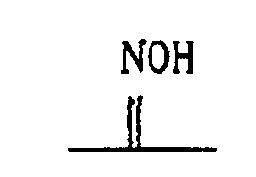 and "a (C1-C6)alkylenedioxy(C1-C6)alkylene group"
represents, for example, a group such as a group shown
below.
and "a (C1-C6)alkylenedioxy(C1-C6)alkylene group"
represents, for example, a group such as a group shown
below.
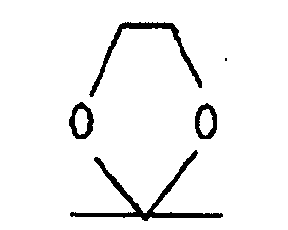
A preferable compound of an N-(4-pyrazolyl)amide
derivative represented by the general
formula (I) according to the present invention is, for
example, an N-(4-pyrazolyl)amide derivative represented
by the general formula as shown below.
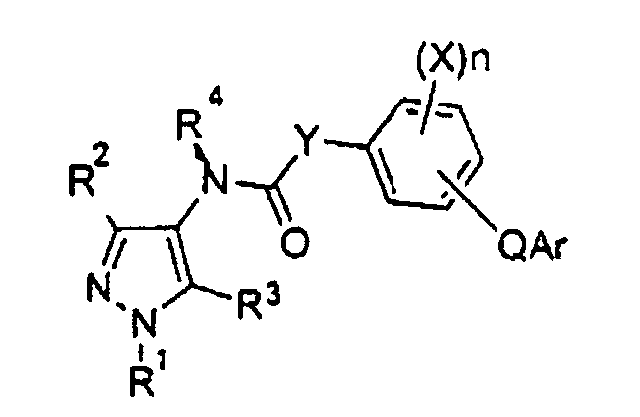
Preferably, R1 is a (C1-C6)alkyl group, a
halo(C1-C6)alkyl group, a cyano(C1-C6)alkyl group or the
like; R2 is a hydrogen atom, a halogen atom, a
(C1-C6)alkyl group, a halo(C1-C6)alkyl group or the like;
R3 is a halogen atom, a (C1-C6)alkoxyl group, a
(C1-C6)alkoxycarbonyl group or the like; R4 is a hydrogen
atom, a (C1-C6)alkyl group, a (C1-C6)alkoxy(C1-C6)alkyl
group, a (C1-C6)alkylcarbonyl group, a (C1-C6)alkoxycarbonyl
group or the like; (X)n is a hydrogen atom, a
halogen atom, a hydroxyl group, a (C1-C6)alkoxyl group,
a (C1-C6)alkylamino group or the like; and a
substituting position of (X)n is a 3-position. Q is
preferably an oxygen atom or a (C1-C6)alkylenoxy group,
and Ar is a phenyl group substituted with a halogen
atom, a phenyl group substituted with a cyano group, or
a pyridyl group substituted with a halo(C1-C6)alkyl
group.
More preferably, R1 is a methyl group, an
ethyl group, a fluoroethyl group, a cyanomethyl group
or the like; R2 is a hydrogen atom, a chlorine atom, a
methyl group, an ethyl group, a trifluoromethyl group
or the like; R3 is a chlorine atom, a bromine atom, a
methoxy group, an ethoxycarbonyl group or the like; R4
is a hydrogen atom, an ethyl group, an ethoxymethyl
group, an acetyl group, an ethoxycarbonyl group or the
like, (X)n is a hydrogen atom, a chlorine atom, a
hydroxyl group, a methoxy group, a methylamino group or
the like, and a substituting position of (X)n is a 3-position.
Q is an oxygen atom or a methylene-oxy
group, and Ar is a 4-fluorophenyl group, a 4-cyanophenyl
group, a 5-trifluoromethylpyridine-2-yl
group, or a 2-trifluoromethylpyridine-5-yl group.
An N-(4-pyrazolyl) amide derivative
represented by the general formula (I) according to the
present invention can be produced, for instance, by the
production processes as shown below.

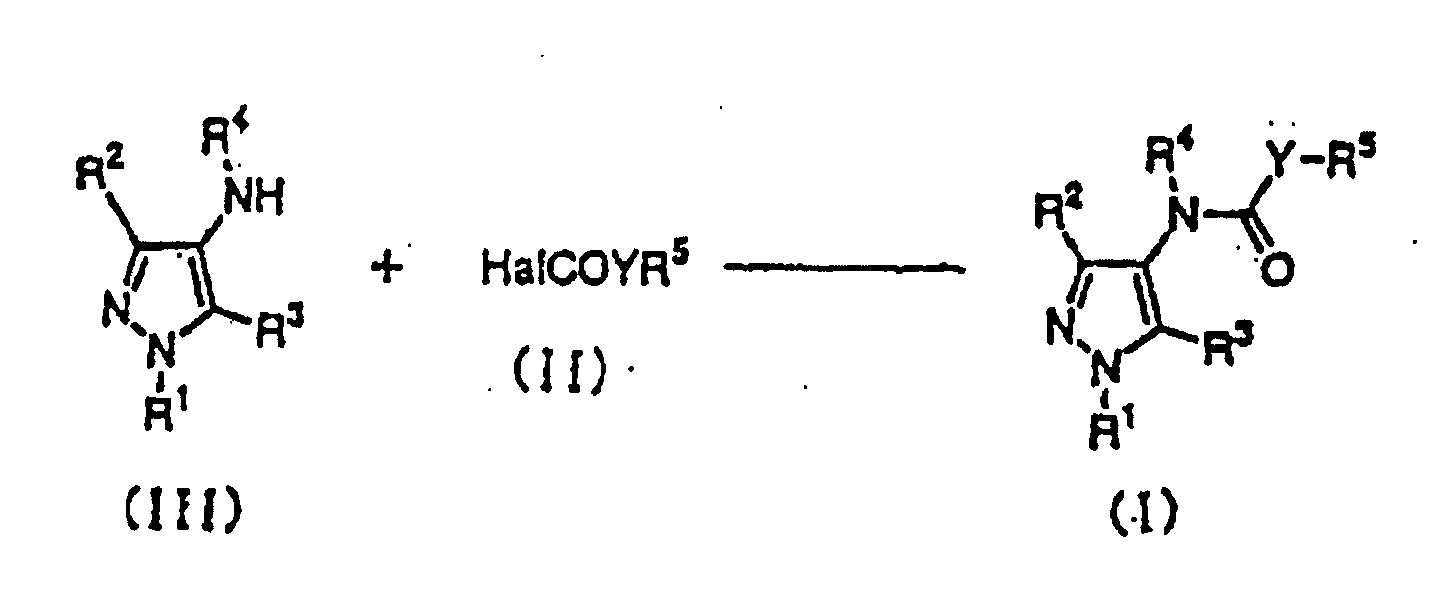 wherein R1, R2, R3, R4, R5 and Y are the same as
described above, and Hal represents a halogen atom.
wherein R1, R2, R3, R4, R5 and Y are the same as
described above, and Hal represents a halogen atom.
An N-(4-pyrazolyl) amide derivative
represented by the general formula (I) can be produced
by reacting a compound represented by the general
formula (III) with a compound represented by the
general formula (II) in the presences of an inert
solvent and a base.
The inert solvent which can be used in the
present reaction, may be any solvent so long as it is
not markedly detrimental to proceeding of the present
reaction, and is exemplified by inert solvents
including aromatic hydrocarbons such as benzene,
toluene and xylene; halogenated hydrocarbons such as
methylene chloride, chloroform and carbon
tetrachloride; halogenated aromatic hydrocarbons such
as chlorobenzene and dichlorobenzene; linear or cyclic
ethers such as diethyl ether, dioxane and
tetrahydrofuran; and esters such as ethyl acetate.
These inert solvents can be used singly or in
combination of two or more kinds thereof.
As the base, an inorganic base or an organic
base can be used. An inorganic base includes a
hydroxide of an alkali metal atom such as sodium
hydroxide and potassium hydroxide, and an organic base
includes an organic base such as triethylamine and
pyridine. An amount to be used thereof can be
appropriately selected in the range of 0.5 to 3
equivalents based on that of the compound represented
by the general formula (II).
As the present reaction is an equimolar
reaction, each of reactants may be used in an equimolar
amount, and an amount of the compound represented by
the general formula (III) can be used by appropriately
selecting in the range of 0.5 to 2 equivalents based on
that of the compound represented by the general formula
(II).
With regard to a reaction temperature, the
reaction can be conducted at a temperature from 0°C to
the reflux temperature of an inert solvent used. A
reaction time can be appropriately selected in the
range from several minutes to 48 hours, though it is
varied depending on a reaction scale, a reaction
temperature and the like.
After finishing the reaction, the desired
compound may be isolated from the reaction system
containing it by a conventional method, and if
necessary, purified by recrystallization, column
chromatography or the like to obtain the desired
compound.
 wherein R1, R2, R3, R4, R5 and Y are the same as
described above.
wherein R1, R2, R3, R4, R5 and Y are the same as
described above.
An N-(4-pyrazolyl) amide derivative
represented by the general formula (I) can be produced
by reacting a compound represented by the general
formula (III) with a compound represented by the
general formula (IV) in the presences of an inert
solvent and a base.
The inert solvent which can be used in the
present reaction includes tetrahydrofuran, diethyl
ether, dioxane, chloroform, methylene chloride and the
like. A condensation agent which can be used in the
present reaction may be any condensation agent as long
as it is used in a conventional amide synthesis, and
includes, for example, Mukaiyama reagent (2-chloro-N-methylpyridinium
iodide), DCC (1,3-dicyclohexylcarbodiimide),
CDI (carbonyl diimidazole) and DEPC (cyanodiethyl
phosphate). An amount to be used thereof can be
appropriately selected in the range from an equimolar
amount to an excessive molar amount based on that of
the compound represented by the general formula (IV).
The base which can be used in the present
reaction includes, for example, an organic base such as
triethylamine and pyridine, and an inorganic base such
as potassium carbonate. An amount to be used thereof
can be appropriately selected in the range from an
equimolar amount to an excessive molar amount based on
that of the compound represented by the general formula
(IV).
With regard to a reaction temperature, the
reaction can be conducted at a temperature in the range
from 0°C to a boiling point of the inert solvent used.
A reaction time can be appropriately selected in the
range from several minutes to 48 hours, though it is
varied depending on a reaction scale, a reaction
temperature and the like.
After finishing the reaction, the desired
compound may be isolated from the reaction system
containing it by a conventional method, and if
necessary, purified by recrystallization, column
chromatography, or the like to obtain the desired
compound.
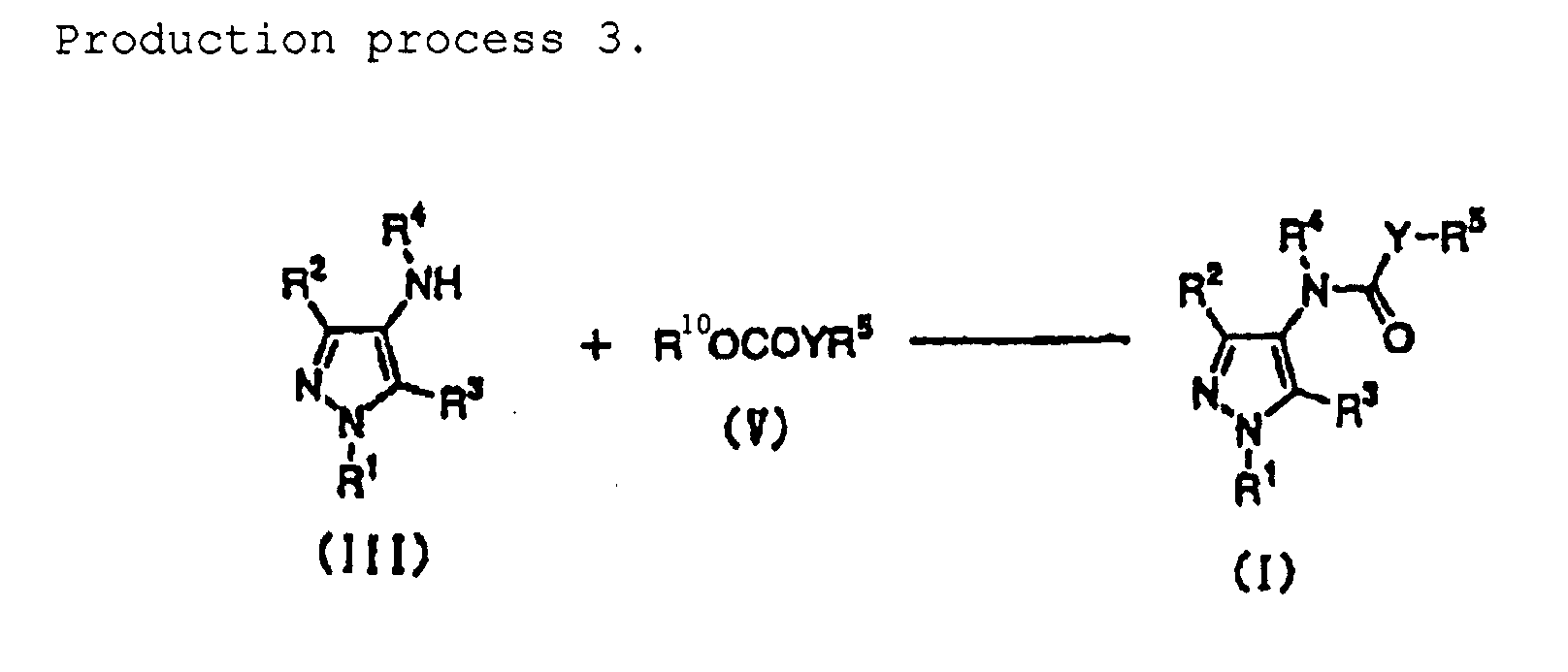 wherein R10 represents a (C1-C6)alkyl group, a phenyl
group, or a substituted phenyl group having at least
one substituent selected from the group consisting of
same or different, a halogen atom, a cyano group, a
nitro group, a halo(C1-C6)alkyl group, a (C1-C6)alkylsulfinyl
group, and a (C1-C6)alkylsulfonyl group,
and R1, R2, R3, R4, R5 and Y are the same as described
above.
wherein R10 represents a (C1-C6)alkyl group, a phenyl
group, or a substituted phenyl group having at least
one substituent selected from the group consisting of
same or different, a halogen atom, a cyano group, a
nitro group, a halo(C1-C6)alkyl group, a (C1-C6)alkylsulfinyl
group, and a (C1-C6)alkylsulfonyl group,
and R1, R2, R3, R4, R5 and Y are the same as described
above.
An N-(4-pyrazolyl)amide derivative
represented by the general formula (I) can be produced
by reacting a compound represented by the general
formula (III) with a compound represented by the
general formula (V) in the presences of an inert
solvent and a base.
The inert solvent which can be used in the
present reaction, may be any solvent so long as it is
not markedly detrimental to proceeding of the present
reaction, and is exemplified by inert solvents
including aromatic hydrocarbons such as benzene,
toluene and xylene; halogenated hydrocarbons such as
methylene chloride, chloroform and carbon
tetrachloride; chlorinated aromatic hydrocarbons such
as chlorobenzene and dichlorobenzene; linear or cyclic
ethers such as diethyl ether, dioxane and
tetrahydrofuran; esters such as ethyl acetate. These
inert solvents can be used singly or in combination of
two or more kinds thereof.
As the base, an inorganic base and an organic
base can be used. An inorganic base includes a
hydroxide of an alkali metal atom such as sodium
hydroxide and potassium hydroxide, and an organic base
includes an organic base such as triethylamine and
pyridine. The amount to be used thereof can be
appropriately selected in the range of 0.5 to 3
equivalent based on that of the compound represented by
the general formula (III).
As the present reaction is an equimolar
reaction, each of reactants may be used in an equimolar
amount, and the amount of the compound represented by
the general formula (V) can be used by appropriately
selecting in the range of 0.5 to 2 equivalents based on
that of the compound represented by the general formula
(III).
With regard to a reaction temperature, the
reaction can be conducted at a temperature from 0°C to
the reflux temperature of the inert solvent used. A
reaction time can be appropriately selected in the
range from several minutes to 48 hours, though it is
varied depending on a reaction scale, a reaction
temperature and the like.
After finishing the reaction, the desired
compound may be isolated from the reaction system
containing it by a conventional method, and if
necessary, purified by recrystallization, column
chromatography, or the like to obtain the desired
compound can be produced.
 wherein R1, R2, R3, R4 (with a proviso of excluding a
hydrogen atom), R5, Hal and Y are the same as described
above.
wherein R1, R2, R3, R4 (with a proviso of excluding a
hydrogen atom), R5, Hal and Y are the same as described
above.
An N-(4-pyrazolyl) amide derivative
represented by the general formula (I) can be produced
by reacting a compound represented by the general
formula (I') with a compound represented by the general
formula (VI) in the presences of an inert solvent and a
base.
The inert solvent which can be used in the
present reaction, may be any solvent so long as it is
not markedly detrimental to proceeding of the present
reaction, and is exemplified by inert solvents
including aromatic hydrocarbons such as benzene,
toluene and xylene; halogenated hydrocarbons such as
methylene chloride, chloroform and carbon
tetrachloride; linear or cyclic ethers such as diethyl
ether, dioxane and tetrahydrofuran; esters such as
ethyl acetate; linear or cyclic amides such as
dimethylformamide, dimethylacetamide and N-methylpyrrolidone.
These inert solvents can be used
singly or in combination of two or more kinds thereof.
As the base, an inorganic base and an organic base can
be used. An inorganic base includes a hydroxide of an
alkali metal atom such as potassium hydroxide and
sodium hydroxide; a carbonate such as potassium
carbonate and sodium carbonate; and a hydrogenated
product such as sodium hydride; and an organic base
includes, for instantce, an organic base such as
triethylamine and pyridine. An amount to be used
thereof can be appropriately selected in the range of
0.5 to 3 equivalent based on that of the compound
represented by the general formula (I').
As the present reaction is an equimolar
reaction, each of reactants may be used in an equimolar
amount, and an amount of the compound represented by
the general formula (VI) can be used by appropriately
selecting in the range of 0.5 to 2 equivalents based on
that of the compound represented by the general formula
(I').
With regard to a reaction temperature, the
reaction can be conducted at a temperature from 0°C to
the reflux temperature of an inert solvent used. A
reaction time can be appropriately selected in the
range from several minutes to 48 hours, though it is
varied depending on a reaction scale, a reaction
temperature, and the like.
After finishing the reaction, the desired
compound may be isolated from the reaction system
containing it by a conventional method, and if
necessary, purified by recrystallization, column
chromatography, or the like to obtain the desired
compound.
In this connection, in the above-described
production processes according to the present
invention, a compound represented by the general
formula (IV) as a starting material can be produced by
the methods as described in Journal of Medicinal
Chemistry (J.M.C.1979, Vol.22, No.9, p.1068), Bulletin
of Chemical Society of Japan [Bull. Chem. Soc. Japan,
52(7), p.2013-2022(1979)], or based thereon, and said
carboxylic acid can be employed as it is in a reaction,
or employed in a reaction after being derived to a
corresponding ester [a compound represented by the
general formula (V)] or a corresponding acid halide [a
compound represented by the general formula (II)]
according to a conventional method.
Further, an aminopyrazole compound
represented by the general formula (III) can be
produced by preparing a nitropyrazole by a method as
described in Chemical Abstract Vol. 60 (1964) 12020d
and the like, and then by reducing based on the method
as described in U.S.Patent No.4,171,367 and the like.
Representative examples of a compound
represented by the general formula (I) are illustrated
in Table 1-1 to Table 6-203, and Tables A to D.
However, the present invention is not limited thereto.
In the following Tables, "Me" represents a
methyl group, "Et" does an ethyl group, "Pr" does a
propyl group, "Bu" does a butyl group, "Pen" does a
pentyl group, "Hex" does a hexyl group, "Hep" does a
heptyl group, "Oct" does an octyl group, "Dec" does a
decyl group, "Ac" does an acetyl group, "Ph" does a
phenyl group, "Bz" does a benzyl group, and "c-" does
an alicyclic hydrocarbon group.
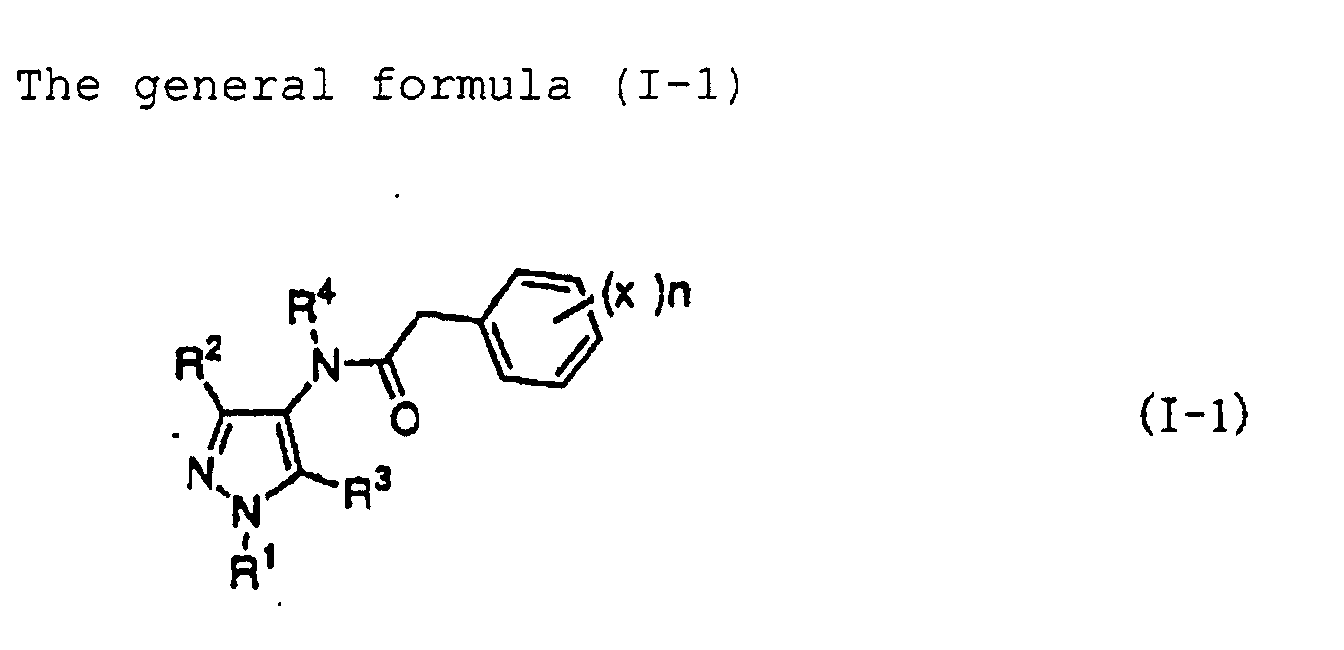
| R1 | R2 | R3 | R4 | (X)n |
| Me | Me | Cl | H | H |
| Me | Me | Cl | H | 2-F |
| Me | Me | Cl | H | 3-F |
| Me | Me | Cl | H | 4-F |
| Me | Me | Cl | H | 2-Cl |
| Me | Me | Cl | H | 3-Cl |
| Me | Me | Cl | H | 4-Cl |
| Me | Me | Cl | H | 2-Br |
| Me | Me | Cl | H | 3-Br |
| Me | Me | Cl | H | 4-Br |
| Me | Me | Cl | H | 2-Me |
| Me | Me | Cl | H | 3-Me |
| Me | Me | Cl | H | 4-Me |
| Me | Me | Cl | H | 4-n-Bu |
| Me | Me | Cl | H | 4-t-Bu |
| Me | Me | Cl | H | 4-C≡CCMe3 |
| Me | Me | Cl | H | 4-C≡CC(Me)2OH |
| Me | Me | Cl | H | 4-c-Hex |
| Me | Me | Cl | H | 2-OMe |
| Me | Me | Cl | H | 3-OMe |
| Me | Me | Cl | H | 4-OMe |
| Me | Me | Cl | H | 2-CF3 |
| Me | Me | Cl | H | 3-CF3 |
| Me | Me | Cl | H | 4-CF3 |
| Me | Me | Cl | H | 2-OCF3 |
| Me | Me | Cl | H | 3-OCF3 |
| Me | Me | Cl | H | 4-OCF3 |
| Me | Me | Cl | H | 4-OCH2CF3 |
| Me | Me | Cl | H | 4-OCF2CHF2 |
| Me | Me | Cl | H | 4-OCHF2 |
| Me | Me | Cl | H | 4-OCH2CF2CHF2 |
| Me | Me | Cl | H | 4-OCH(Me)CF3 |
| Me | Me | Cl | H | 4-OEt |
| Me | Me | Cl | H | 4-0-n-Bu |
| Me | Me | Cl | H | 4-0-t-Bu |
| Me | Me | Cl | H | 4-0-n-Pen |
| Me | Me | Cl | H | 2-OAc |
| Me | Me | Cl | H | 3-OAc |
| Me | Me | Cl | H | 4-OAc |
| Me | Me | Cl | H | 2-OCO2Me |
| Me | Me | Cl | H | 3-OCO2Me |
| Me | Me | Cl | H | 4-OCO2Me |
| Me | Me | Cl | H | 2-CN |
| Me | Me | Cl | H | 3-CN |
| Me | Me | Cl | H | 4-CN |
| Me | Me | Cl | H | 2-CO2H |
| Me | Me | Cl | H | 3-CO2H |
| Me | Me | Cl | H | 4-CO2H |
| Me | Me | Cl | H | 2-CO2Me |
| Me | Me | Cl | H | 3-CO2Me |
| Me | Me | Cl | H | 4-CO2Me |
| Me | Me | Cl | H | 2-CONHMe |
| Me | Me | Cl | H | 3-CONHMe |
| Me | Me | Cl | H | 4-CONHMe |
| Me | Me | Cl | H | 2-CONMe2 |
| Me | Me | Cl | H | 3-CONMe2 |
| Me | Me | Cl | H | 4-CONMe2 |
| Me | Me | Cl | H | 2-NO2 |
| Me | Me | Cl | H | 3-NO2 |
| Me | Me | Cl | H | 4-NO2 |
| Me | Me | Cl | H | 2-NH2 |
| Me | Me | Cl | H | 3-NH2 |
| Me | Me | Cl | H | 4-NH2 |
| Me | Me | Cl | H | 2-NHMe |
| Me | Me | Cl | H | 3-NHMe |
| Me | Me | Cl | H | 4-NHMe |
| Me | Me | Cl | H | 2-NMe2 |
| Me | Me | Cl | H | 3-NMe2 |
| Me | Me | Cl | H | 4-NMe2 |
| Me | Me | Cl | H | 2-NHAc |
| Me | Me | Cl | H | 3-NHAc |
| Me | Me | Cl | H | 4-NHAc |
| Me | Me | Cl | H | 2-NHCO2Me |
| Me | Me | Cl | H | 3-NHCO2Me |
| Me | Me | Cl | H | 4-NHCO2Me |
| Me | Me | Cl | H | 2-NHCO2Et |
| Me | Me | Cl | H | 3-NHCO2Et |
| Me | Me | Cl | H | 4-NHCO2Et |
| Me | Me | Cl | H | 2-NHCO2-i-Pr |
| Me | Me | Cl | H | 3-NHCO2-i-Pr |
| Me | Me | Cl | H | 4-NHCO2-i-Pr |
| Me | Me | Cl | H | 2-NHCO2CH2CH=CH2 |
| Me | Me | Cl | H | 3-NHCO2CH2CH=CH2 |
| Me | Me | Cl | H | 4-NHCO2CH2CH=CH2 |
| Me | Me | Cl | H | 2-NHCO2Ph |
| Me | Me | Cl | H | 3-NHCO2Ph |
| Me | Me | Cl | H | 4-NHCO2Ph |
| Me | Me | Cl | H | 2-NHCO2CH2Ph |
| Me | Me | Cl | H | 3-NHCO2CH2Ph |
| Me | Me | Cl | H | 4-NHCO2CH2Ph |
| Me | Me | Cl | H | 2-NHCO-t-Bu |
| Me | Me | Cl | H | 3-NHCO-t-Bu |
| Me | Me | Cl | H | 4-NHCO-t-Bu |
| Me | Me | Cl | H | 2-NHCOCF3 |
| Me | Me | Cl | H | 3-NHCOCF3 |
| Me | Me | Cl | H | 4-NHCOCF3 |
| Me | Me | Cl | H | 2-NHCOCHF2 |
| Me | Me | Cl | H | 2-NHCOCHF2 |
| Me | Me | Cl | H | 4-NHCOCHF2 |
| Me | Me | Cl | H | 2-NHCOCH=CHMe |
| Me | Me | Cl | H | 3-NHCOCH=CHMe |
| Me | Me | Cl | H | 4-NHCOCH=CHMe |
| Me | Me | Cl | H | 2-NHCOPh |
| Me | Me | Cl | H | 3-NHCOPh |
| Me | Me | Cl | H | 4-NHCOPh |
| Me | Me | Cl | H | 2-NHSO2Me |
| Me | Me | Cl | H | 3-NHSO2Me |
| Me | Me | Cl | H | 4-NHSO2Me |
| Me | Me | Cl | H | 2-NHSO2CF3 |
| Me | Me | Cl | H | 3-NHSO2CF3 |
| Me | Me | Cl | H | 4-NHSO2CF3 |
| Me | Me | Cl | H | 2-NHSO2Ph |
| Me | Me | Cl | H | 3-NHSO2Ph |
| Me | Me | Cl | H | 4-NHSO2Ph |
| Me | Me | Cl | H | 2-SCF3 |
| Me | Me | Cl | H | 3-SCF3 |
| Me | Me | Cl | H | 4-SCF3 |
| Me | Me | Cl | H | 2-SOCF3 |
| Me | Me | Cl | H | 3-SOCF3 |
| Me | Me | Cl | H | 4-SOCF3 |
| Me | Me | Cl | H | 2-SO2CF3 |
| Me | Me | Cl | H | 3-SO2CF3 |
| Me | Me | Cl | H | 4-SO2CF3 |
| Me | Me | Cl | H | 2-SMe |
| Me | Me | Cl | H | 3-SMe |
| Me | Me | Cl | H | 4-SMe |
| Me | Me | Cl | H | 2-SOMe |
| Me | Me | Cl | H | 3-SOMe |
| Me | Me | Cl | H | 4-SOMe |
| Me | Me | Cl | H | 2-SO2Me |
| Me | Me | Cl | H | 3-SO2Me |
| Me | Me | Cl | H | 4-SO2Me |
| Me | Me | Cl | H | 2-Ac |
| Me | Me | Cl | H | 3-Ac |
| Me | Me | Cl | H | 4-Ac |
| Me | Me | Cl | H | 2-C(Me)=NOH |
| Me | Me | Cl | H | 3-C(Me)=NOH |
| Me | Me | Cl | H | 4-C(Me)=NOH |
| Me | Me | Cl | H | 2-C(Me)=NOMe |
| Me | Me | Cl | H | 3-C(Me)=NOMe |
| Me | Me | Cl | H | 4-C(Me)=NOMe |
| Me | Me | Cl | H | 2-C(Me)=NOCH2CH=CH2 |
| Me | Me | Cl | H | 2-C(Me)=NO-t-Bu |
| Me | Me | Cl | H | 2-C(Me)=NOCH2Ph |
| Me | Me | Cl | H | 2-C (Me) =NOCH2(4-CF3-Ph) |
| Me | Me | Cl | H | 2-C(Me)=NOCH2(2,4-Cl2-Ph) |
| Me | Me | Cl | H | 2-C(Me)=NOCH2(2,6-Cl2-Ph) |
| Me | Me | Cl | H | 2-C (Me) =NOCH2(2-Cl-pyridine-5-yl) |
| Me | Me | Cl | H | 3-C(Me)=NOCH2CH=CH2 |
| Me | Me | Cl | H | 3-C(Me)-NO-t-Bu |
| Me | Me | Cl | H | 3-C(Me)=NOCH2Ph |
| Me | Me | Cl | H | 3-C (Me) =NOCH2(4-CF3-Ph) |
| Me | Me | Cl | H | 3-C (Me)=NOCH2(2,4-Cl2-Ph) |
| Me | Me | Cl | H | 3-C (Me) =NOCH2(2,6-Cl2-Ph) |
| Me | Me | Cl | H | 2-C (Me)=NOCH2(2-Cl-pyridine-5-yl) |
| Me | Me | Cl | H | 4-C(Me)=NOCH2CH=CH2 |
| Me | Me | Cl | H | 4-C(Me)=NO-t-Bu |
| Me | Me | Cl | H | 4-C(Me)=NOCH2Ph |
| Me | Me | Cl | H | 4-C (Me) =NOCH2(4-CF3-Ph) |
| Me | Me | Cl | H | 4-C (Me) =NOCH3(2,4-Cl2-Ph) |
| Me | Me | Cl | H | 4-C (Me) =NOCH2(2,6-Cl2-Ph) |
| Me | Me | Cl | H | 2-C (Me)=NOCH2(2-Cl-pyridine-5-yl) |
| Me | Me | Cl | H | 3,5-F2 |
| Me | Me | Cl | H | 2,3-Cl2 |
| Me | Me | Cl | H | 2,4-Cl2 |
| Me | Me | Cl | H | 2,5-Cl2 |
| Me | Me | Cl | H | 2,6-Cl2 |
| Me | Me | Cl | H | 3,4-Cl2 |
| Me | Me | Cl | H | 3,5-Cl2 |
| Me | Me | Cl | H | 2,3-Me2 |
| Me | Me | Cl | H | 2,4-Me2 |
| Me | Me | Cl | H | 2,5-Me2 |
| Me | Me | Cl | H | 2,6-Me2 |
| Me | Me | Cl | H | 3,4-Me2 |
| Me | Me | Cl | H | 3,5-Me2 |
| Me | Me | Cl | H | 3,5-(CF3)2 |
| Me | Me | Cl | H | 3-F-4-CH2CF3 |
| Me | Me | Cl | H | 2,4,6-Cl3 |
| Me | Me | Cl | H | 2,4,6-Me3 |
| Me | Me | Cl | H | 2,4,5-F3-6-CF3 |
| Me | Me | Cl | H | 4-morpholino |
| Me | Me | Cl | H | 5-CF3-pyridine-2-yl |
| Me | Me | Cl | H | 3-Cl-5-CF3-pyridine-2-yl |
| Me | Me | Cl | H | 3-F-5-CF3-pyridine-2-yl |
| Me | Me | Cl | H | 3,5-Cl2-pyridine-2-yl |
| Me | Me | Cl | H | 3,5-F2-pyridine-2-yl |
Table 1-2 represents 186 compounds wherein,
in the general formula (I-1), R1 represents Me, R2 does
Et, R3 does Cl, and R4 does H, and (X)n corresponds to
each of all the substituents shown in Table 1-1.
Table 1-3 represents 186 compounds wherein,
in the general formula (I-1), R1 represents Me, R2 does
i-Pr, R3 does Cl, and R4 does H, and (X)n corresponds to
each of all the substituents shown in Table 1-1.
Table 1-4 represents 186 compounds wherein,
in the general formula (I-1), R1 represents Me, R2 does
n-Pr, R3 does Cl, and R4 does H, and (X)n corresponds to
each of all the substituents shown in Table 1-1.
Table 1-5 represents 186 compounds wherein,
in the general formula (I-1), R1 represents Me, R2 does
t-Bu, R3 does Cl, and R4 does H, and (X)n corresponds to
each of all the substituents shown in Table 1-1.
Table 1-6 represents 186 compounds wherein,
in the general formula (I-1), R1 represents Me, R2 does
n-Bu, R3 does Cl, and R4 does H, and (X)n corresponds to
each of all the substituents shown in Table 1-1.
Table 1-7 represents 186 compounds wherein,
in the general formula (I-1), R1 represents Me, R2 does
CF3, R3 does Cl, and R4 does H, and (X)n corresponds to
each of all the substituents shown in Table 1-1.
Table 1-8 represents 186 compounds wherein,
in the general formula (I-1), R1 represents Me, R2 does
OMe, R3 does Cl, and R4 does H, and (X)n corresponds to
each of all the substituents shown in Table 1-1.
Table 1-9 represents 186 compounds wherein,
in the general formula (I-1), R1 represents Me, R2 does
OCHF2, R3 does Cl, and R4 does H, and (X)n corresponds to
each of all the substituents shown in Table 1-1.
Table 1-10 represents 186 compounds wherein,
in the general formula (I-1), R1 represents Me, R2 does
O-i-Pr, R3 does Cl, and R4 does H, and (X)n corresponds
to each of all the substituents shown in Table 1-1.
Table 1-11 represents 186 compounds wherein,
in the general formula (I-1), R1 represents Me, R2 does
Cl, R3 does Cl, and R4 does H, and (X)n corresponds to
each of all the substituents shown in Table 1-1.
Table 1-12 represents 186 compounds wherein,
in the general formula (I-1), R1 represents Me, R2 does
Ph, R3 does Cl, and R4 does H, and (X)n corresponds to
each of all the substituents shown in Table 1-1.
Table 1-13 represents 186 compounds wherein,
in the general formula (I-1), R1 represents Me, R2 does
2-Cl-Ph, R3 Cl, and R4 does H, and (X)n corresponds to
each of all the substituents shown in Table 1-1.
Table 1-14 represents 186 compounds wherein,
in the general formula (I-1), R1 represents Me, R2 does
3-Cl-Ph, R3 does Cl, and R4 does H, and (X)n corresponds
to each of all the substituents shown in Table 1-1.
Table 1-15 represents 186 compounds wherein,
in the general formula (I-1), R1 represents Me, R2 does
4-Cl-Ph, R3 does Cl, and R4 does H, and (X)n corresponds
to each of all the substituents shown in Table 1-1.
Table 1-16 represents 186 compounds wherein,
in the general formula (I-1), R1 represents Me, R2 does
2,4-Cl2-Ph, R3 does Cl, and R4 does H, and (X)n
corresponds to each of all the substituents shown in
Table 1-1.
Table 1-17 represents 186 compounds wherein,
in the general formula (I-1), R1 represents Me, R2 does
2-Me-Ph, R3 does Cl, and does R4 H, and (X)n corresponds
to each of all the substituents shown in Table 1-1.
Table 1-18 represents 186 compounds wherein,
in the general formula (I-1), R1 represents Me, R2 does
3-Me-Ph, R3 does Cl, and R4 does H, and (X)n corresponds
to each of all the substituents shown in Table 1-1.
Table 1-19 represents 186 compounds wherein,
in the general formula (I-1), R1 represents Me, R2 does
4-Me-Ph, R3 does Cl, and R4 does H, and (X)n corresponds
to each of all the substituents shown in Table 1-1.
Table 1-20 represents 186 compounds wherein,
in the general formula (I-1), R1 represents Me, R2 does
2-OMe-Ph, R3 does Cl, and R4 does H, and (X)n
corresponds to each of all the substituents shown in
Table 1-1.
Table 1-21 represents 186 compounds wherein,
in the general formula (I-1), R1 represents Me, R2 does
3-OMe-Ph, R3 does Cl, and R4 does H, and (X)n
corresponds to each of all the substituents shown in
Table 1-1.
Table 1-22 represents 186 compounds wherein,
in the general formula (I-1), R1 represents Me, R2 does
4-OMe-Ph, R3 does Cl, and R4 does H, and (X)n
corresponds to each of all the substituents shown in
Table 1-1.
Table 1-23 represents 186 compounds wherein,
in the general formula (I-1), R1 represents Me, R2 does
H, R3 does Cl, and R4 does H, and (X)n corresponds to
each of all the substituents shown in Table 1-1.
Table 1-24 represents 186 compounds wherein,
in the general formula (I-1), R1 represents H, R2 does
H, R3 does Cl, and R4 does H, and (X)n corresponds to
each of all the substituents shown in Table 1-1.
Table 1-25 represents 186 compounds wherein,
in the general formula (I-1), R1 represents Et, R2 does
H, R3 does Cl, and R4 does H, and (X)n corresponds to
each of all the substituents shown in Table 1-1.
Table 1-26 represents 186 compounds wherein,
in the general formula (I-1), R1 represents i-Pr, R2
does H, R3 does Cl, and R4 does H, and (X)n corresponds
to each of all the substituents shown in Table 1-1.
Table 1-27 represents 186 compounds wherein,
in the general formula (I-1), R1 represents n-Pr, R2
does H, R3 does Cl, and R4 does H, and (X)n corresponds
to each of all the substituents shown in Table 1-1.
Table 1-28 represents 186 compounds wherein,
in the general formula (I-1), R1 represents t-Bu, R2
does H, R3 does Cl, and R4 does H, and (X)n corresponds
to each of all the substituents shown in Table 1-1.
Table 1-29 represents 186 compounds wherein,
in the general formula (I-1), R1 represents n-Bu, R2
does H, R3 does Cl, and R4 does H, and (X)n corresponds
to each of all the substituents shown in Table 1-1.
Table 1-30 represents 186 compounds wherein,
in the general formula (I-1), R1 represents CH=CH2, R2
does H, R3 does Cl, and R4 does H, and (X)n corresponds
to each of all the substituents shown in Table 1-1.
Table 1-31 represents 186 compounds wherein,
in the general formula (I-1), R1 represents CH2CH=CH2, R2
does H, R3 does Cl, and R4 does H, and (X)n corresponds
to each of all the substituents shown in Table 1-1.
Table 1-32 represents 186 compounds wherein,
in the general formula (I-1), R1 represents CH≡CH2, R2
does H, R3 does Cl, and R4 does H, and (X)n corresponds
to each of all the substituents shown in Table 1-1.
Table 1-33 represents 186 compounds wherein,
in the general formula (I-1), R1 represents CH2CN, R2
does H, R3 does Cl, and R4 does H, and (X)n corresponds
to each of all the substituents shown in Table 1-1.
Table 1-34 represents 186 compounds wherein,
in the general formula (I-1), R1 represents CH2CF3, R2
does H, R3 does Cl, and R4 does H, and (X)n corresponds
to each of all the substituents shown in Table 1-1.
Table 1-35 represents 186 compounds wherein,
in the general formula (I-1), R1 represents CH2Ph, R2
does H, R3 does Cl, and R4 does H, and (X)n corresponds
to each of all the substituents shown in Table 1-1.
Table 1-36 represents 186 compounds wherein,
in the general formula (I-1), R1 represents Ph, R2 does
H, R3 does Cl, and R4 does H, and (X)n corresponds to
each of all the substituents shown in Table 1-1.
Table 1-37 represents 186 compounds wherein,
in the general formula (I-1), R1 represents 2-Cl-Ph, R2
does H, R3 does Cl, and R4 does H, and (X)n corresponds
to each of all the substituents shown in Table 1-1.
Table 1-38 represents 186 compounds wherein,
in the general formula (I-1), R1 represents 3-Cl-Ph, R2
does H, R3 does Cl, and R4 does H, and (X)n corresponds
to each of all the substituents shown in Table 1-1.
Table 1-39 represents 186 compounds wherein,
in the general formula (I-1), R1 represents 4-Cl-Ph, R2
does H, R3 does Cl, and R4 does H, and (X)n corresponds
to each of all the substituents shown in Table 1-1.
Table 1-40 represents 186 compounds wherein,
in the general formula (I-1), R1 represents 2,4-Cl2-Ph,
R2 does H, R3 does Cl, and R4 does H, and (X)n
corresponds to each of all the substituents shown in
Table 1-1.
Table 1-41 represents 186 compounds wherein,
in the general formula (I-1), R1 represents Ac, R2 does
H, R3 does Cl, and R4 does H, and (X)n corresponds to
each of all the substituents shown in Table 1-1.
Table 1-42 represents 186 compounds wherein,
in the general formula (I-1), R1 represents CO-Ph, R2
does H, R3 does Cl, and R4 does H, and (X)n corresponds
to each of all the substituents shown in Table 1-1.
Table 1-43 represents 186 compounds wherein,
in the general formula (I-1), R1 represents CH2 CH2F, R2
does H, R3 does Cl, and R4 does H, and (X)n corresponds
to each of all the substituents shown in Table 1-1.
Table 1-44 represents 186 compounds wherein,
in the general formula (I-1), R1 represents CH2 CH2Cl, R2
does H, R3 does Cl, and R4 does H, and (X)n corresponds
to each of all the substituents shown in Table 1-1.
Table 1-45 represents 186 compounds wherein,
in the general formula (I-1), R1 represents CH2 CH2Br, R2
does H, R3 does Cl, and R4 does H, and (X)n corresponds
to each of all the substituents shown in Table 1-1.
Table 1-46 represents 186 compounds wherein,
in the general formula (I-1), R1 represents CH2 CH2OH, R2
does H, R3 does Cl, and R4 does H, and (X)n corresponds
to each of all the substituents shown in Table 1-1.
Table 1-47 represents 186 compounds wherein,
in the general formula (I-1), R1 represents CH2 CH2OMe,
R2 does H, R3 does Cl, and R4 does H, and (X)n
corresponds to each of all the substituents shown in
Table 1-1.
Table 1-48 represents 186 compounds wherein,
in the general formula (I-1), R1 represents CH2OMe, R2
does H, R3 does Cl, and R4 does H, and (X)n corresponds
to each of all the substituents shown in Table 1-1.
Table 1-49 represents 186 compounds wherein,
in the general formula (I-1), R1 represents CH2OEt, R2
does H, R3 does Cl, and R4 does H, and (X)n corresponds
to each of all the substituents shown in Table 1-1.
Table 1-50 represents 186 compounds wherein,
in the general formula (I-1), R1 represents CH2COOH, R2
does H, R3 does Cl, and R4 does H, and (X)n corresponds
to each of all the substituents shown in Table 1-1.
Table 1-51 represents 186 compounds wherein,
in the general formula (I-1), R1 represents CH2COOEt, R2
does H, R3 does Cl, and R4 does H, and (X)n corresponds
to each of all the substituents shown in Table 1-1.
Table 1-52 represents 186 compounds wherein,
in the general formula (I-1), R1 represents CH2CONHMe, R2
does H, R3 does Cl, and R4 does H, and (X)n corresponds
to each of all the substituents shown in Table 1-1.
Table 1-53 represents 186 compounds wherein,
in the general formula (I-1), R1 represents CH2CONMe2, R2
does H, R3 does Cl, and R4 does H, and (X)n corresponds
to each of all the substituents shown in Table 1-1.
Table 1-54 represents 186 compounds wherein,
in the general formula (I-1), R1 represents CH2CHO, R2
does H, R3 does Cl, and R4 does H, and (X)n corresponds
to each of all the substituents shown in Table 1-1.
Table 1-55 represents 186 compounds wherein,
in the general formula (I-1), R1 represents CH2CH=NOMe,
R2 does H, R3 does Cl, and R4 does H, and (X)n
corresponds to each of all the substituents shown in
Table 1-1.
Table 1-56 represents 186 compounds wherein,
in the general formula (I-1), R1 represents Et, R2 does
H, R3 does H, and R4 does H, and (X)n corresponds to
each of all the substituents shown in Table 1-1.
Table 1-57 represents 186 compounds wherein,
in the general formula (I-1), R1 represents Et, R2 does
H, R3 does F, and R4 does H, and (X)n corresponds to
each of all the substituents shown in Table 1-1.
Table 1-58 represents 186 compounds wherein,
in the general formula (I-1), R1 represents Et, R2 does
H, R3 does Br, and R4 does H, and (X)n corresponds to
each of all the substituents shown in Table 1-1.
Table 1-59 represents 186 compounds wherein,
in the general formula (I-1), R1 represents Et, R2 does
H, R3 does I, and R4 does H, and (X)n corresponds to
each of all the substituents shown in Table 1-1.
Table 1-60 represents 186 compounds wherein,
in the general formula (I-1), R1 represents Et, R2 does
H, R3 does CF3, and R4 does H, and (X)n corresponds to
each of all the substituents shown in Table 1-1.
Table 1-61 represents 186 compounds wherein,
in the general formula (I-1), R1 represents Et, R2 does
H, R3 does CN, and R4 does H, and (X)n corresponds to
each of all the substituents shown in Table 1-1.
Table 1-62 represents 186 compounds wherein,
in the general formula (I-1), R1 represents Et, R2 does
H, R3 does COOMe, and R4 does H, and (X)n corresponds to
each of all the substituents shown in Table 1-1.
Table 1-63 represents 186 compounds wherein,
in the general formula (1-1), R1 represents Et, R2 does
H, R3 does CONHMe, and R4 does H, and (X)n corresponds
to each of all the substituents shown in Table 1-1.
Table 1-64 represents 186 compounds wherein,
in the general formula (I-1), R1 represents Et, R2 does
H, R3 does CONMe2, and R4 does H, and (X)n corresponds to
each of all the substituents shown in Table 1-1.
Table 1-65 represents 186 compounds wherein,
in the general formula (I-1), R1 represents Et, R2 does
H, R3 does SMe, and R4 does H, and (X)n corresponds to
each of all the substituents shown in Table 1-1.
Table 1-66 represents 186 compounds wherein,
in the general formula (I-1), R1 represents Et, R2 does
H, R3 does SPh, and R4 does H, and (X)n corresponds to
each of all the substituents shown in Table 1-1.
Table 1-67 represents 186 compounds wherein,
in the general formula (I-1), R1 represents Et, R2 does
H, R3 does OH, and R4 does H, and (X)n corresponds to
each of all the substituents shown in Table 1-1.
Table 1-68 represents 186 compounds wherein,
in the general formula (I-1), R1 represents Et, R2 does
H, R3 does OMe, and R4 does H, and (X)n corresponds to
each of all the substituents shown in Table 1-1.
Table 1-69 represents 186 compounds wherein,
in the general formula (I-1), R1 represents Et, R2 does
H, R3 does OPh, and R4 does H, and (X)n corresponds to
each of all the substituents shown in Table 1-1.
Table 1-70 represents 186 compounds wherein,
in the general formula (I-1), R1 represents Et, R2 does
H, R3 does NMe2, and R4 does H, and (X)n corresponds to
each of all the substituents shown in Table 1-1.
Table 1-71 represents 186 compounds wherein,
in the general formula (I-1), R1 represents Et, R2 does
H, R3 does Cl, and R4 does Me, and (X)n corresponds to
each of all the substituents shown in Table 1-1.
Table 1-72 represents 186 compounds wherein,
in the general formula (I-1), R1 represents Et, R2 does
H, R3 does Cl, and R4 does Et, and (X)n corresponds to
each of all the substituents shown in Table 1-1.
Table 1-73 represents 186 compounds wherein,
in the general formula (I-1), R1 represents Et, R2 does
H, R3 does Cl, and R4 does n-Pr, and (X)n corresponds to
each of all the substituents shown in Table 1-1.
Table 1-74 represents 186 compounds wherein,
in the general formula (I-1), R1 represents Et, R2 does
H, R3 does Cl, and R4 does i-Pr, and (X)n corresponds to
each of all the substituents shown in Table 1-1.
Table 1-75 represents 186 compounds wherein,
in the general formula (I-1), R1 represents Et, R2 does
H, R3 does Cl, and R4 does CH2CH=CH2, and (X)n
corresponds to each of all the substituents shown in
Table 1-1.
Table 1-76 represents 186 compounds wherein,
in the general formula (1-1), R1 represents Et, R2 does
H, R3 does Cl, and R4 does CH2C≡CH, and (X)n corresponds
to each of all the substituents shown in Table 1-1.
Table 1-77 represents 186 compounds wherein,
in the general formula (I-1), R1 represents Et, R2 does
H, R3 does Cl, and R4 does CH2CF3, and (X)n corresponds
to each of all the substituents shown in Table 1-1.
Table 1-78 represents 186 compounds wherein,
in the general formula (I-1), R1 represents Et, R2 does
H, R3 does Cl, and R4 does CH2CN, and (X)n corresponds to
each of all the substituents shown in Table 1-1.
Table 1-79 represents 186 compounds wherein,
in the general formula (I-1), R1 represents Et, R2 does
H, R3 does Cl, and R4 does CH2OMe, and (X)n corresponds
to each of all the substituents shown in Table 1-1.
Table 1-80 represents 186 compounds wherein,
in the general formula (I-1), R1 represents Et, R2 does
H, R3 does Cl, and R4 does CH2OEt, and (X)n corresponds
to each of all the substituents shown in Table 1-1.
Table 1-81 represents 186 compounds wherein,
in the general formula (I-1), R1 represents Et, R2 does
H, R3 does Cl, and R4 does CH2SEt, and (X)n corresponds
to each of all the substituents shown in Table 1-1.
Table 1-82 represents 186 compounds wherein,
in the general formula (I-1), R1 represents Et, R2 does
H, R3 does Cl, and R4 does CH2OOEt, and (X)n corresponds
to each of all the substituents shown in Table 1-1.
Table 1-83 represents 186 compounds wherein,
in the general formula (I-1), R1 represents Et, R2 does
H, R3 does Cl, and R4 does COOMe, and (X)n corresponds
to each of all the substituents shown in Table 1-1.
Table 1-84 represents 186 compounds wherein,
in the general formula (I-1), R1 represents Et, R2 does
H, R3 does Cl, and R4 does CONHMe, and (X)n corresponds
to each of all the substituents shown in Table 1-1.
Table 1-85 represents 186 compounds wherein,
in the general formula (I-1), R1 represents Et, R2 does
H, R3 does Cl, and R4 does CONMe2, and (X)n corresponds
to each of all the substituents shown in Table 1-1.
Table 1-86 represents 186 compounds wherein,
in the general formula (I-1), R1 represents Et, R2 does
H, R3 does Cl, and R4 does COCH3, and (X)n corresponds to
each of all the substituents shown in Table 1-1.
Table 1-87 represents 186 compounds wherein,
in the general formula (I-1), R1 represents Et, R2 does
H, R3 does Cl, and R4 does SPh, and (X)n corresponds to
each of all the substituents shown in Table 1-1.
Table 1-88 represents 186 compounds wherein,
in the general formula (I-1), R1 represents Et, R2 does
H, R3 does Cl, and R4 does CH2-c-Pr, and (X)n corresponds
to each of all the substituents shown in Table 1-1.
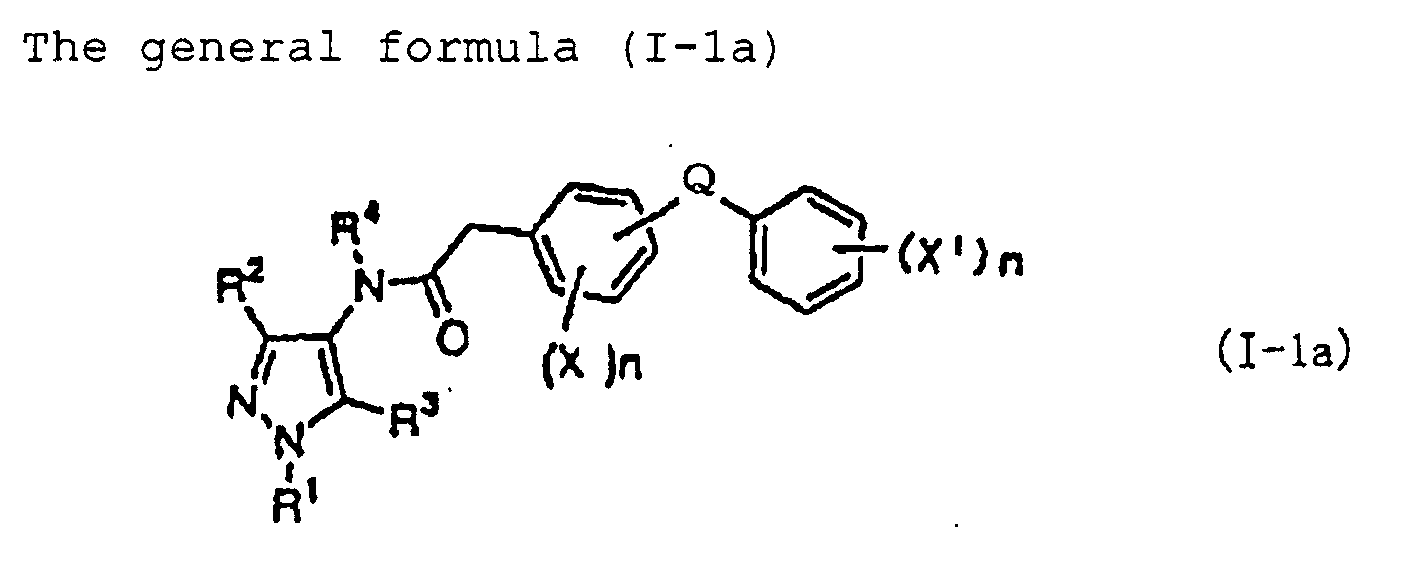
| R1 | R2 | R3 | R4 | Q | Bond | (X)n | (X1)n |
| Me | Me | Cl | H | 0 | 4-position | H | H |
| Me | Me | Cl | H | 0 | 4-position | H | 2-F |
| Me | Me | Cl | H | 0 | 4-position | H | 3-F |
| Me | Me | Cl | H | 0 | 4-position | H | 4-F |
| Me | Me | Cl | H | 0 | 4-position | H | 2-Cl |
| Me | Me | Cl | H | 0 | 4-position | H | 3-Cl |
| Me | Me | Cl | H | 0 | 4-position | H | 4-Cl |
| Me | Me | Cl | H | 0 | 4-position | H | 2-Br |
| Me | Me | Cl | H | 0 | 4-position | H | 3-Br |
| Me | Me | Cl | H | 0 | 4-position | H | 4-Br |
| Me | Me | Cl | H | 0 | 4-position | H | 2-Me |
| Me | Me | Cl | H | 0 | 4-position | H | 3-Me |
| Me | Me | Cl | H | 0 | 4-position | H | 4-Me |
| Me | Me | Cl | H | 0 | 4-position | H | 2-OMe |
| Me | Me | Cl | H | 0 | 4-position | H | 3-OMe |
| Me | Me | Cl | H | 0 | 4-position | H | 4-OMe |
| Me | Me | Cl | H | 0 | 4-position | H | 2-CF3 |
| Me | Me | Cl | H | 0 | 4-position | H | 3-CF3 |
| Me | Me | Cl | H | 0 | 4-position | H | 4-CF3 |
| Me | Me | Cl | H | 0 | 4-position | H | 4-CF(CF3)2 |
| Me | Me | Cl | H | 0 | 4-position | H | 4-CH(CF3)2 |
| Me | Me | Cl | H | 0 | 4-position | H | 4-CF2CF3 |
| Me | Me | Cl | H | 0 | 4-position | H | 2-OCF3 |
| Me | Me | Cl | H | 0 | 4-position | H | 3-OCF3 |
| Me | Me | Cl | H | 0 | 4-position | H | 4-OCF3 |
| Me | Me | Cl | H | 0 | 4-position | H | 4-OCH2CF3 |
| Me | Me | Cl | H | 0 | 4-position | H | 4-OCF2CHF2 |
| Me | Me | Cl | H | 0 | 4-position | H | 4-OCHF2 |
| Me | Me | Cl | H | 0 | 4-position | H | 4-OCH(Me)CF3 |
| Me | Me | Cl | H | 0 | 4-position | H | 4-OCH2CF2CHF2 |
| Me | Me | Cl | H | 0 | 4-position | H | 4-OCH(CF3)2 |
| Me | Me | Cl | H | 0 | 4-position | H | 2-OAc |
| Me | Me | Cl | H | 0 | 4-position | H | 3-OAc |
| Me | Me | Cl | H | 0 | 4-position | H | 4-OAc |
| Me | Me | Cl | H | 0 | 4-position | H | 2-OCO2Me |
| Me | Me | Cl | H | 0 | 4-position | H | 3-OCO2Me |
| Me | Me | Cl | H | 0 | 4-position | H | 4-OCO2Me |
| Me | Me | Cl | H | 0 | 4-position | H | 2-CN |
| Me | Me | Cl | H | 0 | 4-position | H | 3-CN |
| Me | Me | Cl | H | 0 | 4-position | H | 4-CN |
| Me | Me | Cl | H | 0 | 4-position | H | 2-CO2H |
| Me | Me | Cl | H | 0 | 4-position | H | 3-CO2H |
| Me | Me | Cl | H | 0 | 4-position | H | 4-CO2H |
| Me | Me | Cl | H | 0 | 4-position | H | 2-CO2Me |
| Me | Me | Cl | H | 0 | 4-position | H | 3-CO2Me |
| Me | Me | Cl | H | 0 | 4-position | H | 4-CO2Me |
| Me | Me | Cl | H | 0 | 4-position | H | 2-CONHMe |
| Me | Me | Cl | H | 0 | 4-position | H | 3-CONHMe |
| Me | Me | Cl | H | 0 | 4-position | H | 4-CONHMe |
| Me | Me | Cl | H | 0 | 4-position | H | 2-CONMe2 |
| Me | Me | Cl | H | 0 | 4-position | H | 3-CONMe2 |
| Me | Me | Cl | H | 0 | 4-position | H | 4-CONMe2 |
| Me | Me | Cl | H | 0 | 4-position | H | 2-NO2 |
| Me | Me | Cl | H | 0 | 4-position | H | 3-NO2 |
| Me | Me | Cl | H | 0 | 4-position | H | 4-NO2 |
| Me | Me | Cl | H | 0 | 4-position | H | 2-NH2 |
| Me | Me | Cl | H | 0 | 4-position | H | 3-NH2 |
| Me | Me | Cl | H | 0 | 4-position | H | 4-NH2 |
| Me | Me | Cl | H | 0 | 4-position | H | 2-NHMe |
| Me | Me | Cl | H | 0 | 4-position | H | 3-NHMe |
| Me | Me | Cl | H | 0 | 4-position | H | 4-NHMe |
| Me | Me | Cl | H | 0 | 4-position | H | 2-NMe2 |
| Me | Me | Cl | H | 0 | 4-position | H | 3-NMe2 |
| Me | Me | Cl | H | 0 | 4-position | H | 4-NMe2 |
| Me | Me | Cl | H | 0 | 4-position | H | 2-NHCO2Me |
| Me | Me | Cl | H | 0 | 4-position | H | 3-NHCO2Me |
| Me | Me | Cl | H | 0 | 4-position | H | 4-NHCO2Me |
| Me | Me | Cl | H | 0 | 4-position | H | 2-NHCO2Et |
| Me | Me | Cl | H | 0 | 4-position | H | 3-NHCO2Et |
| Me | Me | Cl | H | 0 | 4-position | H | 4-NHCO2Et |
| Me | Me | Cl | H | 0 | 4-position | H | 2-NHCO2-i-Pr |
| Me | Me | Cl | H | 0 | 4-position | H | 3-NHCO2-i-Pr |
| Me | Me | Cl | H | 0 | 4-position | H | 4-NHCO2-i-Pr |
| Me | Me | Cl | H | 0 | 4-position | H | 2-NHCO2CH2CH=CH2 |
| Me | Me | Cl | H | 0 | 4-position | H | 3-NHCO2CH2CH=CH2 |
| Me | Me | Cl | H | 0 | 4-position | H | 4-NHCO2CH2CH=CH2 |
| Me | Me | Cl | H | 0 | 4-position | H | 4-NHCO2CH2C≡CH |
| Me | Me | Cl | H | 0 | 4-position | H | 2-NHCO2Ph |
| Me | Me | Cl | H | 0 | 4-position | H | 3-NHCO2Ph |
| Me | Me | Cl | H | 0 | 4-position | H | 4-NHCO2Ph |
| Me | Me | Cl | H | 0 | 4-position | H | 2-NHCO2CH2Ph |
| Me | Me | Cl | H | 0 | 4-position | H | 3-NHCO2CH2Ph |
| Me | Me | Cl | H | 0 | 4-position | H | 4-NHCO2CH2Ph |
| Me | Me | Cl | H | 0 | 4-position | H | 2-NHCO-t-Bu |
| Me | Me | Cl | H | 0 | 4-position | H | 3-NHCO-t-Bu |
| Me | Me | Cl | H | 0 | 4-position | H | 4-NHCO-t-Bu |
| Me | Me | Cl | H | 0 | 4-position | H | 2-NHCOCF3 |
| Me | Me | Cl | H | 0 | 4-position | H | 3-NHCOCF3 |
| Me | Me | Cl | H | 0 | 4-position | H | 4-NHCOCF3 |
| Me | Me | Cl | H | 0 | 4-position | H | 4-NHCOCH2Cl |
| Me | Me | Cl | H | 0 | 4-position | H | 2-NHAc |
| Me | Me | Cl | H | 0 | 4-position | H | 3-NHAc |
| Me | Me | Cl | H | 0 | 4-position | H | 4-NHAc |
| Me | Me | Cl | H | 0 | 4-position | H | 2-NHCOCH=CHMe |
| Me | Me | Cl | H | 0 | 4-position | H | 3-NHCOCH=CHMe |
| Me | Me | Cl | H | 0 | 4-position | H | 4-NHCOCH=CHMe |
| Me | Me | Cl | H | 0 | 4-position | H | 4-NHCO-c-Pr |
| Me | Me | Cl | H | 0 | 4-position | H | 2-NHCOPh |
| Me | Me | Cl | H | 0 | 4-position | H | 3-NHCOPh |
| Me | Me | Cl | H | O | 4-position | H | 4-NHCOPh |
| Me | Me | Cl | H | 0 | 4-position | H | 4-NHCO(thiophene-2-yl) |
| Me | Me | Cl | H | 0 | 4-position | H | 4-NHCO(pyridine-2-yl) |
| Me | Me | Cl | H | 0 | 4-position | H | 4-NHCO(pyridine-3-yl) |
| Me | Me | Cl | H | 0 | 4-position | H | 2-NHSO2Me |
| Me | Me | Cl | H | 0 | 4-position | H | 3-NHSO2Me |
| Me | Me | Cl | H | 0 | 4-position | H | 4-NHSO2Me |
| Me | Me | Cl | H | 0 | 4-position | H | 4-NHSO2-c-Pr |
| Me | Me | Cl | H | 0 | 4-position | H | 2-NHSO2CF3 |
| Me | Me | Cl | H | 0 | 4-position | H | 3-NHSO2CF3 |
| Me | Me | Cl | H | 0 | 4-position | H | 4-NHSO2CF3 |
| Me | Me | Cl | H | O | 4-position | H | 2-NHSO2Ph |
| Me | Me | Cl | H | 0 | 4-position | H | 3-NHSO2Ph |
| Me | Me | Cl | H | 0 | 4-position | H | 4-NHSO2Ph |
| Me | Me | Cl | H | 0 | 4-position | H | 2-SCF3 |
| Me | Me | Cl | H | 0 | 4-position | H | 3-SCF3 |
| Me | Me | Cl | H | 0 | 4-position | H | 4-SCF3 |
| Me | Me | Cl | H | 0 | 4-position | H | 2-SOCF3 |
| Me | Me | Cl | H | 0 | 4-position | H | 3-SOCF3 |
| Me | Me | Cl | H | 0 | 4-position | H | 4-SOCF3 |
| Me | Me | Cl | H | 0 | 4-position | H | 2-SO2CF3 |
| Me | Me | Cl | H | 0 | 4-position | H | 3-SO2CF3 |
| Me | Me | Cl | H | 0 | 4-position | H | 4-SO2CF3 |
| Me | Me | Cl | H | 0 | 4-position | H | 2-SMe |
| Me | Me | Cl | H | 0 | 4-position | H | 3-SMe |
| Me | Me | Cl | H | 0 | 4-position | H | 4-SMe |
| Me | Me | Cl | H | 0 | 4-position | H | 2-SOMe |
| Me | Me | Cl | H | 0 | 4-position | H | 3-SOMe |
| Me | Me | Cl | H | 0 | 4-position | H | 4-SOMe |
| Me | Me | Cl | H | 0 | 4-position | H | 2-SO2Me |
| Me | Me | Cl | H | 0 | 4-position | H | 3-SO2Me |
| Me | Me | Cl | H | 0 | 4-position | H | 4-SO2Me |
| Me | Me | Cl | H | 0 | 4-position | H | 4-t-Bu |
| Me | Me | Cl | H | 0 | 4-position | H | 2-Ac |
| Me | Me | Cl | H | 0 | 4-position | H | 3-Ac |
| Me | Me | Cl | H | 0 | 4-position | H | 4-Ac |
| Me | Me | Cl | H | 0 | 4-position | H | 2-C(Me)=NOH |
| Me | Me | Cl | H | 0 | 4-position | H | 3-C(Me)=NOH |
| Me | Me | Cl | H | 0 | 4-position | H | 4-C(Me)=NOH |
| Me | Me | Cl | H | 0 | 4-position | H | 2-C(Me)=NOMe |
| Me | Me | Cl | H | 0 | 4-position | H | 3-C(Me)=NOMe |
| Me | Me | Cl | H | O | 4-position | H | 4-C(Me)=NOMe |
| Me | Me | Cl | H | 0 | 4-position | H | 2-C(Me)=NOCH2CH=CH2 |
| Me | Me | Cl | H | 0 | 4-position | H | 2-C(Me)=NO-t-Bu |
| Me | Me | Cl | H | 0 | 4-position | H | 2-C(Me)=NOCH2Ph |
| Me | Me | Cl | H | 0 | 4-position | H | 2-C(Me)=NOCH2(4-CF3-Ph) |
| Me | He | Cl | H | 0 | 4-position | H | 2-C(Me)=NOCH2(2,4-Cl2-Ph |
| Me | Me | Cl | H | 0 | 4-position | H | 2-C(Me)=NOCH2(2,6-Cl2-Ph |
| Me | Me | Cl | H | 0 | 4-position | H | 2-C(Me)=NOCH2(2-Cl-pyridine-5-yl) |
| Me | Me | Cl | H | 0 | 4-position | H | 3-C(Me)=NOCH2CH=CH2 |
| Me | Me | Cl | H | 0 | 4-position | H | 3-C(Me)=NO-t-Bu |
| Me | Me | Cl | H | 0 | 4-position | H | 3-C(Me)=NOCH2Ph |
| Me | Me | Cl | H | 0 | 4-position | H | 3-C(Me)=NOCH2(4-CF-3Ph) |
| Me | Me | Cl | H | 0 | 4-position | H | 3-C(Me)=NOCH2(2,4-Cl2-Ph) |
| Me | Me | Cl | H | 0 | 4-position | H | 3-C(Me)=NOCH2(2,6-Cl2-Ph) |
| Me | Me | Cl | H | 0 | 4-position | H | 3-C(Me)=NOCH2(2-Cl-pyridine-5-yl) |
| Me | Me | Cl | H | 0 | 4-position | H | 4-C(Me)=NOCH2CH=CH2 |
| Me | Me | Cl | H | 0 | 4-position | H | 4-C(Me)=NO-t-Bu |
| Me | Me | Cl | H | 0 | 4-position | H | 4-C(Me)=NOCH2Ph |
| Me | Me | Cl | H | 0 | 4-position | H | 4-C(Me)=NOCH2(4-CF3-Ph) |
| Me | Me | Cl | H | 0 | 4-position | H | 4-C(Me)=NOCH2(2,4-Cl2-Ph) |
| Me | Me | Cl | H | 0 | 4-position | H | 4-C(Me)=NOCH2(2,6-Cl2-Ph) |
| Me | Me | Cl | H | 0 | 4-position | H | 4-C(Me)=NOCH2(2-Cl-pyridine-5-yl) |
| Me | Me | Cl | H | 0 | 4-position | H | 2,3-Cl2 |
| Me | Me | Cl | H | 0 | 4-position | H | 2,4-Cl2 |
| Me | Me | Cl | H | 0 | 4-position | H | 2,5-Cl2 |
| Me | Me | Cl | H | 0 | 4-position | H | 2,6-Cl2 |
| Me | Me | Cl | H | 0 | 4-position | H | 3,4-Cl2 |
| Me | Me | Cl | H | 0 | 4-position | H | 3,5-Cl2 |
| Me | Me | Cl | H | O | 4-position | H | 2,3-Me2 |
| Me | Me | Cl | H | O | 4-position | H | 2,4-Me2 |
| Me | Me | Cl | H | 0 | 4-position | H | 2,5-Me2 |
| Me | Me | Cl | H | 0 | 4-position | H | 2,6-Me2 |
| Me | Me | Cl | H | 0 | 4-position | H | 3,4-C12 |
| Me | Me | Cl | H | 0 | 4-position | H | 2-F-4-CN |
| Me | Me | Cl | H | 0 | 4-position | H | 2-F-4-NO2 |
| Me | Me | Cl | H | 0 | 4-position | H | 2,5-F2-4-CN |
| Me | Me | Cl | H | 0 | 4-position | H | 2,4,6-Cl3 |
| Me | Me | Cl | H | 0 | 4-position | H | 2,4,6-Me3 |
| Me | Me | Cl | H | 0 | 4-position | H | 4-oxadiazole-3-yl |
| Note: "Bond" in the Table means the bonded position of the group Q. |
Table 2-2 represents 169 compounds wherein,
in the general formula (I-1a), R1 represents Me, R2 does
Et, R3 does Cl, R4 does H, Q does an oxygen atom and the
bonded position thereof being a 4-position, (X)n does
H, and (X1)n corresponds to each of all the substituents
shown in Table 2-1.
Table 2-3 represents 169 compounds wherein,
in the general formula (I-1a), R1 represents Me, R2 does
i-Pr, R3 does Cl, R4 does H, Q does an oxygen atom and
the bonded position thereof being a 4-position, (X)n
does H, and (X1)n corresponds to each of all the
substituents shown in Table 2-1.
Table 2-4 represents 169 compounds wherein,
in the general formula (I-1a), R1 represents Me, R2 does
n-Pr, R3 does Cl, R4 does H, Q does an oxygen atom and
the bonded position thereof being a 4-position, (X)n
does H, and (X1)n corresponds to each of all the
substituents shown in Table 2-1.
Table 2-5 represents 169 compounds wherein,
in the general formula (I-1a), R1 represents Me, R2 does
t-Bu, R3 does Cl, R4 does H, Q does an oxygen atom and
the bonded position thereof being a 4-position, (X)n
does H, and (X1)n corresponds to each of all the
substituents shown in Table 2-1.
Table 2-6 represents 169 compounds wherein,
in the general formula (I-1a), R1 represents Me, R2 does
n-Bu, R3 does Cl, R4 does H, Q does an oxygen atom and
the bonded position thereof being a 4-position, (X)n
does H, and (X1)n corresponds to each of all the
substituents shown in Table 2-1.
Table 2-7 represents 169 compounds wherein,
in the general formula (I-1a), R1 represents Me, R2 does
CF3, R3 does Cl, R4 does H, Q does an oxygen atom and the
bonded position thereof being a 4-position, (X)n does
H, and (X1)n corresponds to each of all the substituents
shown in Table 2-1.
Table 2-8 represents 169 compounds wherein,
in the general formula (I-1a), R1 represents Me, R2 does
OMe, R3 does Cl, R4 does H, Q does an oxygen atom and
the bonded position thereof being a 4-position, (X)n
does H, and (X1)n corresponds to each of all the
substituents shown in Table 2-1.
Table 2-9 represents 169 compounds wherein,
in the general formula (I-1a), R1 represents Me, R2 does
OCHF2, R3 does Cl, R4 does H, Q does an oxygen atom and
the bonded position thereof being a 4-position, (X)n
does H, and (X1)n corresponds to each of all the
substituents shown in Table 2-1.
Table 2-10 represents 169 compounds wherein,
in the general formula (I-1a), R1 represents Me, R2 does
O-i-Pr, R3 does Cl, R4 does H, Q does an oxygen atom and
the bonded position thereof being a 4-position, (X)n H,
and (X1)n corresponds to each of all the substituents
shown in Table 2-1.
Table 2-11 represents 169 compounds wherein,
in the general formula (I-1a), R1 represents Me, R2 does
Cl, R3 does Cl, R4 does H, Q does an oxygen atom and the
bonded position thereof being a 4-position, (X)n H, and
(X1)n corresponds to each of all the substituents shown
in Table 2-1.
Table 2-12 represents 169 compounds wherein,
in the general formula (I-1a), R1 represents Me, R2 does
Ph, R3 does Cl, R4 does H, Q does an oxygen atom and the
bonded position thereof being a 4-position, (X)n does
H, and (X1)n corresponds to each of all the substituents
shown in Table 2-1.
Table 2-13 represents 169 compounds wherein,
in the general formula (I-1a), R1 represents Me, R2 does
2-Cl-Ph, R3 does Cl, R4 does H, Q does an oxygen atom
and the bonded position thereof being a 4-position,
(X)n does H, and (X1)n corresponds to each of all the
substituents shown in Table 2-1.
Table 2-14 represents 169 compounds wherein,
in the general formula (I-1a), R1 represents Me, R2 does
3-Cl-Ph, R3 does Cl, R4 does H, Q does an oxygen atom
and the bonded position thereof being a 4-position,
(X)n does H, and (X1)n corresponds to each of all the
substituents shown in Table 2-1.
Table 2-15 represents 169 compounds wherein,
in the general formula (I-1a), R1 represents Me, R2 does
4-Cl-Ph, R3 does Cl, R4 does H, Q does an oxygen atom
and the bonded position thereof being a 4-position,
(X)n does H, and (X1)n corresponds to each of all the
substituents shown in Table 2-1.
Table 2-16 represents 169 compounds wherein,
in the general formula (I-1a), R1 represents Me, R2 does
2,4-Cl2-Ph, R3 does Cl, R4 does H, Q does an oxygen atom
and the bonded position thereof being a 4-position,
(X)n does H, and (X1)n corresponds to each of all the
substituents shown in Table 2-1.
Table 2-17 represents 169 compounds wherein,
in the general formula (I-1a), R1 represents Me, R2 does
2-Me-Ph, R3 does Cl, R4 does H, Q does an oxygen atom
and the bonded position thereof being a 4-position,
(X)n does H, and (X1)n corresponds to each of all the
substituents shown in Table 2-1.
Table 2-18 represents 169 compounds wherein,
in the general formula (I-la), R1 represents Me, R2 does
3-Me-Ph, R3 does Cl, R4 does H, Q does an oxygen atom
and the bonded position thereof being a 4-position,
(X)n does H, and (X1)n corresponds to each of all the
substituents shown in Table 2-1.
Table 2-19 represents 169 compounds wherein,
in the general formula (I-1a), R1 represents Me, R2 does
4-Me-Ph, R3 does Cl, R4 does H, Q does an oxygen atom
and the bonded position thereof being a 4-position,
(X)n does H, and (X1)n corresponds to each of all the
substituents shown in Table 2-1.
Table 2-20 represents 169 compounds wherein,
in the general formula (I-1a), R1 represents Me, R2 does
2-OMe-Ph, R3 does Cl, R4 does H, Q does an oxygen atom
and the bonded position thereof being a 4-position,
(X)n does H, and (X1)n corresponds to each of all the
substituents shown in Table 2-1.
Table 2-21 represents 169 compounds wherein,
in the general formula (I-1a), R1 represents Me, R2 does
3-OMe-Ph, R3 does Cl, R4 does H, Q does an oxygen atom
and the bonded position thereof being a 4-position,
(X)n does H, and (X1)n corresponds to each of all the
substituents shown in Table 2-1.
Table 2-22 represents 169 compounds wherein,
in the general formula (I-1a), R1 represents Me, R2 does
4-OMe-Ph, R3 does Cl, R4 does H, Q does an oxygen atom
and the bonded position thereof being a 4-position,
(X)n does H, and (X1)n corresponds to each of all the
substituents shown in Table 2-1.
Table 2-23 represents 169 compounds wherein,
in the general formula (I-1a), R1 represents Me, R2 does
H, R3 does Cl, R4 does H, Q does an oxygen atom and the
bonded position thereof being a 4-position, (X)n does
3-OMe, and (X1)n corresponds to each of all the
substituents shown in Table 2-1.
Table 2-24 represents 169 compounds wherein,
in the general formula (I-1a), R1 represents H, R2 does
H, R3 does Cl, R4 does H, Q does an oxygen atom and the
bonded position thereof being a 4-position, (X)n does
3-OMe, and (X1)n corresponds to each of all the
substituents shown in Table 2-1.
Table 2-25 represents 169 compounds wherein,
in the general formula (I-1a), R1 represents Et, R2 does
H, R3 does Cl, R4 does H, Q does an oxygen atom and the
bonded position thereof being a 4-position, (X)n does
3-OMe, and (X1)n corresponds to each of all the
substituents shown in Table 2-1.
Table 2-26 represents 169 compounds wherein,
in the general formula (I-la), R1 represents i-Pr, R2
does H, R3 does Cl, R4 does H, Q does an oxygen atom and
the bonded position thereof being a 4-position, (X)n
does 3-OMe, and (X1)n corresponds to each of all the
substituents shown in Table 2-1.
Table 2-27 represents 169 compounds wherein,
in the general formula (I-la), R1 represents n-Pr, R2
does H, R3 does Cl, R4 does H, Q an does oxygen atom and
the bonded position thereof being a 4-position, (X)n
does 3-OMe, and (X1)n corresponds to each of all the
substituents shown in Table 2-1.
Table 2-28 represents 169 compounds wherein,
in the general formula (I-1a), R1 represents t-Bu, R2
does H, R3 does Cl, R4 does H, Q does an oxygen atom and
the bonded position thereof being a 4-position, (X)n
does 3-OMe, and (X1)n corresponds to each of all the
substituents shown in Table 2-1.
Table 2-29 represents 169 compounds wherein,
in the general formula (I-1a), R1 represents n-Bu, R2
does H, R3 does Cl, R4 does H, Q does an oxygen atom and
the bonded position thereof being a 4-position, (X)n
does 3-OMe, and (X1)n corresponds to each of all the
substituents shown in Table 2-1.
Table 2-30 represents 169 compounds wherein,
in the general formula (I-1a), R1 represents CH=CH2, R2
does H, R3 does Cl, R4 does H, Q does an oxygen atom and
the bonded position thereof being a 4-position, (X)n
does 3-OMe, and (X1)n corresponds to each of all the
substituents shown in Table 2-1.
Table 2-31 represents 169 compounds wherein,
in the general formula (I-1a), R1 represents CH2CH=CH2,
R2 does H, R3 does Cl, R4 does H, Q does an oxygen atom
and the bonded position thereof being a 4-position,
(X)n does 3-OMe, and (X1)n corresponds to each of all
the substituents shown in Table 2-1.
Table 2-32 represents 169 compounds wherein,
in the general formula (I-1a), R1 represents CH2C≡CH, R2
does H, R3 does Cl, R4 does H, Q does an oxygen atom and
the bonded position thereof being a 4-position, (X)n
does 3-OMe, and (X1)n corresponds to each of all the
substituents shown in Table 2-1.
Table 2-33 represents 169 compounds wherein,
in the general formula (I-1a), R1 represents CH2CN, R2
does H, R3 does Cl, R4 does H, Q does an oxygen atom and
the bonded position thereof being a 4-position, (X)n
does 3-OMe, and (X1)n corresponds to each of all the
substituents shown in Table 2-1.
Table 2-34 represents 169 compounds wherein,
in the general formula (I-1a), R1 represents CH2CF3, R2
does H, R3 does Cl, R4 does H, Q does an oxygen atom and
the bonded position thereof being a 4-position, (X)n
does 3-OMe, and (X1)n corresponds to each of all the
substituents shown in Table 2-1.
Table 2-35 represents 169 compounds wherein,
in the general formula (I-1a), R1 represents CH2Ph, R2
does H, R3 does Cl, R4 does H, Q does an oxygen atom and
the bonded position thereof being a 4-position, (X)n
does 3-OMe, and (X1)n corresponds to each of all the
substituents shown in Table 2-1.
Table 2-36 represents 169 compounds wherein,
in the general formula (I-1a), R1 represents Ph, R2 does
H, R3 does Cl, R4 does H, Q does an oxygen atom and the
bonded position thereof being a 4-position, (X)n does
3-OMe, and (X1)n corresponds to each of all the
substituents shown in Table 2-1.
Table 2-37 represents 169 compounds wherein,
in the general formula (I-1a), R1 represents 2-Cl-Ph, R2
does H, R3 does Cl, R4 does H, Q does an oxygen atom and
the bonded position thereof being a 4-position, (X)n 3-OMe,
and (X1)n corresponds to each of all the
substituents shown in Table 2-1.
Table 2-38 represents 169 compounds wherein,
in the general formula (I-1a), R1 represents 3-Cl-Ph, R2
does H, R3 does Cl, R4 does H, Q does an oxygen atom and
the bonded position thereof being a 4-position, (X)n
does 3-OMe, and (X1)n corresponds to each of all the
substituents shown in Table 2-1.
Table 2-39 represents 169 compounds wherein,
in the general formula (I-1a), R1 represents 4-Cl-Ph, R2
does H, R3 does Cl, R4 does H, Q does an oxygen atom and
the bonded position thereof being a 4-position, (X)n
does 3-OMe, and (X1)n corresponds to each of all the
substituents shown in Table 2-1.
Table 2-40 represents 169 compounds wherein,
in the general formula (I-1a), R1 represents 2,4-Cl2-Ph,
R2 does H, R3 does Cl, R4 does H, Q does an oxygen atom
and the bonded position thereof being a 4-position,
(X)n does 3-OMe, and (X1)n corresponds to each of all
the substituents shown in Table 2-1.
Table 2-41 represents 169 compounds wherein,
in the general formula (I-1a), R1 represents Ac, R2 does
H, R3 does Cl, R4 does H, Q does an oxygen atom and the
bonded position thereof being a 4-position, (X)n does
3-OMe, and (X1)n corresponds to each of all the
substituents shown in Table 2-1.
Table 2-42 represents 169 compounds wherein,
in the general formula (I-1a), R1 represents COPh, R2
does H, R3 does Cl, R4 does H, Q an oxygen does atom and
the bonded position thereof being a 4-position, (X)n
does 3-OMe, and (X1)n corresponds to each of all the
substituents shown in Table 2-1.
Table 2-43 represents 169 compounds wherein,
in the general formula (I-1a), R1 represents CH2CH2F, R2
does H, R3 does Cl, R4 does H, Q does an oxygen atom and
the bonded position thereof being a 4-position, (X)n
does 3-OMe, and (X1)n corresponds to each of all the
substituents shown in Table 2-1.
Table 2-44 represents 169 compounds wherein,
in the general formula (I-1a), R1 represents CH2CH2Cl, R2
does H, R3 does Cl, R4 does H, Q does an oxygen atom and
the bonded position thereof being a 4-position, (X)n
does 3-OMe, and (X1)n corresponds to each of all the
substituents shown in Table 2-1.
Table 2-45 represents 169 compounds wherein,
in the general formula (I-1a), R1 represents CH2CH2Br, R2
does H, R3 does Cl, R4 does H, Q does an oxygen atom and
the bonded position thereof being a 4-position, (X)n
does 3-OMe, and (X1)n corresponds to each of all the
substituents shown in Table 2-1.
Table 2-46 represents 169 compounds wherein,
in the general formula (I-1a), R1 represents CH2CH2OH, R2
does H, R3 does Cl, R4 does H, Q does an oxygen atom and
the bonded position thereof being a 4-position, (X)n
does 3-OMe, and (X1)n corresponds to each of all the
substituents shown in Table 2-1.
Table 2-47 represents 169 compounds wherein,
in the general formula (I-1a), R1 represents CH2CH2OMe,
R2 does H, R3 does Cl, R4 does H, Q does an oxygen atom
and the bonded position thereof being a 4-position,
(X)n does 3-OMe, and (X1)n corresponds to each of all
the substituents shown in Table 2-1.
Table 2-48 represents 169 compounds wherein,
in the general formula (I-1a), R1 represents CH2OMe, R2
does H, R3 does Cl, R4 does H, Q does an oxygen atom and
the bonded position thereof being a 4-position, (X)n
does 3-OMe, and (X1)n corresponds to each of all the
substituents shown in Table 2-1.
Table 2-49 represents 169 compounds wherein,
in the general formula (I-1a), R1 represents CH2OEt, R2
does H, R3 does Cl, R4 does H, Q does an oxygen atom and
the bonded position thereof being a 4-position, (X)n
does 3-OMe, and (X1)n corresponds to each of all the
substituents shown in Table 2-1.
Table 2-50 represents 169 compounds wherein,
in the general formula (I-1a), R1 represents CH2COOH, R2
does H, R3 does Cl, R4 does H, Q does an oxygen atom and
the bonded position thereof being a 4-position, (X)n
does 3-OMe, and (X1)n corresponds to each of all the
substituents shown in Table 2-1.
Table 2-51 represents 169 compounds wherein,
in the general formula (I-1a), R1 represents CH2COOEt, R2
does H, R3 does Cl, R4 does H, Q does an oxygen atom and
the bonded position thereof being a 4-position, (X)n
does 3-OMe, and (X1)n corresponds to each of all the
substituents shown in Table 2-1.
Table 2-52 represents 169 compounds wherein,
in the general formula (I-1a), R1 represents CH2CONHMe,
R2 does H, R3 does Cl, R4 does H, Q does an oxygen atom
and the bonded position thereof being a 4-position,
(X)n does 3-OMe, and (X1)n corresponds to each of all
the substituents shown in Table 2-1.
Table 2-53 represents 169 compounds wherein,
in the general formula (I-1a), R1 represents CH2CONMe2,
R2 does H, R3 does Cl, R4 does H, Q does an oxygen atom
and the bonded position thereof being a 4-position,
(X)n does 3-OMe, and (X1)n corresponds to each of all
the substituents shown in Table 2-1.
Table 2-54 represents 169 compounds wherein,
in the general formula (I-1a), R1 represents CH2CHO, R2
does H, R3 does Cl, R4 does H, Q does an oxygen atom and
the bonded position thereof being a 4-position, (X)n
does 3-OMe, and (X1)n corresponds to each of all the
substituents shown in Table 2-1.
Table 2-55 represents 169 compounds wherein,
in the general formula (I-1a), R1 represents CH2CH=NOMe,
R2 does H, R3 does Cl, R4 does H, Q does an oxygen atom
and the bonded position thereof being a 4-position,
(X)n does 3-OMe, and (X1)n corresponds to each of all
the substituents shown in Table 2-1.
Table 2-56 represents 169 compounds wherein,
in the general formula (I-1a), R1 represents Et, R2 does
H, R3 does H, R4 does H, Q does an oxygen atom and the
bonded position thereof being a 4-position, (X)n does
3-OMe, and (X1)n corresponds to each of all the
substituents shown in Table 2-1.
Table 2-57 represents 169 compounds wherein,
in the general formula (I-1a), R1 represents Et, R2 does
H, R3 does F, R4 does H, Q does an oxygen atom and the
bonded position thereof being a 4-position, (X)n does
3-OMe, and (X1)n corresponds to each of all the
substituents shown in Table 2-1.
Table 2-58 represents 169 compounds wherein,
in the general formula (I-1a), R1 represents Et, R2 does
H, R3 does Br, R4 does H, Q does an oxygen atom and the
bonded position thereof being a 4-position, (X)n does
3-OMe, and (X1)n corresponds to each of all the
substituents shown in Table 2-1.
Table 2-59 represents 169 compounds wherein,
in the general formula (I-1a), R1 represents Et, R2 does
H, R3 does I, R4 does H, Q does an oxygen atom and the
bonded position thereof being a 4-position, (X)n does
3-OMe, and (X1)n corresponds to each of all the
substituents shown in Table 2-1.
Table 2-60 represents 169 compounds wherein,
in the general formula (I-1a), R1 represents Et, R2 does
H, R3 does CF3, R4 does H, Q does an oxygen atom and the
bonded position thereof being a 4-position, (X)n does
3-OMe, and (X1)n corresponds to each of all the
substituents shown in Table 2-1.
Table 2-61 represents 169 compounds wherein,
in the general formula (I-1a), R1 represents Et, R2 does
H, R3 does CN, R4 does H, Q does an oxygen atom and the
bonded position thereof being a 4-position, (X)n does
3-OMe, and (X1)n corresponds to each of all the
substituents shown in Table 2-1.
Table 2-62 represents 169 compounds wherein,
in the general formula (I-1a), R1 represents Et, R2 does
H, R3 does COOMe, R4 does H, Q does an oxygen atom and
the bonded position thereof being a 4-position, (X)n
does 3-OMe, and (X1)n corresponds to each of all the
substituents shown in Table 2-1.
Table 2-63 represents 169 compounds wherein,
in the general formula (I-1a), R1 represents Et, R2 does
H, R3 does CONHMe, R4 does H, Q does an oxygen atom and
the bonded position thereof being a 4-position, (X)n
does 3-OMe, and (X1)n corresponds to each of all the
substituents shown in Table 2-1.
Table 2-64 represents 169 compounds wherein,
in the general formula (I-1a), R1 represents Et, R2 does
H, R3 does CONMe2, R4 does H, Q does an oxygen atom and
the bonded position thereof being a 4-position, (X)n
does 3-OMe, and (X1)n corresponds to each of all the
substituents shown in Table 2-1.
Table 2-65 represents 169 compounds wherein,
in the general formula (I-1a), R1 represents Et, R2 does
H, R3 does SMe, R4 does H, Q does an oxygen atom and the
bonded position thereof being a 4-position, (X)n does
3-OMe, and (X1)n corresponds to each of all the
substituents shown in Table 2-1.
Table 2-66 represents 169 compounds wherein,
in the general formula (I-1a), R1 represents Et, R2 does
H, R3 does SPh, R4 does H, Q does an oxygen atom and the
bonded position thereof being a 4-position, (X)n does
3-OMe, and (X1)n corresponds to each of all the
substituents shown in Table 2-1.
Table 2-67 represents 169 compounds wherein,
in the general formula (I-1a), R1 represents Et, R2 does
H, R3 does OH, R4 does H, Q does an oxygen atom and the
bonded position thereof being a 4-position, (X)n does
3-OMe, and (X1)n corresponds to each of all the
substituents shown in Table 2-1.
Table 2-68 represents 169 compounds wherein,
in the general formula (I-1a), R1 represents Et, R2 does
H, R3 does OMe, R4 does H, Q does an oxygen atom and the
bonded position thereof being a 4-position, (X)n does
3-OMe, and (X1)n corresponds to each of all the
substituents shown in Table 2-1.
Table 2-69 represents 169 compounds wherein,
in the general formula (I-1a), R1 represents Et, R2 does
H, R3 does OPh, R4 does H, Q does an oxygen atom and the
bonded position thereof being a 4-position, (X)n does
3-OMe, and (X1)n corresponds to each of all the
substituents shown in Table 2-1.
Table 2-70 represents 169 compounds wherein,
in the general formula (I-1a), R1 represents Et, R2 does
H, R3 does NMe2, R4 does H, Q does an oxygen atom and the
bonded position thereof being a 4-position, (X)n does
3-OMe, and (X1)n corresponds to each of all the
substituents shown in Table 2-1.
Table 2-71 represents 169 compounds wherein,
in the general formula (I-1a), R1 represents Et, R2 does
H, R3 does Cl, R4 does Me, Q does an oxygen atom and the
bonded position thereof being a 4-position, (X)n does
3-OMe, and (X1)n corresponds to each of all the
substituents shown in Table 2-1.
Table 2-72 represents 169 compounds wherein,
in the general formula (I-1a), R1 represents Et, R2 does
H, R3 does Cl, R4 does Et, Q does an oxygen atom and the
bonded position thereof being a 4-position, (X)n does
3-OMe, and (X1)n corresponds to each of all the
substituents shown in Table 2-1.
Table 2-73 represents 169 compounds wherein,
in the general formula (I-1a), R1 represents Et, R2 does
H, R3 does Cl, R4 does n-Pr, Q does an oxygen atom and
the bonded position thereof being a 4-position, (X)n
does 3-OMe, and (X1)n corresponds to each of all the
substituents shown in Table 2-1.
Table 2-74 represents 169 compounds wherein,
in the general formula (I-1a), R1 represents Et, R2 does
H, R3 does Cl, R4 does i-Pr, Q does an oxygen atom and
the bonded position thereof being a 4-position, (X)n
does 3-OMe, and (X1)n corresponds to each of all the
substituents shown in Table 2-1.
Table 2-75 represents 169 compounds wherein,
in the general formula (I-1a), R1 represents Et, R2 does
H, R3 does Cl, R4 does CH2CH=CH2, Q does an oxygen atom
and the bonded position thereof being a 4-position,
(X)n does 3-OMe, and (X1)n corresponds to each of all
the substituents shown in Table 2-1.
Table 2-76 represents 169 compounds wherein,
in the general formula (I-1a), R1 represents Et, R2 does
H, R3 does Cl, R4 does CH2C≡CH, Q does an oxygen atom
and the bonded position thereof being a 4-position,
(X)n does 3-OMe, and (X1)n corresponds to each of all
the substituents shown in Table 2-1.
Table 2-77 represents 169 compounds wherein,
in the general formula (I-1a), R1 represents Et, R2 does
H, R3 does Cl, R4 does CH2CF3, Q does an oxygen atom and
the bonded position thereof being a 4-position, (X)n
does 3-OMe, and (X1)n corresponds to each of all the
substituents shown in Table 2-1.
Table 2-78 represents 169 compounds wherein,
in the general formula (I-1a), R1 represents Et, R2 does
H, R3 does Cl, R4 does CH2CN, Q does an oxygen atom and
the bonded position thereof being a 4-position, (X)n 3-OMe,
and (X1)n corresponds to each of all the
substituents shown in Table 2-1.
Table 2-79 represents 169 compounds wherein,
in the general formula (I-1a), R1 represents Et, R2 does
H, R3 does Cl, R4 does CH2OMe, Q does an oxygen atom and
the bonded position thereof being a 4-position, (X)n
does 3-OMe, and (X1)n corresponds to each of all the
substituents shown in Table 2-1.
Table 2-80 represents 169 compounds wherein,
in the general formula (I-1a), R1 represents Et, R2 does
H, R3 does Cl, R4 does CH2OEt, Q does an oxygen atom and
the bonded position thereof being a 4-position, (X)n
does 3-OMe, and (X1)n corresponds to each of all the
substituents shown in Table 2-1.
Table 2-81 represents 169 compounds wherein,
in the general formula (I-1a), R1 represents Et, R2 does
H, R3 does Cl, R4 does CH2SMe, Q does an oxygen atom and
the bonded position thereof being a 4-position, (X)n
does 3-OMe, and (X1)n corresponds to each of all the
substituents shown in Table 2-1.
Table 2-82 represents 169 compounds wherein,
in the general formula (I-1a), R1 represents Et, R2 does
H, R3 does Cl, R4 does CH2COOEt, Q does an oxygen atom
and the bonded position thereof being a 4-position,
(X)n does 3-OMe, and (X1)n corresponds to each of all
the substituents shown in Table 2-1.
Table 2-83 represents 169 compounds wherein,
in the general formula (I-1a), R1 represents Et, R2 does
H, R3 does Cl, R4 does COOMe, Q does an oxygen atom and
the bonded position thereof being a 4-position, (X)n
does 3-OMe, and (X1)n corresponds to each of all the
substituents shown in Table 2-1.
Table 2-84 represents 169 compounds wherein,
in the general formula (I-1a), R1 represents Et, R2 does
H, R3 does Cl, R4 does COOEt, Q does an oxygen atom and
the bonded position thereof being a 4-position, (X)n
does 3-OMe, and (X1)n corresponds to each of all the
substituents shown in Table 2-1.
Table 2-85 represents 169 compounds wherein,
in the general formula (I-1a), R1 represents Et, R2 does
H, R3 does Cl, R4 does COO-n-Pr, Q does an oxygen atom
and the bonded position thereof being a 4-position,
(X)n does 3-OMe, and (X1)n corresponds to each of all
the substituents shown in Table 2-1.
Table 2-86 represents 169 compounds wherein,
in the general formula (I-1a), R1 represents Et, R2 does
H, R3 does Cl, R4 does COO-i-Pr, Q does an oxygen atom
and the bonded position thereof being a 4-position,
(X)n does 3-OMe, and (X1)n corresponds to each of all
the substituents shown in Table 2-1.
Table 2-87 represents 169 compounds wherein,
in the general formula (I-1a), R1 represents Et, R2 does
H, R3 does Cl, R4 does COO-t-Bu, Q does an oxygen atom
and the bonded position thereof being a 4-position,
(X)n does 3-OMe, and (X1)n corresponds to each of all
the substituents shown in Table 2-1.
Table 2-88 represents 169 compounds wherein,
in the general formula (I-1a), R1 represents Et, R2 does
H, R3 does Cl, R4 does COOPh, Q does an oxygen atom and
the bonded position thereof being a 4-position, (X)n
does 3-OMe, and (X1)n corresponds to each of all the
substituents shown in Table 2-1.
Table 2-89 represents 169 compounds wherein,
in the general formula (I-1a), R1 represents Et, R2 does
H, R3 does Cl, R4 does COOCH2Ph, Q does an oxygen atom
and the bonded position thereof being a 4-position,
(X)n does 3-OMe, and (X1)n corresponds to each of all
the substituents shown in Table 2-1.
Table 2-90 represents 169 compounds wherein,
in the general formula (I-1a), R1 represents Et, R2 does
H, R3 does Cl, R4 does CONHMe, Q does an oxygen atom and
the bonded position thereof being a 4-position, (X)n
does 3-OMe, and (X1)n corresponds to each of all the
substituents shown in Table 2-1.
Table 2-91 represents 169 compounds wherein,
in the general formula (I-1a), R1 represents Et, R2 does
H, R3 does Cl, R4 does CONMe2, Q does an oxygen atom and
the bonded position thereof being a 4-position, (X)n
does 3-OMe, and (X1)n corresponds to each of all the
substituents shown in Table 2-1.
Table 2-92 represents 169 compounds wherein,
in the general formula (I-1a), R1 represents Et, R2 does
H, R3 does Cl, R4 does COMe, Q does an oxygen atom and
the bonded position thereof being a 4-position, (X)n
does 3-OMe, and (X1)n corresponds to each of all the
substituents shown in Table 2-1.
Table 2-93 represents 169 compounds wherein,
in the general formula (I-1a), R1 represents Et, R2 does
H, R3 does Cl, R4 does COEt, Q does an oxygen atom and
the bonded position thereof being a 4-position, (X)n
does 3-OMe, and (X1)n corresponds to each of all the
substituents shown in Table 2-1.
Table 2-94 represents 169 compounds wherein,
in the general formula (I-1a), R1 represents Et, R2 does
H, R3 does Cl, R4 does CO-n-Pr, Q does an oxygen atom
and the bonded position thereof being a 4-position,
(X)n does 3-OMe, and (X1)n corresponds to each of all
the substituents shown in Table 2-1.
Table 2-95 represents 169 compounds wherein,
in the general formula (I-1a), R1 represents Et, R2 does
H, R3 does Cl, R4 does CO-i-Pr, Q does an oxygen atom
and the bonded position thereof being a 4-position,
(X)n does 3-OMe, and (X1)n corresponds to each of all
the substituents shown in Table 2-1.
Table 2-96 represents 169 compounds wherein,
in the general formula (I-1a), R1 represents Et, R2 does
H, R3 does Cl, R4 does CO-t-Bu, Q does an oxygen atom
and the bonded position thereof being a 4-position,
(X)n does 3-OMe, and (X1)n corresponds to each of all
the substituents shown in Table 2-1.
Table 2-97 represents 169 compounds wherein,
in the general formula (I-1a), R1 represents Et, R2 does
H, R3 does Cl, R4 does COCF3, Q does an oxygen atom and
the bonded position thereof being a 4-position, (X)n
does 3-OMe, and (X1)n corresponds to each of all the
substituents shown in Table 2-1.
Table 2-98 represents 169 compounds wherein,
in the general formula (I-1a), R1 represents Et, R2 does
H, R3 does Cl, R4 does COPh, Q does an oxygen atom and
the bonded position thereof being a 4-position, (X)n
does 3-OMe, and (X1)n corresponds to each of all the
substituents shown in Table 2-1.
Table 2-99 represents 169 compounds wherein,
in the general formula (I-1a), R1 represents Et, R2 does
H, R3 does Cl, R4 does CO-c-Pr, Q does an oxygen atom
and the bonded position thereof being a 4-position,
(X)n does 3-OMe, and (X1)n corresponds to each of all
the substituents shown in Table 2-1.
Table 2-100 represents 169 compounds wherein,
in the general formula (I-1a), R1 represents Et, R2 does
H, R3 does Cl, R4 does COCH=CHMe, Q does an oxygen atom
and the bonded position thereof being a 4-position,
(X)n does 3-OMe, and (X1)n corresponds to each of all
the substituents shown in Table 2-1.
Table 2-101 represents 169 compounds wherein,
in the general formula (I-1a), R1 represents Et, R2 does
H, R3 does Cl, R4 does SPh, Q does an oxygen atom and
the bonded position thereof being a 4-position, (X)n
does 3-OMe, and (X1)n corresponds to each of all the
substituents shown in Table 2-1.
Table 2-102 represents 169 compounds wherein,
in the general formula (I-1a), R1 represents Et, R2 does
H, R3 does Cl, R4 does CH2-c-Pr, Q does an oxygen atom
and the bonded position thereof being a 4-position,
(X)n does 3-OMe, and (X1)n corresponds to each of all
the substituents shown in Table 2-1.
Table 2-103 represents 169 compounds wherein,
in the general formula (I-1a), R1 represents Et, R2 H, R3
Cl, R4 H, Q a sulfur atom, the bonded position thereof a
4-position, (X)n 3-OMe, and (X1)n corresponds to each of
all the substituents shown in Table 2-1.
Table 2-104 represents 169 compounds wherein,
in the general formula (I-1a), R1 represents Et, R2 does
H, R3 does Cl, R4 does H, Q does NH and the bonded
position thereof being a 4-position, (X)n does 3-OMe,
and (X1)n corresponds to each of all the substituents
shown in Table 2-1.
Table 2-105 represents 169 compounds wherein,
in the general formula (I-1a), R1 represents Et, R2 does
H, R3 does Cl, R4 does H, Q does NMe and the bonded
position thereof being a 4-position, (X)n does 3-OMe,
and (X1)n corresponds to each of all the substituents
shown in Table 2-1.
Table 2-106 represents 169 compounds wherein,
in the general formula (I-1a), R1 represents Et, R2 does
H, R3 does Cl, R4 does H, Q does NAc and the bonded
position thereof being a 4-position, (X)n does 3-OMe,
and (X1)n corresponds to each of all the substituents
shown in Table 2-1.
Table 2-107 represents 169 compounds wherein,
in the general formula (I-1a), R1 represents Et, R2 does
H, R3 does Cl, R4 does H, Q does CH=CH and the bonded
position thereof being a 4-position, (X)n 3-OMe, and
(X1)n corresponds to each of all the substituents shown
in Table 2-1.
Table 2-108 represents 169 compounds wherein,
in the general formula (I-1a), R1 represents Et, R2 does
H, R3 does Cl, R4 does H, Q does COCH2 and the bonded
position thereof being a 4-position, (X)n does 3-OMe,
and (X1)n corresponds to each of all the substituents
shown in Table 2-1.
Table 2-109 represents 169 compounds wherein,
in the general formula (I-1a), R1 represents Et, R2 does
H, R3 does Cl, R4 does H, Q does C(OMe)=CH and the
bonded position thereof being a 4-position, (X)n does
3-OMe, and (X1)n corresponds to each of all the
substituents shown in Table 2-1.
Table 2-110 represents 169 compounds wherein,
in the general formula (I-1a), R1 represents Et, R2 does
H, R3 does Cl, R4 does H, Q does C≡C and the bonded
position thereof being a 4-position, (X)n does 3-OMe,
and (X1)n corresponds to each of all the substituents
shown in Table 2-1.
Table 2-111 represents 169 compounds wherein,
in the general formula (I-1a), R1 represents Et, R2 does
H, R3 does Cl, R4 does H, Q does CH2CH2 and the bonded
position thereof being a 4-position, (X)n does 3-OMe,
and (X1)n corresponds to each of all the substituents
shown in Table 2-1.
Table 2-112 represents 169 compounds wherein,
in the general formula (I-1a), R1 represents Et, R2 does
H, R3 does Cl, R4 does H, Q does CH(OH)CH2 and the bonded
position thereof being a 4-position, (X)n does 3-OMe,
and (X1)n corresponds to each of all the substituents
shown in Table 2-1.
Table 2-113 represents 169 compounds wherein,
in the general formula (I-1a), R1 represents Et, R2 does
H, R3 does Cl, R4 does H, Q does CH(OMe)CH2 and the
bonded position thereof being a 4-position, (X)n does
3-OMe, and (X1)n corresponds to each of all the
substituents shown in Table 2-1.
Table 2-114 represents 169 compounds wherein,
in the general formula (I-1a), R1 represents Et, R2 does
H, R3 does Cl, R4 does H, Q does OCH2 and the bonded
position thereof being a 4-position, (X)n does 3-OMe,
and (X1)n corresponds to each of all the substituents
shown in Table 2-1.
Table 2-115 represents 169 compounds wherein,
in the general formula (I-1a), R1 represents Et, R2 does
H, R3 does Cl, R4 does H, Q does OCH(Me) and the bonded
position thereof being a 4-position, (X)n does 3-OMe,
and (X1)n corresponds to each of all the substituents
shown in Table 2-1.
Table 2-116 represents 169 compounds wherein,
in the general formula (I-1a), R1 represents Et, R2 does
H, R3 does Cl, R4 does H, Q does OCH2CH2 and the bonded
position thereof being a 4-position, (X)n does 3-OMe,
and (X1)n corresponds to each of all the substituents
shown in Table 2-1.
Table 2-117 represents 169 compounds wherein,
in the general formula (I-1a), R1 represents Et, R2 does
H, R3 does Cl, R4 does H, Q does OCH2CH=CH and the bonded
position thereof being a 4-position, (X)n does 3-OMe,
and (X1)n corresponds to each of all the substituents
shown in Table 2-1.
Table 2-118 represents 169 compounds wherein,
in the general formula (I-1a), R1 represents Et, R2 does
H, R3 does Cl, R4 does H, Q does SCH2 and the bonded
position thereof being a 4-position, (X)n does 3-OMe,
and (X1)n corresponds to each of all the substituents
shown in Table 2-1.
Table 2-119 represents 169 compounds wherein,
in the general formula (I-1a), R1 represents Et, R2 does
H, R3 does Cl, R4 does H, Q does SCH2CH2 and the bonded
position thereof being a 4-position, (X)n does 3-OMe,
and (X1)n corresponds to each of all the substituents
shown in Table 2-1.
Table 2-120 represents 169 compounds wherein,
in the general formula (I-1a), R1 represents Et, R2 does
H, R3 does Cl, R4 does H, Q does NHCH2 and the bonded
position thereof being a 4-position, (X)n does 3-OMe,
and (X1)n corresponds to each of all the substituents
shown in Table 2-1.
Table 2-121 represents 169 compounds wherein,
in the general formula (I-1a), R1 represents Et, R2 does
H, R3 does Cl, R4 does H, Q does NHCH2CH2 and the bonded
position thereof being a 4-position, (X)n does 3-OMe,
and (X1)n corresponds to each of all the substituents
shown in Table 2-1.
Table 2-122 represents 169 compounds wherein,
in the general formula (I-1a), R1 represents Et, R2 does
H, R3 does Cl, R4 does H, Q does N(Me)CH2 and the bonded
position thereof being a 4-position, (X)n does 3-OMe,
and (X1)n corresponds to each of all the substituents
shown in Table 2-1.
Table 2-123 represents 169 compounds wherein,
in the general formula (I-1a), R1 represents Et, R2 does
H, R3 does Cl, R4 does H, Q does N(Me)CH2CH2 and the
bonded position thereof being a 4-position, (X)n does
3-OMe, and (X1)n corresponds to each of all the
substituents shown in Table 2-1.
Table 2-124 represents 169 compounds wherein,
in the general formula (I-1a), R1 represents Et, R2 does
H, R3 does Cl, R4 does H, Q does NHCO and the bonded
position thereof being a 4-position, (X)n does 3-OMe,
and (X1)n corresponds to each of all the substituents
shown in Table 2-1.
Table 2-125 represents 169 compounds wherein,
in the general formula (I-1a), R1 represents Et, R2 does
H, R3 does Cl, R4 does H, Q does N(Me)CO and the bonded
position thereof being a 4-position, (X)n does 3-OMe,
and (X1)n corresponds to each of all the substituents
shown in Table 2-1.
Table 2-126 represents 169 compounds wherein,
in the general formula (I-1a), R1 represents Et, R2 does
H, R3 does Cl, R4 does H, Q does NHCOCH=CH and the
bonded position thereof being a 4-position, (X)n does
3-OMe, and (X1)n corresponds to each of all the
substituents shown in Table 2-1.
Table 2-127 represents 169 compounds wherein,
in the general formula (I-1a), R1 represents Et, R2 does
H, R3 does Cl, R4 does H, Q does CO and the bonded
position thereof being a 4-position, (X)n does 3-OMe,
and (X1)n corresponds to each of all the substituents
shown in Table 2-1.
Table 2-128 represents 169 compounds wherein,
in the general formula (I-1a), R1 represents Et, R2 does
H, R3 does Cl, R4 does H, Q does C=NOMe and the bonded
position thereof being a 4-position, (X)n does 3-OMe,
and (X1)n corresponds to each of all the substituents
shown in Table 2-1.
Table 2-129 represents 169 compounds wherein,
in the general formula (I-1a), R1 represents Et, R2 does
H, R3 does Cl, R4 does H, Q does an oxygen atom and the
bonded position thereof being a 3-position, (X)n does
H, and (X1)n corresponds to each of all the substituents
shown in Table 2-1.
Table 2-130 represents 169 compounds wherein,
in the general formula (I-1a), R1 represents Et, R2 does
H, R3 does Cl, R4 does H, Q does an oxygen atom and the
bonded position thereof being a 2-position, (X)n does
H, and (X1)n corresponds to each of all the substituents
shown in Table 2-1.
Table 2-131 represents 169 compounds wherein,
in the general formula (I-1a), R1 represents Et, R2 does
H, R3 does Cl, R4 does H, Q does an oxygen atom and the
bonded position thereof being a 4-position, (X)n does
2-Cl, and (X1)n corresponds to each of all the
substituents shown in Table 2-1.
Table 2-132 represents 169 compounds wherein,
in the general formula (I-1a), R1 represents Et, R2 does
H, R3 does Cl, R4 does H, Q does an oxygen atom and the
bonded position thereof being a 4-position, (X)n does
3-Cl, and (X1)n corresponds to each of all the
substituents shown in Table 2-1.
Table 2-133 represents 169 compounds wherein,
in the general formula (I-1a), R1 represents Et, R2 does
H, R3 does Cl, R4 does H, Q does an oxygen atom and the
bonded position thereof being a 4-position, (X)n does
2-Me, and (X1)n corresponds to each of all the
substituents shown in Table 2-1.
Table 2-134 represents 169 compounds wherein,
in the general formula (I-1a), R1 represents Et, R2 does
H, R3 does Cl, R4 does H, Q does an oxygen atom and the
bonded position thereof being a 4-position, (X)n does
3-Me, and (X1)n corresponds to each of all the
substituents shown in Table 2-1.
Table 2-135 represents 169 compounds wherein,
in the general formula (I-1a), R1 represents Et, R2 does
H, R3 does Cl, R4 does H, Q does an oxygen atom and the
bonded position thereof being a 4-position, (X)n does
2-OMe, and (X1)n corresponds to each of all the
substituents shown in Table 2-1.
Table 2-136 represents 169 compounds wherein,
in the general formula (I-1a), R1 represents Et, R2 does
H, R3 does Cl, R4 does H, Q does an oxygen atom and the
bonded position thereof being a 4-position, (X)n does
2-CF3, and (X1)n corresponds to each of all the
substituents shown in Table 2-1.
Table 2-137 represents 169 compounds wherein,
in the general formula (I-1a), R1 represents Et, R2 does
H, R3 does Cl, R4 does H, Q does an oxygen atom and the
bonded position thereof being a 4-position, (X)n does
3-CF3, and (X1)n corresponds to each of all the
substituents shown in Table 2-1.
Table 2-138 represents 169 compounds wherein,
in the general formula (I-1a), R1 represents Et, R2 does
H, R3 does Cl, R4 does H, Q does an oxygen atom and the
bonded position thereof being a 4-position, (X)n does
3-OH, and (X1)n corresponds to each of all the
substituents shown in Table 2-1.
Table 2-139 represents 169 compounds wherein,
in the general formula (I-1a), R1 represents Et, R2 does
H, R3 does Cl, R4 does H, Q does an oxygen atom and the
bonded position thereof being a 4-position, (X)n does
3-OCHF2, and (X1)n corresponds to each of all the
substituents shown in Table 2-1.
Table 2-140 represents 169 compounds wherein,
in the general formula (I-1a), R1 represents Et, R2 does
H, R3 does Cl, R4 does H, Q does an oxygen atom and the
bonded position thereof being a 4-position, (X)n does
3-OCF3, and (X1)n corresponds to each of all the
substituents shown in Table 2-1.
Table 2-141 represents 169 compounds wherein,
in the general formula (I-1a), R1 represents Et, R2 does
H, R3 does Cl, R4 does H, Q does an oxygen atom and the
bonded position thereof being a 4-position, (X)n does
3-OCF2CHF2, and (X1)n corresponds to each of all the
substituents shown in Table 2-1.
Table 2-142 represents 169 compounds wherein,
in the general formula (I-1a), R1 represents Et, R2 does
H, R3 does Cl, R4 does H, Q does an oxygen atom and the
bonded position thereof being a 4-position, (X)n does
3-OCH2CF3, and (X1)n corresponds to each of all the
substituents shown in Table 2-1.
Table 2-143 represents 169 compounds wherein,
in the general formula (I-1a), R1 represents Et, R2 does
H, R3 does Cl, R4 does H, Q does an oxygen atom and the
bonded position thereof being a 4-position, (X)n does
3-NH2, and (X1)n corresponds to each of all the
substituents shown in Table 2-1.
Table 2-144 represents 169 compounds wherein,
in the general formula (I-1a), R1 represents Et, R2 does
H, R3 does Cl, R4 does H, Q does an oxygen atom and the
bonded position thereof being a 4-position, (X)n does
3-NHMe, and (X1)n corresponds to each of all the
substituents shown in Table 2-1.
Table 2-145 represents 169 compounds wherein,
in the general formula (I-1a), R1 represents Et, R2 does
H, R3 does Cl, R4 does H, Q does an oxygen atom and the
bonded position thereof being a 4-position, (X)n does
3-NMe2, and (X1)n corresponds to each of all the
substituents shown in Table 2-1.
Table 2-146 represents 169 compounds wherein,
in the general formula (I-1a), R1 represents Et, R2 does
H, R3 does Cl, R4 does H, Q does an oxygen atom and the
bonded position thereof being a 4-position, (X)n does
3-NHAc, and (X1)n corresponds to each of all the
substituents shown in Table 2-1.
Table 2-147 represents 169 compounds wherein,
in the general formula (I-1a), R1 represents Et, R2 does
H, R3 does Cl, R4 does H, Q does an oxygen atom and the
bonded position thereof being a 4-position, (X)n does
3-NHCOCF3, and (X1)n corresponds to each of all the
substituents shown in Table 2-1.
Table 2-148 represents 169 compounds wherein,
in the general formula (I-1a), R1 represents Et, R2 does
H, R3 does Cl, R4 does H, Q does an oxygen atom and the
bonded position thereof being a 4-position, (X)n does
3-NHCOOMe, and (X1)n corresponds to each of all the
substituents shown in Table 2-1.
Table 2-149 represents 169 compounds wherein,
in the general formula (I-1a), R1 represents Et, R2 does
H, R3 does Cl, R4 does H, Q does an oxygen atom and the
bonded position thereof being a 4-position, (X)n does
3-NHCOOMe, and (X1)n corresponds to each of all the
substituents shown in Table 2-1.
Table 2-150 represents 169 compounds wherein,
in the general formula (I-1a), R1 represents Et, R2 does
H, R3 does Cl, R4 does H, Q does an oxygen atom and the
bonded position thereof being a 4-position, (X)n does
3-NHCH2CN, and (X1)n corresponds to each of all the
substituents shown in Table 2-1.
Table 2-151 represents 169 compounds wherein,
in the general formula (I-1a), R1 represents Et, R2 does
H, R3 does Cl, R4 does H, Q does an oxygen atom and the
bonded position thereof being a 4-position, (X)n does
3-NHCONHMe, and (X1)n corresponds to each of all the
substituents shown in Table 2-1.
Table 2-152 represents 169 compounds wherein,
in the general formula (I-1a), R1 represents Et, R2 does
H, R3 does Cl, R4 does H, Q does an oxygen atom and the
bonded position thereof being a 4-position, (X)n does
3-NHSO2Me, and (X1)n corresponds to each of all the
substituents shown in Table 2-1.
Table 2-153 represents 169 compounds wherein,
in the general formula (I-1a), R1 represents Et, R2 does
H, R3 does Cl, R4 does H, Q does an oxygen atom and the
bonded position thereof being a 4-position, (X)n does
3-NHSO2CF3, and (X1)n corresponds to each of all the
substituents shown in Table 2-1.
Table 2-154 represents 169 compounds wherein,
in the general formula (I-1a), R1 represents Et, R2 does
H, R3 does Cl, R4 does H, Q does an oxygen atom and the
bonded position thereof being a 4-position, (X)n does
3-NHCHF2, and (X1)n corresponds to each of all the
substituents shown in Table 2-1.
Table 2-155 represents 169 compounds wherein,
in the general formula (I-1a), R1 represents Et, R2 does
H, R3 does Cl, R4 does H, Q does an oxygen atom and the
bonded position thereof being a 4-position, (X)n does
3-N(CHF2)2, and (X1)n corresponds to each of all the
substituents shown in Table 2-1.
Table 2-156 represents 169 compounds wherein,
in the general formula (I-1a), R1 represents Et, R2 does
H, R3 does Cl, R4 does H, Q does an oxygen atom and the
bonded position thereof being a 4-position, (X)n does
3-NHCF2CHF2, and (X1)n corresponds to each of all the
substituents shown in Table 2-1.
Table 2-157 represents 169 compounds wherein,
in the general formula (I-1a), R1 represents Et, R2 does
H, R3 does Cl, R4 does H, Q does an oxygen atom and the
bonded position thereof being a 4-position, (X)n does
3-NHCH2CF3, and (X1)n corresponds to each of all the
substituents shown in Table 2-1.
Table 2-158 represents 169 compounds wherein,
in the general formula (I-1a), R1 represents Et, R2 does
H, R3 does Cl, R4 does H, Q does an oxygen atom and the
bonded position thereof being a 4-position, (X)n does
3-SH, and (X1)n corresponds to each of all the
substituents shown in Table 2-1.
Table 2-159 represents 169 compounds wherein,
in the general formula (I-1a), R1 represents Et, R2 does
H, R3 does Cl, R4 does H, Q does an oxygen atom and the
bonded position thereof being a 4-position, (X)n does
3-SMe, and (X1)n corresponds to each of all the
substituents shown in Table 2-1.
Table 2-160 represents 169 compounds wherein,
in the general formula (I-1a), R1 represents Et, R2 does
H, R3 does Cl, R4 does H, Q does an oxygen atom and the
bonded position thereof being a 4-position, (X)n does
3-SOMe, and (X1)n corresponds to each of all the
substituents shown in Table 2-1.
Table 2-161 represents 169 compounds wherein,
in the general formula (I-1a), R1 represents Et, R2 does
H, R3 does Cl, R4 does H, Q does an oxygen atom and the
bonded position thereof being a 4-position, (X)n does
3-SO2Me, and (X1)n corresponds to each of all the
substituents shown in Table 2-1.
Table 2-162 represents 169 compounds wherein,
in the general formula (I-1a), R1 represents Et, R2 does
H, R3 does Cl, R4 does H, Q does an oxygen atom and the
bonded position thereof being a 4-position, (X)n does
3-SCHF2, and (X1)n corresponds to each of all the
substituents shown in Table 2-1.
Table 2-163 represents 169 compounds wherein,
in the general formula (I-1a), R1 represents Et, R2 does
H, R3 does Cl, R4 does H, Q does an oxygen atom and the
bonded position thereof being a 4-position, (X)n does
3-SOCHF2, and (X1)n corresponds to each of all the
substituents shown in Table 2-1.
Table 2-164 represents 169 compounds wherein,
in the general formula (I-1a), R1 represents Et, R2 does
H, R3 does Cl, R4 does H, Q does an oxygen atom and the
bonded position thereof being a 4-position, (X)n does
3-SO2CHF2, and (X1)n corresponds to each of all the
substituents shown in Table 2-1.
Table 2-162 represents 169 compounds wherein,
in the general formula (I-1a), R1 represents Et, R2 does
H, R3 does Cl, R4 does H, Q does an oxygen atom and the
bonded position thereof being a 4-position, (X)n does
3-SCF3, and (X1)n corresponds to each of all the
substituents shown in Table 2-1.
Table 2-166 represents 169 compounds wherein,
in the general formula (I-1a), R1 represents Et, R2 does
H, R3 does Cl, R4 does H, Q does an oxygen atom and the
bonded position thereof being a 4-position, (X)n does
3-SCOCF3, and (X1)n corresponds to each of all the
substituents shown in Table 2-1.
Table 2-167 represents 169 compounds wherein,
in the general formula (I-1a), R1 represents Et, R2 does
H, R3 does Cl, R4 does H, Q does an oxygen atom and the
bonded position thereof being a 4-position, (X)n does
3-SO2CF3, and (X1)n corresponds to each of all the
substituents shown in Table 2-1.
Table 2-168 represents 169 compounds wherein,
in the general formula (I-1a), R1 represents Et, R2 H, R3
Cl, R4 H, Q an oxygen atom, the bonded position thereof
a 4-position, (X)n 3-SC F2CHF2, and (X1)n corresponds to
each of all the substituents shown in Table 2-1.
Table 2-169 represents 169 compounds wherein,
in the general formula (I-1a), R1 represents Et, R2 does
H, R3 does Cl, R4 does H, Q does an oxygen atom and the
bonded position thereof being a 4-position, (X)n does
3-SOC F2CHF2, and (X1)n corresponds to each of all the
substituents shown in Table 2-1.
Table 2-170 represents 169 compounds wherein,
in the general formula (I-1a), R1 represents Et, R2 does
H, R3 does Cl, R4 does H, Q does an oxygen atom and the
bonded position thereof being a 4-position, (X)n does
S-SO2C F2CHF2, and (X1)n corresponds to each of all the
substituents shown in Table 2-1.
Table 2-171 represents 169 compounds wherein,
in the general formula (I-1a), R1 represents Et, R2 does
H, R3 does Cl, R4 does H, Q does an oxygen atom and the
bonded position thereof being a 4-position, (X)n does
3-SCH2CF3, and (X1)n corresponds to each of all the
substituents shown in Table 2-1.
Table 2-172 represents 169 compounds wherein,
in the general formula (I-1a), R1 represents Et, R2 does
H, R3 does Cl, R4 does H, Q does an oxygen atom and the
bonded position thereof being a 4-position, (X)n does
3-SOCH2CF3, and (X1)n corresponds to each of all the
substituents shown in Table 2-1.
Table 2-173 represents 169 compounds wherein,
in the general formula (I-1a), R1 represents Et, R2 does
H, R3 does Cl, R4 does H, Q does an oxygen atom and the
bonded position thereof being a 4-position, (X)n does
3-SO2CH2CF3, and (X1)n corresponds to each of all the
substituents shown in Table 2-1.
Table 2-174 represents 169 compounds wherein,
in the general formula (I-1a), R1 represents Et, R2 does
H, R3 does Cl, R4 does H, Q does an oxygen atom and the
bonded position thereof being a 4-position, (X)n does
3,5-Cl2, and (X1)n corresponds to each of all the
substituents shown in Table 2-1.
Table 2-175 represents 169 compounds wherein,
in the general formula (I-1a), R1 represents Et, R2 does
H, R3 does Cl, R4 does H, Q does an oxygen atom and the
bonded position thereof being a 4-position, (X)n does
2,3-Cl2, and (X1)n corresponds to each of all the
substituents shown in Table 2-1.
Table 2-176 represents 169 compounds wherein,
in the general formula (I-1a), R1 represents Et, R2 does
H, R3 does Cl, R4 does H, Q does an oxygen atom and the
bonded position thereof being a 4-position, (X)n does
2,5-Cl2, and (X1)n corresponds to each of all the
substituents shown in Table 2-1.
Table 2-177 represents 169 compounds wherein,
in the general formula (I-1a), R1 represents Et, R2 does
H, R3 does Cl, R4 does H, Q does an oxygen atom and the
bonded position thereof being a 4-position, (X)n does
3,5-Me2, and (X1)n corresponds to each of all the
substituents shown in Table 2-1.
Table 2-178 represents 169 compounds wherein,
in the general formula (I-1a), R1 represents Et, R2 does
H, R3 does Cl, R4 does H, Q does an oxygen atom and the
bonded position thereof being a 4-position, (X)n does
2,3-Me2, and (X1)n corresponds to each of all the
substituents shown in Table 2-1.
Table 2-179 represents 169 compounds wherein,
in the general formula (I-1a), R1 represents Et, R2 does
H, R3 does Cl, R4 does H, Q does an oxygen atom and the
bonded position thereof being a 4-position, (X)n does
2,5-Me2, and (X1)n corresponds to each of all the
substituents shown in Table 2-1.
Table 2-180 represents 169 compounds wherein,
in the general formula (I-1a), R1 represents Et, R2 does
H, R3 does Cl, R4 does H, Q does an oxygen atom and the
bonded position thereof being a 4-position, (X)n does
3,5-(OMe)2, and (X1)n corresponds to each of all the
substituents shown in Table 2-1.
Table 2-181 represents 169 compounds wherein,
in the general formula (I-1a), R1 represents Et, R2 does
H, R3 does Cl, R4 does H, Q does an oxygen atom and the
bonded position thereof being a 4-position, (X)n does
2,3-(OMe)2, and (X1)n corresponds to each of all the
substituents shown in Table 2-1.
Table 2-182 represents 169 compounds wherein,
in the general formula (I-1a), R1 represents Et, R2 does
H, R3 does Cl, R4 does H, Q does an oxygen atom and the
bonded position thereof being a 4-position, (X)n does
2,5-(OMe)2, and (X1)n corresponds to each of all the
substituents shown in Table 2-1.
Table 2-183 represents 169 compounds wherein,
in the general formula (I-1a), R1 represents Et, R2 does
H, R3 does Cl, R4 does H, Q does an oxygen atom and the
bonded position thereof being a 4-position, (X)n does
2,6-(OMe)2, and (X1)n corresponds to each of all the
substituents shown in Table 2-1.
Table 2-184 represents 169 compounds wherein,
in the general formula (I-1a), R1 represents Et, R2 does
H, R3 does Cl, R4 does H, Q does an oxygen atom and the
bonded position thereof being a 3-position, (X)n does
2-Cl, and (X1)n corresponds to each of all the
substituents shown in Table 2-1.
Table 2-185 represents 169 compounds wherein,
in the general formula (I-1a), R1 represents Et, R2 does
H, R3 does Cl, R4 does H, Q does an oxygen atom and the
bonded position thereof being a 3-position, (X)n does
4-Cl, and (X1)n corresponds to each of all the
substituents shown in Table 2-1.
Table 2-186 represents 169 compounds wherein,
in the general formula (I-1a), R1 represents Et, R2 does
H, R3 does Cl, R4 does H, Q does an oxygen atom and the
bonded position thereof being a 3-position, (X)n does
5-Cl, and (X1)n corresponds to each of all the
substituents shown in Table 2-1.
Table 2-187 represents 169 compounds wherein,
in the general formula (I-1a), R1 represents Et, R2 does
H, R3 does Cl, R4 does H, Q does an oxygen atom and the
bonded position thereof being a 3-position, (X)n does
6-Cl, and (X1)n corresponds to each of all the
substituents shown in Table 2-1.
Table 2-188 represents 169 compounds wherein,
in the general formula (I-1a), R1 represents Et, R2 does
H, R3 does Cl, R4 does H, Q does an oxygen atom and the
bonded position thereof being a 3-position, (X)n does
2-Me, and (X1)n corresponds to each of all the
substituents shown in Table 2-1.
Table 2-189 represents 169 compounds wherein,
in the general formula (I-1a), R1 represents Et, R2 does
H, R3 does Cl, R4 does H, Q does an oxygen atom and the
bonded position thereof being a 3-position, (X)n does
4-Me, and (X1)n corresponds to each of all the
substituents shown in Table 2-1.
Table 2-190 represents 169 compounds wherein,
in the general formula (I-1a), R1 represents Et, R2 does
H, R3 does Cl, R4 does H, Q does an oxygen atom and the
bonded position thereof being a 3-position, (X)n does
5-Me, and (X1)n corresponds to each of all the
substituents shown in Table 2-1.
Table 2-191 represents 169 compounds wherein,
in the general formula (I-1a), R1 represents Et, R2 does
H, R3 does Cl, R4 does H, Q does an oxygen atom and the
bonded position thereof being a 3-position, (X)n does
6-Me, and (X1)n corresponds to each of all the
substituents shown in Table 2-1.
Table 2-192 represents 169 compounds wherein,
in the general formula (I-1a), R1 represents Et, R2 does
H, R3 does Cl, R4 does H, Q does an oxygen atom and the
bonded position thereof being a 3-position, (X)n does
2-OMe, and (X1)n corresponds to each of all the
substituents shown in Table 2-1.
Table 2-193 represents 169 compounds wherein,
in the general formula (I-1a), R1 represents Et, R2 does
H, R3 does Cl, R4 does H, Q does an oxygen atom and the
bonded position thereof being a 3-position, (X)n does
4-OMe, and (X1)n corresponds to each of all the
substituents shown in Table 2-1.
Table 2-194 represents 169 compounds wherein,
in the general formula (I-1a), R1 represents Et, R2 does
H, R3 does Cl, R4 does H, Q does an oxygen atom and the
bonded position thereof being a 3-position, (X)n does
5-OMe, and (X1)n corresponds to each of all the
substituents shown in Table 2-1.
Table 2-195 represents 169 compounds wherein,
in the general formula (I-1a), R1 represents Et, R2 does
H, R3 does Cl, R4 does H, Q does an oxygen atom and the
bonded position thereof being a 3-position, (X)n does
6-OMe, and (X1)n corresponds to each of all the
substituents shown in Table 2-1.
Table 2-196 represents 169 compounds wherein,
in the general formula (I-1a), R1 represents Et, R2 does
H, R3 does Cl, R4 does H, Q does an oxygen atom and the
bonded position thereof being a 3-position, (X)n does
4-OCF3, and (X1)n corresponds to each of all the
substituents shown in Table 2-1.
Table 2-197 represents 169 compounds wherein,
in the general formula (I-1a), R1 represents Et, R2 does
H, R3 does Cl, R4 does H, Q does an oxygen atom and the
bonded position thereof being a 3-position, (X)n does
4-OCHF2, and (X1)n corresponds to each of all the
substituents shown in Table 2-1.
Table 2-198 represents 169 compounds wherein,
in the general formula (I-1a), R1 represents Et, R2 does
H, R3 does Cl, R4 does H, Q does an oxygen atom and the
bonded position thereof being a 3-position, (X)n does
4-OCF2CHF2, and (X1)n corresponds to each of all the
substituents shown in Table 2-1.
Table 2-199 represents 169 compounds wherein,
in the general formula (I-1a), R1 represents Et, R2 does
H, R3 does Cl, R4 does H, Q does an oxygen atom and the
bonded position thereof being a 3-position, (X)n does
4-OCH2CF3, and (X1)n corresponds to each of all the
substituents shown in Table 2-1.
Table 2-200 represents 169 compounds wherein,
in the general formula (I-1a), R1 represents Et, R2 does
H, R3 does Cl, R4 does H, Q does an oxygen atom and the
bonded position thereof being a 3-position, (X)n does
4-CF3, and (X1)n corresponds to each of all the
substituents shown in Table 2-1.
Table 2-201 represents 169 compounds wherein,
in the general formula (I-1a), R1 represents Et, R2 does
H, R3 does Cl, R4 does H, Q does an oxygen atom and the
bonded position thereof being a 2-position, (X)n does
3-Cl, and (X1)n corresponds to each of all the
substituents shown in Table 2-1.
Table 2-202 represents 169 compounds wherein,
in the general formula (I-1a), R1 represents Et, R2 does
H, R3 does Cl, R4 does H, Q does an oxygen atom and the
bonded position thereof being a 2-position, (X)n does
4-Cl, and (X1)n corresponds to each of all the
substituents shown in Table 2-1.
Table 2-203 represents 169 compounds wherein,
in the general formula (I-1a), R1 represents Et, R2 does
H, R3 does Cl, R4 does H, Q does an oxygen atom and the
bonded position thereof being a 2-position, (X)n does
5-Cl, and (X1)n corresponds to each of all the
substituents shown in Table 2-1.
Table 2-204 represents 169 compounds wherein,
in the general formula (I-1a), R1 represents Et, R2 does
H, R3 does Cl, R4 does H, Q does an oxygen atom and the
bonded position thereof being a 2-position, (X)n does
6-Cl, and (X1)n corresponds to each of all the
substituents shown in Table 2-1.
Table 2-205 represents 169 compounds wherein,
in the general formula (I-1a), R1 represents Et, R2 does
H, R3 does Cl, R4 does H, Q does an oxygen atom and the
bonded position thereof being a 2-position, (X)n does
3-Me, and (X1)n corresponds to each of all the
substituents shown in Table 2-1.
Table 2-206 represents 169 compounds wherein,
in the general formula (I-1a), R1 represents Et, R2 does
H, R3 does Cl, R4 does H, Q does an oxygen atom and the
bonded position thereof being a 2-position, (X)n does
4-Me, and (X1)n corresponds to each of all the
substituents shown in Table 2-1.
Table 2-207 represents 169 compounds wherein,
in the general formula (I-1a), R1 represents Et, R2 does
H, R3 does Cl, R4 does H, Q does an oxygen atom and the
bonded position thereof being a 2-position, (X)n does
5-Me, and (X1)n corresponds to each of all the
substituents shown in Table 2-1.
Table 2-208 represents 169 compounds wherein,
in the general formula (I-1a), R1 represents Et, R2 does
H, R3 does Cl, R4 does H, Q does an oxygen atom and the
bonded position thereof being a 2-position, (X)n does
6-Me, and (X1)n corresponds to each of all the
substituents shown in Table 2-1.
Table 2-209 represents 169 compounds wherein,
in the general formula (I-1a), R1 represents Et, R2 does
H, R3 does Cl, R4 does H, Q does an oxygen atom and the
bonded position thereof being a 2-position, (X)n does
3-OMe, and (X1)n corresponds to each of all the
substituents shown in Table 2-1.
Table 2-210 represents 169 compounds wherein,
in the general formula (I-1a), R1 represents Et, R2 does
H, R3 does Cl, R4 does H, Q does an oxygen atom and the
bonded position thereof being a 2-position, (X)n does
4-OMe, and (X1)n corresponds to each of all the
substituents shown in Table 2-1.
Table 2-211 represents 169 compounds wherein,
in the general formula (I-1a), R1 represents Et, R2 does
H, R3 does Cl, R4 does H, Q does an oxygen atom and the
bonded position thereof being a 2-position, (X)n does
5-OMe, and (X1)n corresponds to each of all the
substituents shown in Table 2-1.
Table 2-212 represents 169 compounds wherein,
in the general formula (I-1a), R1 represents Et, R2 does
H, R3 does Cl, R4 does H, Q does an oxygen atom and the
bonded position thereof being a 2-position, (X)n does
6-OMe, and (X1)n corresponds to each of all the
substituents shown in Table 2-1.

| R1 | R2 | R3 | R4 | R8 | A | B |
| Me | Me | Cl | H | H | 0 | CR8 |
| Me | Me | Cl | H | Me | 0 | CR8 |
| Me | Me | Cl | H | Et | 0 | CR8 |
| Me | Me | Cl | H | n-Pr | 0 | CR8 |
| Me | Me | Cl | H | i-Pr | 0 | CR8 |
| Me | Me | Cl | H | t-Bu | 0 | CR8 |
| Me | Me | Cl | H | s-Bu | 0 | CR8 |
| Me | Me | Cl | H | CH(Me)CH2CH3Me | 0 | CR8 |
| Me | Me | Cl | H | CHEt2 | 0 | CR8 |
| Me | Me | Cl | H | CH2CHMe2 | 0 | CR8 |
| Me | Me | Cl | H | CH2CMe3 | 0 | CR8 |
| Me | Me | Cl | H | CH2CH2CMe3 | 0 | CR8 |
| Me | Me | Cl | H | C(Me2)CH2CH2Me | 0 | CR8 |
| Me | Me | Cl | H | c-Pr | 0 | CR8 |
| Me | Me | Cl | H | 1-Me-c-Pr | 0 | CR8 |
| Me | Me | Cl | H | c-Bu | 0 | CR8 |
| Me | Me | Cl | H | c-Pen | 0 | CR8 |
| Me | Me | Cl | H | c-Hex | 0 | CR8 |
| Me | Me | Cl | H | 1-Me-c-Hex | 0 | CR8 |
| Me | Me | Cl | H | CH2-c-Pr | 0 | CR8 |
| Me | Me | Cl | H | CH2-c-Pen | 0 | CR8 |
| Me | Me | Cl | H | CH=CH2 | 0 | CR8 |
| Me | Me | Cl | H | CH=CHMe | 0 | CR8 |
| Me | Me | Cl | H | CH=CMe2 | 0 | CR8 |
| Me | Me | Cl | H | C(Me)=CHMe | 0 | CR8 |
| Me | Me | Cl | H | 4-NO2-styryl | 0 | CR8 |
| Me | Me | Cl | H | C≡CH | 0 | CR8 |
| Me | Me | Cl | H | C≡CMe | 0 | CR8 |
| Me | Me | Cl | H | C≡CCH2Me | 0 | CR8 |
| Me | Me | Cl | H | CH2C≡CH | 0 | CR8 |
| Me | Me | Cl | H | CMe2C≡CH | 0 | CR8 |
| He | Me | Cl | H | CH2F | 0 | CR8 |
| Me | Me | Cl | H | CHF2 | 0 | CR8 |
| Me | Me | Cl | H | CF3 | 0 | CR8 |
| Me | Me | Cl | H | CFMe2 | 0 | CR8 |
| Me | Me | Cl | H | CH2CF3 | 0 | CR8 |
| Me | Me | Cl | H | CF2CF3 | 0 | CR8 |
| Me | Me | Cl | H | CF2CHF2 | 0 | CR8 |
| Me | Me | Cl | H | CF2CF2CF3 | 0 | CR8 |
| Me | Me | Cl | H | CF2CF2CF2CF3 | 0 | CR8 |
| Me | Me | Cl | H | CF2Cl | 0 | CR8 |
| Me | Me | Cl | H | CF2Br | 0 | CR8 |
| Me | Me | Cl | H | CF2CF2Cl | 0 | CR8 |
| Me | Me | Cl | H | CH2Cl | 0 | CR8 |
| Me | Me | Cl | H | CH2CH2Cl | 0 | CR8 |
| Me | Me | Cl | H | CH(Cl)Me | 0 | CR8 |
| Me | Me | Cl | H | CH(Cl)Ph | 0 | CR8 |
| Me | Me | Cl | H | CH(Cl)CH2Me | 0 | CR8 |
| Me | Me | Cl | H | CMe2CH2Cl | 0 | CR8 |
| Me | Me | Cl | H | CCl3 | 0 | CR8 |
| Me | Me | Cl | H | CH2Br | 0 | CR8 |
| Me | Me | Cl | H | CHBr2 | 0 | CR8 |
| Me | Me | Cl | H | CH2CN | 0 | CR8 |
| Me | Me | Cl | H | CH(Me)CN | 0 | CR8 |
| Me | Me | Cl | H | C(Me2)CN | 0 | CR8 |
| Me | Me | Cl | H | CH2CO2Me | 0 | CR8 |
| Me | Me | Cl | H | CH2CO2Et | 0 | CR8 |
| Me | Me | Cl | H | CH(Me)CO2Me | 0 | CR8 |
| Me | Me | Cl | H | C(Me2)CO2Me | 0 | CR8 |
| Me | Me | Cl | H | CH2CH2OMe | 0 | CR8 |
| Me | Me | Cl | H | CH2CH2OH | 0 | CR8 |
| Me | Me | Cl | H | CH2OPh | 0 | CR8 |
| Me | Me | Cl | H | CH(Me)OPh | 0 | CR8 |
| Me | Me | Cl | H | CH2O(4-NO2-Ph) | 0 | CR8 |
| Me | Me | Cl | H | tetrahydrofuran-2-yl | 0 | CR8 |
| Me | Me | Cl | H | tetrahydrofuran-3-yl | 0 | CR8 |
| Me | Me | Cl | H | CHO | 0 | CR8 |
| Me | Me | Cl | H | COMe | 0 | CR8 |
| Me | Me | Cl | H | COEt | 0 | CR8 |
| Me | Me | Cl | H | CO2Me | 0 | CR8 |
| Me | Me | Cl | H | CO2-i-Pr | 0 | CR8 |
| Me | Me | Cl | H | CH2CH2CO2Me | 0 | CR8 |
| Me | Me | Cl | H | CH=NOH | 0 | CR8 |
| Me | Me | Cl | H | CH=NOMe | 0 | CR8 |
| Me | Me | Cl | H | C(Me)=NOH | 0 | CR8 |
| Me | Me | Cl | H | C(Me)=NOMe | 0 | CR8 |
| Me | Me | Cl | H | C(Me)=NOCH2Ph | 0 | CR8 |
| Me | Me | Cl | H | CH2Me | 0 | CR8 |
| Me | Me | Cl | H | CH2CH2SMe | 0 | CR8 |
| Me | Me | Cl | H | CH2SPh | 0 | CR8 |
| Me | Me | Cl | H | CH2NH2 | 0 | CR8 |
| Me | Me | Cl | H | NHMe | 0 | CR8 |
| Me | Me | Cl | H | NHEt | 0 | CR8 |
| Me | Me | Cl | H | NMe2 | 0 | CR8 |
| Me | Me | Cl | H | morpholino | 0 | CR8 |
| Me | Me | Cl | H | NHCHO | 0 | CR8 |
| Me | Me | Cl | H | NHAc | 0 | CR8 |
| Me | Me | Cl | H | NHCOPh | 0 | CR8 |
| Me | Me | Cl | H | N(Me)CHO | 0 | CR8 |
| Me | Me | Cl | H | N(Me)Ac | 0 | CR8 |
| Me | Me | Cl | H | NHSO2Me | 0 | CR8 |
| Me | Me | Cl | H | NHSO2Ph | 0 | CR8 |
| Me | Me | Cl | H | OMe | 0 | CR8 |
| Me | Me | Cl | H | OEt | 0 | CR8 |
| Me | Me | Cl | H | O-n-Pr | 0 | CR8 |
| Me | Me | Cl | H | O-i-Pr | 0 | CR8 |
| Me | Me | Cl | H | O-t-Bu | 0 | CR8 |
| Me | Me | Cl | H | OCH2CF3 | 0 | CR8 |
| Me | Me | Cl | H | OCHF2 | 0 | CR8 |
| Me | Me | Cl | H | OCF2CHF2 | 0 | CR8 |
| Me | Me | Cl | H | OCH(CF3)2 | 0 | CR8 |
| Me | Me | Cl | H | OCH2Ph | 0 | CR8 |
| Me | Me | Cl | H | OCH2 (4-F-Ph) | 0 | CR8 |
| Me | Me | Cl | H | OCH2 (2,4-Cl2-Ph) | 0 | CR8 |
| Me | Me | Cl | H | OCH2CH=CH2 | 0 | CR8 |
| Me | Me | Cl | H | OPh | 0 | CR8 |
| Me | Me | Cl | H | O(4-Cl-Ph) | 0 | CR8 |
| Me | Me | Cl | H | ON=CMe2 | 0 | CR8 |
| Me | Me | Cl | H | SMe | 0 | CR8 |
| Me | Me | Cl | H | SEt | 0 | CR8 |
| Me | Me | Cl | H | S-n-Pr | 0 | CR8 |
| Me | Me | Cl | H | S-i-Pr | 0 | CR8 |
| Me | Me | Cl | H | S-t-Bu | 0 | CR8 |
| Me | Me | Cl | H | SCF3 | 0 | CR8 |
| Me | Me | Cl | H | SCH2CF3 | 0 | CR8 |
| Me | Me | Cl | H | SCHF2 | 0 | CR8 |
| Me | Me | Cl | H | SCF2CHF2 | 0 | CR8 |
| Me | Me | Cl | H | SCH(CF3)2 | 0 | CR8 |
| Me | Me | Cl | H | SCH2Ph | 0 | CR8 |
| Me | Me | Cl | H | SPh | 0 | CR8 |
| Me | Me | Cl | H | SCH2CN | 0 | CR8 |
| Me | Me | Cl | H | SCH2CO2Me | 0 | CR8 |
| Me | Me | Cl | H | CH2Ph | 0 | CR8 |
| Me | Me | Cl | H | CH(Me)Ph | 0 | CR8 |
| Me | Me | Cl | H | C(Me)2Ph | 0 | CR8 |
| Me | Me | Cl | H | CH2C6F5 | 0 | CR8 |
| Me | Me | Cl | H | CHPh2 | 0 | CR8 |
| Me | Me | Cl | H | CH2CH2Ph | 0 | CR8 |
| Me | Me | Cl | H | Ph | 0 | CR8 |
| Me | Me | Cl | H | 2-F-Ph | 0 | CR8 |
| Me | Me | Cl | H | 3-F-Ph | 0 | CR8 |
| Me | Me | Cl | H | 4-F-Ph | 0 | CR8 |
| Me | Me | Cl | H | 2-Cl-Ph | 0 | CR8 |
| Me | Me | Cl | H | 3-Cl-Ph | 0 | CR8 |
| Me | Me | Cl | H | 4-Cl-Ph | 0 | CR8 |
| Me | Me | Cl | H | 2-Br-Ph | 0 | CR8 |
| Me | Me | Cl | H | 3-Br-Ph | 0 | CR8 |
| Me | Me | Cl | H | 4-Br-Ph | 0 | CR8 |
| Me | Me | Cl | H | 2-Me-Ph | 0 | CR8 |
| Me | Me | Cl | H | 3-Me-Ph | 0 | CR8 |
| Me | Me | Cl | H | 4-Me-Ph | 0 | CR8 |
| Me | Me | Cl | H | 2-OMe-Ph | 0 | CR8 |
| Me | Me | Cl | H | 3-OMe-Ph | 0 | CR8 |
| Me | Me | Cl | H | 4-OMe-Ph | 0 | CR8 |
| Me | Me | Cl | H | 2-NO2-Ph | 0 | CR8 |
| Me | Me | Cl | H | 3-NO2-Ph | 0 | CR8 |
| Me | Me | Cl | H | 4-NO2-Ph | 0 | CR8 |
| Me | Me | Cl | H | 2-CN-Ph | 0 | CR8 |
| Me | Me | Cl | H | 3-CN-Ph | 0 | CR8 |
| Me | Me | Cl | H | 4-CN-Ph | 0 | CR8 |
| Me | Me | Cl | H | 2-CF3-Ph | 0 | CR8 |
| Me | Me | Cl | H | 3-CF3-Ph | 0 | CR8 |
| Me | Me | Cl | H | 4-CF3-Ph | 0 | CR8 |
| Me | Me | Cl | H | 2-OCF3-Ph | 0 | CR8 |
| Me | Me | Cl | H | 3-OCF3-Ph | 0 | CR8 |
| Me | Me | Cl | H | 4-OCF3-Ph | 0 | CR8 |
| Me | Me | Cl | H | 4-t-Bu-Ph | 0 | CR8 |
| Me | Me | Cl | H | 4-CO2Me-Ph | 0 | CR8 |
| Me | Me | Cl | H | 2,3-Cl2-Ph | 0 | CR8 |
| Me | Me | Cl | H | 2,4-Cl2-Ph | 0 | CR8 |
| Me | Me | Cl | H | 2,5-Cl2-Ph | 0 | CR8 |
| Me | Me | Cl | H | 2,6-Cl2-Ph | 0 | CR8 |
| Me | Me | Cl | H | 3,4-Cl2-Ph | 0 | CR8 |
| Me | Me | Cl | H | 3,5-Cl2-Ph | 0 | CR8 |
| Me | Me | Cl | H | 2,4,6-Cl3-Ph | 0 | CR8 |
| Me | Me | Cl | H | 2-Cl-4-NO2-Ph | 0 | CR8 |
| Me | Me | Cl | H | 2-Cl-4-CF3-Ph | 0 | CR8 |
| Me | Me | Cl | H | 2-Cl-4-SO2Me-Ph | 0 | CR8 |
| Me | Me | Cl | H | 2-Cl-6-CF3-Ph | 0 | CR8 |
| Me | Me | Cl | H | 2,6-Cl2-4-CF3-Ph | 0 | CR8 |
| Me | Me | Cl | H | 2-NO2-4-SO2Me-Ph | 0 | CR8 |
| Me | Me | Cl | H | thiophene-2-yl | 0 | CR8 |
| Me | Me | Cl | H | 3-Cl-thiophene-2-yl | 0 | CR8 |
| Me | Me | Cl | H | CH2(thiophene-2-yl) | 0 | CR8 |
| Me | Me | Cl | H | 5-NO2-furan-2-yl | 0 | CR8 |
| Me | Me | Cl | H | pyridine-2-yl | 0 | CR8 |
| Me | Me | Cl | H | pyridine-3-yl | 0 | CR8 |
| Me | Me | Cl | H | pyridine-4-yl | 0 | CR8 |
| Me | Me | Cl | H | 3-Cl-pyridine-2-yl | 0 | CR8 |
| Me | Me | Cl | H | 6-Cl-pyridine-2-yl | 0 | CR8 |
| Me | Me | Cl | H | 2-Cl-pyridine-3-yl | 0 | CR8 |
| Me | Me | Cl | H | 2-O-Ph-pyridine-3-yl | 0 | CR8 |
| Me | Me | Cl | H | biphenyl-4-yl | 0 | CR8 |
| Me | Me | Cl | H | 1,3-Me2-pyrazol-5-yl | 0 | CR8 |
| Me | Me | Cl | H | isoxazole-5-yl | 0 | CR8 |
| Me | Me | Cl | H | OH | 0 | CR8 |
| Me | Me | Cl | H | SH | 0 | CR8 |
Table 3-2 represents 187 compounds wherein,
in the general formula (I-2), R1 represents Me, R2 does
Et, R3 does Cl, R4 does H, A does an oxygen atom, B does
CR8, and R8 corresponds to each of all the substituents
shown in Table 3-1.
Table 3-3 represents 187 compounds wherein,
in the general formula (I-2), R1 represents Me, R2 does
i-Pr, R3 does Cl, R4 does H, A does an oxygen atom, B
does CR8, and R8 corresponds to each of all the
substituents shown in Table 3-1.
Table 3-4 represents 187 compounds wherein,
in the general formula (I-2), R1 represents Me, R2 does
n-Pr, R3 does Cl, R4 does H, A does an oxygen atom, B
does CR8, and R8 corresponds to each of all the
substituents shown in Table 3-1.
Table 3-5 represents 187 compounds wherein,
in the general formula (I-2), R1 represents Me, R2 does
t-Bu, R3 does Cl, R4 does H, A does an oxygen atom, B
does CR8, and R8 corresponds to each of all the
substituents shown in Table 3-1.
Table 3-6 represents 187 compounds wherein,
in the general formula (I-2), R1 represents Me, R2 does
n-Bu, R3 does Cl, R4 does H, A does an oxygen atom, B
does CR8, and R8 corresponds to each of all the
substituents shown in Table 3-1.
Table 3-7 represents 187 compounds wherein,
in the general formula (I-2), R1 represents Me, R2 does
CF3, R3 does Cl, R4 does H, A does an oxygen atom, B does
CR8, and R8 corresponds to each of all the substituents
shown in Table 3-1.
Table 3-8 represents 187 compounds wherein,
in the general formula (I-2), R1 represents Me, R2 does
OMe, R3 does Cl, R4 does H, A does an oxygen atom, B
does CR8, and R8 corresponds to each of all the
substituents shown in Table 3-1.
Table 3-9 represents 187 compounds wherein,
in the general formula (I-2), R1 represents Me, R2 does
OCHF2, R3 does Cl, R4 does H, A does an oxygen atom, B
does CR8, and R8 corresponds to each of all the
substituents shown in Table 3-1.
Table 3-10 represents 187 compounds wherein,
in the general formula (I-2), R1 represents Me, R2 does
O-i-Pr, R3 does Cl, R4 does H, A does an oxygen atom, B
does CR8, and R8 corresponds to each of all the
substituents shown in Table 3-1.
Table 3-11 represents 187 compounds wherein,
in the general formula (I-2), R1 represents Me, R2 does
Cl, R3 does Cl, R4 does H, A does an oxygen atom, B does
CR8, and R8 corresponds to each of all the substituents
shown in Table 3-1.
Table 3-12 represents 187 compounds wherein,
in the general formula (I-2), R1 represents Me, R2 does
Ph, R3 does Cl, R4 does H, A does an oxygen atom, B does
CR8, and R8 corresponds to each of all the substituents
shown in Table 3-1.
Table 3-13 represents 187 compounds wherein,
in the general formula (I-2), R1 represents Me, R2 does
2-Cl-Ph, R3 does Cl, R4 does H, A does an oxygen atom, B
does CR8, and R8 corresponds to each of all the
substituents shown in Table 3-1.
Table 3-14 represents 187 compounds wherein,
in the general formula (I-2), R1 represents Me, R2 does
3-Cl-Ph, R3 does Cl, R4 does H, A does an oxygen atom, B
does CR8, and R8 corresponds to each of all the
substituents shown in Table 3-1.
Table 3-15 represents 187 compounds wherein,
in the general formula (I-2), R1 represents Me, R2 does
4-Cl-Ph, R3 does Cl, R4 does H, A does an oxygen atom, B
does CR8, and R8 corresponds to each of all the
substituents shown in Table 3-1.
Table 3-16 represents 187 compounds wherein,
in the general formula (I-2), R1 represents Me, R2 does
2,4-Cl2-Ph, R3 does Cl, R4 does H, A does an oxygen atom,
B does CR8, and R8 corresponds to each of all the
substituents shown in Table 3-1.
Table 3-17 represents 187 compounds wherein,
in the general formula (I-2), R1 represents Me, R2 does
2-Me-Ph, R3 does Cl, R4 does H, A does an oxygen atom, B
does CR8, and R8 corresponds to each of all the
substituents shown in Table 3-1.
Table 3-18 represents 187 compounds wherein,
in the general formula (I-2), R1 represents Me, R2 does
3-Me-Ph, R3 does Cl, R4 does H, A does an oxygen atom, B
does CR8, and R8 corresponds to each of all the
substituents shown in Table 3-1.
Table 3-19 represents 187 compounds wherein,
in the general formula (I-2), R1 represents Me, R2 does
4-Me-Ph, R3 does Cl, R4 does H, A does an oxygen atom, B
does CR8, and R8 corresponds to each of all the
substituents shown in Table 3-1.
Table 3-20 represents 187 compounds wherein,
in the general formula (I-2), R1 represents Me, R2 does
2-OMe-Ph, R3 does Cl, R4 does H, A does an oxygen atom,
B does CR8, and R8 corresponds to each of all the
substituents shown in Table 3-1.
Table 3-21 represents 187 compounds wherein,
in the general formula (I-2), R1 represents Me, R2 does
3-OMe-Ph, R3 does Cl, R4 does H, A does an oxygen atom,
B does CR8, and R8 corresponds to each of all the
substituents shown in Table 3-1.
Table 3-22 represents 187 compounds wherein,
in the general formula (I-2), R1 represents Me, R2 does
4-OMe-Ph, R3 does Cl, R4 does H, A does an oxygen atom,
B does CR8, and R8 corresponds to each of all the
substituents shown in Table 3-1.
Table 3-23 represents 187 compounds wherein,
in the general formula (I-2), R1 represents Me, R2 does
H, R3 does Cl, R4 does H, A does an oxygen atom, B does
CR8, and R8 corresponds to each of all the substituents
shown in Table 3-1.
Table 3-24 represents 187 compounds wherein,
in the general formula (I-2), R1 represents H, R2 does
H, R3 does Cl, R4 does H, A does an oxygen atom, B does
CR8, and R8 corresponds to each of all the substituents
shown in Table 3-1.
Table 3-25 represents 187 compounds wherein,
in the general formula (I-2), R1 represents Et, R2 does
H, R3 does Cl, R4 does H, A does an oxygen atom, B does
CR8, and R8 corresponds to each of all the substituents
shown in Table 3-1.
Table 3-26 represents 187 compounds wherein,
in the general formula (I-2), R1 represents i-Pr, R2
does H, R3 does Cl, R4 does H, A does an oxygen atom, B
does CR8, and R8 corresponds to each of all the
substituents shown in Table 3-1.
Table 3-27 represents 187 compounds wherein,
in the general formula (I-2), R1 represents n-Pr, R2
does H, R3 does Cl, R4 does H, A does an oxygen atom, B
does CR8, and R8 corresponds to each of all the
substituents shown in Table 3-1.
Table 3-28 represents 187 compounds wherein,
in the general formula (I-2), R1 represents t-Bu, R2
does H, R3 does Cl, R4 does H, A does an oxygen atom, B
does CR8, and R8 corresponds to each of all the
substituents shown in Table 3-1.
Table 3-29 represents 187 compounds wherein,
in the general formula (I-2), R1 represents n-Bu, R2
does H, R3 does Cl, R4 does H, A does an oxygen atom, B
does CR8, and R8 corresponds to each of all the
substituents shown in Table 3-1.
Table 3-30 represents 187 compounds wherein,
in the general formula (I-2), R1 represents CH=CH2, R2
does H, R3 does Cl, R4 does H, A does an oxygen atom, B
does CR8, and R8 corresponds to each of all the
substituents shown in Table 3-1.
Table 3-31 represents 187 compounds wherein,
in the general formula (I-2), R1 represents CH2CH=CH2, R2
does H, R3 does Cl, R4 does H, A does an oxygen atom, B
does CR8, and R8 corresponds to each of all the
substituents shown in Table 3-1.
Table 3-32 represents 187 compounds wherein,
in the general formula (I-2), R1 represents CH2C≡CH, R2
does H, R3 does Cl, R4 does H, A does an oxygen atom, B
does CR8, and R8 corresponds to each of all the
substituents shown in Table 3-1.
Table 3-33 represents 187 compounds wherein,
in the general formula (I-2), R1 represents CH2CN, R2
does H, R3 does Cl, R4 does H, A does an oxygen atom, B
does CR8, and R8 corresponds to each of all the
substituents shown in Table 3-1.
Table 3-34 represents 187 compounds wherein,
in the general formula (I-2), R1 represents CH2CF3, R2
does H, R3 does Cl, R4 does H, A does an oxygen atom, B
does CR8, and R8 corresponds to each of all the
substituents shown in Table 3-1.
Table 3-35 represents 187 compounds wherein,
in the general formula (I-2), R1 represents CH2Ph, R2
does H, R3 does Cl, R4 does H, A does an oxygen atom, B
does CR8, and R8 corresponds to each of all the
substituents shown in Table 3-1.
Table 3-36 represents 187 compounds wherein,
in the general formula (I-2), R1 represents Ph, R2 does
H, R3 does Cl, R4 does H, A does an oxygen atom, B does
CR8, and R8 corresponds to each of all the substituents
shown in Table 3-1.
Table 3-37 represents 187 compounds wherein,
in the general formula (I-2), R1 represents 2-Cl-Ph, R2
does H, R3 does Cl, R4 does H, A does an oxygen atom, B
does CR8, and R8 corresponds to each of all the
substituents shown in Table 3-1.
Table 3-38 represents 187 compounds wherein,
in the general formula (I-2), R1 represents 3-Cl-Ph, R2
does H, R3 does Cl, R4 does H, A does an oxygen atom, B
does CR8, and R8 corresponds to each of all the
substituents shown in Table 3-1.
Table 3-39 represents 187 compounds wherein,
in the general formula (I-2), R1 represents 4-Cl-Ph, R2
does H, R3 does Cl, R4 does H, A does an oxygen atom, B
does CR8, and R8 corresponds to each of all the
substituents shown in Table 3-1.
Table 3-40 represents 187 compounds wherein,
in the general formula (I-2), R1 represents 2,4-Cl2-Ph,
R2 does H, R3 does Cl, R4 does H, A does an oxygen atom,
B does CR8, and R8 corresponds to each of all the
substituents shown in Table 3-1.
Table 3-41 represents 187 compounds wherein,
in the general formula (I-2), R1 represents Ac, R2 does
H, R3 does Cl, R4 does H, A does an oxygen atom, B does
CR8, and R8 corresponds to each of all the substituents
shown in Table 3-1.
Table 3-42 represents 187 compounds wherein,
in the general formula (I-2), R1 represents COPh, R2
does H, R3 does Cl, R4 does H, A does an oxygen atom, B
does CR8, and R8 corresponds to each of all the
substituents shown in Table 3-1.
Table 3-43 represents 187 compounds wherein,
in the general formula (I-2), R1 represents CH2CH2F, R2
does H, R3 does Cl, R4 does H, A does an oxygen atom, B
does CR8, and R8 corresponds to each of all the
substituents shown in Table 3-1.
Table 3-44 represents 187 compounds wherein,
in the general formula (I-2), R1 represents CH2CH2Cl, R2
does H, R3 does Cl, R4 does H, A does an oxygen atom, B
does CR8, and R8 corresponds to each of all the
substituents shown in Table 3-1.
Table 3-45 represents 187 compounds wherein,
in the general formula (I-2), R1 represents CH2CH2Br, R2
does H, R3 does Cl, R4 does H, A does an oxygen atom, B
does CR8, and R8 corresponds to each of all the
substituents shown in Table 3-1.
Table 3-46 represents 187 compounds wherein,
in the general formula (I-2), R1 represents CH2CH2OH, R2
does H, R3 does Cl, R4 does H, A does an oxygen atom, B
does CR8, and R8 corresponds to each of all the
substituents shown in Table 3-1.
Table 3-47 represents 187 compounds wherein,
in the general formula (I-2), R1 represents CH2CH2OMe, R2
does H, R3 does Cl, R4 does H, A does an oxygen atom, B
does CR8, and R8 corresponds to each of all the
substituents shown in Table 3-1.
Table 3-48 represents 187 compounds wherein,
in the general formula (I-2), R1 represents CH2OMe, R2
does H, R3 does Cl, R4 does H, A does an oxygen atom, B
does CR8, and R8 corresponds to each of all the
substituents shown in Table 3-1.
Table 3-49 represents 187 compounds wherein,
in the general formula (I-2), R1 represents CH2OEt, R2
does H, R3 does Cl, R4 does H, A does an oxygen atom, B
does CR8, and R8 corresponds to each of all the
substituents shown in Table 3-1.
Table 3-50 represents 187 compounds wherein,
in the general formula (I-2), R1 represents CH2COOH, R2
does H, R3 does Cl, R4 does H, A does an oxygen atom, B
does CR8, and R8 corresponds to each of all the
substituents shown in Table 3-1.
Table 3-51 represents 187 compounds wherein,
in the general formula (I-2), R1 represents CH2COOEt, R2
does H, R3 does Cl, R4 does H, A does an oxygen atom, B
does CR8, and R8 corresponds to each of all the
substituents shown in Table 3-1.
Table 3-52 represents 187 compounds wherein,
in the general formula (I-2), R1 represents CH2CONHMe, R2
does H, R3 does Cl, R4 does H, A does an oxygen atom, B
does CR8, and R8 corresponds to each of all the
substituents shown in Table 3-1.
Table 3-53 represents 187 compounds wherein,
in the general formula (I-2), R1 represents CH2CONMe2, R2
does H, R3 does Cl, R4 does H, A does an oxygen atom, B
does CR8, and R8 corresponds to each of all the
substituents shown in Table 3-1.
Table 3-54 represents 187 compounds wherein,
in the general formula (I-2), R1 represents CH2CHO, R2
does H, R3 does Cl, R4 does H, A does an oxygen atom, B
does CR8, and R8 corresponds to each of all the
substituents shown in Table 3-1.
Table 3-55 represents 187 compounds wherein,
in the general formula (I-2), R1 represents CH2CH=NOMe,
R2 does H, R3 does Cl, R4 does H, A does an oxygen atom,
B does CR8, and R8 corresponds to each of all the
substituents shown in Table 3-1.
Table 3-56 represents 187 compounds wherein,
in the general formula (I-2), R1 represents Et, R2 does
H, R3 does H, R4 does H, A does an oxygen atom, B does
CR8, and R8 corresponds to each of all the substituents
shown in Table 3-1.
Table 3-57 represents 187 compounds wherein,
in the general formula (I-2), R1 represents Et, R2 does
H, R3 does F, R4 does H, A does an oxygen atom, B does
CR8, and R8 corresponds to each of all the substituents
shown in Table 3-1.
Table 3-58 represents 187 compounds wherein,
in the general formula (I-2), R1 represents Et, R2 does
H, R3 does Br, R4 does H, A does an oxygen atom, B does
CR8, and R8 corresponds to each of all the substituents
shown in Table 3-1.
Table 3-59 represents 187 compounds wherein,
in the general formula (I-2), R1 represents Et, R2 does
H, R3 does I, R4 does H, A does an oxygen atom, B does
CR8, and R8 corresponds to each of all the substituents
shown in Table 3-1.
Table 3-60 represents 187 compounds wherein,
in the general formula (I-2), R1 represents Et, R2 does
H, R3 does CF3, R4 does H, A does an oxygen atom, B does
CR8, and R8 corresponds to each of all the substituents
shown in Table 3-1.
Table 3-61 represents 187 compounds wherein,
in the general formula (I-2), R1 represents Et, R2 does
H, R3 does CN, R4 does H, A does an oxygen atom, B does
CR8, and R8 corresponds to each of all the substituents
shown in Table 3-1.
Table 3-62 represents 187 compounds wherein,
in the general formula (I-2), R1 represents Et, R2 does
H, R3 does COOMe, R4 does H, A does an oxygen atom, B
does CR8, and R8 corresponds to each of all the
substituents shown in Table 3-1.
Table 3-63 represents 187 compounds wherein,
in the general formula (I-2), R1 represents Et, R2 does
H, R3 does CONHMe, R4 does H, A does an oxygen atom, B
does CR8, and R8 corresponds to each of all the
substituents shown in Table 3-1.
Table 3-64 represents 187 compounds wherein,
in the general formula (I-2), R1 represents Et, R2 does
H, R3 does CONMe2, R4 does H, A does an oxygen atom, B
does CR8, and R8 corresponds to each of all the
substituents shown in Table 3-1.
Table 3-65 represents 187 compounds wherein,
in the general formula (I-2), R1 represents Et, R2 does
H, R3 does SMe, R4 does H, A does an oxygen atom, B does
CR8, and R8 corresponds to each of all the substituents
shown in Table 3-1.
Table 3-66 represents 187 compounds wherein,
in the general formula (I-2), R1 represents Et, R2 does
H, R3 does SPh, R4 does H, A does an oxygen atom, B does
CR8, and R8 corresponds to each of all the substituents
shown in Table 3-1.
Table 3-67 represents 187 compounds wherein,
in the general formula (I-2), R1 represents Et, R2 does
H, R3 does OH, R4 does H, A does an oxygen atom, B does
CR8, and R8 corresponds to each of all the substituents
shown in Table 3-1.
Table 3-68 represents 187 compounds wherein,
in the general formula (I-2), R1 represents Et, R2 does
H, R3 does OMe, R4 does H, A does an oxygen atom, B does
CR8, and R8 corresponds to each of all the substituents
shown in Table 3-1.
Table 3-69 represents 187 compounds wherein,
in the general formula (I-2), R1 represents Et, R2 does
H, R3 does OPh, R4 does H, A does an oxygen atom, B does
CR8, and R8 corresponds to each of all the substituents
shown in Table 3-1.
Table 3-70 represents 187 compounds wherein,
in the general formula (I-2), R1 represents Et, R2 does
H, R3 does NMe2, R4 does H, A does an oxygen atom, B does
CR8, and R8 corresponds to each of all the substituents
shown in Table 3-1.
Table 3-71 represents 187 compounds wherein,
in the general formula (I-2), R1 represents Et, R2 does
H, R3 does Cl, R4 does Me, A does an oxygen atom, B does
CR8, and R8 corresponds to each of all the substituents
shown in Table 3-1.
Table 3-72 represents 187 compounds wherein,
in the general formula (I-2), R1 represents Et, R2 does
H, R3 does Cl, R4 does Et, A does an oxygen atom, B does
CR8, and R8 corresponds to each of all the substituents
shown in Table 3-1.
Table 3-73 represents 187 compounds wherein,
in the general formula (I-2), R1 represents Et, R2 does
H, R3 does Cl, R4 does n-Pr, A does an oxygen atom, B
does CR8, and R8 corresponds to each of all the
substituents shown in Table 3-1.
Table 3-74 represents 187 compounds wherein,
in the general formula (I-2), R1 represents Et, R2 does
H, R3 does Cl, R4 does i-Pr, A does an oxygen atom, B
does CR8, and R8 corresponds to each of all the
substituents shown in Table 3-1.
Table 3-75 represents 187 compounds wherein,
in the general formula (I-2), R1 represents Et, R2 does
H, R3 does Cl, R4 does CH2CH=CH2, A does an oxygen atom,
B does CR8, and R8 corresponds to each of all the
substituents shown in Table 3-1.
Table 3-76 represents 187 compounds wherein,
in the general formula (I-2), R1 represents Et, R2 does
H, R3 does Cl, R4 does CH2C≡CH, A does an oxygen atom, B
does CR8, and R8 corresponds to each of all the
substituents shown in Table 3-1.
Table 3-77 represents 187 compounds wherein,
in the general formula (I-2), R1 represents Et, R2 does
H, R3 does Cl, R4 does CH2CF3, A does an oxygen atom, B
does CR8, and R8 corresponds to each of all the
substituents shown in Table 3-1.
Table 3-78 represents 187 compounds wherein,
in the general formula (I-2), R1 represents Et, R2 does
H, R3 Cl, R4 does CH2CN, A does an oxygen atom, B does
CR8, and R8 corresponds to each of all the substituents
shown in Table 3-1.
Table 3-79 represents 187 compounds wherein,
in the general formula (I-2), R1 represents Et, R2 does
H, R3 does Cl, R4 does CH2OMe, A does an oxygen atom, B
does CR8, and R8 corresponds to each of all the
substituents shown in Table 3-1.
Table 3-80 represents 187 compounds wherein,
in the general formula (I-2), R1 represents Et, R2 does
H, R3 does Cl, R4 does CH2OEt, A does an oxygen atom, B
does CR8, and R8 corresponds to each of all the
substituents shown in Table 3-1.
Table 3-81 represents 187 compounds wherein,
in the general formula (I-2), R1 represents Et, R2 does
H, R3 does Cl, R4 does CH2SMe, A does an oxygen atom, B
does CR8, and R8 corresponds to each of all the
substituents shown in Table 3-1.
Table 3-82 represents 187 compounds wherein,
in the general formula (I-2), R1 represents Et, R2 does
H, R3 Cl, R4 does CH2COOEt, A does an oxygen atom, B does
CR8, and R8 corresponds to each of all the substituents
shown in Table 3-1.
Table 3-83 represents 187 compounds wherein,
in the general formula (I-2), R1 represents Et, R2 does
H, R3 Cl, R4 does COOMe, A does an oxygen atom, B does
CR8, and R8 corresponds to each of all the substituents
shown in Table 3-1.
Table 3-84 represents 187 compounds wherein,
in the general formula (I-2), R1 represents Et, R2 does
H, R3 Cl, R4 does CONHMe, A does an oxygen atom, B does
CR8, and R8 corresponds to each of all the substituents
shown in Table 3-1.
Table 3-85 represents 187 compounds wherein,
in the general formula (I-2), R1 represents Et, R2 does
H, R3 does Cl, R4 does CONMe2, A does an oxygen atom, B
does CR8, and R8 corresponds to each of all the
substituents shown in Table 3-1.
Table 3-86 represents 187 compounds wherein,
in the general formula (I-2), R1 represents Et, R2 does
H, R3 Cl, R4 does COMe, A does an oxygen atom, B does
CR8, and R8 corresponds to each of all the substituents
shown in Table 3-1.
Table 3-87 represents 187 compounds wherein,
in the general formula (I-2), R1 represents Et, R2 does
H, R3 does Cl, R4 does SPh, A does an oxygen atom, B
does CR8, and R8 corresponds to each of all the
substituents shown in Table 3-1.
Table 3-88 represents 187 compounds wherein,
in the general formula (I-2), R1 represents Et, R2 does
H, R3 Cl, R4 does CH2-c-Pr, A does an oxygen atom, B does
CR8, and R8 corresponds to each of all the substituents
shown in Table 3-1.
Table 3-89 represents 187 compounds wherein,
in the general formula (I-2), R1 represents Et, R2 does
H, R3 does Cl, R4 does H, A does a sulfur atom, B does
CR8, and R8 corresponds to each of all the substituents
shown in Table 3-1.
Table 3-90 represents 187 compounds wherein,
in the general formula (I-2), R1 represents Et, R2 does
H, R3 does Cl, R4 does H, A does NH, B does CR8, and R8
corresponds to each of all the substituents shown in
Table 3-1.
Table 3-91 represents 187 compounds wherein,
in the general formula (I-2), R1 represents Et, R2 does
H, R3 does Cl, R4 does H, A does NMe, B does CR8, and R8
corresponds to each of all the substituents shown in
Table 3-1.
Table 3-92 represents 187 compounds wherein,
in the general formula (I-2), R1 represents Et, R2 does
H, R3 does Cl, R4 does H, A does CH, B does NR8, and R8
corresponds to each of all the substituents shown in
Table 3-1.
Table 3-93 represents 187 compounds wherein,
in the general formula (I-2), R1 represents Et, R2 does
H, R3 does Cl, R4 does H, A does CCl, B does NR8, and R8
corresponds to each of all the substituents shown in
Table 3-1.
Table 3-94 represents 187 compounds wherein,
in the general formula (I-2), R1 represents Et, R2 does
H, R3 does Cl, R4 does H, A does CH, B does N, and R8
corresponds to each of all the substituents shown in
Table 3-1.
Table 3-95 represents 187 compounds wherein,
in the general formula (I-2), R1 represents Et, R2 does
H, R3 does Cl, R4 does H, A does CCl, B does N, and R8
corresponds to each of all the substituents shown in
Table 3-1.
Table 3-96 represents 187 compounds wherein,
in the general formula (I-2), R1 represents Et, R2 does
H, R3 does Cl, R4 does H, A does N, B does NR8, and R8
corresponds to each of all the substituents shown in
Table 3-1.
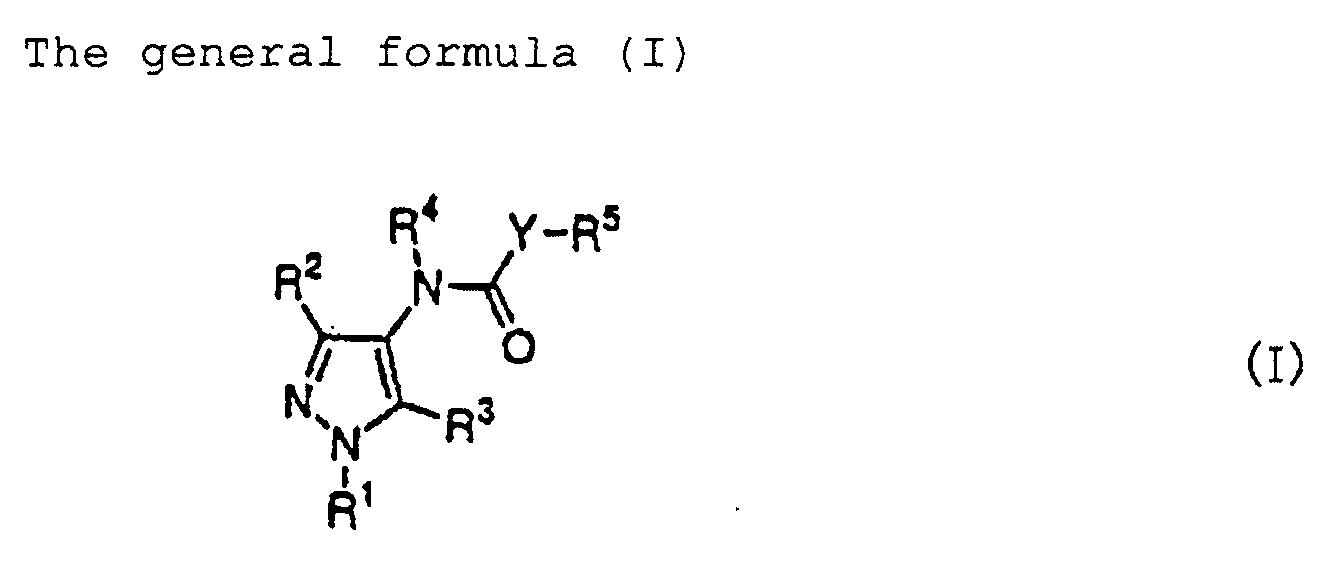
| R1 | R2 | R3 | R4 | R5 | Y |
| Me | Me | Cl | H | naphthalene-1-yl | CH2 |
| Me | Me | Cl | H | naphthalene-2-yl | CH2 |
| Me | Me | Cl | H | 2-OMe-naphthalene-1-yl | CH2 |
| Me | Me | Cl | H | 4-OMe-naphthalene-1-yl | CH2 |
| Me | Me | Cl | H | 6-OMe-naphthalene-2-yl | CH2 |
| Me | Me | Cl | H | 5-Cl-thiophene-2-yl | CH2 |
| Me | Me | Cl | H | 2-OPh-thiophene-5-yl | CH2 |
| Me | Me | Cl | H | 2-0(4-CN-Ph)-thiophene-5-yl | CH2 |
| Me | Me | Cl | H | 2-OCH2Ph-thiophene-5-yl | CH2 |
| Me | Me | Cl | H | 2-OCH2 (4-CN-Ph)-thiophene-5-yl | CH2 |
| Me | Me | Cl | H | 2-Br-thiazole-5-yl | CH2 |
| Me | Me | Cl | H | indole-3-yl | CH2 |
| Me | Me | Cl | H | 5-Br-indole-3-yl | CH2 |
| Me | Me | Cl | H | 5-OMe-indole-3-yl | CH2 |
| Me | Me | Cl | H | 2-Me-indole-3-yl | CH2 |
| Me | Me | Cl | H | berizofuran-2-yl | CH2 |
| Me | Me | Cl | H | benzimidazole-2-yl | CH2 |
| Me | Me | Cl | H | benzothiazole-2-yl | CH2 |
| Me | Me | Cl | H | 4-Me-benzothiazole-2-yl | CH2 |
| Me | Me | Cl | H | 5-Cl-benzothiazole-2-yl | CH2 |
| Me | Me | Cl | H | 5-OMe-benzothiazole-2-yl | CH2 |
| Me | Me | Cl | H | 6-OMe-benzothiazole-2-yl | CH2 |
| Me | Me | Cl | H | 6-F-benzothiazole-2-yl | CH2 |
| Me | Me | Cl | H | 6-Me-benzothiazole-2-yl | CH2 |
| Me | Me | Cl | H | 5,6-Me2-benzothiazole-2-yl | CH2 |
| Me | Me | Cl | H | pyridine-2-yl | CH2 |
| Me | Me | Cl | H | pyridine-3-yl | CH2 |
| Me | Me | Cl | H | pyridine-4-yl | CH2 |
| Me | Me | Cl | H | 5-Bu-pyridine-2-yl | CH2 |
| Me | Me | Cl | H | 3-Cl-pyridine-2-yl | CH2 |
| Me | Me | Cl | H | 5-Br-pyridine-2-yl | CH2 |
| Me | Me | Cl | H | 5-CF3-pyridine-2-yl | CH2 |
| Me | Me | Cl | H | 6-Br-pyridine-2-yl | CH2 |
| Me | Me | Cl | H | 6-F-pyridine-2-yl | CH2 |
| Me | Me | Cl | H | 6-Me-pyridine-2-yl | CH2 |
| Me | Me | Cl | H | 3-NO2-6-Cl-pyridine-2-yl | CH2 |
| Me | Me | Cl | H | 3,5-(CF3)2-pyridine-2-yl | CH2 |
| Me | Me | Cl | H | 4,5-(CF3)2-pyridine-2-yl | CH2 |
| Me | Me | Cl | H | 2-Cl-pyridine-3-yl | CH2 |
| Me | Me | Cl | H | 6-Cl-pyridine-3-yl | CH2 |
| Me | Me | Cl | H | 5-Br-pyridine-3-yl | CH2 |
| Me | Me | Cl | H | 2-Me-pyridine-3-yl | CH2 |
| Me | Me | Cl | H | 6-Me-pyridine-3-yl | CH2 |
| Me | Me | Cl | H | 2-OMe-pyridine-3-yl | CH2 |
| Me | Me | Cl | H | 2-SMe-pyridine-3-yl | CH2 |
| Me | Me | Cl | H | 5,6-Cl2-pyridine-3-yl | CH2 |
| Me | Me | Cl | H | 2,6-Cl2-pyridine-3-yl | CH2 |
| Me | Me | Cl | H | 2, 6- (OMe)2-pyridine-3-yl | CH2 |
| Me | Me | Cl | H | 2-Cl-6-Me-pyridine-3-yl | CH2 |
| Me | Me | Cl | H | pyrazine-2-yl | CH2 |
| Me | Me | Cl | H | pyrimidine-2-yl | CH2 |
| Me | Me | Cl | H | pyrimidine-4-yl | CH2 |
| Me | Me | Cl | H | 2-Cl-pyrimidine-5-yl | CH2 |
| Me | Me | Cl | H | 2-SMe-pyrimidine-5-yl | CH2 |
| Me | Me | Cl | H | 2-OPh-pyrimidine-5-yl | CH2 |
| Me | Me | Cl | H | 2-0(4-CN-Ph)-pyrimidine-5-yl | CH2 |
| Me | Me | Cl | H | 2-OCH2Ph-pyrimidine-5-yl | CH2 |
| Me | Me | Cl | H | 2-OCH2 (4-CN-Ph)-pyrimidine-5-yl | CH2 |
| Me | Me | Cl | H | pyridazine-3-yl | CH2 |
| Me | Me | Cl | H | 6-Ph-pyridazine-3-yl | CH2 |
| Me | Me | Cl | H | 6-Cl-pyridazine-3-yl | CH2 |
| Me | Me | Cl | H | 6-OMe-pyridazine-3-yl | CH2 |
| Me | Me | Cl | H | 6-OPh-pyridazine-3-yl | CH2 |
| Me | Me | Cl | H | 6-0 (4-CN-Ph) -pyridazine-3-yl | CH2 |
| Me | Me | Cl | H | quinoline-2-yl | CH2 |
| Me | Me | Cl | H | quinoline-3-yl | CH2 |
| Me | Me | Cl | H | isoquinoline-2-yl | CH2 |
| Me | Me | Cl | H | isoquinoline-3-yl | CH2 |
| Me | Me | Cl | H | 2-OPh-pyridine-3-yl | CH2 |
| Me | Me | Cl | H | 2-0 (2-F-Ph) -pyridine-5-yl | CH2 |
| Me | Me | Cl | H | 2-0 (3-F-Ph) -pyridine-5-yl | CH2 |
| Me | Me | Cl | H | 2-0 (4-F-Ph) -pyridine-5-yl | CH2 |
| Me | Me | Cl | H | 2-0(2-Cl-Ph)-pyridine-5-yl | CH2 |
| Me | Me | Cl | H | 2-0(3-Cl-Ph)-pyridine-5-yl | CH2 |
| Me | Me | Cl | H | 2-0(4-Cl-Ph)-pyridine-5-yl | CH2 |
| Me | Me | Cl | H | 2-0(2-Br-Ph)-pyridine-5-yl | CH2 |
| Me | Me | Cl | H | 2-0(3-Br-Ph)-pyridine-5-yl | CH2 |
| Me | Me | Cl | H | 2-0 (4-Br-Ph) -pyridine-5-yl | CH2 |
| Me | Me | Cl | H | 2-0 (2-Me-Ph) -pyridine-5-yl | CH2 |
| Me | Me | Cl | H | 2-0(3-Me-Ph)-pyridine-5-yl | CH2 |
| Me | Me | Cl | H | 2-0(4-Me-Ph)-pyridine-5-yl | CH2 |
| Me | Me | Cl | H | 2-0(4-t-Bu-Ph)-pyridine-5-yl | CH2 |
| Me | Me | Cl | H | 2-0 (2-OMe-Ph) -pyridine-5-yl | CH2 |
| Me | Me | Cl | H | 2-0 (3-OMe-Ph) -pyridine-5-yl | CH2 |
| Me | Me | Cl | H | 2-0 (4-OMe-Ph)-pyridine-5-yl | CH2 |
| Me | Me | Cl | H | 2-0(2-CF3-Ph)-pyridine-5-yl | CH2 |
| Me | Me | Cl | H | 2-0(3-CF3-Ph)-pyridine-5-yl | CH2 |
| Me | Me | Cl | H | 2-0(4-CF3-Ph)-pyridine-5-yl | CH2 |
| Me | Me | Cl | H | 2-0(2-OCF3-Ph)-pyridine-5-yl | CH2 |
| Me | Me | Cl | H | 2-0(3-OCF3-Ph)-pyridine-5-yl | CH2 |
| Me | Me | Cl | H | 2-0(4-OCF3-Ph)-pyridine-5-yl | CH2 |
| Me | Me | Cl | H | 2-0(2-NO2-Ph)-pyridine-5-yl | CH2 |
| Me | Me | Cl | H | 2-O(3-NO2-Ph)-pyridine-5-yl | CH2 |
| Me | Me | Cl | H | 2-O(4-NO2-Ph)-pyridine-5-yl | CH2 |
| Me | Me | Cl | H | 2-0 (2-CN-Ph) -pyridine-5-yl | CH2 |
| Me | Me | Cl | H | 2-0 (3-CN-Ph)-pyridine-5-yl | CH2 |
| Me | Me | Cl | H | 2-0 (4-CN-Ph)-pyridine-5-yl | CH2 |
| Me | Me | Cl | H | 2-O(2-CO2Me-Ph)-pyridine-5-yl | CH2 |
| Me | Me | Cl | H | 2-O(3-CO2Me-Ph)-pyridine-5-yl | CH2 |
| Me | Me | Cl | H | 2-O(4-CO2Me-Ph)-pyridine-5-yl | CH2 |
| Me | Me | Cl | H | 2-0 (2-SMe-Ph) -pyridine-5-yl | CH2 |
| Me | Me | Cl | H | 2-0 (3-SMe-Ph) -pyridine-5-yl | CH2 |
| Me | Me | Cl | H | 2-0 (4-SMe-Ph)-pyridine-5-yl | CH2 |
| Me | Me | Cl | H | 2-0 (2-SOMe-Ph) -pyridine-5-yl | CH2 |
| Me | Me | Cl | H | 2-0 (3-SOMe-Ph)-pyridine-5-yl | CH2 |
| Me | Me | Cl | H | 2-0 (4-SOMe-Ph)-pyridine-5-yl | CH2 |
| Me | Me | Cl | H | 2-O(2-SO2Me-Ph)-pyridine-5-yl | CH2 |
| Me | Me | Cl | H | 2-O(3-SO2Me-Ph)-pyridine-5-yl | CH2 |
| Me | Me | Cl | H | 2-O(4-SO2Me-Ph)-pyridine-5-yl | CH2 |
| Me | Me | Cl | H | 2-O(2-SCF3-Ph)-pyridine-5-yl | CH2 |
| Me | Me | Cl | H | 2-O(3-SCF3-Ph)-pyridine-5-yl | CH2 |
| Me | Me | Cl | H | 2-O(4-SCF3-Ph)-pyridine-5-yl | CH2 |
| Me | Me | Cl | H | 2-O(2-SOCF3-Ph)-pyridine-5-yl | CH2 |
| Me | Me | Cl | H | 2-O(3-SOCF3-Ph)-pyridine-5-yl | CH2 |
| Me | Me | Cl | H | 2-O(4-SOCF3-Ph)-pyridine-5-yl | CH2 |
| Me | Me | Cl | H | 2-O(2-SO2CF3-Ph)-pyridine-5-yl | CH2 |
| Me | Me | Cl | H | 2-O(3-SO2CF3-Ph)-pyridine-5-yl | CH2 |
| Me | Me | Cl | H | 2-O(4-SO2CF3-Ph)-pyridine-5-yl | CH2 |
| Me | Me | Cl | H | 2-OCH2Ph-pyridine-5-yl | CH2 |
| Me | Me | Cl | H | 2-OCH2(2-F-Ph)-pyridine-5-yl | CH2 |
| Me | Me | Cl | H | 2-OCH2(3-F-Ph)-pyridine-5-yl | CH2 |
| Me | Me | Cl | H | 2-OCH2(4-F-Ph)-pyridine-5-yl | CH2 |
| Me | Me | Cl | H | 2-OCH2(2-Cl-Ph)-pyridine-5-yl | CH2 |
| Me | Me | Cl | H | 2-OCH2(3-Cl-Ph)-pyridine-5-yl | CH2 |
| Me | Me | Cl | H | 2-OCH2(4-Cl-Ph)-pyridine-5-yl | CH2 |
| Me | Me | Cl | H | 2-OCH2(2-Br-Ph)-pyridine-5-yl | CH2 |
| Me | Me | Cl | H | 2-OCH2(3-Br-Ph)-pyridine-5-yl | CH2 |
| Me | Me | Cl | H | 2-OCH2 (4-Br-Ph)-pyridine-5-yl | CH2 |
| Me | Me | Cl | H | 2-OCH2(2-Me-Ph)-pyridine-5-yl | CH2 |
| Me | Me | Cl | H | 2-OCH2(3-Me-Ph)-pyridine-5-yl | CH2 |
| Me | Me | Cl | H | 2-OCH2(4-Me-Ph)-pyridirie-5-yl | CH2 |
| Me | Me | Cl | H | 2-OCH2(4-t-Bu-Ph)-pyridine-5-yl | CH2 |
| Me | Me | Cl | H | 2-OCH2(2-OMe-Ph)-pyridine-5-yl | CH2 |
| Me | Me | Cl | H | 2-OCH3(3-OMe-Ph)-pyridine-5-yl | CH2 |
| Me | Me | Cl | H | 2-OCH2(4-OMe-Ph)-pyridine-5-yl | CH2 |
| Me | Me | Cl | H | 2-OCH2(2-CF3-Ph)-pyridine-5-yl | CH2 |
| Me | Me | Cl | H | 2-OCH3(3-CF3-Ph)-pyridine-5-yl | CH2 |
| Me | Me | Cl | H | 2-OCH2(4-CF3-Ph)-pyridine-5-yl | CH2 |
| Me | Me | Cl | H | 2-OCH2(2-OCF3-Ph)-pyridine-5-yl | CH2 |
| Me | Me | Cl | H | 2-OCH2(3-OCF3-Ph)-pyridine-5-yl | CH2 |
| Me | Me | Cl | H | 2-OCH2(4-OCF3-Ph)-pyridine-5-yl | CH2 |
| Me | Me | Cl | H | 2-OCH2(2-NO2-Ph)-pyridine-5-yl | CH2 |
| Me | Me | Cl | H | 2-OCH2(3-NO2-Ph) -pyridine-5-yl | CH2 |
| Me | Me | Cl | H | 2-OCH2(4-NO2-Ph)-pyridine-5-yl | CH2 |
| Me | Me | Cl | H | 2-OCH2(2-CN-Ph)-pyridine-5-yl | CH2 |
| Me | Me | Cl | H | 2-OCH2(3-CN-Ph)-pyridine-5-yl | CH2 |
| Me | Me | Cl | H | 2-OCH2(4-CN-Ph)-pyridine-5-yl | CH2 |
| Me | Me | Cl | H | 2-OCH2(2-CO2Me-Ph)-pyridine-5-yl | CH2 |
| Me | Me | Cl | H | 2-OCH2(3-CO2Me-Ph)-pyridine-5-yl | CH2 |
| Me | Me | Cl | H | 2-OCH2(4-CO2Me-Ph)-pyridirie-5-yl | CH2 |
| Me | Me | Cl | H | 2-OCH2(2-SMe-Ph)-pyridine-5-yl | CH2 |
| Me | Me | Cl | H | 2-OCH2(3-SMe-Ph)-pyridine-5-yl | CH2 |
| Me | Me | Cl | H | 2-OCH2(4-SMe-Ph)-pyridine-5-yl | CH2 |
| Me | Me | Cl | H | 2-OCH2 (2-SOMe-Ph) -pyridine-5-yl | CH2 |
| Me | Me | Cl | H | 2-OCH2(3-SOMe-Ph)-pyridine-5-yl | CH2 |
| Me | Me | Cl | H | 2-OCH2(4-SOMe-Ph)-pyridine-5-yl | CH2 |
| Me | Me | Cl | H | 2-OCH2(2-SO2Me-Ph)-pyridine-5-yl | CH2 |
| Me | Me | Cl | H | 2-OCH2(3-SO2Me-Ph)-pyridine-5-yl | CH2 |
| Me | Me | Cl | H | 2-OCH2(4-SO2Me-Ph)-pyridine-5-yl | CH2 |
| Me | Me | Cl | H | 2-OCH2(2-SCF3-Ph)-pyridine-5-yl | CH2 |
| Me | Me | Cl | H | 2-OCH2(3-SCF3-Ph)-pyridine-5-yl | CH2 |
| Me | Me | Cl | H | 2-OCH2(4-SCF3-Ph)-pyridine-5-yl | CH2 |
| Me | Me | Cl | H | 2-OCH2(2-SOCF3-Ph)-pyridine-5-yl | CH2 |
| Me | Me | Cl | H | 2-OCH2(3-SOCF3-Ph)-pyridine-5-yl | CH2 |
| Me | Me | Cl | H | 2-OCH2(4-SOCF3-Ph)-pyridine-5-yl | CH2 |
| Me | Me | Cl | H | 2-OCH2(2-SO2CF3-Ph)-pyridine-5-yl | CH2 |
| Me | Me | Cl | H | 2-OCH2(3-SO2CF3-Ph)-pyridine-5-yl | CH2 |
| Me | Me | Cl | H | 2-OCH2 (4-SO2CF3-Ph)-pyridine-5-yl | CH2 |
| Me | Me | Cl | H | 5-OPh-pyridine-2-yl | CH2 |
| Me | Me | Cl | H | 5-0(2-F-Ph)-pyridine-2-yl | CH2 |
| Me | Me | Cl | H | 5-0(3-F-Ph)-pyridine-2-yl | CH2 |
| Me | Me | Cl | H | 5-0(4-F-Ph)-pyridine-2-yl | CH2 |
| Me | Me | Cl | H | 5-0(2-Cl-Ph)-pyridine-2-yl | CH2 |
| Me | Me | Cl | H | 5-0(3-Cl-Ph)-pyridine-2-yl | CH2 |
| Me | Me | Cl | H | 5-0(4-Cl-Ph)-pyridine-2-yl | CH2 |
| Me | Me | Cl | H | 5-0 (2-Br-Ph) -pyridine-2-yl | CH2 |
| Me | Me | Cl | H | 5-0(3-Br-Ph)-pyridine-2-yl | CH2 |
| Me | Me | Cl | H | 5-0(4-Br-Ph)-pyridine-2-yl | CH2 |
| Me | Me | Cl | H | 5-0(2-Me-Ph)-pyridine-2-yl | CH2 |
| Me | Me | Cl | H | 5-0 (3-Me-Ph) -pyridine-2-yl | CH2 |
| Me | Me | Cl | H | 5-0(4-Me-Ph)-pyridine-2-yl | CH2 |
| Me | Me | Cl | H | 5-0 (4-t-Bu-Ph)-pyridine-2-yl | CH2 |
| Me | Me | Cl | H | 5-0 (2-OMe-Ph)-pyridine-2-yl | CH2 |
| Me | Me | Cl | H | 5-0 (3-OMe-Ph) -pyridine-2-yl | CH2 |
| Me | Me | Cl | H | 5-0 (4-OMe-Ph) -pyridine-2-yl | CH2 |
| Me | Me | Cl | H | 5-0 (2-CF3-Ph)-pyridine-2-yl | CH2 |
| Me | Me | Cl | H | 5-0 (3-CF3-Ph)-pyridine-2-yl | CH2 |
| Me | Me | Cl | H | 5-0 (4-CF3-Ph)-pyridine-2-yl | CH2 |
| Me | Me | Cl | H | 5-0 (2-OCF3-Ph)-pyridine-2-yl | CH2 |
| Me | Me | Cl | H | 5-0 (3-OCF3-Ph)-pyridine-2-yl | CH2 |
| Me | Me | Cl | H | 5-0 (4-OCF3-Ph)-pyridine-2-yl | CH2 |
| Me | Me | Cl | H | 5-0 (2-NO2-Ph)-pyridine-2-yl | CH2 |
| Me | Me | Cl | H | 5-O(3-NO2-Ph)-pyridine-2-yl | CH2 |
| Me | Me | Cl | H | 5-O(4-NO2-Ph)-pyridine-2-yl | CH2 |
| Me | Me | Cl | H | 5-0 (2-CN-Ph)-pyridine-2-yl | CH2 |
| Me | Me | Cl | H | 5-0 (3-CN-Ph)-pyridine-2-yl | CH2 |
| Me | Me | Cl | H | 5-0 (4-CN-Ph)-pyridine-2-yl | CH2 |
| Me | Me | Cl | H | 5-0 (2-CO2Me-Ph)-pyridine-2-yl | CH2 |
| Me | Me | Cl | H | 5-0 (3-CO2Me-Ph)-pyridine-2-yl | CH2 |
| Me | Me | Cl | H | 5-0(4-CO2Me-Ph)-pyridine-2-yl | CH2 |
| Me | Me | Cl | H | 5-0 (2-SMe-Ph)-pyridine-2-yl | CH2 |
| Me | Me | Cl | H | 5-0 (3-SMe-Ph)-pyridine-2-yl | CH2 |
| Me | Me | Cl | H | 5-0 (4-SMe-Ph)-pyridine-2-yl | CH2 |
| Me | Me | Cl | H | 5-0 (2-SOMe-Ph) -pyridine-2-yl | CH2 |
| Me | Me | Cl | H | 5-0 (3-SOMe-Ph)-pyridine-2-yl | CH2 |
| Me | Me | Cl | H | 5-0 (4-SOMe-Ph) -pyridine-2-yl | CH2 |
| Me | Me | Cl | H | 5-0 (2-SO2Me-Ph)-pyridine-2-yl | CH2 |
| Me | Me | Cl | H | 5-0 (3-SO2Me-Ph)-pyridine-2-yl | CH2 |
| Me | Me | Cl | H | 5-0 (4-SO2Me-Ph)-pyridine-2-yl | CH2 |
| Me | Me | Cl | H | 5-0 (2-SCF3-Ph)-pyridine-2-yl | CH2 |
| Me | Me | Cl | H | 5-0 (3-SCF3-Ph)-pyridine-2-yl | CH2 |
| Me | Me | Cl | H | 5-0 (4-SCF3-Ph)-pyridine-2-yl | CH2 |
| Me | Me | Cl | H | 5-0 (2-SOCF3-Ph)-pyridine-2-yl | CH2 |
| Me | Me | Cl | H | 5-0 (3-SOCF3-Ph)-pyridine-2-yl | CH2 |
| Me | Me | Cl | H | 5-0 (4-SOCF3-Ph)-pyridine-2-yl | CH2 |
| Me | Me | Cl | H | 5-0 (2-SO2CF3-Ph)-pyridine-2-yl | CH2 |
| Me | Me | Cl | H | 5-0(3-SO2CF3-Ph)-pyridine-2-yl | CH2 |
| Me | Me | Cl | H | 5-0 (4-SO2CF3-Ph)-pyridine-2-yl | CH2 |
| Me | Me | Cl | H | 5-OCH2Ph-pyridine-2-yl | CH2 |
| Me | Me | Cl | H | 5-OCH2(2-F-Ph)-pyridine-2-yl | CH2 |
| Me | Me | Cl | H | 5-OCH2(3-F-Ph) -pyridine-2-yl | CH2 |
| Me | Me | Cl | H | 5-OCH2(4-F-Ph)-pyridine-2-yl | CH2 |
| Me | Me | Cl | H | 5-OCH2 (2-Cl-Ph)-pyridine-2-yl | CH2 |
| Me | Me | Cl | H | 5-OCH2 (3-Cl-Ph)-pyridine-2-yl | CH2 |
| Me | Me | Cl | H | 5-OCH2 (4-Cl-Ph)-pyridine-2-yl | CH2 |
| Me | Me | Cl | H | 5-OCH2 (2-Br-Ph)-pyridine-2-yl | CH2 |
| Me | Me | Cl | H | 5-OCH2 (3-Br-Ph)-pyridine-2-yl | CH2 |
| Me | Me | Cl | H | 5-OCH2 (4-Br-Ph)-pyridine-2-yl | CH2 |
| Me | Me | Cl | H | 5-OCH2 (2-Me-Ph)-pyridine-2-yl | CH2 |
| Me | Me | Cl | H | 5-OCH2 (3-Me-Ph)-pyridine-2-yl | CH2 |
| Me | Me | Cl | H | 5-OCH2 (4-Me-Ph)-pyridine-2-yl | CH2 |
| Me | Me | Cl | H | 5-OCH2(4-t-Bu-Ph)-pyridine-2-yl | CH2 |
| Me | Me | Cl | H | 5-OCH2(2-OMe-Ph)-pyridine-2-yl | CH2 |
| Me | Me | Cl | H | 5-OCH2(3-OMe-Ph)-pyridine-2-yl | CH2 |
| Me | Me | Cl | H | 5-OCH2(4-OMe-Ph)-pyridine-2-yl | CH2 |
| Me | Me | Cl | H | 5-OCH2(2-CF3-Ph)-pyridine-2-yl | CH2 |
| Me | Me | Cl | H | 5-OCH2(3-CF3-Ph)-pyridine-2-yl | CH2 |
| Me | Me | Cl | H | 5-OCH 2(4-CF3-Ph)-pyridine-2-yl | CH2 |
| Me | Me | Cl | H | 5-OCH2(2-OCF3-Ph)-pyridine-2-yl | CH2 |
| Me | Me | Cl | H | 5-OCH2(3-OCF3-Ph)-pyridine-2-yl | CH2 |
| Me | Me | Cl | H | 5-OCH2(4-OCF3-Ph)-pyridine-2-yl | CH2 |
| Me | Me | Cl | H | 5-OCH2(2-NO2-Ph)-pyridine-2-yl | CH2 |
| Me | Me | Cl | H | 5-OCH2(3-NO2-Ph)-pyridine-2-yl | CH2 |
| Me | Me | Cl | H | 5-OCH2(4-NO2-Ph)-pyridine-2-yl | CH2 |
| Me | Me | Cl | H | 5-OCH2(2-CN-Ph)-pyridine-2-yl | CH2 |
| Me | Me | Cl | H | 5-OCH2 (3-CN-Ph) -pyridine-2-yl | CH2 |
| Me | Me | Cl | H | 5-OCH2 (4-CN-Ph)-pyridine-2-yl | CH2 |
| Me | Me | Cl | H | 5-OCH2 (2-CO2Me-Ph)-pyridine-2-yl | CH2 |
| Me | Me | Cl | H | 5-OCH2 (3-CO2Me-Ph)-pyridine-2-yl | CH2 |
| Me | Me | Cl | H | 5-OCH2 (4-CO2Me-Ph) -pyridine-2-yl | CH2 |
| Me | Me | Cl | H | 5-OCH2 (2-SMe-Ph)-pyridine-2-yl | CH2 |
| Me | Me | Cl | H | 5-OCH2 (3-SMe-Ph)-pyridine-2-yl | CH2 |
| Me | Me | Cl | H | 5-OCH2 (4-SMe-Ph)-pyridine-2-yl | CH2 |
| Me | Me | Cl | H | 5-OCH2 (2-SOMe-Ph)-pyridine-2-yl | CH2 |
| Me | Me | Cl | H | 5-OCH2 (3-SOMe-Ph)-pyridine-2-yl | CH2 |
| Me | Me | Cl | H | 5-OCH2 (4-SOMe-Ph)-pyridine-2-yl | CH2 |
| Me | Me | Cl | H | 5-OCH2 (2-SO2Me-Ph)-pyridine-2-yl | CH2 |
| Me | Me | Cl | H | 5-OCH2 (3-SO2Me-Ph)-pyridine-2-yl | CH2 |
| Me | Me | Cl | H | 5-OCH2 (4-SO2Me-Ph)-pyridine-2-yl | CH2 |
| Me | Me | Cl | H | 5-OCH2 (2-SCF3-Ph)-pyridine-2-yl | CH2 |
| Me | Me | Cl | H | 5-OCH2 (3-SCF3-Ph)-pyridine-2-yl | CH2 |
| Me | Me | Cl | H | 5-OCH2 (4-SCF3-Ph)-pyridine-2-yl | CH2 |
| Me | Me | Cl | H | 5-OCH2 (2-SOCF3-Ph)-pyridine-2-yl | CH2 |
| Me | Me | Cl | H | 5-OCH2 (3-SOCF3-Ph)-pyridine-2-yl | CH2 |
| Me | Me | Cl | H | 5-OCH2 (4-SOCF3-Ph)-pyridine-2-yl | CH2 |
| Me | Me | Cl | H | 5-OCH2 (2-SO2CF3-Ph)-pyridine-2-yl | CH2 |
| Me | Me | Cl | H | 5-OCH2 (3-SO2CF3-Ph)-pyridine-2-yl | CH2 |
| Me | Me | Cl | H | 5-OCH2(4-SO2CF3-Ph)-pyridine-2-yl | CH2 |
Table 4-2 represents 268 compounds wherein,
in the general formula (I), R1 represents Me, R2 does
Et, R3 does Cl, R4 does H, Y does CH2, and R5 corresponds
to each of all the substituents shown in Table 4-1.
Table 4-3 represents 268 compounds wherein,
in the general formula (I), R1 represents Me, R2 does i-Pr,
R3 does Cl, R4 does H, Y does CH2, and R5 corresponds
to each of all the substituents shown in Table 4-1.
Table 4-4 represents 268 compounds wherein,
in the general formula (I), R1 represents Me, R2 does n-Pr,
R3 does Cl, R4 does H, Y does CH2, and R5 corresponds
to each of all the substituents shown in Table 4-1.
Table 4-5 represents 268 compounds wherein,
in the general formula (I), R1 represents Me, R2 does t-Bu,
R3 does Cl, R4 does H, Y does CH2, and R5 corresponds
to each of all the substituents shown in Table 4-1.
Table 4-6 represents 268 compounds wherein,
in the general formula (I), R1 represents Me, R2 does n-Bu,
R3 does Cl, R4 does H, Y does CH2, and R5 corresponds
to each of all the substituents shown in Table 4-1.
Table 4-7 represents 268 compounds wherein,
in the general formula (I), R1 represents Me, R2 does
CF3, R3 does Cl, R4 does H, Y does CH2, and R5
corresponds to each of all the substituents shown in
Table 4-1.
Table 4-8 represents 268 compounds wherein,
in the general formula (I), R1 represents Me, R2 does
OMe, R3 does Cl, R4 does H, Y does CH2, and R5
corresponds to each of all the substituents shown in
Table 4-1.
Table 4-9 represents 268 compounds wherein,
in the general formula (I), R1 represents Me, R2 does
OCHF2, R3 does Cl, R4 does H, Y does CH2, and R5
corresponds to each of all the substituents shown in
Table 4-1.
Table 4-10 represents 268 compounds wherein,
in the general formula (I), R1 represents Me, R2 does O-i-Pr,
R3 does Cl, R4 does H, Y does CH2, and R5
corresponds to each of all the substituents shown in
Table 4-1.
Table 4-11 represents 268 compounds wherein,
in the general formula (I), R1 represents Me, R2 does
Cl, R3 does Cl, R4 does H, Y does CH2, and R5 corresponds
to each of all the substituents shown in Table 4-1.
Table 4-12 represents 268 compounds wherein,
in the general formula (I), R1 represents Me, R2 does
Ph, R3 does Cl, R4 does H, Y does CH2, and R5 corresponds
to each of all the substituents shown in Table 4-1.
Table 4-13 represents 268 compounds wherein,
in the general formula (I), R1 represents Me, R2 does 2-Cl-Ph,
R3 does Cl, R4 does H, Y does CH2, and R5
corresponds to each of all the substituents shown in
Table 4-1.
Table 4-14 represents 268 compounds wherein,
in the general formula (I), R1 represents Me, R2 does 3-Cl-Ph,
R3 does Cl, R4 does H, Y does CH2, and R5
corresponds to each of all the substituents shown in
Table 4-1.
Table 4-15 represents 268 compounds wherein,
in the general formula (I), R1 represents Me, R2 does 4-Cl-Ph,
R3 does Cl, R4 does H, Y does CH2, and R5
corresponds to each of all the substituents shown in
Table 4-1.
Table 4-16 represents 268 compounds wherein,
in the general formula (I), R1 represents Me, R2 does
2,4-Cl2-Ph, R3 does Cl, R4 does H, Y does CH2, and R5
corresponds to each of all the substituents shown in
Table 4-1.
Table 4-17 represents 268 compounds wherein,
in the general formula (I), R1 represents Me, R2 does 2-Me-Ph,
R3 does Cl, R4 does H, Y does CH2, and R5
corresponds to each of all the substituents shown in
Table 4-1.
Table 4-18 represents 268 compounds wherein,
in the general formula (I), R1 represents Me, R2 does 3-Me-Ph,
R3 does Cl, R4 does H, Y does CH2, and R5
corresponds to each of all the substituents shown in
Table 4-1.
Table 4-19 represents 268 compounds wherein,
in the general formula (I), R1 represents Me, R2 does 4-Me-Ph,
R3 does Cl, R4 does H, Y does CH2, and R5
corresponds to each of all the substituents shown in
Table 4-1.
Table 4-20 represents 268 compounds wherein,
in the general formula (I), R1 represents Me, R2 does 2-OMe-Ph,
R3 does Cl, R4 does H, Y does CH2, and R5
corresponds to each of all the substituents shown in
Table 4-1.
Table 4-21 represents 268 compounds wherein,
in the general formula (I), R1 represents Me, R2 does 3-OMe-Ph,
R3 does Cl, R4 does H, Y does CH2, and R5
corresponds to each of all the substituents shown in
Table 4-1.
Table 4-22 represents 268 compounds wherein,
in the general formula (I), R1 represents Me, R2 does 4-OMe-Ph,
R3 does Cl, R4 does H, Y does CH2, and R5
corresponds to each of all the substituents shown in
Table 4-1.
Table 4-23 represents 268 compounds wherein,
in the general formula (I), R1 represents Me, R2 does H,
R3 does Cl, R4 does H, Y does CH2, and R5 corresponds to
each of all the substituents shown in Table 4-1.
Table 4-24 represents 268 compounds wherein,
in the general formula (I), R1 represents H, R2 does H,
R3 does Cl, R4 does H, Y does CH2, and R5 corresponds to
each of all the substituents shown in Table 4-1.
Table 4-25 represents 268 compounds wherein,
in the general formula (I), R1 represents Et, R2 does H,
R3 does Cl, R4 does H, Y does CH2, and R5 corresponds to
each of all the substituents shown in Table 4-1.
Table 4-26 represents 268 compounds wherein,
in the general formula (I), R1 represents i-Pr, R2 does
H, R3 does Cl, R4 does H, Y does CH2, and R5 corresponds
to each of all the substituents shown in Table 4-1.
Table 4-27 represents 268 compounds wherein,
in the general formula (I), R1 represents n-Pr, R2 does
H, R3 does Cl, R4 does H, Y does CH2, and R5 corresponds
to each of all the substituents shown in Table 4-1.
Table 4-28 represents 268 compounds wherein,
in the general formula (I), R1 represents t-Bu, R2 does
H, R3 does Cl, R4 does H, Y does CH2, and R5 corresponds
to each of all the substituents shown in Table 4-1.
Table 4-29 represents 268 compounds wherein,
in the general formula (I), R1 represents n-Bu, R2 does
H, R3 does Cl, R4 does H, Y does CH2, and R5 corresponds
to each of all the substituents shown in Table 4-1.
Table 4-30 represents 268 compounds wherein,
in the general formula (I), R1 represents CH=CH2, R2 does
H, R3 does Cl, R4 does H, Y does CH2, and R5 corresponds
to each of all the substituents shown in Table 4-1.
Table 4-31 represents 268 compounds wherein,
in the general formula (I), R1 represents CH2CH=CH2, R2
does H, R3 does Cl, R4 does H, Y does CH2, and R5
corresponds to each of all the substituents shown in
Table 4-1.
Table 4-32 represents 268 compounds wherein,
in the general formula (I), R1 represents CH2C≡CH, R2
does H, R3 does Cl, R4 does H, Y does CH2, and R5
corresponds to each of all the substituents shown in
Table 4-1.
Table 4-33 represents 268 compounds wherein,
in the general formula (I), R1 represents CH2CN, R2 does
H, R3 does Cl, R4 does H, Y does CH2, and R5 corresponds
to each of all the substituents shown in Table 4-1.
Table 4-34 represents 268 compounds wherein,
in the general formula (I), R1 represents CH2CF3, R2 does
H, R3 does Cl, R4 does H, Y does CH2, and R5 corresponds
to each of all the substituents shown in Table 4-1.
Table 4-35 represents 268 compounds wherein,
in the general formula (I), R1 represents CH2Ph, R2 does
H, R3 does Cl, R4 does H, Y does CH2, and R5 corresponds
to each of all the substituents shown in Table 4-1.
Table 4-36 represents 268 compounds wherein,
in the general formula (I), R1 represents Ph, R2 does H,
R3 does Cl, R4 does H, Y does CH2, and R5 corresponds to
each of all the substituents shown in Table 4-1.
Table 4-37 represents 268 compounds wherein,
in the general formula (I), R1 represents 2-Cl-Ph, R2
does H, R3 does Cl, R4 does H, Y does CH2, and R5
corresponds to each of all the substituents shown in
Table 4-1.
Table 4-38 represents 268 compounds wherein,
in the general formula (I), R1 represents 3-Cl-Ph, R2
does H, R3 does Cl, R4 does H, Y does CH2, and R5
corresponds to each of all the substituents shown in
Table 4-1.
Table 4-39 represents 268 compounds wherein,
in the general formula (I), R1 represents 4-Cl-Ph, R2
does H, R3 does Cl, R4 does H, Y does CH2, and R5
corresponds to each of all the substituents shown in
Table 4-1.
Table 4-40 represents 268 compounds wherein,
in the general formula (I), R1 represents 2,4-Cl2-Ph, R2
does H, R3 does Cl, R4 does H, Y does CH2, and R5
corresponds to each of all the substituents shown in
Table 4-1.
Table 4-41 represents 268 compounds wherein,
in the general formula (I), R1 represents Ac, R2 does H,
R3 does Cl, R4 does H, Y does CH2, and R5 corresponds to
each of all the substituents shown in Table 4-1.
Table 4-42 represents 268 compounds wherein,
in the general formula (I), R1 represents COPh, R2 does
H, R3 does Cl, R4 does H, Y does CH2, and R5 corresponds
to each of all the substituents shown in Table 4-1.
Table 4-43 represents 268 compounds wherein,
in the general formula (I), R1 represents CH2CH2F, R2
does H, R3 does Cl, R4 does H, Y does CH2, and R5
corresponds to each of all the substituents shown in
Table 4-1.
Table 4-44 represents 268 compounds wherein,
in the general formula (I), R1 represents CH2CH2Cl, R2
does H, R3 does Cl, R4 does H, Y does CH2, and R5
corresponds to each of all the substituents shown in
Table 4-1.
Table 4-45 represents 268 compounds wherein,
in the general formula (I), R1 represents CH2CH2Br, R2
does H, R3 does Cl, R4 does H, Y does CH2, and R5
corresponds to each of all the substituents shown in
Table 4-1.
Table 4-46 represents 268 compounds wherein,
in the general formula (I), R1 represents CH2CH2OH, R2
does H, R3 does Cl, R4 does H, Y does CH2, and R5
corresponds to each of all the substituents shown in
Table 4-1.
Table 4-47 represents 268 compounds wherein,
in the general formula (I), R1 represents CH2CH2OMe, R2
does H, R3 does Cl, R4 does H, Y does CH2, and R5
corresponds to each of all the substituents shown in
Table 4-1.
Table 4-48 represents 268 compounds wherein,
in the general formula (I) , R1 represents CH2OMe, R2 does
H, R3 does Cl, R4 does H, Y does CH2, and R5 corresponds
to each of all the substituents shown in Table 4-1.
Table 4-49
Table 4-49 represents 268 compounds wherein,
in the general formula (I), R1 represents CH2OEt, R2 does
H, R3 does Cl, R4 does H, Y does CH2, and R5 corresponds
to each of all the substituents shown in Table 4-1.
Table 4-50 represents 268 compounds wherein,
in the general formula (I), R1 represents CH2COOH, R2
does H, R3 does Cl, R4 does H, Y does CH2, and R5
corresponds to each of all the substituents shown in
Table 4-1.
Table 4-51 represents 268 compounds wherein,
in the general formula (I), R1 represents CH2COOEt, R2
does H, R3 does Cl, R4 does H, Y does CH2, and R5
corresponds to each of all the substituents shown in
Table 4-1.
Table 4-52 represents 268 compounds wherein,
in the general formula (I), R1 represents CH2CONHMe, R2
does H, R3 does Cl, R4 does H, Y does CH2, and R5
corresponds to each of all the substituents shown in
Table 4-1.
Table 4-53 represents 268 compounds wherein,
in the general formula (I), R1 represents CH2CONMe2, R2
does H, R3 does Cl, R4 does H, Y does CH2, and R5
corresponds to each of all the substituents shown in
Table 4-1.
Table 4-54 represents 268 compounds wherein,
in the general formula (I), R1 represents CH2CHO, R2 does
H, R3 does Cl, R4 does H, Y does CH2, and R5 corresponds
to each of all the substituents shown in Table 4-1.
Table 4-55 represents 268 compounds wherein,
in the general formula (I), R1 represents CH2CH=NOMe, R2
does H, R3 does Cl, R4 does H, Y does CH2, and R5
corresponds to each of all the substituents shown in
Table 4-1.
Table 4-56 represents 268 compounds wherein,
in the general formula (I), R1 represents Et, R2 does H,
R3 does H, R4 does H, Y does CH2, and R5 corresponds to
each of all the substituents shown in Table 4-1.
Table 4-57 represents 268 compounds wherein,
in the general formula (I), R1 represents Et, R2 does H,
R3 does F, R4 does H, Y does CH2, and R5 corresponds to
each of all the substituents shown in Table 4-1.
Table 4-58 represents 268 compounds wherein,
in the general formula (I), R1 represents Et, R2 does H,
R3 does Br, R4 does H, Y does CH2, and R5 corresponds to
each of all the substituents shown in Table 4-1.
Table 4-59 represents 268 compounds wherein,
in the general formula (I), R1 represents Et, R2 does H,
R3 does I, R4 does H, Y does CH2, and R5 corresponds to
each of all the substituents shown in Table 4-1.
Table 4-60 represents 268 compounds wherein,
in the general formula (I), R1 represents Et, R2 does H,
R3 does CF3, R4 does H, Y does CH2, and R5 corresponds to
each of all the substituents shown in Table 4-1.
Table 4-61 represents 268 compounds wherein,
in the general formula (I), R1 represents Et, R2 does H,
R3 does CN, R4 does H, Y does CH2, and R5 corresponds to
each of all the substituents shown in Table 4-1.
Table 4-62 represents 268 compounds wherein,
in the general formula (I), R1 represents Et, R2 does H,
R3 does COOMe, R4 does H, Y does CH2, and R5 corresponds
to each of all the substituents shown in Table 4-1.
Table 4-63 represents 268 compounds wherein,
in the general formula (I), R1 represents Et, R2 does H,
R3 does CONHMe, R4 does H, Y does CH2, and R5 corresponds
to each of all the substituents shown in Table 4-1.
Table 4-64 represents 268 compounds wherein,
in the general formula (I), R1 represents Et, R2 does H,
R3 does CONMe2, R4 does H, Y does CH2, and R5 corresponds
to each of all the substituents shown in Table 4-1.
Table 4-65 represents 268 compounds wherein,
in the general formula (I), R1 represents Et, R2 does H,
R3 does SMe, R4 does H, Y does CH2, and R5 corresponds to
each of all the substituents shown in Table 4-1.
Table 4-66 represents 268 compounds wherein,
in the general formula (I), R1 represents Et, R2 does H,
R3 does SPh, R4 does H, Y does CH2, and R5 corresponds to
each of all the substituents shown in Table 4-1.
Table 4-67 represents 268 compounds wherein,
in the general formula (I), R1 represents Et, R2 does H,
R3 does OH, R4 does H, Y does CH2, and R5 corresponds to
each of all the substituents shown in Table 4-1.
Table 4-68 represents 268 compounds wherein,
in the general formula (I), R1 represents Et, R2 does H,
R3 does OMe, R4 does H, Y does CH2, and R5 corresponds to
each of all the substituents shown in Table 4-1.
Table 4-69 represents 268 compounds wherein,
in the general formula (I), R1 represents Et, R2 does H,
R3 does OPh, R4 does H, Y does CH2, and R5 corresponds to
each of all the substituents shown in Table 4-1.
Table 4-70 represents 268 compounds wherein,
in the general formula (I), R1 represents Et, R2 does H,
R3 does NMe2, R4 does H, Y does CH2, and R5 corresponds
to each of all the substituents shown in Table 4-1.
Table 4-71 represents 268 compounds wherein,
in the general formula (I), R1 represents Et, R2 does H,
R3 does Cl, R4 does Me, Y does CH2, and R5 corresponds to
each of all the substituents shown in Table 4-1.
Table 4-72 represents 268 compounds wherein,
in the general formula (I), R1 represents Et, R2 does H,
R3 does Cl, R4 does Et, Y does CH2, and R5 corresponds to
each of all the substituents shown in Table 4-1.
Table 4-73 represents 268 compounds wherein,
in the general formula (I), R1 represents Et, R2 does H,
R3 does Cl, R4 does n-Pr, Y does CH2, and R5 corresponds
to each of all the substituents shown in Table 4-1.
Table 4-74 represents 268 compounds wherein,
in the general formula (I), R1 represents Et, R2 does H,
R3 does Cl, R4 does i-Pr, Y does CH2, and R5 corresponds
to each of all the substituents shown in Table 4-1.
Table 4-75 represents 268 compounds wherein,
in the general formula (I), R1 represents Et, R2 does H,
R3 does Cl, R4 does CH2CH=CH2, Y does CH2, and R5
corresponds to each of all the substituents shown in
Table 4-1.
Table 4-76 represents 268 compounds wherein,
in the general formula (I), R1 represents Et, R2 does H,
R3 does Cl, R4 does CH2C≡CH, Y does CH2, and R5
corresponds to each of all the substituents shown in
Table 4-1.
Table 4-77 represents 268 compounds wherein,
in the general formula (I), R1 represents Et, R2 does H,
R3 does Cl, R4 does CH2CF3, Y does CH2, and R5 corresponds
to each of all the substituents shown in Table 4-1.
Table 4-78 represents 268 compounds wherein,
in the general formula (I), R1 represents Et, R2 does H,
R3 does Cl, R4 does CH2CN, Y does CH2, and R5 corresponds
to each of all the substituents shown in Table 4-1.
Table 4-79 represents 268 compounds wherein,
in the general formula (I), R1 represents Et, R2 does H,
R3 does Cl, R4 does CH2OMe, Y does CH2, and R5
corresponds to each of all the substituents shown in
Table 4-1.
Table 4-80 represents 268 compounds wherein,
in the general formula (I), R1 represents Et, R2 does H,
R3 does Cl, R4 does CH2OEt, Y does CH2, and R5
corresponds to each of all the substituents shown in
Table 4-1.
Table 4-81 represents 268 compounds wherein,
in the general formula (I), R1 represents Et, R2 does H,
R3 does Cl, R4 does CH2SMe, Y does CH2, and R5
corresponds to each of all the substituents shown in
Table 4-1.
Table 4-82 represents 268 compounds wherein,
in the general formula (I), R1 represents Et, R2 does H,
R3 does Cl, R4 does CH2COOEt, Y does CH2, and R5
corresponds to each of all the substituents shown in
Table 4-1.
Table 4-83 represents 268 compounds wherein,
in the general formula (I), R1 represents Et, R2 does H,
R3 does Cl, R4 does COOMe, Y does CH2, and R5 corresponds
to each of all the substituents shown in Table 4-1.
Table 4-84 represents 268 compounds wherein,
in the general formula (I), R1 represents Et, R2 does H,
R3 does Cl, R4 does CONHMe, Y does CH2, and R5
corresponds to each of all the substituents shown in
Table 4-1.
Table 4-85 represents 268 compounds wherein,
in the general formula (I), R1 represents Et, R2 does H,
R3 does Cl, R4 does CONMe2, Y does CH2, and R5
corresponds to each of all the substituents shown in
Table 4-1.
Table 4-86 represents 268 compounds wherein,
in the general formula (I), R1 represents Et, R2 does H,
R3 does Cl, R4 does Ac, Y does CH2, and R5 corresponds to
each of all the substituents shown in Table 4-1.
Table 4-87 represents 268 compounds wherein,
in the general formula (I), R1 represents Et, R2 does H,
R3 does Cl, R4 does SPh, Y does CH2, and R5 corresponds
to each of all the substituents shown in Table 4-1.
Table 4-88 represents 268 compounds wherein,
in the general formula (I), R1 represents Et, R2 does H,
R3 does Cl, R4 does CH2-c-Pr, Y does CH2, and R5
corresponds to each of all the substituents shown in
Table 4-1.
Table 4-89 represents 268 compounds wherein,
in the general formula (I), R1 represents Et, R2 does H,
R3 does Cl, R4 does H, Y does CHMe, and R5 corresponds to
each of all the substituents shown in Table 4-1.
Table 4-90 represents 268 compounds wherein,
in the general formula (I), R1 represents Et, R2 does H,
R3 does Cl, R4 does H, Y does CMe2, and R5 corresponds to
each of all the substituents shown in Table 4-1.
Table 4-91 represents 268 compounds wherein,
in the general formula (I), R1 represents Et, R2 does H,
R3 does Cl, R4 does H, Y does CHOMe, and R5 corresponds
to each of all the substituents shown in Table 4-1.
Table 4-92 represents 268 compounds wherein,
in the general formula (I), R1 represents Et, R2 does H,
R3 does Cl, R4 does H, Y does CHMe, and R5 corresponds to
each of all the substituents shown in Table 4-1.
Table 4-93 represents 268 compounds wherein,
in the general formula (I), R1 represents Et, R2 does H,
R3 does Cl, R4 does H, Y does C(CH2)2, and R5 corresponds
to each of all the substituents shown in Table 4-1.
Table 4-94 represents 268 compounds wherein,
in the general formula (I), R1 represents Et, R2 does H,
R3 does Cl, R4 does H, Y does CH2CH2, and R5 corresponds
to each of all the substituents shown in Table 4-1.
Table 4-95 represents 268 compounds wherein,
in the general formula (I), R1 represents Et, R2 does H,
R3 does Cl, R4 does H, Y does CH=CH, and R5 corresponds
to each of all the substituents shown in Table 4-1.
Table 4-96 represents 268 compounds wherein,
in the general formula (I), R1 represents Et, R2 does H,
R3 does Cl, R4 does H, Y does COCH2, and R5 corresponds
to each of all the substituents shown in Table 4-1.
Table 4-97 represents 268 compounds wherein,
in the general formula (I), R1 represents Et, R2 does H,
R3 does Cl, R4 does H, Y does C(OMe)=CH, and R5
corresponds to each of all the substituents shown in
Table 4-1.
Table 4-98 represents 268 compounds wherein,
in the general formula (I), R1 represents Et, R2 does H,
R3 does Cl, R4 does H, Y does C≡C, and R5 corresponds to
each of all the substituents shown in Table 4-1.
Table 4-99 represents 268 compounds wherein,
in the general formula (I), R1 represents Et, R2 does H,
R3 does Cl, R4 does H, Y does CH(OH)CH2, and R5
corresponds to each of all the substituents shown in
Table 4-1.
Table 4-100 represents 268 compounds wherein,
in the general formula (I), R1 represents Et, R2 does H,
R3 does Cl, R4 does H, Y does CH(OMe)CH2, and R5
corresponds to each of all the substituents shown in
Table 4-1.
Table 4-101 represents 268 compounds wherein,
in the general formula (I), R1 represents Et, R2 does H,
R3 does Cl, R4 does H, Y does OCH2, and R5 corresponds to
each of all the substituents shown in Table 4-1.
Table 4-102 represents 268 compounds wherein,
in the general formula (I), R1 represents Et, R2 does H,
R3 does Cl, R4 does H, Y does OCH(Me), and R5 corresponds
to each of all the substituents shown in Table 4-1.
Table 4-103 represents 268 compounds wherein,
in the general formula (I), R1 represents Et, R2 does H,
R3 does Cl, R4 does H, Y does OCH2CH2, and R5 corresponds
to each of all the substituents shown in Table 4-1.
Table 4-104 represents 268 compounds wherein,
in the general formula (I), R1 represents Et, R2 does H,
R3 does Cl, R4 does H, Y does OCH2CH=CH, and R5
corresponds to each of all the substituents shown in
Table 4-1.
Table 4-105 represents 268 compounds wherein,
in the general formula (I), R1 represents Et, R2 does H,
R3 does Cl, R4 does H, Y does SCH2, and R5 corresponds to
each of all the substituents shown in Table 4-1.
Table 4-106 represents 268 compounds wherein,
in the general formula (I), R1 represents Et, R2 does H,
R3 does Cl, R4 does H, Y does SCH2CH2, and R5 corresponds
to each of all the substituents shown in Table 4-1.
Table 4-107 represents 268 compounds wherein,
in the general formula (I), R1 represents Et, R2 does H,
R3 does Cl, R4 does H, Y does NHCH2, and R5 corresponds
to each of all the substituents shown in Table 4-1.
Table 4-108 represents 268 compounds wherein,
in the general formula (I), R1 represents Et, R2 does H,
R3 does Cl, R4 does H, Y does NHCH2CH2, and R5
corresponds to each of all the substituents shown in
Table 4-1.
Table 4-109 represents 268 compounds wherein,
in the general formula (I), R1 represents Et, R2 does H,
R3 does Cl, R4 does H, Y does N(Me)CH2, and R5
corresponds to each of all the substituents shown in
Table 4-1.
Table 4-110 represents 268 compounds wherein,
in the general formula (I), R1 represents Et, R2 does H,
R3 does Cl, R4 does H, Y does N(Me)CH2CH2, and R5
corresponds to each of all the substituents shown in
Table 4-1.
Table 4-111 represents 268 compounds wherein,
in the general formula (I), R1 represents Et, R2 does H,
R3 does Cl, R4 does H, Y does C=O, and R5 corresponds to
each of all the substituents shown in Table 4-1.
Table 4-112 represents 268 compounds wherein,
in the general formula (I), R1 represents Et, R2 does H,
R3 does Cl, R4 does H, Y does C=NOMe, and R5 corresponds
to each of all the substituents shown in Table 4-1.
Table 4-113 represents 268 compounds wherein,
in the general formula (I), R1 represents Et, R2 does H,
R3 does Cl, R4 does H, Y does C((CH2)2)CH2, and R5
corresponds to each of all the substituents shown in
Table 4-1.
Table 4-114 represents 268 compounds wherein,
in the general formula (I), R1 represents Et, R2 does H,
R3 does Cl, R4 does H, Y does CH(OH), and R5 corresponds
to each of all the substituents shown in Table 4-1.
Table 4-115 represents 268 compounds wherein,
in the general formula (I), R1 represents Et, R2 does H,
R3 does Cl, R4 does H, Y does CH(OMe), and R5 corresponds
to each of all the substituents shown in Table 4-1.
Table 4-116 represents 268 compounds wherein,
in the general formula (I), R1 represents Et, R2 does H,
R3 does Cl, R4 does H, Y does CH(OCH2OEt), and R5
corresponds to each of all the substituents shown in
Table 4-1.
Table 4-117 represents 268 compounds wherein,
in the general formula (I), R1 represents Et, R2 does H,
R3 does Cl, R4 does H, Y does CH(OCH2C=CH2), and R5
corresponds to each of all the substituents shown in
Table 4-1.
Table 4-118 represents 268 compounds wherein,
in the general formula (I), R1 represents Et, R2 does H,
R3 does Cl, R4 does H, Y does CH(OCH2C≡CH), and R5
corresponds to each of all the substituents shown in
Table 4-1.

| R1 | R2 | R3 | R4 | Bond | (X)n | Q | Ar |
| Me | Me | Cl | H | 4-position | H | 0 | pyridine-2-yl |
| Me | Me | Cl | H | 4-position | H | 0 | 2-F-pyridine-2-yl |
| Me | Me | Cl | H | 4-position | H | 0 | 5-F-pyridine-2-yl |
| Me | Me | Cl | H | 4-position | H | 0 | 2-Cl-pyridine-5-yl |
| Me | Me | Cl | H | 4-position | H | 0 | 5-Cl-pyridine-2-yl |
| Me | Me | Cl | H | 4-position | H | 0 | 2-Br-pyridine-5-yl |
| Me | Me | Cl | H | 4-position | H | 0 | 5-Br-pyridine-2-yl |
| Me | Me | Cl | H | 4-position | H | 0 | 2-I-pyridine-5-yl |
| Me | Me | Cl | H | 4-position | H | 0 | 5-I-pyridirie-2-yl |
| Me | Me | Cl | H | 4-position | H | 0 | 5-CF3-pyridine-2-yl |
| Me | Me | Cl | H | 4-position | H | 0 | 5-NO2-pyridine-2-yl |
| Me | Me | Cl | H | 4-position | H | 0 | 5-CN-pyridirie-2-yl |
| Me | Me | Cl | H | 4-position | H | 0 | 5-CF(CF3)2-pyridine-2-yl |
| Me | Me | Cl | H | 4-position | H | 0 | 5-CH(CF3)2-pyridine-2-yl |
| Me | Me | Cl | H | 4-position | H | 0 | 5-CF2CF3-pyridine-2-yl |
| Me | Me | Cl | H | 4-position | H | 0 | 5-NHMe-pyridine-2-yl |
| Me | Me | Cl | H | 4-position | H | 0 | 5-NMe2-pyridine-2-yl |
| Me | Me | Cl | H | 4-position | H | 0 | 5-NHAc-pyridine-2-yl |
| Me | Me | Cl | H | 4-position | H | 0 | 5-NHCOOMe-pyridine-2-yl |
| Me | Me | Cl | H | 4-position | H | 0 | 5-NHCH2COOMe-pyridine-2-yl |
| Me | Me | Cl | H | 4-position | H | 0 | 5-NHCOCF3-pyridine-2-yl |
| Me | Me | Cl | H | 4-position | H | 0 | 5-NHCOCH2Cl-pyridine-2-yl |
| Me | Me | Cl | H | 4-position | H | 0 | 5-NRSO2Me-pyridine-2-yl |
| Me | Me | Cl | H | 4-position | H | 0 | 5-NHSO2CF3-pyridine-2-yl |
| Me | Me | Cl | H | 4-position | H | 0 | 5-SH-pyridine-2-yl |
| Me | Me | Cl | H | 4-position | H | 0 | 5-SMe-pyridine-2-yl |
| Me | Me | Cl | H | 4-position | H | 0 | 5-SOMe-pyridine-2-yl |
| Me | Me | Cl | H | 4-position | H | 0 | 5-SO2Me-pyridine-2-yl |
| Me | Me | Cl | H | 4-position | H | 0 | 5-SCF3-pyridine-2-yl |
| Me | Me | Cl | H | 4-position | H | 0 | 5-SOCF3-pyridine-2-yl |
| Me | Me | Cl | H | 4-position | H | 0 | 5-SO2CF3-pyridine-2-yl |
| Me | Me | Cl | H | 4-position | H | 0 | 5-OH-pyridine-2-yl |
| Me | Me | Cl | H | 4-position | H | 0 | 5-OMe-pyridine-2-yl |
| Me | Me | Cl | H | 4-position | H | 0 | 5-OCF3-pyridine-2-yl |
| Me | Me | Cl | H | 4-position | H | 0 | 5-OCHF2-pyridine-2-yl |
| Me | Me | Cl | H | 4-position | H | 0 | 5-OCF2CHF2-pyridine-2-yl |
| Me | Me | Cl | H | 4-position | H | 0 | 5-OCH(CF3)2-pyridine-2-yl |
| Me | Me | Cl | H | 4-position | H | 0 | 5-OCH2CF3-pyridine-2-yl |
| Me | Me | Cl | H | 4-position | H | 0 | 5-OAc-pyridine-2-yl |
| Me | Me | Cl | H | 4-position | H | 0 | 5-OCOOMe-pyridine-2-yl |
| Me | Me | Cl | H | 4-position | H | 0 | 5-COOH-pyridine-2-yl |
| Me | Me | Cl | H | 4-position | H | 0 | 5-COOMe-pyridine-2-yl |
| Me | Me | Cl | H | 4-position | H | 0 | 5-CONH2-pyridine-2-yl |
| Me | Me | Cl | H | 4-position | H | 0 | 5-CONHMe-pyridine-2-yl |
| Me | Me | Cl | H | 4-position | H | 0 | 5-CON(Me)2-pyridine-2-yl |
| Me | Me | Cl | H | 4-position | H | 0 | 5-Ac-pyridine-2-yl |
| Me | Me | Cl | H | 4-position | H | 0 | 5-C(Me)=NOH-pyridirie-2-yl |
| Me | Me | Cl | H | 4-position | H | 0 | 5-C(Me)=NOMe-pyridine-2-yl |
| Me | Me | Cl | H | 4-position | H | 0 | 5-C(Me)=NOCH2PhMe-pyridine-2-yl |
| Me | Me | Cl | H | 4-position | H | 0 | 3,5-F2-pyridine-2-yl |
| Me | Me | Cl | H | 4-position | H | 0 | 3,5-Cl2-pyridine-2-yl |
| Me | Me | Cl | H | 4-position | H | 0 | 3,5-Br2-pyridine-2-yl |
| Me | Me | Cl | H | 4-position | H | 0 | 3,5-I2-pyridine-2-yl |
| Me | Me | Cl | H | 4-position | H | 0 | 3-F-5-Cl-pyridine-2-yl |
| Me | Me | Cl | H | 4-position | H | 0 | 3-Br-5-Cl-pyridine-2-yl |
| Me | Me | Cl | H | 4-position | H | 0 | 3-F-5-CF3-pyridine-2-yl |
| Me | Me | Cl | H | 4-position | H | 0 | 3-Cl-5-CF3-pyridine-2-yl |
| Me | Me | Cl | H | 4-position | H | 0 | 3-Br-5-CF3-pyridine-2-yl |
| Me | Me | Cl | H | 4-position | H | 0 | 3,5-(CF3)2-pyridine-2-yl |
| Me | Me | Cl | H | 4-position | H | 0 | 4,6-(CF3)2-pyridine-2-yl |
| Me | Me | Cl | H | 4-position | H | 0 | 3-Cl-5-CN-pyridine-2-yl |
| Me | Me | Cl | H | 4-position | H | 0 | 2-CF(CF3)2-pyridine-2-yl |
| Me | Me | Cl | H | 4-position | H | 0 | 2-CH(CF3)2-pyridine-2-yl |
| Me | Me | Cl | H | 4-position | H | 0 | 2-CF2CF3-pyridine-2-yl |
| Me | Me | Cl | H | 4-position | H | 0 | 2-CF3-pyridine-5-yl |
| Me | Me | Cl | H | 4-position | H | 0 | 2-CF3-pyridine-6-yl |
| Me | Me | Cl | H | 4-position | H | 0 | 6-F-pyridazine-3-yl |
| Me | Me | Cl | H | 4-position | H | 0 | 6-Cl-pyridazine-3-yl |
| Me | Me | Cl | H | 4-position | H | 0 | 6-Br-pyridazine-3-yl |
| Me | Me | Cl | H | 4-position | H | 0 | 6-I-pyridazine-3-yl |
| Me | Me | Cl | H | 4-position | H | 0 | 6-CF3-pyridazine-3-yl |
| Me | Me | Cl | H | 4-position | H | 0 | 6-CN-pyridazine-3-yl |
| Me | Me | Cl | H | 4-position | H | 0 | 6-COOH-pyridazine-3-yl |
| Me | Me | Cl | H | 4-position | H | 0 | 6-COOMe-pyridazine-3-yl |
| Me | Me | Cl | H | 4-position | H | 0 | 6-CONHMe-pyridazine-3-yl |
| Me | Me | Cl | H | 4-position | H | 0 | 6-CON(Me)2-pyridazine-3-yl |
| Me | Me | Cl | H | 4-position | H | 0 | 6-OH-pyridazine-3-yl |
| Me | Me | Cl | H | 4-position | H | 0 | 6-OMe-pyridazine-3-yl |
| Me | Me | Cl | H | 4-position | H | 0 | 6-OCF3-pyridazine-3-yl |
| Me | Me | Cl | H | 4-position | H | 0 | 6-OCHF2-pyridazine-3-yl |
| Me | Me | Cl | H | 4-position | H | 0 | 6-OCF2CHF2-pyridazine-3-yl |
| Me | Me | Cl | H | 4-position | H | 0 | 6-CF(CF3)2-pyridazine-3-yl |
| Me | Me | Cl | H | 4-position | H | 0 | 6-CH(CF3)2-pyridazine-3-yl |
| Me | Me | Cl | H | 4-position | H | 0 | 6-CF2CF3-pyridazine-3-yl |
| Me | Me | Cl | H | 4-position | H | 0 | pyrimidine-2-yl |
| Me | Me | Cl | H | 4-position | H | 0 | 5-F-pyrimidine-2-yl |
| Me | Me | Cl | H | 4-position | H | 0 | 5-Cl-pyrimidine-2-yl |
| Me | Me | Cl | H | 4-position | H | 0 | 5-Br-pyrimidine-2-yl |
| Me | Me | Cl | H | 4-position | H | 0 | 5-CF3-pyrimidine-2-yl |
| Me | Me | Cl | H | 4-position | H | 0 | 5-CF(CF3)2-pyrimidine-2-yl |
| Me | Me | Cl | H | 4-position | H | 0 | 5-CH(CF3)2-pyrimidirie-2-yl |
| Me | Me | Cl | H | 4-position | H | 0 | 5-CF2CF3-pyrimidine-2-yl |
| Me | Me | Cl | H | 4-position | H | 0 | 5-NO2-pyrimidine-2-yl |
| Me | Me | Cl | H | 4-position | H | 0 | 5-CN-pyrimidine-2-yl |
| Me | Me | Cl | H | 4-position | H | 0 | pyrazine-2-yl |
| Me | Me | Cl | H | 4-position | H | 0 | 5-CF3-pyrazine-2-yl |
| Me | Me | Cl | H | 4-position | H | 0 | 4,6-Cl2-triazine-2-yl |
| Me | Me | Cl | H | 4-position | H | 0 | thiophene-2-yl |
| Me | Me | Cl | H | 4-position | H | 0 | 5-Cl-thiophene-2-yl |
| Me | Me | Cl | H | 4-position | H | 0 | 5-CF3-thiophene-2-yl |
| Me | Me | Cl | H | 4-position | H | 0 | 1-Me-pyrazole-5-yl |
| Me | Me | Cl | H | 4-position | H | 0 | 1-Me-3-Cl-pyrazole-5-yl |
| Me | Me | Cl | H | 4-position | H | 0 | 1-Me-3-CF3-pyrazole-5-yl |
| Me | Me | Cl | H | 4-position | H | 0 | 3-CF3-isoxazole-5-yl |
| Me | Me | Cl | H | 4-position | H | 0 | 5-CF3-isoxazole-3-yl |
| Me | Me | Cl | H | 4-position | H | 0 | 3-CF3-isothiazole-5-yl |
| Me | Me | Cl | H | 4-position | H | 0 | 5-Cl-thiazole-2-yl |
| Me | Me | Cl | H | 4-position | H | 0 | 5-Br-thiazole-2-yl |
| Me | Me | Cl | H | 4-position | H | 0 | 5-NO2-thiazole-2-yl |
| Me | Me | Cl | H | 4-position | H | 0 | 5-CN-thiazole-2-yl |
| Me | Me | Cl | H | 4-position | H | 0 | 4-Cl-thiazole-2-yl |
| Me | He | Cl | H | 4-position | H | 0 | 4-Br-thiazole-2-yl |
| Me | Me | Cl | H | 4-position | H | 0 | 4-CF3-thiazole-2-yl |
| Me | He | Cl | H | 4-position | H | 0 | 1-Me-4-Cl-imidazole-2-yl |
| Me | Me | Cl | H | 4-position | H | 0 | 1-Me-4-Br-imidazole-2-yl |
| Me | Me | Cl | H | 4-position | H | 0 | 1-Me-3-Cl-triazole-5-yl |
| Me | Me | Cl | H | 4-position | H | 0 | quinoline-2-yl |
| Me | Me | Cl | H | 4-position | H | 0 | benzothiazole-2-yl |
| Me | Me | Cl | H | 4-position | H | 0 | 1-Me-benzimidazole-2-yl |
| Me | Me | Cl | H | 4-position | H | 0 | benzoxazole-2-yl |
| Me | Me | Cl | H | 4-position | H | 0 | 1-Me-indole-2-yl |
| Me | Me | Cl | H | 4-position | H | 0 | benzofuran-2-yl |
| Me | Me | Cl | H | 4-position | H | 0 | benzothiophene-2-yl |
| Note: "Bond" in the Table means the bonded position of the group -Q-Ar. |
Table 5-2 represents 132 compounds wherein,
in the general formula (I-4), R1 represents Me, R2 does
Et, R3 does Cl, R4 does H, Q does an oxygen atom and the
bonded position thereof being a 4-position, (X)n does
H, and Ar corresponds to each of all the substituents
shown in Table 5-1.
Table 5-3 represents 132 compounds wherein,
in the general formula (I-4), R1 represents Me, R2 does
i-Pr, R3 does Cl, R4 does H, Q does an oxygen atom and
the bonded position thereof being a 4-position, (X)n
does H, and Ar corresponds to each of all the
substituents shown in Table 5-1.
Table 5-4 represents 132 compounds wherein,
in the general formula (I-4), R1 represents Me, R2 does
n-Pr, R3 does Cl, R4 does H, Q does an oxygen atom and
the bonded position thereof being a 4-position, (X)n
does H, and Ar corresponds to each of all the
substituents shown in Table 5-1.
Table 5-5 represents 132 compounds wherein,
in the general formula (I-4), R1 represents Me, R2 does
t-Bu, R3 does Cl, R4 does H, Q does an oxygen atom and
the bonded position thereof being a 4-position, (X)n
does H, and Ar corresponds to each of all the
substituents shown in Table 5-1.
Table 5-6 represents 132 compounds wherein,
in the general formula (I-4), R1 represents Me, R2 does
n-Bu, R3 does Cl, R4 does H, Q does an oxygen atom and
the bonded position thereof being a 4-position, (X)n
does H, and Ar corresponds to each of all the
substituents shown in Table 5-1.
Table 5-7 represents 132 compounds wherein,
in the general formula (1-4), R1 represents Me, R2 does
CF3, R3 does Cl, R4 does H, Q does an oxygen atom and the
bonded position thereof being a 4-position, (X)n does
H, and Ar corresponds to each of all the substituents
shown in Table 5-1.
Table 5-8 represents 132 compounds wherein,
in the general formula (I-4), R1 represents Me, R2 does
OMe, R3 does Cl, R4 does H, Q does an oxygen atom and
the bonded position thereof being a 4-position, (X)n
does H, and Ar corresponds to each of all the
substituents shown in Table 5-1.
Table 5-9 represents 132 compounds wherein,
in the general formula (I-4), R1 represents Me, R2 does
OCHF2, R3 does Cl, R4 does H, Q does an oxygen atom and
the bonded position thereof being a 4-position, (X)n
does H, and Ar corresponds to each of all the
substituents shown in Table 5-1.
Table 5-10 represents 132 compounds wherein,
in the general formula (I-4), R1 represents Me, R2 does
O-i-P R3 does Cl, R4 does H, Q does an oxygen atom and
the bonded position thereof being a 4-position, (X)n
does H, and Ar corresponds to each of all the
substituents shown in Table 5-1.
Table 5-11 represents 132 compounds wherein,
in the general formula (I-4), R1 represents Me, R2 does
Cl, R3 does Cl, R4 does H, Q does an oxygen atom and the
bonded position thereof being a 4-position, (X)n does
H, and Ar corresponds to each of all the substituents
shown in Table 5-1.
Table 5-12 represents 132 compounds wherein,
in the general formula (I-4), R1 represents Me, R2 does
Ph, R3 does Cl, R4 does H, Q does an oxygen atom and the
bonded position thereof being a 4-position, (X)n does
H, and Ar corresponds to each of all the substituents
shown in Table 5-1.
Table 5-13 represents 132 compounds wherein,
in the general formula (I-4), R1 represents Me, R2 does
2-Cl-Ph, R3 does Cl, R4 does H, Q does an oxygen atom
and the bonded position thereof being a 4-position,
(X)n does H, and Ar corresponds to each of all the
substituents shown in Table 5-1.
Table 5-14 represents 132 compounds wherein,
in the general formula (I-4), R1 represents Me, R2 does
3-Cl-Ph, R3 does Cl, R4 does H, Q does an oxygen atom
and the bonded position thereof being a 4-position,
(X)n does H, and Ar corresponds to each of all the
substituents shown in Table 5-1.
Table 5-15 represents 132 compounds wherein,
in the general formula (I-4), R1 represents Me, R2 does
4-Cl-Ph, R3 does Cl, R4 does H, Q does an oxygen atom
and the bonded position thereof being a 4-position,
(X)n does H, and Ar corresponds to each of all the
substituents shown in Table 5-1.
Table 5-16 represents 132 compounds wherein,
in the general formula (I-4), R1 represents Me, R2 does
2,4-Cl2-Ph, R3 does Cl, R4 does H, Q does an oxygen atom
and the bonded position thereof being a 4-position,
(X)n does H, and Ar corresponds to each of all the
substituents shown in Table 5-1.
Table 5-17 represents 132 compounds wherein,
in the general formula (I-4), R1 represents Me, R2 does
2-Me-Ph, R3 does Cl, R4 does H, Q does an oxygen atom
and the bonded position thereof being a 4-position,
(X)n does H, and Ar corresponds to each of all the
substituents shown in Table 5-1.
Table 5-18 represents 132 compounds wherein,
in the general formula (I-4), R1 represents Me, R2 does
3-Me-Ph, R3 does Cl, R4 does H, Q does an oxygen atom
and the bonded position thereof being a 4-position,
(X)n does H, and Ar corresponds to each of all the
substituents shown in Table 5-1.
Table 5-19 represents 132 compounds wherein,
in the general formula (I-4), R1 represents Me, R2 does
4-Me-Ph, R3 does Cl, R4 does H, Q does an oxygen atom
and the bonded position thereof being a 4-position,
(X)n does H, and Ar corresponds to each of all the
substituents shown in Table 5-1.
Table 5-20 represents 132 compounds wherein,
in the general formula (I-4), R1 represents Me, R2 does
2-OMe-Ph, R3 does Cl, R4 does H, Q does an oxygen atom
and the bonded position thereof being a 4-position,
(X)n does H, and Ar corresponds to each of all the
substituents shown in Table 5-1.
Table 5-21 represents 132 compounds wherein,
in the general formula (I-4), R1 represents Me, R2 does
3-OMe-Ph, R3 does Cl, R4 does H, Q does an oxygen atom
and the bonded position thereof being a 4-position,
(X)n does H, and Ar corresponds to each of all the
substituents shown in Table 5-1.
Table 5-22 represents 132 compounds wherein,
in the general formula (I-4), R1 represents Me, R2 does
4-OMe-Ph, R3 does Cl, R4 does H, Q does an oxygen atom
and the bonded position thereof being a 4-position,
(X)n does H, and Ar corresponds to each of all the
substituents shown in Table 5-1.
Table 5-23 represents 132 compounds wherein,
in the general formula (I-4), R1 represents Me, R2 does
H, R3 does Cl, R4 does H, Q does an oxygen atom and the
bonded position thereof being a 4-position, (X)n does
3-OMe, and Ar corresponds to each of all the
substituents shown in Table 5-1.
Table 5-24 represents 132 compounds wherein,
in the general formula (I-4), R1 represents H, R2 does
H, R3 does Cl, R4 does H, Q does an oxygen atom and the
bonded position thereof being a 4-position, (X)n does
3-OMe, and Ar corresponds to each of all the
substituents shown in Table 5-1.
Table 5-25 represents 132 compounds wherein,
in the general formula (I-4), R1 represents Et, R2 does
H, R3 does Cl, R4 does H, Q does an oxygen atom and the
bonded position thereof being a 4-position, (X)n does
3-OMe, and Ar corresponds to each of all the
substituents shown in Table 5-1.
Table 5-26 represents 132 compounds wherein,
in the general formula (I-4), R1 represents i-Pr, R2
does H, R3 does Cl, R4 does H, Q does an oxygen atom and
the bonded position thereof being a 4-position, (X)n
does 3-OMe, and Ar corresponds to each of all the
substituents shown in Table 5-1.
Table 5-27 represents 132 compounds wherein,
in the general formula (I-4), R1 represents n-Pr, R2
does H, R3 does Cl, R4 does H, Q does an oxygen atom and
the bonded position thereof being a 4-position, (X)n
does 3-OMe, and Ar corresponds to each of all the
substituents shown in Table 5-1.
Table 5-28 represents 132 compounds wherein,
in the general formula (I-4), R1 represents t-Bu, R2
does H, R3 does Cl, R4 does H, Q does an oxygen atom and
the bonded position thereof being a 4-position, (X)n
does 3-OMe, and Ar corresponds to each of all the
substituents shown in Table 5-1.
Table 5-29 represents 132 compounds wherein,
in the general formula (I-4), R1 represents n-Bu, R2
does H, R3 does Cl, R4 does H, Q does an oxygen atom and
the bonded position thereof being a 4-position, (X)n
does 3-OMe, and Ar corresponds to each of all the
substituents shown in Table 5-1.
Table 5-30 represents 132 compounds wherein,
in the general formula (I-4), R1 represents CH=CH2, R2
does H, R3 does Cl, R4 does H, Q does an oxygen atom and
the bonded position thereof being a 4-position, (X)n
does 3-OMe, and Ar corresponds to each of all the
substituents shown in Table 5-1.
Table 5-31 represents 132 compounds wherein,
in the general formula (I-4), R1 represents CH2CH=CH2, R2
does H, R3 does Cl, R4 does H, Q does an oxygen atom and
the bonded position thereof being a 4-position, (X)n
does 3-OMe, and Ar corresponds to each of all the
substituents shown in Table 5-1.
Table 5-32 represents 132 compounds wherein,
in the general formula (I-4), R1 represents CH2C≡CH, R2
does H, R3 does Cl, R4 does H, Q does an oxygen atom and
the bonded position thereof being a 4-position, (X)n
does 3-OMe, and Ar corresponds to each of all the
substituents shown in Table 5-1.
Table 5-33 represents 132 compounds wherein,
in the general formula (I-4), R1 represents CH2CN, R2
does H, R3 does Cl, R4 does H, Q does an oxygen atom and
the bonded position thereof being a 4-position, (X)n
does 3-OMe, and Ar corresponds to each of all the
substituents shown in Table 5-1.
Table 5-34 represents 132 compounds wherein,
in the general formula (I-4), R1 represents CH2CF3, R2
does H, R3 does Cl, R4 does H, Q does an oxygen atom and
the bonded position thereof being a 4-position, (X)n
does 3-OMe, and Ar corresponds to each of all the
substituents shown in Table 5-1.
Table 5-35 represents 132 compounds wherein,
in the general formula (I-4), R1 represents CH2Ph, R2
does H, R3 does Cl, R4 does H, Q does an oxygen atom and
the bonded position thereof being a 4-position, (X)n
does 3-OMe, and Ar corresponds to each of all the
substituents shown in Table 5-1.
Table 5-36 represents 132 compounds wherein,
in the general formula (I-4), R1 represents Ph, R2 does
H, R3 does Cl, R4 does H, Q does an oxygen atom and the
bonded position thereof being a 4-position, (X)n does
3-OMe, and Ar corresponds to each of all the
substituents shown in Table 5-1.
Table 5-37 represents 132 compounds wherein,
in the general formula (I-4), R1 represents 2-Cl-Ph, R2
does H, R3 does Cl, R4 does H, Q does an oxygen atom and
the bonded position thereof being a 4-position, (X)n
does 3-OMe, and Ar corresponds to each of all the
substituents shown in Table 5-1.
Table 5-38 represents 132 compounds wherein,
in the general formula (I-4), R1 represents 3-Cl-Ph, R2
does H, R3 does Cl, R4 does H, Q does an oxygen atom and
the bonded position thereof being a 4-position, (X)n
does 3-OMe, and Ar corresponds to each of all the
substituents shown in Table 5-1.
Table 5-39 represents 132 compounds wherein,
in the general formula (I-4), R1 represents 4-Cl-Ph, R2
does H, R3 does Cl, R4 does H, Q does an oxygen atom and
the bonded position thereof being a 4-position, (X)n
does 3-OMe, and Ar corresponds to each of all the
substituents shown in Table 5-1.
Table 5-40 represents 132 compounds wherein,
in the general formula (1-4), R1 represents 2,4-Cl2-Ph,
R2 does H, R3 does Cl, R4 does H, Q does an oxygen atom
and the bonded position thereof being a 4-position,
(X)n does 3-OMe, and Ar corresponds to each of all the
substituents shown in Table 5-1.
Table 5-41 represents 132 compounds wherein,
in the general formula (I-4), R1 represents Ac, R2 does
H, R3 does Cl, R4 does H, Q does an oxygen atom and the
bonded position thereof being a 4-position, (X)n does
3-OMe, and Ar corresponds to each of all the
substituents shown in Table 5-1.
Table 5-42 represents 132 compounds wherein,
in the general formula (I-4), R1 represents COPh, R2
does H, R3 does Cl, R4 does H, Q does an oxygen atom and
the bonded position thereof being a 4-position, (X)n
does 3-OMe, and Ar corresponds to each of all the
substituents shown in Table 5-1.
Table 5-43 represents 132 compounds wherein,
in the general formula (I-4), R1 represents CH2CH2F, R2
does H, R3 does Cl, R4 does H, Q does an oxygen atom and
the bonded position thereof being a 4-position, (X)n
does 3-OMe, and Ar corresponds to each of all the
substituents shown in Table 5-1.
Table 5-44 represents 132 compounds wherein,
in the general formula (I-4), R1 represents CH2CH2Cl, R2
does H, R3 does Cl, R4 does H, Q does an oxygen atom and
the bonded position thereof being a 4-position, (X)n
does 3-OMe, and Ar corresponds to each of all the
substituents shown in Table 5-1.
Table 5-45 represents 132 compounds wherein,
in the general formula (I-4), R1 represents CH2CH2Br, R2
does H, R3 does Cl, R4 does H, Q does an oxygen atom and
the bonded position thereof being a 4-position, (X)n
does 3-OMe, and Ar corresponds to each of all the
substituents shown in Table 5-1.
Table 5-46 represents 132 compounds wherein,
in the general formula (I-4), R1 represents CH2CH2OH, R2
does H, R3 does Cl, R4 does H, Q does an oxygen atom and
the bonded position thereof being a 4-position, (X)n
does 3-OMe, and Ar corresponds to each of all the
substituents shown in Table 5-1.
Table 5-47 represents 132 compounds wherein,
in the general formula (I-4), R1 represents CH2CH2OMe, R2
does H, R3 does Cl, R4 does H, Q does an oxygen atom and
the bonded position thereof being a 4-position, (X)n
does 3-OMe, and Ar corresponds to each of all the
substituents shown in Table 5-1.
Table 5-48 represents 132 compounds wherein,
in the general formula (I-4), R1 represents CH2OMe, R2
does H, R3 does Cl, R4 does H, Q does an oxygen atom and
the bonded position thereof being a 4-position, (X)n
does 3-OMe, and Ar corresponds to each of all the
substituents shown in Table 5-1.
Table 5-49 represents 132 compounds wherein,
in the general formula (I-4), R1 represents CH2OEt, R2
does H, R3 does Cl, R4 does H, Q does an oxygen atom and
the bonded position thereof being a 4-position, (X)n
does 3-OMe, and Ar corresponds to each of all the
substituents shown in Table 5-1.
Table 5-50 represents 132 compounds wherein,
in the general formula (I-4), R1 represents CH2COOH, R2
does H, R3 does Cl, R4 does H, Q does an oxygen atom and
the bonded position thereof being a 4-position, (X)n
does 3-OMe, and Ar corresponds to each of all the
substituents shown in Table 5-1.
Table 5-51 represents 132 compounds wherein,
in the general formula (I-4), R1 represents CH2COOEt, R2
does H, R3 does Cl, R4 does H, Q does an oxygen atom and
the bonded position thereof being a 4-position, (X)n
does 3-OMe, and Ar corresponds to each of all the
substituents shown in Table 5-1.
Table 5-52 represents 132 compounds wherein,
in the general formula (I-4), R1 represents CH2CONHMe, R2
does H, R3 does Cl, R4 does H, Q does an oxygen atom and
the bonded position thereof being a 4-position, (X)n
does 3-OMe, and Ar corresponds to each of all the
substituents shown in Table 5-1.
Table 5-53 represents 132 compounds wherein,
in the general formula (I-4), R1 represents CH2CONMe2, R2
does H, R3 does Cl, R4 does H, Q does an oxygen atom and
the bonded position thereof being a 4-position, (X)n
does 3-OMe, and Ar corresponds to each of all the
substituents shown in Table 5-1.
Table 5-54 represents 132 compounds wherein,
in the general formula (I-4), R1 represents CH2CHO, R2
does H, R3 does Cl, R4 does H, Q does an oxygen atom and
the bonded position thereof being a 4-position, (X)n
does 3-OMe, and Ar corresponds to each of all the
substituents shown in Table 5-1.
Table 5-55 represents 132 compounds wherein,
in the general formula (I-4), R1 represents CH2CH=NOMe,
R2 does H, R3 does Cl, R4 does H, Q does an oxygen atom
and the bonded position thereof being a 4-position,
(X)n does 3-OMe, and Ar corresponds to each of all the
substituents shown in Table 5-1.
Table 5-56 represents 132 compounds wherein,
in the general formula (I-4), R1 represents Et, R2 does
H, R3 does H, R4 does H, Q does an oxygen atom and the
bonded position thereof being a 4-position, (X)n does
3-OMe, and Ar corresponds to each of all the
substituents shown in Table 5-1.
Table 5-57 represents 132 compounds wherein,
in the general formula (I-4), R1 represents Et, R2 does
H, R3 does F, R4 does H, Q does an oxygen atom and the
bonded position thereof being a 4-position, (X)n does
3-OMe, and Ar corresponds to each of all the
substituents shown in Table 5-1.
Table 5-58 represents 132 compounds wherein,
in the general formula (I-4), R1 represents Et, R2 does
H, R3 does Br, R4 does H, Q does an oxygen atom and the
bonded position thereof being a 4-position, (X)n does
3-OMe, and Ar corresponds to each of all the
substituents shown in Table 5-1.
Table 5-59 represents 132 compounds wherein,
in the general formula (I-4), R1 represents Et, R2 does
H, R3 does I, R4 does H, Q does an oxygen atom and the
bonded position thereof being a 4-position, (X)n does
3-OMe, and Ar corresponds to each of all the
substituents shown in Table 5-1.
Table 5-60 represents 132 compounds wherein,
in the general formula (I-4), R1 represents Et, R2 does
H, R3 does CF3, R4 does H, Q does an oxygen atom and the
bonded position thereof being a 4-position, (X)n does
3-OMe, and Ar corresponds to each of all the
substituents shown in Table 5-1.
Table 5-61 represents 132 compounds wherein,
in the general formula (I-4), R1 represents Et, R2 does
H, R3 does CN, R4 does H, Q does an oxygen atom and the
bonded position thereof being a 4-position, (X)n does
3-OMe, and Ar corresponds to each of all the
substituents shown in Table 5-1.
Table 5-62 represents 132 compounds wherein,
in the general formula (I-4), R1 represents Et, R2 does
H, R3 does COOMe, R4 does H, Q does an oxygen atom and
the bonded position thereof being a 4-position, (X)n
does 3-OMe, and Ar corresponds to each of all the
substituents shown in Table 5-1.
Table 5-63 represents 132 compounds wherein,
in the general formula (I-4), R1 represents Et, R2 does
H, R3 does COONHMe, R4 does H, Q does an oxygen atom and
the bonded position thereof being a 4-position, (X)n
does 3-OMe, and Ar corresponds to each of all the
substituents shown in Table 5-1.
Table 5-64 represents 132 compounds wherein,
in the general formula (I-4), R1 represents Et, R2 does
H, R3 does COONMe2, R4 does H, Q does an oxygen atom and
the bonded position thereof being a 4-position, (X)n
does 3-OMe, and Ar corresponds to each of all the
substituents shown in Table 5-1.
Table 5-65 represents 132 compounds wherein,
in the general formula (I-4), R1 represents Et, R2 does
H, R3 does SMe, R4 does H, Q does an oxygen atom and the
bonded position thereof being a 4-position, (X)n does
3-OMe, and Ar corresponds to each of all the
substituents shown in Table 5-1.
Table 5-66 represents 132 compounds wherein,
in the general formula (I-4), R1 represents Et, R2 does
H, R3 does SPh, R4 does H, Q does an oxygen atom and the
bonded position thereof being a 4-position, (X)n does
3-OMe, and Ar corresponds to each of all the
substituents shown in Table 5-1.
Table 5-67 represents 132 compounds wherein,
in the general formula (I-4), R1 represents Et, R2 does
H, R3 does OH, R4 does H, Q does an oxygen atom and the
bonded position thereof being a 4-position, (X)n does
3-OMe, and Ar corresponds to each of all the
substituents shown in Table 5-1.
Table 5-68 represents 132 compounds wherein,
in the general formula (I-4), R1 represents Et, R2 does
H, R3 does OMe, R4 does H, Q does an oxygen atom and the
bonded position thereof being a 4-position, (X)n does
3-OMe, and Ar corresponds to each of all the
substituents shown in Table 5-1.
Table 5-69 represents 132 compounds wherein,
in the general formula (I-4), R1 represents Et, R2 does
H, R3 does OPh, R4 does H, Q does an oxygen atom and the
bonded position thereof being a 4-position, (X)n does
3-OMe, and Ar corresponds to each of all the
substituents shown in Table 5-1.
Table 5-70 represents 132 compounds wherein,
in the general formula (I-4), R1 represents Et, R2 does
H, R3 does NMe2, R4 does H, Q does an oxygen atom and the
bonded position thereof being a 4-position, (X)n does
3-OMe, and Ar corresponds to each of all the
substituents shown in Table 5-1.
Table 5-71 represents 132 compounds wherein,
in the general formula (I-4), R1 represents Et, R2 does
H, R3 does Cl, R4 does Me, Q does an oxygen atom and the
bonded position thereof being a 4-position, (X)n does
3-OMe, and Ar corresponds to each of all the
substituents shown in Table 5-1.
Table 5-72 represents 132 compounds wherein,
in the general formula (I-4), R1 represents Et, R2 does
H, R3 does Cl, R4 does Et, Q does an oxygen atom and the
bonded position thereof being a 4-position, (X)n does
3-OMe, and Ar corresponds to each of all the
substituents shown in Table 5-1.
Table 5-73 represents 132 compounds wherein,
in the general formula (I-4), R1 represents Et, R2 does
H, R3 does Cl, R4 does n-Pr, Q does an oxygen atom and
the bonded position thereof being a 4-position, (X)n
does 3-OMe, and Ar corresponds to each of all the
substituents shown in Table 5-1.
Table 5-74 represents 132 compounds wherein,
in the general formula (I-4), R1 represents Et, R2 does
H, R3 does Cl, R4 does i-Pr, Q does an oxygen atom and
the bonded position thereof being a 4-position, (X)n
does 3-OMe, and Ar corresponds to each of all the
substituents shown in Table 5-1.
Table 5-75 represents 132 compounds wherein,
in the general formula (I-4), R1 represents Et, R2 does
H, R3 does Cl, R4 does CH2CH=CH2, Q does an oxygen atom
and the bonded position thereof being a 4-position,
(X)n does 3-OMe, and Ar corresponds to each of all the
substituents shown in Table 5-1.
Table 5-76 represents 132 compounds wherein,
in the general formula (I-4), R1 represents Et, R2 does
H, R3 does Cl, R4 does CH2C≡CH, Q does an oxygen atom
and the bonded position thereof being a 4-position,
(X)n does 3-OMe, and Ar corresponds to each of all the
substituents shown in Table 5-1.
Table 5-77 represents 132 compounds wherein,
in the general formula (I-4), R1 represents Et, R2 does
H, R3 does Cl, R4 does CH2CF3, Q does an oxygen atom and
the bonded position thereof being a 4-position, (X)n
does 3-OMe, and Ar corresponds to each of all the
substituents shown in Table 5-1.
Table 5-78 represents 132 compounds wherein,
in the general formula (I-4), R1 represents Et, R2 does
H, R3 does Cl, R4 does CH2CN, Q does an oxygen atom and
the bonded position thereof being a 4-position, (X)n
does 3-OMe, and Ar corresponds to each of all the
substituents shown in Table 5-1.
Table 5-79 represents 132 compounds wherein,
in the general formula (I-4), R1 represents Et, R2 does
H, R3 does Cl, R4 does CH2OMe, Q does an oxygen atom and
the bonded position thereof being a 4-position, (X)n
does 3-OMe, and Ar corresponds to each of all the
substituents shown in Table 5-1.
Table 5-80 represents 132 compounds wherein,
in the general formula (I-4), R1 represents Et, R2 does
H, R3 does Cl, R4 does CH2OEt, Q does an oxygen atom and
the bonded position thereof being a 4-position, (X)n
does 3-OMe, and Ar corresponds to each of all the
substituents shown in Table 5-1.
Table 5-81 represents 132 compounds wherein,
in the general formula (I-4), R1 represents Et, R2 does
H, R3 does Cl, R4 does CH2SMe, Q does an oxygen atom and
the bonded position thereof being a 4-position, (X)n
does 3-OMe, and Ar corresponds to each of all the
substituents shown in Table 5-1.
Table 5-82 represents 132 compounds wherein,
in the general formula (I-4), R1 represents Et, R2 does
H, R3 does Cl, R4 does CH2COOEt, Q does an oxygen atom
and the bonded position thereof being a 4-position,
(X)n does 3-OMe, and Ar corresponds to each of all the
substituents shown in Table 5-1.
Table 5-83 represents 132 compounds wherein,
in the general formula (I-4), R1 represents Et, R2 does
H, R3 does Cl, R4 does COOMe, Q does an oxygen atom and
the bonded position thereof being a 4-position, (X)n
does 3-OMe, and Ar corresponds to each of all the
substituents shown in Table 5-1.
Table 5-84 represents 132 compounds wherein,
in the general formula (I-4), R1 represents Et, R2 does
H, R3 does Cl, R4 does COOEt, Q does an oxygen atom and
the bonded position thereof being a 4-position, (X)n
does 3-OMe, and Ar corresponds to each of all the
substituents shown in Table 5-1.
Table 5-85 represents 132 compounds wherein,
in the general formula (I-4), R1 represents Et, R2 does
H, R3 does Cl, R4 does COO-n-Pr, Q does an oxygen atom
and the bonded position thereof being a 4-position,
(X)n does 3-OMe, and Ar corresponds to each of all the
substituents shown in Table 5-1.
Table 5-86 represents 132 compounds wherein,
in the general formula (I-4), R1 represents Et, R2 does
H, R3 does Cl, R4 does COO-i-Pr, Q does an oxygen atom
and the bonded position thereof being a 4-position,
(X)n does 3-OMe, and Ar corresponds to each of all the
substituents shown in Table 5-1.
Table 5-87 represents 132 compounds wherein,
in the general formula (I-4), R1 represents Et, R2 does
H, R3 does Cl, R4 does COO-t-Bu, Q does an oxygen atom
and the bonded position thereof being a 4-position,
(X)n does 3-OMe, and Ar corresponds to each of all the
substituents shown in Table 5-1.
Table 5-88 represents 132 compounds wherein,
in the general formula (I-4), R1 represents Et, R2 does
H, R3 Cl, R4 does COOPh, Q does an oxygen atom and the
bonded position thereof being a 4-position, (X)n does
3-OMe, and Ar corresponds to each of all the
substituents shown in Table 5-1.
Table 5-89 represents 132 compounds wherein,
in the general formula (I-4), R1 represents Et, R2 does
H, R3 does Cl, R4 does COOCH2Ph, Q does an oxygen atom
and the bonded position thereof being a 4-position,
(X)n does 3-OMe, and Ar corresponds to each of all the
substituents shown in Table 5-1.
Table 5-90 represents 132 compounds wherein,
in the general formula (I-4), R1 represents Et, R2 does
H, R3 does Cl, R4 does CONHMe, Q does an oxygen atom and
the bonded position thereof being a 4-position, (X)n
does 3-OMe, and Ar corresponds to each of all the
substituents shown in Table 5-1.
Table 5-91 represents 132 compounds wherein,
in the general formula (I-4), R1 represents Et, R2 does
H, R3 does Cl, R4 does CONMe2, Q does an oxygen atom and
the bonded position thereof being a 4-position, (X)n
does 3-OMe, and Ar corresponds to each of all the
substituents shown in Table 5-1.
Table 5-92 represents 132 compounds wherein,
in the general formula (I-4), R1 represents Et, R2 does
H, R3 does Cl, R4 does Ac, Q does an oxygen atom and the
bonded position thereof being a 4-position, (X)n does
3-OMe, and Ar corresponds to each of all the
substituents shown in Table 5-1.
Table 5-93 represents 132 compounds wherein,
in the general formula (I-4), R1 represents Et, R2 does
H, R3 does Cl, R4 does COEt, Q does an oxygen atom and
the bonded position thereof being a 4-position, (X)n
does 3-OMe, and Ar corresponds to each of all the
substituents shown in Table 5-1.
Table 5-94 represents 132 compounds wherein,
in the general formula (I-4), R1 represents Et, R2 does
H, R3 does Cl, R4 does CO-n-Pr, Q does an oxygen atom
and the bonded position thereof being a 4-position,
(X)n does 3-OMe, and Ar corresponds to each of all the
substituents shown in Table 5-1.
Table 5-95 represents 132 compounds wherein,
in the general formula (I-4), R1 represents Et, R2 does
H, R3 does Cl, R4 does CO-i-Pr, Q does an oxygen atom
and the bonded position thereof being a 4-position,
(X)n does 3-OMe, and Ar corresponds to each of all the
substituents shown in Table 5-1.
Table 5-96 represents 132 compounds wherein,
in the general formula (I-4), R1 represents Et, R2 does
H, R3 does Cl, R4 does CO-t-Bu, Q does an oxygen atom
and the bonded position thereof being a 4-position,
(X)n does 3-OMe, and Ar corresponds to each of all the
substituents shown in Table 5-1.
Table 5-97 represents 132 compounds wherein,
in the general formula (I-4), R1 represents Et, R2 does
H, R3 does Cl, R4 does COCF3, Q does an oxygen atom and
the bonded position thereof being a 4-position, (X)n
does 3-OMe, and Ar corresponds to each of all the
substituents shown in Table 5-1.
Table 5-98 represents 132 compounds wherein,
in the general formula (I-4), R1 represents Et, R2 does
H, R3 does Cl, R4 does COPh, Q does an oxygen atom and
the bonded position thereof being a 4-position, (X)n
does 3-OMe, and Ar corresponds to each of all the
substituents shown in Table 5-1.
Table 5-99 represents 132 compounds wherein,
in the general formula (I-4), R1 represents Et, R2 does
H, R3 does Cl, R4 does COCH2Ph, Q does an oxygen atom and
the bonded position thereof being a 4-position, (X)n
does 3-OMe, and Ar corresponds to each of all the
substituents shown in Table 5-1.
Table 5-100 represents 132 compounds wherein,
in the general formula (I-4), R1 represents Et, R2 does
H, R3 does Cl, R4 does CO-c-Pr, Q does an oxygen atom
and the bonded position thereof being a 4-position,
(X)n does 3-OMe, and Ar corresponds to each of all the
substituents shown in Table 5-1.
Table 5-101 represents 132 compounds wherein,
in the general formula (I-4), R1 represents Et, R2 does
H, R3 does Cl, R4 does COCH=CHMe, Q does an oxygen atom
and the bonded position thereof being a 4-position,
(X)n does 3-OMe, and Ar corresponds to each of all the
substituents shown in Table 5-1.
Table 5-102 represents 132 compounds wherein,
in the general formula (I-4), R1 represents Et, R2 does
H, R3 does Cl, R4 does SPh, Q does an oxygen atom and
the bonded position thereof being a 4-position, (X)n
does 3-OMe, and Ar corresponds to each of all the
substituents shown in Table 5-1.
Table 5-103 represents 132 compounds wherein,
in the general formula (I-4), R1 represents Et, R2 does
H, R3 does Cl, R4 does CH2-c-Pr, Q does an oxygen atom
and the bonded position thereof being a 4-position,
(X)n does 3-OMe, and Ar corresponds to each of all the
substituents shown in Table 5-1.
Table 5-104 represents 132 compounds wherein,
in the general formula (I-4), R1 represents Et, R2 does
H, R3 does Cl, R4 does H, Q does a sulfur atom and the
bonded position thereof being a 4-position, (X)n does
3-OMe, and Ar corresponds to each of all the
substituents shown in Table 5-1.
Table 5-105 represents 132 compounds wherein,
in the general formula (I-4), R1 represents Et, R2 does
H, R3 does Cl, R4 does H, Q does NH and the bonded
position thereof being a 4-position, (X)n does 3-OMe,
and Ar corresponds to each of all the substituents
shown in Table 5-1.
Table 5-106 represents 132 compounds wherein,
in the general formula (I-4), R1 represents Et, R2 does
H, R3 does Cl, R4 does H, Q does NMe and the bonded
position thereof being a 4-position, (X)n does 3-OMe,
and Ar corresponds to each of all the substituents
shown in Table 5-1.
Table 5-107 represents 132 compounds wherein,
in the general formula (I-4), R1 represents Et, R2 does
H, R3 does Cl, R4 does H, Q does NAc and the bonded
position thereof being a 4-position, (X)n does 3-OMe,
and Ar corresponds to each of all the substituents
shown in Table 5-1.
Table 5-108 represents 132 compounds wherein,
in the general formula (I-4), R1 represents Et, R2 does
H, R3 does Cl, R4 does H, Q does CH=CH and the bonded
position thereof being a 4-position, (X)n does 3-OMe,
and Ar corresponds to each of all the substituents
shown in Table 5-1.
Table 5-109 represents 132 compounds wherein,
in the general formula (I-4), R1 represents Et, R2 H, R3
Cl, R4 H, Q COCH2, the bonding position thereof a 4-position,
(X)n 3-OMe, and Ar corresponds to each of all
the substituents shown in Table 5-1.
Table 5-110 represents 132 compounds wherein,
in the general formula (I-4), R1 represents Et, R2 does
H, R3 does Cl, R4 does H, Q does C(OMe)=CH and the
bonded position thereof being a 4-position, (X)n does
3-OMe, and Ar corresponds to each of all the
substituents shown in Table 5-1.
Table 5-111 represents 132 compounds wherein,
in the general formula (I-4), R1 represents Et, R2 does
H, R3 does Cl, R4 does H, Q does C≡C and the bonded
position thereof being a 4-position, (X)n does 3-OMe,
and Ar corresponds to each of all the substituents
shown in Table 5-1.
Table 5-112 represents 132 compounds wherein,
in the general formula (I-4), R1 represents Et, R2 does
H, R3 does Cl, R4 does H, Q does CH2=CH2 and the bonded
position thereof being a 4-position, (X)n does 3-OMe,
and Ar corresponds to each of all the substituents
shown in Table 5-1.
Table 5-113 represents 132 compounds wherein,
in the general formula (I-4), R1 represents Et, R2 does
H, R3 does Cl, R4 does H, Q does CH(OH)CH2 and the bonded
position thereof being a 4-position, (X)n does 3-OMe,
and Ar corresponds to each of all the substituents
shown in Table 5-1.
Table 5-114 represents 132 compounds wherein,
in the general formula (I-4), R1 represents Et, R2 does
H, R3 does Cl, R4 does H, Q does CH(OMe)CH2 and the
bonded position thereof being a 4-position, (X)n does
3-OMe, and Ar corresponds to each of all the
substituents shown in Table 5-1.
Table 5-115 represents 132 compounds wherein,
in the general formula (I-4), R1 represents Et, R2 does
H, R3 does Cl, R4 does H, Q does OCH2 and the bonded
position thereof being a 4-position, (X)n does 3-OMe,
and Ar corresponds to each of all the substituents
shown in Table 5-1.
Table 5-116 represents 132 compounds wherein,
in the general formula (I-4), R1 represents Et, R2 does
H, R3 does Cl, R4 does H, Q does OCH(Me) and the bonded
position thereof being a 4-position, (X)n does 3-OMe,
and Ar corresponds to each of all the substituents
shown in Table 5-1.
Table 5-117 represents 132 compounds wherein,
in the general formula (I-4), R1 represents Et, R2 does
H, R3 does Cl, R4 does H, Q does OCH2CH2 and the bonded
position thereof being a 4-position, (X)n does 3-OMe,
and Ar corresponds to each of all the substituents
shown in Table 5-1.
Table 5-118 represents 132 compounds wherein,
in the general formula (I-4), R1 represents Et, R2 does
H, R3 does Cl, R4 does H, Q does OCH2CH=CH and the bonded
position thereof being a 4-position, (X)n does 3-OMe,
and Ar corresponds to each of all the substituents
shown in Table 5-1.
Table 5-119 represents 132 compounds wherein,
in the general formula (I-4), R1 represents Et, R2 does
H, R3 does Cl, R4 does H, Q does SCH2 and the bonded
position thereof being a 4-position, (X)n 3-OMe, and Ar
corresponds to each of all the substituents shown in
Table 5-1.
Table 5-120 represents 132 compounds wherein,
in the general formula (I-4), R1 represents Et, R2 does
H, R3 does Cl, R4 does H, Q does SCH2CH2 and the bonded
position thereof being a 4-position, (X)n does 3-OMe,
and Ar corresponds to each of all the substituents
shown in Table 5-1.
Table 5-121 represents 132 compounds wherein,
in the general formula (I-4), R1 represents Et, R2 does
H, R3 does Cl, R4 does H, Q does NHCH2 and the bonded
position thereof being a 4-position, (X)n does 3-OMe,
and Ar corresponds to each of all the substituents
shown in Table 5-1.
Table 5-122 represents 132 compounds wherein,
in the general formula (I-4), R1 represents Et, R2 does
H, R3 does Cl, R4 does H, Q does NHCH2CH2 and the bonded
position thereof being a 4-position, (X)n does 3-OMe,
and Ar corresponds to each of all the substituents
shown in Table 5-1.
Table 5-123 represents 132 compounds wherein,
in the general formula (I-4), R1 represents Et, R2 does
H, R3 does Cl, R4 does H, Q does N(Me)CH2 and the bonded
position thereof being a 4-position, (X)n does 3-OMe,
and Ar corresponds to each of all the substituents
shown in Table 5-1.
Table 5-124 represents 132 compounds wherein,
in the general formula (I-4), R1 represents Et, R2 does
H, R3 does Cl, R4 does H, Q does N(Me)CH2CH2 and the
bonded position thereof being a 4-position, (X)n does
3-OMe, and Ar corresponds to each of all the
substituents shown in Table 5-1.
Table 5-125 represents 132 compounds wherein,
in the general formula (I-4), R1 represents Et, R2 does
H, R3 does Cl, R4 does H, Q does NHCO and the bonded
position thereof being a 4-position, (X)n does 3-OMe,
and Ar corresponds to each of all the substituents
shown in Table 5-1.
Table 5-126 represents 132 compounds wherein,
in the general formula (I-4), R1 represents Et, R2 does
H, R3 does Cl, R4 does H, Q does N(Me)CO and the bonded
position thereof being a 4-position, (X)n does 3-OMe,
and Ar corresponds to each of all the substituents
shown in Table 5-1.
Table 5-127 represents 132 compounds wherein,
in the general formula (I-4), R1 represents Et, R2 does
H, R3 does Cl, R4 does H, Q does NHCOCH=CH and the
bonded position thereof being a 4-position, (X)n does
3-OMe, and Ar corresponds to each of all the
substituents shown in Table 5-1.
Table 5-128 represents 132 compounds wherein,
in the general formula (I-4), R1 represents Et, R2 does
H, R3 does Cl, R4 does H, Q does C=O and the bonded
position thereof being a 4-position, (X)n does 3-OMe,
and Ar corresponds to each of all the substituents
shown in Table 5-1.
Table 5-129 represents 132 compounds wherein,
in the general formula (I-4), R1 represents Et, R2 does
H, R3 does Cl, R4 does H, Q does C=NOMe and the bonded
position thereof being a 4-position, (X)n does 3-OMe,
and Ar corresponds to each of all the substituents
shown in Table 5-1.
Table 5-130 represents 132 compounds wherein,
in the general formula (I-4), R1 represents Et, R2 does
H, R3 does Cl, R4 does H, Q does an oxygen atom and the
bonded position thereof being a 3-position, (X)n does
H, and Ar corresponds to each of all the substituents
shown in Table 5-1.
Table 5-131 represents 132 compounds wherein,
in the general formula (I-4), R1 represents Et, R2 does
H, R3 does Cl, R4 does H, Q does an oxygen atom and the
bonded position thereof being a 2-position, (X)n does
H, and Ar corresponds to each of all the substituents
shown in Table 5-1.
Table 5-132 represents 132 compounds wherein,
in the general formula (I-4), R1 represents Et, R2 does
H, R3 does Cl, R4 does H, Q does an oxygen atom and the
bonded position thereof being a 4-position, (X)n does
3-Cl, and Ar corresponds to each of all the
substituents shown in Table 5-1.
Table 5-133 represents 132 compounds wherein,
in the general formula (I-4), R1 represents Et, R2 does
H, R3 does Cl, R4 does H, Q does an oxygen atom and the
bonded position thereof being a 4-position, (X)n does
2-Cl, and Ar corresponds to each of all the
substituents shown in Table 5-1.
Table 5-134 represents 132 compounds wherein,
in the general formula (I-4), R1 represents Et, R2 does
H, R3 does Cl, R4 does H, Q does an oxygen atom and the
bonded position thereof being a 4-position, (X)n does
3-Me, and Ar corresponds to each of all the
substituents shown in Table 5-1.
Table 5-135 represents 132 compounds wherein,
in the general formula (I-4), R1 represents Et, R2 does
H, R3 does Cl, R4 does H, Q does an oxygen atom and the
bonded position thereof being a 4-position, (X)n does
2-Me, and Ar corresponds to each of all the
substituents shown in Table 5-1.
Table 5-136 represents 132 compounds wherein,
in the general formula (I-4), R1 represents Et, R2 does
H, R3 does Cl, R4 does H, Q does an oxygen atom and the
bonded position thereof being a 4-position, (X)n does
2-OMe, and Ar corresponds to each of all the
substituents shown in Table 5-1.
Table 5-137 represents 132 compounds wherein,
in the general formula (I-4), R1 represents Et, R2 does
H, R3 does Cl, R4 does H, Q does an oxygen atom and the
bonded position thereof being a 4-position, (X)n does
3-CF3, and Ar corresponds to each of all the
substituents shown in Table 5-1.
Table 5-138 represents 132 compounds wherein,
in the general formula (I-4), R1 represents Et, R2 does
H, R3 does Cl, R4 does H, Q does an oxygen atom and the
bonded position thereof being a 4-position, (X)n does
2-CF3, and Ar corresponds to each of all the
substituents shown in Table 5-1.
Table 5-139 represents 132 compounds wherein,
in the general formula (I-4), R1 represents Et, R2 does
H, R3 does Cl, R4 does H, Q does an oxygen atom and the
bonded position thereof being a 4-position, (X)n does
3-OH, and Ar corresponds to each of all the
substituents shown in Table 5-1.
Table 5-140 represents 132 compounds wherein,
in the general formula (I-4), R1 represents Et, R2 does
H, R3 does Cl, R4 does H, Q does an oxygen atom and the
bonded position thereof being a 4-position, (X)n does
3-OCHF2, and Ar corresponds to each of all the
substituents shown in Table 5-1.
Table 5-141 represents 132 compounds wherein,
in the general formula (I-4), R1 represents Et, R2 does
H, R3 does Cl, R4 does H, Q does an oxygen atom and the
bonded position thereof being a 4-position, (X)n does
3-OCF3, and Ar corresponds to each of all the
substituents shown in Table 5-1.
Table 5-142 represents 132 compounds wherein,
in the general formula (I-4), R1 represents Et, R2 does
H, R3 does Cl, R4 does H, Q does an oxygen atom and the
bonded position thereof being a 4-position, (X)n does
3-OCF2CHF2, and Ar corresponds to each of all the
substituents shown in Table 5-1.
Table 5-143 represents 132 compounds wherein,
in the general formula (I-4), R1 represents Et, R2 does
H, R3 does Cl, R4 does H, Q does an oxygen atom and the
bonded position thereof being a 4-position, (X)n does
3-OCH2CF3, and Ar corresponds to each of all the
substituents shown in Table 5-1.
Table 5-144 represents 132 compounds wherein,
in the general formula (I-4), R1 represents Et, R2 does
H, R3 does Cl, R4 does H, Q does an oxygen atom and the
bonded position thereof being a 4-position, (X)n does
3-NH2, and Ar corresponds to each of all the
substituents shown in Table 5-1.
Table 5-145 represents 132 compounds wherein,
in the general formula (I-4), R1 represents Et, R2 does
H, R3 does Cl, R4 does H, Q does an oxygen atom and the
bonded position thereof being a 4-position, (X)n does
3-NHMe, and Ar corresponds to each of all the
substituents shown in Table 5-1.
Table 5-146 represents 132 compounds wherein,
in the general formula (I-4), R1 represents Et, R2 does
H, R3 does Cl, R4 does H, Q does an oxygen atom and the
bonded position thereof being a 4-position, (X)n does
3-NMe2, and Ar corresponds to each of all the
substituents shown in Table 5-1.
Table 5-147 represents 132 compounds wherein,
in the general formula (I-4), R1 represents Et, R2 does
H, R3 does Cl, R4 does H, Q does an oxygen atom and the
bonded position thereof being a 4-position, (X)n does
3-NHAc, and Ar corresponds to each of all the
substituents shown in Table 5-1.
Table 5-148 represents 132 compounds wherein,
in the general formula (I-4), R1 represents Et, R2 does
H, R3 does Cl, R4 does H, Q does an oxygen atom and the
bonded position thereof being a 4-position, (X)n does
3-NHCOCF3, and Ar corresponds to each of all the
substituents shown in Table 5-1.
Table 5-149 represents 132 compounds wherein,
in the general formula (I-4), R1 represents Et, R2 does
H, R3 does Cl, R4 does H, Q does an oxygen atom and the
bonded position thereof being a 4-position, (X)n does
3-NHCOOMe, and Ar corresponds to each of all the
substituents shown in Table 5-1.
Table 5-150 represents 132 compounds wherein,
in the general formula (I-4), R1 represents Et, R2 does
H, R3 does Cl, R4 does H, Q does an oxygen atom and the
bonded position thereof being a 4-position, (X)n does
3-NHCH2COOMe, and Ar corresponds to each of all the
substituents shown in Table 5-1.
Table 5-151 represents 132 compounds wherein,
in the general formula (I-4), R1 represents Et, R2 does
H, R3 does Cl, R4 does H, Q does an oxygen atom and the
bonded position thereof being a 4-position, (X)n does
3-NHCH2CN, and Ar corresponds to each of all the
substituents shown in Table 5-1.
Table 5-152 represents 132 compounds wherein,
in the general formula (I-4), R1 represents Et, R2 does
H, R3 does Cl, R4 does H, Q does an oxygen atom and the
bonded position thereof being a 4-position, (X)n does
3-NHCONHMe, and Ar corresponds to each of all the
substituents shown in Table 5-1.
Table 5-153 represents 132 compounds wherein,
in the general formula (I-4), R1 represents Et, R2 does
H, R3 does Cl, R4 does H, Q does an oxygen atom and the
bonded position thereof being a 4-position, (X)n does
3-NHSO2Me, and Ar corresponds to each of all the
substituents shown in Table 5-1.
Table 5-154 represents 132 compounds wherein,
in the general formula (I-4), R1 represents Et, R2 does
H, R3 does Cl, R4 does H, Q does an oxygen atom and the
bonded position thereof being a 4-position, (X)n does
3-NHSO2CF3, and Ar corresponds to each of all the
substituents shown in Table 5-1.
Table 5-155 represents 132 compounds wherein,
in the general formula (I-4), R1 represents Et, R2 does
H, R3 does Cl, R4 does H, Q does an oxygen atom and the
bonded position thereof being a 4-position, (X)n does
3-NHCHF2, and Ar corresponds to each of all the
substituents shown in Table 5-1.
Table 5-156 represents 132 compounds wherein,
in the general formula (I-4), R1 represents Et, R2 does
H, R3 does Cl, R4 does H, Q does an oxygen atom and the
bonded position thereof being a 4-position, (X)n does
3-N(CHF2)2, and Ar corresponds to each of all the
substituents shown in Table 5-1.
Table 5-157 represents 132 compounds wherein,
in the general formula (I-4), R1 represents Et, R2 does
H, R3 does Cl, R4 does H, Q does an oxygen atom and the
bonded position thereof being a 4-position, (X)n does
3-NHCF2CHF2, and Ar corresponds to each of all the
substituents shown in Table 5-1.
Table 5-158 represents 132 compounds wherein,
in the general formula (I-4), R1 represents Et, R2 does
H, R3 does Cl, R4 does H, Q does an oxygen atom and the
bonded position thereof being a 4-position, (X)n does
3-NHCH2CF3, and Ar corresponds to each of all the
substituents shown in Table 5-1.
Table 5-159 represents 132 compounds wherein,
in the general formula (I-4), R1 represents Et, R2 does
H, R3 does Cl, R4 does H, Q does an oxygen atom and the
bonded position thereof being a 4-position, (X)n does
3-SH, and Ar corresponds to each of all the
substituents shown in Table 5-1.
Table 5-160 represents 132 compounds wherein,
in the general formula (I-4), R1 represents Et, R2 does
H, R3 does Cl, R4 does H, Q does an oxygen atom and the
bonded position thereof being a 4-position, (X)n does
3-SMe, and Ar corresponds to each of all the
substituents shown in Table 5-1.
Table 5-161 represents 132 compounds wherein,
in the general formula (I-4), R1 represents Et, R2 does
H, R3 does Cl, R4 does H, Q does an oxygen atom and the
bonded position thereof being a 4-position, (X)n does
3-SOMe, and Ar corresponds to each of all the
substituents shown in Table 5-1.
Table 5-162 represents 132 compounds wherein,
in the general formula (I-4), R1 represents Et, R2 does
H, R3 does Cl, R4 does H, Q does an oxygen atom and the
bonded position thereof being a 4-position, (X)n does
3-SO2Me, and Ar corresponds to each of all the
substituents shown in Table 5-1.
Table 5-163 represents 132 compounds wherein,
in the general formula (I-4), R1 represents Et, R2 does
H, R3 does Cl, R4 does H, Q does an oxygen atom and the
bonded position thereof being a 4-position, (X)n does
3-SCHF2, and Ar corresponds to each of all the
substituents shown in Table 5-1.
Table 5-164 represents 132 compounds wherein,
in the general formula (I-4), R1 represents Et, R2 does
H, R3 does Cl, R4 does H, Q does an oxygen atom and the
bonded position thereof being a 4-position, (X)n does
3-SOCHF2, and Ar corresponds to each of all the
substituents shown in Table 5-1.
Table 5-165 represents 132 compounds wherein,
in the general formula (I-4), R1 represents Et, R2 does
H, R3 does Cl, R4 does H, Q does an oxygen atom and the
bonded position thereof being a 4-position, (X)n does
3-SO2CHF2, and Ar corresponds to each of all the
substituents shown in Table 5-1.
Table 5-166 represents 132 compounds wherein,
in the general formula (I-4), R1 represents Et, R2 does
H, R3 does Cl, R4 does H, Q does an oxygen atom and the
bonded position thereof being a 4-position, (X)n does
3-SCF3, and Ar corresponds to each of all the
substituents shown in Table 5-1.
Table 5-167 represents 132 compounds wherein,
in the general formula (I-4), R1 represents Et, R2 does
H, R3 does Cl, R4 does H, Q does an oxygen atom and the
bonded position thereof being a 4-position, (X)n does
3-SOCF3, and Ar corresponds to each of all the
substituents shown in Table 5-1.
Table 5-168 represents 132 compounds wherein,
in the general formula (I-4), R1 represents Et, R2 does
H, R3 does Cl, R4 does H, Q does an oxygen atom and the
bonded position thereof being a 4-position, (X)n does
3-SO2CF3, and Ar corresponds to each of all the
substituents shown in Table 5-1.
Table 5-169 represents 132 compounds wherein,
in the general formula (I-4), R1 represents Et, R2 does
H, R3 does Cl, R4 does H, Q does an oxygen atom and the
bonded position thereof being a 4-position, (X)n does
3-SCF2CHF2, and Ar corresponds to each of all the
substituents shown in Table 5-1.
Table 5-170 represents 132 compounds wherein,
in the general formula (I-4), R1 represents Et, R2 does
H, R3 does Cl, R4 does H, Q does an oxygen atom and the
bonded position thereof being a 4-position, (X)n does
3-SOCF2CHF2, and Ar corresponds to each of all the
substituents shown in Table 5-1.
Table 5-171 represents 132 compounds wherein,
in the general formula (I-4), R1 represents Et, R2 does
H, R3 does Cl, R4 does H, Q does an oxygen atom and the
bonded position thereof being a 4-position, (X)n does
3-SO2CF2CHF2, and Ar corresponds to each of all the
substituents shown in Table 5-1.
Table 5-172 represents 132 compounds wherein,
in the general formula (I-4), R1 represents Et, R2 does
H, R3 does Cl, R4 does H, Q does an oxygen atom and the
bonded position thereof being a 4-position, (X)n does
3-SCH2CF3, and Ar corresponds to each of all the
substituents shown in Table 5-1.
Table 5-173 represents 132 compounds wherein,
in the general formula (I-4), R1 represents Et, R2 does
H, R3 does Cl, R4 does H, Q does an oxygen atom and the
bonded position thereof being a 4-position, (X)n does
3-SOCH2CF3, and Ar corresponds to each of all the
substituents shown in Table 5-1.
Table 5-174 represents 132 compounds wherein,
in the general formula (I-4), R1 represents Et, R2 does
H, R3 does Cl, R4 does H, Q does an oxygen atom and the
bonded position thereof being a 4-position, (X)n does
3-SO2CH2CF3, and Ar corresponds to each of all the
substituents shown in Table 5-1.
Table 5-175 represents 132 compounds wherein,
in the general formula (I-4), R1 represents Et, R2 does
H, R3 does Cl, R4 does H, Q does an oxygen atom and the
bonded position thereof being a 4-position, (X)n does
3,5-Cl2, and Ar corresponds to each of all the
substituents shown in Table 5-1.
Table 5-176 represents 132 compounds wherein,
in the general formula (I-4), R1 represents Et, R2 does
H, R3 does Cl, R4 does H, Q does an oxygen atom and the
bonded position thereof being a 4-position, (X)n does
2,3-Cl2, and Ar corresponds to each of all the
substituents shown in Table 5-1.
Table 5-177 represents 132 compounds wherein,
in the general formula (I-4), R1 represents Et, R2 does
H, R3 does Cl, R4 does H, Q does an oxygen atom and the
bonded position thereof being a 4-position, (X)n does
3,5-(OMe)2, and Ar corresponds to each of all the
substituents shown in Table 5-1.
Table 5-178 represents 132 compounds wherein,
in the general formula (I-4), R1 represents Et, R2 does
H, R3 does Cl, R4 does H, Q does an oxygen atom and the
bonded position thereof being a 4-position, (X)n does
2,3-(OMe)2, and Ar corresponds to each of all the
substituents shown in Table 5-1.
Table 5-179 represents 132 compounds wherein,
in the general formula (I-4), R1 represents Et, R2 does
H, R3 does Cl, R4 does H, Q does an oxygen atom and the
bonded position thereof being a 4-position, (X)n does
2,5-(OMe)2, and Ar corresponds to each of all the
substituents shown in Table 5-1.
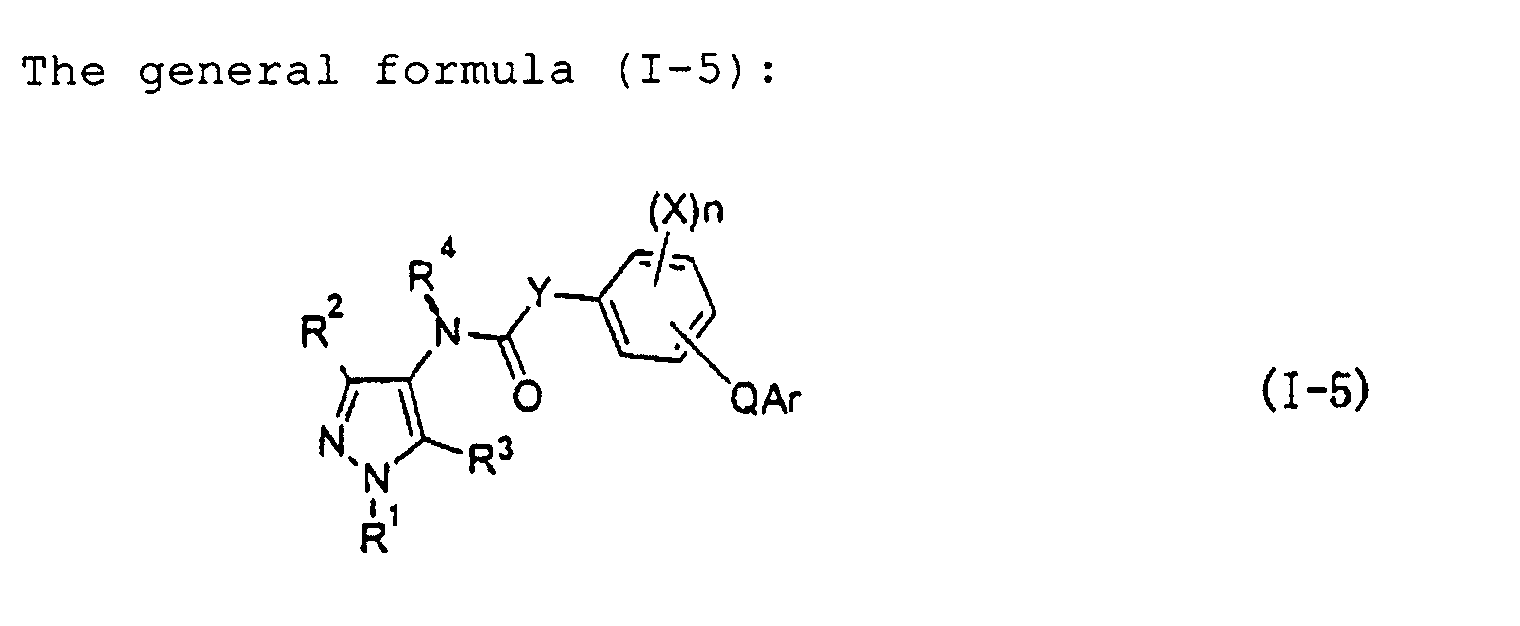
| R1 | R2 | R3 | R4 | Y | Bond | (X)n | Q | Ar |
| Me | Me | Cl | H | CH(Me) | 4-position | H | 0 | pyridine-2-yl |
| Me | Me | Cl | H | CH(Me) | 4-position | H | 0 | 5-F-pyridine-2-yl |
| Me | Me | Cl | H | CH(Me) | 4-position | H | 0 | 5-Cl-pyridine-2-yl |
| Me | Me | Cl | H | CH(Me) | 4-position | H | 0 | 5-Br-pyridine-2-yl |
| Me | Me | Cl | H | CH(Me) | 4-position | H | 0 | 5-I-pyridine-2-yl |
| Me | Me | Cl | H | CH(Me) | 4-position | H | 0 | 5-CF3-pyridine-2-yl |
| Me | Me | Cl | H | CH(Me) | 4-position | H | 0 | 5-NO2-pyridine-2-yl |
| Me | Me | Cl | H | CH(Me) | 4-position | H | 0 | 5-CN-pyridine-2-yl |
| Me | Me | Cl | H | CH(Me) | 4-position | H | 0 | 5-CF(CF3)2- |
| pyridine-2-yl | ||||||||
| Me | Me | Cl | H | CH(Me) | 4-position | H | 0 | 5-CH(CF3)2- |
| pyridine-2-yl | ||||||||
| Me | Me | Cl | H | CH(Me) | 4-position | H | 0 | 5-CF2CF3- |
| pyridine-2-yl | ||||||||
| Me | Me | Cl | H | CH(Me) | 4-position | H | 0 | 5-NHMe-pyridine-2-yl |
| Me | Me | Cl | H | CH(Me) | 4-position | H | 0 | 5-NMe2-pyridine-2-yl |
| Me | Me | Cl | H | CH(Me) | 4-position | H | 0 | 5-NHAc-pyridine-2-yl |
| Me | Me | Cl | H | CH(Me) | 4-position | H | 0 | 5-NHCOOMe-pyridine-2-yl |
| Me | Me | Cl | H | CH(Me) | 4-position | H | 0 | 5-NHCH2COOMe-pyridine-2-yl |
| Me | Me | Cl | H | CH(Me) | 4-position | H | 0 | 5-NHCOCF3-pyridine-2-yl |
| Me | Me | Cl | H | CH(Me) | 4-position | H | 0 | 5-NHCOCH2Cl-pyridine-2-yl |
| Me | Me | Cl | H | CH(Me) | 4-position | H | 0 | 5-NHCOCH2Cl-pyridine-2-yl |
| Me | Me | Cl | H | CH(Me) | 4-position | H | 0 | 5-NRSO2Me-pyridine-2-yl |
| Me | Me | Cl | H | CH(Me) | 4-position | H | 0 | 5-NHSO2CF3-pyridine-2-yl |
| Me | Me | Cl | H | CH(Me) | 4-position | H | 0 | 5-SH-pyridine-2-yl |
| Me | Me | Cl | H | CH(Me) | 4-position | H | 0 | 5-SMe-pyridine-2-yl |
| Me | Me | Cl | H | CH(Me) | 4-position | H | 0 | 5-SOMe-pyridine-2-yl |
| Me | Me | Cl | H | CH(Me) | 4-position | H | 0 | 5-SO2Me-pyridine-2-yl |
| Me | Me | Cl | H | CH(Me) | 4-position | H | 0 | 5-SCF3-pyridine-2-yl |
| Me | He | Cl | H | CH(Me) | 4-position | H | 0 | 5-SOCF3-pyridine-2-yl |
| Me | He | Cl | H | CH(Me) | 4-position | H | 0 | 5-SO2CF3-pyridine-2-yl |
| Me | Me | Cl | H | CH(Me) | 4-position | H | 0 | 5-OH-pyridine-2-yl |
| Me | Me | Cl | H | CH(Me) | 4-position | H | 0 | 5-OMe-pyridine-2-yl |
| Me | Me | Cl | H | CH(Me) | 4-position | H | 0 | 5-OCF3-pyridine-2-yl |
| Me | Me | Cl | H | CH(Me) | 4-position | H | 0 | 5-OCHF2-pyridine-2-yl |
| Me | Me | Cl | H | CH(Me) | 4-position | H | 0 | 5-OCF2CHF2-pyridine-2-yl |
| Me | Me | Cl | H | CH(Me) | 4-position | H | 0 | 5-OCH(CF3)2-pyridine-2-yl |
| Me | Me | Cl | H | CH(Me) | 4-position | H | 0 | 5-OCH2CF3-pyridine-2-yl |
| Me | Me | Cl | H | CH(Me) | 4-position | H | 0 | 5-OAc-pyridine-2-yl |
| Me | Me | Cl | H | CH(Me) | 4-position | H | 0 | 5-OCOOMe-pyridine-2-yl |
| Me | Me | Cl | H | CH(Me) | 4-position | H | 0 | 5-COOH-pyridine-2-yl |
| Me | Me | Cl | H | CH(Me) | 4-position | H | 0 | 5-COOMe-pyridine-2-yl |
| Me | Me | Cl | H | CH(Me) | 4-position | H | 0 | 5-CONH2-pyridine-2-yl |
| Me | Me | Cl | H | CH(Me) | 4-position | H | 0 | 5-CONHMe-pyridirie-2-yl |
| Me | Me | Cl | H | CH(Me) | 4-position | H | 0 | 5-CON(Me)2-pyridine-2-yl |
| Me | Me | Cl | H | CH(Me) | 4-position | H | 0 | 5-Ac-pyridine-2-yl |
| Me | Me | Cl | H | CH(Me) | 4-position | H | 0 | 5-C(Me)=NOH-pyridine-2-yl |
| Me | Me | Cl | H | CH(Me) | 4-position | H | 0 | 5-C(Me)=NOMe-pyridine-2-yl |
| Me | Me | Cl | H | CH(Me) | 4-position | H | 0 | 5-C(Me)=NOCH2Ph-pyridine-2-yl |
| Me | Me | Cl | H | CH(Me) | 4-position | H | 0 | 3,5-F2-pyridine-2-yl |
| Me | Me | Cl | H | CH(Me) | 4-position | H | 0 | 3,5-Cl2-pyridine-2-yl |
| Me | Me | Cl | H | CH(Me) | 4-position | H | 0 | 3,5-Br2-pyridine-2-yl |
| Me | Me | Cl | H | CH(Me) | 4-position | H | 0 | 3,5-I2-pyridine-2-yl |
| Me | Me | Cl | H | CH(Me) | 4-position | H | 0 | 3-F-5-Cl-pyridine-2-yl |
| Me | Me | Cl | H | CH(Me) | 4-position | H | 0 | 3-Br-5-Cl-pyridine-2-yl |
| Me | Me | Cl | H | CH(Me) | 4-position | H | 0 | 3-F-5-CF3-pyridine-2-yl |
| Me | Me | Cl | H | CH(Me) | 4-position | H | 0 | 3-Cl-5-CF3-pyridine-2-yl |
| Me | Me | Cl | H | CH(Me) | 4-position | H | 0 | 2-F-pyridine-5-yl |
| Me | Me | Cl | H | CH(Me) | 4-position | H | 0 | 2-Cl-pyridine-5-yl |
| Me | Me | Cl | H | CH(Me) | 4-position | H | 0 | 2-Br-pyridine-5-yl |
| Me | Me | Cl | H | CH(Me) | 4-position | H | 0 | 2-I-pyridine-5-yl |
| Me | Me | Cl | H | CH(Me) | 4-position | H | 0 | 2-CF(CF3)2-pyridine-5-yl |
| Me | Me | Cl | H | CH(Me) | 4-position | H | 0 | 2-CH(CF3)2 pyridine-5-yl |
| Me | Me | Cl | H | CH(Me) | 4-position | H | 0 | 2-CF2CF3-pyridine-5-yl |
| Me | Me | Cl | H | CH(Me) | 4-position | H | 0 | 2-CF3-pyridine-5-yl |
| Me | Me | Cl | H | CH(Me) | 4-position | H | 0 | 2-CF3-pyridine-6-yl |
| Me | Me | Cl | H | CH(Me) | 4-position | H | 0 | 6-F-pyridazine-3-yl |
| Me | Me | Cl | H | CH(Me) | 4-position | H | 0 | 6-Cl-pyridazine-3-yl |
| Me | Me | Cl | H | CH(Me) | 4-position | H | 0 | 6-Br-pyridazine-3-yl |
| Me | Me | Cl | H | CH(Me) | 4-position | H | 0 | 6-I-pyridazine-3-yl |
| Me | Me | Cl | H | CH(Me) | 4-position | H | 0 | 6-CF3-pyridazine-3-yl |
| Me | Me | Cl | H | CH(Me) | 4-position | H | 0 | 6-CN-pyridazine-3-yl |
| Me | Me | Cl | H | CH(Me) | 4-position | H | 0 | 6-COOH-pyridazine-3-yl |
| Me | Me | Cl | H | CH(Me) | 4-position | H | 0 | 6-COOMe-pyridazine-3-yl |
| Me | Me | Cl | H | CH(Me) | 4-position | H | 0 | 6-CONHMe-pyridazine-3-yl |
| Me | Me | Cl | H | CH(Me) | 4-position | H | 0 | 6-CONMe2- |
| pyridazine-3-yl | ||||||||
| Me | Me | Cl | H | CH(Me) | 4-position | H | 0 | 6-OH-pyridazine-3-yl |
| Me | Me | Cl | H | CH(Me) | 4-position | H | 0 | 6-OMe-pyridazine-3-yl |
| Me | Me | Cl | H | CH(Me) | 4-position | H | 0 | 6-OCF3-pyridazine-3-yl |
| Me | Me | Cl | H | CH(Me) | 4-position | H | 0 | 6-OCHF2-pyridazine-3-yl |
| Me | Me | Cl | H | CH(Me) | 4-position | H | 0 | 6-OCF2CHF2-pyridazine-3-yl |
| Me | Me | Cl | H | CH(Me) | 4-position | H | 0 | 6-CF(CF3)2-pyridazine-3-yl |
| Me | Me | Cl | H | CH(Me) | 4-position | H | 0 | 6-CH(CF3)2-pyridazine-3-yl |
| Me | Me | Cl | H | CH(Me) | 4-position | H | 0 | 6-CF2CF3-pyridazine-3-yl |
| Me | Me | Cl | H | CH(Me) | 4-position | H | 0 | pyrimidine-2-yl |
| Me | Me | Cl | H | CH(Me) | 4-position | H | 0 | 5-F-pyrimidine-2-yl |
| Me | Me | Cl | H | CH(Me) | 4-position | H | 0 | 5-Cl-pyrimidine-2-yl |
| Me | Me | Cl | H | CH(Me) | 4-position | H | 0 | 5-Br-pyrimidine-2-yl |
| Me | Me | Cl | H | CH(Me) | 4-position | H | 0 | 5-CF3-pyrimidine-2-yl |
| Me | Me | Cl | H | CH(Me) | 4-position | H | 0 | 5-CF(CF3)2- |
| pyrimidine-2-yl | ||||||||
| Me | Me | Cl | H | CH(Me) | 4-position | H | 0 | 5-CH(CF3)2- |
| pyrimidine-2-yl | ||||||||
| Me | Me | Cl | H | CH(Me) | 4-position | H | 0 | 5-CF2CF3- |
| pyrimidine-2-yl | ||||||||
| Me | Me | Cl | H | CH(Me) | 4-position | H | 0 | 5-NO2-pyrimidine-2-yl |
| Me | Me | Cl | H | CH(Me) | 4-position | H | 0 | 5-CN-pyrimidine-2-yl |
| Me | Me | Cl | H | CH(Me) | 4-position | H | 0 | pyrazine-2-yl |
| Me | Me | Cl | H | CH(Me) | 4-position | H | 0 | 5-CF3-pyrazine-2-yl |
| Me | Me | Cl | H | CH(Me) | 4-position | H | 0 | 4,6-Cl2-triazine-2-yl |
| Me | Me | Cl | H | CH(Me) | 4-position | H | 0 | thiophene-2-yl |
| Me | Me | Cl | H | CH(Me) | 4-position | H | 0 | 5-Cl-thiophene-2-yl |
| Me | Me | Cl | H | CH(Me) | 4-position | H | 0 | 5-CF3-thiophene-2-yl |
| Me | Me | Cl | H | CH(Me) | 4-position | H | 0 | 1-Me-pyrazole-5-yl |
| Me | Me | Cl | H | CH(Me) | 4-position | H | 0 | 1-Me-3-Cl-pyrazole-5-yl |
| Me | Me | Cl | H | CH(Me) | 4-position | H | 0 | 1-Me-3-CF3- |
| pyrazole-5-yl | ||||||||
| Me | Me | Cl | H | CH(Me) | 4-position | H | 0 | 3-CF3-isoxazole-5-yl |
| Me | Me | Cl | H | CH(Me) | 4-position | H | 0 | 5-CF3-isoxazole-3-yl |
| Me | Me | Cl | H | CH(Me) | 4-position | H | 0 | 3-CF3-isoxazole-5-yl |
| Me | Me | Cl | H | CH(Me) | 4-position | H | 0 | 5-Cl-thiazole-2-yl |
| Me | Me | Cl | H | CH(Me) | 4-position | H | 0 | 5-Br-thiazole-2-yl |
| Me | Me | Cl | H | CH(Me) | 4-position | H | 0 | 5-NO2-thiazole-2-yl |
| Me | Me | Cl | H | CH(Me) | 4-position | H | 0 | 5-CN-thiazole-2-yl |
| Me | Me | Cl | H | CH(Me) | 4-position | H | 0 | 4-Cl-thiazole-2-yl |
| Me | Me | Cl | H | CH(Me) | 4-position | H | 0 | 4-Br-thiazole-2-yl |
| Me | Me | Cl | H | CH(Me) | 4-position | H | 0 | 4-CF3-thiazole-2-yl |
| Me | Me | Cl | H | CH(Me) | 4-position | H | 0 | 1-Me-4-Cl- |
| imidazole-2-yl | ||||||||
| Me | Me | Cl | H | CH(Me) | 4-position | H | 0 | 1-Me-4-Br- |
| imidazole-2-yl | ||||||||
| Me | Me | Cl | H | CH(Me) | 4-position | H | 0 | 1-Me-3-Cl- |
| triazole-5-yl | ||||||||
| Me | Me | Cl | H | CH(Me) | 4-position | H | 0 | quinoline-2-yl |
| Me | Me | Cl | H | CH(Me) | 4-position | H | 0 | benzothiazole-2-yl |
| Me | Me | Cl | H | CH(Me) | 4-position | H | 0 | 1-Me-benzothiazole-2-yl |
| Me | Me | Cl | H | CH(Me) | 4-position | H | 0 | benzoxazole-2-yl |
| Me | Me | Cl | H | CH(Me) | 4-position | H | 0 | 1-Me-indole-2-yl |
| Me | Me | Cl | H | CH(Me) | 4-position | H | 0 | benzofuran-2-yl |
| Me | Me | Cl | H | CH(Me) | 4-position | H | 0 | benzothiophene-2-yl |
| Me | Me | Cl | H | CH(Me) | 4-position | H | 0 | 4-F-Ph |
| Me | Me | Cl | H | CH(Me) | 4-position | H | 0 | 4-Cl-Ph |
| Me | Me | Cl | H | CH(Me) | 4-position | H | 0 | 4-Br-Ph |
| Me | Me | Cl | H | CH(Me) | 4-position | H | 0 | 4-Me-Ph |
| Me | Me | Cl | H | CH(Me) | 4-position | H | 0 | 4-OMe-Ph |
| Me | Me | Cl | H | CH(Me) | 4-position | H | 0 | 4-CF3-Ph |
| Me | Me | Cl | H | CH(Me) | 4-position | H | 0 | 4-CF2CF3-Ph |
| Me | Me | Cl | H | CH(Me) | 4-position | H | 0 | 4-CF(CF3)2-Ph |
| Me | Me | Cl | H | CH(Me) | 4-position | H | 0 | 4-CH(CF3)2-Ph |
| Me | Me | Cl | H | CH(Me) | 4-position | H | 0 | 4-OCF3-Ph |
| Me | Me | Cl | H | CH(Me) | 4-position | H | 0 | 4-OCH2CF3-Ph |
| Me | Me | Cl | H | CH(Me) | 4-position | H | 0 | 4-OCF2CHF2-Ph |
| Me | Me | Cl | H | CH(Me) | 4-position | H | 0 | 4-OCHF2-Ph |
| Me | Me | Cl | H | CH(Me) | 4-position | H | 0 | 4-OCH(Me)CF3-Ph |
| Me | Me | Cl | H | CH(Me) | 4-position | H | 0 | 4-OCH2CF2CHF2-Ph |
| Me | Me | Cl | H | CH(Me) | 4-position | H | 0 | 4-OAc-Ph |
| Me | Me | Cl | H | CH(Me) | 4-position | H | 0 | 4-OCOOMe-Ph |
| Me | Me | Cl | H | CH(Me) | 4-position | H | 0 | 4-CN-Ph |
| Me | Me | Cl | H | CH(Me) | 4-position | H | 0 | 4-COOH-Ph |
| Me | Me | Cl | H | CH(Me) | 4-position | H | 0 | 4-COOMe-P |
| Me | Me | Cl | H | CH(Me) | 4-position | H | 0 | 4-CONHMe-Ph |
| Me | Me | Cl | H | CH(Me) | 4-position | H | 0 | 4-CONMe2-Ph |
| Me | Me | Cl | H | CH(Me) | 4-position | H | 0 | 4-NO2-Ph |
| Me | Me | Cl | H | CH(Me) | 4-position | H | 0 | 4-NH2-Ph |
| Me | Me | Cl | H | CH(Me) | 4-position | H | 0 | 4-NHMe-Ph |
| Me | Me | Cl | H | CH(Me) | 4-position | H | 0 | 4-NMe2-Ph |
| Me | Me | Cl | H | CH(Me) | 4-position | H | 0 | 4-NHCOOMe-Ph |
| Me | Me | Cl | H | CH(Me) | 4-position | H | 0 | 4-NHCOOEt-Ph |
| Me | Me | Cl | H | CH(Me) | 4-position | H | 0 | 4-NHCOO-i-Pr-Ph |
| Me | Me | Cl | H | CH(Me) | 4-position | H | 0 | 4-NHCOOCH2CH=CH2 |
| -Ph | ||||||||
| Me | Me | Cl | H | CH(Me) | 4-position | H | 0 | 4-NHCOOCRC≡CH-Ph |
| Me | Me | Cl | H | CH(Me) | 4-position | H | 0 | 4-NHCOOPh-Ph |
| Me | Me | Cl | H | CH(Me) | 4-position | H | 0 | 4-NHCOOCH2Ph-Ph |
| Me | Me | Cl | H | CH(Me) | 4-position | H | 0 | 4-NHCO-t-Bu-Ph |
| Me | Me | Cl | H | CH(Me) | 4-position | H | 0 | 4-NHCOCF3-Ph |
| Me | Me | Cl | H | CH(Me) | 4-position | H | 0 | 4-NHCOCH2Cl-Ph |
| Me | Me | Cl | H | CH(Me) | 4-position | H | 0 | 4-NHAc-Ph |
| Me | Me | Cl | H | CH(Me) | 4-position | H | 0 | 4-NHCOCH=CHMe-Ph |
| Me | Me | Cl | H | CH(Me) | 4-position | H | 0 | 4-NHCO-c-Pr-Ph |
| Me | Me | Cl | H | CH(Me) | 4-position | H | 0 | 4-NHCOPh-Ph |
| Me | Me | Cl | H | CH(Me) | 4-position | H | 0 | 4-NHCO(thiophene- |
| 2-yl)-Ph | ||||||||
| Me | Me | Cl | H | CH(Me) | 4-position | H | 0 | 4-NHCO(pyridine-2-yl)-Ph |
| Me | Me | Cl | H | CH(Me) | 4-position | H | 0 | 4-NHSO2Me-Ph |
| Me | Me | Cl | H | CH(Me) | 4-position | H | 0 | 4-NHSO2-c-Pr-Ph |
| Me | Me | Cl | H | CH(Me) | 4-position | H | 0 | 4-NHSO2CF3-Ph |
| Me | Me | Cl | H | CH(Me) | 4-position | H | 0 | 4-NHSO2Ph-Ph |
| Me | Me | Cl | H | CH(Me) | 4-position | H | 0 | 4-SCF3-Ph |
| Me | Me | Cl | H | CH(Me) | 4-position | H | 0 | 4-SOCF3-Ph |
| Me | Me | Cl | H | CH(Me) | 4-position | H | 0 | 4-SO2CF3-Ph |
| Me | Me | Cl | H | CH(Me) | 4-position | H | 0 | 4-SMe-Ph |
| Me | Me | Cl | H | CH(Me) | 4-position | H | 0 | 4-SOMe-P |
| Me | Me | Cl | H | CH(Me) | 4-position | H | 0 | 4-SO2Me-Ph |
| Me | Me | Cl | H | CH(Me) | 4-position | H | 0 | 4-t-Bu-Ph |
| Me | Me | Cl | H | CH(Me) | 4-position | H | 0 | 4-Ac-Ph |
| Me | Me | Cl | H | CH(Me) | 4-position | H | 0 | 4-(C(Me)=NOH)-Ph |
| Me | Me | Cl | H | CH(Me) | 4-position | H | 0 | 4-(C(Me)=NOMe)-Ph |
| Me | Me | Cl | H | CH(Me) | 4-position | H | 0 | 4-(C(Me)=NOCH2 CR=CH2)-Ph |
| Me | Me | Cl | H | CH(Me) | 4-position | H | 0 | 4-(C(Me)=NO-t-Bu)-Ph |
| Me | Me | Cl | H | CH(Me) | 4-position | H | 0 | 4-(C(Me)=NOCH2 (4-F-Ph) ) -Ph |
| Me | Me | Cl | H | CH(Me) | 4-position | H | 0 | 4-(C(Me)=NOCH2(2,4-Cl2-Ph))-Ph |
| Me | Me | Cl | H | CH(Me) | 4-position | H | 0 | 4-(C(Me)=NOCH2(2,6-Cl2-Ph))-Ph |
| Me | Me | Cl | H | CH(Me) | 4-position | H | 0 | 4-(C(Me)=NOCH2C≡ CH)-Ph |
| Me | Me | Cl | H | CH(Me) | 4-position | H | 0 | 4-(C(Me)=NO-t-C5 H11)-Ph |
| Me | Me | Cl | H | CH(Me) | 4-position | H | 0 | 4-(C(Me)=NOCH2(4-Cl-Ph))-Ph |
| Me | Me | Cl | H | CH(Me) | 4-position | H | 0 | 4-(C(Me)=NOCH2(4-CF 3-Ph))-Ph |
| Me | Me | Cl | H | CH(Me) | 4-position | H | 0 | 4-(C(Me)=NOCH2(2,3-Cl2-Ph))-Ph |
| Me | Me | Cl | H | CH(Me) | 4-position | H | 0 | 4-(C(Me)=NOCR2(2,5- |
| Cl2-Ph))-Ph | ||||||||
| Me | Me | Cl | H | CH(Me) | 4-position | H | 0 | 4-(C(Me)=NOCH2(2-Cl-pyridine-5-yl))-Ph |
| Note: "Bond" in the Tables means the bonded position of the group -Q-Ar. |
Table 6-2 represents 198 compounds wherein,
in the general formula (I-5), R1 represents Me, R2 does
Et, R3 does Cl, R4 does H, Q does an oxygen atom ad the
bonded position thereof being a 4-position, (X)n does
H, Y does CH(Me), and Ar corresponds to each of all the
substituents shown in Table 6-1.
Table 6-3 represents 198 compounds wherein,
in the general formula (I-5), R1 represents Me, R2 does
i-Pr, R3 does Cl, R4 does H, Q does an oxygen atom and
the bonded position thereof being a 4-position, (X)n
does H, Y does CH(Me), and Ar corresponds to each of
all the substituents shown in Table 6-1.
Table 6-4 represents 198 compounds wherein,
in the general formula (I-5), R1 represents Me, R2 does
n-Pr, R3 does Cl, R4 does H, Q does an oxygen atom and
the bonded position thereof being a 4-position, (X)n
does H, Y does CH(Me), and Ar corresponds to each of
all the substituents shown in Table 6-1.
Table 6-5 represents 198 compounds wherein,
in the general formula (I-5), R1 represents Me, R2 does
t-Bu, R3 does Cl, R4 does H, Q does an oxygen atom and
the bonded position thereof being a 4-position, (X)n
does H, Y does CH(Me), and Ar corresponds to each of
all the substituents shown in Table 6-1.
Table 6-6 represents 198 compounds wherein,
in the general formula (I-5), R1 represents Me, R2 does
n-Bu, R3 does Cl, R4 does H, Q does an oxygen atom and
the bonded position thereof being a 4-position, (X)n
does H, Y does CH(Me), and Ar corresponds to each of
all the substituents shown in Table 6-1.
Table 6-7 represents 198 compounds wherein,
in the general formula (I-5), R1 represents Me, R2 does
CF3, R3 does Cl, R4 does H, Q does an oxygen atom and the
bonded position thereof being a 4-position, (X)n does
H, Y does CH(Me), and Ar corresponds to each of all the
substituents shown in Table 6-1.
Table 6-8 represents 198 compounds wherein,
in the general formula (I-5), R1 represents Me, R2 does
OMe, R3 does Cl, R4 does H, Q does an oxygen atom and
the bonded position thereof being a 4-position, (X)n
does H, Y does CH(Me), and Ar corresponds to each of
all the substituents shown in Table 6-1.
Table 6-9 represents 198 compounds wherein,
in the general formula (I-5), R1 represents Me, R2 does
OCHF2, R3 does Cl, R4 does H, Q does an oxygen atom and
the bonded position thereof being a 4-position, (X)n
does H, Y does CH(Me), and Ar corresponds to each of
all the substituents shown in Table 6-1.
Table 6-10 represents 198 compounds wherein,
in the general formula (I-5), R1 represents Me, R2 does
O-i-Pr, R3 does Cl, R4 does H, Q does an oxygen atom and
the bonded position thereof being a 4-position, (X)n
does H, Y does CH(Me), and Ar corresponds to each of
all the substituents shown in Table 6-1.
Table 6-11 represents 198 compounds wherein,
in the general formula (I-5), R1 represents Me, R2 does
Cl, R3 does Cl, R4 does H, Q does an oxygen atom and the
bonded position thereof being a 4-position, (X)n does
H, Y does CH(Me), and Ar corresponds to each of all the
substituents shown in Table 6-1.
Table 6-12 represents 198 compounds wherein,
in the general formula (I-5), R1 represents Me, R2 does
Ph, R3 does Cl, R4 does H, Q does an oxygen atom and the
bonded position thereof being a 4-position, (X)n does
H, Y does CH(Me), and Ar corresponds to each of all the
substituents shown in Table 6-1.
Table 6-13 represents 198 compounds wherein,
in the general formula (I-5), R1 represents Me, R2 does
2-Cl-Ph, R3 does Cl, R4 does H, Q does an oxygen atom
and the bonded position thereof being a 4-position,
(X)n does H, Y does CH(Me), and Ar corresponds to each
of all the substituents shown in Table 6-1.
Table 6-14 represents 198 compounds wherein,
in the general formula (I-5), R1 represents Me, R2 does
3-Cl-Ph, R3 does Cl, R4 does H, Q does an oxygen atom
and the bonded position thereof being a 4-position,
(X)n does H, Y does CH(Me), and Ar corresponds to each
of all the substituents shown in Table 6-1.
Table 6-15 represents 198 compounds wherein,
in the general formula (I-5), R1 represents Me, R2 does
4-Cl-Ph, R3 does Cl, R4 does H, Q does an oxygen atom
and the bonded position thereof being a 4-position,
(X)n does H, Y does CH(Me), and Ar corresponds to each
of all the substituents shown in Table 6-1.
Table 6-16 represents 198 compounds wherein,
in the general formula (I-5), R1 represents Me, R2 does
2,4-Cl2-Ph, R3 does Cl, R4 does H, Q does an oxygen atom
and the bonded position thereof being a 4-position,
(X)n does H, Y does CH(Me), and Ar corresponds to each
of all the substituents shown in Table 6-1.
Table 6-17 represents 198 compounds wherein,
in the general formula (I-5), R1 represents Me, R2 does
2-Me-Ph, R3 does Cl, R4 does H, Q does an oxygen atom
and the bonded position thereof being a 4-position,
(X)n does H, Y does CH(Me), and Ar corresponds to each
of all the substituents shown in Table 6-1.
Table 6-18 represents 198 compounds wherein,
in the general formula (I-5), R1 represents Me, R2 does
3-Me-Ph, R3 does Cl, R4 does H, Q does an oxygen atom
and the bonded position thereof being a 4-position,
(X)n does H, Y does CH(Me), and Ar corresponds to each
of all the substituents shown in Table 6-1.
Table 6-19 represents 198 compounds wherein,
in the general formula (I-5), R1 represents Me, R2 does
4-Me-Ph, R3 does Cl, R4 does H, Q does an oxygen atom
and the bonded position thereof being a 4-position,
(X)n does H, Y does CH(Me), and Ar corresponds to each
of all the substituents shown in Table 6-1.
Table 6-20 represents 198 compounds wherein,
in the general formula (I-5), R1 represents Me, R2 does
2-OMe-Ph, R3 does Cl, R4 does H, Q does an oxygen atom
and the bonded position thereof being a 4-position,
(X)n does H, Y does CH(Me), and Ar corresponds to each
of all the substituents shown in Table 6-1.
Table 6-21 represents 198 compounds wherein,
in the general formula (I-5), R1 represents Me, R2 does
3-OMe-Ph, R3 does Cl, R4 does H, Q does an oxygen atom
and the bonded position thereof being a 4-position,
(X)n does H, Y does CH(Me), and Ar corresponds to each
of all the substituents shown in Table 6-1.
Table 6-22 represents 198 compounds wherein,
in the general formula (I-5), R1 represents Me, R2 does
4-OMe-Ph, R3 does Cl, R4 does H, Q does an oxygen atom
and the bonded position thereof being a 4-position,
(X)n does H, Y does CH(Me), and Ar corresponds to each
of all the substituents shown in Table 6-1.
Table 6-23 represents 198 compounds wherein,
in the general formula (I-5), R1 represents Me, R2 does
H, R3 does Cl, R4 does H, Q does an oxygen atom and the
bonded position thereof being a 4-position, (X)n does
3-OMe, Y does CH(Me), and Ar corresponds to each of all
the substituents shown in Table 6-1.
Table 6-24 represents 198 compounds wherein,
in the general formula (I-5), R1 represents H, R2 does
H, R3 does Cl, R4 does H, Q does an oxygen atom and the
bonded position thereof being a 4-position, (X)n does
3-OMe, Y does CH(Me), and Ar corresponds to each of all
the substituents shown in Table 6-1.
Table 6-25 represents 198 compounds wherein,
in the general formula (I-5), R1 represents Et, R2 does
H, R3 does Cl, R4 does H, Q does an oxygen atom and the
bonded position thereof being a 4-position, (X)n does
3-OMe, Y does CH(Me), and Ar corresponds to each of all
the substituents shown in Table 6-1.
Table 6-26 represents 198 compounds wherein,
in the general formula (I-5), R1 represents i-Pr, R2
does H, R3 does Cl, R4 does H, Q does an oxygen atom and
the bonded position thereof being a 4-position, (X)n
does 3-OMe, Y does CH(Me), and Ar corresponds to each
of all the substituents shown in Table 6-1.
Table 6-27 represents 198 compounds wherein,
in the general formula (I-5), R1 represents n-Pr, R2
does H, R3 does Cl, R4 does H, Q does an oxygen atom and
the bonded position thereof being a 4-position, (X)n
does 3-OMe, Y does CH(Me), and Ar corresponds to each
of all the substituents shown in Table 6-1.
Table 6-28 represents 198 compounds wherein,
in the general formula (I-5), R1 represents t-Bu, R2
does H, R3 does Cl, R4 does H, Q does an oxygen atom and
the bonded position thereof being a 4-position, (X)n
does 3-OMe, Y does CH(Me), and Ar corresponds to each
of all the substituents shown in Table 6-1.
Table 6-29 represents 198 compounds wherein,
in the general formula (I-5), R1 represents n-Bu, R2
does H, R3 does Cl, R4 does H, Q does an oxygen atom and
the bonded position thereof being a 4-position, (X)n
does 3-OMe, Y does CH(Me), and Ar corresponds to each
of all the substituents shown in Table 6-1.
Table 6-30 represents 198 compounds wherein,
in the general formula (I-5), R1 represents CH=CH2, R2
does H, R3 does Cl, R4 does H, Q does an oxygen atom and
the bonded position thereof being a 4-position, (X)n
does 3-OMe, Y does CH(Me), and Ar corresponds to each
of all the substituents shown in Table 6-1.
Table 6-31 represents 198 compounds wherein,
in the general formula (I-5), R1 represents CH2CH=CH2, R2
does H, R3 does Cl, R4 does H, Q does an oxygen atom and
the bonded position thereof being a 4-position, (X)n
does 3-OMe, Y does CH(Me), and Ar corresponds to each
of all the substituents shown in Table 6-1.
Table 6-32 represents 198 compounds wherein,
in the general formula (I-5), R1 represents CH2C≡CH, R2
does H, R3 does Cl, R4 does H, Q does an oxygen atom and
the bonded position thereof being a 4-position, (X)n
does 3-OMe, Y does CH(Me), and Ar corresponds to each
of all the substituents shown in Table 6-1.
Table 6-33 represents 198 compounds wherein,
in the general formula (I-5), R1 represents CH2CN, R2
does H, R3 does Cl, R4 does H, Q does an oxygen atom and
the bonded position thereof being a 4-position, (X)n
does 3-OMe, Y does CH(Me), and Ar corresponds to each
of all the substituents shown in Table 6-1.
Table 6-34 represents 198 compounds wherein,
in the general formula (I-S), R1 represents CH2CF3, R2
does H, R3 does Cl, R4 does H, Q does an oxygen atom an
the bonded position thereof being a 4-position, (X)n
does 3-OMe, Y does CH(Me), and Ar corresponds to each
of all the substituents shown in Table 6-1.
Table 6-35 represents 198 compounds wherein,
in the general formula (I-5), R1 represents CH2Ph, R2
does H, R3 does Cl, R4 does H, Q does an oxygen atom and
the bonded position thereof being a 4-position, (X)n
does 3-OMe, Y does CH(Me), and Ar corresponds to each
of all the substituents shown in Table 6-1.
Table 6-36 represents 198 compounds wherein,
in the general formula (I-5), R1 represents Ph, R2 does
H, R3 does Cl, R4 does H, Q does an oxygen atom and the
bonded position thereof being a 4-position, (X)n does
3-OMe, Y does CH(Me), and Ar corresponds to each of all
the substituents shown in Table 6-1.
Table 6-37 represents 198 compounds wherein,
in the general formula (I-5), R1 represents 2-Cl-Ph, R2
does H, R3 does Cl, R4 does H, Q does an oxygen atom and
the bonded position thereof being a 4-position, (X)n
does 3-OMe, Y does CH(Me), and Ar corresponds to each
of all the substituents shown in Table 6-1.
Table 6-38 represents 198 compounds wherein,
in the general formula (I-5), R1 represents 3-Cl-Ph, R2
does H, R3 does Cl, R4 does H, Q does an oxygen atom and
the bonded position thereof being a 4-position, (X)n
does 3-OMe, Y does CH(Me), and Ar corresponds to each
of all the substituents shown in Table 6-1.
Table 6-39 represents 198 compounds wherein,
in the general formula (I-5), R1 represents 4-Cl-Ph, R2
does H, R3 does Cl, R4 does H, Q does an oxygen atom and
the bonded position thereof being a 4-position, (X)n
does 3-OMe, Y does CH(Me), and Ar corresponds to each
of all the substituents shown in Table 6-1.
Table 6-40 represents 198 compounds wherein,
in the general formula (I-5), R1 represents 2,4-Cl2-Ph,
R2 does H, R3 does Cl, R4 does H, Q does an oxygen atom
and the bonded position thereof being a 4-position,
(X)n does 3-OMe, Y does CH(Me), and Ar corresponds to
each of all the substituents shown in Table 6-1.
Table 6-41 represents 198 compounds wherein,
in the general formula (I-5), R1 represents Ac, R2 does
H, R3 does Cl, R4 does H, Q does an oxygen atom and the
bonded position thereof being a 4-position, (X)n does
3-OMe, Y does CH(Me), and Ar corresponds to each of all
the substituents shown in Table 6-1.
Table 6-42 represents 198 compounds wherein,
in the general formula (I-5), R1 represents COPh, R2
does H, R3 does Cl, R4 does H, Q does an oxygen atom and
the bonded position thereof being a 4-position, (X)n
does 3-OMe, Y does CH(Me), and Ar corresponds to each
of all the substituents shown in Table 6-1.
Table 6-43 represents 198 compounds wherein,
in the general formula (I-5), R1 represents CH2CH2F, R2
does H, R3 does Cl, R4 does H, Q does an oxygen atom and
the bonded position thereof being a 4-position, (X)n
does 3-OMe, Y does CH(Me), and Ar corresponds to each
of all the substituents shown in Table 6-1.
Table 6-44 represents 198 compounds wherein,
in the general formula (I-5), R1 represents CH2CH2Cl, R2
does H, R3 does Cl, R4 does H, Q does an oxygen atom and
the bonded position thereof being a 4-position, (X)n
does 3-OMe, Y does CH(Me), and Ar corresponds to each
of all the substituents shown in Table 6-1.
Table 6-45 represents 198 compounds wherein,
in the general formula (I-5), R1 represents CH2CH2Br, R2
does H, R3 does Cl, R4 does H, Q does an oxygen atom and
the bonded position thereof being a 4-position, (X)n
does 3-OMe, Y does CH(Me), and Ar corresponds to each
of all the substituents shown in Table 6-1.
Table 6-46 represents 198 compounds wherein,
in the general formula (1-5), R1 represents CH2CH2OH, R2
does H, R3 does Cl, R4 does H, Q does an oxygen atom and
the bonded position thereof being a 4-position, (X)n
does 3-OMe, Y does CH(Me), and Ar corresponds to each
of all the substituents shown in Table 6-1.
Table 6-47 represents 198 compounds wherein,
in the general formula (I-5), R1 represents CH2CH2OMe, R2
does H, R3 does Cl, R4 does H, Q does an oxygen atom and
the bonded position thereof being a 4-position, (X)n
does 3-OMe, Y does CH(Me), and Ar corresponds to each
of all the substituents shown in Table 6-1.
Table 6-48 represents 198 compounds wherein,
in the general formula (I-5), R1 represents CH2OMe, R2
does H, R3 does Cl, R4 does H, Q does an oxygen atom and
the bonded position thereof being a 4-position, (X)n
does 3-OMe, Y does CH(Me), and Ar corresponds to each
of all the substituents shown in Table 6-1.
Table 6-49 represents 198 compounds wherein,
in the general formula (I-5), R1 represents CH2OEt, R2
does H, R3 does Cl, R4 does H, Q does an oxygen atom and
the bonded position thereof being a 4-position, (X)n
does 3-OMe, Y does CH(Me), and Ar corresponds to each
of all the substituents shown in Table 6-1.
Table 6-50 represents 198 compounds wherein,
in the general formula (I-5), R1 represents CH2COOH, R2
does H, R3 does Cl, R4 does H, Q does an oxygen atom and
the bonded position thereof being a 4-position, (X)n
does 3-OMe, Y does CH(Me), and Ar corresponds to each
of all the substituents shown in Table 6-1.
Table 6-51 represents 198 compounds wherein,
in the general formula (I-5), R1 represents CH2COOEt, R2
does H, R3 does Cl, R4 does H, Q does an oxygen atom and
the bonded position thereof being a 4-position, (X)n
does 3-OMe, Y does CH(Me), and Ar corresponds to each
of all the substituents shown in Table 6-1.
Table 6-52 represents 198 compounds wherein,
in the general formula (I-5), R1 represents CH2CONHMe, R2
does H, R3 does Cl, R4 does H, Q does an oxygen atom and
the bonded position thereof being a 4-position, (X)n
does 3-OMe, Y does CH(Me), and Ar corresponds to each
of all the substituents shown in Table 6-1.
Table 6-53 represents 198 compounds wherein,
in the general formula (I-5), R1 represents CH2CONMe2, R2
does H, R3 does Cl, R4 does H, Q does an oxygen atom and
the bonded position thereof being a 4-position, (X)n
does 3-OMe, Y does CH(Me), and Ar corresponds to each
of all the substituents shown in Table 6-1.
Table 6-54 represents 198 compounds wherein,
in the general formula (I-5), R1 represents CH2CHO, R2
does H, R3 does Cl, R4 does H, Q does an oxygen atom and
the bonded position thereof being a 4-position, (X)n
does 3-OMe, Y does CH(Me), and Ar corresponds to each
of all the substituents shown in Table 6-1.
Table 6-55 represents 198 compounds wherein,
in the general formula (I-5), R1 represents CH2CH=NOMe,
R2 does H, R3 does Cl, R4 does H, Q does an oxygen atom
and the bonded position thereof being a 4-position,
(X)n does 3-OMe, Y does CH(Me), and Ar corresponds to
each of all the substituents shown in Table 6-1.
Table 6-56 represents 198 compounds wherein,
in the general formula (I-5), R1 represents Et, R2 does
H, R3 does H, R4 does H, Q does an oxygen atom and the
bonded position thereof being a 4-position, (X)n does
3-OMe, Y does CH(Me), and Ar corresponds to each of all
the substituents shown in Table 6-1.
Table 6-57 represents 198 compounds wherein,
in the general formula (I-5), R1 represents Et, R2 does
H, R3 does F, R4 does H, Q does an oxygen atom and the
bonded position thereof being a 4-position, (X)n does
3-OMe, Y does CH(Me), and Ar corresponds to each of all
the substituents shown in Table 6-1.
Table 6-58 represents 198 compounds wherein,
in the general formula (I-5), R1 represents Et, R2 H, R3
does Br, R4 does H, Q does an oxygen atom and the bonded
position thereof being a 4-position, (X)n does 3-OMe, Y
does CH(Me), and Ar corresponds to each of all the
substituents shown in Table 6-1.
Table 6-59 represents 198 compounds wherein,
in the general formula (I-5), R1 represents Et, R2 does
H, R3 does I, R4 does H, Q does an oxygen atom and the
bonded position thereof being a 4-position, (X)n does
3-OMe, Y does CH(Me), and Ar corresponds to each of all
the substituents shown in Table 6-1.
Table 6-60 represents 198 compounds wherein,
in the general formula (I-5), R1 represents Et, R2 does
H, R3 does CF3, R4 does H, Q does an oxygen atom and the
bonded position thereof being a 4-position, (X)n does
3-OMe, Y does CH(Me), and Ar corresponds to each of all
the substituents shown in Table 6-1.
Table 6-61 represents 198 compounds wherein,
in the general formula (I-5), R1 represents Et, R2 does
H, R3 does CN, R4 does H, Q does an oxygen atom and the
bonded position thereof being a 4-position, (X)n does
3-OMe, Y does CH(Me), and Ar corresponds to each of all
the substituents shown in Table 6-1.
Table 6-62 represents 198 compounds wherein,
in the general formula (I-5), R1 represents Et, R2 does
H, R3 does COOMe, R4 does H, Q does an oxygen atom and
the bonded position thereof being a 4-position, (X)n
does 3-OMe, Y does CH(Me), and Ar corresponds to each
of all the substituents shown in Table 6-1.
Table 6-63 represents 198 compounds wherein,
in the general formula (I-5), R1 represents Et, R2 does
H, R3 does CONHMe, R4 does H, Q does an oxygen atom and
the bonded position thereof being a 4-position, (X)n
does 3-OMe, Y does CH(Me), and Ar corresponds to each
of all the substituents shown in Table 6-1.
Table 6-64 represents 198 compounds wherein,
in the general formula (I-5), R1 represents Et, R2 does
H, R3 does CONMe2, R4 does H, Q does an oxygen atom and
the bonded position thereof being a 4-position, (X)n
does 3-OMe, Y does CH(Me), and Ar corresponds to each
of all the substituents shown in Table 6-1.
Table 6-65 represents 198 compounds wherein,
in the general formula (I-5), R1 represents Et, R2 does
H, R3 does SMe, R4 does H, Q does an oxygen atom and the
bonded position thereof being a 4-position, (X)n does
3-OMe, Y does CH(Me), and Ar corresponds to each of all
the substituents shown in Table 6-1.
Table 6-66 represents 198 compounds wherein,
in the general formula (I-5), R1 represents Et, R2 does
H, R3 does SPh, R4 does H, Q does an oxygen atom and the
bonded position thereof being a 4-position, (X)n does
3-OMe, Y does CH(Me), and Ar corresponds to each of all
the substituents shown in Table 6-1.
Table 6-67 represents 198 compounds wherein,
in the general formula (I-5), R1 represents Et, R2 does
H, R3 does OH, R4 does H, Q does an oxygen atom and the
bonded position thereof being a 4-position, (X)n does
3-OMe, Y does CH(Me), and Ar corresponds to each of all
the substituents shown in Table 6-1.
Table 6-68 represents 198 compounds wherein,
in the general formula (I-5), R1 represents Et, R2 does
H, R3 does OMe, R4 does H, Q does an oxygen atom and the
bonded position thereof being a 4-position, (X)n does
3-OMe, Y does CH(Me), and Ar corresponds to each of all
the substituents shown in Table 6-1.
Table 6-69 represents 198 compounds wherein,
in the general formula (I-5), R1 represents Et, R2 does
H, R3 does OPh, R4 does H, Q does an oxygen atom and the
bonded position thereof being a 4-position, (X)n does
3-OMe, Y does CH(Me), and Ar corresponds to each of all
the substituents shown in Table 6-1.
Table 6-70 represents 198 compounds wherein,
in the general formula (I-5), R1 represents Et, R2 does
H, R3 does NMe2, R4 does H, Q does an oxygen atom and the
bonded position thereof being a 4-position, (X)n does
3-OMe, Y does CH(Me), and Ar corresponds to each of all
the substituents shown in Table 6-1.
Table 6-71 represents 198 compounds wherein,
in the general formula (I-5), R1 represents Et, R2 does
H, R3 does Cl, R4 does Me, Q does an oxygen atom and the
bonded position thereof being a 4-position, (X)n does
3-OMe, Y does CH(Me), and Ar corresponds to each of all
the substituents shown in Table 6-1.
Table 6-72 represents 198 compounds wherein,
in the general formula (I-5), R1 represents Et, R2 does
H, R3 does Cl, R4 does Et, Q does an oxygen atom and the
bonded position thereof being a 4-position, (X)n does
3-OMe, Y does CH(Me), and Ar corresponds to each of all
the substituents shown in Table 6-1.
Table 6-73 represents 198 compounds wherein,
in the general formula (I-5), R1 represents Et, R2 does
H, R3 does Cl, R4 does n-Pr, Q does an oxygen atom and
the bonded position thereof being a 4-position, (X)n
does 3-OMe, Y does CH(Me), and Ar corresponds to each
of all the substituents shown in Table 6-1.
Table 6-74 represents 198 compounds wherein,
in the general formula (I-5), R1 represents Et, R2 does
H, R3 does Cl, R4 does i-Pr, Q does an oxygen atom and
the bonded position thereof being a 4-position, (X)n
does 3-OMe, Y does CH(Me), and Ar corresponds to each
of all the substituents shown in Table 6-1.
Table 6-75 represents 198 compounds wherein,
in the general formula (I-5), R1 represents Et, R2 does
H, R3 does Cl, R4 does CH2CH=CH2, Q does an oxygen atom
and the bonded position thereof being a 4-position,
(X)n does 3-OMe, Y does CH(Me), and Ar corresponds to
each of all the substituents shown in Table 6-1.
Table 6-76 represents 198 compounds wherein,
in the general formula (I-5), R1 represents Et, R2 does
H, R3 does Cl, R4 does CH2C≡CH, Q does an oxygen atom
and the bonded position thereof being a 4-position,
(X)n does 3-OMe, Y does CH(Me), and Ar corresponds to
each of all the substituents shown in Table 6-1.
Table 6-77 represents 198 compounds wherein,
in the general formula (I-5), R1 represents Et, R2 does
H, R3 does Cl, R4 does CH2CF3, Q does an oxygen atom and
the bonded position thereof being a 4-position, (X)n
does 3-OMe, Y does CH(Me), and Ar corresponds to each
of all the substituents shown in Table 6-1.
Table 6-78 represents 198 compounds wherein,
in the general formula (I-5), R1 represents Et, R2 does
H, R3 does Cl, R4 does CH2CN, Q does an oxygen atom and
the bonded position thereof being a 4-position, (X)n
does 3-OMe, Y does CH(Me), and Ar corresponds to each
of all the substituents shown in Table 6-1.
Table 6-79 represents 198 compounds wherein,
in the general formula (I-5), R1 represents Et, R2 does
H, R3 does Cl, R4 does CH2OMe, Q does an oxygen atom and
the bonded position thereof being a 4-position, (X)n
does 3-OMe, Y does CH(Me), and Ar corresponds to each
of all the substituents shown in Table 6-1.
Table 6-80 represents 198 compounds wherein,
in the general formula (I-5), R1 represents Et, R2 does
H, R3 does Cl, R4 does CH2OEt, Q does an oxygen atom and
the bonded position thereof being a 4-position, (X)n
does 3-OMe, Y does CH(Me), and Ar corresponds to each
of all the substituents shown in Table 6-1.
Table 6-81 represents 198 compounds wherein,
in the general formula (I-5), R1 represents Et, R2 does
H, R3 does Cl, R4 does CH2SMe, Q does an oxygen atom and
the bonded position thereof being a 4-position, (X)n
does 3-OMe, Y does CH(Me), and Ar corresponds to each
of all the substituents shown in Table 6-1.
Table 6-82 represents 198 compounds wherein,
in the general formula (I-5), R1 represents Et, R2 does
H, R3 Cl, R4 does CH2COOEt, Q does an oxygen atom and the
bonded position thereof being a 4-position, (X)n does
3-OMe, Y does CH(Me), and Ar corresponds to each of all
the substituents shown in Table 6-1.
Table 6-83 represents 198 compounds wherein,
in the general formula (I-5), R1 represents Et, R2 does
H, R3 Cl, R4 does COOMe, Q does an oxygen atom and the
bonded position thereof being a 4-position, (X)n does
3-OMe, Y does CH(Me), and Ar corresponds to each of all
the substituents shown in Table 6-1.
Table 6-84 represents 198 compounds wherein,
in the general formula (I-5), R1 represents Et, R2 does
H, R3 does Cl, R4 does COOEt, Q does an oxygen atom and
the bonded position thereof being a 4-position, (X)n
does 3-OMe, Y does CH(Me), and Ar corresponds to each
of all the substituents shown in Table 6-1.
Table 6-85 represents 198 compounds wherein,
in the general formula (I-5), R1 represents Et, R2 does
H, R3 does Cl, R4 does COO-n-Pr, Q does an oxygen atom
and the bonded position thereof being a 4-position,
(X)n does 3-OMe, Y does CH(Me), and Ar corresponds to
each of all the substituents shown in Table 6-1.
Table 6-86 represents 198 compounds wherein,
in the general formula (I-5), R1 represents Et, R2 does
H, R3 does Cl, R4 does COO-i-Pr, Q does an oxygen atom
and the bonded position thereof being a 4-position,
(X)n does 3-OMe, Y does CH(Me), and Ar corresponds to
each of all the substituents shown in Table 6-1.
Table 6-87 represents 198 compounds wherein,
in the general formula (I-5), R1 represents Et, R2 does
H, R3 does Cl, R4 does COO-t-Bu, Q does an oxygen atom
and the bonded position thereof being a 4-position,
(X)n does 3-OMe, Y does CH(Me), and Ar corresponds to
each of all the substituents shown in Table 6-1.
Table 6-88 represents 198 compounds wherein,
in the general formula (I-5), R1 represents Et, R2 does
H, R3 does Cl, R4 does COOPh, Q does an oxygen atom and
the bonded position thereof being a 4-position, (X)n
does 3-OMe, Y does CH(Me), and Ar corresponds to each
of all the substituents shown in Table 6-1.
Table 6-89 represents 198 compounds wherein,
in the general formula (I-5), R1 represents Et, R2 does
H, R3 does Cl, R4 does COOCH2Ph, Q does an oxygen atom
and the bonded position thereof being a 4-position,
(X)n does 3-OMe, Y does CH(Me), and Ar corresponds to
each of all the substituents shown in Table 6-1.
Table 6-90 represents 198 compounds wherein,
in the general formula (I-5), R1 represents Et, R2 does
H, R3 Cl, R4 does CONHMe, Q does an oxygen atom and the
bonded position thereof being a 4-position, (X)n does
3-OMe, Y does CH(Me), and Ar corresponds to each of all
the substituents shown in Table 6-1.
Table 6-91 represents 198 compounds wherein,
in the general formula (I-5), R1 represents Et, R2 does
H, R3 does Cl, R4 does CONMe2, Q does an oxygen atom and
the bonded position thereof being a 4-position, (X)n
does 3-OMe, Y does CH(Me), and Ar corresponds to each
of all the substituents shown in Table 6-1.
Table 6-92 represents 198 compounds wherein,
in the general formula (I-5), R1 represents Et, R2 does
H, R3 does Cl, R4 does Ac, Q does an oxygen atom and the
bonded position thereof being a 4-position, (X)n does
3-OMe, Y does CH(Me), and Ar corresponds to each of all
the substituents shown in Table 6-1.
Table 6-93 represents 198 compounds wherein,
in the general formula (I-5), R1 represents Et, R2 does
H, R3 does Cl, R4 does COEt, Q does an oxygen atom and
the bonded position thereof being a 4-position, (X)n
does 3-OMe, Y does CH(Me), and Ar corresponds to each
of all the substituents shown in Table 6-1.
Table 6-94 represents 198 compounds wherein,
in the general formula (I-5), R1 represents Et, R2 does
H, R3 does Cl, R4 does CO-n-Pr, Q does an oxygen atom
and the bonded position thereof being a 4-position,
(X)n does 3-OMe, Y does CH(Me), and Ar corresponds to
each of all the substituents shown in Table 6-1.
Table 6-95 represents 198 compounds wherein,
in the general formula (I-5), R1 represents Et, R2 does
H, R3 does Cl, R4 does CO-i-Pr, Q does an oxygen atom
and the bonded position thereof being a 4-position,
(X)n does 3-OMe, Y does CH(Me), and Ar corresponds to
each of all the substituents shown in Table 6-1.
Table 6-96 represents 198 compounds wherein,
in the general formula (I-5), R1 represents Et, R2 does
H, R3 does Cl, R4 does CO-t-Bu, Q does an oxygen atom
and the bonded position thereof being a 4-position,
(X)n does 3-OMe, Y does CH(Me), and Ar corresponds to
each of all the substituents shown in Table 6-1.
Table 6-97 represents 198 compounds wherein,
in the general formula (I-5), R1 represents Et, R2 does
H, R3 does Cl, R4 does COCF3, Q does an oxygen atom and
the bonded position thereof being a 4-position, (X)n
does 3-OMe, Y does CH(Me), and Ar corresponds to each
of all the substituents shown in Table 6-1.
Table 6-98 represents 198 compounds wherein,
in the general formula (I-5), R1 represents Et, R2 does
H, R3 does Cl, R4 does COPh, Q does an oxygen atom and
the bonded position thereof being a 4-position, (X)n
does 3-OMe, Y does CH(Me), and Ar corresponds to each
of all the substituents shown in Table 6-1.
Table 6-99 represents 198 compounds wherein,
in the general formula (I-5), R1 represents Et, R2 does
H, R3 Cl, R4 does COCH2Ph, Q does an oxygen atom and the
bonded position thereof being a 4-position, (X)n does
3-OMe, Y does CH(Me), and Ar corresponds to each of all
the substituents shown in Table 6-1.
Table 6-100 represents 198 compounds wherein,
in the general formula (I-5), R1 represents Et, R2 does
H, R3 does Cl, R4 does CO-c-Pr, Q does an oxygen atom
and the bonded position thereof being a 4-position,
(X)n does 3-OMe, Y does CH(Me), and Ar corresponds to
each of all the substituents shown in Table 6-1.
Table 6-101 represents 198 compounds wherein,
in the general formula (I-5), R1 represents Et, R2 does
H, R3 does Cl, R4 does COCH=CHMe, Q does an oxygen atom
and the bonded position thereof being a 4-position,
(X)n does 3-OMe, Y does CH(Me), and Ar corresponds to
each of all the substituents shown in Table 6-1.
Table 6-102 represents 198 compounds wherein,
in the general formula (I-5), R1 represents Et, R2 does
H, R3 Cl, R4 does SPh, Q does an oxygen atom and the
bonded position thereof being a 4-position, (X)n does
3-OMe, Y does CH(Me), and Ar corresponds to each of all
the substituents shown in Table 6-1.
Table 6-103 represents 198 compounds wherein,
in the general formula (I-5), R1 represents Et, R2 does
H, R3 does Cl, R4 does CH2-c-Pr, Q does an oxygen atom
and the bonded position thereof being a 4-position,
(X)n does 3-OMe, Y does CH(Me), and Ar corresponds to
each of all the substituents shown in Table 6-1.
Table 6-104 represents 198 compounds wherein,
in the general formula (I-5), R1 represents Et, R2 does
H, R3 does Cl, R4 does H, Q does a sulfur atom and the
bonded position thereof being a 4-position, (X)n does
3-OMe, Y does CH(Me), and Ar corresponds to each of all
the substituents shown in Table 6-1.
Table 6-105 represents 198 compounds wherein,
in the general formula (I-5), R1 represents Et, R2 does
H, R3 does Cl, R4 does H, Q does NH and the bonded
position thereof being a 4-position, (X)n does 3-OMe, Y
does CH(Me), and Ar corresponds to each of all the
substituents shown in Table 6-1.
Table 6-106 represents 198 compounds wherein,
in the general formula (I-5), R1 represents Et, R2 does
H, R3 does Cl, R4 does H, Q does NMe and the bonded
position thereof being a 4-position, (X)n does 3-OMe, Y
does CH(Me), and Ar corresponds to each of all the
substituents shown in Table 6-1.
Table 6-107 represents 198 compounds wherein,
in the general formula (I-5), R1 represents Et, R2 does
H, R3 does Cl, R4 does H, Q does NAc and the bonded
position thereof being a 4-position, (X)n does 3-OMe, Y
does CH(Me), and Ar corresponds to each of all the
substituents shown in Table 6-1.
Table 6-108 represents 198 compounds wherein,
in the general formula (I-5), R1 represents Et, R2 does
H, R3 does Cl, R4 does H, Q does CH=CH and the bonded
position thereof being a 4-position, (X)n does 3-OMe, Y
does CH(Me), and Ar corresponds to each of all the
substituents shown in Table 6-1.
Table 6-109 represents 198 compounds wherein,
in the general formula (I-5), R1 represents Et, R2 does
H, R3 does Cl, R4 does H, Q does COCH2 and the bonded
position thereof being a 4-position, (X)n does 3-OMe, Y
does CH(Me), and Ar corresponds to each of all the
substituents shown in Table 6-1.
Table 6-110 represents 198 compounds wherein,
in the general formula (I-5), R1 represents Et, R2 does
H, R3 does Cl, R4 does H, Q does CH(OMe)=CH and the
bonded position thereof being a 4-position, (X)n does
3-OMe, Y does CH(Me), and Ar corresponds to each of all
the substituents shown in Table 6-1.
Table 6-111 represents 198 compounds wherein,
in the general formula (I-5), R1 represents Et, R2 does
H, R3 does Cl, R4 does H, Q does C≡C and the bonded
position thereof being a 4-position, (X)n does 3-OMe, Y
does CH(Me), and Ar corresponds to each of all the
substituents shown in Table 6-1.
Table 6-112 represents 198 compounds wherein,
in the general formula (I-5), R1 represents Et, R2 does
H, R3 does Cl, R4 does H, Q does CH2CH2 and the bonded
position thereof being a 4-position, (X)n does 3-OMe, Y
does CH(Me), and Ar corresponds to each of all the
substituents shown in Table 6-1.
Table 6-113 represents 198 compounds wherein,
in the general formula (I-5), R1 represents Et, R2 does
H, R3 does Cl, R4 does H, Q does CH(OH)CH2 and the bonded
position thereof being a 4-position, (X)n does 3-OMe, Y
does CH(Me), and Ar corresponds to each of all the
substituents shown in Table 6-1.
Table 6-114 represents 198 compounds wherein,
in the general formula (I-5), R1 represents Et, R2 does
H, R3 does Cl, R4 does H, Q does CH(OMe)CH2 and the
bonded position thereof being a 4-position, (X)n does
3-OMe, Y does CH(Me), and Ar corresponds to each of all
the substituents shown in Table 6-1.
Table 6-115 represents 198 compounds wherein,
in the general formula (I-5), R1 represents Et, R2 does
H, R3 does Cl, R4 does H, Q does OCH2 and the bonded
position thereof being a 4-position, (X)n does 3-OMe, Y
does CH(Me), and Ar corresponds to each of all the
substituents shown in Table 6-1.
Table 6-116 represents 198 compounds wherein,
in the general formula (I-5), R1 represents Et, R2 does
H, R3 does Cl, R4 does H, Q does OCHMe and the bonded
position thereof being a 4-position, (X)n does 3-OMe, Y
does CH(Me), and Ar corresponds to each of all the
substituents shown in Table 6-1.
Table 6-117 represents 198 compounds wherein,
in the general formula (I-5), R1 represents Et, R2 does
H, R3 does Cl, R4 does H, Q does OCH2CH2 and the bonded
position thereof being a 4-position, (X)n does 3-OMe, Y
does CH(Me), and Ar corresponds to each of all the
substituents shown in Table 6-1.
Table 6-118 represents 198 compounds wherein,
in the general formula (I-5), R1 represents Et, R2 does
H, R3 does Cl, R4 does H, Q does OCH2CH=CH and the bonded
position thereof being a 4-position, (X)n does 3-OMe, Y
does CH(Me), and Ar corresponds to each of all the
substituents shown in Table 6-1.
Table 6-119 represents 198 compounds wherein,
in the general formula (I-5), R1 represents Et, R2 does
H, R3 does Cl, R4 does H, Q does SCH2 and the bonded
position thereof being a 4-position, (X)n does 3-OMe, Y
does CH(Me), and Ar corresponds to each of all the
substituents shown in Table 6-1.
Table 6-120 represents 198 compounds wherein,
in the general formula (I-5), R1 represents Et, R2 does
H, R3 does Cl, R4 does H, Q does SCH2CH2 and the bonded
position thereof being a 4-position, (X)n does 3-OMe, Y
does CH(Me), and Ar corresponds to each of all the
substituents shown in Table 6-1.
Table 6-121 represents 198 compounds wherein,
in the general formula (I-5), R1 represents Et, R2 does
H, R3 does Cl, R4 does H, Q does NHCH2 and the bonded
position thereof being a 4-position, (X)n does 3-OMe, Y
does CH(Me), and Ar corresponds to each of all the
substituents shown in Table 6-1.
Table 6-122 represents 198 compounds wherein,
in the general formula (I-5), R1 represents Et, R2 does
H, R3 does Cl, R4 does H, Q does NHCH2CH2 and the bonded
position thereof being a 4-position, (X)n does 3-OMe, Y
does CH(Me), and Ar corresponds to each of all the
substituents shown in Table 6-1.
Table 6-123 represents 198 compounds wherein,
in the general formula (I-5), R1 represents Et, R2 does
H, R3 does Cl, R4 does H, Q does N(Me)CH2 and the bonded
position thereof being a 4-position, (X)n does 3-OMe, Y
does CH(Me), and Ar corresponds to each of all the
substituents shown in Table 6-1.
Table 6-124 represents 198 compounds wherein,
in the general formula (I-5), R1 represents Et, R2 does
H, R3 does Cl, R4 does H, Q does N(Me)CH2CH2 and the
bonded position thereof being a 4-position, (X)n does
3-OMe, Y does CH(Me), and Ar corresponds to each of all
the substituents shown in Table 6-1.
Table 6-125 represents 198 compounds wherein,
in the general formula (I-5), R1 represents Et, R2 does
H, R3 does Cl, R4 does H, Q does NHCO and the bonded
position thereof being a 4-position, (X)n does 3-OMe, Y
does CH(Me), and Ar corresponds to each of all the
substituents shown in Table 6-1.
Table 6-126 represents 198 compounds wherein,
in the general formula (I-5), R1 represents Et, R2 does
H, R3 does Cl, R4 does H, Q does N(Me)CO and the bonded
position thereof being a 4-position, (X)n does 3-OMe, Y
does CH(Me), and Ar corresponds to each of all the
substituents shown in Table 6-1.
Table 6-127 represents 198 compounds wherein,
in the general formula (I-5), R1 represents Et, R2 does
H, R3 does Cl, R4 does H, Q does NHCOCH=CH and the
bonded position thereof being a 4-position, (X)n does
3-OMe, Y does CH(Me), and Ar corresponds to each of all
the substituents shown in Table 6-1.
Table 6-128 represents 198 compounds wherein,
in the general formula (I-5), R1 represents Et, R2 does
H, R3 does Cl, R4 does H, Q does C=O and the bonded
position thereof being a 4-position, (X)n does 3-OMe, Y
does CH(Me), and Ar corresponds to each of all the
substituents shown in Table 6-1.
Table 6-129 represents 198 compounds wherein,
in the general formula (I-5), R1 represents Et, R2 does
H, R3 does Cl, R4 does H, Q does C=NOMe and the bonded
position thereof being a 4-position, (X)n does 3-OMe, Y
does CH(Me), and Ar corresponds to each of all the
substituents shown in Table 6-1.
Table 6-130 represents 198 compounds wherein,
in the general formula (I-5), R1 represents Et, R2 does
H, R3 does Cl, R4 does H, Q does an oxygen atom and the
bonded position thereof being a 3-position, (X)n does
H, Y does CH(Me), and Ar corresponds to each of all the
substituents shown in Table 6-1.
Table 6-131 represents 198 compounds wherein,
in the general formula (I-5), R1 represents Et, R2 does
H, R3 does Cl, R4 does H, Q does an oxygen atom and the
bonded position thereof being a 2-position, (X)n does
H, Y does CH(Me), and Ar corresponds to each of all the
substituents shown in Table 6-1.
Table 6-132 represents 198 compounds wherein,
in the general formula (I-5), R1 represents Et, R2 does
H, R3 does Cl, R4 does H, Q does an oxygen atom and the
bonded position thereof being a 4-position, (X)n does
3-Cl, Y does CH(Me), and Ar corresponds to each of all
the substituents shown in Table 6-1.
Table 6-133 represents 198 compounds wherein,
in the general formula (I-5), R1 represents Et, R2 does
H, R3 does Cl, R4 does H, Q does an oxygen atom and the
bonded position thereof being a 4-position, (X)n does
2-Cl, Y does CH(Me), and Ar corresponds to each of all
the substituents shown in Table 6-1.
Table 6-134 represents 198 compounds wherein,
in the general formula (I-5), R1 represents Et, R2 does
H, R3 does Cl, R4 does H, Q does an oxygen atom and the
bonded position thereof being a 4-position, (X)n does
3-Me, Y does CH(Me), and Ar corresponds to each of all
the substituents shown in Table 6-1.
Table 6-135 represents 198 compounds wherein,
in the general formula (I-5), R1 represents Et, R2 does
H, R3 does Cl, R4 does H, Q does an oxygen atom and the
bonded position thereof being a 4-position, (X)n does
2-Me, Y does CH(Me), and Ar corresponds to each of all
the substituents shown in Table 6-1.
Table 6-136 represents 198 compounds wherein,
in the general formula (I-5), R1 represents Et, R2 does
H, R3 does Cl, R4 does H, Q does an oxygen atom and the
bonded position thereof being a 4-position, (X)n does
2-OMe, Y does CH(Me), and Ar corresponds to each of all
the substituents shown in Table 6-1.
Table 6-137 represents 198 compounds wherein,
in the general formula (I-5), R1 represents Et, R2 does
H, R3 does Cl, R4 does H, Q does an oxygen atom and the
bonded position thereof being a 4-position, (X)n does
3-CF3, Y does CH(Me), and Ar corresponds to each of all
the substituents shown in Table 6-1.
Table 6-138 represents 198 compounds wherein,
in the general formula (I-5), R1 represents Et, R2 does
H, R3 does Cl, R4 does H, Q does an oxygen atom and the
bonded position thereof being a 4-position, (X)n does
2-CF3, Y does CH(Me), and Ar corresponds to each of all
the substituents shown in Table 6-1.
Table 6-139 represents 198 compounds wherein,
in the general formula (I-5), R1 represents Et, R2 does
H, R3 does Cl, R4 does H, Q does an oxygen atom and the
bonded position thereof being a 4-position, (X)n does
3-OH, Y does CH(Me), and Ar corresponds to each of all
the substituents shown in Table 6-1.
Table 6-140 represents 198 compounds wherein,
in the general formula (I-5), R1 represents Et, R2 does
H, R3 does Cl, R4 does H, Q does an oxygen atom and the
bonded position thereof being a 4-position, (X)n does
3-OCHF2, Y does CH(Me), and Ar corresponds to each of
all the substituents shown in Table 6-1.
Table 6-141 represents 198 compounds wherein,
in the general formula (I-5), R1 represents Et, R2 does
H, R3 does Cl, R4 does H, Q does an oxygen atom and the
bonded position thereof being a 4-position, (X)n does
3-OCF3, Y does CH(Me), and Ar corresponds to each of all
the substituents shown in Table 6-1.
Table 6-142 represents 198 compounds wherein,
in the general formula (I-5), R1 represents Et, R2 does
H, R3 does Cl, R4 does H, Q does an oxygen atom and the
bonded position thereof being a 4-position, (X)n does
3-OCF2CHF2, Y does CH(Me), and Ar corresponds to each of
all the substituents shown in Table 6-1.
Table 6-143 represents 198 compounds wherein,
in the general formula (I-5), R1 represents Et, R2 does
H, R3 does Cl, R4 does H, Q does an oxygen atom and the
bonded position thereof being a 4-position, (X)n does
3-OCH2CF3, Y does CH(Me), and Ar corresponds to each of
all the substituents shown in Table 6-1.
Table 6-144 represents 198 compounds wherein,
in the general formula (I-5), R1 represents Et, R2 does
H, R3 does Cl, R4 does H, Q does an oxygen atom and the
bonded position thereof being a 4-position, (X)n does
3-OCH2CF3, Y does CH(Me), and Ar corresponds to each of
all the substituents shown in Table 6-1.
Table 6-145 represents 198 compounds wherein,
in the general formula (I-5), R1 represents Et, R2 does
H, R3 does Cl, R4 does H, Q does an oxygen atom and the
bonded position thereof being a 4-position, (X)n does
3-NHMe, Y does CH(Me), and Ar corresponds to each of
all the substituents shown in Table 6-1.
Table 6-146 represents 198 compounds wherein,
in the general formula (I-5), R1 represents Et, R2 does
H, R3 does Cl, R4 does H, Q does an oxygen atom and the
bonded position thereof being a 4-position, (X)n does
3-NMe2, Y does CH(Me), and Ar corresponds to each of all
the substituents shown in Table 6-1.
Table 6-147 represents 198 compounds wherein,
in the general formula (I-5), R1 represents Et, R2 does
H, R3 does Cl, R4 does H, Q does an oxygen atom and the
bonded position thereof being a 4-position, (X)n does
3-NHAc, Y does CH(Me), and Ar corresponds to each of
all the substituents shown in Table 6-1.
Table 6-148 represents 198 compounds wherein,
in the general formula (I-5), R1 represents Et, R2 does
H, R3 does Cl, R4 does H, Q does an oxygen atom and the
bonded position thereof being a 4-position, (X)n does
3-NHCOCF3, Y does CH(Me), and Ar corresponds to each of
all the substituents shown in Table 6-1.
Table 6-149 represents 198 compounds wherein,
in the general formula (I-S), R1 represents Et, R2 does
H, R3 does Cl, R4 does H, Q does an oxygen atom and the
bonded position thereof being a 4-position, (X)n does
3-NHCOOMe, Y does CH(Me), and Ar corresponds to each of
all the substituents shown in Table 6-1.
Table 6-150 represents 198 compounds wherein,
in the general formula (I-5), R1 represents Et, R2 does
H, R3 does Cl, R4 does H, Q does an oxygen atom and the
bonded position thereof being a 4-position, (X)n does
3-NHCH2COOMe, Y does CH(Me), and Ar corresponds to each
of all the substituents shown in Table 6-1.
Table 6-151 represents 198 compounds wherein,
in the general formula (I-5), R1 represents Et, R2 does
H, R3 does Cl, R4 does H, Q does an oxygen atom and the
bonded position thereof being a 4-position, (X)n does
3-NHCH2CN, Y does CH(Me), and Ar corresponds to each of
all the substituents shown in Table 6-1.
Table 6-152 represents 198 compounds wherein,
in the general formula (I-5), R1 represents Et, R2 does
H, R3 does Cl, R4 does H, Q does an oxygen atom and the
bonded position thereof being a 4-position, (X)n does
3-NHCONHMe, Y does CH(Me), and Ar corresponds to each
of all the substituents shown in Table 6-1.
Table 6-153 represents 198 compounds wherein,
in the general formula (I-5), R1 represents Et, R2 H, R3
Cl, R4 H, Q an oxygen atom, the bonding position thereof
a 4-position, (X)n 3-NHSO2Me, Y CH(Me), and Ar
corresponds to each of all the substituents shown in
Table 6-1.
Table 6-154 represents 198 compounds wherein,
in the general formula (1-5), R1 represents Et, R2 does
H, R3 does Cl, R4 does H, Q does an oxygen atom and the
bonded position thereof being a 4-position, (X)n does
3-NHSO2CF3, Y does CH(Me), and Ar corresponds to each of
all the substituents shown in Table 6-1.
Table 6-155 represents 198 compounds wherein,
in the general formula (I-5), R1 represents Et, R2 does
H, R3 does Cl, R4 does H, Q does an oxygen atom and the
bonded position thereof being a 4-position, (X)n does
3-NHCHF2, Y does CH(Me), and Ar corresponds to each of
all the substituents shown in Table 6-1.
Table 6-156 represents 198 compounds wherein,
in the general formula (I-5), R1 represents Et, R2 does
H, R3 does Cl, R4 does H, Q does an oxygen atom and the
bonded position thereof being a 4-position, (X)n does
3-N(CHF2)2, Y does CH(Me), and Ar corresponds to each of
all the substituents shown in Table 6-1.
Table 6-157 represents 198 compounds wherein,
in the general formula (I-5), R1 represents Et, R2 does
H, R3 does Cl, R4 does H, Q does an oxygen atom and the
bonded position thereof being a 4-position, (X)n does
3-NHCF2CHF2, Y does CH(Me), and Ar corresponds to each
of all the substituents shown in Table 6-1.
Table 6-158 represents 198 compounds wherein,
in the general formula (I-5), R1 represents Et, R2 does
H, R3 does Cl, R4 does H, Q does an oxygen atom and the
bonded position thereof being a 4-position, (X)n does
3-NHCH2CF3, Y does CH(Me), and Ar corresponds to each of
all the substituents shown in Table 6-1.
Table 6-159 represents 198 compounds wherein,
in the general formula (I-S), R1 represents Et, R2 does
H, R3 does Cl, R4 does H, Q does an oxygen atom and the
bonded position thereof being a 4-position, (X)n does
3-SH, Y does CH(Me), and Ar corresponds to each of all
the substituents shown in Table 6-1.
Table 6-160 represents 198 compounds wherein,
in the general formula (I-5), R1 represents Et, R2 does
H, R3 does Cl, R4 does H, Q does an oxygen atom and the
bonded position thereof being a 4-position, (X)n does
3-SMe, Y does CH(Me), and Ar corresponds to each of all
the substituents shown in Table 6-1.
Table 6-161 represents 198 compounds wherein,
in the general formula (I-5), R1 represents Et, R2 does
H, R3 does Cl, R4 does H, Q does an oxygen atom and the
bonded position thereof being a 4-position, (X)n does
3-SOMe, Y does CH(Me), and Ar corresponds to each of
all the substituents shown in Table 6-1.
Table 6-162 represents 198 compounds wherein,
in the general formula (I-5), R1 represents Et, R2 does
H, R3 does Cl, R4 does H, Q does an oxygen atom and the
bonded position thereof being a 4-position, (X)n does
3-SO2Me, Y does CH(Me), and Ar corresponds to each of
all the substituents shown in Table 6-1.
Table 6-163 represents 198 compounds wherein,
in the general formula (I-5), R1 represents Et, R2 does
H, R3 does Cl, R4 does H, Q does an oxygen atom and the
bonded position thereof being a 4-position, (X)n does
3-SCHF2, Y does CH(Me), and Ar corresponds to each of
all the substituents shown in Table 6-1.
Table 6-164 represents 198 compounds wherein,
in the general formula (I-5), R1 represents Et, R2 does
H, R3 does Cl, R4 does H, Q does an oxygen atom and the
bonded position thereof being a 4-position, (X)n does
3-SOCHF2, Y does CH(Me), and Ar corresponds to each of
all the substituents shown in Table 6-1.
Table 6-165 represents 198 compounds wherein,
in the general formula (I-5), R1 represents Et, R2 does
H, R3 does Cl, R4 does H, Q does an oxygen atom and the
bonded position thereof being a 4-position, (X)n does
3-SO2CHF2, Y does CH(Me), and Ar corresponds to each of
all the substituents shown in Table 6-1.
Table 6-166 represents 198 compounds wherein,
in the general formula (I-5), R1 represents Et, R2 does
H, R3 does Cl, R4 does H, Q does an oxygen atom and the
bonded position thereof being a 4-position, (X)n does
3-SCF3, Y does CH(Me), and Ar corresponds to each of all
the substituents shown in Table 6-1.
Table 6-167 represents 198 compounds wherein,
in the general formula (I-5), R1 represents Et, R2 does
H, R3 does Cl, R4 does H, Q does an oxygen atom and the
bonded position thereof being a 4-position, (X)n does
3-SOCF3, Y does CH(Me), and Ar corresponds to each of
all the substituents shown in Table 6-1.
Table 6-168 represents 198 compounds wherein,
in the general formula (I-5), R1 represents Et, R2 does
H, R3 does Cl, R4 does H, Q does an oxygen atom and the
bonded position thereof being a 4-position, (X)n does
3-SO2CF3, Y does CH(Me), and Ar corresponds to each of
all the substituents shown in Table 6-1.
Table 6-169 represents 198 compounds wherein,
in the general formula (I-5), R1 represents Et, R2 does
H, R3 does Cl, R4 does H, Q does an oxygen atom and the
bonded position thereof being a 4-position, (X)n does
3-SCF2CHF2, Y does CH(Me), and Ar corresponds to each of
all the substituents shown in Table 6-1.
Table 6-170 represents 198 compounds wherein,
in the general formula (I-5), R1 represents Et, R2 does
H, R3 does Cl, R4 does H, Q does an oxygen atom and the
bonded position thereof being a 4-position, (X)n does
3-SOCF2CHF2, Y does CH(Me), and Ar corresponds to each
of all the substituents shown in Table 6-1.
Table 6-171 represents 198 compounds wherein,
in the general formula (I-5), R1 represents Et, R2 does
H, R3 does Cl, R4 does H, Q does an oxygen atom and the
bonded position thereof being a 4-position, (X)n does
3-SO2CF2CHF2, Y does CH(Me), and Ar corresponds to each
of all the substituents shown in Table 6-1.
Table 6-172 represents 198 compounds wherein,
in the general formula (I-5), R1 represents Et, R2 does
H, R3 does Cl, R4 does H, Q does an oxygen atom and the
bonded position thereof being a 4-position, (X)n does
3-SCH2CF3, Y does CH(Me), and Ar corresponds to each of
all the substituents shown in Table 6-1.
Table 6-173 represents 198 compounds wherein,
in the general formula (I-5), R1 represents Et, R2 does
H, R3 does Cl, R4 does H, Q does an oxygen atom and the
bonded position thereof being a 4-position, (X)n does
3-SOCH2CF3, Y does CH(Me), and Ar corresponds to each of
all the substituents shown in Table 6-1.
Table 6-174 represents 198 compounds wherein,
in the general formula (I-5), R1 represents Et, R2 does
H, R3 does Cl, R4 does H, Q does an oxygen atom and the
bonded position thereof being a 4-position, (X)n does
3-SO2CH2CF3, Y does CH(Me), and Ar corresponds to each of
all the substituents shown in Table 6-1.
Table 6-175 represents 198 compounds wherein,
in the general formula (I-5), R1 represents Et, R2 does
H, R3 does Cl, R4 does H, Q does an oxygen atom and the
bonded position thereof being a 4-position, (X)n does
3,5-Cl2, Y does CH(Me), and Ar corresponds to each of
all the substituents shown in Table 6-1.
Table 6-176 represents 198 compounds wherein,
in the general formula (I-5), R1 represents Et, R2 does
H, R3 does Cl, R4 does H, Q does an oxygen atom and the
bonded position thereof being a 4-position, (X)n does
2,3-Cl2, Y does CH(Me), and Ar corresponds to each of
all the substituents shown in Table 6-1.
Table 6-177 represents 198 compounds wherein,
in the general formula (I-5), R1 represents Et, R2 does
H, R3 does Cl, R4 does H, Q does an oxygen atom and the
bonded position thereof being a 4-position, (X)n does
3,5-(OMe)2, Y does CH(Me), and Ar corresponds to each of
all the substituents shown in Table 6-1.
Table 6-178 represents 198 compounds wherein,
in the general formula (I-5), R1 represents Et, R2 does
H, R3 does Cl, R4 does H, Q does an oxygen atom and the
bonded position thereof being a 4-position, (X)n does
2,3-(OMe)2, Y does CH(Me), and Ar corresponds to each of
all the substituents shown in Table 6-1.
Table 6-179 represents 198 compounds wherein,
in the general formula (I-5), R1 represents Et, R2 does
H, R3 does Cl, R4 does H, Q does an oxygen atom and the
bonded position thereof being a 4-position, (X)n does
2,5-(OMe)2, Y does CH(Me), and Ar corresponds to each of
all the substituents shown in Table 6-1.
Table 6-180 represents 198 compounds wherein,
in the general formula (I-5), R1 represents Et, R2 does
H, R3 does Cl, R4 does H, Q does an oxygen atom and the
bonded position thereof being a 4-position, (X)n does
3-OMe, Y does CH(Me), and Ar corresponds to each of all
the substituents shown in Table 6-1.
Table 6-181 represents 198 compounds wherein,
in the general formula (I-5), R1 represents Et, R2 does
H, R3 does Cl, R4 does H, Q does an oxygen atom and the
bonded position thereof being a 4-position, (X)n does
3-OMe, Y does CH(OMe), and Ar corresponds to each of
all the substituents shown in Table 6-1.
Table 6-182 represents 198 compounds wherein,
in the general formula (I-5), R1 represents Et, R2 does
H, R3 does Cl, R4 does H, Q does an oxygen atom and the
bonded position thereof being a 4-position, (X)n does
3-OMe, Y does CH(Et), and Ar corresponds to each of all
the substituents shown in Table 6-1.
Table 6-183 represents 198 compounds wherein,
in the general formula (I-5), R1 represents Et, R2 does
H, R3 does Cl, R4 does H, Q does an oxygen atom and the
bonded position thereof being a 4-position, (X)n does
3-OMe, Y does C(CH2)2, and Ar corresponds to each of all
the substituents shown in Table 6-1.
Table 6-184 represents 198 compounds wherein,
in the general formula (I-S), R1 represents Et, R2 does
H, R3 does Cl, R4 does H, Q does an oxygen atom and the
bonded position thereof being a 4-position, (X)n does
3-OMe, Y does CH2CH2, and Ar corresponds to each of all
the substituents shown in Table 6-1.
Table 6-185 represents 198 compounds wherein,
in the general formula (I-5), R1 represents Et, R2 does
H, R3 does Cl, R4 does H, Q does an oxygen atom and the
bonded position thereof being a 4-position, (X)n does
3-OMe, Y does CH=CH, and Ar corresponds to each of all
the substituents shown in Table 6-1.
Table 6-186 represents 198 compounds wherein,
in the general formula (I-5), R1 represents Et, R2 does
H, R3 does Cl, R4 does H, Q does an oxygen atom and the
bonded position thereof being a 4-position, (X)n does
3-OMe, Y does COCH2, and Ar corresponds to each of all
the substituents shown in Table 6-1.
Table 6-187 represents 198 compounds wherein,
in the general formula (I-5), R1 represents Et, R2 does
H, R3 does Cl, R4 does H, Q does an oxygen atom and the
bonded position thereof being a 4-position, (X)n does
3-OMe, Y does C(OMe)=CH, and Ar corresponds to each of
all the substituents shown in Table 6-1.
Table 6-188 represents 198 compounds wherein,
in the general formula (I-5), R1 represents Et, R2 does
H, R3 does Cl, R4 does H, Q does an oxygen atom and the
bonded position thereof being a 4-position, (X)n does
3-OMe, Y does C≡C, and Ar corresponds to each of all
the substituents shown in Table 6-1.
Table 6-189 represents 198 compounds wherein,
in the general formula (I-5), R1 represents Et, R2 does
H, R3 does Cl, R4 does H, Q does an oxygen atom and the
bonded position thereof being a 4-position, (X)n does
3-OMe, Y does CH(OH)CH2, and Ar corresponds to each of
all the substituents shown in Table 6-1.
Table 6-190 represents 198 compounds wherein,
in the general formula (I-5), R1 represents Et, R2 does
H, R3 does Cl, R4 does H, Q does an oxygen atom and the
bonded position thereof being a 4-position, (X)n does
3-OMe, Y does CH(OMe)CH2, and Ar corresponds to each of
all the substituents shown in Table 6-1.
Table 6-191 represents 198 compounds wherein,
in the general formula (I-5), R1 represents Et, R2 does
H, R3 does Cl, R4 does H, Q does an oxygen atom and the
bonded position thereof being a 4-position, (X)n does
3-OMe, Y does OCH2, and Ar corresponds to each of all
the substituents shown in Table 6-1.
Table 6-192 represents 198 compounds wherein,
in the general formula (I-5), R1 represents Et, R2 does
H, R3 does Cl, R4 does H, Q does an oxygen atom and the
bonded position thereof being a 4-position, (X)n does
3-OMe, Y does OCH(Me), and Ar corresponds to each of
all the substituents shown in Table 6-1.
Table 6-193 represents 198 compounds wherein,
in the general formula (I-5), R1 represents Et, R2 does
H, R3 does Cl, R4 does H, Q does an oxygen atom and the
bonded position thereof being a 4-position, (X)n does
3-OMe, Y does OCH2CH2, and Ar corresponds to each of all
the substituents shown in Table 6-1.
Table 6-194 represents 198 compounds wherein,
in the general formula (I-5), R1 represents Et, R2 does
H, R3 does Cl, R4 does H, Q does an oxygen atom and the
bonded position thereof being a 4-position, (X)n does
3-OMe, Y does OCH2CH=CH, and Ar corresponds to each of
all the substituents shown in Table 6-1.
Table 6-195 represents 198 compounds wherein,
in the general formula (I-5), R1 represents Et, R2 does
H, R3 does Cl, R4 does H, Q does an oxygen atom and the
bonded position thereof being a 4-position, (X)n does
3-OMe, Y does SCH2, and Ar corresponds to each of all
the substituents shown in Table 6-1.
Table 6-196 represents 198 compounds wherein,
in the general formula (I-5), R1 represents Et, R2 does
H, R3 does Cl, R4 does H, Q does an oxygen atom and the
bonded position thereof being a 4-position, (X)n does
3-OMe, Y does SCH2CH2, and Ar corresponds to each of all
the substituents shown in Table 6-1.
Table 6-197 represents 198 compounds wherein,
in the general formula (I-5), R1 represents Et, R2 does
H, R3 does Cl, R4 does H, Q does an oxygen atom and the
bonded position thereof being a 4-position, (X)n does
3-OMe, Y does NHCH2, and Ar corresponds to each of all
the substituents shown in Table 6-1.
Table 6-198 represents 198 compounds wherein,
in the general formula (I-5), R1 represents Et, R2 does
H, R3 does Cl, R4 does H, Q does an oxygen atom and the
bonded position thereof being a 4-position, (X)n does
3-OMe, Y does NHCH2CH2, and Ar corresponds to each of
all the substituents shown in Table 6-1.
Table 6-199 represents 198 compounds wherein,
in the general formula (I-5), R1 represents Et, R2 does
H, R3 does Cl, R4 does H, Q does an oxygen atom and the
bonded position thereof being a 4-position, (X)n does
3-OMe, Y does N(Me)CH2, and Ar corresponds to each of
all the substituents shown in Table 6-1.
Table 6-200 represents 198 compounds wherein,
in the general formula (I-5), R1 represents Et, R2 does
H, R3 does Cl, R4 does H, Q does an oxygen atom and the
bonded position thereof being a 4-position; (X)n does
3-OMe, Y does N(Me)CH2CH2, and Ar corresponds to each of
all the substituents shown in Table 6-1.
Table 6-201 represents 198 compounds wherein,
in the general formula (I-5), R1 represents Et, R2 does
H, R3 does Cl, R4 does H, Q does an oxygen atom and the
bonded position thereof being a 4-position, (X)n does
3-OMe, Y does C=O, and Ar corresponds to each of all
the substituents shown in Table 6-1.
Table 6-202 represents 198 compounds wherein,
in the general formula (I-5), R1 represents Et, R2 does
H, R3 does Cl, R4 does H, Q does an oxygen atom and the
bonded position thereof being a 4-position, (X)n does
3-OMe, Y does C=NOMe, and Ar corresponds to each of all
the substituents shown in Table 6-1.
Table 6-203 represents 198 compounds wherein,
in the general formula (I-5), R1 represents Et, R2 does
H, R3 does Cl, R4 does H, Q does an oxygen atom and the
bonded position thereof being a 4-position, (X)n does
3-OMe, Y does C((CH2)2)CH2, and Ar corresponds to each of
all the substituents shown in Table 6-1.
Table 6-204 represents 198 compounds wherein,
in the general formula (I-5), R1 represents Et, R2 does
H, R3 does Cl, R4 does H, Q does an oxygen atom and the
bonded position thereof being a 4-position, (X)n does
3-OMe, Y does CH(OCH2OEt), and Ar corresponds to each of
all the substituents shown in Table 6-1.
Table 6-205 represents 198 compounds wherein,
in the general formula (I-5), R1 represents Et, R2 does
H, R3 does Cl, R4 does H, Q does an oxygen atom and the
bonded position thereof being a 4-position, (X)n does
3-OMe, Y does CH(OCH2CH=CH2), and Ar corresponds to each
of all the substituents shown in Table 6-1.
Table 6-206 represents 198 compounds wherein,
in the general formula (I-5), R1 represents Et, R2 does
H, R3 does Cl, R4 does H, Q does an oxygen atom and the
bonded position thereof being a 4-position, (X)n does
3-OMe, Y does CH(OCH2C≡CH), and Ar corresponds to each
of all the substituents shown in Table 6-1.
The N-(4-pyrazolyl)amide derivative of the
present invention represented by the general formula
(I) or a salt thereof is useful for agrohorticultural
agent, especially for agrohorticultural fungicides or
fungicides. Roughly saying, the composition of the
present invention is effective against the diseases due
to mold fungi diseases, for example, the diseases due
to Deuteromycetes such as Genus Botrytis, Genus
Helminthosporium, Genus Fusarium, Genus Septoria, Genus
Cercospora, Genus Pyricularia and Genus Alternaria; the
diseases due to Basidiomycetes such as Genus Hemileia,
Genus Rhizoctonia and Genus Puccinia; the diseases due
to Ascomycetes such as Genus Venturia, Genus
Podosphaera, Genus Erysiphe, Genus Monilinia and Genus
Unsinula; and the diseases due to the other fungi such
as Genus Ascochyta, Genus Phoma, Genus Pythium, Genus
Corticium and Genus Pyrenophora.
Specific examples of the diseases against
which the composition of the present invention exhibit
a marked effect include rice blast (Pyricularia
oryzae), rice sheath blight (Rhizoctonia solani), rice
Helminthosporium leaf spot (Cochliobolus miyabeanus),
rice seedling blight (Rhizopus chinensis, Pythium
graminicola, Fusarium graminicola, Fusarium roseum,
Mucor sp., Phoma sp., Tricoderma sp.), rice bakanae
disease (Gibberella fujikuroi), powdery mildew of
barley and wheat (Erysiphe graminis), powdery mildew of
cucumber (Sphaerotheca fuliginea), powdery mildew of
other host plants, eye spot of barley and wheat
(Pseudocercosporella herpotrichoides), flag smut of
wheat, etc. (Urocystis tritici), snow mold of barley
and wheat (Fusarium nivale, Pythium iwayamai, Typhla
ishikariensis, Sclerotinia boreasis), oats crown rust
(Puccinia coronata), stem rust of other plants, gray
mold of cucumber and strawberry (Botrytis cinerea),
sclerotinia rot of tomato and cabbage (Sclerotinia
sclerotiorum), late blight of potato and tomato
(Phytophthora infestans), Phytophthora rot of other
plants, downy mildew of various plants such as cucumber
downy mildew (Pseudoperonospora cubensis), grape downy
mildew (Plasmopara viticola), etc., apple scab
(Venturia inaequalis), apple Alternaria leaf spot
(Alternaria mali), pear black spot (Alternaria
kikuchiana), citrus melanose (Diaporthe citri), citrus
scab (Elsinoe fawcetti), sugar beet Cercospora leaf
spot (Cercospora beticola), peanut brown leaf spot
(Cercospora arachidicola), peanut leaf spot (Cercospora
personata), septoria leaf spot of wheat (Septoria
tritici), glume blotch of wheat (Septoria nodorum),
scald of barley (Rhynchosporium secalis), bunt of wheat
(Tilletia caries), lawn grass brown patch (Rhizoctonia
solani), lawn grass dollar spot of lawn grass
(Sclerotinia homoeocarpe) etc.
The agrohorticultural fungicide, containing
the N-(4-pyrazolyl)amide derivative represented by
formula (I) or salt thereof of the present invention,
has a marked controlling effect on the above-exemplified
diseases, which are injurious to paddy
field crops, upland crops, fruit trees, vegetables and
other crops, flowers and ornament plants, and the like.
Therefore, the desired effect of the agrohorticultural
fungicide of the present invention can be exhibited by
applying the fungicide to the paddy field water, stalks
and leaves or soil of paddy field, upland field, fruit
trees, vegetables, other crops or flowers and ornament
plants at a season at which the diseases are expected
to appear, before their appearance or at the time when
their appearance is confirmed.
The agrohorticultural agent, especially
agrohorticultural insecticides or nematocides,
containing the N-(4-pyrazolyl)amide derivative
represented by the formula (I) or salt thereof of the
present invention as an active ingredient, are suitable
for controlling various insect pests such as
agrohorticultural insect pests, stored grain insect
pests, sanitary insect pests, nematodes, etc., which
are injurious to paddy rice, fruit trees, vegetables,
other crops, flowers, ornamental plants, etc. They
have a marked insecticidal effect, for example, on
LEPIDOPTERA including summer fruit tortrix (Adoxophes
orana fasciata), smaller tea tortrix (Adoxophyes sp.),
Manchurian fruit moth (Grapholita inopinata), oriental
fruit moth (Grapholita molesta), soybean pod border
(Leguminovora glycinivorella), mulberry leafroller
(Olethreutes mori), tea leafroller (Caloptilia
thevivora), Caloptilia sp. (Caloptilia zachrysa), apple
leafminer (Phyllonorycter ringoniella), pear barkminer
(Spulerrina astaurota), common white (Piers rapae
crucivora), tobacco budworm (Heliothis sp.), codling
moth (Laspey resia pomonella), diamondback moth
(Plutella xylostella), apple fruit moth (Argyresthia
conjugella), peach fruit moth (Carposina niponensis),
rice stem borer (Chilo suppressalis), rice leafroller
(Cnaphalocrocis medinalis), tobacco moth (Ephestia
elutella), mulberry pyralid (Glyphodes pyloalis),
yellow rice borer (Scirpophaga incertulas), rice
skipper (Parnara guttata), rice armyworm (Pseudaletia
separata), pink borer (Sesamia inferens), common
cutworm (Spodoptera litura), beet armyworm (Spodoptera
exigua), etc.; HEMIPTERA including aster leafhopper
(Macrosteles fascifrons), green rice leafhopper
(Nephotettix cincticepts), brown rice planthopper
(Nilaparvata lugens), whitebacked rice planthopper
(Sogatella furcifera), citrus psylla (Diaphorina
citri), grape whitefly (Aleurolibus taonabae),
sweetpotato whitefly (Bemisia tabaci), greenhouse
whitefly (Trialeurodes vaporariorum), turnup aphid
(Lipaphis erysimi), green peach aphid (Myzus persicae),
Indian wax scale (Ceroplastes ceriferus), cottony
citrus scale (Pulvinaria aurantii), camphor scale
(Pseudaonidia duplex), san Jose scale (Comstockaspis
perniciosa), arrowhead scale (Unapsis yanonensis),
etc.; TYLENCHIDA including soybean beetle (Anomala
rufocuprea), Japanese beetle (Popillia japonica),
tobacco beetle (Lasioderma serricorne), powderpost
beetle (Lyctus brunneus), twenty-eight-spotted ladybird
(Epilachna vigintiotopunctata), azuki bean weevil
(Callosobruchus chinensis), vegetable weevil
(Listroderes costirostris), maize weevil (Sitophilus
zeamais), boll weevil (Anthonomus gradis gradis), rice
water weevil (Lissorhoptrus oryzophilus), cucurbit leaf
beetle (Aulacophora femoralis), rice leaf beetle
(Oulema oryzae), striped flea beetle (Phyllotreta
striolata), pine shoot beetle (Tomicus piniperda),
Colorado potato beetle (Leptinotarsa decemlineata),
Mexican bean beetle (Epilachna varivestis), corn
rootworm (Diabrotica sp.), etc.; DIPTERA including
(Dacus(Zeugodacus) cucurbitae), oriental fruit fly
(Dacus(Bactrocera) dorsalis), rice leafminer (Agnomyza
oryzae), onion maggot (Delia antiqua), seedcorn maggot
(Delia platura), soybean pod gall midge (Asphondylia
sp.), muscid fly (Musca domestica), house mosquito
(Culex pipiens pipiens), etc.; and TYLENCHIDA including
root-lesion nematode (Pratylenchus sp.), coffee root-lesion
nematode (Pratylenchus coffeae), potato cyst
nematode (Globodera rostochiensis), root-knot nematode
(Meloidogyne sp.), citrus riematode (Tylenchulus
semipenetrans), Aphelenchus sp. (Aphelenchus avenae),
chrysanthemum foliar (Aphelenchoides ritzemabosi), etc.
The agrohorticultural insecticide, containing
the N-(4-pyrazolyl)amide derivative represented by
formula (I) or salt thereof of the present invention,
has a marked controlling effect on the above-exemplified
insect pests, sanitary pests and/or
nematodes, which are injurious to paddy field crops,
upland crops, fruit trees, vegetables and other crops,
flowers and ornament plants, and the like. Therefore,
the desired effect of the agrohorticultural insecticide
of the present invention can be exhibited by applying
the insecticide to the paddy field water, stalks and
leaves or soil of paddy field, upland field, fruit
trees, vegetables, other crops or flowers and ornament
plants at a season at which the insect pests, sanitary
pests or nematodes are expected to appear, before their
appearance or at the time when their appearance is
confirmed.
The useful plants to which the composition
for agrohorticultural agent of the present invention
can be applied are not particularly limited, and the
following plants can be referred to as examples
thereof:
cereals such as rice, barley, wheat, rye,
oat, corn, kaoliang, etc.; beans and peas such as
soybean, red bean, broad bean, pea, peanut, etc.; fruit
trees such as apple, citrus trees and fruits, pear,
grape, peach, plum, cherry, walnut, almond, banana,
strawberry, etc.; vegetables such as cabbage, tomato,
spinach, broccoli, lettuce, onion, stone-leek, Spanish
paprika, etc.; root crops such as carrot, potato, sweet
potato, radish, lotus rhizome, turnip, etc.; processing
crops such as cotton, flax, paper mulberry, mitsumata
(Edgeworthia papyrifera), coleseed, beet, hop, sugar
can, sugar beet, olive, gum, coffee, tobacco, tea,
etc.; cucurbitaceous plants such as pumpkin, cucumber,
water melon, melon, etc.; pasture plants such as
orchard grass, sorghum, timothy, clover, alfalfa, etc.;
lawn grasses such as mascarenegrass, bent grass, etc.;
and perfumery crops such as lavender, rosemary, thyme,
parsley, pepper, ginger, etc.; flowers and ornamental
plants such as chrysanthemum, rose, orchid, etc.
In general, the agrohorticultural composition
of the present invention, containing the N-(4-pyrazolyl)amide
derivative of the formula (I) or salt
thereof, is used after being prepared into conveniently
usable forms according to ordinary manner for
preparation of agrochemicals.
That is, the 4-(pyrazolyl)amide derivative of
formula (I) or salt thereof and an appropriate carrier
are blended optionally together with an adjuvant in a
proper proportion and prepared into a suitable
preparation form such as suspension, emulsifiable
concentrate, soluble concentrate, wettable powder,
granules, dust or tablets through dissolution,
separation, suspension, mixing, impregnation, adsorption
or sticking.
The inert carrier used in the present
invention may be either solid or liquid. As the solid
carrier, soybean flour, cereal flour, wood flour, bark
flour, saw dust, powdered tobacco stalks, powdered
walnut shells, bran, powdered cellulose, extraction
residues of vegetables, powdered synthetic polymers or
resins, clay (e.g. kaolin, bentonite and acid clay),
talc (e.g. talc and pyrophyllite), silica materials
(e.g. diatomaceous earth, siliceous sand, mica, white
carbon, i.e. synthetic high-dispersion silicic acid,
also called finely divided hydrated silica or hydrated
silicic acid, some of the commercially available
products contain calcium silicate as the major
component), activated carbon, powdered sulfur, pumice,
calcined diatomaceous earth, ground brick, fly ash,
sand, calcium carbonate, calcium phosphate and other
inorganic or mineral powders, chemical fertilizers such
as ammonium sulfate, ammonium phosphate, ammonium
nitrate, urea, ammonium chloride and the like, and
compost. These carriers may be used either alone or as
a mixture of two or more carriers.
The liquid carrier is that which itself has a
solubility or which is without such solubility but is
capable of dispersing an active ingredient with the aid
of an adjuvant. The following are typical examples of
the liquid carrier and can be used alone or as a
mixture thereof. Water; alcohols such as methanol,
ethanol, isopropanol, butanol and ethylene glycol;
ketones such as acetone, methyl ethyl ketone, methyl
isobutyl ketone, diisobutyl ketone and cyclohexanone;
ethers such as ethyl ether, dioxane, cellosolve,
dipropyl ether and tetrahydrofuran; aliphatic
hydrocarbons such as kerosene and mineral oil; aromatic
hydrocarbons such as benzene, toluene, xylene, solvent
naphtha and alkylnaphthalene; halogenated hydrocarbons
such as dichlorethane, chloroform, carbon tetrachloride
and chlorobenzene; esters such as ethyl acetate,
diisopropyl phthalate, dibutyl phthalate and dioctyl
phthalate; amides such as dimethylformamide,
diethylformamide and dimethylacetamide; nitriles such
as acetonitrile; and dimethyl sulfoxide.
The following are typical examples of the
adjuvant, which are used depending upon purposes and
used alone or in combination of two or more adjuvants
in some cases, or need not to be used at all.
To emulsify, disperse, dissolve and/or wet an
active ingredient, a surfactant is used. As the
surfactant, there can be exemplified polyoxyethylene
alkyl ethers, polyoxyethylene alkylaryl ethers,
polyoxyethylene higher fatty acid esters,
polyoxyethylene resinates, polyoxyethylene sorbitan
monolaurate, polyoxyethylene sorbitan monooleate,
alkylarylsulfonates, naphthalene-sulfonic acid
condensation products, ligninsulfonates and higher
alcohol sulfate esters.
Further, to stabilize the dispersion of an
active ingredient, tackify it and/or bind it, there may
be used adjuvants such as casein, gelatin, starch,
methyl cellulose, carboxymethyl cellulose, gum arabic,
polyvinyl alcohols, turpentine, bran oil, bentonite and
ligninsulfonates.
To improve the flowability of a solid
product, there may be used adjuvants such as waxes,
stearates and alkyl phosphates.
Adjuvants such as naphthalenesulfonic acid
condensation products and polycondensates of phosphates
may be used as a peptizer for dispersible products.
Adjuvants such as silicone oil may also be
used as a defoaming agent.
The content of the active ingredient may be
varied according to the need, thus, it can be properly
selected from the range between 0.01 and 90% by weight
in terms of 100% by weight of the agrohorticultural
insecticide of the present invention. For example, in
dusts or granules, the suitable content thereof is from
0.01 to 50% by weight. In emulsifiable concentrate and
flowable wettable powder, too, the suitable content is
from 0.01 to 50% by weight.
The agrohorticultural composition of the
present invention is used to control a variety of
insect pests in the following manner. That is, it is
applied to a crop on which the diseases and insect
pests are expected to appear or a site where appearance
of the diseases and insect pests is undesirable, as it
is or after being properly diluted with or suspended in
water or the like, in an amount effective for control
of the diseases and insect pests.
The applying dosage of the agrohorticultural
composition of the present invention, containing N-(4-pyrazolyl)amide
derivative of the formula (I) or salt
thereof, is varied depending upon various factors such
as a purpose, diseases and insect pests to be
controlled, a growth state of a plant, tendency of
diseases and insect pests appearance, weather,
environmental conditions, a preparation form, an
application method, an application site and an
application time. It may be properly chosen in a range
of 0.1 g to 1 kg (in terms of active ingredient
compound) per 10 ares depending upon purposes.
The agrohorticultural composition of the
present invention, containing N-(4-pyrazolyl)amide
derivative of the formula (I) or salt thereof, may be
used in admixture with other agrohorticultural agents,
in order to expand both spectrum of controllable
diseases and insect pest species and the period of time
when effective applications are possible or to reduce
the dosage.
Next, typical examples of the containing N-(4-pyrazolyl)amide
derivative of the present invention
are presented in Tables A to D, and typical examples of
the intermediate thereof are presented in Table E.
However, the present invention is by no means limited
by these examples.
In the Tables, the column of the "Property"
indicates the melting point (°C) or refractive index of
each compound.
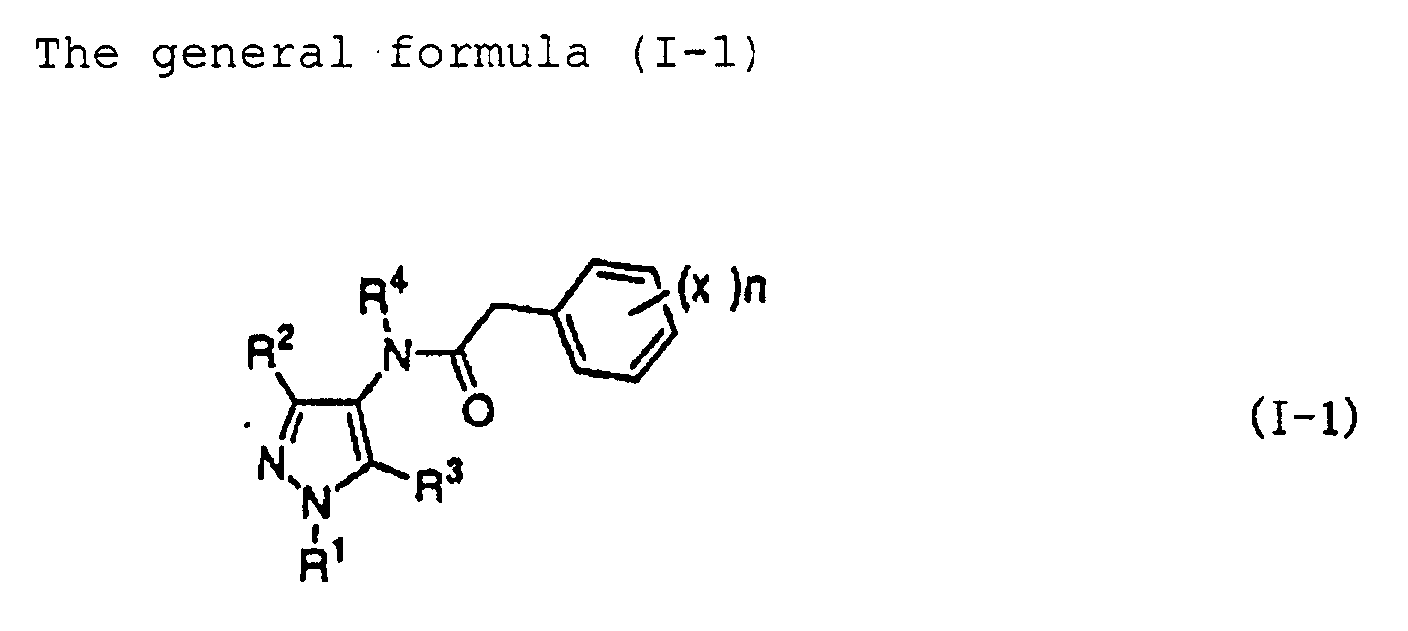
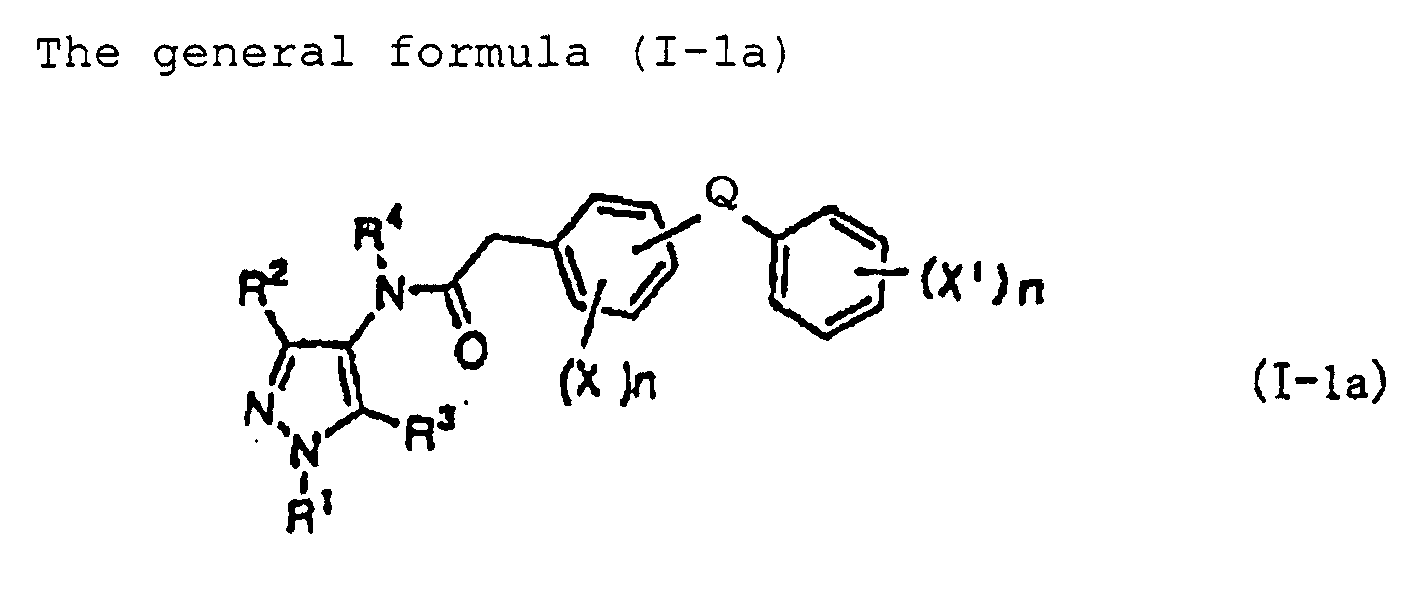
| No. | R1 | R2 | R3 | R4 | (X)n | Property (°C) |
| A- 1 | Me | Me | Cl | H | H | 145-147 |
| A- 2 | Me | Me | Cl | H | 2-F | 180-182 |
| A- 3 | Me | Me | Cl | H | 3-F | 166-167 |
| A- 4 | Me | Me | Cl | H | 4-F | 161-163 |
| A- 5 | Me | Me | Cl | H | 2-Cl | 199-200 |
| A- 6 | Me | Me | Cl | H | 3-Cl | 176-178 |
| A- 7 | Me | Me | Cl | H | 4-Cl | 193-196 |
| A- 8 | Me | Me | Cl | H | 4-n-Bu | 143-149 |
| A- 9 | Me | Me | Cl | H | 4-t-Bu | 86-87 |
| A-10 | Me | Me | Cl | H | 4-C≡CCMe3 | 139-141 |
| A-11 | Me | Me | Cl | H | 4-C=CC(Me) 2OH | amorphous solid |
| A-12 | Me | Me | Cl | H | 4-c-Hex | 143-145 |
| A-13 | Me | Me | Cl | H | 2-OMe | 162-164 |
| A-14 | Me | Me | Cl | H | 3-OMe | 131-133 |
| A-15 | Me | Me | Cl | H | 4-OMe | 156-159 |
| A-16 | Me | Me | Cl | H | 4-OCR2C≡CH | 131-133 |
| A-17 | Me | Me | Cl | H | 3,4-(OMe)2 | 132-135 |
| A-18 | Me | Me | Cl | H | 3-CF3 | 140-141 |
| A-19 | Me | Me | Cl | H | 4-CF3 | 174-175 |
| A-20 | Me | Me | Cl | H | 4-O-n-Bu | 136-138 |
| A-21 | Me | Me | Cl | H | 4-NO2 | 204-207 |
| A-22 | Me | Me | Cl | H | 3,5-F2 | 166-167 |
| A-23 | Me | Me | Cl | H | 2,4-Cl2 | amorphous solid |
| A-24 | Me | Me | Cl | H | 2,6-Cl2 | amorphous solid |
| A-25 | Me | Me | Cl | H | 3,4-Cl2 | 179-181 |
| A-26 | Me | Me | Cl | H | 3,5-(CF3)2 | 189-191 |
| A-27 | Me | Me | Cl | H | morpholine-4-yl | 206-218 |
| A-28 | Me | Me | Cl | H | OCH2(pyridine-4-yl) | 148-152 |
| A-29 | Me | Me | Cl | H | OCH2CO-t-Bu | 181-185 |
| A-30 | Me | Me | Cl | H | 4-OCH2 (pyridine-2-yl) | 136-142 |
| A-31 | Me | Me | Cl | H | 4-0-i-Bu | 144-145 |
| A-32 | Me | Me | Cl | H | 4-OCH2CH2OCH3 | 128-129 |
| A-33 | Me | Me | Cl | H | 4-OCH2-c-Rex | 124-128 |
| A-34 | Me | Me | Cl | H | 4-OCH2CH2CH2CN | 132-135 |
| A-35 | Me | Me | Cl | H | 3-OCH3-4-O-n-Rex | 128-129 |
| A-36 | Me | Me | Cl | H 3-Cl-4-O-n-Hex | 109-111 | |
| A-37 | Me | Me | Cl | H 4-O-n-Hep | 127-134 | |
| A-38 | Me | Me | Cl | H 4-O-n-Oct | 135-137 | |
| A-39 | Me | Me | Cl | H 4-O-n-Dec | 122-128 | |
| A-40 | Me | Me | Cl | H 3-O-n-Hex | 107-109 | |
| A-41 | Me | Me | Cl | H 4-OCH2CO2-t-Bu | 99-104 | |
| A-42 | Me | Me | Cl | H 4-O-n-Pen | 137-139 | |
| A-43 | Me | Me | Cl | H 4-O-n-Hex | 136-137 | |
| A-44 | Me | H | Cl | H 4-n-Bu | 131-132 | |
| A-45 | Me | H | Cl | H 4-O-n-Bu | 130-132 | |
| A-46 | Me | H | Cl | H 4-O-n-Pen | 127-129 | |
| A-47 | Me | H | Cl | H 4-O-n-Hex | 129-131 | |
| A-48 | Me | H | Cl | H 4-t-Bu | nD1.5524 | |
| (26.8°C) | ||||||
| A-49 | Me | H | Cl | H 4-O-n-Hex | 84-85 | |
| A-50 | Me | Me | Cl | H 3,5-(OMe)2-4-n-Hex | 75-78 | |
| A-51 | Me | Me | Cl | H 3,4-(dimethylmethylene)-dioxy | 104-105 | |
| A-52 | Me | Me | Cl | H 3,4-(diphenylmethylene)-dioxy | amorphous | |
| A-53 | Me | H | Cl | H 3, 4-(dimethylmethylene)-dioxy | 105-109 | |
| A-54 | Et | H | Cl | H 4-OCOOMe | 96-98 | |
| A-55 | Et | H | Cl | H 4-OCH2COOMe | 88-92 | |
| A-56 | Et | H | Cl | H 3,4-(α-phenethylidene)-dioxy | nD 1.5945 (25.5°C) | |
| A-57 | Et | H | Cl | H OSiMe3 | 120-125 | |
| A-58 | Et | H | Cl | H 3,4-(α-4-Br-phenethylidene)dioxy | nD 1.5995 (24. 6°C) |
| Table B (R4=H except the R4 specifically defined) | ||||||||
| No. | R1 | R2 | R3 | Q | Bond | (X1)n | (X)n | Property (°C) |
| B- 1 | Me | Me | Cl | 0 | 4-position | H | H | 152-154 |
| B- 2 | Me | Me | Cl | 0 | 4-position | H | 4-Cl | 140-142 |
| B- 3 | Me | Me | Cl | 0 | 4-position | H | 4-CN | 145-147 |
| B- 4 | Me | Me | Cl | 0 | 4-position | H | 4-NO2 | 150-151 |
| B- 5 | Me | Me | Cl | 0 | 4-position | H | 4-SO2Me | 171-176 |
| B- 6 | Me | Me | Cl | 0 | 4-position | H | 4-t-Bu | 131-134 |
| B- 7 | Me | Me | Cl | 0 | 4-position | H | 3-CF3 | 109-112 |
| B- 8 | Me | Me | Cl | 0 | 4-position | 3-Cl | 4-CN | 177-179 |
| B- 9 | Me | Me | Cl | 0 | 2-position | H | 4-CN | 184-185 |
| B-10 | Me | Me | Cl | 0 | 3-position | H | 4-CN | 167-169 |
| B-11 | Me | Me | CN | 0 | 4-position | H | 4-CN | 138-141 |
| B-12 | Me | CF3 | Cl | 0 | 4-position | H | 4-CN | 164-166 |
| B-13 | Me | Et | Cl | 0 | 4-position | H | 4-CN | 146-148 |
| B-14 | Me | n-Pr | Cl | 0 | 4-position | H | 4-CN | 150-152 |
| B-15 | Me | i-Pr | Cl | 0 | 4-position | H | 4-CN | 153-156 |
| B-16 | Me | Ph | Cl | 0 | 4-position | H | 4-CN | 177-183 |
| B-17 | Ph | Me | Cl | 0 | 4-position | H | 4-CN | 141-143 |
| B-18 | Me | Me | SMe | 0 | 4-position | H | 4-CN | 141-143 |
| B-19 | Me | OR | SMe | 0 | 4-position | H | 4-CN | nD 1.5975 (23.3°C) |
| B-20 | Et | Me | Cl | 0 | 4-position | H | 4-CN | 134-139 |
| B-21 | Me | OCHF2OPh | 0 | 4-position | H | 4-CN | 107-110 | |
| B-22 | Me | Me | Cl | bond | 4-position | H | H | 171-174 |
| B-23 | Me | Me | Cl | bond | 4-position | H | OCF3 | 123 |
| B-24 | Me | Me | Cl | C=C | 4-position | H | H | 118-122 |
| B-25 | Me | Me | Cl | C≡C | 4-position | H | H | 190-192 |
| B-26 | Me | Me | Cl | C≡C | 4-position | H | 4-CN | 198-205 |
| B-27 | Me | Me | Cl | OCH2 | 4-position | H | H | 152-154 |
| B-28 | Me | Me | Cl | OCH2 | 4-position | 3-Cl | H | 145-147 |
| B-29 | Me | Me | Cl | OCH2 | 4-position | H | 4-CN | 190-195 |
| B-30 | Me | Me | Cl | OCH(Me) | 4-position | H | H | 111-112 |
| B-31 | Me | Me | Cl | NHCH2 | 4-position | H | H | 141-143 |
| B-32 | Me | Me | Cl | N(Ac)CH2 | 4-position | H | H | 128-130 |
| B-33 | Me | Me | Cl | NHCO | 4-position | H | H | 187-189 |
| B-34 | Me | Me | Cl | NHCO | 4-position | H | 4-CN | 255-259 |
| B-35 | Me | Me | Cl | NHCO | 4-position | H | 4-t-Bu | 275-278 |
| B-36 | Me | Me | Cl | OCH2 | 4-position | H | 2-Cl | 172-174 |
| B-37 | Me | Me | Cl | OCH2 | 4-position | H | 3-Cl | 169-171 |
| B-38 | Me | Me | Cl | OCH2 | 4-position | H | 4-Cl | 149-153 |
| B-39 | Me | Me | Cl | OCH2 | 4-position | 3-F | H | 129-132 |
| B-40 | Me | Me | Cl | OCH2 | 4-position | 3-OMe | H | 154-158 |
| B-41 | Me | Me | Cl | OCH2 | 4-position | 3-O-Bz | H | 139-142 |
| B-42 | Me | Me | Cl | OCH2 | 4-position | H | 4-Me | 160-162 |
| B-43 | Me | Me | Cl | OCH2 | 4-position | H | 4-F | 154-155 |
| B-44 | Me | Me | Cl | OCH2 | 4-position | H | 2,6-F2 | 145-146 |
| B-45 | Me | Me | Cl | OCH2 | 4-position | H | 2,4-F2 | 146-149 |
| B-46 | Me | Me | Cl | OCH2 | 4-position | H | 4-i-Pr | 157-162 |
| B-47 | Me | Me | Cl | bond | 4-position | H | 4-Cl | 184-185 |
| B-48 | Me | Me | Cl | bond | 4-position | H | 3-Cl | 142-145 |
| B-49 | Me | Me | Cl | OCH2CH2 | 4-position | H | H | 123-125 |
| B-50 | Me | Me | Cl | OCH2CH2CH2 | 4-position | H | H | 130-133 |
| B-51 | Me | Me | Cl | OCH2CH2CH2O | 4-position | H | H | 153-156 |
| B-52 | Me | Me | Cl | OCH2OCH2 | 4-position | H | H | 124-127 |
| B-53 | Me | Me | Cl | 0 | 4-position | 3-OMe | 4-CN | 133-139 |
| B-54 | ClCH2CH2 | Me | Cl | 0 | 4-position | H | 4-CN | 147-153 |
| B-55 | H | Me | Cl | 0 | 4-position | H | 4-CN | 192-201 |
| B-56 | Me | H | Cl | 0 | 4-position | H | 4-CN | 127-128 |
| B-57 | OCHF2 | Me | SMe | 0 | 4-position | H | 4-CN | 125-127 |
| B-58 | Cl | Me | Cl | 0 | 4-position | H | 4-CN | 139-141 |
| B-59 | Me | Me | Cl | OCH2CH=CH | 4-position | H | H | 181-185 |
| B-60 | Me | H | Cl | OCH2 | 4-position | H | H | 148-149 |
| B-61 | Me | H | Cl | OCH2 | 4-position | H | 4-CN | 162-164 |
| B-62 | Me | H | Cl | 0 | 4-position | 3-OMe | 4-CN | 144-146 |
| B-63 | Me | H | Cl | 0 | 4-position | H | 5-CF3-pyridine-2-yl | 79-80 |
| B-64 | Me | H | Cl | bond | 4-position | H | 3-CF3 | 146-147 |
| B-65 | Me | H | Cl | bond | 4-position | H | 4-CF3 | 193-194 |
| B-66 | Me | H | Cl | bond | 4-position | H | 4-Me | 209-210 |
| B-67 | Me | H | Cl | bond | 4-position | H | 2-Me | nD 1.5985 (26.1°C) |
| B-68 | Me | H | Cl | bond | 4-position | H | 3-Me | 166-168 |
| B-69 | Me | H | Cl | bond | 4-position | H | 2-CF3 | 128-129 |
| B-70 | Me | H | Cl | bond | 4-position | H | H | 177-178 |
| B-71 | Me | H | Cl | bond | 4-position | H | 4-OCF3 | 188-190 |
| B-72 | Me | Me | Cl | OCH2 | 4-position | H | 4-Me | 154-158 |
| B-73 | Me | Me | Cl | OCH2 | 4-position | H | 4-NO2 | 148-153 |
| B-74 | Me | Me | Cl | OCH2 | 3-position | H | H | 123-129 |
| B-75 | Me | Me | Cl | OCH2 | 2-position | H | H | 166-169 |
| B-76 | Me | Me | Cl | C=0 | 4-position | H | H | 147 |
| B-77 | Me | Me | Cl | C=NOMe | 4-position | H | H | 139-142 |
| B-78 | Me | Me | Cl | 0 | 4-position | H | 4-C(NH2) =NOH | 192-193 |
| B-79 | Me | Me | Cl | OCH2 | 4-position | 3-NO2 | H | 169-173 |
| B-80 | Me | H | Cl | bond | 3-position | H | H | 124-126 |
| B-81 | Me | H | Cl | bond | 4-position | H | 2-Cl | nD 1.6145 (26.8°C) |
| B-82 | Me | Me | Cl | dioxolane | 4-position | H | H | nD 1.5879 (25.7°C) |
| B-83 | Me | H | Cl | OCH2 | 3-position | H | H | 111-112 |
| B-84 | Me | H | Cl | 0 | 4-position | H | 4-CF3 | 145-146 |
| B-85 | Me | Me | Cl | OCH2 | 3-position | 4-OMe | H | 167-171 |
| B-86 | Me | Me | Cl | OCH2 | 4-position | 3,5-(OMe) | 2H | 165-167 |
| B-87 | Me | Me | Cl | OCH2 | 4-position | 3-OMe | 3-OMe | 180-183 |
| B-88 | Me | Me | Cl | 0 | 4-position | H | 4-CN | amorphous (R4=Me) |
| B-89 | Me | Cl | H | 0 | 4-position | H | 4-CN | amorphous |
| B-90 | Me | Me | Cl | 0 | 4-position | 3-NO2 | 4-CN | 207 |
| B-91 | Me | Cl | Cl | 0 | 4-position | 3-OMe | 4-CN | amorphous |
| B-92 | Me | Me | Cl | 0 | 4-position | H | 4-F | 128-131 |
| B-93 | Me | H | Cl | 0 | 4-position | H | 4-F | 122-124 |
| B-94 | Me | H | Cl | 0 | 4-position | 3-OMe | 4-Cl | 86-91 |
| B-95 | Me | Me | Cl | 0 | 4-position | 3-OMe | 4-OMe | 116-119 |
| B-96 | Me | Me | Cl | 0 | 4-position | 3-OMe | 4-Ac | 120-123 |
| B-97 | Me | Me | Cl | 0 | 4-position | 3-OMe | 4-I | 148-151 |
| B-98 | Me | Me | Cl | CH2 | 4-position | H | H | 166 |
| B-99 | Me | H | Cl | 0 | 4-position | H | 4-Br | 99-102 |
| B-100 | Me | H | Cl | 0 | 4-position | H | 4-I | 101-106 |
| B-101 | Me | Me | Cl | NH | 4-position | H | 4-Cl | 145-154 |
| B-102 | Et | H | Cl | 0 | 4-position | H | 4-CN | 111-123 |
| B-103 | Me | H | Cl | 0 | 4-position | 3-OMe | 4-F | amorphous |
| B-104 | Me | H | Cl | CH2Ph | 4-position | H | H | 152-155 |
| B-105 | Me | Me | Cl | 0 | 4-position | 3-NO2 | 4-Cl | 182 |
| B-106 | Me | H | Cl | NH | 4-position | H | 4-F | 124-128 |
| B-107 | Me | H | Cl | 0 | 4-position | H | 2,4-Cl2 | 120-126 |
| B-108 | Me | H | Cl | 0 | 4-position | H | 3,4-Cl2 | 81-89 |
| B-109 | Me | Me | H | 0 | 4-position | H | 4-CN | amorphous |
| B-110 | Et | H | Cl | 0 | 4-position | 3-OMe | 4-CN | 119-124 |
| B-111 | Et | H | Cl | 0 | 4-position | 3-OMe | 4-Cl | amorphous |
| B-112 | Me | Me | Cl | 0 | 4-position | 3-NHMe | 4-Cl | amorphous |
| B-113 | Et | Me | Cl | 0 | 4-position | H | 4-Cl | 127-128 |
| B-114 | Me | H | Cl | 0 | 4-position | H | 4-Cl | 115-117 |
| B-115 | Me | H | Cl | 0 | 4-position | 3-SMe | 4-Cl | nD 1.6050 (19. 7°C) |
| B-116 | Et | H | Cl | 0 | 4-position | H | 4-F | 72-74 |
| B-117 | Et | H | Cl | 0 | 4-position | 3-OMe | 4-F | 82-87 |
| B-118 | Me | H | Cl | 0 | 4-position | 3-F | 4-F | 110-114 |
| B-119 | Me | H | Cl | 0 | 4-position | 3-0-i-Pr | 4-F | 89-91 |
| B-120 | Me | H | Cl | 0 | 4-position | 3-0-i-Pr | 4-Cl | amorphous |
| B-121 | Me | Me | Cl | 0 | 4-position | H | 4-Br | 102-105 |
| B-122 | Me | H | Cl | 0 | 4-position | H | 4-CN | 139-141 |
| B-123 | Me | H | Cl | 0 | 4-position | 3-OMe | 4-F | nD 1.4765 |
| R4= EtOCH2 | (27.7°C) | |||||||
| B-124 | Me | H | Cl | 0 | 4-position | 3-OMe | 4-CN | nD 1.4461 |
| R4= Et | (26.3°C) | |||||||
| B-125 | Me | H | Cl | 0 | 4-position | 3-OMe | 4-CN | nD 1.5605 |
| R4= EtOCH2 | (25.8°C) | |||||||
| B-126 | Et | H | OH | 0 | 4-position | 3-OMe | 4-F | |
| B-127 | Et | H | OMe | 0 | 4-position | 3-OMe | 4-F | |
| B-128 | Et | H | Cl | 0 | 4-position | 3-OH | 4-CF3 | |
| B-129 | Et | H | Cl | 0 | 4-position | 3-OMe | 4-CF(CF3)2 | |
| B-130 | Et | H | Cl | 0 | 4-position | 3-OMe | 4-CH(CF3)2 | |
| B-131 | Et | H | Cl | 0 | 4-position | 3-OMe | 4-CF2CF3 | |
| B-132 | Et | H | Cl | 0 | 4-position | 3-OH | 4-F | |
| B-133 | Et | H | Cl | 0 | 4-position | 3-CHF2 | 4-F | |
| B-134 | Et | H | Cl | 0 | 4-position | 3-NH2 | 4-F | |
| B-135 | Et | H | Cl | 0 | 4-position | 3-NHMe | 4-F | |
| B-136 | Et | H | Cl | 0 | 4-position | 3-NM2 | 4-F | |
| B-137 | Et | H | Cl | 0 | 4-position | 3-NHAc | 4-F | |
| B-138 | Et | H | Cl | 0 | 4-position | 3-NHCOCF3 | 4-F | |
| B-139 | Et | H | Cl | 0 | 4-position | 3-NHSO2Me | 4-F | |
| B-140 | Et | H | Cl | 0 | 4-position | 3-NHSO2CF3 | 4-F | |
| B-141 | Et | H | Cl | 0 | 4-position | 3-SH | 4-F | |
| B-142 | Et | H | Cl | 0 | 4-position | 3-SMe | 4-F | |
| B-143 | Et | H | Cl | 0 | 4-position | 3-SOMe | 4-F | |
| B-144 | Et | H | Cl | 0 | 4-position | 3-SO2Me | 4-F | |
| B-145 | Et | H | Cl | 0 | 4-position | 3-SCHF2 | 4-F | |
| B-146 | Et | H | Cl | 0 | 4-position | 3-SOCRF2 | 4-F | |
| B-147 | Et | H | Cl | 0 | 4-position | 3-SO2CHF2 | 4-F | |
| B-148 | CH2=CH | H | Cl | 0 | 4-position | 3-OMe | 4-F | |
| B-149 | NCCH2 | H | Cl | 0 | 4-position | 3-OMe | 4-F | |
| B-150 | OHCCH2 | H | Cl | 0 | 4-position | 3-OMe | 4-F | |
| B-151 | MeON=CHCH2 | H | Cl | 0 | 4-position | 3-OMe | 4-F | |
| B-152 | EtOOCCH2 | H | Cl | 0 | 4-position | 3-OMe | 4-F | |
| B-153 | Me2NOCCH2 | H | Cl | 0 | 4-position | 3-OMe | 4-F | |
| B-154 | CH2CF3 | H | Cl | 0 | 4-position | 3-OMe | 4-F | |
| B-155 | CH2CH2F | H | Cl | 0 | 4-position | 3-OMe | 4-F | |
| B-156 | CH2CH2Cl | H | Cl | 0 | 4-position | 3-OMe | 4-F | |
| B-157 | n-Pr | H | Cl | 0 | 4-position | 3-OMe | 4-F | |
| B-158 | Et | H | Cl | 0 | 4-position | 3-OMe | 4-F | |
| R4=MeOCH2 | ||||||||
| B-159 | Et | H | Cl | 0 | 4-position | 3-OMe | 4-F | |
| R4=CH2CH=CH2 | ||||||||
| B-160 | Et | H | Cl | 0 | 4-position | 3-OMe | 4-F | |
| R4=CH2C≡CH | ||||||||
| B-161 | Et | H | Cl | 0 | 4-position | 3-OMe | 4-F | |
| R4=PhCH2 | ||||||||
| B-162 | Et | H | Cl | 0 | 4-position | 3-OMe | 4-F | |
| R4=i-Pr | ||||||||
| B-163 | Et | H | Cl | 0 | 4-position | 3-OMe | 4-F | |
| R4=n-Pr | ||||||||
| B-164 | Et | H | Cl | 0 | 4-position | 3-OMe | 4-F | |
| R4=MeOCH2CH2OCH2 | ||||||||
| B-165 | Et | H | Cl | 0 | 4-position | 3-OMe | 4-F | |
| R4=NCCH2 | ||||||||
| B-166 | Et | H | Cl | 0 | 4-position | 3-OMe | 4-F | |
| R4= EtOOCCH2 | ||||||||
| B-167 | Et | H | Cl | 0 | 4-position | 3-OMe | 4-F | |
| R4= Ac | ||||||||
| B-168 | Et | H | Cl | 0 | 4-position | 3-OMe | 4-F | |
| R4= EtCO | ||||||||
| B-169 | Et | H | Cl | 0 | 4-position | 3-OMe | 4-F | |
| R4= n-PrCO | ||||||||
| B-170 | Et | H | Cl | 0 | 4-position | 3-OMe | 4-F | |
| R4 = i-PrCO | ||||||||
| B-171 | Et | H | Cl | 0 | 4-position | 3-OMe | 4-F | |
| R4 = t-BuCO | ||||||||
| B-172 | Et | H | Cl | 0 | 4-position | 3-OMe | 4-F | |
| R4= PhCO | ||||||||
| B-173 | Et | H | Cl | 0 | 4-position | 3-OMe | 4-F | |
| R4= PhCH2CO | ||||||||
| B-174 | Et | H | Cl | 0 | 4-position | 3-OMe | 4-F | |
| R4= c-PrCO | ||||||||
| B-175 | Et | H | Cl | 0 | 4-position | 3-OMe | 4-F | |
| R4= MeCH=CHCO | ||||||||
| B-176 | Et | H | Cl | 0 | 4-position | 3-OMe | 4-F | |
| R4= MeOOC | ||||||||
| B-177 | Et | H | Cl | 0 | 4-position | 3-OMe | 4-F | |
| R4= EtOOC | ||||||||
| B-178 | Et | H | Cl | 0 | 4-position | 3-OMe | 4-F | |
| R4= n-PrOOC | ||||||||
| B-179 | Et | H | Cl | 0 | 4-position | 3-OMe | 4-F | |
| R4= i-PrOOC | ||||||||
| B-180 | Et | H | Cl | 0 | 4-position | 3-OMe | 4-F | |
| R 4 = t-BuOOC | ||||||||
| B-181 | Et | H | Cl | 0 | 4-position | 3-OMe | 4-F | |
| R4 = PhOOC | ||||||||
| B-182 | Et | H | Cl | 0 | 4-position | 3-OMe | 4-F | |
| R4 = PhCH2OOC | ||||||||
| B-183 | Et | H | Cl | 0 | 4-position | 3-OMe | 4-F | |
| R4 = MeSCH2 | ||||||||
| B-184 | Et | H | Cl | 0 | 4-position | 3-OMe | 4-F | |
| R4=CF3CH2 | ||||||||
| B-185 | Et | H | Cl | 0 | 4-position | 3-OMe | 4-CF3-2-OCH2Ph | 84-89 |
| B-186 | Et | H | Cl | bond | 4-position | H | 4-Cl | 134-140 |
In the Table B, dioxolane as Q of the
compound No. B-82 is represented by the following
formula, and "Bond" in the Table B means the bonded
position of the group Q.
dioxolane: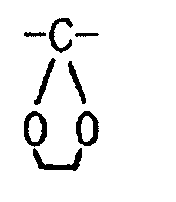
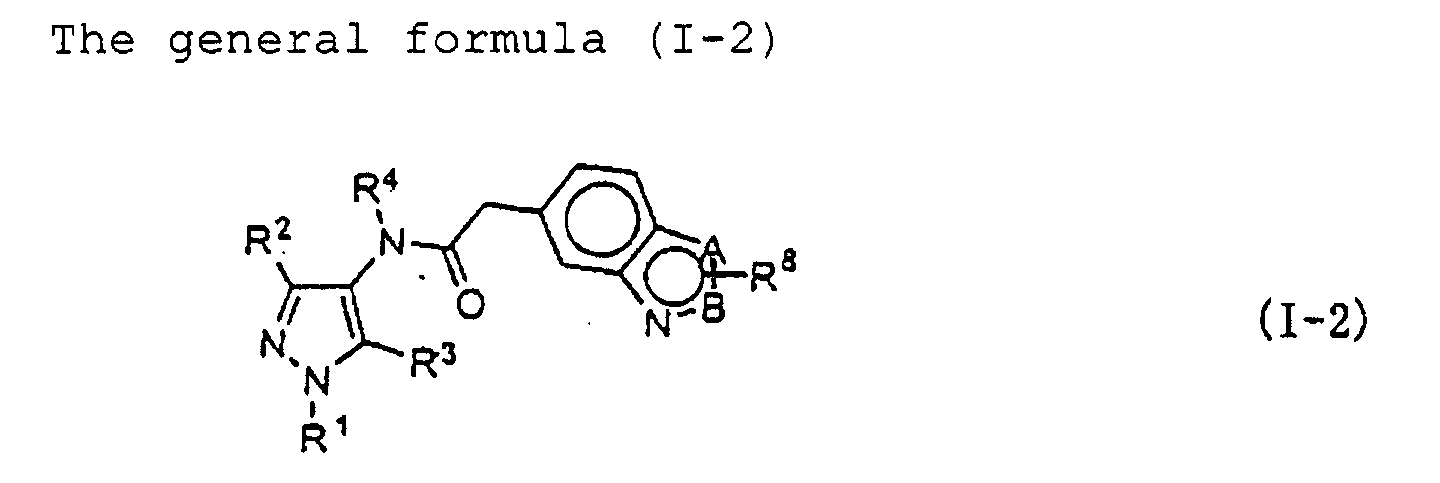
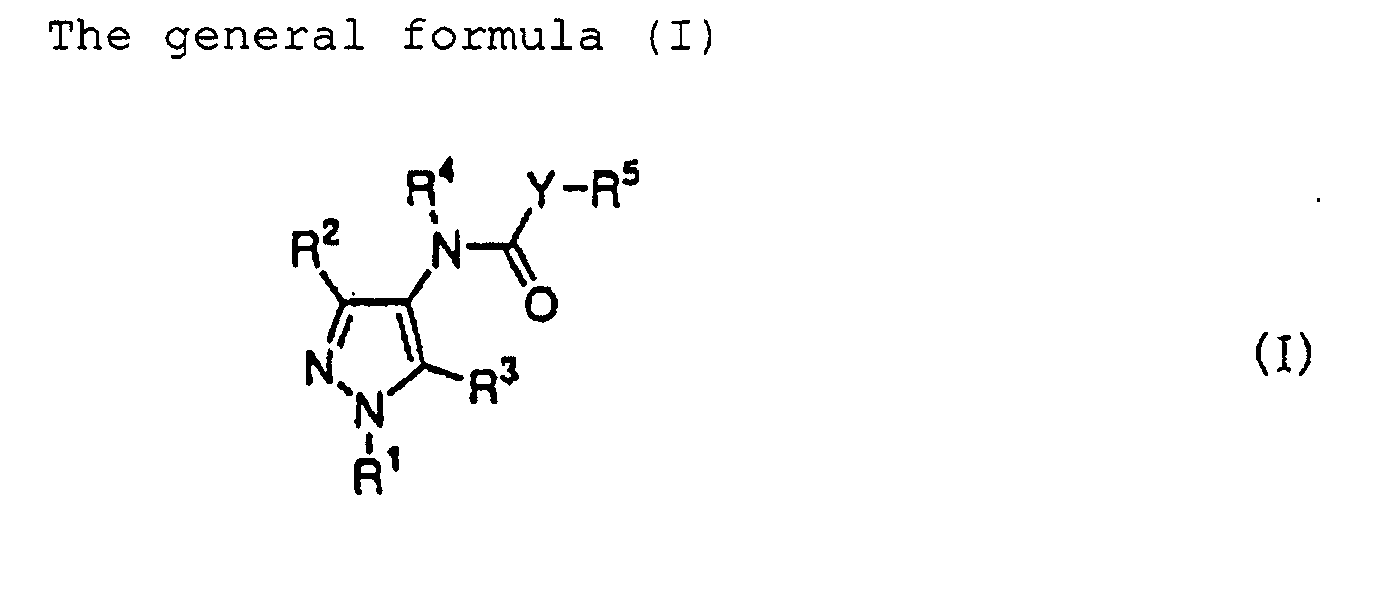
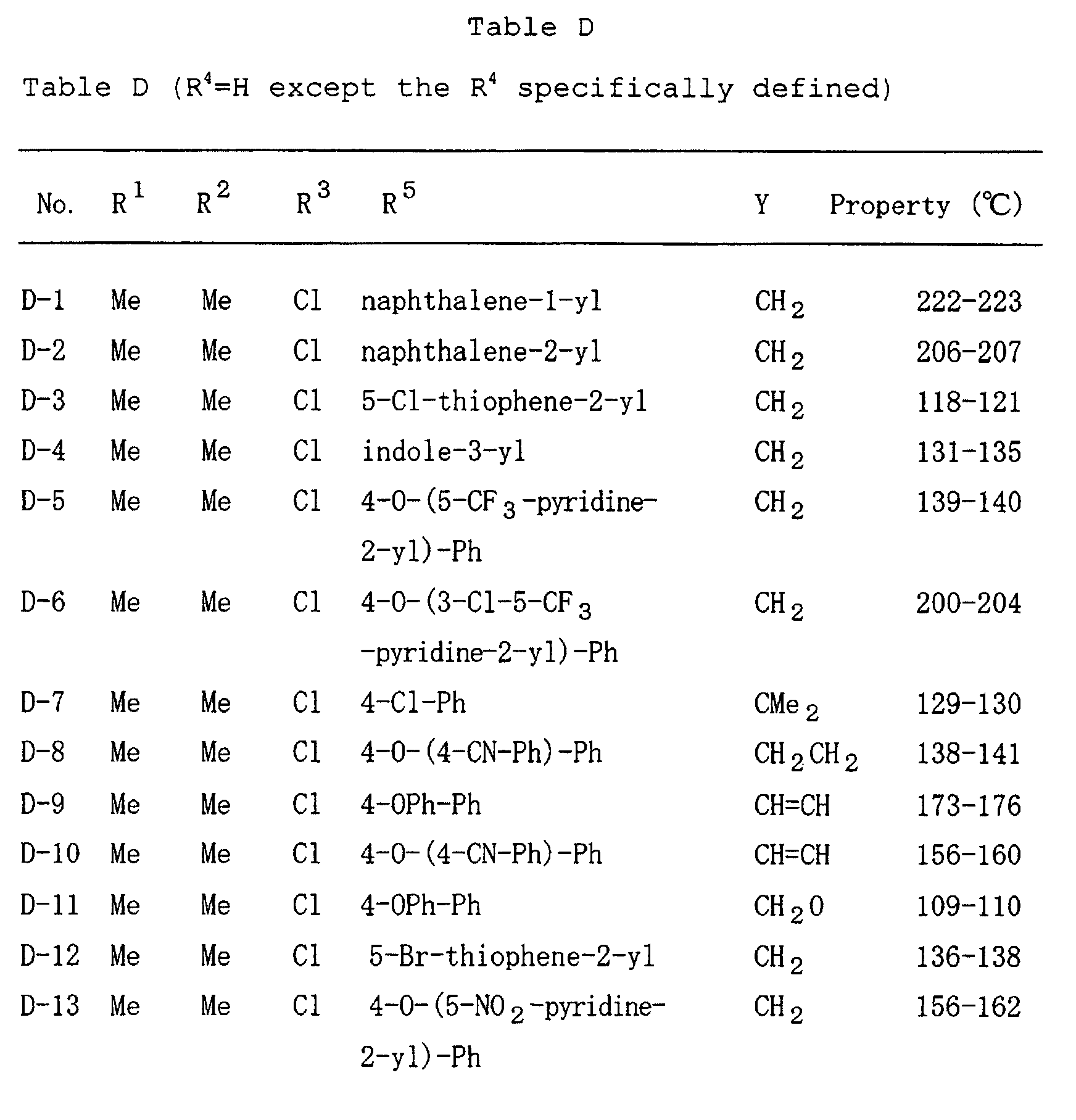

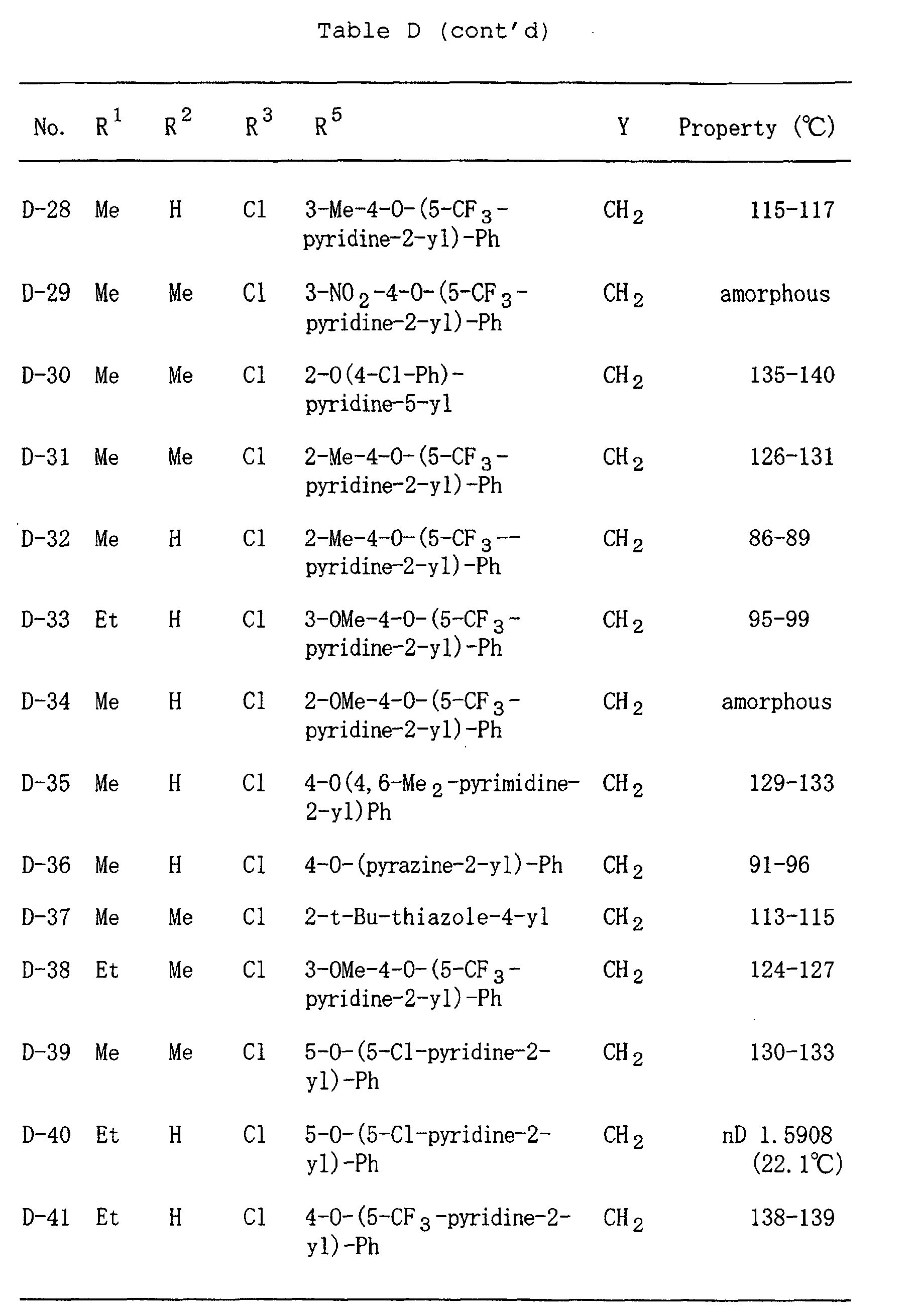
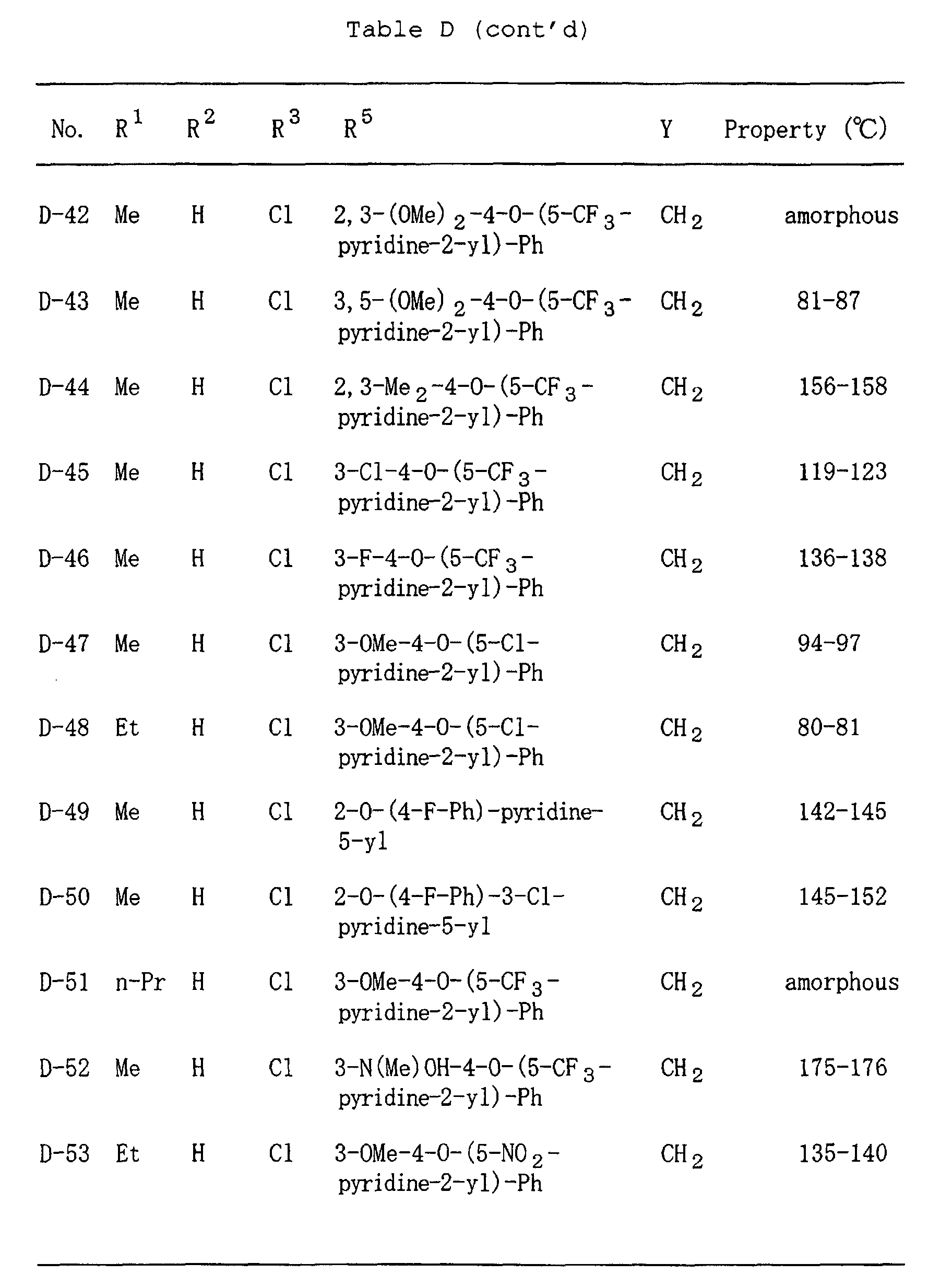
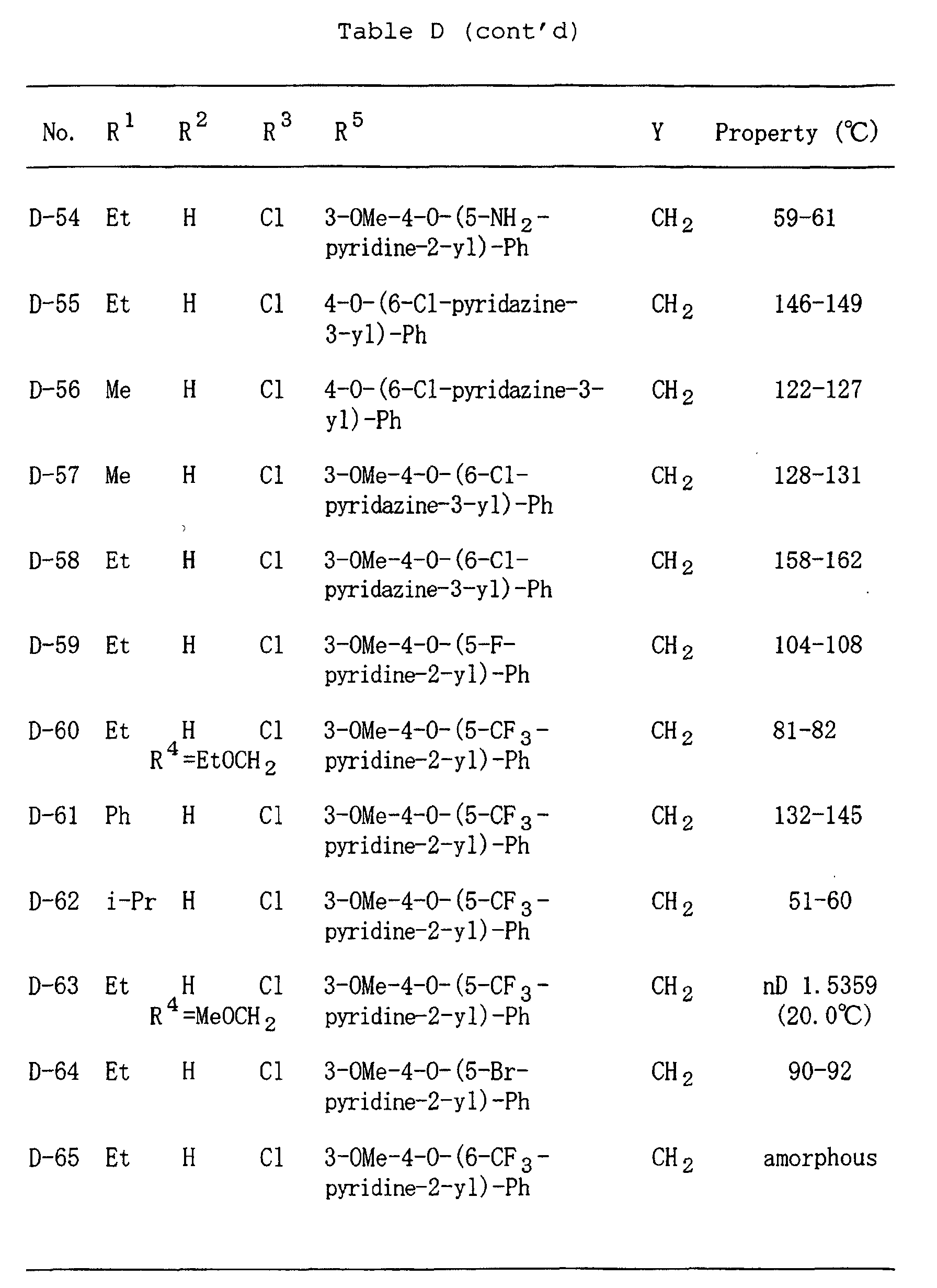
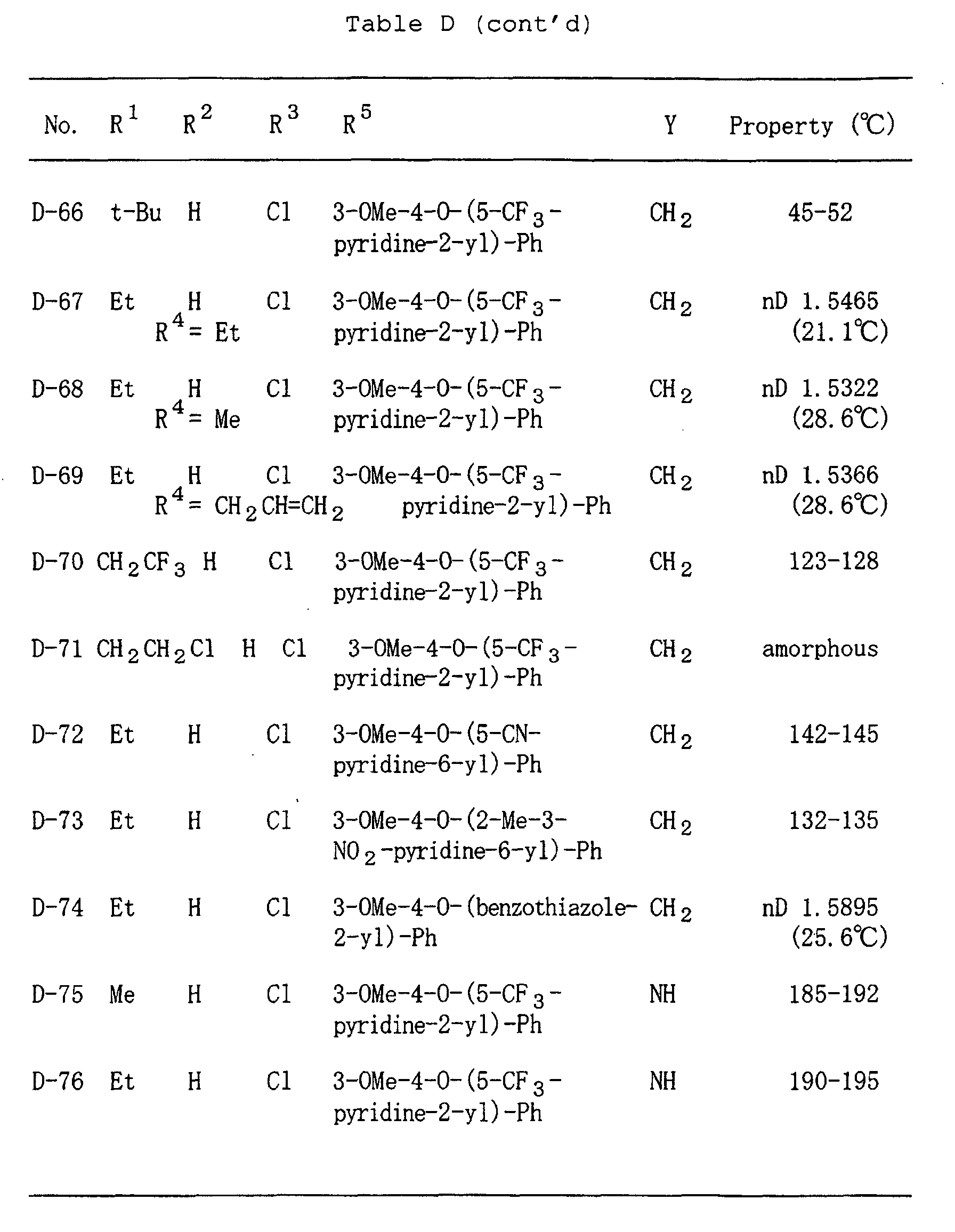
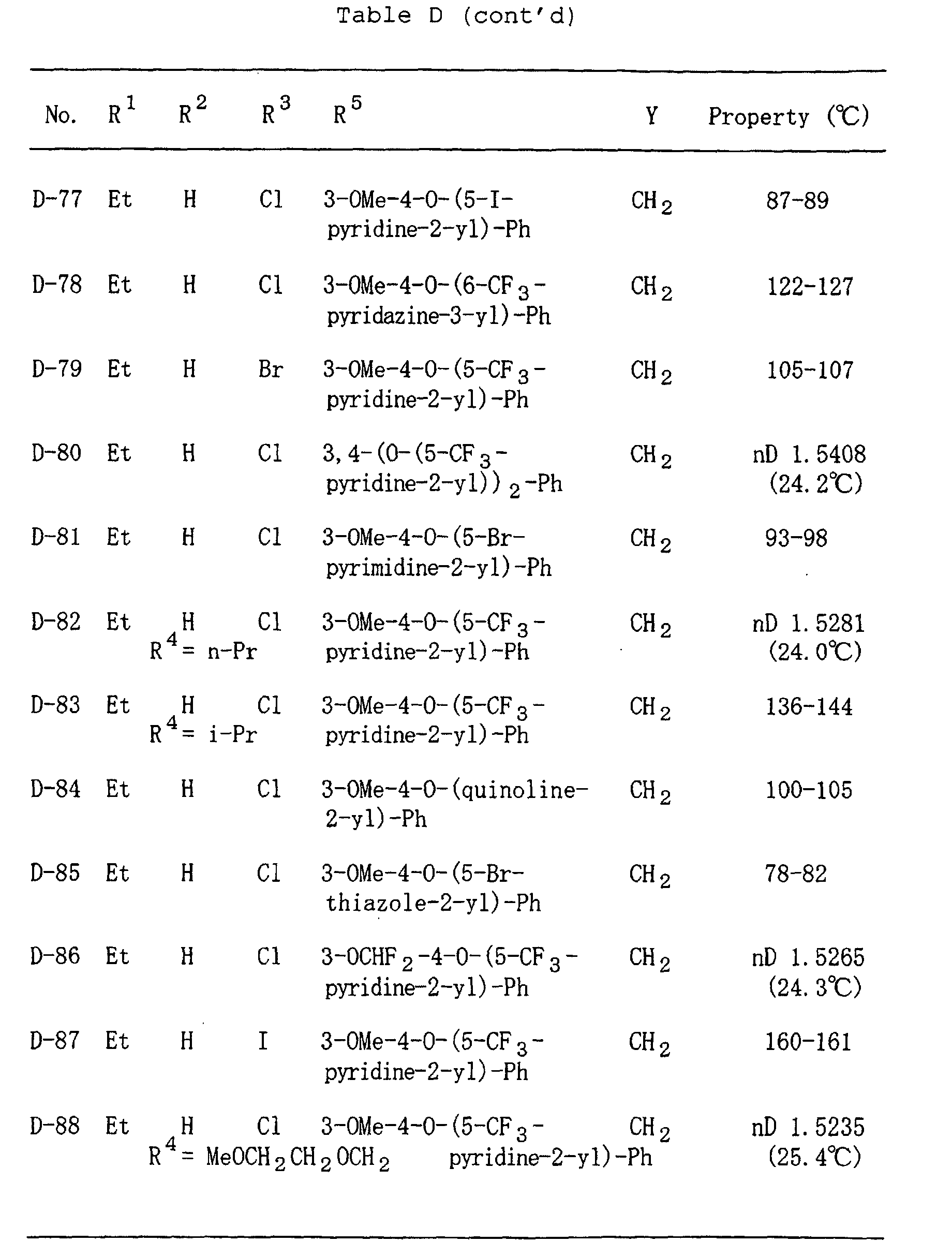
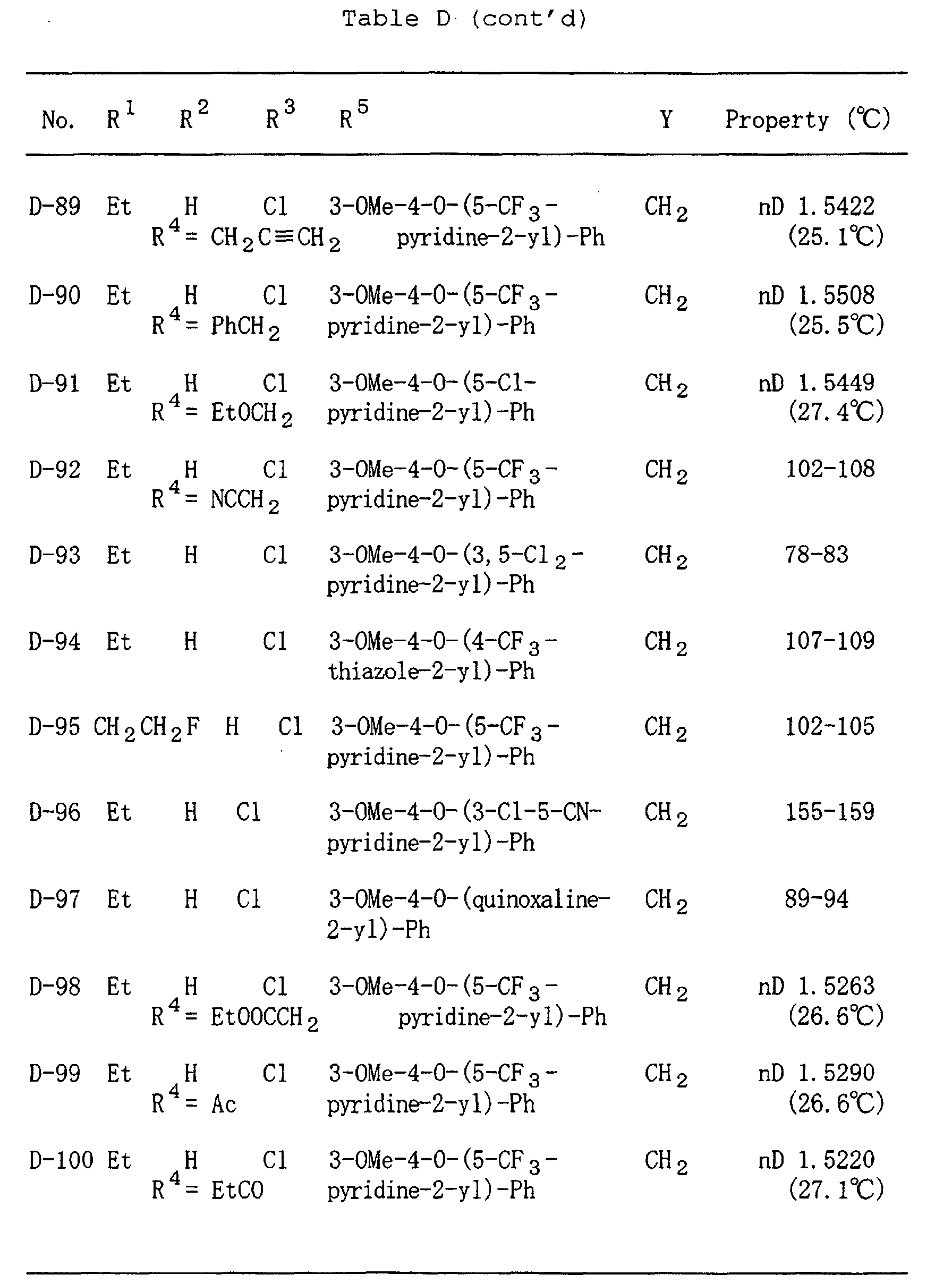
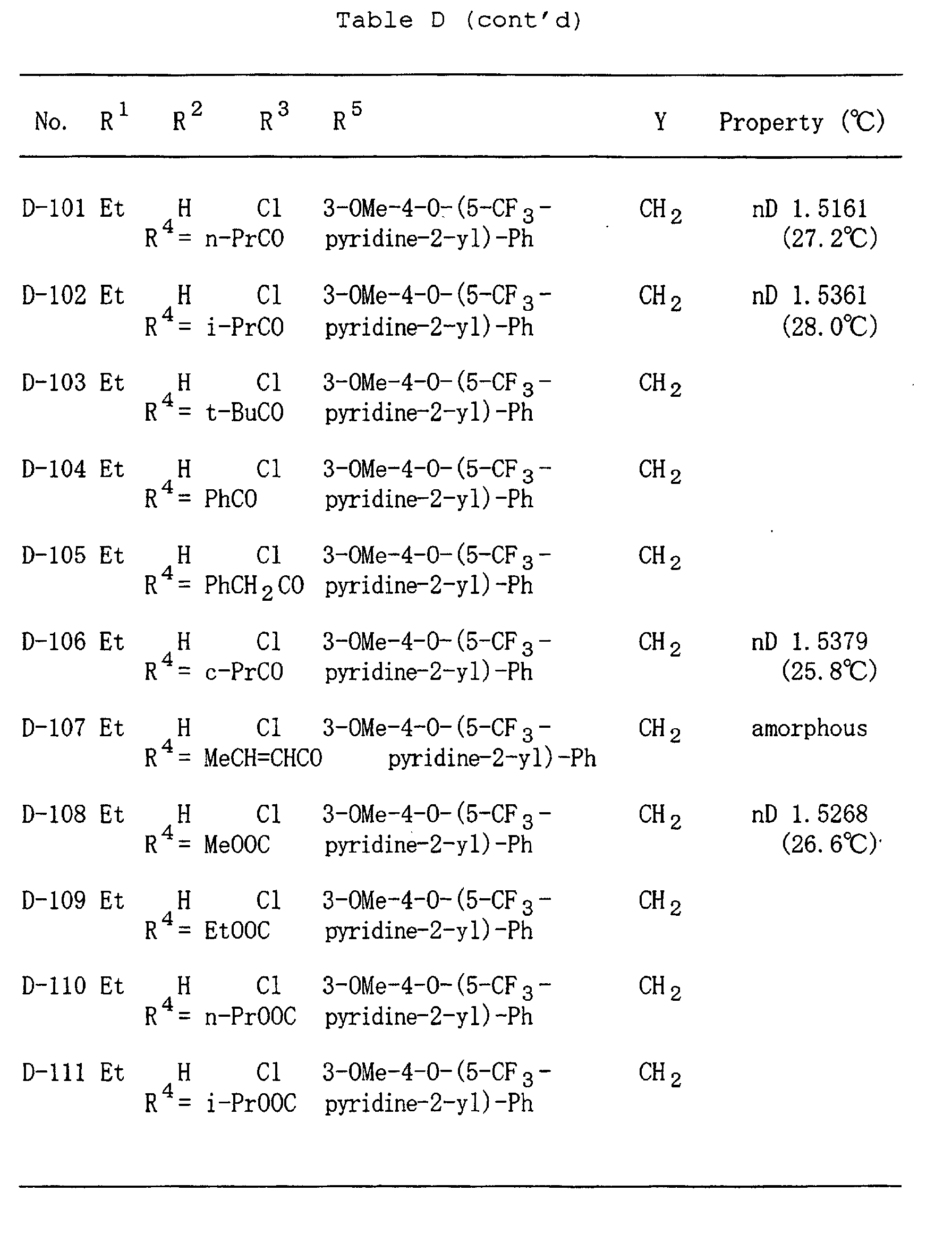

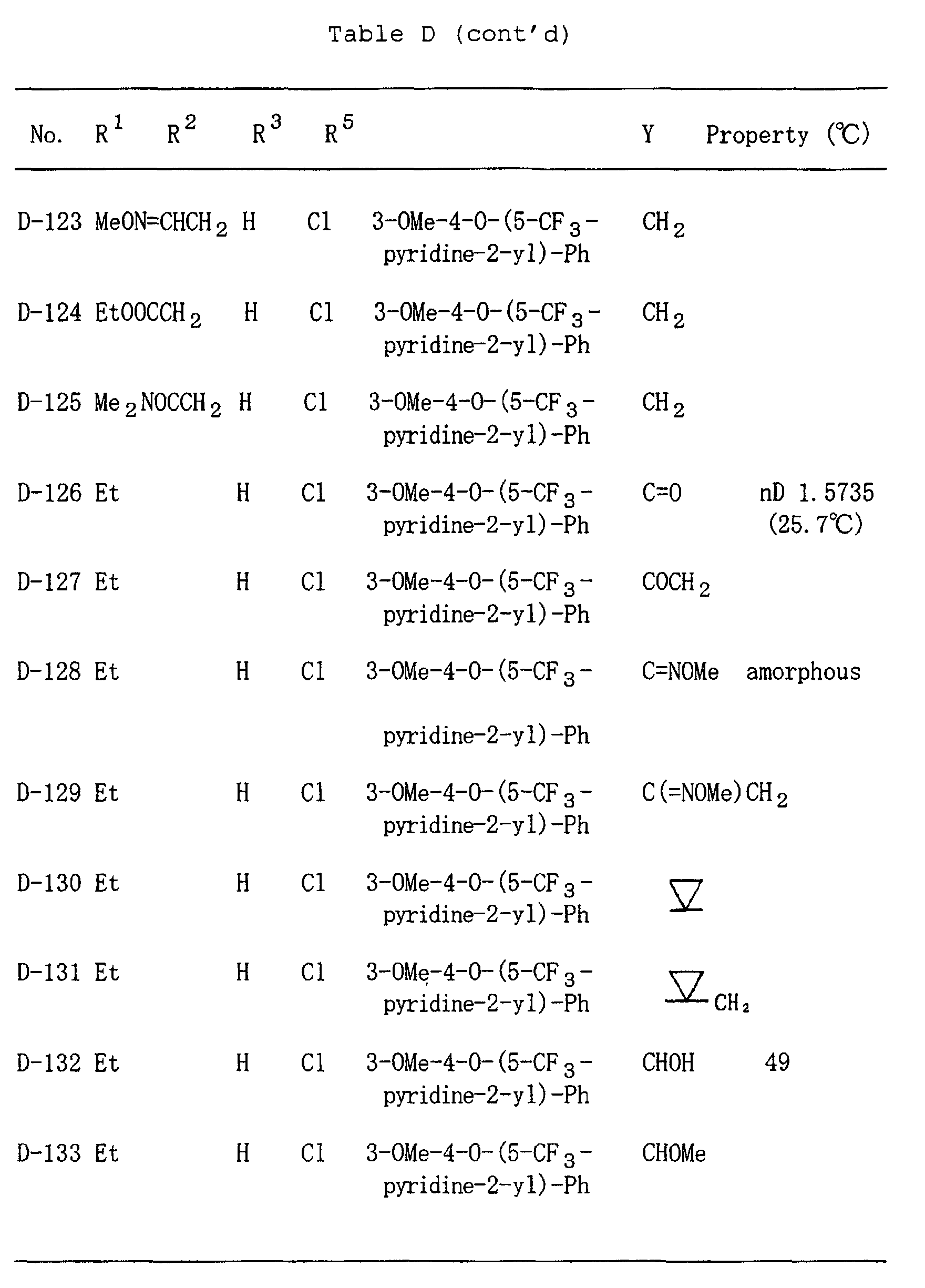
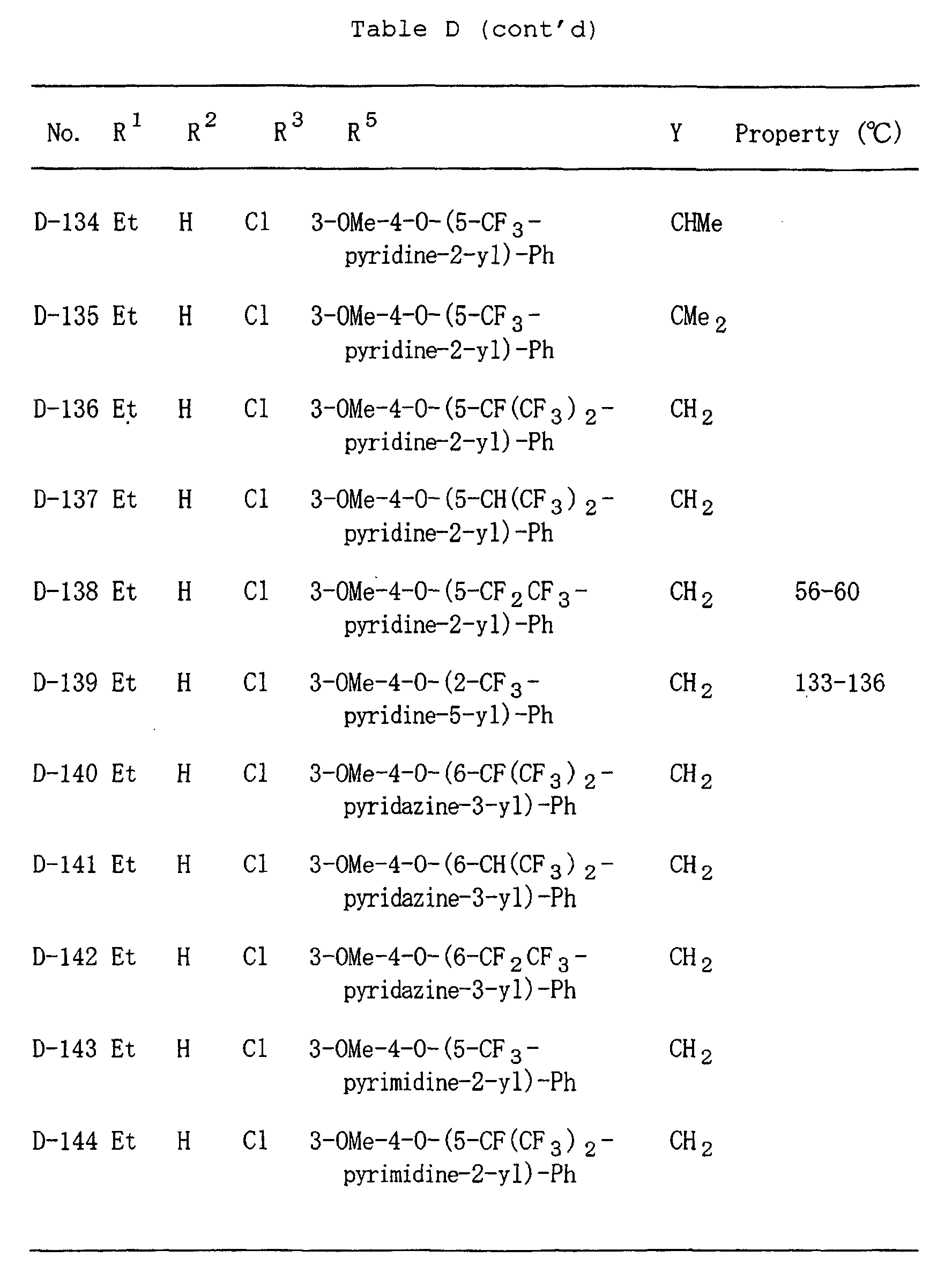
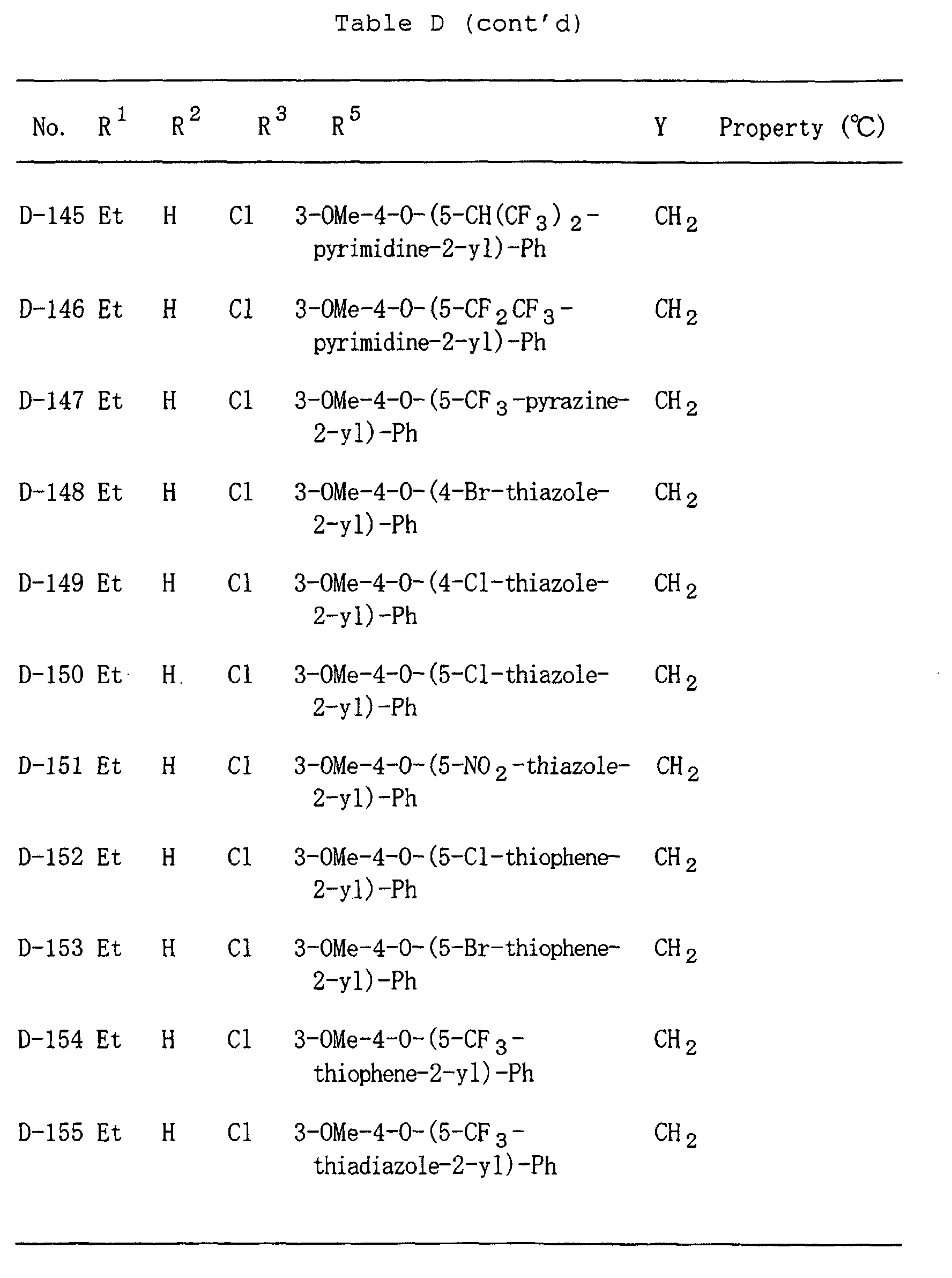

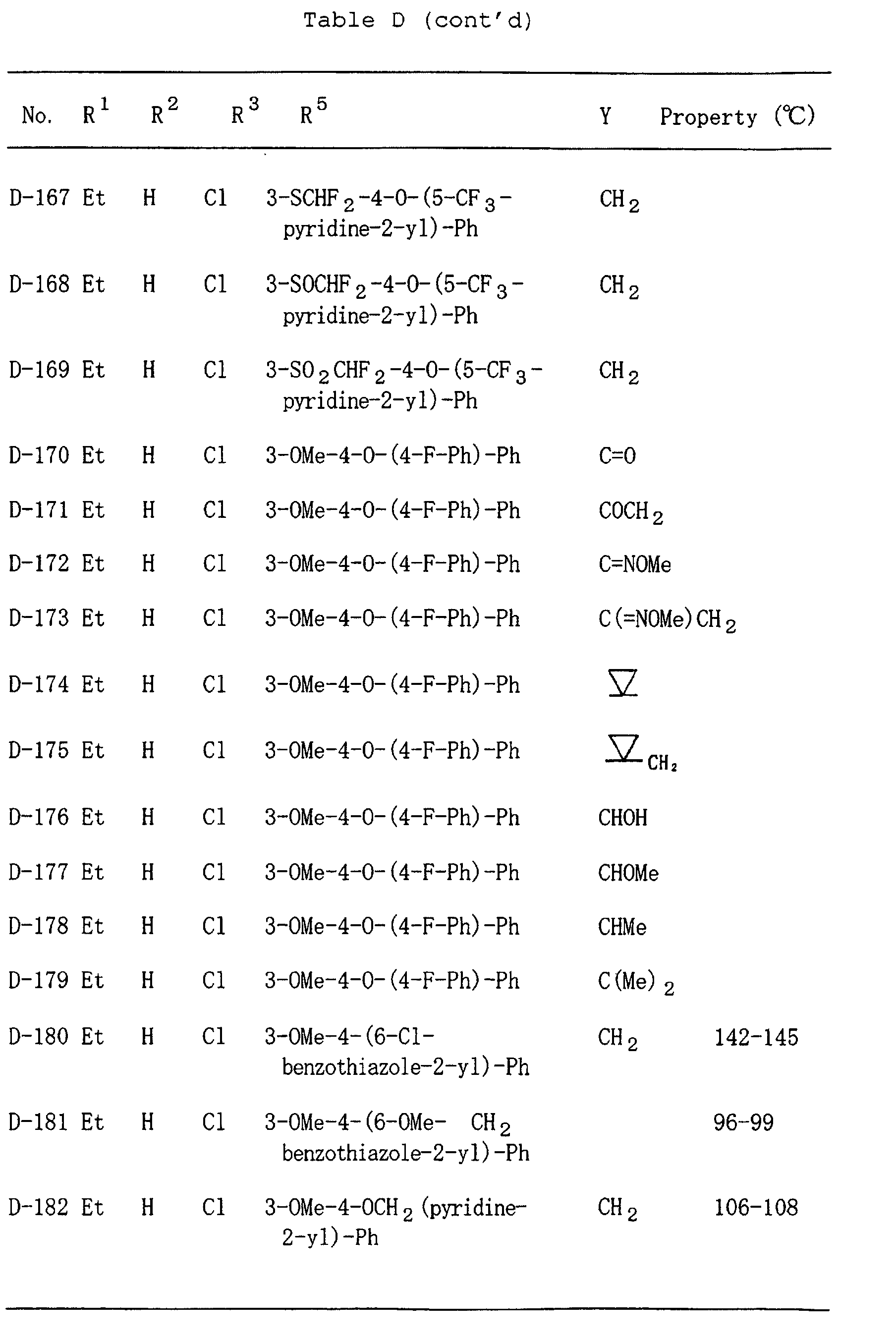
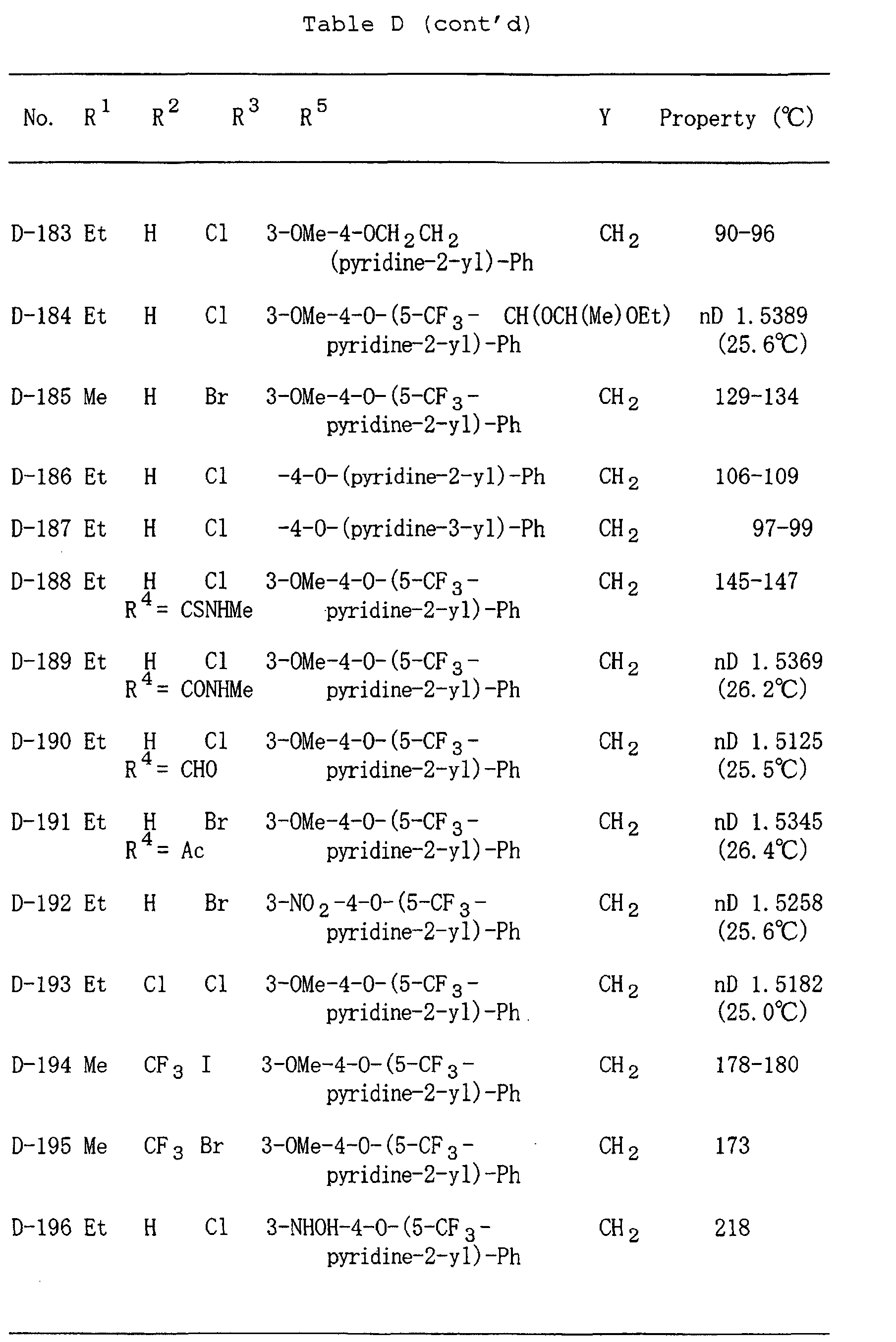

dioxolane:
| No. | R1 | R2 | R3 | R4 | A | B | R8 | Property (°C) |
| C-1 | Me | Me | Cl | H | 0 | CR8 | CH2-t-Bu | 130 |
| C-2 | Et | H | Cl | H | N | NR8 | n-Pr | 114 |
| C-3 | Et | H | Cl | H | NR8 | N | n-Pr | nD 1.5820 (22. 0°C) |
| C-4 | Et | H | Cl | H | 0 | CR8 | CH2-t-Bu | |
| C-5 | CH2=CH | H | Cl | H | 0 | CR8 | CH2-t-Bu | |
| C-6 | NCCH2 | H | Cl | H | 0 | CR8 | CH2-t-Bu | |
| C-7 | OHCCH2 | H | Cl | H | 0 | CR | CH2-t-Bu | |
| C-8 | MeON=CHCH2 | H | Cl | H | 0 | CR8 | CH2-t-Bu | |
| C-9 | EtOOCCH2 | H | Cl | H | 0 | CR8 | CH2-t-Bu | |
| C-10 | Me2NOCCH2 | H | Cl | H | 0 | CR8 | CH2-t-Bu | |
| C-11 | CH2CF3 | H | Cl | H | 0 | CR8 | CH2-t-Bu | |
| C-12 | CH2CH2F | H | Cl | H | 0 | CR8 | CH2-t-Bu | |
| C-13 | CH2CH2Cl | H | Cl | H | 0 | CR8 | CH2-t-Bu | |
| C-14 | n-Pr | H | Cl | H | 0 | CR8 | CH2-t-Bu | |
| C-15 | Et | H | OH | H | 0 | CR8 | CH2-t-Bu | |
| C-16 | Et | H | OMe | H | 0 | CR8 | CH2-t-Bu | |
| C-17 | Et | H | Cl | MeOCH2 | 0 | CR8 | CH2-t-Bu | |
| C-18 | Et | H | Cl | CH2=CHCH2 | 0 | CR8 | CH2-t-Bu | |
| C-19 | Et | H | Cl | CH≡CCH2 | 0 | CR8 | CH2-t-Bu | |
| C-20 | Et | H | Cl | PhCH2 | CR8 | CH2-t-Bu | ||
| C-21 | Et | H | Cl | i-Pr | 0 | CR8 | CH2-t-Bu | |
| C-22 | Et | H | Cl | n-Pr | 0 | CR8 | CH2-t-Bu | |
| C-23 | Et | H | Cl | MeOCH2CH2OCH2 | 0 | CR8 | CH2-t-Bu | |
| C-24 | Et | H | Cl | NCCH2 | 0 | CR8 | CH2-t-Bu | |
| C-25 | Et | H | Cl | EtOOCCH2 | 0 | CR8 | CH2-t-Bu | |
| C-26 | Et | H | Cl | Ac | 0 | CR8 | CH2-t-Bu | |
| C-27 | Et | H | Cl | EtCO | 0 | CR8 | CH2-t-Bu | |
| C-28 | Et | H | Cl | n-PrCO | 0 | CR8 | CH2-t-Bu | |
| C-29 | Et | H | Cl | i-PrCO | 0 | CR8 | CH2-t-Bu | |
| C-30 | Et | H | Cl | t-BuCO | 0 | CR8 | CH2-t-Bu | |
| C-31 | Et | H | Cl | PhC | 0 | CR8 | CH2-t-Bu | |
| C-32 | Et | H | Cl | PhCH2CO | 0 | CR8 | CH2-t-Bu | |
| C-33 | Et | H | Cl | c-PrCO | 0 | CR8 | CH2-t-Bu | |
| C-34 | Et | H | Cl | MeCH=CHCO | 0 | CR8 | CH2-t-Bu | |
| C-35 | Et | H | Cl | MeOOC | 0 | CR8 | CH2-t-Bu | |
| C-36 | Et | H | Cl | EtOOC | 0 | CR8 | CH2-t-Bu | |
| C-37 | Et | H | Cl | n-PrOOC | 0 | CR8 | CH2-t-Bu | |
| C-38 | Et | H | Cl | i-PrOOC | 0 | CR8 | CH2-t-Bu | |
| C-39 | Et | H | Cl | t-BuOOC | 0 | CR8 | CH2-t-Bu | |
| C-40 | Et | H | Cl | PhOOC | CR8 | CH2-t-Bu | ||
| C-41 | Et | H | Cl | PhCH2OOC | 0 | CR8 | CH2-t-Bu | |
| C-42 | Et | H | Cl | eSCH2 | 0 | CR8 | CH2-t-Bu | |
| C-43 | Et | H | Cl | CF3CH2 | 0 | CR8 | CH2-t-Bu |
| No. | R1 | R2 | R3 | R4 | 1H-NMR(CDCl3/TMS,ppm) |
| E-1 | Me | Me | Cl | H | 2.16(3H. s), 2.60(2H. brs), 3.64(3H. s). |
| E-2 | Et | Me | Cl | H | 1.33(3H. t), 2.71(2H. brs). |
| 3.64(3H, s), 4.02(2H. q). | |||||
| E-3 | Me | H | Cl | H-HCl | 2.41(2H. brs), 3.80(3H. s), 7.68(1H. s), |
| E-4 | Et | H | Cl | H | 1.38(3H. t), 3.00(2H. brs), 4.10(2H. q), |
| 7.20(1H. s). | |||||
| E-5 | Et | H | Br | H | 1.38(3H. t), 2.94(2H. brs), 4.12(2H. q), |
| 7.23(1H. s). |
Hereinbelow, representative examples for
producing an N-(4-pyrazolyl)amide derivative according
to the present invention will be illustrated. However,
the present invention is not construed to be limitative
thereto.
4-Amino-5-chloro-1,3-dimethylpyrazole (0.20
g, 1.37 mmol), 4-(4-cyanophenoxy) phenylacetic acid
(0.35 g, 1.37 mmol), 2-chloro-1-methylpyridinium iodide
(0.38 g, 1.5 mmol), and triethylamine (0.15 g, 1.51
mmol) were dissolved in tetrahydrofuran (THF, 10 ml),
and stirred at a room temperature for 2 hours. After
the reaction was finished, the desired compound was
extracted with ethyl acetate, and the organic layer was
washed with 1N-hydrochloric acid aqueous solution,
saturated sodium bicarbonate aqueous solution, and
saturated saline in this order, followed by drying with
anhydrous magnesium sulfate. The solvent was distilled
off under a reduced pressure. Crystallization from a
mixture of n-hexane and ether gave 0.27 g of the
desired compound. The yield was 52%.
A hydrochloric acid salt of 4-amino-5-chloro-1-
methylpyrazole (0.24 g, 1.4 mmol), 4-(4-trifluoromethylphenyl)
phenylacetic acid (0.39 g, 1.4
mmol), 2-chloro-1-methylpyridinium iodide (0.39 g, 1.54
mmol), and triethylamine (0.3 g, 3.0 mmol) were
dissolved in THF (20 ml), and reacted under reflux for
4 hours. After being left to stand, the reaction
solution was poured into water. The desired compound
was extracted with ethyl acetate, and the organic layer
was washed with saturated sodium bicarbonate aqueous
solution, saturated saline, 1N-hydrochloric acid
aqueous solution, and saturated saline in this order,
followed by drying with anhydrous sodium sulfate. The
solvent was distilled off under a reduced pressure.
The crystal obtained was suspended in a mixture of n-hexane
and methyl butyl ether, then filtered to obtain
0.23 g of the desired compound. The yield was 42%.
4-Amino-5-chloro-1,3-dimethylpyrazole (0.14
g, 0.96 mmol) and triethylamine (0.10 g, 0.96 mmol)
were dissolved in THF (25 ml), and thereto 2-chloro-phenylacetyl
chloride (10.18 g, 0.96 mmol) was added.
The solution was reacted at room temperature for 24
hours, then the reaction solution was poured into
water. The desired compound was extracted with ethyl
acetate, and the organic layer was washed with 1N-hydrochloric
acid aqueous solution, saturated sodium
bicarbonate aqueous solution, and saturated saline in
this order, followed by drying with anhydrous sodium
sulfate. The solvent was distilled off under a reduced
pressure. A crystal obtained was suspended in a
mixture of acetone and ether, then filtered to obtain
0.11 g of the desired compound. The yield was 37%.
A hydrochloric acid salt of 4-amino-5-chloro-1-
ethylpyrazole (0.20 g, 1.10 mmol), 3-methoxy-4-(5-trifluoromethylpyridine-2-yloxy)
phenylacetic acid
(0.36 g, 1.10 mmol), 2-chloro-1-methylpyridinium iodide
(0.62 g, 2.43 mmol), and triethylamine (0.34 g, 3.3
mmol) were dissolved in THF (30 ml), and stirred while
heating for 2 hours. After the reaction was finished,
the desired compound was extracted with ethyl acetate,
and the organic layer was washed with 1N-hydrochloric
acid aqueous solution, saturated sodium bicarbonate
aqueous solution, and saturated saline in this order,
followed by drying with anhydrous magnesium sulfate.
The solvent was distilled off under a reduced pressure.
The residue was purified by a column chromatography (n-hexane
/ ethyl acetate = 1/3) to obtain 0.28 g of the
desired compound. The yield was 56%.
4-Amino-5-chloro-1-ethylpyrazole (0.30 g,
2.08 mmol), 3-difluoromethoxy-4-(5-trifluoromethylpyridine-2-yloxy)phenylacetic
acid (0.75 g, 2.08 mmol),
2-chloro-1-methyl- pyridinium iodide (1.17 g, 4.58
mmol), and triethylamine (0.63 g, 6.24 mmol) were
dissolved in THF (30 ml), and stirred while heating for
2 hours. After the reaction was finished, the desired
compound was extracted with ethyl acetate, and the
organic layer was washed with 1N-hydrochloric acid
aqueous solution, saturated sodium bicarbonate aqueous
solution, and saturated saline in this order, followed
by drying with anhydrous magnesium sulfate. The
solvent was distilled off under a reduced pressure.
The residue was purified by a column chromatography (n-hexane
/ ethyl acetate = 1/1) to obtain 0.57 g of the
desired compound. The yield was 56%.
4-Amino-5-bromo-1-ethylpyrazole (0.36 g, 1.90
mmol), 3-methoxy-4-(5-trifluoromethylpyridine-2-yloxy)phenylacetic
acid (0.62 g, 1.90 mmol), 2-chloro-1-methylpyridinium
iodide (1.07 g, 4.18 mmol), and
triethylamine (0.58 g, 5.7 mmol) were dissolved in THF
(30 ml), and stirred while heating for 2 hours. After
the reaction was finished, the desired compound was
extracted with ethyl acetate, and the organic layer was
washed with 1N-hydrochloric acid aqueous solution,
saturated sodium bicarbonate aqueous solution, and
saturated saline in this order, followed by drying with
anhydrous magnesium sulfate. The solvent was distilled
off under a reduced pressure. The residue was purified
by a column chromatography (n-hexane / ethyl acetate =
1/3) to obtain 0.86 g of the desired compound. The
yield was 91%.
4-Amino-5-chloro-1-(2-chloroethyl)pyrazole
(0.56 g, 3.13 mmol), 3-methoxy-4-(5-trifluoromethylpyridine-2-yloxy)
phenylacetic acid (1.02 g, 3.13
mmol), 2-chloro-1-methylpyridinium iodide (1.76 g, 6.89
mmol), and triethylamine (0.95 g, 9.39 mmol) were
dissolved in THF (30 ml), and stirred while heating for
2 hours. After the reaction was finished, the desired
compound was extracted with ethyl acetate, and the
organic layer was washed with 1N-hydrochloric acid
aqueous solution, saturated sodium bicarbonate aqueous
solution, and saturated saline in this order, followed
by drying with anhydrous magnesium sulfate. The
solvent was distilled off under a reduced pressure.
The residue was purified by a column chromatography (n-hexane
/ ethyl acetate = 1/1) to obtain 0.57 g of the
desired compound. The yield was 37%.
4-Amino-5-chloro-1-ethylpyrazole (0.13 g,
0.91 mmol), 3-methoxy-4-(6-trifluoromethylpyridazine-3-yloxy)phenylacetic
acid (0.30 g, 0.91 mmol), 2-chloro-1-methyl-
pyridinium iodide (0.28 g, 1.09 mmol), and
triethylamine (0.11 g, 1.09 mmol) were dissolved in THF
(20 ml), and stirred while heating for 1 hour. After
the reaction was finished, the desired compound was
extracted with ethyl acetate, and the organic layer was
washed with 1N-hydrochloric acid aqueous solution,
saturated sodium bicarbonate aqueous solution, and
saturated saline in this order, followed by drying with
anhydrous magnesium sulfate. The solvent was distilled
off under a reduced pressure. The residue was
dissolved in ethyl acetate, and thereto an activated
carbon was added. The solution was stirred while
heating for 1 hour. After filtration, the solvent was
distilled off under a reduced pressure.
Crystallization from a mixture of n-hexane and ether gave 0.23 g of the desired compound. The yield was 57%.
Crystallization from a mixture of n-hexane and ether gave 0.23 g of the desired compound. The yield was 57%.
A hydrochloric acid salt of 4-amino-5-chloro-1-ethyl-
pyrazole (0.27 g, 1.50 mmol), 3-methoxy-4-(4-trifluoro-
methylthiazole-2-yloxy)phenylacetic acid
(0.50 g, 1.50 mmol), 2-chloro-1-methylpyridinium iodide
(0.46 g, 1.80 mmol), and triethylamine (0.38 g, 3.75
mmol) were dissolved in THF (30 ml), and stirred while
heating for 2 hours. After the reaction was finished,
the desired compound was extracted with ethyl acetate,
and the organic layer was washed with 1N-hydrochloric
acid aqueous solution, saturated sodium bicarbonate
aqueous solution, and saturated saline in this order,
followed by drying with anhydrous magnesium sulfate.
The solvent was distilled off under a reduced pressure.
The residue was purified by a column chromatography (n-hexane
/ ethyl acetate = 1/1) to obtain 0.12 g of the
desired compound. The yield was 18%.
4-Amino-5-chloro-1-methylpyrazole (0.10 g,
0.76 mmol), 3-methoxy-4-(4-fluorophenyloxy)
phenylacetic acid (0.21 g, 0.76 mmol), 2-chloro-1-methylpyridinium
iodide (0.23 g, 0.91 mmol), and
triethylamine (0.1 g, 0.91 mmol) were dissolved in THF
(20 ml), and stirred while heating for 2 hours. After
the reaction was finished, the desired compound was
extracted with ethyl acetate, and the organic layer was
washed with 1N-hydrochloric acid aqueous solution,
saturated sodium bicarbonate aqueous solution, and
saturated saline in this order, followed by drying with
anhydrous magnesium sulfate. The solvent was distilled
off under a reduced pressure. The residue was
dissolved in ethyl acetate, and thereto an activated
carbon was added. The solution was stirred while
heating for 1 hour. After filtration, the solvent was
distilled off under a reduced pressure.
Crystallization from a mixture of n-hexane and ether gave 0.20 g of the desired compound. The yield was 65%.
Crystallization from a mixture of n-hexane and ether gave 0.20 g of the desired compound. The yield was 65%.
4-Amino-5-chloro-1-ethylpyrazole (0.20 g,
1.09 mmol), 3-methoxy-4-(4-fluorophenyloxy)
phenylacetic acid (0.30 g, 1.09 mmol), 2-chloro-1-methylpyridinium
iodide (0.33 g, 1.31 mmol), and
triethylamine (0.28 g, 2.73 mmol) were dissolved in THF
(20 ml), and stirred while heating for 2 hours. After
the reaction was finished, the desired compound was
extracted with ethyl acetate, and the organic layer was
washed with lN-hydrochloric acid aqueous solution,
saturated sodium bicarbonate aqueous solution, and
saturated saline in this order, followed by drying with
anhydrous magnesium sulfate. The solvent was distilled
off under a reduced pressure. The residue was
dissolved in ethyl acetate, and thereto an activated
carbon was added. The solution was stirred while
heating for 1 hour. After filtration, the solvent was
distilled off under a reduced pressure.
Crystallization from a mixture of n-hexane and ether gave 0.30 g of the desired compound. The yield was 68%.
Crystallization from a mixture of n-hexane and ether gave 0.30 g of the desired compound. The yield was 68%.
4-Amino-5-chloro-1, 3-dimethylpyrazole (0.14
g, 0.75 mmol), 3-methoxy-4-(4-trifluoromethoxyphenyloxy)phenylacetic
acid (0.27 g, 0.75 mmol), diethyl
cyanophosphate (0.16 g, 1.00 mmol), and triethylamine
(0.15 g, 1.50 mmol) were dissolved in THF (20
ml), and were stirred at room temperature for 10 hours.
After the reaction was finished, the desired compound
was extracted with ethyl acetate, and the organic layer
was washed with 1N-hydrochloric acid aqueous solution,
saturated sodium bicarbonate aqueous solution, and
saturated saline in this order, followed by drying with
anhydrous magnesium sulfate. The solvent was distilled
off under a reduced pressure. The residue was dissolved
in ethyl acetate, and thereto an activated carbon
was added. The solution was stirred while heating
for 1 hour. After filtration, the solvent was distilled
off under a reduced pressure. Crystallization
from a mixture of n-hexane and ether gave 0.14 g of the
desired compound. The yield was 37%.
A hydrochloric acid salt of 4-amino-5-chloro-1,3-dimethylpyrazole
(0.22 g, 1.21 mmol), 2-(2,2-dimethylpropyl)
benzoxazole-5-ylphenylacetic acid
chloride (0.32 g, 1.21 mmol), and triethylamine (0.37
g, 3.63 mmol) were dissolved in THF (30 ml), and
stirred at a room temperature for 10 hours. After the
reaction was finished, the desired compound was
extracted with ethyl acetate, and the organic layer was
washed with 1N-hydrochloric acid aqueous solution,
saturated sodium bicarbonate aqueous solution, and
saturated saline in this order, followed by drying with
anhydrous magnesium sulfate. The solvent was distilled
off under a reduced pressure. The residue was purified
by a column chromatography (n-hexane / ethyl acetate =
1/5) to obtain 0.05 g of the desired compound. The
yield was 10%.
5-Chloro-4-(3-methoxy-4-(5-trifluoromethylpyridine-2-yloxy)
phenylacetylamino)-1-ethylpyrazole
(D-33) (0.50 g, 1.10 mmol) was dissolved in methylene
chloride (15 ml), and ethyl iodide (0.43 g, 2.76 mmol),
benzyltriethylammonium chloride (0.015 g, 0.066 mmol),
and a 50 % aqueous solution of sodium hydroxide (0.44
ml) were added thereto. The solution was stirred while
heating for 10 hours. After the reaction was finished,
the desired compound was extracted with ethyl acetate,
and the organic layer was washed with 1N-hydrochloric
acid aqueous solution, saturated sodium bicarbonate
aqueous solution, and saturated saline in this order,
followed by drying with anhydrous magnesium sulfate.
The solvent was distilled off under a reduced pressure.
The residue was purified by a column chromatography (n-hexane
/ ethyl acetate = 1/1) to obtain 0.35 g of the
desired compound. The yield was 66%.
5-Chloro-4-(3-methoxy-4-(5-trifluoromethylpyridine-2-yloxy)
phenylacetylamino)-1-ethylpyrazole
(D-33) (0.80 g, 1.76 mmol) was dissolved
in DMF (40 ml), and ethyl chloroacetate (0.45 g, 3.67
mmol) and potassium carbonate (0.80 g, 5.79 mmol) were
added thereto. The solution was stirred while heating
for 5 hours. After the reaction was finished, the
reaction solution was poured into water, and then the
desired compound was extracted with ethyl acetate. The
organic layer was washed with 1N-hydrochloric acid
aqueous solution, saturated sodium bicarbonate aqueous
solution, and saturated saline in this order, followed
by drying with anhydrous magnesium sulfate. The
solvent was distilled off under a reduced pressure.
The residue was purified by a column chromatography (n-hexane
/ ethyl acetate = 2/1) to obtain 0.41 g of the
desired compound. The yield was 43%.
5-Chloro-4-(3-methoxy-4-(4-fluorophenyloxy)-phenylacetylamino)-1-methylpyrazole
(B-103, 0.15 g,
0.38 mmol) was dissolved in methylene chloride (5 ml),
and ethoxymethyl chloride (0.09 g, 0.96 mmol),
benzyltriethylammonium chloride (0.08 g, 0.03 mmol),
and a 50 % aqueous solution of sodium hydroxide (0.15
ml) were added thereto. The solution was stirred at
room temperature for one hour. After the reaction was
finished, the desired compound was extracted with ethyl
acetate, and the organic layer was washed with 1N-hydrochloric
acid aqueous solution, saturated sodium
bicarbonate aqueous solution, and saturated saline in
this order, followed by drying with anhydrous magnesium
sulfate. The solvent was distilled off under a reduced
pressure. The residue was purified by a column
chromatography (n-hexane / ethyl acetate = 1/1) to
obtain 0.09 g of the desired compound. The yield was
52%.
Typical formulations and test examples of the
present invention are described below but they should
not be construed as limiting the scope of the
invention.
As used in the examples, the terms "part"
and "parts" are by weight.
ether and calcium alkylbenzenesulfonate
| Formulation Example 1 | |
| Compound of the present invention | 50 parts |
| Xylene | 40 parts |
| Mixture of polyoxyethylene nonylphenyl | 10 parts |
An emulsifiable concentrate was prepared by
mixing uniformly the above ingredients to effect
dissolution.
| Formulation Example 2 | |
| Compound of the present invention | 3 parts |
| Clay powder | 82 parts |
| Diatomaceous earth powder | 15 parts |
A dust was prepared by mixing uniformly and
grinding the above ingredients.
| Formulation Example 3 | |
| Compound of the present invention | 5 parts |
| Mixed powder of bentonite and clay | 90 parts |
| Calcium ligninsulfonate | 5 parts |
Granules were prepared by mixing the above
ingredients uniformly, and kneading the resulting
mixture together with a suitable amount of water,
followed by granulation and drying.
| Formulation Example 4 | |
| Compound of the present invention | 20 parts |
| Mixture of kaolin and synthetic | |
| kaoline and high-dispersion silicic acid | 75 parts |
| Mixture of polyoxyethylene nonylphenyl | |
| ether and calcium alkylbenzenesulfonate | 5 parts |
A wettable powder was prepared by mixing
uniformly and grinding the above ingredients.
The agent in accordance with the formulations
mentioned above was prepared and diluted with water in
the prescribed concentration to obtain a test solution.
The stalks and leaves of the potted apple seedling
(cultivar: Ohrin) were sprayed with the test solution.
After one day, they were inoculated with the suspension
of conidia spores of apple scab (Venturia inaequalis)
by spraying. Two weeks after the inoculation, the
lesion area of each leaf was measured and then compared
with that on the untreated plot, whereby the
controlling effect was judged according to the
following criterion.
Criterion for judgment:
Criterion for judgment:
The results of the test shown below are
indicated as Table-compound No. As a result of the
Test Example 1, the following compounds had an activity
rated A: A-1 to A-5, A-7 to A-10, A-13, A-14, A-20, A-22
to A-25, A-27, A-30, A-31, A-33 to A-40, A-43 to A-49,
A-52, A-53, A-54, A-55, A-56, A-57, B-1, B-3, B-5,
B-7 to B-12, B-16 to B-22, B-24, B-26, B-27, B-29, B-30,
B-38, B-40, B-47, B-49, B-53, B-56, B-64 to B-69,
B-74, B-76, B-77, B-80 to B-87, B-89, B-91, B-93, B-94,
B-97 to B-100, B-102 to B-104, B-106, B-107, B-110, B-113,
B-114, B-117 to B-120, B-123 to B-125, B-186, D-3
to D-6, D-10, D-13, D-14, D-16, D-18, D-21 to D-23, D-27
to D-31, D-33, D-34, D-38, D-41, D-42, D-45 to D-47,
D-53, D-54, D-57, D-58, D-60, D-61, D-68, D-71, D-73 to
D-76, D-82 to D-88, D-92, D-94, D-98, D-99, D-101, D-102,
D-106, D-108, D-126, D-128, D-132, D-139, D-181,
D-184, D-185, D-186, D-187, D-189 and D-190.
The agent in accordance with the formulations
mentioned above was prepared and diluted with water in
the prescribed concentration to obtain a test solution.
The stalks and leaves of the potted cucumber at the 1.5
leaf stage (cultivar: Suyo) were sprayed with the test
solution. After one day, they were inoculated with
zoospore of cucumber downy mildew (Pseudoperonospora
cubensis) by spraying. Seven days after the
inoculation, the lesion area of each leaf was measured
and then compared with that on the untreated plot,
whereby the controlling effect was judged according to
the criterion shown in Test Example 1.
As a result of the following compounds had an
activity rated A: the compounds Nos. A-3 to A-10, A-13,
A-14, A-16, A-19 to A-25, A-27, A-28, A-30, A-31, A-33,
A-35, A-36, A-40 to A-49, A-51, A-53, B-1 to B-11, B-13,
B-18 to B-20, B-22, B-24, B-26 to B-31, B-38 to B-40,
B-42 to B-45, B-47 to B-51, B-53, B-56, B-58, B-60
to B-69, B-71, B-72, B-74, B-76 to B-119, B-123 to B-125,
B-183, B-184, B-186, C-1, C-2, D-1 to D-6, D-12 to
D-16, D-18, D-19, D-22 to D-36, D-38 to D-42, D-44 to
D-53, D-55 to D-60, D-62 to D-74, D-77 to D-79, D-82,
D-84 to D-92, D-94, D-96 to D-98, D-100, D-101, D-102,
D-106, D-107, D-108, D-120, D-126, D-128, D-132, D-138,
D-180, D-181, D-185, D-186, D-190, D-191 and D-192.
The agent in accordance with the formulations
mentioned above was prepared and diluted with water in
the prescribed concentration to obtain a test solution.
The stalks and leaves of the potted Chinese cabbage at
the 1.5 leaf stage (cultivar: Muso) were sprayed with
the test solution. After one day, they were inoculated
with the suspension of conidia spores of Chinese
cabbage black spot (Alternaria brassicae) by spraying.
Seven days after the inoculation, the lesion area of
each leaf was measured and then compared with that on
the untreated plot, whereby the controlling effect
was judged according to the criterion shown in Test
Example 1.
As a result of the following compounds had an
activity rated A: the compounds Nos. A-5, A-7 to A-9,
A-20, A-33, A-35 to A-40, A-43 to A-47, A-49, A-53, B-3,
B-6 to B-8, B-19, B-22, B-25, to B-27, B-39, B-40,
B-42, B-44, B-47, B-49, B-50, B-53, B-54, B-56, B-61,
B-63, B-70, B-71, B-79 to B-84, B-92, B-93, B-102, B-103,
B-106, B-108, B-111, B-114, B-117, B-118, B-121,
C-2, D-1 to D-3, D-9, D-14 to D-16, D-18, D-21, D-22,
D-24, D-25, D-33 to D-37, D-39, D-41, D-44 to D-53, D-48,
D-49, D-51, D-53, D-57, D-58, D-84 to D-87, D-94,
D-100, D-102, D-106, D-108, D-139, D-186 and D-192.
The agent in accordance with the formulations
mentioned above was prepared and diluted with water in
the prescribed concentration to obtain a test solution.
The stalks and leaves of the potted tomato at the 3
leaf stage (cultivar: Ponterosa) were sprayed with the
test solution. After one day, they were inoculated
with the suspension of zoospores of tomato late blight
(Phytophthora infestans) by spraying. Five days after
the inoculation, the lesion area of each leaf was
measured and then compared with that on the untreated
plot, whereby the controlling effect was judged
according to the criterion shown in Test Example 1.
As a result of the following compounds had an
activity rated A: the compounds Nos. A-3, A-8, A-16, A-24,
A-25, A-41 to A-43, A-55, A-56, B-3, B-10, B-36, B-38,
B-56 to B-59, B-62, B-70, B-72, B-78, B-99, B-100,
B-111 to B-114, B-119, C-1, C-2, D-4, D-14, D-15, D-21,
D-30 to D-32, D-38, D-39, D-56, D-58, D-59, D-132, D-184,
D-185 and D-186.
The agent in accordance with the formulations
mentioned above was prepared and diluted with water in
the prescribed concentration to obtain a test solution.
The stalks and leaves of the potted barley plants at
the 1.5 leaf stage (cultivar: Kanto No. 6) were sprayed
with the test solution. After one day, they were
inoculated with conidia spores of powdery mildew fungus
(Erysiphe graminis hordei) by sprinkling. Seven days
after the inoculation, the lesion area of each leaf was
measured and then compared with that on the untreated
plot, whereby the controlling effect was judged
according to the criterion shown in Test Example 1.
As a result of the following compounds had an
activity rated A: the compounds Nos. A-2, A-7, A-9, A-22,
A-48, A-55, B-1, B-3, B-20, B-41, B-62, B-63, B-67,
B-72, B-73, B-89, B-91, B-94, B-99, B-102, B-103, B-105,
B-108, B-110, B-111, B-116, B-117, B-123 to B-125,
B-186, D-1, D-18, D-28, D-32, D-33, D-38, D-40, D-47,
D-48, D-51, D-56 to D-60, D-62 to D-65, D-67 to D-69,
D-71 to D-74, D-77 to D-79, D-81, D-82, D-85 to D-95,
D-99, D-100, D-101, D-102, D-106, D-107, D-108, D-126,
D-128, D-132, D-138, D-139, D-180, D-181, D-183, D-184,
D-185, D-186, D-190 and D-191.
Adult diamond back moths were released and
allowed to oviposit on a Chinese cabbage seedling. Two
days after the release, the seedling having the eggs
deposited thereon was immersed for about 30 seconds in
a test solution prepared by diluting an agent according
to the formulations mentioned above into the
concentration of 500 ppm. After air-dryness, it was
allowed to stand in a room thermostatted at 25°C. Six
days after the immersion, the hatched insects were
counted. The mortality was calculated according to the
following equation and the insecticidal effect was
judged according to the criterion shown below. The
test was carried out with triplicate groups of 10
insects.
Corrected mortality(%) = Number of hatched insects in untreated group - Number of hatched insects in treated groupNumber of hatched insects in untreated group x 100
Criterion:
As a result, the following compounds had an
activity rated A: the compound Nos. A-9, A-19, A-21, A-23,
A-25, A-32, A-35, B-3 to B-5, B-11, B-18 to B-21,
B-30, B-53, B-54, B-58, B-61 to B-63, B-67, B-75, B-76,
B-78, B-84, B-90, B-93, B-96 to B-99, B-102, B-105, B-110,
B-113, B-117 to B-119, B-121, B-124, C-2, D-6, D-8,
D-12, D-14, D-15, D-26, D-29, D-31, D-33, D-38 to D-46,
D-48, D-52, D-53, D-55, D-57, D-61, D-68, D-69, D-72,
D-78 to D-81, D-86, D-89, D-91, D-93, D-95, D-99,
D-100, D-132, D-139, D-185 and D-187.
A Chinese cabbage plant was planted in each
of plastic pots with a diameter of 8 cm and a height of
8 cm, and green peach aphids were propagated on the
plant. The number of parasites of each pot was
counted.
The agent in accordance with the formulations
mentioned above was dispersed in water and diluted into
a test solution having a concentration of 500 ppm.
Then, the stems and leaves were sufficiently sprayed
with the test solution. After air-drying, the pots
were allowed to stand in a greenhouse. Six days after
the spraying, green peach aphids parasitic on each
Chinese cabbage plant were counted and the control
efficacy was calculated, whereby the insecticidal
effect was judged according to the criterion shown in
Test Example 6.
Control efficacy (%) = 100 - [(T × Ca)/(Ta × C)] x 100
As a result, the following compounds were
rated A: the compound Nos. A-5, A-8, A-9, A-35, A-36,
A-56, B-1, B-4, B-9, B-10, B-20, B-23 to B-25, B-58, B-62,
B-64, B-69, B-80, B-84, B-87, B-99, B-100, B-102,
B-110 to B-115, B-118, B-125, C-1, D-8, D-33, D-40, D-41,
D-45 to D-48, D-53, D-54, D-56, D-57, D-60, D-62,
D-71 to D-73, D-77 to D-80, D-82, D-91 to D-94, D-97 to
D-99, D-100, D-101, D-108, D-126, D-132, D-139, D-184,
D-185, D-186 and D-187.
The agent in accordance with the formulations
mentioned above was dispersed in water and diluted into
a test solution having a concentration of 500 ppm.
Rice seedlings (variety: Nihombare) were dipped in the
test solution for 30 seconds. After air-dryness, each
seedling was introduced into a glass-made test tube,
and inoculated with ten 3rd inster nimphs of brown rice
planthopper. Then, the test tube was stoppered with
cotton. Eight days after the treatment, the numbers of
dead or alive insects were counted, and the insect
death rate was calculated by the following equation.
The insecticidal effect was judged according to the
criterion shown in Test example 6.
The insect death rate (%)=(The number of dead insects/
The number of inoculated insects) × 100
As a result, the following compounds had an
activity rated A: the compound Nos. B-23, B-62, B-63,
B-67, B-78, B-84, B-88, B-90, B-93, B-98 to B-102, B-108,
B-111 to B-121, B-124, B-125, D-22, D-33, D-40, D-45
to D-48, D-51, D-55 to D-57, D-60, D-63, D-65, D-67
to D-69, D-71, D-77, D-79, D-82, D-83, D-86, D-89, D-91,
D-99, D-100, D-101, D-108, D-126 and D-184.
Claims (10)
- An N-(4-pyrazolyl)amide derivative represented by the general formula (I):wherein R1 represents a hydrogen atom; a (C1-C6)alkyl group; a halo(C1-C6)alkyl group; a hydroxy (C1-C6)alkyl group; a cyano(C1-C6)alkyl group; a formyl(C1-C6)alkyl group; a (C2-C6)alkenyl group; a halo(C2-C6)alkenyl group; a (C2-C6)alkynyl group; a halo(C2-C6)alkynyl group; a (C1-C6)alkoxy(C1-C6)alkyl group; a halo(C1-C6)alkoxy(C1-C6)alkyl group; a (C1-C6)alkylthio(C1-C6)-alkyl group; a halo(C1-C6)alkylthio(C1-C6)alkyl group; a (C1-C6)alkylsulfinyl(C1-C6)alkyl group; a halo(C1-C6)-alkylsulfinyl(C1-C6)alkyl group; a (C1-C6)alkylsulfonyl-(C1-C6)alkyl group; a halo(C1-C6)alkylsulfonyl(C1-C6)-alkyl group; a mono(C1-C6)alkylamino(C1-C6)alkyl group; a di(C1-C6)alkylamino(C1-C6)alkyl group whose (C1-C6)alkyl groups may be the same or different; a (C1-C6)alkylsulfonyl group; a halo(C1-C6)alkylsulfonyl group; a mono(C1-C6)alkylaminosulfonyl group; a di(C1-C6)alkylaminosulfonyl group whose (C1-C6)alkyl groups may be the same or different; a (C1-C6)alkyloxycarbonyl(C1-C6)alkyl group; a mono(C1-C6)alkylaminocarbonyl(C1-C6)alkyl group; a di (C1-C6)alkylaminocarbonyl(C1-C6)alkyl group whose (C1-C6)alkyl groups may be the same or different; a (C1-C6)alkyloxyimino(C1-C6)alkyl group; a (C1-C6)alkylsulfonyloxy(C1-C6)alkyl group; a halo(C1-C6)alkylsulfonyloxy(C1-C6)alkyl group; a (C1-C6)alkylcarbonyloxy (C1-C6)alkyl group; a phenylsulfonyl group; a substituted phenylsulfonyl group having at least one substituent which may be the same or different and is selected from the group consisting of a halogen atom, a cyano group, a nitro group, a hydroxyl group, an amino group, a mercapto group, a (C1-C6)alkyl group, a halo(C1-C6)alkyl group, a (C2-C6)alkenyl group, a halo(C2-C6)alkenyl group, a (C2-C6)alkynyl group, a halo(C2-C6)alkynyl group, a (C1-C6)alkoxyl group, a halo(C1-C6)alkoxyl group, a (C1-C6)alkylthio group, a halo(C1-C6)alkylthio group, a (C1-C6)alkylsulfinyl group, a halo(C1-C6)alkylsulfinyl group, a (C1-C6)alkylsulfonyl group, a halo(C1-C6)alkylsulfonyl group, a mono-(C1-C6)alkylamino group, a di(C1-C6)alkylamino group whose (C1-C6)alkyl groups may be the same or different, a (C1-C6)alkylsulfonylamino group, and a halo(C1-C6)-alkylsulfonylamino group; a (C3-C6)cycloalkyl group; a halo(C3-C6)cycloalkyl group; a (C3-C6)cycloalkenyl group; a halo(C3-C6)cycloalkenyl group; a phenyl group; a substituted phenyl group having at least one substituent which may be the same or different and is selected from the group consisting of a halogen atom, a cyano group, a nitro group, a hydroxyl group, an amino group, a mercapto group, a (C1-C6)alkyl group, a halo(C1-C6)alkyl group, a (C2-C6)alkenyl group, a halo(C2-C6)alkenyl group, a (C2-C6)alkynyl group, a halo(C2-C6)alkynyl group, a (C1-C6)alkoxyl group, a halo(C1-C6)alkoxyl group, a (C1-C6)alkylthio group, a halo(C1-C6)alkylthio group, a (C1-C6)alkylsulfinyl group, a halo(C1-C6)alkylsulfinyl group, a (C1-C6)alkylsulfonyl group, a halo(C1-C6)alkylsulfonyl group, a mono-(C1-C6)alkylamino group, a di(C1-C6)alkylamino group whose (C1-C6)alkyl groups may be the same or different, a (C1-C6)alkylsulfonylamino group, and a halo(C1-C6)-alkylsulfonylamino group; or a -COZm(R6) group {wherein, R6 represents a hydrogen atom; a (C1-C6)alkyl group; a halo(C1-C6)alkyl group; a (C2-C6)alkenyl group; a halo(C2-C6)alkenyl group; a (C2-C6)alkynyl group; a halo(C2-C6)alkynyl group; a (C1-C6)alkoxy(C1-C6)alkyl group; a halo(C1-C6)alkoxy(C1-C6)alkyl group; a (C1-C6)alkylthio(C1-C6)alkyl group; a halo(C1-C6)alkylthio(C1-C6)alkyl group; a (C1-C6)alkylsulfinyl(C1-C6)-alkyl group; a halo(C1-C6)alkylsulfinyl(C1-C6)alkyl group; a (C1-C6)alkylsulfonyl(C1-C6)alkyl group; a halo(C1-C6)alkylsulfonyl (C1-C6)alkyl group; a mono(C1-C6)alkylamino(C1-C6)alkyl group; a di (C1-C6)alkylamino(C1-C6)alkyl group whose (C1-C6)alkyl groups may be the same or different; a (C3-C6)cycloalkyl group; a halo(C3-C6)cycloalkyl group; a (C3-C6)cycloalkenyl group; a halo(C3-C6)cycloalkenyl group; a phenyl group; or a substituted phenyl group having at least one substituent which may be the same or different and is selected from the group consisting of a halogen atom, a cyano group, a nitro group, a hydroxyl group, an amino group, a mercapto group, a (C1-C6)alkyl group, a halo(C1-C6)alkyl group, a (C2-C6)alkenyl group, a halo(C2-C6)alkenyl group, a (C2-C6)alkynyl group, a halo(C2-C6)alkynyl group, a (C1-C6)alkoxyl group, a halo(C1-C6)alkoxyl group, a (C1-C6)alkylthio group, a halo(C1-C6)alkylthio group, a (C1-C6)alkylsulfinyl group, a halo(C1-C6)alkylsulfinyl group, a (C1-C6)alkylsulfonyl group, a halo(C1-C6)alkylsulfonyl group, a mono(C1-C6)-alkylamino group, a di(C1-C6)alkylamino group whose (C1-C6)alkyl groups may be the same or different, a (C1-C6)alkylsulfonylamino group, and a halo(C1-C6)-alkylsulfonylamino group; Z represents an oxygen atom; a sulfur atom; or N(R7) [wherein, R7 represents a hydrogen atom; a (C1-C6)alkyl group; a halo(C1-C6)alkyl group; a (C2-C6)alkenyl group; a halo(C2-C6)alkenyl group; a (C2-C6)alkynyl group; a halo(C2-C6)alkynyl group; a (C1-C6)alkoxy (C1-C6)alkyl group; a halo-(C1-C6)alkoxy(C1-C6)alkyl group; a (C1-C6)alkylthio-(C1-C6)alkyl group; a halo(C1-C6)alkylthio(C1-C6)alkyl group; a (C1-C6)alkylsulfinyl(C1-C6)alkyl group; a halo(C1-C6)alkylsulfinyl(C1-C6)alkyl group; a (C1-C6)-alkylsulfonyl(C1-C6)alkyl group; a halo(C1-C6)alkylsulfonyl(C1-C6)alkyl group; a mono(C1-C6)alkylamino-(C1-C6)alkyl group; a di(C1-C6)alkylamino(C1-C6)alkyl group whose (C1-C6)alkyl groups may be the same or different; a (C3-C6)cycloalkyl group; a halo(C3-C6)cycloalkyl group; a (C3-C6)cycloalkenyl group; or a halo-(C3-C6)cycloalkenyl group]; and m represents an integer of 0 to 1};

R2 and R3 may be same or different, and represent a hydrogen atom, a halogen atom; a cyano group; a nitro group; a hydroxyl group; a mercapto group; an amino group; a (C1-C6)alkyl group; a halo(C1-C6)alkyl group; a (C2-C6)alkenyl group; a halo (C2-C6)alkenyl group; a (C2-C6)alkynyl group; a halo(C2-C6)alkynyl group; a (C1-C6)alkoxyl group; a halo(C1-C6)alkoxyl group; a (C1-C6)alkylthio group; a halo(C1-C6)alkylthio group; a (C1-C6)alkylsulfinyl group; a halo(C1-C6)alkylsulfinyl group; a (C1-C6)alkylsulfonyl group; a halo(C1-C6)alkylsulfonyl group; a mono(C1-C6)alkylamino group; a di(C1-C6)alkylamino group whose (C1-C6)alkyl groups may be the same or different; a (C1-C6)alkoxy(C1-C6)alkyl group; a halo(C1-C6)alkoxy-(C1-C6)alkyl group; a (C1-C6)alkylthio(C1-C6)alkyl group; a halo (C1-C6)alkylthio (C1-C6)alkyl group; a (C1-C6)alkylsulfinyl (C1-C6)alkyl group; a halo(C1-C6)alkylsulfinyl-(C1-C6)alkyl group; a (C1-C6)alkylsulfonyl(C1-C6)alkyl group; a halo(C1-C6)alkylsulfonyl(C1-C6)alkyl group; a mono (C1-C6)alkylamino(C1-C6)alkyl group; a di(C1-C6)alkylamino(C1-C6)alkyl group whose (C1-C6)alkyl groups may be the same or different; a (C3-C6)cycloalkyl group; a halo(C3-C6)cycloalkyl group; a (C3-C6)cycloalkenyl group; a halo(C3-C6)cycloalkenyl group; a phenyl group; a substituted phenyl group having at least one substituent which may be the same or different and is selected from the group consisting of a halogen atom, a cyano group, a nitro group, a hydroxyl group, an amino group, a mercapto group, a (C1-C6)alkyl group, a halo(C1-C6)alkyl group, a (C2-C6)alkenyl group, a halo(C2-C6)alkenyl group, a (C2-C6)alkynyl group, a halo(C2-C6)alkynyl group, a (C1-C6)alkoxyl group, a halo(C1-C6)alkoxyl group, a (C1-C6)alkylthio group, a halo(C1-C6)alkylthio group, a (C1-C6)alkylsulfinyl group, a halo(C1-C6)alkylsulfinyl group, a (C1-C6)alkylsulfonyl group, a halo (C1-C6)alkylsulfonyl group, a mono(C1-C6)-alkylamino group, a di(C1-C6)alkylamino group whose (C1-C6)alkyl groups may be the same or different, a (C1-C6)alkylsulfonylamino group, and a halo(C1-C6)alkylsulfonylamino group; a phenoxy group; a substituted phenoxy group having at least one substituent which may be the same or different and is selected from the group consisting of a halogen atom, a cyano group, a nitro group, a hydroxyl group, an amino group, a mercapto group, a (C1-C6)alkyl group, a halo(C1-C6)alkyl group, a (C2-C6)alkenyl group, a halo(C2-C6)alkenyl group, a (C2-C6)alkynyl group, a halo(C2-C6)alkynyl group, a (C1-C6)alkoxyl group, a halo(C1-C6)alkoxyl group, a (C1-C6)alkylthio group, a halo(C1-C6)alkylthio group, a (C1-C6)alkylsulfinyl group, a halo(C1-C6)alkylsulfinyl group, a (C1-C6)alkylsulfonyl group, a halo(C1-C6)alkylsulfonyl group, a mono(C1-C6)alkylamino group, a di(C1-C6)alkylamino group whose (C1-C6)alkyl groups may be the same or different, a (C1-C6)alkylsulfonylamino group, and a halo(C1-C6)alkylsulfonylamino group; a phenylthio group; a substituted phenylthio group having at least one substituent which may be the same or different and is selected from the group consisting of a halogen atom, a cyano group, a nitro group, a hydroxyl group, an amino group, a mercapto group, a (C1-C6)alkyl group, a halo(C1-C6)alkyl group, a (C2-C6)alkenyl group, a halo(C2-C6)alkenyl group, a (C2-C6)alkynyl group, a halo(C2-C6)alkynyl group, a (C1-C6)alkoxyl group, a halo(C1-C6)alkoxyl group, a (C1-C6)alkylthio group, a halo(C1-C6)alkylthio group, a (C1-C6)alkylsulfinyl group, a halo(C1-C6)alkylsulfinyl group, a (C1-C6)alkylsulfonyl group, a halo(C1-C6)alkylsulfonyl group, a mono(C1-C6)alkylamino group, a di (C1-C6)alkylamino group whose (C1-C6)alkyl groups may be the same or different, a (C1-C6)alkylsulfonylamino group, and a halo(C1-C6)alkylsulfonyl amino group; a -ZCOZm(R6) group (wherein, R6, Z, and m are the same as described above) ; or a -COZm(R6) group (wherein, R6, Z, and m are the same as described above) ;
R4 represents a hydrogen atom; a (C1-C6)alkyl group; a halo(C1-C6)alkyl group; a cyano(C1-C6)alkyl group; a (C2-C6)alkenyl group; a halo(C2-C6)alkenyl group; a (C2-C6)alkynyl group; a halo(C2-C6)alkynyl group; a (C1-C6)alkoxy(C1-C6)alkyl group; a halo(C1-C6)-alkoxy(C1-C6)alkyl group; a (C1-C6)alkoxy(C1-C6)-alkoxy(C1-C6)alkyl group; a (C1-C6)alkylthio(C1-C6)alkyl group; a halo(C1-C6)alkylthio(C1-C6)alkyl group; a (C1-C6)alkylsulfinyl(C1-C6)alkyl group; a halo(C1-C6)alkylsulfinyl(C1-C6)alkyl group; a (C1-C6)-alkylsulfonyl(C1-C6)alkyl group; a halo(C1-C6)-alkylsulfonyl(C1-C6)alkyl group; a mono (C1-C6)alkylamino (C1-C6)alkyl group; a di (C1-C6) alkylamino (C1-C6)alkyl group whose (C1-C6)alkyl groups may be the same or different; a (C3-C6)cycloalkyl group; a halo(C3-C6)-cycloalkyl group; a (C3-C6)cycloalkenyl group; a halo(C3-C6)cycloalkenyl group; a -COZm(R6) group (wherein, R6, Z, and m are the same as described above), a -CSNH(R6) group (wherein, R6, is the same as described above), a (C1-C6)alkylcarbonyl(C1-C6)alkyl group; a (C1-C6)alkoxycarbonyl(C1-C6)alkyl group; a phenyl (C1-C6)-alkyl group; a substituted phenyl(C1-C6)alkyl group having on the ring at least one substituent which may be the same or different and is selected from the group consisting of a halogen atom, a cyano group, a nitro group, a hydroxyl group, an amino group, a mercapto group, a (C1-C6)alkyl group, a halo(C1-C6)alkyl group, a (C2-C6)alkenyl group, a halo(C2-C6)alkenyl group, a (C2-C6)alkynyl group, a halo(C2-C6)alkynyl group, a (C1-C6)alkoxyl group, a halo(C1-C6)alkoxyl group, a (C1-C6)alkylthio group, a halo(C1-C6)alkylthio group, a (C1-C6)alkylsulfinyl group, a halo(C1-C6)alkylsulfinyl group, a (C1-C6)alkylsulfonyl group, a halo(C1-C6)alkylsulfonyl group, a mono(C1-C6)alkylamino group, a di(C1-C6)alkylamino group whose (C1-C6)alkyl groups may be the same or different, a (C1-C6)alkylsulfonylamino group, and a halo(C1-C6)alkylsulfonylamino group; a heterocyclic(C1-C6)alkyl group (a heterocyclic ring represents a pyridyl group; a pyridine-N-oxide group; a pyridazinyl group; a pyrimidinyl group; a pyrazyl group; a piperidyl group; a piperazino group; a morpholinyl group; a morpholino group; a furyl group; a tetrahydrofuryl group; a thienyl group; a tetrahydrothienyl group; a pyrrolyl group; a pyrrolidyl group; an imidazolidinyl group; an oxazolyl group; an isoxazolyl group; an oxadiazolyl group; a thiazolyl group; an isothiazolyl group; a thiadiazolyl group; an imidazolyl group; a triazolyl group; a pyrazolyl group; an indolyl group; a benzofuryl group; a benzothienyl group; an indazolyl group; a quinolyl group; an isoquinolyl group; or a quinazolyl group); or a substituted heterocyclic(C1-C6)alkyl group (the heterocyclic group is the same as the above-described) having on the ring at least one substituent which may be the same or different and is selected from the group consisting of a halogen atom, a cyano group, a nitro group, a hydroxyl group, an amino group, a mercapto group, a (C1-C6)alkyl group, a halo(C1-C6)alkyl group, a (C2-C6)alkenyl group, a halo(C2-C6)alkenyl group, a (C2-C6)alkynyl group, a halo(C2-C6)alkynyl group, a (C1-C6)alkoxyl group, a halo(C1-C6)alkoxyl group, a (C1-C6)alkylthio group, a halo(C1-C6)alkylthio group, a (C1-C6)alkylsulfinyl group, a halo(C1-C6)alkylsulfinyl group, a (C1-C6)alkylsulfonyl group, a halo(C1-C6)alkylsulfonyl group, a mono(C1-C6)alkylamino group, a di(C1-C6)alkylamino group whose (C1-C6)alkyl groups may be the same or different, a (C1-C6)alkylsulfonylamino group, and a halo(C1-C6)alkylsulfonylamino group;
R5 represents at least one group selected from the group consisting of (i), (ii), (iii), (iv), (v), and (vi) as described below:
(i) a group represented by the formula (a):wherein X may be the same or different, and represents a halogen atom; a cyano group; a nitro group; a hydroxyl group; a mercapto group; an amino group; a (C1-C6)alkyl group; a halo(C1-C6)alkyl group; a cyano(C1-C6)alkyl group; a (C2-C6)alkenyl group; a halo (C2-C6)alkenyl group; a (C2-C6)alkynyl group; a halo(C2-C6)alkynyl group; a (C1-C6)alkoxyl group; a halo(C1-C6)alkoxyl group; a (C1-C6)alkylthio group; a halo(C1-C6)alkylthio group; a (C1-C6)alkylsulfinyl group; a halo(C1-C6)alkylsulfinyl group; a (C1-C6)alkylsulfonyl group; a halo(C1-C6)alkylsulfonyl group; a mono(C1-C6)alkylamino group; a di(C1-C6)alkylamino group whose (C1-C6)alkyl groups may be the same or different; a (C1-C6)alkoxy(C1-C6)alkyl group; a halo(C1-C6)alkoxy-(C1-C6)alkyl group; a (C1-C6) alkylthio (C1-C6) alkyl group; a halo(C1-C6)alkylthio(C1-C6)alkyl group; a (C1-C6)alkylsulfinyl (C1-C6)alkyl group; a halo(C1-C6)alkylsulfinyl-(C1-C6)alkyl group; a (C1-C6)alkylsulfonyl (C1-C6)alkyl group; a halo(C1-C6)alkylsulfonyl(C1-C6)alkyl group; a mono (C1-C6)alkylamino(C1-C6)alkyl group; a di(C1-C6)-alkylamino(C1-C6)alkyl group whose (C1-C6)alkyl groups may be the same or different; a (C3-C6)cycloalkyl group; a halo(C3-C6)cycloalkyl group; a (C1-C6)alkylenedioxy group; a (C1-C6)alkyl(C1-C6)alkylenedioxy group; a phenyl(C1-C6)alkylenedioxy group; a substituted phenyl(C1-C6)alkylenedioxy group having on the ring at least one substituent which may be the same or different and is selected from the group consisting of a halogen atom, a cyano group, a nitro group, a hydroxyl group, an amino group, a mercapto group, a (C1-C6)alkyl group, a halo(C1-C6)alkyl group, a (C2-C6)alkenyl group, a halo(C2-C6)alkenyl group, a (C2-C6)alkynyl group, a halo(C2-C6)alkynyl group, a (C1-C6)alkoxyl group, a halo(C1-C6)alkoxyl group, a (C1-C6)alkylthio group, a halo(C1-C6)alkylthio group, a (C1-C6)alkylsulfinyl group, a halo(C1-C6)alkylsulfinyl group, a (C1-C6)alkylsulfonyl group, a halo(C1-C6)alkylsulfonyl group, a mono(C1-C6)alkylamino group, a di(C1-C6)alkylamino group whose (C1-C6)alkyl groups may be the same or different, a (C1-C6)alkylsulfonyl amino group, and a halo(C1-C6)alkylsulfonyl amino group; a phenyl (C1-C6)alkyl(C1-C6)alkylenedioxy group; a substituted phenyl (C1-C6) alkyl (C1-C6) alkylenedioxy group having on the ring at least one substituent which may be the same or different and is selected from the group consisting of a halogen atom, a cyano group, a nitro group, a hydroxyl group, an amino group, a mercapto group, a (C1-C6)alkyl group, a halo(C1-C6)alkyl group, a (C2-C6)alkenyl group, a halo(C2-C6)alkenyl group, a (C2-C6)alkynyl group, a halo(C2-C6)alkynyl group, a (C1-C6)alkoxyl group, a halo(C1-C6)alkoxyl group, a (C1-C6)alkylthio group, a halo(C1-C6)alkylthio group, a (C1-C6)alkylsulfinyl group, a halo(C1-C6)alkylsulfinyl group, a (C1-C6)alkylsulfonyl group, a halo(C1-C6)alkylsulfonyl group, a mono(C1-C6)alkylamino group, a di(C1-C6)alkylamino group whose (C1-C6)alkyl groups may be the same or different, a (C1-C6)alkylsulfonylamino group, and a halo(C1-C6)alkylsulfonylamino group; a hydroxyimino (C1-C6)alkyl group; a (C1-C6) alkoxyimino (C1-C6)alkyl group; a (C2-C6)alkenyloxyimino(C1-C6)alkyl group; a phenyl(C1-C6)alkoxyimino(C1-C6)alkyl group; a substituted phenyl(C1-C6)alkoxyimino(C1-C6)alkyl group having on the ring at least one substituent which may be the same or different and is selected from the group consisting of a halogen atom, a cyano group, a nitro group, a hydroxyl group, an amino group, a mercapto group, a (C1-C6)alkyl group, a halo(C1-C6)alkyl group, a (C2-C6)alkenyl group, a halo(C2-C6)alkenyl group, a (C2-C6)alkynyl group, a halo(C2-C6)alkynyl group, a (C1-C6)alkoxyl group, a halo(C1-C6)alkoxyl group, a (C1-C6)alkylthio group, a halo(C1-C6)alkylthio group, a (C1-C6)alkylsulfinyl group, a halo(C1-C6)alkylsulfinyl group, a (C1-C6)alkylsulfonyl group, a halo(C1-C6)alkylsulfonyl group, a mono(C1-C6)alkylamino group, a di(C1-C6)alkylamino group whose (C1-C6)alkyl groups may be the same or different, a (C1-C6)alkylsulfonylamino group, and a halo(C1-C6)alkylsulfonylamino group; a heterocyclic(C1-C6)alkoxyimino(C1-C6)alkyl group (the heterocyclic ring is the same as described above); a substituted heterocyclic(C1-C6)alkoxyimino(C1-C6)alkyl group (the heterocyclic group is the same as described above) having on the ring at least one substituent which may be the same or different and is selected from the group consisting of a halogen atom, a cyano group, a nitro group, a hydroxyl group, an amino group, a mercapto group, a (C1-C6)alkyl group, a halo(C1-C6)alkyl group, a (C2-C6)alkenyl group, a halo(C2-C6)alkenyl group, a (C2-C6)alkynyl group, a halo(C2-C6)alkynyl group, a (C1-C6)alkoxyl group, a halo(C1-C6)alkoxyl group, a (C1-C6)alkylthio group, a halo(C1-C6)alkylthio group, a (C1-C6)alkylsulfinyl group, a halo(C1-C6)-alkylsulfinyl group, a (C1-C6)alkylsulfonyl group, a halo(C1-C6)alkylsulfonyl group, a mono(C1-C6)alkylamino group, a di(C1-C6)alkylamino group whose (C1-C6)alkyl groups may be the same or different, a (C1-C6)alkylsulfonylamino group, and a halo(C1-C6)alkylsulfonylamino group; a (C1-C6)alkylcarbonyl(C1-C6)alkyl group; a (C1-C6)alkoxycarbonyl(C1-C6)alkyl group; the following group: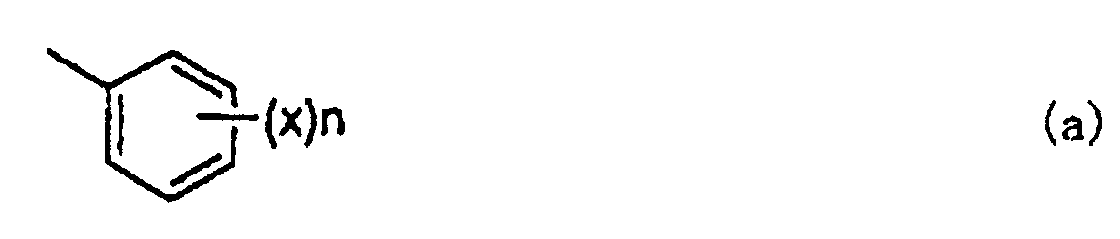 (wherein, R6 may be the same or different, and the same as described above, and 1 is an integer of 2 to 4); a -COZm(R6) group (wherein, R6, Z, and m are the same as described above); a -ZCOZm(R6) group (wherein, R6, Z, and m are the same as described above); a (C1-C6)-alkylsulfonylamino group; a halo(C1-C6)alkylsulfonylamino group; a phenyl group; a substituted phenyl group having at least one substituent which may be the same or different and is selected from the group consisting of a halogen atom, a cyano group, a nitro group, a hydroxyl group, an amino group, a mercapto group, a (C1-C6)alkyl group, a halo(C1-C6)alkyl group, a (C2-C6)alkenyl group, a halo(C2-C6)alkenyl group, a (C2-C6)alkynyl group, a halo(C2-C6)alkynyl group, a (C1-C6)alkoxyl group, a halo(C1-C6)alkoxyl group, a (C1-C6)alkylthio group, a halo(C1-C6)alkylthio group, a (C1-C6)alkylsulfinyl group, a halo(C1-C6)alkylsulfinyl group, a (C1-C6)alkylsulfonyl group, a halo(C1-C6)alkylsulfonyl group, a mono(C1-C6)alkylamino group, a di(C1-C6)alkylamino group whose (C1-C6)alkyl groups may be the same or different, a -COZm(R6) group (wherein, R6, Z, and m are the same as described above), a -ZCOZm(R6) group (wherein, R6, Z, and m are the same as described above), a (C1-C6)alkylsulfonylamino group, a halo(C1-C6)-alkylsulfonylamino group, a hydroxyimino(C1-C6)alkyl group, a (C1-C6)alkoxyimino(C1-C6)alkyl group, a heterocyclic group (a heterocyclic ring is the same as described above), and a substituted heterocyclic group (a heterocyclic ring is the same as described above) having at least one substituent which may be the same or different and is selected from the group consisting of a halogen atom, a cyano group, a nitro group, a hydroxyl group, an amino group, a mercapto group, a (C1-C6)alkyl group, a halo(C1-C6)alkyl group, a (C2-C6)alkenyl group, a halo(C2-C6)alkenyl group, a (C2-C6)alkynyl group, a halo(C2-C6)alkynyl group, a (C1-C6)alkoxyl group, a halo(C1-C6)alkoxyl group, a (C1-C6)alkylthio group, a halo(C1-C6)alkylthio group, a (C1-C6)alkylsulfinyl group, a halo(C1-C6)alkylsulfinyl group, a (C1-C6)alkylsulfonyl group, a halo(C1-C6)alkylsulfonyl group, a mono(C1-C6)alkylamino group, a di(C1-C6)alkylamino group whose (C1-C6)alkyl groups may be the same or different, a (C1-C6)alkylsulfonylamino group, and a halo(C1-C6)alkylsulfonylamino group; a naphthyl group; a substituted naphthyl group having at least one substituent which may be the same or different and is selected from the group consisting of a halogen atom, a cyano group, a nitro group, a hydroxyl group, an amino group, a mercapto group, a (C1-C6)alkyl group, a halo(C1-C6)alkyl group, a (C2-C6)alkenyl group, a halo(C2-C6)alkenyl group, a (C2-C6)alkynyl group, a halo(C2-C6)alkynyl group, a (C1-C6)alkoxyl group, a halo(C1-C6)alkoxyl group, a (C1-C6)alkylthio group, a halo(C1-C6)alkylthio group, a (C1-C6)alkylsulfinyl group, a halo (C1-C6)alkylsulfinyl group, a (C1-C6)alkylsulfonyl group, a halo(C1-C6)alkylsulfonyl group, a mono(C1-C6)alkylamino group, a di(C1-C6)alkylamino group whose (C1-C6)alkyl groups may be the same or different, a -COZm(R6) group (wherein, R6, Z, and m are the same as described above), a -ZCOZm(R6) group (wherein, R6, Z, and m are the same as described above), a (C1-C6)alkylsulfonylamino group, and a halo(C1-C6)alkylsulfonylamino group; a heterocyclic group (a heterocyclic ring is the same as described above); a substituted heterocyclic group(a heterocyclic ring is the same as described above) having at least one substituent which may be the same or different and is selected from the group consisting of a halogen atom, a cyano group, a nitro group, a hydroxyl group, an amino group, a mercapto group, a (C1-C6)alkyl group, a halo(C1-C6)alkyl group, a (C2-C6)alkenyl group, a halo(C2-C6)alkenyl group, a (C2-C6)alkynyl group, a halo(C2-C6)alkynyl group, a (C1-C6)alkoxyl group, a halo(C1-C6)alkoxyl group, a (C1-C6)alkylthio group, a halo(C1-C6)alkylthio group, a (C1-C6)alkylsulfinyl group, a halo(C1-C6)alkylsulfinyl group, a (C1-C6)alkylsulfonyl group, a halo(C1-C6)alkylsulfonyl group, a mono(C1-C6)alkylamino group, a di(C1-C6)alkylamino group whose (C1-C6)alkyl groups may be the same or different, a -COZm(R6) group (wherein, R6, Z, and m are the same as described above), a -ZCOZm(R6) group (wherein, R6, Z, and m are the same as described above), a (C1-C6)alkylsulfonylamino group, a halo(C1-C6)alkylsulfonylamino group, a hydroxyimino(C1-C6)alkyl group, and a (C1-C6)-alkoxyimino(C1-C6)alkyl group; or -Q-Ar [wherein, Q represents an oxygen atom; a sulfur atom; N(R7) (wherein, R7 is same as described above); a (C1-C6)-alkylene group; a (C1-C6)alkyl(C1-C6)alkylene group; a halo(C1-C6)alkyl(C1-C6)alkylene group; a hydroxy (C1-C6)-alkyl(C1-C6)alkylene group; a (C1-C6)alkoxy(C1-C6)alkyl-(C1-C6)alkylene group; a (C2-C6)alkenyl(C1-C6)alkylene group; a halo(C2-C6)alkenyl(C1-C6)alkylene group; a (C2-C6)alkynyl(C1-C6)alkylene group; a halo(C2-C6)alkynyl-(C1-C6)alkylene group; a hydroxy(C1-C6)alkylene group; a (C1-C6)alkoxy(C1-C6)alkylene group; a halo(C1-C6)alkoxy-(C1-C6)alkylene group; a (C1-C6)alkylcarbonyloxy (C1-C6)alkylene group; a cyano(C1-C6)alkylene group; a halo(C1-C6)alkylene group; a (C3-C6)cycloalkyl(C1-C6)-alkylene group; a (C3-C6)cycloalkenyl(C1-C6)alkylene group; a (C1-C6)alkylcarbonyl(C1-C6)alkylene group; a (C1-C6)alkoxycarbonyl(C1-C6)alkylene group; an amino-(C1-C6)alkylene group; a mono (C1-C6)alkylamino(C1-C6)-alkylene group; a di(C1-C6)alkylamino(C1-C6)alkylene group whose (C1-C6)alkyl groups may be the same or different; a (C1-C6)alkylcarbonylamino(C1-C6)alkylene group; a (C1-C6)alkoxycarbonylamino(C1-C6)alkylene group; a mercapto (C1-C6)alkylene group; a (C1-C6)alkylthio (C1-C6)alkylene group; an alkylsulfinyl(C1-C6)alkylene group; a (C1-C6)alkylsulfonyl(C1-C6)alkylene group; a (C3-C6)cycloalkylene group; a (C2-C6)alkenylene group; a (C1-C6)alkyl(C2-C6)alkenylene group; a halo(C1-C6)alkyl-(C2-C6)alkenylene group; a hydroxy(C1-C6)alkyl(C2-C6)-alkenylene group; a (C1-C6)alkoxy(C1-C6)alkyl(C2-C6)-alkenylene group; a (C2-C6)alkenyl(C2-C6)alkenylene group; a halo (C2-C6)alkenyl(C2-C6)alkenylene group; a (C2-C6)alkynyl(C2-C6)alkenylene group; a halo (C2-C6)-alkynyl(C2-C6)alkenylene group; a hydroxy (C2-C6)-alkenylene group; a (C1-C6)alkoxy(C2-C6)alkenylene group; a halo (C1-C6)alkoxy(C2-C6)alkenylene group; a (C1-C6)-alkylcarbonyloxy(C2-C6)alkenylene group; a cyano (C2-C6)-alkenylene group; a halo(C2-C6)alkenylene group; a (C3-C6)cycloalkyl(C2-C6)alkenylene group; a (C3-C6)cycloalkenyl(C2-C6)alkenylene group; a (C1-C6)alkylcarbonyl-(C2-C6)alkenylene group; a (C1-C6)alkoxylcarbonyl(C2-C6)-alkenylene group; an amino(C2-C6)alkenylene group; a mono (C1-C6)alkylamino(C2-C6)alkenylene group; a di (C1-C6)-alkylamino(C2-C6)alkenylene group whose (C1-C6)alkyl groups may be the same or different; a (C1-C6)alkylcarbonylamino(C2-C6)alkenylene group; a (C1-C6)alkoxycarbonylamino(C2-C6)alkenylene group; a mercapto(C2-C6)-alkenylene group; a (C1-C6)alkylthio(C2-C6)alkenylene group; a (C1-C6)alkylsulfinyl(C2-C6)alkenylene group; a (C1-C6)alkylsulfonyl(C2-C6)alkenylene group; a (C2-C6)alkynylene group; a (C1-C6)alkylenoxy group; a (C1-C6)alkyl(C1-C6)alkylenoxy group; a (C1-C6)alkylenethio group; a (C1-C6)alkyl(C1-C6)alkylenethio group; a (C1-C6)alkyleneamino group; a (C1-C6)alkyl (C1-C6)-alkyleneamino group; a carbonyl group; a hydroxyimino group; a (C1-C6)alkoxyimino group; a (C1-C6)alkylenedioxy(C1-C6)alkylene group; or a Z(R6)mCO group (wherein, R6, Z, and m are the same as described above);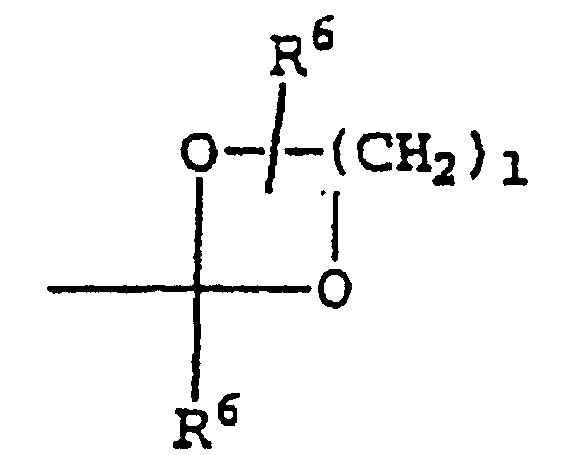
Ar represents a phenyl group; a substituted phenyl group having at least one substituent which may be the same or different and is selected from the group consisting of a halogen atom, a cyano group, a nitro group, a hydroxyl group, an amino group, a mercapto group, a (C1-C6)alkyl group, a halo(C1-C6)alkyl group, a (C2-C6)alkenyl group, a halo(C2-C6)alkenyl group, a (C2-C6)alkynyl group, a halo(C2-C6)alkynyl group, a (C1-C6)alkoxyl group, a halo(C1-C6)alkoxyl group, a (C1-C6)alkylthio group, a halo(C1-C6)alkylthio group, a (C1-C6)alkylsulfinyl group, a halo(C1-C6)alkylsulfinyl group, a (C1-C6)alkylsulfonyl group, a halo(C1-C6)alkylsulfonyl group, a mono(C1-C6)alkylamino group, a di(C1-C6)alkylamino group whose (C1-C6)alkyl groups may be the same or different, a hydroxyimino(C1-C6)alkyl group, a (C1-C6)alkoxyimino (C1-C6)alkyl group, a (C2-C6)alkenyloxyimino (C1-C6)alkyl group, a -COZm(R6) group (wherein, R6, Z, and m are the same as described above), a -ZCOZm(R6) group (wherein, R6, Z, and m are the same as described above), a (C1-C6)alkylsulfonylamino group, and a halo(C1-C6)alkylsulfonylamino group; a naphthyl group; a substituted naphthyl group having at least one substituent which may be the same or different and is selected from the group consisting of a halogen atom, a cyano group, a nitro group, a hydroxyl group, an amino group, a mercapto group, a (C1-C6)alkyl group, a halo(C1-C6)alkyl group, a (C2-C6)alkenyl group, a halo(C2-C6)alkenyl group, a (C2-C6)alkynyl group, a halo(C2-C6)alkynyl group, a (C1-C6)alkoxyl group, a halo(C1-C6)alkoxyl group, a (C1-C6)alkylthio group, a halo(C1-C6)alkylthio group, a (C1-C6)alkylsulfinyl group, a halo(C1-C6)alkylsulfinyl group, a (C1-C6)alkylsulfonyl group, a halo(C1-C6)alkylsulfonyl group, a mono(C1-C6)alkylamino group, a di(C1-C6)alkylamino group whose (C1-C6)alkyl groups may be the same or different, a -COZm(R6) group (wherein, R6, Z, and m are the same as described above), a -ZCOZm(R6) group (wherein, R6, Z, and m are the same as described above), a (C1-C6)alkylsulfonylamino group, and a halo(C1-C6)alkylsulfonylamino group; a heterocyclic group (a heterocyclic ring is the same as described above); or a substituted heterocyclic group (a heterocyclic ring is the same as described above) having at least one substituent which may be the same or different and is selected from the group consisting of a halogen atom, a cyano group, a nitro group, a hydroxyl group, an amino group, a mercapto group, a (C1-C6)alkyl group, a halo(C1-C6)alkyl group, a (C2-C6)alkenyl group, a halo (C2-C6)alkenyl group, a (C2-C6)alkynyl group, a halo(C2-C6)alkynyl group, a (C1-C6)alkoxyl group, a halo(C1-C6)alkoxyl group, a (C1-C6)alkylthio group, a halo(C1-C6)alkylthio group, a (C1-C6)alkylsulfinyl group, a halo(C1-C6)alkylsulfinyl group, a (C1-C6)alkylsulfonyl group, a halo(C1-C6)alkylsulfonyl group, a mono(C1-C6)-alkylamino group, a di(C1-C6)alkylamino group whose (C1-C6)alkyl groups may be the same or different, a -COZm(R6) group (wherein, R6, Z, and m are the same as described above), a -ZCOZm(R6) group (wherein, R6, Z, and m are the same as described above), a (C1-C6)alkylsulfonylamino group, a halo(C1-C6)alkylsulfonylamino group, a hydroxyimino(C1-C6)alkyl group, a (C1-C6)alkoxyimino(C1-C6)alkyl group, and a (C2-C6)alkenyloxyimino-(C1-C6)alkyl group]; and
n represents an integer of 1 to 5;
(ii) a group represented by the formula (b) :wherein R8 represents a hydrogen atom; a halogen atom; a cyano group; a nitro group; a hydroxyl group; an amino group; a mercapto group; a (C1-C6)alkyl group; a halo(C1-C6)alkyl group; a cyano(C1-C6)alkyl group; a (C3-C6)cycloalkyl group; a halo (C3-C6)cycloalkyl group; a cyano(C3-C6)cycloalkyl group; a (C1-C6)alkyl(C3-C6)cycloalkyl group; a (C1-C6)alkyl-halo(C3-C6)cycloalkyl group; a (C3-C6)cycloalkyl(C1-C6)alkyl group; a (C2-C6)alkenyl group; a (C3-C6)cycloalkenyl group; a halo(C2-C6)alkenyl group; a (C3-C6)cycloalkenyl(C1-C6)alkyl group; a (C2-C6)alkynyl group; a halo(C2-C6)alkynyl group; a (C1-C6)alkoxyl group; a halo(C1-C6)alkoxyl group; a (C1-C6)alkylthio group; a halo(C1-C6)alkylthio group; a (C1-C6)alkylsulfinyl group; a halo(C1-C6)alkylsulfinyl group; a (C1-C6)alkylsulfonyl group; a halo(C1-C6)alkylsulfonyl group; a mono(C1-C6)alkylamino group; a di(C1-C6)alkylamino group whose (C1-C6)alkyl groups may be the same or different; a (C1-C6)alkoxy(C1-C6)alkyl group; a halo(C1-C6)alkoxy(C1-C6)alkyl group; a (C1-C6)alkylthio(C1-C6)alkyl group; a halo(C1-C6)-alkylthio (C1-C6)alkyl group; a (C1-C6)alkylsulfinyl(C1-C6)alkyl group; a halo(C1-C6)alkylsulfinyl(C1-C6)alkyl group; a (C1-C6)alkylsulfonyl(C1-C6)alkyl group; a halo(C1-C6)alkylsulfonyl(C1-C6)alkyl group; a mono (C1-C6)alkylamino(C1-C6)alkyl group; a di(C1-C6)alkylamino(C1-C6)alkyl group whose (C1-C6)alkyl groups may be the same or different; a carboxy(C1-C6)alkyl group; a (C1-C6)-alkylcarbonyl(C1-C6)alkyl group; a (C1-C6)alkoxycarbonyl-(C1-C6)alkyl group; an aminocarbonyl(C1-C6)alkyl group; a mono(C1-C6)alkylaminocarbonyl(C1-C6)alkyl group; a di(C1-C6)alkylaminocarbonyl(C1-C6)alkyl group whose (C1-C6)alkyl groups may be the same or different; a -COZm(R6) group (in the formula, R6, Z, and m are the same as described above); a -ZCOZm(R6) group (wherein, R6, Z, and m are the same as described above); a (C1-C6)alkylsulfonylamino group; a halo(C1-C6)alkylsulfonylamino group; a hydroxyimino(C1-C6)alkyl group; a (C1-C6)alkoxyimino(C1-C6)alkyl group; a (C2-C6)alkenyloxyimino(C1-C6)alkyl group; a phenyl group; a substituted phenyl group having at least one substituent which may be the same or different and is selected from the group consisting of a halogen atom, a cyano group, a nitro group, a hydroxyl group, an amino group, a mercapto group, a (C1-C6)alkyl group, a halo(C1-C6)alkyl group, a (C2-C6)alkenyl group, a halo(C2-C6)-alkenyl group, a (C2-C6)alkynyl group, a halo(C2-C6)-alkynyl group, a (C1-C6)alkoxyl group, a halo(C1-C6)-alkoxyl group, a (C1-C6)alkylthio group, a halo(C1-C6)-alkylthio group, a (C1-C6)alkylsulfinyl group, a halo(C1-C6)alkylsulfinyl group, a (C1-C6)alkylsulfonyl group, a halo(C1-C6)alkylsulfonyl group, a mono(C1-C6)alkylamino group, a di(C1-C6)alkylamino group whose (C1-C6)alkyl groups may be the same or different, a methylenedioxy group, a -COZm(R6) group (wherein, R6, Z, and m are the same as described above), a -ZCOZm(R6) group (wherein, R6, Z, and m are the same as described above), a (C1-C6)alkylsulfonylamino group, and a halo(C1-C6)alkylsulfonylamino group; a phenyl(C1-C6)alkyl group; a substituted phenyl(C1-C6)alkyl group having on the ring at least one substituent which may be the same or different and is selected from the group consisting of a halogen atom, a cyano group, a nitro group, a hydroxyl group, an amino group, a mercapto group, a (C1-C6)alkyl group, a halo(C1-C6)alkyl group, a (C2-C6)alkenyl group, a halo(C2-C6)alkenyl group, a (C2-C6)alkynyl group, a halo(C2-C6)alkynyl group, a (C1-C6)alkoxyl group, a halo(C1-C6)alkoxyl group, a (C1-C6)alkylthio group, a halo(C1-C6)alkylthio group, a (C1-C6)alkylsulfinyl group, a halo(C1-C6)alkylsulfinyl group, a (C1-C6)alkylsulfonyl group, a halo(C1-C6)alkylsulfonyl group, a mono(C1-C6)alkylamino group, a di(C1-C6)alkylamino group whose (C1-C6)alkyl groups may be the same or different, a -COZm(R6) group (wherein, R6, Z, and m are the same as described above), a -ZCOZm(R6) group (wherein, R6, Z, and m are the same as described above), a (C1-C6)alkylsulfonylamino group, and a halo(C1-C6)alkylsulfonylamino group; a naphthyl group; a substituted naphthyl group having at least one substituent which may be the same or different and is selected from the group consisting of a halogen atom, a cyano group, a nitro group, a hydroxyl group, an amino group, a mercapto group, a (C1-C6)alkyl group, a halo(C1-C6)alkyl group, a (C2-C6)alkenyl group, a halo(C2-C6)alkenyl group, a (C2-C6)alkynyl group, a halo(C2-C6)alkynyl group, a (C1-C6)alkoxyl group, a halo(C1-C6)alkoxyl group, a (C1-C6)alkylthio group, a halo(C1-C6)alkylthio group, a (C1-C6)alkylsulfinyl group, a halo(C1-C6)alkylsulfinyl group, a (C1-C6)alkylsulfonyl group, a halo(C1-C6)alkylsulfonyl group, a mono(C1-C6)alkylamino group, a di(C1-C6)alkylamino group whose (C1-C6)alkyl groups may be the same or different, a -COZm(R6) group (wherein, R6, Z, and m are the same as described above), a -ZCOZm(R6) group (wherein, R6, Z, and m are the same as described above), a (C1-C6)alkylsulfonylamino group, and a halo(C1-C6)alkylsulfonylamino group; a heterocyclic group (a heterocyclic ring is the same as described above); a substituted heterocyclic group (a heterocyclic ring is the same as described above) having at least one substituent which may be the same or different and is selected from the group consisting of a halogen atom, a cyano group, a nitro group, a hydroxyl group, an amino group, a mercapto group, a (C1-C6)alkyl group, a halo(C1-C6)alkyl group, a (C2-C6)alkenyl group, a halo(C2-C6)alkenyl group, a (C2-C6)alkynyl group, a halo(C2-C6)alkynyl group, a (C1-C6)alkoxyl group, a halo(C1-C6)alkoxyl group, a (C1-C6)alkylthio group, a halo(C1-C6)alkylthio group, a (C1-C6)alkylsulfinyl group, a halo(C1-C6)alkylsulfinyl group, a (C1-C6)alkylsulfonyl group, a halo(C1-C6)alkylsulfonyl group, a mono(C1-C6)alkylamino group, a di(C1-C6)alkylamino group whose (C1-C6)alkyl groups may be the same or different, a -COZm(R6) group (wherein, R6, Z, and m are the same as described above), a -ZCOZm(R6) group (wherein, R6, Z, and m are the same as described above), a (C1-C6)alkylsulfonylamino group, and a halo(C1-C6)alkylsulfonylamino group; a heterocyclic-(C1-C6)alkyl group; a substituted heterocyclic-(C1-C6)alkyl group (a heterocyclic ring is the same as described above) having at least one substituent which may be the same or different and is selected from the group consisting of same or different a halogen atom, a cyano group, a nitro group, a hydroxyl group, an amino group, a mercapto group, a (C1-C6)alkyl group, a halo-(C1-C6)alkyl group, a (C2-C6)alkenyl group, a halo-(C2-C6)alkenyl group, a (C2-C6)alkynyl group, a halo-(C2-C6)alkynyl group, a (C1-C6)alkoxyl group, a halo(C1-C6)alkoxyl group, a (C1-C6)alkylthio group, a halo (C1-C6)alkylthio group, a (C1-C6)alkylsulfinyl group, a halo(C1-C6)alkylsulfinyl group, a (C1-C6)alkylsulfonyl group, a halo(C1-C6)alkylsulfonyl group, a mono(C1-C6)-alkylamino group, a di(C1-C6)alkylamino group whose (C1-C6)alkyl groups may be the same or different, a (C1-C6)alkylsulfonylamino group, and a halo(C1-C6)-alkylsulfonylamino group; or -Q-Ar (wherein, Q and Ar are the same as described above);
A represents an oxygen atom; a sulfur atom; N=; N(R7) (wherein, R7 is the same as described above); or C(R9) [wherein, R9 represents a hydrogen atom; a halogen atom; a (C1-C6)alkyl group; a halo(C1-C6)alkyl group; a (C2-C6)alkenyl group; a halo(C2-C6)alkenyl group; a (C2-C6)alkynyl group; a halo(C2-C6)alkynyl group; a (C1-C6)alkoxy(C1-C6)alkyl group; a halo(C1-C6)alkoxy(C1-C6)alkyl group; a (C1-C6)alkylthio(C1-C6)-alkyl group; a halo(C1-C6)alkylthio(C1-C6)alkyl group; a (C1-C6)alkylsulfinyl(C1-C6)alkyl group; a halo(C1-C6)alkylsulfinyl(C1-C6)alkyl group; a (C1-C6)alkylsulfonyl(C1-C6)alkyl group; a halo(C1-C6)alkylsulfonyl(C1-C6)alkyl group; a mono(C1-C6)alkylamino(C1-C6)alkyl group; a di (C1-C6)alkylamino(C1-C6)alkyl group whose (C1-C6)alkyl groups may be the same or different; a (C3-C6)cycloalkyl group; a halo(C3-C6)cycloalkyl group; a (C3-C6)cycloalkenyl group; or a halo(C3-C6)cycloalkenyl group]; and
B represents N=; N(R8) (wherein, R8 is the same as described above); or C(R8) (wherein, R8 is the same as described above);
(iii) a naphthyl group;
(iv) a substituted naphthyl group having at least one substituent which may be the same or different and is selected from the group consisting of a halogen atom, a cyano group, a nitro group, a hydroxyl group, an amino group, a mercapto group, a (C1-C6)alkyl group, a halo(C1-C6)alkyl group, a (C2-C6)alkenyl group, a halo(C2-C6)alkenyl group, a (C2-C6)alkynyl group, a halo(C2-C6)alkynyl group, a (C1-C6)alkoxyl group, a halo(C1-C6)alkoxyl group, a (C1-C6)alkylthio group, a halo(C1-C6)alkylthio group, a (C1-C6)alkylsulfinyl group, a halo (C1-C6)alkylsulfinyl group, a (C1-C6)alkylsulfonyl group, a halo(C1-C6)alkylsulfonyl group, a mono(C1-C6)alkylamino group, a di(C1-C6)alkylamino group whose (C1-C6)alkyl groups may be the same or different, a -COZm(R6) group (wherein, R6, Z, and m are the same as described above), a -ZCOZm(R6) group (wherein, R6, Z, and m are the same as described above), a (C1-C6)alkylsulfonylamino group, and a halo(C1-C6)alkylsulfonylamino group;
(v) a heterocyclic group (a heterocyclic ring is the same as described above); or
(vi) a substituted heterocyclic group (a heterocyclic ring is the same as described above) having at least one substituent which may be the same or different and is selected from the group consisting of a halogen atom; a cyano group; a nitro group; a hydroxyl group; a mercapto group; an amino group; a halo(C1-C6)alkyl group (with the proviso of excluding a trifluoromethyl group); a (C2-C6)alkenyl group; a halo(C2-C6)alkenyl group; a (C2-C6)alkynyl group; a halo(C2-C6)alkynyl group; a halo(C1-C6)alkoxyl group; a halo(C1-C6)alkylthio group; a (C1-C6)alkylsulfinyl group; a halo(C1-C6)alkylsulfinyl group; a (C1-C6)alkylsulfonyl group; a halo(C1-C6)alkylsulfonyl group; a mono(C1-C6)alkylamino group; a di(C1-C6)alkylamino group whose (C1-C6)alkyl groups may be the same or different; a (C1-C6)alkoxy(C1-C6)alkyl group; a halo(C1-C6)alkoxy(C1-C6)alkyl group; a (C1-C6)alkylthio(C1-C6)alkyl group; a halo(C1-C6)-alkylthio (C1-C6)alkyl group; a (C1-C6)alkylsulfinyl(C1-C6)alkyl group; a halo(C1-C6)alkylsulfinyl(C1-C6)alkyl group; a (C1-C6)alkylsulfonyl (C1-C6)alkyl group; a halo(C1-C6)alkylsulfonyl(C1-C6)alkyl group; a mono(C1-C6)alkylamino(C1-C6)alkyl group; a di(C1-C6)alkylamino-(C1-C6)alkyl group whose (C1-C6)alkyl groups may be the same or different; a (C3-C6)cycloalkyl group; a halo(C3-C6)cycloalkyl group; a hydroxyimino(C1-C6)alkyl group; a (C1-C6)alkoxyimino(C1-C6)alkyl group; a (C2-C6)alkenyloxyimino(C1-C6)alkyl group; a -COZm(R6) group (wherein, R6, Z, and m are the same as described above); a -ZCOZm(R6) group (wherein, R6, Z, and m are the same as described above); a (C1-C6)alkylsulfonylamino group; a halo(C1-C6)alkylsulfonylamino group; a phenyl group; a substituted phenyl group having at least one substituent which may be the same or different and is selected from the group consisting of an amino group, a mercapto group, a (C1-C6)alkyl group, a halo(C1-C6)alkyl group (with the proviso of excluding a trifluoromethyl group), a (C2-C6)alkenyl group, a halo(C2-C6)alkenyl group, a (C2-C6)alkynyl group, a halo(C2-C6)alkynyl group, a (C1-C6)alkoxyl group, a halo(C1-C6)alkoxyl group, a (C1-C6)alkylthio group, a halo(C1-C6)alkylthio group, a (C1-C6)alkylsulfinyl group, a halo(C1-C6)alkylsulfinyl group, a (C1-C6)alkylsulfonyl group, a halo(C1-C6)alkylsulfonyl group, a mono(C1-C6)alkylamino group, a di(C1-C6)alkylamino group whose (C1-C6)alkyl groups may be the same or different, a -COZm(R6) group (wherein, R6, Z, and m are the same as described above), a -ZCOZm(R6) group (wherein, R6, Z, and m are the same as described above), a (C1-C6)alkylsulfonylamino group, and a halo(C1-C6)alkylsulfonylamino group; a naphthyl group; a substituted naphthyl group having at least one substituent which may be the same or different and is selected from the group consisting of a halogen atom, a cyano group, a nitro group, a hydroxyl group, an amino group, a mercapto group, a (C1-C6)alkyl group, a halo(C1-C6)alkyl group, a (C2-C6)alkenyl group, a halo(C2-C6)alkenyl group, a (C2-C6)alkynyl group, a halo(C2-C6)-alkynyl group, a (C1-C6)alkoxyl group, a halo(C1-C6)alkoxyl group, a (C1-C6)alkylthio group, a halo(C1-C6)alkylthio group, a (C1-C6)alkylsulfinyl group, a halo(C1-C6)alkylsulfinyl group, a (C1-C6)alkylsulfonyl group, a halo(C1-C6)alkylsulfonyl group, a mono(C1-C6)alkylamino group, a di(C1-C6)alkylamino group whose (C1-C6)alkyl groups may be the same or different, a -COZm(R6) group (wherein, R6, Z, and m are the same as described above), a -ZCOZm(R6) group (wherein, R6, Z, and m are the same as described above), a (C1-C6)alkylsulfonylamino group, and a halo(C1-C6)alkylsulfonylamino group; a heterocyclic group (a heterocyclic ring is the same as described above); a substituted heterocyclic group (a heterocyclic ring is the same as described above) having at least one substituent which may be the same or different and is selected from the group consisting of a halogen atom, a cyano group, a nitro group, a hydroxyl group, an amino group, a mercapto group, a (C1-C6)alkyl group, a halo(C1-C6)alkyl group, a (C2-C6)alkenyl group, a halo(C2-C6)alkenyl group, a (C2-C6)alkynyl group, a halo(C2-C6)alkynyl group, a (C1-C6)alkoxyl group, a halo(C1-C6)alkoxyl group, a (C1-C6)alkylthio group, a halo(C1-C6)alkylthio group, a (C1-C6)alkylsulfinyl group, a halo(C1-C6)alkylsulfinyl group, a (C1-C6)alkylsulfonyl group, a halo(C1-C6)alkylsulfonyl group, a mono (C1-C6)alkylamino group, a di(C1-C6)alkylamino group whose (C1-C6)alkyl groups may be the same or different, a -COZm(R6) group (wherein, R6, Z, and m are the same as described above), a -ZCOZm(R6) group (wherein, R6, Z, and m are the same as described above), a (C1-C6)alkylsulfonylamino group, and a halo(C1-C6)alkylsulfonylamino group; and -Q-Ar (wherein, Q and Ar are the same as described above); Y represents a (C1-C6)alkylene group; a (C1-C6)alkyl(C1-C6)alkylene group; a halo(C1-C6)alkyl(C1-C6)alkylene group; a hydroxy(C1-C6)alkyl(C1-C6)alkylene group; a (C1-C6)alkoxy(C1-C6)alkyl(C1-C6)alkylene group; a (C2-C6)alkenyl(C1-C6)alkylene group; a halo(C2-C6)alkenyl(C1-C6)alkylene group; a (C2-C6)alkynyl(C1-C6)alkylene group; a halo(C2-C6)alkynyl(C1-C6)alkylene group; a hydroxy(C1-C6)alkylene group; a (C1-C6)alkoxy (C1-C6)alkylene group; a halo(C1-C6)alkoxy(C1-C6)alkylene group; a (C1-C6)alkylcarbonyloxy(C1-C6)alkylene group; a cyano(C1-C6)alkylene group; a halo(C1-C6)alkylene group; a (C3-C6)cycloalkyl (C1-C6)alkylene group; a (C3-C6)cycloalkenyl (C1-C6)alkylene group; a (C1-C6)alkylcarbonyl(C1-C6)alkylene group; a (C1-C6)alkoxycarbonyl(C1-C6)-alkylene group; an amino(C1-C6)alkylene group; a mono (C1-C6)alkylamino(C1-C6)alkylene group; a di(C1-C6)alkylamino(C1-C6)alkylene group whose (C1-C6)alkyl groups may be the same or different; a (C1-C6)alkylcarbonylamino(C1-C6)alkylene group; a (C1-C6)alkoxycarbonylamino(C1-C6)alkylene group; a mercapto(C1-C6)alkylene group; a (C1-C6)alkylthio(C1-C6)alkylene group; an (C1-C6)alkylsulfinyl(C1-C6)alkylene group; a (C1-C6)alkylsulfonyl(C1-C6)alkylene group; a (C3-C6)-cycloalkylene group; a (C2-C6)alkenylene group; a (C1-C6)alkyl(C2-C6)alkenylene group; a halo(C1-C6)alkyl(C2-C6)alkenylene group; a hydroxy(C1-C6)alkyl(C2-C6)alkenylene group; a (C1-C6)alkoxy(C1-C6)alkyl(C2-C6)alkenylene group; a (C2-C6)alkenyl(C2-C6)alkenylene group; a halo(C2-C6)alkenyl(C2-C6)alkenylene group; a (C2-C6)alkynyl(C2-C6)alkenylene group; a halo(C2-C6)-alkynyl(C2-C6)alkenylene group; a hydroxy(C2-C6)alkenylene group; a (C1-C6)alkoxy(C2-C6)alkenylene group; a halo(C1-C6)alkoxy(C2-C6)alkenylene group; a (C1-C6)alkylcarbonyloxy(C2-C6)alkenylene group; a cyano(C2-C6)alkenylene group; a halo(C2-C6)alkenylene group; a (C3-C6)cycloalkyl(C2-C6)alkenylene group; a (C3-C6)cycloalkenyl(C2-C6)alkenylene group; a (C1-C6)alkylcarbonyl(C2-C6)alkenylene group; a (C1-C6)alkoxylcarbonyl (C2-C6)alkenylene group; an amino(C2-C6)alkenylene group; a mono(C1-C6)alkylamino(C2-C6)alkenylene group; a di (C1-C6)alkylamino (C2-C6)-alkenylene group whose (C1-C6)alkyl groups may be the same or different; a (C1-C6)alkylcarbonylamino(C2-C6)alkenylene group; a (C1-C6)alkoxycarbonylamino(C2-C6)-alkenylene group; a mercapto(C2-C6)alkenylene group; a (C1-C6)alkylthio (C2-C6)alkenylene group; a (C1-C6)alkylsulfinyl(C2-C6)alkenylene group; a (C1-C6)-alkylsulfonyl(C2-C6)alkenylene group; a (C2-C6)alkynylene group; a (C1-C6)alkyleneoxy group; a (C1-C6)alkyl(C1-C6)alkyleneoxy group; a (C1-C6)alkylenethio group; a (C1-C6)alkyl(C1-C6)alkylenethio group; a (C1-C6)alkyleneamino group; a (C1-C6)alkyl(C1-C6)alkyleneamino group; a carbonyl group; a carbonyl(C1-C6)alkylene group; a hydroxyimino group; a hydroxyimino(C1-C6)alkylene group; a (C1-C6)alkoxyimino group; a (C1-C6)alkoxyimino(C1-C6)alkylene group; or a (C1-C6)alkylenedioxy(C1-C6)alkylene group;
with the proviso that when R5 represents the formula (b), then Y excludes a (C1-C6)alkyleneoxy group; and when R5 represents the formula (a), R1 represents a hydrogen atom or a (C1-C6)alkyl group, and R3 represents a carbamoyl group and a nitrile group, then X represents -Q-Ar [wherein, Q and Ar are the same as described above, but Ar excludes a heterocyclic group (a heterocyclic group is the same as described above), or a substituted heterocyclic group (a heterocyclic group is the same as described above). - The N-(4-pyrazolyl)amide derivative according to Claim 1 represented by the general formula (I-1):wherein R1 represents a hydrogen atom; a (C1-C6)alkyl group; a halo(C1-C6)alkyl group; a hydroxy(C1-C6)alkyl group; a cyano(C1-C6)alkyl group; a formyl(C1-C6)alkyl group; a (C2-C6)alkenyl group; a halo(C2-C6)alkenyl group; a (C2-C6)alkynyl group; a halo(C2-C6)alkynyl group; a (C1-C6)alkoxy(C1-C6)alkyl group; a halo(C1-C6)alkoxy(C1-C6)alkyl group; a (C1-C6)alkylthio(C1-C6)alkyl group; a halo(C1-C6)alkylthio(C1-C6)alkyl group; a (C1-C6)alkylsulfinyl(C1-C6)alkyl group; a halo-(C1-C6)alkylsulfinyl (C1-C6)alkyl group; a (C1-C6)alkylsulfonyl(C1-C6)alkyl group; a halo(C1-C6)alkylsulfonyl-(C1-C6)alkyl group; a mono(C1-C6)alkylamino(C1-C6)alkyl group; a di(C1-C6)alkylamino(C1-C6)alkyl group whose (C1-C6)alkyl groups may be the same or different; a (C1-C6)alkylsulfonyl group; a halo(C1-C6)alkylsulfonyl group; a mono(C1-C6)alkylaminosulfonyl group; a di(C1-C6)alkylaminosulfonyl group whose (C1-C6)alkyl groups may be the same or different; a (C1-C6)alkyloxycarbonyl-(C1-C6)alkyl group; a mono (C1-C6)alkylaminocarbonyl-(C1-C6)alkyl group; a di(C1-C6)alkylaminocarbonyl-(C1-C6)alkyl group whose (C1-C6)alkyl groups may be the same or different; a (C1-C6)alkyloxyimino(C1-C6)alkyl group; a (C1-C6)alkylsulfonyloxy(C1-C6)alkyl group; a halo (C1-C6)alkylsulfonyloxy(C1-C6)alkyl group; a (C1-C6)alkylcarbonyloxy(C1-C6)alkyl group; a phenylsulfonyl group; a substituted phenylsulfonyl group having at least one substituent which may be the same or different and is selected from the group consisting of a halogen atom, a cyano group, a nitro group, a hydroxyl group, an amino group, a mercapto group, a (C1-C6)alkyl group, a halo(C1-C6)alkyl group, a (C2-C6)alkenyl group, a halo(C2-C6)alkenyl group, a (C2-C6)alkynyl group, a halo(C2-C6)alkynyl group, a (C1-C6)alkoxyl group, a halo (C1-C6)alkoxyl group, a (C1-C6)alkylthio group, a halo(C1-C6)alkylthio group, a (C1-C6)alkylsulfinyl group, a halo(C1-C6)alkylsulfinyl group, a (C1-C6)alkylsulfonyl group, a halo(C1-C6)-alkylsulfonyl group, a mono(C1-C6)alkylamino group, a di(C1-C6)alkylamino group whose (C1-C6)alkyl groups may be the same or different, a (C1-C6)alkylsulfonylamino group, and a halo(C1-C6)alkylsulfonylamino group; a (C3-C6)cycloalkyl group; a halo(C3-C6)cycloalkyl group; a (C3-C6)cycloalkenyl group; a halo(C3-C6)cycloalkenyl group; a phenyl group; a substituted phenyl group having at least one substituent which may be the same or different and is selected from the group consisting of a halogen atom, a cyano group, a nitro group, a hydroxyl group, an amino group, a mercapto group, a (C1-C6)alkyl group, a halo(C1-C6)alkyl group, a (C2-C6)alkenyl group, a halo(C2-C6)alkenyl group, a (C2-C6)alkynyl group, a halo(C2-C6)alkynyl group, a (C1-C6)alkoxyl group, a halo(C1-C6)alkoxyl group, a (C1-C6)alkylthio group, a halo(C1-C6)alkylthio group, a (C1-C6)alkylsulfinyl group, a halo(C1-C6)alkylsulfinyl group, a (C1-C6)alkylsulfonyl group, a halo(C1-C6)alkylsulfonyl group, a mono(C1-C6)alkylamino group, a di(C1-C6)alkylamino group whose (C1-C6)alkyl groups may be the same or different, a (C1-C6)alkylsulfonylamino group, and a halo(C1-C6)alkylsulfonylamino group; or a -COZm(R6) group {wherein, R6 represents a hydrogen atom; a (C1-C6)alkyl group; a halo(C1-C6)alkyl group; a (C2-C6)alkenyl group; a halo(C2-C6)alkenyl group; a (C2-C6)alkynyl group; a halo(C2-C6)alkynyl group; a (C1-C6)alkoxy (C1-C6)alkyl group; a halo (C1-C6)alkoxy (C1-C6)alkyl group; a (C1-C6)alkylthio(C1-C6)alkyl group; a halo (C1-C6) alkylthio (C1-C6) alkyl group; a (C1-C6)-alkylsulfinyl(C1-C6)alkyl group; a halo(C1-C6)alkylsulfinyl(C1-C6)alkyl group; a (C1-C6)alkylsulfonyl(C1-C6)alkyl group; a halo(C1-C6)alkylsulfonyl(C1-C6)alkyl group; a mono(C1-C6)-alkylamino(C1-C6)alkyl group; a di (C1-C6)alkylamino(C1-C6)alkyl group whose (C1-C6)alkyl groups may be the same or different; a (C3-C6)cycloalkyl group; a halo(C3-C6)cycloalkyl group; a (C3-C6)cycloalkenyl group; a halo(C3-C6)cycloalkenyl group; a phenyl group; or a substituted phenyl group having at least one substituent which may be the same or different and is selected from the group consisting of a halogen atom, a cyano group, a nitro group, a hydroxyl group, an amino group, a mercapto group, a (C1-C6)alkyl group, a halo(C1-C6)alkyl group, a (C2-C6)alkenyl group, a halo(C2-C6)alkenyl group, a (C2-C6)alkynyl group, a halo(C2-C6)alkynyl group, a (C1-C6)alkoxyl group, a halo(C1-C6)alkoxyl group, a (C1-C6)alkylthio group, a halo(C1-C6)alkylthio group, a (C1-C6)alkylsulfinyl group, a halo(C1-C6)alkylsulfinyl group, a (C1-C6)alkylsulfonyl group, a halo(C1-C6)alkylsulfonyl group, a mono(C1-C6)alkylamino group, a di(C1-C6)alkylamino group whose (C1-C6)alkyl groups may be the same or different, a (C1-C6)alkylsulfonylamino group, and a halo(C1-C6)-alkylsulfonylamino group; Z represents an oxygen atom; a sulfur atom; or N(R7) [wherein, R7 represents a hydrogen atom; a (C1-C6)alkyl group; a halo(C1-C6)alkyl group; a (C2-C6)alkenyl group; a halo(C2-C6)alkenyl group; a (C2-C6)alkynyl group; a halo(C2-C6)alkynyl group; a (C1-C6)alkoxy (C1-C6)alkyl group; a halo(C1-C6)alkoxy(C1-C6)alkyl group; a (C1-C6)alkylthio (C1-C6)alkyl group; a halo (C1-C6)alkylthio(C1-C6)alkyl group; a (C1-C6)alkylsulfinyl(C1-C6)alkyl group; a halo(C1-C6)alkylsulfinyl (C1-C6)alkyl group; a (C1-C6)alkylsulfonyl(C1-C6)alkyl group; a halo(C1-C6)alkylsulfonyl (C1-C6)alkyl group; a mono (C1-C6)alkylamino(C1-C6)alkyl group; a di (C1-C6)alkylamino(C1-C6)alkyl group whose (C1-C6)alkyl groups may be the same or different; a (C3-C6)cycloalkyl group; a halo(C3-C6)cycloalkyl group; a (C3-C6)cycloalkenyl group; or a halo(C3-C6)cycloalkenyl group]; and m represents an integer of 0 to 1};

R2 and R3 may be the same or different, and represent a hydrogen atom, a halogen atom; a cyano group; a nitro group; a hydroxyl group; a mercapto group; an amino group; a (C1-C6)alkyl group; a halo(C1-C6)alkyl group; a (C2-C6)alkenyl group; a halo(C2-C6)alkenyl group; a (C2-C6)alkynyl group; a halo(C2-C6)alkynyl group; a (C1-C6)alkoxyl group; a halo(C1-C6)alkoxyl group; a (C1-C6)alkylthio group; a halo(C1-C6)alkylthio group; a (C1-C6)alkylsulfinyl group; a halo(C1-C6)alkylsulfinyl group; a (C1-C6)alkylsulfonyl group; a halo(C1-C6)alkylsulfonyl group; a mono(C1-C6)alkylamino group; a di(C1-C6)alkylamino group whose (C1-C6)alkyl groups may be the same or different; a (C1-C6)alkoxy (C1-C6)alkyl group; a halo(C1-C6)alkoxy(C1-C6)alkyl group; a (C1-C6)alkylthio (C1-C6)alkyl group; a halo(C1-C6)alkylthio (C1-C6)alkyl group; a (C1-C6)alkylsulfinyl (C1-C6)alkyl group; a halo(C1-C6)alkylsulfinyl-(C1-C6)alkyl group; a (C1-C6) alkylsulfonyl (C1-C6)alkyl group; a halo(C1-C6)alkylsulfonyl(C1-C6)alkyl group; a mono (C1-C6)alkylamino(C1-C6)alkyl group; a di (C1-C6)alkylamino(C1-C6)alkyl group whose (C1-C6)alkyl groups may be the same or different; a (C3-C6)cycloalkyl group; a halo(C3-C6)cycloalkyl group; a (C3-C6)cycloalkenyl group; a halo(C3-C6)cycloalkenyl group; a phenyl group; a substituted phenyl group having at least one substituent which may be the same or different and is selected from the group consisting of a halogen atom, a cyano group, a nitro group, a hydroxyl group, an amino group, a mercapto group, a (C1-C6)alkyl group, a halo(C1-C6)alkyl group, a (C2-C6)alkenyl group, a halo(C2-C6)alkenyl group, a (C2-C6)alkynyl group, a halo(C2-C6)alkynyl group, a (C1-C6)alkoxyl group, a halo(C1-C6)alkoxyl group, a (C1-C6)alkylthio group, a halo(C1-C6)alkylthio group, a (C1-C6)alkylsulfinyl group, a halo(C1-C6)alkylsulfinyl group, a (C1-C6)alkylsulfonyl group, a halo(C1-C6)alkylsulfonyl group, a mono(C1-C6)alkylamino group, a di(C1-C6)alkylamino group whose (C1-C6)alkyl groups may be the same or different, a (C1-C6)alkylsulfonylamino group, and a halo(C1-C6)alkylsulfonylamino group; a phenoxy group; a substituted phenoxy group having at least one substituent which may be the same or different and is selected from the group consisting of a halogen atom, a cyano group, a nitro group, a hydroxyl group, an amino group, a mercapto group, a (C1-C6)alkyl group, a halo(C1-C6)alkyl group, a (C2-C6)alkenyl group, a halo(C2-C6)alkenyl group, a (C2-C6)alkynyl group, a halo(C2-C6)alkynyl group, a (C1-C6)alkoxyl group, a halo(C1-C6)alkoxyl group, a (C1-C6)alkylthio group, a halo(C1-C6)alkylthio group, a (C1-C6)alkylsulfinyl group, a halo(C1-C6)alkylsulfinyl group, a (C1-C6)alkylsulfonyl group, a halo(C1-C6)alkylsulfonyl group, a mono(C1-C6)alkylamino group, a di(C1-C6)alkylamino group whose (C1-C6)alkyl groups may be the same or different, a (C1-C6)alkylsulfonylamino group, and a halo(C1-C6)-alkylsulfonylamino group; a phenylthio group; a substituted phenylthio group having at least one substituent which may be the same or different and is selected from the group consisting of a halogen atom, a cyano group, a nitro group, a hydroxyl group, an amino group, a mercapto group, a (C1-C6)alkyl group, a halo(C1-C6)alkyl group, a (C2-C6)alkenyl group, a halo(C2-C6)alkenyl group, a (C2-C6)alkynyl group, a halo(C2-C6)alkynyl group, a (C1-C6)alkoxyl group, a halo(C1-C6)alkoxyl group, a (C1-C6)alkylthio group, a halo(C1-C6)alkylthio group, a (C1-C6)alkylsulfinyl group, a halo(C1-C6)alkylsulfinyl group, a (C1-C6)alkylsulfonyl group, a halo(C1-C6)alkylsulfonyl group, a mono(C1-C6)alkylamino group, a di(C1-C6)alkylamino group whose (C1-C6)alkyl groups may be the same or different, a (C1-C6)alkylsulfonyl amino group, and a halo(C1-C6)alkylsulfonyl amino group; a -ZCOZm(R6) group (wherein, R6, Z, and m are the same as described above); or a -COZm(R6) group (wherein, R6, Z, and m are the same as described above);
R4 represents a hydrogen atom; a (C1-C6)alkyl group; a halo(C1-C6)alkyl group; a cyano(C1-C6)alkyl group; a (C2-C6)alkenyl group; a halo(C2-C6)alkenyl group; a (C2-C6)alkynyl group; a halo(C2-C6)alkynyl group; a (C1-C6)alkoxy(C1-C6)alkyl group; a halo(C1-C6)alkoxy(C1-C6)alkyl group; a (C1-C6)alkoxy(C1-C6)-alkoxy (C1-C6)alkyl group; a (C1-C6)alkylthio (C1-C6)alkyl group; a halo(C1-C6)alkylthio(C1-C6)alkyl group; a (C1-C6)alkylsulfinyl(C1-C6)alkyl group; a halo(C1-C6)alkylsulfinyl(C1-C6)alkyl group; a (C1-C6)alkylsulfonyl(C1-C6)alkyl group; a halo(C1-C6)-alkylsulfonyl(C1-C6)alkyl group; a mono(C1-C6)alkylamino (C1-C6)alkyl group; a di (C1-C6)alkylamino(C1-C6)alkyl group whose (C1-C6)alkyl groups may be the same or different; a (C3-C6)cycloalkyl group; a halo(C3-C6)cycloalkyl group; a (C3-C6)cycloalkenyl group; a halo(C3-C6)cycloalkenyl group; a -COZm(R6) group (wherein, R6, Z, and m are the same as described above), a -CSNH(R6) group (wherein, R6, is the same as described above), a (C1-C6)alkylcarbonyl(C1-C6)alkyl group; a (C1-C6)alkoxycarbonyl(C1-C6)alkyl group; a phenyl(C1-C6)alkyl group; a substituted phenyl(C1-C6)alkyl group having on the ring at least one substituent which may be the same or different and is selected from the group consisting of a halogen atom, a cyano group, a nitro group, a hydroxyl group, an amino group, a mercapto group, a (C1-C6)alkyl group, a halo(C1-C6)alkyl group, a (C2-C6)alkenyl group, a halo(C2-C6)alkenyl group, a (C2-C6)alkynyl group, a halo(C2-C6)alkynyl group, a (C1-C6)alkoxyl group, a halo(C1-C6)alkoxyl group, a (C1-C6)alkylthio group, a halo(C1-C6)alkylthio group, a (C1-C6)alkylsulfinyl group, a halo(C1-C6)alkylsulfinyl group, a (C1-C6)alkylsulfonyl group, a halo(C1-C6)alkylsulfonyl group, a mono(C1-C6)alkylamino group, a di(C1-C6)alkylamino group whose (C1-C6)alkyl groups may be the same or different, a (C1-C6)alkylsulfonylamino group, and a halo(C1-C6)alkylsulfonylamino group; a heterocyclic(C1-C6)alkyl group (a heterocyclic ring represents a pyridyl group; a pyridine-N-oxide group; a pyridazinyl group; a pyrimidinyl group; a pyrazyl group; a piperidyl group; a piperazino group; a morpholinyl group; a morpholino group; a furyl group; a tetrahydrofuryl group; a thienyl group; a tetrahydrothienyl group; a pyrrolyl group; a pyrrolidyl group; an imidazolidinyl group; an oxazolyl group; an isoxazolyl group; an oxadiazolyl group; a thiazolyl group; an isothiazolyl group; a thiadiazolyl group; an imidazolyl group; a triazolyl group; a pyrazolyl group; an indolyl group; a benzofuryl group; a benzothienyl group; an iridazolyl group; a quinolyl group; an isoquinolyl group; or a quinazolyl group); or a substituted heterocyclic(C1-C6)alkyl group (the heterocyclic group is the same as described above) having on the ring at least one substituent which may be the same or different and is selected from the group consisting of a halogen atom, a cyano group, a nitro group, a hydroxyl group, an amino group, a mercapto group, a (C1-C6)alkyl group, a halo(C1-C6)alkyl group, a (C2-C6)alkenyl group, a halo(C2-C6)alkenyl group, a (C2-C6)alkynyl group, a halo(C2-C6)alkynyl group, a (C1-C6)alkoxyl group, a halo(C1-C6)alkoxyl group, a (C1-C6)alkylthio group, a halo(C1-C6)alkylthio group, a (C1-C6)alkylsulfinyl group, a halo(C1-C6)alkylsulfinyl group, a (C1-C6)alkylsulfonyl group, a halo(C1-C6)alkylsulfonyl group, a mono(C1-C6)alkylamino group, a di(C1-C6)alkylamino group whose (C1-C6)alkyl groups may be the same or different, a (C1-C6)alkylsulfonylamino group, and a halo(C1-C6)alkylsulfonylamino group;
X may be the same or different, and represents a halogen atom; a cyano group; a nitro group; a hydroxyl group; a mercapto group; an amino group; a (C1-C6)alkyl group; a halo(C1-C6)alkyl group; a cyano(C1-C6)alkyl group; a (C2-C6)alkenyl group; a halo (C2-C6)alkenyl group; a (C2-C6)alkynyl group; a halo(C2-C6)alkynyl group; a (C1-C6)alkoxyl group; a halo(C1-C6)alkoxyl group; a (C1-C6)alkylthio group; a halo(C1-C6)alkylthio group; a (C1-C6)alkylsulfinyl group; a halo(C1-C6)alkylsulfinyl group; a (C1-C6)alkylsulfonyl group; a halo(C1-C6)alkylsulfonyl group; a mono(C1-C6)alkylamino group; a di(C1-C6)alkylamino group whose (C1-C6)alkyl groups may be the same or different; a (C1-C6)alkoxy(C1-C6)alkyl group; a halo(C1-C6)alkoxy(C1-C6)alkyl group; a (C1-C6)alkylthio(C1-C6)alkyl group; a halo(C1-C6)alkylthio(C1-C6)alkyl group; a (C1-C6)alkylsulfinyl(C1-C6)alkyl group; a halo(C1-C6)alkylsulfinyl-(C1-C6)alkyl group; a (C1-C6)alkylsulfonyl (C1-C6)alkyl group; a halo(C1-C6)alkylsulfonyl(C1-C6)alkyl group; a mono(C1-C6)alkylamino(C1-C6)alkyl group; a di(C1-C6)alkylamino(C1-C6)alkyl group whose (C1-C6)alkyl groups may be the same or different; a (C3-C6)cycloalkyl group; a halo(C3-C6)cycloalkyl group; a (C1-C6)alkylenedioxy group; a (C1-C6)alkyl(C1-C6)alkylenedioxy group; a phenyl(C1-C6)alkylenedioxy group; a substituted phenyl(C1-C6)alkylenedioxy group having on the ring at least one substituent which may be the same or different and is selected from the group consisting of a halogen atom, a cyano group, a nitro group, a hydroxyl group, an amino group, a mercapto group, a (C1-C6)alkyl group, a halo(C1-C6)alkyl group, a (C2-C6)alkenyl group, a halo(C2-C6)alkenyl group, a (C2-C6)alkynyl group, a halo(C2-C6)alkynyl group, a (C1-C6)alkoxyl group, a halo(C1-C6)alkoxyl group, a (C1-C6)alkylthio group, a halo(C1-C6)alkylthio group, a (C1-C6)alkylsulfinyl group, a halo(C1-C6)alkylsulfinyl group, a (C1-C6)alkylsulfonyl group, a halo(C1-C6)alkylsulfonyl group, a mono(C1-C6)alkylamino group, a di(C1-C6)alkylamino group whose (C1-C6)alkyl groups may be the same or different, a (C1-C6)alkylsulfonylamino group, and a halo(C1-C6)alkylsulfonylamino group; a phenyl(C1-C6)alkyl(C1-C6)alkylenedioxy group; a substituted phenyl (C1-C6)alkyl(C1-C6)alkylenedioxy group having on the ring at least one substituent which may be the same or different and is selected from the group consisting of a halogen atom, a cyano group, a nitro group, a hydroxyl group, an amino group, a mercapto group, a (C1-C6)alkyl group, a halo(C1-C6)alkyl group, a (C2-C6)alkenyl group, a halo(C2-C6)alkenyl group, a (C2-C6)alkynyl group, a halo(C2-C6)alkynyl group, a (C1-C6)alkoxyl group, a halo(C1-C6)alkoxyl group, a (C1-C6)alkylthio group, a halo(C1-C6)alkylthio group, a (C1-C6)alkylsulfinyl group, a halo(C1-C6)alkylsulfinyl group, a (C1-C6)alkylsulfonyl group, a halo(C1-C6)alkylsulfonyl group, a mono(C1-C6)alkylamino group, a di(C1-C6)alkylamino group whose (C1-C6)alkyl groups may be the same or different, a (C1-C6)alkylsulfonylamino group, and a halo(C1-C6)alkylsulfonylamino group; a hydroxyimino(C1-C6)alkyl group; a (C1-C6)alkoxyimino(C1-C6)alkyl group; a (C2-C6)alkenyloxyimino(C1-C6)alkyl group; a phenyl(C1-C6)alkoxyimino(C1-C6)alkyl group; a substituted phenyl (C1-C6)alkoxyimino(C1-C6)alkyl group having on the ring at least one substituent which may be the same or different and is selected from the group consisting of a halogen atom, a cyano group, a nitro group, a hydroxyl group, an amino group, a mercapto group, a (C1-C6)alkyl group, a halo(C1-C6)alkyl group, a (C2-C6)alkenyl group, a halo(C2-C6)alkenyl group, a (C2-C6)alkynyl group, a halo(C2-C6)alkynyl group, a (C1-C6)alkoxyl group, a halo(C1-C6)alkoxyl group, a (C1-C6)alkylthio group, a halo(C1-C6)alkylthio group, a (C1-C6)alkylsulfinyl group, a halo(C1-C6)alkylsulfinyl group, a (C1-C6)alkylsulfonyl group, a halo(C1-C6)alkylsulfonyl group, a mono(C1-C6)alkylamino group, a di(C1-C6)alkylamino group whose (C1-C6)alkyl groups may be the same or different, a (C1-C6)alkylsulfonylamino group, and a halo(C1-C6)alkylsulfonylamino group; a heterocyclic (C1-C6)alkoxyimino(C1-C6)alkyl group (the heterocyclic ring is the same as described above); a substituted heterocyclic (C1-C6)alkoxyimino(C1-C6)alkyl group (the heterocyclic group is the same as described above) having on the ring at least one substituent which may be the same or different and is selected from the group consisting of a halogen atom, a cyano group, a nitro group, a hydroxyl group, an amino group, a mercapto group, a (C1-C6)alkyl group, a halo(C1-C6)alkyl group, a (C2-C6)alkenyl group, a halo(C2-C6)alkenyl group, a (C2-C6)alkynyl group, a halo(C2-C6)alkynyl group, a (C1-C6)alkoxyl group, a halo(C1-C6)alkoxyl group, a (C1-C6)alkylthio group, a halo(C1-C6)alkylthio group, a (C1-C6)alkylsulfinyl group, a halo(C1-C6)alkylsulfinyl group, a (C1-C6)alkylsulfonyl group, a halo(C1-C6)alkylsulfonyl group, a mono(C1-C6)alkylamino group, a same or different di(C1-C6)alkylamino group, a (C1-C6)alkylsulfonylamino group, and a halo(C1-C6)alkylsulfonylamino group; a (C1-C6)alkylcarbonyl(C1-C6)alkyl group; a (C1-C6)alkoxycarbonyl (C1-C6)alkyl group; the following group:(wherein, R6 is same or different, and the same as described above, and 1 is an integer of 2 to 4); a -COZm(R6) group (wherein, R6, Z, and m are the same as described above); a -ZCOZm(R6) group (wherein, R6, Z, and m are the same as described above); a (C1-C6)alkylsulfonylamino group; a halo(C1-C6)alkylsulfonylamino group; a phenyl group; a substituted phenyl group having at least one substituent which may be the same or different and is selected from the group consisting of a halogen atom, a cyano group, a nitro group, a hydroxyl group, an amino group, a mercapto group, a (C1-C6)alkyl group, a halo(C1-C6)alkyl group, a (C2-C6)alkenyl group, a halo(C2-C6)alkenyl group, a (C2-C6)alkynyl group, a halo(C2-C6)alkynyl group, a (C1-C6)alkoxyl group, a halo(C1-C6)alkoxyl group, a (C1-C6)alkylthio group, a halo(C1-C6)alkylthio group, a (C1-C6)alkylsulfinyl group, a halo(C1-C6)alkylsulfinyl group, a (C1-C6)alkylsulfonyl group, a halo(C1-C6)alkylsulfonyl group, a mono(C1-C6)alkylamino group, a di(C1-C6)alkylamino group whose (C1-C6)alkyl groups may be the same or different, a -COZm(R6) group (wherein, R6, Z, and m are the same as described above), a -ZCOZm(R6) group (wherein, R6, Z, and m are the same as described above), a (C1-C6)alkylsulfonylamino group, a halo(C1-C6)-alkylsulfonylamino group, a hydroxyimino(C1-C6)alkyl group, a (C1-C6)alkoxyimino(C1-C6)alkyl group, a heterocyclic group (a heterocyclic ring is the same as described above), and a substituted heterocyclic group (a heterocyclic ring is the same as described above) having on the ring at least one substituent which may be the same or different and is selected from the group consisting of a halogen atom, a cyano group, a nitro group, a hydroxyl group, an amino group, a mercapto group, a (C1-C6)alkyl group, a halo(C1-C6)alkyl group, a (C2-C6)alkenyl group, a halo(C2-C6)alkenyl group, a (C2-C6)alkynyl group, a halo(C2-C6)alkynyl group, a (C1-C6)alkoxyl group, a halo(C1-C6)alkoxyl group, a (C1-C6)alkylthio group, a halo(C1-C6)alkylthio group, a (C1-C6)alkylsulfinyl group, a halo(C1-C6)alkylsulfinyl group, a (C1-C6)alkylsulfonyl group, a halo(C1-C6)alkylsulfonyl group, a mono(C1-C6)alkylamino group, a di(C1-C6)alkylamino group whose (C1-C6)alkyl groups may be the same or different, a (C1-C6)alkylsulfonylamino group, and a halo(C1-C6)alkylsulfonylamino group; a heterocyclic group (a heterocyclic ring is the same as described above); a substituted heterocyclic group (a heterocyclic ring is the same as described above) having on the ring at least one substituent which may be the same or different and is selected from the group consisting of a halogen atom, a cyano group, a nitro group, a hydroxyl group, an amino group, a mercapto group, a (C1-C6)alkyl group, a halo(C1-C6)alkyl group, a (C2-C6)alkenyl group, a halo(C2-C6)alkenyl group, a (C2-C6)alkynyl group, a halo(C2-C6)alkynyl group, a (C1-C6)alkoxyl group, a halo(C1-C6)alkoxyl group, a (C1-C6)alkylthio group, a halo(C1-C6)alkylthio group, a (C1-C6)alkylsulfinyl group, a halo(C1-C6)alkylsulfinyl group, a (C1-C6)alkylsulfonyl group, a halo(C1-C6)alkylsulfonyl group, a mono(C1-C6)alkylamino group, a di(C1-C6)alkylamino group whose (C1-C6)alkyl groups may be the same or different, a (C1-C6)alkylsulfonylamino group, and a halo(C1-C6)alkylsulfonylamino group; or -Q-Ar [wherein, Q represents an oxygen atom; a sulfur atom; N(R7) (wherein, R7 is the same as described above); a (C1-C6)alkylene group; a (C1-C6)alkyl(C1-C6)alkylene group; a halo(C1-C6)alkyl(C1-C6)alkylene group; a hydroxy (C1-C6)alkyl(C1-C6)alkylene group; a (C1-C6)alkoxy(C1-C6)alkyl(C1-C6)alkylene group; a (C2-C6)alkenyl(C1-C6)alkylene group; a halo(C2-C6)alkenyl(C1-C6)alkylene group; a hydroxy(C1-C6)alkylene group; a (C1-C6)alkoxy(C1-C6)alkylene group; a halo(C1-C6)alkoxy(C1-C6)alkylene group; a (C1-C6)alkylcarbonyloxy (C1-C6)alkylene group; a cyano(C1-C6)alkylene group; a halo(C1-C6)alkylene group; a (C3-C6)cycloalkyl(C1-C6)alkylene group; a (C3-C6)cycloalkenyl(C1-C6)alkylene group; a (C1-C6)alkylcarbonyl(C1-C6)alkylene group; a (C1-C6)alkoxycarbonyl(C1-C6)alkylene group; an amino(C1-C6)alkylene group; a mono(C1-C6)alkylamino (C1-C6)alkylene group; a di(C1-C6)alkylamino(C1-C6)alkylene group whose (C1-C6)alkyl groups may be the same or different; a (C1-C6)alkylcarbonylamino(C1-C6)alkylene group; a (C1-C6)alkoxycarbonylamino(C1-C6)alkylene group; a mercapto(C1-C6)alkylene group; a (C1-C6)alkylthio (C1-C6)alkylene group; a (C1-C6)alkylsulfinyl(C1-C6)alkylene group; a (C1-C6)alkylsulfonyl(C1-C6)alkylene group; a (C3-C6)cycloalkylene group; a (C2-C6)alkenylene group; a (C1-C6)alkyl (C2-C6)alkenylene group; a halo(C1-C6)alkyl(C2-C6)alkenylene group; a hydroxyl(C1-C6)alkyl-(C2-C6)alkenylene group; a (C1-C6)alkoxy(C1-C6)alkyl(C2-C6)alkenylene group; a (C2-C6)alkenyl(C2-C6)alkenylene group; a halo(C2-C6)alkenyl(C2-C6)alkenylene group; a (C2-C6)alkynyl(C2-C6)alkenylene group; a halo(C2-C6)alkynyl(C2-C6)alkenylene group; a hydroxy(C2-C6)alkenylene group; a (C1-C6)alkoxy(C2-C6)alkenylene group; a halo (C1-C6)alkoxy(C2-C6)alkenylene group; a (C1-C6)alkylcarbonyloxy(C2-C6)alkenylene group; a cyano(C2-C6)alkenylene group; a halo(C2-C6)alkenylene group; a (C3-C6)cycloalkyl(C2-C6)alkenylene group; a (C3-C6)cycloalkenyl(C2-C6)alkenylene group; a (C1-C6)alkylcarbonyl(C2-C6)alkenylene group; a (C1-C6)alkoxylcarbonyl(C2-C6)alkenylene group; an amino(C2-C6)alkenylene group; a mono(C1-C6)alkylamino(C2-C6)-alkenylene group; a di(C1-C6)alkylamino(C2-C6)alkenylene group whose (C1-C6)alkyl groups may be the same or different; a (C1-C6)alkylcarbonylamino(C2-C6)alkenylene group; a (C1-C6)alkoxycarbonylamino(C2-C6)alkenylene group; a mercapto(C2-C6)alkenylene group; a (C1-C6)alkylthio (C2-C6)alkenylene group; a (C1-C6)alkylsulfinyl(C2-C6)alkenylene group; a (C1-C6)alkylsulfonyl(C2-C6)alkenylene group; a (C2-C6)alkynylene group; a (C1-C6)alkylenoxy group; a (C1-C6)alkyl(C1-C6)alkylenoxy group; a (C1-C6)alkylenethio group; a (C1-C6)alkyl(C1-C6)alkylenethio group; a (C1-C6)alkyleneamino group; a (C1-C6)alkyl(C1-C6)alkyleneamino group; a carbonyl group; a hydroxyimino group; a (C1-C6)alkoxyimino group; a (C1-C6)alkylenedioxy(C1-C6)alkylene group; or a Z(R6)mCO group (wherein, R6, Z, and m are the same as described above);
Ar represents a phenyl group; a substituted phenyl group having at least one substituent which may be the same or different and is selected from the group consisting of a halogen atom, a cyano group, a nitro group, a hydroxyl group, an amino group, a mercapto group, a (C1-C6)alkyl group, a halo(C1-C6)alkyl group, a (C2-C6)alkenyl group, a halo(C2-C6)alkenyl group, a (C2-C6)alkynyl group, a halo(C2-C6)alkynyl group, a (C1-C6)alkoxyl group, a halo(C1-C6)alkoxyl group, a (C1-C6)alkylthio group, a halo(C1-C6)alkylthio group, a (C1-C6)alkylsulfinyl group, a halo(C1-C6)alkylsulfinyl group, a (C1-C6)alkylsulfonyl group, a halo(C1-C6)alkylsulfonyl group, a mono(C1-C6)alkylamino group, a di(C1-C6)alkylamino group whose (C1-C6)alkyl groups may be the same or different, a hydroxyimino(C1-C6)alkyl group, a (C1-C6)alkoxyimino(C1-C6)alkyl group, a (C2-C6)alkenyloxyimino(C1-C6)alkyl group, a -COZm(R6) group (wherein, R6, Z, and m are the same as described above), a -ZCOZm(R6) group (wherein, R6, Z, and m are the same as described above), a (C1-C6)alkylsulfonylamino group, and a halo(C1-C6)alkylsulfonylamino group; a heterocyclic group (a heterocyclic ring is the same as described above); a substituted heterocyclic group (a heterocyclic ring is the same as described above) having at least one substituent which may be the same or different and is selected from the group consisting of a halogen atom, a cyano group, a nitro group, a hydroxyl group, an amino group, a mercapto group, a (C1-C6)alkyl group, a halo(C1-C6)alkyl group, a (C2-C6)alkenyl group, a halo(C2-C6)alkenyl group, a (C2-C6)alkynyl group, a halo(C2-C6)alkynyl group, a (C1-C6)alkoxyl group, a halo(C1-C6)alkoxyl group, a (C1-C6)alkylthio group, a halo(C1-C6)alkylthio group, a (C1-C6)alkylsulfinyl group, a halo (C1-C6)alkylsulfinyl group, a (C1-C6)alkylsulfonyl group, a halo(C1-C6)alkylsulfonyl group, a mono(C1-C6)alkylamino group, a di(C1-C6)alkylamino group whose (C1-C6)alkyl groups may be the same or different, a -COZm(R6) group (wherein, R6, Z, and m are the same as described above), a -ZCOZm(R6) group (wherein, R6, Z, and m are the same as described above), a (C1-C6)alkylsulfonylamino group, a halo(C1-C6)alkylsulfonylamino group, a hydroxyimino(C1-C6)alkyl group, a (C1-C6)alkoxyimino(C1-C6)alkyl group, and a (C2-C6)alkenyloxyimino(C1-C6)alkyl group];
and n represents an integer of 1 to 5. - The N-(4-pyrazolyl)amide derivative according to Claim 1 represented by the general formula (I-2):wherein R1 represents a hydrogen atom; a (C1-C6)alkyl group; a halo(C1-C6)alkyl group; a hydroxy(C1-C6)alkyl group; a cyano(C1-C6)alkyl group; a formyl(C1-C6)alkyl group; a (C2-C6)alkenyl group; a halo(C2-C6)alkenyl group; a (C2-C6)alkynyl group; a halo(C2-C6)alkynyl group; a (C1-C6)alkoxy(C1-C6)alkyl group; a halo(C1-C6)alkoxy(C1-C6)alkyl group; a (C1-C6)alkylthio(C1-C6)-alkyl group; a halo(C1-C6)alkylthio(C1-C6)alkyl group; a (C1-C6)alkylsulfinyl(C1-C6)alkyl group; a halo(C1-C6)-alkylsulfinyl(C1-C6)alkyl group; a (C1-C6)alkylsulfonyl-(C1-C6)alkyl group; a halo(C1-C6)alkylsulfonyl(C1-C6)alkyl group; a mono(C1-C6)alkylamino(C1-C6)alkyl group; a di (C1-C6)alkylamino(C1-C6)alkyl group whose (C1-C6)alkyl groups may be the same or different; a (C1-C6)alkylsulfonyl group; a halo(C1-C6)alkylsulfonyl group; a mono(C1-C6)alkylaminosulfonyl group; a di(C1-C6)alkylaminosulfonyl group whose (C1-C6)alkyl groups may be the same or different; a (C1-C6)alkyloxycarbonyl(C1-C6)alkyl group; a mono(C1-C6)alkylaminocarbonyl(C1-C6)alkyl group; a di(C1-C6)alkylaminocarbonyl(C1-C6)alkyl group whose (C1-C6)alkyl groups may be the same or different; a (C1-C6)alkyloxyimino(C1-C6)alkyl group; a (C1-C6)alkylsulfonyloxy(C1-C6)alkyl group; a halo(C1-C6)alkylsulfonyloxy(C1-C6)alkyl group; a (C1-C6)alkylcarbonyloxy (C1-C6)alkyl group; a phenylsulfonyl group; a substituted phenylsulfonyl group having at least one substituent which may be the same or different and is selected from the group consisting of a halogen atom, a cyano group, a nitro group, a hydroxyl group, an amino group, a mercapto group, a (C1-C6)alkyl group, a halo(C1-C6)alkyl group, a (C2-C6)alkenyl group, a halo(C2-C6)-alkenyl group, a (C2-C6)alkynyl group, a halo(C2-C6)-alkynyl group, a (C1-C6)alkoxyl group, a halo(C1-C6)-alkoxyl group, a (C1-C6)alkylthio group, a halo(C1-C6)-alkylthio group, a (C1-C6)alkylsulfinyl group, a halo(C1-C6)alkylsulfinyl group, a (C1-C6)alkylsulfonyl group, a halo(C1-C6)alkylsulfonyl group, a mono(C1-C6)alkylamino group, a di(C1-C6)alkylamino group whose (C1-C6)alkyl groups may be the same or different, a (C1-C6)alkylsulfonylamino group, and a halo(C1-C6)alkylsulfonylamino group; a (C3-C6)cycloalkyl group; a halo(C3-C6)cycloalkyl group; a (C3-C6)cycloalkenyl group; a halo(C3-C6)cycloalkenyl group; a phenyl group; a substituted phenyl group having at least one substituent which may be the same or different and is selected from the group consisting of a halogen atom, a cyano group, a nitro group, a hydroxyl group, an amino group, a mercapto group, a (C1-C6)alkyl group, a halo(C1-C6)alkyl group, a (C2-C6)alkenyl group, a halo(C2-C6)alkenyl group, a (C2-C6)alkynyl group, a halo(C2-C6)alkynyl group, a (C1-C6)alkoxyl group, a halo(C1-C6)alkoxyl group, a (C1-C6)alkylthio group, a halo(C1-C6)alkylthio group, a (C1-C6)alkylsulfinyl group, a halo(C1-C6)alkylsulfinyl group, a (C1-C6)alkylsulfonyl group, a halo(C1-C6)alkylsulfonyl group, a mono(C1-C6)alkylamino group, a di(C1-C6)alkylamino group whose (C1-C6)alkyl groups may be the same or different, a (C1-C6)alkylsulfonyl amino group, and a halo(C1-C6)alkylsulfonylamino group; or a -COZm(R6) group {wherein, R6 represents a hydrogen atom; a (C1-C6)alkyl group; a halo (C1-C6)alkyl group; a (C2-C6)alkenyl group; a halo(C2-C6)alkenyl group; a (C2-C6)alkynyl group; a halo(C2-C6)alkynyl group; a (C1-C6)alkoxy(C1-C6)alkyl group; a halo(C1-C6)alkoxy(C1-C6)alkyl group; a (C1-C6)alkylthio(C1-C6)alkyl group; a halo(C1-C6)alkylthio (C1-C6)alkyl group; a (C1-C6)alkylsulfinyl (C1-C6)alkyl group; a halo(C1-C6)alkylsulfinyl-(C1-C6)alkyl group; a (C1-C6)alkylsulfonyl (C1-C6)alkyl group; a halo(C1-C6)alkylsulfonyl (C1-C6)alkyl group; a mono(C1-C6)alkylamino(C1-C6)alkyl group; a di(C1-C6)alkylamino(C1-C6)alkyl group whose (C1-C6)alkyl groups may be the same or different; a (C3-C6)cycloalkyl group; a halo(C3-C6)cycloalkyl group; a (C3-C6)cycloalkenyl group; a halo(C3-C6)cycloalkenyl group; a phenyl group; or a substituted phenyl group having at least one substituent which may be the same or different and is selected from the group consisting of a halogen atom, a cyano group, a nitro group, a hydroxyl group, an amino group, a mercapto group, a (C1-C6)alkyl group, a halo(C1-C6)alkyl group, a (C2-C6)alkenyl group, a halo(C2-C6)alkenyl group, a (C2-C6)alkynyl group, a halo(C2-C6)alkynyl group, a (C1-C6)alkoxyl group, a halo(C1-C6)alkoxyl group, a (C1-C6)alkylthio group, a halo(C1-C6)alkylthio group, a (C1-C6)alkylsulfinyl group, a halo(C1-C6)alkylsulfinyl group, a (C1-C6)alkylsulfonyl group, a halo(C1-C6)alkylsulfonyl group, a mono(C1-C6)alkylamino group, a di(C1-C6)alkylamino group whose (C1-C6)alkyl groups may be the same or different, a (C1-C6)alkylsulfonylamino group, and a halo(C1-C6)alkylsulfonylamino group; Z represents an oxygen atom; a sulfur atom; or N(R7) [wherein, R7 represents a hydrogen atom; a (C1-C6)alkyl group; a halo(C1-C6)alkyl group; a (C2-C6)alkenyl group; a halo(C2-C6)alkenyl group; a (C2-C6)alkynyl group; a halo(C2-C6)alkynyl group; a (C1-C6)alkoxy(C1-C6)alkyl group; a halo(C1-C6)alkoxy(C1-C6)alkyl group; a (C1-C6)alkylthio(C1-C6)alkyl group; a halo(C1-C6)alkylthio(C1-C6)alkyl group; a (C1-C6)alkylsulfinyl (C1-C6)alkyl group; a halo(C1-C6)alkylsulfinyl (C1-C6)alkyl group; a (C1-C6)alkylsulfonyl(C1-C6)alkyl group; a halo(C1-C6)alkylsulfonyl(C1-C6)alkyl group; a mono(C1-C6)alkylamino(C1-C6)alkyl group; a di (C1-C6)alkylamino(C1-C6)alkyl group whose (C1-C6)alkyl groups may be the same or different; a (C3-C6)cycloalkyl group; a halo (C3-C6)cycloalkyl group; a (C3-C6)cycloalkenyl group; or a halo(C3-C6)cycloalkenyl group]; and m represents an integer of 0 to 1};
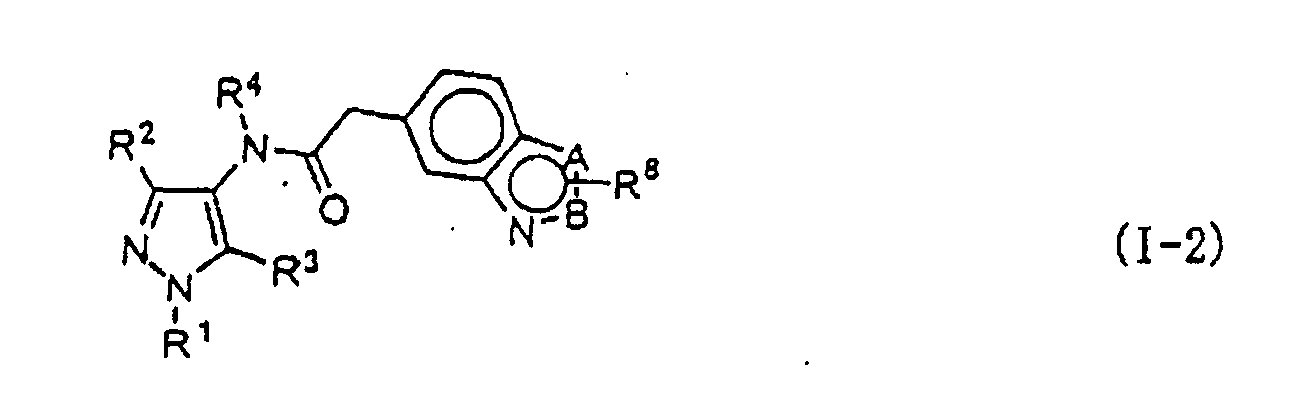
R2 and R3 may be same or different, and represent a hydrogen atom, a halogen atom; a cyano group; a nitro group; a hydroxyl group; a mercapto group; an amino group; a (C1-C6)alkyl group; a halo(C1-C6)alkyl group; a (C2-C6)alkenyl group; a halo(C2-C6)alkenyl group; a (C2-C6)alkynyl group; a halo(C2-C6)alkynyl group; a (C1-C6)alkoxyl group; a halo(C1-C6)alkoxyl group; a (C1-C6)alkylthio group; a halo(C1-C6)alkylthio group; a (C1-C6)alkylsulfinyl group; a halo (C1-C6)alkylsulfinyl group; a (C1-C6)alkylsulfonyl group; a halo(C1-C6)alkylsulfonyl group; a mono(C1-C6)alkylamino group; a di(C1-C6)alkylamino group whose (C1-C6)alkyl groups may be the same or different; a (C1-C6)alkoxy(C1-C6)alkyl group; a halo(C1-C6)alkoxy (C1-C6)alkyl group; a (C1-C6)alkylthio(C1-C6)alkyl group; a halo(C1-C6)alkylthio (C1-C6)alkyl group; a (C1-C6)alkylsulfinyl(C1-C6)alkyl group; a halo(C1-C6)alkylsulfinyl (C1-C6)alkyl group; a (C1-C6)alkylsulfonyl(C1-C6)alkyl group; a halo (C1-C6)alkylsulfonyl(C1-C6)alkyl group; a mono(C1-C6)alkylamino(C1-C6)alkyl group; a di (C1-C6)alkylamino (C1-C6)alkyl group whose (C1-C6)alkyl groups may be the same or different; a (C3-C6)cycloalkyl group; a halo (C3-C6)cycloalkyl group; a (C3-C6)cycloalkenyl group; a halo(C3-C6)cycloalkenyl group; a phenyl group; a substituted phenyl group having at least one substituent which may be the same or different and is selected from the group consisting of a halogen atom, a cyano group, a nitro group, a hydroxyl group, an amino group, a mercapto group, a (C1-C6)alkyl group, a halo(C1-C6)alkyl group, a (C2-C6)alkenyl group, a halo(C2-C6)-alkenyl group, a (C2-C6)alkynyl group, a halo(C2-C6)alkynyl group, a (C1-C6)alkoxyl group, a halo(C1-C6)alkoxyl group, a (C1-C6)alkylthio group, a halo(C1-C6)alkylthio group, a (C1-C6)alkylsulfinyl group, a halo(C1-C6)alkylsulfinyl group, a (C1-C6)alkylsulfonyl group, a halo(C1-C6)alkylsulfonyl group, a mono(C1-C6)alkylamino group, a di(C1-C6)alkylamino group whose (C1-C6)alkyl groups may be the same or different, a (C1-C6)alkylsulfonylamino group, and a halo(C1-C6)alkylsulfonylamino group; a phenoxy group; a substituted phenoxy group having at least one substituent which may be the same or different and is selected from the group consisting of a halogen atom, a cyano group, a nitro group, a hydroxyl group, an amino group, a mercapto group, a (C1-C6)alkyl group, a halo(C1-C6)alkyl group, a (C2-C6)alkenyl group, a halo(C2-C6)alkenyl group, a (C2-C6)alkynyl group, a halo(C2-C6)alkynyl group, a (C1-C6)alkoxyl group, a halo(C1-C6)alkoxyl group, a (C1-C6)alkylthio group, a halo(C1-C6)alkylthio group, a (C1-C6)alkylsulfinyl group, a halo(C1-C6)alkylsulfinyl group, a (C1-C6)alkylsulfonyl group, a halo(C1-C6)alkylsulfonyl group, a mono(C1-C6)alkylamino group, a di(C1-C6)alkylamino group whose (C1-C6)alkyl groups may be the same or different, a (C1-C6)alkylsulfonylamino group, and a halo(C1-C6)alkylsulfonylamino group; a phenylthio group; a substituted phenylthio group having at least one substituent which may be the same or different and is selected from the group consisting of a halogen atom, a cyano group, a nitro group, a hydroxyl group, an amino group, a mercapto group, a (C1-C6)alkyl group, a halo(C1-C6)alkyl group, a (C2-C6)alkenyl group, a halo(C2-C6)alkenyl group, a (C2-C6)alkynyl group, a halo (C2-C6)alkynyl group, a (C1-C6)alkoxyl group, a halo(C1-C6)alkoxyl group, a (C1-C6)alkylthio group, a halo(C1-C6)alkylthio group, a (C1-C6)alkylsulfinyl group, a halo(C1-C6)alkylsulfinyl group, a (C1-C6)alkylsulfonyl group, a halo(C1-C6)alkylsulfonyl group, a mono(C1-C6)alkylamino group, a di(C1-C6)alkylamino group whose (C1-C6)alkyl groups may be the same or different, a (C1-C6)alkylsulfonyl amino group, and a halo(C1-C6)alkylsulfonylamino group; a -ZCOZm(R6) group (wherein, R6, Z, and m are the same as described above); or a -COZm(R6) group (wherein, R6, Z, and m are the same as described above) ;
R4 represents a hydrogen atom; a (C1-C6)alkyl group; a halo(C1-C6)alkyl group; a cyano(C1-C6)alkyl group; a (C2-C6)alkenyl group; a halo(C2-C6)alkenyl group; a (C2-C6)alkynyl group; a halo(C2-C6)alkynyl group; a (C1-C6)alkoxy(C1-C6)alkyl group; a halo(C1-C6)alkoxy (C1-C6)alkyl group; a (C1-C6)alkoxy(C1-C6)-alkoxy(C1-C6)alkyl group; a (C1-C6)alkylthio (C1-C6)alkyl group; a halo(C1-C6)alkylthio(C1-C6)alkyl group; a (C1-C6)alkylsulfinyl(C1-C6)alkyl group; a halo(C1-C6)-alkylsulfinyl(C1-C6)alkyl group; a (C1-C6)alkylsulfonyl-(C1-C6)alkyl group; a halo(C1-C6)alkylsulfonyl(C1-C6)alkyl group; a mono(C1-C6)alkylamino(C1-C6)alkyl group; a di (C1-C6)alkylamino(C1-C6)alkyl group whose (C1-C6)alkyl groups may be the same or different; a (C3-C6)cycloalkyl group; a halo(C3-C6)cycloalkyl group; a (C3-C6)cycloalkenyl group; a halo(C3-C6)cycloalkenyl group; a -COZm(R6) group (wherein, R6, Z, and m are the same as described above), a -CSNH(R6) group (wherein, R6, is the same as described above), a (C1-C6)alkylcarbonyl(C1-C6)alkyl group; a (C1-C6)alkoxycarbonyl(C1-C6)alkyl group; a phenyl(C1-C6)alkyl group; a substituted phenyl(C1-C6)alkyl group having on the ring at least one substituent which may be the same or different and is selected from the group consisting of a halogen atom, a cyano group, a nitro group, a hydroxyl group, an amino group, a mercapto group, a (C1-C6)alkyl group, a halo(C1-C6)alkyl group, a (C2-C6)alkenyl group, a halo(C2-C6)alkenyl group, a (C2-C6)alkynyl group, a halo(C2-C6)alkynyl group, a (C1-C6)alkoxyl group, a halo(C1-C6)alkoxyl group, a (C1-C6)alkylthio group, a halo(C1-C6)alkylthio group, a (C1-C6)alkylsulfinyl group, a halo(C1-C6)alkylsulfinyl group, a (C1-C6)alkylsulfonyl group, a halo(C1-C6)alkylsulfonyl group, a mono(C1-C6)alkylamino group, a di(C1-C6)alkylamino group whose (C1-C6)alkyl groups may be the same or different, a (C1-C6)alkylsulfonylamino group, and a halo(C1-C6)alkylsulfonylamino group; a heterocyclic(C1-C6)alkyl group (a heterocyclic ring represents a pyridyl group; a pyridine-N-oxide group; a pyridazinyl group; a pyrimidinyl group; a pyrazyl group; a piperidyl group; a piperazino group; a morpholinyl group; a morpholino group; a furyl group; a tetrahydrofuryl group; a thienyl group; a tetrahydrothienyl group; a pyrrolyl group; a pyrrolidyl group; an imidazolidinyl group; an oxazolyl group; an isoxazolyl group; an oxadiazolyl group; a thiazolyl group; an isothiazolyl group; a thiadiazolyl group; an imidazolyl group; a triazolyl group; a pyrazolyl group; an indolyl group; a benzofuryl group; a benzothienyl group; an indazolyl group; a quinolyl group; an isoquinolyl group; or a quinazolyl group); or a substituted heterocyclic(C1-C6)alkyl group (the heterocyclic group is the same as the above-described) having on the ring at least one substituent which may be the same or different and is selected from the group consisting of a halogen atom, a cyano group, a nitro group, a hydroxyl group, an amino group, a mercapto group, a (C1-C6)alkyl group, a halo(C1-C6)alkyl group, a (C2-C6)alkenyl group, a halo(C2-C6)alkenyl group, a (C2-C6)alkynyl group, a halo(C2-C6)alkynyl group, a (C1-C6)alkoxyl group, a halo(C1-C6)alkoxyl group, a (C1-C6)alkylthio group, a halo(C1-C6)alkylthio group, a (C1-C6)alkylsulfinyl group, a halo(C1-C6)alkylsulfinyl group, a (C1-C6)alkylsulfonyl group, a halo(C1-C6)alkylsulfonyl group, a mono(C1-C6)alkylamino group, a di(C1-C6)alkylamino group whose (C1-C6)alkyl groups may be the same or different, a (C1-C6)alkylsulfonylamino group, and a halo(C1-C6)alkylsulfonylamino group;
R8 represents a halogen atom; a cyano group; a nitro group; a hydroxyl group; an amino group; a mercapto group; a (C1-C6)alkyl group; a halo(C1-C6)alkyl group; a cyano(C1-C6)alkyl group; a (C3-C6)cycloalkyl group; a halo(C3-C6)cycloalkyl group; a cyano(C3-C6)cycloalkyl group; a (C1-C6)alkyl(C3-C6)cycloalkyl group; a (C1-C6)alkylhalo(C3-C6)cycloalkyl group; a (C3-C6)cycloalkyl(C1-C6)alkyl group; a (C2-C6)alkenyl group; a (C3-C6)cycloalkenyl group; a halo(C2-C6)alkenyl group; a (C3-C6)cycloalkenyl(C1-C6)alkyl group; a (C2-C6)alkynyl group; a halo(C2-C6)alkynyl group; a (C1-C6)alkoxyl group; a halo(C1-C6)alkoxyl group; a (C1-C6)alkylthio group; a halo(C1-C6)alkylthio group; a (C1-C6)alkylsulfinyl group; a halo(C1-C6)alkylsulfinyl group; a (C1-C6)alkylsulfonyl group; a halo(C1-C6)alkylsulfonyl group; a mono(C1-C6)alkylamino group; a di(C1-C6)alkylamino group whose (C1-C6)alkyl groups may be the same or different; a (C1-C6)alkoxy(C1-C6)alkyl group; a halo(C1-C6)alkoxy(C1-C6)alkyl group; a (C1-C6)alkylthio-(C1-C6)alkyl group; a halo(C1-C6)alkylthio (C1-C6)alkyl group; a (C1-C6)alkylsulfinyl (C1-C6)alkyl group; a halo(C1-C6)alkylsulfinyl(C1-C6)alkyl group; a (C1-C6)alkylsulfonyl(C1-C6)alkyl group; a halo(C1-C6)-alkylsulfonyl(C1-C6)alkyl group; a mono(C1-C6)alkylamino (C1-C6)alkyl group; a di (C1-C6)alkylamino(C1-C6)alkyl group whose (C1-C6)alkyl groups may be the same or different; a carboxy(C1-C6)alkyl group; a (C1-C6)alkylcarbonyl(C1-C6)alkyl group; a (C1-C6)alkoxycarbonyl(C1-C6)alkyl group; an aminocarbonyl(C1-C6)alkyl group; a mono(C1-C6)alkylaminocarbonyl(C1-C6)alkyl group; a di(C1-C6)alkylaminocarbonyl(C1-C6)alkyl group whose (C1-C6)alkyl groups may be the same or different; a -COZm(R6) group (in the formula, R6, Z, and m are the same as described above); a -ZCOZm(R6) group (in the formula, R6, Z, and m are the same as described above); a (C1-C6)alkylsulfonylamino group; a halo(C1-C6)alkylsulfonylamino group; a hydroxyimino(C1-C6)alkyl group; a (C1-C6)alkoxyimino(C1-C6)alkyl group; a (C2-C6)alkenyloxyimino(C1-C6)alkyl group; a phenyl group; a substituted phenyl group having at least one substituent which may be the same or different and is selected from the group consisting of a halogen atom, a cyano group, a nitro group, a hydroxyl group, an amino group, a mercapto group, a (C1-C6)alkyl group, a halo(C1-C6)alkyl group, a (C2-C6)alkenyl group, a halo(C2-C6)alkenyl group, a (C2-C6)alkynyl group, a halo(C2-C6)alkynyl group, a (C1-C6)alkoxyl group, a halo(C1-C6)alkoxyl group, a (C1-C6)alkylthio group, a halo(C1-C6)alkylthio group, a (C1-C6)alkylsulfinyl group, a halo(C1-C6)alkylsulfinyl group, a (C1-C6)alkylsulfonyl group, a halo(C1-C6)alkylsulfonyl group, a mono(C1-C6)alkylamino group, a di(C1-C6)alkylamino group whose (C1-C6)alkyl groups may be the same or different, a methylenedioxy group, a -COZm(R6) group (in the formula, R6, Z, and m are the same as described above), a -ZCOZm(R6) group (in the formula, R6, Z, and m are the same as described above), a (C1-C6)alkylsulfonylamino group, and a halo(C1-C6)-alkylsulfonylamino group; a phenyl(C1-C6)alkyl group; a substituted phenyl(C1-C6)alkyl group having on the ring at least one substituent which may be the same or different and is selected from the group consisting of a halogen atom, a cyano group, a nitro group, a hydroxyl group, an amino group, a mercapto group, a (C1-C6)alkyl group, a halo(C1-C6)alkyl group, a (C2-C6)alkenyl group, a halo(C2-C6)alkenyl group, a (C2-C6)alkynyl group, a halo(C2-C6)alkynyl group, a (C1-C6)alkoxyl group, a halo(C1-C6)alkoxyl group, a (C1-C6)alkylthio group, a halo(C1-C6)alkylthio group, a (C1-C6)alkylsulfinyl group, a halo(C1-C6)alkylsulfinyl group, a (C1-C6)alkylsulfonyl group, a halo(C1-C6)alkylsulfonyl group, a mono(C1-C6)alkylamino group, a di(C1-C6)alkylamino group whose (C1-C6)alkyl groups may be the same or different, a -COZm(R6) group (in the formula, R6, Z, and m are the same as described above), a -ZCOZm(R6) group (in the formula, R6, Z, and m are the same as described above), a (C1-C6)alkylsulfonylamino group, and a halo(C1-C6)alkylsulfonylamino group; a heterocyclic group (a heterocyclic.ring is the same as described above); a substituted heterocyclic group (a heterocyclic ring is the same as described above) having at least one substituent which may be the same or different and is selected from the group consisting of a halogen atom, a cyano group, a nitro group, a hydroxyl group, an amino group, a mercapto group, a (C1-C6)alkyl group, a halo(C1-C6)alkyl group, a (C2-C6)alkenyl group, a halo(C2-C6)alkenyl group, a (C2-C6)alkynyl group, a halo(C2-C6)alkynyl group, a (C1-C6)alkoxyl group, a halo(C1-C6)alkoxyl group, a (C1-C6)alkylthio group, a halo(C1-C6)alkylthio group, a (C1-C6)alkylsulfinyl group, a halo(C1-C6)alkylsulfinyl group, a (C1-C6)alkylsulfonyl group, a halo(C1-C6)alkylsulfonyl group, a mono(C1-C6)alkylamino group, a di(C1-C6)alkylamino group whose (C1-C6)alkyl groups may be the same or different, a -COZm(R6) group (in the formula, R6, Z, and m are the same as described above), a -ZCOZm(R6) group (in the formula, R6, Z, and m are the same as described above), a (C1-C6)alkylsulfonylamino group, and a halo(C1-C6)alkylsulfonylamino group; a heterocyclic(C1-C6)alkyl group; a substituted heterocyclic(C1-C6)alkyl group (a heterocyclic ring is the same as described above) having at least one substituent which may be the same or different and is selected from the group consisting of a halogen atom, a cyano group, a nitro group, a hydroxyl group, an amino group, a mercapto group, a (C1-C6)alkyl group, a halo (C1-C6)alkyl group, a (C2-C6)alkenyl group, a halo(C2-C6)alkenyl group, a (C2-C6)alkynyl group, a halo(C2-C6)alkynyl group, a (C1-C6)alkoxyl group, a halo(C1-C6)alkoxyl group, a (C1-C6)-alkylthio group, a halo(C1-C6)alkylthio group, a (C1-C6)-alkylsulfinyl group, a halo(C1-C6)alkylsulfinyl group, a (C1-C6)alkylsulfonyl group, a halo(C1-C6)alkylsulfonyl group, a mono(C1-C6)alkylamino group, a di(C1-C6)alkylamino group whose (C1-C6)alkyl groups may be the same or different, a (C1-C6)alkylsulfonylamino group, and a halo(C1-C6)alkylsulfonylamino group; or -Q-Ar, wherein Q represents an oxygen atom; a sulfur atom; N(R7) (in the formula, R7 is the same as described above); a (C1-C6)alkylene group; a (C1-C6)alkyl(C1-C6)alkylene group; a halo(C1-C6)alkyl(C1-C6)alkylene group; a hydroxy(C1-C6)alkyl(C1-C6)alkylene group; a (C1-C6)alkoxy(C1-C6)alkyl(C1-C6)alkylene group; a (C2-C6)alkenyl(C1-C6)alkylene group; a halo(C2-C6)alkenyl(C1-C6)alkylene group; a hydroxy(C1-C6)alkylene group; a (C1-C6)alkoxy(C1-C6)alkylene group; a halo(C1-C6)alkoxy(C1-C6)alkylene group; a (C1-C6)alkylcarbonyloxy(C1-C6)alkylene group; a cyano(C1-C6)alkylene group; a halo (C1-C6)alkylene group; a (C3-C6)cycloalkyl(C1-C6)alkylene group; a (C3-C6)cycloalkenyl(C1-C6)alkylene group; a (C1-C6)alkylcarbonyl(C1-C6)alkylene group; a (C1-C6)alkoxycarbonyl(C1-C6)alkylene group; an amino(C1-C6)alkylene group; a mono(C1-C6)alkylamino(C1-C6)alkylene group; a di(C1-C6)alkylamino(C1-C6)alkylene group whose (C1-C6)alkyl groups may be the same or different; a (C1-C6)alkylcarbonylamino(C1-C6)alkylene group; a (C1-C6)alkoxycarbonylamino(C1-C6)alkylene group; a mercapto(C1-C6)alkylene group; a (C1-C6)alkylthio(C1-C6)alkylene group; an alkylsulfinyl(C1-C6)alkylene group; a (C1-C6)alkylsulfonyl(C1-C6)alkylene group; a (C3-C6)cycloalkylene group; a (C2-C6)alkenylene group; a (C1-C6)alkyl(C2-C6)alkenylene group; a halo(C1-C6)alkyl(C2-C6)alkenylene group; a hydroxy(C1-C6)alkyl(C2-C6)alkenylene group; a (C1-C6)alkoxy(C1-C6)alkyl(C2-C6)alkenylene group; a (C2-C6)alkenyl(C2-C6)alkenylene group; a halo(C2-C6)alkenyl(C2-C6)alkenylene group; a (C2-C6)alkynyl(C2-C6)alkenylene group; a halo(C2-C6)alkynyl(C2-C6)alkenylene group; a hydroxy(C2-C6)alkenylene group; a (C1-C6)alkoxy (C2-C6)alkenylene group; a halo(C1-C6)alkoxy(C2-C6)alkenylene group; a (C1-C6)alkylcarbonyloxy(C2-C6)alkenylene group; a cyano(C2-C6)alkenylene group; a halo(C2-C6)alkenylene group; a (C3-C6)cycloalkyl(C2-C6)alkenylene group; a (C3-C6)cycloalkenyl(C2-C6)alkenylene group; a (C1-C6)alkylcarbonyl(C2-C6)alkenylene group; a (C1-C6)alkoxylcarbonyl(C2-C6)alkenylene group, an amino(C2-C6)alkenylene group; a mono(C1-C6)alkylamino(C2-C6)alkenylene group; a di(C1-C6)alkylamino(C2-C6)alkenylene group whose (C1-C6)alkyl groups may be the same or different; a (C1-C6)alkylcarbonylamino (C2-C6)alkenylene group; a (C1-C6)alkoxycarbonylamino (C2-C6)alkenylene group; a mercapto(C2-C6)alkenylene group; a (C1-C6)alkylthio(C2-C6)alkenylene group; a (C1-C6)alkylsulfinyl(C2-C6)alkenylene group; a (C1-C6)alkylsulfonyl(C2-C6)alkenylene group; a (C2-C6)alkynylene group; a (C1-C6)alkylenoxy group; a (C1-C6)alkyl(C1-C6)alkylenoxy group; a (C1-C6)alkylenethio group; a (C1-C6)alkyl(C1-C6)alkylenethio group; a (C1-C6)alkyleneamino group; a (C1-C6)alkyl(C1-C6)alkyleneamino group; a carbonyl group; a hydroxyimino group; a (C1-C6)alkoxyimino group; a (C1-C6)alkylenedioxy(C1-C6)alkylene group; or a Z(R6)mCO group (in the formula, R6, Z, and m are the same as described above);
Ar represents a phenyl group; a substituted phenyl group having at least one substituent which may be the same or different and is selected from the group consisting of a halogen atom, a cyano group, a nitro group, a hydroxyl group, an amino group, a mercapto group, a (C1-C6)alkyl group, a halo(C1-C6)alkyl group, a (C2-C6)alkenyl group, a halo(C2-C6)alkenyl group, a (C2-C6)alkynyl group, a halo(C2-C6)alkynyl group, a (C1-C6)alkoxyl group, a halo(C1-C6)alkoxyl group, a (C1-C6)alkylthio group, a halo(C1-C6)alkylthio group, a (C1-C6)alkylsulfinyl group, a halo(C1-C6)alkylsulfinyl group, a (C1-C6)alkylsulfonyl group, a halo(C1-C6)alkylsulfonyl group, a mono(C1-C6)alkylamino group, a di(C1-C6)alkylamino group whose (C1-C6)alkyl groups may be the same or difficult, a hydroxyimino(C1-C6)alkyl group, a (C1-C6)alkoxyimino (C1-C6)alkyl group, a (C2-C6)alkenyloxyimino(C1-C6)alkyl group, a -COZm(R6) group (in the formula, R6, Z, and m are the same as described above), a -ZCOZm(R6) group (in the formula, R6, Z, and m are the same as described above), a (C1-C6)alkylsulfonylamino group, and a halo(C1-C6)alkylsulfonylamino group; a heterocyclic group (a heterocyclic ring is the same as described above); or a substituted heterocyclic group (a heterocyclic ring is the same as described above) having at least one substituent which may be the same or different and is selected from the group consisting of a halogen atom, a cyano group, a nitro group, a hydroxyl group, an amino group, a mercapto group, a (C1-C6)alkyl group, a halo(C1-C6)alkyl group, a (C2-C6)alkenyl group, a halo(C2-C6)alkenyl group, a (C2-C6)alkynyl group, a halo(C2-C6)alkynyl group, a (C1-C6)alkoxyl group, a halo(C1-C6)alkoxyl group, a (C1-C6)alkylthio group, a halo(C1-C6)alkylthio group, a (C1-C6)alkylsulfinyl group, a halo(C1-C6)alkylsulfinyl group, a (C1-C6)alkylsulfonyl group, a halo(C1-C6)alkylsulfonyl group, a mono(C1-C6)alkylamino group, a di(C1-C6)alkylamino group whose (C1-C6)alkyl groups may be the same or different, a -COZm(R6) group (in the formula, R6, Z, and m are the same as described above), a -ZCOZm(R6) group (in the formula, R6, Z, and m are the same as described above), a (C1-C6)alkylsulfonylamino group, a halo(C1-C6)alkylsulfonylamino group, a hydroxyimino(C1-C6)alkyl group, a (C1-C6)alkoxyimino(C1-C6)alkyl group, and a (C2-C6)alkenyloxyimino(C1-C6)alkyl group;
A represents an oxygen atom; a sulfur atom; N=; N(R7) (in the formula, R7 is the same as described above); or C(R9) (in the formula, R9 represents a hydrogen atom; a halogen atom; a (C1-C6)alkyl group; a halo(C1-C6)alkyl group; a (C2-C6)alkenyl group; a halo(C2-C6)alkenyl group; a (C2-C6)alkynyl group; a halo (C2-C6)alkynyl group; a (C1-C6)alkoxy(C1-C6)alkyl group; a halo(C1-C6)alkoxy(C1-C6)alkyl group; a (C1-C6)alkylthio(C1-C6)alkyl group; a halo(C1-C6)alkylthio(C1-C6)alkyl group; a (C1-C6)alkylsulfinyl(C1-C6)alkyl group; a halo(C1-C6)alkylsulfinyl(C1-C6)alkyl group; a (C1-C6)alkylsulfonyl(C1-C6)alkyl group; a halo(C1-C6)alkylsulfonyl(C1-C6)alkyl group; a mono(C1-C6)alkylamino(C1-C6)alkyl group; a di(C1-C6)alkylamino (C1-C6)alkyl group whose (C1-C6)alkyl groups may be the same or different; a (C3-C6)cycloalkyl group; a halo(C3-C6)cycloalkyl group; a (C3-C6)cycloalkenyl group; or a halo(C3-C6)cycloalkenyl group), and
B represents N= or N(R8) (wherein, R8 is the same as described above). - The N-(4-pyrazolyl)amide derivative according to Claim 1 represented by the general formula (I-3):wherein R1 represents a hydrogen atom; a (C1-C6)alkyl group; a halo(C1-C6)alkyl group; a hydroxy(C1-C6)alkyl group; a cyano(C1-C6)alkyl group; a formyl(C1-C6)alkyl group; a (C2-C6)alkenyl group; a halo(C2-C6)alkenyl group; a (C2-C6)alkynyl group; a halo(C2-C6)alkynyl group; a (C1-C6)alkoxy(C1-C6)alkyl group; a halo(C1-C6)alkoxy(C1-C6)alkyl group; a (C1-C6)alkylthio(C1-C6)-alkyl group; a halo(C1-C6)alkylthio(C1-C6)alkyl group; a (C1-C6)alkylsulfinyl(C1-C6)alkyl group; a halo(C1-C6)alkylsulfinyl(C1-C6)alkyl group; a (C1-C6)alkylsulfonyl(C1-C6)alkyl group; a halo(C1-C6)alkylsulfonyl(C1-C6)alkyl group; a mono(C1-C6)alkylamino-(C1-C6)alkyl group; a di(C1-C6)alkylamino(C1-C6)alkyl group whose (C1-C6)alkyl groups may be the same or different; a (C1-C6)alkylsulfonyl group; a halo(C1-C6)alkylsulfonyl group; a mono(C1-C6)alkylaminosulfonyl group; a di(C1-C6)alkylaminosulfonyl group whose (C1-C6)alkyl groups may be the same or different; a (C1-C6)alkyloxycarbonyl(C1-C6)alkyl group; a mono(C1-C6)alkylaminocarbonyl(C1-C6)alkyl group; a di(C1-C6)-alkylaminocarbonyl(C1-C6)alkyl group whose (C1-C6)alkyl groups may be the same or different; a (C1-C6)alkyloxyimino(C1-C6)alkyl group; a (C1-C6)alkylsulfonyloxy(C1-C6)alkyl group; a halo(C1-C6)alkylsulfonyloxy(C1-C6)alkyl group; a (C1-C6)alkylcarbonyloxy(C1-C6)alkyl group; a phenylsulfonyl group; a substituted phenylsulfonyl group having at least one substituent which may be the same or different and is selected from the group consisting of a halogen atom, a cyano group, a nitro group, a hydroxyl group, an amino group, a mercapto group, a (C1-C6)alkyl group, a halo(C1-C6)alkyl group, a (C2-C6)alkenyl group, a halo(C2-C6)alkenyl group, a (C2-C6)alkynyl group, a halo(C2-C6)alkynyl group, a (C1-C6)alkoxyl group, a halo(C1-C6)alkoxyl group, a (C1-C6)alkylthio group, a halo(C1-C6)alkylthio group, a (C1-C6)alkylsulfinyl group, a halo(C1-C6)alkylsulfinyl group, a (C1-C6)alkylsulfonyl group, a halo(C1-C6)alkylsulfonyl group, a mono(C1-C6)alkylamino group, a di(C1-C6)alkylamino group whose (C1-C6)alkyl groups may be the same or different, a (C1-C6)alkylsulfonylamino group, and a halo(C1-C6)alkylsulfonylamino group; a (C3-C6)cycloalkyl group; a halo(C3-C6)cycloalkyl group; a (C3-C6)cycloalkenyl group; a halo(C3-C6)cycloalkenyl group; a phenyl group; a substituted phenyl group having at least one substituent which may be the same or different and is selected from the group consisting of a halogen atom, a cyano group, a nitro group, a hydroxyl group, an amino group, a mercapto group, a (C1-C6)alkyl group, a halo(C1-C6)alkyl group, a (C2-C6)alkenyl group, a halo(C2-C6)alkenyl group, a (C2-C6)alkynyl group, a halo(C2-C6)alkynyl group, a (C1-C6)alkoxyl group, a halo(C1-C6)alkoxyl group, a (C1-C6)alkylthio group, a halo(C1-C6)alkylthio group, a (C1-C6)alkylsulfinyl group, a halo(C1-C6)alkylsulfinyl group, a (C1-C6)alkylsulfonyl group, a halo(C1-C6)alkylsulfonyl group, a mono(C1-C6)alkylamino group, a di(C1-C6)alkylamino group whose (C1-C6)alkyl groups may be the same or different, a (C1-C6)alkylsulfonylamino group, and a halo(C1-C6)alkylsulfonylamino group; or a -COZm(R6) group (wherein, R6 represents a hydrogen atom; a (C1-C6)alkyl group; a halo(C1-C6)alkyl group; a (C2-C6)alkenyl group; a halo(C2-C6)alkenyl group; a (C2-C6)alkynyl group; a halo(C2-C6)alkynyl group; a (C1-C6)alkoxy(C1-C6)alkyl group; a halo(C1-C6)alkoxy(C1-C6)alkyl group; a (C1-C6)alkylthio(C1-C6)alkyl group; a halo(C1-C6)alkylthio(C1-C6)alkyl group; a (C1-C6)alkylsulfinyl(C1-C6)alkyl group; a halo(C1-C6)alkylsulfinyl(C1-C6)alkyl group; a (C1-C6)alkylsulfonyl(C1-C6)alkyl group; a halo(C1-C6)alkylsulfonyl(C1-C6)alkyl group; a mono(C1-C6)alkylamino(C1-C6)alkyl group; a di (C1-C6)alkylamino(C1-C6)alkyl group whose (C1-C6)alkyl groups may be the same or different; a (C3-C6)cycloalkyl group; a halo(C3-C6)cycloalkyl group; a (C3-C6)cycloalkenyl group; a halo(C3-C6)cycloalkenyl group; a phenyl group; or a substituted phenyl group having at least one substituent which may be the same or different and is selected from the group consisting of a halogen atom, a cyano group, a nitro group, a hydroxyl group, an amino group, a mercapto group, a (C1-C6)alkyl group, a halo(C1-C6)alkyl group, a (C2-C6)alkenyl group, a halo(C2-C6)alkenyl group, a (C2-C6)alkynyl group, a halo(C2-C6)alkynyl group, a (C1-C6)alkoxyl group, a halo(C1-C6)alkoxyl group, a (C1-C6)alkylthio group, a halo(C1-C6)alkylthio group, a (C1-C6)alkylsulfinyl group, a halo(C1-C6)alkylsulfinyl group, a (C1-C6)alkylsulfonyl group, a halo(C1-C6)alkylsulfonyl group, a mono(C1-C6)alkylamino group, a di(C1-C6)alkylamino group whose (C1-C6)alkyl groups may be the same or different, a (C1-C6)alkylsulfonylamino group, and a halo(C1-C6)alkylsulfonylamino group; Z represents an oxygen atom; a sulfur atom; or N(R7) [wherein, R7 represents a hydrogen atom; a (C1-C6)alkyl group; a halo(C1-C6)alkyl group; a (C2-C6)alkenyl group; a halo(C2-C6)alkenyl group; a (C2-C6)alkynyl group; a halo(C2-C6)alkynyl group; a (C1-C6)alkoxy(C1-C6)alkyl group; a halo(C1-C6)alkoxy(C1-C6)alkyl group; a (C1-C6)alkylthio(C1-C6)alkyl group; a halo(C1-C6)alkylthio(C1-C6)alkyl group; a (C1-C6)alkylsulfinyl(C1-C6)alkyl group; a halo(C1-C6)alkylsulfinyl-(C1-C6)alkyl group; a (C1-C6)alkylsulfonyl(C1-C6)alkyl group; a halo(C1-C6)alkylsulfonyl(C1-C6)alkyl group; a mono(C1-C6)alkylamino(C1-C6)alkyl group; a di(C1-C6)alkylamino(C1-C6)alkyl group whose (C1-C6)alkyl groups may be the same or different; a (C3-C6)cycloalkyl group; a halo(C3-C6)cycloalkyl group; a (C3-C6)cycloalkenyl group; or a halo(C3-C6)cycloalkenyl group]; and m represents an integer of 0 to 1};
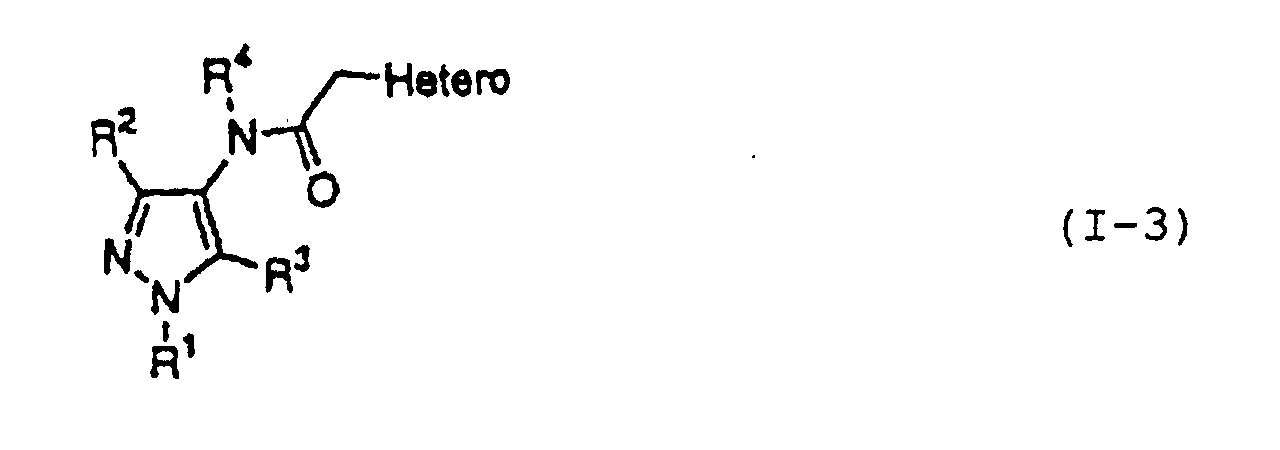
R2 and R3 may be the same or different, and represent a hydrogen atom; a halogen atom; a cyano group; a nitro group; a hydroxyl group; a mercapto group; an amino group; a (C1-C6)alkyl group; a halo(C1-C6)alkyl group; a (C2-C6)alkenyl group; a halo(C2-C6)alkenyl group; a (C2-C6)alkynyl group; a halo(C2-C6)alkynyl group; a (C1-C6)alkoxyl group; a halo(C1-C6)alkoxyl group; a (C1-C6)alkylthio group; a halo(C1-C6)alkylthio group; a (C1-C6)alkylsulfinyl group; a halo(C1-C6)alkylsulfinyl group; a (C1-C6)alkylsulfonyl group; a halo(C1-C6)alkylsulfonyl group; a mono(C1-C6)alkylamino group; a di(C1-C6)alkylamino group whose (C1-C6)alkyl groups may be the same or different; a (C1-C6)alkoxy(C1-C6)alkyl group; a halo(C1-C6)alkoxy(C1-C6)alkyl group; a (C1-C6)alkylthio(C1-C6)alkyl group; a halo(C1-C6)alkylthio(C1-C6)alkyl group; a (C1-C6)alkylsulfinyl(C1-C6)alkyl group; a halo(C1-C6)alkylsulfinyl(C1-C6)alkyl group; a (C1-C6) alkylsulfonyl(C1-C6)alkyl group; a halo(C1-C6)alkylsulfonyl(C1-C6)alkyl group; a mono(C1-C6)alkylamino(C1-C6)alkyl group; a di(C1-C6)alkylamino(C1-C6)alkyl group whose (C1-C6)alkyl groups may be the same or different; a (C3-C6)cycloalkyl group; a halo(C3-C6)cycloalkyl group; a (C3-C6)cycloalkenyl group; a halo(C3-C6)cycloalkenyl group; a phenyl group; a substituted phenyl group having at least one substituent which may be the same or different and is selected from the group consisting of a halogen atom, a cyano group, a nitro group, a hydroxyl group, an amino group, a mercapto group, a (C1-C6)alkyl group, a halo(C1-C6)alkyl group, a (C2-C6)alkenyl group, a halo(C2-C6)-alkenyl group, a (C2-C6)alkynyl group, a halo(C2-C6)alkynyl group, a (C1-C6)alkoxyl group, a halo(C1-C6)alkoxyl group, a (C1-C6)alkylthio group, a halo(C1-C6)alkylthio group, a (C1-C6)alkylsulfinyl group, a halo(C1-C6)alkylsulfinyl group, a (C1-C6)alkylsulfonyl group, a halo(C1-C6)alkylsulfonyl group, a mono(C1-C6)alkylamino group, a di(C1-C6)alkylamino group whose (C1-C6)alkyl groups may be the same or different, a (C1-C6)alkylsulfonylamino group, and a halo(C1-C6)alkylsulfonylamino group; a phenoxy group; a substituted phenoxy group having at least one substituent which may be the same or different and is selected from the group consisting of a halogen atom, a cyano group, a nitro group, a hydroxyl group, an amino group, a mercapto group, a (C1-C6)alkyl group, a halo(C1-C6)alkyl group, a (C2-C6)alkenyl group, a halo(C2-C6)alkenyl group, a (C2-C6)alkynyl group, a halo(C2-C6)alkynyl group, a (C1-C6)alkoxyl group, a halo(C1-C6)alkoxyl group, a (C1-C6)alkylthio group, a halo(C1-C6)alkylthio group, a (C1-C6)alkylsulfinyl group, a halo(C1-C6)alkylsulfinyl group, a (C1-C6)alkylsulfonyl group, a halo(C1-C6)alkylsulfonyl group, a mono (C1-C6)alkylamino group, a di(C1-C6)alkylamino group whose (C1-C6)alkyl groups may be the same or different, a (C1-C6)alkylsulfonylamino group, and a halo(C1-C6)alkylsulfonylamino group; a phenylthio group; a substituted phenylthio group having at least one substituent which may be the same or different and is selected from the group consisting of a halogen atom, a cyano group, a nitro group, a hydroxyl group, an amino group, a mercapto group, a (C1-C6)alkyl group, a halo(C1-C6)alkyl group, a (C2-C6)alkenyl group, a halo(C2-C6)alkenyl group, a (C2-C6)alkynyl group, a halo(C2-C6)alkynyl group, a (C1-C6)alkoxyl group, a halo(C1-C6)alkoxyl group, a (C1-C6)alkylthio group, a halo(C1-C6)alkylthio group, a (C1-C6)alkylsulfinyl group, a halo(C1-C6)alkylsulfinyl group, a (C1-C6)alkylsulfonyl group, a halo(C1-C6)alkylsulfonyl group, a mono(C1-C6)alkylamino group, a di(C1-C6)alkylamino group whose (C1-C6)alkyl groups may be the same or different, a (C1-C6)alkylsulfonylamino group, and a halo(C1-C6)alkylsulfonylamino group; a -ZCOZm(R6) group (wherein, R6, Z, and m are the same as described above); or a -COZm(R6) group (wherein, R6, Z, and m are the same as described above); R4 represents a hydrogen atom; a (C1-C6)alkyl group; a halo(C1-C6)alkyl group; a cyano(C1-C6)alkyl group; a (C2-C6)alkenyl group; a halo(C2-C6)alkenyl group; a (C2-C6)alkynyl group; a halo(C2-C6)alkynyl group; a (C1-C6)alkoxy(C1-C6)alkyl group; a halo(C1-C6)alkoxy(C1-C6)alkyl group; a (C1-C6)alkoxy(C1-C6)-alkoxy(C1-C6)alkyl group; a (C1-C6)alkylthio(C1-C6)alkyl group; a halo(C1-C6)alkylthio(C1-C6)alkyl group; a (C1-C6)alkylsulfinyl(C1-C6)alkyl group; a halo(C1-C6)alkylsulfinyl(C1-C6)alkyl group; a (C1-C6)alkylsulfonyl(C1-C6)alkyl group; a halo(C1-C6)alkylsulfonyl-(C1-C6)alkyl group; a mono (C1-C6)alkylamino (C1-C6)alkyl group; a di(C1-C6)alkylamino (C1-C6)alkyl group whose (C1-C6)alkyl groups may be the same or different; a (C3-C6)cycloalkyl group; a halo(C3-C6)cycloalkyl group; a (C3-C6)cycloalkenyl group; a halo(C3-C6)cycloalkenyl group; a -COZm(R6) group (wherein, R6, Z, and m are the same as described above), a -CSNH(R6) group (wherein, R6, is the same as described above), a (C1-C6)alkylcarbonyl (C1-C6)alkyl group; a (C1-C6)alkoxycarbonyl(C1-C6)alkyl group; a phenyl(C1-C6)alkyl group; a substituted phenyl(C1-C6)alkyl group having on the ring at least one substituent which may be the same or different and is selected from the group consisting of a halogen atom, a cyano group, a nitro group, a hydroxyl group, an amino group, a mercapto group, a (C1-C6)alkyl group, a halo(C1-C6)alkyl group, a (C2-C6)alkenyl group, a halo(C2-C6)alkenyl group, a (C2-C6)alkynyl group, a halo(C2-C6)alkynyl group, a (C1-C6)alkoxyl group, a halo(C1-C6)alkoxyl group, a (C1-C6)alkylthio group, a halo(C1-C6)alkylthio group, a (C1-C6)alkylsulfinyl group, a halo (C1-C6)alkylsulfinyl group, a (C1-C6)alkylsulfonyl group, a halo(C1-C6)alkylsulfonyl group, a mono(C1-C6)alkylamino group, a di(C1-C6)alkylamino group whose (C1-C6)alkyl groups may be the same or different, a (C1-C6)alkylsulfonylamino group, and a halo(C1-C6)alkylsulfonylamino group; a heterocyclic(C1-C6)alkyl group (a heterocyclic ring represents a pyridyl group; a pyridine-N-oxide group; a pyridazinyl group; a pyrimidinyl group; a pyrazyl group; a piperidyl group; a piperazino group; a morpholinyl group; a morpholino group; a furyl group; a tetrahydrofuryl group; a thienyl group; a tetrahydrothienyl group; a pyrrolyl group; a pyrrolidyl group; an imidazolidinyl group; an oxazolyl group; an isoxazolyl group; an oxadiazolyl group; a thiazolyl group; an isothiazolyl group; a thiadiazolyl group; an imidazolyl group; a triazolyl group; a pyrazolyl group; an indolyl group; a benzofuryl group; a benzothienyl group; an indazolyl group; a quinolyl group; an isoquinolyl group; or a quinazolyl group); or a substituted heterocyclic(C1-C6)alkyl group (the heterocyclic group is the same as the above-described) having on the ring at least one substituent which may be the same or different and is selected from the group consisting of a halogen atom, a cyano group, a nitro group, a hydroxyl group, an amino group, a mercapto group, a (C1-C6)alkyl group, a halo(C1-C6)alkyl group, a (C2-C6)alkenyl group, a halo(C2-C6)alkenyl group, a (C2-C6)alkynyl group, a halo (C2-C6)alkynyl group, a (C1-C6)alkoxyl group, a halo(C1-C6)alkoxyl group, a (C1-C6)alkylthio group, a halo(C1-C6)alkylthio group, a (C1-C6)alkylsulfinyl group, a halo(C1-C6)alkylsulfinyl group, a (C1-C6)alkylsulfonyl group, a halo(C1-C6)alkylsulfonyl group, a mono(C1-C6)alkylamino group, a di(C1-C6)alkylamino group whose (C1-C6)alkyl groups may be the same or different, a (C1-C6)alkylsulfonylamino group, and a halo(C1-C6)alkylsulfonylamino group;
"Hetero" represents a heterocyclic group (a heterocyclic ring is the same as described above); or a substituted heterocyclic group having at least one substituent which may be the same or different and is selected from the group consisting of a halogen atom, a cyano group, a nitro group, a hydroxyl group, a mercapto group, an amino group, a halo(C1-C6)alkyl group (with the proviso of excluding a trifluoromethyl group), a (C2-C6)alkenyl group, a halo(C2-C6)alkenyl group, a (C2-C6)alkynyl group, a halo(C2-C6)alkynyl group, a halo(C1-C6)alkoxyl group, a halo(C1-C6)alkylthio group, a (C1-C6)alkylsulfinyl group, a halo(C1-C6)alkylsulfinyl group, a (C1-C6)alkylsulfonyl group, a halo(C1-C6)alkylsulfonyl group, a mono(C1-C6)alkylamino group, a di(C1-C6)alkylamino group whose (C1-C6)alkyl groups may be the same or different, a (C1-C6)alkoxy(C1-C6)alkyl group, a halo(C1-C6)alkoxy(C1-C6)alkyl group, a (C1-C6)alkylthio(C1-C6)alkyl group, a halo(C1-C6)alkylthio(C1-C6)alkyl group, a (C1-C6)alkylsulfinyl(C1-C6)alkyl group, a halo(C1-C6)alkylsulfinyl(C1-C6)alkyl group, a (C1-C6)alkylsulfonyl(C1-C6)alkyl group, a halo(C1-C6)alkylsulfonyl(C1-C6)alkyl group, a mono(C1-C6)alkylamino(C1-C6)alkyl group, a di(C1-C6)alkylamino-(C1-C6)alkyl group whose (C1-C6)alkyl groups may be the same or different, a (C3-C6)cycloalkyl group, a halo(C3-C6)cycloalkyl group, a hydroxyimino(C1-C6)alkyl group, a (C1-C6)alkoxyimino(C1-C6)alkyl group, a (C2-C6)alkenyloxyimino(C1-C6)alkyl group, a -COZm(R6) group (in the formula, R6, Z, and m are the same as described above), a -ZCOZm(R6) group (in the formula, R6, Z, and m are the same as described above), a (C1-C6)alkylsulfonylamino group, a halo(C1-C6)alkylsulfonylamino group, a phenyl group, a substituted phenyl group having on the ring at least one substituent selected from the group consisting of same or different an amino group, a mercapto group, a (C1-C6)alkyl group, a halo(C1-C6)alkyl group (with the proviso of excluding a trifluoromethyl group), a (C2-C6)alkenyl group, a halo(C2-C6)alkenyl group, a (C2-C6)alkynyl group, a halo(C2-C6)alkynyl group, a (C1-C6)alkoxyl group, a halo(C1-C6)alkoxyl group, a (C1-C6)alkylthio group, a halo(C1-C6)alkylthio group, a (C1-C6)alkylsulfinyl group, a halo(C1-C6)alkylsulfinyl group, a (C1-C6)alkylsulfonyl group, a halo(C1-C6)alkylsulfonyl group, a mono(C1-C6)alkylamino group, a di(C1-C6)alkylamino group whose (C1-C6)alkyl groups may be the same or different, a -COZm(R6) group (in the formula, R6, Z, and m are the same as described above), a -ZCOZm(R6) group (in the formula, R6, Z, and m are the same as described above), a (C1-C6)alkylsulfonylamino group, and a halo(C1-C6)alkylsulfonylamino group, a heterocyclic group (a heterocyclic ring is the same as described above), a substituted heterocyclic group (a heterocyclic ring is the same as described above) having on the ring at least one substituent which may be the same or different and is selected from the group consisting of same or different a halogen atom, a cyano group, a nitro group, a hydroxyl group, an amino group, a mercapto group, a (C1-C6)alkyl group, a halo(C1-C6)alkyl group, a (C2-C6)alkenyl group, a halo(C2-C6)alkenyl group, a (C2-C6)alkynyl group, a halo(C2-C6)alkynyl group, a (C1-C6)alkoxyl group, a halo(C1-C6)alkoxyl group, a (C1-C6)alkylthio group, a halo(C1-C6)alkylthio group, a (C1-C6)alkylsulfinyl group, a halo(C1-C6)alkylsulfinyl group, a (C1-C6)alkylsulfonyl group, a halo(C1-C6)alkylsulfonyl group, a mono(C1-C6)alkylamino group, a di(C1-C6)alkylamino group whose (C1-C6)alkyl groups may be the same or different, a -COZm(R6) group (in the formula, R6, Z, and m are the same as described above), a -ZCOZm(R6) group (in the formula, R6, Z, and m are the same as described above), a (C1-C6)alkylsulfonylamino group, and a halo(C1-C6)-alkylsulfonylamino group, and -Q-Ar [wherein, Q represents an oxygen atom; a sulfur atom; N(R7) (wherein, R7 is the same as described above); a (C1-C6)alkylene group; a (C1-C6)alkyl(C1-C6)alkylene group; a halo(C1-C6)alkyl(C1-C6)alkylene group; a hydroxy(C1-C6)alkyl(C1-C6)alkylene group; a (C1-C6)alkoxy(C1-C6)alkyl(C1-C6)alkylene group; a (C2-C6)alkenyl(C1-C6)alkylene group; a halo(C2-C6)alkenyl(C1-C6)alkylene group; a hydroxy(C1-C6)alkylene group; a (C1-C6)alkoxy(C1-C6)alkylene group; a halo(C1-C6)alkoxy (C1-C6)alkylene group; a (C1-C6)alkylcarbonyloxy(C1-C6)alkylene group; a cyano(C1-C6)alkylene group; a halo(C1-C6)alkylene group; a (C3-C6)cycloalkyl(C1-C6)alkylene group; a (C3-C6)cycloalkenyl(C1-C6)alkylene group; a (C1-C6)alkylcarbonyl(C1-C6)alkylene group; a (C1-C6)alkoxycarbonyl (C1-C6)alkylene group; an amino(C1-C6)alkylene group; a mono(C1-C6)alkylamino(C1-C6)alkylene group; a di(C1-C6)alkylamino(C1-C6)alkylene group whose (C1-C6)alkyl groups may be the same or different; a (C1-C6)alkylcarbonylamino(C1-C6)alkylene group; a (C1-C6)alkoxy carbonylamino(C1-C6)alkylene group; a mercapto (C1-C6)alkylene group; a (C1-C6)alkylthio(C1-C6)alkylene group; an alkylsulfinyl(C1-C6)alkylene group; a (C1-C6)alkylsulfonyl(C1-C6)alkylene group; a (C3-C6)-cycloalkylene group; a (C2-C6)alkenylene group; a (C1-C6)alkyl(C2-C6)alkenylene group; a halo(C1-C6)alkyl(C2-C6)alkenylene group; a hydroxy(C1-C6)alkyl(C2-C6)alkenylene group; a (C1-C6)alkoxy(C1-C6)alkyl(C2-C6)alkenylene group; a (C2-C6)alkenyl(C2-C6)alkenylene group; a halo-(C2-C6)alkenyl(C2-C6)alkenylene group; a (C2-C6)alkynyl-(C2-C6)alkenylene group; a halo(C2-C6)alkynyl(C2-C6)alkenylene group; a hydroxy(C2-C6)alkenylene group; a (C1-C6)alkoxy(C2-C6)alkenylene group; a halo (C1-C6)alkoxy-(C2-C6)alkenylene group; a (C1-C6)alkylcarbonyloxy(C2-C6)alkenylene group; a cyano(C2-C6)alkenylene group; a halo (C2-C6) alkenylene group; a (C3-C6) cycloalkyl (C2-C6)alkenylene group; a (C3-C6)cycloalkenyl (C2-C6)alkenylene group; a (C1-C6)alkylcarbonyl(C2-C6)alkenylene group; a (C1-C6)alkoxylcarbonyl(C2-C6)alkenylene group; an amino(C2-C6)alkenylene group; a mono (C1-C6)alkylamino(C2-C6)alkenylene group; a di(C1-C6)alkylamino(C2-C6)alkenylene group whose (C1-C6)alkyl groups may be the same or different; a (C1-C6)alkylcarbonylamino(C2-C6)alkenylene group; a (C1-C6)-alkoxycarbonylamino(C2-C6)alkenylene group; a mercapto(C2-C6)alkenylene group; a (C1-C6)alkylthio (C2-C6)alkenylene group; a (C1-C6)alkylsulfinyl(C2-C6)alkenylene group; a (C1-C6)alkylsulfonyl(C2-C6)alkenylene group; a (C2-C6)alkynylene group; a (C1-C6)alkylenoxy group; a (C1-C6)alkyl(C1-C6)alkylenoxy group; a (C1-C6)alkylenethio group; a (C1-C6)alkyl(C1-C6)alkylenethio group; a (C1-C6)alkyleneamino group; a (C1-C6)alkyl(C1-C6)alkylene amino group; a carbonyl group; a hydroxyimino group; a (C1-C6)alkoxyimino group; an alkylenedioxyalkylene group; or a Z(R6)mCO group (in the formula, R6, Z, and m are the same as described above);
Ar represents a phenyl group; a substituted phenyl group having at least one substituent which may be the same or different and is selected from the group consisting of a halogen atom, a cyano group, a nitro group, a hydroxyl group, an amino group, a mercapto group, a (C1-C6)alkyl group, a halo(C1-C6)alkyl group, a (C2-C6)alkenyl group, a halo(C2-C6)alkenyl group, a (C2-C6)alkynyl group, a halo(C2-C6)alkynyl group, a (C1-C6)alkoxyl group, a halo(C1-C6)alkoxyl group, a (C1-C6)alkylthio group, a halo(C1-C6)alkylthio group, a (C1-C6)alkylsulfinyl group, a halo(C1-C6)alkylsulfinyl group, a (C1-C6)alkylsulfonyl group, a halo(C1-C6)alkylsulfonyl group, a mono(C1-C6)alkylamino group, a di(C1-C6)alkylamino group whose (C1-C6)alkyl groups may be the same or different, a hydroxyimino(C1-C6)alkyl group, a (C1-C6)alkoxyimino(C1-C6)alkyl group, a (C2-C6)alkenyloxyimino(C1-C6)alkyl group, a -COZm(R6) group (in the formula, R6, Z, and m are the same as described above), a -ZCOZm(R6) group (in the formula, R6, Z, and m are the same as described above), a (C1-C6)alkylsulfonylamino group, and a halo(C1-C6)alkylsulfonylamino group; a naphthyl group; a substituted naphthyl group having at least one substituent which may be the same or different and is selected from the group consisting of a halogen atom, a cyano group, a nitro group, a hydroxyl group, an amino group, a mercapto group, a (C1-C6)alkyl group, a halo(C1-C6)alkyl group, a (C2-C6)alkenyl group, a halo(C2-C6)alkenyl group, a (C2-C6)alkynyl group, a halo(C2-C6)alkynyl group, a (C1-C6)alkoxyl group, a halo(C1-C6)alkoxyl group, a (C1-C6)alkylthio group, a halo(C1-C6)alkylthio group, a (C1-C6)alkylsulfinyl group, a halo(C1-C6)alkylsulfinyl group, a (C1-C6)alkylsulfonyl group, a halo(C1-C6)alkylsulfonyl group, a mono(C1-C6)alkylamino group, a di(C1-C6)alkylamino group whose (C1-C6)alkyl groups may be the same or different, a hydroxyimino(C1-C6)alkyl group, a (C1-C6)-alkoxyimino(C1-C6)alkyl group, and a (C2-C6)alkenyloxyimino(C1-C6)alkyl group, a -COZm(R6) group (in the formula, R6, Z, and m are the same as described above), a -ZCOZm(R6) group (in the formula, R6, Z, and m are the same as described above), a (C1-C6)alkylsulfonylamino group, and a halo(C1-C6)alkylsulfonylamino group; a heterocyclic group (a heterocyclic ring is the same as described above); or a substituted heterocyclic group (a heterocyclic ring is the same as described above) having at least one substituent which may be the same or different and is selected from the group consisting of a halogen atom, a cyano group, a nitro group, a hydroxyl group, an amino group, a mercapto group, a (C1-C6)alkyl group, a halo(C1-C6)alkyl group, a (C2-C6)alkenyl group, a halo(C2-C6)alkenyl group, a (C2-C6)alkynyl group, a halo(C2-C6)alkynyl group, a (C1-C6)alkoxyl group, a halo(C1-C6)alkoxyl group, a (C1-C6)alkylthio group, a halo(C1-C6)alkylthio group, a (C1-C6)alkylsulfinyl group, a halo(C1-C6)alkylsulfinyl group, a (C1-C6)alkylsulfonyl group, a halo(C1-C6)alkylsulfonyl group, a mono(C1-C6)alkylamino group, a di(C1-C6)alkylamino group whose (C1-C6)alkyl groups may be the same or different , a -COZm(R6) group (in the formula, R6, Z, and m are the same as described above), a -ZCOZm(R6) group (in the formula, R6, Z, and m are the same as described above), a (C1-C6)alkylsulfonylamino group, a halo(C1-C6)alkylsulfonylamino group, a hydroxy(C1-C6)alkyl group, a (C1-C6)alkoxyimino(C1-C6)alkyl group, and a (C2-C6)-alkenyloxyimino(C1-C6)alkyl group]. - An agricultural and horticultural chemical according to any one of Claims 1 to 4, wherein an N-(4-pyrazolyl)amide derivative is contained as an active ingredient.
- The agricultural and horticultural chemical according to Claim 5, wherein the agricultural or horticultural chemical is a germicide or a fungicide.
- The agricultural and horticultural chemical according to Claim 5, wherein the agricultural or horticultural chemical is an insecticide or a nematocide.
- A method for using an agricultural and horticultural chemical in order to control a botanical germ, a fungus, a noxious insect, a nematode or the like, which is harmful, from a useful crop, wherein an objective crop or soil is treated with an effective amount of the agricultural and horticultural chemical according to any one of Claims 5 to 7.
- The method for using an agricultural and horticultural chemical according to Claim 8, wherein the agricultural or horticultural chemical is a germicide or a fungicide.
- The method for using an agricultural and horticultural chemical according to Claim 8, wherein the agricultural or horticultural chemical is an insecticide or a nematocide.
Applications Claiming Priority (5)
| Application Number | Priority Date | Filing Date | Title |
|---|---|---|---|
| JP2000289484 | 2000-09-22 | ||
| JP2000289484 | 2000-09-22 | ||
| JP2001128225 | 2001-04-25 | ||
| JP2001128225 | 2001-04-25 | ||
| PCT/JP2001/008242 WO2002024656A1 (en) | 2000-09-22 | 2001-09-21 | N-(4-pyrazolyl)amide derivatives, chemicals for agricultural and horticultural use, and usage of the same |
Publications (2)
| Publication Number | Publication Date |
|---|---|
| EP1319657A1 true EP1319657A1 (en) | 2003-06-18 |
| EP1319657A4 EP1319657A4 (en) | 2005-03-02 |
Family
ID=26600593
Family Applications (1)
| Application Number | Title | Priority Date | Filing Date |
|---|---|---|---|
| EP01970187A Withdrawn EP1319657A4 (en) | 2000-09-22 | 2001-09-21 | N- (4-PYRAZOLYL AMIDE) DERIVATIVES, CHEMICALS FOR AGRICULTURAL AND HORTICULTURAL USE AND APPLICATIONS THEREOF |
Country Status (5)
| Country | Link |
|---|---|
| US (1) | US20040043904A1 (en) |
| EP (1) | EP1319657A4 (en) |
| KR (1) | KR20030030029A (en) |
| AU (1) | AU2001290258A1 (en) |
| WO (1) | WO2002024656A1 (en) |
Cited By (5)
| Publication number | Priority date | Publication date | Assignee | Title |
|---|---|---|---|---|
| WO2005090313A1 (en) * | 2004-03-18 | 2005-09-29 | Pfizer Limited | N-(1-arylpyrazol-4l)sulfonamides and their use as parasiticides |
| CN104918921A (en) * | 2012-12-21 | 2015-09-16 | 凯莫森特里克斯股份有限公司 | Diazole amides |
| CN107434804A (en) * | 2016-05-29 | 2017-12-05 | 湖南大学 | N- (thiazol-2-yl) -2- [4- (pyridine -2- epoxides) phenoxy group] amide derivatives |
| US10568870B2 (en) | 2016-04-07 | 2020-02-25 | Chemocentryx, Inc. | Reducing tumor burden by administering CCR1 antagonists in combination with PD-1 inhibitors or PD-L1 inhibitors |
| US10744118B2 (en) | 2012-12-07 | 2020-08-18 | Chemocentryx, Inc. | Diazole lactams |
Families Citing this family (33)
| Publication number | Priority date | Publication date | Assignee | Title |
|---|---|---|---|---|
| WO2002094793A1 (en) * | 2001-05-23 | 2002-11-28 | Basf Aktiengesellschaft | Acylated 4-aminopyrazoles |
| WO2006032852A1 (en) * | 2004-09-20 | 2006-03-30 | Biolipox Ab | Pyrazole compounds useful uin the treatment of inflammation |
| WO2006032851A1 (en) * | 2004-09-20 | 2006-03-30 | Biolipox Ab | Pyrazole compounds useful in the treatment of inflammation |
| TW200800911A (en) * | 2005-10-20 | 2008-01-01 | Biolipox Ab | Pyrazoles useful in the treatment of inflammation |
| TW200732320A (en) * | 2005-10-31 | 2007-09-01 | Biolipox Ab | Pyrazoles useful in the treatment of inflammation |
| EP1943234A1 (en) * | 2005-10-31 | 2008-07-16 | Biolipox AB | Triazole compounds as lipoxygenase inhibitors |
| JP2009513692A (en) * | 2005-11-01 | 2009-04-02 | バイオリポックス エービー | Pyrazole compounds useful for the treatment of inflammation |
| US7737149B2 (en) | 2006-12-21 | 2010-06-15 | Astrazeneca Ab | N-[5-[2-(3,5-dimethoxyphenyl)ethyl]-2H-pyrazol-3-yl]-4-(3,5-dimethylpiperazin-1-yl)benzamide and salts thereof |
| AR069650A1 (en) * | 2007-12-14 | 2010-02-10 | Actelion Pharmaceuticals Ltd | DERIVATIVES OF AMINOPIRAZOL AS NON-PEPTIDIC AGONISTS OF THE HUMAN ALX RECEPTOR |
| CA2728063A1 (en) * | 2008-06-19 | 2009-12-23 | Astrazeneca Ab | Pyrazole compounds 436 |
| RU2544862C2 (en) | 2009-06-09 | 2015-03-20 | Актелион Фармасьютиклз Лтд | Fluorinated aminotriazole derivatives |
| CA2760887A1 (en) | 2009-06-12 | 2010-12-16 | Actelion Pharmaceuticals Ltd | Oxazole and thiazole derivatives as alx receptor agonists |
| US8877754B2 (en) * | 2010-09-06 | 2014-11-04 | Boehringer Ingelheim International Gmbh | Compounds, pharmaceutical compositions and uses thereof |
| KR101847672B1 (en) | 2010-12-07 | 2018-04-10 | 이도르시아 파마슈티컬스 리미티드 | Hydroxylated aminotriazole derivatives as alx receptor agonists |
| CN103261194B (en) | 2010-12-07 | 2016-02-24 | 埃科特莱茵药品有限公司 | Oxazolyl-methyl ether derivatives as ALX receptor agonists |
| US20140179712A1 (en) | 2012-12-21 | 2014-06-26 | Astrazeneca Ab | Pharmaceutical formulation of n-[5-[2-(3,5-dimethoxyphenyl)ethyl]-2h-pyrazol-3-yl]-4-[(3r,5s)-3,5-dimethylpiperazin-1-yl]benzamide |
| WO2015058024A1 (en) * | 2013-10-17 | 2015-04-23 | Dow Agrosciences Llc | Processes for the preparation of pesticidal compounds |
| JP2016536295A (en) | 2013-10-17 | 2016-11-24 | ダウ アグロサイエンシィズ エルエルシー | Method for producing pest control compound |
| US9174962B2 (en) | 2013-10-17 | 2015-11-03 | Dow Agrosciences Llc | Processes for the preparation of pesticidal compounds |
| WO2015058028A1 (en) | 2013-10-17 | 2015-04-23 | Dow Agrosciences Llc | Processes for the preparation of pesticidal compounds |
| CN105636440A (en) | 2013-10-17 | 2016-06-01 | 美国陶氏益农公司 | Processes for the preparation of pesticidal compounds |
| US9085564B2 (en) * | 2013-10-17 | 2015-07-21 | Dow Agrosciences Llc | Processes for the preparation of pesticidal compounds |
| WO2015058022A1 (en) | 2013-10-17 | 2015-04-23 | Dow Agrosciences Llc | Processes for the preparation of pesticidal compounds |
| JP2017523168A (en) | 2014-07-31 | 2017-08-17 | ダウ アグロサイエンシィズ エルエルシー | Method for producing 3- (3-chloro-1H-pyrazol-1-yl) pyridine |
| EP3174856A4 (en) | 2014-07-31 | 2018-01-10 | Dow AgroSciences LLC | Process for the preparation of 3-(3-chloro-1h-pyrazol-1-yl)pyridine |
| BR112017000565A2 (en) | 2014-07-31 | 2017-11-07 | Dow Agrosciences Llc | Process for the preparation of 3- (3-chloro-1h-pyrazol-1-yl) pyridine |
| EP3183238A4 (en) | 2014-08-19 | 2018-01-10 | Dow AgroSciences LLC | Process for the preparation of 3-(3-chloro-1h-pyrazol-1-yl)pyridine |
| BR112017004613A2 (en) | 2014-09-12 | 2017-12-05 | Dow Agrosciences Llc | Process for the preparation of 3- (3-chloro-1h-pyrazol-1-yl) pyridine |
| WO2018125815A1 (en) | 2016-12-29 | 2018-07-05 | Dow Agrosciences Llc | Processes for the preparation of pesticidal compounds |
| CN110325036B (en) | 2016-12-29 | 2021-10-26 | 美国陶氏益农公司 | Process for preparing pesticidal compounds |
| CN106986860A (en) * | 2017-05-19 | 2017-07-28 | 南京大学 | Design, the synthesis of the pyrazoles anti-tumor compounds of one class amide bond |
| CN107098861A (en) * | 2017-05-19 | 2017-08-29 | 南京大学 | Design, the synthesis of benzamide anti-tumor compounds of one class containing pyrazole ring |
| CN116135850A (en) * | 2021-11-16 | 2023-05-19 | 深圳湾实验室 | Anti-nasopharyngeal carcinoma small molecule inhibitor, compound preparation method and application thereof |
Family Cites Families (11)
| Publication number | Priority date | Publication date | Assignee | Title |
|---|---|---|---|---|
| JPS62138475A (en) * | 1985-12-12 | 1987-06-22 | Tokuyama Soda Co Ltd | Pyrazole compound |
| JPS62153273A (en) * | 1985-12-26 | 1987-07-08 | Tokuyama Soda Co Ltd | Pyrazole compound |
| JPS62153283A (en) * | 1985-12-27 | 1987-07-08 | Tokuyama Soda Co Ltd | Pyrazole compound |
| JPH07106964B2 (en) * | 1987-01-14 | 1995-11-15 | 株式会社トクヤマ | Fruit picking agent |
| JPS63313773A (en) * | 1987-06-16 | 1988-12-21 | Tokuyama Soda Co Ltd | Pyrazole compound |
| US5399564A (en) * | 1991-09-03 | 1995-03-21 | Dowelanco | N-(4-pyridyl or 4-quinolinyl) arylacetamide and 4-(aralkoxy or aralkylamino) pyridine pesticides |
| DE19500789A1 (en) * | 1995-01-13 | 1996-07-18 | Bayer Ag | Acylated 5-aminopyrazoles |
| DE19601139A1 (en) * | 1996-01-15 | 1997-07-17 | Bayer Ag | Acylated 5-amino-1,2,4-thiadiazoles |
| GB9722520D0 (en) * | 1997-10-24 | 1997-12-24 | Pfizer Ltd | Compounds |
| DE19935219A1 (en) * | 1999-07-27 | 2001-02-01 | Boehringer Ingelheim Pharma | Carboxamides, medicines containing these compounds, their use and manufacture |
| WO2002023986A1 (en) * | 2000-08-25 | 2002-03-28 | Sankyo Company, Limited | 4-acylaminopyrazole derivatives |
-
2001
- 2001-09-21 KR KR10-2003-7004125A patent/KR20030030029A/en not_active Ceased
- 2001-09-21 EP EP01970187A patent/EP1319657A4/en not_active Withdrawn
- 2001-09-21 AU AU2001290258A patent/AU2001290258A1/en not_active Abandoned
- 2001-09-21 US US10/380,753 patent/US20040043904A1/en not_active Abandoned
- 2001-09-21 WO PCT/JP2001/008242 patent/WO2002024656A1/en not_active Ceased
Cited By (14)
| Publication number | Priority date | Publication date | Assignee | Title |
|---|---|---|---|---|
| WO2005090313A1 (en) * | 2004-03-18 | 2005-09-29 | Pfizer Limited | N-(1-arylpyrazol-4l)sulfonamides and their use as parasiticides |
| AU2005223483B2 (en) * | 2004-03-18 | 2009-04-23 | Zoetis Llc | N-(1-arylpyrazol-4l)sulfonamides and their use as parasiticides |
| US7687533B2 (en) | 2004-03-18 | 2010-03-30 | Pfizer Inc. | N-(1-arylpyrazol-4l) sulfonamides and their use as parasiticides |
| US7803832B2 (en) | 2004-03-18 | 2010-09-28 | Pfizer Inc. | N-(1-arylpyrazol-4L)sulfonamides and their use as parasiticides |
| US11759454B2 (en) | 2012-12-07 | 2023-09-19 | Chemocentryx, Inc. | Diazole lactams |
| US10744118B2 (en) | 2012-12-07 | 2020-08-18 | Chemocentryx, Inc. | Diazole lactams |
| US9750722B2 (en) | 2012-12-21 | 2017-09-05 | Chemocentryx, Inc. | Diazole amides |
| CN104918921B (en) * | 2012-12-21 | 2017-09-22 | 凯莫森特里克斯股份有限公司 | Diazole acid amides |
| US10342781B2 (en) | 2012-12-21 | 2019-07-09 | Chemocentryx, Inc. | Diazole amides |
| EP2935227A4 (en) * | 2012-12-21 | 2016-05-18 | Chemocentryx Inc | DIAZOLE AMIDES |
| CN104918921A (en) * | 2012-12-21 | 2015-09-16 | 凯莫森特里克斯股份有限公司 | Diazole amides |
| US10568870B2 (en) | 2016-04-07 | 2020-02-25 | Chemocentryx, Inc. | Reducing tumor burden by administering CCR1 antagonists in combination with PD-1 inhibitors or PD-L1 inhibitors |
| US11744822B2 (en) | 2016-04-07 | 2023-09-05 | Chemocentryx, Inc. | Reducing tumor burden by administering CCR1 antagonists in combination with PD-1 inhibitors or PD-L1 inhibitors |
| CN107434804A (en) * | 2016-05-29 | 2017-12-05 | 湖南大学 | N- (thiazol-2-yl) -2- [4- (pyridine -2- epoxides) phenoxy group] amide derivatives |
Also Published As
| Publication number | Publication date |
|---|---|
| AU2001290258A1 (en) | 2002-04-02 |
| EP1319657A4 (en) | 2005-03-02 |
| KR20030030029A (en) | 2003-04-16 |
| US20040043904A1 (en) | 2004-03-04 |
| WO2002024656A1 (en) | 2002-03-28 |
Similar Documents
| Publication | Publication Date | Title |
|---|---|---|
| US20040043904A1 (en) | N-(4-pyrazolyl) amide derivatives, chemicals for agricultural and horticultural use, and usage of the same | |
| EP2361503B1 (en) | N-2-(hetero)arylethylcarboxamide derivative, and pest-controlling agent comprising the same | |
| US9169219B2 (en) | Herbicidally active 4-nitro-substituted N-(tetrazol-5-yl)-, N-(triazol-5-yl)-, and N-(1,3,4-0XADIAZOL-2-yl)aryl carboxylic acid amides | |
| RU2266285C2 (en) | Substituted anilide derivative, its intermediate compound, chemicals for control of agricultural and fruit crop pests and their using | |
| US8853440B2 (en) | Method for producing amide derivative | |
| US20090099204A1 (en) | Amide derivative, insecticide containing the same and method for application thereof as insecticide | |
| CZ20001118A3 (en) | Acyl sulfamoylbenzoic acid amides, preparations for protection of culture plants in which these substances are comprised and process of their preparation | |
| US20230183193A1 (en) | 4-difluoromethyl benzoyl amides with herbicidal action | |
| JPH05186436A (en) | Uracil derivative | |
| CA2718199A1 (en) | Pesticidal condensed-ring aryl compounds | |
| KR101202886B1 (en) | Herbicidal Mixtures Based on 3-Phenyluracils | |
| JP3572088B2 (en) | Substituted amino acid amides | |
| ES2358899T3 (en) | SULPHONYLAMINOPIRAZOL PESTICIDES. | |
| JP2003012651A (en) | N- (4-pyrazolyl) amide derivatives, agricultural and horticultural agents and methods of using the same | |
| TW200838422A (en) | Fungicidal mixtures of amidinylphenyl compounds | |
| KR101367521B1 (en) | Herbicidal compositions based on 3-phenyluracils and 3-sulfonylisoxazolines | |
| JPWO1999052881A1 (en) | 2-anilinopyrimidinone derivatives and intermediates, methods for producing them, and agricultural chemicals containing them as active ingredients | |
| CN101203485A (en) | Amide derivatives, insecticides containing the same and methods of use thereof | |
| EP3160946B1 (en) | Herbicidal benzoic acid amides | |
| WO2007147828A1 (en) | Herbicidal compositions comprising a 3-heterocyclyl-substituted benzoyl compound | |
| JP2019182844A (en) | Ketone or oxime compound and herbicide | |
| EA042664B1 (en) | 4-DIFLUOROMETHYLBENZOYLAMIDES WITH HERBICIDAL ACTION |
Legal Events
| Date | Code | Title | Description |
|---|---|---|---|
| PUAI | Public reference made under article 153(3) epc to a published international application that has entered the european phase |
Free format text: ORIGINAL CODE: 0009012 |
|
| 17P | Request for examination filed |
Effective date: 20030321 |
|
| AK | Designated contracting states |
Designated state(s): AT BE CH CY DE DK ES FI FR GB GR IE IT LI LU MC NL PT SE TR |
|
| AX | Request for extension of the european patent |
Extension state: AL LT LV MK RO SI |
|
| A4 | Supplementary search report drawn up and despatched |
Effective date: 20050113 |
|
| 17Q | First examination report despatched |
Effective date: 20050321 |
|
| STAA | Information on the status of an ep patent application or granted ep patent |
Free format text: STATUS: THE APPLICATION IS DEEMED TO BE WITHDRAWN |
|
| 18D | Application deemed to be withdrawn |
Effective date: 20050802 |