EP1318673A2 - Method and apparatus for generating and displaying an index of received teletext pages - Google Patents
Method and apparatus for generating and displaying an index of received teletext pages Download PDFInfo
- Publication number
- EP1318673A2 EP1318673A2 EP02257949A EP02257949A EP1318673A2 EP 1318673 A2 EP1318673 A2 EP 1318673A2 EP 02257949 A EP02257949 A EP 02257949A EP 02257949 A EP02257949 A EP 02257949A EP 1318673 A2 EP1318673 A2 EP 1318673A2
- Authority
- EP
- European Patent Office
- Prior art keywords
- page
- data
- screen
- unit
- index
- Prior art date
- Legal status (The legal status is an assumption and is not a legal conclusion. Google has not performed a legal analysis and makes no representation as to the accuracy of the status listed.)
- Withdrawn
Links
Images




Classifications
-
- H—ELECTRICITY
- H04—ELECTRIC COMMUNICATION TECHNIQUE
- H04N—PICTORIAL COMMUNICATION, e.g. TELEVISION
- H04N7/00—Television systems
- H04N7/08—Systems for the simultaneous or sequential transmission of more than one television signal, e.g. additional information signals, the signals occupying wholly or partially the same frequency band, e.g. by time division
-
- H—ELECTRICITY
- H04—ELECTRIC COMMUNICATION TECHNIQUE
- H04N—PICTORIAL COMMUNICATION, e.g. TELEVISION
- H04N7/00—Television systems
- H04N7/08—Systems for the simultaneous or sequential transmission of more than one television signal, e.g. additional information signals, the signals occupying wholly or partially the same frequency band, e.g. by time division
- H04N7/087—Systems for the simultaneous or sequential transmission of more than one television signal, e.g. additional information signals, the signals occupying wholly or partially the same frequency band, e.g. by time division with signal insertion during the vertical blanking interval only
- H04N7/088—Systems for the simultaneous or sequential transmission of more than one television signal, e.g. additional information signals, the signals occupying wholly or partially the same frequency band, e.g. by time division with signal insertion during the vertical blanking interval only the inserted signal being digital
- H04N7/0882—Systems for the simultaneous or sequential transmission of more than one television signal, e.g. additional information signals, the signals occupying wholly or partially the same frequency band, e.g. by time division with signal insertion during the vertical blanking interval only the inserted signal being digital for the transmission of character code signals, e.g. for teletext
Definitions
- the present invention relates to a television receiving apparatus having support for teletext, the apparatus including teletext decoding means for decoding teletext signals, a memory, a screen, user input means and control means configured for storing decoded teletext page data in the memory and causing teletext pages to be displayed on the screen in response to operation of the user input means.
- Teletext is an information service provided in television systems for providing useful information such as weather information, traffic information and news to viewers in form of texts and graphics.
- a television broadcasting station includes character and/or simple graphic signals in a broadcast television signal to provide teletext to viewers.
- the teletext transmission system of a television broadcasting station is a type of character multiplex broadcast. Teletext has been developed in the USA and Europe and recently used worldwide. Teletext can transmit a large volume of information in a short television signal transmission time.
- Teletext transmission methods include a pattern transmission method and a code transmission method.
- the pattern transmission method transmits character and graphic pixels without format conversion and the code transmission method converts character and graphic pixels into codes.
- Figure 1 is a flowchart showing a conventional method for receiving teletext using a television.
- the television When the television is turned on, the television outputs a received broadcasting signal through its screen and speaker, and stores teletext page information (S11).
- the television In a teletext mode, the television displays the teletext page information on the screen (S13). An index page is often displayed initially on the screen.
- the television detects the data of the selected page in the teletext portion of the broadcast television signal and performs a rolling operation for sequentially displaying the detected data on the screen (S15).
- the television displays the pages in the order in which they are received rather than in page order.
- the television stores the pages in the order in which they are received and displays the page information on the screen (S17).
- the television resets the previously-stored data (S19).
- the television displays the selected page on the screen (S21).
- the television stores the data displayed on the screen according to the reception order.
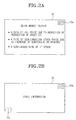
- Figures 2A to 2C are views illustrating television screen in different states according to the viewer's selected mode.
- the page relates to stock information.
- Figure 2A shows a television screen 10 at step S15 of Figure 1.
- the television displays page information 12a showing that the current page is number six of seven. In this case, pages are not stored.
- Figure 2B shows a display state of the screen 10 at step S17 of Figure 1.
- the television stores the page data in the order in which it is received.
- the television displays information 14a at the bottom left portion of the screen 10 to inform the user that the page received and stored in the user mode is the first page.
- Figure 2C shows the state where the page number 12c and the stored pages 14b are displayed on the screen 10 in the user mode. Accordingly, the viewer is informed that the pages received and stored in the user mode are the first page, the second page and the third page and the currently displayed page is the third page of seven pages.
- the conventional television resets the previously-stored page according to variations of the user mode.
- the conventional television re-receives and re-stores the data of the selected page. Therefore, the viewer should wait for reception and display of the wanted page.
- control means is responsive to operation of the user input means to cause the teletext page corresponding to a selected index item to be retrieved from the memory and displayed on the screen.
- a television for receiving teletext comprises a tuner unit 23 for tuning to a broadcast television signal received by an antenna 21, a decoding unit 25 for detecting and decoding image and audio signal components in the tuned broadcast television signal, an audio output unit 27 for outputting the audio signal decoded in the decoding unit 25, an image output unit 29 for outputting the image signal decoded in the decoding unit 25, and a control unit 41 for controlling the operation of the tuner unit 23, the decoding unit 25, the audio output unit 27 and the image output unit 29.
- the audio signal from the audio output unit 27 is amplified and supplied to a speaker 61.
- the image signal output by the image output unit 29 is displayed on a screen by a display unit 71.
- the teletext decoding unit 31 decodes received teletext page data.
- the storing unit 33 stores information about the decoded teletext pages and the decoded teletext page data.
- the input unit 51 has a mode selection key (not shown) for inputting a mode selection signal into the control unit 41, so that the television can be selectively operated in a television mode for outputting the video and audio signals of the received broadcast television signal to the speaker 61 and the display unit 71, and a teletext mode in which teletext data is displayed by the display unit 71.
- control unit 41 controls the output operation of the audio output unit 27 and the image output unit 29, so that the signals from the decoding unit 25 can be outputted through the speaker 61 and the display unit 71.
- control unit 41 controls the output operation of the image output unit 29 so that the decoded teletext data is outputted to the display unit 71.
- the control unit 41 retrieves an index from the storing unit 33 and displays it using the display unit 71.
- the control unit 41 displays, using the display unit 71, selected page which is retrieved from the storing unit 33.
- the control unit 41 controls the teletext decoding unit 31 and the storing unit 33 to decode and store the received data.
- the control unit 41 controls the output operation of the image output unit 29 to display the decoded data using the display unit 71.
- control unit 41 when the viewer selects a different page, the control unit 41 controls the display unit 71 to display the selected page.
- the control unit 41 controls the teletext decoding unit 31 and the storing unit 33 to decode and store the received data.
- the control unit 41 receives additional data after receiving all of the data of the previously-selected page, the control unit 41 updates the received data to the storing unit 33.
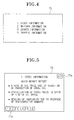
- the teletext index is displayed on a screen 73 by the display unit 71.
- the items of the index displayed on the screen 73 have respective numbers.
- the viewer operates a cursor movement key (not shown) or a number key (not shown) of the input unit 51 or the remote controller 81 to select a menu item to cause the associated page to be displayed on the screen 73.
- a list 77a of pages of the current rolling sequence that have already been received and stored is provided at the bottom left corner of the screen 73.
- the viewer can see that the first to sixth pages of the seven stock information pages have been received and stored.
- the viewer can rapidly select and view a wanted page by operating up/down and/or right/left direction movement keys (not shown) of the input unit 51 or the remote controller 81.
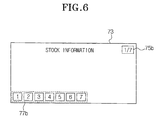
- the displayed page information 75b informs the viewer that the current page displayed on the screen 73 is the first page of seven pages.
- the stored page information 77b informs the viewer that the first to seventh pages of the stock information, i.e. all of the stock information pages, have been received and stored. Therefore, the viewer can rapidly select and confirm a wanted page by inputting a right/left direction movement key of the input unit 51 and the remote controller 81.
- the control unit 41 controls the teletext decoding unit 31 to detect and decode teletext signals included in the television broadcast signal, and stores page information for the decoded teletext and the page data in the storing unit 33 (S31).
- the control unit 41 confirms reception of a command from the viewer for changing the operational mode of the television to the teletext mode (S33). If the control unit 41 has confirmed that the command for changing the operation mode into the teletext mode is not received in S33, the control unit 41 repeats operation S31.
- control unit 41 determines whether the viewer has selected an item on the index displayed on the screen 73 (S37). If the control unit 41 confirms that the viewer has not selected an item in S37, the control unit 41 continuously performs the display operation of S35.
- control unit 41 If the control unit 41 confirms that the viewer has selected an item on the index in S37, the control unit 41 retrieves the corresponding page from the storing unit 33, and controls the display unit 71 to display the retrieved page on the screen 73 (S39). The control unit 41 performs an update operation for storing an additionally received page corresponding to the selected item in the storing unit 33. While displaying the page on the screen 73 and updating the data to the storing unit 33, the control unit 41 confirms reception of a selection signal for an item corresponding to a different page from the viewer (S41). If the control unit 41 determines that the viewer has not selected a different page in S41, the control unit 41 performs the display and update operations of S39.
- control unit 41 If the control unit 41 confirms that the viewer selects the item for the different page in S41, the control unit 41 extracts a page corresponding to the selected item from the storing unit 33, and controls the display unit 71 to display the extracted page on the screen 73 (S43). At this time, the control unit 41 performs the update operation for storing an additionally-received page corresponding to the selected item in the storing unit 33. In addition, when receiving the page corresponding to a previously-selected item, the control unit 41 performs the update operation for storing the received page in the storing unit 33.
- the control unit 41 confirms re-selection of the previously-selected item (S45).
- the control unit 41 judges that the viewer does not select the previously-selected item in S45
- the control unit 41 performs the display and update operations of S43.
- the control unit 41 extracts the page which is updated and stored in the storing unit and which corresponds to the previously-selected item, and controls the display unit 71 to display the extracted page on the screen 73 (S47).
- the control unit 41 When receiving an additional page corresponding to the previously-selected item, the control unit 41 performs the update operation for storing the received page in the storing unit 33. Accordingly, when the television is turned on, the received teletext is stored regardless of the operation mode, and the page of the previously-selected item is updated during the display and storing operation of a different page. As a result, the viewer can rapidly select and confirm a wanted page according to the page information 75a, 75b, 77a and 77b displayed on the screen 73.
- the received page is stored.
- the stored page information is displayed. Accordingly, the viewer can rapidly select and view a page.
Landscapes
- Engineering & Computer Science (AREA)
- Multimedia (AREA)
- Signal Processing (AREA)
- Television Systems (AREA)
Abstract
Description
Accordingly, when the television is turned on, the received teletext is stored regardless of the operation mode, and the page of the previously-selected item is updated during the display and storing operation of a different page. As a result, the viewer can rapidly select and confirm a wanted page according to the
Claims (9)
- A television receiving apparatus having support for teletext, the apparatus including teletext decoding means (31) for decoding teletext signals, a memory (33), a screen (73), user input means (51, 81) and control means (41) configured for storing decoded teletext page data in the memory (33) and causing teletext pages to be displayed on the screen (73) in response to operation of the user input means (51, 81), characterised in that the control means (41) is further configured to generate an index of teletext pages, for which data is stored in the memory (33), and display the index on the screen (73).
- An apparatus according to claim 1, wherein the control means (41) is responsive to operation of the user input means (51, 81) to cause the teletext page corresponding to a selected index item to be retrieved from the memory (33) and displayed on the screen (71).
- A display apparatus for receiving tele-text, comprising:wherein, when one item of the index displayed on the screen is selected, the control unit controls the display unit to display the data and page information which are stored and received in the storing unit and which correspond to the item on the screen.a receiving unit for receiving a broadcasting signal containing tele-text information;a detecting unit for detecting the tele-text information from the broadcasting signal;a display unit for displaying the detected tele-text information on a screen;a storing unit for storing a page of the detected tele-text information and data of the page;a control unit for controlling the display unit to display at least a part of an index of the pages stored in the storing unit on the screen, when receiving an external mode conversion command for performing a tele-text mode; andan input unit for inputting the mode conversion command and a selection command for page information containing the index and data,
- The display apparatus according to claim 3, wherein, when the index, data and page information are displayed on the screen, the control unit stores the data corresponding to the selected item of the index in the storing unit.
- The display apparatus according to claim 4, wherein, while the data and page information are displayed on the screen and the received data are stored in the storing unit, when a viewer selects an item corresponding to a different page, the control unit controls the display unit to display data and page information corresponding to the selected item on the screen from the storing unit, stores the received data in the storing unit, and also stores the data of the page corresponding to the selected item in the storing unit.
- The display apparatus according to claim 5, wherein, while the data and page information of the different page are displayed on the screen, when the viewer re-selects a previously-selected item, the control unit extracts the data and page information corresponding to the re-selected item from the storing unit, displays the data and page information on the screen, and stores additionally-received data in the storing unit.
- A method for receiving tele-text, comprising the steps of:(a) detecting tele-text information from a broadcasting signal;(b) storing a page of the detected tele-text information and data of the page;(c) displaying at least a part of an index for the stored pages on a screen, when a mode conversion command is received to display the tele-text information on the screen;(d) extracting the page, data, and page information corresponding to a selected item from the stored pages and data, and displaying them on the screen, when one item of the index is selected; and(e) storing additionally-received data, while the page, data and page information are displayed on the screen.
- The method according to claim 7, further comprising the steps of:(f) discriminating selection of an item for a different page;(g) extracting the page, data of the page and page information corresponding to the selected item from the stored pages and data, and displaying them on the screen; and(h) storing additionally-received data of the page, while the page, the data of the page and the page information are displayed on the screen.
- The method according to claim 8, further comprising the steps of:judging whether a previously-selected item is re-selected;extracting a page, data and page information corresponding to the selected item, and displaying them on the screen, when the previously-selected item is re-selected; andstoring additionally-received data, while the page, data and page information are displayed on the screen.
Applications Claiming Priority (2)
| Application Number | Priority Date | Filing Date | Title |
|---|---|---|---|
| KR1020010076988A KR20030046751A (en) | 2001-12-06 | 2001-12-06 | Television for receiving tele-text |
| KR2001076988 | 2001-12-06 |
Publications (2)
| Publication Number | Publication Date |
|---|---|
| EP1318673A2 true EP1318673A2 (en) | 2003-06-11 |
| EP1318673A3 EP1318673A3 (en) | 2004-01-14 |
Family
ID=19716715
Family Applications (1)
| Application Number | Title | Priority Date | Filing Date |
|---|---|---|---|
| EP02257949A Withdrawn EP1318673A3 (en) | 2001-12-06 | 2002-11-19 | Method and apparatus for generating and displaying an index of received teletext pages |
Country Status (2)
| Country | Link |
|---|---|
| EP (1) | EP1318673A3 (en) |
| KR (1) | KR20030046751A (en) |
Cited By (2)
| Publication number | Priority date | Publication date | Assignee | Title |
|---|---|---|---|---|
| GB2402289A (en) * | 2003-05-30 | 2004-12-01 | Samsung Electronics Co Ltd | Teletext television with category establishing function to limit displayed pages |
| EP1638330A3 (en) * | 2004-09-16 | 2009-01-14 | Stmicroelectronics Sa | Navigation between teletext pages offered by various channels |
Families Citing this family (1)
| Publication number | Priority date | Publication date | Assignee | Title |
|---|---|---|---|---|
| KR100460964B1 (en) * | 2002-10-29 | 2004-12-09 | 삼성전자주식회사 | Image display device with receiving teletext channel |
Family Cites Families (10)
| Publication number | Priority date | Publication date | Assignee | Title |
|---|---|---|---|---|
| JPH07212721A (en) * | 1994-01-13 | 1995-08-11 | Fujitsu General Ltd | Teletext receiver |
| KR970064516A (en) * | 1996-03-14 | 1997-10-13 | 구자홍 | Environmental temperature compensation device of electromagnetic induction heating cooker |
| JPH09307859A (en) * | 1996-05-17 | 1997-11-28 | Hitachi Ltd | Interactive video media and device and recording / reproducing system |
| KR20000020399A (en) * | 1998-09-21 | 2000-04-15 | 전주범 | Method for changing teletext mode of television receiver |
| JP4416328B2 (en) * | 1998-09-29 | 2010-02-17 | ミクロナス ミュニッヒ ゲーエムベーハー | Method and apparatus for selecting and storing preferred teletext page numbers |
| KR20000037657A (en) * | 1998-12-01 | 2000-07-05 | 전주범 | Teletext Fast Search Method on TV |
| GB9826697D0 (en) * | 1998-12-05 | 1999-01-27 | Philips Electronics Nv | Television receiver |
| KR20010018975A (en) * | 1999-08-24 | 2001-03-15 | 구자홍 | Apparatus and method for processing teletext of tv |
| JP2001153036A (en) * | 1999-11-30 | 2001-06-05 | Saraya Kk | Cam device, automatic chemical feeder with the cam device, and tray fitting structure of automatic chemical feeder |
| FR2808956B1 (en) * | 2000-05-12 | 2002-08-16 | St Microelectronics Sa | METHOD AND DEVICE FOR DISPLAYING A SUMMARY OF TELETEXT PAGES |
-
2001
- 2001-12-06 KR KR1020010076988A patent/KR20030046751A/en not_active Ceased
-
2002
- 2002-11-19 EP EP02257949A patent/EP1318673A3/en not_active Withdrawn
Cited By (3)
| Publication number | Priority date | Publication date | Assignee | Title |
|---|---|---|---|---|
| GB2402289A (en) * | 2003-05-30 | 2004-12-01 | Samsung Electronics Co Ltd | Teletext television with category establishing function to limit displayed pages |
| GB2402289B (en) * | 2003-05-30 | 2006-02-15 | Samsung Electronics Co Ltd | Television apparatus with teletext preferred page set establishing function |
| EP1638330A3 (en) * | 2004-09-16 | 2009-01-14 | Stmicroelectronics Sa | Navigation between teletext pages offered by various channels |
Also Published As
| Publication number | Publication date |
|---|---|
| EP1318673A3 (en) | 2004-01-14 |
| KR20030046751A (en) | 2003-06-18 |
Similar Documents
| Publication | Publication Date | Title |
|---|---|---|
| US6392709B1 (en) | Program table display device and method | |
| EP0735750B1 (en) | Program guide signal receiver for television | |
| CN100424749C (en) | Show control method | |
| JP2001352497A (en) | Control device | |
| JPH1028244A (en) | Information display device | |
| KR100686158B1 (en) | Apparatus and method for displaying data broadcasting content | |
| JP2004048794A (en) | Method of viewing the internet on television receiver | |
| EP1318673A2 (en) | Method and apparatus for generating and displaying an index of received teletext pages | |
| JP2002077834A (en) | Digital broadcast receiver | |
| JP2000165771A (en) | Television receiver | |
| JP3392282B2 (en) | Teletext receiver | |
| JPH07274087A (en) | On-screen display device | |
| KR20030067953A (en) | Method and apparatus for controlling display of broadcasting information on a television unit | |
| JP3694582B2 (en) | Receiver | |
| EP1406442A2 (en) | Teletext-enabled television apparatus | |
| KR100303090B1 (en) | Apparatus and method for controlling menu update in digital tv | |
| JP4911587B2 (en) | Broadcast receiver | |
| JP2007028585A (en) | Broadcast receiving system, broadcast receiving device, display device, and broadcast receiving method | |
| KR100474491B1 (en) | Apparatus for display tele-text and method thereof | |
| JP2004207930A (en) | Digital broadcast receiving apparatus and digital broadcast receiving method | |
| EP1021005A2 (en) | Apparatus and method for automatically setting on-screen-display language in digital broadcasting signal receiver | |
| KR20010018975A (en) | Apparatus and method for processing teletext of tv | |
| JPH1098656A (en) | Satellite broadcast receiver | |
| JPH07284036A (en) | On-screen display device and hierarchical display method | |
| JP3950894B2 (en) | Receiver |
Legal Events
| Date | Code | Title | Description |
|---|---|---|---|
| PUAI | Public reference made under article 153(3) epc to a published international application that has entered the european phase |
Free format text: ORIGINAL CODE: 0009012 |
|
| AK | Designated contracting states |
Designated state(s): AT BE BG CH CY CZ DE DK EE ES FI FR GB GR IE IT LI LU MC NL PT SE SK TR |
|
| AX | Request for extension of the european patent |
Extension state: AL LT LV MK RO SI |
|
| PUAL | Search report despatched |
Free format text: ORIGINAL CODE: 0009013 |
|
| AK | Designated contracting states |
Kind code of ref document: A3 Designated state(s): AT BE BG CH CY CZ DE DK EE ES FI FR GB GR IE IT LI LU MC NL PT SE SK TR |
|
| AX | Request for extension of the european patent |
Extension state: AL LT LV MK RO SI |
|
| 17P | Request for examination filed |
Effective date: 20040213 |
|
| AKX | Designation fees paid |
Designated state(s): DE FR GB |
|
| RAP1 | Party data changed (applicant data changed or rights of an application transferred) |
Owner name: SAMSUNG ELECTRONICS CO., LTD. |
|
| RAP1 | Party data changed (applicant data changed or rights of an application transferred) |
Owner name: SAMSUNG ELECTRONICS CO., LTD. |
|
| STAA | Information on the status of an ep patent application or granted ep patent |
Free format text: STATUS: EXAMINATION IS IN PROGRESS |
|
| STAA | Information on the status of an ep patent application or granted ep patent |
Free format text: STATUS: THE APPLICATION IS DEEMED TO BE WITHDRAWN |
|
| 18D | Application deemed to be withdrawn |
Effective date: 20161103 |