EP1316608A1 - Novel polypeptide - Google Patents
Novel polypeptide Download PDFInfo
- Publication number
- EP1316608A1 EP1316608A1 EP01963410A EP01963410A EP1316608A1 EP 1316608 A1 EP1316608 A1 EP 1316608A1 EP 01963410 A EP01963410 A EP 01963410A EP 01963410 A EP01963410 A EP 01963410A EP 1316608 A1 EP1316608 A1 EP 1316608A1
- Authority
- EP
- European Patent Office
- Prior art keywords
- polypeptide
- dna
- galβ1
- cell
- sugar chain
- Prior art date
- Legal status (The legal status is an assumption and is not a legal conclusion. Google has not performed a legal analysis and makes no representation as to the accuracy of the status listed.)
- Withdrawn
Links
Images



Classifications
-
- C—CHEMISTRY; METALLURGY
- C12—BIOCHEMISTRY; BEER; SPIRITS; WINE; VINEGAR; MICROBIOLOGY; ENZYMOLOGY; MUTATION OR GENETIC ENGINEERING
- C12N—MICROORGANISMS OR ENZYMES; COMPOSITIONS THEREOF; PROPAGATING, PRESERVING, OR MAINTAINING MICROORGANISMS; MUTATION OR GENETIC ENGINEERING; CULTURE MEDIA
- C12N9/00—Enzymes; Proenzymes; Compositions thereof; Processes for preparing, activating, inhibiting, separating or purifying enzymes
- C12N9/10—Transferases (2.)
- C12N9/1048—Glycosyltransferases (2.4)
- C12N9/1051—Hexosyltransferases (2.4.1)
-
- C—CHEMISTRY; METALLURGY
- C12—BIOCHEMISTRY; BEER; SPIRITS; WINE; VINEGAR; MICROBIOLOGY; ENZYMOLOGY; MUTATION OR GENETIC ENGINEERING
- C12N—MICROORGANISMS OR ENZYMES; COMPOSITIONS THEREOF; PROPAGATING, PRESERVING, OR MAINTAINING MICROORGANISMS; MUTATION OR GENETIC ENGINEERING; CULTURE MEDIA
- C12N9/00—Enzymes; Proenzymes; Compositions thereof; Processes for preparing, activating, inhibiting, separating or purifying enzymes
- C12N9/10—Transferases (2.)
- C12N9/12—Transferases (2.) transferring phosphorus containing groups, e.g. kinases (2.7)
- C12N9/1241—Nucleotidyltransferases (2.7.7)
-
- C—CHEMISTRY; METALLURGY
- C12—BIOCHEMISTRY; BEER; SPIRITS; WINE; VINEGAR; MICROBIOLOGY; ENZYMOLOGY; MUTATION OR GENETIC ENGINEERING
- C12Y—ENZYMES
- C12Y204/00—Glycosyltransferases (2.4)
- C12Y204/01—Hexosyltransferases (2.4.1)
- C12Y204/0108—Ceramide glucosyltransferase (2.4.1.80)
-
- A—HUMAN NECESSITIES
- A01—AGRICULTURE; FORESTRY; ANIMAL HUSBANDRY; HUNTING; TRAPPING; FISHING
- A01K—ANIMAL HUSBANDRY; AVICULTURE; APICULTURE; PISCICULTURE; FISHING; REARING OR BREEDING ANIMALS, NOT OTHERWISE PROVIDED FOR; NEW BREEDS OF ANIMALS
- A01K2217/00—Genetically modified animals
- A01K2217/05—Animals comprising random inserted nucleic acids (transgenic)
-
- A—HUMAN NECESSITIES
- A01—AGRICULTURE; FORESTRY; ANIMAL HUSBANDRY; HUNTING; TRAPPING; FISHING
- A01K—ANIMAL HUSBANDRY; AVICULTURE; APICULTURE; PISCICULTURE; FISHING; REARING OR BREEDING ANIMALS, NOT OTHERWISE PROVIDED FOR; NEW BREEDS OF ANIMALS
- A01K2217/00—Genetically modified animals
- A01K2217/07—Animals genetically altered by homologous recombination
- A01K2217/075—Animals genetically altered by homologous recombination inducing loss of function, i.e. knock out
-
- C—CHEMISTRY; METALLURGY
- C07—ORGANIC CHEMISTRY
- C07K—PEPTIDES
- C07K2319/00—Fusion polypeptide
-
- C—CHEMISTRY; METALLURGY
- C12—BIOCHEMISTRY; BEER; SPIRITS; WINE; VINEGAR; MICROBIOLOGY; ENZYMOLOGY; MUTATION OR GENETIC ENGINEERING
- C12N—MICROORGANISMS OR ENZYMES; COMPOSITIONS THEREOF; PROPAGATING, PRESERVING, OR MAINTAINING MICROORGANISMS; MUTATION OR GENETIC ENGINEERING; CULTURE MEDIA
- C12N2799/00—Uses of viruses
- C12N2799/02—Uses of viruses as vector
- C12N2799/021—Uses of viruses as vector for the expression of a heterologous nucleic acid
- C12N2799/026—Uses of viruses as vector for the expression of a heterologous nucleic acid where the vector is derived from a baculovirus
Definitions
- the present invention relates to a novel polypeptide having a lactosylceramide ⁇ 1, 3-N-acetylglucosaminyltransferase activity and a paragloboside ⁇ 1, 3-N-acetylglucosaminyltransferase activity; an agent for synthesizing a sugar chain, which comprises the polypeptide as an active ingredient; a DNA encoding the polypeptide, an agent for detecting inflammation, cancer or tumor metastasis, which comprises the DNA; a recombinant DNA obtainable by inserting the DNA into a vector; a transformant comprising the recombinant DNA; a process for producing the polypeptide using the transformant; a process for producing a sugar chain or complex carbohydrate using the polypeptide; a process for producing a sugar chain or complex carbohydrate using the transformant; a method for detecting inflammation, cancer or tumor metastasis using an oligonucleotide obtainable from a DNA encoding the polypeptid
- Lactosylceramide ⁇ 1, 3-N-acetylglucosaminyltransferase is an enzyme having an activity to transfer N-acetylglucosamine via ⁇ 1,3-linkage to a galactose residue present in the non-reducing terminal of lactosylceramide (Gal ⁇ 1-4Glc-ceramide).
- Neolacto-series glycolipids lacto-series glycolipids, ganglio-series glycolipids, globo-series glycolipids and isoglobo-series glycolipids are synthesized from the lactosylceramide (Gal ⁇ 1-4Glc-ceramide), and lactosylceramide ⁇ 1, 3-N-acetylglucosaminyltransferase is a key enzyme of the synthesis of neolacto-series glycolipids and lacto-series glycolipids.
- Ganglioside GM3 (NeuAc ⁇ 2-3Gal ⁇ 1-4Glc-ceramide) is synthesized when GM3 synthase acts upon lactosylceramide.
- AsialoGM2 (GalNAc ⁇ 1-4Gal ⁇ 1-4Glc-ceramide) is synthesized when GM2 synthase acts upon lactosylceramide. Since many other gangliosides are synthesized from GM3 and asialoGM2, GM3 synthase and GM2 synthase can be regarded as key enzymes of the synthesis of ganglio-series glycolipids.
- lactosylceramide ⁇ 1,4-galactosyltransferase and lactosylceramide ⁇ 1,3-galactosyltransferase are key enzymes of the synthesis of globo-series glycolipids and isoglobo-series glycolipids, respectively. It is considered that synthesis of a specific glycolipid in a cell is controlled by the expression and expression level of the above key enzymes.
- Neolacto-series glycolipid is a glycolipid having Gal ⁇ 1-4GlcNAc ⁇ 1-3Gal ⁇ 1-4Glc-ceramide backbone
- lacto-series glycolipid is a glycolipid having a Gal ⁇ 1-3GlcNAc ⁇ 1-3Gal ⁇ 1-4Glc-ceramide backbone
- neolacto-series glycolipid examples include paragloboside (Gal ⁇ 1-4GlcNAc ⁇ 1-3Gal ⁇ 1-4Glc-ceramide), sialylparagloboside (NeuAc ⁇ 2-3Gal ⁇ 1-4GlcNAc ⁇ 1-3Gal ⁇ 1-4Glc-ceramide), NeuAc ⁇ 2-3Gal ⁇ 1-4(Fuc ⁇ 1-3)GlcNAc ⁇ 1-3Gal ⁇ 1-4Glc-ceramide and the like.
- lacto-series glycolipid examples include Gal ⁇ 1-3GlcNAc ⁇ 1-3Gal ⁇ 1-4Glc-ceramide, NeuAc ⁇ 2-3Gal ⁇ 1-3GlcNAc ⁇ 1-3Gal ⁇ 1-4Glc-ceramide, NeuAc ⁇ 2-3Gal ⁇ 1-3(Fuc ⁇ 1-4)GlcNAc ⁇ 1-3Gal ⁇ 1-4Glc-ceramide and the like.
- HL-60 When a human promyelocytic cell line, HL-60, is treated with dimethyl sulfoxide or retinoic acid, it differentiates into granulocyte cells.
- PMA phorbol ester
- ganglioside GM3 While neolacto-series glycolipids (paragloboside and sialylparagloboside) increase and ganglioside GM3 decreases when it is differentiated into granulocyte cells, ganglioside GM3 increases and neolacto-series glycolipids decrease when it is differentiated into monocyte/macrophage.
- HL-60 when HL-60 is cultured by adding a neolacto-series glycolipid, it differentiates into granulocyte cells, and when HL-60 is cultured by adding ganglioside GM3, it differentiates into monocyte/macrophage.
- GM3 synthase activity When HL-60 is treated with retinoic acid, the GM3 synthase activity does not change but the lactosylceramide ⁇ 1,3-N-acetylglucosaminyltransferase activity increases [ J. Biol. Chem., 267 , 23507 (1992)].
- leukocytes express different glycolipids depending on their types and differentiation stages. For example, mature myelogenous cell expresses only neutral neolacto-series glycolipid [ Mol. Cell. Biochem., 47 , 81 (1982), J. Biol. Chem., 260 , 1067 (1985)]. On the other hand, mature lymphocyte expresses only globo-series glycolipid [ Mol. Cell. Biochem., 47 , 81 (1982)]. It is suggested based on an analysis using leukocyte cell lines that the above differences of glycolipids are due to difference in the lactosylceramide ⁇ 1,3-N-acetylglucosaminyltransferase activity.
- lactosylceramide ⁇ 1,3-N-acetylglucosaminyltransferase activity is detected in myelogenous cell lines such as K-562, KG-1 and HL-60, but this enzyme activity is not detected in lymphocyte cell lines such as Reh, CCRF-CEM, MOLT-4, Ramos and RPMI 8226 [ Archives of Biochemistry and Biophysics, 303 , 125 (1993)].
- glycolipid having 3-sulfoglucuronic acid on the non-reducing terminal of its sugar chain e.g., SO 4 3GlcA ⁇ 1-3Gal ⁇ 1-4GlcNAc ⁇ 1-3Gal ⁇ 1-4Glc-ceramide
- SO 4 3GlcA ⁇ 1-3Gal ⁇ 1-4GlcNAc ⁇ 1-3Gal ⁇ 1-4Glc-ceramide e.g., SO 4 3GlcA ⁇ 1-3Gal ⁇ 1-4GlcNAc ⁇ 1-3Gal ⁇ 1-4Glc-ceramide
- 3-sulfoglucuronic acid is recognized also by monoclonal antibody HNK-1 for a marker of human NK cell, it is also called HNK-1 epitope.
- HNK-1 epitope Since 3-sulfoglucuronic acid-containing glycolipid plays an important role in the function of NK cell.
- a sugar chain having GlcNAc ⁇ 1-3Gal structure is present in sugar chains of neolacto- and lacto-series glycolipids and also in N-linked sugar chains and O-linked sugar chains of glycoproteins, and in oligonsaccharide.
- lacto-N-neotetraose (Gal ⁇ 1-4GlcNAc ⁇ 1-3Gal ⁇ 1-4Glc) and lacto-N-tetraose (Gal ⁇ 1-3GlcNAc ⁇ 1-3Gal ⁇ 1-4Glc), which exist in human milk, or various oligosaccharides having them as backbones can be cited as the oligosaccharides having GlcNAc ⁇ 1-3Gal structure [Acta Paediatrica, 82 , 903 (1993)].
- the GlcNAc ⁇ 1-3Gal structure is also an element constituting a poly-N-acetyllactosamine sugar chain.
- the poly-N-acetyllactosamine sugar chain is a sugar chain having structure in which N-acetyllactosamine is repeatedly bound via ⁇ 1,3-linkage [(Gal ⁇ 1-4G1cNAc ⁇ 1-3) n ; n is 2 or more], which is present in N-linked sugar chains and O-linked sugar chains of glycoproteins and also present in glycolipid sugar chains and oligosaccharides.
- lactosylceramide ⁇ 1,3-N-acetylglucosaminyltransferase uses substrates other than lactosylceramide, such as paragloboside, N-linked sugar chains and O-linked sugar chains of glycoproteins or oligosaccharides, has not been found.
- lactosylceramide ⁇ 1, 3-N-acetylglucosaminyltransferase activity has been detected in colon tissues, colon cancer tissues, colon cancer cell lines (Colo205, SW403 and the like) and myeloid cell lines (K-562, KG-1 and HL-60), but there are no reports on the high purity purification of lactosylceramide ⁇ 1, 3-N-acetylglucosaminyltransferase [ J. Biol. Chem., 262 , 15649 (1987), Archives of Biochemistry and Biophysics, 260 , 461 (1988), Carbohydrate Research, 209 , 261 (1991), Archives of Biochemistry and Biophysics, 303 , 125 (1993)].
- lactosylceramide ⁇ 1,3-N-acetylglucosaminyltransferase can be identified by cloning a Gal ⁇ 1,3-N-acetylglucosaminyltransferase which is different from the two Gal ⁇ 1,3-N-acetylglucosaminyltransferases so far cloned, and examining its acceptor specificity.
- lacto-N-neotetraose (Gal ⁇ 1-4GlcNAc ⁇ 1-3Galb1-4Glc) and lacto-N-tetraose (Gal ⁇ 1-3GlcNAc ⁇ 1-3Galpl-4Glc) or various oligosaccharides having them as backbones are present in human milk [ Acta Paediatrica, 82 , 903 (1993)]. These oligosaccharides have the GlcNAc ⁇ 1-3Gal structure in common. It is considered that they have a function to prevent babies from infection with viruses and microorganisms and a function to neutralize toxins.
- the above oligosaccharides contained in human milk or a milk containing them can be produced efficiently.
- the gene of a Gal ⁇ 1,3-N-acetylglucosaminyltransferase involved in the synthesis of the above oligosaccharides contained in human milk can be obtained, it is possible to use it in the efficient synthesis of the above oligosaccharides, but the enzyme has not been found yet.
- poly-N-acetyllactosamine sugar chain is a backbone sugar chain of many functional sugar chains (selectin ligand sugar chains, receptor sugar chains for microorganisms and viruses, SSEA-1 sugar chains, cancer-related sugar chains and the like) and deeply related to embryogenesis, cell differentiation or diseases such as inflammation and cancer.
- the poly-N-acetyllactosamine sugar chain also plays an important role in the stabilization of glycoprotein.
- lactosylceramide ⁇ 1,3-N-acetylglucosaminyltransferase is related to the synthesis of poly-N-acetyllactosamine sugar chain by transferring N-acetyllactosamine to sugar chains having Gal ⁇ 1-4Glc or Gal ⁇ 1-4GlcNAc at the non-reducing terminal (e.g., paragloboside) in addition to lactosylceramide.
- the poly-N-acetyllactosamine sugar chain is synthesized by the mutual actions of a GlcNAc ⁇ 1, 4-galactosyltransferase (an enzyme having an activity to transfer galactose via ⁇ 1, 4-linkage to the N-acetylglucosamine residue present in the non-reducing terminal of sugar chains) and Gal ⁇ 1,3-N-acetylglucosaminyltransferase.
- GlcNAc ⁇ 1 4-galactosyltransferase (an enzyme having an activity to transfer galactose via ⁇ 1, 4-linkage to the N-acetylglucosamine residue present in the non-reducing terminal of sugar chains)
- Gal ⁇ 1,3-N-acetylglucosaminyltransferase an enzyme having an activity to transfer galactose via ⁇ 1, 4-linkage to the N-acetylglucosamine residue present in the non-reducing terminal of sugar chains
- genes of four enzymes ( ⁇ 4Gal-T1, ⁇ 4Gal-T2, ⁇ 4Gal-T3 and ⁇ 4Gal-T4) have so far been cloned, and acceptor specificity of each enzyme has been analyzed [ J. Biol. Chem., 272 , 31979-31991 (1997), J. Biol. Chem., 273, 29331-29340 (1997)].
- Saccharides such as fucose, sialic acid, N-acetylgalactosamine and galactose, a sulfate group and the like are added to linear or branched poly-N-acetyllactosamine sugar chains to thereby form various cell-specific or stage-specific sugar chains (functional sugar chains, blood group sugar chains, cancer-related sugar chains and the like) [ Glycobiology Series, (1) to (6), edited by Akira Kobata, Senitiroh Hakomori and Yoshitaka Nagai, published by Kodansha (1993)].
- poly-N-acetyllactosamine sugar chains having a sialyl Lewis x sugar chain [NeuAc ⁇ 2-3Gal ⁇ 1-4(fuc ⁇ 1-3)GlcNAc] at their terminal are present on granulocytes, monocytes or activated T cells, and it is considered that these sugar chains relate to the accumulation of the leukocytes into inflammatory regions by functioning as ligands of adhesion molecules, E-selectin and P-selectin [ Glycobiology Series, (1) to (6), edited by Akira Kobata, Senitiroh Hakomori and Yoshitaka Nagai, published by Kodansha (1993)].
- poly-N-acetyllactosamine sugar chains having a sialyl Lewis x sugar chain and a sialyl Lewis a sugar chain [NeuAc ⁇ 2-3Gal ⁇ 1-3(fucal-4)GlcNAc] at the terminal are present on cancer cells such as colon cancer, and it is suggested that the sugar chains are also involved in tumor metastasis by functioning as ligands of E-selectin and P-selectin [ Glycobiology Series, (1) to (6), edited by Akira Kobata, Senitiroh Hakomori and Yoshitaka Nagai, published by Kodansha (1993)].
- a blood type antigen When a blood type antigen is expressed at respective termini of branched poly-N-acetyllactosamine sugar chains, it becomes a multivalent antigen and its binding ability with antibodies for blood type sugar chains increases 10 3 times or more in comparison with a linear type antigen.
- SSEA-1 stage specific embryonic antigen-1
- SSEA-1 stage specific embryonic antigen-1
- Gal ⁇ 1-4(fuc ⁇ 1-3)GlcNAc Lewis x sugar chain
- expression of the antigen starts at the 8-cell stage, reaches its peak at the morula stage and gradually disappears after the blastocyst stage
- Glycobiology Series (3) "Glycobiology of Cell Society", edited by Akira Kobata, Senitiroh Hakomori and Yoshitaka Nagai, published by Kodansha, 1993].
- the morula stage corresponds to a shifting stage in which germ cells so far proliferated by repeating simple numerical increase by cell division shift for the first time to the stage of blastocyst having differentiated "shape". Just before forming blastocyst, the morula cells closely assemble and cause cell compaction. When an oligosaccharide having the SSEA-1 is added, this cell compaction is inhibited and normal development thereafter is also inhibited [ J. Exp. Med., 160 , 1591 (1984)].
- N-ras proto-oncogene when N-ras proto-oncogene is expressed in NIH3T3 cell, molecular weight of N-linked sugar chain on the cell surface is increased and the cell acquires infiltrating ability, and at the same time, the amount of poly-N-acetyllactosamine sugar chain in the N-linked sugar chain is increased and activities of ⁇ 1,4-galactosyltransferase and ⁇ 1,3-N-acetylglucosaminyltransferase which relates to the synthesis of poly-N-acetyllactosamine sugar chain are also increased [ J. Biol. Chem., 266 , 21674 (1991)].
- Galectins are a group of lectins having affinity for ⁇ -galactoside, which relate to the adhesion and signal transduction of cells, and their relation to diseases such as cancer is also suggested [ Trends in Glycoscience and Glycotechnology , 9 , 9 (1997)]. To date, 10 types of galectins are known in mammals. It is known that among these, galectin-1 and galectin-3 bind to linear poly-N-acetyllactosamine sugar chains with high affinity, and it is considered that certain glycoproteins containing these sugar chains are ligands of these galectins [ Trends in Glycoscience and Glycotechnology , 9 , 9 (1997), Trends in Glycoscience and Glycotechnology , 9 , 47 (1997)].
- Poly-N-acetyllactosamine sugar chains having sialic acids added to their termini serve as receptors for Mycoplasma and microorganisms [ Acta Paediatrica, 82 , 903 (1993)].
- poly-N-acetyllactosamine sugar chains form backbone sugar chains of many functional sugar chains (selectin ligand sugar chains, receptor sugar chains for microorganisms and viruses, SSEA-1 sugar chain, cancer-related sugar chains and the like) and blood type sugar chains, and play important roles in efficiently presenting the sugar chains.
- poly-N-acetyllactosamine sugar chains having sialyl Lewis x sugar chains will become a medicament having anti-inflammatory effect or tumor metastasis inhibitory effect, as a selectin antagonist.
- an oligosaccharide in which multivalent (four) sialyl Lewis x sugar chains (tetrasaccharides) is linked to poly-N-acetyllactosamine sugar chains shows the activity as a selectin antagonist at a low concentration of 1/100 or less in comparison with non-multivalent sialyl Lewis x sugar chains (tetrasaccharides) [ J. Exp. Med., 182 , 1133 (1995), Glycobology, 6 , 65 (1996), Glycobiology, 7 , 453 (1997), Eur. J. Immunol. , 27 , 1360 (1997)].
- Gal ⁇ 1,3-N-acetylglucosaminyltransferases and their genes so far cloned may be used, it is considered that the use of other Gal ⁇ 1, 3-N-acetylglucosaminyltransferase having different substrate specificity and functions (e.g., lactosylceramide ⁇ 1,3-N-acetylglucosaminyltransferase) and its gene may be efficient in some cases depending on the purpose.
- the poly-N-acetyllactosamine sugar chains are also important for the stabilization of glycoprotein.
- Lysosome associated membrane glycoprotein-1 (lamp-1) and lysosome associated membrane glycoprotein-2 (lamp-2) are glycoproteins which exist in lysosome (partly exist on the cell surface) and almost completely cover inner face of lysosome membrane.
- Many sugar chains (some of them . containing a poly-N-acetyllactosamine sugar chain) are added to lamp-1 and lamp-2 to prevent degradation of lamp-1 and lamp-2 by hydrolases in lysosome.
- the molecular weight of a cell surface membrane protein CD43, CD45 or CD44 is increased when a core 2 ⁇ 1,6-N-acetylglucosaminyltransferase gene is expressed in a T-cell line EL-4 [ J. Biol. Chem., 271 , 18732 (1996)].
- the reason for this may be that sugar chains synthesized by the core 2 ⁇ 1,6-N-acetylglucosaminyltransferase become a good substrate of ⁇ 1,3-N-acetylglucosaminyltransferase involved in the synthesis of poly-N-acetyllactosamine sugar chains.
- Gal ⁇ 1,3-N-acetylglucosaminyltransferases so far cloned can be used, it is considered that use of other Gal ⁇ 1,3-N-acetylglucosaminyltransferase having different substrate specificity and functions (e.g., lactosylceramide ⁇ 1,3-N-acetylglucosaminyltransferase) may be efficient in some cases depending on the purpose.
- An object of the present invention is to provide synthesis of useful sugar chains; medicaments such as antiinflammatory agents, anti-infective agents and tumor metastasis inhibitory agents; foods such as dairy products; a method for improving protein stability, and the like; and a method for diagnosing inflammatory diseases and types and malignancies of cancers, by use of a novel polypeptide having a ⁇ 1,3-N-acetylglucosaminyltransferase activity.
- the present invention relates to the following (1) to (79).
- the GlcNAc ⁇ 1, 3-galactosyltransferase disclosed in Japanese Published Unexamined Patent Application No. 181752/94 (hereinafter referred to as " ⁇ 3Gal-T1"; alias WM1) is a GlcNAc ⁇ 1,3-galactosyltransferase involved in the synthesis of Gal ⁇ 1-3GlcNAc structure.
- Information on a DNA encoding the polypeptide of the present invention or nucleotide sequence of a part of the DNA can be obtained by retrieving genes having homology with this enzyme gene or genes having a possibility to encode proteins having homology with the enzyme at amino acid level from a gene data base using programs such as BLAST [ J. Mol.
- GenBank public data bases
- EMBL Geneseq
- FrameSearch Manufactured by Compugen
- public data bases such as GenBank, EMBL and Geneseq (Derwent Publications)
- personal data bases can also be used.
- SEQ ID NO:3 can be exemplified as nucleotide sequence of a gene having a possibility to encode a protein having homology with the ⁇ 3Gal-T1 gene at amino acid level.
- AI039637 can be exemplified as a human cDNA nucleotide sequence having homology with the nucleotide sequence of SEQ ID NO:3. These sequences are partial nucleotide sequences of DNAs encoding the polypeptides of the present invention.
- PCR polymerase chain reaction
- a full-length cDNA can be obtained as follows.
- a tissue- or cell-derived cDNA library in which the presence of the DNA has been confirmed is screened by using the above obtained DNA fragment as a probe to thereby obtain a full-length cDNA.
- the 5' RACE method or the 3' RACE method is carried out by using a single-stranded cDNA or cDNA library in which the presence of the DNA has been confirmed as a template to thereby obtain 5'-terminal fragment and 3'-terminal fragment of cDNA having the sequence.
- a full-length cDNA can be obtained by ligating both fragments.
- a single-stranded cDNA derived from various tissues or various cells can be prepared by a known method or a commercially available kit. An example is shown below.
- a total RNA is prepared from various tissues or various cells according to a guanidine thiocyanate phenolchloroform method [ Anal. Biochem., 162 , 156-159 (1987)]. If necessary, a chromosomal DNA which may be contaminated is degradated by treatment of the total RNA with deoxyribonuclease I (manufactured by Life Technologies).
- a single-stranded DNA is synthesized from each of the resulting total RNA by using an oligo(dT)-primer or a random primer according to SUPERSCRIPTTM Preamplifiation System for First Strand cDNA System (manufactured by Life Technologies).
- the single-stranded cDNAs include single-stranded cDNAs prepared from human colon cancer cell line colo205 or human gastric mucosa according to the above method.
- a cDNA library can be produced by a known method.
- the cDNA library construction method include methods described in Molecular Cloning, Second Edition, Current Protocols in Molecular Biology, John Wiley & Sons (1987-1997) (hereinafter referred to as "Current Protocols in Molecular Biology” ), Supplements 1-38 and the like; methods using a commercially available kit such as Superscript Plasmid System for cDNA Synthesis and Plasmid Cloning (manufactured by GIBCO BRL) and ZAP-cDNA Synthesis Kit (manufactured by STRATAGENE); and the like.
- a cDNA library derived from various tissues or various cells can be obtained by purchasing commercially available one.
- phage vectors, plasmid vectors and the like can be used as a cloning vector for constructing a cDNA library, so long as it can autonomously replicate in Escherichia coli K12.
- ZAP Express manufactured by STRATAGENE, Strategies, 5 , 58 (1992)]
- pBluescript SK(-) and pBluescript II SK(+) Nucleic Acids Research , 17 , 9494 (1989)]
- ⁇ ZAP II manufactured by STRATAGENE
- ⁇ gt10 and ⁇ gt11 [ DNA Cloning, A Practical Approach, 1 , 49 (1985)]
- ⁇ TriplEx manufactured by Clontech
- ⁇ ExCell manufactured by Pharmacia
- pT7T318U manufactured by Pharmacia
- pcD2 Mol.
- Any microorganism can be used as a host microorganism, so long as it belongs to Escherichia coli.
- Examples include Escherichia coli XL1-Blue MRF' [manufactured by STRATAGENE, Strategies , 5 , 81 (1992)], Escherichia coli C600 [ Genetics, 39 , 440 (1954)], Escherichia coli Y1088 [ Science, 222 , 778 (1983)], Escherichia coli Y1090 [ Science, 222 , 778 (1983)], Escherichia coli NM522 [ J. Mol. Biol ., 166 , 1 (1983)], Escherichia coli K802 [ J. Mol.
- a cDNA library produced as follows is exemplified.
- a cDNA is synthesized from a poly(A) + RNA of human gastric mucosa by using a cDNA synthesis system (cDNA Synthesis System, manufactured by GIBCO BRL), Eco RI- Not I- Sal I adapter (Super Choice System for cDNA Synthesis; manufactured by GIBCO BRL) is added to both ends thereof, the cDNA is inserted into an Eco RI site of a cloning vector ⁇ ZAP II ( ⁇ ZAP II/ Eco RI/ CIAP Cloning Kit, manufactured by STRATAGENE), and in vitro packaging is carried out by using Gigapack III Gold Packaging Extract (manufactured by STRATAGENE) to thereby produce a cDNA library.
- a cDNA Synthesis System manufactured by GIBCO BRL
- Eco RI- Not I- Sal I adapter Super Choice System for cDNA Synthesis; manufactured by GIBCO BRL
- a commercially available cDNA library can be used by purchasing it.
- primers specific for the gene are designed and PCR is carried out using the thus obtained single-stranded cDNAs or cDNA libraries as templates.
- the fragment is subcloned into an appropriate plasmid.
- the subcloning can be carried out by inserting the amplified DNA fragment directly, or after treatment with restriction enzymes or DNA polymerase, into a vector in the usual way.
- vectors examples include pBluescript SK(-) and pBluescript II SK(+) (both manufactured by STRATAGENE), pDIRECT [ Nucleic Acids Research, 18 , 6069 (1990)], pCR-Amp SK(+) [manufactured by STRATAGENE, Strategies, 5 , 6264 (1992)], pT7Blue (manufactured by Novagen), pCR II [manufactured by Invitrogen; Biotechnology, 9 , 657 (1991)], pCR-TRAP (manufactured by Genehunter), pNoTA T7 (manufactured by 5' ⁇ 3') and the like.
- the nucleotide sequence can be determined by a generally used nucleotide sequence analyzing method such as the dideoxy method of Sanger et al. [ Proc. Natl. Acad. Sci. USA, 74 , 5463 (1997)] or using a nucleotide sequence analyzing apparatus such as 373A DNA sequencer (manufactured by Perkin Elmer).
- a cDNA having a possibility to encode a protein homologous to the ⁇ 3Gal-T1 at amino acid level can be obtained by colony hybridization or plaque hybridization ( Molecular Cloning, Second Edition) for the cDNA libraries prepared in the above using the DNA fragment as a probe.
- the DNA fragment labeled with an isotope or digoxigenin can be used.
- the nucleotide sequence of the DNA obtained by the above method can be determined by inserting the DNA fragment as such or after its digestion with appropriate restriction enzymes or the like into a vector by a general method described in Molecular Cloning, 2nd Ed. or the like, and then analyzing it by a generally used nucleotide sequence analyzing method such as the dideoxy method of Sanger et al . [ Proc. Natl. Acad. Sci. USA, 74 , 5463 (1997)] or using a nucleotide sequence analyzing apparatus such as DNA sequencer 373A (manufactured by Perkin Elmer), DNA sequencer 377 (manufactured by Perkin Elmer) or DNA sequencer model 4000L (manufactured by LI-COR).
- the DNAs obtained by this method include a DNA encoding a polypeptide which comprises the amino acid sequence represented by SEQ ID NO:1 or a polypeptide which comprises an amino acid sequence of positions 39 to 378 in the amino acid sequence represented by SEQ ID NO:1, and the like.
- Specific examples include a DNA which comprises the nucleotide sequence represented by SEQ ID NO:2, a DNA which comprises a nucleotide sequence of positions 135 to 1268 in the nucleotide sequence represented by SEQ ID NO:2, a DNA which comprises a nucleotide sequence of positions 249 to 1268 in the nucleotide sequence represented by SEQ ID NO:2, and the like.
- the nucleotide sequence represented by SEQ ID NO:2 is a nucleotide sequence derived from a cDNA encoding a polypeptide comprising the amino acid sequence represented by SEQ ID NO:1
- the nucleotide sequence of positions 135 to 1268 in the nucleotide sequence represented by SEQ ID NO:2 is a nucleotide sequence corresponding to a coding region for the polypeptide
- the nucleotide sequence of positions 249 to 1268 in the nucleotide sequence represented by SEQ ID NO:2 is a nucleotide sequence encoding a region having a glycosyltransferase activity of the polypeptide.
- Examples of plasmids comprising the DNA having the nucleotide sequence of positions 135 to 1268 in the nucleotide sequence represented by SEQ ID NO:2 include pAMo-G4, pCXN2-G6 and pBS-G4.
- a DNA comprising a nucleotide sequence different from SEQ ID NO:2 is included in the DNA of the present invention, so long as it encodes the polypeptide of the present invention.
- PCR is carried out using cDNAs prepared from mRNAs of a cell expressing mRNAs complementary to the DNAs as templates to thereby prepare the DNAs of the present invention and the fragments of any region thereof.
- the DNAs used as primers can be synthesized by a DNA synthesizer such as 380A, 392 and 3900 manufactured by Applied Biosystems.
- the DNA of the present invention can be prepared by chemically synthesizing a DNA encoding the polypeptide.
- the DNA can be chemically synthesized by using a DNA synthesizer manufactured by Shimadzu Corporation according to the thiophosphate method, DNA synthesizers 380A, 392 and 3900 manufactured by Applied Biosystem according to the phosphoramidite method, and the like.
- the objective DNAs encoding a polypeptide comprising an amino acid sequence in which at least one amino acid is deleted, substituted or added in the amino acid sequence represented by SEQ ID NO:1 can be obtained by selecting a DNA which hybridizes with a DNA comprising a sequence complementary to the nucleotide sequence of the DNA obtained by the above method under stringent conditions.
- a homologue DNA and the like of other species can be cloned.
- a rat homologue DNA represented by SEQ ID NO:3 is exemplified.
- the DNAs encoding the polypeptide of the present invention are obtained as double-stranded DNAs consisting of a sense DNA encoding the polypeptide of the present invention and a DNA comprising a sequence complementary to the nucleotide sequence of the DNA. Both the DNAs can be separated by heating at 100°C for 5 minutes, followed by rapid cooling on ice.
- the DNA comprising a sequence complementary to the nucleotide sequence of the DNA encoding the polypeptide of the present invention can by synthesized by a DNA polymerase reaction in the presence of dNTP using the above separated sense DNA encoding the polypeptide of the present invention as a template and a DNA comprising a sequence complementary to 3'-terminal 5-30 bp sequence of the sense DNA as a primer.
- a DNA which is hybridizable under stringent conditions is a DNA obtained by carrying out colony hybridization, plaque hybridization, Southern hybridization or the like using the DNA obtained in the above as a probe.
- Examples include a DNA which can be identified by hybridization at 65°C in the presence of 0.7 to 1.0 M sodium chloride using a filter to which colony- or plaque-derived DNA samples are immobilized and then washing the filter at 65°C with 0.1 to 2 times concentration of SSC solution (composition of the original concentration SSC containing 150 mmol/1 sodium chloride and 15 mmol/1 sodium citrate).
- the hybridization can be carried out according to the method described in Molecular Cloning, Second Edition, Current Protocols in Molecular Biology, DNA Cloning 1: Core Techniques, A Practical Approach, Second Edition., Oxford University (1995) or the like.
- the hybridizable DNA includes a DNA having a homology of 60% or more, preferably 70% or more, more preferably 80% or more, still more preferably 90% or more, particularly preferably 95% or more, and most preferably 97% or more, with the DNA obtained above, when calculated using a default (initial establishment) parameter with an analysis software such as BLAST [ J. Mol. Biol., 215 , 403 (1990)] or FASTA [ Methods in Enzymology, 183 , 63-98 (1990)].
- BLAST J. Mol. Biol., 215 , 403 (1990)
- FASTA Methods in Enzymology, 183 , 63-98 (1990)].
- Oligonucleotides such as a sense oligonucleotide having a partial sequence of the DNA of the present invention and an antisense oligonucleotide having a partial sequence of a nucleotide sequence complementary to the nucleotide sequence of the DNA of the present invention can be prepared using the DNA and DNA fragments of the present invention obtained by the above method, in a conventional manner described in Molecular Cloning, Second Edition or the like or using a DNA synthesizer based on the nucleotide sequence information of the DNA.
- the oligonucleotide includes a DNA comprising a sequence identical to continuous 5 to 120 nucleotides, preferably continuos 5 to 60 nucleotides, in the nucleotide sequence in the DNA of the present invention or a nucleotide sequence complementary to the nucleotide sequence.
- Examples include a DNA comprising a sequence identical to continuous 5 to 120 nucleotides in the nucleotide sequence represented by SEQ ID NO:2 or a DNA comprising the same sequence as continuos 5 to 120 nucleotides in a sequence complementary to the nucleotide sequence represented by SEQ ID NO:2.
- the above oligonucleotides when used as a forward primer and a reverse primer, the above oligonucleotides in which the melting temperatures (Tm) and the number of nucleotides therebetween are not significantly different are preferred.
- Tm melting temperatures
- Examples include oligonucleotides comprising the nucleotide sequence represented by SEQ ID NO:25 or 28 and the like.
- oligonucleotide derivatives can also be used as the oligonucleotides of the present invention.
- oligonucleotide derivatives examples include oligonucleotide derivatives in which a phosphodiester bond in the oligonucleotide is converted into a phosphorothioate bond, oligonucleotides derivative in which a phosphodiester bond in the oligonucleotide is converted into an N3'-P5' phosphoamidate bond, oligonucleotide derivatives in which ribose and a phosphodiester bond in the oligonucleotide are converted into a peptide-nucleic acid bond, oligonucleotide derivatives in which uracil in the oligonucleotide is substituted with C-5 propynyluracil, oligonucleotide derivatives in which uracil in the oligonucleotide is substituted with C-5 thiazoleuracil, oligonucleotide derivatives in which cytosine in the oligon
- the polypeptide of the present invention encoded by the thus obtained DNA of the present invention includes a polypeptide which comprises the amino acid sequence represented by SEQ ID NO : 1; a polypeptide which comprises an amino acid sequence of positions 39 to 378 in the amino acid sequence represented by SEQ ID NO:1; a polypeptide which comprises an amino acid sequence in which at least one amino acid in the amino acid sequence in the above polypeptide is deleted, substituted or added, and has a ⁇ 1,3-N-acetylglucosaminyltransferase activity; a polypeptide which comprises an amino acid sequence having 60% or more of homology with the amino acid sequence in the above polypeptide, and has a lactosylceramide ⁇ 1, 3-N-acetylglucosaminyltransferase activity and a paragloboside ⁇ 1, 3-N-acetylglucosaminyltransferase activity; and the like.
- a protein comprising an amino acid sequence in which at least one amino acid is deleted, substituted and/or added in the polypeptide having the above amino acid sequence can be obtained, for example, by introducing site-directed mutation into the DNA encoding the polypeptide comprising the amino acid sequence represented by SEQ ID NO:1 according to the site-directed mutagenesis method described in Molecular cloning, A Laboratory Manual, Second Edition, Cold Spring Harbor Laboratory (1989) (hereinafter referred to as " Molecular Cloning, Second Edition"), Current Protocols in Molecular Biology, John Wiley & Sons (1987-1997) (hereinafter referred to as " Current Protocols in Molecular Biology "), Nucleic Acids Research, 10 , 6487 (1982), Proc. Natl. Acad. Sci.
- the number of amino acids which have been deleted, substituted or added is not particularly limited; however, they are 1 to tens, preferably 1 to 20, more preferably 1 to 10 and most preferably 1 to 5 amino acids.
- the polypeptide of the present invention includes an amino acid sequence having a homology of 60% or more with the amino acid sequence represented by SEQ ID NO : 1.
- the homology with the amino acid sequence represented by SEQ ID NO : 1 is 60 % or more, preferably 70% or more, more preferably 80% or more, still more preferably 90% or more, particularly preferably 95% or more, and most preferably 97% or more, when calculated using a default (initial establishment) parameter with an analysis software.
- BLAST J. Mol. Biol., 215 , 403 (1990)] or FASTA [ Methods in Enzymology, 183 , 63-69 (1990)].
- a homologue polypeptide of other species is exemplified.
- the rat polypeptide represented by SEQ ID NO:3 is exemplified.
- the polypeptide of the present invention has a ⁇ 1, 3-N-acetylglucosaminyltransferase activity.
- a recombinant vector to which the DNA of the present invention has been inserted into the downstream of the promoter of a suitable expression vector is constructed, a transformant expressing the polypeptide of the present invention is obtained by introducing the vector into a host cell, and the transformant is cultured to produce the polypeptide of the present invention.
- bacteria Any of bacteria, yeast, animal cells, insect cells, plant cells and the like can be used as the host cell, so long as it can express the objective gene.
- the expression vector includes those which can autonomously replicate in the above host cell or which can be integrated into a chromosome and have a promoter at such an operative position that the DNA of the present invention can be transcribed.
- the expression vector for the polypeptide gene of the present invention can autonomously replicate in the prokaryote and is a recombinant vector constructed with a promoter, a ribosome binding sequence, the DNA of the present invention and a transcription termination sequence.
- a promoter-controlling gene can also be utilized.
- the expression vector includes pBTrp2, pBTac1 and pBTac2 (all available from Boehringer Mannheim), pSE280 (manufactured by Invitrogen), pGEMEX-1 (manufactured by Promega), pQE-8 (manufactured by QIAGEN), pKYP10 (Japanese Published Unexamined Patent Application No. 110600/83), pKYP200 [ Agric. Biol. Chem. , 48 , 669 (1984)], pLSA1 [ Agric. Biol. Chem. , 53 , 277 (1989)], pGEL1 [ Proc. Natl. Acad. Sci.
- Any promoter can be used, so long as it can work for expression in a host cell such as Escherichia coli.
- Examples include promoters derived from Escherichia coli, phage and the like, such as trp promoter ( Ptrp ), lac promoter (P lac ), P L promoter and P R promoter, SPO1 promoter, SPO2 promoter and penP promoter.
- trp promoter Ptrp promoter
- lac lac
- P L promoter and P R promoter P L promoter and P R promoter
- SPO1 promoter SPO2 promoter
- penP promoter e.g., trp promoter
- artificially designed and modified promoters such as a promoter in which two Ptrp are linked in series (P trp ⁇ 2), tac promoter, lac T7 promoter and let I promoter, can be used.
- ribosome binding sequence it is preferred to use a plasmid in which the space between Shine-Dalgarno sequence and the initiation codon is adjusted to a suitable distance (for example, 6 to 18 nucleotides).
- the transcription termination sequence is not required for the expression of the DNA of the present invention. However, the transcription terminating sequence is preferably arranged at just downstream of the structural gene.
- the host cell includes microorganisms belonging to the genus Escherichia, the genus Serratia, the genus Bacillus, the genus Brevibacterium, the genus Corynebacterium, the genus Microbacterium, the genus Pseudomonas and the like, such as Escherichia coli XL1-Blue, Escherichia coli XL2-Blue, Escherichia coli DH1, Escherichia coli MC1000, Escherichia coli KY3276, Escherichia coli W1485, Escherichia coli JM109, Escherichia coli HB101, Escherichia coli No.49, Escherichia coli W3110, Escherichia coli NY49, Escherichia coli BL21(DE3), Escherichia coli BL21(DE3)pLysS, Escherichia coli HMS174(DE3), Es
- Any method can be used in the method for introducing the recombinant vector, so long as it is a method for introducing a DNA into the above host cell, such as an electroporation method [ Nucleic Acids Res ., 16 , 6127 (1988)], a method using a calcium ion [ Proc. Natl. Acad. Sci. USA, 69 , 2110 (1972)], a protoplast method (Japanese Published Unexamined Patent Application No. 248394/88) and methods described in Gene, 17 , 107 (1982) and Molecular & General Genetics, 168 , 111 (1979).
- the expression vector When yeast is used as the host cell, the expression vector includes YEp13 (ATCC 37115), YEp24 (ATCC 37051), YCp50 (ATCC 37419), pHS19, pHS15 and the like.
- Any promoter can be used, so long as it can be expressed in yeast.
- Examples include PHO5 promoter, PGK promoter, GAP promoter, ADH promoter, gal 1 promoter, gal 10 promoter, a heat shock polypeptide promoter, MF ⁇ 1 promoter, CUP 1 promoter, and the like.
- Any method can be used as the method for introducing the recombinant vector, so long as it is a method for introducing a DNA into yeast.
- Examples include an electroporation method [ Methods. Enzymol., 194 , 182 (1990)], a spheroplast method [ Proc. Natl. Acad. Sci. USA, 84 , 1929 (1978)], a lithium acetate method [ J. Bacteriol., 153 , 163 (1983)], the method described in proc. Natl. Acad. Sci. USA, 75 , 1929 (1978) and the like.
- the expression vector includes pcDNAI/Amp (manufactured by Invitrogen), pcDNAI (manufactured by Funakoshi), pcDM8 [ Nature, 329 , 840 (1987), manufactured by Funakoshi], pAGE107 [Japanese Published Unexamined Patent Application No. 22979/91 ; Cytotechnology, 3 , 133 (1990)], pREP4 (manufactured by Invitrogen), pAGE103 [ J. Biochemistry, 101 , 1307 (1987)], pAMO [ J. Biol. Chem., 268 , 22782 (1993)], pAMoA [ J. Biol. Chem., 268 , 22782 (1993)], pAS3-3 (Japanese Published Unexamined Patent Application No. 227075/90) and the like.
- Any promoter can be used as the method for introducing the recombinant vector, so long as it can work for expression in the animal cell.
- Examples include a promoter of IE (immediate early) gene of cytomegalovirus (human CMV), an early promoter of SV40, a long terminal repeat promoter of moloney murine leukemia virus, a promoter of retrovirus, a heat shock promoter, SR ⁇ promoter, a promoter of metallothionein and the like.
- the enhancer of the IE gene of human CMV can be used together with the promoter.
- any cell can be used, so long as it is an animal cell into which a DNA can be introduced.
- mammals such as human, monkey, mouse, rat, guinea pig and mink can be used.
- Examples include mouse myeloma cell, rat myeloma cell, mouse hybridoma cell, Chinese hamster CHO cell (ATCC CRL-9096, ATCC CCL-61), BHK cell, African green monkey kidney cell, human Namalwa cell (ATCC CRL-1432), human Namalwa KJM-1 cell, human fetal kidney cell, human leukemic cell, HBT5637 (Japanese Published Unexamined Patent Application No. 299/88), human colon cancer cell line and the like.
- the mouse myeloma cell includes SP2/0, NS0 and the like.
- the rat myeloma cell includes YB2/0 and the like.
- the human fetal kidney cell includes BALL-1 and the like.
- the African green monkey kidney cell includes COS-1 (ATCC CRL-1650), COS-7 (ATCC CRL-1651) and the like.
- the human colon cancer cell line includes HCT-15 and the like.
- cells of mammals particularly CHO cell, is preferably used as the host.
- Any method can be used as the method for introducing the recombinant vector into an animal cell, so long as it is a method for introducing a DNA into an animal cell.
- Examples include an electroporation method [ Cytotechnology, 3 , 133 (1990)], a calcium phosphate method (Japanese Published Unexamined Patent Application No. 227075/90), a DEAE dextran method (Yodosha, Bio Manual Series 4, 16 ), a lipofection method [ Proc. Natl. Acad. Sci.
- the polypeptide When an insect cell is used as the host, the polypeptide can be expressed by a known method described in, for example, Bacurovirus Expression Vectors, A Laboratory Manual, W.H. Freeman and Company, New York (1992), Molecular Biology, A Laboratory Manual, Current Protocols in Molecular Biology, Supplements 1 to 38, Bio / rechnology, 6 , 47 (1988) or the like.
- a recombinant gene transfer vector and baculovirus are co-transfected into an insect cell to obtain a recombinant virus in an insect cell culture supernatant, and then the insect cell is infected with the resulting recombinant virus to express of the polypeptide.
- the gene transfer vector used in the method includes pVL1392 (manufactured by Pharmingen), pVL1393 (manufactured by Pharmingen), pBlueBacIII (manufactured by Invitrogen) and the like.
- the bacurovirus includes Autographa californica nuclear polyhedrosis virus which infects insects of the family Noctuidae, and the like.
- the insect cell includes Spodoptera frugiperda ovary cell, Trichoplusia ni ovary cell, Bombyx mori ovary-derived cultured cell and the like.
- the Spodoptera frugiperda ovary cell includes Sf9 and Sf21 ( Bacurovirus Expression Vectors, A Laboratory Manual ) and the like.
- the Trichoplusia ni ovary cell includes High 5 (alias BTI-TN-5B1-4, manufactured by Invitrogen) and the like.
- the Bombyx mori ovary-derived cultured cell includes Bombyx mori N4 and the like.
- the method for co-transfecting the above recombinant gene transfer vector and the above bacurovirus for the preparation of the recombinant virus include a calcium phosphate method (Japanese Published Unexamined Patent Application No. 227075/90), a lipofection method [ Proc. Natl. Acad. Sci. USA, 84 , 7413 (1987)] and the like.
- the DNA can be introduced into an insect cell by using a method similar to the method for introducing a DNA into an animal cell. Examples include an electroporation method [Cytotechnology, 3 , 133 (1990)], a calcium phosphate method (Japanese Published Unexamined Patent Application No. 227075/90), a lipofection method [ Proc. Natl. Acad. Sci. USA , 84 , 7413 (1987)] and the like.
- the polypeptide can be produced according to a known method [ Tissue Culture, 20 (1994), Tissue Culture 21 (1995), Trends in Biotechnology , 15 , 45 (1997)].
- any promoter can be used, so long as it can function in plant cells. Examples include cauliflower mosaic virus (CaMV) 35S promoter, rice actin 1 promoter and the like. Also, the gene expression efficiency can be improved by inserting intron 1 of corn alcohol dehydrogenase gene or the like between the promoter and the gene to be expressed.
- CaMV cauliflower mosaic virus
- rice actin 1 promoter rice actin 1 promoter and the like.
- the gene expression efficiency can be improved by inserting intron 1 of corn alcohol dehydrogenase gene or the like between the promoter and the gene to be expressed.
- the host cell includes plant cells such as potato, tobacco, corn, rice, rape, soybean, tomato, wheat, barley, rye, alfalfa and flax.
- any method for introducing a DNA into a plant cell can be used. Examples include a method using Agrobacterium (Japanese Published Unexamined Patent Application No. 140885/84, Japanese Published Unexamined Patent Application No. 70080/85, WO 94/00977), an electroporation method [ Cytotechnology, 3 , 133 (1990), Japanese Published Unexamined Patent Application No. 251887/85], a method using a particle gun (gene gun) (Japanese Patent No. 2606856, Japanese Patent No. 2517813) and the like.
- a cell or organ of the gene-introduced plant can be cultured in a large amount using a jar fermentor. Also, a gene-introduced plant (transgenic plant) can be constructed by re-differentiating the gene-introduced plant cell.
- the polypeptide of the present invention can also be produced using an animal.
- the polypeptide of the present invention can be produced in a gene-introduced animal according to known methods [ American Journal of clinical Nutrition, 63 , 639S (1996), American Journal of Clinical Nutrition, 63 , 627S (1996), Bio / Technology, 9 , 830 (1991)].
- Any promoter which can be expressed in an animal can be used and, for example, mammary gland cell-specific promoters such as ⁇ -casein promoter, ⁇ -lactoglobulin promoter and whey acidic protein promoter are suitably used.
- the polypeptide of the present invention can be produced by culturing a transformant derived from a microorganism, animal cell or plant cell having a recombinant vector into which DNA encoding the polypeptide is inserted, according to a general culturing method, to thereby produce and accumulate the polypeptide, and then recovering the polypeptide from the resulting culture mixture.
- the polypeptide can be produced by breeding or cultivating it according to a general breeding or cultivating method to thereby produce and accumulate the polypeptide, and then recovering the polypeptide from the animal or plant.
- the polypeptide of the present invention in an animal, can be obtained by, for example, breeding a non-human transgenic animal having the DNA of the present invention to produce and accumulate the polypeptide of the present invention encoded by the recombinant DNA in the animal, and then recovering the polypeptide from the animal.
- the production and accumulation part in the animal include milk (Japanese Published Unexamined Patent Application No. 309192/86), eggs and the like.
- the polypeptide of the present invention can be obtained by, for example, cultivating a transgenic plant having the DNA of the present invention to produce and accumulate the polypeptide of the present invention encoded by the recombinant DNA in the plant, and then recovering the polypeptide from the plant.
- the medium for culturing such an organism may be either a natural medium or a synthetic medium, so long as it contains carbon sources, nitrogen sources, inorganic salts and the like which can be assimilated by the organism and can efficiently culture the transformant.
- the carbon sources include those which can be assimilated by the transformant.
- Examples include carbohydrates such as glucose, fructose, sucrose, molasses containing them, starch and starch hydrolysate; organic acids such as acetic acid and propionic acid; alcohols such as ethanol and propanol; and the like.
- the nitrogen sources includes ammonia, various ammonium salts of inorganic acids and organic acids such as ammonium chloride, ammonium sulfate, ammonium acetate and ammonium phosphate; other nitrogen-containing compounds, as well as peptone, meat extract, yeast extract, corn steep liquor, casein hydrolysate, soybean meal and soybean meal hydrolysate and various fermented cells and hydrolysates thereof.
- ammonia various ammonium salts of inorganic acids and organic acids such as ammonium chloride, ammonium sulfate, ammonium acetate and ammonium phosphate
- other nitrogen-containing compounds as well as peptone, meat extract, yeast extract, corn steep liquor, casein hydrolysate, soybean meal and soybean meal hydrolysate and various fermented cells and hydrolysates thereof.
- the inorganic materials include potassium dihydrogen phosphate, dipotassium hydrogen phosphate, magnesium phosphate, magnesium sulfate, sodium chloride, ferrous sulfate, manganese sulfate, copper sulfate, calcium carbonate and the like.
- Culturing is carried out under aerobic conditions such as shaking culture and submerged agitation aeration culture.
- the culturing temperature is preferably from 15 to 40°C, and the culturing time is generally from 16 to 96 hours.
- the pH is controlled at 3.0 to 9.0.
- the pH is adjusted using an inorganic or organic acid, an alkali solution, urea, calcium carbonate, ammonia or the like.
- antibiotics such as ampicillin and tetracycline may be added to the medium during culturing.
- an inducer may be added to the medium, if necessary.
- an inducer For example, isopropyl- ⁇ -D-thiogalactopyranoside (IPTG) or the like may be added to the medium when a microorganism transformed with an expression vector obtained using lac promoter is cultured, or indoleacrylic acid (IAA) or the like may be added to the medium when a microorganism transformed with an expression vector obtained using trp promoter is cultured.
- IPTG isopropyl- ⁇ -D-thiogalactopyranoside
- IAA indoleacrylic acid
- the transformant for the production of the polypeptide of the present invention is an animal cell, generally used RPMI 1640 medium [ The Journal of the American Medical Association, 199 , 519 (1967)], Eagle's MEM [ Science, 122 , 501 (1952)], DMEM [virology, 8 , 396 (1959)], 199 Medium [ Proceeding of the Society for the Biological Medicine, 73 , 1 (1950)] or any one of these media further supplemented with fetal calf serum or the like can be used.
- Culturing is carried out generally at pH 6 to 8 and at 30 to 40°C in the presence of 5% CO 2 for 1 to 7 days.
- antibiotics such as kanamycin and penicillin may be added to the medium during culturing.
- TNM-FH medium manufactured by PharMingen
- Sf-900 II SFM medium manufactured by GIBCO BRL
- ExCell 400 or ExCell 405 both manufactured by JRH Biosciences
- Grace's Insect Medium [ Nature, 195 , 788 (1962)] or the like
- Culturing is carried out at pH 6 to 7 and at 25 to 30°C for 1 to 5 days.
- antibiotics such as gentamicin may be added to the medium during culturing.
- a transformant obtained using a plant cell as the host cell can be used as the cell or after differentiating to a plant cell or organ.
- Examples of the medium used in culturing of the transformant include Murashige and Skoog (MS) medium, White medium, media to which a plant hormone such as auxin or cytokinine has been added, and the like. Culturing is carried out generally at a pH 5 to 9 and at 20 to 40°C for 3 to 60 days. Also, if necessary, antibiotics such as kanamycin and hygromycin can be added to the medium during culturing.
- a glycosyltransferase has the topology of type II membrane protein and comprises an N-terminal cytoplasmic tail region containing several to several dozen amino acids, a membrane-binding region having a highly hydrophobic amino acid sequence, a stem region containing several to several dozen amino acids and the remaining most part of C-terminal moiety containing a catalytic region.
- stem region and the remaining most part of C-terminal moiety containing the catalytic region are exposed to the Golgi body cavity.
- Boundary between the stem region and catalytic region can be experimentally obtained by preparing N-terminal-deleted polypeptides and examining degree of the deletion by which the activity disappears.
- the stem region and catalytic region can be estimated by comparing the amino acid sequence with that of similar glycosyltransferase having information on the stem region and catalytic region.
- polypeptide of the present invention represented by SEQ ID NO:1 comprises an N-terminal cytoplasmic tail region containing 14 amino acids, a subsequent membrane-binding region rich in hydrophobic nature containing 18 amino acids, a stem region containing at least 12 amino acids, and the remaining most part of C-terminal moiety containing a catalytic region. Accordingly, a polypeptide comprising the amino acid sequence of positions 45 to 378 is considered to comprise a catalytic region.
- the stem region was estimated based on the comparison of the homology of the amino acid sequence with those of other ⁇ 1,3-N-acetylglucosaminyltransferase and ⁇ 1,3-galactosyltransferase and information on the stem regions of other ⁇ 1,3-N-acetylglucosaminyltransferases and ⁇ 1,3-galactosyltransferases.
- the stem region can be estimated based on the information disclosed in Example 4 of this specification, and in Japanese Published Unexamined Patent Application No. 181759/94.
- a secreted polypeptide comprising amino acids of positions 36 to 378 in SEQ ID NO:1 and a secreted polypeptide comprising amino acids of positions 39 to 378 in SEQ ID NO:1 have ⁇ 1,3-N-acetylglucosaminyltransferase activities.
- polypeptide or partial polypeptides containing a region having a ⁇ 1, 3-N-acetylglucosaminyltransferase activity can also be expressed as a secreted protein or a fusion protein according to a method described in Molecular Cloning, 2nd Ed. or the like.
- proteins to be fused include ⁇ -galactosidase, protein A, IgG-binding region of protein A, chloramphenicol acetyltransferase, poly(Arg), poly(Glu), protein G, maltose-binding protein, glutathione S-transferase, polyhistidine chain (His-tag), S peptide, DNA binding protein domain, Tac antigen, thioredoxin, green fluorescent protein, FLAG peptide, epitopes of antibodies of interest and the like [Akio Yamakawa, Jikken Igaku, 13 , 469-474 (1995)].
- a process to produce the polypeptide of the present invention includes a process to produce it inside of a host cell, a process to secrete it extracellularly from a host cell, and a process to produce it on the outermembrane of a host cell. The process is selected depending on a host cell to use or the structure of the polypeptide to produce.
- the polypeptide of the present invention When the polypeptide of the present invention is produced inside of a host cell or on the outer membrane of a host cell, the polypeptide can be positively secreted extracellularly from the host cell according to the method of Paulson et al. [ J. Biol. Chem., 264 , 17619 (1989)], the method of Lowe et al. [ Proc. Natl. Acad. Sci. USA, 86 , 8227 (1989), Genes Develop., 4 , 1288 (1990)], or the methods described in Japanese Published Unexamined Patent Application No. 336963/93, WO 94/23021 and the like.
- the polypeptide of the present invention can be positively secreted extracellularly from a host cell by expressing it in a form in which a signal peptide is added to the upstream of a polypeptide containing active region of the polypeptide of the present invention, using gene recombination techniques.
- the polypeptide of the present invention can be positively secreted extracellularly from a host cell by adding a signal peptide to the upstream of a polypeptide having an amino acid sequence presumably containing a catalytic region and expressing the product.
- a tag for the purification and detection can be added between the signal peptide and the catalytic region or to the C-terminal of a polypeptide containing the catalytic region.
- tags of the tag for the purification and detection include ⁇ -galactosidase, protein A, IgG-binding region of protein A, chloramphenicol acetyltransferase, poly(Arg), poly(Glu), protein G, maltose-binding protein, glutathione S-transferase, polyhistidine chain (His-tag), S peptide, DNA binding protein domain, Tac antigen, thioredoxin, green fluorescent protein, FLAG peptide, epitopes of antibodies of interest and the like [Akio Yamakawa, Jikken Igaku, 13 , 469-474 (1995)].
- the in vitro transcription-translation system means a system in which a polypeptide is produced by transcribing from DNA to mRNA and translating from the mRNA to a protein using a cell-free system. Any system can be used, so long as it is a cell-free system in which an objective polypeptide can be produced from an objective DNA or an objective mRNA.
- Typical cell-free translation systems include a system using rabbit reticulocyte lysate or wheat germ lysate, and the like.
- the in vitro transcription-translation system is commercially available as a kit from various manufactures, and a polypeptide can be relatively easily produced by using the commercially available kits.
- the commercially available kits include In Vitro ExpressTM Translation Kit (manufactured by STRATAGENE).
- the polypeptide of the present invention can also be produced by using an in vitro transcription-translation system according to the known method [ J. Biomolecular NMR, 6 , 129-134, Science, 242 , 1162-1164, J. Biochem., 110 , 166-168 (1991)].
- General enzyme isolation purification methods can be used for isolating and purifying the polypeptides of the present invention from a culture of a transformant for producing the polypeptide of the present invention.
- the polypeptide of the present invention is accumulated in a soluble state inside the cells of the transformant for producing the polypeptide of the present invention
- the cells in the culture are collected by centrifugation, the cells are washed and then the cells are disrupted using a sonicator, French press, Manton Gaulin homogenizer, dynomill or the like to obtain a cell-free extract.
- a purified product can be obtained from a supernatant prepared by centrifuging the cell-free extract, by employing techniques, such as solvent extraction, salting out and desalting with ammonium sulfate or the like, precipitation with organic solvents, anion exchange chromatography using a resin such as diethylaminoethyl (DEAE)-Sepharose or DIAION HPA-75 (manufactured by Mitsubishi Chemical), cation exchange chromatography using a resin such as S-Sepharose FF (manufactured by Pharmacia), hydrophobic chromatography using a resin such as butyl-Sepharose or phenyl-Sepharose, gel filtration using a molecular sieve, affinity chromatography, chromatofocusing and electrophoresis such as isoelectric focusing.
- a resin such as diethylaminoethyl (DEAE)-Sepharose or DIAION HPA-75 (manufactured by Mitsubishi Chemical)
- the polypeptide when expressed inside the cells in the form of an insoluble body, the cells are recovered, disrupted and centrifuged in the same manner, the polypeptide is recovered from the thus obtained precipitated fraction in the usual way and then the insoluble bodies of the polypeptide are solubilized using a protein denaturing agent.
- the polypeptide is refolded into normal stereostructure by diluting or dialyzing the solubilized solution to or against a solution which does not contain the protein denaturing agent or contains the protein denaturing agent but in such a low concentration that the protein is not denatured, and then its purified product is obtained by the above isolation purification method.
- the culture is treated by centrifugation or the like means to obtain a soluble fraction.
- a purified preparation of the polypeptide can be obtained from the soluble fraction by a method similar to the above method for its isolation and purification from a cell-free extract supernatant.
- the polypeptide of the present invention can be purified by producing it as a fusion protein with other protein and then treating the product with affinity chromatography in which a substance having affinity for the fused protein is used [Akio Yamakawa, Jikken Igaku, 13 , 469-474 (1995)].
- the polypeptide of the present invention can be purified by producing it as a fusion protein with protein A and then treating the fusion protein with affinity chromatography in which immunoglobulin G is used, according to the method of Lowe et al. [ Proc. Natl. Acad. Sci. USA, 86 , 8227 (1989), Genes Dev., 4 , 1288 (1990)] or the method described in Japanese Published Unexamined Patent Application No.
- polypeptide of the present invention can be purified by producing it as a fusion protein with FLAG peptide and then treating the product with an affinity chromatography in which an anti-FLAG antibody is used [ Proc. Natl. Acad. Sci. USA, 86 , 8227 (1989), Genes Develop., 4 , 1288 (1990)].
- polypeptide of the present invention can also be produced by a chemical synthesis method such as Fmoc method (fluorenylmethyloxycarbonyl method) or tBoc method (t-butyloxycarbonyl method). Also, it can be chemically synthesized by use of a peptide synthesizer manufactured, e.g., by Advanced ChemTech, PERKIN ELMER, Pharmacia Biotech, Protein Technology Instrument, Synthecell-Vega, PerSeptive, Shimadzu or the like.
- a chemical synthesis method such as Fmoc method (fluorenylmethyloxycarbonyl method) or tBoc method (t-butyloxycarbonyl method).
- Fmoc method fluorenylmethyloxycarbonyl method
- tBoc method t-butyloxycarbonyl method
- the purified polypeptide of the present invention can be structurally analyzed by a method generally used in protein chemistry, such as the method described in Protein Structure Analysis for Gene Cloning ( Idenshi Cloning No Tameno Tanpakushitsu Kozo Kaiseki ) (edited by H. Hirano, published by Tokyo Kagaku Dojin, 1993).
- the ⁇ 1, 3-N-acetylglucosaminyltransferase activity of the polypeptide of the present invention can be measured using a cell extract prepared from a transformant carrying an expression vector for the polypeptide of the present invention or the polypeptide of the present invention isolated and purified from the transformant or a cultured product thereof as the enzyme sample, based on a known measuring method [ J. Biol. Chem., 268 , 27118 (1993), J. Biol. Chem., 267 , 23507 (1992), J. Biol. Chem., 267 , 2994 (1992), J. Biol. Chem., 263 , 12461 (1988), Jpn. J. Med. Sci.
- acceptor specificity of the polypeptide of the present invention can be examined by measurement using various acceptors.
- a cell extract of a transformant transfected with a control vector which does not contain a DNA encoding the polypeptide of the present invention is used as a control and its ⁇ 1,3-N-acetylglucosaminyltransferase activity is compared.
- ⁇ 1,3-N-acetylglucosaminyltransferase activity is increased in comparison with the control, it can be said that the polypeptide encoded by the DNA of the present invention carried by the transformant has a ⁇ 1,3-N-acetylglucosaminyltransferase activity.
- each of the Gal ⁇ 1,3-N-acetylglucosaminyltransferases cannot be specified and enzymological characteristics of each of these Gal ⁇ 1,3-N-acetylglucosaminyltransferases cannot be elucidated by enzymological analysis using a cell or tissue extract.
- enzymological characteristics of the Gal ⁇ 1, 3-N-acetylglucosaminyltransferase possessed by the polypeptide can be found.
- the reaction is carried out using an oligosaccharide fluorescently-labeled by 2-aminobenzamide-labeling or pyridylamination as an acceptor and UDP-GlcNAc as a saccharide donor, and the reaction solution is analyzed by high performance liqu ⁇ d chromatography (HPLC).
- the 2-aminobenzamide-labeled sugar chain substrate can be prepared using SIGMA 2AB glycan labeling kit (manufactured by Oxford Glycoscience) according to the manufacture's instructions attached to the kit.
- the fluorescence-labeling by pyridylamination can be carried out in a conventional manner [ Agric. Biol. Chem., 54 , 2169 (1990)].
- the amount of the product is determined based on its fluorescence intensity, and a ratio of the product to the added acceptor is used as a ⁇ 1,3-N-acetylglucosaminyltransferase activity.
- the product can be identified by coincidence of the HPLC retention time of the product with the retention time of a standard (a labeled oligosaccharide having structure in which N-acetylglucosamine is added via ⁇ 1,3-linkage to the reducing terminal of the acceptor oligosaccharide used in the reaction) as the index.
- a reaction is carried out using an unlabeled oligosaccharide as an acceptor in the same manner as in (i) and the reaction solution is analyzed by a high speed anion exchange chromatography instead of HPLC.
- a peak with the increase amount when the saccharide donor UDP-GlcNAc is added in comparison with the case of no addition, as a peak of a product, an amount of the product is measured, and a ratio of the product to the added acceptor is used as a ⁇ 1,3-N-acetylglucosaminyltransferase activity.
- the formed product can be identified by coincidence of the elution time of the formed product by the high speed anion exchange chromatography with the elution time of a standard (an oligosaccharide having structure in which N-acetylglucosamine is added via ⁇ 1,3-linkage to the reducing terminal of the acceptor oligosaccharide used in the reaction) as the index.
- a standard an oligosaccharide having structure in which N-acetylglucosamine is added via ⁇ 1,3-linkage to the reducing terminal of the acceptor oligosaccharide used in the reaction
- a reaction is carried out using a glycolipid as an acceptor and UDP- [ 14 C] GlcNAc as a saccharide donor.
- Glycolipids are extracted from the reaction solution by a reverse phase chromatography and developed using a silica gel thin layer chromatography (TLC).
- TLC silica gel thin layer chromatography
- the product is detected and quantified by measuring radioactivity on the plate.
- a ratio of the product to the added acceptor is used as a ⁇ 1,3-N-acetylglucosaminyltransferase activity.
- the formed product can be identified by coincidence of the Rf value of the product with the Rf value of a standard (a glycolipid having structure in which N-acetylglucosamine is added via ⁇ 1,3-linkage to the reducing terminal of the glycolipid used as the acceptor) as the index.
- a standard a glycolipid having structure in which N-acetylglucosamine is added via ⁇ 1,3-linkage to the reducing terminal of the glycolipid used as the acceptor
- polypeptide of the present invention is involved in the in vivo sugar chain synthesis.
- cells of a transformant prepared by introducing an expression vector containing the DNA of the present invention into animal cells are cultured to express the polypeptide of the present invention.
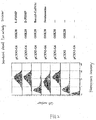
- the transformant cells are subjected to a fluorescent staining using antibodies or lectins capable of binding specifically to various sugar chains (poly-N-acetyllactosamine sugar chain, sialyl Lewis a sugar chain and sialyl Lewis c sugar chain), and then amounts of sugar chains to which the antibodies or lectins bind are measured using a fluorescence activated cell sorter (hereinafter referred to as "FACS").
- FACS fluorescence activated cell sorter
- the polypeptide encoded by the DNA of the present invention has a ⁇ 1,3-N-acetylglucosaminyltransferase activity involved in the synthesis of a poly-N-acetyllactosamine sugar chain.
- any antibody or lectin can be used, so long as it recognizes a poly-N-acetyllactosamine sugar chain.
- an anti-i antibody which specifically recognizes a linear poly-N-acetyllactosamine sugar chain (i antigen) and an anti-I antibody which specifically recognizes a branched poly-N-acetyllactosamine sugar chain (I antigen) J. Biol.
- Chem., 254 , 3221 (1979)] can be used as antibodies which specifically recognize a poly-N-acetyllactosamine sugar chain, and pokeweed mitogen (hereinafter referred to as "PWM”), Lycopersicon esculentum agglutinin (hereinafter referred to as “LEA”) and Datura stramonium agglutinin (hereinafter referred to as “DSA”) can be used as lectins which specifically recognize a poly-N-acetyllactosamine sugar chain [ J. Biol. Chem., 282 , 8179-8189 (1987), J. Biol. Chem. , 259 , 6253-6260 (1984), J. Biol.
- the polypeptide of the present invention is involved in the synthesis of a poly-N-acetyllactosamine sugar chain in O-linked sugar chains of glycoprotein, if the amount of poly-N-acetyllactosamine sugar chain is reduced when transformant cells are fluorescently-stained using an antibody which recognizes a poly-N-acetyllactosamine sugar chain and then analyzed by FACS, after culturing of the transformant cells in the presence of an inhibitor specific for the synthesis of O-linked sugar chains of glycoprotein.
- sugar chain synthesis inhibitor specific for the sugar chains of complex carbohydrates examples include Benzyl- ⁇ -GalNAc which is a synthesis inhibitor of glycoprotein O-linked sugar chains, a mannosidase II inhibitor swainsonine which acts as a synthesis inhibitor of glycoprotein N-linked sugar chains, and a glucosylceramide synthase inhibitor D-PDMP (D-threo-1-phenyl-2-decanoylamino-3-morpholino-1-propanol) which acts as a synthesis inhibitor of glycolipid sugar chains.
- D-PDMP D-threo-1-phenyl-2-decanoylamino-3-morpholino-1-propanol
- glycolipids can be confirmed by extracting glycolipids from a transformant cell prepared by introducing an expression vector for the polypeptide of the present invention into an animal cell and from a transformant cell prepared by introducing a control vector which does not contain a DNA encoding the polypeptide of the present invention, and analyzing and comparing compositions of both glycolipids using a TLC plate. Extraction of glycolipids and analysis of compositions can be carried out according to a known method [Shujunsha, Cell Technology (Saibo Kogaku), Supplement, "Glycobiology Experiment Protocol (Glycobiology Jikken Protocol)"; Anal. Biochem., 223 , 232 (1994)].
- the glycolipid developed on a TLC plate is detected and quantified by orcinol staining or immunostaining which involves use of an antibody capable of binding to specific sugar chain structure and identified by comparing with the Rf value of a standard glycolipid.
- the polypeptide of the present invention is involved in the synthesis of paragloboside (Gal ⁇ 1-4GlcNAc ⁇ 1-3Gal ⁇ 1-4Glc-ceramide) and neolactohexaosylceramide (Gal ⁇ 1-4GlcNAc ⁇ 1-3Gal ⁇ 1-4GlcNAc ⁇ 1-3Gal ⁇ 1-4Glc-ceramide), if the amounts of paragloboside and neolactohexaosylceramide are increased in a transformant cell in which the polypeptide of the present invention is expressed, in comparison with a control transformant cell, when paragloboside and neolactohexaosylceramide are detected by immunostaining involving use of an antibody wh ⁇ ch recognizes the N
- the polypeptide of the present invention can be used as medicaments for treating, preventing and/or diagnosing diseases which accompany changes in the expression of the polypeptide of the present invention such as inflammatory disease, cancer and tumor metastasis.
- the medicament comprising the polypeptide of the present invention can be used directly as a therapeutic agent, generally, it is preferred to use it as a pharmaceutical preparation produced by a well-known method in the technical field of pharmaceutics by mixing it with at least one pharmaceutically acceptable carrier.
- the administration method of the therapeutic agent it is preferred to use the most effective method in carrying out the treatment, and methods by oral administration or by parenteral administration such as buccal, airway, rectal, subcutaneous, intramuscular or intravenous can be used.
- a dosage form of the therapeutic drug include ointments, sprays, capsules, tablets, granules, syrups, emulsions, suppositories injections, tapes and the like.
- the preparations suitable for oral administration include emulsions, syrups, capsules, tablets, powders, granules and the like.
- liquid preparations such as emulsions and syrups can be produced using, as additives, water; saccharides such as sucrose, sorbitol and fructose; glycols such as polyethylene glycol and propylene glycol; oils such as sesame oil, olive oil and soybean oil; antiseptics such as p-hydroxybenzoates; flavors such as strawberry flavor and peppermint; and the like.
- Capsules, tablets, powders, granules and the like can be produced using, as additives, fillers such as lactose, glucose, sucrose and mannitol; disintegrants such as starch and sodium alginate; lubricants such as magnesium stearate and talc; binders such as polyvinyl alcohol, hydroxypropylcellulose and gelatin; surfactants such as fatty acid ester; plasticizers such as glycerin; and the like.
- fillers such as lactose, glucose, sucrose and mannitol
- disintegrants such as starch and sodium alginate
- lubricants such as magnesium stearate and talc
- binders such as polyvinyl alcohol, hydroxypropylcellulose and gelatin
- surfactants such as fatty acid ester
- plasticizers such as glycerin; and the like.
- the preparations suitable for parenteral administration include injections, suppositories, sprays and the like.
- injections can be prepared using, for example, a carrier comprising a salt solution, a glucose solution, or a mixture of both or the like.
- Suppositories can be produced using, for example, a carrier such as cacao butter, hydrogenated fat or carboxylic acid.
- sprays can be prepared from the protein itself or using a carrier or the like which does not stimulate oral and airway mucous membranes of patients and can facilitate absorption of the protein by dispersing it as minute particles.
- the carrier includes lactose, glycerol and the like.
- pharmaceutical preparations such as aerosols and dry powders.
- the components exemplified as additives of oral preparations can also be added to these parenteral preparations.
- the dose or frequency of administration varies depending on the intended therapeutic effect, administration method, treating period, age, body weight and the like, but is generally from 1 ⁇ g/kg to 100 mg/kg per day and per adult.
- polypeptide of the present invention examples include DNA encoding the polypeptide.
- the polypeptide of the present invention has an activity to transfer N-acetylglucosamine via ⁇ 1,3-linkage to galactose residue present in the non-reducing terminal of an acceptor sugar chain, namely ⁇ 1,3-N-acetylglucosaminyltransferase activity. Accordingly, the polypeptide of the present invention can be used as a sugar chain synthesizing agent.
- acceptors include i) galactose, N-acetyllactosamine (Gal ⁇ 1-4GlcNAc), Gal ⁇ 1-3GlcNAc or lactose (Gal ⁇ 1-4Glc), ii) an oligosaccharide having galactose, N-acetyllactosamine, Gal ⁇ 1-3GlcNAc or lactose structure in the non-reducing terminal, and iii) a complex carbohydrate having galactose, N-acetyllactosamine, Gal ⁇ 1-3GlcNAc or lactose structure in the non-reducing terminal.
- the polypeptide of the present invention has an enzyme activity to transfer N-acetylglucosamine via ⁇ 1,3-linkage to galactose residue present in the non-reducing terminal of an acceptor sugar chain selected from the above i) to iii).
- the complex carbohydrate includes a complex carbohydrate selected from a glycoprotein, a glycolipid, a proteoglycan, a glycopeptide, a lipopolysaccharide, a peptidoglycan, a glycoside in which a sugar chain is linked to a steroid compound and the like.
- Examples of the complex carbohydrate having galactose, N-acetyllactosamine, Gal ⁇ 1-3GlcNAc or lactose structure in the non-reducing terminal include lactosylceramide, paragloboside and the like.
- Examples of the structure in which N-acetylglucosamine is added to a galactose residue via ⁇ 1,3-linkage include GlcNAc ⁇ 1-3Gal structure, GlcNAc ⁇ 1-3Gal ⁇ 1-4GlcNAc structure, GlcNAc ⁇ 1-3Gal ⁇ 1-3GlcNAc structure, GlcNAc ⁇ 1-3Gal ⁇ 1-4Glc structure, (Gal ⁇ 1-4GlcNAc ⁇ 1-3) n Gal ⁇ 1-4GlcNAc structure (n is an integer of 1 or more), (Gal ⁇ 1-4GlcNAc ⁇ 1-3) n Gal ⁇ 1-4Glc structure (n is an integer of 1 or more) and the like.
- a sugar chain having structure in which N-acetylglucosamine is added to a galactose residue via ⁇ 1,3-linkage specifically a sugar chain comprising a saccharide selected from the group consisting of GlcNAc ⁇ 1-3Gal ⁇ 1-4Glc-ceramide, a lacto-series glycolipid (a glycolipid having Gal ⁇ 1-3GlcNAc ⁇ 1-3Gal ⁇ 1-4Glc-ceramide as a backbone), a neolacto-series glycolipid (a glycolipid having Gal ⁇ 1-4GlcNAc ⁇ 1-3Gal ⁇ 1-4Glc-ceramide as a backbone), a saccharide having a GlcNAc ⁇ 1-3Gal structure, a saccharide having GlcNAc ⁇ 1-3Gal ⁇ 1-4GlcNAc structure, a saccharide having GlcNAc ⁇ 1-3Gal ⁇ 1-3GlcNAc structure, a saccharide having GlcNAc ⁇ 1-3Gal ⁇ 1-4GlcNAc structure, a saccharide having
- the culturing can be carried out according to the above (3).
- a sugar chain having structure in which N-acetylglucosamine is added to a galactose residue via ⁇ 1,3-linkage can be added to the recombinant glycoprotein by simultaneously producing the polypeptide of the present invention and a recombinant glycoprotein of interest (e.g., a recombinant glycoprotein for medicament) in a transformant capable of synthesizing sugar chains among the above transformants.
- a sugar chain having structure in which N-acetylglucosamine is added to a galactose residue via ⁇ 1,3-linkage or a complex carbohydrate to which the sugar chain is added can be produced according to the process of above (3).
- a sugar chain having structure in which N-acetylglucosamine is added to a galactose res ⁇ due via ⁇ 1,3-linkage or a complex carbohydrate to which the sugar chain is added specifically GlcNAc ⁇ 1-3Gal ⁇ 1-4Glc-ceramide, a lacto-series glycolipid (a glycolipid having Gal ⁇ 1-3GlcNAc ⁇ 1-3Gal ⁇ 1-4Glc-ceramide as a backbone), a neolacto-series glycolipid (a glycolipid having Gal ⁇ 1-4GlcNAc ⁇ 1-3Gal ⁇ 1-4Glc-ceramide as a backbone), a sugar chain comprising a saccharide selected from the group consisting of a saccharide having GlcNAc ⁇ 1-3Gal structure, a saccharide having GlcNAc ⁇ 1-3Gal ⁇ 1-4GlcNAc structure, a saccharide having GlcNAc ⁇ 1-3Gal ⁇ 1-3GlcNAc structure, a saccharide having GlcNAc ⁇
- the sugar chain or complex carbohydrate can be produced and accumulated, for example, in milk, egg and the like of the animal.
- a sugar chain having structure in which N-acetylglucosamine is added to a galactose residue via ⁇ 1, 3-linkage or a complex carbohydrate to which the sugar chain is added can be produced, for example, by cultivating a transgenic plant comprising the DNA of the present invention to produce and accumulate the sugar chain having structure in which N-acetylglucosamine is added to a galactose residue via ⁇ 1,3-linkage or complex carbohydrate to which the sugar chain is added, and then recovering the product from the plant.
- a reaction product in which N-acetylglucosamine is added via ⁇ 1,3-linkage to galactose or a galactose residue present in the non-reducing terminal of the sugar chain can be produced in an aqueous medium by the following process.
- a reaction product in which N-acetylglucosamine is added via ⁇ 1,3-linkage to galactose or a galactose residue of an acceptor can be produced by using at least one species selected from the group consisting of i) lactosylceramide (Gal ⁇ 1-4Glc-ceramide) or paragloboside (Gal ⁇ 1-4GlcNAc ⁇ 1-3Gal ⁇ 1-4Glc-ceramide), ii) galactose, N-acetyllactosamine (Gal ⁇ 1-4GlcNAc), Gal ⁇ 1-3GlcNAc, Gal ⁇ 1-3GalNAc or lactose (Gal ⁇ 1-4Glc), iii) an oligosaccharide having galactose, N-acetyllactosamine (Gal ⁇ 1-4GlcNAc), Gal ⁇ 1-3GlcNAc or lactose (Gal ⁇ 1-4Glc) structure in the non-reducing terminal, and iv) a complex carb
- the enzyme source is used at a concentration of 0.1 mU/l to 10,000 U/l, preferably 1 mU/l to 1,000 U/l, by defining the activity capable of forming 1 ⁇ mol of GlcNAc ⁇ 1-3Gal ⁇ 1-4GlcNAc ⁇ 1-3Gal ⁇ 1-4Glc in 1 minute at 37°C as 1 unit (U) when lacto-N-neotetraose (Gal ⁇ 1-4GlcNAc ⁇ 1-3Gal ⁇ 1-4Glc) is used as the substrate.
- aqueous media examples include water, buffer solutions such as phosphate buffer, carbonate buffer, acetate buffer, borate buffer, citrate buffer and tris buffer, alcohols such as methanol and ethanol, esters such as ethyl acetate, ketones such as acetone, amides such as acetamide, and the like.
- a culture medium of a microorganism used as an enzyme source can also be used as the aqueous medium.
- the culture medium of a transformant obtained by the culturing described in the above (2) or the milk obtained from a non-human transgenic animal described in the above (2) can also be used as the aqueous medium.
- a surfactant or an organic solvent may be added to the aqueous medium.
- the surfactant may be any agent that can accelerate production of a sugar chain having structure in which N-acetylglucosamine is added to a galactose residue via ⁇ 1,3-linkage or a complex carbohydrate to which the sugar chain is added.
- nonionic surfactants such as polyoxyethylene octadecylamine (e.g., Nymeen S-215, manufactured by NIPPON OIL & FATS), cationic surfactants such as cetyltrimethylammonium bromide and alkyldimethyl benzylammonium chloride (e.g., Cation F2-40E, manufactured by NIPPON OIL & FATS), anionic surfactants such as lauryl sarcosinate, tertiary amines such as alkyl dimethylamine (e.g., Tertiary Amine FB, manufactured by NIPPON OIL & FATS), and the like, which may be used alone or as a mixture of two or more thereof.
- the surfactant is generally used at a concentration of 0.1 to 50 g/l.
- the organic solvent includes xylene, toluene, an aliphatic alcohol, acetone, ethyl acetate and the like, and it is generally used at a concentration of 0.1 to 50 ml/l.
- a reaction solution produced by using activity of a microorganism or the like or a product purified from the reaction solution can be used, in addition to commercially available products.
- the UDP-GlcNAc is used at a concentration of 0.1 to 500 mmol/l.
- Examples of the oligosaccharides having galactose, N-acetyllactosamine (Gal ⁇ 1-4GlcNAc), Gal ⁇ 1-3GlcNAc or lactose (Gal ⁇ 1-4Glc) structure in the non-reducing terminal, other than those described above, include Gal ⁇ 1-3GalNAc, Gal ⁇ 1-4GlcNAc ⁇ 1-3Gal ⁇ 1-4Glc, Gal ⁇ 1-4GlcNAc ⁇ 1-3Gal ⁇ 1-4GlcNAc, Gal ⁇ 1-4(Fuc ⁇ 1-3)GlcNAc ⁇ 1-3Gal ⁇ 1-4Glc, Gal ⁇ 1-4(Fuc ⁇ 1-3)GlcNAc ⁇ 1-3Gal ⁇ 1-4GlcNac, Gal ⁇ 1-4GlcNAc ⁇ 1-3Gal ⁇ 1-4(Fuc ⁇ 1-3)Glc, Gal ⁇ 1-4GlcNAc ⁇ 1-3Gal ⁇ 1-4(Fuc ⁇ 1-3)GlcNAc, Gal ⁇ 1-4GlcNAc ⁇ 1-3Gal ⁇ 1-4(Fuc ⁇ 1-3)GlcNAc, Gal
- the complex carbohydrates having a galactose residue in the non-reducing terminal of its sugar chain include a complex carbohydrate containing a sugar chain having structure of any one the above oligosaccharide structure in the non-reducing terminal of the sugar chain, a complex carbohydrate containing an asialo complex N-linked sugar chain and the like.
- Specific examples include glycolipids such as lactosylceramide (Gal ⁇ 1-4Glc-ceramide) and paragloboside (Gal ⁇ 1-4GlcNAc ⁇ 1-3Gal ⁇ 1-4Glc-ceramide).
- the acceptor can be used at a concentration of 0.01 to 500 mmol/l.
- inorganic salts such as MnCl 2 , ⁇ -mercaptoethanol, polyethylene glycol and the like can be added as the occasion demands.
- the production reaction is carried out in an aqueous medium at pH 5 to 10, preferably pH 6 to 8, and at 20 to 50°C for 1 to 96 hours.
- a part of a sugar chain can be cut out from the sugar chain or complex carbohydrate produced by the above process by known enzymatic techniques or chemical techniques [ Second Biochemical Experimentation Series (Zoku Seikagaku Jikken Koza), Vol. 4, "Method for Studying Complex Carbohydrates (Fukugo Toshitsu Kenkyu-ho)" I, II, edited by Japanese Biochemical Society, Tokyo Kagaku Dojin (1986), Glycobiology Experimentation Protocol (Glycobiology Jikken Protocol), edited by Naoyuki Taniguchi, Akemi Suzuki, Kiyoshi Furukawa and Kazuyuki Sugawara, Shujun-sha, (1996)].
- a galactose-added sugar chain or complex carbohydrate can be produced using the N-acetylglucosamine-added sugar chain or complex carbohydrate obtained by the above process as an acceptor and by allowing a) the acceptor, b) GlcNAc ⁇ 1, 4-galactosyltransferase and c) uridine 5' -diphosphate galactose (hereinafter referred to as "UDP-Gal”) to be present in an aqueous medium to produce and accumulate a reaction product in which the galactose is added via ⁇ 1,4-linkage to the N-acetylglucosamine residue at the non-reducing terminal of the acceptor in the aqueous medium, and recovering the galactose-added sugar chain or complex carbohydrate from the aqueous medium.
- UDP-Gal uridine 5' -diphosphate galactose
- a poly-N-acetyllactosamine sugar chain [a sugar chain constructed by two or more repetition of (Gal ⁇ 1-4GlcNAc ⁇ 1-3) structure] is synthesized by repetitive action of a GlcNAc ⁇ 1,4-galactosyltransferase and a Gal ⁇ 1,3-N-acetylglucosaminyltransferase.
- poly-N-acetyllactosamine sugar chain can be synthesized in vitro using GlcNAc ⁇ 1,4-galactosyltransferase and the polypeptide of the present invention having a Gal ⁇ 1,3-N-acetylglucosaminyltransferase activity.
- a poly-N-acetyllactosamine sugar chain-added sugar chain or complex carbohydrate can be produced using the polypeptide of the present invention as an enzyme source, by allowing (a) GlcNAc ⁇ 1,4-galactosyltransferase, (b) an acceptor selected from i) lactosylceramide (Gal ⁇ 1-4Glc-ceramide) or paragloboside (Gal ⁇ 1-4GlcNAc ⁇ 1-3Gal ⁇ 1-4Glc-ceramide), ii) galactose, N-acetyllactosamine (Gal ⁇ 1-4GlcNAc), Gal ⁇ 1-3GlcNAc or lactose (Gal ⁇ 1-4Glc), iii) an oligosaccharide having galactose, N-acetyllactosamine .
- a poly-N-acetyllactosamine sugar chain or a complex carbohydrate to which the sugar chain is added can be produced by co-expressing a GlcNAc ⁇ 1,4-galactosyltransferase and a DNA encoding the polypeptide of the present invention having a Gal ⁇ 1,3-N-acetylglucosaminyltransferase activity in a cell.
- a poly-N-acetyllactosamine sugar chain or a complex carbohydrate to which the sugar chain is added can also be produced by expressing the DNA encoding the polypeptide of the present invention having a Gal ⁇ 1,3-N-acetylglucosaminyltransferase activity alone in a cell.
- lacto-N-neotetraose (Gal ⁇ 1-4GlcNAc ⁇ 1-3Gal ⁇ 1-4Glc) and lacto-N-tetraose (Gal ⁇ 1-3GlcNAc ⁇ 1-3Gal ⁇ 1-4Glc) or various oligosaccharides having them as a backbone are present in human milk [ Acta Paediatrica, 82 , 903 (1993)].
- the oligosaccharides have GlcNAc ⁇ 1-3Gal structure in common.
- oligosaccharides having a poly-N-acetyllactosamine sugar chain are included in the oligosaccharides.
- these oligosaccharides function to prevent babies from infection with viruses and microorganisms or to neutralize toxins.
- their activity to accelerate growth of Lactobacillus bifidus which is a beneficial enteric bacterium is also known.
- types of oligosaccharides existing in the milk of animals such as cows and mice are few and are mostly lactose, and the above oligosaccharides existing in human milk are hardly present therein.
- the above oligosaccharides contained in human milk or a milk containing them can be produced efficiently. Since there is a possibility that the polypeptide of the present invention having a lactosylceramide ⁇ 1,3-N-acetylglucosaminyltransferase activity is involved in the synthesis of the above oligosaccharides contained in human milk at mammary gland, there is a possibility that it can be used in the production of oligosaccharides effective in treating infectious diseases and accelerating growth of the beneficial Lactobacillus biffidus.
- any protein can be stabilized by artificially adding a poly-N-acetyllactosamine sugar chain to the protein. Also, since the clearance rate of a blood protein from the kidney becomes slow as the effective molecular weight of the protein increases, stability of any protein in blood can be increased through its reduced clearance rate from the kidney by increasing its effective molecular weight by artificially adding a poly-N-acetyllactosamine sugar chain to the protein. Also, targeting of any protein of interest into a specif ⁇ ed cell can be carried out by adding a poly-N-acetyllactosamine sugar chain.
- Determination of the expression level of a gene encoding the polypeptide of the present invention or detection of structural change of the gene can be carried out by using the DNA of the present invention or the above oligonucleotide prepared from the DNA.
- the method for determining expression level of mRNA encoding the polypeptide of the present invention or detecting structural changes of DNA and mRNA encoding the polypeptide of the present invention includes (a) Northern blotting, (b) in situ hybridization, (c) quantitative PCR/real time PCR, (d) differential hybridization, (e) DNA micro-array/DNA tip, (f) RNase protection assay and the like.
- samples to be analyzed by the above methods DNA, mRNA or total RNA obtained from cultured cells, various tissues, biological samples such as sera and saliva, or the transformants described in (3) are used.
- the mRNA and total RNA are called sample-derived RNA.
- samples isolated as paraffin or cryostat sections from tissues obtained from biological samples can also be used.
- the expression level of an mRNA and its structural change can be detected by detecting a band specifically binding to the mRNA encoding the polypeptide of the present invention, by separating sample-derived RNA by gel electrophoresis, transferring the sample onto a support such as a nylon filter, and then carrying out hybridization using a labeled probe prepared from the DNA of the present invention and washing.
- incubation is performed under such conditions that the mRNA in the sample-derived RNA forms a stable hybrid with the probe.
- the conditions are determined by a large number of factors such as temperature, ionic strength, base composition, length of the probe and concentration of formamide. The factors are described, for example, in Molecular Cloning, Second Edition.
- a labeled probe used in the Northern blotting can be prepared, for example, by incorporating a radioisotope, biotin, a fluorescence group, a chemiluminescence group or the like into a DNA having a nucleotide sequence complementary to the nucleotide sequence of the DNA of the present invention, a partial fragment of 100 nucleotides or more of the DNA, or an oligonucleotide designed from the sequence of the DNA, using a known method (nick translation, random priming or kinasing). Since the amount of the bound labeled probe reflects the expression level of the mRNA, the expression level of the mRNA can be determined by determining the amount of the bound labeled probe. Also, structural changes in the mRNA can be known by analyzing the labeled probe binding site.
- the expression level of the mRNA can be detected by the in situ hybridization in which hybridization and washing are carried out using the above labeled probe and a sample isolated as a paraffin or cryostat section from a tissue obtained from a living body.
- the in situ hybridization it is preferred to carry out the hybridization and washing under highly stringent conditions.
- the conditions are determined by a large number of factors such as temperature, ionic strength, base composition, length of the probe and concentration of formamide. These factors are described, for example, in Molecular Cloning, Second Edition.
- the mRNA can be detected according to a quantitative PCR, a differential hybridization method, a DNA micro-array/DNA tip or the like by using a sample-derived RNA or a cDNA synthesized from the RNA using a reverse transcriptase.
- the cDNA is called sample-derived cDNA.
- a random primer or oligo(dT) primer can be used in the synthesis of cDNA.
- a DNA fragment derived from mRNA encoding the polypeptide of the present invention is amplified by PCR using the sample-derived cDNA as the template and primers (comprising a pair of oligonucleotides of a DNA having a sequence identical to continuos 5 to 120 nucleotides of the nucleotide sequence in the DNA of the present invention and a DNA having a sequence identical to continuos 5 to 120 nucleotides of a nucleotide sequence complementary to the nucleotide sequence in the DNA of the present invention) designed based on the nucleotide sequence in the DNA of the present invention.
- primers comprising a pair of oligonucleotides of a DNA having a sequence identical to continuos 5 to 120 nucleotides of the nucleotide sequence in the DNA of the present invention and a DNA having a sequence identical to continuos 5 to 120 nucleotides of a nucleotide sequence complementary to the nucle
- the amount of the amplified DNA fragment reflects the expression level of the mRNA
- G3PDH glyceraldehyde-3-phosphate dehydrogenase
- changes in the structure of the mRNA can be detected by separating the amplified DNA fragment by gel electrophoresis. In this detection method, it is preferred to use appropriate primers which amplify the target sequence specifically and efficiently.
- Such appropriate primers can be designed based on such conditions that, e.g., hybridization between the primers and intramolecular hybridization of a primer are not caused, that they specifically hybridize to the target cDNA at the annealing temperature and are removed from the target cDNA under denaturing conditions. It is necessary to quantify the amplified DNA fragment during the PCR when the amplified product is increasing by exponential function. Such PCRs can be detected by recovering the amplified DNA fragment produced by each reaction and quantitatively analyzing it by gel electrophoresis.
- the principle of the real time PCR [Junko Stevens, Experimental Medicine (Jikken Igaku), Supplement, 15 , 46-51 (1997)] is identical to the above quantitative PCR, and the amount of amplified DNA fragment can be detected in real time as released fluorescence quantity by PCR using the TaqMan probe and a forward primer and a reverse primer labeled with two fluorescence dyes, respectively.
- Changes in the expression level of mRNA encoding the polypeptide of the present invention can be detected by carrying out hybridization and washing on a filter or a basement such as a slide glass or silicon to which the DNA of the present invention is immobilized, using a sample-derived cDNA.
- Methods based on such a principle include so-called differential hybridization [ Trends in Genetics , 7 , 314-317 (1991)] and DNA micro array/DNA tip [ Genome Research, 6 , 639-645 (1996)].
- difference in the expression level of the mRNA between a control sample and a target sample can be accurately detected by immobilizing an internal control such as actin or G3PDH on a filter or a basement.
- the expression level of the mRNA can be accurately determined by synthesizing labeled cDNA molecules using respectively different labeled dNTP based on control sample- and target sample-derived RNAs, and simultaneously hybridizing two labeled cDNA probes on one filter or one basement.
- a labeled antisense RNA is synthesized by firstly ligating a promoter sequence such as T7 promoter or SP6 promoter to the 3'-terminal of the DNA of the present invention, and then carrying out in vitro transcription using an RNA polymerase in the presence of labeled rNTP.
- the labeled antisense RNA is hybridized to a sample-derived RNA to form an RNA-RNA hybrid, and then the hybrid is digested with an RNase and the RNA fragment protected from the digestion is detected by forming a band by gel electrophoresis.
- the expression level of mRNA encoding the polypeptide of the present invention can be determined by quantifying the thus obtained band.
- the detection method described in the above can be used in detecting or diagnosing diseases which accompany changes in the expression level of a gene encoding the polypeptide of the present invention.
- DNA, mRNA or total RNA obtained from a patient having inflammatory disease, cancer or tumor metastasis, a patient having diseases which accompanies changes in the expression level of a DNA encoding the polypeptide of the present invention or a healthy person is used as the sample.
- the DNA, mRNA or total RNA can be obtained from biological samples such as various tissues, sera and saliva of a patient or healthy person or from primary culture cells obtained by preparing cells from the biological samples and culturing them in an appropriate medium in test tubes.
- the range of the expression levels of the gene of the patients and healthy persons is determined by measuring and comparing the expression level of the gene encoding the polypeptide of the present invention in samples of two or more patients and healthy persons by the above detection methods. Detection or diagnosis of diseases which accompany changes in the expression of the gene can be carried out by comparing the expression level of the gene in a sample of a test person with the expression level in healthy persons.
- Gal ⁇ 1,3-N-acetylglucosaminyltransferases have already been cloned other than the polypeptide of the present invention, and it is necessary to use a detection method based on the nucleotide sequence of a gene (e.g., Northern hybridization or PCR) in order to detect expression of a specific Gal ⁇ 1,3-N-acetylglucosaminyltransferase.
- a detection method based on the nucleotide sequence of a gene (e.g., Northern hybridization or PCR) in order to detect expression of a specific Gal ⁇ 1,3-N-acetylglucosaminyltransferase.
- its expression can be accurately examined by discriminating it from the already cloned two enzymes.
- Myelogenous leukemia and lymphocytic leukemia can be discriminated by determining the expression level of the gene encoding the polypeptide of the present invention by the Northern hybridization or PCR, by preparing mRNA, total RNA or CDNA from leukemia cells collected from a patient and using a DNA having a nucleotide sequence complementary to the nucleotide sequence in the DNA of the present invention, a partial fragment of 100 bp or more of the DNA, or an oligonucleotide designed from the nucleotide sequence in the DNA of the present invention.
- Screening of a genomic DNA library prepared using a chromosomal DNA isolated from mouse, rat, or human cells or tissues by a method such as plaque hybridization is carried out using the DNA or oligonucleotide (particularly a 5' side region of cDNA) of the present invention as the probe, so that a promoter region and a transcription controlling region of the mouse, rat, or human genomic DNA of the DNA of the present invention can be obtained.
- the exon/intron structure of the DNA can be found by comparing nucleotide sequence of the thus obtained genomic DNA and nucleotide sequence of cDNA.
- a promoter region and a transcription controlling region of the DNA can also be obtained from other non-human mammals using the same method.
- a human chromosomal gene encoding the polypeptide of the present invention can be identified and its structure can be found by comparing the sequence of human cDNA encoding the polypeptide of the present invention with sequences of the human chromosomal genes registered in data bases.
- a promoter region and exon and intron structure of a chromosomal gene encoding the polypeptide of the present invention can be determined by comparing the sequence of the cDNA with the sequence of the chromosomal gene.
- the promoter regions include all promoter regions and transcription controlling regions involved in the transcription of genes encoding the polypeptide of the present invention in mammal cells.
- the transcription controlling regions include regions containing an enhancer sequence which enhances basal transcription of a gene encoding the polypeptide of the present invention, a silencer sequence that attenuates it and the like. Examples include a promoter region and a transcription controlling region functioning in cells selected from leukocytes, nerve cells, tracheal cells, lung cells, colon cells, placental cells, neuroblastoma cells, glioblastoma cells, colon cancer cells, lung cancer cells, pancreatic cancer cells, stomach cancer cells and leukemia cells.
- the thus obtained promoter region and transcription controlling region can be applied to a screening method described below and are also useful in analyzing the transcription controlling mechanism of the gene.
- the novel ⁇ 1,3-N-acetylglucosaminyltransferase of the present invention is also involved in the synthesis of a poly-N-acetyllactosamine sugar chain
- this enzyme is involved in the synthesis of a sialyl Le x sugar chain in leukocyte and a cancer-related sugar chains in cancer cells (sialyl Lewis x sugar chain, sialyl Lewis a sugar chain, sialyl Lewis c sugar chain and dimeric Lewis a sugar chain). Accordingly, it is considered that diagnosis of inflammatory disease, cancer or tumor metastasis, or prediction of prognosis of cancer is possible by examining mutation and polymorphism of the DNA of the present invention.
- the most distinct test for evaluating the presence or absence of a disease-causing mutation in the DNA of the present invention is to directly compare the DNA from a control group with the DNA from patients of the disease.
- human biological samples such as tissues, sera and saliva or primary culture cells established from the biological samples are collected from a patient of a disease whose cause is a mutation in the DNA encoding the polypeptide of the present invention and from a healthy person, and DNA is extracted from the biological samples or the primary culture cells (hereinafter, the DNA is called sample-derived DNA).
- sample-derived DNA DNA is extracted from the biological samples or the primary culture cells.
- the DNA encoding the polypeptide of the present invention is amplified by PCR using the sample-derived DNA as the template and primers designed based on the nucleotide sequence in the DNA of the present invention.
- the DNA encoding the polypeptide of the present invention can be amplified by PCR using the above cDNA derived from the biological samples or the primary culture cells as the template.
- the presence or absence of a mutation can be examined by comparing the thus obtained the amplified DNA derived from a patient with the amplified DNA derived from a healthy person.
- the comparing method includes a method for directly examining nucleotide sequence of the amplified DNA samples, a method for detecting a heterogeneous formed by hybridizing a DNA having a wild type sequence with a DNA having a mutation (cf., the following description) and the like.
- a method for detecting the presence of a mutation in a DNA encoding the polypeptide of the present invention which causes the above diseases
- a method for detecting a heteroduplex formed by hybridizing a DNA strand having a wild type allele with a DNA strand having a mutation allele can be used.
- Examples of the method for detecting heteroduplex include (a) detection of heteroduplex by polyacrylamide gel electrophoresis [ Trends Genet ., 7 , 5 (1991)], (b) single strand conformation polymorphism analysis [ Genomics, 16 , 325-332 (1993)], (c) chemical cleavage of mismatches (CCM) [ Human Molecular Genetics (1996), Tom Strachan and Andrew P. Read (BIOS Scientific Publishers Limited)], (d) enzymatic cleavage of mismatches [ Nature Genetics, 9, 103-104 (1996)], (e) denaturing gradient gel electrophoresis [ Mutat. Res., 288 , 103-112 (1993)] and the like.
- a DNA encoding the polypeptide of the present invention is amplified by PCR using a sample-derived DNA or a sample-derived cDNA as the template and primers designed based on the nucleotide sequence represented by SEQ ID NO:2.
- the primers are designed in such a manner that a DNA of 200 bp or less is amplified.
- the thus amplified DNA (a patient-derived DNA or a mixture of a patient-derived amplified DNA with a healthy person-derived amplified DNA) is converted into single-stranded DNA by thermal denaturation and then double-stranded DNA is again formed by gradually reducing temperature.
- the double-stranded DNA is subjected to polyacrylamide gel electrophoresis.
- heteroduplexs When heteroduplexs are formed, they can be detected as extra bands due to slower mobility than homologous double strands having no mutation.
- the separation performance is efficient when a special gel (Hydro-link, MDE or the like) is used. In the screening of fragments smaller than 200 bp, insertion, deletion and almost all of one nucleotide substitution can be detected. It is preferred to carry out the heteroduplex analysis using a single gel in combination with the single strand conformation polymorphism analysis described below.
- An amplified DNA prepared by the method described in (a) is denatured and then subjected to electrophoresis using an undenatured polyacrylamide gel.
- the amplified DNA can be detected as a band by labeling the primers with an isotope or fluorescence dye in the DNA amplification or by silver-staining the unlabeled amplification product.
- a control sample is simultaneously subjected to the electrophoresis in order to clarify difference from the pattern of wild type, a fragment having a mutation can be detected from the difference in mobility.
- a DNA encoding the polypeptide of the present invention is amplified by PCR using a sample-derived DNA or a sample-derived cDNA as the template and primers designed based on the nucleotide sequence represented by SEQ ID NO:2.
- a labeled DNA prepared by incorporating a radioisotope or fluorescence dye into the DNA of the present invention is hybridized with the amplified DNA and treated with osmium tetroxide to cleave one of the chains of DNA where a mismatch is occurred, and thus a mutation can be detected.
- the CCM is one of the methods having the highest sensitivity and can also be applied to samples of a kilo base length.
- Mismatches can also be enzymaticcally cleaved by using a combination of enzyme involved in the intracellular repairing of mismatches such as T4 phage resolvase or endonuclease VII with RNase A, instead of the osmium tetroxide of the above (c).
- An amplified DNA prepared by the method described in (c) is subjected to electrophoresis using a density gradient of a chemical modifier or a gel having temperature gradient.
- the amplified DNA fragment migrates in the gel to a position where it denatures into single strand, and stops the migration after the denaturation. Since mobility of the amplified DNA in the gel differs in the presence and absence of a mutation in the DNA, it is possible to detect the presence of mutation.
- a poly(G:C) terminal may be added to respective primers.
- a protein truncation test [ Genomics, 20 , 1-4 (1994)] is exemplified. Frameshift mutation, splice site mutation and nonsense mutation which cause deficiency of polypeptides can be specifically detected by the test.
- a DNA encoding the full-length polypeptide of the present invention is amplified by PCR using a sample-derived cDNA (a sample-derived DNA can also be used when intron is not present in a chromosomal gene) as the . template and primers designed based on the nucleotide sequence represented by SEQ ID NO:2.
- a polypeptide can be produced by carrying out in vitro transcription and translation using the amplified DNA. The presence or absence of a mutation which causes deficiency of polypeptide can be detected from the migrated position when the polypeptide is subjected to a gel electrophoresis. A mutation which causes a deficiency is not present when the migrated position of the polypeptide is present at a position corresponding to the full-length polypeptide. On the other hand, when there is a deficiency in the polypeptide, the polypeptide migrates to a position smaller than the full-length polypeptide so that position of the mutation can be presumed by the position.
- a disease induced by a mutation in regions other than the coding region of the chromosomal gene encoding the polypeptide of the present invention can also be present. Since abnormality in the size and expression level of mRNA is detected in patients of diseases caused by mutation in the non-coding regions, their abnormality can be examined by Northern hybridization and PCR.
- Polymorphism analysis of the DNA of the present invention can be carried out by using the gene sequence information of the DNA. Specifically, gene polymorphism can be analyzed using Southern blotting, direct sequencing, PCR, DNA tip and the like [ Clinical Inspection ( Rinsho Kensa ), 42 , 1507-1517 (1998), Clinical Inspection ( Rinsho Kensa ), 42 , 1565-1570 (1998)].
- SNPs single nucleotide polymorphism
- a disease can be diagnosed by obtaining DNA samples from a family having a clinical history of the above disease, according to the above method, and detecting a mutation.
- the DNA of the present invention can inhibit transcription or translation of a DNA encoding the protein of the present invention by using antisense RNA/DNA techniques [ Bioscience and Industry, 50 , 322 (1992), Chemistry, 46 , 681 (1991), Biotechnology, 9, 358 (1992), Trends in Biotechnology, 10 , 87 (1992), Trends in Biotechnology, 10 , 152 (1992), Cell Technology, 16 , 1463 (1997)], triple helix techniques [ Trends in Biotechnology, 10 , 132 (1992)] and the like.
- production of the polypeptide of the present invention can be inhibited by administering the DNA or oligonucleotide of the present invention.
- each of transcription of a DNA encoding the polypeptide of the present invention or translation of a mRNA encoding the polypeptide of the present invention can be inhibited by using the DNA or oligonucleotide of the present invention or derivatives thereof.
- the inhibition method can be used as medicaments . for treating or preventing diseases which accompany changes in the expression of a DNA encoding the polypeptide of the present invention such as inflammatory disease, cancer and tumor metastasis.
- polypeptide of the present invention is involved in the synthesis of neolacto-series glycolipids and lacto-series glycolipids.
- cancer can be treated by inhibiting transcription of the DNA of the present invention and translation of a mRNA encoding the polypeptide.
- Gal ⁇ 1,3-N-acetylglucosaminyltransferases involved in the synthesis of a poly-N-acetyllactosamine sugar chain in specific leukocytes and cancer cells are different. Since there is a possibility that a lactosylceramide ⁇ 1,3-N-acetylglucosaminyltransferase is involved in the synthesis of a poly-N-acetyllactosamine sugar chain in specific leukocytes and cancer cells, it is considered that synthesis of a poly-N-acetyllactosamine sugar chain on specific leukocytes and cancer cells expressing the polypeptide can be specifically inhibited by inhibiting transcription of the DNA of the present invention and translation of a mRNA encoding the polypeptide.
- a medicament comprising the DNA of the present invention, a partial fragment of the DNA or the oligonucleotide of the present invention can be prepared and administered according to the method for a medicament comprising the polypeptide of the present invention described in (3).
- a polyclonal antibody can be produced by using the purified sample of the full-length or a partial fragment of the polypeptide obtained by the method of the above (3) or a peptide having an amino acid of a part of the polypeptide of the present invention as the antigen and administering it to an animal.
- Rabbits, goats, rats, mice, hamsters and the like can be used as the animal to be administered. It is preferred that the dose of the antigen is 50 to 100 ⁇ g per one animal.
- a peptide it is preferred to use the peptide as the antigen after conjugating it to a carrier protein such as keyhole limpet haemocyanin or bovine thyroglobulin by a covalent bond.
- the peptide used as the antigen can be synthesized using a peptide synthesizer.
- the antigen is administered 3 to 10 times at one-to two-week intervals after the first administration.
- a blood sample is collected from the venous plexus of the fundus of the eye, and the serum is tested by enzyme immunoassay [ Enzyme-linked Immunosorbent Assay (Koso Meneki Sokuteiho) (ELISA), published by Igaku Shoin, (1976), Antibodies - A Laboratory Manual, Cold Spring Harbor Laboratory (1988)] and the like as to whether it is reactive with the antigen used for immunization.
- a polyclonal antibody can be obtained by collecting a serum sample from non-human mammal in which the serum showed a sufficient antibody titer against the antigen used for immunization, and separating and purifying the serum.
- Examples of the method for its separation and purification include centrifugation, salting out with 40 to 50% saturated ammonium sulfate, caprylic acid precipitation [ Antibodies - A Laboratory Manual, Cold Spring Harbor Laboratory (1988)] and chromatography using a DEAE-Sepharose column, an anion exchange column, a protein A- or G-column, a gel filtration column or the like, which may be used alone or in combination.
- a rat whose serum showed a sufficient antibody titer against the partial fragment polypeptide of the polypeptide of the present invention used in the immunization is used as the supply source of antibody producing cells.
- the spleen is excised.
- the spleen is cut to pieces in MEM (manufactured by Nissui Pharmaceutical), and cells are loosened using a pair of forceps and centrifuged at 1,200 rpm for 5 minutes and then the supernatant is discarded.
- Splenocytes in the thus obtained precipitation fraction are treated with a Tris-ammonium chloride buffer (pH 7.65) for 1 to 2 minutes for eliminating erythrocytes and then washed three times with MEM, and the thus obtained splenocytes are used as the antibody producing cells.
- myeloma cells established cell lines obtained from mouse or rat are used.
- P3-U1 8-azaguanine-resistant mouse (BALB/c-derived) myeloma cell lines P3-X63Ag8-U1 (hereinafter referred to as "P3-U1") [ Curr. Topics Microbiol. Immunol., 81 , 1 (1978), Eur. J. Immunol., 6 , 511 (1976)], sP2/O-Ag14 (SP-2) [ Nature, 276 , 269 (1978)], P3-X63-Ag8653 (653) [ J. Immunol., 123 , 1548 (1979)], P3-X63-Ag8 (X63) [ Nature, 256 , 495 (1975)] and the like.
- P3-U1 8-azaguanine-resistant mouse
- the cell lines are subcultured in an 8-azaguanine medium [prepared by supplementing RPMI-1640 medium with glutamine (1.5 mmol/l), 2-mercaptoethanol (5x10 -5 mol/l), gentamicin (10 ⁇ g/ml) and fetal calf serum (FCS) (manufactured by CSL, 10%) and further supplementing the resulting medium (hereinafter referred to as "normal medium") with 8-azaguanine (15 ⁇ g/ml)], and they are cultured in the normal medium 3 to 4 days before the cell fusion, and 2x10 7 or more of the cells are used for the cell fusion.
- 8-azaguanine medium prepared by supplementing RPMI-1640 medium with glutamine (1.5 mmol/l), 2-mercaptoethanol (5x10 -5 mol/l), gentamicin (10 ⁇ g/ml) and fetal calf serum (FCS) (manufactured by CSL, 10%) and further supplementing the resulting medium (
- MEM or PBS 1.83 g of disodium hydrogenphosphate, 0. 21 g of potassium dihydrogenphosphate and 7.65 g of sodium chloride, 1 liter of distilled water, pH 7.2
- HAT medium prepared by supplementing the normal medium with hypoxanthine (10 -4 mol/l), thymidine (1.5x10 -5 mol/l) and aminopterin (4x10 -7 mol/l)] by repeated drawing up into and discharging from a measuring pipette.
- the suspension is dispensed in 100 ⁇ l/well portions into a 96-well culture plate and cultured at 37°C for 7 to 14 days in a 5% CO 2 incubator. After culturing, a portion of the culture supernatant is taken out and subjected to an enzyme immunoassay described in [ Antibodies, A Laboratory Manual, Cold Spring Harbor Laboratory, Chapter 14 (1988)] or the like, and hybridomas which specifically react with the partial fragment polypeptide of the polypeptide of the present invention are selected.
- the partial fragment polypeptide of the polypeptide of the present invention used as the antigen in the immunization is coated on an appropriate plate, allowed to react with a first antibody, namely a hybridoma culture supernatant or the purified antibody obtained in the following (d), further allowed to react with a second antibody, namely an anti-rat or anti-mouse immunoglobulin antibody labeled with biotin, an enzyme, a chemiluminescence substance, a radioactive compound or the like and then subjected to the reaction corresponding to the used labeled substance, and those which react specifically with the polypeptide of the present invention are selected as hybridomas that produce the monoclonal antibody for the polypeptide of the present invention.
- a first antibody namely a hybridoma culture supernatant or the purified antibody obtained in the following (d)
- a second antibody namely an anti-rat or anti-mouse immunoglobulin antibody labeled with biotin, an enzyme, a chemiluminescence substance,
- Cloning is repeated twice using the hybridomas according to a limiting dilution method [HT medium (a medium prepared by eliminating aminopterin from HAT medium) for the first and the normal medium for the second], and those in which high antibody titer is constantly observed are selected as hybridomas that produce an anti-polypeptide antibody against the polypeptide of the present invention.
- HT medium a medium prepared by eliminating aminopterin from HAT medium
- the hybridoma cells capable of producing a monoclonal antibody against the polypeptide of the present invention obtained in (c) are injected into the abdominal cavity of 8 to 10-week-old mice or nude mice treated with pristane [by intraperitoneal administration of 0.5 ml of 2,6,10,14-tetramethylpentadecane (pristane), followed by feeding for 2 weeks] at a dose of 5 to 20 ⁇ 10 6 cells per animal.
- the hybridoma causes ascites tumor in 10 to 21 days.
- the ascitic fluid is collected from the ascites tumor-caused mice and centrifuged at 3,000 rpm for 5 minutes to remove the solid matter.
- the monoclonal antibody can be obtained by purifying it from the thus obtained supernatant by the same method used in the purification of a polyclonal antibody.
- the subclass of the antibody is determined using a mouse monoclonal antibody typing kit or a rat monoclonal antibody typing kit.
- the amount of the protein is calculated by the Lowry method or from the absorbance at 280 nm.
- a neutralizing antibody having a property to inhibit activity of the polypeptide of the present invention by binding to the polypeptide of the present invention is included in the antibody of the present invention.
- the polypeptide of the present invention or a cell or tissue containing the polypeptide can be immunologically detected by an antigen-antibody reaction using an antibody which specifically recognizes the polypeptide of the present invention.
- the detection method can be used in the diagnosis of diseases which accompany changes in the expression of the polypeptide of the present invention such as inflammatory disease, cancer and tumor metastasis.
- the detection method can also be used in the quantification of a protein.
- immunological detection and quantification methods examples include fluorescent antibody technique, enzyme-linked immunosorbent assay (ELISA), radioimmunoassay (RIA), immunohistochemistry such as immunohistostaining and immunocytostaining (ABC method, CSA method, etc .) , Western blotting, dot blotting, immunoprecipitation, sandwich ELISA [ Monoclonal Antibody Experimentation Manual (Tan Clone Kotai Jikken Manual), Kodansha Scientific (1987), Second Biochemical Experimentation Series (Zoku Seikagaku Jikken Koza), Vol. 5, "Method for Immuno-biochemical Research (Men-eki Seikagaku Kenkyu-ho)" Tokyo Kagaku Dojin (1986)] and the like.
- Fluorescent antibody technique is a method in which the antibody of the present invention is allowed to react with a microorganism, an animal cell or insect cell or a tissue, which expressed the polypeptide of the present invention inside or outside of the cell, and further allowed to react with an anti-mouse IgG antibody or a fragment thereof labeled with a fluorescence substance such as fluorescein isothiocyanate (FITC), and then the fluorescence dye is measured using a flow cytometer.
- a fluorescence substance such as fluorescein isothiocyanate (FITC)
- Enzyme-linked immunosorbent assay is a method in which the antibody of the present invention is allowed to react with a microorganism, an animal cell or insect cell or a tissue, which expressed the polypeptide inside or outside the cell, and further allowed to react with an anti-mouse IgG antibody or a binding fragment thereof labeled with an enzyme such as peroxidase or biotin, and then the chromogenic dye is measured using an absorptiometer.
- Radioimmunoassay is a method in which the antibody of the present invention is allowed to react with a microorganism, an animal cell or insect cell or a tissue, which expressed the polypeptide inside or outside the cell, and further allowed to react with an anti-mouse IgG antibody or a fragment thereof labeled with a radioisotope, and then the isotope is measured using a scintillation counter or the like.
- Immunocytostaining or immunohistostaining is a method in which an antibody capable of specifically recognizing the polypeptide is allowed to react with a microorganism, an animal cell or insect cell or a tissue, which expressed the polypeptide inside or outside the cell, and further allowed to react with an anti-mouse IgG antibody or a fragment thereof labeled with a fluorescence substance such as FITC or an enzyme such as peroxidase or biotin, and then the cell is observed under a microscope.
- a fluorescence substance such as FITC or an enzyme such as peroxidase or biotin
- Western blotting is a method in which a lysate of a microorganism, an animal cell or insect cell or a tissue, which expressed the polypeptide inside or outside of the cell, is separated by SDS-polyacrylamide gel electrophoresis [ Antibodies - A Laboratory Manual, Cold Spring Harbor Laboratory (1988)], and the gel is blotted on a PVDF membrane or nitrocellulose membrane, allowed to react with an antibody capable of specifically recognizing the polypeptide on the membrane and further allowed to react with an anti-mouse IgG antibody or a fragment thereof labeled with a fluorescence substance such as FITC or an enzyme such as peroxidase or biotin, and then a reaction corresponding to the labeled substance is carried out.
- SDS-polyacrylamide gel electrophoresis Antibodies - A Laboratory Manual, Cold Spring Harbor Laboratory (1988)
- the dot blotting is a method in which a lysate of a microorganism, an animal cell or insect cell or a tissue, which expressed the polypeptide inside or outside the cell, is blotted on a nitrocellulose membrane, allowed to react with the antibody of the present invention on the membrane and further allowed to react with an anti-mouse IgG antibody or a binding fragment thereof labeled with fluorescence substance such as FITC or an enzyme such as peroxidase or biotin, and then a reaction corresponding to the labeled substance is carried out.
- fluorescence substance such as FITC or an enzyme such as peroxidase or biotin
- the immunoprecipitation is a method in which a lysate of a microorganism, an animal cell or insect cell or a tissue, which expressed the polypeptide inside or outside the cell, is allowed to react with an antibody capable of specifically recognizing the polypeptide, and then an antigen-antibody complex is precipitated by adding a carrier such as protein G-Sepharose having the ability to specifically bind to immunoglobulin.
- a carrier such as protein G-Sepharose having the ability to specifically bind to immunoglobulin.
- the sandwich ELISA is a method in which a lysate of a microorganism, an animal cell or insect cell or a tissue, which expressed the polypeptide of the present invention inside or outside the cell, is allowed to react with a plate to which an antibody capable of specifically recognizing the polypeptide is adsorbed, and further allowed to react with an antibody (having an antigen recognizing site different from the above antibody) labeled with a fluorescence substance such as FITC or an enzyme such as peroxidase or biotin, which specifically recognizes the polypeptide of the present invention, and then a reaction corresponding to the labeled substance is carried out.
- a fluorescence substance such as FITC or an enzyme such as peroxidase or biotin
- Gal ⁇ 1,3-N-acetylglucosaminyltransferases have already been cloned in addition to the polypeptide of the present invention, and it is necessary to carry out an immunological detection using a specific antibody for detecting expression of a specified Gal ⁇ 1,3-N-acetylglucosaminyltransferase. Accordingly, the antibody of the present invention makes it possible to examine the expression of the polypeptide of the present invention accurately.
- the polypeptide of the present invention involved in the synthesis of neolacto-series glycolipids and lacto-series glycolipids and the synthesis of a poly-N-acetyllactosamine sugar chain in leukocytes and cancer cells. Accordingly, diagnosis, prevention and treatment of inflammatory diseases and malignancy of cancers become possible by examining the expression level of the polypeptide of the present invention in leukocytes and cancer cells, and by controlling activity of the polypeptide of the present invention using the neutralizing antibody of the present invention.
- myelogenous leukemia and lymphocytic leukemia since treatments of myelogenous leukemia and lymphocytic leukemia are different, it is considered that it is clinically very useful if there is a method for accurately discriminating these two leukemia diseases. While a lactosylceramide ⁇ 1,3-N-acetylglucosaminyltransferase activity is detected in myeloid cell lines, the activity is not detected in lymphocyte cell lines, so that it is considered that the gene encoding the polypeptide of the present invention is expressed in myelogenous leukemia cells but the gene encoding the polypeptide of the present invention is not expressed in lymphocytic leukemia cells. It is possible to discriminate myelogenous leukemia and lymphocytic leukemia by detecting, using the antibody of the present invention, expression of this enzyme protein in leukemia cells collected from patients.
- Gal ⁇ 1,3-N-acetylglucosaminyltransferases involved in the synthesis of a poly-N-acetyllactosamine sugar chain in specific leukocytes and cancer cells are different.
- lactosylceramide ⁇ 1,3-N-acetylglucosaminyltransferase is involved in the synthesis of a poly-N-acetyllactosamine sugar chain in specific leukocytes and cancer cells, therefore, by inhibiting a lactosylceramide ⁇ 1,3-N-acetylglucosaminyltransferase activity of the polypeptide of the present invention using a neutralizing antibody, synthesis of a poly-N-acetyllactosamine sugar chain on specific leukocytes and cancer cells expressing the polypeptide can be specifically inhibited.
- Examples of the diagnosing methods by detecting expression level and structural changes of the polypeptide include the above fluorescent antibody technique, enzyme-linked immunosorbent assay (ELISA), radioimmunoassay (RIA), immunohistochemistry such as immunohistostaining and immunocytostaining (ABC method, CSA method, etc.), Western blotting, dot blotting, immunoprecipitation, sandwich ELISA and the like.
- ELISA enzyme-linked immunosorbent assay
- RIA radioimmunoassay
- immunohistochemistry such as immunohistostaining and immunocytostaining (ABC method, CSA method, etc.
- Western blotting dot blotting
- immunoprecipitation sandwich ELISA and the like.
- the samples diagnosed by the above methods include biological samples, such as tissues, blood, sera, urine, feces and saliva, collected from patients of diseases which are known to accompany changes in the expression of the polypeptide of the present invention such as inflammatory disease, cancer or tumor metastasis, as such, or cells and cell extracts prepared from the biological samples are used. Furthermore, samples isolated as paraffin or cryostat sections from tissues obtained from biological samples can also be used.
- the method for detecting immunologically includes ELISA and fluorescent antibody technique which use a microtiter plate, Western blot technique, immunohistostaining and the like.
- Examples of the method for quantifying immunologically include a sandwich ELISA involving use of two monoclonal antibodies against different epitopes among the antibodies capable of reacting with the polypeptide of the present invention in a liquid phase and a radioimmunoassay involving use of he polypeptide of the present invention labeled with a radioisotope such as 125 I and an antibody which recognizes the polypeptide of the present invention.
- Medicaments comprising the antibody of the present invention can be prepared and administered according to the methods for medicaments comprising the polypeptide of the present invention described in (3).
- a method for preparing a recombinant virus vector for the production of the polypeptide of the present invention in specific human tissues is described below.
- a DNA fragment having an appropriate length containing a region moiety encoding the polypeptide is prepared based on a full-length cDNA of the DNA of the present invention, if necessary.
- Examples include a DNA comprising the nucleotide sequence represented by SEQ ID NO:2, a DNA comprising a nucleotide sequence of positions 135 to 1,268 in the nucleotide sequence represented by SEQ ID NO:2, a DNA comprising a nucleotide sequence of positions 249 to 1,268 in the nucleotide sequence represented by SEQ ID NO:2 and the like.
- a recombinant virus vector is constructed by inserting the full-length cDNA or a fragment of the DNA into the downstream of the promoter in a virus vector.
- RNA virus vector a recombinant virus vector is constructed by preparing a cRNA homologous to the full-length cDNA of the gene of the present invention or an RNA fragment homologous to an appropriate length DNA fragment containing a region encoding the polypeptide, and inserting it into the downstream of the promoter in a virus vector.
- RNA fragment a single-stranded chain of either one of a sense chain or an antisense chain is selected in response to the type of virus vector, in addition to a double-stranded chain.
- an RNA homologous to the sense chain is selected in the case of a retrovirus vector
- an RNA homologous to the antisense chain is selected in the case of a Sendai virus vector.
- the recombinant virus vector is introduced into a packaging cell suited for the vector.
- All cells which can supply a protein encoded by a gene necessary for the packaging of a virus deficient in the corresponding recombinant virus vector can be used as the packaging cell, and, e.g., human kidney-derived HEK293 cell, mouse fibroblast-derived NIH3 T3 or the like which expressed the following proteins can be used.
- proteins supplied by the packaging cell include proteins such as mouse retrovirus-derived gag, pol and env in the case of a retrovirus vector; proteins such as HIV virus-derived gag, pol, env, vpr, vpu, vif, tat, rev and nef in the case of a lentivirus vector; proteins such as adenovirus-derived E1A and E1B in the case of an adenovirus vector; proteins such as Rep (p5, p19, p40) and Vp (Cap) in the case of adeno-associated virus; and proteins such as NP, P/C, L, M, F and HN in the case of Sendai virus.
- proteins such as mouse retrovirus-derived gag, pol and env in the case of a retrovirus vector
- proteins such as HIV virus-derived gag, pol, env, vpr, vpu, vif, tat, rev and nef in the case of a lentivirus vector
- the virus vector includes those which can produce a recombinant virus in the above packaging cell and contain a promoter at such a position that the DNA of the present invention can be transcribed in a target cell.
- the plasmid vector includes MFG [ Proc. Natl. Acad. Sci. USA , 92 , 6733-6737 (1995)], pBabePuro [ Nucleic Acids Res., 18 , 3587-3596 (1990)], LL-CG, CL-CG, CS-CG and CLG [ Journal of Virology, 72 , 8150-8157 (1998)], pAdexl [ Nucleic Acids Res., 23 , 3816-3821 (1995)] and the like.
- any promoter can be used, so long as it can work for expression in human tissues.
- Examples include IE (immediate early) gene promoter of cytomegalovirus (human CMV), SV40 early promoter, retrovirus promoter, metallothionein promote, heat shock protein promoter, SR ⁇ promoter and the like.
- an enhancer of the IE gene of human CMV may be used together with the promoter.
- the method for introducing a recombinant virus vector into a packaging cell includes a calcium phosphate method (Japanese Published Unexamined Patent Application No. 227075/90), a lipofection method [ Proc. Natl. Acad. Sci. USA, 84 , 7413 (1987)] and the like.
- the virus vector which comprises the DNA of the present invention or an RNA comprising a sequence homologous to the DNA can be used as a medicament for treating or preventing diseases which accompany changes in the expression of the polypeptide of the present invention or a DNA encoding the polypeptide such as inflammatory disease, cancer or metastases, as a gene therapy agent described later.
- the polypeptide of the present invention has a ⁇ 1,3-N-acetylglucosaminyltransferase activity, namely, an activity to transfer N-acetylglucosamine via ⁇ 1,3-linkage to a galactose residue present in the non-reducing terminal of a sugar chain.
- a compound which changes this activity can be screened by contacting the polypeptide of the present invention with a sample to be tested.
- the polypeptide of the present invention is involved in the synthesis of neolacto-series glycolipids and lacto-series glycolipids or the synthesis of a poly-N-acetyllactosamine sugar chain in various cells, it is possible to increase or decrease the synthesized amount of a neolacto-series glycolipid, a lacto-series glycolipid or poly-N-acetyllactosamine sugar chain in cells by use of a compound capable of enhancing or inhibiting the ⁇ 1,3-N-acetylglucosaminyltransferase activity of the polypeptide.
- a compound which accelerates or inhibits the transcription step of a gene encoding the polypeptide or the translation step of the transcripts into protein can control a synthesized amount of a neolacto-series glycolipid, a lacto-series glycolipid or poly-N-acetyllactosamine sugar chain in cells by controlling expression of the polypeptide.
- a sialyl Lewis x sugar chain and a sialyl Lewis a sugar chain existing on the poly-N-acetyllactosamine sugar chain are ligands of selectins
- a compound capable of decreasing the synthesized amount of a poly-N-acetyllactosamine sugar chain is useful for anti-inflammation and tumor metastasis inhibition.
- a compound which increases the synthesized amount of a poly-N-acetyllactosamine sugar chain is considered to be useful in the synthesis of a poly-N-acetyllactosamine sugar chain and production of a complex carbohydrate to which a poly-N-acetyllactosamine sugar chain is added.
- the compounds can be obtained by the following methods (i) to (vi).
- reporter genes examples include a chloramphenicol acetyltransferase (CAT) gene, a ⁇ -galactosidase gene, a ⁇ -lactamase gene, a luciferase gene, a green fluorescent protein gene and the like.
- CAT chloramphenicol acetyltransferase
- the polypeptide of the present invention is involved in the synthesis of neolacto-series glycolipids and lacto-series glycolipids in cancer cells.
- cancer can be treated by inhibiting synthesis of neolacto-series glycolipids and lacto-series glycolipids in cancer cells by use of a compound which inhibits expression of the polypeptide or DNA of the present invention and is obtained by the above screening.
- Gal ⁇ 1,3-N-acetylglucosaminyltransferases involved in the synthesis of a poly-N-acetyllactosamine sugar chain in specific leukocytes and cancer cells are different. Since there is a possibility that lactosylceramide ⁇ 1,3-N-acetylglucosaminyltransferase is involved in the synthesis of a poly-N-acetyllactosamine sugar chain in specific leukocytes and cancer cells, it can be expected that by a compound which inhibits expression of the DNA or polypeptide of the present invention, the synthesis of a poly-N-acetyllactosamine sugar chain in specific leukocytes and cancer cells expressing the polypeptide can be specifically inhibited.
- a mutant clone in which a DNA encoding the polypeptide of the present invention on the chromosome in embryonic stem cells of an objective animal such as cow, sheep, goat, pig, horse, domestic fowl or mouse is inactivated or substituted by any sequence by known homologous recombination techniques [e.g., Nature, 326 , 6110, 295 (1987), Cell, 51 , 3, 503 (1987)] can be prepared [e.g., Nature, 350 , 6315, 243 (1991)].
- a chimeric individual comprising the embryonic stem cell clone and a normal cell can be prepared by a method such as an injection chimera method into blastocyst of fertilized egg of an animal or an assembly chimera method.
- An individual having an optional mutation in the DNA encoding the polypeptide of the present invention on chromosomes of the whole body cells can be obtained by crossing this chimeric individual with a normal individual, and a homologous individual (non-human knockout animal) in which a mutation is introduced into both of homologous chromosomes can be obtained by further crossing the individuals.
- a mutation can be introduced into any position of the DNA encoding the polypeptide of the present invention on the chromosome of an animal individual.
- mutation such as nucleotide substitution, deletion or insertion can be introduced into a translation region of the DNA encoding the polypeptide of the present invention on the chromosome.
- the degree, time, tissue specificity and the like of the expression can be modified by introducing similar mutation into the expression controlling region. Furthermore, it is possible to control the expressing time, expressing site, expression level and the like more positively in combination with a Cre-loxP system. Examples of this method include a method in which a promoter which is expressed in a specific region in the brain is used, and the objective gene is deleted only in this region [ Cell, 87 , 7, 1317 (1996)] and a method in which the objective gene is deleted organ-specifically at the intended stage using a Cre-expressing adenovirus [ Science, 278 , 5335, (1997)].
- expression of a DNA encoding the polypeptide of the present invention on the chromosome can also be controlled at any stage and in a tissue in this manner. Also, it is possible to prepare an animal individual having any insertion, deletion or substitution in the translation region or expression controlling region.
- non-human knockout animal of the present invention becomes a markedly useful experimental animal for the treatment and prevention of various diseases caused by the polypeptide of the present invention.
- it is markedly useful as an evaluation model of therapeutic agents and preventive agents and physiologically functional foods, healthy foods and the like.
- Gene therapy agent which comprises the DNA of the present invention and an RNA comprising a sequence homologous to the DNA
- the gene therapy agent using a virus vector which comprises the DNA of the present invention and an RNA comprising a sequence homologous to the DNA can be produced by mixing the recombinant virus vectors prepared in the (7) with a base material used in gene therapy agents [ Nature Genet., 8 , 42 (1994)].
- the gene therapy agent using a virus vector which comprises the DNA of the present invention and an RNA comprising a sequence homologous to the DNA can be used as a medicament for treating or preventing diseases which accompany changes in the expression of the polypeptide of the present invention or of a DNA encoding the polypeptide such as inflammatory disease, cancer and tumor metastasis.
- any base material can be used, so long as it is a base material generally used in injections.
- a base material generally used in injections.
- examples include distilled water, a salt solution such as sodium chloride or a mixture of sodium chloride and an inorganic salt, a sugar solution such as mannitol, lactose, dextran or glucose, an amino acid solution such as glycine or arginine, a mixed solution of an organic acid solution or a salt solution with a glucose solution and the like.
- injections may be prepared according to the conventional method as solutions, suspensions or dispersions using an auxiliary agent including an osmotic pressure controlling agent, a pH adjusting agent, a plant oil such as sesame oil or soybean oil, lecithin, and a surfactant such as a nonionic surfactant in these base materials.
- auxiliary agent including an osmotic pressure controlling agent, a pH adjusting agent, a plant oil such as sesame oil or soybean oil, lecithin, and a surfactant such as a nonionic surfactant in these base materials.
- injections can also be prepared as solid preparations for dissolving when used, by powdering, freeze drying or the like.
- the gene therapy agent of the present invention can be used directly in the treatment when it is a liquid, or when it is a solid, by dissolving it just before the gene therapy in the above base material sterilized, if necessary.
- the administration method of the gene therapy agent of the present invention includes a topical administration method to effect its ab
- a virus vector can be prepared by preparing a complex through the combination of the DNA of the present invention having an appropriate size with a polylysine-conjugate antibody specific for the adenovirus hexon protein, and linking the thus obtained complex to an adenovirus vector.
- the virus vector stably reaches the target cell and is incorporated into the cell by endosome and degraded inside the cell, so that it can express the gene efficiently.
- RNA virus vectors other than retrovirus vectors virus vectors based on Sendai virus as a (-) chain RNA virus have been developed (Japanese Patent Application No. 9-517213, Japanese Patent Application No. 9-517214), so that a Sendai virus vector into which the DNA of the present invention is inserted for the purpose of gene therapy can be prepared.
- the DNA can also be transported into foci by a non-viral gene transfer method.
- non-viral gene transfer method examples include calcium phosphate coprecipitation method [ Virology, 52 , 456-467 (1973); Science, 209 , 1414-1422 (1980)], micro-injection methods [ Proc. Natl. Acad. Sci. USA, 77 , 5399-5403 (1980); Proc. Natl. Acad. Sci. USA, 77 , 7380-7384 (1980); Cell, 27 , 223-231 (1981); Nature, 294 , 92-94 (1981)], membrane fusion-mediated transfer methods via liposome [ Proc. Natl. Acad. Sci. USA, 84 , 7413-7417 (1987); Biochemistry, 28 , 9508-9514 (1989); J.
- a direct DNA incorporation is preferable for directly targeting the DNA at a focus.
- the receptor-mediated DNA transfer is carried out, for example, by conjugating a DNA (in general, it has a form of covalently closed super-coiled plasmid) with a protein ligand via a polylysine.
- the ligand is selected based on the presence of a corresponding ligand receptor on the cell surface of a target cell or tissue.
- the ligand-DNA conjugate can be injected directly to a blood vessel as occasion demands and can be directed to a target tissue where receptor binding and inherence of DNA-protein complex occur.
- the endosome function can be destroyed by simultaneous infection with adenovirus.
- the above gene therapy agent which comprises the DNA of the present invention, an RNA comprising a sequence homologous to the DNA, a recombinant vector comprising the nucleic acid or the like is introduced into cells and a polypeptide encoded by the DNA, differentiation is expressed, so that mutual recognition, migration and the like of the cells can be controlled.
- the cells in this case include corpuscles, nerve cells, stem cells cancer cells and the like.
- differentiation of promyelocyte into granulocyte can be accelerated by introducing the above gene therapy agent into promyelocyte and expressing therein.
- RNA was prepared by the guanidine thiocyanate-cesium trifluoroacetate method [ Methods in Enzymology, 154 , 3 (1987)]. Next, 15.7 ⁇ g of mRNA was obtained as poly(A) + RNA by passing 2.0 mg of the total RNA through an oligo(dT) cellulose column (manufactured by Collaborative Research).
- Plasmid DNAs were obtained from each of the E. coli clones obtained in the above (2) according to a conventional method, and 300- to 400-bp nucleotide sequences of the 5'-terminal and 3'-terminal sides of cDNA contained in each plasmid were determined.
- the nucleotide sequence was determined by using a commercially available kit (Dye Terminator Cycle Sequencing FS Ready Reaction Kit, dRhodamine Terminator Cycle Sequencing FS Ready Reaction Kit or BigDye Terminator Cycle Sequencing FS Ready Reaction Kit, manufactured by PE Biosystems) and a DNA sequencer (ABI PRISM 377, manufactured by PE Biosystems).
- T3 primer manufactured by STRATAGENE
- T7 primer manufactured by STRATAGENE
- a nucleotide sequence (738 bp) of the cDNA contained in OVX2-038 is shown in SEQ ID NO:3, and an amino acid sequence of a polypeptide considered to be encoded by the DNA is shown in SEQ ID NO:32. It was considered that the cDNA contained in OVX2-038 is a partial fragment of a cDNA encoding a rat ⁇ 1,3-galactosyltransferase homologue (named rat G6).
- Human G6 gene corresponding to the rat G6 cDNA obtained in Example 1 was searched.
- a human G6 cDNA clone of about 3 kb was obtained by screening the above two cDNA libraries by using the amplified fragment as a probe. Since the clone was lacking the 5'-terminal portion, a 5'-terminal side DNA of the human G6 cDNA was obtained by using 5' RACE method. Full-length sequence of the human G6 cDNA (SEQ ID NO:2) was determined by sequencing the cDNA clone of about 3 kb of human G6 cDNA and the 5'-terminal side DNA, and connecting these sequences. A DNA fragment containing entire coding regions was obtained by PCR by using primers constructed based on the sequence. The absence of mutation in the nucleotide sequence derived by PCR was confirmed by sequencing the fragment. Specific methods are shown below.
- mRNA was obtained from the human colon cancer cell line Colo205 by using a mRNA extraction kit Oligotex TM -dT30 ⁇ super> (manufactured by Roche). Specific reagents and method are as described in the instructions attached to the kit. Using 8 ⁇ g of the thus obtained mRNA and SUPERSCRIPT Choice System for CDNA Synthesis Kit (manufactured by GIBCO BRL), double-stranded cDNAs were synthesized using oligo (dT) as a primer.
- Oligotex TM -dT30 ⁇ super> manufactured by Roche. Specific reagents and method are as described in the instructions attached to the kit.
- 8 ⁇ g of the thus obtained mRNA and SUPERSCRIPT Choice System for CDNA Synthesis Kit manufactured by GIBCO BRL
- double-stranded cDNAs were synthesized using oligo (dT) as a primer.
- An Sfi I linker was ligated to both ends of the double-stranded cDNAs by the following method.
- a single-stranded DNA (11 nucleotides) having the nucleotide sequence represented by SEQ ID NO:6 and a single-stranded DNA (8 nucleotides) having the nucleotide sequence represented by SEQ ID NO:7, which constitute the SfiI linker were synthesized by using 380A DNA synthesizer (manufactured by Applied Biosystems).
- T4 kinase buffer a buffer containing 50 mmol/l Tris-HCl (pH 7.5), 10 mmol/l MgCl 2 , 5 mmol/l dithiothreitol (hereinafter referred to as "DTT"), 0.1 mmol/l EDTA (ethylenediaminetetraacetic acid) and 1 mmol/l ATP (hereinafter referred to as "T4 kinase buffer”), and the 5'-end was phosphorylated by adding 30 units of T4 polynucleotide kinase (manufactured by Takara Shuzo) and carrying out the phosphorylation reaction at 37°C for 16 hours.
- T4 ligase buffer 4 ⁇ g of the synthetic DNA of 11 nucleotides and 2.9 ⁇ g of synthetic DNA of 8 nucleotides whose 5'-ends were phosphorylated, and the double-stranded cDNAs synthesized in the above were dissolved, and then 1,050 units of T4 DNA ligase was added thereto for reaction at 16°C for 16 hours to thereby ligate the SfiI linker to each of the double-stranded cDNAs.
- DNA fragments of about 1.5 kb or more were recovered by subjecting the thus obtained reaction solution to agarose gel electrophoresis.
- a buffer solution comprising 10 mmol/l Tris-HCl (pH 7.5), 6 mmol/l MgCl 2 , 50 mmol/l NaCl and 6 mmol/l 2-mercaptoethanol (hereinafter referred to as "Y-50 buffer"), 24 ⁇ g of an expression cloning vector pAMo [J. Biol. Chem., 268 , 22782 (1003), alias pAMoPRC3Sc (Japanese Published Unexamined Patent Application No.
- tRNA transfer RNA
- E. coli LE392 ( Molecular Cloning, Second Edition) was transformed by electroporation [ Nucleic Acids Res., 16 , 6127 (1988)] to give about one million transformants having ampicillin resistance, and thus a cDNA library was constructed.
- cDNA-containing plasmids were prepared using the cDNA library ( E. coli ) and a plasmid preparation kit /plasmid/maxi kit (manufactured by QIAGEN, product No. 41031).
- the presence of human G6 cDNA was examined by PCR using the plasmid DNAs as templates and CB-462 having the nucleotide sequence represented by SEQ ID NO:4 and CB-464 having the nucleotide sequence represented by SEQ ID NO:5 as primers.
- the PCR was carried out under the following conditions.
- a reaction solution comprising 10 ng/ml of the plasmid DNA, 10 mmol/l Tris-HCl (pH 8.3), 50 mmol/l KCl, 1.5 mmol/l MgCl 2 , 0.2 mmol/l dNTP, 0.001% (w/v) of gelatin, 0.2 ⁇ mol/l human G6 gene specific primers (CB-462 and CB-464) and 1 unit of AmpliTaq Gold DNA polymerase (manufactured by Perkin Elmer) was heated at 95°C for 11 minutes, and then 50 cycles of the reaction was carried out, each cycle consisting of 30 seconds at 95°C, 1 minute at 55°C and 2 minutes at 72°C.
- a DNA fragment of about 250 bp considered to be derived from human G6 cDNA was amplified from several pools.
- a human gastric mucosa cDNA library was produced as follows.
- a cDNA was synthesized from human gastric mucosa poly(A) + RNA using cDNA Synthesis System (manufactured by GIBCO BRL), and after adding an Eco RI- Not I- Sal I adapter (Super Choice System for cDNA Synthesis; manufactured by GIBCO BRL) to both ends thereof, inserted into the Eco RI site of a cloning vector ⁇ ZAP II ( ⁇ ZAP II/ Eco RI/CIAP Cloning Kit, manufactured by STRATAGENE) and then subjected to in vitro packaging using Gigapack III Gold Packaging Extract (manufactured by STRATAGENE) to thereby produce a cDNA library.
- the gastric mucosa cDNA library (phage library) was divided into pools each containing about 50,000 independent clones, and then PCR was carried out using the phage (about 1 ⁇ 10 7 particles) of each pool as a template.
- the method was similar to the method described in the above (1), except that the phage (about 1 ⁇ 10 7 particles) heat-treated at 99°C for 10 minutes was used as a template.
- a DNA fragment of about 250 bp considered to be derived from human G6 cDNA was amplified from several pools.
- the DNA fragment was purified using Prep-A-Gene DNA Purification K ⁇ t (manufactured by BIO RAD) and digested with a restriction enzyme ( Ava II or Rsa I) to confirm that the amplified fragment has a partial sequence (the sequence of positions 946 to 1196 of SEQ ID NO:2, 251 bp) of the above EST sequence (GenBank No. AI039637).
- the amplified fragment was digested into 3 DNA fragments of 96 bp, 80 bp and 72 bp by AvaII digestion, and into 2 DNA fragments of 176 bp and 72 bp by RsaI digestion.
- the PCR-amplified DNA fragment of about 250 bp obtained in the above (2) was labeled with a radioisotope to prepare a probe.
- the DNA fragment (50 ng) and 50 ⁇ l of a reaction solution containing a random primer and radioisotope ([ ⁇ - 32 P]dCTP) were allowed to react at 37°C for 30 minutes.
- the composition of the reaction solution and the handling are as described in the manufacture's instructions attached to the kit.
- the reaction was stopped by voltex, and the radioisotope-labeled probe was purified by gel filtration using a Sephadex G50 column.
- Plaque hybridization was carried out by using the radioisotope-labeled probe on 7 pools (a total of about 350,000 independent clones) of the gastric mucosa cDNA library in which amplification was found in the above (2).
- the filters were soaked in 10 ml of the hybridization buffer containing the radioisotope-labeled probe prepared in the above, and hybridization was carried out at 65°C for 16 hours.
- the filters was washed twice under conditions of soaking it at 42°C for 20 minutes in a buffer solution comprising 0.1-fold concentration SSC [composition of 1-fold concentration SSC comprises 15 mmol/l sodium citrate and 150 mmol/l sodium chloride (pH 7.0)] and 0.1% SDS.
- each phage clone was converted into a plasmid clone by carrying out in vivo excision using a kit manufactured by STRATAGENE.
- a plasmid in which an insert cDNA of each phage clone is inserted into pBluescript SK (-) can be obtained. The method followed the manufacture's instructions attached to the kit.
- the size of cDNA contained in each plasmid was examined by digesting the thus obtained 11 plasmids with a restriction enzyme Eco RI. As a result, it was found that all plasmids contain a cDNA of about 3 kb. From the digestion patterns with plural restriction enzymes ( Pst I, Hin dIII and Bsm I), it was considered that all of the 11 plasmids are identical. One of these plasmids was named pBS-G6s.
- a full nucleotide sequence of the cDNA contained in pBS-G6s was determined by the following method.
- a DNA sequencer Model 4000L (manufactured by LI-COR) and a reaction kit (Sequitherm EXCELL IITM Long-ReadTM DNA-sequencing kit-Lc: manufactured by Air Brown) or a DNA sequencer 377 (manufactured by Perkin Elmer) and a reaction kit (ABI PrismTM BigDyeTM Terminator Cycle Sequencing Ready Reaction Kit: manufactured by Applied Biosystems) were used for the determination of the nucleotide sequence.
- the cDNA contained in pBS-G6s has a nucleotide sequence (total nucleotide sequence 2,762 bp) of positions 289 to 3,750 in SEQ ID NO:2. It was considered, based on the nucleotide sequence, that the cDNA encodes a human ⁇ 1,3-galactosyltransferase homologue (human G6), but it was lacking an N-terminal side polypeptide region.
- G6 cDNA specific primers synthetic DNAs having the nucleotide sequences shown in SEQ ID NOs:8 and 9 were used. As a result, a DNA fragment of about 460 bp was amplified. The DNA fragment was blunt-ended according to a conventional method and then inserted into the EcoRV site of pBluescript SK (-). Next, the cDNA was sequenced using primers specific for a sequence in pBluescript SK(-) [M13(-20) Primer and M13 Reverse Primer: manufactured by TOYOBO].
- a DNA sequencer Model 4000L (manufactured by LI-COR) or a DNA sequencer 377 (manufactured by Perkin Elmer) and a reaction kit for each sequencer were used for sequencing.
- the DNA fragment (named RO2-16) has a nucleotide sequence (total nucleotide sequence 457 bp) of positions 513 to 969 in SEQ ID NO:2.
- the DNA fragment was unable to cover the N-terminal region of the G6 polypeptide. Accordingly, the following test was carried out.
- a 5'-terminal side DNA fragment of the human G6 cDNA can be amplified by PCR using the gastric mucosa cDNA library constructed in the above (2) as a template, and a primer specific for the vector and a primer specific for the human G6 cDNA.
- M13 Reverse Primer manufactured by TOYOBO
- TOYOBO which is a primer specific for a sequence in pBluescript SK(-) was used as a primer specific for the vector
- a synthetic DNA having the nucleotide sequence represented by SEQ ID NO:10 as the primer specific for human G6 cDNA.
- the PCR was carried out using 50 ng/ml of the cDNA library (plasmid) as a template under the conditions described in the above (1).
- PCR was carried out using 1 ⁇ l of the PCR solution as a template, and M13 Reverse Primer (manufactured by TOYOBO) as a primer specific for a sequence in pBluescript SK(-) and a synthetic DNA having the nucleotide sequence represented by SEQ ID NO:9 as a primer specific for the human G6 cDNA.
- the PCR was carried out under the conditions described in the above (1). As a result, a DNA fragment of about 1 kb was amplified.
- the DNA fragment was blunt-ended according to a conventional method and then inserted into the EcoRV site of pBluescript SK (-).
- the DNA fragment was sequenced using a primer specific for a sequence in pBluescript SK(-) [M13(-20) Primer or M13 Reverse Primer: both manufactured by TOYOBO].
- a synthetic DNA specific for the determined sequence was prepared and used as a primer, and further continuing nucleotide sequences were determined.
- a complete nucleotide sequence of the DNA fragment was determined by repeating the process.
- a DNA sequencer Model 4000L manufactured by LI-COR
- a DNA sequencer 377 manufactured by Perkin Elmer
- the DNA fragment (named No. 19) has a nucleotide sequence (total nucleotide sequence 969 bp) of positions 1 to 969 in SEQ ID NO:2.
- a nucleotide sequence of cDNA encoding the full-length G6 polypeptide was determined by connecting the thus determined sequence of cDNA contained in pBS-G6s, the sequence of PCR fragment determined in the above (2), the sequence of RO2-16 and the sequence of No. 19.
- the thus determined nucleotide sequence of human G6 full-length cDNA (3,750 bp) is shown in SEQ ID NO:2.
- PCR was carried out using the cDNA library of human colon cancer cell line Colo205 as a template and primers specific for the human G6 cDNA. Specifically, PCR was carried out by heating 50 ⁇ l of a reaction solution containing 50 ng/ml of the cDNA library (plasmid), primers including an Eco RI recognition sequence [CB-497 (SEQ ID NO:11) and CB-501 (SEQ ID NO:12)] and Platinum Pfx DNA polymerase (manufactured by GIBCO BRL) (detailed composition is described in the Platinum Pfx DNA polymerase kit) at 94°C for 2 minutes and then carrying out 45 cycles of the reaction, each cycle consisting of 20 seconds at 94°C, 45 seconds at 55°C and 2 minutes at 68°C.
- DNA fragment of about 1.3 kb was amplified.
- the fragment was digested with Eco RI and then inserted into the Eco RI site of pBluescript SK(-) to obtain a plasmid pBS-G6.
- a DNA sequencer 377 manufactured by Perkin Elmer
- a reaction kit for the sequencer and human G6 cDNA-specific primers were used for sequencing.
- the DNA fragment encoded a polypeptide comprising 378 amino acids having structure characteristic to glycosyltransferase.
- This polypeptide was possessed of the same amino acid sequence of G6 polypeptide.
- the absence of errors in the sequence of the PCR-amplified DNA fragment inserted into pBS-G6 was confirmed by carrying out direct sequencing using the PCR-amplified DNA fragment of about 1.3 kb.
- a nucleotide sequence of cDNA encoding the full-length G6 polypeptide was determined by connecting the thus determined sequence of cDNA contained in pBS-G6s, the sequence of PCR fragment determined in the above- (2), the sequence of No. 19 and the sequence of PCR-amplified DNA fragment contained in pBS-G6.
- the thus determined nucleotide sequence of human G6 full-length cDNA (3,750 bp) was the same as the nucleotide sequence of SEQ ID NO:2.
- the G6 polypeptide showed homologies of 35.6%, 32. 8%, 30.8%, 30.3% and 33.9% at amino acid level with so far cloned five human ⁇ 1, 3-galactosyltransferases ⁇ 3Gal-T1 (Japanese Published Unexamined Patent Application No. 181759/94), ⁇ 3Gal-T2 [ J. Biol. Chem., 273 , 433-440 (1998), J. Biol. Chem., 273 , 12770-12778 (1998)], ⁇ 3Gal-T3 [ J. Biol. Chem., 273 , 12770-12778 (1998)], ⁇ 3Gal-T4 [ J. Biol.
- polypeptide showed a homology of 29.4% at amino acid level with so far cloned human ⁇ 1,3-N-acetylglucosaminyltransferase ( ⁇ 3GnT1) [ Proc. Natl. Acad. Sci. USA, 96 , 406-411 (1999)].
- the G6 polypeptide is a type II membrane protein characteristic to glycosyltransferase. It was considered that it comprises an N-terminal cytoplasmic region containing 14 amino acids, subsequent membrane-binding region containing 18 amino acids rich in hydrophobic property, a stem region containing at least 12 amino acids and the remaining most part of the C-terminal region containing a catalytic region. Based on the comparison of amino acid sequences with the above glycosyltransferases having a homology and information on stem regions and catalytic regions of the above glycosyltransferases (Japanese Published Unexamined Patent Application No. 181759/94), it was assumed that the stem region contains at least 12 amino acids. Accordingly, it is considered that the polypeptide comprising an amino acid sequence of positions 45 to 378 contains a catalytic region.
- polypeptide is a novel ⁇ 1, 3-N-acetylglucosaminyltransferase and the polypeptides comprising amino acid sequences of positions 36 to 378 in SEQ ID NO:1 and 39 to 378 in SEQ ID NO:1 are secretory polypeptides.
- an expression plasmid was constructed by introducing human G6 cDNA into an expression plasmid pAMo [ J. Biol. Chem., 268 , 22782 (1993), alias pAMoPRC3Sc (Japanese Published Unexamined Patent Application No. 336963/93)] or pCXN2 [ Gene, 108 , 193 (1991)].
- the pBS-G6 was digested with a restriction enzyme EcoRI and then converted to be blunt-ended by using a DNA polymerase Klenow fragment. Thereafter, a Sfi I fragment of about 1,350 bp was obtained by adding the Sfi I linker prepared in Example 3(1). Separately, pAMo was digested with Sfi I and Bam HI and then an Sfi I fragment of 8.7 kb was obtained. An expression plasmid pAMo-G6 was constructed by ligating the two fragments.
- the pBS-G6 was digested with a restriction enzyme Eco RI and then an Eco RI fragment of about 1,330 bp was obtained.
- pCXN2 was digested with Eco RI and then an Eco RI fragment of about 3 kb was obtained.
- An expression plasmid pCXN2-G6 was constructed by ligating the two fragments.
- pAMo control plasmid
- pAMo-G6 polypeptide expression plasmid pAMo-G6 constructs constructed in Example 5 was dissolved in TE buffer to give a concentration of 1 ⁇ g/ ⁇ l and then transfected into a human B cell line Namalwa cell by electroporation [ Cytotechnology, 3 , 133 (1990)] to obtain transformed cells.
- RPMI 1640 medium means the RPMI 1640 medium supplemented with these additives] and cultured at 37°C for 24 hours in a CO 2 incubator.
- G418 manufactured by GIBCO
- GIBCO GIBCO
- the transformant was sub-cultured using RPMI 1640 medium containing 0.8 mg/ml G418 and 10% fetal bovine serum.
- Example 5 Each of a control plasmid (pCXN2) and the G6 polypeptide expression plasmid (pCXN2-G6) constructed in Example 5 was dissolved in TE buffer to give a concentration of 1 ⁇ g/ ⁇ l and then transfected into a human colon cancer cell line HCT-15 cell by the electroporation method [ Cytotechnology, 3 , 133 (1990)] to obtain transformed cells.
- the cells were suspended in 8 ml of 10% fetal bovine serum-containing RPMI 1640 medium and cultured at 37° for 24 hours in a CO 2 incubator.
- G418 manufactured by GIBCO
- G418 manufactured by GIBCO
- GIBCO GIBCO
- the transformant was sub-cultured using RPMI 1640 medium containing 0.8 mg/ml of G418 and 10% of fetal bovine serum.
- the HCT-15 cells transfected with pCXN2-G6 or pCXN2 prepared in the above (2) were washed by using 3 ml of a phosphate buffer PBS (8 g/l NaCl, 0.2 g/l KCl, 1.15 g/l Na 2 HPO 4 (anhydrous) and 0.2 g/l KH 2 PO 4 ).
- a phosphate buffer PBS 8 g/l NaCl, 0.2 g/l KCl, 1.15 g/l Na 2 HPO 4 (anhydrous) and 0.2 g/l KH 2 PO 4 ).
- the cells (about 10 ⁇ 10 6 cells) described above were put into a microtube (1.5 ml, manufactured by Eppendorf) and the cells were collected by centrifugation (550 ⁇ g, 7 minutes).
- the cells were washed with 0.9 ml of 0.1% sodium azide-containing PBS (A-PBS : 8 g/l Nacl, 0.2 g/l KCl, 1.15 g/l Na 2 HPO 4 (anhydrous), 0.2 g/l KH 2 PO 4 and 0.1% sodium azide), and then the washed cells were suspended in 100 ⁇ l of an antibody (OSK28) capable of recognizing a poly-N-acetyllactosamine sugar chain diluted with A-PBS to give a concentration of 10 ⁇ g/ml (20 times dilution of the following purified antibody) and allowed to react at 4°C for 30 minutes in the dark.
- A-PBS 8 g/l Nacl, 0.2 g/l KCl, 1.15 g/l Na 2 HPO 4 (anhydrous), 0.2 g/l KH 2 PO 4 and 0.1% sodium azide
- OSK28 (a purified antibody) was obtained from Dr. Junko Takahashi at the First Research Department, Osaka Red Cross Blood Center.
- OSK28 is a human monoclonal antibody (IgM antibody) produced by an immortalized B-cell line established from human lymphocytes capable of producing an anti-Tja + anti-i antibodies by an EBV-hybridoma method.
- the purified OSK28 used in this test was purified by the method described in the Best Mode for Carrying Out the Invention (6)(i) after a large scale culturing of the above B-cell line.
- the cells are washed twice with 3 ml of A-PBS, suspended in 100 ⁇ l of an FITC-labeled antihuman IgM antibody [manufactured by Medical & Biological Laboratories (MBL)] diluted to 10 ⁇ g/ml, and then allowed to react at 4°C for 1 hour.
- the cells were washed twice with 3 ml of A-PBS, suspended in 200 ⁇ l of PBS containing 0.5% p-formaldehyde and then immobilized. The cells were analyzed by using FACS (Epics Elite Flow Cytometer). Also, as a control test, the same analysis was carried out by using A-PBS instead of the antibody.
- HCT-15 cells transfected with the G6 polypeptide expression plasmid (pCXN2-G6) or the control plasmid pCXN2 were subjected to indirect fluorescent antibody staining by using various anti-sugar chain antibodies (OSK28, KM93, OM81, CA19-9, KM231, TT42 and 7LE) and then analyzed by using FACS, and the results are shown in Fig. 1.
- the FACS analysis using indirect fluorescent antibody staining was carried out according to a conventional method [ J. Biol. Chem. , 214 , 12499-12507 (1999)].
- a mannosidase II inhibitor swainsonine manufactured by Seikagaku Corporation
- a glycolipid sugar chain inhibitor a glucosylceramide synthase inhibitor D-PDMP (D-threo-1-phenyl-2-decanoylamino-3-morpholino-1-propanol: manufactured by Matreya) was used at a concentration of 10 ⁇ mol/l.
- L-D-PDMP L-threo-1-phenyl-2-decanoylamino-3-morpholino-1-propanol: manufactured by Matreya
- the culturing was carried out according to the method of the above (2).
- the results are shown in Fig. 2.
- the indirect fluorescent antibody staining using OSK28 was carried out on HCT-15 cells transfected with a vector (pCXN2), and the result is also shown in the drawing.
- a poly-N-acetyllactosamine sugar chain is newly synthesized also on sugar chains of glycoproteins and oligosaccharides secreted from cells in which the G6 polypeptide is expressed. Accordingly, useful secreted glycoproteins are produced by using a G6 polypeptide-expressed cell as a host, so that sugar chains containing a poly-N-acetyllactosamine sugar chain can be added to the thus produced secretory glycoproteins.
- Example 6(1) Using a cell extract of the stable transformant cell (Namalwa cell) transfected with the G6 polypeptide expression plasmid obtained in Example 6(1), ⁇ 1, 3-N-acetylglucosaminyltransferase activity was measured.
- the transformant cells (about 2 ⁇ 10 7 cells) obtained in Example 6(1) were put into a microtube (1.5 ml: manufactured by Eppendorf), and the cells were collected by centrifugation (550 ⁇ g, 7 minutes).
- the cells were washed with 0.9 ml of PBS, the washed cells were suspended in a solution (100 ⁇ l) containing 20 mmol/l HEPES (pH 7.2) and 2% Triton X-100 and then the cells were disrupted using a sonicator (Bioruptor; manufactured by COSMO BIO). After the mixture was allowed to stand at 4°C for 1 hour, the supernatant was obtained by centrifugation (550 ⁇ g, 7 minutes). The supernatant was used as an enzyme sample.
- a ⁇ 1, 3-N-acetylglucosaminyltransferase activity was measured by using this enzyme sample and 2-aminobenzamide-labeled sugar chain substrates.
- the 2-aminobenzamide-labeled sugar chain substrates were prepared by using SIGMA 2AB glycan labeling kit (manufactured by Oxford Glycoscience) according to the manufacture's instructions of the kit.
- 2-Aminobenzamide-labeled lacto-N-neotetraose Gal ⁇ 1,4-GlcNAc ⁇ 1-3Gal ⁇ 1-4Glc; hereinafter referred to as "LNnT”
- LNnT 2-Aminobenzamide-labeled lacto-N-neotetraose
- 2LN Gal ⁇ 1,4-GlcNAc ⁇ 1-3Gal ⁇ 1-4GlcNAc
- the reaction was carried out at 37°C for 16 hours in 20 ⁇ l of an assay solution [150 mmol/l MOPS (pH 7.5), 50 mmol/l UDP-GlcNAc (manufactured by SIGMA), 20 mmol/l sodium cacodylate (pH 7.2), 0.4% Triton CF-54, 10 mmol/l MnCl 2 , 15 mmol/l 2-aminobenzamide-labeled sugar chain substrate, the above cell extract (20 ⁇ g as protein)], and then the product was detected by high performance liquid chromatography (HPLC).
- the protein concentration of the cell extract was measured by using DC Protein Assay Kit (manufactured by BIO RAD) according to the manufacture's instructions of the kit.
- the assay solution after completion of the reaction was treated at 100°C for 5 minutes, 50 ⁇ l of pure water for HPLC was added thereto, and the mixture was centrifuged at 10,000 ⁇ g for 5 minutes to obtain the supernatant.
- 50 ⁇ l of pure water for HPLC was again added to wash the tube, the mixture was centrifuged at 10,000 ⁇ g for 5 minutes, and the resulting supernatant was combined with the first supernatant.
- the supernatant was passed through Ultrafree-MC column (manufactured by Millipore) and a part thereof (10 ⁇ l) was subjected to HPLC.
- the Ultrafree-MC column was used according to the method described in the manufacture's instructions attached thereto.
- the HPLC was carried out using TSK-gel ODS-80Ts Column (4.6 ⁇ 300 mm; manufactured by TOSOH) as a column and 7% methanol-containing 0.02 mol/l ammonium acetate buffer (pH 4.0) as an eluant at an elution temperature of 50°C and a flow rate of 1 ml/min.
- the product was detected by using a fluorescence spectrophotometer FP-920 (manufactured by JASCO Corporation) (excitation wavelength: 330 nm, radiation wavelength: 420 nm).
- the product was identified by using its coincidence of elution time with that of a standard sugar chain as the marker.
- 2-Aminobenzamide-labeled GlcNAc ⁇ 1-3Gal ⁇ 1,4-GlcNAc ⁇ 1-3Gal ⁇ 1-4Glc was used as the standard sugar chain.
- the product was determined by using a 2-aminobenzamide-labeled glucose polymer (manufactured by Oxford Glycoscience) as the standard and comparing the fluorescence intensities.
- a ratio of the other substrate (Gal ⁇ 1-4GlcNAc ⁇ 1-3Gal ⁇ 1,4-GlcNAc) converted into the product (GlcNAc ⁇ 1-3Gal ⁇ 1,4-GlcNAc ⁇ 1-3Gal ⁇ 1-4GlcNAc) was almost 0% in the control plasmid-transfected cells, while it was increased to 3.95% in the G6 polypeptide expression plasmid-introduced cells. That is, it was found that ⁇ 1,3-N-acetylglucosaminyltransferase activity is increased in the G6 polypeptide expression plasmid-introduced cells in comparison with the control plasmid-introduced cells.
- the G6 polypeptide is a novel ⁇ 1,3-N-acetylglucosaminyltransferase.
- This result shows that a sugar chain in which N-acetylglucosamine is linked via ⁇ 1,3-linkage to the galactose residue present in the non-reducing terminal of a sugar chain can be synthesized by using the G6 polypeptide.
- ⁇ 1,3-N-Acetylglucosaminyltransferase activity of G6 polypeptide was measured by using glycolipids as substrates according to known methods [ FEBS, 462 , 289 (1999), J. Biol. Chem., 269 , 14730-14737 (1994), J. Biol. Chem., 267 , 23507 (1992), J. Biol. Chem., 267 , 2994 (1992)].
- reaction was carried out at 37°C for 16 hours in 20 ⁇ l of reaction solution [150 mmol/l sodium cacodylate (pH 7.2), 10 mmol/l UDP-GlcNAc (manufactured by SIGMA), 480 ⁇ mol/l UDP-[ 14 C]GlcNAc (manufactured by Amersham), 0.4% Triton CF-54, 10 mmol/l MnCl 2 , 250 ⁇ mol/l glycolipid, the cell extract prepared in the above (1) (20 ⁇ g as protein)].
- reaction solution 150 mmol/l sodium cacodylate (pH 7.2), 10 mmol/l UDP-GlcNAc (manufactured by SIGMA), 480 ⁇ mol/l UDP-[ 14 C]GlcNAc (manufactured by Amersham), 0.4% Triton CF-54, 10 mmol/l MnCl 2 , 250 ⁇ mol/l glycolipid, the cell extract prepared in the
- lactosylceramide manufactured by SIGMA
- paragloboside obtained from Yasunori Kushi at Tokyo Medical and Dental University
- 200 ⁇ l of 0.1 mol/l KCl was added and lightly centrifuged to obtain the supernatant.
- the supernatant was passed through Sep-Pak plus C18 Cartridge (Waters), which had been washed once with 10 ml of methanol and equilibrated twice with 10 ml of 0.1 mol/1 KCl, to adsorb the glycolipid in the supernatant onto the cartridge.
- the G6 polypeptide is a novel ⁇ 1, 3-N-acetylglucosaminyltransferase which uses lactosylceramide and paragloboside as substrates.
- the activity of G6 polypeptide using lactosylceramide as a substrate was defined as 100%, the activity using paragloboside as a substrate was 96%.
- the cloned ⁇ 1,3-N-acetylglucosaminyltransferase G6 comprises an N-terminal cytoplasmic region containing 14 amino acids, subsequent membrane-binding region containing 18 amino acids rich in hydrophobic property, a stem region containing at least 12 amino acids and the remaining most part of the C-terminal region including a catalytic region.
- G6 polypeptide secreted expression of the G6 polypeptide was carried out wherein the N-terminal cytoplasmic region containing 14 amino acids, the membrane-binding region containing 18 amino acids and a part of the stem region (3 amino acids or 6 amino acids) was removed from the G6 polypeptide, and an immunoglobulin signal sequence and FLAG peptide was added to the removed regions.
- a secretion vector pAMoF2 was constructed for the secreted expression of a polypeptide of interest fused with a FLAG peptide having the amino acid sequence represented by SEQ ID NO:13 at the N-terminal.
- a Hin dIII-Asp718 fragment was obtained by digesting pAMo with Hin dIII and Asp 718.
- As linkers for ligating Hin dIII digestion site and Asp 718 digestion site the following 6 DNAs [IgK-1 (nucleotide sequence: SEQ ID NO:14), IgK-2 (nucleotide sequence: SEQ ID NO : 15), IgK-3 (nucleotide sequence: SEQ ID NO : 16), IgK-4 (nucleotide sequence: SEQ ID NO : 17), IgK-5 (nucleotide sequence: SEQ ID NO:18), IgK-61 (nucleotide sequence: SEQ ID NO : 19)] were synthesized.
- the linker constructed by these DNAs encodes an immunoglobulin ⁇ signal sequence and FLAG peptide, and respective restriction enzyme digestion sites of Pma CI, Stu I and Sna BI are included therein.
- Each of these 6 DNAs was synthesized using 380A DNA synthesizer manufactured by Applied Biosystems. The synthesized DNAs were used after phosphorylation using T4 polynucleotide kinase (manufactured by Takara Shuzo, the same shall apply hereinafter).
- the plasmid pAMoF2 was constructed by ligating the 6 phosphorylated synthetic DNAs obtained in the above with the Hin dIII- Asp 718 fragment of about 8.7 kb.
- a DNA having the nucleotide sequence represented by SEQ ID NO:20 (called C12-7) and a DNA having the nucleotide sequence represented by SEQ ID NO:21 (called C12-9) were synthesized (it is possible to purchase from Sawady Technology). They are designed such that Bam HI site and Not I site are included in C12-7 and C12-9, respectively.
- PCR was carried out using a kit manufactured by Takara Shuzo (GeneAmp TM DNA Amplification Reagent Kit with AmpliTaq TM Recombinant Taq Polymerase).
- the reaction solution was prepared according to the method of the kit, and the reaction was carried out using a DNA thermal cycler (PERKIN ELMER CETUS DNA Thermal Cycler; Available from Takara Shuzo) by carrying out 10 cycles, each cycle consisting of a reaction at 94°C for 30 seconds, 65°C for 1 minute and 72°C for 2 minutes, and then a further reaction was carried out at 72°C for 7 minutes.
- 10 ng of a plasmid pAMO-i Japanese Unexamined Patent Application No. 236398/99
- a DNA fragment of about 1.1 kb was obtained by the PCR.
- a plasmid pT7B-i52S No. 3 was constructed by ligating the PCR-amplified DNA fragment of about 1.1 kb to a T-vector pT7Blue (manufactured by Novagen).
- a Stu I- Ban III fragment of about 7.2 kb was obtained by digesting pAMoF2 with Stu I and Ban III.
- a Ban III- Not I fragment of about 1.7 kb was obtained by digesting pAMo with Ban III and Not I.
- a Bam HI (blunt end)- Not I fragment of about 1.1 kb was obtained by digesting pT7B-i52S No. 3 w ⁇ th Bam HI, converting the 5' protruding end formed by the Bam HI digestion to a blunt end using E. coli DNA polymerase I Klenow fragment, and then digesting it with Not I.
- the plasmid pAMoF2-i52S was constructed by ligating the thus obtained StuI-BanIII fragment of about 7.2 kb, Ban III- Not I fragment of about 1.7 kb and Bam HI (blunt end)- Not I fragment of about 1.1 kb.
- a DNA fragment encoding a region considered to have the catalytic activity of G6 polypeptide (aspartic acid at position 36 to isoleucine at position 378 in SEQ ID NO:1 or isoleucine at position 39 to isoleucine at position 378 in SEQ ID NO:1) was subcloned.
- PCR was carried out by using CB-543 having the nucleotide sequence represented by SEQ ID NO:22 and CB-545 having the nucleotide sequence represented by SEQ ID NO:23 as primers and the plasmid pBS-G6 constructed in Example 3 as a template to prepare a DNA fragment of about 1.0 kb encoding a region of aspartic acid at posotion 36 to isoleucine at position 378 in SEQ ID NO : 1.
- Bam HI digestion site and Xba I digestion site were included in CB-543 and CB-545, respectively.
- the plasmid pBS-G6sec1 was constructed by digesting the PCR-amplified fragment with Bam HI and Xba I and then inserted the digested products between Bam HI and Xba I of a vector pBluescript SK (-).
- PCR was carried out by using CB-544 having the nucleotide sequence represented by SEQ ID NO:24 and CB-545 having the nucleotide sequence represented by SEQ ID NO:25 as primers and the plasmid pBS-G6 constructed in Example 3 as a template to prepare a DNA fragment of about 1.0 kb encoding a region of isoleucine at position 39 to isoleucine at position 378 in SEQ ID NO:1.
- Bam HI digestion site and Xba I digestion site were ligated to CB-544 and CB-545, respectively.
- the plasmid pBS-G6sec2 was constructed by digesting the PCR-amplified fragment with Bam HI and Xba I and then inserting the digested products between Bam HI and Xba I of the vector pBluescript SK(-).
- Platinum Pfx DNA polymerase (manufactured by GIBCO BRL) was used in the PCR.
- 1 ng of the plasmid pBS-G6 was used as a template.
- the PCR solution was heated at 94°C for 2 minutes, 25 cycles of the reaction was carried out, each cycle consisting of a reaction at 94°C for 20 seconds, at 55°C for 45 seconds and at 68°C for 2 minutes. This process was carried out according to the manufacture's instructions attached to the Platinum Pfx DNA polymerase kit.
- a recombinant virus was prepared by two steps, namely a step (step 1) in which a DNA encoding an objective protein is inserted into a special plasmid called transfer vector, and another step (step 2) in which a recombinant virus is obtained through homologous recombination by co-transfection of the objective DNA-inserted transfer vector prepared in the step 1 and a wild type virus in an insect cell.
- the steps were carried out by the following procedures using BaculoGold Starter Kit (product No. PM-21001K) manufactured by Pharmingen according to the manufacture's instructions of the kit.
- Step 1 Integration of a DNA encoding FLAG peptide-fused G6 polypeptide into a transfer vector
- Plasmids pVL1393-F2G6sec1 and pVL1393-F2G6sec2 were constructed by inserting a DNA encoding FLAG peptide-fused G6 polypeptide between Bam HI site and Not I site of a transfer vector pVL1393 (manufactured by Pharmingen).
- the pAMoF2-i52S prepared in the above (2) was digested with restriction enzymes Hin dIII and Not I to obtain a Hind III- Not I fragment of 1.2 kb.
- a pVL1393 was digested with restriction enzymes Bam HI and Bst PI to obtain a Bam HI- Bst PI fragment of 3.2 kb.
- a pVL1393 was digested with restriction enzymes Not I and Bst PI to obtain a Not I- Bst PI fragment of 6.4 kb.
- pVL1393-F2i52S2 was constructed by ligating these 3 fragments and linkers.
- a Bam HI- Not I fragment of about 9.6 kb was obtained by digesting pVL1393-F2i52S2 with Bam HI and Not I. Also, a Bam HI- Not I fragment of about 1.0 kb was obtained by digesting pBS-G6sec1 constructed in the above (3) with restriction enzymes Bam HI and Not I. A plasmid pVL1393-F2G6sec1 was constructed by ligating these 2 fragments.
- a Bam HI- Not I fragment of about 9.6 kb was obtained by digesting pVL1393-F2i52S2 with Bam HI and Not I. Also, a Bam HI- Not I fragment of about 1.0 kb was obtained by digesting pBS-G6sec2 constructed in the above (3) with restriction enzymes Bam HI and Not I. A plasmid pVL1393-F2G6sec2 was constructed by ligating these 2 fragments.
- Step 2 Preparation of recombinant virus
- a recombinant baculovirus was prepared by introducing a linear baculovirus DNA (BaculoGold baculovirus DNA, manufactured by Pharmingen) and the plasmid prepared in the above (pVL1393-F2G6sec1 or pVL1393-F2G6sec2) into an insect cell Sf9 (manufactured by Pharmingen) cultured using TNM-FH insect medium (manufactured by Pharmingen) according to a lipofectin method [ Protein, Nucleic Acid and Enzyme, 37 , 2701 (1992)].
- a process for producing a pVL1393-F2G6secl-derived recombinant baculovirus is described below.
- a pVL1393-F2G6sec2-derived recombinant baculovirus was also produced in the same manner.
- Sf9 cells About 2x10 6 of Sf9 cells were suspended in 2 ml of Sf900-II medium (manufactured by GIBCO BRL) and were put into a cell culture plastic dish of 35 mm in diameter, and a total volume of the mixed solution of pVL1393-F2G6sec1, linear baculovirus DNA and lipofectin was added thereto, followed by culturing at 27°C for 3 days.
- EX-CELL 400 medium manufactured by JRH
- Greiner 25 cm 2 flask
- 1 ml of a culture supernatant containing the recombinant virus obtained in the above (4) were added to the flask.
- the cells and virus particles were thoroughly contacted by gently shaking at room temperature for 1 hour, and then cultured at 27°C for 4 days by adding 4 ml of the TNM-FH insect medium.
- the culture was centrifuged at 1,500 ⁇ g for 10 minutes to obtain recombinant virus-infected Sf9 cells and 5.5 ml of a recombinant virus solution.
- EX-CELL 400 medium About 2 ⁇ 10 7 of Sf9 cells were suspended in 15 ml of EX-CELL 400 medium, put into a 75 cm 2 flask (manufactured by Greiner) and allowed to stand at room temperature for 30 minutes to adhere the cells onto the flask, the supernatant was discarded, and then 5 ml of EX-CELL 400 medium and 1 ml of the recombinant virus solution obtained in the above were added to the flask.
- the cells and virus particles were thoroughly contacted by gently shaking at room temperature for 1 hour, and 10 ml of the TNM-FH insect medium was added thereto, followed by culturing at 27°C for 4 days.
- the culture was centrifuged at 1,500 ⁇ g for 10 minutes to obtain recombinant virus-infected Sf9 cells and 15 ml of a recombinant virus solution.
- a titer of the virus in the recombinant virus solution can be calculated by the following method (based on the manual of BaculoGold Starter Kit manufactured by Pharmingen).
- EX-CELL 400 medium About 6 ⁇ 10 6 of Sf9 cells are suspended in 4 ml of EX-CELL 400 medium, put into a cell culture plastic dish of 60 mm in diameter and allowed to stand at room temperature for 30 minutes to adhere the cells onto the dish, the supernatant is discarded, and then 400 ⁇ l of EX-CELL 400 medium and 100 ⁇ l of the recombinant virus solution diluted to 10 -4 or 10 -5 with EX-CELL 400 medium are added to the dish.
- the cells and virus particles are thoroughly contacted by gently shaking the dish at room temperature for 1 hour.
- the medium is removed from the dish, and a mixed solution of 2 ml of EX-CELL 400 medium (kept at 42°C) containing a 2% low melting point agarose (Agarplaque Agarose; manufactured by Pharmingen) and 2 ml of TNM-FH insect medium (kept at 42°C) is poured into the dish and allowed to stand at room temperature for 15 minutes.
- the dish After the standing, the dish is wrapped with a vinyl tape to prevent drying, put into a sealable plastic container, and cultured at 27°C for 5 days.
- the G6 polypeptide encoded by the plasmid pVL1393-F2G6sec1- or plasmid pVL1393-F2G6sec2-derived recombinant virus is expressed as a secreted fusion protein with FLAG peptide, it can be easily purified using Anti-FLAG M1 Affinity Gel (manufactured by COSMO BIO).
- the pVL1393-F2G6sec1-derived recombinant virus can secrete and produce a polypeptide in which a presumed catalytic region of G6 polypeptide (aspartic acid at position 36 to isoleucine at position 378 in SEQ ID NO:1) is fused to the C-terminal of a FLAG peptide containing 8 amino acids via a Gly residue and a Ser residue.
- the pVL1393-F2G6sec2-derived recombinant virus can secrete and produce a polypeptide in which a presumed catalytic region of G6 polypeptide (isoleucine at position 39 to isoleucine at position 378 in SEQ ID NO:1) is fused to the C-terminal of a FLAG peptide containing 8 amino acids via a Gly residue and a Ser residue.
- a presumed catalytic region of G6 polypeptide isoleucine at position 39 to isoleucine at position 378 in SEQ ID NO:1
- EX-CELL 400 medium About 2x10 7 Sf21 cells were suspended in 15 ml of EX-CELL 400 medium, put into a 75 cm 2 flask (manufactured by Greiner) and allowed to stand at room temperature for 30 minutes to adhesion the cells onto the flask, the supernatant was discarded, and 5 ml of EX-CELL 400 medium and 1 ml of the recombinant virus solution obtained in the above (5) were added to the flask.
- the cells and virus particles were thoroughly contacted by gently shaking at room temperature for 1 hour, and then cultured at 27°C for 4 days by adding 10 ml of the TNM-FH insect medium.
- the culture supernatant was obtained respectively at 15 ml by centrifuging the culture at 1,500 ⁇ g for 10 minutes.
- the Anti-FLAG M1 Affinity Gel was recovered by centrifuging at 160 ⁇ g for 10 minutes, and the gel was washed twice with 1 ml of a buffer solution containing 50 mmol/l Tris-HCl (pH 7.4), 150 mmol/l sodium chloride and 1 mmol/l calcium chloride.
- the gel was treated at 4°C for 30 minutes by adding 30 ⁇ l of a buffer solution containing 50 mmol/l Tris-HCl (pH 7.4), 150 mmol/l sodium chloride and 2 mmol/l EDTA to elute proteins absorbed onto the gel. Thereafter, a supernatant was obtained by centrifuging at 160 ⁇ g for 10 minutes.
- silver staining or Western blotting using an anti-FLAG antibody was carried.
- the silver staining was carried out using Silver Staining Kit Wako (manufactured by Wako Pure Chemical Industries). The method followed the manufacture's instructions of the kit.
- the Western blotting using an anti-FLAG antibody was carried out by using YEAST AMINO-TERMINAL FLAG EXPRESSION KIT (manufactured by SIGMA). The method followed the manufacture's instructions of the kit.
- Fig. 3A is a graph showing a result of the silver staining carried out after purifying a secreted FLAG peptide-fused G6 polypeptide (G6sec1 or G6sec2) (lanes 3 and 5) from a culture supernatant (lanes 4 and 6) of Sf21 cell infected with a recombinant virus derived from a secreted FLAG peptide-fused G6 polypeptide expression plasmid [pVL1393-F2G6sec1 (lanes 3 and 4) or pVL1393-F2G6sec2 (lanes 5 and 6)] using Anti-FLAG M1 Affinity Gel and subsequently subjecting it to SDS polyacrylamide gel electrophoresis.
- G6sec1 or G6sec2 secreted FLAG peptide-fused G6 polypeptide
- a sample (lane 1) was prepared in the same manner from a culture supernatant (lane 2) of Sf21 cell infected with a recombinant virus derived from plasmid pVL1393.
- lane 2 a culture supernatant of Sf21 cell infected with a recombinant virus derived from plasmid pVL1393.
- Each arrow indicates position and size of the produced secreted G6 polypeptide.
- Fig. 3B is a graph showing a result of Western blotting carried out using an anti-FLAG peptide antibody after purifying a secreted FLAG peptide-fused G6 polypeptide (G6sec1 or G6sec2) from a culture supernatant of Sf21 cell infected with a recombinant virus derived from a secreted FLAG peptide-fused G6 expression plasmid [pVL1393-F2G6sec1 (lane 2) or pVL1393-F2G6sec2 (lane 3)] using Anti-FLAG M1 Affinity Gel and subsequently subjecting it to SDS polyacrylamide gel electrophoresis.
- G6sec1 or G6sec2 secreted FLAG peptide-fused G6 polypeptide
- a sample (lane 1) was prepared in the same manner from a culture supernatant of Sf21 cell infected with a recombinant virus derived from plasmid pVL1393. Each arrow indicates position and size of the produced secreted G6 polypeptide.
- a broad band of approximately from 41 to 47 kD was found when an elution solution prepared from a culture supernatant of Sf21 infected with the pVL1393-F2G6sec1-derived recombinant virus was used.
- the size of the main band was about 43 kD.
- the molecular weight of the polypeptide calculated from its amino acid sequence is 40.95 kD, because it is considered that the recombinant virus can secrete and produce a polypeptide in which a presumed catalytic region of G6 polypeptide (aspartic acid at position 36 to isoleucine at position 378 in SEQ ID NO:1) is fused to the C-terminal of a FLAG peptide containing 8 amino acids via a Gly residue and a Ser residue.
- the reason for the larger molecular weight of the detected band than the calculated value is considered to be due to addition of sugar chains.
- the polypeptide has 4 possible N-linked sugar chain addition sites.
- the broad band indicates the presence of polypeptides having different numbers and sizes of added sugar chains.
- a broad band of approximately 41 to 47 kD was also found when an elution solution prepared from a culture supernatant of Sf21 infected with the pVL1393-F2G6sec2-derived recombinant virus was used.
- the size of the main band was about 43 kD.
- the molecular weight of the polypeptide calculated from its amino acid sequence is 40.6 kD, because it is considered that the recombinant virus can secrete and produce a polypeptide in which a presumed catalytic region of G6 polypeptide (isoleucine at position 39 to isoleucine at position 378 in SEQ ID NO:1) is fused to the C-terminal of a FLAG peptide containing 8 amino acids via a Gly residue and a Ser residue.
- the reason for the larger molecular weight of the detected band than the calculated value is considered to be due to addition of sugar chains.
- the polypeptide has 4 possible N-linked sugar chain addition sites.
- the broad band indicates the presence of polypeptides having different numbers and sizes of added sugar chains.
- the band was not detected when an elution solution prepared from a culture supernatant of Sf21 infected with the recombinant virus derived from the vector pVL1393.
- ⁇ 1,3-N-Acetylglucosaminyltransferase activity of the FLAG peptide-fused G6 polypeptide produced and purified in Example 8 was measured by using various substrates.
- Example 8(6) ⁇ 1,3-N-Acetylglucosaminyltransferase activity of the FLAG peptide-fused G6 polypeptide secreted and produced in insect cells was measured by using the eluate prepared in Example 8(6). The method of Example 7 was used for the activity measurement.
- oligosaccharides [LNnT, Gal ⁇ 1-4GlcNAc ⁇ 1-3Gal ⁇ 1-4GlcNAc (hereinafter referred to as "2LN"), Gal ⁇ 1-4GlcNAc ⁇ 1-3Gal ⁇ 1-4GlcNAc ⁇ 1-3Gal ⁇ 1-4GlcNAc (hereinafter referred to as "3LN”), Gal ⁇ 1-4GlcNAc ⁇ 1-3Gal ⁇ 1-4GlcNAc ⁇ 1-3Gal ⁇ 1-4GlcNAc ⁇ 1-3Gal ⁇ 1-4GlcNAc (hereinafter referred to as "4LN”), Gal ⁇ 1-4GlcNAc ⁇ 1-3Gal ⁇ 1-4GlcNAc ⁇ 1-3Gal ⁇ 1-4GlcNAc ⁇ 1-3Gal ⁇ 1-4GlcNAc ⁇ 1-3Gal ⁇ 1-4GlcNAc (hereinafter referred to as "5LN”), or Gal ⁇ 1-4(SO 3 -6)GlcNAc ⁇ 1-3Gal ⁇ 1-4(SO 3 -6)GlcNAc (hereinafter referred to as "2L
- 2-Aminobenzamide-labeling of oligosaccharides was carried out using SIGMA 2AB glycan labeling kit (manufactured by Oxford Glycoscience) according to the manufacture's instructions of the kit.
- LNnT was purchased from Oxford Glycosystems.
- Other oligosaccharides were obtained from Seikagaku Corporation.
- the reaction was carried out at 37°C for 16 hours in 20 ⁇ l of an assay solution [150 mmol/l sodium cacodylate (pH 7.2), 50 mmol/l UDP-GlcNAc (manufactured by SIGMA), 0.4% Triton CF-54, 10 mmol/l MnCl 2 , 5 ⁇ mol/l 2-aminobenzamide-labeled sugar chain substrate, the above purified enzyme solution], and then the product was detected by high performance liquid chromatography (HPLC, details will be described below).
- an assay solution 150 mmol/l sodium cacodylate (pH 7.2), 50 mmol/l UDP-GlcNAc (manufactured by SIGMA), 0.4% Triton CF-54, 10 mmol/l MnCl 2 , 5 ⁇ mol/l 2-aminobenzamide-labeled sugar chain substrate, the above purified enzyme solution.
- the assay solution after completion of the reaction was treated at 100°C for 5 minutes and then mixed with 50 ⁇ l of pure water for HPLC and centrifuged at 10,000 ⁇ g for 5 minutes to obtain the supernatant.
- 50 ⁇ l of pure water for HPLC was added again, the tube was washed, and suparnatant was obtained by centrifugation at 10,000 x g for 5 minutes and was combined with the first supernatant.
- the supernatant was passed through Ultrafree-MC column (manufactured by Millipore) and a portion thereof (10 ⁇ l) was subjected to HPLC.
- the Ultrafree-MC column was used according to the method described in the manufacture's instructions attached thereto.
- the HPLC was carried out using TSK-gel ODS-80Ts Column (4.6 ⁇ 300 mm; manufactured by TOSOH) as a column and 0.02 mol/l ammonium acetate buffer containing 7% methanol (pH 4.0) as an eluant at an elution temperature of 50°C and a flow rate of 1 ml/min.
- the product was detected using a fluorescence spectrophotometer FP-920 (manufactured by JASCO Corporation) (excitation wavelength: 330 nm, radiation wavelength: 420 nm).
- a purified enzyme (G6sec2) was again prepared using the method shown in Example 8(6), its substrate specificity was again examined, and the results are also shown in Table 1 (Test 2 in Table 1).
- the purified enzyme (280 ⁇ l) was prepared from 30 ml of a culture supernatant of Sf21 infected with the recombinant virus derived from pVL1393-F2G6sec2, and the assay was carried out using a 4 ⁇ l portion thereof. Relative activities when the activity measured using 2-aminobenzamide-labeled LNnT as the substrate is defined as 100% are shown in the table. When LNnT was used as the substrate, the conversion efficiency into the product was 26. 2%.
- Substrate specificity of ⁇ 1,3-N-acetylglucosaminyltransferase (G6) using 2-aminobenzamide-labeled oligosaccharides as substrates Relative activity (%)
- Substrate Test 1 Test 2 name G6sec1 G6sec2 G6sec2 LNnT 100 100 100 2LN 81.4 86.8 65.3 3LN 92.9 95.8 79.2 4LN 13.2 21.5 10.0 5LN 9.3 11.5 12.3 L2L2 5.9
- poly-N-acetyllactosamine sugar chains (2LN, 3LN, 4LN and 5LN) also become substrates of the G6 polypeptide. It was also found that the shorter poly-N-acetyllactosamine sugar chains (2LN and 3LN) are apt to become substrates of the G6 polypeptide in comparison with the longer poly-N-acetyllactosamine sugar chains (4LN and 5LN). Furthermore, it was found that L2L2 which is a sulfated poly-N-acetyllactosamine sugar chain also becomes a substrate of the G6 polypeptide.
- the ⁇ 1,3-N-acetylglucosaminyltransferase was also detected when the G6sec1- or G6sec2-adsorbed ANTI-FLAG M1 AFFINITY GEL (gel before elution of the enzyme) was used as an enzyme.
- An amount of the gel equivalent to the elution solution used in the above ⁇ 1,3-N-acetylglucosaminyltransferase activity measurement was used as the enzyme.
- G6sec1-adsorbed gel and G6sec1-adsorbed gel were used, the conversion efficiencies of LNnT used as the substrate were 6.64% and 20.2%, respectively.
- the G6sec1 and G6sec2 did not show the GlcNAc ⁇ 1,3-galactosyltransferase activity.
- the ⁇ 1,3-galactosyltransferase activity measurement was carried out according to a conventional method [ J. Biol. Chem., 274 , 12499-12507 (1999)]. The reaction was carried out at 37°C for 16 hours in 20 ⁇ l of an assay solution [14 mmol/l HEPES (pH 7.4), 75 ⁇ mol/l UDP-Gal (manufactured by SIGMA), 11 mmol/l MnCl 2 , 88 pmol/l sugar chain substrate, the above purified enzyme].
- the amount of the enzyme used was the same as the amount used in the measurement of ⁇ 1,3-N-acetylglucosaminyltransferase.
- As a substrate 2-aminobenzamide-labeled GlcNAc ⁇ 1-3Gal ⁇ 1-4GlcNAc ⁇ 1-3Gal ⁇ 1-4GlcNAc (hereinafter referred to as "GlcNAc-2LN") was used.
- the sugar chain was prepared by treating 2-aminobenzamide-labeled LN3 with ⁇ -galactosidase and thereby removing the terminal galactose residue.
- ⁇ -galactosidase manufactured by Seikagaku Corporation
- 2-aminobenzamide-labeled LN3 2-aminobenzamide-labeled LN3
- the FLAG peptide-fused G6 polypeptide (G6sec1 or G6sec2) secreted and expressed in insect cells has the ⁇ 1, 3-N-acetylglucosaminyltransferase activity but does not have the ⁇ 1,3-galactosyltransferase activity. From this result, it was confirmed again that the G6 polypeptide is not a ⁇ 1,3-galactosyltransferase but a ⁇ 1,3-N-acetylglucosaminyltransferase.
- the ⁇ 1,3-N-acetylglucosaminyltransferase G6 can be secreted and produced in insect cells as a fusion protein with FLAG peptide, and the produced fusion protein can be easily purified using ANTI-FLAG M1 AFFINITY GEL. It was shown that the produced fusion protein can be used in synthesizing sugar chains such as a poly-N-acetyllactosamine sugar chain.
- the purified enzyme (280 ⁇ l) was prepared from 30 ml of a culture supernatant of Sf21 infected with the recombinant virus derived from pVL1393-F2G6sec2, and the assay was carried out using 5 ⁇ l thereof.
- LnNT lacto-N-tetraose_
- LNFP-II lacto-N-fucopentaose II
- LNFP-III lacto-N-fucopentaose III
- LNFP-V lacto-N-fucopentaose V
- LNFP-V lacto-N-difucohexaose II
- the assay solution after completion of the reaction was treated at 100°C for 5 minutes and then centrifuged at 10, 000 ⁇ g for 5 minutes to obtain a supernatant, and a part thereof (5 ⁇ l) was subjected to HPLC.
- the HPLC was carried out using TSK-gel ODS-80Ts Column (4.6 ⁇ 300 mm; manufactured by TOSOH) and 0.02 mol/l ammonium acetate buffer (pH 4.0) as the eluant at an elution temperature of 50°C and a flow rate of 0.5 ml/min.
- Detection and determination of products were carried out using a fluorescence spectrophotometer FP-920 (manufactured by JASCO Corporation) (excitation wavelength: 320 nm, radiation wavelength: 400 nm).
- Relative activities when the activity measured using LNnT as a substrate is defined as 100% are shown in Table 2.
- Substrate specificity of ⁇ 1,3-N-acetylglucosaminyltransferase (G6) using pyridylaminated oligosaccharides as substrates Substrate name Relative activity (%) LNnT 100 LNT 5.5 LNFP-II ⁇ 0.05 LNFP-III 4.9 LNDFH-II ⁇ 0.05 LNFP-V 4.9
- LNnT When LNnT was used as a substrate, the conversion efficiency of the substrate into the product was 12.8%. It was found that LNnT becomes a good substrate of G6 polypeptide (G6sec2), but LNT, LNFP-III and LNFP-V hardly become substrates. Furthermore, it was also found that LNFP-II and LNDFH-II as oligosaccharides in which fucose is added via ⁇ 1,4-linkage to the GlcNAc residue present at position 2 from the non-reducing terminal of LNT do not become substrates of the G6 polypeptide.
- the glycosyltransferase reaction was carried out as follows. The reaction was carried out at 37°C for 16 hours in 40 ⁇ l of an assay solution [50 mmol/l MOPS (pH 7.5), 5 mmol/l UDP-GlcNAc (manufactured by SIGMA), 5 mmol/l MnCl 2 , 10 mmol/l sugar chain substrate, a purified enzyme solution (G6sec2)]. Next, the mixture was treated at 100°C for 5 minutes and then centrifuged at 10, 000 ⁇ g for 20 minutes to obtain a supernatant, and a part thereof was analyzed using HPAE/PAD (High Performance Anion Pulsed Amperometric Detection; manufactured by DIONEX). The method was specifically carried out according to a conventional method [ Anal. Biochem. , 189 , 151-162 (1990), J. Biol. Chem. , 273 , 433-440 (1998)].
- glycolipids as the substrate, ⁇ 1,3-N-acetylglucosaminyltransferase activity of the G6 polypeptide was measured according to known methods [FEBS, 462 , 289 (1999), J. Biol. Chem. , 269 , 14730-14737 (1994), J. Biol . Chem., 267 , 23507 (1992), J. Biol. Chem., 267 , 2994 (1992)].
- reaction was carried out at 37°C for 16 hours in 20 ⁇ l of a reaction solution [150 mmol/l sodium cacodylate (pH 7.2), 10 mmol/1 UDP-GlcNAc (manufactured by SIGMA), 480 ⁇ mol/l UDP-[ 14 C] GlcNAc (manufactured by Amersham), 0.4% Triton CF-54, 10 mmol/l MnCl 2 , 250 ⁇ l/l glycolipid, purified enzyme (G6sec2)].
- a reaction solution [150 mmol/l sodium cacodylate (pH 7.2), 10 mmol/1 UDP-GlcNAc (manufactured by SIGMA), 480 ⁇ mol/l UDP-[ 14 C] GlcNAc (manufactured by Amersham), 0.4% Triton CF-54, 10 mmol/l MnCl 2 , 250 ⁇ l/l glycolipid, purified enzyme (G6sec2)].
- glycolipids lactosylceramide, paragloboside, galactosylceramide (Type I) and galactosylceramide (Type II) were used.
- Paragloboside was obtained from Yasunori Kushi at Tokyo Medical and Dental University.
- Other glycolipids were purchased from SIGMA. After completion of the reaction, 200 ⁇ l of 0.1 mol/l KCl was added and lightly centrifuged to obtain the supernatant.
- the supernatant was passed through Sep-Pak plus C18 Cartridge (manufactured by Waters) which had been washed once with 10 ml of methanol and equilibrated by washing twice with 10 ml of 0.1 mol/l KCl to adsorb the glycolipid in the supernatant onto the cartridge. After washing the cartridge twice with 10 ml of pure water for HPLC, the adsorbed glycolipid was eluted with 5 ml of methanol.
- the FLAG-fused G6 polypeptide uses lactosylceramide and paragloboside as substrates.
- lactosylceramide and paragloboside were used as the substrates, the conversion efficiencies were 5.39% and 25.2%, respectively.
- the G6 polypeptide activity using lactosylceramide as a substrate was defined as 100%, the activity when paragloboside was used as a substrate was 468%.
- G6 polypeptide did not show activity for galactosylceramide (Type I) and galactosylceramide (Type II).
- the G6 polypeptide is a ⁇ 1,3-N-acetylglucosaminyltransferase which uses lactosylceramide and paragloboside as good substrates.
- lactosylceramide and paragloboside as good substrates.
- paragloboside is more easily used as a substrate than lactosylceramide ⁇ n secreted G6 (G6sec2).
- ⁇ 3GnT as a known ⁇ 1,3-N-acetylglucosaminyltransferase uses paragloboside as a substrate in vitro, its activity when lactosylceramide is used as a substrate is low [ Glycobiology, 9 , 1123 (1999)]. Accordingly, it is considered that the G6 polypeptide is a ⁇ 1,3-N-acetylglucosaminyltransferase having different substrate specificity from that of ⁇ 3GnT.
- G6 polypeptide and GlcNAc ⁇ 1,4-galactosyltransferase are used in combination, it is possible to synthesize, for example, paragloboside from lactosylceramide, neolactohexaosylceramide (Gal ⁇ 1-4GlcNAc ⁇ 1-3Gal ⁇ 1-4GlcNAc ⁇ 1-3Gal ⁇ 1-4Glc-ceramide) from paragloboside or neolactohexaosylceramide from lactosylceramide.
- Neutral glycolipids were extracted from Namalwa cells (10 8 cells) transfected- with pAMo-G6 prepared in Example 6(1), Namalwa cells (10 8 cells) transfected with the vector pAMo and Namalwa cells transfected with no plasmid, and the compositions and expression levels of glycolipids having N-acetyllactosamine structure in the non-reducing termini of sugar chains were compared.
- the method was carried out according to known methods [Shujunsha, Cell Technology Supplement (Saibo Kogaku Bessatsu), "Glycobiology Experiment Protocol (Glycobiology Jikken Protocol)", Anal. Biochem., 223 , 232 (1994)].
- antibodies monoclonal antibodies capable of recognizing N-acetyllactosamine structure present in the non-reducing termini of sugar chains [anti-N-acetyllactosamine antibodies 1B2 to 1B7: Arch. Biochem. Biophysics., 303 , 125 (1993), Infect. Immun. , 64 , 4129 (1996), J. Comp. Neurol. , 22 , 607 (1988)] were used.
- glucosylceramide (2 ⁇ g; hereinafter referred sometimes to as "GlcCer”
- lactotriaosylceramide 0.5 ⁇ g; hereinafter referred sometimes to as “Lc 3 Cer”
- paragloboside 0.5 ⁇ g; hereinafter referred sometimes to as “nLc 4 Cer”
- nLc 4 Cer paragloboside
- nLc 6 Cer neolactohexaosylceramide
- the plate was covered with a PVDF membrane (Immobilon: manufactured by Millipore) and a glass microfiber filter (manufactured by ATTO), and glycolipids on the plate were transferred to the PVDF membrane using TLC Thermal Blotter (manufactured by ATTO) at 180°C and at level 8 for 45 seconds.
- the PVDF membrane was soaked for 1 hour in a solution which contains 5% skim milk and TBS-Tween 20 and then soaked for 2 hours in a solution which contains 5% skim milk and TBS-Tween 20 containing 1/100 volume of anti-N-acetyllactosamine antibodies 1B2 to 1B7 (hybridoma culture supernatants).
- the PVDF membrane was washed with TBS-Tween 20 three times and then soaked for 1 hour in a solution which contains 5% skim milk and TBS-Tween 20 containing a horseradish peroxidase-labeled anti-mouse IgM antibody (0.4 ⁇ g/ml : manufactured by Jackson).
- the PVDF membrane was washed three times with TBS-Tween 20, and then the antibody-bound glycolipids were detected using an ECL system (manufactured by Amersham Pharmacia).
- Fig. 4A results of the orcinol staining are shown in Fig. 4A, and results of the immunostaining in Fig. 4B.
- Lane 1 in Fig. 4A shows development of the standard glycolipids (GlcCer, LacCer, Lc 3 Cer and nLc 4 Cer), and other lanes show results of the orcinol staining performed on neutral glycolipids extracted from Namalwa cells transfected with no plasmid (lane 2), Namalwa cells transfected with the vector pAMo (lane 3) and Namalwa cells transfected with pAMo-G6 (lane 4) and developed on the TLC plate. Lane 1 in Fig.
- FIG. 4B shows development of the standard glycolipids (nLc 4 Cer and nLc 6 Cer), and other lanes show results of the immunostaining by using an antibody capable of recognizing N-acetyllactosamine structure present in the non-reducing termini of sugar chains (anti-N-acetyllactosamine antibodies 1B2) performed on neutral glycolipids extracted from Namalwa cells transfected with no plasmid (lane 2), Namalwa cells transfected with the vector pAMo (lane 3) and Namalwa cells transfected with pAMo-G6 (lane 4) and developed on the TLC plate.
- the arrows in B show positions of glycolipids (nLc 4 Cer and nLc 6 Cer) whose expression was increased in the Namalwa cells transfected with pAMo-G6.
- nLc 4 Cer paragloboside
- neolactohexaosylceramide Gal ⁇ 1-4GlcNAc ⁇ 1-3Gal ⁇ 1-4GlcNAc ⁇ 1-3Gal ⁇ 1-4Glc-ceramide: abbreviated as "nLc 6 Cer" in the drawing
- nLc 6 Cer glycolipids having N-acetyllactosamine structure on the non-reducing termini of sugar chains
- the G6 polypeptide is involved in the synthesis of glycolipids having N-acetyllactosamine structure in cells.
- the G6 polypeptide can synthesize lactotriaosylceramide (GlcNAc ⁇ 1-3Gal ⁇ 1-4Glc-ceramide) by using lactosylceramide (Gal ⁇ 1-4Glc-ceramide) as the substrate.
- lactotriaosylceramide synthesized by the G6 polypeptide is converted into paragloboside (Gal ⁇ 1-4GlcNAc ⁇ 1-3Gal ⁇ 1-4Glc-ceramide) by the further addition of galactose via ⁇ 1,4-linkage by the ⁇ 1,4-galactosyltransferase.
- glycolipid in which N-acetyllactosamine is added via ⁇ 1,3-linkage to the galactose residue present in the non-reducing terminal of a glycolipid sugar chain as a substrate can be synthesized by expressing the G6 polypeptide in appropriate cells which express glycolipid substrates of the G6 polypeptide such as lactosylceramide and paragloboside.
- glycolipid in which N-acetyllactosamine structure or a poly-N-acetyllactosamine sugar chain is added to the non-reducing terminal of a sugar chain on a glycolipid substrate can be synthesized when a cell expresses an appropriate ⁇ 1,4-galactosyltransferase.
- the G6 polypeptide acts as a lactosylceramide ⁇ 1,3-N-acetylglucosaminyltransferase in cells and is involved in the synthesis of neolacto-series glycolipids and lacto-series glycolipids. Furthermore, it is considered that the G6 polypeptide is also involved in the synthesis of a glycolipid having a poly-N-acetyllactosamine sugar chain, such as neolactohexaosylceramide, in cells by acting with a GlcNAc ⁇ 1,4-galactosyltransferase synergistically.
- Quantification of ⁇ -actin transcripts for correcting the expression level of the gene was also performed in the same manner by quantitative PCR.
- colon cancer cell lines (Colo201, Colo205, HCT-15, SW480, SW620, WiDR, LS180), lung cancer cell lines (AOI, EBC-1, PC-1, A549, ABC-1, EHHA-9, HAL8, HAL24, LX-1, PC-7, PC-9, PC-12, RERF-LC-MS), stomach cancer cell lines (KATOIII, MKN1, MKN7, MKN28, MKN45, MKN74, TMK1, HSC43), neuroblastoma cell lines (NAGAI, NB-9, SCCH-26, IMR-32, SK-N-SH),.
- glioblastoma cell lines A172, KG-1-C, YKG-1, T98G, U251, U-118-MG, G1-1
- pancreatic cancer cell lines Capan-1, Capan-2
- a prostatic cancer cell l ⁇ ne PC-3 a hepatic cancer cell line HepG2
- granulocyte/monocyte cell lines HL-60, U-937, U266)
- T-cell line Jurkat and B-cell lines Namalwa KJM-1, Namalwa, Daudi, Ramos, NALL-1, Raji
- Jurkat was obtained from Aichi Cancer Center.
- KATOIII and PC-9 were obtained from I B L Co., Ltd.
- Other cells can be obta ⁇ ned from Japanese Collection of Research Bioresources (JCRB) cell bank (internet address, http://cellbank.nihs.go.jp/) or American Type Culture Collection.
- JCRB Japanese Collection
- polymorphonuclear leukocytes and mononuclear leukocytes were separated and isolated from peripheral blood of a health adult using PolymorphprepTM as a kit manufactured by Nycomed Pharma.
- the thus obtained mononuclear leukocytes were further separated into monocytes and lymphocytes according to a conventional method [ J. Immunol., 130 , 706 (1977)].
- RNA of each cell was prepared according to a conventional method [ Biochemistry, 18 , 5294 (1977)].
- Single-stranded cDNAs from total RNAs were synthesized using a kit (SUPERTM Preamplification System: manufactured by BRL).
- Single-stranded cDNAs were synthesized from 5 ⁇ g of total RNAs in the case of cell lines, or from 1 ⁇ g of total RNAs in the case of peripheral blood-derived leukocytes, and diluted with water 50-folds and 10-folds, respectively, and used as templates of PCR.
- Oligo(dT) primers were used as primers.
- Single-stranded cDNAs were synthesized from mRNAs of various human organs (manufactured by Clontech) in the same manner as in the above (1). Single-stranded cDNAs were synthesized from 1 ⁇ g of mRNAs, diluted 240-folds and used as templates of PCR. Oligo(dT) primers were used as primers.
- mRNAs mRNAs derived from the following 35 organs were used: 1. adrenal gland, 2. brain, 3. caudate nucleus, 4. hippocampus, 5. substantia nigra, 6. thalamus, 7. kidney, 8. pancreas, 9. pituitary gland, 10. small intestine, 11. bone marrow, 12. amygdala, 13.
- cerebellum 14. corpus callosum, 15. fetal brain, 16. fetal kidney, 17. fetal liver, 18. fetal lung, 19. heart, 20. liver, 21. lung, 22. lymph node, 23. mammary gland, 24. placenta, 25. prostate, 26. salivary gland, 27. skeletal muscle, 28. spinal cord, 29. spleen, 30. stomach, 31. testis, 32. thymus, 33. thyroid, 34. trachea and 35. uterus.
- RNA was prepared from the human colon tissue, and a single-stranded cDNA was synthesized using 5 ⁇ g of the total RNA in the same manner as in the case of the above cell lines of (1).
- ⁇ -Actin transcripts were determined in the same manner as described in reports [ J. Biol. Chem., 269 , 14730 (1994), Japanese Published Unexamined Patent Application No. 181759/94].
- pUC119-ACT and pUC119-ACTd were converted into linear DNAs by digesting with restriction enzymes ( Hin dIII and Asp718) which cut out cDNA moieties and then used as a standard and internal control, respectively [ J. Biol. Chem., 269 , 14730 (1994), Japanese Published Unexamined Patent Application No. 181759/94]. After confirming that each plasmid was ' completely digested, they were used by serially diluting with water containing 1 ⁇ g/ml of yeast transfer RNAs.
- pBS-G6 constructed in Example 3(5) was converted into a linear DNA by digestion with a restriction enzyme (EcoRI) which cuts out the G6 cDNA moiety and used as a standard for determination. After confirming that the plasmid was completely digested, it was used by serially diluting with water containing 1 ⁇ g/ml of yeast transfer RNAs.
- EcoRI restriction enzyme
- pBS-G6 was digested with restriction enzymes Msc I and Bgl II and the linear DNAs were subjected to self-ligation to construct pBS-G6d in which 243 bp were deleted from the G6 cDNA.
- the pBS-G6d was converted into a linear DNA by digestion with a restriction enzyme ( Eco RI) which cuts out the G6 cDNA moiety and used as the internal control for determination. After confirming that the plasmid was completely digested, it was used by serially diluting with water containing 1 ⁇ g/ml of yeast transfer RNAs.
- PCR was carried out by adding a DNA polymerase AmpliTaq Gold TM (manufactured by Perkin Elmer) to 50 ⁇ l of a reaction solution [10 mmol/l Tris-HCl (pH 8.3), 50 mmol/l KCl 1.5 mmol/l MgCl 2 , 0.2 mmol/l dNTP, 0.001 % (w/v) gelatin, 0.2 ⁇ mol/l KC1 gene specific primers] containing 10 ⁇ l of the above single-stranded cDNAs and 10 ⁇ l (1 fg) of the internal control plasmid.
- the amount of the internal control plasmid or the amount of the standard plasmid was appropriately changed depending on each tissue or cell.
- a solution of 10 ⁇ l after the PCR was subjected to electrophoresis using 1% agarose gel, and the gel was stained with ethidium bromide and photographed. Staining intensity of the amplified fragment was measured by scanning the photograph using NIH Image System, and used as the amount of amplification.
- similar PCR was carried out by changing the number of cycles of the PCR. The amounts of the standard and internal control were changed depending on the number of cycles of the PCR.
- PCR was carried out and the amounts of amplified fragments were measured, and a calibration curve was prepared by plotting the amount of cDNA against the amount of the amplified fragment.
- G6 transcripts are shown in the histogram of Fig. 5, Table 3-1 and Table 3-2, which are indicated as relative values when the amount of ⁇ -actin transcripts is defined as 1,000.
- Expression level of G6 transcripts in various cell lines Cell lines Cell type G6 transcripts / ⁇ -actin transcripts ( ⁇ 1,000) Colo201 colon adenocarcinoma 0.43 Colo205 colon adenocarcinoma 3.08 HCT15 colon adenocarcinoma 0.43 SW480 colon adenocarcinoma 0.36 SW620 colon adenocarcinoma 0.50 WiDr colon adenocarcinoma 0.79 LS180 colon adenocarcinoma 0.27 AOI lung squamous cell carcinoma 0.24 EBC-1 lung squamous cell carcinoma 1.04 PC-1 lung squamous cell carcinoma 0.57 A545 lung adenocarcinoma 0.14 ABC-1 lung adenocarcinoma 0.18 EHHA-9 lung adenocarcinoma 0.17
- G6 transcripts were expressed in almost all of the 36 human tissues examined (Fig. 5). Expression level varied among tissues, and it was expressed relatively frequently in the cerebellum, pituitary gland, trachea, lung, colon, placenta, testis and the like tissues. Furthermore, G6 transcripts were expressed also in monocytes and lymphocytes separated from human peripheral blood.
- cell lines it was expressed relatively frequently in a colon cancer cell line Colo205, lung cancer cell lines (EBC-1, HAL8, LX-1, PC-7, RERF-LC-MS), stomach cancer cell lines (KATOIII, MKN7, MKN28, MKN74, HSC43), neuroblastoma cell lines (NB-9, SCCH-26, IMR-32, SK-N-SH), a glioblastoma cell line (U251), a pancreatic cancer cell line (Capan-1) and a B-cell line (NALL-1) (Table 3-1, Table 3-2).
- G6 chromosomal gene a human chromosomal gene encoding the G6 polypeptide of the present invention.
- nucleotide sequence of human G6 cDNA (SEQ ID NO:2) was compared with the sequences registered in GenBank [accessible from the home page (http : // www.ncbi.nlm.nih.gov/) of National Center for Biotechnology Information (NCBI) on internet], it was found that a part of the human chromosomal working draft sequence (131,716 bp) of registration No. AC025833 (published on May 30, 2000) (an assembly sequence comprising a sequence of positions 67,758 to 72,176: shown in SEQ ID NO:30) is identical to the nucleotide sequence of G6 cDNA.
- nucleotides of positions 1 to 3,721 in the G6 cDNA sequence having the nucleotide sequence represented by SEQ ID NO:2 is identical to nucleotides of positions 653 to 4,373 in SEQ ID NO:30.
- the G6 cDNA moiety shown in SEQ ID NO:2 is derived from one exon. It was considered that the sequence of AATAAA present in positions 3,702 to 3707 in the G6 cDNA sequence represented by SEQ ID NO:2 is a polyadenylation signal. It was considered that an upstream sequence (654 bp) of the exon is a promoter region (including transcription controlling region) of the G6 chromosomal gene.
- the sequence of registration No. AC025833 is derived from the human first chromosome, it was found that the G6 chromosomal gene is positioned at the human first chromosome. The position of the G6 chromosomal gene on the chromosome and its structure (promoter region and exon region) were able to be specified for the first time by the present invention through the elucidation of the structure of the G6 cDNA and function of the polypeptide encoded thereby. Furthermore, it has not been found so far that the sequence of registration No. AC025833 encodes a ⁇ 1,3-N-acetylglucosaminyltransferase (G6 polypeptide).
- G6 polypeptide ⁇ 1,3-N-acetylglucosaminyltransferase
- the present invention provides a novel polypeptide having ⁇ 1,3-N-acetylglucosaminyltransferase activity; a process for producing the polypeptide; a DNA encoding the polypeptide; a recombinant vector containing the DNA ; a transformant carrying the recombinant vector; an antibody which recognizes the polypeptide; a determination method and an immunostaining method of the polypeptide of the present invention which use the antibody; a process using the polypeptide for producing a sugar chain having GlcNAc ⁇ 1-3Gal structure, a poly-N-acetyllactosamine sugar chain and a complex carbohydrate containing the above sugar chains; a process using a transformant carrying the recombinant vector for producing a sugar chain having a GlcNAc ⁇ 1-3Gal structure, a poly-N-acetyllactosamine sugar chain and a complex carbohydrate containing the above sugar chains; a method for screening a substance which changes expression of
Landscapes
- Chemical & Material Sciences (AREA)
- Life Sciences & Earth Sciences (AREA)
- Health & Medical Sciences (AREA)
- Organic Chemistry (AREA)
- Genetics & Genomics (AREA)
- Engineering & Computer Science (AREA)
- Bioinformatics & Cheminformatics (AREA)
- Zoology (AREA)
- Wood Science & Technology (AREA)
- General Health & Medical Sciences (AREA)
- Biochemistry (AREA)
- General Engineering & Computer Science (AREA)
- Microbiology (AREA)
- Biotechnology (AREA)
- Biomedical Technology (AREA)
- Molecular Biology (AREA)
- Medicinal Chemistry (AREA)
- Micro-Organisms Or Cultivation Processes Thereof (AREA)
- Preparation Of Compounds By Using Micro-Organisms (AREA)
- Pharmaceuticals Containing Other Organic And Inorganic Compounds (AREA)
- Peptides Or Proteins (AREA)
- Medicines That Contain Protein Lipid Enzymes And Other Medicines (AREA)
Abstract
Description
| Substrate specificity of β1,3-N-acetylglucosaminyltransferase (G6) using 2-aminobenzamide-labeled oligosaccharides as substrates | |||
| Relative activity (%) | |||
| | Test | 1 | |
| name | G6sec1 | | G6sec2 |
| LNnT | |||
| 100 | 100 | 100 | |
| 2LN | 81.4 | 86.8 | 65.3 |
| 3LN | 92.9 | 95.8 | 79.2 |
| 4LN | 13.2 | 21.5 | 10.0 |
| 5LN | 9.3 | 11.5 | 12.3 |
| L2L2 | 5.9 |
| Substrate specificity of β1,3-N-acetylglucosaminyltransferase (G6) using pyridylaminated oligosaccharides as substrates | |
| Substrate name | Relative activity (%) |
| | 100 |
| LNT | 5.5 |
| LNFP-II | <0.05 |
| LNFP-III | 4.9 |
| LNDFH-II | <0.05 |
| LNFP-V | 4.9 |
| Expression level of G6 transcripts in various cell lines | ||
| Cell lines | Cell type | G6 transcripts /β-actin transcripts (×1,000) |
| Colo201 | colon adenocarcinoma | 0.43 |
| Colo205 | colon adenocarcinoma | 3.08 |
| HCT15 | colon adenocarcinoma | 0.43 |
| SW480 | colon adenocarcinoma | 0.36 |
| SW620 | colon adenocarcinoma | 0.50 |
| WiDr | colon adenocarcinoma | 0.79 |
| LS180 | colon adenocarcinoma | 0.27 |
| AOI | lung squamous cell carcinoma | 0.24 |
| EBC-1 | lung squamous cell carcinoma | 1.04 |
| PC-1 | lung squamous cell carcinoma | 0.57 |
| A545 | lung adenocarcinoma | 0.14 |
| ABC-1 | lung adenocarcinoma | 0.18 |
| EHHA-9 | lung adenocarcinoma | 0.17 |
| HAL8 | lung adenocarcinoma | 2.51 |
| HAL24 | lung adenocarcinoma | 0.41 |
| LX-1 | lung adenocarcinoma | 2.07 |
| PC-7 | lung adenocarcinoma | 7.24 |
| PC-9 | lung adenocarcinoma | 0.44 |
| PC-12 | lung adenocarcinoma | 0.57 |
| RERF-LC-MS | lung adenocarcinoma | 3.62 |
| KATOIII | stomach cancer | 3.37 |
| MKN1 | stomach cancer | 0.35 |
| MKN7 | stomach cancer | 1.29 |
| MKN28 | stomach cancer | 4.84 |
| MKN45 | stomach cancer | 0.12 |
| MKN74 | stomach cancer | 2.62 |
| TMK1 | stomach cancer | 0.16 |
| HSC43 | stomach cancer | 1.06 |
| Expression level of G6 transcripts in various cell lines | ||
| Cell lines | Cell type | G6 transcripts /β-actin transcripts (×1,000) |
| NAGAI | neuroblastoma | 0.07 |
| NB-9 | neuroblastoma | 1.74 |
| SCCH-26 | neuroblastoma | 1.71 |
| IRM32 | neuroblastoma | 1.63 |
| SK-N-SH | glioblastoma | 1.20 |
| A172 | glioblastoma | 0.71 |
| KG-1-C | glioblastoma | 0.04 |
| YKG-1 | glioblastoma | 0.42 |
| T98G | glioblastoma | 0.30 |
| U251 | glioblastoma | 1.38 |
| U-118-MG | glioblastoma | 0.51 |
| G1-1 | glioblastoma | 0.12 |
| Capan-1 | pancreas adenocarcinoma | 1.51 |
| Capan-2 | pancreas adenocarcinoma | 0.19 |
| PC-3 | prostate adenocarcinoma | 0.86 |
| HepG2 | hepatocellular carcinoma | 0.00 |
| K562 | clonic myelogenous leukemia | 0.06 |
| U-937 | histiocytic lymphoma | 0.55 |
| HL-60 | promyelocytic leukemia | 0.91 |
| Namalwa | Burkitt's lymphoma | 0.04 |
| Namalwa KJM-1 | Burkitt's lymphoma | 0.38 |
| Daudi | Burkitt's lymphoma | 0.00 |
| Raji | Burkitt's lymphoma | 0.02 |
| Ramos | Burkitt's lymphoma | 0.01 |
| U266 | mycloma | 0.03 |
| Jurkat | acute T cell leukemia | 0.05 |
| NALL-1 | lymphoblastic leukemia | 1.06 |


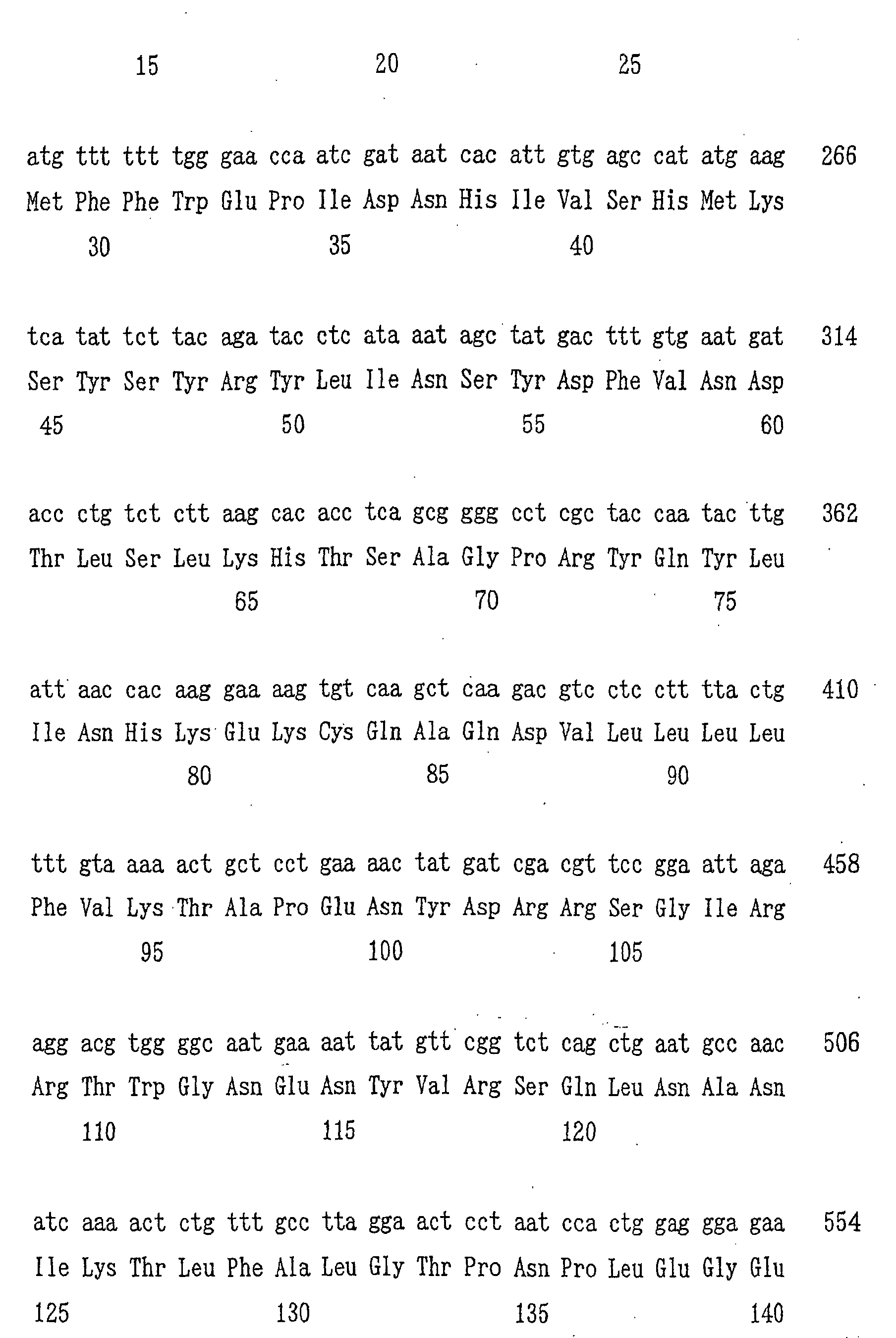
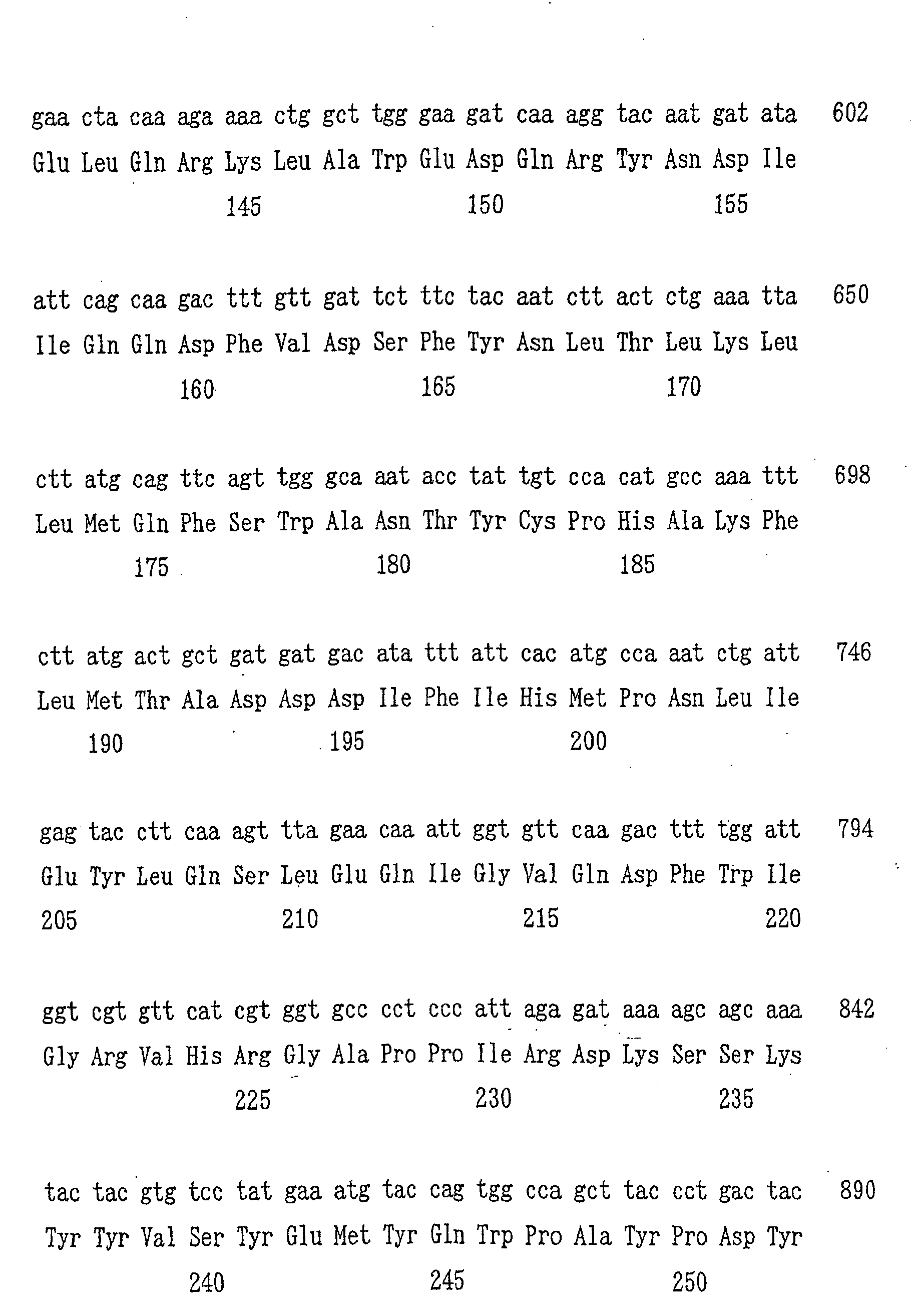

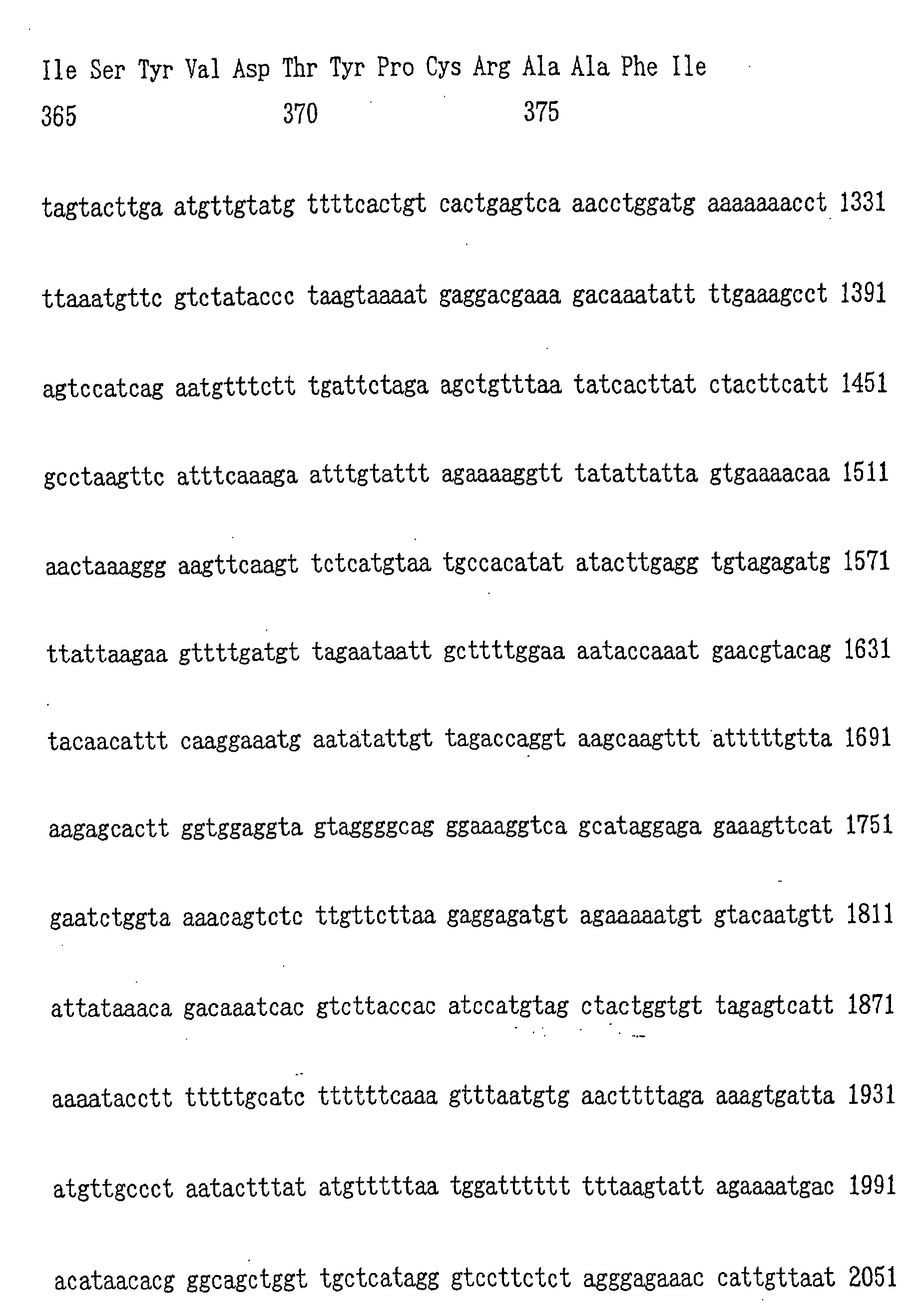


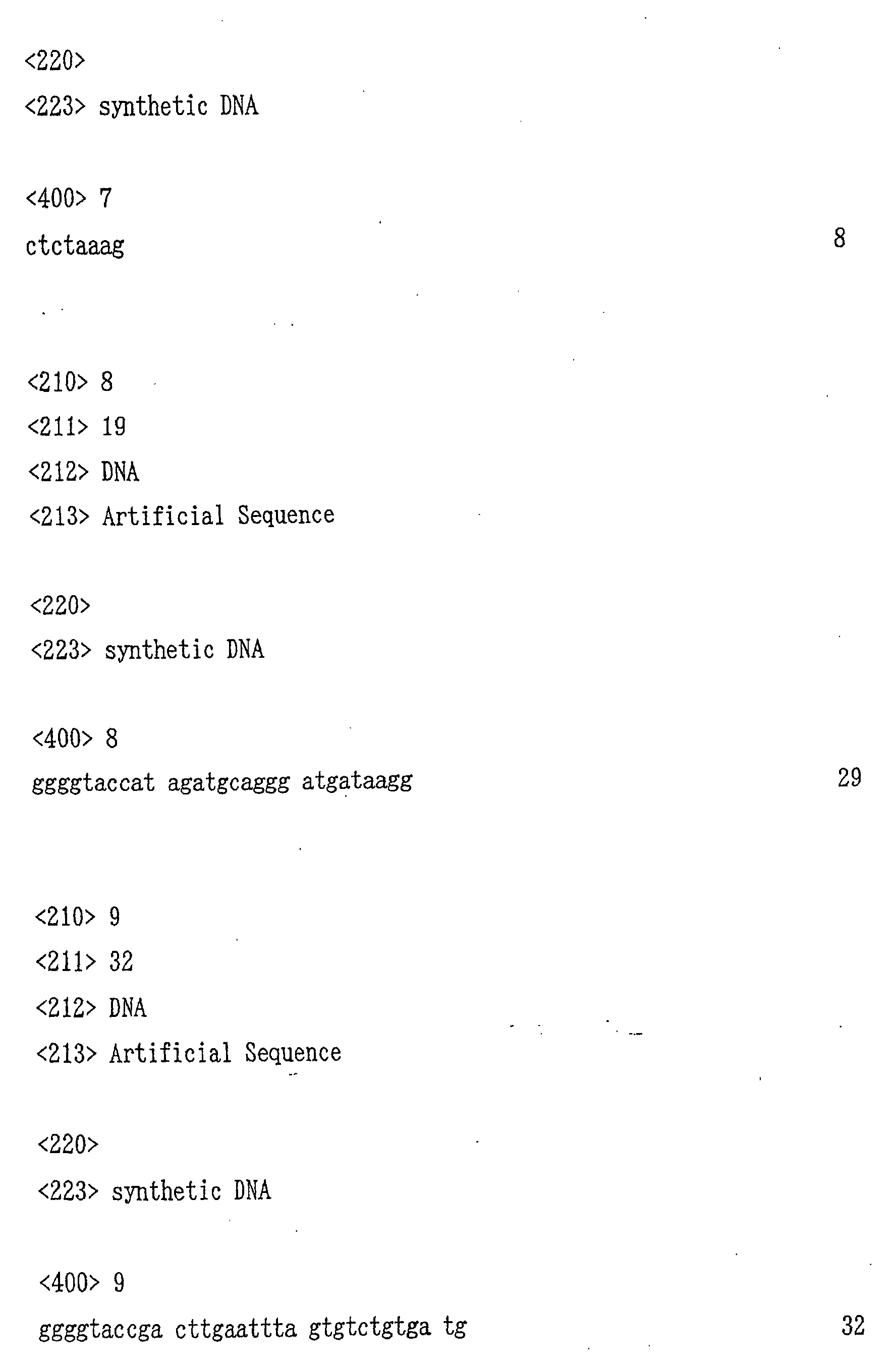

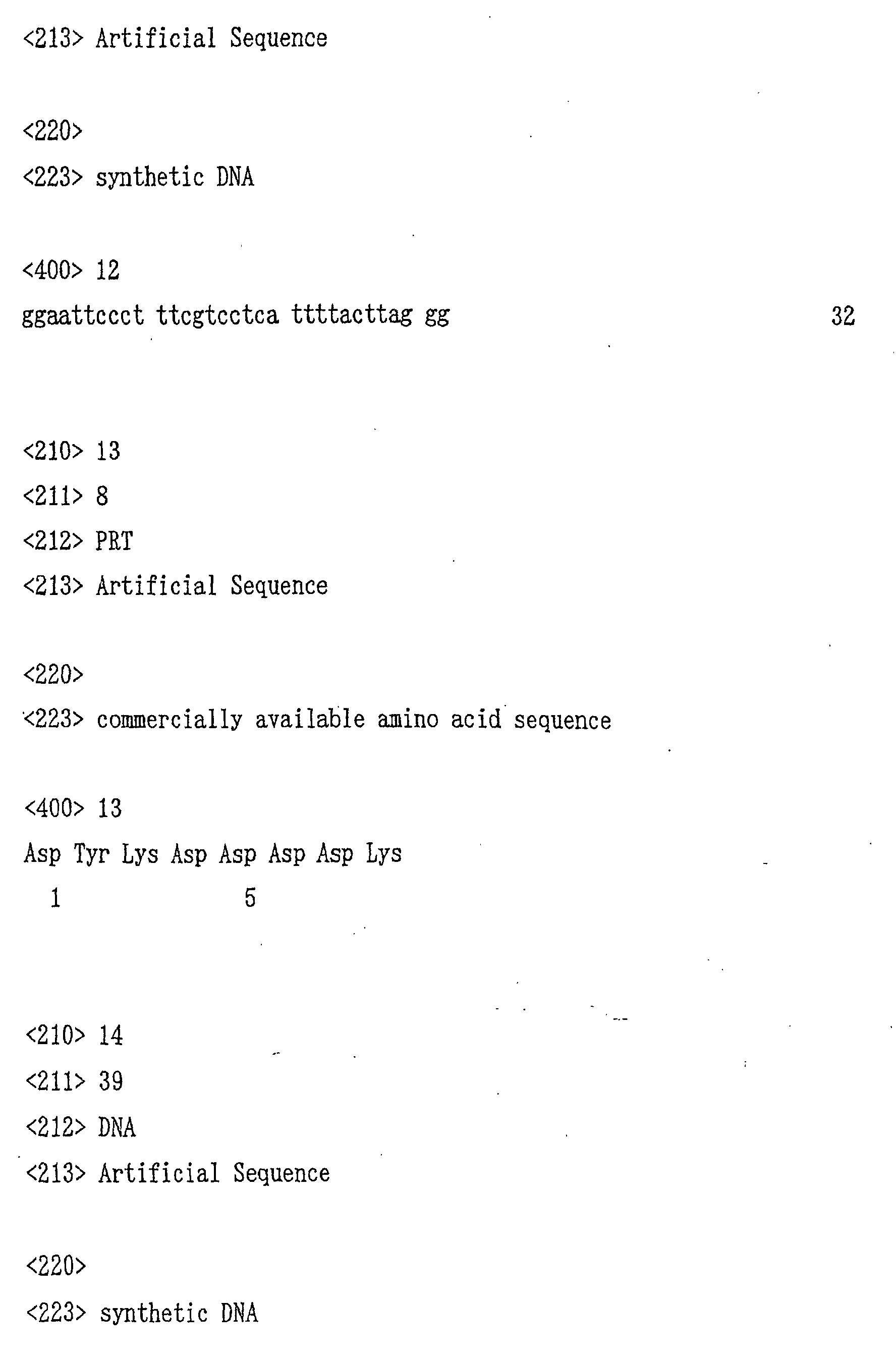
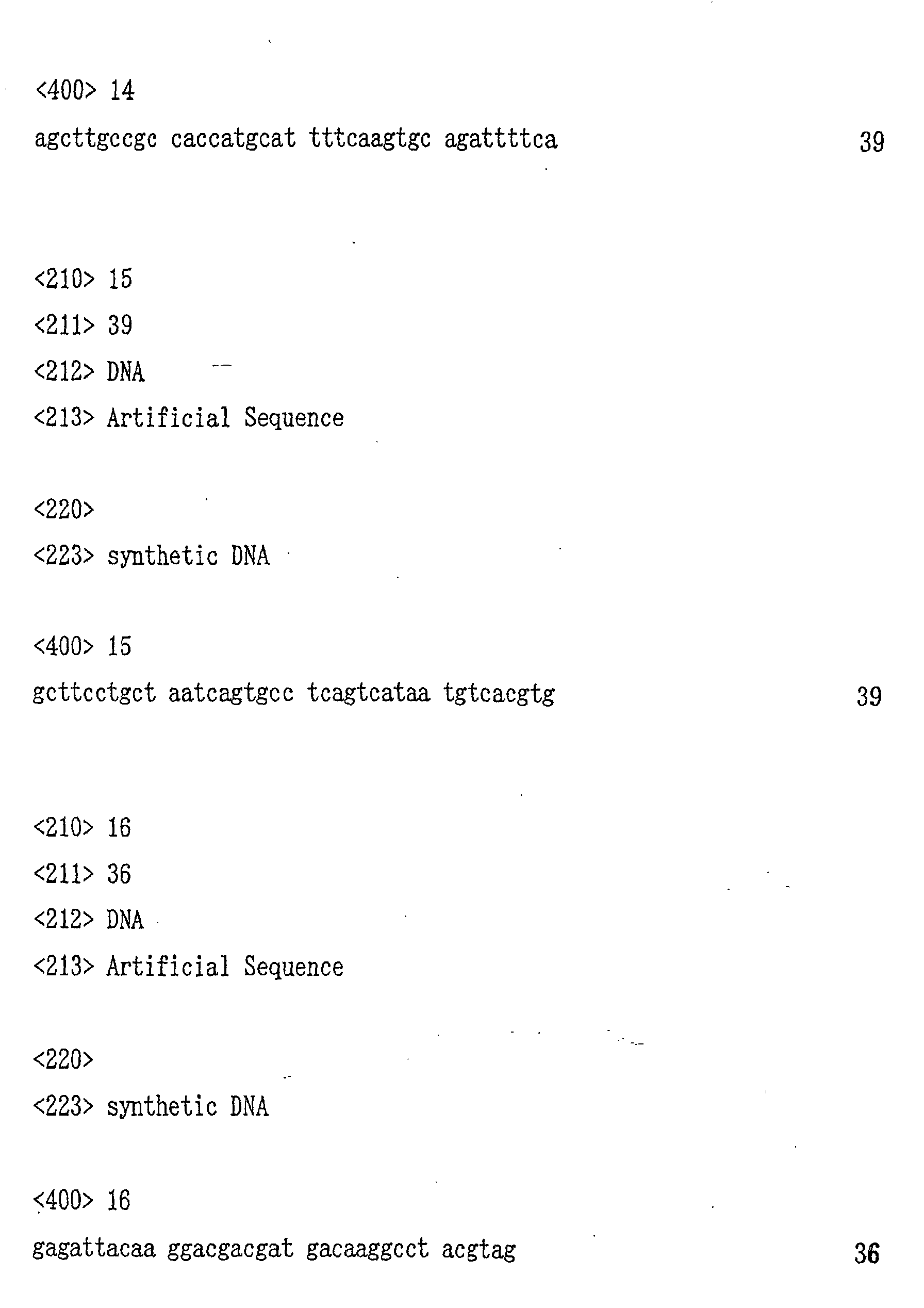
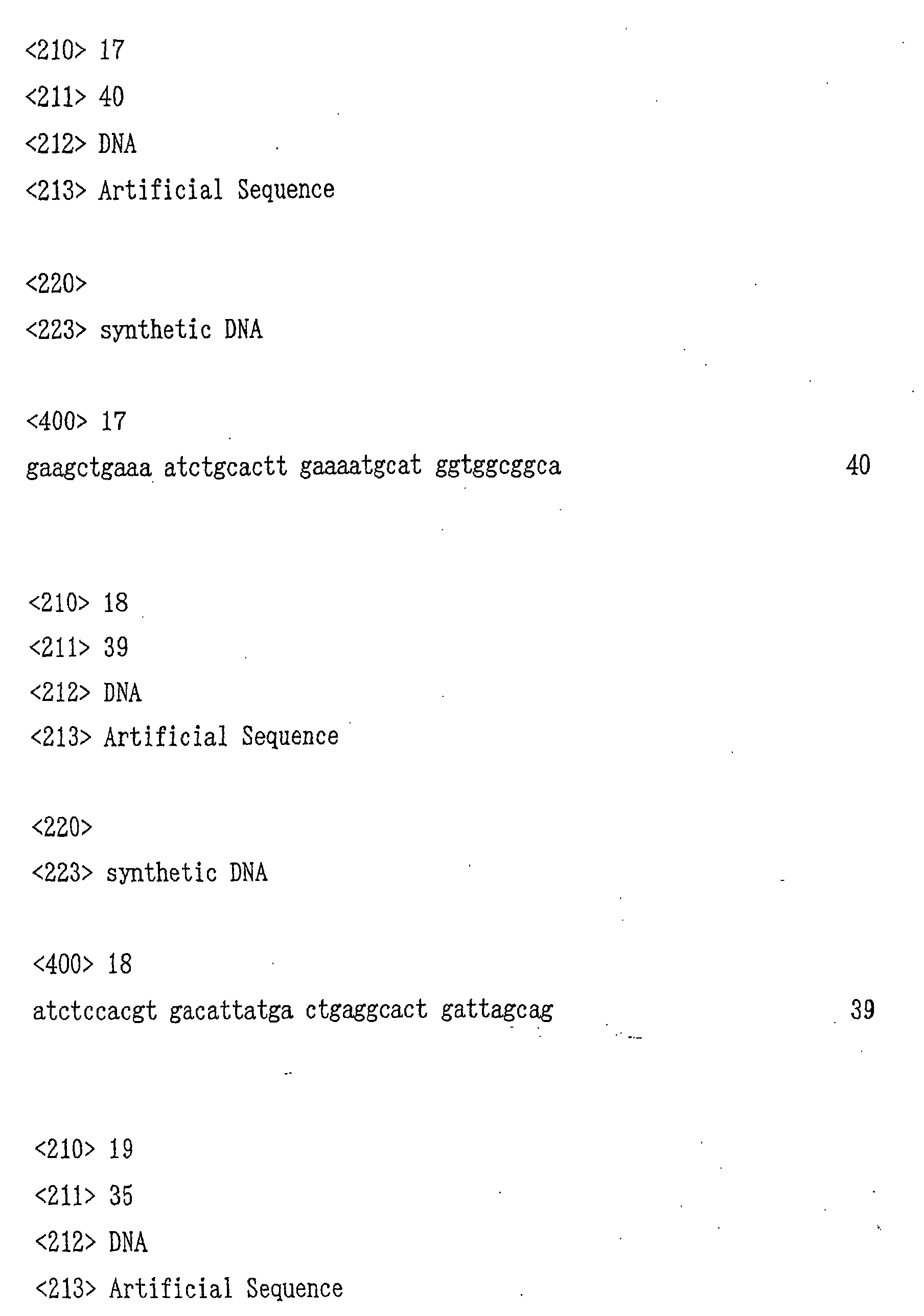


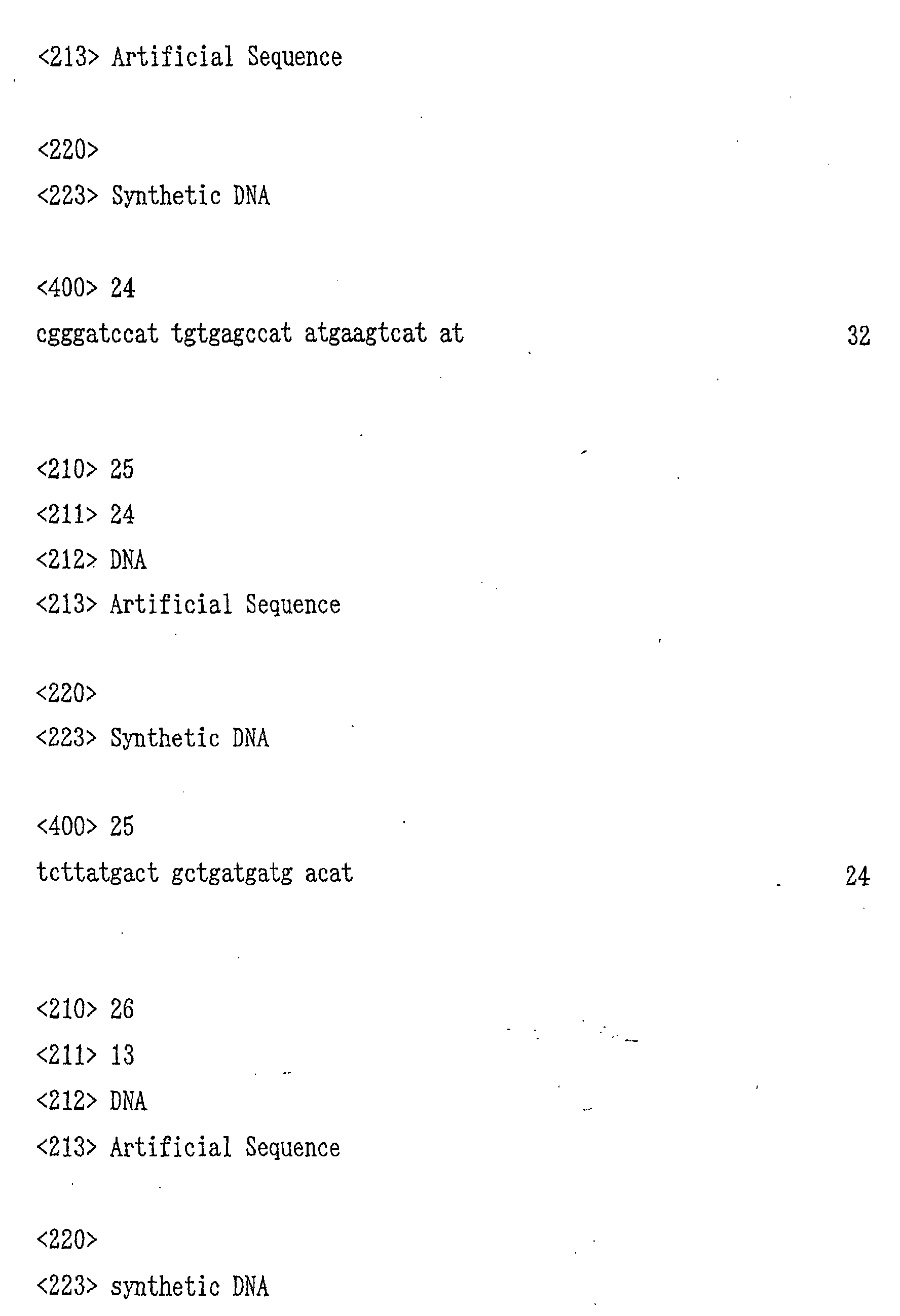

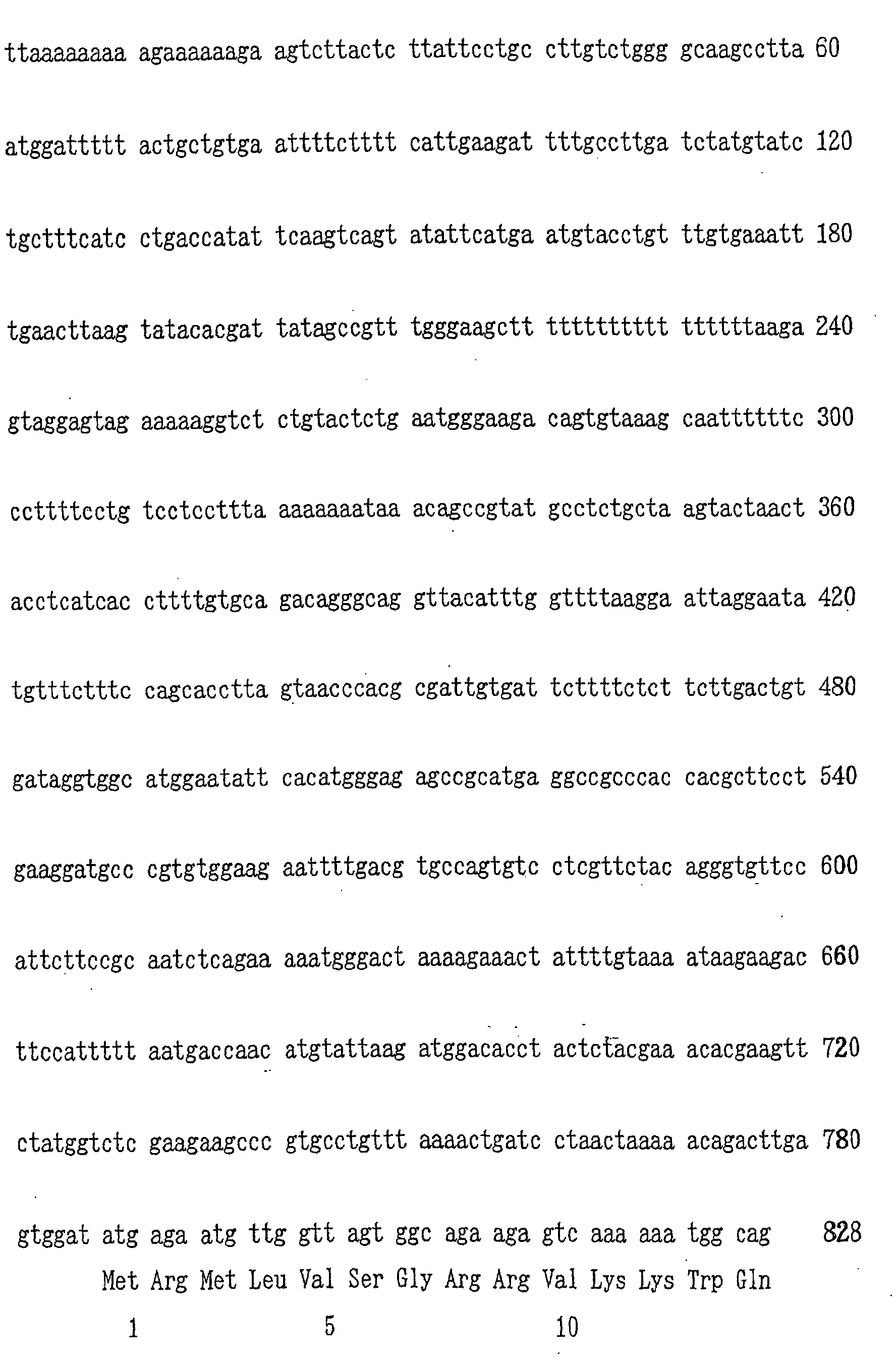

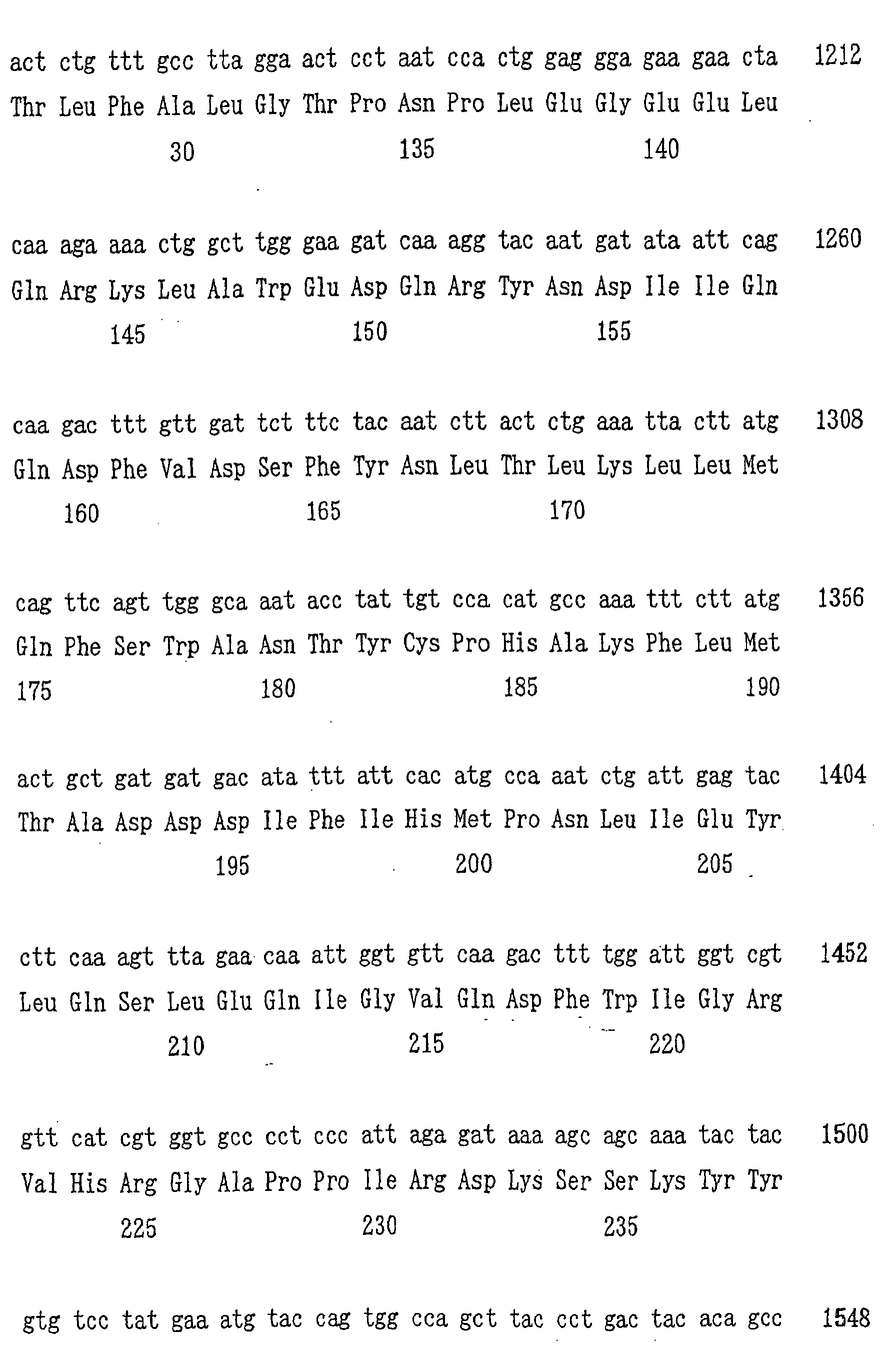
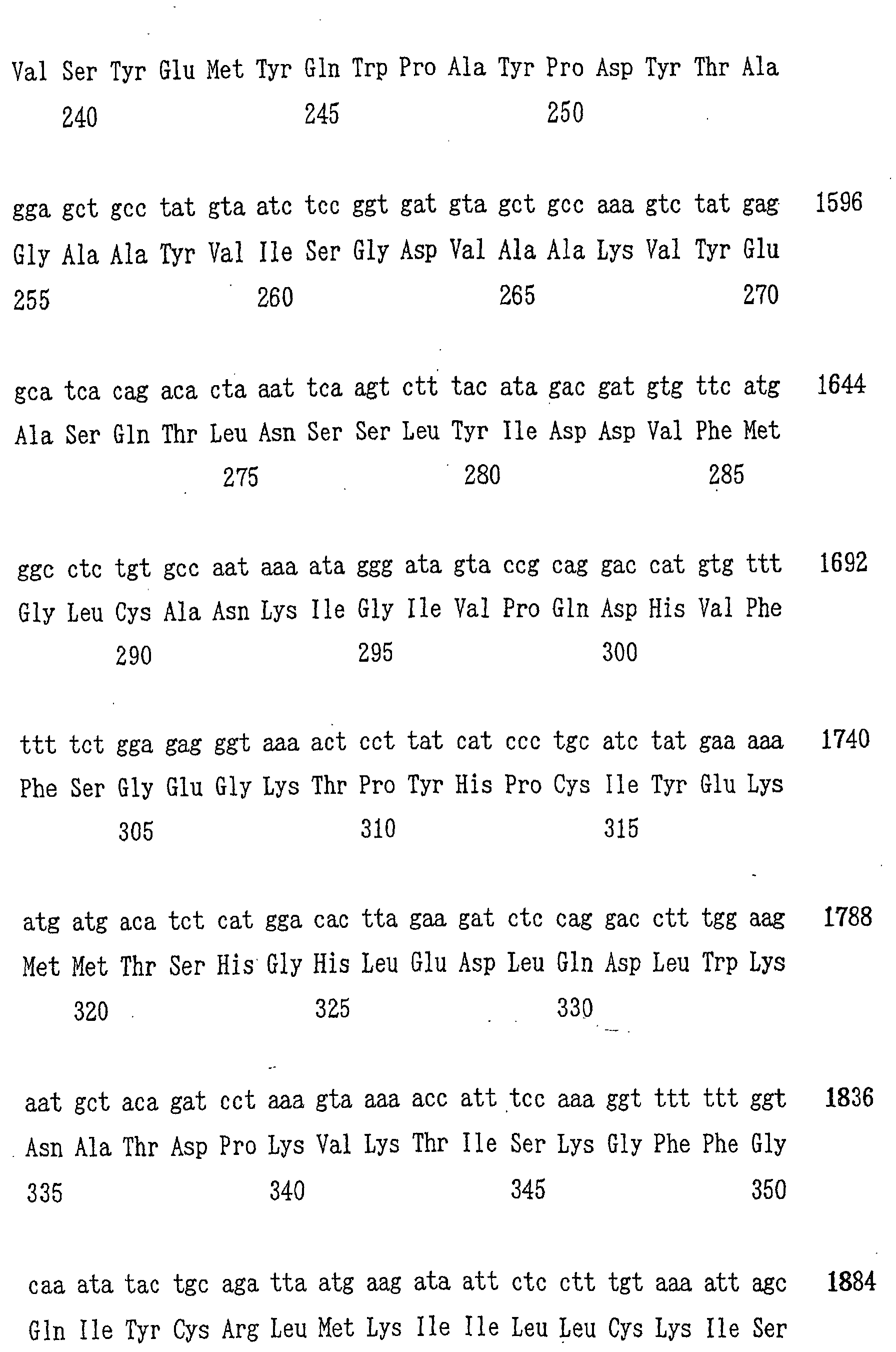
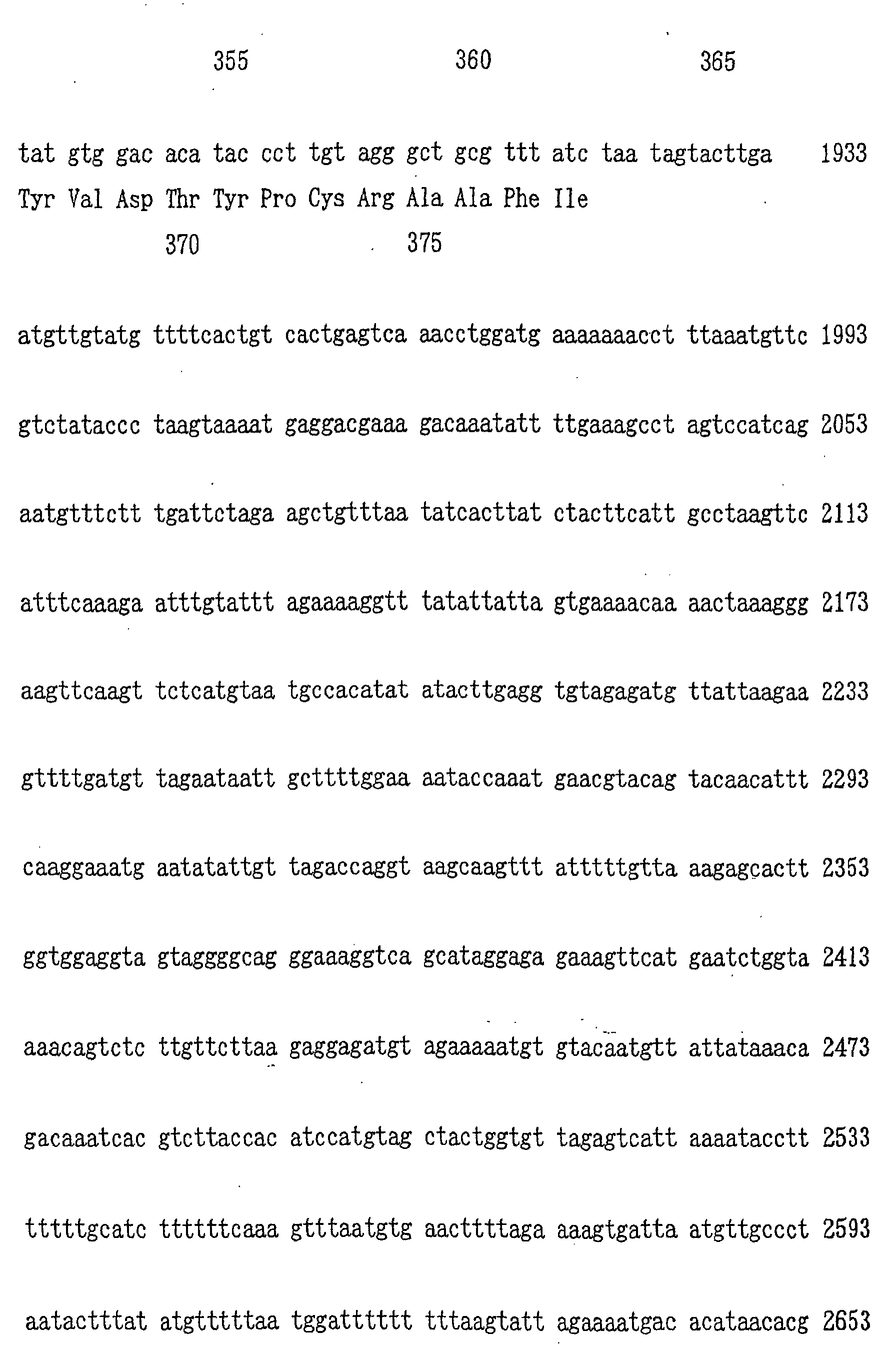
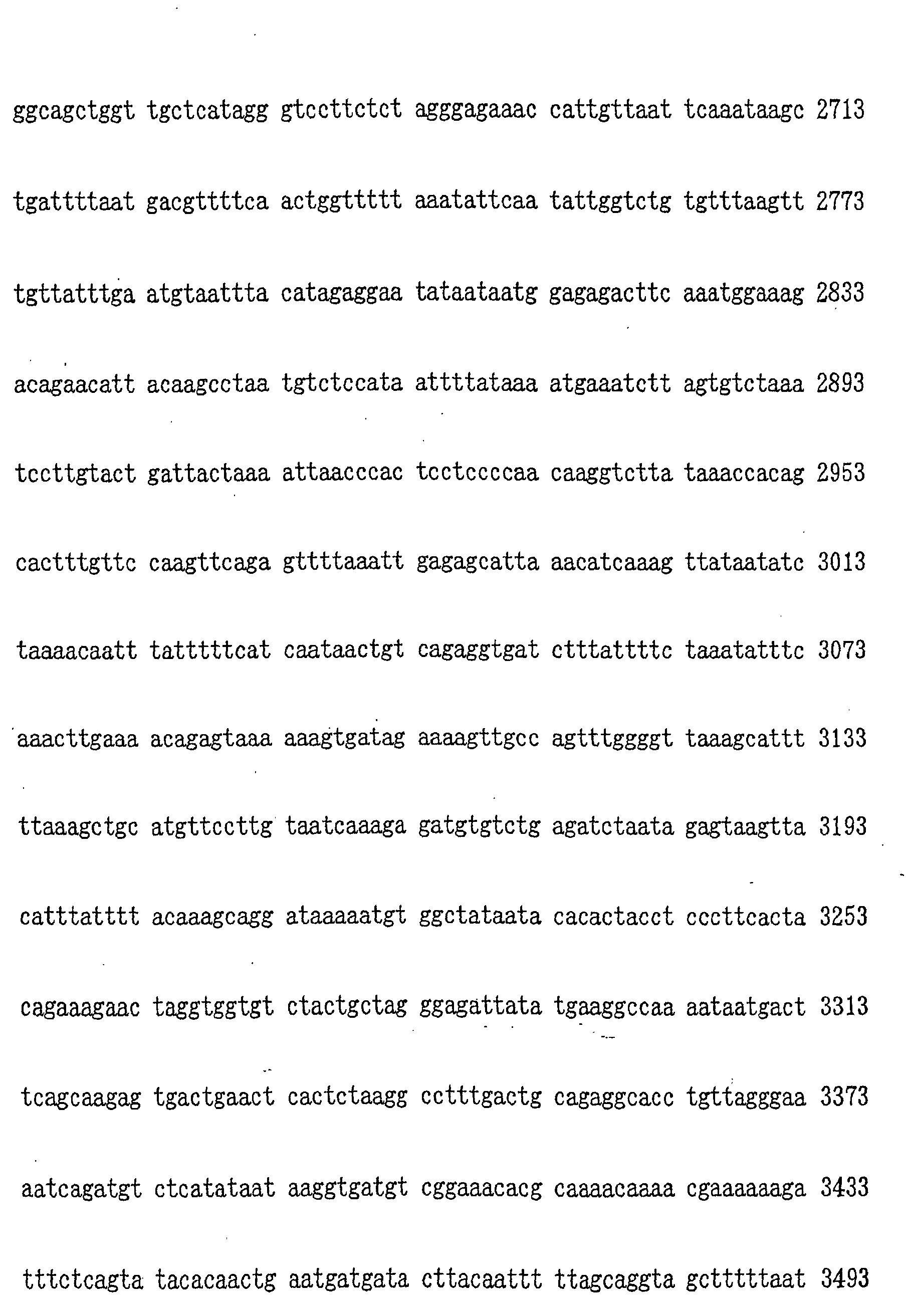


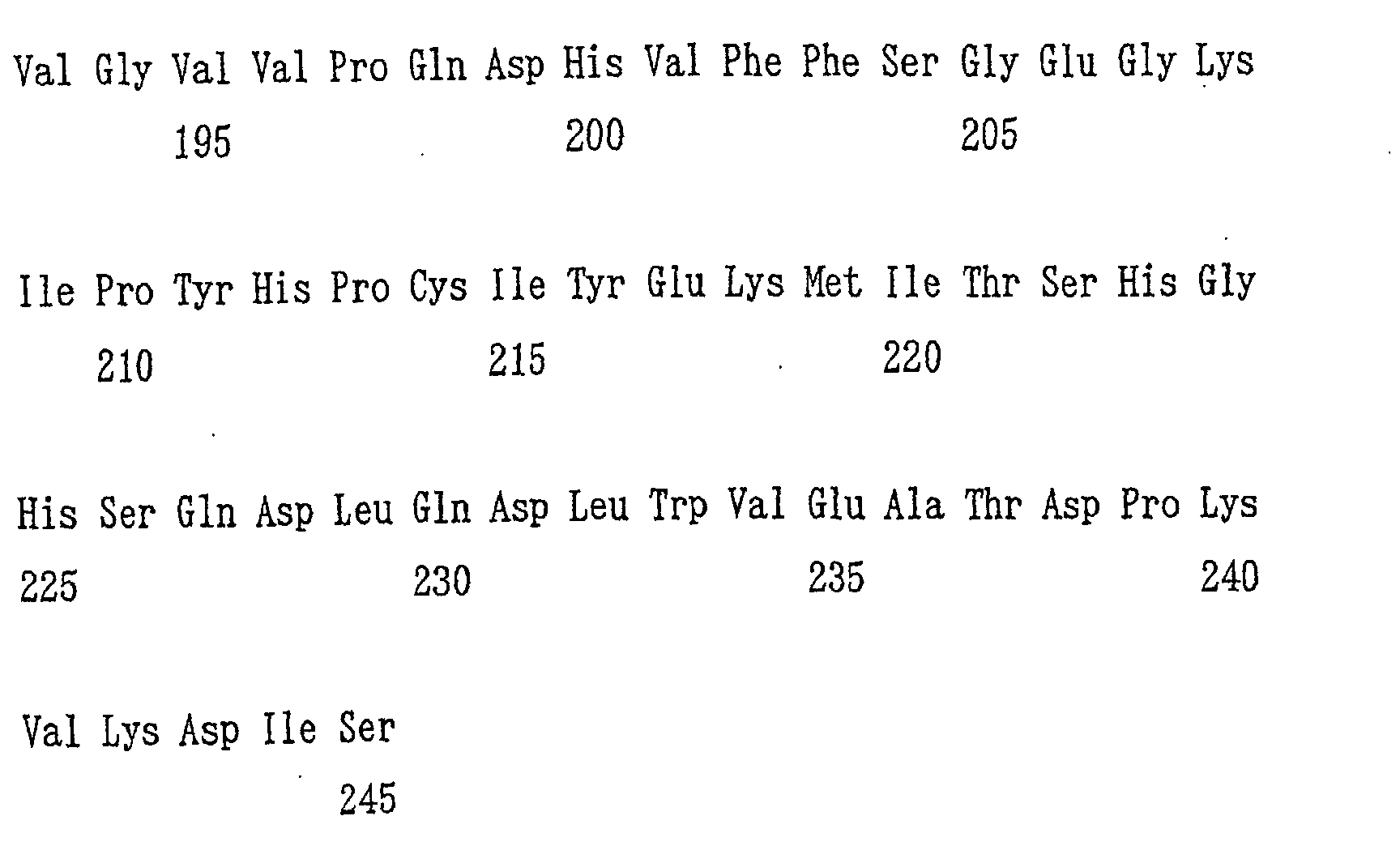
Claims (79)
- A polypeptide which comprises the amino acid sequence represented by SEQ ID NO:1.
- A polypeptide which comprises an amino acid sequence of positions 39 to 378 in the amino acid sequence represented by SEQ ID NO:1.
- A polypeptide which comprises an amino acid sequence in which at least one amino acid in the amino acid sequence in the polypeptide according to claim 1 or 2 is deleted, substituted or added, and has a β1,3-N-acetylglucosaminyltransferase activity.
- A polypeptide which comprises an amino acid sequence having 60 % or more of homology with the amino acid sequence in the polypeptide according to claim 1 or 2, and has a β1,3-N-acetylglucosaminyltransferase activity.
- The polypeptide according to claim 3 or 4, wherein the β1,3-N-acetylglucosaminyltransferase activity is an activity to transfer N-acetylglucosamine via β1,3-linkage to a galactose residue present in its non-reducing terminal of a sugar chain.
- The polypeptide according to any one of claims 3 to 5, wherein the β1,3-N-acetylglucosaminyltransferase activity is an activity to transfer N-acetylglucosamine via β1,3-linkage to a galactose residue present in its non-reducing terminal of a sugar chain of an acceptor selected from i) galactose, N-acetyllactosamine (Galβ1-4GlcNAc), Galβ1-3GlcNAc or lactose (Galβ1-4Glc), ii) an oligosaccharide having galactose, N-acetyllactosamine, Galβ1-3GlcNAc or lactose structure in its non-reducing terminal, and iii) a complex carbohydrate having galactose, N-acetyllactosamine, Galβ1-3GlcNAc or lactose structure in its non-reducing terminal.
- The polypeptide according to claim 6, wherein the complex carbohydrate having galactose, N-acetyllactosamine, Galβ1-3GlcNAc or lactose structure in its non-reducing terminal is lactosylceramide (Galβ1-4Glc-ceramide) or paragloboside (Galβ1-4GlcNAcβ1-3Galβ1-4Glc-ceramide).
- The polypeptide according to claim 6 or 7, wherein the complex carbohydrate is a complex carbohydrate selected from a glycoprotein, a glycolipid, a proteoglycan, a glycopeptide, a lipopolysaccharide, a peptidoglycan and a glycoside in which a sugar chain is linked to a steroid compound.
- A sugar chain synthesizing agent which comprises the polypeptide according to any one of claims 1 to 8 as an active ingredient.
- A DNA which encodes the polypeptide according to any one of claims 1 to 8.
- A DNA which comprises the nucleotide sequence represented by SEQ ID NO:2.
- A DNA which comprises a nucleotide sequence of positions 135 to 1268 in the nucleotide sequence represented by SEQ ID NO:2.
- A DNA which comprises a nucleotide sequence of positions 249 to 1268 in the nucleotide sequence represented by SEQ ID NO:2.
- A DNA which hybridizes with a DNA comprising a nucleotide sequence complementary to the nucleotide sequence in the DNA according to any one of claims 10 to 13 under stringent conditions, and encodes a polypeptide having β1,3-N-acetylglucosaminyltransferase activity.
- The DNA according to claim 14, wherein the β1,3-N-acetylglucosaminyltransferase activity is an activity to transfer N-acetylglucosamine via β1,3-linkage to a galactose residue present in its non-reducing terminal of a sugar chain.
- The DNA according to claim 14 or 15, wherein the β1,3-N-acetylglucosaminyltransferase activity is an activity to transfer N-acetylglucosamine via β1,3-linkage to a galactose residue present in its non-reducing terminal of a sugar chain of an acceptor selected from i) galactose, N-acetyllactosamine (Galβ-4GlcNAc), Galβ1-3GlcNAc or lactose (Galβ1-4Glc), ii) an oligosaccharide having galactose, N-acetyllactosamine, Galβ1-3GlcNAc or lactose structure in its non-reducing terminal, and iii) a complex carbohydrate having galactose, N-acetyllactosamine, Galβ1-3GlcNAc or lactose structure in its non-reducing terminal.
- The DNA according to claim 16, wherein the complex carbohydrate having galactose, N-acetyllactosamine, Galβ1-3GlcNAc or lactose structure in its non-reducing terminal is lactosylceramide or paragloboside.
- The DNA according to claim 16 or 17, wherein the complex carbohydrate is a complex carbohydrate selected from a glycoprotein, a glycolipid, a proteoglycan, a glycopeptide, a lipopolysaccharide, a peptidoglycan and a glycoside in which a sugar chain is linked to a steroid compound.
- A DNA which comprises a nucleotide sequence complementary to the nucleotide sequence in the DNA according to any one of claims 10 to 18.
- A recombinant vector which is obtainable by inserting the DNA according to any one of claims 10 to 18 into a vector.
- A recombinant vector which is obtainable by inserting an RNA comprising a sequence homologous to the DNA according to any one of claims 10 to 18 into a vector.
- A transformant which comprises the recombinant vector according to claim 20 or 21.
- The transformant according to claim 22, wherein the transformant is a transformant selected from the group consisting of a microorganism, an animal cell, a plant cell and an insect cell.
- The transformant according to claim 23, wherein the microorganism is a microorganism belonging to the genus Escherichia.
- The transformant according to claim 23, wherein the animal cell is an animal cell selected from the group consisting of a mouse myeloma cell, a rat myeloma cell, a mouse hybridoma cell, a CHO cell, a BHK cell, an African green monkey kidney cell, a Namalwa cell, a Namalwa KJM-1 cell, a human fetal kidney cell and a human leukemia cell.
- The transformant according to claim 23, wherein the plant cell is a plant cell selected from the group consisting of plant cells of tobacco, potato, tomato, carrot, soybean, rape, alfalfa, rice plant, wheat, barley, rye, corn or flax.
- The transformant according to claim 23, wherein the insect cell is an insect cell selected from the group consisting of Spodoptera frugiperda ovarian cells, Trichoplusia ni ovarian cells and silkworm ovarian cells.
- The transformant according to claim 22, wherein the transformant is a non-human transgenic animal or transgenic plant.
- A process for producing a polypeptide, which comprises culturing the transformant according to any one of claims 22 to 27 in a medium to produce and accumulate the polypeptide according to any one of claims 1 to 8 in the culture, and recovering the polypeptide from the culture.
- A process for producing a polypeptide, which comprises breeding the non-human transgenic animal accordíng to claim 28 to produce and accumulate the polypeptide according to any one of claims 1 to 8 in the animal, and recovering the polypeptide from the animal.
- The process according to claim 30, wherein the accumulation is carried out in animal milk.
- A process for producing a polypeptide, which comprises cultivating the transgenic plant according to claim 28 to produce and accumulate the polypeptide according to any one of claims 1 to 8 in the plant, and recovering the polypeptide from the plant.
- A process for producing a polypeptide, which comprises synthesizing the polypeptide according to any one of claims 1 to 8 by an in vitro transcription-translation system using the DNA according to any one of claims 10 to 18.
- A process for producing a sugar chain or complex carbohydrate by using the sugar chain synthesizing agent according to claim 9 as an enzyme source, which comprises allowingto be present in an aqueous medium to produce and accumulate a sugar chain or complex carbohydrate in which N-acetylglucosamine is added via β1,3-linkage to a galactose residue of the acceptor in the aqueous- medium, and recovering the sugar chain or complex carbohydrate from the aqueous medium.a) the enzyme source,b) an acceptor selected from i) lactosylceramide (Galβ1-4Glc-ceramide) or paragloboside (Galβ1-4GlcNAcβ1-3Galβ1-4Glc-ceramide), ii) galactose, N-acetyllactosamine (Galβ1-4GlcNAc), Galβ1-3GlcNAc or lactose (Galβ1-4Glc), iii) an oligosaccharide having galactose, N-acetyllactosamine (Galβ1-4GlcNAc), Galβ1-3GlcNAc or lactose structure in its non-reducing terminal, and iv) a complex carbohydrate having galactose, N-acetyllactosamine, Galβ1-3GlcNAc or lactose structure in its non-reducing terminal, andc) N-acetylglucosamine uridine 5'-diphosphate (UDP-GlcNAc)
- A process for producing a galactose-added sugar chain or complex carbohydrate by using the N-acetylglucosamine-added sugar chain or complex carbohydrate obtained by the process according to claim 34 as an acceptor, which comprises allowingto be present in an aqueous medium to produce and accumulate a reaction product in which galactose is added via β1,4-linkage to an N-acetylglucosamine residue at the non-reducing terminal of the acceptor in the aqueous medium, and recovering the galactose-added sugar chain or complex carbohydrate from the aqueous medium.a) the acceptor,b) GlcNAc β1,4-galactosyltransferase, andc) uridine 5'-diphosphate galactose (UDP-Gal)
- A process for producing a poly-N-acetyllactosamine sugar chain-added sugar chain or complex carbohydrate by using the sugar chain synthesizing agent according to claim 9 as an enzyme source, which comprises allowingto be present in an aqueous medium to produce and accumulate a reaction product in which poly-N-acetyllactosamine sugar chain is added to the non-reducing terminal of the acceptor in the aqueous medium, and recovering the poly-N-acetyllactosamine sugar chain-added sugar chain or complex carbohydrate from the aqueous medium.a) the enzyme source,b) GlcNAc β1,4-galactosyltransferase,c) an acceptor selected from i) lactosylceramide (Galβ1-4Glc-ceramide) or paragloboside (Galβ1-4GlcNAcβ1-3Galβ1-4Glc-ceramide), ii) galactose, N-acetyllactosamine (Galβ1-4GlcNAc), Galβ1-3GlcNAc or lactose (Galβ1-4Glc), iii) an oligosaccharide having galactose, N-acetyllactosamine (Galβ1-4GlcNAc), Galβ1-3GlcNAc or lactose (Galβ1-4Glc) structure in its non-reducing terminal, iv) a complex carbohydrate having galactose, N-acetyllactosamine, Galβ1-3GlcNAc or lactose structure in its non-reducing terminal and v) a sugar chain or complex carbohydrate obtained by the process according to claim 34 or 35,d) uridine 5'-diphosphate N-acetylglucosamine (UDP-GlcNAc), ande) uridine 5'-diphosphate galactose (UDP-Gal)
- A process for producing a sugar chain or complex carbohydrate, which comprises using the transformant according to any one of claims 22 to 27 to produce and accumulate a sugar chain comprising a saccharide selected from the group consisting of GlcNAcβ1-3Galβ1-4Glc-ceramide, a lacto-seríes glycolipid (a glycolipid having Galβ1-3GlcNAcβ1-3Galβ1-4Glc-ceramide as a backbone), a neolacto-series glycolipid (a glycolipid having Galβ1-4GlcNAcβ1-3Galβ1-4Glc-ceramide as a backbone), a saccharide having GlcNAcβ1-3Gal structure, a saccharide having GlcNAcβ1-3Galβ1-4GlcNAc structure, a saccharide having GlcNAcβ1-3Galβ1-3GlcNAc structure, a saccharide having GlcNAcβ1-3Galβ1-4Glc structure, a saccharide having (Galβ1-4GlcNAcβ1-3)nGalβ1-4GlcNAC structure wherein n is 1 or more and a saccharide having a (Galβ1-4GlcNAcβ1-3)nGalβ1-4Glc structure wherein n is 1 or more, or a complex carbohydrate containing the sugar chain, and recovering the sugar chaín or complex carbohydrate from the culture.
- A process for producing a sugar chain or complex carbohydrate, which comprises using the non-human transgenic animal or transgenic plant according to claim 28 to produce and accumulate a sugar chain comprising a saccharide selected from the group consisting of GlcNAcβ1-3Galβ1-4Glc-ceramide, a lacto-series glycolipid (a glycolipid having Galβ1-3GlcNAcβ1-3Galβ1-4Glc-ceramide as a backbone), a neolacto-series glycolipid (a glycolipid having Galβ1-4GlcNAcβ1-3Galβ1-4Glc-ceramide as a backbone), a saccharide having GlcNAcβ1-3Gal structure, a saccharide having GlcNAcβ1-3Galβ1-4GlcNAc structure, a saccharide having GlcNAcβ1-3Galβ1-3GlcNAc structure, a saccharide having GlcNAcβ1-3Galβ1-4Glc structure, a saccharide having (Galβ1-4GlcNAcβ1-3)nGalβ1-4GlcNAc structure wherein n is 1 or more and a saccharide having (Galβ1-4GlcNAcβ1-3)nGalβ1-4Glc structure wherein n is 1 or more, or a complex carbohydrate containing the sugar chain, and recovering the sugar chain or complex carbohydrate from the individual.
- The process according to any one of claims 34 to 38, wherein the complex carbohydrate is selected from a glycoprotein, a glycolipid, a proteoglycan, a glycopeptide, a lipopolysaccharide, a peptidoglycan and a glycoside in which a sugar chain is linked to a steroid compound.
- The process according to claim 38, wherein the accumulation is carried out in an animal milk.
- An oligonucleotide which has a sequence identical to continuos 5 to 120 nucleotides of the nucleotide sequence in the DNA according to any one of claims 10 to 19, or which is a derivative of the oligonucleotide.
- A method for determining expression level of a gene encoding the polypeptide according to any one of claims 1 to 8, which comprises using the DNA according to any one of claims 10 to 19, a partial fragment of the DNA or the oligonucleotide according to claim 41 by a hybridization method.
- A method for determining expression level of a gene encoding the polypeptide according to any one of claims 1 to 8, which comprises using the oligonucleotide according to claim 41 by a polymerase chain reaction.
- A method for detecting an inflammation, cancer or tumor metastasis, which comprises using the method according to claim 42 or 43.
- An agent for detecting an inflammation, cancer or tumor metastasis, which comprises the DNA according to any one of claims 10 to 19, a partial fragment of the DNA or the oligonucleotide according to claim 41.
- A method for diagnosing functional abnormality of a gene, which comprises detecting mutation of the gene which encodes the polypeptide according to any one of claims 1 to 8.
- A method for detecting mutation of a gene encoding the polypeptide according to any one of claims 1 to 8, which comprises using the DNA according to any one of claims 10 to 19, a partial fragment of the DNA or the oligonucleotide according to claim 41 by a hybridization method.
- A method for detecting mutation of a gene encoding the polypeptide according to any one of claims 1 to 8, which comprises using the oligonucleotide according to claim 41 by a polymerase chain reaction.
- A method for inhibiting transcription of a gene encoding the polypeptide according to any one of claims 1 to 8 or translation of mRNA thereof, which comprises using the oligonucleotide according to claim 41.
- An antibody which recognizes the polypeptide according to any one of claims 1 to 8.
- A method for immunologically detecting the polypeptide according to any one of claims 1 to 8, which comprises using the antibody according to claim 50.
- A method for immunohistostaining, which comprises detecting the polypeptide according to any one of claims 1 to 8 by using the antibody according to claim 50.
- An immunohistostaining agent, which comprises the antibody according to claim 50.
- A medicament which comprises the polypeptide according to any one of claims 1 to 8.
- The medicament according to claim 54, which is a medicament for treating, preventing and/or diagnosing an inflammatory disease, cancer or tumor metastasis.
- A medicament which comprises the DNA according to any one of claims 10 to 19, a partial fragment of the DNA or the oligonucleotide according to claim 41.
- The medicament according to claim 56, which is a medicament for treating, preventing and/or diagnosing an inflammatory disease, cancer or tumor metastasis.
- A medicament which comprises the recombinant vector according to claim 20 or 21.
- The medicament according to claim 58, which is a medicament for treating, preventing and/or diagnosing an inflammatory disease, cancer or tumor metastasis.
- A medicament which comprises the antibody according to claim 50.
- The medicament according to claim 60, which is a medicament for treating, preventing and/or diagnosing an inflammatory disease, cancer or tumor metastasis.
- A method for screening a compound which changes a β1,3-N-acetylglucosaminyltransferase activity possessed by the polypeptide according to any one of claims 1 to 8, which measuring changes in the β1,3-N-acetylglucosaminyltransferase activity of the polypeptide caused by a sample to be tested by allowing the polypeptide to contact with the sample to be tested.
- The method according to claim 62, wherein the β1,3-N-acetylglucosaminyltransferase activity is an activity to transfer N-acetylglucosamine via β1,3-linkage to a galactose residue present in the non-reducing terminal of a sugar chain.
- The method according to claim 62 or 63, wherein the β1,3-N-acetylglucosaminyltransferase activity is an activity to transfer N-acetylglucosamine via (β1,3-linkage to a galactose residue present in its non-reducing terminal of a sugar chain of an acceptor selected from i) galactose, N-acetyllactosamine (Galβ1-4GlcNAc), Galβ1-3GlcNAc or lactose (Galβ1-4Glc), ii) an oligosaccharide having galactose, N-acetyllactosamine, Galβ1-3GlcNAc or lactose structure in the non-reducing terminal, and iii) a complex carbohydrate having galactose, N-acetyllactosamine, Galβ1-3GlcNAc or lactose structure in the non-reducing terminal.
- The method according to claim 62 or 63, wherein the complex carbohydrate having galactose, N-acetyllactosamine, Galβ1-3GlcNAc or lactose structure in the non-reducing terminal is lactosylceramide or paragloboside.
- The method according to claim 64 or 65, wherein the complex carbohydrate is a complex carbohydrate selected from a glycoprotein, a glycolipid, a proteoglycan, a glycopeptide, a lipopolysaccharide, a peptidoglycan and a glycoside in which a sugar chain is linked to a steroid compound.
- A method for screening a compound which changes expression of a gene encoding the polypeptide according to any one of claims 1 to 8, which comprises allowing the polypeptide to contact with the sample to be tested, and determining paragloboside or poly-N-acetylglucosamine sugar chain by using at least one selected from the group consisting of an antibody which recognizes paragloboside, an antibody or lectin which recognizes poly-N-acetylglucosamine sugar chain.
- A method for screening a compound which changes expression of a gene encoding the polypeptide according to any one of claims 1 to 8, which comprises allowing a cell expressing the polypeptide to contact with a sample to be tested, and determining the polypeptide by using the antibody according to claim 50.
- A promoter DNA which controls transcription of a gene encoding the polypeptide according to any one of claims 1 to 8.
- The promoter DNA according to claim 69, which is a promoter functioning in a cell selected from a leukocyte cell, a nerve cell, a tracheal cell, a lung cell, a colon cell, a placental cell, a neuroblastoma cell, a glioblastoma cell, a colon cancer cell, a lung cancer cell, a pancreatic cancer cell, a stomach cancer cell and a leukemia cell.
- The promoter DNA according to claim 69 or 70, which is a human-, rat- or mouse-derived promoter DNA.
- A method for screening a compound which changes efficiency of transcription by the promoter DNA according to any one of claims 69 to 71, which comprises transforming an animal cell by using a plasmid containing the promoter DNA and a reporter gene ligated to the downstream of the promoter DNA, allowing the transformant to contact with a sample to be tested, and determining the translated product of the reporter gene.
- The method according to claim 72, wherein the reporter gene is a gene selected from a chloramphenicol acetyltransferase gene, a β-galactosidase gene, a β-lactamase gene, a luciferase gene and a green fluorescent protein gene.
- A compound obtainable by the method according to any one of claims 62 to 68, 72 and 73.
- A non-human knockout animal in which a deficiency or mutation is introduced into a DNA encoding the polypeptide according to claims 1 to 8.
- The knockout animal according to claim 75, wherein the non-human knockout animal is a mouse.
- A method for controlling differentiation, mutual recognition and migration of a cell, which comprises introducing the DNA according to any one of claims 10 to 18, an RNA comprising a sequence homologous to the DNA or the recombinant vector according to claim 20 or 21 into a cell to express the polypeptide according to any one of claims 1 to 8.
- The method according to claim 77, wherein the cell is a cell selected from any one of a blood cell, a nerve cell, a stem cell or a cancer cell.
- A method for accelerating differentiation of a promyelocyte into a granulocyte, which comprises introducing the DNA according to any one of claims 10 to 18, an RNA comprising a sequence homologous to the DNA or the recombinant vector according to claim 20 or 21 into a promyelocyte to express the polypeptide according to any one of claims 1 to 8.
Applications Claiming Priority (3)
| Application Number | Priority Date | Filing Date | Title |
|---|---|---|---|
| JP2000265430 | 2000-09-01 | ||
| JP2000265430 | 2000-09-01 | ||
| PCT/JP2001/007563 WO2002018602A1 (en) | 2000-09-01 | 2001-08-31 | Novel polypeptide |
Publications (2)
| Publication Number | Publication Date |
|---|---|
| EP1316608A1 true EP1316608A1 (en) | 2003-06-04 |
| EP1316608A4 EP1316608A4 (en) | 2004-12-29 |
Family
ID=18752698
Family Applications (1)
| Application Number | Title | Priority Date | Filing Date |
|---|---|---|---|
| EP01963410A Withdrawn EP1316608A4 (en) | 2000-09-01 | 2001-08-31 | NEW POLYPEPTIDE |
Country Status (6)
| Country | Link |
|---|---|
| US (2) | US7279310B2 (en) |
| EP (1) | EP1316608A4 (en) |
| JP (1) | JP4995398B2 (en) |
| AU (2) | AU2001284418B2 (en) |
| CA (1) | CA2421088A1 (en) |
| WO (1) | WO2002018602A1 (en) |
Cited By (6)
| Publication number | Priority date | Publication date | Assignee | Title |
|---|---|---|---|---|
| US7811781B2 (en) | 2005-07-06 | 2010-10-12 | Btg International Limited | Core 2 β(1,6)-acetylglycosaminyltransferase as diagnostic marker for atherosclerosis |
| US7906493B2 (en) | 2003-12-22 | 2011-03-15 | Btg International Limited | Core 2 GlcNAc-T inhibitors |
| US7998943B2 (en) | 2005-07-06 | 2011-08-16 | Btg International Limited | Core 2 GlcNAc-T inhibitors III |
| US8197794B2 (en) | 2003-12-22 | 2012-06-12 | Ms Therapeutics Limited | Core 2 GlcNAc-T inhibitors |
| US8609633B2 (en) | 2005-07-06 | 2013-12-17 | Ms Therapeutics Limited | Core 2 GlcNAc-T inhibitors |
| WO2016008602A1 (en) * | 2014-07-14 | 2016-01-21 | Basf Se | Biotechnological production of lnt, lnnt and the fucosylated derivatives thereof |
Families Citing this family (12)
| Publication number | Priority date | Publication date | Assignee | Title |
|---|---|---|---|---|
| EP1447449B1 (en) * | 2001-10-26 | 2006-12-20 | Kyowa Hakko Kogyo Co., Ltd | PROCESSES FOR PRODUCING BETA-1,3-n-ACETYLGLUCOSAMINE TRANSFERASE AND N-ACETYLGLUCOSAMINE-CONTAINING COMPOSITE SACCHARIDE |
| JP2005065687A (en) | 2003-01-23 | 2005-03-17 | National Institute Of Advanced Industrial & Technology | β1,3-N-acetyl-D-galactosamine transferase protein, nucleic acid encoding the same, and canceration assay method using the same |
| JP4565177B2 (en) * | 2004-07-07 | 2010-10-20 | 独立行政法人産業技術総合研究所 | Pharmaceutical composition comprising β1,3-N-acetylglucosaminyltransferase for regulating cell migration activity and / or cell differentiation |
| US9616114B1 (en) | 2014-09-18 | 2017-04-11 | David Gordon Bermudes | Modified bacteria having improved pharmacokinetics and tumor colonization enhancing antitumor activity |
| US10676723B2 (en) | 2015-05-11 | 2020-06-09 | David Gordon Bermudes | Chimeric protein toxins for expression by therapeutic bacteria |
| US11129906B1 (en) | 2016-12-07 | 2021-09-28 | David Gordon Bermudes | Chimeric protein toxins for expression by therapeutic bacteria |
| US11180535B1 (en) | 2016-12-07 | 2021-11-23 | David Gordon Bermudes | Saccharide binding, tumor penetration, and cytotoxic antitumor chimeric peptides from therapeutic bacteria |
| US20190219593A1 (en) * | 2018-01-14 | 2019-07-18 | Elliot Davis | Method for identifying neoantigens on cancer cells by using xenoantibodies |
| EP4010481A4 (en) | 2019-08-09 | 2023-09-20 | Nutcracker Therapeutics, Inc. | MICROFLUIDIC DEVICES AND METHODS OF USE THEREOF |
| CN113999810B (en) * | 2021-12-30 | 2022-04-26 | 北京赛尔富森生物科技有限公司 | MRC-5 cell recovery culture solution and recovery method |
| CN116850155B (en) * | 2023-07-11 | 2025-10-03 | 温州医科大学 | A kind of transgenic tomato microvesicle nanoparticles and its preparation method and application |
| CN121271738B (en) * | 2025-12-02 | 2026-04-17 | 苏州双洳生物科技有限公司 | A culture medium for Mycoplasma synoviae that can improve the titer of bacterial strains and its preparation method |
Family Cites Families (4)
| Publication number | Priority date | Publication date | Assignee | Title |
|---|---|---|---|---|
| JP3170369B2 (en) * | 1992-12-16 | 2001-05-28 | 協和醗酵工業株式会社 | β1,3-galactosyltransferase |
| AU2284401A (en) * | 1999-12-16 | 2001-06-25 | Zymogenetics Inc. | Galactosyltransferase homolog, znssp8 |
| EP1299545A2 (en) * | 2000-07-07 | 2003-04-09 | Incyte Genomics, Inc. | Drug metabolizing enzymes |
| WO2002018556A2 (en) | 2000-08-31 | 2002-03-07 | Millennium Pharmaceuticals, Inc. | 8797, a human galactosyltransferase and uses thereof |
-
2001
- 2001-08-31 WO PCT/JP2001/007563 patent/WO2002018602A1/en not_active Ceased
- 2001-08-31 US US10/363,145 patent/US7279310B2/en not_active Expired - Fee Related
- 2001-08-31 EP EP01963410A patent/EP1316608A4/en not_active Withdrawn
- 2001-08-31 JP JP2002522509A patent/JP4995398B2/en not_active Expired - Fee Related
- 2001-08-31 CA CA002421088A patent/CA2421088A1/en not_active Abandoned
- 2001-08-31 AU AU2001284418A patent/AU2001284418B2/en not_active Ceased
- 2001-08-31 AU AU8441801A patent/AU8441801A/en active Pending
-
2007
- 2007-08-13 US US11/837,804 patent/US7629150B2/en not_active Expired - Lifetime
Cited By (6)
| Publication number | Priority date | Publication date | Assignee | Title |
|---|---|---|---|---|
| US7906493B2 (en) | 2003-12-22 | 2011-03-15 | Btg International Limited | Core 2 GlcNAc-T inhibitors |
| US8197794B2 (en) | 2003-12-22 | 2012-06-12 | Ms Therapeutics Limited | Core 2 GlcNAc-T inhibitors |
| US7811781B2 (en) | 2005-07-06 | 2010-10-12 | Btg International Limited | Core 2 β(1,6)-acetylglycosaminyltransferase as diagnostic marker for atherosclerosis |
| US7998943B2 (en) | 2005-07-06 | 2011-08-16 | Btg International Limited | Core 2 GlcNAc-T inhibitors III |
| US8609633B2 (en) | 2005-07-06 | 2013-12-17 | Ms Therapeutics Limited | Core 2 GlcNAc-T inhibitors |
| WO2016008602A1 (en) * | 2014-07-14 | 2016-01-21 | Basf Se | Biotechnological production of lnt, lnnt and the fucosylated derivatives thereof |
Also Published As
| Publication number | Publication date |
|---|---|
| CA2421088A1 (en) | 2003-02-28 |
| US7629150B2 (en) | 2009-12-08 |
| JP4995398B2 (en) | 2012-08-08 |
| US20080050745A1 (en) | 2008-02-28 |
| AU8441801A (en) | 2002-03-13 |
| EP1316608A4 (en) | 2004-12-29 |
| AU2001284418B2 (en) | 2007-11-08 |
| US20040115763A1 (en) | 2004-06-17 |
| US7279310B2 (en) | 2007-10-09 |
| WO2002018602A1 (en) | 2002-03-07 |
Similar Documents
| Publication | Publication Date | Title |
|---|---|---|
| US7629150B2 (en) | Transformed cell harboring DNA or RNA encoding sugar chain synthesizing agent having β1,3-N-acetylglucosaminyltransferase activity | |
| US8722366B2 (en) | Methods for synthesizing sugar chains using β1,3-N-acetylglucosaminyltransferase | |
| US7291491B2 (en) | Polypeptides | |
| US20080015165A1 (en) | Novel polypeptide | |
| JPWO2002018602A1 (en) | Novel Polypeptides | |
| US7670816B2 (en) | UDP-galactose:β-D-galactose-R 4-α-D-galactosyltransferase, α4gal-T1 | |
| JP2003507061A (en) | UDP-N-acetylglucosamine: galactose-β1,3-N-acetyl-galactosamine-α-R / (GlcNAc: GalNAc) β1,6-N-acetylglucosaminyltransferase, C2GnT3 | |
| JPWO2001000848A1 (en) | Useful Polypeptides | |
| JPWO2000006708A1 (en) | Novel Polypeptides | |
| US7241605B1 (en) | Polypeptide | |
| AU2008200610A1 (en) | Novel polypeptide | |
| JP4220033B2 (en) | Novel polypeptide | |
| EP1134230A1 (en) | Novel polypeptide | |
| EP1108725A1 (en) | Novel polypeptide | |
| JP2005065687A (en) | β1,3-N-acetyl-D-galactosamine transferase protein, nucleic acid encoding the same, and canceration assay method using the same |
Legal Events
| Date | Code | Title | Description |
|---|---|---|---|
| PUAI | Public reference made under article 153(3) epc to a published international application that has entered the european phase |
Free format text: ORIGINAL CODE: 0009012 |
|
| 17P | Request for examination filed |
Effective date: 20030331 |
|
| AK | Designated contracting states |
Designated state(s): AT BE CH CY DE DK ES FI FR GB GR IE IT LI LU MC NL PT SE TR |
|
| AX | Request for extension of the european patent |
Extension state: AL LT LV MK RO SI |
|
| A4 | Supplementary search report drawn up and despatched |
Effective date: 20041112 |
|
| 17Q | First examination report despatched |
Effective date: 20051230 |
|
| 17Q | First examination report despatched |
Effective date: 20051230 |
|
| RAP1 | Party data changed (applicant data changed or rights of an application transferred) |
Owner name: KYOWA HAKKO KIRIN CO., LTD. |
|
| RAP1 | Party data changed (applicant data changed or rights of an application transferred) |
Owner name: NARIMATSU, HISASHI Owner name: KYOWA HAKKO KIRIN CO., LTD. |
|
| STAA | Information on the status of an ep patent application or granted ep patent |
Free format text: STATUS: THE APPLICATION IS DEEMED TO BE WITHDRAWN |
|
| 18D | Application deemed to be withdrawn |
Effective date: 20110818 |