EP1311538B1 - Inhibitors of hiv replication and method of treatment of hiv infections - Google Patents
Inhibitors of hiv replication and method of treatment of hiv infections Download PDFInfo
- Publication number
- EP1311538B1 EP1311538B1 EP01972382A EP01972382A EP1311538B1 EP 1311538 B1 EP1311538 B1 EP 1311538B1 EP 01972382 A EP01972382 A EP 01972382A EP 01972382 A EP01972382 A EP 01972382A EP 1311538 B1 EP1311538 B1 EP 1311538B1
- Authority
- EP
- European Patent Office
- Prior art keywords
- hiv
- mpg
- inhibitors
- peptide
- replication
- Prior art date
- Legal status (The legal status is an assumption and is not a legal conclusion. Google has not performed a legal analysis and makes no representation as to the accuracy of the status listed.)
- Expired - Lifetime
Links
Images



Classifications
-
- C—CHEMISTRY; METALLURGY
- C07—ORGANIC CHEMISTRY
- C07K—PEPTIDES
- C07K14/00—Peptides having more than 20 amino acids; Gastrins; Somatostatins; Melanotropins; Derivatives thereof
- C07K14/005—Peptides having more than 20 amino acids; Gastrins; Somatostatins; Melanotropins; Derivatives thereof from viruses
-
- A—HUMAN NECESSITIES
- A61—MEDICAL OR VETERINARY SCIENCE; HYGIENE
- A61P—SPECIFIC THERAPEUTIC ACTIVITY OF CHEMICAL COMPOUNDS OR MEDICINAL PREPARATIONS
- A61P31/00—Antiinfectives, i.e. antibiotics, antiseptics, chemotherapeutics
- A61P31/12—Antivirals
- A61P31/14—Antivirals for RNA viruses
- A61P31/18—Antivirals for RNA viruses for HIV
-
- A—HUMAN NECESSITIES
- A61—MEDICAL OR VETERINARY SCIENCE; HYGIENE
- A61K—PREPARATIONS FOR MEDICAL, DENTAL OR TOILETRY PURPOSES
- A61K38/00—Medicinal preparations containing peptides
-
- C—CHEMISTRY; METALLURGY
- C07—ORGANIC CHEMISTRY
- C07K—PEPTIDES
- C07K2319/00—Fusion polypeptide
-
- C—CHEMISTRY; METALLURGY
- C12—BIOCHEMISTRY; BEER; SPIRITS; WINE; VINEGAR; MICROBIOLOGY; ENZYMOLOGY; MUTATION OR GENETIC ENGINEERING
- C12N—MICROORGANISMS OR ENZYMES; COMPOSITIONS THEREOF; PROPAGATING, PRESERVING, OR MAINTAINING MICROORGANISMS; MUTATION OR GENETIC ENGINEERING; CULTURE MEDIA
- C12N2740/00—Reverse transcribing RNA viruses
- C12N2740/00011—Details
- C12N2740/10011—Retroviridae
- C12N2740/16011—Human Immunodeficiency Virus, HIV
- C12N2740/16211—Human Immunodeficiency Virus, HIV concerning HIV gagpol
- C12N2740/16222—New viral proteins or individual genes, new structural or functional aspects of known viral proteins or genes
Definitions
- the invention is drawn to a novel class of drugs directed against HIV, inhibiting the dimerization of reverse transcriptase of the virus, and to a method of treatment of HIV infections, in particular multidrug-resistant HIV infections.
- HIV reverse transcriptase (RT) inhibitors that target the polymerase activity of RT, can be subdivided into two classes of potent agents: nucleosides that terminate viral DNA synthesis, such as zidovudine (AZT), dideoxyinosine (ddI) and dideoxycytidine (ddC), and nonnucleoside analogs that bind to a hydrophobic cavity adjacent to the polymerase active site such as nevapirine (1).
- nucleosides that terminate viral DNA synthesis such as zidovudine (AZT), dideoxyinosine (ddI) and dideoxycytidine (ddC)
- nonnucleoside analogs that bind to a hydrophobic cavity adjacent to the polymerase active site such as nevapirine (1).
- these agents present several limitations, including toxicity which sometimes requires patient's treatment to be suspended (2), and the emergence of resistant strains which are generated through the exceptionally high rate of mutagenesis of RNA viruses (3-6
- HIV-1 RT An interesting feature of HIV-1 RT is that the dimeric form of the enzyme consisting of two polypeptides p66 and p51, is absolutely required for its catalytic activities (10). Based on the x-ray crystallographic structure of HIV-1 RT, it was previously demonstrated that the first interaction between p66 and p51 occurs in a Tryptophan (Trp)-rich hydrophobic cluster located in the connection subdomain of the two subunits and is followed by a conformational change involving the thumb and the finger subdomains of p51 as well as the RNase-H and the palm subdomains ofp66 (11).
- Trp Tryptophan
- the present invention is based on the concept that the dimerization process ofRT could be an interesting target for AIDS chemotherapy, and on the description of new inhibitors of HIV replication, based on the inhibition of RT dimerization.
- These inhibitors comprise peptides that will interact with the conserved motif necessary for dimerization of the p51 and p66 subunit of the HIV-RT.
- a short 10-residue synthetic peptide (p7) derived from the Trp-rich cluster at the interface of the connection subdomains of the p66 and p51 (KETWETWWTE; residues 395-404 of HIV-1 BH 10 RT, SEQ ID N° 1) was designed.
- This peptide p7 is a powerful inhibitor of HIV-1 RT dimerization in vitro and abolishes the production of viral particles in HIV-1BRU-infected cultured CEM cells at a concentration of 10 -7 M, or 10 -8 M when complexed with the carrier peptidyl system MPG previously shown to improves the delivery of molecules into cells (14 and 15, both incorporated herein by reference in their totality).
- p7 does not exhibit any toxicity in CEM cells at concentrations below 10 -5 M.
- the present application demonstrates the potency of the MPG/p7 complex in the abolition of the production of HIV-1 and HIV-2 viruses and demonstrates that MPG/p7 is also a potent inhibitor of drug resistant adapted HIV-1 strains.
- the present invention is therefore drawn to an inhibitor of HIV replication, consisting of a peptide selected from the group consisting of peptides p7++ (SEQ ID N°4) and p7+ (SEQ ID N°6).
- inhibition of HIV replication it is meant an inhibition of the production of viral particles from infected cells. This inhibition may be measured by different means, in particular as described in Morris et al. (15, which is incorporated herein by reference in totality).
- an inhibitor of HIV replication according to the present invention reduces the ⁇ -galactosidase activity measured from MAGIC-5 cells by at least 50%, more preferably 70 %, the most preferably 90 % in the conditions reported in the examples of the present invention.
- peptide it is meant to understand a molecule comprising a series of amino acids, that can be natural or not, said molecule being linear or circular, and capable of being modified, by linkages such as glycosylation or branches of amino acids such as glutamylation on glutamate(s).
- a peptide according to the present invention can be obtained by genetic engineering, after introduction of a DNA vector carrying a nucleic acid sequence coding for the peptide sequence into a host cell (procaryotic or eucaryotic cell, such as bacteria, yeast, mammalian cell), and producing the peptide within said host cell.
- a host cell procaryotic or eucaryotic cell, such as bacteria, yeast, mammalian cell
- Some induction systems allow the production of a large amount of peptide, and are techniques well known by the person skilled in the art.
- the peptides according to the present invention can also be obtained by chemical synthesis, using one of the many known peptidic synthesis.
- Recombinant peptides can be purified from lysates or cellular extracts, from the supernatant of the culture medium by techniques used individually or in combination.
- the techniques that can be used to purify peptides prepared through a recombinant host or by chemical synthesis include fractionment, chromatography, immunoaffinity techniques, using monoclonal or polyclonal specific antibodies...
- the inhibitor according to the present invention exhibits a better potency when it further comprises a vector allowing the penetration of the peptide into a mammalian cell.
- compositions comprising an inhibitor of HIV replication according to the invention, and an appropriate excipient.
- Said compositions are preferably formulated for administration to mammals, in particular human beings. They are preferably formulated to be administrated by oral, sublingual, subcutaneous intramuscular, intravenous, transdermal, rectal way.
- the pharmaceutical composition may be a tablet, a capsule, a powder, a pill, a suppository, a solution (injectable by a method as previously cited) or a suspension.
- the excipient may be gelatin, starch, lactose, arabic gum, talc, or other known pharmaceutical vehicles.
- the tablets may be coated by sucrose, or other appropriate compounds.
- the pharmaceutical composition according to the invention may be treated as to achieve a sustained or retarded activity, or for the release of a predetermined amount of inhibitor in a continuous way.
- the capsule may be obtained by mixing the inhibitor with a diluent and pouring the mixture in soft or hard capsules.
- a syrup may be obtained by mixing the inhibitor with an sweetener, an antiseptic, a tasting agent, and an appropriate colorant.
- Powders or granules may contain the inhibitor mixed with dispersion agents, or wetting agents, optionally with tasting agents and/or sweeteners.
- suppositories may be prepared with binding agents, melting at rectal temperature, such as cocoa butter or polyethyleneglycols.
- aqueous suspensions saline isotonic solutions or sterile solutions that contains dispersions agents, and/or wetting agents pharmacologically compatibles.
- the inhibitor may also be formulated as a microcapsule, with possibly one or more additive supports.
- the inhibitors of the invention are very potent against the replication of HIV strains in vitro. Furthermore, they are also very potent against both HIV-1 and HIV-2 strains, as well as against drug- and multidrug-resistant strains.
- the invention is also drawn to the use of an inhibitor, or a composition according to the invention, for the manufacture of a medicament to be used in the treatment of an HIV infected patient, whether HIV is a HIV-1, HIV-2, drug sensitive, drug-resistant or multidrug-resistant HIV virus.
- the medicament of the present invention will be used simultaneously or in combination with one or more other anti-HIV medicament(s). Indeed, the best current clinical results for limiting HIV infections are obtained by using multiple drugs at the same time.
- the invention presents a new therapeutic class of molecules to be used against HIV, and shall therefore be added to the current treatment regimens.
- the other anti-HIV medicaments that can be used at the same time as the medicament or the inhibitor of the invention include protease inhibitors and inhibitors of the HIV-RT, such as nucleoside or non-nucleosides inhibitors.
- inhibitors according to the present invention are directed against conserved region of the HIV-RT, that is essential for the dimerization of the protein. Therefore, by using the inhibitor of the invention, one can prevent the dimerization of the HIV-RT, which may prevent the reverse transcription of the virus RNA to DNA, and its integration within the genome.
- inhibitors and compositions of the invention are advantageous in that they target a conserved region of the virus genome, that is probably not very prone to mutations, as it is essential for the dimerization of the HIV-RT protein. It is therefore expected that there will be less resistant strains to the inhibitors of the invention than with other inhibitors of HIV-RT, such as nucleoside analogs.
- the inhibitors of the present invention show an inhibition of virus replication for concentrations in the range of 10 -7 or 10 -8 M in vitro, that is lower than the concentration needed for AZT. Furthermore, cell toxicity is only observed for inhibitor concentration 10,000 times higher.
- the inhibitors or the composition according to the present invention will be administered at a dose that will allow them to be effective.
- a dose is said to be therapeutically effective, i.e. anti-virally effective, without a reduced toxicity.
- the medicament of the invention may be administered at a dose of about 1 to 1000 mg/day, or more preferably at a dose of about 20 to 700 mg/day.
- the invention is also drawn the use of the peptides as pharmaceuticals in to a method for treating or inhibiting an HIV infection comprising administering to a human in need thereof a therapeutically effective (anti-virally effective) amount of an inhibitor, or a composition according to the invention, optionally in combination with a therapeutically effective amount of one or more other anti-HIV medicament(s) (such as nucleosides or non-nucleosides inhibitors of the reverse transcriptase, protease inhibitors).
- a therapeutically effective (anti-virally effective) amount of an inhibitor, or a composition according to the invention optionally in combination with a therapeutically effective amount of one or more other anti-HIV medicament(s) (such as nucleosides or non-nucleosides inhibitors of the reverse transcriptase, protease inhibitors).
- the method is effective against HIV-1 or HIV-2, and particularly against drug- or multidrug-resistant HIV.
- HIV-1 BRU 28
- HIV-2 ROD 29
- HIV-1 ELI 30
- HIV-2EHO 31,32
- HIV-1 NDK 33
- HIV-1 RF 34
- HIV-1 SF2 35
- nevirapine-resistant HIV-1N119 (20
- HIV-1 RTMC 21
- HIV-1 RTMF 18
- HIV-1 74V 36
- HIV-1 RTMDR1 24
- These viruses where propagated in CEM cells (a CD4+/CXCR4+ human T-cell line).
- the CD4+, CXCR4+ lymphoblastoid CEM cell line was purchased from the American Type Culture Collection (CCRF-CEM, ATCC # CCL 119, Catalogue of cell lines and hybridomas, ATCC, Bethesda, MD). CEM cells were cultured in RPMI 1640 medium containing 1% penicillin-streptomycin (PS) antibiotic mixture, 1% glutamax (Gibco-BRL, Eragny, France) and 10% FCS (Gibco), to a density of 5 X 10 5 cells/ml in a 5% CO 2 atmosphere.
- PS penicillin-streptomycin
- glutamax Gibco-BRL, Eragny, France
- FCS Gibco
- the HeLa-LTR- ⁇ gal indicator cell line (37) stably transfected with CD4 and CCR5 (MAGIC-5) cells was previously described (38), were grown in DMEM containing 1% PS, 1% glutamax, 1 mg/ml G418, and 10% FCS.
- Peptides (p7 (SEQ ID N° 1), p237 (SEQ ID N° 5), MPG (SEQ ID N° 2), p7++ (SEQ ID N° 4), and p7+ (SEQ ID N° 6)) were synthesized by solid phase peptide synthesis using aminoethyldithio-2-isobutyric acid-expensin resin with a 9050 Pepsynthetizer (Millipore, UK) according to the Fmoc( N -(9-fluorenyl)methoxycarbonyl)/ tert -butyl method, purified by semi-preparative HPLC and identified by electrospray mass spectrometry and amino acid analysis. In some case, to increase their stability, the peptides were acetylated at the N terminus and linked to a cysteamide group at the C-terminal part as previously described (14).
- Peptide p7 and MPG were mixed, and peptide p7 binds to MPG (probably the hydrophobic domain), with saturation taking place for a concentration of p7 about 20-fold lower than of MPG. From the K d and the saturation concentration, the ration was estimated to 30 molecules of MPG for one molecule of p7.
- the MPG/p7 complex was further assessed as a complex of p7-MPG at a 1/20 ratio (15, incorporated herein by reference in its tonality).
- RT activity assay CEM cells were incubated for 30 min at 4°C with 100 ⁇ l of stock HIV preparation corresponding to 1000 x 50% tissue culture infective dose (TCID 50 )/ml, then cells were washed five times and cultured at 5 x 10 5 cell/ml in 24-well microplates in the presence or absence of MPG/p7 (at 10 -8 and 10 -7 M) or AZT (AZT was purchased from Boehringer Mannheim, Germany) additive. Viral production was monitored twice a week by measuring reverse transcriptase activity in 1 ml of cell-free supernatant as previously described (39).
- MAGIC-5 cells expressing the ⁇ -gal reporter gene cloned downstream of the HIV-1 LTR promoter were plated in 24-well plates at 5 x 10 5 cells/ml and incubated with 50 ⁇ l of stock HIV preparation corresponding to 1000 x 50% tissue culture infective dose (TCID 50 )/ml in the presence or absence of MPG/p7 (at 10 -8 and 10 -7 M) or AZT additive.
- ⁇ -gal activity was determined by incubating 200 ⁇ l of total cellular extracts for 1 h at 37°C in 1.5 ml buffer containing 80 mM NA 2 HPO 4 , 10 mM MgCl 2 , 1 mM 2 ME and 6 mM o-nitrophenyl ⁇ -D-galactopyranoside (ONPG). ⁇ -gal activity was evaluated by measuring absorbance at 410 nm.
- Example 2 inhibition of HIV-1 and HIV-2 isolates replication in CEM cells by MPG/p7 complex
- MPG/p7 was previously shown to inhibit HIV-1BRU RT dimerization in vitro and HIV-1BRU replication in CEM cell culture (15, incorporated herein by reference). The susceptibility of two reference strains of laboratory-adapted HIV-1 and HIV-2 to MPG/p7 was first determined.
- FIG. 1 A representative experiment of inhibition of virus production (HIV-1BRU and HIV-2ROD) in infected CEM cells treated with MPG/p7 (10 -6 M), a 15-mer control peptide 237 (10 -6 M), or AZT (10 -5 M), is shown in Figure 1 .
- RT activity monitored in cell free culture supernatant of infected cells from day 3 to day 17 after virus exposure indicated that MPG/p7 at concentrations above 10 -8 M, totally inhibits HIV-1BRU replication during the 17 days of incubation whereas RT activity observed at the end of culture in samples treated at concentration of 10 -9 M revealed a very slow virus propagation that was undetected at earlier time-points. Only a 3-days delay in HIV-1 replication was found at a concentration of 10 -10 M of MPG/p7.
- HIV-2ROD propagation was strongly delayed at concentrations of MPG/p7 above 10 -7 M, whereas a 3-days delay in HIV-2 replication was observed using a concentration of 10 -9 M of MPG/p7.
- Example 3 inhibition of HIV-1 and HIV-2 isolates replication in MAGIC5 cells by MPG/p7 complex
- strains tested were found to be susceptible to MPG/p7 at concentrations of 10 -8 M ( Fig. 2 ). This included X4 and R5/X4 strains of HIV-1 from clades B and D and HIV-2 clades A and B.
- HIV-1 clades B and D and HIV-2 clades A and B isolates were tested, it can be assumed that the 7 isolates that were used in the present study are representative of the different sequences that can be encountered within HIV-1 clades A, B, C, D, F, G, H, O and HIV-2 clades A and B.
- HIV-1 clade C (see consensus C sequence) that is most predominant in India and causes more than 70% of infections in southern Africa and 96% in northern Africa shows a T 400 A substitution also encountered in HIV-1 RF and HIV-1 NDK and an E 404 D substitution also encountered in HIV-2 EHO.
- Trp residues In both subunits, the highly conserved Trp residues, Trp 398 , Trp 401 and Trp 402 form a cluster of aromatic residues together with Tyr 405 , Trp 410 , and Phe 416 which stabilizes the dimer interface by intra- and inter-subunit contacts.
- the hydrohobic cluster involves other contacts which maintains the conformation of the palm domain of p51 (Trp 24 , Phe 61 , Leu 368 , Leu 391 , Val 372 ) and the thumb-domain of p66 (Arg 356 , Arg 358 , Gln 373 ).
- additional contacts are made with the RNase-H domain (Val 423 , Leu 425 ).
- Substitution K 395 R or E 399 D retains the basic characteristic, essential for helix stability and interactions with Trp 24 , Phe 416 and Trp 414 .
- Substitution E 396 D keep the acidic property essential for the interaction with residues Gln 394 in p51 and the two Arg 356 and Arg 358 in p66.
- Thr 397 is conserved in all of the concensus, excepted in HIV-2 concensus A, in both subunits this residue is surrounded by hydrophobic residues, which cannot be altered when replaced by isoleucine or valine.
- Thr 400 is one of the most variable residue of this motif, therefore none of the substitution alters the organization of the aromatic cluster.
- substitution T 400 Q observed in all HIV-2 consensus increases interaction between p51 and p66 subunits and may explain the higher stability of HIV- 2 RT 11 .
- Example 5 Susceptibility of anti-RT drug resistant HIV-1 strains to MPG/p7 (comparative)
- the phenotypic identification of drug-resistant HIV-1 emerging during unsuccessful antiretroviral therapy has enable the definition of drug resistant genotypes of HIV-1.
- Trp 398 and Trp 410 (HIV-1 BH10) strongly affected the stability of the dimeric form of HIV-1 RT in vitro (Morris and Divita, unpublished data), strengthens the hypothesis that mutations occurring in this region may affect RT dimerization thereby disabling viral replication.
- mutant HIV-1s that resist to both nucleoside and/or non-nucleoside RT inhibitors are sensitive to MPG/p7
- five reference strains of anti-RT drug resistant HIV-1 were assayed for susceptibility to MPG/p7.
- Table 2 summarizes the characteristics of RT drug resistant phenotype of these viruses, namely HIV-1 RTMF, HIV-1 RTMC, HIV-1 74V, HIV-1 N119 and HIV-1 RTMDR1, and the type of mutation conferring these phenotypes.
- the different escape mutant viruses studied turned to be sensitive to MPG/p7 treatment ( Fig. 3 ). It is however worth noting that the concentration of MPG/p7 required to inhibit HIV-1 RTMC and HIV-1 RTMDR1 (Fig. 3c and f ) was higher than that required to block the other viruses. For example, 10 -6 M of MPG/p7 was required for completely inhibit HIV-1 RTMC (data not shown).
- chimeric peptides having the transmembranaire transport properties of MPG (amhipathic sequence) and anti HIV-RT properties of p7 were designed and synthesized.
- Peptide p7++ and p7+ were used on MAGIC-5 cells, infected with the ROD (HIV-2) and BRU (HIV-1) strains.
- Figure 4 shows that peptide p7++ (retroinhibase 1) exhibits the same activity than the MPG-p7 complex at about the same concentration.
- HIV-1 RTMF 215Y AZT-resistant HIV-1 RTMC 67N, 70R, 215F, 219Q AZT-resistant HIV-1 74V 74V resistant to ddI and ddC HIV-1 N119 181C resistant to nevapirine and non nucleoside RT inhibitors HIV-1 RTMDR1 41L, 74V, 106A, 215Y resistant to AZT, ddI, nevapirine, non nucleoside RT inhibitors Viruses phenotype and reverse transcriptase genotype are adapted from refs. 18, 20, 21, 23, and 36. HIV-1 RTMF, RTMC, 74V, RTMDR1, and N119 viruses utilize CXCR4 (some isolates are R5X4 dual tropic strains).
Landscapes
- Health & Medical Sciences (AREA)
- Life Sciences & Earth Sciences (AREA)
- Chemical & Material Sciences (AREA)
- Organic Chemistry (AREA)
- Virology (AREA)
- Medicinal Chemistry (AREA)
- Molecular Biology (AREA)
- General Health & Medical Sciences (AREA)
- Gastroenterology & Hepatology (AREA)
- Genetics & Genomics (AREA)
- Biophysics (AREA)
- Proteomics, Peptides & Aminoacids (AREA)
- Biochemistry (AREA)
- Tropical Medicine & Parasitology (AREA)
- Pharmacology & Pharmacy (AREA)
- Communicable Diseases (AREA)
- Oncology (AREA)
- Chemical Kinetics & Catalysis (AREA)
- General Chemical & Material Sciences (AREA)
- Nuclear Medicine, Radiotherapy & Molecular Imaging (AREA)
- AIDS & HIV (AREA)
- Animal Behavior & Ethology (AREA)
- Public Health (AREA)
- Veterinary Medicine (AREA)
- Medicines That Contain Protein Lipid Enzymes And Other Medicines (AREA)
- Peptides Or Proteins (AREA)
- Pharmaceuticals Containing Other Organic And Inorganic Compounds (AREA)
- Nitrogen Condensed Heterocyclic Rings (AREA)
- Plural Heterocyclic Compounds (AREA)
Abstract
Description
- The invention is drawn to a novel class of drugs directed against HIV, inhibiting the dimerization of reverse transcriptase of the virus, and to a method of treatment of HIV infections, in particular multidrug-resistant HIV infections.
- In the last decade, a number of molecules have become available for the treatment of HIV-infected individuals. Therapeutic regimens based on the combination of reverse transcriptase inhibitors and protease inhibitors have been shown to reduce plasma HIV-1 RNA to undetectable levels in patients, increase CD4 cell counts and delay progression toward AIDS.
- HIV reverse transcriptase (RT) inhibitors that target the polymerase activity of RT, can be subdivided into two classes of potent agents: nucleosides that terminate viral DNA synthesis, such as zidovudine (AZT), dideoxyinosine (ddI) and dideoxycytidine (ddC), and nonnucleoside analogs that bind to a hydrophobic cavity adjacent to the polymerase active site such as nevapirine (1). However, these agents present several limitations, including toxicity which sometimes requires patient's treatment to be suspended (2), and the emergence of resistant strains which are generated through the exceptionally high rate of mutagenesis of RNA viruses (3-6). For example, resistance to zidovudine is conferred by amino acid changes that appear in an orderly fashion : a K70R mutation first, followed by T125F/Y, M41L, D67N, and K219Q mutations (7,8). Similarly, other mutations correlate with resistant phenotype to other RT inhibitors (9). Thus, the development of novel compounds that are active against multidrug-resistant HIV variants is urgently needed.
- An interesting feature of HIV-1 RT is that the dimeric form of the enzyme consisting of two polypeptides p66 and p51, is absolutely required for its catalytic activities (10). Based on the x-ray crystallographic structure of HIV-1 RT, it was previously demonstrated that the first interaction between p66 and p51 occurs in a Tryptophan (Trp)-rich hydrophobic cluster located in the connection subdomain of the two subunits and is followed by a conformational change involving the thumb and the finger subdomains of p51 as well as the RNase-H and the palm subdomains ofp66 (11).
- The document MORRIS et al. (J. Biol. Chem., Vol. 274, N°35, 1999, pp.24941-24946) discloses the use of peptides, among which is the peptide p7, which can be complexed with the peptide vector MPG for the inhibition of HIV-1 RT dimerization by synthetic peptides.
- The present invention is based on the concept that the dimerization process ofRT could be an interesting target for AIDS chemotherapy, and on the description of new inhibitors of HIV replication, based on the inhibition of RT dimerization. These inhibitors comprise peptides that will interact with the conserved motif necessary for dimerization of the p51 and p66 subunit of the HIV-RT.
- Based on the concept that a small ligand of the connection subdomains could inhibit RT dimerization, a short 10-residue synthetic peptide (p7) derived from the Trp-rich cluster at the interface of the connection subdomains of the p66 and p51 (KETWETWWTE; residues 395-404 of HIV-1 BH10 RT, SEQ ID N° 1) was designed. This peptide p7 is a powerful inhibitor of HIV-1 RT dimerization in vitro and abolishes the production of viral particles in HIV-1BRU-infected cultured CEM cells at a concentration of 10-7 M, or 10-8 M when complexed with the carrier peptidyl system MPG previously shown to improves the delivery of molecules into cells (14 and 15, both incorporated herein by reference in their totality). Interestingly, p7 does not exhibit any toxicity in CEM cells at concentrations below 10-5 M. These encouraging studies prompted to pursue the characterization of this compound as a model for potential new antiviral drugs.
- The present application demonstrates the potency of the MPG/p7 complex in the abolition of the production of HIV-1 and HIV-2 viruses and demonstrates that MPG/p7 is also a potent inhibitor of drug resistant adapted HIV-1 strains.
-
-
Figure 1 : Effect of different concentrations of MPG/p7 on HIV-1 and HIV-2 in CEM cell cultures. CEM cells exposed to 100 µl of viral suspensions containing 1000 X 50% tissue culture infective dose (TCID50)/ml of HIV-1 BRU (left panels) or HIV-2 ROD (right panels), a, HIV-infected cells were cultured in medium alone (white diamonds) or medium supplemented with MPG/p7 at 10-7 M (black circles), 10-8 M, (black up triangles), 10-9 M (black diamonds), and 10-10 M (black squares)b, As controls, HIV-infected cells were treated with either azidothymidine (AZT: 10-5 M) (white squares) or peptide MPG/p237 at 10-6 M (black down triangles). Viral production was monitored by measuring RT activity twice a week post infection. Culture supernatants from virus-free CEM were tested as a control (white circles,Fig. 1 b). -
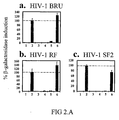
Figure 2 : Effect of MPG/p7 on replication of different subtypes of HIV-1 and HIV-2 studied using MAGIC5 cells. MAGIC-5 cells were incubated with 50 µl of stock HIV preparation corresponding to 1000 x TCID50/ml. a, HIV-1 BRU; b, HIV-1 RF; c, HIV-1 SF2 (Figure 2.A ); d, HIV-1 NDK; e, HIV-1 ELI;f, HIV-2 ROD; g, HIV-2 EHO (Figure 2.B ) in medium alone (lane 2), medium supplemented with AZT (10-5 M) (lane 3), MPG/p7 at 10-7 and 10-8 M (lane -
Figure 3 : Comparative Effect of MPG/p7 on replication of reference escape variant viruses. MAGIC-5 cells were incubated with 50 µl of stock HIV preparation corresponding to 1000 x TCID50/ml of a, HIV-1 BRU; b, HIV-1 RTMF; c, HIV-1 RTMC; d, HIV-1 74V (Figure 3.A ); e, HIV-1 N119; f, HIV-1 RTMDR1 (Figure 3.B ), in medium alone (lane 2) or medium supplemented with AZT at 10-5 M, 10-6 M, 10-7 M, 10-8 M, 10-9 M, and 10-10 M (lanes 3 to 8 respectively), MPG/p7 at 10-8 and 10-7 M (lanes 9 and 10), or MPG/p237 at 10-6 M (lane 11) additive. β-gal activity was evaluated onday 3 after virus exposure. β-gal activity in uninfected MAGIC5 cells was measured as control (lane 1). All results have been normalized (see legend ofFig. 2 ). The calculated values represent means of duplicate. Each figure is representative of at least three independent experiments. -
Figure 4 : Comparative Effect of MPG/p7, peptide p7+ and peptide p7++ on replication of reference viruses. MAGIC-5 cells were incubated with 50 µl of stock HIV preparation corresponding to 1000 x TCID50/ml of a, HIV-1 BRU; b, HIV-2 ROD (Figure 4.A ); c, HIV-1 RTMF ; d, HIV-1 RTMC (Figure 4.B ); e, HIV-1 74V; f, HIV-1 RTMDR1 (Figure 4.C ). NI : non infected; BRU: infected by virus BRU without inhibitor (or other viruses in other panels); AZT: medium supplemented with AZT at 10-5 M; MPG/p7 : medium supplemented with MPG/p7 at the indicated concentration; p7+ : medium supplemented with p7+ at the indicated concentration; p7++ : medium supplemented with p7++ at the indicated concentration; 237+ : medium supplemented with MPG/237 at the indicated concentration; β-gal activity was evaluated onday 3 after virus exposure. All results have been normalized (see legend ofFig. 2 ). The calculated values represent means of duplicate. Each figure is representative of at least three independent experiments. - The present invention is therefore drawn to an inhibitor of HIV replication, consisting of a peptide selected from the group consisting of peptides p7++ (SEQ ID N°4) and p7+ (SEQ ID N°6).
- By inhibition of HIV replication, it is meant an inhibition of the production of viral particles from infected cells. This inhibition may be measured by different means, in particular as described in Morris et al. (15, which is incorporated herein by reference in totality).
- In particular, an inhibitor of HIV replication according to the present invention reduces the β-galactosidase activity measured from MAGIC-5 cells by at least 50%, more preferably 70 %, the most preferably 90 % in the conditions reported in the examples of the present invention.
- By peptide it is meant to understand a molecule comprising a series of amino acids, that can be natural or not, said molecule being linear or circular, and capable of being modified, by linkages such as glycosylation or branches of amino acids such as glutamylation on glutamate(s).
- A peptide according to the present invention can be obtained by genetic engineering, after introduction of a DNA vector carrying a nucleic acid sequence coding for the peptide sequence into a host cell (procaryotic or eucaryotic cell, such as bacteria, yeast, mammalian cell), and producing the peptide within said host cell Some induction systems allow the production of a large amount of peptide, and are techniques well known by the person skilled in the art.
- The peptides according to the present invention can also be obtained by chemical synthesis, using one of the many known peptidic synthesis. One could cite the techniques using solid phases, total or partial, by fragment condensation, or a synthesis in classical solution.
- The process for the purification of peptides are known by the person skilled in the art. Recombinant peptides can be purified from lysates or cellular extracts, from the supernatant of the culture medium by techniques used individually or in combination.
- The techniques that can be used to purify peptides prepared through a recombinant host or by chemical synthesis include fractionment, chromatography, immunoaffinity techniques, using monoclonal or polyclonal specific antibodies...
- The inhibitor according to the present invention exhibits a better potency when it further comprises a vector allowing the penetration of the peptide into a mammalian cell.
- The invention is also drawn to a pharmaceutical composition comprising an inhibitor of HIV replication according to the invention, and an appropriate excipient. Said compositions are preferably formulated for administration to mammals, in particular human beings. They are preferably formulated to be administrated by oral, sublingual, subcutaneous intramuscular, intravenous, transdermal, rectal way.
- The pharmaceutical composition may be a tablet, a capsule, a powder, a pill, a suppository, a solution (injectable by a method as previously cited) or a suspension.
- The excipient may be gelatin, starch, lactose, arabic gum, talc, or other known pharmaceutical vehicles. The tablets may be coated by sucrose, or other appropriate compounds.
- The pharmaceutical composition according to the invention may be treated as to achieve a sustained or retarded activity, or for the release of a predetermined amount of inhibitor in a continuous way.
- The capsule may be obtained by mixing the inhibitor with a diluent and pouring the mixture in soft or hard capsules.
- A syrup may be obtained by mixing the inhibitor with an sweetener, an antiseptic, a tasting agent, and an appropriate colorant.
- Powders or granules may contain the inhibitor mixed with dispersion agents, or wetting agents, optionally with tasting agents and/or sweeteners.
- For rectal administration, suppositories may be prepared with binding agents, melting at rectal temperature, such as cocoa butter or polyethyleneglycols.
- For injectable administration, one could use aqueous suspensions, saline isotonic solutions or sterile solutions that contains dispersions agents, and/or wetting agents pharmacologically compatibles.
- The inhibitor may also be formulated as a microcapsule, with possibly one or more additive supports.
- The examples in the present application show that the inhibitors of the invention are very potent against the replication of HIV strains in vitro. Furthermore, they are also very potent against both HIV-1 and HIV-2 strains, as well as against drug- and multidrug-resistant strains.
- Therefore, the invention is also drawn to the use of an inhibitor, or a composition according to the invention, for the manufacture of a medicament to be used in the treatment of an HIV infected patient, whether HIV is a HIV-1, HIV-2, drug sensitive, drug-resistant or multidrug-resistant HIV virus.
- It is foreseen that the medicament of the present invention will be used simultaneously or in combination with one or more other anti-HIV medicament(s). Indeed, the best current clinical results for limiting HIV infections are obtained by using multiple drugs at the same time. The invention presents a new therapeutic class of molecules to be used against HIV, and shall therefore be added to the current treatment regimens.
- The other anti-HIV medicaments that can be used at the same time as the medicament or the inhibitor of the invention include protease inhibitors and inhibitors of the HIV-RT, such as nucleoside or non-nucleosides inhibitors.
- It is also worth noting that the inhibitors according to the present invention are directed against conserved region of the HIV-RT, that is essential for the dimerization of the protein. Therefore, by using the inhibitor of the invention, one can prevent the dimerization of the HIV-RT, which may prevent the reverse transcription of the virus RNA to DNA, and its integration within the genome.
- Furthermore, the inhibitors and compositions of the invention are advantageous in that they target a conserved region of the virus genome, that is probably not very prone to mutations, as it is essential for the dimerization of the HIV-RT protein. It is therefore expected that there will be less resistant strains to the inhibitors of the invention than with other inhibitors of HIV-RT, such as nucleoside analogs.
- The inhibitors of the present invention show an inhibition of virus replication for concentrations in the range of 10-7 or 10-8 M in vitro, that is lower than the concentration needed for AZT. Furthermore, cell toxicity is only observed for inhibitor concentration 10,000 times higher.
- It is therefore foreseen that the inhibitors or the composition according to the present invention will be administered at a dose that will allow them to be effective. Such a dose is said to be therapeutically effective, i.e. anti-virally effective, without a reduced toxicity.
- According to the literature that reports on the use of peptides as therapeutic agents (40), the medicament of the invention may be administered at a dose of about 1 to 1000 mg/day, or more preferably at a dose of about 20 to 700 mg/day.
- The invention is also drawn the use of the peptides as pharmaceuticals in to a method for treating or inhibiting an HIV infection comprising administering to a human in need thereof a therapeutically effective (anti-virally effective) amount of an inhibitor, or a composition according to the invention, optionally in combination with a therapeutically effective amount of one or more other anti-HIV medicament(s) (such as nucleosides or non-nucleosides inhibitors of the reverse transcriptase, protease inhibitors).
- The method is effective against HIV-1 or HIV-2, and particularly against drug- or multidrug-resistant HIV.
- The HIV strains used in this study were already described: HIV-1 BRU (28), HIV-2 ROD (29), HIV-1 ELI (30), HIV-2EHO (31,32), HIV-1 NDK (33), HIV-1 RF (34), HIV-1 SF2 (35), nevirapine-resistant HIV-1N119 (20), HIV-1 RTMC (21), HIV-1 RTMF (18), HIV-1 74V (36), and HIV-1 RTMDR1 (24). These viruses where propagated in CEM cells (a CD4+/CXCR4+ human T-cell line).
- The CD4+, CXCR4+ lymphoblastoid CEM cell line was purchased from the American Type Culture Collection (CCRF-CEM, ATCC # CCL 119, Catalogue of cell lines and hybridomas, ATCC, Bethesda, MD). CEM cells were cultured in RPMI 1640 medium containing 1% penicillin-streptomycin (PS) antibiotic mixture, 1% glutamax (Gibco-BRL, Eragny, France) and 10% FCS (Gibco), to a density of 5
X 105 cells/ml in a 5% CO2 atmosphere. The HeLa-LTR-βgal indicator cell line (37) stably transfected with CD4 and CCR5 (MAGIC-5) cells was previously described (38), were grown in DMEM containing 1% PS, 1% glutamax, 1 mg/ml G418, and 10% FCS. - Peptides (p7 (SEQ ID N° 1), p237 (SEQ ID N° 5), MPG (SEQ ID N° 2), p7++ (SEQ ID N° 4), and p7+ (SEQ ID N° 6)) were synthesized by solid phase peptide synthesis using aminoethyldithio-2-isobutyric acid-expensin resin with a 9050 Pepsynthetizer (Millipore, UK) according to the Fmoc(N-(9-fluorenyl)methoxycarbonyl)/tert-butyl method, purified by semi-preparative HPLC and identified by electrospray mass spectrometry and amino acid analysis. In some case, to increase their stability, the peptides were acetylated at the N terminus and linked to a cysteamide group at the C-terminal part as previously described (14).
- Peptide p7 and MPG were mixed, and peptide p7 binds to MPG (probably the hydrophobic domain), with saturation taking place for a concentration of p7 about 20-fold lower than of MPG. From the Kd and the saturation concentration, the ration was estimated to 30 molecules of MPG for one molecule of p7. The MPG/p7 complex was further assessed as a complex of p7-MPG at a 1/20 ratio (15, incorporated herein by reference in its tonality).
- RT activity assay. CEM cells were incubated for 30 min at 4°C with 100 µl of stock HIV preparation corresponding to 1000 x 50% tissue culture infective dose (TCID50)/ml, then cells were washed five times and cultured at 5 x 10⁵ cell/ml in 24-well microplates in the presence or absence of MPG/p7 (at 10-8 and 10-7 M) or AZT (AZT was purchased from Boehringer Mannheim, Germany) additive. Viral production was monitored twice a week by measuring reverse transcriptase activity in 1 ml of cell-free supernatant as previously described (39).
- β-gal activity assay. MAGIC-5 cells expressing the β-gal reporter gene cloned downstream of the HIV-1 LTR promoter were plated in 24-well plates at 5 x 10⁵ cells/ml and incubated with 50 µl of stock HIV preparation corresponding to 1000 x 50% tissue culture infective dose (TCID50)/ml in the presence or absence of MPG/p7 (at 10-8 and 10-7 M) or AZT additive. After 3 days in culture, cells were lysed and β-gal activity was determined by incubating 200 µl of total cellular extracts for 1 h at 37°C in 1.5 ml buffer containing 80 mM NA2HPO4, 10 mM MgCl2, 1
mM 2 ME and 6 mM o-nitrophenyl β-D-galactopyranoside (ONPG). β-gal activity was evaluated by measuring absorbance at 410 nm. - MPG/p7 was previously shown to inhibit HIV-1BRU RT dimerization in vitro and HIV-1BRU replication in CEM cell culture (15, incorporated herein by reference).The susceptibility of two reference strains of laboratory-adapted HIV-1 and HIV-2 to MPG/p7 was first determined.
- A representative experiment of inhibition of virus production (HIV-1BRU and HIV-2ROD) in infected CEM cells treated with MPG/p7 (10-6 M), a 15-mer control peptide 237 (10-6 M), or AZT (10-5 M), is shown in
Figure 1 . RT activity monitored in cell free culture supernatant of infected cells fromday 3 to day 17 after virus exposure, indicated that MPG/p7 at concentrations above 10-8 M, totally inhibits HIV-1BRU replication during the 17 days of incubation whereas RT activity observed at the end of culture in samples treated at concentration of 10-9 M revealed a very slow virus propagation that was undetected at earlier time-points. Only a 3-days delay in HIV-1 replication was found at a concentration of 10-10 M of MPG/p7. - Under similar experimental conditions HIV-2ROD propagation was strongly delayed at concentrations of MPG/p7 above 10-7 M, whereas a 3-days delay in HIV-2 replication was observed using a concentration of 10-9 M of MPG/p7.
- This result was confirmed by monitoring the expression of HIV-1 antigen by P24gag antigen capture assay on day 17 post infection (data not shown).
- The pattern of reactivity of MPG/p7 using several isolates from different clades of HIV-1 and HIV-2 isolates (see Table 1) was next determined.
- The efficiency of MPG/p7 monitored using the previously described MAGIC5 transfectant cells that express surface CD4, CXCR4 and CCR5 receptors and contain a reporter gene under control of an HIV-1 promoter that can be induced upon infection of the cells. This assay was chosen because it gives a result within 72h and requires much less peptide in each experiment than classical infection assays.
- All strains tested were found to be susceptible to MPG/p7 at concentrations of 10-8 M (
Fig. 2 ). This included X4 and R5/X4 strains of HIV-1 from clades B and D and HIV-2 clades A and B. - Although only HIV-1 clades B and D and HIV-2 clades A and B isolates were tested, it can be assumed that the 7 isolates that were used in the present study are representative of the different sequences that can be encountered within HIV-1 clades A, B, C, D, F, G, H, O and HIV-2 clades A and B.
- Indeed, comparisons of the sequence of residues 395-404 of HIV-1 BH10 RT (KETWETWWTE, SEQ ID N° 1) to the corresponding sequences available from the Los Alamos data base (9) (Table 1) reveals that the major substitutions observed between the consensus B and the other clades of HIV-1 are found in one of the HIV-1 B or D, or HIV-2 viruses tested.
- For example, the HIV-1 clade C (see consensus C sequence) that is most predominant in India and causes more than 70% of infections in southern Africa and 96% in northern Africa shows a T400A substitution also encountered in HIV-1 RF and HIV-1 NDK and an E404D substitution also encountered in HIV-2 EHO.
- Therefore, in most cases substitutions do not alter the character of the residues, confirming that this region is highly conserved in HIVs.
- These observations suggest that irrespectively of type, clade an geographic origin, all human lentiviruses containing a decapeptide containing (from the N-terminus to the C-terminus) a basic amino acid in
position 1, an acidic amino acid inpositions positions - The crystallographic structure of HIV-1 RT, reveals that the residues 395-404 are involved in the p66/p51 interface contacts and are essential in the stabilisation of both the connection subdomain.
- Secondary structure predictions and molecular modeling suggest that in all the isolates these residues are folded into an α-helix, as observed in the X-ray structure of HIV-1 (16,17).
- In both subunits, the highly conserved Trp residues, Trp398, Trp401 and Trp402 form a cluster of aromatic residues together with Tyr405, Trp410, and Phe416 which stabilizes the dimer interface by intra- and inter-subunit contacts. In p51 the hydrohobic cluster involves other contacts which maintains the conformation of the palm domain of p51 (Trp24, Phe61, Leu368, Leu391, Val372) and the thumb-domain of p66 (Arg356, Arg358, Gln373). In p66, additional contacts are made with the RNase-H domain (Val423, Leu425).
- Analysis of the amino acid substitutions indicated that whatever the sequence mentioned in Table 1, the property of the residues is conserved in order to maintain the organization of the hydrophobic pocket and the α-helix conformation.
- Substitution K395R or E399D retains the basic characteristic, essential for helix stability and interactions with Trp24, Phe416 and Trp414.
- Substitution E396D keep the acidic property essential for the interaction with residues Gln394 in p51 and the two Arg356 and Arg358 in p66.
- Thr397 is conserved in all of the concensus, excepted in HIV-2 concensus A, in both subunits this residue is surrounded by hydrophobic residues, which cannot be altered when replaced by isoleucine or valine.
- Thr400 is one of the most variable residue of this motif, therefore none of the substitution alters the organization of the aromatic cluster.
- Moreover, the substitution T400Q observed in all HIV-2 consensus increases interaction between p51 and p66 subunits and may explain the higher stability of HIV-2 RT11.
- Taken together, these data indicate that MPG/p7 inhibits a wide range of HIVs. Based on these results we conclude that the integrity of the aromatic cluster which is essential for dimer formation as well as for the structural integrity of both subunits, is conserved in all of the isolates described in Table 1. This explains why a drug like p7, which targets the aromatic cluster prevents the dimer formation of all of these isolates.
- The phenotypic identification of drug-resistant HIV-1 emerging during unsuccessful antiretroviral therapy has enable the definition of drug resistant genotypes of HIV-1.
- Several mutations in RT are consistently in association with resistance to one or more anti-RT drugs. The growing number of reports documenting mutations which confer resistance to both nucleoside and non-nucleoside RT inhibitors indicates that one of the first selection criteria that a new antiviral compound targeting RT should meet, is its capacity to inhibit anti-RT drug resistant HIV-1 strains.
- According to the compilation of mutations in HIV RT published by the Los Alamos National Laboratory (9), there are at least 45 amino acid residues in RT for which mutations result in a significant change in the virus susceptibility to one or more anti-RT drugs.
- Interestingly, and to the best of our knowledge, there is actually no mutation reported affecting the residues of HIV-1 RT that are target for MPG/p7. Moreover, that mutation of Trp398 and Trp410 (HIV-1 BH10) strongly affected the stability of the dimeric form of HIV-1 RT in vitro (Morris and Divita, unpublished data), strengthens the hypothesis that mutations occurring in this region may affect RT dimerization thereby disabling viral replication.
- To determine whether mutant HIV-1s that resist to both nucleoside and/or non-nucleoside RT inhibitors are sensitive to MPG/p7, five reference strains of anti-RT drug resistant HIV-1 were assayed for susceptibility to MPG/p7.
- Table 2 summarizes the characteristics of RT drug resistant phenotype of these viruses, namely HIV-1 RTMF, HIV-1 RTMC, HIV-1 74V, HIV-1 N119 and HIV-1 RTMDR1, and the type of mutation conferring these phenotypes.
- The different escape mutant viruses studied turned to be sensitive to MPG/p7 treatment (
Fig. 3 ). It is however worth noting that the concentration of MPG/p7 required to inhibit HIV-1 RTMC and HIV-1 RTMDR1 (Fig. 3c and f) was higher than that required to block the other viruses. For example, 10-6 M of MPG/p7 was required for completely inhibit HIV-1 RTMC (data not shown). - The fact that the sensitivity to zidovudine of HIV-1 RTMC and HIV-1 RTMF escape mutant strains was very similar in the present experiment and in the experiment previously reported by Larder and co-workers (18), validated the observations relatively to MPG/p7 effect on the different escape mutant viruses.
- In order to further study the properties of peptide p7, chimeric peptides having the transmembranaire transport properties of MPG (amhipathic sequence) and anti HIV-RT properties of p7 were designed and synthesized.
- Peptide p7++ and p7+ were used on MAGIC-5 cells, infected with the ROD (HIV-2) and BRU (HIV-1) strains.
-
Figure 4 shows that peptide p7++ (retroinhibase 1) exhibits the same activity than the MPG-p7 complex at about the same concentration. - The use of peptide p7++ on cells infected by drug-resistant viruses demonstrates that this peptide is also capable to inhibit the replication of such strains (
figure 4 ).Table 1 Amino acid alignment with the p7 sequence of BH10 strain Type Strain Clade Country of origin Sequence HIV-1 395 404 BH10 KETWETWWTE (p7) BRU B France KETWETWWTE RF B Haiti/USA KETWE A WWTE SF2 B USA KETWE A WW M E NDK D Zaire KETWETWW I E EL I D Zaire KETWETWW A E HIV-2 ROD A Cape Verde R E I WE Q WW D N EHO B Ivory Coast R ETW DQ WWT D HIV-1 395 (p7) 404 KETWETWWTE Consensus A KETWET/AWWTE/D Consensus B KETWET/AW M E Consensus C KETWE A WWTD Consensus D KETWET/AWW X E/D (X=T/A/V/I) Consensus F KETW D TWWTE Consensus G KETWE V WWTE Consensus H KETWETWWTE Consensus 0 R ETWETWW AD HIV-2 Consensus A R E/D Z WE Q WW D N/D (Z=T/V/I) Consensus B R ETW DQ WWT D Sequences are from ref. 9 Table 2 Main characteristics of anti-RT drug resistant HIV-1 isolates Strain RT Genotyping Phenotype HIV-1 RTMF 215Y AZT-resistant HIV-1 RTMC 67N, 70R, 215F, 219Q AZT-resistant HIV-1 74V 74V resistant to ddI and ddC HIV-1 N119 181C resistant to nevapirine and non nucleoside RT inhibitors HIV-1 RTMDR1 41L, 74V, 106A, 215Y resistant to AZT, ddI, nevapirine, non nucleoside RT inhibitors Viruses phenotype and reverse transcriptase genotype are adapted from refs. 18, 20, 21, 23, and 36. HIV-1 RTMF, RTMC, 74V, RTMDR1, and N119 viruses utilize CXCR4 (some isolates are R5X4 dual tropic strains). -
- 1. Tantillo, C. et al. Locations of anti-AIDS drug binding sites and resistance mutations in the three-dimensional structure of HIV-1 reverse transcriptase. Implications for mechanisms of drug inhibition and resistance. J. Mol. Biol. 243, 369-387 (1994).
- 2. Volberding, P. The need for additional options in the treatment of human immunodeficiency virus infection. J. Inf. Dis. 171 (Suppl.2), 150-154 (1995).
- 3. Preston, B. D., Poiesz, B. J. & Loeb L. A. Fidelity of HIV-1 reverse transcriptase. Science 242,1168-1171 (1988).
- 4. Roberts, J. D., Bebenek, K. & Kunkel, T. A. The accuracy of reverse transcriptase from HIV-1. Science 242,1171-1173 (1988).
- 5. Richman, D. D. Antiretroviral drug resistance: mechanisms, pathogenesis, clinical significance. Adv. Exp. Med. Biol. 394, 383-395 (1996).
- 6. Hirschel, B. & Opravil, M. The year in review: antiretroviral treatment. AIDS 13 (Suppl. A),177-187 (1999).
- 7. Boucher, C. A. et al. Ordered appearance of zidovudine resistant mutations during treatment of 18 human immunodeficiency virus-positive subjects. J. Inf. Dis. 165,105-110 (1992).
- 8. Goudsmit, J., de Ronde, A., de Rooij, E. & de Boer, R. Broad spectrum of in vivo fitness of human ).
- 9. Korber, B. et al. Human retroviruses and AIDS. A compilation and analysis of nucleic acid and amino acid sequences. Los Alamos National Laboratory, Los Alamos, New Mexico (1998).
- 10. Restle, T., Muller, B. & Goody, R. S. Dimerization of human ).
- 11. Divita, G., Rittinger, K., Geourjon, C., Deleage, G. & Goody, R. S. Dimerization kinetics of HIV-1 and HIV-2 reverse transcriptase: a two step process. J. Mol. Biol. 245, 508-521, (1995).
- 12. Divita, G., Restle, T., Goody, R. S., Chermann, J.-C. & Baillon, J. C. Inhibition of human ).
- 13. Divita, G., Baillon, J. G., Rittinger, K., Chermann, J.-C. & Goody, R. S. Interface peptides as structure-based human immunodeficiency virus reverse transcriptase inhibitors. J. Biol. Chem. 270, 28642-28646 (1995).
- 14. Morris, M., Vidal, P., Chaloin, L., Heitz, F. & Divita, G. A new peptide vector for efficient delivery of oligonucleotides into mammalian cells. Nuc. Acids Res. 25, 2730-2736 (1997).
- 15. Morris, M. et al. A new potent HTV-1 reverse transcriptase inhibitor. J. Biol. Chem. 274, 24941-24946 (1999).
- 16. Jacobo-Molina, A. et al. Crystal structure of human ).
- 17. Kohlstaedt, L. A., Wang, J., Friedman, J. M., Rice, P. A., & Steitz, T. A. Crystal structure at 3.5 A resolution of HIV-1 reverse transcriptase complexed with an inhibitor. Science 256, 1783-1790 (1992).
- 18. Larder, B. A., Kellam, P. & Kemps, S. D. Zidovudine resistantce predicted by direct detection of mutations in DNA from HIV-infected lymphocytes. ).
- 19. Richman, D. et al. BI-RG-587 is active against zidovudine-resistant human ).
- 20. Richman, D. et al. Human ).
- 21. Larder, B. A. & Kemps, S. D. Multiple mutations in HIV-1 reverse transcriptase confer high-level resistance to zidovudine (AZT). Science 246, 1155-1158 (1989).
- 22. Nunberg, J. H. et al. Viral resistance to human immunodeficiency virus type 1-specific pyridinone reverse transcriptase inhibitors. J. Virol. 65, 4887-4892 (1991).
- 23. Gao, Q., Gu, Z., Pamiak, M. A., Li, X. & Wainberg, M. A. In vitro selection of variants of human ).
- 24. Larder, B. A., Kellam, P. & Kemps, S. D. Convergent combination therapy can select viable multidrug-resistant HIV-1 in vitro. Nature 365, 451-453 (1993)..
- 25. Tachedjian, G., Aroson, H.-E., & Goff, S. P. Analysis of mutations and reppressors affecting interactions between the subunits of the HIV-1 reverse transcriptase. Proc. Natl. Acad. Sci. USA 97, 6334-6339 (2000).
- 26. Sluis-Cremer, N., Dmitrienko, G. I., Balzarini, J., Camarasa, M. J., & Parniak, M. A. Human ).
- 27. Grossman, Z. et al. Ongoing HIV dissemination during HAART. Nature Med. 5, 1099-1104 (1999).
- 28. Barre-Sinoussi, F. et al. Isolation of a T-lymphotropic retrovirus from a patient at risk for acquired immune deficiency syndrome (AIDS). Science 220:868-871 (1983).
- 29. Clavel, F. et al. Isolation of a new human retrovirus from west Africa patients with AIDS. Science 223, 343-346 (1986).
- 30. Alizon, M., Wain-Hobson, S., Montagnier, L. & Sonigo, P. Genetic variability of the AIDS virus: nucleotide sequence analysis of two isolates from African patients. Cell 46, 63-74 (1986).
- 31. Rey-Cuille, M. A. et al. HIV-2 EHO isolate has a divergent envelope gene and induces single cell killing by apoptosis. Virology 202, 471-476 (1994).
- 32. Galabru, J., Rey-Cuille, M. A. & Hovanessian, A. Nucleotide sequence of HIV-2 EHO genome, a divergent HIV-2 isolate. AIDS Res. Hum. Retroviruses. 11, 873-874 (1995).
- 33. Ellrodt, A. et al. Isolation of human T-lymphotropic retrovirus (LAV) from Zairan married couple, one with AIDS, one with prodomes. Lancet i:1383-1385 (1984).
- 34. Popovic, M., Sarngadharan, M. G., Read, E. & Gallo, R. C. Detection, isolation, and continuous production of cytopathic retroviruses (HTLV-III) from patients with AIDS and pre-AIDS. Science 224, 497-500 (1984).
- 35. Levy, J. A. et al. Isolation of lymphocytopathic retrovirus from San Francisco patients with AIDS. Science 225, 840-842 (1984).
- 36. St. Clair, M. H. et al. Resistance to ddl and sensitivity to AZT induced by a mutation in HIV-1 reverse transcriptase. Science 253, 1557-1559 (1991).
- 37. Kimpton & Emerman. Detection of replication-competent and pseudotyped human immunodeficiency virus with a sensitive cell line on the basis of activation of an integrated beta-galactosidase gene. J. Virol. 66, 2232-2239 (1992).
- 38. Mochizuki, N. et al. An infectious DNA clone of HIV subtype C. AIDS Res. Hum. ).
- 39. Rey, M. A. et al. Characterization of the RNA dependent DNA polymerase of a new human T-lymphotropic retrovirus (LAV). Biochem. Biophys. Res. Commun. 121, 126-133 (1984).
- 40. Briant and Devaux. Bioactive CD4 ligands as pre-and/or postbinding inhibitors of HIV-1. In Advances in Pharmacology, Vol 48 (ed., K. -T. Jeang), pp. 373-407, (2000).
-
- <110> Centre National de la Recherche Scientifique (CNRS)
- <120> Inhibitors of HIV replication and method of treatment of HIV infections
- <130> D19078
- <150>
US 09/648 557
<151> 2000-08-25 - <160> 6
- <170> PatentIn Ver. 2.1
- <210> 1
<211> 10
<212> PRT
<213> HIV - <220>
- <223> Residues 395-404 of HIV-1 BH10RT
- <400> 1

- <210> 2
<211> 27
<212> PRT
<213> Artificial Sequence - <220>
- <223> Description of Artificial Sequence: Peptide MPG
- <400> 2

- <210> 3
<211> 6
<212> PRT
<213> Artificial Sequence - <220>
- <223> Description of Artificial Sequence: Amphipatic sequence of peptide MPG
- <400> 3

- <210> 4
<211> 25
<212> PRT
<213> Artificial Sequence - <220>
<223> Description of Artificial Sequence:Retroinhibase 1, peptide p7++ - <400> 4

- <210> 5
<211> 15
<212> PRT
<213> HIV - <220>
- <223> Peptide p237
- <400> 5

- <210> 6
<211> 21
<212> PRT
<213> Artificial Sequence - <220>
- <223> Description of Artificial Sequence: Peptide p7+
- <400> 6

Claims (6)
- An inhibitor of HIV replication, consisting of a peptide selected from the group consisting of peptides p7++ (SEQ ID N°4) and p7+ (SEQ ID N°6).
- A pharmaceutical composition comprising the inhibitor of HIV replication of claim 1.
- The use of the inhibitor of claim 1, or the composition of claim 2, for the manufacture of a medicament to be used in the treatment of an HIV infected patient.
- The use of claim 3, wherein said HIV is HIV-1 or HIV-2.
- The use of claim 3 or 4, wherein said patient is infected by a multidrug-resistant HIV virus.
- The use of any of claims 3 to 5, wherein the medicament is used simultaneously or in combination with one or more other anti-HIV medicament(s).
Applications Claiming Priority (3)
| Application Number | Priority Date | Filing Date | Title |
|---|---|---|---|
| US648557 | 2000-08-25 | ||
| US09/648,557 US7790171B1 (en) | 2000-08-25 | 2000-08-25 | Antiviral peptides obtained from the tryptophan-rich hydrophobic cluster of the HIV-1 reverse transcriptase |
| PCT/IB2001/001825 WO2002015661A2 (en) | 2000-08-25 | 2001-08-21 | Inhibitors of hiv replication and method of treatment of hiv infections |
Publications (2)
| Publication Number | Publication Date |
|---|---|
| EP1311538A2 EP1311538A2 (en) | 2003-05-21 |
| EP1311538B1 true EP1311538B1 (en) | 2009-01-07 |
Family
ID=24601279
Family Applications (1)
| Application Number | Title | Priority Date | Filing Date |
|---|---|---|---|
| EP01972382A Expired - Lifetime EP1311538B1 (en) | 2000-08-25 | 2001-08-21 | Inhibitors of hiv replication and method of treatment of hiv infections |
Country Status (6)
| Country | Link |
|---|---|
| US (2) | US7790171B1 (en) |
| EP (1) | EP1311538B1 (en) |
| AT (1) | ATE420103T1 (en) |
| AU (1) | AU2001292153A1 (en) |
| DE (1) | DE60137340D1 (en) |
| WO (1) | WO2002015661A2 (en) |
Families Citing this family (5)
| Publication number | Priority date | Publication date | Assignee | Title |
|---|---|---|---|---|
| US6841535B2 (en) * | 2000-07-31 | 2005-01-11 | Active Motif | Peptide-mediated transfection agents and methods of use |
| WO2003094973A1 (en) * | 2002-05-08 | 2003-11-20 | MAX-PLANCK-Gesellschaft zur Förderung der Wissenschaften e.V. | Agent and method for transporting biologically active molecules in cells |
| EP2174948A1 (en) * | 2008-09-26 | 2010-04-14 | Centre National De La Recherche Scientifique | Antiviral polypeptides |
| JP2012146377A (en) * | 2011-01-14 | 2012-08-02 | Elpida Memory Inc | Semiconductor device |
| CN120289580B (en) * | 2025-04-10 | 2025-09-12 | 甘肃中肽生物科技有限公司 | Preparation method and application of bovine bone marrow protein peptide |
Family Cites Families (3)
| Publication number | Priority date | Publication date | Assignee | Title |
|---|---|---|---|---|
| US5464933A (en) * | 1993-06-07 | 1995-11-07 | Duke University | Synthetic peptide inhibitors of HIV transmission |
| AU1075001A (en) | 1999-10-05 | 2001-05-10 | Epimmune, Inc. | Inducing cellular immune responses to human immunodeficiency virus-1 using peptide and nucleic acid compositions |
| US6841535B2 (en) | 2000-07-31 | 2005-01-11 | Active Motif | Peptide-mediated transfection agents and methods of use |
-
2000
- 2000-08-25 US US09/648,557 patent/US7790171B1/en not_active Expired - Fee Related
-
2001
- 2001-08-21 DE DE60137340T patent/DE60137340D1/en not_active Expired - Lifetime
- 2001-08-21 AT AT01972382T patent/ATE420103T1/en not_active IP Right Cessation
- 2001-08-21 EP EP01972382A patent/EP1311538B1/en not_active Expired - Lifetime
- 2001-08-21 AU AU2001292153A patent/AU2001292153A1/en not_active Abandoned
- 2001-08-21 WO PCT/IB2001/001825 patent/WO2002015661A2/en not_active Ceased
-
2010
- 2010-08-16 US US12/857,043 patent/US20110064793A1/en not_active Abandoned
Also Published As
| Publication number | Publication date |
|---|---|
| EP1311538A2 (en) | 2003-05-21 |
| DE60137340D1 (en) | 2009-02-26 |
| WO2002015661A2 (en) | 2002-02-28 |
| AU2001292153A1 (en) | 2002-03-04 |
| WO2002015661A8 (en) | 2002-11-14 |
| WO2002015661A3 (en) | 2003-01-23 |
| ATE420103T1 (en) | 2009-01-15 |
| US7790171B1 (en) | 2010-09-07 |
| US20110064793A1 (en) | 2011-03-17 |
Similar Documents
| Publication | Publication Date | Title |
|---|---|---|
| Liu et al. | HIV entry inhibitors targeting gp41: from polypeptides to small-molecule compounds | |
| Mahalingam et al. | Nuclear import, virion incorporation, and cell cycle arrest/differentiation are mediated by distinct functional domains of human immunodeficiency virus type 1 Vpr | |
| Kleim et al. | Activity of a novel quinoxaline derivative against human immunodeficiency virus type 1 reverse transcriptase and viral replication | |
| JP4234999B2 (en) | Multimer formation of HIV-1 VIF protein as a therapeutic target | |
| Fujinaga et al. | Extracellular Nef protein regulates productive HIV-1 infection from latency | |
| US20110064793A1 (en) | Inhibitors of hiv replication and method of treatment of hiv infections | |
| WO1999024465A9 (en) | Stabilized primate lentivirus envelope glycoproteins | |
| EP1012603A1 (en) | Functional fragments of hiv-1 vpr protein and methods of using the same | |
| US20110104789A1 (en) | Non-integrating rev-dependent lentiviral vector and methods of using the same | |
| EP2291392B1 (en) | Bifunctional molecules for inhibiting hiv entry | |
| US6962900B2 (en) | Pharmaceutical being used for treating HIV infection, the composition and uses thereof | |
| Kaushik-Basu et al. | Peptide inhibition of HIV-1: current status and future potential | |
| KR20080019720A (en) | Therapeutic Peptides and Vaccines | |
| WO1998015569A9 (en) | Gp120 polypeptides having conformational discontinuous chemokine receptor binding sites and methods of inhibiting hiv infection | |
| WO1998015569A1 (en) | Gp120 polypeptides having conformational discontinuous chemokine receptor binding sites and methods of inhibiting hiv infection | |
| WO1993025235A1 (en) | Aids therapeutics based on hiv-2 vpx peptides | |
| Coleman et al. | The HIV-1 Nef protein as a target for antiretroviral therapy | |
| Jekle et al. | CD4-BFFI: a novel, bifunctional HIV-1 entry inhibitor with high and broad antiviral potency | |
| US6818627B1 (en) | Functional fragments of HIV-1 Vpr protein and methods of using the same | |
| JP4034530B2 (en) | Anti-HIV agent | |
| KR101138930B1 (en) | Composition for preventing and treating ???? comprising ??? ?? protein | |
| WO1997025350A1 (en) | Use of chemokines for the treatment and prevention of hiv infection | |
| Bäyon-Auboyer et al. | Evolution of the human immunodeficiency virus type 2 envelope gene in preimmunized and persistently infected rhesus macaques | |
| Datir | Investigating the role of Gag in protease inhibitor susceptibility amongst West African HIV-1 subtypes | |
| Suntoke | HIV entry: a biophysical and mutational analysis of gp41-mediated membrane fusion and its inhibition |
Legal Events
| Date | Code | Title | Description |
|---|---|---|---|
| PUAI | Public reference made under article 153(3) epc to a published international application that has entered the european phase |
Free format text: ORIGINAL CODE: 0009012 |
|
| AK | Designated contracting states |
Designated state(s): AT BE CH CY DE DK ES FI FR GB GR IE IT LI LU MC NL PT SE TR |
|
| AX | Request for extension of the european patent |
Extension state: AL LT LV MK RO SI |
|
| 17P | Request for examination filed |
Effective date: 20030317 |
|
| 17Q | First examination report despatched |
Effective date: 20030902 |
|
| 17Q | First examination report despatched |
Effective date: 20030902 |
|
| 17Q | First examination report despatched |
Effective date: 20030902 |
|
| 17Q | First examination report despatched |
Effective date: 20030902 |
|
| GRAP | Despatch of communication of intention to grant a patent |
Free format text: ORIGINAL CODE: EPIDOSNIGR1 |
|
| GRAS | Grant fee paid |
Free format text: ORIGINAL CODE: EPIDOSNIGR3 |
|
| GRAA | (expected) grant |
Free format text: ORIGINAL CODE: 0009210 |
|
| AK | Designated contracting states |
Kind code of ref document: B1 Designated state(s): AT BE CH CY DE DK ES FI FR GB GR IE IT LI LU MC NL PT SE TR |
|
| REG | Reference to a national code |
Ref country code: GB Ref legal event code: FG4D |
|
| REG | Reference to a national code |
Ref country code: CH Ref legal event code: EP |
|
| REG | Reference to a national code |
Ref country code: IE Ref legal event code: FG4D |
|
| REF | Corresponds to: |
Ref document number: 60137340 Country of ref document: DE Date of ref document: 20090226 Kind code of ref document: P |
|
| PG25 | Lapsed in a contracting state [announced via postgrant information from national office to epo] |
Ref country code: NL Free format text: LAPSE BECAUSE OF FAILURE TO SUBMIT A TRANSLATION OF THE DESCRIPTION OR TO PAY THE FEE WITHIN THE PRESCRIBED TIME-LIMIT Effective date: 20090107 |
|
| NLV1 | Nl: lapsed or annulled due to failure to fulfill the requirements of art. 29p and 29m of the patents act | ||
| REG | Reference to a national code |
Ref country code: CH Ref legal event code: NV Representative=s name: MICHELI & CIE SA |
|
| PG25 | Lapsed in a contracting state [announced via postgrant information from national office to epo] |
Ref country code: ES Free format text: LAPSE BECAUSE OF FAILURE TO SUBMIT A TRANSLATION OF THE DESCRIPTION OR TO PAY THE FEE WITHIN THE PRESCRIBED TIME-LIMIT Effective date: 20090418 Ref country code: FI Free format text: LAPSE BECAUSE OF FAILURE TO SUBMIT A TRANSLATION OF THE DESCRIPTION OR TO PAY THE FEE WITHIN THE PRESCRIBED TIME-LIMIT Effective date: 20090107 |
|
| PG25 | Lapsed in a contracting state [announced via postgrant information from national office to epo] |
Ref country code: AT Free format text: LAPSE BECAUSE OF FAILURE TO SUBMIT A TRANSLATION OF THE DESCRIPTION OR TO PAY THE FEE WITHIN THE PRESCRIBED TIME-LIMIT Effective date: 20090107 Ref country code: SE Free format text: LAPSE BECAUSE OF FAILURE TO SUBMIT A TRANSLATION OF THE DESCRIPTION OR TO PAY THE FEE WITHIN THE PRESCRIBED TIME-LIMIT Effective date: 20090407 Ref country code: PT Free format text: LAPSE BECAUSE OF FAILURE TO SUBMIT A TRANSLATION OF THE DESCRIPTION OR TO PAY THE FEE WITHIN THE PRESCRIBED TIME-LIMIT Effective date: 20090608 |
|
| PG25 | Lapsed in a contracting state [announced via postgrant information from national office to epo] |
Ref country code: DK Free format text: LAPSE BECAUSE OF FAILURE TO SUBMIT A TRANSLATION OF THE DESCRIPTION OR TO PAY THE FEE WITHIN THE PRESCRIBED TIME-LIMIT Effective date: 20090107 |
|
| PLBE | No opposition filed within time limit |
Free format text: ORIGINAL CODE: 0009261 |
|
| STAA | Information on the status of an ep patent application or granted ep patent |
Free format text: STATUS: NO OPPOSITION FILED WITHIN TIME LIMIT |
|
| 26N | No opposition filed |
Effective date: 20091008 |
|
| PG25 | Lapsed in a contracting state [announced via postgrant information from national office to epo] |
Ref country code: MC Free format text: LAPSE BECAUSE OF NON-PAYMENT OF DUE FEES Effective date: 20090831 |
|
| REG | Reference to a national code |
Ref country code: IE Ref legal event code: MM4A |
|
| PG25 | Lapsed in a contracting state [announced via postgrant information from national office to epo] |
Ref country code: IE Free format text: LAPSE BECAUSE OF NON-PAYMENT OF DUE FEES Effective date: 20090821 |
|
| PG25 | Lapsed in a contracting state [announced via postgrant information from national office to epo] |
Ref country code: GR Free format text: LAPSE BECAUSE OF FAILURE TO SUBMIT A TRANSLATION OF THE DESCRIPTION OR TO PAY THE FEE WITHIN THE PRESCRIBED TIME-LIMIT Effective date: 20090408 |
|
| PGFP | Annual fee paid to national office [announced via postgrant information from national office to epo] |
Ref country code: CH Payment date: 20100723 Year of fee payment: 10 |
|
| PGFP | Annual fee paid to national office [announced via postgrant information from national office to epo] |
Ref country code: DE Payment date: 20100806 Year of fee payment: 10 Ref country code: FR Payment date: 20100910 Year of fee payment: 10 |
|
| PGFP | Annual fee paid to national office [announced via postgrant information from national office to epo] |
Ref country code: GB Payment date: 20100727 Year of fee payment: 10 |
|
| PGFP | Annual fee paid to national office [announced via postgrant information from national office to epo] |
Ref country code: BE Payment date: 20100729 Year of fee payment: 10 |
|
| PG25 | Lapsed in a contracting state [announced via postgrant information from national office to epo] |
Ref country code: IT Free format text: LAPSE BECAUSE OF FAILURE TO SUBMIT A TRANSLATION OF THE DESCRIPTION OR TO PAY THE FEE WITHIN THE PRESCRIBED TIME-LIMIT Effective date: 20090107 |
|
| PG25 | Lapsed in a contracting state [announced via postgrant information from national office to epo] |
Ref country code: LU Free format text: LAPSE BECAUSE OF NON-PAYMENT OF DUE FEES Effective date: 20090821 |
|
| PG25 | Lapsed in a contracting state [announced via postgrant information from national office to epo] |
Ref country code: TR Free format text: LAPSE BECAUSE OF FAILURE TO SUBMIT A TRANSLATION OF THE DESCRIPTION OR TO PAY THE FEE WITHIN THE PRESCRIBED TIME-LIMIT Effective date: 20090107 |
|
| PG25 | Lapsed in a contracting state [announced via postgrant information from national office to epo] |
Ref country code: CY Free format text: LAPSE BECAUSE OF FAILURE TO SUBMIT A TRANSLATION OF THE DESCRIPTION OR TO PAY THE FEE WITHIN THE PRESCRIBED TIME-LIMIT Effective date: 20090107 |
|
| BERE | Be: lapsed |
Owner name: CENTRE NATIONAL DE LA RECHERCHE SCIENTIFIQUE (CNR Effective date: 20110831 |
|
| REG | Reference to a national code |
Ref country code: CH Ref legal event code: PL |
|
| GBPC | Gb: european patent ceased through non-payment of renewal fee |
Effective date: 20110821 |
|
| PG25 | Lapsed in a contracting state [announced via postgrant information from national office to epo] |
Ref country code: CH Free format text: LAPSE BECAUSE OF NON-PAYMENT OF DUE FEES Effective date: 20110831 Ref country code: LI Free format text: LAPSE BECAUSE OF NON-PAYMENT OF DUE FEES Effective date: 20110831 |
|
| REG | Reference to a national code |
Ref country code: FR Ref legal event code: ST Effective date: 20120430 |
|
| PG25 | Lapsed in a contracting state [announced via postgrant information from national office to epo] |
Ref country code: BE Free format text: LAPSE BECAUSE OF NON-PAYMENT OF DUE FEES Effective date: 20110831 |
|
| REG | Reference to a national code |
Ref country code: DE Ref legal event code: R119 Ref document number: 60137340 Country of ref document: DE Effective date: 20120301 |
|
| PG25 | Lapsed in a contracting state [announced via postgrant information from national office to epo] |
Ref country code: GB Free format text: LAPSE BECAUSE OF NON-PAYMENT OF DUE FEES Effective date: 20110821 Ref country code: FR Free format text: LAPSE BECAUSE OF NON-PAYMENT OF DUE FEES Effective date: 20110831 |
|
| PG25 | Lapsed in a contracting state [announced via postgrant information from national office to epo] |
Ref country code: DE Free format text: LAPSE BECAUSE OF NON-PAYMENT OF DUE FEES Effective date: 20120301 |