EP1310867A2 - Execution of synchronized methods in java computing environments - Google Patents
Execution of synchronized methods in java computing environments Download PDFInfo
- Publication number
- EP1310867A2 EP1310867A2 EP02257378A EP02257378A EP1310867A2 EP 1310867 A2 EP1310867 A2 EP 1310867A2 EP 02257378 A EP02257378 A EP 02257378A EP 02257378 A EP02257378 A EP 02257378A EP 1310867 A2 EP1310867 A2 EP 1310867A2
- Authority
- EP
- European Patent Office
- Prior art keywords
- java
- monitor
- synchronized
- virtual machine
- recited
- Prior art date
- Legal status (The legal status is an assumption and is not a legal conclusion. Google has not performed a legal analysis and makes no representation as to the accuracy of the status listed.)
- Granted
Links
Images


Classifications
-
- G—PHYSICS
- G06—COMPUTING OR CALCULATING; COUNTING
- G06F—ELECTRIC DIGITAL DATA PROCESSING
- G06F9/00—Arrangements for program control, e.g. control units
- G06F9/06—Arrangements for program control, e.g. control units using stored programs, i.e. using an internal store of processing equipment to receive or retain programs
- G06F9/46—Multiprogramming arrangements
- G06F9/52—Program synchronisation; Mutual exclusion, e.g. by means of semaphores
-
- G—PHYSICS
- G06—COMPUTING OR CALCULATING; COUNTING
- G06F—ELECTRIC DIGITAL DATA PROCESSING
- G06F9/00—Arrangements for program control, e.g. control units
- G06F9/06—Arrangements for program control, e.g. control units using stored programs, i.e. using an internal store of processing equipment to receive or retain programs
- G06F9/44—Arrangements for executing specific programs
- G06F9/448—Execution paradigms, e.g. implementations of programming paradigms
- G06F9/4488—Object-oriented
- G06F9/4492—Inheritance
Definitions
- the present invention relates generally to Java programming environments, and more particularly, to frameworks for execution of synchronized Java methods in Java programming environments.
- High level languages such as "C” provide a level of abstraction from the underlying computer architecture and their success is well evidenced from the fact that most computer applications are now written in a high level language.
- the Web is an interface protocol for the Internet that allows communication between diverse computer platforms through a graphical interface.
- Computers communicating over the Web are able to download and execute small applications called applets.
- applets may be executed on a diverse assortment of computer platforms, the applets are typically executed by a Java virtual machine.
- the Java programming language is a language that is designed to be portable enough to be executed on a wide range of computers ranging from small devices (e.g., pagers, cell phones and smart cards) up to supercomputers.
- Computer programs written in the Java programming language (and other languages) may be compiled into Java Bytecode instructions that are suitable for execution by a Java virtual machine implementation.
- the Java virtual machine is commonly implemented in software by means of an interpreter for the Java virtual machine instruction set but, in general, may be software, hardware, or both.
- a particular Java virtual machine implementation and corresponding support libraries together constitute a Java runtime environment.
- Computer programs in the Java programming language are arranged in one or more classes or interfaces (referred to herein jointly as classes or class files). Such programs are generally platform, i.e., hardware and operating system, independent. As such, these computer programs may be executed, without modification, on any computer that is able to run an implementation of the Java runtime environment.
- class file format Object-oriented classes written in the Java programming language are compiled to a particular binary format called the "class file format.”
- the class file includes various components associated with a single class. These components can be, for example, methods and/or interfaces associated with the class.
- the class file format can include a significant amount of ancillary information that is associated with the class.
- the class file format (as well as the general operation of the Java virtual machine) is described in some detail in The Java Virtual Machine Specification, Second Edition, by Tim Lindholm and Frank Yellin, which is hereby incorporated herein by reference.
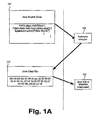
- Fig. 1A shows a progression of a simple piece of a Java source code 101 through execution by an interpreter, the Java virtual machine.
- the Java source code 101 includes the classic Hello World program written in Java.
- the source code is then input into a Bytecode compiler 103 that compiles the source code into Bytecodes.
- the Bytecodes are virtual machine instructions as they will be executed by a software emulated computer. Typically, virtual machine instructions are generic ( i . e ., not designed for any specific microprocessor or computer architecture) but this is not required.
- the Bytecode compiler outputs a Java class file 105 that includes the Bytecodes for the Java program.
- the Java class file is input into a Java virtual machine 107.
- the Java virtual machine is an interpreter that decodes and executes the Bytecodes in the Java class file.
- the Java virtual machine is an interpreter, but is commonly referred to as a virtual machine as it emulates a microprocessor or computer architecture in software (e.g., the microprocessor or computer architecture may not exist in hardware).
- Fig. 1B illustrates a simplified class file 100.
- the class file 100 includes a constant pool 102 portion, interfaces portion 104, fields portion 106, methods portion 108, and attributes portion 110.
- the methods portion 108 can include, or have references to, several Java methods associated with the Java class which is represented in the class file 100. Some of these methods can be synchronized methods.
- a synchronized method typically requires a monitor (e.g., software lock) to be acquired before synchronized the synchronized method is executed. The monitor is then released after the synchronized method is executed (i.e., upon return from the synchronized method).
- a monitor e.g., software lock
- One problem with conventional techniques for executing synchronized Java methods is that several operations have to be performed in order to execute the synchronized Java methods. Moreover, these operations are performed once when the monitor is acquired and then have to be repeated again in order to release the monitor. Accordingly, it is highly desirable to reduce the overhead associated with execution of synchronized Java methods. This, in turn, can improve the performance of virtual machines, especially those operating with limited resources.
- the improved techniques for executing synchronized Java methods are disclosed.
- the techniques can be implemented in a Java virtual machine to efficiently execute Java instructions.
- the invention can be implemented to quickly accesses monitors (e.g., locks) associated with Java objects and their synchronized methods.
- monitors can be released without having to repeat several time-consuming operations which are be performed in conventional systems. This, in turn, reduces the number of operations that need to be performed to execute synchronized Java methods.
- the performance of virtual machines, especially those operating with limited resources is improved.
- the invention can be implemented in numerous ways, including as a method, an apparatus, a computer readable medium, and a database system. Several aspects and embodiments of the invention are discussed below.
- An aspect of the invention provides a method of executing a synchronized Java method, said method comprising: invoking a synchronized Java method; searching for a monitor associated with said synchronized Java method; acquiring said monitor associated with said synchronized Java method after said search has been performed; storing information about said monitor after said search has been performed, said information being suitable for accessing said monitor; executing said synchronized Java method after said monitor has been acquired; and releasing said monitor using said stored information after said synchronized method has been executed, thereby allowing said monitor to be released without performing said searching for said monitor.
- Java virtual machine in a Java computing environment, the Java virtual machine being suitable for executing a synchronized Java method and operable: to invoke a synchronized Java method; to search for a monitor associated with said synchronized Java method; to acquire said monitor associated with said synchronized Java method after said search has been performed; to store information about said monitor after said search has been performed, said information being suitable for accessing said monitor; to execute said synchronized Java method after said monitor has been acquired; and to release said monitor using said stored information after said synchronized method has been executed, thereby allowing said monitor to be released without performing said searching for said monitor.
- a further aspect of the invention provides a method of executing a synchronized Java method, said method comprising: invoking a synchronized Java method; popping a reference to a Java object from a Java execution stack; determining which hash table has a reference to a monitor associated with said Java object; searching a hash table for said monitor associated with said synchronized Java method using an object identifier as a key, said hash table being identified by said searching, said object identifier identifying said Java object; acquiring said monitor associated with said synchronized Java method after said search has been performed; pushing a reference to said monitor on a Java execution stack; executing said synchronized Java method after said monitor has been acquired; popping said reference from said Java execution stack; and releasing said monitor using said reference after said reference has been popped from said Java execution stack, thereby allowing said monitor to be released without performing said searching for said monitor.
- Another aspect of the invention provides a computer program product including computer program code for executing a synchronized Java method, said computer program product comprising: computer program code for invoking a synchronized Java method; computer program code for searching for a monitor associated with said synchronized Java method; computer program code for acquiring said monitor associated with said synchronized Java method after said search has been performed; computer program code for storing information about said monitor after said search has been performed, said information suitable for accessing said monitor; computer program code for executing said synchronized Java method after said monitor has been acquired; and computer program code for releasing said monitor using said stored information after said synchronized method has been executed, thereby allowing said monitor to be released without performing said searching for said monitor.
- the computer program can be provided on a carrier medium.
- the carrier medium could be a storage medium, such as a solid state, magnetic, optical, magneto-optical or other storage medium.
- the carrier medium could be a transmission medium such as broadcast, telephonic, computer network, wired, wireless, electrical, electromagnetic, optical or indeed any other transmission medium.
- the techniques can be implemented in a Java virtual machine to efficiently execute Java instructions.
- the invention can be implemented to quickly accesses monitors (e.g., locks) associated with Java objects and their synchronized methods.
- monitors can be released without having to repeat several time-consuming operations which are be performed in conventional systems. This, in turn, reduces the number of operations that need to be performed to execute synchronized Java methods. As a result, the performance of virtual machines, especially those operating with limited resources, is improved.
- Fig. 2 illustrates a method 200 for executing a synchronized Java method in accordance with one embodiment of the invention.
- the method 200 can, for example, be executed by a virtual machine.
- method 200 is especially suitable for use by a virtual machine operating in an embedded system.
- a database is searched for the appropriate monitor associated with the synchronized Java method.
- the information needed to access the monitor is stored after the monitor has been found.
- the monitor is acquired using the stored information.
- the synchronized Java method is executed at operation 208.
- the monitor is accessed using the stored information.
- the monitor is released.
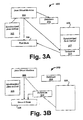
- Figs. 3A-3B illustrate a Java computing environment 300 including a Java virtual machine 302 in accordance with one embodiment of the invention.
- the Java virtual machine 302 operates to execute a synchronized Java method 303 in the computing environment 300.
- a stack frame 307 for the synchronized Java method 303 is created and placed on a Java execution stack 308.
- the Java virtual machine 302 performs a search on a database 304 in order to identify a monitor 306 associated with the synchronized method 303.
- a reference 310 is then pushed on the Java execution stack 308.
- the reference 310 can be used to quickly access the monitor 306.
- the monitor 306 is acquired by setting to a first state. Thereafter, the synchronized Java method 303 can be executed.
- the monitor 306 cannot be acquired by another Java method until the monitor 306 is released (i.e., set to a second state).
- the reference 310 is popped from the execution stack 308 after the synchronized Java method 303 has been executed.
- monitor 306 can quickly be accessed so that it can be released by setting it to a second state. It should be noted that the monitor is released without having to search the database 304. It should also be noted that saving the references on the stack allows quick access to the monitor shortly after the execution of the synchronized method. As a result, the performance of the Java virtual machines, especially those operating in embedded systems, is enhanced.
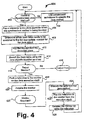
- Fig. 4 illustrates a method for executing a synchronized Java method in accordance with another embodiment of the invention.
- a determination is made as to whether a synchronized Java method is being invoked. If it is determined at operation 402 that a synchronized Java method is not being invoked, the method 402 proceeds to operation 404 where conventional techniques can be used to execute the Java method. However, if it is determined at operation 402 that a synchronized Java method is being invoked, the method 402 proceeds to operation 406 where a reference to the Java object for which the synchronized method is being performed is popped from the Java execution stack. Next, at operation 408, it is determined which hash table needs to be searched in order to find the appropriate monitor for the Java object.
- the hash table is searched using the Java object's identifier as the key. Accordingly, a determination is made at operation 414 where the monitor has been found. If it is determined at operation 414 that the monitor has not been found, the method 400 proceeds to operation 416 where an error message is output. Thereafter, the method 400 proceeds to operation 402 where a determination is made as to whether a synchronized Java method is being performed.
- the method 400 proceeds to operation 418 where a reference to the monitor is pushed on the Java execution stack.
- the monitor is acquired.
- the synchronized method is executed at operation 424.
- the monitor is popped from the Java execution stack.
- the monitor can be released using the reference at operation 428.
- the method 400 proceeds to operation 402 where a determination is made as to whether a synchronized Java method is being performed.
Landscapes
- Engineering & Computer Science (AREA)
- Software Systems (AREA)
- Theoretical Computer Science (AREA)
- Physics & Mathematics (AREA)
- General Engineering & Computer Science (AREA)
- General Physics & Mathematics (AREA)
- Devices For Executing Special Programs (AREA)
- Hardware Redundancy (AREA)
Abstract
Description
Claims (19)
- A method of executing a synchronized Java method, said method comprising:invoking a synchronized Java method;searching for a monitor associated with said synchronized Java method;acquiring said monitor associated with said synchronized Java method after said search has been performed;storing information about said monitor after said search has been performed, said information being suitable for accessing said monitor;executing said synchronized Java method after said monitor has been acquired; andreleasing said monitor using said stored information after said synchronized method has been executed, thereby allowing said monitor to be released without performing said searching for said monitor.
- A method as recited in claim 1, wherein said method further comprises:obtaining a reference associated with a Java object, said Java object being an object for which said synchronized Java method is being performed.
- A method as recited in claim 2, wherein said reference to said Java object is obtained from a Java execution stack.
- A method as recited in claim 3, wherein said storing of information about said monitor operates to push a reference to said monitor on said Java execution stack.
- A method as recited in claim 4, wherein said method further comprises:popping said reference from said execution stack.
- A method as recited in any preceding claim, wherein said searching for said monitor comprises:identifying a hash table associated with a Java object, said Java object being an object for which said synchronized Java method is being performed; andsearching said hash table using an identifier associated with said Java object as a key.
- A method as recited in any preceding claim, wherein said method is executed in a Java virtual machine.
- A method as recited in any preceding claim, wherein said method is executed in a Java virtual machine operating in an embedded system.
- A Java virtual machine in a Java computing environment, the Java virtual machine being suitable for executing a synchronized Java method and operable:to invoke a synchronized Java method;to search for a monitor associated with said synchronized Java method;to acquire said monitor associated with said synchronized Java method after said search has been performed;to store information about said monitor after said search has been performed, said information being suitable for accessing said monitor;to execute said synchronized Java method after said monitor has been acquired; andto release said monitor using said stored information after said synchronized method has been executed, thereby allowing said monitor to be released without performing said searching for said monitor.
- A Java virtual machine as recited in claim 9, wherein said Java virtual machine further being operable:to obtain a reference associated with a Java object, said Java object being an object for which said synchronized Java method is being performed.
- A Java virtual machine as recited in claim 10, wherein said reference to said Java object is obtained from a Java execution stack.
- A Java virtual machine as recited in claim 11, wherein said storing of information about said monitor operates to push a reference to said monitor on said Java execution stack.
- A Java virtual machine as recited in claim 12, wherein said virtual machine is operable:to pop said reference from said execution stack.
- A Java virtual machine as recited in claim 12, wherein said virtual machine further being operable:to identify a hash table associated with a Java object, said Java object being an object for which said synchronized Java method is being performed; andto search said hash table using an identifier associated with said Java object as a key.
- A Java virtual machine as recited in claim 9, wherein said virtual machine operates in an embedded system.
- A computer program product including computer program code for executing a synchronized Java method, said computer program product comprising:computer program code for invoking a synchronized Java method;computer program code for searching for a monitor associated with said synchronized Java method;computer program code for acquiring said monitor associated with said synchronized Java method after said search has been performed;computer program code for storing information about said monitor after said search has been performed, said information suitable for accessing said monitor;computer program code for executing said synchronized Java method after said monitor has been acquired; andcomputer program code for releasing said monitor using said stored information after said synchronized method has been executed, thereby allowing said monitor to be released without performing said searching for said monitor.
- A computer program product as recited in claim 16, wherein said computer readable media is read by a Java virtual machine.
- A computer program product as recited in claim 17, wherein said computer readable media is read by a Java virtual machine operating in an embedded system.
- A computer program product as recited in any of claims 16 to 18 on a carrier medium.
Applications Claiming Priority (2)
| Application Number | Priority Date | Filing Date | Title |
|---|---|---|---|
| US10/000,552 US6918109B2 (en) | 2001-10-24 | 2001-10-24 | Execution of synchronized Java methods in Java computing environments |
| US552 | 2001-10-24 |
Publications (3)
| Publication Number | Publication Date |
|---|---|
| EP1310867A2 true EP1310867A2 (en) | 2003-05-14 |
| EP1310867A3 EP1310867A3 (en) | 2004-11-03 |
| EP1310867B1 EP1310867B1 (en) | 2007-09-05 |
Family
ID=21692001
Family Applications (1)
| Application Number | Title | Priority Date | Filing Date |
|---|---|---|---|
| EP02257378A Expired - Lifetime EP1310867B1 (en) | 2001-10-24 | 2002-10-23 | Execution of synchronized methods in java computing environments |
Country Status (3)
| Country | Link |
|---|---|
| US (1) | US6918109B2 (en) |
| EP (1) | EP1310867B1 (en) |
| DE (1) | DE60222222T2 (en) |
Families Citing this family (6)
| Publication number | Priority date | Publication date | Assignee | Title |
|---|---|---|---|---|
| CA2430763A1 (en) * | 2003-05-30 | 2004-11-30 | Ibm Canada Limited - Ibm Canada Limitee | Efficiently releasing locks when an exception occurs |
| US20040267766A1 (en) * | 2003-06-26 | 2004-12-30 | Andreas Marek | Defining user-defined data types and/or user-defined methods using an interpreted programming language |
| US8176491B1 (en) * | 2006-08-04 | 2012-05-08 | Oracle America, Inc. | Fast synchronization of simple synchronized methods |
| US8381203B1 (en) * | 2006-11-03 | 2013-02-19 | Nvidia Corporation | Insertion of multithreaded execution synchronization points in a software program |
| JP6950347B2 (en) * | 2017-08-10 | 2021-10-13 | オムロン株式会社 | Information processing equipment, information processing methods and programs |
| US11809839B2 (en) | 2022-01-18 | 2023-11-07 | Robert Lyden | Computer language and code for application development and electronic and optical communication |
Family Cites Families (10)
| Publication number | Priority date | Publication date | Assignee | Title |
|---|---|---|---|---|
| US5862376A (en) * | 1996-06-24 | 1999-01-19 | Sun Microsystems, Inc. | System and method for space and time efficient object locking |
| AU731871B2 (en) * | 1996-11-04 | 2001-04-05 | Sun Microsystems, Inc. | Method and apparatus for thread synchronization in object-based systems |
| US6317872B1 (en) * | 1997-07-11 | 2001-11-13 | Rockwell Collins, Inc. | Real time processor optimized for executing JAVA programs |
| US6349322B1 (en) | 1998-05-06 | 2002-02-19 | Sun Microsystems, Inc. | Fast synchronization for programs written in the JAVA programming language |
| US6173442B1 (en) * | 1999-02-05 | 2001-01-09 | Sun Microsystems, Inc. | Busy-wait-free synchronization |
| US6681385B1 (en) * | 1999-10-07 | 2004-01-20 | Microsoft Corporation | Method and apparatus for determining the relationships and useful lifetime of objects in a program |
| US6567974B1 (en) * | 2000-02-25 | 2003-05-20 | Sun Microsystems, Inc. | Small memory footprint system and method for separating applications within a single virtual machine |
| US6757891B1 (en) * | 2000-07-12 | 2004-06-29 | International Business Machines Corporation | Method and system for reducing the computing overhead associated with thread local objects |
| US6701517B1 (en) * | 2000-09-28 | 2004-03-02 | Unisys Corporation | Method for synchronizing JAVA with UML in a version configuration management system |
| US6735760B1 (en) * | 2000-11-08 | 2004-05-11 | Sun Microsystems, Inc. | Relaxed lock protocol |
-
2001
- 2001-10-24 US US10/000,552 patent/US6918109B2/en not_active Expired - Lifetime
-
2002
- 2002-10-23 EP EP02257378A patent/EP1310867B1/en not_active Expired - Lifetime
- 2002-10-23 DE DE60222222T patent/DE60222222T2/en not_active Expired - Lifetime
Also Published As
| Publication number | Publication date |
|---|---|
| US20030079203A1 (en) | 2003-04-24 |
| EP1310867B1 (en) | 2007-09-05 |
| US6918109B2 (en) | 2005-07-12 |
| EP1310867A3 (en) | 2004-11-03 |
| DE60222222D1 (en) | 2007-10-18 |
| DE60222222T2 (en) | 2008-06-19 |
Similar Documents
| Publication | Publication Date | Title |
|---|---|---|
| US20030041317A1 (en) | Frameworks for generation of java macro instructions for storing values into local variables | |
| US7003778B2 (en) | Exception handling in java computing environments | |
| US8627316B2 (en) | Mobile communications device application processing system | |
| US6964033B2 (en) | Object band customization of Java runtime environments | |
| US6799185B2 (en) | Frameworks for accessing Java class files | |
| US20030041321A1 (en) | Frameworks for generation of java macro instructions in java computing environments | |
| US6754796B2 (en) | Frameworks for implementation of java heaps | |
| US6948156B2 (en) | Type checking in java computing environments | |
| US7096467B2 (en) | Initialization of Java classes in Java virtual machine environments | |
| US6918109B2 (en) | Execution of synchronized Java methods in Java computing environments | |
| US20020138667A1 (en) | Loading attribute for partial loading of class files into virtual machines | |
| EP1481320B1 (en) | Two tier clusters for representation of objects in java programming environments | |
| US7117489B2 (en) | Optional attribute generator for customized Java programming environments | |
| US20030041320A1 (en) | Frameworks for generation of java macro instructions for performing programming loops | |
| US7181724B2 (en) | Representation of Java® data types in virtual machines | |
| JP2005501331A (en) | Framework for generating Java macro instructions for instantiating Java objects | |
| US7082597B2 (en) | Representation of objects in a Java programming environment | |
| US20030005170A1 (en) | Java bytecode instruction for determining hashcode values | |
| EP1310866A2 (en) | The representation of Java data types in a virtual machine | |
| US20030041319A1 (en) | Java bytecode instruction for retrieving string representations of java objects |
Legal Events
| Date | Code | Title | Description |
|---|---|---|---|
| PUAI | Public reference made under article 153(3) epc to a published international application that has entered the european phase |
Free format text: ORIGINAL CODE: 0009012 |
|
| AK | Designated contracting states |
Designated state(s): AT BE BG CH CY CZ DE DK EE ES FI FR GB GR IE IT LI LU MC NL PT SE SK TR |
|
| AX | Request for extension of the european patent |
Extension state: AL LT LV MK RO SI |
|
| PUAL | Search report despatched |
Free format text: ORIGINAL CODE: 0009013 |
|
| AK | Designated contracting states |
Kind code of ref document: A3 Designated state(s): AT BE BG CH CY CZ DE DK EE ES FI FR GB GR IE IT LI LU MC NL PT SE SK TR |
|
| AX | Request for extension of the european patent |
Extension state: AL LT LV MK RO SI |
|
| 17P | Request for examination filed |
Effective date: 20050415 |
|
| AKX | Designation fees paid |
Designated state(s): DE FR GB |
|
| GRAP | Despatch of communication of intention to grant a patent |
Free format text: ORIGINAL CODE: EPIDOSNIGR1 |
|
| GRAS | Grant fee paid |
Free format text: ORIGINAL CODE: EPIDOSNIGR3 |
|
| GRAA | (expected) grant |
Free format text: ORIGINAL CODE: 0009210 |
|
| AK | Designated contracting states |
Kind code of ref document: B1 Designated state(s): DE FR GB |
|
| REG | Reference to a national code |
Ref country code: GB Ref legal event code: FG4D |
|
| REF | Corresponds to: |
Ref document number: 60222222 Country of ref document: DE Date of ref document: 20071018 Kind code of ref document: P |
|
| ET | Fr: translation filed | ||
| PLBE | No opposition filed within time limit |
Free format text: ORIGINAL CODE: 0009261 |
|
| STAA | Information on the status of an ep patent application or granted ep patent |
Free format text: STATUS: NO OPPOSITION FILED WITHIN TIME LIMIT |
|
| 26N | No opposition filed |
Effective date: 20080606 |
|
| REG | Reference to a national code |
Ref country code: FR Ref legal event code: PLFP Year of fee payment: 15 |
|
| REG | Reference to a national code |
Ref country code: FR Ref legal event code: PLFP Year of fee payment: 16 |
|
| REG | Reference to a national code |
Ref country code: FR Ref legal event code: PLFP Year of fee payment: 17 |
|
| PGFP | Annual fee paid to national office [announced via postgrant information from national office to epo] |
Ref country code: FR Payment date: 20210917 Year of fee payment: 20 |
|
| PGFP | Annual fee paid to national office [announced via postgrant information from national office to epo] |
Ref country code: GB Payment date: 20210915 Year of fee payment: 20 |
|
| PGFP | Annual fee paid to national office [announced via postgrant information from national office to epo] |
Ref country code: DE Payment date: 20210914 Year of fee payment: 20 |
|
| REG | Reference to a national code |
Ref country code: DE Ref legal event code: R082 Ref document number: 60222222 Country of ref document: DE Representative=s name: DENDORFER & HERRMANN PATENTANWAELTE PARTNERSCH, DE |
|
| REG | Reference to a national code |
Ref country code: DE Ref legal event code: R071 Ref document number: 60222222 Country of ref document: DE |
|
| REG | Reference to a national code |
Ref country code: GB Ref legal event code: PE20 Expiry date: 20221022 |
|
| PG25 | Lapsed in a contracting state [announced via postgrant information from national office to epo] |
Ref country code: GB Free format text: LAPSE BECAUSE OF EXPIRATION OF PROTECTION Effective date: 20221022 |
|
| REG | Reference to a national code |
Ref country code: DE Ref legal event code: R081 Ref document number: 60222222 Country of ref document: DE Owner name: ORACLE AMERICA, INC., REDWOOD SHORES, US Free format text: FORMER OWNER: SUN MICROSYSTEMS, INC., SANTA CLARA, CALIF., US |
|
| P01 | Opt-out of the competence of the unified patent court (upc) registered |
Effective date: 20230526 |