EP1308341A2 - An apparatus and a method for controlling an engine with an automatic transmission - Google Patents
An apparatus and a method for controlling an engine with an automatic transmission Download PDFInfo
- Publication number
- EP1308341A2 EP1308341A2 EP02024289A EP02024289A EP1308341A2 EP 1308341 A2 EP1308341 A2 EP 1308341A2 EP 02024289 A EP02024289 A EP 02024289A EP 02024289 A EP02024289 A EP 02024289A EP 1308341 A2 EP1308341 A2 EP 1308341A2
- Authority
- EP
- European Patent Office
- Prior art keywords
- ignition timing
- lock
- retard
- engine
- knocking
- Prior art date
- Legal status (The legal status is an assumption and is not a legal conclusion. Google has not performed a legal analysis and makes no representation as to the accuracy of the status listed.)
- Granted
Links
Images
















Classifications
-
- B—PERFORMING OPERATIONS; TRANSPORTING
- B60—VEHICLES IN GENERAL
- B60W—CONJOINT CONTROL OF VEHICLE SUB-UNITS OF DIFFERENT TYPE OR DIFFERENT FUNCTION; CONTROL SYSTEMS SPECIALLY ADAPTED FOR HYBRID VEHICLES; ROAD VEHICLE DRIVE CONTROL SYSTEMS FOR PURPOSES NOT RELATED TO THE CONTROL OF A PARTICULAR SUB-UNIT
- B60W10/00—Conjoint control of vehicle sub-units of different type or different function
- B60W10/04—Conjoint control of vehicle sub-units of different type or different function including control of propulsion units
- B60W10/06—Conjoint control of vehicle sub-units of different type or different function including control of propulsion units including control of combustion engines
-
- B—PERFORMING OPERATIONS; TRANSPORTING
- B60—VEHICLES IN GENERAL
- B60W—CONJOINT CONTROL OF VEHICLE SUB-UNITS OF DIFFERENT TYPE OR DIFFERENT FUNCTION; CONTROL SYSTEMS SPECIALLY ADAPTED FOR HYBRID VEHICLES; ROAD VEHICLE DRIVE CONTROL SYSTEMS FOR PURPOSES NOT RELATED TO THE CONTROL OF A PARTICULAR SUB-UNIT
- B60W10/00—Conjoint control of vehicle sub-units of different type or different function
- B60W10/04—Conjoint control of vehicle sub-units of different type or different function including control of propulsion units
-
- B—PERFORMING OPERATIONS; TRANSPORTING
- B60—VEHICLES IN GENERAL
- B60W—CONJOINT CONTROL OF VEHICLE SUB-UNITS OF DIFFERENT TYPE OR DIFFERENT FUNCTION; CONTROL SYSTEMS SPECIALLY ADAPTED FOR HYBRID VEHICLES; ROAD VEHICLE DRIVE CONTROL SYSTEMS FOR PURPOSES NOT RELATED TO THE CONTROL OF A PARTICULAR SUB-UNIT
- B60W10/00—Conjoint control of vehicle sub-units of different type or different function
- B60W10/10—Conjoint control of vehicle sub-units of different type or different function including control of change-speed gearings
-
- B—PERFORMING OPERATIONS; TRANSPORTING
- B60—VEHICLES IN GENERAL
- B60W—CONJOINT CONTROL OF VEHICLE SUB-UNITS OF DIFFERENT TYPE OR DIFFERENT FUNCTION; CONTROL SYSTEMS SPECIALLY ADAPTED FOR HYBRID VEHICLES; ROAD VEHICLE DRIVE CONTROL SYSTEMS FOR PURPOSES NOT RELATED TO THE CONTROL OF A PARTICULAR SUB-UNIT
- B60W30/00—Purposes of road vehicle drive control systems not related to the control of a particular sub-unit, e.g. of systems using conjoint control of vehicle sub-units
- B60W30/18—Propelling the vehicle
-
- B—PERFORMING OPERATIONS; TRANSPORTING
- B60—VEHICLES IN GENERAL
- B60W—CONJOINT CONTROL OF VEHICLE SUB-UNITS OF DIFFERENT TYPE OR DIFFERENT FUNCTION; CONTROL SYSTEMS SPECIALLY ADAPTED FOR HYBRID VEHICLES; ROAD VEHICLE DRIVE CONTROL SYSTEMS FOR PURPOSES NOT RELATED TO THE CONTROL OF A PARTICULAR SUB-UNIT
- B60W30/00—Purposes of road vehicle drive control systems not related to the control of a particular sub-unit, e.g. of systems using conjoint control of vehicle sub-units
- B60W30/18—Propelling the vehicle
- B60W30/1819—Propulsion control with control means using analogue circuits, relays or mechanical links
-
- F—MECHANICAL ENGINEERING; LIGHTING; HEATING; WEAPONS; BLASTING
- F02—COMBUSTION ENGINES; HOT-GAS OR COMBUSTION-PRODUCT ENGINE PLANTS
- F02P—IGNITION, OTHER THAN COMPRESSION IGNITION, FOR INTERNAL-COMBUSTION ENGINES; TESTING OF IGNITION TIMING IN COMPRESSION-IGNITION ENGINES
- F02P5/00—Advancing or retarding ignition; Control therefor
- F02P5/04—Advancing or retarding ignition; Control therefor automatically, as a function of the working conditions of the engine or vehicle or of the atmospheric conditions
- F02P5/145—Advancing or retarding ignition; Control therefor automatically, as a function of the working conditions of the engine or vehicle or of the atmospheric conditions using electrical means
- F02P5/15—Digital data processing
- F02P5/1502—Digital data processing using one central computing unit
- F02P5/1516—Digital data processing using one central computing unit with means relating to exhaust gas recirculation, e.g. turbo
-
- F—MECHANICAL ENGINEERING; LIGHTING; HEATING; WEAPONS; BLASTING
- F02—COMBUSTION ENGINES; HOT-GAS OR COMBUSTION-PRODUCT ENGINE PLANTS
- F02P—IGNITION, OTHER THAN COMPRESSION IGNITION, FOR INTERNAL-COMBUSTION ENGINES; TESTING OF IGNITION TIMING IN COMPRESSION-IGNITION ENGINES
- F02P5/00—Advancing or retarding ignition; Control therefor
- F02P5/04—Advancing or retarding ignition; Control therefor automatically, as a function of the working conditions of the engine or vehicle or of the atmospheric conditions
- F02P5/145—Advancing or retarding ignition; Control therefor automatically, as a function of the working conditions of the engine or vehicle or of the atmospheric conditions using electrical means
- F02P5/15—Digital data processing
- F02P5/152—Digital data processing dependent on pinking
-
- F—MECHANICAL ENGINEERING; LIGHTING; HEATING; WEAPONS; BLASTING
- F16—ENGINEERING ELEMENTS AND UNITS; GENERAL MEASURES FOR PRODUCING AND MAINTAINING EFFECTIVE FUNCTIONING OF MACHINES OR INSTALLATIONS; THERMAL INSULATION IN GENERAL
- F16H—GEARING
- F16H61/00—Control functions within control units of change-speed- or reversing-gearings for conveying rotary motion ; Control of exclusively fluid gearing, friction gearing, gearings with endless flexible members or other particular types of gearing
- F16H61/14—Control of torque converter lock-up clutches
- F16H61/143—Control of torque converter lock-up clutches using electric control means
-
- F—MECHANICAL ENGINEERING; LIGHTING; HEATING; WEAPONS; BLASTING
- F02—COMBUSTION ENGINES; HOT-GAS OR COMBUSTION-PRODUCT ENGINE PLANTS
- F02D—CONTROLLING COMBUSTION ENGINES
- F02D21/00—Controlling engines characterised by their being supplied with non-airborne oxygen or other non-fuel gas
- F02D21/06—Controlling engines characterised by their being supplied with non-airborne oxygen or other non-fuel gas peculiar to engines having other non-fuel gas added to combustion air
- F02D21/08—Controlling engines characterised by their being supplied with non-airborne oxygen or other non-fuel gas peculiar to engines having other non-fuel gas added to combustion air the other gas being the exhaust gas of engine
-
- F—MECHANICAL ENGINEERING; LIGHTING; HEATING; WEAPONS; BLASTING
- F02—COMBUSTION ENGINES; HOT-GAS OR COMBUSTION-PRODUCT ENGINE PLANTS
- F02D—CONTROLLING COMBUSTION ENGINES
- F02D2200/00—Input parameters for engine control
- F02D2200/02—Input parameters for engine control the parameters being related to the engine
- F02D2200/04—Engine intake system parameters
- F02D2200/0404—Throttle position
-
- F—MECHANICAL ENGINEERING; LIGHTING; HEATING; WEAPONS; BLASTING
- F02—COMBUSTION ENGINES; HOT-GAS OR COMBUSTION-PRODUCT ENGINE PLANTS
- F02D—CONTROLLING COMBUSTION ENGINES
- F02D2200/00—Input parameters for engine control
- F02D2200/50—Input parameters for engine control said parameters being related to the vehicle or its components
- F02D2200/501—Vehicle speed
-
- F—MECHANICAL ENGINEERING; LIGHTING; HEATING; WEAPONS; BLASTING
- F02—COMBUSTION ENGINES; HOT-GAS OR COMBUSTION-PRODUCT ENGINE PLANTS
- F02D—CONTROLLING COMBUSTION ENGINES
- F02D2250/00—Engine control related to specific problems or objectives
- F02D2250/18—Control of the engine output torque
- F02D2250/21—Control of the engine output torque during a transition between engine operation modes or states
-
- F—MECHANICAL ENGINEERING; LIGHTING; HEATING; WEAPONS; BLASTING
- F02—COMBUSTION ENGINES; HOT-GAS OR COMBUSTION-PRODUCT ENGINE PLANTS
- F02D—CONTROLLING COMBUSTION ENGINES
- F02D2400/00—Control systems adapted for specific engine types; Special features of engine control systems not otherwise provided for; Power supply, connectors or cabling for engine control systems
- F02D2400/12—Engine control specially adapted for a transmission comprising a torque converter or for continuously variable transmissions
-
- F—MECHANICAL ENGINEERING; LIGHTING; HEATING; WEAPONS; BLASTING
- F02—COMBUSTION ENGINES; HOT-GAS OR COMBUSTION-PRODUCT ENGINE PLANTS
- F02D—CONTROLLING COMBUSTION ENGINES
- F02D41/00—Electrical control of supply of combustible mixture or its constituents
- F02D41/02—Circuit arrangements for generating control signals
- F02D41/021—Introducing corrections for particular conditions exterior to the engine
- F02D41/0215—Introducing corrections for particular conditions exterior to the engine in relation with elements of the transmission
-
- F—MECHANICAL ENGINEERING; LIGHTING; HEATING; WEAPONS; BLASTING
- F02—COMBUSTION ENGINES; HOT-GAS OR COMBUSTION-PRODUCT ENGINE PLANTS
- F02M—SUPPLYING COMBUSTION ENGINES IN GENERAL WITH COMBUSTIBLE MIXTURES OR CONSTITUENTS THEREOF
- F02M26/00—Engine-pertinent apparatus for adding exhaust gases to combustion-air, main fuel or fuel-air mixture, e.g. by exhaust gas recirculation [EGR] systems
- F02M26/01—Internal exhaust gas recirculation, i.e. wherein the residual exhaust gases are trapped in the cylinder or pushed back from the intake or the exhaust manifold into the combustion chamber without the use of additional passages
-
- F—MECHANICAL ENGINEERING; LIGHTING; HEATING; WEAPONS; BLASTING
- F02—COMBUSTION ENGINES; HOT-GAS OR COMBUSTION-PRODUCT ENGINE PLANTS
- F02M—SUPPLYING COMBUSTION ENGINES IN GENERAL WITH COMBUSTIBLE MIXTURES OR CONSTITUENTS THEREOF
- F02M26/00—Engine-pertinent apparatus for adding exhaust gases to combustion-air, main fuel or fuel-air mixture, e.g. by exhaust gas recirculation [EGR] systems
- F02M26/13—Arrangement or layout of EGR passages, e.g. in relation to specific engine parts or for incorporation of accessories
-
- F—MECHANICAL ENGINEERING; LIGHTING; HEATING; WEAPONS; BLASTING
- F02—COMBUSTION ENGINES; HOT-GAS OR COMBUSTION-PRODUCT ENGINE PLANTS
- F02P—IGNITION, OTHER THAN COMPRESSION IGNITION, FOR INTERNAL-COMBUSTION ENGINES; TESTING OF IGNITION TIMING IN COMPRESSION-IGNITION ENGINES
- F02P5/00—Advancing or retarding ignition; Control therefor
- F02P5/04—Advancing or retarding ignition; Control therefor automatically, as a function of the working conditions of the engine or vehicle or of the atmospheric conditions
- F02P5/145—Advancing or retarding ignition; Control therefor automatically, as a function of the working conditions of the engine or vehicle or of the atmospheric conditions using electrical means
- F02P5/15—Digital data processing
- F02P5/153—Digital data processing dependent on combustion pressure
-
- Y—GENERAL TAGGING OF NEW TECHNOLOGICAL DEVELOPMENTS; GENERAL TAGGING OF CROSS-SECTIONAL TECHNOLOGIES SPANNING OVER SEVERAL SECTIONS OF THE IPC; TECHNICAL SUBJECTS COVERED BY FORMER USPC CROSS-REFERENCE ART COLLECTIONS [XRACs] AND DIGESTS
- Y02—TECHNOLOGIES OR APPLICATIONS FOR MITIGATION OR ADAPTATION AGAINST CLIMATE CHANGE
- Y02T—CLIMATE CHANGE MITIGATION TECHNOLOGIES RELATED TO TRANSPORTATION
- Y02T10/00—Road transport of goods or passengers
- Y02T10/10—Internal combustion engine [ICE] based vehicles
- Y02T10/40—Engine management systems
Definitions
- the present invention relates to an apparatus and a method for controlling an engine with an automatic transmission and particularly to a technology of preventing an occurrence of knocking immediately after a lock-up band completion.
- a Japanese Unexamined Patent Publication 3-185269 discloses a torque down control in a lock-up technology by which a jolt due to a difference in torque levels between the input shaft and the output shaft of the torque converter at a lock-up timing is reduced and a shift time of a lock-up is shortened.
- This torque down control is performed by retarding ignition timing during a lock-up transition state from after a lock-up control start to before a lock-up completion.
- the present invention in view of the foregoing problems, provides an apparatus and a method for controlling an engine with an automatic transmission which effectively prevents an occurrence of knocking immediately after a lock-up control.
- the present invention in order to solve the above problems, includes an apparatus and a method for controlling an engine with an automatic transmission which performs a lock-up control for directly connecting an input shaft of a torque converter to an output shaft thereof at a predetermined condition wherein engine ignition timing is set based upon an engine operating condition detected and on the other hand, the engine ignition timing is corrected to be retarded during a predetermined period immediately after the lock-up.
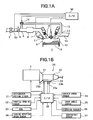
- Fig. 1A and Fig. 1B are system views according to an embodiment of the invention.
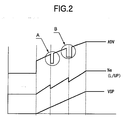
- Fig. 2 is a view showing a relationship of a vehicle speed VSP, an engine rotation speed Ne, and ignition timing ADV.
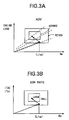
- Fig. 3A and Fig. 3B are views showing variations in the ignition timing and in a target EGR rate after and before a lock-up control.
- Fig. 4A to Fig. 4F are views showing states of a retard correction control of the ignition timing immediately after the lock-up control.
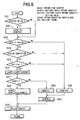
- Fig. 5 is a flowchart showing a first embodiment of the retard correction control of the ignition timing immediately after the lock-up control.
- Fig. 6 is a flowchart showing a second embodiment thereof.
- Fig. 7 is a flowchart showing a third embodiment thereof.
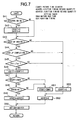
- Fig. 8 is a flowchart showing a fourth embodiment thereof.
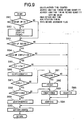
- Fig. 9 is a flowchart showing a fifth embodiment thereof.
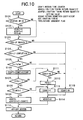
- Fig. 10 is a flowchart showing a sixth embodiment thereof.
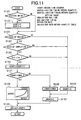
- Fig. 11 is a flowchart showing a seventh embodiment thereof.
- Fig. 12 is a flowchart showing an eighth embodiment thereof.
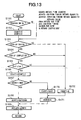
- Fig, 13 is a flowchart showing a ninth embodiment thereof.
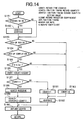
- Fig. 14 is a flowchart showing a tenth embodiment thereof.
- Fig. 15 is a flowchart showing an eleventh embodiment thereof.
- Fig. 16 is a flowchart showing a twelfth embodiment thereof.
- Fig. 17 is a flowchart showing a thirteenth embodiment thereof.
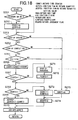
- Fig. 18 is a flowchart showing a fourteenth embodiment thereof.
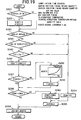
- Fig. 19 is a flowchart showing a fifteenth embodiment thereof.
- Fig. 20 is a flowchart showing a sixteenth embodiment thereof.
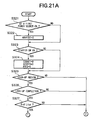
- Fig. 21A and Fig. 21B are a flowchart showing a seventeenth embodiment thereof.
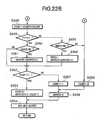
- Fig. 22A and Fig. 22B are a flowchart showing an eighteenth embodiment thereof.
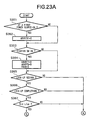
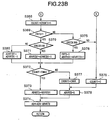
- Fig. 23A and Fig. 23B are a flowchart showing a nineteenth embodiment thereof.
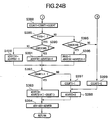
- Fig. 24A and Fig. 24B are a flowchart showing a twentieth embodiment thereof.
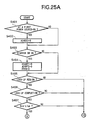
- Fig. 25A and Fig. 25B are a flowchart showing a twenty first embodiment thereof.
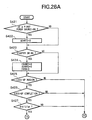
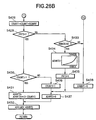
- Fig. 26A and Fig. 26B are a flowchart showing a twenty second embodiment thereof.
- Fig. 27A and Fig. 27B are a flowchart showing a twenty third embodiment thereof.
- Fig. 28A and Fig. 28B are a flowchart showing a twenty fourth embodiment thereof.
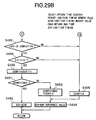
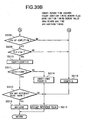
- Fig. 29A and Fig. 29B are a flowchart showing a twenty fifth embodiment thereof.
- Fig. 30A and Fig. 30B are a flowchart showing a twenty sixth embodiment thereof.
- Fig. 31A and Fig. 31B are a flowchart showing a twenty seventh embodiment thereof.
- FIG. 1A and Fig. 1B are system views showing an embodiment according to the invention.
- air sucked into an engine 1 for a vehicle passes through an air cleaner 2 and afterwards is measured in an airflow meter AFM 33 and is led to an electrically controlled throttle valve 4 wherein an intake air quantity control is performed.
- the sucked air afterwards, passes through an intake passage 5, a collector 6, and an intake manifold 7 and is introduced into a cylinder 9 via an intake valve 8.
- a piston which conducts a reciprocal movement is disposed inside cylinder 9.
- a fuel is injected by a fuel injection valve 11 into the air introduced in cylinder 9 to form a mixture.
- the mixture is compressed by piston 10 and is ignited by an ignition plug 12.
- Combustion exhaust gases are discharged into an exhaust manifold 14 through an exhaust valve 13.
- An EGR passage 15 is associated with exhaust manifold 14 and part of the exhaust gases is recirculated to intake passage 5. This recirculation quantity (EGR flow quantity) is controlled by an EGR valve 16 disposed in EGR passage 15.
- An automatic transmission 20 is disposed on an output side of engine 1 as shown in Fig. 1B.
- Automatic transmission 20 is equipped with a torque converter 21 disposed on the output side of engine 1, a transmission 22 connected to engine 1 by torque converter 21, and an oil pressure actuator 23 which performs band and release control of various gear shift elements (clutches and so on) in transmission 22.
- An operating oil pressure to oil pressure actuator 23 is controlled through various electromagnetic valves (not shown) and herein a shift solenoid 23a, 23b for an automatic gear shift and a lock-up solenoid 23c only are shown.
- a control unit (C/U) 30 receives signals from air flow meter AFM 33, an accelerator opening sensor 31 which detects an accelerator opening degree, a throttle opening sensor 32 which detects a throttle opening degree TVO, a vehicle speed sensor 34 which detects a vehicle speed VSP, a crank angle sensor 35 which detects a rotation position of a crank shaft, a vibration sensor 36 which detects a pressure fluctuation in a combustion chamber of engine 1 as a vibration of an engine block, a temperature sensor 37 which detects an outside temperature, a turbine rotation speed sensor 38 which detects a turbine rotation speed of torque converter 21 and so on.
- Control unit 30 sets a fuel injection quantity Tp, a fuel injection timing IT, and ignition timing ADV to engine 1 by performing predetermined calculation processes based upon these input signals, as well as sets a target EGR rate (remaining gas rate), wherein electrically controlled throttle valve 4 and EGR valve 16 are controlled for this target EGR rate, and fuel economy and exhaust gas performances are improved.
- Control unit 30 retrieves a table set in advance based upon the throttle opening degree TVO and the vehicle speed VSP to determine an optimal gear shift range and drives shift solenoid 23a, 23b for the determined gear shift range and further judges whether or not a vehicle running condition is at a predetermined lock-up region and in case of its being at the predetermined lock-up region, lock-up solenoid 23c is controlled to perform the lock-up control which directly connects the input shaft of torque converter 21 to the output shaft thereof.
- an engine operating condition immediately after the lock-up at an acceleration time is a lower rotation and higher load than immediately before the lock-up. Therefore, as an engine control, as shown in Fig. 3A, demand ignition timing AVD is retarded and as a result, it might bring about the combustion instability due to the rapid rotation speed reduction and the load increase and the occurrence of the knocking.
- an EGR rate residual gas rate
- target EGR rate target EGR rate
- such knocking occurrence is not avoided by, in advance, retarding ignition timing at an engine operating condition wherein the knocking occurs or by, in advance, reducing the target EGR rate, but by performing the retard correction control of the ignition timing ADV during a predetermined period immediately after the lock-up. Accordingly, the knocking can be avoided without an unnecessary toque reduction, and deterioration of a fuel economy and an exhaust gas performance.
- both the retard correction control of the ignition timing ADV performed immediately after the lock-up and the retard correction control of the ignition timing ADV performed at a lock-up transition state for a jolt reduction at the lock-up are used (see B portion in Fig. 2).
- an example of the retard correction control of the ignition timing is shown in Fig. 4 corresponding to an enlarged view of the B portion in Fig. 2.
- Fig. 4A is a case wherein ignition timing retarded during the lock-up transition state is kept immediately after the lock-up (hereinafter, described as a first retard correction control).
- Fig, 4B is a case wherein ignition timing advanced by a small margin from the ignition timing retarded during the lock-up transition state is set immediately after the lock-up (hereinafter, described as a second retard correction control).
- Fig. 4C is a case wherein ignition timing immediately before the lock-up is stored and this stored ignition timing is set as ignition timing immediately after the lock-up.
- Fig. 4D is a case wherein ignition timing retarded immediately during the lock-up transition state is kept immediately after the lock-up and is gradually advanced as time after the lock-up goes by (retard correction quantity is reduced)(hereinafter, described as a fourth correction control).
- Fig. 4E is a case wherein ignition timing advanced by a small margin from the ignition timing retarded during the lock-up transition state is set immediately after the lock-up and this set ignition timing is gradually advanced as time goes by (hereinafter, described as a fifth retard correction control).
- Fig. 4F is a case wherein ignition timing immediately before the lock-up is memorized and this memorized ignition timing is set as ignition timing immediately after the lock-up and this set ignition timing is gradually advanced as time goes by (hereinafter, described as a sixth retard correction control).
- the lock-up transition state and the lock-up completion are judged by detecting a difference between an engine rotation speed Ne and a turbine rotation speed Nt of torque converter 21 based upon signals from crank angle sensor 35 and turbine rotation speed sensor 38.
- Control unit 30 includes a timer therein and counts an elapse time from the lock-up completion.
- Fig. 5 is a flowchart showing a first embodiment wherein a retard correction of ignition timing immediately after the lock-up is performed by a setting value ADVRTD1 of ignition timing retard quantity set in advance.
- Fig. 5 at S1, it is judged whether or not a starter switch is on. When it is on, the process goes to S2 wherein an initial setting of time COUNT1 (described as retard continuing time count value) to perform a retard correction of the ignition timing and an ignition timing retard quantity ADVRTD is made. On the other hand, when it is not on, the process goes to S3 because the initial setting is already made.
- COUNT1 described as retard continuing time count value
- a vehicle running state is in a lock-up region. This judgement is made in reference to a lock-up region map set in advance based upon a throttle opening degree TVO and a vehicle speed VSP detected.
- the process goes to S 4 and when it is not in the lock-up region, the retard continuing time count value COUNT1 and the ignition timing retard quantity ADVRTD are set as 0 (S12 ⁇ S11 ⁇ S9).
- the process goes to S5 and when it is not completed, the retard continuing time count value COUNT1 and the ignition timing retard quantity ADVRTD are set as 0 (S12 ⁇ S11 ⁇ S9).
- S5 it is judged whether or not the completed lock-up is a lock-up at a third gear shift (3 rd L/up in Fig.5).
- the process goes to S6 wherein the retard continuing time count value COUNT1 is counted up.
- the retard continuing time count value COUNT1 and the ignition timing retard quantity ADVRTD are set as 0 (S12 ⁇ S11 ⁇ S9).
- the retard maximum time value CMAX used is set in advance as a value corresponding to a period of time (an effective time for limiting an occurrence of knocking) during which the retard correction of the ignition timing immediately after the lock-up is required.
- the retard continuing time count value COUNT1 is set as CMAX and the retard quantity ADVRTD of the ignition timing is set as 0 (S10 ⁇ S11 ⁇ S9).
- the ignition timing retard quantity ADVRTD is set as a setting value ADVRTD1 of the ignition timing set in advance.
- a retard correction of the ignition timing is performed by subtracting the ignition timing retard quantity ADVRTD from the set ignition timing ADV. Accordingly, when the ignition timing retard correction quantity ADVRTD is 0, the retard correction of the ignition timing is not made. As described above, the knocking occurring due to combustion instability generating immediately after the lock-up can be avoided. Since a period of time to perform the retard correction of the ignition timing is set as the time to effectively avoid the knocking, performing the retard correction over a period of time longer than necessary is prevented and therefore, a torque reduction and a fuel economy deterioration due to the retard correction of the ignition timing are restricted.
- the first retard correction control is performed (see Fig. 4A), and in case the setting value ADVRTD1 of the ignition timing retard quantity is advanced by a smaller margin than the ignition timing retarded during the lock-up transition state, the second retard correction control is performed (see Fig. 4B).
- Fig. 6 is a flowchart showing a second embodiment and differs from the first embodiment in reducing a retard correction quantity of the ignition timing corresponding to an elapse time from the lock-up completion.
- the retard maximum time count value CMAX is set as 1.
- S21 ⁇ S25 is the same as S1 ⁇ S5 in the first embodiment (Fig. 5).
- a retard reduction coefficient DCOUNT (0 ⁇ DCOUNT ⁇ 1) is added to the retard continuing time count value COUNT1.
- the process goes to S28.
- the retard continuing time count value COUNT1 is set as 1 and the ignition timing retard quantity ADVRTD is set as 0 (S30 ⁇ S31 ⁇ S29).
- the ignition timing retard quantity ADVRTD is calculated. In detail, it is calculated by multiplying the setting value ADVRTD1 of the ignition timing retard quantity and (1 minus the retard continuing time count value COUNT1).
- the retard correction of the ignition timing is performed by subtracting the ignition timing retard quantity ADVRTD calculated at S28 from ignition timing ADV (reference to a map) regularly set. Accordingly, the knocking occurrence immediately after the lock-up can be avoided and also the difference in the torque levels at a completion of the ignition timing retard correction control performed for avoiding the knocking can be restricted, and thereby, a driveability improves.
- the control technique when the setting value ADVRTD1 of the ignition timing retard quantity is the same as the ignition timing retarded during the lock-up transition state for restricting the jolt at the lock-up timing, the control technique is the fourth retard correction control (see Fig. 4D) and when the ignition timing is advanced by a smaller margin than the ignition timing retarded during the lock-up transition state, the control technique is the fifth retard correction control (see Fig. 4E).
- Fig. 7 is a flowchart showing a third embodiment which differs from the first embodiment in that it is judged whether or not a knocking occurs immediately after the lock-up and the retard correction of the ignition timing is made only when the knocking occurs.
- S41 ⁇ S47 are the same as S1 ⁇ S7 in the first embodiment (Fig. 5).
- a knocking occurs. This judgement is made based upon whether or not a vibration of the engine block detected by vibration sensor 36 is over a predetermined threshold value.
- the knocking occurrence includes not only detection of an actual knocking occurrence but also a high possibility of the knocking occurrence (namely, prediction of the knocking occurrence based upon the vibration detected).
- the process goes to S49 wherein the ignition timing retard quantity ADVRTD is set as the setting value ADVRTD1 of the ignition timing retard quantity set in advance.
- the retard continuing time count value COUNT1 is set as CMAX, and the ignition timing retard quantity ADVRTD is set as 0 (S51 ⁇ S52 ⁇ S50).
- a retard correction is made by subtracting the ignition timing retard quantity ADVRTD from the set ignition timing ADV. Accordingly, a retard correction control of the ignition timing immediately after the lock-up is not indiscriminately performed, but instead it can be performed when necessary. Therefore, a torque reduction and a fuel economy deterioration due to the retard correction of the ignition timing can be minimized.
- Fig. 8 is a flowchart showing a fourth embodiment and differs from the third embodiment in reducing a retard correction quantity of the ignition timing corresponding to an elapse time from the lock-up completion.
- S66, S67, and S69 are different from the third embodiment (Fig. 7) and the same as S26, S27, and S28 in the second embodiment (Fig. 6).
- the effect of the third embodiment is maintained and at the same time a difference in the torque levels at a completion of the retard correction control of the ignition timing can be restricted.
- Fig. 9 is a flowchart showing a fifth embodiment which differs from the first embodiment in that it is judged whether or not a knocking occurs immediately after the lock-up and the retard correction of the ignition timing is made only at the knocking occurrence.
- the fifth embodiment differs from the third embodiment in that a retard correction of the ignition timing is not made at a first knocking judgement but instead only a retard correction judgement flag (hereinafter, judgement flag) FRTD is set and following the first knocking judgement, the retard correction of the ignition timing is made by confirming the judgement flag FRTD only.
- judgement flag a retard correction judgement flag
- S81 ⁇ S86 are the same as S1 ⁇ S6 in the first embodiment (Fig. 5).
- an initial setting of the judgement flag FRTD is made.
- This judgement flag FRTD will be set at S92 described later and a knocking occurrence can be detected or estimated by confirming the judgement flag FRTD.
- the judgement flag is 1, the process goes to S88 wherein it is judged whether or not the retard correction continuing time count value COUNT1 is smaller than the retard maximum time count value CMAX.
- the retard correction continuing time count value COUNT1 is larger than the retard maximum time count value CMAX
- the retard correction continuing time count value COUNT1 is se t as CMAX and the retard quantity ADVRTD of the ignition timing is set as 0 (S93 ⁇ S94 ⁇ S90).
- the process goes to S91 wherein it is judged whether or not a knocking occurs the same as in the third embodiment.
- the retard continuing time count value COUNT1 and the ignition timing retard quantity ADVRTD are set as 0 (S95 ⁇ S94 ⁇ S90).
- the retard correction of the ignition timing can be made only when necessary and the torque reduction due to the retard correction of the ignition timing is minimized. Even when the knocking can not be sufficiently avoided by the retard correction of the ignition timing being made after detecting the knocking occurrence, since, other than the initial control, the retard correction of the ignition timing can be made as soon as the judgement flag FRTD is confirmed, the knocking is properly mimimized.
- Fig. 10 is a flowchart showing a sixth embodiment and differs from the fifth embodiment in reducing a retard correction quantity of the ignition timing corresponding to an elapse time from the lock-up completion.
- S106, S108, and S109 are different from the fifth embodiment (Fig, 9) and the same as S26, S27, and S28 in the second embodiment (Fig. 6). Accordingly, the effect of the fifth embodiment is maintained and at the same time a difference in the torque levels at a completion of the retard correction control of the ignition timing can be restricted.
- Fig. 11 is a flowchart showing a seventh embodiment which differs from the first . embodiment in table-retrieving the ignition timing retard quantity ADVRTD immediately after the lock-up based upon an EGR rate RATEGR.
- the actual remaining gas rate since an actual remaining gas rate does not change immediately, the actual remaining gas rate transitionally differs from a target value (target EGR rate), and therefore, the knocking may occur due to the rapid combustion fluctuation.
- a table TADVRTD is made by determining a relationship between the actual EGR rate (remaining gas rate) at the third lock-up and the optimal ignition timing retard quantity by experiments in advance and an ignition timing retard correction ADVRTD is set by retrieving this table. Thereby the ignition timing corresponds to the actual EGR rate (remaining gas rate) and the knocking is effectively avoided.
- S121 ⁇ S127 are the same as S1 ⁇ S7 in the first embodiment (Fig. 5).
- the ignition timing retard quantity ADVRTD is set by retrieving the table based upon the EGR rate RATEGR.
- the retard correction of the ignition timing is made based upon the ignition timing retard quantity ADVRTD set at S128. Accordingly, even if the remaining gas immediately after the lock-up is temporarily lower than the target, the optimal ignition timing corresponding to the actual EGR rate can be set. Therefore, the knocking due to the combustion instability can be properly avoided.
- an engine which is equipped with an EGR apparatus comprises EGR passage 15 and EGR valve 16 and an external EGR system wherein part of the exhaust gases is recirculated into an intake system through EGR passage 15, but this invention may be applied to an engine which is equipped with an internal EGR system wherein a variable operating valve mechanism for varying at least one of valve operating characteristics of an intake valve and an exhaust valve is provided and an EGR is made by controlling a valve overlap quantity through the variable operating valve mechanism.
- the variable operating valve mechanism comprises the EGR apparatus.
- Fig. 12 is a flowchart showing an eighth embodiment and differs from the seventh embodiment in reducing a retard correction quantity of the ignition timing corresponding to an elapse time from the lock-up completion.
- S146, S147, and S149 are different from the seventh embodiment (Fig. 11) and the same as S26, S27, and S28 in the second embodiment (Fig. 6). Accordingly, the effect of the seventh embodiment is maintained and at the same time a difference in the torque levels at a completion of the retard correction control of the ignition timing can be restricted,
- Fig, 13 is a flowchart showing a ninth embodiment and differs from the seventh embodiment in that the ignition timing retard quantity ADVRTD is set by multiplying the EGR rate at the third lock-up and an ignition timing retard coefficient K without a table retrieval.
- the ignition timing retard coefficient K is determined by experiments in advance.
- this embodiment differs from the seventh embodiment (S128 in Fig. 11) in that the ignition timing retard quantity ADVRTD is calculated as the EGR rate RATEGR ⁇ the ignition timing retard coefficient K, and since the other steps are the same as the seventh embodiment, the explanation is omitted. Accordingly, due to elimination of the table TADVRTD, simplification of the program and the system is possible while maintaining the effect of the seventh embodiment.
- Fig. 14 is a flowchart showing a tenth embodiment and differs from the ninth embodiment in reducing a retard correction quantity of the ignition timing corresponding to an elapse time from the lock-up completion.
- S186, S187, and S189 are different from the ninth embodiment (Fig. 13) and the same as S26, S27, and S28 in the second embodiment (Fig. 6). Accordingly, the effect of the ninth embodiment is maintained and at the same time a difference in the torque levels at a completion of the retard correction control of the ignition timing can be restricted.
- Fig. 15 is a flowchart showing an eleventh embodiment and differs from the seventh embodiment in that the ignition timing retard quantity ADVRTD by a table retrieval based upon the EGR rate at the third lock-up is set one time per one trip (only first time). Namely, this embodiment differs in that the set ignition timing retard quantity ADVRTD is stored and the stored ignition timing retard quantity ADVRTD is set only by confirming the retard quantity setting flag FEGRTD without a table retrieval following the initial loop.
- S201 ⁇ S206 are the same as the S1 ⁇ S6 in the first embodiment (Fig. 5).
- the process goes to S210 wherein the ignition timing retard quantity ADVRTD is set by a table retrieval based upon the EGR rate RATEGR and is stored. After, at S211 the retard setting flag is set, the process goes to S208.
- the process goes to S209 wherein a retard correction of the ignition timing is made by subtracting the storedh ignition timing retard quantity ADVRTD from the set ignition timing ADV.
- the retard correction continuing time count value COUNT1 is set as CMAX
- the retard quantity setting flag FEGRTD is set as 0, and the retard quantity ADVRTD of the ignition timing is set as 0 (S212 ⁇ S213 ⁇ S209).
- Fig. 16 is a flowchart showing a twelfth embodiment and differs from the eleventh embodiment in reducing a retard correction quantity of the ignition timing corresponding to an elapse time from the lock-up completion.
- S226, S228, and S229 are different from the eleventh embodiment (Fig. 15) and the same as S26, S27, and S28 in the second embodiment (Fig. 6). Accordingly, the effect of the eleventh embodiment is maintained and at the same time a difference in the torque levels at a completion of the retard correction control of the ignition timing can be restricted.
- Fig. 17 is a flowchart showing a thirteenth embodiment and differs from the eleventh embodiment in that the ignition timing retard quantity ADVRTD is set by multiplying the EGR rate at the third lock-up and an ignition timing retard coefficient K.
- this embodiment differs from the eleventh embodiment (Fig. 15) in that the ignition timing retard quantity ADVRTD is calculated as the EGR rate RATEGR ⁇ the ignition timing retard coefficient K, and since the other steps are the same as the eleventh embodiment, the explanation is omitted. Accordingly, due to elimination of the table TADVRTD, simplification of the program and the system is possible while maintaining the effect of the eleventh embodiment.
- Fig. 18 is a flowchart showing a fourteenth embodiment and differs from the thirteenth embodiment in reducing a retard correction quantity of the ignition timing corresponding to an elapse time from the lock-up completion.
- S266, S268, and S269 are different from the thirteenth embodiment (Fig. 17) and the same as S26, S27, and S28 in the second embodiment (Fig. 6). Accordingly, the effect of the thirteenth embodiment is maintained and at the same time a difference in the torque levels at a completion of the retard correction control of the ignition timing can be restricted.
- Fig. 19 is a flowchart showing a fifteenth embodiment which differs from the eleventh embodiment in table-retrieving the ignition timing retard quantity ADVRTD2 immediately after the lock-up based upon an atmosphere temperature TA.
- Fig. 19 only tables used at S290 are different from tables used at S210 of the eleventh embodiment and the other steps are the same as in the eleventh embodiment. Namely, in the embodiment, setting the ignition timing retard quantity ADVRTD is done one time per one trip and at S290, the ignition timing retard quantity ADVRTD is set by a table retrieval based upon the atmosphere temperature TA detected by temperature sensor 37.
- the table ADVRTD used herein is made in advance by determining a relationship between the atmosphere temperature TA at the third lock-up and the optimal ignition timing retard quantity by experiments. Since, thereby, the ignition timing retard quantity can be set based upon the atmosphere temperature related to the knocking occurrence, accuracy of ignition timing retard control immediately after the lock-up can be improved and the knocking is properly avoided. Due to one table retrieval per one trip, high speed control of the ignition timing retard correction can be done.
- Fig. 20 is a flowchart showing a sixteenth embodiment and differs from the fifteenth embodiment in reducing a retard correction quantity of the ignition timing corresponding to an elapse time from the lock-up completion.
- S306, S308, and S309 are different from the fifteenth embodiment (Fig. 19) and the same as S26, S27, and S28 in the second embodiment (Fig. 6). Accordingly, the effect of the fifteenth embodiment is maintained and at the same time a difference in the torque levels at a completion of the retard correction control of the ignition timing can be restricted.
- Fig. 21 A and Fig. 21B are a flowchart showing a seventeenth embodiment wherein the ignition timing retard quantity is added at a knocking judgement to the third embodiment.
- S323 and S324 it is judged whether or not a starter switch is on and when the starter switch is on, initial settings for the retard continuing time count value COUNT1, the ignition timing retard quantity ADVRTD, and the judgement flag FRTD are made.
- S325 ⁇ S328 are the same as S3 ⁇ S6 in the first embodiment (Fig. 5).
- the process goes to S335 wherein it is judged whether or not a knocking occurs.
- the retard continuing time count value COUNT1 is set as 0 and the ignition timing retard quantity ADVRTD is set as 0 (S339 ⁇ S338 ⁇ S334).
- the retard correction continuing time count value COUNT1 is smaller than the retard maximum time count value CMAX.
- the process goes to S333.
- the retard correction continuing time count value COUNT1 is set as 1 and the retard quantity ADVRTD of the ignition timing is set as 0 (S337 ⁇ S338 ⁇ S334).
- the ignition timing retard quantity ADVRTD is set at a value ADVRTD1 of the ignition timing set in advance.
- a retard correction of the ignition timing is made by subtracting the ignition timing retard quantity ADVRTD from the set ignition timing ADV.
- the retard correction of the ignition timing is made and since when the knocking continues to occur afterwards, the retard correction quantity of the ignition timing is made to increase, the knocking is properly avoided.
- Fig. 22A and Fig. 22B are a flowchart showing an eighteenth embodiment and differs from the seventeenth embodiment in reducing a retard correction quantity of the ignition timing corresponding to an elapse time from the lock-up completion.
- S348, S352, and S353 are different from the seventeenth embodiment (Figs. 21A and 21B) and the same as S26, S27, and S28 in the second embodiment (Fig. 6). Accordingly, the effect of the seventeenth embodiment is maintained and at the same time a difference in the torque levels at a completion of the retard correction control of the ignition timing can be restricted.
- Fig. 23A and Fig. 23B are a flowchart showing a nineteenth embodiment wherein when it is judged that the knocking does not occur, an ignition timing retard quantity is subtracted in the seventeenth embodiment (namely, the ignition timing retarded is controlled back to an advance direction).
- this embodiment has an additional step S380 as compared to the seventeenth embodiment (Figs. 21A and 21B) and the other steps thereof are the same as in the seventeenth embodiment.
- the process goes to S380 wherein after the setting value ADVRTD1 of the ignition timing retard quantity is subtracted, the process goes to S372 (corresponding to S332 in the seventeenth embodiment).
- Fig. 24A and Fig. 24B are a flowchart showing a twentieth embodiment and differs from the nineteenth embodiment in reducing a retard correction quantity of the ignition timing corresponding to an elapse time from the lock-up completion.
- S388, S392, and S393 are different from the nineteenth embodiment (Figs. 23A and 23B) and the same as S26, S27, and S28 in the second embodiment (Fig. 6). Accordingly, the effect of the nineteenth embodiment is maintained and at the same time a difference in the torque levels at a completion of the retard correction control of the ignition timing can be restricted.
- Fig. 25A and Fig. 25B are a flowchart showing a twenty first embodiment wherein, in the same manner as in the fifth embodiment, the judgement flag FRTD is set without performing the retard correction of the ignition timing at a first knocking judgement and, following the first knocking judgement, the retard correction of the ignition timing is performed by confirming the judgement flag FRTD.
- this embodiment is different from the fifth embodiment in that the ignition timing retard quantity is set corresponding to a level of a knocking judgement value (knocking level) KNOCK.
- this technique differs from the fifth embodiment (Fig.9) in that at S401 and S402, the setting value ADVRTD1 of the ignition timing retard quantity is initialized at the first power source-on and at S414, the ignition timing retard quantity is set by a table retrieval based upon the knocking judgement value KNOCK and the other steps are the same as in the fifth embodiment.
- a detection value of vibration sensor 36 can be used as the knocking judgement value KNOCK and a table TKNOCK is made by determining a relationship between the detection value of vibration sensor 36 and the optimal ignition timing retard quantity by experiments in advance. Accordingly, since when the knocking judgement value KNOCK is large, that is, when the knocking level is bad, the ignition timing retard quantity can be set as a large value, and the knocking can be earlier and effectively avoided.
- Fig. 26A and Fig. 26B are a flowchart showing a twenty second embodiment and differs from the twenty first embodiment in reducing a retard correction quantity of the ignition timing corresponding to an elapse time from the lock-up completion.
- S431 is different from the twenty first embodiment (Figs. 25A and 25B) and the same as S27 and S28 in the second embodiment (Fig. 6). Accordingly, the effect of the twenty first embodiment is maintained and at the same time a difference in the torque levels at a completion of the retard correction control of the ignition timing can be restricted.
- Fig. 27A and Fig. 27B are a flowchart showing a twenty third embodiment and differs from the twenty second embodiment in that the ignition timing retard quantity ADVRTD is set by multiplying the knocking judgement value KNOCK and an ignition timing retard coefficient K2 without a table retrieval.
- this embodiment differs from the twenty first embodiment (Figs. 25A and 25B) in that the setting value ADVRTD1 of the ignition timing retard quantity is calculated as the knocking judgement value KNOCK ⁇ the ignition timing retard coefficient K2.
- the other steps are the same as in the twenty first embodiment. Accordingly, due to elimination of the table TKNOCK, simplification of the program and the system is possible.
- the ignition timing retard coefficient K2 used is determined by experiments in advance.
- Fig. 28A and Fig. 28B are a flowchart showing a twenty fourth embodiment and differs from the twenty third embodiment in reducing a retard correction quantity of the ignition timing corresponding to an elapse time from the lock-up completion.
- S468, S470, and S471 are different from the twenty third embodiment (Figs. 27A and 27B) and the same as S26, S27, and S28 in the second embodiment (Fig. 6). Accordingly, the effect of the twenty third embodiment is maintained and at the same time a difference in the torque levels at a completion of the retard correction control of the ignition timing can be restricted.
- Fig. 29A and Fig. 29B are a flowchart showing a twenty fifth embodiment wherein ignition timing set based upon engine conditions immediately before a lock-up is stored and is set as ignition timing immediately after the lock-up. Namely, a condition immediately after the lock-up is a lower rotation- higher load compared to a condition immediately before the lock-up and therefore, the ignition timing is relatively advanced. Accordingly, the ignition timing immediately before the lock-up is stored and is set as the ignition timing Immediately after the lock-up and thereby, a retard correction control of the ignition timing immediately after the lock-up is performed.
- the memory of the ignition timing is made in a memory portion included as software in control unit 30.
- the process goes to S488 wherein it is judged whether or not a lock-up is completed.
- the process goes to S489 wherein it is judged whether or not it is a third lock-up and when it is judged to be the third lock-up, the process goes to S490.
- the retard continuing time count value COUNT1 is set as 0 and the ignition timing is a regular map reference value (S488 or S489 ⁇ S495 ⁇ S494).
- the retard continuing time count value COUNT1 is counted up.
- the process goes to S492 wherein the ignition timing memory value ADM is set as ignition timing.
- the retard correction control of the ignition timing is made immediately after the lock-up and as a result, the knocking occurrence due to combustion instability and rapid combustion fluctuation possibly taking place immediately after the lock-up is avoided.
- the retard correction control of the ignition timing is performed prior to this control even at a lock-up transition state immediately before the lock-up in order to restrict a jolt at the lock-up
- the above fifth retard correction control is performed (see Fig. 4C).
- the ignition timing memory value ADVM is the ignition timing (namely, map reference value) set based upon a state immediately before the retard correction control of the ignition timing during the lock-up transition state.
- Fig. 30A and Fig. 30B are a flowchart showing a twenty sixth embodiment which differs from the twenty fifth embodiment in that only when the ignition timing memory value ADVM is on the more retarded side than the ignition timing normally set at the lock-up completion, the ignition timing memory value ADVM is set as the ignition timing immediately after the lock-up completion.
- S512 wherein ignition timing (map reference value) set based upon a state at the lock-up and the ignition timing memory value ADVM are compared is added.
- the map reference value of the ignition timing and the ignition timing memory value ADVM are compared. Only when the ignition timing memory value ADVM is more retarded than the map reference value, the process goes to S513 wherein the ignition timing memory value ADVM is set as the ignition timing immediately after the lock-up.
- the ignition timing is controlled to be in the advance side when the ignition timing memory value is used as the ignition timing immediately after the lock-up.
- Fig. 31A and Fig. 31B are a flowchart showing a twenty seventh embodiment which differs from the twenty fifth embodiment in that only when case the ignition timing memory value ADVM is on the more retarded side than the ignition timing normally set at the lock-up completion, the ignition timing memory value ADVM is set as the ignition timing immediately after the lock-up completion and the ignition timing gradually advances with an elapse time after the lock-up completion (namely, the retard correction quantity is made small).
- the ignition timing memory value ADVM is subtracted from the ignition timing (map reference value) set based upon the state at the lock-up and thereby, the retard correction quantity of the ignition timing immediately after lock-up is calculated and is made smaller along with the elapse time after lock-up completion.
- the embodiment differs from the twenty fifth embodiment in the initial setting of the ignition timing retard quantity ADVRTD at S522 and in S530 ⁇ S538.
- the other steps are the same. Namely, at S529, when it is the third lock-up, the process goes to S530 wherein a retard reduction coefficient DCOUNT is added to the retard continuing time count value COUNT1 (0 ⁇ DCOUNT ⁇ 1).
- the process goes to S 532.
- the ignition timing (map reference value) normally set at the lock-up completion and the ignition memory value ADVM are compared.
- the process goes to S533 and when ADVM is more advanced, the process goes to S538 wherein normal ignition timing is set in reference to the map.
- the process goes to S 535 and when the ignition timing retard quantity setting flag FADVRTD is not set, the process goes to S534 wherein the ignition timing retard quantity setting value ADVRTD2 is set by the ignition timing memory value ADVM from ignition timing (map reference value) normally set and the ignition timing retard quantity setting flag FADVRTD is set as 1.
- the ignition timing retard quantity ADVRTD is calculated by the ignition timing retard quantity setting flag ADVRTD2 ⁇ (1 - the retard continuing time count value COUNT1), and at S536, the ignition timing retard quantity ADV (map reference value) calculated from ignition timing normally set is subtracted, which is set as ignition timing.
- this control technique is the same as the sixth retard correction control (Fig. 4F).
Landscapes
- Engineering & Computer Science (AREA)
- Chemical & Material Sciences (AREA)
- Combustion & Propulsion (AREA)
- Mechanical Engineering (AREA)
- Transportation (AREA)
- General Engineering & Computer Science (AREA)
- Signal Processing (AREA)
- Automation & Control Theory (AREA)
- Theoretical Computer Science (AREA)
- Electrical Control Of Ignition Timing (AREA)
- Control Of Driving Devices And Active Controlling Of Vehicle (AREA)
- Control Of Vehicle Engines Or Engines For Specific Uses (AREA)
- Combined Controls Of Internal Combustion Engines (AREA)
- Control Of Fluid Gearings (AREA)
Abstract
Description
Claims (13)
- An apparatus for controlling an engine (1) with an automatic transmission (20) comprising:wherein the engine ignition timing is corrected to be retarded for a predetermined period immediately after a lock-up.a torque converter (21) included in the automatic transmission (20), the torque converter (21) having a lock-up mechanism therein which directly connects an input shaft of the automatic transmission (20) to an output thereof;an operating sensor unit (32,34) which detects an engine operating condition;a control unit (30) which sets engine ignition timing based upon the engine operating condition; anda lock-up control unit which performs a lock-up control to directly connect the input shaft of the automatic transmission (20) to the output shaft thereof by driving the lock-up mechanism,
- An apparatus according to claim 1, further comprising:a knocking sensor (36) which detects a knocking, wherein the control unit (30) retards the engine ignition timing for the predetermined period only when the knocking is detected.
- An apparatus according to claim 1, wherein the control unit (30) increases a retard correction quantity of the engine ignition timing when the knocking continues to be detected.
- An apparatus according to claim 2 or 3, wherein the control unit (30) returns the engine ignition timing back in an advance direction when the knocking is not detected after the knocking is detected.
- An apparatus according to claim 2 or 3, wherein the control unit (30) sets a retard correction quantity of the engine ignition timing based upon a knocking level detected by the knocking sensor (36).
- An apparatus according to one of claims 1 - 5, further comprising:an exhaust gas recirculation apparatus (15,16) which reburns part of exhaust gases, wherein the control unit (30) performs an exhaust gas recirculation control by controlling the exhaust gas recirculation apparatus (15,16) corresponding to a target exhaust gas recirculation rate set based upon the engine operating condition, as well as sets a retard correction quantity of the engine ignition timing based upon the target exhaust gas recirculation rate.
- An apparatus according to one of claims 1 - 6, further comprising:a temperature sensor (37) which detects an atmosphere temperature ,wherein the control unit (30) sets a retard correction quantity of the engine ignition timing based upon the atmosphere temperature detected by the temperature sensor (37).
- An apparatus according to one of claims 1 ∼ 7, wherein the control unit (30) stores a retard correction quantity finally set each time for the retard correction control of the engine ignition timing and sets the stored retard correction quantity as an initial value of a next control.
- An apparatus according to one of claims 1 ∼ 8, wherein the control unit (30) stores the engine ignition timing set based upon the operating condition immediately before the lock-up control and sets the stored engine ignition timing as the engine ignition timing immediately after the lock-up.
- An apparatus according to claim 9, wherein the control unit (30) sets the stored engine ignition timing as the engine ignition timing immediately after the lock-up only when the stored engine ignition timing is more retarded than the engine ignition timing set based upon the operating condition immediately after the lock-up.
- An apparatus according to one of claims 1 - 10, further comprising:a timer which counts an elapse time from the lock-up, wherein the control unit (30) makes a retard correction quantity of the engine ignition timing smaller as the time from the lock-up gets longer.
- An apparatus according to one of claims 1 - 11 wherein the control unit (30) retards the engine ignition timing for the predetermined period and also during a lock-up transition state from a start of the lock-up control to the lock-up.
- A method for controlling an engine with an automatic transmission comprising:detecting an engine operating condition;setting engine ignition timing based upon the engine operating condition;performing a lock-up control to directly connect an input shaft of the automatic transmission to an output shaft thereof by driving a lock-up mechanism; andcorrecting and retarding the ignition timing for a predetermined period immediately after a lock-up.
Applications Claiming Priority (4)
| Application Number | Priority Date | Filing Date | Title |
|---|---|---|---|
| JP2001336725 | 2001-11-01 | ||
| JP2001336725 | 2001-11-01 | ||
| JP2002042031A JP3797244B2 (en) | 2001-11-01 | 2002-02-19 | Control device for engine with automatic transmission |
| JP2002042031 | 2002-02-19 |
Publications (3)
| Publication Number | Publication Date |
|---|---|
| EP1308341A2 true EP1308341A2 (en) | 2003-05-07 |
| EP1308341A3 EP1308341A3 (en) | 2006-06-21 |
| EP1308341B1 EP1308341B1 (en) | 2008-07-23 |
Family
ID=26624289
Family Applications (1)
| Application Number | Title | Priority Date | Filing Date |
|---|---|---|---|
| EP02024289A Expired - Lifetime EP1308341B1 (en) | 2001-11-01 | 2002-10-31 | An apparatus and a method for controlling an engine with an automatic transmission |
Country Status (4)
| Country | Link |
|---|---|
| US (1) | US6837826B2 (en) |
| EP (1) | EP1308341B1 (en) |
| JP (1) | JP3797244B2 (en) |
| DE (1) | DE60227759D1 (en) |
Cited By (1)
| Publication number | Priority date | Publication date | Assignee | Title |
|---|---|---|---|---|
| DE102005059778A1 (en) * | 2005-12-05 | 2007-06-06 | Hyundai Motor Co. | Method and system for controlling the operation of a damper clutch |
Families Citing this family (3)
| Publication number | Priority date | Publication date | Assignee | Title |
|---|---|---|---|---|
| JP4862920B2 (en) * | 2009-06-23 | 2012-01-25 | トヨタ自動車株式会社 | Control device and control method for internal combustion engine |
| JP5012960B2 (en) * | 2010-06-09 | 2012-08-29 | トヨタ自動車株式会社 | Abnormality determination device for internal combustion engine |
| JP6354477B2 (en) * | 2014-09-11 | 2018-07-11 | 日産自動車株式会社 | Vehicle control device |
Family Cites Families (12)
| Publication number | Priority date | Publication date | Assignee | Title |
|---|---|---|---|---|
| US4315492A (en) * | 1980-06-12 | 1982-02-16 | Gardner Conrad O | EGR Valve control signal processing for internal combustion engine |
| JPS59165865A (en) * | 1983-03-09 | 1984-09-19 | Toyota Motor Corp | Ignition timing control device for internal-combustion engine |
| JPS59185874A (en) * | 1983-04-08 | 1984-10-22 | Hitachi Ltd | Ignition system for internal-combustion engine |
| JPS60163731A (en) * | 1984-02-07 | 1985-08-26 | Nissan Motor Co Ltd | Car speed controlling device |
| GB2163812B (en) * | 1984-06-29 | 1988-07-06 | Nissan Motor | System for controlling ignition timing in an internal combustion engine and method therefor |
| JPH01104972A (en) * | 1987-10-14 | 1989-04-21 | Mazda Motor Corp | Ignition timing controller for engine |
| US5021956A (en) * | 1988-04-25 | 1991-06-04 | Mazda Motor Corporation | Control systems for vehicle engines coupled with automatic transmissions |
| JPH07454B2 (en) * | 1988-04-25 | 1995-01-11 | マツダ株式会社 | Engine control device for vehicles with automatic transmission |
| JPH0227163A (en) * | 1988-07-13 | 1990-01-29 | Mazda Motor Corp | Engine ignition timing control device |
| JP2762285B2 (en) * | 1988-12-09 | 1998-06-04 | マツダ株式会社 | Control device for vehicle engine with automatic transmission |
| JPH03185269A (en) | 1989-12-14 | 1991-08-13 | Japan Electron Control Syst Co Ltd | Controller for engine equipped with automatic transmission |
| JP2861225B2 (en) * | 1990-03-26 | 1999-02-24 | 株式会社デンソー | Control device for vehicle internal combustion engine system |
-
2002
- 2002-02-19 JP JP2002042031A patent/JP3797244B2/en not_active Expired - Fee Related
- 2002-10-31 EP EP02024289A patent/EP1308341B1/en not_active Expired - Lifetime
- 2002-10-31 DE DE60227759T patent/DE60227759D1/en not_active Expired - Lifetime
- 2002-11-01 US US10/285,500 patent/US6837826B2/en not_active Expired - Fee Related
Cited By (1)
| Publication number | Priority date | Publication date | Assignee | Title |
|---|---|---|---|---|
| DE102005059778A1 (en) * | 2005-12-05 | 2007-06-06 | Hyundai Motor Co. | Method and system for controlling the operation of a damper clutch |
Also Published As
| Publication number | Publication date |
|---|---|
| US6837826B2 (en) | 2005-01-04 |
| US20030083176A1 (en) | 2003-05-01 |
| EP1308341A3 (en) | 2006-06-21 |
| JP2003200760A (en) | 2003-07-15 |
| EP1308341B1 (en) | 2008-07-23 |
| JP3797244B2 (en) | 2006-07-12 |
| DE60227759D1 (en) | 2008-09-04 |
Similar Documents
| Publication | Publication Date | Title |
|---|---|---|
| US8011185B2 (en) | Boost pressure control apparatus and boost pressure control method of internal combustion engine | |
| EP0972925A2 (en) | Internal combustion engine | |
| JP6441199B2 (en) | Control device for internal combustion engine | |
| WO2012173177A1 (en) | Engine control device | |
| US20090158713A1 (en) | Exhaust Gas Purification System for Internal Combustion Engine | |
| US11313312B2 (en) | Engine control method and engine system | |
| US11242817B2 (en) | Engine control method and engine system | |
| JP2006118381A (en) | Valve characteristic estimation device and control device for internal combustion engine | |
| US7198038B2 (en) | Learned EGR valve position control | |
| EP1308341B1 (en) | An apparatus and a method for controlling an engine with an automatic transmission | |
| US6598588B2 (en) | Controlling of ignition timing of an internal combustion engine | |
| JP5063380B2 (en) | Control method for internal combustion engine | |
| JPH11229951A (en) | Knocking control device for multi-cylinder internal combustion engine with variable valve timing control device | |
| US20220003181A1 (en) | Internal combustion engine control apparatus | |
| CN106065817A (en) | Vehicle composite control apparatus | |
| JP2009191791A (en) | Control device for internal combustion engine | |
| EP2290210B1 (en) | Fuel supply control system for internal combustion engine | |
| JP3223731B2 (en) | EGR control device for internal combustion engine | |
| JP3767352B2 (en) | Control device for internal combustion engine | |
| JP4453187B2 (en) | Control device for internal combustion engine | |
| JPS63295843A (en) | Knocking control device for engine | |
| JPH1136920A (en) | Fuel supply control device for internal combustion engine | |
| JP5771911B2 (en) | Automatic stop / restart system for compression ignition internal combustion engine | |
| US20020117147A1 (en) | Ignition timing control apparatus for internal combustion engine | |
| JPH08121261A (en) | Engine controller |
Legal Events
| Date | Code | Title | Description |
|---|---|---|---|
| PUAI | Public reference made under article 153(3) epc to a published international application that has entered the european phase |
Free format text: ORIGINAL CODE: 0009012 |
|
| 17P | Request for examination filed |
Effective date: 20021031 |
|
| AK | Designated contracting states |
Designated state(s): AT BE BG CH CY CZ DE DK EE ES FI FR GB GR IE IT LI LU MC NL PT SE SK TR |
|
| AX | Request for extension of the european patent |
Extension state: AL LT LV MK RO SI |
|
| PUAL | Search report despatched |
Free format text: ORIGINAL CODE: 0009013 |
|
| AK | Designated contracting states |
Kind code of ref document: A3 Designated state(s): AT BE BG CH CY CZ DE DK EE ES FI FR GB GR IE IT LI LU MC NL PT SE SK TR |
|
| AX | Request for extension of the european patent |
Extension state: AL LT LV MK RO SI |
|
| AKX | Designation fees paid |
Designated state(s): DE FR GB |
|
| 17Q | First examination report despatched |
Effective date: 20070508 |
|
| GRAP | Despatch of communication of intention to grant a patent |
Free format text: ORIGINAL CODE: EPIDOSNIGR1 |
|
| RIC1 | Information provided on ipc code assigned before grant |
Ipc: B60W 10/06 20060101ALI20071017BHEP Ipc: F16H 61/14 20060101ALI20071017BHEP Ipc: F02P 5/15 20060101ALI20071017BHEP Ipc: B60W 30/18 20060101AFI20071017BHEP Ipc: B60W 10/10 20060101ALI20071017BHEP |
|
| GRAS | Grant fee paid |
Free format text: ORIGINAL CODE: EPIDOSNIGR3 |
|
| GRAA | (expected) grant |
Free format text: ORIGINAL CODE: 0009210 |
|
| AK | Designated contracting states |
Kind code of ref document: B1 Designated state(s): DE FR GB |
|
| REG | Reference to a national code |
Ref country code: GB Ref legal event code: FG4D |
|
| REF | Corresponds to: |
Ref document number: 60227759 Country of ref document: DE Date of ref document: 20080904 Kind code of ref document: P |
|
| PLBE | No opposition filed within time limit |
Free format text: ORIGINAL CODE: 0009261 |
|
| STAA | Information on the status of an ep patent application or granted ep patent |
Free format text: STATUS: NO OPPOSITION FILED WITHIN TIME LIMIT |
|
| 26N | No opposition filed |
Effective date: 20090424 |
|
| PGFP | Annual fee paid to national office [announced via postgrant information from national office to epo] |
Ref country code: DE Payment date: 20091029 Year of fee payment: 8 |
|
| PGFP | Annual fee paid to national office [announced via postgrant information from national office to epo] |
Ref country code: FR Payment date: 20091029 Year of fee payment: 8 Ref country code: GB Payment date: 20091028 Year of fee payment: 8 |
|
| GBPC | Gb: european patent ceased through non-payment of renewal fee |
Effective date: 20101031 |
|
| PG25 | Lapsed in a contracting state [announced via postgrant information from national office to epo] |
Ref country code: FR Free format text: LAPSE BECAUSE OF NON-PAYMENT OF DUE FEES Effective date: 20101102 |
|
| REG | Reference to a national code |
Ref country code: FR Ref legal event code: ST Effective date: 20110630 |
|
| PG25 | Lapsed in a contracting state [announced via postgrant information from national office to epo] |
Ref country code: GB Free format text: LAPSE BECAUSE OF NON-PAYMENT OF DUE FEES Effective date: 20101031 |
|
| REG | Reference to a national code |
Ref country code: DE Ref legal event code: R119 Ref document number: 60227759 Country of ref document: DE Effective date: 20110502 |
|
| PG25 | Lapsed in a contracting state [announced via postgrant information from national office to epo] |
Ref country code: DE Free format text: LAPSE BECAUSE OF NON-PAYMENT OF DUE FEES Effective date: 20110502 |