This invention relates to an ink jet recording element which when
printed with a water-soluble dye has improved Dmax density and light stability
and a printing method using the element.
Ink jet printing is a non-impact method for producing images by
the deposition of ink droplets in a pixel-by-pixel manner to an image-recording
element in response to digital signals. There are various methods that may be
utilized to control the deposition of ink droplets on the image-recording element
to yield the desired image. In one process, known as continuous ink jet, a
continuous stream of droplets is charged and deflected in an imagewise manner
onto the surface of the image-recording element, while unimaged droplets are
caught and returned to an ink sump. In another process, known as drop-on-demand
ink jet, individual ink droplets are projected as needed onto the image-recording
element to form the desired image. Common methods of controlling
the projection of ink droplets in drop-on-demand printing include piezoelectric
transducers and thermal bubble formation. Ink jet printers have found broad
applications across markets ranging from industrial labeling to short run printing
to desktop document and pictorial imaging.
The inks used in the various ink jet printers can be classified as
either dye-based or pigment-based. A dye is a colorant that is molecularly
dispersed or solvated by a carrier medium. The carrier medium can be a liquid or
a solid at room temperature. A commonly used carrier medium is water or a
mixture of water and organic co-solvents. Each individual dye molecule is
surrounded by molecules of the carrier medium. In dye-based inks, no particles
are observable under the microscope. Although there have been many recent
advances in the art of dye-based ink jet inks, such inks still suffer from
deficiencies such as low optical densities on plain paper and poor light-fastness.
When water is used as the carrier medium, such inks also generally suffer from
poor water-fastness.
An ink jet recording element typically comprises a support having
on at least one surface thereof an ink-receiving or image-forming layer. The ink-receiving
layer may be a polymer layer that swells to absorb the ink or a porous
layer that imbibes the ink via capillary action.
Ink jet prints, prepared by printing onto ink jet recording elements,
are subject to environmental degradation. They are especially vulnerable to water
smearing, dye bleeding, coalescence and light fade. For example, since ink jet
dyes are water-soluble, they can migrate from their location in the image layer
when water comes in contact with the receiver after imaging. Highly swellable
hydrophilic layers can take an undesirably long time to dry, slowing printing
speed, and will dissolve when left in contact with water, destroying printed
images. Porous layers speed the absorption of the ink vehicle, but often suffer
from insufficient gloss and severe light fade or fade induced by atmospheric
ozone.
U.S. Patent 4,926,190 relates to the use of UV-absorbers in a
recording material. However, there is a problem with these materials in that they
are not polymeric and may tend to wander out of the layer.
U.S. Patent 5,384,235 relates to the use of polymeric UV-absorbers
in a silver halide color photographic element. However, there is no disclosure in
this patent of the use of these materials in an ink jet recording system.
U.S. Patent 6,045,917 relates to the use of cationic mordants in an
ink jet image-recording layer. However, there is a problem with this element in
that images formed in the image-receiving layer have poor light stability, as will
be shown hereafter.
U.S. Patent Application Serial No. 09/611,123, filed July 6, 2000,
relates to the use of stabilizers in an ink jet receiver for improved light stability.
However, it would be desirable to improve the light stability of images formed in
the image-receiving layer of this element.
It is an object of the invention to provide an ink jet recording
element which when printed with a water-soluble dye has improved Dmax density
and light stability.
Another object of the invention is to provide a printing method
using the above-described element.
These and other objects are achieved in accordance with this
invention which relates to an ink jet recording element comprising a support
having thereon the following layers in order:
with the proviso that the total number of carbon atoms in
all the R's and L taken together is at least 3, and at least one
R is an alkoxy group; and b) an overcoat layer comprising a polymeric UV-absorbing
material.
It has been found that the above recording element provides
excellent Dmax density and light stability.
Another embodiment of the invention relates to an inkjet printing method
comprising the steps of:
Any water-soluble dye may be used in the ink jet ink composition
employed in printing the element of the invention such as a dye having an anionic
group, e.g., a sulfo group or a carboxylic group. The anionic, water-soluble dye
may be any acid dye, direct dye or reactive dye listed in the COLOR INDEX but
is not limited thereto. Metallized and non-metallized azo dyes may also be used
as disclosed in U.S. Patent 5,482,545. Other dyes which may be used are found
in EP 802246-A1 and JP 09/202043. In a preferred embodiment, the anionic,
water-soluble dye which may be used in the composition employed in the method
of the invention is a metallized azo dye, a non-metallized azo dye, a xanthene dye,
a metallophthalocyanine dye or a sulfur dye. Mixtures of these dyes may also be
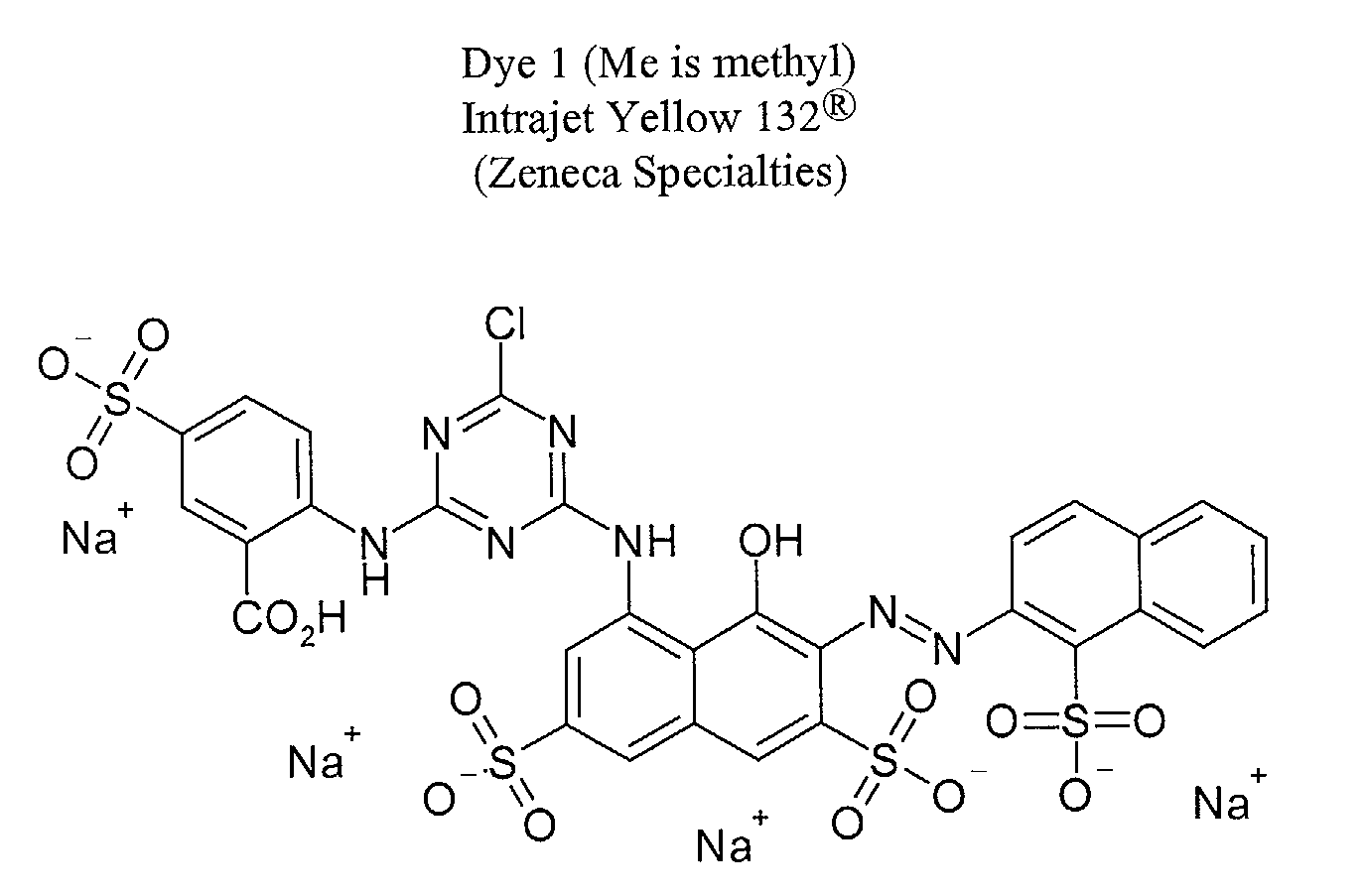
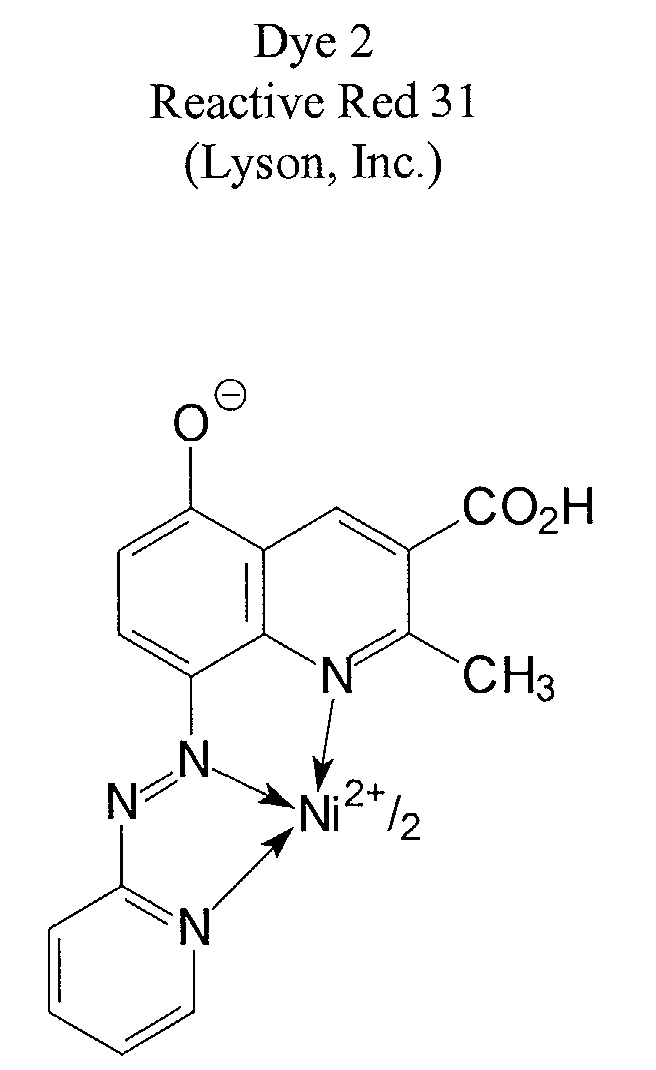
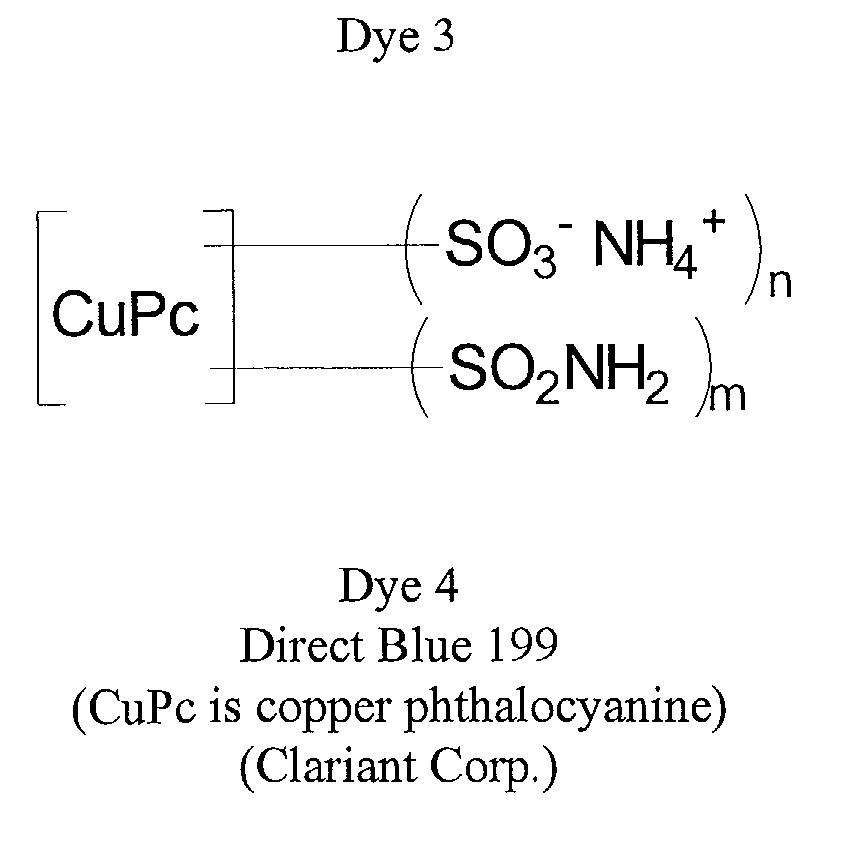
used. Examples of dyes that may be used in the invention are as follows:
The dyes described above may be employed in any amount
effective for the intended purpose. In general, good results have been obtained
when the dye is present in an amount of from 0.2 to 5 % by weight of the ink jet
ink composition, preferably from 0.3 to 3 % by weight. Dye mixtures may also
be used.
In a preferred embodiment of the invention, the polymeric UV-absorbing
material comprises the following repeating units:
wherein:
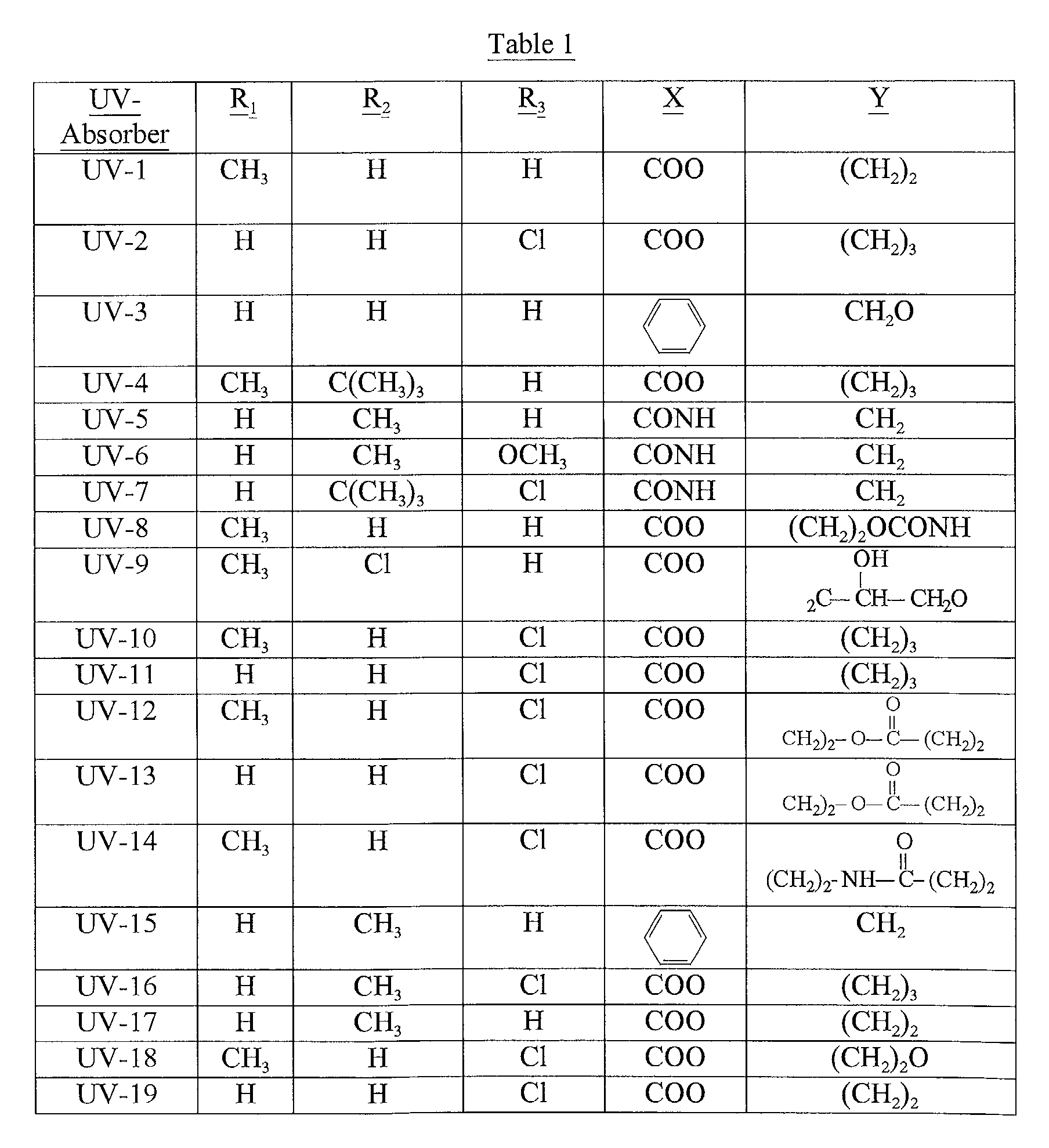
Specific examples of polymeric UV-absorbing repeating units
useful in the invention include the following:
The UV absorbing repeating units illustrated in Table 1 above can
also be polymerized in the presence of two or more comonomers. For example, a
combination of ethyl acrylate and acrylamido-2,2'-dimethyl propane sulfonic acid
monomers can be copolymerized with UV absorbing repeating unit UV-1 above.
Specific examples of polymeric UV absorbing materials useful for this invention
are summarized below:
The polymeric UV-absorbing materials employed in the invention
can be used in an amount of from 0.05 to 4.0 g/m2, preferably from 0.20 to 1.5
g/m2.
Any polymeric mordant can be used in the invention. In a
preferred embodiment, the mordant can be a cationic protonated amine-containing
polymer or a polymer that contains a quaternary ammonium group. Examples of
these mordants include poly(1-vinylimidazole), poly(4-vinylpyridine),
poly(styrene-co-N-benzyl-N,N-dimethyl-N-vinylbenzyl-ammonium chloride-co-divinylbenzene)
(49:49:2 mole ratio), poly(N,N,N-tributyl-N-vinylbenzyl-ammonium
chloride), poly(N,N-dimethyl-N-benzyl-N-vinylbenzyl-ammonium
chloride), poly(styrene-co-N,N,N-trimethyl-N-vinylbenzyl-ammonium chloride)
(1:1 mole ratio), poly(N,N,N-trimethyl-N-vinylbenzyl-ammonium chloride-co-divinylbenzene)
(87:13 mole ratio), poly(N,N-dimethyl-N-octadecyl-N-vinylbenzyl-ammonium
chloride), poly(styrene-co-1-vinylimidazole-co-3-hydroxyethyl-1-vinylimidazolium
chloride) (5:4:1 mole ratio), poly(styrene-co-1-vinylimidazole-co-3-benzyl-1-vinylimidazolium
chloride) (5:4:1 mole ratio),
poly(styrene-co-1-vinylimidazole-co-3-hydroxyethyl-1-vinylimidazolium
chloride) (2:2:1 mole ratio), poly(styrene-co-4-vinylpyridine-co-1-hydroxyethyl-4-vinylpyridinium
chloride) (5:4:1 mole ratio), poly(diallydimethylammonium
chloride) and chitosan.
The polymeric mordant employed in the invention can be used in
an amount of from 0.2 to 16 g/m2, preferably from 0.4 to 8 g/m2.
In a preferred embodiment of the invention, L in the above formula
for the stabilizer contains at least one methylene group. In another preferred
embodiment, the stabilizer contains at least two alkoxy groups. In still another
preferred embodiment, the total number of carbon atoms in the R's and L taken
together is a least 4. Following are examples of stabilizers, which can be used in
the invention:

| Stabiliser | R | n | L | M |
| S-1 | 3,4-methylenedioxy | 2 (ring) | 1-(propyleneoxy-3-sulfonate) | Na |
| S-2 | 2-t-butyl 4-methoxy | 2 | 1-(propyleneoxy-3-sulfonate) | Na |
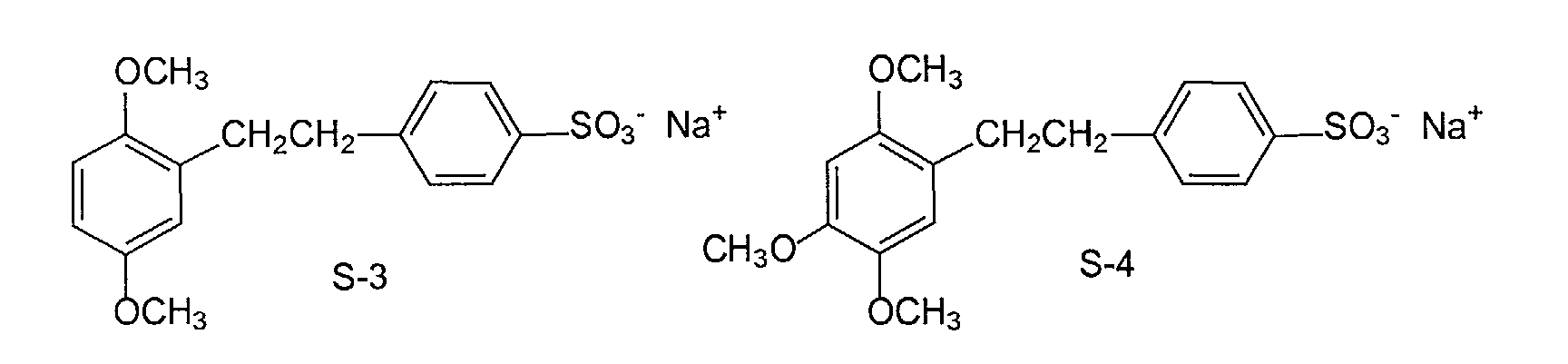
| S-3 | 2,5-dimethoxy | 2 | 1-(ethylene-2-(phenyl-4-sulfonate)) | Na |
| S-4 | 2,4,5-trimethoxy | 3 | 1-(ethylene-2-(phenyl-4-sulfonate)) | Na |
| S-5 | 2-t-butyl 4-methoxy | 2 | 1-(propyleneoxy-3-sulfonate) | K |
| S-6 | 3,4-methylcnedioxy | 2 (ring) | 1-(propyleneoxy-3-sulfonate) | NH4 |
| S-7 | 2,4,5-trimethoxy | 3 | 1-(ethylene-2-sulfonate) | K |
| S-8 | 2-methoxy 4-phenoxy | 2 | 1-(propyleneoxy-3-sulfonate) | Cs |
| S-9 | 2-methoxy 4-N-ethylacetamido | 2 | 1-(ethyleneoxy-2-(ethyleneoxy-2-sulfonate)) | K |
| S-10 | 2,5-dimethyl 4-ethoxy | 3 | 1-(butylene-4-sulfonate) | Na |
| S-11 | 4-t-butoxy | 1 | 1-(propyleneoxy-3-sulfonate) | Na |
Structures of stabilizers S-1 through S4 and S-9 are drawn below
for clarity:
The benzene ring of the stabilizer may contain electron-donating
substituents, such as alkyl and alkoxy groups, to enhance its efficiency as a
quencher of excited states and as a stabilizer toward light-induced dye fading.
One commonly-used measure of electron-donating character is provided by
Hammett sigma values, which are published, for example, in "Exploring QSAR,
Hydrophobic, Electronic and Steric Constants", C. Hansch, A. Leo and D.
Hoekman, American Chemical Society, 1995. Electron-donating groups
generally have negative Hammett sigma values. In a preferred embodiment of
this invention, the sum of the Hammett sigma values of the R groups (referenced
to the position of attachment of L) is less than -0.10
The stabilizer of this invention is coated in the ink jet recording
element of this invention at a level of from 0.04 to 1.6 g/m2, and preferably from
0.08 to 0.8 g/m2.
The binder employed in the base layer is preferably a hydrophilic
polymer. Examples of hydrophilic polymers useful in the invention include
polyvinyl alcohol, polyvinyl pyrrolidone, poly(ethyl oxazoline), poly-N-vinylacetamide,
non-deionized or deionized Type IV bone gelatin, acid processed
ossein gelatin, pig skin gelatin, acetylated gelatin, phthalated gelatin, oxidized
gelatin, chitosan, poly(alkylene oxide), sulfonated polyester, partially hydrolyzed
poly(vinyl acetate/vinyl alcohol), poly(acrylic acid), poly(1-vinyl pyrrolidone),
poly( sodium styrene sulfonate), poly( 2-acrylamido-2-methane sulfonic acid),
polyacrylamide or mixtures thereof. In a preferred embodiment of the invention,
the binder is gelatin or poly(vinyl alcohol).
The hydrophilic polymer may be present in an amount of from 0.1
to 30 g/m2, preferably from 0.2 to 16 g/m2 of the base layer.
The weight ratio of polymeric mordant to binder is from 1:99 to
8:2, preferably from 1:9 to 4:6.
Latex polymer particles and/or inorganic oxide particles may also
be used in the binder in the base layer to increase the porosity of the layer and
improve the dry time. Preferably, the latex polymer particles and /or inorganic
oxide particles are cationic or neutral. Preferably, the latex polymer particles are
porous. Examples of inorganic oxide particles include barium sulfate, calcium
carbonate, clay, silica or alumina, or mixtures thereof. In that case, the weight %
of particulates in the image receiving layer is from 70 to 98%, preferably from 80
to 95%.
The pH of the aqueous ink compositions employed with the
element of the invention may be adjusted by the addition of organic or inorganic
acids or bases. Useful inks may have a preferred pH of from 2 to 10, depending
upon the type of dye being used. Typical inorganic acids include hydrochloric,
phosphoric and sulfuric acids. Typical organic acids include methanesulfonic,
acetic and lactic acids. Typical inorganic bases include alkali metal hydroxides
and carbonates. Typical organic bases include ammonia, triethanolamine and
tetramethylethylenediamine.
A humectant is employed in the ink composition employed with
the element of the invention to help prevent the ink from drying out or crusting in
the orifices of the printhead. Examples of humectants which can be used include
polyhydric alcohols, such as ethylene glycol, diethylene glycol, triethylene glycol,
propylene glycol, tetraethylene glycol, polyethylene glycol, glycerol, 2-methyl-2,4-pentanediol
1,2,6-hexanetriol and thioglycol; lower alkyl mono- or di-ethers
derived from alkylene glycols, such as ethylene glycol mono-methyl or mono-ethyl
ether, diethylene glycol mono-methyl or mono-ethyl ether, propylene glycol
mono-methyl or mono-ethyl ether, triethylene glycol mono-methyl or mono-ethyl
ether, diethylene glycol di-methyl or di-ethyl ether, and diethylene glycol
monobutylether; nitrogen-containing cyclic compounds, such as pyrrolidone, N-methyl-2-pyrrolidone,
and 1,3-dimethyl-2-imidazolidinone; and sulfur-containing
compounds such as dimethyl sulfoxide and tetramethylene sulfone. A preferred
humectant for the composition employed in the invention is diethylene glycol,
glycerol, or diethylene glycol monobutylether.
Water-miscible organic solvents may also be added to the aqueous
ink employed with the element of the invention to help the ink penetrate the
receiving substrate, especially when the substrate is a highly sized paper.
Examples of such solvents include alcohols, such as methyl alcohol, ethyl alcohol,
n-propyl alcohol, isopropyl alcohol, n-butyl alcohol, sec-butyl alcohol, t-butyl
alcohol, iso-butyl alcohol, furfuryl alcohol, and tetrahydrofurfuryl alcohol;
ketones or ketoalcohols such as acetone, methyl ethyl ketone and diacetone
alcohol; ethers, such as tetrahydrofuran and dioxane; and esters, such as, ethyl
lactate, ethylene carbonate and propylene carbonate.
Surfactants may be added to adjust the surface tension of the ink to
an appropriate level. The surfactants may be anionic, cationic, amphoteric or
nonionic.
A biocide may be added to the composition employed with the
element of the invention to suppress the growth of microorganisms such as molds,
fungi, etc. in aqueous inks. A preferred biocide for the ink composition employed
in the present invention is Proxel® GXL (Zeneca Specialties Co.) at a final
concentration of 0.0001-0.5 wt. %.
A typical ink composition employed with the element of the
invention may comprise, for example, the following substituents by weight:
colorant (0.05-5%), water (20-95%), a humectant (5-70%), water miscible co-solvents
(2-20%), surfactant (0.1-10%), biocide (0.05-5%) and pH control agents
(0.1-10%).
Additional additives that may optionally be present in the ink jet
ink composition employed with the element of the invention include thickeners,
conductivity enhancing agents, anti-kogation agents, drying agents, and
defoamers.
The ink jet inks employed with the elements of this invention may
be employed in ink jet printing wherein liquid ink drops are applied in a
controlled fashion to an ink receptive layer substrate, by ejecting ink droplets
from a plurality of nozzles or orifices of the print head of an ink jet printer.
The image-recording layer used in the element of the invention can
also contain various known additives, including matting agents such as titanium
dioxide, zinc oxide, silica and polymeric beads such as crosslinked poly(methyl
methacrylate) or polystyrene beads for the purposes of contributing to the non-blocking
characteristics and to control the smudge resistance thereof; surfactants
such as non-ionic, hydrocarbon or fluorocarbon surfactants or cationic surfactants,
such as quaternary ammonium salts; fluorescent dyes; pH controllers; antifoaming
agents; lubricants; preservatives; viscosity modifiers; dye-fixing agents;
waterproofing agents; dispersing agents; UV- absorbing agents; mildew-proofing
agents; mordants; antistatic agents, anti-oxidants, optical brighteners, and the like.
A hardener may also be added to the ink-receiving layer if desired.
The support for the ink jet recording element of the invention can
be any of those usually used for ink jet receivers, such as paper, resin-coated
paper, polyesters, or microporous materials such as polyethylene polymer-containing
material sold by PPG Industries, Inc., Pittsburgh, Pennsylvania under
the trade name of Teslin ®, Tyvek ® synthetic paper (DuPont Corp.), and
OPPalyte® films (Mobil Chemical Co.) and other composite films listed in U.S.
Patent 5,244,861. Opaque supports include plain paper, coated paper, synthetic
paper, photographic paper support, melt-extrusion-coated paper, and laminated
paper, such as biaxally oriented support laminates. Biaxally oriented support
laminates are described in U.S. Patents 5,853,965; 5,866,282; 5,874,205;
5,888,643; 5,888,681; 5,888,683; and 5,888,714. These biaxally oriented
supports include a paper base and a biaxially oriented polyolefin sheet, typically
polypropylene, laminated to one or both sides of the paper base. Transparent
supports include glass, cellulose derivatives, e.g., a cellulose ester, cellulose
triacetate, cellulose diacetate, cellulose acetate propionate, cellulose acetate
butyrate; polyesters, such as poly(ethylene terephthalate), poly(ethylene
naphthalate), poly(1,4-cyclohexanedimethylene terephthalate), poly(butylene
terephthalate), and copolymers thereof; polyimides; polyamides; polycarbonates;
polystyrene; polyolefins, such as polyethylene or polypropylene; polysulfones;
polyacrylates; polyetherimides; and mixtures thereof. The papers listed above
include a broad range of papers, from high end papers, such as photographic
paper to low end papers, such as newsprint.
The support used in the invention may have a thickness of from 50
to 500 µm, preferably from 75 to 300 µm. Antioxidants, antistatic agents,
plasticizers and other known additives may be incorporated into the support, if
desired. In a preferred embodiment, paper is employed.
In order to improve the adhesion of the image-recording layer to
the support, the surface of the support may be subjected to a corona-discharge-treatment
prior to applying the image-recording layer.
In addition, a subbing layer, such as a layer formed from a
halogenated phenol or a partially hydrolyzed vinyl chloride-vinyl acetate
copolymer can be applied to the surface of the support to increase adhesion of the
image recording layer. If a subbing layer is used, it should have a thickness (i.e.,
a dry coat thickness) of less than 2 µm.
The image-recording layer may be present in any amount that is
effective for the intended purpose. In general, good results are obtained when it is
present in an amount of from 2 to 60 g/m2, preferably from 6 to 40 g/m2, which
corresponds to a dry thickness of 2 to 50 µm, preferably 6 to 40 µm.
The overcoat layer may be present in any amount that is effective
for the intended purpose. In general, good results are obtained when it is present
in an amount of from 1.1 to 10.7 g/m2, preferably from 1.6 to 5.4 g/m2, which
corresponds to a dry thickness of 1.0 to 10 µm, preferably 1.5 to 5 µm.
The following examples illustrates the utility of the present
invention.
The following polymers were used as mordants in the image-recording
layer:
Synthesis of UVL-1
260 g of deionized water, 2.26 g of 20% sodium N-methyl-N-oleoyltaurate
(surfactant Igepon T-77®), and 26 g of acetone were mixed in a 500
mL, 4-necked round bottom flask equipped with a mechanical stirrer, nitrogen
inlet, and condenser. The flask was immersed in a constant temperature bath at
80°C and heated for 30 minutes with nitrogen purging through. The monomer
solution was composed of 6.46 g of 2-(2'-hydroxy-5-methacrylyloxyethylphenyl)-2H-benzotriazole
(0.02 mole), 2.00 g of ethylacrylate (0.02 mole), 0.23 g of 2-sulfo-1,1-dimethyl
ethylacrylamide, sodium salt (0.001 mole) and 130 mL of N,N-dimethylformamide.
The co-feed solution was made of 0.9 g of Igepon T-77®
(20%), 1.8 g of sodium persulfate, and 20 g of deionized water. 3.91 g of 5 %
potassium persulfate was added to the reactor and stirred for 3 minutes. The
monomer and co-feed solution were pumped into the reactor over 4 hours. The
polymerization was continued for 8 hours. The latex was cooled, filtered and
dialyzed against distilled water overnight. The latex was then concentrated down
by an Amicon Ultrafiltration unit to the desirable concentration.
Synthesis of UVL-3
UVL-3 was prepared by the identical method, except a mixture of
6.86 g of 2-(2-hydroxy-4-m&p-vinylbenzyloxyphenyl)benzotriazole (60:40)
(0.02 mole), 5.12 g of butyl acrylate (0.04 mole), 0.23 g of 2-sulfo-1,1dimethylethyl
acrylamide sodium salt (0.001 mole) and 130 mL of N,N-dimethylformamide
were used as the monomer solution.
Example 1-Light Stability in Gelatin Based Coatings
Preparation of a water soluble, anionic dye ink composition, I-1
Ink I-1 containing Dye 1 identified above was prepared by mixing
the dye concentrate (3.1%) with de-ionized water containing humectants of
diethylene glycol (Aldrich Chemical Co.) and glycerol (Acros Co.), each at 6%, a
biocide, Proxel GXL ® biocide (Zeneca Specialties) at 0.003 wt %, and a
surfactant, Surfynol 465 ® (Air Products Co.) at 0.05 wt. %.
The dye concentration was based on solution absorption spectra
and chosen such that the final ink when diluted 1:1000, would yield a
transmission optical density of approximately 1.0.
Preparation of a water soluble, anionic dye ink composition, I-2
Ink I-2 containing Dye 2 identified above (Reactive Red 31, CAS-12237-00-2)
was composed of Novajet ® Magenta Ink (Lyson Inc.) prepared by
mixing 100g of the commercial ink with 0.5g of Surfynol 465 ® surfactant (Air
Products Inc.).
Preparation of Control Ink Recording Element C-1
The composite side of a polyethylene resin-coated photographic
grade paper based support was corona discharge treated prior to coating. Control
Ink Recording Element was composed of a mixture of 0.86 g/m2 of mordant
polymer MP-2, 7.75 g/m2 of gelatin and 0.09 g/m2 of S-100 12 µm polystyrene
beads (ACE Chemical Co.), and coated from distilled water on the above
mentioned paper support.
Preparation of Invention Ink Recording Elements E-1 through E-2
Recording elements E-1 through E-2 of the invention were
composed of two layers. The base layer was composed of a mixture of 0.86 g/m2
of mordant polymer MP-2, 7.43 g/m2 of gelatin, 0.09 g/m2 of S-100 12 µm
polystyrene beads (ACE Chemical Co.), and 0.33 g/m2 of S-1 (E-1) or S-2 (E-2)
coated from distilled water.
These base layers were then overcoated with a mixture of 0.61
g/m2 of UVL-1, 1.51 g/m2 of gelatin and 0.02 g/m2 of Olin 10G® surfactant from
distilled water.
Preparation of Invention Ink Recording Elements E-3 through E-4
Recording elements E-3 through E-4 of the invention were
prepared analogous to E-1 and E-2 above except the overcoat layer was
composed of a mixture of 0.67 g/m2 of UVL-2 and 1.51 g/m2 of gelatin.
Printing
Elements E-1 through E-4 and control element C-1 were printed
using an Epson 200 ® printer using I-1 and I-2 inks described above. After
printing, all images were allowed to dry at room temperature overnight, and the
densities were measured at all steps using an X-Rite 820® densitometer. The
Dmax densities at step 11 were recorded for I-1 and I-2 in Table 2 below.
The images were then subjected to a high intensity daylight fading
test for 2 weeks, 50Klux, 5400°K., approximately 25% RH. The Status A blue or
green reflection density nearest to 1.0 was compared before and after fade and a
percent density retained was calculated for the yellow (I-1) and magenta (I-2)
inks with each receiver element. The results can be found in Table 2 below.
| Recording Element | Dmax Density, I-1 | % Retained After Fade, I-1 | Dnlax Density, I-2 | % Retained After Fade, I-2 |
| E-1 | 1.55 | 86 | 1.96 | 88 |
| E-2 | 1.59 | 93 | 2.01 | 88 |
| E-3 | 1.62 | 86 | 1.95 | 88 |
| E-4 | 1.54 | 88 | 1.86 | 89 |
| C-1 | 1.40 | 63 | 1.83 | 60 |
The above results show that the recording elements E-1 through E-4
of the invention, as compared to the control recording element C-1 gave higher
Dmax densities and % retained densities after high intensity daylight fading.
Example 2-Light Stability Of Coatings Containing Stabilizer And UV Overcoat
Vs Just Stabilizer Or Just UV Overcoat
Preparation of Control Ink Recording Elements C-2 through C-3
Control ink recording elements C-2 through C-3 were composed of
a mixture of 0.86 g/m2 of mordant polymer MP-2, 7.43 g/m2 of gelatin, 0.09 g/m2
of S-100 12 µm polystyrene beads (ACE Chemical Co.), and 0.33 g/m2 of S-1 (E-1)
or S-2 (E-2) coated from distilled water.
Preparation of Control Recording Element C-4
Control ink recording element C-4 was prepared by overcoating C-1
prepared above with a mixture of 0.61 g/m2 of UVL-1, 1.51 g/m2 of gelatin and
0.02 g/m2 of Olin 10G ® surfactant from distilled water.
Preparation of Control Recording Element C-5
Control ink recording element C-5 was prepared analogous to C-4
except 0.67 g/m2 of UVL-2 was used in place of UVL-1.
Printing
Elements E-1 through E-4 and control elements C-1 through C-5
were printed as described in Example 1 using I-1 and I-2 and the results can be
found in Table 3 below.
| Recording Element | Dmax Density, I-1 | % Retained After Fade, I-1 | Dmax Density, I-2 | % Retained After Fade, I-2 |
| E-1 | 1.55 | 86 | 1.96 | 88 |
| E-2 | 1.59 | 93 | 2.01 | 88 |
| E-3 | 1.62 | 86 | 1.95 | 88 |
| E-4 | 1.54 | 88 | 1.86 | 89 |
| C-1 | 1.40 | 63 | 1.83 | 60 |
| C-2 | 1.47 | 79 | NA | NA |
| C-3 | 1.45 | 87 | 1.93 | 75 |
| C-4 | 1.54 | 85 | 1.88 | 86 |
| C-5 | 1.53 | 84 | 1.95 | 85 |
The above results show that the recording elements E-1 through E-4
of the invention, as compared to the control recording elements C-1 through C-5
gave higher Dmax densities and % retained densities after high intensity
daylight fading. This demonstrates that using a combination of stabilizer and
UV-overcoat gives superior performance over using either of these materials
individually.
Example 3-Light Stability in PVA Coatings
Preparation of Control Recording Elements C-6 through C-7
Control ink recording elements C-6 through C-7 were composed of
a mixture of 1.19 g/m2 of mordant polymer MP-2, and 9.13 g/m2 of either GH-17
(C-6, Gohsenol ®, 86.5-89.0% hydrolyzed, 27-33 cps) or KH-17 (C-7, Gohsenol,
78.5-81.5% hydrolyzed, 32-38 cps) poly(vinyl alcohol) respectively, (Nippon
Gohsei), 0.43 g/m2 of S-2 and 0.05 g/m2 of Olin 10G® surfactant coated from
distilled water.
Preparation of Invention Ink Recording Elements E-5 through E-6
Recording elements E-5 through E-6 of the invention were
prepared analogous to E-2 above except C-6 and C-7 were overcoated using a
mixture of UVL-1 and GH-17 (E-5) or KH-17 (E-6) in place of gelatin.
Printing
Elements E-5 through E-6 and control elements C-6 through C-7
were printed as described in Example 1 using I-2 and the results can be found in
Table 4 below.
| Recording Element | Dmax Density | % Retained after Fade |
| E-5 | 2.22 | 93 |
| E-6 | 2.20 | 93 |
| C-6 | 2.01 | 72 |
| C-7 | 2.00 | 76 |
The above results show that the recording elements E-5 through E-6
of the invention, as compared to the control recording elements C-6 and C-7,
gave higher densities and % retained after high intensity daylight fading.
Example 4
Preparation of a water soluble, anionic dye ink set, I-3 through I-5
The Yellow ink jet ink I-3 was prepared using a standard
formulation with Direct Yellow 132 (Dye 1 above, Projet Yellow 1G ®, Zeneca
Specialties, 10% solution in water) as the dye. The magenta ink I-4 was prepared
using a standard formulation for Dye 3 above (see Dye 6 from U.S. Patent
6,001,161 for specifics). The cyan ink jet ink I-5 was prepared using a standard
formulation with Direct Blue 199 (see Dye 4 above, Duasyn Turquoise Blue FRL-SF
® from Clariant Corp., 10% solution in water) as the dyes.
The standard formulations used for these inks include: 2-pyrrolidinone
(3%); tri(ethylene glycol) (5%); glycerin (4%); Dowanol DB ®
(2.5%) and Surfynol 465 ® (0.5%). For I-4, triethanolamine (0.25%) was also
added. The dye concentrations for each ink were based on solution absorption
spectra and chosen such that the final ink, when diluted 1:1000, would yield a
transmission optical density of approximately 1.0. The percentages for each dye
used are summarized in Table 5 Below.
| Ink | Dye | % of Dye |
| I-3 | Dye 1 | 45 |
| I-4 | Dye 3 | 1.1 |
| I-5 | Dye 4 | 40 |
Elements E-5 through E-6 and control elements C-6 through C-7
from Example 3 were printed using a Lexmark Z51 ® ink jet printer with inks I-3
through I-5 described above. After printing, all images were allowed to dry at
room temperature overnight, and the densities were measured at all steps using an
X-Rite 820® densitometer. The images were then subjected to a high intensity
daylight fading test for 2 weeks, 50Klux, 5400°K., approximately 25% RH. The
Status A reflection densities for the single colors (yellow, magenta and cyan) and
the 2 (red, green, and blue) and 3 (neutral) color combinations at 50% coverage
were compared before and after fade and a percent dye retained for each was
recorded. The results can be found in Tables 6 through 8 below.
| Results for Single Colors |
| Recording Element | % Retained I-3 | % Retained I-4 | % Retained I-5 |
| E-5 | 93 | 96 | 98 |
| E-6 | 93 | 98 | 100 |
| C-6 | 83 | 85 | 98 |
| C-7 | 81 | 82 | 100 |
| Results for Red, Green and Blue Combinations |
| Receiver Element | %Retained, Red | % Retained, Green | % Retained, Blue |
| | G/R | B/R | R/G | B/G | R/B | G/B |
| E-5 | 95 | 94 | 98 | 96 | 100 | 96 |
| E-6 | 95 | 95 | 97 | 98 | 99 | 96 |
| C-6 | 91 | 86 | 95 | 92 | 96 | 90 |
| C-7 | 89 | 84 | 96 | 91 | 95 | 89 |
| Results for Neutral |
| Receiver Element | % Retained, Neutral |
| | R/N | G/N | B/N |
| E-5 | 99 | 96 | 95 |
| E-6 | 98 | 96 | 95 |
| C-6 | 92 | 93 | 92 |
| C-7 | 96 | 95 | 95 |
The above results show that the recording elements E-5 through E-6
of the invention, as compared to the control recording elements C-6 and C-7,
gave higher % retained density after high intensity daylight fading for all color
combinations.
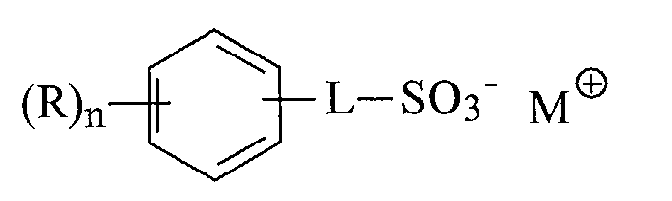






 each R individually represents a substituted or unsubstituted alkyl or alkoxy group having from 1 to 7 carbon atoms; a phenyl group having from 6 to 10 carbon atoms; a phenoxy group having from 6 to 10 carbon atoms; a carbonamido group having from 1 to 8 carbon atoms; or two or more R groups can be combined together to form a ring structure;n is 1 to 4;L is a linking group containing at least one carbon atom; andM+ is a monovalent cation;
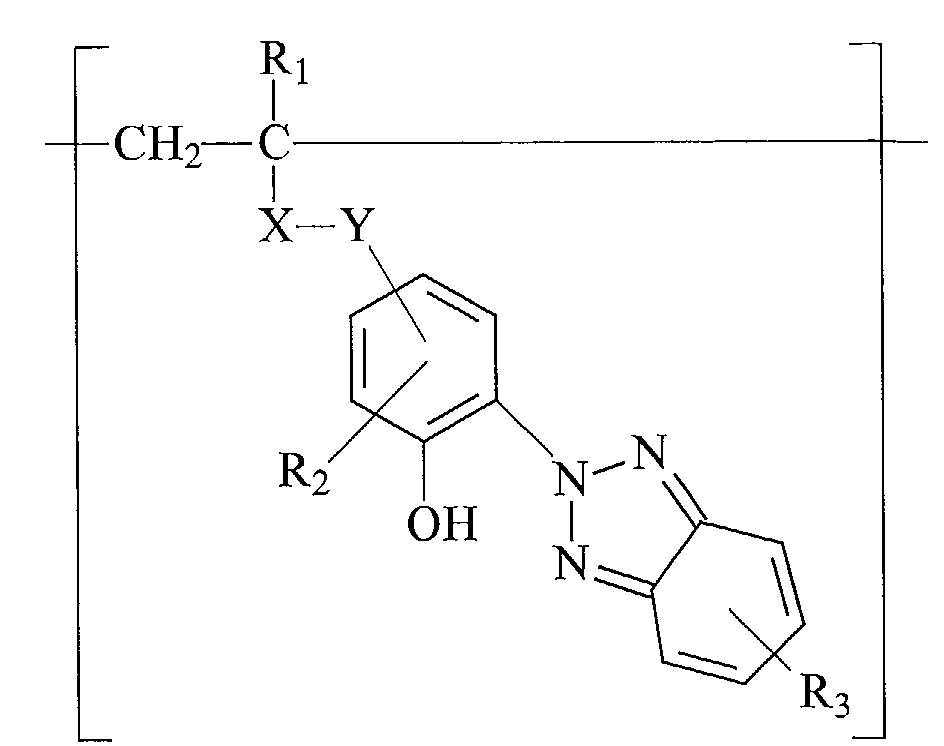 R1 represents H or CH3;R2 represents H, halogen, alkoxy or a straight chain or branched alkyl group having from 1 to 8 carbon atoms;R3 represents H, Cl, alkoxy or an alkyl group having from 1 to 4 carbon atoms;X represents COO, CONH or aryl; andY represents an alkylene group having from 2 to 10 carbon atoms or (CH2)mO wherein m is 1 to 4.