EP1306361A2 - Method for making high-purity naphthalenedicarboxylic acid - Google Patents
Method for making high-purity naphthalenedicarboxylic acid Download PDFInfo
- Publication number
- EP1306361A2 EP1306361A2 EP02257069A EP02257069A EP1306361A2 EP 1306361 A2 EP1306361 A2 EP 1306361A2 EP 02257069 A EP02257069 A EP 02257069A EP 02257069 A EP02257069 A EP 02257069A EP 1306361 A2 EP1306361 A2 EP 1306361A2
- Authority
- EP
- European Patent Office
- Prior art keywords
- acid
- naphthalenedicarboxylic acid
- crude
- purity
- making
- Prior art date
- Legal status (The legal status is an assumption and is not a legal conclusion. Google has not performed a legal analysis and makes no representation as to the accuracy of the status listed.)
- Withdrawn
Links
Images

Classifications
-
- C—CHEMISTRY; METALLURGY
- C07—ORGANIC CHEMISTRY
- C07C—ACYCLIC OR CARBOCYCLIC COMPOUNDS
- C07C51/00—Preparation of carboxylic acids or their salts, halides or anhydrides
- C07C51/42—Separation; Purification; Stabilisation; Use of additives
- C07C51/48—Separation; Purification; Stabilisation; Use of additives by liquid-liquid treatment
-
- C—CHEMISTRY; METALLURGY
- C07—ORGANIC CHEMISTRY
- C07C—ACYCLIC OR CARBOCYCLIC COMPOUNDS
- C07C51/00—Preparation of carboxylic acids or their salts, halides or anhydrides
- C07C51/42—Separation; Purification; Stabilisation; Use of additives
- C07C51/487—Separation; Purification; Stabilisation; Use of additives by treatment giving rise to chemical modification
-
- C—CHEMISTRY; METALLURGY
- C07—ORGANIC CHEMISTRY
- C07C—ACYCLIC OR CARBOCYCLIC COMPOUNDS
- C07C51/00—Preparation of carboxylic acids or their salts, halides or anhydrides
- C07C51/16—Preparation of carboxylic acids or their salts, halides or anhydrides by oxidation
- C07C51/21—Preparation of carboxylic acids or their salts, halides or anhydrides by oxidation with molecular oxygen
- C07C51/255—Preparation of carboxylic acids or their salts, halides or anhydrides by oxidation with molecular oxygen of compounds containing six-membered aromatic rings without ring-splitting
- C07C51/265—Preparation of carboxylic acids or their salts, halides or anhydrides by oxidation with molecular oxygen of compounds containing six-membered aromatic rings without ring-splitting having alkyl side chains which are oxidised to carboxyl groups
-
- C—CHEMISTRY; METALLURGY
- C07—ORGANIC CHEMISTRY
- C07C—ACYCLIC OR CARBOCYCLIC COMPOUNDS
- C07C51/00—Preparation of carboxylic acids or their salts, halides or anhydrides
- C07C51/42—Separation; Purification; Stabilisation; Use of additives
- C07C51/43—Separation; Purification; Stabilisation; Use of additives by change of the physical state, e.g. crystallisation
-
- C—CHEMISTRY; METALLURGY
- C07—ORGANIC CHEMISTRY
- C07C—ACYCLIC OR CARBOCYCLIC COMPOUNDS
- C07C51/00—Preparation of carboxylic acids or their salts, halides or anhydrides
- C07C51/42—Separation; Purification; Stabilisation; Use of additives
- C07C51/47—Separation; Purification; Stabilisation; Use of additives by solid-liquid treatment; by chemisorption
Definitions
- the present invention relates to a method for making a high-purity naphthalenedicarboxylic acid at low costs and a high efficiency.
- the resulting high-purity naphthalenedicarboxylic acid is useful as a raw material for high-performance polyester resins, i.e. polyethylene naphthalate (hereinafter referred to as PEN) and polybutylene naphthalate (hereinafter referred to as PBN).
- PEN polyethylene naphthalate
- PBN polybutylene naphthalate
- a dibasic acid mixture of terephthalic acid and 0.5 to 10 mass percent naphthalenedicarboxylic acid is used for preparation of a copolyester of polyethylene terephthalate (hereinafter referred to as PET) and PEN, which exhibits higher gas barrier and higher ultraviolet absorption than PET homopolymer.
- PEN has excellent properties, i.e. high mechanical strength, high heat resistance, and high gas barrier; hence, PEN has a variety of actual and potential applications, for example, videotapes and video films for long time recording, advanced photo systems (APSs), heat resistant containers, tire cords, films, and bottles.
- APSs advanced photo systems
- a copolymer of PET and 0.5 to 10 mass percent PEN exhibits gas barrier and ultraviolet absorption, which are significantly higher than those of a PET homopolymer. Such characteristics are in favor of applications to bottles and films.
- PEN, PBN, and PET/PEN copolymers are very expensive because no method for making a high-purity naphthalenedicarboxylic acid as a raw material at low costs and high efficiency is established. Accordingly, such disadvantages preclude commercial production of these polymers regardless of the above-mentioned advantages.
- a well-known method for making a naphthalenedicarboxylic acid is oxidation of a dialkylnaphthalene such as dimethylnaphthalene with molecular oxygen in the presence of a catalyst, for example, Co, Mn, or Br.
- a catalyst for example, Co, Mn, or Br.
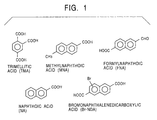
- the crude naphthalenedicarboxylic acid prepared by this method contains many impurities: tricarboxylic acids, i.e. trimellitic acid (TMA); dicarboxylic acids, i.e. bromonaphthalenedicarboxylic acid (Br-NDA); and monocarboxylic acid, i.e.
- FNA formylnaphthoic acid
- MNA methylnaphthoic acid
- naphthoic acid formylnaphthoic acid
- Terephthalic acid is prepared by oxidation of p-xylene in an acetic acid solvent. Crude terephthalic acid prepared by this process contains an impurity 4-carboxybenzaldehyde (4-CBA) that corresponds to the FNA in the crude naphthalenedicarboxylic acid.
- 4-CBA 4-carboxybenzaldehyde
- 4-CBA adversely affects physical properties of PET and cannot be removed from terephthalic acid by a solid-liquid separation process because both are contained in the solid phase.
- 4-CBA is removed as follows: Crude terephthalic acid is dissolved into high-temperature, high-pressure water typically at 80 atm pressure and 290°C and is reduced in the presence of a Pd/C catalyst into p-toluic acid, which is soluble in the liquid phase.
- Japanese Unexamined Patent Application Publication No. 10-53557 discloses a method for making the corresponding high-purity naphthalenedicarboxylic acid including reaction of a crude naphthalenedicarboxylic acid with an amine in a mixed solvent containing water, acetone, and the amine to form an amine salt of the naphthalenedicarboxylic acid, crystallization and separation of the resultant, and heating of the crystallized resultant in the presence of water to remove amine by evaporation.
- Japanese Unexamined Patent Application Publication No. 7-304705 discloses a method for making the corresponding crystallized high-purity naphthalenedicarboxylic acid including dissolution of a crude naphthalenedicarboxylic acid into supercritical or subcritical water containing one of the entrainers, such as oxygen-containing organic solvents, i.e. alcohols, ketones, and ethers, cooling the solution to crystallize the target compound.
- the entrainers such as oxygen-containing organic solvents, i.e. alcohols, ketones, and ethers
- United States Patent No. 5,256,817 discloses a method for making a high-purity naphthalenedicarboxylic acid by hydrogenation in the presence of Pd/C catalyst in a mixed solvent of acetic acid and water (about 90:10).
- An object of the present invention is to provide a method for making a mixture of high-purity terephthalic acid and high-purity naphthalenedicarboxylic acid from a raw mixture of crude terephthalic acid and crude naphthalenedicarboxylic acid using a known purification facility for terephthalic acid at high efficiency and low production costs.
- Another object of the present invention is to provide a method for making high-purity naphthalenedicarboxylic acid at high efficiency using the same facility.
- a method for making a high-purity naphthalenedicarboxylic acid according to the present invention comprises:
- Step [II] only the acid mixture containing enriched naphthalenedicarboxylic acid may be separated in Step [II].
- the purity of the resulting naphthalenedicarboxylic can be further increased by washing the acid mixture containing enriched naphthalenedicarboxylic acid separated in Step [II] with an alcoholic solvent.
- the alcoholic solvent comprises at least one selected from the group consisting of methyl alcohol, ethyl alcohol, and isopropyl alcohol. These alcohols may be used alone or in combination.
- the temperature and pressure in Step [1] depend on the purity of the crude naphthalenedicarboxylic acid, the purity of the crude terephthalic acid, the ratio thereof in the mixture, and the target content of naphthalenedicarboxylic acid in the purified mixture.
- the dibasic acid solution is brought into contact with hydrogen at a temperature in the range of 250°C to 320°C and a pressure of 40 to 130 atm pressure in Step [1].
- the amount of the hydrogen supplied during the hydrogenation in Step [1] is in the range of 1 to 10 mole percent of the total of the terephthalic acid and the naphthalenedicarboxylic acid in the raw mixture.
- the catalyst preferably comprises at least one Group VIII metal that is supported on a carbon support.
- the Group VIII metal is selected from Pd and Ru.
- the amount of the Group VIII metal is 0.03 to 5.0 mass percent of the carbon support.
- the raw mixture of crude terephthalic acid and crude naphthalenedicarboxylic acid may be prepared by simultaneously oxidizing p-xylene and 2.6-dimethylnaphthalene.
- crude naphthalenedicarboxylic acid can be purified by hydrogenation of a mixture of crude naphthalenedicarboxylic acid and crude terephthalic acid and by multistage crystallization of the resultant using a known purification facility for crude terephthalic acid. Since a polyester copolymer polymerized using naphthalenedicarboxylic acid shows improved gas barrier and ultraviolet absorbability, the purified mixture of terephthalic acid and naphthalenedicarboxylic acid prepared by this method can be used as a dibasic acid mixture for forming the polyester copolymer having high gas barrier and high ultraviolet absorbability.
- a method for making a high-purity naphthalenedicarboxylic acid includes the following steps:
- terephthalic acid As described above, there are many plants for producing high-purity terephthalic acid, and a typical plant has a production capacity ranging from 200,000 to 350,000 tons per year.
- the outline of the plant for producing terephthalic acid is as follows:
- Crude terephthalic acid produced by oxidation of p-xylene contains a trace amount of 4-CBA, as described above. Since this impurity cause appreciable deterioration of physical properties of polyesters prepared using the terephthalic acid, this must be removed as much as possible. However, 4-CBA cannot be removed by solid-liquid separation because 4-CBA is present together with terephthalic acid in the solid phase.
- 4-CBA is removed as follows: Crude terephthalic acid is dissolved into high-temperature, high-pressure water typically at 80 atm pressure and 290°C and is reduced in the presence of a Pd/C catalyst into p-toluic acid, which is soluble in the liquid phase. After hydrogenation, a high-purity terephthalic acid slurry is prepared by solid-liquid separation including five to six stages while reducing the pressure and temperature. High-purity terephthalic acid is recovered by high-pressure centrifugal separation, normal-pressure centrifugal separation, and drying steps.
- Fig. 2 shows a solubility curve of naphthalenedicarboxylic acid in water at 80 atm pressure.
- 1 to 5 mass percent naphthalenedicarboxylic acid can be dissolved in water under the above high-temperature, high pressure condition for dissolving the terephthalic acid.
- the resulting high-purity terephthalic acid also contain 1 to 5 mass percent of high-purity naphthalenedicarboxylic acid.
- a PET/PEN copolymer prepared by using the high-purity terephthalic acid containing high-purity naphthalenedicarboxylic acid contains a corresponding PEN component and exhibits high ultraviolet absorbability.
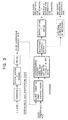
- Fig. 3 is an outline flow chart showing simultaneous purification of crude terephthalic acid and crude naphthalenedicarboxylic acid using a known purification plant for crude terephthalic acid.
- a production line of crude naphthalenedicarboxylic acid connects with the upstream side of the purification plant for the crude terephthalic acid, so that the crude naphthalenedicarboxylic acid is introduced to the purification plant for the crude terephthalic acid.
- the crude terephthalic acid and naphthalenedicarboxylic acid are simultaneously purified in the purification plant.
- 2,6-dimethylnaphthalene (2,6-DMN) is oxidized, and the resulting naphthalenedicarboxylic acid is crystallized, washed with a solvent, and dried to remove most parts of unreacted components and byproducts.
- crude naphthalenedicarboxylic acid is prepared.
- the crude naphthalenedicarboxylic acid is used as a starting material in the present invention.
- the crude naphthalenedicarboxylic acid contains many impurities. Among these, formylnaphthoic acid having a carbonyl group cannot be easily removed and adversely affects physical properties of a final polyester product. Also, 4-CBA having a carbonyl group contained in the crude terephthalic acid adversely affects physical properties of the final polyester product.
- the crude terephthalic acid and an adequate amount of crude naphthalenedicarboxylic acid are supplied to a hydrogenation purification line for crude terephthalic acid, and a slurry of the crude mixture is formed using an adequate amount of water and a multistage heater.
- the slurry is supplied into a hydrogenation reactor to hydrogenate the formylnaphthoic acid and 4-CBA in the crude mixture under a high-temperature, high-pressure condition.
- Both methylnaphthoic acid and 4-carboxytoluene have higher solubility in water than terephthalic acid and naphthalenedicarboxylic acid.
- the methylnaphthoic acid and 4-carboxytoluene are dissolved into the aqueous solvent while the terephthalic acid and naphthalenedicarboxylic acid having low solubility in water are crystallized.
- the crystallized product is separated from the liquid phase and dried to form a high-purity dibasic acid mixture of terephthalic acid (for example, 90 to 97 mass percent) and naphthalenedicarboxylic acid (for example, 3 to 10 mass percent) that substantially does not contain formylnaphthoic acid and 4-CBA.
- the high-purity dibasic acid mixture is suitable for a raw material for polyester.
- the ratio of the crude terephthalic acid to the crude naphthalenedicarboxylic acid is not limited in the present invention.
- the crude naphthalenedicarboxylic acid content in the crude terephthalic acid is in the range of 0.1 to 10 mass percent in order to prepare a raw material for polyester containing a suitable amount of naphthalenedicarboxylic acid by means of the difference in solubility.
- the crude naphthalenedicarboxylic acid content in the raw material is less than 0.1 mass percent, this process is substantially the same as a known purification process for crude terephthalic acid.
- a raw material does not meet the purpose of the present invention, purification of crude terephthalic acid in the presence of crude naphthalenedicarboxylic acid.
- the naphthalenedicarboxylic acid content in the resultant is too low to produce a polyester having high ultraviolet absorbability.
- the crude naphthalenedicarboxylic acid content in the raw material is more preferably in the range of 0.1 to 10 mass percent and most preferably 0.2 to 5.0 mass percent.
- the objects of the present invention are more effectively achieved:
- the crude terephthalic acid and the crude naphthalenedicarboxylic acid can be more readily purified in the same process, and the resulting dibasic acid mixture has a preferable composition for obtaining a polyester having superior properties.
- the present invention is characterized in that byproducts inevitably formed in the processes for producing the target dicarboxylic acids are removed from the mixture of the crude terephthalic acid and naphthalenedicarboxylic acid to prepare a bibasic acid mixture of high-purity terephthalic acid and high-purity naphthalenedicarboxylic acid.
- naphthalenedicarboxylic acid having lower solubility is preferentially crystallized at the first high-temperature, high-pressure crystallization stage.
- only high-purity naphthalenedicarboxylic acid can be prepared in the first stage of the multistage purification step.
- the naphthalenedicarboxylic acid content in the crystals can be controlled to a desired level.
- the temperature and pressure are gradually decreased on every stage of the multistage purification step, the naphthalenedicarboxylic acid content in the crystals will vary on every stage.
- the pressure is controlled within the range of 2 to 90 atm pressure and the temperature is controlled within the range of 300°C to 1,400°C in the multistage purification step to determine the naphthalenedicarboxylic acid content in the resulting crystals. Consequently, this process can produce a dibasic acid mixture of terephthalic acid and a desired amount of naphthalenedicarboxylic acid according to required properties, such as ultraviolet absorbability, for a raw material for polyester.
- the naphthalenedicarboxylic acid-enriched crystals prepared in the first stage of the multistage purification step can be further purified by, for example, alcohol washing, if necessary, in order to obtain high-purity naphthalenedicarboxylic acid crystals.
- the dibasic acid mixture containing high-purity terephthalic acid and high-purity naphthalenedicarboxylic acid prepared by the multistage purification, centrifugal, and drying steps can be further purified, if necessary, to obtain a higher-purity dibasic acid mixture.
- Examples of preferred solvents used in the purification step include alcohols. Methyl alcohol, ethyl alcohol, and isopropyl alcohol are more preferable. These alcohols may be used alone or in combination.
- the hydrogenation conditions are preferably determined so as to maintain a high yield of the terephthalic acid and naphthalenedicarboxylic acid as much as possible and to reduce undesired formylnaphthoic acid and 4-CBA more effectively into methylnaphthoic acid and 4-carbyxyltoluene, i.e. high-temperature high-pressure water preferably means water at sufficiently high temperature and pressure to allow reduction of impurities present in the raw mixture of crude terephthalic acid and crude naphthalenedicarboxylic acid without reducing the terephthalic acid or naphthalenedicarboxylic acid.
- the temperature is in the range of 250°C to 320°C and more preferably in the range of 280°C 320°C
- the pressure is in the range of 40 to 130 atm pressure and more preferably in the range of 70 to 130 atm pressure.
- the amount of hydrogen supplied in the hydrogenation step is preferably in the range of 1 mole percent to 10 mole percent of the total of the crude terephthalic acid and crude naphthalenedicarboxylic acid in the fed components.
- a smaller amount of hydrogen or a lower temperature or pressure causes insufficient reduction and thus insufficient removal of undesirable components.
- a higher amount of hydrogen or a higher temperature or pressure causes undesired reduction and thus a decrease in yield of the terephthalic acid and naphthalenedicarboxylic acid.
- Effective hydrogenation catalysts used in the hydrogenation step are Group VIII metals.
- at least one Group VIII metal is supported on carbon. More preferable Group VIII metals are Pd and Ru.
- the amount of the Group VIII metal supported on carbon is preferably in the range of 0.03 to 5.0 mass percent and more preferably 0.03 to 3.0 mass percent of the carbon support in order to prevent oxidation of terephthalic acid and naphthalenedicarboxylic acid and to facilitate reduction of undesirable byproducts.
- undesirable byproducts are simultaneously removed from a mixture of crude terephthalic acid and crude naphthalenedicarboxylic acid fed, and a dibasic acid mixture of high-purity terephthalic acid and high-purity naphthalenedicarboxylic acid is produced using a known purification plant for crude terephthalic acid.
- high-purity naphthalenedicarboxylic acid is isolated from the crude mixture.
- crude terephthalic acid and crude naphthalenedicarboxylic acid that are prepared by known processes can be used in the present invention.
- a production line of crude naphthalenedicarboxylic acid preferably connects with the upstream side of a purification plant for crude terephthalic acid. Since the crude naphthalenedicarboxylic acid produced in its production line is supplied to the purification line for the crude terephthalic acid, steps of from preparation to purification of the crude terephthalic acid or naphthalenedicarboxylic acid can be continuously performed in this combined facility.
- a buffer reservoir for the crude naphthalenedicarboxylic acid may be provided in the production line so that the amount of the crude naphthalenedicarboxylic acid to be supplied is adjusted.
Landscapes
- Chemical & Material Sciences (AREA)
- Organic Chemistry (AREA)
- Engineering & Computer Science (AREA)
- Oil, Petroleum & Natural Gas (AREA)
- Crystallography & Structural Chemistry (AREA)
- Chemical Kinetics & Catalysis (AREA)
- General Chemical & Material Sciences (AREA)
- Organic Low-Molecular-Weight Compounds And Preparation Thereof (AREA)
Abstract
Description
Claims (10)
- A method for making a high-purity naphthalenedicarboxylic acid comprising:Step [I] of dissolving a raw mixture of crude terephthalic acid and crude naphthalenedicarboxylic acid into high-temperature high-pressure water to form a dibasic acid solution wherein the crude naphthalenedicarboxylic acid content is 0.1 to 10 mass percent of the crude terephthalic acid content, and bringing the dibasic acid solution into contact with hydrogen in the presence of a catalyst; andStep [II] of crystallizing the resultant product of step [I] from the dibasic acid solution in multiple stages while reducing the temperature and the pressure for each stage thereby obtaining acid mixtures containing enriched naphthalenedicarboxylic acid and/or enriched terephthalic acid by solid-liquid separation.
- The method for making the high-purity naphthalenedicarboxylic acid according to Claim 1, wherein only the acid mixture containing enriched naphthalenedicarboxylic acid is separated in said Step [II].
- The method for making the high-purity naphthalenedicarboxylic acid according to Claim 2, wherein the acid mixture containing enriched naphthalenedicarboxylic acid separated in said Step [II] is washed with an alcoholic solvent.
- The method for making the high-purity naphthalenedicarboxylic acid according to Claim 3, wherein the alcoholic solvent comprises at least one selected from the group consisting of methyl alcohol, ethyl alcohol, and isopropyl alcohol.
- The method for making the high-purity naphthalenedicarboxylic acid according to any one of Claims 1 to 4, wherein the dibasic acid solution is brought into contact with hydrogen at a temperature in the range of 250°C to 320°C and a pressure of 40 to 130 atm pressure in said Step [1].
- The method for making the high-purity naphthalenedicarboxylic acid according to any one of Claims 1 to 5, wherein the amount of the hydrogen in said Step [1] is in the range of 1 to 10 mole percent of the total of the terephthalic acid and the naphthalenedicarboxylic acid in the raw mixture.
- The method for making the high-purity naphthalenedicarboxylic acid according to any one of Claims 1 to 6, wherein the catalyst comprises at least one Group VIII metal that is supported on a carbon support.
- The method for making the high-purity naphthalenedicarboxylic acid according to Claim 7, wherein said at least one Group VIII metal is selected from Pd and Ru.
- The method for making the high-purity naphthalenedicarboxylic acid according to either Claim 7 or 8, wherein the amount of said at least one Group VIII metal is 0.03 to 5.0 mass percent of the carbon support.
- The method for making the high-purity naphthalenedicarboxylic acid according to any one of Claims 1 to 9, wherein the raw mixture of crude terephthalic acid and crude naphthalenedicarboxylic acid is prepared by simultaneously oxidizing p-xylene and 2.6-dimethylnaphthalene.
Applications Claiming Priority (2)
| Application Number | Priority Date | Filing Date | Title |
|---|---|---|---|
| JP2001324455A JP2003128625A (en) | 2001-10-23 | 2001-10-23 | Production method of high purity naphthalenedicarboxylic acid |
| JP2001324455 | 2001-10-23 |
Publications (2)
| Publication Number | Publication Date |
|---|---|
| EP1306361A2 true EP1306361A2 (en) | 2003-05-02 |
| EP1306361A3 EP1306361A3 (en) | 2003-10-15 |
Family
ID=19141181
Family Applications (1)
| Application Number | Title | Priority Date | Filing Date |
|---|---|---|---|
| EP02257069A Withdrawn EP1306361A3 (en) | 2001-10-23 | 2002-10-11 | Method for making high-purity naphthalenedicarboxylic acid |
Country Status (4)
| Country | Link |
|---|---|
| US (1) | US6717009B2 (en) |
| EP (1) | EP1306361A3 (en) |
| JP (1) | JP2003128625A (en) |
| KR (1) | KR20030033958A (en) |
Cited By (1)
| Publication number | Priority date | Publication date | Assignee | Title |
|---|---|---|---|---|
| EP1923381A1 (en) * | 2006-11-16 | 2008-05-21 | Hyosung Corporation | Hydrogenation process for high-purity naphthalenedicarboxylic acid |
Families Citing this family (4)
| Publication number | Priority date | Publication date | Assignee | Title |
|---|---|---|---|---|
| KR100621823B1 (en) * | 2004-07-21 | 2006-09-14 | 재단법인서울대학교산학협력재단 | Method for producing 2,6-dialkyltetraline |
| KR100870344B1 (en) * | 2006-12-29 | 2008-11-25 | 주식회사 효성 | Method and apparatus for purifying high purity 2,6-naphthalenedicarboxylic acid |
| KR100934163B1 (en) * | 2007-10-01 | 2009-12-29 | 주식회사 효성 | Separation and Purification Method of High Purity Naphthalenedicarboxylic Acid Using Crystallization Process |
| CN112521271B (en) * | 2019-09-18 | 2023-08-04 | 中国石油化工股份有限公司 | Hydrofining method of crude 2,6-naphthalene dicarboxylic acid |
Family Cites Families (5)
| Publication number | Priority date | Publication date | Assignee | Title |
|---|---|---|---|---|
| NL6606774A (en) * | 1965-05-17 | 1966-11-18 | ||
| US3671578A (en) * | 1969-08-05 | 1972-06-20 | Teijin Ltd | Process for the preparation of naphthalene-2,6-dicarboxylic acid |
| US5256817A (en) * | 1992-06-18 | 1993-10-26 | Amoco Corporation | Method for purifying a naphthalenedicarboxylic acid |
| US5616792A (en) * | 1996-02-01 | 1997-04-01 | Amoco Corporation | Catalytic purification of dicarboxylic aromatic acid |
| WO2001096114A1 (en) * | 2000-06-13 | 2001-12-20 | E.I. Du Pont De Nemours And Company | Pen-pet-pen polymeric film |
-
2001
- 2001-10-23 JP JP2001324455A patent/JP2003128625A/en not_active Withdrawn
-
2002
- 2002-10-07 US US10/265,401 patent/US6717009B2/en not_active Expired - Fee Related
- 2002-10-11 EP EP02257069A patent/EP1306361A3/en not_active Withdrawn
- 2002-10-22 KR KR1020020064450A patent/KR20030033958A/en not_active Abandoned
Cited By (1)
| Publication number | Priority date | Publication date | Assignee | Title |
|---|---|---|---|---|
| EP1923381A1 (en) * | 2006-11-16 | 2008-05-21 | Hyosung Corporation | Hydrogenation process for high-purity naphthalenedicarboxylic acid |
Also Published As
| Publication number | Publication date |
|---|---|
| KR20030033958A (en) | 2003-05-01 |
| JP2003128625A (en) | 2003-05-08 |
| EP1306361A3 (en) | 2003-10-15 |
| US6717009B2 (en) | 2004-04-06 |
| US20030078452A1 (en) | 2003-04-24 |
Similar Documents
| Publication | Publication Date | Title |
|---|---|---|
| US6133476A (en) | Process for purification of aromatic polycarboxylic acids | |
| CN1310866C (en) | Process for the oxidative purification of terephthalic acid | |
| US5292934A (en) | Method for preparing aromatic carboxylic acids | |
| JP2003520263A (en) | Production of high purity aromatic carboxylic acid by oxidation in benzoic acid / water solvent | |
| US5872284A (en) | Method for purifying crude naphthalenedicarboxylic acid | |
| US6559339B1 (en) | Method for crystallizing carboxylic acid | |
| WO2002094757A1 (en) | Production, purification and polymerization of dicarboxylic acids | |
| CN112876359B (en) | Preparation method of dimethyl 2, 6-naphthalene dicarboxylate | |
| US6717009B2 (en) | Method for making high-purity naphthalenedicarboxylic acid | |
| JP4756807B2 (en) | Low temperature purification of naphthalenedicarboxylic acid | |
| US6100374A (en) | Method of purifying crude naphthalenedicarboxlic acid and process for preparing polyethylene naphthalate | |
| EP1075458B1 (en) | Process for purifying isophthalic acid by crystallization | |
| EP1753709B1 (en) | Recycling 2,6-naphthalenedicarboxylic acid (2,6-nda) contained in polyethylene naphthalate in a process to produce diesters | |
| EP1860092B1 (en) | Method for producing naphthalenedicarboxylic acid | |
| US5142097A (en) | Recovery and recycle of acetic acid in an oxidation process | |
| JP3263401B2 (en) | Method for purifying adipic acid by crystallization | |
| JP4839501B2 (en) | Method for producing high purity aromatic polycarboxylic acid | |
| JPS6050775B2 (en) | Continuous production method of terephthalic acid | |
| JPH09104654A (en) | Method for purifying naphthalenedicarboxylic acid | |
| JP2734121B2 (en) | Method for producing aromatic carboxylic acid | |
| JPH1180074A (en) | Process for producing high-purity 2,6-naphthalenedicarboxylic acid | |
| KR101073068B1 (en) | Process for refining of 2,6-naphthalene dicarboxylic acid | |
| KR20040061555A (en) | Purification Method of 2,6-Naphthalenedicarboxylic Acid | |
| US4317924A (en) | Process for producing purified terephthalic acid | |
| JP3202325B2 (en) | Purification method of dialkyl aromatic dicarboxylate |
Legal Events
| Date | Code | Title | Description |
|---|---|---|---|
| PUAI | Public reference made under article 153(3) epc to a published international application that has entered the european phase |
Free format text: ORIGINAL CODE: 0009012 |
|
| 17P | Request for examination filed |
Effective date: 20021106 |
|
| AK | Designated contracting states |
Designated state(s): AT BE BG CH CY CZ DE DK EE ES FI FR GB GR IE IT LI LU MC NL PT SE SK TR |
|
| AX | Request for extension of the european patent |
Extension state: AL LT LV MK RO SI |
|
| PUAL | Search report despatched |
Free format text: ORIGINAL CODE: 0009013 |
|
| AK | Designated contracting states |
Kind code of ref document: A3 Designated state(s): AT BE BG CH CY CZ DE DK EE ES FI FR GB GR IE IT LI LU MC NL PT SE SK TR |
|
| AX | Request for extension of the european patent |
Extension state: AL LT LV MK RO SI |
|
| AKX | Designation fees paid |
Designated state(s): AT BE BG CH CY CZ DE DK EE ES FI FR GB GR IE IT LI LU MC NL PT SE SK TR |
|
| GRAP | Despatch of communication of intention to grant a patent |
Free format text: ORIGINAL CODE: EPIDOSNIGR1 |
|
| STAA | Information on the status of an ep patent application or granted ep patent |
Free format text: STATUS: THE APPLICATION IS DEEMED TO BE WITHDRAWN |
|
| 18D | Application deemed to be withdrawn |
Effective date: 20051108 |