EP1304316A1 - Processes for the production of fluorinated organic compounds and fluorinating agents - Google Patents
Processes for the production of fluorinated organic compounds and fluorinating agents Download PDFInfo
- Publication number
- EP1304316A1 EP1304316A1 EP01938637A EP01938637A EP1304316A1 EP 1304316 A1 EP1304316 A1 EP 1304316A1 EP 01938637 A EP01938637 A EP 01938637A EP 01938637 A EP01938637 A EP 01938637A EP 1304316 A1 EP1304316 A1 EP 1304316A1
- Authority
- EP
- European Patent Office
- Prior art keywords
- group
- substituent
- contain
- acid
- nmr
- Prior art date
- Legal status (The legal status is an assumption and is not a legal conclusion. Google has not performed a legal analysis and makes no representation as to the accuracy of the status listed.)
- Granted
Links
- 0 C*C(**)(F)F Chemical compound C*C(**)(F)F 0.000 description 1
- ZLOWVOYXPNBQEZ-UHFFFAOYSA-N Cc(cc1)ccc1SC(F)F Chemical compound Cc(cc1)ccc1SC(F)F ZLOWVOYXPNBQEZ-UHFFFAOYSA-N 0.000 description 1
- LVTDRHCAWKTYCQ-UHFFFAOYSA-N FC(c1ccccc1)(c1ccccc1)F Chemical compound FC(c1ccccc1)(c1ccccc1)F LVTDRHCAWKTYCQ-UHFFFAOYSA-N 0.000 description 1
- UXSRWLGDHFRFTL-UHFFFAOYSA-N O=C(C(F)(F)Sc1ccccc1)c1ccccc1 Chemical compound O=C(C(F)(F)Sc1ccccc1)c1ccccc1 UXSRWLGDHFRFTL-UHFFFAOYSA-N 0.000 description 1
Classifications
-
- C—CHEMISTRY; METALLURGY
- C07—ORGANIC CHEMISTRY
- C07C—ACYCLIC OR CARBOCYCLIC COMPOUNDS
- C07C67/00—Preparation of carboxylic acid esters
- C07C67/30—Preparation of carboxylic acid esters by modifying the acid moiety of the ester, such modification not being an introduction of an ester group
- C07C67/307—Preparation of carboxylic acid esters by modifying the acid moiety of the ester, such modification not being an introduction of an ester group by introduction of halogen; by substitution of halogen atoms by other halogen atoms
-
- C—CHEMISTRY; METALLURGY
- C07—ORGANIC CHEMISTRY
- C07C—ACYCLIC OR CARBOCYCLIC COMPOUNDS
- C07C17/00—Preparation of halogenated hydrocarbons
- C07C17/093—Preparation of halogenated hydrocarbons by replacement by halogens
- C07C17/10—Preparation of halogenated hydrocarbons by replacement by halogens of hydrogen atoms
-
- C—CHEMISTRY; METALLURGY
- C07—ORGANIC CHEMISTRY
- C07B—GENERAL METHODS OF ORGANIC CHEMISTRY; APPARATUS THEREFOR
- C07B39/00—Halogenation
-
- C—CHEMISTRY; METALLURGY
- C07—ORGANIC CHEMISTRY
- C07C—ACYCLIC OR CARBOCYCLIC COMPOUNDS
- C07C17/00—Preparation of halogenated hydrocarbons
- C07C17/093—Preparation of halogenated hydrocarbons by replacement by halogens
-
- C—CHEMISTRY; METALLURGY
- C07—ORGANIC CHEMISTRY
- C07C—ACYCLIC OR CARBOCYCLIC COMPOUNDS
- C07C17/00—Preparation of halogenated hydrocarbons
- C07C17/093—Preparation of halogenated hydrocarbons by replacement by halogens
- C07C17/16—Preparation of halogenated hydrocarbons by replacement by halogens of hydroxyl groups
-
- C—CHEMISTRY; METALLURGY
- C07—ORGANIC CHEMISTRY
- C07C—ACYCLIC OR CARBOCYCLIC COMPOUNDS
- C07C17/00—Preparation of halogenated hydrocarbons
- C07C17/093—Preparation of halogenated hydrocarbons by replacement by halogens
- C07C17/18—Preparation of halogenated hydrocarbons by replacement by halogens of oxygen atoms of carbonyl groups
-
- C—CHEMISTRY; METALLURGY
- C07—ORGANIC CHEMISTRY
- C07C—ACYCLIC OR CARBOCYCLIC COMPOUNDS
- C07C201/00—Preparation of esters of nitric or nitrous acid or of compounds containing nitro or nitroso groups bound to a carbon skeleton
- C07C201/06—Preparation of nitro compounds
- C07C201/12—Preparation of nitro compounds by reactions not involving the formation of nitro groups
-
- C—CHEMISTRY; METALLURGY
- C07—ORGANIC CHEMISTRY
- C07C—ACYCLIC OR CARBOCYCLIC COMPOUNDS
- C07C209/00—Preparation of compounds containing amino groups bound to a carbon skeleton
- C07C209/68—Preparation of compounds containing amino groups bound to a carbon skeleton from amines, by reactions not involving amino groups, e.g. reduction of unsaturated amines, aromatisation, or substitution of the carbon skeleton
- C07C209/74—Preparation of compounds containing amino groups bound to a carbon skeleton from amines, by reactions not involving amino groups, e.g. reduction of unsaturated amines, aromatisation, or substitution of the carbon skeleton by halogenation, hydrohalogenation, dehalogenation, or dehydrohalogenation
-
- C—CHEMISTRY; METALLURGY
- C07—ORGANIC CHEMISTRY
- C07C—ACYCLIC OR CARBOCYCLIC COMPOUNDS
- C07C245/00—Compounds containing chains of at least two nitrogen atoms with at least one nitrogen-to-nitrogen multiple bond
- C07C245/02—Azo compounds, i.e. compounds having the free valencies of —N=N— groups attached to different atoms, e.g. diazohydroxides
- C07C245/04—Azo compounds, i.e. compounds having the free valencies of —N=N— groups attached to different atoms, e.g. diazohydroxides with nitrogen atoms of azo groups bound to acyclic carbon atoms or to carbon atoms of rings other than six-membered aromatic rings
-
- C—CHEMISTRY; METALLURGY
- C07—ORGANIC CHEMISTRY
- C07C—ACYCLIC OR CARBOCYCLIC COMPOUNDS
- C07C245/00—Compounds containing chains of at least two nitrogen atoms with at least one nitrogen-to-nitrogen multiple bond
- C07C245/02—Azo compounds, i.e. compounds having the free valencies of —N=N— groups attached to different atoms, e.g. diazohydroxides
- C07C245/06—Azo compounds, i.e. compounds having the free valencies of —N=N— groups attached to different atoms, e.g. diazohydroxides with nitrogen atoms of azo groups bound to carbon atoms of six-membered aromatic rings
-
- C—CHEMISTRY; METALLURGY
- C07—ORGANIC CHEMISTRY
- C07C—ACYCLIC OR CARBOCYCLIC COMPOUNDS
- C07C29/00—Preparation of compounds having hydroxy or O-metal groups bound to a carbon atom not belonging to a six-membered aromatic ring
- C07C29/64—Preparation of compounds having hydroxy or O-metal groups bound to a carbon atom not belonging to a six-membered aromatic ring by simultaneous introduction of -OH groups and halogens
-
- C—CHEMISTRY; METALLURGY
- C07—ORGANIC CHEMISTRY
- C07C—ACYCLIC OR CARBOCYCLIC COMPOUNDS
- C07C319/00—Preparation of thiols, sulfides, hydropolysulfides or polysulfides
- C07C319/14—Preparation of thiols, sulfides, hydropolysulfides or polysulfides of sulfides
- C07C319/20—Preparation of thiols, sulfides, hydropolysulfides or polysulfides of sulfides by reactions not involving the formation of sulfide groups
-
- C—CHEMISTRY; METALLURGY
- C07—ORGANIC CHEMISTRY
- C07C—ACYCLIC OR CARBOCYCLIC COMPOUNDS
- C07C37/00—Preparation of compounds having hydroxy or O-metal groups bound to a carbon atom of a six-membered aromatic ring
- C07C37/62—Preparation of compounds having hydroxy or O-metal groups bound to a carbon atom of a six-membered aromatic ring by introduction of halogen; by substitution of halogen atoms by other halogen atoms
-
- C—CHEMISTRY; METALLURGY
- C07—ORGANIC CHEMISTRY
- C07C—ACYCLIC OR CARBOCYCLIC COMPOUNDS
- C07C41/00—Preparation of ethers; Preparation of compounds having groups, groups or groups
- C07C41/01—Preparation of ethers
- C07C41/18—Preparation of ethers by reactions not forming ether-oxygen bonds
- C07C41/22—Preparation of ethers by reactions not forming ether-oxygen bonds by introduction of halogens; by substitution of halogen atoms by other halogen atoms
-
- C—CHEMISTRY; METALLURGY
- C07—ORGANIC CHEMISTRY
- C07C—ACYCLIC OR CARBOCYCLIC COMPOUNDS
- C07C45/00—Preparation of compounds having >C = O groups bound only to carbon or hydrogen atoms; Preparation of chelates of such compounds
- C07C45/27—Preparation of compounds having >C = O groups bound only to carbon or hydrogen atoms; Preparation of chelates of such compounds by oxidation
- C07C45/30—Preparation of compounds having >C = O groups bound only to carbon or hydrogen atoms; Preparation of chelates of such compounds by oxidation with halogen containing compounds, e.g. hypohalogenation
-
- C—CHEMISTRY; METALLURGY
- C07—ORGANIC CHEMISTRY
- C07C—ACYCLIC OR CARBOCYCLIC COMPOUNDS
- C07C51/00—Preparation of carboxylic acids or their salts, halides or anhydrides
- C07C51/58—Preparation of carboxylic acid halides
- C07C51/60—Preparation of carboxylic acid halides by conversion of carboxylic acids or their anhydrides or esters, lactones, salts into halides with the same carboxylic acid part
-
- C—CHEMISTRY; METALLURGY
- C07—ORGANIC CHEMISTRY
- C07C—ACYCLIC OR CARBOCYCLIC COMPOUNDS
- C07C2601/00—Systems containing only non-condensed rings
- C07C2601/12—Systems containing only non-condensed rings with a six-membered ring
- C07C2601/14—The ring being saturated
-
- C—CHEMISTRY; METALLURGY
- C07—ORGANIC CHEMISTRY
- C07C—ACYCLIC OR CARBOCYCLIC COMPOUNDS
- C07C2603/00—Systems containing at least three condensed rings
- C07C2603/02—Ortho- or ortho- and peri-condensed systems
- C07C2603/04—Ortho- or ortho- and peri-condensed systems containing three rings
- C07C2603/06—Ortho- or ortho- and peri-condensed systems containing three rings containing at least one ring with less than six ring members
- C07C2603/10—Ortho- or ortho- and peri-condensed systems containing three rings containing at least one ring with less than six ring members containing five-membered rings
- C07C2603/12—Ortho- or ortho- and peri-condensed systems containing three rings containing at least one ring with less than six ring members containing five-membered rings only one five-membered ring
- C07C2603/18—Fluorenes; Hydrogenated fluorenes
Definitions
- the present invention relates to a process for fluorinating an organic compound having a hydrogen atom or hydrogen atoms using IF 5 .
- fluorinating agents for fluorinating organic compounds: HF, KF, IF, IF 5 , tetrabutylammonium fluoride, tris(dimethylamino)sulfur(trimethylsilyl)difluoride (TASF), SF 4 , diethylaminosulfurtrifluoride (DAST), fluorine gas, XeF 2 , CF 3 OF, CH 3 COOF, ClO 3 F, N-fluoropyridinium triflate, 1-chloromethyl-4-fluoro-1, 4-diazoniabicyclo[2.2.2]octane bis(tetrafluoroborate), 1-hydroxy-4-fluoro-1, 4-diazoniabicyclo[2.2.2]octane bis(tetrafluoroborate), N-fluorobenzenesulfonimide, etc.
- TASF tris(dimethylamino)sulfur(trimethylsilyl)diflu
- HF, KF, IF, tetrabutylammonium fluoride, and sulfoniumsilicate have low reactivity, and therefore have limited uses.
- SF 4 is a toxic gas having a boiling point at -40.4 °C, which is difficult to handle. Fluorine gas is so active that it is difficult to control its reaction.
- CF 3 OF, CH 3 COOF, and ClO 3 F are explosive gases and should be handled with caution.
- IF 5 is an industrially usable fluorinating agent that is a nonexplosive and easy-to-handle liquid having a boiling point at 100.5 °C and a melting point at 9.4 °C. Fluorination using IF 5 is employed only in a process of adding IF to perfluoroolefin and substituting iodine of the perfluoroiodoolefin with fluorine (M. Sakai, Organic Fluorine Chemistry I, 1970, pp348-351, GIHODO SHUPPAN Co., Ltd.: A. A. Banks, H. J. Haszeldine, and V. Kerrigan, J. Chem. Soc., 1948, 2188.: R. D. Chambers, W.
- the inventors of the present invention conducted extensive research on the above problems. Consequently, they found that various kinds of organic compounds having hydrogen atoms could be fluorinated by using IF 5 .
- the present invention relates to the following Items 1 to 12.
- examples of a organic compound having hydrogen atoms include; compounds having an OH group; ketones (including diketone, ⁇ -ketocarboxylic acid, ⁇ -ketoester); aldehydes; Schiff base, hydrazone and like imines; esters; sulfides; olefins or epoxy; aromatic compounds (phenylhydrazine derivatives, phenol derivatives, 2-naphthol derivatives, aniline derivatives); and thiocarbonyl compounds, etc.
- ketones including diketone, ⁇ -ketocarboxylic acid, ⁇ -ketoester
- aldehydes Schiff base, hydrazone and like imines
- esters sulfides
- olefins or epoxy aromatic compounds (phenylhydrazine derivatives, phenol derivatives, 2-naphthol derivatives, aniline derivatives); and thiocarbonyl compounds, etc.
- R 1 represents an alkyl group that may have a substituent, an aralkyl group that may contain a substituent, an alkenyl group that may contain a substituent, an acyl group that may contain a substituent, a cycloalkyl group that may contain a substituent, a heterocycloalkyl group that may contain a substituent, or a mono-, di- or tri- saccharide that may contain a protecting group.
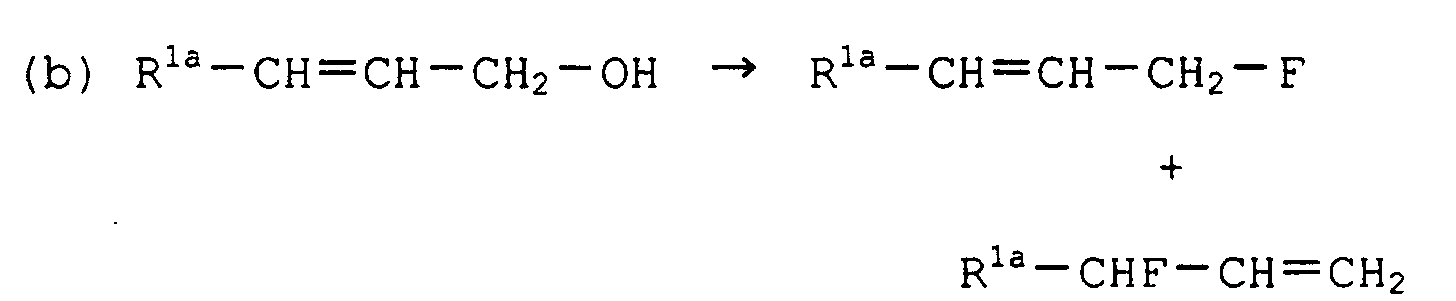
- R 1a represents an alkyl group that may contain a substituent, an aryl group that may contain a substituent, an aralkyl group that may contain a substituent, an alkenyl group that may contain a substituent, an acyl group that may contain a substituent, a cycloalkyl group that may contain a substituent, a heterocycloalkyl group that may contain a substituent, or a mono-, di- or tri-saccharide that may contain a protecting group.
- an alkyl group that may contain a substituent includes alkyl groups and alkyl groups having a substituent.
- compounds having an OH group include apliphatic alcohols, such as methanol, ethanol, n-propanol, isopropanol, n-butanol, isobutanol, tert-butanol, pentanol, hexanol, octanol, decanol, palmityl alcohol, stearyl alcohol, oleyl alcohol, etc., alicyclic alcohols, such as benzyl alcohol, a mono-, di-or tri-saccharide having at least one non-protected hydroxyl group, cyclohexyl alcohol, ascorbic acid, etc., steroid alcohols, such as cholesterol, cholic acid, cortisone, etc.; and carboxylic acids, such as acetic acid, trifluoroacetic acid, propionic acid, acrylic acid, methacrylic acid, crotonic acid, butyric acid, valeric acid, isovaleric acid, pivalic acids,
- Ketones including diketone, ⁇ -ketocarboxylic acid, ⁇ -ketoester), aldehydes, imines, such as Schiff base, hydrazone, etc., and esters
- R 2 , R 2a , and R 2c may be the same or different and each represents a hydrogen atom, an alkyl group that may contain a substituent, an aralkyl group that may contain a substituent, an aryl group that may contain a substituent, an alkenyl group that may contain a substituent, a cycloalkyl group that may contain a substituent, a heterocycloalkyl group that may contain a substituent, a heterocyclic group that may contain a substituent, an alkoxy group that may contain a substituent, an aryloxy group that may contain a substituent, a monoalkylamino group that may contain a substituent, a dialkylamino group that may contain a substituent, an acyl group that may contain a substituent, or an acylamino group that may contain a substituent.
- R 2 and R 2a may bond to each other and form a ring structure.
- R 2b represents an alkyl group that may contain a substituent, an aralkyl group that may contain a substituent, or an aryl group that may contain a substituent.
- substances having a ring structure include 4-membered rings, 5-membered rings, 6-membered rings, and 7-membered rings of aliphatic compounds that may contain a substitute, etc.
- ketones include acetone, methyl ethyl ketone, acetylacetone, acetoacetic acid, acetoacetate, cyclohexanone, acetophenone, benzophenone, propiophenone, 4-piperidone, 1-oxo-1,2-dihydronaphthalene, benzylideneacetophenone (chalcone), deoxybenzoin, and ketals thereof, etc.
- aldehydes examples include acetoaldehyde, propionaldehyde, buthylaldehyde, isobutylaldehyde, valeraldehyde, isovaleraldehyde, acrylaldehyde, benzaldehyde, cinnamaldehyde, anisaldehyde, nicotinealdehyde, or acetals thereof, etc.
- imines of Schiff base, hydrazone and the like include condensates of ketone or aldehyde with an appropriate primary amine.
- R 3 and R 3b represent an alkyl group that may contain a substituent, an aralkyl group that may contain a substituent, an aryl group that may contain a substituent, an alkenyl group that may contain a substituent, a cycloalkyl group that may contain a substituent, a heterocycloalkyl group that may contain a substituent, a heterocyclic group that may contain a substituent, an alkoxy group that may contain a substituent, an aryloxy group that may contain a substituent, an amino group, a monoalkylamino group that may contain a substituent, a dialkylamino group that may contain a substituent, an acyl group that may contain a substituent, an acylamino group that may contain a substituent, a cyano group, an alkylsulfinyl group that may contain a substituent, an aralkylsulfinyl group that may contain a substituent, an aryls
- R 3 and R 3b may form 4 to 8-membered rings with carbon atoms with or without having a heteroatom in the ring.
- they may be substituted with a halogen atom, an oxo group, an alkyl group that may contain a substituent, an aralkyl group that may contain a substituent, an aryl group that may contain a substituent, an alkenyl group that may contain a substituent, a cyano group, or an amino group.
- R 3c and R 3d represent a hydrogen atom, an alkyl group that may contain a substituent, an aralkyl group that may contain a substituent, an aryl group that may contain a substituent, an alkenyl group that may contain a substituent, a cycloalkyl group that may contain a substituent, a heterocycloalkyl group that may contain a substituent, a heterocyclic group that may contain a substituent, an alkoxy group that may contain a substituent, an aryloxy group that may contain a substituent, a monoalkylamino group that may contain a substituent, a dialkylamino group that may contain a substituent, an acyl group that may contain a substituent, or an acylamino group that may contain a substituent.
- R 3c and R 3d may form a 4-membered ring, 5-membered ring, 6-membered ring or 7-membered ring of an aliphatic that may contain a substituent, or R 3c , R 3d , and C may form R 3e represents an alkylene group or an arylene group.
- sulfides include methyl ethyl sulfide, methyl benzyl sulfide, 2-phenylthioacetate, 2-phenylthioacetophenone, C 6 H 5 -CO-CH 2 SCH 3 , bis(methylthio)methylbenzene, 2-octyl-1,3-dithiane, 2-phenyl-2-trifluoromethyl-1,3-dithiolane, tris(ethylthio)hexane, 4-tris(methylthio)toluene, etc.
- R 4 , R 4a , R 4b , and R 4c each represent a hydrogen atom, an alkyl group that may contain a substituent, an aralkyl group that may contain a substituent, an aryl group that may contain a substituent, an alkenyl group that may contain a substituent, a cycloalkyl group that may contain a substituent, a heterocycloalkyl group that may contain a substituent, or a heterocyclic group that may contain a substituent.
- epoxies examples include oxirane, 1,2-epoxyethylbenzene, 1-chloro-2,3-epoxypropane, ⁇ , ⁇ '-epoxybibenzyl, etc.
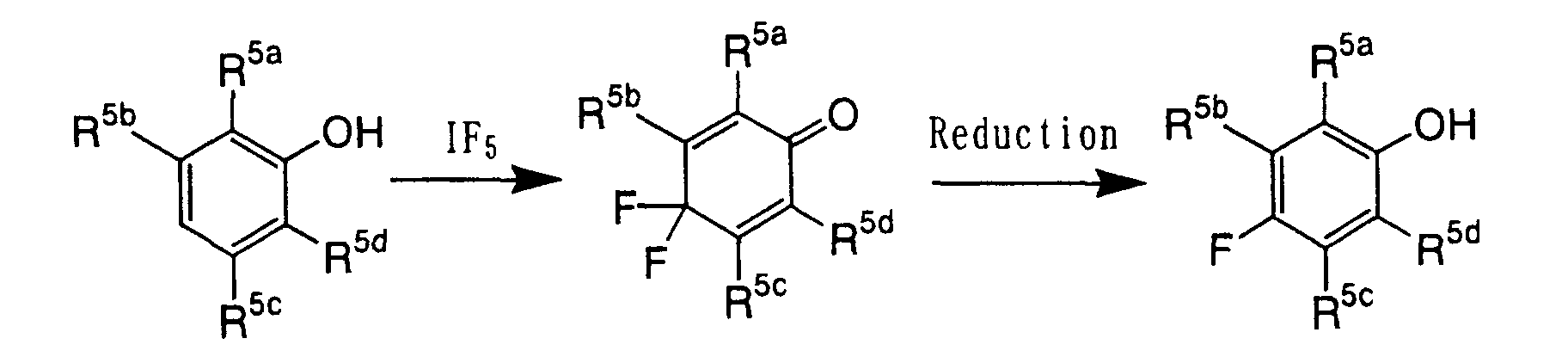
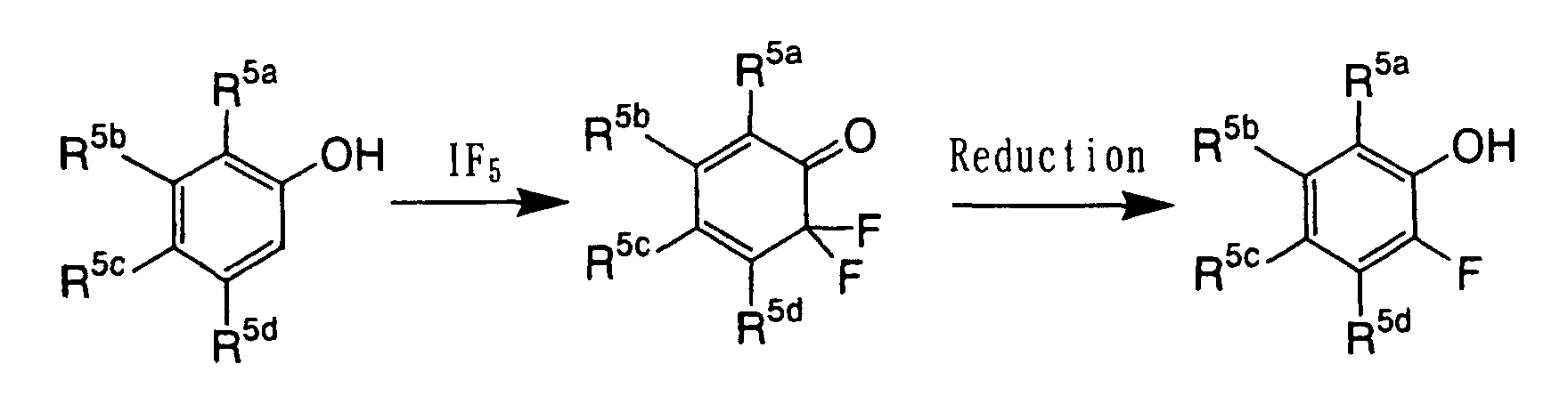
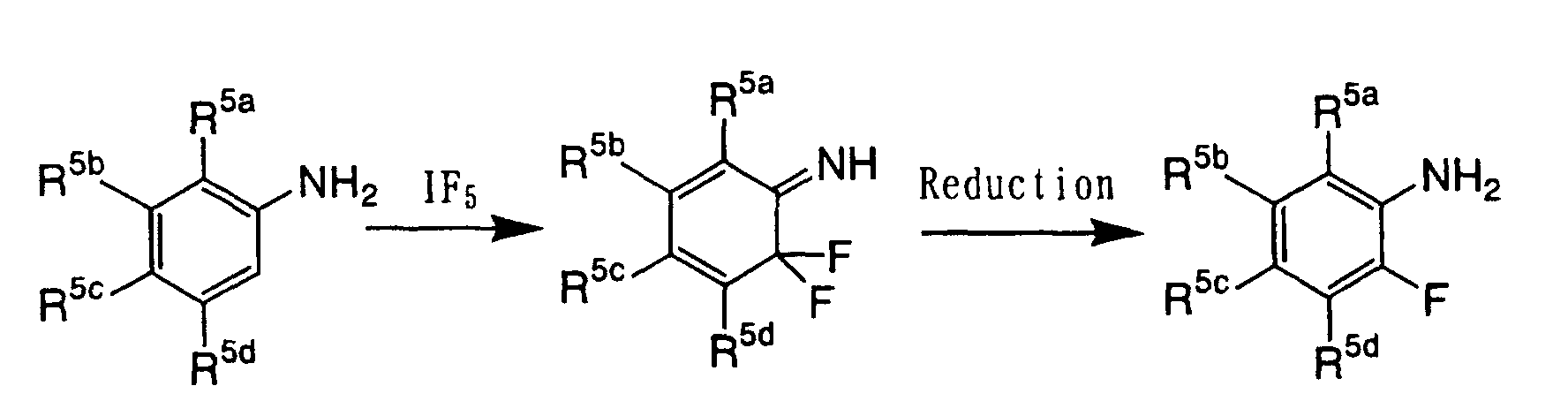
- a fluorine substituent is introduced in an aromatic ring by the following reaction. Fluorination of an aromatic ring in a phenol derivative or aniline derivative can be carried out by fluorinating it using IF 5 or the like, then reducing it by zinc powder or like reducing agents, to obtain the targeted fluorine compound.
- Fluorination of an aromatic ring in a phenol derivative or aniline derivative can be carried out by fluorinating it using IF 5 or the like, then reducing it by zinc powder or like reducing agents, to obtain the targeted fluorine compound.
- R 5a , R 5b , R 5c , R 5d , and R 5e each represents a hydrogen atom, an alkyl group, an aralkyl group, an aryl group, an alkoxy group, a nitro group, a cyano group, a halogen atom, an acyl group, an amino group, a monoalkylamino group, a dialkylamino group, an acylamino group, or an alkylthio group.
- R 5a , R 5b , R 5c , and R 5d each represents a hydrogen atom, an alkyl group, an aralkyl group, an aryl group, an alkoxy group, a nitro group, a cyano group, a halogen atom, an acyl group, an amino group, a monoalkylamino group, a dialkylamino group, an acylamino group, or an alkylthio group.
- fluorine atoms are introduced into the ortho- or para-position, forming compounds having a fluorine quinonoid structure (e.g., Example 47).
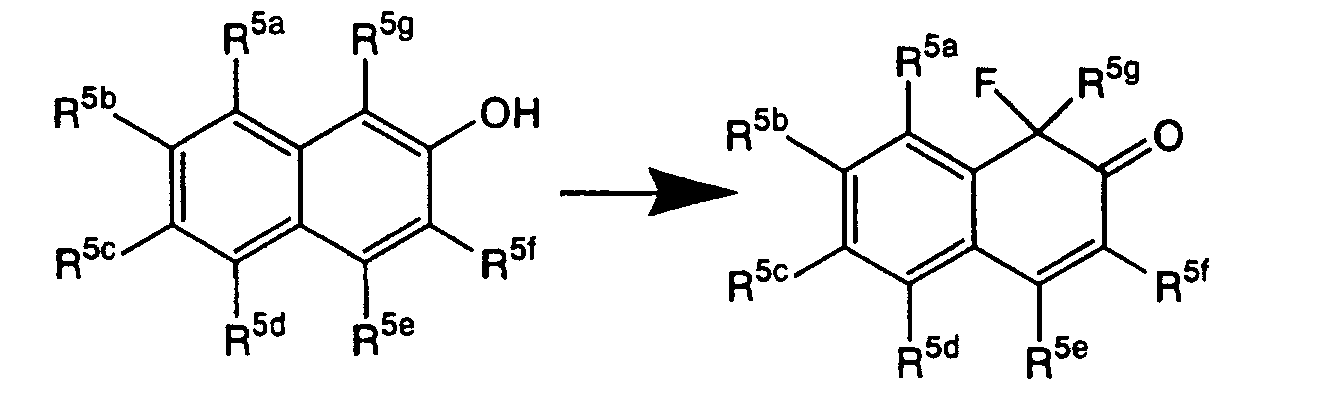
- phenol that may contain a substituent is used as a phenol derivative; however, it is also possible to introduce fluorine atoms into benzene-based aromatic compounds or condensed polycyclic hydrocarbons that may be substituted and have electron-releasing groups such as a hydroxyl group, an alkoxy group, etc.
- R 5a , R 5b , R 5c , R 5d R 5e , R 5f , and R 5g may be the same or different and each represents a hydrogen atom, an alkyl group, an aralkyl group, an aryl group, an alkoxy group, a nitro group, a cyano group, a halogen atom, an acyl group, an amino group, a monoalkylamino group, a dialkylamino group, an acylamino group, or an alkylthio group.
- an aniline derivative forms the difluorinated quinonoid structure as shown below by reacting with IF 5 . Then, by reducing the resultant compound, an aniline derivative having fluorine introduced in the ortho- or para-position is produced.
- R 5a , R 5b , R 5c , and R 5d each represents a hydrogen atom, an alkyl group, an aralkyl group, an aryl group, an alkoxy group, a nitro group, a cyano group, a halogen atom, an acyl group, an amino group, a monoalkylamino group, a dialkylamino group, an acylamino group, or an alkylthio group.
- aniline that may contain a substituent or naphthylamine that may contain a substituent as an aniline derivative also allows introducing a fluorine atom in an aromatic ring.
- R 6 and R 6a may be the same or different and each represents a hydrogen atom, an alkyl group that may contain a substituent, an aralkyl group that may contain a substituent, an aryl group that may contain a substituent, an alkenyl group that may contain a substituent, a cycloalkyl group that may contain a substituent, a heterocycloalkyl group that may contain a substituent, a heterocyclic group that may contain a substituent, an alkoxy group that may contain a substituent, an aryloxy group that may contain a substituent, a monoalkylamino group that may contain a substituent, a dialky
- R 6 and R 6a may bond to each other and form a ring structure.
- R 6b represents an alkyl group that may contain a substituent, an aralkyl group that may contain a substituent, an aryl group that may contain a substituent, an alkenyl group that may contain a substituent, a cycloalkyl group that may contain a substituent, a heterocycloalkyl group that may contain a substituent, or a heterocyclic group that may contain a substituent.
- thiocarbonyl compounds include O-methyl cyclohexanecarbothioate, O-propyl 1-piperidinecarbothioate, methyl dithiobenzoate, thiobenzophenone, O-phenyl thiobenzoate, N,N-dimethylphenylthioamide, ethyl 3-quinolinedithiocarboxylate, trifluoromethane carbothioylnaphthalene, N-methyl-N-phenyl trifluoromethanethioamide, N-benzyl-N-phenylheptafluoropropanethioamide, etc.
- alkyl groups include methyl, ethyl, n-propyl, isopropyl, n-butyl, isobutyl, sec-butyl, tert-butyl, pentyl, hexyl, heptyl, octyl, nonyl, decyl, undecyl, dodecyl, tridecyl, tetradecyl, pentadecyl, hexadecyl, heptadecyl, octadecyl and like C 1 -C 18 alkyl groups having straight chains or branched chains, preferably methyl, ethyl, n-propyl, isopropyl, n-butyl, isobutyl, sec-butyl, tert-butyl, pentyl, hexyl and like C 1 -C 6 alkyl groups having straight chains or branched chains.
- alkoxy groups include methoxy, ethoxy, n-propoxy, isopropoxy, n-butoxy, isobutoxy, secbutoxy, tert-butoxy, pentyloxy, hexyloxy and like C 1 -C 6 alkoxy groups having straight chains or branched chains.
- alkenyl groups include a vinyl group, an allyl group, a 3-butenyl group and like C 2 -C 6 alkenyl groups, etc.
- halogens include a fluorine atom, a chlorine atom, a bromine atom, an iodine atom, etc.
- aryl groups include a phenyl group, a naphthyl group, etc.
- aryloxy groups include a phenoxy group, a naphthyloxy group, etc.
- aralkyl groups examples include 2-phenylethyl, benzyl, 1-phenylethy, 3-phenylpropyl, 4-phenylbutyl and like C 7 -C 10 aralkyl groups, etc.
- cycloalkyl groups include cyclopropyl, cyclobutyl, cyclopentyl, cyclohexyl, cycloheptyl, cyclooctyl and like C 3 -C 8 cycloalkyl groups, etc. Preferable are C 3 -C 7 cycloalkyl groups.
- heterocycloalkyl groups include substances in which one or more carbon atoms forming the above described ring structure of cycloalkyl groups are substituted with atoms of nitrogen, oxygen, sulfur, etc.
- Examples of monoalkylamino groups include amino groups mono-substituted with the above-described C 1 -C 6 alkyl groups.
- dialkylamino groups include dimethylamino, diethylamino, di-n-propylamino, diisopropylamino, dibutylamino, dipentylamino, dihexylamino and like amino groups di-substituted with the above-described C 1 -C 6 alkyl groups.
- acylamino groups include formylamino, benzoylamino, acetylamino, propionylamino, n-butyrylamino and like C 1 -C 8 acylamino groups.
- alkylthio groups examples include -S-(C 1 -C 6 alkyl groups), etc. (C 1 -C 6 alkyl groups are the same as described above.)
- heterocyclic groups include piperidyl, furyl, thienyl, imidazolyl, oxazolyl, thiazolyl, pyrrolyl, pyrrolidinyl, triazolyl, benzothiazolyl, benzoimidazolyl, oxadiazolyl, thiadiazolyl, indolyl, pyrazolyl, pyridazinyl, cinnolinyl, quinolinyl, isoquinolinyl, quinoxalinyl, pyradinyl, pyridyl, benzofuryl, benzothienyl, tetrazolyl, etc.
- acyl groups include formyl, acetyl, propionyl, n-butyryl, isobutyryl, valeryl, isovaleryl, pivaloyl and like C 1-6 acyl groups having straight chains or branched chains, benzoyl and a substituted acyl group.
- an alkyl group, an aralkyl group, an aryl group, a cycloalkyl group, a heterocycloalkyl group, and a heterocyclic group in an alkylsulfinyl group, an aralkylsulfinyl group, an arylsulfinyl group, a cycloalkylsulfinyl group, a heterocycloalkylsulfinyl group, and a sulfinyl group having a heterocyclic group bonded thereto are as described above.
- an alkyl group, an aralkyl group, an aryl group, a cycloalkyl group, a heterocycloalkyl group, and a heterocyclic group in an alkylsulfonyl group, an aralkylsulfonyl group, an arylsulfonyl group, a cycloalkylsulfonyl group, a heterocycloalkylsulfonyl group, and a sulfonyl group having a heterocyclic group bonded thereto are as described above.
- the number of substituents in an alkyl group having substituents, an alkoxy group having substituents, or an alkenyl group having substituents is generally 1 to 5, and preferably 1 to 3.
- substituents include halogen, C 1 -C 6 alkoxy, C 1 -C 6 alkylthio, cyano, nitro, an amino group, a hydroxyl group and the like.
- alkyl group having halogens include an alkyl group in which one or more hydrogen atoms are substituted with fluorine.
- substituents include C 1 -C 6 alkyl groups, a halogen atom, C 1 -C 6 alkoxy groups, C 1 -C 6 alkylthio groups, cyano, nitro, an amino group, a hydroxyl group and the like.
- the number of substituents in a 4- to 7-membered ring of aliphatics having substituents is generally 1 to 5, and preferably 1 to 3.
- substituents include C 1 -C 6 alkyl groups, a halogen atom, C 1 -C 6 alkoxy groups, C 1 -C 6 alkylthio groups, cyano, nitro, an amino group, a hydroxyl group, carboxy ester and the like.
- substituents include C 1 -C 6 alkyl groups, a halogen atom, C 1 -C 6 alkoxy groups, C 1 -C 6 alkylthio groups, cyano, nitro, an amino group, a hydroxyl group, carboxy ester and the like.
- acyl groups having substituents include a chloroacetyl group, a bromoacetyl group, a dichloroacetyl group, a trifluoroacetyl group and like substituted acetyl groups, a methoxyacetyl group, an ethoxyacetyl group and like acetyl groups substituted with alkoxy groups, a methylthioacetyl group and like acetyl groups substituted with alkylthio groups, a phenoxyacetyl group, a phenylthioacetyl group, a 2-chlorobenzoyl group, a 3-chlorobenzoyl group, a 4-chlorobenzoyl group, a 4-methylbenzoyl group, a 4-t-butylbenzoyl group, a 4-methoxybenzoyl group, a 4-cyanobenzoyl group, a 4-nitrobenzoyl group and like substituted benzoyl
- 1 to 4 members and preferably 1 to 3 members selected from the group consisting of acids, bases, salts and additives. More preferably, 1 to 3 members except for the combination of an acid, a basic and a salt are used.
- acids include sulfuric acid, nitric acid, phosphoric acid, polyphosphoric acid, hydrogen fluoride, fluoric acid, hydrochloric acid, hydrogen bromide, hydrogen iodide, hypochlorous acid, chlorous acid, chloric acid, perchloric acid, perbromic acid, periodic acid and like hydrogen halides, or hydrohalic acid, hypohalous acid, halous acid, halogen acid, and perhalogen acid; fluorosulfonic acid, chlorosulfonic acid, methanesulfonic acid, ethanesulfonic acid, trifluoromethanesulfonic acid, difluoromethanesulfonic acid, trichloromethanesulfonic acid, perfluorobutanesulfonic acid, perfluorooctanesulfonic acid, benzenesulfonic acid, toluenesulfonic acid, nitrobenzenesulfonic acid and like sulfonic acids, or polys
- the acids used here may be supported by several kinds of carriers.
- carriers include SiO 2 , methylated SiO 2 , Al 2 O 3 , Al 2 O 3 -WB, MoO 3 , ThO 2 , ZrO 2 , TiO 2 , Cr 2 O 3 , SiO 2 -Al 2 O 3 , SiO 2 -TiO 2 , SiO 2 -ZrO 2 , TiO 2 -ZrO 2 , Al 2 O 3 -B 2 O 3 , SiO 2 -WO 3 , SiO 2 -NH 4 F, HSO 3 Cl-Al 2 O 3 , HF-NH 4 -Y, HF-Al 2 O 3 , NH 4 F-SiO 2 -Al 2 O 3 , AlF 3 -Al 2 O 3 , Ru-F-Al 2 O 3 , F-Al 2 O 3 , KF-Al 2 O 3 , AlPO 4 , AlF 3 , bauxite,
- the amount of the above-described acids used in the present invention can be selected from a catalytic amount to an excessive amount.
- the preferable amount is 0.01 to 100 moles, and more preferably 0.1 to 20 moles per mole of the organic compound containing a hydrogen atom to be fluorinated. It is also possible to use the above-described acids as a reaction solvent. In this case, the amount of solvent used can be selected from little to excessive.
- the bases or organic bases used in the present invention include the ones generally used, such as sodium hydroxide, potassium hydroxide, lithium hydroxide, rubidium hydroxide, cesium hydroxide, magnesium hydroxide, calcium hydroxide, barium hydroxide and like hydroxides of alkali metals or alkaline earth metals; sodium methoxide, sodium ethoxide, sodium butoxide, potassium methoxide, potassium ethoxide, potassium butoxide, lithium methoxide, lithium ethoxide and like alkali metal alkoxides; sodium hydride, potassium hydride, lithium hydride, calcium hydride and like hydrides of alkali metals or alkaline earth metals; sodium, potassium, lithium and like alkali metals; magnesium oxide, calcium oxide and like alkaline earth metal oxides; ammonia, ammonium hydroxide, tetramethylammonium hydroxide, tetraethylammonium hydroxide, tetrabuthylammoni
- aliphatic primary amines include methylamine, ethylamine, propylamine, butylamine, pentylamine, hexylamine, cyclohexylamine, ethylenediamine, etc.
- aliphatic secondary amines include dimethylamine, diethylamine, dipropylamine, dibutylamine, dipentylamine, dihexylamine, dicyclohexylamine, etc.
- Specific examples of aliphatic tertiary amines include trimethylamine, triethylamine, diisopropylethylamine, N,N,N',N'-tetramethylethylenediamine, etc.
- alicyclic secondary amines include piperidine, piperazine, pyrrolidine, morpholine, etc.
- alicyclic tertiary amines include N-methylpiperazine, N-methylpyrrolidine, 5-diazabicycio[4. 3. 0]nonane-5-ene, 1,4-diazabicyclo[2. 2. 2]octane, etc.
- aromatic amines include aniline, methylaniline, dimethylaniline, N,N-dimethylaniline, haloaniline, nitroaniline, etc.
- heterocyclic amines include pyridine, pyrimidine, piperazine, quinoline, imidazole, etc., and further include polyaryl amine, polyvinylpyridine and like polymer carrying amine compounds, etc., and mixtures thereof.
- the amount of the above-described bases used in the present invention can be selected from a catalytic amount to an excessive amount.
- the preferable amount of the bases used is 0.01 to 20 moles, and more preferably 0.1 to 10 moles per mole of the organic compound containing a hydrogen atom to be fluorinated.
- a metal salt of an acid or a salt of an organic base is naturally produced from a reaction between the acid and base.
- the salts used in the present invention are compounds generated by a reaction between an acid and a base, and mainly include the compounds obtained by the reaction between the above-mentioned acids and bases.
- metal salts or ammonium salts of sulfuric acids or sulfonic acids such as sodium sulfate, sodium hydrogensulfate, potassium sulfate, potassium hydrogensulfate, lithium sulfate, cesium sulfate, calcium sulfate, magnesium sulfate, ammonium sulfate, triethylammonium sulfate, pyridinium sulfate, trimethylpyridinium sulfate, polyarylammonium sulfate, polyvinylpyridinium sulfate, sodium methanesulfonate, ammonium methanesulfonate, tetramethylammonium methanesulfonate, potassium ethanesulfonate, lithium butanesulfonate, sodium benzenesulfonate, sodium toluenesulfonate, sodium trifluoromethanesulfonate, sodium polysty
- Examples of the additives used in the present invention include halogen, interhalogen compounds, polyhalides and the like.
- halogens include iodine, bromine, chlorine, etc.
- iodine and bromine are preferable, and iodine is more preferable.
- interhalogen compounds include one, two or more members of ClF, BrF, ICl, IBr, I 2 Cl 6 , ICl 3 , but are not limited to them.
- polyhalides include one, two or more members of LiCl 4 I, NaCl 4 I, KCl 4 I, CsCl 4 I, RbCl 4 I, Me 4 NCl 4 I, Et 4 NCl 4 I, Pr 4 NCl 4 I, Bu 4 NCl 4 I, PhNMe 3 Cl 4 I, PhCH 2 NMe 3 Cl 4 I, Me 3 SCl 4 I, Cl 8 IP, KCl 3 I 2 , Me 4 NCl 3 I 2 , 2,2'-bipyridinium ⁇ -chlorodichlorodiiodate, 2,2'-biquinolinium ⁇ -chlorodichlorodiiodate, KCl 2 I, Me 4 NCl 2 I, Me 4 NClI 2 , Et 4 NCl 3 , Ph 4 AsCl 3 , KClF 2 , Me 4 NClF 4 , CsClF 4 , CsCl 3 FI, KBrClI, NH 4 BrClI,
- IF 5 can be used in the amount of 0.2 to 20 moles, preferably 0.3 to 5 moles, and more preferably 0.4 to 2 moles per mole of organic compound having a hydrogen atom and additives can be used in an amount from 0.1 to 10 times (molar ratio) based on the organic compound to react at -70 °C to 200 °C, and preferably -20 °C to 100 °C.
- reaction solvent is not necessary, but preferably it is used.
- the reaction solvents include pentane, hexane, heptane, cyclohexane, petroleum ether and like aliphatic solvents, dichloromethane, dichloroethane, chloroform, fluorotrichloromethane, 1,1,2-trichlorotrifluoroethane, 2-chloro-1,2-dibromo-1,1,2-trifluoroethane, 1,2-dibromohexafluoropropane, 1,2-dibromotetrafluoroethane, 1,1-difluorotetrachloroethane, 1,2-difluorotetrachloroethane, heptafluoro-2,3,3-trichlorobutane, 1,1,1,3-tetrachlorotetrafluoropropane, 1,1,1-trichloropentafluoropropane, 1,1,1-trichloropentaflu
- the order of adding organic compounds and IF 5 , acids, bases, salts, or additives can be arbitrary so far as long time intervals do not exist between them.
- reducing agents include zinc powder, tin, tin chloride, iron, aluminium, sodium thiosulphate, butyltinhydride, sodium borohydride, lithium aluminium hydride, etc.; however, as long as they are reductive compounds, the reducing agents are not limited to the above examples.
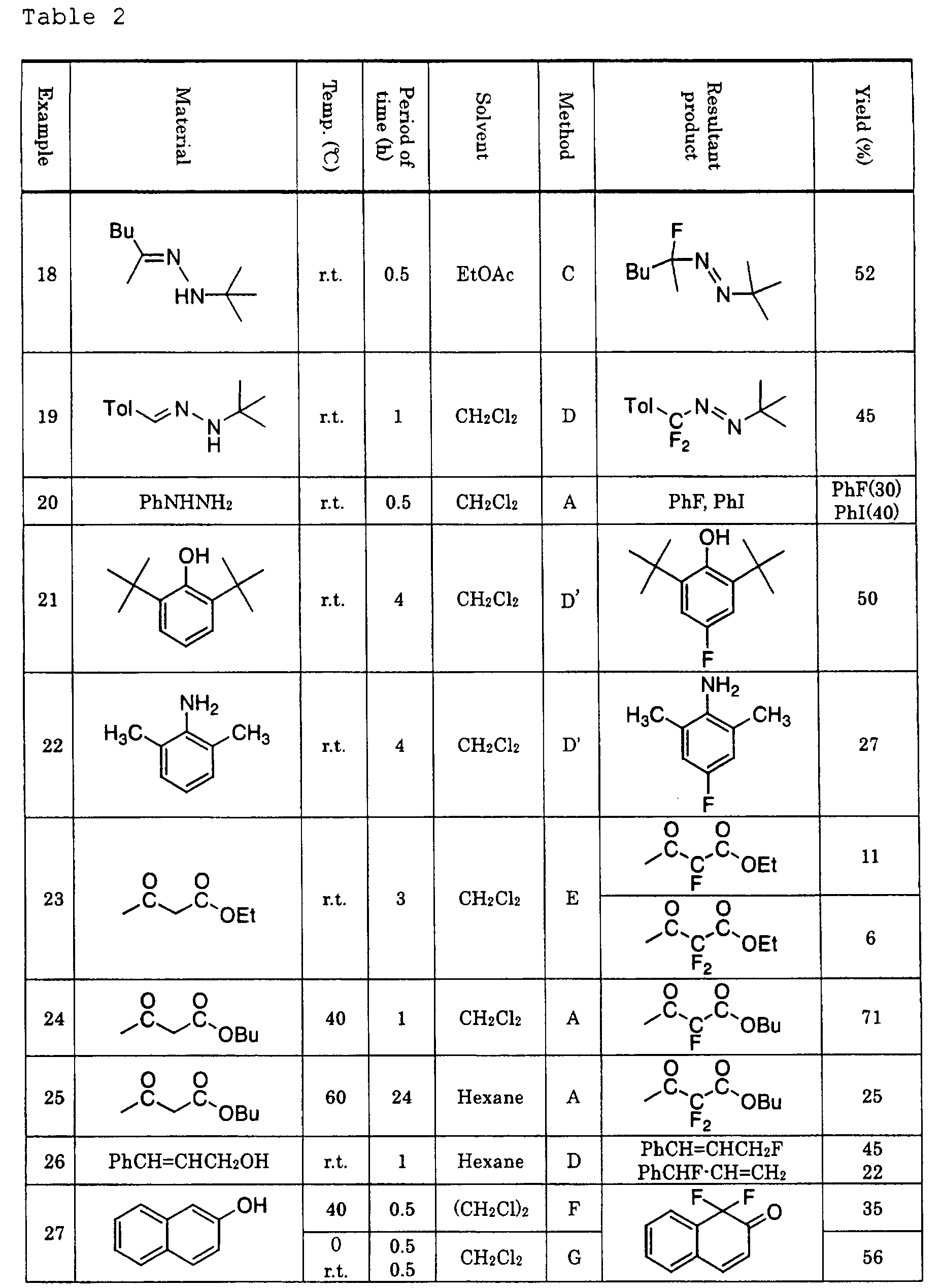
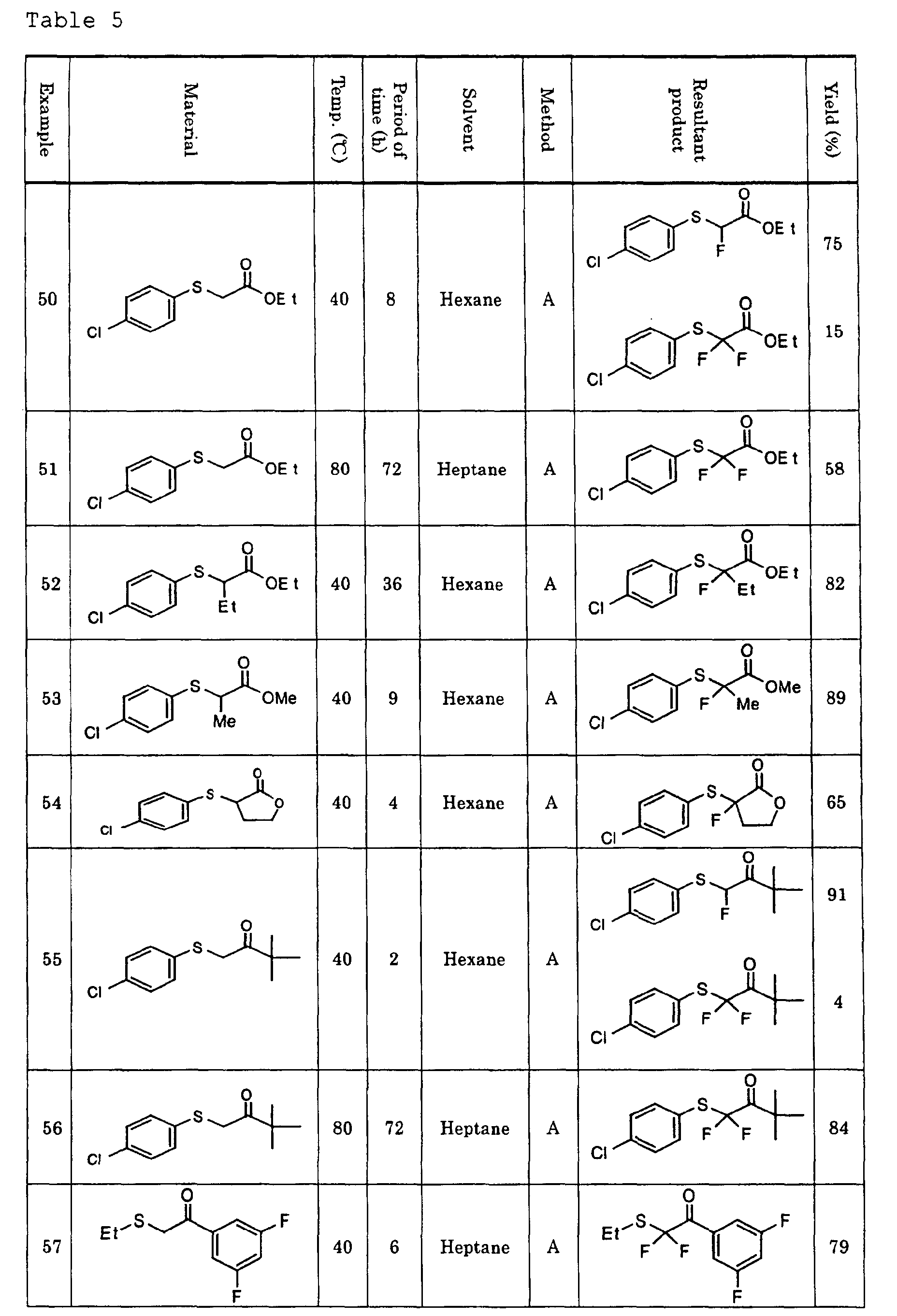
- reaction conditions of reaction Methods A, B, C, D, D', E, F, G, H, I, and J are described below.
- the asterisk (*) indicates that, instead of the IF 5 /Et 3 N-3HF (1:1 molar ratio) solution, an IF 5 (1.2 mmol)/CH 2 Cl 2 (0.46 g) solution was used.
- the 19 F-NMR signals (F, ⁇ ppm) of IF 5 /3HF and IF 5 /Et 3 N/3HF are shown below.
- Tol represents a tolyl group (CH 3 -C 6 H 4 -)
- Ph represents a phenyl group
- Et represents an ethyl group
- Me represents a methyl group
- Bu represents a butyl group
- Ac represents an acetyl group
- iPr represents an isopropyl group.
- IF 5 which is an industrially available, nonexplosive, and easy to handle liquid having a boiling point at 100.5 °C and a melting point at 9.4 °C, it is possible to fluorinate various kinds of organic compounds having hydrogen atoms and to obtain corresponding fluorine compounds.
Landscapes
- Chemical & Material Sciences (AREA)
- Organic Chemistry (AREA)
- Chemical Kinetics & Catalysis (AREA)
- Engineering & Computer Science (AREA)
- Oil, Petroleum & Natural Gas (AREA)
- Organic Low-Molecular-Weight Compounds And Preparation Thereof (AREA)
Abstract
Description
carboxylic acids, such as acetic acid, trifluoroacetic acid, propionic acid, acrylic acid, methacrylic acid, crotonic acid, butyric acid, valeric acid, isovaleric acid, pivalic acid, lauric acid, myristic acid, palmitic acid, stearic acid, oleic acid, linoleic acid, linolenic acid, cinnamic acid and like aliphatic mono-carboxylic acids, oxalic acid, succinic acid, malonic acid, glutaric acid, adipic acid, maleic acid, fumaric acid, citric acid and like polycarboxylic acids, benzoic acid, salicylic acid, (o-,m-,p-)phthalic acid, nalidixic acid, nicotinic acid and like aromatic carboxylic acids, pantothenic acid, biotin and like vitamins having carboxylic acid groups, glycine, alanine, phenylalanine, cysteine, aspartic acid, glutamic acid, threonine, histidine, lysine, methionine, proline and like 20 kinds of natural amino acids, lactic acid, citric acid, malic acid, tartaric acid and like hydroxycarboxylic acids.
→ R2-CF2-C(=X)-R2a
→ H-CF2-C(=X)-R2a
→ R2-CF2-C(=X)-H
→ R2-C(=X)-CHF-C(=X)-R2a
→ R2-C(=X)-CF2-C(=X)-R2a
→ H-C(=X)-CHF-C(=X)-R2a
→ H-C(=X)-CF2-C(=X)-R2a
(R2)2CH-COOR2b → (R2)2CF-COOR2b
→ R3-CF2-S-R3a
→ R3-CO-CF2-S-R3a




→ R6-CF3


fluorosulfonic acid, chlorosulfonic acid, methanesulfonic acid, ethanesulfonic acid, trifluoromethanesulfonic acid, difluoromethanesulfonic acid, trichloromethanesulfonic acid, perfluorobutanesulfonic acid, perfluorooctanesulfonic acid, benzenesulfonic acid, toluenesulfonic acid, nitrobenzenesulfonic acid and like sulfonic acids, or polystyrenesulfonic acid, fluorinated sulfonic acid resin (Nafion-H) and like polymer carrying sulfonic acids;
formic acid, acetic acid, propionic acid, chloroacetic acid, bromoacetic acid, dichloroacetic acid, trichloroacetic acid, trifluoroacetic acid, glycolic acid, lactic acid, benzoic acid, oxalic acid, succinic acid and like mono- or poly- carboxylic acids;
SO3, BF3, BCl3, B(OCH3)3, AlCl3, AlBr3, SbF3, SbCl3, SbF5, PF3, PF5, AsF3, AsCl3, AsF5, TiCl4, NbF5, TaF5 and like Lewis acids or their ether complexes;
HBF4, HPF6, HAsF6, HSbF6, HSbCl6 and like acids formed between Lewis acids and hydrogen halides, or their ether complexes;
or mixtures of two or more members described above. The acids used here may be supported by several kinds of carriers. Examples of carriers include SiO2, methylated SiO2, Al2O3, Al2O3-WB, MoO3, ThO2, ZrO2, TiO2, Cr2O3, SiO2-Al2O3, SiO2-TiO2, SiO2-ZrO2, TiO2-ZrO2, Al2O3-B2O3, SiO2-WO3, SiO2-NH4F, HSO3Cl-Al2O3, HF-NH4-Y, HF-Al2O3, NH4F-SiO2-Al2O3, AlF3-Al2O3, Ru-F-Al2O3, F-Al2O3, KF-Al2O3, AlPO4, AlF3, bauxite, kaolin, activated carbon, graphite, Pt-graphite, ion-exchange resin, metal sulfate, chloride, Al and like metals, Al-Mg, Ni-Mo and like alloys, polystyrene and like polymers, etc.
sodium methoxide, sodium ethoxide, sodium butoxide, potassium methoxide, potassium ethoxide, potassium butoxide, lithium methoxide, lithium ethoxide and like alkali metal alkoxides;
sodium hydride, potassium hydride, lithium hydride, calcium hydride and like hydrides of alkali metals or alkaline earth metals;
sodium, potassium, lithium and like alkali metals;
magnesium oxide, calcium oxide and like alkaline earth metal oxides;
ammonia, ammonium hydroxide, tetramethylammonium hydroxide, tetraethylammonium hydroxide, tetrabuthylammonium hydroxide, octyltriethylammonium hydroxide, benzyltrimethylammonium hydroxide and like ammonium hydroxide salts, or AMBERLITE® resin and like polymer carrying ammonium hydroxide salts, etc.;
aliphatic amine (primary amine, secondary amine, tertiary amine), alicyclic amine (secondary amine, tertiary amine), aromatic amine (primary amine, secondary amine, tertiary amine), heterocyclic amine and like organic bases; and mixtures thereof.
sodium formate, ammonium formate, sodium acetate, potassium acetate, lithium acetate, magnesium acetate, calcium acetate, ammonium acetate, methylammonium acetate, diethylammonium acetate, triethylammonium acetate, tetraethylammonium acetate, pyridinium acetate, sodium propionate, potassium propionate, sodium butyrate, polyarylammonium butyrate, polyvinylpyridinium acetate, sodium isobutyrate, sodium valerianate, sodium nonanoate, sodium chloroacetate, sodium bromoacetate, sodium trichloroacetate, sodium trifluoroacetate, sodium glycolate, sodium lactate, sodium benzoate, sodium oxalate, sodium succinate, sodium polyacrylate and like metal salts or ammonium salts of carboxylic acids;
LiBr, LiI, NaBr, NaI, KBr, KI, RbBr, RbI, CsBr, CsI, BeBr2, BeI2, MgBr2, MgI2, CaBr2, CaI2, SrBr2, SrI2, BaBr2, BaI2, ZnBr2, ZnI2, CuBr2, Cul2, CuBr, CuI, AgBr, AgI, AuBr, AuI, NiBr2, NiI2, PdBr2, PdI2, PtBr2, PtI2, CoBr2, CoI2, FeBr2, FeBr3, FeI2, FeI3, MnBr2, MnI2, CrBr2, CrI2, PbBr2, PbI2, SnBr2, SnI2, SnBr4, SnI4 and like metal salts;
NH4Br, NH4I, MeNH3Br, MeNH3I, Me4NBr, Me4NI, Et4NBr, Et4NI, Bu4NBr, Bu4NI, PhMe3NBr, PhMe3NI, PhCH2NMe3I, pyridinium bromide, pyridinium iodide, chloropyridinium iodide, methylpyridinium iodide, cyanopyridinium iodide, bipyridinium iodide, quinolium iodide, isoquinolium iodide, N-methylpyridinium bromide, N-methylpyridinium iodide, N-methylquinolium iodide and like pyridinium salts or ammonium salts;
Me4PBr, Me4PI, Et4PI, Pr4PI, Bu4PBr, Bu4PI, Ph4PBr, Ph4PI and like phosphonium salts;
sodium fluoride, potassium fluoride, cesium fluoride, ammonium fluoride, tetraethylammonium fluoride, tetrabutylammonium fluoride, polyarylammonium fluoride, sodium chloride, ammonium chloride, sodium hypochlorous acid, sodium chlorite, sodium chlorate, sodium perchlorate, sodium perbromate, sodium periodate and like metal salts or amine salts of hydrogen halides, hypohalous acids, halous acids, halogen acids, or perhalogen acids;
sodium carbonate, potassium carbonate, lithium carbonate, sodium hydrogencarbonate, potassium hydrogencarbonate, lithium hydrogencarbonate, calcium carbonate, magnesium carbonate and like carbonates;
sodium phosphate, potassium phosphate, sodium hydrogenphosphate, sodium dihydrogenphosphate, ammonium phosphate, pyridinium phosphate and like metal salts or amine salts of phosphoric acid;
sodium nitrate, potassium nitrate, ammonium nitrate, pyridinium nitrate and like metal salts or amine salts of nitric acid;
NaBF4, KBF4, LiBF4, NaSbF6, NaAsF6, NaPF6, NH4BF4, NH4SbF6, NH4PF6 and like metal salts or amine salts formed between Lewis acids and hydrogen halide;
tetramethylphosphonium fluoride, tetramethylphosphonium acetate, tetraphenylphosphonium fluoride and like phosphonium salts;
(C2H5)4NF, 1-ethyl-3-methylimidazolium fluoride, (C2H5)3N- (HF)n, (C2H5)4NF- (HF)n, (n-C4H9)3N- (HF)n, (n-C4H9)4NF-(HF)n, BF3 · Et2O-(HF)n, when (n = 1 to 20), and like room temperature molten salts having fluoride anions or HF;
and mixtures thereof.
IF5(1F, 55 ppm), (4F, 6.4 ppm), HF(3F, -194 ppm)
Measuring temperature: 25 °C
Measuring temperature: -40 °C
Measuring temperature: -60 °C

1H-NMR (CDCl3) δ 0.88 (3H, t, J=6.7 Hz), 1.25-1.32 (20H, m), 1.64-1.71 (2H, m), 2.50 (2H, t, J=7.3 Hz);
19F-NMR (CDCl3) δ 44.8 (s);
IR (neat, cm-1) 2925, 2854, 1845, 1467, 1081.
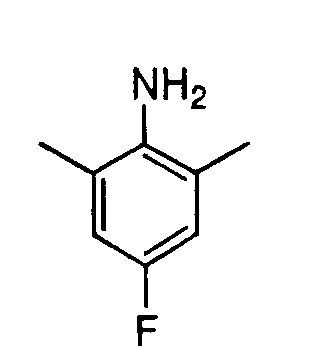
1H-NMR (CDCl3) δ 2.16 (6H, s), 3.42 (2H, bs), 6.67 (2H, d, J=9.2 Hz);
19F-NMR(CDCl3) δ -128.3 (1F, t, J=9.2).
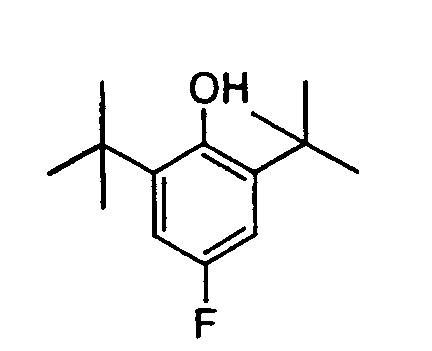
1H-NMR (CDCl3) δ: 1.42 (18H, s); 4.94(1H, s); 6.87 (2H, d, J=10.2 Hz);
19F-NMR(CDCl3) δ: -124.7 (1F, t, J=10.2);
IR (neat, cm-1); 3642; 2961; 1599; 1428; 1236; 1149; 964; 867; 776;
MS m/z: 224 (M+); 209 (M+-Me); 57;
HRMS Calc. for C14H21OF: m/z 224.1576. Found: m/z 224.1571.

1H-NMR (CDCl3) δ 0.99 (9H, s), 1.24 (18H, s), 6.63 (2H, d, J=10.5 Hz);
19F-NMR(CDCl3) δ -96.6 (1F, t , J=10.3 Hz);
IR (KBr, cm-1) 2958, 2873, 1734, 1670, 1138, 1650, 1461, 1364, 1272, 1123, 1073, 965.

1H-NMR (CDCl3) δ 0.90 (3H, t, J=7.1 Hz), 1.30-1.55 (4H, m), 1.57 (3H, d, J=20.0 Hz), 168-1.13 (2H, m), 7.47-7.50 (3H, m), 7.74-7.78 (2H, m);
19F-NMR(CDCl3) δ -130.1--129.2 (1F, m);
IR (neat, cm-1) 2957, 1526, 1455, 1141, 765, 689.

1H-NMR (CDCl3) δ 0.89 (3H, t, J=7.1 Hz), 1.22 (9H, s), 1.23-1.35 (4H, m), 1.39 (3H, d, J=20.0 Hz), 1.68-1.88 (2H, m);
19F-NMR(CDCl3) δ -130.9--131.2 (1F, m);
IR (neat, cm-1) 2965, 1457, 1364, 1230, 1149, 905.

1H-NMR (CDCl3) δ 1.24 (9H, s), 2.37 (3H, s), 7.22 (2H, d, J=8.1 Hz,), 7.44 (2H, d, J=8.1 Hz);
19F-NMR(CDCl3) δ -91.1(2F, s);
IR (neat, cm-1) 2978, 1809, 1614, 1364, 1288, 1150, 1103, 1039, 1002, 819.
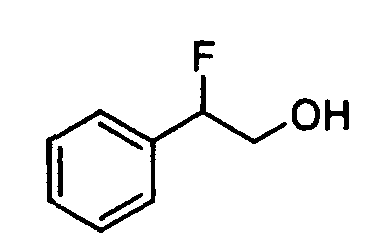
1H-NMR (CDCl3) δ 1.97 (1H, s), 3.77-3.99 (2H, m), 5.57 (1H, ddd,. J=48.8, J=7.8, J=2.9 Hz), 7.34-7.42 (5H, m);
19F-NMR(CDCl3) δ -171.1--171.5 (1F, J=48.8, J=29.9, J=19.9 Hz);
IR (KBr, cm-1) 3376, 3030, 2872, 1495, 1454, 1133, 756, 700.

1H-NNR (CDCl3) δ 5.31 (2H, d, J=47.6 Hz), 7.31 (2H, d, J=8.3 Hz), 7.37 (2H, d, J=8.3 Hz);
19F-NMR(CDCl3) δ -208.02 (1F, t, J=47.6 Hz);
IR (neat, cm-1) 1601, 1493, 1410, 1376, 1215, 1091, 985, 840, 804.

1H-NMR (CDCl3) δ 0.88 (3H, t, J=6.8 Hz), 1.27-1.40 (14H, m), 1.64-1.74 (2H, m), 4.43 (2H, dt, J=47.6, J=6.1 Hz);
19F-NNR(CDCl3) δ -208.02 (1F, tt, J=47.6, J=25.0 Hz);
IR (neat, cm-1) 2985, 2926, 2856, 1467, 1389, 1046, 1010, 722.
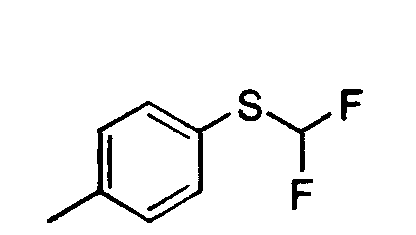
1H-NMR (CDCl3) 2.37 (3H, s), 6.78 (1H, t, J=57.3 Hz), 7.19(2H, d, J=8.0 Hz), 7.46 (2H, d, J=8.0 Hz);
19F-NMR(CDCl3) δ -92.23 (2F, d, J=57.3 Hz);
IR (neat, cm-1) 2924, 1597, 1494, 1454, 1320, 1296, 1068,1020, 818, 796.

1H-NMR (CDCl3) δ 1.26 (3H, t, J=7.3 Hz), 4.25, (2H, q, J=7.3 Hz), 7.32-7.75 (5H, m);
19F-NMR(CDCl3) δ -82.77(2F, s);
IR (neat, cm-1) 2986, 1766, 1474, 1442, 1372, 1296, 1107, 978, 753, 690.
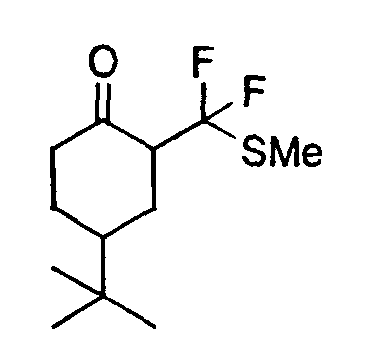
1H-NMR (CDCl3) δ 0.93 (9H, s), 1.25-3.50 (10H, m);
19F-NMR(CDCl3) δ -81.56--74.28(2F, m) ;
IR (neat, cm-1) 2961, 1714, 1440, 1368, 1330, 1175, 1030, 972.

1H-NMR (CDCl3) δ 5.03 (2H, ddd, J=1.2, J=6.1, J=46.8), 6.32-6.42 (1H, m), 6.70 (1H, dd, J=5.1, J=15.9) 7.27-7.42 (5H, m);
19F-NMR(CDCl3) δ -211.09 (1F, ddt, J=5.1, J=12.2,J=46.8 Hz);
IR (neat, cm-1) 3027, 2930, 1726, 1495, 1450, 1377, 1114, 967, 746, 692.

1H-NMR (CDCl3) δ 1.22 (3H, t, J=7.2 Hz,), 3.17 (2H, t, J=11.0 Hz), 3.80 (3H, s), 3.89 (2H, q, J=7.1 Hz), 6.85 (2H, J=8.8 Hz), 7.21 (2H, J=8.8 Hz);
19F-NMR(CDCl3) δ -74.94 (2F, t, J=11.0 Hz);
IR (neat, cm-1) 2987, 2838, 1615, 1517, 1347, 1351, 1247, 1179,1036, 823.

1H-NMR (CDCl3) δ 1.34 (9H, s), 7.49 (2H, d, J=8.6 Hz), 7.55 (2H, d, J=8.6 Hz);
19F-NMR(CDCl3) δ -62.90 (3F, s);
IR (neat, cm-1) 2968, 1617, 1328, 1166, 1115, 1070, 1015, 840, 706.
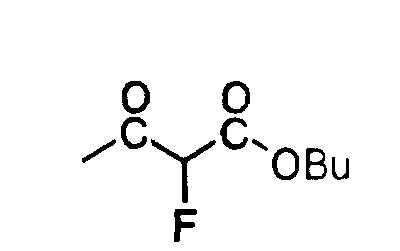
1H-NMR (CDCl3) δ 0.95 (3H, t, J=7.3 Hz), 1.36-1.42 (2H, m), 1.66-1.69 (2H, m), 2.35 (3H, t, J=4.2 Hz), 5.22 (2H, d, J=49.6 Hz);
19F-NMR(CDCl3) δ -193.66 (1F, dq, J=49.3 Hz, J=4.3 Hz);
IR (neat, cm-1) 2964, 2876,1748, 1735, 1466, 1362, 1261, 1164, 1109, 964.
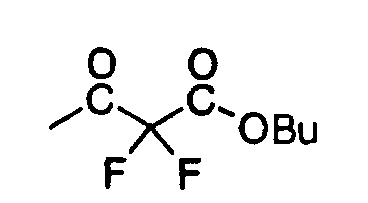
1H-NMR (CDCl3) δ 0.95 (3H, t, J=7.5 Hz), 1.37-1.44 (2H, m), 1.66-1.73 (2H, m), 2.42 (3H, t, J=1.6 Hz), 4.32 (2H, t, J=6.7 Hz);
19F-NMR(CDCl3) δ -114.18 (2F, q, J=1.6);
IR (neat, cm-1) 2964, 2876, 1759, 1465, 1362, 1312, 1134, 1056.
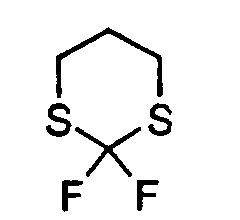
1H-NMR (CDCl3) δ 2.07-2.15 (2H, m), 3.13-3.17 (2H, m);
19F-NMR(CDCl3) δ -63.95 (2F, s);
13C-NMR(CDCl3) δ 23.43, 29.98, 130.77 (t, JC-F=301.1 Hz);
IR (neat, cm-1) 2926, 1677, 1422, 1282, 1081, 998, 921, 873, 811.
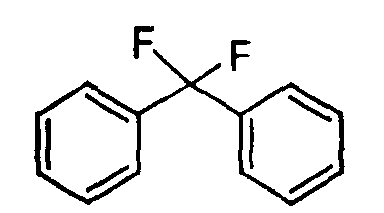
1H-NMR (CDCl3) δ 7.39-7.52 (10H, m);
19F-NMR(CDCl3) δ -89.40 (2F, s);
IR (neat, cm-1) 3067, 1453, 1273, 1223, 1026, 956, 771, 696, 647;
MS m/z: 204 (M+) ; 127, 77;
HRMS: Calc. for C13H10F2: m/z 204.0751. Found: m/z 204.0755.

1H-NMR (CDCl3) δ 2.37 (3H, s), 7.19-7.51 (9H, m);
19F-NMR(CDCl3) δ -88.78 (2F, s);
IR (neat, cm-1) 3068, 2927, 2867, 1450, 1276, 1235, 1046, 958, 619, 582;
MS m/z: 218 (M+) 141, 65;
HRMS: Calc. for C14H12F2: m/z 218.0907. Found: m/z 218.0913.
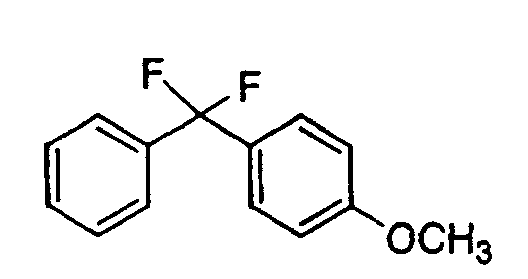
1H-NMR (CDCl3) δ 2.80 (3H, s), 6.89-7.51 (9H, m);
19F-NMR(CDCl3) δ -87.41 (2F, s);
IR (neat, cm-1) 3061, 2969, 2936, 2838, 1616, 1514, 1452, 1277, 1224, 1056, 957, 616, 588;
MS m/z: 234 (M+); 212, 135, 77;
HRMS: Calc. for C14H12F2O: m/z 234.0856. Found: m/z 234.0856.
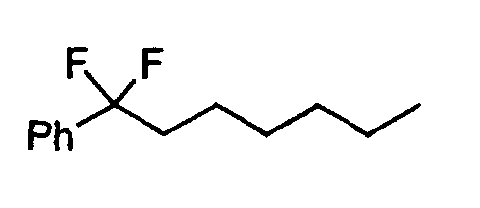
1H-NMR (CDCl3) δ 0.86 (3H, t, J=6.8 Hz), 1.26-1.33 (6H, m), 1.37-1.44 (2H, m), 2.05-2.17 (2H, m), 7.40-7.45 (5H, m);
19F-NMR(CDCl3) δ -89.40 (2F, t, J=16.5);
IR (neat, cm-1) 2932, 2859, 1452, 1327, 1168, 1018, 966, 763, 698;
MS m/z: 212 (M+); 192, 169, 135, 127, 122, 91, 77;
HRMS: Calc. for C13H18F2: m/z 212.1377. Found: m/z 212.1374.

1H-NMR (CDCl3) δ 3.77 (3H, s), 6.32 (1H, t, 56Hz), 6.87-7.38 (4H, d, 9Hz);
19F-NMR(CDCl3) δ -108.82 (1H, d, 57Hz);
IR (neat, cm-1) 3011, 2966, 2842, 1617, 1520, 1308, 1176, 1069, 839;
MS m/z: 158 (M+); 139, 127, 115, 108, 95, 77;
HRMS; Calc. for C8H8F2O: m/z 158.0543. Found: m/z 158.0549.

1H-NMR (CDCl3) δ 1.96 (3H, t, 18Hz), 7.69-8.31 (4H, q, 18Hz);
19F-NMR(CDCl3) δ -89.71-(-89.56) (2F, q, 18Hz);
IR (neat, cm-1) 3122, 3089, 3010, 2927, 2862, 1937, 1798, 1612, 634, 476;
MS m/z: 187 (M+), 172, 141, 101, 91;
HRMS; Calc. for C8H7F2NO2: m/z 187.0445. Found: m/z 187.0449.
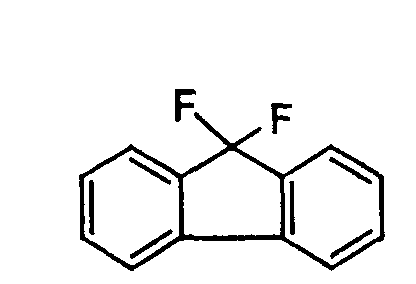
1H-NMR (CDCl3) δ 7.32-7.63 (8H, m);
19F-NMR(CDCl3) δ -112.14 (2F, s);
IR (neat, cm-1) 1610, 1492, 1453, 1261, 1209, 1165, 939, 653, 585, 423;
MS m/z: 202 (M+); 183, 152, 101, 92, 76;
HRMS: Calc. for C13H8F2: m/z 202.0594. Found: m/z 202.0594.
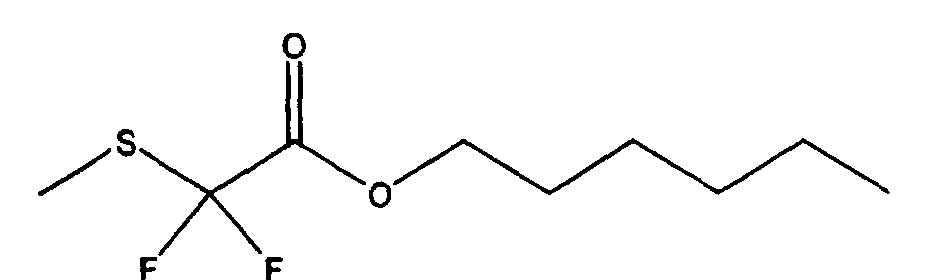
1H-NMR (400MHz, CDCl3) : δ 0.90 (t, 3H, J=6.8Hz), 1.25-1.42 (m, 6H), 1.69-1.76 (m, 2H), 2.35 (s, 3H), 4.30 (t, 2H, J=6.6Hz);
19F-NMR (90MHz, CDCl3) : δ -86.25 (s, 2F);
IR (neat, cm-1) : 2961.16, 2935.13, 2860.88, 1769.37, 1293.04, 1123.33, 1000.87;
MS m/z: 226 (M+), 142, 129, 97, 85, 43;
HRMS; Calc. for C13H8F2: m/z 226.0839. Found: m/z 226.0846.
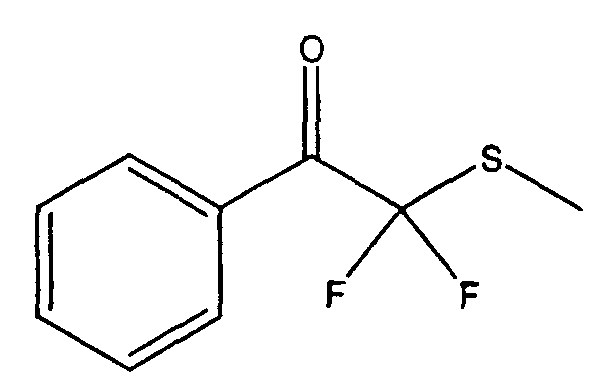
1H-NMR (400MHz, CDCl3) : δ 2.37 (s, 3H), 7.49-8.15 (m, 5H); 19F-NMR (90MHz, COCl3) : δ -82.29 (s, 2F);
IR (neat, cm-1) : .1704, 1598, 1449, 1270, 1133, 1063, 1004;
MS m/z: 202 (M+), 105, 77, 51.
HRMS ; Calc. for C13H8F2: m/z 202.0264. Found: m/z 202.0266.

1H-NMR (400MHz, CDCl3) : δ 7.37-8.14 (m, 10H);
19F-NMR (90MHz, CDCl3) : δ -77.78 (s, 2F);
IR (neat, cm-1) : 1704, 1598, 1449, 1272, 1132, 986, 852, 750, 712, 688;
MS m/z: 264(M+), 105, 77, 51;
HRMS ; Calc. for C13H8F2: m/z 264.0420 m/z 264.0426.
(1-Fluoro-1-methyl-ethyl)-phenyl-diazene:
1H-NMR (CDCl3) δ 1.60 (6H, d, J=19.8 Hz), 7.47 (3H, m), 7.77(2H, m);
19F-NMR(CDCl3) δ -120.96 (1F, seventet, J=19.8 Hz);
IR (neat, cm-1) 2292, 1526, 1455, 1366, 1178, 1145, 908, 756, 689.

19F-NMR (400MHz, CDCl3) : δ -159.40 (d, 2F, J=51.7Hz)
MS : 248(M+), 175, 108, 75
C10H10O2FSCl, Measured Mass 248.0093, Calculated Mass 248.0074

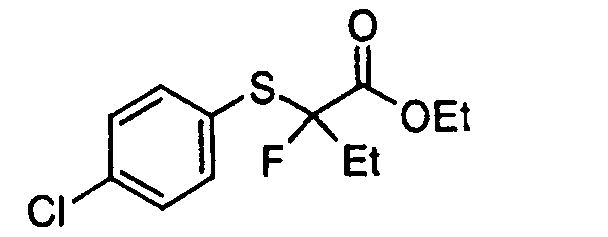
19F-NMR (400MHz, CDCl3) : δ -138.53- -138.43 (m, 1F)

19F-NMR (400MHz, CDCl3) : δ -155.46 (d, 1F, J=52.7Hz)
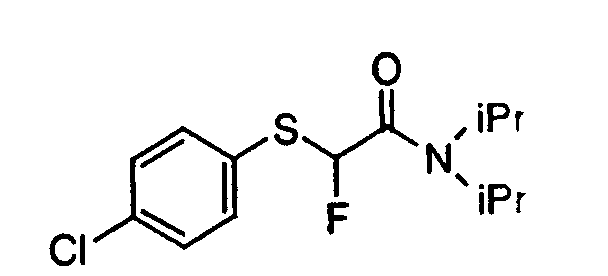
19F-NMR (400MHz, CDCl3) : δ -152.36 (d, 1F, J=55.9Hz)

19F-NMR (400MHz, CDCl3) : δ -73.46 (s, 2F)
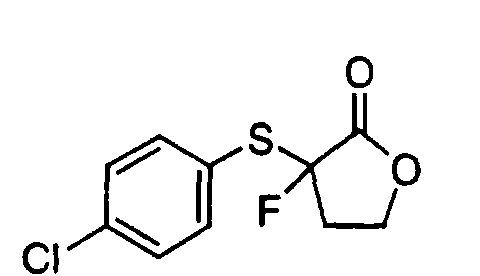
19F-NMR (400MHz, CDCl3) : δ -135.76 (d, 1H, J=15.9Hz)

19F-NMR (400MHz, CDCl3) : δ -83.83 (s, 2H)

19F-NMR (400MHz, CDCl3) : δ -153.90 (d, 1H, J=48.8Hz)
MS : 201(M+), 143, 63
C8H5NFSCl, Measured Mass 200.9798, Calculated Mass 200.9815
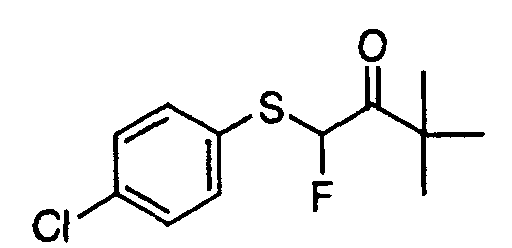
19F-NMR (400MHz, CDCl3) : δ -157.40 (d, 1F, J=54.2Hz)
MS : 260(M+), 175, 108, 57
C12H14OFSCl, Measured Mass 260.0421, Calculated Mass 260.0438
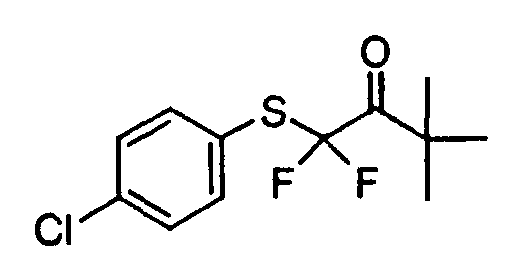
19F-NMR (400MHz, CDCl3) : δ -77.61 (s, 2F)
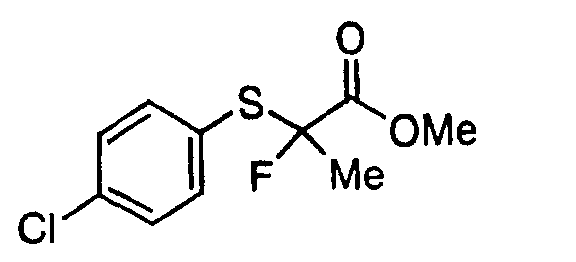
19F-NMR (400MHz, CDCl3) : δ -127.24 (q, 1F, J=18.3Hz)




Claims (12)
- A method for producing a fluorinated organic compound by fluorinating an organic compound having hydrogen atoms in the presence of IF5.
- The method for producing a fluorinated organic compound according to Claim 1, wherein the organic compound having hydrogen atoms is fluorinated in the presence of IF5 and HF.
- The production method according to Claim 1, wherein the organic compound having hydrogen atoms is reacted in the presence of IF5, HF, and an organic base and/or a room temperature molten salt.
- The production method according to Claim 1, wherein the organic compound having hydrogen atoms is reacted in the presence of IF5 and a room temperature molten salt.
- The production method according to Claim 1, wherein the fluorination reaction does not comprise substitution of bromine or iodine with fluorine, nor an addition reaction of iodine fluoride (IF) to a double bond or triple bond.
- The production method according to Claim 5, wherein the fluorination reaction is conducted in the presence of IF5 and at least one member selected from the group consisting of acids, salts, and additives.
- The production method according to Claim 5, wherein the fluorination reaction is conducted in the presence of IF5 and at least one member selected from the group consisting of bases, salts, and additives.
- A fluorinating agent for use in fluorinating an organic compound having hydrogen atoms, which comprises IF5, HF, and an organic base and/or a room temperature molten salt.
- A fluorinating agent for use in fluorinating an organic compound having hydrogen atoms, which comprises IF5 and a room temperature molten salt.
- A fluorinating agent for use in fluorinating an organic compound having hydrogen atoms, which comprises IF5 and at least one member selected from the group consisting of acids, salts, and additives.
- A fluorinating agent for use in fluorinating an organic compound having hydrogen atoms, which comprises IF5 and at least one member selected from the group consisting of bases, salts, and additives.
- A fluorinating agent for use in fluorinating an organic compound having hydrogen atoms, which comprises IF5, HF, and triethylamine.
Applications Claiming Priority (9)
| Application Number | Priority Date | Filing Date | Title |
|---|---|---|---|
| JP2000177453 | 2000-06-13 | ||
| JP2000177453 | 2000-06-13 | ||
| JP2000212447 | 2000-07-13 | ||
| JP2000212447 | 2000-07-13 | ||
| JP2000281515 | 2000-09-18 | ||
| JP2000281515 | 2000-09-18 | ||
| JP2000337929 | 2000-11-06 | ||
| JP2000337929 | 2000-11-06 | ||
| PCT/JP2001/005017 WO2001096263A1 (en) | 2000-06-13 | 2001-06-13 | Processes for the production of fluorinated organic compounds and fluorinating agents |
Publications (3)
| Publication Number | Publication Date |
|---|---|
| EP1304316A1 true EP1304316A1 (en) | 2003-04-23 |
| EP1304316A4 EP1304316A4 (en) | 2005-09-28 |
| EP1304316B1 EP1304316B1 (en) | 2011-08-10 |
Family
ID=27481360
Family Applications (1)
| Application Number | Title | Priority Date | Filing Date |
|---|---|---|---|
| EP01938637A Expired - Lifetime EP1304316B1 (en) | 2000-06-13 | 2001-06-13 | Processes for the production of fluorinated organic compounds and fluorinating agents |
Country Status (6)
| Country | Link |
|---|---|
| US (2) | US6784327B2 (en) |
| EP (1) | EP1304316B1 (en) |
| JP (1) | JP4892808B2 (en) |
| KR (1) | KR100530923B1 (en) |
| CN (1) | CN1321951C (en) |
| WO (1) | WO2001096263A1 (en) |
Cited By (1)
| Publication number | Priority date | Publication date | Assignee | Title |
|---|---|---|---|---|
| EP3560910A4 (en) * | 2016-12-26 | 2020-08-26 | Daikin Industries, Ltd. | PROCESS FOR PRODUCING A DIFLUOROMETHYLENE COMPOUND |
Families Citing this family (20)
| Publication number | Priority date | Publication date | Assignee | Title |
|---|---|---|---|---|
| WO2003008364A1 (en) * | 2001-07-13 | 2003-01-30 | Daikin Industries Ltd. | Fluorination process |
| JP3931957B2 (en) * | 2001-11-09 | 2007-06-20 | ダイキン工業株式会社 | Production of fluorinated sulfides with iodine pentafluoride |
| US7202388B2 (en) * | 2004-10-06 | 2007-04-10 | E. I. Du Pont De Nemours And Company | Processes for preparing fluoroarenes from haloarenes |
| JP4940544B2 (en) * | 2004-11-30 | 2012-05-30 | ダイキン工業株式会社 | Method for producing fluorine-containing organic compound with iodine pentafluoride |
| JP5305321B2 (en) * | 2008-02-15 | 2013-10-02 | 国立大学法人北海道大学 | Method for producing fluoro compound |
| US10233080B2 (en) | 2013-10-02 | 2019-03-19 | Daikin Industries, Ltd. | Fluorinating agent |
| WO2015141811A1 (en) * | 2014-03-20 | 2015-09-24 | ダイキン工業株式会社 | Method for producing compound having oxydifluoromethylene skeleton |
| US9758455B2 (en) | 2014-04-02 | 2017-09-12 | Daikin Industries, Ltd. | Method for producing fluorinated organic compound and fluorinating reagent |
| JP6884499B2 (en) * | 2015-04-21 | 2021-06-09 | ダイキン工業株式会社 | Method for producing composition, fluorinated reagent, and fluorinated organic compound |
| JP6578993B2 (en) * | 2016-03-02 | 2019-09-25 | 日本ゼオン株式会社 | Method for producing fluorinated hydrocarbon |
| JP6976678B2 (en) * | 2016-05-10 | 2021-12-08 | ダイキン工業株式会社 | Fluorine-containing compound and its manufacturing method |
| HUE062054T2 (en) * | 2016-12-26 | 2023-09-28 | Daikin Ind Ltd | Method for manufacturing difluoromethylene compound |
| TWI735700B (en) * | 2016-12-26 | 2021-08-11 | 日商大金工業股份有限公司 | Manufacturing method of sulfur tetrafluoride |
| CN107381522A (en) * | 2017-07-20 | 2017-11-24 | 中节能万润股份有限公司 | A kind of preparation method of double fluorine sulfimides and the method that double fluorine sulfimide alkali metal salts are prepared using the double fluorine sulfimides prepared |
| JP6974734B2 (en) * | 2018-04-25 | 2021-12-01 | ダイキン工業株式会社 | Method for producing difluoromethylene compound |
| EP4223736A4 (en) * | 2020-09-30 | 2024-10-30 | Daikin Industries, Ltd. | PRODUCTION PROCESS FOR FLUORINATED ORGANIC COMPOUNDS |
| CN117098744A (en) * | 2021-03-26 | 2023-11-21 | 大金工业株式会社 | Method for manufacturing organic fluorine compounds |
| JP7623314B2 (en) * | 2021-03-26 | 2025-01-28 | ダイキン工業株式会社 | Method for producing organic fluorine compounds |
| CN114002256A (en) * | 2021-10-29 | 2022-02-01 | 珠海宏昌电子材料有限公司 | Method for measuring trace hydroxyl value of modified polyphenylene oxide |
| JP7464867B2 (en) * | 2022-07-05 | 2024-04-10 | ダイキン工業株式会社 | Method for producing fluorinated organic compounds |
Family Cites Families (9)
| Publication number | Priority date | Publication date | Assignee | Title |
|---|---|---|---|---|
| US2702306A (en) * | 1948-09-10 | 1955-02-15 | Pennsylvania Salt Mfg Co | Production of organic fluorine compounds |
| FR998618A (en) * | 1948-09-10 | 1952-01-21 | Pennsylvania Salt Mfg Co | Improvements in processes for obtaining organic fluorine compounds |
| US2993937A (en) * | 1958-10-10 | 1961-07-25 | Stauffer Chemical Co | Fluorination of aromatic compounds |
| US3283020A (en) | 1962-12-20 | 1966-11-01 | Du Pont | Process for the production of perfluoroethyliodide |
| US3406214A (en) | 1964-08-08 | 1968-10-15 | Fmc Corp | Method of preparing perfluoroethyl iodide |
| JPS58192838A (en) | 1982-05-01 | 1983-11-10 | Daikin Ind Ltd | Preparation of perfluoroalkyl iodide |
| JPS58192837A (en) | 1982-05-01 | 1983-11-10 | Daikin Ind Ltd | Prepartion of perfluoroalkyl iodide |
| JPS58203924A (en) | 1982-05-24 | 1983-11-28 | Kanto Denka Kogyo Kk | Production of carbon tetrafluoride |
| JPS5951225A (en) | 1982-09-16 | 1984-03-24 | Daikin Ind Ltd | Preparation of perfluoroalkyl iodide |
-
2001
- 2001-06-13 KR KR10-2002-7017007A patent/KR100530923B1/en not_active Expired - Lifetime
- 2001-06-13 US US10/296,942 patent/US6784327B2/en not_active Expired - Lifetime
- 2001-06-13 CN CNB01811086XA patent/CN1321951C/en not_active Expired - Lifetime
- 2001-06-13 WO PCT/JP2001/005017 patent/WO2001096263A1/en not_active Ceased
- 2001-06-13 JP JP2002510409A patent/JP4892808B2/en not_active Expired - Lifetime
- 2001-06-13 EP EP01938637A patent/EP1304316B1/en not_active Expired - Lifetime
-
2004
- 2004-07-07 US US10/885,042 patent/US7311890B2/en not_active Expired - Lifetime
Cited By (2)
| Publication number | Priority date | Publication date | Assignee | Title |
|---|---|---|---|---|
| EP3560910A4 (en) * | 2016-12-26 | 2020-08-26 | Daikin Industries, Ltd. | PROCESS FOR PRODUCING A DIFLUOROMETHYLENE COMPOUND |
| US10851031B2 (en) | 2016-12-26 | 2020-12-01 | Daikin Industries, Ltd. | Method for manufacturing difluoromethylene compound |
Also Published As
| Publication number | Publication date |
|---|---|
| JP4892808B2 (en) | 2012-03-07 |
| US7311890B2 (en) | 2007-12-25 |
| US20030176747A1 (en) | 2003-09-18 |
| CN1321951C (en) | 2007-06-20 |
| US6784327B2 (en) | 2004-08-31 |
| WO2001096263A1 (en) | 2001-12-20 |
| EP1304316B1 (en) | 2011-08-10 |
| US20040245505A1 (en) | 2004-12-09 |
| KR20030008164A (en) | 2003-01-24 |
| KR100530923B1 (en) | 2005-11-23 |
| EP1304316A4 (en) | 2005-09-28 |
| CN1436159A (en) | 2003-08-13 |
Similar Documents
| Publication | Publication Date | Title |
|---|---|---|
| US6784327B2 (en) | Process for the production of fluorinated organic compounds and fluorinating agents | |
| JPWO2001096263A1 (en) | Method for producing fluorinated organic compounds and fluorination reagents | |
| Yagupolskii et al. | A new method for the synthesis of trifluoromethylating agents—Diaryltrifluoromethylsulfonium salts | |
| CA1325018C (en) | Process for the preparation of benzoic acid derivatives | |
| Prakash et al. | From Difluoromethyl 2‐Pyridyl Sulfone to Difluorinated Sulfonates: A Protocol for Nucleophilic Difluoro (sulfonato) methylation | |
| JP6735278B2 (en) | Halogenated S-(perfluoroalkyl)dibenzothiophenium salt and method for producing the same | |
| EP3287431B1 (en) | Composition, fluorinating reagent, and method for producing fluorinated organic compound | |
| US4479901A (en) | Fluorination of carbanions with N-fluoro-N-alkylsulfonamides | |
| US5569778A (en) | Process for preparing fluorine-containing dicarbonyl compound | |
| JPWO1994010120A1 (en) | Method for producing fluorine-containing dicarbonyl compounds | |
| EP3121160B1 (en) | Method for producing compound having oxydifluoromethylene skeleton | |
| JP7464867B2 (en) | Method for producing fluorinated organic compounds | |
| JP7273332B2 (en) | Method for producing fluorinated organic compound | |
| US4165332A (en) | Preparation of aliphatic perchlorates and of trifluoromethane sulfonates | |
| EP4223736A1 (en) | Production method for fluorinated organic compound | |
| ES2369199T3 (en) | PROCEDURES FOR THE PRODUCTION OF FLUORATED ORGANIC COMPOUNDS AND FLUORANT AGENTS. | |
| US4222967A (en) | Process for preparing bromine- and fluorine-containing halogenated hydrocarbons | |
| JP3528050B2 (en) | Method for producing fluorine-containing dicarbonyl compound |
Legal Events
| Date | Code | Title | Description |
|---|---|---|---|
| PUAI | Public reference made under article 153(3) epc to a published international application that has entered the european phase |
Free format text: ORIGINAL CODE: 0009012 |
|
| 17P | Request for examination filed |
Effective date: 20030109 |
|
| AK | Designated contracting states |
Designated state(s): AT BE CH CY DE DK ES FI FR GB GR IE IT LI LU MC NL PT SE TR |
|
| RBV | Designated contracting states (corrected) |
Designated state(s): CH DE ES FR GB IT LI |
|
| A4 | Supplementary search report drawn up and despatched |
Effective date: 20050811 |
|
| 17Q | First examination report despatched |
Effective date: 20061117 |
|
| GRAP | Despatch of communication of intention to grant a patent |
Free format text: ORIGINAL CODE: EPIDOSNIGR1 |
|
| GRAS | Grant fee paid |
Free format text: ORIGINAL CODE: EPIDOSNIGR3 |
|
| GRAA | (expected) grant |
Free format text: ORIGINAL CODE: 0009210 |
|
| AK | Designated contracting states |
Kind code of ref document: B1 Designated state(s): CH DE ES FR GB IT LI |
|
| REG | Reference to a national code |
Ref country code: GB Ref legal event code: FG4D |
|
| REG | Reference to a national code |
Ref country code: CH Ref legal event code: NV Representative=s name: SERVOPATENT GMBH Ref country code: CH Ref legal event code: EP |
|
| REG | Reference to a national code |
Ref country code: DE Ref legal event code: R096 Ref document number: 60145119 Country of ref document: DE Effective date: 20111013 |
|
| REG | Reference to a national code |
Ref country code: ES Ref legal event code: FG2A Ref document number: 2369199 Country of ref document: ES Kind code of ref document: T3 Effective date: 20111128 |
|
| PLBE | No opposition filed within time limit |
Free format text: ORIGINAL CODE: 0009261 |
|
| STAA | Information on the status of an ep patent application or granted ep patent |
Free format text: STATUS: NO OPPOSITION FILED WITHIN TIME LIMIT |
|
| 26N | No opposition filed |
Effective date: 20120511 |
|
| REG | Reference to a national code |
Ref country code: DE Ref legal event code: R097 Ref document number: 60145119 Country of ref document: DE Effective date: 20120511 |
|
| REG | Reference to a national code |
Ref country code: FR Ref legal event code: PLFP Year of fee payment: 16 |
|
| REG | Reference to a national code |
Ref country code: FR Ref legal event code: PLFP Year of fee payment: 17 |
|
| REG | Reference to a national code |
Ref country code: FR Ref legal event code: PLFP Year of fee payment: 18 |
|
| REG | Reference to a national code |
Ref country code: CH Ref legal event code: PCAR Free format text: NEW ADDRESS: WANNERSTRASSE 9/1, 8045 ZUERICH (CH) |
|
| PGFP | Annual fee paid to national office [announced via postgrant information from national office to epo] |
Ref country code: FR Payment date: 20200512 Year of fee payment: 20 Ref country code: CH Payment date: 20200616 Year of fee payment: 20 Ref country code: DE Payment date: 20200602 Year of fee payment: 20 |
|
| PGFP | Annual fee paid to national office [announced via postgrant information from national office to epo] |
Ref country code: IT Payment date: 20200512 Year of fee payment: 20 Ref country code: GB Payment date: 20200603 Year of fee payment: 20 |
|
| PGFP | Annual fee paid to national office [announced via postgrant information from national office to epo] |
Ref country code: ES Payment date: 20200701 Year of fee payment: 20 |
|
| REG | Reference to a national code |
Ref country code: DE Ref legal event code: R071 Ref document number: 60145119 Country of ref document: DE |
|
| REG | Reference to a national code |
Ref country code: CH Ref legal event code: PL |
|
| REG | Reference to a national code |
Ref country code: GB Ref legal event code: PE20 Expiry date: 20210612 |
|
| PG25 | Lapsed in a contracting state [announced via postgrant information from national office to epo] |
Ref country code: GB Free format text: LAPSE BECAUSE OF EXPIRATION OF PROTECTION Effective date: 20210612 |
|
| REG | Reference to a national code |
Ref country code: ES Ref legal event code: FD2A Effective date: 20211230 |
|
| PG25 | Lapsed in a contracting state [announced via postgrant information from national office to epo] |
Ref country code: ES Free format text: LAPSE BECAUSE OF EXPIRATION OF PROTECTION Effective date: 20210614 |