EP1303075A1 - Data access management system and management method using access control ticket - Google Patents
Data access management system and management method using access control ticket Download PDFInfo
- Publication number
- EP1303075A1 EP1303075A1 EP02702791A EP02702791A EP1303075A1 EP 1303075 A1 EP1303075 A1 EP 1303075A1 EP 02702791 A EP02702791 A EP 02702791A EP 02702791 A EP02702791 A EP 02702791A EP 1303075 A1 EP1303075 A1 EP 1303075A1
- Authority
- EP
- European Patent Office
- Prior art keywords
- ticket
- memory
- access
- data
- authentication
- Prior art date
- Legal status (The legal status is an assumption and is not a legal conclusion. Google has not performed a legal analysis and makes no representation as to the accuracy of the status listed.)
- Withdrawn
Links
Images





































Classifications
-
- G—PHYSICS
- G06—COMPUTING OR CALCULATING; COUNTING
- G06K—GRAPHICAL DATA READING; PRESENTATION OF DATA; RECORD CARRIERS; HANDLING RECORD CARRIERS
- G06K19/00—Record carriers for use with machines and with at least a part designed to carry digital markings
-
- G—PHYSICS
- G06—COMPUTING OR CALCULATING; COUNTING
- G06F—ELECTRIC DIGITAL DATA PROCESSING
- G06F21/00—Security arrangements for protecting computers, components thereof, programs or data against unauthorised activity
- G06F21/60—Protecting data
- G06F21/62—Protecting access to data via a platform, e.g. using keys or access control rules
- G06F21/6218—Protecting access to data via a platform, e.g. using keys or access control rules to a system of files or objects, e.g. local or distributed file system or database
-
- G—PHYSICS
- G06—COMPUTING OR CALCULATING; COUNTING
- G06F—ELECTRIC DIGITAL DATA PROCESSING
- G06F21/00—Security arrangements for protecting computers, components thereof, programs or data against unauthorised activity
- G06F21/70—Protecting specific internal or peripheral components, in which the protection of a component leads to protection of the entire computer
- G06F21/78—Protecting specific internal or peripheral components, in which the protection of a component leads to protection of the entire computer to assure secure storage of data
Definitions
- the present invention generally relates to a data access management system, a memory-loaded device, a data access management method, and a program storage medium. More particularly, the invention relates to a data access management system, a memory-loaded device, a data access management method, and a program storage medium, in which a single memory is divided into a plurality of areas (partitions), and data managed by a service provider or a related entity is stored in each partition, so as to allow a user to provide various services by using a single memory-loaded device.
- the tamper-resistant structure can be implemented, for example, as follows.
- a device is formed by a single semiconductor chip, and a control unit, a memory controller, a non-volatile memory, voltage detection means, frequency detection means, etc., are provided for the semiconductor chip.
- the non-volatile memory is sandwiched by dummy layers, such as alumina layers, so that it cannot be easily read or written from or into an external source.
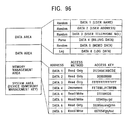
- the memory shown in Fig. 96 has a configuration which can be used as, for example, e-money. As shown in Fig. 96, the memory area is largely divided into three areas, i.e., a data area, a memory management area, and a system area.
- data based on the "data structure" stored in the head of each item of data is stored.
- data items such as the user name, the user address, the user telephone number, the billing, the memo, and the log
- the storage address, the access method, the access authentication key, and so on, for accessing each data item in the data area are stored. For example, access can be made to data 1 (user name) in the data area by read only (Read) with the access authentication key (0123... ).
- a device identifier (ID), and a memory management key which is an authentication key for reserving the memory area in the data area, etc., are stored.
- the data area of the memory device shown in Fig. 96 can be divided into a plurality of areas, and such divided areas can be managed by different service entities, for example, if e-money services are provided, by different e-money service providing entities (ex. different banks). Data in each divided area is read and written (ex. updating of balance data) not only by the individual service providing entities, but also by users, for example, by a reader/writer (dedicated reader/writer or a PC), which serves as a device access machine installed in a store that conducts sales using e-money.
- a reader/writer dedicated reader/writer or a PC
- Fig. 97 illustrates a memory manager, which is the entity for issuing the secure device, and data users, to which the memory areas are assigned from the memory manager, and which utilize the assigned memory areas.
- a data 1 user through a data 6 user are shown.
- the memory users are banks or stores if e-money services are provided as in the above-described example.
- the memory manager has an access-control memory management key for reserving memory areas, and assigns the memory areas (divided data areas) to the memory users by using the memory management key.
- the memory user has an access authentication key for accessing data in each data area, and is able to access the memory in the assigned data area by using the access authentication key.
- Data 4 in the memory shown in Fig. 96 is billing data, and the data 4 user is able to perform, as shown in Fig. 97, decrement processing and read/write processing on data 4.
- Fig. 97 decrement processing and read/write processing on data 4.
- different access keys are assigned to the decrement processing and the read/write processing for data 4, and it is necessary to access data 4 by using the appropriate access key for each processing.
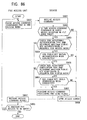
- Fig. 98 illustrates memory reserving processing performed by the memory manager for assigning the data areas in a memory device to the memory users.
- the memory manager executes the data-area reserving processing for the memory device indicated at the right side of Fig. 98 by using a memory-reserving reader/writer (R/W: Reader/Writer) indicated at the left side of Fig. 98.
- the memory-reserving reader/writer (R/W: Reader/Writer) is provided with a secure NVRAM (Non-Volatile RAM) for reserving a memory management key.
- NVRAM Non-Volatile RAM
- the memory-reserving R/W may be a secure-device-dedicated reader/writer R/W, or if the secure device is a device provided with an I/F, such as a USB or PCMCIA, the memory-reserving R/W may be a unit which can read and write via such an interface, for example, a PC.
- a device ID is first read from the secure device. Then, in the R/W, an authentication key is created by using the memory management key and the device ID, and performs mutual authentication with the secure device by using the created authentication key.
- the mutual authentication processing may be performed by, for example, a common key cryptosystem (ex. ISO/IEC9798-2).
- the R/W After successfully performing the mutual authentication, the R/W encrypts the data structure, the data size, the access method, and the access authentication key by using a session key, adds a data-checking MAC (Message Authentication Code) value if necessary, and sends the command to the secure device.
- the secure device Upon receiving the command, the secure device decrypts the received data and checks the integrity of the data according to the MAC checking processing if necessary.
- the secure device reserves a memory area in the data area of the memory according to the data size indicated in the received data, writes the data structure into the reserved area, and writes the memory address, the access method, and the access authentication key into the memory management area.
- a plurality of divided data areas are set in the memory device.
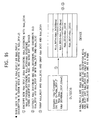
- the reader/writer shown at the left side of Fig. 99 is a memory-access reader/writer (R/W) possessed by the memory user, which is formed of a dedicated R/W or a PC, as in the above-described memory-reserving R/W.
- the memory-access reader/writer is provided with a secure NVRAM for holding access authentication keys. For accessing a data area of the secure device by using the R/W, the device ID is first read from the secure device.
- an authentication key is created by using the access authentication key and the device ID, and performs mutual authentication with the secure device by using the created authentication key. After successfully performing the mutual authentication, the R/W makes a predetermined access to the data in the data area corresponding to the access authentication key.
- the access method is defined in the memory management area. Accordingly, if, for example, the access authentication for decrementing the data in data 4 (billing data) has succeeded, the data in data 4 can be decremented, but it cannot be incremented or overwritten as desired, as indicated in the "memory access method" in Fig. 99. In this manner, by setting different access authentication keys used for authentication processing according to the access modes, the security of the individual data items can be enhanced. For example, even if a decrementing R/W is stolen and the data in the NVRAM in the stolen decrementing R/W is decrypted, the possibility of illegally performing incrementing processing of data 4 (billing data) in the secure device in Fig. 99 is small.
- money withdrawing terminals are often used as money collecting machines in stores when goods are delivered, and are installed in different places. They are thus highly vulnerable to theft, and it is difficult to improve the security of the money withdrawing terminals. Thus, it is effective in setting different authentication keys according to the type of data access.
- the reserving processing for the data area of the memory is performed by executing the authentication processing using the memory management key, and the access processing in each data area is performed by executing the authentication processing using the access authentication key.
- a common key using, for example, DES encryption algorithms is used for the above-described processings, and authentication using a public key cryptosystem or verification using a public key cryptosystem is not considered in the above-described configuration.
- the present invention has been made in view of the above-described background of the related art. It is an object of the present invention to implement a configuration in which data in a plurality of partitions divided from a memory can be independently managed by issuing various types of access control tickets for accessing the memory area divided into the plurality of partitions under the control of each device or partition management entity, and by executing processing based on the rules described in each ticket by a memory-loaded device.
- SPTs service permission tickets
- the present invention has been made in view of the above-described background of the related art. It is an object of the present invention to provide a memory access control system, a memory-loaded device, a memory access control method, and a program storage medium, which implement a configuration in which an access control ticket is received from an access unit for accessing a memory area divided into a plurality of partitions, and access processing is executed for a data file according to a description in the access control ticket, so that access processing for a plurality of data files based on a plurality of access control tickets can be executed with a reduced amount of processing.
- a first aspect of the present invention is a data access management system for managing access processing performed by an access unit for a data file stored in a memory-loaded device having a memory in which data can be stored.
- the access unit receives a service permission ticket (SPT), which serves as an access control ticket in which an access mode to be accepted for the access unit is set, from ticket issuing means, and outputs the received service permission ticket (SPT) to the memory-loaded device.
- SPT service permission ticket
- the memory-loaded device receives the service permission ticket from the access unit, and performs processing according to the access mode indicated in the service permission ticket (SPT).
- the service permission ticket (SPT) contains a file identifier for identifying a data file to be accessed
- the memory-loaded device receives the service permission ticket (SPT) from the access unit, selects the data file according to the file identifier indicated in the service permission ticket (SPT), and performs processing according to the access mode for the selected file.
- the service permission ticket (SPT) contains a plurality of file identifiers for identifying a plurality of data files to be accessed, one of the plurality of file identifiers being set as a target file identifier so that read or write permission data for a target file is stored.
- the memory-loaded device receives the service permission ticket (SPT) from the access unit so as to perform processing according to the access mode, and also performs read or write processing on the target file that is set as the target file identifier in the service permission ticket (SPT) according to the read or write permission data set in the service permission ticket (SPT).
- the service permission ticket (SPT) contains a plurality of file identifiers for identifying a plurality of data files to be accessed, one of the plurality of file identifiers being set as a target file identifier so that read or write permission data for a target file is stored, and, as the access mode of the other data file, encryption processing using an encryption key stored in the data file is set.
- the memory-loaded device receives the service permission ticket (SPT) from the access unit, and performs a reading operation for the target file and encryption processing by using the encryption key according to the access mode, thereby executing internal encryption processing in the memory-loaded device.
- the ticket issuing means that issues the service permission ticket (SPT) is ticket issuing means which is under the management of an entity that manages a memory area of the memory-loaded device, and the ticket issuing means individually issues the service permission tickets (SPTs) in which various access modes are set according to the access units, thereby enabling the execution of the various modes of access according to the access units.
- SPT service permission ticket
- the memory-loaded device generates a file open table in which a file identifier, which serves as ID data of a file that has been subject to file open processing performed based on the service permission ticket (SPT) received during a session with the access unit is related to the access mode indicated in the service permission ticket (SPT), and determines whether a command received from the access unit is to be executed by referring to the file open table.
- SPT service permission ticket
- the memory of the memory-loaded device includes one or more partitions as memory areas managed by corresponding partition managers, and the data file is stored in one of the partitions.
- the memory-loaded device performs processing in response to an access request for the data file stored in each partition based on a description in the service permission ticket (SPT) which is issued by the ticket issuing means under the management of the partition manager and which is input into the memory-loaded device from the access unit, which serves as ticket using means.
- SPT service permission ticket
- the service permission ticket (SPT) contains mutual-authentication-mode designation data that designates a mutual authentication mode to be executed between the memory-loaded device and the access unit that outputs the ticket.
- the memory-loaded device executes mutual authentication according to the mutual-authentication-mode designation data of the service permission ticket (SPT), and performs processing according to a description in the received ticket on the condition that the mutual authentication is successfully conducted.
- the service permission ticket (SPT) contains ticket-verification designation data that designates a verification mode of the service permission ticket (SPT) received by the memory-loaded device.
- the memory-loaded device executes ticket verification processing according to the ticket-verification designation data of the service permission ticket (SPT), and performs processing according to a description in the received ticket on the condition that the verification is successfully conducted.
- a second aspect of the present invention is a memory-loaded device having a memory in which data can be stored, including control means for controlling access processing performed by an access unit for a data file stored in the memory.
- the control means selects a data file according to a file identifier indicated in a service permission ticket (SPT) received from the access unit, and performs processing on the selected file according to an access mode indicated in the service permission ticket (SPT).
- SPT service permission ticket
- the service permission ticket (SPT) contains a file identifier for identifying a data file to be accessed
- the control means receives the service permission ticket (SPT) from the access unit, selects the data file according to the file identifier indicated in the service permission ticket (SPT), and performs processing on the selected file according to the access mode.
- the service permission ticket (SPT) contains a plurality of file identifiers for identifying a plurality of data files to be accessed, one of the plurality of file identifiers being set as a target file identifier, so that read or write permission data for a target file is stored.
- the control means receives the service permission ticket (SPT) from the access unit so as to perform processing according to the access mode, and also performs read or write processing on the target file that is set as the target file identifier in the service permission ticket (SPT) according to the read or write permission data set in the service permission ticket (SPT).
- the service permission ticket (SPT) contains a plurality of file identifiers for identifying a plurality of data files to be accessed, one of the plurality of file identifiers being set as a target file identifier so that read or write permission data for a target file is stored, and, as the access mode of the other data file, encryption processing using an encryption key stored in the data file is set.
- the control means receives the service permission ticket (SPT) from the access unit, and performs a reading operation for the target file and encryption processing by using the encryption key according to the access mode, thereby executing internal encryption processing in the memory-loaded device.
- the control means generates a file open table in which the file identifier, which serves as ID data of a file that has been subject to file open processing performed based on the service permission ticket (SPT) received during a session with the access unit is related to the access mode indicated in the service permission ticket (SPT), and determines whether a command received from the access unit is to be executed by referring to the file open table.
- SPT service permission ticket
- the memory of the memory-loaded device includes one or more partitions as memory areas managed by corresponding partition managers, and the data file is stored in one of the partitions.
- the control means performs processing in response to an access request for the data file stored in each partition based on a description in the service permission ticket (SPT) which is issued by the ticket issuing means under the management of the partition manager and which is input into the memory-loaded device from the access unit, which serves as ticket using means.
- SPT service permission ticket
- the service permission ticket (SPT) contains mutual-authentication-mode designation data that designates a mutual authentication mode to be executed between the memory-loaded device and the access unit that outputs the ticket.
- the control means executes mutual authentication according to the mutual-authentication-mode designation data of the service permission ticket (SPT), and performs processing according to a description in the received ticket on the condition that the mutual authentication is successfully conducted.
- the service permission ticket (SPT) contains ticket-verification designation data that designates a verification mode of the service permission ticket (SPT) received by the memory-loaded device.
- the control means executes ticket verification processing according to the ticket-verification designation data of the service permission ticket (SPT), and performs processing according to a description in the received ticket on the condition that the verification is successfully conducted.
- a third aspect of the present invention is a data access management method for managing access processing performed by an access unit for a data file stored in a memory-loaded device having a memory in which data can be stored.
- the access unit receives a service permission ticket (SPT), which serves as an access control ticket in which an access mode to be accepted for the access unit is set, from ticket issuing means, and outputs the received service permission ticket (SPT) to the memory-loaded device.
- SPT service permission ticket
- the memory-loaded device receives the service permission ticket from the access unit, and performs processing according to the access mode indicated in the service permission ticket (SPT).
- the service permission ticket (SPT) contains a file identifier for identifying a data file to be accessed.
- the memory-loaded device receives the service permission ticket (SPT) from the access unit, selects the data file according to the file identifier indicated in the service permission ticket (SPT), and performs processing according to the access mode for the selected file.
- the service permission ticket (SPT) contains a plurality of file identifiers for identifying a plurality of data files to be accessed, one of the plurality of file identifiers being set as a target file identifier so that read or write permission data for a target file is stored.
- the memory-loaded device receives the service permission ticket (SPT) from the access unit so as to perform processing according to the access mode, and also performs read or write processing on the target file that is set as the target file identifier in the service permission ticket (SPT) according to the read or write permission data set in the service permission ticket (SPT).
- the service permission ticket (SPT) contains a plurality of file identifiers for identifying a plurality of data files to be accessed, one of the plurality of file identifiers being set as a target file identifier so that read or write permission data for a target file is stored, and, as the access mode of the other data file, encryption processing using an encryption key stored in the data file is set.
- the memory-loaded device receives the service permission ticket (SPT) from the access unit, and performs a reading operation for the target file and encryption processing by using the encryption key according to the access mode, thereby executing internal encryption processing in the memory-loaded device.
- the ticket issuing means that issues the service permission ticket (SPT) is ticket issuing means which is under the management of an entity that manages a memory area of the memory-loaded device.
- the ticket issuing means individually issues the service permission tickets (SPTs) in which various access modes are set according to the access units, thereby enabling the execution of the various modes of access according to the access units.
- the memory-loaded device generates a file open table in which a file identifier, which serves as ID data of a file that has been subject to file open processing performed based on the service permission ticket (SPT) received during a session with the access unit is related to the access mode indicated in the service permission ticket (SPT), and determines whether a command received from the access unit is to be executed by referring to the file open table.
- SPT service permission ticket
- the memory of the memory-loaded device includes one or more partitions as memory areas managed by corresponding partition managers, and the data file is stored in one of the partitions.
- the memory-loaded device performs processing in response to an access request for the data file stored in each partition based on a description in the service permission ticket (SPT) which is issued by the ticket issuing means under the management of the partition manager and which is input into the memory-loaded device from the access unit, which serves as ticket using means.
- SPT service permission ticket
- the service permission ticket (SPT) contains mutual-authentication-mode designation data that designates a mutual authentication mode to be executed between the memory-loaded device and the access unit that outputs the ticket.
- the memory-loaded device executes mutual authentication according to the mutual-authentication-mode designation data of the service permission ticket (SPT), and performs processing according to a description in the received ticket on the condition that the mutual authentication is successfully conducted.
- the service permission ticket (SPT) contains ticket-verification designation data that designates a verification mode of the service permission ticket (SPT) received by the memory-loaded device.
- the memory-loaded device executes ticket verification processing according to the ticket-verification designation data of the service permission ticket (SPT), and performs processing according to a description in the received ticket on the condition that the verification is successfully conducted.
- a fourth aspect of the present invention is a program storage medium for providing a computer program for performing data access management processing on a computer system, the data access management processing for managing access processing performed by an access unit for a data file stored in a memory-loaded device having a memory in which data can be stored.
- the computer program includes the step of receiving a service permission ticket (SPT), which serves as an access control ticket in which an access mode to be accepted for the access unit that is to access the memory-loaded device is set, and performing processing according to the access mode indicated in the service permission ticket (SPT).
- SPT service permission ticket
- a fifth aspect of the present invention is a data processing system for performing, in response to an access request from an access unit for a memory-loaded device having a memory in which data can be stored, data processing on the memory.
- the memory-loaded device receives an access control ticket, which is configured corresponding to the data processing on the memory, from the access unit, and performs the data processing based on rules indicated in the access control ticket.
- the memory-loaded device determines a type of mutual authentication to be conducted with the access unit based on a description in the access control ticket designated or received from the access unit so as to conduct the mutual authentication, and also determines a type of verification of the access control ticket based on the description in the received access control ticket so as to conduct the verification, and responds to the access request from the access unit on the condition that both the mutual authentication and the ticket verification have been successfully conducted.
- the type of mutual authentication is one of a public key system and a common key system
- the type of verification of the access control ticket is one of a public key system and a common key system
- the memory-loaded device possesses a MAC checking key for conducting the verification of the access control ticket according to the common key system, and, when conducting the verification of the access control ticket received from the access unit according to the common key system, the memory-loaded device performs tamper checking processing by using the MAC checking key; and when conducting the verification of the access control ticket according to the public key system, the memory-loaded device performs signature verification processing based on a public key of ticket issuing means obtained from a public key certificate of the ticket issuing means.
- the memory-loaded device possesses a plurality of MAC checking keys for conducting the verification of the access control ticket, and selects the MAC checking key to be used according to information recorded in the access control ticket received from the access unit.
- the access control ticket includes a data update ticket (DUT) for allowing updating processing of data stored in the memory of the memory-loaded device.
- the memory-loaded device possesses a plurality of MAC checking keys for conducting the verification of the access control ticket, and when the data to be updated, designated in the data update ticket (DUT), received from the access unit is a MAC checking key for conducting the verification of the access control ticket, the memory-loaded device conducts the verification processing of the received data update ticket (DUT) by selecting a MAC checking key which is not the MAC checking key to be updated from the plurality of MAC checking keys.
- the memory of the memory-loaded device includes one or more partitions as memory areas managed by corresponding partition managers.
- the memory-loaded device performs processing in response to an access request for the data stored in each partition based on a description in the access control ticket which is issued by the ticket issuing means under the management of the corresponding partition manager and which is input into the memory-loaded device from the access unit, which serves as ticket using means.
- the memory of the memory-loaded device includes one or more partitions as memory areas managed by corresponding partition managers.
- the memory-loaded device generates an authentication table in which public-key authentication information and a session key, or common-key authentication information and a session key, which are obtained by partition authentication or device authentication executed during a session with the access unit, are related to each other, and retains the authentication table during a period of the session.
- a sixth aspect of the present invention is a memory-loaded device having a memory in which data can be stored, including control means for performing data processing on the memory in response to an access request from an access unit.
- the control means receives an access control ticket, which is configured corresponding to the data processing on the memory, from the access unit, and performs the data processing based on rules indicated in the access control ticket.
- the control means determines a type of mutual authentication to be conducted with the access unit based on a description in the access control ticket designated or received from the access unit so as to conduct the mutual authentication, and also determines a type of verification of the access control ticket based on the description in the received access control ticket so as to conduct the verification, and responds to the access request from the access unit on the condition that both the mutual authentication and the ticket verification have been successfully conducted.
- control means selectively executes a public key system or a common key system as the type of mutual authentication, and selectively executes a public key system or a common key system as the type of verification of the access control ticket.
- the memory-loaded device possesses a MAC checking key for conducting the verification of the access control ticket.
- the control means When conducting the verification of the access control ticket received from the access unit according to the common key system, the control means performs tamper checking processing by using the MAC checking key, and when conducting the verification of the access control ticket according to the public key system, the control means performs signature verification processing based on a public key of ticket issuing means obtained from a public key certificate of the ticket issuing means.
- the memory-loaded device possesses a plurality of MAC checking keys for conducting the verification of the access control ticket, and the control means selects the MAC checking key to be used according to information recorded in the access control ticket received from the access unit.
- the access control ticket includes a data update ticket (DUT) for allowing updating processing of data stored in the memory of the memory-loaded device.
- the memory-loaded device possesses a plurality of MAC checking keys for conducting the verification of the access control ticket.
- the control means conducts the verification processing of the received data update ticket (DUT) by selecting a MAC checking key which is not the MAC checking key to be updated from the plurality of MAC checking keys.
- the memory of the memory-loaded device includes one or more partitions as memory areas managed by corresponding partition managers.
- the control means performs processing in response to an access request for the data stored in each partition based on a description in the access control ticket which is issued by the ticket issuing means under the management of the corresponding partition manager and which is input into the memory-loaded device from the access unit, which serves as ticket using means.
- the memory of the memory-loaded device includes one or more partitions as memory areas managed by corresponding partition managers.
- the control means generates an authentication table in which public-key authentication information and a session key, or common-key authentication information and a session key, which are obtained by partition authentication or device authentication executed during a session with the access unit, are related to each other, and retains the authentication table during a period of the session.
- a seventh aspect of the present invention is a data processing method for performing, in response to an access request from an access unit for a memory-loaded device having a memory in which data can be stored, data processing on the memory.
- the memory-loaded device receives an access control ticket, which is configured corresponding to the data processing on the memory, from the access unit, and performs the data processing based on rules indicated in the access control ticket.
- the memory-loaded device determines a type of mutual authentication to be conducted with the access unit based on a description in the access control ticket designated or received from the access unit so as to conduct the mutual authentication, and also determines a type of verification of the access control ticket based on the description in the received access control ticket so as to conduct the verification, and responds to the access request from the access unit on the condition that both the mutual authentication and the ticket verification have been successfully conducted.
- the type of mutual authentication is one of a public key system and a common key system
- the type of verification of the access control ticket is one of a public key system and a common key system
- the memory-loaded device possesses a MAC checking key for conducting the verification of the access control ticket according to the common key system.
- the memory-loaded device When conducting the verification of the access control ticket received from the access unit according to the common key system, the memory-loaded device performs tamper checking processing by using the MAC checking key, and when conducting the verification of the access control ticket according to the public key system, the memory-loaded device performs signature verification processing based on a public key of ticket issuing means obtained from a public key certificate of the ticket issuing means.
- the memory-loaded device possesses a plurality of MAC checking keys for conducting the verification of the access control ticket, and selects the MAC checking key to be used according to information recorded in the access control ticket received from the access unit.
- the access control ticket includes a data update ticket (DUT) for allowing updating processing of data stored in the memory of the memory-loaded device.
- the memory-loaded device possesses a plurality of MAC checking keys for conducting the verification of the access control ticket, and when the data to be updated, designated in the data update ticket (DUT), received from the access unit is a MAC checking key for conducting the verification of the access control ticket, the memory-loaded device conducts the verification processing of the received data update ticket (DUT) by selecting a MAC checking key which is not the MAC checking key to be updated from the plurality of MAC checking keys.
- the memory of the memory-loaded device includes one or more partitions as memory areas managed by corresponding partition managers.
- the memory-loaded device performs processing in response to an access request for the data stored in each partition based on a description in the access control ticket which is issued by the ticket issuing means under the management of the corresponding partition manager and which is input into the memory-loaded device from the access unit, which serves as ticket using means.
- the memory of the memory-loaded device includes one or more partitions as memory areas managed by corresponding partition managers.
- the memory-loaded device generates an authentication table in which public-key authentication information and a session key, or common-key authentication information and a session key, which are obtained by partition authentication or device authentication executed during a session with the access unit, are related to each other, and retains the authentication table during a period of the session.
- An eighth aspect of the present invention is a program storage medium for providing a computer program for performing data processing on a computer system, the data processing to be performed, in response to an access request from an access unit for a memory-loaded device having a memory in which data can be stored, on the memory.
- the computer program includes: a step of receiving an access control ticket, which is configured corresponding to the data processing on the memory, from the access unit; a step of determining a type of mutual authentication to be conducted with the access unit based on a description in the access control ticket designated or received from the access unit so as to conduct the mutual authentication; a step of determining a type of verification of the access control ticket based on the description of the received access control ticket so as to conduct the verification; and a step of executing the access request from the access unit on the condition that both the mutual authentication and the ticket verification have been successfully conducted.
- a ninth aspect of the present invention is a data access control system for issuing a command from an access unit to a memory-loaded device having a memory in which data can be stored, and for performing processing on the data stored in the memory.
- the memory-loaded device receives an access control ticket, which is configured as access control data for the data stored in the memory, from the access unit, and allows data access on the condition that authentication based on authentication rules indicated in the access control ticket is successfully conducted, and that ID data of the access unit indicated in the access control ticket is successfully verified.
- an access control ticket which is configured as access control data for the data stored in the memory
- an authentication type as authentication-type designation information indicating whether a public key authentication type or a common key authentication type is to be performed, or whether either the public key authentication type or the common key authentication type is allowed, is recorded in the access control ticket.
- the memory-loaded device performs authentication processing according to the authentication type indicated in the access control ticket received from the access unit.
- a category or an identifier of issuing means of the access control ticket is stored in the access control ticket.
- the memory-loaded device verifies whether the ticket is a ticket issued by authorized issuing means based on the category or the identifier of the issuing means of the access control ticket indicated in the access control ticket received from the access unit, and allows the data access on the condition that the ticket is successfully verified.
- a category or an identifier of issuing means of the access control ticket is stored in the access control ticket.
- the memory-loaded device verifies whether the ticket is a ticket issued by authorized issuing means based on a comparison between the category or the identifier of the issuing means of the access control ticket indicated in the access control ticket received from the access unit and user information stored in a pubic key certificate of the issuing means of the access control ticket, and allows the data access on the condition that the ticket is successfully verified.
- a category or an identifier of the access unit which serves as using means of the access control ticket, is stored in the access control ticket.
- the memory-loaded device verifies whether the ticket is a ticket provided from authorized using means based on the category or the identifier of the access unit indicated in the access control ticket received from the access unit, and allows the data access on the condition that the ticket is successfully verified.
- a category or an identifier of using means of the access control ticket is stored in the access control ticket.
- the memory-loaded device verifies whether the ticket is a ticket provided by authorized using means based on a comparison between the category or the identifier of the access unit, which serves as the using means of the access control ticket, indicated in the access control ticket received from the access unit and user information stored in a public key certificate of the using means of the access control ticket, and allows the data access on the condition that the ticket is successfully verified.
- the memory of the memory-loaded device includes one or more partitions as memory areas managed by corresponding partition managers.
- the memory-loaded device generates an authentication table in which public-key authentication information and a session key, or common-key authentication information and a session key, which are obtained by partition authentication or device authentication executed during a session with the access unit, are related to each other.
- a tenth aspect of the present invention is a memory-loaded device having a memory in which data can be stored, including control means for issuing a command from an access unit and for performing processing on the data stored in the memory.
- the control means receives an access control ticket, which is configured as access control data for the data stored in the memory, from the access unit, and allows data access on the condition that authentication based on authentication rules indicated in the access control ticket is successfully conducted, and that ID data of the access unit indicated in the access control ticket is successfully verified.
- an access control ticket which is configured as access control data for the data stored in the memory
- an authentication type as authentication-type designation information indicating whether a public key authentication type or a common key authentication type is to be performed, or whether either the public key authentication type or the common key authentication type is allowed, is recorded in the access control ticket.
- the control means performs authentication processing according to the authentication type indicated in the access control ticket received from the access unit.
- a category or an identifier of issuing means of the access control ticket is stored in the access control ticket.
- the control means verifies whether the ticket is a ticket issued by authorized issuing means based on the category or the identifier of the issuing means of the access control ticket indicated in the access control ticket received from the access unit, and allows the data access on the condition that the ticket is successfully verified.
- a category or an identifier of issuing means of the access control ticket is stored in the access control ticket.
- the control means verifies whether the ticket is a ticket issued by authorized issuing means based on a comparison between the category or the identifier of the issuing means of the access control ticket indicated in the access control ticket received from the access unit and user information stored in a pubic key certificate of the issuing means of the access control ticket, and allows the data access on the condition that the ticket is successfully verified.
- a category or an identifier of the access unit which serves as using means of the access control ticket, is stored in the access control ticket.
- the control means verifies whether the ticket is a ticket provided from authorized using means based on the category or the identifier of the access unit indicated in the access control ticket received from the access unit, and allows the data access on the condition that the ticket is successfully verified.
- a category or an identifier of using means of the access control ticket is stored in the access control ticket.
- the control means verifies whether the ticket is a ticket provided by authorized using means based on a comparison between the category or the identifier of the access unit, which serves as the using means of the access control ticket, indicated in the access control ticket received from the access unit and user information stored in a public key certificate of the using means of the access control ticket, and allows the data access on the condition that the ticket is successfully verified.
- the memory of the memory-loaded device includes one or more partitions as memory areas managed by corresponding partition managers.
- the control means generates an authentication table in which public-key authentication information and a session key, or common-key authentication information and a session key, which are obtained by partition authentication or device authentication executed during a session with the access unit, are related to each other.
- An eleventh aspect of the present invention is a data access control method for issuing a command from an access unit to a memory-loaded device having a memory in which data can be stored, and for performing processing on the data stored in the memory.
- the memory-loaded device receives an access control ticket, which is configured as access control data for the data stored in the memory, from the access unit, and allows data access on the condition that authentication based on authentication rules indicated in the access control ticket is successfully conducted, and that ID data of the access unit indicated in the access control ticket is successfully verified.
- an access control ticket which is configured as access control data for the data stored in the memory
- an authentication type as authentication-type designation information indicating whether a public key authentication type or a common key authentication type is to be performed, or whether either the public key authentication type or the common key authentication type is allowed, is recorded in the access control ticket.
- the memory-loaded device performs authentication processing according to the authentication type indicated in the access control ticket received from the access unit.
- a category or an identifier of issuing means of the access control ticket is stored in the access control ticket.
- the memory-loaded device verifies whether the ticket is a ticket issued by authorized issuing means based on the category or the identifier of the issuing means of the access control ticket indicated in the access control ticket received from the access unit, and allows the data access on the condition that the ticket is successfully verified.
- a category or an identifier of issuing means of the access control ticket is stored in the access control ticket.
- the memory-loaded device verifies whether the ticket is a ticket issued by authorized issuing means based on a comparison between the category or the identifier of the issuing means of the access control ticket indicated in the access control ticket received from the access unit and user information stored in a pubic key certificate of the issuing means of the access control ticket, and allows the data access on the condition that the ticket is successfully verified.
- a category or an identifier of the access unit which serves as using means of the access control ticket, is stored in the access control ticket.
- the memory-loaded device verifies whether the ticket is a ticket provided from authorized using means based on the category or the identifier of the access unit indicated in the access control ticket received from the access unit, and allows the data access on the condition that the ticket is successfully verified.
- a category or an identifier of using means of the access control ticket is stored in the access control ticket.
- the memory-loaded device verifies whether the ticket is a ticket provided by authorized using means based on a comparison between the category or the identifier of the access unit, which serves as the using means of the access control ticket, indicated in the access control ticket received from the access unit and user information stored in a public key certificate of the using means of the access control ticket, and allows the data access on the condition that the ticket is successfully verified.
- the memory of the memory-loaded device includes one or more partitions as memory areas managed by corresponding partition managers.
- the memory-loaded device generates an authentication table in which public-key authentication information and a session key, or common-key authentication information and a session key, which are obtained by partition authentication or device authentication executed during a session with the access unit, are related to each other.
- a twelfth aspect of the present invention is a program storage medium for providing a computer program for performing processing on a computer system, the processing being performed, by issuing a command from an access unit to a memory-loaded device having a memory in which data can be stored, on the data stored in the memory.
- the computer program includes: a step of receiving an access control ticket, which is configured as access control data for the data stored in the memory, from the access unit; and a step of allowing data access on the condition that authentication based on authentication rules indicated in the access control ticket is successfully conducted, and that ID data of the access unit indicted in the access control ticket is successfully verified.
- a thirteenth aspect of the present invention is a memory access control system for controlling memory access from an access unit to a memory-loaded device having a memory in which a plurality of data files are stored.
- the memory of the memory-loaded device includes one or more partitions as memory areas managed by corresponding partition managers, and the data files are stored in any of the partitions.
- the memory-loaded device receives an access control ticket from the access unit, and performs access processing on a data file according to a description in the access control ticket, and performs access processing on the plurality of data files based on a plurality of the access control tickets on the condition that device authentication as authentication for the memory-loaded device or partition authentication as authentication for the corresponding partition in which the data file to be accessed is stored is successfully conducted.
- an authentication mode that can be set in each of the partitions is indicated in the access control ticket, which is configured as access control data, and the memory-loaded device receives the access control ticket from the access unit, and determines the authentication mode required for the corresponding partition according to the description in the access control ticket.
- the memory-loaded device allows file access in the plurality of different partitions based on the plurality of access control tickets on the condition that the device authentication is successfully conducted.
- the memory-loaded device allows file access in the plurality of different partitions based on the plurality of access control tickets on the condition that the partition authentications as authentication conditions which are individually set for the different partitions or the device authentication are successfully conducted.
- the memory-loaded device generates a single integrated session key based on a plurality of session keys obtained as a result of a plurality of authentication processings performed as file access conditions in the plurality of different partitions, and performs encryption processing of communication data that is to be sent or received to or from the access unit based on the integrated session key.
- the memory-loaded device generates a single integrated session key based on a plurality of session keys obtained as a result of a plurality of authentication processings performed as file access conditions in the plurality of different partitions according to exclusive OR computation of the plurality of session keys, and performs encryption processing of communication data that is to be sent or received to or from the access unit based on the integrated session key.
- the memory-loaded device selects a single session key from a plurality of session keys obtained as a result of a plurality of authentication processings performed as file access conditions in the plurality of different partitions, and performs encryption processing of communication data that is to be sent or received to or from the access unit based on the selected session key.
- the memory-loaded device generates an authentication table in which public-key authentication information and a session key, or common-key authentication information and a session key, which are obtained by the partition authentication or the device authentication executed with the access unit, are related to each other, and retains the authentication table during a period of the session.
- a fourteenth aspect of the present invention is a memory-loaded device having a memory in which a plurality of data files are stored, including control means for controlling memory access from an access unit.
- the memory includes one or more partitions as memory areas managed by corresponding partition managers, and the data files are stored in any of the partitions.
- the control means receives an access control ticket from the access unit, and performs access processing on a data file according to a description in the access control ticket, and performs access processing on the plurality of data files based on a plurality of the access control tickets on the condition that device authentication as authentication for the memory-loaded device or partition authentication as authentication for the corresponding partition in which the data file to be accessed is stored is successfully conducted.
- an authentication mode that can be set in each of the partitions is indicated in the access control ticket, which is configured as access control data.
- the memory-loaded device receives the access control ticket from the access unit, and the control means determines the authentication mode required for the corresponding partition according to the description in the access control ticket.
- control means allows file access in the plurality of different partitions based on the plurality of access control tickets on the condition that the device authentication is successfully conducted.
- control means allows file access in the plurality of different partitions based on the plurality of access control tickets on the condition that the partition authentications as authentication conditions which are individually set for the different partitions or the device authentication are successfully conducted.
- control means generates a single integrated session key based on a plurality of session keys obtained as a result of a plurality of authentication processings performed as file access conditions in the plurality of different partitions, and performs encryption processing of communication data that is to be sent or received to or from the access unit based on the integrated session key.
- control means generates a single integrated session key based on a plurality of session keys obtained as a result of a plurality of authentication processings performed as file access conditions in the plurality of different partitions according to exclusive OR computation of the plurality of session keys, and performs encryption processing of communication data that is to be sent or received to or from the access unit based on the integrated session key.
- control means selects a single session key from a plurality of session keys obtained as a result of a plurality of authentication processings performed as file access conditions in the plurality of different partitions, and performs encryption processing of communication data that is to be sent or received to or from the access unit based on the selected session key.
- the control means generates an authentication table in which public-key authentication information and a session key, or common-key authentication information and a session key, which are obtained by the partition authentication or the device authentication executed with the access unit, are related to each other, and retains the authentication table during a period of the session.
- a fifteenth aspect of the present invention is a memory access control method for controlling memory access from an access unit to a memory-loaded device having a memory in which a plurality of data files are stored.
- the memory of the memory-loaded device includes one or more partitions as memory areas managed by corresponding partition managers, and the data files are stored in any of the partitions.
- the memory-loaded device receives an access control ticket from the access unit, and performs access processing on a data file according to a description in the access control ticket, and performs access processing on the plurality of data files based on a plurality of the access control tickets on the condition that device authentication as authentication for the memory-loaded device or partition authentication as authentication for the corresponding partition in which the data file to be accessed is stored is successfully conducted.
- an authentication mode that can be set in each of the partitions is indicated in the access control ticket, which is configured as access control data.
- the memory-loaded device receives the access control ticket from the access unit, and determines the authentication mode required for the corresponding partition according to the description in the access control ticket.
- the memory-loaded device allows file access in the plurality of different partitions based on the plurality of access control tickets on the condition that the device authentication is successfully conducted.
- the memory-loaded device allows file access in the plurality of different partitions based on the plurality of access control tickets on the condition that the partition authentications as authentication conditions which are individually set for the different partitions or the device authentication are successfully conducted.
- the memory-loaded device generates a single integrated session key based on a plurality of session keys obtained as a result of a plurality of authentication processings performed as file access conditions in the plurality of different partitions, and performs encryption processing of communication data that is to be sent or received to or from the access unit based on the integrated session key.
- the memory-loaded device generates a single integrated session key based on a plurality of session keys obtained as a result of a plurality of authentication processings performed as file access conditions in the plurality of different partitions according to exclusive OR computation of the plurality of session keys, and performs encryption processing of communication data that is to be sent or received to or from the access unit based on the integrated session key.
- the memory-loaded device selects a single session key from a plurality of session keys obtained as a result of a plurality of authentication processings performed as file access conditions in the plurality of different partitions, and performs encryption processing of communication data that is to be sent or received to or from the access unit based on the selected session key.
- the memory-loaded device generates an authentication table in which public-key authentication information and a session key, or common-key authentication information and a session key, which are obtained by the partition authentication or the device authentication executed with the access unit, are related to each other, and retains the authentication table during a period of the session.
- a sixteenth aspect of the present invention is a program storage medium for providing a computer program for performing memory access control processing on a computer system, the memory access control processing being for controlling memory access from an access unit to a memory-loaded device having a memory in which a plurality of data files are stored.
- the computer program includes an authentication step of conducting device authentication as authentication for the memory-loaded device or partition authentication as authentication for a corresponding partition stored in a data file to be accessed is stored, and a step of performing access processing on the plurality of data files based on an access control.ticket received from the access unit on the condition that the authentication in the authentication step is successfully conducted.
- the program storage medium of the present invention is a medium for providing a computer program to, for example, a general-purpose computer system that is able to execute various program codes, in a computer-readable format.
- the form of the medium is not particularly restricted, and may be a recording medium, such as CD, FD, or MO, or a communication medium.
- the cooperative relationship between the computer program and the storage medium in terms of the structure or the function so as to implement the functions of the predetermined computer program on the computer system is defined.
- the cooperative functions can be exhibited on the computer system, thereby obtaining operations and advantages similar to those of the other aspects of the present invention.
- system means a logical group of a plurality of devices, and it is not essential that the devices having individual configurations be located in the same casing.
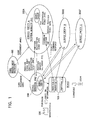
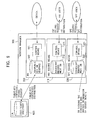
- FIG. 1 illustrates an overview of a data management system according to the present invention.
- a memory-loaded device (hereinafter referred to as the "device") 100 is manufactured by a device manufacturing entity (manufacturer) 500, and is provided to a user under the management of a device manager (DM) 200, which serves as a device management entity, and is utilized.
- the device may be provided to the user in any mode, such as a loan or a sale (including assignment).
- a memory area is divided into a plurality of partitions, which serve as data storage areas, and the individual partitions (Partitions A, B, ... Z) are utilized for various services under the management of partition managers, which serve as various service entities (A, B, ... Z) 300A through 300Z.
- Ticket Issuer For performing partition setting registration processing for the device 100, file setting registration processing for the partitions set in the device, and access processing for, each registered file, access control tickets for the device issued by authorized ticket issuing means (Ticket Issuer) are required.
- a partition registration ticket (PRT) issued by authorized ticket issuing means (Ticket Issuer) is required.
- a file registration ticket (FRT) issued by the authorized ticket issuing means (Ticket Issuer) is required.
- a service permission ticket (SPT) issued by authorized ticket issuing means (Ticket Issuer) is required.
- Each ticket stores access rules for the device 100, for example, the rules concerning authentication processing between the device and a reader/writer that performs various types of processing, such as reading and writing data from and into the device.
- the ticket also stores the partition size that can be set if the ticket is the partition registration ticket (PRT), the file size that can be set if the ticket is the file registration ticket (FRT), and the access mode that can be executed (ex. data reading and writing) if the ticket is the service permission ticket (SPT).
- PRT partition registration ticket
- FRT file size that can be set if the ticket is the file registration ticket
- SPT service permission ticket
- Information concerning the ticket issuer and the ticket user, and other information are also stored.
- a tamper-verification ICV Intelligent Check Value
- ICV Intelligent Check Value
- the ticket issuing means (Ticket Issuer) for issuing the partition registration ticket (PRT) is set in the device manager (DM) 200, and the ticket issuing means (Ticket Issuer) for issuing the file registration ticket (FRT) and the service permission ticket (SPT) are set in the service entity A, 300A, which serves as the partition manager.
- service entities B ... Z, 300B through 300Z have a configuration similar to that of the service entity A, and the ticket issuing means (Ticket Issuer) for issuing the file registration ticket (FRT) and the service permission ticket (SPT) is set in each service entity.
- the service entity and the partition manager are indicated as the same entity. However, they do not have to be the same entity.
- the partition manager for managing the partitions as memory areas set in the memory may be a different entity from the service entity that borrows the partitions as the memory areas from the partition manager under a predetermined contract, stores various files in the borrowed partitions, and provides services.
- the configuration in which the service entity also serves as the partition manager is discussed below.
- the partition manager (PM) which serves as one of the service entities 300A through 300Z, requests the device manager (DM) 200 to issue a partition registration ticket (PRT) under a predetermined contract by, for example, paying a certain price, and the ticket issuing means (Ticket Issuer) in the device manager (DM) receives a permission from the device manager (DM) and issues the partition registration ticket (PRT) for the partition manager (PM), which serves as the service entity.
- Ticket Issuer ticket issuing means in the device manager (DM) receives a permission from the device manager (DM) and issues the partition registration ticket (PRT) for the partition manager (PM), which serves as the service entity.
- Each service entity (partition manager (PM)) 300 accesses the device 100 owned by the user via a communication interface (I/F) so as to perform authentication processing and verification processing according to the rules recorded in the partition registration ticket (PRT) received from the device manager (DM) 200, and also performs the partition setting registration processing within the range of the permission recorded in the partition registration ticket (PRT). This processing is described in detail below.
- the communication I/F may be any type of cable or wireless, interface through which data communication can be performed with an external unit (device).
- the communication I/F may be a USBI/F.
- the communication I/F may be an IC-card reader/writer.
- the communication I/F may be a data communication I/F according to the corresponding communication system.
- the service entity 300 accesses the device 100 owned by the user via the communication interface (I/F) so as to perform authentication processing and verification processing according to the rules recorded in the file registration ticket (FRT) issued by the ticket issuing means (Ticket Issuer) in the service entity 300, and also performs the file setting registration processing for the file within the range of the permission recorded in the file registration ticket (FRT).
- the service entity 300 also accesses the device 100 owned by the user via the communication interface (I/F) so as to perform authentication processing and verification processing according to the rules recorded in the service permission ticket (SPT) issued by the ticket issuing means (Ticket Issuer) in the service entity, and also performs the access processing (ex. data reading and writing) within the range of the permission recorded in the service permission ticket (SPT).
- SPT service permission ticket
- Ticket Issuer ticket issuing means
- a code management institute 400 is set at a level higher than the device manager 200 and the partition manager 300, and assigns code, which serve as ID information of the corresponding entity, to each of the device manager and the partition manager.
- the code assigned to each manager is used as storage data in access control tickets, such as the above-described partition registration ticket (PRT), the file registration ticket (FRT), and so on.
- the device manager (DM) 200 for managing the provided device is set, and device-manager management information, such as the device manager code, is written into the provided device. Details of such data are described below.
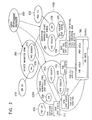
- Fig. 2 illustrates the device manager as the device management entity, the two partition managers 300A and 300B as the management entities for the partitions set in the device, and the code management institute 400 for assigning ID code to the device manager 200.
- a device-manager certificate authority (CA(DEV)) 610 which, in response to a public-key-certificate issuing request from a registration authority 210 managed by the device manager 200, issues a device public key certificate (CERT-DEV) corresponding to the device manager 200, individual units managed by the device manager (partition registration ticket (PRT) issuing means (PRT Issuer) 210, or the device 100.
- CA(DEV) device-manager certificate authority
- CERT-DEV device public key certificate
- PRT partition registration ticket
- PRT Issuer partition registration ticket
- partition-manager certificate authorities CA(PAR) 620 and 630 for issuing a partition public key certificate (CERT-PAR) corresponding to individual units managed by the partition managers 300A and 300B (file registration ticket (FRT) issuing means (FRT Issuer) 310, service-permission-ticket issuing means (SPT Issuer) 320, reader/writers 711 through 714 as device access units, i.e., ticket users, or a partition of the device 100.
- FRT file registration ticket
- SPT Issuer service-permission-ticket issuing means
- the device-manager certificate authority CA for DM (or CA(DEV)) 610 and the partition-manager certificate authorities: CA for PAR (or CA(PAR)) 620 and 630 are separately provided as individual certificate authorities.
- this configuration may be changed as desired.
- a single certificate authority having both functions may be provided, or a common certificate authority for a plurality of partition managers and a device-manager certificate authority may be separately provided.
- the device manager 200 and the partition managers 300A and 300B are provided with registration authorities (RA) 220 and 320, respectively.
- the registration authorities 220 and 320 receive requests to issue public key certificates, i.e., the public key certificates of the device manager 200 and the partition managers 300A and 300B, the public key certificates of the individual units (ticket issuing means and ticket users) managed by the managers, and a public key certificate of the device 100. Then, the registration authorities 220 and 320 check the received public-key issuing requests, then transfer the public-key issuing requests to the certificate authorities, and also manages the issued public key certificates.
- the public key certificates issued by the certificate authorities (CAs) 610, 620, and 630 via the registration authorities (RAs) 220 and 320 are stored in the device 100, and are used for the processing to be performed for the device 100, for example, the partition setting processing, the file setting processing for the partitions, the mutual authentication processing required for accessing the file, or the integrity verification processing for the above-described tickets. Details of the public-key-certificate issuing processing, and the above-described processings using the public key certificates are discussed below.
- the device 100 possesses a management partition: PM1Area for the partition manager 1, 300A, a management partition: PM2Area for the partition manager 2, 300B, and a DMArea as the management area for the device manager 200.
- the device manager 200 possesses the partition-registration-ticket issuing means (PRT Issuer) 210, and the partition manager 300 possesses the file-registration-ticket issuing means (FRT Issuer) 310 and the service-permission-ticket issuing means (SPT Issuer) 320.
- PRT Issuer partition-registration-ticket issuing means
- FRT Issuer file-registration-ticket issuing means
- SPT Issuer service-permission-ticket issuing means
- the partition manager 1, 300A is provided with the reader/writers 711 through 713 (data reading and writing interface of the device) dedicated for the individual tickets, i.e., PRT, FRT, and SPT, respectively, while the partition manager 2, 300B has the common reader/writer 714 for all the tickets. Accordingly, the reader/writer may be configured in various forms.
- FIG. 3 illustrates an example of the configuration using the device.
- the partition managers which serve as the service entities for providing services by utilizing the partitions set in the device, Tozai Railway Co., Ltd., and Nanpoku Railway Co., Ltd. are considered.
- the device manager for performing the partition setting registration for the partition managers Nippon Railway Group is considered.
- Tozai Railway Co., Ltd. sets and registers a plurality of files, i.e., a commuter ticket file, a prepaid file, and a file for the others, in the partition: PM1, which is set in the user device and managed by Tozai Railway Co., Ltd.
- the partition manager which serves as a service entity, is able to register various files in partitions which are assigned from the device manager and which are set according to the services provided by the partition manager.
- the file registration ticket FRT
- Tozai Railway Co., Ltd. functions as a partition manager for managing one of the partitions, i.e., partition: PM1Area.
- Authentication processing and verification processing are performed according to the rules recorded in the partition registration ticket (PRT) issued by the PRT Issuer of Nippon Railway Group, which serves as the device manager, and the partition setting registration processing is performed within the range of the permission recorded in the partition registration ticket (PRT).
- partition: PM1Area is assigned to Tozai railway Co., Ltd.
- Tozai Railway Co., Ltd. sets various files, such as a commuter ticket file and a prepaid file, in the assigned partition: PM1Area according to the services to be provided by Tozai Railway Co., Ltd.
- various data required as ticket management data such as the ticket user, the usage period, and the usage zone, can be recorded.
- ticket management data such as the ticket user, the usage period, and the usage zone
- the prepaid file the user name, the prepaid amount of money, the balance data, etc., are recorded.
- authentication processing and verification processing are executed according to the rules recorded in the file registration ticket (FRT) issued by the FRT Issuer of Tozai Railway Co., Ltd., and the file setting registration processing is performed within the range of the permission recorded in the file registration ticket (FRT).
- the device in which various files are set as described above is utilized by the user.
- the user is able to utilize the device by setting it in a ticket machine provided with a reader/writer, which serves as a device access unit.
- the commuter ticket file is accessed by an authorized reader/writer installed in the ticket machine so as to read the usage zone.
- the prepaid file is also accessed to perform updating processing for the balance data in the prepaid file.
- the service permission ticket (SPT) issued by the service permission ticket (SPT) issuing means (SPT issuer) of Tozai Railway Co., Ltd. stores which file to be accessed and which processing (read, write, decrement, etc.) to be executed in the device.
- the tickets are stored in, for example, a reader/writer, which serves as an authorized device access unit installed in the ticket machine, and authentication processing with the device and ticket verification processing are performed according to the rules recorded in the tickets. If both the reader/writer and the device are found to be authorized devices, and if the tickets are authorized tickets, the processing (ex. reading, writing, decrementing, etc., of the data in the file) is performed within the range of the permission recorded in the service permission ticket (SPT).
- Fig. 4 illustrates a typical relationship between the ticket issuing means (Ticket Issuer) for issuing various tickets, such as the partition registration ticket (PRT), the file registration ticket (FRT), and the service permission ticket (SPT), and the ticket user (Ticket User) which utilizes the tickets issued by the ticket issuing means.
- Ticket Issuer the ticket issuing means
- PRT partition registration ticket
- FRT file registration ticket
- SPT service permission ticket
- Ticket User the ticket user which utilizes the tickets issued by the ticket issuing means.
- the ticket issuing means (Ticket Issuer) is under the control of the device manager or the partition manager, and issues the partition registration ticket (PRT), the file registration ticket (FRT), and the service permission ticket (SPT), according to the processing to be performed on the device.
- the ticket user (Ticket User) is a machine or means for utilizing the tickets issued by the ticket issuing means, and more specifically, it serves as a device access unit, for example, a reader/writer, for reading and writing data into and from the device.
- the ticket user is able to store and utilize a plurality of tickets.
- the ticket user is able to store only a single ticket, for example, only the service permission ticket (SPT) that allows only the reading of the zone data of the commuter ticket file discussed with reference to Fig. 3, and then reads only the zone data.
- SPT service permission ticket
- a reader/writer which serves as a device access unit, storing only the service permission ticket (SPT) that allows only the reading of the zone data of the commuter ticket file is set. Then, the zone data can be read from the device owned by the user.
- the service permission ticket (SPT) allowing only the reading of the zone data of the commuter ticket file
- the service permission ticket (SPT) allowing the decrementing processing for the balance data of the prepaid file are stored together. Then, the processing can be executed for both the files, i.e., the commuter ticket file and for the prepaid file.
- the ticket user (ex. reader/writer) may be configured such that the partition registration ticket (PRT), the file registration ticket (FRT), and the service permission ticket (SPT) are stored, and all the corresponding processings, such as partition registration, file registration, and data access in the file, are executable. In this manner, the processing executable by the ticket user is determined by the types of tickets possessed by the ticket user.
- PRT partition registration ticket
- FRT file registration ticket
- SPT service permission ticket
- Fig. 5 is a schematic diagram of the device.
- the device 100 includes: a CPU (Central Processing Unit) 101 having a program execution function and a computation processing function; a communication interface 102 having an interface function of performing communication processing with external devices, such as a reader/writer, which serves as a device access unit; a ROM (Read Only Memory) 103 storing various programs to be executed by the CPU 101, for example, an encryption processing program; a RAM (Random Access Memory) 104, which serves as a load area for programs to be executed, or a work area for the various types of program processing; an encryption processor 105 for performing encryption processing, such as authentication processing with external devices, digital signature creation, verification processing, encryption of storage data, and decoding processing; and a memory 106, which is formed of, for example, an EEPROM (Electrically Erasable Programmable ROM), storing the above-described partitions and files, and also storing device-unique information including various key data. Information stored in the memory 106 (ex. EEPROM) 106 is discussed below.
- EEPROM Electrically Era
- the data storage structure of the memory 106 is shown in Fig. 6.
- the memory is, for example, a flash memory, which is referred to as an EEPROM (Electrically Erasable Programmable ROM), which is one form of an electrically erasable non-volatile memory.
- EEPROM Electrically Erasable Programmable ROM
- the data storage area has a number of 0xFFF blocks, each block having 32 bytes, and as the main areas, a partition area, an unused area, a device-unique-information/device-partition-information area are provided.
- partitions which are the management areas managed by the partition managers, are set and registered. In the memory shown in Fig. 6, the partitions have already been set. However, in a new device, a partition area is not present since partitions are not yet set. As discussed above, the partitions are set in the memory within the device by the partition manager, which serves as the service entity, based on the PRT ticket issued by the partition registration ticket (PRT) issuing means (PRT Issuer) managed by the device manager according to a predetermined procedure, i.e., the rules set in the partition registration ticket (PRT).
- PRT partition registration ticket
- PRT Issuer partition registration ticket
- the device-unique-information/device-partition-information area information concerning the device manufacturing entity, information concerning the device manager, set partition information, and key information required for performing the partition setting registration processing by accessing the device, are stored. Details of the stored information are given below.
- the storage data in the device unique information area can be used as data corresponding to IDm (discussed below), which is the unique device value used for mutual authentication.
- the partition area includes at least one file portion, an unused portion, and a partition-unique-information/partition-file portion.
- files for example, files that have been set by the service entity, which is the partition manager, according to the services, such as commuter tickets and prepaid tickets, are stored.
- the unused portion new files can be set.
- partition-unique-information/partition-file-information portion information concerning the files in the partitions and key information required for the file access processing are stored. Details of such storage information are given below.
- the configuration of the device manager is discussed below with reference to Fig. 7.
- the device manager is the management entity of the device to be provided (sold or loaned) to the user.
- the device manager 200 contains the partition registration ticket (PRT) issuing means (PRT Issuer) 210, which issues the partition registration ticket (PRT) allowing partitions to be set as the memory divided areas in the device in response to a request from a partition manager, which serves as a service entity providing the services by using the divided partitions.
- PRT partition registration ticket
- PRT Issuer partition registration ticket issuing means
- the device manager 200 also issues the device public key certificate (CERT-DEV) corresponding to the device.
- the device manager 200 receives a request to issue a public key certificate from the device, checks the received issuing request, and transfers it to the certificate authority (CA(DEV)) 610.
- the device manager 200 also serves as a registration authority (RA) 220 managing the issued public key certificate.
- the partition registration ticket (PRT) issuing means (PRT Issuer) 210 of the device manager 200 has control means 211 and a database 212.
- the database 212 stores issued-partition-registration-ticket (PRT) management data, such as issued-ticket management data in which, for example, a partition manager identifier for identifying the ticket issuer, a ticket identifier, and a ticket user (ex. reader/writer, PC, etc.) are stored while being related to each other.
- PRT issued-partition-registration-ticket
- the registration authority (RA) 220 has a control means 221 and an issued-public-key-certificate management database 222, which stores issued-public-key-certificate management data, such as data in which, for example, a device identifier that has issued the public key certificate and a public-key-certificate identifier (serial number) are stored while being related to each other.
- issued-public-key-certificate management data such as data in which, for example, a device identifier that has issued the public key certificate and a public-key-certificate identifier (serial number) are stored while being related to each other.
- the control means 211 of the partition registration ticket (PRT) issuing means (PRT Issuer) 210 of the device manager 200 executes issuing processing of a partition registration ticket (PRT) by performing data communication with the partition manager.
- the control means 221 of the registration authority (RA) 220 executes issuing processing of a public key certificate for the device by performing communication with the device and the device-manager certificate authority (CA(DEV)) 610. Details of the above-described processings are discussed below. The configuration of the control means 211 or 221 is described below with reference to Fig. 8.
- the control means 211 and 221 are both configured in a manner similar to a PC, which serves as, for example, data processing means, and more specifically, the control means 211 and 221 are configured as shown in Fig. 8.
- the configuration of the control means is as follows.
- a controller 2111 is formed of a central processing unit (CPU) that executes various processing programs.
- a ROM (Read only Memory) 2112 is a memory storing execution processing programs, such as an encryption processing program.
- a RAM (Random Access Memory) 2113 is used as a storage area for the programs executed by the controller 2111, for example, a data base management program, an encryption processing program, a communication program, and an execution program, and is also used as a work area for performing the above-described processing programs.
- a display unit 2114 has display means, such as a liquid crystal display or a CRT, and displays data when various programs are executed, for example, the processed data content, under the control of the controller 2111.
- An input unit 2115 has a keyboard and a pointing device, for example, a mouse, and outputs commands and data input from such input devices to the controller 2111.
- An HDD (Hard Disk Drive) 2116 stores programs, such as a database management program, an encryption processing program, and a communication program, and various data.
- a drive 2117 has the function of controlling access to various recording media, such as magnetic disks, for example, HDDs (Hard Disks) and FDs (Floppy Disks), optical discs, for example, CD-ROMs (Compact Disk ROMs), magneto-optical disks (mini disks), and semiconductor memory, for example, ROMs and flash memory.
- the various recording media, such as magnetic disks store programs and data.
- a communication interface 2118 serves as a cable or wireless interface performing communication via a network, a cable connection, or a telephone line, and serves as a communication interface with the individual entities, such as the user device, the partition managers, and the certificate authorities.
- the configuration of the partition manager is discussed below with reference to Fig. 9.
- the partition manager is the management entity for the partitions set in the device to be provided (sold or loaned) to the user.
- the partition manager 300 sets the partitions as the divided areas in the memory of the user device by using the partition registration ticket (PRT) assigned from the device manager according to the rules recorded in the assigned PRT, and then provides the services by using the set partitions.
- PRT partition registration ticket
- Files corresponding to the services and data can be set in the partitions.
- FRT file registration ticket
- SPT service permission ticket
- the file setting processing and the data access processing are performed by a ticket user, and more specifically, by a reader/writer, which serves as a dedicated data access unit, by using the tickets.
- the partition manager 300 includes the file registration ticket (FRT) issuing means (FRT Issuer) 310 and the service permission ticket (SPT) issuing means (SPT Issuer) 320, which serve as the ticket issuing processing means for the user tickets.
- FRT file registration ticket
- SPT service permission ticket
- the partition manager 300 also issues the partition public key certificate (CERT-PAR) for each partition of the device.
- the partition manager 300 receives a public-key-certificate issuing request from the device, checks the received issuing request, and then transfers the checked request to the certificate authority (CA(PAR)) 620.
- the partition manager 300 also serves as a registration authority (RA) for managing the issued public key certificate.
- the file registration ticket (FRT) issuing (FRT Issuer) 310 includes control means 311 and a database 312.
- the database 312 stores issued file registration ticket (FRT) management data, such as, issued-ticket management data in which, for example, a ticket user (ex. reader/writer, PC, etc.) identifier of the ticket issuer and a ticket identifier are stored while being related to each other.
- issued-ticket management data such as, issued-ticket management data in which, for example, a ticket user (ex. reader/writer, PC, etc.) identifier of the ticket issuer and a ticket identifier are stored while being related to each other.
- the service permission ticket (SPT) issuing means (SPT Issuer) 320 of the partition manager 300 includes control means 321 and a database 322.
- the database 322 stores issued service permission ticket (SPT) management data, such as issued-ticket management data in which, for example, a ticket user (ex. reader writer, PC, etc., as the device access unit) identifier of the ticket issuer and a ticket identifier are stored while being related to each other.
- issued-ticket management data such as issued-ticket management data in which, for example, a ticket user (ex. reader writer, PC, etc., as the device access unit) identifier of the ticket issuer and a ticket identifier are stored while being related to each other.
- the registration authority (RA) 330 has a database 332 for managing issued public key certificates.
- issued-public-key-certificate management data in which, for example, a device identifier that has issued a public key certificate, a partition identifier, and a public-key-certificate identifier (serial number) are stored while being related to each other.
- the control means 311 of the file registration ticket (FRT) issuing means (FRT Issuer) 310 of the partition manager 300 executes issuing processing of a file registration ticket (FRT) by performing data communication with the ticket user (ex. reader/writer, PC, etc., as the device access unit).
- the control means 321 of the service permission ticket (SPT) issuing means (Ticket Issuer) 320 executes issuing processing of a service permission ticket (SPT) by performing data communication with the ticket user (ex. reader/writer, PC, etc., as the device access unit).
- the control means 331 of the registration authority (RA) 330 executes issuing processing of a public key certificate for the device by performing communication with the device and the partition-manager certificate authority (CA(PAR)) 620.
- CA(PAR) partition-manager certificate authority
- control means 311, 321, and 331 of the partition manager 300 is similar to the control means of the above-described device manager discussed with reference to Fig. 8, and an explanation thereof is thus omitted.
- the reader/writer as the device access unit is configured to perform various processings, such as device partition setting, file setting, data reading and writing, billing-data decrementing and incrementing, etc.
- the processing is performed on the device according to the rules recorded in the corresponding partition registration ticket (PRT), the file registration ticket (FRT), or the service permission ticket (SPT). That is, all the processings to be performed on the device are restricted by the corresponding tickets.
- PRT partition registration ticket
- FRT file registration ticket
- SPT service permission ticket
- a reader/writer 700 includes: a CPU (Central Processing Unit) 701 having a program execution function and a computation processing function; a communication interface 702 having an interface function of performing communication processing with external devices, such as the device and the ticket issuing means (Ticket Issuer); a ROM (Read Only Memory) 703 storing various programs to be executed by the CPU 701, for example, an encryption processing program; a RAM (Random Access Memory) 704, which serves as a load area for programs to be executed, or a work area for the various types of program processings; an encryption processor 705 for performing encryption processing, such as authentication processing with external devices, digital signature creation, verification processing, encryption of storage data, and decoding processing; and a memory 706, which is formed of, for example, an EEPROM (Electrically Erasable Programmable ROM), storing various key data for authentication processing, encryption and decryption processing, etc., and unique information of the reader
- EEPROM Electrical Erasable Programmable ROM
- the device having a memory provided with a plurality of partitions when performing data communication among the entities, the ticket issuing means, the ticket users, and the devices, necessary information is transferred after checking whether both the data transmission side and the data receiving side are an authorized sender and an authorized receiver.
- encryption processing, signature creation, and verification processing are performed on the transfer data.
- Encrypted data can be decrypted into decoded data (plaintext) by decryption processing according to a predetermined procedure.
- decryption processing according to a predetermined procedure.
- Such a data encryption and decryption method using an encryption key for encrypting information and using a decryption key for decrypting the information is conventionally well known.
- a system which is referred to as a "public key cryptosystem"
- the key for the sender and the key for the receiver are different.
- One of the keys is used as a public key that can be used by unspecified users, and the other key is used as a private key that is kept private.
- the public key is used for the encryption key, and the private key is used for the decryption key.
- the private key is used for the authenticator creation key, and the public key is used for the authenticator verification key.
- the public key cryptosystem Unlike a so-called common key cryptosystem in which the common key is used for encryption and decryption, in the public key cryptosystem, the private key that has to be kept private is possessed by a single specified user, which is thus advantageous in terms of the management of the key.
- the data processing rate of the public key cryptosystem is lower than that of the common key cryptosystem.
- the public key cryptosystem is suitable for processing a small amount of data, such as delivering a private key and creating a digital signature.
- a typical example of the public key cryptosystem is RSA (Rivest-Shamir-Adleman) encryption.
- the product of two vary large prime numbers for example, 150 digits
- factorization of two large prime factors for example, 150 digits
- the public key can be used for many unspecified users, and a certificate that certifies the integrity of the distributed public key, i.e., a public key certificate, is often employed.
- a certificate that certifies the integrity of the distributed public key i.e., a public key certificate
- user A creates a pair of a public key and a private key, sends the created public key to a certificate authority, and obtains a public key certificate from the certificate authority.
- the user A opens the public key certificate to the public.
- An unspecified user obtains the public key from the public key certificate according to the predetermined procedure, encrypts a document, and sends it to the user A.
- the user A decrypts the encrypted document by using the private key.
- the user A attaches a signature to the document by using the private key, and an unspecified user obtains the public key from the public key certificate according to the predetermined procedure, and verifies the signature.
- the public key certificate is a certificate issued by a certificate authority (CA) in the public key cryptosystem.
- CA certificate authority
- For creating the public key certificate the user submits the user ID and the public key to the certificate authority, and the certificate authority adds information, such as the ID of the certificate authority and the validity date, and the signature of the certificate authority.
- Fig. 11 illustrates the overall format of the public key certificate. The individual data items are briefly discussed below.
- the version number of the certificate indicates the version of the public key certificate format.
- serial number of the certificate is indicated by the serial number (SN), which is the serial number of the public key certificate set by the public key issuing authority (certificate authority: CA).
- the signature algorithm of the public key certificate and the parameter thereof are recorded.
- the signature algorithms the elliptic curve cryptosystem and the RSA are known. If the elliptic curve cryptosystem is applied, the parameter and the key length are recorded. If the RSA is applied, the key length is recorded.
- the issuing authority (certificate authority: CA) name is the field in which the issuer of the public key certificate, i.e., the name (Issuer) of the public key certificate issuing authority (CA) is recorded in the identifiable format (distinguished name).
- the start time and date and the end time and date which is the validity date of the certificate, are recorded.
- the ID data of the user to be authorized is recorded. More specifically, for example, the identifier or the category, such as the user machine ID or the service providing entity ID, is recorded.
- the key algorithm and the key information itself are stored as the user public key information.
- the user attribute data, and other optional data concerning the issuing and the usage of the public key certificate are recorded.
- the attribute data the device manager code (DMC) or the partition manager code (PMC) as the user group information is recorded.
- the user is the user of the public key certificate, for example, the device manager, the partition manager, the ticket user, the ticket issuing means, or the device.
- the category indicating the entity type or the machine type, such as the ticket user, the ticket issuing means, the device, the device manager, or the partition manager, is also recorded as category information.
- partition-registration-ticket-issuing-means code which is discussed below, can be set as the device manager code (DMC).
- partition manager also serves as the file registration ticket issuing means and the service permission ticket issuing means
- file-registration-ticket-issuing-means code FRTIC: FRT Issuer Code
- SPTIC SPT Issuer Code
- PMC partition manager code
- a unique code which is different from the device manager code (DMC) or the partition manager code (PMC), may be assigned to each ticket issuing means.
- code is assigned by the above-described code management institute.
- the issuing authority signature is a digital signature assigned to the data of the public key certificate by using the private key of the public key certificate issuing authority (CA).
- CA public key certificate issuing authority
- the user of the public key certificate is able to check for the integrity of the public key certificate by using the public key of the public key certificate issuing authority (CA).
- FIG. 12 A digital-signature generating method using a public key cryptosystem is described below with reference to Fig. 12.
- the processing shown in Fig. 12 is a digital-signature-data generating processing flow using EC-DSA ((Elliptic Curve Digital Signature Algorithm), IEEE P1363/D3).
- ECC elliptic curve Cryptography
- another public key cryptosystem other than the ECC for example, RSA encryption (Rivest, Shamir, Adleman) (ANSI X9.31) can be used.
- the hash function is a function for inputting a message, compressing the message into a predetermined length of data, and outputting it as a hash value.
- the hash function it is difficult to predict the input from the hash value (output), and when one bit of the data input into the hash function changes, many bits of the hash value change. It is also difficult to find different input data having the same hash value.
- MD4, MD5, or SHA-1 may be used, and DES-CBC may be used.
- MAC check value: corresponding to ICV
- step S3 a random number u (0 ⁇ u ⁇ r) is generated, and in step S4, coordinates V (X v , Y v ) obtained by multiplying the base point by u are calculated.
- the addition and the multiplication by two on the elliptic curve are defined as follows.
- the value obtained by multiplying the point G by u is calculated (the simplest calculation method although the speed is slow is as follows: G, 2 ⁇ G, 4 ⁇ G, ... are calculated, u is expanded into a binary format, 2 i ⁇ G (value obtained by two to the power of i (i is the bit position counted from the LSB of u) is applied to the bit positions having the value of 1, and the resulting values are added.
- step S6 If it is found in step S6 that c is 0, the process returns to step S3, and a new random number is re-generated. Similarly, if it is found in step S8 that d is 0, the process returns to step S3, and a random number is re-generated.
- step S18 Xp mod r is calculated, and is compared with the digital signature data c. If the two values are the same, the process proceeds to step S19 in which it is determined that the digital signature is correct.
- step S12 If the digital signature data c or d does not satisfy 0 ⁇ c ⁇ r or 0 ⁇ d ⁇ r in step S12, the process proceeds to step S20. If the point P is found to be a point at infinity in step S18, the process also proceeds to step S20. If Xp mod r is not equal to the digital signature data c in step S18, the process also proceeds to step S20.
- step S20 When it is determined in step S20 that the digital signature is not correct, it can be proved that the data has been tampered with, or the digital signature has not been generated by the entity which has the private key corresponding to the public key.
- the device public key certificate (CERT-DEV) issued to the device via the device-manager management registration authority is stored in the device
- the partition public key certificate (CERT-PAR) issued to each device partition via the partition-manager management registration authority is stored in the corresponding partition.
- These public key certificates are used for performing mutual authentication, signature creation, and verification processing between the ticket user (ex. reader/writer as the device access unit) and the device when performing the processing on the device, i.e., the partition registration setting processing using the partition registration ticket (PRT), the file registration setting processing using the file registration ticket (FRT), and the data processing using the service permission ticket (SPT). Specific examples of these processings are discussed below by using flows.
- the device contains a memory, which is formed of, for example, an EEPROM.
- the memory has a partition area, an unused area, and a device-unique-information/device-partition-information area.
- the storage data in the individual areas are sequentially described below with reference to the drawing.
- Data in the device-unique-information/device-partition-information area is first discussed.
- information concerning the device manufacturing entity, information concerning the device manager, setting partition information, key information required for executing the partition setting registration processing by accessing the device, etc. are stored.
- Fig. 14 illustrates the data structure of a manufacture information block.
- the number in each portion indicates the number of bytes. As discussed with reference to Fig. 6, one block has 32 bytes in the configuration of this embodiment.
- data may be encrypted or unencrypted.
- manufacture information block The following items of data are stored in the manufacture information block:
- the device unique identifier is defined as IDm based on these items of information.
- the device unique identifier may be acquired from the whole information or part of the information written into the manufacture information block, or from computed data obtained from the written information.
- Fig. 15 illustrates the data configuration of the device management information block.
- the following items of data are stored in the device management information block:
- Fig. 16 illustrates the data configuration of the public-key device key definition block (Device Key Definition Block (PUB)).
- PDB Device Key Definition Block
- the revocation list in the above-mentioned data items is a list of unauthorized devices, for example, a device revocation list issued by the issuer of a device distribution system, or a list of ID data indicating unauthorized devices. If a device which is set in a reader/writer as the device access unit is posted in the revocation list, the processing is terminated.
- the latest revocation list is constantly distributed to all the readers/writers as the device access units, and the reader/writer determines whether the processing is to be executed or terminated by checking the list when performing the processing for the device.
- the reader/writer views the latest revocation list via a network by using a communication function of the reader/writer so as to obtain unauthorized device information indicated in the list, thereby determining whether the processing is to be executed or terminated.
- the specific processing using the revocation list is described below by using a flow.
- the data update ticket (DUT) in the above-mentioned data items is an access restricting ticket for permitting and restricting the updating processing when updating various data stored in the device. Access rules for the device are recorded in the data update ticket, as in the above-described PRT, FRT, and SPT.
- the data update ticket (DUT) is discussed in detail below.
- Fig. 17 illustrates the data structure of the common-key device key definition block (Device Key Definition Block (Common)). The following items of data are stored in the common key definition block (Common):
- the authentication method for the two-way individual key and the checking processing for the MAC (Message Authentication Code) in the above-mentioned data items are described in detail below.
- Kdut_DEV There are four types of Kdut_DEV, which are used by pairs, such as (Kdut_DEV1, Kdut_DEV2) and (Kdut_DEV3, Kdut_DEV4).
- Kdut_DEV1, 3 are used for MAC generation
- Kdut_DEV2, 4 are used for encryption.
- Fig. 18 illustrates the data structure of a device key area. The following items of data are stored in the device key area. In each key stored in the device key area, version information is stored together. When updating a key, the version is updated together.
- Kauth_DEV_A the two-way individual key authentication common key
- MKauth_DEV_B the two-way individual key authentication master key
- these keys do not have to be stored if the device does not receive a request to perform common key authentication processing.
- Kprt the MAC checking key for the partition registration ticket (PRT) does not have to be stored.
- IRL_DEV the revocation list (device ID) in which the device IDs of revoked devices are registered
- CRL_DEV the revocation list (certificate) in which the public key certificate identifiers (ex. serial number: SN) of revoked devices are registered do not have to be stored if there is no revoked device, or if the revocation lists are obtained by using another source.
- Fig. 19 illustrates the data structure of the partition definition block. The following items of data are stored in the partition definition block.
- the above-described items are the data items stored in the device-unique-information/device-partition-information area of the device memory.
- the partition area is the area managed by a partition manager.
- a partition manager which serves as a service entity, stores data in the device memory according to the predetermined procedure, i.e., the rules set in the partition registration ticket (PRT) based on the PRT ticket issued by the partition registration ticket (PRT) issuing means (PRT Issuer).
- PRT partition registration ticket
- PRT Issuer partition registration ticket Issuer
- Fig. 20 illustrates the data structure of the partition management information block.
- the following items of data are stored in the partition management information block:
- Fig. 21 illustrates the data structure of the public-key partition key information block (Partition Key Definition Block (PUB)).
- Partition Key Definition Block (PUB)
- the following items of data are stored in the public-key partition key information block (Partition Key Definition Block (PUB)):
- Fig. 22 illustrates the data structure of the common-key partition key information block (Partition Key Definition Block (Common)).
- the following data items are stored in the common-key partition key information block (partition Key Definition Block (Common)):
- the two-way individual key authentication method and the MAC (Message Authentication Code) checking method in the above-mentioned data items are described in detail below.
- Kdut_PAR There are four types of Kdut_PAR, which are used as pairs, such as (Kdut_PAR1, Kdut_PAR2) and (Kdut_PAR3, Kdut_PAR4).
- Kdut_PAR1, 3 are used for MAC generation
- Kdut_PAR2, 4 are used for encryption.
- Fig. 23 illustrates the data structure of the partition key area.
- the following items of data are stored in the partition key area.
- version information is stored together.
- the version is updated together.
- Fig. 24 illustrates the data structure of the file definition block (FDB). The following data items are stored in the file definition block:
- the acceptable authentication type is the type in which the access modes defined for the individual file structure types are associated with the corresponding bits in this field (a maximum of 16 pairs in this example). For example, when executing a certain access mode, and if the bit corresponding to this mode is 1, the access mode is not executed if the public key is not authenticated. Accordingly, when executing a command having a higher degree of the importance (for example, money depositing processing), the public key must be authenticated, thereby ensuring the security. It may be controlled to perform the above-described processing by using the tickets. However, unlike the tickets, the acceptable authentication type is stored in the device as part of the file definition block, and this information cannot be changed after the file is created. Thus, the acceptable authentication type can be used when a strong restriction is desirably imposed by prohibiting a change in the acceptable authentication type, and then, the minimal degree of security can be ensured.
- the above-described acceptable verification type is the type in which the access modes defined for the individual file structure types are associated with the corresponding bits in this field (a maximum of 16 pairs in this example). For example, when executing a certain access mode, and if the bit corresponding to this mode is 1, the access mode is not executed if the ticket is not verified according to a public key cryptosystem. In this example, each field has two bytes, and thus, a maximum of 16 access modes are associated with the corresponding bits. However, by increasing the field size according to the necessity, more commands can be associated.
- each field may be set to 2 bits, and the settings may be made more precisely, for example, as follows.
- the value is "11”, the authentication or verification using a public key system is required; when the value is "01”, the authentication or verification using a common key system is required, and when the value is "00" or "10", the authentication or verification using either a public key system or a common key system is required.
- the file structure type in the above-described data items is the code indicating the file structure created in the partition.
- An example of the relationship between the file structure and the code is shown in Fig. 25.
- the partition registration ticket (PRT) issued by authorized ticket issuing means (Ticket Issuer) is required.
- the file registration ticket (FRT) issued by authorized ticket issuing means (Ticket Issuer) is required.
- the service permission ticket (SPT) issued by authorized ticket issuing means (Ticket Issuer) is required.
- the data update ticket (DUT) is required for updating the device storage data.
- Each ticket is formed of a data string in which the device access rules are indicated as binary data.
- the ticket is sent to the device from, for example, a reader/writer, which is a ticket user as the device access unit, according to the processing to be performed on the device.
- the device Upon receiving the ticket, the device performs the verification processing for the integrity of the ticket, and if the verification is successfully performed, various processings (ex. partition creation, file creation, and data access) are executed according to the rules recorded in the ticket.
- various processings (ex. partition creation, file creation, and data access) are executed according to the rules recorded in the ticket.
- the data formats of these tickets are as follows.
- the partition registration ticket is the access control ticket used for performing the partition setting registration processing for the device.
- the device is accessed by a ticket user (ex. reader/writer as a device access unit) under the management of the partition manager by using the PRT issued by ticket issuing means (Ticket Issuer) managed by an authorized device manager according to the procedure recorded in the PRT, thereby making it possible to set the partitions within the permission recorded in the PRT.
- a ticket user ex. reader/writer as a device access unit
- Ticket Issuer ticket issuing means
- Fig. 26 illustrates the data format of the partition registration ticket (PRT). The following items of data are stored in the partition registration ticket (PRT):
- the public key certificate (CERT_PRTI) of the partition registration ticket (PRT) issuing means (PRT Issuer) is also sent together with the ticket if the public key system is employed.
- the attribute of the public key certificate (CERT_PRTI) of the PRT issuing means coincides with the identifier (PRTIC) of the PRT issuing means (PRT Issuer).
- [Authentication Type] in which the type of mutual authentication (public key authentication, common key authentication, or either type (Any)) of the device is recorded, the authentication type to be performed as mutual authentication using the ticket is recorded. More specifically, information indicating whether the device authentication, the partition authentication, or both types of authentication are to be performed, and information indicating whether the public key system or the common key system is to be performed, or whether either system is to be allowed are recorded, though details are described below.
- the signature based on the private key of the partition registration ticket issuing means (PRT Issuer) is generated (see Fig. 12) and stored if the public key system is employed. If the device manager also serves as the partition registration ticket issuing means (PRT Issuer), the signature is generated by using the private key of the device manager.
- the public key of the corresponding CA(DEV) is used. Accordingly, it is necessary for the device which performs the ticket verification to obtain the public key (public key certificate) of the partition registration ticket issuing means (PRT Issuer) (ex. device manager) when or before receiving the ticket.
- the signature of the ICV can be verified by using the public key of the partition registration ticket (PRT) issuing means (PRT Issuer) extracted from the public key certificate (CERT_PRTI).
- the file registration ticket is the access control ticket used for setting and registering files in the partitions set in the device.
- the ticket user (ex. reader/writer as a device access unit) accesses the device by using the FRT issued by the ticket issuing means (Ticket Issuer) managed by an authorized partition manager according to the procedure recorded in the FRT, thereby making it possible to set the files within the permission recorded in the FRT.
- Ticket Issuer the ticket issuing means
- Fig. 27 illustrates the data format of the file registration ticket (FRT).
- the following items of data are stored in the file registration ticket (FRT) :
- the public key certificate (CERT_FRTI) of the file registration ticket (FRT) issuing means (FRT Issuer) is sent together with the ticket if the public key system is employed.
- the attribute of the public key certificate (CERT_FRTI) of the FRT issuing means coincides with the identifier (FRTIC) of the file registration ticket (FRT) issuing means (FRT Issuer).
- [Authentication Type] in which the type of mutual authentication (public key authentication, common key authentication, or either type (Any)) of the device is recorded, the authentication type to be performed as mutual authentication using the ticket is recorded. More specifically, information indicating whether the device authentication, the partition authentication, or both types of authentication are to be performed, and information indicating whether a public key system or a common key system is to be performed, or whether either system is to be allowed are recorded, though details are described below.
- the signature based on the private key of the file registration ticket issuing means (FRT Issuer) is generated (see Fig. 12) and stored if the public key system is employed. If the partition manager also serves as the file registration ticket issuing means (FRT Issuer), the signature is generated by using the private key of the file partition manager.
- the public key of the file registration ticket issuing means is used. Accordingly, it is necessary for the device which performs the ticket verification to obtain the public key (public key certificate) of the file registration ticket issuing means (FRT Issuer) (ex. partition manager) when or before receiving the ticket.
- the signature of the ICV integratedity check value
- FRT Issuer extracted from the public key certificate
- the service permission ticket is the access control ticket used for accessing the data items in the partition set in the device and for performing processing, such as data reading, data writing, and adding and subtracting billing data.
- the ticket user (ex. reader/writer as a device access unit) accesses the device by using the SPT issued by the ticket issuing means (Ticket Issuer) managed by an authorized partition manager according to the procedure recorded in the SPT, thereby making it possible to perform data processing within the permission recorded in the SPT.
- the service permission ticket has two types: one type in which access is allowed to only one file among the files set in the partition, and the other type in which access is allowed to a plurality of files among the files set in the partition. The two types are described below.
- Fig. 28 illustrates the data format of the service permission ticket (SPT) of the type in which access is allowed to only one file among the files set in the partition.
- SPT service permission ticket
- the public key certificate (CERT_SPTI) of the service permission ticket (SPT) issuing means (SPT Issuer) is sent together with the ticket if the public key system is employed.
- the attribute of the public key certificate (CERT_SPTI) of the SPT issuing means coincides with the identifier (SPTIC) of the SPT issuing means (SPT Issuer).
- the code of the service permission ticket (SPT) issuing means may be set as the partition manager code (PMC).
- [Authentication Type] in which the type of mutual authentication (public key authentication, common key authentication, or either type (Any)) of the device is recorded, the authentication type to be performed as mutual authentication using the ticket is recorded. More specifically, information indicating whether the device authentication, the partition authentication, or both types of authentication are to be performed, and information indicating whether the public key system or the common key system is to be performed or whether either system is to be allowed are recorded, though details are described below.
- the signature based on the private key of the service permission ticket issuing means (SPT Issuer) is generated (see Fig. 12) and stored if the public key system is employed. If the partition manager also serves as the service permission ticket issuing means (SPT Issuer), the signature is generated by using the private key of the partition manager.
- SPT service permission ticket
- SPT Issuer public key of the service permission ticket
- the public key of the service permission ticket (SPT) issuing means (SPT Issuer) is used. Accordingly, it is necessary for the device which performs the ticket verification to obtain the public key (public key certificate) of the service permission ticket issuing means (SPT Issuer) (ex. partition manager) when or before receiving the ticket.
- the signature of the ICV can be verified by using the public key of the service permission ticket (SPT) issuing means (SPT Issuer) extracted from the public key certificate (CERT_SPTI).
- the access modes to be recorded in the File Access Mode which is the access mode of the file to be accessed, are discussed below with reference to Fig. 29.
- the data to be created as files include various types of data, such as user ID data, billing data, encryption processing key data, log data, and composite file data. Access processing corresponding to each item, such as data reading, data writing, deleting, adding, subtracting, encryption, or decryption, is performed on the access data.
- the file access mode of the service permission ticket defines the type of access mode to be allowed among the above-described various access modes.
- a list of access modes is shown in Fig. 29.
- the access modes shown in Fig. 29 are example only, and other access modes corresponding to the data to be stored in the device can be set.
- the processing defined in the file access mode can be executed on the file indicated by the [File ID: the identifier (ID) of the access file in the partition] set in the service permission ticket (SPT). If the file access mode set in the service permission ticket (SPT) is Read, the data in the file can be read. If the file access mode set in the service permission ticket (SPT) is Write, data can be written into the data in the file.
- the mode that can be set in the access mode is restricted by the above-described file structure (see Fig. 25).
- the file structure is purse
- the data is billing data
- the access mode such as adding (add) and subtracting (Sub)
- Fig. 30 Examples of the file structures, the access modes that can be set, and the commands sent from the reader/writer as the device access unit to the device are shown in Fig. 30.
- Fig. 30 illustrates examples of the access modes and the commands when the file structure is random, and the access modes and the commands when the file structure is a composite file.
- the command that can be accepted by the device is only [Read].
- the command that can be accepted by the device is only [EncRead].
- the command that can be accepted by the device is only [Deposit].
- the command that can be accepted by the device is only [Withdraw], [Make Receipt], or [Read Receipt].
- the above-described deposit command is defined in the permission command (see Fig. 30) corresponding to the money deposit of the file access mode (see Fig. 29); [Deposit] is set in the file access mode of the access permission ticket; and a composite file including e-money is designated in the file ID. Then, an access permission ticket (SPT) is created and is sent from the file access device to the device. In this case, deposit billing data is sent together with the deposit command. Then, sequential processing can be performed, such as adding X yen to the file [Purse] in the composite file, and writing the processing record into the file [Log] in the composite file. Details of these processings are described below.
- the device stores the definition data of the commands that can be accepted for the corresponding files stored in the memory, as a table, such as that shown in Fig. 30. Only when the command input from the access unit is the command defined in the definition data, the device executes the command.
- the definition data of the commands that can be accepted for a composite file includes a sequence command consisting of a plurality of commands to be executed on a plurality of files contained in a composite file.
- a specific file to be processed is set in the file ID of the service permission ticket (SPT), and a predetermined access mode is set in the file access mode of the service permission ticket (SPT), thereby enabling the control of the file access using the service permission ticket (SPT).
- SPT service permission ticket
- the specific processing is discussed below by using a flow.
- Fig. 31 illustrates the data format of the service permission ticket (SPT) of the type in which access is allowed to a plurality of files among the files set in the partition.
- SPT service permission ticket
- a plurality of files in the partition can be accessed by a single service permission ticket (SPT).
- SPT single service permission ticket
- the public key certificate (CERT_SPTI) of the service permission ticket (SPT) issuing means (SPT Issuer) is sent together with the ticket when the public key system is employed.
- the attribute of the public key certificate (CERT_SPTI) of the SPT issuing means coincides with the identifier (SPTIC) of the SPT issuing means (SPT Issuer).
- [Authentication Type] in which the type of mutual authentication (public key authentication, common key authentication, or either type (Any)) of the device is recorded, the authentication type to be performed as mutual authentication using the ticket is recorded. More specifically, information indicating whether the device authentication, the partition authentication, or both types of authentication are to be performed, and information indicating whether the public key system or the common key system is to be performed, or whether either system is to be allowed are recorded, though details are described below.
- the signature of the ICV can be verified by using the public key of the service permission ticket (SPT) issuing means (SPT Issuer) extracted from the public key certificate (CERT_SPTI).
- the data update ticket (DUT) is the access control ticket used for accessing and updating the various data stored in the device.
- the ticket user (ex. reader/writer as a device access unit) accesses the device by using the DUT issued by an authorized data update ticket (DUT) issuing means (Ticket Issuer) according to the procedure recorded in the DUT, thereby making it possible to perform data processing within the restriction recorded in the DUT.
- DUTs data update tickets
- DUT(DEV) used for updating data items managed by the device manager
- DUT(PAR) used for updating data items in the partition managed by the partition manager.
- the ticket: DUT(DEV) issuing means is under the management of the device manager
- the ticket: DUT(PAR) is under the management of the partition manager.
- Fig. 32 illustrates the data formats of the two data update tickets DUT(DEV) and DUT(PAR). The following data items are stored in the data update ticket (DUT) :
- the conditions are indicated by a combination of two fields, such as [Data Version Rule: the version conditions when updating the data] and [Data Version Condition: the version value when updating the data].
- [Authentication Type] in which the type of mutual authentication (public key authentication, common key authentication, or either type (Any)) of the device is recorded, the authentication type to be performed as mutual authentication using the ticket is recorded. More specifically, information indicating whether the device authentication, the partition authentication, or both types of authentication are to be performed, and information indicating whether the public key system or the common key system is to be performed or whether either system is to be allowed are recorded, though details are described below.
- the code (ticket user) of the data update ticket-DUT(DEV) issuing means (DUT Issuer) can be set as the device manager code (DMC).
- the partition manager also serves as the data update ticket-DUT(PAR) issuing means (DUT Issuer)
- the code of the data update ticket-DUT(PAR) issuing means (DUT Issuer) can be set as the partition manager code (PMC).
- [Authentication Type] in which the type of mutual authentication (public key authentication, common key authentication, or either type (Any)) of the device is recorded, the authentication type to be performed as mutual authentication using the ticket is recorded. More specifically, information indicating whether the device authentication, the partition authentication, or both types of authentication are to be performed, and information indicating whether the public key system or the common key system is to be performed or whether either system is to be allowed are recorded, though details are described below.
- the signature based on the private key of the device update ticket issuing means (DUT Issuer) is generated (see Fig. 12) and stored if the public key system is employed. If the device manager also serves as the device update ticket issuing means (DUT Issuer), the signature is generated by using the private key of the device manager. If the partition manager also serves as the device update ticket issuing means (DUT Issuer), the signature is generated by using the private key of the partition manager.
- the public key of the device manager or the partition manager is used. Accordingly, it is necessary for the device which performs the ticket verification to obtain the public key (public key certificate) of the device update ticket issuing means (DUT Issuer) (ex. the device manager or the partition manager) when or before receiving the ticket.
- the signature of the ICV integratedity check value
- the public key of the data update ticket (DUT) issuing means (DUT Issuer) extracted from the public key certificate (CERT_DUTI).
- FIG. 33 An example of the data to be updated using the data update ticket (DUT) is shown in Fig. 33.
- the data to be updated includes the device manager code, the device manager code version, the partition manager code, the partition manager code version, the code of each ticket issuing means, the MAC generation key and the version of each ticket, the revocation list, etc.
- These data items are updated by using the data update ticket (DUT) according to the rules recorded in the DUT.
- the specific procedure of the updating processing is described below by using a flow.
- the version information such as the device manager code version and the partition manager code version, is updated when updating the data provided with the version. These items of version information are stored in the data update ticket (DUT).
- a device having an EEPROM (flash memory) is manufactured by the device manufacturing entity (manufacturer), and the initial data is written into the device by the device manager. Then, the device is provided (ex. sold or loaned) to the user and is utilized. For receiving the services using the device from various service entities by the user, partitions must be set in the device memory by a partition manager, and files in which service providing data is stored must be set in the partitions.
- the processings on the device include mutual authentication processing for verifying that the device and the ticket user are authorized devices, signature creation and verification processing for ensuring and verifying the integrity of transfer data, and data encryption and decryption processing.
- a public key certificate is employed for performing these processings. Accordingly, before the use of the services by using the device, a public key certificate for the device is issued and is stored in the device.
- various processings such as the partition setting using the partition registration ticket (PRT), the file setting using the file registration ticket (FRT), and the data access using the service permission ticket (SPT), are performed on the condition that the integrity of the device and the ticket user (ex. reader/writer as a device access unit) performing the processing on the device is verified after performing the mutual authentication between the device and the user ticket.
- a digital signature is added to data to be transferred between the device and the user ticket according to the necessity, and the data is verified.
- the data to be transferred is also encrypted and decrypted according to the necessity.
- Fig. 34 schematically illustrates the flow from the manufacturing of the device to the use of the device.
- Fig. 34 schematically illustrates the flow from the manufacturing of the device to the use of the device.
- the data (ex. the device manager code, the device manager code version, the partition manager code, the partition manager code version, the code of each ticket issuing means, the MAC generation key and its version of each ticket, or the revocation list) stored in the device is updated by using the data update ticket (DUT) according to the necessity.
- the version information such as the device manager code version and the partition manager code version, is updated when updating the corresponding data provided with the version.
- the version information is stored in the data update ticket (DUT).
- the initial registration processing by the device manufacturing entity is first described with reference to Fig. 35.
- the processing of a registration unit of the device manufacturing entity (Manufacture) is shown at the left side of Fig. 35, and the processing of the device (see Fig. 5) is shown at the right side of Fig. 35.
- the registration unit of the device manufacturing entity (Manufacture) is configured as the reader/writer (see Fig. 10), which serves as a dedicated device access unit for reading and writing data from and into the device.
- step S101 the registration unit sends a read command for a writable flag of the manufacture information block (MIB (see Fig. 14)) to the device.
- MIB manufacture information block
- the device Upon receiving the command (S121), the device sends the writable flag in the manufacture information block of the device memory (S122).
- the registration unit Upon receiving the writable flag in the manufacture information block (MIB) (S102), the registration unit determines whether the writable flag is set to write enable (0xffff) (S103). If the writable flag is not set to write enable (0xffff), the subsequent writing processing for the manufacture information block (MIB) cannot be executed, and the process is terminated as an error.
- the manufacture information block (MIB) (see Fig. 14) of the device is generated (S104), and MIB data is sent to the device together with an MIB write command (S105).
- the device Upon receiving the MIB write command and the MIB data (S123), the device verifies the integrity of the MIB writable flag (S124). If the writable flag is not set to write enable (0xffff), the subsequent writing processing for the manufacture information block (MIB) cannot be executed, and the process is terminated as an error. If the writable flag is set to write enable (0xffff), the received MIB data is written into the MIB area (S125).
- a write complete message is sent to the registration unit (S126).
- the registration unit Upon receiving the write complete message (S106), the registration unit sends an initial registration completion command to the device (S107).
- the device Upon receiving the initial registration completion command (S127), the device sets the writable flag of the manufacture information block (MIB) to write disable (0x0000) (S128), and sends a write completion message to the registration unit (S129).
- MIB manufacture information block
- the registration unit Upon receiving the write completion message (S108), the registration unit sends a read command for the writable flag of the manufacture information block (MIB) (see Fig. 14) to the device (S109). Upon receiving the command (S130), the device sends the writable flag in the manufacture information block (MIB) of the device memory to the registration unit (S131).
- MIB manufacture information block
- the registration unit Upon receiving the writable flag in the manufacture information block (MIB) (S110), the registration unit determines whether the writable flag is set to write disable (0x0000) (S111). If the writable flag is not set to write disable (0x0000), it means that the MIB data writing processing has not been successfully finished, and the process is terminated as an error. If the writable flag is set to write disable (0x0000), it means that the MIB data writing processing has been successfully finished, and the process is completed.
- MIB manufacture information block
- the management processing of the device manager is as follows. The processing to be executed before the start of the use of the device is discussed.
- the processing to be executed by the device manager before the start of the use of the device includes the device registration processing and the issuing processing of the device public key certificate (CERT DEV) for the device.
- the device registration processing is executed as writing data into the device management information block (DMIB), the public-key device key definition block (DKDB(PUB)), the common-key device key definition block (DKDB(Common)), and the device key area of the device memory. Details of the processings are described below.
- the initial registration unit of the device manager (DM) is a unit that can read and write data from and into the device (ex. a reader/writer or a PC as a device access unit), and has the configuration of a reader/writer as a device access unit, such as that shown in Fig. 10.
- step S201 a read command for the device identifier IDm is output to the device.
- the device receives the command (S211), and sends the device identifier IDm to the registration unit (S212).
- the registration unit Upon receiving the device identifier IDm (S202), the registration unit sends a read command for the writable flag of the device management information block (DMIB (see Fig. 15)) to the device (step S203).
- the device receives the command (S213), and sends the writable flag in the device management information block (DMIB) of the device memory to the registration unit (S214).
- the registration unit Upon receiving the writable flag in the device management information block (DMIB) (S204), the registration unit determines whether the writable flag is set to write enable (0xffff) (S205). If the writable flag is not set to write enable (0xffff), the subsequent writing processing for the device management information block (DMIB) cannot be executed, and the process is terminated as an error.
- DMC Write a write (DMC Write) command containing a device manager code (DMC) and DMC version is sent to the device (S206). This code is preassigned to the device manager by the code management institution (see Figs. 1 through 3).
- the device Upon receiving the DMC Write command (S215), the device verifies the DMIB writable flag (S216). If the writable flag is not set to write enable (0xffff), the subsequent writing processing for the device management information block (DMIB) cannot be executed, and the process is terminated as an error. If the writable flag is set to write enable (0xffff), the received device manager code (DMC) and the DMC version are written into the DMIB area (S217).
- DMIB device management information block
- the write completion message is sent to the registration unit (S218).
- the registration unit receives the write completion message (S207), and then sends a device-total-block-number write command to the device (S208).
- the device Upon receiving the device-total-block-number write command (S219), the device verifies the DMIB writable flag (S220). If the writable flag is not set to write enable (0xffff), the subsequent writing processing for the device management information block (DMIB) cannot be executed, and the process is terminated as an error. If the writable flag is set to write enable (0xffff), the received device total block number is written into the DMIB area (S221). The device also writes TB-4 into the free block number in device of the DMIB area (S222). TB indicates the device total block number. The four blocks of TB-4 indicate the manufacture information block (MIB), the device management information block (DMIB), the public-key device key definition block (DKDB(PUB)), and the common-key device key definition block (DKDB(Common)).
- the device writes 0 into the partition number area of the device management information block (DMIB) (S223) since partitions are not set in the device at this point.
- the device also writes 0 into the pointer of free area of DMIB (S224), and sends the writing processing completion to the registration unit (S225).
- DMIB device management information block
- the registration unit receives the writing processing completion message from the device (S209), and then determines whether a common key is used for device authentication (S231). For the authentication processing, either a public key authentication system or a common key authentication system is employed, and details thereof are given below.
- the device manager is able to set the authentication system required for the device. If the device executes the common key authentication, the device manager sets the information required for the common key authentication (ex. master key for creating an authentication key) in the device. If the device does not execute the common key authentication, the device manager does not set the above information in the device.
- the device manager sets data for implementing either the common key authentication or the public key authentication, or both types of authentication in the device according to the authentication system employed in the device.
- steps S232 and S233, and steps S241 through S245 are executed, and if the common key is not used for device authentication, these steps are skipped.
- the registration unit sends a common-key authentication data write command, such as MKauth_DEV_A: the two-way individual key authentication master key, Kauth_DEV_B: the two-way individual key authentication common key, IRL_DEV: the revocation list in which the device identifiers (IDs) of revoked devices are registered, and the version information thereof, to the device.
- a common-key authentication data write command such as MKauth_DEV_A: the two-way individual key authentication master key
- Kauth_DEV_B the two-way individual key authentication common key
- IRL_DEV the revocation list in which the device identifiers (IDs) of revoked devices are registered, and the version information thereof, to the device.
- the device receives the above-described write command in step S241, and after checking that the DMIB writable flag is write enable in step S242, the device writes the received data into the device key area (see Fig. 18) (S243). Then, the device makes adjustments of the pointer, the size, and the free block number in device, which are required due to the data writing (S244), and sends a write completion message to the registration unit (S245).
- the registration unit Upon receiving the write completion message (S233), the registration unit determines in step S234 whether a public key is to be employed for device authentication. As shown in Fig. 37, if a public key is employed for device authentication, steps S235 through S239 and steps S246 through S254 are executed. If a public key is not employed for device authentication, these steps are skipped.
- the registration unit sends a public-key authentication data write command, such as PUB_CA(DEV): the public key of the certificate authority CA(DEV) that issues the device-manager public key, PARAM_DEV: the public key parameter of the device, CRL_DEV: the revocation list (Revocation List Certificate) in which the public key certificate identifiers (ex. serial number: SN) of the revoked devices are registered, and the version information thereof, to the device.
- a public-key authentication data write command such as PUB_CA(DEV): the public key of the certificate authority CA(DEV) that issues the device-manager public key
- PARAM_DEV the public key parameter of the device
- CRL_DEV the revocation list (Revocation List Certificate) in which the public key certificate identifiers (ex. serial number: SN) of the revoked devices are registered, and the version information thereof, to the device.
- the device receives the above-described write command in step S246, and after checking that the DMIB writable flag is write enable in step S247, the device writes the received data into the device key area (see Fig. 18) (S248). Then, the device makes adjustments of the pointer, the size, and the free block number in device, which are required due to the data writing (S249), and sends a write completion message to the registration unit (S250).
- the registration device Upon receiving the write completion message (S236), the registration device sends a key-pair creation command for creating a public key and a private key to the device (S237).
- the device creates a key pair
- the registration unit for example, may create a key pair, and provides it to the device.
- the device Upon receiving the key-pair creation command (S251), the device creates a key pair of the public key (PUB DEV) and the private key (PRI DEV) in the encryption processor (see Fig. 5) of the device, and writes the created key into the device key area (see Fig. 18) (S252).
- the public key (PUB DEV) is temporarily stored in the CERT DEV area of the device key area, and when the public key certificate in which the public key (PUB DEV) is stored is received, the public key (PUB DEV) is substituted by the public key certificate (CERT).
- the device then makes adjustments of the pointer, the size, and the free block number in device, which are required due to the data writing (S253), and sends the generated and stored public key to the registration unit (S254).
- the registration unit receives the public key (PUB DEV) from the device, and stores it in the database (DB(DEV) (see Fig. 7)) in the device manager, together with the device identifier IDm previously received from the device.
- PDB DEV public key
- DB(DEV) database
- the registration unit of the device manager determines whether a common key is to be used for verifying the partition registration ticket (PRT) (S261).
- PRT partition registration ticket
- a common key system to verify the ticket with a MAC value or a public key system to generate a signature by using a private key and to verify the signature by using a public key can be employed. Details of ticket verification are discussed below.
- the device manager is able to set the verification processing method to be used in the device.
- the device manager sets data for implementing a common key system or a public key system, or both types, according to the PRT ticket verifying method used in the device.
- the device manager sets information required for common-key PRT verification (ex. PRT verification common key) in the device. If the device does not execute common key authentication, the device manager does not store such information in the device.
- steps S262 and S263 and steps S271 through S275 are executed. If the common key is not used for PRT verification, these steps are skipped.
- the registration unit sends a PRT-verification common key write command, such as Kprt: the MAC checking key of the partition registration ticket (PRT) and the version information, to the device.
- a PRT-verification common key write command such as Kprt: the MAC checking key of the partition registration ticket (PRT) and the version information
- the device receives the above-described write command in step S271, and after checking in step S272 that the DMIB writable flag is write enable, the device writes the received data into the device key area (see Fig. 18) (S273). Then, the device makes adjustments of the pointer, the size, and the free block number in device, which are required due to the data writing (S274), and sends a write completion message to the registration unit (S275).
- the registration unit Upon receiving the write completion message (S263), the registration unit determines in step S264 whether a public key is to be used for PRT verification. As shown in Fig. 38, if a public key is used for PRT verification, steps S265 and S266 and steps S276 through S282 are executed. If a public key is not used for PRT verification, these steps are skipped.
- the registration unit sends a PRT-verification data write command, such as PRTIC (PRT Issuer Category): the partition registration ticket (PRT) category, PUB_CA(DEV): the public key of the certificate authority CA(DEV) that issues the device-manager public key, PARAM_DEV: the public key parameter of the device, CRL_DEV: the revocation list (Revocation List (Certificate)) in which the public key certificate identifiers (ex. serial number: SN) of revoked devices are registered, and the version information thereof, to the device.
- PRTIC PRT Issuer Category
- PUB_CA(DEV) the public key of the certificate authority CA(DEV) that issues the device-manager public key
- PARAM_DEV the public key parameter of the device
- CRL_DEV the revocation list (Revocation List (Certificate)) in which the public key certificate identifiers (ex. serial number: SN) of revoked devices are registered, and the version information thereof,
- the device receives the above-described write command in step S276, and after checking that the DMIB writable flag is write enable in step S277, the device writes PRTIC (PRT Issuer Category): the partition registration ticket (PRT) issuer category in the received data into the public-key device key definition block (DKDB(PUB)) (see Fig. 16), and writes the version information into the version area of the same block in step S278.
- PRTIC PRT Issuer Category
- DKDB(PUB) public-key device key definition block
- the device determines in step S279 whether PUB_CA(DEV) : the public key data of the certificate authority CA(DEV) that issues the device-manager public key has been written. If PUB_CA(DEV) has not been written, in step S280, the device writes PUB_CA(DEV), PARAM_DEV, and CRL_DEV into the device key area (see Fig. 18). Then, the device makes adjustments of the pointer, the size, and the free block number in device, which are required due to the data writing (S281), and sends a write completion message to the registration unit (S282).
- the registration unit determines in step S291 whether the device is a device which supports the updating of the.common key data.
- the data items stored in the device there are items that can be updated by using the above-described data update ticket (DUT) (see Fig. 32).
- the data items to be updated have been discussed above with reference to Fig. 33.
- a common key system or a public key cryptosystem can be employed for the updating processing using the data update ticket (DUT).
- the device manager sets data for implementing either type or data for implementing both types according to the device.
- the device manager sets information required for the data updating using the common key system (ex. MAC checking key of the data update ticket (DUT)) in the device. If the device does not execute the common key authentication, the device manager does not set such information in the device.
- the common key system ex. MAC checking key of the data update ticket (DUT)
- steps S292 and S293 and steps S301 through S305 are executed. If the common key system is not employed for data updating, these steps are skipped.
- step S292 the registration unit sends a data update ticket (DUT)-verification common key write command, such as Kdut_DEV1: the MAC checking key of the data update ticket (DUT), Kdut_DEV2: the data updating encryption key, Kdut_DEV3: the MAC checking key of the data update ticket (DUT), and Kdut_DEV4: the data updating encryption key, and the version information thereof, to the device.
- a data update ticket (DUT)-verification common key write command such as Kdut_DEV1: the MAC checking key of the data update ticket (DUT)
- Kdut_DEV2 the data updating encryption key
- Kdut_DEV3 the MAC checking key of the data update ticket (DUT)
- Kdut_DEV4 the data updating encryption key, and the version information thereof, to the device.
- step S301 the device receives the above-described write command, and after determining that the DMIB writable flag is write enable in step S302, the device writes the received data into the device key area (see Fig. 18) (S303). Then, the device makes adjustments of the pointer, the size, and the free block number in device, which are required due to the data writing (S304), and sends a write completion message to the registration unit (S305).
- the registration unit determines in step S294 whether the device supports the data updating using the data update ticket (DUT) according to the public key system. As shown in Fig. 39, if the device supports the public key system, steps S295 and S296 and steps S306 through S310 are executed. If the device does not support the public key system, these steps are skipped.
- step S295 the registration unit sends a data update ticket (DUT) issuer code write command, such as DUTIC_DEV (DUT Issuer Category): the data update ticket (DUT) issuer category and the version information, to the device.
- DUT data update ticket
- DUTIC_DEV DUT Issuer Category
- step S306 the device receives the above-described write command, and after checking that the DMIB writable flag is write enable in step S307, in step S308, the device writes the received data into the public-key device key definition block (DKDB(PUB)) (S308). Then, the device makes adjustment of the pointer, the size, and the free block number in device, which are required due to the data writing (S309), and sends a write completion message to the registration unit (S310).
- DKDB(PUB) public-key device key definition block
- the registration unit Upon receiving the write completion message (S296), the registration unit sends a device manager (DM) initial registration completion command to the device in step S321.
- the device Upon receiving the command (S331), the device determines in step S332 whether data for implementing at least one of the public key system and the common key system has been set for each of the mutual authentication, the verification of the partition registration ticket (PRT), and the verification of the data update ticket (DUT). If the data is insufficient, the processings cannot be completely performed. Then, the initial registration by the device manager is determined to be an error, and the process is terminated.
- step S333 the device sets the writable flag of the device management information block (DMIB) to write disable (0x0000), and sends a write completion message to the registration unit (S334).
- DMIB device management information block
- the registration unit Upon receiving the write completion message (S322), the registration unit sends a read command for the writable flag of the device management information block (DMIB) (see Fig. 15) to the device (S323).
- the device receives the command (S335), and then sends the writable flag in the device management information block (DMIB) of the device memory (S336).
- the registration unit Upon receiving the writable flag in the device management information block (DMIB) (S324), the registration unit determines whether the writable flag is set to write disable (0x0000). If the writable flag is not set to write disable (0x0000), it means that the DMIB data writing processing has not been successfully finished, and the process is terminated as an error. If the writable flag is set to write disable (0x0000), it means that the DMIB data writing processing has been successfully finished, and the process is completed.
- DMIB device management information block
- Fig. 41 illustrates an example of the data stored in the memory device in the state in which the initial registration by the device manufacturing entity (Manufacture) (the processing flow in Fig. 35) and the initial registration processing by the device manager (the processing flows from Figs. 36 to 40) are completed.
- Fig. 41 illustrates the manufacture information block, the device management information block, the public-key device key definition block (PUB), the common-key device key definition block (Common), and the device key area, which are discussed with reference to Figs. 6, 14 through 18. At this point, partitions are not formed in the memory.
- the device code and other information are written into the manufacture information block as the device unique information, as discussed with reference to Fig. 14.
- Kauth_DEV_B the two-way individual key authentication common key
- MKauth_DEV_A the two-way individual key authentication master key
- these keys do not have to be stored if the device does not receive a request to perform common key authentication processing.
- Kprt the MAC checking key of the partition registration ticket (PRT) does not have to be stored if the device does not perform the ticket checking processing using the common key.
- IRL_DEV the revocation list (Revocation List (Device ID)) in which the device identifiers (IDs) of the revoked devices are registered
- CRL_DEV the revocation list (Revocation List (Certificate)) in which the public key certificate identifiers (ex. serial number: SN) of the revoked devices are registered do not have to be stored if there is no revoked device when the device is issued, or if the revocation lists are obtained by another source.
- the processing for issuing a device public key certificate by the device manager is described below with reference to Fig. 42 and the subsequent drawings.
- the device public key certificate (CERT DEV) used for authenticating the entire device and for performing processing based on the device, and the partition public key certificate (CERT PAR) used for authentication and verification when performing the processing on a specific partition in the device are stored.
- the partition public key certificate (CERT PAR) can be stored in each partition set in the device.
- the device public key certificate (CERT DEV) is stored in the device key area (see Fig. 18), which is the memory area managed by the device manager, and the partition public key certificate (CERT PAR) is stored in the partition key area (see Fig. 23), which is the memory area managed by each partition manager.
- the device public key certificate (CERT DEV) is issued by a procedure for providing the public key certificate issued by the certificate authority (CA for DM) (see Figs. 2 and 3) via the registration authority managed by the device manager, and the database 222 (see Fig. 7) storing the public key certificate (CERT DEV) issued by the registration authority managed by the device manager is managed.
- CA for DM certificate authority
- CERT DEV public key certificate
- the partition public key certificate (CERT PAR) is issued by a procedure for providing the public key certificate issued by the certificate authority (CA for PM) (see Figs. 2 and 3) via the registration authority managed by the partition manager, and the database 332 (see Fig. 9) storing the public key certificate (CERT PAR) issued by the registration authority managed by the partition manager is managed.
- the relationship among the issuing unit (DM) (only the configuration of the registration authority (RA) of the device manager is shown), the certificate authority (CA), and the user device is shown in Fig. 44.
- the control means 221 contains encryption processing means. The encryption processing is performed by executing the encryption processing program under the control of the controller (CPU (2111 in Fig. 8)).
- Figs. 42 and 43 the processing of the CERT (public key certificate) issuing unit of the registration authority managed by the device manager, and more specifically, the processing of the control means 221 of the device manager shown in Fig. 7, is shown at the left side, and the processing of the device is shown at the right side.
- CERT public key certificate
- the CERT issuing unit obtains user information of the device for which the device public key certificate (CERT DEV) is to be issued, permits (determines) the issuing of the certificate, and ensures a communication channel with the device.
- the user information of the device for which the device public key certificate (CERT DEV) is to be issued can be obtained by, for example, the data generated when the device initial registration is performed. Alternatively, the user name, the user address, the telephone number, the e-mail address, etc. may be separately obtained by another source.
- the user information may be obtained from the device after the communication channel with the device is set.
- the communication channel may be a cable or wireless communication channel through which data can be sent and received.
- step S352 the CERT issuing unit sends an authentication-data creation command containing a random number to the device.
- the device executes the digital-signature (S) generating processing (see Fig. 12) by applying the device private key (PRI DEV) to the coupling data of the received random number R and the device identifier (IDm) (S362).
- the device sends the device ID data (ID) and the signature (S) to the CERT issuing unit.
- the CERT issuing unit Upon receiving the ID data (IDm) and the signature (S) from the device (S353), the CERT issuing unit obtains the device public key (PUB DEV) stored in the database DB(DEV) 222 by using the received device ID data (IDm) as a search key. The CERT issuing unit then executes the signature (S) verification processing (see Fig. 13) by applying the obtained device public key (PUB DEV) (S355). If the signature (S) has not been successfully verified, it is determined that the data sent from the device is unauthorized data, and the process is terminated.
- PUB DEV device public key
- the CERT issuing unit requests the certificate authority (CA for DM) 610 to perform the issuing processing of the device public key certificate (CERT DEV) (S357).
- the device manager receives the device public key certificate (CERT DEV) issued by the certificate authority 610 (S358), and sends it to the device (S359).
- the device Upon receiving the device public key certificate (CERT DEV) from the device manager (registration authority), the device verifies the signature of the received device public key certificate (CERT DEV) by using the public key (PUB CA(DEV)) of the certificate authority that is prestored in the device key area. That is, the public key certificate is provided with a signature created by the private key of the certificate authority (see Fig. 11), and this signature is verified (S366).
- the device compares the device public key (PUB DEV) stored in the device public key certificate (CERT DEV) with the device public key (PUB DEV) stored in the device (S382). If the two keys do not coincide with each other, an error message is sent, and if the two keys coincide with each other, the device public key certificate (CERT DEV) is stored in the device key area (see Fig. 18) (S383). Before the issuing of the device public key certificate (CERT DEV), the public key (PUB DEV) created by the device is stored in this area, and when the authorized device public key certificate (CERT DEV) is issued, the public key (PUB DEV) is overwritten by the device public key certificate (CERT DEV).
- the device Upon completion of the storage of the device public key certificate (CERT DEV), the device sends a storage completion message to the CERT issuing unit (S384).
- the CERT issuing unit receives the storage completion message (S371), and determines whether the storage processing has been successfully finished (S372). The CERT issuing unit then completes the process. If it cannot be determined that the storage processing has been successfully finished, the process is terminated as an error.
- Fig. 45 illustrates the data sending and receiving processing among the entities, such as the device manager 200, the device 100, and the certificate authority (CA) 610, when performing the processing for issuing the device public key certificate (CERT DEV).
- entities such as the device manager 200, the device 100, and the certificate authority (CA) 610, when performing the processing for issuing the device public key certificate (CERT DEV).
- CA certificate authority
- Process No. 1 in which the device manager 200 obtains the device identifier (IDm) and the device public key (PUB DEV) from the device 100 and process No. 2 in which the device identifier (IDm) is registered are executed in the initial registration by the device manager.
- the procedure for issuing the device public key certificate starts from process No. 3. 3.
- the device manager obtains the client information from the device. 4.
- the client information is registered (which is not necessary if the client information is already registered).
- the device identifier (IDm) is obtained from the device.
- the corresponding public key (PUB DEV) is obtained by searching the database based on the obtained device identifier (IDm).
- Authentication processing between the device and the device manager is performed. This processing is omitted in the processing shown in Figs. 42 and 43. In Figs. 42 and 43, since the signature is verified when obtaining the device identifier (IDm) from the device, the authentication is omitted by checking the data sent and received between the issuing unit and the device. Either the signature verification in Figs. 42 and 43 or the authentication in Fig. 45, or both processings are desirably performed. Details of the authentication processing are discussed below in Section B.4. Partition Manager Management Processing.
- a request to issue the device public key certificate is made from the device manager to the certificate authority.
- the device public key certificate (CERT DEV) is generated.
- Data of the generated public key certificate is registered by the certificate authority (CA).
- the public key certificate is distributed from the certificate authority (CA) 610 to the device manager 200.
- the database of the device manager is updated (registering the public-key-certificate issued information).
- the device public key certificate (CERT DEV) is sent from the device manager to the device.
- the device public key certificate (CERT DEV) is stored in the device: it is stored in the device key area, as discussed above.
- the device obtains the device public key certificate (CERT DEV) and stores it in the memory.
- the data storage configuration of the individual blocks of the memory after the device public key certificate (CERT DEV) is stored in the device key storage area of the memory is shown in Fig. 46.
- Fig. 46 illustrates the manufacture information block, the device management information block, the public-key device key definition block (PUB), the common-key device key definition block (Common), and the device key area, which have been discussed with reference to Figs. 6, 14 through 18. At this point, partitions are not formed in the memory.
- the device public key certificate (CERT DEV) is stored. Before the issuing of the device public key certificate (CERT DEV), the public key (PUB DEV) created by the device is stored in this area, and upon receiving the device public key certificate (CERT DEV), the public key (PUB DEV) is overwritten by the device public key certificate (CERT DEV). If it is necessary to change the pointer, the size, and the management data b this updating processing, they are also updated.
- the partition manager management processing is described below.
- the processing to be executed before the start of the use of the device is discussed.
- the processing to be executed before the start of the use of the device includes the setting of partitions in the device memory and the issuing of the partition public key certificate (CERT PAR) to the device. Details of these processings are as follows.
- the partition setting processing includes mutual authentication processing (device authentication or partition authentication) between the device and the partition manager, and the processing for verifying the integrity of the partition registration ticket (PRT).
- the partition deletion processing can be executed according to a procedure similar to the partition creation. Accordingly, the partition deletion processing is also discussed below together with the partition creation processing.
- the partition setting processing includes the mutual authentication processing (device authentication or partition authentication) between the device and the partition manager, and the verification processing for the integrity of the partition registration ticket (PRT). These processings are also discussed.
- FIG. 47 The partition setting registration processing and deletion processing flow shown in Fig. 47 is described below.
- Fig. 47 the processing of a partition creation/deletion unit of the partition manager is shown at the left side, and the processing of the device (see Fig. 5) is shown at the right side.
- the partition creation/deletion unit of the partition manager is a unit that can read and write data from and into the device (ex. a reader/writer or a PC as a device access unit), and corresponds to the reader/writer shown in Fig. 10, which serves as the device access unit.
- An overview of the partition creation/deletion processing is first discussed with reference to Fig. 47, and details of the individual processings included in the partition creation/deletion processing are sequentially discussed with reference to the flows of Fig. 48 and the subsequent drawings.
- the mutual authentication processing is performed between the partition creation/deletion unit and the device. Between the two means for performing data sending and receiving, it is first checked with each other whether they are authorized data communication means, and then, data transfer is performed according to the necessity.
- the mutual authentication processing is to check whether the other party is authorized data communication means.
- a session key is created, and data is encrypted by using the session key as the common key. Then, the data is transferred.
- device authentication or partition authentication is performed.
- a common key system or a public key system is used for the device authentication or the partition key authentication, which is discussed below.
- the processing to be executed as the mutual authentication processing is determined by:
- the partition creation/deletion unit sends the partition registration ticket (PRT) to the device.
- the partition registration ticket (PRT) is the ticket issued by the partition registration ticket (PRT) issuing means (PRT Issuer) managed by the device manager to the partition manager in response to a request from the partition manager.
- the partition registration ticket (PRT) is the access control ticket for the device, and has the above-described data format configuration shown in Fig. 26.
- the public key certificate (CERT_PRTI) of the partition registration ticket (PRT) issuing means (PRT Issuer) is sent together if the public key system is employed.
- the attribute of the public key certificate (CERT_PRTI) of the PRT issuing means coincides with the identifier (PRTIC) of the partition registration ticket (PRT) issuing means (PRT User).
- the device Upon receiving the partition registration ticket (PRT) (S412) (S412), the device verifies the integrity of the ticket and also checks the user (S413).
- the integrity verification processing of the ticket is performed by using the MAC checking of the common key system or the signature verification processing of the public key system.
- the user checking is performed by verifying the integrity of the entity (ticket user) that has sent the ticket, and, after the mutual authentication has succeeded, it is determined whether the ID data of the entity and the ticket user identifier (see Fig. 26) recorded in the ticket coincide with each other.
- a partition registration ticket (PRT) reception error is reported to the partition creation/deletion unit (S418). If the integrity of the ticket and the authenticity of the user are verified (Yes in S414), a partition is created or deleted in the device memory according to the rules indicated in the received partition registration ticket (PRT). Details of this processing are also discussed below by using a different flow.
- partition creation/deletion processing has succeeded according to the description of the partition registration ticket (PRT) (Yes in S416), it is reported to the partition creation/deletion unit that the PRT reception has succeeded (S417). If the partition creation/deletion processing has failed (No in S416), a PRT reception error is reported to the partition creation/deletion unit (S418).
- the partition creation/deletion unit receives the PRT reception result (S404), and identifies the PRT processing result. If the PRT reception result indicates an error (No in S405), the process is terminated as an error. If the PRT reception result indicates a success (Yes in S405), and if the processing is the partition creation processing, the partition initial data is written (S406, S419). Details of the writing processing of the initial data are described below by using a different flow. If the partition initial data has been written, and if the PRT reception result indicates a success (Yes in S405) and if the processing is the partition deletion processing, a session clear command is sent and received (S407, S420). Then, the authentication table created in the device is discarded (S421), and the process is completed. The authentication table is created for the mutual authentication processing in steps S401 and S410 and details are discussed below.
- the mutual authentication processing executed in steps S401 and S410 in Fig. 47 is discussed below.
- the subsequent mutual authentication processing can also be performed in the device access processing using a different ticket, such as the file registration ticket (FRT), the service permission ticket (SPT), or the data update ticket (DUT) if necessary.
- FRT file registration ticket
- SPT service permission ticket
- DUT data update ticket
- the flow of the mutual authentication processing is shown in Fig. 48.
- the processing of the authentication unit of the partition manager is shown at the left side, and the processing of the device (see Fig. 5) is shown at the right side.
- the authentication unit of the partition manager is a unit that can read and write data from and into the device (ex. a reader/writer or a PC as a device access unit), and has the configuration of a reader/writer, such as that shown in Fig. 10.
- the authentication unit reads and determines the authentication type required for using the partition registration ticket (PRT) from the ticket.
- the authentication mode is not restricted to the authentication type indicated in the ticket, and the device authentication or the partition authentication may be determined according to the type specified by the access unit (ex. reader/writer).
- the determined authentication type is indicated by A(1) through A(n).
- Various authentication processing modes can be set in the partition setting registration or deletion processing using the partition registration ticket (PRT).
- PRT partition registration ticket
- device authentication is required for the device.
- partition deletion both the device authentication and the partition authentication, which is for the partition to be deleted, are required. Accordingly, it is possible to indicate that either authentication type is required or both authentication types are required in the partition registration ticket (PRT) according to the processing.
- the authentication type required for using the PRT is indicated in [Authentication Type] of the partition registration ticket (PRT), and the authentication unit reads and determines the authentication type required for using the partition registration ticket (PRT) from the ticket, and defines the authentication processing procedure as A(i): A(1) through A(n).
- step S432 the authentication unit reads the first authentication processing type A(1), and determines whether the authentication type A(1) is device authentication or partition authentication (S433). If it is device authentication, device authentication is executed (S434, S441). If it is partition authentication, partition authentication is executed (S435, S442). If authentication has not succeeded after performing authentication processing with the device, the process is terminated as an error. If authentication has succeeded, i is incremented in step S437, and the process returns to step S433. Then, the subsequent authentication type is determined and authentication is executed according to the authentication type. Such processing is executed from A(1) through A(n), and when all the authentications have succeeded, the process proceeds to the subsequent step.
- the device authentication processing is described below with reference to the flow of Fig. 49.
- Fig. 49 the processing of a device authentication unit of the partition manager is shown at the left side, and the processing of the device (see Fig. 5) is shown at the right side.
- the device authentication unit of the partition manager is a unit that can read and write data from and into the device (ex. a reader/writer or a PC as the device access unit), and has the configuration of a reader/writer, such as that shown in Fig. 10, which serves as the device access unit.
- step S451 the device authentication unit determines based on the partition registration ticket (PRT) whether a public key system using a public key is to be employed for the device authentication processing.
- the device authentication is performed by either the public key system or the common key system, and the execution type is indicated in the ticket.
- step S456 the device authentication unit sends a public-key device authentication start command to the device in step S452.
- the device determines whether the device public key certificate (CERT DEV) is stored by referring to the public-key device key definition block (see Fig. 16) of the device memory (S462). If the device public key certificate (CERT DEV) is not stored, the mutual authentication of the public key system cannot be executed, and the process is terminated as an error.
- CERT DEV device public key certificate
- the mutual authentication and key sharing processing is performed by using the public key certificate issued by the device-manager certificate authority (CA(DEV)).
- Fig. 50 illustrates the mutual authentication sequence using a 160-bit-length elliptic curve cryptosystem (ECC), which is a public key cryptosystem.
- ECC elliptic curve cryptosystem
- B generates a 64-bit random number Rb, and sends it to A.
- A receives the random number Rb and generates a new 64-bit random number Ra and a new random number Ak, which is smaller than the characteristic p.
- Sig for the Ra, Rb, and Av (X coordinate and Y coordinate) is generated.
- A then sends the digital signature A.
- the user verifies the digital signature of the public key certificate by using the public key of the public key certificate issuing authority (CA) owned by the user. After succeeding in authenticating the digital signature, the user extracts the public key from the public key certificate and utilizes it. Accordingly, it is necessary that all the users of the public key certificate possess the common public key of the public key certificate issuing authority (CA).
- CA public key certificate issuing authority
- Sig B determines whether Rb sent from A coincides with Rb generated by B. After determination, if two Rb coincide with each other, B verifies the digital signature of the public key certificate of A by using the public key of the certificate authority, and extracts the public key of A. Then, B verifies the digital signature A. Sig by using the extracted public key of A. After succeeding in the verification of the digital signature, B determines that A is authenticated.
- A determines whether Ra sent from B coincides with Ra generated by A. After determination, if two Ra coincide with each other, A verifies the digital signature of the public key certificate of B by using the public key of the certificate authority, and extracts the public key of B. Then, A verifies the digital signature B. Sig by using the extracted public key of B. After succeeding in the verification of the digital signature, A determines that B is authenticated.
- B calculates Bk ⁇ Av (since Av is the point on the elliptic curve, the scalar product calculation on the point on the elliptic curve is required, though Bk is a random number), and A calculates Ak ⁇ Bv. Then, the lower 64 bits of the X coordinate of these points are used as the session key, which is used for the subsequent communication (when a 64-bit common key is used for the common key cryptosystem).
- the session key may be generated by the Y coordinate, and the lower 64 bits do not have to be used for the session key.
- the transmitting data is not only encrypted, but also may be provided with a digital signature.
- the transmitting data is encrypted by using the generated session key, and mutual data communication is then performed.
- step S464 the device determines in step S464 whether the device authentication unit to be communicated is not revoked, by referring to the CRL_DEV: the revocation list (Revocation List (Certificate)) stored in the device key area (see Fig. 18) of the device memory, in which the public key certificate identifiers (ex. serial number: SN) of the revoked devices and the revoked units (a ticket user, such as a reader/writer or a PC as the device access unit, or ticket issuing means) are registered. If the device authentication unit is revoked, the partition creation processing cannot be permitted, and thus, the process is terminated as an error.
- the CRL_DEV the revocation list (Revocation List (Certificate)) stored in the device key area (see Fig. 18) of the device memory, in which the public key certificate identifiers (ex. serial number: SN) of the revoked devices and the revoked units (a ticket user, such as
- step S465 the session key Kses generated in the mutual authentication and key sharing processing, the ID name (DN: Distinguished Name), the serial number, and the category in the public key certificate of the entity to be communicated (a reader/writer or a PC forming the device authentication unit as a device access unit) are stored in the authentication table in such a manner that they are related to each other by using the device manager code (DMC) as a key.
- DMC device manager code
- the device authentication unit determines whether the device is not revoked by referring to CRL_DEV: the revocation list (Revocation List (Certificate)) in which the public key certificate identifiers (ex. serial number: SN) of the revoked devices and the revoked units (a ticket user, such as a reader/writer or a PC as the device access unit, or ticket issuing means) are registered.
- the device authentication unit is able to obtain the revocation list (CRL_DEV) from the registration authority (RA(PAR)). If the device is revoked, the partition creation processing cannot be permitted, and the process is terminated as an error.
- step S455 the session key Kses generated in the mutual authentication and key sharing processing, the ID name (DN: Distinguished Name), the serial number, and the category in the public key certificate of the entity to be communicated (device) are stored in the authentication table in such a manner that they are related to each other by using the device manager code (DMC) as a key.
- DMC device manager code
- Fig. 51 illustrates an example of the authentication table created in the device.
- Fig. 52 illustrates an example of the authentication table created in the reader/writer (may be a PC) as the device access unit, which serves as the authentication unit.
- Fig. 51 illustrates an example of the authentication table created in the device when the device authentication and the authentication of partitions 1 and 2 as the partition authentication, which is described below, are finished.
- the device manager code (DMC) is recorded for the device authentication
- the partition manager code (PMC) is recorded for the partition authentication.
- Data of each group is stored according to the executed authentication type.
- the public key authentication type is employed, as discussed above, the session key Kses generated in the mutual authentication and key sharing processing, the ID name (DN: Distinguished Name), the serial number, and the category in the public key certificate of the entity to be communicated (reader/writer as the device access unit) are stored in the authentication table in such a manner that they are related to each other by using the device manager code (DMC) as a key.
- the session key Kses and the identifier (ID RW) of the entity to be communicated reader/writer as the device access unit
- the authentication table is discarded when the session is cleared.
- the device is able to check the authentication status of the device and that of each partition by referring to the table information, and is able to check the session key to be used.
- Fig. 52 illustrates the authentication table in the reader/writer as the device access unit.
- Fig. 52 also illustrates the authentication table when the device authentication and the authentication of partitions 1 and 2 as the partition authentication are finished.
- the basic configuration of this authentication table is similar to that of the device.
- the device manager code (DMC) is recorded for the device authentication
- the partition manager code (PMC) is recorded for the partition authentication.
- Data of each group is stored according to the executed authentication type.
- the public key authentication type is employed, as discussed above, the session key Kses, the ID name (DN: Distinguished Name), the serial number, and the category in the public key certificate of the entity to be communicated (device) are stored in the table.
- the session key Kses and the identifier (ID RW) of the entity to be communicated are stored.
- the authentication table of the reader/writer is also discarded when the session is cleared.
- the reader/writer as the device access unit is also able to determine the authentication status of the device and that of each partition by referring to the information of the authentication table, and is able to check the session key to be used.
- step S451 If it is determined in step S451 that the device authentication type is not a public key type, the device authentication unit outputs a common-key device authentication command to the device in step S456.
- the device Upon receiving the command (S466), the device checks whether the two-way individual key authentication master key (MKauth_DEV) used for the common key authentication is stored by referring to the common-key device key definition block (see Fig. 16) of the device memory (S467). If the two-way individual key authentication master key (MKauth_DEV) is not stored, the common-key mutual authentication cannot be executed, and the process is terminated as an error.
- MKauth_DEV two-way individual key authentication master key
- a and B indicate entities that execute the common key authentication by using the master key.
- A possesses the identifier of A IDa, the two-way individual key authentication common key Ka, and the two-way individual key authentication master key MKb
- B possesses the identifier IDb of B, the two-way individual key authentication common key Kb, and the two-way individual key authentication master key MKa.
- the DES algorithm (ex. DES or triple DES) is used as the common key cryptosystem.
- DES DES
- B generates a 64-bit random number Rb, and sends Rb and IDb, which is the ID of B, to A.
- Rb and IDb Upon receiving Rb and IDb, A generates a new 64-bit random number Ra, and obtains the two-way individual key authentication common key Kb by DES-encrypting IDb with the two-way individual key authentication master key MKb.
- A then encrypts data in the CBC mode of DES by using the keys Ka and Kb in the order of Ra, Rb, IDa, and IDb, and returns the encrypted data to B together with the identifier IDa of A.
- B Upon receiving the data, B obtains the two-way individual key authentication common key Ka by DES-encrypting IDa with the two-way individual key authentication master key MKa. B also decrypts the received data with the keys Ka and kb. B then verifies whether Rb and IDb among the decrypted Ra, Rb, IDa, and IDb coincide with those sent from B. If the verification has succeeded, B determines that A is authenticated.
- B generates a 64-bit random number Kses used as the session key, encrypts the data in the CBC mode of DES by using the keys Kb and Ka in the order of Rb, Ra, IDb, IDa, and Kses, and returns the data to A.
- A Upon receiving the data, A decrypts the received data with the keys Ka and Kb, and verifies whether the decrypted Ra, Rb, IDa, and IDb coincide with those sent from A. If the verification has succeeded, A determines that B is authenticated. After authenticating A and B each other, the session key Kses is used as the common key for performing private communication after authentication.
- Fig. 54 illustrates the data flow in the common key authentication using the master key in correspondence with the storage data of the system of the present invention.
- the reader/writer (R/W) as the device access unit generates a 64-bit random number Rb, and sends Rb and IDrw, which is the ID of the reader/writer, to the device.
- Rb and IDrw the device access unit
- the device Upon receiving Rb and IDrw, the device generates a new 64-bit random number Ra, and obtains the two-way individual key authentication common key Kauth_DEV_A by DES-encrypting IDrw with the two-way individual key authentication master key MKauth_DEV_A.
- the device then encrypts the data, for example, in the DES-CBC mode as the encryption algorithm, by using the keys Kauth_DEV_A and Kauth_DEV_B in the order of Ra, Rb, and IDrw, and returns the encrypted data to the reader/writer (R/W) as the device access unit together with the identifier IDm of the device.
- the reader/writer Upon receiving the encrypted data and the identifier IDm, the reader/writer (R/W) obtains the two-way individual key authentication common key Kauth_DEV_B by DES-encrypting IDm with the two-way individual key authentication master key MKauth_DEV_B. The reader/writer then decrypts the received data with the keys Kauth_DEV_A and Kauth_DEV_B, and verifies whether the decrypted Rb and IDrw coincide with those sent from the reader/writer (R/W) as the device access unit. After the verification has succeeded, the reader/writer (R/W) determines that the device is authenticated.
- the reader/writer (R/W) generates a 64-bit random number Kses used as the session key, encrypts the data, for example, in the triple DES mode as the DES algorithm, by using the two-way individual key authentication common keys Kauth_DEV_A and Kauth_DEV_B in the order of Rb, Ra, and Kses, and returns the encrypted data to the device.
- the device Upon receiving the data, the device decrypts the received data with the two-way individual key authentication common keys Kauth_DEV_A and Kauth_DEV_B. The device verifies whether the decrypted Ra, Rb, and IDrw coincide with those sent from the device. After the verification has succeeded, the device determines that the reader/writer (R/W) is authenticated, and the session key Kses is used as the common key for the private communication after authentication.
- R/W reader/writer
- IDm which is the unique value of the device
- the values of the storage data in the device manager management area can be used for IDm, as previously discussed by using the device memory format of Fig. 6.
- two keys such as the individual key of one of the two entities to be communicated, and the individual key of the other entity, which is generated by the processing based on the master key of the other entity, are set as the common key, and mutual authentication is performed according to the common key type by using the two keys. It is thus possible to implement a more secure authentication system and method than a known common key authentication system, which is configured such that a common key is prestored in a device or an access unit.
- step S469 the device verifies in step S469 whether the entity to be communicated, i.e., the device authentication unit, is not revoked by referring to IRL_DEV: the revocation list (Revocation List (ID)), stored in the device key area (see Fig. 18) of the device memory, in which the identifiers (IDs) of the revoked devices and the revoked units (a ticket user, such as a reader/writer or a PC as the device access unit, or ticket issuing means) are registered. If the device authentication unit is revoked, the partition creation processing cannot be permitted, and the process is terminated as an error.
- IRL_DEV the revocation list
- the device stores the session key Kses created in the mutual authentication and key sharing processing, in step S470, the ID information (IDrw) of the entity to be communicated (a reader/writer or a PC forming the device authentication unit as the device access unit) in the authentication table (see Fig. 51) in such a manner that they are related to each other by using the device manager code (DMC) as a key.
- IDrw the ID information of the entity to be communicated
- DMC device manager code
- the device authentication unit also verifies whether the device is not revoked by referring to IRL_DEV: the revocation list (Revocation List (ID)) in which the identifiers (IDs) of the revoked devices and the revoked units (a ticket user, such as a reader/writer or a PC as the device access unit, or ticket issuing means) are registered.
- the device authentication unit is able to obtain the revocation list (IRL_DEV) from the registration authority (RA(PAR)). If the device is revoked, the partition creation processing cannot be permitted, and the process is terminated as an error.
- the device authentication unit stores the session key Kses created in the mutual authentication and key sharing processing and the ID information (IDm) of the entity to be communicated (device) in the authentication table (see Fig. 52) in such a manner that they are related to each other by using the device manager code (DMC) as a key.
- DMC device manager code
- the above-described processing is the device authentication processing between the device and the reader/writer as the device access unit managed by the partition manager.
- step S435 or S442 of Fig. 48 The partition authentication processing executed in step S435 or S442 of Fig. 48 is described below with reference to Figs. 55 and 56.
- the partition registration ticket PRT
- the partition registration ticket indicates that the partition authentication is to be performed, the partition authentication is executed.
- Figs. 55 and 56 The individual steps of the processing flows of Figs. 55 and 56 are discussed below.
- Fig. 55 the processing of the partition authentication unit of the partition manager is shown at the left side, and the processing of the device (see Fig. 5) is shown at the right side.
- the partition authentication unit of the partition manager is a unit that can read and write data from and into the device (ex. a reader/writer or a PC as the device access unit), and has the configuration of a reader/writer, such as that shown in Fig. 10, which serves as the device access unit.
- step S471 the partition authentication unit outputs a partition-A presence check command for identifying the presence of partition A, which is to be authenticated, to the device.
- the device Upon receiving the command (S481), the device checks for the presence of the partition A in the device memory (S482).
- the partition identifier A for example, the partition manager code (PMC) is used, and the device is able to check for the presence of the partition based on the PMC stored in the partition definition block (PDB).
- PMC partition manager code
- the check result is sent to the partition authentication unit.
- the partition authentication unit Upon receiving the check result (S472), the partition authentication unit determines the check result (S473). If the result indicates that the partition is not present, the authentication cannot be performed, and thus, the process is terminated as an error. If the check result indicates that the partition is present, in step S474, the partition authentication unit determines based on the partition registration ticket (PRT) whether the public key cryptosystem using a public key is to be employed for the partition authentication processing. As in the above-described device authentication, either the public key system or the common key system is used for the partition authentication, and the execution type is specified in the ticket.
- PRT partition registration ticket
- step S475 the partition authentication unit sends a public-key partition-A authentication start command to the device.
- the device Upon receiving the command (S484), the device refers to the public-key partition key definition block (see Fig. 21) of the device memory, and determines whether the partition-A public key certificate (CERT PAR) is stored (S485). If the partition-A public key certificate (CERT PAR) is not stored, the public-key mutual authentication cannot be performed, and the process is terminated as an error.
- CERT PAR partition-A public key certificate
- step S476 and S486 the mutual authentication and key sharing processing is performed by using the public key certificate issued by the partition-manager certificate authority (CA(PAR)).
- the public-key mutual authentication and key sharing processing is similar to the sequence shown in Fig. 50 discussed in the device authentication processing, and an explanation thereof is thus omitted.
- the pubic key certificate used in the partition authentication is a public key certificate issued by the partition-manager certificate authority (CA(PAR)), and the signature of this public key certificate is verified by the public key (PUB CA(PAR)) of the partition-manager certificate authority (CA(PAR)).
- the public key (PUB CA(PAR)) is stored in the partition key area (see Fig. 23).
- the data to be sent is encrypted by using the generated session key, and the data communication is then performed.
- step S487 whether the entity to be communicated, i.e., the partition authentication unit, is not revoked by referring to CRL_PAR: the revocation list (Revocation List (Certificate)), which is stored in the partition key area (see Fig. 23) of the device memory, in which the public key certificate identifiers (ex. serial number: SN) of the revoked devices and the revoked units (a ticket user, such as a reader/writer or a PC, as the device access unit, or ticket issuing means) are registered. If the partition authentication unit is revoked, the partition creation processing or deletion processing cannot be permitted, and the process is terminated as an error.
- CRL_PAR the revocation list (Revocation List (Certificate)
- step S488 the session key Kses generated in the mutual authentication and key sharing processing, and the ID name (DN: Distinguished Name), the serial number, and the category in the public key certificate of the entity to be communicated (a reader/writer or a PC forming the partition authentication, unit, which serves as the device access unit) are stored in the authentication table in such a manner that they are related to each other by using the partition manager code (PMC) as a key.
- PMC partition manager code
- the partition authentication unit also determines whether the device is not revoked by referring to CRL_PAR: the revocation list (Revocation List (Certificate)) in which the public key certificate identifiers (ex. serial number: SN) of the revoked devices and the revoked units (a ticket user, such as a reader/writer or a PC as the device access unit, or ticket issuing means) are registered.
- the device authentication unit is able to obtain the revocation list (CRL_PAR) from the registration authority (RA(PAR)). If the device is revoked, the partition creating processing or deletion processing cannot be permitted, and the process is terminated as an error.
- step S478 the session key Kses generated in the mutual authentication and key sharing processing, and the ID name (DN: Distinguished Name), the serial number, and the category in the public key certificate of the entity to be communicated (device) are stored in the authentication table in such as manner that they are related to each other by using the partition manager code (PMC) as a key.
- the authentication table shown in Fig. 51 is created in the device
- the authentication table shown in Fig. 52 is created in the reader/writer (may be a PC) as the device access unit, which serves as the partition authentication unit.
- Figs. 51 and 52 illustrate examples of the authentication tables created in the device and the reader/writer as the device access unit, respectively, when the device authentication and the authentication of partitions 1 and 2 are finished.
- the partition manager code (PMC) is recorded, and data is stored according to the executed authentication type.
- the session key Kses, and the ID name (DN: Distinguished Name), the serial number, and the category in the public key certificate of the entity to be communicated are stored in the table.
- the session key Kses and the identifier of the entity to be communicated are stored. The authentication table is discarded when the session is cleared.
- the device and the reader/writer as the device access unit are able to check the authentication status of the device and that of each partition by referring to the table information so that they can check the session key to be used.
- step S474 the partition authentication unit outputs a common-key partition-A authentication command to the device in step S491.
- the device verifies whether the two-way individual key authentication master key (MKauth_PAR_A) used for the common key authentication is stored by referring to the common-key partition key definition block (see Fig. 22) of the device memory (S502). If the two-way individual key authentication master key (MKauth_PAR_A) is not stored, the common-key mutual authentication cannot be executed, and the process is terminated as an error.
- MKauth_PAR_A the two-way individual key authentication master key
- the mutual authentication and key sharing processing using the master key is performed.
- the mutual authentication and key sharing processing according to the common key type is similar to the sequence described in the foregoing device authentication with reference to Figs. 53 and 54, and an explanation thereof is thus omitted.
- the keys used for the partition authentication are defined in the partition key definition block (see Fig. 22), and they are the two-way individual key authentication common key (Kauth_PAR_B) and the two-way individual key authentication master key (MKauth_PAR_A) stored in the partition key area (see Fig. 23).
- the device verifies in step S504 whether the entity to be communicated, i.e., the partition authentication unit, is not revoked by referring to IRL_PAR: the revocation list (Revocation List (ID)), which is stored in the partition key area (see Fig. 23) of the device memory, in which the identifiers (IDs) of the revoked devices and the revoked units (a ticket user, such as a reader/writer or a PC, as the device access unit, or the ticket issuing means) are registered. If the partition authentication unit is revoked, the partition creating processing or deletion processing cannot be permitted, and the process is terminated as an error.
- the partition authentication unit is revoked, the partition creating processing or deletion processing cannot be permitted, and the process is terminated as an error.
- step S505 the session key Kses created in the mutual authentication and key sharing processing, and the ID information (IDrw) of the entity to be communicated (a reader/writer or a PC forming the device authentication unit, which serves as the device access unit) are stored in the authentication table (see Fig. 51) in such a manner that they are related to each other by using the partition manager code (PMC) as a key.
- PMC partition manager code
- the partition authentication unit also determines whether the device is not revoked by referring to IRL_PAR: the revocation list (Revocation List (ID)) in which the identifiers (IDs) of the revoked devices and the revoked units (a ticket user, such as a reader/writer or a PC, which serves as the device access unit, or the ticket issuing means) are registered.
- the partition authentication unit is able to obtain the revocation list (IRL_PAR) from the registration authority (RA(PAR)). If the device is revoked, the partition creation processing or deletion processing cannot be permitted, and the process is terminated as an error.
- step S494 the session key Kses created in the mutual authentication and key sharing processing, and the ID information (IDm) of the entity to be communicated (device) are stored in the authentication table (see Fig. 52) in such a manner that they are related to each other by using the partition manager code (PMC) as a key.
- PMC partition manager code
- the foregoing processing is the partition authentication processing executed between the device and the reader/writer as the device access unit managed by the partition manager. According to this authentication processing, the authentication has conducted between the device or the partition and the reader/writer as the device access unit, and the sharing of the session key is achieved, thereby making is possible to perform encrypted data communication by using the session key.
- the above-described device authentication processing and partition authentication processing can also be performed as required when conducting a device access using a different ticket, such as the file registration ticket (FRT), the service permission ticket (SPT), or the data update ticket (DUT). This is discussed below while describing the processings performed using such tickets.
- FRT file registration ticket
- SPT service permission ticket
- DUT data update ticket
- the subsequent integrity checking of the ticket and the user can also be performed for device access processing using a different ticket, such as the file registration ticket (FRT), the service permission ticket (SPT), or the data update ticket (DUT), as required.
- a different ticket such as the file registration ticket (FRT), the service permission ticket (SPT), or the data update ticket (DUT)
- FRT file registration ticket
- SPT service permission ticket
- DUT data update ticket
- the integrity checking of the ticket and the user is the processing executed by the device (see Fig. 5) based on the ticket received from a ticket user (ex. a reader/writer or a PC as the device access unit) that is communicating with the device. After verifying the integrity of the ticket and the user, which is the ticket user (a reader/writer or a PC as the device access unit) in the integrity checking processing of the ticket and the user, the device permits the processing within the restriction indicated in the ticket.
- Figs. 57 and 58 Details of the integrity checking processing of the ticket and the user are described below with reference to the flows of Figs. 57 and 58.
- the device Upon receiving a ticket from the ticket user (ex. a reader/writer or a PC as the device access unit), in step S511 of Fig. 57, the device checks the ticket type and determines whether the ticket is a partition registration ticket (PRT). The ticket type is recorded in each ticket (see Figs. 26, 27, 28, 31, and 32).
- PRT partition registration ticket
- step S512 If the ticket type is the partition registration ticket (PRT), the steps S512 through S514 are executed, and if the ticket type is not the partition registration ticket (PRT), the process proceeds to step S515.
- step S512 If the ticket type is the partition registration ticket (PRT), it is determined in step S512 whether the setting of the integrity check type (public key system (Public)/common key system (Common)) indicated in the ticket is the public key system (Public).
- the integrity check type public key system (Public)/common key system (Common)
- step S513 If the integrity check type is the public key system (Public), the process proceeds to step 513 in which the various processings are performed.
- the processing executed in step S513 is started by verifying the public key certificate (CERT) of the ticket issuer using the public key PUB CA(DEV) of the device-manager certificate authority (CA(DEV)).
- the public key certificate (CERT_PRTI) of the partition registration ticket (PRT) issuing means (PRT Issuer) is also sent together to the device if the public key system is employed.
- the attribute of the public key certificate (CERT_PRTI) of the PRT issuing means coincides with the identifier (PRTIC) of the partition registration ticket (PRT) issuing means (PRT User).
- the signature implemented by the private key of the device-manager certificate authority (CA(DEV)) is added to the public key certificate (see Fig. 11), and this signature is verified by using the public key PUB CA(DEV) of the device-manager certificate authority (CA(DEV)).
- the signature creation and verification is executed according to the flows shown in Figs. 12 and 13. By this signature verification, it can be determined whether the public key certificate (CERT) of the ticket issuer is an authorized public key certificate (CERT) without being tampered with.
- step S513 it is also determined whether the code as the user category recorded in the option area of the public key certificate (CERT), which is verified by the signature verification of the ticket issuing means, of the ticket issuing means coincides with the ticket issuing means code (PRTIC: PRT Issuer Code) recorded in DKDB (Device Key Definition Block)(PUB) in the device.
- CERT public key certificate
- PRTIC PRT Issuer Code
- the code of the ticket issuing means which is the ticket (PRT, FRT, or SPT) issuing means, is recorded, and in this case, the PRTIC (PRT Issuer Code) is recorded.
- PRTIC PRT Issuer Code
- the device determines whether the ticket issuing means (Ticket Issuer) is not revoked by referring to CRL_DEV: the revocation list (Revocation List (Certificate)), which is stored in the device key area (see Fig. 18) of the device memory, in which the pubic key certificate identifiers (ex. serial number: SN) of the revoked devices and revoked units (a ticket user, such as a reader/writer or a PC, as the device access unit, or ticket issuing means) are registered.
- CRL_DEV the revocation list (Revocation List (Certificate)
- the integrity check value public key system: signature
- the signature integrity is performed in a manner similar to the signature integrity of the public key certificate, for example, according to the sequence of the flow shown in Fig. 13.
- the public key certificate (CERT) of the ticket issuer is an authorized public key certificate (CERT) without being tampered with; (2) the code recorded in the option area of the public key certificate (CERT) of the ticket issuer coincides with the ticket issuing means code (PRTIC: PRT Issuer Code) recorded in DKDB (Device Key Definition Block) (PUB) in the device; (3) the ticket issuing means (Ticket Issuer) is not revoked; and (4) the ticket has not been tampered with by verifying the signature of the received ticket (PRT). Only when all the conditions (1) through (4) are satisfied, it can be determined that the ticket integrity has been successfully verified. If any of the conditions (1) through (4) is not satisfied, it is determined that the ticket integrity has not been successfully verified, and the processing using the partition registration ticket (PRT) is terminated.
- PRTIC PRT Issuer Code
- step S512 If it is determined in step S512 that the setting of the integrity check type (public key system (Public)/common key system (Common) of the ticket is the common key system, the process proceeds to step S514 in which the MAC (Message Authentication Code) checking is performed.
- the device performs the MAC checking processing of the ticket by using the MAC checking key of the partition registration ticket (PRT): Kprt, which is stored in the device key area (see Fig. 18) of the device.
- PRT partition registration ticket
- Fig. 59 illustrates an example of a MAC value, which is created by using a DES encryption configuration.
- a target message is divided into 8-byte units (hereinafter the divided messages are indicated by M1, M2, ..., MN), and the exclusive OR is performed on the initial value (hereinafter referred to as "IV") and M1 (the resulting value is set to I1).
- I1 is input into a DES encryption unit, and is encrypted by using the MAC checking key: Kprt (the output is set to E1).
- the exclusive OR is performed on E1 and M2, and the resulting output 12 is input into a DES encryption unit and is encrypted by using the key Kprt (output E2).
- the above-described process is repeated to encrypt all the messages.
- the final output EN is set to the message authentication code (MAC). As the message, part of the data to be checked can be used.
- MAC message authentication code
- the integrity-guaranteed ICV (Integrity Check Value) generated by, for example, a data sender in the data sender, is compared with the ICV generated based on the received data by a data receiver. If the two ICVs coincide with each other, it can be guaranteed that the data has not been tampered with. If the two ICVs are different, it is determined that the data has been tampered with.
- the integrity-guaranteed ICV generated in the data creation by the data sender is stored in the ICV (Integrity Check Value) field in the PRT, as has been discussed in the description of the partition registration ticket (PRT) format shown in Fig. 26.
- the ICV generated by the device coincides with the ICV stored in the received ticket (PRT) after comparison, it is determined that the integrity of the ticket has been verified. If the two ICVs are different, it is determined that the ticket has been tampered with, and the processing using the ticket is terminated.
- the ticket checking processing when the integrity check type is the common key system is completed.
- step S511 If it is determined in step S511 that the ticket type is not the partition registration ticket (PRT), it is determined in step S515 whether the ticket type is the file registration ticket (FRT).
- PRT partition registration ticket
- step S516 through S518 are executed, and if the ticket type is not the file registration ticket (FRT), the process proceeds to step S519.
- step S516 If the ticket type is the file registration ticket (FRT), it is determined in step S516 whether the setting of the integrity check type (public key system (Public)/common key system (Common) indicated in the ticket is the public key system (Public).
- Public public key system
- Common key system Common key system
- step S517 If the integrity check type is the public key system (Public), the process proceeds to step S517 in which various processings are executed.
- the processing executed in step S517 is started by verifying the public key certificate (CERT) of the ticket issuer by using the public key PUB CA(PAR) of the partition-manager certificate authority (CA(PAR)).
- the public key certificate (CERT_FRTI) of the file registration ticket (FRT) issuing means (FRT Issuer) is also sent together to the device.
- the attribute of the public key certificate (CERT_FRTI) of the FRT issuing means coincides with the identifier (FRTIC) of the file registration ticket (FRT) issuing means (FRT Issuer).
- the signature implemented by the private key of the partition-manager certificate authority (CA(PAR)) is added to the public key certificate (see Fig. 11), and this signature is verified by using the public key PUB CA(PAR) of the partition-manager certificate authority (CA(PAR)).
- the signature creation and verification is executed according to the above-described flows of Figs. 12 and 13. By this signature verification, it can be determined whether the public key certificate (CERT) of the ticket issuer is an authorized public key certificate (CERT) without being tampered with.
- step S517 it is also determined whether the user category code recorded in the option area of the public key certificate (CERT), which has been verified by the signature verification, of the ticket issuing means coincides with the ticket issuing means code (FRTIC: FRT Issuer Code) recorded in PKDB (Partition Key Definition Block) (PUB) in the device.
- CERT public key certificate
- FRTIC FRT Issuer Code
- the category code of the ticket issuing means (Ticket Issuer), which is the issuing means of each ticket (PRT, FRT, or SPT), in this case, the FRTIC (FRT Issuer Code), is recorded, as discussed in the description of the public key certificate with reference to Fig. 11.
- FRTIC Partition Key Definition Block
- the device determines whether the ticket issuing means (Ticket Issuer) is not revoked by referring to CRL_PAR: the revocation list (Revocation List (Certificate)), which is stored in the partition key area (see Fig. 23) of the device memory, in which the public key certificate identifiers (ex. serial number: SN) of the revoked devices and the revoked units (a ticket user, such as a reader/writer or a PC, as the device access unit, or ticket issuing means) are registered.
- CRL_PAR the revocation list (Revocation List (Certificate)
- the device also verifies the signature recorded in the file registration ticket (FRT) (see Fig. 27), which is the received ticket, i.e., the integrity check value (public key system: signature), and determines whether the ticket has not been tampered with.
- FRT file registration ticket
- signature verification is executed according to the sequence similar to the flow of Fig. 13.
- the public key certificate (CERT) of the ticket issuer is an authorized public key certificate (CERT) without being tampered with; (2) the code recorded in the option area of the public key certificate (CERT) of the ticket issuer coincides with the ticket issuing means code (FRTIC: FRT Issuer Code) recorded in PKDB (Partition Key Definition Block) (PUB) in the device; (3) the ticket issuing means (Ticket Issuer) is not revoked; and (4) the ticket has not been tampered with by verifying the signature of the received ticket (FRT). Only when all the conditions (1) through (4) are satisfied, it can be determined that the integrity of the received ticket (FRT) has been successfully verified. If any of the conditions (1) through (4) is not satisfied, it is determined that the integrity of the file registration ticket (FRT) has not been successfully verified, and the processing using the file registration ticket (FRT) is terminated.
- FRTIC FRT Issuer Code
- step S516 If it is determined in step S516 that the setting of the integrity check type (public key system (Public)/common key system (Common) of the ticket is the common key system (Common), the process proceeds to step S518 in which the MAC (Message Authentication Code) checking is performed.
- the device performs the MAC checking processing of the ticket by using the MAC checking key of the file registration ticket (FRT): Kfrt, which is stored in the partition key area (see Fig. 23) of the device.
- the MAC checking processing is executed according to the above-described MAC-value creation processing using the DES encryption configuration shown in Fig. 59.
- the integrity-guaranteed ICV (Integrity Check Value) generated by, for example, a data sender, during the data creation is compared with the ICV generated based on the received data by a data receiver. If the two ICVs coincide with each other, it is verified that the data has not been tampered with. If the two ICVs are different, it is determined that the data has been tampered with.
- the integrity guaranteed ICV generated by, for example, a data sender, during the data creation is stored in the ICV (Integrity Check Value) field of FRT, as has been discussed in the description of the file registration ticket (FRT) format shown in Fig. 27.
- the ICV generated by the device coincides with the ICV stored in the received ticket (FRT) after comparison, it is determined that the ticket integrity has been verified. If the ICVs are different, it is determined that the ticket has been tampered with, and the processing using the ticket is terminated.
- the file registration ticket (FRT) verification processing when the integrity check type is the common key system is completed.
- step S515 If it is determined in step S515 that the ticket type is not the file registration ticket (FRT), it is determined in step S519 whether the ticket type is the service permission ticket (SPT).
- SPT service permission ticket
- step S520 If the ticket type is the service permission ticket (SPT), steps S520 through S522 are executed. If the ticket type is not the service permission ticket (SPT), the process proceeds to step S523.
- step S520 If the ticket type is the service permission ticket (SPT), it is determined in step S520 whether the integrity check type (public key system (Public)/common key system (Common)) indicated in the ticket is the public key system.
- the integrity check type public key system (Public)/common key system (Common)
- step S521 If the integrity check type is the public key system, the process proceeds to step S521 in which various processings are performed.
- the processing to be executed in step S521 is started by verifying the public key certificate (CERT) of the ticket issuer by using the public key PUB CA(PAR) of the partition-manager certificate authority (CA(PAR)).
- the public key certificate (CERT_SPTI) of the service permission ticket (SPT) issuing means (SPT Issuer) is also sent together to the device if the public key system is employed.
- the attribute of the public key certificate (CERT_SPTI) of the SPT issuing means coincides with the identifier (SPTIC) of the service permission ticket (SPT) issuing means (SPT Issuer).
- the signature implemented by the private key of the partition-manager certificate authority (CA(PAR)) is added to the public key certificate (see Fig. 11), and this signature is verified by using the public key PUB CA(PAR) of the partition-manager certificate authority (CA(PAR)).
- the signature creation and verification is performed according to, for example, the above-described flows shown in Figs. 12 and 13. By this signature verification, it is determined whether the public key certificate (CERT) of the ticket issuer is an authorized public key certificate (CERT) without being tampered with.
- step S521 It is determined in step S521 whether the user category code recorded in the option area of the public key certificate (CERT), which has been verified by the signature verification, of the ticket issuing means coincides with the ticket issuing means code (SPTIC: SPT Issuer Code) recorded in the file definition block (FDB) in the device.
- CERT public key certificate
- SPTIC SPT Issuer Code
- the category code of the ticket issuing means (Ticket Issuer), which is the issuing means of the ticket (PRT, FRT, or SPT), in this case, SPTIC (SPT Issuer Code), is recorded.
- SPTIC SPT Issuer Code
- FDB Full Definition Block
- the device determines whether the ticket issuing means (Ticket Issuer) is not revoked by referring to CRL_PAR: the revocation list (Revocation List (Certificate)), which is stored in the partition key area (see Fig. 23) of the device memory, in which the public key certificate identifiers (ex. serial number: SN) of the revoked devices and the revoked units (a ticket user, such as a reader/writer or a PC, as the device access unit, or ticket issuing means) are registered.
- CRL_PAR the revocation list (Revocation List (Certificate)
- the device also verifies the signature recorded in the service permission ticket (SPT) (see Figs. 28 and 31), which is the received ticket, i.e., the integrity check value of the ticket (public key system: signature), and determines whether the ticket has not been tampered with.
- SPT service permission ticket
- the signature verification is performed according to, for example, the sequence similar to the flow shown in Fig. 13.
- the public key certificate (CERT) of the ticket issuer is an authorized public key certificate (CERT) without being tampered with; (2) the code recorded in the option area of the public key certificate (CERT) of the ticket issuer coincides with the ticket issuing means code (SPTIC: SPT Issuer Code) recorded in FDB (File Definition Block) in the device; (3) the ticket issuing means (Ticket Issuer) is not revoked; and (4) the ticket has not been tampered with by verifying the signature of the received ticket (SPT). Only when all the conditions (1) through (4) are satisfied, it can be determined that the integrity of the service permission ticket (SPT) has been successfully verified. If any of the conditions (1) through (4) is not satisfied, it is determined that the integrity of the service permission ticket (SPT) has not been successfully verified, and the processing using the service permission ticket (SPT) is terminated.
- SPTIC SPT Issuer Code
- step S520 If it is determined in step S520 that the setting of the integrity check type (public key system (Public)/common key system (Common) of the ticket is the common key system (Common), the process proceeds to step S522 in which the MAC (Message Authentication Code) checking is performed.
- the device performs the MAC checking processing of the ticket by using the MAC checking key of the service permission ticket (SPT): Kspt, which is stored in the file definition block (see Fig. 24) of the device.
- SPT service permission ticket
- the MAC checking processing is executed according to the above-described MAC-value creation processing using the DES encryption configuration shown in Fig. 59.
- the integrity-guaranteed ICV (Integrity Check Value) generated by, for example, a data sender, during the data creation is compared with the ICV generated based on the received data by a data receiver. If the two ICVs coincide with each other, it is verified that the data has not been tampered with. If the two ICVs are different, it is determined that the data has been tampered with.
- the integrity-guaranteed ICV generated by, for example, a data sender, during the data creation is stored in the ICV (Integrity Check Value) field of SPT, as has been discussed in the description of the service permission ticket (SPT) format in Figs. 28 and 31.
- the ICV generated by the device coincides with the ICV stored in the received ticket (SPT) after comparison, it is determined that the ticket integrity has been verified. If the ICVs are different, it is determined that the ticket has been tampered with, and the processing using the service permission ticket (SPT) is terminated.
- the service permission ticket (SPT) verification processing when the integrity check type is the common key system is completed.
- step S523 If it is determined in step S519 that the ticket type is not the service permission ticket (SPT), it is determined in step S523 whether the ticket type is the data update ticket-DEV (DUT(DEV)) (see Fig. 32).
- the data update ticket (DUT) is the access permission ticket, which is stored in the device memory, used for updating various data, as described above.
- the data update ticket (DUT) includes the data update ticket-DEV (DUT(DEV)) used for updating the management data of the device manager and the data update ticket-PAR (DUT(PAR)) used for updating the management data of the partition manager.
- step S524 through S528 are executed. If the ticket type is not the data update ticket (DEV) (DUT(DEV)), the process proceeds to step S529.
- step S524 If the ticket type is the data update ticket-DEV (DUT(DEV)), it is determined in step S524 whether the integrity check type (public key system (Public)/common key system (Common)) indicated in the ticket is the public key system.
- Public public key system
- Common key system Common key system
- step S525 the process proceeds to step S525 in which various processings are performed.
- the processing to be executed in step S525 is started by verifying the public key certificate (CERT) of the ticket issuer by using the public key PUB CA(DEV) of the device-manager certificate authority (CA(DEV)).
- the public key certificate (CERT_DUTI) of the data update ticket (DUT) issuing means (DUT Issuer) is also sent together to the device if the public key system is employed.
- the attribute of the public key certificate (CERT_DUTI) of the DUT issuing means coincides with the identifier (DUTIC) of the ticket issuing means code (DUTIC_DEV) recorded in DKDB(PUB) (Device Key Definition Block) (PUB) in the device.
- the signature implemented by the private key of the device-manager certificate authority (CA(DEV)) is added to the public key certificate (see Fig. 11), and this signature is verified by using the public key PUB CA(DEV) of the device-manager certificate authority (CA(DEV)).
- the signature creation and verification is performed according to, for example, the above-described flows shown in Figs. 12 and 13. By this signature verification, it is determined whether the public key certificate (CERT) of the ticket issuer is an authorized public key certificate (CERT) without being tampered with.
- step S525 It is determined in step S525 whether the user category code recorded in the option area of the public key certificate (CERT), which has been verified by the signature verification, of the ticket issuing means coincides with the ticket issuing means code (DUTIC_DEV: DUT Issuer Category for Device) recorded in DKDB(PUB) (Device Key Definition Block) (PUB) in the device.
- CERT public key certificate
- DKDB(PUB) Device Key Definition Block)
- the category code of the ticket issuing means (Ticket Issuer), which is the issuing means of the ticket (PRT, FRT, SPT, or DUT), in this case, DUTIC (DUT Issuer Code), is recorded.
- DUTIC_DEV DUT Issuer Category for Device
- the device determines whether the ticket issuing means (Ticket Issuer) is not revoked by referring to CRL_DEV, the revocation list (Revocation List (Certificate)), which is stored in the device key area (see Fig. 18) of the device memory, in which the public key certificate identifiers (ex. serial number: SN) of the revoked devices and the revoked units (a ticket user, such as a reader/writer or a PC, as the device access unit, or ticket issuing means) are registered.
- CRL_DEV the revocation list
- Revocation List Certificate
- the device also verifies the signature recorded in the data update ticket-DEV (DUT(DEV)) (see Fig. 32), which is the received ticket, i.e., the integrity check value of the ticket (public key system: signature), and determines whether the ticket has not been tampered with.
- the signature verification is performed according to, for example, the sequence similar to the flow of Fig. 13.
- the public key certificate (CERT) of the ticket issuer is an authorized public key certificate (CERT) without being tampered with; (2) the code recorded in the option area of the public key certificate (CERT) of the ticket issuer coincides with the ticket issuing means code (DUTIC_DEV: DUT Issuer Category for Device) recorded in DKDB(PUB) (Device Key Definition Block)(PUB) in the device; (3) the ticket issuing means (Ticket Issuer) is not revoked; and (4) the ticket has not been tampered with by verifying the signature of the received ticket (DUT). Only when all the conditions (1) through (4) are satisfied, it can be determined that the integrity of the data update ticket-DEV (DUT(DEV)) has been successfully verified. If any of the conditions (1) through (4) is not satisfied, it is determined that the integrity of the data update ticket (DUT(DEV)) has not been successfully verified, and the processing using the data update ticket-DEV (DUT(DEV)) is terminated.
- step S524 If it is determined in step S524 that the integrity check type (public key system (Public)/common key system (Common)) indicated in the ticket is the common key system, it is determined in step S526 whether the data indicated by the old data code recorded in the data update ticket-DEV (DUT(DEV)) is Kdut_DEV1 (MAC checking key of the data update ticket (DUT)) or Kdut_DEV2 (data updating encryption key) stored in the device key area (see Fig. 18).
- Public public key system
- Common common key system
- the MAC checking.processing is performed in step S528 by using Kdut_DEV3 (MAC checking key of the data update ticket (DUT)) stored in the device key area (see Fig. 18).
- the MAC checking processing is performed in step S527 by using Kdut_DEV1 (MAC checking key of the data update ticket (DUT)) stored in the device key area (see Fig. 18).
- the reason for using the different MAC checking keys, as described above, is as follows. If the data to be updated is Kdut_DEV1 (MAC checking key of the data update ticket (DUT)) or Kdut_DEV2 (data updating encryption key), the use of such data is to be prohibited for some reason, for example, due to a leakage of key information. Accordingly, the MAC checking using such data must be avoided.
- the MAC checking processing is executed according to the above-described MAC-value creation processing using the DES encryption configuration shown in Fig. 59.
- Kdut_DEV1 (MAC checking key of the data update ticket (DUT)) is newly stored in the device key area (see Fig. 18) of the device, the device swaps Kdut_DEV1 and previously stored Kdut_DEV3 (MAC checking key of the data update ticket (DUT). If Kdut_DEV2 (data updating encryption key) is newly stored, the device swaps Kdut_DEV2 and previously stored Kdut_DEV4 (data updating encryption key).
- Kdut_DEV1 and Kdut_DEV3 By swapping Kdut_DEV1 and Kdut_DEV3 and swapping Kdut_DEV2 and Kdut_DEV4, a pair of Kdut_DEV3 (MAC checking key of the data update ticket (DUT)) and Kdut_DEV4 (data updating encryption key) is always maintained to be newer versions than a pair of Kdut_DEV1 (MAC checking value of the data update ticket (DUT)) and Kdut_DEV2 (data updating encryption key).
- Kdut_DUV1 and Kdut_DEV2 are keys that are normally used
- Kdut_DEV3 and Kdut_DEV4 are keys that update Kdut_DEV1 and Kdut_DEV2, respectively, in the event of an emergency, which serve as backup keys to replace currently used Kdut_DEV1 and Kdut_DEV2, respectively. This is further described below while referring to the data updating processing using the data update ticket (DUT).
- the integrity-guaranteed ICV (Integrity Check Value) generated by, for example, a data sender, during the data creation is compared with ICV generated based on the received data by a data receiver. If the two ICVs are the same, it is verified that the data has not been tampered with. If the two ICVs are different, it is determined that the data has been tampered with.
- the integrity-guaranteed ICV generated by, for example, a data sender, during the data creation is stored in the ICV (Integrity Check Value) field of the data update ticket (DUT), as has been discussed in the description of the data update ticket (DUT) format in Fig. 32.
- the ICV generated by the device coincides with the ICV stored in the data update ticket-DEV (DUT(DEV)) after comparison, it is determined that the integrity of the ticket has been verified. If the two ICVs are different, it is determined that the ticket has been tampered with, and the processing using the data update ticket-DEV (DUT(DEV)) is terminated.
- the data update ticket-DEV (DUT(DEV)) checking processing when the integrity check type indicated in the data update ticket-DEV (DUT(DEV)) is the common key system is completed.
- step S523 If it is determined in step S523 that the ticket type is not the data update ticket-DEV (DUT(DEV)), it is determined that the ticket is the data update ticket-PAR (DUT(PAR)) (see Fig. 32).
- the data update ticket-PAR (DUT(PAR)) is the ticket used for updating the management data of the partition manager.
- step S529 it is determined in step S529 whether the setting of the integrity check type (public key system (Public)/common key system (Common)) indicated in the ticket is the public key system.
- Public public key system
- Common key system Common key system
- step S530 the process proceeds to step S530 in which various processings are executed.
- the processing to be executed in step S530 is started by verifying the public key certificate (CERT) of the ticket issuer by using the public key PUB CA(PAR) of the partition-manager certificate authority (CA(PAR)).
- the public key certificate (CERT_DUTI) of the data update ticket (DUT) issuing means (DUT Issuer) is also sent together to the device if the public key system is employed.
- the attribute of the public key certificate (CERT_DUTI) of the DUT issuing means coincides with the ticket issuing means code (DUTIC_PAR) recorded in PDKB(PUB) (Partition Key Definition block) in the device.
- the signature implemented by the private key of the partition-manager certificate authority (CA(PAR)) is added to the public key certificate (see Fig. 11), and this signature is verified by using the public key PUB CA(PAR) of the partition-manager certificate authority (CA(PAR)).
- the signature creation and verification is performed according to, for example, the above-described flows shown in Figs. 12 and 13. By this signature verification, it is determined whether the public key certificate (CERT) of the ticket issuer is an authorized public key certificate (CERT) without being tampered with.
- step S530 It is also determined in step S530 whether the user category code recorded in the option area of the public key certificate (CERT), which is verified by the signature verification, of the ticket issuing means coincides with the ticket issuing means code (DUTIC_PAR: DUT Issuer Category for Partition) recorded in PKDB(PUB) (Partition Key Definition block) in the device.
- CERT public key certificate
- DUT_PAR DUT Issuer Category for Partition
- the category code of the ticket issuing means (Ticket Issuer), which is the ticket (PRT, FRT, SPT, or DUT) issuing means, in this case, DUTIC (DUT Issuer Code), is recorded.
- DUTIC DUT Issuer Code
- the device determines whether the ticket issuing means (Ticket Issuer) is not revoked by referring to CRL_DEV: the revocation list (Revocation List (Certificate)), which is stored in the device key area (see Fig. 18) of the device memory, in which the public key certificate identifiers (ex. serial number: SN) of the revoked devices and the revoked units (a ticket user, such as a reader/writer or a PC, as the device access unit, or ticket issuing means) are registered.
- CRL_DEV the revocation list (Revocation List (Certificate)
- the device also checks the signature recorded in the data update ticket-PAR (DUT(PAR)) (see Fig. 32), which is the received ticket, i.e., the integrity check value (public key system: signature) of the ticket, and determines whether the ticket has not been tampered with.
- the signature verification is executed according, for example, to the sequence similar to the flow in Fig. 13.
- the public key certificate (CERT) of the ticket issuer is an authorized public key certificate (CERT) without being tampered with; (2) the code recorded in the option area of the public key certificate (CERT) of the ticket issuer coincides with the ticket issuing means code (DUTIC_PAR: DUT Issuer Category for Partition) recorded in PKDB(PUB) (Partition Key Definition block) in the device; (3) the ticket issuing means (Ticket Issuer) is not revoked; and (4) the ticket has not been tampered with by verifying the signature of the received ticket (DUT). Only when all the conditions (1) through (4) are satisfied, it can be determined that the integrity of the data update ticket-PAR (DUT) has been successfully verified. If any of the conditions (1) through (4) is not satisfied, it is determined that the integrity of the data update ticket-PAR (DUT(PAR)) has not been verified, and the processing using the data update ticket-PAR (DUT(PAR)) is terminated.
- step S529 If it is determined in step S529 that the integrity check type (public key system (Public)/common key system (Common)) indicated in the ticket is the common key system, it is determined in step S531 whether the data indicated by the old data code (the code of the old data to be updated) recorded in the data update ticket-PAR (DUT(PAR)) is Kdut_PAR1 (MAC checking key of the data update ticket (DUT)) or Kdut_PAR2 (data updating encryption key) stored in the partition key area (see Fig. 23).
- Kdut_PAR1 MAC checking key of the data update ticket (DUT)
- Kdut_PAR2 data updating encryption key
- the MAC checking processing is performed in step S533 by using Kdut_PAR3 (MAC checking key of the data update ticket (DUT)) stored in the partition key area (see Fig. 23).
- the MAC checking processing is performed in step S532 by using Kdut_PAR1 (MAC checking key of the data update ticket (DUT)) stored in the partition key area (see Fig. 23).
- the reason for using the different MAC checking keys, as described above, is as follows. If the data to be updated is Kdut_PAR1 (MAC checking key of the data update ticket (DUT)) or Kdut_PAR2 (data updating encryption key), the use of such key data is to be prohibited for some reason, for example, due to a leakage of key information. Accordingly, the MAC checking using such data must be avoided.
- the MAC checking processing is executed according to the above-described MAC-value creation processing using the DES encryption configuration shown in Fig. 59.
- the integrity-guaranteed ICV (Integrity Check Value) generated by, for example, a data sender, during the data creation is compared with ICV generated based on the received data by a data receiver. If the two ICVs are the same, it is verified that the data has not been tampered with. If the two ICVs are different, it is determined that the data has been tampered with.
- the integrity-guaranteed ICV generated by, for example, a data sender, during the data creation is stored in the ICV (Integrity Check Value) field of the data update ticket (DUT), as has been discussed in the description of the data update ticket (DUT) format in Fig. 32.
- the ICV generated by the device coincides with the ICV stored in the data update ticket-PAR (DUT(PAR)) after comparison, it is determined that the integrity of the ticket has been verified. If the two ICVs are different, it is determined that the ticket has been tampered with, and the processing using the data update ticket-PAR (DUT(PAR)) is terminated.
- the data update ticket-PAR (DUT(PAR)) checking processing when the integrity check type indicated in the data update ticket-PAR (DUT(PAR)) is the common key system is completed.
- step S541 of Fig. 58 the user checking, that is, the checking of the reader/writer (or a PC), which is communicating with the device, as the ticket user, which serves as the device access unit, is performed.
- step S541 the device checks the authentication flag (the flag indicating whether mutual authentication with the device is required for using the ticket) of the received ticket (PRT, FRT, SPT, or DUT). If the flag indicates that the authentication is not required, the process is completed without executing the processing.
- the authentication flag the flag indicating whether mutual authentication with the device is required for using the ticket
- step S542 the authentication table (see Fig. 51) is checked by using the category (group) of the ticket user (a reader/writer or a PC as the device access unit, which is to execute the processing on the device by using the ticket).
- step S543 the authentication type of the received ticket (data indicating the type of authentication type, i.e., the public key authentication or the common key authentication, or any type of authentication) is checked. If the authentication type indicates "any type", the process proceeds to step S544 in which it is determined whether the mutual authentication data of the group checked in step S542 is stored in the authentication table (see Fig. 51). If it is determined that the mutual authentication information of the corresponding group is stored in the table and that mutual authentication has been conducted between the ticket user (a reader/writer or a PC as the device access unit, which is to execute the processing on the device by using the ticket) and the device, it is determined that the integrity of the ticket user (ex.
- step S545 If it is found in step S543 that the authentication type (the mutual authentication type of the device (public key authentication or the common key authentication, or any type) of the received ticket does not indicate "any type", it is determined in step S545 whether the authentication type is the public key authentication.
- step S546 the process proceeds to step S546 in which the public-key mutual authentication data of the group checked in step S542 is stored in the authentication table (see Fig. 51). If it is determined that the public-key mutual authentication information of the corresponding group is stored in the table and that mutual authentication has been conducted between the ticket user (a reader/writer or a PC as the device access unit, which is to execute the processing on the device by using the ticket) and the device as the public-key authentication processing, the process proceeds to step S547. In step S547, it is checked for the presence of the ticket user identifier in the ticket to be processed (PRT, FRT, SPT, or DUT).
- step S548 it is determined in step S548 whether the identifier, the category, or the serial (SN) recorded as the ID data (DN) in the public key certificate of the entity to be authenticated (reader/writer as the device access unit, which serves as the ticket user) coincides with the identifier, the category, or the serial (SN) recorded as the ID data of the ticket user stored in the ticket. If both ID data coincide with each other, it is determined that the user checking has been successfully conducted, and the process is completed.
- step S546 If it is determined in step S546 that the public-key mutual authentication data of the group checked in step S542 is not stored in the authentication table (see Fig. 51) and that mutual authentication has not been conducted between the ticket user (a reader/writer or a PC as the device access unit, which is to execute the processing on the device by using the ticket) and the device, it is determined that the user checking has not been conducted, and the process is terminated as an error.
- step S548 If it is determined in step S548 that the identifier, the category, or the serial (SN) recorded as the ID data (DN) in the public key certificate of the entity to be authenticated (reader/writer as the device access unit, which serves as the ticket user) does not coincide with the ticket user identifier stored in the ticket, it is determined that the ticket checking has not been conducted, and the process is terminated as an error.
- step S548 If the ticket user identifier is not present in the ticket, the processing of step S548 is not executed, and it is determined that the user checking has been successfully conducted, and the process is completed.
- step S545 If it is determined in step S545 that the authentication type (the type of mutual authentication of the device (the public key authentication or the common key authentication, or any type)) of the received ticket is not the public key authentication, the process proceeds to step S549 in which it is determined whether the common-key mutual authentication data of the group checked in step S542 is stored in the authentication table (see Fig. 51). If it is determined that the common-key mutual authentication information of the corresponding group is stored in the table and that mutual authentication has been conducted between the user ticket (a reader/writer or a PC as the device access unit, which is to execute the processing on the device by using the ticket) and the device as the common-key authentication processing, the process proceeds to step S550.
- the authentication type the type of mutual authentication of the device (the public key authentication or the common key authentication, or any type)
- step S550 it is checked for the ticket user identifier in the ticket to be processed (PRT, FRT, SPT, or DUT). If the ticket user identifier is present, it is determined in step S551 whether the ID data (IDrw) of the entity to be authenticated (reader/writer as the device access unit, which serves as the ticket user) coincides with the ticket user identifier stored in the ticket. If the ID data and the ticket user identifier coincide with each other, it is determined that the user checking has been successfully conducted, and the processing is completed.
- ID data ID data of the entity to be authenticated
- step S549 If it is determined in step S549 that the common-key mutual authentication data of the group checked in step S542 is not stored in the authentication table (see Fig. 51) and that mutual authentication has not been conducted between the ticket user (a reader/writer or a PC as the device access unit, which is to execute the processing on the device by using the ticket) and the device as the common-key authentication processing, it is determined that the user checking has not been conducted, and the process is terminated as an error.
- step S551 If it is determined in step S551 that the ID data (IDrw) of the entity to be authenticated (reader/writer as the device access unit, which serves as the ticket user) does not coincide with the ticket user identifier stored in the ticket, it is determined that the user checking has not been conducted, and the process is terminated as an error.
- IDrw the ID data of the entity to be authenticated
- step S550 If the ticket user identifier is not present in the ticket, or if all the ticket users are allowed to use the ticket, the processing of step S550 is not executed. It is then determined that the user checking has been successfully conducted, and the process is completed.
- the foregoing processing is the ticket integrity and user checking processing performed in step S413 in the flow of Fig. 47.
- the partition creation/deletion processing is the processing executed by the device, which has received the partition registration ticket (PRT) from the ticket user (ex. a reader/writer or a PC as the device access unit), based on the partition registration ticket (PRT).
- PRT partition registration ticket
- step S601 of Fig. 60 the device checks the processing type recorded in the received partition registration ticket (PRT), i.e., the operation type (generate/delete), and determines whether a partition is to be created or deleted. If the operation type is to create a partition, step S602 and the subsequent steps are executed. If the operation type is to delete a partition, step S621 and the subsequent steps are executed.
- PRT partition registration ticket
- step S602 the device determines whether there is a partition having the same code as the partition manager code (PMC) indicated in the partition registration ticket (PRT). This determination can be made by checking whether the same code as the description code of the received ticket (PRT) is indicated in the partition definition block (see Fig. 19) of the device memory.
- PMC partition manager code
- PRT partition registration ticket
- step S603 the free block number in device in the device management information block (see Fig. 15) is compared with the partition size indicated in the partition registration ticket (PRT), and it is determined whether if there is a free block area greater than or equal to the partition size indicated in the ticket (PRT) in the device memory. If there is no free block area greater than or equal to the partition size, a partition having the size indicated in the PRT cannot be created, and thus, the process is terminated as an error.
- PMC partition having the same code
- step S604 the pointer of free area in the device management information block is checked, and the partition definition block (PDB) area (see Fig. 19) is reserved in the uppermost block of the free area in device.
- PDB partition definition block
- the device copies the partition manager code (PMC) indicated in the partition registration ticket (PRT) into the reserved partition definition block (PDB) area (S605), and also copies the PMC version indicated into the PRT in the partition definition block (PDB) area (S606).
- PMC partition manager code
- PRT partition registration ticket
- PDB partition definition block
- the device also copies the pointer of free area in the device management information block (see Fig. 15) into the partition start position of the partition definition block (PDB) area (S607), and also copies the partition size indicated in the partition registration ticket (PRT) into the partition size of the partition definition block (PDB) area (S608).
- the device adds the value copied in the partition size of the partition definition block (PDB) area to the pointer of free area in the device management information block (see Fig. 15) (S609), and subtracts the partition size +1 from the free block number in device in the device management information block (see Fig. 15) (S610), where +1 means a block for the partition definition block (PDB).
- PDB partition definition block
- the device adds 1, i.e., the number of created partition (1) to the partition number in the device management information block (see Fig. 15) (S611).
- the device sets the uppermost block of the created partition area as the partition management information block (PMIB) (see Fig. 20).
- the device also copies the PMC of the partition registration ticket (PRT) into the partition manager code (PMC) field of the set partition management information block (PMIB) (S632), copies the PMC version of the partition registration ticket (PRT) into the PMC version field of the partition management information block (PMIB) (S633), and copies the partition size of the partition registration ticket (PRT) into the field of the total block number in partition of the partition management information block (PMIB) (S634).
- PMC partition manager code
- the device records the partition size -3 of the partition registration ticket (PRT) in the field of the free block number in partition of the partition management information block (PMIB) (S635), where -3 means that three block, such as the partition management information block (PMIB), the common-key partition key definition block (PKDB(common)), and the public-key partition key definition block (PKDB(PUB)), which are to be used, are subtracted.
- -3 means that three block, such as the partition management information block (PMIB), the common-key partition key definition block (PKDB(common)), and the public-key partition key definition block (PKDB(PUB)), which are to be used, are subtracted.
- the device also records 0 in the file number of the partition management information block (PMIB) (S636). At this point, there are no files set in the partition.
- the file setting can be performed by using the file registration ticket (FRT).
- the file registration processing using the file registration ticket (FRT) is described below.
- the device also copies the start position of the partition definition block (PDB) into the pointer of free area of the partition management information block (PMIB), and the partition setting registration is completed.
- PDB partition definition block
- PMIB partition management information block
- step S621 it is determined whether there is a partition having the same code as the partition manager code (PMC) indicated in the partition registration ticket (PRT) in the device memory. This determination can be made by checking whether the same code as the description code of the received ticket (PRT) is indicated in the partition definition block (see Fig. 19) of the device memory.
- PMC partition manager code
- PRT partition registration ticket
- step S622 If there is no partition having the same code (PMC) in the device, the partition cannot be deleted, and the process is terminated as an error. If there is a partition having the same code in the device, it is determined in step S622 whether there is a partition which is created after the partition to be deleted. If there is no partition created after the partition to be deleted, the partition to be deleted is the latest partition, and the partition definition block (PDB) (see Fig. 19) of the target partition is deleted in step S629.
- PDB partition definition block
- step S622 If it is determined in step S622 that there is a partition which is created after the partition to be deleted in the device, the data of the later partition is displaced to the lower side by the size of the partition (PS) to be deleted (S623), and the partition definition block (PDB) of the later partition is displaced to the upper side by one block (S624). Moreover, the size of the partition to be deleted (PS) is subtracted from the partition start position recorded in the partition definition block (PDB) of the later partition (S625).
- PS partition definition block
- step S626 the size of the partition to be deleted (PS) +1 is added to the free block number in device of the device management information block (DMIB) (see Fig. 15), where +1 means a block for the partition definition block of the partition to be deleted.
- DMIB device management information block
- step S627 the size of the partition to be deleted (PS) is subtracted from the value of the pointer of free area in the device management information block (see Fig. 15).
- step S628, 1 i.e., the number of deleted partition (1), is subtracted from the partition number of the device management information block (see Fig. 15), and then, the partition deletion processing based on the partition registration ticket (PRT) is completed.
- the foregoing processing is the partition creation/deletion processing based on the partition registration ticket (PRT) in step S415 of the processing flow of Fig. 47.
- the initial registration unit managed by the partition manager is the unit (ex. a reader/writer or a PC as the device access unit) that can read and write data from and into the device, and has the configuration corresponding to the reader/writer as the device access unit shown in Fig. 10.
- a reader/writer or a PC as the device access unit
- step S641 of Fig. 62 the initial registration unit determines whether the common key is used for partition authentication. This determination can be made by checking the field of the mutual authentication type (the public key authentication, the common key authentication, or any type) of the device of the partition registration ticket (PRT) (see Fig. 26) to be used.
- the mutual authentication type the public key authentication, the common key authentication, or any type
- PRT partition registration ticket
- steps S642 and 643 and steps S651 through S654 are executed, and if the common key is not used for partition authentication, these steps are skipped.
- the initial registration unit sends a common-key authentication data write command, such as MKauth_PAR_A: the two-way individual key authentication master key, Kauth_PAR_B: the two-way individual key authentication common key, IRL_PAR: the revocation list (Revocation List (Device ID)) in which the device identifiers (IDs) of the revoked devices are registered, and version information thereof to the device.
- a common-key authentication data write command such as MKauth_PAR_A: the two-way individual key authentication master key
- Kauth_PAR_B the two-way individual key authentication common key
- IRL_PAR the revocation list (Revocation List (Device ID)) in which the device identifiers (IDs) of the revoked devices are registered, and version information thereof to the device.
- the device Upon receiving the above-mentioned write command in step S651, the device writes the received data into the partition key area (see Fig. 23) in step S652. Then, the device makes adjustments of the pointer, the size, and the free block number in device, which are required due to the data writing (S653), and sends a write completion message to the registration unit (S654).
- the registration unit Upon receiving the write completion message (S643), the registration unit determines in step S644 whether the public key is used for partition authentication. As shown in Fig. 62, if the public key is used for partition authentication, steps S645 through 649 and steps S655 through S662 are executed. If the public key is not used for partition authentication, these steps are omitted.
- the registration unit sends a public-key authentication data write command, such as PUB_CA(PAR): the public key of the certificate authority CA(PAR) that issues the partition-manager public key certificate, PARAM_PAR: the pubic key parameter of the partition, CRL_PAR: the revocation list (Revocation List (Certificate) in which the public key certificate identifiers (ex. serial number: SN) of the revoked devices are registered, and version information thereof to the device.
- a public-key authentication data write command such as PUB_CA(PAR): the public key of the certificate authority CA(PAR) that issues the partition-manager public key certificate
- PARAM_PAR the pubic key parameter of the partition
- CRL_PAR the revocation list (Revocation List (Certificate) in which the public key certificate identifiers (ex. serial number: SN) of the revoked devices are registered, and version information thereof to the device.
- the device Upon receiving the above-mentioned write command in step S655, the device writes the received data into the partition key area (see Fig. 23) in step S656. Then, the device makes adjustments of the pointer, the size, and the free block number in device, which are required due to the data writing (S657), and sends a write completion message to the registration unit (S658).
- the registration unit Upon receiving the write completion message (S646), the registration unit sends a key-pair creation command for creating a public key and a private key to the device (S647).
- the device creates a key pair.
- the registration unit may create a key pair and send it to the device.
- the device Upon receiving the key-pair creation command (S659), the device creates a pair of a public key (PUB PAR) and a private key (PRI PAR) by using the encryption processor (see Fig. 5) in the, device, and writes the created keys into the partition key area (see Fig. 23) (S660). Then, the device makes adjustments of the pointer, the size, and the free block number in device, which are required due to the data writing (S661), and sends the created and stored public key to the registration unit (S662).
- PDB PAR public key
- PRI PAR private key
- the registration unit receives the public key (PUB PAR) from the device (S648), and stores it in the database (DB(PAR)) (see Fig. 9) within the partition manager, together with the device identifier IDm previously received from the device.
- PDB PAR public key
- DB(PAR) database
- the registration unit of the partition manager determines whether the common key is used for verifying the file registration ticket (FRT) (S671). As described above, ticket verification can be performed according to the common key system by using the MAC value checking or the public key system in which the signature is created by the private key and is verified by the public key.
- the partition manager is able to set the verification type to be used by the device.
- the partition manager sets data for implementing the common key or the public key or data for implementing either key in the device according to the FRT ticket verification type employed by the device.
- the partition manager sets information required for FRT verification using the common key system (ex. FRT-verification common key). If the device does not execute the common key authentication, the partition manager does not store such information in the device.
- steps S672 and 673 and steps S681 through S684 are executed, and if the common key is not used for FRT verification, these steps are skipped.
- step S672 the registration unit sends an FRT-verification common key write command, such as Kfrt: the MAC checking key of the file registration ticket (FRT) and version information thereof to the device.
- an FRT-verification common key write command such as Kfrt: the MAC checking key of the file registration ticket (FRT) and version information thereof to the device.
- the device Upon receiving the above-mentioned write command in step S681, the device writes the received data into the partition key area (see Fig. 23) in step S682. Then, the device makes adjustments of the pointer, the size, and the free block number in device, which are required due to the data writing, (S683), and sends a write completion message to the registration unit (S684).
- the registration unit Upon receiving the write completion message (S673), the registration unit determines in step S674 whether the public key is used for FRT verification. As shown in Fig. 63, if the public key is used for FRT verification, steps S675 and 676 and steps S685 through S690 are executed, and if the public key is not used for FRT verification, these steps are skipped.
- the registration unit sends an FRT-verification data write command, such as FRTIC (FRT Issuer Category): the file registration ticket (FRT) issuer category, PUB_CA(PAR): the public key of the certificate authority CA(PAR) that issues the partition-manager public key certificate, PARAM_PAR: the public key parameter of the partition, CRL_PAR: the revocation list (Revocation List (Certificate)) in which the public key certificate identifiers (ex. serial number: SN) of the revoked devices are registered, and version information thereof to the device.
- FRT-verification data write command such as FRTIC (FRT Issuer Category): the file registration ticket (FRT) issuer category
- PUB_CA(PAR) the public key of the certificate authority CA(PAR) that issues the partition-manager public key certificate
- PARAM_PAR the public key parameter of the partition
- CRL_PAR the revocation list (Revocation List (Certificate)) in which the public key certificate
- the device receives the above-mentioned write command in step S685, and in step S686, the device writes FRTIC (FRT Issuer Category): the file registration ticket (FRT) issuer category in the received data into the public-key partition key definition block (PKDB(PUB)) (see Fig. 22), and writes the version information into the version area of the same block.
- FRTIC FRT Issuer Category: the file registration ticket (FRT) issuer category in the received data into the public-key partition key definition block (PKDB(PUB)) (see Fig. 22), and writes the version information into the version area of the same block.
- the device determines in step S687 whether PUB_CA(PAR): the public key data of the certificate authority CA(PAR) that issues the partition-manager public key certificate has been written. If PUB_CA(PAR) has not been written, PUB_CA(PAR), PARAM_PAR, and CRL_PAR are written into the partition key area (see Fig. 23) in step S688. The device then makes adjustments of the pointer, the size, and the free block number in device, which are required due to the data writing, (S689), and sends a write completion message to the registration unit (S690).
- the registration unit determines in step S701 whether the updating of the common key data is supported.
- part of the data can be updated by using the above-described data update ticket (DUT) (see Fig. 32).
- the data that can be updated has been discussed with reference to Fig. 33.
- Either the common key system or the public key system can be used for the updating processing using the data update ticket (DUT).
- the partition manager sets data for implementing the public key system or the common key system or data for implementing either type in the device according to the set partition.
- the partition manager sets information required for updating the data according to the common key system (ex. the MAC checking key of the data update ticket (DUT)) in the partition key area of the device. If the device does not execute the common key authentication, the partition manager does not set such information in the partition key area.
- the common key system ex. the MAC checking key of the data update ticket (DUT)
- steps S702 and 703 and steps S711 through S714 are executed, and if the common key system is not used for updating the data, these steps are skipped.
- the registration unit sends a data update ticket (DUT)-verification common key write command, such as Kdut_PAR1: the MAC checking key of the data update ticket (DUT), Kdut_PAR2: the data updating encryption key, Kdut_PAR3: the MAC checking key of the data update ticket (DUT), Kdut_PAR4: the data updating encryption key, and version information thereof to the device.
- a data update ticket (DUT)-verification common key write command such as Kdut_PAR1: the MAC checking key of the data update ticket (DUT)
- Kdut_PAR2 the data updating encryption key
- Kdut_PAR3 the MAC checking key of the data update ticket (DUT)
- Kdut_PAR4 the data updating encryption key, and version information thereof to the device.
- the device Upon receiving the above-mentioned write command in step S711, the device writes the received data into the partition key area (see Fig. 23) in step S712. Then, the device makes adjustments of the pointer, the size, and the free block number in device, which are required due to the data writing (S713), and sends a write completion message to the registration unit (S714).
- the registration unit determines in step S704 whether the partition set in the device is configured such that the data updating using the data update ticket (DUT) according to the public key system can be supported. As shown in Fig. 64, if the public key system is supported, steps S705 and 706 and steps S715 through S718 are executed, and if the public key system is not supported, these steps are skipped.
- step S705 the registration unit sends a data update ticket (DUT) issuer code write command, such as DUTIC_PAR (DUT Issuer Category): the data update ticket (DUT) issuer category, and version information to the device.
- DUT data update ticket
- DUTIC_PAR DUT Issuer Category
- the device receives the above-described write command in step S715, and writes the received data into the public-key partition key definition block (PKDB(PUB)) in step S716.
- the device then makes adjustments of the pointer, the size, and the free block number in device, which are required due to the data writing (S717), and sends a write completion message to the registration unit (S718).
- the registration unit receives the write completion message (S706), and the process is then completed.
- Fig. 65 illustrates an example of the data configuration stored in the memory device when the initial registration processing (the processing flows of Figs. 62 through 64) by the partition manager is finished.
- the following data are sent from the registration unit and are generated by the device and written in the partition key area in the flows (Figs. 62 through 64):
- the issuing processing of the partition public key certificate by the partition manager is discussed below with reference to Fig. 66 and the subsequent drawings.
- the device public key certificate (CERT DEV) used for authenticating the entire device and performing the processing based on the device, and the partition public key certificate (CERT PAR) used for authenticating a specific partition in the device and for verifying the processing are stored.
- the partition public key certificate (CERT PAR) can be set for each partition set in the device.
- the partition public key certificate (CERT PAR) is issued by a procedure for providing the public key certificate issued by the certificate authority (CA for PM) (see Figs. 2 and 3) to the device via the registration authority managed by the partition manager.
- the registration authority manages the public key certificate (CERT PAR) issued by the registration authority managed by the partition manager (database 332 (see Fig. 9)).
- CERT PAR partition public key certificate
- Figs. 66 and 67 the processing of the CERT (public key certificate) issuing unit of the registration authority managed by the partition manager, and more specifically, the processing of the control means 331 of the partition manager shown in the diagram of Fig. 9, is shown at the left side, and the processing of the device is shown at the right side.
- the CERT issuing unit first obtains user information of the device to which the partition public key certificate (CERT PAR) is to be issued, permits (determines) the issuing of the certificate, and ensures a communication channel with the target device.
- the user information of the device to which the partition public key certificate (CERT PAR) is to be issued can be obtained by, for example, the data generated in the device initial registration.
- the user information may be obtained from the device after a communication channel with the device is set.
- the communication channel may be a cable or wireless communication channel through which the data can be sent and received.
- the CERT issuing unit sends an authentication-data creation command containing a random number R to the device.
- the device Upon receiving the authentication-data creation command (S731), the device generates a digital signature (S) by applying the device private key (PRI PAR) to the data consisting of the received random number R and the device identifier (IDm) (S732) (see Fig. 12). The device then sends the ID data (IDm) and the signature (S) of the device to the CERT issuing unit.
- PRI PAR device private key
- IDm device identifier
- the CERT issuing unit Upon receiving the ID data (IDm) and the signature (S) from the device (S723), the CERT issuing unit obtains the device public key (PUB PAR) from the database DB(PAR) 332 by using the received device ID data (IDm) as the search key. The CERT issuing unit also verifies the signature (S) by applying the obtained device public key (PUB PAR) (see Fig. 13) (S725). If the verification has not succeeded, it is determined that the data sent from the device is unauthorized data, and the process is terminated.
- PAR device public key
- the CERT issuing unit requests the certificate authority (CA for PM) 620 to issue the partition public key certificate (CERT PAR) (S727).
- the partition manager receives the partition public key certificate (CERT PAR) issued by the certificate authority 620 (S728), and sends it to the device (S729).
- the device Upon receiving the partition public key certificate (CERT PAR) from the partition manager (registration authority), the device verifies the signature of the received partition public key certificate (CERT PAR) by using the public key (PUB CA(PAR)) of the certificate authority, which is stored in the partition key area (see Fig. 23). That is, the signature (see Fig. 11) implemented by the private key of the certificate authority is added to the public key certificate, and this signature is verified (S735).
- the device public key (PUB PAR) stored in the partition public key certificate (CERT PAR) is compared with the device public key (PUB PAR) stored in the device (S741). If the two public keys do not coincide with each other, an error message is sent. If the two public keys coincide with each other, the received partition public key certificate (CERT PAR) is stored in the partition key area (see Fig. 23) (S743). Before the issuing of the partition public key certificate (CERT PAR), the public key (PUB PAR) generated by the device is stored in this area, and when the authorized partition public key certificate (CERT PAR) is issued, the public key (PUB PAR) is replaced by the partition public key certificate (CERT PAR).
- CERT PAR Upon completing the storage of the partition public key certificate (CERT PAR), a storage completion message is sent to the CERT issuing unit (S744). Upon receiving the storage completion message (S751), the CERT issuing unit determines whether the storage processing has been successfully finished (S752), and the process is then completed. If it is determined that the storage processing has not been successfully finished, the process is terminated as an error.
- partition setting registration processing mutual authentication is conducted between the device and the reader/writer as the device access unit managed by the partition manager, and the partition setting is performed based on the partition registration ticket (PRT).
- PRT partition registration ticket
- the ticket (PRT) verification the signature verification of the public key system or the MAC checking of the common key system is performed. That is, the following four processing modes are provided:
- the four processing modes are briefly discussed with reference to the drawings by emphasizing the data transfer processing executed among the entities, such as the certificate authority (CA(DM)), the device manager (DM), the partition manager (PM), and the device.
- CA(DM) certificate authority
- DM device manager
- PM partition manager
- Fig. 68 A description is first given, with reference to Fig. 68, of the data transfer performed among the entities when the public key system is used for mutual authentication processing and the public key system is used for ticket (PRT) verification.
- a single certificate authority (CA) is provided, a single registration authority is provided in the device manager, and the device-manager public key certificate (Cert. DM) and the partition-manager public key certificate (Cert. PM) are issued by the registration authority and the certificate authority.
- the device manager (DM) serves as the partition registration ticket (PRT) issuing means, and the signature of the partition registration ticket (PRT) is implemented by the private key of the device manager.
- the data transfer is performed among the entities in the order of the numbers shown in Fig. 68.
- the processing is described below according to the numbers.
- the public key certificate (Cert. DM) is issued by the certificate authority for the device manager according to a certificate issuing procedure via the registration authority.
- the public key certificate (Cert. PM) is issued to the partition manager by the certificate authority (CA) according to a certificate issuing procedure via the registration authority.
- the partition registration ticket (PRT) is issued to the partition manager (PM) by the partition registration ticket (PRT) issuing means (PRT Ticket Issuer) managed by the device manager.
- PRT Ticket Issuer the partition registration ticket
- the signature is created by the private key of the device manager (see Fig. 12), and is added to the PRT.
- the partition registration ticket (PRT) issued by the partition registration ticket issuing means (PRT Ticket Issuer) managed by the device manager is supplied to the partition manager together with the DM public key certificate (Cert. DM).
- the public-key mutual authentication (see Fig. 50) is performed between the device, which is to generate a partition according to the issued PRT, and the partition manager (and more specifically, a reader/writer as the device access unit, which serve as a ticket user).
- the partition manager sends the partition registration ticket (PRT) and the DM public key certificate (Cert. DM) to the device.
- the device has checked the following factors concerning the received partition registration ticket (PRT): (1) the public key certificate (CERT) of the ticket issuer (DM) is an authorized public key certificate (CERT) without being tampered with; (2) the code recorded in the option area of the public key certificate (CERT) of the ticket issuer coincides with the ticket issuing means code (PRTIC: PRT Issuer Code) recorded in the device DKDB (Device Key Definition Block)(PUB); (3) the ticket issuing means (Ticket Issuer) is not revoked; and (4) the ticket has not been tampered with by verifying the signature of the received ticket (PRT).
- the PRT user PM: a reader/writer as the device access unit
- PM a reader/writer as the device access unit
- a partition is created in the device memory according to the rules indicated in the partition registration ticket (PRT) (see Figs. 60 and 61).
- the device creates a key pair of a public key and a private key, sends the created public key to the partition manager, issues the public key certificate via the registration authority and the certificate authority, and stores the issued public key certificate in the partition key area (see Fig. 23). In this case, the public key certificate issued for the storage area of the created public key is stored. Steps (9) and (10) are executed when the public key system is employed for performing authentication on the created partition for the use of various services (partition creation, file creation, file access, data updating, etc.).
- the partition creation processing in accordance with the mutual authentication (public key) and ticket (PRT) verification (public key) can be executed.
- the public key certificate (Cert. PM) is issued to the partition manager by the certificate authority (CA) according to a certificate issuing procedure via the registration authority.
- the partition registration ticket (PRT) is issued to the partition manager (PM) by the partition registration ticket issuing means (PRT Ticket Issuer) managed by the device manager.
- PRT Ticket Issuer the partition registration ticket issuing means
- the MAC Message Authentication Code
- the partition registration ticket (PRT) issued by the partition registration ticket issuing means (PRT Ticket Issuer) managed by the device manager is supplied to the partition manager.
- the public-key mutual authentication (see Fig. 50) is performed between the device, which is to generate a partition according to the issued PRT, and the partition manager (and more specifically, a reader/writer as the device access unit, which serve as a ticket user)
- the partition manager sends the issued partition registration ticket (PRT) to the device.
- the device performs MAC verification for the received partition registration ticket (PRT), and verifies the PRT issuer.
- the device also verifies the PRT user (PM: a reader/writer as the device access unit) (see Figs. 57 and 58) by checking whether the identifier, the category, or the serial (SN) of the PRT user (in this case, PM: a reader/writer as the device access unit, which serves as a ticket user) stored in the PRT ticket coincides with the identifier, the category, or the serial (SN) recorded as the ID data (DN) of the partition-manager public key certificate to determine that mutual authentication has been conducted.
- PM a reader/writer as the device access unit
- a partition is created in the device memory according to the rules indicated in the partition registration ticket (PRT) (see Figs. 60 and 61).
- the device creates a key pair of a public key and a private key, sends the created public key to the partition manager, issues the public key certificate via the registration authority and the certificate authority, and stores the issued public key certificate in the partition key area (see Fig. 23). In this case, the public key certificate issued for the storage area of the created public key is stored. Steps (8) and (9) are executed when the public key system is employed for performing authentication on the created partition for the use of various services (partition creation, file creation, file access, data updating, etc.).
- the partition creation processing according to the mutual authentication (public key) and ticket (PRT) verification (common key) can be executed.
- the partition registration ticket (PRT) is issued to the partition manager (PM) by the partition registration ticket issuing means (PRT Ticket Issuer) managed by the device manager.
- the MAC (see Fig. 59) is added to the PRT as the common-key verification value.
- the partition registration ticket (PRT) issued by the partition registration ticket issuing means (PRT Ticket Issuer) managed by the device manager is sent to the partition manager.
- the common-key mutual authentication (see Figs. 53 and 54) is performed between the device, which is to create a partition according to the issued PRT, and the partition manager (and more specifically, a reader/writer as the device access unit, which serves as a ticket user).
- the partition manager sends the issued partition registration ticket (PRT) to the device.
- the device performs MAC checking processing for the received partition registration ticket (PRT), verifies the PRT issuer, and also verifies the PRT user (PM: a reader/writer as the device access unit) (see Figs. 57 and 58) by checking the consistency between the identifier of the PRT user (in this case, PM: a reader/writer as the device access unit, which serves as a ticket user) stored in the PRT ticket and the identifier of the partition manager to check whether the mutual authentication has been conducted.
- PM a reader/writer as the device access unit
- a partition is created in the device memory according to the rules indicated in the partition registration ticket (PRT) (see Figs. 60 and 61).
- the device creates a key pair of a public key and a private key, sends the created public key to the partition manager, issues the public key certificate via the registration authority and the certificate authority, and stores the issued public key certificate in the partition key area (see Fig. 23). In this case, the public key certificate issued for the storage area of the created public key is stored. Steps (7) and (8) are executed when the public key system is employed for performing authentication on the created partition for the use of various services (partition creation, file creation, file access, data updating, etc.).
- the partition creation processing according to the mutual authentication (common key) and ticket (PRT) verification (public key) is executed.
- the public key certificate (Cert. DM) is issued to the device manager by the certificate authority (CA) according to a certificate issuing procedure via the registration authority.
- the partition registration ticket (PRT) is issued to the partition manager (PM) by the partition registration ticket issuing means (PRT Ticket Issuer) managed by the device manager.
- PRT Ticket Issuer the partition registration ticket issuing means
- a signature is created by the private key of the device manager (see Fig. 12) and is added to the PRT.
- the partition registration ticket (PRT) issued by the partition registration ticket issuing means (PRT Ticket Issuer) managed by the device manager is sent to the partition manager together with the DM public key certificate (Cert. DM).
- the common-key mutual authentication (see Figs. 53 and 54) is performed between the device, which is to create a partition according to the issued PRT, and the partition manager (and more specifically, a reader/writer as the device access unit, which serves as a ticket user).
- the partition manager sends the partition registration ticket (PRT) and the DM public key certificate (Cert. DM) to the device.
- the device has checked the following factors concerning the received partition registration ticket (PRT): (1) the public key certificate (CERT) of the ticket issuer (DM) is an authorized public key certificate (CERT) without being tampered with; (2) the code recorded in the option area of the public key certificate (CERT) of the ticket issuer coincides with the ticket issuing means code (PRTIC: PRT Issuer Code) recorded in the device DKDB (Device Key Definition Block) (PUB); (3) the ticket issuing means (Ticket Issuer) is not revoked; and (4) the ticket has not been tampered with by verifying the signature of the received ticket (PRT).
- the PRT user PM: a reader/writer as the device access unit
- PM a reader/writer as the device access unit
- a partition is created in the device memory according to the rules indicated in the partition registration ticket (PRT) (see Figs. 60 and 61).
- the device creates a key pair of a public key and a private key, sends the created public key to the partition manager, issues the public key certificate via the registration authority and the certificate authority, and stores the issued public key certificate in the partition key area (see Fig. 23). In this case, the public key certificate issued for the storage area of the created public key is stored. Steps (8) and (9) are executed when the public key system is employed for performing authentication on the created partition for the use of various services (partition creation, file creation, file access, data updating, etc.).
- the partition creation processing according to the mutual authentication (common key) and ticket (PRT) verification (public key) is executed.
- the file creation/deletion processing includes mutual authentication processing (device authentication or partition authentication) between the device and the reader/writer (partition manager) as the device access unit and integrity verification processing of the partition registration ticket (FRT).
- the file creation/deletion flow in Fig. 72 is described below.
- Fig. 72 the processing of the file creation/deletion unit of the partition manager is shown at the left side, and the processing of the device (see Fig. 5) is shown at the right side.
- the file creation/deletion unit of the partition manager is a unit that can read and write data from and into the device (ex. a reader/writer or a PC as the device access unit) and corresponds to the reader/writer as the device access unit shown in Fig. 10.
- An overview of the file creation/deletion processing is discussed below with reference to Fig. 72, and then, details of the file creation/deletion processing included in the processing shown in Fig. 72 is discussed with reference to the flow of Fig. 73.
- the mutual authentication processing is performed between the file creation/deletion unit and the device. Between the two means for performing data sending and receiving, it is first checked with each other whether they are authorized data communication means, and then, data transfer is performed according to the necessity.
- the mutual authentication processing is to check whether the other party is authorized data communication means.
- a session key is created, and data is encrypted by using the session key as the common key. Then, the data is transferred.
- the partition authentication is performed, as has been discussed in the section of the partition creation/deletion processing.
- a common key system or a public key system is used for the file creation/deletion processing.
- the mutual authentication is similar to the processing discussed with reference to Figs. 48 through 56, and an explanation thereof is thus omitted.
- the processing to be executed as the mutual authentication processing is determined by:
- the file creation/deletion unit sends the file registration ticket (FRT) to the device.
- the file registration ticket (FRT) is the ticket issued by the file registration ticket (FRT) issuing means (FRT Issuer) managed by the partition manager.
- the file registration ticket (FRT) is the access control ticket for the device, and has the above-described data format configuration shown in Fig. 27.
- the public key certificate (CERT_FRTI) of the file registration ticket (FRT) issuing means (FRT Issuer) is also sent together if the public key system is employed.
- the attribute of the public key certificate (CERT_FRTI) of the FRT issuing means coincides with the identifier (FRTIC) of the file registration ticket (FRT) issuing means (FRT User).
- the device Upon receiving the file registration ticket (FRT) (S812), the device verifies the integrity of the ticket (FRT) and also checks the user (S813).
- the integrity verification processing of the ticket is performed by using the MAC checking of the common key system or the signature verification processing of the public key system.
- the user checking is performed by verifying the integrity of the entity (ticket user) that has sent the ticket, and, after the mutual authentication has succeeded, it is determined whether the ID data of the entity and the ticket user identifier (see Fig. 27) recorded in the ticket coincide with each other.
- a file registration ticket (FRT) reception error is reported to the file creation/deletion unit (S818). If the integrity of the ticket and the authenticity of the user are verified (Yes in S814), a file is created or deleted in the device memory according to the rules indicated in the received file registration ticket (FRT). Details of this processing are discussed below by using a different flow.
- the file creation/deletion unit receives the FRT reception result (S804), and identifies the FRT processing result. If the FRT reception result indicates an error (No in S805), the process is terminated as an error. If the FRT reception result indicates a success (Yes in S805), a session clear command is sent and received (S806, S819). Then, the authentication table created in the device is discarded (S820), and the process is completed. The authentication table is created for the mutual authentication processing in steps S801 and S810, and has the configuration shown in Fig. 51 discussed in the section of the processing using the partition registration ticket (PRT).
- PRT partition registration ticket
- a file is created in the partition set in the device or the created file is deleted from the partition in the device.
- the file creation and deletion processing (S815) included in the processing shown in Fig. 72 is described in detail below with reference to Fig. 73.
- the file creation/deletion processing is the processing performed by the device, which has received the file registration ticket (FRT) from the ticket user (ex. a reader/writer or a PC as the device access unit), based on the file registration ticket (FRT).
- FRT file registration ticket
- step S821 of Fig. 73 the device checks the processing type recorded in the received file registration ticket (FRT), i.e., the operation type (indicating whether the partition is to be generated or deleted). If the operation type is file creation, step S822 and the subsequent steps are executed, and if the operation type is file deletion, step S841 and the subsequent steps are executed.
- FRT file registration ticket
- step S822 the device determines whether there is a file having the same ID as the file identifier (ID) indicated in the file registration ticket (FRT) in the partition to be processed by the device. This determination can be made by checking whether the same file ID as the file ID indicated in the received ticket (FRT) is recorded in the file definition block (see Fig. 24) of the partition area set in the device memory.
- ID file identifier
- FRT file registration ticket
- step S823 the free block number in partition in the partition management information block (see Fig. 20) is compared with the file size indicated in the file registration ticket (FRT), and it is determined whether there is a free block area which is greater than or equal to the file size indicated in the ticket (FRT) in the partition to be processed by the device. If there is no free block area which is greater than or equal to the partition size, a file having the size indicated in the FRT cannot be created, and thus, the process is terminated as an error.
- PMC file having the same code
- step S824 If it is determined that there is a free block area which is greater than or equal to the file size indicated in the ticket (FRT) in the corresponding partition of the device memory, the process proceeds to step S824.
- step S824 the pointer of free area in the partition management information block is checked, and the file definition block (FDB) area (see Fig. 24) is reserved in the uppermost block of the free area in partition.
- FDB file definition block
- the device copies the file ID indicated in the file registration ticket (FRT) into the reserved file definition block (FDB) area (S825), and also copies the pointer of free area of the partition management information block (see Fig. 20) into the file start position of the file definition block (FDB) area (S826).
- step S827 the device also copies the corresponding data indicated in the file registration ticket (FRT) into the file size, the service permission ticket issuing means code (SPTIC) and version thereof (SPTIC Version), the file structure type code, and the acceptable authentication type and the acceptable verification type used for performing file access of the file definition block (PDB).
- FRT file registration ticket
- SPTIC service permission ticket issuing means code
- SPTIC Version version thereof
- PDB acceptable authentication type and the acceptable verification type used for performing file access of the file definition block
- step S828 Kspt_Encrypted (data Kfrt(Kspt) obtained by encrypting the MAC checking key Kspt of the service permission ticket (SPT) indicated in the file definition block with the MAC checking key Kfrt of the file registration ticket of the corresponding partition) stored in the file registration ticket (FRT) is decrypted by using the MAC checking key Kfrt of the file registration ticket, and is stored in the file definition block (FDB).
- the MAC checking key Kfrt of the file registration ticket has been stored in the partition key area when the partition is created.
- step S829 the device subtracts the file size +1 from the free block number in partition in the partition management information block (see Fig. 20), where +1 means a block for the file definition block (FDB).
- step S830 the device adds the file size to the pointer of free area in the partition management information block (see Fig. 20), and in step S831, the device adds 1, i.e., the number of created file (1), to the file number of the partition management information block.
- step S832 the device performs initial processing according to the file structure (the file to be created) stored in the file registration ticket (FRT). For example, if the file structure is random, resetting to 0 is performed, and if the file structure is cyclic, the pointer and the data are set to 0. According to this processing, a new file is created in the generated partition.
- step S841 it is determined whether there is a file having the same ID as the file ID indicated in the file registration ticket (FRT) in the corresponding partition of the device memory. This determination can be made by checking whether the same file ID as the file ID of the received ticket (FRT) is indicated in the file definition block (see Fig. 24) of the device memory.
- step S842 it is determined in step S842 whether there is a file which has been created after the file to be deleted. If there is no file which has been created after the file to be deleted, the file to be deleted is the latest file, and the file definition block (FDB) (see Fig. 24) of the target file is deleted in step S849.
- FDB file definition block
- step S842 If it is determined in step S842 that there is a file which has been created after the file to be deleted in the corresponding partition, the data of the later file is displaced to the lower side by the size of the file (FS) to be deleted (S843), and the file definition block (FDB) of the later file is displaced to the upper side by one block (S844). Moreover, the size of the file to be deleted (FS) is subtracted from the file start position recorded in the file definition block (FDB) of the later file (S845).
- FS file definition block
- step S846 the size of the file to be deleted (FS) +1 is added to the free block number in partition of the partition management information block (PMIB) (see Fig. 20), where +1 means a block for the file definition block of the file to be deleted.
- PMIB partition management information block
- step S847 the size of the file to be deleted (FS) is subtracted from the value of the pointer of free area in the partition management information block (PMIB) (see Fig. 20).
- step S848, 1 i.e., the number of deleted file (1), is subtracted from the file number of the partition management information block (PMIB) (see Fig. 20), and then, the file deletion processing based on the file registration ticket (FRT) is completed.
- the foregoing processing is the file creation/deletion processing based on the file registration ticket (FRT) in step S815 of the processing flow of Fig. 72.
- FIG. 74 An example of the data configuration stored in the device memory when the file creation processing by the partition manager is finished is shown in Fig. 74.
- the data in the following block and area are written during the file creation or the partition creation:
- the four processing modes are briefly discussed with reference to the drawings by emphasizing the data transfer processing executed among the entities, such as the certificate authority (CA(PM)), the partition manager (PM), and the device.
- CA(PM) certificate authority
- PM partition manager
- the data transfer is performed among the entities in the order of the numbers shown in Fig. 75.
- the processing is described below according to the numbers.
- the public key certificate (Cert. FRT Issuer) of the file registration ticket issuing means (FRT Issuer) is issued by the partition certificate authority (CA(PAR)) according to a certificate issuing procedure via the registration authority (RA).
- the partition manager may serve as the file registration ticket issuing means (FRT Issuer), in which case, the public key certificate of the partition manager (PM) can be used as the public key certificate of the file registration ticket issuing means (FRT User).
- the public key certificate (Cert. FRT User) of the file registration ticket user (FRT User) is issued by the partition certificate authority (CA(PAR)) according to a certificate issuing procedure via the registration authority (RA).
- the partition manager may serve as the file registration ticket user (FRT User), in which case, the public key certificate of the partition manager (PM) can be used as the public key certificate of the file registration ticket user (FRT User).
- the file registration ticket (FRT) is created by the file registration ticket (FRT) issuing means (FRT Ticket Issuer) managed by the partition manager.
- FRT Ticket Issuer the file registration ticket issuing means
- the signature is created by the private key of the file registration ticket issuing means (FRT Ticket Issuer) (see Fig. 12), and is added to the FRT.
- the file registration ticket (FRT) issued by the file registration ticket issuing means (FRT Ticket Issuer) managed by the partition manager is supplied to the file registration ticket user (FRT User), i.e., the unit (ex. a reader/writer as the device access unit) that sends the ticket to the device, together with the public key certificate (Cert. FRT Issuer) of the file registration ticket issuing means (FRT Ticket Issuer).
- FRT User file registration ticket user
- the unit ex. a reader/writer as the device access unit
- the partition manager (and more specifically, a reader/writer as the device access unit, which serves as the file registration ticket user (FRT User)) sends the public key certificate (Cert. FRT User) of the ticket user (FRT User) to the device, which is to generate a file according to the file registration ticket (FRT) issued by the file registration ticket issuing means (FRT Ticket Issuer), thereby performing public-key mutual authentication (see Fig. 50).
- the partition manager (PM) (and more specifically, a reader/writer as the device access unit, which serves as the file registration ticket user (FRT User)) sends the file registration ticket (FRT) and the public key certificate (Cert. FRT Issuer) of the file registration ticket issuing means (FRT Ticket Issuer) to the device.
- FRT file registration ticket
- FRT Issuer public key certificate
- the device has checked the following factors concerning the received file registration ticket (FRT): (1) the public key certificate (CERT FRT Issuer) of the ticket issuer is an authorized public key certificate (CERT) without being tampered with; (2) the code recorded in the option area of the public key certificate (CERT FRT Issuer) of the ticket issuer coincides with the ticket issuing means code (FRTIC: FRT Issuer Category) recorded in the device PKDB (Partition Key Definition Block) (PUB) ; (3) the ticket issuing means (Ticket Issuer) is not revoked; and (4) the ticket has not been tampered with by verifying the signature of the received ticket (FRT).
- the FRT user a reader/writer as the device access unit
- the device registers the service permission ticket (STP) user (SPTIC) (ex. a reader/writer as the device access unit that accesses the data in the device file) and Kspt (the MAC checking key (Kspt) of the service permission ticket (SPT)) in the file definition block (FDB) (see steps S827 and S828 of the flow in Fig. 73).
- STP service permission ticket
- SPTIC reader/writer as the device access unit that accesses the data in the device file
- Kspt the MAC checking key (Kspt) of the service permission ticket (SPT)
- FDB file definition block
- the device reserves a file area having the size indicated in the file registration ticket (FRT) in the corresponding partition.
- FRT file registration ticket
- the file creation processing in accordance with the mutual authentication (public key) and ticket (FRT) verification (public key) can be executed.
- the data transfer is performed among the entities in the order of the numbers shown in Fig. 76.
- the processing is discussed below according to the numbers.
- the public key certificate (Cert. FRT User) of the file registration ticket user (FRT User) is issued by the partition certificate authority (CA(PAR)) according to a certificate issuing procedure via the registration authority (RA).
- the partition manager may serve as the file registration ticket user (FRT User), in which case, the public key certificate of the partition manager (PM) can be used as the public key certificate of the file registration ticket user (FRT User).
- the file registration ticket (FRT) is created by the file registration ticket issuing means (FRT Ticket Issuer) managed by the partition manager.
- FRT Ticket Issuer file registration ticket issuing means
- the MAC Message Authentication Code
- the file registration ticket (FRT) issued by the file registration ticket issuing means (FRT Ticket Issuer) managed by the partition manager is supplied to the file registration ticket user (FRT User), namely, to the unit (ex. a reader/writer as the device access unit) that sends the ticket to the device.
- the partition manager (and more specifically, a reader/writer as the device access unit, which serves as the file registration ticket user (FRT User)) sends the public key certificate (Cert. FRT User) of the ticket user (FRT User) to the device, which is to generate a file according to the file registration ticket (FRT) issued by the file registration ticket issuing means (FRT Ticket Issuer), thereby performing public-key mutual authentication (see Fig. 50).
- the partition manager (PM) (and more specifically, a reader/writer as the device access unit, which serves as the file registration ticket user (FRT User)) sends the file registration ticket (FRT) to the device.
- the device performs MAC verification for the received file registration ticket (FRT), and verifies the FRT issuer.
- the device also verifies the FRT user (PM: a reader/writer as the device access unit) (see Figs.
- the device registers the service permission ticket (STP) issuer category (SPTIC) (ex. a reader/writer as the device access unit that accesses the data in the device file) and Kspt (the MAC checking key (Kspt) of the service permission ticket (SPT)) in the file definition block (FDB) (see steps S827 and S828 of the flow in Fig. 73).
- STP service permission ticket
- SPTIC service permission ticket issuer category
- Kspt the MAC checking key of the service permission ticket (SPT)) in the file definition block (FDB)
- the device reserves a file area having the size indicated in the file registration ticket (FRT) in the corresponding partition.
- FRT file registration ticket
- the file creation processing according to the mutual authentication (public key) and ticket (FRT) verification (common key) can be executed.
- the data transfer is performed among the entities in the order of the numbers indicated in Fig. 77.
- the processing is described according to the numbers.
- the file registration ticket (FRT) is issued by the file registration ticket issuing means (FRT Ticket Issuer) managed by the partition manager.
- FRT Ticket Issuer the file registration ticket issuing means
- the MAC Message Authentication Code
- the file registration ticket (FRT) issued by the file registration ticket issuing means (FRT Ticket Issuer) managed by the partition manager is sent to the file registration ticket user (FRT User), namely, to the unit (ex. a reader/writer as the device access unit) that sends the ticket to the device.
- the partition manager (and more specifically, a reader/writer as the device access unit, which serves as the file registration ticket user (FRT User)), performs the common-key mutual authentication (see Figs. 53 and 54) with the device, which is to generate a file according to the file registration ticket (FRT) issued by the file registration ticket issuing means (FRT Ticket Issuer).
- the partition manager (PM) (and more specifically, a reader/writer as the device access unit, which serves as the file registration ticket user (FRT User)) sends the file registration ticket (FRT) to the device.
- the device performs MAC verification for the received file registration ticket (FRT), and verifies the FRT issuer.
- the device also verifies the FRT user (PM: a reader/writer as the device access unit) (see Figs. 57 and 58) by determining whether mutual authentication has been conducted by checking whether the identifier of the FRT user (a reader/writer as the device access unit, which serves as a ticket user) stored in the FRT ticket coincides with the received identifier of the partition manager.
- the device registers the service permission ticket (STP) issuer category (SPTIC) (ex. a reader/writer as the device access unit that accesses the data in the device file) and Kspt (the MAC checking key (Kspt) of the service permission ticket (SPT)) in the file definition block (FDB) (see steps S827 and S828 of the flow in Fig. 73).
- STP service permission ticket
- SPTIC service permission ticket issuer category
- Kspt the MAC checking key of the service permission ticket (SPT)) in the file definition block (FDB)
- the device reserves a file area having the size indicated in the file registration ticket (FRT) in the corresponding partition.
- FRT file registration ticket
- the data transfer is performed among the entities in the order of the numbers shown in Fig. 78.
- the processing is described below according to the numbers.
- the public key certificate (Cert. FRT Issuer) of the file registration ticket issuing means (FRT Issuer) is issued by the partition certificate authority (CA(PAR)) according to a certificate issuing procedure via the registration authority (RA).
- the partition manager may serve as the file registration ticket issuing means (FRT Issuer), in which case, the public key certificate of the partition manager (PM) can be used as the public key certificate of the file registration ticket issuing means (FRT User).
- the file registration ticket (FRT) is created by the file registration ticket (FRT) issuing means (FRT Ticket Issuer) managed by the partition manager.
- FRT Ticket Issuer the file registration ticket issuing means
- the signature is created by the private key of the file registration ticket issuing means (FRT Ticket Issuer) (see Fig. 12), and is added to the FRT.
- the file registration ticket (FRT) issued by the file registration ticket issuing means (FRT Ticket Issuer) managed by the partition manager is sent to the file registration ticket user (FRT User), i.e., to the unit (ex. a reader/writer as the device access unit) that sends the ticket to the device, together with the public key certificate (Cert. FRT Issuer) of the file registration ticket issuing means (FRT Ticket Issuer).
- the partition manager (and more specifically, a reader/writer as the device access unit, which serves as the file registration ticket user (FRT User)) performs the common-key mutual authentication (see Figs. 53 and 54) with the device, which is to generate a file according to the file registration ticket (FRT) issued by the file registration ticket issuing means (FRT Ticket Issuer).
- the partition manager (PM) (and more specifically, a reader/writer as the device access unit, which serves as the file registration ticket user (FRT User)) sends the file registration ticket (FRT) and the public key certificate (Cert. FRT Issuer) of the file registration ticket issuing means (FRT Ticket Issuer) to the device.
- FRT file registration ticket
- FRT Issuer public key certificate
- the device has checked the following factors concerning the received file registration ticket (FRT): (1) the public key certificate (CERT FRT Issuer) of the ticket issuer is an authorized public key certificate (CERT) without being tampered with; (2) the code recorded in the option area of the public key certificate (CERT FRT Issuer) of the ticket issuer coincides with the ticket issuing means code (FRTIC: FRT Issuer Category) recorded in the device PKDB (Partition Key Definition Block) (PUB) ; (3) the ticket issuing means (Ticket Issuer) is not revoked; and (4) the ticket has not been tampered with by verifying the signature of the received ticket (FRT).
- the FRT user a reader/writer as the device access unit
- the device registers the service permission ticket (STP) issuer category (SPTIC) (ex. a reader/writer as the device access unit that accesses the data in the device file) and Kspt (the MAC checking key (Kspt) of the service permission ticket (SPT)) in the file definition block (FDB) (see steps S827 and S828 of the flow in Fig. 73).
- STP service permission ticket
- SPTIC service permission ticket issuer category
- Kspt the MAC checking key of the service permission ticket (SPT)) in the file definition block (FDB)
- the device reserves a file area having the size indicated in the file registration ticket (FRT) in the corresponding partition.
- FRT file registration ticket
- the file creation processing according to the mutual authentication (common key) and ticket (FRT) verification (public key) can be executed.
- the file access processing using the service permission ticket (SPT) (see Figs. 28 and 31) is described below with reference to the flow of Fig. 79 and the other drawings.
- the file access processing includes mutual authentication processing (device authentication or partition authentication) between the device and the file access unit, and the integrity verification processing of the service permission ticket (SPT).
- the file access unit is the management unit of the partition manager, and is the unit (ex. a reader/writer or a PC as the device access unit) which is able to read and write data from and into the device, and corresponds to the reader/writer as the device access unit shown in Fig. 10.
- the file access processing performed by the file access unit is described below with reference to Fig. 79, and then, details of the individual processings included in the file access processing are sequentially discussed with reference to the flow of Fig. 80 and the subsequent drawings.
- steps S851 and S860 mutual authentication processing is first performed between the file access unit and the device. Between the two means for performing data sending and receiving, it is first checked with each other whether they are authorized data communication means, and then, data transfer is performed according to the necessity.
- the mutual authentication processing is to check whether the other party is authorized data communication means.
- a session key is created, and data is encrypted by using the session key as the common key. Then, the data is transferred.
- partition authentication is performed, as has been discussed in the section of the partition creation/deletion processing. Either the common-key authentication or the public-key authentication is used for the mutual authentication processing. This mutual authentication processing is similar to that described with reference to Figs. 48 through 56, and an explanation thereof is thus omitted.
- the processing to be executed as the mutual authentication processing is determined by:
- step S852 or S861 If authentication processing has failed (No in step S852 or S861), it means that it cannot be verified that the two means are authorized device and unit. Accordingly, the subsequent processing is not executed, and the process is terminated as an error.
- the device is also able to perform processing so that access to files in a plurality of different partitions can be made based on a plurality of service permission tickets (SPTs). For example, access can be made to files in a plurality of different partitions based on a plurality of service permission tickets (SPTs) on condition that device authentication has been successfully conducted.
- SPTs service permission tickets
- the file access rules in each partition are indicated in the service permission ticket (SPT) to be configured as the access control data.
- the device receives a plurality of service permission tickets (SPTs) from the access unit, and if each ticket indicates that device authentication is required, file access in each partition is allowed on condition that device authentication has been successfully conducted according to the rules.
- the file access unit sends the service permission ticket (SPT) to the device.
- the service permission ticket (SPT) is the ticket issued by the service permission ticket (SPT) issuing means (SPT Issuer) managed by the partition manager.
- the service permission ticket (SPT) is the access control ticket for the device, and has the format configuration shown in Figs. 28 and 31.
- the public key certificate (CERT_SPTI) of the service permission ticket (SPT) issuing means (SPT Issuer) is sent together if the public key system is employed.
- the attribute of the public key certificate (CERT_SPTI) of the SPT issuing means coincides with the ticket issuing means code (SPTIC) recorded in FDB (File Definition Block) in the device.
- the device Upon receiving the file registration ticket (SPT) (S862), the device checks the integrity of the received ticket (SPT) and the user (S863).
- the integrity checking of the ticket is performed by using the MAC checking of the common key system or the signature verification of the public key system.
- the user checking is to check the integrity of the unit (ticket user) that has sent the ticket.
- the user checking is performed by determining whether mutual authentication has been conducted by checking the consistency of the ID data of the unit to be authenticated and the ticket user identifier (see Figs. 28 and 31) recorded in the ticket.
- the device After the verification processing of the received ticket (SPT) and the user, if it cannot be determined that the ticket and the user are authorized ticket and user (No in step S864), the device sends a service permission ticket (SPT) reception error to the file access unit (S868). If it can be determined that the ticket and the user are authorized ticket and user (Yes in S864), the file stored in the device memory is opened according to the rules indicated in the received service permission ticket (SPT). Details of the file open processing are described below by using a different flow.
- the file access unit receives the SPT reception result (S854), and determines the SPT processing result. If the SPT reception result indicates an error (No in S855), the file access unit terminates the process as an error. If the SPT reception result indicates a success (Yes in S855), the file access unit determines whether all the SPTs have been sent (S856). If there is an SPT to be sent, step S853 and the subsequent steps are repeated.
- the file access is performed according to the service permission ticket (SPT) in steps S857 and S869.
- SPT service permission ticket
- a session clear command is sent and received (S858 and S870), and the authentication table created in the device is discarded (S871). The process is then completed. Details of the file access processing are described below by using a different flow.
- the authentication table is the table created in the mutual authentication processing in steps S851 and S860, and has the configuration similar to that shown in Fig. 51, as has been discussed in the section of the partition registration ticket (PRT).
- access can be made to a file in a partition set in the device by using the service permission ticket (SPT).
- SPT service permission ticket
- the file open processing (S865) and various file access processing (S857 and S869) included in the file access processing are described below.
- the file open processing (S865 in Fig. 79) is described below with reference to the flow of Fig. 80.
- the file open processing is the processing executed by the device according to the received service permission ticket (SPT).
- step S881 the device determines whether the file specified in the received service permission ticket (SPT) has been created and is present in the device.
- the file ID (see Figs. 28 and 31) of the file to be processed is recorded in the service permission ticket (SPT), and the file definition block (Fig. 24), for example, is checked for the presence of a file having the same ID as the ID recorded in the service permission ticket (SPT). If there is no file having the same ID as the ID indicated in the ticket, the processing cannot be performed, and the process is terminated as an error.
- Ticket issuer PMC: Partition manager Code
- step S883 the file access mode [File Access Mode: the mode of access to the file] indicated in the service permission ticket (SPT) is written in correspondence with the entry created in the file open table.
- step S884 the group file [Group of Target File: the group of files to be accessed] indicated in the service permission ticket (SPT) is written.
- step S885 the access file identifier [Target File ID: the identifier (ID) of the file to be accessed] indicated in the service permission ticket (SPT) is written.
- step S886 the processing mode to the target file [Read/Write Permission: the processing mode of the target file to be accessed (read or write permission)] indicated in the service permission ticket (SPT) is written.
- the processing to be performed on the target file includes read, write, and other types of processings.
- the file open table is the table in which information indicating files that are being accessed in the device and access modes thereof, and other types of information are recorded.
- the information indicated in the service permission ticket (SPT) received by the device is recorded in the file open table, and the file open table is then stored in the storage means of the device.
- SPT service permission ticket
- the file open table includes the following items of information:
- the partition manager code is indicated as the identifier of the ticket issuing means (Ticket Issuer), which is group information, so that the partition can be identified.
- the file can be identified by the file ID.
- the access mode to be executed (ex. read, write, or encryption/decryption (Enc, Dec)) can be identified by the file access mode.
- SPT service permission ticket
- the partition manager code (PMC) as the partition ID data of the group of target files to be accessed, the file ID as the identifier (ID) of the target file to be accessed, and [Read/Write Permission] data indicating the processing mode of the target file are stored. Accordingly, it is possible to identify the types of processings to be executed on a plurality of files.
- the processing mode in which access is made to a plurality of files is performed when, for example, data stored in file B is encrypted by using a key stored in file A. To perform this processing, it is necessary that file B should give a permission in response to a read demand of file A.
- file B is referred to as a "source file”
- target file the file to which file B gives a permission
- the device based on the service permission ticket (SPT) received during the session with the access unit, the device creates a file open table in which the partition manager code (PMC) as the ticket issuing means (Ticket Issuer (PMC)), the file identifier as the ID data of the file on which the file open processing is performed, and the access mode indicated in the service permission ticket (SPT) are related to each other. Accordingly, the device is able to determine by referring to the file open table whether a command received from the access unit can be executed.
- PMC partition manager code
- Ticket Issuer PMC
- SPT access mode indicated in the service permission ticket
- step S857 or S869 in Fig. 79 Details of the file access processing performed in step S857 or S869 in Fig. 79 are described below.
- FIG. 81 The access processing to be executed when the file open table shown in Fig. 81 is created is discussed with reference to Fig. 83.
- Two file access units (R/W: reader writers as the device access units) 750 and 760 are shown at the left side, and a partition containing files of the device 100 is shown at the right side.
- the file access unit (R/W: reader/writer) 750 has sent an access permission ticket having the file ID: [0x0002] and the file access mode: [Read] to the device 100, and has succeeded in the verification of the ticket, the ticket issuer, and the user.
- the entry of the second row of the file open table shown in Fig. 81 is generated in the device. This entry indicates that the access mode [Read] processing can be performed on the file ID [0x0002] in the partition identified by the partition manager code (PMC).
- PMC partition manager code
- the file access unit (R/W: reader/writer) 750 generates a command and sends it to the device. For example, upon receiving a data read command for the file ID [0x0002]: Read Command (0x0002), the device checks the entry of the file open table, and identifies that the access mode [Read] can be executed for the file ID [0x0002], and then, performs reading processing.
- the file access unit (R/W: reader/writer) 750 sends, for example, a data write command for the file ID [0x0002]: Write Command (0x0002), or a data encryption processing command for the file ID [0x0001]: Encryption Command (0x0001)
- the device receives the command, checks the entry of the file open table, and identifies that [Write] processing for the file ID [0x0002] or [Encryption processing] for the file ID [0x0001] is not permitted by the service permission ticket (SPT) received from the file access unit (R/W: reader/writer) 750. Thus, the device terminates the process.
- SPT service permission ticket
- the file access unit (R/W: reader/writer) 760 sends an access permission ticket having the file ID: [0x0001] and the file access mode: [encryption/decryption processing: Enc&Dec] to the device 100, and has succeeded in the verification of the ticket, the ticket issuer, and the user.
- the entry of the first row of the file open table shown in Fig. 81 is generated in the device.
- This entry indicates that the access mode [encryption/decryption processing: Enc&Dec] can be executed for the file ID [0x0001] in the partition identified by the partition manager code (PMC1).
- the file access unit (R/W: reader/writer) 760 generates a command and sends it to the device. For example, upon receiving the encryption command for the file ID [0x0001] [Encryption Command (0x0001)], the device checks the entry of the file open table, identifies that the access mode [encryption/decryption processing: Enc&Dec] can be executed for the file ID: 0x0001, and executes the encryption processing.
- the file access unit (R/W: reader/writer) 760 sends, for example, a data read command for the file ID [0x0002]: Read Command (0x0002) to the device, the device receives the command, checks the entry of the file open table, and identifies that the [Read] processing for the file ID [0x0002] is not permitted by the service permission ticket (SPT) received from the file access unit (R/W: reader/writer) 760. Thus, the device terminates the process.
- SPT service permission ticket
- the device based on the service permission ticket (SPT) received by the device from the reader/writer as the device access unit, which serves as the service permission ticket user, the device creates a file open table according to the processing flow of Fig. 80, determines whether each command from the reader/writer as the file access unit can be executed based on the generated file open table, and executes the determined processing.
- SPT service permission ticket
- Fig. 84 two file access units (R/Ws: reader/writers) 770 and 780 are shown at the left side, and a partition containing files of the device 100 is shown at the right side.
- R/Ws reader/writers
- SPT service permission ticket
- the file access unit (R/W: reader/writer) 770 sends two access permission tickets, i.e., an access permission ticket having SPT format 1 (file ID: [0x0001], and file access mode: [encryption/decryption processing: Enc&Dec]), and an access permission ticket having SPT format 2 (file ID [0x0002], target file group: [PMC1], target file ID: [0x0001], and read/write permission: [Read]), to the device 100, and that the file access unit 770 has succeeded in the verification of the ticket, the ticket issuer, and the user.
- SPT format 1 file ID: [0x0001]
- file access mode [encryption/decryption processing: Enc&Dec]
- SPT format 2 file ID [0x0002], target file group: [PMC1], target file ID: [0x0001], and read/write permission: [Read]
- the entries of the file open table shown in Fig. 82 are generated in the device. These entries indicate that the file ID [0x0001] in the partition identified by the partition manager code (PMC1) is a key file, and is opened so that encryption and decryption can be performed, and that the file ID [0x0002] is a data file, and cannot be externally read since the column of the file access mode is blank, and thus, the file ID [0x0002] is opened so that it can be read for the file ID [0x0001] and is set as the entry of the file open table.
- PMC1 partition manager code
- the file access unit (R/W: reader/writer) 770 generates a command and sends it to the device.
- the file access unit sends a command for reading the file ID [0x0002] and for performing an internal encryption for the file ID [0x0001]: Internal Encryption Command (0x0001, 0x0002).
- the device checks the entries of the file open table, and identifies that [Read] can be performed for the file ID [0x0002] so that [Encryption processing] can be executed for the target file [0x0001] of the target file group [PMC1].
- the device then reads the data of the file ID [0x0002], and performs encryption by using the key of the file ID [0x0001], and sends the encrypted data to the access unit.
- SPT service permission ticket
- the file access unit (R/W: reader/writer) 780 sends two access tickets, i.e., an access ticket having SPT format 1 (file ID: [0x0002] and a file access mode: [Read], and an access ticket having SPT format 2 (file ID: [0x0001] and file access mode [encryption/decryption processing: Enc&Dec]) to the device 100, and has succeeded in the verification of the ticket, the ticket issuer, and the user.
- the entries of the first and second rows of the file open table shown in Fig. 81 are generated in the device. These entries indicate that the access mode [Encryption/decryption processing: Enc&Dec] processing can be executed for the file ID [0x0001] in the partition identified by the partition manager code (PMC1), and that the access mode [Read] processing can be executed for the file ID: 0x0002 in the partition identified by the partition manager code (PMC2).
- the file access unit (R/W: reader/writer) 780 generates a command and sends it to the device.
- the device Upon receiving the data read command: Read Command (0x0002) for the data ID: [0x0002], the device checks the entry of the file open table, identifies that the access mode [Read] processing can be executed for the file ID: 0x0002, and executes the reading processing. The device then sends the read data to the file access unit.
- the file access unit (R/W: reader/writer) 780 also generates a command, and sends it to the device.
- the device Upon receiving the data encryption command for the file ID [0x0001] [Encryption Command (0x0001, Data)], the device checks the entry of the file open table, identifies that the access mode [encryption/decryption processing: Enc&Dec] processing for the file ID [0x0001] can be executed, and executes the encryption processing. The device then sends the encrypted data [Encryption Data] to the file access unit (R/W: reader/writer) 780.
- a plurality of file identifiers for identifying a plurality of data files to be accessed are included in the service permission ticket (SPT) (see Fig. 31).
- one identifier may be set as the target file identifier, and read or write permission data for the target file is stored.
- encryption processing using an encryption key stored in the data file is set.
- the memory-loaded device receives the service permission ticket (SPT) from the access unit, and executes the reading of the target file and the encryption processing using the encryption key according to the designated access mode. Accordingly, the memory-loaded device is able to execute internal encryption processing within the device. It is also possible to prevent the data from being output outside the device without being encrypted.
- the ticket issuing means for issuing the service permission ticket (SPT) is the ticket issuing means managed by the partition manager, which is the entity managing the memory area of the memory-loaded device.
- the partition manager which is the entity managing the memory area of the memory-loaded device.
- the data sent and received between the file access unit and the device are data that have to be prevented from being leaked to an external source, such as user information of the device or billing information. Accordingly, the data sent and received between the file access unit and the device may preferably be encrypted, and MAC (Message Authentication Code) may be added to the data as the tampering check value.
- MAC Message Authentication Code
- a session key generated in the mutual authentication between the file access unit and the device can be used.
- the mutual authentication includes device authentication for the device and partition authentication for each partition.
- the encryption key is used for data transfer. There are several types of encryption keys.
- a session key Kses1 generated by device authentication a session key Kses2 generated by partition authentication with a partition corresponding to the partition manager code (PMC1)
- session keys are stored in the authentication table (see Figs. 51 and 52), which is generated during the mutual authentication, until a session is cleared.
- the device and the reader/writer (a PC or another communication unit), which serves as the device access unit that communicates with the device, determine in advance which session key is to be used for encryption communication as the rules, and the session key can be employed according to the determined rules.
- One of the methods for creating the integrated session key is as follows.
- the rule is predetermined in which an exclusive OR is performed on the session keys stored in both authentication tables, and the resulting output value is used as the session key.
- the session key is then calculated based on this rule, and is used for encrypting the communication data.
- a different session key shared during the mutual authentication for example, a session key generated during the public key authentication, or session-key generated data, for example, the lower 64 bits of the Y coordinate, can be used for adding a MAC value to the communication data during the session.
- This MAC value may be sent together with the communication data (may be encrypted data), and the MAC verification is performed by the receiving side, thereby preventing data from being tampered with in the communication channel.
- the MAC generation and verification has been discussed with reference to Fig. 59.
- the following rule may be set: among the plurality of session keys Kses1 through KsesN obtained by the mutual authentication processings between the device and the reader/writer (a PC or another communication unit), which serves as the device access unit that communicates with the device, one key (ex. the latest session key) is selected, and the subsequent communication processing is performed by using this key as the data encryption key. Then, the session key is selected for encrypting the communication data according to this rule.
- the above-described calculation or selection by using the plurality of session keys can be applied not only to the encryption communication between the file access unit and the device, but also to the encryption communication between any ticket (PRT, FRT, SPT, or DUT) user (the unit that performs data communication with the device, such as the reader/writer as the device access unit) and the device, when a plurality of session keys are generated by mutual authentication.
- the method for creating the session key i.e., the calculation or the selection among the plurality of session keys, may be predetermined as the rule between each ticket user and the device, and then, each ticket user and the device perform processing after confirming the rule. Alternatively, the rule may be recorded in each ticket.
- step S857 or 869 in the processing flow of Fig. 79 An example of the typical procedure of the access processing (step S857 or 869 in the processing flow of Fig. 79) performed by the file access unit on the device is described below with reference to Figs. 86 and 87.
- FIG. 86 A description is first given of the processing when access is made to a single file (Normal) with reference to Fig. 86.
- the processing of the file access unit is shown at the left side, and the processing of the device (see Fig. 5) is shown at the right side.
- data is encrypted by the session key Kses obtained by the mutual authentication processing, or the session key which is calculated or selected from a plurality of session keys, and tamper-checking MAC is generated and verified.
- step S891 the file access unit sends an access command to the device.
- This command is a command specifying the access file ID and the access mode, and may be, for example, a file ID [0x0002] data read command: Read Command (0x0002) or a file ID [0x0001] encryption command [Encryption Command (0x0001)], which has been discussed with reference to Fig. 83.
- the device Upon receiving the command from the file access unit (S901), the device determines whether the file ID and the access mode contained in the command are recorded as an entry accepted in the file open table (S902). If there is no entry of the file ID and the access mode corresponding to the command in the file open table, the device does not execute the processing in accordance with the command, and sends an access error to the file access unit (S908).
- the device refers to the file access authentication type (Acceptable Authentication type: the authentication type specified when access is made to a specific file) recorded in the file definition block (FDB) (see Fig. 24) of the corresponding partition in the device memory, and determines the authentication level required for executing the access command for the access file (whether the public key authentication is required).
- the file access authentication type Eneptable Authentication type: the authentication type specified when access is made to a specific file
- FDB file definition block
- step S904 If it is found in step S903 that the file access authentication type (Acceptable Authentication Type) of the file definition block (FDB) indicates that the public key authentication is required, it is determined in step S904 whether the public key authentication has been conducted as the authentication level required for the access command. If the authentication has not been conducted, the processing in accordance with the command is not executed, and sends an access error to the file access unit (S908). A determination as to whether the authentication has been conducted can be made based on the authentication table (see Fig. 51), which has been set in the mutual authentication.
- step S903 If it is determined in step S903 that the file access authentication type (Acceptable Authentication Type) of the file definition block (FDB) indicates that the public key authentication is required, and if it is determined in step S904 that the public key authentication has been conducted, or if it is determined that the file access authentication type (Acceptable Authentication Type) of the file definition block (FDB) indicates that the public key authentication is not required, the process proceeds to step S905.
- the device refers to the file access verification type (Acceptable Verification Type: the verification type specified when access is made to a specific file) recorded in the file definition block (FDB) (see Fig. 24) of the corresponding partition in the device memory, and determines the verification level required for executing the access command for the access file (whether the public-key verification is required).
- step S905 If it is found in step S905 that the file access verification type (Acceptable Verification Type) of the file definition block (FDB) indicates that the public-key ticket verification is required, it is determined in step S906 whether the public-key ticket verification has been conducted at the verification level required for the access command. If the verification has not been conducted, the device does not execute the processing in accordance with the command, and sends an access error to the file access unit (S908).
- the file access verification type Acceptable Verification Type
- step S905 If it is found in step S905 that the file access verification type (Acceptable Verification Type) of the file definition block (FDB) indicates that the public-key ticket verification is required, and if it is determined in step S906 that the public-key ticket verification has been conducted, or if the file access verification type (Acceptable Verification Type) of the file definition block (FDB) indicates that the public-key ticket verification is not required, the process proceeds to step S907.
- step S907 the device executes the processing of the access command received from the file access unit, and sends a result to the file access unit.
- the file access unit Upon receiving the access command result (S892), the file access unit determines whether another file access is to be made (S893). If another file access is made, step S891 and the subsequent steps are repeated, and if another file access is not made, the process is completed.
- Fig. 87 The processing when access is made to a plurality of files (Combination) is described below with reference to Fig. 87.
- the processing of the file access unit is shown at the left side, and the processing of the device (see Fig. 5) is shown at the right side.
- the file access processing when performing data transfer between the file access unit and the device, data is encrypted by using the session Key Kses obtained in the mutual authentication processing, or the session key calculated or selected from a plurality of session keys, and tamper-checking MAC is generated and verified.
- step S911 the file access unit sends an access command to the device.
- This command is a command specifying the access file ID (source), the access target file ID, and the access mode, and may be, for example, a command [Internal Encryption Command (0x0001, 0x0002) specifying the execution of the internal encryption processing for the source file ID [0x0002] by using the key of the target file ID [0x0001], as has been discussed with reference to Fig. 84.
- the device Upon receiving the command from the file access unit (S921), the device determines whether this access command is included in the entry of the target file ID of the file open table (S922). If the access command is included in the entry of the target file ID of the file open table, the device does not execute the processing in accordance with the command, and sends an access error to the file access unit (S934).
- the device refers to the file access authentication type (Acceptable Authentication Type: the authentication type specified when access is made to a specific file) recorded in the file definition block (FDB) (see Fig. 24) of the corresponding partition in the device memory, and determines the authentication level required for executing the access command for the access target file (whether the public key authentication is required).
- the file access authentication type (Acceptable Authentication Type: the authentication type specified when access is made to a specific file) recorded in the file definition block (FDB) (see Fig. 24) of the corresponding partition in the device memory, and determines the authentication level required for executing the access command for the access target file (whether the public key authentication is required).
- step S923 If it is found in step S923 that the file access authentication type (Acceptable Authentication Type) of the file definition block (FDB) set for the access target file indicates that the public key authentication is required, it is determined in step S924 whether the public key authentication at the authentication level required for the access command has been conducted. If the authentication has not been conducted, the device does not execute the processing in accordance with the command, and sends an access error to the file access unit (S934). A determination as to whether the authentication has been conducted can be made based on the authentication table (see Fig. 51) which has been set in the mutual authentication.
- the authentication table see Fig. 51
- step S923 If it is found in step S923 that the file access authentication type (Acceptable Authentication Type) of the file definition block (FDB) set for the access target file indicates that the public key authentication is required, and if it is determined in step S924 that the public key authentication has been conducted, or if it is determined that the file access authentication type (Acceptable Authentication Type) of the file definition block (FDB) indicates that the public key authentication is not required, the process proceeds to step S925.
- step S925 the device refers to the file access verification type (Acceptable Verification Type: the verification type specified when access is made to a specific file) recorded in the file definition block (FDB) (see Fig. 24) of the corresponding partition in the device memory, and determines the verification level required for executing the access command for the access target file (whether the public-key verification is required).
- step S925 If it is determined in step S925 that the file access verification type (Acceptable Verification Type) of the file definition block (FDB) set for the access target file indicates that the public-key ticket verification is required, it is determined in step S926 whether the public-key ticket verification at the verification level required for the access command has been conducted. If the verification has not been conducted, the device does not execute the processing in accordance with the command, and sends an access error to the file access unit (S934).
- the file access verification type Acceptable Verification Type
- step S925 If it is found in step S925 that the file access verification type (Acceptable Verification Type) of the file definition block (FDB) set for the access target file indicates that the public-key ticket verification is required, and if it is determined in step S926 that the public-key ticket verification has been conducted, or if it is determined that the file access verification type (Acceptable Verification Type) of the file definition block (FDB) indicates that the public-key ticket verification is not required, the process proceeds to step S927. In step S927, the device checks, based on the command, the file access type (Read/Write) designated by the target file ID contained in the access command.
- the file access type Read/Write
- the device determines whether the file designated by the source file ID contained in the command received from the file access unit is opened for the access type (Read/Write) contained in the access command (S928). If the access type (Read/Write) for executing the command is not contained in the file open table, the device does not execute the processing in accordance with the command, and sends an access error to the file access unit (S934).
- the device refers to the file access authentication type (Acceptable Authentication Type: the authentication type designated when access is made to a specific file) recorded in the file definition block (FDB) (see Fig. 24) of the corresponding partition in the device memory, and determines the authentication level for executing the access command for the access source file (whether the public key authentication is required).
- the file access authentication type Eneptable Authentication Type: the authentication type designated when access is made to a specific file
- FDB file definition block
- step S929 If it is found in step S929 that the file access authentication type (Acceptable Authentication Type) of the file definition block (FDB) set for the access source file indicates that the public key authentication is required, it is determined in step S930 whether the public key authentication at the authentication level required for the access command has been conducted. If the authentication has not been conducted, the device does not execute the processing in accordance with the command, and send an access error to the file access unit (S934). A determination as to whether the authentication has been conducted can be made based on the authentication table (see Fig. 51) which has been set in the mutual authentication.
- the authentication table see Fig. 51
- step S929 If it is determined in step S929 that the file access authentication type (Acceptable Authentication Type) of the file definition block (FDB) set for the access source file indicates that the public key authentication is required, and if it is determined in step S930 that the public key authentication has been conducted, or if the file access authentication type (Acceptable Authentication Type) of the file definition block (FDB) indicates that the public key authentication is not required, the process proceeds to step S931.
- step S931 the device refers to the file access verification type (Acceptable Verification Type: the verification type designated when access is made to a specific file) recorded in the file definition block (FDB) of the corresponding partition in the device memory, and determines the verification level required for executing the access command for the access source file (whether the public key verification is required).
- the file access verification type Eneptable Verification Type: the verification type designated when access is made to a specific file
- FDB file definition block
- step S931 If it is found in step S931 that the file access verification type (Acceptable Verification Type) of the file definition block (FDB) set for the access source file indicates that the public-key ticket verification is required, it is determined in step S932 whether the public-key ticket verification at the verification level required for the access command has been conducted. If the verification has not been conducted, the device does not execute the processing in accordance with the command, and sends an access error to the file access unit (S934).
- the file access verification type Eneptable Verification Type
- step S931 If it is found in step S931 that the file access verification type (Acceptable Verification Type) of the file definition block (FDB) set for the access source file indicates that the public-key ticket verification is required, and if it is determined in step S932 that the public-key ticket verification has been conducted, or if the file access verification type (Acceptable Verification Type) of the file definition block (FDB) indicates that the public-key verification is not required, the process proceeds to step S933. In step S933, the device executes the processing for the access command received from the file access unit, and sends a result to the file access unit.
- the file access verification type Acceptable Verification Type
- the file access unit Upon receiving the access command result (S912), the file access unit determines whether another file access is to be made (S913), and if another file access is made, step S911 and the subsequent steps are repeated. If another file access is not made, the process is completed.
- Fig. 88 illustrates the configuration in which the sequential processing is performed on data in a single file by a single command for a single file.
- the file is an e-money file, which is formed of [Purse] as billing data, [Log] as usage log data, and [Key] as key data for encrypting or decrypting the data.
- a deposit command is specified, and two processings can be executed: X yen is added to [Purse] as the billing data in the file (S941); and also, information that X yen has been added to [Purse] is written into [Log] as the usage log data in the file (S942).
- the following type of access permission ticket (SPT) specifying a composite file is generated.
- the above-described money-deposit command is defined as the permission command (see Fig. 30) for the deposit type of the above-described file access mode (see Fig. 29), [Deposit] is set in the file access mode of the access permission ticket, and e-money is set as the file ID.
- the deposit billing data is sent together with the deposit command, thereby making it possible to perform the sequential processing for the data in a single file in the device, as shown in Fig. 88(a).
- a receipt creation command (Make Receipt Command) is defined, and then, three-step processing can be performed: X yen is subtracted from [Purse] as the billing data in the file (S945); information that X yen has been subtracted from [Purse] is written into [Log] as the usage log data in the file (S946); and [Key] as encryption key data is added to [Log], and [Log] is sent with the signature (S947).
- the following access permission ticket (SPT) specifying a composite file is generated.
- the above-described receipt creation command (Make Receipt Command) is defined as the permission command (see Fig. 30) corresponding to the withdraw type of the file access mode (see Fig. 29); [Withdraw] is set in the file access mode of the access permission ticket, and e-money is set as the file ID.
- withdraw billing data is sent together with the make receipt command, thereby making it possible to perform the sequential processing for the data in a single file in the device, as shown in Fig. 88(b).
- the device selects the file to be processed indicated in the command received from the access unit from the composite file, and executes the processing. If the data processing command from the access unit is a sequential processing command including a set of processings, the device selects the file to be processed indicated in each command contained in the sequential processing command from the composite file specified in the service permission ticket (SPT), and sequentially performs the processings.
- the four processing modes are briefly discussed with reference to the drawings by emphasizing the data transfer processing executed among the entities, such as the certificate authority (CA(PM)), the partition manager (PM), the reader/writer as the device access unit, i.e., the SPT ticket user, and the device.
- CA(PM) certificate authority
- PM partition manager
- the reader/writer reader/writer
- the device access unit i.e., the SPT ticket user
- the data transfer is performed among the entities in the order of the numbers shown in Fig. 89.
- the processing is described below according to the numbers.
- the public key certificate (Cert. PM) of the partition manager (PM) is issued by the partition certificate authority (CA(PAR)) according to a certificate issuing procedure via the registration authority (RA).
- the partition manager serves as the service permission ticket issuing means (SPT Issuer)
- the public key certificate of the partition manager (PM) is used as the public key certificate of the service permission ticket issuing means (SPT Issuer).
- the public key certificate (Cert. R/W) of the service permission ticket user (SPT User) is issued by the partition certificate authority (CA(PAR)) according to a certificate issuing procedure via the registration authority (RA).
- the partition manager may serve as the service permission ticket user (SPT User), in which case, the public key certificate of the partition manager (PM) can be used as the public key certificate of the service permission ticket user (SPT User).
- the service permission ticket (SPT) is created by the service permission ticket (SPT) issuing means (SPT Ticket Issuer) managed by the partition manager.
- SPT Ticket Issuer the signature is created by the private key of the service permission ticket issuing means (SPT Ticket Issuer) (see Fig. 12), and is added to the SPT.
- the service permission ticket (SPT) issued by the service permission ticket issuing means (SPT Ticket Issuer) managed by the partition manager is supplied to the reader/writer (R/W) as the device access unit, i.e., the service permission ticket user (SPT User), together with the partition-manager public key certificate (Cert. PM) of the service permission ticket issuing means (SPT Ticket Issuer).
- the reader/writer i.e., the service permission ticket user (SPT User) sends the public key certificate (Cert. RW) of the reader/writer (R/W) as the ticket user (SPT User) to the device to which file access is to made according to the service permission ticket (SPT) issued by the service permission ticket issuing means (SPT Ticket Issuer), thereby performing public-key mutual authentication (see Fig. 50).
Landscapes
- Engineering & Computer Science (AREA)
- Theoretical Computer Science (AREA)
- Computer Security & Cryptography (AREA)
- Computer Hardware Design (AREA)
- General Physics & Mathematics (AREA)
- Physics & Mathematics (AREA)
- Software Systems (AREA)
- General Engineering & Computer Science (AREA)
- Databases & Information Systems (AREA)
- Health & Medical Sciences (AREA)
- Bioethics (AREA)
- General Health & Medical Sciences (AREA)
- Storage Device Security (AREA)
- Financial Or Insurance-Related Operations Such As Payment And Settlement (AREA)
Abstract
To provide a data access management system that enables
access control management for data files stored in a memory
of a device. The system manages data access processing
performed by an access unit for a memory-loaded device, and
issues a service permission ticket (SPT), which serves as an
access control ticket in which an access mode to be accepted
for the access unit, such as a reader/writer, is set. The
memory-loaded device receives the service permission ticket
(SPT) from the access unit, and performs processing
according to the access mode indicated in the service
permission ticket (SPT). The service permission tickets
(SPTs) in which access modes to be accepted for the access
units are set are individually issued according to the
access units. Accordingly, various modes of access
according to the access units can be executed.
Description
The present invention generally relates to a data
access management system, a memory-loaded device, a data
access management method, and a program storage medium.
More particularly, the invention relates to a data access
management system, a memory-loaded device, a data access
management method, and a program storage medium, in which a
single memory is divided into a plurality of areas
(partitions), and data managed by a service provider or a
related entity is stored in each partition, so as to allow a
user to provide various services by using a single memory-loaded
device.
Hitherto, as devices containing a memory, tape media,
floppy disks, hard disks, optical discs, semiconductor media,
and so on, are utilized. Among these devices, semiconductor
media are receiving attention since built-in memories can be
securely managed. The reason for this is that, in a
semiconductor memory, it is easy to implement a tamper-resistant
structure, and more specifically, a structure in
which access is not easily made from an external source.
The tamper-resistant structure can be implemented, for
example, as follows. A device is formed by a single
semiconductor chip, and a control unit, a memory controller,
a non-volatile memory, voltage detection means, frequency
detection means, etc., are provided for the semiconductor
chip. Then, the non-volatile memory is sandwiched by dummy
layers, such as alumina layers, so that it cannot be easily
read or written from or into an external source.
A known memory structure of such a secure device is
described below with reference to the "known memory
structure" shown in Fig. 96. The memory shown in Fig. 96
has a configuration which can be used as, for example, e-money.
As shown in Fig. 96, the memory area is largely
divided into three areas, i.e., a data area, a memory
management area, and a system area.
In the data area, data based on the "data structure"
stored in the head of each item of data is stored. In this
example, data items, such as the user name, the user address,
the user telephone number, the billing, the memo, and the
log, are stored. In the memory management area, the storage
address, the access method, the access authentication key,
and so on, for accessing each data item in the data area are
stored. For example, access can be made to data 1 (user
name) in the data area by read only (Read) with the access
authentication key (0123... ...). In the system area, a
device identifier (ID), and a memory management key, which
is an authentication key for reserving the memory area in
the data area, etc., are stored.
The data area of the memory device shown in Fig. 96 can
be divided into a plurality of areas, and such divided areas
can be managed by different service entities, for example,
if e-money services are provided, by different e-money
service providing entities (ex. different banks). Data in
each divided area is read and written (ex. updating of
balance data) not only by the individual service providing
entities, but also by users, for example, by a reader/writer
(dedicated reader/writer or a PC), which serves as a device
access machine installed in a store that conducts sales
using e-money.
The relationship between the manager and the user of a
secure device having a plurality of divided data areas, such
as that shown in Fig. 96, is indicated by the "memory
manager/user" in Fig. 97. Fig. 97 illustrates a memory
manager, which is the entity for issuing the secure device,
and data users, to which the memory areas are assigned from
the memory manager, and which utilize the assigned memory
areas. As the memory users, a data 1 user through a data 6
user are shown. The memory users are banks or stores if e-money
services are provided as in the above-described
example.
The memory manager has an access-control memory
management key for reserving memory areas, and assigns the
memory areas (divided data areas) to the memory users by
using the memory management key. The memory user has an
access authentication key for accessing data in each data
area, and is able to access the memory in the assigned data
area by using the access authentication key. There are
various access modes, such as read, write, and decrement,
and the access authentication keys are individually set
according to the processing mode, so that a determination
can be individually made as to whether the processing is to
be allowed.
Fig. 98 illustrates memory reserving processing
performed by the memory manager for assigning the data areas
in a memory device to the memory users. As shown in the
"memory reserving system" shown in Fig. 98, the memory
manager executes the data-area reserving processing for the
memory device indicated at the right side of Fig. 98 by
using a memory-reserving reader/writer (R/W: Reader/Writer)
indicated at the left side of Fig. 98. The memory-reserving
reader/writer (R/W: Reader/Writer) is provided with a secure
NVRAM (Non-Volatile RAM) for reserving a memory management
key. The memory-reserving R/W may be a secure-device-dedicated
reader/writer R/W, or if the secure device is a
device provided with an I/F, such as a USB or PCMCIA, the
memory-reserving R/W may be a unit which can read and write
via such an interface, for example, a PC.
For reserving a memory by using the R/W, a device ID is
first read from the secure device. Then, in the R/W, an
authentication key is created by using the memory management
key and the device ID, and performs mutual authentication
with the secure device by using the created authentication
key. The mutual authentication processing may be performed
by, for example, a common key cryptosystem (ex. ISO/IEC9798-2).
After successfully performing the mutual authentication,
the R/W encrypts the data structure, the data size, the
access method, and the access authentication key by using a
session key, adds a data-checking MAC (Message
Authentication Code) value if necessary, and sends the
command to the secure device. Upon receiving the command,
the secure device decrypts the received data and checks the
integrity of the data according to the MAC checking
processing if necessary. The secure device then reserves a
memory area in the data area of the memory according to the
data size indicated in the received data, writes the data
structure into the reserved area, and writes the memory
address, the access method, and the access authentication
key into the memory management area.
In this manner, a plurality of divided data areas are
set in the memory device. A description is now given of a
memory access method for accessing the memory device
provided with a plurality of divided data areas according to
the "memory access method" shown in Fig. 99. The
reader/writer shown at the left side of Fig. 99 is a memory-access
reader/writer (R/W) possessed by the memory user,
which is formed of a dedicated R/W or a PC, as in the above-described
memory-reserving R/W. The memory-access
reader/writer is provided with a secure NVRAM for holding
access authentication keys. For accessing a data area of
the secure device by using the R/W, the device ID is first
read from the secure device. Then, in the R/W, an
authentication key is created by using the access
authentication key and the device ID, and performs mutual
authentication with the secure device by using the created
authentication key. After successfully performing the
mutual authentication, the R/W makes a predetermined access
to the data in the data area corresponding to the access
authentication key.
In this case, the access method is defined in the
memory management area. Accordingly, if, for example, the
access authentication for decrementing the data in data 4
(billing data) has succeeded, the data in data 4 can be
decremented, but it cannot be incremented or overwritten as
desired, as indicated in the "memory access method" in Fig.
99. In this manner, by setting different access
authentication keys used for authentication processing
according to the access modes, the security of the
individual data items can be enhanced. For example, even if
a decrementing R/W is stolen and the data in the NVRAM in
the stolen decrementing R/W is decrypted, the possibility of
illegally performing incrementing processing of data 4
(billing data) in the secure device in Fig. 99 is small.
Generally, the security of money depositing terminals
can be improved, as in ATMs. However, money withdrawing
terminals are often used as money collecting machines in
stores when goods are delivered, and are installed in
different places. They are thus highly vulnerable to theft,
and it is difficult to improve the security of the money
withdrawing terminals. Thus, it is effective in setting
different authentication keys according to the type of data
access.
According to the usage mode for the above-described
known memory device provided with a plurality of divided
data areas, the reserving processing for the data area of
the memory is performed by executing the authentication
processing using the memory management key, and the access
processing in each data area is performed by executing the
authentication processing using the access authentication
key. More specifically, however, a common key using, for
example, DES encryption algorithms, is used for the above-described
processings, and authentication using a public key
cryptosystem or verification using a public key cryptosystem
is not considered in the above-described configuration.
In the configuration in which a common key is used for
a memory management key and an access authentication key, as
described above, authentication and access permission can be
advantageously performed by the single processing. However,
if a leakage of the authentication key occurs, memory access
can be made by using the leaked authentication key. Such a
configuration is thus problematic in terms of the security.
In order to decrease the cost of the reader/writer
(R/W) for accessing the memory device, a configuration in
which encryption algorithms are not loaded in the
reader/writer (R/W) can be considered. In such a
configuration, however, it is impossible to perform
authentication processing with the device and encryption
processing for encrypting communication data. Thus, such a
configuration is not appropriate for a reader/writer which
communicates with a device storing user billing data and
other private information.
The present invention has been made in view of the
above-described background of the related art. It is an
object of the present invention to implement a configuration
in which data in a plurality of partitions divided from a
memory can be independently managed by issuing various types
of access control tickets for accessing the memory area
divided into the plurality of partitions under the control
of each device or partition management entity, and by
executing processing based on the rules described in each
ticket by a memory-loaded device.
In particular, it is an object of the present invention
to provide a data access management system, a memory-loaded
device, a data access management method, and a program
storage medium, which implement a configuration in which
different access modes are executable according to
individual access units by individually issuing service
permission tickets (SPTs), which serve as access control
tickets indicating the access modes executable by the access
units.
It is another object of the present invention to
provide a data processing system, a memory-loaded device, a
data processing method, and a program storage medium, in
which secure data communication can be achieved between a
device and an access unit under various environments and
according to various access control ticket modes by
implementing a configuration in which the memory-loaded
device determines and executes either a public key system or
a common key system as a mutual authentication method to be
performed with the access unit based on a description in an
access control ticket specified by or received from the
access unit, and also, the memory-loaded device determines
and executes either a public key system or a common key
system as an access control ticket verification method based
on a description in the received access control ticket.
It is still another object of the present invention to
provide a data access control system, a memory-loaded device,
a data access control method, and a program storage medium,
which implement a configuration in which the memory-loaded
device receives an access control ticket, which serves as
access control data, from an access unit, and also permits
data access under the conditions of authentication based on
the authentication rules described in the access control
ticket and under the conditions of the verification of ID
data of the access unit described in the access control
ticket, so that memory access can be executed under the
highly secure management, and various authentication modes
and various tickets modes can be set according to the access
so as to implement access management in which the security
level according to the memory access processing can be set.
The present invention has been made in view of the
above-described background of the related art. It is an
object of the present invention to provide a memory access
control system, a memory-loaded device, a memory access
control method, and a program storage medium, which
implement a configuration in which an access control ticket
is received from an access unit for accessing a memory area
divided into a plurality of partitions, and access
processing is executed for a data file according to a
description in the access control ticket, so that access
processing for a plurality of data files based on a
plurality of access control tickets can be executed with a
reduced amount of processing.
A first aspect of the present invention is a data
access management system for managing access processing
performed by an access unit for a data file stored in a
memory-loaded device having a memory in which data can be
stored.
The access unit receives a service permission ticket
(SPT), which serves as an access control ticket in which an
access mode to be accepted for the access unit is set, from
ticket issuing means, and outputs the received service
permission ticket (SPT) to the memory-loaded device.
The memory-loaded device receives the service
permission ticket from the access unit, and performs
processing according to the access mode indicated in the
service permission ticket (SPT).
According to an embodiment of the data access
management system of the present invention, the service
permission ticket (SPT) contains a file identifier for
identifying a data file to be accessed, and the memory-loaded
device receives the service permission ticket (SPT)
from the access unit, selects the data file according to the
file identifier indicated in the service permission ticket
(SPT), and performs processing according to the access mode
for the selected file.
According to an embodiment of the data access
management system of the present invention, the service
permission ticket (SPT) contains a plurality of file
identifiers for identifying a plurality of data files to be
accessed, one of the plurality of file identifiers being set
as a target file identifier so that read or write permission
data for a target file is stored. The memory-loaded device
receives the service permission ticket (SPT) from the access
unit so as to perform processing according to the access
mode, and also performs read or write processing on the
target file that is set as the target file identifier in the
service permission ticket (SPT) according to the read or
write permission data set in the service permission ticket
(SPT).
According to an embodiment of the data access
management system of the present invention, the service
permission ticket (SPT) contains a plurality of file
identifiers for identifying a plurality of data files to be
accessed, one of the plurality of file identifiers being set
as a target file identifier so that read or write permission
data for a target file is stored, and, as the access mode of
the other data file, encryption processing using an
encryption key stored in the data file is set. The memory-loaded
device receives the service permission ticket (SPT)
from the access unit, and performs a reading operation for
the target file and encryption processing by using the
encryption key according to the access mode, thereby
executing internal encryption processing in the memory-loaded
device.
According to an embodiment of the data access
management system of the present invention, the ticket
issuing means that issues the service permission ticket
(SPT) is ticket issuing means which is under the management
of an entity that manages a memory area of the memory-loaded
device, and the ticket issuing means individually issues the
service permission tickets (SPTs) in which various access
modes are set according to the access units, thereby
enabling the execution of the various modes of access
according to the access units.
According to an embodiment of the data access
management system of the present invention, the memory-loaded
device generates a file open table in which a file
identifier, which serves as ID data of a file that has been
subject to file open processing performed based on the
service permission ticket (SPT) received during a session
with the access unit is related to the access mode indicated
in the service permission ticket (SPT), and determines
whether a command received from the access unit is to be
executed by referring to the file open table.
According to an embodiment of the data access
management system of the present invention, the memory of
the memory-loaded device includes one or more partitions as
memory areas managed by corresponding partition managers,
and the data file is stored in one of the partitions. The
memory-loaded device performs processing in response to an
access request for the data file stored in each partition
based on a description in the service permission ticket
(SPT) which is issued by the ticket issuing means under the
management of the partition manager and which is input into
the memory-loaded device from the access unit, which serves
as ticket using means.
According to an embodiment of the data access
management system of the present invention, the service
permission ticket (SPT) contains mutual-authentication-mode
designation data that designates a mutual authentication
mode to be executed between the memory-loaded device and the
access unit that outputs the ticket. The memory-loaded
device executes mutual authentication according to the
mutual-authentication-mode designation data of the service
permission ticket (SPT), and performs processing according
to a description in the received ticket on the condition
that the mutual authentication is successfully conducted.
According to an embodiment of the data access
management system of the present invention, the service
permission ticket (SPT) contains ticket-verification
designation data that designates a verification mode of the
service permission ticket (SPT) received by the memory-loaded
device. The memory-loaded device executes ticket
verification processing according to the ticket-verification
designation data of the service permission ticket (SPT), and
performs processing according to a description in the
received ticket on the condition that the verification is
successfully conducted.
A second aspect of the present invention is a memory-loaded
device having a memory in which data can be stored,
including control means for controlling access processing
performed by an access unit for a data file stored in the
memory.
The control means selects a data file according to a
file identifier indicated in a service permission ticket
(SPT) received from the access unit, and performs processing
on the selected file according to an access mode indicated
in the service permission ticket (SPT).
According to an embodiment of the memory-loaded device
of the present invention, the service permission ticket
(SPT) contains a file identifier for identifying a data file
to be accessed, and the control means receives the service
permission ticket (SPT) from the access unit, selects the
data file according to the file identifier indicated in the
service permission ticket (SPT), and performs processing on
the selected file according to the access mode.
According to an embodiment of the memory-loaded device
of the present invention, the service permission ticket
(SPT) contains a plurality of file identifiers for
identifying a plurality of data files to be accessed, one of
the plurality of file identifiers being set as a target file
identifier, so that read or write permission data for a
target file is stored. The control means receives the
service permission ticket (SPT) from the access unit so as
to perform processing according to the access mode, and also
performs read or write processing on the target file that is
set as the target file identifier in the service permission
ticket (SPT) according to the read or write permission data
set in the service permission ticket (SPT).
According to an embodiment of the memory-loaded device
of the present invention, the service permission ticket
(SPT) contains a plurality of file identifiers for
identifying a plurality of data files to be accessed, one of
the plurality of file identifiers being set as a target file
identifier so that read or write permission data for a
target file is stored, and, as the access mode of the other
data file, encryption processing using an encryption key
stored in the data file is set. The control means receives
the service permission ticket (SPT) from the access unit,
and performs a reading operation for the target file and
encryption processing by using the encryption key according
to the access mode, thereby executing internal encryption
processing in the memory-loaded device.
According to an embodiment of the memory-loaded device
of the present invention, the control means generates a file
open table in which the file identifier, which serves as ID
data of a file that has been subject to file open processing
performed based on the service permission ticket (SPT)
received during a session with the access unit is related to
the access mode indicated in the service permission ticket
(SPT), and determines whether a command received from the
access unit is to be executed by referring to the file open
table.
According to an embodiment of the memory-loaded device
of the present invention, the memory of the memory-loaded
device includes one or more partitions as memory areas
managed by corresponding partition managers, and the data
file is stored in one of the partitions. The control means
performs processing in response to an access request for the
data file stored in each partition based on a description in
the service permission ticket (SPT) which is issued by the
ticket issuing means under the management of the partition
manager and which is input into the memory-loaded device
from the access unit, which serves as ticket using means.
According to an embodiment of the memory-loaded device
of the present invention, the service permission ticket
(SPT) contains mutual-authentication-mode designation data
that designates a mutual authentication mode to be executed
between the memory-loaded device and the access unit that
outputs the ticket. The control means executes mutual
authentication according to the mutual-authentication-mode
designation data of the service permission ticket (SPT), and
performs processing according to a description in the
received ticket on the condition that the mutual
authentication is successfully conducted.
According to an embodiment of the memory-loaded device
of the present invention, the service permission ticket
(SPT) contains ticket-verification designation data that
designates a verification mode of the service permission
ticket (SPT) received by the memory-loaded device. The
control means executes ticket verification processing
according to the ticket-verification designation data of the
service permission ticket (SPT), and performs processing
according to a description in the received ticket on the
condition that the verification is successfully conducted.
A third aspect of the present invention is a data
access management method for managing access processing
performed by an access unit for a data file stored in a
memory-loaded device having a memory in which data can be
stored.
The access unit receives a service permission ticket
(SPT), which serves as an access control ticket in which an
access mode to be accepted for the access unit is set, from
ticket issuing means, and outputs the received service
permission ticket (SPT) to the memory-loaded device.
The memory-loaded device receives the service
permission ticket from the access unit, and performs
processing according to the access mode indicated in the
service permission ticket (SPT).
According to an embodiment of the data access
management method of the present invention, the service
permission ticket (SPT) contains a file identifier for
identifying a data file to be accessed. The memory-loaded
device receives the service permission ticket (SPT) from the
access unit, selects the data file according to the file
identifier indicated in the service permission ticket (SPT),
and performs processing according to the access mode for the
selected file.
According to an embodiment of the data access
management method of the present invention, the service
permission ticket (SPT) contains a plurality of file
identifiers for identifying a plurality of data files to be
accessed, one of the plurality of file identifiers being set
as a target file identifier so that read or write permission
data for a target file is stored. The memory-loaded device
receives the service permission ticket (SPT) from the access
unit so as to perform processing according to the access
mode, and also performs read or write processing on the
target file that is set as the target file identifier in the
service permission ticket (SPT) according to the read or
write permission data set in the service permission ticket
(SPT).
According to an embodiment of the data access
management method of the present invention, the service
permission ticket (SPT) contains a plurality of file
identifiers for identifying a plurality of data files to be
accessed, one of the plurality of file identifiers being set
as a target file identifier so that read or write permission
data for a target file is stored, and, as the access mode of
the other data file, encryption processing using an
encryption key stored in the data file is set. The memory-loaded
device receives the service permission ticket (SPT)
from the access unit, and performs a reading operation for
the target file and encryption processing by using the
encryption key according to the access mode, thereby
executing internal encryption processing in the memory-loaded
device.
According to an embodiment of the data access
management method of the present invention, the ticket
issuing means that issues the service permission ticket
(SPT) is ticket issuing means which is under the management
of an entity that manages a memory area of the memory-loaded
device. The ticket issuing means individually issues the
service permission tickets (SPTs) in which various access
modes are set according to the access units, thereby
enabling the execution of the various modes of access
according to the access units.
According to an embodiment of the data access
management method of the present invention, the memory-loaded
device generates a file open table in which a file
identifier, which serves as ID data of a file that has been
subject to file open processing performed based on the
service permission ticket (SPT) received during a session
with the access unit is related to the access mode indicated
in the service permission ticket (SPT), and determines
whether a command received from the access unit is to be
executed by referring to the file open table.
According to an embodiment of the data access
management method of the present invention, the memory of
the memory-loaded device includes one or more partitions as
memory areas managed by corresponding partition managers,
and the data file is stored in one of the partitions. The
memory-loaded device performs processing in response to an
access request for the data file stored in each partition
based on a description in the service permission ticket
(SPT) which is issued by the ticket issuing means under the
management of the partition manager and which is input into
the memory-loaded device from the access unit, which serves
as ticket using means.
According to an embodiment of the data access
management method of the present invention, the service
permission ticket (SPT) contains mutual-authentication-mode
designation data that designates a mutual authentication
mode to be executed between the memory-loaded device and the
access unit that outputs the ticket. The memory-loaded
device executes mutual authentication according to the
mutual-authentication-mode designation data of the service
permission ticket (SPT), and performs processing according
to a description in the received ticket on the condition
that the mutual authentication is successfully conducted.
According to an embodiment of the data access
management method of the present invention, the service
permission ticket (SPT) contains ticket-verification
designation data that designates a verification mode of the
service permission ticket (SPT) received by the memory-loaded
device. The memory-loaded device executes ticket
verification processing according to the ticket-verification
designation data of the service permission ticket (SPT), and
performs processing according to a description in the
received ticket on the condition that the verification is
successfully conducted.
A fourth aspect of the present invention is a program
storage medium for providing a computer program for
performing data access management processing on a computer
system, the data access management processing for managing
access processing performed by an access unit for a data
file stored in a memory-loaded device having a memory in
which data can be stored.
The computer program includes the step of receiving a
service permission ticket (SPT), which serves as an access
control ticket in which an access mode to be accepted for
the access unit that is to access the memory-loaded device
is set, and performing processing according to the access
mode indicated in the service permission ticket (SPT).
A fifth aspect of the present invention is a data
processing system for performing, in response to an access
request from an access unit for a memory-loaded device
having a memory in which data can be stored, data processing
on the memory.
The memory-loaded device receives an access control
ticket, which is configured corresponding to the data
processing on the memory, from the access unit, and performs
the data processing based on rules indicated in the access
control ticket.
The memory-loaded device determines a type of mutual
authentication to be conducted with the access unit based on
a description in the access control ticket designated or
received from the access unit so as to conduct the mutual
authentication, and also determines a type of verification
of the access control ticket based on the description in the
received access control ticket so as to conduct the
verification, and responds to the access request from the
access unit on the condition that both the mutual
authentication and the ticket verification have been
successfully conducted.
According to an embodiment of the data processing
system of the present invention, the type of mutual
authentication is one of a public key system and a common
key system, and the type of verification of the access
control ticket is one of a public key system and a common
key system.
According to an embodiment of the data processing
system of the present invention, the memory-loaded device
possesses a MAC checking key for conducting the verification
of the access control ticket according to the common key
system, and, when conducting the verification of the access
control ticket received from the access unit according to
the common key system, the memory-loaded device performs
tamper checking processing by using the MAC checking key;
and when conducting the verification of the access control
ticket according to the public key system, the memory-loaded
device performs signature verification processing based on a
public key of ticket issuing means obtained from a public
key certificate of the ticket issuing means.
According to an embodiment of the data processing
system of the present invention, the memory-loaded device
possesses a plurality of MAC checking keys for conducting
the verification of the access control ticket, and selects
the MAC checking key to be used according to information
recorded in the access control ticket received from the
access unit.
According to an embodiment of the data processing
system of the present invention, the access control ticket
includes a data update ticket (DUT) for allowing updating
processing of data stored in the memory of the memory-loaded
device. The memory-loaded device possesses a plurality of
MAC checking keys for conducting the verification of the
access control ticket, and when the data to be updated,
designated in the data update ticket (DUT), received from
the access unit is a MAC checking key for conducting the
verification of the access control ticket, the memory-loaded
device conducts the verification processing of the received
data update ticket (DUT) by selecting a MAC checking key
which is not the MAC checking key to be updated from the
plurality of MAC checking keys.
According to an embodiment of the data processing
system of the present invention, the memory of the memory-loaded
device includes one or more partitions as memory
areas managed by corresponding partition managers. The
memory-loaded device performs processing in response to an
access request for the data stored in each partition based
on a description in the access control ticket which is
issued by the ticket issuing means under the management of
the corresponding partition manager and which is input into
the memory-loaded device from the access unit, which serves
as ticket using means.
According to an embodiment of the data processing
system of the present invention, the memory of the memory-loaded
device includes one or more partitions as memory
areas managed by corresponding partition managers. The
memory-loaded device generates an authentication table in
which public-key authentication information and a session
key, or common-key authentication information and a session
key, which are obtained by partition authentication or
device authentication executed during a session with the
access unit, are related to each other, and retains the
authentication table during a period of the session.
A sixth aspect of the present invention is a memory-loaded
device having a memory in which data can be stored,
including control means for performing data processing on
the memory in response to an access request from an access
unit.
The control means receives an access control ticket,
which is configured corresponding to the data processing on
the memory, from the access unit, and performs the data
processing based on rules indicated in the access control
ticket.
The control means determines a type of mutual
authentication to be conducted with the access unit based on
a description in the access control ticket designated or
received from the access unit so as to conduct the mutual
authentication, and also determines a type of verification
of the access control ticket based on the description in the
received access control ticket so as to conduct the
verification, and responds to the access request from the
access unit on the condition that both the mutual
authentication and the ticket verification have been
successfully conducted.
According to an embodiment of the memory-loaded device
of the present invention, the control means selectively
executes a public key system or a common key system as the
type of mutual authentication, and selectively executes a
public key system or a common key system as the type of
verification of the access control ticket.
According to an embodiment of the memory-loaded device
of the present invention, the memory-loaded device possesses
a MAC checking key for conducting the verification of the
access control ticket. When conducting the verification of
the access control ticket received from the access unit
according to the common key system, the control means
performs tamper checking processing by using the MAC
checking key, and when conducting the verification of the
access control ticket according to the public key system,
the control means performs signature verification processing
based on a public key of ticket issuing means obtained from
a public key certificate of the ticket issuing means.
According to an embodiment of the memory-loaded device
of the present invention, the memory-loaded device possesses
a plurality of MAC checking keys for conducting the
verification of the access control ticket, and the control
means selects the MAC checking key to be used according to
information recorded in the access control ticket received
from the access unit.
According to an embodiment of the memory-loaded device
of the present invention, the access control ticket includes
a data update ticket (DUT) for allowing updating processing
of data stored in the memory of the memory-loaded device.
The memory-loaded device possesses a plurality of MAC
checking keys for conducting the verification of the access
control ticket. When the data to be updated, designated in
the data update ticket (DUT), received from the access unit
is a MAC checking key for conducting the verification of the
access control ticket, the control means conducts the
verification processing of the received data update ticket
(DUT) by selecting a MAC checking key which is not the MAC
checking key to be updated from the plurality of MAC
checking keys.
According to an embodiment of the memory-loaded device
of the present invention, the memory of the memory-loaded
device includes one or more partitions as memory areas
managed by corresponding partition managers. The control
means performs processing in response to an access request
for the data stored in each partition based on a description
in the access control ticket which is issued by the ticket
issuing means under the management of the corresponding
partition manager and which is input into the memory-loaded
device from the access unit, which serves as ticket using
means.
According to an embodiment of the memory-loaded device
of the present invention, the memory of the memory-loaded
device includes one or more partitions as memory areas
managed by corresponding partition managers. The control
means generates an authentication table in which public-key
authentication information and a session key, or common-key
authentication information and a session key, which are
obtained by partition authentication or device
authentication executed during a session with the access
unit, are related to each other, and retains the
authentication table during a period of the session.
A seventh aspect of the present invention is a data
processing method for performing, in response to an access
request from an access unit for a memory-loaded device
having a memory in which data can be stored, data processing
on the memory.
The memory-loaded device receives an access control
ticket, which is configured corresponding to the data
processing on the memory, from the access unit, and performs
the data processing based on rules indicated in the access
control ticket.
The memory-loaded device determines a type of mutual
authentication to be conducted with the access unit based on
a description in the access control ticket designated or
received from the access unit so as to conduct the mutual
authentication, and also determines a type of verification
of the access control ticket based on the description in the
received access control ticket so as to conduct the
verification, and responds to the access request from the
access unit on the condition that both the mutual
authentication and the ticket verification have been
successfully conducted.
According to an embodiment of the data processing
method of the present invention, the type of mutual
authentication is one of a public key system and a common
key system, and the type of verification of the access
control ticket is one of a public key system and a common
key system.
According to an embodiment of the data processing
method of the present invention, the memory-loaded device
possesses a MAC checking key for conducting the verification
of the access control ticket according to the common key
system. When conducting the verification of the access
control ticket received from the access unit according to
the common key system, the memory-loaded device performs
tamper checking processing by using the MAC checking key,
and when conducting the verification of the access control
ticket according to the public key system, the memory-loaded
device performs signature verification processing based on a
public key of ticket issuing means obtained from a public
key certificate of the ticket issuing means.
According to an embodiment of the data processing
method of the present invention, the memory-loaded device
possesses a plurality of MAC checking keys for conducting
the verification of the access control ticket, and selects
the MAC checking key to be used according to information
recorded in the access control ticket received from the
access unit.
According to an embodiment of the data processing
method of the present invention, the access control ticket
includes a data update ticket (DUT) for allowing updating
processing of data stored in the memory of the memory-loaded
device. The memory-loaded device possesses a plurality of
MAC checking keys for conducting the verification of the
access control ticket, and when the data to be updated,
designated in the data update ticket (DUT), received from
the access unit is a MAC checking key for conducting the
verification of the access control ticket, the memory-loaded
device conducts the verification processing of the received
data update ticket (DUT) by selecting a MAC checking key
which is not the MAC checking key to be updated from the
plurality of MAC checking keys.
According to an embodiment of the data processing
method of the present invention, the memory of the memory-loaded
device includes one or more partitions as memory
areas managed by corresponding partition managers. The
memory-loaded device performs processing in response to an
access request for the data stored in each partition based
on a description in the access control ticket which is
issued by the ticket issuing means under the management of
the corresponding partition manager and which is input into
the memory-loaded device from the access unit, which serves
as ticket using means.
According to an embodiment of the data processing
method of the present invention, the memory of the memory-loaded
device includes one or more partitions as memory
areas managed by corresponding partition managers. The
memory-loaded device generates an authentication table in
which public-key authentication information and a session
key, or common-key authentication information and a session
key, which are obtained by partition authentication or
device authentication executed during a session with the
access unit, are related to each other, and retains the
authentication table during a period of the session.
An eighth aspect of the present invention is a program
storage medium for providing a computer program for
performing data processing on a computer system, the data
processing to be performed, in response to an access request
from an access unit for a memory-loaded device having a
memory in which data can be stored, on the memory.
The computer program includes: a step of receiving an
access control ticket, which is configured corresponding to
the data processing on the memory, from the access unit; a
step of determining a type of mutual authentication to be
conducted with the access unit based on a description in the
access control ticket designated or received from the access
unit so as to conduct the mutual authentication; a step of
determining a type of verification of the access control
ticket based on the description of the received access
control ticket so as to conduct the verification; and a step
of executing the access request from the access unit on the
condition that both the mutual authentication and the ticket
verification have been successfully conducted.
A ninth aspect of the present invention is a data
access control system for issuing a command from an access
unit to a memory-loaded device having a memory in which data
can be stored, and for performing processing on the data
stored in the memory.
The memory-loaded device receives an access control
ticket, which is configured as access control data for the
data stored in the memory, from the access unit, and allows
data access on the condition that authentication based on
authentication rules indicated in the access control ticket
is successfully conducted, and that ID data of the access
unit indicated in the access control ticket is successfully
verified.
According to an embodiment of the data access control
system of the present invention, an authentication type as
authentication-type designation information indicating
whether a public key authentication type or a common key
authentication type is to be performed, or whether either
the public key authentication type or the common key
authentication type is allowed, is recorded in the access
control ticket. The memory-loaded device performs
authentication processing according to the authentication
type indicated in the access control ticket received from
the access unit.
According to an embodiment of the data access control
system of the present invention, a category or an identifier
of issuing means of the access control ticket is stored in
the access control ticket. The memory-loaded device
verifies whether the ticket is a ticket issued by authorized
issuing means based on the category or the identifier of the
issuing means of the access control ticket indicated in the
access control ticket received from the access unit, and
allows the data access on the condition that the ticket is
successfully verified.
According to an embodiment of the data access control
system of the present invention, a category or an identifier
of issuing means of the access control ticket is stored in
the access control ticket. The memory-loaded device
verifies whether the ticket is a ticket issued by authorized
issuing means based on a comparison between the category or
the identifier of the issuing means of the access control
ticket indicated in the access control ticket received from
the access unit and user information stored in a pubic key
certificate of the issuing means of the access control
ticket, and allows the data access on the condition that the
ticket is successfully verified.
According to an embodiment of the data access control
system of the present invention, a category or an identifier
of the access unit, which serves as using means of the
access control ticket, is stored in the access control
ticket. The memory-loaded device verifies whether the
ticket is a ticket provided from authorized using means
based on the category or the identifier of the access unit
indicated in the access control ticket received from the
access unit, and allows the data access on the condition
that the ticket is successfully verified.
According to an embodiment of the data access control
system of the present invention, a category or an identifier
of using means of the access control ticket is stored in the
access control ticket. The memory-loaded device verifies
whether the ticket is a ticket provided by authorized using
means based on a comparison between the category or the
identifier of the access unit, which serves as the using
means of the access control ticket, indicated in the access
control ticket received from the access unit and user
information stored in a public key certificate of the using
means of the access control ticket, and allows the data
access on the condition that the ticket is successfully
verified.
According to an embodiment of the data access control
system of the present invention, the memory of the memory-loaded
device includes one or more partitions as memory
areas managed by corresponding partition managers. The
memory-loaded device generates an authentication table in
which public-key authentication information and a session
key, or common-key authentication information and a session
key, which are obtained by partition authentication or
device authentication executed during a session with the
access unit, are related to each other.
A tenth aspect of the present invention is a memory-loaded
device having a memory in which data can be stored,
including control means for issuing a command from an access
unit and for performing processing on the data stored in the
memory.
The control means receives an access control ticket,
which is configured as access control data for the data
stored in the memory, from the access unit, and allows data
access on the condition that authentication based on
authentication rules indicated in the access control ticket
is successfully conducted, and that ID data of the access
unit indicated in the access control ticket is successfully
verified.
According to an embodiment of the memory-loaded device
of the present invention, an authentication type as
authentication-type designation information indicating
whether a public key authentication type or a common key
authentication type is to be performed, or whether either
the public key authentication type or the common key
authentication type is allowed, is recorded in the access
control ticket. The control means performs authentication
processing according to the authentication type indicated in
the access control ticket received from the access unit.
According to an embodiment of the memory-loaded device
of the present invention, a category or an identifier of
issuing means of the access control ticket is stored in the
access control ticket. The control means verifies whether
the ticket is a ticket issued by authorized issuing means
based on the category or the identifier of the issuing means
of the access control ticket indicated in the access control
ticket received from the access unit, and allows the data
access on the condition that the ticket is successfully
verified.
According to an embodiment of the memory-loaded device
of the present invention, a category or an identifier of
issuing means of the access control ticket is stored in the
access control ticket. The control means verifies whether
the ticket is a ticket issued by authorized issuing means
based on a comparison between the category or the identifier
of the issuing means of the access control ticket indicated
in the access control ticket received from the access unit
and user information stored in a pubic key certificate of
the issuing means of the access control ticket, and allows
the data access on the condition that the ticket is
successfully verified.
According to an embodiment of the memory-loaded device
of the present invention, a category or an identifier of the
access unit, which serves as using means of the access
control ticket, is stored in the access control ticket. The
control means verifies whether the ticket is a ticket
provided from authorized using means based on the category
or the identifier of the access unit indicated in the access
control ticket received from the access unit, and allows the
data access on the condition that the ticket is successfully
verified.
According to an embodiment of the memory-loaded device
of the present invention, a category or an identifier of
using means of the access control ticket is stored in the
access control ticket. The control means verifies whether
the ticket is a ticket provided by authorized using means
based on a comparison between the category or the identifier
of the access unit, which serves as the using means of the
access control ticket, indicated in the access control
ticket received from the access unit and user information
stored in a public key certificate of the using means of the
access control ticket, and allows the data access on the
condition that the ticket is successfully verified.
According to an embodiment of the memory-loaded device
of the present invention, the memory of the memory-loaded
device includes one or more partitions as memory areas
managed by corresponding partition managers. The control
means generates an authentication table in which public-key
authentication information and a session key, or common-key
authentication information and a session key, which are
obtained by partition authentication or device
authentication executed during a session with the access
unit, are related to each other.
An eleventh aspect of the present invention is a data
access control method for issuing a command from an access
unit to a memory-loaded device having a memory in which data
can be stored, and for performing processing on the data
stored in the memory.
The memory-loaded device receives an access control
ticket, which is configured as access control data for the
data stored in the memory, from the access unit, and allows
data access on the condition that authentication based on
authentication rules indicated in the access control ticket
is successfully conducted, and that ID data of the access
unit indicated in the access control ticket is successfully
verified.
According to an embodiment of the data access control
method of the present invention, an authentication type as
authentication-type designation information indicating
whether a public key authentication type or a common key
authentication type is to be performed, or whether either
the public key authentication type or the common key
authentication type is allowed, is recorded in the access
control ticket. The memory-loaded device performs
authentication processing according to the authentication
type indicated in the access control ticket received from
the access unit.
According to an embodiment of the data access control
method of the present invention, a category or an identifier
of issuing means of the access control ticket is stored in
the access control ticket. The memory-loaded device
verifies whether the ticket is a ticket issued by authorized
issuing means based on the category or the identifier of the
issuing means of the access control ticket indicated in the
access control ticket received from the access unit, and
allows the data access on the condition that the ticket is
successfully verified.
According to an embodiment of the data access control
method of the present invention, a category or an identifier
of issuing means of the access control ticket is stored in
the access control ticket. The memory-loaded device
verifies whether the ticket is a ticket issued by authorized
issuing means based on a comparison between the category or
the identifier of the issuing means of the access control
ticket indicated in the access control ticket received from
the access unit and user information stored in a pubic key
certificate of the issuing means of the access control
ticket, and allows the data access on the condition that the
ticket is successfully verified.
According to an embodiment of the data access control
method of the present invention, a category or an identifier
of the access unit, which serves as using means of the
access control ticket, is stored in the access control
ticket. The memory-loaded device verifies whether the
ticket is a ticket provided from authorized using means
based on the category or the identifier of the access unit
indicated in the access control ticket received from the
access unit, and allows the data access on the condition
that the ticket is successfully verified.
According to an embodiment of the data access control
method of the present invention, a category or an identifier
of using means of the access control ticket is stored in the
access control ticket. The memory-loaded device verifies
whether the ticket is a ticket provided by authorized using
means based on a comparison between the category or the
identifier of the access unit, which serves as the using
means of the access control ticket, indicated in the access
control ticket received from the access unit and user
information stored in a public key certificate of the using
means of the access control ticket, and allows the data
access on the condition that the ticket is successfully
verified.
According to an embodiment of the data access control
method of the present invention, the memory of the memory-loaded
device includes one or more partitions as memory
areas managed by corresponding partition managers. The
memory-loaded device generates an authentication table in
which public-key authentication information and a session
key, or common-key authentication information and a session
key, which are obtained by partition authentication or
device authentication executed during a session with the
access unit, are related to each other.
A twelfth aspect of the present invention is a program
storage medium for providing a computer program for
performing processing on a computer system, the processing
being performed, by issuing a command from an access unit to
a memory-loaded device having a memory in which data can be
stored, on the data stored in the memory.
The computer program includes: a step of receiving an
access control ticket, which is configured as access control
data for the data stored in the memory, from the access
unit; and a step of allowing data access on the condition
that authentication based on authentication rules indicated
in the access control ticket is successfully conducted, and
that ID data of the access unit indicted in the access
control ticket is successfully verified.
A thirteenth aspect of the present invention is a
memory access control system for controlling memory access
from an access unit to a memory-loaded device having a
memory in which a plurality of data files are stored.
The memory of the memory-loaded device includes one or
more partitions as memory areas managed by corresponding
partition managers, and the data files are stored in any of
the partitions.
The memory-loaded device receives an access control
ticket from the access unit, and performs access processing
on a data file according to a description in the access
control ticket, and performs access processing on the
plurality of data files based on a plurality of the access
control tickets on the condition that device authentication
as authentication for the memory-loaded device or partition
authentication as authentication for the corresponding
partition in which the data file to be accessed is stored is
successfully conducted.
According to an embodiment of the memory access control
system of the present invention, an authentication mode that
can be set in each of the partitions is indicated in the
access control ticket, which is configured as access control
data, and the memory-loaded device receives the access
control ticket from the access unit, and determines the
authentication mode required for the corresponding partition
according to the description in the access control ticket.
According to an embodiment of the memory access control
system of the present invention, the memory-loaded device
allows file access in the plurality of different partitions
based on the plurality of access control tickets on the
condition that the device authentication is successfully
conducted.
According to an embodiment of the memory access control
system of the present invention, the memory-loaded device
allows file access in the plurality of different partitions
based on the plurality of access control tickets on the
condition that the partition authentications as
authentication conditions which are individually set for the
different partitions or the device authentication are
successfully conducted.
According to an embodiment of the memory access control
system of the present invention, the memory-loaded device
generates a single integrated session key based on a
plurality of session keys obtained as a result of a
plurality of authentication processings performed as file
access conditions in the plurality of different partitions,
and performs encryption processing of communication data
that is to be sent or received to or from the access unit
based on the integrated session key.
According to an embodiment of the memory access control
system of the present invention, the memory-loaded device
generates a single integrated session key based on a
plurality of session keys obtained as a result of a
plurality of authentication processings performed as file
access conditions in the plurality of different partitions
according to exclusive OR computation of the plurality of
session keys, and performs encryption processing of
communication data that is to be sent or received to or from
the access unit based on the integrated session key.
According to an embodiment of the memory access control
system of the present invention, the memory-loaded device
selects a single session key from a plurality of session
keys obtained as a result of a plurality of authentication
processings performed as file access conditions in the
plurality of different partitions, and performs encryption
processing of communication data that is to be sent or
received to or from the access unit based on the selected
session key.
According to an embodiment of the memory access control
system of the present invention, the memory-loaded device
generates an authentication table in which public-key
authentication information and a session key, or common-key
authentication information and a session key, which are
obtained by the partition authentication or the device
authentication executed with the access unit, are related to
each other, and retains the authentication table during a
period of the session.
A fourteenth aspect of the present invention is a
memory-loaded device having a memory in which a plurality of
data files are stored, including control means for
controlling memory access from an access unit.
The memory includes one or more partitions as memory
areas managed by corresponding partition managers, and the
data files are stored in any of the partitions.
The control means receives an access control ticket
from the access unit, and performs access processing on a
data file according to a description in the access control
ticket, and performs access processing on the plurality of
data files based on a plurality of the access control
tickets on the condition that device authentication as
authentication for the memory-loaded device or partition
authentication as authentication for the corresponding
partition in which the data file to be accessed is stored is
successfully conducted.
According to an embodiment of the memory-loaded device
of the present invention, an authentication mode that can be
set in each of the partitions is indicated in the access
control ticket, which is configured as access control data.
The memory-loaded device receives the access control ticket
from the access unit, and the control means determines the
authentication mode required for the corresponding partition
according to the description in the access control ticket.
According to an embodiment of the memory-loaded device
of the present invention, the control means allows file
access in the plurality of different partitions based on the
plurality of access control tickets on the condition that
the device authentication is successfully conducted.
According to an embodiment of the memory-loaded device
of the present invention, the control means allows file
access in the plurality of different partitions based on the
plurality of access control tickets on the condition that
the partition authentications as authentication conditions
which are individually set for the different partitions or
the device authentication are successfully conducted.
According to an embodiment of the memory-loaded device
of the present invention, the control means generates a
single integrated session key based on a plurality of
session keys obtained as a result of a plurality of
authentication processings performed as file access
conditions in the plurality of different partitions, and
performs encryption processing of communication data that is
to be sent or received to or from the access unit based on
the integrated session key.
According to an embodiment of the memory-loaded device
of the present invention, the control means generates a
single integrated session key based on a plurality of
session keys obtained as a result of a plurality of
authentication processings performed as file access
conditions in the plurality of different partitions
according to exclusive OR computation of the plurality of
session keys, and performs encryption processing of
communication data that is to be sent or received to or from
the access unit based on the integrated session key.
According to an embodiment of the memory-loaded device
of the present invention, the control means selects a single
session key from a plurality of session keys obtained as a
result of a plurality of authentication processings
performed as file access conditions in the plurality of
different partitions, and performs encryption processing of
communication data that is to be sent or received to or from
the access unit based on the selected session key.
According to an embodiment of the memory-loaded device
of the present invention, the control means generates an
authentication table in which public-key authentication
information and a session key, or common-key authentication
information and a session key, which are obtained by the
partition authentication or the device authentication
executed with the access unit, are related to each other,
and retains the authentication table during a period of the
session.
A fifteenth aspect of the present invention is a memory
access control method for controlling memory access from an
access unit to a memory-loaded device having a memory in
which a plurality of data files are stored.
The memory of the memory-loaded device includes one or
more partitions as memory areas managed by corresponding
partition managers, and the data files are stored in any of
the partitions.
The memory-loaded device receives an access control
ticket from the access unit, and performs access processing
on a data file according to a description in the access
control ticket, and performs access processing on the
plurality of data files based on a plurality of the access
control tickets on the condition that device authentication
as authentication for the memory-loaded device or partition
authentication as authentication for the corresponding
partition in which the data file to be accessed is stored is
successfully conducted.
According to an embodiment of the memory access control
method of the present invention, an authentication mode that
can be set in each of the partitions is indicated in the
access control ticket, which is configured as access control
data. The memory-loaded device receives the access control
ticket from the access unit, and determines the
authentication mode required for the corresponding partition
according to the description in the access control ticket.
According to an embodiment of the memory access control
method of the present invention, the memory-loaded device
allows file access in the plurality of different partitions
based on the plurality of access control tickets on the
condition that the device authentication is successfully
conducted.
According to an embodiment of the memory access control
method of the present invention, the memory-loaded device
allows file access in the plurality of different partitions
based on the plurality of access control tickets on the
condition that the partition authentications as
authentication conditions which are individually set for the
different partitions or the device authentication are
successfully conducted.
According to an embodiment of the memory access control
method of the present invention, the memory-loaded device
generates a single integrated session key based on a
plurality of session keys obtained as a result of a
plurality of authentication processings performed as file
access conditions in the plurality of different partitions,
and performs encryption processing of communication data
that is to be sent or received to or from the access unit
based on the integrated session key.
According to an embodiment of the memory access control
method of the present invention, the memory-loaded device
generates a single integrated session key based on a
plurality of session keys obtained as a result of a
plurality of authentication processings performed as file
access conditions in the plurality of different partitions
according to exclusive OR computation of the plurality of
session keys, and performs encryption processing of
communication data that is to be sent or received to or from
the access unit based on the integrated session key.
According to an embodiment of the memory access control
method of the present invention, the memory-loaded device
selects a single session key from a plurality of session
keys obtained as a result of a plurality of authentication
processings performed as file access conditions in the
plurality of different partitions, and performs encryption
processing of communication data that is to be sent or
received to or from the access unit based on the selected
session key.
According to an embodiment of the memory access control
method of the present invention, the memory-loaded device
generates an authentication table in which public-key
authentication information and a session key, or common-key
authentication information and a session key, which are
obtained by the partition authentication or the device
authentication executed with the access unit, are related to
each other, and retains the authentication table during a
period of the session.
A sixteenth aspect of the present invention is a
program storage medium for providing a computer program for
performing memory access control processing on a computer
system, the memory access control processing being for
controlling memory access from an access unit to a memory-loaded
device having a memory in which a plurality of data
files are stored.
The computer program includes an authentication step of
conducting device authentication as authentication for the
memory-loaded device or partition authentication as
authentication for a corresponding partition stored in a
data file to be accessed is stored, and a step of performing
access processing on the plurality of data files based on an
access control.ticket received from the access unit on the
condition that the authentication in the authentication step
is successfully conducted.
The program storage medium of the present invention is
a medium for providing a computer program to, for example, a
general-purpose computer system that is able to execute
various program codes, in a computer-readable format. The
form of the medium is not particularly restricted, and may
be a recording medium, such as CD, FD, or MO, or a
communication medium.
In such a program storage medium, the cooperative
relationship between the computer program and the storage
medium in terms of the structure or the function so as to
implement the functions of the predetermined computer
program on the computer system is defined. In other words,
by installing the computer program into the computer system,
the cooperative functions can be exhibited on the computer
system, thereby obtaining operations and advantages similar
to those of the other aspects of the present invention.
Further objects, features and advantages of the present
invention will become apparent from the following
description of the embodiments and the attached drawings.
In this specification, the system means a logical group of a
plurality of devices, and it is not essential that the
devices having individual configurations be located in the
same casing.
Embodiments of the present invention are described in
detail below with reference to the drawings.
A description is given in the following order.
- B4. Partition Manager Management Processing
- B4.1. Partition Setting Registering and Deletion Processing Using Partition Registration Ticket (PRT) under Partition Manager Control
- B4.2. Public Key Certificate Issuing Processing under Partition Manager Control
- B4.3. Processing Procedure in Each Partition Creation Processing Method
- B4.4. File Creation and Deletion Processing Using File Registration Ticket (FRT)
- B4.5. Processing Procedure in Each File Creation Processing Method
- B4.6. Service (File Access) Processing Using Service Permission Ticket (SPT)
- B4.7. Processing Procedure in Each Access Processing Method Using Service Permission Ticket (SPT)
- B5. Device Data Updating Processing Using Data Update Ticket (DUT)
Fig. 1 illustrates an overview of a data management
system according to the present invention. A memory-loaded
device (hereinafter referred to as the "device") 100 is
manufactured by a device manufacturing entity (manufacturer)
500, and is provided to a user under the management of a
device manager (DM) 200, which serves as a device management
entity, and is utilized. The device may be provided to the
user in any mode, such as a loan or a sale (including
assignment).
In the device 100, a memory area is divided into a
plurality of partitions, which serve as data storage areas,
and the individual partitions (Partitions A, B, ... Z) are
utilized for various services under the management of
partition managers, which serve as various service entities
(A, B, ... Z) 300A through 300Z.
For performing partition setting registration
processing for the device 100, file setting registration
processing for the partitions set in the device, and access
processing for, each registered file, access control tickets
for the device issued by authorized ticket issuing means
(Ticket Issuer) are required.
For the partition setting registration processing for
the device 100, a partition registration ticket (PRT) issued
by authorized ticket issuing means (Ticket Issuer) is
required. For the file setting registration processing for
the partitions set in the device, a file registration ticket
(FRT) issued by the authorized ticket issuing means (Ticket
Issuer) is required. For making access to each file, a
service permission ticket (SPT) issued by authorized ticket
issuing means (Ticket Issuer) is required.
Each ticket stores access rules for the device 100, for
example, the rules concerning authentication processing
between the device and a reader/writer that performs various
types of processing, such as reading and writing data from
and into the device. The ticket also stores the partition
size that can be set if the ticket is the partition
registration ticket (PRT), the file size that can be set if
the ticket is the file registration ticket (FRT), and the
access mode that can be executed (ex. data reading and
writing) if the ticket is the service permission ticket
(SPT). Information concerning the ticket issuer and the
ticket user, and other information are also stored.
Additionally, a tamper-verification ICV (Integrity Check
Value) for the, data stored in the ticket is recorded, and
only when the data stored in the ticket is not tampered with,
the processing can be executed within the range of the
permission recorded in the ticket. Details of such tickets
are discussed below.
In the example shown in Fig. 1, the ticket issuing
means (Ticket Issuer) for issuing the partition registration
ticket (PRT) is set in the device manager (DM) 200, and the
ticket issuing means (Ticket Issuer) for issuing the file
registration ticket (FRT) and the service permission ticket
(SPT) are set in the service entity A, 300A, which serves as
the partition manager. In the configuration shown in Fig. 1,
basically, service entities B ... Z, 300B through 300Z have
a configuration similar to that of the service entity A, and
the ticket issuing means (Ticket Issuer) for issuing the
file registration ticket (FRT) and the service permission
ticket (SPT) is set in each service entity.
In Fig. 1, the service entity and the partition manager
(PM) are indicated as the same entity. However, they do not
have to be the same entity. Alternatively, the partition
manager for managing the partitions as memory areas set in
the memory may be a different entity from the service entity
that borrows the partitions as the memory areas from the
partition manager under a predetermined contract, stores
various files in the borrowed partitions, and provides
services. For the sake of simplicity, however, the
configuration in which the service entity also serves as the
partition manager is discussed below.
The partition manager (PM), which serves as one of the
service entities 300A through 300Z, requests the device
manager (DM) 200 to issue a partition registration ticket
(PRT) under a predetermined contract by, for example, paying
a certain price, and the ticket issuing means (Ticket
Issuer) in the device manager (DM) receives a permission
from the device manager (DM) and issues the partition
registration ticket (PRT) for the partition manager (PM),
which serves as the service entity.
Each service entity (partition manager (PM)) 300
accesses the device 100 owned by the user via a
communication interface (I/F) so as to perform
authentication processing and verification processing
according to the rules recorded in the partition
registration ticket (PRT) received from the device manager
(DM) 200, and also performs the partition setting
registration processing within the range of the permission
recorded in the partition registration ticket (PRT). This
processing is described in detail below.
The communication I/F may be any type of cable or
wireless, interface through which data communication can be
performed with an external unit (device). For example, if
the device has a USB-connecting configuration, the
communication I/F may be a USBI/F. If the device is an IC
card type, the communication I/F may be an IC-card
reader/writer. If the device has various communication
functions, such as a public line, a communication line, or
the Internet, or if the device is connectable to such a
communication unit, the communication I/F may be a data
communication I/F according to the corresponding
communication system.
After the partitions are set in the device 100 for the
service entity 300, the service entity 300 accesses the
device 100 owned by the user via the communication interface
(I/F) so as to perform authentication processing and
verification processing according to the rules recorded in
the file registration ticket (FRT) issued by the ticket
issuing means (Ticket Issuer) in the service entity 300, and
also performs the file setting registration processing for
the file within the range of the permission recorded in the
file registration ticket (FRT). These processings are
described in detail below.
The service entity 300 also accesses the device 100
owned by the user via the communication interface (I/F) so
as to perform authentication processing and verification
processing according to the rules recorded in the service
permission ticket (SPT) issued by the ticket issuing means
(Ticket Issuer) in the service entity, and also performs the
access processing (ex. data reading and writing) within the
range of the permission recorded in the service permission
ticket (SPT). These processings are discussed in detail
below.
As shown in Fig. 1, a code management institute 400 is
set at a level higher than the device manager 200 and the
partition manager 300, and assigns code, which serve as ID
information of the corresponding entity, to each of the
device manager and the partition manager. The code assigned
to each manager is used as storage data in access control
tickets, such as the above-described partition registration
ticket (PRT), the file registration ticket (FRT), and so on.
Before the device 100 is provided (ex. loaned or sold)
to the user and is utilized, the device manager (DM) 200 for
managing the provided device is set, and device-manager
management information, such as the device manager code, is
written into the provided device. Details of such data are
described below.
The relationship between public-key-certificate issuing
processing and the entities in the data management system
using the memory device is described below with reference to
Fig. 2.
Fig. 2 illustrates the device manager as the device
management entity, the two partition managers 300A and 300B
as the management entities for the partitions set in the
device, and the code management institute 400 for assigning
ID code to the device manager 200. Additionally, there is
provided a device-manager certificate authority (CA(DEV))
610, which, in response to a public-key-certificate issuing
request from a registration authority 210 managed by the
device manager 200, issues a device public key certificate
(CERT-DEV) corresponding to the device manager 200,
individual units managed by the device manager (partition
registration ticket (PRT) issuing means (PRT Issuer) 210, or
the device 100. There are also provided partition-manager
certificate authorities (CA(PAR)) 620 and 630 for issuing a
partition public key certificate (CERT-PAR) corresponding to
individual units managed by the partition managers 300A and
300B (file registration ticket (FRT) issuing means (FRT
Issuer) 310, service-permission-ticket issuing means (SPT
Issuer) 320, reader/writers 711 through 714 as device access
units, i.e., ticket users, or a partition of the device 100.
In the configuration shown in Fig. 2, the device-manager
certificate authority: CA for DM (or CA(DEV)) 610
and the partition-manager certificate authorities: CA for
PAR (or CA(PAR)) 620 and 630 are separately provided as
individual certificate authorities. However, this
configuration may be changed as desired. For example, a
single certificate authority having both functions may be
provided, or a common certificate authority for a plurality
of partition managers and a device-manager certificate
authority may be separately provided.
The device manager 200 and the partition managers 300A
and 300B are provided with registration authorities (RA) 220
and 320, respectively. The registration authorities 220 and
320 receive requests to issue public key certificates, i.e.,
the public key certificates of the device manager 200 and
the partition managers 300A and 300B, the public key
certificates of the individual units (ticket issuing means
and ticket users) managed by the managers, and a public key
certificate of the device 100. Then, the registration
authorities 220 and 320 check the received public-key
issuing requests, then transfer the public-key issuing
requests to the certificate authorities, and also manages
the issued public key certificates.
The public key certificates issued by the certificate
authorities (CAs) 610, 620, and 630 via the registration
authorities (RAs) 220 and 320 are stored in the device 100,
and are used for the processing to be performed for the
device 100, for example, the partition setting processing,
the file setting processing for the partitions, the mutual
authentication processing required for accessing the file,
or the integrity verification processing for the above-described
tickets. Details of the public-key-certificate
issuing processing, and the above-described processings
using the public key certificates are discussed below.
In Fig. 2, as the partitions, the device 100 possesses
a management partition: PM1Area for the partition manager 1,
300A, a management partition: PM2Area for the partition
manager 2, 300B, and a DMArea as the management area for the
device manager 200.
The device manager 200 possesses the partition-registration-ticket
issuing means (PRT Issuer) 210, and the
partition manager 300 possesses the file-registration-ticket
issuing means (FRT Issuer) 310 and the service-permission-ticket
issuing means (SPT Issuer) 320. The PRT Issuer 210,
the FRT Issuer 310, and the SPT Issuer 320 issue the
corresponding tickets.
The partition manager 1, 300A is provided with the
reader/writers 711 through 713 (data reading and writing
interface of the device) dedicated for the individual
tickets, i.e., PRT, FRT, and SPT, respectively, while the
partition manager 2, 300B has the common reader/writer 714
for all the tickets. Accordingly, the reader/writer may be
configured in various forms.
A specific example of the entities is described below
with reference to Fig. 3. Fig. 3 illustrates an example of
the configuration using the device. In this configuration,
as the partition managers, which serve as the service
entities for providing services by utilizing the partitions
set in the device, Tozai Railway Co., Ltd., and Nanpoku
Railway Co., Ltd. are considered. As the device manager for
performing the partition setting registration for the
partition managers, Nippon Railway Group is considered.
Tozai Railway Co., Ltd. sets and registers a plurality
of files, i.e., a commuter ticket file, a prepaid file, and
a file for the others, in the partition: PM1, which is set
in the user device and managed by Tozai Railway Co., Ltd.
The partition manager, which serves as a service entity, is
able to register various files in partitions which are
assigned from the device manager and which are set according
to the services provided by the partition manager. For
setting and registering files, the file registration ticket
(FRT) is required.
Tozai Railway Co., Ltd. functions as a partition
manager for managing one of the partitions, i.e., partition:
PM1Area. Authentication processing and verification
processing are performed according to the rules recorded in
the partition registration ticket (PRT) issued by the PRT
Issuer of Nippon Railway Group, which serves as the device
manager, and the partition setting registration processing
is performed within the range of the permission recorded in
the partition registration ticket (PRT). Then, partition:
PM1Area is assigned to Tozai Railway Co., Ltd.
Tozai Railway Co., Ltd. sets various files, such as a
commuter ticket file and a prepaid file, in the assigned
partition: PM1Area according to the services to be provided
by Tozai Railway Co., Ltd. In the data storage area in the
commuter ticket file, various data required as ticket
management data, such as the ticket user, the usage period,
and the usage zone, can be recorded. In the prepaid file,
the user name, the prepaid amount of money, the balance data,
etc., are recorded. In the file setting processing,
authentication processing and verification processing are
executed according to the rules recorded in the file
registration ticket (FRT) issued by the FRT Issuer of Tozai
Railway Co., Ltd., and the file setting registration
processing is performed within the range of the permission
recorded in the file registration ticket (FRT).
The device in which various files are set as described
above is utilized by the user. For example, the user is
able to utilize the device by setting it in a ticket machine
provided with a reader/writer, which serves as a device
access unit. For example, the commuter ticket file is
accessed by an authorized reader/writer installed in the
ticket machine so as to read the usage zone. The prepaid
file is also accessed to perform updating processing for the
balance data in the prepaid file.
The service permission ticket (SPT) issued by the
service permission ticket (SPT) issuing means (SPT issuer)
of Tozai Railway Co., Ltd. stores which file to be accessed
and which processing (read, write, decrement, etc.) to be
executed in the device. The tickets are stored in, for
example, a reader/writer, which serves as an authorized
device access unit installed in the ticket machine, and
authentication processing with the device and ticket
verification processing are performed according to the rules
recorded in the tickets. If both the reader/writer and the
device are found to be authorized devices, and if the
tickets are authorized tickets, the processing (ex. reading,
writing, decrementing, etc., of the data in the file) is
performed within the range of the permission recorded in the
service permission ticket (SPT).
Fig. 4 illustrates a typical relationship between the
ticket issuing means (Ticket Issuer) for issuing various
tickets, such as the partition registration ticket (PRT),
the file registration ticket (FRT), and the service
permission ticket (SPT), and the ticket user (Ticket User)
which utilizes the tickets issued by the ticket issuing
means.
As being discussed with reference to, for example, Fig.
1, the ticket issuing means (Ticket Issuer) is under the
control of the device manager or the partition manager, and
issues the partition registration ticket (PRT), the file
registration ticket (FRT), and the service permission ticket
(SPT), according to the processing to be performed on the
device. The ticket user (Ticket User) is a machine or means
for utilizing the tickets issued by the ticket issuing means,
and more specifically, it serves as a device access unit,
for example, a reader/writer, for reading and writing data
into and from the device.
As shown in Fig. 4, the ticket user is able to store
and utilize a plurality of tickets. Alternatively, the
ticket user is able to store only a single ticket, for
example, only the service permission ticket (SPT) that
allows only the reading of the zone data of the commuter
ticket file discussed with reference to Fig. 3, and then
reads only the zone data.
For example, at a commuter-ticket read only machine of
a railway company, which is a certain entity (partition
manager), a reader/writer, which serves as a device access
unit, storing only the service permission ticket (SPT) that
allows only the reading of the zone data of the commuter
ticket file is set. Then, the zone data can be read from
the device owned by the user. For example, in a
reader/writer, which serves as a device access unit,
installed in a ticket machine for performing processing for
commuter tickets and prepaid tickets, the service permission
ticket (SPT) allowing only the reading of the zone data of
the commuter ticket file, and the service permission ticket
(SPT) allowing the decrementing processing for the balance
data of the prepaid file are stored together. Then, the
processing can be executed for both the files, i.e., the
commuter ticket file and for the prepaid file.
The ticket user (ex. reader/writer) may be configured
such that the partition registration ticket (PRT), the file
registration ticket (FRT), and the service permission ticket
(SPT) are stored, and all the corresponding processings,
such as partition registration, file registration, and data
access in the file, are executable. In this manner, the
processing executable by the ticket user is determined by
the types of tickets possessed by the ticket user.
A description is given below of a device provided with
the above-described memory whose data storage area is
divided into a plurality of partitions. Fig. 5 is a
schematic diagram of the device.
As shown in Fig. 5, the device 100 includes: a CPU
(Central Processing Unit) 101 having a program execution
function and a computation processing function; a
communication interface 102 having an interface function of
performing communication processing with external devices,
such as a reader/writer, which serves as a device access
unit; a ROM (Read Only Memory) 103 storing various programs
to be executed by the CPU 101, for example, an encryption
processing program; a RAM (Random Access Memory) 104, which
serves as a load area for programs to be executed, or a work
area for the various types of program processing; an
encryption processor 105 for performing encryption
processing, such as authentication processing with external
devices, digital signature creation, verification processing,
encryption of storage data, and decoding processing; and a
memory 106, which is formed of, for example, an EEPROM
(Electrically Erasable Programmable ROM), storing the above-described
partitions and files, and also storing device-unique
information including various key data. Information
stored in the memory 106 (ex. EEPROM) 106 is discussed below.
The data storage structure of the memory 106 is shown
in Fig. 6. The memory is, for example, a flash memory,
which is referred to as an EEPROM (Electrically Erasable
Programmable ROM), which is one form of an electrically
erasable non-volatile memory.
As shown in Fig. 6, in this embodiment, the data
storage area has a number of 0xFFF blocks, each block
having 32 bytes, and as the main areas, a partition area, an
unused area, a device-unique-information/device-partition-information
area are provided.
In the partition area, partitions, which are the
management areas managed by the partition managers, are set
and registered. In the memory shown in Fig. 6, the
partitions have already been set. However, in a new device,
a partition area is not present since partitions are not yet
set. As discussed above, the partitions are set in the
memory within the device by the partition manager, which
serves as the service entity, based on the PRT ticket issued
by the partition registration ticket (PRT) issuing means
(PRT Issuer) managed by the device manager according to a
predetermined procedure, i.e., the rules set in the
partition registration ticket (PRT).
In the device-unique-information/device-partition-information
area, information concerning the device
manufacturing entity, information concerning the device
manager, set partition information, and key information
required for performing the partition setting registration
processing by accessing the device, are stored. Details of
the stored information are given below. The storage data in
the device unique information area can be used as data
corresponding to IDm (discussed below), which is the unique
device value used for mutual authentication.
As shown in Fig. 6, the partition area includes at
least one file portion, an unused portion, and a partition-unique-information/partition-file
portion. In the file
portion, files, for example, files that have been set by the
service entity, which is the partition manager, according to
the services, such as commuter tickets and prepaid tickets,
are stored. In the unused portion, new files can be set.
In the partition-unique-information/partition-file-information
portion, information concerning the files in the
partitions and key information required for the file access
processing are stored. Details of such storage information
are given below.
The configuration of the device manager is discussed
below with reference to Fig. 7. The device manager is the
management entity of the device to be provided (sold or
loaned) to the user.
The device manager 200 contains the partition
registration ticket (PRT) issuing means (PRT Issuer) 210,
which issues the partition registration ticket (PRT)
allowing partitions to be set as the memory divided areas in
the device in response to a request from a partition manager,
which serves as a service entity providing the services by
using the divided partitions.
The device manager 200 also issues the device public
key certificate (CERT-DEV) corresponding to the device. The
device manager 200 receives a request to issue a public key
certificate from the device, checks the received issuing
request, and transfers it to the certificate authority
(CA(DEV)) 610. The device manager 200 also serves as a
registration authority (RA) 220 managing the issued public
key certificate.
As shown in Fig. 7, the partition registration ticket
(PRT) issuing means (PRT Issuer) 210 of the device manager
200 has control means 211 and a database 212. The database
212 stores issued-partition-registration-ticket (PRT)
management data, such as issued-ticket management data in
which, for example, a partition manager identifier for
identifying the ticket issuer, a ticket identifier, and a
ticket user (ex. reader/writer, PC, etc.) are stored while
being related to each other.
The registration authority (RA) 220 has a control means
221 and an issued-public-key-certificate management database
222, which stores issued-public-key-certificate management
data, such as data in which, for example, a device
identifier that has issued the public key certificate and a
public-key-certificate identifier (serial number) are stored
while being related to each other.
The control means 211 of the partition registration
ticket (PRT) issuing means (PRT Issuer) 210 of the device
manager 200 executes issuing processing of a partition
registration ticket (PRT) by performing data communication
with the partition manager. The control means 221 of the
registration authority (RA) 220 executes issuing processing
of a public key certificate for the device by performing
communication with the device and the device-manager
certificate authority (CA(DEV)) 610. Details of the above-described
processings are discussed below. The
configuration of the control means 211 or 221 is described
below with reference to Fig. 8.
The control means 211 and 221 are both configured in a
manner similar to a PC, which serves as, for example, data
processing means, and more specifically, the control means
211 and 221 are configured as shown in Fig. 8. The
configuration of the control means is as follows. A
controller 2111 is formed of a central processing unit (CPU)
that executes various processing programs. A ROM (Read only
Memory) 2112 is a memory storing execution processing
programs, such as an encryption processing program. A RAM
(Random Access Memory) 2113 is used as a storage area for
the programs executed by the controller 2111, for example, a
data base management program, an encryption processing
program, a communication program, and an execution program,
and is also used as a work area for performing the above-described
processing programs.
A display unit 2114 has display means, such as a liquid
crystal display or a CRT, and displays data when various
programs are executed, for example, the processed data
content, under the control of the controller 2111. An input
unit 2115 has a keyboard and a pointing device, for example,
a mouse, and outputs commands and data input from such input
devices to the controller 2111. An HDD (Hard Disk Drive)
2116 stores programs, such as a database management program,
an encryption processing program, and a communication
program, and various data.
A drive 2117 has the function of controlling access to
various recording media, such as magnetic disks, for example,
HDDs (Hard Disks) and FDs (Floppy Disks), optical discs, for
example, CD-ROMs (Compact Disk ROMs), magneto-optical disks
(mini disks), and semiconductor memory, for example, ROMs
and flash memory. The various recording media, such as
magnetic disks, store programs and data. A communication
interface 2118 serves as a cable or wireless interface
performing communication via a network, a cable connection,
or a telephone line, and serves as a communication interface
with the individual entities, such as the user device, the
partition managers, and the certificate authorities.
The configuration of the partition manager is discussed
below with reference to Fig. 9. The partition manager is
the management entity for the partitions set in the device
to be provided (sold or loaned) to the user.
The partition manager 300 sets the partitions as the
divided areas in the memory of the user device by using the
partition registration ticket (PRT) assigned from the device
manager according to the rules recorded in the assigned PRT,
and then provides the services by using the set partitions.
Files corresponding to the services and data can be set
in the partitions. For performing the file setting
processing, it is necessary to obtain a file registration
ticket (FRT), and for making data access, such as reading
and writing, it is necessary to obtain a service permission
ticket (SPT). The file setting processing and the data
access processing are performed by a ticket user, and more
specifically, by a reader/writer, which serves as a
dedicated data access unit, by using the tickets.
The partition manager 300 includes the file
registration ticket (FRT) issuing means (FRT Issuer) 310 and
the service permission ticket (SPT) issuing means (SPT
Issuer) 320, which serve as the ticket issuing processing
means for the user tickets.
The partition manager 300 also issues the partition
public key certificate (CERT-PAR) for each partition of the
device. The partition manager 300 receives a public-key-certificate
issuing request from the device, checks the
received issuing request, and then transfers the checked
request to the certificate authority (CA(PAR)) 620. The
partition manager 300 also serves as a registration
authority (RA) for managing the issued public key
certificate.
As shown in Fig. 9, the file registration ticket (FRT)
issuing (FRT Issuer) 310 includes control means 311 and a
database 312. The database 312 stores issued file
registration ticket (FRT) management data, such as, issued-ticket
management data in which, for example, a ticket user
(ex. reader/writer, PC, etc.) identifier of the ticket
issuer and a ticket identifier are stored while being
related to each other.
The service permission ticket (SPT) issuing means (SPT
Issuer) 320 of the partition manager 300 includes control
means 321 and a database 322. The database 322 stores
issued service permission ticket (SPT) management data, such
as issued-ticket management data in which, for example, a
ticket user (ex. reader writer, PC, etc., as the device
access unit) identifier of the ticket issuer and a ticket
identifier are stored while being related to each other.
The registration authority (RA) 330 has a database 332
for managing issued public key certificates. In the
database 332, issued-public-key-certificate management data
in which, for example, a device identifier that has issued a
public key certificate, a partition identifier, and a
public-key-certificate identifier (serial number) are stored
while being related to each other.
The control means 311 of the file registration ticket
(FRT) issuing means (FRT Issuer) 310 of the partition
manager 300 executes issuing processing of a file
registration ticket (FRT) by performing data communication
with the ticket user (ex. reader/writer, PC, etc., as the
device access unit). The control means 321 of the service
permission ticket (SPT) issuing means (Ticket Issuer) 320
executes issuing processing of a service permission ticket
(SPT) by performing data communication with the ticket user
(ex. reader/writer, PC, etc., as the device access unit).
The control means 331 of the registration authority (RA) 330
executes issuing processing of a public key certificate for
the device by performing communication with the device and
the partition-manager certificate authority (CA(PAR)) 620.
The configuration of the control means 311, 321, and
331 of the partition manager 300 is similar to the control
means of the above-described device manager discussed with
reference to Fig. 8, and an explanation thereof is thus
omitted.
The reader/writer as the device access unit is
configured to perform various processings, such as device
partition setting, file setting, data reading and writing,
billing-data decrementing and incrementing, etc. The
processing is performed on the device according to the rules
recorded in the corresponding partition registration ticket
(PRT), the file registration ticket (FRT), or the service
permission ticket (SPT). That is, all the processings to be
performed on the device are restricted by the corresponding
tickets.
An example of the configuration of the reader/writer as
the device access unit is shown in Fig. 10. As shown in Fig.
10, a reader/writer 700 includes: a CPU (Central Processing
Unit) 701 having a program execution function and a
computation processing function; a communication interface
702 having an interface function of performing communication
processing with external devices, such as the device and the
ticket issuing means (Ticket Issuer); a ROM (Read Only
Memory) 703 storing various programs to be executed by the
CPU 701, for example, an encryption processing program; a
RAM (Random Access Memory) 704, which serves as a load area
for programs to be executed, or a work area for the various
types of program processings; an encryption processor 705
for performing encryption processing, such as authentication
processing with external devices, digital signature creation,
verification processing, encryption of storage data, and
decoding processing; and a memory 706, which is formed of,
for example, an EEPROM (Electrically Erasable Programmable
ROM), storing various key data for authentication processing,
encryption and decryption processing, etc., and unique
information of the reader/writer.
In the use of the device having a memory provided with
a plurality of partitions according to the present invention,
when performing data communication among the entities, the
ticket issuing means, the ticket users, and the devices,
necessary information is transferred after checking whether
both the data transmission side and the data receiving side
are an authorized sender and an authorized receiver. To
implement a security configuration for performing such data
transfer, encryption processing, signature creation, and
verification processing are performed on the transfer data.
Encrypted data can be decrypted into decoded data
(plaintext) by decryption processing according to a
predetermined procedure. Such a data encryption and
decryption method using an encryption key for encrypting
information and using a decryption key for decrypting the
information is conventionally well known.
There are various modes for a data
encryption/decryption method using an encryption key and a
decryption key. As an example of such modes, a system,
which is referred to as a "public key cryptosystem", is
known. According to the public key cryptosystem, the key
for the sender and the key for the receiver are different.
One of the keys is used as a public key that can be used by
unspecified users, and the other key is used as a private
key that is kept private. For example, the public key is
used for the encryption key, and the private key is used for
the decryption key. Alternatively, the private key is used
for the authenticator creation key, and the public key is
used for the authenticator verification key.
Unlike a so-called common key cryptosystem in which the
common key is used for encryption and decryption, in the
public key cryptosystem, the private key that has to be kept
private is possessed by a single specified user, which is
thus advantageous in terms of the management of the key.
However, the data processing rate of the public key
cryptosystem is lower than that of the common key
cryptosystem. Thus, the public key cryptosystem is suitable
for processing a small amount of data, such as delivering a
private key and creating a digital signature. A typical
example of the public key cryptosystem is RSA (Rivest-Shamir-Adleman)
encryption. In the RSA encryption, the
product of two vary large prime numbers (for example, 150
digits) is employed, and the fact that it is very difficult
to perform factorization of two large prime factors (for
example, 150 digits) is utilized.
In the public key cryptosystem, the public key can be
used for many unspecified users, and a certificate that
certifies the integrity of the distributed public key, i.e.,
a public key certificate, is often employed. For example,
in this system, user A creates a pair of a public key and a
private key, sends the created public key to a certificate
authority, and obtains a public key certificate from the
certificate authority. The user A opens the public key
certificate to the public. An unspecified user obtains the
public key from the public key certificate according to the
predetermined procedure, encrypts a document, and sends it
to the user A. The user A decrypts the encrypted document
by using the private key. Also, in this system, the user A
attaches a signature to the document by using the private
key, and an unspecified user obtains the public key from the
public key certificate according to the predetermined
procedure, and verifies the signature.
The public key certificate is a certificate issued by a
certificate authority (CA) in the public key cryptosystem.
For creating the public key certificate, the user submits
the user ID and the public key to the certificate authority,
and the certificate authority adds information, such as the
ID of the certificate authority and the validity date, and
the signature of the certificate authority.
Fig. 11 illustrates the overall format of the public
key certificate. The individual data items are briefly
discussed below.
The version number of the certificate indicates the
version of the public key certificate format.
The serial number of the certificate is indicated by
the serial number (SN), which is the serial number of the
public key certificate set by the public key issuing
authority (certificate authority: CA).
In the signature algorithm and the algorithm parameter
in the signature algorithm identifier field, the signature
algorithm of the public key certificate and the parameter
thereof are recorded. As the signature algorithms, the
elliptic curve cryptosystem and the RSA are known. If the
elliptic curve cryptosystem is applied, the parameter and
the key length are recorded. If the RSA is applied, the key
length is recorded.
The issuing authority (certificate authority: CA) name
is the field in which the issuer of the public key
certificate, i.e., the name (Issuer) of the public key
certificate issuing authority (CA) is recorded in the
identifiable format (distinguished name).
In the certificate validity date, the start time and
date and the end time and date, which is the validity date
of the certificate, are recorded.
In the public-key-certificate user name (subject), the
ID data of the user to be authorized is recorded. More
specifically, for example, the identifier or the category,
such as the user machine ID or the service providing entity
ID, is recorded.
In the key algorithm (algorithm) and the key (subject
public key) of the user public key field (Subject Public Key
Info), the key algorithm and the key information itself are
stored as the user public key information.
In the option area, the user attribute data, and other
optional data concerning the issuing and the usage of the
public key certificate are recorded. As the attribute data,
the device manager code (DMC) or the partition manager code
(PMC) as the user group information is recorded. The user
is the user of the public key certificate, for example, the
device manager, the partition manager, the ticket user, the
ticket issuing means, or the device.
In the option area, the category indicating the entity
type or the machine type, such as the ticket user, the
ticket issuing means, the device, the device manager, or the
partition manager, is also recorded as category information.
If the device manager also serves as the partition
registration ticket issuing means (PRT Issuer), partition-registration-ticket-issuing-means
code, which is discussed
below, can be set as the device manager code (DMC). If the
partition manager also serves as the file registration
ticket issuing means and the service permission ticket
issuing means, file-registration-ticket-issuing-means code
(FRTIC: FRT Issuer Code) and service-permission-ticket-issuing-means
code (SPTIC: SPT Issuer Code) can be set as
the partition manager code (PMC). These codes are also
recorded in the corresponding tickets (PRT, FRT, and SPT),
which are discussed below.
Alternatively, a unique code, which is different from
the device manager code (DMC) or the partition manager code
(PMC), may be assigned to each ticket issuing means. In
this case, code is assigned by the above-described code
management institute.
The issuing authority signature is a digital signature
assigned to the data of the public key certificate by using
the private key of the public key certificate issuing
authority (CA). The user of the public key certificate is
able to check for the integrity of the public key
certificate by using the public key of the public key
certificate issuing authority (CA).
A digital-signature generating method using a public
key cryptosystem is described below with reference to Fig.
12. The processing shown in Fig. 12 is a digital-signature-data
generating processing flow using EC-DSA ((Elliptic
Curve Digital Signature Algorithm), IEEE P1363/D3). In this
method, the elliptic curve Cryptography (hereinafter
referred to as "ECC") is employed as the public key
cryptosystem. In the data processing apparatus of the
present invention, another public key cryptosystem other
than the ECC, for example, RSA encryption (Rivest, Shamir,
Adleman) (ANSI X9.31) can be used.
The individual steps in Fig. 12 are as follows. In
step S1, it is determined that p is a characteristic, a and
b are coefficients of an elliptic curve (elliptic curve: y2
= x3+ax+b, 4a3+27b2 ≠ 0(mode p)), G is a base point on the
elliptic curve, r is the order of G, and Ks is a private key
(0<Ks<r). In step S2, the hash value of message M is
calculated and is set to f = Hash(M).
A technique for determining the hash value by using a
hash function is discussed below. The hash function is a
function for inputting a message, compressing the message
into a predetermined length of data, and outputting it as a
hash value. In the hash function, it is difficult to
predict the input from the hash value (output), and when one
bit of the data input into the hash function changes, many
bits of the hash value change. It is also difficult to find
different input data having the same hash value. As the
hash function, MD4, MD5, or SHA-1 may be used, and DES-CBC
may be used. In this case, MAC (check value: corresponding
to ICV), which is the final output value, is the hash value.
Subsequently, in step S3, a random number u (0<u<r) is
generated, and in step S4, coordinates V (Xv, Yv) obtained by
multiplying the base point by u are calculated. The
addition and the multiplication by two on the elliptic curve
are defined as follows.
It is now assumed that P = (Xa, Ya), Q = (Xb, Yb), and
R = (Xc, Yc) = P+Q.
When P≠Q (addition),
Xc = λ2 -Xa-Xb
Yc = λ×(Xa-Xc)-Ya
λ = (Yb-Ya)/(Xb-Xa).
When P=Q (multiplication by two),
Xc = λ2 -2Xa
Yc = λ×(Xa-Xc)-Ya
λ = (3(Xa)2 +a/(2Ya).
By using these factors, the value obtained by
multiplying the point G by u is calculated (the simplest
calculation method although the speed is slow is as follows:
G, 2×G, 4×G, ... are calculated, u is expanded into a binary
format, 2i×G (value obtained by two to the power of i (i is
the bit position counted from the LSB of u) is applied to
the bit positions having the value of 1, and the resulting
values are added.
In step S5, c = Xvmod r is calculated, and it is
determined in step S6 whether c is 0. If c is not 0, d =
[(f+cKs)/u]mod r is calculated in step S7. Then, it is
determined in step S8 whether d is 0. If d is not 0, c and
d are output as digital signature data in step S9. If it is
assumed that r has a length of 160 bits, the digital
signature data has 320 bits.
If it is found in step S6 that c is 0, the process
returns to step S3, and a new random number is re-generated.
Similarly, if it is found in step S8 that d is 0, the
process returns to step S3, and a random number is re-generated.
A technique for verifying a digital signature using a
public key cryptosystem is described below with reference to
Fig. 13. In step S11, it is determined that M is a message,
p is a characteristic, a and b are coefficients of an
elliptic curve (elliptic curve: y2 = x3+ax+b, 4a3+27b2 ≠
0(mode p)), G is a base point on the elliptic curve, r is
the order of G, Ks is a private key (0<ks<r), and G and Ks×G
are a public key (0<Ks<r). It is determined in step S12
whether digital signature data c and d satisfy 0<c<r and
0<d<r, respectively. If they are satisfied, in step S13,
the hash value of the message M is calculated, and is set to
f = Hash(M). Then, in step S14, h = 1/d mod r is calculated,
and in step S15, h1 = fh mod r, h2 = ch mod r are calculated.
In step S16, point P = (Xp, Yp) = h1×G+h2·Ks×G is
calculated by h1 and h2 which have already been calculated.
Since the digital signature verifier knows the base point G
and Ks×G, it is possible to calculate the scalar product of
the point on the elliptic curve, as in a manner similar to
step S4 of Fig. 12. It is then determined in step S17
whether the point P is a point at infinity. If it is not a
point at infinity, the process proceeds to step S18 (in
reality, a determination as to whether the point P is a
point at infinity can be made in step S16, that is, when
P=(X, Y) and Q=(X, -Y) are added, λ cannot be calculated,
and it is thus proved that P+Q is a point at infinity). In
step S18, Xp mod r is calculated, and is compared with the
digital signature data c. If the two values are the same,
the process proceeds to step S19 in which it is determined
that the digital signature is correct.
When the digital signature is found to be correct, it
can be proved that the data has not been tampered with, and
that the digital signature has been generated by the entity
which has the secret key corresponding to the public key.
If the digital signature data c or d does not satisfy
0<c<r or 0<d<r in step S12, the process proceeds to step S20.
If the point P is found to be a point at infinity in step
S18, the process also proceeds to step S20. If Xp mod r is
not equal to the digital signature data c in step S18, the
process also proceeds to step S20.
When it is determined in step S20 that the digital
signature is not correct, it can be proved that the data has
been tampered with, or the digital signature has not been
generated by the entity which has the private key
corresponding to the public key.
In the system of the present invention, the device
public key certificate (CERT-DEV) issued to the device via
the device-manager management registration authority is
stored in the device, and the partition public key
certificate (CERT-PAR) issued to each device partition via
the partition-manager management registration authority is
stored in the corresponding partition. These public key
certificates are used for performing mutual authentication,
signature creation, and verification processing between the
ticket user (ex. reader/writer as the device access unit)
and the device when performing the processing on the device,
i.e., the partition registration setting processing using
the partition registration ticket (PRT), the file
registration setting processing using the file registration
ticket (FRT), and the data processing using the service
permission ticket (SPT). Specific examples of these
processings are discussed below by using flows.
The storage data in the device having partitioned
memory areas of the present invention is described below.
As previously discussed with reference to Fig. 6, the device
contains a memory, which is formed of, for example, an
EEPROM. As the main areas, the memory has a partition area,
an unused area, and a device-unique-information/device-partition-information
area. The storage data in the
individual areas are sequentially described below with
reference to the drawing.
Data in the device-unique-information/device-partition-information
area is first discussed. In the device-unique-information/device-partition-information
area, information
concerning the device manufacturing entity, information
concerning the device manager, setting partition information,
key information required for executing the partition setting
registration processing by accessing the device, etc., are
stored.
Fig. 14 illustrates the data structure of a manufacture
information block. The number in each portion indicates the
number of bytes. As discussed with reference to Fig. 6, one
block has 32 bytes in the configuration of this embodiment.
In the gray portions in Fig. 14, data may be encrypted or
unencrypted.
The following items of data are stored in the
manufacture information block:
- Writable Flag: determination flag indicating whether the writing operation into the block is allowed (ex. 0xffff: allowed, others: not allowed);
- Manufacture Code: card manufacturer ID number
- Manufacture Equipment Code: card manufacture line number;
- Manufacture Date: card manufacture date, for example, January 1, 2001 being set to 0x0000;
- Manufacture Serial Number: card manufacture serial number;
- Device Vender Code: IC chip supply company number;
- Device Code: IC chip model number; and
- Device Parameter: other parameters.
Since these items of information written into the block
are unique, the device unique identifier is defined as IDm
based on these items of information. The device unique
identifier may be acquired from the whole information or
part of the information written into the manufacture
information block, or from computed data obtained from the
written information.
Fig. 15 illustrates the data configuration of the
device management information block. The following items of
data are stored in the device management information block:
- Writable Flag: determination flag whether the writing operation into the block is allowed (ex. 0xffff: allowed, others: not allowed);
- DMC (Device Manager Code): device manager (DM) ID number;
- DMC Version: device manager code (DMC) version, which is used as, for example, comparison conditions when updating the DMC;
- Total Block Number in Device: the number of all the blocks in the device;
- Free Block Number in Device: the number of free blocks in the device;
- Partition Number: the number of currently registered partitions; and
- Pointer of Free Area: the pointer of the free area.
Fig. 16 illustrates the data configuration of the
public-key device key definition block (Device Key
Definition Block (PUB)). The following items of data are
stored in the device key definition block (PUB):
- PUB_CA(DEV) Pointer: the pointer to the block in which the public key of the device-manager certificate authority (CA(DEV)) that issues a public key certificate via a registration authority managed by the device manager is stored;
- PUB_CA(DEV) Size: the size of the public key of the certificate authority CA(DEV) ;
- PRI_DEV Pointer: the pointer to the block in which the private key of the device is stored;
- PRI_DEV Size: the size of the private key of the device;
- PARAM_DEV Pointer: the pointer to the block in which the public key parameter of the device is stored;
- PARAM_DEV Size: the size of the public key parameter of the device;
- CERT_DEV Pointer: the pointer to the block in which the public key certificate of the device issued by the certificate authority CA(DEV) is stored;
- CERT_DEV Size: the size of the public key certificate of the device issued by the certificate authority CA(DEV);
- CRL_DEV Pointer: the pointer to the block in which the revocation list of the device is stored;
- CRL_DEV Size: the size of the revocation list of the device;
- PRTIC (PRT Issuer Category): the issuer category of the partition registration ticket (RPT) ;
- PRTIC Version: the version of the issuer category (PRTIC) of the partition registration ticket (PRT) ;
- DUTIC_DEV (DUT Issuer Category): the issuer category of the data update ticket (DUT); and
- DUTIC_DEV Version: the version of the data update ticket (DUT) issuer (DUTIC).
The revocation list in the above-mentioned data items
is a list of unauthorized devices, for example, a device
revocation list issued by the issuer of a device
distribution system, or a list of ID data indicating
unauthorized devices. If a device which is set in a
reader/writer as the device access unit is posted in the
revocation list, the processing is terminated.
For example, the latest revocation list is constantly
distributed to all the readers/writers as the device access
units, and the reader/writer determines whether the
processing is to be executed or terminated by checking the
list when performing the processing for the device.
Alternatively, the reader/writer views the latest revocation
list via a network by using a communication function of the
reader/writer so as to obtain unauthorized device
information indicated in the list, thereby determining
whether the processing is to be executed or terminated. The
specific processing using the revocation list is described
below by using a flow.
The data update ticket (DUT) in the above-mentioned
data items is an access restricting ticket for permitting
and restricting the updating processing when updating
various data stored in the device. Access rules for the
device are recorded in the data update ticket, as in the
above-described PRT, FRT, and SPT. The data update ticket
(DUT) is discussed in detail below.
Fig. 17 illustrates the data structure of the common-key
device key definition block (Device Key Definition Block
(Common)). The following items of data are stored in the
common key definition block (Common):
- Mkauth_DEV_A Pointer: the pointer to a two-way individual key authentication master key (MKauth_DEV_A) ;
- Mkauth_DEV A Size: the size of the two-way individual key authentication master key (MKauth_DEV_A)
- Kauth_DEV_B Pointer: the pointer to a two-way individual key authentication key (Kauth_DEV_B) ;
- Kauth_DEV_B Size: the size of the two-way individual key authentication key (Kauth_DEV_B) ;
- Kprt Pointer: the pointer to the block in which the MAC checking key (Kprt) for the partition registration ticket (PRT) is stored;
- Kprt Size: the size of the MAC checking key (Kprt) for the partition registration ticket (PRT);
- Kdut_DEV1-4 Pointer: the pointer to the block in which the MAC checking key (Kdut) for the data update ticket (DUT) is stored;
- Kdut_DEV1-4 Size: the size of the MAC checking key (Kdut) for the data update ticket (DUT);
- IRL_DEV Pointer: the pointer to the block in which the device IDs of the unauthorized devices are stored as the revocation list of the devices; and
- IRL_DEV Size: the size of the revocation list of the devices.
The authentication method for the two-way individual
key and the checking processing for the MAC (Message
Authentication Code) in the above-mentioned data items are
described in detail below.
There are four types of Kdut_DEV, which are used by
pairs, such as (Kdut_DEV1, Kdut_DEV2) and (Kdut_DEV3,
Kdut_DEV4). For example, Kdut_DEV1, 3 are used for MAC
generation, and the Kdut_DEV2, 4 are used for encryption.
Fig. 18 illustrates the data structure of a device key
area. The following items of data are stored in the device
key area. In each key stored in the device key area,
version information is stored together. When updating a key,
the version is updated together.
- IRL_DEV: the revocation list (device ID) in which the IDs of revoked devices and revoked units (a reader/writer as a device access unit, a ticket user, such as a PC, or ticket issuing means) are registered;
- CRL_DEV: the revocation list (certificate) in which the public key certificate identifiers (ex. serial number: SN) of revoked devices and revoked units (a reader/writer as a device access unit, a ticket user, such as a PC, or ticket issuing means) are registered;
- Kdut_DEV1: the MAC checking key for the data update ticket (DUT) ;
- Kdut_DEV2: the data updating encryption key;
- Kdut_DEV3: the MAC checking key for the data update ticket (DUT) ;
- Kdut_DEV4: the data updating encryption key;
- Kprt: the MAC checking key for the partition registration ticket (PRT) ;
- CERT_DEV: the device public key certificate issued by the certificate authority CA(DEV) that issues the device-manager public key;
- PRI_DEV: the private key of the device;
- PARAM_DEV: the public key parameter of the device;
- PUB_CA(DEV) : the public key of the certificate authority CA(DEV) that issues the device-manager public key;
- Kauth_DEV_B: the two-way individual key authentication common key; and
- MKauth_DEV_A: the two-way individual key authentication master key.
In the device key area shown in Fig. 18, Kauth_DEV_A:
the two-way individual key authentication common key and
MKauth_DEV_B: the two-way individual key authentication
master key are stored. However, these keys do not have to
be stored if the device does not receive a request to
perform common key authentication processing. Also, if the
device does not perform the ticket checking processing,
Kprt: the MAC checking key for the partition registration
ticket (PRT) does not have to be stored.
IRL_DEV: the revocation list (device ID) in which the
device IDs of revoked devices are registered and CRL_DEV:
the revocation list (certificate) in which the public key
certificate identifiers (ex. serial number: SN) of revoked
devices are registered do not have to be stored if there is
no revoked device, or if the revocation lists are obtained
by using another source.
Fig. 19 illustrates the data structure of the partition
definition block. The following items of data are stored in
the partition definition block.
- PMC (Partition Manager Code): the code (PMC) assigned to the partition manager, for example, the number;
- PMC Version: the version of the partition manager code (PMC) ;
- Partition Start Position: the partition storage start address; and
- Partition Size: the size of the partition.
The above-described items are the data items stored in
the device-unique-information/device-partition-information
area of the device memory.
The data items in the partition area are now discussed.
The partition area is the area managed by a partition
manager. As discussed above, a partition manager, which
serves as a service entity, stores data in the device memory
according to the predetermined procedure, i.e., the rules
set in the partition registration ticket (PRT) based on the
PRT ticket issued by the partition registration ticket (PRT)
issuing means (PRT Issuer). The data configuration of the
partition area is as follows.
Fig. 20 illustrates the data structure of the partition
management information block. The following items of data
are stored in the partition management information block:
- PMC (partition manager code): the number of the partition possessor;
- PMC Version: the version of the partition manager code (PMC) ;
- Total Block Number in Partition: the number of all the blocks in the partition;
- Free Block Number in Partition: the number of free blocks in the partition;
- Pointer of Free Area: the pointer to the unused area in the partition; and
- File Number: the number of files currently registered in the partition.
Fig. 21 illustrates the data structure of the public-key
partition key information block (Partition Key
Definition Block (PUB)). The following items of data are
stored in the public-key partition key information block
(Partition Key Definition Block (PUB)):
- PUB_CA(PAR) Pointer: the pointer to the block in which the public key of the certificate authority CA(PAR) that issues the public key certificate via the partition-manager registration authority is stored;
- PUB_CA(PAR) Size: the size of the public key of the certificate authority CA(PAR);
- PRI_PAR Pointer: the pointer to the block in which the private key of the partition is stored;
- PRI_PAR Size: the size of the private key of the partition;
- PARAM_PAR Pointer: the pointer to the block in which the public key parameter of the partition is stored;
- PARAM_PAR Size: the size of the public key parameter of the partition;
- CERT_PAR Pointer: the pointer to the block in which the public key certificate of the partition issued by the certificate authority CA(PAR) ;
- CERT_PAR Size: the size of the public key certificate of the partition issued by the certificate authority CA(PAR) ;
- CRL_PAR Pointer: the pointer to the block in which the revocation list of the partition is stored;
- CRL_PAR Size: the size of the revocation list of the partition;
- FRTIC (FRT Issuer Category): the file registration ticket (FRT) issuer category;
- FRTIC Version: the version of the file registration ticket (FRT) issuer category (PRTIC) ;
- DUTIC_PAR (DUT Issuer Category): the data update ticket (DUT) issuer category; and
- DUTIC_PAR Version: the version of the data update ticket (DUT) issuer category (DUTIC).
Fig. 22 illustrates the data structure of the common-key
partition key information block (Partition Key
Definition Block (Common)). The following data items are
stored in the common-key partition key information block
(partition Key Definition Block (Common)):
- Mkauth_PAR_A Pointer: the pointer to the two-way individual key authentication master key (MKauth_PAR_A)
- Mkauth_PAR_A Size: the size of the two-way individual key authentication master key (MKauth_PAR_A) ;
- Kauth_PAR_B Pointer: the pointer to the two-way individual key authentication key (Kauth_PAR_B);
- Kauth_PAR_B Size: the size of the two-way individual key authentication key (Kauth_PAR_B) ;
- Kfrt Pointer: the pointer to the block in which the MAC checking key (Kfrt) for the file registration ticket (FRT) is stored;
- Kfrt Size: the size of the MAC checking key (Kfrt) for the file registration ticket (FRT) ;
- Kdut_PAR1-4 Pointer: the pointer to the block in which the MAC checking key (Kdut) for the data update ticket (DUT) is stored;
- KDUT_PAR1-4 Size; the size of the MAC checking key (Kdut) for the data update ticket (DUT) ;
- IRL_PAR Pointer: the pointer to the block in which the partition revoked-device-ID revocation list (Revocation List-Device ID) is stored; and
- IRL_PAR Size: the size of the partition revoked-device-ID revocation list (Revocation List-Device ID).
The two-way individual key authentication method and
the MAC (Message Authentication Code) checking method in the
above-mentioned data items are described in detail below.
There are four types of Kdut_PAR, which are used as
pairs, such as (Kdut_PAR1, Kdut_PAR2) and (Kdut_PAR3,
Kdut_PAR4). For example, Kdut_PAR1, 3 are used for MAC
generation, and Kdut_PAR2, 4 are used for encryption.
Fig. 23 illustrates the data structure of the partition
key area. The following items of data are stored in the
partition key area. In each key stored in the partition key
area, version information is stored together. When updating
a key, the version is updated together.
- IRL_PAR: the revocation list (Revocation List (Device ID)) in which the identifiers (IDs) of the partition access revoked devices and the partition access revoked units (a reader/writer as a device access unit, a ticket user, such as a PC, or ticket issuing means) are registered;
- CRL_PAR: the revocation list (Revocation list (Certificate)) in which the public key certificate identifiers (ex. serial number: SN) of the partition access revoked devices and the partition access revoked units (a reader/writer as a device access unit, a ticket user, such as a PC, or ticket issuing means) are registered;
- Kdut_PAR1: the MAC checking key for the data update ticket (DUT) ;
- Kdut_PAR2: the data updating encryption key:
- Kdut_PAR3: the MAC checking key for the data update ticket (DUT);
- Kdut_PAR4: data updating encryption key;
- Kfrt: the MAC checking key for the file registration ticket (FRT) ;
- CERT_PAR: the public key certificate of the partition issued by the certificate authority CA(PAR);
- PRI_PAR: the private key of the partition;
- PARAM_PAR: the public key parameter of the partition;
- PUB_CA(PAR): the public key of the certificate authority CA(PAR);
- Mkauth_PAR_A: the two-way individual key authentication master key; and
- Kauth_PAR_B: the two-way individual key authentication common key.
Fig. 24 illustrates the data structure of the file
definition block (FDB). The following data items are stored
in the file definition block:
- File ID: the file identifier name;
- File Start Position: the file start address;
- File Size: the file size;
- SPTIC (SPT Issuer Category): the service permission ticket (SPT) issuer category (SPTIC);
- SPTIC Version: the version of the service permission ticket (SPT) issuer category (SPTIC);
- File Structure Type code: the code of the file structure type;
- Acceptable Authentication Type: the acceptable authentication type in which the access modes defined for the individual file structure types are associated with the corresponding bits in this field (a maximum of 16 pairs in this example) (details are as follows) ;
- Acceptable Verification Type: the acceptable verification type in which the access modes defined for the individual file structure types are associated with the corresponding bits in this field (a maximum of 16 pairs in this example) (details are as follows); and
- Kspt: the MAC checking key (Kspt) for the service permission ticket (SPT).
The acceptable authentication type is the type in which
the access modes defined for the individual file structure
types are associated with the corresponding bits in this
field (a maximum of 16 pairs in this example). For example,
when executing a certain access mode, and if the bit
corresponding to this mode is 1, the access mode is not
executed if the public key is not authenticated.
Accordingly, when executing a command having a higher degree of the importance (for example, money depositing processing), the public key must be authenticated, thereby ensuring the security. It may be controlled to perform the above-described processing by using the tickets. However, unlike the tickets, the acceptable authentication type is stored in the device as part of the file definition block, and this information cannot be changed after the file is created. Thus, the acceptable authentication type can be used when a strong restriction is desirably imposed by prohibiting a change in the acceptable authentication type, and then, the minimal degree of security can be ensured.
Accordingly, when executing a command having a higher degree of the importance (for example, money depositing processing), the public key must be authenticated, thereby ensuring the security. It may be controlled to perform the above-described processing by using the tickets. However, unlike the tickets, the acceptable authentication type is stored in the device as part of the file definition block, and this information cannot be changed after the file is created. Thus, the acceptable authentication type can be used when a strong restriction is desirably imposed by prohibiting a change in the acceptable authentication type, and then, the minimal degree of security can be ensured.
The above-described acceptable verification type is the
type in which the access modes defined for the individual
file structure types are associated with the corresponding
bits in this field (a maximum of 16 pairs in this example).
For example, when executing a certain access mode, and if
the bit corresponding to this mode is 1, the access mode is
not executed if the ticket is not verified according to a
public key cryptosystem. In this example, each field has
two bytes, and thus, a maximum of 16 access modes are
associated with the corresponding bits. However, by
increasing the field size according to the necessity, more
commands can be associated.
In this embodiment, in the acceptable authentication
type or the acceptable verification type, when the bit is 1,
the authentication or verification using a public key system
is required. Alternatively, each field may be set to 2 bits,
and the settings may be made more precisely, for example, as
follows. When the value is "11", the authentication or
verification using a public key system is required; when the
value is "01", the authentication or verification using a
common key system is required, and when the value is "00" or
"10", the authentication or verification using either a
public key system or a common key system is required.
The file structure type in the above-described data
items is the code indicating the file structure created in
the partition. An example of the relationship between the
file structure and the code is shown in Fig. 25.
As the file structure, there are various structures
shown in Fig. 25, and codes 0001 through 0007 are assigned.
The meanings of the individual files structures are as
follows:
- Random: all the data having this file structure can be randomly read and written;
- Purse: the data having this file structure is billing information data, which can be changed, such as subtracted and added;
- Cyclic: the data having this file structure can be cyclically written;
- Log: the data having this file structure is a log data file, or a recording information file concerning each data processing information;
- Key: the data file having this file structure is a key information file; and
- Composite file: a file having a composite structure
of the above-described various files (ex. Purse and Log),
and different codes are assigned to the composite files
according to the combination pattern (in Fig. 25, 0006:
composite file 1 and 0007: composite file 2).
The data stored in the device memory have been
discussed as above. The specific processing using the data
is discussed below.
As discussed above, for performing the partition
setting registration processing for the device, the
partition registration ticket (PRT) issued by authorized
ticket issuing means (Ticket Issuer) is required. For
performing the file setting registration processing in the
partitions set in the device, the file registration ticket
(FRT) issued by authorized ticket issuing means (Ticket
Issuer) is required. For accessing a file, the service
permission ticket (SPT) issued by authorized ticket issuing
means (Ticket Issuer) is required. As has been briefly
discussed in the column of Storage Data in Memory Device,
the data update ticket (DUT) is required for updating the
device storage data.
Each ticket is formed of a data string in which the
device access rules are indicated as binary data. The
ticket is sent to the device from, for example, a
reader/writer, which is a ticket user as the device access
unit, according to the processing to be performed on the
device. Upon receiving the ticket, the device performs the
verification processing for the integrity of the ticket, and
if the verification is successfully performed, various
processings (ex. partition creation, file creation, and data
access) are executed according to the rules recorded in the
ticket. The data formats of these tickets are as follows.
The partition registration ticket (PRT) is the access
control ticket used for performing the partition setting
registration processing for the device. The device is
accessed by a ticket user (ex. reader/writer as a device
access unit) under the management of the partition manager
by using the PRT issued by ticket issuing means (Ticket
Issuer) managed by an authorized device manager according to
the procedure recorded in the PRT, thereby making it
possible to set the partitions within the permission
recorded in the PRT.
Fig. 26 illustrates the data format of the partition
registration ticket (PRT). The following items of data are
stored in the partition registration ticket (PRT):
- Ticket Type: the type of ticket;
- Format Version: the format version of the ticket;
- Ticket Issuer: the identifier of the device manager (=DMC) ;
- Serial Number: the serial number of the ticket;
- Size of Ticket: the size of the ticket;
- Authentication Flag: the flag indicating whether mutual authentication with the device is required for using the ticket;
- Ticket User Group: the group to which the ticket user belongs;
- Authentication Type: the type of mutual authentication (public key authentication, common key authentication, or either type (Any)) of the device;
- Ticket User Identifier: ID data (category or
identifier) for determining the ticket user,
this field being associated with [Authentication Type] (when [Authentication Type] is the public key authentication, the ID name (DN: Distinguished Name), the category, or the serial number (SN) is stored; when [Authentication Type] is the common key authentication, the authentication ID is stored; and when authentication is not required, it is not essential that ID data be stored) ; - PMC: the code indicated in the partition definition block as the partition manager code;
- PMC Version: the version of the partition manager code (PMC) ;
- Operation Type: specifying whether the partition is generated or deleted ((Generate)/(Delete)) ;
- Partition Size: the size of the partition;
- Integrity Check Type: the type of integrity check value of the ticket (public key system (Public)/common key system (Common)); and
- Integrity Check Value: the integrity check value of the ticket (public key system: (signature), and common key system: (MAC)).
When sending the ticket issued by the partition
registration ticket (PRT) issuing means (PRT Issuer) to the
ticket user, the public key certificate (CERT_PRTI) of the
partition registration ticket (PRT) issuing means (PRT
Issuer) is also sent together with the ticket if the public
key system is employed. The attribute of the public key
certificate (CERT_PRTI) of the PRT issuing means coincides
with the identifier (PRTIC) of the PRT issuing means (PRT
Issuer).
In [Authentication Type] in which the type of mutual
authentication (public key authentication, common key
authentication, or either type (Any)) of the device is
recorded, the authentication type to be performed as mutual
authentication using the ticket is recorded. More
specifically, information indicating whether the device
authentication, the partition authentication, or both types
of authentication are to be performed, and information
indicating whether the public key system or the common key
system is to be performed, or whether either system is to be
allowed are recorded, though details are described below.
In the [Integrity Check Value] field in which the
integrity check value (public key system: signature, common
key system: MAC) of the ticket is recorded, the signature
based on the private key of the partition registration
ticket issuing means (PRT Issuer) is generated (see Fig. 12)
and stored if the public key system is employed. If the
device manager also serves as the partition registration
ticket issuing means (PRT Issuer), the signature is
generated by using the private key of the device manager.
When performing signature verification processing (see Fig.
13), the public key of the corresponding CA(DEV) is used.
Accordingly, it is necessary for the device which performs
the ticket verification to obtain the public key (public key
certificate) of the partition registration ticket issuing
means (PRT Issuer) (ex. device manager) when or before
receiving the ticket.
After verifying the public key certificate (CERT_PRTI)
of the partition registration ticket (PRT) issuing means
(PRT Issuer), the signature of the ICV (integrity check
value) can be verified by using the public key of the
partition registration ticket (PRT) issuing means (PRT
Issuer) extracted from the public key certificate
(CERT_PRTI). These processings are discussed below by using
flows.
The file registration ticket (FRT) is the access
control ticket used for setting and registering files in the
partitions set in the device. The ticket user (ex.
reader/writer as a device access unit) accesses the device
by using the FRT issued by the ticket issuing means (Ticket
Issuer) managed by an authorized partition manager according
to the procedure recorded in the FRT, thereby making it
possible to set the files within the permission recorded in
the FRT.
Fig. 27 illustrates the data format of the file
registration ticket (FRT). The following items of data are
stored in the file registration ticket (FRT) :
- Ticket Type: the type of ticket;
- Format Version: the format version of the ticket;
- Ticket Issuer: the identifier of the partition manager (=PMC) ;
- Serial Number: the serial number of the ticket;
- Size of Ticket: the size of the ticket;
- Authentication Flag: the flag indicating whether mutual authentication with the device is required for using the ticket;
- Ticket User Group: the group to which the ticket user belongs;
- Authentication Type: the type of mutual authentication (public key authentication, common key authentication, or either type (Any)) of the device;
- Ticket User Identifier: ID data (category or
identifier) for determining the ticket user,
this field being associated with [Authentication Type] (when [Authentication Type] is the public key authentication, the ID name (DN: Distinguished Name), the category, or the serial number (SN) is stored; when [Authentication Type] is the common key authentication, the authentication ID is stored; and when authentication is not required, it is not essential that ID data be stored) ; - SPTIC: the code of the service permission ticket issuing means;
- SPTIC Ver: the version of the code (SPTIC) of the service permission ticket issuing means;
- File ID: the identifier (ID) of the file created in the partition;
- Operation Type: specifying whether the file is generated or deleted ((Generate)/(Delete));
- File Size: the size of the file to be created;
- File Structure: the file structure of the file to be created;
- Acceptable Authentication Type: the bit string indicating the type of authentication (public key system, or either a public key system or a common key system is allowed) required for executing the access mode corresponding to the file defined in this ticket;
- Acceptable Verification Type: the bit string indicating the type of verification (public key system, or either a public key system or a common key system is allowed) for the service permission ticket (SPT) required for executing the access mode corresponding to the file defined in this ticket;
- Kspt_Encrypted: the data Kfrt(Kspt) obtained by encrypting the MAC checking key Kspt for the service permission ticket (SPT) indicated in the file definition block with the MAC checking key Kfrt for the file registration ticket for the same partition as the service permission ticket (SPT) ;
- Integrity Check Type: the type of integrity check value of the ticket (public key system (Public)/common key system (Common)); and
- Integrity Check Value: the integrity check value of the ticket (public key system: (signature), and common key system: (MAC)).
When sending the ticket issued by the file registration
ticket (FRT) issuing means (FRT Issuer) to the ticket user,
the public key certificate (CERT_FRTI) of the file
registration ticket (FRT) issuing means (FRT Issuer) is sent
together with the ticket if the public key system is
employed. The attribute of the public key certificate
(CERT_FRTI) of the FRT issuing means coincides with the
identifier (FRTIC) of the file registration ticket (FRT)
issuing means (FRT Issuer).
In [Authentication Type] in which the type of mutual
authentication (public key authentication, common key
authentication, or either type (Any)) of the device is
recorded, the authentication type to be performed as mutual
authentication using the ticket is recorded. More
specifically, information indicating whether the device
authentication, the partition authentication, or both types
of authentication are to be performed, and information
indicating whether a public key system or a common key
system is to be performed, or whether either system is to be
allowed are recorded, though details are described below.
In the [Integrity Check Value] field in which the
integrity check value (public key system: signature, common
key system: MAC) of the ticket is recorded, the signature
based on the private key of the file registration ticket
issuing means (FRT Issuer) is generated (see Fig. 12) and
stored if the public key system is employed. If the
partition manager also serves as the file registration
ticket issuing means (FRT Issuer), the signature is
generated by using the private key of the file partition
manager. When performing the signature verification
processing (see Fig. 13), the public key of the file
registration ticket issuing means is used. Accordingly, it
is necessary for the device which performs the ticket
verification to obtain the public key (public key
certificate) of the file registration ticket issuing means
(FRT Issuer) (ex. partition manager) when or before
receiving the ticket.
After verifying the public key certificate (CERT_FRTI)
of the file registration ticket (FRT) issuing means (FRT
Issuer), the signature of the ICV (integrity check value)
can be verified by using the public key of the file
registration ticket (FRT) issuing means (FRT Issuer)
extracted from the public key certificate (CERT_PRTI).
These processings are discussed below by using flows.
The service permission ticket (SPT) is the access
control ticket used for accessing the data items in the
partition set in the device and for performing processing,
such as data reading, data writing, and adding and
subtracting billing data. The ticket user (ex.
reader/writer as a device access unit) accesses the device
by using the SPT issued by the ticket issuing means (Ticket
Issuer) managed by an authorized partition manager according
to the procedure recorded in the SPT, thereby making it
possible to perform data processing within the permission
recorded in the SPT.
The service permission ticket (SPT) has two types: one
type in which access is allowed to only one file among the
files set in the partition, and the other type in which
access is allowed to a plurality of files among the files
set in the partition. The two types are described below.
Fig. 28 illustrates the data format of the service
permission ticket (SPT) of the type in which access is
allowed to only one file among the files set in the
partition. The following items of data are stored in the
service permission ticket (SPT):
- Ticket Type: the type of ticket;
- Format Version: the format version of the ticket;
- Ticket Issuer: the identifier of the partition manager (=PMC).;
- Serial Number: the serial number of the ticket;
- Size of Ticket: the size of the ticket;
- Authentication Flag: the flag indicating whether mutual authentication with the device is required for using the ticket;
- Ticket User Group: the group to which the ticket user belongs;
- Authentication Type: the type of mutual authentication (public key authentication, common key authentication, or either type (Any)) of the device;
- Ticket User Identifier: ID data (category or
identifier) for determining the ticket user,
this field being associated with [Authentication Type] (when [Authentication Type] is the public key authentication, the ID name (DN: Distinguished Name), the category, or the serial number (SN) is stored; when [Authentication Type] is the common key authentication, the authentication ID is stored; and when authentication is not required, it is not essential that ID data be stored); - File ID: the identifier (ID) of the access file in the partition;
- File Access Mode: the access mode of the file to be accessed;
- Integrity Check Type: the type of integrity check value of the ticket (public key system (Public)/common key system (Common)); and
- Integrity Check Value: the integrity check value of the ticket (public key system: (signature), and common key system: (MAC)).
When sending the ticket issued by the service
permission ticket (SPT) issuing means (SPT Issuer) to the
ticket user, the public key certificate (CERT_SPTI) of the
service permission ticket (SPT) issuing means (SPT Issuer)
is sent together with the ticket if the public key system is
employed. The attribute of the public key certificate
(CERT_SPTI) of the SPT issuing means coincides with the
identifier (SPTIC) of the SPT issuing means (SPT Issuer).
If the partition manager also serves as the service
permission ticket (SPT) issuing means (SPT Issuer), the code
of the service permission ticket (SPT) issuing means (SPT
Issuer) may be set as the partition manager code (PMC).
In [Authentication Type] in which the type of mutual
authentication (public key authentication, common key
authentication, or either type (Any)) of the device is
recorded, the authentication type to be performed as mutual
authentication using the ticket is recorded. More
specifically, information indicating whether the device
authentication, the partition authentication, or both types
of authentication are to be performed, and information
indicating whether the public key system or the common key
system is to be performed or whether either system is to be
allowed are recorded, though details are described below.
In the [Integrity Check Value] field in which the
integrity check value (public key system: signature, common
key system: MAC) of the ticket is recorded, the signature
based on the private key of the service permission ticket
issuing means (SPT Issuer) is generated (see Fig. 12) and
stored if the public key system is employed. If the
partition manager also serves as the service permission
ticket issuing means (SPT Issuer), the signature is
generated by using the private key of the partition manager.
When performing the signature verification processing (see
Fig. 13), the public key of the service permission ticket
(SPT) issuing means (SPT Issuer) is used. Accordingly, it
is necessary for the device which performs the ticket
verification to obtain the public key (public key
certificate) of the service permission ticket issuing means
(SPT Issuer) (ex. partition manager) when or before
receiving the ticket.
After verifying the public key certificate (CERT_SPTI)
of the service permission ticket (SPT) issuing means (SPT
Issuer), the signature of the ICV (integrity check value)
can be verified by using the public key of the service
permission ticket (SPT) issuing means (SPT Issuer) extracted
from the public key certificate (CERT_SPTI). These
processings are discussed below by using flows.
In the description of the ticket format, the access
modes to be recorded in the File Access Mode, which is the
access mode of the file to be accessed, are discussed below
with reference to Fig. 29.
The data to be created as files include various types
of data, such as user ID data, billing data, encryption
processing key data, log data, and composite file data.
Access processing corresponding to each item, such as data
reading, data writing, deleting, adding, subtracting,
encryption, or decryption, is performed on the access data.
The file access mode of the service permission ticket
(SPT) defines the type of access mode to be allowed among
the above-described various access modes. A list of access
modes is shown in Fig. 29. The access modes shown in Fig.
29 are example only, and other access modes corresponding to
the data to be stored in the device can be set.
The processing defined in the file access mode can be
executed on the file indicated by the [File ID: the
identifier (ID) of the access file in the partition] set in
the service permission ticket (SPT). If the file access
mode set in the service permission ticket (SPT) is Read, the
data in the file can be read. If the file access mode set
in the service permission ticket (SPT) is Write, data can be
written into the data in the file.
The mode that can be set in the access mode is
restricted by the above-described file structure (see Fig.
25). For example, if the file structure is purse, the data
is billing data, and the access mode, such as adding (add)
and subtracting (Sub), can be set. Examples of the file
structures, the access modes that can be set, and the
commands sent from the reader/writer as the device access
unit to the device are shown in Fig. 30.
Fig. 30 illustrates examples of the access modes and
the commands when the file structure is random, and the
access modes and the commands when the file structure is a
composite file.
For example, when the file structure is random, and
when the access mode is Read, the command that can be
accepted by the device is only [Read]. Similarly, when the
file structure is random, and when the access mode is
encryption read, the command that can be accepted by the
device is only [EncRead].
When the file structure is a composite file including
purse and log, and when the access mode is money depositing,
the command that can be accepted by the device is only
[Deposit]. Similarly, when the file structure is a
composite file including purse and log, and when the access
mode is money withdrawing, the command that can be accepted
by the device is only [Withdraw], [Make Receipt], or [Read
Receipt].
The above-described deposit command is defined in the
permission command (see Fig. 30) corresponding to the money
deposit of the file access mode (see Fig. 29); [Deposit] is
set in the file access mode of the access permission ticket;
and a composite file including e-money is designated in the
file ID. Then, an access permission ticket (SPT) is created
and is sent from the file access device to the device. In
this case, deposit billing data is sent together with the
deposit command. Then, sequential processing can be
performed, such as adding X yen to the file [Purse] in the
composite file, and writing the processing record into the
file [Log] in the composite file. Details of these
processings are described below.
In addition to the combinations of access modes and
commands shown in Fig. 30, other combinations of access
modes and commands can be set according to the mode of the
use for the device.
The device stores the definition data of the commands
that can be accepted for the corresponding files stored in
the memory, as a table, such as that shown in Fig. 30. Only
when the command input from the access unit is the command
defined in the definition data, the device executes the
command. The definition data of the commands that can be
accepted for a composite file includes a sequence command
consisting of a plurality of commands to be executed on a
plurality of files contained in a composite file.
A specific file to be processed is set in the file ID
of the service permission ticket (SPT), and a predetermined
access mode is set in the file access mode of the service
permission ticket (SPT), thereby enabling the control of the
file access using the service permission ticket (SPT). The
specific processing is discussed below by using a flow.
Fig. 31 illustrates the data format of the service
permission ticket (SPT) of the type in which access is
allowed to a plurality of files among the files set in the
partition. The following items of data are stored in the
service permission ticket (SPT) :
- Ticket Type: the type of ticket;
- Format Version: the format version of the ticket;
- Ticket Issuer: the identifier of the partition manager (=PMC) ;
- Serial Number: the serial number of the ticket;
- Size of Ticket: the size of the ticket;
- Authentication Flag: the flag indicating whether mutual authentication with the device is required for using the ticket;
- Ticket User Group: the group to which the ticket user belongs;
- Authentication Type: the type of mutual authentication (public key authentication, common key authentication, or either type (Any)) of the device;
- Ticket User Identifier: ID data (category or
identifier) for determining the ticket user,
this field being associated with [Authentication Type] (when [Authentication Type] is the public key authentication, the ID name (DN: Distinguished Name) or the category is stored; when [Authentication Type] is the common key authentication, the authentication ID is stored; and when authentication is not required, it is not essential that ID data be stored); - File ID: the identifiers (IDs) of the access files in the partition;
- File Access Mode: the access modes of the files to be accessed;
- Group of Target File: the group of files to be accessed;
- Target File ID: the identifiers (IDs) of the files to be accessed;
- Read/Write Permission: the processing mode (read, write) of the files to be accessed (Target File) ;
- Integrity Check Type: the type of integrity check value of the ticket (public key system (Public)/common key system (Common)); and
- Integrity Check Value: the integrity check value of the ticket (public key system: (signature), and common key system: (MAC)).
By defining the group of files to be accessed and
recording it in the ticket, as described above, a plurality
of files in the partition can be accessed by a single
service permission ticket (SPT).
When sending the ticket issued by the service
permission ticket (SPT) issuing means (SPT Issuer) to the
ticket user, the public key certificate (CERT_SPTI) of the
service permission ticket (SPT) issuing means (SPT Issuer)
is sent together with the ticket when the public key system
is employed. The attribute of the public key certificate
(CERT_SPTI) of the SPT issuing means coincides with the
identifier (SPTIC) of the SPT issuing means (SPT Issuer).
In [Authentication Type] in which the type of mutual
authentication (public key authentication, common key
authentication, or either type (Any)) of the device is
recorded, the authentication type to be performed as mutual
authentication using the ticket is recorded. More
specifically, information indicating whether the device
authentication, the partition authentication, or both types
of authentication are to be performed, and information
indicating whether the public key system or the common key
system is to be performed, or whether either system is to be
allowed are recorded, though details are described below.
After verifying the public key certificate (CERT_SPTI)
of the service permission ticket (SPT) issuing means (SPT
Issuer), the signature of the ICV (integrity check value)
can be verified by using the public key of the service
permission ticket (SPT) issuing means (SPT Issuer) extracted
from the public key certificate (CERT_SPTI). These
processings are discussed below by using flows.
The data update ticket (DUT) is the access control
ticket used for accessing and updating the various data
stored in the device. The ticket user (ex. reader/writer as
a device access unit) accesses the device by using the DUT
issued by an authorized data update ticket (DUT) issuing
means (Ticket Issuer) according to the procedure recorded in
the DUT, thereby making it possible to perform data
processing within the restriction recorded in the DUT.
There are two types of data update tickets (DUTs): a
ticket DUT(DEV) used for updating data items managed by the
device manager and a ticket DUT(PAR) used for updating data
items in the partition managed by the partition manager.
The ticket: DUT(DEV) issuing means is under the management
of the device manager, and the ticket: DUT(PAR) is under the
management of the partition manager.
Fig. 32 illustrates the data formats of the two data
update tickets DUT(DEV) and DUT(PAR). The following data
items are stored in the data update ticket (DUT) :
- Ticket Type: the type of ticket (DUT(DEV)/DUT(PAR));
- Format Version: the format version of the ticket;
- Ticket Issuer: the identifier of the device/partition manager (if the type of ticket is DUT(DEV), the ticket issuer is DMC, and if the type of ticket is DUT(PAR), the ticket issuer is PMC) ;
- Serial Number: the serial number of the ticket;
- Size of Ticket: the size of the ticket;
- Ticket User Group: the group to which the ticket user belongs;
- Ticket User Identifier: the ID data (category or
identifier) for determining the ticket user;
this field being associated with [Authentication Type] (when [Authentication Type] is the public key authentication, the ID name (DN: Distinguished Name) or the category is stored; when [Authentication Type] is the common key authentication, the authentication ID is stored; and when authentication is not required, it is not essential that ID data be stored) ; - Authentication Type: the type of mutual authentication (public key authentication, common key authentication, or either type (Any)) of the device;
- Encrypted Flag: indicating whether the data to be updated is encrypted (when it is encrypted: Encrypted/when it is not encrypted: none);
- Old Data Code: the code of old data to be updated;
- Data Version Rule: the version conditions when updating the data;
- Data Version Condition: the version value when updating the data;
- Size of New Data: the size of updating new data;
- New Data: updating new data (may be encrypted);
- New Data Version: the version of updating data;
- Integrity Check Type: the type of integrity check value of the ticket (public key system (Public)/common key system (Common)); and
- Integrity Check Value: the integrity check value of the ticket (public key system: (signature), and common key system: (MAC)).
When updating the data using the data update ticket
(DUT), the conditions are indicated by a combination of two
fields, such as [Data Version Rule: the version conditions
when updating the data] and [Data Version Condition: the
version value when updating the data].
There are three types of version conditions [Data
Version Rule] when updating the data: Any, Exact, and Older.
"Any" means that data can be updated regardless of the
version conditions.
"Exact" means that data can be updated when the version
value is the same as the value designated in the subsequent
filed [Data Version Condition].
"Older" means that data can be updated only when the
new data version is newer.
If the version condition [Data Version Rule] is Any or
Older, [Data Version Condition] is not used or ignored.
In [Authentication Type] in which the type of mutual
authentication (public key authentication, common key
authentication, or either type (Any)) of the device is
recorded, the authentication type to be performed as mutual
authentication using the ticket is recorded. More
specifically, information indicating whether the device
authentication, the partition authentication, or both types
of authentication are to be performed, and information
indicating whether the public key system or the common key
system is to be performed or whether either system is to be
allowed are recorded, though details are described below.
If the device manager also serves as the data update
ticket-DUT(DEV) issuing means (DUT Issuer), the code (ticket
user) of the data update ticket-DUT(DEV) issuing means (DUT
Issuer) can be set as the device manager code (DMC). If the
partition manager also serves as the data update ticket-DUT(PAR)
issuing means (DUT Issuer), the code of the data
update ticket-DUT(PAR) issuing means (DUT Issuer) can be set
as the partition manager code (PMC).
In [Authentication Type] in which the type of mutual
authentication (public key authentication, common key
authentication, or either type (Any)) of the device is
recorded, the authentication type to be performed as mutual
authentication using the ticket is recorded. More
specifically, information indicating whether the device
authentication, the partition authentication, or both types
of authentication are to be performed, and information
indicating whether the public key system or the common key
system is to be performed or whether either system is to be
allowed are recorded, though details are described below.
In the [Integrity Check Value] field in which the
integrity check value (public key system: signature, common
key system: MAC) of the ticket is recorded, the signature
based on the private key of the device update ticket issuing
means (DUT Issuer) is generated (see Fig. 12) and stored if
the public key system is employed. If the device manager
also serves as the device update ticket issuing means (DUT
Issuer), the signature is generated by using the private key
of the device manager. If the partition manager also serves
as the device update ticket issuing means (DUT Issuer), the
signature is generated by using the private key of the
partition manager. When performing the signature
verification processing (see Fig. 13), the public key of the
device manager or the partition manager is used.
Accordingly, it is necessary for the device which performs
the ticket verification to obtain the public key (public key
certificate) of the device update ticket issuing means (DUT
Issuer) (ex. the device manager or the partition manager)
when or before receiving the ticket.
After verifying the public key certificate (CERT_DUTI)
of the device update ticket (DUT) issuing means (DUT Issuer),
the signature of the ICV (integrity check value) can be
verified by using the public key of the data update ticket
(DUT) issuing means (DUT Issuer) extracted from the public
key certificate (CERT_DUTI).
An example of the data to be updated using the data
update ticket (DUT) is shown in Fig. 33.
As shown in Fig. 33, the data to be updated includes
the device manager code, the device manager code version,
the partition manager code, the partition manager code
version, the code of each ticket issuing means, the MAC
generation key and the version of each ticket, the
revocation list, etc. These data items are updated by using
the data update ticket (DUT) according to the rules recorded
in the DUT. The specific procedure of the updating
processing is described below by using a flow. The version
information, such as the device manager code version and the
partition manager code version, is updated when updating the
data provided with the version. These items of version
information are stored in the data update ticket (DUT).
A description is given below, with reference to the
flow charts and other drawings, of the processing performed
until the device provided with a memory area having divided
partitions is used, and details of the device usage
processing. A description is given in the following order.
A device having an EEPROM (flash memory) is
manufactured by the device manufacturing entity
(manufacturer), and the initial data is written into the
device by the device manager. Then, the device is provided
(ex. sold or loaned) to the user and is utilized. For
receiving the services using the device from various service
entities by the user, partitions must be set in the device
memory by a partition manager, and files in which service
providing data is stored must be set in the partitions.
When performing various processings on the device, such
as the partition setting using the partition registration
ticket (PRT), the file setting using the file registration
ticket (FRT), and the data access using the service
permission ticket (SPT), various procedures are conducted
between the device and the ticket user (ex. reader/writer as
a device access unit) that performs processings on the
device. For example, the processings on the device include
mutual authentication processing for verifying that the
device and the ticket user are authorized devices, signature
creation and verification processing for ensuring and
verifying the integrity of transfer data, and data
encryption and decryption processing. In the configuration
of the present invention, a public key certificate is
employed for performing these processings. Accordingly,
before the use of the services by using the device, a public
key certificate for the device is issued and is stored in
the device.
For example, various processings, such as the partition
setting using the partition registration ticket (PRT), the
file setting using the file registration ticket (FRT), and
the data access using the service permission ticket (SPT),
are performed on the condition that the integrity of the
device and the ticket user (ex. reader/writer as a device
access unit) performing the processing on the device is
verified after performing the mutual authentication between
the device and the user ticket. Also, a digital signature
is added to data to be transferred between the device and
the user ticket according to the necessity, and the data is
verified. The data to be transferred is also encrypted and
decrypted according to the necessity.
Fig. 34 schematically illustrates the flow from the
manufacturing of the device to the use of the device. For
the understanding of the overall processing, the individual
steps shown in Fig. 34 are briefly described below, though
details thereof are given below by using flows.
Although it is not shown, the data (ex. the device
manager code, the device manager code version, the partition
manager code, the partition manager code version, the code
of each ticket issuing means, the MAC generation key and its
version of each ticket, or the revocation list) stored in
the device is updated by using the data update ticket (DUT)
according to the necessity. The version information, such
as the device manager code version and the partition manager
code version, is updated when updating the corresponding
data provided with the version. The version information is
stored in the data update ticket (DUT).
Details of the individual processings are described
below with reference to the flows and the other drawings.
The initial registration processing by the device
manufacturing entity is first described with reference to
Fig. 35. The processing of a registration unit of the
device manufacturing entity (Manufacture) is shown at the
left side of Fig. 35, and the processing of the device (see
Fig. 5) is shown at the right side of Fig. 35. The
registration unit of the device manufacturing entity
(Manufacture) is configured as the reader/writer (see Fig.
10), which serves as a dedicated device access unit for
reading and writing data from and into the device.
In step S101, the registration unit sends a read
command for a writable flag of the manufacture information
block (MIB (see Fig. 14)) to the device. Upon receiving the
command (S121), the device sends the writable flag in the
manufacture information block of the device memory (S122).
Upon receiving the writable flag in the manufacture
information block (MIB) (S102), the registration unit
determines whether the writable flag is set to write enable
(0xffff) (S103). If the writable flag is not set to write
enable (0xffff), the subsequent writing processing for the
manufacture information block (MIB) cannot be executed, and
the process is terminated as an error.
If the writable flag is set to write enable (0xffff),
the manufacture information block (MIB) (see Fig. 14) of the
device is generated (S104), and MIB data is sent to the
device together with an MIB write command (S105).
Upon receiving the MIB write command and the MIB data
(S123), the device verifies the integrity of the MIB
writable flag (S124). If the writable flag is not set to
write enable (0xffff), the subsequent writing processing for
the manufacture information block (MIB) cannot be executed,
and the process is terminated as an error. If the writable
flag is set to write enable (0xffff), the received MIB data
is written into the MIB area (S125).
Upon completing the MIB data writing processing, a
write complete message is sent to the registration unit
(S126). Upon receiving the write complete message (S106),
the registration unit sends an initial registration
completion command to the device (S107). Upon receiving the
initial registration completion command (S127), the device
sets the writable flag of the manufacture information block
(MIB) to write disable (0x0000) (S128), and sends a write
completion message to the registration unit (S129).
Upon receiving the write completion message (S108), the
registration unit sends a read command for the writable flag
of the manufacture information block (MIB) (see Fig. 14) to
the device (S109). Upon receiving the command (S130), the
device sends the writable flag in the manufacture
information block (MIB) of the device memory to the
registration unit (S131).
Upon receiving the writable flag in the manufacture
information block (MIB) (S110), the registration unit
determines whether the writable flag is set to write disable
(0x0000) (S111). If the writable flag is not set to write
disable (0x0000), it means that the MIB data writing
processing has not been successfully finished, and the
process is terminated as an error. If the writable flag is
set to write disable (0x0000), it means that the MIB data
writing processing has been successfully finished, and the
process is completed.
The management processing of the device manager is as
follows. The processing to be executed before the start of
the use of the device is discussed. The processing to be
executed by the device manager before the start of the use
of the device includes the device registration processing
and the issuing processing of the device public key
certificate (CERT DEV) for the device. The device
registration processing is executed as writing data into the
device management information block (DMIB), the public-key
device key definition block (DKDB(PUB)), the common-key
device key definition block (DKDB(Common)), and the device
key area of the device memory. Details of the processings
are described below.
A description is given below, with reference to the
flow of Fig. 36, of the initial registration processing
accompanied by the storing of the device management
information and other information in the device by the
device manager. In the flows of Fig. 36 and the subsequent
drawings, the processing of the initial registration unit of
the device manager (DM) is shown at the left side, and the
processing of the device (see Fig. 5) is shown at the right
side. The initial registration unit of the device manager
(DM) is a unit that can read and write data from and into
the device (ex. a reader/writer or a PC as a device access
unit), and has the configuration of a reader/writer as a
device access unit, such as that shown in Fig. 10.
First, in step S201, a read command for the device
identifier IDm is output to the device. The device receives
the command (S211), and sends the device identifier IDm to
the registration unit (S212).
Upon receiving the device identifier IDm (S202), the
registration unit sends a read command for the writable flag
of the device management information block (DMIB (see Fig.
15)) to the device (step S203). The device receives the
command (S213), and sends the writable flag in the device
management information block (DMIB) of the device memory to
the registration unit (S214).
Upon receiving the writable flag in the device
management information block (DMIB) (S204), the registration
unit determines whether the writable flag is set to write
enable (0xffff) (S205). If the writable flag is not set to
write enable (0xffff), the subsequent writing processing for
the device management information block (DMIB) cannot be
executed, and the process is terminated as an error.
If the writable flag is set to write enable (0xffff), a
write (DMC Write) command containing a device manager code
(DMC) and DMC version is sent to the device (S206). This
code is preassigned to the device manager by the code
management institution (see Figs. 1 through 3).
Upon receiving the DMC Write command (S215), the device
verifies the DMIB writable flag (S216). If the writable
flag is not set to write enable (0xffff), the subsequent
writing processing for the device management information
block (DMIB) cannot be executed, and the process is
terminated as an error. If the writable flag is set to
write enable (0xffff), the received device manager code
(DMC) and the DMC version are written into the DMIB area
(S217).
Upon completing the writing of the device manager code
(DMC) and the DMC version, the write completion message is
sent to the registration unit (S218). The registration unit
receives the write completion message (S207), and then sends
a device-total-block-number write command to the device
(S208).
Upon receiving the device-total-block-number write
command (S219), the device verifies the DMIB writable flag
(S220). If the writable flag is not set to write enable
(0xffff), the subsequent writing processing for the device
management information block (DMIB) cannot be executed, and
the process is terminated as an error. If the writable flag
is set to write enable (0xffff), the received device total
block number is written into the DMIB area (S221). The
device also writes TB-4 into the free block number in device
of the DMIB area (S222). TB indicates the device total
block number. The four blocks of TB-4 indicate the
manufacture information block (MIB), the device management
information block (DMIB), the public-key device key
definition block (DKDB(PUB)), and the common-key device key
definition block (DKDB(Common)).
Then, the device writes 0 into the partition number
area of the device management information block (DMIB)
(S223) since partitions are not set in the device at this
point. The device also writes 0 into the pointer of free
area of DMIB (S224), and sends the writing processing
completion to the registration unit (S225).
The registration unit receives the writing processing
completion message from the device (S209), and then
determines whether a common key is used for device
authentication (S231). For the authentication processing,
either a public key authentication system or a common key
authentication system is employed, and details thereof are
given below. The device manager is able to set the
authentication system required for the device. If the
device executes the common key authentication, the device
manager sets the information required for the common key
authentication (ex. master key for creating an
authentication key) in the device. If the device does not
execute the common key authentication, the device manager
does not set the above information in the device. The
device manager sets data for implementing either the common
key authentication or the public key authentication, or both
types of authentication in the device according to the
authentication system employed in the device.
As shown in Fig. 37, if the common key is used for
device authentication, steps S232 and S233, and steps S241
through S245 are executed, and if the common key is not used
for device authentication, these steps are skipped.
If the common key is used for device authentication, in
step S232, the registration unit sends a common-key
authentication data write command, such as MKauth_DEV_A: the
two-way individual key authentication master key,
Kauth_DEV_B: the two-way individual key authentication
common key, IRL_DEV: the revocation list in which the device
identifiers (IDs) of revoked devices are registered, and the
version information thereof, to the device.
The device receives the above-described write command
in step S241, and after checking that the DMIB writable flag
is write enable in step S242, the device writes the received
data into the device key area (see Fig. 18) (S243). Then,
the device makes adjustments of the pointer, the size, and
the free block number in device, which are required due to
the data writing (S244), and sends a write completion
message to the registration unit (S245).
Upon receiving the write completion message (S233), the
registration unit determines in step S234 whether a public
key is to be employed for device authentication. As shown
in Fig. 37, if a public key is employed for device
authentication, steps S235 through S239 and steps S246
through S254 are executed. If a public key is not employed
for device authentication, these steps are skipped.
If the public key is employed for device authentication,
in step S235, the registration unit sends a public-key
authentication data write command, such as PUB_CA(DEV): the
public key of the certificate authority CA(DEV) that issues
the device-manager public key, PARAM_DEV: the public key
parameter of the device, CRL_DEV: the revocation list
(Revocation List Certificate) in which the public key
certificate identifiers (ex. serial number: SN) of the
revoked devices are registered, and the version information
thereof, to the device.
The device receives the above-described write command
in step S246, and after checking that the DMIB writable flag
is write enable in step S247, the device writes the received
data into the device key area (see Fig. 18) (S248). Then,
the device makes adjustments of the pointer, the size, and
the free block number in device, which are required due to
the data writing (S249), and sends a write completion
message to the registration unit (S250).
Upon receiving the write completion message (S236), the
registration device sends a key-pair creation command for
creating a public key and a private key to the device (S237).
Although in this embodiment the device creates a key pair,
the registration unit, for example, may create a key pair,
and provides it to the device.
Upon receiving the key-pair creation command (S251),
the device creates a key pair of the public key (PUB DEV)
and the private key (PRI DEV) in the encryption processor
(see Fig. 5) of the device, and writes the created key into
the device key area (see Fig. 18) (S252). The public key
(PUB DEV) is temporarily stored in the CERT DEV area of the
device key area, and when the public key certificate in
which the public key (PUB DEV) is stored is received, the
public key (PUB DEV) is substituted by the public key
certificate (CERT). The device then makes adjustments of
the pointer, the size, and the free block number in device,
which are required due to the data writing (S253), and sends
the generated and stored public key to the registration unit
(S254).
The registration unit receives the public key (PUB DEV)
from the device, and stores it in the database (DB(DEV) (see
Fig. 7)) in the device manager, together with the device
identifier IDm previously received from the device.
Then, the registration unit of the device manager
determines whether a common key is to be used for verifying
the partition registration ticket (PRT) (S261). For
verifying the ticket, either a common key system to verify
the ticket with a MAC value or a public key system to
generate a signature by using a private key and to verify
the signature by using a public key, which has been
discussed with reference to Figs. 12 and 13, can be employed.
Details of ticket verification are discussed below. The
device manager is able to set the verification processing
method to be used in the device. The device manager sets
data for implementing a common key system or a public key
system, or both types, according to the PRT ticket verifying
method used in the device.
If the device is able to execute common key
authentication, the device manager sets information required
for common-key PRT verification (ex. PRT verification common
key) in the device. If the device does not execute common
key authentication, the device manager does not store such
information in the device.
As shown in Fig. 38, if the common key system is used
for PRT verification, steps S262 and S263 and steps S271
through S275 are executed. If the common key is not used
for PRT verification, these steps are skipped.
When the common key is employed for PRT verification,
in step S262, the registration unit sends a PRT-verification
common key write command, such as Kprt: the MAC checking key
of the partition registration ticket (PRT) and the version
information, to the device.
The device receives the above-described write command
in step S271, and after checking in step S272 that the DMIB
writable flag is write enable, the device writes the
received data into the device key area (see Fig. 18) (S273).
Then, the device makes adjustments of the pointer, the size,
and the free block number in device, which are required due
to the data writing (S274), and sends a write completion
message to the registration unit (S275).
Upon receiving the write completion message (S263), the
registration unit determines in step S264 whether a public
key is to be used for PRT verification. As shown in Fig. 38,
if a public key is used for PRT verification, steps S265 and
S266 and steps S276 through S282 are executed. If a public
key is not used for PRT verification, these steps are
skipped.
If the public key is employed from PRT verification, in
step S265, the registration unit sends a PRT-verification
data write command, such as PRTIC (PRT Issuer Category): the
partition registration ticket (PRT) category, PUB_CA(DEV):
the public key of the certificate authority CA(DEV) that
issues the device-manager public key, PARAM_DEV: the public
key parameter of the device, CRL_DEV: the revocation list
(Revocation List (Certificate)) in which the public key
certificate identifiers (ex. serial number: SN) of revoked
devices are registered, and the version information thereof,
to the device.
The device receives the above-described write command
in step S276, and after checking that the DMIB writable flag
is write enable in step S277, the device writes PRTIC (PRT
Issuer Category): the partition registration ticket (PRT)
issuer category in the received data into the public-key
device key definition block (DKDB(PUB)) (see Fig. 16), and
writes the version information into the version area of the
same block in step S278.
Then, the device determines in step S279 whether
PUB_CA(DEV) : the public key data of the certificate
authority CA(DEV) that issues the device-manager public key
has been written. If PUB_CA(DEV) has not been written, in
step S280, the device writes PUB_CA(DEV), PARAM_DEV, and
CRL_DEV into the device key area (see Fig. 18). Then, the
device makes adjustments of the pointer, the size, and the
free block number in device, which are required due to the
data writing (S281), and sends a write completion message to
the registration unit (S282).
Upon receiving the write completion message (S266), the
registration unit determines in step S291 whether the device
is a device which supports the updating of the.common key
data. Among the data items stored in the device, there are
items that can be updated by using the above-described data
update ticket (DUT) (see Fig. 32). The data items to be
updated have been discussed above with reference to Fig. 33.
For the updating processing using the data update ticket
(DUT), either a common key system or a public key
cryptosystem can be employed. The device manager sets data
for implementing either type or data for implementing both
types according to the device.
If the device is a device that performs data updating
by a common key system, the device manager sets information
required for the data updating using the common key system
(ex. MAC checking key of the data update ticket (DUT)) in
the device. If the device does not execute the common key
authentication, the device manager does not set such
information in the device.
As shown in Fig. 39, if the common key system is
employed for data updating by using the data update ticket
(DUT), steps S292 and S293 and steps S301 through S305 are
executed. If the common key system is not employed for data
updating, these steps are skipped.
If the common key is used for data updating, in step
S292, the registration unit sends a data update ticket
(DUT)-verification common key write command, such as
Kdut_DEV1: the MAC checking key of the data update ticket
(DUT), Kdut_DEV2: the data updating encryption key,
Kdut_DEV3: the MAC checking key of the data update ticket
(DUT), and Kdut_DEV4: the data updating encryption key, and
the version information thereof, to the device.
In step S301, the device receives the above-described
write command, and after determining that the DMIB writable
flag is write enable in step S302, the device writes the
received data into the device key area (see Fig. 18) (S303).
Then, the device makes adjustments of the pointer, the size,
and the free block number in device, which are required due
to the data writing (S304), and sends a write completion
message to the registration unit (S305).
Upon receiving the write completion message (S293), the
registration unit determines in step S294 whether the device
supports the data updating using the data update ticket
(DUT) according to the public key system. As shown in Fig.
39, if the device supports the public key system, steps S295
and S296 and steps S306 through S310 are executed. If the
device does not support the public key system, these steps
are skipped.
If the device supports the public key system, in step
S295, the registration unit sends a data update ticket (DUT)
issuer code write command, such as DUTIC_DEV (DUT Issuer
Category): the data update ticket (DUT) issuer category and
the version information, to the device.
In step S306, the device receives the above-described
write command, and after checking that the DMIB writable
flag is write enable in step S307, in step S308, the device
writes the received data into the public-key device key
definition block (DKDB(PUB)) (S308). Then, the device makes
adjustment of the pointer, the size, and the free block
number in device, which are required due to the data writing
(S309), and sends a write completion message to the
registration unit (S310).
Upon receiving the write completion message (S296), the
registration unit sends a device manager (DM) initial
registration completion command to the device in step S321.
Upon receiving the command (S331), the device determines in
step S332 whether data for implementing at least one of the
public key system and the common key system has been set for
each of the mutual authentication, the verification of the
partition registration ticket (PRT), and the verification of
the data update ticket (DUT). If the data is insufficient,
the processings cannot be completely performed. Then, the
initial registration by the device manager is determined to
be an error, and the process is terminated.
If it is found in step S332 that the data for
implementing at least one of the public key system and the
common key system has been set for each of the mutual
authentication, the verification of the partition
registration ticket (PRT), and the verification of the data
update ticket (DUT), in step S333, the device sets the
writable flag of the device management information block
(DMIB) to write disable (0x0000), and sends a write
completion message to the registration unit (S334).
Upon receiving the write completion message (S322), the
registration unit sends a read command for the writable flag
of the device management information block (DMIB) (see Fig.
15) to the device (S323). The device receives the command
(S335), and then sends the writable flag in the device
management information block (DMIB) of the device memory
(S336).
Upon receiving the writable flag in the device
management information block (DMIB) (S324), the registration
unit determines whether the writable flag is set to write
disable (0x0000). If the writable flag is not set to write
disable (0x0000), it means that the DMIB data writing
processing has not been successfully finished, and the
process is terminated as an error. If the writable flag is
set to write disable (0x0000), it means that the DMIB data
writing processing has been successfully finished, and the
process is completed.
Fig. 41 illustrates an example of the data stored in
the memory device in the state in which the initial
registration by the device manufacturing entity
(Manufacture) (the processing flow in Fig. 35) and the
initial registration processing by the device manager (the
processing flows from Figs. 36 to 40) are completed. Fig.
41 illustrates the manufacture information block, the device
management information block, the public-key device key
definition block (PUB), the common-key device key definition
block (Common), and the device key area, which are discussed
with reference to Figs. 6, 14 through 18. At this point,
partitions are not formed in the memory.
The device code and other information are written into
the manufacture information block as the device unique
information, as discussed with reference to Fig. 14. The
information or part of the information written into the
manufacture information block, or computation data obtained
based on the written information, corresponds to the device
identifier (IDm).
In the device key area shown in Fig. 41, Kauth_DEV_B:
the two-way individual key authentication common key, and
MKauth_DEV_A: the two-way individual key authentication
master key are stored. However, these keys do not have to
be stored if the device does not receive a request to
perform common key authentication processing. Also, Kprt:
the MAC checking key of the partition registration ticket
(PRT) does not have to be stored if the device does not
perform the ticket checking processing using the common key.
Moreover, IRL_DEV: the revocation list (Revocation List
(Device ID)) in which the device identifiers (IDs) of the
revoked devices are registered, and CRL_DEV: the revocation
list (Revocation List (Certificate)) in which the public key
certificate identifiers (ex. serial number: SN) of the
revoked devices are registered do not have to be stored if
there is no revoked device when the device is issued, or if
the revocation lists are obtained by another source.
The processing for issuing a device public key
certificate by the device manager is described below with
reference to Fig. 42 and the subsequent drawings. In the
device, the device public key certificate (CERT DEV) used
for authenticating the entire device and for performing
processing based on the device, and the partition public key
certificate (CERT PAR) used for authentication and
verification when performing the processing on a specific
partition in the device are stored. The partition public
key certificate (CERT PAR) can be stored in each partition
set in the device.
The device public key certificate (CERT DEV) is stored
in the device key area (see Fig. 18), which is the memory
area managed by the device manager, and the partition public
key certificate (CERT PAR) is stored in the partition key
area (see Fig. 23), which is the memory area managed by each
partition manager.
The device public key certificate (CERT DEV) is issued
by a procedure for providing the public key certificate
issued by the certificate authority (CA for DM) (see Figs. 2
and 3) via the registration authority managed by the device
manager, and the database 222 (see Fig. 7) storing the
public key certificate (CERT DEV) issued by the registration
authority managed by the device manager is managed.
The partition public key certificate (CERT PAR) is
issued by a procedure for providing the public key
certificate issued by the certificate authority (CA for PM)
(see Figs. 2 and 3) via the registration authority managed
by the partition manager, and the database 332 (see Fig. 9)
storing the public key certificate (CERT PAR) issued by the
registration authority managed by the partition manager is
managed.
A description is now given, with reference to Figs. 42
and 43, of a procedure for issuing the device public key
certificate (CERT DEV) to the device by the registration
authority managed by the device manager. The relationship
among the issuing unit (DM) (only the configuration of the
registration authority (RA) of the device manager is shown),
the certificate authority (CA), and the user device is shown
in Fig. 44. As shown in Fig. 44, the control means 221
contains encryption processing means. The encryption
processing is performed by executing the encryption
processing program under the control of the controller (CPU
(2111 in Fig. 8)).
In Figs. 42 and 43, the processing of the CERT (public
key certificate) issuing unit of the registration authority
managed by the device manager, and more specifically, the
processing of the control means 221 of the device manager
shown in Fig. 7, is shown at the left side, and the
processing of the device is shown at the right side.
In step S351, the CERT issuing unit obtains user
information of the device for which the device public key
certificate (CERT DEV) is to be issued, permits (determines)
the issuing of the certificate, and ensures a communication
channel with the device. The user information of the device
for which the device public key certificate (CERT DEV) is to
be issued can be obtained by, for example, the data
generated when the device initial registration is performed.
Alternatively, the user name, the user address, the
telephone number, the e-mail address, etc. may be separately
obtained by another source. The user information may be
obtained from the device after the communication channel
with the device is set. The communication channel may be a
cable or wireless communication channel through which data
can be sent and received.
Then, in step S352, the CERT issuing unit sends an
authentication-data creation command containing a random
number to the device. Upon receiving the authentication-data
creation command (S361), the device executes the
digital-signature (S) generating processing (see Fig. 12) by
applying the device private key (PRI DEV) to the coupling
data of the received random number R and the device
identifier (IDm) (S362). The device sends the device ID
data (ID) and the signature (S) to the CERT issuing unit.
Upon receiving the ID data (IDm) and the signature (S)
from the device (S353), the CERT issuing unit obtains the
device public key (PUB DEV) stored in the database DB(DEV)
222 by using the received device ID data (IDm) as a search
key. The CERT issuing unit then executes the signature (S)
verification processing (see Fig. 13) by applying the
obtained device public key (PUB DEV) (S355). If the
signature (S) has not been successfully verified, it is
determined that the data sent from the device is
unauthorized data, and the process is terminated.
If the signature (S) has been successfully verified,
the CERT issuing unit requests the certificate authority (CA
for DM) 610 to perform the issuing processing of the device
public key certificate (CERT DEV) (S357). The device
manager receives the device public key certificate (CERT
DEV) issued by the certificate authority 610 (S358), and
sends it to the device (S359).
Upon receiving the device public key certificate (CERT
DEV) from the device manager (registration authority), the
device verifies the signature of the received device public
key certificate (CERT DEV) by using the public key (PUB
CA(DEV)) of the certificate authority that is prestored in
the device key area. That is, the public key certificate is
provided with a signature created by the private key of the
certificate authority (see Fig. 11), and this signature is
verified (S366).
If the signature verification has failed, it is
determined that the public key certificate is not an
authorized certificate, and an error message is sent to the
CERT issuing unit (S385).
If the signature verification has succeeded, the device
compares the device public key (PUB DEV) stored in the
device public key certificate (CERT DEV) with the device
public key (PUB DEV) stored in the device (S382). If the
two keys do not coincide with each other, an error message
is sent, and if the two keys coincide with each other, the
device public key certificate (CERT DEV) is stored in the
device key area (see Fig. 18) (S383). Before the issuing of
the device public key certificate (CERT DEV), the public key
(PUB DEV) created by the device is stored in this area, and
when the authorized device public key certificate (CERT DEV)
is issued, the public key (PUB DEV) is overwritten by the
device public key certificate (CERT DEV).
Upon completion of the storage of the device public key
certificate (CERT DEV), the device sends a storage
completion message to the CERT issuing unit (S384). The
CERT issuing unit receives the storage completion message
(S371), and determines whether the storage processing has
been successfully finished (S372). The CERT issuing unit
then completes the process. If it cannot be determined that
the storage processing has been successfully finished, the
process is terminated as an error.
Fig. 45 illustrates the data sending and receiving
processing among the entities, such as the device manager
200, the device 100, and the certificate authority (CA) 610,
when performing the processing for issuing the device public
key certificate (CERT DEV).
The processing is executed in the order of Nos. 1 to 14
in Fig. 45. Process No. 1 in which the device manager 200
obtains the device identifier (IDm) and the device public
key (PUB DEV) from the device 100 and process No. 2 in which
the device identifier (IDm) is registered are executed in
the initial registration by the device manager.
The procedure for issuing the device public key
certificate (CERT DEV) starts from process No. 3. 3. The
device manager obtains the client information from the
device. 4. The client information is registered (which is
not necessary if the client information is already
registered). 5. The device identifier (IDm) is obtained
from the device. 6. The corresponding public key (PUB DEV)
is obtained by searching the database based on the obtained
device identifier (IDm). 7. Authentication processing
between the device and the device manager is performed.
This processing is omitted in the processing shown in Figs.
42 and 43. In Figs. 42 and 43, since the signature is
verified when obtaining the device identifier (IDm) from the
device, the authentication is omitted by checking the data
sent and received between the issuing unit and the device.
Either the signature verification in Figs. 42 and 43 or the
authentication in Fig. 45, or both processings are desirably
performed. Details of the authentication processing are
discussed below in Section B.4. Partition Manager Management
Processing.
8. A request to issue the device public key certificate
is made from the device manager to the certificate authority.
9. The device public key certificate (CERT DEV) is generated.
10. Data of the generated public key certificate is
registered by the certificate authority (CA). 11. The
public key certificate is distributed from the certificate
authority (CA) 610 to the device manager 200. 12. The
database of the device manager is updated (registering the
public-key-certificate issued information). 13. The device
public key certificate (CERT DEV) is sent from the device
manager to the device. 14. The device public key
certificate (CERT DEV) is stored in the device: it is stored
in the device key area, as discussed above.
According to the above-described processing, the device
obtains the device public key certificate (CERT DEV) and
stores it in the memory. The data storage configuration of
the individual blocks of the memory after the device public
key certificate (CERT DEV) is stored in the device key
storage area of the memory is shown in Fig. 46. Fig. 46
illustrates the manufacture information block, the device
management information block, the public-key device key
definition block (PUB), the common-key device key definition
block (Common), and the device key area, which have been
discussed with reference to Figs. 6, 14 through 18. At this
point, partitions are not formed in the memory.
In the device key area shown in Fig. 46, the device
public key certificate (CERT DEV) is stored. Before the
issuing of the device public key certificate (CERT DEV), the
public key (PUB DEV) created by the device is stored in this
area, and upon receiving the device public key certificate
(CERT DEV), the public key (PUB DEV) is overwritten by the
device public key certificate (CERT DEV). If it is
necessary to change the pointer, the size, and the
management data b this updating processing, they are also
updated.
The partition manager management processing is
described below. The processing to be executed before the
start of the use of the device is discussed. The processing
to be executed before the start of the use of the device
includes the setting of partitions in the device memory and
the issuing of the partition public key certificate (CERT
PAR) to the device. Details of these processings are as
follows. The partition setting processing includes mutual
authentication processing (device authentication or
partition authentication) between the device and the
partition manager, and the processing for verifying the
integrity of the partition registration ticket (PRT).
Basically, the partition deletion processing can be executed
according to a procedure similar to the partition creation.
Accordingly, the partition deletion processing is also
discussed below together with the partition creation
processing.
A description is first given of the partition setting
registration and deletion processing using the partition
registration ticket (PRT) (see Fig. 26) with reference to
the flow of Fig. 47 and other drawings. As discussed above,
the partition setting processing includes the mutual
authentication processing (device authentication or
partition authentication) between the device and the
partition manager, and the verification processing for the
integrity of the partition registration ticket (PRT). These
processings are also discussed.
The partition setting registration processing and
deletion processing flow shown in Fig. 47 is described below.
In Fig. 47, the processing of a partition creation/deletion
unit of the partition manager is shown at the left side, and
the processing of the device (see Fig. 5) is shown at the
right side. The partition creation/deletion unit of the
partition manager is a unit that can read and write data
from and into the device (ex. a reader/writer or a PC as a
device access unit), and corresponds to the reader/writer
shown in Fig. 10, which serves as the device access unit.
An overview of the partition creation/deletion processing is
first discussed with reference to Fig. 47, and details of
the individual processings included in the partition
creation/deletion processing are sequentially discussed with
reference to the flows of Fig. 48 and the subsequent
drawings.
First, in steps S401 and S410 of Fig. 47, the mutual
authentication processing is performed between the partition
creation/deletion unit and the device. Between the two
means for performing data sending and receiving, it is first
checked with each other whether they are authorized data
communication means, and then, data transfer is performed
according to the necessity. The mutual authentication
processing is to check whether the other party is authorized
data communication means. In one of the preferable data
transfer methods in the mutual authentication processing, a
session key is created, and data is encrypted by using the
session key as the common key. Then, the data is
transferred.
In the mutual authentication processing in the system
of the present invention, device authentication or partition
authentication is performed. A common key system or a
public key system is used for the device authentication or
the partition key authentication, which is discussed below.
The processing to be executed as the mutual
authentication processing is determined by:
- Authentication Flag: the flag indicating whether mutual authentication with the device is required for using the ticket; and
- Authentication Type: the type of mutual authentication (public key authentication, common key authentication, or either type (Any)) of the device; of the partition registration ticket (PRT) (see Fig. 26) to be used.
If the authentication processing has failed (No in
steps S402 and S411), it means that it cannot be verified
that the two means are authorized device and unit.
Accordingly, the subsequent processing is not executed, and
the process is terminated as an error.
If the authentication processing has succeeded, the
partition creation/deletion unit sends the partition
registration ticket (PRT) to the device. The partition
registration ticket (PRT) is the ticket issued by the
partition registration ticket (PRT) issuing means (PRT
Issuer) managed by the device manager to the partition
manager in response to a request from the partition manager.
The partition registration ticket (PRT) is the access
control ticket for the device, and has the above-described
data format configuration shown in Fig. 26.
When the partition registration ticket (PRT) is sent to
the ticket user, the public key certificate (CERT_PRTI) of
the partition registration ticket (PRT) issuing means (PRT
Issuer) is sent together if the public key system is
employed. The attribute of the public key certificate
(CERT_PRTI) of the PRT issuing means coincides with the
identifier (PRTIC) of the partition registration ticket
(PRT) issuing means (PRT User).
Upon receiving the partition registration ticket (PRT)
(S412), the device verifies the integrity of the ticket and
also checks the user (S413). The integrity verification
processing of the ticket is performed by using the MAC
checking of the common key system or the signature
verification processing of the public key system. The user
checking is performed by verifying the integrity of the
entity (ticket user) that has sent the ticket, and, after
the mutual authentication has succeeded, it is determined
whether the ID data of the entity and the ticket user
identifier (see Fig. 26) recorded in the ticket coincide
with each other. These processings are discussed in detail
below.
In the device, if the integrity of the received ticket
(PRT) and the authenticity of the user cannot be
successfully verified (No in S414), a partition registration
ticket (PRT) reception error is reported to the partition
creation/deletion unit (S418). If the integrity of the
ticket and the authenticity of the user are verified (Yes in
S414), a partition is created or deleted in the device
memory according to the rules indicated in the received
partition registration ticket (PRT). Details of this
processing are also discussed below by using a different
flow.
If the partition creation/deletion processing has
succeeded according to the description of the partition
registration ticket (PRT) (Yes in S416), it is reported to
the partition creation/deletion unit that the PRT reception
has succeeded (S417). If the partition creation/deletion
processing has failed (No in S416), a PRT reception error is
reported to the partition creation/deletion unit (S418).
The partition creation/deletion unit receives the PRT
reception result (S404), and identifies the PRT processing
result. If the PRT reception result indicates an error (No
in S405), the process is terminated as an error. If the PRT
reception result indicates a success (Yes in S405), and if
the processing is the partition creation processing, the
partition initial data is written (S406, S419). Details of
the writing processing of the initial data are described
below by using a different flow. If the partition initial
data has been written, and if the PRT reception result
indicates a success (Yes in S405) and if the processing is
the partition deletion processing, a session clear command
is sent and received (S407, S420). Then, the authentication
table created in the device is discarded (S421), and the
process is completed. The authentication table is created
for the mutual authentication processing in steps S401 and
S410 and details are discussed below.
As discussed above, by using the partition registration
ticket (PRT), a new partition is created in the device or
the created partition is deleted from the device. The
mutual authentication processing (S401, S410), the ticket
verification and user checking (S413), the partition
creation and deletion processing (S415), and the partition
initial data writing processing (S406, S419) included in the
processing shown in Fig. 47 are described in detail below.
The mutual authentication processing executed in steps
S401 and S410 in Fig. 47 is discussed below. The subsequent
mutual authentication processing can also be performed in
the device access processing using a different ticket, such
as the file registration ticket (FRT), the service
permission ticket (SPT), or the data update ticket (DUT) if
necessary.
The flow of the mutual authentication processing is
shown in Fig. 48. In Fig. 48, the processing of the
authentication unit of the partition manager is shown at the
left side, and the processing of the device (see Fig. 5) is
shown at the right side. The authentication unit of the
partition manager is a unit that can read and write data
from and into the device (ex. a reader/writer or a PC as a
device access unit), and has the configuration of a
reader/writer, such as that shown in Fig. 10.
In step S431 of Fig. 48, the authentication unit reads
and determines the authentication type required for using
the partition registration ticket (PRT) from the ticket.
The authentication mode is not restricted to the
authentication type indicated in the ticket, and the device
authentication or the partition authentication may be
determined according to the type specified by the access
unit (ex. reader/writer).
The determined authentication type is indicated by A(1)
through A(n). Various authentication processing modes can
be set in the partition setting registration or deletion
processing using the partition registration ticket (PRT).
For example, for the partition registration setting, device
authentication is required for the device. For the
partition deletion, both the device authentication and the
partition authentication, which is for the partition to be
deleted, are required. Accordingly, it is possible to
indicate that either authentication type is required or both
authentication types are required in the partition
registration ticket (PRT) according to the processing. The
authentication type required for using the PRT is indicated
in [Authentication Type] of the partition registration
ticket (PRT), and the authentication unit reads and
determines the authentication type required for using the
partition registration ticket (PRT) from the ticket, and
defines the authentication processing procedure as A(i):
A(1) through A(n).
In step S432, the authentication unit reads the first
authentication processing type A(1), and determines whether
the authentication type A(1) is device authentication or
partition authentication (S433). If it is device
authentication, device authentication is executed (S434,
S441). If it is partition authentication, partition
authentication is executed (S435, S442). If authentication
has not succeeded after performing authentication processing
with the device, the process is terminated as an error. If
authentication has succeeded, i is incremented in step S437,
and the process returns to step S433. Then, the subsequent
authentication type is determined and authentication is
executed according to the authentication type. Such
processing is executed from A(1) through A(n), and when all
the authentications have succeeded, the process proceeds to
the subsequent step.
The device authentication processing is described below
with reference to the flow of Fig. 49. In Fig. 49, the
processing of a device authentication unit of the partition
manager is shown at the left side, and the processing of the
device (see Fig. 5) is shown at the right side. The device
authentication unit of the partition manager is a unit that
can read and write data from and into the device (ex. a
reader/writer or a PC as the device access unit), and has
the configuration of a reader/writer, such as that shown in
Fig. 10, which serves as the device access unit.
In step S451, the device authentication unit determines
based on the partition registration ticket (PRT) whether a
public key system using a public key is to be employed for
the device authentication processing. The device
authentication is performed by either the public key system
or the common key system, and the execution type is
indicated in the ticket.
If the common key system is specified, steps S452
through S455, and steps S461 through S465 of Fig. 49 are not
executed, and the process proceeds to step S456. If the
public key system is specified, the device authentication
unit sends a public-key device authentication start command
to the device in step S452. Upon receiving the command
(S461), the device determines whether the device public key
certificate (CERT DEV) is stored by referring to the public-key
device key definition block (see Fig. 16) of the device
memory (S462). If the device public key certificate (CERT
DEV) is not stored, the mutual authentication of the public
key system cannot be executed, and the process is terminated
as an error.
If it is determined that the device public key
certificate (CERT DEV) is stored, in steps S453 and S463,
the mutual authentication and key sharing processing is
performed by using the public key certificate issued by the
device-manager certificate authority (CA(DEV)).
The mutual authentication and key sharing using the
public key system is described below with reference to Fig.
50. Fig. 50 illustrates the mutual authentication sequence
using a 160-bit-length elliptic curve cryptosystem (ECC),
which is a public key cryptosystem. Although in Fig. 50 ECC
is used as the public key cryptosystem, another type of
public key cryptosystem may be employed. Also, the key size
does not have to be 160 bits. In Fig. 50, B generates a 64-bit
random number Rb, and sends it to A. A receives the
random number Rb and generates a new 64-bit random number Ra
and a new random number Ak, which is smaller than the
characteristic p. Then, the point Av is calculated by
multiplying the base point G by Ak (Av = Ak x G), and the
digital signature A. Sig for the Ra, Rb, and Av (X
coordinate and Y coordinate) is generated. A then sends the
digital signature A. Sig to B together with the public key
certificate of A. Since Ra and Rb have each 64 bits, and
the X coordinate and the Y coordinate of Av each have 160
bits, a digital signature for a total of 448 bits is
generated.
When using the public key certificate, the user
verifies the digital signature of the public key certificate
by using the public key of the public key certificate
issuing authority (CA) owned by the user. After succeeding
in authenticating the digital signature, the user extracts
the public key from the public key certificate and utilizes
it. Accordingly, it is necessary that all the users of the
public key certificate possess the common public key of the
public key certificate issuing authority (CA). The
verification method of the digital signature has been
discussed with reference to Fig. 13, and details thereof are
thus omitted.
Upon receiving the public key certificate of A, Ra, Rb,
Av, and the digital signature A. Sig, B determines whether
Rb sent from A coincides with Rb generated by B. After
determination, if two Rb coincide with each other, B
verifies the digital signature of the public key certificate
of A by using the public key of the certificate authority,
and extracts the public key of A. Then, B verifies the
digital signature A. Sig by using the extracted public key
of A. After succeeding in the verification of the digital
signature, B determines that A is authenticated.
Then, B generates a random number Bk, which is smaller
than the characteristic p. Then, the point Bv is calculated
by multiplying the base point G by Bk (Bv = Bk x G), and the
digital signature B. Sig for Rb, Ra, and Bv (X coordinate
and Y coordinate) is generated. B sends the digital
signature B. Sig to A together with the public key
certificate of B.
Upon receiving Rb, Ra, Bv, and the digital signature B.
Sig, A determines whether Ra sent from B coincides with Ra
generated by A. After determination, if two Ra coincide
with each other, A verifies the digital signature of the
public key certificate of B by using the public key of the
certificate authority, and extracts the public key of B.
Then, A verifies the digital signature B. Sig by using the
extracted public key of B. After succeeding in the
verification of the digital signature, A determines that B
is authenticated.
If the authentication of both A and B has succeeded, B
calculates Bk × Av (since Av is the point on the elliptic
curve, the scalar product calculation on the point on the
elliptic curve is required, though Bk is a random number),
and A calculates Ak × Bv. Then, the lower 64 bits of the X
coordinate of these points are used as the session key,
which is used for the subsequent communication (when a 64-bit
common key is used for the common key cryptosystem).
The session key may be generated by the Y coordinate, and
the lower 64 bits do not have to be used for the session key.
In the private communication after mutual authentication,
the transmitting data is not only encrypted, but also may be
provided with a digital signature.
If the illegalities or the inconsistencies are found
during the verification of the digital signature or the
received data, it is determined that the mutual
authentication has failed, and the process is terminated.
In the mutual authentication processing, the
transmitting data is encrypted by using the generated
session key, and mutual data communication is then performed.
Referring back to Fig. 49, a description of the flow is
continued. After the above-described mutual authentication
and key sharing processing has succeeded in steps S453 and
S463, the device determines in step S464 whether the device
authentication unit to be communicated is not revoked, by
referring to the CRL_DEV: the revocation list (Revocation
List (Certificate)) stored in the device key area (see Fig.
18) of the device memory, in which the public key
certificate identifiers (ex. serial number: SN) of the
revoked devices and the revoked units (a ticket user, such
as a reader/writer or a PC as the device access unit, or
ticket issuing means) are registered. If the device
authentication unit is revoked, the partition creation
processing cannot be permitted, and thus, the process is
terminated as an error.
If the device authentication unit is not revoked, in
step S465, the session key Kses generated in the mutual
authentication and key sharing processing, the ID name (DN:
Distinguished Name), the serial number, and the category in
the public key certificate of the entity to be communicated
(a reader/writer or a PC forming the device authentication
unit as a device access unit) are stored in the
authentication table in such a manner that they are related
to each other by using the device manager code (DMC) as a
key.
Meanwhile, in step S454, the device authentication unit
determines whether the device is not revoked by referring to
CRL_DEV: the revocation list (Revocation List (Certificate))
in which the public key certificate identifiers (ex. serial
number: SN) of the revoked devices and the revoked units (a
ticket user, such as a reader/writer or a PC as the device
access unit, or ticket issuing means) are registered. The
device authentication unit is able to obtain the revocation
list (CRL_DEV) from the registration authority (RA(PAR)).
If the device is revoked, the partition creation processing
cannot be permitted, and the process is terminated as an
error.
If the device is not revoked, in step S455, the session
key Kses generated in the mutual authentication and key
sharing processing, the ID name (DN: Distinguished Name),
the serial number, and the category in the public key
certificate of the entity to be communicated (device) are
stored in the authentication table in such a manner that
they are related to each other by using the device manager
code (DMC) as a key.
Fig. 51 illustrates an example of the authentication
table created in the device. Fig. 52 illustrates an example
of the authentication table created in the reader/writer
(may be a PC) as the device access unit, which serves as the
authentication unit.
Fig. 51 illustrates an example of the authentication
table created in the device when the device authentication
and the authentication of partitions 1 and 2 as the
partition authentication, which is described below, are
finished. As the group, the device manager code (DMC) is
recorded for the device authentication, and the partition
manager code (PMC) is recorded for the partition
authentication. Data of each group is stored according to
the executed authentication type. When the public key
authentication type is employed, as discussed above, the
session key Kses generated in the mutual authentication and
key sharing processing, the ID name (DN: Distinguished Name),
the serial number, and the category in the public key
certificate of the entity to be communicated (reader/writer
as the device access unit) are stored in the authentication
table in such a manner that they are related to each other
by using the device manager code (DMC) as a key. When the
common key authentication type is employed, the session key
Kses and the identifier (ID RW) of the entity to be
communicated (reader/writer as the device access unit) are
stored.
The authentication table is discarded when the session
is cleared. The device is able to check the authentication
status of the device and that of each partition by referring
to the table information, and is able to check the session
key to be used.
Fig. 52 illustrates the authentication table in the
reader/writer as the device access unit. Fig. 52 also
illustrates the authentication table when the device
authentication and the authentication of partitions 1 and 2
as the partition authentication are finished. The basic
configuration of this authentication table is similar to
that of the device. As the group, the device manager code
(DMC) is recorded for the device authentication, and the
partition manager code (PMC) is recorded for the partition
authentication. Data of each group is stored according to
the executed authentication type. When the public key
authentication type is employed, as discussed above, the
session key Kses, the ID name (DN: Distinguished Name), the
serial number, and the category in the public key
certificate of the entity to be communicated (device) are
stored in the table. When the common key authentication
type is employed, the session key Kses and the identifier
(ID RW) of the entity to be communicated (device) are stored.
The authentication table of the reader/writer is also
discarded when the session is cleared. The reader/writer as
the device access unit is also able to determine the
authentication status of the device and that of each
partition by referring to the information of the
authentication table, and is able to check the session key
to be used.
Referring back to Fig. 49, a description of the device
authentication processing is continued. If it is determined
in step S451 that the device authentication type is not a
public key type, the device authentication unit outputs a
common-key device authentication command to the device in
step S456. Upon receiving the command (S466), the device
checks whether the two-way individual key authentication
master key (MKauth_DEV) used for the common key
authentication is stored by referring to the common-key
device key definition block (see Fig. 16) of the device
memory (S467). If the two-way individual key authentication
master key (MKauth_DEV) is not stored, the common-key mutual
authentication cannot be executed, and the process is
terminated as an error.
If it is determined that the two-way individual key
authentication master key (MKauth_DEV) is stored, the mutual
authentication using the master key and key sharing
processing is executed in steps S457 and S468.
The mutual authentication and key sharing processing
according to the common key using the master key is
described below with reference to Fig. 53. In Fig. 53, A
and B indicate entities that execute the common key
authentication by using the master key. A possesses the
identifier of A IDa, the two-way individual key
authentication common key Ka, and the two-way individual key
authentication master key MKb, and B possesses the
identifier IDb of B, the two-way individual key
authentication common key Kb, and the two-way individual key
authentication master key MKa. In the example shown in Fig.
53, the DES algorithm (ex. DES or triple DES) is used as the
common key cryptosystem. However, another type of common
key cryptosystem similar to DES may be used.
First, B generates a 64-bit random number Rb, and sends
Rb and IDb, which is the ID of B, to A. Upon receiving Rb
and IDb, A generates a new 64-bit random number Ra, and
obtains the two-way individual key authentication common key
Kb by DES-encrypting IDb with the two-way individual key
authentication master key MKb. A then encrypts data in the
CBC mode of DES by using the keys Ka and Kb in the order of
Ra, Rb, IDa, and IDb, and returns the encrypted data to B
together with the identifier IDa of A.
Upon receiving the data, B obtains the two-way
individual key authentication common key Ka by DES-encrypting
IDa with the two-way individual key
authentication master key MKa. B also decrypts the received
data with the keys Ka and kb. B then verifies whether Rb
and IDb among the decrypted Ra, Rb, IDa, and IDb coincide
with those sent from B. If the verification has succeeded,
B determines that A is authenticated.
Then, B generates a 64-bit random number Kses used as
the session key, encrypts the data in the CBC mode of DES by
using the keys Kb and Ka in the order of Rb, Ra, IDb, IDa,
and Kses, and returns the data to A.
Upon receiving the data, A decrypts the received data
with the keys Ka and Kb, and verifies whether the decrypted
Ra, Rb, IDa, and IDb coincide with those sent from A. If
the verification has succeeded, A determines that B is
authenticated. After authenticating A and B each other, the
session key Kses is used as the common key for performing
private communication after authentication.
If the illegalities or the inconsistencies are found
during the verification of the received data, it is
determined that the mutual authentication has failed, and
the process is terminated.
Fig. 54 illustrates the data flow in the common key
authentication using the master key in correspondence with
the storage data of the system of the present invention. As
shown in Fig. 54, the reader/writer (R/W) as the device
access unit generates a 64-bit random number Rb, and sends
Rb and IDrw, which is the ID of the reader/writer, to the
device. Upon receiving Rb and IDrw, the device generates a
new 64-bit random number Ra, and obtains the two-way
individual key authentication common key Kauth_DEV_A by DES-encrypting
IDrw with the two-way individual key
authentication master key MKauth_DEV_A. The device then
encrypts the data, for example, in the DES-CBC mode as the
encryption algorithm, by using the keys Kauth_DEV_A and
Kauth_DEV_B in the order of Ra, Rb, and IDrw, and returns
the encrypted data to the reader/writer (R/W) as the device
access unit together with the identifier IDm of the device.
Upon receiving the encrypted data and the identifier
IDm, the reader/writer (R/W) obtains the two-way individual
key authentication common key Kauth_DEV_B by DES-encrypting
IDm with the two-way individual key authentication master
key MKauth_DEV_B. The reader/writer then decrypts the
received data with the keys Kauth_DEV_A and Kauth_DEV_B, and
verifies whether the decrypted Rb and IDrw coincide with
those sent from the reader/writer (R/W) as the device access
unit. After the verification has succeeded, the
reader/writer (R/W) determines that the device is
authenticated.
Subsequently, the reader/writer (R/W) generates a 64-bit
random number Kses used as the session key, encrypts the
data, for example, in the triple DES mode as the DES
algorithm, by using the two-way individual key
authentication common keys Kauth_DEV_A and Kauth_DEV_B in
the order of Rb, Ra, and Kses, and returns the encrypted
data to the device.
Upon receiving the data, the device decrypts the
received data with the two-way individual key authentication
common keys Kauth_DEV_A and Kauth_DEV_B. The device
verifies whether the decrypted Ra, Rb, and IDrw coincide
with those sent from the device. After the verification has
succeeded, the device determines that the reader/writer
(R/W) is authenticated, and the session key Kses is used as
the common key for the private communication after
authentication.
Concerning IDm, which is the unique value of the device,
the values of the storage data in the device manager
management area can be used for IDm, as previously discussed
by using the device memory format of Fig. 6.
As discussed above, according to the mutual
authentication and key sharing processing by employing the
common key type using the master key, two keys, such as the
individual key of one of the two entities to be communicated,
and the individual key of the other entity, which is
generated by the processing based on the master key of the
other entity, are set as the common key, and mutual
authentication is performed according to the common key type
by using the two keys. It is thus possible to implement a
more secure authentication system and method than a known
common key authentication system, which is configured such
that a common key is prestored in a device or an access unit.
Referring back to Fig. 49, a description of the flow is
continued. If the above-described mutual authentication and
key sharing processing have succeeded in steps S457 and S468,
the device verifies in step S469 whether the entity to be
communicated, i.e., the device authentication unit, is not
revoked by referring to IRL_DEV: the revocation list
(Revocation List (ID)), stored in the device key area (see
Fig. 18) of the device memory, in which the identifiers
(IDs) of the revoked devices and the revoked units (a ticket
user, such as a reader/writer or a PC as the device access
unit, or ticket issuing means) are registered. If the
device authentication unit is revoked, the partition
creation processing cannot be permitted, and the process is
terminated as an error.
If the device authentication unit is not revoked, the
device stores the session key Kses created in the mutual
authentication and key sharing processing, in step S470, the
ID information (IDrw) of the entity to be communicated (a
reader/writer or a PC forming the device authentication unit
as the device access unit) in the authentication table (see
Fig. 51) in such a manner that they are related to each
other by using the device manager code (DMC) as a key.
Meanwhile, in step S458, the device authentication unit
also verifies whether the device is not revoked by referring
to IRL_DEV: the revocation list (Revocation List (ID)) in
which the identifiers (IDs) of the revoked devices and the
revoked units (a ticket user, such as a reader/writer or a
PC as the device access unit, or ticket issuing means) are
registered. The device authentication unit is able to
obtain the revocation list (IRL_DEV) from the registration
authority (RA(PAR)). If the device is revoked, the
partition creation processing cannot be permitted, and the
process is terminated as an error.
If the device is not revoked, in step S459, the device
authentication unit stores the session key Kses created in
the mutual authentication and key sharing processing and the
ID information (IDm) of the entity to be communicated
(device) in the authentication table (see Fig. 52) in such a
manner that they are related to each other by using the
device manager code (DMC) as a key.
The above-described processing is the device
authentication processing between the device and the
reader/writer as the device access unit managed by the
partition manager.
The partition authentication processing executed in
step S435 or S442 of Fig. 48 is described below with
reference to Figs. 55 and 56. As previously discussed, for
performing the partition setting registration or deletion
processing using the partition registration ticket, either
the device authentication or the partition authentication or
both authentications are required according to the type of
processing. Such setting is indicated in the partition
registration ticket (PRT). If the partition registration
ticket (PRT) indicates that the partition authentication is
to be performed, the partition authentication is executed.
The individual steps of the processing flows of Figs.
55 and 56 are discussed below. In Fig. 55, the processing
of the partition authentication unit of the partition
manager is shown at the left side, and the processing of the
device (see Fig. 5) is shown at the right side. The
partition authentication unit of the partition manager is a
unit that can read and write data from and into the device
(ex. a reader/writer or a PC as the device access unit), and
has the configuration of a reader/writer, such as that shown
in Fig. 10, which serves as the device access unit.
In step S471, the partition authentication unit outputs
a partition-A presence check command for identifying the
presence of partition A, which is to be authenticated, to
the device. Upon receiving the command (S481), the device
checks for the presence of the partition A in the device
memory (S482). In this case, as the partition identifier A,
for example, the partition manager code (PMC) is used, and
the device is able to check for the presence of the
partition based on the PMC stored in the partition
definition block (PDB). When determining the presence or
the absence of the partition, the check result is sent to
the partition authentication unit.
Upon receiving the check result (S472), the partition
authentication unit determines the check result (S473). If
the result indicates that the partition is not present, the
authentication cannot be performed, and thus, the process is
terminated as an error. If the check result indicates that
the partition is present, in step S474, the partition
authentication unit determines based on the partition
registration ticket (PRT) whether the public key
cryptosystem using a public key is to be employed for the
partition authentication processing. As in the above-described
device authentication, either the public key
system or the common key system is used for the partition
authentication, and the execution type is specified in the
ticket.
If the common key system is specified, steps S475
through S478 and steps S484 through S488 of Fig. 55 are not
executed, and the process proceeds to step S491. If the
public key system is specified, in step S475, the partition
authentication unit sends a public-key partition-A
authentication start command to the device. Upon receiving
the command (S484), the device refers to the public-key
partition key definition block (see Fig. 21) of the device
memory, and determines whether the partition-A public key
certificate (CERT PAR) is stored (S485). If the partition-A
public key certificate (CERT PAR) is not stored, the public-key
mutual authentication cannot be performed, and the
process is terminated as an error.
If it is determined that the partition-A public key
certificate (CERT PAR) is stored, in steps S476 and S486,
the mutual authentication and key sharing processing is
performed by using the public key certificate issued by the
partition-manager certificate authority (CA(PAR)).
The public-key mutual authentication and key sharing
processing is similar to the sequence shown in Fig. 50
discussed in the device authentication processing, and an
explanation thereof is thus omitted. However, the pubic key
certificate used in the partition authentication is a public
key certificate issued by the partition-manager certificate
authority (CA(PAR)), and the signature of this public key
certificate is verified by the public key (PUB CA(PAR)) of
the partition-manager certificate authority (CA(PAR)). The
public key (PUB CA(PAR)) is stored in the partition key area
(see Fig. 23). In the mutual authentication processing, the
data to be sent is encrypted by using the generated session
key, and the data communication is then performed.
If the mutual authentication and key processing
according to the sequence shown in Fig. 50 has succeeded in
steps S476 and S486, the device verifies in step S487
whether the entity to be communicated, i.e., the partition
authentication unit, is not revoked by referring to CRL_PAR:
the revocation list (Revocation List (Certificate)), which
is stored in the partition key area (see Fig. 23) of the
device memory, in which the public key certificate
identifiers (ex. serial number: SN) of the revoked devices
and the revoked units (a ticket user, such as a
reader/writer or a PC, as the device access unit, or ticket
issuing means) are registered. If the partition
authentication unit is revoked, the partition creation
processing or deletion processing cannot be permitted, and
the process is terminated as an error.
If the partition authentication unit is not revoked, in
step S488, the session key Kses generated in the mutual
authentication and key sharing processing, and the ID name
(DN: Distinguished Name), the serial number, and the
category in the public key certificate of the entity to be
communicated (a reader/writer or a PC forming the partition
authentication, unit, which serves as the device access unit)
are stored in the authentication table in such a manner that
they are related to each other by using the partition
manager code (PMC) as a key.
Meanwhile, in step S477, the partition authentication
unit also determines whether the device is not revoked by
referring to CRL_PAR: the revocation list (Revocation List
(Certificate)) in which the public key certificate
identifiers (ex. serial number: SN) of the revoked devices
and the revoked units (a ticket user, such as a
reader/writer or a PC as the device access unit, or ticket
issuing means) are registered. The device authentication
unit is able to obtain the revocation list (CRL_PAR) from
the registration authority (RA(PAR)). If the device is
revoked, the partition creating processing or deletion
processing cannot be permitted, and the process is
terminated as an error.
If the device is not revoked, in step S478, the session
key Kses generated in the mutual authentication and key
sharing processing, and the ID name (DN: Distinguished Name),
the serial number, and the category in the public key
certificate of the entity to be communicated (device) are
stored in the authentication table in such as manner that
they are related to each other by using the partition
manager code (PMC) as a key. As a result, for example, the
authentication table shown in Fig. 51 is created in the
device, and the authentication table shown in Fig. 52 is
created in the reader/writer (may be a PC) as the device
access unit, which serves as the partition authentication
unit. Figs. 51 and 52 illustrate examples of the
authentication tables created in the device and the
reader/writer as the device access unit, respectively, when
the device authentication and the authentication of
partitions 1 and 2 are finished.
In the partition authentication, the partition manager
code (PMC) is recorded, and data is stored according to the
executed authentication type. For the public key
authentication type, as discussed above, the session key
Kses, and the ID name (DN: Distinguished Name), the serial
number, and the category in the public key certificate of
the entity to be communicated are stored in the table. For
the common key authentication, as discussed above, the
session key Kses and the identifier of the entity to be
communicated are stored. The authentication table is
discarded when the session is cleared. The device and the
reader/writer as the device access unit are able to check
the authentication status of the device and that of each
partition by referring to the table information so that they
can check the session key to be used.
A description of the partition authentication
processing is continued by using the flows of Figs. 55 and
56. If it is determined in step S474 that the public key
system is not used as the partition authentication type, the
partition authentication unit outputs a common-key
partition-A authentication command to the device in step
S491. Upon receiving the command (S501), the device
verifies whether the two-way individual key authentication
master key (MKauth_PAR_A) used for the common key
authentication is stored by referring to the common-key
partition key definition block (see Fig. 22) of the device
memory (S502). If the two-way individual key authentication
master key (MKauth_PAR_A) is not stored, the common-key
mutual authentication cannot be executed, and the process is
terminated as an error.
If it is determined that the two-way individual key
authentication master key (MKauth_PAR_A) is stored, in steps
S492 and S503, the mutual authentication and key sharing
processing using the master key is performed. The mutual
authentication and key sharing processing according to the
common key type is similar to the sequence described in the
foregoing device authentication with reference to Figs. 53
and 54, and an explanation thereof is thus omitted. However,
the keys used for the partition authentication are defined
in the partition key definition block (see Fig. 22), and
they are the two-way individual key authentication common
key (Kauth_PAR_B) and the two-way individual key
authentication master key (MKauth_PAR_A) stored in the
partition key area (see Fig. 23).
If the common-key mutual authentication and key sharing
processing has succeeded in steps S492 and S503, the device
verifies in step S504 whether the entity to be communicated,
i.e., the partition authentication unit, is not revoked by
referring to IRL_PAR: the revocation list (Revocation List
(ID)), which is stored in the partition key area (see Fig.
23) of the device memory, in which the identifiers (IDs) of
the revoked devices and the revoked units (a ticket user,
such as a reader/writer or a PC, as the device access unit,
or the ticket issuing means) are registered. If the
partition authentication unit is revoked, the partition
creating processing or deletion processing cannot be
permitted, and the process is terminated as an error.
If the partition authentication unit is not revoked, in
step S505, the session key Kses created in the mutual
authentication and key sharing processing, and the ID
information (IDrw) of the entity to be communicated (a
reader/writer or a PC forming the device authentication unit,
which serves as the device access unit) are stored in the
authentication table (see Fig. 51) in such a manner that
they are related to each other by using the partition
manager code (PMC) as a key.
Meanwhile, in step S493, the partition authentication
unit also determines whether the device is not revoked by
referring to IRL_PAR: the revocation list (Revocation List
(ID)) in which the identifiers (IDs) of the revoked devices
and the revoked units (a ticket user, such as a
reader/writer or a PC, which serves as the device access
unit, or the ticket issuing means) are registered. The
partition authentication unit is able to obtain the
revocation list (IRL_PAR) from the registration authority
(RA(PAR)). If the device is revoked, the partition creation
processing or deletion processing cannot be permitted, and
the process is terminated as an error.
If the device is not revoked, in step S494, the session
key Kses created in the mutual authentication and key
sharing processing, and the ID information (IDm) of the
entity to be communicated (device) are stored in the
authentication table (see Fig. 52) in such a manner that
they are related to each other by using the partition
manager code (PMC) as a key.
The foregoing processing is the partition
authentication processing executed between the device and
the reader/writer as the device access unit managed by the
partition manager. According to this authentication
processing, the authentication has conducted between the
device or the partition and the reader/writer as the device
access unit, and the sharing of the session key is achieved,
thereby making is possible to perform encrypted data
communication by using the session key.
The above-described device authentication processing
and partition authentication processing can also be
performed as required when conducting a device access using
a different ticket, such as the file registration ticket
(FRT), the service permission ticket (SPT), or the data
update ticket (DUT). This is discussed below while
describing the processings performed using such tickets.
In the flow of the partition creation/deletion
processing shown in Fig. 47, details of the integrity
checking of the ticket and the user by the device in step
S413 are discussed below with reference to the flows of Figs.
57 and 58.
The subsequent integrity checking of the ticket and the
user can also be performed for device access processing
using a different ticket, such as the file registration
ticket (FRT), the service permission ticket (SPT), or the
data update ticket (DUT), as required. Thus, the flows
shown in Figs. 57 and 58 are formed as the common processing
flows for the tickets.
The integrity checking of the ticket and the user is
the processing executed by the device (see Fig. 5) based on
the ticket received from a ticket user (ex. a reader/writer
or a PC as the device access unit) that is communicating
with the device. After verifying the integrity of the
ticket and the user, which is the ticket user (a
reader/writer or a PC as the device access unit) in the
integrity checking processing of the ticket and the user,
the device permits the processing within the restriction
indicated in the ticket.
Details of the integrity checking processing of the
ticket and the user are described below with reference to
the flows of Figs. 57 and 58. Upon receiving a ticket from
the ticket user (ex. a reader/writer or a PC as the device
access unit), in step S511 of Fig. 57, the device checks the
ticket type and determines whether the ticket is a partition
registration ticket (PRT). The ticket type is recorded in
each ticket (see Figs. 26, 27, 28, 31, and 32).
If the ticket type is the partition registration ticket
(PRT), the steps S512 through S514 are executed, and if the
ticket type is not the partition registration ticket (PRT),
the process proceeds to step S515.
If the ticket type is the partition registration ticket
(PRT), it is determined in step S512 whether the setting of
the integrity check type (public key system (Public)/common
key system (Common)) indicated in the ticket is the public
key system (Public).
If the integrity check type is the public key system
(Public), the process proceeds to step 513 in which the
various processings are performed. The processing executed
in step S513 is started by verifying the public key
certificate (CERT) of the ticket issuer using the public key
PUB CA(DEV) of the device-manager certificate authority
(CA(DEV)).
As discussed above, when sending the ticket issued by
the partition registration ticket (PRT) issuing means (PRT
Issuer) to the ticket user, the public key certificate
(CERT_PRTI) of the partition registration ticket (PRT)
issuing means (PRT Issuer) is also sent together to the
device if the public key system is employed. The attribute
of the public key certificate (CERT_PRTI) of the PRT issuing
means coincides with the identifier (PRTIC) of the partition
registration ticket (PRT) issuing means (PRT User).
The signature implemented by the private key of the
device-manager certificate authority (CA(DEV)) is added to
the public key certificate (see Fig. 11), and this signature
is verified by using the public key PUB CA(DEV) of the
device-manager certificate authority (CA(DEV)). The
signature creation and verification is executed according to
the flows shown in Figs. 12 and 13. By this signature
verification, it can be determined whether the public key
certificate (CERT) of the ticket issuer is an authorized
public key certificate (CERT) without being tampered with.
In step S513, it is also determined whether the code as
the user category recorded in the option area of the public
key certificate (CERT), which is verified by the signature
verification of the ticket issuing means, of the ticket
issuing means coincides with the ticket issuing means code
(PRTIC: PRT Issuer Code) recorded in DKDB (Device Key
Definition Block)(PUB) in the device.
As discussed in the section of the public key
certificate shown in Fig. 11, in the public key certificate,
the code of the ticket issuing means (Ticket Issuer), which
is the ticket (PRT, FRT, or SPT) issuing means, is recorded,
and in this case, the PRTIC (PRT Issuer Code) is recorded.
By checking the consistency between the code in this option
area and the ticket issuing means code (PRTIC: PRT Issuer
Code) recorded in the DKDB (Device Key Definition
Block)(PUB) in the device, it is determined whether the
received ticket (PRT) is a ticket issued by the authorized
ticket issuing means.
The device also determines whether the ticket issuing
means (Ticket Issuer) is not revoked by referring to
CRL_DEV: the revocation list (Revocation List (Certificate)),
which is stored in the device key area (see Fig. 18) of the
device memory, in which the pubic key certificate
identifiers (ex. serial number: SN) of the revoked devices
and revoked units (a ticket user, such as a reader/writer or
a PC, as the device access unit, or ticket issuing means)
are registered.
It is also determined whether the ticket has not been
tampered with by verifying the signature recorded in the
partition registration ticket (PRT) (see Fig. 26), i.e., the
integrity check value (public key system: signature) of the
ticket. The signature integrity is performed in a manner
similar to the signature integrity of the public key
certificate, for example, according to the sequence of the
flow shown in Fig. 13.
Accordingly, it has been checked that: (1) the public
key certificate (CERT) of the ticket issuer is an authorized
public key certificate (CERT) without being tampered with;
(2) the code recorded in the option area of the public key
certificate (CERT) of the ticket issuer coincides with the
ticket issuing means code (PRTIC: PRT Issuer Code) recorded
in DKDB (Device Key Definition Block) (PUB) in the device;
(3) the ticket issuing means (Ticket Issuer) is not revoked;
and (4) the ticket has not been tampered with by verifying
the signature of the received ticket (PRT). Only when all
the conditions (1) through (4) are satisfied, it can be
determined that the ticket integrity has been successfully
verified. If any of the conditions (1) through (4) is not
satisfied, it is determined that the ticket integrity has
not been successfully verified, and the processing using the
partition registration ticket (PRT) is terminated.
If it is determined in step S512 that the setting of
the integrity check type (public key system (Public)/common
key system (Common) of the ticket is the common key system,
the process proceeds to step S514 in which the MAC (Message
Authentication Code) checking is performed. The device
performs the MAC checking processing of the ticket by using
the MAC checking key of the partition registration ticket
(PRT): Kprt, which is stored in the device key area (see Fig.
18) of the device.
Fig. 59 illustrates an example of a MAC value, which is
created by using a DES encryption configuration. In the
configuration shown in Fig. 59, a target message is divided
into 8-byte units (hereinafter the divided messages are
indicated by M1, M2, ..., MN), and the exclusive OR is
performed on the initial value (hereinafter referred to as
"IV") and M1 (the resulting value is set to I1). Then, I1
is input into a DES encryption unit, and is encrypted by
using the MAC checking key: Kprt (the output is set to E1).
Subsequently, the exclusive OR is performed on E1 and M2,
and the resulting output 12 is input into a DES encryption
unit and is encrypted by using the key Kprt (output E2).
Subsequently, the above-described process is repeated to
encrypt all the messages. The final output EN is set to the
message authentication code (MAC). As the message, part of
the data to be checked can be used.
The integrity-guaranteed ICV (Integrity Check Value)
generated by, for example, a data sender in the data sender,
is compared with the ICV generated based on the received
data by a data receiver. If the two ICVs coincide with each
other, it can be guaranteed that the data has not been
tampered with. If the two ICVs are different, it is
determined that the data has been tampered with. The
integrity-guaranteed ICV generated in the data creation by
the data sender is stored in the ICV (Integrity Check Value)
field in the PRT, as has been discussed in the description
of the partition registration ticket (PRT) format shown in
Fig. 26. If the ICV generated by the device coincides with
the ICV stored in the received ticket (PRT) after comparison,
it is determined that the integrity of the ticket has been
verified. If the two ICVs are different, it is determined
that the ticket has been tampered with, and the processing
using the ticket is terminated.
According to the above-described processing, the ticket
checking processing when the integrity check type is the
common key system is completed.
Referring back to the flow of Fig. 57, a description of
the integrity checking of the ticket and the user is
continued. If it is determined in step S511 that the ticket
type is not the partition registration ticket (PRT), it is
determined in step S515 whether the ticket type is the file
registration ticket (FRT).
If the ticket type is the file registration ticket
(FRT), steps S516 through S518 are executed, and if the
ticket type is not the file registration ticket (FRT), the
process proceeds to step S519.
If the ticket type is the file registration ticket
(FRT), it is determined in step S516 whether the setting of
the integrity check type (public key system (Public)/common
key system (Common) indicated in the ticket is the public
key system (Public).
If the integrity check type is the public key system
(Public), the process proceeds to step S517 in which various
processings are executed. The processing executed in step
S517 is started by verifying the public key certificate
(CERT) of the ticket issuer by using the public key PUB
CA(PAR) of the partition-manager certificate authority
(CA(PAR)).
When sending the ticket issued by the file registration
ticket (FRT) issuing means (FRT Issuer) to the ticket user,
the public key certificate (CERT_FRTI) of the file
registration ticket (FRT) issuing means (FRT Issuer) is also
sent together to the device. The attribute of the public
key certificate (CERT_FRTI) of the FRT issuing means
coincides with the identifier (FRTIC) of the file
registration ticket (FRT) issuing means (FRT Issuer).
The signature implemented by the private key of the
partition-manager certificate authority (CA(PAR)) is added
to the public key certificate (see Fig. 11), and this
signature is verified by using the public key PUB CA(PAR) of
the partition-manager certificate authority (CA(PAR)). The
signature creation and verification is executed according to
the above-described flows of Figs. 12 and 13. By this
signature verification, it can be determined whether the
public key certificate (CERT) of the ticket issuer is an
authorized public key certificate (CERT) without being
tampered with.
In step S517, it is also determined whether the user
category code recorded in the option area of the public key
certificate (CERT), which has been verified by the signature
verification, of the ticket issuing means coincides with the
ticket issuing means code (FRTIC: FRT Issuer Code) recorded
in PKDB (Partition Key Definition Block) (PUB) in the device.
In the public key certificate, the category code of the
ticket issuing means (Ticket Issuer), which is the issuing
means of each ticket (PRT, FRT, or SPT), in this case, the
FRTIC (FRT Issuer Code), is recorded, as discussed in the
description of the public key certificate with reference to
Fig. 11. By checking the consistency between the code in
the option area and the ticket issuing means code (FRTIC:
FRT Issuer Code) recorded in PKDB (Partition Key Definition
Block)(PUB) in the device, it can be determined that the
received ticket (FRT) is a ticket issued by the authorized
ticket issuing means.
The device also determines whether the ticket issuing
means (Ticket Issuer) is not revoked by referring to
CRL_PAR: the revocation list (Revocation List (Certificate)),
which is stored in the partition key area (see Fig. 23) of
the device memory, in which the public key certificate
identifiers (ex. serial number: SN) of the revoked devices
and the revoked units (a ticket user, such as a
reader/writer or a PC, as the device access unit, or ticket
issuing means) are registered.
The device also verifies the signature recorded in the
file registration ticket (FRT) (see Fig. 27), which is the
received ticket, i.e., the integrity check value (public key
system: signature), and determines whether the ticket has
not been tampered with. As in the above-described signature
verification of the public key certificate, the signature
verification is executed according to the sequence similar
to the flow of Fig. 13.
Thus, it has been checked that: (1) the public key
certificate (CERT) of the ticket issuer is an authorized
public key certificate (CERT) without being tampered with;
(2) the code recorded in the option area of the public key
certificate (CERT) of the ticket issuer coincides with the
ticket issuing means code (FRTIC: FRT Issuer Code) recorded
in PKDB (Partition Key Definition Block) (PUB) in the device;
(3) the ticket issuing means (Ticket Issuer) is not revoked;
and (4) the ticket has not been tampered with by verifying
the signature of the received ticket (FRT). Only when all
the conditions (1) through (4) are satisfied, it can be
determined that the integrity of the received ticket (FRT)
has been successfully verified. If any of the conditions
(1) through (4) is not satisfied, it is determined that the
integrity of the file registration ticket (FRT) has not been
successfully verified, and the processing using the file
registration ticket (FRT) is terminated.
If it is determined in step S516 that the setting of
the integrity check type (public key system (Public)/common
key system (Common) of the ticket is the common key system
(Common), the process proceeds to step S518 in which the MAC
(Message Authentication Code) checking is performed. The
device performs the MAC checking processing of the ticket by
using the MAC checking key of the file registration ticket
(FRT): Kfrt, which is stored in the partition key area (see
Fig. 23) of the device. The MAC checking processing is
executed according to the above-described MAC-value creation
processing using the DES encryption configuration shown in
Fig. 59.
The integrity-guaranteed ICV (Integrity Check Value)
generated by, for example, a data sender, during the data
creation is compared with the ICV generated based on the
received data by a data receiver. If the two ICVs coincide
with each other, it is verified that the data has not been
tampered with. If the two ICVs are different, it is
determined that the data has been tampered with. The
integrity guaranteed ICV generated by, for example, a data
sender, during the data creation is stored in the ICV
(Integrity Check Value) field of FRT, as has been discussed
in the description of the file registration ticket (FRT)
format shown in Fig. 27. If the ICV generated by the device
coincides with the ICV stored in the received ticket (FRT)
after comparison, it is determined that the ticket integrity
has been verified. If the ICVs are different, it is
determined that the ticket has been tampered with, and the
processing using the ticket is terminated.
According to the foregoing processing, the file
registration ticket (FRT) verification processing when the
integrity check type is the common key system is completed.
If it is determined in step S515 that the ticket type
is not the file registration ticket (FRT), it is determined
in step S519 whether the ticket type is the service
permission ticket (SPT).
If the ticket type is the service permission ticket
(SPT), steps S520 through S522 are executed. If the ticket
type is not the service permission ticket (SPT), the process
proceeds to step S523.
If the ticket type is the service permission ticket
(SPT), it is determined in step S520 whether the integrity
check type (public key system (Public)/common key system
(Common)) indicated in the ticket is the public key system.
If the integrity check type is the public key system,
the process proceeds to step S521 in which various
processings are performed. The processing to be executed in
step S521 is started by verifying the public key certificate
(CERT) of the ticket issuer by using the public key PUB
CA(PAR) of the partition-manager certificate authority
(CA(PAR)).
When sending the ticket issued by the service
permission ticket (SPT) issuing means (SPT Issuer) to the
ticket user, the public key certificate (CERT_SPTI) of the
service permission ticket (SPT) issuing means (SPT Issuer)
is also sent together to the device if the public key system
is employed. The attribute of the public key certificate
(CERT_SPTI) of the SPT issuing means coincides with the
identifier (SPTIC) of the service permission ticket (SPT)
issuing means (SPT Issuer).
The signature implemented by the private key of the
partition-manager certificate authority (CA(PAR)) is added
to the public key certificate (see Fig. 11), and this
signature is verified by using the public key PUB CA(PAR) of
the partition-manager certificate authority (CA(PAR)). The
signature creation and verification is performed according
to, for example, the above-described flows shown in Figs. 12
and 13. By this signature verification, it is determined
whether the public key certificate (CERT) of the ticket
issuer is an authorized public key certificate (CERT)
without being tampered with.
It is determined in step S521 whether the user category
code recorded in the option area of the public key
certificate (CERT), which has been verified by the signature
verification, of the ticket issuing means coincides with the
ticket issuing means code (SPTIC: SPT Issuer Code) recorded
in the file definition block (FDB) in the device.
As discussed in the section of the public key
certificate in Fig. 11, in the public key certificate, the
category code of the ticket issuing means (Ticket Issuer),
which is the issuing means of the ticket (PRT, FRT, or SPT),
in this case, SPTIC (SPT Issuer Code), is recorded. By
checking the consistency between the code in the option area
and the ticket issuing means code (SPTIC: SPT Issuer Code)
recorded in FDB (File Definition Block) in the device, it is
determined whether the received ticket (SPT) is issued by
authorized ticket issuing means.
The device also determines whether the ticket issuing
means (Ticket Issuer) is not revoked by referring to
CRL_PAR: the revocation list (Revocation List (Certificate)),
which is stored in the partition key area (see Fig. 23) of
the device memory, in which the public key certificate
identifiers (ex. serial number: SN) of the revoked devices
and the revoked units (a ticket user, such as a
reader/writer or a PC, as the device access unit, or ticket
issuing means) are registered.
The device also verifies the signature recorded in the
service permission ticket (SPT) (see Figs. 28 and 31), which
is the received ticket, i.e., the integrity check value of
the ticket (public key system: signature), and determines
whether the ticket has not been tampered with. In the
above-described signature verification of the public key
certificate, the signature verification is performed
according to, for example, the sequence similar to the flow
shown in Fig. 13.
Thus, it has been checked that: (1) the public key
certificate (CERT) of the ticket issuer is an authorized
public key certificate (CERT) without being tampered with;
(2) the code recorded in the option area of the public key
certificate (CERT) of the ticket issuer coincides with the
ticket issuing means code (SPTIC: SPT Issuer Code) recorded
in FDB (File Definition Block) in the device; (3) the ticket
issuing means (Ticket Issuer) is not revoked; and (4) the
ticket has not been tampered with by verifying the signature
of the received ticket (SPT). Only when all the conditions
(1) through (4) are satisfied, it can be determined that the
integrity of the service permission ticket (SPT) has been
successfully verified. If any of the conditions (1) through
(4) is not satisfied, it is determined that the integrity of
the service permission ticket (SPT) has not been
successfully verified, and the processing using the service
permission ticket (SPT) is terminated.
If it is determined in step S520 that the setting of
the integrity check type (public key system (Public)/common
key system (Common) of the ticket is the common key system
(Common), the process proceeds to step S522 in which the MAC
(Message Authentication Code) checking is performed. The
device performs the MAC checking processing of the ticket by
using the MAC checking key of the service permission ticket
(SPT): Kspt, which is stored in the file definition block
(see Fig. 24) of the device. The MAC checking processing is
executed according to the above-described MAC-value creation
processing using the DES encryption configuration shown in
Fig. 59.
The integrity-guaranteed ICV (Integrity Check Value)
generated by, for example, a data sender, during the data
creation is compared with the ICV generated based on the
received data by a data receiver. If the two ICVs coincide
with each other, it is verified that the data has not been
tampered with. If the two ICVs are different, it is
determined that the data has been tampered with. The
integrity-guaranteed ICV generated by, for example, a data
sender, during the data creation is stored in the ICV
(Integrity Check Value) field of SPT, as has been discussed
in the description of the service permission ticket (SPT)
format in Figs. 28 and 31. If the ICV generated by the
device coincides with the ICV stored in the received ticket
(SPT) after comparison, it is determined that the ticket
integrity has been verified. If the ICVs are different, it
is determined that the ticket has been tampered with, and
the processing using the service permission ticket (SPT) is
terminated.
According to the foregoing processing, the service
permission ticket (SPT) verification processing when the
integrity check type is the common key system is completed.
If it is determined in step S519 that the ticket type
is not the service permission ticket (SPT), it is determined
in step S523 whether the ticket type is the data update
ticket-DEV (DUT(DEV)) (see Fig. 32). The data update ticket
(DUT) is the access permission ticket, which is stored in
the device memory, used for updating various data, as
described above. The data update ticket (DUT) includes the
data update ticket-DEV (DUT(DEV)) used for updating the
management data of the device manager and the data update
ticket-PAR (DUT(PAR)) used for updating the management data
of the partition manager.
If the ticket type is the data update ticket-DEV
(DUT(DEV)), steps S524 through S528 are executed. If the
ticket type is not the data update ticket (DEV) (DUT(DEV)),
the process proceeds to step S529.
If the ticket type is the data update ticket-DEV
(DUT(DEV)), it is determined in step S524 whether the
integrity check type (public key system (Public)/common key
system (Common)) indicated in the ticket is the public key
system.
If the integrity check type is the public key system,
the process proceeds to step S525 in which various
processings are performed. The processing to be executed in
step S525 is started by verifying the public key certificate
(CERT) of the ticket issuer by using the public key PUB
CA(DEV) of the device-manager certificate authority
(CA(DEV)).
When sending the ticket issued by the data update
ticket-DEV (DUT(DEV)) issuing means (DUT Issuer) to the
ticket user, the public key certificate (CERT_DUTI) of the
data update ticket (DUT) issuing means (DUT Issuer) is also
sent together to the device if the public key system is
employed. The attribute of the public key certificate
(CERT_DUTI) of the DUT issuing means coincides with the
identifier (DUTIC) of the ticket issuing means code
(DUTIC_DEV) recorded in DKDB(PUB) (Device Key Definition
Block) (PUB) in the device.
The signature implemented by the private key of the
device-manager certificate authority (CA(DEV)) is added to
the public key certificate (see Fig. 11), and this signature
is verified by using the public key PUB CA(DEV) of the
device-manager certificate authority (CA(DEV)). The
signature creation and verification is performed according
to, for example, the above-described flows shown in Figs. 12
and 13. By this signature verification, it is determined
whether the public key certificate (CERT) of the ticket
issuer is an authorized public key certificate (CERT)
without being tampered with.
It is determined in step S525 whether the user category
code recorded in the option area of the public key
certificate (CERT), which has been verified by the signature
verification, of the ticket issuing means coincides with the
ticket issuing means code (DUTIC_DEV: DUT Issuer Category
for Device) recorded in DKDB(PUB) (Device Key Definition
Block) (PUB) in the device.
As discussed in the section of the public key
certificate in Fig. 11, in the public key certificate, the
category code of the ticket issuing means (Ticket Issuer),
which is the issuing means of the ticket (PRT, FRT, SPT, or
DUT), in this case, DUTIC (DUT Issuer Code), is recorded.
By checking the consistency between the code in the option
area and the ticket issuing means code (DUTIC_DEV: DUT
Issuer Category for Device) (see Fig. 16) recorded in
DKDB(PUB) (Device Key Definition Block) (PUB) in the device,
it is determined whether the received ticket (DUT) is issued
by authorized ticket issuing means.
The device also determines whether the ticket issuing
means (Ticket Issuer) is not revoked by referring to CRL_DEV,
the revocation list (Revocation List (Certificate)), which
is stored in the device key area (see Fig. 18) of the device
memory, in which the public key certificate identifiers (ex.
serial number: SN) of the revoked devices and the revoked
units (a ticket user, such as a reader/writer or a PC, as
the device access unit, or ticket issuing means) are
registered.
The device also verifies the signature recorded in the
data update ticket-DEV (DUT(DEV)) (see Fig. 32), which is
the received ticket, i.e., the integrity check value of the
ticket (public key system: signature), and determines
whether the ticket has not been tampered with. As in the
above-described signature verification of the public key
certificate, the signature verification is performed
according to, for example, the sequence similar to the flow
of Fig. 13.
Thus, it has been checked that: (1) the public key
certificate (CERT) of the ticket issuer is an authorized
public key certificate (CERT) without being tampered with;
(2) the code recorded in the option area of the public key
certificate (CERT) of the ticket issuer coincides with the
ticket issuing means code (DUTIC_DEV: DUT Issuer Category
for Device) recorded in DKDB(PUB) (Device Key Definition
Block)(PUB) in the device; (3) the ticket issuing means
(Ticket Issuer) is not revoked; and (4) the ticket has not
been tampered with by verifying the signature of the
received ticket (DUT). Only when all the conditions (1)
through (4) are satisfied, it can be determined that the
integrity of the data update ticket-DEV (DUT(DEV)) has been
successfully verified. If any of the conditions (1) through
(4) is not satisfied, it is determined that the integrity of
the data update ticket (DUT(DEV)) has not been successfully
verified, and the processing using the data update ticket-DEV
(DUT(DEV)) is terminated.
If it is determined in step S524 that the integrity
check type (public key system (Public)/common key system
(Common)) indicated in the ticket is the common key system,
it is determined in step S526 whether the data indicated by
the old data code recorded in the data update ticket-DEV
(DUT(DEV)) is Kdut_DEV1 (MAC checking key of the data update
ticket (DUT)) or Kdut_DEV2 (data updating encryption key)
stored in the device key area (see Fig. 18).
If the data indicated by the old data code (the code of
the old data to be updated) recorded in the data update
ticket-DEV (DUT(DEV)) is Kdut_DEV1 (MAC checking key of the
data update ticket (DUT)) or Kdut_DEV2 (data updating
encryption key) stored in the device key area (see Fig. 18),
the MAC checking.processing is performed in step S528 by
using Kdut_DEV3 (MAC checking key of the data update ticket
(DUT)) stored in the device key area (see Fig. 18). If the
data indicated by the old data code (the code of the old
data to be updated) recorded in the data update ticket-DEV
(DUT(DEV)) is not Kdut_DEV1 (MAC checking key of the data
update ticket (DUT)) or Kdut_DEV2 (data updating encryption
key) stored in the device key area (see Fig. 18), the MAC
checking processing is performed in step S527 by using
Kdut_DEV1 (MAC checking key of the data update ticket (DUT))
stored in the device key area (see Fig. 18).
The reason for using the different MAC checking keys,
as described above, is as follows. If the data to be
updated is Kdut_DEV1 (MAC checking key of the data update
ticket (DUT)) or Kdut_DEV2 (data updating encryption key),
the use of such data is to be prohibited for some reason,
for example, due to a leakage of key information.
Accordingly, the MAC checking using such data must be
avoided. The MAC checking processing is executed according
to the above-described MAC-value creation processing using
the DES encryption configuration shown in Fig. 59.
If Kdut_DEV1 (MAC checking key of the data update
ticket (DUT)) is newly stored in the device key area (see
Fig. 18) of the device, the device swaps Kdut_DEV1 and
previously stored Kdut_DEV3 (MAC checking key of the data
update ticket (DUT). If Kdut_DEV2 (data updating encryption
key) is newly stored, the device swaps Kdut_DEV2 and
previously stored Kdut_DEV4 (data updating encryption key).
By swapping Kdut_DEV1 and Kdut_DEV3 and swapping
Kdut_DEV2 and Kdut_DEV4, a pair of Kdut_DEV3 (MAC checking
key of the data update ticket (DUT)) and Kdut_DEV4 (data
updating encryption key) is always maintained to be newer
versions than a pair of Kdut_DEV1 (MAC checking value of the
data update ticket (DUT)) and Kdut_DEV2 (data updating
encryption key). That is, Kdut_DUV1 and Kdut_DEV2 are keys
that are normally used, and Kdut_DEV3 and Kdut_DEV4 are keys
that update Kdut_DEV1 and Kdut_DEV2, respectively, in the
event of an emergency, which serve as backup keys to replace
currently used Kdut_DEV1 and Kdut_DEV2, respectively. This
is further described below while referring to the data
updating processing using the data update ticket (DUT).
The integrity-guaranteed ICV (Integrity Check Value)
generated by, for example, a data sender, during the data
creation is compared with ICV generated based on the
received data by a data receiver. If the two ICVs are the
same, it is verified that the data has not been tampered
with. If the two ICVs are different, it is determined that
the data has been tampered with. The integrity-guaranteed
ICV generated by, for example, a data sender, during the
data creation is stored in the ICV (Integrity Check Value)
field of the data update ticket (DUT), as has been discussed
in the description of the data update ticket (DUT) format in
Fig. 32.
If the ICV generated by the device coincides with the
ICV stored in the data update ticket-DEV (DUT(DEV)) after
comparison, it is determined that the integrity of the
ticket has been verified. If the two ICVs are different, it
is determined that the ticket has been tampered with, and
the processing using the data update ticket-DEV (DUT(DEV))
is terminated.
According to the above-described processing, the data
update ticket-DEV (DUT(DEV)) checking processing when the
integrity check type indicated in the data update ticket-DEV
(DUT(DEV)) is the common key system is completed.
If it is determined in step S523 that the ticket type
is not the data update ticket-DEV (DUT(DEV)), it is
determined that the ticket is the data update ticket-PAR
(DUT(PAR)) (see Fig. 32). The data update ticket-PAR
(DUT(PAR)) is the ticket used for updating the management
data of the partition manager.
In this case, it is determined in step S529 whether the
setting of the integrity check type (public key system
(Public)/common key system (Common)) indicated in the ticket
is the public key system.
If the integrity check type is the public key system,
the process proceeds to step S530 in which various
processings are executed. The processing to be executed in
step S530 is started by verifying the public key certificate
(CERT) of the ticket issuer by using the public key PUB
CA(PAR) of the partition-manager certificate authority
(CA(PAR)).
When sending the ticket issued by the data update
ticket-PAR (DUT(PAR)) issuing means (DUT Issuer) to the
ticket user, the public key certificate (CERT_DUTI) of the
data update ticket (DUT) issuing means (DUT Issuer) is also
sent together to the device if the public key system is
employed. The attribute of the public key certificate
(CERT_DUTI) of the DUT issuing means coincides with the
ticket issuing means code (DUTIC_PAR) recorded in PDKB(PUB)
(Partition Key Definition block) in the device.
The signature implemented by the private key of the
partition-manager certificate authority (CA(PAR)) is added
to the public key certificate (see Fig. 11), and this
signature is verified by using the public key PUB CA(PAR) of
the partition-manager certificate authority (CA(PAR)). The
signature creation and verification is performed according
to, for example, the above-described flows shown in Figs. 12
and 13. By this signature verification, it is determined
whether the public key certificate (CERT) of the ticket
issuer is an authorized public key certificate (CERT)
without being tampered with.
It is also determined in step S530 whether the user
category code recorded in the option area of the public key
certificate (CERT), which is verified by the signature
verification, of the ticket issuing means coincides with the
ticket issuing means code (DUTIC_PAR: DUT Issuer Category
for Partition) recorded in PKDB(PUB) (Partition Key
Definition block) in the device.
As has been discussed in the section of the public key
certificate in Fig. 11, in the public key certificate, the
category code of the ticket issuing means (Ticket Issuer),
which is the ticket (PRT, FRT, SPT, or DUT) issuing means,
in this case, DUTIC (DUT Issuer Code), is recorded. By
checking the consistency between the code in the option area
and the ticket issuing means code (DUTIC: DUT Issuer
Category) (see Fig. 21) recorded in PKDB(PUB) (Partition Key
Definition block) in the device, it is checked whether the
received ticket (DUT) is the ticket issued by an authorized
ticket issuing means.
The device also determines whether the ticket issuing
means (Ticket Issuer) is not revoked by referring to
CRL_DEV: the revocation list (Revocation List (Certificate)),
which is stored in the device key area (see Fig. 18) of the
device memory, in which the public key certificate
identifiers (ex. serial number: SN) of the revoked devices
and the revoked units (a ticket user, such as a
reader/writer or a PC, as the device access unit, or ticket
issuing means) are registered.
The device also checks the signature recorded in the
data update ticket-PAR (DUT(PAR)) (see Fig. 32), which is
the received ticket, i.e., the integrity check value (public
key system: signature) of the ticket, and determines whether
the ticket has not been tampered with. As in the above-described
signature verification of the public key
certificate, the signature verification is executed
according, for example, to the sequence similar to the flow
in Fig. 13.
Thus, it has been checked that: (1) the public key
certificate (CERT) of the ticket issuer is an authorized
public key certificate (CERT) without being tampered with;
(2) the code recorded in the option area of the public key
certificate (CERT) of the ticket issuer coincides with the
ticket issuing means code (DUTIC_PAR: DUT Issuer Category
for Partition) recorded in PKDB(PUB) (Partition Key
Definition block) in the device; (3) the ticket issuing
means (Ticket Issuer) is not revoked; and (4) the ticket has
not been tampered with by verifying the signature of the
received ticket (DUT). Only when all the conditions (1)
through (4) are satisfied, it can be determined that the
integrity of the data update ticket-PAR (DUT) has been
successfully verified. If any of the conditions (1) through
(4) is not satisfied, it is determined that the integrity of
the data update ticket-PAR (DUT(PAR)) has not been verified,
and the processing using the data update ticket-PAR
(DUT(PAR)) is terminated.
If it is determined in step S529 that the integrity
check type (public key system (Public)/common key system
(Common)) indicated in the ticket is the common key system,
it is determined in step S531 whether the data indicated by
the old data code (the code of the old data to be updated)
recorded in the data update ticket-PAR (DUT(PAR)) is
Kdut_PAR1 (MAC checking key of the data update ticket (DUT))
or Kdut_PAR2 (data updating encryption key) stored in the
partition key area (see Fig. 23).
If the data indicated by the old data code (the code of
the old data to be updated) recorded in the data update
ticket-PAR (DUT(PAR)) is Kdut_PAR1 (MAC checking key of the
data update ticket (DUT)) or Kdut_PAR2 (data updating
encryption key) stored in the partition key area (see Fig.
23), the MAC checking processing is performed in step S533
by using Kdut_PAR3 (MAC checking key of the data update
ticket (DUT)) stored in the partition key area (see Fig. 23).
If the data indicated by the old data code (the code of the
old data to be updated) recorded in the data update ticket-PAR
(DUT(PAR)) is not Kdut_PAR1 (MAC checking key of the
data update ticket (DUT) or KPAR_DEV2 (data updating
encryption key) stored in the partition key area (see Fig.
23), the MAC checking processing is performed in step S532
by using Kdut_PAR1 (MAC checking key of the data update
ticket (DUT)) stored in the partition key area (see Fig. 23).
The reason for using the different MAC checking keys,
as described above, is as follows. If the data to be
updated is Kdut_PAR1 (MAC checking key of the data update
ticket (DUT)) or Kdut_PAR2 (data updating encryption key),
the use of such key data is to be prohibited for some reason,
for example, due to a leakage of key information.
Accordingly, the MAC checking using such data must be
avoided. The MAC checking processing is executed according
to the above-described MAC-value creation processing using
the DES encryption configuration shown in Fig. 59.
The integrity-guaranteed ICV (Integrity Check Value)
generated by, for example, a data sender, during the data
creation is compared with ICV generated based on the
received data by a data receiver. If the two ICVs are the
same, it is verified that the data has not been tampered
with. If the two ICVs are different, it is determined that
the data has been tampered with. The integrity-guaranteed
ICV generated by, for example, a data sender, during the
data creation is stored in the ICV (Integrity Check Value)
field of the data update ticket (DUT), as has been discussed
in the description of the data update ticket (DUT) format in
Fig. 32.
If the ICV generated by the device coincides with the
ICV stored in the data update ticket-PAR (DUT(PAR)) after
comparison, it is determined that the integrity of the
ticket has been verified. If the two ICVs are different, it
is determined that the ticket has been tampered with, and
the processing using the data update ticket-PAR (DUT(PAR))
is terminated.
According to the foregoing processing, the data update
ticket-PAR (DUT(PAR)) checking processing when the integrity
check type indicated in the data update ticket-PAR
(DUT(PAR)) is the common key system is completed.
After verifying the integrity of the ticket in the
above-described processing, the process proceeds to step
S541 of Fig. 58. Then, the user checking, that is, the
checking of the reader/writer (or a PC), which is
communicating with the device, as the ticket user, which
serves as the device access unit, is performed.
In step S541, the device checks the authentication flag
(the flag indicating whether mutual authentication with the
device is required for using the ticket) of the received
ticket (PRT, FRT, SPT, or DUT). If the flag indicates that
the authentication is not required, the process is completed
without executing the processing.
If the flag indicates that the authentication is
required in the flag checking processing in step S541, the
process proceeds to step S542. In step S542, the
authentication table (see Fig. 51) is checked by using the
category (group) of the ticket user (a reader/writer or a PC
as the device access unit, which is to execute the
processing on the device by using the ticket).
Subsequently, in step S543, the authentication type of
the received ticket (data indicating the type of
authentication type, i.e., the public key authentication or
the common key authentication, or any type of
authentication) is checked. If the authentication type
indicates "any type", the process proceeds to step S544 in
which it is determined whether the mutual authentication
data of the group checked in step S542 is stored in the
authentication table (see Fig. 51). If it is determined
that the mutual authentication information of the
corresponding group is stored in the table and that mutual
authentication has been conducted between the ticket user (a
reader/writer or a PC as the device access unit, which is to
execute the processing on the device by using the ticket)
and the device, it is determined that the integrity of the
ticket user (ex. reader/writer as the device access unit)
has been verified, i.e., that the user checking has been
successfully conducted. The process is then completed. If
the mutual authentication information of the corresponding
group is not stored in the authentication table (see Fig.
51), it is determined that the user checking has not been
conducted, and the process is terminated as an error.
If it is found in step S543 that the authentication
type (the mutual authentication type of the device (public
key authentication or the common key authentication, or any
type) of the received ticket does not indicate "any type",
it is determined in step S545 whether the authentication
type is the public key authentication.
If the authentication type is the public key
authentication, the process proceeds to step S546 in which
the public-key mutual authentication data of the group
checked in step S542 is stored in the authentication table
(see Fig. 51). If it is determined that the public-key
mutual authentication information of the corresponding group
is stored in the table and that mutual authentication has
been conducted between the ticket user (a reader/writer or a
PC as the device access unit, which is to execute the
processing on the device by using the ticket) and the device
as the public-key authentication processing, the process
proceeds to step S547. In step S547, it is checked for the
presence of the ticket user identifier in the ticket to be
processed (PRT, FRT, SPT, or DUT). If the ticket user
identifier is present, it is determined in step S548 whether
the identifier, the category, or the serial (SN) recorded as
the ID data (DN) in the public key certificate of the entity
to be authenticated (reader/writer as the device access unit,
which serves as the ticket user) coincides with the
identifier, the category, or the serial (SN) recorded as the
ID data of the ticket user stored in the ticket. If both ID
data coincide with each other, it is determined that the
user checking has been successfully conducted, and the
process is completed.
If it is determined in step S546 that the public-key
mutual authentication data of the group checked in step S542
is not stored in the authentication table (see Fig. 51) and
that mutual authentication has not been conducted between
the ticket user (a reader/writer or a PC as the device
access unit, which is to execute the processing on the
device by using the ticket) and the device, it is determined
that the user checking has not been conducted, and the
process is terminated as an error.
If it is determined in step S548 that the identifier,
the category, or the serial (SN) recorded as the ID data
(DN) in the public key certificate of the entity to be
authenticated (reader/writer as the device access unit,
which serves as the ticket user) does not coincide with the
ticket user identifier stored in the ticket, it is
determined that the ticket checking has not been conducted,
and the process is terminated as an error.
If the ticket user identifier is not present in the
ticket, the processing of step S548 is not executed, and it
is determined that the user checking has been successfully
conducted, and the process is completed.
If it is determined in step S545 that the
authentication type (the type of mutual authentication of
the device (the public key authentication or the common key
authentication, or any type)) of the received ticket is not
the public key authentication, the process proceeds to step
S549 in which it is determined whether the common-key mutual
authentication data of the group checked in step S542 is
stored in the authentication table (see Fig. 51). If it is
determined that the common-key mutual authentication
information of the corresponding group is stored in the
table and that mutual authentication has been conducted
between the user ticket (a reader/writer or a PC as the
device access unit, which is to execute the processing on
the device by using the ticket) and the device as the
common-key authentication processing, the process proceeds
to step S550. In step S550, it is checked for the ticket
user identifier in the ticket to be processed (PRT, FRT, SPT,
or DUT). If the ticket user identifier is present, it is
determined in step S551 whether the ID data (IDrw) of the
entity to be authenticated (reader/writer as the device
access unit, which serves as the ticket user) coincides with
the ticket user identifier stored in the ticket. If the ID
data and the ticket user identifier coincide with each other,
it is determined that the user checking has been
successfully conducted, and the processing is completed.
If it is determined in step S549 that the common-key
mutual authentication data of the group checked in step S542
is not stored in the authentication table (see Fig. 51) and
that mutual authentication has not been conducted between
the ticket user (a reader/writer or a PC as the device
access unit, which is to execute the processing on the
device by using the ticket) and the device as the common-key
authentication processing, it is determined that the user
checking has not been conducted, and the process is
terminated as an error.
If it is determined in step S551 that the ID data
(IDrw) of the entity to be authenticated (reader/writer as
the device access unit, which serves as the ticket user)
does not coincide with the ticket user identifier stored in
the ticket, it is determined that the user checking has not
been conducted, and the process is terminated as an error.
If the ticket user identifier is not present in the
ticket, or if all the ticket users are allowed to use the
ticket, the processing of step S550 is not executed. It is
then determined that the user checking has been successfully
conducted, and the process is completed.
The foregoing processing is the ticket integrity and
user checking processing performed in step S413 in the flow
of Fig. 47.
Details of the partition creation/deletion processing
based on the partition registration ticket (PRT) executed in
step S415 in the flow of Fig. 47 are discussed below with
reference to the processing flows of Figs. 60 and 61. The
partition creation/deletion processing is the processing
executed by the device, which has received the partition
registration ticket (PRT) from the ticket user (ex. a
reader/writer or a PC as the device access unit), based on
the partition registration ticket (PRT).
In step S601 of Fig. 60, the device checks the
processing type recorded in the received partition
registration ticket (PRT), i.e., the operation type
(generate/delete), and determines whether a partition is to
be created or deleted. If the operation type is to create a
partition, step S602 and the subsequent steps are executed.
If the operation type is to delete a partition, step S621
and the subsequent steps are executed.
The partition creation processing is first discussed.
In step S602, the device determines whether there is a
partition having the same code as the partition manager code
(PMC) indicated in the partition registration ticket (PRT).
This determination can be made by checking whether the same
code as the description code of the received ticket (PRT) is
indicated in the partition definition block (see Fig. 19) of
the device memory.
If there is a partition having the same code (PMC) in
the device, the partition creation cannot be performed since
the duplication of the partitions having the same code is
not permitted, and the processing is terminated as an error.
If there is no partition having the same code in the device,
in step S603, the free block number in device in the device
management information block (see Fig. 15) is compared with
the partition size indicated in the partition registration
ticket (PRT), and it is determined whether if there is a
free block area greater than or equal to the partition size
indicated in the ticket (PRT) in the device memory. If
there is no free block area greater than or equal to the
partition size, a partition having the size indicated in the
PRT cannot be created, and thus, the process is terminated
as an error.
If it is determined that there is a free block area
greater than or equal to the partition size indicated in the
ticket (PRT) in the device memory, the process proceeds to
step S604. In step S604, the pointer of free area in the
device management information block is checked, and the
partition definition block (PDB) area (see Fig. 19) is
reserved in the uppermost block of the free area in device.
Then, the device copies the partition manager code
(PMC) indicated in the partition registration ticket (PRT)
into the reserved partition definition block (PDB) area
(S605), and also copies the PMC version indicated into the
PRT in the partition definition block (PDB) area (S606).
The device also copies the pointer of free area in the
device management information block (see Fig. 15) into the
partition start position of the partition definition block
(PDB) area (S607), and also copies the partition size
indicated in the partition registration ticket (PRT) into
the partition size of the partition definition block (PDB)
area (S608).
Then, the device adds the value copied in the partition
size of the partition definition block (PDB) area to the
pointer of free area in the device management information
block (see Fig. 15) (S609), and subtracts the partition size
+1 from the free block number in device in the device
management information block (see Fig. 15) (S610), where +1
means a block for the partition definition block (PDB).
Subsequently, the device adds 1, i.e., the number of
created partition (1) to the partition number in the device
management information block (see Fig. 15) (S611).
Then, in step S631 of Fig. 61, the device sets the
uppermost block of the created partition area as the
partition management information block (PMIB) (see Fig. 20).
The device also copies the PMC of the partition registration
ticket (PRT) into the partition manager code (PMC) field of
the set partition management information block (PMIB) (S632),
copies the PMC version of the partition registration ticket
(PRT) into the PMC version field of the partition management
information block (PMIB) (S633), and copies the partition
size of the partition registration ticket (PRT) into the
field of the total block number in partition of the
partition management information block (PMIB) (S634).
Moreover, the device records the partition size -3 of
the partition registration ticket (PRT) in the field of the
free block number in partition of the partition management
information block (PMIB) (S635), where -3 means that three
block, such as the partition management information block
(PMIB), the common-key partition key definition block
(PKDB(common)), and the public-key partition key definition
block (PKDB(PUB)), which are to be used, are subtracted.
The device also records 0 in the file number of the
partition management information block (PMIB) (S636). At
this point, there are no files set in the partition. The
file setting can be performed by using the file registration
ticket (FRT). The file registration processing using the
file registration ticket (FRT) is described below.
The device also copies the start position of the
partition definition block (PDB) into the pointer of free
area of the partition management information block (PMIB),
and the partition setting registration is completed.
The partition deletion processing in steps S621 through
S628 of Fig. 60 is described below. In step S621, it is
determined whether there is a partition having the same code
as the partition manager code (PMC) indicated in the
partition registration ticket (PRT) in the device memory.
This determination can be made by checking whether the same
code as the description code of the received ticket (PRT) is
indicated in the partition definition block (see Fig. 19) of
the device memory.
If there is no partition having the same code (PMC) in
the device, the partition cannot be deleted, and the process
is terminated as an error. If there is a partition having
the same code in the device, it is determined in step S622
whether there is a partition which is created after the
partition to be deleted. If there is no partition created
after the partition to be deleted, the partition to be
deleted is the latest partition, and the partition
definition block (PDB) (see Fig. 19) of the target partition
is deleted in step S629.
If it is determined in step S622 that there is a
partition which is created after the partition to be deleted
in the device, the data of the later partition is displaced
to the lower side by the size of the partition (PS) to be
deleted (S623), and the partition definition block (PDB) of
the later partition is displaced to the upper side by one
block (S624). Moreover, the size of the partition to be
deleted (PS) is subtracted from the partition start position
recorded in the partition definition block (PDB) of the
later partition (S625).
After the processing of step S625 or S629, in step S626,
the size of the partition to be deleted (PS) +1 is added to
the free block number in device of the device management
information block (DMIB) (see Fig. 15), where +1 means a
block for the partition definition block of the partition to
be deleted.
Subsequently, in step S627, the size of the partition
to be deleted (PS) is subtracted from the value of the
pointer of free area in the device management information
block (see Fig. 15). In step S628, 1, i.e., the number of
deleted partition (1), is subtracted from the partition
number of the device management information block (see Fig.
15), and then, the partition deletion processing based on
the partition registration ticket (PRT) is completed.
The foregoing processing is the partition
creation/deletion processing based on the partition
registration ticket (PRT) in step S415 of the processing
flow of Fig. 47.
A description is now given, with reference to the flow
of Fig. 62 and the subsequent drawings, of details of the
partition initial data writing processing in step S406 or
S419 of the processing flow of Fig. 47, that is, the
partition initial registration processing based on the
partition registration ticket (PRT).
In the processing flows of Figs. 62, 63, and 64, the
processing of the initial registration managed by the
partition manager is shown at the left side, and the
processing of the device (see Fig. 5) is shown at the right
side. The initial registration unit managed by the
partition manager is the unit (ex. a reader/writer or a PC
as the device access unit) that can read and write data from
and into the device, and has the configuration corresponding
to the reader/writer as the device access unit shown in Fig.
10. As indicated in the processing flow of Fig. 47, it is
assumed that, before the start of the processing in Fig. 62,
mutual authentication has been conducted between the initial
registration unit and the device, and that the integrity of
the ticket and the user (for example, a reader/writer as the
device access unit, which serves as the ticket user) has
been verified in the user checking, and that the partition
creation processing based on the partition registration
ticket (PRT) has been completed. In the data sending and
receiving between the initial registration unit and the
device shown in Figs. 62, 63, and 64, data encrypted by
using the session key Kses created in the mutual
authentication is sent and received.
In step S641 of Fig. 62, the initial registration unit
determines whether the common key is used for partition
authentication. This determination can be made by checking
the field of the mutual authentication type (the public key
authentication, the common key authentication, or any type)
of the device of the partition registration ticket (PRT)
(see Fig. 26) to be used.
As shown in Fig. 62, if the common key is used for
partition authentication, steps S642 and 643 and steps S651
through S654 are executed, and if the common key is not used
for partition authentication, these steps are skipped.
If the common key is used for partition authentication,
in step S642, the initial registration unit sends a common-key
authentication data write command, such as MKauth_PAR_A:
the two-way individual key authentication master key,
Kauth_PAR_B: the two-way individual key authentication
common key, IRL_PAR: the revocation list (Revocation List
(Device ID)) in which the device identifiers (IDs) of the
revoked devices are registered, and version information
thereof to the device.
Upon receiving the above-mentioned write command in
step S651, the device writes the received data into the
partition key area (see Fig. 23) in step S652. Then, the
device makes adjustments of the pointer, the size, and the
free block number in device, which are required due to the
data writing (S653), and sends a write completion message to
the registration unit (S654).
Upon receiving the write completion message (S643), the
registration unit determines in step S644 whether the public
key is used for partition authentication. As shown in Fig.
62, if the public key is used for partition authentication,
steps S645 through 649 and steps S655 through S662 are
executed. If the public key is not used for partition
authentication, these steps are omitted.
When the public key is used for partition
authentication, in step S645, the registration unit sends a
public-key authentication data write command, such as
PUB_CA(PAR): the public key of the certificate authority
CA(PAR) that issues the partition-manager public key
certificate, PARAM_PAR: the pubic key parameter of the
partition, CRL_PAR: the revocation list (Revocation List
(Certificate) in which the public key certificate
identifiers (ex. serial number: SN) of the revoked devices
are registered, and version information thereof to the
device.
Upon receiving the above-mentioned write command in
step S655, the device writes the received data into the
partition key area (see Fig. 23) in step S656. Then, the
device makes adjustments of the pointer, the size, and the
free block number in device, which are required due to the
data writing (S657), and sends a write completion message to
the registration unit (S658).
Upon receiving the write completion message (S646), the
registration unit sends a key-pair creation command for
creating a public key and a private key to the device (S647).
In this embodiment, the device creates a key pair. However,
the registration unit may create a key pair and send it to
the device.
Upon receiving the key-pair creation command (S659),
the device creates a pair of a public key (PUB PAR) and a
private key (PRI PAR) by using the encryption processor (see
Fig. 5) in the, device, and writes the created keys into the
partition key area (see Fig. 23) (S660). Then, the device
makes adjustments of the pointer, the size, and the free
block number in device, which are required due to the data
writing (S661), and sends the created and stored public key
to the registration unit (S662).
The registration unit receives the public key (PUB PAR)
from the device (S648), and stores it in the database
(DB(PAR)) (see Fig. 9) within the partition manager,
together with the device identifier IDm previously received
from the device.
The registration unit of the partition manager then
determines whether the common key is used for verifying the
file registration ticket (FRT) (S671). As described above,
ticket verification can be performed according to the common
key system by using the MAC value checking or the public key
system in which the signature is created by the private key
and is verified by the public key. The partition manager is
able to set the verification type to be used by the device.
The partition manager sets data for implementing the common
key or the public key or data for implementing either key in
the device according to the FRT ticket verification type
employed by the device.
If the common key authentication is employed for
verifying the file registration ticket (FRT), the partition
manager sets information required for FRT verification using
the common key system (ex. FRT-verification common key). If
the device does not execute the common key authentication,
the partition manager does not store such information in the
device.
As shown in Fig. 63, if the common key system is used
for FRT verification, steps S672 and 673 and steps S681
through S684 are executed, and if the common key is not used
for FRT verification, these steps are skipped.
If the common key is used for FRT verification, in step
S672, the registration unit sends an FRT-verification common
key write command, such as Kfrt: the MAC checking key of the
file registration ticket (FRT) and version information
thereof to the device.
Upon receiving the above-mentioned write command in
step S681, the device writes the received data into the
partition key area (see Fig. 23) in step S682. Then, the
device makes adjustments of the pointer, the size, and the
free block number in device, which are required due to the
data writing, (S683), and sends a write completion message
to the registration unit (S684).
Upon receiving the write completion message (S673), the
registration unit determines in step S674 whether the public
key is used for FRT verification. As shown in Fig. 63, if
the public key is used for FRT verification, steps S675 and
676 and steps S685 through S690 are executed, and if the
public key is not used for FRT verification, these steps are
skipped.
If the public key is used for FRT verification, in step
S675, the registration unit sends an FRT-verification data
write command, such as FRTIC (FRT Issuer Category): the file
registration ticket (FRT) issuer category, PUB_CA(PAR): the
public key of the certificate authority CA(PAR) that issues
the partition-manager public key certificate, PARAM_PAR: the
public key parameter of the partition, CRL_PAR: the
revocation list (Revocation List (Certificate)) in which the
public key certificate identifiers (ex. serial number: SN)
of the revoked devices are registered, and version
information thereof to the device.
The device receives the above-mentioned write command
in step S685, and in step S686, the device writes FRTIC (FRT
Issuer Category): the file registration ticket (FRT) issuer
category in the received data into the public-key partition
key definition block (PKDB(PUB)) (see Fig. 22), and writes
the version information into the version area of the same
block.
Then, the device determines in step S687 whether
PUB_CA(PAR): the public key data of the certificate
authority CA(PAR) that issues the partition-manager public
key certificate has been written. If PUB_CA(PAR) has not
been written, PUB_CA(PAR), PARAM_PAR, and CRL_PAR are
written into the partition key area (see Fig. 23) in step
S688. The device then makes adjustments of the pointer, the
size, and the free block number in device, which are
required due to the data writing, (S689), and sends a write
completion message to the registration unit (S690).
Upon receiving the write completion message (S676), the
registration unit determines in step S701 whether the
updating of the common key data is supported. Among the
data stored in the device, part of the data can be updated
by using the above-described data update ticket (DUT) (see
Fig. 32). The data that can be updated has been discussed
with reference to Fig. 33. Either the common key system or
the public key system can be used for the updating
processing using the data update ticket (DUT). The
partition manager sets data for implementing the public key
system or the common key system or data for implementing
either type in the device according to the set partition.
If the set partition is configured such that the data
can be updated according to the common key system, the
partition manager sets information required for updating the
data according to the common key system (ex. the MAC
checking key of the data update ticket (DUT)) in the
partition key area of the device. If the device does not
execute the common key authentication, the partition manager
does not set such information in the partition key area.
As shown in Fig. 64, if the common key system is used
for updating the data using the data update ticket (DUT),
steps S702 and 703 and steps S711 through S714 are executed,
and if the common key system is not used for updating the
data, these steps are skipped.
If the common key is used for updating the data, in
step S702, the registration unit sends a data update ticket
(DUT)-verification common key write command, such as
Kdut_PAR1: the MAC checking key of the data update ticket
(DUT), Kdut_PAR2: the data updating encryption key,
Kdut_PAR3: the MAC checking key of the data update ticket
(DUT), Kdut_PAR4: the data updating encryption key, and
version information thereof to the device.
Upon receiving the above-mentioned write command in
step S711, the device writes the received data into the
partition key area (see Fig. 23) in step S712. Then, the
device makes adjustments of the pointer, the size, and the
free block number in device, which are required due to the
data writing (S713), and sends a write completion message to
the registration unit (S714).
Upon receiving the write completion message (5703), the
registration unit determines in step S704 whether the
partition set in the device is configured such that the data
updating using the data update ticket (DUT) according to the
public key system can be supported. As shown in Fig. 64, if
the public key system is supported, steps S705 and 706 and
steps S715 through S718 are executed, and if the public key
system is not supported, these steps are skipped.
If the public key system is supported, in step S705,
the registration unit sends a data update ticket (DUT)
issuer code write command, such as DUTIC_PAR (DUT Issuer
Category): the data update ticket (DUT) issuer category, and
version information to the device.
The device receives the above-described write command
in step S715, and writes the received data into the public-key
partition key definition block (PKDB(PUB)) in step S716.
The device then makes adjustments of the pointer, the size,
and the free block number in device, which are required due
to the data writing (S717), and sends a write completion
message to the registration unit (S718). The registration
unit receives the write completion message (S706), and the
process is then completed.
Fig. 65 illustrates an example of the data
configuration stored in the memory device when the initial
registration processing (the processing flows of Figs. 62
through 64) by the partition manager is finished. In the
partition area shown in Fig. 65, the following data are sent
from the registration unit and are generated by the device
and written in the partition key area in the flows (Figs. 62
through 64):
- IRL_PAR: the revocation list (Revocation List (Device ID)) in which the identifiers (IDs) of the revoked devices and the revoked units (a ticket user, such as a reader/writer or a PC, as the device access unit, or ticket issuing means) are registered;
- CRL_PAR: the revocation list (Revocation List (Certificate)) in which the public key certificate identifiers (ex. serial number: SN) of the revoked devices and the revoked units (a ticket user, such as a reader/writer or a PC, as the device access unit, or ticket issuing means) are registered;
- Kauth_PAR B: the two-way individual key authentication common key;
- Mkauth_PAR_A: the two-way individual key authentication master key;
- Kdut_PAR1: the MAC checking key of the data update ticket (DUT);
- Kdut_PAR2: the data updating encryption key;
- Kdut_PAR3: the MAC checking key of the data update ticket (DUT) ;
- Kdut_PAR4: the data updating encryption key;
- Kfrt: the MAC checking key of the file registration ticket (FRT) ;
- PUB_PAR: the public key of the partition; and
- PRI_PAR: the private key of the partition.
The following data of the partition management
information block are written during the partition creation
(see the processing flows of Figs. 60 and 61):
- PARAM_PAR: the public key parameter of the partition;
- PUB_CA(PAR) : the public key of the certificate authority CA(PAR); and
The issuing processing of the partition public key
certificate by the partition manager is discussed below with
reference to Fig. 66 and the subsequent drawings. In the
device, the device public key certificate (CERT DEV) used
for authenticating the entire device and performing the
processing based on the device, and the partition public key
certificate (CERT PAR) used for authenticating a specific
partition in the device and for verifying the processing are
stored. The partition public key certificate (CERT PAR) can
be set for each partition set in the device.
The partition public key certificate (CERT PAR) is
issued by a procedure for providing the public key
certificate issued by the certificate authority (CA for PM)
(see Figs. 2 and 3) to the device via the registration
authority managed by the partition manager. The
registration authority manages the public key certificate
(CERT PAR) issued by the registration authority managed by
the partition manager (database 332 (see Fig. 9)).
The procedure for issuing the partition public key
certificate (CERT PAR) to the set partition by the
registration authority managed by the partition manager is
described below with reference to Figs. 66 and 67. In Figs.
66 and 67, the processing of the CERT (public key
certificate) issuing unit of the registration authority
managed by the partition manager, and more specifically, the
processing of the control means 331 of the partition manager
shown in the diagram of Fig. 9, is shown at the left side,
and the processing of the device is shown at the right side.
In step S721, the CERT issuing unit first obtains user
information of the device to which the partition public key
certificate (CERT PAR) is to be issued, permits (determines)
the issuing of the certificate, and ensures a communication
channel with the target device. The user information of the
device to which the partition public key certificate (CERT
PAR) is to be issued can be obtained by, for example, the
data generated in the device initial registration. The user
information may be obtained from the device after a
communication channel with the device is set. The
communication channel may be a cable or wireless
communication channel through which the data can be sent and
received.
Then, in step S722, the CERT issuing unit sends an
authentication-data creation command containing a random
number R to the device. Upon receiving the authentication-data
creation command (S731), the device generates a digital
signature (S) by applying the device private key (PRI PAR)
to the data consisting of the received random number R and
the device identifier (IDm) (S732) (see Fig. 12). The
device then sends the ID data (IDm) and the signature (S) of
the device to the CERT issuing unit.
Upon receiving the ID data (IDm) and the signature (S)
from the device (S723), the CERT issuing unit obtains the
device public key (PUB PAR) from the database DB(PAR) 332 by
using the received device ID data (IDm) as the search key.
The CERT issuing unit also verifies the signature (S) by
applying the obtained device public key (PUB PAR) (see Fig.
13) (S725). If the verification has not succeeded, it is
determined that the data sent from the device is
unauthorized data, and the process is terminated.
If the verification has succeeded, the CERT issuing
unit requests the certificate authority (CA for PM) 620 to
issue the partition public key certificate (CERT PAR) (S727).
The partition manager receives the partition public key
certificate (CERT PAR) issued by the certificate authority
620 (S728), and sends it to the device (S729).
Upon receiving the partition public key certificate
(CERT PAR) from the partition manager (registration
authority), the device verifies the signature of the
received partition public key certificate (CERT PAR) by
using the public key (PUB CA(PAR)) of the certificate
authority, which is stored in the partition key area (see
Fig. 23). That is, the signature (see Fig. 11) implemented
by the private key of the certificate authority is added to
the public key certificate, and this signature is verified
(S735).
If the signature verification has failed, it is
determined that the public key certificate is not an
authorized public key certificate, and an error message is
sent to the CERT issuing unit (S745).
If the signature verification has succeeded, the device
public key (PUB PAR) stored in the partition public key
certificate (CERT PAR) is compared with the device public
key (PUB PAR) stored in the device (S741). If the two
public keys do not coincide with each other, an error
message is sent. If the two public keys coincide with each
other, the received partition public key certificate (CERT
PAR) is stored in the partition key area (see Fig. 23)
(S743). Before the issuing of the partition public key
certificate (CERT PAR), the public key (PUB PAR) generated
by the device is stored in this area, and when the
authorized partition public key certificate (CERT PAR) is
issued, the public key (PUB PAR) is replaced by the
partition public key certificate (CERT PAR).
Upon completing the storage of the partition public key
certificate (CERT PAR), a storage completion message is sent
to the CERT issuing unit (S744). Upon receiving the storage
completion message (S751), the CERT issuing unit determines
whether the storage processing has been successfully
finished (S752), and the process is then completed. If it
is determined that the storage processing has not been
successfully finished, the process is terminated as an error.
As described above, in the partition setting
registration processing, mutual authentication is conducted
between the device and the reader/writer as the device
access unit managed by the partition manager, and the
partition setting is performed based on the partition
registration ticket (PRT). As discussed above, there are
two types of mutual authentication modes, i.e., the public
key mutual authentication and the common key mutual
authentication. As the ticket (PRT) verification, the
signature verification of the public key system or the MAC
checking of the common key system is performed. That is,
the following four processing modes are provided:
The four processing modes are briefly discussed with
reference to the drawings by emphasizing the data transfer
processing executed among the entities, such as the
certificate authority (CA(DM)), the device manager (DM), the
partition manager (PM), and the device.
A description is first given, with reference to Fig. 68,
of the data transfer performed among the entities when the
public key system is used for mutual authentication
processing and the public key system is used for ticket
(PRT) verification. For the sake of simplicity, as shown in
Fig. 68, a single certificate authority (CA) is provided, a
single registration authority is provided in the device
manager, and the device-manager public key certificate (Cert.
DM) and the partition-manager public key certificate (Cert.
PM) are issued by the registration authority and the
certificate authority. The device manager (DM) serves as
the partition registration ticket (PRT) issuing means, and
the signature of the partition registration ticket (PRT) is
implemented by the private key of the device manager.
The data transfer is performed among the entities in
the order of the numbers shown in Fig. 68. The processing
is described below according to the numbers.
In response to a request from the device manager, the
public key certificate (Cert. DM) is issued by the
certificate authority for the device manager according to a
certificate issuing procedure via the registration authority.
In response to a request from the partition manager,
the public key certificate (Cert. PM) is issued to the
partition manager by the certificate authority (CA)
according to a certificate issuing procedure via the
registration authority.
The partition registration ticket (PRT) is issued to
the partition manager (PM) by the partition registration
ticket (PRT) issuing means (PRT Ticket Issuer) managed by
the device manager. In this case, for creating and
verifying the public-key signature, the signature is created
by the private key of the device manager (see Fig. 12), and
is added to the PRT.
The partition registration ticket (PRT) issued by the
partition registration ticket issuing means (PRT Ticket
Issuer) managed by the device manager is supplied to the
partition manager together with the DM public key
certificate (Cert. DM).
The public-key mutual authentication (see Fig. 50) is
performed between the device, which is to generate a
partition according to the issued PRT, and the partition
manager (and more specifically, a reader/writer as the
device access unit, which serve as a ticket user).
After the mutual authentication has been successfully
conducted between the PM and the device, the partition
manager (PM) sends the partition registration ticket (PRT)
and the DM public key certificate (Cert. DM) to the device.
The device has checked the following factors concerning
the received partition registration ticket (PRT): (1) the
public key certificate (CERT) of the ticket issuer (DM) is
an authorized public key certificate (CERT) without being
tampered with; (2) the code recorded in the option area of
the public key certificate (CERT) of the ticket issuer
coincides with the ticket issuing means code (PRTIC: PRT
Issuer Code) recorded in the device DKDB (Device Key
Definition Block)(PUB); (3) the ticket issuing means (Ticket
Issuer) is not revoked; and (4) the ticket has not been
tampered with by verifying the signature of the received
ticket (PRT). The PRT user (PM: a reader/writer as the
device access unit) is also verified (see Figs. 57 and 58)
by checking whether the identifier, the category, or the
serial (SN) of the PRT user (in this case, PM: a
reader/writer as the device access unit, which serves as a
ticket user) stored in the PRT ticket coincides with the
identifier, the category, or the serial (SN) recorded as the
ID data (DN) of the partition-manager public key certificate
to check that mutual authentication has been conducted.
After the verification of the partition registration
ticket (PRT) and the verification of the PRT issuer and the
PRT user have succeeded, a partition is created in the
device memory according to the rules indicated in the
partition registration ticket (PRT) (see Figs. 60 and 61).
After creating the partition in the device memory,
various keys are stored in the created partition.
If the public key system is used for performing
authentication (for using the services, such as partition
creation, file creation, file access, and data updating),
the device creates a key pair of a public key and a private
key, sends the created public key to the partition manager,
issues the public key certificate via the registration
authority and the certificate authority, and stores the
issued public key certificate in the partition key area (see
Fig. 23). In this case, the public key certificate issued
for the storage area of the created public key is stored.
Steps (9) and (10) are executed when the public key system
is employed for performing authentication on the created
partition for the use of various services (partition
creation, file creation, file access, data updating, etc.).
By performing the above-described processing, the
partition creation processing in accordance with the mutual
authentication (public key) and ticket (PRT) verification
(public key) can be executed.
The data transfer performed among the entities when the
public key system is applied to the mutual authentication
processing and the common key system is applied to the
ticket (PRT) verification is described below with reference
to Fig. 69. The data transfer is performed among the
entities in the order of the numbers shown in Fig. 69. The
processing is discussed below according to the numbers.
In response to a request from the partition manager,
the public key certificate (Cert. PM) is issued to the
partition manager by the certificate authority (CA)
according to a certificate issuing procedure via the
registration authority.
In response to a request from the partition manager,
the partition registration ticket (PRT) is issued to the
partition manager (PM) by the partition registration ticket
issuing means (PRT Ticket Issuer) managed by the device
manager. In this case, the MAC (Message Authentication
Code) (see Fig. 59) is added to the PRT as the common-key
verification value.
The partition registration ticket (PRT) issued by the
partition registration ticket issuing means (PRT Ticket
Issuer) managed by the device manager is supplied to the
partition manager.
The public-key mutual authentication (see Fig. 50) is
performed between the device, which is to generate a
partition according to the issued PRT, and the partition
manager (and more specifically, a reader/writer as the
device access unit, which serve as a ticket user)
The partition manager sends the issued partition
registration ticket (PRT) to the device. The device
performs MAC verification for the received partition
registration ticket (PRT), and verifies the PRT issuer. The
device also verifies the PRT user (PM: a reader/writer as
the device access unit) (see Figs. 57 and 58) by checking
whether the identifier, the category, or the serial (SN) of
the PRT user (in this case, PM: a reader/writer as the
device access unit, which serves as a ticket user) stored in
the PRT ticket coincides with the identifier, the category,
or the serial (SN) recorded as the ID data (DN) of the
partition-manager public key certificate to determine that
mutual authentication has been conducted.
After the verification of the partition registration
ticket (PRT) and the verification of the PRT issuer and the
PRT user have succeeded, a partition is created in the
device memory according to the rules indicated in the
partition registration ticket (PRT) (see Figs. 60 and 61).
After creating the partition in the device memory,
various keys are stored in the created partition.
If the public key system is employed for performing
authentication on the created partition (for the use of
services, such as partition creation, file creation, file
access, and data updating), the device creates a key pair of
a public key and a private key, sends the created public key
to the partition manager, issues the public key certificate
via the registration authority and the certificate authority,
and stores the issued public key certificate in the
partition key area (see Fig. 23). In this case, the public
key certificate issued for the storage area of the created
public key is stored. Steps (8) and (9) are executed when
the public key system is employed for performing
authentication on the created partition for the use of
various services (partition creation, file creation, file
access, data updating, etc.).
By performing the above-described processing, the
partition creation processing according to the mutual
authentication (public key) and ticket (PRT) verification
(common key) can be executed.
The data transfer performed among the entities when the
common key system is applied to the mutual authentication
processing and the common key system is applied to ticket
(PRT) verification is described below with reference to Fig.
70. The data transfer is performed among the entities in
the order of the numbers indicated in Fig. 70. The
processing is described according to the numbers.
The partition registration ticket (PRT) is issued to
the partition manager (PM) by the partition registration
ticket issuing means (PRT Ticket Issuer) managed by the
device manager. In this case, the MAC (see Fig. 59) is
added to the PRT as the common-key verification value.
The partition registration ticket (PRT) issued by the
partition registration ticket issuing means (PRT Ticket
Issuer) managed by the device manager is sent to the
partition manager.
The common-key mutual authentication (see Figs. 53 and
54) is performed between the device, which is to create a
partition according to the issued PRT, and the partition
manager (and more specifically, a reader/writer as the
device access unit, which serves as a ticket user).
The partition manager sends the issued partition
registration ticket (PRT) to the device. The device
performs MAC checking processing for the received partition
registration ticket (PRT), verifies the PRT issuer, and also
verifies the PRT user (PM: a reader/writer as the device
access unit) (see Figs. 57 and 58) by checking the
consistency between the identifier of the PRT user (in this
case, PM: a reader/writer as the device access unit, which
serves as a ticket user) stored in the PRT ticket and the
identifier of the partition manager to check whether the
mutual authentication has been conducted.
After the verification of the partition registration
ticket (PRT) and the verification of the PRT issuer and the
PRT user have succeeded, a partition is created in the
device memory according to the rules indicated in the
partition registration ticket (PRT) (see Figs. 60 and 61).
After creating the partition in the device memory,
various keys are stored in the created partition.
If the public key system is employed for performing
authentication for the use of services (partition creation,
file creation, file access, and data updating), the device
creates a key pair of a public key and a private key, sends
the created public key to the partition manager, issues the
public key certificate via the registration authority and
the certificate authority, and stores the issued public key
certificate in the partition key area (see Fig. 23). In
this case, the public key certificate issued for the storage
area of the created public key is stored. Steps (7) and (8)
are executed when the public key system is employed for
performing authentication on the created partition for the
use of various services (partition creation, file creation,
file access, data updating, etc.).
By performing the above-described processing, the
partition creation processing according to the mutual
authentication (common key) and ticket (PRT) verification
(public key) is executed.
The data transfer performed among the entities when the
common key system is applied to the mutual authentication
processing and the public key system is applied to the
ticket (PRT) verification is described below with reference
to Fig. 71. The data transfer is performed among the
entities in the order of the numbers shown in Fig. 71. The
processing is described below according to the numbers.
In response to a request from the device manager, the
public key certificate (Cert. DM) is issued to the device
manager by the certificate authority (CA) according to a
certificate issuing procedure via the registration authority.
The partition registration ticket (PRT) is issued to
the partition manager (PM) by the partition registration
ticket issuing means (PRT Ticket Issuer) managed by the
device manager. In this case, for creating and verifying a
public-key signature, a signature is created by the private
key of the device manager (see Fig. 12) and is added to the
PRT.
The partition registration ticket (PRT) issued by the
partition registration ticket issuing means (PRT Ticket
Issuer) managed by the device manager is sent to the
partition manager together with the DM public key
certificate (Cert. DM).
The common-key mutual authentication (see Figs. 53 and
54) is performed between the device, which is to create a
partition according to the issued PRT, and the partition
manager (and more specifically, a reader/writer as the
device access unit, which serves as a ticket user).
After the mutual authentication has been successfully
conducted between the PM and the device, the partition
manager (PM) sends the partition registration ticket (PRT)
and the DM public key certificate (Cert. DM) to the device.
The device has checked the following factors concerning
the received partition registration ticket (PRT): (1) the
public key certificate (CERT) of the ticket issuer (DM) is
an authorized public key certificate (CERT) without being
tampered with; (2) the code recorded in the option area of
the public key certificate (CERT) of the ticket issuer
coincides with the ticket issuing means code (PRTIC: PRT
Issuer Code) recorded in the device DKDB (Device Key
Definition Block) (PUB); (3) the ticket issuing means (Ticket
Issuer) is not revoked; and (4) the ticket has not been
tampered with by verifying the signature of the received
ticket (PRT). The PRT user (PM: a reader/writer as the
device access unit) is also verified (see Figs. 57 and 58)
by checking whether the identifier, the category, or the
serial (SN) of the PRT user (in this case, PM: a
reader/writer as the device access unit, which serves as a
ticket user) stored in the PRT ticket coincides with the
identifier, the category, or the serial (SN) recorded as the
ID data (DN) of the partition-manager public key certificate
to check that mutual authentication has been conducted.
After the verification of the partition registration
ticket (PRT) and the verification of the PRT issuer and the
PRT user have succeeded, a partition is created in the
device memory according to the rules indicated in the
partition registration ticket (PRT) (see Figs. 60 and 61).
After creating the partition in the device memory,
various keys are stored in the created partition.
If the public key system is employed for performing
authentication on the created partition for the use of
services (partition creation, file creation, file access,
and data updating), the device creates a key pair of a
public key and a private key, sends the created public key
to the partition manager, issues the public key certificate
via the registration authority and the certificate authority,
and stores the issued public key certificate in the
partition key area (see Fig. 23). In this case, the public
key certificate issued for the storage area of the created
public key is stored. Steps (8) and (9) are executed when
the public key system is employed for performing
authentication on the created partition for the use of
various services (partition creation, file creation, file
access, data updating, etc.).
By performing the above-described processing, the
partition creation processing according to the mutual
authentication (common key) and ticket (PRT) verification
(public key) is executed.
A description is now given, with reference to the flow
of Fig. 72 and the subsequent drawings, of the processing
for creating or deleting a file in the partition generated
in the device by applying the file registration ticket (FRT).
The file creation/deletion processing includes mutual
authentication processing (device authentication or
partition authentication) between the device and the
reader/writer (partition manager) as the device access unit
and integrity verification processing of the partition
registration ticket (FRT).
The file creation/deletion flow in Fig. 72 is described
below. In Fig. 72, the processing of the file
creation/deletion unit of the partition manager is shown at
the left side, and the processing of the device (see Fig. 5)
is shown at the right side. The file creation/deletion unit
of the partition manager is a unit that can read and write
data from and into the device (ex. a reader/writer or a PC
as the device access unit) and corresponds to the
reader/writer as the device access unit shown in Fig. 10.
An overview of the file creation/deletion processing is
discussed below with reference to Fig. 72, and then, details
of the file creation/deletion processing included in the
processing shown in Fig. 72 is discussed with reference to
the flow of Fig. 73.
First, in steps S801 and S810 of Fig. 72, the mutual
authentication processing is performed between the file
creation/deletion unit and the device. Between the two
means for performing data sending and receiving, it is first
checked with each other whether they are authorized data
communication means, and then, data transfer is performed
according to the necessity. The mutual authentication
processing is to check whether the other party is authorized
data communication means. In the mutual authentication
processing, a session key is created, and data is encrypted
by using the session key as the common key. Then, the data
is transferred.
As the mutual authentication processing, the partition
authentication is performed, as has been discussed in the
section of the partition creation/deletion processing. A
common key system or a public key system is used for the
file creation/deletion processing. The mutual
authentication is similar to the processing discussed with
reference to Figs. 48 through 56, and an explanation thereof
is thus omitted.
The processing to be executed as the mutual
authentication processing is determined by:
- Authentication Flag: the flag indicating whether mutual authentication with the device is required for using the ticket; and
- Authentication Type: the type of mutual authentication (public key authentication, common key authentication, or either type (Any)) of the device; of the file registration ticket (FRT) (see Fig. 27) to be used.
If the authentication processing has failed (No in
steps S802 and S811), it means that it cannot be verified
that the two means are authorized device and unit.
Accordingly, the subsequent processing is not executed, and
the process is terminated as an error.
If the authentication processing has succeeded, the
file creation/deletion unit sends the file registration
ticket (FRT) to the device. The file registration ticket
(FRT) is the ticket issued by the file registration ticket
(FRT) issuing means (FRT Issuer) managed by the partition
manager. The file registration ticket (FRT) is the access
control ticket for the device, and has the above-described
data format configuration shown in Fig. 27.
When the file registration ticket (FRT) is sent to the
ticket user, the public key certificate (CERT_FRTI) of the
file registration ticket (FRT) issuing means (FRT Issuer) is
also sent together if the public key system is employed.
The attribute of the public key certificate (CERT_FRTI) of
the FRT issuing means coincides with the identifier (FRTIC)
of the file registration ticket (FRT) issuing means (FRT
User).
Upon receiving the file registration ticket (FRT)
(S812), the device verifies the integrity of the ticket
(FRT) and also checks the user (S813). The integrity
verification processing of the ticket is performed by using
the MAC checking of the common key system or the signature
verification processing of the public key system. The user
checking is performed by verifying the integrity of the
entity (ticket user) that has sent the ticket, and, after
the mutual authentication has succeeded, it is determined
whether the ID data of the entity and the ticket user
identifier (see Fig. 27) recorded in the ticket coincide
with each other. These processings are similar to the
processings using the partition registration ticket (PRT)
discussed with reference to Figs. 57 through 59, and an
explanation thereof is thus omitted.
In the device, if the integrity of the received ticket
(FRT) and the authenticity of the user cannot be
successfully verified (No in S814), a file registration
ticket (FRT) reception error is reported to the file
creation/deletion unit (S818). If the integrity of the
ticket and the authenticity of the user are verified (Yes in
S814), a file is created or deleted in the device memory
according to the rules indicated in the received file
registration ticket (FRT). Details of this processing are
discussed below by using a different flow.
If the file creation/deletion processing has succeeded
according to the description of the file registration ticket
(FRT) (Yes in S816), it is reported to the file
creation/deletion unit that the FRT reception has succeeded
(S817). If the file creation/deletion processing has failed
(No in S816), an FRT reception error is reported to the file
creation/deletion unit (S818).
The file creation/deletion unit receives the FRT
reception result (S804), and identifies the FRT processing
result. If the FRT reception result indicates an error (No
in S805), the process is terminated as an error. If the FRT
reception result indicates a success (Yes in S805), a
session clear command is sent and received (S806, S819).
Then, the authentication table created in the device is
discarded (S820), and the process is completed. The
authentication table is created for the mutual
authentication processing in steps S801 and S810, and has
the configuration shown in Fig. 51 discussed in the section
of the processing using the partition registration ticket
(PRT).
As discussed above, by using the file registration
ticket (FRT), a file is created in the partition set in the
device or the created file is deleted from the partition in
the device. The file creation and deletion processing
(S815) included in the processing shown in Fig. 72 is
described in detail below with reference to Fig. 73.
Details of the partition creation/deletion processing
based on the file registration ticket (FRT) performed in
step S815 of the flow in Fig. 72 are described by using the
processing flow of Fig. 73. The file creation/deletion
processing is the processing performed by the device, which
has received the file registration ticket (FRT) from the
ticket user (ex. a reader/writer or a PC as the device
access unit), based on the file registration ticket (FRT).
In step S821 of Fig. 73, the device checks the
processing type recorded in the received file registration
ticket (FRT), i.e., the operation type (indicating whether
the partition is to be generated or deleted). If the
operation type is file creation, step S822 and the
subsequent steps are executed, and if the operation type is
file deletion, step S841 and the subsequent steps are
executed.
The file creation processing is as follows. In step
S822, the device determines whether there is a file having
the same ID as the file identifier (ID) indicated in the
file registration ticket (FRT) in the partition to be
processed by the device. This determination can be made by
checking whether the same file ID as the file ID indicated
in the received ticket (FRT) is recorded in the file
definition block (see Fig. 24) of the partition area set in
the device memory.
If there is a file having the same code (PMC) in the
device, the file creation cannot be performed since the
duplication of files having the same code in the same
partition is not permitted, and the processing is terminated
as an error. If there is no file having the same code in
the partition to be processed, in step S823, the free block
number in partition in the partition management information
block (see Fig. 20) is compared with the file size indicated
in the file registration ticket (FRT), and it is determined
whether there is a free block area which is greater than or
equal to the file size indicated in the ticket (FRT) in the
partition to be processed by the device. If there is no
free block area which is greater than or equal to the
partition size, a file having the size indicated in the FRT
cannot be created, and thus, the process is terminated as an
error.
If it is determined that there is a free block area
which is greater than or equal to the file size indicated in
the ticket (FRT) in the corresponding partition of the
device memory, the process proceeds to step S824. In step
S824, the pointer of free area in the partition management
information block is checked, and the file definition block
(FDB) area (see Fig. 24) is reserved in the uppermost block
of the free area in partition.
Then, the device copies the file ID indicated in the
file registration ticket (FRT) into the reserved file
definition block (FDB) area (S825), and also copies the
pointer of free area of the partition management information
block (see Fig. 20) into the file start position of the file
definition block (FDB) area (S826).
In step S827, the device also copies the corresponding
data indicated in the file registration ticket (FRT) into
the file size, the service permission ticket issuing means
code (SPTIC) and version thereof (SPTIC Version), the file
structure type code, and the acceptable authentication type
and the acceptable verification type used for performing
file access of the file definition block (PDB).
Then, in step S828, Kspt_Encrypted (data Kfrt(Kspt)
obtained by encrypting the MAC checking key Kspt of the
service permission ticket (SPT) indicated in the file
definition block with the MAC checking key Kfrt of the file
registration ticket of the corresponding partition) stored
in the file registration ticket (FRT) is decrypted by using
the MAC checking key Kfrt of the file registration ticket,
and is stored in the file definition block (FDB). The MAC
checking key Kfrt of the file registration ticket has been
stored in the partition key area when the partition is
created.
Then, in step S829, the device subtracts the file size
+1 from the free block number in partition in the partition
management information block (see Fig. 20), where +1 means a
block for the file definition block (FDB).
Subsequently, in step S830, the device adds the file
size to the pointer of free area in the partition management
information block (see Fig. 20), and in step S831, the
device adds 1, i.e., the number of created file (1), to the
file number of the partition management information block.
Then, in step S832, the device performs initial
processing according to the file structure (the file to be
created) stored in the file registration ticket (FRT). For
example, if the file structure is random, resetting to 0 is
performed, and if the file structure is cyclic, the pointer
and the data are set to 0. According to this processing, a
new file is created in the generated partition.
The file deletion processing in steps S841 through S848
of Fig. 73 is described below. In step S841, it is
determined whether there is a file having the same ID as the
file ID indicated in the file registration ticket (FRT) in
the corresponding partition of the device memory. This
determination can be made by checking whether the same file
ID as the file ID of the received ticket (FRT) is indicated
in the file definition block (see Fig. 24) of the device
memory.
If there is no file having the same file ID in the
corresponding partition, the file cannot be deleted, and the
process is terminated as an error. If there is a file
having the same ID in the corresponding partition, it is
determined in step S842 whether there is a file which has
been created after the file to be deleted. If there is no
file which has been created after the file to be deleted,
the file to be deleted is the latest file, and the file
definition block (FDB) (see Fig. 24) of the target file is
deleted in step S849.
If it is determined in step S842 that there is a file
which has been created after the file to be deleted in the
corresponding partition, the data of the later file is
displaced to the lower side by the size of the file (FS) to
be deleted (S843), and the file definition block (FDB) of
the later file is displaced to the upper side by one block
(S844). Moreover, the size of the file to be deleted (FS)
is subtracted from the file start position recorded in the
file definition block (FDB) of the later file (S845).
After the processing of step S845 or S849, in step S846,
the size of the file to be deleted (FS) +1 is added to the
free block number in partition of the partition management
information block (PMIB) (see Fig. 20), where +1 means a
block for the file definition block of the file to be
deleted.
Subsequently, in step S847, the size of the file to be
deleted (FS) is subtracted from the value of the pointer of
free area in the partition management information block
(PMIB) (see Fig. 20). In step S848, 1, i.e., the number of
deleted file (1), is subtracted from the file number of the
partition management information block (PMIB) (see Fig. 20),
and then, the file deletion processing based on the file
registration ticket (FRT) is completed.
The foregoing processing is the file creation/deletion
processing based on the file registration ticket (FRT) in
step S815 of the processing flow of Fig. 72.
An example of the data configuration stored in the
device memory when the file creation processing by the
partition manager is finished is shown in Fig. 74. In the
partition area shown in Fig. 74, the data in the following
block and area are written during the file creation or the
partition creation:
In the above-described file setting registration
processing, mutual authentication is conducted between the
device and the reader/writer as the device access unit,
which serves as a file registration ticket user, managed by
the partition manager, and a file is set based on the file
registration ticket (FRT). There are two types of mutual
authentication modes, i.e., the public-key mutual
authentication and the common-key mutual authentication.
There are also two types of ticket (FRT) verification
processing modes, i.e., the public-key signature
verification and the common-key MAC checking. That is, the
following four processing modes are primarily provided:
The four processing modes are briefly discussed with
reference to the drawings by emphasizing the data transfer
processing executed among the entities, such as the
certificate authority (CA(PM)), the partition manager (PM),
and the device.
A description is first given, with reference to Fig. 75,
of the data transfer performed among the entities when the
public key system is used for mutual authentication
processing and the public key system is used for ticket
(FRT) verification.
The data transfer is performed among the entities in
the order of the numbers shown in Fig. 75. The processing
is described below according to the numbers.
In response to a request from the file registration
ticket issuing means (FRT Issuer), the public key
certificate (Cert. FRT Issuer) of the file registration
ticket issuing means (FRT Issuer) is issued by the partition
certificate authority (CA(PAR)) according to a certificate
issuing procedure via the registration authority (RA). The
partition manager may serve as the file registration ticket
issuing means (FRT Issuer), in which case, the public key
certificate of the partition manager (PM) can be used as the
public key certificate of the file registration ticket
issuing means (FRT User).
In response to a request from the file registration
ticket user (FRT User: and more specifically, a
reader/writer as the device access unit that sends a ticket
to the device), the public key certificate (Cert. FRT User)
of the file registration ticket user (FRT User) is issued by
the partition certificate authority (CA(PAR)) according to a
certificate issuing procedure via the registration authority
(RA). The partition manager may serve as the file
registration ticket user (FRT User), in which case, the
public key certificate of the partition manager (PM) can be
used as the public key certificate of the file registration
ticket user (FRT User).
The file registration ticket (FRT) is created by the
file registration ticket (FRT) issuing means (FRT Ticket
Issuer) managed by the partition manager. In this case, for
creating and verifying the public-key signature, the
signature is created by the private key of the file
registration ticket issuing means (FRT Ticket Issuer) (see
Fig. 12), and is added to the FRT.
The file registration ticket (FRT) issued by the file
registration ticket issuing means (FRT Ticket Issuer)
managed by the partition manager is supplied to the file
registration ticket user (FRT User), i.e., the unit (ex. a
reader/writer as the device access unit) that sends the
ticket to the device, together with the public key
certificate (Cert. FRT Issuer) of the file registration
ticket issuing means (FRT Ticket Issuer).
The partition manager (and more specifically, a
reader/writer as the device access unit, which serves as the
file registration ticket user (FRT User)) sends the public
key certificate (Cert. FRT User) of the ticket user (FRT
User) to the device, which is to generate a file according
to the file registration ticket (FRT) issued by the file
registration ticket issuing means (FRT Ticket Issuer),
thereby performing public-key mutual authentication (see Fig.
50).
After the mutual authentication has been successfully
conducted between the partition manager (PM) and the device,
the partition manager (PM) (and more specifically, a
reader/writer as the device access unit, which serves as the
file registration ticket user (FRT User)) sends the file
registration ticket (FRT) and the public key certificate
(Cert. FRT Issuer) of the file registration ticket issuing
means (FRT Ticket Issuer) to the device.
The device has checked the following factors concerning
the received file registration ticket (FRT): (1) the public
key certificate (CERT FRT Issuer) of the ticket issuer is an
authorized public key certificate (CERT) without being
tampered with; (2) the code recorded in the option area of
the public key certificate (CERT FRT Issuer) of the ticket
issuer coincides with the ticket issuing means code (FRTIC:
FRT Issuer Category) recorded in the device PKDB (Partition
Key Definition Block) (PUB) ; (3) the ticket issuing means
(Ticket Issuer) is not revoked; and (4) the ticket has not
been tampered with by verifying the signature of the
received ticket (FRT). The FRT user (a reader/writer as the
device access unit) is also verified (see Figs. 57 and 58)
by verifying whether mutual authentication has been
conducted by checking whether the identifier, the category,
or the serial (SN) name of the FRT user (a reader/writer as
the device access unit, which serves as the ticket user)
stored in the FRT ticket coincides with the identifier, the
category, or the serial (SN) name recorded as the ID data
(DN) of the public key certificate (Cert. FRT User) of the
ticket user (FRT User).
The device registers the service permission ticket
(STP) user (SPTIC) (ex. a reader/writer as the device access
unit that accesses the data in the device file) and Kspt
(the MAC checking key (Kspt) of the service permission
ticket (SPT)) in the file definition block (FDB) (see steps
S827 and S828 of the flow in Fig. 73).
The device reserves a file area having the size
indicated in the file registration ticket (FRT) in the
corresponding partition.
By performing the above-described processing, the file
creation processing in accordance with the mutual
authentication (public key) and ticket (FRT) verification
(public key) can be executed.
The data transfer performed among the entities when the
public key system is applied to the mutual authentication
processing and the common key system is applied to the
ticket (FRT) verification is described below with reference
to Fig. 76.
The data transfer is performed among the entities in
the order of the numbers shown in Fig. 76. The processing
is discussed below according to the numbers.
In response to a request from the file registration
ticket user (FRT User: and more specifically, a
reader/writer as the device access unit that sends the
ticket to the device), the public key certificate (Cert. FRT
User) of the file registration ticket user (FRT User) is
issued by the partition certificate authority (CA(PAR))
according to a certificate issuing procedure via the
registration authority (RA). The partition manager may
serve as the file registration ticket user (FRT User), in
which case, the public key certificate of the partition
manager (PM) can be used as the public key certificate of
the file registration ticket user (FRT User).
The file registration ticket (FRT) is created by the
file registration ticket issuing means (FRT Ticket Issuer)
managed by the partition manager. In this case, the MAC
(Message Authentication Code) (see Fig. 59) is added to the
FRT as the common-key verification value.
The file registration ticket (FRT) issued by the file
registration ticket issuing means (FRT Ticket Issuer)
managed by the partition manager is supplied to the file
registration ticket user (FRT User), namely, to the unit (ex.
a reader/writer as the device access unit) that sends the
ticket to the device.
The partition manager (and more specifically, a
reader/writer as the device access unit, which serves as the
file registration ticket user (FRT User)) sends the public
key certificate (Cert. FRT User) of the ticket user (FRT
User) to the device, which is to generate a file according
to the file registration ticket (FRT) issued by the file
registration ticket issuing means (FRT Ticket Issuer),
thereby performing public-key mutual authentication (see Fig.
50).
After the mutual authentication between the partition
manager (PM) and the device has been successfully conducted,
the partition manager (PM) (and more specifically, a
reader/writer as the device access unit, which serves as the
file registration ticket user (FRT User)) sends the file
registration ticket (FRT) to the device. The device
performs MAC verification for the received file registration
ticket (FRT), and verifies the FRT issuer. The device also
verifies the FRT user (PM: a reader/writer as the device
access unit) (see Figs. 57 and 58) by determining whether
mutual authentication has been conducted by checking whether
the identifier, the category, or the serial (SN) name of the
FRT user (a reader/writer as the device access unit, which
serves as the ticket user) stored in the FRT ticket
coincides with the identifier, the category, or the serial
(SN) name recorded as the ID data (DN) of the public key
certificate of the partition manager.
The device registers the service permission ticket
(STP) issuer category (SPTIC) (ex. a reader/writer as the
device access unit that accesses the data in the device
file) and Kspt (the MAC checking key (Kspt) of the service
permission ticket (SPT)) in the file definition block (FDB)
(see steps S827 and S828 of the flow in Fig. 73).
The device reserves a file area having the size
indicated in the file registration ticket (FRT) in the
corresponding partition.
By performing the above-described processing, the file
creation processing according to the mutual authentication
(public key) and ticket (FRT) verification (common key) can
be executed.
The data transfer performed among the entities when the
common key system is applied to the mutual authentication
processing and the common key system is applied to ticket
(FRT) verification is described below with reference to Fig.
77.
The data transfer is performed among the entities in
the order of the numbers indicated in Fig. 77. The
processing is described according to the numbers.
The file registration ticket (FRT) is issued by the
file registration ticket issuing means (FRT Ticket Issuer)
managed by the partition manager. In this case, the MAC
(Message Authentication Code) (see Fig. 59) is added to the
FRT as the common-key verification value.
The file registration ticket (FRT) issued by the file
registration ticket issuing means (FRT Ticket Issuer)
managed by the partition manager is sent to the file
registration ticket user (FRT User), namely, to the unit (ex.
a reader/writer as the device access unit) that sends the
ticket to the device.
The partition manager (and more specifically, a
reader/writer as the device access unit, which serves as the
file registration ticket user (FRT User)), performs the
common-key mutual authentication (see Figs. 53 and 54) with
the device, which is to generate a file according to the
file registration ticket (FRT) issued by the file
registration ticket issuing means (FRT Ticket Issuer).
After the mutual authentication between the partition
manager (PM) and the device has been successfully conducted,
the partition manager (PM) (and more specifically, a
reader/writer as the device access unit, which serves as the
file registration ticket user (FRT User)) sends the file
registration ticket (FRT) to the device. The device
performs MAC verification for the received file registration
ticket (FRT), and verifies the FRT issuer. The device also
verifies the FRT user (PM: a reader/writer as the device
access unit) (see Figs. 57 and 58) by determining whether
mutual authentication has been conducted by checking whether
the identifier of the FRT user (a reader/writer as the
device access unit, which serves as a ticket user) stored in
the FRT ticket coincides with the received identifier of the
partition manager.
The device registers the service permission ticket
(STP) issuer category (SPTIC) (ex. a reader/writer as the
device access unit that accesses the data in the device
file) and Kspt (the MAC checking key (Kspt) of the service
permission ticket (SPT)) in the file definition block (FDB)
(see steps S827 and S828 of the flow in Fig. 73).
The device reserves a file area having the size
indicated in the file registration ticket (FRT) in the
corresponding partition.
By performing the above-described processing, the file
creation processing according to the mutual authentication
(common key) and ticket (FRT) verification (common key) is
executed.
The data transfer performed among the entities when the
common key system is applied to the mutual authentication
processing and the public key system is applied to the
ticket (FRT) verification is described below with reference
to Fig. 78.
The data transfer is performed among the entities in
the order of the numbers shown in Fig. 78. The processing
is described below according to the numbers.
In response to a request from the file registration
ticket issuing means (FRT Issuer), the public key
certificate (Cert. FRT Issuer) of the file registration
ticket issuing means (FRT Issuer) is issued by the partition
certificate authority (CA(PAR)) according to a certificate
issuing procedure via the registration authority (RA). The
partition manager may serve as the file registration ticket
issuing means (FRT Issuer), in which case, the public key
certificate of the partition manager (PM) can be used as the
public key certificate of the file registration ticket
issuing means (FRT User).
The file registration ticket (FRT) is created by the
file registration ticket (FRT) issuing means (FRT Ticket
Issuer) managed by the partition manager. In this case, for
creating and verifying the public-key signature, the
signature is created by the private key of the file
registration ticket issuing means (FRT Ticket Issuer) (see
Fig. 12), and is added to the FRT.
The file registration ticket (FRT) issued by the file
registration ticket issuing means (FRT Ticket Issuer)
managed by the partition manager is sent to the file
registration ticket user (FRT User), i.e., to the unit (ex.
a reader/writer as the device access unit) that sends the
ticket to the device, together with the public key
certificate (Cert. FRT Issuer) of the file registration
ticket issuing means (FRT Ticket Issuer).
The partition manager (and more specifically, a
reader/writer as the device access unit, which serves as the
file registration ticket user (FRT User)) performs the
common-key mutual authentication (see Figs. 53 and 54) with
the device, which is to generate a file according to the
file registration ticket (FRT) issued by the file
registration ticket issuing means (FRT Ticket Issuer).
After the mutual authentication has been successfully
conducted between the partition manager (PM) and the device,
the partition manager (PM) (and more specifically, a
reader/writer as the device access unit, which serves as the
file registration ticket user (FRT User)) sends the file
registration ticket (FRT) and the public key certificate
(Cert. FRT Issuer) of the file registration ticket issuing
means (FRT Ticket Issuer) to the device.
The device has checked the following factors concerning
the received file registration ticket (FRT): (1) the public
key certificate (CERT FRT Issuer) of the ticket issuer is an
authorized public key certificate (CERT) without being
tampered with; (2) the code recorded in the option area of
the public key certificate (CERT FRT Issuer) of the ticket
issuer coincides with the ticket issuing means code (FRTIC:
FRT Issuer Category) recorded in the device PKDB (Partition
Key Definition Block) (PUB) ; (3) the ticket issuing means
(Ticket Issuer) is not revoked; and (4) the ticket has not
been tampered with by verifying the signature of the
received ticket (FRT). The FRT user (a reader/writer as the
device access unit) is also verified (see Figs. 57 and 58)
by determining whether mutual authentication has been
conducted by checking whether the identifier of the FRT user
(a reader/writer as the device access unit, which serves as
a ticket user) stored in the FRT ticket coincides with the
identifier of the ticket user (FRT User).
The device registers the service permission ticket
(STP) issuer category (SPTIC) (ex. a reader/writer as the
device access unit that accesses the data in the device
file) and Kspt (the MAC checking key (Kspt) of the service
permission ticket (SPT)) in the file definition block (FDB)
(see steps S827 and S828 of the flow in Fig. 73).
The device reserves a file area having the size
indicated in the file registration ticket (FRT) in the
corresponding partition.
By performing the above-described processing, the file
creation processing according to the mutual authentication
(common key) and ticket (FRT) verification (public key) can
be executed.
The file access processing using the service permission
ticket (SPT) (see Figs. 28 and 31) is described below with
reference to the flow of Fig. 79 and the other drawings.
The file access processing includes mutual authentication
processing (device authentication or partition
authentication) between the device and the file access unit,
and the integrity verification processing of the service
permission ticket (SPT).
In the flow of Fig. 79, the processing of the file
access unit is shown at the left side, and the processing of
the device (see Fig. 5) is shown at the right side. The
file access unit is the management unit of the partition
manager, and is the unit (ex. a reader/writer or a PC as the
device access unit) which is able to read and write data
from and into the device, and corresponds to the
reader/writer as the device access unit shown in Fig. 10.
An overview of the file access processing performed by the
file access unit is described below with reference to Fig.
79, and then, details of the individual processings included
in the file access processing are sequentially discussed
with reference to the flow of Fig. 80 and the subsequent
drawings.
In steps S851 and S860, mutual authentication
processing is first performed between the file access unit
and the device. Between the two means for performing data
sending and receiving, it is first checked with each other
whether they are authorized data communication means, and
then, data transfer is performed according to the necessity.
The mutual authentication processing is to check whether the
other party is authorized data communication means. In the
mutual authentication processing, a session key is created,
and data is encrypted by using the session key as the common
key. Then, the data is transferred.
In the mutual authentication processing, partition
authentication is performed, as has been discussed in the
section of the partition creation/deletion processing.
Either the common-key authentication or the public-key
authentication is used for the mutual authentication
processing. This mutual authentication processing is
similar to that described with reference to Figs. 48 through
56, and an explanation thereof is thus omitted.
The processing to be executed as the mutual
authentication processing is determined by:
- Authentication Flag: the flag indicating whether mutual authentication with the device is required for using the ticket; and
- Authentication Type: the type of mutual authentication (public key authentication, common key authentication, or either type (Any)) of the device; of the service permission ticket (SPT) (see Figs. 28 and 31) to be used.
If authentication processing has failed (No in step
S852 or S861), it means that it cannot be verified that the
two means are authorized device and unit. Accordingly, the
subsequent processing is not executed, and the process is
terminated as an error.
The device is also able to perform processing so that
access to files in a plurality of different partitions can
be made based on a plurality of service permission tickets
(SPTs). For example, access can be made to files in a
plurality of different partitions based on a plurality of
service permission tickets (SPTs) on condition that device
authentication has been successfully conducted. The file
access rules in each partition are indicated in the service
permission ticket (SPT) to be configured as the access
control data. The device receives a plurality of service
permission tickets (SPTs) from the access unit, and if each
ticket indicates that device authentication is required,
file access in each partition is allowed on condition that
device authentication has been successfully conducted
according to the rules.
If the authentication conditions are different among
the plurality of service permission tickets (SPTs), access
can be made to designated files in the plurality of service
permission tickets (SPTs) on condition that partition
authentication set in each service permission ticket (SPT)
has been successfully conducted.
Subsequently, in step S853, the file access unit sends
the service permission ticket (SPT) to the device. The
service permission ticket (SPT) is the ticket issued by the
service permission ticket (SPT) issuing means (SPT Issuer)
managed by the partition manager. The service permission
ticket (SPT) is the access control ticket for the device,
and has the format configuration shown in Figs. 28 and 31.
When sending the service permission ticket (SPT) to the
ticket user, the public key certificate (CERT_SPTI) of the
service permission ticket (SPT) issuing means (SPT Issuer)
is sent together if the public key system is employed. The
attribute of the public key certificate (CERT_SPTI) of the
SPT issuing means coincides with the ticket issuing means
code (SPTIC) recorded in FDB (File Definition Block) in the
device.
Upon receiving the file registration ticket (SPT)
(S862), the device checks the integrity of the received
ticket (SPT) and the user (S863). The integrity checking of
the ticket is performed by using the MAC checking of the
common key system or the signature verification of the
public key system. The user checking is to check the
integrity of the unit (ticket user) that has sent the ticket.
The user checking is performed by determining whether mutual
authentication has been conducted by checking the
consistency of the ID data of the unit to be authenticated
and the ticket user identifier (see Figs. 28 and 31)
recorded in the ticket. These processings are similar to
those discussed with reference to Figs. 57 through 59, as
has been discussed in the section of the partition
registration ticket (PRT), and an explanation thereof is
thus omitted.
After the verification processing of the received
ticket (SPT) and the user, if it cannot be determined that
the ticket and the user are authorized ticket and user (No
in step S864), the device sends a service permission ticket
(SPT) reception error to the file access unit (S868). If it
can be determined that the ticket and the user are
authorized ticket and user (Yes in S864), the file stored in
the device memory is opened according to the rules indicated
in the received service permission ticket (SPT). Details of
the file open processing are described below by using a
different flow.
If the file open processing has succeeded according to
the description recorded in the service permission ticket
(SPT) (Yes in S866), an SPT reception success is informed to
the file access unit (S867). If the file open processing
has failed (No in S866), an SPT reception error is informed
to the file access unit (S868).
The file access unit receives the SPT reception result
(S854), and determines the SPT processing result. If the
SPT reception result indicates an error (No in S855), the
file access unit terminates the process as an error. If the
SPT reception result indicates a success (Yes in S855), the
file access unit determines whether all the SPTs have been
sent (S856). If there is an SPT to be sent, step S853 and
the subsequent steps are repeated.
If all the SPTs have been sent, the file access is
performed according to the service permission ticket (SPT)
in steps S857 and S869. Upon completion of the file access
processing, a session clear command is sent and received
(S858 and S870), and the authentication table created in the
device is discarded (S871). The process is then completed.
Details of the file access processing are described below by
using a different flow. The authentication table is the
table created in the mutual authentication processing in
steps S851 and S860, and has the configuration similar to
that shown in Fig. 51, as has been discussed in the section
of the partition registration ticket (PRT).
As described above, access can be made to a file in a
partition set in the device by using the service permission
ticket (SPT). The file open processing (S865) and various
file access processing (S857 and S869) included in the file
access processing are described below.
The file open processing (S865 in Fig. 79) is described
below with reference to the flow of Fig. 80. The file open
processing is the processing executed by the device
according to the received service permission ticket (SPT).
In step S881, the device determines whether the file
specified in the received service permission ticket (SPT)
has been created and is present in the device. The file ID
(see Figs. 28 and 31) of the file to be processed is
recorded in the service permission ticket (SPT), and the
file definition block (Fig. 24), for example, is checked for
the presence of a file having the same ID as the ID recorded
in the service permission ticket (SPT). If there is no file
having the same ID as the ID indicated in the ticket, the
processing cannot be performed, and the process is
terminated as an error.
If there is a file having the same ID as the ID
indicated in the ticket, in step S882, an entry in which the
ticket issuing means (Ticket issuer = PMC: Partition manager
Code) indicated in the service permission ticket (SPT) and
the file ID indicated in the service permission ticket (SPT)
are related to each other is written into the file open
table.
In step S883, the file access mode [File Access Mode:
the mode of access to the file] indicated in the service
permission ticket (SPT) is written in correspondence with
the entry created in the file open table. In step S884, the
group file [Group of Target File: the group of files to be
accessed] indicated in the service permission ticket (SPT)
is written. In step S885, the access file identifier
[Target File ID: the identifier (ID) of the file to be
accessed] indicated in the service permission ticket (SPT)
is written. In step S886, the processing mode to the target
file [Read/Write Permission: the processing mode of the
target file to be accessed (read or write permission)]
indicated in the service permission ticket (SPT) is written.
The processing to be performed on the target file includes
read, write, and other types of processings.
Examples of the configuration of the file open table
are shown in Figs. 81 and 82. The file open table is the
table in which information indicating files that are being
accessed in the device and access modes thereof, and other
types of information are recorded. The information
indicated in the service permission ticket (SPT) received by
the device is recorded in the file open table, and the file
open table is then stored in the storage means of the device.
If the service permission ticket is the type which
permits access only to a single file (see Fig. 28); the file
open table includes the following items of information:
- Ticket Issuer: the identifier of the ticket issuing means (Ticket Issuer) ;
- File ID: the identifier (ID) of the access file in the partition; and
- File Access Mode: the access mode to the file. An example of the configuration of the file open table when the service permission ticket (SPT) is the above-described type is shown in Fig. 81.
As shown in Fig. 81, in the file open table, the
partition manager code (PMC) is indicated as the identifier
of the ticket issuing means (Ticket Issuer), which is group
information, so that the partition can be identified. The
file can be identified by the file ID. The access mode to
be executed (ex. read, write, or encryption/decryption (Enc,
Dec)) can be identified by the file access mode.
If the service permission ticket (SPT) is the type
which permits access to a plurality of files among the files
set in the partitions (see Fig. 31), the following items of
information in addition to the above-described items of
information are written into the file open table:
- Group of Target File: the group of files to be accessed;
- Target File ID: the ID of the file to be accessed; and
- Read/Write Permission: the processing mode (read or write) to the file to be accessed (target file). An example of the configuration of the file open table is shown in Fig. 82.
As shown in Fig. 82, in the file open table which is
set for the service permission ticket of the type in which
access can be made to a plurality of files, in addition to
the data shown in Fig. 81, the partition manager code (PMC)
as the partition ID data of the group of target files to be
accessed, the file ID as the identifier (ID) of the target
file to be accessed, and [Read/Write Permission] data
indicating the processing mode of the target file are stored.
Accordingly, it is possible to identify the types of
processings to be executed on a plurality of files.
The processing mode in which access is made to a
plurality of files is performed when, for example, data
stored in file B is encrypted by using a key stored in file
A. To perform this processing, it is necessary that file B
should give a permission in response to a read demand of
file A. In this case, file B is referred to as a "source
file", while the file to which file B gives a permission is
referred to as a "target file".
As described above, based on the service permission
ticket (SPT) received during the session with the access
unit, the device creates a file open table in which the
partition manager code (PMC) as the ticket issuing means
(Ticket Issuer (PMC)), the file identifier as the ID data of
the file on which the file open processing is performed, and
the access mode indicated in the service permission ticket
(SPT) are related to each other. Accordingly, the device is
able to determine by referring to the file open table
whether a command received from the access unit can be
executed.
Details of the file access processing performed in step
S857 or S869 in Fig. 79 are described below.
The access processing to be executed when the file open
table shown in Fig. 81 is created is discussed with
reference to Fig. 83. Two file access units (R/W: reader
writers as the device access units) 750 and 760 are shown at
the left side, and a partition containing files of the
device 100 is shown at the right side.
It is now assumed that, after conducting mutual
authentication with the device, the file access unit (R/W:
reader/writer) 750 has sent an access permission ticket
having the file ID: [0x0002] and the file access mode:
[Read] to the device 100, and has succeeded in the
verification of the ticket, the ticket issuer, and the user.
In this case, the entry of the second row of the file
open table shown in Fig. 81 is generated in the device.
This entry indicates that the access mode [Read] processing
can be performed on the file ID [0x0002] in the partition
identified by the partition manager code (PMC).
In this case, the file access unit (R/W: reader/writer)
750 generates a command and sends it to the device. For
example, upon receiving a data read command for the file ID
[0x0002]: Read Command (0x0002), the device checks the entry
of the file open table, and identifies that the access mode
[Read] can be executed for the file ID [0x0002], and then,
performs reading processing.
If the file access unit (R/W: reader/writer) 750 sends,
for example, a data write command for the file ID [0x0002]:
Write Command (0x0002), or a data encryption processing
command for the file ID [0x0001]: Encryption Command
(0x0001), to the device, the device receives the command,
checks the entry of the file open table, and identifies that
[Write] processing for the file ID [0x0002] or [Encryption
processing] for the file ID [0x0001] is not permitted by the
service permission ticket (SPT) received from the file
access unit (R/W: reader/writer) 750. Thus, the device
terminates the process.
It is now assumed that, after conducting mutual
authentication with the device, the file access unit (R/W:
reader/writer) 760 sends an access permission ticket having
the file ID: [0x0001] and the file access mode:
[encryption/decryption processing: Enc&Dec] to the device
100, and has succeeded in the verification of the ticket,
the ticket issuer, and the user.
In this case, the entry of the first row of the file
open table shown in Fig. 81 is generated in the device.
This entry indicates that the access mode [encryption/decryption processing: Enc&Dec] can be executed for the file ID [0x0001] in the partition identified by the partition manager code (PMC1).
This entry indicates that the access mode [encryption/decryption processing: Enc&Dec] can be executed for the file ID [0x0001] in the partition identified by the partition manager code (PMC1).
In this case, the file access unit (R/W: reader/writer)
760 generates a command and sends it to the device. For
example, upon receiving the encryption command for the file
ID [0x0001] [Encryption Command (0x0001)], the device checks
the entry of the file open table, identifies that the access
mode [encryption/decryption processing: Enc&Dec] can be
executed for the file ID: 0x0001, and executes the
encryption processing.
If the file access unit (R/W: reader/writer) 760 sends,
for example, a data read command for the file ID [0x0002]:
Read Command (0x0002) to the device, the device receives the
command, checks the entry of the file open table, and
identifies that the [Read] processing for the file ID
[0x0002] is not permitted by the service permission ticket
(SPT) received from the file access unit (R/W:
reader/writer) 760. Thus, the device terminates the process.
As discussed above, based on the service permission
ticket (SPT) received by the device from the reader/writer
as the device access unit, which serves as the service
permission ticket user, the device creates a file open table
according to the processing flow of Fig. 80, determines
whether each command from the reader/writer as the file
access unit can be executed based on the generated file open
table, and executes the determined processing.
Then, the access processing to be performed on two
files is discussed below with reference to Fig. 84. In Fig.
84, two file access units (R/Ws: reader/writers) 770 and 780
are shown at the left side, and a partition containing files
of the device 100 is shown at the right side.
An example of the processing using the service
permission ticket (SPT) (see Fig. 31) that designates the
target file is first discussed.
It is now assumed that, after conducting mutual
authentication with the device, the file access unit (R/W:
reader/writer) 770 sends two access permission tickets, i.e.,
an access permission ticket having SPT format 1 (file ID:
[0x0001], and file access mode: [encryption/decryption
processing: Enc&Dec]), and an access permission ticket
having SPT format 2 (file ID [0x0002], target file group:
[PMC1], target file ID: [0x0001], and read/write permission:
[Read]), to the device 100, and that the file access unit
770 has succeeded in the verification of the ticket, the
ticket issuer, and the user.
In this case, the entries of the file open table shown
in Fig. 82 are generated in the device. These entries
indicate that the file ID [0x0001] in the partition
identified by the partition manager code (PMC1) is a key
file, and is opened so that encryption and decryption can be
performed, and that the file ID [0x0002] is a data file, and
cannot be externally read since the column of the file
access mode is blank, and thus, the file ID [0x0002] is
opened so that it can be read for the file ID [0x0001] and
is set as the entry of the file open table.
In this case, the file access unit (R/W: reader/writer)
770 generates a command and sends it to the device. For
example, the file access unit sends a command for reading
the file ID [0x0002] and for performing an internal
encryption for the file ID [0x0001]: Internal Encryption
Command (0x0001, 0x0002). Upon receiving the command, the
device checks the entries of the file open table, and
identifies that [Read] can be performed for the file ID
[0x0002] so that [Encryption processing] can be executed for
the target file [0x0001] of the target file group [PMC1].
The device then reads the data of the file ID [0x0002], and
performs encryption by using the key of the file ID [0x0001],
and sends the encrypted data to the access unit.
According to the processing using the service
permission ticket (SPT) (see Fig. 31) that designates the
target file, data read from a file can be encrypted by using
an encryption key stored in another file so as to obtain the
encrypted data. Thus, a leakage of the decrypted data to an
external source can be prevented.
A description is now given of the processing when a
plurality of service permission tickets (SPTs) (see Fig. 28)
that each specify the processing to be executed on a single
file are used rather than the service permission ticket
(SPT) (see Fig. 31) that specifies target file.
It is now assumed that, after conducting mutual
authentication with the device, the file access unit (R/W:
reader/writer) 780 sends two access tickets, i.e., an access
ticket having SPT format 1 (file ID: [0x0002] and a file
access mode: [Read], and an access ticket having SPT format
2 (file ID: [0x0001] and file access mode
[encryption/decryption processing: Enc&Dec]) to the device
100, and has succeeded in the verification of the ticket,
the ticket issuer, and the user.
In this case, the entries of the first and second rows
of the file open table shown in Fig. 81 are generated in the
device. These entries indicate that the access mode
[Encryption/decryption processing: Enc&Dec] processing can
be executed for the file ID [0x0001] in the partition
identified by the partition manager code (PMC1), and that
the access mode [Read] processing can be executed for the
file ID: 0x0002 in the partition identified by the partition
manager code (PMC2).
In this case, the file access unit (R/W: reader/writer)
780 generates a command and sends it to the device. Upon
receiving the data read command: Read Command (0x0002) for
the data ID: [0x0002], the device checks the entry of the
file open table, identifies that the access mode [Read]
processing can be executed for the file ID: 0x0002, and
executes the reading processing. The device then sends the
read data to the file access unit.
The file access unit (R/W: reader/writer) 780 also
generates a command, and sends it to the device. Upon
receiving the data encryption command for the file ID
[0x0001] [Encryption Command (0x0001, Data)], the device
checks the entry of the file open table, identifies that the
access mode [encryption/decryption processing: Enc&Dec]
processing for the file ID [0x0001] can be executed, and
executes the encryption processing. The device then sends
the encrypted data [Encryption Data] to the file access unit
(R/W: reader/writer) 780.
As discussed above, when a plurality of service
permission tickets (SPTs) (see Fig. 28) that each specify
the processing for a single file is used rather than a
service permission ticket (SPT) (see Fig. 31) that specifies
the target file, data to be encrypted is read. Accordingly,
the number of data transfer operations between the file
access unit 780 and the device is increased, and the data is
read outside the device without being encrypted.
In contrast, a plurality of file identifiers for
identifying a plurality of data files to be accessed are
included in the service permission ticket (SPT) (see Fig.
31). Among the plurality of file identifiers, one
identifier may be set as the target file identifier, and
read or write permission data for the target file is stored.
As the access mode for the other data file, encryption
processing using an encryption key stored in the data file
is set. With this configuration, the memory-loaded device
receives the service permission ticket (SPT) from the access
unit, and executes the reading of the target file and the
encryption processing using the encryption key according to
the designated access mode. Accordingly, the memory-loaded
device is able to execute internal encryption processing
within the device. It is also possible to prevent the data
from being output outside the device without being encrypted.
The ticket issuing means for issuing the service
permission ticket (SPT) is the ticket issuing means managed
by the partition manager, which is the entity managing the
memory area of the memory-loaded device. By individually
issuing the service permission tickets (SPTs) in which
various access modes are set according to the access units,
different access modes can be executed according to the
access units.
Most of the data sent and received between the file
access unit and the device are data that have to be
prevented from being leaked to an external source, such as
user information of the device or billing information.
Accordingly, the data sent and received between the file
access unit and the device may preferably be encrypted, and
MAC (Message Authentication Code) may be added to the data
as the tampering check value.
For data encryption, a session key generated in the
mutual authentication between the file access unit and the
device can be used. As discussed above, the mutual
authentication includes device authentication for the device
and partition authentication for each partition. When
making an access to a file created in the partition, the
encryption key is used for data transfer. There are several
types of encryption keys.
For example, as shown in Fig. 85, between the device
100 and an access unit 800, there are a session key Kses1
generated by device authentication, a session key Kses2
generated by partition authentication with a partition
corresponding to the partition manager code (PMC1), and a
session key Kses3 generated by partition authentication with
a partition corresponding to the partition manager code
(PMC2).
These session keys are stored in the authentication
table (see Figs. 51 and 52), which is generated during the
mutual authentication, until a session is cleared.
The device and the reader/writer (a PC or another
communication unit), which serves as the device access unit
that communicates with the device, determine in advance
which session key is to be used for encryption communication
as the rules, and the session key can be employed according
to the determined rules.
It is now assumed that access is allowed to files in a
plurality of different partitions, on condition that
partition authentication has been performed for each of the
partitions, or device authentication has been conducted. In
this case, a single integrated session key is created from a
plurality of session keys obtained as a result of a
plurality of authentication processings, and communication
data for the access unit is encrypted based on the
integrated session key.
One of the methods for creating the integrated session
key is as follows. When a plurality of session keys Kses1
through KsesN are generated by the mutual authentication
processings between the device and the reader/writer (a PC
or another communication unit), which serves as the device
access unit that communicates with the device, an exclusive
OR (ex. 8-byte processing) is performed on the plurality of
session keys Kses1 through KsesN, and the calculation result
is used as the encryption session key for the communication
data. That is, Kses calculated by:
Kses = Kses XOR Kses2 XOR Kses3 ...
XOR: exclusive OR processing (ex. 8-byte processing)
is used as the session key.
Between the device and the reader/writer (a PC or
another communication unit) as the device access unit that
communicates with the device, the rule is predetermined in
which an exclusive OR is performed on the session keys
stored in both authentication tables, and the resulting
output value is used as the session key. The session key is
then calculated based on this rule, and is used for
encrypting the communication data. Similarly, a different
session key shared during the mutual authentication, for
example, a session key generated during the public key
authentication, or session-key generated data, for example,
the lower 64 bits of the Y coordinate, can be used for
adding a MAC value to the communication data during the
session. This MAC value may be sent together with the
communication data (may be encrypted data), and the MAC
verification is performed by the receiving side, thereby
preventing data from being tampered with in the
communication channel. The MAC generation and verification
has been discussed with reference to Fig. 59.
Alternatively, the following rule may be set: among the
plurality of session keys Kses1 through KsesN obtained by
the mutual authentication processings between the device and
the reader/writer (a PC or another communication unit),
which serves as the device access unit that communicates
with the device, one key (ex. the latest session key) is
selected, and the subsequent communication processing is
performed by using this key as the data encryption key.
Then, the session key is selected for encrypting the
communication data according to this rule.
The above-described calculation or selection by using
the plurality of session keys can be applied not only to the
encryption communication between the file access unit and
the device, but also to the encryption communication between
any ticket (PRT, FRT, SPT, or DUT) user (the unit that
performs data communication with the device, such as the
reader/writer as the device access unit) and the device,
when a plurality of session keys are generated by mutual
authentication. The method for creating the session key,
i.e., the calculation or the selection among the plurality
of session keys, may be predetermined as the rule between
each ticket user and the device, and then, each ticket user
and the device perform processing after confirming the rule.
Alternatively, the rule may be recorded in each ticket.
An example of the typical procedure of the access
processing (step S857 or 869 in the processing flow of Fig.
79) performed by the file access unit on the device is
described below with reference to Figs. 86 and 87.
The processing when access is made to a single file
(Normal) is discussed with reference to Fig. 86, and the
processing when access is made to a plurality of files
(Combination) is discussed with reference to Fig. 87.
A description is first given of the processing when
access is made to a single file (Normal) with reference to
Fig. 86. In the flow of Fig. 86, the processing of the file
access unit is shown at the left side, and the processing of
the device (see Fig. 5) is shown at the right side. In the
file access processing, when performing data transfer
between the file access unit and the device, data is
encrypted by the session key Kses obtained by the mutual
authentication processing, or the session key which is
calculated or selected from a plurality of session keys, and
tamper-checking MAC is generated and verified.
In step S891, the file access unit sends an access
command to the device. This command is a command specifying
the access file ID and the access mode, and may be, for
example, a file ID [0x0002] data read command: Read Command
(0x0002) or a file ID [0x0001] encryption command
[Encryption Command (0x0001)], which has been discussed with
reference to Fig. 83.
Upon receiving the command from the file access unit
(S901), the device determines whether the file ID and the
access mode contained in the command are recorded as an
entry accepted in the file open table (S902). If there is
no entry of the file ID and the access mode corresponding to
the command in the file open table, the device does not
execute the processing in accordance with the command, and
sends an access error to the file access unit (S908).
If there is an entry of the file ID and the access mode
corresponding to the command in the file open table, in step
S903, the device refers to the file access authentication
type (Acceptable Authentication type: the authentication
type specified when access is made to a specific file)
recorded in the file definition block (FDB) (see Fig. 24) of
the corresponding partition in the device memory, and
determines the authentication level required for executing
the access command for the access file (whether the public
key authentication is required).
If it is found in step S903 that the file access
authentication type (Acceptable Authentication Type) of the
file definition block (FDB) indicates that the public key
authentication is required, it is determined in step S904
whether the public key authentication has been conducted as
the authentication level required for the access command.
If the authentication has not been conducted, the processing
in accordance with the command is not executed, and sends an
access error to the file access unit (S908). A
determination as to whether the authentication has been
conducted can be made based on the authentication table (see
Fig. 51), which has been set in the mutual authentication.
If it is determined in step S903 that the file access
authentication type (Acceptable Authentication Type) of the
file definition block (FDB) indicates that the public key
authentication is required, and if it is determined in step
S904 that the public key authentication has been conducted,
or if it is determined that the file access authentication
type (Acceptable Authentication Type) of the file definition
block (FDB) indicates that the public key authentication is
not required, the process proceeds to step S905. In step
S905, the device refers to the file access verification type
(Acceptable Verification Type: the verification type
specified when access is made to a specific file) recorded
in the file definition block (FDB) (see Fig. 24) of the
corresponding partition in the device memory, and determines
the verification level required for executing the access
command for the access file (whether the public-key
verification is required).
If it is found in step S905 that the file access
verification type (Acceptable Verification Type) of the file
definition block (FDB) indicates that the public-key ticket
verification is required, it is determined in step S906
whether the public-key ticket verification has been
conducted at the verification level required for the access
command. If the verification has not been conducted, the
device does not execute the processing in accordance with
the command, and sends an access error to the file access
unit (S908).
If it is found in step S905 that the file access
verification type (Acceptable Verification Type) of the file
definition block (FDB) indicates that the public-key ticket
verification is required, and if it is determined in step
S906 that the public-key ticket verification has been
conducted, or if the file access verification type
(Acceptable Verification Type) of the file definition block
(FDB) indicates that the public-key ticket verification is
not required, the process proceeds to step S907. In step
S907, the device executes the processing of the access
command received from the file access unit, and sends a
result to the file access unit.
Upon receiving the access command result (S892), the
file access unit determines whether another file access is
to be made (S893). If another file access is made, step
S891 and the subsequent steps are repeated, and if another
file access is not made, the process is completed.
The processing when access is made to a plurality of
files (Combination) is described below with reference to Fig.
87. In the flow of Fig. 87, the processing of the file
access unit is shown at the left side, and the processing of
the device (see Fig. 5) is shown at the right side. In the
file access processing, when performing data transfer
between the file access unit and the device, data is
encrypted by using the session Key Kses obtained in the
mutual authentication processing, or the session key
calculated or selected from a plurality of session keys, and
tamper-checking MAC is generated and verified.
In step S911, the file access unit sends an access
command to the device. This command is a command specifying
the access file ID (source), the access target file ID, and
the access mode, and may be, for example, a command
[Internal Encryption Command (0x0001, 0x0002) specifying the
execution of the internal encryption processing for the
source file ID [0x0002] by using the key of the target file
ID [0x0001], as has been discussed with reference to Fig. 84.
Upon receiving the command from the file access unit
(S921), the device determines whether this access command is
included in the entry of the target file ID of the file open
table (S922). If the access command is included in the
entry of the target file ID of the file open table, the
device does not execute the processing in accordance with
the command, and sends an access error to the file access
unit (S934).
If the access command is included in the entry of the
target file ID of the file open table, in step S923, the
device refers to the file access authentication type
(Acceptable Authentication Type: the authentication type
specified when access is made to a specific file) recorded
in the file definition block (FDB) (see Fig. 24) of the
corresponding partition in the device memory, and determines
the authentication level required for executing the access
command for the access target file (whether the public key
authentication is required).
If it is found in step S923 that the file access
authentication type (Acceptable Authentication Type) of the
file definition block (FDB) set for the access target file
indicates that the public key authentication is required, it
is determined in step S924 whether the public key
authentication at the authentication level required for the
access command has been conducted. If the authentication
has not been conducted, the device does not execute the
processing in accordance with the command, and sends an
access error to the file access unit (S934). A
determination as to whether the authentication has been
conducted can be made based on the authentication table (see
Fig. 51) which has been set in the mutual authentication.
If it is found in step S923 that the file access
authentication type (Acceptable Authentication Type) of the
file definition block (FDB) set for the access target file
indicates that the public key authentication is required,
and if it is determined in step S924 that the public key
authentication has been conducted, or if it is determined
that the file access authentication type (Acceptable
Authentication Type) of the file definition block (FDB)
indicates that the public key authentication is not required,
the process proceeds to step S925. In step S925, the device
refers to the file access verification type (Acceptable
Verification Type: the verification type specified when
access is made to a specific file) recorded in the file
definition block (FDB) (see Fig. 24) of the corresponding
partition in the device memory, and determines the
verification level required for executing the access command
for the access target file (whether the public-key
verification is required).
If it is determined in step S925 that the file access
verification type (Acceptable Verification Type) of the file
definition block (FDB) set for the access target file
indicates that the public-key ticket verification is
required, it is determined in step S926 whether the public-key
ticket verification at the verification level required
for the access command has been conducted. If the
verification has not been conducted, the device does not
execute the processing in accordance with the command, and
sends an access error to the file access unit (S934).
If it is found in step S925 that the file access
verification type (Acceptable Verification Type) of the file
definition block (FDB) set for the access target file
indicates that the public-key ticket verification is
required, and if it is determined in step S926 that the
public-key ticket verification has been conducted, or if it
is determined that the file access verification type
(Acceptable Verification Type) of the file definition block
(FDB) indicates that the public-key ticket verification is
not required, the process proceeds to step S927. In step
S927, the device checks, based on the command, the file
access type (Read/Write) designated by the target file ID
contained in the access command.
The device determines whether the file designated by
the source file ID contained in the command received from
the file access unit is opened for the access type
(Read/Write) contained in the access command (S928). If the
access type (Read/Write) for executing the command is not
contained in the file open table, the device does not
execute the processing in accordance with the command, and
sends an access error to the file access unit (S934).
If the access type (Read/Write) corresponding to the
command is contained in the file open table, in step S929,
the device refers to the file access authentication type
(Acceptable Authentication Type: the authentication type
designated when access is made to a specific file) recorded
in the file definition block (FDB) (see Fig. 24) of the
corresponding partition in the device memory, and determines
the authentication level for executing the access command
for the access source file (whether the public key
authentication is required).
If it is found in step S929 that the file access
authentication type (Acceptable Authentication Type) of the
file definition block (FDB) set for the access source file
indicates that the public key authentication is required, it
is determined in step S930 whether the public key
authentication at the authentication level required for the
access command has been conducted. If the authentication
has not been conducted, the device does not execute the
processing in accordance with the command, and send an
access error to the file access unit (S934). A
determination as to whether the authentication has been
conducted can be made based on the authentication table (see
Fig. 51) which has been set in the mutual authentication.
If it is determined in step S929 that the file access
authentication type (Acceptable Authentication Type) of the
file definition block (FDB) set for the access source file
indicates that the public key authentication is required,
and if it is determined in step S930 that the public key
authentication has been conducted, or if the file access
authentication type (Acceptable Authentication Type) of the
file definition block (FDB) indicates that the public key
authentication is not required, the process proceeds to step
S931. In step S931, the device refers to the file access
verification type (Acceptable Verification Type: the
verification type designated when access is made to a
specific file) recorded in the file definition block (FDB)
of the corresponding partition in the device memory, and
determines the verification level required for executing the
access command for the access source file (whether the
public key verification is required).
If it is found in step S931 that the file access
verification type (Acceptable Verification Type) of the file
definition block (FDB) set for the access source file
indicates that the public-key ticket verification is
required, it is determined in step S932 whether the public-key
ticket verification at the verification level required
for the access command has been conducted. If the
verification has not been conducted, the device does not
execute the processing in accordance with the command, and
sends an access error to the file access unit (S934).
If it is found in step S931 that the file access
verification type (Acceptable Verification Type) of the file
definition block (FDB) set for the access source file
indicates that the public-key ticket verification is
required, and if it is determined in step S932 that the
public-key ticket verification has been conducted, or if the
file access verification type (Acceptable Verification Type)
of the file definition block (FDB) indicates that the
public-key verification is not required, the process
proceeds to step S933. In step S933, the device executes
the processing for the access command received from the file
access unit, and sends a result to the file access unit.
Upon receiving the access command result (S912), the
file access unit determines whether another file access is
to be made (S913), and if another file access is made, step
S911 and the subsequent steps are repeated. If another file
access is not made, the process is completed.
The above-described file access processing has been
described, assuming that the data designated by a single
file structure is stored in the file. However, data having
different file structures may be stored in a single file, so
that the processing similar to the above-described
sequential processing for a plurality of files can be
executed by a single command for a single file.
Fig. 88 illustrates the configuration in which the
sequential processing is performed on data in a single file
by a single command for a single file.
As shown in Fig. 88, the file is an e-money file, which
is formed of [Purse] as billing data, [Log] as usage log
data, and [Key] as key data for encrypting or decrypting the
data.
For example, as shown in Fig. 88(a), a deposit command
is specified, and two processings can be executed: X yen is
added to [Purse] as the billing data in the file (S941); and
also, information that X yen has been added to [Purse] is
written into [Log] as the usage log data in the file (S942).
The following type of access permission ticket (SPT)
specifying a composite file is generated. The above-described
money-deposit command is defined as the permission
command (see Fig. 30) for the deposit type of the above-described
file access mode (see Fig. 29), [Deposit] is set
in the file access mode of the access permission ticket, and
e-money is set as the file ID. After sending this access
permission ticket to the device from the file access unit,
the deposit billing data is sent together with the deposit
command, thereby making it possible to perform the
sequential processing for the data in a single file in the
device, as shown in Fig. 88(a).
Also, as shown in Fig. 88(b), a receipt creation
command (Make Receipt Command) is defined, and then, three-step
processing can be performed: X yen is subtracted from
[Purse] as the billing data in the file (S945); information
that X yen has been subtracted from [Purse] is written into
[Log] as the usage log data in the file (S946); and [Key] as
encryption key data is added to [Log], and [Log] is sent
with the signature (S947).
In this case, the following access permission ticket
(SPT) specifying a composite file is generated. The above-described
receipt creation command (Make Receipt Command) is
defined as the permission command (see Fig. 30)
corresponding to the withdraw type of the file access mode
(see Fig. 29); [Withdraw] is set in the file access mode of
the access permission ticket, and e-money is set as the file
ID. After sending this access permission ticket to the
device from the file access unit, withdraw billing data is
sent together with the make receipt command, thereby making
it possible to perform the sequential processing for the
data in a single file in the device, as shown in Fig. 88(b).
In this manner, when the file specified in the service
permission ticket (SPT) is a composite file, the device
selects the file to be processed indicated in the command
received from the access unit from the composite file, and
executes the processing. If the data processing command
from the access unit is a sequential processing command
including a set of processings, the device selects the file
to be processed indicated in each command contained in the
sequential processing command from the composite file
specified in the service permission ticket (SPT), and
sequentially performs the processings.
In the above-described access-processing-file setting
registration processing using the service permission ticket
(SPT), mutual authentication is conducted between the device
and the reader/writer as the device access unit, i.e., a
service permission ticket (SPT) user, managed by the
partition manager, and then, file access is made based on
the service permission ticket (SPT). There are two types of
mutual authentication modes, i.e., the public-key mutual
authentication and the common-key mutual authentication.
There are also two types of ticket (SPT) verification
processing modes, i.e., the signature verification of the
public key system and the MAC checking of the common key
system. That is, the following four processing modes are
primarily provided:
The four processing modes are briefly discussed with
reference to the drawings by emphasizing the data transfer
processing executed among the entities, such as the
certificate authority (CA(PM)), the partition manager (PM),
the reader/writer as the device access unit, i.e., the SPT
ticket user, and the device.
A description is first given, with reference to Fig. 89,
of the data transfer performed among the entities when the
public key system is used for mutual authentication
processing and the public key system is used for ticket
(SPT) verification.
The data transfer is performed among the entities in
the order of the numbers shown in Fig. 89. The processing
is described below according to the numbers.
In response to a request from the partition manager
(PM), the public key certificate (Cert. PM) of the partition
manager (PM) is issued by the partition certificate
authority (CA(PAR)) according to a certificate issuing
procedure via the registration authority (RA). In this
configuration, the partition manager serves as the service
permission ticket issuing means (SPT Issuer), and the public
key certificate of the partition manager (PM) is used as the
public key certificate of the service permission ticket
issuing means (SPT Issuer).
In response to a request from the reader/writer (R/W),
i.e., the service permission ticket user (SPT User: and more
specifically, a reader/writer (R/W) as the device access
unit that sends a ticket to the device), the public key
certificate (Cert. R/W) of the service permission ticket
user (SPT User) is issued by the partition certificate
authority (CA(PAR)) according to a certificate issuing
procedure via the registration authority (RA). The
partition manager may serve as the service permission ticket
user (SPT User), in which case, the public key certificate
of the partition manager (PM) can be used as the public key
certificate of the service permission ticket user (SPT User).
The service permission ticket (SPT) is created by the
service permission ticket (SPT) issuing means (SPT Ticket
Issuer) managed by the partition manager. In this case, for
creating and verifying the public-key signature, the
signature is created by the private key of the service
permission ticket issuing means (SPT Ticket Issuer) (see Fig.
12), and is added to the SPT.
The service permission ticket (SPT) issued by the
service permission ticket issuing means (SPT Ticket Issuer)
managed by the partition manager is supplied to the
reader/writer (R/W) as the device access unit, i.e., the
service permission ticket user (SPT User), together with the
partition-manager public key certificate (Cert. PM) of the
service permission ticket issuing means (SPT Ticket Issuer).
The reader/writer, i.e., the service permission ticket
user (SPT User), sends the public key certificate (Cert. RW)
of the reader/writer (R/W) as the ticket user (SPT User) to
the device to which file access is to made according to the
service permission ticket (SPT) issued by the service
permission ticket issuing means (SPT Ticket Issuer), thereby
performing public-key mutual authentication (see Fig. 50).
After the mutual authentication has been successfully
conducted between the reader/writer (R/W) as the device
access unit and the device, the reader/writer as the ticket
user (SPT User) sends the service permission ticket (SPT)
and the partition-manager public key certificate (Cert. PM)
of the service permission ticket issuing means (SPT Ticket
Issuer) to the device.
The device has checked the following factors concerning
the received service permission ticket (SPT): (1) the
partition-manager public key certificate (Cert. PM) of the
ticket issuer is an authorized public key certificate (CERT)
without being tampered with; (2) the code recorded in the
option area of the public key certificate (CERT PM) of the
ticket issuer coincides with (SPTIC) recorded in the FDB
(File Definition Block) in the device; (3) the ticket
issuing means (Ticket Issuer) is not revoked; and (4) the
ticket has not been tampered with by verifying the signature
of the received ticket (SPT). The SPT user (a reader/writer
as the device access unit) is also verified (see Figs. 57
and 58) by verifying whether mutual authentication has been
conducted by checking whether the identifier, the category,
or the serial (SN) name (DN) of the SPT user (a
reader/writer as the ticket user) stored in the SPT ticket
coincides with the identifier, the category, or the serial
(SN) name (DN) recorded as the ID data (DN) of the public
key certificate (Cert. RW) of the ticket user (SPT User).
The device makes access to the corresponding file
according to the rules indicated in the service permission
ticket (SPT).
By performing the above-described processing, the file
access processing in accordance with the mutual
authentication (public key) and ticket (SPT) verification
(public key) can be executed.
A description is now given, with reference to Fig. 90,
of the data transfer performed among the entities when the
public key system is used for mutual authentication
processing and the common key system is used for ticket
(SPT) verification.
The data transfer is performed among the entities in
the order of the numbers shown in Fig. 90. The processing
is described below according to the numbers.
In response to a request from the reader/writer (R/W),
i.e., the service permission ticket user (SPT User: and more
specifically, the reader/writer (R/W) as the device access
unit that sends a ticket to the device), the public key
certificate (Cert. R/W) of the service permission ticket
user (SPT User) is issued by the partition certificate
authority (CA(PAR)) according to a certificate issuing
procedure via the registration authority (RA). The
partition manager may serve as the service permission ticket
user (SPT User), in which case, the public key certificate
of the partition manager (PM) can be used as the public key
certificate of the service permission ticket user (SPT User).
The service permission ticket (SPT) is created by the
service permission ticket (SPT) issuing means (SPT Ticket
Issuer) managed by the partition manager. In this case, MAC
(Message Authentication Code) (see Fig. 59) as the common-key
verification value is added to the SPT.
The service permission ticket (SPT) issued by the
service permission ticket issuing means (SPT Ticket Issuer)
managed by the partition manager is supplied to the
reader/writer (R/W) as the device access unit, i.e., the
service permission ticket user (SPT User).
The reader/writer as the device access unit, i.e., the
service permission ticket user (SPT User), sends the public
key certificate (Cert. RW) of the reader/writer (R/W) as the
ticket user (SPT User) to the device to which file access is
to made according to the service permission ticket (SPT)
issued by the service permission ticket issuing means (SPT
Ticket Issuer), thereby performing public-key mutual
authentication (see Fig. 50).
After the mutual authentication has been successfully
conducted between the reader/writer (R/W) as the device
access unit and the device, the reader/writer, i.e., the
service permission ticket user (SPT User), sends the service
permission ticket (SPT) to the device. The device performs
the MAC checking processing for the received service
permission ticket (SPT) so as to verify the SPT issuer. The
SPT user (a reader/writer as the device access unit) is also
verified (see Figs. 57 and 58) by verifying whether mutual
authentication has been conducted by checking whether the
identifier, the category, or the serial (SN) name (DN) of
the SPT user (a reader/writer as the ticket user) stored in
the SPT ticket coincides with the identifier, the category,
or the serial (SN) name (DN) recorded as the ID data (DN) of
the public key certificate (Cert. RW) of the ticket user
(SPT User).
The device makes access to the corresponding file
according to the rules indicated in the service permission
ticket (SPT).
By performing the above-described processing, the file
access processing in accordance with the mutual
authentication (public key) and ticket (SPT) verification
(common key) can be executed.
A description is now given, with reference to Fig. 91,
of the data transfer performed among the entities when the
common key system is used for mutual authentication
processing and the common key system is used for ticket
(SPT) verification.
The data transfer is performed among the entities in
the order of the numbers shown in Fig. 91. The processing
is described below according to the numbers.
The service permission ticket (SPT) is created by the
service permission ticket (SPT) issuing means (SPT Ticket
Issuer) managed by the partition manager. In this case, MAC
(Message Authentication Code) (see Fig. 59) as the common-key
verification value is added to the SPT.
The service permission ticket (SPT) issued by the
service permission ticket issuing means (SPT Ticket Issuer)
managed by the partition manager is supplied to the
reader/writer as the device access unit, i.e., the service
permission ticket user (SPT User).
The reader/writer (R/W) as the device access unit, i.e.,
the service permission ticket user (SPT User), performs
common-key mutual authentication (see Figs. 53 and 54) with
the device that is to create a file according to the service
permission ticket (STP) issued by the service permission
ticket issuing means (SPT Ticket Issuer).
After the mutual authentication has been successfully
conducted between the reader/writer (R/W) as the device
access unit and the device, the reader/writer, i.e., the
service permission ticket user (SPT User), sends the service
permission ticket (SPT) to the device. The device performs
the MAC checking processing for the received service
permission ticket (SPT) so as to verify the SPT issuer. The
SPT user (a reader/writer as the device access unit) is also
verified (see Figs. 57 and 58) by verifying whether mutual
authentication has been conducted by checking whether the
identifier of the SPT user (a reader/writer as the ticket
user) stored in the SPT ticket coincides with the identifier
of the ticket user (SPT User).
The device makes access to the corresponding file
according to the rules indicated in the service permission
ticket (SPT).
By performing the above-described processing, the file
access processing in accordance with the mutual
authentication (common key) and ticket (SPT) verification
(common key) can be executed.
A description is now given, with reference to Fig. 92,
of the data transfer performed among the entities when the
common key system is used for mutual authentication
processing and the public key system is used for ticket
(SPT) verification.
The data transfer is performed among the entities in
the order of the numbers shown in Fig. 92. The processing
is described below according to the numbers.
In response to a request from the partition manager
(PM), the public key certificate (Cert. PM) of the partition
manager (PM) is issued by the partition certificate
authority (CA(PAR)) according to a certificate issuing
procedure via the registration authority (RA). In this
configuration, the partition manager serves as the service
permission ticket issuing means (SPT Issuer), and the public
key certificate of the partition manager (PM) is used as the
public key certificate of the service permission ticket
issuing means (SPT Issuer).
The service permission ticket (SPT) is created by the
service permission ticket (SPT) issuing means (SPT Ticket
Issuer) managed by the partition manager. In this case, for
creating and verifying the public-key signature, the
signature is created by the private key of the service
permission ticket issuing means (SPT Ticket Issuer) (see Fig.
12), and is added to the SPT.
The service permission ticket (SPT) issued by the
service permission ticket issuing means (SPT Ticket Issuer)
managed by the partition manager is supplied to the service
permission ticket user (SPT User), namely, the unit (ex.,
the reader/writer as the device access unit) that sends the
ticket to the device, together with the partition-manager
public key certificate (Cert. PM) of the service permission
ticket issuing means (SPT Ticket Issuer).
The reader/writer as the device access unit, i.e., the
service permission ticket user (SPT User), performs common-key
mutual authentication (see Figs. 53 and 54) with the
device that is to make file access according to the service
permission ticket (STP) issued by the service permission
ticket issuing means (SPT Ticket Issuer).
After the mutual authentication has been successfully
conducted between the reader/writer (R/W) and the device,
the reader/writer as the device access unit, i.e., the
service permission ticket user (SPT User), sends the service
permission ticket (SPT) and the partition-manager public key
certificate (Cert. PM) of the service permission ticket
issuing means (SPT Ticket Issuer) to the device.
The device has checked the following factors concerning
the received service permission ticket (SPT): (1) the
partition-manager public key certificate (Cert. PM) of the
ticket issuer is an authorized public key certificate (CERT)
without being tampered with; (2) the code recorded in the
option area of the partition-manager public key certificate
(CERT PM) of the ticket issuer coincides with ticket issuing
means code (SPTIC) recorded in the FDB (File Definition
Block) in the device; (3) the ticket issuing means (Ticket
Issuer) is not revoked; and (4) the ticket has not been
tampered with by verifying the signature of the received
ticket (SPT). The SPT user (a reader/writer) is also
verified (see Figs. 57 and 58) by determining whether mutual
authentication has been conducted by checking whether the
identifier of the SPT user (a reader/writer as the ticket
user) stored in the SPT ticket coincides with the identifier
of the ticket user (SPT User).
The device makes access to the corresponding file
according to the rules indicated in the service permission
ticket (SPT).
By performing the above-described processing, the file
access processing in accordance with the mutual
authentication (common key) and ticket (SPT) verification
(public key) can be executed.
The data updating processing using the data update
ticket (DUT) is described below. The data update ticket
(DUT) is the access control ticket used for performing
updating processing of various data stored in the device.
By using a DUT issued by authorized data update ticket (DUT)
issuing means (Ticket Issuer), the device is accessed by the
ticket user (ex. a reader/writer as the device access unit)
according to the procedure recorded in the DUT, thereby
making it possible to perform data processing within the
restriction recorded in the DUT.
As discussed above, the data update ticket (DUT)
includes a ticket DUT (DEV) used for updating data items
managed by the device manager and a ticket DUT (PAR) (see
Fig. 32) used for updating data items in a partition managed
by a partition manager.
A description is now given of performing data updating
processing by using the data update ticket (DUT) for the
data stored in the device with reference to the flow of Fig.
93 and the other drawings. The data updating processing
includes mutual authentication processing (device
authentication or partition authentication) between the
device and the reader/writer as the device access unit that
performs data updating, and integrity verification
processing for the data update ticket (DUT)
The data updating processing flow of Fig. 93 is
discussed below. In Fig. 93, the processing of the data
updating unit is shown at the left side, and the processing
of the device (see Fig. 5) is shown at the right side. The
data updating unit is the unit (ex. a reader/writer or a PC
as the device access unit) which is able to read and write
data from and into the device, and corresponds to the
reader/writer as the device access unit shown in Fig. 10.
An overview of the data updating processing is described
below with reference to Fig. 93, and details of the data
updating operation contained in the data updating processing
are discussed below with reference to the flow of Fig. 94.
In steps S951 and S960 of Fig. 93, mutual
authentication processing is first performed between the
data updating unit and the device. Between the two means
for performing data sending and receiving, it is first
checked with each other whether they are authorized data
communication means, and then, data transfer is performed
according to the necessity. The mutual authentication
processing is to check whether the other party is authorized
data communication means. In the mutual authentication
processing, a session key is created, and data is encrypted
by using the session key as the common key. Then, the data
is transferred.
As the mutual authentication processing, the partition
authentication is performed, as has been discussed in the
section of the partition creation/deletion processing. A
common key system or a public key system is used for the
data updating processing. The mutual authentication is
similar to the processing discussed with reference to Figs.
48 through 56, and an explanation thereof is thus omitted.
The processing to be executed as the mutual
authentication processing is determined by:
- Authentication Type: the type of mutual authentication (public key authentication, common key authentication, or either type (Any)) of the device of the data update ticket (DUT) (see Fig. 32) to be used.
If the authentication processing has failed (No in S952
or S961), it means that it cannot be determined that the
data updating unit and the device are authorized unit and
device, and the subsequent processing is not executed, and
the process is terminated as an error.
If the authentication processing has succeeded, the
data updating unit sends the data update ticket (DUT) to the
device. The data update ticket (DUT) is the ticket issued
by the data update ticket (DUT) issuing means (DUT Issuer)
managed by the device manager or the partition manager. The
data update ticket (DUT) is the access control ticket for
the device, and has the data format configuration shown in
Fig. 32.
When sending the data update ticket (DUT) to the ticket
user, the public key certificate (CERT_DUTI) of the data
update ticket (DUT) issuing means (DUT Issuer) is also sent
together if the public key system is employed. The
attribute of the public key certificate (CERT_DUTI) of the
DUT issuing means coincides with the identifier (DUTIC) of
the ticket issuing means code (DUTIC_DEV) recorded in
DKDB(PUB) (Device Key Definition Block) in the device or the
identifier (DUTIC) of the ticket issuing means code
(DUTIC_PAR) recorded in PKDB(PUB) (Partition Key Definition
Block).
Upon receiving the data update ticket (DUT) (S962), the
device checks the integrity of the received ticket (DUT) and
the user (S963). The ticket verification processing can be
performed by either the MAC checking of the common key
system or the signature verification of the public key
system. The user checking is to check the integrity of the
unit that has sent the ticket (ticket user), and is
performed by determining whether mutual authentication has
been conducted by checking the consistency between the ID
data of the unit to be authenticated and the ticket user
identifier (see Fig. 32) recorded in the ticket. These
processings are similar to those discussed with reference to
Figs. 57 through 59, as has been discussed in the processing
using the partition registration ticket (PRT), and an
explanation thereof is thus omitted.
As a result of the integrity checking for the received
ticket (DUT) and the user, if it cannot be determined that
the ticket and the user are authorized ticket and user (No
in S964), the device report a data update ticket (DUT)
reception error to the data updating unit (S968). If it can
be determined that the ticket and the user are authorized
ticket and user (Yes in S964), the device updates the data
(see Fig. 33) stored in the device memory according to the
rules indicated in the received data update ticket (DUT).
Details of this processing are described below by using a
different flow.
If the data updating processing has succeeded according
to the description in the data update ticket (DUT) (Yes in
S966), the device reports a DUT reception success to the
data updating unit (S967). If the data updating processing
has failed (No in S966), the device reports a DUT reception
error to the data updating unit (S968).
The data updating unit receives the DUT reception
result (S954), and determines the DUT processing result. If
the DUT reception result indicates an error (No in S955),
the process is terminated as an error. If the DUT reception
result indicates a success (Yes in S955), a session clear
command is sent and received (S956 and S969), and the
authentication table generated in the device is discarded
(5970). The process is then completed. The authentication
table is the table generated in the mutual authentication
processing in steps S951 and S960, and has the configuration
shown in Fig. 51, as has been discussed in the processing
using the partition registration ticket (PRT).
As described above, the updating processing of the data
stored in the device is executed by using the data update
ticket (DUT). The data updating operation (S965) included
in the updating processing is discussed below with reference
to Fig. 94.
The processing flow of Fig. 94 is executed in the
device that has received the data update ticket (DUT), and
is performed after the mutual authentication with the unit
that has sent the data update ticket (DUT) has been
successfully conducted and the ticket verification has
succeeded.
In step S971, the device first searches for the version
of the data to be updated from the old data code of the data
update ticket (DUT). The version is recorded in the device
management information block (see Fig. 15) if the data to be
updated is the device manager code (DMC). The version is
recorded in the partition management information block (see
Fig. 20) if the data to be updated is the partition manager
code (PMC). The version of the partition registration
ticket (PRT) issuing means (PRT Issuer) is contained in the
device definition block (see Fig. 16). The version of the
revocation list (IRL DEV, CRL DEV) is contained in the
revocation list. In this manner, the storage location of
the version information is determined according to the type
of information, and the device searches for the version of
the data to be updated from the old data code to be updated.
Then, in step S972, the device checks the version
condition [Data Version Rule] for updating the data recorded
in the data update ticket (DUT), and determines whether the
version condition is set to [Any].
As discussed above, there are three types of version
conditions [Data Version Rule], such as Any, Exact, and
Older, when performing data updating. "Any" indicates that
data can be updated regardless of the version condition;
"Exact" means that data can be updated when the version
value is the same as the value designated in the subsequent
filed [Data Version Condition]; and "Older" means that data
can be updated only when the new data version is newer. If
the version condition [Data Version Rule] is Any or Older,
[Data Version Condition] is not used or ignored.
If [Data Version Condition] of the data update ticket
(DUT) is not set to [Any], the processing in accordance with
the version condition [Data Version Rule] is performed.
This processing corresponds to steps S973 through S975.
In step S973, the device checks the version condition
[Data Version Rule] of the data update ticket (DUT), and
determines whether it is set to [EXACT]. [Exact] means that
data can be updated when the version value is the same as
the value designated in the subsequent filed [Data Version
Condition]. If the version condition [Data Version Rule] is
set to [EXACT], the device determines in step S974 whether
the version of the data to be updated [Old Data] coincides
with the version value recorded in [Data Version Condition]
of the data update ticket (DUT). If the version values
coincide with each other, the process proceeds to the
subsequent step, and if they are different, the process is
terminated as an error without performing the updating
processing.
If it is determined in step S973 that the version
condition [Data Version Rule] of the data update ticket
(DUT) is not [EXACT], it should be [Older]. According to
the setting of [Older], data can be updated only when [New
Data Version] indicating the version of new data [New Data]
of the data update ticket (DUT) is newer than the version of
data to be updated [Old Data]. In this case, it is
determined in step S975 whether [New Data Version]
indicating the version of new data [New Data] of the data
update ticket (DUT) is newer than the version of the data to
be updated [Old Data]. Only when [New Data Version] is
newer, the process proceeds to the subsequent step. If not,
the process is terminated as an error without performing the
updating processing.
Then, in step S976, the device verifies [Encrypted
Flag] of the data update ticket (DUT). [Encrypted Flag] is
the data indicating whether data to be updated is encrypted
(encrypted: Encrypted/unencrypted: none). If [Encrypted
Flag] indicates that the data to be updated is unencrypted
data, in step S977, the new data [New Data] of the data
update ticket (DUT) is replaced by the old data to be
updated [Old Data] stored in the device memory, and the
process is completed. If the version is added to the data
to be updated, the version of the updating data (New Data
Version) stored in the data update ticket (DUT) is stored in
the version storage area, which is set in correspondence
with the updating data in the device.
If it is determined in step S976 that [Encrypted Flag]
of the data update ticket (DUT) indicates that the data to
be updated is encrypted, in step S978, the device verifies
[Ticket Type] of the data update ticket (DUT). [Ticket
Type] indicates the type of ticket (DUT(DEV)/DUT(PAR)).
DUT(DEV) indicates that the data update ticket (DUT) is a
ticket for executing the updating processing of a data item
managed by the device manager. DUT(PAR) indicates that the
data update ticket (DUT) is a ticket for executing the
updating processing of a data item in a partition managed by
the partition manager.
If [Ticket Type] indicates DUT(DEV), steps S979 through
S982 are executed, and if [Ticket Type] indicates DUT(PAR),
steps S983 through S986 are executed.
If [Ticket Type] indicates DUT(DEV), it is determined
in step S979 whether the data represented by Old Data Code
(code of the old data to be updated) indicated in the data
update ticket (DUT(DEV)) is Kdut_DEV1 (MAC checking key of
the data update ticket (DUT)) or Kdut_DEV2 (data updating
encryption key) stored in the device key area (see Fig. 18).
If the data represented by the data of Old Data Code
(code of the old data to be updated) indicated in the data
update ticket (DUT(DEV)) is Kdut_DEV1 (MAC checking key of
the data update ticket (DUT)) or Kdut_DEV2 (data updating
encryption key) stored in the device key area (see Fig. 18),
the process proceeds to step S980. In step S980, by using
Kdut_DEV4 (data updating encryption key) stored in the
device key area (see Fig. 18) of the device, Kdut_DEV1 and
Kdut_DEV2 as the new data [New Data] stored in the data
update ticket (DUT(DEV)) are decrypted, and Kdut_DUT1 and
Kdut_DEV2 stored in the device key area of the device are
overwritten by the decrypted data. Also, the version of the
updating data (New Data Version) stored in the data update
ticket (DUT(DEV)) is stored in the version storage area,
which is set in correspondence with the updating data in the
device, in this case, in the device key area (see Fig. 18)
of the device.
Then, in step S981, Kdut_DEV1 (MAC checking key of the
data update ticket (DUT) and Kdut_DUT3 (MAC checking key of
the data update ticket (DUT) stored in the device key area
(see Fig. 18) of the device are swapped, and Kdut_DEV2 (data
updating encryption key) and Kdut_DEV4 (data updating
encryption key) are also swapped. The process is then
completed.
By swapping Kdut_DEV1 and Kdut_DEV3 and swapping
Kdut_DEV2 and Kdut_DEV4, a pair of Kdut_DEV3 (MAC checking
key of the data update ticket (DUT)) and Kdut_DEV4 (data
updating encryption key) is always maintained to be newer
versions than a pair of Kdut_DEV1 (MAC checking key of the
data update ticket (DUT)) and Kdut_DEV2 (data updating
encryption key). It is possible to perform processing by
setting that Kdut_DEV1 and Kdut_DEV2 are always to be
updated.
If it is found in step S979 that the data represented
by Old Data Code (code of the old data to be updated)
indicated in the data update ticket (DUT) is neither
Kdut_DEV1 (MAC checking key of the data update ticket (DUT))
nor Kdut_DEV2 (data updating encryption key) stored in the
device key area (see Fig. 18), the process proceeds to step
S982. In step S982, by using Kdut_DEV2 (data updating
encryption key) stored in the device key area (see Fig. 18)
of the device, the new data [New Data] stored in the data
update ticket (DUT(DEV)) is decrypted, and the area
indicated by Old Data Code (code of the old data to be
updated) of the data update ticket (DUT(DEV)) is overwritten
by the decrypted data. If the version is added to the data
to be updated, the version of the updating data (New Data
Version) stored in the data update ticket (DUT(DEV)) is
stored in the version storage area, which is set in
correspondence with the updating data in the device.
If it is found in step S978 that the ticket type
[Ticket Type] indicates DUT(PAR), steps S983 through S986
are executed.
If the ticket type [Ticket Type] indicates DUT(PAR), it
is determined in step S983 whether the data represented by
Old Data Code (code of the old data to be updated) indicated
in the data update ticket (DUT(PAR)) is Kdut_PAR1 (MAC
checking key of the data update ticket (DUT)) or Kdut_PAR2
(data updating encryption key) stored in the partition key
area (see Fig. 23).
If the data represented by Old Data Code (code of the
old data to be updated) indicated in the data update ticket
(DUT(PAR)) is Kdut_PAR1 (MAC checking key of the data update
ticket (DUT)) or Kdut_PAR2 (data updating encryption key)
stored in the partition key area (see Fig. 23), the process
proceeds to step S984. In step S984, by using Kdut_PAR4
(data updating encryption key) stored in the partition key
area (see Fig. 23) of the device, Kdut_PAR1 and Kdut_PAR2 as
the new data [New Data] stored in the data update ticket
(DUT(PAR)) are decrypted, and Kdut_PAR1 and Kdut_PAR2 stored
in the partition key area of the device are overwritten by
the decrypted data. Also, the version of the updating data
(New Data Version) stored in the data update ticket
(DUT(PAR)) is stored in the version storage area, which is
set in correspondence with the updating data in the device,
in this case, in the partition key area (see Fig. 23) of the
device.
Then, in step S985, Kdut_PAR1 (MAC checking key of the
data update ticket (DUT)) and Kdut_PAR3 (MAC checking key of
the data update ticket (DUT)) stored in the partition key
area (see Fig. 23) of the device are swapped, and Kdut_PAR2
(data updating encryption key) and Kdut_PAR4 (data updating
encryption key) are swapped. The process is then completed.
By swapping Kdut_PAR1 and Kdut_PAR3 and swapping
Kdut_PAR2 and Kdut_PAR4, a pair of Kdut_PAR3 (MAC checking
key of the data update ticket (DUT)) and Kdut_PAR4 (data
updating encryption key) is always maintained to be newer
versions than a pair of Kdut_PAR1 (MAC checking value of the
data update ticket (DUT)) and Kdut_PAR2 (data updating
encryption key). It is thus possible to perform processing
by setting that Kdut_PAR1 and Kdut_PAR2 are always to be
updated.
If it is found in step S983 that the data represented
by Old Data Code (code of the old data to be updated)
indicated in the data update ticket (DUT(PAR)) is neither
Kdut_DEV1 (MAC checking key of the data update ticket (DUT))
nor Kdut_DEV2 (data updating encryption key) stored in the
partition key area (see Fig. 18), the process proceeds to
step S986. In step S986, by using Kdut_PAR2 (data updating
encryption key) stored in the partition key area (see Fig.
23) of the device, the new data [New Data] stored in the
data update ticket (DUT(PAR)) is decrypted, and the area
indicated by Old Data Code (code of the old data to be
updated) of the data update ticket (DUT(PAR)) is overwritten
by the decrypted data. If the version is added to the data
to be updated, the version of updating data (New Data
Version) stored in the data update ticket (DUT(PAR)) is
stored in the version storage area, which is set in
correspondence with the updating data in the device.
The above-described processing is the data updating
operation executed in the device based on the data update
ticket.
As is seen from the above-described flow, when the data
to be updated is
- Kdut_PAR1 (MAC checking key of the data update ticket (DUT)) or
- Kdut_PAR2 (data updating encryption key), stored in the partition key area,
A brief summary of the updating processing for
Kdut_DEV1 (MAC checking key of the data update ticket (DUT)),
Kdut_DEV2 (data updating encryption key), Kdut_PAR1 (MAC
checking key of the data update ticket (DUT)), and Kdut_PAR2
(data updating encryption key) is shown in Fig. 95. The
updating processing is described in the order from (1) to
(3). Since the processing of Kdut_DEV1,2 is similar to that
of Kdut_PAR1,2, the updating processing for Kdut_DEV1,2 is
only discussed.
By swapping Kdut_DEV1 and Kdut_DEV3 and swapping
Kdut_DEV2 and Kdut_DEV4, a pair of Kdut_DEV3 (MAC checking
key of the data update ticket (DUT)) and Kdut_DEV4 (data
updating encryption key) is always maintained to be newer
versions than a pair of Kdut_DEV1 (MAC checking value of the
data update ticket (DUT)) and Kdut_DEV2 (data updating
encryption key). That is, Kdut_DUV1 and Kdut_DEV2 are keys
that are normally used, and Kdut_DEV3 and Kdut_DEV4 are keys
that update Kdut_DEV1 and Kdut_DEV2, respectively, in the
event of an emergency, which serve as backup keys to replace
currently used Kdut_DEV1 and Kdut_DEV2, respectively.
Kdut_DEV1 (MAC checking key of the data update ticket
(DUT)) and Kdut_DEV2 (data updating encryption key) are used
as a pair, and Kdut_DEV3 (MAC checking key of the data
update ticket (DUT)) and Kdut_DEV4 (data updating encryption
key) are also used as a pair.
The present invention has been described in detail with
reference to a specific embodiment. It is apparent however
that those who are skilled in the art are able to modify or
arrange the embodiment without departing from the spirit and
scope of the invention. That is, the invention has been
disclosed in an example only, and should not be interpreted
in a restricting manner. The scope of the invention should
be determined by taken the claims recited at the head of the
specification into consideration.
A series of processings described in this specification
can be implemented by hardware or software, or a composite
construction including both hardware and software. If the
processings are executed by software, a program in which a
processing sequence is recorded may be installed into a
memory of a computer integrated into dedicated hardware, or
the program may be installed into a general-purpose computer
which is able to execute various processings.
For example, the program may be recorded in advance in
a recording medium, such as a hard disk or a ROM (Read Only
Memory). Alternatively, the program may be temporarily or
permanently stored (recorded) in a removable recording
medium, such as a floppy disk, a CD-ROM (Compact Disc Read
Only Memory), an MO (Magneto optical) disk, a DVD (Digital
Versatile Disc), a magnetic disk, or a semiconductor memory.
Such a removable recording medium can be provided as so-called
"package software".
The program may be installed from the above-described
removable recording medium into a computer, as discussed
above. Alternatively, the program may be wirelessly
transferred from a download site to a computer, or may be
transferred to a computer by cable via a network, such as a
LAN (Local Area Network) or the Internet. Then, the
computer receives the transferred program, and installs the
program into a recording medium, such as a built-in hard
disk.
The various processings described in the specification
can be executed in chronological order as disclosed in the
specification. Alternatively, the processings may be
executed in parallel or individually according to the
processing performance of the unit to execute the processing
or according to the necessity. Moreover, in this
specification, the system is a logical group of a plurality
of devices, and the individual devices do not have to be in
the same casing.
As is seen from the foregoing description, according to
the data access management system, the memory-loaded device,
the data access management method, and the program storage
medium of the present invention, data in a plurality of
partitions divided from a memory can be independently
managed by issuing various types of access control tickets
for accessing the memory area divided into the plurality of
partitions under the control of each device or partition
management entity, and by executing processing based on the
rules described in each ticket by the memory-loaded device.
According to the data access management system, the
memory-loaded device, the data access management method, and
the program storage medium of the present invention,
different access modes are executable according to
individual access units by individually issuing service
permission tickets (SPTs), which serve as access control
tickets indicating the access modes executable by the access
units.
According to the data processing system, the memory-loaded
device, the data processing method, and the program
storage medium of the present invention, data in a plurality
of partitions divided from a memory can be independently
managed by issuing various types of access control tickets
for accessing the memory area divided into the plurality of
partitions under the control of each device or partition
management entity, and by executing processing based on the
rules described in each ticket by the memory-loaded device.
According to the data processing system, the memory-loaded
device, the data processing method, and the program
storage medium of the present invention, the device is set
to execute partition authentication or device authentication
according to the method specifying a public key or a common
key, and thus, secure data communication between the device
and an access unit can be implemented under various
environments.
According to the data processing system, the memory-loaded
device, the data processing method, and the program
storage medium of the present invention, the memory-loaded
device determines and executes either a public key system or
a common key system as a type of mutual authentication to be
performed with the access unit based on a description in an
access control ticket specified by or received from the
access unit, and also, the memory-loaded device determines
and executes either a public key system or a common key
system as a type of access control ticket verification based
on a description in the received access control ticket.
Thus, secure data communication can be achieved between the
device and the access unit under various environments and
according to various access control ticket modes.
According to the data access control system, the
memory-loaded device, the data access control method, and
the program storage medium of the present invention, the
memory-loaded device receives an access control ticket from
an access unit, and also permits data access under the
conditions that authentication has been conducted based on
the authentication rules described in the access control
ticket and under the conditions that ID data of the access
unit described in the access control ticket has been
verified. Thus, various authentication modes and various
tickets modes can be set according to the access so as to
implement access management in which the security level
according to the memory access processing can be set.
According to the data access control system, the
memory-loaded device, the data access control method, and
the program storage medium of the present invention, the
category or the identifier of the ticket issuing means and
ticket using means is stored in an access control ticket,
and thus, the device is able to perform verification. Thus,
the access management at a high security level can be
achieved.
According to the data access control system, the
memory-loaded device, the data access control method, and
the program storage medium of the present invention, data in
a plurality of partitions divided from a memory can be
independently managed by issuing various types of access
control tickets for accessing the memory area divided into
the plurality of partitions under the control of each device
or partition management entity, and by executing processing
based on the rules described in each ticket by the memory-loaded
device.
According to the memory access control system, the
memory-loaded device, the memory access control method, and
the program storage medium of the present invention,
concerning access to a plurality of partitions in a memory
area, access processing for a plurality of data files based
on a plurality of access control tickets is performed under
the conditions that device authentication as authentication
for the memory-loaded device has been conducted or that
partition authentication as authentication for each
partition storing a data file to be accessed has been
conducted. Thus, various settings can be made, for example,
only device authentication or partition authentication is
executed by recording the authentication mode in a ticket to
be generated according to the access mode.
According to the memory access control system, the
memory-loaded device, the memory access control method, and
the program storage medium of the present invention, the
memory-loaded device creates a single integrated session key
based on a plurality of session keys obtained as a result of
a plurality of authentication processings executed under
file access conditions in a plurality of different
partitions, so that data to be communicated with an access
unit can be encrypted based on the integrated session key.
Thus, the need for changing the session keys when access is
made to a file in a different partition can be eliminated.
According to the memory access control system, the
memory-loaded device, the memory access control method, and
the program storage medium of the present invention, in
response to a request to access a data file in each
partition, the processing is executed under the conditions
that authentication has been conducted with an access unit
according to the authentication mode set for the
corresponding partition. As the authentication modes, at
least two modes, such as device authentication for the
memory-loaded device and partition authentication for each
partition, are provided. Thus, the authentication can be
selectively performed according to the type of access ticket.
Claims (96)
- A data access management system for managing access processing performed by an access unit for a data file stored in a memory-loaded device having a memory in which data can be stored, wherein:said access unit receives a service permission ticket (SPT), which serves as an access control ticket in which an access mode to be accepted for said access unit is set, from ticket issuing means, and outputs the received service permission ticket (SPT) to said memory-loaded device; andsaid memory-loaded device receives the service permission ticket from said access unit, and performs processing according to the access mode indicated in the service permission ticket (SPT).
- A data access management system according to claim 1, wherein:the service permission ticket (SPT) contains a file identifier for identifying a data file to be accessed; andsaid memory-loaded device receives the service permission ticket (SPT) from said access unit, selects the data file according to the file identifier indicated in the service permission ticket (SPT), and performs processing according to the access mode for the selected file.
- A data access management system according to claim 1, wherein:the service permission ticket (SPT) contains a plurality of file identifiers for identifying a plurality of data files to be accessed, one of the plurality of file identifiers being set as a target file identifier so that read or write permission data for a target file is stored; andsaid memory-loaded device receives the service permission ticket (SPT) from said access unit so as to perform processing according to the access mode, and also performs read or write processing on the target file that is set as the target file identifier in the service permission ticket (SPT) according to the read or write permission data set in the service permission ticket (SPT).
- A data access management system according to claim 1, wherein:the service permission ticket (SPT) contains a plurality of file identifiers for identifying a plurality of data files to be accessed, one of the plurality of file identifiers being set as a target file identifier so that read or write permission data for a target file is stored, and, as the access mode of the other data file, encryption processing using an encryption key stored in the data file is set; andsaid memory-loaded device receives the service permission ticket (SPT) from said access unit, and performs a reading operation for the target file and encryption processing by using the encryption key according to the access mode, thereby executing internal encryption processing in said memory-loaded device.
- A data access management system according to claim 1, wherein:the ticket issuing means that issues the service permission ticket (SPT) is ticket issuing means which is under the management of an entity that manages a memory area of said memory-loaded device; andsaid ticket issuing means individually issues the service permission tickets (SPTs) in which various access modes are set according to the access units, thereby enabling the execution of the various modes of access according to the access units.
- A data access management system according to claim 1, wherein said memory-loaded device generates a file open table in which a file identifier, which serves as ID data of a file that has been subject to file open processing performed based on the service permission ticket (SPT) received during a session with the access unit is related to the access mode indicated in the service permission ticket (SPT), and determines whether a command received from the access unit is to be executed by referring to the file open table.
- A data access management system according to claim 1, wherein:the memory of said memory-loaded device includes one or more partitions as memory areas managed by corresponding partition managers, and the data file is stored in one of the partitions; andsaid memory-loaded device performs processing in response to an access request for the data file stored in each partition based on a description in the service permission ticket (SPT) which is issued by the ticket issuing means under the management of the partition manager and which is input into said memory-loaded device from said access unit, which serves as ticket using means.
- A data access management system according to claim 1, wherein:the service permission ticket (SPT) contains mutual-authentication-mode designation data that designates a mutual authentication mode to be executed between said memory-loaded device and the access unit that outputs the ticket; andsaid memory-loaded device executes mutual authentication according to the mutual-authentication-mode designation data of the service permission ticket (SPT), and performs processing according to a description in the received ticket on the condition that the mutual authentication is successfully conducted.
- A data access management system according to claim 1, wherein:the service permission ticket (SPT) contains ticket-verification designation data that designates a verification mode of the service permission ticket (SPT) received by said memory-loaded device; andsaid memory-loaded device executes ticket verification processing according to the ticket-verification designation data of the service permission ticket (SPT), and performs processing according to a description in the received ticket on the condition that the verification is successfully conducted.
- A memory-loaded device having a memory in which data can be stored, comprising:control means for controlling access processing performed by an access unit for a data file stored in the memory, wherein said control means selects a data file according to a file identifier indicated in a service permission ticket (SPT) received from said access unit, and performs processing on the selected file according to an access mode indicated in the service permission ticket (SPT).
- A memory-loaded device according to claim 10, wherein:the service permission ticket (SPT) contains a file identifier for identifying a data file to be accessed; andsaid control means receives the service permission ticket (SPT) from said access unit, selects the data file according to the file identifier indicated in the service permission ticket (SPT), and performs processing on the selected file according to the access mode.
- A memory-loaded device according to claim 10, wherein:the service permission ticket (SPT) contains a plurality of file identifiers for identifying a plurality of data files to be accessed, one of the plurality of file identifiers being set as a target file identifier, so that read or write permission data for a target file is stored; andsaid control means receives the service permission ticket (SPT) from said access unit so as to perform processing according to the access mode, and also performs read or write processing on the target file that is set as the target file identifier in the service permission ticket (SPT) according to the read or write permission data set in the service permission ticket (SPT).
- A memory-loaded device according to claim 10, wherein:the service permission ticket (SPT) contains a plurality of file identifiers for identifying a plurality of data files to be accessed, one of the plurality of file identifiers being set as a target file identifier so that read or write permission data for a target file is stored, and, as the access mode of the other data file, encryption processing using an encryption key stored in the data file is set; andsaid control means receives the service permission ticket (SPT) from said access unit, and performs a reading operation for the target file and encryption processing by using the encryption key according to the access mode, thereby executing internal encryption processing in said memory-loaded device.
- A memory-loaded device according to claim 10, wherein said control means generates a file open table in which the file identifier, which serves as ID data of a file that has been subject to file open processing performed based on the service permission ticket (SPT) received during a session with the access unit is related to the access mode indicated in the service permission ticket (SPT), and determines whether a command received from the access unit is to be executed by referring to the file open table.
- A memory-loaded device according to claim 10, wherein:the memory of said memory-loaded device includes one or more partitions as memory areas managed by corresponding partition managers, and the data file is stored in one of the partitions; andsaid control means performs processing in response to an access request for the data file stored in each partition based on a description in the service permission ticket (SPT) which is issued by the ticket issuing means under the management of the partition manager and which is input into said memory-loaded device from said access unit, which serves as ticket using means.
- A memory-loaded device according to claim 10, wherein:the service permission ticket (SPT) contains mutual-authentication-mode designation data that designates a mutual authentication mode to be executed between said memory-loaded device and the access unit that outputs the ticket; andsaid control means executes mutual authentication according to the mutual-authentication-mode designation data of the service permission ticket (SPT), and performs processing according to a description in the received ticket on the condition that the mutual authentication is successfully conducted.
- A memory-loaded device according to claim 10, wherein:the service permission ticket (SPT) contains ticket-verification designation data that designates a verification mode of the service permission ticket (SPT) received by said memory-loaded device; andsaid control means executes ticket verification processing according to the ticket-verification designation data of the service permission ticket (SPT), and performs processing according to a description in the received ticket on the condition that the verification is successfully conducted.
- A data access management method for managing access processing performed by an access unit for a data file stored in a memory-loaded device having a memory in which data can be stored, wherein:said access unit receives a service permission ticket (SPT), which serves as an access control ticket in which an access mode to be accepted for said access unit is set, from ticket issuing means, and outputs the received service permission ticket (SPT) to said memory-loaded device; andsaid memory-loaded device receives the service permission ticket from said access unit, and performs processing according to the access mode indicated in the service permission ticket (SPT).
- A data access management method according to claim 18, wherein:the service permission ticket (SPT) contains a file identifier for identifying a data file to be accessed; andsaid memory-loaded device receives the service permission ticket (SPT) from said access unit, selects the data file according to the file identifier indicated in the service permission ticket (SPT), and performs processing according to the access mode for the selected file.
- A data access management method according to claim 18, wherein:the service permission ticket (SPT) contains a plurality of file identifiers for identifying a plurality of data files to be accessed, one of the plurality of file identifiers being set as a target file identifier so that read or write permission data for a target file is stored; andsaid memory-loaded device receives the service permission ticket (SPT) from said access unit so as to perform processing according to the access mode, and also performs read or write processing on the target file that is set as the target file identifier in the service permission ticket (SPT) according to the read or write permission data set in the service permission ticket (SPT).
- A data access management method according to claim 18, wherein:the service permission ticket (SPT) contains a plurality of file identifiers for identifying a plurality of data files to be accessed, one of the plurality of file identifiers being set as a target file identifier so that read or write permission data for a target file is stored, and, as the access mode of the other data file, encryption processing using an encryption key stored in the data file is set; andsaid memory-loaded device receives the service permission ticket (SPT) from said access unit, and performs a reading operation for the target file and encryption processing by using the encryption key according to the access mode, thereby executing internal encryption processing in said memory-loaded device.
- A data access management method according to claim 18, wherein:the ticket issuing means that issues the service permission ticket (SPT) is ticket issuing means which is under the management of an entity that manages a memory area of said memory-loaded device; andsaid ticket issuing means individually issues the service permission tickets (SPTs) in which various access modes are set according to the access units, thereby enabling the execution of the various modes of access according to the access units.
- A data access management method according to claim 18, wherein said memory-loaded device generates a file open table in which a file identifier, which serves as ID data of a file that has been subject to file open processing performed based on the service permission ticket (SPT) received during a session with the access unit is related to the access mode indicated in the service permission ticket (SPT), and determines whether a command received from the access unit is to be executed by referring to the file open table.
- A data access management method according to claim 18, wherein:the memory of said memory-loaded device includes one or more partitions as memory areas managed by corresponding partition managers, and the data file is stored in one of the partitions; andsaid memory-loaded device performs processing in response to an access request for the data file stored in each partition based on a description in the service permission ticket (SPT) which is issued by the ticket issuing means under the management of the partition manager and which is input into said memory-loaded device from said access unit, which serves as ticket using means.
- A data access management method according to claim 18, wherein:the service permission ticket (SPT) contains mutual-authentication-mode designation data that designates a mutual authentication mode to be executed between said memory-loaded device and the access unit that outputs the ticket; andsaid memory-loaded device executes mutual authentication according to the mutual-authentication-mode designation data of the service permission ticket (SPT), and performs processing according to a description in the received ticket on the condition that the mutual authentication is successfully conducted.
- A data access management method according to claim 18, wherein:the service permission ticket (SPT) contains ticket-verification designation data that designates a verification mode of the service permission ticket (SPT) received by said memory-loaded device; andsaid memory-loaded device executes ticket verification processing according to the ticket-verification designation data of the service permission ticket (SPT), and performs processing according to a description in the received ticket on the condition that the verification is successfully conducted.
- A program storage medium for providing a computer program for performing data access management processing on a computer system, said data access management processing for managing access processing performed by an access unit for a data file stored in a memory-loaded device having a memory in which data can be stored, said computer program comprising the step of receiving a service permission ticket (SPT), which serves as an access control ticket in which an access mode to be accepted for said access unit that is to access said memory-loaded device is set, and performing processing according to the access mode indicated in the service permission ticket (SPT).
- A data processing system for performing, in response to an access request from an access unit for a memory-loaded device having a memory in which data can be stored, data processing on the memory, wherein:said memory-loaded device receives an access control ticket, which is configured corresponding to the data processing on the memory, from said access unit, and performs the data processing based on rules indicated in the access control ticket; andsaid memory-loaded device determines a type of mutual authentication to be conducted with said access unit based on a description in the access control ticket designated or received from said access unit so as to conduct the mutual authentication, and also determines a type of verification of the access control ticket based on the description in the received access control ticket so as to conduct the verification, and responds to the access request from said access unit on the condition that both the mutual authentication and the ticket verification have been successfully conducted.
- A data processing system according to claim 28, wherein the type of mutual authentication is one of a public key system and a common key system, and the type of verification of the access control ticket is one of a public key system and a common key system.
- A data processing system according to claim 28, wherein:said memory-loaded device possesses a MAC checking key for conducting the verification of the access control ticket according to the common key system, and, when conducting the verification of the access control ticket received from said access unit according to the common key system, said memory-loaded device performs tamper checking processing by using the MAC checking key; andwhen conducting the verification of the access control ticket according to the public key system, said memory-loaded device performs signature verification processing based on a public key of ticket issuing means obtained from a public key certificate of the ticket issuing means.
- A data processing system according to claim 28, wherein said memory-loaded device possesses a plurality of MAC checking keys for conducting the verification of the access control ticket, and selects the MAC checking key to be used according to information recorded in the access control ticket received from said access unit.
- A data processing system according to claim 28, wherein:the access control ticket includes a data update ticket (DUT) for allowing updating processing of data stored in the memory of said memory-loaded device;said memory-loaded device possesses a plurality of MAC checking keys for conducting the verification of the access control ticket; andwhen the data to be updated, designated in the data update ticket (DUT), received from said access unit is a MAC checking key for conducting the verification of the access control ticket, said memory-loaded device conducts the verification processing of the received data update ticket (DUT) by selecting a MAC checking key which is not the MAC checking key to be updated from the plurality of MAC checking keys.
- A data processing system according to claim 28, wherein:the memory of said memory-loaded device includes one or more partitions as memory areas managed by corresponding partition managers; andsaid memory-loaded device performs processing in response to an access request for the data stored in each partition based on a description in the access control ticket which is issued by the ticket issuing means under the management of the corresponding partition manager and which is input into said memory-loaded device from said access unit, which serves as ticket using means.
- A data processing system according to claim 28, wherein:the memory of said memory-loaded device includes one or more partitions as memory areas managed by corresponding partition managers; andsaid memory-loaded device generates an authentication table in which public-key authentication information and a session key, or common-key authentication information and a session key, which are obtained by partition authentication or device authentication executed during a session with said access unit, are related to each other, and retains the authentication table during a period of the session.
- A memory-loaded device having a memory in which data can be stored, comprising:control means for performing data processing on the memory in response to an access request from an access unit, wherein:said control means receives an access control ticket, which is configured corresponding to the data processing on the memory, from said access unit, and performs the data processing based on rules indicated in the access control ticket; andsaid control means determines a type of mutual authentication to be conducted with said access unit based on a description in the access control ticket designated or received from said access unit so as to conduct the mutual authentication, and also determines a type of verification of the access control ticket based on the description in the received access control ticket so as to conduct the verification, and responds to the access request from said access unit on the condition that both the mutual authentication and the ticket verification have been successfully conducted.
- A memory-loaded device according to claim 35, wherein said control means selectively executes a public key system or a common key system as the type of mutual authentication, and selectively executes a public key system or a common key system as the type of verification of the access control ticket.
- A memory-loaded device according to claim 35, wherein:said memory-loaded device possesses a MAC checking key for conducting the verification of the access control ticket;when conducting the verification of the access control ticket received from said access unit according to the common key system, said control means performs tamper checking processing by using the MAC checking key; andwhen conducting the verification of the access control ticket according to the public key system, said control means performs signature verification processing based on a public key of ticket issuing means obtained from a public key certificate of the ticket issuing means.
- A memory-loaded device according to claim 35, wherein:said memory-loaded device possesses a plurality of MAC checking keys for conducting the verification of the access control ticket; andsaid control means selects the MAC checking key to be used according to information recorded in the access control ticket received from said access unit.
- A memory-loaded device according to claim 35, wherein:the access control ticket includes a data update ticket (DUT) for allowing updating processing of data stored in the memory of said memory-loaded device;said memory-loaded device possesses a plurality of MAC checking keys for conducting the verification of the access control ticket; andwhen the data to be updated, designated in the data update ticket (DUT), received from said access unit is a MAC checking key for conducting the verification of the access control ticket, said control means conducts the verification processing of the received data update ticket (DUT) by selecting a MAC checking key which is not the MAC checking key to be updated from the plurality of MAC checking keys.
- A memory-loaded device according to claim 35, wherein:the memory of said memory-loaded device includes one or more partitions as memory areas managed by corresponding partition managers; andsaid control means performs processing in response to an access request for the data stored in each partition based on a description in the access control ticket which is issued by the ticket issuing means under the management of the corresponding partition manager and which is input into said memory-loaded device from said access unit, which serves as ticket.using means.
- A memory-loaded device according to claim 35, wherein:the memory of said memory-loaded device includes one or more partitions as memory areas managed by corresponding partition managers; andsaid control means generates an authentication table in which public-key authentication information and a session key, or common-key authentication information and a session key, which are obtained by partition authentication or device authentication executed during a session with said access unit, are related to each other, and retains the authentication table during a period of the session.
- A data processing method for performing, in response to an access request from an access unit for a memory-loaded device having a memory in which data can be stored, data processing on the memory, wherein:said memory-loaded device receives an access control ticket, which is configured corresponding to the data processing on the memory, from said access unit, and performs the data processing based on rules indicated in the access control ticket; andsaid memory-loaded device determines a type of mutual authentication to be conducted with said access unit based on a description in the access control ticket designated or received from said access unit so as to conduct the mutual authentication, and also determines a type of verification of the access control ticket based on the description in the received access control ticket so as to conduct the verification, and responds to the access request from said access unit on the condition that both the mutual authentication and the ticket verification have been successfully conducted.
- A data processing method according to claim 42, wherein the type of mutual authentication is one of a public key system and a common key system, and the type of verification of the access control ticket is one of a public key system and a common key system.
- A data processing method according to claim 42, wherein:said memory-loaded device possesses a MAC checking key for conducting the verification of the access control ticket according to the common key system, and, when conducting the verification of the access control ticket received from said access unit according to the common key system, said memory-loaded device performs tamper checking processing by using the MAC checking key; andwhen conducting the verification of the access control ticket according to the public key system, said memory-loaded device performs signature verification processing based on a public key of ticket issuing means obtained from a public key certificate of the ticket issuing means.
- A data processing method according to claim 42, wherein said memory-loaded device possesses a plurality of MAC checking keys for conducting the verification of the access control ticket, and selects the MAC checking key to be used according to information recorded in the access control ticket received from said access unit.
- A data processing method according to claim 42, wherein:the access control ticket includes a data update ticket (DUT) for allowing updating processing of data stored in the memory of said memory-loaded device;said memory-loaded device possesses a plurality of MAC checking keys for conducting the verification of the access control ticket; andwhen the data to be updated, designated in the data update ticket (DUT), received from said access unit is a MAC checking key for conducting the verification of the access control ticket, said memory-loaded device conducts the verification processing of the received data update ticket (DUT) by selecting a MAC checking key which is not the MAC checking key to be updated from the plurality of MAC checking keys.
- A data processing method according to claim 42, wherein:the memory of said memory-loaded device includes one or more partitions as memory areas managed by corresponding partition managers; andsaid memory-loaded device performs processing in response to an access request for the data stored in each partition based on a description in the access control ticket which is issued by the ticket issuing means under the management of the corresponding partition manager and which is input into said memory-loaded device from said access unit, which serves as ticket using means.
- A data processing method according to claim 42, wherein:the memory of said memory-loaded device includes one or more partitions as memory areas managed by corresponding partition managers; andsaid memory-loaded device generates an authentication table in which public-key authentication information and a session key, or common-key authentication information and a session key, which are obtained by partition authentication or device authentication executed during a session with said access unit, are related to each other, and retains the authentication table during a period of the session.
- A program storage medium for providing a computer program for performing data processing on a computer system, said data processing to be performed, in response to an access request from an access unit for a memory-loaded device having a memory in which data can be stored, on the memory, said computer program comprising:a step of receiving an access control ticket, which is configured corresponding to the data processing on the memory, from said access unit;a step of determining a type of mutual authentication to be conducted with said access unit based on a description in the access control ticket designated or received from said access unit so as to conduct the mutual authentication;a step of determining a type of verification of the access control ticket based on the description of the received access control ticket so as to conduct the verification; anda step of executing the access request from said access unit on the condition that both the mutual authentication and the ticket verification have been successfully conducted.
- A data access control system for issuing a command from an access unit to a memory-loaded device having a memory in which data can be stored, and for performing processing on the data stored in the memory, wherein said memory-loaded device receives an access control ticket, which is configured as access control data for the data stored in the memory, from said access unit, and allows data access on the condition that authentication based on authentication rules indicated in the access control ticket is successfully conducted, and that ID data of said access unit indicated in the access control ticket is successfully verified.
- A data access control system according to claim 50, wherein:an authentication type as authentication-type designation information indicating whether a public key authentication type or a common key authentication type is to be performed, or whether either the public key authentication type or the common key authentication type is allowed, is recorded in the access control ticket; andsaid memory-loaded device performs authentication processing according to the authentication type indicated in the access control ticket received from said access unit.
- A data access control system according to claim 50, wherein:a category or an identifier of issuing means of the access control ticket is stored in the access control ticket; andsaid memory-loaded device verifies whether the ticket is a ticket issued by authorized issuing means based on the category or the identifier of the issuing means of the access control ticket indicated in the access control ticket received from said access unit, and allows the data access on the condition that the ticket is successfully verified.
- A data access control system according to claim 50, wherein:a category or an identifier of issuing means of the access control ticket is stored in the access control ticket; andsaid memory-loaded device verifies whether the ticket is a ticket issued by authorized issuing means based on a comparison between the category or the identifier of the issuing means of the access control ticket indicated in the access control ticket received from said access unit and user information stored in a pubic key certificate of the issuing means of the access control ticket, and allows the data access on the condition that the ticket is successfully verified.
- A data access control system according to claim 50, wherein:a category or an identifier of the access unit, which serves as using means of the access control ticket, is stored in the access control ticket; andsaid memory-loaded device verifies whether the ticket is a ticket provided from authorized using means based on the category or the identifier of said access unit indicated in the access control ticket received from said access unit, and allows the data access on the condition that the ticket is successfully verified.
- A data access control system according to claim 50, wherein:a category or an identifier of using means of the access control ticket is stored in the access control ticket; andsaid memory-loaded device verifies whether the ticket is a ticket provided by authorized using means based on a comparison between the category or the identifier of the access unit, which serves as the using means of the access control ticket, indicated in the access control ticket received from said access unit and user information stored in a public key certificate of the using means of the access control ticket, and allows the data access on the condition that the ticket is successfully verified.
- A data access control system according to claim 50, wherein:the memory of said memory-loaded device includes one or more partitions as memory areas managed by corresponding partition managers; andsaid memory-loaded device generates an authentication table in which public-key authentication information and a session key, or common-key authentication information and a session key, which are obtained by partition authentication or device authentication executed during a session with said access unit, are related to each other.
- A memory-loaded device having a memory in which data can be stored, comprising:control means for issuing a command from an access unit and for performing processing on the data stored in the memory, wherein said control means receives an access control ticket, which is configured as access control data for the data stored in the memory, from said access unit, and allows data access on the condition that authentication based on authentication rules indicated in the access control ticket is successfully conducted, and that ID data of said access unit indicated in the access control ticket is successfully verified.
- A memory-loaded device according to claim 57, wherein:an authentication type as authentication-type designation information indicating whether a public key authentication type or a common key authentication type is to be performed, or whether either the public key authentication type or the common key authentication type is allowed, is recorded in the access control ticket; andsaid control means performs authentication processing according to the authentication type indicated in the access control ticket received from said access unit.
- A memory-loaded device according to claim 57, wherein:a category or an identifier of issuing means of the access control ticket is stored in the access control ticket; andsaid control means verifies whether the ticket is a ticket issued by authorized issuing means based on the category or the identifier of the issuing means of the access control ticket indicated in the access control ticket received from said access unit, and allows the data access on the condition that the ticket is successfully verified.
- A memory-loaded device according to claim 57, wherein:a category or an identifier of issuing means of the access control ticket is stored in the access control ticket; andsaid control means verifies whether the ticket is a ticket issued by authorized issuing means based on a comparison between the category or the identifier of the issuing means of the access control ticket indicated in the access control ticket received from said access unit and user information stored in a pubic key certificate of the issuing means of the access control ticket, and allows the data access on the condition that the ticket is successfully verified.
- A memory-loaded device according to claim 57, wherein:a category or an identifier of the access unit, which serves as using means of the access control ticket, is stored in the access control ticket; andsaid control means verifies whether the ticket is a ticket provided from authorized using means based on the category or the identifier of said access unit indicated in the access control ticket received from said access unit, and allows the data access on the condition that the ticket is successfully verified.
- A memory-loaded device according to claim 57, wherein:a category or an identifier of using means of the access control ticket is stored in the access control ticket; andsaid control means verifies whether the ticket is a ticket provided by authorized using means based on a comparison between the category or the identifier of the access unit, which serves as the using means of the access control ticket, indicated in the access control ticket received from said access unit and user information stored in a public key certificate of the using means of the access control ticket, and allows the data access on the condition that the ticket is successfully verified.
- A memory-loaded device according to claim 57, wherein:the memory of said memory-loaded device includes one or more partitions as memory areas managed by corresponding partition managers; andsaid control means generates an authentication table in which public-key authentication information and a session key, or common-key authentication information and a session key, which are obtained by partition authentication or device authentication executed during a session with said access unit, are related to each other.
- A data access control method for issuing a command from an access unit to a memory-loaded device having a memory in which data can be stored, and for performing processing on the data stored in the memory, wherein said memory-loaded device receives an access control ticket, which is configured as access control data for the data stored in the memory, from said access unit, and allows data access on the condition that authentication based on authentication rules indicated in the access control ticket is successfully conducted, and that ID data of said access unit indicated in the access control ticket is successfully verified.
- A data access control method according to claim 64, wherein:an authentication type as authentication-type designation information indicating whether a public key authentication type or a common key authentication type is to be performed, or whether either the public key authentication type or the common key authentication type is allowed, is recorded in the access control ticket; andsaid memory-loaded device performs authentication processing according to the authentication type indicated in the access control ticket received from said access unit.
- A data access control method according to claim 64, wherein:a category or an identifier of issuing means of the access control ticket is stored in the access control ticket; andsaid memory-loaded device verifies whether the ticket is a ticket issued by authorized issuing means based on the category or the identifier of the issuing means of the access control ticket indicated in the access control ticket received from said access unit, and allows the data access on the condition that the ticket is successfully verified.
- A data access control method according to claim 64, wherein:a category or an identifier of issuing means of the access control ticket is stored in the access control ticket; andsaid memory-loaded device verifies whether the ticket is a ticket issued by authorized issuing means based on a comparison between the category or the identifier of the issuing means of the access control ticket indicated in the access control ticket received from said access unit and user information stored in a pubic key certificate of the issuing means of the access control ticket, and allows the data access on the condition that the ticket is successfully verified.
- A data access control method according to claim 64, wherein:a category or an identifier of the access unit, which serves as using means of the access control ticket, is stored in the access control ticket; andsaid memory-loaded device verifies whether the ticket is a ticket provided from authorized using means based on the category or the identifier of said access unit indicated in the access control ticket received from said access unit, and allows the data access on the condition that the ticket is successfully verified.
- A data access control method according to claim 64, wherein:a category or an identifier of using means of the access control ticket is stored in the access control ticket; andsaid memory-loaded device verifies whether the ticket is a ticket provided by authorized using means based on a comparison between the category or the identifier of the access unit, which serves as the using means of the access control ticket, indicated in the access control ticket received from said access unit and user information stored in a public key certificate of the using means of the access control ticket, and allows the data access on the condition that the ticket is successfully verified.
- A data access control method according to claim 64, wherein:the memory of said memory-loaded device includes one or more partitions as memory areas managed by corresponding partition managers; andsaid memory-loaded device generates an authentication table in which public-key authentication information and a session key, or common-key authentication information and a session key, which are obtained by partition authentication or device authentication executed during a session with said access unit, are related to each other.
- A program storage medium for providing a computer program for performing processing on a computer system, the processing being performed, by issuing a command from an access unit to a memory-loaded device having a memory in which data can be stored, on the data stored in the memory, said computer program comprising:a step of receiving an access control ticket, which is configured as access control data for the data stored in the memory, from said access unit; anda step of allowing data access on the condition that authentication based on authentication rules indicated in the access control ticket is successfully conducted, and that ID data of said access unit indicted in the access control ticket is successfully verified.
- A memory access control system for controlling memory access from an access unit to a memory-loaded device having a memory in which a plurality of data files are stored, wherein:the memory of said memory-loaded device includes one or more partitions as memory areas managed by corresponding partition managers, and the data files are stored in any of the partitions; andsaid memory-loaded device receives an access control ticket from said access unit, and performs access processing on a data file according to a description in the access control ticket, and performs access processing on the plurality of data files based on a plurality of the access control tickets on the condition that device authentication as authentication for said memory-loaded device or partition authentication as authentication for the corresponding partition in which the data file to be accessed is stored is successfully conducted.
- A memory access control system according to claim 72, wherein an authentication mode that can be set in each of the partitions is indicated in the access control ticket, which is configured as access control data, and said memory-loaded device receives the access control ticket from said access unit, and determines the authentication mode required for the corresponding partition according to the description in the access control ticket.
- A memory access control system according to claim 72, wherein said memory-loaded device allows file access in the plurality of different partitions based on the plurality of access control tickets on the condition that the device authentication is successfully conducted.
- A memory access control system according to claim 72, wherein said memory-loaded device allows file access in the plurality of different partitions based on the plurality of access control tickets on the condition that the partition authentications as authentication conditions which are individually set for the different partitions or the device authentication are successfully conducted.
- A memory access control system according to claim 72, wherein said memory-loaded device generates a single integrated session key based on a plurality of session keys obtained as a result of a plurality of authentication processings performed as file access conditions in the plurality of different partitions, and performs encryption processing of communication data that is to be sent or received to or from said access unit based on the integrated session key.
- A memory access control system according to claim 72, wherein said memory-loaded device generates a single integrated session key based on a plurality of session keys obtained as a result of a plurality of authentication processings performed as file access conditions in the plurality of different partitions according to exclusive OR computation of the plurality of session keys, and performs encryption processing of communication data that is to be sent or received to or from said access unit based on the integrated session key.
- A memory access control system according to claim 72, wherein said memory-loaded device selects a single session key from a plurality of session keys obtained as a result of a plurality of authentication processings performed as file access conditions in the plurality of different partitions, and performs encryption processing of communication data that is to be sent or received to or from said access unit based on the selected session key.
- A memory access control system according to claim 72, wherein said memory-loaded device generates an authentication table in which public-key authentication information and a session key, or common-key authentication information and a session key, which are obtained by the partition authentication or the device authentication executed with said access unit, are related to each other, and retains the authentication table during a period of the session.
- A memory-loaded device having a memory in which a plurality of data files are stored, comprising:control means for controlling memory access from an access unit, wherein:the memory includes one or more partitions as memory areas managed by corresponding partition managers, and the data files are stored in any of the partitions; andsaid control means receives an access control ticket from said access unit, and performs access processing on a data file according to a description in the access control ticket, and performs access processing on the plurality of data files based on a plurality of the access control tickets on the condition that device authentication as authentication for said memory-loaded device or partition authentication as authentication for the corresponding partition in which the data file to be accessed is stored is successfully conducted.
- A memory-loaded device according to claim 80, wherein an authentication mode that can be set in each of the partitions is indicated in the access control ticket, which is configured as access control data, and said memory-loaded device receives the access control ticket from said access unit, and said control means determines the authentication mode required for the corresponding partition according to the description in the access control ticket.
- A memory-loaded device according to claim 80, wherein said control means allows file access in the plurality of different partitions based on the plurality of access control tickets on the condition that the device authentication is successfully conducted.
- A memory-loaded device according to claim 80, wherein said control means allows file access in the plurality of different partitions based on the plurality of access control tickets on the condition that the partition authentications as authentication conditions which are individually set for the different partitions or the device authentication are successfully conducted.
- A memory-loaded device according to claim 80, wherein said control means generates a single integrated session key based on a plurality of session keys obtained as a result of a plurality of authentication processings performed as file access conditions in the plurality of different partitions, and performs encryption processing of communication data that is to be sent or received to or from said access unit based on the integrated session key.
- A memory-loaded device according to claim 80, wherein said control means generates a single integrated session key based on a plurality of session keys obtained as a result of a plurality of authentication processings performed as file access conditions in the plurality of different partitions according to exclusive OR computation of the plurality of session keys, and performs encryption processing of communication data that is to be sent or received to or from said access unit based on the integrated session key.
- A memory-loaded device according to claim 80, wherein said control means selects a single session key from a plurality of session keys obtained as a result of a plurality of authentication processings performed as file access conditions in the plurality of different partitions, and performs encryption processing of communication data that is to be sent or received to or from said access unit based on the selected session key.
- A memory-loaded device according to claim 80, wherein said control means generates an authentication table in which public-key authentication information and a session key, or common-key authentication information and a session key, which are obtained by the partition authentication or the device authentication executed with said access unit, are related to each other, and retains the authentication table during a period of the session.
- A memory access control method for controlling memory access from an access unit to a memory-loaded device having a memory in which a plurality of data files are stored, wherein:the memory of said memory-loaded device includes one or more partitions as memory areas managed by corresponding partition managers, and the data files are stored in any of the partitions; andsaid memory-loaded device receives an access control ticket from said access unit, and performs access processing on a data file according to a description in the access control ticket, and performs access processing on the plurality of data files based on a plurality of the access control tickets on the condition that device authentication as authentication for said memory-loaded device or partition authentication as authentication for the corresponding partition in which the data file to be accessed is stored is successfully conducted.
- A memory access control method according to claim 88, wherein an authentication mode that can be set in each of the partitions is indicated in the access control ticket, which is configured as access control data, and said memory-loaded device receives the access control ticket from said access unit, and determines the authentication mode required for the corresponding partition according to the description in the access control ticket.
- A memory access control method according to claim 88, wherein said memory-loaded device allows file access in the plurality of different partitions based on the plurality of access control tickets on the condition that the device authentication is successfully conducted.
- A memory access control method according to claim 88, wherein said memory-loaded device allows file access in the plurality of different partitions based on the plurality of access control tickets on the condition that the partition authentications as authentication conditions which are individually set for the different partitions or the device authentication are successfully conducted.
- A memory access control method according to claim 88, wherein said memory-loaded device generates a single integrated session key based on a plurality of session keys obtained as a result of a plurality of authentication processings performed as file access conditions in the plurality of different partitions, and performs encryption processing of communication data that is to be sent or received to or from said access unit based on the integrated session key.
- A memory access control method according to claim 88, wherein said memory-loaded device generates a single integrated session key based on a plurality of session keys obtained as a result of a plurality of authentication processings performed as file access conditions in the plurality of different partitions according to exclusive OR computation of the plurality of session keys, and performs encryption processing of communication data that is to be sent or received to or from said access unit based on the integrated session key.
- A memory access control method according to claim 88, wherein said memory-loaded device selects a single session key from a plurality of session keys obtained as a result of a plurality of authentication processings performed as file access conditions in the plurality of different partitions, and performs encryption processing of communication data that is to be sent or received to or from said access unit based on the selected session key.
- A memory access control method according to claim 88, wherein said memory-loaded device generates an authentication table in which public-key authentication information and a session key, or common-key authentication information and a session key, which are obtained by the partition authentication or the device authentication executed with said access unit, are related to each other, and retains the authentication table during a period of the session.
- A program storage medium for providing a computer program for performing memory access control processing on a computer system, said memory access control processing being for controlling memory access from an access unit to a memory-loaded device having a memory in which a plurality of data files are stored, said computer program comprising:an authentication step of conducting device authentication as authentication for said memory-loaded device or partition authentication as authentication for a corresponding partition stored in a data file to be accessed is stored; and
a step of performing access processing on the plurality of data files based on an access control ticket received from said access unit on the condition that the authentication insaid authentication step is successfully conducted.
Applications Claiming Priority (3)
| Application Number | Priority Date | Filing Date | Title |
|---|---|---|---|
| JP2001073353A JP2002278839A (en) | 2001-03-15 | 2001-03-15 | Data access management system, memory mounted device, data access management method, and program storage medium |
| JP2001073353 | 2001-03-15 | ||
| PCT/JP2002/002113 WO2002076013A1 (en) | 2001-03-15 | 2002-03-07 | Data access management system and management method using access control ticket |
Publications (2)
| Publication Number | Publication Date |
|---|---|
| EP1303075A1 true EP1303075A1 (en) | 2003-04-16 |
| EP1303075A4 EP1303075A4 (en) | 2008-08-06 |
Family
ID=18930794
Family Applications (1)
| Application Number | Title | Priority Date | Filing Date |
|---|---|---|---|
| EP02702791A Withdrawn EP1303075A4 (en) | 2001-03-15 | 2002-03-07 | DATA ACCESS MANAGEMENT SYSTEM AND MANAGEMENT METHOD USING ACCESS CONTROL BILL |
Country Status (6)
| Country | Link |
|---|---|
| US (1) | US20030188117A1 (en) |
| EP (1) | EP1303075A4 (en) |
| JP (1) | JP2002278839A (en) |
| KR (1) | KR100860162B1 (en) |
| CN (1) | CN100483991C (en) |
| WO (1) | WO2002076013A1 (en) |
Cited By (4)
| Publication number | Priority date | Publication date | Assignee | Title |
|---|---|---|---|---|
| WO2005106676A1 (en) * | 2004-04-30 | 2005-11-10 | Research In Motion Limited | Content protection ticket system and method |
| WO2014158692A1 (en) * | 2013-03-14 | 2014-10-02 | Microchip Technology Incorporated | Programmable device personalization |
| EP2289066A4 (en) * | 2008-06-25 | 2015-06-03 | Microsoft Technology Licensing Llc | Secure configuration of transient storage devices |
| CN104765991A (en) * | 2015-03-17 | 2015-07-08 | 成都智慧之芯科技有限公司 | Device authorization management method in centralized control system |
Families Citing this family (152)
| Publication number | Priority date | Publication date | Assignee | Title |
|---|---|---|---|---|
| US10181953B1 (en) | 2013-09-16 | 2019-01-15 | Amazon Technologies, Inc. | Trusted data verification |
| JP2002298105A (en) * | 2001-03-30 | 2002-10-11 | Sony Corp | Data storage device and method, information processing device and method, recording medium, and program |
| US7509683B2 (en) * | 2002-08-26 | 2009-03-24 | Hewlett-Packard Development Company, L.P. | System and method for authenticating digital content |
| US7370212B2 (en) | 2003-02-25 | 2008-05-06 | Microsoft Corporation | Issuing a publisher use license off-line in a digital rights management (DRM) system |
| FR2874440B1 (en) * | 2004-08-17 | 2008-04-25 | Oberthur Card Syst Sa | METHOD AND DEVICE FOR PROCESSING DATA |
| US8051052B2 (en) * | 2004-12-21 | 2011-11-01 | Sandisk Technologies Inc. | Method for creating control structure for versatile content control |
| US20060242150A1 (en) * | 2004-12-21 | 2006-10-26 | Fabrice Jogand-Coulomb | Method using control structure for versatile content control |
| US20060242151A1 (en) * | 2004-12-21 | 2006-10-26 | Fabrice Jogand-Coulomb | Control structure for versatile content control |
| US20060242067A1 (en) * | 2004-12-21 | 2006-10-26 | Fabrice Jogand-Coulomb | System for creating control structure for versatile content control |
| US8504849B2 (en) | 2004-12-21 | 2013-08-06 | Sandisk Technologies Inc. | Method for versatile content control |
| US20060242066A1 (en) * | 2004-12-21 | 2006-10-26 | Fabrice Jogand-Coulomb | Versatile content control with partitioning |
| US8601283B2 (en) | 2004-12-21 | 2013-12-03 | Sandisk Technologies Inc. | Method for versatile content control with partitioning |
| US20060143417A1 (en) * | 2004-12-23 | 2006-06-29 | David Poisner | Mechanism for restricting access of critical disk blocks |
| US8438645B2 (en) | 2005-04-27 | 2013-05-07 | Microsoft Corporation | Secure clock with grace periods |
| US8725646B2 (en) | 2005-04-15 | 2014-05-13 | Microsoft Corporation | Output protection levels |
| US8127147B2 (en) * | 2005-05-10 | 2012-02-28 | Seagate Technology Llc | Method and apparatus for securing data storage while insuring control by logical roles |
| US20060265758A1 (en) * | 2005-05-20 | 2006-11-23 | Microsoft Corporation | Extensible media rights |
| US7743409B2 (en) | 2005-07-08 | 2010-06-22 | Sandisk Corporation | Methods used in a mass storage device with automated credentials loading |
| US9177114B2 (en) * | 2005-10-04 | 2015-11-03 | Google Technology Holdings LLC | Method and apparatus for determining the proximity of a client device |
| US9054879B2 (en) * | 2005-10-04 | 2015-06-09 | Google Technology Holdings LLC | Method and apparatus for delivering certificate revocation lists |
| US20070136226A1 (en) * | 2005-12-14 | 2007-06-14 | Xerox Corporation | Jdf package management method |
| US9158467B2 (en) * | 2006-02-21 | 2015-10-13 | Spectra Logic Corporation | Optional data encryption by partition for a partitionable data storage library |
| US20070226507A1 (en) * | 2006-03-22 | 2007-09-27 | Holzwurm Gmbh | Method and System for Depositing Digital Works, A Corresponding Computer Program, and a Corresponding Computer-Readable Storage Medium |
| JP2008009717A (en) * | 2006-06-29 | 2008-01-17 | Megachips Lsi Solutions Inc | Information processing terminal and content writing system |
| US20080010449A1 (en) * | 2006-07-07 | 2008-01-10 | Michael Holtzman | Content Control System Using Certificate Chains |
| US20080034440A1 (en) * | 2006-07-07 | 2008-02-07 | Michael Holtzman | Content Control System Using Versatile Control Structure |
| US8266711B2 (en) * | 2006-07-07 | 2012-09-11 | Sandisk Technologies Inc. | Method for controlling information supplied from memory device |
| US8613103B2 (en) | 2006-07-07 | 2013-12-17 | Sandisk Technologies Inc. | Content control method using versatile control structure |
| US20080022395A1 (en) * | 2006-07-07 | 2008-01-24 | Michael Holtzman | System for Controlling Information Supplied From Memory Device |
| US8245031B2 (en) * | 2006-07-07 | 2012-08-14 | Sandisk Technologies Inc. | Content control method using certificate revocation lists |
| US8639939B2 (en) | 2006-07-07 | 2014-01-28 | Sandisk Technologies Inc. | Control method using identity objects |
| US8140843B2 (en) | 2006-07-07 | 2012-03-20 | Sandisk Technologies Inc. | Content control method using certificate chains |
| US20080010458A1 (en) * | 2006-07-07 | 2008-01-10 | Michael Holtzman | Control System Using Identity Objects |
| US9537943B2 (en) * | 2006-10-06 | 2017-01-03 | Core Wireless Licensing S.A.R.L. | System, method, apparatus, and computer program product for providing a social network diagram in a P2P network device |
| US7841010B2 (en) * | 2007-01-08 | 2010-11-23 | Apple Inc. | Software or other information integrity verification using variable block length and selection |
| FR2913511B1 (en) * | 2007-03-06 | 2009-04-24 | Thales Sa | METHOD FOR MODIFYING SECRETS INCLUDED IN A CRYPTOGRAPHIC MODULE, IN PARTICULAR IN AN UN-PROTECTED ENVIRONMENT |
| US20090144557A1 (en) * | 2007-07-26 | 2009-06-04 | Hyblue, Inc. | Recoverable secure data store system and method |
| US20090038007A1 (en) * | 2007-07-31 | 2009-02-05 | Samsung Electronics Co., Ltd. | Method and apparatus for managing client revocation list |
| JP5024056B2 (en) * | 2008-01-07 | 2012-09-12 | 富士ゼロックス株式会社 | Operation management system |
| FR2931968B1 (en) * | 2008-06-02 | 2012-11-30 | Alcatel Lucent | METHOD AND EQUIPMENT FOR STORING ONLINE DATA |
| US8275830B2 (en) | 2009-01-28 | 2012-09-25 | Headwater Partners I Llc | Device assisted CDR creation, aggregation, mediation and billing |
| US8924543B2 (en) | 2009-01-28 | 2014-12-30 | Headwater Partners I Llc | Service design center for device assisted services |
| US8589541B2 (en) | 2009-01-28 | 2013-11-19 | Headwater Partners I Llc | Device-assisted services for protecting network capacity |
| US8346225B2 (en) | 2009-01-28 | 2013-01-01 | Headwater Partners I, Llc | Quality of service for device assisted services |
| US8626115B2 (en) | 2009-01-28 | 2014-01-07 | Headwater Partners I Llc | Wireless network service interfaces |
| US8725123B2 (en) | 2008-06-05 | 2014-05-13 | Headwater Partners I Llc | Communications device with secure data path processing agents |
| US8548428B2 (en) | 2009-01-28 | 2013-10-01 | Headwater Partners I Llc | Device group partitions and settlement platform |
| US8340634B2 (en) | 2009-01-28 | 2012-12-25 | Headwater Partners I, Llc | Enhanced roaming services and converged carrier networks with device assisted services and a proxy |
| US8270952B2 (en) | 2009-01-28 | 2012-09-18 | Headwater Partners I Llc | Open development system for access service providers |
| US8832777B2 (en) | 2009-03-02 | 2014-09-09 | Headwater Partners I Llc | Adapting network policies based on device service processor configuration |
| US8635335B2 (en) | 2009-01-28 | 2014-01-21 | Headwater Partners I Llc | System and method for wireless network offloading |
| US8391834B2 (en) | 2009-01-28 | 2013-03-05 | Headwater Partners I Llc | Security techniques for device assisted services |
| US8898293B2 (en) | 2009-01-28 | 2014-11-25 | Headwater Partners I Llc | Service offer set publishing to device agent with on-device service selection |
| US8406748B2 (en) | 2009-01-28 | 2013-03-26 | Headwater Partners I Llc | Adaptive ambient services |
| US8402111B2 (en) | 2009-01-28 | 2013-03-19 | Headwater Partners I, Llc | Device assisted services install |
| US8924469B2 (en) | 2008-12-18 | 2014-12-30 | Headwater Partners I Llc | Enterprise access control and accounting allocation for access networks |
| US9104618B2 (en) | 2008-12-18 | 2015-08-11 | Sandisk Technologies Inc. | Managing access to an address range in a storage device |
| US9858559B2 (en) | 2009-01-28 | 2018-01-02 | Headwater Research Llc | Network service plan design |
| US11985155B2 (en) | 2009-01-28 | 2024-05-14 | Headwater Research Llc | Communications device with secure data path processing agents |
| US12389218B2 (en) | 2009-01-28 | 2025-08-12 | Headwater Research Llc | Service selection set publishing to device agent with on-device service selection |
| US9253663B2 (en) | 2009-01-28 | 2016-02-02 | Headwater Partners I Llc | Controlling mobile device communications on a roaming network based on device state |
| US9578182B2 (en) | 2009-01-28 | 2017-02-21 | Headwater Partners I Llc | Mobile device and service management |
| US9755842B2 (en) | 2009-01-28 | 2017-09-05 | Headwater Research Llc | Managing service user discovery and service launch object placement on a device |
| US10783581B2 (en) | 2009-01-28 | 2020-09-22 | Headwater Research Llc | Wireless end-user device providing ambient or sponsored services |
| US10715342B2 (en) | 2009-01-28 | 2020-07-14 | Headwater Research Llc | Managing service user discovery and service launch object placement on a device |
| US10779177B2 (en) | 2009-01-28 | 2020-09-15 | Headwater Research Llc | Device group partitions and settlement platform |
| US10237757B2 (en) | 2009-01-28 | 2019-03-19 | Headwater Research Llc | System and method for wireless network offloading |
| US10798252B2 (en) | 2009-01-28 | 2020-10-06 | Headwater Research Llc | System and method for providing user notifications |
| US9572019B2 (en) | 2009-01-28 | 2017-02-14 | Headwater Partners LLC | Service selection set published to device agent with on-device service selection |
| US9954975B2 (en) | 2009-01-28 | 2018-04-24 | Headwater Research Llc | Enhanced curfew and protection associated with a device group |
| US9270559B2 (en) | 2009-01-28 | 2016-02-23 | Headwater Partners I Llc | Service policy implementation for an end-user device having a control application or a proxy agent for routing an application traffic flow |
| US10492102B2 (en) | 2009-01-28 | 2019-11-26 | Headwater Research Llc | Intermediate networking devices |
| US10248996B2 (en) | 2009-01-28 | 2019-04-02 | Headwater Research Llc | Method for operating a wireless end-user device mobile payment agent |
| US10064055B2 (en) | 2009-01-28 | 2018-08-28 | Headwater Research Llc | Security, fraud detection, and fraud mitigation in device-assisted services systems |
| US10200541B2 (en) | 2009-01-28 | 2019-02-05 | Headwater Research Llc | Wireless end-user device with divided user space/kernel space traffic policy system |
| US12452377B2 (en) | 2009-01-28 | 2025-10-21 | Headwater Research Llc | Service design center for device assisted services |
| US8893009B2 (en) | 2009-01-28 | 2014-11-18 | Headwater Partners I Llc | End user device that secures an association of application to service policy with an application certificate check |
| US12166596B2 (en) | 2009-01-28 | 2024-12-10 | Disney Enterprises, Inc. | Device-assisted services for protecting network capacity |
| US12432130B2 (en) | 2009-01-28 | 2025-09-30 | Headwater Research Llc | Flow tagging for service policy implementation |
| US9647918B2 (en) | 2009-01-28 | 2017-05-09 | Headwater Research Llc | Mobile device and method attributing media services network usage to requesting application |
| US10264138B2 (en) | 2009-01-28 | 2019-04-16 | Headwater Research Llc | Mobile device and service management |
| US10841839B2 (en) | 2009-01-28 | 2020-11-17 | Headwater Research Llc | Security, fraud detection, and fraud mitigation in device-assisted services systems |
| US9706061B2 (en) | 2009-01-28 | 2017-07-11 | Headwater Partners I Llc | Service design center for device assisted services |
| US9565707B2 (en) | 2009-01-28 | 2017-02-07 | Headwater Partners I Llc | Wireless end-user device with wireless data attribution to multiple personas |
| US12543031B2 (en) | 2009-01-28 | 2026-02-03 | Headwater Research Llc | Adapting network policies based on device service processor configuration |
| US10326800B2 (en) | 2009-01-28 | 2019-06-18 | Headwater Research Llc | Wireless network service interfaces |
| US12388810B2 (en) | 2009-01-28 | 2025-08-12 | Headwater Research Llc | End user device that secures an association of application to service policy with an application certificate check |
| US11973804B2 (en) | 2009-01-28 | 2024-04-30 | Headwater Research Llc | Network service plan design |
| US9351193B2 (en) | 2009-01-28 | 2016-05-24 | Headwater Partners I Llc | Intermediate networking devices |
| US10484858B2 (en) | 2009-01-28 | 2019-11-19 | Headwater Research Llc | Enhanced roaming services and converged carrier networks with device assisted services and a proxy |
| US9557889B2 (en) | 2009-01-28 | 2017-01-31 | Headwater Partners I Llc | Service plan design, user interfaces, application programming interfaces, and device management |
| US9955332B2 (en) | 2009-01-28 | 2018-04-24 | Headwater Research Llc | Method for child wireless device activation to subscriber account of a master wireless device |
| US8745191B2 (en) | 2009-01-28 | 2014-06-03 | Headwater Partners I Llc | System and method for providing user notifications |
| US11218854B2 (en) | 2009-01-28 | 2022-01-04 | Headwater Research Llc | Service plan design, user interfaces, application programming interfaces, and device management |
| US9392462B2 (en) | 2009-01-28 | 2016-07-12 | Headwater Partners I Llc | Mobile end-user device with agent limiting wireless data communication for specified background applications based on a stored policy |
| US9980146B2 (en) | 2009-01-28 | 2018-05-22 | Headwater Research Llc | Communications device with secure data path processing agents |
| US10057775B2 (en) | 2009-01-28 | 2018-08-21 | Headwater Research Llc | Virtualized policy and charging system |
| US8793758B2 (en) | 2009-01-28 | 2014-07-29 | Headwater Partners I Llc | Security, fraud detection, and fraud mitigation in device-assisted services systems |
| KR101111617B1 (en) * | 2009-08-26 | 2012-02-14 | 희성정밀 주식회사 | Service valve for air conditioning system and its connection structure |
| JP5521479B2 (en) * | 2009-10-14 | 2014-06-11 | 富士通株式会社 | Program, data storage device and data storage system |
| US8776204B2 (en) * | 2010-03-12 | 2014-07-08 | Alcatel Lucent | Secure dynamic authority delegation |
| US8370648B1 (en) * | 2010-03-15 | 2013-02-05 | Emc International Company | Writing and reading encrypted data using time-based encryption keys |
| WO2012056490A1 (en) * | 2010-10-25 | 2012-05-03 | Hitachi, Ltd. | Storage apparatus and management method thereof |
| US8904411B2 (en) | 2010-11-30 | 2014-12-02 | International Business Machines Corporation | Framework for system communication for handling data |
| US9258312B1 (en) | 2010-12-06 | 2016-02-09 | Amazon Technologies, Inc. | Distributed policy enforcement with verification mode |
| US9237155B1 (en) | 2010-12-06 | 2016-01-12 | Amazon Technologies, Inc. | Distributed policy enforcement with optimizing policy transformations |
| US9154826B2 (en) | 2011-04-06 | 2015-10-06 | Headwater Partners Ii Llc | Distributing content and service launch objects to mobile devices |
| US8973108B1 (en) * | 2011-05-31 | 2015-03-03 | Amazon Technologies, Inc. | Use of metadata for computing resource access |
| US8769642B1 (en) | 2011-05-31 | 2014-07-01 | Amazon Technologies, Inc. | Techniques for delegation of access privileges |
| US9203613B2 (en) | 2011-09-29 | 2015-12-01 | Amazon Technologies, Inc. | Techniques for client constructed sessions |
| US9178701B2 (en) | 2011-09-29 | 2015-11-03 | Amazon Technologies, Inc. | Parameter based key derivation |
| US9197409B2 (en) | 2011-09-29 | 2015-11-24 | Amazon Technologies, Inc. | Key derivation techniques |
| US8892865B1 (en) | 2012-03-27 | 2014-11-18 | Amazon Technologies, Inc. | Multiple authority key derivation |
| US8739308B1 (en) | 2012-03-27 | 2014-05-27 | Amazon Technologies, Inc. | Source identification for unauthorized copies of content |
| US9215076B1 (en) | 2012-03-27 | 2015-12-15 | Amazon Technologies, Inc. | Key generation for hierarchical data access |
| US8909929B2 (en) * | 2012-05-31 | 2014-12-09 | Atmel Corporation | Stored public key validity registers for cryptographic devices and systems |
| US9660972B1 (en) | 2012-06-25 | 2017-05-23 | Amazon Technologies, Inc. | Protection from data security threats |
| US9258118B1 (en) | 2012-06-25 | 2016-02-09 | Amazon Technologies, Inc. | Decentralized verification in a distributed system |
| CN103034799B (en) * | 2012-12-14 | 2016-03-30 | 南京中孚信息技术有限公司 | A kind of desktop access control method of kernel level |
| US10038565B2 (en) * | 2012-12-20 | 2018-07-31 | GM Global Technology Operations LLC | Methods and systems for bypassing authenticity checks for secure control modules |
| US9245249B2 (en) | 2013-03-12 | 2016-01-26 | Labtech Llc | General, flexible, resilent ticketing interface between a device management system and ticketing systems |
| WO2014159862A1 (en) | 2013-03-14 | 2014-10-02 | Headwater Partners I Llc | Automated credential porting for mobile devices |
| US9407440B2 (en) | 2013-06-20 | 2016-08-02 | Amazon Technologies, Inc. | Multiple authority data security and access |
| US9521000B1 (en) | 2013-07-17 | 2016-12-13 | Amazon Technologies, Inc. | Complete forward access sessions |
| US9237019B2 (en) | 2013-09-25 | 2016-01-12 | Amazon Technologies, Inc. | Resource locators with keys |
| US9311500B2 (en) | 2013-09-25 | 2016-04-12 | Amazon Technologies, Inc. | Data security using request-supplied keys |
| US10243945B1 (en) | 2013-10-28 | 2019-03-26 | Amazon Technologies, Inc. | Managed identity federation |
| US9276910B2 (en) * | 2013-11-19 | 2016-03-01 | Wayne Fueling Systems Llc | Systems and methods for convenient and secure mobile transactions |
| US9420007B1 (en) | 2013-12-04 | 2016-08-16 | Amazon Technologies, Inc. | Access control using impersonization |
| US9292711B1 (en) | 2014-01-07 | 2016-03-22 | Amazon Technologies, Inc. | Hardware secret usage limits |
| US9374368B1 (en) | 2014-01-07 | 2016-06-21 | Amazon Technologies, Inc. | Distributed passcode verification system |
| US9369461B1 (en) | 2014-01-07 | 2016-06-14 | Amazon Technologies, Inc. | Passcode verification using hardware secrets |
| US9270662B1 (en) | 2014-01-13 | 2016-02-23 | Amazon Technologies, Inc. | Adaptive client-aware session security |
| CN106104502B (en) * | 2014-03-20 | 2019-03-22 | 慧与发展有限责任合伙企业 | System, method and medium for storing system transactions |
| US10771255B1 (en) | 2014-03-25 | 2020-09-08 | Amazon Technologies, Inc. | Authenticated storage operations |
| US9258117B1 (en) | 2014-06-26 | 2016-02-09 | Amazon Technologies, Inc. | Mutual authentication with symmetric secrets and signatures |
| US10326597B1 (en) | 2014-06-27 | 2019-06-18 | Amazon Technologies, Inc. | Dynamic response signing capability in a distributed system |
| CN105787721A (en) * | 2014-12-26 | 2016-07-20 | 中兴通讯股份有限公司 | Recharging realizing method and system |
| US10122689B2 (en) | 2015-06-16 | 2018-11-06 | Amazon Technologies, Inc. | Load balancing with handshake offload |
| US10122692B2 (en) | 2015-06-16 | 2018-11-06 | Amazon Technologies, Inc. | Handshake offload |
| US10044752B1 (en) * | 2015-09-30 | 2018-08-07 | EMC IP Holding Company LLC | Null-byte injection detection |
| JP6719079B2 (en) | 2016-05-31 | 2020-07-08 | パナソニックIpマネジメント株式会社 | Information equipment, data processing system, data processing method and computer program |
| US10116440B1 (en) | 2016-08-09 | 2018-10-30 | Amazon Technologies, Inc. | Cryptographic key management for imported cryptographic keys |
| JP2018113493A (en) * | 2017-01-06 | 2018-07-19 | キヤノン株式会社 | Client device, system, information processing method, and program |
| WO2018209217A1 (en) * | 2017-05-11 | 2018-11-15 | Antique Books, Inc. | Attached storage device for enhanced data and program protection |
| CN108418692B (en) * | 2018-03-28 | 2021-05-25 | 湖南东方华龙信息科技有限公司 | On-line writing method of authentication certificate |
| US11070539B2 (en) | 2018-04-10 | 2021-07-20 | ArecaBay, Inc. | Network security dynamic access control and policy enforcement |
| JP7040467B2 (en) * | 2019-01-11 | 2022-03-23 | 日本電信電話株式会社 | Update device and update method |
| JP7253809B2 (en) * | 2020-05-28 | 2023-04-07 | 株式会社ユビキタスAi | Information processing system, information processing method, IoT device, information processing apparatus, and its control program |
| US11868503B2 (en) | 2020-11-24 | 2024-01-09 | International Business Machines Corporation | Recommending post modifications to reduce sensitive data exposure |
| US12367320B2 (en) * | 2021-09-22 | 2025-07-22 | Ridgeline, Inc. | Mechanism for real-time identity resolution in a distributed system |
| US12438701B2 (en) * | 2021-12-14 | 2025-10-07 | Samsung Electronics Co., Ltd. | System on chip, security system, and method of performing authentication |
Family Cites Families (25)
| Publication number | Priority date | Publication date | Assignee | Title |
|---|---|---|---|---|
| GB8613069D0 (en) * | 1986-05-29 | 1986-07-02 | Univ Manchester | Parallel storage allocation |
| JPH04232586A (en) * | 1990-12-27 | 1992-08-20 | Pentel Kk | Handy terminal |
| JP3536149B2 (en) * | 1993-01-27 | 2004-06-07 | 大日本印刷株式会社 | Memory area management method |
| JPH06289782A (en) * | 1993-04-07 | 1994-10-18 | Matsushita Electric Ind Co Ltd | Mutual authentication method |
| US5628023A (en) * | 1993-04-19 | 1997-05-06 | International Business Machines Corporation | Virtual storage computer system having methods and apparatus for providing token-controlled access to protected pages of memory via a token-accessible view |
| JPH0784959A (en) * | 1993-09-14 | 1995-03-31 | Toshiba Corp | User authentication system |
| JPH08263438A (en) * | 1994-11-23 | 1996-10-11 | Xerox Corp | Distribution and use control system of digital work and access control method to digital work |
| CA2138302C (en) * | 1994-12-15 | 1999-05-25 | Michael S. Fortinsky | Provision of secure access to external resources from a distributed computing environment |
| US5987134A (en) * | 1996-02-23 | 1999-11-16 | Fuji Xerox Co., Ltd. | Device and method for authenticating user's access rights to resources |
| EP0792044B1 (en) * | 1996-02-23 | 2001-05-02 | Fuji Xerox Co., Ltd. | Device and method for authenticating user's access rights to resources according to the Challenge-Response principle |
| JP3540511B2 (en) * | 1996-06-18 | 2004-07-07 | 株式会社東芝 | Electronic signature verification device |
| GB2319862A (en) * | 1996-11-28 | 1998-06-03 | Ibm | Performing computer-based on-line commerce using an intelligent agent |
| EP1021801B1 (en) * | 1997-03-24 | 2004-11-03 | Visa International Service Association | A system and method for a multi-application smart card which can facilitate a post-issuance download of an application onto the smart card |
| JP3613929B2 (en) * | 1997-05-07 | 2005-01-26 | 富士ゼロックス株式会社 | Access credential authentication apparatus and method |
| JPH1166259A (en) * | 1997-08-12 | 1999-03-09 | Kokusai Electric Co Ltd | Multifunctional memory card |
| US6065120A (en) * | 1997-12-09 | 2000-05-16 | Phone.Com, Inc. | Method and system for self-provisioning a rendezvous to ensure secure access to information in a database from multiple devices |
| JPH11285582A (en) * | 1998-04-03 | 1999-10-19 | Pa Net Gijutsu Kenkyusho:Kk | Game machine monitoring system |
| JP2000020631A (en) * | 1998-06-30 | 2000-01-21 | Hitachi Maxell Ltd | Electronic money maintenance management system and IC card used therein |
| DE19839847A1 (en) * | 1998-09-02 | 2000-03-09 | Ibm | Storage of data objects in the memory of a chip card |
| IL126552A (en) * | 1998-10-13 | 2007-06-03 | Nds Ltd | Remote administration of smart cards for secure access systems |
| JP2000215165A (en) * | 1999-01-26 | 2000-08-04 | Nippon Telegr & Teleph Corp <Ntt> | Information access control method and apparatus, and recording medium recording information access control program |
| US6324087B1 (en) * | 2000-06-08 | 2001-11-27 | Netlogic Microsystems, Inc. | Method and apparatus for partitioning a content addressable memory device |
| US6446045B1 (en) * | 2000-01-10 | 2002-09-03 | Lucinda Stone | Method for using computers to facilitate and control the creating of a plurality of functions |
| SG96597A1 (en) * | 2000-02-17 | 2003-06-16 | Ibm | Archiving and retrieval method and apparatus |
| US7134138B2 (en) * | 2001-02-15 | 2006-11-07 | Emc Corporation | Methods and apparatus for providing security for a data storage system |
-
2001
- 2001-03-15 JP JP2001073353A patent/JP2002278839A/en not_active Abandoned
-
2002
- 2002-03-07 EP EP02702791A patent/EP1303075A4/en not_active Withdrawn
- 2002-03-07 KR KR1020027015410A patent/KR100860162B1/en not_active Expired - Fee Related
- 2002-03-07 CN CNB028016823A patent/CN100483991C/en not_active Expired - Fee Related
- 2002-03-07 US US10/275,499 patent/US20030188117A1/en not_active Abandoned
- 2002-03-07 WO PCT/JP2002/002113 patent/WO2002076013A1/en not_active Ceased
Cited By (6)
| Publication number | Priority date | Publication date | Assignee | Title |
|---|---|---|---|---|
| WO2005106676A1 (en) * | 2004-04-30 | 2005-11-10 | Research In Motion Limited | Content protection ticket system and method |
| US7104445B2 (en) | 2004-04-30 | 2006-09-12 | Research In Motion Limited | Content protection ticket system and method |
| EP2289066A4 (en) * | 2008-06-25 | 2015-06-03 | Microsoft Technology Licensing Llc | Secure configuration of transient storage devices |
| WO2014158692A1 (en) * | 2013-03-14 | 2014-10-02 | Microchip Technology Incorporated | Programmable device personalization |
| US9754133B2 (en) | 2013-03-14 | 2017-09-05 | Microchip Technology Incorporated | Programmable device personalization |
| CN104765991A (en) * | 2015-03-17 | 2015-07-08 | 成都智慧之芯科技有限公司 | Device authorization management method in centralized control system |
Also Published As
| Publication number | Publication date |
|---|---|
| JP2002278839A (en) | 2002-09-27 |
| HK1062971A1 (en) | 2004-12-03 |
| CN100483991C (en) | 2009-04-29 |
| CN1465160A (en) | 2003-12-31 |
| KR20030005354A (en) | 2003-01-17 |
| KR100860162B1 (en) | 2008-09-24 |
| EP1303075A4 (en) | 2008-08-06 |
| WO2002076013A1 (en) | 2002-09-26 |
| US20030188117A1 (en) | 2003-10-02 |
Similar Documents
| Publication | Publication Date | Title |
|---|---|---|
| EP1303075A1 (en) | Data access management system and management method using access control ticket | |
| EP1276271A1 (en) | Memory access control system and management method using access control ticket | |
| TWI701572B (en) | Data access method, system and device | |
| KR101037006B1 (en) | Data processing device | |
| KR100859623B1 (en) | Information processing system and method | |
| KR100859622B1 (en) | Information processing system and method | |
| KR100852305B1 (en) | Information processing system and method | |
| JP5175617B2 (en) | Data protection system, data protection method, and memory card | |
| JP2008250779A (en) | Storage control device having encryption function, data encryption method, and storage system | |
| US9400876B2 (en) | Content data management system and method | |
| JP2005166033A (en) | Confidential information management system, server device, terminal device | |
| JP2002101087A (en) | Information storage system and information transfer system and storage medium used for them | |
| WO2006031030A1 (en) | Method and apparatus for searching for rights objects stored in portable storage device using object identifier | |
| EP1039392A1 (en) | Information providing system | |
| JP2002279390A (en) | Data access control system, memory mounted device, data access control method, and program storage medium | |
| JP2002281009A (en) | Mutual authentication system, mutual authentication method, memory-mounted device, memory access device, and program storage medium | |
| JP2002281023A (en) | Data processing system, memory mounted device, data processing method, and program storage medium | |
| JP2002278842A (en) | Memory access control system, memory mounted device, memory access control method, and program storage medium | |
| HK1063115B (en) | Memory access control system and management method using access control ticket | |
| JP2002278841A (en) | Data access processing system, memory mounted device, data access processing method, and program storage medium | |
| HK1062971B (en) | Data access management system and management method using access control ticket, data access management system, memory-equipped device, data access management method | |
| KR20220167936A (en) | System on chip comprising secure processor and semiconductor system comprising the same | |
| JP2010146635A (en) | Content recording/reproducing device, and content writing/reading method | |
| WO2005045686A1 (en) | Confidential information management system, server device, and terminal device | |
| JP2006190011A (en) | Wireless IC chip, encryption / decryption system using the same, program used therefor, recording medium recording the program, encryption / decryption method, and program installation method |
Legal Events
| Date | Code | Title | Description |
|---|---|---|---|
| PUAI | Public reference made under article 153(3) epc to a published international application that has entered the european phase |
Free format text: ORIGINAL CODE: 0009012 |
|
| 17P | Request for examination filed |
Effective date: 20021031 |
|
| AK | Designated contracting states |
Designated state(s): AT BE CH CY DE DK ES FI FR GB GR IE IT LI LU MC NL PT SE TR |
|
| A4 | Supplementary search report drawn up and despatched |
Effective date: 20080704 |
|
| 17Q | First examination report despatched |
Effective date: 20080828 |
|
| STAA | Information on the status of an ep patent application or granted ep patent |
Free format text: STATUS: THE APPLICATION IS DEEMED TO BE WITHDRAWN |
|
| 18D | Application deemed to be withdrawn |
Effective date: 20101001 |