EP1303033A2 - Controller input voltage regulation by actuator power modulation - Google Patents
Controller input voltage regulation by actuator power modulation Download PDFInfo
- Publication number
- EP1303033A2 EP1303033A2 EP02020108A EP02020108A EP1303033A2 EP 1303033 A2 EP1303033 A2 EP 1303033A2 EP 02020108 A EP02020108 A EP 02020108A EP 02020108 A EP02020108 A EP 02020108A EP 1303033 A2 EP1303033 A2 EP 1303033A2
- Authority
- EP
- European Patent Office
- Prior art keywords
- voltage
- controller
- predefined
- actuator
- control
- Prior art date
- Legal status (The legal status is an assumption and is not a legal conclusion. Google has not performed a legal analysis and makes no representation as to the accuracy of the status listed.)
- Granted
Links
Images

Classifications
-
- H—ELECTRICITY
- H02—GENERATION; CONVERSION OR DISTRIBUTION OF ELECTRIC POWER
- H02J—ELECTRIC POWER NETWORKS; CIRCUIT ARRANGEMENTS OR SYSTEMS FOR SUPPLYING OR DISTRIBUTING ELECTRIC POWER; SYSTEMS FOR STORING ELECTRIC ENERGY
- H02J1/00—Circuit arrangements for DC mains or DC distribution networks
-
- H—ELECTRICITY
- H02—GENERATION; CONVERSION OR DISTRIBUTION OF ELECTRIC POWER
- H02M—APPARATUS FOR CONVERSION BETWEEN AC AND AC, BETWEEN AC AND DC, OR BETWEEN DC AND DC, AND FOR USE WITH MAINS OR SIMILAR POWER SUPPLY SYSTEMS; CONVERSION OF DC OR AC INPUT POWER INTO SURGE OUTPUT POWER; CONTROL OR REGULATION THEREOF
- H02M7/00—Conversion of AC power input into DC power output; Conversion of DC power input into AC power output
- H02M7/42—Conversion of DC power input into AC power output without possibility of reversal
- H02M7/44—Conversion of DC power input into AC power output without possibility of reversal by static converters
- H02M7/48—Conversion of DC power input into AC power output without possibility of reversal by static converters using discharge tubes with control electrode or semiconductor devices with control electrode
- H02M7/53—Conversion of DC power input into AC power output without possibility of reversal by static converters using discharge tubes with control electrode or semiconductor devices with control electrode using devices of a triode or transistor type requiring continuous application of a control signal
- H02M7/537—Conversion of DC power input into AC power output without possibility of reversal by static converters using discharge tubes with control electrode or semiconductor devices with control electrode using devices of a triode or transistor type requiring continuous application of a control signal using semiconductor devices only, e.g. single switched pulse inverters
- H02M7/5387—Conversion of DC power input into AC power output without possibility of reversal by static converters using discharge tubes with control electrode or semiconductor devices with control electrode using devices of a triode or transistor type requiring continuous application of a control signal using semiconductor devices only, e.g. single switched pulse inverters in a bridge configuration
- H02M7/53871—Conversion of DC power input into AC power output without possibility of reversal by static converters using discharge tubes with control electrode or semiconductor devices with control electrode using devices of a triode or transistor type requiring continuous application of a control signal using semiconductor devices only, e.g. single switched pulse inverters in a bridge configuration with automatic control of output voltage or current
-
- B—PERFORMING OPERATIONS; TRANSPORTING
- B60—VEHICLES IN GENERAL
- B60R—VEHICLES, VEHICLE FITTINGS, OR VEHICLE PARTS, NOT OTHERWISE PROVIDED FOR
- B60R16/00—Electric or fluid circuits specially adapted for vehicles and not otherwise provided for; Arrangement of elements of electric or fluid circuits specially adapted for vehicles and not otherwise provided for
- B60R16/02—Electric or fluid circuits specially adapted for vehicles and not otherwise provided for; Arrangement of elements of electric or fluid circuits specially adapted for vehicles and not otherwise provided for electric constitutive elements
- B60R16/03—Electric or fluid circuits specially adapted for vehicles and not otherwise provided for; Arrangement of elements of electric or fluid circuits specially adapted for vehicles and not otherwise provided for electric constitutive elements for supply of electrical power to vehicle subsystems or for
-
- H—ELECTRICITY
- H02—GENERATION; CONVERSION OR DISTRIBUTION OF ELECTRIC POWER
- H02J—ELECTRIC POWER NETWORKS; CIRCUIT ARRANGEMENTS OR SYSTEMS FOR SUPPLYING OR DISTRIBUTING ELECTRIC POWER; SYSTEMS FOR STORING ELECTRIC ENERGY
- H02J2105/00—Networks for supplying or distributing electric power characterised by their spatial reach or by the load
- H02J2105/30—Networks for supplying or distributing electric power characterised by their spatial reach or by the load the load networks being external to vehicles, i.e. exchanging power with vehicles
- H02J2105/33—Networks for supplying or distributing electric power characterised by their spatial reach or by the load the load networks being external to vehicles, i.e. exchanging power with vehicles exchanging power with road vehicles
-
- H—ELECTRICITY
- H02—GENERATION; CONVERSION OR DISTRIBUTION OF ELECTRIC POWER
- H02M—APPARATUS FOR CONVERSION BETWEEN AC AND AC, BETWEEN AC AND DC, OR BETWEEN DC AND DC, AND FOR USE WITH MAINS OR SIMILAR POWER SUPPLY SYSTEMS; CONVERSION OF DC OR AC INPUT POWER INTO SURGE OUTPUT POWER; CONTROL OR REGULATION THEREOF
- H02M1/00—Details of apparatus for conversion
- H02M1/0003—Details of control, feedback or regulation circuits
- H02M1/0016—Control circuits providing compensation of output voltage deviations using feedforward of disturbance parameters
- H02M1/0022—Control circuits providing compensation of output voltage deviations using feedforward of disturbance parameters the disturbance parameters being input voltage fluctuations
Definitions
- the present invention generally relates to vehicle electrical systems and in particular to methods and circuitry for regulating vehicle control system voltages.
- Mechanical linkage and hydraulic pressure operated controls for vehicles are well known in the art, and generally comprise control input devices operated by a user such as steering wheels, shift levers, and foot pedals which are directly interlinked with various vehicle controls individually or by combinations of mechanical push rods, gears, cables, or pressurized hydraulic systems.
- Such controls have been utilized in vehicles such as automobiles and trucks since the inception and initial manufacturer of such vehicles.
- the vehicle braking system by switching the vehicle braking system from one of mechanical linkages and hydraulic pressure systems to a purely electrical system, the only interconnection between the driver and the individual brakes at the four corners of the vehicle are electrical conductors.
- the input voltage to a load in such a system dips at the input terminals due to the current draw of the load through impedances from wiring, connectors, and the power source (battery or alternator).
- Large load current spikes cause severe voltage dips in the system, and some of these voltage dips may be severe enough to cause controller "brown outs" or resets. Consequently, in a purely electrical control of a vehicle system special attention must be paid to the fail-safe conditions of the electrical system.
- One aspect of the invention is a vehicle system incorporating a voltage regulating control.
- the system includes a power supply providing electrical power to the system and having a predefined maximum voltage.
- a controller controls an actuator performing a vehicle system function and the electrical load in the system wherein the controller has a first predefined minimum operating voltage.
- a voltage regulator communicates with the controller and the power supply and senses a control system input voltage in the control system. In response to a voltage dip in excess of a predetermined value, the regulator changes an effective electrical impedance of the control system to maintain the system voltage at a predefined minimum voltage greater than the first predefined minimum operating voltage required by the controller.
- Another aspect of the invention is a method for regulating the voltage of a vehicle system of the type having a power supply, a controller, and an actuator.
- the method comprises the steps of defining a minimum system voltage; sensing a current demand for the system during operation of the actuator; increasing an effective impedance of the actuator when the sensed current demand approaches a predefined maximum; and limiting the system voltage to a predefined minimum.
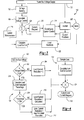
- System 10 includes a power supply 12, such as a standard 12-volt power bus, that provides electrical power to the system 10.
- a low voltage control circuit 16 is interposed between power supply 12 and a control loop 13 at summer 24.
- Control loop 13 includes a controller 14 into which is directed a plurality of data signals (not shown) and operator initiated control commands. Controller 14 in turn issues commands to control loop 13 to initiate desired actions by actuator or motor 20 for performing a desired system function such as, for example, actuating a brake, turning a wheel, or some other critical vehicle operation function.
- Control loop 13 further includes feedback loops 18 and 22 for evaluating and maintaining desired control of system functioning in a manner well known in the art, and therefore an explanation of which is not deemed necessary to an understanding of the preferred embodiments.
- Fig. 2 represents an analog circuit that represents one possible embodiment of a low Voltage Control Circuit 16 for regulating the voltage of the electrical signal in loop 13 above a predefined minimum.
- the predefined minimum voltage is some voltage greater than the minimum operation voltage requirement for controller 14.
- controller 14 can be prevented from entering a reset mode as a result of a voltage dip occurring during a high current demand request by motor 20.
- the bus voltage to be regulated comes into circuit 16 as the SWBAT input 30.
- the +5V signal 32 provides a control reference for circuit 16.
- the VREG* signal is an output from circuit 16 as a signal to indicate to system 10 that the power bus 12 voltage has dipped and the voltage regulation function of circuit 16 is modifying the original current request.
- VREG* 34 is a logic "1"
- the voltage control circuitry is off and the system 10 is in normal operation.
- VREG* is a logic "0”
- the voltage control circuitry is active and the system is in a reduced output capability condition.
- Jumper 36 provides flexibility to connect resistor 38 in parallel with resistor 40 such that the voltage regulation function may be changed to a second voltage such as switching from a 12 volt system to a 42 volt system.
- jumper 36 is installed to operate in a 12-volt system with a regulation voltage of 7.2 volts and jumper 36 is uninstalled to operate in a 42-volt system with a regulation voltage of 25 volts.
- SWBAT 30 is a 42-volt system and attempt to regulate the voltage at 25 volts.
- Amplifier 42 in conjunction with resistors 44, 46, 48, 50, 52, and 54 and with capacitors 56, 58, and 60 form a closed loop control compensation. Resistor and capacitor values labeled "Unused" are available to modify the compensation as required in various systems.
- the illustrated configuration provides simple proportional control of the SWBAT voltage 30.
- the +5V signal 32 provides a control reference to the non-inverting input 41 of amplifier 42.
- Capacitor 66 in conjunction with resistors 40 and 62 creates a low pass filter to eliminate noise effects from SWBAT 30. The cutoff frequency of this filter is sufficiently high in frequency to not influence the operation of the voltage control function of this invention.
- the SWBAT 30 voltage is near 42 volts. Even with moderately high current spikes, the SWBAT 30 voltage remains significantly above the 25-volt regulation threshold. In this condition, the voltage of inverting input 43 of amplifier 42 is much higher than the voltage of the non-inverting input 41. This causes the output of amplifier 42 to saturate at 0 volts. When the output of amplifier 42 is below the activating threshold voltage of transistor 70 (typically 2-4 volts), transistor 70 is off and has no effect on the C LIMIT value at summer 24. Also the input to inverter 72 is a logic "0". This cause the VREG* signal 34 to be a logic "1" therefore indicating that the voltage control circuitry is off and the system is in normal operation.
- SWBAT voltage 30 continues to fall lower (only by millivolts because the circuit is in closed loop control of the SWBAT voltage), and the output voltage of amplifier 42 increases.
- This increase causes transistor 70 to conduct more current, which reduces the current request, C LIMIT 24, further.
- the increase in the output voltage of amplifier 42 (also increased conduction of transistor 70) does not permit the continued increase in the load current.
- This modulation continues to keep the value of the SWBAT voltage 30 near the desired threshold value of 25 volts.
- the VREG* signal 34 is at a logic "0" indicating that the voltage control circuitry is active and the system is in a reduced output capability condition.
- the output of amplifier 42 returns to 0 volts, and the system returns to normal operation.
- circuit 16 represents but one embodiment of an analog circuit to perform a voltage limiting function, and those skilled in the art will recognize that other variations of circuit 16 will perform a like function.
- a vehicle system is generally represented at 110.
- System 110 includes a power supply 112, such as a standard 12-volt power bus, that provides electrical power to the system 110.
- a voltage sensing function 102 and voltage control calculation function 104 are performed in microprocessor 114 and function to replace control circuit 16 as described in the above embodiment.
- Control loop 113 includes a microprocessor controller 114 into which is directed a plurality of data signals (not shown) and operator initiated control commands.
- Controller 114 in turn issues commands to control loop 113 to initiate desired actions by actuator or motor 120 for performing a desired system function such as, for example, actuating a brake, turning a wheel, or some other critical vehicle operation function.
- Control loop 113 further includes feedback loops 118 and 122 for evaluating and maintaining desired control of system functioning in a manner well known in the art, and therefore an explanation of which is not deemed necessary to an understanding of the preferred embodiments.
- Voltage Sensing 102 and Voltage Control Calculation 104 functions which replace analog circuit 16 in the embodiment illustrated in Figures 1 and 2 as previously noted are performed by software in microprocessor 114 in the instant embodiment. A flow diagram of these functions is illustrated in Figure 2 and their operation is discussed below.
- Voltage Sensing 102 and Voltage Control Calculation 104 functions are illustrated according to their respective steps. Sampling of the power bus voltage is performed at 102. Microprocessor 114 then compares the sampled voltage to predefined values which as in the previous example are illustrated as 42 volts for the power bus voltage, and a threshold voltage of 25 volts. At step 202, Voltage Control Calculation 104 function determines whether the sampled bus voltage is below the threshold limit of 25 volts. If not the Load Current Reduction is set at zero as shown in block 204 and the power signal is transmitted unchanged to summer 124. If decision 202 determines that the voltage is below the 25 volt threshold, microprocessor calculates the desired load current reduction percentage at 206.
- the monitoring of reduction percentage is illustrated at 208. If the reduction percentage is less than or equal to the maximum, the load current reduction is performed to the calculated level at 210 and transmitted to summer 124. If, on the other hand, the calculated load current reduction is greater than the maximum, the load current reduction is set to the maximum permitted at 212 and transmitted to summer 124.
- the maximum load current reduction must be defined as a system condition to maintain proper system operation.
Landscapes
- Engineering & Computer Science (AREA)
- Power Engineering (AREA)
- Electric Propulsion And Braking For Vehicles (AREA)
- Direct Current Feeding And Distribution (AREA)
- Dc-Dc Converters (AREA)
Abstract
Description
Claims (8)
- A vehicle system incorporating a voltage regulating control, said system comprising:a power supply providing electrical power having a first predefined maximum voltage;a controller for controlling the electrical load in said circuit, said controller having a first predefined minimum operating voltage;a voltage regulator in communication with said controller and said power supply wherein said regulator senses a control system input voltage in said control system, and in response to a voltage dip in excess of a predetermined value said regulator changes an effective electrical impedance of said control system to maintain said system voltage at a second predefined minimum voltage greater than said first predefined minimum operating voltage; andat least one actuator receiving voltage regulated control inputs from said controller for performing a vehicle system function.
- The system according to claim 1 wherein said voltage regulator is an analog circuit in electrical communication with said controller and said actuator.
- The system according to claim 2 wherein said analog circuit includes:an amplifier responsive to a decreasing voltage in said system such that said amplifier becomes active when said second predefined minimum system voltage is approached, said amplifier becomes active providing an increased voltage output; anda transistor responsive to said amplifier voltage output, such that said transistor enters a conductive state when an activation threshold voltage is sensed by said transistor, said conductive state of said transistor then conducting current from said system to decrease a current request for said actuator and thereby maintaining a system voltage at said second minimum voltage.
- The system according to claim 3 wherein said circuit further includes a jumper for selecting between alternate predefined voltage minimums.
- The system according to claim 4 wherein said circuit further includes a logical output to said controller, said logical output having a first state communicating an active state of said analog circuit to said controller and a second state communicating an inactive state of said analog circuit.
- The system according to claim 1 wherein:said controller is a microprocessor; andsaid voltage regulator comprises software function within said microprocessor;
- The system according to claim 6 wherein said software function comprises the steps of:sampling said power supply voltage;calculating a current load reduction when the sampled voltage is below a predefined limit;determining whether the calculated reduction is greater than a predefined maximum;reducing the current load by the calculated reduction when the calculated reduction is less than the predefined maximum; andreducing the current load by the predefined maximum when the calculated reduction is equal to or greater than the predefined maximum.
- A method for regulating the voltage of a vehicle system of the type having a power supply, a controller, and an actuator, said method comprising the steps of:defining a minimum system voltage;sensing a system input voltage for said system during operation of the actuator;increasing an effective impedance of the actuator when the sensed system input voltage approaches a predefined minimum; andlimiting the system voltage to a predefined minimum.
Applications Claiming Priority (2)
| Application Number | Priority Date | Filing Date | Title |
|---|---|---|---|
| US974693 | 1997-11-20 | ||
| US09/974,693 US6624531B2 (en) | 2001-10-09 | 2001-10-09 | Controller input voltage regulation by actuator power modulation |
Publications (3)
| Publication Number | Publication Date |
|---|---|
| EP1303033A2 true EP1303033A2 (en) | 2003-04-16 |
| EP1303033A3 EP1303033A3 (en) | 2004-01-21 |
| EP1303033B1 EP1303033B1 (en) | 2006-03-29 |
Family
ID=25522343
Family Applications (1)
| Application Number | Title | Priority Date | Filing Date |
|---|---|---|---|
| EP02020108A Expired - Lifetime EP1303033B1 (en) | 2001-10-09 | 2002-09-07 | Controller input voltage regulation by actuator power modulation |
Country Status (4)
| Country | Link |
|---|---|
| US (1) | US6624531B2 (en) |
| EP (1) | EP1303033B1 (en) |
| DE (1) | DE60210181T2 (en) |
| ES (1) | ES2261569T3 (en) |
Families Citing this family (15)
| Publication number | Priority date | Publication date | Assignee | Title |
|---|---|---|---|---|
| US6704629B2 (en) * | 2001-11-30 | 2004-03-09 | Bppower, Inc. | Device for monitoring motor vehicle's electric power and method therefor |
| US7924937B2 (en) | 2002-03-04 | 2011-04-12 | Stmicroelectronics N.V. | Resonant power converter for radio frequency transmission and method |
| KR100686421B1 (en) * | 2002-03-04 | 2007-02-23 | 에스티마이크로일렉트로닉스 엔.브이. | Coder device for resonant power conversion and method |
| US6917502B2 (en) | 2002-03-28 | 2005-07-12 | Delphi Technologies, Inc. | Power supply circuit and method for a motor vehicle electrical accessory load |
| JP2005027363A (en) * | 2003-06-30 | 2005-01-27 | Aisin Seiki Co Ltd | In-vehicle system controller |
| US7212006B2 (en) | 2004-07-02 | 2007-05-01 | Bppower, Inc. | Method and apparatus for monitoring the condition of a battery by measuring its internal resistance |
| US7525266B2 (en) * | 2006-01-30 | 2009-04-28 | Honeywell International Inc. | Inverter loop latch with integrated AC detection reset |
| US20070194791A1 (en) | 2006-02-17 | 2007-08-23 | Bppower Inc. | Method and apparatus for monitoring the condition of a battery by measuring its internal resistance |
| US7928735B2 (en) | 2007-07-23 | 2011-04-19 | Yung-Sheng Huang | Battery performance monitor |
| US8049372B2 (en) * | 2008-07-01 | 2011-11-01 | GM Global Technology Operations LLC | Precharging a high-voltage bus using a voltage-regulated power supply |
| US8040092B2 (en) * | 2008-11-24 | 2011-10-18 | GM Global Technology Operations LLC | Power supply topology for a multi-processor controller in an electric traction system |
| US8606444B2 (en) * | 2010-12-29 | 2013-12-10 | Caterpillar Inc. | Machine and power system with electrical energy storage device |
| JP5691950B2 (en) * | 2011-09-05 | 2015-04-01 | 株式会社デンソー | Voltage monitoring device |
| DE102012220803B4 (en) * | 2012-11-14 | 2021-06-10 | Bayerische Motoren Werke Aktiengesellschaft | Device for supplying voltage to a system component and system component |
| US20170131362A1 (en) * | 2015-11-09 | 2017-05-11 | Digi International Inc. | Method for determining remaining battery life of at least one electrochemical cell or battery across a large temperature range |
Family Cites Families (6)
| Publication number | Priority date | Publication date | Assignee | Title |
|---|---|---|---|---|
| JPS5854830A (en) * | 1981-09-29 | 1983-03-31 | 日産自動車株式会社 | Power source monitor for automotive electronic circuit |
| US5200674A (en) * | 1990-11-16 | 1993-04-06 | Aichi Sharyo Co., Ltd. | Electric power supply device for mobile vehicular apparatus with aerial cabin having force-feedback manipulator |
| JP3398935B2 (en) * | 1997-10-07 | 2003-04-21 | 矢崎総業株式会社 | Power supply for vehicle |
| JPH11334497A (en) * | 1998-05-22 | 1999-12-07 | Yazaki Corp | Battery rising prevention device and method |
| US6147597A (en) * | 1999-03-31 | 2000-11-14 | Facory; Omar | Vehicle-integrated access control device |
| JP2000326805A (en) * | 1999-05-20 | 2000-11-28 | Calsonic Kansei Corp | Power supply devices for vehicles, etc. |
-
2001
- 2001-10-09 US US09/974,693 patent/US6624531B2/en not_active Expired - Lifetime
-
2002
- 2002-09-07 ES ES02020108T patent/ES2261569T3/en not_active Expired - Lifetime
- 2002-09-07 DE DE60210181T patent/DE60210181T2/en not_active Expired - Lifetime
- 2002-09-07 EP EP02020108A patent/EP1303033B1/en not_active Expired - Lifetime
Also Published As
| Publication number | Publication date |
|---|---|
| US20030067221A1 (en) | 2003-04-10 |
| DE60210181D1 (en) | 2006-05-18 |
| DE60210181T2 (en) | 2007-04-05 |
| US6624531B2 (en) | 2003-09-23 |
| ES2261569T3 (en) | 2006-11-16 |
| EP1303033A3 (en) | 2004-01-21 |
| EP1303033B1 (en) | 2006-03-29 |
Similar Documents
| Publication | Publication Date | Title |
|---|---|---|
| US6624531B2 (en) | Controller input voltage regulation by actuator power modulation | |
| DE102007050587B4 (en) | Method and device for controlling charging processes for a battery | |
| US10953862B2 (en) | Method for operating a parking brake and control device for operating a parking brake | |
| EP1032517B1 (en) | Electromechanical brake system | |
| US20030067287A1 (en) | Method for producing a supply voltage in a motor vehicle | |
| CN101516736A (en) | Vehicle-mounted control equipment powered by vehicle-mounted battery | |
| JP2004518583A (en) | Electronic control system for vehicle braking system | |
| US20090102425A1 (en) | Vehicle-use power supply management apparatus | |
| US20110071711A1 (en) | Controller And Control Method For A Motorised Vehicle | |
| KR101010016B1 (en) | Use of Pulse Width Modulation for Load Sharing Control Between Paralleled Power Supplies | |
| JP4598245B2 (en) | Electrically controlled brake device | |
| JP2000043749A (en) | Steering control device and steering device | |
| CN102264592A (en) | Method for operating a power steering mechanism | |
| CN109001585B (en) | System and method for diagnosing battery connection state | |
| US6701225B1 (en) | System and method for carrying out an electronic control or regulation | |
| US11680976B2 (en) | Method for checking a capacity of a supply line | |
| EP3647138B1 (en) | Vehicle brake system | |
| CN118871338A (en) | Method for operating a steering system of a vehicle | |
| DE102022103798A1 (en) | Method of operating a vehicle | |
| DE102017004890A1 (en) | Brake pad wear detection with efficient signal transmission | |
| EP0360470B1 (en) | Motorized power steering apparatus | |
| DE102022204543A1 (en) | Control device for an actuator arrangement of the vehicle, control arrangement with the control device and process | |
| DE19751429A1 (en) | Switching arrangement for PSU voltage monitoring of regulated output voltage in vehicle | |
| US8498781B2 (en) | Methods and motor computer program products for motor control by the implementation of damping for over-speed conditions | |
| CN112986714A (en) | Method for determining an electrical variable |
Legal Events
| Date | Code | Title | Description |
|---|---|---|---|
| PUAI | Public reference made under article 153(3) epc to a published international application that has entered the european phase |
Free format text: ORIGINAL CODE: 0009012 |
|
| AK | Designated contracting states |
Designated state(s): AT BE BG CH CY CZ DE DK EE ES FI FR GB GR IE IT LI LU MC NL PT SE SK TR |
|
| AX | Request for extension of the european patent |
Extension state: AL LT LV MK RO SI |
|
| PUAL | Search report despatched |
Free format text: ORIGINAL CODE: 0009013 |
|
| AK | Designated contracting states |
Kind code of ref document: A3 Designated state(s): AT BE BG CH CY CZ DE DK EE ES FI FR GB GR IE IT LI LU MC NL PT SE SK TR |
|
| AX | Request for extension of the european patent |
Extension state: AL LT LV MK RO SI |
|
| RIC1 | Information provided on ipc code assigned before grant |
Ipc: 7H 02M 7/48 B Ipc: 7H 02J 1/00 B Ipc: 7B 60R 16/02 A Ipc: 7H 02J 7/00 B |
|
| 17P | Request for examination filed |
Effective date: 20040203 |
|
| 17Q | First examination report despatched |
Effective date: 20040618 |
|
| AKX | Designation fees paid |
Designated state(s): DE ES FR GB IT SE |
|
| GRAP | Despatch of communication of intention to grant a patent |
Free format text: ORIGINAL CODE: EPIDOSNIGR1 |
|
| GRAS | Grant fee paid |
Free format text: ORIGINAL CODE: EPIDOSNIGR3 |
|
| GRAA | (expected) grant |
Free format text: ORIGINAL CODE: 0009210 |
|
| AK | Designated contracting states |
Kind code of ref document: B1 Designated state(s): DE ES FR GB IT SE |
|
| REG | Reference to a national code |
Ref country code: GB Ref legal event code: FG4D |
|
| REF | Corresponds to: |
Ref document number: 60210181 Country of ref document: DE Date of ref document: 20060518 Kind code of ref document: P |
|
| REG | Reference to a national code |
Ref country code: SE Ref legal event code: TRGR |
|
| ET | Fr: translation filed | ||
| REG | Reference to a national code |
Ref country code: ES Ref legal event code: FG2A Ref document number: 2261569 Country of ref document: ES Kind code of ref document: T3 |
|
| PLBE | No opposition filed within time limit |
Free format text: ORIGINAL CODE: 0009261 |
|
| STAA | Information on the status of an ep patent application or granted ep patent |
Free format text: STATUS: NO OPPOSITION FILED WITHIN TIME LIMIT |
|
| 26N | No opposition filed |
Effective date: 20070102 |
|
| REG | Reference to a national code |
Ref country code: FR Ref legal event code: PLFP Year of fee payment: 15 |
|
| REG | Reference to a national code |
Ref country code: FR Ref legal event code: PLFP Year of fee payment: 16 |
|
| REG | Reference to a national code |
Ref country code: FR Ref legal event code: PLFP Year of fee payment: 17 |
|
| PGFP | Annual fee paid to national office [announced via postgrant information from national office to epo] |
Ref country code: FR Payment date: 20210927 Year of fee payment: 20 Ref country code: IT Payment date: 20210930 Year of fee payment: 20 |
|
| PGFP | Annual fee paid to national office [announced via postgrant information from national office to epo] |
Ref country code: SE Payment date: 20210921 Year of fee payment: 20 Ref country code: DE Payment date: 20210904 Year of fee payment: 20 Ref country code: GB Payment date: 20210923 Year of fee payment: 20 |
|
| PGFP | Annual fee paid to national office [announced via postgrant information from national office to epo] |
Ref country code: ES Payment date: 20211019 Year of fee payment: 20 |
|
| REG | Reference to a national code |
Ref country code: DE Ref legal event code: R071 Ref document number: 60210181 Country of ref document: DE |
|
| REG | Reference to a national code |
Ref country code: ES Ref legal event code: FD2A Effective date: 20220926 |
|
| REG | Reference to a national code |
Ref country code: GB Ref legal event code: PE20 Expiry date: 20220906 |
|
| PG25 | Lapsed in a contracting state [announced via postgrant information from national office to epo] |
Ref country code: GB Free format text: LAPSE BECAUSE OF EXPIRATION OF PROTECTION Effective date: 20220906 Ref country code: ES Free format text: LAPSE BECAUSE OF EXPIRATION OF PROTECTION Effective date: 20220908 |