EP1302470A1 - Lipid-rich plaque inhibitors - Google Patents
Lipid-rich plaque inhibitors Download PDFInfo
- Publication number
- EP1302470A1 EP1302470A1 EP01947999A EP01947999A EP1302470A1 EP 1302470 A1 EP1302470 A1 EP 1302470A1 EP 01947999 A EP01947999 A EP 01947999A EP 01947999 A EP01947999 A EP 01947999A EP 1302470 A1 EP1302470 A1 EP 1302470A1
- Authority
- EP
- European Patent Office
- Prior art keywords
- group
- optionally substituted
- ring
- salt
- phenyl
- Prior art date
- Legal status (The legal status is an assumption and is not a legal conclusion. Google has not performed a legal analysis and makes no representation as to the accuracy of the status listed.)
- Withdrawn
Links
- 0 Cc(cc1C(C2CCCCCCCCCC2)=C2CC(NC3CCCC=CCCCC3)=O)c(C*CCC*=C)cc1OC2=O Chemical compound Cc(cc1C(C2CCCCCCCCCC2)=C2CC(NC3CCCC=CCCCC3)=O)c(C*CCC*=C)cc1OC2=O 0.000 description 4
- IHLRLZVAXSKNLT-UHFFFAOYSA-N CC(C1CC(Nc(c(C(F)(F)F)c2)ccc2Cl)=O)(c2ccccc2)c(cc(CN(CC2)CCN2c2ccccc2)c(Cl)c2)c2OC1=O Chemical compound CC(C1CC(Nc(c(C(F)(F)F)c2)ccc2Cl)=O)(c2ccccc2)c(cc(CN(CC2)CCN2c2ccccc2)c(Cl)c2)c2OC1=O IHLRLZVAXSKNLT-UHFFFAOYSA-N 0.000 description 1
- JHPMRIPKEPFMCU-UHFFFAOYSA-N Cc(cc1O2)c(CN3CCOCC3)cc1C(c1ccccc1)=C(CC(Nc(c(C(F)(F)F)c1)ccc1Cl)=O)C2=O Chemical compound Cc(cc1O2)c(CN3CCOCC3)cc1C(c1ccccc1)=C(CC(Nc(c(C(F)(F)F)c1)ccc1Cl)=O)C2=O JHPMRIPKEPFMCU-UHFFFAOYSA-N 0.000 description 1
- YPYVVIIBLIUPQS-UHFFFAOYSA-N O=C(CC(C(Oc1c2)=O)=C(c3ccccc3)c1cc(CN1CCNCC1)c2Cl)Nc(c(C(F)(F)F)c1)ccc1Cl Chemical compound O=C(CC(C(Oc1c2)=O)=C(c3ccccc3)c1cc(CN1CCNCC1)c2Cl)Nc(c(C(F)(F)F)c1)ccc1Cl YPYVVIIBLIUPQS-UHFFFAOYSA-N 0.000 description 1
Classifications
-
- C—CHEMISTRY; METALLURGY
- C07—ORGANIC CHEMISTRY
- C07D—HETEROCYCLIC COMPOUNDS
- C07D307/00—Heterocyclic compounds containing five-membered rings having one oxygen atom as the only ring hetero atom
- C07D307/77—Heterocyclic compounds containing five-membered rings having one oxygen atom as the only ring hetero atom ortho- or peri-condensed with carbocyclic rings or ring systems
- C07D307/78—Benzo [b] furans; Hydrogenated benzo [b] furans
- C07D307/82—Benzo [b] furans; Hydrogenated benzo [b] furans with hetero atoms or with carbon atoms having three bonds to hetero atoms with at the most one bond to halogen, e.g. ester or nitrile radicals, directly attached to carbon atoms of the hetero ring
-
- A—HUMAN NECESSITIES
- A61—MEDICAL OR VETERINARY SCIENCE; HYGIENE
- A61K—PREPARATIONS FOR MEDICAL, DENTAL OR TOILETRY PURPOSES
- A61K31/00—Medicinal preparations containing organic active ingredients
- A61K31/33—Heterocyclic compounds
- A61K31/395—Heterocyclic compounds having nitrogen as a ring hetero atom, e.g. guanethidine or rifamycins
- A61K31/495—Heterocyclic compounds having nitrogen as a ring hetero atom, e.g. guanethidine or rifamycins having six-membered rings with two or more nitrogen atoms as the only ring heteroatoms, e.g. piperazine or tetrazines
- A61K31/496—Non-condensed piperazines containing further heterocyclic rings, e.g. rifampin, thiothixene or sparfloxacin
-
- A—HUMAN NECESSITIES
- A61—MEDICAL OR VETERINARY SCIENCE; HYGIENE
- A61K—PREPARATIONS FOR MEDICAL, DENTAL OR TOILETRY PURPOSES
- A61K31/00—Medicinal preparations containing organic active ingredients
-
- A—HUMAN NECESSITIES
- A61—MEDICAL OR VETERINARY SCIENCE; HYGIENE
- A61K—PREPARATIONS FOR MEDICAL, DENTAL OR TOILETRY PURPOSES
- A61K31/00—Medicinal preparations containing organic active ingredients
- A61K31/33—Heterocyclic compounds
- A61K31/335—Heterocyclic compounds having oxygen as the only ring hetero atom, e.g. fungichromin
- A61K31/34—Heterocyclic compounds having oxygen as the only ring hetero atom, e.g. fungichromin having five-membered rings with one oxygen as the only ring hetero atom, e.g. isosorbide
- A61K31/343—Heterocyclic compounds having oxygen as the only ring hetero atom, e.g. fungichromin having five-membered rings with one oxygen as the only ring hetero atom, e.g. isosorbide condensed with a carbocyclic ring, e.g. coumaran, bufuralol, befunolol, clobenfurol, amiodarone
-
- A—HUMAN NECESSITIES
- A61—MEDICAL OR VETERINARY SCIENCE; HYGIENE
- A61K—PREPARATIONS FOR MEDICAL, DENTAL OR TOILETRY PURPOSES
- A61K31/00—Medicinal preparations containing organic active ingredients
- A61K31/33—Heterocyclic compounds
- A61K31/335—Heterocyclic compounds having oxygen as the only ring hetero atom, e.g. fungichromin
- A61K31/35—Heterocyclic compounds having oxygen as the only ring hetero atom, e.g. fungichromin having six-membered rings with one oxygen as the only ring hetero atom
- A61K31/352—Heterocyclic compounds having oxygen as the only ring hetero atom, e.g. fungichromin having six-membered rings with one oxygen as the only ring hetero atom condensed with carbocyclic rings, e.g. methantheline
-
- A—HUMAN NECESSITIES
- A61—MEDICAL OR VETERINARY SCIENCE; HYGIENE
- A61K—PREPARATIONS FOR MEDICAL, DENTAL OR TOILETRY PURPOSES
- A61K31/00—Medicinal preparations containing organic active ingredients
- A61K31/33—Heterocyclic compounds
- A61K31/395—Heterocyclic compounds having nitrogen as a ring hetero atom, e.g. guanethidine or rifamycins
- A61K31/41—Heterocyclic compounds having nitrogen as a ring hetero atom, e.g. guanethidine or rifamycins having five-membered rings with two or more ring hetero atoms, at least one of which being nitrogen, e.g. tetrazole
- A61K31/42—Oxazoles
- A61K31/423—Oxazoles condensed with carbocyclic rings
-
- A—HUMAN NECESSITIES
- A61—MEDICAL OR VETERINARY SCIENCE; HYGIENE
- A61K—PREPARATIONS FOR MEDICAL, DENTAL OR TOILETRY PURPOSES
- A61K31/00—Medicinal preparations containing organic active ingredients
- A61K31/33—Heterocyclic compounds
- A61K31/395—Heterocyclic compounds having nitrogen as a ring hetero atom, e.g. guanethidine or rifamycins
- A61K31/435—Heterocyclic compounds having nitrogen as a ring hetero atom, e.g. guanethidine or rifamycins having six-membered rings with one nitrogen as the only ring hetero atom
- A61K31/4353—Heterocyclic compounds having nitrogen as a ring hetero atom, e.g. guanethidine or rifamycins having six-membered rings with one nitrogen as the only ring hetero atom ortho- or peri-condensed with heterocyclic ring systems
- A61K31/437—Heterocyclic compounds having nitrogen as a ring hetero atom, e.g. guanethidine or rifamycins having six-membered rings with one nitrogen as the only ring hetero atom ortho- or peri-condensed with heterocyclic ring systems the heterocyclic ring system containing a five-membered ring having nitrogen as a ring hetero atom, e.g. indolizine, beta-carboline
-
- A—HUMAN NECESSITIES
- A61—MEDICAL OR VETERINARY SCIENCE; HYGIENE
- A61K—PREPARATIONS FOR MEDICAL, DENTAL OR TOILETRY PURPOSES
- A61K31/00—Medicinal preparations containing organic active ingredients
- A61K31/33—Heterocyclic compounds
- A61K31/395—Heterocyclic compounds having nitrogen as a ring hetero atom, e.g. guanethidine or rifamycins
- A61K31/435—Heterocyclic compounds having nitrogen as a ring hetero atom, e.g. guanethidine or rifamycins having six-membered rings with one nitrogen as the only ring hetero atom
- A61K31/44—Non condensed pyridines; Hydrogenated derivatives thereof
- A61K31/4427—Non condensed pyridines; Hydrogenated derivatives thereof containing further heterocyclic ring systems
- A61K31/4433—Non condensed pyridines; Hydrogenated derivatives thereof containing further heterocyclic ring systems containing a six-membered ring with oxygen as a ring hetero atom
-
- A—HUMAN NECESSITIES
- A61—MEDICAL OR VETERINARY SCIENCE; HYGIENE
- A61K—PREPARATIONS FOR MEDICAL, DENTAL OR TOILETRY PURPOSES
- A61K31/00—Medicinal preparations containing organic active ingredients
- A61K31/33—Heterocyclic compounds
- A61K31/395—Heterocyclic compounds having nitrogen as a ring hetero atom, e.g. guanethidine or rifamycins
- A61K31/435—Heterocyclic compounds having nitrogen as a ring hetero atom, e.g. guanethidine or rifamycins having six-membered rings with one nitrogen as the only ring hetero atom
- A61K31/44—Non condensed pyridines; Hydrogenated derivatives thereof
- A61K31/445—Non condensed piperidines, e.g. piperocaine
- A61K31/4523—Non condensed piperidines, e.g. piperocaine containing further heterocyclic ring systems
- A61K31/453—Non condensed piperidines, e.g. piperocaine containing further heterocyclic ring systems containing a six-membered ring with oxygen as a ring hetero atom
-
- A—HUMAN NECESSITIES
- A61—MEDICAL OR VETERINARY SCIENCE; HYGIENE
- A61K—PREPARATIONS FOR MEDICAL, DENTAL OR TOILETRY PURPOSES
- A61K31/00—Medicinal preparations containing organic active ingredients
- A61K31/33—Heterocyclic compounds
- A61K31/395—Heterocyclic compounds having nitrogen as a ring hetero atom, e.g. guanethidine or rifamycins
- A61K31/495—Heterocyclic compounds having nitrogen as a ring hetero atom, e.g. guanethidine or rifamycins having six-membered rings with two or more nitrogen atoms as the only ring heteroatoms, e.g. piperazine or tetrazines
- A61K31/4965—Non-condensed pyrazines
- A61K31/497—Non-condensed pyrazines containing further heterocyclic rings
-
- A—HUMAN NECESSITIES
- A61—MEDICAL OR VETERINARY SCIENCE; HYGIENE
- A61K—PREPARATIONS FOR MEDICAL, DENTAL OR TOILETRY PURPOSES
- A61K31/00—Medicinal preparations containing organic active ingredients
- A61K31/33—Heterocyclic compounds
- A61K31/395—Heterocyclic compounds having nitrogen as a ring hetero atom, e.g. guanethidine or rifamycins
- A61K31/495—Heterocyclic compounds having nitrogen as a ring hetero atom, e.g. guanethidine or rifamycins having six-membered rings with two or more nitrogen atoms as the only ring heteroatoms, e.g. piperazine or tetrazines
- A61K31/505—Pyrimidines; Hydrogenated pyrimidines, e.g. trimethoprim
- A61K31/506—Pyrimidines; Hydrogenated pyrimidines, e.g. trimethoprim not condensed and containing further heterocyclic rings
-
- A—HUMAN NECESSITIES
- A61—MEDICAL OR VETERINARY SCIENCE; HYGIENE
- A61K—PREPARATIONS FOR MEDICAL, DENTAL OR TOILETRY PURPOSES
- A61K31/00—Medicinal preparations containing organic active ingredients
- A61K31/33—Heterocyclic compounds
- A61K31/395—Heterocyclic compounds having nitrogen as a ring hetero atom, e.g. guanethidine or rifamycins
- A61K31/535—Heterocyclic compounds having nitrogen as a ring hetero atom, e.g. guanethidine or rifamycins having six-membered rings with at least one nitrogen and one oxygen as the ring hetero atoms, e.g. 1,2-oxazines
- A61K31/5375—1,4-Oxazines, e.g. morpholine
- A61K31/5377—1,4-Oxazines, e.g. morpholine not condensed and containing further heterocyclic rings, e.g. timolol
-
- A—HUMAN NECESSITIES
- A61—MEDICAL OR VETERINARY SCIENCE; HYGIENE
- A61P—SPECIFIC THERAPEUTIC ACTIVITY OF CHEMICAL COMPOUNDS OR MEDICINAL PREPARATIONS
- A61P43/00—Drugs for specific purposes, not provided for in groups A61P1/00-A61P41/00
-
- A—HUMAN NECESSITIES
- A61—MEDICAL OR VETERINARY SCIENCE; HYGIENE
- A61P—SPECIFIC THERAPEUTIC ACTIVITY OF CHEMICAL COMPOUNDS OR MEDICINAL PREPARATIONS
- A61P9/00—Drugs for disorders of the cardiovascular system
- A61P9/08—Vasodilators for multiple indications
-
- A—HUMAN NECESSITIES
- A61—MEDICAL OR VETERINARY SCIENCE; HYGIENE
- A61P—SPECIFIC THERAPEUTIC ACTIVITY OF CHEMICAL COMPOUNDS OR MEDICINAL PREPARATIONS
- A61P9/00—Drugs for disorders of the cardiovascular system
- A61P9/10—Drugs for disorders of the cardiovascular system for treating ischaemic or atherosclerotic diseases, e.g. antianginal drugs, coronary vasodilators, drugs for myocardial infarction, retinopathy, cerebrovascula insufficiency, renal arteriosclerosis
-
- C—CHEMISTRY; METALLURGY
- C07—ORGANIC CHEMISTRY
- C07D—HETEROCYCLIC COMPOUNDS
- C07D307/00—Heterocyclic compounds containing five-membered rings having one oxygen atom as the only ring hetero atom
- C07D307/77—Heterocyclic compounds containing five-membered rings having one oxygen atom as the only ring hetero atom ortho- or peri-condensed with carbocyclic rings or ring systems
- C07D307/93—Heterocyclic compounds containing five-membered rings having one oxygen atom as the only ring hetero atom ortho- or peri-condensed with carbocyclic rings or ring systems condensed with a ring other than six-membered
-
- C—CHEMISTRY; METALLURGY
- C07—ORGANIC CHEMISTRY
- C07D—HETEROCYCLIC COMPOUNDS
- C07D311/00—Heterocyclic compounds containing six-membered rings having one oxygen atom as the only hetero atom, condensed with other rings
- C07D311/02—Heterocyclic compounds containing six-membered rings having one oxygen atom as the only hetero atom, condensed with other rings ortho- or peri-condensed with carbocyclic rings or ring systems
- C07D311/04—Benzo[b]pyrans, not hydrogenated in the carbocyclic ring
- C07D311/06—Benzo[b]pyrans, not hydrogenated in the carbocyclic ring with oxygen or sulfur atoms directly attached in position 2
- C07D311/08—Benzo[b]pyrans, not hydrogenated in the carbocyclic ring with oxygen or sulfur atoms directly attached in position 2 not hydrogenated in the hetero ring
- C07D311/16—Benzo[b]pyrans, not hydrogenated in the carbocyclic ring with oxygen or sulfur atoms directly attached in position 2 not hydrogenated in the hetero ring substituted in position 7
-
- C—CHEMISTRY; METALLURGY
- C07—ORGANIC CHEMISTRY
- C07D—HETEROCYCLIC COMPOUNDS
- C07D311/00—Heterocyclic compounds containing six-membered rings having one oxygen atom as the only hetero atom, condensed with other rings
- C07D311/02—Heterocyclic compounds containing six-membered rings having one oxygen atom as the only hetero atom, condensed with other rings ortho- or peri-condensed with carbocyclic rings or ring systems
- C07D311/04—Benzo[b]pyrans, not hydrogenated in the carbocyclic ring
- C07D311/06—Benzo[b]pyrans, not hydrogenated in the carbocyclic ring with oxygen or sulfur atoms directly attached in position 2
- C07D311/08—Benzo[b]pyrans, not hydrogenated in the carbocyclic ring with oxygen or sulfur atoms directly attached in position 2 not hydrogenated in the hetero ring
- C07D311/18—Benzo[b]pyrans, not hydrogenated in the carbocyclic ring with oxygen or sulfur atoms directly attached in position 2 not hydrogenated in the hetero ring substituted otherwise than in position 3 or 7
-
- C—CHEMISTRY; METALLURGY
- C07—ORGANIC CHEMISTRY
- C07D—HETEROCYCLIC COMPOUNDS
- C07D311/00—Heterocyclic compounds containing six-membered rings having one oxygen atom as the only hetero atom, condensed with other rings
- C07D311/02—Heterocyclic compounds containing six-membered rings having one oxygen atom as the only hetero atom, condensed with other rings ortho- or peri-condensed with carbocyclic rings or ring systems
- C07D311/94—Heterocyclic compounds containing six-membered rings having one oxygen atom as the only hetero atom, condensed with other rings ortho- or peri-condensed with carbocyclic rings or ring systems condensed with rings other than six-membered or with ring systems containing such rings
-
- C—CHEMISTRY; METALLURGY
- C07—ORGANIC CHEMISTRY
- C07D—HETEROCYCLIC COMPOUNDS
- C07D405/00—Heterocyclic compounds containing both one or more hetero rings having oxygen atoms as the only ring hetero atoms, and one or more rings having nitrogen as the only ring hetero atom
- C07D405/02—Heterocyclic compounds containing both one or more hetero rings having oxygen atoms as the only ring hetero atoms, and one or more rings having nitrogen as the only ring hetero atom containing two hetero rings
- C07D405/06—Heterocyclic compounds containing both one or more hetero rings having oxygen atoms as the only ring hetero atoms, and one or more rings having nitrogen as the only ring hetero atom containing two hetero rings linked by a carbon chain containing only aliphatic carbon atoms
-
- C—CHEMISTRY; METALLURGY
- C07—ORGANIC CHEMISTRY
- C07D—HETEROCYCLIC COMPOUNDS
- C07D405/00—Heterocyclic compounds containing both one or more hetero rings having oxygen atoms as the only ring hetero atoms, and one or more rings having nitrogen as the only ring hetero atom
- C07D405/02—Heterocyclic compounds containing both one or more hetero rings having oxygen atoms as the only ring hetero atoms, and one or more rings having nitrogen as the only ring hetero atom containing two hetero rings
- C07D405/12—Heterocyclic compounds containing both one or more hetero rings having oxygen atoms as the only ring hetero atoms, and one or more rings having nitrogen as the only ring hetero atom containing two hetero rings linked by a chain containing hetero atoms as chain links
-
- C—CHEMISTRY; METALLURGY
- C07—ORGANIC CHEMISTRY
- C07D—HETEROCYCLIC COMPOUNDS
- C07D493/00—Heterocyclic compounds containing oxygen atoms as the only ring hetero atoms in the condensed system
- C07D493/02—Heterocyclic compounds containing oxygen atoms as the only ring hetero atoms in the condensed system in which the condensed system contains two hetero rings
- C07D493/04—Ortho-condensed systems
-
- Y—GENERAL TAGGING OF NEW TECHNOLOGICAL DEVELOPMENTS; GENERAL TAGGING OF CROSS-SECTIONAL TECHNOLOGIES SPANNING OVER SEVERAL SECTIONS OF THE IPC; TECHNICAL SUBJECTS COVERED BY FORMER USPC CROSS-REFERENCE ART COLLECTIONS [XRACs] AND DIGESTS
- Y02—TECHNOLOGIES OR APPLICATIONS FOR MITIGATION OR ADAPTATION AGAINST CLIMATE CHANGE
- Y02A—TECHNOLOGIES FOR ADAPTATION TO CLIMATE CHANGE
- Y02A50/00—TECHNOLOGIES FOR ADAPTATION TO CLIMATE CHANGE in human health protection, e.g. against extreme weather
- Y02A50/30—Against vector-borne diseases, e.g. mosquito-borne, fly-borne, tick-borne or waterborne diseases whose impact is exacerbated by climate change
Definitions
- the present invention relates to a lipid-rich plaque regressing agent useful in preventing or treating acute coronary artery syndrome such as acute myocardial infarction, unstable angina and the like, peripheral artery occlusion and the like.
- an agent which inhibits the absorption of bile acid by capturing it such as cholestyramine and cholestipol (US Patent 4027009)
- ACAT acyl coenzyme A cholesterol acyl transferase
- HMG-CoA 3-hydroxy-3-methylgultaryl coenzyme A reductase
- lovastatin US Patent 4231938
- simvastatin US Patent 4444784
- pravastatin US Patent 4346227)
- an HMG-CoA reductase inhibitor may cause a problem associated with side effects due to its inhibitory effect not only on cholesterol biosynthesis but also on a biologically essential component such as ubiquinone, dolichol and hem A.
- Acute coronary artery syndrome (for example, unstable angina, acute myocardial infarction and ischemic sudden death) is caused by the destruction of a coronary artery plaque (atheroma) followed by the formation of a thrombus and the resultant plugging of the lumen of the coronary artery.
- Peripheral artery occlusion is caused by the destruction of an artery plaque (atheroma) followed by the formation of a thrombus and the resultant plugging of the lumen of a peripheral artery.
- lipid-rich plaque formed by the deposition of a macrophage retaining lipids such as cholesterol extensively onto an inner wall of a blood vessel is believed to cause acute coronary artery syndrome and peripheral artery occlusion.
- the regression and removal of a lipid-rich plaque are very important for preventing or treating acute coronary artery syndrome such as acute myocardial infarction and unstable angina as well as peripheral artery occlusion. Also since a lipid-rich plaque is observed in a human whose blood cholesterol level is not high and a lipid-rich plaque once formed is difficult to be removed, an agent capable of regressing such a lipid-rich plaque efficiently has been desired. Since a lipid-rich plaque is observed in a human whose blood cholesterol level is not high, the ACAT inhibition to reduce the intestinal absorption of cholesterol is not considered to be sufficient for regressing and removing the lipid-rich plaque.
- the present invention provides a lipid-rich plaque regressing agent useful in preventing or treating acute coronary artery syndrome such as acute myocardial infarction and unstable angina as well as peripheral artery occlusion.
- the present invention also provides a lipid-rich plaque regressing agent which is migrated readily into a blood vessel or tissue to act directly on a macrophage in which lipids such as cholesterol are retained extensively whereby exerting a direct regressing effect on an arteriosclerotic focus.
- an ACAT inhibitor having a certain structure has an unexpectedly high lipid-rich plaque regressing effect, which is sufficiently effective even at a concentration which does not affect the blood cholesterol level, and thereby completed the present invention.
- the present invention relates to:
- a cyclic hydrocarbon in an optionally substituted cyclic hydrocarbon represented by ring A may, for example, be a C 3-10 saturated hydrocarbon ring (e.g., cyclopropane ring, cyclobutane ring, cyclopentane ring, cyclohexane ring, cycloheptane ring and the like); C 5-8 unsaturated hydrocarbon ring (e.g., cyclopentene ring, cyclohexene ring, cycloheptene ring, benzene ring and the like).
- C 3-10 saturated hydrocarbon ring e.g., cyclopropane ring, cyclobutane ring, cyclopentane ring, cyclohexane ring, cycloheptane ring and the like
- C 5-8 unsaturated hydrocarbon ring e.g., cyclopentene ring, cyclohexene ring, cyclohe
- a C 5-7 saturated hydrocarbon ring e.g., cyclopentane ring, cyclohexane ring and the like
- C 5-6 unsaturated hydrocarbon ring e.g., cyclopentene ring, cyclohexene ring, benzene ring and the like
- a benzene ring being especially preferred.
- a substituent in an optionally substituted cyclic hydrocarbon described above may for example be:
- substituents are (i) a halogen atom (for example, fluorine, chlorine, bromine and the like), (ii) an optionally halogenated C 1-4 alkyl group (for example, methyl, chloromethyl, difluoromethyl, trifluoromethyl, ethyl, propyl, isopropyl and the like), (iii) a C 3-6 cycloalkyl group (for example, cyclopropyl, cyclobutyl and the like), (iv) a hydroxyl group, (v) an optionally halogenated C 1-4 alkoxyl group (for example, methoxy, difluoromethoxy, trifluoromethoxy, ethoxy and the like), (vi) an optionally halogenated C 1-4 alkylthio group (for example, methylthio, trifluorothio, ethylthio and the like), (vii) an amino group, (viii) a mono-
- a heterocyclic ring in an optionally substituted heterocyclic group represented by ring A may, for example, be a 5- to 9-membered, preferably 5- or 6-membered aromatic heterocyclic ring having 1 to 4, preferably 1 to 2 heteroatoms such as nitrogen, oxygen and sulfur atoms in addition to carbon atoms.
- Such an aromatic heterocyclic group may, for example, be an aromatic monocyclic heterocyclic ring such as furan ring, thiophene ring, pyrrole ring, oxazoline ring, isoxazoline ring, thiazoline ring, isothiazoline ring, imidazole ring, pyrazole ring, 1,2,3-oxadiazole ring, 1,2,4-oxadiazole ring, 1,3,4-oxadiazole ring, 1,2,5-oxadiazole ring, 1,2,3-thiadiazole ring, 1,2,4-thiadiazole ring, 1,3,4-thiadiazole ring, 1,2,3-triazole ring, 1,2,4-triazole ring, tetrazole ring, pyridine ring, pyridazine ring, pyrimidine ring, pyrazine ring, triazine ring and the like.
- aromatic monocyclic heterocyclic ring such as
- furan ring, thiophene ring, pyrrole ring, oxazole ring, isoxazole ring, imidazole ring, pyrazole ring, 1,2,3-thiadiazole ring, 1,2,4-triazole ring, tetrazole ring, pyridine ring, pyridazine ring, thiazole ring and thiadiazoline ring are preferred, with furan ring, thiophene ring and pyridine ring being especially preferred.
- a substituent which may be possessed by an optionally substituted heterocyclic group described above may, for example, be (i) an optionally halogenated C 1-4 alkyl group (for example, methyl, chloromethyl, difluoromethyl, trichloromethyl, trifluoromethyl, ethyl, 2,2-dibromoethyl, 2,2,2-trifluoroethyl, propyl, isopropyl, 3,3,3-trifluoropropyl, butyl and the like); (ii) a C 3-6 cycloalkyl group (for example, cyclopropyl, cyclobutyl, cyclopentyl, cyclohexyl and the like); (iii) a halogen atom (for example, fluorine, chlorine, bromine, iodine and the like); (iv) a nitro group; (v) a cyano group; (vi) a hydroxyl group; (vii) an optionally
- substituents are (i) a halogen atom (for example, fluorine, chlorine, bromine and the like), (ii) an optionally halogenated C 1-4 alkyl group (for example, methyl, chloromethyl, difluoromethyl, trifluoromethyl, ethyl, propyl, isopropyl and the like), (iii) a C 3-6 cycloalkyl group (for example, cyclopropyl, cyclobutyl and the like), (iv) a hydroxyl group, (v) an optionally halogenated C 1-4 alkoxyl group (for example, methoxy, difluoromethoxy, trifluoromethoxy, ethoxy and the like), (vi) an optionally halogenated C 1-4 alkylthio group (for example, methylthio, trifluoromethylthio, ethylthio and the like), (vii) an amino group, (viii) a mono halogenated C
- a 5- or 6-membered homocyclic ring represented by ring B may, for example, be a cyclopentane ring, cyclohexane ring, cyclopentene ring, cyclohexene ring, cyclopentadiene ring, cyclohexadiene ring, benzene ring and the like.
- a cyclohexane ring, cyclohexene ring, cyclopentadiene ring and benzene ring are preferred, with a cyclohexane ring and cyclopentadiene ring being especially preferred.
- a 5- or 6-membered heterocyclic ring represented by ring B may, for example, be a 5- or 6-membered heterocyclic ring which contains 1 to 3 heteroatoms such as nitrogen, oxygen and sulfur atoms instead of 1 to 3 carbon atoms in the cyclopentane ring or cyclohexane ring (e.g., pyrrolidine ring, pyrroline ring, imidazolidine ring, imidazoline ring, pyrazolidine ring, pyrazoline ring, piperidine ring, piperazine ring, morpholine ring, thiomorpholine ring, dihydrofuran ring, tetrahydrofuran ring, ⁇ -pyrane ring, ⁇ -pyrane ring, dihydropyrane ring, tetrahydropyrane ring, 1-thiacyclohexane ring, 1-thia-5-cyclohexene ring, 1-
- said substituent may, for example, be a group derivatized from an optionally substituted cyclic hydrocarbon or an optionally substituted heterocylic ring described above in addition to an oxo group and thioxo group.
- a group derived from a substituted cyclic hydrocarbon (ii) an oxo group, (iii) a thioxo group are preferred, with an optionally substituted phenyl group, oxo group and thioxo group being especially preferred.
- a substituent which may be possessed by said phenyl group has a meaning similar to the substituent in an optionally substituted cyclic hydrocarbon described above.
- a hydrocarbon group in an optionally substituted hydrocarbon group represented by R 1 , R 2 , R 2a , R 3 , R 4 and R 5 in Formula [I] described above may, for example, be an aliphatic linear (acyclic) hydrocarbon group, alicyclic hydrocarbon group and aryl group, with an aliphatic linear hydrocarbon group being preferred.
- An aliphatic linear hydrocarbon group in said hydrocarbon group may be a straight or branched aliphatic hydrocarbon group such as an alkyl group, alkenyl group, alkynyl group and the like.
- One preferred especially is a straight or branched alkyl group.
- Such an alkyl may, for example, be a C 1-7 alkyl such as methyl, ethyl, n-propyl, isopropyl, n-butyl, isobutyl, sec-butyl, tert-butyl, n-pentyl, isopentyl, neopentyl, 1-methylpropyl, n-hexyl, isohexyl, 1,1-dimethylbutyl, 2,2-dimethylbutyl, 3,3-dimethylbutyl, 3,3-dimethylpropyl, 2-ethylbutyl, n-heptyl and the like, with a C 3-5 alkyl such as n-propyl, isopropyl, isobutyl, neopentyl being preferred and isobutyl and neopentyl being especially preferred.
- a C 3-5 alkyl such as n-propyl, isopropyl,
- Said alkenyl group may, for example, be a C 2-6 alkenyl such as vinyl, allyl, isopropenyl, 2-methylallyl, 1-propenyl, 2-methyl-1-propenyl, 2-methyl-2-propenyl, 1-butenyl, 2-butenyl, 3-butenyl, 2-ethyl-1-butenyl, 2-methyl-2-butenyl, 3-methyl-2-butenyl, 1-pentenyl, 2-pentenyl, 3-pentenyl, 4-pentenyl, 4-methyl-3-pentenyl, 1-hexenyl, 2-hexenyl, 3-hexenyl, 4-hexenyl, 5-hexenyl and the like, with vinyl, allyl, isopropenyl, 2-methylalllyl, 2-methyl-1-propenyl, 2-methyl-2-propenyl and 3-methyl-2-butenyl being especially preferred.
- Said alkynyl group may, for example, be a C 2-6 alkynyl such as ethynyl, 1-propynyl, 2-propynyl, 1-butynyl, 2-butynyl, 3-butynyl, 1-pentynyl, 2-pentynyl, 3-pentynyl, 4-pentynyl, 1-hexynyl, 2-hexynyl, 3-hexynyl, 4-hexynyl, 5-hexynyl and the like, with ethynyl, 1-propynyl and 2-propynyl being especially preferred.
- An alicyclc hydrocarbon group in said hydrocarbon group may, for example, be a saturated or unsaturated alicyclic hydrocarbon group such as a cycloalkyl group, cycloalkenyl group, cycloalkadienyl group and the like.
- Such a cycloalkyl group is preferably a cycloalkyl group having 3 to 9 carbon atoms such as cyclopropyl, cyclobutyl, cyclopentyl, cyclohexyl, cycloheptyl, cyclooctyl, cyclononyl and the like, with a C 3-6 cycloalkyl group such as cyclopropyl, cyclobutyl, cyclopentyl and cyclohexyl being especially preferred.
- Said cycloalkenyl group may, for example, be a C 5-6 cycloalkenyl group such as 2-cyclopenten-1-yl, 3-cyclopenten-1-yl, 2-cyclohexen-1-yl, 3-cyclohexen-1-yl, 1-cyclobuten-1-yl, 1-cyclopenten-1-yl and the like.
- Said cycloalkadienyl group may, for example, be a C 5-6 cycloalkadienyl group such as 2,4-cyclopentadien-1-yl, 2,4-cyclohexadien-1-yl, 2,5-cyclohexadien-1-yl.
- An aryl group in said hydrocarbon group may, for example, be a monocyclic or fused polycyclic aromatic hydrocarbon group having 6 to 16 carbon atoms, such as phenyl, naphthyl, anthryl, phenanthryl, acenaphthylenyl and the like, with a C 6-10 aryl group such as phenyl, 1-naphtnyl and 2-naphthyl being especially preferred.
- the substituent may, for example, be an optionally substituted aryl group, optionally substituted cycloalkyl group or cycloalkenyl group, optionally substituted heterocyclic group, optionally substituted amino group, optionally substituted hydroxyl group, optionally substituted thiol group, acyl group, halogen atom (e.g., fluorine, chlorine, bromine, iodine and the like), oxo group, carboxyl group, nitro group, cyano group, optionally substituted alkyl group and the like, and said hydrocarbon group may be substituted by 1 to 5 (preferably 1 to 3) of these optional substituents in any substitutable positions.
- halogen atom e.g., fluorine, chlorine, bromine, iodine and the like
- An aryl group in said optionally substituted aryl group may, for example, be a C 6-16 aryl group such as phenyl, naphthyl, anthryl, phenanthryl, acenaphthylenyl and the like, with a C 6-10 aryl group such as phenyl, 1-naphthyl and 2-naphthyl being especially preferred.
- a substituent on said aryl group may, for example, be (i) an optionally halogenated C 1-6 alkoxy group (e.g., methoxy, ethoxy, propoxy, trifluoromethoxy and the like), (ii) a halogen atom (e.g., fluorine, chlorine, bromine, iodine), (iii) an optionally halogenated C 1-6 alkyl group (e.g., methyl, ethyl, propyl, trifluoromethyl and the like), and said aryl group may be substituted by 1 or 2 of these optional substituents.
- an optionally halogenated C 1-6 alkoxy group e.g., methoxy, ethoxy, propoxy, trifluoromethoxy and the like
- a halogen atom e.g., fluorine, chlorine, bromine, iodine
- an optionally halogenated C 1-6 alkyl group e.g.,
- a cycloalkyl group in said optionally substituted cycloalkyl group may, for example, be a C 3-7 cycloalkyl group such as cyclopropyl, cyclobutyl, cyclopentyl, cyclohexyl, cycloheptyl and the like.
- the substituents on said cycloalkyl group and the number of the substitutions may be similar to those in the optionally substituted aryl group described above.
- a cycloalkenyl group in said optionally substituted cycloalkenyl group may, for example, be a C 3-6 cycloalkenyl group such as cyclpropenyl, cyclobutenyl, cyclopentenyl, cyclohexenyl and the like.
- the substituents on said cycloalkenyl group and the number of the substitutions may be similar to those in the optionally substituted aryl group described above.
- a heterocyclic group in said optionally substituted heterocyclic group may, for example, be an aromatic heterocyclic group or a saturated or unsaturated non-aromatic heterocyclic group (aliphatic heterocyclic group), which contains at least 1, preferably 1 to 4 heteroatoms of oxygen, sulfur and nitrogen as atoms forming the ring system (ring atoms), preferably an aromatic heterocyclic group.
- aromatic heterocyclic group aliphatic heterocyclic group
- Said aromatic heterocyclic group may, for example, be a 5- to 6-membered aromatic monocyclic heterocyclic group (e.g., furyl, thienyl, pyrrolyl, oxazolyl, isoxazolyl, thiazolyl, isothiazolyl, imidazolyl, pyrazolyl, 1,2,3-oxadiazolyl, 1,2,4-oxadiazolyl, 1,3,4-oxadiazolyl, furazanyl, 1,2,3-thiadiazolyl, 1,2,4-thiadiazolyl, 1,3,4-thiadiazolyl, 1,2,3-triazolyl, 1,2,4-triazolyl, tetrazolyl, pyridyl, pyridazinyl, pyrimidinyl, pyrazinyl, triazinyl and the like) and an aromatic fused heterocyclic group formed by condensation of two or three 5- to 6-membered rings (5-to 6-membered aromatic
- Said non-aromatic heterocyclic group may, for example, be a 4- to 9-membered non-aromatic heterocyclic group such as oxylanyl, azethidinyl, oxetanyl, thietanyl, pyrrolidinyl, tetrahydrofuryl, thioranyl, piperidinyl, tetrahydropyranyl, morpholinyl, thiomorpholinyl, piperazinyl and the like (especially, a 5- to 9-membered cyclic amino group which may contain 1 to 3 heteroatoms such as oxygen and sulfur atoms in addition to nitrogen atoms, specifically, pyrrolidinyl, piperidinyl, piperazinyl, morpholinyl, 3,6-dihydropyridyl-1(2H)-yl and the like).
- oxylanyl azethidinyl
- oxetanyl thietanyl
- Said heterocyclic group may have 1 to 4, preferably 1 to 2 substituents, and such substituents may, for example, be a C 1-6 alkyl group (e.g., methyl, ethyl, propyl, n-butyl, n-hexyl and the like), C 6-12 aryl group (e.g., phenyl), hydroxy-C 6-12 aryl group (e.g., 4-hydrpxyphenyl), C 1-4 alkylsulfonyl group (e.g., methylsulfonyl), C 7-15 aralkyl group (e.g., benzyl), C 1-4 alkoxy-C 1-4 alkyl group (for example, propoxyethyl and the like), a 5- to 9-membered heterocyclic group which contains 1 to 3 heteroatoms such as nitrogen, oxygen and sulfur atoms in addition to carbon atoms (for example, piperidinyl, piperazinyl, morpholiny
- a substituent on said optionally substituted amino group may, for example, be a lower (C 1-4 ) alkyl (e.g., methyl, ethyl, propyl and the like), a 5- to 9-membered heterocyclic group which contains 1 to 3 heteroatoms such as nitrogen, oxygen and sulfur atoms in addition to carbon atoms (for example, thienyl, furyl, pyridyl, pyrimidinyl, thiazolyl, benzothiazolyl, benzoisothiazolyl, benzoxazolyl, benzoisoxazolyl and the like), C 1-4 alkyl-carbonyl group (e.g., methylcarbonyl, ethylcarbonyl and the like), C 6-12 aryl-carbonyl group (e.g., benzoyl and the like), C 1-4 alkyl-sulfonyl group, C 1-4 alk
- the substituent may further be a C 1-6 alkyl group (e.g., methyl, ethyl, propyl, n-butyl, n-hexyl and the like).
- Said optionally substituted hydroxyl group may, for example, be a hydroxyl group, an optionally halogenated C 1- 16 alkoxy group, preferably an optionally halogenated C 1-4 alkoxy group, more preferably a C 1-4 alkoxy group (for example, methoxy, ethoxy, propoxy, butoxy, t-butoxy and the like), C 1-6 alkyl-carbonyloxy group (for example, methylcarbonyloxy, ethylcarbonyloxy, butylcarbonyloxy and the like), aminocarbonyloxy group, mono- or di-C 1-4 alkylaminocarbonyloxy group and the like.
- Said optionally substituted thiol group may, for example, be a thiol group, an optionally halogenated C 1-16 alkylthio group, preferably an optionally halogenated C 1-4 alkylthio group, more preferably a C 1-4 alkylthio group (for example, methylthio, ethylthio and the like), a 5- to 9-membered heterocyclic group which contains 1 to 3 heteroatoms such as nitrogen, oxygen and sulfur atoms in addition to carbon atoms (for example, thienyl, furyl, pyridyl, pyrimidinyl, thiazolyl, benzothiazolyl, benzoisothiazolyl, benzoxazolyl, benzoisoxazolyl and the like)-thio group (e.g., 2-pyridylthio) and the like.
- a thiol group an optionally halogenated C 1-16 alkylthio group, preferably an optional
- Said acyl group may, for example, be a formyl group, C 1-6 alkyl-carbonyl group, preferably C 1-4 alkyl-carbonyl group (e.g., methylcarbonyl, ethylcarbonyl), C 1-4 alkoxycarbonyl group (e.g., mehtoxycarbonyl), C 1-6 alkyl-sulfonyl group, preferably a C 1-4 alkyl-sulfonyl group (e.g., methylsulfonyl, ethylsulfonyl), C 1-4 alkoxy-sulfonyl group (e.g., methoxysulfonyl), benzyloxycarbonyl group, C 3-6 cycloalkyl-carbonyl, carbamoyl group, mono- or di-C 1-4 alkylcarbamoyl group and the like.
- C 1-6 alkyl-carbonyl group preferably C 1-4 alkyl-
- substituents on said hydrocarbon group are 1 to 4 substituents selected from halogen atoms; amino group; mono- or di-C 1-4 alkylamino group; carboxyl group; C 1-4 alkoxycarbonyl group; hydroxyl group; optionally halogenated C 1-4 alkoxy group; C 3-6 cycloalkyl group; nitro group; cyano group; optionally halogenated C 1-4 alkylthio group; cyclic amino group (for example, a 5- to 9-membered cyclic amino group which may contain 1 to 3 heteroatoms such as oxygen and sulfur atoms in addition to nitrogen atoms, specifically, pyrrolidinyl, piperidinyl, piperazinyl, morpholinyl and the like); C 1-4 alkyl-carbonylamino group; aminocarbonyloxy group; mono- or di-C 1-4 alkylaminocarbonyloxy group; C 1-4 alkylsulfonylamino group; C 1-4 alkyl
- An optionally substituted hydroxyl group represented by R 1 , R 2 , R 2a and R 3 in Formula [I] described above may, for example, be (i) a hydroxyl group, (ii) a C 1-4 alkoxy group (for example, methoxy, ethoxy, propoxy, isopropoxy, butoxy, t-butoxy and the like), (iii) a C 6-10 aryloxy group (for example, phenyloxy, naphthyloxy and the like), (iv) C 1-4 alkyl-carbonyloxy group (for example, formyloxy, acetoxy, propionyloxy and the like), (v) a C 2-6 alkanoyloxy group (for example, acetyloxy, propionyloxy, valeryloxy and the like) and (vi) a C 6-10 aryl-carbonyloxy group (for example, benzyloxy, naphthyloxy and the like), with hydroxyl group and C
- an optionally substituted amino group represented by R 1 may, for example, be an amino group which may be substituted by 1 to 3 substituents selected from (i) a C 1-4 alkyl group (for example, methyl, ethyl, propyl, isopropyl and the like), (ii) a C 1-4 alkylcarbonyl group (for example, acetyl, propionyl, butyryl and the like), (iii) a C 1-4 alkoxy-carbonyl group (for exmaple, methoxycarbonyl, ethoxycarbonyl, propoxycarbonyl and the like), (iv) a halogen atom (for example, fluorine, chlorine and the like), (v) a phenyl group, (vi) a C 1-4 alkyl-phenyl group (for example, 4-methylphenyl, 3-methylphenyl, 2-methylphenyl and the like), (vii) a halogenated phenyl
- a mercapto group which may be substituted by an optionally substituted hydrocarbon group represented by R 3 may, for example, be a mercapto group which may be substituted by an optionally substituted hydrocarbon group similar to the optionally substituted hydrocarbon group described above, and among these a C 1-4 alkylthio group (for example, methylthio, ethylthio, propylthio and the like) is especially preferred.
- a C 1-3 alkylene group in a C 1-3 alkylene group which may be substituted by an oxo group or thioxo group represented by D may, for example, be -CH 2 -, -CH 2 CH 2 -, -CH2CH2CH2- and -CH(CH 3 )-CH 2 - and the like, with -CH 2 - and -CH 2 CH 2 - being preferred.
- Said C 1-3 alkylene group substituted by an oxo group or thioxo group may, for example, be -CO-, -CS-, -CH 2 CO-, -CH 2 CS-, -CH 2 CH 2 CO-, -CH 2 CH 2 CS- and the like.
- D is preferably (i) a C 1-3 alkylene group which may be substituted by an oxo group, (ii) -NH-, (iii) -CH 2 NH-, and those preferred especially are -CH 2 -, -CH 2 CO-, -CH 2 CH 2 CO-, -NH-.
- a preferred example of said 5- to 7-membered ring is a 5- to 7-membered saturated heterocyclic ring containing 1 to 3 nitrogen atoms which may be substituted by an oxo group or thioxo group where a constituent atom of the ring B adjacent to the constituent atom of the ring B to which D is attached is taken together, with a 5- or 6-membered saturated heterocyclic ring containing one nitrogen atom being especially preferred.
- a typical preferred example when D is taken together with a constituent atom of the ring B to form a 5- to 7-membered ring which may be substituted by an oxo group or thioxo group is represented by Formula: wherein ring M a may be substituted by an oxo group or thioxo group; h is an integer of 3 to 5; other symbols are as defined above, preferably represented by Formula: wherein ring M a' may be substituted by an oxo group; other symbols are as defined above.
- E in Formula [I] shown above is -NR 4' - (in which R 4' is a hydrogen atom or a C 1-6 alkyl such as methyl, ethyl, n-propyl, n-butyl, isopropyl, hexyl and the like, which may be substituted), -CONR 5' - (in which R 5' is a hydrogen atom or a C 1-6 alkyl such as methyl, ethyl, n-propyl, n-butyl, isopropyl, hexyl and the like, which may be substituted).
- R 4' and R 5' may be similar to the substituent which may be possessed by an optionally substituted hydrocarbon group described above. More preferably, E is -CONR 5' - (in which R 5' is a hydrogen atom or a C 1-6 alkyl such as methyl, ethyl, n-propyl, n-butyl, isopropyl, hexyl and the like, which may be substituted).
- a preferred example of said 5- to 7-membered ring is a 5- to 7-membered saturated heterocyclic ring containing 2 to 4 nitrogen atoms which may be substituted by an oxo group or thioxo group where a constituent atom of the ring B adjacent to the constituent atom of the ring B to which R 4 is attached is taken together, with a 5- or 6-membered saturated heterocyclic ring containing two nitrogen atoms being especially preferred.
- R 4 is taken together with a constituent atom of the ring B to form a 5- to 7-membered ring which may be substituted by an oxo group or thioxo group
- a C 1-3 alkylene group represented by G may, for example, be methylene, ethylene, propylene and the like.
- D, E and G are the combinations in which (i) D is -CO-, E is -NR 4 - (in which R 4 is as defined above), G is -CH 2 - or -CH 2 CH 2 -; (ii) D is -CO-, E is -NR 4 - (in which R 4 is as defined above), G is a bond; (iii) D is -CH 2 CO- or -CH 2 CH 2 CO-, E is -NR 4 - (in which R 4 is as defined above), G is a bond; (iv) D is -CH2CO- or -CH 2 CH 2 CO-, E is -NR 4 - (in which R 4 is as defined above), G is -CH 2 - or -CH 2 CH 2 -; (v) D is -CH 2 - or -CH 2 CH 2 -, E is -O-, G is -CH 2 - or -CH 2 CH 2 -; (vi) D is -CH2-
- Ar represents an optionally substituted aryl group or optionally substituted heterocyclic group.
- An aryl group in an optionally substituted aryl group represented by Ar is preferably a C 6-10 aryl group such as phenyl and naphthyl, with a phenyl group being especially preferred.
- Such an aryl group represented by Ar may contain 1 to 5, preferably 1 to 3 same or different substituents. The substitution may occur in any position in the ring.
- Such a substituent may, for example, be (i) an optionally halogenated C 1-4 alkyl group (for example, methyl, chloromethyl, difluoromethyl, trichloromethyl, trifluoromethyl, ethyl, 2-bromoethyl, 2,2,2-trifluoroethyl, propyl, isopropyl, 3,3,3-trifluoropropyl, butyl and the like), (ii) a C 1-4 alkyl substituted by an amino group (for example, aminomethyl, 2-aminoethyl and the like), (iii) a C 1-4 alkyl group substituted by a mono- or di-C 1-4 alkylamino group (for example, methylaminomethyl, dimethylaminomethyl, 2-methylaminoethyl, 2-dimethylaminoethyl and the like), (iv) a C 1-4 alkyl group substituted by a carboxyl group (for example, carb
- Such an optionally substituted heterocyclic group may, for example, be a 5- or 6-membered aromatic monocyclic heterocyclic group (for example, furyl, thienyl, oxazolyl, isoxazolyl, thiazolyl, isothiazolyl, imidazolyl, pyrazolyl, 1,2,3-oxadiazolyl, 1,2,4-oxadiazolyl, 1,3,4-oxadiazolyl, furazanyl, 1,2,3-thiadiazolyl, 1,2,4-thiadiazolyl, 1,3,4-thiadiazolyl, 1,2,3-triazolyl, 1,2,4-triazolyl, tetrazolyl, pyridyl, pyridazinyl, pyrimidinyl, pyrazinyl, triazinyl and the like) which may be substituted by 1 to 3 substituents selected from (i) an optionally halogenated C 1-4 alkyl group (for example,
- substituents listed above are (i) an optionally halogenated C 1-4 alkyl group (for example, methyl, chloromethyl, difluoromethyl, trichloromethyl, trifluoromethyl, ethyl, 2-bromoethyl, 2,2,2-trifluoroethyl, propyl, isopropyl, 3,3,3-trifluoropropyl and the like), (ii) a halogen atom (for example, fluorine, chlorine, bromine and the like), (iii) a nitro group, (iv) a hydroxyl group, (v) an optionally halogenated C 1-4 alkoxy group (for example, methoxy, difluoromethoxy, trifluoromethoxy, ethoxy, 2,2,2-trifluoroethoxy and the like), (vi) an amino group, (vii) a C 1-4 alkyl group substituted by a mono- or di-C 1-4 alkylamino group (
- a heterocyclic group in an optionally substituted heterocyclic group represented by Ar may, for example, be a 5- to 9-membered, preferably 5- or 6-membered aromatic heterocyclic group having 1 to 4, preferably 1 to 2 heteroatoms such as nitrogen, oxygen and sulfur atoms in addition to carbon atoms.
- Such an aromatic heterocyclic group may, for example, be an aromatic monocyclic heterocyclic group such as furyl, thienyl, pyrrolyl, oxazolyl, isoxazolyl, thiazolyl, isothiazolyl, imidazolyl, pyrazolyl, 1,2,3-oxadiazolyl, 1,2,4-oxadiazolyl, 1,3,4-oxadiazolyl, furazanyl, 1,2,3-thiadiazolyl, 1,2,4-thiadiazolyl, 1,3,4-thiadiazolyl, 1,2,3-triazolyl, 1,2,4-triazolyl, tetrazolyl, pyridyl, pyridazinyl, pyrimidinyl, pyrazinyl, triazinyl and the like, or an aromatic fused heterocyclic group such as benzofuranyl, isobenzofuranyl, benzo[b]thienyl, indolyl, is
- heterocyclic groups described above a 5- or 6-membered heterocyclic group is preferred, and those employed preferably are furyl, thienyl, pyrrolyl, oxazolyl, isoxazolyl, imidazolyl, pyrazolyl, pyridyl, pyrimidinyl, pyridazinyl, quinolyl, isoquinolyl, thiazolyl, thiadiazolyl, thiophenyl and the like. Furyl, thienyl and pyridyl are especially preferred.
- a substituent which may be possessed by an optionally substituted heterocyclic group represented by Ar may, for example, be (i) an optionally halogenated C 1-4 alkyl group (for example, methyl, chloromethyl, difluoromethyl, trichloromethyl, trifluoromethyl, ethyl, 2,2-dibromoethyl, 2,2,2-trifluoroethyl, propyl, isopropyl, 3,3,3-trifluoropropyl, butyl and the like), (ii) a C 3-6 cycloalkyl group (for example, cyclopropyl, cyclobutyl, cyclopentyl, cyclohexyl and the like), (iii) a halogen atom (for example, fluorine, chlorine, bromine, iodine and the like), (iv) a nitro group, (v) a cyano group, (vi) a hydroxyl group, (vii) an optional
- preferred substituents may, for example, be (i) a halogen atom (for example, fluorine, chlorine, bromine and the like), (ii) an optionally halogenated C 1-4 alkyl group (for example, methyl, chloromethyl, difluoromethyl, trifluoromethyl, ethyl, propyl, isopropyl and the like), (iii) a C 3-6 cycloalkyl group (for example, cyclopropyl, cyclobutyl and the like), (iv) a hydroxyl group, (v) an optionally halogenated C 1-4 alkoxyl group (for example, methoxy, difluoromethoxy, trifluoromethoxy, ethoxy and the like), (vi) an optionally halogenated C 1-4 alkylthio group (for example, methylthio, trifluorothio, ethylthio and the like), (vii) an amino group, (viii) a hal
- Ar is preferably a phenyl group which may be substituted by 1 to 3 substituents selected from halogen atoms (for example, fluorine, chlorine and the like), an optionally halogenated C 1-4 alkyl group (for example, methyl, difluoromethyl, trifluoromethyl, ethyl, 2,2,2-trifluoroethyl, propyl, isopropyl and the like) and an optionally halogenated C 1-4 alkoxy group (for example, methoxy, difluoromethoxy, trifluoromethoxy, ethoxy, 2,2,2-trifluoroethoxy, propoxy, isopropoxy and the like).
- halogen atoms for example, fluorine, chlorine and the like
- C 1-4 alkyl group for example, methyl, difluoromethyl, trifluoromethyl, ethyl, 2,2,2-trifluoroethyl, propyl, isopropyl and the like
- C 1-4 alkyl group for example, methyl, trifluoromethyl, ethyl and the like
- C 1-4 alkoxy group for example, methoxy, ethoxy, propoxy and the like
- Ar may, for example, be a phenyl group or pyridyl group which may be substituted by 1 to 4 substituents selected from halogen atoms (for example, chlorine, fluorine and the like), optionally halogenated C 1-4 alkyl group (for example, methyl, trifluoromethyl, ethyl, isopropyl and the like), optionally halogenated C 1-4 alkoxy group (for example, methoxy, trifluoromethoxy, ethoxy and the like), di-C 1-4 alkylamino group (for example, dimethylamino and the like), C 1-3 acyloxy group (for example, acetoxy and the like) and hydroxyl group.
- halogen atoms for example, chlorine, fluorine and the like
- C 1-4 alkyl group for example, methyl, trifluoromethyl, ethyl, isopropyl and the like
- optionally halogenated C 1-4 alkoxy group for example,
- a substituent which may be possessed by ring A' and ring C has a meaning similar to the substituent which may be possessed by an optionally substituted cyclic hydrocarbon represented by ring A in Formula [I] shown above.
- an optionally substituted hydrocarbon group "an optionally substituted amino group”, “an optionally substituted hydroxyl group”, “mercapto group which may be substituted by an optionally substituted hydrocarbon group”, "C 1-3 alkylene group which may be substituted by an oxo group or thioxo group”, “C 1-3 alkylene group”, “an optionally substituted aryl group or optionally substituted heterocyclic group” have the meanings similar to those described above.
- a 5- to 7-membered ring which may be substituted by an oxo group or thioxo group formed by D' taken together with Z has the meaning similar to "a 5- to 7-membered ring which may be substituted by an oxo group or thioxo group” formed by D taken together with a constituent atom of the ring B.
- a 5- to 7-membered ring which may be substituted by an oxo group or thioxo group formed by R 7 taken together with Z has the meaning similar to "a 5- to 7-membered ring which may be substituted by an oxo group or thioxo group” formed by R 4 taken together with a constituent atom of the ring B.
- a compound represented by Formula [I] or a salt thereof may, for example, be a compound represented by Formula [III] : in which each of ring A", ring C' and ring D is an optionally substituted benzene ring, X" is -NR 8 - (in which R 8 is a hydrogen atom or optionally substituted hydrocarbon group), -O- or -S-, U is -(CH 2 )m- (in which m is 1 or 2) or -NH-, R a is a hydrogen atom or optionally substituted hydrocarbon group), or a salt thereof.
- Formula [III] in which each of ring A", ring C' and ring D is an optionally substituted benzene ring, X" is -NR 8 - (in which R 8 is a hydrogen atom or optionally substituted hydrocarbon group), -O- or -S-, U is -(CH 2 )m- (in which m is 1 or 2) or -NH-, R a
- a substituent which may be possessed by rings A", C' or D has a meaning similar to the substituent which may be possessed by an optionally substituted cyclic hydrocarbon represented by ring A in Formula [I] shown above.
- a further preferred example of a compound represented by Formula [I] or a salt thereof may, for example, be a compound represented by Formula [IV]: in which ring A"' is an optionally substituted benzene ring, Q is an optionally substituted aromatic ring, W is -CH 2 -, -CO- or -CS-, V is or W and V are taken together to form Y" is -CH 2 -, -O-, -S-, -CO-, -CS- or -NR 9 (in which R 9 is a hydrogen atom or hydrocarbon group), U' is -NH-, -CH 2 - or -CH 2 NH-, R b is a hydrogen atom or optionally substituted hydrocarbon group, -------- is a single bond or double bond, or a salt thereof.
- Formula [IV] in which ring A"' is an optionally substituted benzene ring, Q is an optionally substituted aromatic ring, W is -CH 2 -, -
- Ring A"' represents an optionally substituted benzene ring
- ring Q represents an optionally substituted aromatic ring.
- a substituent on such a benzene ring and aromatic ring may, for example, be (i) a halogen atom (for example, fluorine, chlorine, bromine, iodine and the like, preferably chlorine and fluorine), (ii) an alkyl group which may be substituted by a halogen, (iii) an alkoxy group which may be substituted by a halogen, (iv) an alkylthio group which may be substituted by a halogen, (v) a C 1-7 acylamino group (for example, a C 1-6 alkanoylamino group such as formylamino, acetylamino, propionylamino and butyrylamino, as well as benzoylamino group and the like), (vi) an amino group which may be substituted by a C 1-4
- An alkyl group which may be substituted by a halogen described above may, for example, be a straight or branched alkyl group having 1 of 6 carbon atoms unsubstituted or substituted by 1 to 5 halogen atoms (for example, fluorine, chlorine, bromine, iodine and the like, preferably, chlorine and bromine), and those employed widely are methyl, chloromethyl, difluoromethyl, trichloromethyl, trifluoromethyl, ethyl, 2-buromoethyl, 2,2,2-trifluoroethyl, pentafluoroethyl, propyl, 3,3,3-trifluoropropyl, isopropyl, 2-trifluoromethylethyl, butyl, 4,4,4-trifluorobutyl, isobutyl, sec-butyl, tert-butyl, pentyl, isopentyl, neopentyl, 5,5,5-tri
- An alkoxy group which may be substituted by a halogen and an alkylthio group which may be substituted by a halogen are an alkoxy group which may be substituted by a halogen and an alkylthio group which may be substituted by a halogen formed by binding an alkyl group or a halogen-substituted alkyl group described above with an oxygen atom and a sulfur atom, respectively.
- An alkoxy group which may be substituted by a halogen may, for example, be a straight or branched alkoxy group having 1 to 6 carbon atoms unsubstituted or substituted by 1 to 5 halogen atoms as described above, and those employed widely are methoxy, difluoromethoxy, trifluoromethoxy, ethoxy, 2,2,2-trifluoroethoxy, propoxy, isopropoxy, butoxy, 4,4,4-trifluorobutoxy, isobutoxy, sec-butoxy, pentoxy, hexyloxy and the like, with a straight or branched alkoxy group having 1 to 4 carbon atoms unsubstituted or substituted by 1 to 3 halogen atoms as described above being employed preferably, including methoxy, difluoromethoxy, trifluoromethoxy, ethoxy, 2,2,2-trifluoroethoxy, propoxy, isopropoxy, butoxy, 4,4,4-trifluorobutoxy, is
- alkylthio group which may be substituted by a halogen may, for example, be a straight or branched alkylthio group having 1 to 6 carbon atoms unsubstituted or substituted by 1 to 5 halogen atoms as described above, and those employed widely are methylthio, difluoromethylthio, trifluoromethylthio, ethylthio, propylthio, isopropylthio, butylthio, 4,4,4-trifluorobutylthio, pentylthio, hexylthio and the like, with a straight or branched alkylthio group having 1 to 4 carbon atoms unsubstituted or substituted by 1 to 3 halogen atoms as described above being employed preferably, including methylthio, difluoromethylthio, trifluoromethylthio, ethylthio, propylthio, isopropylthio, butylthio, 4,4,
- a preferred substituent on a benzene ring represented by ring A"' and on an aromatic ring represented by ring Q is (i) a halogen atom, (ii) a C 1-6 alkyl group which may be substituted by a halogen, (iii) a C 1-6 alkoxy group, (iv) a hydroxy group, (v) an amino group which may be substituted by a C 1-4 alkyl group and (vi) a C 1-3 acyloxy group.
- a substituent on a benzene ring represented by ring A"' and on an aromatic ring represented by ring Q may be present in any substitutable position on the benzene ring and the aromatic ring, and when the substitution occurs twice or more, then the substituents may be same or different, and the number of the substituents may be 1 to 4, preferably 2 or 3. It is also possible that adjacent carbon atoms on the ring A or the ring Q are taken together with -(CH 2 ) 4 - (q is an integer of 3 to 5) to form a 5- to 7-membered ring, and such a case is also encompassed in the compound represented by Formula [III].
- a benzene ring substituted by 1 to 4 substituents selected from a halogen (for example, chlorine), C 1-4 alkyl group which may be substituted by 1 to 3 halogens (for example, methyl, ethyl, isopropyl, trifluoromethyl and the like) and C 1-4 alkoxy group (for example, methoxy and the like) is employed, with a benzene ring substituted by a single halogen (having the meaning described above) or a single C 1-4 alkyl group (for example, methyl, ethyl, isopropyl and the like) being preferred.
- a halogen for example, chlorine
- C 1-4 alkyl group which may be substituted by 1 to 3 halogens
- C 1-4 alkoxy group for example, methoxy and the like
- An aromatic ring represented by ring Q may, for example, be a 5- or 6-membered aromatic ring which may have 1 to 4, preferably 1 to 2 oxygen, sulfur or nitrogen atoms in addition to carbon atoms, preferably a 5- or 6-membered aromatic ring which may have 1 or 2 nitrogen atoms in addition to carbon atoms, more preferably, (1) a benzene ring, (2) a pyridine ring, (3) a pyrazine ring, (4) a pyrimidine ring, (5) a pyridazine ring and the like, still preferably a benzene ring or pyrimidine ring, especially a benzene ring.
- Ring Q may have same or different 1 to 4 substituents, and such substituents are preferably (i) halogens (for example, fluorine, chlorine and the like), (ii) a C 1-4 alkyl group which may be substituted by a halogen (for example, methyl, ethyl, isopropyl, trifluoromethyl and the like), (iii) a C 1-4 alkoxy group which may be substituted by a halogen (for example, methoxy, ethoxy, isopropoxy, trifluoromethoxy and the like), (iv) a di-C 1-4 alkylamino group (for example, dimethylamino group and the like), (v) a C 1-3 acyloxy group (for example, acetoxy group) or (vi) a hydroxyl group, especially halogens (having the meaning described above), a C 1-4 alkyl group (having the meaning described above) which may be substituted by a halogen,
- an optionally substituted hydrocarbon group represented by R b has the meaning described above.
- a hydrocarbon group represented by R 9 has the meaning described above.
- W is -CH 2 -, -CO- or -CS-, preferably -CH 2 -, -CO-.
- V is or W and V are taken together to form preferably, V is
- Y" is -CH 2 -, -O-, -S-, -CO-, -CS- or -NR 9 - (in which R 9 has the meaning described above), preferably, -CH 2 -, -O-, -CO-, -NR 9a - (in which R 9a is a C 1-6 alkyl group such as methyl, ethyl, propyl, isopropyl and the like), with -CH 2 -, -O- being especially preferred.
- U' is -NH-, -CH 2 -, -CH 2 NH-, preferably -NH-, -CH 2 -.
- a compound represented by Formula [I] may, for example, be a compound represented by Formula [V]: in which each of R 10 and R 11 is a hydrogen atom, halogen atom, optionally substituted linear hydrocarbon group or the both may be taken together with the adjacent carbon atoms to form an optionally substituted cyclic hydrocarbon group or a dihydrofuran ring which may be substituted by an oxo group, ring I is an optionally substituted benzene ring or optionally substituted pyridine ring, ring J is an optionally substituted benzene ring or optionally substituted pyridine ring (preferably, when R 10 is a hydrogen atom, then R 11 is a substituted linear hydrocarbon group), or a salt thereof, and each of R 10 and R 11 is preferably a hydrogen atom, halogen atom or optionally substituted linear hydrocarbon group or the both may be taken together with the adjacent carbon atoms to form an optionally substituted cyclic hydrocarbon group or a dihydr
- Linear hydrocarbon group in “an optionally substituted linear hydrocarbon group” and "hydroxyl group which may be substituted by an optionally substituted linear hydrocarbon group” represented by R 10 and R 11 in Formula [V] shown above may, for example, be an alkyl group, alkenyl group and alkynyl group.
- An alkyl group is a straight or branched group having 1 to 7 carbon atoms, preferably a straight or branched group having 1 to 4 carbon atoms, such as methyl, ethyl, propyl, isopropyl, butyl, isobutyl, sec-butyl, tert-butyl and the like.
- An alkenyl group is an alkenyl group having 2 to 6 carbon atoms, such as ethenyl, propenyl, isopropenyl, butenyl, isobutenyl, sec-butenyl and the like, preferably an alkenyl group having 2 to 4 carbon atoms, such as ethenyl, propenyl, isopropenyl and the like.
- An alkynyl group is an alkynyl group having 2 to 6 carbon atoms, such as ethynyl, propynyl, isopropynyl, butynyl, isobutynyl, sec-butynyl and the like, preferably an alkynyl group having 2 to 4 carbon atoms, such as ethynyl, propynyl, isopropynyl and the like.
- a linear hydrocarbon group described above is preferably a straight or branched alkyl group having 1 to 6 carbon atoms, especially a straight or branched alkyl group having 1 to 4 carbon atoms such as methyl, ethyl, propyl, isopropyl, butyl, isobutyl, sec-butyl, tert-butyl and the like.
- a substituent on "an optionally substituted linear hydrocarbon group” and "hydroxyl group which may be substituted by an optionally substituted linear hydrocarbon group” represented by R 10 and R 11 may be a substituent in "an optionally substituted linear hydrocarbon group” described above.
- Each of R 10 and R 11 - may, for example, be a halogen atom (e.g., fluorine atom, chlorine atom, bromine atom), optionally substituted C 1-7 alkyl group (preferably a C 1-4 alkyl group, such as methyl, ethyl and propyl, especially methyl), optionally substituted C 2-6 alkenyl group (for example, ethenyl) or hydroxyl group which may be substituted by an optionally substituted C 1-7 alkyl group (preferably, hydroxyl group, C 1-4 alkoxy group such as methoxy), with a halogen atom or an optionally substituted C 1-7 alkyl being preferred.
- a halogen atom e.g., fluorine atom, chlorine atom, bromine atom
- optionally substituted C 1-7 alkyl group preferably a C 1-4 alkyl group, such as methyl, ethyl and propyl, especially methyl
- a C 1-7 alkyl group in “an optionally substituted C 1-7 alkyl group” has an oxo group as a substituent, and when said oxo group is present in an ⁇ -position, then a C 1-7 alkanoyl group such as formyl and acetyl may be formed.
- a preferred substituent on a C 1-7 alkyl group described above may for example be:
- a preferred substituent on said C 2-6 alkenyl group may, for example, be a C 1-4 alkoxy-carbonyl (e.g., methoxycarbonyl) and the like.
- a cyclic hydrocarbon when R 10 and R 11 in Formula [V] shown above are taken together with the adjacent carbon atoms to form an optionally substituted cyclic hydrocarbon may, for example, be a saturated or unsaturated cyclic aliphatic hydrocarbon (for example, cycloalkane, cycloalkene, cycloalkadiene and the like) and aryl.
- Such a cycloalkane may, for example, be cyclopropane, cyclobutane, cyclopentane, cyclohexane, cycloheptane, cyclooctane, cyclononane and the like, preferably a C 3-7 cycloalkane such as cyclopropane, cyclobutane, cyclopentane, cyclohexane and the like.
- Said cycloalkene may, for example, be a C 5-6 cycloalkene such as cyclopentene, cyclohexene, cyclobutene, cyclopentene and the like.
- Said cycloalkadiene may, for example, be a C 5-6 cycloalkadiene such as 2,4-cyclopentadiene, 2,4-cyclohexadiene, 2,5-cyclohexadiene and the like.
- An aryl described above may, for example, be a monocyclic or fused polycyclic aromatic hydrocarbon having 6 to 16 carbon atoms, such as benzene ring, naphthalene ring, anthracene ring, phenanthrene ring, acenaphthalene ring and the like, with a C 6-10 aryl such as benzene ring and naphthalene ring being especially preferred.
- a cyclic hydrocarbon which may be formed when R 10 and R 11 are taken together with the adjacent carbon atoms are a C 5-7 cyclic hydrocarbon, as well as a saturated or unsaturated cyclic aliphatic hydrocarbon (for example, cycloalkane, cycloalkene, cycloalkadiene and the like), especially, cyclopropane, cyclobutane, cyclopentane, cyclohexane, cycloheptane, cyclooctane, cyclononane and the like, with a C 3-7 cycloalkane such as cyclopropane, cyclobutane, cyclopentane and cyclohexane being particularly preferred.
- a saturated or unsaturated cyclic aliphatic hydrocarbon for example, cycloalkane, cycloalkene, cycloalkadiene and the like
- cyclopropane for example, cyclobutane,
- a substituent which may be possessed by said cyclic hydrocarbon has the meaning similar to the substituent in "an optionally substituted hydrocarbon group" described above.
- a substituent on an unsaturated cyclic aliphatic hydrocarbon described above is preferably an oxo group or hydroxyl group.
- a substituent on an optionally substituted benzene ring and optionally substituted pyridine ring represented by ring I and an optionally substituted benzene ring and optionally substituted pyridine ring represented by ring J in Formula [V] shown above has the meaning similar to the substituent in "an optionally substituted hydrocarbon group" represented by ring A described above.
- Ring I is preferably a benzene ring which may be substituted by an alkyl group, halogenated alkyl group or a halogen atom, with a benzene ring which may be substituted by a C 1-6 alkyl group, halogenated C 1-4 alkyl group or halogen atom being especially preferred.
- Ring J is preferably a benzene ring which may be substituted by a halogenated alkyl group or a halogen atom, with a benzene ring which may be substituted by a halogenated C 1-4 alkyl group or halogen atom being especially preferred.
- a preferred example of a compound represented by Formula [I] or a salt thereof is a compound represented by Formula [VI]: in which each of R 12 and R 13 is a hydrogen atom, halogen atom or optionally substituted linear hydrocarbon group, or the both may be taken together with the adjacent carbon atoms to form an optionally substituted cyclic hydrocarbon group, group is an optionally substituted phenyl group (preferably, except for 2-chlorophenyl ring and 2-fluorophenyl ring), ring L is an optionally substituted benzene ring or optionally substituted pyridine ring (preferably, when group is a phenyl group, then R 13 is not a methyl group, and group is a 2-methylphenyl group, then R 13 is not a chlorine atom) or a salt thereof.
- an optionally substituted linear hydrocarbon group represented by R 12 and R 13 is similar to “an optionally substituted linear hydrocarbon group” represented by R 10 and R 11 described above.
- An optionally substituted cyclic hydrocarbon which may be formed when R 12 and R 13 are taken together with the adjacent carbon atoms has the meaning similar to "an optionally substituted cyclic hydrocarbon" which may be formed when R 10 and R 11 are taken together with the adjacent carbon atoms described above.
- a cyclic hydrocarbon in a cyclic hydrocarbon which may be formed when R 12 and R 13 are taken together with the adjacent carbon atoms are a C 5-7 cyclic hydrocarbon, as well as a saturated or unsaturated cyclic aliphatic hydrocarbon (for example, cycloalkane, cycloalkene, cycloalkadiene and the like), especially, cyclopropane, cyclobutane, cyclopentane, cyclohexane, cycloheptane, cyclooctane, cyclononane and the like, with a C 3-7 cycloalkane such as cyclopropane, cyclobutane, cyclopentane and cyclohexane being particularly preferred.
- a saturated or unsaturated cyclic aliphatic hydrocarbon for example, cycloalkane, cycloalkene, cycloalkadiene and the like
- Each of R 12 and R 13 is preferably a halogen atom or a C 1-3 alkyl group.
- a preferred example of group may, for example, be a phenyl group which may be substituted by a C 1-3 alkyl group.
- an optionally substituted benzene ring and optionally substituted pyridine ring represented by ring L has the meaning similar to "an optionally substituted benzene ring and optionally substituted pyridine ring” represented by ring J shown above.
- a preferred example of ring L may, for example, be a substituted benzene ring.
- Such a substituent has the meaning similar to the substituent which may be possessed by ring L described above.
- a compound represented by Formula [I], [II], [III], [IV], [V] or [VI] in a free form and a pharmacologically acceptable salt thereof are encompassed in the present invention.
- a salt may be a salt with an inorganic base (e.g., alkaline metals such as sodium and potassium, alkaline earth metals such as calcium and magnesium, transition metals such as zinc, iron and copper) or an organic base (e.g., organic amines such as trimethylamine, triethylamine, pyridine, picoline, ethanolamine, diethanolamine, triethanolamine, dicyclohexylamine and N,N'-dibenzylethylenediamine, basic amino acids such as arginine, lysine and ornithine).
- an inorganic base e.g., alkaline metals such as sodium and potassium, alkaline earth metals such as calcium and magnesium, transition metals such as zinc, iron and copper
- organic base e.g.,
- a compound represented by Formula [I], [II], [III], [IV], [V] or [VI] may form a salt with an inorganic or organic acid (e.g., hydrochloric acid, nitric acid, sulfuric acid, phosphoric acid, carbonic acid, bicarbonic acid, formic acid, acetic acid, propionic acid, trifluoroacetic acid, fumaric acid, oxalic acid, tartaric acid, maleic acid, citric acid, succinic acid, malic acid, methanesulfonic acid, benzenesulfonic acid, p-toluenesulfonic acid and the like) as well as acidic amino acids such as aspartic acid, glutamic acid and the like.
- an inorganic or organic acid e.g., hydrochloric acid, nitric acid, sulfuric acid, phosphoric acid, carbonic acid, bicarbonic acid, formic acid, acetic acid, propionic acid, trifluoroacetic
- a compound represented by Formula [I], [II], [III], [IV], [V] or [VI] or a salt thereof can be employed also as a prodrug.
- Said prodrug is a compound which is converted into a compound represented by Formula [I], [II], [III], [IV], [V] or [VI] or a salt thereof under a physiological condition in a living body as a result of a reaction with an enzyme or gastric acid, and thus a compound which undergoes an enzymatic oxidation, reduction or hydrolysis to form a compound represented by Formula [I], [II], [III], [IV], [V] or [VI] or a salt thereof and a compound which is hydrolyzed by gastric acid to form a compound represented by Formula [I], [II], [III], [IV], [V] or [VI] or a salt thereof.
- a prodrug for a compound represented by Formula [I], [II], [III], [IV], [V] or [VI] or a salt thereof may, for example, be a compound obtained by subjecting an amino group in a compound represented by Formula [I], [II], [III], [IV], [V] or [VI] or a salt thereof to an acylation, alkylation or phosphorylation when said compound has an amino group (e.g., a compound obtained by subjecting an amino group in a compound represented by Formula [I], [II], [III], [IV], [V] or [VI] or a salt thereof to an eicosanoylation, alanylation, pentylaminocarbonylation, (5-methyl-2-oxo-1,3-dioxolen-4-yl)methoxycarbonylation, tetrahydrofuranylation, pyrrolidylmethylation, pivaloyloxymethylation and t-butylation); a compound obtained by subjecting a
- a prodrug for a compound represented by Formula [I], [II], [III], [IV], [V] or [VI] or a salt thereof may also be one which is converted into a compound represented by Formula [I], [II], [III], [IV], [V] or [VI] or a salt thereof under a physiological condition, such as those described in "IYAKUHIN no KAIHATSU (Development of Pharmaceuticals)", Vol.7, Design of Molecules, p.163-198, Published by HIROKAWA SHOTEN (1990).
- a compound represented by Formulae [I], [II], [III], [IV], [V] or [VI] or a salt may be present as a hydrate or anhydride thereof.
- a compound represented by Formulae [I], [II], [III], [IV], [V] or [VI] or a salt may be labeled with an isotope (e.g., 3 H, 14 C, 35 S, 125 I and the like).
- an isotope e.g., 3 H, 14 C, 35 S, 125 I and the like.
- Preferred examples of a compound represented by Formula [I] other than those represented by Formulae [II] to [VI] are those disclosed in EPA585913, EPA602598, JP-A-6-263736, JP-A-6-340647, JP-A-8-295667 and WO99-33825.
- a compound represented by Formula [I] or a salt thereof encompasses any known compounds and novel compounds.
- Such known compounds [II], [III] and [IV] and their salts are disclosed for example in EPA585913, EPA602598 and JP-A-6-263736 and the like, the disclosure in which are followed to produce the compounds.
- Said novel compounds [V] and [VI] and their salts can be produced for example by the following methods.
- a compound [I] or a salt thereof can be produced by known methods for producing Compounds [II], [III] and [IV] described above or by the methods for producing Compounds [V] and [VI] described below, or any analogous methods.
- a compound [V] or a salt thereof can be produced, as shown below, by reacting a corresponding coumarineacetic acid derivative [VII], or a salt thereof or a derivative thereof which is reactive at its carboxyl group, with a compound represented by Formula [VIII]: wherein each symbol is as defined above or a salt thereof.
- Such a reactive derivative of a carboxylic acid may, for example, be an acid halide (for example, chloride, bromide and the like), acid anhydride, mixed acid anhydride (for example, anhydride with methyl carbonate, anhydride with ethyl carbonate, anhydride with isobutyl carbonate and the like), activated ester (for example, ester with hydroxysuccinimide, ester with 1-hydroxybenzotriazole, ester with N-hydroxy-5-norbornene-2,3-dicarboxyimide, ester with p-nitrophenol, ester with 8-oxyquinloine and the like), with an acid halide being especially preferred.
- an acid halide for example, chloride, bromide and the like
- acid anhydride for example, mixed acid anhydride (for example, anhydride with methyl carbonate, anhydride with ethyl carbonate, anhydride with isobutyl carbonate and the like)
- activated ester
- a compound [V] or a salt thereof can be produced also by reacting a coumarineacetic acid derivative [VII] or a salt thereof with a compound represented by Formula [VIII] or a salt thereof in the presence of a coupling reagent.
- Such a coupling reagent may, for example, be a carbodiimide (for example, dicyclohexylcarbodiimide, N-[3-(dimethylamino)propyl]-N'-ethylcarbodiimide, N-cyclohexyl-N'- (2-morpholin-4-ylethyl)carbodiimide, N-cyclohexyl-N'-[4-(diethylamimo)cyclohexyl]carbodiimide), carbonyldiimidazole, N-ethyl-5-phenylisoxazolium-3'-sulfonate, N-ethyl-2'-hydroxybenzisoxazolium trifluoroborate, 2-ethoxy-1-ethoxycarbonyl-1,2-dihydroquinoline, 2-isobutyloxy-1-isobutyloxycarbonyl-1,2-dihydroquinoline, (benzotriazolyl-N
- a carbodiimide can affect the reaction advantageously when combined with additives.
- additives are N-hydroxysuccinimide, 1-hydroxybenzotriazole, 3-hydroxy-4-oxo-3,4-dihydro-1,2,3-benzotriazine, N-hydrpxy-5-norbornene-2,3-dicarboxylic acid imide, ethyl 2-hydroxyimino-2-cyanoacetate, 2-hydroxyimino-2-cyanoacetamide and the like.
- a salt of a compound [VII] is similar to the salt of a compound [I] described above.
- This reaction is conducted usually in a solvent by which the reaction is not affected adversely (for example, a halogenated hydrocarbon such as chloroform, dichloromethane, ethyl ether, tetrahydrofuran, dioxane, dimethoxyethane, ethyl acetate, benzene, toluene, pyridine, N,N-dimethylformamide and the like, ether, ester, hydrocarbon, aromatic amine, amide and the like).
- This reaction can be conducted in the presence or absence of a base.
- the reaction temperature is usually about -10°C to 120°C, preferably about 0°C to 100°C.
- the reaction time is usually about 5 minutes to 48 hours, preferably about 0.5 to 24 hours.
- the amount of a compound [VIII] or a salt thereof is about 1 to 5 molar equivalents, preferably about 1 to 3 molar equivalents, per 1 mole of a compound [VII] or a salt thereof or a reactive derivative thereof.
- the base may, for example, be an alkylamine such as triethylamine, a cyclic amine such as N-methylmorpholine and pyridine, an aromatic amine such as N,N-dimethylaniline and N,N-diethylaniline, an alkaline metal carbonate such as sodium carbonate and potassium carbonate, an alkaline metal hydrogen carbonate such as sodium hydrogen carbonate and potassium hydrogen carbonate and the like, and the amount of which is about 1 to 5 molar equivalents, preferably about 1 to 3 molar equivalents per 1 mole of a compound [VIII] or a salt thereof.
- a suitable amount of water may be added to the reaction system to conduct the reaction in a biphasic system.
- a coupling reagent it is preferable usually to conduct the reaction under an anhydrous condition.
- the amount of said coupling reagent is about 1 to 10 molar equivalents, preferably about 1 to 3 molar equivalents per 1 mole of a compound [VII] or a salt thereof.
- the amount is about 1 to 5 molar equivalents, preferably about 1 to 2 molar equivalents per 1 mole of the coupling regent.
- a starting compound [VII] or a salt thereof employed in the reaction described above can be obtained for example by the method described in EPA585913 or an analogous method.
- a starting compound [VII] or a salt thereof employed in the reaction described above can be obtained also by the methods described below.
- R c is an alkyl group (methyl, ethyl, propyl, t-butyl and the like and other symbols are as defined above.
- Reaction step 1 is accomplished by condensing a compound [VII'] or a salt thereof with a reactive derivative of a succinic acid monoester.
- a reactive derivative of a succinic acid monoester may, for example, be an acid halide (for example, an acid chloride) of a succinic acid monoalkylester (e.g., methyl ester, ethyl ester, propyl ester), with ethylsuccinicyl chloride being employed preferably.
- the amount of a reactive derivative of a succinic acid monoester employed is usually an equimolar amount to about 10-fold molar amount, preferably an equimolar amount to about 3-fold molar amount, based on a compound [VII'] or a salt thereof.
- said reaction is conducted advantageously in the presence of a base, and such a base is an organic or inorganic base.
- Such an organic base may, for example, be a tertiary amine (for example, triethylamine, diisopropylethylamine, diazabicycloundecene and the like).
- An inorganic base may, for example, be an alkaline metal hydroxide such as lithium hydroxide, sodium hydroxide, potassium hydroxide and the like; an alkaline metal carbonate such as sodium carbonate, potassium carbonate, cesium carbonate and the like; an alkaline metal hydrogen carbonate such as sodium hydrogen carbonate, potassium hydrogen carbonate; an alkaline metal hydride such as sodium hydride and potassium hydride.
- the amount of a base employed is an equimolar amount to about 10-fold molar amount, preferably an equimolar amount to about 3-fold molar amount, based on a compound [VII'] or a salt thereof.
- Such a solvent is a solvent by which the reaction is not affected adversely, including a hydrocarbon (for example, pentane, hexane, cyclohexane, benzene, toluene and the like), a halogenated hydrocarbon (for example, dichloromethane, chloroform and the like), an ether (for example, diethyl ether, tetrahydrofuran, dioxane and the like), an amide (for example, N,N-dimethylformamide, hexamethyl phosphoryl triamide and the like), an urea (for example, 1,3-dimethyl-3,4,5,6-tetrahydro-2(1H)-pyrimidine and the like), a nitrile (for example, acetonitrile, propionitrile and the like).
- a hydrocarbon for example, pentane, hexane, cyclohexane, benzene, toluene and the like
- any of these solvents can be employed alone or in combination with each other in a suitable ratio.
- the amount of a solvent employed is usually about 1 to 100 ml, preferably about 10 to 50 ml per 1 g of a compound [VII'] or a salt thereof.
- the reaction temperature is usually about -20°C to the boiling temperature of the solvent employed for the reaction, preferably about 25°C to 100°C.
- the reaction time may vary depending on the types of the base and the reaction solvent employed and the reaction temperature, it is about 10 minutes to 24 hours, preferably about 20 minutes to 12 hours.
- Reaction step 2 is accomplished by treating a compound [VII"] with a base.
- Said base may, for example, be those exemplified in Reaction step 1, and the amount of a base employed is usually about 0.1-fold molar amount to 10-fold molar amount, preferably about 0.1-fold molar amount to 1-fold molar amount based on a compound [VII"] or a salt thereof.
- Such a solvent is a solvent by which the reaction is not affected adversely, including a hydrocarbon (for example, pentane, hexane, cyclohexane, benzene, toluene and the like), a halogenated hydrocarbon (for example, dichloromethane, chloroform and the like), an ether (for example, diethyl ether, tetrahydrofuran, dioxane and the like), an amide (for example, N,N-dimethylformamide, hexamethyl phosphoryl triamide and the like), an urea (for example, 1,3-dimethyl-3,4,5,6-tetrahydro-2(1H)-pyrimidine and the like), a nitrile (for example, acetonitrile, propionitrile and the like).
- a hydrocarbon for example, pentane, hexane, cyclohexane, benzene, toluene and the like
- any of these solvent can be employed alone or in combination with each other in a suitable ratio.
- the amount of a solvent employed is usually about 1 to 100 ml, preferably about 10 to 50 ml per 1 g of a compound [VII'] or a salt thereof.
- the reaction temperature is usually about 20°C to the boiling temperature of the solvent employed for the reaction, preferably about 25°C to 120°C.
- the reaction time may vary depending on the types of the base and the reaction solvent employed and the reaction temperature, it is about 30 minutes to 24 hours, preferably about 1 hour to 12 hours.
- Said reaction may sometimes be accomplished advantageously by removing water generated during the reaction for example by using a Dien-Stark azeotropic dehydration device.
- reaction step 1 and the reaction step 2 can be accomplished in one pot.
- an acid halide e.g., acid chloride and the like
- a succinic acid monoalkyl ester e.g., methyl ester, ethyl ester, propyl ester
- a tertiary amine for example, triethylamine, diisopropylethylamine, diazabicycloundecene and the like
- a compound [VII"'] or a salt can be produced all at once from a compound [VII"] or a salt thereof.
- the amount of an acid halide employed in such a case is usually about 1.5-fold molar amount to 10-fold molar amount, preferably about 1.5-fold molar amount to 3-fold amount based on a compound [VII"] or a salt thereof.
- the amount of a base employed is usually about 2-fold molar amount to 10-fold molar amount, preferably about 2-fold molar amount to 5-fold amount based on a compound [VII"] or a salt thereof.
- a solvent is a solvent by which the reaction is not affected adversely, and the type and the amount of a solvent employed are similar to those the reaction step 1.
- the reaction temperature is usually about 20°C to the boiling temperature of the solvent employed for the reaction, preferably about 25°C to 60°C.
- the reaction time may vary depending on the types of the acid halide and the base, the type of the reaction solvent and the reaction temperature, it is about 30 minutes to 24 hours, preferably about 30 minutes to 4 hours.
- Reaction step 3 is accomplished by treating a compound [VII'''] with an acid or base.
- Such an acid may, for example, be an organic acid (for example, formic acid, acetic acid, trichloroacetic acid, trifluoroacetic acid, benzensulfonic acid, p-toluensulfonic acid and the like), or an inorganic acid (for example, hydrochloric acid, hydrobromic acid, sulfuric acid, nitric acid, phosphoric acid and the like), any of which may be employed alone or in combination with each other in a suitable ratio.
- an organic acid for example, formic acid, acetic acid, trichloroacetic acid, trifluoroacetic acid, benzensulfonic acid, p-toluensulfonic acid and the like
- an inorganic acid for example, hydrochloric acid, hydrobromic acid, sulfuric acid, nitric acid, phosphoric acid and the like
- Said base may, for example, be an alkaline metal hydroxide (for example, lithium hydroxide, sodium hydroxide, potassium hydroxide and the like), an alkaline metal carbonate (For example, sodium carbonate, potassium carbonate, cesium carbonate and the like), an alkaline metal hydrogen carbonate (for example, sodium hydrogen carbonate, potassium hydrogen carbonate and the like).
- the amount of an acid or base employed is usually about 1 molar amount to 100-fold molar amount, preferably about 1 molar amount to 10-fold molar amount based on a compound [VII'"].
- Such a solvent is a solvent by which the reaction is not affected adversely, including a hydrocarbon (for example, pentane, hexane, cyclohexane, benzene and the like), a lower alcohol (for example, methanol, ethanol, propanol and the like), an ether (for example, diethyl ether, tetrahydrofuran, dioxane and the like), an amide (for example, N,N-dimethylformamide, hexamethyl phosphoryl triamide and the like), an urea (for example, 1,3-dimethyl-3,4,5,6-tetrahydro-2(1H)-pyrimidine and the like).
- a hydrocarbon for example, pentane, hexane, cyclohexane, benzene and the like
- a lower alcohol for example, methanol, ethanol, propanol and the like
- an ether for example, diethyl ether, te
- an acid described above can be employed as a solvent. Any of these solvent can be employed alone or in combination with each other in a suitable ratio, or in combination with water.
- the amount of a solvent employed is usually about 1 to 100 ml, preferably about 10 to 50 ml per 1 g of a compound [VII"'] or a salt thereof.
- the reaction temperature is usually about -20°C to the boiling temperature of the solvent employed for the reaction, preferably about 15°C to 120°C.
- the reaction time may vary depending on the types of the acid and the reaction solvent employed and the reaction temperature, it is about 10 minutes to 24 hours, preferably about 30 minutes to 12 hours.
- a coumarinamide condensed with a cycloalkane which has oxo group can be synthesized also by subjecting a coumarinamide condensed with a cycloalkane to an oxidation reaction at an appropriate stage of the synthesis.
- an oxidation reaction can be accomplished using an oxidant (for example, permanganate, chromate and the like) by a method known per se [for example, A.B. Smith, III, et. al., The Journal of Organic Chemistry, Vol.50, p3239-3241, 1985).
- Salts of the compounds [VII'], [VII"] and [VII"'] employed in the reactions described above are similar to those salts of a compound [I] described above.
- a compound [VI] or a salt thereof can be produced by, for example, the following method [1] or [2] shown below.
- reaction of a carboxylic acid represented by Formula [IX] or a salt thereof or a reactive derivative thereof with a compound represented by Formula [X] or a salt thereof is an amide bond- or urea bond-forming reaction, which can be accomplished by various known method.
- a compound [IX] or a salt thereof for example, a salt with an alkaline metal such as sodium, potassium, magnesium and the like, alkaline earth metal and the like
- a compound [X] or a salt thereof for example, a salt with an inorganic acid such as hydrochloric acid, sulfuric acid and the like, a salt with an organic acid such as methanesulfonic acid, benzenesulfonic acid, toluenesulfonic acid, oxalic acid, fumaric acid, maleic acid and the like
- an appropriate condensing agent is employed or that such a compound [IX] or a salt thereof is once derivatized to its reactive derivative and subsequently reacted with a compound [X] or a salt thereof.
- Such a condensing agent may, for example, be dicyclohexylcarbodiimide, 1-(3-dimethylaminopropyl)-3-ethylcarbodiimide hydrochloride, diethyl cyanophosphate, diphenylphosphoryl azide and the like.
- the reaction can be conducted advantageously in a solvent by which the reaction is not affected adversely (for example, ethers, esters, halogenated hydrocarbons, hydrocarbons, amides, sulfoxides such as tetrahydofuran, dioxane, dimethoxyethane, ethyl acetate, dichloromethane, 1,2-dichloroethane, benzene, toluene, N,N-dimethylformamide, dimethylsulfoxide and the like).
- This reaction can be promoted in the presence of a base, and the reaction is conducted at a temperature of about -10°C to 100°C, preferably about 0°C to 60°C.
- the reaction time is usually about 1 to 96 hours, preferably about 1 to 72 hours.
- the amounts of a compound [IX] or a salt thereof and a condensing agent employed are about 1 to 5 molar equivalents, preferably about 1 to 3 molar equivalents per 1 mole of a compound [X] or a salt thereof.
- a base employed may, for example, be an alkylamine such as triethylamine, cyclic amine such as N-methylmorpholine and pyridine, and the amount employed is about 1 to 5 molar equivalents, preferably about 1 to 3 molar equivalents per 1 mole of a compound [IX] or a salt thereof.
- a reactive derivative of a compound [IX] may, for example, be an acid halide (for example, chloride, bromide and the like), acid anhydride, mixed acid anhydride (for example, anhydride with methyl carbonate, anhydride with ethyl carbonate, anhydride with isobutyl carbonate and the like), activated ester (for example, ester with hydroxysuccinimide, ester with 1-hydroxybenzotriazole, ester with N-hydroxy-5-norbornene-2,3-dicarboxyimide, ester with p-nitrophenol, ester with 8-oxyquinloine and the like).
- an acid halide for example, chloride, bromide and the like
- acid anhydride for example, mixed acid anhydride (for example, anhydride with methyl carbonate, anhydride with ethyl carbonate, anhydride with isobutyl carbonate and the like), activated ester (for example, ester with hydroxysuccinimi
- the reaction between a compound [IX] or a salt thereof and a reactive derivative of a compound [X] is conducted usually in a solvent (for example, halogenated hydrocarbons, ethers, esters, hydrocarbons and amides such as chloroform, dichloromethane, 1,2-dichloroethane, ethyl ether, tetrahydrofuran, dioxane, dimethoxyethane, ethyl acetate, benzene, toluene, pyridine, N,N-dimethylformamide and the like).
- a solvent for example, halogenated hydrocarbons, ethers, esters, hydrocarbons and amides such as chloroform, dichloromethane, 1,2-dichloroethane, ethyl ether, tetrahydrofuran, dioxane, dimethoxyethane, ethyl acetate, benzene, toluene,
- the reaction is conducted at a temperature of about -10°C to 120°C, preferably about 0°C to 100°C.
- the reaction time is usually about 0.5 to 48 hours, preferably about 1 to 24 hours.
- the amount of a compound [X] or a salt thereof employed is about 1 to 5 molar equivalents, preferably about 1 to 3 molar equivalents per 1 mole of a reactive derivative of a compound [IX].
- a base employed may, for example, be an alkylamine such as triethylamine, a cyclic amine such as N-methylmorpholine and pyridine, an aromatic amine such as N,N-dimethylaniline and N,N-diethylaniline, an alkaline metal carbonate such as sodium carbonate and potassium carbonate, an alkaline metal hydrogen carbonate such as sodium hydrogen carbonate and potassium hydrogen carbonate, and the amount employed is about 1 to 5 molar equivalents, preferably about 1 to 3 molar equivalents per 1 mole of a compound [IX] or a reactive derivative thereof.
- water may be added in a suitable ratio to the reaction system to perform the reaction in a biphasic system.
- This method is a method for forming a urea derivative by reacting an amine derivative compound [XI] or a salt thereof (e.g., salt with a mineral acid such as hydrochloric acid, sulfuric acid and the like, a salt with an organic acid such as methanesulfonic acid, benzenesulfonic acid, toluenesulfonic acid, oxalic acid, fumaric acid, maleic acid and the like) with an isocyanate derivative compound [XII].
- a reaction using such an isocyanate form [XII] and a compound [XI] or a salt thereof yields an urea derivative.
- Such a solvent may be any solvent provided that it does not interfere with the reaction, and is preferably an ether (e.g., diethyl ether, diisopropyl ether, tetrahydrofuran, dioxane, dimethoxyethane and the like), an aromatic hydrocarbon (e.g., benzene, toluene, xylene and the like), an ester (e.g., methyl acetate, ethyl acetate and the like), an amide (e.g., N,N-dimethylformamide and the like), a sulfoxide (e.g., dimethyl sulfoxide and the like).
- an ether e.g., diethyl ether, diisopropyl ether, tetrahydrofuran, dioxane, dimethoxyethane and the like
- an aromatic hydrocarbon e.g., benzene, toluene, xylene
- a desalting agent may, for example, be a tertiary amine such as trimethylamine, triethylamine, N-methylmorpholine and the like, and an aromatic amine such as pyridine, picoline and N,N-dimethylaniline.
- the amount of such a desalting agent employed is about 1 to 5 molar equivalents, preferably about 1 to 3 molar equivalents per 1 mole of a salt of a compound [XII].
- the reaction temperature is usually about -10°C to 180°C, preferably about 0°C to 120°C.
- the reaction time is usually about 15 minutes to 40 hours, preferably about 30 minutes to 20 hours.
- the amount of a compound [XII] or a salt thereof employed is about 1 to 5 molar equivalents, preferably about 1 to 3 molar equivalents per 1 mole of a compound [XI] or a salt thereof.
- a starting compound [IX], [XI] or a salt thereof employed in the reaction described above can be obtained for example by the method described in EPA602598 or an analogous method.
- a starting compound having an amino group, carboxy group or hydroxy group as its substituent may be present as a compound in which a protective group employed ordinarily in a peptide chemistry has been introduced into such a substituent, and an intended compound can be obtained by deprotection if necessary after the reaction.
- a protective group for an amino group may, for example, be a formyl or each optionally substituted C 1-6 alkylcarbonyl (for example, acetyl, ethylcarbonyl and the like), phenylcarbonyl, C 1-6 alkyl-oxycarbonyl (for example, methoxycarbonyl, ethoxycarbonyl and the like), phenyloxycarbonyl, C 7-10 aralkyl-carbonyl (for example, benzylcarbonyl), trityl, phthaloyl, N,N-dimethylaminomethylene and the like.
- C 1-6 alkylcarbonyl for example, acetyl, ethylcarbonyl and the like
- phenylcarbonyl, C 1-6 alkyl-oxycarbonyl for example, methoxycarbonyl, ethoxycarbonyl and the like
- phenyloxycarbonyl C 7-10 aralkyl-carbonyl (for example,
- substituent may, for example, be a halogen atom (for example, fluorine, chlorine, bromine, iodine), C 1-6 alkyl-carbonyl (for example, methylcarbonyl, ethylcarbonyl, butylcarbonyl and the like), nitro and the like, and the number of the substituents may be 1 to 3.
- halogen atom for example, fluorine, chlorine, bromine, iodine
- C 1-6 alkyl-carbonyl for example, methylcarbonyl, ethylcarbonyl, butylcarbonyl and the like
- nitro and the like and the number of the substituents may be 1 to 3.
- a protective group for a carboxy may, for example, be each optionally substituted C 1-6 alkyl (for example, methyl, ethyl, n-propyl, i-propyl, n-butyl, tert-butyl and the like), phenyl, trityl, silyl and the like.
- Its substituent - may, for example, be a halogen atom (for example, fluorine, chlorine, bromine, iodine), formyl, C 1-6 alkyl-carbonyl (for example, acetyl, ethylcarbonyl, butylcarbonyl and the like), nitro group and the like, and the number of the substituents may be 1 to 3.
- a protective group for a hydroxy may, for example, be each optionally substituted C 1-6 alkyl (for example, methyl, ethyl, n-propyl, i-propyl, n-butyl, tert-butyl and the like), phenyl, C 7-10 aralkyl (for example, benzyl and the like), formyl, C 1-6 alkyl-carbonyl (for example, acetyl, ethylcarbonyl and the like), phenyloxycarbonyl, benzoyl, C 7-10 aralkyl-carbonyl (for example, benzylcarbonyl), pyranyl, furanyl, silyl and the like.
- C 1-6 alkyl for example, methyl, ethyl, n-propyl, i-propyl, n-butyl, tert-butyl and the like
- phenyl, C 7-10 aralkyl for example,
- substituent may, for example, be a halogen atom (for example, fluorine, chlorine, bromine, iodine and the like), C 1-6 alkyl (for example, methyl, ethyl, n-propyl), phenyl, C 7-10 aralkyl (for example, benzyl and the like), nitro and the like, and the number of the substituents may be 1 to 4.
- halogen atom for example, fluorine, chlorine, bromine, iodine and the like
- C 1-6 alkyl for example, methyl, ethyl, n-propyl
- phenyl C 7-10 aralkyl (for example, benzyl and the like)
- nitro and the like and the number of the substituents may be 1 to 4.
- a deprotection method may be a method known per se on an analogous method, for example, a treatment with an acid, base, reduction, UV, hydrazine, phenylhydrazine, sodium N-methyldichiocarbamate, tetrabutylammonium fluoride, palladium acetate and the like.
- a compound [V], [VI] or a salt thereof obtained by a method described above can be isolated and purified by an ordinary separation means such as recrystallization, distillation and chromatography.
- an inventive compound [V] or [VI] thus obtained is in a free form, it can be converted into a salt by a method known per se or an analogous method (for example, neutralization), while a compound [V] or [VI] which is obtained in the form of a salt can be converted into a free form or another salt by a method known per se or an analogous method.
- inventive compounds [I], [II], [III], [IV], [V], [VI] and their salts and prodrug (hereinafter abbreviated as inventive compounds) has a low toxicity and also is safe while having a lipid-rich plaque regressing effect, it can be employed as a prophylactic or therapeutic agent in mammals (for example, mouse, rat, rabbit, dog, cat, cattle, pig, monkey, human and the like) against acute coronary artery syndrome such as acute myocardial infarction, unstable angina and the like, peripheral artery occlusion, restenosis after percutaneous transluminal coronary angioplasty (PTCA), ischemic heart disease such as myocardial infarction and angina pectoris, arteriosclerosis, intermittent claudication, apoplexy (cerebral infarction, cerebral embolism, cerebral hemorrhage and the like), lacunar infarction, cerebrovascular dementia, and is useful as a plaque regressing agent.
- mammals for example, mouse,
- Each of novel compounds [V], [VI] and their salts has an ACAT inhibiting effect (preferably macrophage ACAT inhibiting effect, ACAT of subtype 1 inhibiting effect) similarly to known compounds [I], [II], [III], [IV] and their salts, and has a low toxicity similarly to [I], [II], [III], [IV] and their salt
- each of the novel compounds [V], [VI] and their salts and prodrug can be employed as a safe prophylactic or therapeutic agent in mammals (for example, mouse, rat, rabbit, dog, cat, cattle, pig, monkey, human and the like) against hypercholesteremia, atherosclerosis and diseases caused thereby (for example, ischemic heart disease such as myocardial infarction, cerebrovascular impairment such as cerebral infarction and apoplexy) similarly to known compounds [I], [II], [III], [IV] and their salts and prodrug.
- mammals for example, mouse, rat, rabbit, dog, cat, cattle, pig, monkey, human
- an arteriosclerotic focus progression inhibitor comprising a compound having a lipid-rich plaque regressing effect or a salt thereof (preferably a compound of the present invention) is provided, and such an progression inhibitor is employed preferably in combination with an HMG-CoA reductase inhibitor.
- a compound of the present invention may be employed alone in the treatment, or may be combined with other pharmaceutical components such as other hypolipidemic agent or hypocholesteremic agent, myocardial protecting agent, coronary artery disease treating agent, diabetes treating agent, thyroid dysfunction treating agent, nephrotic syndrome treating agent, osteoporosis treating agent or chronic renal failure treating agent, and in such a case it is preferable that each of these compounds is administered in an oral formulation, or in a suppository as a rectal formulation if desired.
- other pharmaceutical components such as other hypolipidemic agent or hypocholesteremic agent, myocardial protecting agent, coronary artery disease treating agent, diabetes treating agent, thyroid dysfunction treating agent, nephrotic syndrome treating agent, osteoporosis treating agent or chronic renal failure treating agent, and in such a case it is preferable that each of these compounds is administered in an oral formulation, or in a suppository as a rectal formulation if desired.
- a possible compound to be combined may, for example, be a fibrate [for example, clofibrate, bezafibrate, gemfibrosil and the like], nicotinic acid, derivatives and analogues thereof [e.g., acipimox and probcol], bile acid-binding resin [e.g., cholestylamine, cholestipol and the like], cholesterol absorption inhibiting compound [e.g., sitosterol, neomycin and the like], cholesterol biosynthesis inhibiting compound [e.g., an HMG-CoA reductase inhibitor such as lovastatin, simvastatin, pravastatin and the like], squalene epoxidase inhibiting agent [e.g., NB-598 and analogues and the like].
- fibrate for example, clofibrate, bezafibrate, gemfibrosil and the like
- oxidesqualene-lanosterol cyclase such as a decalin derivative, azadecalin derivative and indane derivative.
- the compound of the present invention is suitable for preventing and treating a thrombus formation.
- it is employed alone or in combinaiton with a known therapeutic agent listed below and administred preferably via an oral route.
- Thrombus formation preventing agent anticoagulating agent [e.g., heparin sodium, heparin potassium, warfarin potasium (warfarin), Xa inhibitor], thrombolytic agent [e.g., tPA, urokinase], antiplatelet agent [e.g., asprin, sulfinpyrazone (anturan), dipyridamole (persantin), ticlopidine (panaldine), cilostazol (pletal), GPIIb/IIIa antagonist (ReoPro)]; Coronary vasodilating agent: nifedipine, diltiazem, nicorandil, nitrous acid agent; Myocardial protecting agent: Cardiac ATP-K oral formulation, endoserine antagonist, urotensin antagonist and the like.
- anticoagulating agent e.g., heparin sodium, heparin potassium, warfarin potasium (warfarin), Xa inhibitor
- An inventive compound can be given orally or parenterally, by injection, infusion, inhalation, rectal administration, or topical administration, and can be used as it is or in a pharmaceutical formulation (for example, powder, granule, tablet, pill, capsule, injection, syrup, emulsion, elixir, suspension, solution and the like).
- a pharmaceutical formulation for example, powder, granule, tablet, pill, capsule, injection, syrup, emulsion, elixir, suspension, solution and the like.
- a pharmaceutically acceptable carrier adjuvant, excipient, auxiliary agent and/or diluent and the like.
- a pharmaceutical composition can be formulated in accordance with an ordinary method.
- Such a formulation can be produced usually by mixing/kneading an active component with additives such as an excipient, diluent and carrier.
- a parenteral administration means to include subcutaneous injection, intravenous injection, intramuscular injection, intraperitoneal injection or dripping infusion and the like.
- a formulation for injection such as aseptic aqueous suspension or oily suspension for injection can be produced using a suitable dispersing agent or wetting agent and a suspending agent by a method known in the art.
- Such an aseptic formulation for injection may be an aseptic injectable solution or suspension in a diluent or solvent which can be non-toxic and administered parenterally, including an aqueous solution.
- An acceptable vehicle or solvent which can be employed may, for example, be water, Ringer's solution, isotonic saline and the like.
- An aseptic non-volatile oil can also be used usually as a solvent or suspending medium.
- any non-volatile oil or fatty acid can be employed, including naturally occurring or synthetic or semi-synthetic fatty oil or fatty acid, as well as naturally occurring or synthetic or semi-synthetic mono- or di- or tri-glycerides.
- a suppository for rectal administration can be produced by mixing an active ingredient with a suitable non-irritating excipient which is solid at ambient temperature but becomes liquid at the temperature in an intestinal tract to melt in rectum whereby releasing the active ingredient, such as cocoa butter and polyethylene glycols.
- a suitable base e.g. polymer of butyric acid, polymer of glycolic acid, copolymer of butyric acid and glycolic acid, mixture of a polymer of butyric acid and a polymer of glycolic acid, polyglycerol fatty acid ester and the like
- a sustained release formulation e.g. polymer of butyric acid, polymer of glycolic acid, copolymer of butyric acid and glycolic acid, mixture of a polymer of butyric acid and a polymer of glycolic acid, polyglycerol fatty acid ester and the like
- a solid dosage form for oral administration may, for example, be a powder, granule, tablet, pill, capsule and the like, as described above.
- the formulation of such a dosage form can be produced by mixing and/or kneading an active compound with at least one of the additives, such as sucrose, milk sugar (lactose), cellulosic saccharide, mannitol (D-mannitol), maltitol, dextran, starches (e.g., corn starch), microcrystalline cellulose, agar, alginates, chitins, chitosans, pectins, tragacanth gums, gum arabic, gelatins, collagens, casein, albumin, synthetic or semi-synthetic polymers or glycerides.
- the additives such as sucrose, milk sugar (lactose), cellulosic saccharide, mannitol (D-mannitol), maltitol, dextran, starches
- Such a dosage form can further contain additives as usual, including inert diluents, lubricants such as magnesium stearate, preservatives such as parabens and sorbic acid, antioxidants such as ascorbic acid, ⁇ -tocopherol and cysteine, disintegrants (e.g., croscarmellose sodium), binder (e.g., hydroxypropyl cellulose), thickening agents, buffering agents, sweeteners, flavoring agents, perfumes and the like.
- a tablet and pill may further be enteric-coated.
- An oral liquid formulation may, for example, be a pharmaceutically acceptable emulsion, syrup, elixir, suspension, solution and the like, which may contain a pharmaceutically customary inert diluent such as water and if desired, additives.
- a pharmaceutically customary inert diluent such as water and if desired, additives.
- Such an oral liquid formulation can be produced by mixing an active ingredient, inert diluent and other additives if necessary in accordance with a customary method.
- An oral formulation usually contain about 0.01 to 99% by weight, preferably about 0.1 to 90% by weight, usually about 0.5 to 50% by weight of an inventive active compound, although the amount may vary depending on the dosage form.
- the dose in a certain patient is determined considering the age, body weight, general condition, sex, diet, administraiton time, administraiton mode, excretion rate, drug combination, degree of the disease treated currently as well as other factors.
- a lipid-rich plaque regressing agent containing a compound of the present invention has a low toxicity and can be used safely, and its daily dose varies depending on the condition and body weight of the patient, the type of the compound and the administration route and, for example, when used as a prophylactic and therapeutic agent against hyperlipidemia, it may be about 1 to 500 mg, preferably about 10 to 200 mg as an active ingredient [I] in an oral formulation, and about 0.1 to 100 mg, preferably about 1 to 50 mg, usually about 1 to 20 mg as an active ingredient [I] in a parenteral formulation for an adult (60 kg), a dose within which exhibited no toxicity.
- the present invention also provides:
- a concomitant drug which can be used in combination with a compound of the present invention may, for example, be the pharmaceutical components other than the inventive compounds described above and other hyperlipidemia treating agents, diuretics, hypertension treating agents, cardiac failure treating agents, arrhythmia treating agents, anticoagulants, antiplatelet agents, diabetes treating agents, HDL increasing agents, unstable plaque stabilizing agents, vasodilators, vasoconstrictors, hypertensive agents, antibacterial agents, antifungal agents, non-steroidal antiinflammatory agents, steroidal agents, immunoregulating agents, antiprotozoal agents, anti-ulcer agents, bronchospasmolytic expectorants, sedatives, narcotics, anxiolytic agents, antipsychotic agents, muscle relaxants, antiepileptic agents, antidepressants, narcotic antagonists, anti-tumor agents, anti-allergic agents, vitamins, vitamin derivatives, bone-calcium metabolizing agents, osteoporosis treating agents, arthritis treating agents, antirheumatic agents, anti
- HMG-CoA reductase inhibitors e.g., fluvastatin, cerivastatin, atorvastatin and the like
- fibrates e.g., simfibrate, clofibrate aluminium, clinofibrate, fenofibrate and the like
- anion exchange resins e.g., cholestyramide and the like
- nicotinic acid formulations e.g., nicomol, niceritrol, tocopherol nicotinate and the like
- polyvalent unsaturated fatty acid derivatives e.g., ethyl icosapentate, polyene phosphatidylcholine, melinamide and the like
- vegetable sterols e.g., ⁇ -oryzanol, soysterol and the like
- elastases sodium dextran sulfate, squalene synthetase inhibitor, CETP inhibitor,
- Thiazide diuretics (benzylhydro-chlorothiazide, cyclopenthiazide, ethiazide, hydrochlorothiazide, hydroflumethiazide, methyclothiazide, penfluthiazide, polythiazide, trichloromethiazide and the like), loop diuretics (clortharidone, clofenamide, indapamide, mefruside, meticrane, sotolazone, tripamide, quinethazone, metolazone, furosemide, mefruside and the like), potassium retaining diuretics (spironolacton, triamterene and the like).
- ⁇ 2 stimulants e.g., clonidine, guanabenz, guanfacine, methyldopa and the like
- ganglionic blocking agents e.g., hexamethonium, trimethaphan and the like
- presynaptic blockers e.g., alseroxylon, dimethylaminoreserpinate, rescinamine, reserpine, syrosingopine and the like
- neuron blockers e.g., betanidine, guanethidine and the like
- ⁇ 1 blockers e.g., bunazosin, doxazocin, prazosin, terazosin, urapidil and the like
- ⁇ blockers e.g., propranolol, nadolol, timolol, nipradilol, bunitrolol, indenolol, penbutolol, carteol
- Calcium channel antagonists e.g., manidipine, nicardipine, nilvadipine, nisoldipine, nitrendipine, benidipine, amlodipine, aranidipine and the like
- phthalazine derivatives e.g., budralazine, cadralazine, ecarazine, hydralazine, todralazine and the like
- Losartan candesartan, valsartan, telimisartan, irbesartan, forasartan and the like.
- Cardiotonic agents e.g., digitoxin, digoxin, methyldigoxin, lanatoside C, proscillaridine and the like
- ⁇ , ⁇ -stimulants e.g., epinephrine, norepinephrine, isoproterenol, dopamine, docarpamine, dobutamine, denopamine and the like
- phosphodiesterase inhibitors e.g., amrinone, milrinone, olprinone hydrochloride and the like
- calcium channel sensitivity promoters e.g., pimobendan and the like
- nitrate agents e.g., nitroglycerin, isosorbide nitrate and the like
- ACE inhibitors for example, ACE inhibitors described above
- diuretics for example, diuretics described above
- carperitide ubidecarenone, vesnarinone, aminophylline and the like.
- Sodium channel blockers e.g., quinidine, procainamide, disopyramide, ajimaline, cibenzoline, lidocaine, diphenyl hydantoin, mexiletine, propafenone, flecainide, pilsicainide, phenytoin and the like
- ⁇ -blockers e.g., propranolol, alprenolol, bufetolol, oxprenolol, atenolol, acebutolol, metoprolol, bisoprolol, pindolol, carteolol, arotinolol and the like
- potassium channel blockers e.g., amiodarone and the like
- calcium channel blockers e.g., verapamil, diltiazem and the like
- Sulfonyl ureas e.g., tolbutamide, chlorpropamide, glyclopyramide, acetohexamid, tolazamide, glibenclamide, glybuzole and the like
- biguanides e.g., metformin hydrochloride, buformin hydrochloride and the like
- ⁇ -glucosidaseinhibitor e.g., voglibose, acarbose and the like
- insulin sensitizer e.g., pioglitazone, troglitazone and the like
- insulin glucagon
- diabetic complication treating agent e.g., epalrestat and 'the like
- Squalene synthetase inhibitors Squalene synthetase inhibitors, CETP inhibitors, LPL activators and the like.
- MMP inhibitors kinase inhibitors
- Dopamine, dobutamine denopamine and the like dopamine, dobutamine denopamine and the like.
- Sulfamethizole Sulfisoxazole, sulfamonomethoxin, sulfamethizole, salazosulfapyridine, silver sulfadiazine and the like.
- Nalidixic acid pipemidic acid trihydrate, enoxacin, norfloxacin, ofloxacin, tosufloxacin tosilate, ciprofloxacin hydrochloride, lomefloxacin hydrochloride, sparfloxacin, fleroxacin and the like.
- Isoniazid Isoniazid, ethambutol(ethambutol hydrochloride), p-aminosalicylic acid (calcium p-aminosalicylate), pyrazinamide, ethionamide, prothionamide, rifampicin, streptomycin sulfate, kanamycin sulfate, cycloserine and the like.
- Idoxuridine acyclovir, vidarabine, ganciclovir and the like.
- Zidovudine didanosine, zalcitabine, indinavir sulfate ethanol adduct, ritonavir and the like.
- Tetracyclin hydrochloride ampicillin, piperacillin, gentamycin, dibekacin, kanendomycin, lividomycin, tobramycin, amikacin, fradiomycin, sisomicin, tetracyclin, oxytetracyclin, rolitetracyclin, doxycyclin, ampicillin, piperacillin, ticarcillin, cefalotin, cefapirin, cefaloridine, cefaclor, cefalexin, cefroxadine, cefadroxil, cefamandole, cefotoam, cefroxime, cefotiam, cefotiam hexetil, cefuroxime axetil, cefdinir, cefditoren pivoxil, ceftazidime, cefpiramide, cefsulodin, cefmenoxime, cefpodoxime proxetil, cefpirome, cefozopra
- Cyclosporin tacrolimus, gusperimus, azathioprine, anti-lymph serum, dried sulfonated immunogloburin, erythropoietin, colony stimulating factor, interleukin, interferon and the like.
- Ephedrine hydrochloride noscapine hydrochloride, codeine phosphate, dihydrocodeine phosphate, isoproterenol hydrochloride, ephedrine hydrochloride, methylephedrine hydrochloride, noscapine hydrochloride, aroclamide, chlorfesianol, picoperidamine, cloperastine, protokylol, isoproterenol, sulbutamol, terbutaline, oxymetebanol, morphine hydrochloride, dextromethorphan hydrobromide, oxycodone hydrochloride, dimemorfan phosphate, tipepidine hibenzate, pentoxyverine citrate, clofedanol hydrochloride, benzonatate, guaifenesin, bromhexine hydrochloride, ambroxol hydrochloride, acetylcysteine, ethylcysteine
- Chlorpromazine hydrochloride prochloroperazine, trifluoperazine, thioridazine hydrochloride, perphenazine hydrochloride, perphenazine maleate, fluphenazine enanthate, prochloperazine maleate, levomepromazine maleate, promethazine hydrochloride, haloperidol, bromperidol, spiperone, reserpine, clomipramine hydrochloride, sulpiride, zotepine and the like.
- Phenytoin ethosuximide, acetazolamide, chlordiazepoxide, trimethadione, carbamazepine, phenobarbital, primidone, sulthiam, sodium valproate, clonazepam, diazepam, nitrazepam and the like.
- vitamin derivatives such as vitamine D 3 derivarives including 5,6-trans-cholecalciferol, 2,5-hydroxycholecalciferol, 1- ⁇ -hydroxycholecalciferol and the like, vitamin D 2 derivatives including 5,6-trans-ergocalciferol and the like.
- Isoprenaline hydrochloride salbutamol sulfate, procaterol hydrochloride, terbutaline sulfate, trimetoquinol hydrochloride, tubobuterol hydrochloride, orciprenaline sulfate, fenoterol hydrobromide, ephedrine hydrochloride, ipratropium bromide, oxitropium bromide, flutropium bromide, theophylline, aminophylline, sodium cromoglicate, tranilast, repirinast, amlexanox, ibudilast, ketotifen, terfenadine, mequitazine, pranlukast hydrate, seratrodast, dexamethasone, prednisolone, hydrocortisone, beclometaason dipropionate and the like,
- Hydroxycam diaserine, megestrol acetate, nicergoline, plostaglandins and the like.
- the timings of the administrations of the compound of the present invention and the concomitant drug are not particularly limited, and the compound of the present invention or its pharmaceutical composition and the concomitant drug or its pharmaceutical composition can be given to a subject simultaneously or at a certain time interval.
- the dose of a concomitant drug may be in accordance with a dose employed clinically, and selected appropriately depending on the target, route, disease, combination and the like.
- the administration mode of the concomitant formulation of the present invention is not particularly limited, provided that the compound of the present invention and the concomitant drug are combined upon administration.
- Such an administration mode may, for example, be (1) an administration of a single formulation obtained by formulating a compound of the present invention and a concomitant drug simultaneously, (2) a simultaneous administration via an identical route of two formulations obtained by formulating a compound of the present invention and a concomitant drug separately, (3) a sequential and intermittent administration via an identical route of two formulations obtained by formulating a compound of the present invention and a concomitant drug separately, (4) a simultaneous administration via different routes of two formulations obtained by formulating a compound of the present invention and a concomitant drug separately, (5) a sequential and intermittent administration via different routes of two formulations obtained by formulating a compound of the present invention and a concomitant drug separately (for example, inventive compound or its pharmaceutical composition followed by concomitant drug or its pharmaceutical composition, or inverse order) and the like.
- a concomitant formulation of the present invention has a low toxicity, and thus a compound of the present invention and/or a concomitant drug described above are mixed with a pharmacologically acceptable carrier in accordance with a method known per se to form a pharmaceutical composition, for example, a tablet (including sugar-coated and film-coated tablets), powder, granule, capsule (including soft capsule), solution, injection formulation, suppository, sustained release formulation and the like, which can safely be given orally or parenterally (e.g., topically, rectally, intravenously).
- An injection formulation may be given intravenously, intramuscularly, subcutaneously, into an organ, or directly into a lesion.
- a pharmacologically acceptable carrier which may be employed for producing a concomitant formulation of the present invention may, for example, be various organic and inorganic carrier materials employed customarily as pharmaceutical materials such as excipients, lubricants, binders and disintegrants in a solid formulation, solvents, dissolution aids, suspending agents, isotonicity imparting agents, bufferring agents and analgesic agents in a liquid formulation.
- other additives such as ordinary preservatives, antioxidants, colorants, sweeteners, adsorbents, wetting agents may also be added in suitable amounts.
- An excipient may, for example, be lactose, sugar, D-mannitol, starch, corn starch, crystalline cellulose, light silicate anhydride and the like.
- a lubricant may, for example, be magnesium stearate, calcium stearate, talc, colloidal silica and the like.
- a binder may, for example, be crystalline cellulose, sugar, D-mannitol, dextrin, hydroxypropyl cellulose, hydroxypropylmethyl cellulose, polyvinyl pyrrolidone, starch, sucrose, gelatin, methyl cellulose, sodium carboxymethyl cellulose and the like.
- a disintegrant may, for example, be starch, carboxymethyl cellulose, calcium carboxymethyl cellulose, sodium carboxymethyl starch, L-hydroxypropyl cellulose and the like.
- a solvent may, for example, be water for injection, alcohol, propylene glycol, macrogol, sesame oil, corn oil, olive oil and the like.
- a dissolution aid may, for example, be polyethylene glycol, propylene glycol, D-mannitol, benzyl benzoate, ethanol, trisaminomethane, cholesterol, triethanolamine, sodium carbonate, sodium citrate and the like.
- a suspending agent may, for example, be a surfactant such as stearyl triethanolamine, sodium lauryl sulfate, laurylaminopropionic acid, lecithin, benzalkonium chloride, benzethonium chloride, glycerin monostearate and the like; hydrophilic polymer such as polyvinyl alcohol, polyvinyl pyrrolidone, sodium carboxymethyl cellulose, methyl cellulose, hydroxymethyl cellulose, hydroxyethyl cellulose, hydroxypropyl cellulose and the like.
- a surfactant such as stearyl triethanolamine, sodium lauryl sulfate, laurylaminopropionic acid, lecithin, benzalkonium chloride, benzethonium chloride, glycerin monostearate and the like
- hydrophilic polymer such as polyvinyl alcohol, polyvinyl pyrrolidone, sodium carboxymethyl cellulose, methyl cellulose,
- An isotonicity imparting agent may, for example, be glucose, D-sorbitol, sodium chloride, glycerin, D-mannitol and the like.
- a buffering agent may, for example, be a buffer solution of a phosphate, acetate, carbonate, citrate and the like.
- An analgesic may, for example, be benzyl alcohol.
- a preservative may, for example, be a p-oxybenzoate, chlorobutanol, benzyl alcohol, phenethyl alcohol, dehydroacetic acid, sorbic acid and the like.
- An antioxidant may, for example, be a sulfite, ascorbic acid, ⁇ -tocopherol and the like.
- the ratio between a compound of the present invention and a concomitant drug in a concomitant formulation of the present invention may be selected appropriately on the basis of the target, route and disease.
- the amount of a compound of the present invention contained in a concomitant formulation of the present invention is usually about 0.01 to 100 % by weight, preferably about 0.1 to about 50 % by weight, more preferably about 0.5 to about 20 % by weight based on the entire formulation, although it may vary depending on the dosage form.
- the amount of an concomitant drug contained in a concomitant formulation of the present invention is usually about 0.01 to 100 % by weight, preferably about 0.1 to about 50 % by weight, more preferably about 0.5 to about 20 % by weight based on the entire formulation, although it may vary depending on the dosage form.
- the amount of an additive such as a carrier contained in a concomitant formulation of the present invention is usually about 1 to about 99.99 % by weight, preferably about 10 to about 90 % by weight based on the entire formulation, although it may vary depending on the dosage form.
- Such a formulation can be produced by a method known per se which is employed usually in a pharmaceutical process.
- a compound of the present invention and a concomitant drug can be formulated with a dispersant (e.g., Tween 80 (ATLAS POWDER, USA), HCO60 (NIKKO CHEMICALS), polyethylene glycol, carboxymethyl cellulose, sodium alginate, hydroxypropylmethyl cellulose, dextrin), a stabilizer (e.g., ascorbic acid, sodium pyrosulfite), a surfactant (e.g., polysorbate 80, macrogol), a solubilizing agent (e.g., glycerin, ethanol), a buffering agent (phosphoric acid and its alkali metal salt, citric acid and its alkali metal salt and the like), an isotonizing agent (e.g., sodium chloride, potassium chloride, mannitol, sorbitol, glucose), a pH modifier (e.g., hydrochloric acid, sodium hydroxide), a preservative (e.g., ethoxy
- a method known per se is employed to compact an inventive compound or a concomitant drug for example with an excipient (e.g., lactose, sugar, starch), a disintegrant (e.g., starch, calcium carbonate), a binder (e.g., starch, gum Arabic, carboxymethyl cellulose, polyvinyl pyrrolidone, hydroxypropyl cellulose) or a glidant (e.g., talc, magnesium stearate, polyethylene glycol 6000) into a desired shape, which is then, if necessary, coated for the purpose of a taste masking, an enteric property or a sustained release performance by means of a coating method known per se, whereby obtaining an oral dosage form.
- an excipient e.g., lactose, sugar, starch
- a disintegrant e.g., starch, calcium carbonate
- a binder e.g., starch, gum Arabic, carboxymethyl cellulose, polyvin
- Such a coating may, for example, be hydroxypropylmethyl cellulose, ethyl cellulose, hydroxymethyl cellulose, hydroxypropyl cellulose, polyoxyehtylene glycol, Tween 80, Pluronic F68, cellulose acetate phthalate, hydroxypropylmethyl cellulose phthalate, hydroxymethyl cellulose acetate succinate, Eudragit (Rohm, German, methacrylic/acrylic acid copolymer) and a colorant (e.g., iron oxide red, titanium dioxide).
- An oral dosage form may be an instantaneous release formulation or a sustained release formulation.
- an oily base employed in a composition described above may, for example, be a higher fatty acid glyceride [e.g., cocoa butter, UITEPSOL (DYNAMITE NOVEL, Germany)], a medium fatty acid [e.g., MIGRIOL (DYNAMITE NOVEL, Germany)], or a vegetable oil (e.g., sesame oil, soybean oil, cottonseed oil).
- An aqueous base may, for example, be polyethylene glycol and propylene glycol, and an aqueous gel base may, for example, be natural gums, cellulose derivatives, vinyl polymers and acrylic acid polymers.
- a sustained release formulation described above may, for example, be a sustained-release microcapsule.
- sustained-release microcapsule can be obtained by a method known per se, a sustained release formulation shown in Section [2] described below is formed and administered in a preferred case.
- An compound of the present invention is preferably formulated as an oral dosage form such as a solid formulation (e.g., powder, granule, tablet, capsule), or as a rectal formulation such as a suppository.
- an oral dosage form is particularly preferred.
- a concomitant drug can be formulated into a dosage form described above based on the type of the drug.
- a solution obtained by dissolving a compound of the present invention or a concomitant drug in water is employed preferably.
- Such injection formulation may contain a benzoate and/or a salicylate.
- Said injection formulation is obtained by dissolving a compound of the present invention or a concomitant drug in water together with a benzoate and/or a salicylate in water as desired.
- a benzoate and/or a salicylate described above may be an alkali metal salt such as sodium and potassium salts, an alkaline earth metal salt such as calcium and magnesium salts, an ammonium salt, a meglumine salt as well as a salt of an organic acid such as trometamol.
- the concentration of a compound of the present invention or a concomitant drug in a injection formulation is 0.5 to 50 w/v %, preferably about 3 to 20 w/v %.
- the concentration of a benzoate and/or a salicylate is 0.5 to 50 w/v %, preferably 3 to 20 w/v %.
- the formulation may contain additives employed customarily in a injection formulation, such as a stabilizer (ascorbic acid, sodium pyrosulfite and the like), a surfactant (polysorbate 80, macrogol and the like), a solubilizing agent (glycerin, ethanol and the like), a buffering agent (phosphoric acid and its alkali metal salt, citric acid and its alkali metal salt and the like), an isotonizing agent (sodium chloride, potassium chloride and the like), a dispersing agent (hydroxypropylmethyl cellulose, dextrin), a pH modifier (hydrochloric acid, sodium hydroxide and the like), a preservative (ethyl p-oxybenzoate, benzoic acid and the like), a solubilizer (concentrated glycerin, meglumine and the like), a solubilizing aid (propylene glycol, sugar and the like), a painkiller (glucose, benzyl alcohol and the
- the pH of an injection formulation is adjusted at 2 to 12, preferably 2.5 to 8.0 with a pH modifier.
- An injection formulation is obtained by dissolving a compound of the present invention or a concomitant drug if desired together with a benzoate and/or salicylate in water if desired together with the additives listed above. These components may be dissolved in any order as appropriate similarly to a customary preparation of a formulation for injection.
- An aqueous solution for injection is preferably warmed, and given as a formulation for injection after sterilizing by filtration or autoclave similarly to a customary formulation for injection.
- An aqueous solution for injection is preferably autoclaved at 100 to 121°C for 5 to 30 minutes.
- a formulation may be present as a solution imparted with an antibacterial activity for the purpose of using several times in divided doses.
- a sustained release formulation obtained by coating a core containing a compound of the present inventiond or a concomitant drug with a coating agent such as a water-insoluble material or a swelling polymer as desired is employed preferably.
- a sustained-release oral formulation of a single daily dose is preferred.
- a water-insoluble material employed as a coating agent may, for example, be cellulose ethers such as ethyl cellulose and butyl cellulose, cellulose esters such as cellulose acetate and cellulose propionate, polyvinyl esters such as polyvinyl acetate and polyvinyl butyrate, acrylic acid-based polymers such as an acrylic acid/methacrylic acid copolymer, a methyl methacrylate copolymer, an ethoxyethyl methacrylate/cinnamoethyl methacrylate/aminoalkyl methacrylate copolymer, polyacrylic acid, polymethacrylic acid, a metacrylic acid alkylamide copolymer, a poly(methyl methacrylate), a polymethacrylate, a polymethacrylamide, an aminoalkyl methacrylate copolymer, a poly(methacrylic anhydride), a glycidyl methacrylate copolymer,
- a swelling polymer a polymer having an acidic leaving group and exhibiting a pH-dependent swelling is preferred, and an acidic leaving group-bearing polymer which undergoes a less swelling at an acidic pH such as in stomach but is swollen extensively at a neutral pH such as in small and large intestines is preferred.
- Such polymer having an acidic leaving group and exhibiting a pH-dependent swelling may, for example, be a crosslinked polyacrylic acid polymer such as Carbomers 934P, 940, 941, 974P, 980, 1342 and the like, Polycarbophil and Carcium Polycarbophil (BF Goodrioch), HIBIS Wakos 103, 104, 105 and 304 (Wako Pure Chemical).
- Carbomers 934P, 940, 941, 974P, 980, 1342 and the like
- Polycarbophil and Carcium Polycarbophil BF Goodrioch
- HIBIS Wakos 103, 104, 105 and 304 (Wako Pure Chemical).
- a coating agent employed in a sustained release formulation may further contain a hydrophilic material.
- Such hydrophilic material may, for example, be a polysaccharide which may have a sulfate group such as pullulan, dextrin and alkali metal alginates, a polysaccharide having a hydroxyalkyl group or a carboxyalkyl group such as hydroxypropyl cellulose, hydroxypropylmethyl cellulose and sodium carboxymethyl cellulose as well as methyl cellulose, polyvinyl pyrrolidone, polyvinyl alcohol and polyethylene glycol.
- a polysaccharide which may have a sulfate group such as pullulan, dextrin and alkali metal alginates
- a polysaccharide having a hydroxyalkyl group or a carboxyalkyl group such as hydroxypropyl cellulose, hydroxypropylmethyl cellulose and sodium carboxymethyl cellulose as well as methyl cellulose
- polyvinyl pyrrolidone polyvinyl alcohol and polyethylene glycol.
- the water-insoluble material content in a coating agent of a sustained release formulation is about 30 to about 90 % (w/w), preferably about 35 to about 80 % (w/w), more preferably about 40 to about 75 % (w/w), and the swelling polymer content is about 3 to about 30 % (w/w), preferably about 3 to about 15 % (w/w).
- a coating agent may further contain a hydrophilic material, the content of which in the coating is about 50 % (w/w) or less, preferably about 5 to about 40 % (w/w), more preferably about 5 to about 35 % (w/w).
- a % (w/w) referred here means a % by weight based on the coating composition which is the remainder of the coating solution after deleting any solvent (e.g., water and a lower alcohol such as methanol and ethanol).
- a sustained release formulation is produced, as exemplified below, by preparing a core containing a drug followed by coating a resultant core with a coating solution obtained by melting a water-insoluble material or a swelling polymer or by dissolving or dispersing such material in a solvent.
- a coated drug-containing core may be in any nonlimiting shape, it is formed preferably as a particle such as a granule or a fine particle.
- a core When a core is a granule or a fine particle, it has a mean particle size preferable of about 150 to 2,000 ⁇ m, more preferably about 500 to 1,400 ⁇ m.
- a core can be prepared by a standard method. For example, a drug is combined with suitable excipient, binder, disintegrant, glidant, stabilizer and the like, and then subjected to a wet extrusion granulation or a fluidized bed granulation.
- the drug content in a core is about 0.5 to about 95 % (w/w), preferably about 5.0 to about 80 % (w/w), more preferably about 30 to about 70 % (w/w).
- An excipient contained in a core may, for example, be a saccharide such as sucrose, lactose, mannitol and glucose, starch, crystalline cellulose, calcium phosphate and corn starch. Among these, crystalline cellulose and corn starch are preferred.
- a binder may, for example, be polyvinyl alcohol, hydroxypropyl cellulose, polyethylene glycol, polyvinyl pyrrolidone, Pluronic F68, gum Arabic, gelatin and starch.
- a disintegrant - may, for example, be calcium carboxymethyl cellulose (ECG505), sodium croscarmellose (Ac-Di-Sol), crosslinked polyvinyl pyrrolidone (crospovidone) and a low-substituted hydroxypropyl cellulose (L-HPC).
- hydroxypropyl cellulose, polyvinyl pyrrolidone and a low-substituted hydroxypropyl cellulose are preferred.
- a glidant and an anticoagulant may, for example, be talc, magnesium stearate and its inorganic salts, and a lubricant may, for example, be polyethylene glycol.
- a stabilizer may, for example, be an acid such as tartaric acid, citric acid, succinic acid, fumaric acid and maleic acid.
- an agitating granulation method wherein an inert carrier particle as a seed for the core is sprayed with a binder dissolved in a suitable solvent such as water and a lower alcohol (e.g., methanol and ethanol) with being supplemented portionwise with a drug or a mixture thereof with an excipient and a glidant as well as a pan coating method, a fluidized bed coating method and a melting granulation method.
- An inert carrier particle may, for example, be one prepared from sugar, lactose, starch, crystalline cellulose and waxes, and has a mean particle size preferably of about 100 ⁇ m to about 1,500 ⁇ m.
- the surface of the core may be covered with a protective material.
- a protective material may, for example, be a hydrophilic material described above and a water-insoluble material.
- a preferred protective material is polyethylene glycol or a polysaccharide having a hydroxyalkyl group or a carboxyalkyl group, more preferably, hydroxypropylmethyl cellulose and hydroxypropyl cellulose.
- the protective material may contain, as a stabilizer, an acid such as tartaric acid, citric acid, succinic acid, fumaric acid and maleic acid, as well as a glidant such as talc.
- a protective material, when employed, is coated at a rate of about 1 to about 15 % (w/w), preferably about 1 to about 10 % (w/w), more preferably about 2 to about 8 % (w/w) based on a core.
- a protective material can be coated by a standard coating method, and specifically a core is spray-coated with the protective material by a fluidized bed coating method and a pan coating method.
- a core obtained as described above in Section I is coated with a coating solution containing a water-insoluble material, a pH-dependent swelling polymer and a hydrophilic material being melted therein by heating or being dissolved or dispersed in a solvent to obtain a sustained release formulation.
- a method for coating a core with a coating solution may, for example, be a spray coating.
- the ratio between a water-insoluble material, a swelling polymer and a hydrophilic material in a coating solution may be selected appropriately in such a manner that respective contents in the coating become those specified above.
- the rate of coating agent is about 1 to about 90 % (w/w), preferably about 5 to about 50 % (w/w), more preferably about 5 to about 35 % (w/w) based on the core (excluding the protective material coating).
- a solvent for a coating solution is water or an organic solvent, which may be employed alone or in combination with each other.
- the ratio between water and the organic solvent when being employed in combination may vary from 1 to 100 %, and is preferably 1 to about 30 %.
- said organic solvent is not limited particularly as long as it can dissolve a water-insoluble material, it may, for example, be a lower alcohol such as methyl alcohol, ethyl alcohol, isopropyl alcohol and n-butyl alcohol, a lower alkanone such as acetone, as well as acetonitrile, chloroform, ethylene chloride and the like.
- a lower alcohol is preferred, with ethyl alcohol and isopropyl alcohol being especially preferred.
- Water and a mixture of water and an organic solvent are employed preferably as solvents for a coating.
- an acid such as tartaric acid, citric acid, succinic acid, fumaric acid and maleic acid may be added to the coating solution for the purpose of stabilizing the coating solution.
- a standard coating method can be employed, and specifically a core is sprayed with a coating by a fluidized bed coating method and a pan coating method.
- a lubricant such as talc, titanium oxide, magnesium stearate, calcium stearate and light silicic anhydride and a plasticizer such as glycerin fatty ester, hardened castor oil, triethyl citrate, cetyl alcohol and stearyl alcohol may also be added.
- an antistatic agent such as a talc may also be incorporated if necessary.
- An instantaneous release formulation may be a liquid (solution, suspension, emulsion) or a solid (particle, pill, tablet). While an oral formulation and a parenteral formulation such as an injection formulation may be employed, an oral formulation is preferred.
- An instantaneous release formulation may usually contain, a carrier, additive and excipient (hereinafter sometimes abbreviated as excipient) which are employed customarily in the pharmaceutical field, in addition to a drug which is an active ingredient.
- excipient a formulation excipient
- Such a formulation excipient is not limited particularly as long as it is an excipient employed usually as a formulation excipient.
- an excipient for an oral solid formulation may be lactose, starch, corn starch, crystalline cellulose (Asahi Kasei, Avicel PH101 and the like), powder sugar, granulated sugar, mannitol, light silicic anhydride, magnesium carbonate, calcium carbonate, L-cysteine and the like, with corn starch and mannitol being preferred.
- excipients may be employed alone or in combination with each other.
- the amount of an excipient may, for example, be about 4.5 to about 99.4 w/w %, preferably about 20 to about 98.5 w/w %, more preferably about 30 to about 97 w/w %, based on the entire amount of an instantaneous release formulation.
- the drug content in an instantaneous release formulation may be selected within the range from about 0.5 to about 95 %, preferably about 1 to about 60 %, based on the entire amount of an instantaneous release formulation.
- An oral solid instantaneous release formulation contains a disintegrant in addition to the ingredients described above.
- a disintegrant may, for example, be calcium carboxymethyl cellulose (GOTOKUYAKUHIN, ECG505), sodium croscarmellose (for example, Asahi Kasei, Ac-Di-Sol), crospovidone (for example, BASF, Coridon CL), low-substituted hydroxypropyl cellulose (Shin-Etsu Chemical K.K.), carboxymethyl starch (Matsutani Chemical Industry K.K.), sodium carboxymethyl starch (Kimura Industy K.K., EXORITAB), partial ⁇ starch (Asahi Kasei, PCS) and the like, any of which may, for example, be brought into contact with water to effect water absorption or swelling, or to make a channel between a core-forming active ingredient and an excipient, whereby disintegrating a granule.
- any of these disintegrants may be employed alone or in combination with each other. While the amount of a disintegrant to be incorporated may be selected appropriately based on the type and the amount of the drug employed, it may, for example, be about 0.05 to about 30 w/w %, preferably about 0.5 to about 15 w/w % based on the entire amount of an instantaneous release formulation.
- An oral solid instantaneous release formulation contains additives employed customarily in a solid formulation if desired in addition to the components described above.
- additives may, for example, be binders (for example, sucrose, gelatin, powdery gum Arabic, methyl cellulose, hydroxypropyl cellulose, hydroxypropylmethyl cellulose, carboxymethyl cellulose, polyvinylpyrrolidone, pulluran, dextrin), lubricants (for example, polyethylene glycol, magnesium stearate, talc, light silicic anhydride (for example, aerosil (NIPPON AEROSIL)), surfactants (for example, anionic surfactants such as sodium alkylsulfate, nonionic surfactants such as polyoxyethylene fatty ester and polyoxyethylene sorbitan fatty ester, polyoxyethylene castor oil derivatives), colorants (for example, tar-based colorants, caramel, red ocher, titanium oxide, ribofravin), if necessary together with seasonings (for example
- a binder described above are preferably hydroxypropyl cellulose, polyethylene glycol and polyvinylpyrrolidone.
- An instantaneous formulation can be prepared based on an ordinary formulation technology by mixing the components described above and kneading if necessary and then molding. Such a mixing may be accomplished by an ordinary method, such as mixing and kneading.
- a method similar to that for preparing a core of a sustained release formulation described above is employed to mix the materials using a vertical granulator, multipurpose kneader (HATAKE TEKKOSHO), fluidized bed granulator FD-5S (Powrex) and the like, after which a granulation is effected using a wet extrusion granulation or a fluidized bed granulation.
- Each of an instantaneous release formulation and a sustained release formulation thus obtained may be formulated separately by a standard method as it is or in combination with an excipient as appropriate and then provided as a final formulation for simultaneous administration or intermittent sequential administration, or the both may be formulated in a single oral formulation (e.g., granule, fine powder, tablet, capsule) as they are or in combination with an excipient as appropriate.
- the both formulation may be formulated also as granules or fine powders, which are then filled in a single capsule for oral administration.
- any of sublingual, buccal or intraoral instantaneous disintegration formulations may be a solid formulation such as a tablet, or may be an oral mucosa plaster (film).
- Each of sublingual, buccal or intraoral instantaneous disintegration formulations is preferably a formulation containing an inventive compound or a concomitant drug together with an excipient.
- An auxiliary agent may also be contained such as a lubricant, iotonizing agent, hydrophilic carrier, water-dispersible polymer and stabilizer.
- ⁇ -cyclodextrin or ⁇ -cyclodextrin derivatives e.g., hydroxypropyl- ⁇ -cyclodextrin may also be contained.
- Such an excipient may, for example, be lactose, sugar, D-mannitol, starch, crystalline cellulose, light silicic anhydride and the like.
- a lubricant may, for example, be magnesium stearate, calcium stearate, talc, colloidal silica and the like, with magnesium stearate and colloidal silica being preferred.
- An iotonizing agent may, for example, be sodium chloride, glucose, fructose, mannitol, sorbitol, lactose, saccharose, glycerin and urea, with mannitol being preferred especially.
- a hydrophilic carrier may, for example, be a swelling hydrophilic carrier such as a crystalline cellulose, ethyl cellulose, crosslinked polyvinyl pyrrolidone, light silicic anhydride, silicic acid, dicalcium phosphate, calcium carbonate and the like, with a crystalline cellulose (e.g., microcrystalline cellulose) being preferred.
- a swelling hydrophilic carrier such as a crystalline cellulose, ethyl cellulose, crosslinked polyvinyl pyrrolidone, light silicic anhydride, silicic acid, dicalcium phosphate, calcium carbonate and the like, with a crystalline cellulose (e.g., microcrystalline cellulose) being preferred.
- a water-dispersible polymer - may, for example, be a gum (e.g., tragacanth gum, acacia gum, guar gum), alginate (e.g., sodium alginate), cellulose derivative (e.g., methyl cellulose, carboxymethyl cellulose, hydroxymethyl cellulose, hydroxypropyl cellulose, hydroxypropylmethyl cellulose), gelatin, water-soluble starch, polyacrylic acid (e.g., carbomer), polymethacrylic acid, polyvinyl alcohol, polyethylene glycol, polyvinylpyrrolidone, polycarbophil, ascorbate palmitate ester and the like, with hydroxypropylmethyl cellulose, polyacrylic acid, alginate, gelatin, carboxymethyl cellulose, polyvinylpyrrolidone and polyethylene glycol being preferred.
- a gum e.g., tragacanth gum, acacia gum, guar gum
- alginate e.g., sodium al
- Hydroxypropylmethyl cellulose is especially preferred.
- a stabilizer may, for example, be cysteine, thiosorbitol, tartatic acid, citric acid, sodium carbonate, ascrobic acid, glycine and sodium sulfite, with citric acid and ascorbic acid being preferred especially.
- Each of sublingual, buccal or intraoral instantaneous disintegration formulations can be produced by mixing an inventive compound or concomitant drug with an excipient by a method known per se.
- an auxiliary agent described above such as lubricant, iotonizing agent, hydrophilic carrier, water-dispersible polymer, stabilizer, colorant, sweetener and preservative, may also be incorporated.
- the mixture is compacted and molded into each of sublingual, buccal or intraoral instantaneous disintegration formulations.
- a solvent such as water and alcohol may be employed to wet the mixture before or after the tablet impaction, and then dried finally.
- an inventive compound or concomitant drug and a water-dispersible polymer preferably, hydroxypropyl cellulose, hydroxypropylmethyl cellulose
- a solvent such as water
- Additives may also be added such as plasticizers, stabilizers, antioxidants, preservatives, colorants, buffering agents and sweeteners.
- a glycol such as polyethylene glycol or propylene glycol may be added for the purpose of imparting a film with an appropriate elasticity
- a bioadhesive polymer e.g., polycarbophile, carbopol
- the casting may be accomplished by pouring a solution onto a non-adhesive surface, spreading the solution using a coater such as a doctor blade into a uniform thickness (preferably about 10 to 1000 microns), and then drying the solution to form a film.
- the film thus formed is dried at room temperature or with warming, and then cut into pieces each having a desired surface area.
- a preferred intraoral instantaneous disintegration formulation may, for example, be a rapid diffusion formulation in the form of a solid network consisting of an inventive compound or concomitant drug together with a water-soluble or water-diffusable carrier which is inert to the inventive compound or concomitant drug.
- Said network is obtained by sublimating a solvent from a solid composition consisting of a solution of an inventive compound or concomitant drug in a suitable solvent.
- a matrix-forming agent and a secondary component are contained preferably in the composition of said intraoral instantaneous disintegration formulation.
- Said matrix-forming agents may, for example, be an animal or vegetable protein such as a gelatin, dextrin and soybean, wheat and psyllium seed proteins; a gummy material such as gum Arabic, guar gum, agar and xanthane gum; polysaccharide; alginate; carboxymethyl cellulose; carrageenan; dextran; pectin; synthetic polymer such as polyvinylpyrrolidone; a material derived from a gelatin-gum Arabic complex.
- an animal or vegetable protein such as a gelatin, dextrin and soybean, wheat and psyllium seed proteins
- a gummy material such as gum Arabic, guar gum, agar and xanthane gum
- polysaccharide alginate
- carboxymethyl cellulose carboxymethyl cellulose
- carrageenan dextran
- pectin synthetic polymer such as polyvinylpyrrolidone
- a material derived from a gelatin-gum Arabic complex
- saccharides such as mannitol, dextrose, lactose, galactose and trehalose; cyclic saccharides such as cyclodextrin; inorganic salts such as sodium phosphate, sodium chloride and aluminium silicate; amino acids having 2 to 12 carbon atoms such as glycine, L-alanine, L-aspartic acid, L-glutamic acid, L-hydroxyproline, L-isoleucine, L-leucine and L-phenylalanine.
- One or more matrix-forming agents may be introduced into a solution or suspension before solidification.
- a matrix-forming agent may be present in addition to a surfactant, or may be present in the absence of the surfactant.
- the matrix-forming agent serves not only to form a matrix itself, but also to aid in maintaining an inventive compound or concomitant drug as being diffused in the solution or suspension.
- a secondary agent may be contained in a composition such as a preservative, antioxidant, surfactant, thickening agent, colorant, pH modifier, flavor, sweetener or taste masking agent.
- a suitable colorant may, for example, be iron oxide red, black and yellow, FD&C dyes available from ERIS AND EVERALD such as FD&C Blue No.2 and FD&C Red No.40.
- a suitable flavor may, for example, be mint, raspberry, licorice, orange, lemon, grape fruit, caramel, vanilla, cherry and grape flavor as well as a combination thereof.
- a suitable pH modifier may, for example, be citric acid, tartaric acid, phosphoric acid, hydrochloric acid and maleic acid.
- a suitable sweetener may, for example, be aspartame, acesulfame K and thaumatine.
- a suitable taste masking agent may, for example, be sodium bicarbonate, ion exchange resin, cyclodextrin inclusion compound, adsorbent and microencapsulated apomorphine.
- a formulation contains an inventive compound or concomitant drug in an amount usually of about 0.1 to about 50 % by weight, preferably about 0.1 to about 30 % by weight, and is preferably a formulation (sublingual or buccal formulation described above) which allows 90 % or more of the inventive compound or concomitant drug to be dissolved (in water) within a time period of about 1 to about 60 minutes, preferably about 1 minutes to about 15 minutes, more preferably about 2 minutes to about 5 minutes, or a intraoral instantaneous disintegration formulation which disintegrates within about 1 to about 60 seconds, preferably about 1 to about 30 seconds, more preferably about 1 to about 10 seconds after being placed in the oral cavity.
- the amount of an excipient described above based on the entire formulation is about 10 to about 99 % by weight, preferably about 30 to about 90 % by weight.
- the amount of ⁇ -cyclodextrin or ⁇ -Cyclodextrin derivative based on the entire formulation is about 0 to about 30 % by weight.
- the amount of a lubricant based on the entire formulation is about 0.01 to about 10 % by weight, preferably about 1 to about 5 % by weight.
- the amount of an isotonizing agent based on the entire formulation is about 0.1 to about 90 % by weight, preferably about 10 to about 70 % by weight.
- the amount of a hydrophilic carrier based on the entire formulation is about 0.1 to about 50 % by weight, preferably about 10 to about 30 % by weight.
- the amount of a water-dispersible polymer based on the entire formulation is about 0.1 to about 30 % by weight, preferably about 10 to about 25 % by weight.
- the amount of a stabilizer based on the entire formulation is about 0.1 to about 10 % by weight, preferably about 1 to about 5 % by weight.
- the formulation described above may further contain additives if desired such as colorants, sweeteners and preservatives.
- lipid-rich plaque regressing substance When a compound of the invention [hereinafter sometimes referred to as lipid-rich plaque regressing substance] or a concomitant drug is hardly soluble or insoluble in water, then it may be formulated into a solid dispersion (e.g., a solid dispersion containing a hardly water-soluble or water-insoluble lipid-rich plaque regressing substance and a hydrophilic polymer).
- a solid dispersion e.g., a solid dispersion containing a hardly water-soluble or water-insoluble lipid-rich plaque regressing substance and a hydrophilic polymer.
- a solid dispersion means a dispersion in which one more active ingredients (preferably, amorphous active ingredients) is dispersed in a carrier or a matrix thereof which is inert in the form of a solid (e.g., a hydrophilic polymer), which can be prepared for example by a fusion method, solvent method or fusion-solvent method (J. Pharm. Sci., Vol. 60, 1281-1301, 1971).
- the mean particle size of a solid dispersion is not limited particularly, the lower limit is usually about 0.05 ⁇ m or more, preferably about 0.1 ⁇ m or more, more preferably about 1 ⁇ m or more, further preferably 3 ⁇ m or more, while the upper limit is about 30 mm or less, preferably about 100 ⁇ m or less, more preferably about 50 ⁇ m or less, further preferably about 10 ⁇ m or less.
- a hydrophilic polymer employed in said solid dispersion may, for example, be a water-soluble polymer, enteric coating polymer, gastric coating polymer and the like, with an enteric coating polymer being employed preferably.
- a water-soluble polymer may, for example, be [1] a cellulose derivative including a hydroxyalkyl cellulose such as hydroxypropyl cellulose and hydroxypropylmethyl cellulose and an alkyl cellulose such as methyl cellulose and ethyl cellulose; [2] a polyalkenyl pyrrolidone such as polyvinyl pyrrolidone; [3] a polyalkylene glycol such as polyethylene glycol and the like.
- An enteric coating polymer may, for example, be a hydroxyalkyl cellulose phthalate such as hydroxypropylmethyl cellulose phthalate; a hydroxyalkyl cellulose acetate succinate such as hydroxypropylmethyl cellulose acetate succinate; a carboxyalkyl cellulose such as carboxymethylethyl cellulose; cellulose acetate phthalate; a copolymer of ethyl acrylate and methacrylic acid such as methacrylic acid copolymer L-100-55; a copolymer of methyl methacrylate and methacrylic acid such as methacrylic acid copolymer L, methacrylic acid copolymer S and the like.
- a gastric coating polymer may, for example, be an aminoalkylmethacrylate copolymer E; polyvinyl acetal amino acetate and the like.
- a copolymer of ethyl acrylate and methyl methacrylate containing a small amount of a quaternary ammonium group such as methacrylic acid copolymer RL and methacrylic copolymer RS
- a hydrophilic polymer capable of dispersing a hardly water-soluble or water-insoluble lipid-rich plaque regressing substance such as carboxymethyl cellulose, carboxyvinyl polymer, polyvinyl alcohol, gum arabic, sodium alginate, alginic acid propylene glycol ester, agar, gelatin, chitosan and the like may be employed. Any of these hydrophilic polymers can be employed in combination with each other.
- preferred hydrophilic polymers are a hydroxyalkyl cellulose, alkyl cellulose, polyalkenyl pyrrolidone, polyalkylene glycol, methacrylic acid copolymer and carboxymethyl cellulose and the like, and those preferred especially are hydroxypropylmethyl cellulose phthalate, polyvinyl pyrrolidone, hydroxypropylmethyl cellulose, carboxymethylethyl cellulose, methacrylic acid copolymer L and the like.
- any of the solid dispersions described above may contain additives employed generally in the field of the pharmaceutical formulations.
- Such additives are pharmaceutically acceptable carriers such as various organic and inorganic carrier materials employed customarily as pharmaceutical materials, and are incorporated as excipients, lubricants, binders, disintegrants and surfactants. If desired, pharmaceutical additives such as preservatives, antioxidants, colorants and sweeteners may also be added.
- excipients are lactose, sugar, D-mannitol, starch, crystalline cellulose, sucrose, porous starch, mannitol, calcium silicate (trade name: Fluorite RE), magnesium methasilicate aluminate (trade name: NEUSILIN), light silicic anhydride (trade name: CYSILIA), sugar/starch spherical granule (trade name: nonpareil), crystalline cellulose/carboxymethyl cellulose (trade name: Avicel RC), hydroxypropyl starch and the like.
- excipients are lactose, sugar, D-mannitol, starch, crystalline cellulose, sucrose, porous starch, mannitol, calcium silicate (trade name: Fluorite RE), magnesium methasilicate aluminate (trade name: NEUSILIN), light silicic anhydride (trade name: CYSILIA), sugar/starch spherical granule (trade name: nonpar
- Lubricants are magnesium stearate, calcium stearate, talc, colloidal silica and the like.
- binders are crystalline cellulose, sugar, D-mannitol, dextrin, hydroxypropyl cellulose, hydroxypropylmethyl cellulose, polyvinyl pyrrolidone and the like.
- disintegrants are starch, carboxymethyl cellulose, calcium carboxymethyl cellulose, croscarmellose sodium, sodium carboxymethyl starch, methyl cellulose (trade name: METHOLOSE SM), croscarmellose sodium, carmellose calcium, low-substituted hydroxypropyl cellulose, sodium starch glycolate, partially alpha-derivatized starch and the like.
- Lubricants employed are, for example, talc, crystalline cellulose, magnesium stearate, corn starch, magnesium oxide and the like.
- Surfactants employed are, for example, polyoxyethylene polyoxypropylene glycol (trade name: Pluronic), glycerin fatty acid ester, sucrose fatty acid ester, polyoxyethylene hydrogenated castor oil, polysorbate 80, cetanol and the like.
- preservatives are p-oxybenzoates, chlorobutanol, benzyl alcohol, phenethyl alcohol, dehydroacetic acid, sorbic acid and the like.
- antioxidants are sulfites, ascorbic acid and the like.
- a solid dispersion described above can be produced by a method known per se, it can specifically be produced for example by a spray dry method, solvent method such as a rotary evaporation method; a fusion method such as twin-screw extruder method; mixing pulverization method; ultrasonic method using an ultrasonic molding machine and the like.
- a solid dispersion described above can be produced by a solvent method shown below:
- the homogenous suspension is prepared in Step (2) described above and then subjected sequentially to the following steps:
- An organic solvent employed in Step (1) described above is not limited specifically provided that it can dissolve a hardly water-soluble or water-insoluble lipid-rich plaque regressing substance and a hydrophilic polymer, and may, for example, be an alcohol such as methanol, ethanol, propanol, isopropyl alcohol, butanol, monomethoxyethanol, ethylene glycol monomethyl ether and the like; an ether such as diethyl ether, dibutyl ether, diisopropyl ether, dioxane, tetrahydrofuran, ethylene glycol and the like; an aliphatic hydrocarbon such as n-hexane, cyclohexane, n-heptane and the like; an aromatic hydocarbon such as benzene, toluene, xylene and the like; a nitrile such as acetonitrile; an organic acid such as acetic acid, propionic acid and the like; an ester
- the treatment temperature is usually 200°C or below.
- a hardly water-soluble or water-insoluble lipid-rich plaque regressing substance is heated at a temperature higher than the melting point to fuse it, and then a hydrophilic polymer, and additives such as excipients, disintegrants, lubricants and surfactants, if necessary, are dissolved in it, and then it is cooled rapidly to accomplish the production.
- a hardly water-soluble or water-insoluble lipid-rich plaque regressing substance and a hydrophilic polymer if necessary together with additives such as excipients, disintegrants, lubricants and surfactants, are mixed mechanically and then heated under a high pressure to fuse the hardly water-soluble or water-insoluble lipid-rich plaque regressing substance at a temperature lower than the melting point, and then the mixture is cooled rapidly to accomplish the production.
- a hardly water-soluble or water-insoluble lipid-rich plaque regressing substance and a hydrophilic polymer if necessary together with additives such as excipients, disintegrants, lubricants and surfactants, are mixed mechanically and then pulverized with mixing to accomplish the production.
- a hardly water-soluble or water-insoluble lipid-rich plaque regressing substance and a hydrophilic polymer are mixed mechanically and then charged into a mortar to pre-mold the mixture, and then irradiated with an ultrasonic wave for example by using a ultrasonic molding machine to accomplish the production.
- the amount of a hydrophilic polymer is not limited particularly, and may be any level as long as it can disperse a hardly water-soluble or water-insoluble lipid-rich plaque regressing substance.
- a preferable weight ratio of a hydrophilic polymer and a hardly water-soluble or water-insoluble lipid-rich plaque regressing substance is 0.01:1 to 100:1, preferably 0.02:1 to 50:1, more preferably 0.1:2 to 20:1, further preferably 0.3:1 to 10:1, still further preferably 1:1 to 10:1, especially 3 to 5 (especially 4):1.
- a preferable weight ratio of an additive such a an excipient, disintegrant, lubricant or surfactant and a hardly water-soluble or water-insoluble lipid-rich plaque regressing substance is usually 0.1:1 to 20:1, preferably 0.3:1 to 10:1, more preferably 1:1 to 3:1.
- An organic solvent employed in Step (5) described above is not limited particularly, and may be any solvent as long as it is capable of dissolving the suspension in Step (2) described above such as chloroform and dichloromethane.
- a solid dispersion described above can itself be used as an oral pharmaceutical formulation, and may also be formulated as a powder, fine powder, granule, tablet, capsule, injection formulation and the like by an ordinary method.
- a pharmaceutical formulation containing a solid dispersion described above may contain the additives described above, namely, colorants, sweeteners, flavors, such as sucrose, lactose, starch, crystalline cellulose, synthetic ammonium silicate, magnesium stearate, talc and other diluents and lubricants in an oral pharmaceutical formulation.
- the surface of the formulation can be coated to obtain a sustained-release formulation.
- lipid-rich plaque regressing substance Since a lipid-rich plaque regressing substance is usually hardly water-soluble or water-insoluble, the ratio at which it is absorbed actually into blood based on the dose given orally is low, resulting in a problematically low bioavailability.
- a solid dispersion described above enables the solubilization of a hardly water-soluble or water-insoluble lipid-rich plaque regressing substance, whereby allowing the bioavailability of the hardly water-soluble or water-insoluble lipid-rich plaque regressing substance to be improved dramatically.
- the amount of a hardly water-soluble or water-insoluble lipid-rich plaque regressing substance in a solid dispersion described above may vary depending on the dosage form, administration mode, carrier and the like, and it is usually 0.1 to 99% by weight based on the total amount of the formulation.
- the amount of a hydrophilic polymer in a solid dispersion described above may vary depending on the dosage form, administration mode, carrier and the like, and it is usually 1 to 99.9% by weight based on the total amount of the formulation.
- the amount of an additive in a solid dispersion described above may vary depending on the dosage form, administration mode and the like, and it is usually 0 to 99% by weight based on the total amount of the formulation.
- the amount of a solid dispersion described above in an inventive pharmaceutical formulation may vary depending on the dosage form, administration mode, carrier and the like, and it is usually 0.1 to 100% by weight based on the total amount of the formulation.
- the amount of additives in an inventive pharmaceutical formulation may vary depending on the dosage form, administration mode and the like, and it is usually 0 to 99.9% by weight based on the total amount of the formulation.
- the daily dose in a patient having hyperlipidemia is about 0.01 to about 1000 mg/kg, preferably about 0.01 to about 100 mg/kg, more preferably about 0.1 to about 100 mg/kg, particularly about 0.1 to about 50 mg/kg, especially about 1.5 to about 30 mg/kg as an inventive compound, which is given intravenously at once or in several portions. It is a matter of course that the dose may vary depending on various factors as described above, and a less amount may sometimes be sufficient and an excessive amount should sometimes be required.
- a concomitant drug may be employed in any amount within the range causing no problematic side effects.
- the daily dose of a concomitant drug is not limited particularly and may vary depending on the severity of the disease, the subject's age, sex, body weight and susceptibility as well as time and interval of the administration and the characteristics, preparation, type and active ingredient of the pharmaceutical formulation, and the daily oral dose per kg body weight in a mammal is about 0.001 to 2000 mg, preferably about 0.01 to 500 mg, more preferably about 0.1 to about 100 mg as medicaments, which is given usually in 1 to 4 portions.
- an inventive concomitant formulation When an inventive concomitant formulation is administered, it may be administered at the same time, but it is also possible that a concomitant drug is first administered and then an inventive compound is administered, or that the inventive compound is first administered and then the concomitant drug is administered.
- the time interval may vary depending on the active ingredient administered, the dosage form and the administration mode, and for example, when the concomitant drug is first administered, the inventive compound may be administered within 1 minute to 3 days, preferably 10 minutes to 1 day, more preferably 15 minutes to 1 hour after the administration of the concomitant drug.
- the inventive compound When the inventive compound is first administered, for example, then the concomitant drug may be administered within 1 minute to 1 day, preferably 10 minutes to 6 hours, more preferably 15 minutes to 1 hour after the administration of the inventive compound.
- a concomitant drug formulated as an oral formulation is given orally as a daily dose, and, after about 15 minutes, about 0.005 to 100 mg/kg of an inventive compound formulated as an oral formulation is given orally as a daily dose.
- a 1 H NMR spectrum was measured by VARIAN GEMINI 200 (200 MHz) spectrophotometer using tetramethylsilane as an internal standard, and entire ⁇ values are represented in ppm.
- a value indicated for a solvent mixture is a volume ratio of each solvent, unless otherwise specified.
- a % is a % by weight, unless otherwise specified.
- a ratio of the elution solvent in a chromatography on a silica gel is a volume ratio, unless otherwise specified.
- Room temperature (ambient temperature) employed here usually means a temperature from about 20 to about 30°C.
- the resultant crude product of methyl (6,7-dichloro-2-oxo-4-phenyl-2H-chromen-3-yl)acetate was dissolved in acetic acid (5 ml) and concentrated hydrochloric acid (2.5 ml), and heated under reflux for 1 hour.
- reaction solution was concentrated under reduced pressure, and the resultant residue was dissolved in a solvent mixture of THF (10 ml) and ethyl acetate (50 ml), and then washed with water followed by a saturated aqueous solution of sodium hydrogen carbonate and a saturated aqueous solution of sodium chloride. After drying over magnesium sulfate, the solvent was distilled off under reduced pressure, and the residue was purified by recrystallization from ethyl acetate to obtain the title compound (0.52 g, yield: 62%). Melting point: 222-223°C.
- the resultant residue was dissolved in toluene (50 ml), combined with DBU (1.25 ml), and heated under reflux for 2.5 hours. After cooling, the reaction solution was diluted with ethyl acetate (100 ml), and washed with water followed by a 1 N solution of hydrochloric acid and a saturated aqueous solution of sodium chloride.
- the reaction solution was concentrated under reduced pressure, and the resultant residue was dissolved in a solvent mixture of THF (10 ml) and ethyl acetate (50 ml), and then washed with water followed by a saturated aqueous solution of sodium hydrogen carbonate and a saturated aqueous solution of sodium chloride. After drying over magnesium sulfate, the solvent was distilled off under reduced pressure, and the residue was washed with ethyl acetate to obtain a crude crystal (1.78 g, yield: 44%) of the title compound. The compound was used in the next reaction without further purification.
- Ethyl(2,8-dioxo-4-phenyl-2,6,7,8-tetrahydrocyclopenta[g]chromen-3-yl)acetate (1.2 g) was dissolved in acetic acid (20 ml) and concentrated hydrochloric acid (10 ml), and heated under reflux for 30 minutes. The reaction solution was concentrated under reduced pressure, and the resultant residue was dissolved in a solvent mixture of THF (10 ml) and ethyl acetate (50 ml), and then washed with water followed by a saturated aqueous solution of sodium hydrogen carbonate and a saturated aqueous solution of sodium chloride.
- the extract was washed with a 1 N solution of hydrochloric acid followed by a saturated aqueous solution of sodium chloride, a saturated aqueous solution of sodium hydrogen carbonate and a saturated aqueous solution of sodium chloride, and after drying over magnesium sulfate, the solvent was distilled off under reduced pressure.
- the resultant residue was dissolved in THF (2 ml), combined with a solution of dimethylamine (200 mg) in THF (1 ml), and stirred overnight.
- the reaction solution was concentrated under reduced pressure, and the resultant residue was dissolved in ethyl acetate (30 ml), and then washed with a saturated aqueous solution of sodium chloride. After drying over magnesium sulfate, the solvent was distilled off under reduced pressure.
- the reaction solution was concentrated under reduced pressure, and the resultant residue was dissolved in ethyl acetate (30 ml), and then washed with a saturated aqueous solution of sodium chloride. After drying over magnesium sulfate, the solvent was distilled off under reduced pressure.
- reaction solution was combined with water, and the product was extracted with ethyl acetate, and the extract was washed with a saturated aqueous solution of sodium chloride. After drying over magnesium sulfate, the solvent was distilled off under reduced pressure, and the resultant residue was purified by recrystallization from THF to obtain the title compound (61 mg, yield: 36%). Melting point: 229-231°C.
- the reaction solution was diluted with ethyl acetate (30 ml), and then washed with a 1 N solution of hydrochloric acid followed by a saturated aqueous solution of sodium chloride, a saturated aqueous solution of sodium hydrogen carbonate and a saturated aqueous solution of sodium chloride, and after drying over magnesium sulfate, the solvent was distilled off under reduced pressure.
- the resultant residue was purified by a silica gel column chromatography (eluent: ethyl acetate), and further purified by recrystallization from ethyl acetate to obtain the title compound (34 mg, yield: 80%). Melting point: 241-243°C.
- the reaction solution was heated under reflux overnight, and then combined with water, and extracted with ethyl acetate.
- the extract was washed with water, and then dried over magnesium sulfate, and the solvent was distilled off under reduced pressure.
- the resultant crude product of ester was dissolved in a solvent mixture of THF (50 ml) and methanol (30 ml), combined with a 1 N solution of sodium hydroxide (30 ml), and stirred at room temperature for 3 hours.
- the reaction solution was concentrated under reduced pressure, and the resultant residue was combined with water and extracted with ethyl acetate after acidifying with diluted hydrochloric acid.
- the extract was washed with water, and then dried over magnesium, and the solvent was distilled off under reduced pressure.
- the resultant residue was purified by recrystallization from ethyl acetate to obtain the title compound (0.9 g, yield: 39%) as a colorless crystal. Melting point: 213-215°C.
- the reaction solution was combined with water and chloroform, and the organic layer was washed with diluted hydrochloric acid followed by a saturated aqueous solution of sodium hydrogen carbonate and water, and after drying over magnesium sulfate, the solvent was distilled off under reduced pressure.
- the resultant residue was purified by a silica gel column chromatography (eluent: chloroform), and further purified by recrystallization from THF-chloroform to obtain the title compound as a colorless crystal (2.4 g, 53%). Melting point: 270°C (decomp.).
- the reaction solution was combined with water, and the product was extracted with ethyl acetate.
- the extract was washed with a 1 N solution of hydrochloric acid followed by a saturated aqueous solution of sodium chloride, a saturated aqueous solution of sodium hydrogen carbonate and a saturated aqueous solution of sodium chloride, and after drying over magnesium sulfate, the solvent was distilled off under reduced pressure.
- the resultant residue was dissolved in THF (10 ml), combined with 2-mercaptopyridine (0.088 g) and DBU (0.118 ml), and stirred at room temperature for 24 hours.
- the reaction solution was combined with water, and extracted with ethyl acetate.
- the extract was washed with a saturated brine, dried over magnesium sulfate, and then concentrated under reduced pressure.
- the resultant residue was dissolved in acetic acid (10 ml), combined with concentrated hydrochloric acid (10 ml), and then heated under reflux for 30 minutes.
- the reaction solution was combined with water and extracted with ethyl acetate.
- the extract was washed with a saturated sodium bicarbonate followed by a saturated brine, dried over magnesium sulfate, and then the extract was concentrated under reduced pressure.
- the resultant residue was recrystallized from ethyl acetate-diisopropyl ether to obtain the title compound as a colorless crystal (122 mg, 30%). Melting point: 237-242°C.
- the resultant residue was dissolved in DMF (10 ml), combined with anhydrous sodium acetate (488 mg), and stirred at 60°C for 5 hours.
- the reaction solution was combined with water, and the product was extracted with ethyl acetate, and the extract was washed with a saturated aqueous solution of sodium chloride. After drying over magnesium sulfate, the solvent was distilled off under reduced pressure.
- the resultant residue was purified by a silica gel column chromatography (eluent: ethyl acetate-hexane), and further recrystallized from ether-diisopropyl ether to obtain the title compound (281 mg, yield: 42%). Melting point: 95-96°C.
- the reaction solution was combined with water, and the product was extracted with ethyl acetate.
- the extract was washed with a 1 N solution of hydrochloric acid followed by a saturated aqueous solution of sodium chloride, a saturated aqueous solution of sodium hydrogen carbonate and a saturated aqueous solution of sodium chloride, and after drying over magnesium sulfate, the solvent was distilled off under reduced pressure.
- the reaction solution was combined with water, and the product was extracted with ethyl acetate.
- the extract was washed with a 1 N solution of hydrochloric acid followed by a saturated aqueous solution of sodium chloride, a saturated aqueous solution of sodium hydrogen carbonate and a saturated aqueous solution of sodium chloride, and after drying over magnesium sulfate, the solvent was distilled off under reduced pressure.
- the reaction solution was combined with water, and the product was extracted with ethyl acetate.
- the extract was washed with a 1 N solution of hydrochloric acid followed by a saturated aqueous solution of sodium chloride, a saturated aqueous solution of sodium hydrogen carbonate and a saturated aqueous solution of sodium chloride, and after drying over magnesium sulfate, the solvent was distilled off under reduced pressure.
- Ethyl (7-chloro-6-methyl-2-oxo-4-phenyl-2H-chromen-3-yl)acetate (100 g), N-bromosuccinimide (59.9 g) and 2-2'-azobis-2,4-dimethylvaleronitrile (3.48 g) were suspended in AcO t Bu (700 ml) under nitrogen atmosphere, and stirred at 80°C for 2 hours.
- the reaction solution was cooled, and treated dropwise with triethylamine (34.03 g) at 25°C or lower over 10 minutes, followed by treatment dropwise with phenylpiperazine (45.47 g) at 40°C or lower internal temperature over 15 minutes. After completing dropwise addition, the mixture was stirred for 2 hours.
- the resultant crude crystal (70 g) was suspended in a mixture solution of ethanol (280 ml) and AcO t Bu (280 ml), and combined with concentrated hydrochloric acid (12.2 ml) at 40°C. After stirring at 40°C for 30 minutes, the mixture was cooled to room temperature, and further cooled with cooling in ice, and stirred for 1 hour. The crystal formed was filtered and washed with 50% ethanol to obtain the title compound (72 g, yield: 96%) as a white crystal.
- Ethyl [7-chloro-2-oxo-4-phenyl-6-[(4-phenylpiperazin-1-yl)methyl]-2H-chromen-3-yl]acetate ⁇ hydrochloride (40 g) was suspended in ethanol (120 ml), and combined with a 2 N aqueous solution of sodium hydroxide (144.5 ml). A yellow clear solution obtained by stirring at 70°C for 1 hour was added dropwise to a mixture solution of ethanol (40 ml) and 6 N hydrochloric acid (49.4 ml) over 45 minutes. The reaction solution was adjusted to pH 5.5 to 6.0 with sodium hydrogen carbonate at 40°C.
- the resultant residue was suspended in THF (5 L), combined with 4-chloro-2-(trifluoromethyl)aniline (250 g), and refluxed at 80°C for 5 hours.
- the reaction solution was cooled to 40°C, and combined with acetone (5 L) and water (2.5 L).
- the mixture was adjusted to pH 7.6 with 25% aqueous ammonia, and stirred at 15 to 20°C for 30 minutes.
- the crystal precipitated was separated by centrifugal separator, and washed with acetone and water to obtain the title compound (487 g, yield: 71%). Melting point: 201-203°C.
- the compounds of table 40 were obtained by the method similar to that in Example 203.
- the resultant residue was used in the next step without purification, combined with toluene (150 ml) and manganese dioxide (15 g), and heated under reflux with dehydrating using Deen Stark for 1 hour. After the reaction was completed, the reaction solution was filtered using celite, the filtrate was concentrated under reduced pressure. The resultant residue was combined with methylene chloride (50 ml) and a 1 N solution of BBr 3 /methylene chloride (60 ml), and stirred at room temperature overnight. After the reaction was completed, water was added, and the solvent was distilled off under reduced pressure. The resultant residue was neutralized with the addition of a saturated aqueous solution of sodium hydrogen carbonate, and then extracted with ethyl acetate.
- the resultant yellow powder (350 mg) was combined with THF (5 ml), DMF (1 drop) and thionyl chloride (0.22 ml), and stirred at room temperature for 2 hours.
- the solvent was distilled off under reduced pressure, and the residue was combined with THF (15 ml) and 2-amino-5-chlorobenzotrifluoride (0.38 ml, 2.1 mmol), and stirred at 80°C for 15 hours.
- the mixture was combined with an aqueous solution of ammonium chloride, and extracted with ethyl acetate. The extract was washed with a saturated aqueous solution of sodium chloride, and dried over magnesium sulfate, and then the solvent was distilled off under reduced pressure.
- Compounds A, B and C are those shown below, respectively.
- Compound A 2-[6-chloro-2-oxo-4-(2-methylphenyl)-2H-chromen-3-yl] -N- (2, 6-dimethoxyphenyl) acetamide
- Compound B N-(2,6-dimethoxyphenyl)-N'-[3-(2-methylphenyl)-6,7-dihydro-5H-indeno[5,6-b]furan-2-yl]urea
- Compound C N-(4-chloro-2-trifluoromethylphenyl)-2-(2-oxo-4-phenyl-2,6,7,8-tetrahydrocyclopenta[g]chromen-3-yl)acetamide.
- a lipid-rich plaque regressing agent containing as an active ingredient a compound [I], [II], [III], [IV], [V] or [VI] or its salt of the present invention can be produced for example in the following formulations.
- Capsule (1), (2) and (3) are dissolved in distlled water for injection to make the total volume 2 ml, and charged in an ampoule. All processes are conducted aseptically. 4.
- Capsule (1) Compound B 10 mg (2) Lactose 90 mg (3) Microcrystalline cellulose 70 mg (4) Magnesium stearate 10 mg 1 Capsule 180 mg
- Capsule (1), (2) and (3) are dissolved in distlled water for injection to make the total volume 2 ml, and charged in an ampoule. All processes are conducted aseptically. 10.
- Capsule (1) Compound C 10 mg (2) Lactose 90 mg (3) Microcrystalline cellulose 70 mg (4) Magnesium stearate 10 mg 1 Capsule 180 mg
- a mixture of 175 g of Compound C, 175 g of D-mannitol, 118.65 g of corn starch and 105 g of croscarmellose sodium is mixed thoroughly using a vertical granulator (Model FM-VG-10, Powrex), and then kneaded with an aqueous solution in which 19.25 g of hydroxypropyl cellulose is dissolved (kneading condition: 400 rpm, 10 minutes).
- This granule is compressed in 180 mg aliquots by a tabletting machine (Correct 19K, KIKUSUI SEISAKUSHO) using a 8.0 mm ⁇ edged plain mallet under 0.7 ton/cm2, whereby obtaining 2,350 tablets.
- Compound C 50 mg D-Mannitol 50 mg Corn starch 33.9 mg Croscarmellose sodium 40 mg Hydroxypropyl cellulose 5.5 mg Magnesium stearate 0.6 mg Total 180.0 mg (per tablet) 17.
- Solid dispersion A Compound of Example 75 0.4 g Hydroxypropylmethyl cellulose phthalate 1.4 g Lactose 0.2 g Total 2.0 g
- Example 75 The compound of Example 75 (0.4 g) was dissolved in methylene chloride (24 ml) and ethanol (16 ml), to which hydroxypropylmethyl cellulose phthalate (HP-50, SHINETSUKAGAKU, 1.4 g) was added and dissolved. To this solution, lactose (0.2 g) was added and suspended uniformly, and then the organic solvent was distilled off using a spray drier (YAMATO KAGAKU). The product was dried under reduced pressure using a vacuum drier for 14 hours to obtain a solid dispersion (1.4 g) of the compound of Example 75. 18.
- Solid dispersion B Compound of Example 75 0.6 g Hydroxypropylmethyl cellulose phthalate 1.2 g Lactose 0.2 g Total 2.0 g
- Example 75 The compound of Example 75 (0.6 g) was dissolved in methylene chloride (24 ml) and ethanol (16 ml), to which hydroxypropylmethyl cellulose phthalate (HP-50, SHINETSUKAGAKU, 1.2 g) was added and dissolved. To this solution, lactose (0.2 g) was added and suspended uniformly, and then the organic solvent was distilled off using a spray drier (YAMATO KAGAKU). The product was dried under reduced pressure using a vacuum drier for 14 hours to obtain a solid dispersion (1.4 g) of the compound of Example 75. 19. Tablet (1) Solid dispersion A 50 mg (2) Lactose 34 mg (3) Corn starch 10.6 mg (4) Corn starch (gelatinized) 5 mg (5) Magnesium stearate 0.4 mg (6) Calcium carboxymethyl cellulose 20 mg Total 120 mg
- (1) to (6) were mixed and compressed into a tablet using a tabletting machine.
- Solid dispersion B instead of Solid dispersion A, a tablet was also obtained.
- a 5-week old male apo-lipoprotein E deficient mouse which exhibits a vascular lesion similar to a human arteriosclerotic lesion (hereinafter referred to as male apoE mouse) was maintained with an arteriosclerotic diet which was a CE-2 diet (normal diet, NIPPON CLEA) supplemented with 1.25% cholesterol for 8 weeks.
- an arteriosclerotic diet which was a CE-2 diet (normal diet, NIPPON CLEA) supplemented with 1.25% cholesterol for 8 weeks.
- CE-2 diet normal diet, NIPPON CLEA
- the two-tone image was subjected to an NIH image (National Institute of Health) to count pixels, whereby calculating the % lesion area based on the entire surface area of the internal wall of the vessel.
- the lesion (plaque) area based on the vascular internal surface area was 31 % in the group fed only the normal diet after 9th week.
- the administraiton of Compound A mixed with the normal diet at the dose of 27 mg/kg/day resulted in a marked reduction in the vascular lesion area to 15%, showing a significant (p ⁇ 0.01, student's test) plaque regressing effect.
- male apoE KO mouse A 6-week old male apo-lipoprotein E deficient mouse exhibiting a vascular lesion similar to a human arteriosclerotic lesion (hereinafter referred to as male apoE KO mouse) was maintained with an arteriosclerotic diet which was a CE-2 diet (normal diet, NIPPON CLEA) supplemented with 1.25% cholesterol for 8 weeks. Subsequently, from the 9th week to the 12th week, Compound B (0.5% methyl cellulose suspension: at 30 mg/kg/day) was administered orally, during the period only CE-2 powder, which is a normal diet, was given. The control group was maintained with only CE-2 diet.
- CE-2 diet normal diet, NIPPON CLEA
- Compound B 0.5% methyl cellulose suspension: at 30 mg/kg/day
- the arteriosclerotic diet for 8 weeks followed by the normal diet for 4 weeks After maintaining apoE KO mice with the arteriosclerotic diet for 8 weeks followed by the normal diet for 4 weeks, the % lesion area was 22.6 % and the aortic cholesteryl ester content was 9.42 ⁇ g/ml (control group).
- the arteriosclerotic diet for 8 weeks followed by the normal diet with 30 mg/kg/day of Compound B given by oral administraiton for 4 weeks resulted in the marked reduction of the lesion area to 16.9 % and the aortic cholesteryl ester content to 4.76 ⁇ g/ml, which shows a plaque regressing effect.
- male apoE KO mouse A 6-week old male apo-lipoprotein E deficient mouse exhibiting a vascular lesion similar to a human arteriosclerotic lesion (hereinafter referred to as male apoE KO mouse) was maintained with an arteriosclerotic diet which was a CE-2 diet (normal diet, NIPPON CLEA) supplemented with 1.25% cholesterol for 8 weeks. Subsequently, during the period from the 9th week to the 12th week, and Compound C (0.5% methyl cellulose suspension: at 10 mg/kg/day) was administered orally only, during the period only CE-2 powder, which is a normal diet, was given. The control group was maintained with only CE-2 diet.
- CE-2 diet normal diet, NIPPON CLEA
- Compound C 0.5% methyl cellulose suspension: at 10 mg/kg/day
- the arteriosclerotic diet for 8 weeks followed by the normal diet for 4 weeks After maintaining apoE KO mice with the arteriosclerotic diet for 8 weeks followed by the normal diet for 4 weeks, the % lesion area was 31.2 % and the aortic cholesteryl ester content was 6.83 ⁇ g/ml (control group).
- the arteriosclerotic diet for 8 weeks followed by the normal diet with 30 mg/kg/day of Compound B given by oral administraiton for 4 weeks resulted in the marked reduction of the lesion area to 23.3 % and the aortic cholesteryl ester content to 5.30 ⁇ g/ml, which shows a plaque regressing effect.
- the lipid-rich plaque regressing agent containing the compound [I], [II], [III], [IV], [V] or [VI], or their salts, or the prodrug thereof, of the present invention exhibits an excellent lipid-rich plaque regressing effect, they are useful in preventing and treating acute coronary artery syndrome such as acute myocardial infarction and unstable angina, peripheral artery occlusion and the like.
Landscapes
- Health & Medical Sciences (AREA)
- Chemical & Material Sciences (AREA)
- Organic Chemistry (AREA)
- Pharmacology & Pharmacy (AREA)
- Medicinal Chemistry (AREA)
- Veterinary Medicine (AREA)
- Public Health (AREA)
- Life Sciences & Earth Sciences (AREA)
- Animal Behavior & Ethology (AREA)
- General Health & Medical Sciences (AREA)
- Epidemiology (AREA)
- Bioinformatics & Cheminformatics (AREA)
- Engineering & Computer Science (AREA)
- General Chemical & Material Sciences (AREA)
- Nuclear Medicine, Radiotherapy & Molecular Imaging (AREA)
- Chemical Kinetics & Catalysis (AREA)
- Cardiology (AREA)
- Heart & Thoracic Surgery (AREA)
- Urology & Nephrology (AREA)
- Vascular Medicine (AREA)
- Pharmaceuticals Containing Other Organic And Inorganic Compounds (AREA)
- Plural Heterocyclic Compounds (AREA)
- Hydrogenated Pyridines (AREA)
- Heterocyclic Carbon Compounds Containing A Hetero Ring Having Nitrogen And Oxygen As The Only Ring Hetero Atoms (AREA)
Abstract
Description
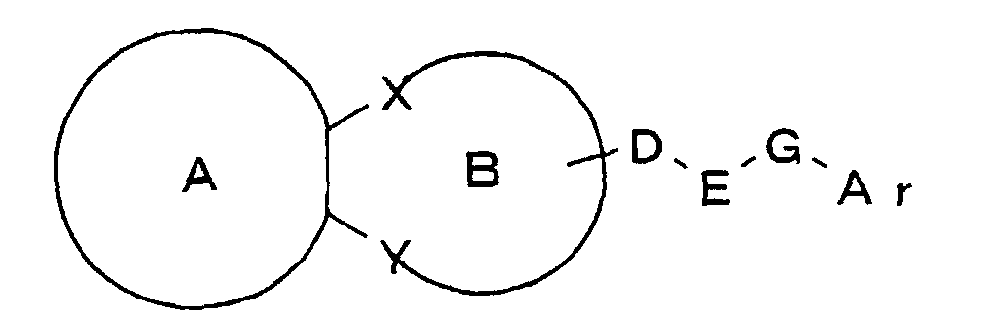


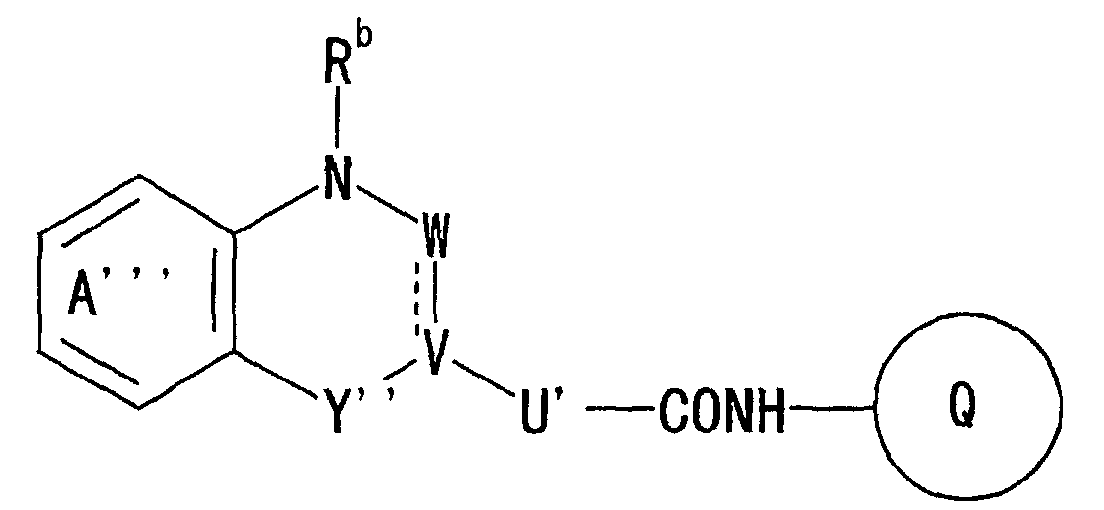
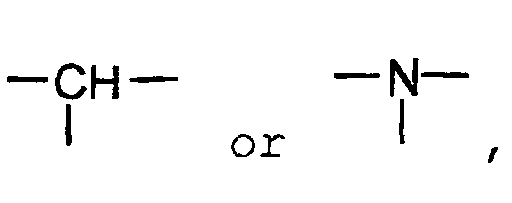


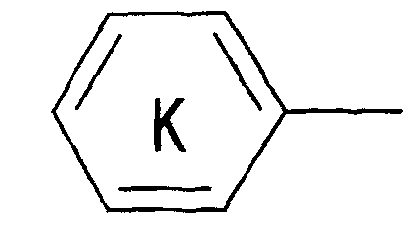
is an optionally substituted phenyl group (provided that 2-chlorophenyl and 2-fluorophenyl are excluded), ring L is an optionally substituted benzene ring or optionally substituted pyridine ring, provided that when

is a phenyl group, then R13 is not a methyl group, and when

is a 2-methylphenyl group, then R13 is not a chlorine atom, or a salt thereof;

is a phenyl group which may be substituted by a C1-3 alkyl group;
2-[7-chloro-4-(3-chlorophenyl)-6-methyl-2-oxo-2H-chromen-3-yl]-N-[4-fluoro-2-(trifluoromethyl)phenyl]acetamide;
2-[7-chloro-4-(3-chloro-4-fluorophenyl)-6-methyl-2-oxo-2H-chromen-3-yl]-N-[4-chloro-2-(trifluoromethyl)phenyl]acetamide;
2-[7-chloro-4-(3-chloro-4-fluorophenyl)-6-methyl-2-oxo-2H-chromen-3-yl]-N-[4-fluoro-2-(trifluoromethyl) phenyl] acetamide;
2-[7-chloro-6-methyl-4- (3-methylphenyl)-2-oxo-2H-chromen-3-yl]-N-[4-chloro-2-(trifluoromethyl)phenyl]acetamide;
2-[7-chloro-6-methyl-4-(3-methylphenyl)-2-oxo-2H-chromen-3-yl]-N-[4-fluoro-2-(trifluoromethyl)phenyl]acetamide;
2-[7-chloro-2-oxo-4-phenyl-6-[(4-phenylpiperazin-1-yl)methyl]-2H-chromen-3-yl]-N-[4-chloro-2-(trifluoromethyl)phenyl]acetamide;
2-[7-chloro-2-oxo-4-phenyl-6-[(4-phenylpiperazin-1-yl)methyl]-2H-chromen-3-yl]-N-[4-fluoro-2-(trifluoromethyl)phenyl]acetamide;
2- [7-chloro-6-[[4- (4-chlorophenyl)-3,6-dihydropyridin-1(2H)-yl]methyl]-2-oxo-4-phenyl-2H-chromen-3-yl]-N-[4-chloro-2-(trifluoromethyl)phenyl]acetamide;
2-[7-chloro-6-[[4-(4-chlorophenyl)-3,6-dihydropyridin-1(2H)-yl]methyl]-2-oxo-4-phenyl-2H-chromen-3-yl]-N-[4-fluoro-2-(trifluoromethyl)phenyl]acetamide;
2-[7-chloro-6-[[4-(3-methylphenyl)piperidin-1-yl]methyl]-2-oxo-4-phenyl-2H-chromen-3-yl]-N-[4-chloro-2-(trifluoromethyl)phenyl]acetamide;
2-[7-chloro-6-[[4-(3-methylphenyl)piperidin-1-yl]methyl]-2-oxo-4-phenyl-2H-chromen-3-yl]-N-[4-fluoro-2-(trifluoromethyl)phenyl]acetamide; or a salt thereof;


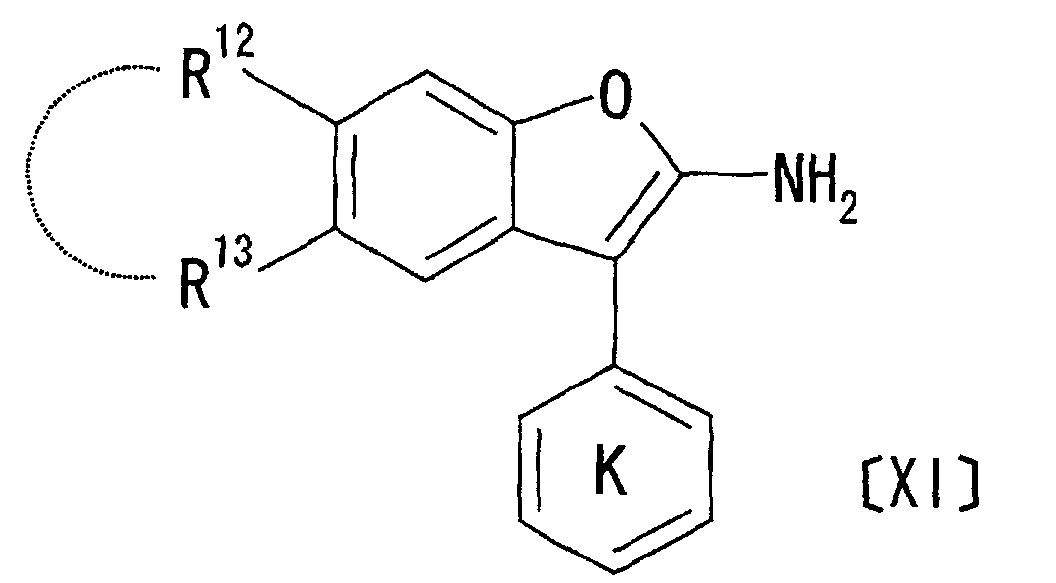


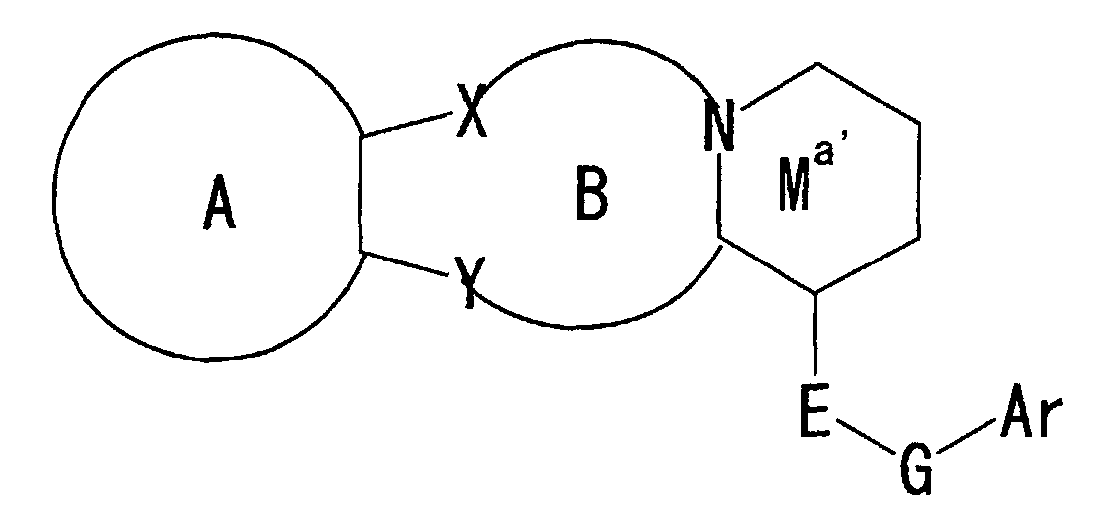
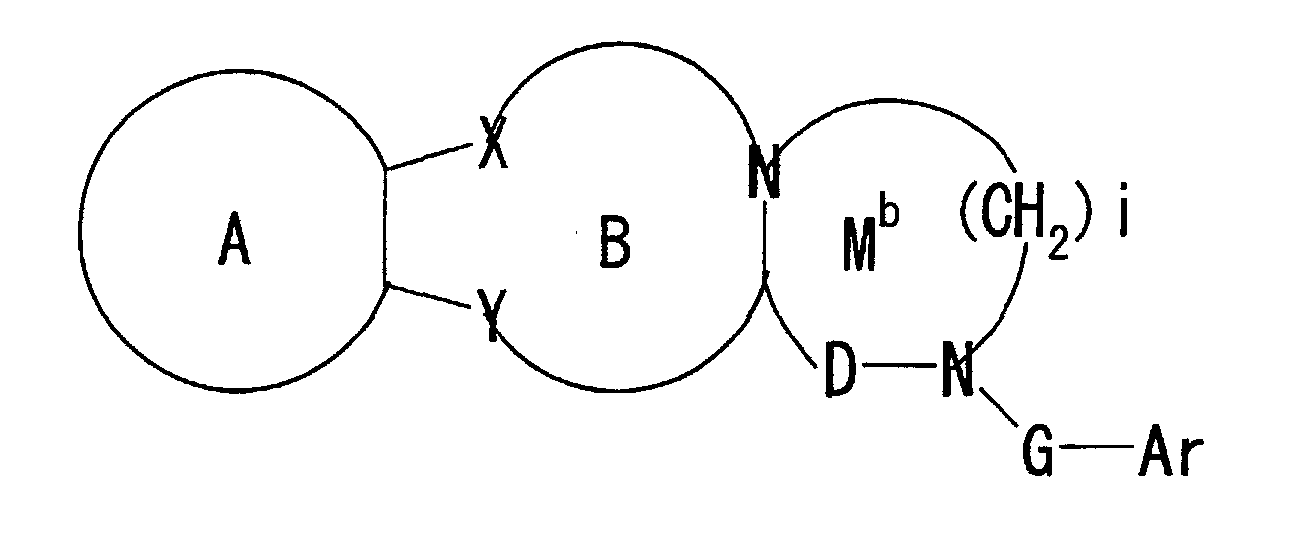
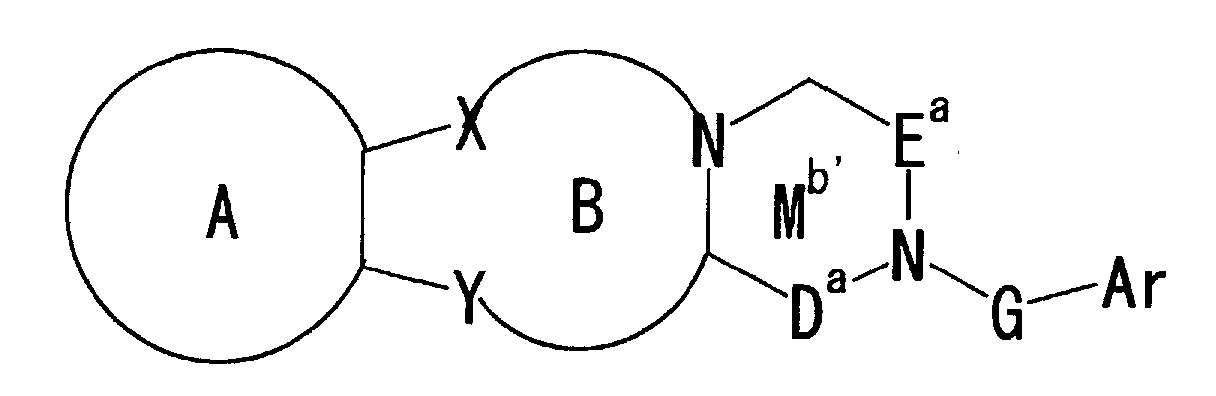


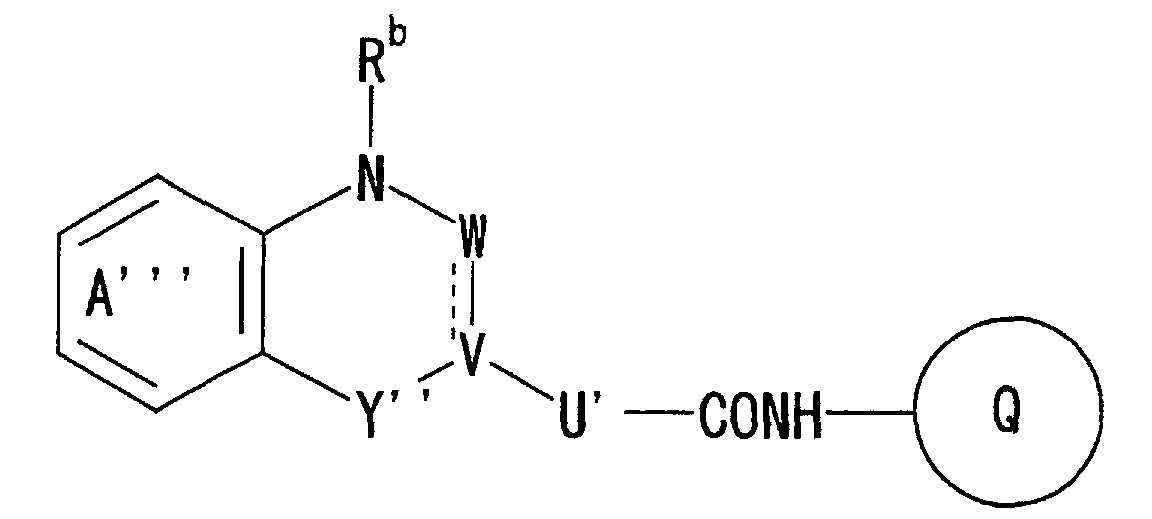


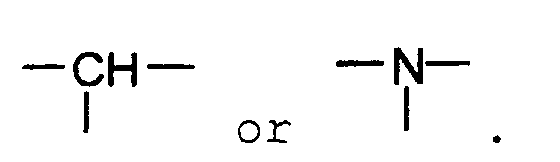
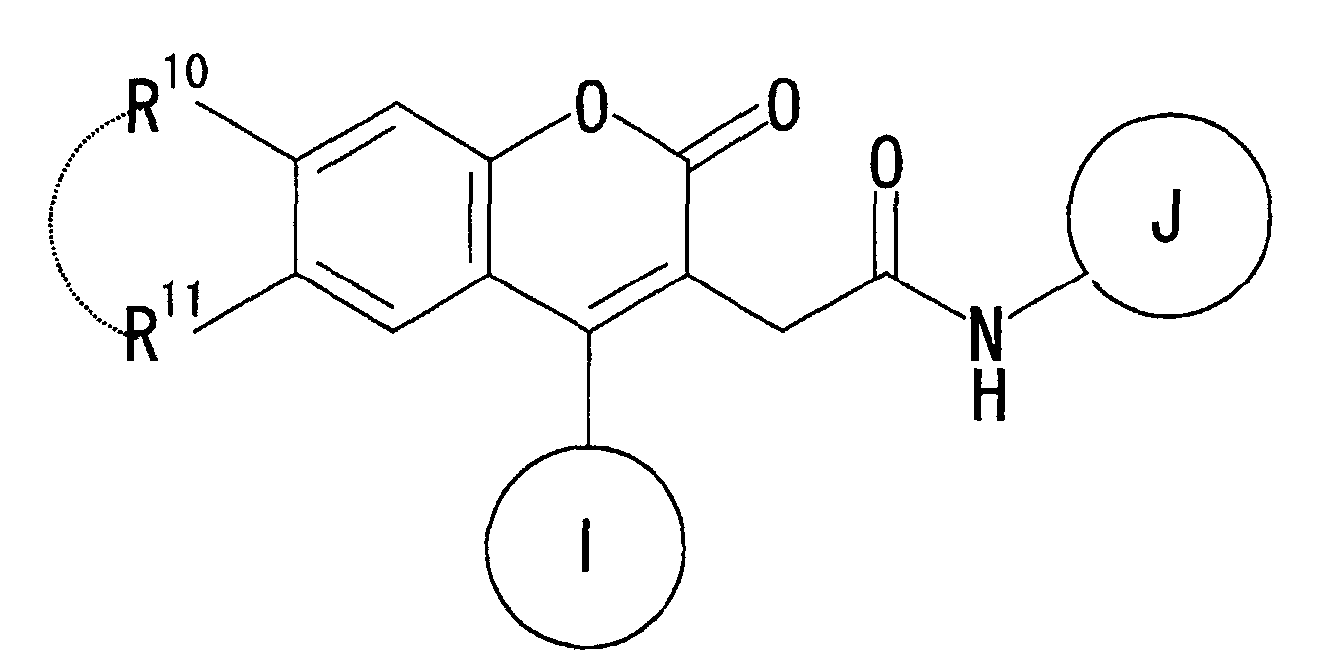

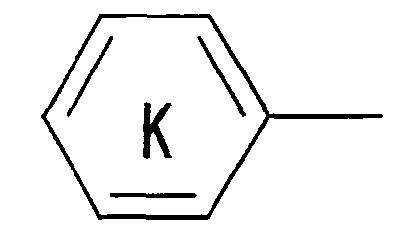
is an optionally substituted phenyl group (preferably, except for 2-chlorophenyl ring and 2-fluorophenyl ring), ring L is an optionally substituted benzene ring or optionally substituted pyridine ring (preferably, when

is a phenyl group, then R13 is not a methyl group, and
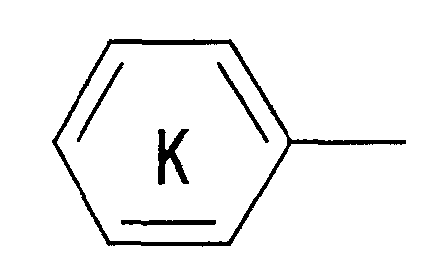
is a 2-methylphenyl group, then R13 is not a chlorine atom) or a salt thereof.

has the meaning similar to "a substituent" on an optionally substituted benzene ring represented by ring I shown above.

may, for example, be a phenyl group which may be substituted by a C1-3 alkyl group.


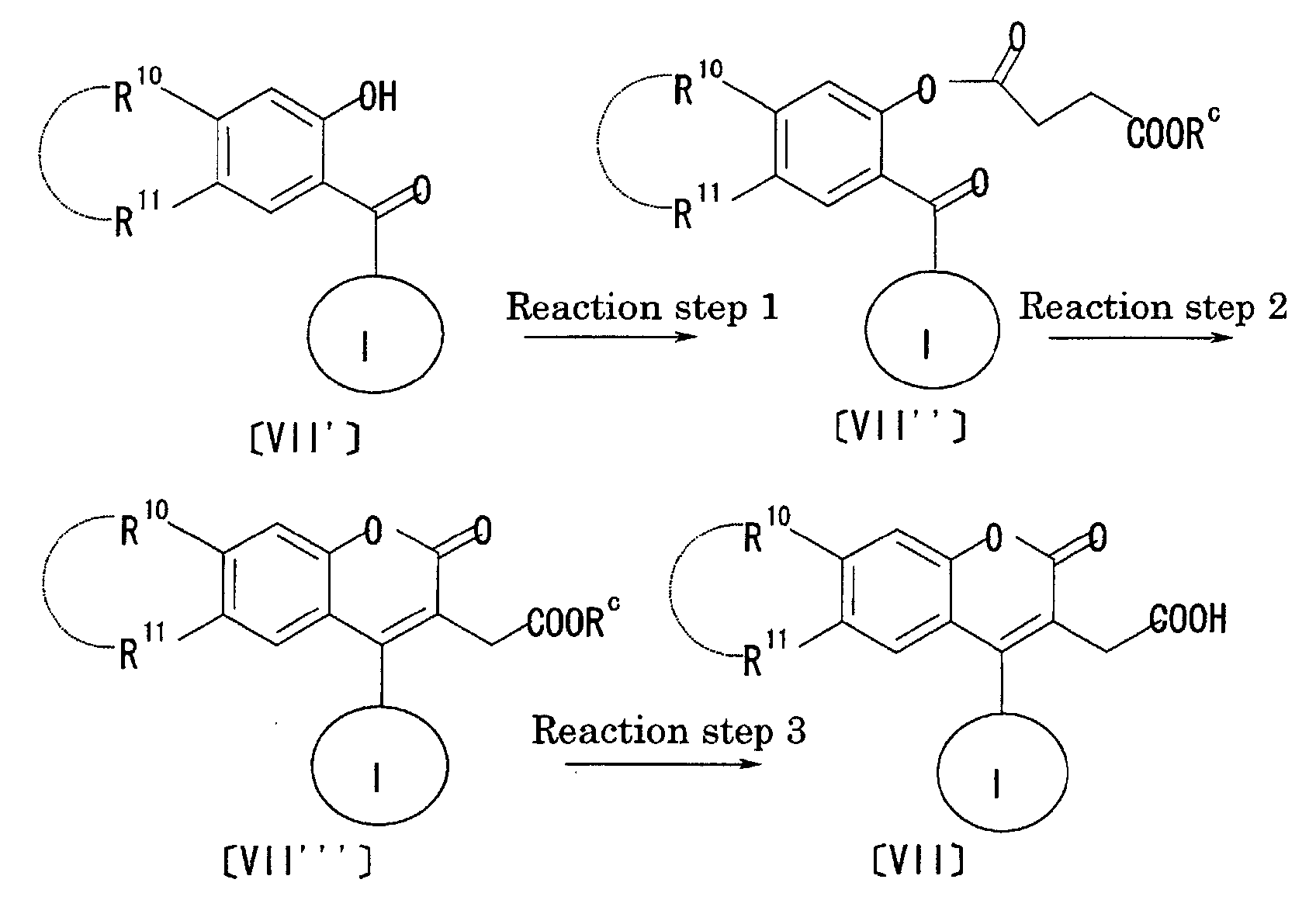


Coronary vasodilating agent: nifedipine, diltiazem, nicorandil, nitrous acid agent;
Myocardial protecting agent: Cardiac ATP-K oral formulation, endoserine antagonist, urotensin antagonist and the like. An inventive compound can be given orally or parenterally, by injection, infusion, inhalation, rectal administration, or topical administration, and can be used as it is or in a pharmaceutical formulation (for example, powder, granule, tablet, pill, capsule, injection, syrup, emulsion, elixir, suspension, solution and the like). Thus, at least one inventive compound can be employed alone or in a mixture with a pharmaceutically acceptable carrier (adjuvant, excipient, auxiliary agent and/or diluent and the like).
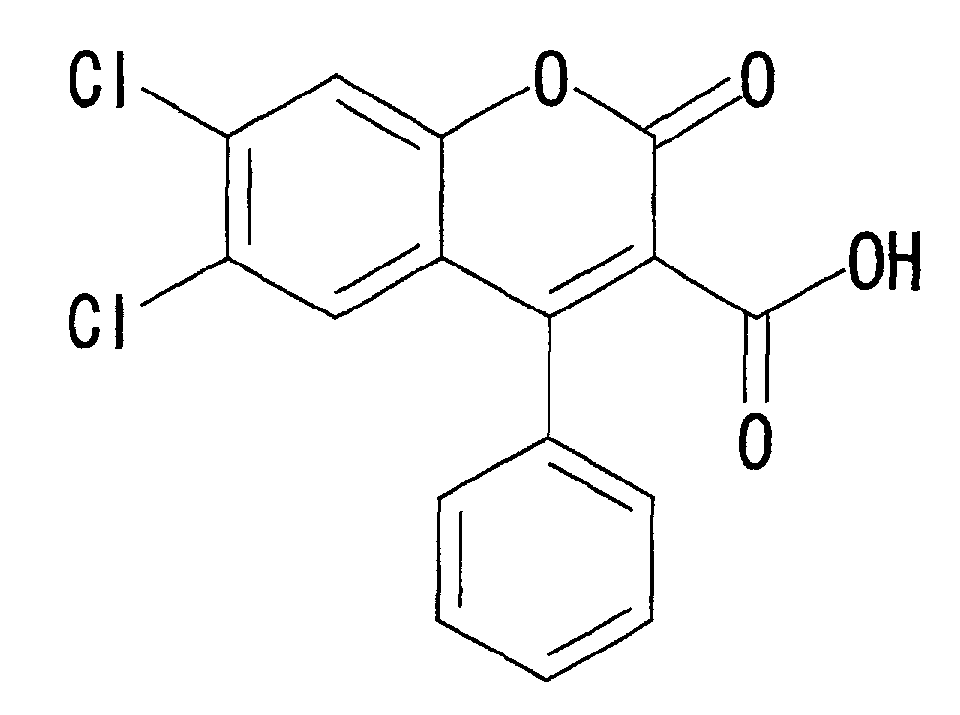
Melting point: 233-234°C.
NMR (CDCl3) δ: 7.29-7.40 (3H,m), 7.48-7.58 (4H, m).
IR(KBr): 3400-2400, 1748, 1717 cm-1.
| Analysis for C16H8O4Cl2: | ||
| Calcd (%) | C:57.34 | H:2.41 |
| Found (%) | C:57.30 | H:2.50 |

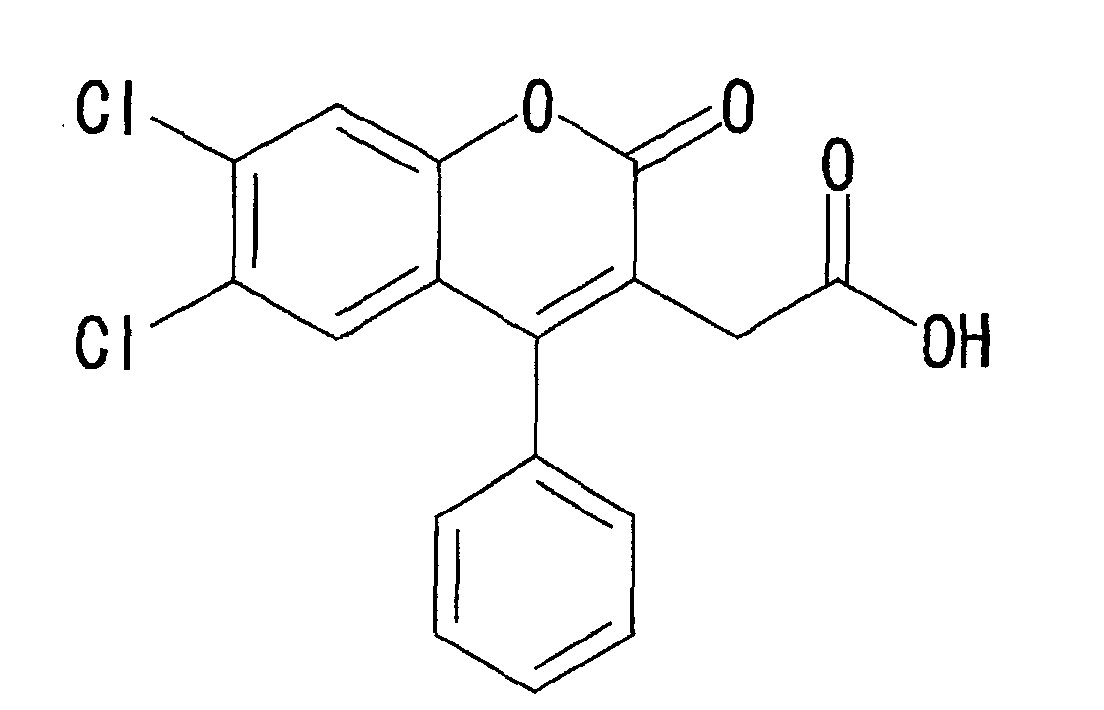
Melting point: 222-223°C.
NMR (CDCl3) δ: 3.43 (2H, s), 7.10 (1H, s), 7.20-7.36 (2H, m), 7.50-7.64 (4H, m.).
IR(KBr): 3400-2400, 1725, 1599 cm-1.
| Analysis for C17H10O4Cl2·0.3H2O | ||
| Calcd (%) | C:57.59 | H:3.01 |
| Found (%) | C:57.44 | H:2.99 |


Melting point: 216-218°C.
NMR (CDCl3) δ: 2.09 (2H, m), 2.81 (2H, d, J=7 Hz), 2.99 (2H, d, J=7 Hz), 3.41 (2H, s), 6.82 (1H, s), 7.20-7.30 (3H, m), 7.50-7.60 (3H, m).
IR(KBr): 3400-2400, 1714, 1622 cm-1.
| Analysis for C20H13NO5 | ||
| Calcd (%) | C:74.99 | H:5.03 |
| Found (%) | C:74.75 | H:5.13 |



Melting point: 132-133°C.
NMR (CDCl3) δ: 1.23 (3H, t, J=7 Hz), 2.28 (2H, s), 3.36 (2H, s), 4.13 (2H, t, J=7 Hz), 6.84 (1H, s), 7.20-7.35 (2H, m), 7.41 (1H, s), 7.45-7.60 (3H, m).
IR(KBr): 1728, 1609, 1366, 1188 cm-1.
| Analysis for C20H17ClO4 | ||
| Calcd (%) | C:67.32 | H:4.80 |
| Found (%) | C:67.55 | H:5.13 |
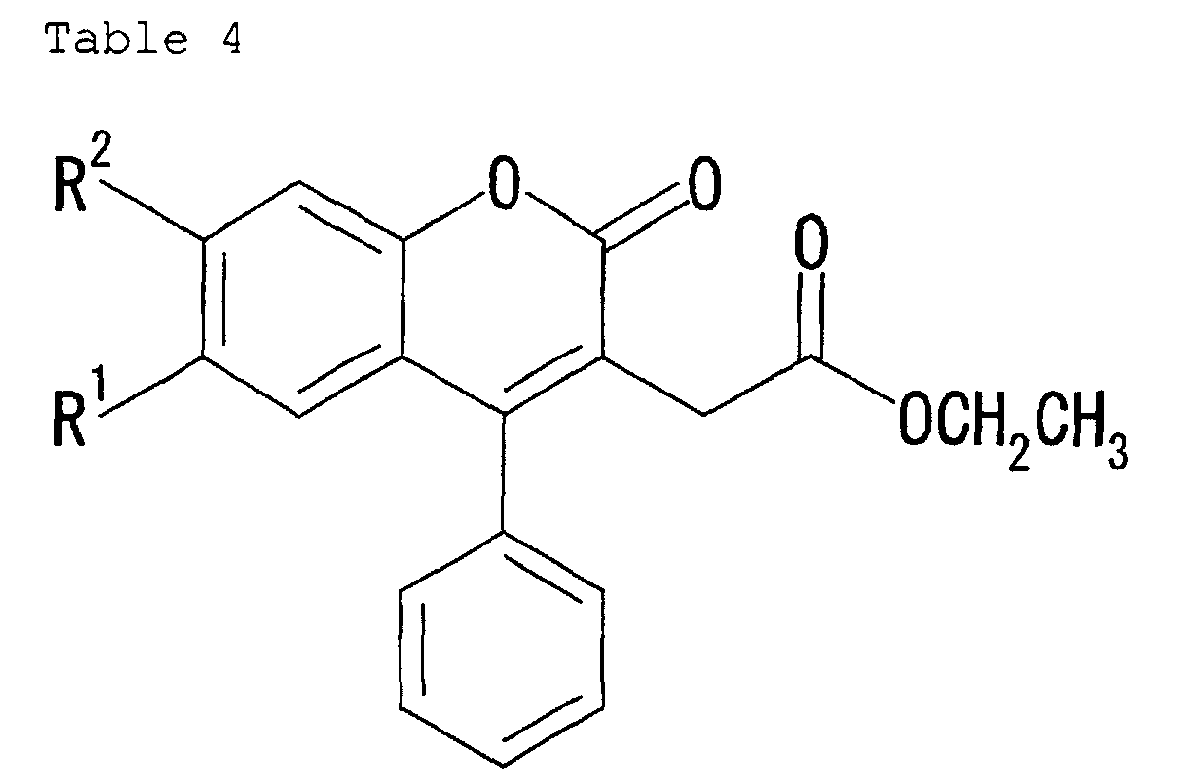

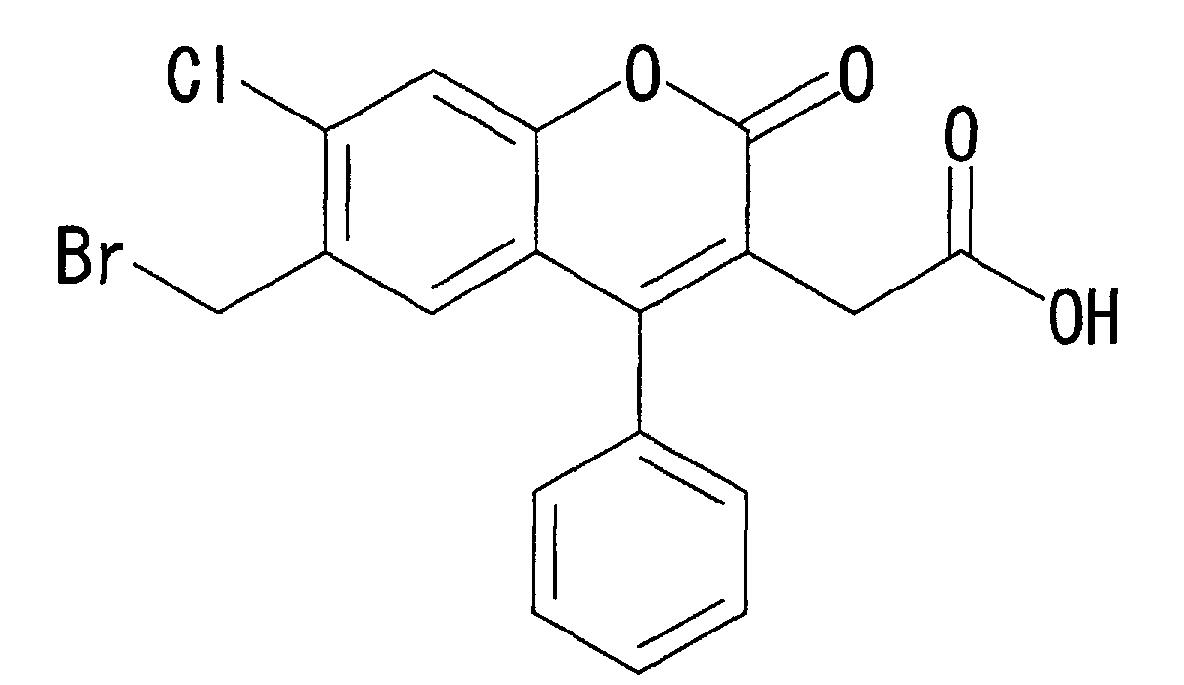
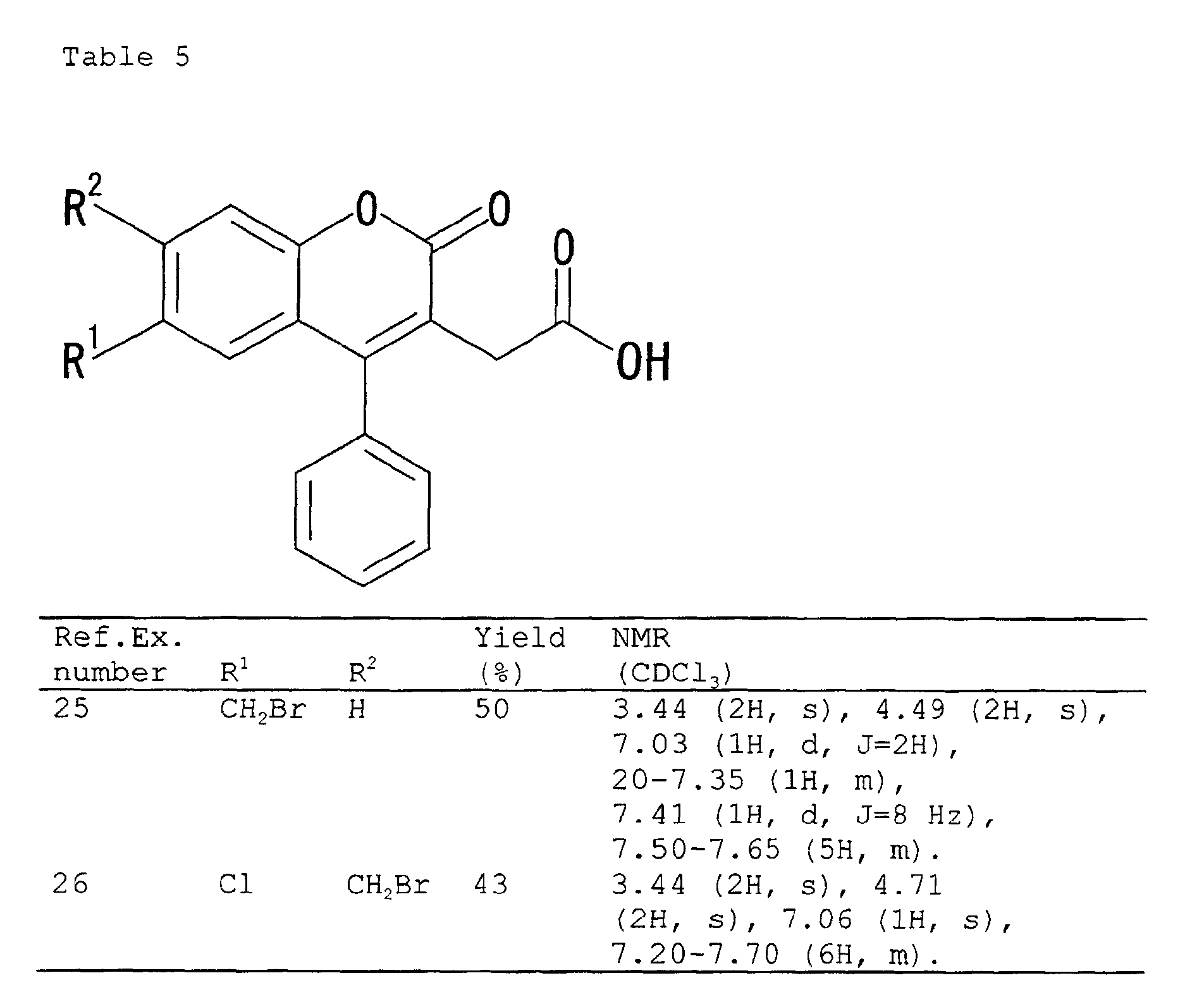
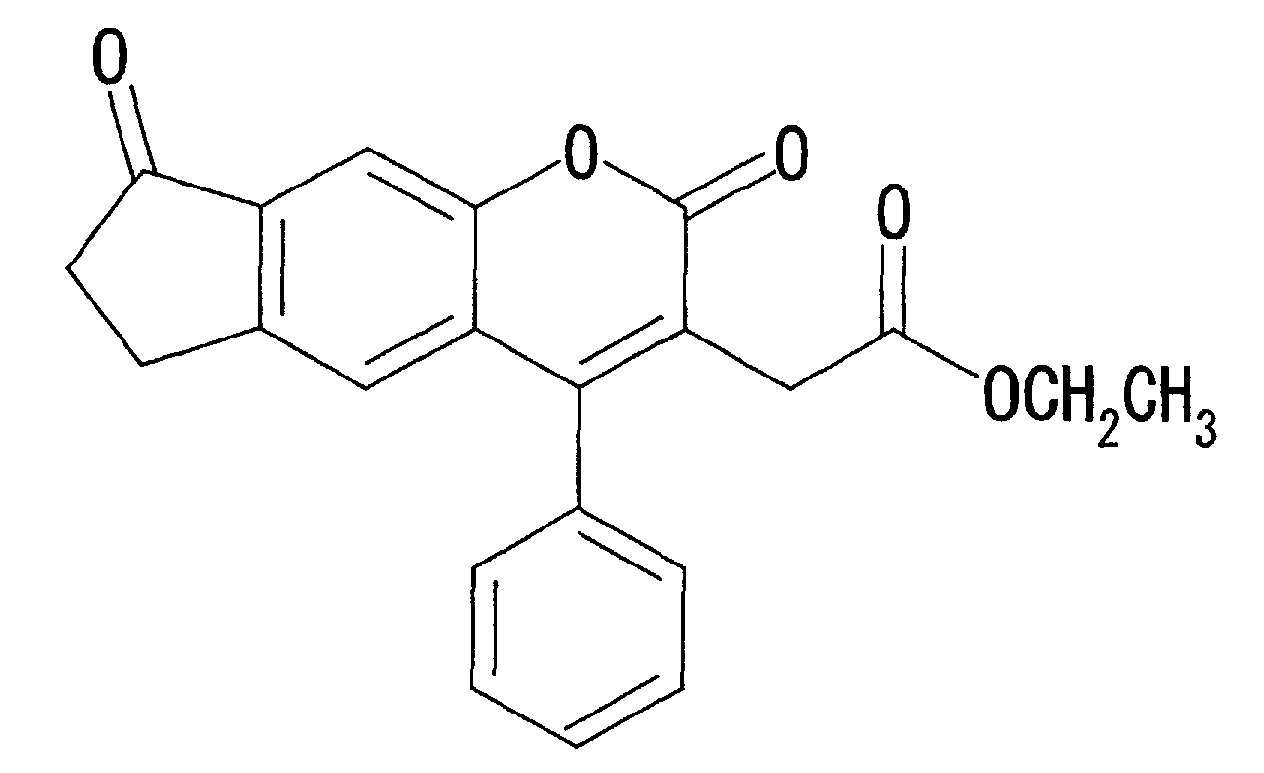
Melting point: 145-148°C.
NMR (CDCl3) δ: 1.23 (3H, t, J = 9 Hz), 2.75 (2H, t, J = 6 Hz), 3.08 (2H, t, J = 6 Hz), 3.41 (2H, s), 4.14 (2H, q, J = 9 Hz), 7.10 (1H, s), 7.28 (2H, m), 7.55 (3H, m), 7.71 (1H, s).
IR(KBr): 2980, 1715, 1615, 1563 cm-1.
| Analysis for C22H18O5 | ||
| Calcd (%) | C:72.92 | H:5.01 |
| Found (%) | C:73.15 | H:5.20 |

Melting point: 240°C (decomp.).
NMR (CDCl3 + DMSO-d6 1 drop) δ: 2.74 (2H, t, J = 6 Hz), 3.08 (2H, t, J = 6 Hz), 3.40 (2H, s), 7.11 (1H, s), 7.32 (2H, m), 7.56 (3H, m), 7.68 (1H, s).
IR(KBr): 3400-2400, 1713 cm-1.
| Analysis for C20H14O5 | ||
| Calcd (%) | C:71.85 | H:4.22 |
| Found (%) | C:71.40 | H:4.50 |
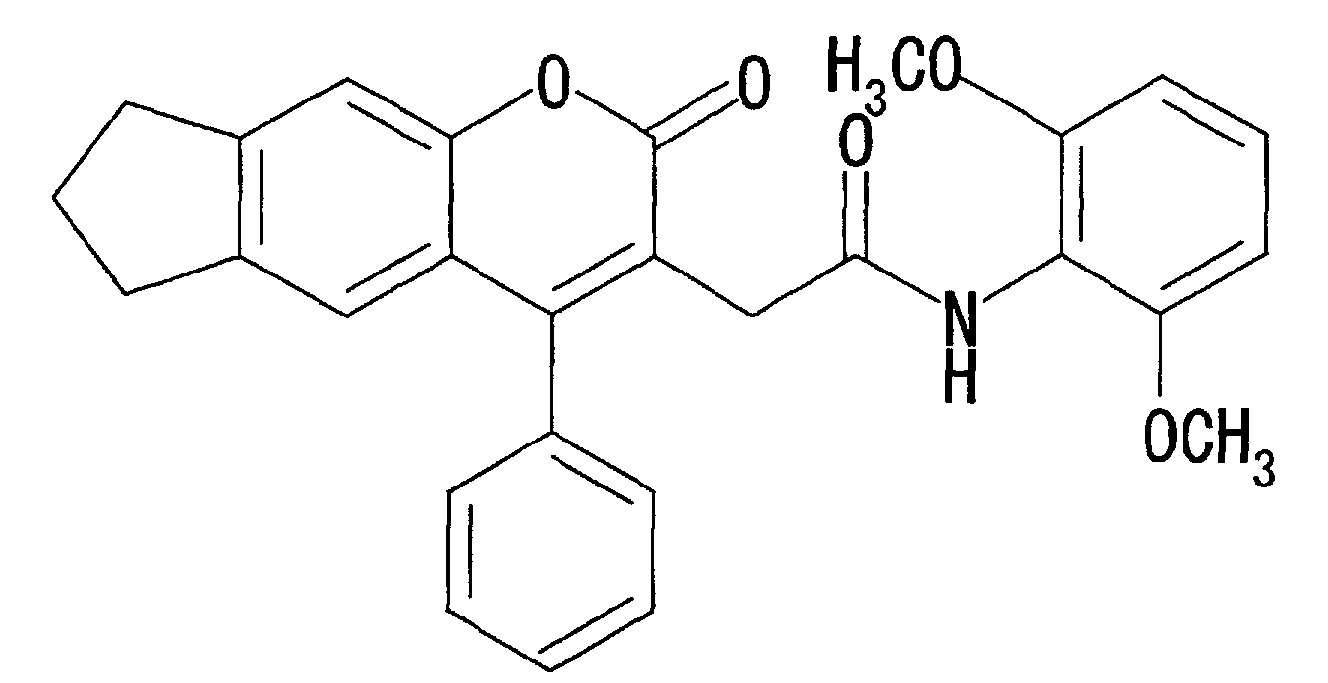
Melting point: 213-215°C.
NMR (CDCl3) δ: 2.09 (2H, m), 2.81 (2H, t, J = 7 Hz), 2.99 (2H, t, J = 7 Hz), 3.46 (2H, br) 3.78 (6H, s), 6.54 (2H, d, J = 8 Hz), 6.85 (1H, s), 7.14 (1H, t, J = 8 Hz), 7.26 (1H, s), 7.43 (2H, m), 7.50 (1H, m).
IR(KBr): 1707, 1686, 1508 cm-1.
| Analysis for C28H25NO5·0.2H2O | |||
| Calcd (%) | C:73.25 | H:5.58 | N:3.05 |
| Found (%) | C:73.04 | H:5.79 | N:3.14 |


Melting point: 257-259°C.
NMR (CDCl3) δ: 2.11 (2H, m), 2.27 (3H, m), 2.90 (2H, t, J = 7 Hz), 2.99 (2H, t, J = 7 Hz), 3.71 (6H, s), 6.54 (1H, s), 6.56 (2H, d, J = 8 Hz), 6.86 (1H, bs), 7.06 (1H, s), 7.15 (1H, t, J = 8 Hz), 7.33 (5H, m).
IR(KBr): 1699, 1655, 1306, 1144 cm-1.
| Analysis for C25H18N2O3Cl2·0.3H2O | |||
| Calcd (%) | C:63.79 | H:3.98 | N:5.95 |
| Found (%) | C:63.56 | H:4.10 | N:5.71 |
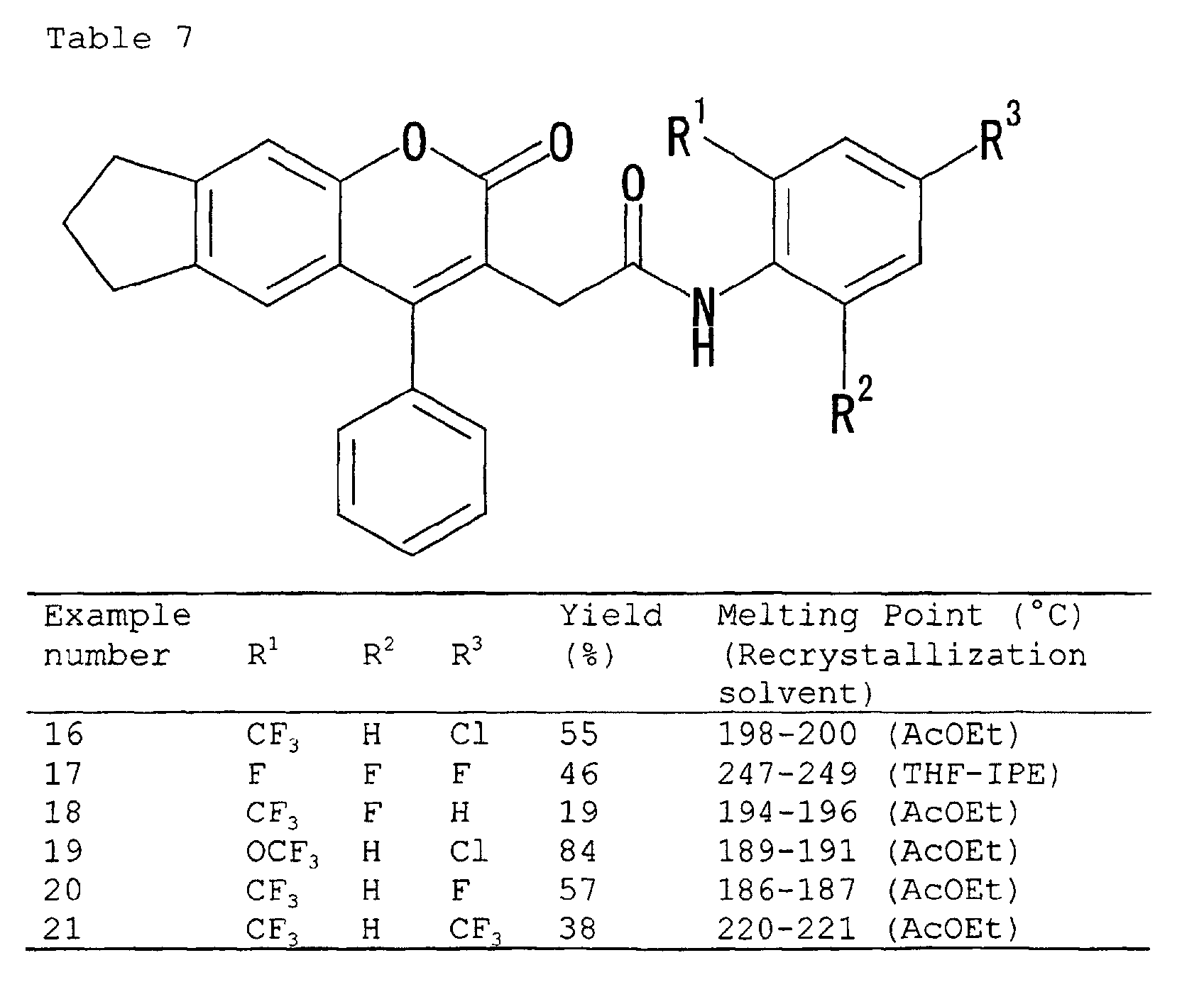
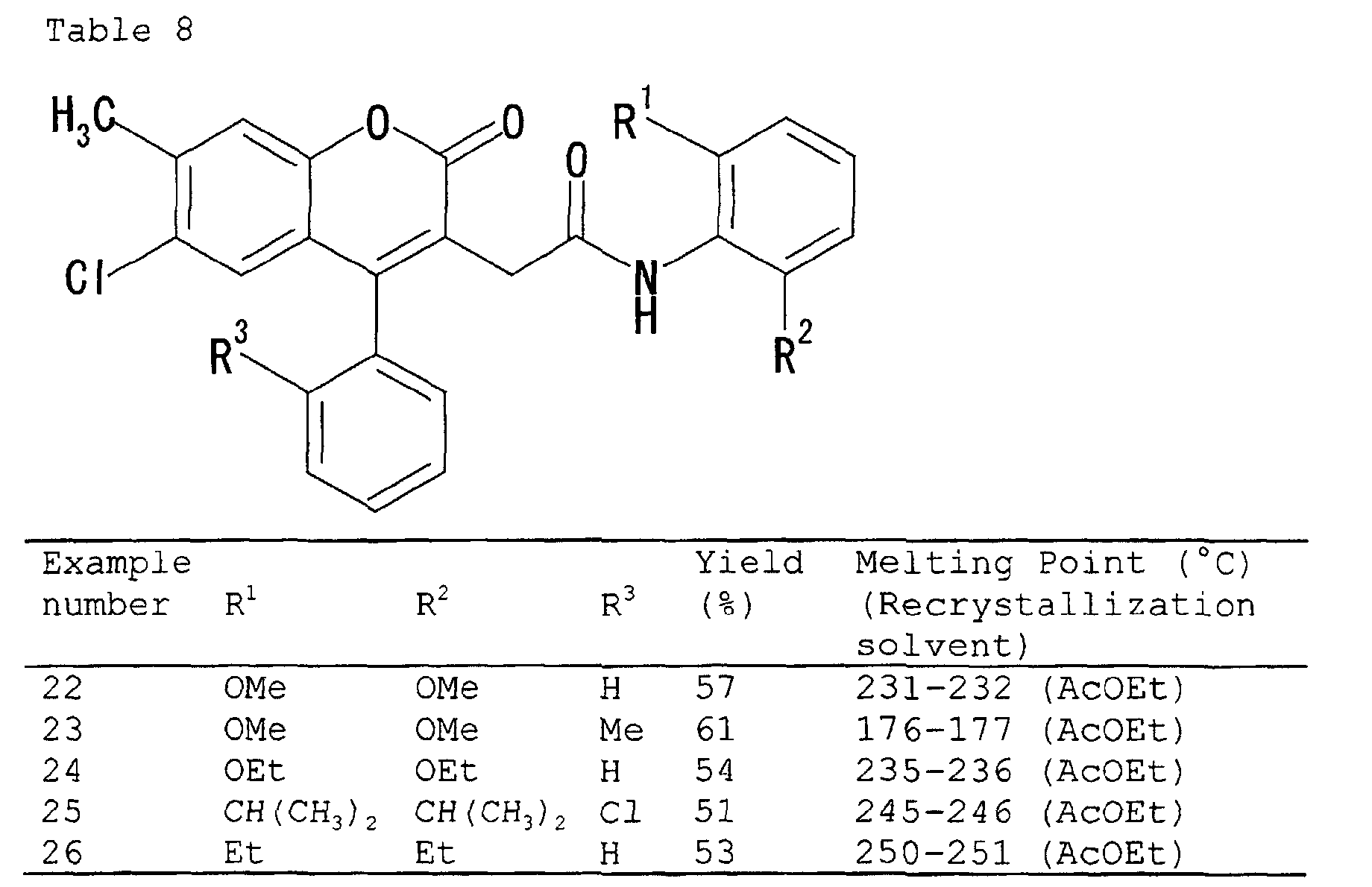
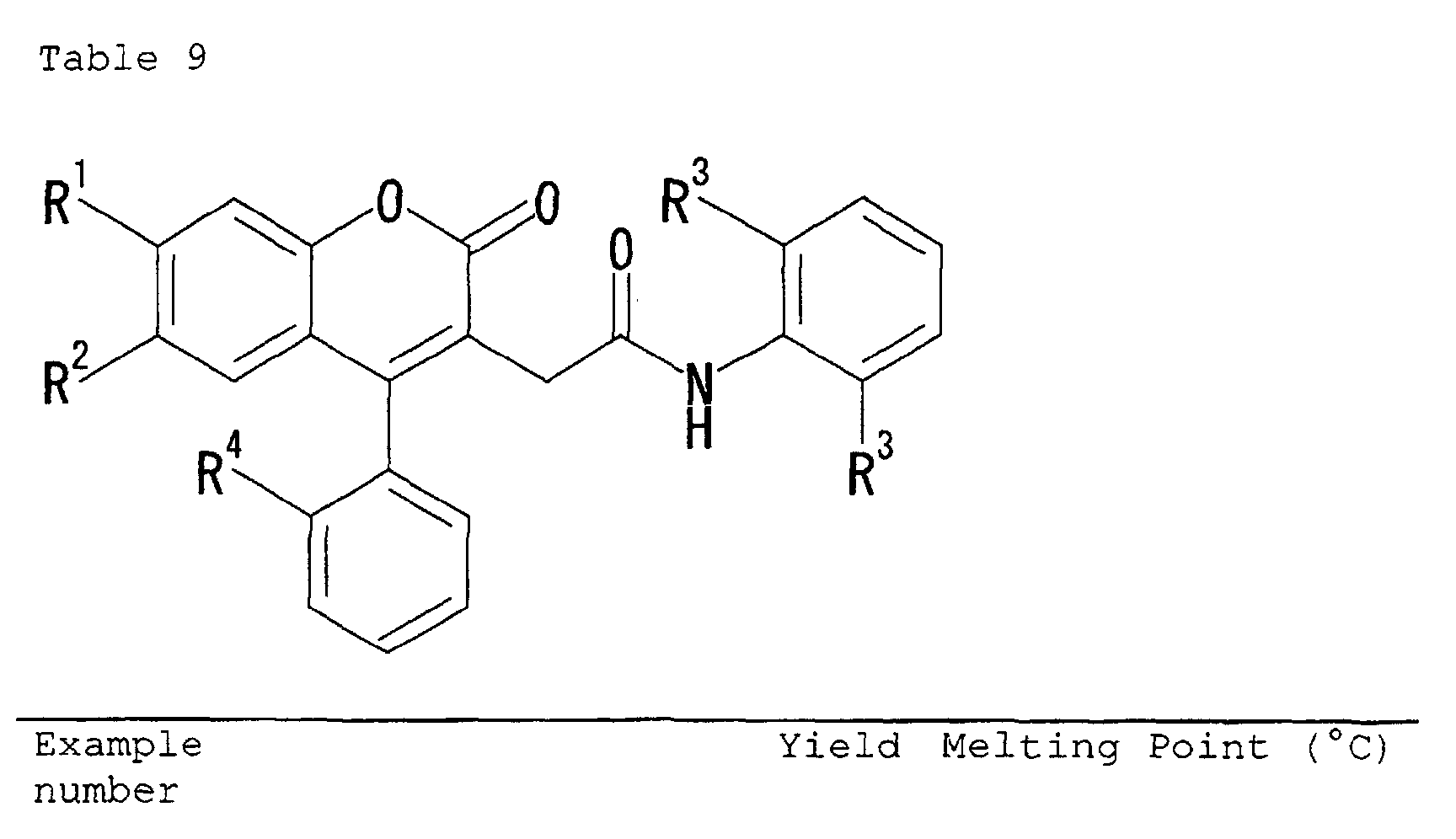


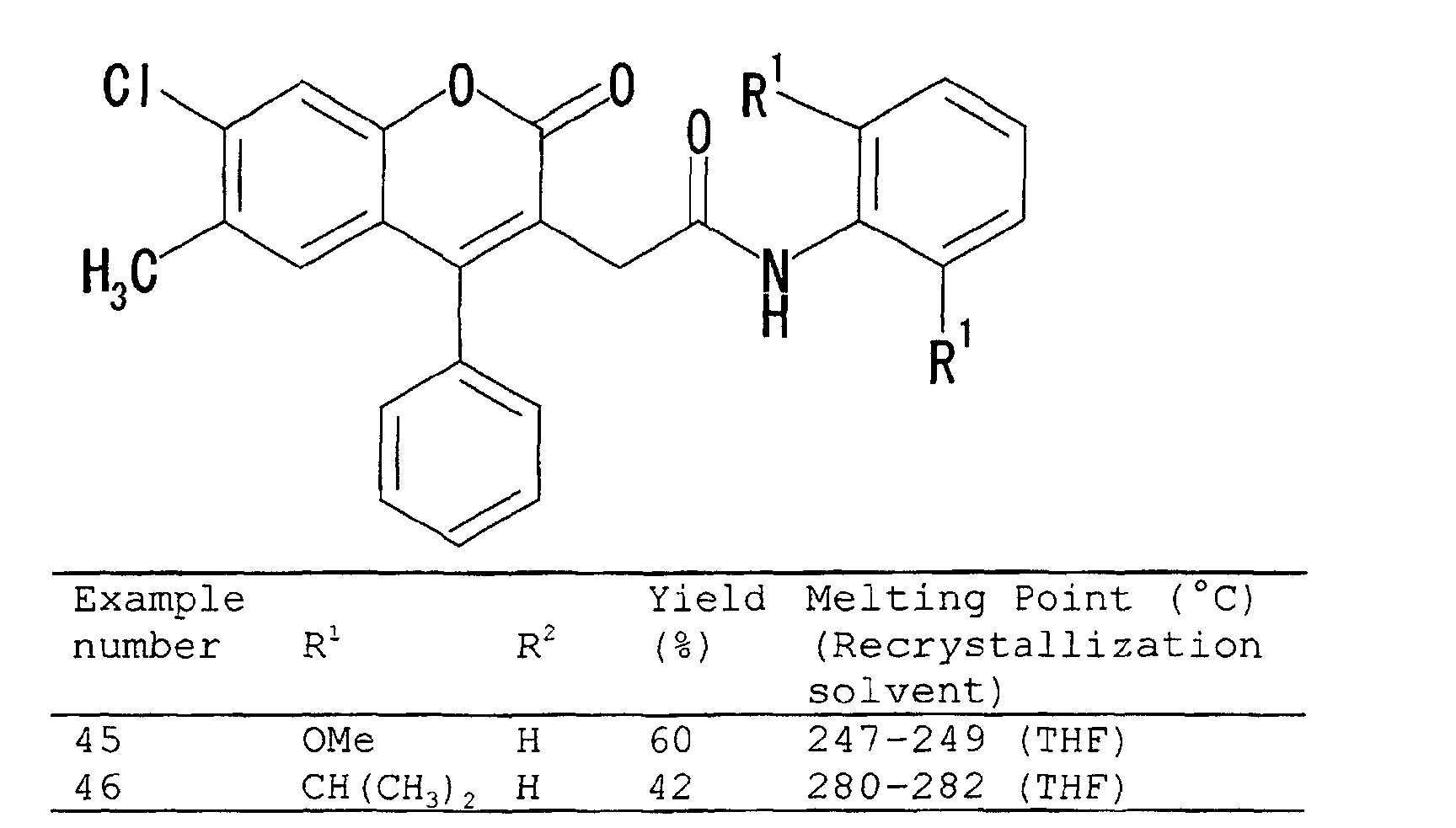
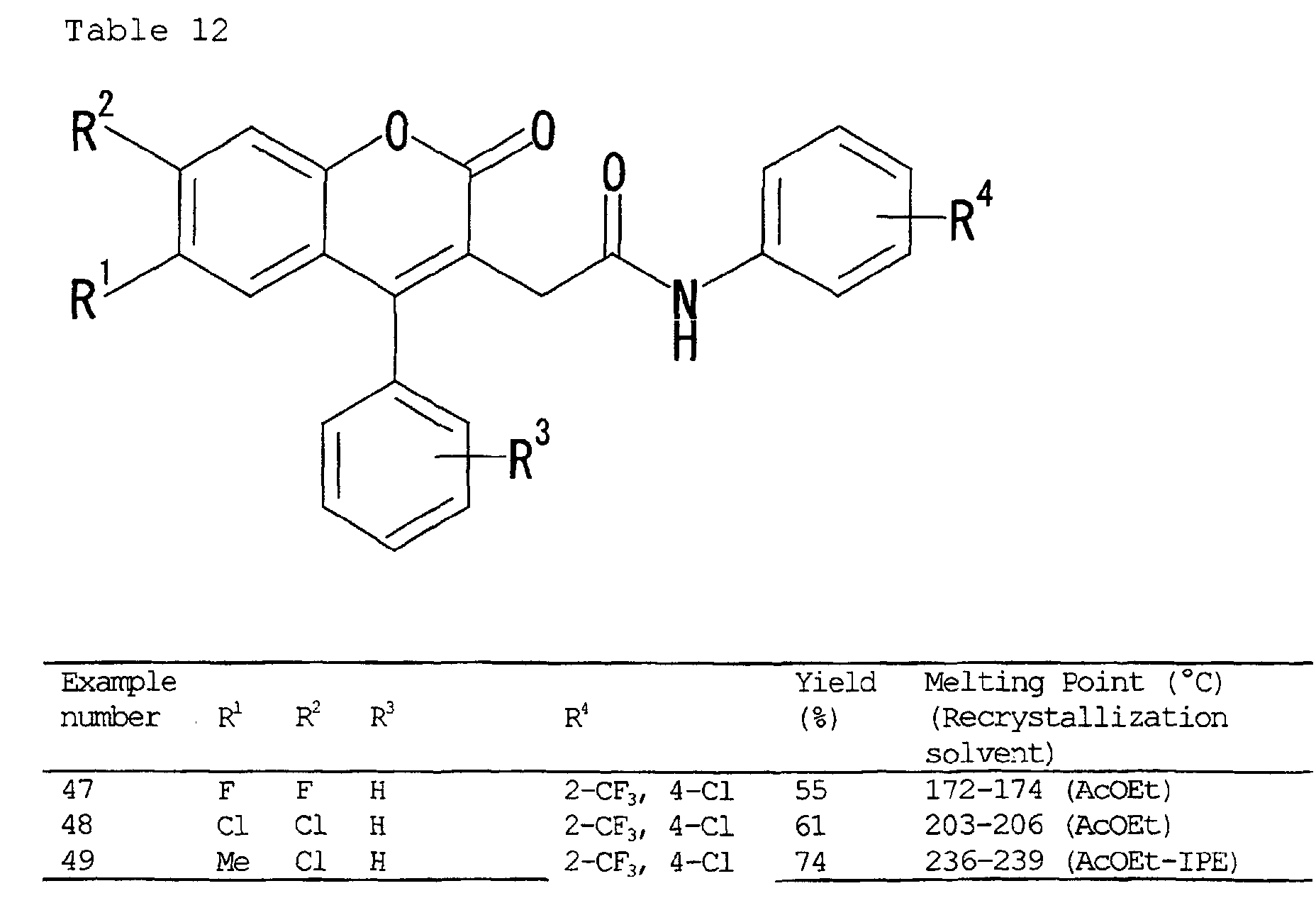
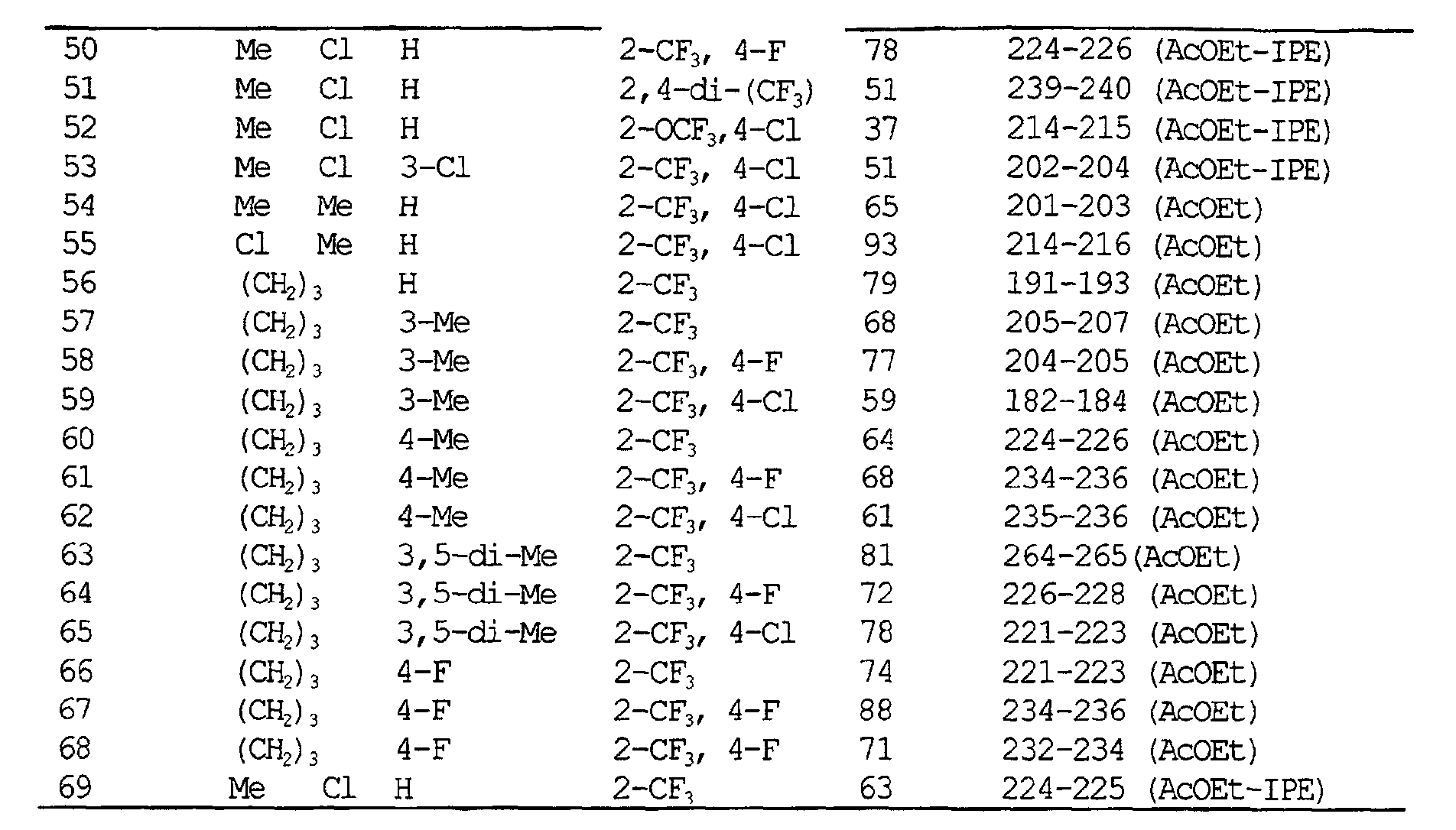
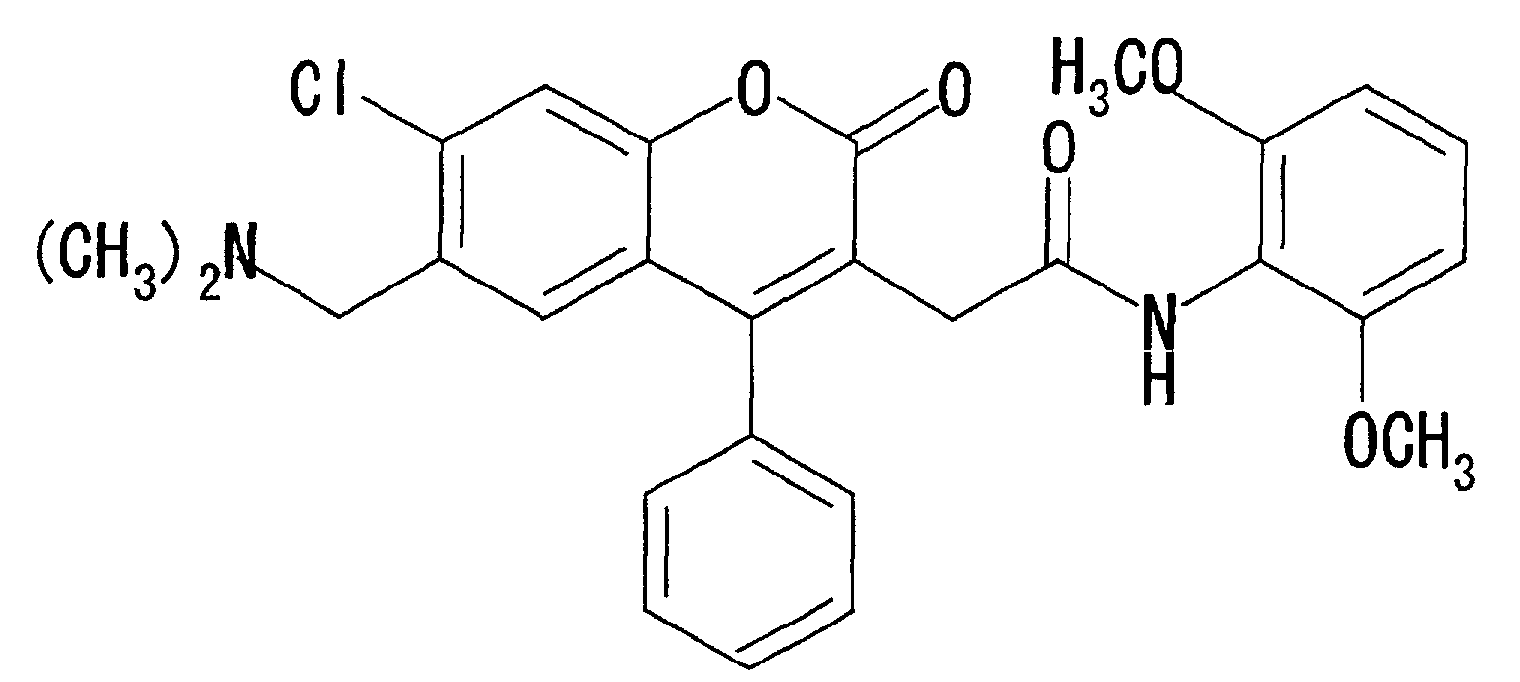
Melting point: 221-223°C.
NMR (CDCl3) δ: 2.17 (6H, s), 3.41 (2H, s), 3.48 (2H, brs), 3.79 (6H, brs), 6.54 (2H, d, J=8 Hz), 7.08 (1H, brs), 7.15 (1H, t, J=8 Hz), 7.35-7.60 (8H, m).
IR(KBr): 1732, 1661, 1560, 1478 cm-1.
| Analysis for C28H27N2O5Cl | |||
| Calcd (%) | C:66.33 | H:5.37 | N:5.53 |
| Found (%) | C:66.17 | H:5.38 | N:5.22 |
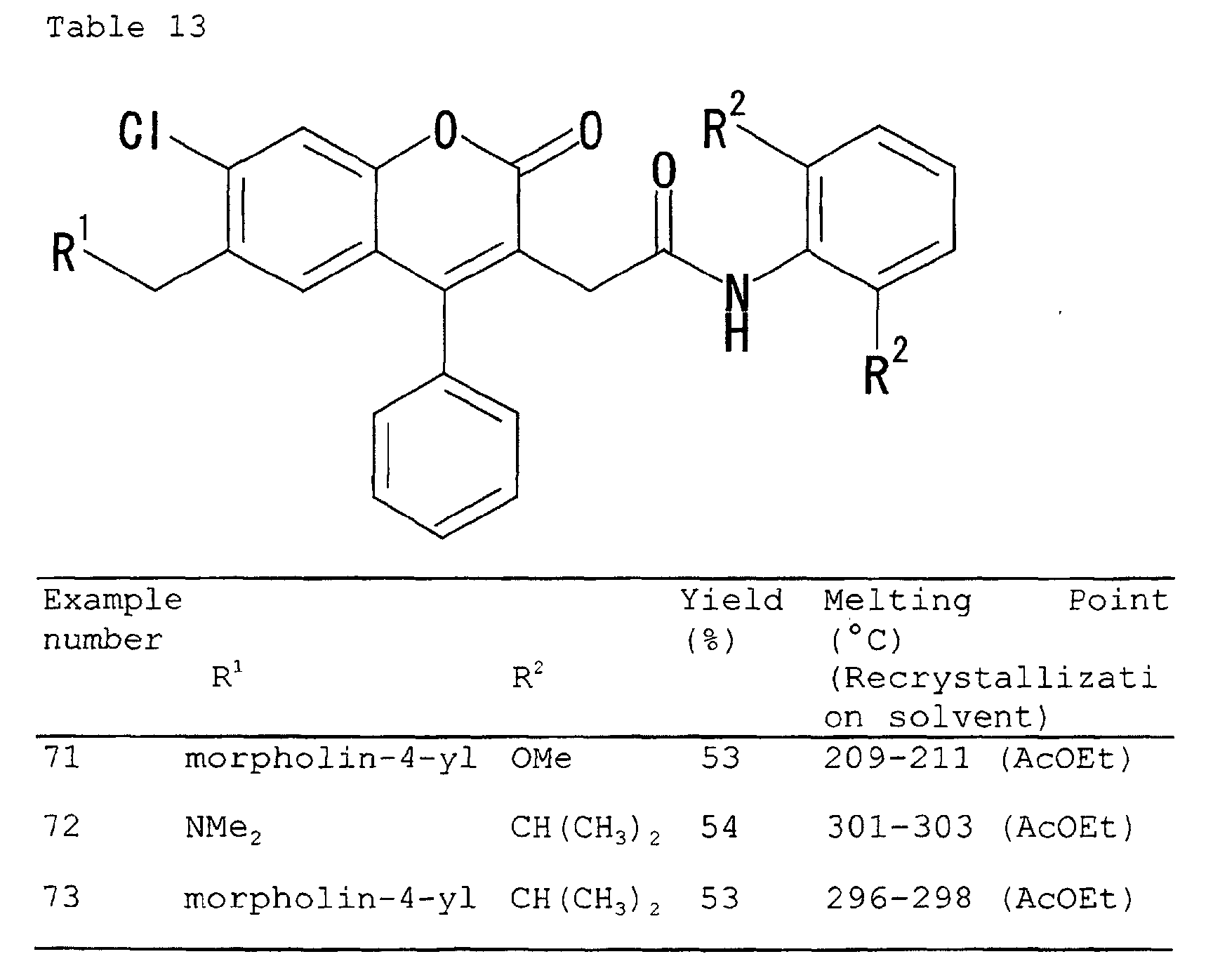
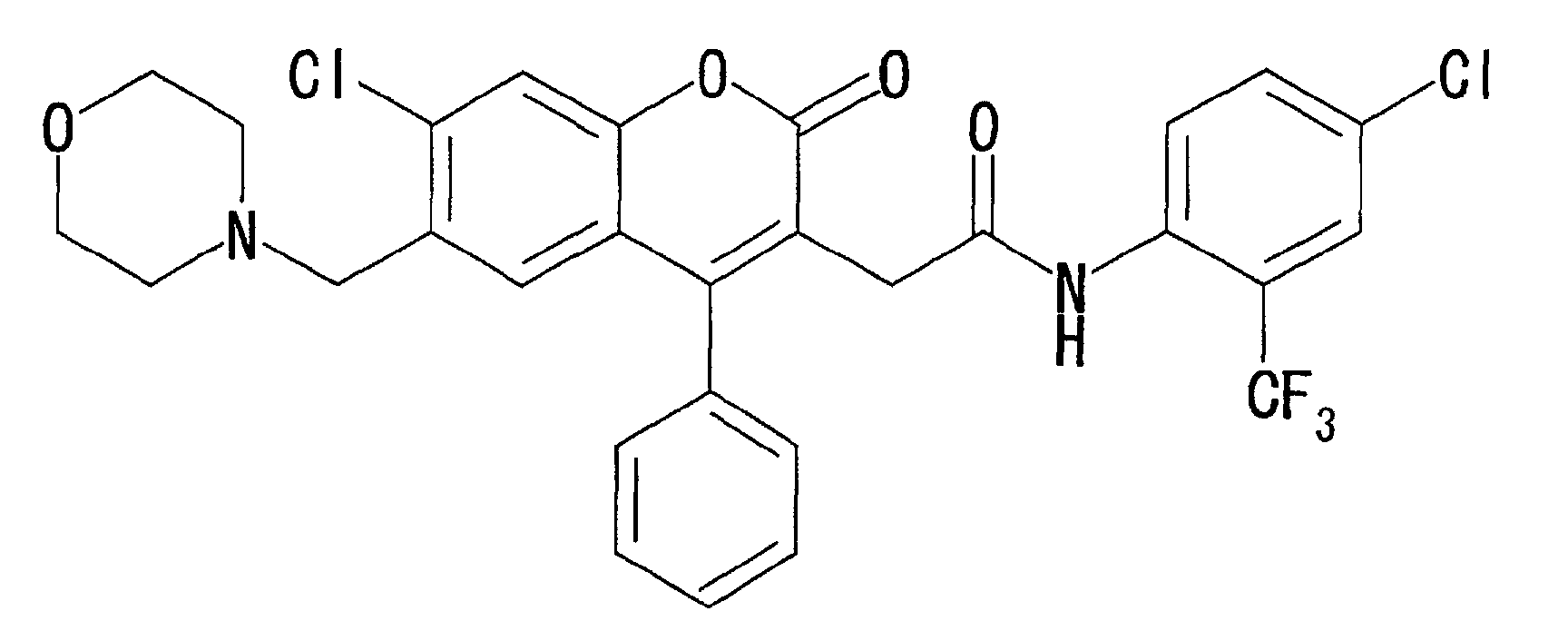
Melting point: 205-207°C.
NMR (CDCl3) 5: 2.35-2.45 (4H, m), 3.45-3.65 (8H, m), 7.21 (1H, s), 7.30-7.40 (2H, m), 7.45 (1H, s), 7.45-7.65 (5H, m), 8.08 (1H, d, J=9 Hz), 8.24 (1H, brs).
IR(KBr): 1725, 1663, 1530, 1310 cm-1.
| Analysis for C29H23N2O4Cl2F3 | |||
| Calcd (%) | C:58.90 | H:3.92 | N:4.74 |
| Found (%) | C:58.90 | H:3.89 | N:4.61 |
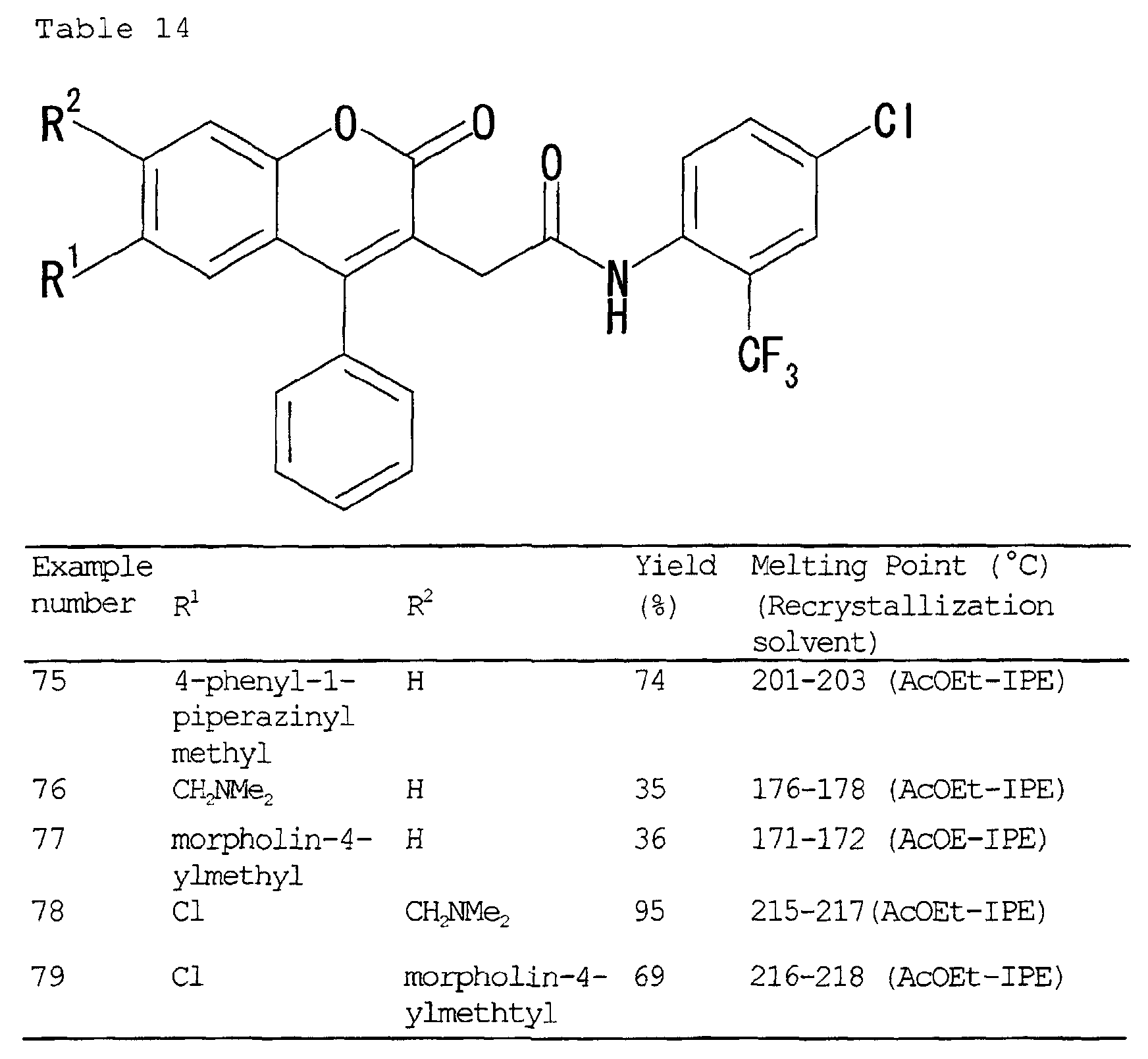

Melting point: 229-231°C.
NMR (CDCl3) δ: 1.99 (3H, s), 3.50 (2H, brs), 3.78 (6H, brs), 5.09 (2H, s), 6.55 (2H, d, J=8 Hz), 7.06 (1H, brs), 7.16 (1H, t, J=8 Hz), 7.25-7.60 (8H, m).
IR(KBr): 1737, 1732, 1477, 1260 cm-1.
| Analysis for C28H24NO7Cl | |||
| Calcd (%) | C:64.43 | H:4.63 | N:2.68 |
| Found (%) | C:64.45 | H:4.95 | N:2.64 |
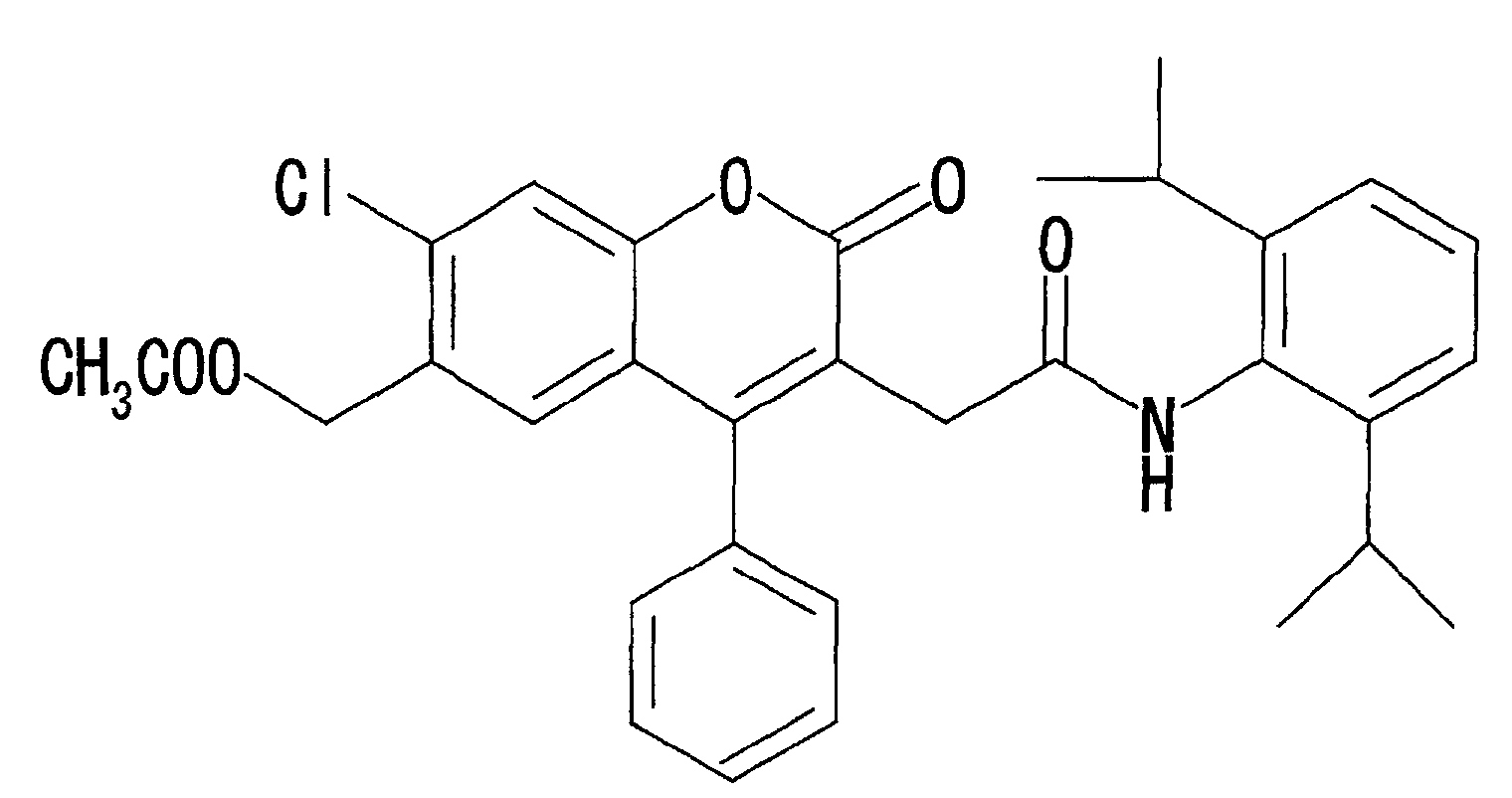
Melting point: 290-292°C.
NMR (CDCl3) δ: 1.15 (12H, d, J=7 Hz), 1.99 (3H, s), 3.03 (2H, m), 3.53 (2H, s), 5.10 (2H, s), 7.00-7.60 (11H, m).
IR(KBr): 1732, 1647, 1532, 1364 cm-1.
| Analysis for C32H32NO5Cl | |||
| Calcd (%) | C:70.39 | H:5.91 | N:2.57 |
| Found (%) | C:70.41 | H:5.67 | N:2.58 |

Melting point: 186-187°C.
NMR (CDCl3) δ: 1.99 (3H, s), 3.49 (2H, s), 5.10 (2H, s), 7.08 (1H, s), 7.30-7.40 (2H, m), 7.45-7.65 (6H, m), 8.08 (1H, d, J=9 Hz), 8.17 (1H, brs).
IR(KBr): 1725, 1663, 1530, 1310 cm-1.
| Analysis for C27H18NO5Cl2F3 | |||
| Calcd (%) | C:57.46 | H:3.21 | N:2.48 |
| Found (%) | C:57.20 | H:3.25 | N:2.25 |
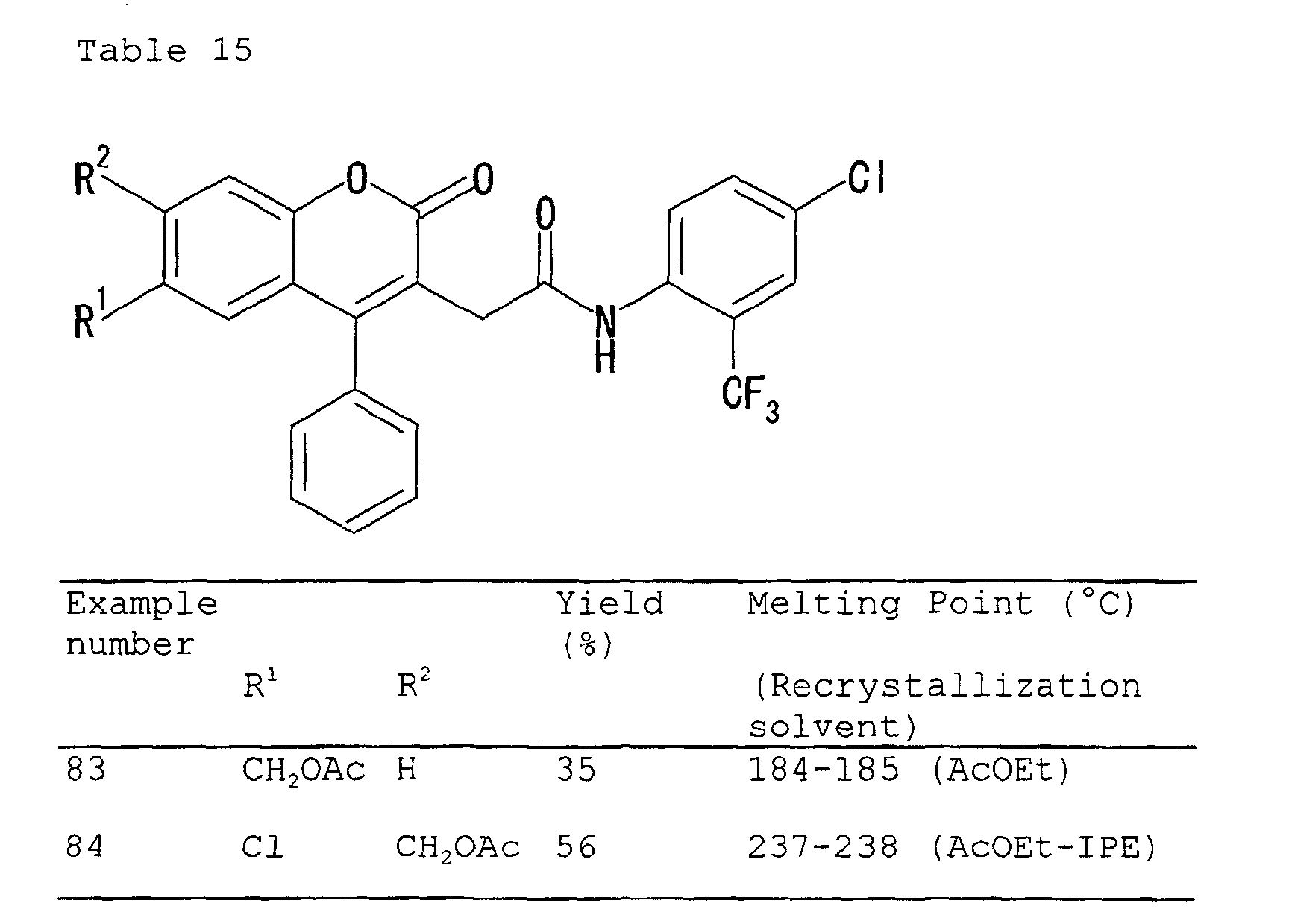

Melting point: 241-243°C.
NMR (CDCl3) δ: 1.85 (1H, t, J=6 Hz), 3.48 (2H, s), 4.70 (2H, d, J=6 Hz), 7.21 (1H, s), 7.30-7.40 (2H, m), 7.45-7.65 (6H, m), 8.08 (1H, d, J=9 Hz), 8.19 (1H, brs).
IR(KBr): 1699, 1655, 1306, 1144 cm-1.
| Analysis for C25H16NO4Cl2F3 | |||
| Calcd (%) | C:57.49 | H:3.09 | N:2.68 |
| Found (%) | C:57.52 | H:3.09 | N:2.57 |
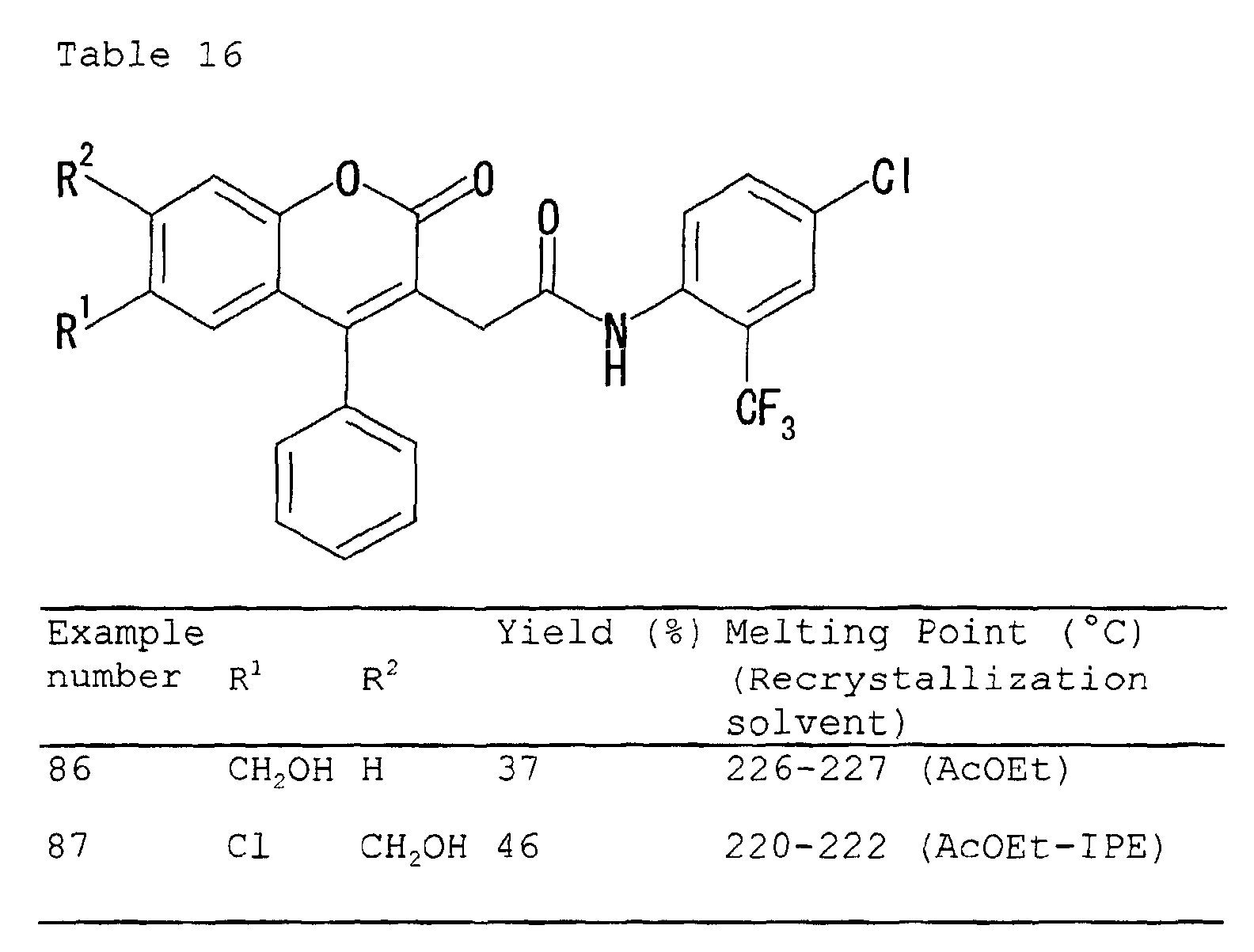
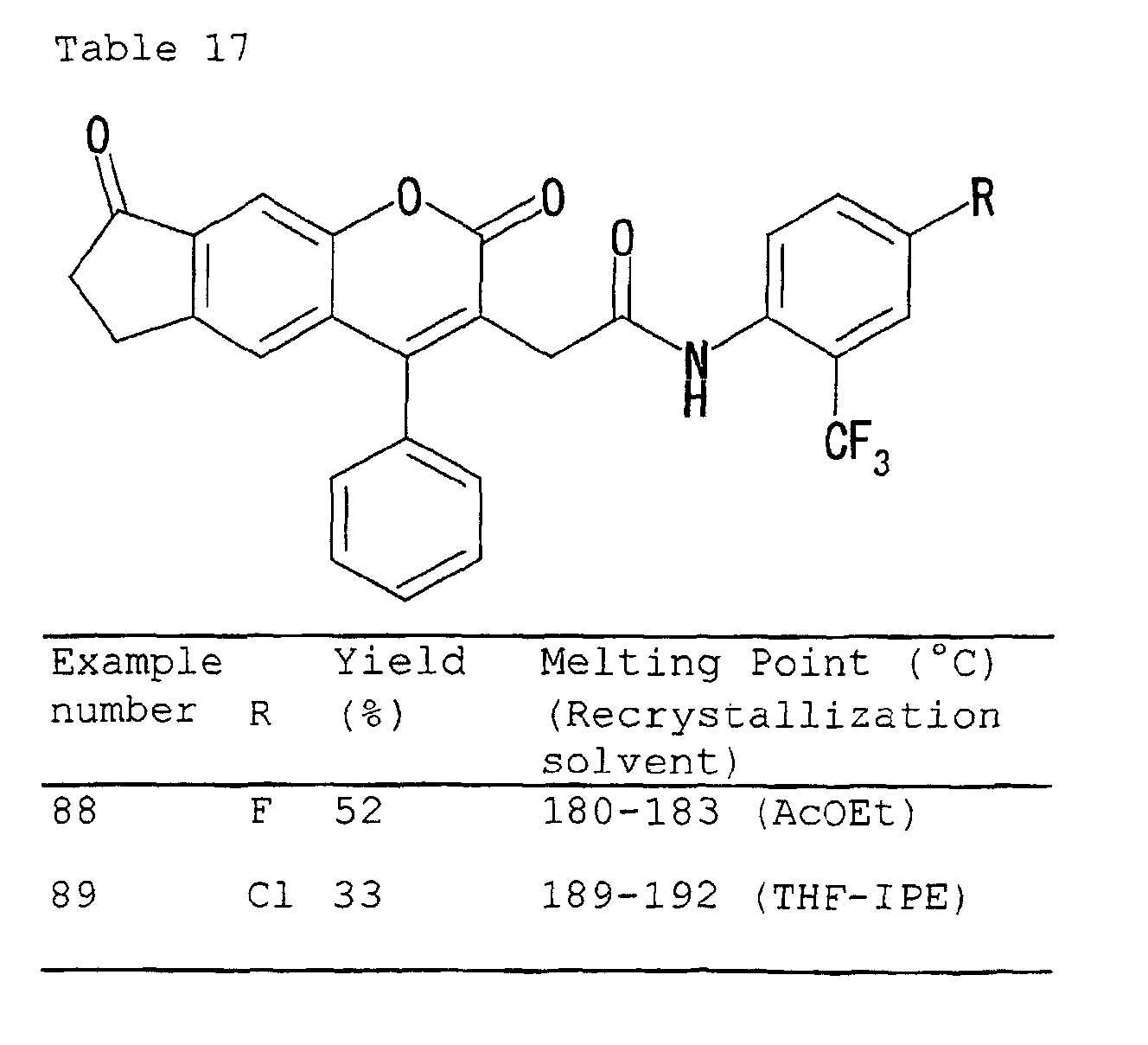
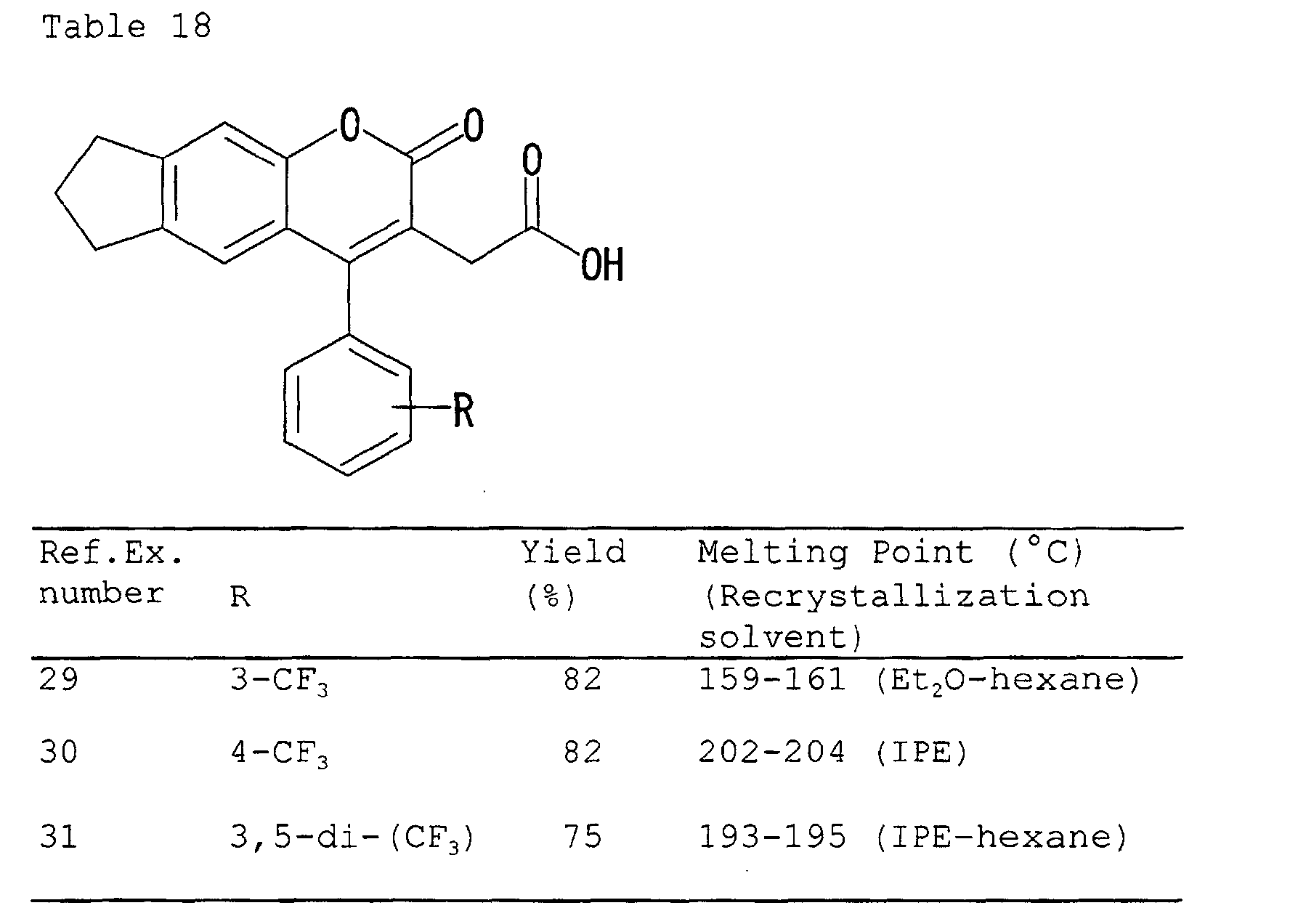


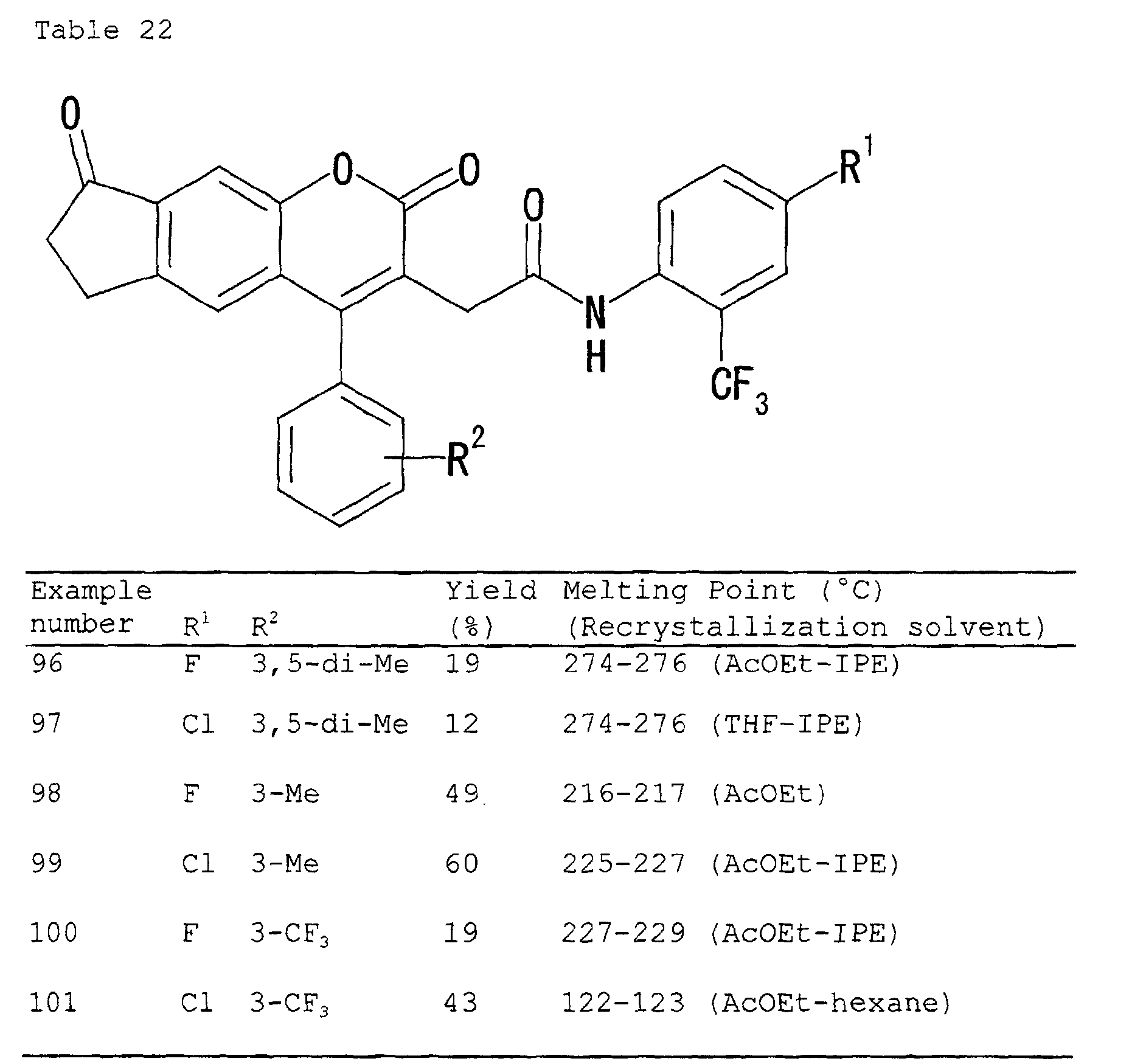
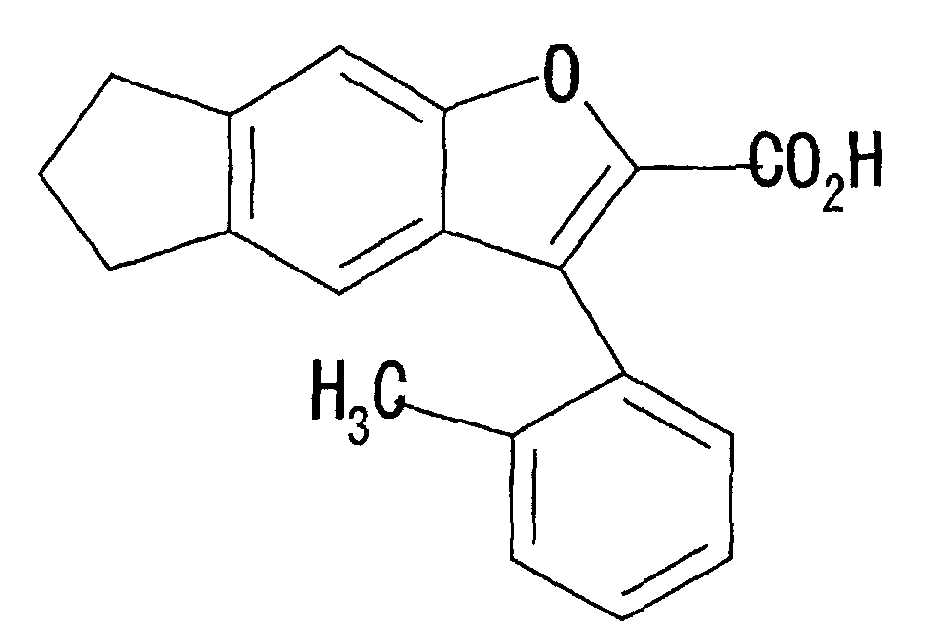
Melting point: 213-215°C.
NMR (CDCl3) δ: 2.13 (2H, m), 2.17 (3H, m), 2.91 (2H, t, J = 8 Hz), 3.04 (2H, t, J = 8 Hz), 7.11 (1H, s), 7.26 (2H, m), 7.32 (2H, m), 7.45 (1H, s).
IR(KBr): 3400-2400, 1720 cm-1.
| Analysis for C19H16O3 | ||
| Calcd (%) | C:78.06 | H:5.52 |
| Found (%) | C:77.82 | H:5.59 |


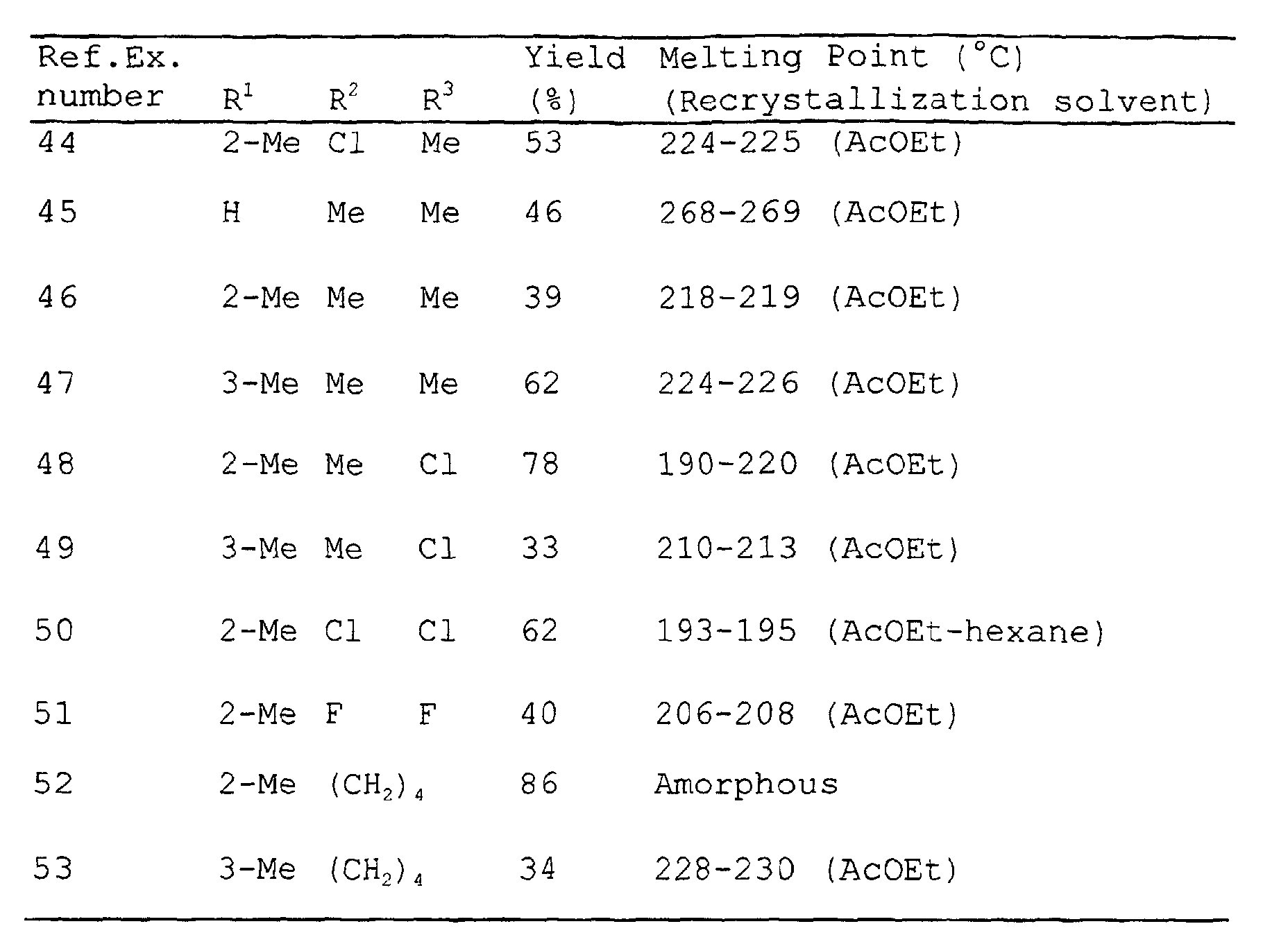
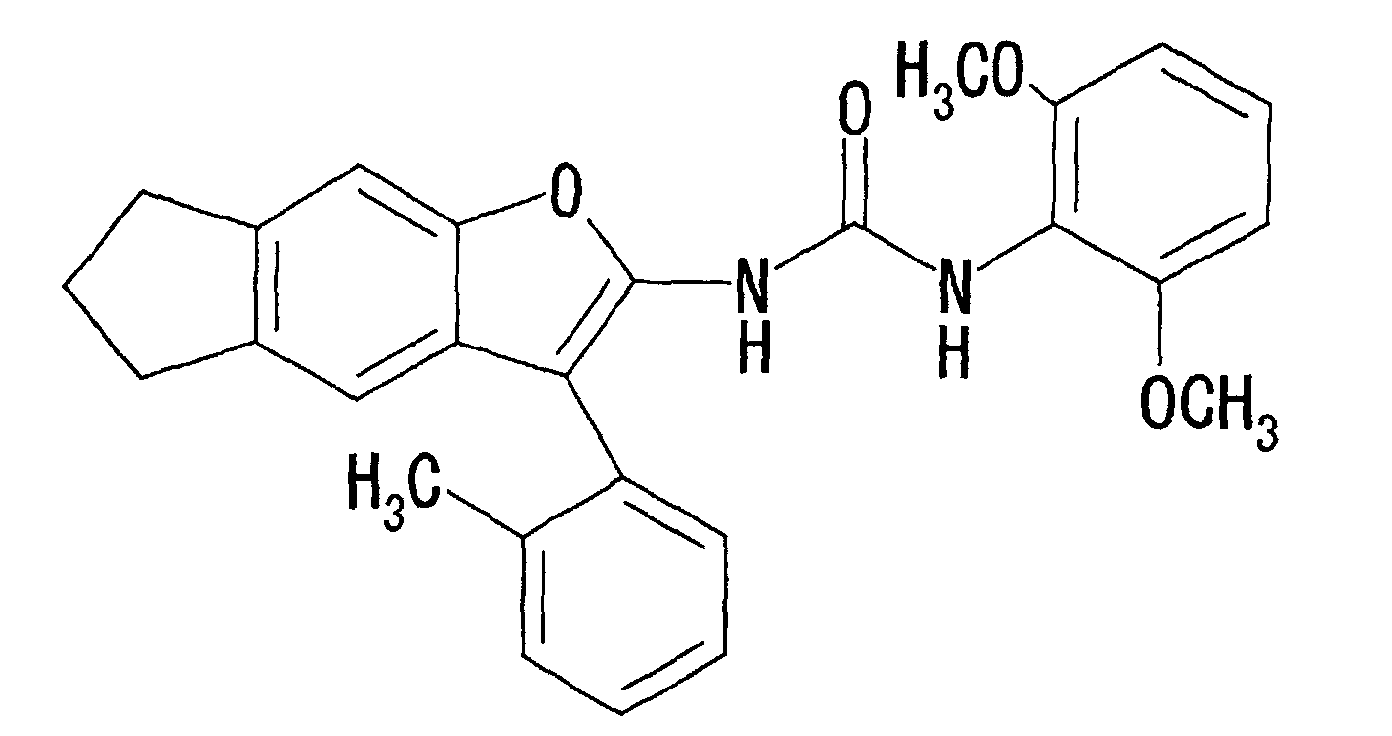
Melting point: 270°C (decomp.).
NMR (CDCl3) δ: 2.11 (2H, m), 2.27 (3H, m), 2.90 (2H, t, J = 7 Hz), 2.99 (2H, t, J = 7 Hz), 3.71 (6H, s), 6.54 (1H, s), 6.56 (2H, d, J = 8 Hz), 6.86 (1h, bs), 7.06 (1H, s), 7.15 (1H, t, J = 8 Hz), 7.33 (5H, m).
IR(KBr): 3241, 1659, 1557 cm-1.
| Analysis for C27H26N2O4 | |||
| Calcd (%) | C:78.28 | H:5.92 | N:6.33 |
| Found (%) | C:73.15 | H:6.00 | N:6.29 |

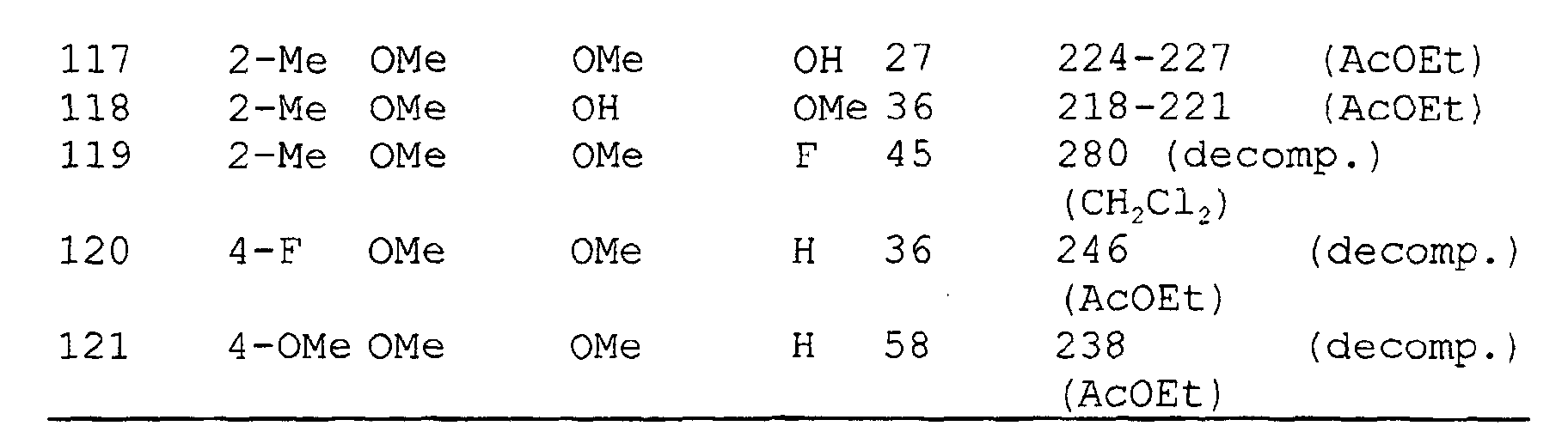
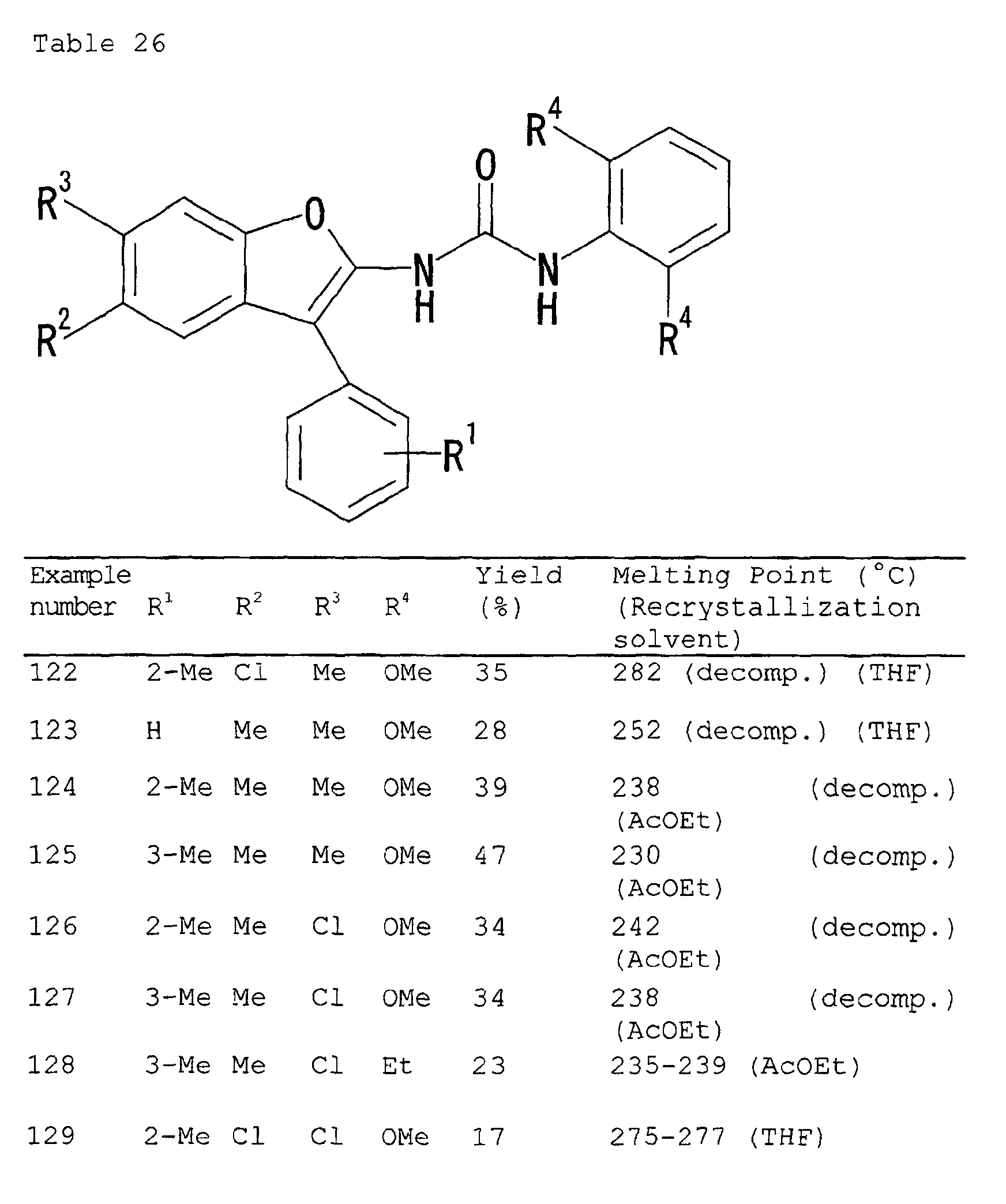

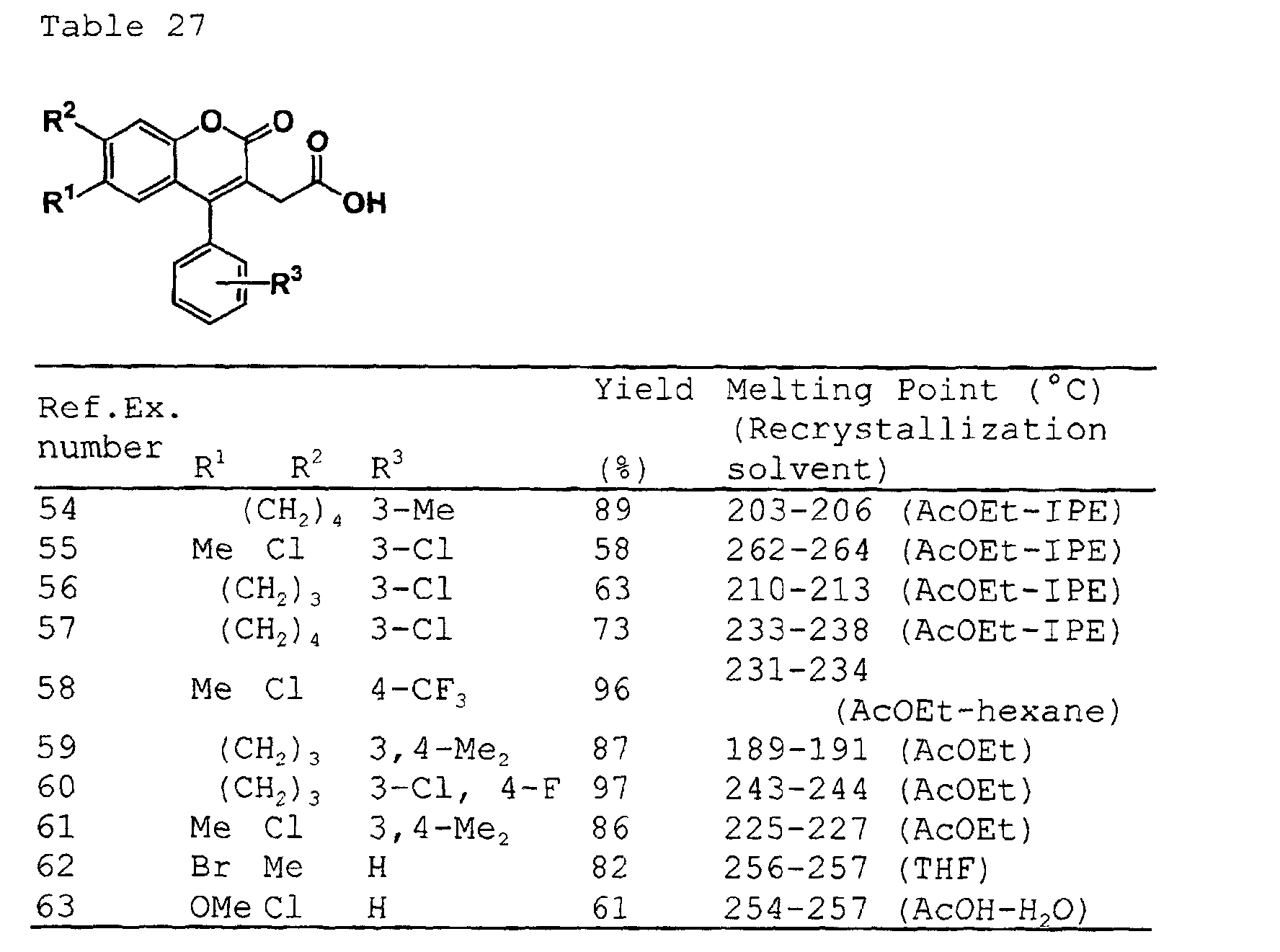
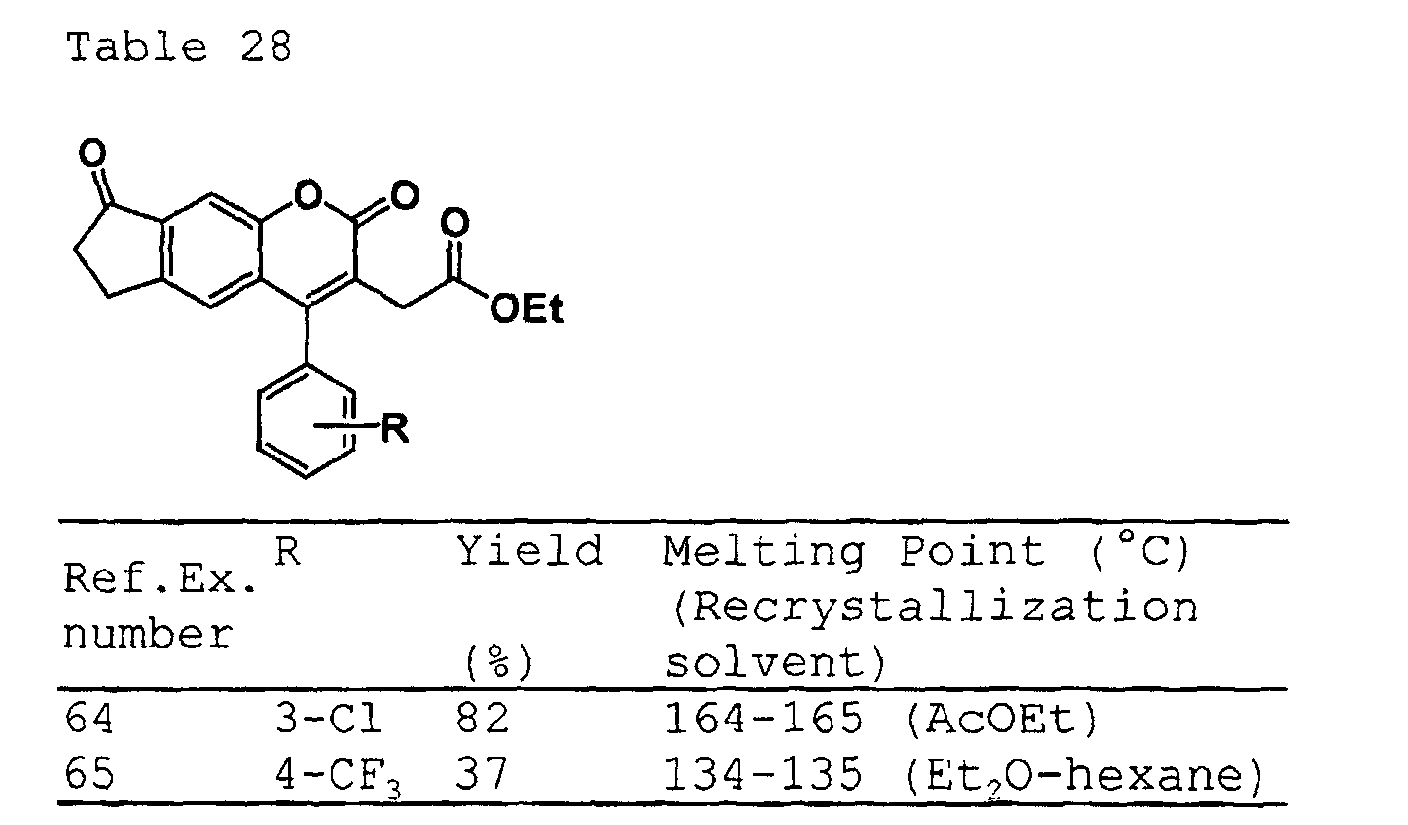


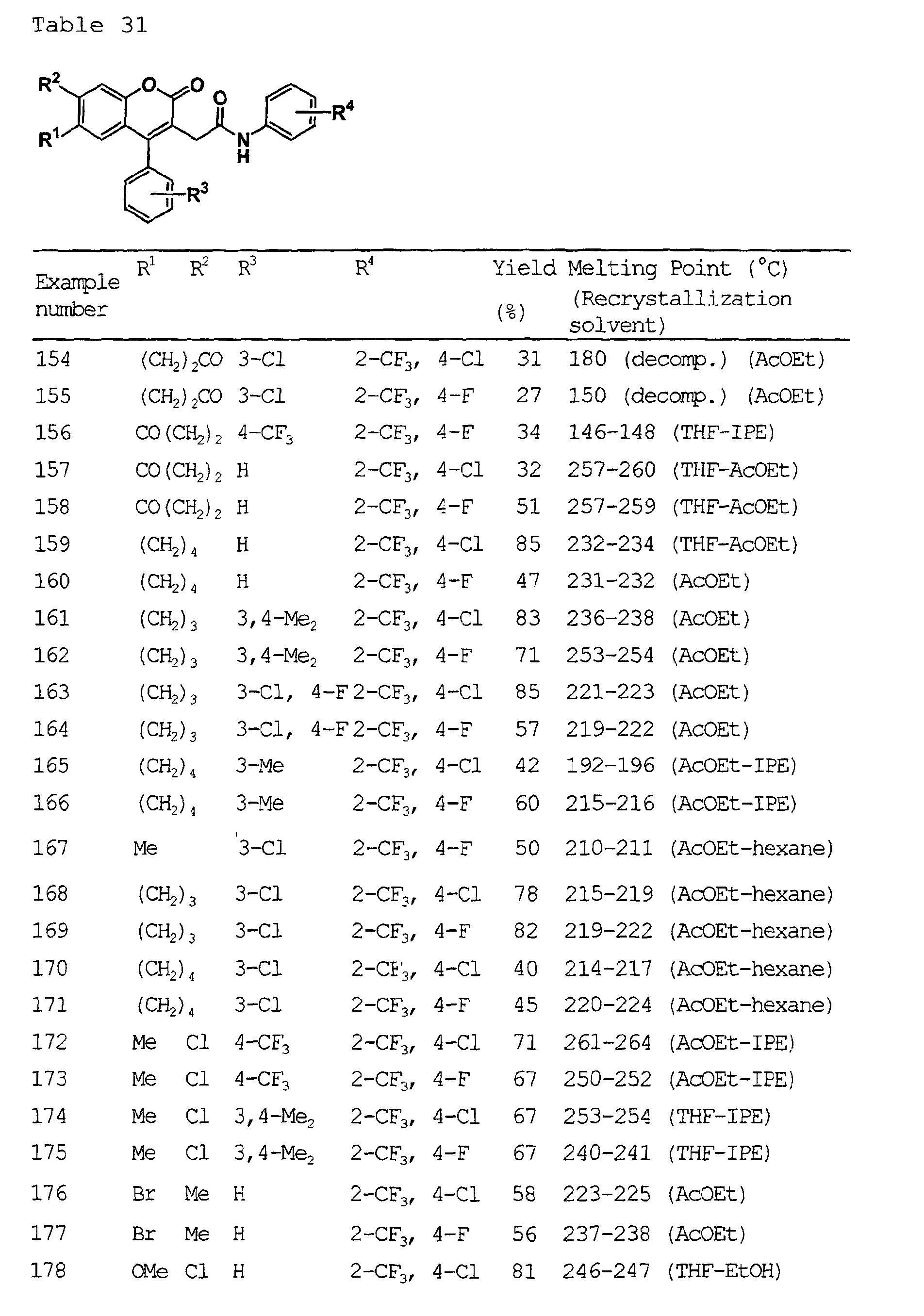


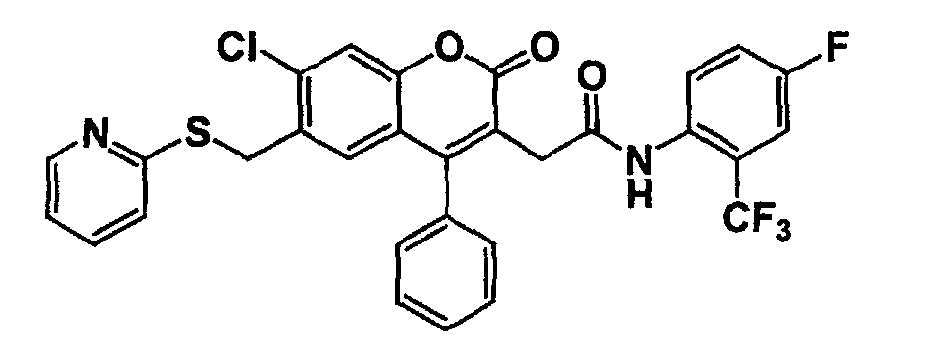


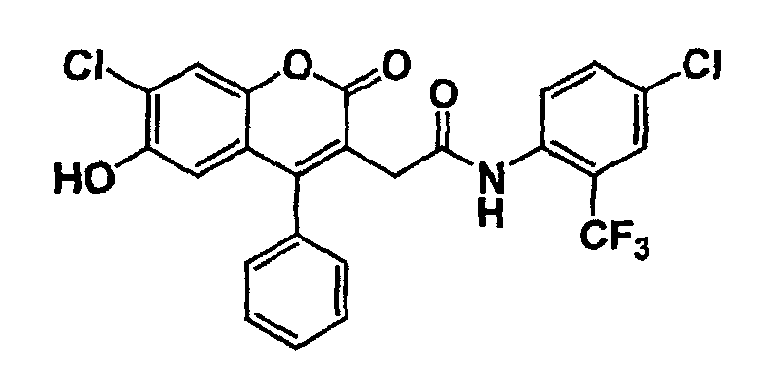
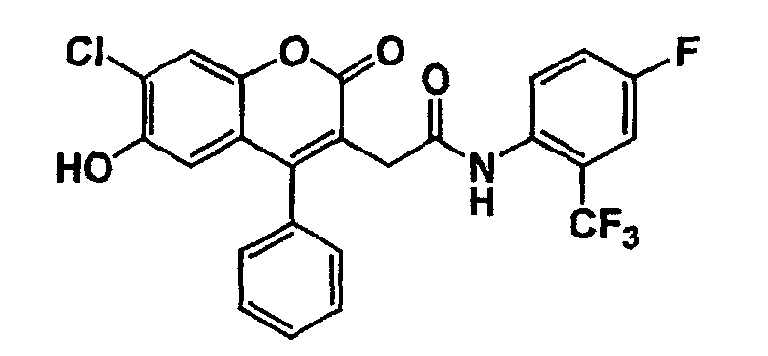

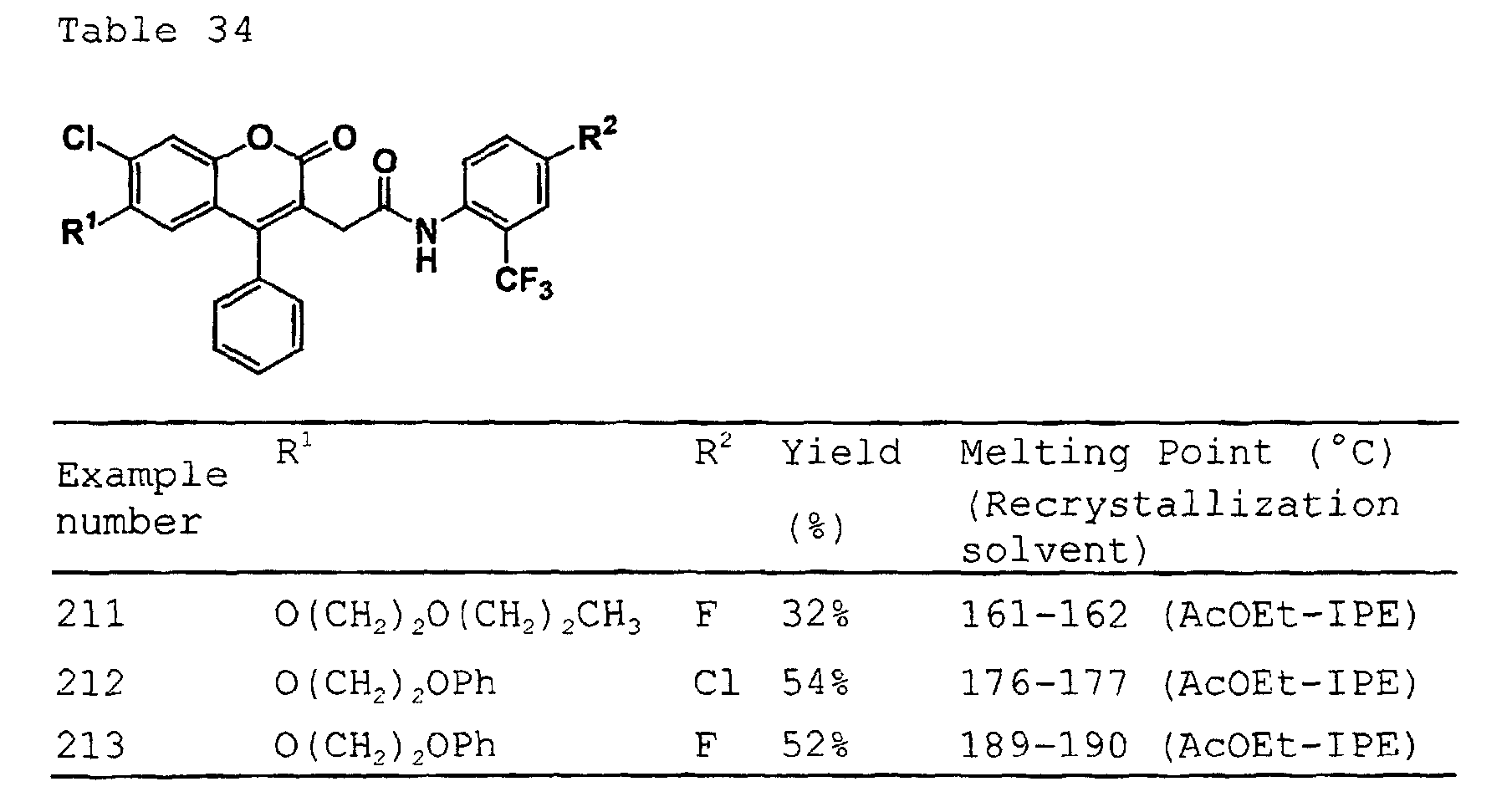
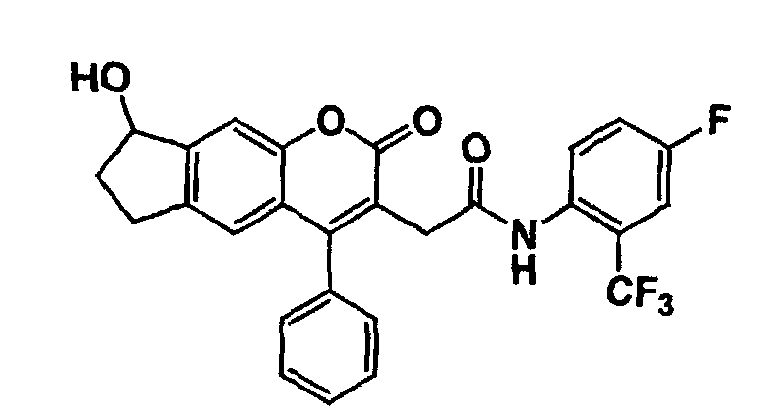

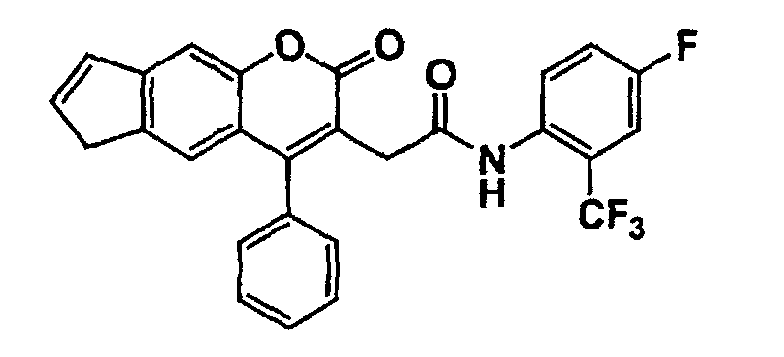
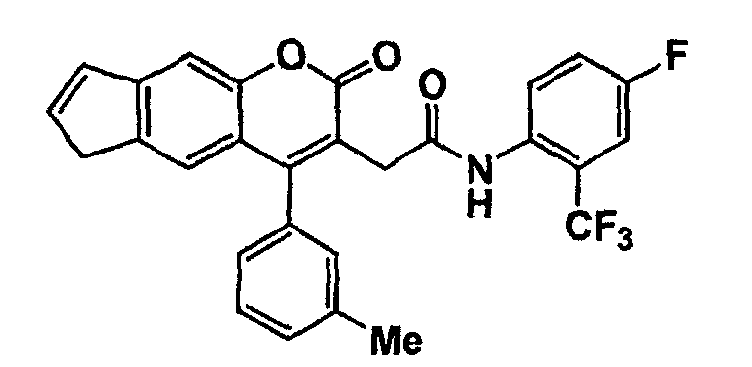
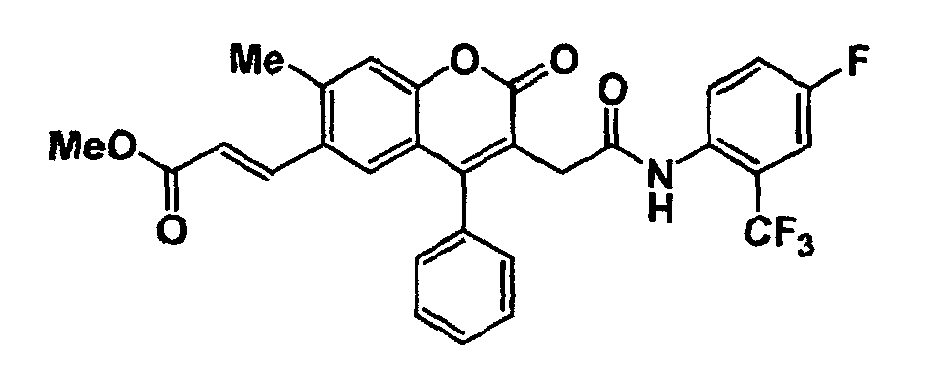
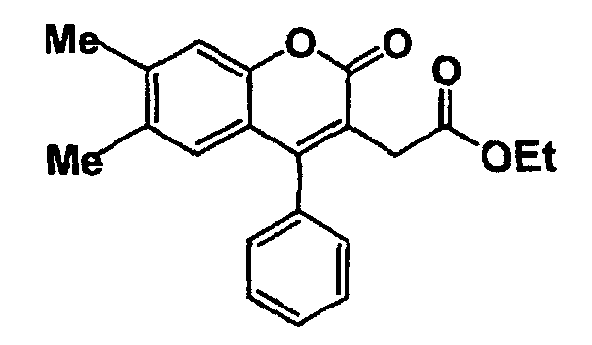

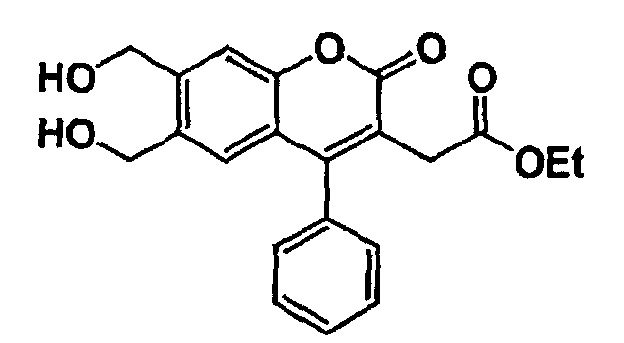

Melting point: 222-223°C.
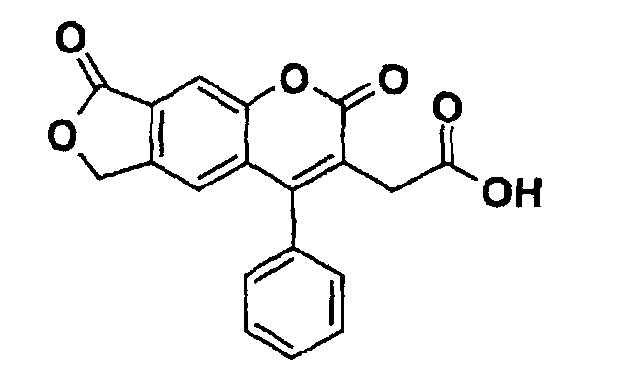


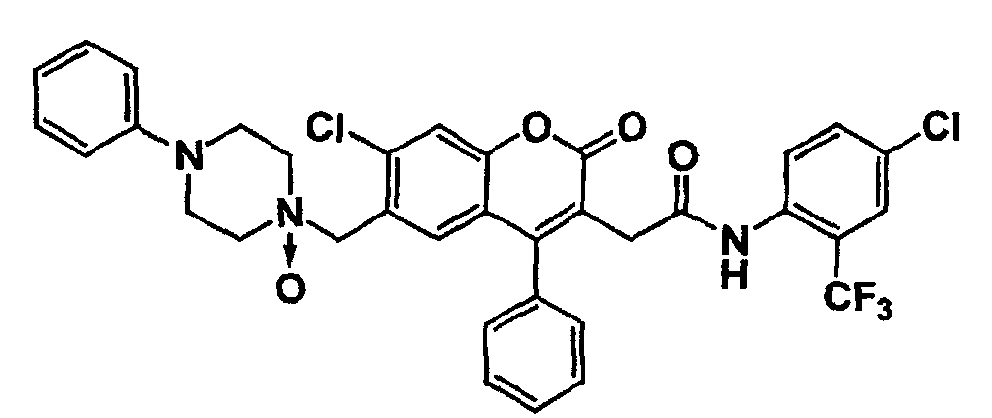
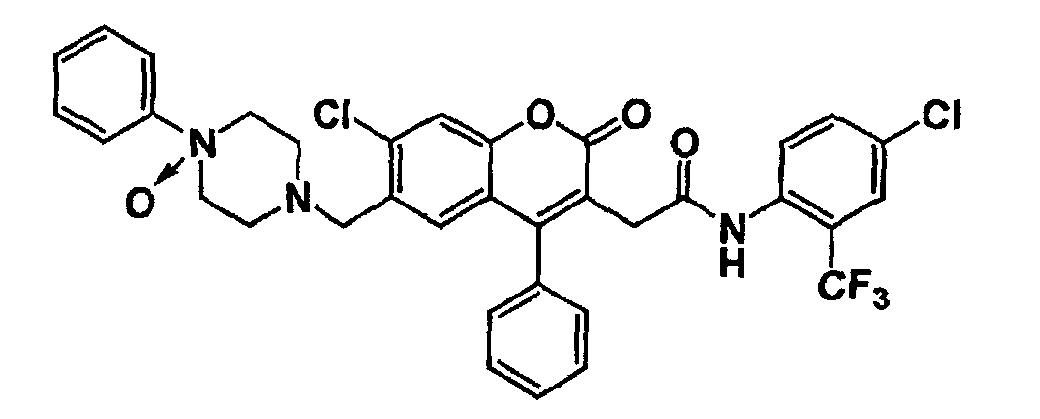
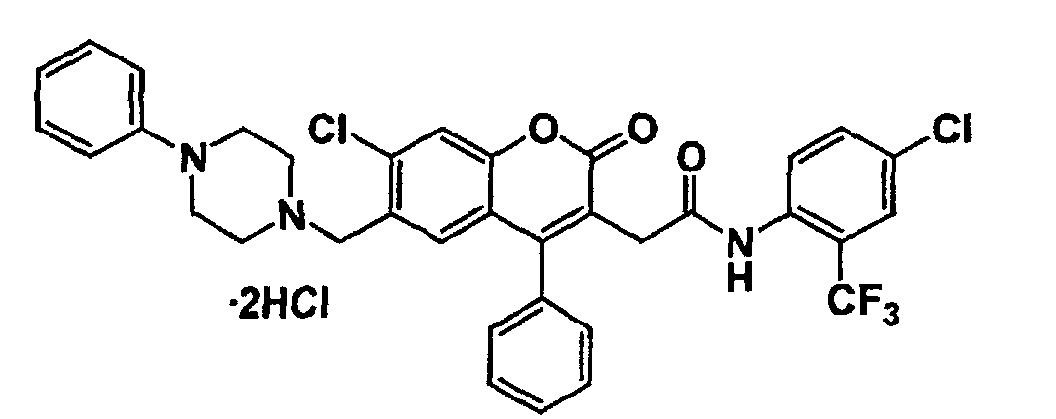


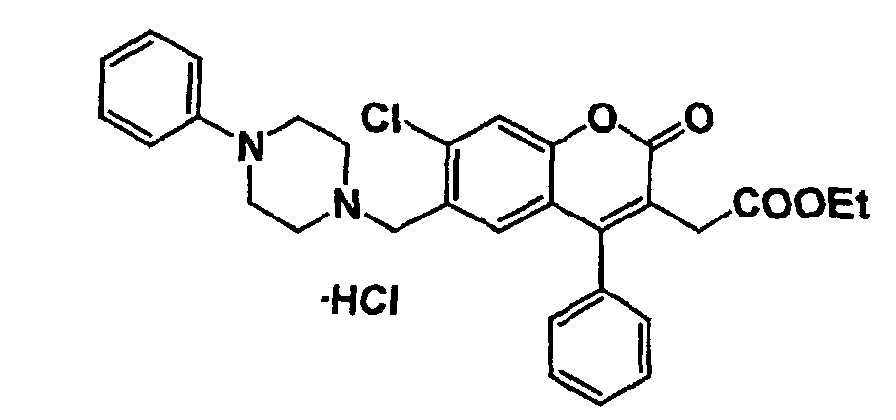
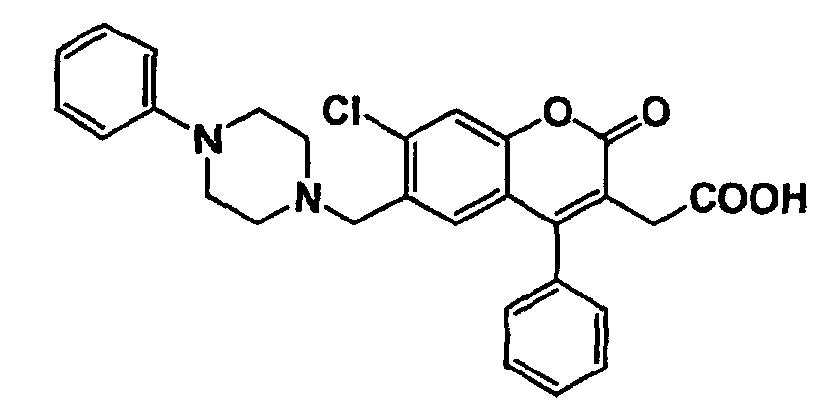
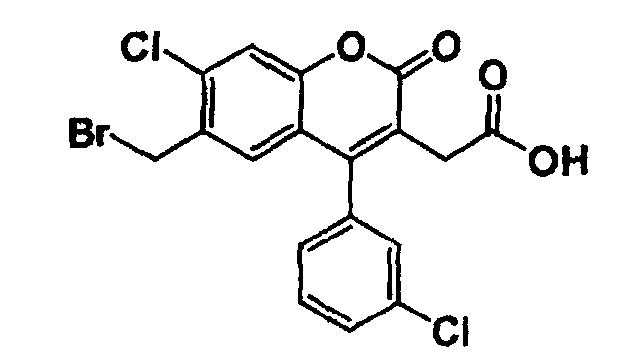
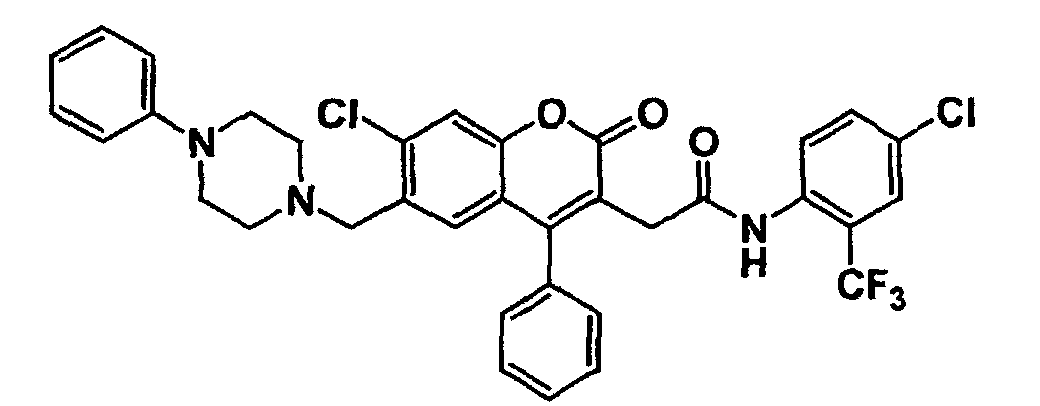
Melting point: 201-203°C.
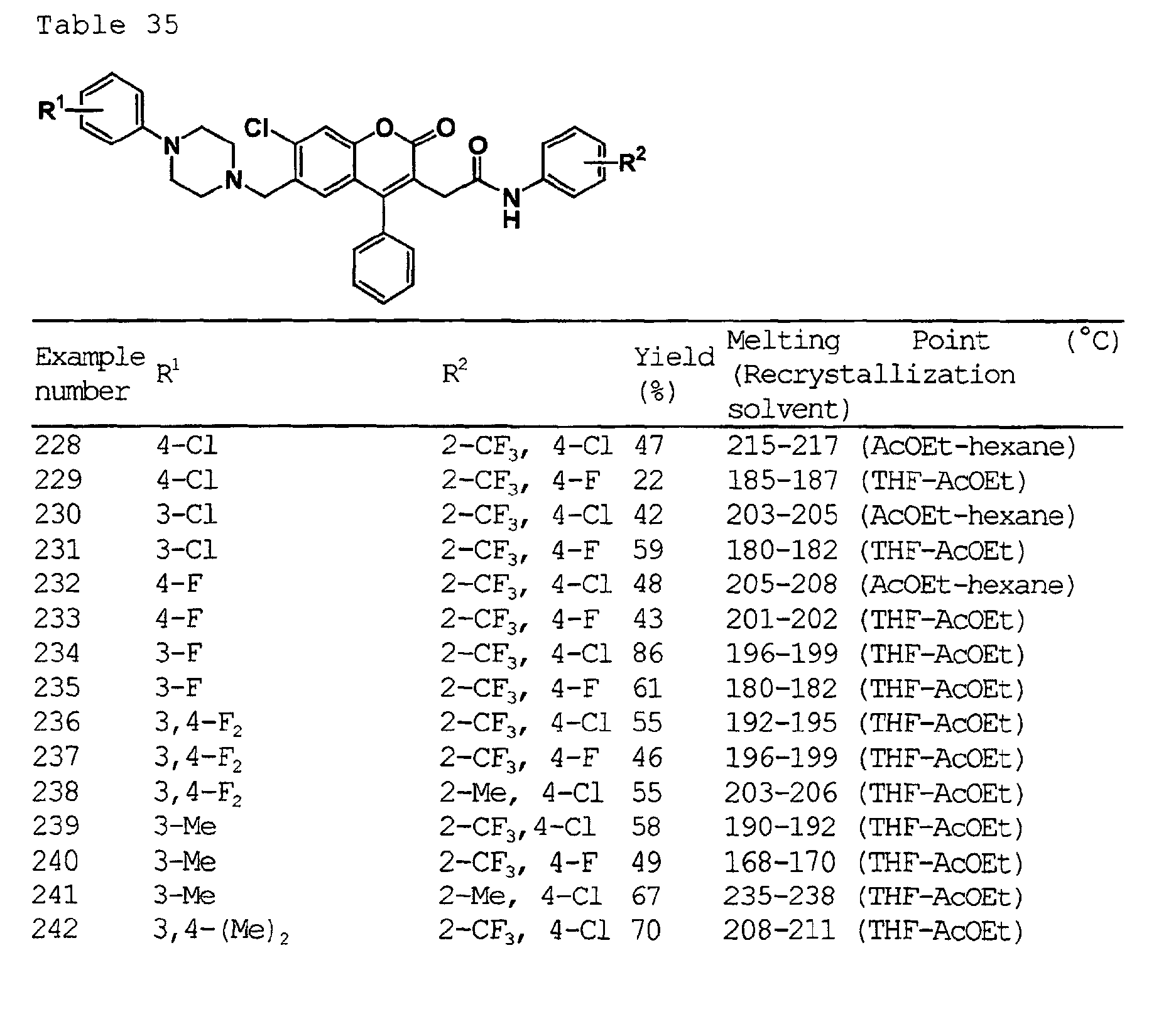

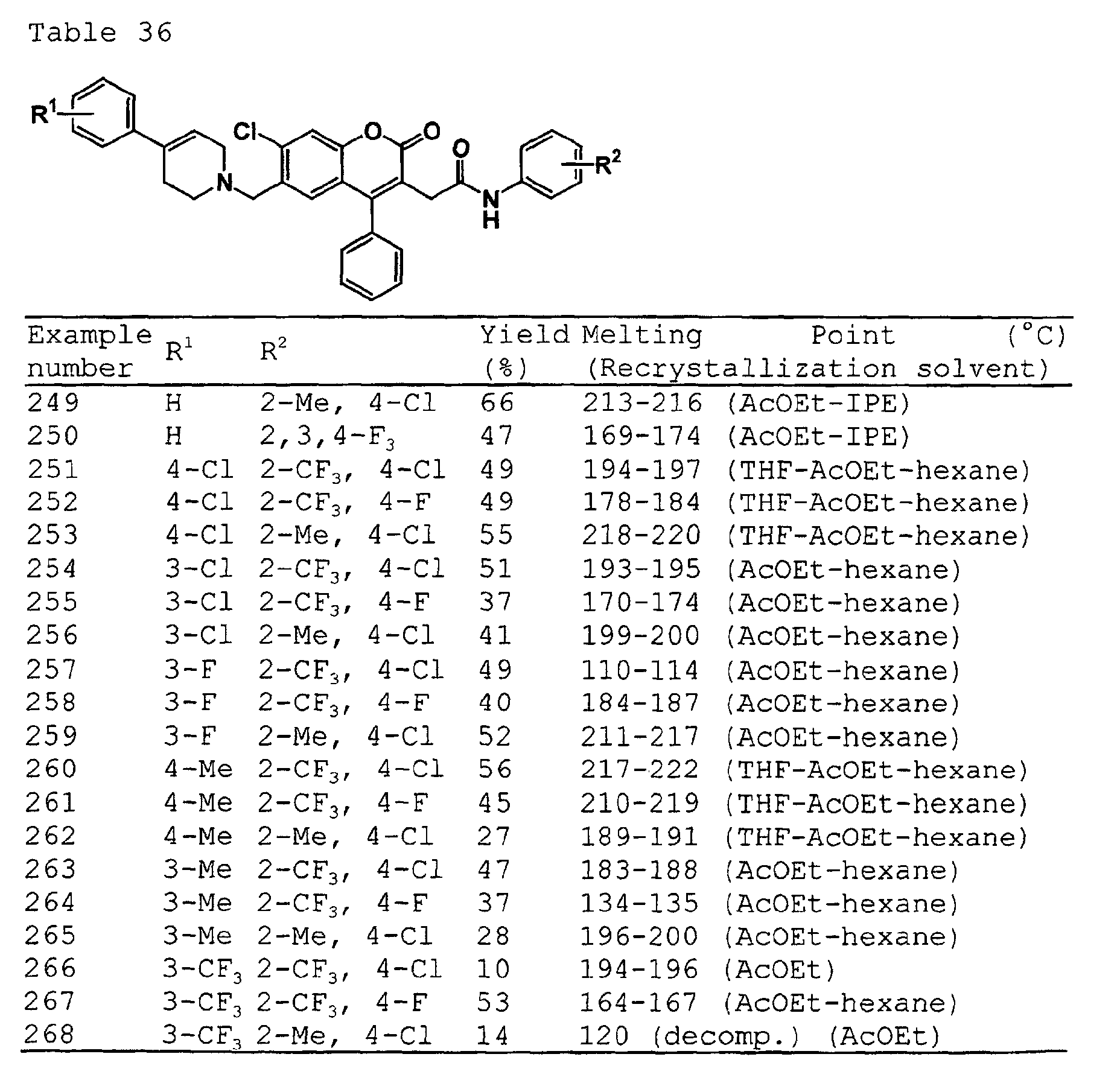
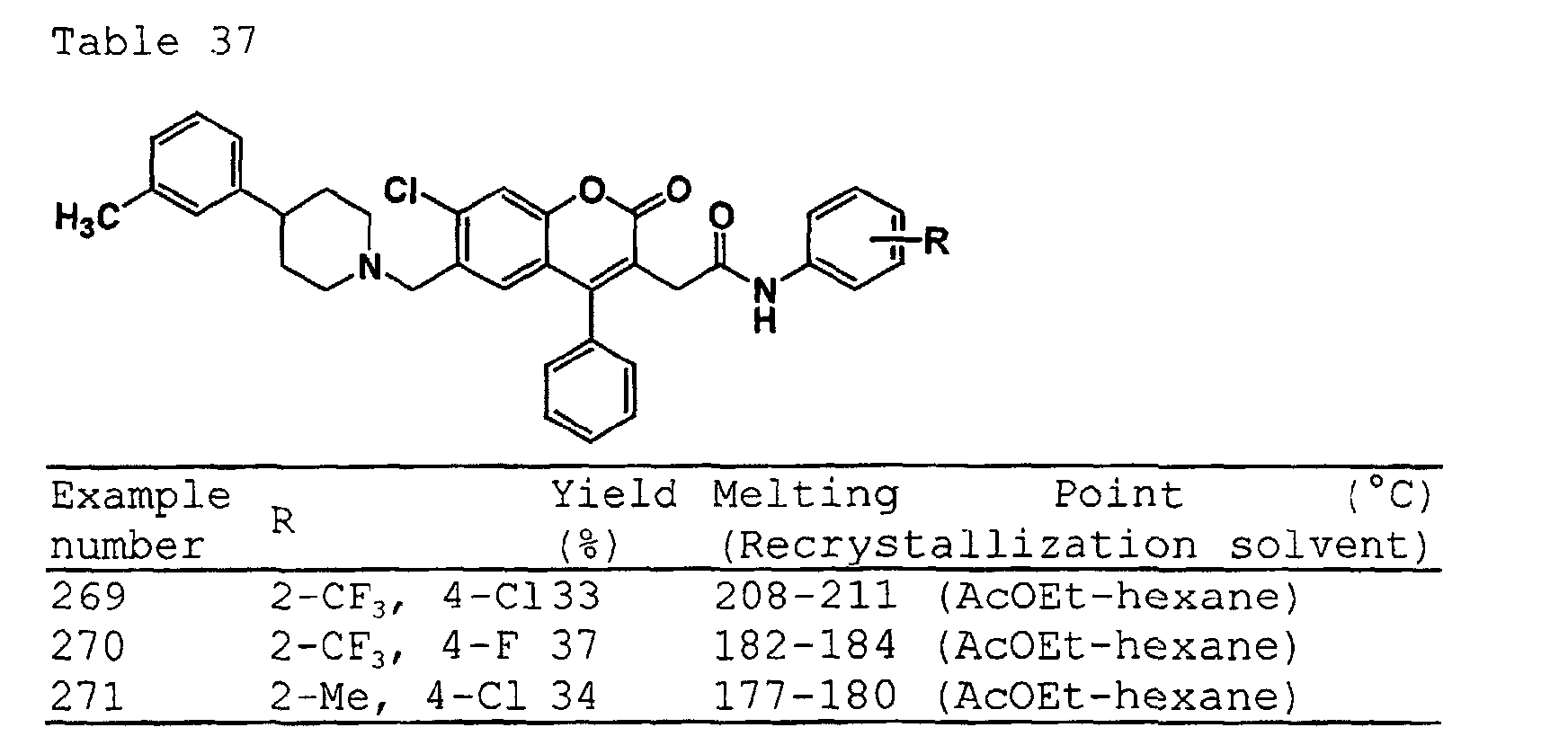

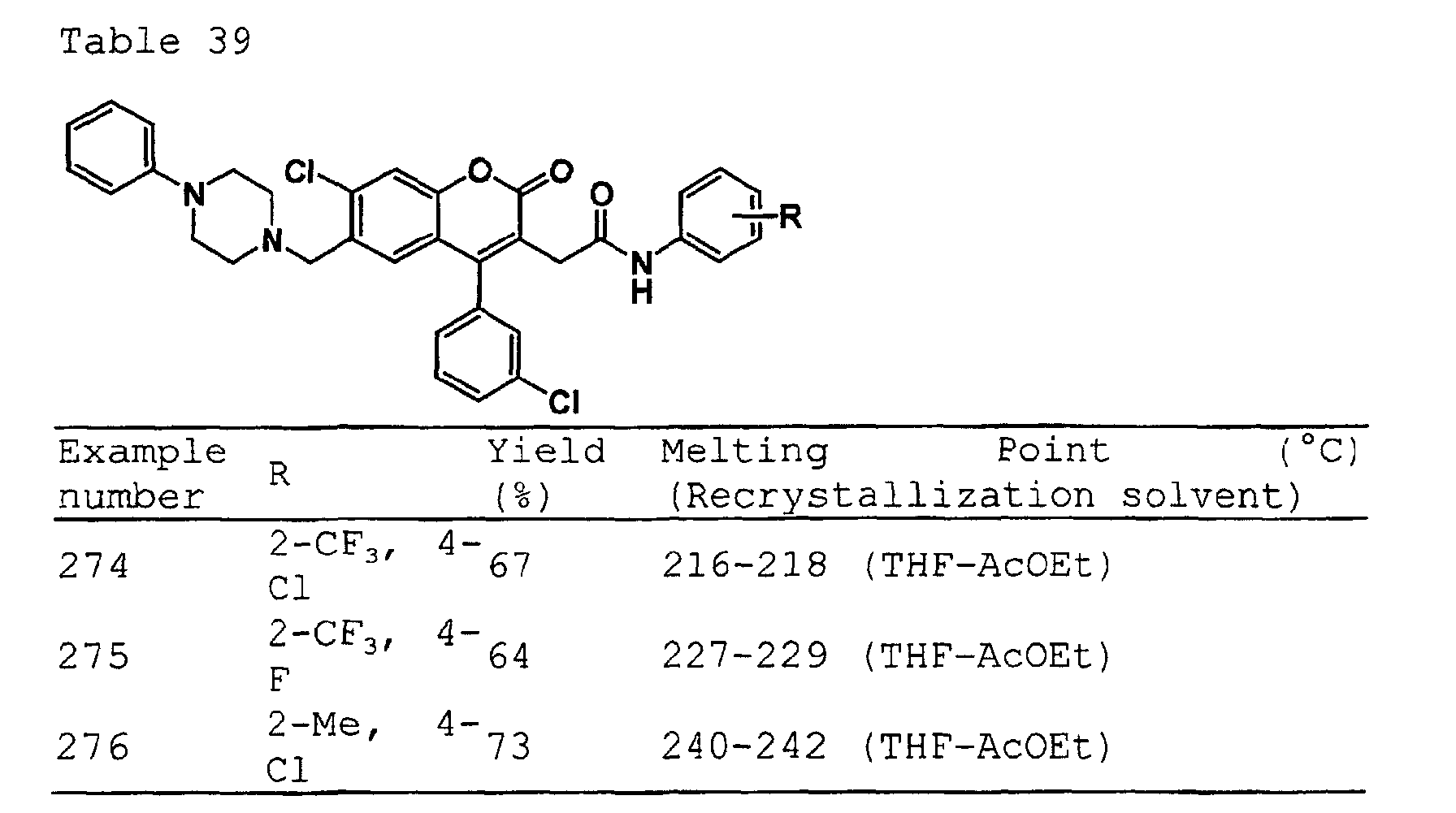
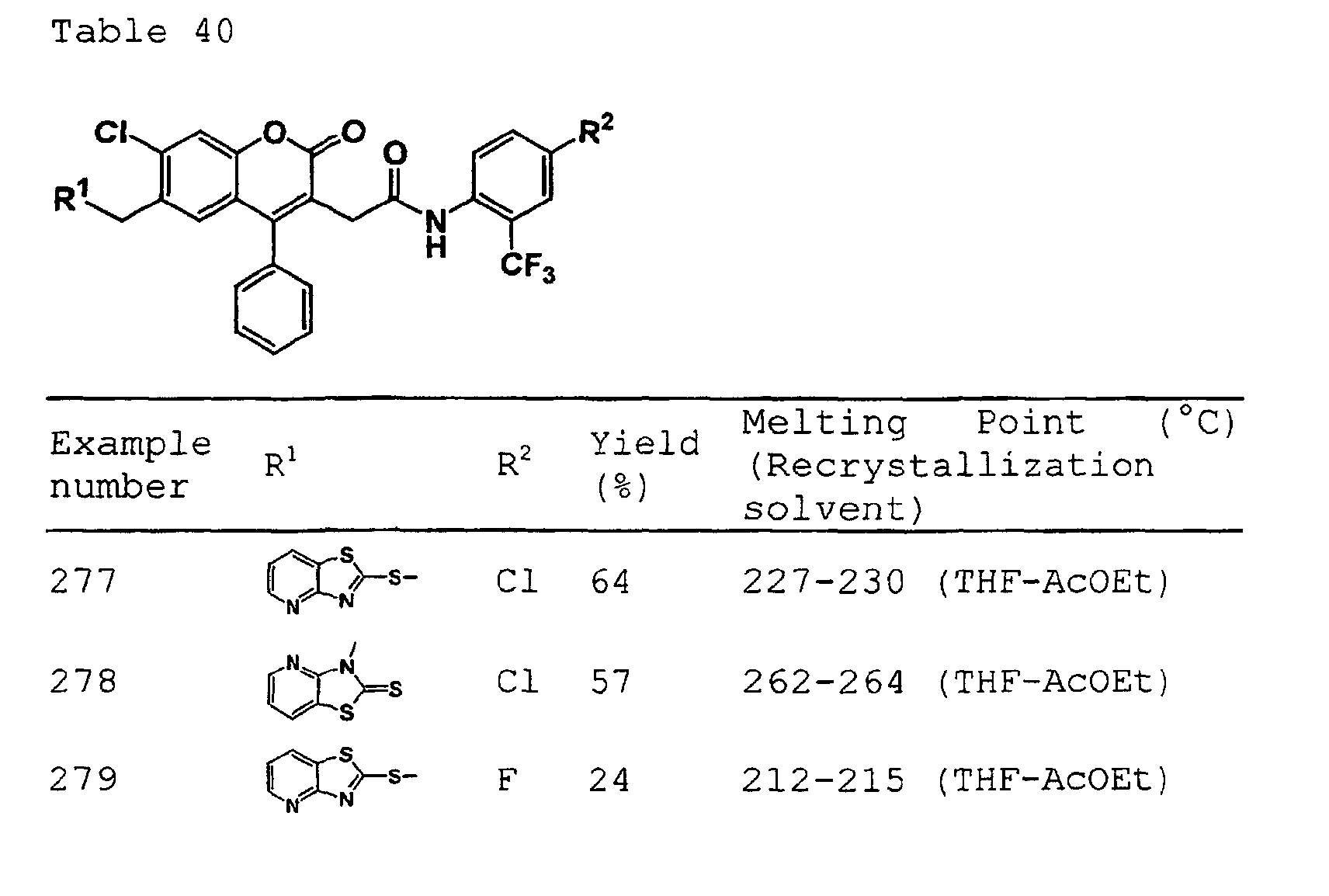

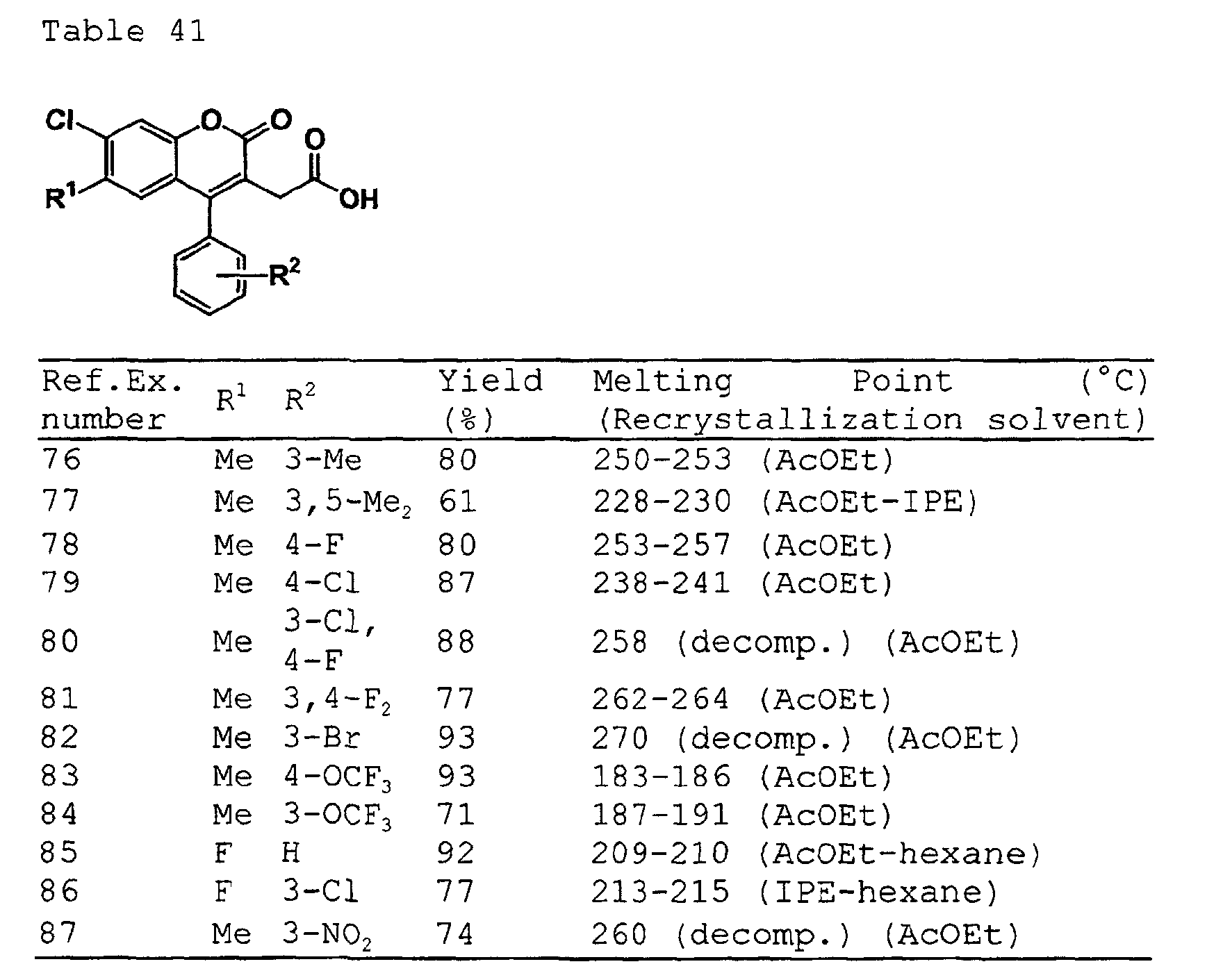

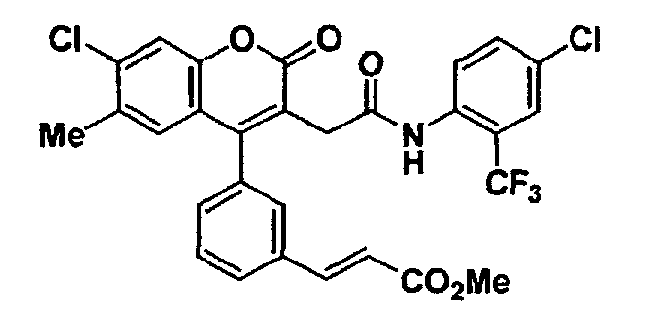


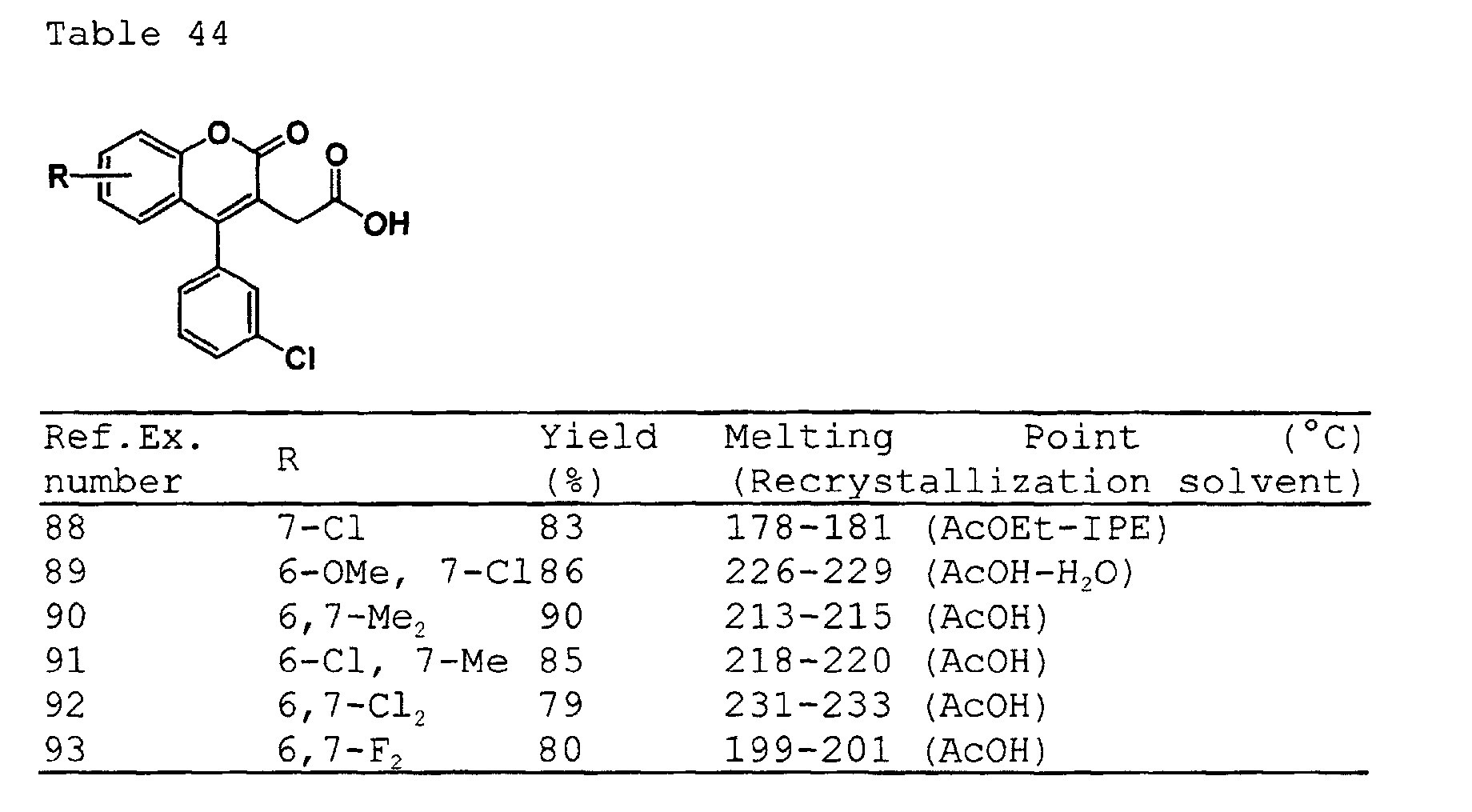

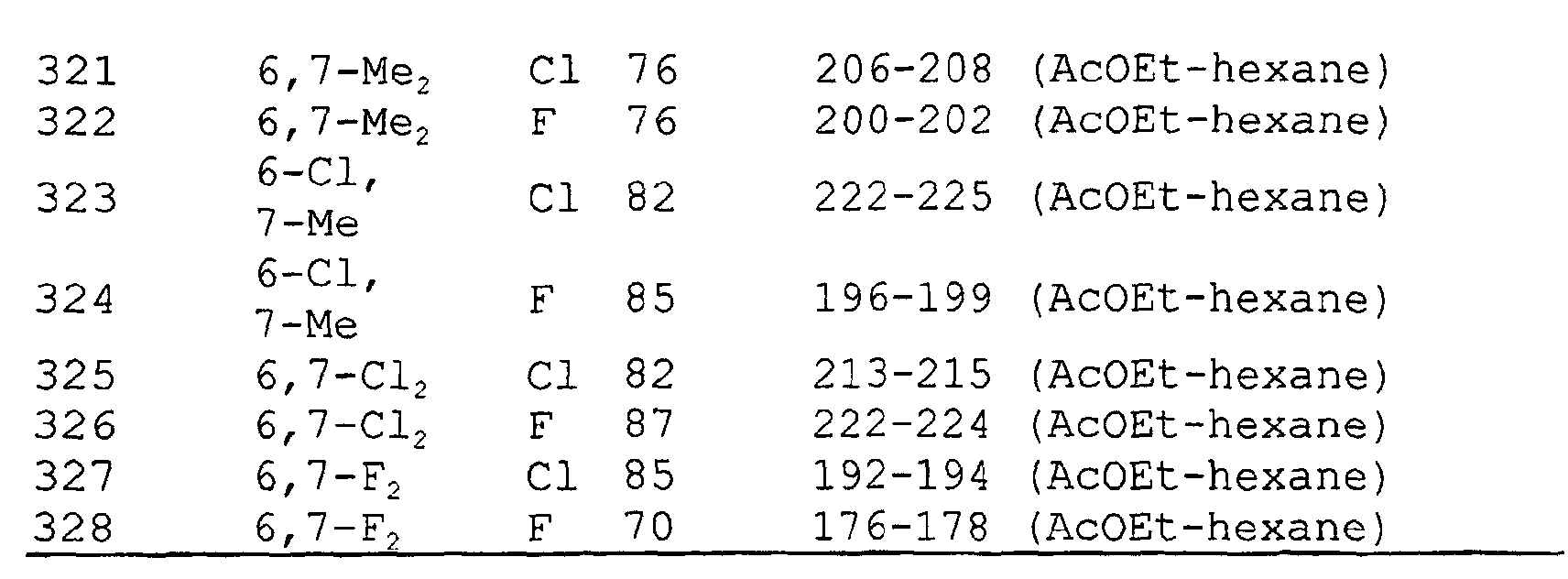

NMR (CDCl3) δ: 2.28 (3H, s), 7.14 (1H, s), 7.37 (1H, s), 7.50 (1H, dd, J = 8 Hz, 4 Hz), 8.00 (1H,m), 8.84 (1H, dd, J=4Hz, 2H), 8.90 (1H, d, J=2 Hz), 11.75 (1H,s).
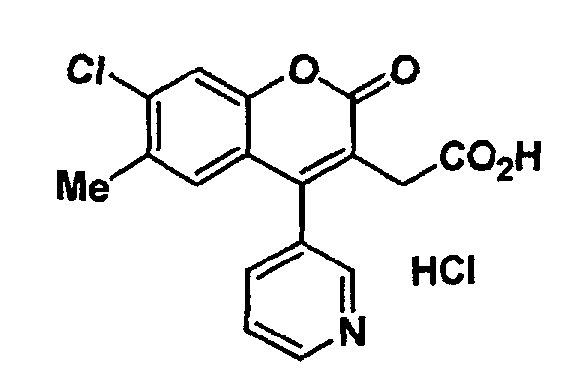

NMR (CDCl3) δ: 2.65 (4H, t, J = 5 Hz), 3.14 (4H, t, J = 5 Hz ), 3.59 (2H, s), 6.80-9.00 (12H, m).
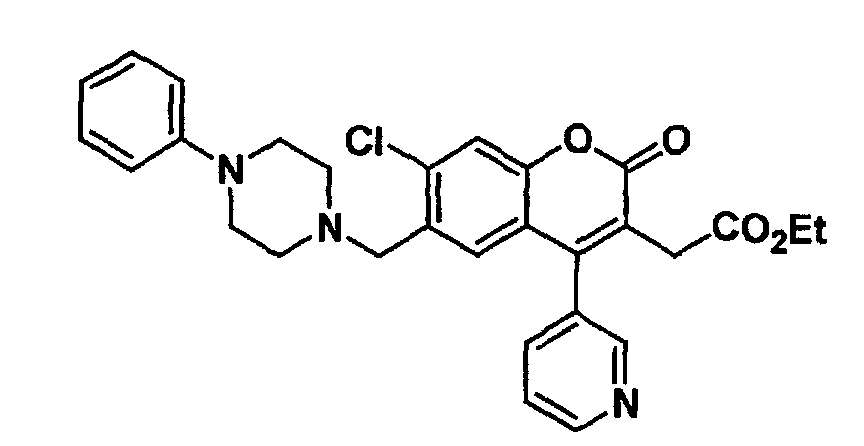
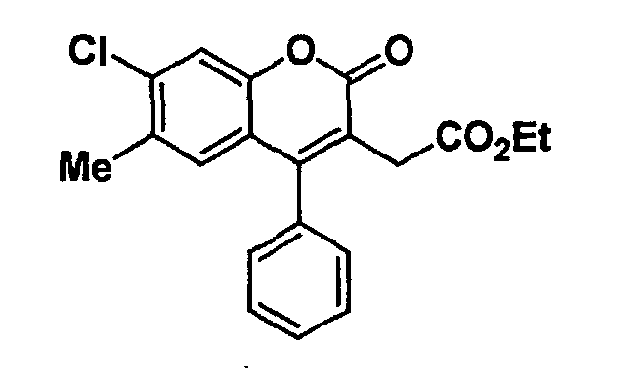
NMR (CDCl3) δ: 1.23 (3H, t, J=7 Hz), 2.28 (2H, s), 3.36 (2H, s), 4.13 (2H, t, J=7 Hz), 6.84 (1H, s), 7.20-7.35 (2H, m), 7.41 (1H, s), 7.45-7.60 (3H, m).


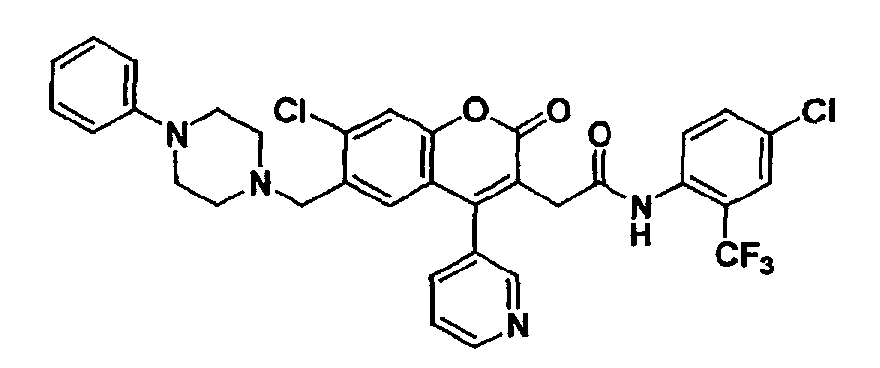
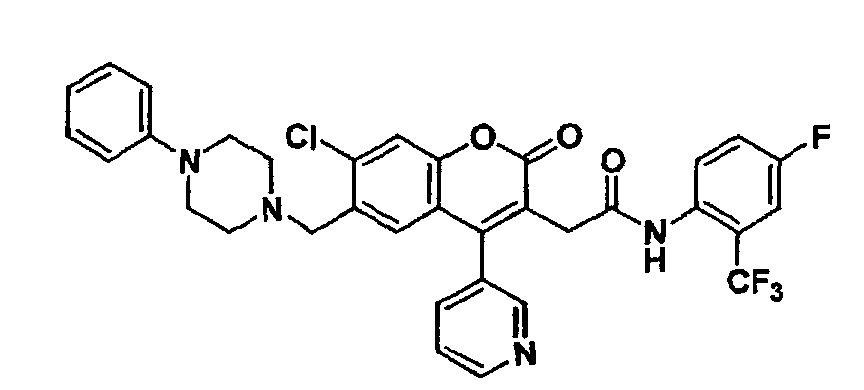



Compound A: 2-[6-chloro-2-oxo-4-(2-methylphenyl)-2H-chromen-3-yl] -N- (2, 6-dimethoxyphenyl) acetamide;
Compound B: N-(2,6-dimethoxyphenyl)-N'-[3-(2-methylphenyl)-6,7-dihydro-5H-indeno[5,6-b]furan-2-yl]urea;
Compound C: N-(4-chloro-2-trifluoromethylphenyl)-2-(2-oxo-4-phenyl-2,6,7,8-tetrahydrocyclopenta[g]chromen-3-yl)acetamide.
| 1. Capsule | |
| (1) Compound A | 10 mg |
| (2) Lactose | 90 mg |
| (3) Microcrystalline cellulose | 70 mg |
| (4) Magnesium stearate | 10 mg |
| 1 Capsule | 180 mg |
| 2. Tablet | |
| (1) Compound A | 10 mg |
| (2) Lactose | 35 mg |
| (3) Corn starch | 150 mg |
| (4) Microcrystalline cellulose | 30 mg |
| (5) Magnesium stearate | 5 mg |
| 1 Tablet | 230 mg |
| 3. Injection formulation | |
| (1) Compound A | 10 mg |
| (2) Inositol | 100 mg |
| (3) Benzyl alcohol | 20 mg |
| 1 Ampoule | 130 mg |
| 4. Capsule | |
| (1) Compound B | 10 mg |
| (2) Lactose | 90 mg |
| (3) Microcrystalline cellulose | 70 mg |
| (4) Magnesium stearate | 10 mg |
| 1 Capsule | 180 mg |
| 5. Tablet | |
| (1) Compound B | 10 mg |
| (2) Lactose | 35 mg |
| (3) Corn starch | 150 mg |
| (4) Microcrystalline cellulose | 30 mg |
| (5) Magnesium stearate | 5 mg |
| 1 Tablet | 230 mg |
| 6. Injection formulation | |
| (1) Compound B | 10 mg |
| (2) Inositol | 100 mg |
| (3) Benzyl alcohol | 20 mg |
| 1 Ampoule | 130 mg |
| 7. Capsule | |
| (1) Compound C | 10 mg |
| (2) Lactose | 90 mg |
| (3) Microcrystalline cellulose | 70 mg |
| (4) Magnesium stearate | 10 mg |
| 1 Capsule | 180 mg |
| 8. Tablet | |
| (1) Compound C | 10 mg |
| (2) Lactose | 35 mg |
| (3) Corn starch | 150 mg |
| (4) Microcrystalline cellulose | 30 mg |
| (5) Magnesium stearate | 5 mg |
| 1 Tablet | 230 mg |
| 9. Injection formulation | |
| (1) Compound C | 10 mg |
| (2) Inositol | 100 mg |
| (3) Benzyl alcohol | 20 mg |
| 1 Ampoule | 130 mg |
| 10. Capsule | |
| (1) Compound C | 10 mg |
| (2) Lactose | 90 mg |
| (3) Microcrystalline cellulose | 70 mg |
| (4) Magnesium stearate | 10 mg |
| 1 Capsule | 180 mg |
| 11. Tablet | |
| (1) Compound C | 10 mg |
| (2) Lactose | 35 mg |
| (3) Corn starch | 150 mg |
| (4) Microcrystalline cellulose | 30 mg |
| (5) Magnesium stearate | 5 mg |
| 1 Tablet | 230 mg |
| 12. Capsule | |
| (1) Compound C | 10 mg |
| (2) Lactose | 90 mg |
| (3) Microcrystalline cellulose | 70 mg |
| (4) Magnesium stearate | 10 mg |
| 1 Capsule | 180 mg |
| 13. Tablet | |
| (1) Compound B | 10 mg |
| (2) Lactose | 35 mg |
| (3) Corn starch | 150 mg |
| (4) Microcrystalline cellulose | 30 mg |
| (5) Magnesium stearate | 5 mg |
| 1 Tablet | 230 mg |
| 14. Capsule | |
| (1) Compound B | 10 mg |
| (2) Lactose | 90 mg |
| (3) Microcrystalline cellulose | 70 mg |
| (4) Magnesium stearate | 10 mg |
| 1 Capsule | 180 mg |
| 15. Tablet | |
| (1) Compound A | 10 mg |
| (2) Lactose | 35 mg |
| (3) Corn starch | 150 mg |
| (4) Microcrystalline cellulose | 30 mg |
| (5) Magnesium stearate | 5 mg |
| 1 Tablet | 230 mg |
| Compound C | 50 mg |
| D-Mannitol | 50 mg |
| Corn starch | 33.9 mg |
| Croscarmellose sodium | 40 mg |
| Hydroxypropyl cellulose | 5.5 mg |
| Magnesium stearate | 0.6 mg |
| Total | 180.0 mg (per tablet) |
| 17. Solid dispersion A | |
| Compound of Example 75 | 0.4 g |
| Hydroxypropylmethyl cellulose phthalate | 1.4 g |
| Lactose | 0.2 g |
| Total | 2.0 g |
| 18. Solid dispersion B | |
| Compound of Example 75 | 0.6 g |
| Hydroxypropylmethyl cellulose phthalate | 1.2 g |
| Lactose | 0.2 g |
| Total | 2.0 g |
| 19. Tablet | |
| (1) Solid dispersion A | 50 mg |
| (2) Lactose | 34 mg |
| (3) Corn starch | 10.6 mg |
| (4) Corn starch (gelatinized) | 5 mg |
| (5) Magnesium stearate | 0.4 mg |
| (6) Calcium carboxymethyl cellulose | 20 mg |
| Total | 120 mg |
[Results] The lesion (plaque) area based on the vascular internal surface area was 31 % in the group fed only the normal diet after 9th week. On the contrary, the administraiton of Compound A mixed with the normal diet at the dose of 27 mg/kg/day resulted in a marked reduction in the vascular lesion area to 15%, showing a significant (p<0.01, student's test) plaque regressing effect.
[Results] The results are shown in Table 50.
| Control group (n=8) | Compound B group (n=4) | |
| % Lesion area | 22.6 ± 3.0 | 16.9 ± 1.6 |
| Aortic cholesteryl Ester content (µg/mg) | 9.42 ± 0.66 | 4.76 ± 0.46 |
[Results] The results are shown in Table 51.
| Control group (n=10) | Compound B group (n=10) | |
| % Lesion area | 31.2 ± 1.6 | 23.3 ± 1.8 |
| Aortic cholesteryl Ester content (µg/mg) | 6.83 ± 0.42 | 5.30 ± 0.37 |
Claims (44)
- A lipid-rich plaque regressing agent comprising a compound represented by Formula [I]:in which ring A is an optionally substituted cyclic hydrocarbon or an optionally substituted heterocyclic ring; ring B is a 5- or 6-membered homocyclic or heterocyclic ring; each of X and Y is -NR1- (in which R1 is a hydrogen atom, optionally substituted hydrocarbon group, optionally substituted hydroxyl group or optionally substituted amino group), -O-, -S-, -CO-, -CS-, -C(R2)R2a- (in which each of R2 and R2a is a hydrogen atom, optionally substituted hydroxyl group or optionally substituted hydrocarbon group), -N= or =CR3- (in which R3 is a hydrogen atom, halogen atom, optionally substituted hydrocarbon group, optionally substituted hydroxyl group, or a mercapto group which may be substituted by an optionally substituted hydrocarbon group); D is a C1-3 alkylene group which may be substituted by an oxo group or thioxo group, -NH- or -CH2NH-; E is -NR4- (in which R4 is a hydrogen atom or optionally substituted hydrocarbon group), -O-, -S(O)n- (n is 0, 1 or 2) or -CONR5- (in which R5 is a hydrogen atom or optionally substituted hydrocarbon group); G is a bond or C1-3 alkylene group; Ar is an optionally substituted aryl group or optionally substituted heterocyclic group, D may be taken together with a constituent atom of the ring B to form a 5-to 7-membered ring which may be substituted by an oxo group or thioxo group, R4 may be taken together with a constituent atom of the ring B to form a 5- to 7-membered ring which may be substituted by an oxo group or thioxo group, and the ring B may have a further substituent in addition to -D-E-G-Ar or a salt thereof.

- The lipid-rich plaque regressing agent according to Claim 1 comprising a compound represented by Formula [II]:in which ring A' is an optionally substituted 6-membered cyclic hydrocarbon group; ring C is an optionally substituted benzene ring; one of X' and Z is -NR1'- (in which R1' is a hydrogen atom, optionally substituted hydrocarbon group or optionally substituted amino group), -O- or -S- and the other is -CO-, -CS- or -C(R2')R2a'- (in which each of R2' and R2a' is a hydrogen atom or optionally substituted hydrocarbon group), or one of them is -N= and the other is =CR3'- (in which R3' is a hydrogen atom, halogen atom, optionally substituted hydrocarbon group, optionally substituted amino group, optionally substituted hydroxyl group or a mercapto group which may be substituted by an optionally substituted hydrocarbon group); -------- is a single bond or double bond; Y', when -------- adjacent to Y' is a single bond, is
 (in which R6 is a hydrogen atom, hydroxyl group or optionally substituted hydrocarbon group) or a nitrogen atom, Y', when -------- adjacent to Y' is a double bond, is a carbon atom; D' is a C1-3 alkylene group which may be substituted by an oxo group or thioxo group; E' is -NR7- (in which R7 is a hydrogen atom or optionally substituted hydrocarbon group), -O- or -S(O)n- (in which n is 0, 1 or 2) ; G' is a bond or C1-3 alkylene group; Ar' is an optionally substituted aryl group or optionally substituted heterocyclic group, D' may be taken together with Z to form a 5- to 7-membered ring which may be substituted by an oxo group or thioxo group, R7 may be taken together with Z to form a 5- to 7-membered ring which may be substituted by an oxo group or thioxo group, or a salt thereof.
- The lipid-rich plaque regressing agent according to Claim 1 comprising a compound represented by Formula [III]:in which each of ring A", ring C' and ring D is an optionally substituted benzene ring, X" is -NR8- (in which R8 is a hydrogen atom or optionally substituted hydrocarbon group), -O- or -S-, U is -(CH2)m- (in which m is 1 or 2) or -NH-, Ra is a hydrogen atom or optionally substituted hydrocarbon group), or a salt thereof.

- The lipid-rich plaque regressing agent according to Claim 1 comprising a compound represented by Formula [IV]:in which ring A"' is an optionally substituted benzene ring, Q is an optionally substituted aromatic ring, W is -CH2-, -CO- or -CS-, V is
 or W and V are taken together to form
 Y" is -CH2-, -O-, -S-, -CO-, -CS- or -NR9 (in which R9 is a hydrogen atom or hydrocarbon group), U' is -NH-, -CH2- or -CH2NH-, Rb is a hydrogen atom or optionally substituted hydrocarbon group, -------- is a single bond or double bond, or a salt thereof.
- The lipid-rich plaque regressing agent according to Claim 1 comprising a compound represented by Formula [V]:in which each of R10 and R11 is a hydrogen atom, halogen atom, optionally substituted linear hydrocarbon group, or hydroxyl group which may be substituted by an optionally substituted linear hydrocarbon group, or the both may be taken together with the adjacent carbon atoms to form an optionally substituted cyclic hydrocarbon or a dihydrofuran ring which may be substituted by an oxo group, ring I is an optionally substituted benzene ring or optionally substituted pyridine ring, ring J is an optionally substituted benzene ring or optionally substituted pyridine ring, or a salt thereof.

- The lipid-rich plaque regressing agent according to Claim 5 wherein each of R10 and R11 is a hydrogen atom, halogen atom or optionally substituted linear hydrocarbon group, or the both may be taken together with the adjacent carbon atoms to form an optionally substituted cyclic hydrocarbon.
- The lipid-rich plaque regressing agent according to Claim 1 comprising a compound represented by Formula [VI] :in which each of R12 and R13 is a hydrogen atom, halogen atom or optionally substituted linear hydrocarbon group, or the both may be taken together with the adjacent carbon atoms to form an optionally substituted cyclic hydrocarbon,
 group
group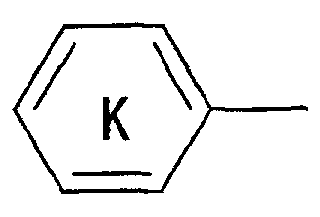
is an optionally substituted phenyl group, and ring L is an optionally substituted benzene ring or optionally substituted pyridine ring, or a salt thereof. - The lipid-rich plaque regressing agent according to Claim 1 which is a prophylactic and therapeutic agent against acute coronary artery syndrome.
- The lipid-rich plaque regressing agent according to Claim 1 which is a prophylactic and therapeutic agent against acute myocardial infarction.
- The lipid-rich plaque regressing agent according to Claim 1 which is a prophylactic and therapeutic agent against unstable angina.
- The lipid-rich plaque regressing agent according to Claim 1 which is a prophylactic and therapeutic agent against peripheral artery occlusion.
- A compound represented by Formula [V] :in which each of R10 and R11 is a hydrogen atom, halogen atom, optionally substituted linear hydrocarbon group, or hydroxyl group which may be substituted by an optionally substituted linear hydrocarbon group, or the both may be taken together with the adjacent carbon atoms to form an optionally substituted cyclic hydrocarbon or a dihydrofuran ring which may be substituted by an oxo group, ring I is an optionally substituted benzene ring or optionally substituted pyridine ring, ring J is an optionally substituted benzene ring or optionally substituted pyridine ring, provided that when R10 is a hydrogen atom, then R11 is an optionally substituted linear hydrocarbon group, or a salt thereof.

- The compound according to Claim 12 wherein each of R10 and R11 is a hydrogen atom, halogen atom or optionally substituted linear hydrocarbon group, or the both are taken together with the adjacent carbon atoms to form an optionally substituted cyclic hydrocarbon.
- The compound according to Claim 12 wherein each of R10 and R11 is a halogen atom or optionally substituted C1-7 alkyl group.
- The compound according to Claim 12 wherein the cyclic hydrocarbon is a C5-7 cyclic hydrocarbon.
- The compound according to Claim 12 wherein the ring J is a benzene ring substituted by halogenated alkyl group and/or halogen atom.
- The compound according to Claim 12 wherein the ring I is a benzene ring which may be substituted by alkyl group, halogenated alkyl group or halogen atom.
- A compound represented by Formula [VI]:in which each of R12 and R13 is a hydrogen atom, halogen atom or optionally substituted linear hydrocarbon group, or the both may be taken together with the adjacent carbon atoms to form an optionally substituted cyclic hydrocarbon,
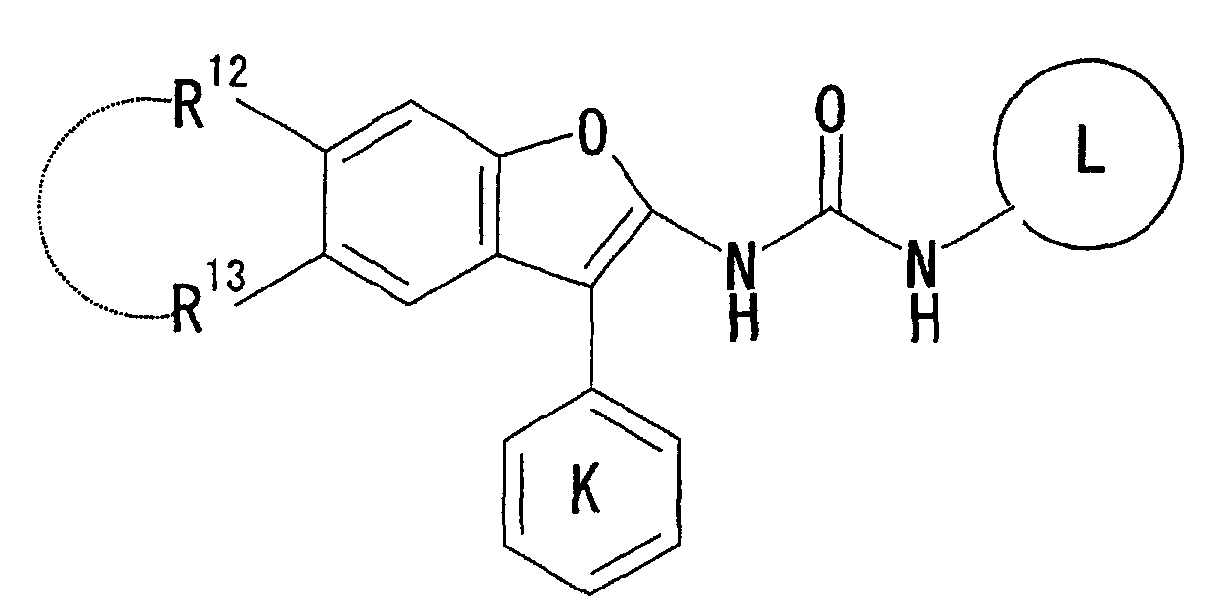 group
group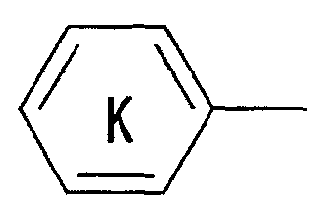
is an optionally substituted phenyl group (provided that 2-chlorophenyl and 2-fluorophenyl are excluded), and ring L is an optionally substituted benzene ring or optionally substituted pyridine ring, provided that whengroup
is a phenyl group, then R13 is not a methyl group, and whengroup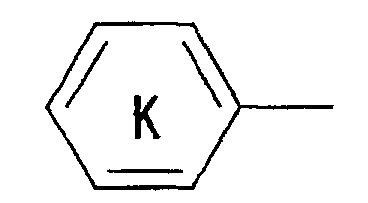
is a 2-methylphenyl group, then R13 is not a chlorine atom, or a salt thereof. - The compound according to Claim 18 wherein each of R12 and R13 is a halogen atom or C1-3 alkyl group.
- The compound according to Claim 18 wherein the cyclic hydrocarbon is a C5-7 cyclic hydrocarbon.
- The compound according to Claim 18 whereingroup
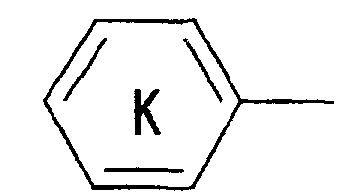
is a phenyl group which may be substituted by a C1-3 alkyl group. - The compound according to Claim 18 wherein the ring L is a substituted benzene ring.
- 2-[7-Chloro-4-(3-chlorophenyl)-6-methyl-2-oxo-2H-chromen-3-yl]-N-[4-chloro-2-(trifluoromethyl)phenyl]acetamide;
2- [7-chloro-4- (3-chlorophenyl) -6-methyl-2-oxo-2H-chromen-3-yl]-N-[4-fluoro-2-(trifluoromethyl)phenyl]acetamide;
2- [7-chloro-4-(3-chloro-4-fluorophenyl) -6-methyl-2-oxo-2H-chromen-3-yl]-N-[4-fluoro-2-(trifluoromethyl)phenyl]acetamide;
2-[7-chloro-4-(3-chloro-4-fluorophenyl)-6-methyl-2-oxo-2H-chromen-3-yl]-N-[4-fluoro-2-(trifluoromethyl)phenyl]acetamide;
2-[7-chloro-6-methyl-4- (3-methylphenyl) -2-oxo-2H-chromen-3-yl]-N-[4-chloro-2-(trifluoromethyl)phenyl]acetamide;
2-[7-chloro-6-methyl-4-(3-methylphenyl)-2-oxo-2H-chromen-3-yl]-N-[4-fluoro-2-(trifluoromethyl)phenyl]acetamide;
2-[7-chloro-2-oxo-4-phenyl-6-[(4-phenylpiperazin-1-yl)methyl]-2H-chromen-3-yl]-N-[4-chloro-2-(trifluoromethyl)phenyl]acetamide;
2-[7-chloro-2-oxo-4-phenyl-6-[(4-phenylpiperazin-1-yl)methyl]-2H-chromen-3-yl]-N-[4-fluoro-2-(trifluoromethyl)phenyl]acetamide;
2-[7-chloro-6-[[4-(4-chlorophenyl)-3,6-dihydropyridin-1(2H)-yl]methyl]-2-oxo-4-phenyl-2H-chromen-3-yl]-N- [4-chloro-2-(trifluoromethyl)phenyl]acetamide;
2-[7-chloro-6-[[4-(4-chlorophenyl)-3,6-dihydropyridin-1(2H)-yl]methyl]-2-oxo-4-phenyl-2H-chromen-3-yl]-N-[4-fluoro-2-(trifluoromethyl)phenyl]acetamide;
2-[7-chloro-6-[[4-(3-methylphenyl)piperidin-1-yl]methyl]-2-oxo-4-phenyl-2H-chromen-3-yl]-N-[4-chloro-2-(trifluoromethyl)phenyl]acetamide;
2-[7-chloro-6-[[4-(3-methylphenyl)piperidin-1-yl]methyl]-2-oxo-4-phenyl-2H-chromen-3-yl]-N-[4-fluoro-2-(trifluoromethyl)phenyl]acetamide; or a salt thereof. - A prodrug of a compound according to any one of Claim 12, 18 or 23.
- A pharmaceutical composition comprising a compound according to any one of Claim 12, 18 or 23 or a prodrug thereof.
- An agent for inhibiting progression of an arteriosclerotic focus comprising a compound having a lipid-rich plaque regressing effect or a salt thereof.
- The agent according to Claim 26 in combination with an HMG-CoA reductase inhibitor.
- A method for producing the compound according to Claim 12 or a salt thereof, which comprises reacting a compound represented by Formula [VII]:[in which each symbol is as defined in Claim 12] or a salt thereof or a reactive derivative thereof with a compound represented by Formula [VIII]:
 [in which each symbol is as defined in Claim 12] or a salt thereof.
- A method for producing the compound according to Claim 18 or a salt thereof, which comprises reacting a compound represented by Formula [IX]:[in which each symbol is as defined in Claim 18] or a salt thereof or a reactive derivative thereof with a compound represented by Formula [X]:
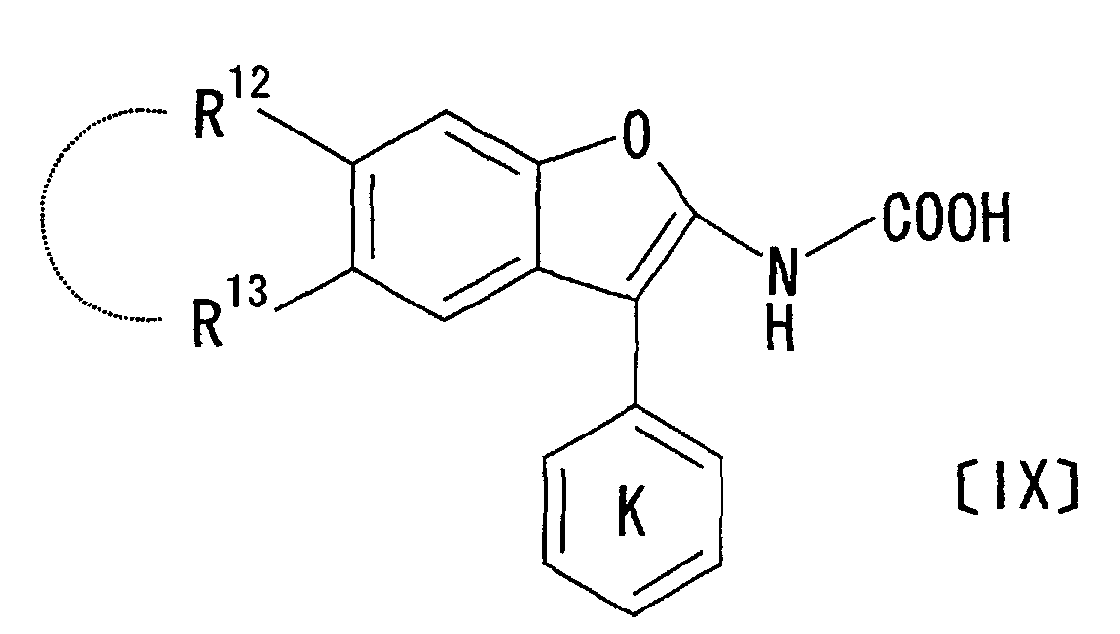 [in which each symbol is as defined in Claim 18] or a salt thereof.
- A method for producing the compound according to Claim 18 or a salt thereof, which comprises reacting a compound represented by Formula [XI] :[in which each symbol is as defined in Claim 18] or a salt thereof with a compound represented by Formula [XII] :
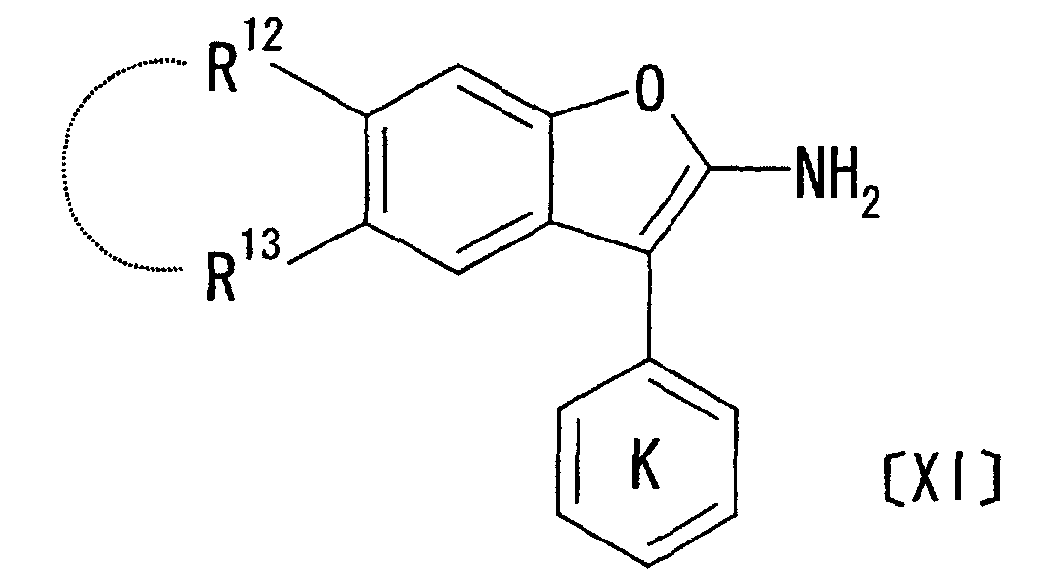 [in which each symbol is as defined in Claim 18] or a salt thereof.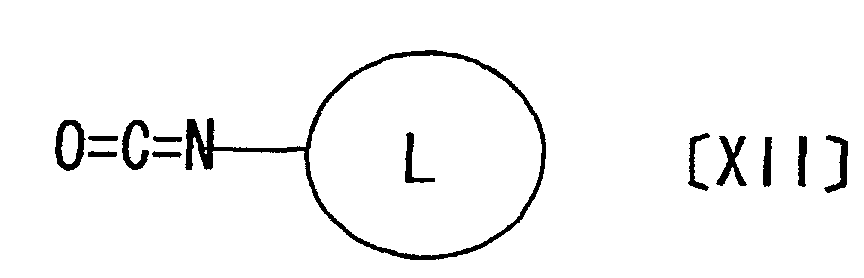
- A method for regressing a lipid-rich plaque in a mammal, which comprises administering an effective amount of the compound according to Claim 1 or a salt thereof to a mammal.
- A method for preventing and treating acute coronary artery syndrome in a mammal, which comprises administering an effective amount of the compound according to Claim 1 or a salt thereof to a mammal.
- A method for preventing and treating acute myocardial infarction in a mammal, which comprises administering an effective amount of the compound according to Claim 1 or a salt thereof to a mammal.
- A method for preventing and treating unstable angina in a mammal, which comprises administering an effective amount of the compound according to Claim 1 or a salt thereof to a mammal.
- A method for preventing and treating peripheral artery occlusion in a mammal, which comprises administering an effective amount of the compound according to Claim 1 or a salt thereof to a mammal.
- A method for regressing a lipid-rich plaque in a mammal, which comprises administering an effective amount of the compound according to Claim 12, a salt thereof or a prodrug thereof to a mammal.
- A method for regressing a lipid-rich plaque in a mammal, which comprises administering an effective amount of the compound according to Claim 18, a salt thereof or a prodrug thereof to a mammal.
- A use of the compound according to Claim 1 or a salt thereof for producing a lipid-rich plaque regressing agent.
- A use of the compound according to Claim 1 or a salt thereof for producing a prophylactic and therapeutic agent against acute coronary artery syndrome.
- A use of the compound according to Claim 1 or a salt thereof for producing a prophylactic and therapeutic agent against acute myocardial infarction.
- A use of the compound according to Claim 1 or a salt thereof for producing a prophylactic and therapeutic agent against unstable angina.
- A use of the compound according to Claim 1 or a salt thereof for producing a prophylactic and therapeutic agent against peripheral artery occlusion.
- A use of the compound according to Claim 12, a salt thereof or a prodrug thereof for producing a lipid-rich plaque regressing agent.
- A use of the compound according to Claim 18, a salt thereof or a prodrug thereof for producing a lipid-rich plaque regressing agent.
Applications Claiming Priority (5)
| Application Number | Priority Date | Filing Date | Title |
|---|---|---|---|
| JP2000212611 | 2000-07-13 | ||
| JP2000212611 | 2000-07-13 | ||
| JP2000395079 | 2000-12-26 | ||
| JP2000395079 | 2000-12-26 | ||
| PCT/JP2001/006070 WO2002006264A1 (en) | 2000-07-13 | 2001-07-13 | Lipid-rich plaque inhibitors |
Publications (2)
| Publication Number | Publication Date |
|---|---|
| EP1302470A1 true EP1302470A1 (en) | 2003-04-16 |
| EP1302470A4 EP1302470A4 (en) | 2005-04-06 |
Family
ID=26595951
Family Applications (1)
| Application Number | Title | Priority Date | Filing Date |
|---|---|---|---|
| EP01947999A Withdrawn EP1302470A4 (en) | 2000-07-13 | 2001-07-13 | INHIBITORS OF PLATES RICH IN LIPID |
Country Status (12)
| Country | Link |
|---|---|
| US (2) | US6974806B2 (en) |
| EP (1) | EP1302470A4 (en) |
| KR (1) | KR100866820B1 (en) |
| CN (1) | CN1441794A (en) |
| AU (2) | AU2001269516B2 (en) |
| CA (1) | CA2429008A1 (en) |
| HU (1) | HUP0302825A3 (en) |
| IL (1) | IL153633A0 (en) |
| NO (1) | NO20030138L (en) |
| NZ (1) | NZ523550A (en) |
| PL (1) | PL360398A1 (en) |
| WO (1) | WO2002006264A1 (en) |
Cited By (2)
| Publication number | Priority date | Publication date | Assignee | Title |
|---|---|---|---|---|
| WO2005082879A1 (en) * | 2004-03-02 | 2005-09-09 | Takeda Pharmaceutical Company Limited | Coumarin derivative and use thereof |
| AU2004267972B2 (en) * | 2003-08-29 | 2010-07-08 | Kowa Co., Ltd. | Method of stabilizing lipid-rich plaque and method of preventing rupture thereof |
Families Citing this family (38)
| Publication number | Priority date | Publication date | Assignee | Title |
|---|---|---|---|---|
| FR2772761B1 (en) * | 1997-12-23 | 2000-05-26 | Lipha | NOVEL N-PHENYLAMIDE AND N-PYRIDYLAMIDE DERIVATIVES, THEIR PREPARATION METHOD AND PHARMACEUTICAL COMPOSITIONS CONTAINING THEM |
| AU2001269516B2 (en) * | 2000-07-13 | 2006-09-14 | Takeda Pharmaceutical Company Limited | Lipid-rich plaque regressing agents |
| AU2002221116A1 (en) * | 2000-12-11 | 2002-06-24 | Takeda Chemical Industries Ltd. | Medicinal compositions having improved water-solubility |
| IL158941A0 (en) * | 2001-05-22 | 2004-05-12 | Neurogen Corp | Melanin concentrating hormone receptor ligands: substituted 1-benzyl-4-aryl piperazine analogues |
| EP1935885A3 (en) * | 2001-05-22 | 2008-10-15 | Neurogen Corporation | Melanin concentrating hormone receptor ligands : substituted 1-benzyl-4-aryl piperazine analogues. |
| US20040019096A1 (en) * | 2001-10-23 | 2004-01-29 | Vlassios Andronis | Novel formulations of carvedilol |
| IL162810A0 (en) * | 2002-01-11 | 2005-11-20 | Takeda Pharmaceutical | coumarin derivatives, process for their productionand use thereof |
| JP4719151B2 (en) * | 2003-09-23 | 2011-07-06 | メルク・シャープ・エンド・ドーム・コーポレイション | Isoquinolinone potassium channel inhibitor |
| US7157584B2 (en) | 2004-02-25 | 2007-01-02 | Takeda Pharmaceutical Company Limited | Benzimidazole derivative and use thereof |
| AT500144A1 (en) * | 2004-03-05 | 2005-11-15 | Sanochemia Pharmazeutika Ag | TOLPERISON-CONTAINING PHARMACEUTICAL PREPARATION WITH CONTROLLABLE ACTIVE INGREDIENTS FOR ORAL ADMINISTRATION |
| CA2568640C (en) | 2004-06-04 | 2011-08-09 | Teva Pharmaceutical Industries Ltd. | Pharmaceutical composition containing irbesartan |
| CN101891680B (en) | 2004-06-24 | 2014-10-29 | 沃泰克斯药物股份有限公司 | Modulators of ATP-binding cassette transporters |
| US8354427B2 (en) | 2004-06-24 | 2013-01-15 | Vertex Pharmaceutical Incorporated | Modulators of ATP-binding cassette transporters |
| TW200619204A (en) * | 2004-12-10 | 2006-06-16 | Kowa Co | Method for reduction, stabilization and prevention of rupture of lipid rich plaque |
| AR055041A1 (en) * | 2005-03-23 | 2007-08-01 | Merck Frosst Canada Ltd | TIADIAZOLS AND OXADIAZOLS AS INHIBITORS OF THE SYNTHESIS OF LEUCOTRIENOS. PHARMACEUTICAL COMPOSITIONS. |
| GB0509317D0 (en) * | 2005-05-06 | 2005-06-15 | Clarke Anthony | Pharmaceutical formulation of apomorphine |
| US7772255B2 (en) * | 2005-12-13 | 2010-08-10 | Supratek Pharma, Inc. | Method of treating tumors with azaxanthones |
| CN101374849A (en) * | 2005-12-24 | 2009-02-25 | 沃泰克斯药物股份有限公司 | Quinoline-4-ketones derivates as ABC transport protein regulation/control agent |
| DK3219705T3 (en) | 2005-12-28 | 2020-04-14 | Vertex Pharma | PHARMACEUTICAL COMPOSITIONS OF THE AMORPHIC FORM OF N- [2,4-BIS (1,1-DIMETHYLETHYL) -5-HYDROXYPHENYL] -1,4-DIHYDRO-4-OXOQUINOLIN-3-CARBOXAMIDE |
| EP2256115A1 (en) | 2006-11-24 | 2010-12-01 | Takeda Pharmaceutical Company Limited | Heteromonocyclic compound and use thereof |
| WO2008143262A1 (en) | 2007-05-21 | 2008-11-27 | Takeda Pharmaceutical Company Limited | Heterocyclic compound and use thereof |
| WO2009123316A1 (en) | 2008-04-04 | 2009-10-08 | 武田薬品工業株式会社 | Heterocyclic derivative and use thereof |
| JP5291979B2 (en) * | 2008-04-24 | 2013-09-18 | 株式会社フジクラ | Pressure sensor, manufacturing method thereof, and electronic component including the pressure sensor |
| US20100074949A1 (en) | 2008-08-13 | 2010-03-25 | William Rowe | Pharmaceutical composition and administration thereof |
| US12458635B2 (en) | 2008-08-13 | 2025-11-04 | Vertex Pharmaceuticals Incorporated | Pharmaceutical composition and administrations thereof |
| US8314239B2 (en) | 2008-10-23 | 2012-11-20 | Vertex Pharmaceutical Incorporated | Modulators of cystic fibrosis transmembrane conductance regulator |
| TWI465449B (en) | 2008-10-23 | 2014-12-21 | Vertex Pharma | Modulators of cystic fibrosis transmembrane conductance regulator |
| US20100190747A1 (en) | 2009-01-27 | 2010-07-29 | Hideo Suzuki | Fused ring compound and use thereof |
| KR101727762B1 (en) | 2009-03-20 | 2017-04-17 | 버텍스 파마슈티칼스 인코포레이티드 | Process for making modulators of cystic fibrosis transmembrane conductance regulator |
| CA2806258A1 (en) | 2010-07-23 | 2012-01-26 | Takeda Pharmaceutical Company Limited | Fused heterocyclic compound and application thereof |
| US8802700B2 (en) | 2010-12-10 | 2014-08-12 | Vertex Pharmaceuticals Incorporated | Modulators of ATP-Binding Cassette transporters |
| JP2015511583A (en) | 2012-02-27 | 2015-04-20 | バーテックス ファーマシューティカルズ インコーポレイテッドVertex Pharmaceuticals Incorporated | Pharmaceutical composition and its administration |
| US20150299188A1 (en) | 2012-08-24 | 2015-10-22 | Takeda Pharmaceutical Company Limited | Heterocyclic compound |
| CN107250113B (en) | 2014-10-07 | 2019-03-29 | 弗特克斯药品有限公司 | Co-crystals of modulators of cystic fibrosis transmembrane conductance regulator proteins |
| US20210177842A1 (en) * | 2019-10-23 | 2021-06-17 | Piedmont Animal Health Inc. | Pimobendan formulation and method of use thereof |
| IL319671A (en) | 2022-09-26 | 2025-05-01 | Edgewise Therapeutics Inc | 1,4-dihydroquinazolinone compounds and uses thereof |
| JP7858148B1 (en) | 2023-03-27 | 2026-05-13 | エッジワイズ セラピューティクス, インコーポレイテッド | Quinazoline dione compounds and their uses |
| EP4688748A1 (en) | 2023-03-27 | 2026-02-11 | Edgewise Therapeutics, Inc. | Quinolinone amide compounds and uses thereof |
Family Cites Families (8)
| Publication number | Priority date | Publication date | Assignee | Title |
|---|---|---|---|---|
| US4758569A (en) * | 1987-08-26 | 1988-07-19 | Pfizer Inc. | Doxazosin as an anti-atherosclerosis agent |
| ATE161530T1 (en) * | 1992-09-04 | 1998-01-15 | Takeda Chemical Industries Ltd | CONDENSED HETEROCYCLIC COMPOUNDS, THEIR PRODUCTION AND USE |
| JP3318414B2 (en) * | 1992-12-16 | 2002-08-26 | 武田薬品工業株式会社 | Fused heterocyclic compound, method for producing the same and agent |
| TW234123B (en) | 1992-12-16 | 1994-11-11 | Takeda Pharm Industry Co Ltd | |
| JP3524133B2 (en) | 1993-01-14 | 2004-05-10 | 武田薬品工業株式会社 | Nitrogen-containing fused heterocyclic compound, method for producing the same and agent |
| NZ250916A (en) * | 1993-02-27 | 1995-08-28 | Nihon Nohyaku Co Ltd | N-heteroaryl-n'-phenylureas, their use as acat inhibitors |
| JPH08295667A (en) | 1995-04-27 | 1996-11-12 | Takeda Chem Ind Ltd | Heterocyclic compound, its production and pharmaceutical preparation |
| AU2001269516B2 (en) * | 2000-07-13 | 2006-09-14 | Takeda Pharmaceutical Company Limited | Lipid-rich plaque regressing agents |
-
2001
- 2001-07-13 AU AU2001269516A patent/AU2001269516B2/en not_active Ceased
- 2001-07-13 AU AU6951601A patent/AU6951601A/en active Pending
- 2001-07-13 PL PL36039801A patent/PL360398A1/en not_active Application Discontinuation
- 2001-07-13 HU HU0302825A patent/HUP0302825A3/en unknown
- 2001-07-13 CN CN01812691A patent/CN1441794A/en active Pending
- 2001-07-13 KR KR1020037000520A patent/KR100866820B1/en not_active Expired - Fee Related
- 2001-07-13 US US10/332,632 patent/US6974806B2/en not_active Expired - Fee Related
- 2001-07-13 WO PCT/JP2001/006070 patent/WO2002006264A1/en not_active Ceased
- 2001-07-13 IL IL15363301A patent/IL153633A0/en unknown
- 2001-07-13 NZ NZ523550A patent/NZ523550A/en unknown
- 2001-07-13 EP EP01947999A patent/EP1302470A4/en not_active Withdrawn
- 2001-07-13 CA CA002429008A patent/CA2429008A1/en not_active Abandoned
-
2003
- 2003-01-10 NO NO20030138A patent/NO20030138L/en not_active Application Discontinuation
-
2005
- 2005-08-26 US US11/212,800 patent/US20060035865A1/en not_active Abandoned
Cited By (3)
| Publication number | Priority date | Publication date | Assignee | Title |
|---|---|---|---|---|
| AU2004267972B2 (en) * | 2003-08-29 | 2010-07-08 | Kowa Co., Ltd. | Method of stabilizing lipid-rich plaque and method of preventing rupture thereof |
| WO2005082879A1 (en) * | 2004-03-02 | 2005-09-09 | Takeda Pharmaceutical Company Limited | Coumarin derivative and use thereof |
| US7541478B2 (en) | 2004-03-02 | 2009-06-02 | Takeda Pharmaceutical Company Limited | Coumarin derivative and use thereof |
Also Published As
| Publication number | Publication date |
|---|---|
| CN1441794A (en) | 2003-09-10 |
| NZ523550A (en) | 2004-05-28 |
| US6974806B2 (en) | 2005-12-13 |
| HUP0302825A3 (en) | 2005-02-28 |
| IL153633A0 (en) | 2003-07-06 |
| KR20030015390A (en) | 2003-02-20 |
| WO2002006264A1 (en) | 2002-01-24 |
| NO20030138D0 (en) | 2003-01-10 |
| US20030232809A1 (en) | 2003-12-18 |
| PL360398A1 (en) | 2004-09-06 |
| CA2429008A1 (en) | 2003-01-09 |
| NO20030138L (en) | 2003-01-10 |
| KR100866820B1 (en) | 2008-11-04 |
| HUP0302825A2 (en) | 2003-12-29 |
| AU2001269516B2 (en) | 2006-09-14 |
| EP1302470A4 (en) | 2005-04-06 |
| US20060035865A1 (en) | 2006-02-16 |
| AU6951601A (en) | 2002-01-30 |
Similar Documents
| Publication | Publication Date | Title |
|---|---|---|
| AU2001269516B2 (en) | Lipid-rich plaque regressing agents | |
| US20070179154A1 (en) | Coumarin derivatives, process for their production and use thereof | |
| AU2015285142B2 (en) | Heterocyclic compounds and their use as Retinoid-related orphan receptor (ROR) gamma-T inhibitors | |
| JPWO2017033946A1 (en) | Heterocyclic compounds | |
| CA2450400A1 (en) | Medicinal compositions | |
| WO2013100027A1 (en) | Heterocyclic compound | |
| JP6718884B2 (en) | Cyclic compound | |
| US10738004B2 (en) | Cyclic compound | |
| HK1054743A (en) | Lipid-rich plaque inhibitors | |
| JP2002255808A (en) | Lipid-rich plaque retracting agent | |
| JP2002241267A (en) | Pharmaceutical composition having improved water dispersibility | |
| US7541478B2 (en) | Coumarin derivative and use thereof | |
| HK1070058A (en) | Coumarin derivatives, process for their production and use thereof | |
| NZ546284A (en) | Coumarin derivatives, process for their production and use thereof | |
| JP2003267965A (en) | Coumarin derivative, method for producing the same and use | |
| WO2008004673A1 (en) | Cycloalkene derivatives, process for production of the derivatives, and use of the same | |
| MXPA06009855A (en) | Coumarin derivative and use thereof | |
| CA3036349C (en) | Cyclic compound having toll-like receptor 4 (tlr4) inhibitory activity | |
| JPWO2016181894A1 (en) | Cyclic compound | |
| WO2012109573A1 (en) | Substituted thiazoles for use as antiviral agents |
Legal Events
| Date | Code | Title | Description |
|---|---|---|---|
| PUAI | Public reference made under article 153(3) epc to a published international application that has entered the european phase |
Free format text: ORIGINAL CODE: 0009012 |
|
| 17P | Request for examination filed |
Effective date: 20030123 |
|
| AK | Designated contracting states |
Designated state(s): AT BE CH CY DE DK ES FI FR GB GR IE IT LI LU MC NL PT SE TR |
|
| AX | Request for extension of the european patent |
Extension state: AL LT LV MK RO SI |
|
| RAP1 | Party data changed (applicant data changed or rights of an application transferred) |
Owner name: TAKEDA PHARMACEUTICAL COMPANY LIMITED |
|
| A4 | Supplementary search report drawn up and despatched |
Effective date: 20050221 |
|
| RIC1 | Information provided on ipc code assigned before grant |
Ipc: 7A 61K 31/5377 B Ipc: 7A 61K 31/506 B Ipc: 7A 61K 31/497 B Ipc: 7A 61K 31/453 B Ipc: 7A 61K 31/4433 B Ipc: 7A 61K 31/437 B Ipc: 7A 61K 31/423 B Ipc: 7A 61K 31/352 B Ipc: 7A 61K 31/343 B Ipc: 7C 07D 493/04 B Ipc: 7C 07D 405/12 B Ipc: 7C 07D 405/06 B Ipc: 7C 07D 311/94 B Ipc: 7C 07D 311/18 B Ipc: 7C 07D 311/16 B Ipc: 7C 07D 307/93 B Ipc: 7C 07D 307/82 A |
|
| 17Q | First examination report despatched |
Effective date: 20070730 |
|
| STAA | Information on the status of an ep patent application or granted ep patent |
Free format text: STATUS: THE APPLICATION IS DEEMED TO BE WITHDRAWN |
|
| 18D | Application deemed to be withdrawn |
Effective date: 20100402 |
|
| REG | Reference to a national code |
Ref country code: HK Ref legal event code: WD Ref document number: 1054743 Country of ref document: HK |