EP1301078B1 - Peroxide treated yeast extract and method of production - Google Patents
Peroxide treated yeast extract and method of production Download PDFInfo
- Publication number
- EP1301078B1 EP1301078B1 EP01952748A EP01952748A EP1301078B1 EP 1301078 B1 EP1301078 B1 EP 1301078B1 EP 01952748 A EP01952748 A EP 01952748A EP 01952748 A EP01952748 A EP 01952748A EP 1301078 B1 EP1301078 B1 EP 1301078B1
- Authority
- EP
- European Patent Office
- Prior art keywords
- culture
- peroxide
- yeast
- yeast extract
- absorbance
- Prior art date
- Legal status (The legal status is an assumption and is not a legal conclusion. Google has not performed a legal analysis and makes no representation as to the accuracy of the status listed.)
- Expired - Lifetime
Links
Images



Classifications
-
- A—HUMAN NECESSITIES
- A61—MEDICAL OR VETERINARY SCIENCE; HYGIENE
- A61Q—SPECIFIC USE OF COSMETICS OR SIMILAR TOILETRY PREPARATIONS
- A61Q19/00—Preparations for care of the skin
-
- A—HUMAN NECESSITIES
- A61—MEDICAL OR VETERINARY SCIENCE; HYGIENE
- A61K—PREPARATIONS FOR MEDICAL, DENTAL OR TOILETRY PURPOSES
- A61K8/00—Cosmetics or similar toiletry preparations
- A61K8/18—Cosmetics or similar toiletry preparations characterised by the composition
- A61K8/96—Cosmetics or similar toiletry preparations characterised by the composition containing materials, or derivatives thereof of undetermined constitution
- A61K8/97—Cosmetics or similar toiletry preparations characterised by the composition containing materials, or derivatives thereof of undetermined constitution from algae, fungi, lichens or plants; from derivatives thereof
- A61K8/9728—Fungi, e.g. yeasts
-
- A—HUMAN NECESSITIES
- A61—MEDICAL OR VETERINARY SCIENCE; HYGIENE
- A61Q—SPECIFIC USE OF COSMETICS OR SIMILAR TOILETRY PREPARATIONS
- A61Q17/00—Barrier preparations; Preparations brought into direct contact with the skin for affording protection against external influences, e.g. sunlight, X-rays or other harmful rays, corrosive materials, bacteria or insect stings
-
- A—HUMAN NECESSITIES
- A61—MEDICAL OR VETERINARY SCIENCE; HYGIENE
- A61Q—SPECIFIC USE OF COSMETICS OR SIMILAR TOILETRY PREPARATIONS
- A61Q17/00—Barrier preparations; Preparations brought into direct contact with the skin for affording protection against external influences, e.g. sunlight, X-rays or other harmful rays, corrosive materials, bacteria or insect stings
- A61Q17/04—Topical preparations for affording protection against sunlight or other radiation; Topical sun tanning preparations
-
- C—CHEMISTRY; METALLURGY
- C12—BIOCHEMISTRY; BEER; SPIRITS; WINE; VINEGAR; MICROBIOLOGY; ENZYMOLOGY; MUTATION OR GENETIC ENGINEERING
- C12N—MICROORGANISMS OR ENZYMES; COMPOSITIONS THEREOF; PROPAGATING, PRESERVING, OR MAINTAINING MICROORGANISMS; MUTATION OR GENETIC ENGINEERING; CULTURE MEDIA
- C12N1/00—Microorganisms; Compositions thereof; Processes of propagating, maintaining or preserving microorganisms or compositions thereof; Processes of preparing or isolating a composition containing a microorganism; Culture media therefor
- C12N1/14—Fungi; Culture media therefor
- C12N1/16—Yeasts; Culture media therefor
-
- C—CHEMISTRY; METALLURGY
- C12—BIOCHEMISTRY; BEER; SPIRITS; WINE; VINEGAR; MICROBIOLOGY; ENZYMOLOGY; MUTATION OR GENETIC ENGINEERING
- C12P—FERMENTATION OR ENZYME-USING PROCESSES TO SYNTHESISE A DESIRED CHEMICAL COMPOUND OR COMPOSITION OR TO SEPARATE OPTICAL ISOMERS FROM A RACEMIC MIXTURE
- C12P1/00—Preparation of compounds or compositions, not provided for in groups C12P3/00 - C12P39/00, by using microorganisms or enzymes
- C12P1/02—Preparation of compounds or compositions, not provided for in groups C12P3/00 - C12P39/00, by using microorganisms or enzymes by using fungi
-
- Y—GENERAL TAGGING OF NEW TECHNOLOGICAL DEVELOPMENTS; GENERAL TAGGING OF CROSS-SECTIONAL TECHNOLOGIES SPANNING OVER SEVERAL SECTIONS OF THE IPC; TECHNICAL SUBJECTS COVERED BY FORMER USPC CROSS-REFERENCE ART COLLECTIONS [XRACs] AND DIGESTS
- Y10—TECHNICAL SUBJECTS COVERED BY FORMER USPC
- Y10S—TECHNICAL SUBJECTS COVERED BY FORMER USPC CROSS-REFERENCE ART COLLECTIONS [XRACs] AND DIGESTS
- Y10S435/00—Chemistry: molecular biology and microbiology
- Y10S435/8215—Microorganisms
- Y10S435/911—Microorganisms using fungi
Definitions
- the present invention relates to an improved yeast extract for use in the cosmetic arts, which maintains the cell-stimulatory effects of the prior art yeast extracts, while providing additional photo-protective effects.
- the aging process is accompanied by the slowing of physiologic life processes. Foremost among these is the decrease in the body's ability to maintain a hemostatic environment when faced with a chronic, daily onslaught of stresses. Aging results in part from damage to cells and tissues by a variety of factors both internal and external, natural and artificial. Our bodies have evolved genetically to recognize these damages and instigate their repair, and in some cases degrade the resulting abnormal proteins. The affects of the aging progression become evident in our skin.
- yeast because its processes closely resemble those of individual human cells, has become a mainstay of biochemical research. Its genome completely defined, yeast is an ideal tool with which to study cellular defense mechanisms. Man has commercially harnessed the production capacity of yeast to produce a variety of pharmaceutical and cosmetic active ingredients. Within the cosmetic industry, one driving force for harnessing yeast has been the movement away from animal-derived active ingredients for ethical, regulatory or safety concerns.
- Heat shock proteins these heat shock proteins (Hsp) might be more appropriately called “stress response proteins”.
- Hsp heat shock proteins
- Sperti's research has shown that yeast, rat, mouse, chick and various bacterial cells all produce stress factors upon injury that could stimulate cellular repair in cultured cells derived from other species. See US Patent 2,239,345 .
- Heat shock proteins either replace cellular functions disabled by the stress or act as molecular chaperones protecting native structures typically by modifying protein folding.
- LYCD Live Yeast Cell Derivative
- LYCD LYCD
- moisturizing or improving skin's appearance See, for instance, US 5,643,587 or 5,676,956 or 5,776,441 . It is thought that by increasing collagen and elastin synthesis, LYCD acts as an internal moisturizer binding water in the skin. Cosmetic application of LYCD increases oxygen uptake by cells and stimulates repair, in turn slowing visible signs of aging. LYCD is capable of preventing the accumulation of stress-damaged proteins in the cells and in the body by initiating their breakdown.
- Oxidation is one of the major mechanisms of aging, both intrinsic and extrinsic. Yeast possesses the same mechanism for combating oxidative stress as higher eukaryotes, containing distinct transcriptional activators which respond to hydrogen peroxide and superoxide anions. J. Gen. Microbiol. 139 501-507 . Recent work has identified over 100 proteins that are stimulated by sub-lethal doses of hydrogen peroxide. J Biol. Chem. (1998) 273(34) 2280-2289 .
- yeast cell extract for use in the cosmetic arts which provides the same or better cell stimulatory effects of the prior art while providing new protection from cellular damage caused by activated oxygen species and/or UV light.
- these objects are achieved by a process according to claims 1 and 6 and a product according to claim 9, as well as by a use according to claim 7.
- the objects are achieved by adding a sub-lethal amount of a peroxide to a growing culture of yeast, observing the change in absorbance of the culture at 256 nm as a measure of the injury occurring to the yeast cells, and, upon reaching a predetermined absorbance value, purifying the water-soluble yeast extract from the peroxide containing yeast culture.
- the resulting product has at least 1.5 respiratory units per mg dry weight and has significantly increased amounts of 15, 25 and 55 kD molecular weight products compared to a Live Yeast Cell Derivative as determined by SDS slab gel electrophoresis.
- This product can be combined with a cosmetically acceptable carrier to provide a composition suitable for topical application to the skin.
- respiratory unit is defined as the quantity of PTYE which increases oxygen consumption of 1 mg of rat abdominal tissue by 1% in a one hour period when measured by Warburg manometry.
- cosmetically acceptable carrier includes those carriers known for use in lotions, creams, toners or masks for skincare, those carriers known for use in decorative products such as lipsticks, concealers, foundations or powders and those caries known for use in leave-in haircare preparations such as tonics, gels and lotions.
- the yeast extracts of the instant invention can be used to replace LYCD in any cosmetic formulation.
- sub-lethal amount means an amount that provides a kill rate of less than 90% of the viable cells.
- a minimum effective concentration of the peroxide is one which produces measurable increase in absorbance of the culture of light having a wavelength of 256 nm.
- peroxide means any chemical compound containing a peroxide group.
- an embodiment of the invention uses in place of the peroxide non-peroxide chemical compounds that provide oxidative stress.
- Oxidative stress is the damaging effects of oxidation caused by reactive oxygen species.
- non-peroxide chemical compounds that provide oxidative stress include superoxide anion, hydroxyl radical and nitric oxide.
- PTYE shows similar properties to LYCD in terms of pH and respiratory units as determined by spectrophotometric absorbance at 256 nm. Because of the oxidative stress of H 2 0 2 used to stimulate the yeast in the production of PTYE, a new spectrum of anti-oxidant activity is evident. PTYE increases cell respiration and enhances protection from oxidative stress and UV radiation. Interestingly PTYE reacts positively to a Biuret assay whereas LYCD does not.
- samples of LYCD and PTYE were run on an SDS slab gel electrophoresis to determine the distribution of molecular weights of the pool of proteins in the samples.
- Samples were diluted by weight to 5 mg/ml in SDS Boiling Buffer and the tubes placed in a boiling water bath for 5 minutes to insure dissolution.
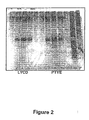
- Figure 2 shows the actual gel electrophoresis and
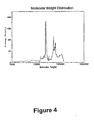
- Figures 3 and 4 show the molecular weight versus silver stain density. There is a clear increase in the bands occurring between 15 and 25 kD and with the band occurring at 55 kD. There do not seem to be any bands present in the LYCD sample that are not present in the PTYE sample.
- Prostaglandin E 2 (PGE 2 ) synthesis was measured. Unprotected irradiated tissue was generated approximately 90,000 pg/ml of PGE 2 . By way of comparison, tissue treated with LYCD (0.7% w/w active) and irradiated produced an average of 79,139 pg/ml PGE 2 . PTYE (0.7% w/w active) reduces PGE 2 to an average of 54,490 pg/ml. See Figure 5 . The significant protective effects would seem to indicate that one or more of the uncharacterized gene products induced by H 2 0 2 treatment offers protection against UVA/UVB induced cell damage.
- yeast cultures (10 mg Saccharomyces cerevisiae per 100 ml media) are brought to viability in a Yeast-Extract Dextrose Medium (YED) with thorough aeration under controlled temperature conditions (30°C ⁇ 2).
- the living yeast cells are then subjected to an injury process such as a sub-lethal dosage (0.4 - 14.7mM) of H 2 0 2 .
- the cells respond to the debilitating effects of the H 2 0 2 by producing various protective substances.
- the injury process is continued until the complex biochemical protective mechanisms are complete, a process which can take up to several days. Absorbance by the culture of 256 nm wavelength light is monitored throughout the fermentation process.
- the absorbance value which corresponds to 1.5 respiratory units/mg of the final extract can be determined empirically for any particular set of fermentation conditions. Breaking down the yeast cell walls utilizing a proteolytic enzyme stops the fermentation. The bulk of the insoluble cell wall material is removed by centrifugation, leaving cellular protoplasm behind. The protoplasmic derivative is then concentrated and assayed for biological activity in respiratory units.
- oxidative materials which can generate the superoxide anion, the hydroxyl radical and nitric-oxide can also be used to oxidatively stress yeast cultures and produce PTYE.
- the amounts of these other oxidative materials used to induce injury may vary, however, they must be added in concentrations which will not cause more than a 90% loss in viability of Saccharomyces cerevisiae cells present.
Landscapes
- Life Sciences & Earth Sciences (AREA)
- Health & Medical Sciences (AREA)
- Mycology (AREA)
- General Health & Medical Sciences (AREA)
- Chemical & Material Sciences (AREA)
- Engineering & Computer Science (AREA)
- Organic Chemistry (AREA)
- Biotechnology (AREA)
- Microbiology (AREA)
- Veterinary Medicine (AREA)
- Public Health (AREA)
- Animal Behavior & Ethology (AREA)
- Wood Science & Technology (AREA)
- Zoology (AREA)
- Genetics & Genomics (AREA)
- Bioinformatics & Cheminformatics (AREA)
- Dermatology (AREA)
- Biochemistry (AREA)
- Botany (AREA)
- General Engineering & Computer Science (AREA)
- General Chemical & Material Sciences (AREA)
- Chemical Kinetics & Catalysis (AREA)
- Epidemiology (AREA)
- Birds (AREA)
- Medicinal Chemistry (AREA)
- Tropical Medicine & Parasitology (AREA)
- Virology (AREA)
- Biomedical Technology (AREA)
- Cosmetics (AREA)
- Coloring Foods And Improving Nutritive Qualities (AREA)
- Medicines Containing Material From Animals Or Micro-Organisms (AREA)
- Micro-Organisms Or Cultivation Processes Thereof (AREA)
Abstract
Description
- The present invention relates to an improved yeast extract for use in the cosmetic arts, which maintains the cell-stimulatory effects of the prior art yeast extracts, while providing additional photo-protective effects.
- The aging process is accompanied by the slowing of physiologic life processes. Foremost among these is the decrease in the body's ability to maintain a hemostatic environment when faced with a chronic, daily onslaught of stresses. Aging results in part from damage to cells and tissues by a variety of factors both internal and external, natural and artificial. Our bodies have evolved genetically to recognize these damages and instigate their repair, and in some cases degrade the resulting abnormal proteins. The affects of the aging progression become evident in our skin.
- Yeast, because its processes closely resemble those of individual human cells, has become a mainstay of biochemical research. Its genome completely defined, yeast is an ideal tool with which to study cellular defense mechanisms. Man has commercially harnessed the production capacity of yeast to produce a variety of pharmaceutical and cosmetic active ingredients. Within the cosmetic industry, one driving force for harnessing yeast has been the movement away from animal-derived active ingredients for ethical, regulatory or safety concerns.
- Cellular damage provokes defensive responses from cells. Exposure to heat, UV radiation, pollutants or other adverse conditions stimulates the generation of defensive gene products. These defensive gene products can promote cell respiration, cell proliferation or cell viability in the face of adverse conditions.
- George Sperti found that yeast cells could be stimulated by heat, UV radiation, x-rays or chemical injury to produce stress-induced defensive factors, later termed "heat shock proteins". These heat shock proteins (Hsp) might be more appropriately called "stress response proteins". Sperti's research has shown that yeast, rat, mouse, chick and various bacterial cells all produce stress factors upon injury that could stimulate cellular repair in cultured cells derived from other species. See
US Patent 2,239,345 . Heat shock proteins either replace cellular functions disabled by the stress or act as molecular chaperones protecting native structures typically by modifying protein folding. - Viable yeast cultures exposed to UV light of a specified wavelength (286 nm) produce the isolate known as Live Yeast Cell Derivative (LYCD). LYCD has seen broad application within the pharmaceutical and cosmetic industries. Whitehall Labs has used LYCD as a wound-healing agent in their anti-hemorrhoidal preparations. Studies have shown that LYCD will increase the rate of wound healing in humans where the wounds were a result of either thermal or mechanical damage. See Goodson, et al., Augmentation of some aspects of wound healing by "skin respiratory factor". J. Surg. Res. (1976) 21. 125-129. The rate of wound healing is associated with an increase in collagen synthesis, which is believed to be associated with elevated fibroblast respiration.
- The ability of LYCD to promote fibroblast activity has accounted for its popular use in cosmetics. Several US patents revolve around the use of LYCD for moisturizing or improving skin's appearance. See, for instance,
US 5,643,587 or5,676,956 or5,776,441 . It is thought that by increasing collagen and elastin synthesis, LYCD acts as an internal moisturizer binding water in the skin. Cosmetic application of LYCD increases oxygen uptake by cells and stimulates repair, in turn slowing visible signs of aging. LYCD is capable of preventing the accumulation of stress-damaged proteins in the cells and in the body by initiating their breakdown. - It has often been discussed that oxygen is a "dangerous friend". Oxidation is one of the major mechanisms of aging, both intrinsic and extrinsic. Yeast possesses the same mechanism for combating oxidative stress as higher eukaryotes, containing distinct transcriptional activators which respond to hydrogen peroxide and superoxide anions. J. Gen. Microbiol. 139 501-507. Recent work has identified over 100 proteins that are stimulated by sub-lethal doses of hydrogen peroxide. J Biol. Chem. (1998) 273(34) 2280-2289.
- It is, therefore, an object of the present invention to provide a yeast cell extract for use in the cosmetic arts which provides the same or better cell stimulatory effects of the prior art while providing new protection from cellular damage caused by activated oxygen species and/or UV light.
- It is a further object of the present invention to provide a cosmetic composition with properties of cell stimulation and protection from cellular damage caused by activated oxygen species and/or UV light.
- It is yet another object of the present invention to provide a method of preparing a yeast cell extract which has the properties of cell stimulation and protection from cellular damage caused by activated oxygen species and/or UV light.
- According to the present invention these objects are achieved by a process according to claims 1 and 6 and a product according to claim 9, as well as by a use according to claim 7. The objects are achieved by adding a sub-lethal amount of a peroxide to a growing culture of yeast, observing the change in absorbance of the culture at 256 nm as a measure of the injury occurring to the yeast cells, and, upon reaching a predetermined absorbance value, purifying the water-soluble yeast extract from the peroxide containing yeast culture. The resulting product has at least 1.5 respiratory units per mg dry weight and has significantly increased amounts of 15, 25 and 55 kD molecular weight products compared to a Live Yeast Cell Derivative as determined by SDS slab gel electrophoresis. This product can be combined with a cosmetically acceptable carrier to provide a composition suitable for topical application to the skin.
- As used herein, "respiratory unit" is defined as the quantity of PTYE which increases oxygen consumption of 1 mg of rat abdominal tissue by 1% in a one hour period when measured by Warburg manometry.
- As used herein, "cosmetically acceptable carrier" includes those carriers known for use in lotions, creams, toners or masks for skincare, those carriers known for use in decorative products such as lipsticks, concealers, foundations or powders and those caries known for use in leave-in haircare preparations such as tonics, gels and lotions. The yeast extracts of the instant invention can be used to replace LYCD in any cosmetic formulation.
- As used herein, "sub-lethal amount" means an amount that provides a kill rate of less than 90% of the viable cells. A minimum effective concentration of the peroxide is one which produces measurable increase in absorbance of the culture of light having a wavelength of 256 nm.
- As used herein, "peroxide" means any chemical compound containing a peroxide group. Furthermore, an embodiment of the invention uses in place of the peroxide non-peroxide chemical compounds that provide oxidative stress. Oxidative stress is the damaging effects of oxidation caused by reactive oxygen species. Examples of non-peroxide chemical compounds that provide oxidative stress include superoxide anion, hydroxyl radical and nitric oxide.
-
-
Figure 1 shows a comparison of the respiratory units of equal amounts of LYCD and a yeast extract of the instant invention. -
Figure 2 is a photograph of a stained SDS gel on which the components of LYCD and a yeast extract of the instant invention have been partially separated according to molecular weight. -
Figure 3 is a graph of the molecular weight distribution of LYCD from the stained SDS gel ofFigure 2 . -
Figure 4 is a graph of the molecular weight distribution from the stained SDS gel ofFigure 2 of a yeast extract of the instant invention. -
Figure 5 shows a comparison of the ability of LYCD and a yeast extract of the instant invention to inhibit PGE2 synthesis in irradiated tissue. - Our interest in the effects of oxidative stress led us to introduce sub-lethal doses of H202 into yeast cultures. The yeast cultures are then observed for spectrophotometric absorbance at 256 nm. This absorbance indicates changes in the nucleotide composition within the cells as a result of "injury". Once the absorbance exceeds a value corresponding to a final extract having at 1.5 respiratory units/mg, the yeast culture is harvested. The water-soluble fraction from the treated yeast is then isolated by centrifugation, concentrated and assayed for biological activity. This is similar to the process used to produce LYCD. This new extract is called Peroxide Treated Yeast Extract (PTYE).
- PTYE shows similar properties to LYCD in terms of pH and respiratory units as determined by spectrophotometric absorbance at 256 nm. Because of the oxidative stress of H202 used to stimulate the yeast in the production of PTYE, a new spectrum of anti-oxidant activity is evident. PTYE increases cell respiration and enhances protection from oxidative stress and UV radiation. Interestingly PTYE reacts positively to a Biuret assay whereas LYCD does not.
- We compared the effect of PTYE and LYCD on isolated human fibroblasts. The fibroblasts were prepared and aerated. Test solutions were then added and the difference in the rate of oxygen consumption was used to calculate Respiratory Units. For the purposes of our analysis, we submitted a sample of LYCD as a 25% aqueous solution and PTYE also as a 25% aqueous solution. The analysis results are shown in
Figure 1 . Having determined that the level of Respiratory Units remained constant regardless of the mechanism of insult offered to the yeast culture, we continued to investigate other properties for differences. - Believing that different insults might induce the production of other gene products, samples of LYCD and PTYE were run on an SDS slab gel electrophoresis to determine the distribution of molecular weights of the pool of proteins in the samples. Samples were diluted by weight to 5 mg/ml in SDS Boiling Buffer and the tubes placed in a boiling water bath for 5 minutes to insure dissolution.
Figure 2 shows the actual gel electrophoresis andFigures 3 and4 show the molecular weight versus silver stain density. There is a clear increase in the bands occurring between 15 and 25 kD and with the band occurring at 55 kD. There do not seem to be any bands present in the LYCD sample that are not present in the PTYE sample. - Using Human Skin Equivalents (MatTek Corp., Ashland, MA) exposed to 31.5 mJ/cm2 UVA/UVB radiation, Prostaglandin E2 (PGE2) synthesis was measured. Unprotected irradiated tissue was generated approximately 90,000 pg/ml of PGE2. By way of comparison, tissue treated with LYCD (0.7% w/w active) and irradiated produced an average of 79,139 pg/ml PGE2. PTYE (0.7% w/w active) reduces PGE2 to an average of 54,490 pg/ml. See
Figure 5 . The significant protective effects would seem to indicate that one or more of the uncharacterized gene products induced by H202 treatment offers protection against UVA/UVB induced cell damage. - It is clear that insulting yeast cultures with peroxide produces a product that is equivalent to LYCD in terms of its ability to stimulate cellular oxygen uptake. This equivalence indicates that PTYE is capable of producing the same cosmetically desirable effects as LYCD. Additionally, peroxide induces the production of some soluble protective factors yet to be identified which would seem to be stress response factors.
- In another embodiment of the method of producing PTYE, yeast cultures (10 mg Saccharomyces cerevisiae per 100 ml media) are brought to viability in a Yeast-Extract Dextrose Medium (YED) with thorough aeration under controlled temperature conditions (30°C ±2). The living yeast cells are then subjected to an injury process such as a sub-lethal dosage (0.4 - 14.7mM) of H202. The cells respond to the debilitating effects of the H202 by producing various protective substances. The injury process is continued until the complex biochemical protective mechanisms are complete, a process which can take up to several days. Absorbance by the culture of 256 nm wavelength light is monitored throughout the fermentation process. When the absorbance increases beyond that which corresponds to the required 1.5 respiratory units/mg, the process is halted. The absorbance value which corresponds to 1.5 respiratory units/mg of the final extract can be determined empirically for any particular set of fermentation conditions. Breaking down the yeast cell walls utilizing a proteolytic enzyme stops the fermentation. The bulk of the insoluble cell wall material is removed by centrifugation, leaving cellular protoplasm behind. The protoplasmic derivative is then concentrated and assayed for biological activity in respiratory units.
- Other oxidative materials, which can generate the superoxide anion, the hydroxyl radical and nitric-oxide can also be used to oxidatively stress yeast cultures and produce PTYE. The amounts of these other oxidative materials used to induce injury may vary, however, they must be added in concentrations which will not cause more than a 90% loss in viability of Saccharomyces cerevisiae cells present.
Claims (9)
- A method of producing a water-soluble yeast extract
characterized by:providing a growing culture of yeast cells,adding a sub-lethal amount of a peroxide to the growing culture, which amount produces a measurable increase in absorbance of the culture of light having a wavelength of 256 nm,observing the absorbance of the peroxide containing culture at 256 nm, andseparating the soluble yeast extract from the peroxide containing culture upon exceeding a value of absorbance at 256 nm corresponding to a final extract having at least 1.5 respiratory units/mg dry weight, andpurifying the water soluble yeast extract. - The method of claim 1, wherein the sub-lethal amount of peroxide is from about 0.1% to about 2.0% by weight of the growing culture.
- The method of claim 2, wherein the sub-lethal amount of peroxide is about 0.7% by weight of the growing culture.
- The method of claim 1, wherein the step of purifying comprises the separation of water insoluble components of the peroxide containing culture from the water-soluble yeast extract.
- The method of claim 4, wherein the separation is achieved by filtration or centrifugation.
- A method of producing a water-soluble yeast extract
characterized by:providing a growing culture of yeast cells,adding a sub-lethal effective amount of peroxide to the growing culture, which amount produces a measurable increase in absorbance of the culture of light having a wavelength of 256 nm,exposing the growing culture to ultra-violet radiation,observing the absorbance of the peroxide containing culture at 256 nm, andpurifying the soluble yeast extract from the peroxide containing culture upon exceeding a value of absorbance at 256 nm corresponding to a final extract having at least 1.5 respiratory units/mg dry weight,wherein the combined amount of peroxide added and exposure of ultra-violet radiation are sub-lethal to the culture. - Use of a water soluble yeast extract of peroxid treated yeast with at least 1.5 respiratory units /mg dry weight and having, compared to a yeast extract of UV (286nm) treated yeast, significantly increased amounts of 15, 25 and 55 kD molecular weight products for the manufacture of a composition for cell stimulation of skin by topical treatment containing a cosmetically acceptable vehicle.
- Use according to claim 7 for the manufacture of a composition for protection from cellular damage caused by activated oxygen species and/or UV light
- A cosmetic composition for cell stimulation of skin by topical treatment, specifically for protection from cellular damage caused by activated oxygen species and/or UV light, containing a cosmetically acceptable vehicle for application to the skin, characterized by containing a water soluble yeast extract of peroxide treated yeast with at least 1.5 respiratory units per mg dry weight and, compared to an yeast extract of UV (286 nm) treated yeast, containing increased amounts of 15, 25 and 55 kD molecular weight products.
Applications Claiming Priority (3)
| Application Number | Priority Date | Filing Date | Title |
|---|---|---|---|
| US619222 | 1990-11-28 | ||
| US09/619,222 US6461857B1 (en) | 2000-07-19 | 2000-07-19 | Producing water-soluble yeast extract by adding peroxide to growing yeast cells |
| PCT/US2001/022223 WO2002005651A1 (en) | 2000-07-19 | 2001-07-13 | Peroxide treated yeast extract and method of production |
Publications (3)
| Publication Number | Publication Date |
|---|---|
| EP1301078A1 EP1301078A1 (en) | 2003-04-16 |
| EP1301078A4 EP1301078A4 (en) | 2004-03-24 |
| EP1301078B1 true EP1301078B1 (en) | 2010-03-17 |
Family
ID=24480966
Family Applications (1)
| Application Number | Title | Priority Date | Filing Date |
|---|---|---|---|
| EP01952748A Expired - Lifetime EP1301078B1 (en) | 2000-07-19 | 2001-07-13 | Peroxide treated yeast extract and method of production |
Country Status (7)
| Country | Link |
|---|---|
| US (2) | US6461857B1 (en) |
| EP (1) | EP1301078B1 (en) |
| JP (1) | JP4996033B2 (en) |
| AT (1) | ATE460841T1 (en) |
| AU (1) | AU2001273470A1 (en) |
| DE (1) | DE60141581D1 (en) |
| WO (1) | WO2002005651A1 (en) |
Cited By (4)
| Publication number | Priority date | Publication date | Assignee | Title |
|---|---|---|---|---|
| US10806769B2 (en) | 2016-03-31 | 2020-10-20 | Gojo Industries, Inc. | Antimicrobial peptide stimulating cleansing composition |
| US10874700B2 (en) | 2016-03-31 | 2020-12-29 | Gojo Industries, Inc. | Sanitizer composition with probiotic/prebiotic active ingredient |
| US11564879B2 (en) | 2016-11-23 | 2023-01-31 | Gojo Industries, Inc. | Sanitizer composition with probiotic/prebiotic active ingredient |
| US12539324B2 (en) | 2016-03-31 | 2026-02-03 | Gojo Industries, Inc. | Antimicrobial peptide stimulating sanitizing composition |
Families Citing this family (18)
| Publication number | Priority date | Publication date | Assignee | Title |
|---|---|---|---|---|
| DE10317877A1 (en) * | 2003-04-17 | 2004-11-18 | Consortium für elektrochemische Industrie GmbH | Process for the production of Sporidiobolus ruineniae strains with improved coenzyme Q10 production |
| US20070134265A1 (en) * | 2004-03-11 | 2007-06-14 | Shiseido Company, Ltd. | Anti-aging composition and collagen production promoting composition |
| US20060110815A1 (en) | 2004-10-13 | 2006-05-25 | Gruber James V | Personal care composition containing ozone-stressed yeast lysates |
| US20060216262A1 (en) * | 2005-02-10 | 2006-09-28 | Hannah Sivak | Method of treating skin using composition including chaperonin proteins |
| AU2007243483B2 (en) * | 2006-04-24 | 2012-07-26 | Incept, Llc | Protein crosslinkers, crosslinking methods and applications thereof |
| WO2010045603A1 (en) * | 2008-10-16 | 2010-04-22 | Advanced Biocatalytics Corporation | Enhanced performance hydrogen peroxide formulations comprising proteins and surfactants |
| KR101632265B1 (en) * | 2009-03-30 | 2016-06-21 | 가부시키가이샤 시세이도 | Fibroblast proliferator |
| TWI457144B (en) * | 2009-03-31 | 2014-10-21 | Shiseido Co Ltd | Fibroblast proliferator |
| MX2012001374A (en) * | 2009-08-31 | 2012-03-06 | Avon Prod Inc | Cosmetic uses of modified stressed yeast extracts and related compositions. |
| US20110052676A1 (en) * | 2009-09-01 | 2011-03-03 | James Vincent Gruber | Composition For Delaying Cellular Senescence |
| KR101736503B1 (en) | 2010-08-06 | 2017-05-16 | 가부시키가이샤 시세이도 | Elastase inhibitor |
| RU2493248C1 (en) * | 2012-02-27 | 2013-09-20 | Федеральное государственное бюджетное образовательное учреждение высшего профессионального образования "Российский химико-технологический университет им. Д.И. Менделеева" (РХТУ им. Д.И. Менделеева) | Method to protect yeast saccharomyces cerevisiae against oxidising stress caused by exposure to hydrogen peroxide |
| US9051535B2 (en) | 2012-03-26 | 2015-06-09 | Advanced Biocatalytics Corporation | Protein-enhanced surfactants for enzyme activation |
| US9023327B2 (en) | 2012-08-30 | 2015-05-05 | Avon Products, Inc. | DICKKOPF-1 expression modulating compositions and uses thereof |
| FR3002450B1 (en) | 2013-02-28 | 2015-04-03 | Lvmh Rech | COSMETIC COMPOSITION CONTAINING A BROWN ALGAE EXTRACT, A YEAST EXTRACT AND ASCORBIC ACID |
| CN105796472B (en) * | 2016-03-14 | 2018-10-09 | 杭州百芮生物科技有限公司 | A kind of polynary probiotic composition essence cream and its application |
| CN107349140A (en) * | 2016-05-04 | 2017-11-17 | 北京大学 | A kind of skin care item containing active dry yeasr cell derivative and preparation method thereof |
| WO2018175334A1 (en) | 2017-03-20 | 2018-09-27 | Es Biosolutions, Inc. | Compositions and methods for skin treatments |
Family Cites Families (12)
| Publication number | Priority date | Publication date | Assignee | Title |
|---|---|---|---|---|
| US2239345A (en) | 1939-06-19 | 1941-04-22 | Inst Divi Themae Foundation | Proliferation stimulants and process of making same |
| US2320478A (en) | 1939-06-19 | 1943-06-01 | Inst Divi Thomae Foundation | Toilet preparation |
| JPS5344553B2 (en) | 1973-02-22 | 1978-11-29 | ||
| SU878788A1 (en) * | 1979-09-05 | 1981-11-07 | Всесоюзный научно-исследовательский институт хлебопекарной промышленности | Method of multistep culturing of baker yeast |
| JPS6083579A (en) * | 1983-10-11 | 1985-05-11 | Seiwa Kasei Kk | Yeast capable of producing catalase having high potency and production thereof |
| US4618578A (en) | 1984-07-17 | 1986-10-21 | Chiron Corporation | Expression of glycoprotein D of herpes simplex virus |
| US4769328A (en) | 1984-10-12 | 1988-09-06 | Zymogenetics Inc. | Expression of biologically active PDGF analogs in yeast |
| US5356809A (en) | 1988-08-08 | 1994-10-18 | Igene Biotechnology, Inc. | Processes for in vivo production of astaxanthin and phaffia rhodozyma yeast of enhanced astaxanthin content |
| US5182208A (en) | 1988-08-08 | 1993-01-26 | Igene Biotechnology, Inc. | Processes for in vivo production of astaxanthin and phaffia rhodozyma yeast of enhanced astaxanthin content |
| US5602183A (en) * | 1991-03-01 | 1997-02-11 | Warner-Lambert Company | Dermatological wound healing compositions and methods for preparing and using same |
| US5643587A (en) | 1996-02-15 | 1997-07-01 | Avon Products, Inc. | Composition and method for under-eye skin lightening |
| US5776441A (en) | 1996-08-30 | 1998-07-07 | Avon Products, Inc. | Lip treatment containing live yeast cell derivative |
-
2000
- 2000-07-19 US US09/619,222 patent/US6461857B1/en not_active Expired - Lifetime
-
2001
- 2001-07-13 AU AU2001273470A patent/AU2001273470A1/en not_active Abandoned
- 2001-07-13 EP EP01952748A patent/EP1301078B1/en not_active Expired - Lifetime
- 2001-07-13 DE DE60141581T patent/DE60141581D1/en not_active Expired - Lifetime
- 2001-07-13 WO PCT/US2001/022223 patent/WO2002005651A1/en not_active Ceased
- 2001-07-13 AT AT01952748T patent/ATE460841T1/en not_active IP Right Cessation
- 2001-07-13 JP JP2002511601A patent/JP4996033B2/en not_active Expired - Fee Related
-
2002
- 2002-08-06 US US10/213,834 patent/US6858212B2/en not_active Expired - Lifetime
Cited By (6)
| Publication number | Priority date | Publication date | Assignee | Title |
|---|---|---|---|---|
| US10806769B2 (en) | 2016-03-31 | 2020-10-20 | Gojo Industries, Inc. | Antimicrobial peptide stimulating cleansing composition |
| US10874700B2 (en) | 2016-03-31 | 2020-12-29 | Gojo Industries, Inc. | Sanitizer composition with probiotic/prebiotic active ingredient |
| US11633451B2 (en) | 2016-03-31 | 2023-04-25 | Gojo Industries, Inc. | Antimicrobial peptide stimulating cleansing composition |
| US11998575B2 (en) | 2016-03-31 | 2024-06-04 | Gojo Industries, Inc. | Sanitizer composition with probiotic/prebiotic active ingredient |
| US12539324B2 (en) | 2016-03-31 | 2026-02-03 | Gojo Industries, Inc. | Antimicrobial peptide stimulating sanitizing composition |
| US11564879B2 (en) | 2016-11-23 | 2023-01-31 | Gojo Industries, Inc. | Sanitizer composition with probiotic/prebiotic active ingredient |
Also Published As
| Publication number | Publication date |
|---|---|
| US20020192765A1 (en) | 2002-12-19 |
| AU2001273470A1 (en) | 2002-01-30 |
| EP1301078A1 (en) | 2003-04-16 |
| JP2004519208A (en) | 2004-07-02 |
| EP1301078A4 (en) | 2004-03-24 |
| JP4996033B2 (en) | 2012-08-08 |
| US6461857B1 (en) | 2002-10-08 |
| US6858212B2 (en) | 2005-02-22 |
| ATE460841T1 (en) | 2010-04-15 |
| DE60141581D1 (en) | 2010-04-29 |
| WO2002005651A1 (en) | 2002-01-24 |
Similar Documents
| Publication | Publication Date | Title |
|---|---|---|
| US6461857B1 (en) | Producing water-soluble yeast extract by adding peroxide to growing yeast cells | |
| US9901538B2 (en) | Personal care composition containing yeast/polyphenol ferment extract | |
| EP2875805B1 (en) | Method for the isolation of glycoprotein-rich fungal extract and its use in anti-ageing cosmetic formulations | |
| Schmid et al. | Mycosporine-like amino acids from red algae protect against premature skin-aging | |
| US20090142285A1 (en) | Cosmetic composition comprising ascorbic acid 2-glucoside and ergothioneine | |
| CN114081862B (en) | Preparation and application of Saccharomyces cerevisiae fermentation product from highland barley wine distiller's yeast in Pan-Himalaya region | |
| Zhang et al. | Antioxidant and anti-aging activities of ethyl acetate extract of the coral tooth mushroom, Hericium coralloides (Agaricomycetes) | |
| CN112870096A (en) | Anti-aging skin-tendering essence and preparation method thereof | |
| US6184199B1 (en) | Active synergetic complex and cosmetic and/or pharmaceutical product containing this complex | |
| JP2000508530A (en) | Superoxide dismutase complex products | |
| CN102210643B (en) | Anti-wrinkle cosmetic composition and preparation method thereof | |
| KR20170106049A (en) | Cosmetic composition comprising the extract of Morinda officinalis Haw. as active ingredient | |
| KR101601024B1 (en) | An external composition for skin containing pine root extract | |
| US6096316A (en) | Composition for limiting and attenuating the visible symptoms of natural or accidental ageing of the skin | |
| CN113693966B (en) | Whitening spot-lightening and brightening cream and preparation method thereof | |
| US6506421B2 (en) | Process for the extraction of an active principle from teguments of apple, active principle obtained, and composition for counteracting the consequences of oxidative stress of the skin | |
| KR20200054590A (en) | Composition for improving skin barrier comprising precipitation of fermented rice bran as active ingredient | |
| EP2722075B1 (en) | Prevention of conditions arising from an impaired skin barrier function | |
| CN108567632A (en) | Application of tea tree callus extract in skin care | |
| Morini et al. | Iron-induced lipid peroxidation in human skin-derived cell lines: protection by a red orange extract | |
| RU2197953C1 (en) | Agent normalizing skin tissue cell function | |
| KR102806622B1 (en) | Composition for body lotion containing galactomyces | |
| CN115068387B (en) | Plant composition and application thereof in cosmetics | |
| CN110292538B (en) | Composition and application thereof in preparation of whitening and anti-aging cosmetics | |
| KR20260072342A (en) | Compositions for Anti-Inflammation, Blood Circulation Improvement, and Anti-aging Comprising Complex of Sodium Nitrite and Magnesium as Active Ingredients |
Legal Events
| Date | Code | Title | Description |
|---|---|---|---|
| PUAI | Public reference made under article 153(3) epc to a published international application that has entered the european phase |
Free format text: ORIGINAL CODE: 0009012 |
|
| 17P | Request for examination filed |
Effective date: 20030107 |
|
| AK | Designated contracting states |
Designated state(s): AT BE CH CY DE DK ES FI FR GB GR IE IT LI LU MC NL PT SE TR |
|
| AX | Request for extension of the european patent |
Extension state: AL LT LV MK RO SI |
|
| RIN1 | Information on inventor provided before grant (corrected) |
Inventor name: SCHAEFFER, HANS Inventor name: PARISH, DEREK Inventor name: SCHOLZ, DURANT B. |
|
| RIN1 | Information on inventor provided before grant (corrected) |
Inventor name: SCHOLZ, DURANT B. Inventor name: SCHAEFFER, HANS Inventor name: PARISH, DEREK |
|
| A4 | Supplementary search report drawn up and despatched |
Effective date: 20040205 |
|
| 17Q | First examination report despatched |
Effective date: 20040504 |
|
| GRAP | Despatch of communication of intention to grant a patent |
Free format text: ORIGINAL CODE: EPIDOSNIGR1 |
|
| GRAS | Grant fee paid |
Free format text: ORIGINAL CODE: EPIDOSNIGR3 |
|
| GRAA | (expected) grant |
Free format text: ORIGINAL CODE: 0009210 |
|
| AK | Designated contracting states |
Kind code of ref document: B1 Designated state(s): AT BE CH CY DE DK ES FI FR GB GR IE IT LI LU MC NL PT SE TR |
|
| REG | Reference to a national code |
Ref country code: GB Ref legal event code: FG4D |
|
| REG | Reference to a national code |
Ref country code: CH Ref legal event code: EP |
|
| REG | Reference to a national code |
Ref country code: IE Ref legal event code: FG4D |
|
| REF | Corresponds to: |
Ref document number: 60141581 Country of ref document: DE Date of ref document: 20100429 Kind code of ref document: P |
|
| REG | Reference to a national code |
Ref country code: NL Ref legal event code: VDEP Effective date: 20100317 |
|
| PG25 | Lapsed in a contracting state [announced via postgrant information from national office to epo] |
Ref country code: AT Free format text: LAPSE BECAUSE OF FAILURE TO SUBMIT A TRANSLATION OF THE DESCRIPTION OR TO PAY THE FEE WITHIN THE PRESCRIBED TIME-LIMIT Effective date: 20100317 Ref country code: FI Free format text: LAPSE BECAUSE OF FAILURE TO SUBMIT A TRANSLATION OF THE DESCRIPTION OR TO PAY THE FEE WITHIN THE PRESCRIBED TIME-LIMIT Effective date: 20100317 |
|
| PG25 | Lapsed in a contracting state [announced via postgrant information from national office to epo] |
Ref country code: BE Free format text: LAPSE BECAUSE OF FAILURE TO SUBMIT A TRANSLATION OF THE DESCRIPTION OR TO PAY THE FEE WITHIN THE PRESCRIBED TIME-LIMIT Effective date: 20100317 Ref country code: NL Free format text: LAPSE BECAUSE OF FAILURE TO SUBMIT A TRANSLATION OF THE DESCRIPTION OR TO PAY THE FEE WITHIN THE PRESCRIBED TIME-LIMIT Effective date: 20100317 Ref country code: SE Free format text: LAPSE BECAUSE OF FAILURE TO SUBMIT A TRANSLATION OF THE DESCRIPTION OR TO PAY THE FEE WITHIN THE PRESCRIBED TIME-LIMIT Effective date: 20100317 Ref country code: GR Free format text: LAPSE BECAUSE OF FAILURE TO SUBMIT A TRANSLATION OF THE DESCRIPTION OR TO PAY THE FEE WITHIN THE PRESCRIBED TIME-LIMIT Effective date: 20100618 Ref country code: CY Free format text: LAPSE BECAUSE OF FAILURE TO SUBMIT A TRANSLATION OF THE DESCRIPTION OR TO PAY THE FEE WITHIN THE PRESCRIBED TIME-LIMIT Effective date: 20100317 Ref country code: ES Free format text: LAPSE BECAUSE OF FAILURE TO SUBMIT A TRANSLATION OF THE DESCRIPTION OR TO PAY THE FEE WITHIN THE PRESCRIBED TIME-LIMIT Effective date: 20100628 |
|
| PLBE | No opposition filed within time limit |
Free format text: ORIGINAL CODE: 0009261 |
|
| STAA | Information on the status of an ep patent application or granted ep patent |
Free format text: STATUS: NO OPPOSITION FILED WITHIN TIME LIMIT |
|
| PG25 | Lapsed in a contracting state [announced via postgrant information from national office to epo] |
Ref country code: DK Free format text: LAPSE BECAUSE OF FAILURE TO SUBMIT A TRANSLATION OF THE DESCRIPTION OR TO PAY THE FEE WITHIN THE PRESCRIBED TIME-LIMIT Effective date: 20100317 Ref country code: PT Free format text: LAPSE BECAUSE OF FAILURE TO SUBMIT A TRANSLATION OF THE DESCRIPTION OR TO PAY THE FEE WITHIN THE PRESCRIBED TIME-LIMIT Effective date: 20100719 |
|
| 26N | No opposition filed |
Effective date: 20101220 |
|
| PG25 | Lapsed in a contracting state [announced via postgrant information from national office to epo] |
Ref country code: MC Free format text: LAPSE BECAUSE OF NON-PAYMENT OF DUE FEES Effective date: 20100731 |
|
| REG | Reference to a national code |
Ref country code: CH Ref legal event code: PL |
|
| PG25 | Lapsed in a contracting state [announced via postgrant information from national office to epo] |
Ref country code: LI Free format text: LAPSE BECAUSE OF NON-PAYMENT OF DUE FEES Effective date: 20100731 Ref country code: CH Free format text: LAPSE BECAUSE OF NON-PAYMENT OF DUE FEES Effective date: 20100731 |
|
| PG25 | Lapsed in a contracting state [announced via postgrant information from national office to epo] |
Ref country code: IE Free format text: LAPSE BECAUSE OF NON-PAYMENT OF DUE FEES Effective date: 20100713 |
|
| PG25 | Lapsed in a contracting state [announced via postgrant information from national office to epo] |
Ref country code: LU Free format text: LAPSE BECAUSE OF NON-PAYMENT OF DUE FEES Effective date: 20100713 |
|
| PGFP | Annual fee paid to national office [announced via postgrant information from national office to epo] |
Ref country code: TR Payment date: 20130829 Year of fee payment: 13 |
|
| REG | Reference to a national code |
Ref country code: FR Ref legal event code: PLFP Year of fee payment: 16 |
|
| REG | Reference to a national code |
Ref country code: FR Ref legal event code: PLFP Year of fee payment: 17 |
|
| PG25 | Lapsed in a contracting state [announced via postgrant information from national office to epo] |
Ref country code: TR Free format text: LAPSE BECAUSE OF NON-PAYMENT OF DUE FEES Effective date: 20140713 |
|
| REG | Reference to a national code |
Ref country code: FR Ref legal event code: PLFP Year of fee payment: 18 |
|
| PGFP | Annual fee paid to national office [announced via postgrant information from national office to epo] |
Ref country code: FR Payment date: 20180621 Year of fee payment: 18 Ref country code: IT Payment date: 20180525 Year of fee payment: 18 |
|
| PGFP | Annual fee paid to national office [announced via postgrant information from national office to epo] |
Ref country code: GB Payment date: 20180621 Year of fee payment: 18 Ref country code: DE Payment date: 20180618 Year of fee payment: 18 |
|
| REG | Reference to a national code |
Ref country code: DE Ref legal event code: R119 Ref document number: 60141581 Country of ref document: DE |
|
| GBPC | Gb: european patent ceased through non-payment of renewal fee |
Effective date: 20190713 |
|
| PG25 | Lapsed in a contracting state [announced via postgrant information from national office to epo] |
Ref country code: DE Free format text: LAPSE BECAUSE OF NON-PAYMENT OF DUE FEES Effective date: 20200201 Ref country code: GB Free format text: LAPSE BECAUSE OF NON-PAYMENT OF DUE FEES Effective date: 20190713 |
|
| PG25 | Lapsed in a contracting state [announced via postgrant information from national office to epo] |
Ref country code: FR Free format text: LAPSE BECAUSE OF NON-PAYMENT OF DUE FEES Effective date: 20190731 |
|
| PG25 | Lapsed in a contracting state [announced via postgrant information from national office to epo] |
Ref country code: IT Free format text: LAPSE BECAUSE OF NON-PAYMENT OF DUE FEES Effective date: 20190713 |