EP1298552B1 - Parcel dispatch manager system and method - Google Patents
Parcel dispatch manager system and method Download PDFInfo
- Publication number
- EP1298552B1 EP1298552B1 EP01123444A EP01123444A EP1298552B1 EP 1298552 B1 EP1298552 B1 EP 1298552B1 EP 01123444 A EP01123444 A EP 01123444A EP 01123444 A EP01123444 A EP 01123444A EP 1298552 B1 EP1298552 B1 EP 1298552B1
- Authority
- EP
- European Patent Office
- Prior art keywords
- list
- parcels
- delivery
- parcel
- sort
- Prior art date
- Legal status (The legal status is an assumption and is not a legal conclusion. Google has not performed a legal analysis and makes no representation as to the accuracy of the status listed.)
- Expired - Lifetime
Links
- 238000000034 method Methods 0.000 title claims abstract description 41
- 238000012384 transportation and delivery Methods 0.000 claims abstract description 67
- 230000003287 optical effect Effects 0.000 claims description 5
- 238000005192 partition Methods 0.000 claims description 4
- 238000012015 optical character recognition Methods 0.000 claims description 2
- 238000002360 preparation method Methods 0.000 description 3
- 238000012545 processing Methods 0.000 description 3
- 238000013461 design Methods 0.000 description 2
- 238000004891 communication Methods 0.000 description 1
- 238000012790 confirmation Methods 0.000 description 1
- 238000007689 inspection Methods 0.000 description 1
- 230000013011 mating Effects 0.000 description 1
Images
Classifications
-
- B—PERFORMING OPERATIONS; TRANSPORTING
- B07—SEPARATING SOLIDS FROM SOLIDS; SORTING
- B07C—POSTAL SORTING; SORTING INDIVIDUAL ARTICLES, OR BULK MATERIAL FIT TO BE SORTED PIECE-MEAL, e.g. BY PICKING
- B07C3/00—Sorting according to destination
-
- Y—GENERAL TAGGING OF NEW TECHNOLOGICAL DEVELOPMENTS; GENERAL TAGGING OF CROSS-SECTIONAL TECHNOLOGIES SPANNING OVER SEVERAL SECTIONS OF THE IPC; TECHNICAL SUBJECTS COVERED BY FORMER USPC CROSS-REFERENCE ART COLLECTIONS [XRACs] AND DIGESTS
- Y10—TECHNICAL SUBJECTS COVERED BY FORMER USPC
- Y10S—TECHNICAL SUBJECTS COVERED BY FORMER USPC CROSS-REFERENCE ART COLLECTIONS [XRACs] AND DIGESTS
- Y10S209/00—Classifying, separating, and assorting solids
- Y10S209/90—Sorting flat-type mail
Definitions
- the present invention relates to parcel sorting and delivery and more particularly to a parcel sorting system and method for automating manifest generation, parcel placement in racks, and latter controlled access to the parcels.
- the invention has use in parcel delivery and in particular to steps taken during preparation of delivery vehicles for their delivery rounds.
- Parcels are delivered by public and private concerns, including national post offices like the United States Postal Service and corporate delivery services like Federal Express and DHL. Parcels arrive at a central location and are distributed to delivery vehicles which will complete the last leg of the parcels journey to the delivery address. Delivery vehicle drivers usually wait for their parcels by a conveyor belt or the like. It is the driver responsibility to note the delivery addresses of the parcels, plan a delivery route according to the addresses, and load the delivery vehicle in an ordered manner such that parcels can be later retrieved. These tasks are time consuming, tedious, stressful and prone to human error. Where an error is made with a parcel, the driver must redirect his route and/or a delay occurs in parcel delivery.
- US Patent 5,038,283 is directed to a method for handling items during the intermediate steps from when the items are initially shipped out by the sender until they are received at their ultimate destination. Such intermediate steps are typically carried out between sender warehouse, where the goods are loaded into containers, and a destination warehouse, where the goods are repackaged for further shipping. Beginning with the sender warehouse, items and the containers in which they are to be shipped are bar coded. The items bar code is manually scanned into a database record along with the respective container bar code. Records are then grouped by container, the group therefore including a list of all items therein. The receiving warehouse and particular shipping means information is associated with the group. The group is then electronically transmitted to a destination warehouse computer and in particular to a destination warehouse database resident therein.
- the destination warehouse database includes a second grouping of items based on customer order lists.
- the items bar codes are again manually scanned.
- the destination warehouse is able to identify the item just scanned and identify to which customer (if any) the item is intended by querying the second group. If a match is found for the just scanned in item and the second group, the computer outputs a particular destination, within the destination warehouse, for the just scanned in item to be forwarded to select locations within the destination warehouse identified by a single letter for mating with other customer items. If the respective customer list is filled, the customer items, as may be obtained from within the destination warehouse and/or recently received containers, are packaged and shipped.
- the destination warehouse computer is programmed to consider and/or assign priorities to the sorting of incoming items based on, for example, necessity in filling outstanding and/or priority orders.
- the containers bar codes may serve as a confirmation of receipt from the destination warehouse to the shipping warehouse.
- the present invention differs from the above method in that the present invention is directed to improving sorting between shipper and ultimate receiver.
- the shipper may be a warehouse
- the ultimate receiver is the private customer. Delivery is effected over a delivery route having numerous, distinct, and spaced apart destination points whereas in the above example, a container is shipped to a single warehouse and within the warehouse a further sorting to locations within the warehouse is made - the locations identified by a single letter. Accordingly, a completely different set of data with different criteria is to be considered.
- the sequence of items becomes paramount, whereas the sequence of items in the above noted method is of considerably less importance as all the items in a container are bound for the destination warehouse regardless of their order within the container. Accordingly, the sequence of items in the present invention is considered twice, a first time with respect to the items loading in a transport means and a second based upon destination address sequence within a delivery route.
- the parcel is sequentially loaded into a sequential position within the rack. Once a rack is full, or no more parcels are present for delivery, the rack is loaded onto a delivery vehicle. Parcel identifiers or information is matched to a sorting code. The resulting match (or assignment) list is then stored in at least one database. The sorting code is a unique code identifying a unique delivery address. Consideration is also given to preexisting arrangements present for the parcel's delivery - such as an alternate address which is substituted into the parcel data. A search is performed of the match list for delivery addresses along a particular delivery route. A hit list is generated which is then sorted, e.g. by routing software, to an order consistent with a time optimized delivery route. A manifest is then generated with the sorted hit list and other information.
- a method of sorting parcels comprising the steps of: decoding a parcel identifier; matching said identifier to a sort code, said sort code uniquely associated with a delivery address; loading said parcel into a rack space; repeating said steps of decoding, matching loading for a plurality of parcels; generating a first list comprising identifiers matched to sort codes; generating a second list comprising parcel sequence and rack space; merging said first and second list to form a third list; cross checking said third list with a fourth list for possible matches therebetween; and generating a fifth list comprising said possible matches.
- a system for automating parcel sorting comprising: a scanner for decoding a plurality of parcels identifiers in a first sequence; computer means comprising: a first interface for receiving decoded identifiers; matching means for matching decoded identifiers with sort codes; compiling means for generating a first list of said matching; a second interface for receiving a second list comprising said first sequence; merging means for merging said first list and said second list; a second interface for receiving a third list, said third list comprising a plurality of identifiers; and comparing means for comparing said third list and said second list and generating a fourth list of matches; and computer input means in communication with said second interface, said computer input means generating said third list.
- the present invention is directed to a parcel dispatch manager system and manager (PDM).
- PDM may comprise a computer having a processor, memory, input and output means.
- Computer may incorporate a client-server arrangement.
- Software, operating on the computer causes the relevant method steps below to take place.
- the software is not limited to a particular language or algorithm but for execution of the method below. Accordingly, the software can be generated by one skilled in the art.
- the hardware and computer configuration is a matter of design choice.
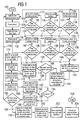
- Figure 1 depicts a flowchart of the present method.
- the method begins at 100 and proceeds to the next step of conveying a parcel to a scanner 102. Conveyance is normally performed by a conveyor belt or similar such means.
- the parcel includes several identifiers or information, including an identification (ID) code and delivery address.
- the parcel is scanned 104 and an attempt to obtain the ID code is made 106.
- the ID code as is known in the art, uniquely identifies the parcel and may comprise a bar code (not shown).
- a determination is made whether the ID code scan was successful (decodable) 108. If the scan was successful 134, the method continues to step 132. If the scan was unsuccessful 110, a second scan is attempted with a videocoding device 112.
- step 140 An attempt is then made to obtain the address from the scan of the parcel 132. A determination is made whether the address was successfully read by the scan 136. If the scan was successful (138) the method continues to step 140 wherein the ID code and address are stored in at least one database. If the address scan was not successfully read 142, the scan is repeated with the videocoding device 144. A determination is again made whether the scan successfully read the address 146. If the scan was successful (148) the method continues to step 140. Where the scan, via the videocoding device, was unsuccessful (150) the parcel address is manually read 152. A determination is made whether the address is manually readable 154. If the read was successful, the method continues to step 140. If the address is not readable 156, the parcel is set aside for further processing 158.
- Such processing may include sending the parcel back to the sender or customer, disposal, and the like.
- the method then returns 160 to step 102.
- the address is readable via manual inspection (162), the method continues to step 140.
- the ID code and parcel address may be stored in the same or different databases located locally or remotely as a matter of design choice.
- a search is conducted of a storage medium containing service agreements and other understandings effected between customer and delivery service 164.
- the storage medium may be the at least one database.
- the search is part of a determination of whether the service agreement or understanding (if present) includes an alternate delivery address associated with the parcel or destination address 166.
- the alternate delivery address may also be effected by the recipient at the delivery address, as may occur from a vacation or relocation.
- Such alternate delivery addresses may include other delivery locations, holding the parcel at franchise, lock box, local post office or delivery service, etc. Where it is determined that an alternate delivery address is present 168, the alternate delivery address is substituted for the delivery address 170 at the stored location effected during step 140.
- Sort codes are unique codes that identify a unique destination. ID Codes are then matched to the sort codes 176 by methods known in the art. The sequence from which the parcels were scanned is also matched to the sort codes 178. The parcels are loaded, manually or automatically, onto a mobile rack, in the sequence of receipt and scan 180. The lists of matches (or assignments) are stored in the at least one database separately or complied into one formal list and stored in a single (or with backup) location 182.
- the at least one database is now queried for a list of all parcels matching select sort codes (or delivery addresses0, the select sort codes being along a particular delivery route 198.
- a hit list is generated and sorted and produced in a manifest with the aid of routing software 200.
- the hit list may be ordered such that the driver's stops are minimized along a select route.
- the routing software is known in the art.
- the hit list will contain at least a rack location, delivery address and order of delivery (50, figure 6).
- the manifest is stored in the at least one database 202 and communicated to the delivery vehicle driver via paper or electronic format 204. An optional map detailing the route and delivery may also be provided. The latter instance, the driver is equipped with a mobile data receiving device such as a personal digital assistant, mobile telephone and the like.
- the method then ends 206.
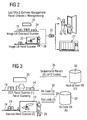
- FIG. 2 depicts an embodiment of the present system.
- parcels 24 are transported by conveyor belt 19 below an overhead scanner 20.
- the scanner 20 may comprises a bar code reader, videocoding device or other optical scanning apparatus.
- the scanner 20 may further include optical character recognition means where necessary.
- Scanner 20 obtains the ID code and delivery address from parcel 24 which are then directed to PDM 23.
- a hand held scanner 22 may be employed with the data so obtained also directed to PDM 23.
- Parcels are then either loaded onto mobile rack(s) 27 in the order of conveyance or manually set aside 25 for further handling.
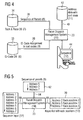
- Figure 3 depicts databases arranged to receive parcel data.
- the ID codes 30 and sort codes 32 are matched, by the PDM performing a method known in the art, and stored in a first database 33, ID-Code database.
- the sequence in which the parcels were conveyed or scanned (bar code and/or videocoding) 35 is stored in a second database 34, Track & Trace database.
- Like elements are assigned like numerals throughout the figures.
- Figure 4 depicts the collecting of data by the PDM 23
- the matched ID codes and sort codes are retrieved 38 from database 33. Addresses are assigned to the sort codes, via a matching procedure performed by the PDM. The matching procedure is known in the art.
- the addresses are retrieved from an address database 42. Where the addresses are already known from the parcel, this step if omitted.
- the sequence of parcels 35 is also retrieved 36 from database 34.
- the PDM then receives a search query, from user 44, for all hits along a particular sequence of addresses. Figure depicts execution of this search.
- a sequence of parcels 62 (matched ID codes with sort codes and/or delivery addresses with sort codes) is searched 64 for a matches or hits with a list of addresses 66 inputted 68 into the PDM 23 by end user 44 (Fig. 4).
- An output list 70 is produced 69 setting out the matched addresses (herein addresses 2, 5, 7), in the order of the sequence input 42 (herein numerical) along with rack position(s) of the parcels associated (via sort code or delivery address) with the resulting addresses (2, 5, 7).
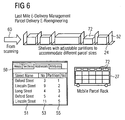
- the output may be generated in the form of a manifest 50 depicted in figure 6.
- an address 51 appears, along side a sequence number 53 of which the parcel was loaded into the rack and partition number (rack location) 55.
- a mobile parcel rack 27 is also depicted having numerous spaces 72 for parcels.
- a close up of the spaces and their moveable partitions 52 is also depicted.
- Arrow 60 indicates the order of loading the parcels from the scanning operation.
Landscapes
- Sorting Of Articles (AREA)
- Warehouses Or Storage Devices (AREA)
- Selective Calling Equipment (AREA)
- Supplying Of Containers To The Packaging Station (AREA)
Abstract
Description
- The present invention relates to parcel sorting and delivery and more particularly to a parcel sorting system and method for automating manifest generation, parcel placement in racks, and latter controlled access to the parcels. The invention has use in parcel delivery and in particular to steps taken during preparation of delivery vehicles for their delivery rounds.
- Parcels are delivered by public and private concerns, including national post offices like the United States Postal Service and corporate delivery services like Federal Express and DHL. Parcels arrive at a central location and are distributed to delivery vehicles which will complete the last leg of the parcels journey to the delivery address. Delivery vehicle drivers usually wait for their parcels by a conveyor belt or the like. It is the driver responsibility to note the delivery addresses of the parcels, plan a delivery route according to the addresses, and load the delivery vehicle in an ordered manner such that parcels can be later retrieved. These tasks are time consuming, tedious, stressful and prone to human error. Where an error is made with a parcel, the driver must redirect his route and/or a delay occurs in parcel delivery. As with all businesses, the pressures on the driver are passed to the delivery service which is ever mindful of balancing quality, customer service and costs while providing additional services like alternate delivery addresses - yet another consideration for the driver. Accordingly, a need exists for tools to assist the driver and delivery service with the aforementioned burdens.
- US Patent 5,038,283 is directed to a method for handling items during the intermediate steps from when the items are initially shipped out by the sender until they are received at their ultimate destination. Such intermediate steps are typically carried out between sender warehouse, where the goods are loaded into containers, and a destination warehouse, where the goods are repackaged for further shipping. Beginning with the sender warehouse, items and the containers in which they are to be shipped are bar coded. The items bar code is manually scanned into a database record along with the respective container bar code. Records are then grouped by container, the group therefore including a list of all items therein. The receiving warehouse and particular shipping means information is associated with the group. The group is then electronically transmitted to a destination warehouse computer and in particular to a destination warehouse database resident therein. The destination warehouse database includes a second grouping of items based on customer order lists. When the container is ultimately physically received at the destination warehouse, the items bar codes are again manually scanned. Based upon the first grouping, the destination warehouse is able to identify the item just scanned and identify to which customer (if any) the item is intended by querying the second group. If a match is found for the just scanned in item and the second group, the computer outputs a particular destination, within the destination warehouse, for the just scanned in item to be forwarded to select locations within the destination warehouse identified by a single letter for mating with other customer items. If the respective customer list is filled, the customer items, as may be obtained from within the destination warehouse and/or recently received containers, are packaged and shipped. The destination warehouse computer is programmed to consider and/or assign priorities to the sorting of incoming items based on, for example, necessity in filling outstanding and/or priority orders. Lastly, the containers bar codes may serve as a confirmation of receipt from the destination warehouse to the shipping warehouse.
- The present invention differs from the above method in that the present invention is directed to improving sorting between shipper and ultimate receiver. Herein, while the shipper may be a warehouse, the ultimate receiver is the private customer. Delivery is effected over a delivery route having numerous, distinct, and spaced apart destination points whereas in the above example, a container is shipped to a single warehouse and within the warehouse a further sorting to locations within the warehouse is made - the locations identified by a single letter. Accordingly, a completely different set of data with different criteria is to be considered. In particular, the sequence of items becomes paramount, whereas the sequence of items in the above noted method is of considerably less importance as all the items in a container are bound for the destination warehouse regardless of their order within the container. Accordingly, the sequence of items in the present invention is considered twice, a first time with respect to the items loading in a transport means and a second based upon destination address sequence within a delivery route.
- It is an advantage of the present invention to relieve the driver of the burdens of sorting and loading parcels as well as generating a manifest and planning a delivery route. It is a further advantage to free up the driver's preparation time so that more time is available for deliveries and customer service. It is a further advantage to provide the delivery service with a delivery preparation scheme having reduced error while mindful of alternative delivery services. These and other advantages are realized by a system and method for automatically sorting parcels as they are loaded onto delivery trucks, generating and updating parcel manifests, and optimizing delivery routes. In operation, an identifier or parcel information, such an identification (ID) code and/or delivery address, is read off of a parcel by scanning as the parcel is conveyed to a loading rack. The parcel is sequentially loaded into a sequential position within the rack. Once a rack is full, or no more parcels are present for delivery, the rack is loaded onto a delivery vehicle. Parcel identifiers or information is matched to a sorting code. The resulting match (or assignment) list is then stored in at least one database. The sorting code is a unique code identifying a unique delivery address. Consideration is also given to preexisting arrangements present for the parcel's delivery - such as an alternate address which is substituted into the parcel data. A search is performed of the match list for delivery addresses along a particular delivery route. A hit list is generated which is then sorted, e.g. by routing software, to an order consistent with a time optimized delivery route. A manifest is then generated with the sorted hit list and other information.
- The advantages are further realized by a method of sorting parcels, comprising the steps of: decoding a parcel identifier; matching said identifier to a sort code, said sort code uniquely associated with a delivery address; loading said parcel into a rack space; repeating said steps of decoding, matching loading for a plurality of parcels; generating a first list comprising identifiers matched to sort codes; generating a second list comprising parcel sequence and rack space; merging said first and second list to form a third list; cross checking said third list with a fourth list for possible matches therebetween; and generating a fifth list comprising said possible matches.
- The advantages are still further realized by a system for automating parcel sorting, comprising: a scanner for decoding a plurality of parcels identifiers in a first sequence; computer means comprising: a first interface for receiving decoded identifiers; matching means for matching decoded identifiers with sort codes; compiling means for generating a first list of said matching; a second interface for receiving a second list comprising said first sequence; merging means for merging said first list and said second list; a second interface for receiving a third list, said third list comprising a plurality of identifiers; and comparing means for comparing said third list and said second list and generating a fourth list of matches; and computer input means in communication with said second interface, said computer input means generating said third list.
- These and other advantages will become clear from the following detailed description and appended claims. The invention will be described in accordance with the following figures wherein like numerals refer to like parts.
- Figure 1 depicts a flowchart of the present method;
- Figure 2 depicts an overview of the present system;
- Figure 3 depicts flow of data according to the invention;
- Figure 4 depicts interface of database according to the invention;
- Figure 5 depicts data sorting according to the invention; and
- Figure 6 depicts a manifest and mobile rack.
- The present invention is directed to a parcel dispatch manager system and manager (PDM). The PDM may comprise a computer having a processor, memory, input and output means. Computer may incorporate a client-server arrangement. Software, operating on the computer causes the relevant method steps below to take place. The software is not limited to a particular language or algorithm but for execution of the method below. Accordingly, the software can be generated by one skilled in the art. Likewise, the hardware and computer configuration is a matter of design choice.
- Figure 1 depicts a flowchart of the present method. The method begins at 100 and proceeds to the next step of conveying a parcel to a
scanner 102. Conveyance is normally performed by a conveyor belt or similar such means. The parcel includes several identifiers or information, including an identification (ID) code and delivery address. The parcel is scanned 104 and an attempt to obtain the ID code is made 106. The ID code, as is known in the art, uniquely identifies the parcel and may comprise a bar code (not shown). A determination is made whether the ID code scan was successful (decodable) 108. If the scan was successful 134, the method continues to step 132. If the scan was unsuccessful 110, a second scan is attempted with avideocoding device 112. A second determination is made whether the scan was successful 114, and if not 116, the ID code is manually read 118. If the scan was successful 115, the method continues to step 132. A third determination is made whether the ID code was successfully read, 120, and if not 122, the parcel is removed from circulation forfurther processing 124. The method then returns 130 to the next parcel to be conveyed 102. If the read was successful 117, the method continues to step 132.Alternatively, method may continue to the step of obtaining the address from the parcel scan (132) and omit all future steps involving the ID code. - An attempt is then made to obtain the address from the scan of the
parcel 132. A determination is made whether the address was successfully read by thescan 136. If the scan was successful (138) the method continues to step 140 wherein the ID code and address are stored in at least one database. If the address scan was not successfully read 142, the scan is repeated with thevideocoding device 144. A determination is again made whether the scan successfully read theaddress 146. If the scan was successful (148) the method continues to step 140. Where the scan, via the videocoding device, was unsuccessful (150) the parcel address is manually read 152. A determination is made whether the address is manually readable 154. If the read was successful, the method continues to step 140. If the address is not readable 156, the parcel is set aside forfurther processing 158. Such processing may include sending the parcel back to the sender or customer, disposal, and the like. The method then returns 160 to step 102. Where the address is readable via manual inspection (162), the method continues to step 140. The ID code and parcel address may be stored in the same or different databases located locally or remotely as a matter of design choice. - A search is conducted of a storage medium containing service agreements and other understandings effected between customer and
delivery service 164. The storage medium may be the at least one database. The search is part of a determination of whether the service agreement or understanding (if present) includes an alternate delivery address associated with the parcel ordestination address 166. The alternate delivery address may also be effected by the recipient at the delivery address, as may occur from a vacation or relocation. Such alternate delivery addresses may include other delivery locations, holding the parcel at franchise, lock box, local post office or delivery service, etc. Where it is determined that an alternate delivery address is present 168, the alternate delivery address is substituted for thedelivery address 170 at the stored location effected duringstep 140. Where no alternate delivery address is found 172, a matching of the parcel address to a sort code is made 174. Sort codes are unique codes that identify a unique destination. ID Codes are then matched to thesort codes 176 by methods known in the art. The sequence from which the parcels were scanned is also matched to thesort codes 178. The parcels are loaded, manually or automatically, onto a mobile rack, in the sequence of receipt and scan 180. The lists of matches (or assignments) are stored in the at least one database separately or complied into one formal list and stored in a single (or with backup) location 182. - A determination is made whether the mobile rack is full 184. If the rack is full 186, the rack is loaded onto the delivery truck and a new rack is introduced to receive
parcels 188. And the method continues to step 190. If the rack is not full 192, the method continues to step 190, wherein, a determination is made whether there are other parcels to be delivered along the route of the delivery vehicle. If other parcels are present 194, the method returns to step 102 and the next parcel is scanned. If there are no more parcels to be scanned 196, the at least one database will now contain a list of all of the scanned parcels sorted by sort code. The at least one database is now queried for a list of all parcels matching select sort codes (or delivery addresses0, the select sort codes being along aparticular delivery route 198. A hit list is generated and sorted and produced in a manifest with the aid ofrouting software 200. The hit list may be ordered such that the driver's stops are minimized along a select route. The routing software is known in the art. The hit list will contain at least a rack location, delivery address and order of delivery (50, figure 6). The manifest is stored in the at least onedatabase 202 and communicated to the delivery vehicle driver via paper orelectronic format 204. An optional map detailing the route and delivery may also be provided. The latter instance, the driver is equipped with a mobile data receiving device such as a personal digital assistant, mobile telephone and the like. The method then ends 206. - Figure 2 depicts an embodiment of the present system. Herein
parcels 24 are transported byconveyor belt 19 below anoverhead scanner 20. Thescanner 20 may comprises a bar code reader, videocoding device or other optical scanning apparatus. Thescanner 20 may further include optical character recognition means where necessary.Scanner 20 obtains the ID code and delivery address fromparcel 24 which are then directed toPDM 23. As an alternative to an overhead scanner, a hand heldscanner 22 may be employed with the data so obtained also directed toPDM 23. Parcels are then either loaded onto mobile rack(s) 27 in the order of conveyance or manually set aside 25 for further handling. - Figure 3 depicts databases arranged to receive parcel data. The
ID codes 30 andsort codes 32 are matched, by the PDM performing a method known in the art, and stored in afirst database 33, ID-Code database. The sequence in which the parcels were conveyed or scanned (bar code and/or videocoding) 35 is stored in asecond database 34, Track & Trace database. Like elements are assigned like numerals throughout the figures. - Figure 4 depicts the collecting of data by the
PDM 23 The matched ID codes and sort codes are retrieved 38 fromdatabase 33. Addresses are assigned to the sort codes, via a matching procedure performed by the PDM. The matching procedure is known in the art. The addresses are retrieved from anaddress database 42. Where the addresses are already known from the parcel, this step if omitted. The sequence ofparcels 35 is also retrieved 36 fromdatabase 34. The PDM then receives a search query, fromuser 44, for all hits along a particular sequence of addresses. Figure depicts execution of this search. Herein a sequence of parcels 62 (matched ID codes with sort codes and/or delivery addresses with sort codes) is searched 64 for a matches or hits with a list of addresses 66 inputted 68 into thePDM 23 by end user 44 (Fig. 4). Anoutput list 70 is produced 69 setting out the matched addresses (herein addresses 2, 5, 7), in the order of the sequence input 42 (herein numerical) along with rack position(s) of the parcels associated (via sort code or delivery address) with the resulting addresses (2, 5, 7). The output may be generated in the form of a manifest 50 depicted in figure 6. Herein, anaddress 51 appears, along side asequence number 53 of which the parcel was loaded into the rack and partition number (rack location) 55. The lists may be sorted in any order imagined by one skilled in the art. Amobile parcel rack 27 is also depicted havingnumerous spaces 72 for parcels. A close up of the spaces and theirmoveable partitions 52 is also depicted.Arrow 60 indicates the order of loading the parcels from the scanning operation. - The invention being thus described, it will be obvious that the same may be varied in many ways.
Claims (10)
- A method of sorting parcels, comprising the steps of:- decoding a parcel (24) identifier (104);- matching said identifier to a sort code, said sort code uniquely associated with a delivery address (174, 176);- loading said parcel into a rack space (178);- repeating said steps of decoding, matching loading for a plurality of parcels (194);- generating a first list comprising identifiers matched to sort codes (38, 49);- generating a second list comprising parcel sequence and rack space (35, 36);- merging said first and second list to form a third list (62);- cross checking said third list with a fourth list comprising addresses (66) inputted by a user (44) for possible matches therebetween (64, 66, 68); and- generating a fifth list comprising said possible matches (70).
- The method according to claim 1, further comprising the steps of:- storing said first list in a first database (33), said second list in a second database (34);- sorting said fifth list in order of delivery address along a delivery route (68); and- generating a manifest (50) comprising said sorted fifth list (69, 70).
- The method according to claims 1-2, wherein said identifier comprises an identification code (106).
- The method according to claim 1-3, wherein said identifier also comprises a delivery address (132).
- The method according to claim 1-4, wherein said identifier comprises a delivery address (132).
- The method according to claim 1-5, wherein said step of decoding, further comprises the step of scanning said parcels (24) with an optical scanner and decoding characters on said parcels, said characters comprising said identifier.
- The method according to claim 6, wherein said optical scanner is an overhead bar code reader (20) and said characters are bar codes, and said step of decoding further comprises the step of automatically conveying said parcels below said overhead scanner (19).
- The method according to claim 6, wherein said optical scanner is a hand held bar code reader (22) and said characters are bar codes.
- The method according to claim 6, wherein said optical scanner is a videocoding device including optical character recognition means, and said characters are alphanumeric characters.
- The method according to claim 1-9, wherein said racks are mobile racks (27) comprising movable partitions (52), and wherein a plurality of parcels (24) are loaded sequentially (60) into sequential positions in said mobile racks, said sequential positions defined by said movable partitions.
Priority Applications (5)
| Application Number | Priority Date | Filing Date | Title |
|---|---|---|---|
| AT01123444T ATE344952T1 (en) | 2001-09-28 | 2001-09-28 | PARCEL SHIPPING MANAGEMENT SYSTEM AND PROCEDURES |
| DK01123444T DK1298552T3 (en) | 2001-09-28 | 2001-09-28 | Package Shipping Control System and Procedure |
| EP01123444A EP1298552B1 (en) | 2001-09-28 | 2001-09-28 | Parcel dispatch manager system and method |
| DE60124403T DE60124403T2 (en) | 2001-09-28 | 2001-09-28 | Parcel shipping management system and method |
| US09/969,973 US7154060B2 (en) | 2001-09-28 | 2001-10-04 | Parcel dispatch manager system and method |
Applications Claiming Priority (2)
| Application Number | Priority Date | Filing Date | Title |
|---|---|---|---|
| EP01123444A EP1298552B1 (en) | 2001-09-28 | 2001-09-28 | Parcel dispatch manager system and method |
| US09/969,973 US7154060B2 (en) | 2001-09-28 | 2001-10-04 | Parcel dispatch manager system and method |
Publications (2)
| Publication Number | Publication Date |
|---|---|
| EP1298552A1 EP1298552A1 (en) | 2003-04-02 |
| EP1298552B1 true EP1298552B1 (en) | 2006-11-08 |
Family
ID=33300898
Family Applications (1)
| Application Number | Title | Priority Date | Filing Date |
|---|---|---|---|
| EP01123444A Expired - Lifetime EP1298552B1 (en) | 2001-09-28 | 2001-09-28 | Parcel dispatch manager system and method |
Country Status (5)
| Country | Link |
|---|---|
| US (1) | US7154060B2 (en) |
| EP (1) | EP1298552B1 (en) |
| AT (1) | ATE344952T1 (en) |
| DE (1) | DE60124403T2 (en) |
| DK (1) | DK1298552T3 (en) |
Cited By (5)
| Publication number | Priority date | Publication date | Assignee | Title |
|---|---|---|---|---|
| DE102007021744A1 (en) | 2007-05-09 | 2008-11-13 | Siemens Ag | Method and device for transporting objects to distribution points |
| DE102009024195A1 (en) | 2009-06-08 | 2010-12-09 | Siemens Aktiengesellschaft | Method and device for transporting objects by means of a transport device |
| DE202011110021U1 (en) | 2011-08-30 | 2013-02-11 | Deutsche Post Ag | sorting system |
| US9162257B2 (en) | 2003-04-16 | 2015-10-20 | Red Parcel Post Ag | Method and device for distributing packages and other similar dispatched articles |
| US12462217B2 (en) | 2020-11-20 | 2025-11-04 | Innovative Robot Delivery Gmbh | Method, depot facility and system for handover of a plurality of parcels to a plurality of recipients and/or to receive a large number of parcels from multiple depositors |
Families Citing this family (56)
| Publication number | Priority date | Publication date | Assignee | Title |
|---|---|---|---|---|
| US6957197B1 (en) * | 1999-12-30 | 2005-10-18 | Pitney Bowes Inc. | Load planning tables for a parcel shipping system |
| FI118585B (en) | 2006-05-02 | 2007-12-31 | Bookit Oy Ajanvarauspalvelu | Procedure and system for combining text and audio messages in a communication dialogue |
| US11004114B2 (en) | 2001-08-21 | 2021-05-11 | Bookit Oy | Components, system, platform and methodologies for mediating and provisioning services and product delivery and orchestrating, mediating and authenticating transactions and interactions |
| FI117663B (en) * | 2005-12-02 | 2006-12-29 | Bookit Oy Ajanvarauspalvelu | Message sending method for telecommunication network, involves converting reply address information to correspond to dialogue so that message transmission and reception are implemented in different parts of telecommunication system |
| US10929784B2 (en) | 2001-08-21 | 2021-02-23 | Bookit Oy | Booking method and system |
| US9171307B2 (en) | 2002-08-21 | 2015-10-27 | Bookit Oy Ajanvarauspalvelu | Using successive levels of authentication in online commerce |
| FI119168B (en) | 2006-04-21 | 2008-08-15 | Jukka Tapio Aula | SMS distribution system and arrangement for inquiries and calls |
| FI124899B (en) | 2008-07-04 | 2015-03-13 | Bookit Oy Ajanvarauspalvelu | Procedures and systems for sending messages |
| US9418361B2 (en) | 2001-08-21 | 2016-08-16 | Bookit Oy Ajanvarauspalvelu | Managing recurring payments from mobile terminals |
| US8737954B2 (en) | 2001-08-21 | 2014-05-27 | Bookit Oy Ajanvarauspalvelu | Managing recurring payments from mobile terminals |
| FI118586B (en) | 2006-05-02 | 2007-12-31 | Bookit Oy Ajanvarauspalvelu | Procedure and system for combining text and audio messages in a communication dialogue |
| US9288315B2 (en) | 2001-08-21 | 2016-03-15 | Bookit Oy Ajanvarauspalvelu | Method and system for mediating and provisioning services |
| US10902491B2 (en) | 2001-08-21 | 2021-01-26 | Bookit Oy | Product/service reservation and delivery facilitation with semantic analysis enabled dialog assistance |
| US9578022B2 (en) | 2001-08-21 | 2017-02-21 | Bookit Oy Ajanvarauspalvelu | Multi-factor authentication techniques |
| US9406062B2 (en) | 2001-08-21 | 2016-08-02 | Bookit Oy Ajanvarauspalvelu | Authentication method and system |
| US10469591B2 (en) | 2001-08-21 | 2019-11-05 | Bookit Oy | Method and system for mediating and provisioning services |
| US9807614B2 (en) | 2001-08-21 | 2017-10-31 | Bookit Oy Ajanvarauspalvelu | Using successive levels of authentication in online commerce |
| FI20011680A7 (en) | 2001-08-21 | 2003-02-22 | Bookit Oy | Appointment booking method and system |
| US8737959B2 (en) | 2001-08-21 | 2014-05-27 | Bookit Oy Ajanvarauspalvelu | Managing recurring payments from mobile terminals |
| US8737955B2 (en) | 2001-08-21 | 2014-05-27 | Bookit Oy Ajanvarauspalvelu | Managing recurring payments from mobile terminals |
| US8666380B2 (en) | 2001-08-21 | 2014-03-04 | Bookit Oy Ajanvarauspalvelu | Communication method and system |
| US8737958B2 (en) | 2001-08-21 | 2014-05-27 | Bookit Oy Ajanvarauspalvelu | Managing recurring payments from mobile terminals |
| US9937531B2 (en) | 2009-03-10 | 2018-04-10 | Bookit Oy Ajanvarauspalvelu | Method and system for delivery of goods |
| DE60124403T2 (en) * | 2001-09-28 | 2007-09-06 | Siemens Ag | Parcel shipping management system and method |
| US7738995B2 (en) * | 2002-02-12 | 2010-06-15 | United Parcel Service Of America, Inc. | Systems and methods for use in electronic processing of foreign origin and export shipments and/or passengers and baggage at security check points |
| US7502627B2 (en) * | 2002-12-23 | 2009-03-10 | Systems Application Engineering, Inc. | System for product selection |
| US7464037B2 (en) * | 2002-12-23 | 2008-12-09 | Jerry Dennis Sacks | Method for object delivery |
| FR2864664B1 (en) * | 2003-12-24 | 2008-08-15 | Solystic | METHOD FOR PROCESSING POSTAL SHIPMENTS WITH ADDRESSING A DISTRIBUTION ERROR OVERCURRENT |
| WO2007022805A1 (en) * | 2005-04-28 | 2007-03-01 | Siemens Aktiengesellschaft | Method and device for address recognition for redirection of goods |
| US20070174151A1 (en) * | 2005-10-31 | 2007-07-26 | Jeff Anderson | Shipment provider system |
| US7947916B2 (en) | 2006-10-06 | 2011-05-24 | Lockheed Martin Corporation | Mail sorter system and method for moving trays of mail to dispatch in delivery order |
| DE102007010658B3 (en) * | 2007-03-02 | 2008-08-21 | Deutsche Post Ag | Logistic vehicle for transporting goods, has detection device to detect service addresses of pieces, and indicator units arranged in shelf of loading space and indicating location of pieces of goods when vehicle reaches delivery place |
| US20100217635A1 (en) * | 2009-02-25 | 2010-08-26 | At&T Intellectual Property I, L.P. | Package shipping method |
| US9501775B2 (en) | 2009-03-10 | 2016-11-22 | Bookit Oy Ajanvarauspalvelu | Managing recurring payments from mobile terminals |
| DE102012208578A1 (en) * | 2012-05-22 | 2013-11-28 | Siemens Aktiengesellschaft | Method and apparatus for transporting various items to destinations |
| FR2996788B1 (en) * | 2012-10-11 | 2014-10-24 | Solystic | PACKAGE PROCESSING METHOD AND LOGISTIC PACKAGE PROCESSING CENTER |
| EP2827289A1 (en) | 2013-07-17 | 2015-01-21 | General Transports GmbH | Method for collection and delivery of material goods or the provision of services by means of dynamic route planning and redistribution of goods |
| US10354294B2 (en) * | 2013-08-28 | 2019-07-16 | Google Llc | Methods and systems for providing third-party content on a web page |
| DE102014202640B4 (en) * | 2014-02-13 | 2023-09-07 | Körber Supply Chain Logistics Gmbh | Device and method for transporting objects |
| EP3023920A1 (en) | 2014-11-19 | 2016-05-25 | Deutsche Post AG | Supporting a handling of information about shipments |
| US20160232487A1 (en) * | 2015-02-11 | 2016-08-11 | Ben Yonker | Package Delivery System, Service, Method and Application |
| US11290878B2 (en) | 2015-03-04 | 2022-03-29 | Smartcom Labs Oy | Components, system, platform and methodologies for mediating and provisioning services and product delivery and orchestrating, mediating and authenticating transactions and interactions |
| US11055504B2 (en) | 2017-04-18 | 2021-07-06 | Berkshire Grey, Inc. | Systems and methods for separating objects using a vacuum roller with one or more object processing systems |
| US11200390B2 (en) | 2017-04-18 | 2021-12-14 | Berkshire Grey, Inc. | Systems and methods for separating objects using drop conveyors with one or more object processing systems |
| US11205059B2 (en) | 2017-04-18 | 2021-12-21 | Berkshire Grey, Inc. | Systems and methods for separating objects using conveyor transfer with one or more object processing systems |
| CN110740954B (en) | 2017-04-18 | 2021-10-22 | 伯克希尔格雷股份有限公司 | Systems and methods for handling objects including space efficient dispensing stations and automated output handling |
| US11301654B2 (en) | 2017-04-18 | 2022-04-12 | Berkshire Grey Operating Company, Inc. | Systems and methods for limiting induction of objects to one or more object processing systems |
| US11416695B2 (en) | 2017-04-18 | 2022-08-16 | Berkshire Grey Operating Company, Inc. | Systems and methods for distributing induction of objects to a plurality of object processing systems |
| US11080496B2 (en) | 2017-04-18 | 2021-08-03 | Berkshire Grey, Inc. | Systems and methods for separating objects using vacuum diverts with one or more object processing systems |
| WO2019072509A1 (en) | 2017-10-13 | 2019-04-18 | Kfl Gmbh | MOBILE PACKAGE FACILITY AND METHOD |
| ES3031671T3 (en) | 2018-10-23 | 2025-07-10 | Berkshire Grey Operating Company Inc | Systems and methods for dynamic processing of objects with data verification |
| CA3126161C (en) * | 2019-01-08 | 2024-10-15 | Berkshire Grey Operating Company, Inc. | Systems and methods for separating objects using drop conveyors with one or more object processing systems |
| CN110599091A (en) * | 2019-09-04 | 2019-12-20 | 深圳市华南新海传动机械有限公司 | Intelligent sorting system and method |
| CN112246676A (en) * | 2020-09-17 | 2021-01-22 | 南方电网能源发展研究院有限责任公司 | A kind of intelligent power warehouse automatic sorting system and method |
| CN114522890A (en) * | 2022-01-20 | 2022-05-24 | 上海东普信息科技有限公司 | Package sorting method and device, computer equipment and storage medium |
| US12441553B2 (en) | 2022-03-23 | 2025-10-14 | Berkshire Grey Operating Company, Inc. | Buffering systems and methods for dynamic processing of objects |
Family Cites Families (9)
| Publication number | Priority date | Publication date | Assignee | Title |
|---|---|---|---|---|
| US4832204A (en) * | 1986-07-11 | 1989-05-23 | Roadway Package System, Inc. | Package handling and sorting system |
| US5038283A (en) * | 1989-04-13 | 1991-08-06 | Panduit Corp. | Shipping method |
| US5009321A (en) * | 1989-11-13 | 1991-04-23 | Pitney Bowes Inc. | Sorting system for organizing randomly ordered route grouped mail in delivery order sequence |
| US5220511A (en) * | 1991-01-22 | 1993-06-15 | White Conveyors, Inc. | Computer control system and method for sorting articles on a conveyor |
| DE19520057C2 (en) * | 1995-06-06 | 2000-05-18 | Siemens Ag | Method and device for distributing letters |
| US5804802A (en) * | 1996-02-14 | 1998-09-08 | United Parcel Service Of America, Inc. | Two-way data communication manager |
| US7138596B2 (en) * | 2001-08-01 | 2006-11-21 | Pippin James M | Apparatus and method for mail sorting |
| DE60124403T2 (en) * | 2001-09-28 | 2007-09-06 | Siemens Ag | Parcel shipping management system and method |
| US7248247B2 (en) * | 2003-10-03 | 2007-07-24 | Pitney Bowes Inc. | Method and system for deterministic matching of objects and events which are not uniquely identified |
-
2001
- 2001-09-28 DE DE60124403T patent/DE60124403T2/en not_active Expired - Lifetime
- 2001-09-28 DK DK01123444T patent/DK1298552T3/en active
- 2001-09-28 EP EP01123444A patent/EP1298552B1/en not_active Expired - Lifetime
- 2001-09-28 AT AT01123444T patent/ATE344952T1/en not_active IP Right Cessation
- 2001-10-04 US US09/969,973 patent/US7154060B2/en not_active Expired - Fee Related
Cited By (6)
| Publication number | Priority date | Publication date | Assignee | Title |
|---|---|---|---|---|
| US9162257B2 (en) | 2003-04-16 | 2015-10-20 | Red Parcel Post Ag | Method and device for distributing packages and other similar dispatched articles |
| DE102007021744A1 (en) | 2007-05-09 | 2008-11-13 | Siemens Ag | Method and device for transporting objects to distribution points |
| DE102009024195A1 (en) | 2009-06-08 | 2010-12-09 | Siemens Aktiengesellschaft | Method and device for transporting objects by means of a transport device |
| WO2010142625A1 (en) * | 2009-06-08 | 2010-12-16 | Siemens Aktiengesellschaft | Method and device for transporting objects by means of a transport device |
| DE202011110021U1 (en) | 2011-08-30 | 2013-02-11 | Deutsche Post Ag | sorting system |
| US12462217B2 (en) | 2020-11-20 | 2025-11-04 | Innovative Robot Delivery Gmbh | Method, depot facility and system for handover of a plurality of parcels to a plurality of recipients and/or to receive a large number of parcels from multiple depositors |
Also Published As
| Publication number | Publication date |
|---|---|
| DE60124403T2 (en) | 2007-09-06 |
| DK1298552T3 (en) | 2007-03-19 |
| US20040118907A1 (en) | 2004-06-24 |
| ATE344952T1 (en) | 2006-11-15 |
| EP1298552A1 (en) | 2003-04-02 |
| US7154060B2 (en) | 2006-12-26 |
| DE60124403D1 (en) | 2006-12-21 |
Similar Documents
| Publication | Publication Date | Title |
|---|---|---|
| US7154060B2 (en) | Parcel dispatch manager system and method | |
| CN103229199B (en) | Dynamic line is planned | |
| US6829369B2 (en) | Coding depth file and method of postal address processing using a coding depth file | |
| US5667078A (en) | Apparatus and method of mail sorting | |
| US6816602B2 (en) | System and method of deferred postal address processing | |
| CA2389518C (en) | Inter-departmental mail sorting system and method | |
| US7933844B2 (en) | Address forwarding for parcels | |
| JP2000262977A (en) | Goods delivery system | |
| EP0584607A2 (en) | Data processing system for merger of sorting information and redundancy information to provide contextual predictive keying for postal addresses | |
| RU2298830C2 (en) | Method for delivering sent mail | |
| US7392198B2 (en) | Method for tracking postal items | |
| US20070102329A1 (en) | Parcel dispatch manager system and method | |
| US20060212304A1 (en) | Automated item forwarding system and method | |
| US6789729B1 (en) | Method for receiving and shipping items | |
| US11548035B2 (en) | Item sorting with delivery point compression | |
| US8583278B2 (en) | Method and device for processing objects with a temporary storage device and sorting system | |
| US6770831B1 (en) | Method and system for rerouting items in a mail distribution system | |
| US7752086B2 (en) | Method and device enabling rapid execution of a multiplicity of physical orders | |
| JP2005521136A (en) | Method and apparatus for reading a destination of a delivery | |
| US8341040B1 (en) | System and method for stow management of similar items | |
| US12479009B2 (en) | Single sorted parcel distribution system and method | |
| CN114522890A (en) | Package sorting method and device, computer equipment and storage medium | |
| US20250259133A1 (en) | Method and apparatus for processing and sorting shipments | |
| AU2003100275B4 (en) | Global Direct Freight System (GDFS) | |
| US20080308470A1 (en) | Logistics System for Transporting Postal Items and Method for Determining a Transport Path |
Legal Events
| Date | Code | Title | Description |
|---|---|---|---|
| PUAI | Public reference made under article 153(3) epc to a published international application that has entered the european phase |
Free format text: ORIGINAL CODE: 0009012 |
|
| AK | Designated contracting states |
Kind code of ref document: A1 Designated state(s): AT BE CH CY DE DK ES FI FR GB GR IE IT LI LU MC NL PT SE TR |
|
| AX | Request for extension of the european patent |
Extension state: AL LT LV MK RO SI |
|
| 17P | Request for examination filed |
Effective date: 20030407 |
|
| AKX | Designation fees paid |
Designated state(s): AT BE CH CY DE DK ES FI FR GB GR IE IT LI LU MC NL PT SE TR |
|
| RAP1 | Party data changed (applicant data changed or rights of an application transferred) |
Owner name: SIEMENS AKTIENGESELLSCHAFT |
|
| GRAJ | Information related to disapproval of communication of intention to grant by the applicant or resumption of examination proceedings by the epo deleted |
Free format text: ORIGINAL CODE: EPIDOSDIGR1 |
|
| GRAP | Despatch of communication of intention to grant a patent |
Free format text: ORIGINAL CODE: EPIDOSNIGR1 |
|
| GRAP | Despatch of communication of intention to grant a patent |
Free format text: ORIGINAL CODE: EPIDOSNIGR1 |
|
| RIC1 | Information provided on ipc code assigned before grant |
Ipc: G06Q 10/00 20060101AFI20060323BHEP |
|
| GRAS | Grant fee paid |
Free format text: ORIGINAL CODE: EPIDOSNIGR3 |
|
| GRAA | (expected) grant |
Free format text: ORIGINAL CODE: 0009210 |
|
| AK | Designated contracting states |
Kind code of ref document: B1 Designated state(s): AT BE CH CY DE DK ES FI FR GB GR IE IT LI LU MC NL PT SE TR |
|
| PG25 | Lapsed in a contracting state [announced via postgrant information from national office to epo] |
Ref country code: IT Free format text: LAPSE BECAUSE OF FAILURE TO SUBMIT A TRANSLATION OF THE DESCRIPTION OR TO PAY THE FEE WITHIN THE PRESCRIBED TIME-LIMIT;WARNING: LAPSES OF ITALIAN PATENTS WITH EFFECTIVE DATE BEFORE 2007 MAY HAVE OCCURRED AT ANY TIME BEFORE 2007. THE CORRECT EFFECTIVE DATE MAY BE DIFFERENT FROM THE ONE RECORDED. Effective date: 20061108 Ref country code: NL Free format text: LAPSE BECAUSE OF FAILURE TO SUBMIT A TRANSLATION OF THE DESCRIPTION OR TO PAY THE FEE WITHIN THE PRESCRIBED TIME-LIMIT Effective date: 20061108 Ref country code: FI Free format text: LAPSE BECAUSE OF FAILURE TO SUBMIT A TRANSLATION OF THE DESCRIPTION OR TO PAY THE FEE WITHIN THE PRESCRIBED TIME-LIMIT Effective date: 20061108 Ref country code: AT Free format text: LAPSE BECAUSE OF FAILURE TO SUBMIT A TRANSLATION OF THE DESCRIPTION OR TO PAY THE FEE WITHIN THE PRESCRIBED TIME-LIMIT Effective date: 20061108 Ref country code: BE Free format text: LAPSE BECAUSE OF FAILURE TO SUBMIT A TRANSLATION OF THE DESCRIPTION OR TO PAY THE FEE WITHIN THE PRESCRIBED TIME-LIMIT Effective date: 20061108 |
|
| REG | Reference to a national code |
Ref country code: GB Ref legal event code: FG4D |
|
| REG | Reference to a national code |
Ref country code: CH Ref legal event code: EP |
|
| REG | Reference to a national code |
Ref country code: IE Ref legal event code: FG4D |
|
| REF | Corresponds to: |
Ref document number: 60124403 Country of ref document: DE Date of ref document: 20061221 Kind code of ref document: P |
|
| PG25 | Lapsed in a contracting state [announced via postgrant information from national office to epo] |
Ref country code: SE Free format text: LAPSE BECAUSE OF FAILURE TO SUBMIT A TRANSLATION OF THE DESCRIPTION OR TO PAY THE FEE WITHIN THE PRESCRIBED TIME-LIMIT Effective date: 20070208 |
|
| PG25 | Lapsed in a contracting state [announced via postgrant information from national office to epo] |
Ref country code: ES Free format text: LAPSE BECAUSE OF FAILURE TO SUBMIT A TRANSLATION OF THE DESCRIPTION OR TO PAY THE FEE WITHIN THE PRESCRIBED TIME-LIMIT Effective date: 20070219 |
|
| REG | Reference to a national code |
Ref country code: CH Ref legal event code: NV Representative=s name: SIEMENS SCHWEIZ AG |
|
| REG | Reference to a national code |
Ref country code: DK Ref legal event code: T3 |
|
| PG25 | Lapsed in a contracting state [announced via postgrant information from national office to epo] |
Ref country code: PT Free format text: LAPSE BECAUSE OF FAILURE TO SUBMIT A TRANSLATION OF THE DESCRIPTION OR TO PAY THE FEE WITHIN THE PRESCRIBED TIME-LIMIT Effective date: 20070409 |
|
| NLV1 | Nl: lapsed or annulled due to failure to fulfill the requirements of art. 29p and 29m of the patents act | ||
| ET | Fr: translation filed | ||
| PLBE | No opposition filed within time limit |
Free format text: ORIGINAL CODE: 0009261 |
|
| STAA | Information on the status of an ep patent application or granted ep patent |
Free format text: STATUS: NO OPPOSITION FILED WITHIN TIME LIMIT |
|
| 26N | No opposition filed |
Effective date: 20070809 |
|
| PG25 | Lapsed in a contracting state [announced via postgrant information from national office to epo] |
Ref country code: GR Free format text: LAPSE BECAUSE OF FAILURE TO SUBMIT A TRANSLATION OF THE DESCRIPTION OR TO PAY THE FEE WITHIN THE PRESCRIBED TIME-LIMIT Effective date: 20070209 Ref country code: MC Free format text: LAPSE BECAUSE OF NON-PAYMENT OF DUE FEES Effective date: 20070930 |
|
| PG25 | Lapsed in a contracting state [announced via postgrant information from national office to epo] |
Ref country code: IE Free format text: LAPSE BECAUSE OF NON-PAYMENT OF DUE FEES Effective date: 20070928 |
|
| REG | Reference to a national code |
Ref country code: CH Ref legal event code: PCAR Free format text: SIEMENS SCHWEIZ AG;INTELLECTUAL PROPERTY FREILAGERSTRASSE 40;8047 ZUERICH (CH) |
|
| PG25 | Lapsed in a contracting state [announced via postgrant information from national office to epo] |
Ref country code: LU Free format text: LAPSE BECAUSE OF NON-PAYMENT OF DUE FEES Effective date: 20070928 Ref country code: CY Free format text: LAPSE BECAUSE OF FAILURE TO SUBMIT A TRANSLATION OF THE DESCRIPTION OR TO PAY THE FEE WITHIN THE PRESCRIBED TIME-LIMIT Effective date: 20061108 |
|
| PG25 | Lapsed in a contracting state [announced via postgrant information from national office to epo] |
Ref country code: TR Free format text: LAPSE BECAUSE OF FAILURE TO SUBMIT A TRANSLATION OF THE DESCRIPTION OR TO PAY THE FEE WITHIN THE PRESCRIBED TIME-LIMIT Effective date: 20061108 |
|
| PGFP | Annual fee paid to national office [announced via postgrant information from national office to epo] |
Ref country code: DE Payment date: 20101119 Year of fee payment: 10 |
|
| PGFP | Annual fee paid to national office [announced via postgrant information from national office to epo] |
Ref country code: DK Payment date: 20110926 Year of fee payment: 11 |
|
| PGFP | Annual fee paid to national office [announced via postgrant information from national office to epo] |
Ref country code: GB Payment date: 20110915 Year of fee payment: 11 Ref country code: FR Payment date: 20111005 Year of fee payment: 11 |
|
| PGFP | Annual fee paid to national office [announced via postgrant information from national office to epo] |
Ref country code: CH Payment date: 20111213 Year of fee payment: 11 |
|
| REG | Reference to a national code |
Ref country code: CH Ref legal event code: PL |
|
| GBPC | Gb: european patent ceased through non-payment of renewal fee |
Effective date: 20120928 |
|
| REG | Reference to a national code |
Ref country code: DK Ref legal event code: EBP |
|
| REG | Reference to a national code |
Ref country code: FR Ref legal event code: ST Effective date: 20130531 |
|
| PG25 | Lapsed in a contracting state [announced via postgrant information from national office to epo] |
Ref country code: CH Free format text: LAPSE BECAUSE OF NON-PAYMENT OF DUE FEES Effective date: 20120930 Ref country code: DE Free format text: LAPSE BECAUSE OF NON-PAYMENT OF DUE FEES Effective date: 20130403 Ref country code: LI Free format text: LAPSE BECAUSE OF NON-PAYMENT OF DUE FEES Effective date: 20120930 Ref country code: GB Free format text: LAPSE BECAUSE OF NON-PAYMENT OF DUE FEES Effective date: 20120928 |
|
| PG25 | Lapsed in a contracting state [announced via postgrant information from national office to epo] |
Ref country code: FR Free format text: LAPSE BECAUSE OF NON-PAYMENT OF DUE FEES Effective date: 20121001 |
|
| REG | Reference to a national code |
Ref country code: DE Ref legal event code: R119 Ref document number: 60124403 Country of ref document: DE Effective date: 20130403 |
|
| PG25 | Lapsed in a contracting state [announced via postgrant information from national office to epo] |
Ref country code: DK Free format text: LAPSE BECAUSE OF NON-PAYMENT OF DUE FEES Effective date: 20121001 |