EP1298125A1 - Substituted benzimidazole compounds and their use for the treatment of cancer - Google Patents

Substituted benzimidazole compounds and their use for the treatment of cancer Download PDF

Info

Publication number
EP1298125A1
EP1298125A1 EP01402460A EP01402460A EP1298125A1 EP 1298125 A1 EP1298125 A1 EP 1298125A1 EP 01402460 A EP01402460 A EP 01402460A EP 01402460 A EP01402460 A EP 01402460A EP 1298125 A1 EP1298125 A1 EP 1298125A1
Authority
EP
European Patent Office
Prior art keywords
benzimidazole
amino
cyclopentylaminophenylsulfonyloxy
compounds according
methyl
Prior art date
Legal status (The legal status is an assumption and is not a legal conclusion. Google has not performed a legal analysis and makes no representation as to the accuracy of the status listed.)
Withdrawn
Application number
EP01402460A
Other languages
German (de)
French (fr)
Inventor
François CLERC
François HAMY
Isabelle Depaty
Odile Angouillant-Boniface
Manfred Roesner
Current Assignee (The listed assignees may be inaccurate. Google has not performed a legal analysis and makes no representation or warranty as to the accuracy of the list.)
Aventis Pharma SA
Original Assignee
Rhone Poulenc Rorer SA
Aventis Pharma SA
Priority date (The priority date is an assumption and is not a legal conclusion. Google has not performed a legal analysis and makes no representation as to the accuracy of the date listed.)
Filing date
Publication date
Application filed by Rhone Poulenc Rorer SA, Aventis Pharma SA filed Critical Rhone Poulenc Rorer SA
Priority to EP01402460A priority Critical patent/EP1298125A1/en
Priority to PE2002000913A priority patent/PE20030427A1/en
Priority to UY27452A priority patent/UY27452A1/en
Priority to PY200200223362A priority patent/PY0223362A/en
Priority to GT200200190A priority patent/GT200200190A/en
Priority to MYPI20023586A priority patent/MY135339A/en
Priority to EA200400475A priority patent/EA006802B1/en
Priority to ES02772370T priority patent/ES2301682T3/en
Priority to YUP-214/04A priority patent/RS50896B/en
Priority to DE60225159T priority patent/DE60225159T2/en
Priority to AU2002337151A priority patent/AU2002337151B2/en
Priority to MEP-168/08A priority patent/MEP16808A/en
Priority to HU0401756A priority patent/HUP0401756A3/en
Priority to PT02772370T priority patent/PT1432417E/en
Priority to PL02369527A priority patent/PL369527A1/en
Priority to MXPA04002042A priority patent/MXPA04002042A/en
Priority to HK05101028.9A priority patent/HK1068551B/en
Priority to PCT/EP2002/011353 priority patent/WO2003028721A2/en
Priority to AT02772370T priority patent/ATE386517T1/en
Priority to IL16105902A priority patent/IL161059A0/en
Priority to KR1020047004365A priority patent/KR100891439B1/en
Priority to NZ531246A priority patent/NZ531246A/en
Priority to SI200230686T priority patent/SI1432417T1/en
Priority to PA20028555501A priority patent/PA8555501A1/en
Priority to EP02772370A priority patent/EP1432417B1/en
Priority to BR0212856-0A priority patent/BR0212856A/en
Priority to JP2003532053A priority patent/JP4510450B2/en
Priority to ARP020103629A priority patent/AR037096A1/en
Priority to DK02772370T priority patent/DK1432417T3/en
Priority to CNB028187458A priority patent/CN100346786C/en
Priority to HR20040293A priority patent/HRPK20040293B3/en
Priority to CA002461622A priority patent/CA2461622C/en
Publication of EP1298125A1 publication Critical patent/EP1298125A1/en
Priority to ZA200401887A priority patent/ZA200401887B/en
Priority to NO20041214A priority patent/NO327008B1/en
Priority to US10/808,889 priority patent/US7041668B2/en
Priority to CO04028337A priority patent/CO5570675A2/en
Priority to CY20081100526T priority patent/CY1107953T1/en
Withdrawn legal-status Critical Current

Links

Classifications

    • CCHEMISTRY; METALLURGY
    • C07ORGANIC CHEMISTRY
    • C07DHETEROCYCLIC COMPOUNDS
    • C07D235/00Heterocyclic compounds containing 1,3-diazole or hydrogenated 1,3-diazole rings, condensed with other rings
    • C07D235/02Heterocyclic compounds containing 1,3-diazole or hydrogenated 1,3-diazole rings, condensed with other rings condensed with carbocyclic rings or ring systems
    • C07D235/04Benzimidazoles; Hydrogenated benzimidazoles
    • C07D235/24Benzimidazoles; Hydrogenated benzimidazoles with hetero atoms or with carbon atoms having three bonds to hetero atoms with at the most one bond to halogen, e.g. ester or nitrile radicals, directly attached in position 2
    • C07D235/30Nitrogen atoms not forming part of a nitro radical
    • AHUMAN NECESSITIES
    • A61MEDICAL OR VETERINARY SCIENCE; HYGIENE
    • A61PSPECIFIC THERAPEUTIC ACTIVITY OF CHEMICAL COMPOUNDS OR MEDICINAL PREPARATIONS
    • A61P35/00Antineoplastic agents
    • AHUMAN NECESSITIES
    • A61MEDICAL OR VETERINARY SCIENCE; HYGIENE
    • A61PSPECIFIC THERAPEUTIC ACTIVITY OF CHEMICAL COMPOUNDS OR MEDICINAL PREPARATIONS
    • A61P43/00Drugs for specific purposes, not provided for in groups A61P1/00-A61P41/00
    • CCHEMISTRY; METALLURGY
    • C07ORGANIC CHEMISTRY
    • C07DHETEROCYCLIC COMPOUNDS
    • C07D235/00Heterocyclic compounds containing 1,3-diazole or hydrogenated 1,3-diazole rings, condensed with other rings
    • C07D235/02Heterocyclic compounds containing 1,3-diazole or hydrogenated 1,3-diazole rings, condensed with other rings condensed with carbocyclic rings or ring systems
    • C07D235/04Benzimidazoles; Hydrogenated benzimidazoles
    • C07D235/24Benzimidazoles; Hydrogenated benzimidazoles with hetero atoms or with carbon atoms having three bonds to hetero atoms with at the most one bond to halogen, e.g. ester or nitrile radicals, directly attached in position 2
    • C07D235/30Nitrogen atoms not forming part of a nitro radical
    • C07D235/32Benzimidazole-2-carbamic acids, unsubstituted or substituted; Esters thereof; Thio-analogues thereof
    • CCHEMISTRY; METALLURGY
    • C07ORGANIC CHEMISTRY
    • C07DHETEROCYCLIC COMPOUNDS
    • C07D401/00Heterocyclic compounds containing two or more hetero rings, having nitrogen atoms as the only ring hetero atoms, at least one ring being a six-membered ring with only one nitrogen atom
    • C07D401/02Heterocyclic compounds containing two or more hetero rings, having nitrogen atoms as the only ring hetero atoms, at least one ring being a six-membered ring with only one nitrogen atom containing two hetero rings
    • C07D401/12Heterocyclic compounds containing two or more hetero rings, having nitrogen atoms as the only ring hetero atoms, at least one ring being a six-membered ring with only one nitrogen atom containing two hetero rings linked by a chain containing hetero atoms as chain links
    • CCHEMISTRY; METALLURGY
    • C07ORGANIC CHEMISTRY
    • C07DHETEROCYCLIC COMPOUNDS
    • C07D403/00Heterocyclic compounds containing two or more hetero rings, having nitrogen atoms as the only ring hetero atoms, not provided for by group C07D401/00
    • C07D403/02Heterocyclic compounds containing two or more hetero rings, having nitrogen atoms as the only ring hetero atoms, not provided for by group C07D401/00 containing two hetero rings
    • C07D403/12Heterocyclic compounds containing two or more hetero rings, having nitrogen atoms as the only ring hetero atoms, not provided for by group C07D401/00 containing two hetero rings linked by a chain containing hetero atoms as chain links

Definitions

  • the present invention relates to compounds useful for treating pathological states, which arise from or are exacerbated by cell proliferation, to pharmaceutical compositions comprising these compounds, and to methods of inhibiting cell proliferation in a mammal.
  • Neoplastic diseases characterized by the proliferation of cells, which are not subject to normal cell proliferating controls, are a major cause of death in humans and other mammals.
  • Cancer chemotherapy has provided new and more effective drugs to treat these diseases and has also demonstrated that drugs, which are inhibitors of cyclin-dependent kinases are effective in inhibiting the proliferation of neoplastic cells.
  • Regulators at cell cycle checkpoints determine the decision for a cell to proceed through the cell cycle. Progression of the cell cycle is driven by cyclin-dependent kinases (CDKs) which are activated by oscillating members of the cyclin family, resulting in substrats phosphorylation and ultimately cell division. In addition, endogenous inhibitors of CDKs (INK4 family and KIP/CIP family) negatively regulate the activity of CDKs. Normal cell growth is due to a balance between activators of CDKs (cyclins) and endogenous inhibitors of CDKS. In several types of cancer, aberrant expression or activity of several components of the cell cycle has been described.
  • CDKs cyclin-dependent kinases
  • Cdk4 in Gl phase of the cell cycle and is activated by D-type cyclins, which results in substrate phosphorylation and progression to S phase.
  • the only known substrate for cdk4 is the retinoblastoma gene product (pRb), a major tumor suppressor gene product, whichRIEs as a major checkpoint control in regulation of the Gl/S phase transition.
  • pRb retinoblastoma gene product
  • Hyperphosphorylation of pRb by CDKs causes the release of E2F (a family of transcription factors) bound to pRb which then activate genes necessary for cell cycle progression, e.g. thymidine kinase, thymidylate synthase, cyclin E and cyclin A.
  • Cyclin DI is amplified or overexpressed in many types of cancer (breast, ovarian, bladder, esophogeal, lung, lymphoma), while the gene for p16, the endogenous inhibitor of cdk4, is deleted, mutated, or aberrantly methylated in many tumor types.
  • a point mutation in cdk4 was reported in a melanoma tumor that rendered the enzyme unable to bind p1 6 resulting in a constitutively active enzyme. All of the conditions described above lead to activation of cdk4 and cell cycle progression and tumor cell growth.
  • Cyclin-dependent kinase activating kinase is a positive regulator of CDKs.
  • CAK phosphorylates the catalytic CDKs on a conserved threonine residue to render the target enzyme completely active.
  • CDK enzyme activity should block cell cycle progression and tumor cell growth.
  • the first CDK inhibitor to enter clinical trials is the compound known as Flavopiridol.
  • This compound is currently in Phase Il clinical trials and is the only molecule in its class in the clinic at the present time.
  • the aim of this invention is to produce molecules more active that Flavopiridol.
  • aryl substituents are included the aryl groups substituted with one or more groups selected from halogen, alkoxy, alkyl, amino, nitro.
  • alkyl substituents are included the alkyl groups substituted with one or more amino, acyl, acyl derivatives, aminoacyl derivatives, alkoxy, arylalkyl or aryl groups.
  • alkoxy substituents are included the alkoxy groups substituted with one or more amino, acyl, acyl derivatives, alkyl, arylalkyl or aryl groups
  • acyl groups or acyl derivatives groups are included the carboxylic acids and the sulfonic acids, the derivatives of which being mainly ester derivatives.
  • the alkyl chain of the present invention includes linear, ramified or cyclic chain containing 1 to 7 carbon atoms.
  • the alkoxy chain of the present invention includes linear, ramified or cyclic chain containing 1 to 4 carbon atoms.
  • the aryl groups includes phenyl group, heterocyclyl groups containing one or two heteroatoms choosen from S, N or O such as furyl or pyridine.
  • those compounds are preferred those containing in the alkyl chain 1 to 4 carbon atoms and those containing in the cycloalkyl chain 3 to 5 carbon atoms.
  • this last group has preferably one carbon atom.
  • composition which comprises a therapeutically effective amount of a compound of formula (I) in combination with a pharmaceutically acceptable carrier.
  • pharmaceutically acceptable salt refers to salts, which are suitable for use in contact with the tissues of humans and lower animals.
  • Pharmaceutically acceptable salts are described in detail in J. Pharmaceutical Sciences, 1977, 66:1 et seq. hereby incorporated by reference.
  • Representative acid addition salts include acetate, citrate, aspartate, benzenesulfonate, hydrochloride, lactate, maleate, methanesulfonate, oxalate, and phosphate.
  • Compounds of the present invention can be easily prepared starting from 2-amino-5-(-4-fluorophenylsulfonyloxy)nitrobenzene the process of preparation of which is described in US 3,996,368.
  • this starting material is reacted with the amine bearing the R1 radical in a suitable solvent for carrying out the reaction.
  • a suitable solvent for carrying out the reaction.
  • solvents suitable for dissolving 2-amino-5-(-4-fluorophenylsulfonyloxy)nitrobenzene and the amine can be cited the glycols such as ethylglycol, the aprotic solvents such as dioxane, dimethylformamide, N-methylpyrrolidone.
  • the preferred temperature for this reaction is comprised between room temperature and the reflux temperature. To recover the intermediate product it is preferred to precipitate the intermediate with chlorhydric acid.
  • step 1 the compound of step 1 is hydrogenated with hydrogen preferably in presence of Raney nickel (nitro group reduction method A) or palladium on carbon (nitro group reduction method B) in a suitable solvent choosen among the same list as for step 1 in mixture with an alcohol such as methanol. After reaction the catalyst is taken off by filtration.
  • a third step the benzimidazole ring is closed by action of 1,3-bis(methoxycarbonyl)-2-methyl-2-thiopseudourea on the intermediate obtained in step 2 without intermediate separation.
  • the reaction mixture is heated to reflux with stirring.
  • the final product (methyl-benzimidazole-2-carbamate) is isolated after evaporation of the solvent under reduced pressure and solubilization in ethylacetate then crystallisation.
  • a final purification is carried out in methanol with a crystallisation in the same solvent.
  • Methyl-benzimidazole-2-carbamate can be converted to benzimidazole-2-ureas by treatment with an amine in a suitable solvent such as dimethylformamide, tetrahydrofuran or N-methylpyrrolidone in the presence of a base such as 1,8-Diazabicyclo[5.4.0]undec-7-ene in a pressure vessel.
  • a suitable solvent such as dimethylformamide, tetrahydrofuran or N-methylpyrrolidone
  • a base such as 1,8-Diazabicyclo[5.4.0]undec-7-ene in a pressure vessel.
  • the preferred temperature for this reaction is comprised between room temperature and 120 °C.
  • tert -butyl-benzimidazole-2-carbamate can be prepared by performing the third step described above using 1,3-bis( tert -butoxycarbonyl)-2-methyl-2-thiopseudourea instead of 1,3-bis(methoxycarbonyl)-2-methyl-2-thiopseudourea.
  • These derivatives can be converted to the corresponding 2-aminobenzimidazole derivative using tert -butylcarbamate deprotection methods known by the persons skilled in the art.
  • the 2-aminobenzimidazoles can be converted to the corresponding amides by reaction with carboxylic acid derivatives using known by the persons skilled in the art.
  • the present invention also provides pharmaceutical compositions, which comprise compounds of the present invention formulated together with one or more non-toxic pharmaceutically acceptable carriers.
  • the pharmaceutical compositions may be specially formulated for oral administration in solid or liquid form or for parenteral injection.
  • parenteral refers to modes of administration, which include intravenous, intramuscular, intraperitoneal, subcutaneous and infusion.
  • Solid dosage forms for oral administration include capsules, tablets, pills, powders and granules.
  • the active compound is mixed with at least one inert, pharmaceutically acceptable excipient or carrier.
  • compositions of a similar type may also be employed as fillers in soft and hard-filled gelatin capsules.
  • the compounds of the present invention may be administered alone or mixed with other anticancer agents. Among the possible combinations, there may be mentioned
  • a radiation treatment with the compounds of the present invention.
  • This treatment may be administered simultaneously, separately or sequentially.
  • the treatment will be adapted to the patient to be treated by the practitioner.
  • LC/MS analyses were conducted on a Micromass instrument model LCT linked to an HP 1100 model instrument. Compound abundance were detected using an HP G1315A (model) photodiode array detector in the 200-600 nm wavelength range and a Sedex 65 (model) evaporative light scattering detector. Mass spectra were acquired in the 160 to 2000 amu range. Data were analysed using the Micromass MassLynx software.
  • Compounds were purified by LC/MS using a Waters FractionLynx system composed of a Waters model 600 gradient pump, a Waters model 515 regeneration pump, a Waters Reagent Manager make-up pump, a Waters model 2700 sample manager autoinjector, two Rheodyne model LabPro switches, a Waters model 996 photodiode array detector, a Waters model ZMD mass spectrometer and a Gilson model 204 fraction collector.
  • the Waters FractionLynx software controlled the instrument.
  • the flow was split to the 1/1000 ratio using a LC Packing AccuRate splitter; 1/1000 of the flow was mixed with methanol (0.5 ml/min. flow rate) and sent to the detectors, this flow was split again 3 ⁇ 4 of the flow was sent to the photodiode array detector and 1 ⁇ 4 to the mass spectrometer; the rest of the output of the column (999/1000) was sent to the fraction collector were flow was directed normally to waste unless expected mass signal was detected by the FractionLynx software.
  • the FractionLynx software was supplied with molecular formulas of expected compounds and triggered the collection of compounds when mass signal corresponding to [M+H] + and [M+Na] + are detected.
  • 2-amino-5-(4-fluorophenylsulfonyloxy)nitrobenzene (melting point 161°C), the starting material, can be prepared according to U.S. patent N° 3,996,368.
  • title compound was obtained by reacting 2-aminomethylpyridine with 2-amino-5-(4-fluorophenylsulfonyloxy)nitrobenzene at step 1 of the procedure described above and using nitro group reduction method A.
  • LC/MS analysis: retention time 2.6 min., mass spectrum: 454.28, [M+H] + ; 907.53, [2M+H] + ; 422.24 , fragmentation of carbamate: loss of methanol).
  • title compound was obtained by reacting ethylamine with 2-amino-5-(4-fluorophenylsulfonyloxy)nitrobenzene at step 1 of the procedure described above and using nitro group reduction method A.
  • LC/MS analysis: retention time 3.2 min., mass spectrum: 390.98, [M+H] + ).
  • title compound was obtained by reacting 2-aminopropanol with 2-amino-5-(4-fluorophenylsulfonyloxy)nitrobenzene at step 1 of the procedure described above and using nitro group reduction method A.
  • LC/MS analysis: retention time 2.9 min., mass spectrum: 421.27, [M+H] + ).
  • title compound was obtained by reacting 1-methyl, 2-aminoethanol with 2-amino-5-(4-fluorophenylsulfonyloxy)nitrobenzene at step 1 of the procedure described above and using nitro group reduction method A.
  • LC/MS analysis: retention time 2.9 min., mass spectrum: 421.27, [M+H] + ).
  • title compound was obtained by reacting isopropylamine with 2-amino-5-(4-fluorophenylsulfonyloxy)nitrobenzene at step 1 of the procedure described above and using nitro group reduction method A.
  • LC/MS analysis: retention time 3.4 min., mass spectrum: 405.27, [M+H] + ).
  • title compound was obtained by reacting 2-aminobutanol with 2-amino-5-(4-fluorophenylsulfonyloxy)nitrobenzene at step 1 of the procedure described above and using nitro group reduction method A.
  • LC/MS analysis: retention time 3.0 min., mass spectrum: 435.30, [M+H] + ).
  • title compound was obtained by reacting methylamine with 2-amino-5-(4-fluorophenylsulfonyloxy)nitrobenzene at step 1 of the procedure described above and using nitro group reduction method A.
  • LC/MS analysis: retention time 3.0 min., mass spectrum: 377.22, [M+H] + ).
  • title compound was obtained by reacting 2-aminoethanesulfonic acid with 2-amino-5-(4-fluorophenylsulfonyloxy)nitrobenzene at step 1 of the procedure described above and using nitro group reduction method A.
  • LC/MS analysis: retention time 2.6 min., mass spectrum: 471.19, [M+H] + ; 941.41, [2M+H] + ).
  • title compound was obtained by reacting ammonia with 2-amino-5-(4-fluorophenylsulfonyloxy)nitrobenzene at step 1 of the procedure described above and using nitro group reduction method A.
  • LC/MS analysis: retention time 2.9 min., mass spectrum: 363.19, [M+H] + ).
  • title compound was obtained by reacting 2-diethylaminoethylamine with 2-amino-5-(4-fluorophenylsulfonyloxy)nitrobenzene at step 1 of the procedure described above and using nitro group reduction method A.
  • LC/MS analysis: retention time 2.6 min., mass spectrum: 462.34, [M+H] + ; 923.65, [2M+H] + ; 430.30, fragmentation of carbamate: loss of methanol).
  • step 1 and 2 intermediate of title compound is obtained in similar manner to step 1 end 2 of example 4.
  • step 3 8 g of step 2 compound were taken up in 128 ml methanol and 21.6 ml acetic acid in a 250 ml round bottom flask. Mixture was heated to reflux and 9.13 g of 1,3-bis( tert -butoxycarbonyl)-2-methyl-2-thiopseudourea was added. Reaction mixture was heated to reflux with stirring for 4 hours. Solid was obtained by cooling to 0°C for one hour and washed with ethyl acetate, triturated and dried on a glass frit yielding 7.55 g compound.
  • step 4 Compound of step 3 was taken up in 80 ml dichloromethane and 40 ml trifluoroacetic acid. Reaction mixture was stirring for 4 hours at room temperature. Solvents were evaporated under reduced pressure. Concentrated filtrate was taken in 75 ml water. 50 ml of sodium carbonate aqueous solution (10 % w/w). Precipitate obtained was washed with dichloromethane and dried on a glass frit yielding 5.3 g title compound.
  • step 1 and 2 intermediate of thitle compound is obtained in similar manner to step 1 end 2 of example 19.
  • step 3 and 4 title compound is obtained in similar manner to example 21.
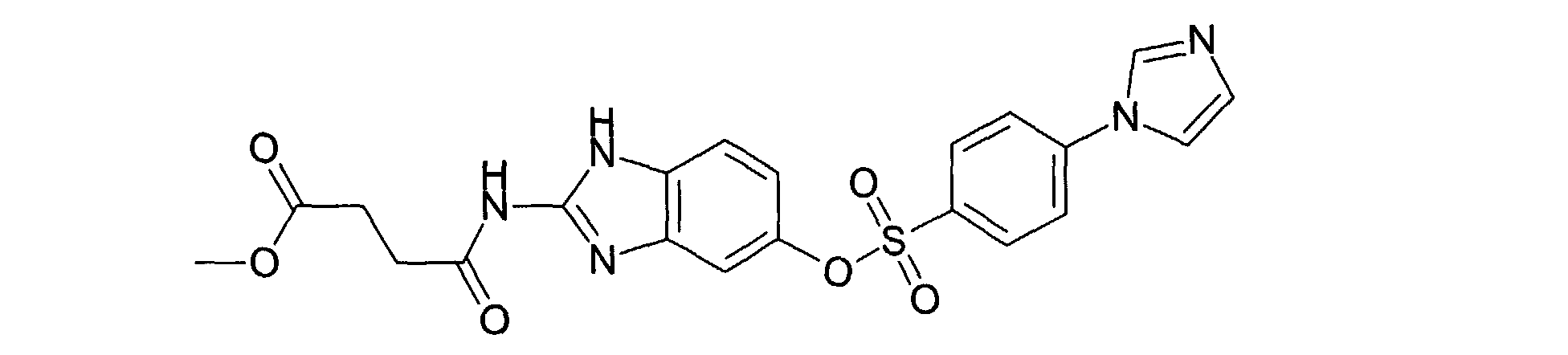
  • Example 23 Preparation of N-[5-(4-[1-imidazolyl]-phenylsulfonyloxy)-1H-benzimidazole-2-yl]succinamic acid-methyl-ester.
  • step 1 8.9 mg of succinamic acid methylester, 25 mg of 2-(1H-Benzotriazole-1-yl)-1,1,3,3-tetramethyluronium hexafluorophosphate (HBTU) and 12 ⁇ l diisopropylethylamine were taken up in 0.4 ml dimethylformamide. Reaction mixture was stirred at room temperature for one hour and N- 5-(4-[1-imidazolyl]-phenylsulfonyloxy)-1H-benzimidazole-2-yl was added in 0.2 ml dimethylformamide. Reaction mixture was then stirred at room temperature for 24 hours.
  • HBTU 2-(1H-Benzotriazole-1-yl)-1,1,3,3-tetramethyluronium hexafluorophosphate
  • step 1 11.3 mg of N-( tert -butoxycarbonyl)glycine, 25 mg HBTU and 12 ⁇ l diisopropylethylamine were taken up in 0.4 ml dimethylformamide. Reaction mixture was stirred at room temperature for one hour and N- 5-(4-cyclopentylaminophenylsulfonyloxy)-1H-benzimidazole-2-yl was added in 0.2 ml dimethylformamide. Reaction mixture was then stirred at room temperature for 24 hours.
  • Example 25 Preparation of N-[5-(4-cyclopentylaminophenylsulfonyloxy)-1H-benzimidazole-2-yl]-succinamic acid methyl-ester.
  • Example 26 Preparation of N-[5-(4-cyclopentylaminophenylsulfonyloxy)-1H-benzimidazole-2-yl]-butyric acid methyl-ester.
  • HeLa human epithelial cell line was obtained from the American Type Culture Collection (Rockville, MD, USA). Cells were grown as monolayers in Dubelcco's Modified Eagle Medium containing 2 mM L-glutamine, 200 I.U./ml penicillin, 200 ⁇ g/ml streptomycin, and supplemented with 10 % (v/v) heat inactivated foetal calf serum. Cells were transferred twice a week at 10 5 cells/ml in 75 cm 2 flasks after trypsinisation. Different flasks were done to prepare two preparations the day of experiment.
  • Cells in exponential phase of growth were trypsinised and resuspended in their culture medium at 2.5 10 4 cells/ml, in two independent preparations.
  • Cell suspension was distributed in 96 well Cytostar microplates (Amersham) (0.2 ml/well, 5000 cells). Hela cells were coated for 4 hours at 37°C.
  • [ 14 C]-thymidine (0.1 ⁇ Ci/well) and ten final concentrations of molecules (3 ⁇ l) ranging from 20 to 0.03 ⁇ M were then added.
  • the uptake of [ 14 C]-thymidine was measured 48h after the labelling had been started using a Microbeta Trilux counter (Wallac).
  • Staurosporine the reference compound, was evaluated using the same procedure.
  • IC 50 obtained from a dose response curve of 10 concentrations in duplicate is the concentration of drug wich diminishes half the specific signal. It is determined by non-linear regression analysis and calculated as a concentration at middle of curve.
  • CDK4/CyclinD1 Flashplate Assay 96-well format
  • Biotinylated-Rb Biotin-RPPTLSPIPHIPRSPYKFPSSPLR

Landscapes

  • Chemical & Material Sciences (AREA)
  • Organic Chemistry (AREA)
  • Health & Medical Sciences (AREA)
  • Chemical Kinetics & Catalysis (AREA)
  • Life Sciences & Earth Sciences (AREA)
  • General Chemical & Material Sciences (AREA)
  • Medicinal Chemistry (AREA)
  • Nuclear Medicine, Radiotherapy & Molecular Imaging (AREA)
  • Veterinary Medicine (AREA)
  • Pharmacology & Pharmacy (AREA)
  • Public Health (AREA)
  • Animal Behavior & Ethology (AREA)
  • General Health & Medical Sciences (AREA)
  • Engineering & Computer Science (AREA)
  • Bioinformatics & Cheminformatics (AREA)
  • Pharmaceuticals Containing Other Organic And Inorganic Compounds (AREA)
  • Plural Heterocyclic Compounds (AREA)
  • Nitrogen Condensed Heterocyclic Rings (AREA)

Abstract

New benzimidazole compounds of formula (I) and their use as cyclin-dependent kinases inhibitors compounds as well as new pharmaceutical compositions containing them. <CHEM>

Description

Technical Field
The present invention relates to compounds useful for treating pathological states, which arise from or are exacerbated by cell proliferation, to pharmaceutical compositions comprising these compounds, and to methods of inhibiting cell proliferation in a mammal.
Background of the Invention
Neoplastic diseases, characterized by the proliferation of cells, which are not subject to normal cell proliferating controls, are a major cause of death in humans and other mammals. Cancer chemotherapy has provided new and more effective drugs to treat these diseases and has also demonstrated that drugs, which are inhibitors of cyclin-dependent kinases are effective in inhibiting the proliferation of neoplastic cells.
Regulators at cell cycle checkpoints determine the decision for a cell to proceed through the cell cycle. Progression of the cell cycle is driven by cyclin-dependent kinases (CDKs) which are activated by oscillating members of the cyclin family, resulting in substrats phosphorylation and ultimately cell division. In addition, endogenous inhibitors of CDKs (INK4 family and KIP/CIP family) negatively regulate the activity of CDKs. Normal cell growth is due to a balance between activators of CDKs (cyclins) and endogenous inhibitors of CDKS. In several types of cancer, aberrant expression or activity of several components of the cell cycle has been described.
Cdk4 fonctions in Gl phase of the cell cycle and is activated by D-type cyclins, which results in substrate phosphorylation and progression to S phase. The only known substrate for cdk4 is the retinoblastoma gene product (pRb), a major tumor suppressor gene product, which fonctions as a major checkpoint control in regulation of the Gl/S phase transition. Hyperphosphorylation of pRb by CDKs causes the release of E2F (a family of transcription factors) bound to pRb which then activate genes necessary for cell cycle progression, e.g. thymidine kinase, thymidylate synthase, cyclin E and cyclin A. Cyclin DI is amplified or overexpressed in many types of cancer (breast, ovarian, bladder, esophogeal, lung, lymphoma), while the gene for p16, the endogenous inhibitor of cdk4, is deleted, mutated, or aberrantly methylated in many tumor types. A point mutation in cdk4 was reported in a melanoma tumor that rendered the enzyme unable to bind p1 6 resulting in a constitutively active enzyme. All of the conditions described above lead to activation of cdk4 and cell cycle progression and tumor cell growth.
An added level of regulation of CDK activity exists. Cyclin-dependent kinase activating kinase (CAK) is a positive regulator of CDKs. CAK phosphorylates the catalytic CDKs on a conserved threonine residue to render the target enzyme completely active.
Because the defects in cell cycle molecules lead to CDK activation and subsequently cell cycle progression, it is logical that inhibition of CDK enzyme activity should block cell cycle progression and tumor cell growth.
The first CDK inhibitor to enter clinical trials is the compound known as Flavopiridol. This compound is currently in Phase Il clinical trials and is the only molecule in its class in the clinic at the present time. The aim of this invention is to produce molecules more active that Flavopiridol.
It is known following publication of WO00/41669 that benzimidazole carbamate derivatives are vascular damaging agents that can be used for treating cancer, the sulfonoester derivatives claimed in this patent application are not at all exemplified and their anticancerous way of action is not described. Our invention relates speciffically to sulfonesters derivatives of those carbamates.
Summary of the Invention
In one embodiment of the present invention are disclosed compounds of formula (I)
Figure 00030001
or a pharmaceutically acceptable salt, ^
  • wherein R1 is selected from the group consisting of
    • 4NH2
    • 4 NH alkyl or cycloalkyl eventually substituted with an an acyl group, an hydroxy, an amino, alkoxy, heterocyclyl or aryl group
    • 4 N imidazolyl
    • 3 SO2 Me
  • wherein R2 is selected from the group consisting of
    • alkyl eventually substituted by amino, acid, acid derivative, alkoxy, aryl or OH groups
    • arylalkyl eventually substituted by alkoxy, halogeno, amino, acid or acid derivatives
    • alkoxy eventually substituted by aryl
    • amino, NHR3, NR3R4 wherein R3 and R4 are selected independtly from hydrogen, alkyl, alkylaryl, aryl or together form an alkylen chain.
Among the aryl substituents are included the aryl groups substituted with one or more groups selected from halogen, alkoxy, alkyl, amino, nitro.
Among the alkyl substituents are included the alkyl groups substituted with one or more amino, acyl, acyl derivatives, aminoacyl derivatives, alkoxy, arylalkyl or aryl groups.
Among the alkoxy substituents are included the alkoxy groups substituted with one or more amino, acyl, acyl derivatives, alkyl, arylalkyl or aryl groups
Among the acyl groups or acyl derivatives groups are included the carboxylic acids and the sulfonic acids, the derivatives of which being mainly ester derivatives.
The alkyl chain of the present invention includes linear, ramified or cyclic chain containing 1 to 7 carbon atoms. The alkoxy chain of the present invention includes linear, ramified or cyclic chain containing 1 to 4 carbon atoms. The aryl groups includes phenyl group, heterocyclyl groups containing one or two heteroatoms choosen from S, N or O such as furyl or pyridine.
Among those compounds are preferred those containing in the alkyl chain 1 to 4 carbon atoms and those containing in the cycloalkyl chain 3 to 5 carbon atoms. When the alkyl chain is substituted by an alkoxy group this last group has preferably one carbon atom.
In the compounds of formula (I) are preferred those containing for R2 an amino substituent and preferably a monoalkylamino or a monoarylamino substituent and still more preferably those containing a monoalkylamino substituent with an acylderivative..
Among the compounds of formula (I) the following compounds are much more preferred:
  • Methyl-5-(4-[2-hydroxyethyl]aminophenylsulfonyloxy) benzimidazole-2-carbamate
  • Methyl-5-(4-[4-hydroxbutyl]aminophenylsulfonyloxy) benzimidazole-2-carbamate
  • Methyl-5-(4-[2-methoxyethyl]aminophenylsulfonyloxy) benzimidazole-2-carbamate
  • Methyl-5-(4-[1-imidazolyl]-phenylsulfonyloxy) benzimidazole-2-carbamate
  • Methyl-5-(4-[2-pyridylmethyl]aminophenylsulfonyloxy) benzimidazole-2-carbamate
  • Methyl-5-(4-ethylaminophenylsulfonyloxy) benzimidazole-2-carbamateMethyl-5-(4-[N-Glycinyl]-phenylsulfonyloxy) benzimidazole-2-carbamate
  • Methyl-5-(4-[1-methyl,2-hydroxyethyl] aminophenylsulfonyloxy) benzimidazole-2-carbamate
  • Methyl-5-(4-[2-methyl,2-hydroxyethyl] aminophenylsulfonyloxy) benzimidazole-2-carbamate
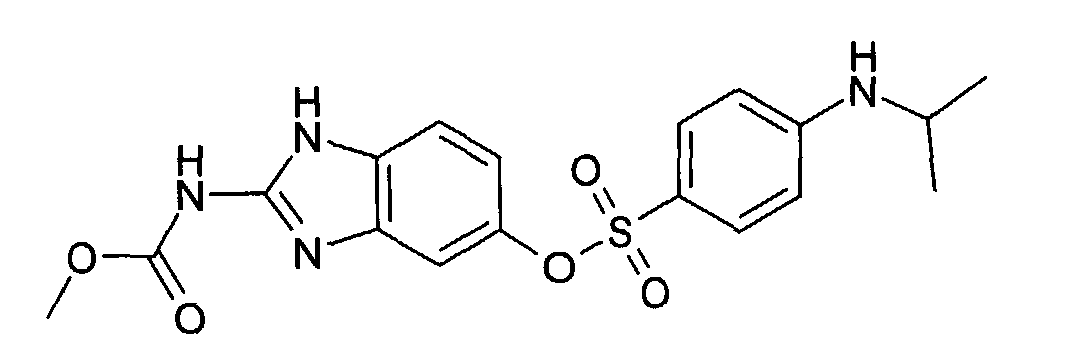
  • Methyl-5-(4-isopropylaminophenylsulfonyloxy) benzimidazole-2-carbamate
  • Methyl-5-(4-[1-ethyl, 2-hydroxyethyl]aminophenyl sulfonyloxy) benzimidazole-2-carbamate
  • Methyl-5-(4-butylaminophenylsulfonyloxy) benzimidazole-2-carbamate
  • Methyl-5-(4-[3-methoxypropyl]aminophenylsulfonyloxy) benzimidazole-2-carbamate
  • Methyl-5-(4-methylaminophenylsulfonyloxy) benzimidazole-2-carbamate
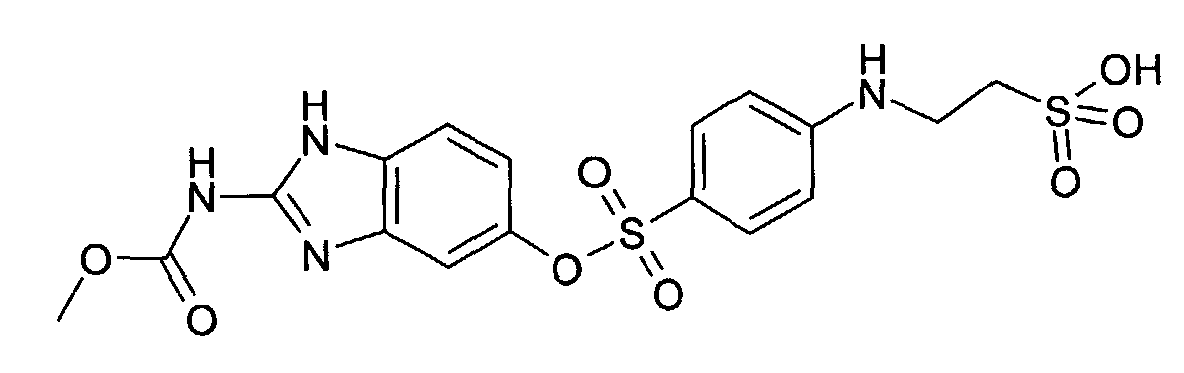
  • Methyl-5-(4-[2-sulfonylethyl]aminophenylsulfonyloxy) benzimidazole-2-carbamate
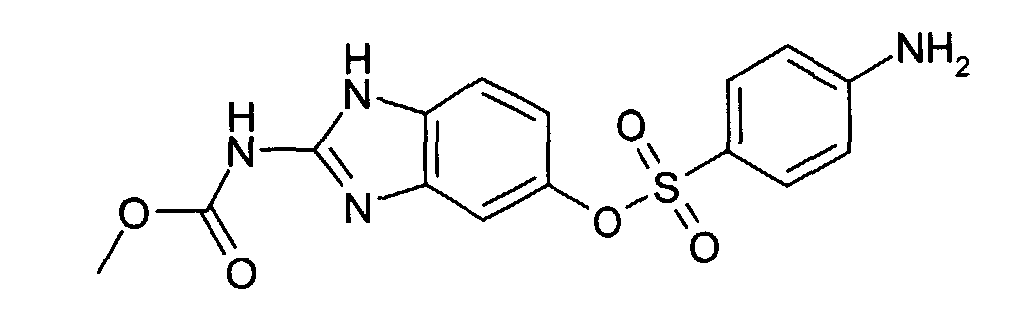
  • Methyl-5-(4-aminophenylsulfonyloxy) benzimidazole-2-carbamate
  • Methyl-5-(4- [2-diethylaminoethyl] aminophenylsulfonyloxy) benzimidazole-2-carbamate
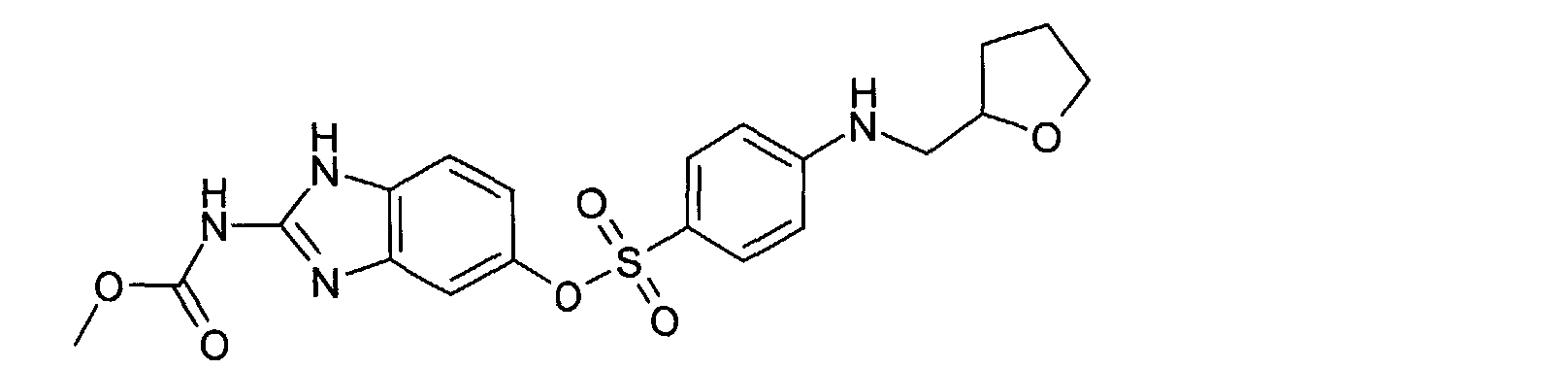
  • Methyl-5-(4-[1-tetrathydrofurylmethyl] aminophenylsulfonyloxy) benzimidazole-2-carbamate
  • Methyl-5-(4-cyclopentylaminophenylsulfonyloxy) benzimidazole-2-carbamate
  • Methyl-5-(4-[2-phenylethyl]aminophenylsulfonyloxy) benzimidazole-2-carbamate
  • N-[5-(4-[1-imidazolyl]-phenylsulfonyloxy)-1H-benzimidazole-2-yl]succinamic acid-methyl-ester
  • N-[5-(4-cyclopentylaminophenylsulfonyloxy)-1H-benzimidazole-2-yl] tert-butoxycarbonyl glycine amide
  • N-[5-(4-cyclopentylaminophenylsulfonyloxy)- 1H-benzimidazole-2-yl]-succinamic acid methyl-ester
  • N-[5-(4-cyclopentylaminophenylsulfonyloxy)-1H-benzimidazole-2-yl]-butyric acid methyl-ester
  • N-[5-(4-cyclopentylaminophenylsulfonyloxy)- 1H-benzimidazole-2-yl]-cyclopropanecarbonylamide
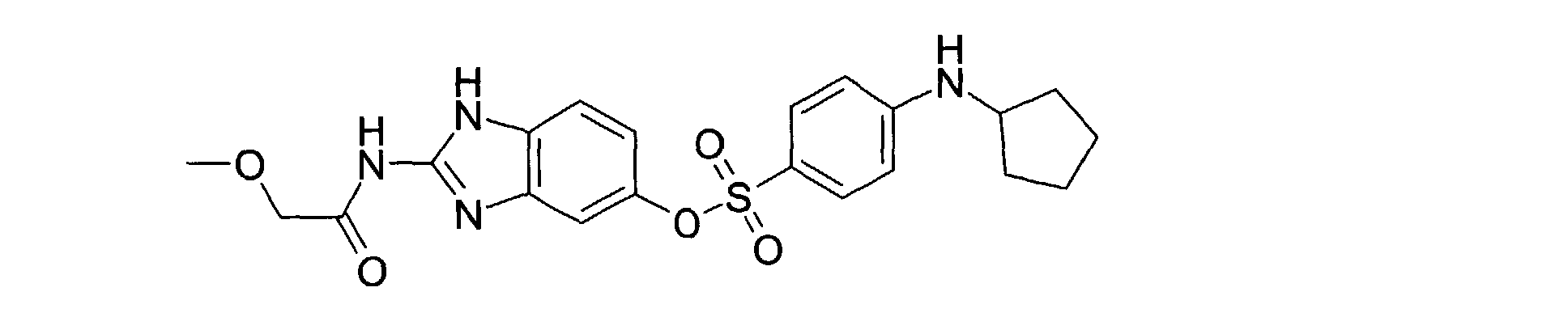
  • N-[5-(4-cyclopentylaminophenylsulfonyloxy)-1H-benzimidazole-2-yl]-methoxyaceticamide
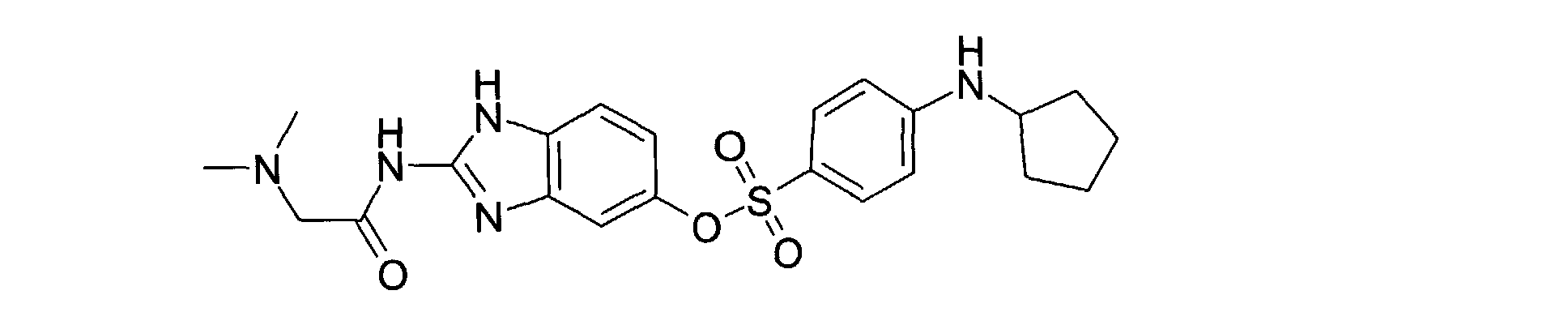
  • N-[5-(4-cyclopentylaminophenylsulfonyloxy)-1H-benzimidazole-2-yl]-dimethylamino-acetylamide
  • N-[5-(4-[imidazolyl]-phenylsulfonyloxy)-1H-benzimidazole-2-yl]-methylurea
  • N-[5-(4-cyclopentylaminophenylsulfonyloxy)-1H-benzimidazole-2-yl]-methylurea
  • N-[5-(4-cyclopentylaminophenylsulfonyloxy)-1H-benzimidazole-2-yl]-dimethylurea
  • N-[5-(4-cyclopentylaminophenylsulfonyloxy)- 1H-benzimidazole-2-yl]-cyclopropylurea
  • N-[5-(4-cyclopentylaminophenylsulfonyloxy)-1H-benzimidazole-2-yl]-isopropylamineurea
  • N-[5-(4-cyclopentylaminophenylsulfonyloxy)- 1H-benzimidazole-2-yl]-butylamineurea
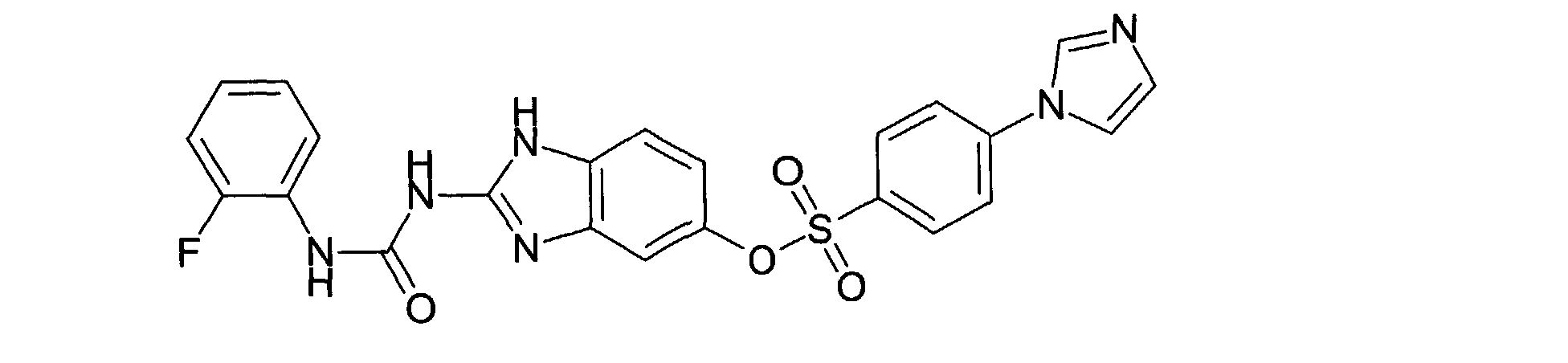
  • N-[5-(4-[imidazolyl]-phenylsulfonyloxy)-1H-benzimidazole-2-yl]2-fluoro-anilineurea
  • N-[5-(4-cyclopentylaminophenylsulfonyloxy)- I H-benzimidazole-2-yl]-2-fluoro-anilineurea
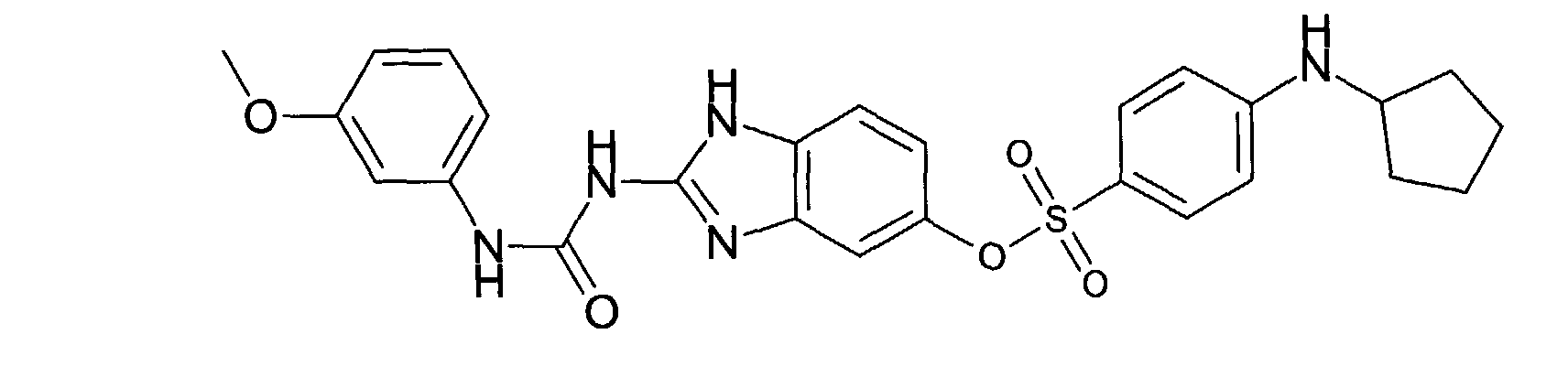
  • N-[5-(4-cyclopentylaminophenylsulfonyloxy)-1H-benzimidazole-2-yl]-m-anisidineurea
  • N-[5-(4-cyclopentylaminophenylsulfonyloxy)-1H-benzimidazole-2-yl]-p-anisidineurea
  • N-[5-(4-cyclopentylaminophenylsulfonyloxy)-1H-benzimidazole-2-yl]-4-chloroanilineurea
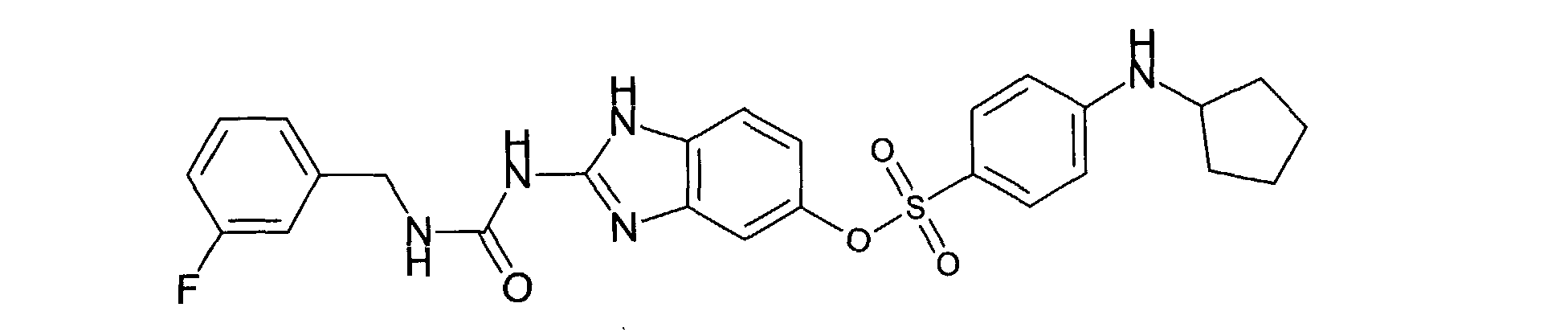
  • N-[5-(4-cyclopentylaminophenylsulfonyloxy)-1H-benzimidazole-2-yl]-3-fluoro-anilineurea
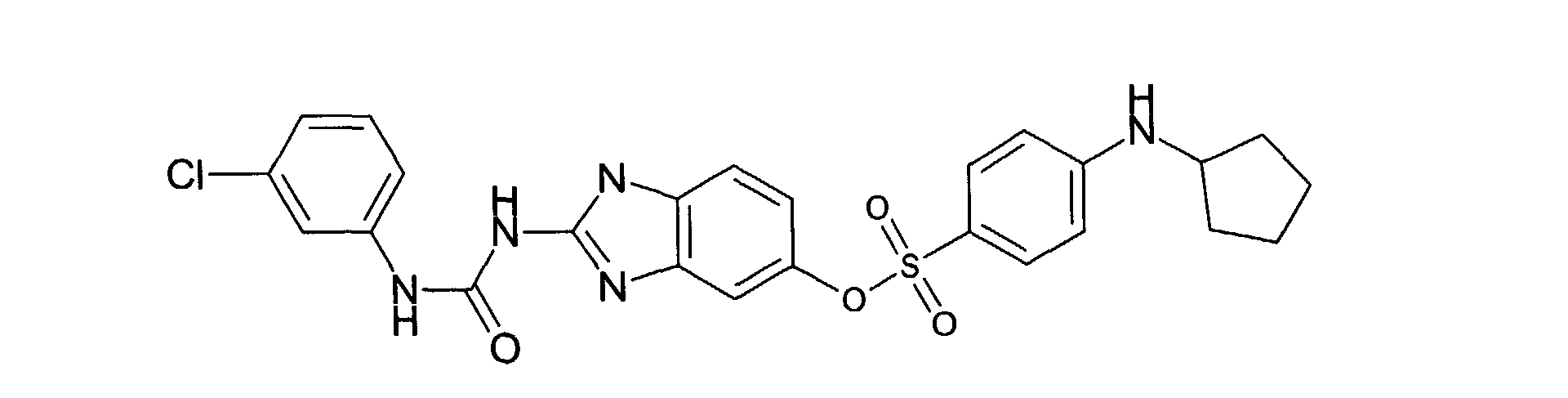
  • N-[5-(4-cyclopentylaminophenylsulfonyloxy)-1H-benzimidazole-2-yl]-3-chloroanilineurea
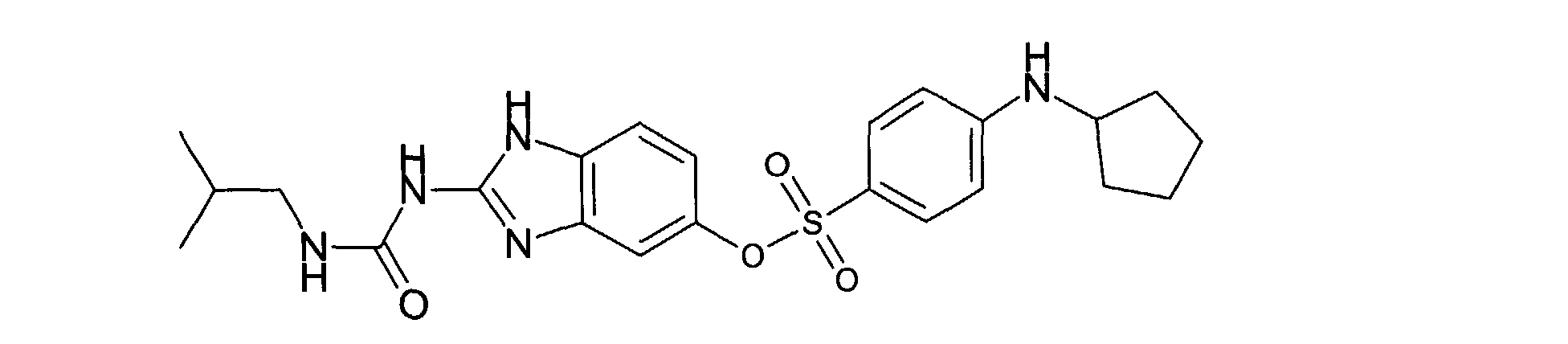
  • N-[5-(4-cyclopentylaminophenylsulfonyloxy)- 1H-benzimidazole-2-yl]-isobutylamineurea
  • N-[5-(4-cyclopentylaminophenylsulfonyloxy)- 1H-benzimidazole-2-yl]-N,N-dimethylethylenediamineurea
  • N-[5-(4-cyclopentylaminophenylsulfonyloxy)-1H-benzimidazole-2-yl]-ethylamineurea
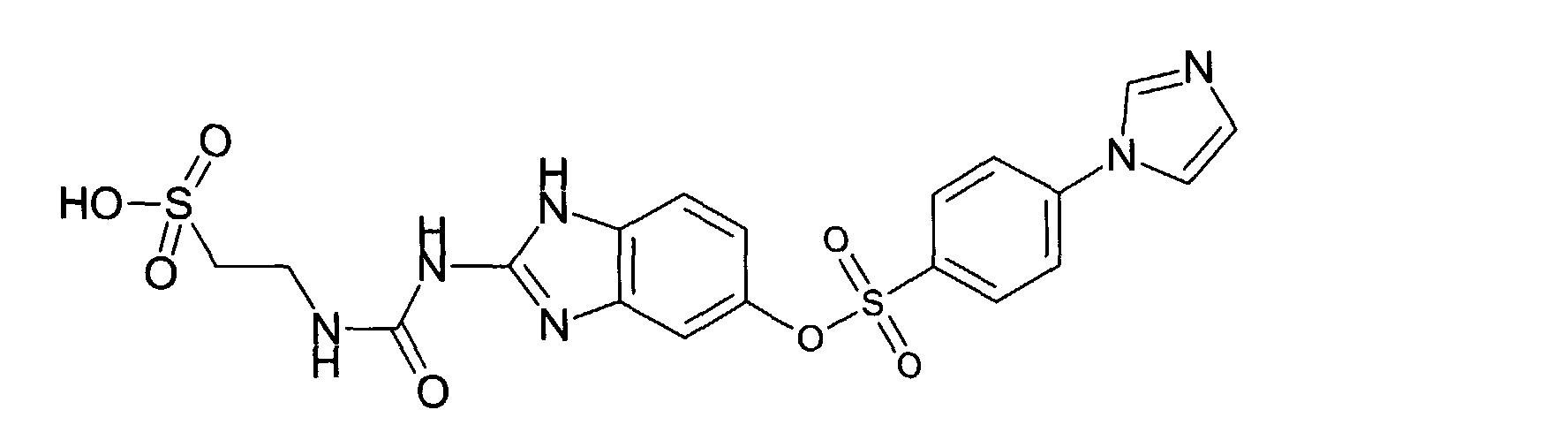
  • N-[5-(4-cyclopentylaminophenylsulfonyloxy)-1H-benzimidazole-2-yl]-glycineurea N-[5-(4-[imidazolyl]-phenylsulfonyloxy)-1H-benzimidazole-2-yl]-2-aminoethanesulfonic acidurea
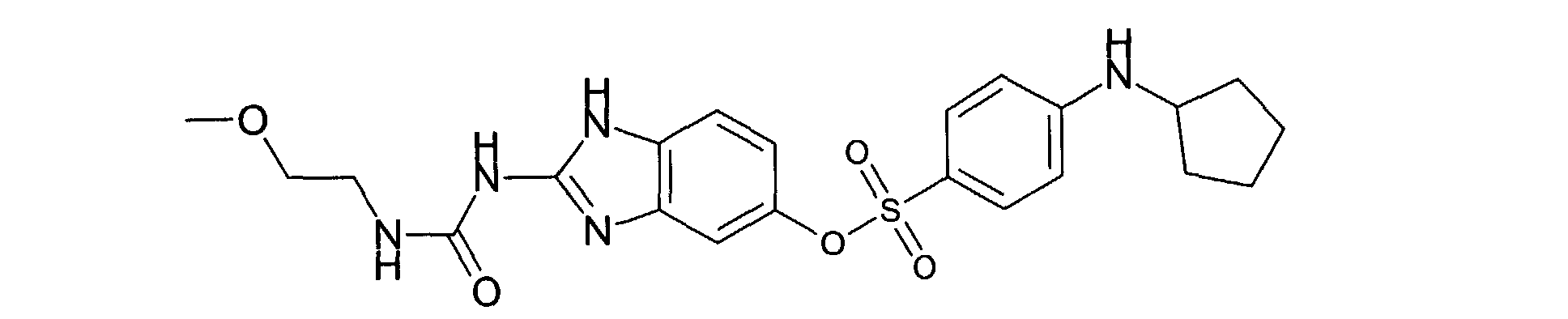
  • N-[5-(4-cyclopentylaminophenylsulfonyloxy)-1H-benzimidazole-2-yl]-2-methoxyethylamineurea
  • N-[5-(4-cyclopentylaminophenylsulfonyloxy)-1H-benzimidazole-2-yl]-N,N-dimethyl-1,4-phenylenediamineurea
  • N-[5-(4-cyclopentylaminophenylsulfonyloxy)- 1H-benzimidazole-2-yl]-2-aminomethylpyridineurea
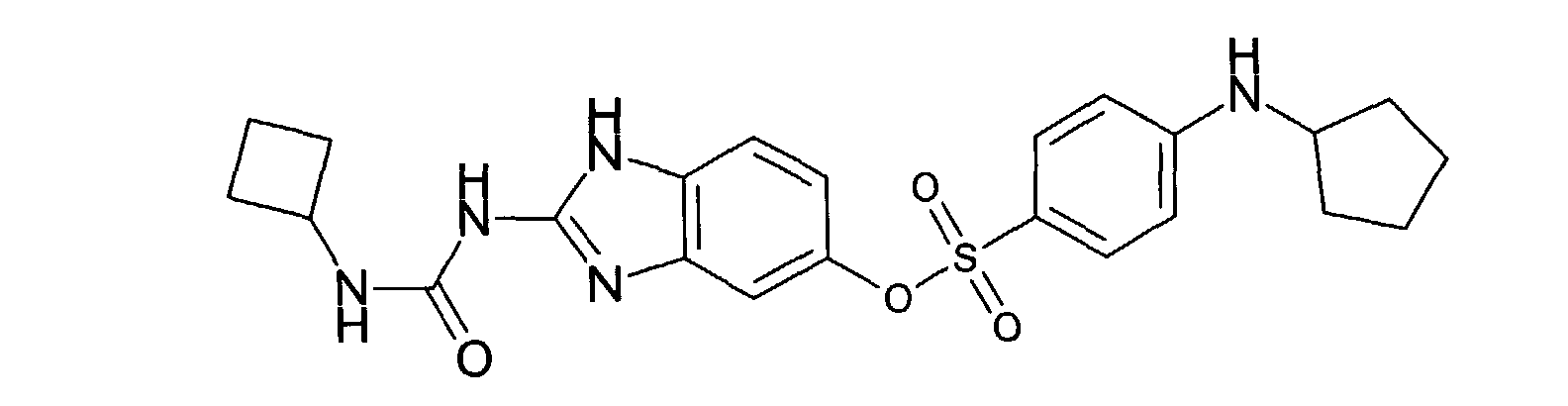
  • N-[5-(4-cyclopentylaminophenylsulfonyloxy)- 1H-benzimidazole-2-yl]-cyclobutylamineurea
  • N-[5-(4-cyclopentylaminophenylsulfonyloxy)- 1H-benzimidazole-2-yl]-4-(aminomethyl)pyridineurea
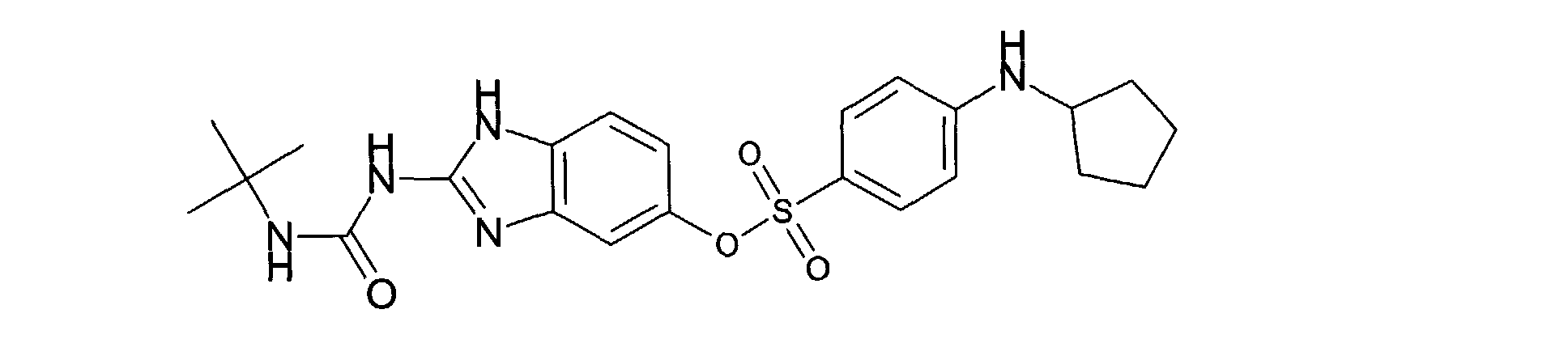
  • N-[5-(4-cyclopentylaminophenylsulfonyloxy)-1H-benzimidazole-2-yl]- tert-butylamineurea
  • In still yet another embodiment is disclosed use of compounds of formula (I) for treating cancer diseases.
    In still yet another embodiment is disclosed a method of inhibiting CDK4 enzymes in a mammal in recognized need of such treatment comprising administering to the mammal a therapeutically effective amount of compounds of formula (I).
    In still yet another embodiment is disclosed a pharmaceutical composition which comprises a therapeutically effective amount of a compound of formula (I) in combination with a pharmaceutically acceptable carrier.
    The term "pharmaceutically acceptable salt", as used herein, refers to salts, which are suitable for use in contact with the tissues of humans and lower animals. Pharmaceutically acceptable salts are described in detail in J. Pharmaceutical Sciences, 1977, 66:1 et seq. hereby incorporated by reference. Representative acid addition salts include acetate, citrate, aspartate, benzenesulfonate, hydrochloride, lactate, maleate, methanesulfonate, oxalate, and phosphate.
    Methods of Synthesis
    Compounds of the present invention can be easily prepared starting from 2-amino-5-(-4-fluorophenylsulfonyloxy)nitrobenzene the process of preparation of which is described in US 3,996,368.
    In a first step this starting material is reacted with the amine bearing the R1 radical in a suitable solvent for carrying out the reaction. Among the list of solvents suitable for dissolving 2-amino-5-(-4-fluorophenylsulfonyloxy)nitrobenzene and the amine can be cited the glycols such as ethylglycol, the aprotic solvents such as dioxane, dimethylformamide, N-methylpyrrolidone. The preferred temperature for this reaction is comprised between room temperature and the reflux temperature. To recover the intermediate product it is preferred to precipitate the intermediate with chlorhydric acid.
    In a second step the compound of step 1 is hydrogenated with hydrogen preferably in presence of Raney nickel (nitro group reduction method A) or palladium on carbon (nitro group reduction method B) in a suitable solvent choosen among the same list as for step 1 in mixture with an alcohol such as methanol. After reaction the catalyst is taken off by filtration.
    In a third step the benzimidazole ring is closed by action of 1,3-bis(methoxycarbonyl)-2-methyl-2-thiopseudourea on the intermediate obtained in step 2 without intermediate separation. The reaction mixture is heated to reflux with stirring. The final product (methyl-benzimidazole-2-carbamate) is isolated after evaporation of the solvent under reduced pressure and solubilization in ethylacetate then crystallisation. A final purification is carried out in methanol with a crystallisation in the same solvent.
    Methyl-benzimidazole-2-carbamate can be converted to benzimidazole-2-ureas by treatment with an amine in a suitable solvent such as dimethylformamide, tetrahydrofuran or N-methylpyrrolidone in the presence of a base such as 1,8-Diazabicyclo[5.4.0]undec-7-ene in a pressure vessel.. The preferred temperature for this reaction is comprised between room temperature and 120 °C.
    tert-butyl-benzimidazole-2-carbamate can be prepared by performing the third step described above using 1,3-bis(tert-butoxycarbonyl)-2-methyl-2-thiopseudourea instead of 1,3-bis(methoxycarbonyl)-2-methyl-2-thiopseudourea. These derivatives can be converted to the corresponding 2-aminobenzimidazole derivative using tert-butylcarbamate deprotection methods known by the persons skilled in the art. The 2-aminobenzimidazoles can be converted to the corresponding amides by reaction with carboxylic acid derivatives using known by the persons skilled in the art.
    Methods of Treatment
    The present invention also provides pharmaceutical compositions, which comprise compounds of the present invention formulated together with one or more non-toxic pharmaceutically acceptable carriers. The pharmaceutical compositions may be specially formulated for oral administration in solid or liquid form or for parenteral injection.
    The term "parenteral", as used herein, refers to modes of administration, which include intravenous, intramuscular, intraperitoneal, subcutaneous and infusion.
    Solid dosage forms for oral administration include capsules, tablets, pills, powders and granules. In such solid dosage forms, the active compound is mixed with at least one inert, pharmaceutically acceptable excipient or carrier.
    Solid compositions of a similar type may also be employed as fillers in soft and hard-filled gelatin capsules.
    The compounds of the present invention may be administered alone or mixed with other anticancer agents. Among the possible combinations, there may be mentioned
    • alkylating agents and in particular cyclophosphamide, melphalan, ifosfamide, chlorambucil, busulfan, thiotepa, prednimustine, carmustine, lomustine, semustine, streptozotocin, decarbazine, temozolomide, procarbazine and hexamethylmelamine
    • platinum derivatives such as in particular cisplatin, carboplatin or oxaliplatin,
    • antibiotic agents such as in particular bleomycin, mitomycin, dactinomycin,
    • antimicrotubule agents such as in particular vinblastine, vincristine, vindesine, vinorelbine, taxoids (paclitaxel and docetaxel),
    • anthracyclines such as in particular doxorubicin, daunorubicin, idarubicin, epirubicin, mitoxantrone, losoxantrone,
    • group I and II topoisomerases such as etoposide, teniposide, amsacrine, irinotecan, topotecan and tomudex,
    • fluoropyrimidines such as 5-fluorouracil, UFT, floxuridine,
    • cytidine analogues such as 5-azacytidine, cytarabine, gemcitabine, 6-mercaptomurine, 6-thioguanine,
    • adenosine analogues such as pentostatin, cytarabine or fludarabine phosphate,
    • methotrexate and folinic acid,
    • various enzymes and compounds such as L-asparaginase, hydroxyurea, trans-retinoic acid, suramine, dexrazoxane, amifostine, herceptin as well as oestrogenic and androgenic hormones.
    It is also possible to combine a radiation treatment with the compounds of the present invention. This treatment may be administered simultaneously, separately or sequentially. The treatment will be adapted to the patient to be treated by the practitioner.
    The invention will be more fully described by the following examples, which must not be considered as a limitation of the invention.
    Method for analytical determination Liquid chromatography coupled to Mass spectrometry (LC/MS) analysis
    LC/MS analyses were conducted on a Micromass instrument model LCT linked to an HP 1100 model instrument. Compound abundance were detected using an HP G1315A (model) photodiode array detector in the 200-600 nm wavelength range and a Sedex 65 (model) evaporative light scattering detector. Mass spectra were acquired in the 160 to 2000 amu range. Data were analysed using the Micromass MassLynx software. Separation were carried out on a Hypersil Highpurity C18, 5 µm particle size column (50 x 4.6 mm) eluted by a linear gradient of 10 to 90 % acetonitrile containing 0.05 % (v/v) trifluoroacetic acid (TFA) in water containing 0.05 % (v/v) TFA in 6.50 min at a flow rate of 1 ml/min.
    Method for Purification LC/MS triggered purification
    Compounds were purified by LC/MS using a Waters FractionLynx system composed of a Waters model 600 gradient pump, a Waters model 515 regeneration pump, a Waters Reagent Manager make-up pump, a Waters model 2700 sample manager autoinjector, two Rheodyne model LabPro switches, a Waters model 996 photodiode array detector, a Waters model ZMD mass spectrometer and a Gilson model 204 fraction collector. The Waters FractionLynx software controlled the instrument. Separation were conducted alternatively on two Waters Symmetry columns (C18, 5 µM, 19 x 50 mm, catalogue number 186000210), one column was under regeneration by a 95/5 (v/v) water/acetonitrile mixture containing 0.07 % TFA (v/v) while the other one is separating. Columns were eluted by a linear gradient of acetonitrile containing 0.07 % (v/v) TFA in water containing 0.07 % (v/v) TFA, from 5 to 95 % (v/v) in 8 min and 2 min at 95 % acetonitrile containing 0.07 % (v/v) TFA, at a flow rate of 10 ml/min. At the output of the separating column the flow was split to the 1/1000 ratio using a LC Packing AccuRate splitter; 1/1000 of the flow was mixed with methanol (0.5 ml/min. flow rate) and sent to the detectors, this flow was split again ¾ of the flow was sent to the photodiode array detector and ¼ to the mass spectrometer; the rest of the output of the column (999/1000) was sent to the fraction collector were flow was directed normally to waste unless expected mass signal was detected by the FractionLynx software. The FractionLynx software was supplied with molecular formulas of expected compounds and triggered the collection of compounds when mass signal corresponding to [M+H]+ and [M+Na]+ are detected. In certain cases (depending on analytical LC/MS result, when [M+2H]++ was detected as an intense ion) the FractionLynx software was additionally supplied with calculated half molecular weight (MW/2), in these conditions collection was also triggered when mass signal corresponding to [M+2H]++ and [M+Na+H]++ are detected. Compounds were collected in tarred glass tubes. After collection, solvent was evaporated in a Jouan model RC 10.10 centrifuge evaporator or a Genevac model HT8 centrifuge evaporator and the amount of compound was determined by weighing of the tubes after solvent evaporation.
    Method of prepartion of compounds of the invention
    2-amino-5-(4-fluorophenylsulfonyloxy)nitrobenzene (melting point 161°C), the starting material, can be prepared according to U.S. patent N° 3,996,368.
    Example 1 : Preparation of Methyl-5-(4-[2-hydroxyethyl]aminophenylsulfonyloxy) benzimidazole-2-carbamate
    Figure 00120001
  • step 1 : 15.6 g of 2-amino-5-(4-fluorophenylsulfonyloxy)nitrobenzene were combined with 25 ml ethanolamine in 100ml ethylglycol in a round bottom flask. The reaction mixture was heated to reflux for 90 min and then cooled on ice. Reaction mixture was then diluted with 250 ml of 2N aqueous HCl, the compound precipitated and was filtered off with suction. The preciptate was the washed with water and dried, yielding 15.5g of 2-amino-5-(4-[2-hydroxyethyl] aminophenylsulfonyloxy)nitro benzene (melting point 180°C)
  • step 2: 15.5 g of 2-amino-5-(4-[2-hydroxyethyl] aminophenylsulfonyloxy)nitro-benzene in 75 ml of methanol and 75 ml of dimethylformamide are hydrogenated under atmospheric pressure with a catalytic amount of Raney Nickel (method A). After hydrogen uptake is complete, the catalyst was filtered off with suction, washed with methanol and the filtrate is concentred under reduced pressure
  • step 3 : concentrated filtrate of step 2 was taken up in 150 ml methanol and 30 ml of glacial acetic acid, 10.3 g of 1,3-bis(methoxycarbonyl)-2-methyl-2-thiopseudourea was added and reaction mixture was heated to reflux with stirring for 3 hours. Solvents were then evaporated under reduced pressure, concentrate was then dissolved in hot ethylacetate, crystallized by cooling and washed with ethylacetate. Compound was then solubilized in 250 ml refluxing methanol, crystallized by cooling and washed with methanol and dried yielding 7.4 g of the title compound. (Melting point 170°C, LC/MS analysis: retention time = 2.8 min., mass spectrum: 407.24, [M+H]+)
  • Example 2 : Preparation of Methyl-5-(4-[4-hydroxbutyl]aminophenylsulfonyloxy) benzimidazole-2-carbamate
    Figure 00130001
  • step 1 : 19.7 g of 2-amino-5-(4-fluorophenylsulfonyloxy)nitrobenzene were combined with 20 g butanolamine in 200 ml N-methylpyrrolidinone in a round bottom flask. The reaction mixture was heated to reflux for 120 min and then solvent was evaporated under reduced pressure. Concentrate was then solubilized with ethylacetate and extracted with 2N aqueous HCl and water and then dried over sodium sulfate and dried under reduced pressure. The concentrate was recrystallized in isopropanol, filtered under suction, washed with isopropanol and dried, yielding 13.1 g of 2-amino-5-(4-[4-hydroxbuyl] aminophenylsulfonyloxy)nitrobenzene (melting point 105°C).
  • step 2 : 13.1 g of 2-amino-5-(4-[4-hydroxbutyl] aminophenylsulfonyloxy)nitro-benzene in 75 ml of methanol and 75 ml of dimethylformamide are hydrogenated under atmospheric pressure with a catalytic amount of Raney Nickel (Method A). After hydrogen uptake is complete, the catalyst was filtered off with suction, washed with methanol and the filtrate is concentred under reduced pressure.
  • step 3 : concentrated filtrate of step 2 was taken up in 100 ml methanol and 20 ml of glacial acetic acid, 8.2 g of 1,3-bis(methoxycarbonyl)-2-methyl-2-thiopseudourea was added and reaction mixture was heated to reflux with stirring for 3 hours. Solvents were then evaporated under reduced pressure, concentrate washed with 2N aqueous ammonia, water and dried. Concentrate was then dissolved in hot ethylacetate, crystallized by cooling and washed with ethylacetate. Compound was then solubilized in refluxing methanol, crystallized by cooling and washed with methanol and dried yielding 6.3 g of the title compound. (Melting point 180°C, LC/MS analysis: retention time = 2.9 min., mass spectrum: 435.29, [M+H]+)
  • Example 3 : Preparation of Methyl-5-(4-[2-methoxyethyl]aminophenylsulfonyloxy) benzimidazole-2-carbamate
    Figure 00140001
  • step 1 : 15.6 g of 2-amino-5-(4-fluorophenylsulfonyloxy)nitrobenzene were combined with 35 ml methoxyethylamine in 100ml dioxane in a round bottom flask. The reaction mixture was heated to reflux for 8 hours and then cooled to 40°C and extracted two times with 250 ml water. Concentrate was solubilized with ethylacetate and extracted with 2N aqueous HCl and water, the organic phase was then dried under reduced pressure, yielding 19.2 g of 2-amino-5-(4-[2-methoxyethyl] aminophenylsulfonyloxy)nitrobenzene (melting point 105°C).
  • step 2 : 18.2 g of 2-amino-5-(4-[2-methoxyethyl] aminophenylsulfonyloxy)nitro-benzene in 75 ml of methanol and 75 ml of dimethylformamide are hydrogenated under atmospheric pressure with a catalytic amount of Raney Nickel (Method A). After hydrogen uptake is complete, the catalyst was filtered off with suction, washed with methanol and the filtrate is concentred under reduced pressure.
  • step 3 : concentrated filtrate of step 2 was taken up in 150 ml methanol and 25 ml of glacial acetic acid, 12.3 g of 1,3-bis(methoxycarbonyl)-2-methyl-2-thiopseudourea was added and reaction mixture was heated to reflux with stirring for 3 hours. Solvents were then evaporated under reduced pressure, and concentrate was crystallized with methanol saturated with ammonia, washed with water, methanol and dried, yielding 12 g of the title compound. (Melting point 155°C, LC/MS analysis: retention time = 3.1 min., mass spectrum: 421.25, [M+H]+)
  • Example 4 : Preparation of Methyl-5-(4-[1-imidazolyl]-phenylsulfonyloxy) benzimidazole-2-carbamate
    Figure 00150001
  • step 1 : 15.6 g of 2-amino-5-(4-fluorophenylsulfonyloxy)nitrobenzene were combined with 20.7 g imidazole in 100 ml dimethylformamide in a round bottom flask. The reaction mixture was heated to reflux for 3 hours and then cooled to room temperature. Reaction mixture was then precipitated by addition of water filtered and precipitate was washed with water and dried. Residue was resolubilized in hot methylglycol, crystallized by cooling and the crystals were washed with methanol and dried, yielding 10.4 g of 2-amino-5-(4-[1-imidazolyl]-phenylsulfonyloxy)nitro-benzene (melting point 209°C).
  • step 2 : 10.4 g of 2-amino-5-(4-[1-imidazolyl]-phenylsulfonyloxy)nitrobenzene in 75 ml of methanol and 75 ml of dimethylformamide are hydrogenated under atmospheric pressure with a catalytic amount of Raney Nickel. After hydrogen uptake is complete, the catalyst was filtered off with suction, washed with methanol and the filtrate is concentred under reduced pressure ( Method A).
    Alternatively 5 g of 2-amino-5-(4-[1-imidazolyl]-phenylsulfonyloxy)nitrobenzene in 475 ml of methanol and 25 ml of dimethylformamide are hydrogenated under 5 bars pressure with 10 % (w/w) of palladium on carbon at 30°C during 6 hours (Method B) yielding 4.18 g (91 %) of expected product.
  • step 3: concentrated filtrate of step 2 was taken up in 150 ml methanol and 25 ml of glacial acetic acid, 10.3 g of 1,3-bis(methoxycarbonyl)-2-methyl-2-thiopseudourea was added and reaction mixture was heated to reflux with stirring for 3 hours. After cooling to room temperature reaction mixture was precipitated by addition of ethylacetate, filtered by suction and washed by ethylacetate. Filtrate was then resolubilized with 50 ml dimethylformamide and 250 ml of methanol was added. Mixture crystallised upon cooling and crystals were washed with methanol and dried under reduced pressure, yielding 9.4 g of the title compound. (Melting point 258°C, LC/MS analysis: retention time = 2.5 min., mass spectrum: 414.23, [M+H]+; 382.19 fragmentation of carbamate: loss of methanol, NMR, IR).
  • Example 5 : Preparation of Methyl-5-(4-[2-pyridylmethyl]aminophenylsulfonyloxy) benzimidazole-2-carbamate
    Figure 00160001
    In a similar manner to examples 1 to 4, title compound was obtained by reacting 2-aminomethylpyridine with 2-amino-5-(4-fluorophenylsulfonyloxy)nitrobenzene at step 1 of the procedure described above and using nitro group reduction method A. (LC/MS analysis: retention time = 2.6 min., mass spectrum: 454.28, [M+H]+; 907.53, [2M+H]+ ; 422.24 , fragmentation of carbamate: loss of methanol).
    Example 6 : Preparation of Methyl-5-(4-ethylaminophenylsulfonyloxy) benzimidazole-2-carbamate
    Figure 00160002
    In a similar manner to examples 1 to 4, title compound was obtained by reacting ethylamine with 2-amino-5-(4-fluorophenylsulfonyloxy)nitrobenzene at step 1 of the procedure described above and using nitro group reduction method A. (LC/MS analysis: retention time = 3.2 min., mass spectrum: 390.98, [M+H]+).
    Example 7 : Preparation of Methyl-5-(4-[N-Glycinyl]-phenylsulfonyloxy) benzimidazole-2-carbamate
    Figure 00170001
    In a similar manner to examples 1 to 4, title compound was obtained by reacting glycine with 2-amino-5-(4-fluorophenylsulfonyloxy)nitrobenzene at step 1 of the procedure described above and using nitro group reduction method A. (LC/MS analysis: retention time = 2.8 min., mass spectrum: 421.21, [M+H]+).
    Example 8 : Preparation of Methyl-5-(4-[1-methyl,2-hydroxyethyl] aminophenylsulfonyloxy) benzimidazole-2-carbamate
    Figure 00170002
    In a similar manner to examples 1 to 4, title compound was obtained by reacting 2-aminopropanol with 2-amino-5-(4-fluorophenylsulfonyloxy)nitrobenzene at step 1 of the procedure described above and using nitro group reduction method A. (LC/MS analysis: retention time = 2.9 min., mass spectrum: 421.27, [M+H]+).
    Example 9 : Preparation of Methyl-5-(4-[2-methyl,2-hydroxyethyl] aminophenylsulfonyloxy) benzimidazole-2-carbamate
    Figure 00180001
    In a similar manner to examples 1 to 4, title compound was obtained by reacting 1-methyl, 2-aminoethanol with 2-amino-5-(4-fluorophenylsulfonyloxy)nitrobenzene at step 1 of the procedure described above and using nitro group reduction method A. (LC/MS analysis: retention time = 2.9 min., mass spectrum: 421.27, [M+H]+).
    Example 10: Preparation of Methyl-5-(4-isopropylaminophenylsulfonyloxy) benzimidazole-2-carbamate
    Figure 00180002
    In a similar manner to examples 1 to 4, title compound was obtained by reacting isopropylamine with 2-amino-5-(4-fluorophenylsulfonyloxy)nitrobenzene at step 1 of the procedure described above and using nitro group reduction method A. (LC/MS analysis: retention time = 3.4 min., mass spectrum: 405.27, [M+H]+).
    Example 11 : Preparation of Methyl-5-(4-[1-ethyl, 2-hydroxyethyl]aminophenyl sulfonyloxy) benzimidazole-2-carbamate
    Figure 00180003
    In a similar manner to examples 1 to 4, title compound was obtained by reacting 2-aminobutanol with 2-amino-5-(4-fluorophenylsulfonyloxy)nitrobenzene at step 1 of the procedure described above and using nitro group reduction method A. (LC/MS analysis: retention time = 3.0 min., mass spectrum: 435.30, [M+H]+).
    Example 12 : Preparation of Methyl-5-(4-butylaminophenylsulfonyloxy) benzimidazole-2-carbamate
    Figure 00190001
    In a similar manner to examples 1 to 4, title compound was obtained by reacting butylamine with 2-amino-5-(4-fluorophenylsulfonyloxy)nitrobenzene at step 1 of the procedure described above and using nitro group reduction method A. (LC/MS analysis: retention time = 3.6 min., mass spectrum: 419.25, [M+H]+).
    Example 13 : Preparation of Methyl-5-(4-[3-methoxypropyl]aminophenyl-sulfonyloxy) benzimidazole-2-carbamate
    Figure 00190002
    In a similar manner to examples 1 to 4, title compound was obtained by reacting 3-methoxypropanolamine with 2-amino-5-(4-fluorophenylsulfonyloxy)nitrobenzene at step 1 of the procedure described above and using nitro group reduction method A. (LC/MS analysis: retention time = 3.2 min., mass spectrum: 435.27, [M+H]+).
    Example 14 : Preparation of Methyl-5-(4-methylaminophenylsulfonyloxy) benzimidazole-2-carbamate
    Figure 00190003
    In a similar manner to examples 1 to 4, title compound was obtained by reacting methylamine with 2-amino-5-(4-fluorophenylsulfonyloxy)nitrobenzene at step 1 of the procedure described above and using nitro group reduction method A. (LC/MS analysis: retention time = 3.0 min., mass spectrum: 377.22, [M+H]+).
    Example 15 : Preparation of Methyl-5-(4-[2-sulfonylethyl]aminophenylsulfonyloxy) benzimidazole-2-carbamate
    Figure 00200001
    In a similar manner to examples 1 to 4, title compound was obtained by reacting 2-aminoethanesulfonic acid with 2-amino-5-(4-fluorophenylsulfonyloxy)nitrobenzene at step 1 of the procedure described above and using nitro group reduction method A. (LC/MS analysis: retention time = 2.6 min., mass spectrum: 471.19, [M+H]+ ; 941.41, [2M+H]+).
    Example 16 : Preparation of Methyl-5-(4-aminophenylsulfonyloxy) benzimidazole-2-carbamate
    Figure 00200002
    In a similar manner to examples 1 to 4, title compound was obtained by reacting ammonia with 2-amino-5-(4-fluorophenylsulfonyloxy)nitrobenzene at step 1 of the procedure described above and using nitro group reduction method A. (LC/MS analysis: retention time = 2.9 min., mass spectrum: 363.19, [M+H]+).
    Example 17 : Preparation of Methyl-5-(4-[2-diethylaminoethyl] aminophenylsulfonyloxy) benzimidazole-2-carbamate
    Figure 00210001
    In a similar manner to examples 1 to 4, title compound was obtained by reacting 2-diethylaminoethylamine with 2-amino-5-(4-fluorophenylsulfonyloxy)nitrobenzene at step 1 of the procedure described above and using nitro group reduction method A. (LC/MS analysis: retention time = 2.6 min., mass spectrum: 462.34, [M+H]+; 923.65, [2M+H]+; 430.30, fragmentation of carbamate: loss of methanol).
    Example 18 : Preparation of Methyl-5-(4-[1-tetrathydrofurylmethyl] aminophenylsulfonyloxy) benzimidazole-2-carbamate
    Figure 00210002
    In a similar manner to examples 1 to 4, title compound was obtained by reacting tetrahydrofurfurylamine with 2-amino-5-(4-fluorophenylsulfonyloxy)nitrobenzene at step 1 of the procedure described above and using nitro group reduction method A. (LC/MS analysis: retention time = 3.2 min., mass spectrum: 447.24, [M+H]+).
    Example 19 : Preparation of Methyl-5-(4-cyclopentylaminophenylsulfonyloxy) benzimidazole-2-carbamate
    Figure 00210003
    In a similar manner to examples 1 to 4, title compound was obtained by reacting cyclopentylamine with 2-amino-5-(4-fluorophenylsulfonyloxy)nitrobenzene at step 1 of the procedure described above and using nitro group reduction method A. (LC/MS analysis: retention time = 3.6 min., mass spectrum: 431.29, [M+H]+).
    Example 20 : Preparation of Methyl-5-(4-[2-phenylethyl]aminophenylsulfonyloxy) benzimidazole-2-carbamate
    Figure 00220001
    In a similar manner to examples 1 to 4, title compound was obtained by reacting phenethylamine with 2-amino-5-(4-fluorophenylsulfonyloxy)nitrobenzene at step 1 of the procedure described above and using nitro group reduction method A. (LC/MS analysis: retention time = 3.6 min., mass spectrum: 467.26, [M+H]+).
    Example 21 : Preparation of N-5-(4-[1-imidazolyl]-phenylsulfonyloxy)-1H-benzimidazole-2-yl : an intermediate for amide product synthesis
    Figure 00220002
    For step 1 and 2, intermediate of title compound is obtained in similar manner to step 1 end 2 of example 4.
    step 3 : 8 g of step 2 compound were taken up in 128 ml methanol and 21.6 ml acetic acid in a 250 ml round bottom flask. Mixture was heated to reflux and 9.13 g of 1,3-bis(tert-butoxycarbonyl)-2-methyl-2-thiopseudourea was added. Reaction mixture was heated to reflux with stirring for 4 hours. Solid was obtained by cooling to 0°C for one hour and washed with ethyl acetate, triturated and dried on a glass frit yielding 7.55 g compound.
    step 4 : Compound of step 3 was taken up in 80 ml dichloromethane and 40 ml trifluoroacetic acid. Reaction mixture was stirring for 4 hours at room temperature. Solvents were evaporated under reduced pressure. Concentrated filtrate was taken in 75 ml water. 50 ml of sodium carbonate aqueous solution (10 % w/w). Precipitate obtained was washed with dichloromethane and dried on a glass frit yielding 5.3 g title compound.
    Example 22 : Preparation of N-5-(4-[1-imidazolyl]-phenylsulfonyloxy)-1H-benzimidazole-2-yl: an intermediate for amide product synthesis
    Figure 00230001
    For step 1 and 2, intermediate of thitle compound is obtained in similar manner to step 1 end 2 of example 19.
    For step 3 and 4, title compound is obtained in similar manner to example 21.
    Example 23 : Preparation of N-[5-(4-[1-imidazolyl]-phenylsulfonyloxy)-1H-benzimidazole-2-yl]succinamic acid-methyl-ester.
    Figure 00230002
    step 1 : 8.9 mg of succinamic acid methylester, 25 mg of 2-(1H-Benzotriazole-1-yl)-1,1,3,3-tetramethyluronium hexafluorophosphate (HBTU) and 12 µl diisopropylethylamine were taken up in 0.4 ml dimethylformamide. Reaction mixture was stirred at room temperature for one hour and N-5-(4-[1-imidazolyl]-phenylsulfonyloxy)-1H-benzimidazole-2-yl was added in 0.2 ml dimethylformamide. Reaction mixture was then stirred at room temperature for 24 hours. Solvent was evaporated in a Jouan model RC 10.10 centrifuge evaporator and title compound was solubilised in 0.5 ml dimethylsulfoxide for LCMS trigged purification yielding 3.9 mg of N-[5-(4-[1-imidazolyl]-phenylsulfonyloxy)-1H-benzimidazole-2-yl]-succinamic-acid-methylester. (LC/MS analysis: retention time = 2.70 min., mass spectrum: 470.34, [M+H]+).
    Example 24 : Preparation of N-[5-(4-cyclopentylaminophenylsulfonyloxy)-1H-benzimidazole-2-yl] tert-butoxycarbonyl glycine amide
    Figure 00240001
    step 1 : 11.3 mg of N-(tert-butoxycarbonyl)glycine, 25 mg HBTU and 12 µl diisopropylethylamine were taken up in 0.4 ml dimethylformamide. Reaction mixture was stirred at room temperature for one hour and N-5-(4-cyclopentylaminophenylsulfonyloxy)-1H-benzimidazole-2-yl was added in 0.2 ml dimethylformamide. Reaction mixture was then stirred at room temperature for 24 hours. Solvent was evaporated in a Jouan model RC 10.10 centrifuge evaporator and title compound was solubilised in 0.5 ml dimethylsulfoxide for LCMS trigged purification yielding 2.4 mg of N-[5-(4-cyclopentylaminophenylsulfonyloxy)-1H-benzimidazole-2-yl]-tert-butoxycarbonylglycineamid. (LC/MS analysis: retention time = 3.87 min., mass spectrum: 530.38, [M+H]+).
    Example 25 : Preparation of N-[5-(4-cyclopentylaminophenylsulfonyloxy)-1H-benzimidazole-2-yl]-succinamic acid methyl-ester.
    Figure 00240002
    In a similar manner to example 24, title compound was obtained by reacting succinamic acid methyl ester with N-5-(4-cyclopentylaminophenylsulfonyloxy)-1H-benzimidazole-2-yl. (LC/MS analysis: retention time = 3.72 min., mass spectrum: 487.34, [M+H]+).
    Example 26 : Preparation of N-[5-(4-cyclopentylaminophenylsulfonyloxy)-1H-benzimidazole-2-yl]-butyric acid methyl-ester.
    Figure 00250001
    In a similar manner to example 24, title compound was obtained by reacting butyric acid methylester with N-5-(4-cyclopentylaminophenylsulfonyloxy)-1H-benzimidazole-2-yl. (LC/MS analysis: retention time = 3.75 min., mass spectrum: 501.36, [M+H]+).
    Example 27 : Preparation of N-[5-(4-cyclopentylaminophenylsulfonyloxy)-1H-benzimidazole-2-yl]-cyclopropanecarbonylamide
    Figure 00250002
    In a similar manner to example 24, title compound was obtained by reacting cyclopropane carboxylic acid with N-5-(4-cyclopentylaminophenylsulfonyloxy)-1H-benzimidazole-2-yl. (LC/MS analysis: retention time = 3.76 min., mass spectrum: 441.36, [M+H]+).
    Example 28 : Preparation of N-[5-(4-cyclopentylaminophenylsulfonyloxy)-1H-benzimidazole-2-yl]-methoxyaceticamide
    Figure 00260001
    In a similar manner to example 24, title compound was obtained by reacting methoxyaceticacid with N-5-(4-cyclopentylaminophenylsulfonyloxy)-1H-benzimidazole-2-yl. (LC/MS analysis: retention time = 3.66 min., mass spectrum: 445.34, [M+H]+).
    Example 29 : Preparation of N-[5-(4-cyclopentylaminophenylsulfonyloxy)-1H-benzimidazole-2-yl]-dimethylamino-acetylamide
    Figure 00260002
    In a similar manner to example 24, title compound was obtained by reacting N,N-dimethylglycine with N-5-(4-cyclopentylaminophenylsulfonyloxy)-1H-benzimidazole-2-yl. (LC/MS analysis: retention time = 3.36 min., mass spectrum: 458.36, [M+H]+).
    Example 30 : N-[5-(4-[imidazolyl]-phenylsulfonyloxy)- 1H-benzimidazole-2-yl]-methylurea
    Figure 00260003
    10 mg of Methyl-5-(4-[imidazolyl]-phenylsulfoxy)benzimidazole-2-carbamate (example 4) were combined with 50 µl methylamine (2,0 M in tetrahydrofuran) and 5 µl 1,8-Diazabicyclo[5.4.0]undec-7-ene in 2 ml N-methylpyrrolidone/ tetrahydrofuran (1/1). In a 24 well inox plate for high pressure reaction. The reaction mixture was under a 10 Bars argon pressure and then heated to 80°C for 4 hours, and then cooled at room temperature. Compounds were put in an assay tube and tetrahydrofuran was evaporated under reduce pressure and compound in N-methylpyrrolidone were directly purified by preparative LCMS in conditions described above. After purification, solution were dry-concentrated in a JOUAN RC1010 evaporator. (LC/MS analysis: retention time = 2.23 min., mass spectrum: 413.23, [M+H]+).
    Example 31 : N-[5-(4-cyclopentylaminophenylsulfonyloxy)-1H-benzimidazole-2-yl]-methylurea
    Figure 00270001
    In a similar manner to example 30, title compound was obtained by reacting Methyl-5-(4-cyclopentylaminophenylsulfonyloxy)benzimidazole-2-carbamate (example 19) with methylamine (2,0 M in tetrahydrofuran). (LC/MS analysis: retention time = 3.30 min., mass spectrum: 430.27, [M+H]+).
    Example 32 : N-[5-(4-cyclopentylaminophenylsulfonyloxy)-1H-benzimidazole-2-yl]-dimethylurea
    Figure 00270002
    Title compound was obtained by reacting 10 mg of Methyl-5-(4-cyclopentylaminophenylsulfonyloxy)benzimidazole-2-carbamate (example 19) with 50 µl dimethylamine (2,0 M in tetrahydrofuran) and 5 µl 1,8-Diazabicyclo[5.4.0] undec-7-ene in 2 ml dimethylformamide. In a 24 well inox plate for high pressure reaction. The reaction mixture was under a 10 Bars argon pressure and then heated to 80°C for 4 hours, and then cooled at room temperature. Compounds were put in an assay tube and dimethylformamide was dry concentrate evaporated in a JOUAN RC1010 evaporator. Coumpound was diluted in 0.5 ml dimethylsulfoxide for LC/MS trigged purification yielding 9 mg expected (LC/MS analysis: retention time = 3.35 min., mass spectrum: 444.29, [M+H]+).
    Example 33 : N-[5-(4-cyclopentylaminophenylsulfonyloxy)-1H-benzimidazole-2-yl]-cyclopropylurea
    Figure 00280001
    10 mg of Methyl-5-(4-cyclopentylaminophenylsulfonyloxy)benzimidazole-2-carbamate (example 19) were combined with 25 µl cyclopropylamine and 10 µl 1,8-Diazabicyclo[5.4.0]undec-7-ene in 2 ml N-methylpyrrolidone/tetrahydrofuran (0.8/1.2). In a 24 well inox plate for high pressure reaction. The reaction mixture was under a 10 Bars argon pressure and then heated to 60°C for 40 hours, and then cooled at room temperature. Compounds were put in an assay tube, tetrahydrofuran was evaporated under reduce pressure and compound in N-methylpyrrolidone were directly purified by LC/MS trigged purification yielding 8.7 mg title compound. (LC/MS analysis: retention time = 3.66 min., mass spectrum: 456.36, [M+H]+).
    Example 34 : N-[5-(4-cyclopentylaminophenylsulfonyloxy)-1H-benzimidazole-2-yl]-isopropylamineurea
    Figure 00280002
    In a similar manner to example 33, title compound was obtained by reacting Methyl-5-(4-cyclopentylaminophenylsulfonyloxy)benzimidazole-2-carbamate (example 19) with isopropylamine. (LC/MS analysis: retention time = 3.78 min., mass spectrum: 458.36, [M+H]+).
    Example 35 : N-[5-(4-cyclopentylaminophenylsulfonyloxy)-1H-benzimidazole-2-yl]-butylamineurea
    Figure 00290001
    In a similar manner to example 33, title compound was obtained by reacting Methyl-5-(4-cyclopentylaminophenylsulfonyloxy)benzimidazole-2-carbamate (example 19) with butylamine. (LC/MS analysis: retention time = 3.90 min., mass spectrum: 472.39, [M+H]+).
    Example 36 : N-[5-(4-[imidazolyl]-phenylsulfonyloxy)-1H-benzimidazole-2-yl]2-fluoro-anilineurea
    Figure 00290002
    In a similar manner to example 33, title compound was obtained by reacting Methyl-5-(4-[imidazolyl]-phenylsulfoxy)benzimidazole-2-carbamate (example 4) with 2-fluoro-aniline. (LC/MS analysis: retention time = 3.03 min., mass spectrum: 493.28, [M+H]+).
    Example 37 : N-[5-(4-cyclopentylaminophenylsulfonyloxy)-1H-benzimidazole-2-yl] 2-fluoro-anilineurea
    Figure 00300001
    In a similar manner to example 33, title compound was obtained by reacting Methyl-5-(4-cyclopentylaminophenylsulfonyloxy)benzimidazole-2-carbamate (example 19) with 2-fluoro-aniline. (LC/MS analysis: retention time = 3.99 min., mass spectrum: 510.32, [M+H]+).
    Example 38 : N-[5-(4-cyclopentylaminophenylsulfonyloxy)-1H-benzimidazole-2-yl] m-anisidineurea
    Figure 00300002
    In a similar manner to example 33, title compound was obtained by reacting Methyl-5-(4-cyclopentylaminophenylsulfonyloxy)benzimidazole-2-carbamate (example 19) with m-anisidine. (LC/MS analysis: retention time = 4.02 min., mass spectrum: 522.33, [M+H]+).
    Example 39 : N-[5-(4-cyclopentylaminophenylsulfonyloxy)-1H-benzimidazole-2-yl]-p-anisidineurea
    Figure 00300003
    In a similar manner to example 33, title compound was obtained by reacting Methyl-5-(4-cyclopentylaminophenylsulfonyloxy)benzimidazole-2-carbamate (example 19) with p-anisidine. (LC/MS analysis: retention time = 3.97 min., mass spectrum: 522.34, [M+H]+).
    Example 40 : N-[5-(4-cyclopentylaminophenylsulfonyloxy)-1H-benzimidazole-2-yl]-4-chloroanilineurea
    Figure 00310001
    In a similar manner to example 33, title compound was obtained by reacting Methyl-5-(4-cyclopentylaminophenylsulfonyloxy)benzimidazole-2-carbamate (example 19) with 4-chloroaniline. (LC/MS analysis: retention time = 4.20 min., mass spectrum: 526.28, [M+H]+).
    Example 41 : N-[5-(4-cyclopentylaminophenylsulfonyloxy)- 1H-benzimidazole-2-yl]-3-fluoro-anilineurea
    Figure 00310002
    In a similar manner to example 33, title compound was obtained by reacting Methyl-5-(4-cyclopentylaminophenylsulfonyloxy)benzimidazole-2-carbamate (example 19) with 3-fluoro-aniline. (LC/MS analysis: retention time = 3.96 min., mass spectrum: 524.33, [M+H]+).
    Example 42 : N-[5-(4-cyclopentylaminophenylsulfonyloxy)-1H-benzimidazole-2-yl]-3-chloroanilineurea
    Figure 00320001
    In a similar manner to example 33, title compound was obtained by reacting Methyl-5-(4-cyclopentylaminophenylsulfonyloxy)benzimidazole-2-carbamate (example 19) with 3-chloroaniline. (LC/MS analysis: retention time = 4.21 min., mass spectrum: 526.28, [M+H]+).
    Example 43 : N-[5-(4-cyclopentylaminophenylsulfonyloxy)-1H-benzimidazole-2-yl]-isobutylamineurea
    Figure 00320002
    In a similar manner to example 33, title compound was obtained by reacting Methyl-5-(4-cyclopentylaminophenylsulfonyloxy)benzimidazole-2-carbamate (example 19) with isobutylamine. (LC/MS analysis: retention time = 3.88 min., mass spectrum: 472.38, [M+H]+).
    Example 44 : N-[5-(4-cyclopentylaminophenylsulfonyloxy)-1H-benzimidazole-2-yl]-N,N-dimethylethylenediamineurea
    Figure 00320003
    In a similar manner to example 33, title compound was obtained by reacting Methyl-5-(4-cyclopentylaminophenylsulfonyloxy)benzimidazole-2-carbamate (example 19) with N,N-dimethylethylenediamine. (LC/MS analysis: retention time = 3.22 min., mass spectrum: 487.38, [M+H]+).
    Example 45 : N-[5-(4-cyclopentylaminophenylsulfonyloxy)-1H-benzimidazole-2-yl]-ethylamineurea
    Figure 00330001
    In a similar manner to example 33, title compound was obtained by reacting Methyl-5-(4-cyclopentylaminophenylsulfonyloxy)benzimidazole-2-carbamate (example 19) with ethylamine (33 % in water). (LC/MS analysis: retention time = 3.64 min., mass spectrum: 444.35, [M+H]+).
    Example 46 : N-[5-(4-cyclopentylaminophenylsulfonyloxy)- 1H-benzimidazole-2-yl]-glycineurea
    Figure 00330002
    In a similar manner to example 33, title compound was obtained by reacting Methyl-5-(4-cyclopentylaminophenylsulfonyloxy)benzimidazole-2-carbamate (example 19) with glycine. (LC/MS analysis: retention time = 3.48 min., mass spectrum: 474.31, [M+H]+).
    Example 47 : N-[5-(4-[imidazolyl]-phenylsulfonyloxy)-1H-benzimidazole-2-yl]-2-aminoethanesulfonic acidurea
    Figure 00340001
    In a similar manner to example 33, title compound was obtained by reacting Methyl-5-(4-[imidazolyl]-phenylsulfoxy)benzimidazole-2-carbamate (example 4) with 2-aminoethanesulfonic acid. (LC/MS analysis : retention time = 2.40 min., mass spectrum: 507.21, [M+H]+).
    Example 48 : N-[5-(4-cyclopentylaminophenylsulfonyloxy)-1H-benzimidazole-2-yl] -2-methoxyethylamineurea
    Figure 00340002
    In a similar manner to example 33, title compound was obtained by reacting Methyl-5-(4-cyclopentylaminophenylsulfonyloxy)benzimidazole-2-carbamate (example 19) with 2-methoxyethylamine. (LC/MS analysis: retention time = 3.60 min., mass spectrum: 474.34, [M+H]+).
    Example 49 : N-[5-(4-cyclopentylaminophenylsulfonyloxy)-1H-benzimidazole-2-yl]-N,N-dimethyl-1,4-phenylenediamineurea
    Figure 00340003
    In a similar manner to example 33, title compound was obtained by reacting Methyl-5-(4-cyclopentylaminophenylsulfonyloxy)benzimidazole-2-carbamate (example 19) with N,N-dimethyl-1,4-phenylenediamine. (LC/MS analysis: retention time = 3.42 min., mass spectrum: 535.34, [M+H]+).
    Example 50 : N-[5-(4-cyclopentylaminophenylsulfonyloxy)-1H-benzimidazole-2-yl]-2-aminomethylpyridineurea
    Figure 00350001
    In a similar manner to example 33, title compound was obtained by reacting Methyl-5-(4-cyclopentylaminophenylsulfonyloxy)benzimidazole-2-carbamate (example 19) with 2-aminomethylpyridine. (LC/MS analysis: retention time = 3.30 min., mass spectrum: 507.33, [M+H]+).
    Example 51 : N-[5-(4-cyclopentylaminophenylsulfonyloxy)- 1H-benzimidazole-2-yl]-cyclobutylamineurea
    Figure 00350002
    In a similar manner to example 33, title compound was obtained by reacting Methyl-5-(4-cyclopentylaminophenylsulfonyloxy)benzimidazole-2-carbamate (example 19) with cyclobutylamine. (LC/MS analysis: retention time = 3.84 min., mass spectrum: 470.36, [M+H]+).
    Example 52 : N-[5-(4-cyclopentylaminophenylsulfonyloxy)-1H-benzimidazole-2-yl]-4-(aminomethyl)pyridineurea
    Figure 00360001
    In a similar manner to example 33, title compound was obtained by reacting Methyl-5-(4-cyclopentylaminophenylsulfonyloxy)benzimidazole-2-carbamate (example 19) with 4-(aminomethyl)pyridine. (LC/MS analysis: retention time = 3.24 min., mass spectrum: 507.33, [M+H]+).
    Example 53 : N-[5-(4-cyclopentylaminophenylsulfonyloxy)-1H-benzimidazole-2-yl]- tert-butylamineurea
    Figure 00360002
    In a similar manner to example 33, title compound was obtained by reacting Methyl-5-(4-cyclopentylaminophenylsulfonyloxy)benzimidazole-2-carbamate (example 19) with tert-butylamine. (LC/MS analysis: retention time = 3.93 min., mass spectrum: 472.36, [M+H]+).
    Biological tests
    The experiments described in this report were designed to evaluate the cytotoxicity of "in vitro" Cdk4 inhibitors in comparison with Staurosporine, a non-specific Serine-Threonine kinase inhibitor.
    Stock solutions of compounds were made in DMSO at 10 mM and stored at -20°C. Subsequent dilutions were made in 28 % DMSO and used to add 3 µl of the drugs at varied concentrations to the HeLa cells.
    All cell lines were cultured at 37°C in a humidified atmosphere containing 5 % CO2. HeLa human epithelial cell line was obtained from the American Type Culture Collection (Rockville, MD, USA). Cells were grown as monolayers in Dubelcco's Modified Eagle Medium containing 2 mM L-glutamine, 200 I.U./ml penicillin, 200 µg/ml streptomycin, and supplemented with 10 % (v/v) heat inactivated foetal calf serum. Cells were transferred twice a week at 105 cells/ml in 75 cm2 flasks after trypsinisation. Different flasks were done to prepare two preparations the day of experiment.
    Cell growth inhibition
    Cells in exponential phase of growth were trypsinised and resuspended in their culture medium at 2.5 104 cells/ml, in two independent preparations. Cell suspension was distributed in 96 well Cytostar microplates (Amersham) (0.2 ml/well, 5000 cells). Hela cells were coated for 4 hours at 37°C. [14C]-thymidine (0.1 µCi/well) and ten final concentrations of molecules (3 µl) ranging from 20 to 0.03 µM were then added. The uptake of [14C]-thymidine was measured 48h after the labelling had been started using a Microbeta Trilux counter (Wallac).
    Staurosporine, the reference compound, was evaluated using the same procedure.
    CPM measured 48 hours after the test substance had been added to the media, were compared to those obtained with 0.4 % final DMSO, in the control wells.
    IC50, obtained from a dose response curve of 10 concentrations in duplicate is the concentration of drug wich diminishes half the specific signal. It is determined by non-linear regression analysis and calculated as a concentration at middle of curve.
    IC50 values result from 2 independent experiments for all tested molecules.
    CDK4/CyclinD1 Flashplate Assay: 96-well format
    This is a CDK4/CyclinD1 kinase assay in a 96-well Streptavidin-coated Flashplate with a biotinylated-Rb peptide substrate.
    Each point is tested in duplicate
    Biotinylated-Rb: Biotin-RPPTLSPIPHIPRSPYKFPSSPLR
    Kinase Buffer:
    HEPES, pH 8 50 mM
    MgCl2 6H2O, pH 7 10 mM
    DTT 1 mM
  • 1. Prepare substrate: 1 mg/ml solution made fresh in PBS.
  • 2. Add 100 µg per well to the Flashplate.
  • 3. Incubate for 2 hours at RT.
  • 4. From 10 mM inhibitor stocks in DMSO, make 1 mM, 300 µM, 100 µM, 30 µM and 10 µM series of dilution in DMSO.
  • 5. Wash the Flashplate 3 times with 300 µl PBS to remove unbound peptide substrate.
  • 6. Add the CDK4/CyclinD1 kinase: 70 ng per well, in a volume of 90 µl in kinase buffer (except for "no enzyme" control wells).
  • 7. Add 1 µl per well of inhibitor to test 10 µM, 3 µM, 1 µM, 0.3 µM and 0.1 µM in final concentration per 100 µl in each well.
  • 8. Shake gently the Flashplate 1 minute.
  • 9. Incubate 30 minutes on wet ice.
  • 10. Initiate the reaction with 10 µl kinase buffer containing 1 µM final cold ATP and 1 µCi final 33P-ATP per well.
  • 11. Shake gently the Flashplate 1 minute.
  • 12. Incubate 45 minutes at RT (no shaking).
  • 13. Wash the Flashplate 3 times with 300 µl PBS
  • 14. Count to detect the incorporation of 33P-ATP by the kinase to the Rb phosphorylation site.
    Example N° IC50 CDK4 n(µM)
    1 1,43 / 1,65
    2 2,35 / 1,58
    3 1,27 / 0,48
    4 1 / 3
    5 1,67 / 1,63
    6 0,7 / 0,7
    7 0,77 / 0,17
    8 1,3 / 0,88
    9 2,23 / 1,78
    10 0,29 / 0,13
    11 0,98/0,36/0,46
    12 14% inhibition at 10 µM
    13 0,31 / 0,48
    14 0,64 / 0,3
    15 <0.3 / 0,32
    16 0,28 / 0,47
    17 5,47 / 7,16
    18 1,44 / 1,22
    19 1,45 / 0,67
    20 >3
    Example N° % Inhib. (10 µM) Cdk4 IC50 (µM) Cdk4
    31 nd 0,55 / 0,51
    32 nd 1,81
    3,13
    30 nd 1,63 / 1,9
    23 84 / 83
    24 92 / 94
    25 100 / 100
    26 92 / 90
    27 88 / 89
    28 87 / 88
    29 91 / 92
    33 95 / 96
    34 87 / 92
    35 89 / 84
    36 89 / 92
    37 95 / 95
    38 84 / 85
    39 89 / 89
    40 89 / 89
    41 85 / 83
    42 85 / 83
    43 85 / 88
    44 93 / 95
    45 94 / 96
    46 99 / 100
    47 88 / 88
    48 97 / 96
    49 88 / 88
    50 97 / 97
    51 90 / 91
    52 91 / 91
    53 82 / 83
  • Claims (16)

    1. Compounds of formula (I)
      Figure 00410001
      wherein R1 is selected from the group consisting of
      4 NH2
      4 NH alkyl or cycloalkyl eventually substituted with an an acyl, an acylderivative, an hydroxy, an amino, alkoxy, heterocyclyl or aryl group
      4 N imidazolyl
      3 SO2 Me
      wherein R2 is selected from the group consisting of
      alkyl eventually substituted by amino, acid, acid derivative, alkoxy, aryl or OH groups
      arylalkyl eventually substituted by alkoxy, halogeno, amino, acid or acid derivatives
      alkoxy eventually substituted by aryl
      amino, NHR3, NR3R4 wherein R3 and R4 are selected independtly from hydrogen, alkyl, alkylaryl, aryl or together form an alkylen chain
      or a pharmaceutically acceptable salt.
    2. Compounds according to claim 1 wherein the aryl substituents are substituted with one or more groups selected from halogen, alkoxy, alkyl, amino, nitro.
    3. Compounds according to claim 1 wherein the alkyl substituents are substituted with one or more amino, acyl, acyl derivatives, aminoacyl derivatives, alkoxy, arylalkyl or aryl groups.
    4. Compounds according to claim 1 wherein the alkoxy substituents are substituted with one or more amino, acyl, acyl derivatives, alkyl, arylalkyl or aryl groups
    5. Compounds according to claim 1 wherein the acyl groups or acyl derivatives groups include carboxylic acids and sulfonic acids or derivatives.
    6. Compounds according to claim 5 wherein the acid derivatives include alkyl esters.
    7. Compounds according to claim 1 wherein the alkyl chains are linear, ramified or cyclic and contain 1 to 7 carbon atoms.
    8. Compounds according to claim 1 wherein the alkoxy chains are linear, ramified or cyclic and contain 1 to 4 carbon atoms.
    9. Compounds according to claim 1 wherein the aryl groups include phenyl group, heterocyclyl groups containing one or two heteroatoms choosen from S, N.
    10. Compounds according to claim 7 wherein the alkyl chain contain 1 to 4 carbon atoms and the cycloalkyl chain contains 3 to 5 carbon atoms.
    11. Compounds according to claim 8 whrein the alkoxy group is a methoxy group.
    12. Compounds according to claim 1 wherein in formula (I) R2 is an amino substituent choosen among a monoalkylamino or a monoarylamino substituent
    13. Pharmaceutical composition, which comprises a therapeutically effective amount of a compound of formula (I) in combination with a pharmaceutically acceptable carrier.
    14. Use of compounds of formula (I) for the preparation of a drug.
    15. Use of compounds of formula (I) for the preparation of a drug for treating cancer deseases.
    16. Use of the compound of formula (I) as CDK4 inhibitors.
    EP01402460A 2001-09-26 2001-09-26 Substituted benzimidazole compounds and their use for the treatment of cancer Withdrawn EP1298125A1 (en)

    Priority Applications (37)

    Application Number Priority Date Filing Date Title
    EP01402460A EP1298125A1 (en) 2001-09-26 2001-09-26 Substituted benzimidazole compounds and their use for the treatment of cancer
    PE2002000913A PE20030427A1 (en) 2001-09-26 2002-09-17 SUBSTITUTE BENZIMIDAZOLE COMPOUNDS
    UY27452A UY27452A1 (en) 2001-09-26 2002-09-24 SUBSTITUTED BENZIMIDAZOL COMPOUNDS AND THEIR USE FOR CANCER TREATMENT
    PY200200223362A PY0223362A (en) 2001-09-26 2002-09-25 SUBSTITUTED BENZIMIDAZOLE COMPOUNDS AND THEIR USE FOR CANCER TREATMENT
    GT200200190A GT200200190A (en) 2001-09-26 2002-09-25 SUBSTITUTED BENZIMIDAZOL COMPOUNDS AND ITS USE IN CANCER TREATMENT
    MYPI20023586A MY135339A (en) 2001-09-26 2002-09-25 Substituted benzimidazole compounds and their use for the treatment of cancer
    IL16105902A IL161059A0 (en) 2001-09-26 2002-09-26 Substituted benzimidazole compounds and their use for the treatment of cancer
    PA20028555501A PA8555501A1 (en) 2001-09-26 2002-09-26 SUBSTITUTED BENZIMIDAZOL COMPOUNDS AND THEIR USE FOR CANCER TREATMENT
    YUP-214/04A RS50896B (en) 2001-09-26 2002-09-26 BENZIMIDAZOL SUBSTITUTED COMPOUNDS AND THEIR USE IN CANCER TREATMENT
    DE60225159T DE60225159T2 (en) 2001-09-26 2002-09-26 SUBSTITUTED BENZIMIDAZOLE AND ITS APPLICATION IN CANCER TREATMENT
    AU2002337151A AU2002337151B2 (en) 2001-09-26 2002-09-26 Substituted benzimidazole compounds and their use for the treatment of cancer
    MEP-168/08A MEP16808A (en) 2001-09-26 2002-09-26 BENZIMIDAZOL SUBSTITUTED COMPOUNDS AND THEIR USE IN CANCER TREATMENT
    HU0401756A HUP0401756A3 (en) 2001-09-26 2002-09-26 Substituted benzimidazole compounds and their use
    PT02772370T PT1432417E (en) 2001-09-26 2002-09-26 SUBSTITUTED BENZIMIDAZOLE COMPOUNDS AND ITS USE FOR CANCER TREATMENT
    PL02369527A PL369527A1 (en) 2001-09-26 2002-09-26 Substituted benzimidazole compounds and their use for the treatment of cancer
    MXPA04002042A MXPA04002042A (en) 2001-09-26 2002-09-26 SUBSTITUTED BENCIMIDAZOL COMPOUNDS AND THEIR USE FOR THE TREATMENT OF CANCER.
    HK05101028.9A HK1068551B (en) 2001-09-26 2002-09-26 Substituted benzimidazole compounds and their use for the treatment of cancer
    PCT/EP2002/011353 WO2003028721A2 (en) 2001-09-26 2002-09-26 Substituted benzimidazole compounds and their use for the treatment of cancer
    AT02772370T ATE386517T1 (en) 2001-09-26 2002-09-26 SUBSTITUTED BENZIMIDAZOLES AND THEIR USE IN CANCER TREATMENT
    EA200400475A EA006802B1 (en) 2001-09-26 2002-09-26 SUBSTITUTED DERIVATIVES OF BENZIMIDAZOLE AND THEIR APPLICATION FOR THE TREATMENT OF MALIGNANT TUMOR
    KR1020047004365A KR100891439B1 (en) 2001-09-26 2002-09-26 Substituted benzimidazole compounds, and pharmaceutical compositions for treating cancer comprising the same
    NZ531246A NZ531246A (en) 2001-09-26 2002-09-26 Substituted benzimidazole compounds and their use for the treatment of cancer
    SI200230686T SI1432417T1 (en) 2001-09-26 2002-09-26 Substituted benzimidazole compounds and their use for the treatment of cancer
    ES02772370T ES2301682T3 (en) 2001-09-26 2002-09-26 SUBSTITUTED BENCIMIDAZOL COMPOUNDS AND THEIR USE FOR THE TREATMENT OF CANCER.
    EP02772370A EP1432417B1 (en) 2001-09-26 2002-09-26 Substituted benzimidazole compounds and their use for the treatment of cancer
    BR0212856-0A BR0212856A (en) 2001-09-26 2002-09-26 Substituted benzimidazole compounds and their use for cancer treatment
    JP2003532053A JP4510450B2 (en) 2001-09-26 2002-09-26 Substituted benzimidazole compounds and their use for cancer treatment
    ARP020103629A AR037096A1 (en) 2001-09-26 2002-09-26 SUBSTITUTED BENZIMIDAZOL COMPOUNDS, PHARMACOLOGICAL COMPOSITION THAT INCLUDES THEM AND USE OF THE SAME FOR THE PREPARATION OF A DRUG
    DK02772370T DK1432417T3 (en) 2001-09-26 2002-09-26 Substituted imidazole compounds and their use in the treatment of cancer
    CNB028187458A CN100346786C (en) 2001-09-26 2002-09-26 Substituted benzimidazole compounds and their use in the treatment of cancer
    HR20040293A HRPK20040293B3 (en) 2001-09-26 2002-09-26 SUBSTITUTED BENZIMIDAZOL COMPOUNDS AND THEIR APPLICATION IN THE TREATMENT OF NEOPLASM
    CA002461622A CA2461622C (en) 2001-09-26 2002-09-26 Substituted benzimidazole compounds and their use for the treatment of cancer
    ZA200401887A ZA200401887B (en) 2001-09-26 2004-03-08 Substituted benzimidazole compounds and their use for the treatment of cancer.
    NO20041214A NO327008B1 (en) 2001-09-26 2004-03-23 Substituted benzimidazole compounds and their use in the manufacture of drugs for the treatment of cancer
    US10/808,889 US7041668B2 (en) 2001-09-26 2004-03-25 Substituted benzimidazole compounds and their use for the treatment of cancer
    CO04028337A CO5570675A2 (en) 2001-09-26 2004-03-25 BENZIMIDAZOLO SUBSTITUTED COMPOUNDS AND ITS USE FOR CANCER TREATMENT
    CY20081100526T CY1107953T1 (en) 2001-09-26 2008-05-20 Substituted benzimidazole compounds and their use for cancer therapy

    Applications Claiming Priority (1)

    Application Number Priority Date Filing Date Title
    EP01402460A EP1298125A1 (en) 2001-09-26 2001-09-26 Substituted benzimidazole compounds and their use for the treatment of cancer

    Publications (1)

    Publication Number Publication Date
    EP1298125A1 true EP1298125A1 (en) 2003-04-02

    Family

    ID=8182891

    Family Applications (2)

    Application Number Title Priority Date Filing Date
    EP01402460A Withdrawn EP1298125A1 (en) 2001-09-26 2001-09-26 Substituted benzimidazole compounds and their use for the treatment of cancer
    EP02772370A Expired - Lifetime EP1432417B1 (en) 2001-09-26 2002-09-26 Substituted benzimidazole compounds and their use for the treatment of cancer

    Family Applications After (1)

    Application Number Title Priority Date Filing Date
    EP02772370A Expired - Lifetime EP1432417B1 (en) 2001-09-26 2002-09-26 Substituted benzimidazole compounds and their use for the treatment of cancer

    Country Status (35)

    Country Link
    US (1) US7041668B2 (en)
    EP (2) EP1298125A1 (en)
    JP (1) JP4510450B2 (en)
    KR (1) KR100891439B1 (en)
    CN (1) CN100346786C (en)
    AR (1) AR037096A1 (en)
    AT (1) ATE386517T1 (en)
    AU (1) AU2002337151B2 (en)
    BR (1) BR0212856A (en)
    CA (1) CA2461622C (en)
    CO (1) CO5570675A2 (en)
    CY (1) CY1107953T1 (en)
    DE (1) DE60225159T2 (en)
    DK (1) DK1432417T3 (en)
    EA (1) EA006802B1 (en)
    ES (1) ES2301682T3 (en)
    GT (1) GT200200190A (en)
    HR (1) HRPK20040293B3 (en)
    HU (1) HUP0401756A3 (en)
    IL (1) IL161059A0 (en)
    ME (1) MEP16808A (en)
    MX (1) MXPA04002042A (en)
    MY (1) MY135339A (en)
    NO (1) NO327008B1 (en)
    NZ (1) NZ531246A (en)
    PA (1) PA8555501A1 (en)
    PE (1) PE20030427A1 (en)
    PL (1) PL369527A1 (en)
    PT (1) PT1432417E (en)
    PY (1) PY0223362A (en)
    RS (1) RS50896B (en)
    SI (1) SI1432417T1 (en)
    UY (1) UY27452A1 (en)
    WO (1) WO2003028721A2 (en)
    ZA (1) ZA200401887B (en)

    Cited By (6)

    * Cited by examiner, † Cited by third party
    Publication number Priority date Publication date Assignee Title
    FR2891273A1 (en) * 2005-09-27 2007-03-30 Aventis Pharma Sa New benzenesulfonates, useful to treat e.g. proliferation disorders such as cancers, are kinase inhibitors
    EP1678121A4 (en) * 2003-10-24 2007-07-25 Exelixis Inc Tao kinase modulators and methods of use
    AU2011250847B2 (en) * 2003-06-23 2013-06-20 Bhi Limited Partnership Methods and compositions for treating amyloid-related diseases
    US8642801B2 (en) 2003-06-23 2014-02-04 Bhi Limited Partnership Methods and compositions for treating amyloid-related diseases
    US8835654B2 (en) 2004-12-22 2014-09-16 Bhi Limited Partnership Method and compositions for treating amyloid-related diseases
    US9499480B2 (en) 2006-10-12 2016-11-22 Bhi Limited Partnership Methods, compounds, compositions and vehicles for delivering 3-amino-1-propanesulfonic acid

    Families Citing this family (14)

    * Cited by examiner, † Cited by third party
    Publication number Priority date Publication date Assignee Title
    DE102004010207A1 (en) 2004-03-02 2005-09-15 Aventis Pharma S.A. New 4-benzimidazolyl-3(2H)-pyridazinone derivatives are kinase inhibitors, especially useful for treatment of cancer
    FR2868421B1 (en) * 2004-04-01 2008-08-01 Aventis Pharma Sa NOVEL BENZOTHIAZOLES AND THEIR USE AS MEDICAMENTS
    EP1598348A1 (en) 2004-05-18 2005-11-23 Aventis Pharma Deutschland GmbH Novel pyridazinone derivatives as inhibitors of CDK2
    CN101300251B (en) * 2005-09-06 2011-08-03 史密丝克莱恩比彻姆公司 Benzimidazolethiophene compounds as PLK inhibitors
    PA8792501A1 (en) 2007-08-09 2009-04-23 Sanofi Aventis NEW DERIVATIVES OF 6-TRIAZOLOPIRIDACINA-SULFANIL BENZOTIAZOL AND BENCIMIDAZOL, ITS PREPARATION PROCEDURE, ITS APPLICATION AS MEDICATIONS, PHARMACEUTICAL COMPOSITIONS AND NEW MAIN USE AS MET INHIBITORS.
    MY156691A (en) * 2007-10-12 2016-03-15 Abbvie Bahamas Ltd 2-(r)-2-methylpyrrolidin-2-yl)-1h-benzimidazole-4-carboxamide crystalline from 1
    FR2922550B1 (en) 2007-10-19 2009-11-27 Sanofi Aventis NOVEL 6-ARYL / HETEROALKYLOXY BENZOTHIAZOLE AND BENZIMIDAZOLE DERIVATIVES, APPLICATION AS MEDICAMENTS, PHARMACEUTICAL COMPOSITIONS AND NOVEL USE IN PARTICULAR AS CMET INHIBITORS
    FR2941949B1 (en) 2009-02-06 2011-04-01 Sanofi Aventis DERIVATIVES OF 6- (6-O-CYCLOALKYL OR 6-NH-CYCLOALKYL-TRIAZOLOPYRIDAZINE-SULFANYL) BENZOTHIAZOLES AND BENZIMIDAZOLES PREPARATION, APPLICATION AS MEDICAMENTS AND USE AS INHIBITORS OF MET.
    FR2941950B1 (en) 2009-02-06 2011-04-01 Sanofi Aventis 6- (6-O-SUBSTITUTED-TRIAZOLOPYRIDAZINE-SULFANYL) BENZOTHIAZOLES AND BENZIMIDAZOLES DERIVATIVES: PREPARATION, APPLICATION AS MEDICAMENTS AND USE AS INHIBITORS OF MET.
    FR2941951B1 (en) 2009-02-06 2011-04-01 Sanofi Aventis 6- (6-NH-SUBSTITUTED-TRIAZOLOPYRIDAZINE-SULFANYL) BENZOTHIAZOLES AND BENZIMIDAZOLES DERIVATIVES: PREPARATION, APPLICATION AS MEDICAMENTS AND USE AS INHIBITORS OF MET.
    FR2941952B1 (en) 2009-02-06 2011-04-01 Sanofi Aventis 6- (6-SUBSTITUTED-TRIAZOLOPYRIDAZINE-SULFANYL) DERIVATIVES 5-FLUORO-BENZOTHIAZOLES AND 5-FLUORO-BENZIMIDAZOLES: PREPARATION, APPLICATION AS MEDICAMENTS AND USE AS INHIBITORS OF MET.
    WO2011091152A1 (en) * 2010-01-22 2011-07-28 Pablo Gastaminza Inhibitors of hepatitis c virus infection
    IL292159B1 (en) 2012-12-05 2026-04-01 Alnylam Pharmaceuticals Inc PCSK9 iRNA COMPOSITIONS AND METHODS OF USE THEREOF
    CN108348541A (en) 2015-08-25 2018-07-31 阿尔尼拉姆医药品有限公司 Methods and compositions for treating disorders associated with the proprotein convertase subtilisin KEXIN (PCSK9) gene

    Citations (1)

    * Cited by examiner, † Cited by third party
    Publication number Priority date Publication date Assignee Title
    WO2000041669A2 (en) * 1999-01-15 2000-07-20 Angiogene Pharmaceuticals Ltd. Benzimidazole vascular damaging agents

    Family Cites Families (4)

    * Cited by examiner, † Cited by third party
    Publication number Priority date Publication date Assignee Title
    DE2441201C2 (en) * 1974-08-28 1986-08-07 Hoechst Ag, 6230 Frankfurt 2-Carbalkoxyamino-5 (6) -phenyl-sulfonyloxy-benzimidazoles and process for their preparation
    DE2541752A1 (en) * 1975-09-19 1977-03-24 Hoechst Ag ANTHELMINTHICALLY ACTIVE 2-CARBALCOXYAMINO-5 (6) -PHENYL-SULFONYLOXY- BENZIMIDAZOLE AND METHOD FOR THEIR PRODUCTION
    DE3247615A1 (en) * 1982-12-23 1984-07-05 Hoechst Ag, 6230 Frankfurt SUBSTITUTED PHENYLSULFONYLOXYBENZIMIDAZOLE CARBAMINATES, METHOD FOR THE PRODUCTION THEREOF AND THEIR USE AS A MEDICINAL PRODUCT
    US6693125B2 (en) * 2001-01-24 2004-02-17 Combinatorx Incorporated Combinations of drugs (e.g., a benzimidazole and pentamidine) for the treatment of neoplastic disorders

    Patent Citations (1)

    * Cited by examiner, † Cited by third party
    Publication number Priority date Publication date Assignee Title
    WO2000041669A2 (en) * 1999-01-15 2000-07-20 Angiogene Pharmaceuticals Ltd. Benzimidazole vascular damaging agents

    Non-Patent Citations (2)

    * Cited by examiner, † Cited by third party
    Title
    KRUSE L I ET AL: "Synthesis, tubulin binding, antineoplastic evaluation, and structure-activity relationship of oncodazole analogues", JOURNAL OF MEDICINAL CHEMISTRY, AMERICAN CHEMICAL SOCIETY, US, vol. 32, no. 2, February 1989 (1989-02-01), pages 409 - 417, XP002142971, ISSN: 0022-2623 *
    LACEY E ET AL: "ACTIVITY OF BENZIMIDAZOLE CARBAMATES AGAINST L1210 MOUSSE LEUKEMIA CELLS: CORRELATION WITH IN VITRO TUBULIN POLYMERIZATION ASSAY", BIOCHEMICAL PHARMACOLOGY, PERGAMON, OXFORD, GB, vol. 34, no. 19, 1985, pages 3603 - 3605, XP002056333, ISSN: 0006-2952 *

    Cited By (12)

    * Cited by examiner, † Cited by third party
    Publication number Priority date Publication date Assignee Title
    AU2011250847B2 (en) * 2003-06-23 2013-06-20 Bhi Limited Partnership Methods and compositions for treating amyloid-related diseases
    US8642801B2 (en) 2003-06-23 2014-02-04 Bhi Limited Partnership Methods and compositions for treating amyloid-related diseases
    AU2013206030B2 (en) * 2003-06-23 2016-05-12 Bhi Limited Partnership Methods and compositions for treating amyloid-related diseases
    EP1678121A4 (en) * 2003-10-24 2007-07-25 Exelixis Inc Tao kinase modulators and methods of use
    US8835654B2 (en) 2004-12-22 2014-09-16 Bhi Limited Partnership Method and compositions for treating amyloid-related diseases
    FR2891273A1 (en) * 2005-09-27 2007-03-30 Aventis Pharma Sa New benzenesulfonates, useful to treat e.g. proliferation disorders such as cancers, are kinase inhibitors
    US8110571B2 (en) * 2005-09-27 2012-02-07 Aventis Pharma S.A. Benzimidazole and benzothiazole derivatives, method for preparing same, use thereof as drugs, pharmaceutical compositions and novel use especially as c-MET inhibitors
    AU2006296468B2 (en) * 2005-09-27 2012-10-18 Aventis Pharma S.A. Novel benzimidazole and benzothiazole derivatives, method for preparing same, use thereof as drugs, pharmaceutical compositions and novel use in particular as C-Met inhibitors
    US9499480B2 (en) 2006-10-12 2016-11-22 Bhi Limited Partnership Methods, compounds, compositions and vehicles for delivering 3-amino-1-propanesulfonic acid
    US10238611B2 (en) 2006-10-12 2019-03-26 Bellus Health Inc. Methods, compounds, compositions and vehicles for delivering 3-amino-1-propanesulfonic acid
    US10857109B2 (en) 2006-10-12 2020-12-08 Bellus Health, Inc. Methods, compounds, compositions and vehicles for delivering 3-amino-1-propanesulfonic acid
    US11020360B2 (en) 2006-10-12 2021-06-01 Bellus Health Inc. Methods, compounds, compositions and vehicles for delivering 3-amino-1-propanesulfonic acid

    Also Published As

    Publication number Publication date
    HRP20040293A2 (en) 2005-06-30
    CY1107953T1 (en) 2013-09-04
    WO2003028721A2 (en) 2003-04-10
    HUP0401756A2 (en) 2005-01-28
    GT200200190A (en) 2003-11-11
    BR0212856A (en) 2004-09-14
    HUP0401756A3 (en) 2005-06-28
    KR100891439B1 (en) 2009-04-03
    RS50896B (en) 2010-08-31
    NO327008B1 (en) 2009-04-06
    JP2005504112A (en) 2005-02-10
    CA2461622C (en) 2008-12-02
    MY135339A (en) 2008-03-31
    DE60225159D1 (en) 2008-04-03
    EP1432417B1 (en) 2008-02-20
    YU21404A (en) 2006-08-17
    CA2461622A1 (en) 2003-04-10
    KR20040048904A (en) 2004-06-10
    HRPK20040293B3 (en) 2007-06-30
    US7041668B2 (en) 2006-05-09
    AR037096A1 (en) 2004-10-20
    HK1068551A1 (en) 2005-04-29
    SI1432417T1 (en) 2008-08-31
    CO5570675A2 (en) 2005-10-31
    PY0223362A (en) 2004-04-01
    UY27452A1 (en) 2003-02-28
    IL161059A0 (en) 2004-08-31
    EA006802B1 (en) 2006-04-28
    MEP16808A (en) 2010-06-10
    MXPA04002042A (en) 2004-06-07
    DK1432417T3 (en) 2008-06-16
    WO2003028721A3 (en) 2003-12-11
    DE60225159T2 (en) 2009-02-19
    JP4510450B2 (en) 2010-07-21
    ZA200401887B (en) 2005-05-31
    EA200400475A1 (en) 2004-08-26
    ES2301682T3 (en) 2008-07-01
    PL369527A1 (en) 2005-05-02
    ATE386517T1 (en) 2008-03-15
    NO20041214L (en) 2004-06-24
    EP1432417A2 (en) 2004-06-30
    PT1432417E (en) 2008-05-23
    US20050014811A1 (en) 2005-01-20
    NZ531246A (en) 2006-06-30
    PE20030427A1 (en) 2003-06-20
    CN100346786C (en) 2007-11-07
    AU2002337151B2 (en) 2007-04-26
    CN1558761A (en) 2004-12-29
    PA8555501A1 (en) 2003-06-30

    Similar Documents

    Publication Publication Date Title
    EP1298125A1 (en) Substituted benzimidazole compounds and their use for the treatment of cancer
    HU201329B (en) Process for production of substituated on nitrogen atom of methil-amin group of staurosporen derivatives and medical compositions containing them
    RU2467012C2 (en) Method of staurosporin purification and method of obtaining n-benzoylstaurosporin
    EP3838901B1 (en) Compound for treatment of rabies and method for treatment of rabies
    AU2002337151A1 (en) Substituted benzimidazole compounds and their use for the treatment of cancer
    RU2413721C9 (en) Substituted imidazoles, pharmaceutical composition, method of treating disease, associated with, at least, ksp activity and method of ksp inhibition
    KR20240056751A (en) SSTR4 agonist salts
    EP2906560B1 (en) Azaindolines having activity as inhibitors of iap
    CN100532380C (en) Heterocyclic compound and anti-malignant-tumor agent containing the same as active ingredient
    CN111057021A (en) S-triazine compound and its preparing method and use
    US6887864B2 (en) Azepane derivatives
    CN113999210A (en) Group of 2-phenylamino-4-triazolyl pyrimidine derivatives and application thereof
    Sinitsyna et al. Synthesis of alkyl derivatives of 3, 7, 10-trioxo-2, 4, 6, 8, 9, 11-hexaaza [3.3. 3] propellane and evaluation of their biological activity
    CN106496132B (en) N- (4-substituted phenyl) -2-substituted acetamide compound and application thereof as SIRT2 protein inhibitor
    CN119080704B (en) Rosin acid derivative and preparation method and application thereof
    CN118440052B (en) A compound and its use in preparing TYK2 kinase inhibitor
    RU2825828C1 (en) N-(2-(2-(2-azidoethoxy)ethoxy)ethyl)-4,6-di(aziridin-1-yl)-1,3,5-triazin-2-amine, having cytotoxic action
    WO2024026262A1 (en) Substituted pyrazolyl-pyridinyl compounds as ligand directed degraders of irak3
    WO2024219619A1 (en) Hpk1 and mlk3 inhibitor and anticancer composition containing same
    CN112771042A (en) Nalidinone and pyridylpyrimidinone compounds as protein kinase inhibitors
    EP3068767A1 (en) Fluorogenic protecting group

    Legal Events

    Date Code Title Description
    PUAI Public reference made under article 153(3) epc to a published international application that has entered the european phase

    Free format text: ORIGINAL CODE: 0009012

    AK Designated contracting states

    Kind code of ref document: A1

    Designated state(s): AT BE CH CY DE DK ES FI FR GB GR IE IT LI LU MC NL PT SE TR

    Designated state(s): AT BE CH CY DE DK ES FI FR GB GR IE IT LI LU MC NL PT SE TR

    AX Request for extension of the european patent

    Extension state: AL LT LV MK RO SI

    17P Request for examination filed

    Effective date: 20030423

    AKX Designation fees paid

    Designated state(s): FR

    REG Reference to a national code

    Ref country code: DE

    Ref legal event code: 8566

    17Q First examination report despatched

    Effective date: 20061212

    STAA Information on the status of an ep patent application or granted ep patent

    Free format text: STATUS: THE APPLICATION HAS BEEN WITHDRAWN

    18W Application withdrawn

    Effective date: 20070322