EP1298119A1 - Chlorohydroxyacetone derivative and process for producing optically active chloropropanediol derivative from the same - Google Patents
Chlorohydroxyacetone derivative and process for producing optically active chloropropanediol derivative from the same Download PDFInfo
- Publication number
- EP1298119A1 EP1298119A1 EP01941182A EP01941182A EP1298119A1 EP 1298119 A1 EP1298119 A1 EP 1298119A1 EP 01941182 A EP01941182 A EP 01941182A EP 01941182 A EP01941182 A EP 01941182A EP 1298119 A1 EP1298119 A1 EP 1298119A1
- Authority
- EP
- European Patent Office
- Prior art keywords
- species
- genus
- candida
- group
- derivative
- Prior art date
- Legal status (The legal status is an assumption and is not a legal conclusion. Google has not performed a legal analysis and makes no representation as to the accuracy of the status listed.)
- Withdrawn
Links
Classifications
-
- C—CHEMISTRY; METALLURGY
- C12—BIOCHEMISTRY; BEER; SPIRITS; WINE; VINEGAR; MICROBIOLOGY; ENZYMOLOGY; MUTATION OR GENETIC ENGINEERING
- C12P—FERMENTATION OR ENZYME-USING PROCESSES TO SYNTHESISE A DESIRED CHEMICAL COMPOUND OR COMPOSITION OR TO SEPARATE OPTICAL ISOMERS FROM A RACEMIC MIXTURE
- C12P41/00—Processes using enzymes or microorganisms to separate optical isomers from a racemic mixture
- C12P41/002—Processes using enzymes or microorganisms to separate optical isomers from a racemic mixture by oxidation/reduction reactions
-
- C—CHEMISTRY; METALLURGY
- C07—ORGANIC CHEMISTRY
- C07C—ACYCLIC OR CARBOCYCLIC COMPOUNDS
- C07C45/00—Preparation of compounds having >C = O groups bound only to carbon or hydrogen atoms; Preparation of chelates of such compounds
- C07C45/27—Preparation of compounds having >C = O groups bound only to carbon or hydrogen atoms; Preparation of chelates of such compounds by oxidation
- C07C45/29—Preparation of compounds having >C = O groups bound only to carbon or hydrogen atoms; Preparation of chelates of such compounds by oxidation of hydroxy groups
-
- C—CHEMISTRY; METALLURGY
- C07—ORGANIC CHEMISTRY
- C07C—ACYCLIC OR CARBOCYCLIC COMPOUNDS
- C07C49/00—Ketones; Ketenes; Dimeric ketenes; Ketonic chelates
- C07C49/20—Unsaturated compounds containing keto groups bound to acyclic carbon atoms
- C07C49/255—Unsaturated compounds containing keto groups bound to acyclic carbon atoms containing ether groups, groups, groups, or groups
-
- C—CHEMISTRY; METALLURGY
- C12—BIOCHEMISTRY; BEER; SPIRITS; WINE; VINEGAR; MICROBIOLOGY; ENZYMOLOGY; MUTATION OR GENETIC ENGINEERING
- C12P—FERMENTATION OR ENZYME-USING PROCESSES TO SYNTHESISE A DESIRED CHEMICAL COMPOUND OR COMPOSITION OR TO SEPARATE OPTICAL ISOMERS FROM A RACEMIC MIXTURE
- C12P7/00—Preparation of oxygen-containing organic compounds
- C12P7/02—Preparation of oxygen-containing organic compounds containing a hydroxy group
- C12P7/04—Preparation of oxygen-containing organic compounds containing a hydroxy group acyclic
-
- C—CHEMISTRY; METALLURGY
- C12—BIOCHEMISTRY; BEER; SPIRITS; WINE; VINEGAR; MICROBIOLOGY; ENZYMOLOGY; MUTATION OR GENETIC ENGINEERING
- C12P—FERMENTATION OR ENZYME-USING PROCESSES TO SYNTHESISE A DESIRED CHEMICAL COMPOUND OR COMPOSITION OR TO SEPARATE OPTICAL ISOMERS FROM A RACEMIC MIXTURE
- C12P7/00—Preparation of oxygen-containing organic compounds
- C12P7/02—Preparation of oxygen-containing organic compounds containing a hydroxy group
- C12P7/04—Preparation of oxygen-containing organic compounds containing a hydroxy group acyclic
- C12P7/18—Preparation of oxygen-containing organic compounds containing a hydroxy group acyclic polyhydric
-
- C—CHEMISTRY; METALLURGY
- C12—BIOCHEMISTRY; BEER; SPIRITS; WINE; VINEGAR; MICROBIOLOGY; ENZYMOLOGY; MUTATION OR GENETIC ENGINEERING
- C12P—FERMENTATION OR ENZYME-USING PROCESSES TO SYNTHESISE A DESIRED CHEMICAL COMPOUND OR COMPOSITION OR TO SEPARATE OPTICAL ISOMERS FROM A RACEMIC MIXTURE
- C12P7/00—Preparation of oxygen-containing organic compounds
- C12P7/24—Preparation of oxygen-containing organic compounds containing a carbonyl group
- C12P7/26—Ketones
-
- C—CHEMISTRY; METALLURGY
- C07—ORGANIC CHEMISTRY
- C07B—GENERAL METHODS OF ORGANIC CHEMISTRY; APPARATUS THEREFOR
- C07B2200/00—Indexing scheme relating to specific properties of organic compounds
- C07B2200/07—Optical isomers
Definitions
- the present invention relates to a process for preparing optically active chloropropanediol derivative which comprises treating an inexpensive ( RS )-chloropropanediol derivative with a nitroxyl compound in the presence of an oxidant to convert to an chlorohydroxyacetone derivative, and stereospecifically reducing the chlorohydroxyacetone derivative under an enzyme source having an activity which allow an chlorohydroxy acetone derivative to be reduced, and an important intermediate thereof.
- An optically active chloropropanediol derivative, especially ( S )-3-benzyloxy-1-chloro-2-propanol is useful compound as an intermediate of a medicine.
- the present invention relates to a chlorohydroxyacetone derivative represented by the formula (1); wherein R 1 is an aralkyl group which may be substituted with a group having 1 to 15 carbon atoms.
- R 1 is preferably benzyl group or a substituted benzyl group.
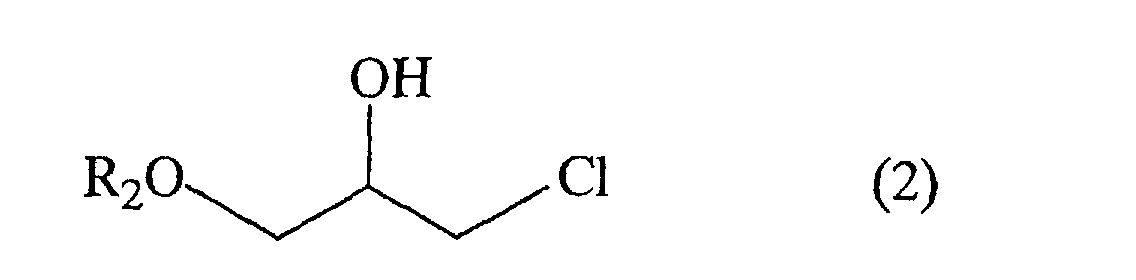
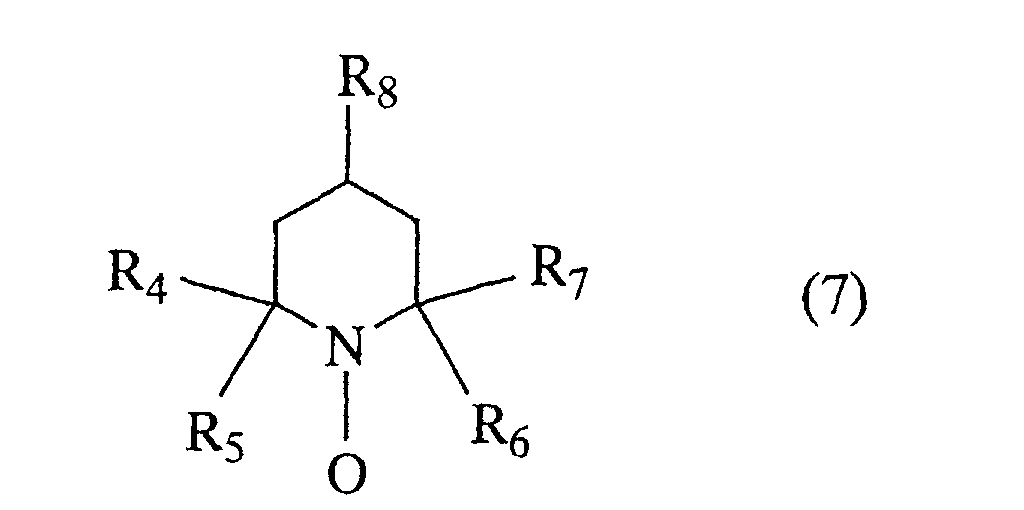
- the present invention also relates to a process for preparing a chlorohydroxyacetone derivative represented by formula (3); wherein R 2 is an alkyl group having 1 to 10 carbon atoms, an aryl group which may be substituted with a group having 1 to 15 carbon atoms, an aralkyl group which may be substituted with a group having 1 to 15 carbon atoms, an alkylsulfonyl group having 1 to 10 carbon atoms, an arylsulfonyl group which may be substituted with a group having 1 to 15 carbon atoms, an alkylcarbonyl group having 1 to 10 carbon atoms or an arylcarbonyl group which may be substituted with a group having 1 to 15 carbon atoms, which comprises allowing a chloropropanediol derivative represented by the formula (2); wherein R 2 is the same as the defined above, to react with a nitroxyl compound represented by the formula (7); wherein each of R 4 , R 5 , R 6 and R 7
- the present invention relates to a process for preparing an optically active chloropropanediol derivative represented by the formula (4); wherein R 2 is the same as the mentioned above, which comprises allowing chlorohydroxy acetone derivative represented by the formula (3) obtained by the above-mentioned preparing process to be stereospecifically reduced in the presence of an enzyme source having an activity to reduce it stereospecifically.
- the present invention relates to a process for preparing an optically active chloropropanediol derivative represented by the formula (6); wherein R 3 is an alkyl group having 1 to 10 carbon atoms, an aryl group which may be substituted with a group having 1 to 15 carbon atoms, an aralkyl group which may be substituted with a group having 1 to 15 carbon atoms, an alkylsulfonyl group having 1 to 15 carbon atoms, an arylsulfonyl group which may be substituted with a group having 1 to 15 carbon atoms, which comprises allowing a chlorohydroxyacetone derivative represented by the formula (5); wherein R 3 is the same as the mentioned above, to be stereospecifically reduced in the presence of an enzyme source having an activity to reduce the chlorohydroxy acetone derivative represented by the above-mentioned formula (5) stereospecifically.
- the aralkyl group which may be substituted with a group having 1 to 15 carbon atoms represented by R 1 in the formula (1)
- the aralkyl group include benzyl group, phenylethyl group, phenylpropyl group, naphthylmethyl group. Among them, benzyl group is preferable.
- the substituent of the aralkyl group includes an alkyl group having 1 to 8 carbon atoms, an alkoxy group having 1 to 8 carbon atoms, an acyl group having 1 to 10 carbon atoms, an aliphatic amide group having 1 to 5 carbon atoms, an aliphatic ether having 1 to 5 carbon atoms, an unsaturated aliphatic ether having 1 to 5 carbon atoms, a halogen atom such as fluorine, chlorine, iodine or bromine, hydroxyl group, thiol group, nitro group, amino group, cyano group, an aryl group such as phenyl group or naphthyl group.
- the halogen atom such as fluorine, chlorine, iodine or bromine is preferable.
- the alkyl group having 1 to 10 carbon atoms represented by R 2 or R 3 includes methyl group, ethyl group, propyl group, isopropyl group, n-butyl group, isobutyl group, sec-butyl group, t-butyl group or the like. Among them, t-butyl group is preferable.
- the aryl group which may be substituted with a group having 1 to 15 carbon atoms the aryl group includes phenyl group, naphthyl group, pyridyl group, indolinyl group or the like. Among them, phenyl group is preferable.
- the substituent of the aryl group includes an alkyl group having 1 to 8 carbon atoms, an alkoxy group having 1 to 8 carbon atoms, an acyl group having 1 to 10 carbon atoms, an aliphatic amide group having 1 to 5 carbon atoms, an aliphatic ether having 1 to 5 carbon atoms, an unsaturated aliphatic ether having 1 to 5 carbon atoms, a halogen atom such as fluorine, chlorine, iodine or bromine, hydroxyl group, thiol group, nitro group, amino group, cyano group, an aryl group such as phenyl group or naphthyl group.
- the halogen atom such as fluorine, chlorine, iodine or bromine is preferable.
- the number of substituents is preferably 0 to 3.
- the alkylsulfonyl group having 1 to 15 carbon atoms methane sulfonyl group is preferable.
- the arylsulfonyl group which may be substituted with a group having 1 to 15 carbon atoms includes phenylsulfonyl group, p-toluenesulfonyl group or p-nitruphenylsulfonyl group. Among them, p-toluenesulfonyl group is preferable.
- the alkylcarbonyl group having 1 to 10 carbon atoms represented by R 2 includes acetyl group, ethylcarbonyl group, propylcarbonyl group or the like. Among them, acetyl group is preferable.
- the arylcarbonyl group which may be substituted with a group having 1 to 15 carbon atoms includes p-bromobenzoly group or the like. Among them, benzoyl group and p-nitrobenzoly group are preferable.
- chloropropanediol derivative used as a raw material and represented by the formula (2) in the present invention for example, ( RS )-1-chloro-3-benzyloxy-2-propanol can be easily prepared by allowing epichlorohydrin to react with benzylalcohol in the presence of a Lewis acid (JP-A-02-211).
- first chlorohydroxyaceton derivative represented by the formula (3) is prepared by oxidizing ( RS )-chloropropanediol derivative represented by the formula (2) with nitroxyl compound represented by the formula (7) in the presence of an oxidant.
- the oxidation process of the present invention can be carried out by adding chloropropanediol derivative and nitroxyl compound to an appropriate solvent, and by dropping and stirring oxidant thereto.
- the reaction condition is not limited particularly.
- the reaction temperature is 0 to 70 °C, preferably 0 to 20 °C.
- the reaction pH is 4 to 10, preferably 7 to 9.
- the concentration of substrate is 0.1 to 50 % (w/v), preferably 1 to 50 % (w/v).
- the amount of nitroxyl compound to be added is 0.001 to 1 equivalent to substrate, preferably 0.01 to 0.1equivalent.
- As the reaction solvent acetic acid, toluene or methylen chloride is used.
- the substituent represented by R 4 to R 7 includes methyl group.
- the substituent represented by R 8 hydrogen atom, methoxy group, benzoyloxy group, acethylamino group, oxytho group or hydroxyl group is preferable and hydrogen atom and acethylamino group is more preferable.
- TEMPO 2,2,6,6-tetramethylpiperidine-1-oxyl
- 4-acethylamino-2,2,6,6-tetramethylpiperidine-1-oxyl 4-hydroxy-2,2,6,6-tetramethylpiperidine-1-oxyl
- 4-benzoyloxy-2,2,6,6-tetramethylpiperidine-1-oxyl 4-methoxy-2,2,6,6-tetramethylpiperidine-1-oxyl and 4-oxtho-2,2,6,6-tetramethylpiperidine-1-oxyl.
- 2,2,6,6-tetramethylpiperidine-1-oxyl or 4-acethylamino-2,2,6,6-tetramethylpiperidine-1-oxyl is preferable.
- Examples of the oxidantin include sodium hypochlorite, bleaching powder or chlorine. Among them, sodium hypochlorite is preferable.
- Chlorohydroxyaceton derivative obtained by the oxdation reaction can be purified according to general procedure.
- 1-benzyloxy-3-chloro-2-propanon can be purified by extraction with an organic solvent such as ethyl acetate or toluene from the mixture, removing the solvent under reduced pressure, treating the same by carrying out distillation under reduced pressure or chromatography. Also, it can be employed in a subsequent step without such purification.
- the compound whose R 2 is benzyl group that is 1-benzyloxy-3-chloro-2-propanon is a novel compound whose usefulness is found by the present inventor.
- an optically active chloropropanediol derivative can be prepared by reducing the thus-obtained chlorohydroxyacetone derivative in the presence of enzyme source having an activity to reduce the same stereoselectively.
- example of the enzyme source having an activity to reduce chlorohydroxyacetone derivative stereospecifically includes the enzyme source derived from microorganism belonging to Candida genus, Cryptococcus genus, Debaryomyces genus, Dekkera genus, Dipodascus genus, Galacctomyces genus, Geotrichum genus, Hansenula genus, Komagataella genus, Kluyveromyces genus, Pichia genus, Rhodotorula genus, Yarrowia genus, Sporidiobolus genus, Yamadazyma genus, Torulaspora genus, Torulopsis genus, Trichosporon genus, Alcaligenes genus, Rhodococcus genus, Micrococcus genus, Absidia genus, Acrotheca genus, Aspergillus genus, Chaetomidium genus, Gibberella
- preferable example includes the enzyme source derived from a microorganism selected from the group consisting of Candida galacta species, Candida arborea species, Candida catenulata species, Candida etchellsii species, Candida glabrata species, Candida gropengiesseri species, Candida guilliermondii species, Candida magnoliae species, Candida maltosa species, Candida parapsilosis species, Candida pararugosa species, Candida pinus species, Candida rugosa species, Candida sake species, Candida saitoana species, Candida sorbophila species, Candida tropicalis species, Cryptococcus humicolus species, Cryptococcus laurentii species, Cryptococcus terreus species, Debaryomyces hansenii species, Debaryomyces sp.
- a microorganism selected from the group consisting of Candida galacta species, Candida arborea species, Candida catenulata species, Candida etchellsii species, Candida glabrata species, Candida gropengiesser
- denitrificans species Rhodococcus erythropolis species, Rhodococcus equi species, Micrococcus luteus species, Absidia glauca species, Acrotheca cerophila species, Aspergillus japonicus species, Aspergillus parasiticus species, Aspergillus terreus species, Chaetomidium fimeti species, Gibberella fujikuroi species, Mortierella ramanniana var. angulispora species and Eupenicillium baarnense species. More preferable example includes the enzyme source derived from Candida magnoliae IFO 0705.
- the above-mentioned microorganism being the enzyme source may be either wild strain or variant.
- As the enzyme source a microorganism which is derived by genetic procedure such as cell fusion or genetic manipulation can be used.
- the microorganism producing the present enzyme can be obtained according to the method which comprises a step of isolating and/or purifying those enzymes to determine the complete or partial amino acid sequence thereof, a step of obtaining the DNA sequence encoding the enzyme according to the amino acid sequence, a step of introducing the DNA into other microorganisms to obtain a transformed microorganism, and a step of cultivating the transformed microorganism to obtain the present enzyme (WO 98/35025).
- Examples thereof include a transformed cell transformed by plasmid comprising DNA encoding the above carbonyl-reductase and DNA encoding an enzyme capable of regenerating coenzyme to which the enzyme depends.
- examples are a transformed cell such that the enzyme capable of regenerating coenzyme is glucose dehydrogenase, a transformed cell such that the glucose dehydrogenase is derived from Bacillus megaterium , a transformed cell such that the plasmid is pNTS1G, a transformed cell such that the transformed cell is Escherichia coli and the like.
- E.coli HB101 (pNTS1G) accession No. FERM-BP 5835 is more preferable.
- the medium for the microorganism is not particularly limited as long as the microorganism is proliferated thereon.
- examples thereof are a normal liquid medium containing sugar such as glucose or sucrose; alcohol such as ethanol or glycerol; fatty acid such as oleic acid or stearic acid and ester thereof; and oil such as rapeseed oil or soybean oil as carbon source, ammonium sulfate, sodium nitrate, peptone, Casamino acid, cone steep liquor, bran, yeast extract or the like as nitrogen source, magnesium sulfate, sodium chloride, calcium carbonate, dipotassium hydrogenphosphate, potassium dihydrogenphosphate as inorganic salt; and malt extract, meat extract or the like as other nutrients.
- the cultivation is carried out in aerobic condition, and generally the cultivation time is about 1 to 5 days, pH of the medium is 3 to 9, and the temperature of cultivation is 10 to 50°C.
- the reduction process of the present invention is carried out by adding chlorohydroxyacetone derivative as the substrate, coenzyme NAD(P) and culture of the above-mentioned microorganism or treated product thereof to an appropriate solvent, stirring them with adjusting pH.
- the concentration of substrate is usually about 0.1 to 90 % by weight, preferably about 1 to 50 % by weight
- the proportion of coenzyme NAD(P) is 0.0001 to 1 % by mole, preferably 0.001 to 0.1 % by mole based on the substrate
- the reaction temperature is 10 to 50°C, preferably 20 to 40°C.
- the reaction pH is 4 to 9, preferably 4 to 8.
- the reaction time is 1 to 120 hours, preferably 4 to 72 hours.
- the substrate can be added all at once or continuously. The reaction can be carried out batchwise or continuously.
- the coenzyme may not be added depending on the concentration of the substrate because a certain quantity of coenzyme is present in the whole cell.
- culture of microorganism means culture solution containing whole cell or cultivated whole cell.
- Teated product thereof' means, for example, crude extract, lyophilized microorganism, dried microorganism with acetone or ground product of such microorganism by friction.
- treated product thereof may be enzyme itself or one obtained by fixing the whole cell as it is by known procedure. The fixation may be carried out in the manner known to a person skilled in the art, for example, cross-link method, physical adsorption method, calthration method.
- the amount of costly coenzyme used in the reduction process of the present invention can be significantly reduced by using the common coenzyme NAD(P)H regenerating system jointly.
- the representative Example of the NAD(P)H regenerating system is the method in which glucose dehydrogenase is used coupled with glucose.
- an optically active chloropronediol derivative can be prepared at a lower cost since it is not necessary to prepare enzyme source necessary for regenerating coenzyme separately.
- ( S )-1-benzyloxy-3-chloro-2-propanol can be purified by removing suspended materials such as whole cell by means of treatment such as centrifugation or filtration, if necessary, in case of using a microorganism and the like, followed by extraction with an organic solvent such as ethyl acetate or toluene from the mixture, then removing the solvent under reduced pressure, and treating the same by carrying out distillation under reduced pressure or chromatography.
- Microorganisms as described below were inoculated on 5 ml of semisynthetic medium A (40 g of glucose, 3 g of yeast extract, 6.5 g of (NH 4 ) 2 HPO 4 , 1 g of KH 2 PO 4 , 0.8 g of MgSO 4 ⁇ 7H 2 O, 0.06 g of ZnSO 4 ⁇ 7H 2 O, 0.09 g of FeSO 4 ⁇ 7H 2 O, 0.005 g of CuSO 4 ⁇ 5H 2 O, 0.01 g of MnSO 4 ⁇ 4H 2 O, 0.1 g of NaCl, 1 L of water, pH 7) which has been sterilized in a test tube, and cultivated with shaking at 30°C for 2 or 3 days (seed culture).
- semisynthetic medium A 40 g of glucose, 3 g of yeast extract, 6.5 g of (NH 4 ) 2 HPO 4 , 1 g of KH 2 PO 4 , 0.8 g of MgSO 4 ⁇
- the obtained seed in amount of 0.1 ml was inoculated on 5 ml of semisynthetic medium B (40 g of glucose, 3 g of yeast extract, 6.5 g of (NH 4 ) 2 HPO 4 , 1 g of KH 2 PO 4 , 0.8 g of MgSO 4 ⁇ 7H 2 O, 0.06 g of ZnSO 4 ⁇ 7H 2 O, 0.09 g of FeSO 4 ⁇ 7H 2 O, 0.005 g of CuSO 4 ⁇ 5H 2 O, 0.01 g of MnSO 4 ⁇ 4H 2 O, 0.1 g of NaCl, 5 g of CaCO3, 3 drops of adecanol, 1 L of water) which has been sterilized in a test tube, and cultivated with shaking at 30°C for 2 or 3 days.
- semisynthetic medium B 40 g of glucose, 3 g of yeast extract, 6.5 g of (NH 4 ) 2 HPO 4 , 1 g of KH 2 PO 4
- Microorganism Yeild (%) Optical purity (% ee) Configuration Candida galacta IFO10031 69.7 89.9 S Candida arborea IAM4147 84.7 48.5 S Candida catenulata IFO0731 90.1 44.1 S Candida etchellsii IFO1942 42.8 96.5 S Candida glabrata IFO0005 55.9 43.5 S Candida gropengiesseri IFO0659 100.0 47.8 S Candida guilliermondii IFO0454 60.5 78.1 S Candida magnoliae IFO0705 100.0 88.7 S Candida parapsilosis IFO0585 70.3 80.5 S Candida pararugosa IFO0966 45.6 100.0 S Candida rugosa IFO1364 59.5 86.7 S Candida sorbophila IFO1583 57.1 86.5 S Candida tropicalis IFO0589 45.5 49.5 S Cryptococcus humicolus IFO0760 97.1 92.4 S Cryptococcus laurentii IFO0609 49.8 7
- Microorganisms as described below were inoculated on 5 ml of the semisynthetic medium C (10 g of meat extract, 10 g of polypeptone, 5 g of yeast extract, 3 g of NaCl and 1 L of water, pH 7) which has been sterilized in a test tube, and cultivated with shaking at 30°C for 2 or 3 days.
- the semisynthetic medium C (10 g of meat extract, 10 g of polypeptone, 5 g of yeast extract, 3 g of NaCl and 1 L of water, pH 7
- Microorganisms as described below were inoculated on 5 ml of the semisynthetic medium D (50g of glucose, 50 g of corn steep liquor and 1 L of water, pH 6) which has been sterilized in a test tube, and cultivated with shaking at 28°C for 2 or 3 days.
- the semisynthetic medium D 50g of glucose, 50 g of corn steep liquor and 1 L of water, pH 6
- Example 7 The same reduction as in Example 7 was carried out using the compound of the formula (3) in which R 2 (or R 3 in case of the formula (5)) was phenyl group (Ph), tosyl group (Ts) or benzoyl group (Bz) as a substrate.
- R 2 phenyl group
- Ts tosyl group
- Bz benzoyl group
- the product was analyzed using the HPLC (as in Example 6). The results thereof are shown in Table 4.
- Substrate R Conversion % Optical purity % ee Configuration Ph 100 100 S Ts 100 96.8 S B
- optically active chloropropanediol derivatives especially ( S )-1-benzyloxy-3-chloro-2-propanol, which are very useful as intermediates of medicinal products, can be efficiently prepared.
Landscapes
- Chemical & Material Sciences (AREA)
- Organic Chemistry (AREA)
- Engineering & Computer Science (AREA)
- Zoology (AREA)
- Life Sciences & Earth Sciences (AREA)
- Wood Science & Technology (AREA)
- Chemical Kinetics & Catalysis (AREA)
- Microbiology (AREA)
- General Chemical & Material Sciences (AREA)
- Biotechnology (AREA)
- Health & Medical Sciences (AREA)
- Biochemistry (AREA)
- Bioinformatics & Cheminformatics (AREA)
- General Engineering & Computer Science (AREA)
- General Health & Medical Sciences (AREA)
- Genetics & Genomics (AREA)
- Analytical Chemistry (AREA)
- Preparation Of Compounds By Using Micro-Organisms (AREA)
- Organic Low-Molecular-Weight Compounds And Preparation Thereof (AREA)
Abstract
Description


which comprises allowing a chloropropanediol derivative represented by the formula (2);
to react with a nitroxyl compound represented by the formula (7);

which comprises allowing chlorohydroxy acetone derivative represented by the formula (3) obtained by the above-mentioned preparing process to be stereospecifically reduced in the presence of an enzyme source having an activity to reduce it stereospecifically.

which comprises allowing a chlorohydroxyacetone derivative represented by the formula (5);

to be stereospecifically reduced in the presence of an enzyme source having an activity to reduce the chlorohydroxy acetone derivative represented by the above-mentioned formula (5) stereospecifically.
| Microorganism | Yeild (%) | Optical purity (% ee) | Configuration |
| Candida galacta IFO10031 | 69.7 | 89.9 | S |
| Candida arborea IAM4147 | 84.7 | 48.5 | S |
| Candida catenulata IFO0731 | 90.1 | 44.1 | S |
| Candida etchellsii IFO1942 | 42.8 | 96.5 | S |
| Candida glabrata IFO0005 | 55.9 | 43.5 | S |
| Candida gropengiesseri IFO0659 | 100.0 | 47.8 | S |
| Candida guilliermondii IFO0454 | 60.5 | 78.1 | S |
| Candida magnoliae IFO0705 | 100.0 | 88.7 | S |
| Candida parapsilosis IFO0585 | 70.3 | 80.5 | S |
| Candida pararugosa IFO0966 | 45.6 | 100.0 | S |
| Candida rugosa IFO1364 | 59.5 | 86.7 | S |
| Candida sorbophila IFO1583 | 57.1 | 86.5 | S |
| Candida tropicalis IFO0589 | 45.5 | 49.5 | S |
| Cryptococcus humicolus IFO0760 | 97.1 | 92.4 | S |
| Cryptococcus laurentii IFO0609 | 49.8 | 75.0 | S |
| Debaryomyces hansenii IFO0066 | 44.5 | 80.6 | S |
| Debaryomyces sp.H list et Guiel IFO0025 | 74.5 | 77.3 | S |
| Debaryomyces robertsiae IFO1277 | 85.3 | 80.5 | S |
| Debaryomyces castellii IFO1359 | 85.4 | 88.4 | S |
| Debaryomyces psedopolymorphus IFO1026 | 65.7 | 90.6 | S |
| Dekkera anomala IFO0627 | 91.2 | 75.8 | S |
| Dipodascus armillariae IFO0102 | 49.1 | 57.3 | S |
| Debaryomyces ovetensis IFO1201 | 49.7 | 75.4 | S |
| Galactomyces reessii CBS179.60 | 97.0 | 81.7 | S |
| Geotrichum fermentans CBS452.83 | 39.4 | 77.7 | S |
| Geotrichum fragrans CBS164.32 | 37.3 | 87.8 | S |
| Hansenula polymorpha DL1 AKU4752 | 58.6 | 59.0 | S |
| Komagataella pastoris IFO0948 | 39.4 | 78.3 | S |
| Kluyveromyces thermotolerans IFO0662 | 81.3 | 56.6 | S |
| Pichia membranaefaciens IFO0186 | 30.9 | 58.5 | S |
| Pichia naganishii IFO1670 | 93.6 | 91.7 | S |
| Rhodotorula glutinis IFO1099 | 25.8 | 51.5 | S |
| Yarrowia lipolytica IFO0746 | 86.4 | 80.4 | S |
| Sporidiobolus johnsonii IFO6903 | 24.3 | 74.8 | S |
| Yamadazyma farinosa IFO0193 | 33.8 | 74.2 | S |
| Candida maltosa IFO1977 | 40.6 | 20.9 | R |
| Candida pinus IFO0741 | 46.5 | 51.6 | R |
| Candida sake IFO1517 | 35.8 | 14.5 | R |
| Candida saitoana IFO0380 | 53.0 | 42.2 | R |
| Cryptococcus humicolus CBS2756 | 20.2 | 61.2 | R |
| Cryptococcus terreus IFO0727 | 54.5 | 24.7 | R |
| Torulaspora globosa IFO0016 | 76.7 | 41.3 | R |
| Trichosporon aquatile ATCC22310 | 81.5 | 54.0 | R |
| Yamadazyma farinosa IFO0602 | 67.5 | 65.3 | R |
| Microorganism | Yeild (%) | Optical purity (% ee) | Configuration |
| Alcaligenes xylosaxidens subsp.denitrificans ATCC15173 | 35.4 | 75.4 | S |
| Rhodococcus erythropolis IAM1440 | 56.3 | 32.8 | S |
| Rhodococcus equi JCM3132 | 35.3 | 39.7 | S |
| Escherichia coli HB101 (pNTS1G) | 100.0 | 100.0 | S |
| Micrococcus luteus IFO13867 | 30.7 | 62.0 | R |
| Microorganism | Yeild (%) | Optical (% ee) | Configuration |
| Absidia glauca HUT1013 | 22.5 | 100.0 | S |
| Acrotheca cerophila IFO6881 | 13.5 | 100.0 | S |
| Aspergillus japonicus IFO4062 | 19.0 | 100.0 | S |
| Aspergillus parasiticus IFO4301 | 17.1 | 100.0 | S |
| Aspergillus terreus IFO7078 | 19.3 | 56.0 | S |
| Chaetomidium fimeti IFO30419 | 33.5 | 80.1 | S |
| Gibberella fujikuroi IFO6603 | 28.5 | 87.6 | S |
| Mortierella ramanniana var. angulispora IFO6744 | 10.5 | 100.0 | S |
| Eupenicillium baarnense IFO6090 | 19.9 | 13.6 | R |
| Substrate R= | Conversion % | Optical purity % ee | Configuration |
| Ph | 100 | 100 | S |
| Ts | 100 | 96.8 | S |
| Bz | 100 | 100 | S |
Claims (32)
- A chlorohydroxyacetone derivative represented by the formula (1);wherein R1 is an aralkyl group which may be substituted with a group having 1 to 15 carbon atoms.

- The chorohydroxyacetone derivative of Claim 1, wherein R1 is benzyl group or a substituted benzyl group.
- A process for preparing a chlorohydroxyacetone derivative represented by the formula (3);wherein R2 is an alkyl group having 1 to 10 carbon atoms, an aryl group which may be substituted with a group having 1 to 15 carbon atoms, an aralkyl group which may be substituted with a group having 1 to 15 carbon atoms, an alkylsulfonyl group having 1 to 10 carbon atoms, an arylsulfonyl group which may be substituted with a group having 1 to 15 carbon atoms, an alkylcarbonyl group having 1 to 10 carbon atoms or an arylcarbonyl group which may be substituted with a group having 1 to 15 carbon atoms,

which comprises allowing a chloropropanediol derivative represented by the formula (2);wherein R2 is the same as the defined above,
to react with a nitroxyl compound represented by the formula (7);wherein each of R4, R5, R6 and R7 is an alkyl group which may be the same or different, R8 is hydrogen atom or electron-releasing group, in the presence of an oxidizing agent.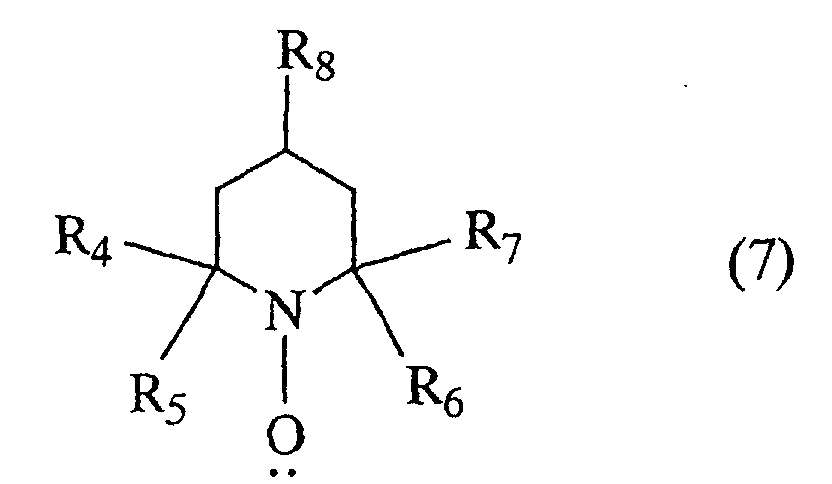
- The process for preparing a chlorohydroxyacetone derivative of Claim 3, wherein R2 is t-butyl group, phenyl group, benzyl group, mesyl group, tosyl group, acetyl group or benzoyl group in the compound represented by the formula (2) or (3).
- The process for preparing a chlorohydroxyacetone derivative of Claim 3 or 4, wherein R4, R5, R6 and R7 is methyl group, and R8 is hydrogen atom, methoxy group, benzoyloxy group, acetylamino group, oxo group or hydroxyl group in the nitroxyl compound represented by the formula (7).
- The process for preparing a chlorohydroxyacetone derivative of Claim 3, 4 or 5, wherein the oxidant is sodium hypochlorite.
- A process for preparing an optically active chloropropanediol derivative represented by the formula (4);wherein R2 is the same as the mentioned above,
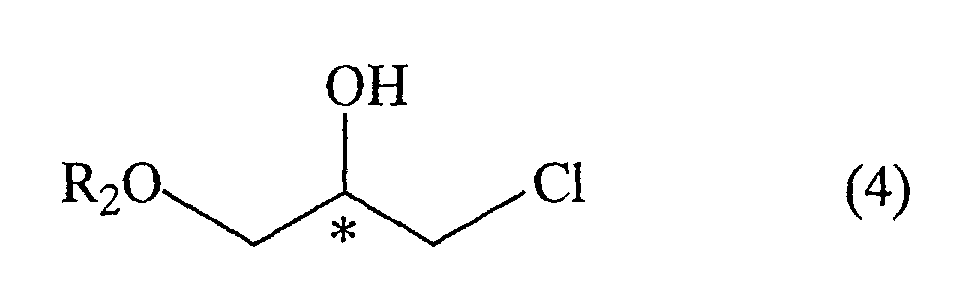
which comprises allowing a chlorohydroxyacetone derivative represented by the formula (3) obtained by the above-mentioned preparing process to be stereospecifically reduced in the presence of an enzyme source having an activity to reduce it stereospecifically. - The process for preparing an optically active chloropropanediol derivative of Claim 7, wherein R2 is t-butyl group, phenyl group, benzyl group, mesyl group, tosyl group, acetyl group or benzoyl group.
- The process for preparing an optically active chloropropanediol derivative of Claim 7 or 8, wherein the enzyme source is whole cell, culture of a microorganism belonging to Candida genus, Cryptococcus genus, Debaryomyces genus, Dekkera genus, Dipodascus genus, Galacctomyces genus, Geotrichum genus, Hansenula genus, Komagataella genus, Kluyveromyces genus, Pichia genus, Rhodotorula genus, Yarrowia genus, Sporidiobolus genus, Yamadazyma genus, Torulaspora genus, Torulopsis genus, Trichosporon genus, Alcaligenes genus, Rhodococcus genus, Micrococcus genus, Absidia genus, Acrotheca genus, Aspergillus genus, Chaetomidium genus, Gibberella genus, Mortierella genus or Eupenicillium genus, or a treated product thereof.
- The process for preparing an optically active chloropropanediol derivative of Claim 7, 8 or 9, wherein the enzyme source is whole cell, culture of a microorganism selected from the group consisting of Candida galacta species, Candida arborea species, Candida catenulata species, Candida etchellsii species, Candida glabrata species, Candida gropengiesseri species, Candida guilliermondii species, Candida magnoliae species, Candida maltosa species, Candida parapsilosis species, Candida pararugosa species, Candida pinus species, Candida rugosa species, Candida sake species, Candida saitoana species, Candida sorbophila species, Candida tropicalis species, Cryptococcus humicolus species, Cryptococcus laurentii species, Cryptococcus terreus species, Debaryomyces hansenii species, Debaryomyces sp. H list et Guiel species, Debaryomyces robertsiae species, Debaryomyces castellii species, Debaryomyces psedopolymorphus species, Dekkera anomala species, Dipodascus armillariae species, Dipodascus ovetensis species, Galacctomyces reessii species, Geotrichum fermentans species, Geotrichum fragrans species, Hansenula polymorpha DL1 species, Komagataella pastoris species, Kluyveromyces thermotolerans species, Pichia membranaefaciens species, Pichia naganishii species, Rhodotorula glutinis species, Yarrowia lipolytica species, Sporidiobolus johnsonii species, Yamadazyma farinosa species, Torulaspora globosa species, Trichosporon aquatile species, Alcaligenes xylosaxidens subsp. denitrificans species, Rhodococcus erythropolis species, Rhodococcus equi species, Micrococcus luteus species, Absidia glauca species, Acrotheca cerophila species, Aspergillus japonicus species, Aspergillus parasiticus species, Aspergillus terreus species, Chaetomidium fimeti species, Gibberella fujikuroi species, Mortierella ramanniana var. angulispora species and Eupenicillium baarnense species, or a treated product thereof.
- The process for preparing an optically active chloropropanediol derivative of Claim 7 or 8, wherein the enzyme source have an activity to reduce a chlorohydroxyacetone derivative represented by the formula (3) S-specifically.
- The process for preparing an optically active chloropropanediol derivative of Claim 11, wherein the enzyme source having the S-specific reducing activity is whole cell or culture of a microorganism belonging to Candida genus, Cryptococcus genus, Debaryomyces genus, Dekkera genus, Dipodascus genus, Galacctomyces genus, Geotrichum genus, Hansenula genus, Komagataella genus, Kluyveromyces genus, Pichia genus, Rhodotorula genus, Yarrowia genus, Sporidiobolus genus, Yamadazyma genus, Torulopsis genus, Alcaligenes genus, Rhodococcus genus, Micrococcus genus, Absidia genus, Acrotheca genus, Aspergillus genus, Chaetomidium genus, Gibberella genus or Mortierella genus, or a treated product thereof.
- The process for preparing an optically active chloropropanediol derivative of Claim 11 or 12, wherein the enzyme source having the S-specific reducing activity is whole cell or culture of a microorganism selected from the group consisting of Candida galacta species, Candida arborea species, Candida catenulata species, Candida etchellsii species, Candida glabrata species, Candida gropengiesseri species, Candida guilliermondii species, Candida magnoliae species, Candida parapsilosis species, Candida pararugosa species, Candida rugosa species, Candida sorbophila species, Candida tropicalis species, Cryptococcus humicolus species, Cryptococcus terreus species, Debaryomyces hansenii species, Debaryomyces sp. H list et Guiel species, Debaryomyces robertsiae species, Debaryomyces castellii species, Debaryomyces psedopolymorphus species, Dekkera anomala species, Dipodascus armillariae species, Dipodascus ovetensis species, Galacctomyces reessii species, Geotrichum fermentans species, Geotrichum fragrans species, Hansenula polymorpha DL1 species, Komagataella pastoris species, Kluyveromyces thermotolerans species, Pichia membranaefaciens species, Pichia naganishii species, Rhodotorula glutinis species, Yarrowia lipolytica species, Sporidiobolus johnsonii species, Yamadazyma farinosa species, Alcaligenes xylosaxidens subsp. denitrificans species, Rhodococcus erythropolis species, Rhodococcus equi species, Absidia glauca species, Acrotheca cerophila species, Aspergillus japonicus species, Aspergillus parasiticus species, Aspergillus terreus species, Chaetomidium fimeti species, Gibberella fujikuroi species and Mortierella ramanniana var. angulispora species, or a treated product thereof.
- The process for preparing an optically active chloropropanediol derivative of Claim 11, 12 or 13, wherein the enzyme source having the S-specific reducing activity is Candida magnoliae IFO 0705.
- The process for preparing an optically active chloropropanediol derivative of Claim 11, wherein the enzyme source having the S-specific reducing activity is a transformed cell with a plasmid comprising DNA encoding an carbonyl reductase derived from an microorganism belonging to Candida genus and DNA encoding an enzyme capable of regenerating coenzyme on which the reductase depends.
- The process for preparing an optically active chloropropanediol derivative of Claim 15, wherein the transformed cell is E. coli HB101 (pNTS1G) (accession No. FERM-BP 5835).
- The process for preparing an optically active chloropropanediol derivative of Claim 7 or 8, wherein the enzyme source have an activity to reduce chlorohydroxyaceton derivative represented by the formula (3) R-selectively.
- The process for preparing an optically active chloropropanediol derivative of Claim 17, wherein the enzyme source having R-specific reducing activity is whole cell or culture of a microorganism belonging to Candida genus, Cryptococcus genus, Torulaspora genus, Trichosporon genus, Yamadazyma genus, Micrococcus genus or Eupenicillium genus, or a treated product thereof.
- The process for preparing an optically active chloropropanediol derivative of Claim 17 or 18, wherein the enzyme source having R-specific reducing activity is whole cell or culture of a microorganism selected from the group consisting of Candida maltosa species, Candida pinus species, Candida sake species, Candida saitoana species, Cryptococcus humicolus species, Cryptococcus terreus species, Torulaspora globosa species, Trichosporon aquatile species, Yamadazyma farinosa species, or a treated product thereof.
- A process for preparing an optically active chloropropanediol derivative represented by the formula (6):wherein R3 is an alkyl group having 1 to 10 carbon atoms, an aryl group which may be substituted with a group having 1 to 15 carbon atoms, an aralkyl group which may be substituted with a group having 1 to 15 carbon atoms, an alkylsulfonyl group having 1 to 15 carbon atoms, an arylsulfonyl group which may be substituted with a group having 1 to 15 carbon atoms,

which comprises allowing a chlorohydroxyacetone derivative represented by the formula (5):wherein R3 is the same as the mentioned above,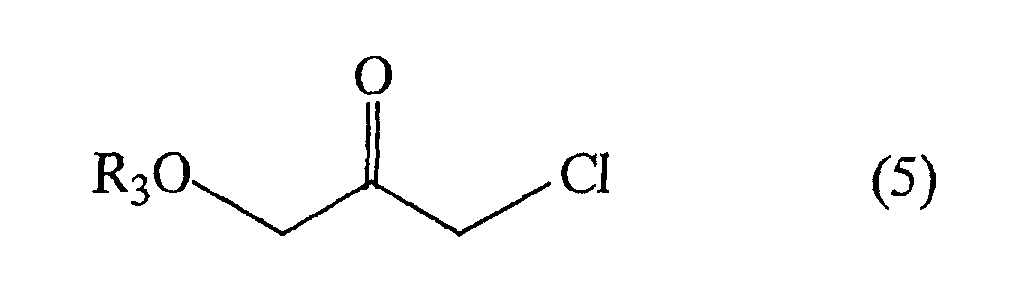
to be stereospecifically reduced in the presence of an enzyme source having an activity to reduce the chlorohydroxyacetone derivative represented by the above-mentioned formula (5) stereospecifically. - The process for preparing an optically active chloropropanediol derivative of Claim 20, wherein R3 is t-butyl group, phenyl group, benzyl group, mesyl group or tosyl group in the compound represented by the formula (5) or (6).
- The process for preparing an optically active chloropropanediol derivative of Claim 20 or 21, wherein the enzyme source having R-specific reducing activity is whole cell or culture of a microorganism belonging to Candida genus, Cryptococcus genus, Debaryomyces genus, Dekkera genus, Dipodascus genus, Galacctomyces genus, Geotrichum genus, Hansenula genus, Komagataella genus, Kluyveromyces genus, Pichia genus, Rhodotorula genus, Yarrowia genus, Sporidiobolus genus, Yamadazyma genus, Torulaspora genus, Torulopsis genus, Trichosporon genus, Alcaligenes genus, Rhodococcus genus, Micrococcus genus, Absidia genus, Acrotheca genus, Aspergillus genus, Chaetomidium genus, Gibberella genus, Mortierella genus or Eupenicillium genus, or the treated product thereof.
- The process for preparing an optically active chloropropanediol derivative of Claim 20, 21 or 22, wherein the enzyme source is whole cell or culture of a microorganism selected from the group consisting of Candida galacta species, Candida arborea species, Candida catenulata species, Candida etchellsii species, Candida glabrata species, Candida gropengiesseri species, Candida guilliermondii species, Candida magnoliae species, Candida maltosa species, Candida parapsilosis species, Candida pararugosa species, Candida pinus species, Candida rugosa species, Candida sake species, Candida saitoana species, Candida sorbophila species, Candida tropicalis species, Cryptococcus humicolus species, Cryptococcus laurentii species, Cryptococcus terreus species, Debaryomyces hansenii species, Debaryomyces sp. H list et Guiel species, Debaryomyces robertsiae species, Debaryomyces castellii species, Debaryomyces psedopolymorphus species, Dekkera anomala species, Dipodascus armillariae species, Dipodascus ovetensis species, Galacctomyces reessii species, Geotrichum fermentans species, Geotrichum fragrans species, Hansenula polymorpha DL1 species, Komagataella pastoris species, Kluyueromyces thermotolerans species, Pichia membranaefaciens species, Pichia naganishii species, Rhodotorula glutinis species, Yarrowia lipolytica species, Sporidiobolus johnsonii species, Yamadazyma farinosa species, Torulaspora globosa species, Trichosporon aquatile species, Alcaligenes xylosaxidens subsp. denitrificans species, Rhodococcus erythropolis species, Rhodococcus equi species, Micrococcus luteus species, Absidia glauca species, Acrotheca cerophila species, Aspergillus japonicus species, Aspergillus parasiticus species, Aspergillus terreus species, Chaetomidium fimeti species, Gibberella fujikuroi species, Mortierella ramanniana var. angulispora species and Eupenicillium baarnense species, or a treated product thereof.
- The process for preparing an optically active chloropropanediol derivative of Claim 20 or 21, wherein the enzyme source have an activity to reduce a chlorohydroxyacetone derivative represented by the formula (5) S-specifically.
- The process for preparing an optically active chloropropanediol derivative of Claim 24, wherein the enzyme source having the S-specific reducing activity is whole cell or culture of a microorganism belonging to Candida genus, Cryptococcus genus, Debaryomyces genus, Dekkera genus, Dipodascus genus, Galacctomyces genus, Geotrichum genus, Hansenula genus, Komagataella genus, Kluyveromyces genus, Pichia genus, Rhodotorula genus, Yarrowia genus, Sporidiobolus genus, Yamadazyma genus, Torulopsis genus, Alcaligenes genus, Rhodococcus genus, Micrococcus genus, Absidia genus, Acrotheca genus, Aspergillus genus, Chaetomidium genus, Gibberella genus or Mortierella genus, or a treated product thereof.
- The process for preparing an optically active chloropropanediol derivative of Claim 24 or 25, wherein the enzyme source having the S-specific reducing activity is whole cell or culture of a microorganism selected from the group consisting of Candida galacta species, Candida arborea species, Candida catenulata species, Candida etchellsii species, Candida glabrata species, Candida gropengiesseri species, Candida guilliermondii species, Candida magnoliae species, Candida parapsilosis species, Candida pararugosa species, Candida rugosa species, Candida sorbophila species, Candida tropicalis species, Cryptococcus humicolus species, Cryptococcus terreus species, Debaryomyces hansenii species, Debaryomyces sp. H list et Guiel species, Debaryomyces robertsiae species, Debaryomyces castellii species, Debaryomyces psedopolymorphus species, Dekkera anomala species, Dipodascus armillariae species, Dipodascus ovetensis species, Galacctomyces reessii species, Geotrichum fermentans species, Geotrichum fragrans species, Hansenula polymorpha DL1 species, Komagataella pastoris species, Kluyveromyces thermotolerans species, Pichia membranaefaciens species, Pichia naganishii species, Rhodotorula glutinis species, Yarrowia lipolytica species, Sporidiobolus johnsonii species, Yamadazyma farinosa species, Alcaligenes xylosaxidens subsp. denitrificans species, Rhodococcus erythropolis species, Rhodococcus equi species, Absidia glauca species, Acrotheca cerophila species, Aspergillus japonicus species, Aspergillus parasiticus species, Aspergillus terreus species, Chaetomidium fimeti species, Gibberella fujikuroi species and Mortierella ramanniana var. angulispora species, or a treated product thereof.
- The process for preparing an optically active chloropropanediol derivative of Claim 24, 25 or 26, wherein the enzyme source having the S-specific reducing activity is Candida magnoliae IFO 0705.
- The process for preparing an optically active chloropropanediol derivative of Claim 24, wherein the enzyme source having the S-specific reducing activity is a transformed cell with a plasmid comprising DNA encoding an carbonyl reductase derived from a microorganism belonging to Candida genus and DNA encoding an enzyme capable of regenerating coenzyme on which the reductase depends.
- The process for preparing an optically active chloropropanediol derivative of Claim 28, wherein the transformed cell is E. coli HB101 (pNTS1G) (accession No. FERM-BP 5835).
- The process for preparing an optically active chloropropanediol derivative of Claim 20 or 21, wherein the enzyme source have an activity to reduce a chlorohydroxyacetone derivative represented by the formula (5) R-specifically.
- The process for preparing an optically active chloropropanediol derivative of Claim 30, wherein the enzyme source having R-specific reducing activity is whole cell or culture of a microorganism belonging to Candida genus, Cryptococcus genus, Torulaspora genus, Trichosporon genus, Yamadazyma genus, Micrococcus genus or Eupenicillium genus, or a treated product thereof.
- The process for preparing an optically active chloropropanediol derivative of Claim 30 or 31, wherein the enzyme source having R-specific reducing activity is whole cell or culture of a microorganism selected from the group consisting of Candida maltosa species, Candida pinus species, Candida sake species, Candida saitoana species, Cryptococcus humicolus species, Cryptococcus terreus species, Torulaspora globosa species, Trichosporon aquatile species and Yamadazyma farinosa species, or the treated product thereof.
Applications Claiming Priority (3)
| Application Number | Priority Date | Filing Date | Title |
|---|---|---|---|
| JP2000192245 | 2000-06-27 | ||
| JP2000192245 | 2000-06-27 | ||
| PCT/JP2001/005363 WO2002000585A1 (en) | 2000-06-27 | 2001-06-22 | Chlorohydroxyacetone derivative and process for producing optically active chloropropanediol derivative from the same |
Publications (2)
| Publication Number | Publication Date |
|---|---|
| EP1298119A1 true EP1298119A1 (en) | 2003-04-02 |
| EP1298119A4 EP1298119A4 (en) | 2005-09-21 |
Family
ID=18691403
Family Applications (1)
| Application Number | Title | Priority Date | Filing Date |
|---|---|---|---|
| EP01941182A Withdrawn EP1298119A4 (en) | 2000-06-27 | 2001-06-22 | Chlorohydroxyacetone derivative and process for producing optically active chloropropanediol derivative from the same |
Country Status (3)
| Country | Link |
|---|---|
| US (1) | US6682916B2 (en) |
| EP (1) | EP1298119A4 (en) |
| WO (1) | WO2002000585A1 (en) |
Cited By (1)
| Publication number | Priority date | Publication date | Assignee | Title |
|---|---|---|---|---|
| CN108947941A (en) * | 2018-06-22 | 2018-12-07 | 华东师范大学 | A kind of preparation method of 3- oxetanone |
Families Citing this family (5)
| Publication number | Priority date | Publication date | Assignee | Title |
|---|---|---|---|---|
| US20060030493A1 (en) * | 2004-08-03 | 2006-02-09 | Segura Michael J | Crosslinked treatment fluid compositions and methods |
| US7343976B2 (en) * | 2005-02-22 | 2008-03-18 | Halliburton Energy Services, Inc. | Methods of treating subterranean formations using derivatized gelling agents |
| US8859235B2 (en) * | 2009-08-14 | 2014-10-14 | Basf Se | Methods in cell cultures, and related inventions, employing certain additives |
| CN109485567B (en) * | 2018-02-13 | 2021-07-09 | 上海博璞诺科技发展有限公司 | Clean preparation method of 4-hydroxymethylthiazole and intermediate thereof |
| CN117164418B (en) * | 2023-08-18 | 2024-07-02 | 徐州医科大学 | Alpha-halogenated ketone, efficient synthesis method and application thereof |
Family Cites Families (4)
| Publication number | Priority date | Publication date | Assignee | Title |
|---|---|---|---|---|
| DE69131685T2 (en) * | 1990-07-24 | 2000-04-27 | Kanegafuchi Kagaku Kogyo K.K., Osaka | METHOD FOR PRODUCING OPTICALLY ACTIVE (-) - 2-HALO-1- (SUBSTITUTED PHENYL) ETHANOLS |
| JP2979671B2 (en) | 1991-02-20 | 1999-11-15 | 大日本インキ化学工業株式会社 | Method for producing optically active glycerol derivative |
| CA2280502A1 (en) * | 1997-02-07 | 1998-08-13 | Kaneka Corporation | Novel carbonyl reductase, gene coding same, and method for using such reductase and gene |
| JP3941184B2 (en) | 1997-10-06 | 2007-07-04 | 三菱化学株式会社 | Process for producing optically active 1-acyloxy-3-chloro-2-propanol and optically active 3-chloro-1,2-propanediol |
-
2001
- 2001-06-22 WO PCT/JP2001/005363 patent/WO2002000585A1/en not_active Ceased
- 2001-06-22 EP EP01941182A patent/EP1298119A4/en not_active Withdrawn
- 2001-06-22 US US10/069,105 patent/US6682916B2/en not_active Expired - Fee Related
Cited By (2)
| Publication number | Priority date | Publication date | Assignee | Title |
|---|---|---|---|---|
| CN108947941A (en) * | 2018-06-22 | 2018-12-07 | 华东师范大学 | A kind of preparation method of 3- oxetanone |
| CN108947941B (en) * | 2018-06-22 | 2022-02-11 | 华东师范大学 | Preparation method of 3-oxetanone |
Also Published As
| Publication number | Publication date |
|---|---|
| WO2002000585A1 (en) | 2002-01-03 |
| US6682916B2 (en) | 2004-01-27 |
| EP1298119A4 (en) | 2005-09-21 |
| US20020160398A1 (en) | 2002-10-31 |
Similar Documents
| Publication | Publication Date | Title |
|---|---|---|
| Yasohara et al. | Synthesis of optically active ethyl 4-chloro-3-hydroxybutanoate by microbial reduction | |
| US6620602B2 (en) | Biocatalytic synthesis of quinic acid and conversion to hydroquinone | |
| JP3580825B2 (en) | Reduction of ketone groups | |
| US20100016627A1 (en) | Process for producing optically active 3-hydroxypropionic ester derivative | |
| JP3610600B2 (en) | Method for producing optically active endo-2-norborneols | |
| US12391965B2 (en) | Conversion of farnesylacetone to homofarnesylacetate by baeyer-villiger monooxygenase | |
| KR100657212B1 (en) | Method for preparing optically active ester derivatives and acids thereof from racemic esters | |
| US6682916B2 (en) | Chlorohydroxyacetone derivative and process for producing optically active chloropropanediol derivative from the same | |
| US6271008B1 (en) | Yeast-based process for production of l-pac | |
| US7329518B2 (en) | Enzyme for producing optically active pyridineethanol derivatives | |
| EP1240347B1 (en) | Yeast-based process for production of l-pac | |
| EP0529085B1 (en) | Process for producing optically active 3-chloro-1-phenyl-1-propanol and derivative thereof | |
| JP3919918B2 (en) | Process for producing optically active 2-halo-1- (substituted phenyl) ethanol | |
| US6214610B1 (en) | Process for the preparation of optically active N-benzyl-3-pyrrolidinol | |
| D’Arrigo et al. | Stereoselective synthesis of chiral compounds using whole-cell biocatalysts | |
| Goswami et al. | Microbial reduction of α-chloroketone to α-chlorohydrin | |
| JPH11103878A (en) | Process for producing optically active 1-acyloxy-3-chloro-2-propanol and optically active 3-chloro-1,2-propanediol | |
| EP0792936B1 (en) | Process for the preparation of optically active 2-halo-1-(substituted phenyl) ethanol | |
| JPWO2003031636A1 (en) | Process for producing optically active 3-hydroxypentanenitrile | |
| JP4744916B2 (en) | Method for isolating and obtaining optically active alkyl alcohol derivative | |
| JPWO2002000585A1 (en) | Chlorohydroxyacetone derivatives and method for producing optically active chloropropanediol derivatives using the same | |
| US20050014818A1 (en) | Process for producing optically active chroman derivative and intermediate | |
| EP2796562A1 (en) | Method for producing optically-active -substituted- -amino acid | |
| EP2069516B1 (en) | Specific hydrolysis of the n-unprotected (r) -ester of (3 ) -amin0-3-arylpr0pi0nic acid esters | |
| WO1999004028A1 (en) | PROCESS FOR PREPARING OPTICALLY ACTIVE α-TRIFLUOROMETHYLLACTIC ACID AND ANTIPODE ESTERS THEREOF AND METHOD OF PURIFICATION THEREOF |
Legal Events
| Date | Code | Title | Description |
|---|---|---|---|
| PUAI | Public reference made under article 153(3) epc to a published international application that has entered the european phase |
Free format text: ORIGINAL CODE: 0009012 |
|
| 17P | Request for examination filed |
Effective date: 20030124 |
|
| AK | Designated contracting states |
Kind code of ref document: A1 Designated state(s): BE CH DE ES FR GB IE IT LI NL Designated state(s): BE CH DE ES FR GB IE IT LI NL |
|
| RIN1 | Information on inventor provided before grant (corrected) |
Inventor name: YASOHARA, YOSHIHIKO Inventor name: TOYOTA, KOICHIRO Inventor name: OKURO, KAZUMI Inventor name: MAEDA, HIRONOBU Inventor name: TAOKA, NAOAKI |
|
| A4 | Supplementary search report drawn up and despatched |
Effective date: 20050810 |
|
| RIC1 | Information provided on ipc code assigned before grant |
Ipc: 7C 12R 1/65 B Ipc: 7C 12R 1/265 B Ipc: 7C 12R 1/05 B Ipc: 7C 12R 1/645 B Ipc: 7C 12R 1/88 B Ipc: 7C 12R 1/84 B Ipc: 7C 12R 1/78 B Ipc: 7C 12R 1/72 B Ipc: 7C 12P 7/02 B Ipc: 7C 07C 303/30 B Ipc: 7C 07C 309/73 B Ipc: 7C 07C 67/29 B Ipc: 7C 07C 45/29 B Ipc: 7C 07C 69/78 B Ipc: 7C 07C 49/175 A |
|
| STAA | Information on the status of an ep patent application or granted ep patent |
Free format text: STATUS: THE APPLICATION IS DEEMED TO BE WITHDRAWN |
|
| 18D | Application deemed to be withdrawn |
Effective date: 20051104 |