EP1298097A1 - Method for producing porous inorganic materials - Google Patents
Method for producing porous inorganic materials Download PDFInfo
- Publication number
- EP1298097A1 EP1298097A1 EP02021142A EP02021142A EP1298097A1 EP 1298097 A1 EP1298097 A1 EP 1298097A1 EP 02021142 A EP02021142 A EP 02021142A EP 02021142 A EP02021142 A EP 02021142A EP 1298097 A1 EP1298097 A1 EP 1298097A1
- Authority
- EP
- European Patent Office
- Prior art keywords
- gel
- precursor
- pore
- dissolving agent
- matrix dissolving
- Prior art date
- Legal status (The legal status is an assumption and is not a legal conclusion. Google has not performed a legal analysis and makes no representation as to the accuracy of the status listed.)
- Ceased
Links
- 229910010272 inorganic material Inorganic materials 0.000 title abstract description 22
- 239000011147 inorganic material Substances 0.000 title abstract description 22
- 238000004519 manufacturing process Methods 0.000 title abstract description 9
- 239000011148 porous material Substances 0.000 claims abstract description 111
- 239000003795 chemical substances by application Substances 0.000 claims abstract description 39
- 239000011159 matrix material Substances 0.000 claims abstract description 31
- 239000002243 precursor Substances 0.000 claims abstract description 22
- XSQUKJJJFZCRTK-UHFFFAOYSA-N Urea Chemical compound NC(N)=O XSQUKJJJFZCRTK-UHFFFAOYSA-N 0.000 claims abstract description 18
- 239000004202 carbamide Substances 0.000 claims abstract description 18
- 150000001875 compounds Chemical class 0.000 claims abstract description 11
- 238000000034 method Methods 0.000 claims description 29
- 239000002904 solvent Substances 0.000 claims description 23
- VYPSYNLAJGMNEJ-UHFFFAOYSA-N Silicium dioxide Chemical group O=[Si]=O VYPSYNLAJGMNEJ-UHFFFAOYSA-N 0.000 claims description 22
- 230000008569 process Effects 0.000 claims description 16
- 238000010438 heat treatment Methods 0.000 claims description 12
- 239000000203 mixture Substances 0.000 claims description 12
- 239000000377 silicon dioxide Substances 0.000 claims description 10
- 239000003446 ligand Substances 0.000 claims description 9
- 238000001035 drying Methods 0.000 claims description 7
- 238000006460 hydrolysis reaction Methods 0.000 claims description 7
- 238000001354 calcination Methods 0.000 claims description 6
- 230000007062 hydrolysis Effects 0.000 claims description 5
- 150000002902 organometallic compounds Chemical class 0.000 claims description 5
- 239000011521 glass Substances 0.000 claims description 3
- 239000002241 glass-ceramic Substances 0.000 claims description 3
- 230000007704 transition Effects 0.000 claims description 3
- 125000003368 amide group Chemical group 0.000 claims description 2
- 238000001704 evaporation Methods 0.000 claims description 2
- 230000008020 evaporation Effects 0.000 claims description 2
- 238000002156 mixing Methods 0.000 claims description 2
- 238000009826 distribution Methods 0.000 abstract description 34
- DLFVBJFMPXGRIB-UHFFFAOYSA-N Acetamide Chemical compound CC(N)=O DLFVBJFMPXGRIB-UHFFFAOYSA-N 0.000 abstract description 4
- ZHNUHDYFZUAESO-UHFFFAOYSA-N Formamide Chemical compound NC=O ZHNUHDYFZUAESO-UHFFFAOYSA-N 0.000 abstract description 4
- ZMXDDKWLCZADIW-UHFFFAOYSA-N N,N-Dimethylformamide Chemical compound CN(C)C=O ZMXDDKWLCZADIW-UHFFFAOYSA-N 0.000 abstract description 4
- ATHHXGZTWNVVOU-UHFFFAOYSA-N N-methylformamide Chemical compound CNC=O ATHHXGZTWNVVOU-UHFFFAOYSA-N 0.000 abstract description 4
- FXHOOIRPVKKKFG-UHFFFAOYSA-N N,N-Dimethylacetamide Chemical compound CN(C)C(C)=O FXHOOIRPVKKKFG-UHFFFAOYSA-N 0.000 abstract description 2
- OHLUUHNLEMFGTQ-UHFFFAOYSA-N N-methylacetamide Chemical compound CNC(C)=O OHLUUHNLEMFGTQ-UHFFFAOYSA-N 0.000 abstract description 2
- 239000000499 gel Substances 0.000 description 77
- 239000002736 nonionic surfactant Substances 0.000 description 25
- 239000000243 solution Substances 0.000 description 21
- 239000000463 material Substances 0.000 description 20
- 239000012071 phase Substances 0.000 description 19
- -1 2,3-dihydroxypropyl Chemical group 0.000 description 18
- 238000006243 chemical reaction Methods 0.000 description 16
- IJGRMHOSHXDMSA-UHFFFAOYSA-N Atomic nitrogen Chemical compound N#N IJGRMHOSHXDMSA-UHFFFAOYSA-N 0.000 description 14
- 238000006116 polymerization reaction Methods 0.000 description 13
- 229920003171 Poly (ethylene oxide) Polymers 0.000 description 12
- LFQCEHFDDXELDD-UHFFFAOYSA-N tetramethyl orthosilicate Chemical compound CO[Si](OC)(OC)OC LFQCEHFDDXELDD-UHFFFAOYSA-N 0.000 description 11
- GRYLNZFGIOXLOG-UHFFFAOYSA-N Nitric acid Chemical compound O[N+]([O-])=O GRYLNZFGIOXLOG-UHFFFAOYSA-N 0.000 description 9
- 229910052751 metal Inorganic materials 0.000 description 9
- 229910017604 nitric acid Inorganic materials 0.000 description 9
- 125000006353 oxyethylene group Chemical group 0.000 description 9
- 238000001149 thermolysis Methods 0.000 description 9
- 239000002184 metal Substances 0.000 description 8
- 150000002736 metal compounds Chemical class 0.000 description 8
- 150000004703 alkoxides Chemical class 0.000 description 7
- 230000001186 cumulative effect Effects 0.000 description 7
- 229910052757 nitrogen Inorganic materials 0.000 description 7
- 238000000926 separation method Methods 0.000 description 7
- 238000001179 sorption measurement Methods 0.000 description 7
- 239000000126 substance Substances 0.000 description 7
- QTBSBXVTEAMEQO-UHFFFAOYSA-N Acetic acid Chemical compound CC(O)=O QTBSBXVTEAMEQO-UHFFFAOYSA-N 0.000 description 6
- KRHYYFGTRYWZRS-UHFFFAOYSA-N Fluorane Chemical compound F KRHYYFGTRYWZRS-UHFFFAOYSA-N 0.000 description 6
- HEMHJVSKTPXQMS-UHFFFAOYSA-M Sodium hydroxide Chemical compound [OH-].[Na+] HEMHJVSKTPXQMS-UHFFFAOYSA-M 0.000 description 6
- QGZKDVFQNNGYKY-UHFFFAOYSA-N ammonia Natural products N QGZKDVFQNNGYKY-UHFFFAOYSA-N 0.000 description 6
- 230000006872 improvement Effects 0.000 description 6
- 108090000790 Enzymes Proteins 0.000 description 5
- 102000004190 Enzymes Human genes 0.000 description 5
- 239000007864 aqueous solution Substances 0.000 description 5
- 125000000217 alkyl group Chemical group 0.000 description 4
- 230000015572 biosynthetic process Effects 0.000 description 4
- 238000004587 chromatography analysis Methods 0.000 description 4
- 125000000524 functional group Chemical group 0.000 description 4
- QSHDDOUJBYECFT-UHFFFAOYSA-N mercury Chemical compound [Hg] QSHDDOUJBYECFT-UHFFFAOYSA-N 0.000 description 4
- 229910052753 mercury Inorganic materials 0.000 description 4
- 239000002245 particle Substances 0.000 description 4
- 238000003980 solgel method Methods 0.000 description 4
- 239000004094 surface-active agent Substances 0.000 description 4
- OKKJLVBELUTLKV-UHFFFAOYSA-N Methanol Chemical compound OC OKKJLVBELUTLKV-UHFFFAOYSA-N 0.000 description 3
- 239000008280 blood Substances 0.000 description 3
- 210000004369 blood Anatomy 0.000 description 3
- 238000013375 chromatographic separation Methods 0.000 description 3
- 239000012636 effector Substances 0.000 description 3
- 239000003921 oil Substances 0.000 description 3
- 230000035515 penetration Effects 0.000 description 3
- 238000005191 phase separation Methods 0.000 description 3
- 229910052710 silicon Inorganic materials 0.000 description 3
- 239000010703 silicon Substances 0.000 description 3
- 239000007858 starting material Substances 0.000 description 3
- VHUUQVKOLVNVRT-UHFFFAOYSA-N Ammonium hydroxide Chemical compound [NH4+].[OH-] VHUUQVKOLVNVRT-UHFFFAOYSA-N 0.000 description 2
- LFQSCWFLJHTTHZ-UHFFFAOYSA-N Ethanol Chemical compound CCO LFQSCWFLJHTTHZ-UHFFFAOYSA-N 0.000 description 2
- KDLHZDBZIXYQEI-UHFFFAOYSA-N Palladium Chemical compound [Pd] KDLHZDBZIXYQEI-UHFFFAOYSA-N 0.000 description 2
- 229920002125 Sokalan® Polymers 0.000 description 2
- 241000519995 Stachys sylvatica Species 0.000 description 2
- 230000002378 acidificating effect Effects 0.000 description 2
- 229910021529 ammonia Inorganic materials 0.000 description 2
- 125000003118 aryl group Chemical group 0.000 description 2
- 125000004432 carbon atom Chemical group C* 0.000 description 2
- 125000003178 carboxy group Chemical group [H]OC(*)=O 0.000 description 2
- 239000000969 carrier Substances 0.000 description 2
- 239000003054 catalyst Substances 0.000 description 2
- 230000003197 catalytic effect Effects 0.000 description 2
- 230000008859 change Effects 0.000 description 2
- 238000001212 derivatisation Methods 0.000 description 2
- 238000007598 dipping method Methods 0.000 description 2
- 230000001939 inductive effect Effects 0.000 description 2
- 229920002114 octoxynol-9 Polymers 0.000 description 2
- 229920000620 organic polymer Polymers 0.000 description 2
- BASFCYQUMIYNBI-UHFFFAOYSA-N platinum Chemical compound [Pt] BASFCYQUMIYNBI-UHFFFAOYSA-N 0.000 description 2
- 229920000083 poly(allylamine) Polymers 0.000 description 2
- 229920001467 poly(styrenesulfonates) Polymers 0.000 description 2
- 239000004584 polyacrylic acid Substances 0.000 description 2
- 229920000036 polyvinylpyrrolidone Polymers 0.000 description 2
- 239000001267 polyvinylpyrrolidone Substances 0.000 description 2
- 235000013855 polyvinylpyrrolidone Nutrition 0.000 description 2
- 238000002360 preparation method Methods 0.000 description 2
- 238000001878 scanning electron micrograph Methods 0.000 description 2
- 229940006186 sodium polystyrene sulfonate Drugs 0.000 description 2
- 239000002594 sorbent Substances 0.000 description 2
- 238000003756 stirring Methods 0.000 description 2
- 229920003169 water-soluble polymer Polymers 0.000 description 2
- 239000011240 wet gel Substances 0.000 description 2
- 238000004438 BET method Methods 0.000 description 1
- 239000004215 Carbon black (E152) Substances 0.000 description 1
- 229920001214 Polysorbate 60 Polymers 0.000 description 1
- 229910006069 SO3H Inorganic materials 0.000 description 1
- BOTDANWDWHJENH-UHFFFAOYSA-N Tetraethyl orthosilicate Chemical compound CCO[Si](OCC)(OCC)OCC BOTDANWDWHJENH-UHFFFAOYSA-N 0.000 description 1
- 108700040099 Xylose isomerases Proteins 0.000 description 1
- 239000002253 acid Substances 0.000 description 1
- 239000003929 acidic solution Substances 0.000 description 1
- 230000009471 action Effects 0.000 description 1
- 238000007792 addition Methods 0.000 description 1
- 239000000654 additive Substances 0.000 description 1
- 230000000996 additive effect Effects 0.000 description 1
- 238000001042 affinity chromatography Methods 0.000 description 1
- 150000005215 alkyl ethers Chemical class 0.000 description 1
- 125000005037 alkyl phenyl group Chemical group 0.000 description 1
- 125000005233 alkylalcohol group Chemical group 0.000 description 1
- 150000003862 amino acid derivatives Chemical class 0.000 description 1
- 239000012491 analyte Substances 0.000 description 1
- 125000003710 aryl alkyl group Chemical group 0.000 description 1
- 125000000484 butyl group Chemical group [H]C([*])([H])C([H])([H])C([H])([H])C([H])([H])[H] 0.000 description 1
- 150000003857 carboxamides Chemical class 0.000 description 1
- 239000003153 chemical reaction reagent Substances 0.000 description 1
- 238000004332 deodorization Methods 0.000 description 1
- 230000001419 dependent effect Effects 0.000 description 1
- 230000002255 enzymatic effect Effects 0.000 description 1
- NKSJNEHGWDZZQF-UHFFFAOYSA-N ethenyl(trimethoxy)silane Chemical compound CO[Si](OC)(OC)C=C NKSJNEHGWDZZQF-UHFFFAOYSA-N 0.000 description 1
- RTZKZFJDLAIYFH-UHFFFAOYSA-N ether Substances CCOCC RTZKZFJDLAIYFH-UHFFFAOYSA-N 0.000 description 1
- 150000002170 ethers Chemical class 0.000 description 1
- SBRXLTRZCJVAPH-UHFFFAOYSA-N ethyl(trimethoxy)silane Chemical compound CC[Si](OC)(OC)OC SBRXLTRZCJVAPH-UHFFFAOYSA-N 0.000 description 1
- 239000003925 fat Substances 0.000 description 1
- 239000000945 filler Substances 0.000 description 1
- 238000004817 gas chromatography Methods 0.000 description 1
- 150000004676 glycans Chemical class 0.000 description 1
- 229930195733 hydrocarbon Natural products 0.000 description 1
- 150000002430 hydrocarbons Chemical class 0.000 description 1
- 230000003301 hydrolyzing effect Effects 0.000 description 1
- 230000002209 hydrophobic effect Effects 0.000 description 1
- 125000001165 hydrophobic group Chemical group 0.000 description 1
- 238000004191 hydrophobic interaction chromatography Methods 0.000 description 1
- 238000002347 injection Methods 0.000 description 1
- 239000007924 injection Substances 0.000 description 1
- 150000007529 inorganic bases Chemical class 0.000 description 1
- 238000004255 ion exchange chromatography Methods 0.000 description 1
- 125000003010 ionic group Chemical group 0.000 description 1
- 238000004811 liquid chromatography Methods 0.000 description 1
- 239000007791 liquid phase Substances 0.000 description 1
- 150000002646 long chain fatty acid esters Chemical class 0.000 description 1
- 239000013627 low molecular weight specie Substances 0.000 description 1
- 238000005259 measurement Methods 0.000 description 1
- 230000007246 mechanism Effects 0.000 description 1
- 229910001510 metal chloride Inorganic materials 0.000 description 1
- BFXIKLCIZHOAAZ-UHFFFAOYSA-N methyltrimethoxysilane Chemical compound CO[Si](C)(OC)OC BFXIKLCIZHOAAZ-UHFFFAOYSA-N 0.000 description 1
- 150000007522 mineralic acids Chemical class 0.000 description 1
- 230000007935 neutral effect Effects 0.000 description 1
- 125000002347 octyl group Chemical group [H]C([*])([H])C([H])([H])C([H])([H])C([H])([H])C([H])([H])C([H])([H])C([H])([H])C([H])([H])[H] 0.000 description 1
- 150000007524 organic acids Chemical class 0.000 description 1
- 229910052763 palladium Inorganic materials 0.000 description 1
- 125000001997 phenyl group Chemical group [H]C1=C([H])C([H])=C(*)C([H])=C1[H] 0.000 description 1
- 125000003884 phenylalkyl group Chemical group 0.000 description 1
- 229910052697 platinum Inorganic materials 0.000 description 1
- 229920000642 polymer Polymers 0.000 description 1
- 229920001451 polypropylene glycol Polymers 0.000 description 1
- 229920001282 polysaccharide Polymers 0.000 description 1
- 239000005017 polysaccharide Substances 0.000 description 1
- 238000002459 porosimetry Methods 0.000 description 1
- 238000004237 preparative chromatography Methods 0.000 description 1
- 238000000197 pyrolysis Methods 0.000 description 1
- 238000004366 reverse phase liquid chromatography Methods 0.000 description 1
- 230000000630 rising effect Effects 0.000 description 1
- 150000003839 salts Chemical class 0.000 description 1
- 229920006395 saturated elastomer Polymers 0.000 description 1
- 238000007711 solidification Methods 0.000 description 1
- 230000008023 solidification Effects 0.000 description 1
- 241000894007 species Species 0.000 description 1
- 125000004079 stearyl group Chemical group [H]C([*])([H])C([H])([H])C([H])([H])C([H])([H])C([H])([H])C([H])([H])C([H])([H])C([H])([H])C([H])([H])C([H])([H])C([H])([H])C([H])([H])C([H])([H])C([H])([H])C([H])([H])C([H])([H])C([H])([H])C([H])([H])[H] 0.000 description 1
- 230000001954 sterilising effect Effects 0.000 description 1
- 238000004659 sterilization and disinfection Methods 0.000 description 1
- 238000006467 substitution reaction Methods 0.000 description 1
- 239000000758 substrate Substances 0.000 description 1
- 238000004809 thin layer chromatography Methods 0.000 description 1
- XLYOFNOQVPJJNP-UHFFFAOYSA-N water Substances O XLYOFNOQVPJJNP-UHFFFAOYSA-N 0.000 description 1
Images


Classifications
-
- B—PERFORMING OPERATIONS; TRANSPORTING
- B01—PHYSICAL OR CHEMICAL PROCESSES OR APPARATUS IN GENERAL
- B01J—CHEMICAL OR PHYSICAL PROCESSES, e.g. CATALYSIS OR COLLOID CHEMISTRY; THEIR RELEVANT APPARATUS
- B01J20/00—Solid sorbent compositions or filter aid compositions; Sorbents for chromatography; Processes for preparing, regenerating or reactivating thereof
- B01J20/28—Solid sorbent compositions or filter aid compositions; Sorbents for chromatography; Processes for preparing, regenerating or reactivating thereof characterised by their form or physical properties
- B01J20/28054—Solid sorbent compositions or filter aid compositions; Sorbents for chromatography; Processes for preparing, regenerating or reactivating thereof characterised by their form or physical properties characterised by their surface properties or porosity
- B01J20/28078—Pore diameter
-
- B—PERFORMING OPERATIONS; TRANSPORTING
- B01—PHYSICAL OR CHEMICAL PROCESSES OR APPARATUS IN GENERAL
- B01J—CHEMICAL OR PHYSICAL PROCESSES, e.g. CATALYSIS OR COLLOID CHEMISTRY; THEIR RELEVANT APPARATUS
- B01J20/00—Solid sorbent compositions or filter aid compositions; Sorbents for chromatography; Processes for preparing, regenerating or reactivating thereof
- B01J20/02—Solid sorbent compositions or filter aid compositions; Sorbents for chromatography; Processes for preparing, regenerating or reactivating thereof comprising inorganic material
- B01J20/10—Solid sorbent compositions or filter aid compositions; Sorbents for chromatography; Processes for preparing, regenerating or reactivating thereof comprising inorganic material comprising silica or silicate
-
- B—PERFORMING OPERATIONS; TRANSPORTING
- B01—PHYSICAL OR CHEMICAL PROCESSES OR APPARATUS IN GENERAL
- B01J—CHEMICAL OR PHYSICAL PROCESSES, e.g. CATALYSIS OR COLLOID CHEMISTRY; THEIR RELEVANT APPARATUS
- B01J20/00—Solid sorbent compositions or filter aid compositions; Sorbents for chromatography; Processes for preparing, regenerating or reactivating thereof
- B01J20/28—Solid sorbent compositions or filter aid compositions; Sorbents for chromatography; Processes for preparing, regenerating or reactivating thereof characterised by their form or physical properties
- B01J20/28014—Solid sorbent compositions or filter aid compositions; Sorbents for chromatography; Processes for preparing, regenerating or reactivating thereof characterised by their form or physical properties characterised by their form
- B01J20/28042—Shaped bodies; Monolithic structures
-
- B—PERFORMING OPERATIONS; TRANSPORTING
- B01—PHYSICAL OR CHEMICAL PROCESSES OR APPARATUS IN GENERAL
- B01J—CHEMICAL OR PHYSICAL PROCESSES, e.g. CATALYSIS OR COLLOID CHEMISTRY; THEIR RELEVANT APPARATUS
- B01J20/00—Solid sorbent compositions or filter aid compositions; Sorbents for chromatography; Processes for preparing, regenerating or reactivating thereof
- B01J20/28—Solid sorbent compositions or filter aid compositions; Sorbents for chromatography; Processes for preparing, regenerating or reactivating thereof characterised by their form or physical properties
- B01J20/28054—Solid sorbent compositions or filter aid compositions; Sorbents for chromatography; Processes for preparing, regenerating or reactivating thereof characterised by their form or physical properties characterised by their surface properties or porosity
-
- B—PERFORMING OPERATIONS; TRANSPORTING
- B01—PHYSICAL OR CHEMICAL PROCESSES OR APPARATUS IN GENERAL
- B01J—CHEMICAL OR PHYSICAL PROCESSES, e.g. CATALYSIS OR COLLOID CHEMISTRY; THEIR RELEVANT APPARATUS
- B01J20/00—Solid sorbent compositions or filter aid compositions; Sorbents for chromatography; Processes for preparing, regenerating or reactivating thereof
- B01J20/28—Solid sorbent compositions or filter aid compositions; Sorbents for chromatography; Processes for preparing, regenerating or reactivating thereof characterised by their form or physical properties
- B01J20/28054—Solid sorbent compositions or filter aid compositions; Sorbents for chromatography; Processes for preparing, regenerating or reactivating thereof characterised by their form or physical properties characterised by their surface properties or porosity
- B01J20/28069—Pore volume, e.g. total pore volume, mesopore volume, micropore volume
-
- B—PERFORMING OPERATIONS; TRANSPORTING
- B01—PHYSICAL OR CHEMICAL PROCESSES OR APPARATUS IN GENERAL
- B01J—CHEMICAL OR PHYSICAL PROCESSES, e.g. CATALYSIS OR COLLOID CHEMISTRY; THEIR RELEVANT APPARATUS
- B01J20/00—Solid sorbent compositions or filter aid compositions; Sorbents for chromatography; Processes for preparing, regenerating or reactivating thereof
- B01J20/28—Solid sorbent compositions or filter aid compositions; Sorbents for chromatography; Processes for preparing, regenerating or reactivating thereof characterised by their form or physical properties
- B01J20/28054—Solid sorbent compositions or filter aid compositions; Sorbents for chromatography; Processes for preparing, regenerating or reactivating thereof characterised by their form or physical properties characterised by their surface properties or porosity
- B01J20/28078—Pore diameter
- B01J20/28083—Pore diameter being in the range 2-50 nm, i.e. mesopores
-
- B—PERFORMING OPERATIONS; TRANSPORTING
- B01—PHYSICAL OR CHEMICAL PROCESSES OR APPARATUS IN GENERAL
- B01J—CHEMICAL OR PHYSICAL PROCESSES, e.g. CATALYSIS OR COLLOID CHEMISTRY; THEIR RELEVANT APPARATUS
- B01J20/00—Solid sorbent compositions or filter aid compositions; Sorbents for chromatography; Processes for preparing, regenerating or reactivating thereof
- B01J20/28—Solid sorbent compositions or filter aid compositions; Sorbents for chromatography; Processes for preparing, regenerating or reactivating thereof characterised by their form or physical properties
- B01J20/28054—Solid sorbent compositions or filter aid compositions; Sorbents for chromatography; Processes for preparing, regenerating or reactivating thereof characterised by their form or physical properties characterised by their surface properties or porosity
- B01J20/28078—Pore diameter
- B01J20/28085—Pore diameter being more than 50 nm, i.e. macropores
-
- B—PERFORMING OPERATIONS; TRANSPORTING
- B01—PHYSICAL OR CHEMICAL PROCESSES OR APPARATUS IN GENERAL
- B01J—CHEMICAL OR PHYSICAL PROCESSES, e.g. CATALYSIS OR COLLOID CHEMISTRY; THEIR RELEVANT APPARATUS
- B01J20/00—Solid sorbent compositions or filter aid compositions; Sorbents for chromatography; Processes for preparing, regenerating or reactivating thereof
- B01J20/28—Solid sorbent compositions or filter aid compositions; Sorbents for chromatography; Processes for preparing, regenerating or reactivating thereof characterised by their form or physical properties
- B01J20/28054—Solid sorbent compositions or filter aid compositions; Sorbents for chromatography; Processes for preparing, regenerating or reactivating thereof characterised by their form or physical properties characterised by their surface properties or porosity
- B01J20/28088—Pore-size distribution
- B01J20/2809—Monomodal or narrow distribution, uniform pores
-
- B—PERFORMING OPERATIONS; TRANSPORTING
- B01—PHYSICAL OR CHEMICAL PROCESSES OR APPARATUS IN GENERAL
- B01J—CHEMICAL OR PHYSICAL PROCESSES, e.g. CATALYSIS OR COLLOID CHEMISTRY; THEIR RELEVANT APPARATUS
- B01J20/00—Solid sorbent compositions or filter aid compositions; Sorbents for chromatography; Processes for preparing, regenerating or reactivating thereof
- B01J20/28—Solid sorbent compositions or filter aid compositions; Sorbents for chromatography; Processes for preparing, regenerating or reactivating thereof characterised by their form or physical properties
- B01J20/28054—Solid sorbent compositions or filter aid compositions; Sorbents for chromatography; Processes for preparing, regenerating or reactivating thereof characterised by their form or physical properties characterised by their surface properties or porosity
- B01J20/28088—Pore-size distribution
- B01J20/28092—Bimodal, polymodal, different types of pores or different pore size distributions in different parts of the sorbent
-
- B—PERFORMING OPERATIONS; TRANSPORTING
- B01—PHYSICAL OR CHEMICAL PROCESSES OR APPARATUS IN GENERAL
- B01J—CHEMICAL OR PHYSICAL PROCESSES, e.g. CATALYSIS OR COLLOID CHEMISTRY; THEIR RELEVANT APPARATUS
- B01J20/00—Solid sorbent compositions or filter aid compositions; Sorbents for chromatography; Processes for preparing, regenerating or reactivating thereof
- B01J20/281—Sorbents specially adapted for preparative, analytical or investigative chromatography
- B01J20/282—Porous sorbents
- B01J20/283—Porous sorbents based on silica
-
- C—CHEMISTRY; METALLURGY
- C01—INORGANIC CHEMISTRY
- C01B—NON-METALLIC ELEMENTS; COMPOUNDS THEREOF; METALLOIDS OR COMPOUNDS THEREOF NOT COVERED BY SUBCLASS C01C
- C01B33/00—Silicon; Compounds thereof
- C01B33/113—Silicon oxides; Hydrates thereof
- C01B33/12—Silica; Hydrates thereof, e.g. lepidoic silicic acid
- C01B33/18—Preparation of finely divided silica neither in sol nor in gel form; After-treatment thereof
-
- C—CHEMISTRY; METALLURGY
- C01—INORGANIC CHEMISTRY
- C01B—NON-METALLIC ELEMENTS; COMPOUNDS THEREOF; METALLOIDS OR COMPOUNDS THEREOF NOT COVERED BY SUBCLASS C01C
- C01B37/00—Compounds having molecular sieve properties but not having base-exchange properties
- C01B37/02—Crystalline silica-polymorphs, e.g. silicalites dealuminated aluminosilicate zeolites
-
- C—CHEMISTRY; METALLURGY
- C03—GLASS; MINERAL OR SLAG WOOL
- C03B—MANUFACTURE, SHAPING, OR SUPPLEMENTARY PROCESSES
- C03B19/00—Other methods of shaping glass
- C03B19/10—Forming beads
- C03B19/1005—Forming solid beads
- C03B19/106—Forming solid beads by chemical vapour deposition; by liquid phase reaction
- C03B19/1065—Forming solid beads by chemical vapour deposition; by liquid phase reaction by liquid phase reactions, e.g. by means of a gel phase
-
- C—CHEMISTRY; METALLURGY
- C03—GLASS; MINERAL OR SLAG WOOL
- C03C—CHEMICAL COMPOSITION OF GLASSES, GLAZES OR VITREOUS ENAMELS; SURFACE TREATMENT OF GLASS; SURFACE TREATMENT OF FIBRES OR FILAMENTS MADE FROM GLASS, MINERALS OR SLAGS; JOINING GLASS TO GLASS OR OTHER MATERIALS
- C03C1/00—Ingredients generally applicable to manufacture of glasses, glazes, or vitreous enamels
- C03C1/006—Ingredients generally applicable to manufacture of glasses, glazes, or vitreous enamels to produce glass through wet route
-
- C—CHEMISTRY; METALLURGY
- C03—GLASS; MINERAL OR SLAG WOOL
- C03C—CHEMICAL COMPOSITION OF GLASSES, GLAZES OR VITREOUS ENAMELS; SURFACE TREATMENT OF GLASS; SURFACE TREATMENT OF FIBRES OR FILAMENTS MADE FROM GLASS, MINERALS OR SLAGS; JOINING GLASS TO GLASS OR OTHER MATERIALS
- C03C10/00—Devitrified glass ceramics, i.e. glass ceramics having a crystalline phase dispersed in a glassy phase and constituting at least 50% by weight of the total composition
-
- C—CHEMISTRY; METALLURGY
- C03—GLASS; MINERAL OR SLAG WOOL
- C03C—CHEMICAL COMPOSITION OF GLASSES, GLAZES OR VITREOUS ENAMELS; SURFACE TREATMENT OF GLASS; SURFACE TREATMENT OF FIBRES OR FILAMENTS MADE FROM GLASS, MINERALS OR SLAGS; JOINING GLASS TO GLASS OR OTHER MATERIALS
- C03C11/00—Multi-cellular glass ; Porous or hollow glass or glass particles
-
- C—CHEMISTRY; METALLURGY
- C04—CEMENTS; CONCRETE; ARTIFICIAL STONE; CERAMICS; REFRACTORIES
- C04B—LIME, MAGNESIA; SLAG; CEMENTS; COMPOSITIONS THEREOF, e.g. MORTARS, CONCRETE OR LIKE BUILDING MATERIALS; ARTIFICIAL STONE; CERAMICS; REFRACTORIES; TREATMENT OF NATURAL STONE
- C04B38/00—Porous mortars, concrete, artificial stone or ceramic ware; Preparation thereof
- C04B38/0045—Porous mortars, concrete, artificial stone or ceramic ware; Preparation thereof by a process involving the formation of a sol or a gel, e.g. sol-gel or precipitation processes
-
- B—PERFORMING OPERATIONS; TRANSPORTING
- B01—PHYSICAL OR CHEMICAL PROCESSES OR APPARATUS IN GENERAL
- B01J—CHEMICAL OR PHYSICAL PROCESSES, e.g. CATALYSIS OR COLLOID CHEMISTRY; THEIR RELEVANT APPARATUS
- B01J2220/00—Aspects relating to sorbent materials
- B01J2220/50—Aspects relating to the use of sorbent or filter aid materials
- B01J2220/52—Sorbents specially adapted for preparative chromatography
-
- B—PERFORMING OPERATIONS; TRANSPORTING
- B01—PHYSICAL OR CHEMICAL PROCESSES OR APPARATUS IN GENERAL
- B01J—CHEMICAL OR PHYSICAL PROCESSES, e.g. CATALYSIS OR COLLOID CHEMISTRY; THEIR RELEVANT APPARATUS
- B01J2220/00—Aspects relating to sorbent materials
- B01J2220/80—Aspects related to sorbents specially adapted for preparative, analytical or investigative chromatography
- B01J2220/82—Shaped bodies, e.g. monoliths, plugs, tubes, continuous beds
-
- G—PHYSICS
- G01—MEASURING; TESTING
- G01N—INVESTIGATING OR ANALYSING MATERIALS BY DETERMINING THEIR CHEMICAL OR PHYSICAL PROPERTIES
- G01N30/00—Investigating or analysing materials by separation into components using adsorption, absorption or similar phenomena or using ion-exchange, e.g. chromatography or field flow fractionation
- G01N30/02—Column chromatography
- G01N30/50—Conditioning of the sorbent material or stationary liquid
- G01N30/52—Physical parameters
- G01N2030/524—Physical parameters structural properties
- G01N2030/525—Physical parameters structural properties surface properties, e.g. porosity
-
- G—PHYSICS
- G01—MEASURING; TESTING
- G01N—INVESTIGATING OR ANALYSING MATERIALS BY DETERMINING THEIR CHEMICAL OR PHYSICAL PROPERTIES
- G01N30/00—Investigating or analysing materials by separation into components using adsorption, absorption or similar phenomena or using ion-exchange, e.g. chromatography or field flow fractionation
- G01N30/02—Column chromatography
- G01N30/50—Conditioning of the sorbent material or stationary liquid
- G01N30/52—Physical parameters
- G01N2030/524—Physical parameters structural properties
- G01N2030/528—Monolithic sorbent material
Definitions
- This invention relates to an improved method for producing porous inorganic materials.
- the method of this invention is favorably utilized in manufacture of sorbents for chromatography, fixed phases for thin-layer chromatography, porous materials for blood separation, moisture-absorbing porous materials, porous materials for adsorbing low-molecular materials for deodorization, or porous materials for enzyme carriers.
- Porous inorganic materials are favorably applied to producing columns for chromatography, porous filters for separating blood, porous catalysts, or enzyme supports.
- Such inorganic porous columns can be favorably applied to liquid- and gas-chromatography.
- These columns can be used unmodified or modified e.g. by covering their surface with molecules like hydrophobic hydrocarbon ligands (e.g. octadecyl ligands) or like hydrophilic ligands like 2,3-dihydroxypropyl derivatives. Other derivatives useful for separations are known in the art.
- the ligands of such modified columns can be further modified using known procedures.
- Porous catalysts or enzyme supports can be prepared by binding enzymes, e.g.
- glucose isomerase or catalytic metal elements, e.g. platinum and palladium.
- catalytic metal elements e.g. platinum and palladium.
- Such inorganic porous columns can also be attached to an injector or a catheter for blood injection. Due to their mechanical rigidness and heat stability, which allows sterilization by heat, inorganic base materials are preferred.
- the sol-gel method is one liquid phase reaction path to produce inorganic porous materials, especially silica gels.
- the sol-gel method denotes widespread processes in which polymerizable low molecular weight species are first generated, and through polymerization reactions, aggregated or polymerized materials are finally obtained.
- the sol-gel method can be applied by hydrolyzing metal alkoxides, metal chlorides, metal salts or coordinated compounds which typically contain carboxyl or beta-diketone ligands.
- a process of this kind is disclosed in Japanese Patent Publication No. 8-29952 and corresponding EP 0 363 697 and US 5,009,688.
- an organic polymer is used, which is compatible with the solution of the metal alkoxide or its polymer, and which undergoes phase separation during the hydrolysis-polymerization step.
- This method comprises preparing a gel which has a solvent-rich phase capable of giving macropores of not smaller than about 100 nanometers in size, through sol-gel conversion in the presence of a pore forming agent, and finally drying and calcining the material.
- the porous inorganic materials produced by this process display connected open macropores. Examples of pore forming agents disclosed in these documents are: sodium polystyrene sulfonate, polyacrylic acid, polyallylamine, polyethylene-imine, polyethylene oxide, and polyvinyl pyrrolidone. Adding lower alkyl alcohols like methanol or ethanol to the gelling mixture can also be used to modify the size of the macropores.
- the porous inorganic material should display another set of pores to enhance the specific surface of the material. These pores have to be accessible for the analyte; therefore mesopores of appropriate size (2 to 100 nm) should be present in the walls of the macropores.
- mesopores of appropriate size (2 to 100 nm) should be present in the walls of the macropores.
- a method for manufacturing such porous materials which possess interconnected continuous macropores with a median diameter larger than 0.1 ⁇ m and additional mesopores in the walls of said macropores, said mesopores having a median diameter between 2 and 100 nm has been disclosed in Japanese Patent Application Laid-open No. 7-41374 and corresponding EP 0 710 219 and US 5,624,875.
- This method comprises preparing a gel which has a solvent-rich phase capable of giving macropores of not smaller than about 100 nanometers in size, through sol-gel conversion in the presence of a pore forming agent, followed by dipping the wet monolithic gel in an aqueous solutions containing a matrix dissolving agent thereby modifying the distribution of mesopores in the gel, and finally drying and calcining the porous inorganic material.
- matrix dissolving agents disclosed in these documents are basic substances like sodium hydroxide or aqueous ammonia, or hydrofluoric acid.
- porous materials are used as carriers for various purposes, it is necessary that they have an optimal median pore diameter and have pore size distribution as narrow as possible.
- the diameter of their macropores often controls the flow-rate and the pressure drop in the system.
- the accessibility of the surface of the pores is usually controlled by the diameter of the mesopores. Therefore, for porous materials to be obtained through sol-gel conversion, various attempts have heretofore been made at controlling the reaction conditions for the formation of gel to thereby control the pore size of the porous material to be derived from the gel.
- this method still causes problems in that the preparation of the reaction system takes much time, and that the characteristics of the product depends on the molecular weight distribution thereof.
- this method comprises separate steps for the formation of the gel and for the solvent substitution thereof, it is a complicated one.
- porous inorganic materials would be highly needed. Such improvement refer to controling the formation of both the macro- and the mesopores. Such improvements are especially needed where the porous inorganic materials are used as base materials for monolithic columns for chromatography; especially for use in preparative chromatography where larger columns (e.g. diameter typically larger than 1 cm) are needed.
- a nonionic surfactant as pore forming agent
- novel methods of applying matrix dissolving agents by using precursors of matrix dissolving agents comprise using a nonionic surfactant as pore forming agent and novel methods of applying matrix dissolving agents by using precursors of matrix dissolving agents.
- the precursor of a matrix dissolving agent that has been dissolved in the gel is reacted to yield the matrix dissolving agent (e.g. by thermolysis, sometimes also called pyrolysis)
- the gel can easily be converted into a porous material with mesopores of at most about 100 nanometers in inner size and having a narrow pore size distribution.
- a precursor of a matrix dissolving agent can also be called a thermolyzable (sometimes also called pyrolyzable) compound
- the object of the present invention is a process for producing inorganic porous materials, mainly composed of glass or glass- ceramic components, having interconnected continuous macropores with a median diameter larger than 0.1 ⁇ m, and having mesopores in the walls of said macropores, said mesopores having a median diameter between 2 and 100 nm, via sol-gel route which includes the steps of:
- silica is the base material of the porous inorganic materials and urea or compounds having an amido group or an alkylamido group are used as precursor of the matrix dissolving agent.
- Object of the invention are likewise porous inorganic materials obtainable by the process of the invention.
- non-ionic surfactants as pore forming agent in a process of manufacturing porous inorganic materials.
- Preferred nonionic surfactants are ether derivatives of polyoxyethylene, especially those containing an alkyl-, aryl-, alkylaryl- (e.g. an alkylphenyl), or arylalkyl (e.g. phenylalkyl) residue.
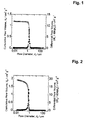
- Figure 1 shows a pore distribution curve of the porous material obtained in Example 1. In this, white spots indicate the cumulative pore volume, and the black spots indicate the differential pore volume.
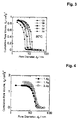
- Figure 2 shows a pore size distribution of open through-holes (macropores) in the gel as obtained in Example 8, in which 0.50 g of urea was used to prepare the gel, and the gel was heated at 80 °C, and thereafter dried and further heat-treated.
- Figure 3 shows a cumulative pore size distribution in the mesopore region of the gel as obtained in Example 8, in which 0.50 g of urea was used to prepare the gel, and the gel was heated at 80 °C, and thereafter dried and further heat-treated.
- Figure 4 shows a cumulative pore size distribution in the mesopore regions of the gel as obtained in Example 9, in which 0.50 g of urea and from 1.40 to 1.80 g of the nonionic surfactant NS210 (a polyethylene nonylphenyl ether, the oxyethylene moiety of which has a mean degree of polymerization of 10; produced by Nippon Oils & Fats Co) were used to prepare the gels, and the gels were dried and heat-treated.
- Figure 5 shows a pore distribution curve of the porous material obtained in Example 6. In this, white spots indicate the cumulative pore volume, and the black spots indicate the differential pore volume.
- Figure 6 shows a pore size distribution in various gels obtained herein, for which 0.45 g of urea was used to prepare the gels, and the gels were heated for varying periods of time, and thereafter dried and further heated.
- Figure 7 shows a pore size distribution in various gels obtained herein, for which 0.45 g of urea was used to prepare the gels, and the gels were heated at 80 °C, 120 °C or 200 °C for 7 days, and thereafter dried and further heat-treated.
- Figure 8 shows a pore size distribution in various gels obtained herein, for which 0.45 g or 0.90 g of urea was used to prepare the gels, and the gels were heated for 7 days, and thereafter dried and further heat-treated.
- the sol-gel method is used to control the pore size of the porous inorganic material; in this method metal compounds having a hydrolyzable functional group like metal alkoxides are used as starting materials with additions of appropriate chemical substances to result in the formation of characteristic phase-separated structure, of which solvent-rich pore forming phase converts to the macropore of the dried gel material.
- metal compounds having a hydrolyzable functional group like metal alkoxides are used as starting materials with additions of appropriate chemical substances to result in the formation of characteristic phase-separated structure, of which solvent-rich pore forming phase converts to the macropore of the dried gel material.
- Such starting materials and the conditions necessary to hydrolyse these starting materials are known in the art.
- Preferred metal alkoxides are silicon alkoxides, which may include, for example, tetramethoxysilane, tetraethoxysilane, methyltrimethoxysilane, ethyltrimethoxysilane and vinyl trimethoxysilane. However, these examples are not limitative. Other suitable metal alkoxides or other suitable metal compounds including mixtures of these compounds are known in the art.
- the conditions are chosen so as to hydrolyze the metal compound having a hydrolyzable functional group and to cause polymerization of the metal compound.
- the sol-gel transition of the reacting solution and the phase separation into solvent-rich phase and a phase rich in metal compound (skeleton phase) are induced.
- silicon alkoxides as metal compound having a hydrolyzable functional group the hydrolysis is done in an acid medium. Diluted organic or inorganic acids are preferred in this case. Especially preferred is the use of acetic acid or nitric acid using concentrations between 1 mmol/l and 2 mol/l.
- Other acidic media suitable to carry out the hydrolysis of silicon alkoxides are known in the art. Suitable reagents for the hydrolysis of other metalorganic compounds are known in the art as well.
- Watersoluble organic polymers such as poly(ethylene oxide) are favorably used as additive chemical substance in the pore forming phase. These substances are collectively called pore forming agents.
- Other such pore forming agents are known in the art; examples are: sodium polystyrene sulfonate, polyacrylic acid, polyallylamine, polyethylene-imine, polyethylene oxide, and polyvinyl pyrrolidone.
- Non-ionic surfactants are basically known.
- the preferred species of non-ionic surfactants are derivatives of polyethylene oxide wherein the polyethyleneoxide moiety has a degree of polymerization between 5 and 100; especially preferred are such surfactants having a degree of polymerization between 8 and 20 in their polyethyleneoxide moiety.
- the polyethylene oxide moiety of the non-ionic surfactant is connected to a lipophilic moiety, typically by an ether bridge.
- other polyethylene oxide containing surfactants are also known in the art, e.g. long chain fatty acid ester derivatives of polyoxyethylene sorbitanes.
- Non-ionic surfactants possessing polyoxypropylene residues as hydrophilic moiety such as polyoxypropylene alkyl ethers can also be used.
- Preferred polyethylene oxide containing surfactants are those which are derivatized with a lipophilic alkyl group with 8 to 20 C-atoms, or with a lipophilic aryl group which can be substituted with one or several alkyl groups, and which have 6 to 25 C-atoms in total.
- Examples of the latter group of polyethylene oxide containing surfactants are polyoxyethylene nonylphenyl ether, polyoxyethylene octylphenyl ether, or polyoxyethylene (1,1,3,3-tetramethylbutyl)-phenyl ether. However, these examples are not limitative.
- the hydrophilic lipophilic balance (HLB) system can be used to facilitate to estimate the behavior of non-ionic surfactants, and can be used as guideline for exchanging different non-ionic surfactants.
- the amount of non-ionic surfactant to be added varies, depending on the type of said non-ionic surfactant and also on the type and the amount of the metal alkoxide added, but may be from 1.0 to 10.0 g, preferably from 1.5 to 6.0 g, per 10 g of the metal alkoxide.
- the non-ionic surfactant has the function of inducing both sol-gel conversion and phase separation at the same time. While being gelled, the reaction system is separated into a solvent-rich phase and a skeleton phase.
- Japanese Patent Application Laid-open No. 7-41374 and corresponding EP 0 710 219 and US 5,624,875 disclose the use of matrix dissolving agents, e.g. sodium hydroxide, aqueous ammonia, or hydrofluoric acid. These matrix dissolving agents are used by dipping the polymerized gel into a solution containing the matrix dissolving agent. It had been found that this step can be simplified and improved by using a precursor of a matrix dissolving agent. The matrix dissolving agent is freed from its precursor by thermolysis, or by catalytic or enzymatic action.
- matrix dissolving agents e.g. sodium hydroxide, aqueous ammonia, or hydrofluoric acid.
- a precursor of matrix dissolving agents is urea, which gives yield to ammonia; this precursor is especially useful, when the matrix is based on silica.
- Additional examples include organic amides such as formamide, N-methylformamide, N,N,-dimethylformamide, acetamide, N-methylacetamide, and N,N-dimethylacetamide, which also give yield to ammonia.
- the precursor of the matrix dissolving agent is not limited to these, but may be any one capable of making the solvent basic after thermolysis, since in the case of using silica as skeleton material the pH value of the solvent after thermolysis is an important factor in the method of the present invention.
- those capable of producing a compound having the property of dissolving silica, such as hydrofluoric acid, through thermolysis are also usable in the present invention.
- the amount of the thermolyzable compound to be in the reaction system of the present invention may vary, depending on the type of said compound.
- urea for example, its amount may be from 0.1 to 3 g, preferably from 0.2 to 2 g, per 10 g of the reaction system.
- the heating temperature for the thermolysis of urea may fall between 60 °C and 200 °C.
- the pH of the solvent is preferably from 9.0 to 11.0.
- the time after which the pore structure of the gel stays substantially unchanged under the processing conditions depends on the type precursor for the matrix dissolving agent and on the conditions applied (e.g. the temperature); when urea is used as the precursor for the matrix dissolving agent the necessary time typically is between 3 hours (e.g. at 200 °C) and 30 days (e.g. at 60 °C).
- One means of the present invention to attain said object is characterized by previously dissolving a thermolyzable compound in a reaction solution, forming, from said reaction solution through its sol-gel conversion, a gel that comprises a solvent-rich phase containing three-dimensionally networked open pores having a mean pore diameter of not smaller than 100 nanometers and an inorganic substance-rich skeleton phase containing particles each having mesopores on its surface, then heating the wet gel to thermolyze said thermolyzable compound existing in the reaction system, and thereafter drying and heating the gel.
- a non-ionic surfactant and a precursor of a matrix dissolving agent are dissolved in an aqueous acidic solution and a metal compound having a hydrolyzable functional group is added thereto to thereby hydrolyze said metal compound
- a gel comprising a solvent-rich phase and a skeleton phase as separated from each other.
- the wet gel is heated, whereby the matrix dissolving agent is freed from its precursor, which has been previously dissolved in the reaction system, resulting in the increase in the pH of the solvent that is kept in direct contact with the inner walls of particles constituting the skeleton phase.
- the solvent corrodes said inner wall to thereby change the inner surface of said inner wall into a roughened one, whereby the pore size of said particles is gradually enlarged.
- the degree of said change in an acidic or neutral region will be very small, but with the increase in the thermolysis to increase the pH of the aqueous solution, the part constituting each pore is dissolved and re-precipitated to give a more flat part, thereby inducing more active reaction to enlarge the mean pore size of the mesopores.
- the gel has only fine and three-dimensionally restrained pores without having any macropores, even its part capable of being dissolved under equilibrated conditions could not produce a dissolved substance capable of being diffused into the external solution, so that the original fine pore structure will remain in the gel to have a relatively large proportion.
- the gel has a solvent rich-phase capable of giving macropores, it contains a large amount of only two-dimensionally restrained fine pores, so that the exchange of substances between said solvent-rich phase and the external aqueous solution may be effected well frequently in the gel, resulting in the removal of fine pores with the growth of macropores in the gel while preventing the entire pore size distribution of the resulting gel from being broadened.
- the pore size of macropores and their corresponding specific surface are determined using mercury porosimetry. It is also possible to estimate the pore dimensions from scanning electron micrographs (SEM). The pore size of mesopores and their specific surface are determined using nitrogen adsorption (BET-method). Measurements followed standard protocols.
- the porous inorganic materials of this invention possess macropores larger than 0.1 ⁇ m, typically from 0.3 up to 10 or 20 ⁇ m (median values; centre point of distribution curve).
- Mesopores of these materials which can be introduced using matrix dissolving agents or their precursors are between 2 and 100 nm, typically between 4 and 60 nm (median values; centre point of distribution curve).
- the final preparation steps for the manufacture of the porous inorganic materials according to the present invention include an optional rinsing step, e.g. with water, a drying step, and a calcining step.
- drying is achieved at temperatures between 20 and 80 °C; this step can be facilitated using an oven with air circulation or by applying reduced pressure.
- Calcining typically is done at final temperatures between 400 and 900 °C for one to several hours. The final temperature is reached using a temperature programme, typically rising the temperature between 50 and 200 °C per hour.
- porous inorganic materials according to the present invention are used as sorbents for chromatographic separations, they are usually derivatized in order to allow different mechanisms of separations.
- Methods for such derivatizations and the use of such derivatized separating materials are known in the art; applicable information about derivatization of particulate silica materials is contained in handbooks like "Porous Silica” (K.K. Unger, ed., (1979) Elsevier Scientific Publishing Company).
- the groups which are introduced into the base material in order to allow chromatographic separations can be summarized as separation effectors.
- Examples for different modes of chromatographic separations are ion exchange chromatography, reversed phase chromatography, hydrophobic interaction chromatography, affinity chromatography, chiral separations.
- different separation effectors can be used: ionic groups like -COOH, -SO 3 H, -N(C 2 H 5 ) 2 , or -N + (C 2 H 5 ) 3 , hydrophobic groups like C 18 - or C 8 -alkyl or phenyl or butyl, affinity ligands like antibodies or enzyme subtrates (or substrate analogues), chiral ligands like aminoacid derivatives or polysaccharide derivatives. Additional examples and more details of such separation effectors are given in PCT/EP97/03 601.
- porous materials having a pore size distribution as controlled to fall within a described range can be produced.
- the porous materials produced according to the present invention have a double-pore structure comprising macropores and mesopores, they can be used not only in manufacture of fillers for particles-filled columns but also in other applications of producing monolithic columns made of only said porous materials.
- the method of the present invention uses a non-ionic surfactant, the volume of the mesopores to be formed can be well controlled to be up to about 2.0 cm 3 /g with high reproducibility.
- the improvements disclosed in this application allow to prepare porous inorganic materials with improved mechanical stability, especially when dimensions of such articles are larger than one centimeter. They allow further to prepare porous inorganic materials with a higher volume of mesopores. Typically using prior art processes materials with about 1 cm 3 /g can be prepared.
- a nonionic surfactant polyoxyethylene nonylphenyl ether (its oxyethylene moiety has a mean degree of polymerization of 70; produced by Nippon Oils & Fats Co.; hereinafter referred to as NS270) was dissolved in 10.0 g of aqueous solution of nitric acid (1 mol/liter). To the resulting uniform solution, added was 5.15 g of tetramethoxysilane with stirring, and hydrolyzed. After having been stirred for a few minutes, the resulting transparent solution was transferred into a closable container, which was then closed and kept in a thermostat tank at 40 °C. After about 170 minutes, the solution became cloudy and then solidified.
- NS270 polyoxyethylene nonylphenyl ether
- the pore size distribution in this material is shown in Fig. 1.
- this material was further verified to have many fine pores of not larger than 3 nm in diameter on the inner walls of said through-holes and have a specific surface area of not smaller than 400 m 2 /g.
- the amount of the starting NS270 was varied within the range between 0.70 g and 1.20 g various gels were prepared.
- Example 2 In the same manner as in Example 1, except that the temperature for the solidification was varied to 30, 50 or 60 °C, various gels were prepared. At 30 °C, the gel obtained was a microscopically non-uniform one; and at 50 °C and 60 °C, the gels obtained has no through-holes of not smaller than 0.1 ⁇ m in diameter.
- compositions capable of giving gels having open through-holes, like in Example 1, at varying temperature are as follows:
- Example 1 The process of Example 1, where the degree of polymerization of the oxyethylene moiety in the nonionic surfactant is about 70, was repeated using nonionic surfactants with shorter oxyethylene moieties.
- Starting compositions capable of giving gels having open through-holes at 40 °C, like in Example 1, are as follows:
- NS240 having a mean degree of polymerization of 40 in its oxyethylene moiety
- NS220 having a mean degree of polymerization of 20 in its oxyethylene moiety
- NS220 having a mean degree of polymerization of 20 in its oxyethylene moiety
- NS220 having a mean degree of polymerization of 20 in its oxyethylene moiety
- NS220 having a mean degree of polymerization of 20 in its oxyethylene moiety
- 9.28 to 10.80 g of aqueous nitric acid solution of 1 mol/liter both per 5.15 g of tetramethoxysilane.
- NS210 having a mean degree of polymerization of 10 in its oxyethylene moiety
- NS210 having a mean degree of polymerization of 10 in its oxyethylene moiety
- NS210 having a mean degree of polymerization of 10 in its oxyethylene moiety
- NS210 having a mean degree of polymerization of 10 in its oxyethylene moiety
- 10.80 to 12.4 g of aqueous nitric acid solution of 1 mol/liter both per 5.15 g of tetramethoxysilane.
- NS208.5 (having a mean degree of polymerization of 8.5 in its oxyethylene moiety); from 1.20 to 3.00 g of NS208.5, and from 10.8 to 11.6 g of aqueous nitric acid solution of 1 mol/liter, both per 5.15 g of tetramethoxysilane.
- Example 1 the nonionic surfactant NS270 was replaced by the nonionic surfactant P210 (polyoxyethylene octylphenyl ether; having a mean degree of polymerization of 10 in its oxyethylene moiety; produced by Nippon Oils & Fats Co.), having a shorter alkyl chain than the nonionic surfactant NS270.
- the starting compositions capable of giving gels having open through-holes were shifted to those producing a slightly smaller solvent phase at 40 °C. Using these starting compositions, obtained were gels having almost the same structure as in Example 1.
- the thus-solidified sample was then ripened for a few hours, and thereafter kept at 80 °C in a closed condition for 7 days.
- the pH of the solvent existing around the gel was about 9.
- the resulting gel was dried at 60 °C, and then heated up to 600 °C at a heating rate of 100 °C/h.
- a porous material of amorphous silica was obtained.
- the pore size distribution in this material is shown in Fig. 5.
- this material was further verified to have many fine pores of about 15 nm in diameter on the inner walls of said through-holes.
- the time for heating the ripened sample in the closed conditions was varied within the range between 3 hours and 7 days, and the differential pore size distribution in each of the thus-heated samples was obtained through nitrogen adsorption, and is shown in Fig. 6.
- Example 2 In the same manner as in Example 1, except that 0.50 g of urea was added to the starting composition, a gel was prepared. In this case, the gelling time was shortened to about 80 minutes. The solidified sample was further ripened for a few hours, and then kept at 80 °C in a closed condition for varying periods of time. Thereafter the solvent was evaporated out from the sample at 60 °C, and then the product was heated up to 600 °C at a heating rate of 100 °C/h.
- the pore size distribution in this material is shown in Fig. 2.
- this material was further verified to have many fine mesopores of from 5 to 12 nm in diameter on the inner walls of said through-holes, while giving a narrow mesopore distribution, and have a specific surface area of not smaller than 400 m 2 /g.
- Fig. 3 shows a differential pore size distribution of mesopore regions in the gels as obtained by processing for varying periods of time at 80 °C.
- Example 5 The same process as in Example 5, except that NS210 was used as the nonionic surfactant, produced mesopores having the same center pore diameter distribution as in Example 5. In this, however, the cumulative pore capacity varied, depending on the variation in the amount of the nonionic surfactant in the starting composition. Precisely, where the amount of NS210 was varied within the range between 1.40 g and 1.80 g, relative to 5.15 g of tetramethoxysilane and 10.0 g of aqueous nitric acid solution of 1 mol/liter, the cumulative pore capacity was varied within the range between 1.2 and 1.6 cm 3 /g. Fig.
Landscapes
- Chemical & Material Sciences (AREA)
- Organic Chemistry (AREA)
- Chemical Kinetics & Catalysis (AREA)
- Analytical Chemistry (AREA)
- Engineering & Computer Science (AREA)
- Materials Engineering (AREA)
- Life Sciences & Earth Sciences (AREA)
- Geochemistry & Mineralogy (AREA)
- Inorganic Chemistry (AREA)
- General Chemical & Material Sciences (AREA)
- Dispersion Chemistry (AREA)
- Ceramic Engineering (AREA)
- Nanotechnology (AREA)
- Crystallography & Structural Chemistry (AREA)
- Manufacturing & Machinery (AREA)
- Structural Engineering (AREA)
- General Life Sciences & Earth Sciences (AREA)
- Geology (AREA)
- Solid-Sorbent Or Filter-Aiding Compositions (AREA)
- Glass Compositions (AREA)
- Silicates, Zeolites, And Molecular Sieves (AREA)
- Compounds Of Alkaline-Earth Elements, Aluminum Or Rare-Earth Metals (AREA)
- Porous Artificial Stone Or Porous Ceramic Products (AREA)
Abstract
Description
- This invention relates to an improved method for producing porous inorganic materials. The method of this invention is favorably utilized in manufacture of sorbents for chromatography, fixed phases for thin-layer chromatography, porous materials for blood separation, moisture-absorbing porous materials, porous materials for adsorbing low-molecular materials for deodorization, or porous materials for enzyme carriers.
- Porous inorganic materials are favorably applied to producing columns for chromatography, porous filters for separating blood, porous catalysts, or enzyme supports. Such inorganic porous columns can be favorably applied to liquid- and gas-chromatography. These columns can be used unmodified or modified e.g. by covering their surface with molecules like hydrophobic hydrocarbon ligands (e.g. octadecyl ligands) or like hydrophilic ligands like 2,3-dihydroxypropyl derivatives. Other derivatives useful for separations are known in the art. The ligands of such modified columns can be further modified using known procedures. Porous catalysts or enzyme supports can be prepared by binding enzymes, e.g. glucose isomerase, or catalytic metal elements, e.g. platinum and palladium. Such inorganic porous columns can also be attached to an injector or a catheter for blood injection. Due to their mechanical rigidness and heat stability, which allows sterilization by heat, inorganic base materials are preferred.
- The sol-gel method is one liquid phase reaction path to produce inorganic porous materials, especially silica gels. The sol-gel method denotes widespread processes in which polymerizable low molecular weight species are first generated, and through polymerization reactions, aggregated or polymerized materials are finally obtained. For example, the sol-gel method can be applied by hydrolyzing metal alkoxides, metal chlorides, metal salts or coordinated compounds which typically contain carboxyl or beta-diketone ligands. A process of this kind is disclosed in Japanese Patent Publication No. 8-29952 and
corresponding EP 0 363 697 and US 5,009,688. In this process an organic polymer is used, which is compatible with the solution of the metal alkoxide or its polymer, and which undergoes phase separation during the hydrolysis-polymerization step. This method comprises preparing a gel which has a solvent-rich phase capable of giving macropores of not smaller than about 100 nanometers in size, through sol-gel conversion in the presence of a pore forming agent, and finally drying and calcining the material. The porous inorganic materials produced by this process display connected open macropores. Examples of pore forming agents disclosed in these documents are: sodium polystyrene sulfonate, polyacrylic acid, polyallylamine, polyethylene-imine, polyethylene oxide, and polyvinyl pyrrolidone. Adding lower alkyl alcohols like methanol or ethanol to the gelling mixture can also be used to modify the size of the macropores. - Especially for use in chromatography the porous inorganic material should display another set of pores to enhance the specific surface of the material. These pores have to be accessible for the analyte; therefore mesopores of appropriate size (2 to 100 nm) should be present in the walls of the macropores. A method for manufacturing such porous materials which possess interconnected continuous macropores with a median diameter larger than 0.1 µm and additional mesopores in the walls of said macropores, said mesopores having a median diameter between 2 and 100 nm has been disclosed in Japanese Patent Application Laid-open No. 7-41374 and
corresponding EP 0 710 219 and US 5,624,875. This method comprises preparing a gel which has a solvent-rich phase capable of giving macropores of not smaller than about 100 nanometers in size, through sol-gel conversion in the presence of a pore forming agent, followed by dipping the wet monolithic gel in an aqueous solutions containing a matrix dissolving agent thereby modifying the distribution of mesopores in the gel, and finally drying and calcining the porous inorganic material. Examples of matrix dissolving agents disclosed in these documents are basic substances like sodium hydroxide or aqueous ammonia, or hydrofluoric acid. - Additional disclosure of technical background is found in the documents mentioned above.
- Where porous materials are used as carriers for various purposes, it is necessary that they have an optimal median pore diameter and have pore size distribution as narrow as possible. The diameter of their macropores often controls the flow-rate and the pressure drop in the system. The accessibility of the surface of the pores is usually controlled by the diameter of the mesopores. Therefore, for porous materials to be obtained through sol-gel conversion, various attempts have heretofore been made at controlling the reaction conditions for the formation of gel to thereby control the pore size of the porous material to be derived from the gel.
- However, as using a water-soluble polymer, this method still causes problems in that the preparation of the reaction system takes much time, and that the characteristics of the product depends on the molecular weight distribution thereof. In addition, since this method comprises separate steps for the formation of the gel and for the solvent substitution thereof, it is a complicated one.
- It had been found that further improvements of the porous inorganic materials would be highly needed. Such improvement refer to controling the formation of both the macro- and the mesopores. Such improvements are especially needed where the porous inorganic materials are used as base materials for monolithic columns for chromatography; especially for use in preparative chromatography where larger columns (e.g. diameter typically larger than 1 cm) are needed.
- The inventors found improvements related to the manufacture of porous inorganic materials. These improvements comprise using a nonionic surfactant as pore forming agent and novel methods of applying matrix dissolving agents by using precursors of matrix dissolving agents. When the precursor of a matrix dissolving agent that has been dissolved in the gel is reacted to yield the matrix dissolving agent (e.g. by thermolysis, sometimes also called pyrolysis), the gel can easily be converted into a porous material with mesopores of at most about 100 nanometers in inner size and having a narrow pore size distribution. Because the matrix dissolving agent typically is freed from its precursor by thermolysis, a precursor of a matrix dissolving agent can also be called a thermolyzable (sometimes also called pyrolyzable) compound.
- The object of the present invention is a process for producing inorganic porous materials, mainly composed of glass or glass- ceramic components, having interconnected continuous macropores with a median diameter larger than 0.1 µm, and having mesopores in the walls of said macropores, said mesopores having a median diameter between 2 and 100 nm, via sol-gel route which includes the steps of:
- (a) Dissolving a precursor for a matrix dissolving agent in a medium that promotes the hydrolysis of the metalorganic compound (see step b);
- (b) mixing a metalorganic compound which contains hydrolyzable ligands to promote hydrolysis reaction;
- (c) solidifying the mixture through the sol-gel transition, whereby a gel is prepared which has threedimensional interconnected phase domains one rich in solvent the other rich in inorganic component in which surface pores are contained;
- (d) setting the matrix dissolving agent free from its precursor, whereby the matrix dissolving agent modifies the structure of said inorganic component;
- (e) removing the solution by evaporation drying and/or heat-treatment;
- (f) calcining the gel to form the porous material.
-
- In preferred embodiments of the invention silica is the base material of the porous inorganic materials and urea or compounds having an amido group or an alkylamido group are used as precursor of the matrix dissolving agent. Object of the invention are likewise porous inorganic materials obtainable by the process of the invention.
- Another object of the invention is the use of non-ionic surfactants as pore forming agent in a process of manufacturing porous inorganic materials. Preferred nonionic surfactants are ether derivatives of polyoxyethylene, especially those containing an alkyl-, aryl-, alkylaryl- (e.g. an alkylphenyl), or arylalkyl (e.g. phenylalkyl) residue.
- Figure 1 shows a pore distribution curve of the porous material obtained in Example 1. In this, white spots indicate the cumulative pore volume, and the black spots indicate the differential pore volume. Figure 2 shows a pore size distribution of open through-holes (macropores) in the gel as obtained in Example 8, in which 0.50 g of urea was used to prepare the gel, and the gel was heated at 80 °C, and thereafter dried and further heat-treated. Figure 3 shows a cumulative pore size distribution in the mesopore region of the gel as obtained in Example 8, in which 0.50 g of urea was used to prepare the gel, and the gel was heated at 80 °C, and thereafter dried and further heat-treated. Figure 4 shows a cumulative pore size distribution in the mesopore regions of the gel as obtained in Example 9, in which 0.50 g of urea and from 1.40 to 1.80 g of the nonionic surfactant NS210 (a polyethylene nonylphenyl ether, the oxyethylene moiety of which has a mean degree of polymerization of 10; produced by Nippon Oils & Fats Co) were used to prepare the gels, and the gels were dried and heat-treated. Figure 5 shows a pore distribution curve of the porous material obtained in Example 6. In this, white spots indicate the cumulative pore volume, and the black spots indicate the differential pore volume. Figure 6 shows a pore size distribution in various gels obtained herein, for which 0.45 g of urea was used to prepare the gels, and the gels were heated for varying periods of time, and thereafter dried and further heated. Figure 7 shows a pore size distribution in various gels obtained herein, for which 0.45 g of urea was used to prepare the gels, and the gels were heated at 80 °C, 120 °C or 200 °C for 7 days, and thereafter dried and further heat-treated. Figure 8 shows a pore size distribution in various gels obtained herein, for which 0.45 g or 0.90 g of urea was used to prepare the gels, and the gels were heated for 7 days, and thereafter dried and further heat-treated.
- Further experimental details are given in the examples.
- In the present invention the sol-gel method is used to control the pore size of the porous inorganic material; in this method metal compounds having a hydrolyzable functional group like metal alkoxides are used as starting materials with additions of appropriate chemical substances to result in the formation of characteristic phase-separated structure, of which solvent-rich pore forming phase converts to the macropore of the dried gel material. Such starting materials and the conditions necessary to hydrolyse these starting materials are known in the art. Preferred metal alkoxides are silicon alkoxides, which may include, for example, tetramethoxysilane, tetraethoxysilane, methyltrimethoxysilane, ethyltrimethoxysilane and vinyl trimethoxysilane. However, these examples are not limitative. Other suitable metal alkoxides or other suitable metal compounds including mixtures of these compounds are known in the art.
- The conditions are chosen so as to hydrolyze the metal compound having a hydrolyzable functional group and to cause polymerization of the metal compound. At the same time the sol-gel transition of the reacting solution and the phase separation into solvent-rich phase and a phase rich in metal compound (skeleton phase) are induced. For silicon alkoxides as metal compound having a hydrolyzable functional group the hydrolysis is done in an acid medium. Diluted organic or inorganic acids are preferred in this case. Especially preferred is the use of acetic acid or nitric acid using concentrations between 1 mmol/l and 2 mol/l. Other acidic media suitable to carry out the hydrolysis of silicon alkoxides are known in the art. Suitable reagents for the hydrolysis of other metalorganic compounds are known in the art as well.
- Watersoluble organic polymers such as poly(ethylene oxide) are favorably used as additive chemical substance in the pore forming phase. These substances are collectively called pore forming agents. Other such pore forming agents are known in the art; examples are: sodium polystyrene sulfonate, polyacrylic acid, polyallylamine, polyethylene-imine, polyethylene oxide, and polyvinyl pyrrolidone.
- The use of a novel class of pore forming agents is one object of this invention. These novel pore forming agents are non-ionic surfactants. Non-ionic surfactants are basically known. The preferred species of non-ionic surfactants are derivatives of polyethylene oxide wherein the polyethyleneoxide moiety has a degree of polymerization between 5 and 100; especially preferred are such surfactants having a degree of polymerization between 8 and 20 in their polyethyleneoxide moiety. The polyethylene oxide moiety of the non-ionic surfactant is connected to a lipophilic moiety, typically by an ether bridge. However other polyethylene oxide containing surfactants are also known in the art, e.g. long chain fatty acid ester derivatives of polyoxyethylene sorbitanes. Non-ionic surfactants possessing polyoxypropylene residues as hydrophilic moiety, such as polyoxypropylene alkyl ethers can also be used. Preferred polyethylene oxide containing surfactants are those which are derivatized with a lipophilic alkyl group with 8 to 20 C-atoms, or with a lipophilic aryl group which can be substituted with one or several alkyl groups, and which have 6 to 25 C-atoms in total. Examples of the latter group of polyethylene oxide containing surfactants are polyoxyethylene nonylphenyl ether, polyoxyethylene octylphenyl ether, or polyoxyethylene (1,1,3,3-tetramethylbutyl)-phenyl ether. However, these examples are not limitative. The hydrophilic lipophilic balance (HLB) system can be used to facilitate to estimate the behavior of non-ionic surfactants, and can be used as guideline for exchanging different non-ionic surfactants. The amount of non-ionic surfactant to be added varies, depending on the type of said non-ionic surfactant and also on the type and the amount of the metal alkoxide added, but may be from 1.0 to 10.0 g, preferably from 1.5 to 6.0 g, per 10 g of the metal alkoxide.
- The non-ionic surfactant has the function of inducing both sol-gel conversion and phase separation at the same time. While being gelled, the reaction system is separated into a solvent-rich phase and a skeleton phase.
- In order to introduce mesopores into the walls of the porous inorganic material Japanese Patent Application Laid-open No. 7-41374 and
corresponding EP 0 710 219 and US 5,624,875 disclose the use of matrix dissolving agents, e.g. sodium hydroxide, aqueous ammonia, or hydrofluoric acid. These matrix dissolving agents are used by dipping the polymerized gel into a solution containing the matrix dissolving agent. It had been found that this step can be simplified and improved by using a precursor of a matrix dissolving agent. The matrix dissolving agent is freed from its precursor by thermolysis, or by catalytic or enzymatic action. One example of a precursor of matrix dissolving agents is urea, which gives yield to ammonia; this precursor is especially useful, when the matrix is based on silica. Additional examples include organic amides such as formamide, N-methylformamide, N,N,-dimethylformamide, acetamide, N-methylacetamide, and N,N-dimethylacetamide, which also give yield to ammonia. However, as will be mentioned in the examples to follow hereinunder, the precursor of the matrix dissolving agent is not limited to these, but may be any one capable of making the solvent basic after thermolysis, since in the case of using silica as skeleton material the pH value of the solvent after thermolysis is an important factor in the method of the present invention. In addition, those capable of producing a compound having the property of dissolving silica, such as hydrofluoric acid, through thermolysis are also usable in the present invention. - The amount of the thermolyzable compound to be in the reaction system of the present invention may vary, depending on the type of said compound. For urea, for example, its amount may be from 0.1 to 3 g, preferably from 0.2 to 2 g, per 10 g of the reaction system. The heating temperature for the thermolysis of urea may fall between 60 °C and 200 °C. In the thermolyzing step, it is effective to put the gel in a closed container in order to make the vapor pressure of the thermolyzed product saturated and to rapidly make the solvent have a steady pH-value. After the thermolysis, the pH of the solvent is preferably from 9.0 to 11.0. The time after which the pore structure of the gel stays substantially unchanged under the processing conditions depends on the type precursor for the matrix dissolving agent and on the conditions applied (e.g. the temperature); when urea is used as the precursor for the matrix dissolving agent the necessary time typically is between 3 hours (e.g. at 200 °C) and 30 days (e.g. at 60 °C).
- One means of the present invention to attain said object is characterized by previously dissolving a thermolyzable compound in a reaction solution, forming, from said reaction solution through its sol-gel conversion, a gel that comprises a solvent-rich phase containing three-dimensionally networked open pores having a mean pore diameter of not smaller than 100 nanometers and an inorganic substance-rich skeleton phase containing particles each having mesopores on its surface, then heating the wet gel to thermolyze said thermolyzable compound existing in the reaction system, and thereafter drying and heating the gel.
- In one method of the present invention, where a non-ionic surfactant and a precursor of a matrix dissolving agent are dissolved in an aqueous acidic solution and a metal compound having a hydrolyzable functional group is added thereto to thereby hydrolyze said metal compound, formed is a gel comprising a solvent-rich phase and a skeleton phase as separated from each other. After the product (gel) is solidified and then ripened for a suitable period of time, the wet gel is heated, whereby the matrix dissolving agent is freed from its precursor, which has been previously dissolved in the reaction system, resulting in the increase in the pH of the solvent that is kept in direct contact with the inner walls of particles constituting the skeleton phase. As a result, the solvent corrodes said inner wall to thereby change the inner surface of said inner wall into a roughened one, whereby the pore size of said particles is gradually enlarged.
- For the gel consisting essentially of silica, the degree of said change in an acidic or neutral region will be very small, but with the increase in the thermolysis to increase the pH of the aqueous solution, the part constituting each pore is dissolved and re-precipitated to give a more flat part, thereby inducing more active reaction to enlarge the mean pore size of the mesopores.
- If the gel has only fine and three-dimensionally restrained pores without having any macropores, even its part capable of being dissolved under equilibrated conditions could not produce a dissolved substance capable of being diffused into the external solution, so that the original fine pore structure will remain in the gel to have a relatively large proportion. As opposed to this, if the gel has a solvent rich-phase capable of giving macropores, it contains a large amount of only two-dimensionally restrained fine pores, so that the exchange of substances between said solvent-rich phase and the external aqueous solution may be effected well frequently in the gel, resulting in the removal of fine pores with the growth of macropores in the gel while preventing the entire pore size distribution of the resulting gel from being broadened.
- The pore size of macropores and their corresponding specific surface are determined using mercury porosimetry. It is also possible to estimate the pore dimensions from scanning electron micrographs (SEM). The pore size of mesopores and their specific surface are determined using nitrogen adsorption (BET-method). Measurements followed standard protocols.
- The porous inorganic materials of this invention possess macropores larger than 0.1 µm, typically from 0.3 up to 10 or 20 µm (median values; centre point of distribution curve). Mesopores of these materials, which can be introduced using matrix dissolving agents or their precursors are between 2 and 100 nm, typically between 4 and 60 nm (median values; centre point of distribution curve).
- The final preparation steps for the manufacture of the porous inorganic materials according to the present invention include an optional rinsing step, e.g. with water, a drying step, and a calcining step. Typically drying is achieved at temperatures between 20 and 80 °C; this step can be facilitated using an oven with air circulation or by applying reduced pressure. Calcining typically is done at final temperatures between 400 and 900 °C for one to several hours. The final temperature is reached using a temperature programme, typically rising the temperature between 50 and 200 °C per hour.
- If the porous inorganic materials according to the present invention are used as sorbents for chromatographic separations, they are usually derivatized in order to allow different mechanisms of separations. Methods for such derivatizations and the use of such derivatized separating materials are known in the art; applicable information about derivatization of particulate silica materials is contained in handbooks like "Porous Silica" (K.K. Unger, ed., (1979) Elsevier Scientific Publishing Company). The groups which are introduced into the base material in order to allow chromatographic separations can be summarized as separation effectors. Examples for different modes of chromatographic separations are ion exchange chromatography, reversed phase chromatography, hydrophobic interaction chromatography, affinity chromatography, chiral separations. Dependent on these modes of action different separation effectors can be used: ionic groups like -COOH, -SO3H, -N(C2H5)2, or -N+(C2H5)3, hydrophobic groups like C18- or C8-alkyl or phenyl or butyl, affinity ligands like antibodies or enzyme subtrates (or substrate analogues), chiral ligands like aminoacid derivatives or polysaccharide derivatives. Additional examples and more details of such separation effectors are given in PCT/EP97/03 601.
- This invention has been made on the basis of these findings, and porous inorganic materials manufactured by the improved processes show narrow pore size distributions and have pore structures with a desired center pore diameter and a narrow pore size distribution. It was found that these features can be attained with good reproducibility.
- As has been described hereinabove, according to the present invention, porous materials having a pore size distribution as controlled to fall within a described range can be produced. In addition, since the porous materials produced according to the present invention have a double-pore structure comprising macropores and mesopores, they can be used not only in manufacture of fillers for particles-filled columns but also in other applications of producing monolithic columns made of only said porous materials. In particular, since the method of the present invention uses a non-ionic surfactant, the volume of the mesopores to be formed can be well controlled to be up to about 2.0 cm3/g with high reproducibility.
- The improvements disclosed in this application allow to prepare porous inorganic materials with improved mechanical stability, especially when dimensions of such articles are larger than one centimeter. They allow further to prepare porous inorganic materials with a higher volume of mesopores. Typically using prior art processes materials with about 1 cm3/g can be prepared.
- Without further elaboration, it is believed that one skilled in the art can, using the preceding description, utilize the present invention to its fullest extent. The preferred specific embodiments are, therefore, to construed as merely illustrative, and not limitative of the disclosure in any way whatsoever.
- The entire disclosures of all applications, patents, and publications cited above and below, and of corresponding applications Japanese hei-8-347765, filed December 26, 1996, and Japanese hei-8-347772, filed December 26, 1996, are hereby incorporated by reference.
- First, 1.00 g of a nonionic surfactant, polyoxyethylene nonylphenyl ether (its oxyethylene moiety has a mean degree of polymerization of 70; produced by Nippon Oils & Fats Co.; hereinafter referred to as NS270) was dissolved in 10.0 g of aqueous solution of nitric acid (1 mol/liter). To the resulting uniform solution, added was 5.15 g of tetramethoxysilane with stirring, and hydrolyzed. After having been stirred for a few minutes, the resulting transparent solution was transferred into a closable container, which was then closed and kept in a thermostat tank at 40 °C. After about 170 minutes, the solution became cloudy and then solidified.
- The thus-solidified sample was then ripened for a few hours, and thereafter the solvent was evaporated out therefrom at 60 °C. Next, the sample was heated up to 600 °C at a heating rate of 100 °C/h. Thus was obtained a porous material of amorphous silica.
- As a result of its electromicroscopy and mercury penetration, the thus-obtained porous material was verified to have a three-dimensional network structure comprising uniform through-holes having a center pore diameter of about 2 µm (= 2000 nm) and gel skeletons having a thickness of about 1 µm as entangled together with said through-holes. The pore size distribution in this material is shown in Fig. 1. As a result of its nitrogen adsorption, this material was further verified to have many fine pores of not larger than 3 nm in diameter on the inner walls of said through-holes and have a specific surface area of not smaller than 400 m2/g.
- In the same manner as in Example 1, except that the amount of the starting NS270 was varied within the range between 0.70 g and 1.20 g various gels were prepared. When the amount of said NS270 was from 1.00 to 1.10 g, the gels obtained were found to have a three-dimensional network structure comprising uniform through-holes having a center pore diameter of about 3 µm (= 3000 nm) and gel skeletons having a thickness of about 1 µm as entangled together with said through-holes. However, the larger or smaller amount of NS270 used over or below said range resulted in the decrease in the center pore diameter of the through-holes formed, with the result that 0.70 g or 1.20 g of NS270 added gave through-holes of about 0.5 µm in diameter.
- In the same manner as in Example 1, except that the temperature for the solidification was varied to 30, 50 or 60 °C, various gels were prepared. At 30 °C, the gel obtained was a microscopically non-uniform one; and at 50 °C and 60 °C, the gels obtained has no through-holes of not smaller than 0.1 µm in diameter.
- The compositions capable of giving gels having open through-holes, like in Example 1, at varying temperature are as follows:
- At a temperature of 30 °C; from 0.70 to 1.80 g of NS270, and from 8.4 to 12.0 g of aqueous nitric acid solution of 1 mol/liter, both per 5.15 g of tetramethoxysilane.
- At a temperature of 50 °C; from 0.80 to 1.40 g of NS270, and from 10.24 to 12.4 g of aqueous nitric solution of 1 mol/liter, both per 5.15 g of tetramethoxysilane.
- At a temperature of 60 °C; from 1.00 to 1.35 g of NS270, and from 12.0 to 15.2 g of aqueous nitric acid solution of 1 mol/liter, both per 5.15 g of tetramethoxysilane.
- The process of Example 1, where the degree of polymerization of the oxyethylene moiety in the nonionic surfactant is about 70, was repeated using nonionic surfactants with shorter oxyethylene moieties. Starting compositions capable of giving gels having open through-holes at 40 °C, like in Example 1, are as follows:
- For NS240 (having a mean degree of polymerization of 40 in its oxyethylene moiety); from 1.00 to 1.60 g of NS240, and from 10.0 to 12.4 g of aqueous nitric acid solution of 1 mol/liter, both per 5.15 g of tetramethoxysilane.
- For NS220 (having a mean degree of polymerization of 20 in its oxyethylene moiety); from 1.00 to 1.80 g of NS220, and 9.28 to 10.80 g of aqueous nitric acid solution of 1 mol/liter, both per 5.15 g of tetramethoxysilane.
- For NS210 (having a mean degree of polymerization of 10 in its oxyethylene moiety); from 1.20 to 3.00 g of NS210, and from 10.80 to 12.4 g of aqueous nitric acid solution of 1 mol/liter, both per 5.15 g of tetramethoxysilane.
- For NS208.5 (having a mean degree of polymerization of 8.5 in its oxyethylene moiety); from 1.20 to 3.00 g of NS208.5, and from 10.8 to 11.6 g of aqueous nitric acid solution of 1 mol/liter, both per 5.15 g of tetramethoxysilane.
- In the process of Example 1 the nonionic surfactant NS270 was replaced by the nonionic surfactant P210 (polyoxyethylene octylphenyl ether; having a mean degree of polymerization of 10 in its oxyethylene moiety; produced by Nippon Oils & Fats Co.), having a shorter alkyl chain than the nonionic surfactant NS270. The starting compositions capable of giving gels having open through-holes were shifted to those producing a slightly smaller solvent phase at 40 °C. Using these starting compositions, obtained were gels having almost the same structure as in Example 1.
- First, 0.90 g of a water-soluble polymer, polyethylene oxide (produced by Aldrich, product number 85, 645-2) and 0.45 g of urea were dissolved in 10.0 g of aqueous solution of 0.01 N acetic acid. 5 ml of tetramethoxysilane were added to the resulting solution with stirring and were hydrolyzed. After having been stirred for a few minutes, the resulting transparent solution was transferred into a closable container, which was then closed and kept in a thermostat tank at 40 °C. After about 40 minutes, the solution became cloudy and then solidified.
- The thus-solidified sample was then ripened for a few hours, and thereafter kept at 80 °C in a closed condition for 7 days. The pH of the solvent existing around the gel was about 9. Then the resulting gel was dried at 60 °C, and then heated up to 600 °C at a heating rate of 100 °C/h. Thus was obtained a porous material of amorphous silica.
- As a result of its electromicroscopy and mercury penetration, the thus-obtained porous material was verified to have a three-dimensional network structure comprising uniform through-holes having a center pore diameter of about 1.6 µm (= 1600 nm) and entangled together. The pore size distribution in this material is shown in Fig. 5. As a result of its nitrogen adsorption, this material was further verified to have many fine pores of about 15 nm in diameter on the inner walls of said through-holes. The time for heating the ripened sample in the closed conditions was varied within the range between 3 hours and 7 days, and the differential pore size distribution in each of the thus-heated samples was obtained through nitrogen adsorption, and is shown in Fig. 6.
- In the same manner as above, except that the temperature in the closed condition was varied to 120 °C or 200 °C, porous samples were prepared. In these, the pore distribution of the through-holes was the same as above, but the center pore diameter as measured according to nitrogen adsorption was varied to about 25 nm (at 120 °C) or about 50 nm (at 200 °C). The pore size distribution in each sample, relative to the heating temperature as the parameter, is shown in Fig. 7. This verifies that the higher temperatures for forming the gels produce larger center pore diameters.
- In the same manner as in Example 6, except that the amount of urea was 0.90 g and that the pH value of the solvent existing around the gel was 10.7, porous materials were prepared.
- In the gels as prepared by heating at 80 °C, 120 °C and 200 °C, the center pore diameter was 15 nm, 25 nm and 50 nm, respectively, These data correspond well to those in Example 6 within the experimental error, almost not depending on the concentration of urea used. However, the pore size distribution to be derived from the differential distribution curve was smaller in the gels obtained herein than that in those obtained in Example 6. The pore size distribution in each sample, relative to the heating temperature as the parameter, is shown in Fig. 8. This verifies that the higher concentrations of urea added produce a narrower pore size distribution, while producing a larger pore size capacity.
- In the same manner as in Example 1, except that 0.50 g of urea was added to the starting composition, a gel was prepared. In this case, the gelling time was shortened to about 80 minutes. The solidified sample was further ripened for a few hours, and then kept at 80 °C in a closed condition for varying periods of time. Thereafter the solvent was evaporated out from the sample at 60 °C, and then the product was heated up to 600 °C at a heating rate of 100 °C/h.
- As a result of its electromicroscopy and mercury penetration, the thus-obtained porous material was verified to have a three-dimensional network structure comprising uniform through-holes having a center pore diameter of about 1 µm (= 1000 nm) and gel skeletons having a thickness of about 1 µm as entangled together with said through-holes. The pore size distribution in this material is shown in Fig. 2. As a result of its nitrogen adsorption, this material was further verified to have many fine mesopores of from 5 to 12 nm in diameter on the inner walls of said through-holes, while giving a narrow mesopore distribution, and have a specific surface area of not smaller than 400 m2/g. The cumulative pore capacity of the mesopores was about 1 cm3/g, almost irrespective of the starting compositions used for forming gels. Fig. 3 shows a differential pore size distribution of mesopore regions in the gels as obtained by processing for varying periods of time at 80 °C.
- In the same manner as above, except that the temperature in the closed condition was varied to 120 °C or 200 °C, porous samples were prepared. In these, the pore distribution of the through-holes was the same as above, but the largest center pore diameter as measured according to nitrogen adsorption was varied to about 25 nm (at 120 °C) or about 50 nm (at 200 °C). This verifies that the higher temperatures for forming the gels produce larger center pore diameters.
- The same process as in Example 5, except that NS210 was used as the nonionic surfactant, produced mesopores having the same center pore diameter distribution as in Example 5. In this, however, the cumulative pore capacity varied, depending on the variation in the amount of the nonionic surfactant in the starting composition. Precisely, where the amount of NS210 was varied within the range between 1.40 g and 1.80 g, relative to 5.15 g of tetramethoxysilane and 10.0 g of aqueous nitric acid solution of 1 mol/liter, the cumulative pore capacity was varied within the range between 1.2 and 1.6 cm3/g. Fig. 4 shows the cumulativ pore size distribution of the mesopores in the gels as obtained from various compositions each comprising a varying concentration of NS210. This verifies that the pore capacity of the mesopores in gels can be controlled by suitably selecting the type and the amount of the nonionic surfactant to be used.
Claims (4)
- A process for producing inorganic porous materials, mainly composed of glass or glass- ceramic components, having interconnected continuous macropores with a median diameter larger than 0.1 µm, and having mesopores in the walls of said macropores, said mesopores having a median diameter between 2 and 100 nm, via sol-gel route which includes the steps of:(a) Dissolving a precursor for a matrix dissolving agent in a medium that promotes the hydrolysis of the metalorganic compound (see step b);(b) mixing a metalorganic compound which contains hydrolyzable ligands to promote hydrolysis reaction;(c) solidifying the mixture through the sol-gel transition, whereby a gel is prepared which has threedimensional interconnected phase domains one rich in solvent the other rich in inorganic component in which surface pores are contained;(d) setting the matrix dissolving agent free from its precursor, whereby the matrix dissolving agent modifies the structure of said inorganic component;(e) removing the solution by evaporation drying and/or heat-treatment;(f) calcining the gel to form the porous material.
- A process as claimed in claim 1, wherein said inorganic component is silica and said precursor of the matrix dissolving agent is urea.
- A process as claimed in claim 1, wherein said inorganic component is silica and said precursor of the matrix dissolving agent is a compound having an amido group or an alkylamido group.
- Inorganic porous material, mainly composed of glass or glass-ceramic components, having interconnected continuous macropores with a median diameter larger than 0.1 µm obtainable by a process of one of the claims 1 to 3.
Applications Claiming Priority (5)
| Application Number | Priority Date | Filing Date | Title |
|---|---|---|---|
| JP34777296 | 1996-12-26 | ||
| JP34776596 | 1996-12-26 | ||
| JP34776596A JP3985170B2 (en) | 1996-12-26 | 1996-12-26 | Method for producing inorganic porous body |
| JP34777296A JP3985171B2 (en) | 1996-12-26 | 1996-12-26 | Method for producing inorganic porous body |
| EP97954390A EP0952965B1 (en) | 1996-12-26 | 1997-12-12 | Method for producing porous inorganic materials |
Related Parent Applications (1)
| Application Number | Title | Priority Date | Filing Date |
|---|---|---|---|
| EP97954390A Division EP0952965B1 (en) | 1996-12-26 | 1997-12-12 | Method for producing porous inorganic materials |
Publications (1)
| Publication Number | Publication Date |
|---|---|
| EP1298097A1 true EP1298097A1 (en) | 2003-04-02 |
Family
ID=26578605
Family Applications (2)
| Application Number | Title | Priority Date | Filing Date |
|---|---|---|---|
| EP97954390A Expired - Lifetime EP0952965B1 (en) | 1996-12-26 | 1997-12-12 | Method for producing porous inorganic materials |
| EP02021142A Ceased EP1298097A1 (en) | 1996-12-26 | 1997-12-12 | Method for producing porous inorganic materials |
Family Applications Before (1)
| Application Number | Title | Priority Date | Filing Date |
|---|---|---|---|
| EP97954390A Expired - Lifetime EP0952965B1 (en) | 1996-12-26 | 1997-12-12 | Method for producing porous inorganic materials |
Country Status (7)
| Country | Link |
|---|---|
| US (1) | US6207098B1 (en) |
| EP (2) | EP0952965B1 (en) |
| AT (1) | ATE225320T1 (en) |
| DE (1) | DE69716126T2 (en) |
| DK (1) | DK0952965T3 (en) |
| ES (1) | ES2183236T3 (en) |
| WO (1) | WO1998029350A2 (en) |
Cited By (3)
| Publication number | Priority date | Publication date | Assignee | Title |
|---|---|---|---|---|
| WO2012156023A1 (en) * | 2011-05-13 | 2012-11-22 | Merck Patent Gmbh | Process for producing inorganic particulate material |
| CN104768537A (en) * | 2012-11-12 | 2015-07-08 | 默克专利股份有限公司 | Use of silicon oxide-based material for the modified release of biologically active agents |
| US10577250B2 (en) | 2011-05-13 | 2020-03-03 | Merck Patent Gmbh | Process for producing of inorganic particulate material |
Families Citing this family (62)
| Publication number | Priority date | Publication date | Assignee | Title |
|---|---|---|---|---|
| US6562744B1 (en) | 1998-01-23 | 2003-05-13 | Merck Patent Gmbh | Process for producing inorganic porous material in a capillary |
| JPH11287791A (en) | 1998-04-01 | 1999-10-19 | Naohiro Soga | Capillary column |
| US6686035B2 (en) | 1999-02-05 | 2004-02-03 | Waters Investments Limited | Porous inorganic/organic hybrid particles for chromatographic separations and process for their preparation |
| EP1126275A3 (en) | 2000-02-18 | 2002-12-18 | The Board Of Trustees Of The Leland Stanford Junior University | Fused-silicia capillaries with photopolymer components |
| DE10030665A1 (en) | 2000-06-23 | 2002-01-03 | Merck Patent Gmbh | Gelling mold for the production of moldings |
| US6819811B1 (en) * | 2000-11-09 | 2004-11-16 | Quantum Group Inc. | Nano-size gas sensor systems |
| US7709029B2 (en) * | 2001-01-24 | 2010-05-04 | Ada Foundation | Calcium-containing restoration materials |
| US6793725B2 (en) | 2001-01-24 | 2004-09-21 | Ada Foundation | Premixed calcium phosphate cement pastes |
| US7294187B2 (en) * | 2001-01-24 | 2007-11-13 | Ada Foundation | Rapid-hardening calcium phosphate cement compositions |
| US6528167B2 (en) * | 2001-01-31 | 2003-03-04 | Waters Investments Limited | Porous hybrid particles with organic groups removed from the surface |
| US20040241238A1 (en) * | 2001-05-25 | 2004-12-02 | Pilar Sepulveda | Foamed sol-gel and method of manufacturing the same |
| JP4216716B2 (en) * | 2001-08-09 | 2009-01-28 | ウォーターズ・インヴェストメンツ・リミテッド | Porous organic / inorganic hybrid monolithic material for chromatographic separation and method for producing the same |
| JP4295095B2 (en) * | 2001-08-13 | 2009-07-15 | ザ・ボード・オブ・トラスティーズ・オブ・ザ・レランド・スタンフォード・ジュニア・ユニバーシティ | Bonded phase photopolymerization sol-gel column and related methods |
| KR100488100B1 (en) * | 2001-08-24 | 2005-05-09 | 성균관대학교산학협력단 | Mesoporous transition metal oxide thin film and powder and preparation thereof |
| US6841580B2 (en) * | 2001-12-21 | 2005-01-11 | Organo Corporation | Organic porous material, process for manufacturing the same, and organic porous ion exchanger |
| US6955716B2 (en) | 2002-03-01 | 2005-10-18 | American Dental Association Foundation | Self-hardening calcium phosphate materials with high resistance to fracture, controlled strength histories and tailored macropore formation rates |
| WO2003102001A1 (en) * | 2002-05-31 | 2003-12-11 | Mcmaster University | Polyol-modified silanes as precursors for silica |
| US20030230524A1 (en) * | 2002-06-18 | 2003-12-18 | Naohiro Soga | Chromatographic chip and method of fabrication thereof |
| JP2005533261A (en) * | 2002-07-18 | 2005-11-04 | キヤノン株式会社 | Manufacturing method and manufacturing apparatus of mass transfer device |
| EP1542926A1 (en) | 2002-08-23 | 2005-06-22 | McMaster University | Methods and compounds for controlling the morphology and shrinkage of silica derived from polyol-modified silanes |
| DE10393599T5 (en) * | 2002-10-30 | 2005-10-27 | Waters Investments Ltd., New Castle | Porous inorganic / organic homogeneous hybrid copolymeric materials for chromatographic separations and methods for their preparation |
| US7648761B2 (en) | 2002-10-31 | 2010-01-19 | Merck Patent Gmbh | Inorganic monolithic mouldings coated with organic polymers |
| US6916943B2 (en) * | 2002-12-16 | 2005-07-12 | Corning Incorporated | Supported metal catalysts |
| US7239766B2 (en) * | 2003-10-27 | 2007-07-03 | Mississippi State University | Optical sensing elements for nitrogen dioxide (NO2) gas detection, a sol-gel method for making the sensing elements and fiber optic sensors incorporating nitrogen dioxide gas optical sensing elements |
| DE10351798A1 (en) | 2003-11-06 | 2005-06-09 | Merck Patent Gmbh | Process for the preparation of monolithic shaped bodies |
| DE112005000269T5 (en) * | 2004-02-17 | 2007-01-25 | Waters Investments Ltd., New Castle | Porous hybrid monolith materials with surface removed organic groups |
| JP2006015333A (en) * | 2004-05-31 | 2006-01-19 | Showa Denko Kk | Organic polymer monolith, and production method and production application therefor |
| US20060019084A1 (en) * | 2004-07-23 | 2006-01-26 | Pearson Laurence T | Monolithic composition and method |
| EP1629887B1 (en) * | 2004-07-29 | 2007-04-11 | Qiagen GmbH | Monolithic shaped body for purification and separation of biopolymers |
| GB2433937B (en) | 2004-07-30 | 2009-09-02 | Waters Investments Ltd | Porous inorganic/organic hybrid materials with ordered domains for chromatographic separations and processes for their preparation |
| US10773186B2 (en) | 2004-07-30 | 2020-09-15 | Waters Technologies Corporation | Porous inorganic/organic hybrid materials with ordered domains for chromatographic separations and processes for their preparation |
| TWI288827B (en) * | 2004-08-31 | 2007-10-21 | Ind Tech Res Inst | Three-dimensional nano-porous film and fabrication method thereof |
| US20060110308A1 (en) * | 2004-09-17 | 2006-05-25 | Puneet Gupta | Silicon carbides, silicon carbide based sorbents, and uses thereof |
| JP2006150214A (en) * | 2004-11-29 | 2006-06-15 | Daicel Chem Ind Ltd | Separation agent for optical isomers and separation column for optical isomers |
| US7439272B2 (en) * | 2004-12-20 | 2008-10-21 | Varian, Inc. | Ultraporous sol gel monoliths |
| US7550040B2 (en) * | 2005-06-17 | 2009-06-23 | Nissan Chemical Industries, Ltd. | Coating fluid for forming film, and film thereof and film-forming process |
| EP1908790A1 (en) * | 2005-07-19 | 2008-04-09 | Dynax Corporation | Method for producing alkylsiloxane aerogel, alkylsiloxane aerogel, apparatus for producing same, and method for manufacturing panel containing same |
| US9283494B2 (en) * | 2005-09-16 | 2016-03-15 | Dionex Corporation | Agglomerated ion exchange particle bed and method |
| ES2593478T3 (en) | 2006-04-07 | 2016-12-09 | Merck Patent Gmbh | Manufacture of monolithic separation columns |
| EP2056893A1 (en) * | 2006-08-31 | 2009-05-13 | Lehigh University | Nano/macroporous bone tissue scaffolds for regenerative medicine |
| JP2010515804A (en) | 2007-01-12 | 2010-05-13 | ウオーターズ・テクノロジーズ・コーポレイシヨン | Porous carbon-heteroatom-silicon hybrid inorganic / organic material for chromatographic separation and method for its preparation |
| DE102007008360A1 (en) | 2007-02-16 | 2008-08-21 | Merck Patent Gmbh | Sheath for monolithic chromatography columns |
| US7651762B2 (en) * | 2007-03-13 | 2010-01-26 | Varian, Inc. | Methods and devices using a shrinkable support for porous monolithic materials |
| WO2008156199A1 (en) * | 2007-06-18 | 2008-12-24 | Gl Sciences Incorporated | Monolith adsorbent and method and apparatus for adsorbing samples with the same |
| US7955534B1 (en) * | 2007-06-19 | 2011-06-07 | Nuvo Lite Technology, Inc. | Monolithic substrate of materials containing multiple opened channels of one dimensional macropore having a mesoporous inner surface extending through the substrate and a method of making the same |
| JP4226050B1 (en) * | 2007-09-12 | 2009-02-18 | 株式会社Reiメディカル | Absorption column for body fluid purification treatment |
| DE102009017943A1 (en) | 2009-04-17 | 2010-10-21 | Merck Patent Gmbh | Porous, magnetic silica gel moldings, their preparation and use |
| US11439977B2 (en) | 2009-06-01 | 2022-09-13 | Waters Technologies Corporation | Hybrid material for chromatographic separations comprising a superficially porous core and a surrounding material |
| WO2010141426A1 (en) | 2009-06-01 | 2010-12-09 | Waters Technologies Corporation | Hybrid material for chromatographic separations |
| DE102009052234A1 (en) * | 2009-11-06 | 2011-05-12 | Fraunhofer-Gesellschaft zur Förderung der angewandten Forschung e.V. | Wafer-level chip for liquid chromatography and process for its production |
| JP6199184B2 (en) | 2010-07-26 | 2017-09-20 | ウオーターズ・テクノロジーズ・コーポレイシヨン | Surface porous material comprising a substantially non-porous core with a narrow particle size distribution, process for its production and its use for chromatographic separation |
| US12623205B2 (en) | 2010-07-26 | 2026-05-12 | Waters Technologies Corporation | Superficially porous materials comprising a substantially nonporous hybrid core having narrow particle size distribution |
| JP4830046B1 (en) * | 2010-11-24 | 2011-12-07 | 株式会社Reiメディカル | Monolith porous body manufacturing method |
| JP2014154236A (en) * | 2013-02-05 | 2014-08-25 | Seiko Epson Corp | Method for manufacturing electrode composite body |
| CN105764852A (en) * | 2013-11-26 | 2016-07-13 | 默克专利股份有限公司 | Process for producing inorganic particulate material |
| DE102014216500A1 (en) | 2014-08-20 | 2016-02-25 | Hochschule Offenburg | Porous monolithic or fibrous products of inorganic polymers and their preparation |
| GB201418899D0 (en) | 2014-10-23 | 2014-12-10 | Univ Hull | System for radiopharmaceutical production |
| GB201418893D0 (en) * | 2014-10-23 | 2014-12-10 | Univ Hull | Monolithic body |
| GB201418897D0 (en) | 2014-10-23 | 2014-12-10 | Univ Hull | Methods and apparatus for the analysis of compounds |
| US20190015815A1 (en) | 2016-03-06 | 2019-01-17 | Waters Technologies Corporation | Superficially porous materials comprising a coated core having narrow particle size distribution; process for the preparation thereof; and use thereof for chromatographic separations |
| US10954393B2 (en) * | 2016-05-17 | 2021-03-23 | University Of South Carolina | Tunable nanomaterials by templating from kinetically trapped polymer micelles |
| DE102021134244A1 (en) | 2021-12-22 | 2023-06-22 | LST Luft-, Sanitär-, Klimatechnik GmbH | Monolithic silica body and its manufacture |
Citations (2)
| Publication number | Priority date | Publication date | Assignee | Title |
|---|---|---|---|---|
| EP0363697A1 (en) * | 1988-09-28 | 1990-04-18 | Asahi Glass Company Ltd. | Process for producing porous glass |
| WO1995003256A1 (en) * | 1993-07-19 | 1995-02-02 | Merck Patent Gmbh | Inorganic porous material and process for making same |
-
1997
- 1997-12-12 US US09/331,478 patent/US6207098B1/en not_active Expired - Lifetime
- 1997-12-12 DE DE69716126T patent/DE69716126T2/en not_active Expired - Lifetime
- 1997-12-12 EP EP97954390A patent/EP0952965B1/en not_active Expired - Lifetime
- 1997-12-12 AT AT97954390T patent/ATE225320T1/en active
- 1997-12-12 EP EP02021142A patent/EP1298097A1/en not_active Ceased
- 1997-12-12 ES ES97954390T patent/ES2183236T3/en not_active Expired - Lifetime
- 1997-12-12 WO PCT/EP1997/006980 patent/WO1998029350A2/en not_active Ceased
- 1997-12-12 DK DK97954390T patent/DK0952965T3/en active
Patent Citations (3)
| Publication number | Priority date | Publication date | Assignee | Title |
|---|---|---|---|---|
| EP0363697A1 (en) * | 1988-09-28 | 1990-04-18 | Asahi Glass Company Ltd. | Process for producing porous glass |
| WO1995003256A1 (en) * | 1993-07-19 | 1995-02-02 | Merck Patent Gmbh | Inorganic porous material and process for making same |
| EP0710219A1 (en) * | 1993-07-19 | 1996-05-08 | MERCK PATENT GmbH | Inorganic porous material and process for making same |
Cited By (6)
| Publication number | Priority date | Publication date | Assignee | Title |
|---|---|---|---|---|
| WO2012156023A1 (en) * | 2011-05-13 | 2012-11-22 | Merck Patent Gmbh | Process for producing inorganic particulate material |
| CN103534208A (en) * | 2011-05-13 | 2014-01-22 | 默克专利有限公司 | Process for producing inorganic particulate material |
| AU2012258092B2 (en) * | 2011-05-13 | 2015-08-20 | Merck Patent Gmbh | Process for producing inorganic particulate material |
| US9517268B2 (en) | 2011-05-13 | 2016-12-13 | Merck Patent Gmbh | Process for producing inorganic particulate material |
| US10577250B2 (en) | 2011-05-13 | 2020-03-03 | Merck Patent Gmbh | Process for producing of inorganic particulate material |
| CN104768537A (en) * | 2012-11-12 | 2015-07-08 | 默克专利股份有限公司 | Use of silicon oxide-based material for the modified release of biologically active agents |
Also Published As
| Publication number | Publication date |
|---|---|
| DK0952965T3 (en) | 2003-01-27 |
| US6207098B1 (en) | 2001-03-27 |
| DE69716126T2 (en) | 2003-06-05 |
| WO1998029350A2 (en) | 1998-07-09 |
| WO1998029350A3 (en) | 1998-08-13 |
| EP0952965A2 (en) | 1999-11-03 |
| ATE225320T1 (en) | 2002-10-15 |
| EP0952965B1 (en) | 2002-10-02 |
| ES2183236T3 (en) | 2003-03-16 |
| DE69716126D1 (en) | 2002-11-07 |
Similar Documents
| Publication | Publication Date | Title |
|---|---|---|
| EP0952965B1 (en) | Method for producing porous inorganic materials | |
| US5624875A (en) | Inorganic porous material and process for making same | |
| Nakanishi et al. | Structure design of double-pore silica and its application to HPLC | |
| DE112005001838B4 (en) | Porous inorganic / organic hybrid materials with ordered domains for chromatographic separations, methods for their preparation, as well as separation device and chromatographic column | |
| EP1049929B1 (en) | Process for producing inorganic porous material in a capillary | |
| JP5089543B2 (en) | Porous organic / inorganic hybrid monolithic material for chromatographic separation and method for producing the same | |
| EP0639544A2 (en) | Reticulated ceramic particles | |
| JP3317749B2 (en) | Inorganic porous column | |
| US7666336B2 (en) | Process for the production of monolithic mouldings | |
| CN1213799C (en) | Sequential porous silica gel whole column and its preparation and use | |
| US20210170304A1 (en) | Porous inorganic/organic hybrid materials with ordered domains for chromatographic separations and processes for their preparation | |
| JP4538785B2 (en) | Method for producing organic-inorganic hybrid porous material | |
| AU2005268888B2 (en) | Monolithic shaped bodies for purifying and separating biopolymers | |
| JP3985171B2 (en) | Method for producing inorganic porous body | |
| JP4362752B2 (en) | Manufacturing method of integrated porous material | |
| Klein et al. | Porous silica by the sol-gel process | |
| US5756415A (en) | Method of making a enzyme immobilizing carrier | |
| JP3876433B2 (en) | Porous silica membrane for membrane emulsification | |
| JP3349574B2 (en) | Inorganic porous plate | |
| JP2005265553A (en) | Porous body | |
| JPH0794326B2 (en) | Method for producing SiO 2 lower porous glass | |
| CN121894670A (en) | Asymmetric wettability of silica aerogels and their preparation methods | |
| JP3393224B2 (en) | Humidity control material and method for producing the same | |
| JPS62197149A (en) | Porous heterogeneous catalyst and manufacturing method |
Legal Events
| Date | Code | Title | Description |
|---|---|---|---|
| PUAI | Public reference made under article 153(3) epc to a published international application that has entered the european phase |
Free format text: ORIGINAL CODE: 0009012 |
|
| AC | Divisional application: reference to earlier application |
Ref document number: 0952965 Country of ref document: EP Kind code of ref document: P |
|
| AK | Designated contracting states |
Kind code of ref document: A1 Designated state(s): AT BE CH DE DK ES FR GB IT LI NL SE Designated state(s): AT BE CH DE DK ES FR GB IT LI NL SE |
|
| 17P | Request for examination filed |
Effective date: 20030416 |
|
| AKX | Designation fees paid |
Designated state(s): AT BE CH DE DK ES FR GB IT LI NL SE |
|
| 17Q | First examination report despatched |
Effective date: 20040312 |
|
| STAA | Information on the status of an ep patent application or granted ep patent |
Free format text: STATUS: THE APPLICATION HAS BEEN REFUSED |
|
| 18R | Application refused |
Effective date: 20100206 |